German melodic extreme metal act FAR BEYOND mark their return with their third studio album, The End of My Road, on February 16 via their new label home Prosthetic Records. FAR BEYONDüs latest full-length is an ambitious and fastidiously curated amalgam of melodeath, symphonic and power metal, covering themes of courage and heart in the face of depression and hardship. Formed in the early 2000s, FAR BEYOND is the solo project of Eugen Dodenhoeft. Based in the Franconian Switzerland region of Germany, FAR BEYONDüs history to this point has been one of slow and steady artistic progression with 2005's An Angel's Requiem and 2016's A Frozen Flame Of Ice albums showcasing Dodenhoeftüs penchant for seamlessly alternating dynamics of gothic and death metal symphonia. Lusciously complex by design, FAR BEYOND's latest album shines in its songwriting structure. Across the eight tracks, Eugen compiled up to 30 layers of vocals, synthesisers and orchestral textures. Whilst a solo endeavour at its core, The End of My Road sees collaborative guitar solos from Nathram's Lukas Grasslin as well as additional synthesiser embellishments from Ari Ahrendt on Tempus Fugit and the title track. The End of My Road was then placed in the hands of Patrick Staudle of Glaswald Studios in The Black Forest, Germany. Furthering their quest to understand the complexities of the unknown and transcend beyond the unknown, The End of My Roadüs contemplative atmospherics and concentrated sonic extremities merge seamlessly with a deft poetic touch. With Eugen adding: üThe End of My Road is my invitation to get lost in the sonic realms of FAR BEYOND and find a moment of peace and inspiration. I look forward to sharing this album with the world and hope that it touches the hearts of listeners, providing them with an unforgettable soundtrack for their own journey.
In the beginning was a half-truth, the truth was of war and the half-truth was post-war. Fancying the pretensions of its cultural superiority, a continent chose to hide the truth behind ridiculous jargon and the soothing distance of offshored ?????????. Europe wished itself beyond war because it thought the privilege of peace a birthright, just as it refused to understand that post-war was a euphemism for interbellum. Then the truth has set us free.
The delusion was discarded and war was revealed as an inconceivable horror. Almost immediately it turned familiar and virtually comfortable. Novelty songs of drones gutting tanks became a laughing matter and the burning tanks, their crew inside, entertainment. Consequently, a plurality of people started to collectively dream of new stages of the righteous kind of carnage. This happened within weeks.
Our imagination has swollen to the point of loss of consciousness, compounded by the narrative form long in the sways of atrophy. All of this raises the question of to what degree were the years of peace culturally squandered. The art of the previous age prided itself on self-awareness, today we fail to even notice that we no longer recognize ourselves. But we have arrived where we started and our issues were not too complex for expression.
Since no art form generates action, the most appropriate art for a culture on the edge of extinction is one that simulates pain. In these times we shouldn't produce any other music, none but this, intended to prevent our silence from being misinterpreted.
The first revolutionary fracture in The Fall was the sudden departure of guitarist Martin Bramah. Commonly understood as the only viable challenger to Mark E Smith's dominance of the band, Bramah was The Fall's first singer and primary songwriter at the start. His subsequent group, Blue Orchids, was originally a reconstitution of the first recorded line-up of The Fall, without Mark, but with another slightly later Fall member, Eric McGann. After slight revisions in the lineup, Blue Orchids created a singular sound of maniacally aberrant psych on two thrilling singles - "The Flood" and "Work" - before recording one of the most imperfectly perfect debuts in what could no longer really be called 'rock and roll'. 'The Greatest Hit (Money Mountain)' eschews the frenetic energy of those singles to present itself as the greatest 'morning after the trip' albums ever - Martin and Una's wonderful explanations of the experiential backdrop to "Sun Connection" take up nearly as much space as those of all the other songs combined! Without exception, the songs are brilliant, majestic and memorable . . . plus it's possible that more covers of songs from 'The Greatest Hit' have been recorded by bands of credibility and renown than from any single Fall LP (although we're counting!), with near-contemporaneous versions arising from Fish & Roses, Slovenly, Dustdevils and Aztec Camera and many others since. Never reissued on vinyl since its 1982 release, due to objections from the WB Yeats estate for the album's musical interpretation of the author's "Mad As The Mist And Snow" (now in public domain!), this deluxe edition includes a bonus album with two unreleased pre-album demos, two further demos released only on long out-of-print cassette compilations from more than forty years ago, and scorching live set featuring several of their early songs, extensive liner notes from Martin Bramah and Una Baines, a reproduction of the original lyric fold-over booklet and (with the 2LP version), a download card. The original artwork for the album and booklet have been restored painstakingly, and as Bramah himself says, "It's better than the original." Four decades later, we're ecstatic to make this classic available again. Tiny Global Production's first album, "Awefull", is also available. A companion to this release, it contains the band's first two 7" singles, the album's four-song follow-up 12" 'Agents Of Change', and two unheard demos.
The Decline And Fall Of Heavenly’ Gets Re-Issued On Vinyl. Skep Wax Records are re-issuing all four Heavenly albums over a two year period, and this is the third instalment, following on from ‘Heavenly vs Satan’ and ‘Le Jardin De Heavenly’. Each LP includes relevant single releases as additional tracks, a 7” booklet with lyrics, pictures, and new sleeve notes by the members of the band. Altogether, the four albums will amount to a thorough collection of the band’s recorded output. Heavenly will be playing gigs in various countries in 2024. The third Heavenly album will be re-released by Skep Wax Records on Friday 2nd February. The re-release will also include all five tracks from the Atta Girl and P.U.N.K Girl 7” singles. The Atta Girl and P.U.N.K. Girl singles were released in 1993; album The Decline and Fall of Heavenly came soon after in 1994: collectively they show a band that is rapidly expanding its scope. The album veers confidently from high speed indiepunk (Me And My Madness) to cool surf instrumental (Sacramento) and back again to the sweetest indiepop (Itchy Chin). Meanwhile, the singles, which include the band’s most celebrated tune - P.U.N.K Girl – demonstrates how much confidence Heavenly were deriving from their involvement in the nascent Riot Grrrl scene. All the anger is there, the politics are direct and crystal clear – yet the whole thing is still delivered with the sweetest pop melodies. It’s like being punched and kissed at the same time. The three releases also show how Heavenly had come to feel equally at home in the UK and in the US. The album maybe feels more British, as demonstrated by the Old World irony of the ‘Decline and Fall’ title. At Heavenly gigs in the UK, often playing with other bands on the increasingly influential Sarah Records, audiences were getting bigger, while the bands were finding a sweet spot where anti-corporate understatement and a dismissive attitude to an increasingly misogynist UK Press was no barrier to success. P.U.N.K Girl and Atta Girl on the other hand, are more gleeful, more headlong, and somehow feel more American: they are carried along by the excitement and adrenaline of having found another spiritual home - the indiepunk Riot Grrrl scene that was focussed on Olympia, WA, the HQ of Heavenly’s US label K Records. (K released P.U.N.K Girl and Atta Girl together on one 10” EP.) Amelia Fletcher and Cathy Rogers were now confidently sharing vocals, sometimes harmonising, sometimes taking it in turns, sometimes singing over each other. Peter (guitar) Mathew (drums) and Rob (bass) had become adept at changing gear from ornate pop to full-on punk, unafraid of genre rules and increasingly happy to make up their own version of what pop music should sound like. The more delicate, more decorative arrangements of Heavenly’s first two albums had been left behind. The band – or more accurately, the women in the band – were still dogged by accusations of being too fey, too ‘twee’: not ROCK enough. But, as the chorus of Atta Girl makes clear, any attempts to define Heavenly by their ‘cuteness’ now received an unambiguous response: ‘Fuck you, no way!’ The fourth and final Heavenly album ‘Operation Heavenly’ will be released later in 2024. Heavenly were: Amelia Fletcher (guitar, vocals), Cathy Rogers (guitar, vocals), Rob Pursey (bass), Peter Momtchiloff (guitar), Mathew Fletcher (drums).
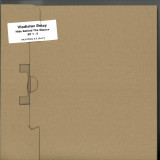
Vladislav Delay presents the fifth and last EP in his "Hide Behind The Silence" series. Intuitive and raw music, momentary and reflective, released on Ripatti's own label "Rajaton".
--
Stillness is a myth. Consider concepts such as ”still water”, or ”still air” for that matter. Go to a restaurant, ask them for a glass of still water, hold it against the light and see where we’re at. Even though the water itself has been captured and imprisoned in the glass, it never stops breathing. It’s filled with tiny particles, dancing. Everything can be explained on a molecular level, but since we’re not scientists – and even if you happen to be – it’s the natural world of perception that moves me.
Still air is very similar. A hot summer’s day with zero wind feels completely still. It’s the closest I have felt to complete stillness. Or for a more urban adaptation, imagine the same vibe inside a normal apartment. In those moments, revelations and mind- blowing experiences can be had with experiments in stillness.
Try this: Just sit down for a minute on a sunny day, making sure there’s enough natural light. Do absolutely nothing. Try not to breathe for a bit. (If you need a mental anchor, you can play Cage’s 4’33” in your head but nothing else.) Watch the tiny dots of dust dancing :..’ ̈.:; ́ ́*°.,’:,. ̈ ̈ ̈ ̈:,.’
The movement is crazy, but the feeling of stillness comes from witnessing how subtle it is. In (perceived) complete stillness, every act of microscopic mobility seems to speak volumes. Yet, it feels both reassuring and oddly threatening that the stillness is never complete. What if we would need absolute stillness? Or is it just enough that we can perceive something as such? Extremes attract, so for both water and air, extraordinary movement is equally fascinating. That is also a luxury item of sorts. For us to enjoy a very ”loud” body of water or air, we need to be safe, in enough control of the situation. So when you are, it’s worthwhile to pay attention and take it all in.
A rapid flowing free with extreme strength and just barely in control. Look at that water go! No still water on this one, only ”sparkling”. A windy day when birds seem surprised how hard it is to fly, but in the end they make it. Trees bend but don’t break. The wind shows you its movement but doesn’t hurt you. It feels friendly, like a big clumsy dog that doesn’t quite understand its size.
It’s beautiful to be a guest of the elements, but not at the mercy of them. A new kind of dialogue forms.
out of Stock
Last delivered 2 years ago available to reorder, subject to availability
Kali Malone's anticipated new album "All Life Long" is a collection of music for pipe organ, choir, and brass quintet composed by Kali Malone, 2020 - 2023. Choral music performed by Macadam Ensemble and conducted by Etienne Ferschaud at Chapelle Notre-Dame-de-L'Immaculée-Conception in Nantes. Brass quintet music performed by Anima Brass at The Bunker Studio in New York City. Organ music performed by Kali Malone and Stephen O'Malley on the historical meantone tempered pipe organs at Église Saint-François in Lausanne, Orgelpark in Amsterdam, and Malmö Konstmuseum in Sweden. Kali Malone composes with a rare clarity of vision. Her music is patient and focused, built on a foundation of evolving harmonic cycles that draw out latent emotional resonances. Time is a crucial factor: letting go of expectations of duration and breadth offers a chance to find a space of reflection and contemplation. In her hands, experimental reinterpretations of centuries-old polyphonic compositional methods become portals to new ways of perceiving sound, structure, and introspection. Though awe-inspiring in scope, the most remarkable thing about Malone's music is the intimacy stirred by the close listening it encourages. Malone's new album All Life Long, created between 2020 - 2023, presents her first compositions for organ since 2019's breakthrough album The Sacrificial Code alongside interrelated pieces for voice and brass performed by Macadam Ensemble and Anima Brass. Over the course of twelve pieces, harmonic themes and patterns recur, presented in altered forms and for varied instrumentation. They emerge and reemerge like echoes of their former selves, making the familiar uncanny. Propelled by lungs and breath rather than bellows and oscillators, Malone's compositions for choir and brass take on expressive qualities that complicate the austerity that has defined her work, introducing lyricism and the beauty of human fallibility into music that has been driven by mechanical processes. At the same time, the works for organ, performed by Malone with additional accompaniment by Stephen O'Malley on four different organs dating from the 15th to 17th centuries, underscore the mighty, spectral power that those rigorous operations can achieve. All Life Long simmers in an ever-shifting tension between repetition and variation. The pieces for brass, organ, and voice are alternated asymmetrically, providing nearly continuous timbral fluctuation across its 78-minute runtime even as thematic material reiterates. Each composition's internal framework of fractal pattern permutations has the paradoxical effect of creating anticipated keystone moments of dramatic reverie and lulling the listener into believing in an illusory endlessness. On an even more granular level, the historical meantone tuning systems of each organ used, and the variable intonation of brass and voice, provide further points of emotional excavation within the harmony. The titular composition "All Life Long" appears twice on the album, first as an extended canon for organ and again in the final quarter, compactly arranged for voice In the latter, Malone pairs the music with "The Crying Water" by Arthur Symons, a poem steeped in language of mourning and eternity. For organ, "All Life Long" moves with a patient stateliness, the drama concentrated in moments when shifting tonalities generate and release dissonance and ecstasy. For voice, each word is saturated with feeling, the singers swooping gracefully downward to capture the melancholy of the narrator's relationship to the timeless tears of the sea. "Passage Through The Spheres," the album's opening piece, contains lyrics in Italian pulled from Giorgio Agamban's essay In Praise of Profanation. In it, Agamban defines profanation as, in part, the act of bringing back to communal, secular use that which has been segregated to the realm of the sacred, a process Malone enacts each time she performs on church organs. This is not music of praise, or of spiritual revelation, but it is an artistic enactment of translating the indescribable. It carries the gravity of liturgical chant, and its fixation on the infinite, but draws its weight from the earthly realm of human experience. A music that draws the listener into the present moment where they can discover themselves within the interwoven musical patterns that can come to resemble the passage of days, weeks, years, a lifetime.
out of Stock
Last delivered 11 months ago available to reorder, subject to availability
Harm’s Way is Duck Ltd.’s most intuitive and organic album yet, the result of keen observation, self-possessed songwriting, and a collaborative spirit. Building on the successes of their previous releases, the deeply relatable album displays a band operating at a nuanced, lyrical and musical best.
Ducks Ltd. make inviting and frenetic guitar pop for when life feels overwhelming. While the band’s songs are ostensibly breezy, a palpable anxiety boils underneath that communicates something deeper about everyday existence. On their latest album Harm’s Way, the Toronto duo of Tom McGreevy and Evan Lewis hones in on interpersonal and societal collapses, urban decay, and the near-impossibility of keeping a level head when everything around you seems to be falling apart.
“They’re songs about struggling,” says singer and lyricist McGreevy (who also plays bass and rhythm guitar). “About watching people I care for suffer, and trying to figure out how to be there for them. And about the strain of living in the world when it feels like it's ready to collapse.”
Even with its often dark subject matter, Harm’s Way is Ducks Ltd.’s most vividly rendered and collaborative collection yet. It’s an undeniable evolution for the band, not just in how these songs soar, but in their entire writing and recording processes. Composed on tour while supporting acts like Nation of Language, Illuminati Hotties, and Archers of Loaf, the album displays the band’s finely tuned songcraft and well-earned, road-tested confidence. “When we got signed, we had played maybe five or six shows ever. After last year, it’s in the hundreds. That experience can change your perception of your own music and songwriting,” says McGreevy. “In the past when we got stuck on a song we had a tendency to look at our favourite records to see how they tackled it. But now, instead of asking ‘what would Orange Juice do?’, we’d ask, ‘what would we do?’.” Lewis adds, “We have this really great thing where every decision with the band is filtered through both of us. Here especially, we really figured out how to make something that truly sounds like us.”
The band, fortified by this strong sense of sonic identity and a self-assurance in their new material—and in contrast to their critically acclaimed 2021 debut Modern Fiction and 2019 EP Get Bleak, both self-recorded and self-produced in a Toronto basement—wanted to bring Harm’s Way to life in a new city, with an outside producer, and with some of their favourite musicians. “We realised that so many of our favourite bands who are making guitar music right now are from Chicago,” says McGreevy. Working with producer Dave Vettraino (Dehd, Deeper, Lala Lala), they enlisted a marquee cast of Windy City collaborators to round out the tracks on Harm’s Way, including: Finom’s Macie Stewart (violin, string arrangements); Ratboys’ Marcus Nuccio (drums on most tracks); Dehd’s Jason Balla (who helped arrange the backing vocals, to which he also contributed); and backing vocals from Julia Steiner (Ratboys), Nathan O’Dell (Dummy), Margaret McCarthy (Moontype), Rui De Magalhaes (Lawn), and Lindsey-Paige McCloy (Patio). The band’s touring drummer, Jonathan Pappo, and bassist Julia Wittman also appear on the LP.
Ducks Ltd. are a band that already thrives on skirting the edges of buoyant jangle pop and driving power pop, and the duo credits these collaborators with helping to push their sound even further. “Historically our process has been really tightly controlled and insular. On this record, we worked with people who we trusted with a pretty wide range of musical backgrounds and they had approaches and ideas that helped open up the record's sonic palette,” explains McGreevy. “Jason thinks about backing vocals in a totally different way than I do and is super intuitive with melodic ideas. Julia and Margaret have a really deeo understanding of harmony. Macie and Dave were comfortable with the idea of improvising string parts which took some of those layers in some surprising directions. Dave also has an amazing ability to create atmosphere on a recording, and encouraged us to use a bunch of different techniques, tones, and processes to achieve that.”
Harm’s Way’s lush, melodic swagger is clear from the first notes of opener “Hollowed Out.” A song about living with decline (inspired by a Toronto sinkhole), its bright, indelible catchiness serves in contrast to its lyrical unease. Anchored by Lewis’ shimmering electric guitar, “The Main Thing” laments growing apart from a person whose views you once shared while managing to toss in references to both the unglamorous lives of middle relief baseball pitchers and the occult. Other songs split the difference between country and krautrock, like the rollicking “Train Full of Gasoline,” which uses the 2013 Lac-Mégantic rail disaster in Quebec as a metaphor for self-destructive patterns. Meanwhile, “Deleted Scenes” mourns the absence of someone no longer in your life (even if for very good reasons) and recalls The Cure at their most direct, and closer “Heavy Bag” employs enveloping, mournful strings to evoke a sense of how misery frequently loves company.
Dutch synth-wizard Nadia Struiwigh brings her eclectic live approach to Blueprint Records.á On the "Voxis Ohlun EP", Struiwigh reflects her profound command over synthesis and sequencing, crafting upfront techno with a vigorous, nostalgic feel.
Nadia Struiwigh, the Dutch artist rooted in Rotterdam and currently based in Berlin, has carved a unique niche in the electronic music scene.á Her genre-defying compositions, blending ambient, techno and electro, exhibit her signature ethereal and melodious production style, with a discography gracing acclaimed labels like Central Processing Unit, Nous'klaer, Dekmantel, Clone and InFinÒ.á Inspired by the Warp school of electronica, her live performances (ranging from immersive ambient to kinetic techno) are a testament to her technical prowess and emotional connection with her audience.á A versatile DJ and live act, she graces both concert halls and strobe-lit club sessions, curating sets that span from driving techno to deeper, emotive realms, earning her residencies at venues like Tresor.á Her versatile expertise extends beyond music; she collaborates with pioneering music brands such as Roland, Korg, Teenage Engineering, Arturia and others, embodying her reputation as a leading tech enthusiast within the industry.á Her contributions to esteemed platforms like Resident Advisor, Phantasy, Bleep, Slam Radio and Red Light Radio underscore her adaptability and prowess across a wide spectrum of electronic music, further solidifying her multifaceted presence in the field.
"Voxis Ohlun" invites you into a mesmerizing journey through the enchanting landscapes of the '90s, blending diverse musical influences seamlessly.á The focus here is on 4x4 dancefloor music, adorned with a tantalizing hint of breaks and pulsating rhythms, and a sprinkle of fairyland allure.á Crafted using only hardware, predominantly the beloved Korg Electribe MX, the sounds resonate with the essence of that era.á Each track unfolds like a chapter in a wondrous tale, interweaving nostalgia with a contemporary energy, ensuring an immersive experience.
out of Stock
Last delivered 10 months ago available to reorder, subject to availability
Skylax Welcome Back Nicolas Aftalion With Another Powerful Ep "Spirit of House Ii" After His Sensational Debut on the Label, Acclaimed by the Queen of the Genre Cinthie. Deeply Inspired by the New Jersey House Sound Popularized by Tony Humphries, and the Vibrant Energy of the New York Scene. This Release Embodies the Essence of Original House Music, Delivering an Exhilarating and Impactful Experience. Following the Success of "Spirit of House I", This Sequel Is a Natural Progression in Aftalion's Musical Journey. Prepare to Be Transported by the Enchanting Tracks Within. "Cruise in Paradise" Blends Jazz and Spanish Influences, Reminiscent of the Iconic Moments on the Album "Forever Changes" by the American Band Love (As Crazy as It Sounds), Fusing Original House With Free Jazz in an Improbable Yet Captivating Manner. "A Message to Mad Mike" Pays Homage to the Visionary Dj and Producer of Underground Resistance, Expressing Profound Admiration and Love. This Is a Monumental Record That Encompasses Everything Contemporary Electronic Music Has Forgotten. "Paris Is Burning" Serves as an Ode to the Voguing Culture of the '90s, a Celebration of Queer Expression and Vitality. "Soulful in Paris" Takes Us Back to the Soulful and Rhythmic Sounds of Strictly Rhythm and the Timeless Energy of Ultra Naté. as a Digital Bonus, Indulge in the Excellence of "Baby Driver" and "Blaster." "Spirit of House Ii" Is a Masterpiece That Captures the Essence of House Music's Roots While Embracing Innovation and Artistry. Prepare Yourself for an Extraordinary Musical Journey That Showcases Nicolas Aftalion's Profound Understanding of the Genre and His Ability to Create Timeless and Groundbreaking Compositions....
out of Stock
Last delivered 2 years ago available to reorder, subject to availability
The Spellbound EP serves as a profound exploration into GIDEÖN's artistic soul. Commencing with politically charged tracks, "Study War No More" on side A is an acid-garage hybrid rallying support for emergency aid in Gaza. On side B, the euphoric "Marcus Garvey" urges a reconsideration of the life and teachings of the Jamaican activist. "Spellbound" delves into an ultra-deep meditation on black magic, while "Hora De Bailar" transforms into a Latin sleaze-fest, embodying the label's steadfast commitment to militant queer Deep House.
GIDEÖN describes the EP as a faithful representation of his worldview, stating, "Two of the tracks were written to soundtrack the struggles of our time. Both 'Study War No More' and 'Marcus Garvey' are pieces of music created to motivate, elevate, activate, and educate the dance floors of today in preparation for the struggles immediately before us. I see music as a weapon, a weapon in our dance music community’s arsenal that we can use to lubricate, incentivize change around us."
In addition to the politically charged tracks, the EP features two deeper, sleazier offerings that vividly capture the essence of underground queer dance floors and darkrooms. These tracks resonate with GIDEÖN's experiences at renowned clubs like Bassiani in Tbilisi, K41 in Kyiv, Berghain in Berlin, Basement in New York, and Adonis in London.
GIDEÖN boldly declares, "I set out to do EXACTLY what the global religious right-wing extremists are so opposed to: the PROMOTION of homosexuality." This sentiment underscores the EP's mission to advocate for diversity in the face of opposition.
out of Stock
Last delivered 2 years ago available to reorder, subject to availability
What Do We Do Now is the fifth solo studio LP recorded by J Mascis since 1996. This is obviously not a very aggressive release schedule, but when you figure in the live albums, guest spots, and records done with his various other bands (Dinosaur Jr., The Fog, Heavy Blanket, Witch, Sweet Apple, and so on), well, to paraphrase Lou Reed, "J's week beats your year." What Do We Do Now began to come together during the waning days of the Pandemic. Utilizing his own Bisquiteen Studio, J started working on writing a series of tunes on acoustic with a different dynamic than the stuff he creates for Dino. "When I'm writing for the band," he says, "I'm always trying to think of doing things Lou and Murph would fit into. For myself, I'm thinking more about what I can do with just an acoustic guitar, even for the leads. Of course, this time, I added full drums and electric leads, although the rhythm parts are still all acoustic. Usually, I try to do the solo stuff more simply so I can play it by myself, but I really wanted to add the drums. Once that started, everything else just fell into place. So it ended up sounding a lot more like a band record. I dunno why I did that exactly, but it's just what happened." Two guest musicians are playing this time out; Western Mass local Ken Mauri (of the B52s) plays piano on several tracks. Since J himself has some experience with keys, when asked why he needed a hired gun, he says, "Ken is great, and he plays all the keys. I tried playing some keyboards on the first Fog album, but I'm really only comfortable playing the white notes, so it's kind of limiting. laughs Nowadays, I could just turn the pitch on a mini Mellotron to play different sounds, but black keys just seem hard. For whatever reason, I just like banging on the white ones. Seems like it's harder to figure out how to stretch your fingers around the other ones." Mauri has no such qualms and plays all the keys very damn well. He sounds especially great on "I Can't Find You," where he is Jack Nitzsche to J's Neil Young, creating one of the album's loveliest tunes. The other guest musician, Matthew "Doc" Dunn, is also prominent on this track. Dunn's steel guitar manages to both widen and soften the musical edges of the music, giving it a full classicist profile. Dunn is an Ontario-based polymath who J met through Matt Valentine. After J played on Doc's great 2022 Sub Pop single, "Your Feel," he figured it was time for payback. Both Dunn and Mauri add beautifully to the songs here, helping to transform them from acoustic sketches into full-blown post-core power ballads. What Do We Do Now is the finest set of solo tunes J has yet penned, and the way they're presented is just about perfect. Asked if he would be touring to support the album, J says he'll be doing some weekend dates, but he probably won't be putting a band together. And I'm sure these songs will sound great solo and acoustic, but the arrangements on this album are truly great and put a cool, different spin on Mascis' instantly Recognizable approach to making music. So, what do we do now? Not sure. But apparently, what J does is to make one of his most killer records ever. Hats off to him. - Byron Coley
What Do We Do Now is the fifth solo studio LP recorded by J Mascis since 1996. This is obviously not a very aggressive release schedule, but when you figure in the live albums, guest spots, and records done with his various other bands (Dinosaur Jr., The Fog, Heavy Blanket, Witch, Sweet Apple, and so on), well, to paraphrase Lou Reed, "J's week beats your year." What Do We Do Now began to come together during the waning days of the Pandemic. Utilizing his own Bisquiteen Studio, J started working on writing a series of tunes on acoustic with a different dynamic than the stuff he creates for Dino. "When I'm writing for the band," he says, "I'm always trying to think of doing things Lou and Murph would fit into. For myself, I'm thinking more about what I can do with just an acoustic guitar, even for the leads. Of course, this time, I added full drums and electric leads, although the rhythm parts are still all acoustic. Usually, I try to do the solo stuff more simply so I can play it by myself, but I really wanted to add the drums. Once that started, everything else just fell into place. So it ended up sounding a lot more like a band record. I dunno why I did that exactly, but it's just what happened." Two guest musicians are playing this time out; Western Mass local Ken Mauri (of the B52s) plays piano on several tracks. Since J himself has some experience with keys, when asked why he needed a hired gun, he says, "Ken is great, and he plays all the keys. I tried playing some keyboards on the first Fog album, but I'm really only comfortable playing the white notes, so it's kind of limiting. laughs Nowadays, I could just turn the pitch on a mini Mellotron to play different sounds, but black keys just seem hard. For whatever reason, I just like banging on the white ones. Seems like it's harder to figure out how to stretch your fingers around the other ones." Mauri has no such qualms and plays all the keys very damn well. He sounds especially great on "I Can't Find You," where he is Jack Nitzsche to J's Neil Young, creating one of the album's loveliest tunes. The other guest musician, Matthew "Doc" Dunn, is also prominent on this track. Dunn's steel guitar manages to both widen and soften the musical edges of the music, giving it a full classicist profile. Dunn is an Ontario-based polymath who J met through Matt Valentine. After J played on Doc's great 2022 Sub Pop single, "Your Feel," he figured it was time for payback. Both Dunn and Mauri add beautifully to the songs here, helping to transform them from acoustic sketches into full-blown post-core power ballads. What Do We Do Now is the finest set of solo tunes J has yet penned, and the way they're presented is just about perfect. Asked if he would be touring to support the album, J says he'll be doing some weekend dates, but he probably won't be putting a band together. And I'm sure these songs will sound great solo and acoustic, but the arrangements on this album are truly great and put a cool, different spin on Mascis' instantly Recognizable approach to making music. So, what do we do now? Not sure. But apparently, what J does is to make one of his most killer records ever. Hats off to him. - Byron Coley
toechter is an all-female trio operating from Berlin. toechter’s 2nd full-length album »Epic Wonder« sees its classically trained members blend elaborate string arrangements with ethereal indie pop and delicate rhythms. Katrine Grarup Elbo, Lisa Marie Vogel and Marie-Claire Schlameus exclusively use analogue sound sources (such as violin, viola, cello, and their voices), which were then electronically processed.
Named after the Greek god of the wind, toechters 2022 album »Zephyr« exhaled deeply with concurrently invigorating and confusing sounds. »Epic Wonder«, their second album, was created in the spring and summer of 2023. Playing with forms and contours, the music sounds like the awakening of something new. One seems to be listening to an ongoing conversation, an exchange about what music could be, where it wants to go and how it contributes to our view of life. It all rests on a simple premise:
»Every sound you hear in our universe comes from us. The string trio is the core of toechter, the starting point of all our work.«
Those looking for new worlds of sound can find them in the work of this classically- trained musicians. Whether they add voices or percussive instruments, sample the sounds, or manipulate them electronically; ultimately they are exploring the string trio's place in a world shaped by the digital.
»Prelude« opens the album, seemingly a conversation, yet not only between humans. We catch the word ›love‹ which soon morphs into pure sound images, while a violin theme tentatively takes over. Is it the dawning of a new day? The chorus of sound transforms into a fascinating rhythmic figure, creating a club-like experience that fades out in delicate structures. A perpetual transformation.
According to toechter, »Epic Wonder« is all about making connections. Connections between people, animals, plants, fungi, rocks, soils, oceans, ice caps, stars, and planets. One imagines oneself in a folk-pop song of the 60s, or even blown around by Morricone's desert wind:
»The world as we see it is in desperate need for a deeper understanding; for compassion, for empathy. We have to understand that we are all part of the same organism. Epic Wonder is a dream, a wish, a longing for kinship between all species that share the world - all that is alive.«
The acoustic throbbing and knocking in »Sea Of Serenity« makes you think of encounters with mythical creatures or planetary oceanography; and out of the mechanically clacking groove of »Shift Souls« a gentle, but steady movement awakens with voices that seem to sound from the depths of the sea. Everything is in flux, floating in and out of dimensions and elements.
The album ends with »Mercury«, spherically elegant and almost science fiction-like. Here, a pizzicato melody leads us back to the baroque, simultaneously representing a detail of intertwined sonic worlds, while the steady, housy baseline develops its driving theme.
»Creating the music for the album, we allowed ourselves to waft away with the aspiration that connections are possible. Sometimes dwelling on subtle, yet marveling phenomena like the evening fog covering a valley on Midsummer, sometimes on grandiose splendors like the genesis of mountains or the birth of a child - letting interactions and encounters with other beings float through the musical universe as drips of emotional perceptivity.«
For the visual manifestation of »Epic Wonder«, toechter has engaged with Finish up-and-coming lens-based artist Aino Kontinen. Her work will grace both the cover art of the album and accompany the first single and video as an ephemeral tale in motion.
Drummer Artimus Pyle — currently the oldest remaining member of the Lynyrd Skynyrd legacy — is releasing “Anthems: Honoring The Music of Lynyrd Skynyrd,” a 13-track album, on Feb. 2, 2024. It intends to celebrate the memory of the Rock and Roll Hall of Fame band that, with Gary Rossington’s passing in March 2023, lost all of its original members.
The Get Joe Records studio album will be distributed by Suburban and entirely comprised of duets between the Artimus Pyle Band and acts including Billy Ray Cyrus, Ronnie Dunn, Sammy Hagar and Dolly Parton. “This project has been a year in the making, but when the
fans hear it they will understand why it took so long.” Artimus is legendary within the Southern Rock space. The music that Lynyrd Skynyrd made will always live as a part of rock history. This album honors that music and give Artimus a way to honor his former bandmates.
"The organ dates back to 1790 and was made by Venanzo Fedeli, who came from a prestigious family of organ builders. This particular organ is tuned in the ancient way at 430 Hz. Tuning relies on pure thirds that aim to create dissonances within the instrument itself.
Since the organ is an instrument modeled according to the principles of nature, the intonation of the pipes was performed according to an incompletely equal system that reflects the natural intonation based on mathematical ratios.
This produces a purer sound for the thirds but slightly harsher and more difficult to listen to. The hardness of the intervals of the organ is a metaphor for the hostile climate that prevails in the Potenza valley during winter and autumn.
The sound of the organ with the register of the flute returns a particularly sweet and penetrating sound but, at the same time, a very complex timbre with intricate harmonic texture, given the numerous fluctuations and beats. The warm tones of the organ reflect the good and welcoming sould of the people who inhabit these lands. The absence of dynamics inside the instrument allows the listener to focus and understand the harmonic texture and timbral differences between the various notes more clearly.
Trombone and trumpet played by Matteo Paggi on track 2 and 3 were recorded during a hot summer day at Elefante Bianco Studio in Rome by Matteo Scarchilli. Sax, effects and noises in track 6 played by Giulio De Asmundis and Pietro Rianna were recorded in Fauna53 studio.
Many thanks goes to Marco and Giuseppe for making this happen. Thanks Federico, Sami, Marisa, Romeo and everyone involved in this project. You know who you are."
Mastered by Alessandro Caldarola.
Photos and color grading by Filippo Corsi.
Graphic project and design by Flavio Mancini.
Vinyl pressed by AFG Record Manufacturing.
In Celtic mythology, Clota was the patron Goddess of the River Clyde. "Almost all the rivers of Scotland were abodes of goddesses, but about many of them there are no surviving stories. The goddess of the Clyde was ‘the purifying one’.. " Donald MacKenzie 'Wonder Tales from Scottish Myth and Legend' (1917) Following the warmly received 'An Garradh', and 'Tarbolton Bachelors Club', Steven Anderson (Letters From Mouse) returns to Subexotic with another emotionally inquisitive, fascinating psycho-geographical work. Although very little is known about the goddess Clota, Anderson intuitively understands the River Clyde provides a rich landscape to explore her legacy. Dominating its environment, and steeped in ancient and modern historical significance, 'Clota' simultaneously reflects on what is, and what has been. Through deft application of modular synthesis, Anderson's trademark ability to weave extraordinary musical dialogues with time and place, conjures new life into this long-forgotten deity.
nehan is a Japanese free improvisation & avant-garde rock quintet formed in August 2022. Their performances are initiated by a 9hz brain wave emitted from a testee who has been brought into a deep meditative state via either hypnosis or acupuncture - a very relaxed but very alert state. nehan doesn"t begin until the testee has gotten into the state of "nothingness." It is only then that the improvisation can begin. The role of improvisation has been key to all the musical projects of Masaki Batoh. In 2010, as Batoh was winding down the activity of his long-standing "heavy chamber folk" group, Ghost, he became involved in the design of a machine to generate sonic data based on brain waves. An acupuncturist as well as a musician by trade, his interest was spurred by the rhythms of the body and the brain, and a desire to access the "pulses" of brain waves to initiate improvisations. Following the release of Brain Pulse Music, Batoh toured Japan, the US and Europe, making demonstrations of his process using a local volunteer and guest performers, when available. Today, nehan arrive at their performance space prepared with a Brain Pulse testee, bringing a wide array of instruments including gongs, timpani, tabla and other drums and percussion, Crumhorn, bagpipes, mellotron, oscillators and additional sound effects. Their performance is a transformative electro-acoustic display that passes through the prism of music styles, from east to west, from traditional folk and classical to rock, jazz, and avant electronic. While nehan"s performance presentation invokes a sense of ritual, they understand their process as being far removed from any type of spiritual endeavor - it has nothing to do with eastern thinking or any kind of religious ceremony - this is an action of improvisation, occurring in reality between the five musicians on stage, in response to the brain waves of an individual. For the personnel of nehan, Masaki Batoh asked players with whom he had good previous experiences in improvisation: Futoshi Okano (Ghost, Acid Mothers Temple, The Silence), Haruo Kondo (Espvall & Batoh) and Junzo Tateiwa (Ghost), along with female Brain Pulse testee Gozen on oscillators. The performance here, recorded live in August of 2022 at GOK SOUND in Tokyo, demonstrates their communal dedication to the improvisation. The players act as listeners and musicians simultaneously, inspired to make extended pieces of music out of the "nothingness" of brain waves. The possibilities of nehans"s chosen approach are almost infinite; an evening with nehan is only the beginning of their journey.
"Cross My Heart" is a tribute to the harmonica player and singer James Cotton, one of Boney Fields" heroes and companions on the road, is certainly the most representative track of this thrilling groove mood that authentic blues musicians know how to infuse. Boney Fields possesses that almost funk tone matured enough to tickle our ears and make us tap our feet. By revitalizing, for example, "The Thrill Is Gone" in the spirit of its original author (Roy Hawkins), Boney Fields perpetuates the tradition of spirited orchestras of yesteryears without compromising the modernity of its irresistible tempo. Much more personal than all his previous albums, "Just Give Me Some Mo" is also the expression of introspection, that of a man who remembers without drowning in dark nostalgia. He thinks of the courage of his mother bravely facing obstacles in an unequal America. "Back in the Day" is not a sad song. It makes one stronger and nurtures faith in the future. This melody is certainly the most touching of the six compositions written by Boney Fields. From "Control of you" to "Something" holding me" or "I know yes I Know" he invites us into his intimate biography, the story of a large family shaken by inevitable upheavals that must be faced, the destiny of a combative musician who resists adversity. Boney Fields chose to let his soul speak. This effort of truth had to be supported by the artistic direction of a master. By enlisting Sebastian Danchin for the production of this album, Boney Fields turns to a historian of African-American culture whose keen ear has already won over Little Milton, Mighty Mo Rodgers, Toni Green, and Jean-Jacques Milteau, among others... Their exchanges uncovered a perfect understanding of "Chicago Blues" the brassy vigor of which they experienced firsthand 40 years ago. Surrounding oneself with the right people is quite a challenge. Fortunately, Boney Fields knows how to spot true talents. He was convinced that the Senegalese guitarist Hervé Samb would also be a good musical director. Hadn"t he been the first to highlight the expressive power of this luminous composer and arranger? The enduring vitality of the blues, when narrated with precision and insight, always manages to find its legitimacy. The months of reflection, of questioning, will not have been in vain. They have given substance and depth to this thrilling record which, we wager, will be a milestone. Boney Fields has waited long enough. Does he want more? We will give him more! "Just Give Me Some Mo" will now be a shared leitmotif, that of an insatiable conductor and that of enlightened admirers.
PRESSING OF 500 COPIES WORLDWIDE. INCLUDES POSTER.
The sound of today. A very strong statement. Yet, fifty years later, it remains undisputed. Today’s sound is Piero Umiliani's manifesto, his will to demonstrate to the world that he always has his finger on the pulsating vein of the world, ready to embrace the heartbeat of the future.
In the summer of 1973, Piero Umiliani, in his futuristic recording studio in Rome, much like Miles Davis for his 'Bitches Brew,' gathered an extraordinary collective of musicians, both old and new guard to measure themselves against some of his compositions.
Besides strongly emphasizing the backbeat, what stands out the most is the timbre provided by his 'electronic instruments,' as he liked to call them. Minimoog, Arp 2600, Fender Rhodes, EMS VCS3, Clavinet, Lowrey organ, Space Echo, self-built envelope filters—machines impossible to see all together in an Italian recording studio at the time and made available to the musicians.
The line-up is stellar; under the name 'Sound Workshoppers,' the 'Wrecking Crew all'Amatriciana' is hidden an impossible mix where Marc 4, Gres and Perigeo are blended, along with a brass section of veterans and pioneers of Italian jazz, all members of the RAI Symphonic Rhythm Orchestra.
Comparing the recordings from the original scores, one can also understand the space left by Piero Umiliani for his musicians. They are free to move, to contribute solutions, to enrich the maestro's music.
The perfectly preserved original masters, once transferred at the maximum possible sampling frequency, allowed for the recovery of many lost frequencies, restoring brilliance and the remarkable low end expertly captured in recording by engineer Claudio Budassi.
Today’s sound was extremely difficult to control and fully render with the mastering technology of that time.
Paradoxically, Today's sound could not sound as I have managed to make it sound today: urgent, majestic, more alive than ever.
The Ganjas Meets Nairobi. The Space Rock of the Chileans together with the Dub of the Argentines. First time on vinyl celebrating 10th anniversary. Sounding laid-back and incisive at once, crisp production and rock sensibilities. The Ganjas are one of the best exponents of Chilean Space Rock and a fundamental-must-listen to understand the new Chilean psychedelic scene of the last decade. They began 25 years ago with long jam -kind -of-playing, with steady drum beats and simple basslines, but adding innovative and colorful lyrics and synths, without never losing the song structure. On the other side of the Andes, the eclectic by nature Nairobi laid the groundwork for a new style in Dub. Since 2009 they had released 3 studio albums and worked with the best legendary Dub producers: Mad Professor, Lee “Scratch” Perry and Sly & Robbie. Touring the same year 2014 in Chile they coincided with The Ganjas at BYM Studios for an unforgettable session that brought this recording, that boasts an intricate rhythm, sumptuous keyboards, and soaring guitars offering elastic grooves, disembodied vocals, and deep bass lines. The album itself revisits the past while also looking to the future. The songs are particularly creative, with the Bob Marley & The Wailers cover ‘The Heathen’ totally revitalized and other passages like ‘Pastor’ and ‘Eagle & Snake’ that travel through an incredible mix of styles, brilliantly blending Trip-Hop, Dub FXs from soundboard, a Brian Jones-esque style slide guitar, and songs like ‘Soul Salvation’ that brings an steady reggae beat with genius saxophones lines from Ignacio Czornogas (King Krule). Mastered by Cem Oral at Jamming Masters (Berlin). AVAILABLE 300 BLACK VINYLS. For fans of: Primal Scream (Echo Dek), Sumo, Dub Syndicate-Murder Tone, Upsetters, Peaking Lights, Peter Tosh-Mama Africa.
A tape with the rather factual title “Rosa Beton – Demo 83” gained currency in 1983, albeit among an inner circle, or as it says in a lexical note on the band: Rosa Beton “achieved beyond-regional fame in and around Berlin”. Unlike some other bands that were merely rumoured to exist, this name was widely recognized in the East Berlin punk scene and the demo tape was received with some delight. It had been made in the suburb of Hönow, or more precisely in music enthusiast Thomas Wagner’s childhood bedroom. The band was less a classic combo than a short-lived pro- ject run, for a brief underground season, by 16-yearold Wagner and Ronald Mausolf, who was known as “Mausi” and had just come of age. An old clunker of a four-track machine served as an impor- tant nutritional supplement for the duo, allowing bass and vocals to be overdubbed separately. For a project without a professional background, especially for an illegal punk band in the East, this conventional procedure was clearly exceptional. Punk bands would usually record vocals and instruments simultaneously and on a cassette recorder. Recording gear was not readily available in the GDR, and it was disproportionately or prohibitively expensive. The adversities that had to be overcome in starting up a punk band were certainly challenging for teenagers. Rooms for rehearsals were few and far between despite wide- spread vacancies, and public space was taboo thanks to the state. Concerts, whether in flats and studios or under the protection of the Protestant church, remained rare events and, moreover, risky; starting with the party-loyal neighbour alerting the People’s Police as if there were a war on, to the ever-present “digging activity” of the Stasi. The only planned appearance by Rosa Beton never materi- alised. Whether it was the goddesses of fate who averted a show or the Stasi who prevented it can no longer be reconstructed. In any case, Rosa Beton never played live and thus joined a long list of GDR punk bands that, in the early 1980s, did not make it out of illegality into a public sphere, not even into a conspiratorial one. ausi compensated for the band’s lack of live performances by at least distributing a few copies of the demo tape. Among others, at the Kult, the Kulturpark Plänterwald, which provided an initiation field for the Berlin punk scene and a hotspot with a pull beyond it. The punks adapted the Kulturpark to their understanding of an amusement park.
They would thrash about to Schlager music and pogo to third-rate Ostrock bands, make fun of overwhelmed provincials, hang out and exchange half-baked ideas as superior knowledge. In between, the punks liked to ride the chain carousel, there was a certain liking for chains. The Kulturpark management made quite a fuss about the riot the punks put on. Initially they were banned from the chain carousel, then, when the punks switched to bumper cars, they were banned from the bumper cars, then from the roller coaster, and finally from the ghost
This is a welcome return to the label for Amazingblaze who released his Can't Stop EP in January this year and his Venture EP in 2022. Since then he has continued to innovate with his heavy-hitting trance, techno and hardstyle influenced sounds. His ever evolving studio skills see him mix up old school influences with new school sound design that is perfect for engaging dance floors. His signature imprint is all over these four new cuts with their mix of big synths, bigger drums and all consuming grooves.
“Believe EP says it itself. All I wanted to say is that you have to believe in yourself”, Amazingblaze says. “This brand new EP contains 4 full-power tracks that definitely goes through your heart. Massive trance synths combined with vocals make it sound really mysterious and groovy. Hope you enjoy it, and believe in yourself.”
Charlotte de Witte adds: “It’s no secret that to me, Amazingblaze is one of the purest talents out there. This guy really understands what music is about and manages to create dancefloor bombs time after time. I’m super proud to have him on board for another EP on KNTXT and to watch him grow and become one of the top level artists out there.”
'Believe' kicks off with intense drum patterns and smart vocal samples that are lit up with bright and electric synths full of euphoric energy. 'Strange Candy' is a bulky and physical mix of clipped techno funk and throwback rave sounds with strobe-like lasers shooting across the face of the track. There is more peak time brilliance in the hard drums and hands-in-the air synth magic of 'It Happened Again' while 'Boyz Makin Noiz' shuts down with twitchy stabs and twisted acid lines and dark vocals appear from the shadows.
Amazingblaze delivers yet another exceptional EP, seamlessly blending forward-thinking techno and trance elements.
out of Stock
Last delivered 4 months ago available to reorder, subject to availability
The concept of naught (Ø) has challenged Salvatore Mercatante throughout his musical career, specifically, trying to understand how the idea of ‘nothing’ fits into the realm of sound, and at the same time, exist in a world of influence at every turn. In the absence of everything, are we able to create something truly free?
As a lifelong New York-based musician, Mercatante’s influences and productions run a wide spectrum. Just as happy producing 80s-inspired horror soundtracks as he is refining acute drum patterns over and over again, Salvatore is the first to ask himself, where next? When a musician’s output can be influenced today by so much, and there is no self-defined or perceived artistic goal in mind, how do you start from a place of nothingness, again and again?
This approach has born many minimal and experimental albums of note in the past, but with Ø, Salvatore ended up with an almost controlled maximalist approach. Beginning with open spaces and allowing sonic textures to live and evolve past where you may expect, Ø allows the space between notes to become equally as important as the notes themselves. Walls of noise, soaring soundtracks, dense techno, glittering IDM, and minimal glitch, sit side-by-side to present an all-encompassing palette of sonic possibility.
Often, even without any intent, what can be born from nothing will somehow transpire back into something more recognizable. It’s human nature after all. A subtle fingerprint, as a sequence, melody, pattern, or drum kick. Whether Salvatore intended for this record to represent his defining sound or not, only time will tell.
Mastered by Giuseppe Tillieci @Enisslab, Rome, Italy.
Artwork by Brandon Locher
Written and produced by Salvatore Mercatante
out of Stock
Last delivered 6 months ago available to reorder, subject to availability
Vladislav Delay's complete "Hide Behind The Silence" series. Intuitive and raw music, momentary and reflective, released on Ripatti's own label Rajaton.
Stillness is a myth. Consider concepts such as ”still water”, or ”still air” for that matter. Go to a restaurant, ask them for a glass of still water, hold it against the light and see where we’re at. Even though the water itself has been captured and imprisoned in the glass, it never stops breathing. It’s filled with tiny particles, dancing. Everything can be explained on a molecular level, but since we’re not scientists – and even if you happen to be – it’s the natural world of perception that moves me.
Still air is very similar. A hot summer’s day with zero wind feels completely still. It’s the closest I have felt to complete stillness. Or for a more urban adaptation, imagine the same vibe inside a normal apartment. In those moments, revelations and mind- blowing experiences can be had with experiments in stillness.
Try this: Just sit down for a minute on a sunny day, making sure there’s enough natural light. Do absolutely nothing. Try not to breathe for a bit. (If you need a mental anchor, you can play Cage’s 4’33” in your head but nothing else.) Watch the tiny dots of dust dancing :..’ ̈.:; ́ ́*°.,’:,. ̈ ̈ ̈ ̈:,.’
The movement is crazy, but the feeling of stillness comes from witnessing how subtle it is. In (perceived) complete stillness, every act of microscopic mobility seems to speak volumes. Yet, it feels both reassuring and oddly threatening that the stillness is never complete. What if we would need absolute stillness? Or is it just enough that we can perceive something as such? Extremes attract, so for both water and air, extraordinary movement is equally fascinating. That is also a luxury item of sorts. For us to enjoy a very ”loud” body of water or air, we need to be safe, in enough control of the situation. So when you are, it’s worthwhile to pay attention and take it all in.
A rapid flowing free with extreme strength and just barely in control. Look at that water go! No still water on this one, only ”sparkling”. A windy day when birds seem surprised how hard it is to fly, but in the end they make it. Trees bend but don’t break. The wind shows you its movement but doesn’t hurt you. It feels friendly, like a big clumsy dog that doesn’t quite understand its size.
It’s beautiful to be a guest of the elements, but not at the mercy of them. A new kind of dialogue forms.
Q&A with Sasu Ripatti:
1) Tell us something about the EP series ”Hide Behind the Silence”, what’s the idea and what can we expect?
Exploration of inaction. Of many kinds. In arts and in personal life, or at bigger and more serious levels. Questioning myself as a human being as well as an artist. Acknowledging the growing activism all around, and the very clear need for it, and how it reflects my own inaction.
Musically speaking, after Rakka, Isoviha and Speed Demon, I finally found some relief, but more importantly lost the need to go musically ever more outward and intensive. I felt quite strongly certain periods/moods from the past and they made me revisit some musical ideas or states of mind I was exploring early on.
It’s about live moments being captured, not much premeditation or editing. More intuitive and raw, even though the end result (to me) feels and sounds quite introspective and calm. It’s not very ambitious. Momentary and reflective.
2) Your music doesn’t sound very silent. Does it come from somewhere behind the silence?
Oh, this time to me it sounds quite quiet and playing with space if not silence. I don’t know what’s actually behind silence, but I think silence is the source of everything. We just don’t understand it yet.
3) What kind of thoughts or experiences gave inspiration to this series?
Writing this in Nov ’22, it’s not a stretch to say the world has been really unwell. Sometimes, like Mika Vainio put it, the world eats you up. I feel a bit like that. And I try to hide in my studio and stay away from it all, but it’s getting harder by the day. I’ve been questioning myself and thinking if what us artists are doing is worth anything, and whether it’s just a selfish thing I’ve been doing for the past 25 years, running away from everything. I haven’t come to a conclusion yet.
4) Is it easy for you to be in silence, or around silence?
Absolutely. I not only hide behind silence but I also love silence. It’s only since I started going back to nature as a grown-up person that I sensed and was enveloped by silence, true silence. I have begun to appreciate it a lot. I think all the people should spend more time in silence.
All tracks composed and produced by Sasu Ripatti.
Artwork by Marc Hohmann, photography by Shinnosuke Yoshimori.
Mastering by Stephan Mathieu for Schwebung Mastering.
Vinyl cut by SST Brueggemann.
Publishing by WARP Music Ltd.
out of Stock
Last delivered 2 years ago available to reorder, subject to availability
plastic death - the second album by glass beach - is a follow-up record almost five years in the making. The band's 2019 debut, aptly titled the first glass beach album , has over the years grown a cult fanbase for its unflinching depiction of queer life as mediated through social media, its oversized ambition, and its scrappy yet adventurous production. And while it took some time to arrive, plastic death sounds like the logical expansion of all the things that made their first album so special. Years and years of relentless writing, tinkering demos, cancelled tours and a few lockdowns only strengthen the chaotic core of what makes glass beach' s maximalist approach work so well. Frontperson and primary songwriter J McClendon is joined by lead guitarist Layne Smith, bassist Jonas Newhouse and drummer William White to create something adventurous on each song. Trumpet, trombone, violin, and even marimba dance and bloom alongside the band's own creative and dextrous instrumentation - a stunning, transformative creation that pulls from indie rock, jazz, prog, hardcore, metal, experimental, and beyond. Songs like lead single "the CIA," are examples of the band's ambitious writing. It's a dark, dancy, post-punk/jazz hybrid, a coordinated, breathless braid of synth and saturated guitar. Tension and confusion explode into a brutal modern metal climax to close the track, flickering with glitchy production zaps and razor-sharp stops. The artwork of plastic death is similarly rich with detail, resulting in a bioluminescent, fully-realized double album depicting sprawling scenes where moments of neon brightness shine momentarily in a dark undersea - a metaphor for the moments of optimism and catharsis glass beach provide on these songs. "This album is the Pacific garbage patch: cultural trash strewn together seemingly by accident, standing in stark juxtaposition to each other ," says McClendon. plastic death is a complete, uncompromising, playful work of art; every corner and crevice of the record's 13 tracks, each arrangement and timbre and texture, is alive with intention and possibility.
plastic death - the second album by glass beach - is a follow-up record almost five years in the making. The band's 2019 debut, aptly titled the first glass beach album , has over the years grown a cult fanbase for its unflinching depiction of queer life as mediated through social media, its oversized ambition, and its scrappy yet adventurous production. And while it took some time to arrive, plastic death sounds like the logical expansion of all the things that made their first album so special. Years and years of relentless writing, tinkering demos, cancelled tours and a few lockdowns only strengthen the chaotic core of what makes glass beach' s maximalist approach work so well. Frontperson and primary songwriter J McClendon is joined by lead guitarist Layne Smith, bassist Jonas Newhouse and drummer William White to create something adventurous on each song. Trumpet, trombone, violin, and even marimba dance and bloom alongside the band's own creative and dextrous instrumentation - a stunning, transformative creation that pulls from indie rock, jazz, prog, hardcore, metal, experimental, and beyond. Songs like lead single "the CIA," are examples of the band's ambitious writing. It's a dark, dancy, post-punk/jazz hybrid, a coordinated, breathless braid of synth and saturated guitar. Tension and confusion explode into a brutal modern metal climax to close the track, flickering with glitchy production zaps and razor-sharp stops. The artwork of plastic death is similarly rich with detail, resulting in a bioluminescent, fully-realized double album depicting sprawling scenes where moments of neon brightness shine momentarily in a dark undersea - a metaphor for the moments of optimism and catharsis glass beach provide on these songs. "This album is the Pacific garbage patch: cultural trash strewn together seemingly by accident, standing in stark juxtaposition to each other ," says McClendon. plastic death is a complete, uncompromising, playful work of art; every corner and crevice of the record's 13 tracks, each arrangement and timbre and texture, is alive with intention and possibility.
It's the pair you've all been waiting for! FINALLY!
Alan Tew's Drama Suite Part II. What can we really say? Honestly? We guess the first thing that strikes you is how clean the drums are. Almost impossibly slick but dripping so, so heavy with the neck-snapping funk you'd expect from perhaps the most sought-after library funk set of them all! The cheapest on Discogs is, currently, £1300+. Now's your chance to remedy that. If you know, you know. And we think you know...
"The Rub" is a cool, low-slung heavy-funk roller with relaxed brass and alto flute phrases. Up next, "Money Runner" is another edgy funk glider, its easy-tempo moving in harmony with slinky rhythmic riffs and featuring a seemingly ad-libbed electric piano solo. Strutting along after, "White Elephant Walk" is another laconic, deeply stoned walking theme with electric piano and alto flutes. There follows a couple of brief "walking" links before the brilliantly tense "Master Plan" slowly builds. Expectancy grows to the main theme around a minute in and then a melodic theme builds slightly to the 3 minute mark before floating down gradually and elegantly to its climax. It's utterly fantastic. The smoky, after-hours "Night Watch" is a slow, cool gem featuring alto flutes and synths.
Now we're talking, "The Fence (a)" is just sensational and worth buying this album all on its own. It's likely the reason you're here, anyway. Another impossibly funky, slow and easy tempo with a bass riff to die for, dramatic guitar with gorgeous electric piano and alto flute phrases. It was sampled for "Action Satisfaction" by J5, way way back. "The Fence (b)" is a slower, more deliberate version of the previous heater, but it's no less essential. Indeed, it's absolutely jaw-drooping. Closing out this remarkable side, "Surveillance" is another horizontal masterpiece of relaxed yet dramatic jazz-funk. Vibes ad-lib in centre section and give you an idea of how Roy Ayers making library funk in the mid-late 70s might've sounded. Sensational.
Flip over for "Total Silence", a near-beatless and understated scene-setter featuring neat interplay of guitar and synthesizer themes over bass and hi-hats. The slow "Eyes" follows, a brief gem with subdued electric piano solo and a light climax. The fantastic "Drama Backcloth (1a)" is up next, a repetitive piano and bass refrain with guitar figures over the top. Its creeping crime-funk vibe was pilfered for "Outta Town Shit" by Ghostface Killah in 2006. "Drama Backcloth (1b)" is a short, subdued version without the guitar figure. "Drama Backcloth (2)" features an expectant, background marimba figure over light rhythm whilst the cool "Drama Backcloth (3)" centres around a relaxed riff and the angular "Drama Backcloth (4)" presents eerie progressions with piano interjections. It's decidedly non-rhythmic!
We're then onto 14 (!) different half-minute "Scenechanges", all jazzy and funky, some cool and dramatic, some slow and rhythmic. All ace and groove-fuelled. The aptly-titled "Final Statement" closes proceedings, a slow, pensive theme on guitar joined by cool brass and a solo trumpet to its climax.
As with all of our KPM re-issues, the audio for Drama Suite Part II comes from the original analogue tapes and has been remastered for vinyl by Be With regular Simon Francis. And as usual, the sleeve reproduction duties were handed over to Richard Robinson, the current custodian of KPM’s brand identity. We're not quite sure what else to say about this landmark record, other than, GET IT!
out of Stock
Last delivered 21 months ago available to reorder, subject to availability
Impossible to find in the wild, KPM's Image is exactly that; this record paints extraordinary, hyper-vivid scenes with music, in the way only the library greats can. Originally released in 1974, Image is an absolutely stunning listen from start to finish, and arguably the most wanted KPM grail that's still not been reissued - until now! Just too good…
Worth the price of admission alone, and likely the reason you're all already drooling about this release, the mellow, dramatic beat of "Image", Brian Bennett's opener and title track, is a Jaylib-sampled firecracker. A reflective, scenic underscore which grows to full orchestra and ends as it begins - it's just beautiful. Next up, swoon to "The Little Orphan" by Neil Richardson featuring strings and harp. It's a deeply emotive, sweeping orchestral piece. Just straight gorgeous. It's followed by "Paradise Island", a lush, horizontal Balearic gem courtesy of Gordon Rees and David Gold; it'll send you into a blissful reverie with its elegant strings and gentle drums. From the same pair, "Forbidden Fruit" is, again, string-drenched but the strings are more insistent, stabbing even, and, with drums and Blaxploitation guitars high up in the mix, it's definitely a funkier proposition. "The Enchantress", again a Rees-Gold special, is a slower, groovy, synthy wonder. Closing out the A-Side, "Phenomena" is a mysterious gem, a Gold solo effort set at a breezier tempo with propulsive percussion and head nod, fast-paced breaks with ace keys.
Flip over for "Infinite Expanse", John Scott's dramatic panorama adorned with proud, triumphant horns. Scott's "Static Objects" paints patient, pastoral scenes; there's a serenity and stillness to the proceedings. Next up, Be With favourite John Fiddy delivers shifting shapes and patterns with his wonderful "Metamorphosis", all wah wah, harps, dramatic percussion and strings. It's by turns billowy and blasting. "Cubist Pictures" follows, Neil Richardson's brilliant nebulous, fragmentary piece. Better yet, Richardson's gorgeous, beatless "Analysis" follows, and it's an orchestral beauty featuring cello, harps and woodwind. It's no exaggeration to describe this as transcendental. His "Crystal Ball" presents more static scenes with cello, twinkling percussion and strings, before Steve Gray's fantastically-titled softly-ace "Gliding Through Clouds" closes out this remarkable set.
As with all of our KPM re-issues, the audio for Image comes from the original analogue tapes and has been remastered for vinyl by Be With regular Simon Francis. And as usual, the sleeve reproduction duties were handed over to Richard Robinson, the current custodian of KPM’s brand identity.
out of Stock
Last delivered 19 months ago available to reorder, subject to availability
UK-Singer-Songwriter Conchúr White kündigt sein Debütalbum “Swirling Violets” an, das über Bella Union erscheint.
Der aus der Grafschaft Armagh stammende Act bewegt sich auf seinem Debütalbum auf den elf Songs zwischen Dream-Pop und Folk, die allesamt Sehnsucht, tragische Romanzen und merkwürdige Parallelwelten zum Thema machen. Das intime, facettenreiche Debüt ist an einigen Stellen mitunter sogar unheimlich und doch sofort zugänglich und berührend.
Zur Ankündigung hat Conchúr White die Single “I Did Good Today” veröffentlicht. Die verträumten Melodien lösen sich voller Sehnsucht in einem emotionalen Refrain auf, der teils zwanghaftes Bekenntnis, teils Plädoyer ist. “I Did Good Today is a song about craving validation but understanding that such approval can come at the expense of honesty or integrity. Musically I reference the likes of Midlake, Aldous Harding and Bleachers.”
For the first EP, the Belgian imprint Sequence, is releasing 3 tracks from one of the Belgium finest electronic music band, Mayaku.
Mastered from the original and unreleased DAT tapes from the early 2000’s, this well configured EP brings you on a sweet journey and gives you a glimpse of what timeless music tastes.
out of Stock
Last delivered 28 days ago available to reorder, subject to availability
On Natura Morta, Sven Wunder is exploring art as a bridge between nature and the human ability to judge and observe in eleven musical compositions with brightly colored textures and an emphasis on vibrant melodies.
Throughout human history, we have depicted the world we live in through art. By reworking what we see in the world, the simplest things have helped us understand the beauty of nature and to evaluate the material world that we have created around us, as a window to a constantly changing reality, through our own perception. It is that absolute reality that appears in the seam of human and nature and that can be revealed through art.
Still life painting, also referred to as Natura Morta (”dead nature”) in Italian, stretches back to ancient times. Some of the earliest works, found in Pompeii, depict commonplace objects such as fresh autumn fruits alongside man-made objects such as a small amphora and a small terracotta heap with dried fruits. These two-thousand-year-old paintings give a snapshot of Roman life, and also creates a link to time and space. A slice of life has been created by binding the earth’s pigments with extracts of oil, made from nuts and seeds, painted with brushes, made from a variety of fibers, such as trees and hair from animals. While life wanes with each brushstroke, by shifting reality into the past, art exists to make us come alive, being a living image of a dead thing, a surface and a symbol with symbolic powers of its own. Still life works celebrate material and ephemeral pleasures by returning to nature as the ultimate source for our standards in art as well as in life itself.
Natura Morta collects pieces from a continuous variety of melodies — supported by a decisive rhythm section — creating a musical kaleidoscope of ever-changing colors. Sven Wunder brings life into this rich assortment of musical implications by fusing and combining melodic instruments with each other in a setting that spans from a classical to a modern idiom. The author evokes this panoramic portrait by articulating an instrumental dialog between a chamber orchestra and a jazz ensemble. The result is a musical celebration of material pleasures that also serves as a reminder of the brevity of human life. This album was produced with financial support from the Swedish Arts Council.
out of Stock
Last delivered 2 years ago available to reorder, subject to availability
We are thrilled to introduce the world to the innovative sounds of the Japanese improvisational music trio 'I-I'. Composed of three exceptionally talented musicians, Kazuhisa Uchihashi (guitar, daxophone, pedals), Mitsuhisa Sakaguchi (synthesizers, pedals) and Tatsuhisa Yamamoto (percussion). This dynamic ensemble has embarked on a remarkable musical journey with their homonymous debut album.
"There's no inspiration from others. We just played." With this raw and unfiltered approach to music, 'I-I' promises a unique listening experience. The album's overall sound and style can be described as completely improvised, devoid of any predetermined theme or content. Instead, the musicians rely on their deep understanding of each other's musicality to create spontaneous and captivating harmonies. This organic approach results in a tension-filled sound that challenges traditional norms.
In their own words, the musicians stated that there are no particular themes or messages they seek to convey through the songs. Their creative process is one of pure exploration, allowing their musical intuition to guide them.
'I-I' is the trio's debut album, marking the beginning of their musical journey as a collective.
Despite the complexities of spontaneous creation, the trio revealed that they faced no significant challenges during the album's production, making the creative process smooth and seamless."We hope you will listen to this album from the first track to the last track in order, as like 'Album-oriented music.' The trio hopes that listeners will fully immerse themselves in "I-I" by sitting down in front of their audio systems and playing it as loudly as possible. Their goal is to provide a unique and unforgettable musical experience that transcends traditional boundaries.
"I-I" is now available for listeners who crave the thrill of uncharted musical territory. Embrace the unexpected and embark on a sonic adventure with this groundbreaking debut album.
“I wrote these six new pieces with simple French words that a student learning French can understand. It is always intended for fanciful dances and musical fantasies” - Bernard Fevre
Legendary Parisian disco pioneer and producer, Black Devil Disco Club is back and has announced the release of a new album via UK independent imprint Lo Recordings on the 1st December.
‘Etincelles’, which translates as ‘sparks’ in English, is the follow up to 2020’s ‘Lucifer Is A Flower’ and will be digitally available and released on limited edition coloured vinyl wrapped in screen printed sleeves with lazer cut triangles designed by the award winning Non Format team. A truly future perfect and infectious collection of electronic sounds and beats, the new album features six brand new tracks including the lead single ‘L Mer Sur L’enfer’ which was inspired by Salvador Dali and will be available from the 3rd of November.
With a story as deep and strange as the music itself, Black Devil is the alter ego of Bernard Fevre, a French composer of electronic library music with a highly sought after back catalogue that includes the magnificent ‘Strange World Of Bernard Fevre’.
Having grown up and worked in Paris, it was the African clubs and rhythms in the city that inspired him to make his celebrated debut album ‘Black Devil Disco Club’ with only a small arsenal of electronic keyboards, a vocoder and looped conga drums. One of the most enigmatic electronic masterpieces ever made, the record was so ahead of it’s time that no one could believe it was made in 1977 on it’s release in ‘78. When it was re- issued in 2004 on the Rephlex label many thought it was a hoax and that the music was made by Aphex Twin or Luke Vibert but when Lo Recordings put out the ‘28 After’ album in 2006, the truth was finally revealed.
out of Stock
Last delivered 2 years ago available to reorder, subject to availability
An autumnal treasure, East Village’s Drop Out has spent the past thirty years finding new ears to bewitch and new hearts to melt. The only album from this British four-piece, recorded and released in the early nineties, it’s long been considered one of the hidden jewels of its time, and is talked of with hushed reverence by people who know. Bob Stanley of Saint Etienne once called it “an elegy for a particular brand of eighties guitar music, sweet minor chords and Dylanesque lyrics”, which captures what makes it so special; in summarising its era, though, it also effortlessly transcends it.
Like all great guitar gangs, East Village fell together as a four-piece; having relocated from High Wycombe to London in mid ‘80s, brothers Martin and Paul Kelly on bass and guitar, set on forming a group together, were joined by John Wood (guitar) and Spencer Smith (drums). Wood and the Kellys shared writing and vocal duties; it was an ideal combination, and one of the many charms of East Village is their various song writing voices, a tip of the hat, seemingly, to the 60s folk-rock groups who influenced them.
Originally influenced by garage-rock and freakbeat, the band eventually came through via the same scene as groups like Felt, The Go-Betweens, The Weather Prophets, and Primal Scream. They’d formed as Episode Four, releasing an EP, Strike Up Matches, in 1986, which has gone on to become one of most sought after releases of the C86 era. Their first two singles as East Village, ‘Cubans In The Bluefields’ (1987) and ‘Back Between Places’ (1988), were released on Jeff Barrett’s Sub Aqua label.
When it came time to record Drop Out, East Village found a supporter in Bob Stanley, who bankrolled the album sessions until Barrett re-signed the band to his new imprint Heavenly Recordings in 1990. The album that took shape is dusky, heartfelt, lamplit, full of chiming minor chords, close harmonies, rattling organs, all buoyed by a rhythm section that moves as one, steady and elegant. There’s melancholy here, certainly, on songs like ‘What Kind Of Friend Is This’, but also pleasure and freedom, on ‘When I Wake Tomorrow’ and ‘Silver Train’. The group were obsessed with Dylan’s Eat The Document at the time, and the album’s rich with references to the film; Drop Out’s character is also somehow close to the thin wild mercury sound of Blonde On Blonde, and the lambent light of the Byrds’ Notorious Byrd Brothers.
In one of life’s gentler surprises, ‘Silver Train’ became an unexpected radio hit in Australia when released there as a single in 1993. The story of East Village seems marked by such unexpected turns and surprising events. None was more surprising for their fans at the time, though, than their onstage split in 1991, leaving an unreleased album in the can. Encouraged by Jeff Barrett the band revisited the tapes two years on and while mixing the album for its posthumous release in 1993 invited Debsey Wykes (Dolly Mixture, Coming Up Roses, Saint Etienne, Birdie) to sing the quietly devastating album closer, “Everybody Knows”, a perfect, sad-eyed sign-off.
Listening now to Drop Out, its timelessness is clear. It could have been recorded by young folk-pop hopefuls in the late sixties, taking their shot at the big time; but it could just as easily have been recorded yesterday, by a group that’s both reverent to music’s past, but forward looking in spirit and temperament. It’s that kind of album. Drop Out’s pop poetry is fully formed, with a singular charm that takes in wistfulness, romance, and good times, and a clutch of deeply moving songs that are overflowing with melody and gracefulness. It’s pretty much everything you’d want from a guitar pop record.
It's also an album that’s slowly accrued its own legend. From its stunning cover art, photographed by Juergen Teller originally for a Katherine Hammett campaign, to the ten perfectly formed songs within, Drop Out’s significance in the scheme of things is such that, a decade ago, it was given a rare 10/10 rating in Uncut magazine, who called the album “the lost classic of its era”. Drop Out comes round every decade or so, each edition introducing new fans to its understated beauty, and this latest reissue is its most elegant and deluxe yet.
The 30th anniversary edition of Drop Out lands in two formats: an LP with tip-on style jacket and four-page insert, designed to partner with the 2019 vinyl reissue of their singles and rarities compilation, Hot Rod Hotel; and a double CD, featuring an extra disc compiling the group’s early singles and alternative versions. This CD edition previously has only been available in Japan, though it now features a new, superior mix of their second single, ‘Back Between Places’. Both feature new, typically eloquent liner notes from writer Jon Savage.
The members of East Village have all gone on to do inspired things: Martin Kelly joined Jeff Barrett at Heavenly and has managed label mainstays Saint Etienne since 1993; Paul Kelly formed Birdie with Debsey Wykes, and is now a renowned film director and graphic designer; both Paul and Spencer Smith played in Saint Etienne’s live band; John Wood moved to China to teach, and released a lovely, understated folk album, Quiet Storm, in Japan in 2006. But with the hazy perfection of Drop Out, they’ve all already etched their names in the firmament.
Texan country blues kingpin Lightnin’ Hopkins was rated one of the top 100 guitarists of all time by Billboard, and was a notable influence on Stevie Ray Vaughan, among others. Recordings for Aladdin and Gold Star cemented his reputation, and after performing at Carnegie Hall with Pete Seeger and Joan Baez, ‘Mojo Hand’ was a breakthrough hit. The superb 1961 LP Lightnin’ (The Blues of Lightnin’ Hopkins) benefits from the understated presence of King Curtis’ drummer, Belton Evans, and jazz bassist Leonard Gaskin, placing Hopkins’ guitar licks and raspy voice at centre stage, playfully relating heartbreak and woe.
SOURCED FROM THE ORIGINAL MASTER TAPES: 2LP SET PRESENTS 1991 ALBUM IN 45RPM SPEED FOR FIRST TIME.
PCM Digital Master to Analog Console to Lathe.
Dire Straits never made a big to-do about its final run. In classic understated British fashion, the band simply let its music speak for itself. And how. Originally released in September 1991, On Every Street became the group’s swan song – a lasting testament to the influence, musicianship, and integrity of an ensemble whose merit has never been tainted by cash-grab reunions or farewell treks. It remains an essential part of the Dire Straits catalog and a blueprint of the distinctive U.K. roots rock the collective played for its 15-year career.
Sourced from the original master tapes, housed in gatefold packaging, and pressed at RTI, Mobile Fidelity’s 180g 45RPM 2LP set of On Every Street presents the album like it has always been meant to be experienced: in reference-grade audiophile sound. Recorded at AIR Studios in London and produced by Dire Straits leader Mark Knopfler, it features all of the band’s sonic hallmarks – wide instrumental separation, visceral textures, seemingly limitless air, broad soundstages, atmospherics that you can almost reach out and feel. Each element is made more vibrant, physical, and lifelike on this collectible reissue, which marks the first time this 60-minute work has been available at 45RPM speed.
Afforded generous groove space and black backgrounds, the songs from On Every Street burst with nuanced details and vibrant colors. Dire Straits’ playing appears to float, their intricate performances organized amid hypnotic, fluid, three-dimensional arrangements. Mobile Fidelity’s definitive-sounding set also brings into transparent view Knopfler’s finely sculpted guitar lines, expressive tones, and laid-back vocals – as well as the balanced accompaniment from his band mates. Here’s a record on which you can hear the full blossom and decay of individual notes, and imagine the size and shape of the studio. It is in every regard a demonstration disc. And it happens to be filled with timeless fare.
Remarkably, On Every Street almost never came to light. Dire Straits initially dissolved in September 1988 after touring behind its blockbuster Brothers in Arms and suffering the departure of two members. At the time, Knopfler professed his desire to work on solo material; bassist John Illsley also explored side projects. But Knopfler’s decision in 1989 to form the country-leaning Notting Hillbillies reignited a spark to reconvene his primary band and craft a fresh batch of songs. Six years removed from Brothers in Arms, Knopfler, Illsley, keyboardist Alan Clark, and keyboardist Guy Fletcher teamed with A-list session pros – steel guitarist Paul Franklin, percussionist Danny Cummings, saxophonist Chris White, guitarist Phil Palmer included – to create what still stands as an unforgettable farewell.
The platinum record brings the band full circle in that it returns Dire Straits to a quartet formation; finds the group refreshingly out of step with the era’s prevailing trends; and sees Knopfler and Co. knocking out song after song with the deceptive ease of a punter tossing back a pint at a pub. That subtle cool, clever poise, and innate control – signature traits that no other band ever matched – dominate On Every Street. Knopfler’s clean, virtuosic six-string escapades unfurl with dizzying melodicism and economical efficiency. Led by his winding fills and focused solos, Dire Straits traverse a hybrid landscape of rock, jazz, country, boogie, blues, and pop strains with near-faultless prowess.
More than any other entry in the group’s oeuvre, On Every Street welcomes quick detours down back alleys and into the depths of human souls. What makes it more brilliant is its staunch refusal to cater to commercial expectations or take advantage of prior successes; every passage feels true, every measure echoed in the service of song. It’s evident in the humorous satire of “Heavy Fuel,” closeted desperation of the witty “Calling Elvis,” and shake-and-bake bounce of “The Bug.” It pours from the album’s darker corners, as on the high-and-lonesome melancholy of the title track and bruised emotionalism of “When It Comes to You.”
Hinting at the open-minded approaches and boundless curiosity he’d embrace as a solo artist, Knopfler doesn’t limit himself when it comes to style or subject matter. Look no further than “You and Your Friend,” a shuffle whose all-inclusive lyrics encourage an array of interpretative meanings. Another of the album’s deep cuts, “Iron Hand,” comes on as one of the band’s most memorable moments – the narrative addressing the abuses of power at the 1984 Battle of Orgreave during the U.K. miners’ strike. Given cinematic heft by the expert production, the true-fiction account puts into perspective the richness, poetry, and depth of On Every Street.
“Every victory has a taste that’s bittersweet,” sings Knopfler on the title track. At least that bittersweetness seldom sounded so damn good on record.
A1 - Healing Properties
Opening his Spatial account with Healing Properties, Eusabia immediately throws down the gauntlet showcasing an inimitable versatility with breakbeats, permeated with a jungle flex so rarely captured in the atmospheric D&B landscape. Pivoting effortlessly as the track progresses from drumloop to thunderous drumloop with a simmering haunted atmosphere and deep, weighty basslines to yearning filtered vocal samples, this track has it all.
A2 - The Space Between
Smooth jungly synthwork seizes the foreground before crisp breaks begin to reveal our direction through The Space Between, jittery key stabs and familiar old school FX create a unique sci-fi style backdrop as the breaks drive the vibe forward, switching and weaving in style, constantly mixing it up to ram the point home that you cannot fully appreciate a Eusabia track until every second has been consumed - many times over, as The Space Between demands.
AA1 - Scope of Understanding
A more contemplative piece, Scope of Understanding strips things back with a synthwave-esque vibe tinged with intrigue and allure. Soon the breakbeats leap into gear and develop with an incredible level of refined detail, expertly edited, chopped and cut to a darkly undertone of sub bass and subtle micro melodies. Scope of Understanding will leave you in awe of the quickfire ideas Eusabia can conjure in the space of 6 minutes.
AA2 - Self Reflection
A smooth atmospheric introduction ushers in a thumping drum tools workout, somehow perfectly in sync with the calm harmonies dancing around in the composition. Certainly a track to enjoy both on the discerning dancefloor and while driving home with rain lashing at the windscreen at 2am, Self Reflection's synths and breaks conclude the EP in style leaving a long lasting memory of a Spatial debut you will not forget.
Words by Chris Hayes.
out of Stock
Last delivered 2 years ago available to reorder, subject to availability
Soul To Burn features highly inventive and memorable avant-rock songs by trio of celebrated musicians, Reciprocate. The germ of the notion that would flower into Soul To Burn came when Reciprocate’s vocalist/guitarist Stef Kett reflected on the idea of funk rock. It ought, he thought to himself, be the best of genres but so often in practice it ends up being the poorest. True enough. Kett decided to approach the problem from a fresh angle, multiple fresh angles, grinding angles, creating an “alt-soul” in which the soul gets to stretch and burn, applied with the power of a rock’n’roll trio but dynamism and agility, rather than cumbersome bulkiness. Reciprocate is a super-group made up of highly celebrated musicians from the UK DIY music scene – their singular, searing-hot power conjured by Stef Kett (Shield Your Eyes) in tandem with drummer Henri Grimes (Shield Your Eyes, Big Lad) and Marion Andrau (The Wharves, Underground Railroad) on bass. The result is the excellent Soul To Burn, which proceeds at a cadence all of its own, halting and blasting, ducking and weaving, zooming away from its distant cousins: Taste era Rory Gallagher or Mr Zoot Horn Rollo of Captain Beefheart’s Magic Band. That’s particularly evident on “Self Regarding Floor Sweepings”, with echoes of “When Big Joan Sets Up” from Beefheart’s Trout Mask Replica, especially with Kett’s added harmonica as the trio hit the winding dirt track, slaloming and swerving. Here is an album of full throttle soul, an avant-rock made up of ear worms so intoxicating they borrow from deep in the mind down deeper into the heart – it’s the cool, weighty groove of Tony Joe White leathering it at full throttle, fuelled by virtuosic back beats that remind of somewhere between the rolling rock of Mitch Mitchell and the fractured noisebeat of Lightning Bolt’s Brian Chippendale: immediate, innovative, virtuosic, exhilarating. Key to the impact of Soul To Burn is Grimes’ drumming, a force unto itself, which sometimes feels like it’s engaged in a creative and playful tussle with Kett’s virtuosic vibrato guitar. Take “Rhodia”, which sounds initially like a radical reworking, an anagram of Free’s “All Right Now”, on which Grimes doesn’t so much hit the groove as hammer it into the ground. Reciprocate tend to be averse to mere repetition, too full as they are of ideas, possibilities. But they know how to hit a riff, as on “Pissed Hymn”. Kett’s vocals are unconventionally impassioned - no vibrato or performative hollering. Rather they climb, up and and again up from the pit of the soul. There’s a sense throughout that this music is hard wrought, squeezed through small apertures, produced against the odds, born to trouble as the sparks fly upwards. There are quieter moments, however, such as the exquisitely beautiful “Ressypressocate”, which affirm the ultimately tender place from where this album proceeds, notes plucked like black flowers, twisted and cherished. Reciprocate demonstrate an astonishing virtuosity, nuance and musical sensitivity manifested through their deep mutual understanding and synergetic interactions. There are moments of sync and camaraderie that remind of the very late Beatles, those rare moments during the Let It Be Era when they loosened up, reassumed their old understanding. But then Kett’s lets fly with a long, looming note and suddenly we’re somewhere else again. With Soul To Burn, Reciprocate set out their stall of intoxicating, super catchy good-time, big heart music – a human album delivering a human message of love and love lost. By the album’s end, you’ll feel pushed and pulled through the mill, wiped out, blissfully exhausted, strangely serene
Phét is a Tibetan syllable that means to cut through. Through concepts & obscurations. Through anything in the mind that stands as an obstacle to our direct engagement of the present. Such tempting distractions! Phét says: RIGHT NOW. As Phét does: RIGHT NOW.
That Jarrett Gilgore named his project after this mantra—Phét Phét Phét—underscores his interest in music as a form of awakening. Music as presence, manifestation, & channeling, more than as ornamentation or description of experience. This is no vessel for preconceived notions, but a record of musicians opening themselves to discovery & encounter through play. Through each other’s company. Phét Phét Phét says: Say farewell to what you’ve known. Say hello to everything you feel now, & to all the things that feel through you.
out of Stock
Last delivered 2 years ago available to reorder, subject to availability