A long-lost Japanese acid folk gem, Niningashi’s 1974 private press debut Heavy Way shimmers with originality, deft song writing and a dream-like groove.
Although he was training as a pharmacist, Kazuhisa Okubo was much more interested in prescribing musical medicine.
A coming-of-age album, Heavy Way captured a turning point in Okubo’s life, and Japanese society more widely as a nostalgia for the pastoral calm of the traditional life, met the cosmopolitan thrill of coffee, sex and cigarettes in the big city.
Intoxicated by Tokyo, driven by a passion for music and surrounded by a thriving acid folk scene, the young student filtered his experiences through a psychedelic cocktail of soulful influences from the US and Japan.
Niningashi was his first band, and Heavy Way was their only album. It was honest and raw, deep and strangely funky, in an off-beat kind of way. Across nine tracks, Okubo and the 6-piece band put their own spin on the new folk sound of Japan, combining witty lyrics with electric guitar-driven solos and crisp, understated grooves.
Melancholy and profound, opening track ‘Ameagari’ feels like a synthesis of Harvest-era Neil Young and Haruomi Hosono’s Happy End. Then there’s the whimsical washboard country sound of ‘Semai Boku No Heyade’; the moody, low-lit charm of ‘Restaurant’; and ‘Hitoribotchi’, a sensitive portrayal of childhood, steeped in memories of rainfall that will resonate with fans of Woo and Mac Demarco.
While Okubo would go on to taste success with psychedelic folk bands Neko and Kaze, the latter of which scored three #1 albums, little is known about his mysterious debut with Niningashi.
Self-released by Okubo in 1974, and featuring album artwork by his brother, it has slowly generated a cult following online, intrigued by its soft and enchanting sound. So few records were ultimately pressed that those remaining have fetched up to £1,500 online.
Featured on Time Capsule’s era-spanning collection Nippon Acid Folk, Niningashi’s Heavy Way is a deep-cut grail of a vibrant time in Japan’s musical history, where even the pharmacists were making jams.
Поиск:understate
Все
A1 - Sequence Array
Exquisitely filtered breaks open Sequence Array as Aural Imbalance opens the EP with a glorious intro capped off with a tight 808 bassline solo before the dependable, rapturous crunch of amens thrash their way into the mix. Programmed with dextrous skill allowing the crisp subtleties of the breaks to breathe among the layers upon layers of floral ambience, this one is an amen journey to remember.
A2 - In Formation
A more understated affair takes the stage as In Formation is introduced by airy pads and light DJ-friendly filtered breaks in the backdrop before a punchy yet delicate break pattern - high on the juddering snares and low on the kicks - ushers us along through plinky melodies and mood-elevating synthwork, completing a journey of reflective solitude from the master of ambient atmospherics.
AA1 - Voices From Neptune
Light keys and excitable, shimmering waves of ambience kick off the elegantly composed Voices from Neptune, setting a sumptuous tone before the uniquely constructed breakbeats commence. Kicks and energetic hi hats & snares are soon joined with a light Hot Pants break, crisp and complimentary in the mix as low pass melodies bask in the soothing swathes of exquisite synthwork.
AA2 - Decoded Message
Closing out the EP, Aural Imbalance sets free his Decoded Message, opening with a quietly suspense-fuelled intro flecked with light hi hats before a yearning, mournful melody intersects with a tapestry of ambient pads and effects. Swirling with an array of subtle jangling melodies to form a kaleidoscope of spine-tingling mood music, the compositions capped-off with old-school breakbeats riddled with analogue charm and earthy bass.
Words by Chris Hayes (Spatial / Red Mist)
- Embraceable You
- Plainsong
- Law Years
- First Song
- The Surrounding Green
- Anticipation
- Palhaço
Das meisterhafte Zusammenspiel des Trios, das sich auf eine ausgefeilte Kommunikation zu dritt und einen raffnierten Sinn für Understatement stützt, macht Fred Herschs dritte Aufnahme für ECM zu einem unverzichtbaren Beitrag zum Klaviertrio-Kanon. Zusammen mit Drew Gress am Bass und Joey Baron am Schlagzeug, zwei langjährigen Weggefährten, die seit den späten 80er bzw. frühen 90er Jahren immer wieder mit ihm zusammenspielen, nimmt sich Hersch eine Handvoll Kompositionen des 20. Jahrhunderts vor - von Standards bis hin zu seltener gespielten Jazztiteln. Dazu kommen drei Eigenkompositionen, „Ich habe das Gefühl, dass man auf dieser Platte wirklich die Geschichte hört“, merkt der Pianist an. „Ich hoffe, dass die Leute die Reife der Interaktion, die Klangwelt und die Sensibilität im Spiel spüren können.“ Freds eigene Stücke bestechen durch ihre lyrische Intensität, leuchten mit ausgefeilten Harmonien und verwobenem Kontrapunkt in „Plainsong“, zeitloser melodischer Erfindung im Titelstück „The Surrounding Green“ und unwiderstehlichem Latin-Groove in „Anticipation“. Der Ansatz des Trios bei Ornette Colemans „Law Years“ ist eine frei swingende Angelegenheit, während Egberto Gismontis „Palhaço“ eine elegante Reise durchdachter Trio-Interaktion darstellt. Und bei „Embraceable You“ von den Gebrüdern Gershwin glänzen der Pianist und seine Begleiter mit ansteckender Nonchalance. Mit viel Hingabe an die eindringliche Qualität der melancholischen Melodie erkundet das Trio Charlie Hadens „
Welcome to "Private Dancer": Acclaimed producer Johannes Albert returns with his third club album after six years - his first on Permanent Vacation - and it's a statement. The album stars a sound that was always in him - called House - something that moves the body and warms the soul.
Collaboration is key. London's own Helen Salvin graces "Wide-Eyed" with her magnificent voice where midtempo meets a subtle boogie. Things heat up when Biesmans jumps in for the infectious, uptempo "Get My Gee". And when longtime friend Iron Curtis lends a hand, the title track "Private Dancer" melts into subliminal grooves. Expect classic material, like the Arp-tinged "L’Chaim," alongside unexpected weirdness - see "Patterns Everywhere". The life affirming "My Kind" leaves you with nothing but positive vibes while the Pepe Bradock styled sampling of "Follow The Strings" goes sincere all the way.
With 15 years of releases and 25 years behind the DJ booth Johannes Albert masters the balance: House Music that's always classy yet still offers a modern twist. "Private Dancer' showcases 11 tracks that are well crafted - refined yet understated. Maybe all we need now is a basement, a red light, and - you know it - more of that feeling.
The Understated Debut That Launched a Peerless Career: Bob Dylan Is the Clearest Connection to the Singer-Songwriter's Folk Roots
Pressed on MoFi SuperVinyl for Reference Playback: Mobile Fidelity 33RPM SuperVinyl Mono LP Features the Direct Sound Dylan Intended
1/4" / 15 IPS analogue mono master to DSD 256 to analogue console to lathe
Bob Dylan's self-titled 1962 debut is as understated of an entrance as any significant musician as ever made. Well-versed in American roots music, Dylan simultaneously pays homage to tradition and extends it by putting his own stamp on classic material that metaphorically functions as the soil of contemporary songs and styles. Free of ego, and performed with masterful conviction, Bob Dylan ranks with the initial efforts of giants like Elvis Presley and the Rolling Stones.
Nodding to Woody Guthrie and re-imagining Blind Lemon Jefferson's "See That My Grave Is Kept Clean," Dylan straddles the past and future. He authoritatively displays the ability to handle weighty topics such as death, sorrow, and lamentation with the vaudeville flair, bluesy mannerisms, and poignant command of an artist three times his then-20-year-old age.
Sourced from the original master tapes, housed in a Stoughton jacket, and pressed on MoFi SuperVinyl at Fidelity Record Pressing, Mobile Fidelity's numbered-edition 180g 33RPM mono SuperVinyl LP brings the contents of this seminal release as close as they've ever come to live-in-the-studio quality. Transparent to the source, Dylan's voice, acoustic guitar, and harmonica come across with exceptional realism — the "husk and bark" to which Robert Shelton referred in his legendary New York Times review of a Dylan appearance at Gerde's Folk City — courtesy of the format’s nearly non-existent noise floor, groove definition, and quiet surfaces.
Heard in the original mono configuration, Dylan’s vocals are in the heart of the musical action and as one with the accompaniment. This reissue paints an incredibly accurate portrait of the concrete mass of sound that features no artificial panning and offers a straight-ahead immersion into the music producer John Hammond recorded in just two days in November 1961.
Though much has been made of the commercial indifference that greeted the album upon its low-key release, focusing on sales figures and the reaction of a public not yet hip to Dylan's name miss the forest for the trees. Distinguished from the era's other folk efforts by way of the singer-songwriter’s determination, brazenness, and lived-through-this worldliness, Bob Dylan lays the groundwork for the path he'd soon trailblaze and everyone else would follow.
As Dylan scholar and pop-culture critic Greil Marcus observed in 2010: "Everybody knew Joan Baez and the Kingston Trio; if you knew Bob Dylan, you knew something other people didn't, something that soon enough everybody had to know. Within a year, an album could put an adjective in front of the singer's name as if it were already common coin."
Mono is how almost everyone first heard Dylan’s opening salvo. A career like none other starts here.
MoFi SuperVinyl:
Developed by NEOTECH and RTI, MoFi SuperVinyl is the most exacting-to-specification vinyl compound ever devised. Analog lovers have never seen (or heard) anything like it. Extraordinarily expensive and extremely painstaking to produce, the special proprietary compound addresses two specific areas of improvement: noise floor reduction and enhanced groove definition. The vinyl composition features a new carbonless dye (hold the disc up to the light and see) and produces the world's quietest surfaces. This high-definition formula also allows for the creation of cleaner grooves that are virtually indistinguishable from the original lacquer. MoFi SuperVinyl provides the closest approximation of what the label's engineers hear in the mastering lab.
- A1: Imagination (From Clé Ep - 1981 Last Movement Recorded At Pet Sound Studio)
- A2: When I See You (From Clé Ep - 1981 Last Movement Recorded At Pet Sound Studio)
- A3: Landslide (From Clé Ep - 1981 Last Movement Recorded At Pet Sound Studio)
- A4: Colourless Dream (From Colourless Dream 7" - 1981 Last Movement Recorded At Surrey Sound)
- A5: Things We Never Did (From Colourless Dream 7" - 1981 Last Movement Recorded At Surrey Sound)
- B1: Lost In A Moment (From 7" Lost In A Moment/The Tightrope Touch 1982 Midnight Music - Recorded At Silo Studios, London)
- B2: The Tightrope Touch (From 7" Lost In A Moment/The Tightrope Touch1982 Midnight Music - Recorded At Silo Studios, London)
- B3: Man Of Straw (From 12" Man Of Straw - 1983 Midnight Music Recorded At Spaceward Studios)
- B4: Cowboys (From 12" Man Of Straw - 1983 Midnight Music Recorded At Spaceward Studios)
- B5: Close To The Sea (From 12" Man Of Straw - 1983 Midnight Music Recorded At Spaceward Studios)
Exclusive vinyl with the singles released by the Watford post-punk band between 1981 and 1983.
"Before I began to write this piece I listened to some of the tracks and I admit there was a small tear or two as I remembered… Pet Sounds Studios, an 8 track reel to reel studio in a basement under a pet shop in Kennington, South London, our first studio experience as fresh faced 20 year olds. Surrey Sounds, a studio above a milk depot where Siouxsie and The Banshees had recorded singles, we got some studio time through the night when The Professionals (ex Sex Pistols) weren’t recording. Silo Studio in Hammersmith, the engineer was stoned, I smoked at least three packets of cigarettes during the session and having arrived at the studio with a song we believed in, we came out disillusioned and slightly underwhelmed; maybe greatness wasn’t destined to descend upon us at that stage of our career. Spaceward in Cambridgeshire, an old school building turned into a professional recording studio, where we recorded our first album Epic Garden Music over a weekend working through the night with about an hour of sleep. We returned there to record our second album, Feeding The Flame which took two months rather than two days. But my moist eyes are not for the broken dreams, the incredible highs or even the camaraderie with fellow band members, all of whom I may add we are still in touch with. My slight sadness is for my lost youth and the courageous optimism of those early days so viscerally evoked by this collection of songs. The glory of the world fades but in reality Sad Lovers & Giants goes from strength to strength, albeit in a very understated English way mainly because that’s the way we like it. So enjoy these songs which were created with passion and energy over forty years ago but still remain vivid and exciting to a new generation of listeners today." From Garce/Simon Allard's exclusive liner notes (October 2024)
Transparent Yellow Vinyl, 2025 Repress
A Colourful Storm presents the first vinyl edition of Yahho no Potori, a treasured recording by one of the most cherished contemporary Japanese folk outfits, Eddie Marcon.
Comprised of the core duo of Eddie Corman and Jules Marcon, Eddie Marcon was formed in Himeji in 2001, following Corman's involvement in noise-rock duo Coa and Shinsuke Michishita's fabled psychedelic outfit, LSD March. Marking a stylistic shift into delicate, acoustic territories, the duo would release dozens of albums and singles, mostly self-released through their Pong-Kong imprint, that have seen little distribution outside of Japan.
Recorded over a particularly humid summer and autumn, Yahho no Potori sees Eddie Marcon drifting from the delicate psychedelia of their debut EP into traditional song-based structures. A touching document of joy, tenderness and wistfulness, Marcon's deft yet effortless strum sets a stylish backdrop for Corman's voice to ascend. Desirous yet self-assured, Corman breathes life into an intimate space adorned by the elegant instrumentation of Yashuhisa Mizatani, Yoriro Tatekawa, Ran Mizutani and Saya Ueno, whose ingenuous collaborative instinct has been gifted to listeners through collectives such as Tenniscoats, Maher Shalal Hash Baz and Spirit Fest. Here, she also lends her engineering prowess, having produced the album.
Devotees of ambitious yet beautifully understated songwriting, as well as followers of Reiko and Tori Kudo, Nagisa Ni Te and Ai Aso, will find much to adore in the songs of Eddie Marcon. An intense and devastating recording, A Colourful Storm is proud to give new life to a shimmering, underappreciated gem.
- 1: The Sheik Of Araby
- 2: Sans Toi Je N'ai Plus Rien (Bei Dir War Es Immer So Schon)
- 3: Suite Hongroise
- 4: Manege
- 5: Souvenir De Toronto/Frischka
- 6: Charleston
- 7: Valse Des Ecoliers
- 8: La Manouche
- 9: Suite Roumaine : Babouchka/Sirba Din Dolj
- 10: Hopla
- 11: Le Vase
- 12: Cousin Django
Angelo Debarre's extraordinary guitar technique has long been the tree that hid the forest of his profound musicality and above all, his talent as a composer. Belonging to the family of Django Reinhardt's heirs, Debarre has become a legend among Gypsy Jazz fans, one of those rare musicians, who can enchant a room and make hearts beat in unison.
The New Dictionary of Jazz (Nouveau Dictionnaire du Jazz) describes Angelo Debarre as supersonic, and indeed, he is with mad virtuosity. His left hand moves up and down the fine neck of his gypsy guitar, with speed but always with musicality. But it would be an understatement to speak only of his dexterity; he has a marvellous ability to play with subtlety, and his improvisational possibilities seem endless; all done with great ease and apparent composure. Solos, counterpoint, he's everywhere.
A child from the gypsy community, Angelo started playing guitar with his family at the age of eight. In 1984, he formed the first "Angelo Jazz Quintet". In 1985, he became one of the pillars of the famous Parisian cabaret, "La Roue Fleurie" and participated in numerous tours and recordings, including the famous Gypsy Guitars, a reference album of the genre.
Very comfortable in several gypsy styles, Debarre can be found alongside fellow guitarist Petro Ivanovitch and singer and balalaika player Raya from the group Arbat. As a guest, DeBarre can be heard with the band Bratsch, in dialogue with the pianist Bojan Z, percussionist Xavier Desandre-Navarre, the violinist Florin Niculescu and other leading figures of the gypsy guitar.
Angelo Debarre: guitar
Serge Camps: guitar
Frank Anastasio: bass
- Egy Pillanatban A Végtelen
- Levegovétel
- Atfordul
- Földet Ér
- Otthon
GREY OTTHON VINYL[24,79 €]
TÖRZS, Hungary's premier instrumental post-rock band, return with the understated sonic beauty of `Menedèk', their first new music in six years. Loosely translating as `Refuge', `Menedèk' sees the freshly bolstered trio in their element; finding shelter, comfort and joy in the act of creative collaboration whilst the storm of day to day life weathers ever on. A steadfast and admirable mission statement centred on staying true to themselves in the moment, being open to growth and documenting this process as honestly as possible has led to TÖRZS building a reputation as one of Hungary's most exciting musical collectives. Three stunning albums of organic and perfectly composed contemplation, as well as the band's transcendental live shows alongside acts including contemporaries We Lost The Sea, Oh Hiroshima, Föllakzoid and more have placed TÖRZS at the forefront of a post-rock movement that prizes the shared experience of band and listener above all else. The band's previous full-length release, 2019's `Tükor', was recorded live at Aggteleki Cseppkobarlang, a UNESCO World Heritage protected cave system, 500 metres below the Aggteleki National Park. Embracing the cave's utterly unique natural reverb almost as a fourth member led to `Tükor' receiving critical acclaim, with TÖRZS were subsequently nominated for the HEMI Music Awards 2022 and invited to perform at the likes of Moscow Music Week (2020), The Budapest Showcase Hub (2021) and 2024's Changeover Festival in Belgrade, Serbia. Whilst the intervening years have seen unprecedented change on a global scale, TÖRZS too found themselves in a state of flux. The band returned to the more traditional studio setting in 2023, working alongside long-time producer György Ligeti, in order to faithfully capture the intimate energy of songs meticulously crafted together in their small rehearsal space, a far cry from 2019's subterranean setting. However, having spent countless hours writing, orchestrating and recording the pieces that have become `Menedèk', the band's founding drummer Zsombor Lehoczky stepped away from the band and music as a whole. Where this might have been catastrophic for any other band, remaining members Soma Balázs and Dániel Nyitray soon found a connection with Tamás Szijártó, who approached TÖRZS' music with the same openness to creativity in the moment; not `performing' as such, but simply working together to produce breathtaking, musical escapism away from the daily humdrum. The album's themes of shelter, refuge and support resound clearly on lead single `Otthon'. Meaning `At Home' in Hungarian, `Otthon' serves as a de facto introduction to the record. The song's lilting groove, soaring yet soft guitar palette and the band's signature delicate dynamism all combine to invite the listener to reflect; not steering one way or another yet inviting us to close our eyes and join the flow. Elsewhere, the pounding, chiming `Levegovétel' proves TÖRZS are still staying true to their mission statement of documenting the inevitable process of change. Here the band embrace elements of post-rock's harsher, heavier side with a cacophony of driving half-time drums and distorted, open-chord guitars yet still provide brief havens of space for themselves, the song and the listener alike to breathe before the euphoric swell rises anew. Whilst TÖRZS' previous full-length effort was a spectacular collision of the band's tight-knit existence and the (literal) echo chamber of the world outside, `Menedèk' is introspective, understated and refreshingly brave in its honesty. TÖRZS have opened the doors to their inner sanctum, their rehearsal space, their songwriting process, their friendship; inviting us to live in it with them, to revel in the moment together. FOR FANS OF Godspeed You! Black Emperor, Explosions In The Sky, This Will Destroy You, Caspian, MONO, Sigur Rós
BLACK VINYL[22,65 €]
TÖRZS, Hungary's premier instrumental post-rock band, return with the understated sonic beauty of `Menedèk', their first new music in six years. Loosely translating as `Refuge', `Menedèk' sees the freshly bolstered trio in their element; finding shelter, comfort and joy in the act of creative collaboration whilst the storm of day to day life weathers ever on. A steadfast and admirable mission statement centred on staying true to themselves in the moment, being open to growth and documenting this process as honestly as possible has led to TÖRZS building a reputation as one of Hungary's most exciting musical collectives. Three stunning albums of organic and perfectly composed contemplation, as well as the band's transcendental live shows alongside acts including contemporaries We Lost The Sea, Oh Hiroshima, Föllakzoid and more have placed TÖRZS at the forefront of a post-rock movement that prizes the shared experience of band and listener above all else. The band's previous full-length release, 2019's `Tükor', was recorded live at Aggteleki Cseppkobarlang, a UNESCO World Heritage protected cave system, 500 metres below the Aggteleki National Park. Embracing the cave's utterly unique natural reverb almost as a fourth member led to `Tükor' receiving critical acclaim, with TÖRZS were subsequently nominated for the HEMI Music Awards 2022 and invited to perform at the likes of Moscow Music Week (2020), The Budapest Showcase Hub (2021) and 2024's Changeover Festival in Belgrade, Serbia. Whilst the intervening years have seen unprecedented change on a global scale, TÖRZS too found themselves in a state of flux. The band returned to the more traditional studio setting in 2023, working alongside long-time producer György Ligeti, in order to faithfully capture the intimate energy of songs meticulously crafted together in their small rehearsal space, a far cry from 2019's subterranean setting. However, having spent countless hours writing, orchestrating and recording the pieces that have become `Menedèk', the band's founding drummer Zsombor Lehoczky stepped away from the band and music as a whole. Where this might have been catastrophic for any other band, remaining members Soma Balázs and Dániel Nyitray soon found a connection with Tamás Szijártó, who approached TÖRZS' music with the same openness to creativity in the moment; not `performing' as such, but simply working together to produce breathtaking, musical escapism away from the daily humdrum. The album's themes of shelter, refuge and support resound clearly on lead single `Otthon'. Meaning `At Home' in Hungarian, `Otthon' serves as a de facto introduction to the record. The song's lilting groove, soaring yet soft guitar palette and the band's signature delicate dynamism all combine to invite the listener to reflect; not steering one way or another yet inviting us to close our eyes and join the flow. Elsewhere, the pounding, chiming `Levegovétel' proves TÖRZS are still staying true to their mission statement of documenting the inevitable process of change. Here the band embrace elements of post-rock's harsher, heavier side with a cacophony of driving half-time drums and distorted, open-chord guitars yet still provide brief havens of space for themselves, the song and the listener alike to breathe before the euphoric swell rises anew. Whilst TÖRZS' previous full-length effort was a spectacular collision of the band's tight-knit existence and the (literal) echo chamber of the world outside, `Menedèk' is introspective, understated and refreshingly brave in its honesty. TÖRZS have opened the doors to their inner sanctum, their rehearsal space, their songwriting process, their friendship; inviting us to live in it with them, to revel in the moment together. FOR FANS OF Godspeed You! Black Emperor, Explosions In The Sky, This Will Destroy You, Caspian, MONO, Sigur Rós
For its latest release, Last Year in Marienbad welcomes back French producer Moonee, who delivers an EP brimming with his signature blend of euphoric and emotive grooves.
One of François Lefevre’s main aliases, Moonee explores the airier side of dance music, crafting deeply immersive sonic experiences that evoke introspection and escapism. While initially focused on deep house, his sound has evolved across recent releases, particularly on his Sandquest LP for OATH. His finely curated approach highlights fluid, intuitive soundscapes that invite repeat listens.
His new EP, Brotherhood, is perhaps his most refined and carefully poised work to date. The title track’s Glitched version opens with a sense of urgency, combining a stepping garage beat, lo-fi vocal snippets, and deep basslines. Existenzfollows, elevating four-on- the-floor energy with intricate rhythmic textures and a rich, orchestral-like melodic palette. Panorama rounds off the EP’s initial arc with playful vocal samples and an uplifting bassline—perfect for late-night city wanderings.
Closing out the release, Oath affiliate Moomin reinterprets the title track with an electro-infused remix. More understated than the original, his version builds gradually, offering a masterclass in energy control.For those seeking enriching grooves, entrancing melodies, and warmth, Brotherhood delivers. It’s a journey through electronic currents, shifting effortlessly between moments of calm and surging energy—press play and dive in.
Calling Mattheis a pillar of Nous'klaer Audio would be an understatement. Founded in 2013, the label was at the time solely created to put out Mattheis' Isms EP. Now, twelve years on, we present his latest album: Waiting for the Silhouette. The forty minute LP full of dreamy techno bliss explorations starts out, and is glued throughout, with ethereal modulating synths. Dreamscapes fuse into scattered drums and shifting patterns briefly usher in changing phases. It's in these moments when the unworldly contours take form and are built upon by other emerging elements. Waiting for the silhouette is a record about things coming to life, outlines that start to appear and shapes evoking memories that could as well be premonitions. Minimalism and maximalism become indistinguishable on this album, through the trip in between. Artwork by Frederic Dumoulin. The record is cut inside-out and comes with a downloadcard.
- Dogs
- Magic Again
- Never Been
- Sight Of Sound
- Lilac Whiskey Noise
- Warbird
- Company Of Punishment
- Dead Dogs
- Motion
- Nothing's Good Anymore
Nothing is lost on Cash Langdon. It’s something you can hear in the observational lyrics of his last record, 2022’s Sinister Feeling; but on its follow-up, Dogs, you can also hear it in the camaraderie he cultivates playing live with his band Meadow Dust, a sonic energy that gives off the heat of his native Birmingham. The trio’s fuzzy take on heavy country rock has a worn-in no-fussiness that recalls Neil Young & Crazy
Horse – nothing overthought, nothing understated. And like Young, Langdon’s voice is simultaneously earnest and world-weary – but there’s a sense of humor, too, and a resignation to keeping on (“Dogs,” “Magic Again”). Recorded at Portside Studios (the former location of the legendary Muscle Shoals Sound) in just two days, engineer Brad Timko (Dan Sartain, St. Paul and The Broken Bones) captured Langdon and Meadow Dust at their fiercest yet. The title track “Dogs” and side B heater “Dead Dogs” both take inspiration from the wild dogs Langdon encountered in his neighborhood at the time of writing the record, where he wondered about the sick twist of fate that renders one dog a pet and another a threat. Across songs, he examines how oppressive cycles overlap, intersecting the personal and the societal at all times. The heavy yet melodic “Lilac Whiskey Noise” is the heartbeat of the record, written following an active shooter event that Langdon witnessed at work in 2016. It’s an indictment – not of the perpetrator – but of the systems of power that enable such an act. It’s a microcosm for all of the themes on the album, too: the ongoing violence of simply being awake to the world around you, and the resolve to stay awake anyway.
On the crunchy album-closer “Nothing’s Good Anymore,” Langdon sings about overhearing someone say just that – and you can tell he’s tempted to agree. He’s going to find what kernel of beauty he can. Dogs is a sonic map for finding that beauty in just about anything.
A1 - Ocean Breeze
Kicking off the EP we have an understated 2-step banger from label head ASC as Ocean Breeze rips into your consciousness, positively bursting at the seams with a wonderful rolling break - make no mistake this track will make you and the dancefloor move. Building continually with a trademark subtle female vocal and wavy synthwork, Ocean Breeze is the perfect livener for any discerning atmospheric set.
A2 - Blue Planet
Straight into the action with a heavy break pattern, Blue Planet sees ASC experiment with deep, thunderous kicks and tightly edited, weighted snares set to take you higher - as the classic, recognisable vocal sample urges.Throughout the track we are treated to a darkly atmosphere created by thoughtful pads and effects which elevate the mix while the breaks make the most of their headline billing to the end.
B1 - Cyclic Nature
Continuing the break focussed approach to the EP, ASC unleashes a break heard right at the start of Spatial's history in Force Majeure - in fact this piece began life as a remix of that very same track, before taking on its own identity and becoming Cyclic Nature. Intense and hot-blooded, dense analogue kicks battle echoing drums and subtle melodies to form a wonderfully constructed atmosphere we just can't get enough of.
B2 - Shapeshift
Dialling back the intensity, Shapeshift is introduced more gradually this time with a DJ-friendly cymbal driven intro, with curious clicks and sound effects jostling over a mellow synthy backdrop. Before long a relaxing old-school break enters the mix while textured pads fluctuate with inquisitive jolts of melodic energy, elevating Shapeshift to become quite the memorable EP closer indeed.
Words by Chris Hayes (Spatial / Red Mist)
Signs & Gestures is a various artists limited vinyl pressing which will be available digitally later this year. The vinyl version was mastered by Todd Mariana at Chicago's newest cutting studio, Deep Grooves Mastering.
The compilation features four tracks. Longtime friends Awoke (aka John Griffin) and Jack Buser write the two cuts on the A-side. These guys have known each other for many years and the complimentary nature of their tracks echo their years long relationship. Both use analog gear in their productions. In fact, that is an understatement as both are engineers by day and admitted audio gear junkies by night. Awoke's Untitled #2843 is a quirky drama builder throwing the In My House vocal over squelches and acid lines. Buser's Midi Boson is a classic exercise in simplicity. Drums from an MPC and a lead from Elektron's Monomachine are all it takes for this groove to rattle the dance floor.
Side B is also the work of two close friends. Nathan Drew Larsen remixes Little Turtles by Souls Found. Mazi edits Nathan's remix (released earlier on Fresh Meat's When Bad People Cook Good Food Volume 3) to 6 minutes, removing the atmospheric outro and reducing some of the extended sections. What remains is an energetic workout that is uncommonly melodic and emotional. As Audio Soul Project, Mazi's remix 3 of Sentimental Love combines sections from the first two of his remixes of this song released on Vizual Records back in 2011. This new version will hopefully express the care and love that went into preserving the message of Joshua Iz and Chez Damier's original.
repressed !
Setting out to make some 'happy music', Sophie Lloyd produced Calling Out' in a dreary January as an antidote to the pervading doom and gloom of the news, summoning the power of the most joy-filled sound of all, gospel. This no-holds-barred anthem radiates all the live atmosphere of gospel worship in mid flow, with full instrumentation, keyboard breaks and understated kick drum pulling it all together. Bringing in the uplifting voices of soul trio Dames Brown to re-record some old gospel samples was the icing on the cake, adding the last element of authenticity. A new member of the Classic family, Sophie Lloyd's impeccable knowledge of disco, soul and house shines through in this sparkling record, available on 7' for the very first time.
Minimalistic beats and jazzy rhythms, enhanced by smooth, engaging vocals. Originating from Brazil, Guerra brings a unique cultural richness to each track. “Fashion Killa” opens the EP with understated grooves and a seductive vibe, followed by the title track “Arnold,” featuring intricate percussion and melodic depth. “Sopa” delivers a melodic experience, while “Scatto 2” infuses the collection with dynamic energy and complex layers. This EP is a sophisticated and soulful addition to the minimal genre.
- Love In Store
- Can’t Go Back
- That’s Alright
- Book Of Love
- Gypsy
- Only Over You
- Empire State
- Straight Back
- Hold Me
- Oh Diane
- Eyes Of The World
- Wish You Were Here
If every significant artist has an underrated gem in its catalog, then Mirage is that album for Fleetwood Mac. An obvious return to relative simplicity after the dramatic tension of Rumours and experimental ambitions of Tusk, the 1982 album finds the band re-grouping after a brief hiatus and again climbing to the top of the charts. Extremely well-crafted, well-produced, and well-performed, the double-platinum effort distills the group’s hallmark strengths into a filler-free set that never runs short of addictive pop hooks or daft accents.
Sourced from the original analog master tapes, pressed at Fidelity Record Pressing in California, and housed in a Stoughton jacket, Mobile Fidelity’s numbered-edition 180g 45RPM 2LP set presents Mirage in reference sound for the first time. The efforts co-producers/engineers Ken Caillat and Richard Dashut went to capture the splintered albeit formidable band can be heard with stunning accuracy, range, depth, and detail.
Though Rumours understandably gets a permanent spot in the audiophile hall of fame, the smooth, clear, and dynamic sonics on Mirage confirm that the record that stood as Fleetwood Mac’s last effort for five years deserves a place in the same vaunted arena. The presence and imaging of Mick Fleetwood’s percussion alone on this reissue might have you wondering how this slice of soft-rock bliss has gone under-noticed for decades. Other prized aural aspects — separation, definition, impact, tonal balance — are also here in spades.
Like much surrounding Fleetwood Mac in the 1980s, arriving at Mirage was not easy. Caillat searched for studios located outside of Los Angeles on a mission to change up the vibe of the band’s prior recording sessions. Everyone settled on Le Chateau in France, where relations between some members remained icy — and cooperation with the producers strained. Battles with exhaustion, bitterness, and addiction further informed the proceedings at the 18th century complex in the French countryside, where even communal meals were allegedly eaten in silence.
Inevitably, the feelings that co-producer Lindsey Buckingham, Stevie Nicks, Christine McVie, and company harbored — as well as the situations in which they found themselves — drifted into the songwriting. In its rapid ascent to rock-star royalty status, Fleetwood Mac drifted apart, embarked on solo pursuits, and found it was lonely at the top. Emptiness, the illusion of dreams, the longing for love, the want to escape to bygone times of innocence and happiness: Such themes inform a majority of the narratives. Even if the lyrics regularly take a back seat to easygoing arrangements that allow Mirage to come on like a refreshing breeze on a sunny summer afternoon.
Home to three Top 25 singles in the U.S. and having occupied the pole position of the Top 200 album charts for five weeks, Mirage rightfully resonated with the mainstream and attracted listeners on both sides of the pond. And how, via a smart blend of sugary melodies, warm harmonies, interlaced notes, nimble rhythms, taut structures, and passionate vocals. Not to mention the presence of what arguably remains Nicks’ signature song, the biographical “Gypsy,” a meditation on the loss of her close friend Robin Anderson that teems with majesty, mystery, and mysticism — and which gets an assist from Buckingham’s shaded tack piano and richly strummed guitar chords.
Its ranking as an all-time classic aside, that No. 12 hit has plenty of company when it comes to brilliant pop turns on Mirage. On the subject of Nicks, the raspy singer gets a little bit country on “That’s Alright.” Its clip-clopping pace and two-stepping progression complement subtle vocal swells that emerge during the final verse of a tune that is ostensibly about leaving but still conveys forgiveness and grace. And what would a Fleetwood Mac record be without Nicks drawing on the tools of the supernatural — cards, dreams, wolves, and the like — on the twirling “Straight Back.”
Despite the potency of Nicks’ primary contributions, Mirage seemingly unfolds as a tight competition between Buckingham and McVie — and one that ultimately ends in a draw. Buckingham’s salvos include the contagious “Can’t Go Back,” a yearning to time-travel back to the past that’s complete with hall-of-mirrors backing vocals; “Oh Diane,” out-of- left-field ear candy sweetened with hiccupped vocals and salt-and-pepper-shaken grooves; the chiming “Eyes of the World”; and “Empire State,” a delightfully fluttering track whose high-range vocals, lap harp notes, and ringing xylophones hint at the galaxies of sound that would erupt on Tango in the Night.
Then there’s McVie. As elegant, understated, and coolheaded as she’s ever been on record, she pours her heart out on cuts that revolve around her inevitable split with Beach Boy Dennis Wilson. In the process, she punctuates Mirage with a characteristic not always associated with catchy pop music: emotional weight, and the sense of dreaded acceptance in the face of dreams deferred.
“I wish you were here/Holding me tight,” McVie sings over a delicate melody on the album-closing piano ballad “Wish You Were Here.” Though they hoped otherwise, for the members Fleetwood Mac, distance and separation were always close at hand. Believing otherwise, inviting nostalgia, and pretending everything was fine only amounts to a mirage.
US indie-pop darling Chloe Moriondo announces new album oyster, out March 28th
Assembled with a close-knit team of cowriters and producers including Jonah Summerfield (Holly Humberstone, Tommy Lefroy), Chloe Kraemer (The Japanese House), AfterHrs, and more, oyster finds Moriondo pulling from all her musical palettes, delving into the depths of heartbreak and cataloguing the process of surfacing braver, wiser, and ready to dive back in. oyster is available for preorder now
Hailed as “one of indie pop’s brightest stars” (Teen Vogue), Chloe Moriondo's 2022 album SUCKERPUNCH marked a bold leap forward from the understated indie-pop and jittery pop-punk of her 2021 offering, Blood Bunny. The idiosyncratic artist has racked up critical praise from The New York Times, Billboard, NYLON, V Magazine, Consequence, UPROXX, PAPER, Alternative Press and more, with performances on Jimmy Kimmel Live! and The Late Late Show with James Corden. Now, she begins her next chapter with the wistful, pulsing single "shoreline," and more to come in 2025.
Spanish imprint Clock Poets returns with its sixth release, a nicely curated three-track V.A. that brings together Dan Andrei, Root, and label founders Marco and Javier (Clock Poets). Aptly titled Surrealism, the EP explores different shades of minimal techno and micro-house, offering a dynamic range of textures and grooves.
Dan Andrei sets the tone with 'Si Un Ecou' (A1), a stripped-back, bass-heavy roller with a raw, hypnotic energy. Laced with eerie, Hitchcockian tension, the track simmers with understated menace until a burst of heavily modulated synth chords cuts through the groove like a sudden flash of light — turning the mood on its head. Subtle yet striking creative decisions like these highlight Andrei's refined sonic evolution. On (A2), Root's 'Apophis' is a swing-heavy slice of classic micro-house. Shuffling drum patterns dart unpredictably, locking the dancefloor into a stealthy groove while growling synth textures add an air of mystique and atmospheric tension. A nod to the golden era of the genre, yet firmly grounded in the present.
Clock Poets close the EP with 'Galaxy' (B1), a sprawling 14-minute live-recorded behemoth, through microscopic sound design and intricate rhythm programming. Filtered, syncopated drum patterns weave through evolving bass stabs and delicate melodic fragments, crafting a hypnotic groove that pulls listeners deeper with every loop.
"Surrealism" is a carefully balanced record with a range of moods and styles for the lovers of thoughtful minimal dance music, and yet another compelling addition to the Clock Poets catalogue — refined and immersive.
- 1:
- Panic Attack
- I'm In Love... (Ft. Dot Allison & Michael Rother)
- Madder Lake Deep
- Apple Green Ufo
- Pinball Wanderer
- Music Concrete
- The Notes You Never Hear
- Space Station Mantra
Ride guitarist and songwriter Andy Bell’s third solo album pinball wanderer is an otherworldly collection of intergalactic wizardry that mixes psychedelic melodies, Can-via-The Stone Roses grooves and Arthur Russell-style experimental textures. With guest appearances from Dot Allison and Neu! legend Michael Rother on a cover of The Passions’ peerless post-punk classic ‘I’m In Love With A German Film Star’, it is perfect for both deep-listening headphones moments and cutting across the coolest, most understated dancefloors. The loose-limbed rhythm tracks were the starting point and were laid down with the help of Andy’s old Oasis bandmate Gem Archer. The rest followed after an intense all-night session last summer, with the completed album being delivered the following morning. It’s Andy’s finest work to date; a quintessential nighttime record where you can slip through the gaps in the notes and revel in the moment.
- Focus On Reflection
- Throughlines
- Cutter
- Loop 20
- The Elder
- Currents
- Understated
- Shine Eternal
- Dormant
LTD UNDERSTATED EDITION[33,57 €]
Somehow familiar yet strange and uncharted too; you, infinite is a project born of a creative friendship spanning three decades, newly rekindled to produce a record of breathtaking majesty that speaks of lived experience and exciting potential. you, infinite reunites Jeremy Galindo and Raymond Brown, founders of acclaimed instrumental outfit This Will Destroy You, in a new collaborative project.
Standard[28,78 €]
Somehow familiar yet strange and uncharted too; you, infinite is a project born of a creative friendship spanning three decades, newly rekindled to produce a record of breathtaking majesty that speaks of lived experience and exciting potential. you, infinite reunites Jeremy Galindo and Raymond Brown, founders of acclaimed instrumental outfit This Will Destroy You, in a new collaborative project.
Album features and was co-produced by Joseph Shabason. String arrangements by Owen Pallett. Thom Gill has written songs for Chaka Khan, in addition to contributing to albums by The Mountain Goats, Owen Pallett, Joseph Shabason, Bernice, and many others. Way Through is a collaborative album by Toronto musicians Chris Cummings, Joseph Shabason, and Thom Gill (as Cici Arthur). Inspired by moments of discovery in familiar places, the album's title reflects the feeling of uncovering hidden paths in life. Musically, it blends mid-century influences like Jobim and Sinatra, with producer-instrumentalists Shabason and Gill crafting lush, expansive soundscapes. Featuring a 30-piece orchestra led by Owen Pallett, the album brings a grand scale to Cummings' intimate, reflective lyrics. The project began in 2020 when Cummings lost his job and turned to full-time music for the first time in his life. His collaborators tailored the arrangements to showcase his understated vocal delivery against sweeping orchestral backdrops. Songs like 'Cartwheels for Coins' and 'Prior Times' explore themes of regret and emotional complexity, contrasting the grandeur of the music with Cummings' quiet introspection. Tracks like 'Damaged Goods' provide upbeat moments with doo-wop harmonies, while the cinematic closer 'No Fight Or Flight' emphasizes the filmic quality of the album. Through its orchestral richness and deeply personal lyrics, Way Through captures the tension between ambition and realism, offering a poignant reflection on life's unpredictable journey
Berlin’s Moses Yoofee Trio have confirmed details of their first new material since their 2023 mini-album, Ocean. ‘WHIP.wav’ will be released digitally on October 18, 2024, and represents the first taster for their debut full-length, MYT, set to be released by Nils Frahm’s LEITER on February 7, 2025. The German group recorded much of the album over ten days in April 2024 at Glaswald Studios, in the countryside outside Stuttgart, before returning to Berlin to polish the results and record two further tracks at LEITER’s Funkhaus studio. Available on vinyl and via all digital platforms, the album was produced by the trio with long-time collaborator and mixing engineer oh.no.ty. ‘WHIP.wav’, the original version of which was previously shared to social media to great response, is a perfect showcase for the band’s unique brand of sophisticated jazz, its laidback summer grooves lit up by Moses’ fluid piano lines, while drummer Noah Fürbringer’s deft rhythms lock in with Roman Klobe-Barangă‘s understated bassline. At just 100 seconds long, it’s also as succinct and straightforward as MYT’s title – and indeed many of its tracks – which reveals a lot about the Moses Yoofee Trio. The new album’s tracks display a remarkable determination to distil their work to its essence, allowing their prodigious talents and graceful versatility to flourish in uncluttered surroundings. Their goals, they state concisely, are “emotions, moments and bangers”, and careful attention was paid to arrangements to ensure nothing superfluous made the cut. Before coming together as a band, all three members were already deeply involved in the music scene, touring, recording, and producing for a wide range of artists and bands. They connected in 2020 when Moses met Roman at Berlin’s Jazz Institute, and it was the latter who suggested they jam with his friend Noah, who was living in southern Germany at the time but frequently visited Berlin. Amid the extended lockdowns of the Covid-19 pandemic, the trio embraced the chance to fully immerse themselves in the creative process. Since then, Moses Yoofee Trio have cultivated an extraordinary reputation for their shows, and this year they won the German Jazz Prize’s prestigious Live Act of The Year award. Recent highlights include a 2,500-capacity Elbjazz Festival booking beside Hamburg’s harbour, a riotous appearance at London’s Jazz Festival, and an intimate gig before 200 people at the German capital’s now redundant Tempelhof Airport on the rooftop of an air traffic control tower. Despite their own work as a trio, all three musicians remain busy elsewhere, with Moses, like Roman, often working with chart-topping Berlin-based Peter Fox, a frontman for reggae/dancehall/hip hop crossover act SEEED, and accompanying him on his extensive solo tours. Noah, meanwhile, plays with another renowned artist, German-American rapper Casper, as well as Sweden’s acclaimed Petter Eldh and German comedian / actor / musician Teddy Teclebrhan.
Today, chart-topping vocal powerhouse Teddy Swims releases four new surprise tracks on I’ve Tried Everything But Therapy (Part 1.5). The project includes his chart-conquering smash hit ‘Lose Control,’ which recently claimed the top spot on the Billboard Hot 100 chart, and has surpassed 1 billion streams across all platforms.
Among the four new tracks on I’ve Tried Everything But Therapy (Part 1.5) is ‘Hammer to the Heart,’ a moody anthem with a stirring, stadium-ready chorus, ‘Tell Me,’ an understated alt-leaning offering that explores loss and heartbreak, and ‘Apple Juice,’ the kind of soulful throwback that Swims does better than anyone. Another unforgettable highlight is ‘Growing Up Is Getting Old,’ an acoustic treasure that captures the Atlanta native’s magnetism like never before.
Lee Hazlewood's second album for MGM had something of a split personality, though both sides were an accurate depiction of various aspects of his musical mind. Released in 1967, Lee Hazlewoodism: Its Cause and Cure opens with five story-songs, most of which are dramatic narratives in which Hazlewood speaks rather than sings, approaching his recitations with all the seriousness he can muster, while Billy Strange's arrangements provide elaborate but understated accompaniment. Elsewhere, the album's second half finds Hazlewood in broader and more playful form.
The album received a **** rating on AllMusic, with reviewer Mark Deming stating that, "This LP reflects Hazlewood's wit and talents better than most."
*press Release From David Katz*
The Hardest Working Reggae Band In Southern England, Dubheart Is On A Mission To Spread Messages Of Peace, Love, Unity And Resistance Through A Heady Stew Of Contemporary Roots Reggae, Delivered On Live Instruments With A Hefty Dose Of Dub In The Mix. Cool Under Pressure, Their Latest Offering, Is The Band's Most Compelling Set To Date, A 'showcase'-style Album Where Every Vocal Track Is Followed By Its Dub Counterpart, And The Vital Contribution Of The Brassica Horns—from Rising London Ska Band Chainska Brassica—is Another Intriguing Element That Makes This Album Tougher Than The Rest.
Drawing On The Foundations Laid By Jamaican Stalwarts Such As Burning Spear, Dennis Brown And Culture, Dub Pioneers Like Scientist And Jah Shaka, Plus Newer Vanguards Such As Tarrus Riley, Grounation And Conscious Sounds, Dubheart Has Crafted A Distinctly Appealing Style That Is Very Much Their Own, Based On The Organic Presentation Of Their Musical Vision. Indeed, This Fully Self-contained Five-piece Is Firmly Engrained In The Neo-roots Movement Of The Present, With A Sound That Faces Ever Forwards.
The South Coast-based Band Was First Formed Back In 1999, And Slowly Built A Following Through Their Intense Live Performances, Which Always Harnessed A Live Dub Element. Their First Ep, the Solid Foundation Rhythm,' Issued On Their Own Karnatone Label In 2011 And Featuring Dub Mixes By Russ D Of The Disciples, Became A Regular Part Of Jah Shaka's Live Playlists. It Was Followed By The 7' 45, we Chant,' Featuring The Band's Charismatic Bristol-based Lead Singer, Tenja (who Originally Hails From France), The Track Becoming An Underground Anthem In Japan (via Rob Smith, Aka Rsd). Dubheart's First Album, Mental Slavery, Was Released In 2013, A Momentous Year That Also Saw The Band Win The European Reggae Contest Staged By Rototom Sunsplash, Leading To A European Tour With Festival Appearances At Summerjam (germany), Reggae Sun Ska (france), Overjam (slovenia), Sudoweste (portugal), United Islands (czech Republic) And The Sardinia Reggae Festival, As Well As Rototom In Spain. Then, In 2015, Karnatone Issued The Dub Companion To Mental Slavery, Mixed Down In A Heavy Dubwise Fashion By Drummer Gavin Sant, Otherwise Known As Fullness, The Band Was Then Invited To Participate In The Bbc Television Show, The Uk's Best Part-time Band, Leading To Their Ep Of Cover Tunes, 2016's full Time Pressure,' Again With Dub Versions From Fullness. part Of The Band's Appeal Lies In Its Tightness As A Recording And Performing Unit, When You See Them Live, You Understand That This Band Of Brothers Is On A Higher Mission, United In Their Wish To Use Music As A Means Of Upliftment. And That Sentiment Is Entirely Evident On Cool Under Pressure. The Melodic Bass Grooves Of Mark Shepherd Act As The Perfect Buffer To The Furious Rolls And Expressive Drum Patterns Of Fullness, David 'daddy U' Mountjoy Adds Scintillating Melodies On Keyboards, Including Some Delightful Wurlitzer Lines, And Richard Ramsey's Guitar Licks Tend Towards The Understated, Aside From The Occasional Solo Pyrotechnics, As Heard Here On rocky Road.' And On Songs Like can't Wait,' watcha Gonna Do' And The Title Track, The Brassica Horns Add Further Melodic Depth Through Fanfares Of Treble Brass Texture. with The Rhythms Laid Entirely Through Live Recording Sessions Cut At Fullness' Home Studio In Bournemouth (with Horn And Wurlitzer Overdubs Done Elsewhere), Cool Under Pressure Reveals Dubheart As A Band On The Rise, Heading For Unstoppable Heights.
The Dub Deconstructions On The Disc Allow The Listener To Hear The Exceptional Quality Of Their Playing, Emphasizing Each Member's Individual Talent, While The Lyrics Tackle Subjects We Can All Relate To, With watcha Gonna Do' Addressing Social Inequalities, can't Wait' Alluding To The Refugee Crisis, rocky Road' Imploring Everyone To Hold Strong In Trying Times, And rise Up' Calling For Direct Action Against The Unjust System That Rules Our Lands. Overall, The Outstanding Title Track cool Under Pressure' Really Sums Up The Band's Ethos: The System May Burden Us With The Stresses Of Censure And Control, But Our Obligation Is To Stay True To Ourselves And Resist. And The Music Can Help Us To Achieve This.
Vincent Arthur’s masterpiece LP ‘Esi Vivian’, originally inspired by and named in tribute to his daughter Vivian, was the work of a skilled group of musicians from Africa, The Caribbean and Germany. The record remained relatively unknown for 30 years, apart from a small circle of collectors, until a very well known DJ closing Dekmantel reached the climax of his set with an 'unknown' euphoric afro disco track. Taking to the forums, internet sleuths didn’t stop until it was found that this anthem was ‘Travel With The Music’!
Remastered by the ever patient and talented Frank at The Carvery, SFA002 breathes new life into the 3 standout tracks from Esi Vivian, allowing these timeless sounds to be shared on new dancefloors. It is no understatement that we shared a goosebumps moment in the studio listening to the results, where we both looked at each other and realised how special the music sounds. All three tracks have been elevated whilst staying true to the original and cut at 45rpm for ideal club playback.
‘Travel With The Music’ takes pole position on the A-side, a piece of music perfect in every way. Mixing afro, disco and that euphoric gospel-like chorus, this is the record you want to hear played out with all your friends at once.
Leading the B-side is Afro Disco, a track that always works on the floor, it’s tempo shift injecting a playful energy that leads the party into it’s next stage. Closing out the release, ‘Jubilation’ takes us deeper and in the right dance, is a powerful end-of-the-nighter.
Das achte Album der Punkrock-Gruppe Turbostaat: Wo sonst Möwen und Wattenmeer waren, sind jetzt Tauben und Beton
Junger Punk steht breit lächelnd in kahler Raumecke vor zerschlissener Tonbandmaschine; kurzgeschorene, blondierte Haare, schnittige Sonnenbrille mit dünnen Metallbügeln, angejahrte Lederjacke über buntem Flanellhemd; Trainspotting-Ästhetik. Beschriebenes Foto ist gewiss kein typisches Albumcover-Motiv - und doch ziert es das Cover vom neuen, achten Studioalbum der Husumer, Hamburger, Berliner Band Turbostaat. Der Mann im Zentrum des angegilbten Schnappschusses? Turbostaat-Stammproduzent und Toningenieur Moses Schneider in seinen späten Zwanzigern; oder in seinen frühen Dreißigern - jedenfalls in einem Lebensabschnitt vor Kamillentee und Hochglanz-Equipment. Dreck, Wut, Tatendrang, Aufbruchsstimmung, rotziger Pessimismus, unverhohlen grantiger Punk-Geist - das sind die Parallelen zwischen jenem Foto und der Platte, die es bebildert. Sie hört mit Fug und Recht auf den Namen 'Alter Zorn', klingt mehr nach Stunde null als nach Spätwerk-LP und probt - anstatt friedfertig zu umarmen - den unsanft aufrüttelnden Würgegriff.
Okay, geschenkt: Friedfertig umarmt haben Turbostaat ihre Hörer*innen auf musikalischer Ebene Zeit ihres Bestehens ohnehin nie. Da war immer mehr Understatement und nordfriesische Nüchternheit als Charmeoffensive oder Frohmut, immer mehr Sehnsucht als Wohlbehagen, immer mehr Krach, wirre Worte und bärbeißige Mine zum bösen Spiel als gut gelaunter Humbug. Turbostaat-Musik, das ist Punkrock, dem Wattenmeer-Nebel in den Lungen hängt - seitdem sich die Band 1999 in der schleswig-holsteinischen Provinz formiert hat und auch ein Vierteljahrhundert später.
Wo sonst Möwen, Wattenmeer-Nebel und graue Weiten waren, verdecken nun Taubenschwärme, endzeitlich versmogte Betonburgen und eine gottverdammte Bismarck-Statue, die dem Szeneviertel ihren metergroßen Arsch entgegenstreckt, die Sicht auf alles Schöne. 'Alter Zorn' blickt auf die »Affenstraße«, auf verwahrloste Eckkneipen, in der sich düstere Schatten stapeln, auf »Ruinen zwischen Glas und Stahl«, auf Metropolen voll »greller Sommerkotze« und Spiegelscherben, die immer enger werden - und nur selten starr auf’s offene Meer. Was den schwammigen Protagonist*innen des Turbostaat-Universums dennoch geblieben ist, ist die bohrende Einsamkeit - dieses wütend-resignierte Gefühl, es nicht zustandezubringen, »hier mitzumarschieren«. 'Alter Zorn' zeichnet eine Dystopie - eine Welt zwischen Novembergicht und Hitzestau, in der sich tote Schwäne im Graben stapeln, Panzer rollen, die Luft knapp wird, Obdachlose die Straße umarmen, alle alles mit Karte bezahlen, in Ledersitzen zittern, die Laune im Arsch und überhaupt »wirklich Sense« ist.
Das achte Album der Punkrock-Gruppe Turbostaat: Wo sonst Möwen und Wattenmeer waren, sind jetzt Tauben und Beton
Junger Punk steht breit lächelnd in kahler Raumecke vor zerschlissener Tonbandmaschine; kurzgeschorene, blondierte Haare, schnittige Sonnenbrille mit dünnen Metallbügeln, angejahrte Lederjacke über buntem Flanellhemd; Trainspotting-Ästhetik. Beschriebenes Foto ist gewiss kein typisches Albumcover-Motiv - und doch ziert es das Cover vom neuen, achten Studioalbum der Husumer, Hamburger, Berliner Band Turbostaat. Der Mann im Zentrum des angegilbten Schnappschusses? Turbostaat-Stammproduzent und Toningenieur Moses Schneider in seinen späten Zwanzigern; oder in seinen frühen Dreißigern - jedenfalls in einem Lebensabschnitt vor Kamillentee und Hochglanz-Equipment. Dreck, Wut, Tatendrang, Aufbruchsstimmung, rotziger Pessimismus, unverhohlen grantiger Punk-Geist - das sind die Parallelen zwischen jenem Foto und der Platte, die es bebildert. Sie hört mit Fug und Recht auf den Namen 'Alter Zorn', klingt mehr nach Stunde null als nach Spätwerk-LP und probt - anstatt friedfertig zu umarmen - den unsanft aufrüttelnden Würgegriff.
Okay, geschenkt: Friedfertig umarmt haben Turbostaat ihre Hörer*innen auf musikalischer Ebene Zeit ihres Bestehens ohnehin nie. Da war immer mehr Understatement und nordfriesische Nüchternheit als Charmeoffensive oder Frohmut, immer mehr Sehnsucht als Wohlbehagen, immer mehr Krach, wirre Worte und bärbeißige Mine zum bösen Spiel als gut gelaunter Humbug. Turbostaat-Musik, das ist Punkrock, dem Wattenmeer-Nebel in den Lungen hängt - seitdem sich die Band 1999 in der schleswig-holsteinischen Provinz formiert hat und auch ein Vierteljahrhundert später.
Wo sonst Möwen, Wattenmeer-Nebel und graue Weiten waren, verdecken nun Taubenschwärme, endzeitlich versmogte Betonburgen und eine gottverdammte Bismarck-Statue, die dem Szeneviertel ihren metergroßen Arsch entgegenstreckt, die Sicht auf alles Schöne. 'Alter Zorn' blickt auf die »Affenstraße«, auf verwahrloste Eckkneipen, in der sich düstere Schatten stapeln, auf »Ruinen zwischen Glas und Stahl«, auf Metropolen voll »greller Sommerkotze« und Spiegelscherben, die immer enger werden - und nur selten starr auf’s offene Meer. Was den schwammigen Protagonist*innen des Turbostaat-Universums dennoch geblieben ist, ist die bohrende Einsamkeit - dieses wütend-resignierte Gefühl, es nicht zustandezubringen, »hier mitzumarschieren«. 'Alter Zorn' zeichnet eine Dystopie - eine Welt zwischen Novembergicht und Hitzestau, in der sich tote Schwäne im Graben stapeln, Panzer rollen, die Luft knapp wird, Obdachlose die Straße umarmen, alle alles mit Karte bezahlen, in Ledersitzen zittern, die Laune im Arsch und überhaupt »wirklich Sense« ist.
Das achte Album der Punkrock-Gruppe Turbostaat: Wo sonst Möwen und Wattenmeer waren, sind jetzt Tauben und Beton
Junger Punk steht breit lächelnd in kahler Raumecke vor zerschlissener Tonbandmaschine; kurzgeschorene, blondierte Haare, schnittige Sonnenbrille mit dünnen Metallbügeln, angejahrte Lederjacke über buntem Flanellhemd; Trainspotting-Ästhetik. Beschriebenes Foto ist gewiss kein typisches Albumcover-Motiv - und doch ziert es das Cover vom neuen, achten Studioalbum der Husumer, Hamburger, Berliner Band Turbostaat. Der Mann im Zentrum des angegilbten Schnappschusses? Turbostaat-Stammproduzent und Toningenieur Moses Schneider in seinen späten Zwanzigern; oder in seinen frühen Dreißigern - jedenfalls in einem Lebensabschnitt vor Kamillentee und Hochglanz-Equipment. Dreck, Wut, Tatendrang, Aufbruchsstimmung, rotziger Pessimismus, unverhohlen grantiger Punk-Geist - das sind die Parallelen zwischen jenem Foto und der Platte, die es bebildert. Sie hört mit Fug und Recht auf den Namen 'Alter Zorn', klingt mehr nach Stunde null als nach Spätwerk-LP und probt - anstatt friedfertig zu umarmen - den unsanft aufrüttelnden Würgegriff.
Okay, geschenkt: Friedfertig umarmt haben Turbostaat ihre Hörer*innen auf musikalischer Ebene Zeit ihres Bestehens ohnehin nie. Da war immer mehr Understatement und nordfriesische Nüchternheit als Charmeoffensive oder Frohmut, immer mehr Sehnsucht als Wohlbehagen, immer mehr Krach, wirre Worte und bärbeißige Mine zum bösen Spiel als gut gelaunter Humbug. Turbostaat-Musik, das ist Punkrock, dem Wattenmeer-Nebel in den Lungen hängt - seitdem sich die Band 1999 in der schleswig-holsteinischen Provinz formiert hat und auch ein Vierteljahrhundert später.
Wo sonst Möwen, Wattenmeer-Nebel und graue Weiten waren, verdecken nun Taubenschwärme, endzeitlich versmogte Betonburgen und eine gottverdammte Bismarck-Statue, die dem Szeneviertel ihren metergroßen Arsch entgegenstreckt, die Sicht auf alles Schöne. 'Alter Zorn' blickt auf die »Affenstraße«, auf verwahrloste Eckkneipen, in der sich düstere Schatten stapeln, auf »Ruinen zwischen Glas und Stahl«, auf Metropolen voll »greller Sommerkotze« und Spiegelscherben, die immer enger werden - und nur selten starr auf’s offene Meer. Was den schwammigen Protagonist*innen des Turbostaat-Universums dennoch geblieben ist, ist die bohrende Einsamkeit - dieses wütend-resignierte Gefühl, es nicht zustandezubringen, »hier mitzumarschieren«. 'Alter Zorn' zeichnet eine Dystopie - eine Welt zwischen Novembergicht und Hitzestau, in der sich tote Schwäne im Graben stapeln, Panzer rollen, die Luft knapp wird, Obdachlose die Straße umarmen, alle alles mit Karte bezahlen, in Ledersitzen zittern, die Laune im Arsch und überhaupt »wirklich Sense« ist.
--The fourth outing on Spray’s Punctuality imprint comes in the form of the much anticipated Ode to Beachball EP by Eoin DJ. The release is a fully realised vision of moods and grooves inspired by Nalin & Kane’s 1997 chart topper ‘Beachball’.
Sparse, organic percussion, simple basslines and lush atmospherics form the bedrock of the EP, placing it firmly at the intersection of starry-eyed euphoria and heads-down club-stomp, lending the tracks a timeless but contemporary feel.
Those with their ears to the ground will know that the title number has been somewhat of a sleeper hit for the past two summers. Ode to Beachall’s understated stabs, rolling bass and transcendental vocals have soundtracked many sunsets and have bore the brunt of numerous failed shazam attempts via spins in mixes by trendsetting auteurs like Job Jobse, Sally C and label head Spray.
Bliss Inc’s remix turns up the energy dial with a club-focussed remix of Ode To Beachball, adding extra dynamics to the rhythm and low end, propelling the original into a modern hard-house roller complete with big-room breakdowns and euro-centric stabs, firmly aimed at the dancefloor.
On the flip both Infinite Well and On Lilac Skies stick to the beachball brief- swung bongos and congas, undulating low end and mercurial vocal chops add to the balearic beach techno mood of the entire EP. Both tracks are exemplary practices in dancefloor restraint and are sure to be staples in bags and sticks of discerning DJs for many summers ahead. Another stellar release from Irish atlantean Eoin DJ.
- A1: Rollin' Feat Kirby
- A2: Camera Feat Girl Named Golden
- A3: Deep Sea Feat Hether
- A4: Now That It's Over Feat Hether & Flikka
- A5: Racecar Driver Feat Kirby, Hether, And Girl Named Golden
- A6: So Get Up! Feat Minova & Michael Rault
- B1: Wishing Well Feat Girl Named Golden
- B2: Hide It Behind The Light I'm Shining Through Feat Girl Named Golden
- B3: Start Select Feat Hether
- B4: Forever And Ever And Ever And Ever Feat Hether
- B5: Goldie Feat Dave Guy
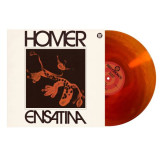
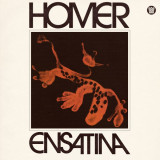
Homer Steinweiss has an incredibly storied career in music that started when he was just a teenager. He's drummed for nearly every "retro soul" group that mattered and his distinctive stickwork helped blend the raw-but-receptive soul sound back into the mainstream via the likes of Amy Winehouse & Sharon Jones. He's now one of the most in demand drummers in the world, playing with Jonas Brothers, Clairo, Solange, Adele, and Bruno Mars to name a few.
With his debut solo release Ensatina, Homer is stepping to the forefront as both musician and producer. His new record is a reection of who he is now and a testament to how struggle often brings about a needed change. In 2020 Homer had to reckon with considerable emotional turbulence; at the same time that his band Holy Hive broke up, a personal relationship of 20+ years fell apart putting Homer in an uncertain place mentally. The fallout was signi‑cant enough for him to seek professional help. "I was going through these super manic highs and then very depressive lows," Homer describes. "And being in all that, it's just so tough to imagine that the other side is there, that it'll be ok." But, with time, professional help, and support from friends and family, Homer made it through and has been forever changed. This album is a product of that period of his life. The ‑rst song from these sessions, "Now That It's Over" perfectly sums up Homer's triumph through those tough times. It's a song of changing perspective and contemplation with haunting vocals from Hether and Flikka. "Paul (Castelluzzo_ aka, Hether), as a friend, saw me through these highs and lows," Homer points out. "I only had the one line, 'Now that it's over, I'm alright,' but he felt that lyric so much that he wrote all these sections and lyrics and basically completed the song. It was like he was writing to me." Hether also features on album standouts "Deep Sea", a modern love song, "Start Select", a juxtaposition of inspiration and melancholy, and "Forever and Ever and Ever and Ever" which is an incredible contemporary take on the B side soul ballad. Homer uses his innate gift for bringing seemingly opposing energies together on "Racecar Driver", pairing the vocals of Hether & long time friend and collaborator KIRBY to make a genre challenging banger. KIRBY also graces the album opener "Rollin'", an airy, warm-weather invoking song that her raspy voice perfectly compliments. He puts his drumming front and center on "So Get Up!", a bottom heavy infectious track that MINOVA's vocals turn into an instant hit that is sure to smash speakers. On "Wishing Well" & "Hide It Behind the Light I'm Shining Through" Homer is joined by girl named GOLDEN, who's unique voice effortlessly ‑nds the pocket in each tune. The man on trumpet, and fellow Big Crown label mate Dave Guy, puts his incomparable playing on the album closer "Goldie" which Homer says is the part of the movie where the credits roll.
Making this album was a refuge for Homer and it put him back on track. Ensatina is a glimpse into the different energies and inuences that make Homer tick. To say he was always much more than a drummer would be an understatement, and this ‑rst solo offering is just the beginning of his next chapter.
After the high times and critical-mass arrangements of the previous two records, Snowbug exuded a breezy, spare, morning-after vibe. Edified by all manner of world-folk, classic Brazilian pop and the first volumes of the Ethiopiques comp, the Llamas recorded in London with Fulton Dingley and in Chicago with Bundy K. Brown and Jim O"Rourke engineering at Electrical Audio and John McEntire mixing at Soma. Snowbug is an understated, underrated gem.
Writing music, for singer-songwriter and producer Fine, “feels like being entrusted with a secret.” On Rocky Top Ballads, the Copenhagen-based musician’s debut album, these secrets take the form of minimalist compositions that search for glimpses of beauty in the everyday. Recorded, produced, and mixed by Fine, the album is a mystical soundtrack to a captivating songwriter’s explorations of process and intuition.
“The whole album is about the moments when you see a crack in something,” Fine explains, “where you briefly see another side of yourself or of someone you've known forever.”
Fine grew up in Denmark’s rural Northern Jutland; there, her father’s guitar and banjo playing formed the sonic backdrop of her childhood. In the years since, her musical curiosity has led her to work across a range of styles and sounds. In her early twenties, she became part of Danish electronic trio Chinah, which released three albums. You might also have caught her sampled vocals on the joyfully rollicking Two Shell song “Home,” from 2021. Then, last year, she — along with Erika de Casier and Smerz — co-wrote three songs for the massive, critically lauded K-pop group New Jeans. Fine is also a part of Clarissa Connelly Canons group back home in Denmark, and writes music under the moniker Coined with composer and songwriter Astrid Sonne.
But Rocky Top Ballads is a turn back towards a more personal, stream-of-consciousness songwriting style. Fine wrote and recorded these songs sporadically over the course of the last few years. In light of Chinah’s collaborative, piecemeal production style, Fine craved a more organic, intuitive process for these songs. Her work on the record combines sample-based production with the sounds of instruments she and her collaborators could hold in their hands, ones that inspired free-flowing improvisation: electric and acoustic guitar, even the Ensoniq keyboard that was in her childhood home. The resulting songs are equally inspired by the country and folk of her childhood, the hazy beauty of Mazzy Star, the avant-garde pop of Dean Blunt, and the songwriting of ’90s singer-songwriters like Suzanne Vega.
Fine describes her songwriting process as a “magical thinking method”: being in contact with the present moment and pretending as if she already knows the song she’s about to write. Many of the songs on Rocky Top Ballads use the original takes of Fine’s vocals, an attempt to capture a song’s initial essence and avoid disturbing the song’s generative idea as much as possible. You can hear that well-preserved spark on songs like “Losing Tennessee,” a minimalist and wistful reflection on the inherent loss and change of growing older. She wrote other tracks, like the piano-led “Whys” and the woozy “Coasting,” through a process of cutting and layering her improvisations, carefully merging multiple musical snippets into newly seamless compositions. And the stunning closing track “A Star” is the product of a slow process of evolution: beginning as an understated expression of sincerity before dissolving into a rich, distorted guitar-driven exploration.
As a songwriter and producer, Fine’s work often peers into the universes of experience that can be hidden inside a fragmentary moment. Sometimes she explores this literally — as in “Days Incomplete,” which she built off a short sample from “A Star.” This impulse — to zoom in, to recontextualize, to excavate — threads throughout her lyrics, too. What happens, her songs ask, when we pay close attention to those everyday images and physical realities we might otherwise ignore: the sky, the rain, the sun, the sea? On the spacious and swoony “Big Muzzy,” with its gentle sway and Cocteau Twins-inflected vocals, Fine sings about watching the “summer turn blue”; the grooving, propulsive “Remember The Heart” is a love letter to the sea where she grew up. In her airy voice, Fine traces meandering melodies that continually unspool with fresh insights.
A particular mantra guided Fine’s songwriting throughout the creation of Rocky Top Ballads: “Everything has potential.” In these songs, small moments are worthy of deep contemplation, and gentleness can evoke worlds of emotion. The resulting songs offer a gift of momentary pleasure, flowing and unhurried as a gentle breeze.
Marissa Lorusso
- Feather Lighter
- Breezy
- Owl
- Both Sides
- Burning Bowl
- Radiance
- Wasichu
- Greasy Grass
- Raven
- Is What It Is
Dieses Album ist ein "slow grower" und auch nach 10 Jahren klingt dieses dunkle Werk des New Yorker Duos noch frisch und berührend. Vor 10 Jahren kam das raus, nun legt das Label BB*ISLAND das lange vergriffene Vinyl in einer limitierten Sonderedition nochmal auf. Gepresst auf "Sparkling Starlight" Vinyl, verpackt in einem DeLuxe cover. Dazu gibt's ein gefaltetes Poster mit den Lyrics und eine Postkarte mit Downloadcode. Der Download beinhaltet neben den Albumtracks auch noch einen exklusiven 1-stündigen Interviewpodcast mit Shee Keeps Bees. She Keeps Bees, aus Booklyn, sind die Singer/Songwriterin/Gitarristin Jessica Larrabee und Schlagzeuger/Produzent Andy LaPlant, die seit 2006 über selbstproduzierte Aufnahmen und zahlreiche Konzerte zu einer besonderen Einheit zusammengewachsen sind. Ihr Ausgangspunkt war ein roher, soulful Bluesrock, in der Presse wurden Vergleiche zu Patty Smith, White Stripes (...in reverse" :Guardian), The Kills, PJ Harvey oder Cat Power gezogen. Die geben eine erste Ahnung wo's lang geht, hinken dann aber doch, ob der ganz eigenen Chemie und Qualität dieses Duos. Schönheit durch Reduktion, Direktheit, Leidenschaft, Intimität In diesem Sinne ist den beiden nun ein besonders eindringliches Album gelungen. Eight Houses schwelgt in der rohen Kraft des Subtilen. Ruhe und Raum finden sich hier auch im kontrollierten Chaos, wenn Larrabee's Gitarrenriffs krachen und über LaPlant's stoische Beats schwappen. Dann wieder sind Ihre Kompositionen knapp koloriert, mal mit hageren Piano Linien, mal mit ein paar Bläsern, die sich kurz aus dunstigen Ecken erheben, eine warm rollende Orgel wischt durchs Bild, ein Synthezier zirpt fern. Das Album lebt von Understatement und Spannung, dunkel, bewegend, kraftvoll, erlösend. Ganz im Mittelpunkt steht Jessica Larrabee's Stimme - lakonisch, von besonderem Ausdruck. "she has one of the best voices I have ever heard and she has more soul in one finger than most female singers have in our scene." meint Sharon Van Etten, die hier auch bei zwei Songs, "Is What It Is" und "Owl", backing vocals beisteuert. Für Eight Houses hat das Duo erstmals mit einem externen Produzenten zusammen gearbeitet, Nicolas Vernhes (Deerhunter, The War On Drugs, Dirty Projectors, Wye Oak, Lia Ices, etc.).
Naoki Zushi. Perhaps best known for his stellar guitar contributions to psych folk group, Nagisa Ni Te, Zushi has had a parallel career, for several decades, slowly releasing solo albums that spotlight his exultant guitar playing. Originally released to CD only by Shinji Shibayama of Nagisa Ni Te’s Org imprint in 2018, IV has Zushi playing and writing at a peak, its six songs slowly unfurling with a kind of paradoxical understated grandeur. This is psychedelic guitar music at its most paced and considered, yet given to flights of inspiration, and in this respect, Zushi sits within a lineage of guitarists who’ve used their instrument both as textural anchor and improvisatory tool – think of figures like Phil Manzanera and Robert Fripp, but also Roy Montgomery, Liz Harris of Grouper, even Tom Verlaine on his instrumental solo albums. Like those artists, Zushi locates moments of deep emotional resonance amidst luxuriant textural and melodic exploration. Zushi’s history stretches back to the mid 1970s. While for many, he first appeared on the scene as a founding member of noise legends Hijokaidan, alongside Jojo Hiroshige, his musical contributions predate that encounter. He started out playing progressive rock and improvised music, making home recordings of when he was in high school. He was a member of Rasenkaidan (Spiral Staircase) alongside Hiroshige and Idiot (Kenichi Takayama), the group that soon mutated into Hijokaidan (Emergency Staircase). Zushi and Takayama would soon form Idiot O’Clock, in 1982; Zushi also led his own Naoki Zushi Unit, starting in 1983. But for many, Zushi’s first significant appearance on record was as a member of Shinji Shibayama’s mid-eighties psych-pop group, Hallelujahs, whose sole album was recently reissued on vinyl. That group mutated into Nagisa Ni Te, and Zushi has played a significant role as their lead guitarist for several decades. His own solo music has appeared sporadically – Paradise (1987), Phenomenal Luciferin (1998), III (2005) and IV, with a few recent, meditative offerings, For My Friends’ Sleep (2021) and Nocturnes (2022). With IV, though, Zushi achieved something remarkable, a kind of extended exploration of the time-altering properties of echoplexed, hypnotically spiralling guitar interplay. The opening ‘Mirror’, “a song about the mirror inside me,” Zushi explains, starts out as a lush psych-folk song, slow and gentle, but soon takes to the skies with a cat’s cradle of Fripp-esque guitars, before thick, droning chords sweep the song to a drowsy coda. ‘Nocturne’ weaves silver skeins of guitar melody around a cyclical chord pattern; it gathers energy and quiet intensity through insistent repetition. The rest of the album explores the nuance Zushi can draw out of simple elements, building on what ‘Mirror’ and ‘Nocturne’ offer – the profundity of a chord change; the melancholy of a few quietly sighed words; the exhilaration of a guitar solo bursting out of the speakers; the subtle shifts in emotional register offered by tone and touch. Throughout, there’s something quiet, yet ineffable, shading the contours of the songs, such that it makes perfect sense when Zushi says, “What I want to express through music may be ‘sense of mystery’.” A few of the songs had their basic parts recorded at LM Studio and Studio Nemu with Shibayama and Masako Takeda joining on bass and drums, respectively; much of the album, however, was tracked at Zushi’s home studio. That seems appropriate for a collection of songs that are expansive in their intimacy. Asked what drove the sessions, Zushi answers, “I thought I’d make IV an album that particularly focuses on the guitar play.” And focus it does, as Zushi’s sky-scraping, soaring, elemental tone is front and centre throughout. But these are no guitar heroics; rather, Zushi uses the guitar as conduit and diviner, a tool for spirit location, and IV is his most eloquent expression yet of such singular magic.
Today, chart-topping vocal powerhouse Teddy Swims releases four new surprise tracks on I’ve Tried Everything But Therapy (Part 1.5). The project includes his chart-conquering smash hit ‘Lose Control,’ which recently claimed the top spot on the Billboard Hot 100 chart, and has surpassed 1 billion streams across all platforms.
Among the four new tracks on I’ve Tried Everything But Therapy (Part 1.5) is ‘Hammer to the Heart,’ a moody anthem with a stirring, stadium-ready chorus, ‘Tell Me,’ an understated alt-leaning offering that explores loss and heartbreak, and ‘Apple Juice,’ the kind of soulful throwback that Swims does better than anyone. Another unforgettable highlight is ‘Growing Up Is Getting Old,’ an acoustic treasure that captures the Atlanta native’s magnetism like never before.
Mark E returns to his own MERC imprint for his first 12 inch vinyl release in 7 years on the label. 4 tracks of unswerving deep house sees Mark explore the underside of house music, evolving his sound into deeper searching electronic territory, pursuing a rich evolving journey along the way. Understate to Intoxicate.
A1 Northern Lights
Darkly, tense tones take center stage as Northern Lights kicks the LP off, introduced with an eerie synth before classic, striking old school breaks that aficionados will recall from the likes of John Bs Secrets drop, chopped expertly by our Spatial duo to create a quietly vengeful beat pattern with heavy kicks and a unique stuttering detail. Circling menacingly around the mix we are treated to swathes of choral detail, subtle vocal samples and shimmering ambience..
A2 Sunset on Mars
Showcasing the strengths of both producers through a delightfully rich atmosphere, Sunset on Mars opens with soothing echoed effects that ooze a welcoming sense of wonder. Delicate in composition yet still packing a punch, the breaks sit over a sumptuous deep sub bassline which carries our journey through simple key melodies, vivid mood-changing synths superbly to create a pure, wholesome atmospheric bliss.
B1 Totality
Dominant hats and cymbals surf the peaks of the mix early in Totality, detailed old school breakbeats quickly seizing our attention constructed with an effortless attention to detail. A stark, thick atmosphere is carved from a broad backdrop of sound blending vocals and synths, enveloping the listener with a dense, bleak soundscape that develops continually as the breaks roll on with memorable intent.
B2 Reincarnation
A deeply evocative, interstellar intro opens Reincarnation, generating images of lonely spacewalks with trademark Spatial aplomb. The vibe continues through a barrage of heavy analogue amens which crush the mix, edited with a chunky, commanding panache. The listener can picture pillars of isolation and thundering defiance dancing in duality as the elements weave their way fluidly throughout.
C1 Seraphim
Into an intense, epically atmospheric piece next as Seraphim channels the spirit of yesterday for a journey into the souls core via scene-trademark Hot Pants breaks, a moody 808 bassline and swirling atmospheric pads, melodies & synths. Layered with detailed FX demanding repeated listens to soak it all in, Seraphim is a special track which will take over your setlist and the journey home.
C2 Prism of Light
Sit back and relax to another slice of classic atmospheric bliss with Prism of Light, opening with a DJ-friendly hi hat intro before melodic synths generate an instantly unforgettable late-90s vibe. Hot Pants breaks drive us forward with a wondrously simple yet effective mix of 2 step and double kick edits, as blissful ambient washes and vocal hits are drizzled over the mix. Delightful.
D1 Harmonic Function A uniquely constructed beat pattern guaranteed to move you opens Harmonic Function, building up from rushing cymbals and hats intertwined with a fantastic crunchy, metallic half-time snare. Throw in a slew of mournful melodies and blanketed pad work around the mix and youre left with a superbly laid back yet danceable piece from ASC & Aural Imbalance, continually innovating in their music as ever on Spatial.
D2 Fade to Grey
Old school rhythms are on the agenda as our duo close out the album with a tense, meandering exploration through space, circling the planets through mellowed out beats before a layer of dense, analogue breaks are added to the mix as the atmosphere escalates. Exquisitely programmed vocals provide texture and feeling, while an understated bassline rumbling on below, completing a timeless collage of sound.
Words by Chris Hayes (Spatial / Red Mist)
- Rollin' Feat. Kirby
- Camera Feat. Girl Named Golden
- Deep Sea Feat. Hether
- Now That It's Over Feat. Hether & Flikka
- Racecar Driver Feat. Kirby, Hether, And Girl Named Golden
- So Get Up! Feat. Minova & Michael Rault
- Wishing Well Feat. Girl Named Golden
- Hide It Behind The Light I'm Shining Through Feat. Girl Named Golden
- Start Select Feat. Hether
- Forever And Ever And Ever And Ever Feat. Hether
- Goldie Feat. Dave Guy
Homer Steinweiss has an incredibly storied career in music that started when he was just a teenager. He's drummed for nearly every "retro soul" group that mattered and his distinctive stickwork helped blend the raw-but-receptive soul sound back into the mainstream via the likes of Amy Winehouse & Sharon Jones. He's now one of the most in demand drummers in the world, playing with Jonas Brothers, Clairo, Solange, Adele, and Bruno Mars to name a few. With his debut solo release Ensatina, Homer is stepping to the forefront as both musician and producer. His new record is a reection of who he is now and a testament to how struggle often brings about a needed change. In 2020 Homer had to reckon with considerable emotional turbulence; at the same time that his band Holy Hive broke up, a personal relationship of 20+ years fell apart putting Homer in an uncertain place mentally. The fallout was signi‑cant enough for him to seek professional help. "I was going through these super manic highs and then very depressive lows," Homer describes. "And being in all that, it's just so tough to imagine that the other side is there, that it'll be ok." But, with time, professional help, and support from friends and family, Homer made it through and has been forever changed. This album is a product of that period of his life. The ‑rst song from these sessions, "Now That It's Over" perfectly sums up Homer's triumph through those tough times. It's a song of changing perspective and contemplation with haunting vocals from Hether and Flikka. "Paul (Castelluzzo_ aka, Hether), as a friend, saw me through these highs and lows," Homer points out. "I only had the one line, 'Now that it's over, I'm alright,' but he felt that lyric so much that he wrote all these sections and lyrics and basically completed the song. It was like he was writing to me." Hether also features on album standouts "Deep Sea", a modern love song, "Start Select", a juxtaposition of inspiration and melancholy, and "Forever and Ever and Ever and Ever" which is an incredible contemporary take on the B side soul ballad. Homer uses his innate gift for bringing seemingly opposing energies together on "Racecar Driver", pairing the vocals of Hether & long time friend and collaborator KIRBY to make a genre challenging banger. KIRBY also graces the album opener "Rollin'", an airy, warm-weather invoking song that her raspy voice perfectly compliments. He puts his drumming front and center on "So Get Up!", a bottom heavy infectious track that MINOVA's vocals turn into an instant hit that is sure to smash speakers. On "Wishing Well" & "Hide It Behind the Light I'm Shining Through" Homer is joined by girl named GOLDEN, who's unique voice effortlessly ‑nds the pocket in each tune. The man on trumpet, and fellow Big Crown label mate Dave Guy, puts his incomparable playing on the album closer "Goldie" which Homer says is the part of the movie where the credits roll. Making this album was a refuge for Homer and it put him back on track. Ensatina is a glimpse into the different energies and inuences that make Homer tick. To say he was always much more than a drummer would be an understatement, and this ‑rst solo offering is just the beginning of his next chapter.
- Rollin' Feat. Kirby
- Camera Feat. Girl Named Golden
- Deep Sea Feat. Hether
- Now That It's Over Feat. Hether & Flikka
- Racecar Driver Feat. Kirby, Hether, And Girl Named Golden
- So Get Up! Feat. Minova & Michael Rault
- Wishing Well Feat. Girl Named Golden
- Hide It Behind The Light I'm Shining Through Feat. Girl Named Golden
- Start Select Feat. Hether
- Forever And Ever And Ever And Ever Feat. Hether
- Goldie Feat. Dave Guy
Homer Steinweiss has an incredibly storied career in music that started when he was just a teenager. He's drummed for nearly every "retro soul" group that mattered and his distinctive stickwork helped blend the raw-but-receptive soul sound back into the mainstream via the likes of Amy Winehouse & Sharon Jones. He's now one of the most in demand drummers in the world, playing with Jonas Brothers, Clairo, Solange, Adele, and Bruno Mars to name a few. With his debut solo release Ensatina, Homer is stepping to the forefront as both musician and producer. His new record is a reection of who he is now and a testament to how struggle often brings about a needed change. In 2020 Homer had to reckon with considerable emotional turbulence; at the same time that his band Holy Hive broke up, a personal relationship of 20+ years fell apart putting Homer in an uncertain place mentally. The fallout was signi‑cant enough for him to seek professional help. "I was going through these super manic highs and then very depressive lows," Homer describes. "And being in all that, it's just so tough to imagine that the other side is there, that it'll be ok." But, with time, professional help, and support from friends and family, Homer made it through and has been forever changed. This album is a product of that period of his life. The ‑rst song from these sessions, "Now That It's Over" perfectly sums up Homer's triumph through those tough times. It's a song of changing perspective and contemplation with haunting vocals from Hether and Flikka. "Paul (Castelluzzo_ aka, Hether), as a friend, saw me through these highs and lows," Homer points out. "I only had the one line, 'Now that it's over, I'm alright,' but he felt that lyric so much that he wrote all these sections and lyrics and basically completed the song. It was like he was writing to me." Hether also features on album standouts "Deep Sea", a modern love song, "Start Select", a juxtaposition of inspiration and melancholy, and "Forever and Ever and Ever and Ever" which is an incredible contemporary take on the B side soul ballad. Homer uses his innate gift for bringing seemingly opposing energies together on "Racecar Driver", pairing the vocals of Hether & long time friend and collaborator KIRBY to make a genre challenging banger. KIRBY also graces the album opener "Rollin'", an airy, warm-weather invoking song that her raspy voice perfectly compliments. He puts his drumming front and center on "So Get Up!", a bottom heavy infectious track that MINOVA's vocals turn into an instant hit that is sure to smash speakers. On "Wishing Well" & "Hide It Behind the Light I'm Shining Through" Homer is joined by girl named GOLDEN, who's unique voice effortlessly ‑nds the pocket in each tune. The man on trumpet, and fellow Big Crown label mate Dave Guy, puts his incomparable playing on the album closer "Goldie" which Homer says is the part of the movie where the credits roll. Making this album was a refuge for Homer and it put him back on track. Ensatina is a glimpse into the different energies and inuences that make Homer tick. To say he was always much more than a drummer would be an understatement, and this ‑rst solo offering is just the beginning of his next chapter.
- Ermione
- Elena
- Menelao
- Tindaro
- Nuovo Sposo
- Uccidere Elena
- Amata Luce Addio
- Pilade
- Niente Di Sacro
- Pugnali
Die Schachtel Records is proud to present Ifigenia/Oreste, a new vinyl LP by celebrated Italian composer Paolo Spaccamonti. This album marks the seventh installment in the label's renowned Decay Music series, which has become synonymous with deeply emotive, abstract, and electronic/ambient music, which has so fare featured works of such names as Stefano Pilia, Giovanni di Domenico, Sandro Mussida, Vértice, Damavand and Claudio Rocchetti. Aim of the series is composing a fascinating scenario of the most interesting names of experimental musicians – mainly of Italian origins - working at the intersection of sound and music, abstract and visual, storytelling and abstract composition.
Paolo Spaccamonti has long been a significant figure in the contemporary music scene, known for his ability to bridge the worlds of instrumental, electronic, and experimental music. His most recent release, Nel Torbido (2023), is a testament to his ever-evolving artistry. With Nel Torbido, Spaccamonti delivered a haunting and immersive sonic experience that oscillates between tension and release, bringing together moody soundscapes, unsettling textures, and his signature understated guitar work. His exploration of silence, noise, and melodic tension has earned him recognition as one of the most unique voices in modern composition.
Composed by Spaccamonti, Ifigenia/Oreste is the original score for the theatrical production IFIGENIA / ORESTE, directed by Valerio Binasco and produced by Teatro Stabile di Torino. The music, both haunting and subtle, mirrors the play's minimalist and intense staging, immersing listeners in an evocative soundscape that blends ambient textures with guitar-driven melodies. The music was recorded and processed by Filippo Conti, with additional production and mixing by Stefano Pilia. The vinyl’s design has been crafted by Bruno Stucchi of Dinamomilano, making this release a fusion of sound, visual, staging and cultural reference.
In reflecting on his collaboration with director Valerio Binasco, Spaccamonti said: "From the first meeting with Valerio, it was clear that we aimed to create a production stripped of any unnecessary stylistic embellishments. Ifigenia and Oreste had to be severe, devoid of visual distractions, simple yet extreme in its own way. I sought to follow the same path with the music. The foundation is always the guitar, but I wanted to avoid overloading it, either harmonically or sonically. Sometimes, I treated it like a fragmented background noise; other times, I ventured into more aggressive, melancholic, or even melodic terrains, but always in a very human way. The text demanded an atmosphere that lived in the alternation of silence and rarefaction, like in the films of Bresson and Lanthimos. Short scenes interrupted by moments of darkness. In a marked rhythm, a suspense constantly suggesting the advance toward death, announced from the very first scene. Hence, the emphasis I wanted to place on silence through the music, even within individual tracks. Long, granular tails, like the (few) lights on stage."
Sol Power Sound returns with an EP of two blistering (and rare) island disco cuts remixed by Bosq and the Sol Power All-Stars that will make you forget that summer has come to a close. Officially licensed from the estate of Nappy Mayers, who wrote and produced both originals, both tracks capture Nappy’s exquisite sound that dominated the Trinidadian discotheques in the late 1970s and early 1980s but never received the international acclaim they deserved.
Bosq, a long-time friend of the label, leads things off on the A-side with his fiery dance floor flip of Nadie La Fond’s “Three Way Situation.” In his classic yet understated style, Bosq adds just enough, enhancing the captivating groove, while preserving the true essence and of the original. Using both vocal and dub parts Bosq turns up the funk and transforms the tune into a blistering modern disco cut that works equally well on the beach, in a dark club, or at your favorite underground afterhours.
On B1, the Sol Power All-Stars present an extended disco dub of the 1980 Nappy Mayers tune “Let Yourself Go.” The Sol Power crew opts to work with the b-side version of the original, which bypasses the lead vocal and instead focuses on the synth-bass led groove, an unforgettable chorus, and powerful disco horns. Toss in some chopped up flute, guitars, and synth and you’ve got yourself a party. And did we mention drums and perc? Don’t miss the massive soca break that will take you straight to a carnival jam in the islands.
Alongside remastered extended 12” versions of both original vocal cuts, Trini Disco Dubs highlights the genius of Nappy Mayers, a legendary Caribbean songwriter, producer, and performer, through the lens of modern producers who are at the top of their game.
2024 Repress
Medical Records releases the first full length LP in 5 years by LA's Geneva Jacuzzi. To say Jacuzzi is a multifaceted artist would be an understatement. She is well known for her uncompromisingly obtuse synth-driven pop and one-of-a-kind performance art that is comprised of one time only spectacles and installations. Her works have been presented in famous art institutions such as the Museum of Contemporary Art, MOCA and numerous other venues across the globe. She has developed a very focused cult following in the art AND music scenes. She was originally well known for her multitude of self-released home recordings but also released a full length Lamaze in 2010 on the Vinyl International to much acclaim. Not to mention her track The Sleep Room featured on The Minimal Wave Tapes Vol 2. Technophelia is the culmination of a hybrid of DIY and professional studio recordings (with the help of esteemed producer Chris Coady) that resulted in this exquisite album. Features the soon-to-be-hits I'm A TV and Cannibal Babies. Lovers of unique and left-field wave such as Gina X, Ronny, and the like will be transfixed by the raw, oozing newness of it all. All tracks recorded/performed by Geneva Jacuzzi with additional production by Chris Coady at Sunset Sound Studios. Mastered by Josh Bonati. Presented on high-quality 180gram heavyweight white vinyl.
»Chromacolor« is one of those records that immediately feels like home even though it is hard to locate stylistically. Written and recorded by Hanno Leichtmann in Berlin and Madeira between 2020 and 2022, it draws on rhythmic minimalism as a guiding principle and might call to mind organic, instrument-based ambient music, but also incorporates jazzy moments as well as Annie Garlids multi-layered vocals that permeate through these nine pieces.
The foundation for Leichtmann’s Chromacolor project was laid when the prolific Berlin-based producer, musician, and drummer borrowed a vibraphone and a Fender Rhodes from two friends. Combining their unique sonic affordances with those of a Guitaret, an electric lamellophone, he further expanded his sound palette by inviting other musicians—Anthea Caddy, Sabine Vogel, Tobias Delius, Els Vandeweyer, Sabine Ercklentz, Mike Majkowski, Andrei Ladeishchikov, Oona Farchy, Gonçalo Caboz as well as Rafael and Hugo Andrade—to play small but vital parts in the production of the album.
The opener »Kisses and Wine« masterfully sets the tone for an album that is as inviting as it is challenging. Working with relaxed repetitive rhythms, Garlid’s anthemic vocals and a sprinkle of saxophone and flute tones courtesy of Delius and Vogel, respectively, as well as tender piano notes played by Leichtmann, it evokes a lot with only few means: a certain melancholy, but also an elevated atmosphere that feels both exuberant and restrained.
Leichtmann’s elegant study of the power of repetition, minute rhythmic shifts and subtle use of melodic and harmonic elements creates ambiguities and polyvalences like these throughout the entire record, up until its understated finale, aptly titled »A Beautiful Day«—a drone-jazz piece, if you will, both longing and joyful.
As an album, »Chromacolor« is hard to pigeonhole, but rich and rewarding. All it takes is immersing yourself in it.
It is summer dawn . . . and you are alone. Here is music for your strange mood. The piano starts the first track, slow tempo beat, a strict beat, a swinging beat. Lillemor—here minor harmonies give the tune a rural, romantic feeling of some place in Spain or France. The tempo changes to medium fast—the flute solos. Light phrasing contrasts beautifully to the earthy, swinging beat of the rhythm section and the repeating piano figures. The trombone adds a new color, a counterpoint of sound and phrasing, backed by the pulsating beat of this wonderful rhythm and the driving piano. Summer dawn . . . This music has more to offer, because it shows the personality of Sahib Shihab at its best. Sahib is a universal musician who reflects musical experiences in jazz since the end of the thirties. He lived through the important periods of modern jazz with his heart and mind wide open toward everything that was good music, regardless of being termed "Mainstream", "Bop", "Cool", "Westcoast", "Eastcoast", "Hard Bop'', et cetera. When you listen closely to his music, you will find traces of all these, but they are immersed in his deep musicianship and his true jazz personality. Sahib Shihab's background reads like the record of a master of advanced studies. Furthermore he played and collaborated with the coolest jazz musician of that period. Above all let's name Budd Johnson, Theolonius Monk, Tadd Dameron, Milt Jackson, Dizzy Gillespie, Illinois Jaquet, Elmer Snowden, Luther Henderson, Larry Noble, Fletcher Henderson, Roy Eldridge. In his early professional years, Sahib was heard mostly on alto sax; later, more often on baritone sax and flute. Today, his name is inseparably connected with these two instruments. The unity of his jazz performances is not alone bound up with the com¬positions and the arrangements of Sahib Shihab, though in their understated simplicity they have a melodic beauty that is seldom found in jazz of today. The rhythmical subtleties add to the overall qualities of being relaxed vehicles for free-blowing, but there is an immediacy that you hear and feel every moment when listening which defies analysis. The playing of the rhythm section helps greatly to promote the sense of flux and contrasting constant renewal that makes listening to this record so invigorating an experience. Well, this is no surprise, with Kenny Clarke as the nucleus of the rhythm group. Kenny 'Klook' Clarke is a major figure and contributor in jazz, one of the founders of modern jazz, and is ranked as one of the all-time great drummers. He influenced a whole generation of musicians with his playing, though living in Paris since the middle of the fifties somewhat dimmed his name to the general American public. Nevertheless, his name alone will assure a connoisseur to expect top class musical experiences. Talking of the rhythm section we have to name Jimmy Woode's bass, which together with Kenny's drumming, is the driving force for the group and the reliable harmonic anchor for the improvisors. By the way, Jimmy has been with the Duke quite a while, and this alone is an award for extraordinary craftsmanship and artistry. The good sounding rhythm with its full-bodied color is also a result of the added bongos of Joe Harris, who manages to stay out of the way of the players—a quality not often found with drummers—but his playing is felt through the set. There are two members of the group not yet mentioned. Two Europeans, pianist-composer-arranger Francy Boland from Belgium, and trombonist Ake Persson from Sweden. Francy Boland this time is a sideman, though normally he is a leader of recording sessions, both as composer-arranger and as musical director of the band. In the fifties he was in the States writing arrangements for different name-bands, such as Basie and Goodman. In Europe, he is famous for his swinging modern big band arrangements; and his inventiveness as a writer is reflected in his piano playing. He has the talent of using the right dynamic approach every moment, thus making his playing helpful to soloists and interesting for listeners as well. Ake Persson has been Scandinavia's out-standing trombone player for about ten years. There are only a few trombonists in Europe who might match his talents at times, but they lack the consistency of his playing. He is impressive, whether playing in a big band, or whether main soloist in his own small groups. American musicians love the sound of his slide trombone and his easily flowing romantic improvisations, so he often joins American name-bands as they travel in Europe. The music speaks alone . . . , we said it before. You have your soul to feel the beauty, to follow lines and structure, and to enjoy the spiritual excitement. Whether you enjoy the flowing, easy sounding theme of "Please Don't Leave Me", or the climaxing piano solo in the same piece—the bass solo in "Waltz For Seth" or the swinging baritone sax—listen to the first bars of this solo and pay attention to Kenny. Whether you listen to "Campi's Idea", (named after Gigi Campi, the well known Cologne jazz enthusiast who organized this recording) with the romantic flute solo of Sahib, the interesting tempo changes, the piano comping, the moving trombone solo; or to the up-tempo "Herr Fixit", with the cooking Kenny and humorous, driving flute solo, you know that these six musicians where in the right mood, in the right stimulating surroundings to feel what we all feel when it's: SUMMER DAWN.
Oh yes! First ever official reissue of the positively sublime and very rare Butterfly LP, recorded in Tokyo in 1979 by Japanese songstress Kimiko Kasai and jazz legend Herbie Hancock.
Due to it's super-rare status as a Japan-only release, this exquisite collection of covers never got the recognition it deserved at the time, despite incredibly inspired performances from Kimiko, Herbie and the supremely talented musicians assembled for the project. From heavenly drummer Alphonse Mouzon and renowned organist Webster Lewis to bassist Paul Jackson, reedman Bennie Maupin and the master percussionist Bill Summers, the legendary performers crafted amazingly good vocal versions of Herbie / Headhunters jazz-funk. Unsurprisingly, it has been heavily in demand for many years.
The LP opens with Kimiko's highly desirable version of "I Thought It Was You", an elegant take on Herbie's own anthem. Other superb re-workings include the delicately soulful "Butterfly", jazzy groover "Sunlight", the smooth and sexy "Tell Me A Bedtime Story" and the beautiful ballads "Maiden Voyage" and "Harvest Time". A wonderful example of perfectly understated and masterful jazz-funk soul fusion that shouldn't be missed, the set closes with a jaw-dropping version of Stevie Wonder's "As".
This lovingly curated reissue enables a long overdue reappraisal of this hitherto unavailable masterpiece. The stunning artwork which adorned the original jacket - complete with OBI strip and sumptuous
4 page folded insert - has been faithfully restored. Simon Francis' sensitive mastering elevates the sound throughout and, as ever, it has been pressed at a reassuringly weighty 180g. Essential.
We are delighted to offer a very limited hand-stamped repress of Black Loops’ debut EP, 7 Hills on Freerange
The Italian producer who splits his time between Berlin and his native country has had a solid few years rising through the house music ranks through releases on respected labels such as Shall Not Fade, Pets, Toytonics, Aterral, Gruuv & Neovinyl.
His broad-ranging influences taking in funk, soul, disco and 90’s NY house inform a depth, warmth and musicality to his productions which has seen him in demand DJing around the world and makes him an obvious fit for us here on Freerange.
This EP, produced almost exclusively during an extended tour in Australia opens with title track 7Hills, the area where he stayed and worked on this release. The trademark Black Loops swinging groove, smooth Rhodes stabs/ keys licks courtesy of Nikos Haropoulos and a deep, rolling bassline all come together to form the perfect warm up track - uplifting, understate and with a subtle sense of anticipation.
Next up we have Parisian producer Mad Rey getting stuck into 7Hills for a raw, bumping interpretation which jacks things up a notch taking it into heavier peak-time territory. Mad Rey has been responsible for some brilliant releases on French label D.Ko, Rekids and most recently Mamie’s Records and alongside label mates Flabaire and Paul Cut he has helped reestablish Paris as a hotbed of fresh, musical talent.
Flipping over we have two more Black Loops originals. King Paul takes an old soul vocal sample and works it to great effect over crisp 909 beats and sun-soaked keys whilst a vinyl-only bonus track Linda38 treads a similar path but with a punchier groove and warm pads rounding off this EP in fine style.
- A1: Effroyables Jardins (Générique)
- A2: Sabotage
- A3: Arrestation
- A4: Le Trou
- A5: Effroyables Jardins Par Leszek Mozdzer (1Ère Version Piano)
- A6: Métamorphose À L'hôpital
- A7: Une Vie Pour Une Vie
- B1: Effroyables Jardins (Générique 2Éme Variation)
- B2: Reminiscence
- B3: Mariage
- B4: Clown
- B5: Effroyables Jardins (Ge?Ne?Rique De Fin)
- B6: Effroyables Jardins Par Leszek Mozdzer (2Éme Version Piano)
- B7: Effroyables Jardins Par Leszek Mozdzer (3Éme Version Piano)
A Colourful Storm presents Effroyables Jardins, a soundtrack composed by Zbigniew Preisner for Jean Becker's eponymous film. Given limited distribution during its initial release, the soundtrack's lustre has only strengthened and it is now considered a lost gem of contemporary chamber composition. An understated triumph of the oeuvre of Preisner, who closely collaborated with Polish director Krzysztof Kie?lowski and was responsible for the film scores of Dekalog, The Double Life of Véronique and the Three Colours trilogy.
"Krzysztof and Zbigniew really found each other, as they were deeply complementary in their need of emotional expression," reflects actor Juliette Binoche upon her work in Three Colours: Blue. A Colourful Storm cites no other film leaving a greater impact on them than Three Colours: Red. These would be the last films the duo worked on together, before Kieslowski's retirement and untimely death.
Effroyable Jardins marks Preisner's post-Kieslowski era of solo composition, shifting from devotional harmonies into a beautifully restrained style of neo-Romanticism. It is his second soundtrack for Jean Becker, following Francis Ford Coppola's commission for The Secret Garden, the César-winning Élisa, and Edoardo Ponte's Between Strangers. Its leitmotif - a delicate, sparse melody for piano and organ, appears only during the opening sequence and, like Preisner's most powerful soundtracks, takes on a life of its own. Compositions for violin, harp and percussion are interspersed with haunting variations on a theme and a masterful use of silence. His music haunts the grieving Julie in Blue, soundtracks Valentine's epiphany in Red, and evokes the sublimity of moments in everyday life.
- A1: Free Form (Feat. Lojii, Ill Camille)
- A2: How I Live (Feat. Lil B, Vic Spencer)
- A3: For The Family (Feat. Awon)
- A4: Daybreaks (Interlude)
- A5: Running (Feat. Pink Siifu)
- A6: Out Of Time (Feat. Ill Camille)
- A7: Black Sabbath (Feat. Billy Woods, Tha God Fahim)
- A8: Change The World (Feat. Moruf)
- B1: Peace (Feat. Yungmorpheus)
- B2: For You (Feat. Moruf)
- B3: The Last Of Us (Feat. Quelle Chris)
- B4: Count Your Blessings (Feat. Lojii)
- B5: Pgo (Feat. Oliver The 2Nd)
- B6: Stories (Feat. J’von, Vuyo)
- B7: Recuperating (Feat. Gabe ‘Nandez, Fly Anakin)
- B8: Discipline 74 (Interlude)
- B9: Holler Back (Feat. Kooley High)
Album packaging features 24pt reverse board jackets and illustrated inner board sleeves, with silver printed center labels. All artwork created by acclaimed designer, Håvard Gjelseth. Ol’ Burger Beats’s new opus, 74: Out of Time, is a multifaceted and stunning exploration of sounds and eras. In addition to every track being produced at 74 beats per minute, the album harks back to the year 1974; particularly the music, the records, the activism, the artwork, and the aesthetics. But it’s also incredibly current, as the Out of Time portion of the title very much refers to the present. It promotes a sense of urgency in the face of current affairs such as the COVID-19 pandemic, climate change, as well as contentious politics sweeping across the US and Europe. Beyond those deeply resonating elements to the record, 74: Out of Time is a truly gorgeous representation of hip-hop through the lens of the Norwegian composer, which is undoubtedly his most ambitious undertaking to date. Using 74bpm as his basis, he constructs sublime, jazzy instrumentals that feature some of hip-hop’s finest emcees and vocalists. And to say they all gel perfectly together is an understatement—and it would be underselling OBB’s meticulous approach here. Each song blends seamlessly from one to the next spread across the album’s 17 tracks, with the help from a standout supporting cast that includes Fly Anakin, Awon, Quelle Chris, Pink Siifu, Yungmorpheus, Lojii, billy woods, Tha God Fahim, Vic Spencer and Vuyo, among several others. “An avid record collector, the producer's first release was 2014's High Rhodes which led to comparisons to his heroes such as J Dilla, Madlib and Pete Rock.” Okayafrica // “With music teachers for parents, it was perhaps inevitable that Ole-Birger Neergård would follow their path and become a student of the game.” Passion of the Weiss
The very first Buchla synthesiser performance by revolutionary composer Suzanne Ciani finally makes its fifty year journey from its switch-on New York art gallery to its long deserved and discerning global phonographic audience.
With this previously unheard vinyl pressing, Finders Keepers Records are proud to present an archival project of ‘art music’ that not only redefines musical history but lays genuine claim to the overused buzzwords such as pioneering, maverick, experimental, groundbreaking and esoteric, while questioning social politics and the evolution of music technology as we have come to understand it. To describe Italian-American composer Suzanne Ciani’s resurrected Buchla concert records as genuine gamechangers would be a gross understatement. These records represent a musical revolution, an artistic revelation, a scientific benchmark and a trophy in the cabinet of counterculture creativity. This sonic installation album, alongside her recently liberated WBAI/Phill Niblock 1975 sessions (FKR082), are triumphant yardsticks in the synthesiser space race and the untold story of the first woman on the proverbial musical moon. While pondering the early accolades attached to these golden era New York recordings it’s daunting to learn that these records were in fact not even records at all.
What exists on this disc now was a manifesto and a one-time gateway to a new world, which somehow was only partially pushed ajar. Captured here is a genuine live act exploring new territories with a fully performable music instrument. If the unfamiliar, modernistic, melodic pulses, tones and harmonics found on these 1970’s artistic gallery collaborations/ live presentations (then soon to be followed by academic grant applications and educational demonstrations) had been placed in a phonographic context alongside the widely marketed work of Morton Subotnick, Walter Carlos or Tomita, then the name Suzanne Ciani and her infectious influence would have already radically changed the shape, sound and gender of our record.
With the light of Buchla and Ciani’s initial flame Finders Keepers continues the journey through the vaults of this increasingly celebrated music legacy, illuminating these ‘non-records’ that evaded the limelight for almost half a century. You can’t write history when you are too busy making it. With fresh ink in the bottomless well, let’s start at the beginning. Again
A founding member and keyboardist of acclaimed jazz
groupBADBADNOTGOOD,Tavares has gone from being an in-demand
producer with some of the biggest names in music to a songwriter and
artist in his own right, having touched corners of the globe and cemented
twoGRAMMY Awardsand five nominations
Between collaborations with Kendrick Lamar , Ghostface Killah , MF DOOM , Tyler
the Creator , Kali Uchis , Tavares has also played with Frank Ocean ,
soundtracked Virgil Alboh 's landmark S/ S 2019 runway show for Louis Vuitton,
and penned songs for Post Malone , Rosalia , Travis Scott , Kodak Black , Justin
Beiber,Camilla Cabello,Jack Harlow amongst others.
With a sound that fuses his nostalgia for the golden era of blogs with the
eclecticism of the late 2000s, the combination of the internet crossed with an
isolated suburban upbringing has laid the groundwork for Matty's genre-bending
artistry. Embracing a raw creative output with an aversion to following the norms
of the industry reverberates across his discography,Matty has found success in
previous releases including 'Clear' and 'I'll Gladly Place Myself Below', which push
the boundaries of sonic creativity and knowledge.
Now with his upcoming album POPS , Matty relinquishes his lowkey and
understated style for something larger than life, while maintaining a level of
honesty and openness that has defined his past work to make for a dynamic
release that constellates around music's greatest subject - love.
Endlich erscheint das gefeierte 2019er Album als luxuriöse Doppel-LP!
Auf den 12 Tracks von 'The Situation' das zusammen mit seinen langjährigen Freunden und Wegbegleitern Kuma Harada, Walter Latupeirissa (beide Bass) Max Middleton (Keys), Juan van Emmerloot und Jeff Allen (beide Drums) entstand, erleben wir den Bluesmeister einmal mehr in Höchstform.
Der muntere Opener und Namensgeber des Albums lädt verheißungsvoll ein. In seinem unnachahmlich zurückhaltenden, "understated" Stil beleuchtet Snowy auf den folgenden Tracks unterschiedlichste Lebenslagen, stets untermalt und kommentiert von seinem markanten Gitarrenspiel. Das Ergebnis ist ein reifes, in sich schlüssiges und immens zufriedenstellendes Album.
Das erstmalig auf Vinyl erscheinende Album kommt als 180Gr. Doppel-LP mit Lyric-Sheet, wattierten Innenhüllen und markantem Spotlack-Effekt im Artwork, bei dem das Hauptelement herausgestellt wird. Die edle LP-Version ist streng limitiert auf 500 Stck.
Die Presse schrieb zum CD-Release:
Rock Hard 7.5/10: "Auf "The Situation" (Snowy White/Soulfood) begeistert der passionierte Les-Paul-Spieler einmal mehr mit einem wunderbaren Solo-Ton, aus seiner rauen, zerbrechlich wirkenden Stimme spricht darüber hinaus die pure Lebensweisheit. Geschmackvolles Blues-Album von einem Mann, der nichts mehr beweisen muss, es aber trotzdem tut."
Guitar 4.5/5: "…zwölf fantastische und lebhafte groovende Nummern…"
Good Times: "Starke Refrains, eingängige Melodien, reichlich Energie…"
Jazz Thing: "…eine Menge guter, von einer gewiss auch altersbedingten Nachdenklichkeit geprägter Songs. Sehr schön."
Break Out: "Eine Platte in die man ganz tief versinken kann."
Rocks 8.5/10: "White führt ein exzellentes Bluesrock-Dream-Team an…"
Classic Rock 7/10: "Eleganter Soft- und Bluesrock…"
eclipsed 8/10: "Grandiose Musik für ruhige Momente, die durch die warme und organische Einspielung gewinnt."
Legacy 12/15: "Auf jeden Fall ist Snowy & Co. ein hochwertiges Genre-Album gelungen, dessen zusätzlicher Reiz es ist, eben über die Grenzen dieses Stils hinauszuwachsen!"
On 'Be Am' (now available only vinyl), Norwegian pianist, composer and
producer Bugge Wesseltoft has allowed his creative impulses to wander
where they may - no pre-set rules to govern the composition and
production, no obligations to (not) use electronics, not even a will to be
totally alone: this is pure playing and composition, where the music
speaks freely by whatever means it will
In the 25 years since Wesseltoft founded Jazzland Recordings, he has engaged in
numerous group projects and collaborations such as New Conception of Jazz,
duos with the likes of Sidsel Endresen, Henning Kraggerud and Henrik Schwarz,
one- off projects such as Trialogue, Bugge and Friends, and OKWorld! And of
course, the super- trio Rymden. However, it is in his solo material that we can
glimpse the true soul behind the effervescent and mercurial mind of one of the
most influential and important Norwegian musicians of an entire generation.
Many of the pieces here have the feeling of being wordless songs - indeed, no
words are needed when the notes convey all that is needed on tracks like "Tide"
or "State". The arrival of Håkon Kornstad on the track pairing of "Emergence" and
"Roads" shifts the mood from one of peace within solitude to peace within
company, the latter track being an understated dialogue, a musical soundtrack for
watching the world hustling and bustling, or sleeping its way towards a new day.
Tracks such as "Messenger", "Green" and "Be Am" throw more angular shapes,
musical shadow-play where unexpected progressions shift to moments of gospel
uplift before taking unanticipated shifts towards unexpected harmony. With "Life",
kalimba accompanied by birdsong loops, carrying us into a piece that takes
tentative but exact steps between positions, like tai chi in musical form.
"Sunbeams through leaves softly rustling" closes the album with that beautiful
Satie-like melodic simplicity that Bugge has made his own.
- Hollow Inside
- Light The Beacon
- Not Like I Was Doing Anything
- Note On The Table
- You Know It's True
- What Time Is It There?
- I Can't Sleep Thinking You Hate Me
- Smitten
- Portland, Oregon
- Let Me Brush The Hair From Your Face
- Stay
- Shoot The Moon
- Barney & Me
- Firefly
- La International Airport
- Crying
- If Things Had Been Different
- I Take It That We're Through
Repress
Songs ’94-’98 is a smart selection of material from The Cat’s Miaow, an Australian indie-pop group that gifted their decade with some of its finest songs. Released on World Of Echo, the album draws from the group’s string of excellent seven-inch singles, a small clutch of compilation contributions, and features one previously unreleased song, “I Take It That We’re Through”, recorded in 1998. Part of the burgeoning international pop underground of the nineties, The Cat’s Miaow’s legend has only built over subsequent decades, as more people discover this most quixotic and curious of groups: a recent appearance on A Colourful Storm’s compilation of Australian indie-pop, I Won’t Have To Think About You, is testament to their enduring influence. In part emulating the selection of tracks on the 1997 CD-only compilation, Songs For Girls To Sing, Songs ’94-’98 is also the group’s first ever full-length 12” vinyl collection. The Cat’s Miaow started out in 1992 as a home-recording duo, Bart Cummings (guitar, bass, vocals) and Andrew Withycombe (bass, guitar) taking time out from duties with Girl Of The World and The Ampersands (respectively), knocking out songs on Withycombe’s four-track. Soon joined by Kerrie Bolton (vocals) and Cam Smith (drums), the quartet spent the next five years quietly, slowly working away in the suburbs of Melbourne, recording gem after gem of independent pop. Like many of their Australian precursors or peers – The Particles, Even As We Speak, The Cannanes – The Cat’s Miaow were more successful overseas, a sadly typical phenomenon within the Australian musical landscape. The Cat’s Miaow were always worldly and stylish, anyway, each seven-inch single a refined artifact, each song a peaceable jewel. You could hear some relationships with other music – someone (if not everyone) in The Cat’s Miaow was a Galaxie 500 fan; there’s a minimalism to the playing and melodies that recalls Young Marble Giants, Marine Girls, Beat Happening – but the spirit in these songs is endearingly individualised, the result of a hermetic vision, an ideal of what a simple, unadorned pop song could be. They had a winning way with simplicity, songs like “Autumn”, “Crying” and “I Can’t Sleep Thinking You Hate Me” passing by in the blink of a moistened eye, and when they stretched out, as on “Firefly”, you can hear hints of the drifting ambience they’d perfect in their other band, Hydroplane. It’s not much of a surprise that The Cat’s Miaow found a receptive audience, and no small amount of support, from the networked communities of indie-pop labels and fanatics that developed in the nineties – they released records on imprints like Drive-In, Darla, Bus Stop and Quiddity, shared a flexi-disc with Stereolab, and appeared on countless compilations over the years. But they also understood the importance of the local: their first few cassettes reached the world’s mail routes via Wayne Davidson’s legendary Melbourne tape label, Toytown; they turned up on a split single with Davidson’s group, Stinky Fire Engine; they appeared on a tribute cassette for one of Australia’s finest, The Sugargliders, and indeed that’s Josh Meadows of said group playing wah guitar on “Stay”. The Cat’s Miaow also rarely played live – one launch gig, for the Munch video compilation, and a few parties – which is a great way to maintain mystique. Cosmopolitan yet homely, dedicated to their craft, The Cat’s Miaow always felt a little like a group moving in slow motion, using that pace and focus fully to embrace the art of the perfectly stated pop song – every element in place, no flash and no fuss, no excess, just the core of the thing. Few managed to tease such fierce poetry from such understated, elegant means. From Australia or anywhere.
One of the prominent growing voices in Timmion Record's roster, singer Emilia Sisco blesses your turntable with another deep soul ballad. Joining hands with Cold Diamond & Mink, Emilia pours a generous helping of deep soul magic into "Let Me In", gliding over the southerntinged beat with melodic grace. It's almost impossible to remain ambivalent to Emilia's talent when the spine-tingling chorus with its clever twists rolls in. The bittersweet love song's timeless feel pours over the listener like the flooding Mississippi, anthemic but understated. Flipping the single, we get to revisit Emilia's previous single "Love Can Carry Me" but this time in instrumental mode, titled as "Way Past Midnight". It's not just a vocal strip down, but this time Cold Diamond & Mink has equipped the track with a jazzy Grant Green styled lead guitar. Tasty. You would have to be a cold-blooded robot not to feel something from this soulful double sider. Forget the dance floors and bedrooms for a minute, these songs are the best fertilizer for your personal mind garden.
2024 Repress
Finders Keepers invite you to witness the incredible first ever Buchla synthesiser concerts/demonstrations providing a distinctive feminine alternative to The Silver Apples Of The Moon if they had ever been presented in phonographic form. This is history in the remaking.
This spring Finders Keepers Records are proud to release an archival project that not only redefines musical history but boasts genuine claim to the overused buzzwords such as pioneering, maverick, experimental, groundbreaking and esoteric, while questioning social politics and the evolution of music technology as we've come to understand it. To describe this records as a game-changer is an understatement. This record represents a musical revolution, a scientific benchmark and a trophy in the cabinet of counter culture creativity. This record is a triumphant yardstick in the synthesiser space race and the untold story of the first woman on the proverbial moon. While pondering the early accolades of this record it's daunting to learn that this record was in fact not a record at all... It was a manifesto and a gateway to a new world, that somehow never quite opened. If the unfamiliar, modernistic, melodic, pulses, tones and harmonics found on this 1975 live presentation/grant application/educational demonstration had been placed in a phonographic context alongside the promoted work of Morton Subotnick, Walter Carlos or Tomita then the name Suzanne Ciani and her influence would have already radically changed the shape, sound and gender of our record collections. Hopefully there is still chance.
In short, Suzanne was a self-imposed twenty-year-old employee of the Buchla modular synthesiser company, San Francisco's neck and neck contender to New York's Moog. Buchla was run by a community of festival freaks and academic acid eaters whose roots in new age lifestyles and the reinvention of art and music replaced the business acumen enjoyed by its likeminded East Coasters. In the eyes of the consumer the creative refusal to adopt rudimentary facets like a piano keyboard controller rendered the Buchla synthesiser the more obscure stubborn sister of the synth marathon, steering these incredible units away from the mainstream into the homes and studios of free music aficionados, art house composers and die-hard revolutionaries. Championed and semi-showcased by composer Morton Subotnick on his albums The Bull and Silver Apples Of The Moon, Buchla's versatility began to open the minds of a new generation, but the high-end design features and no-compromise modus operandi was often confused with incompatibility and, in the pulsating shadow of Moog's marketing, the revolution would not be televised nor patronised. Suzanne Ciani, as one of the very few female composers on the frontline (and also providing the back line) did not lose faith.
These concerts' are the epitome of rare music technology historic documents, performed by a real musician whose skills and academic education in classical composition already outweighed her male synthesiser contemporaries of twice her age. At the very start of her fragile career these recordings are nothing short of sacrificial ode to her mentor and machine, sonic pickets of the revolution and love letters to an absolutely genuine vision of and 'alternative' musical future. In denouncing her own precocious polymathmatic past in a bid to persuade the world to sing from a new hymn sheet, Suzanne Ciani created a bi-product of never before heard music that would render the pigeon holes ambient' and futuristic' utterly inadequate. Providing nothing short of an entirely different feminine take on the experimental records' of Morton Subotnick and proving to a small, judgmental audience and jury the true versatility of one of the most radical and idiosyncratic musical instruments of the 20th century. These recordings have not been heard since then.
The importance of these genuinely lost pieces of electronic musics puzzle almost eclipses the glaring detail of Suzanne's gender as a distinct minority in an almost exclusively male dominated, faceless, coldly scientific landscape. Those familiar with Suzanne's work, a vast vault of previously unpublished non-records', will already know how the creative politics in her art of being' simultaneously reshaped the worlds of synth design, advertising and film composition before anyone had even dropped a stylus in her groove. Needless to say this record, finally commanding the archival format of choice, courtesy of the Ciani and Finders Keepers longstanding unison, was not the last first' with which this hugely important composer would gift society, and the future of a wide range of exciting evolving creative disciplines.
You have found a holy grail of electronic music and a female musical pioneer who was too proactive to take the trophies. With the light of Buchla and Ciani's initial flame Finders Keepers continues to take a torch through the vaults of this lesser-celebrated music legacy shining a beam on these non-records' that evaded the limelight for almost half a century. You can't write history when you are too busy making it. With fresh ink in the bottomless well, let's start at the beginning. Again. You, are invited!
After meeting in 1992 as members of St Etienne's touring band, Debsey Wykes (Dolly Mixture) and Paul Kelly (East Village) turned their shared love of the soft rock and sunshine pop of the 1960s and 1970s into the now-legendary Birdie. In the summer of 1998 Birdie recorded their debut album "Some Dusty" with the estimable Brian O'Shaughnessy (Denim, Moose, The Clientele). It's a deep and beautiful album, with melodic & sophisticated (yet understated) arrangements providing the perfect setting for Debsey's sweet and soulful soft-pop vocals. Add in gorgeous string arrangements from The High Llamas' Sean O'Hagan and you have all the makings of a pop classic.
Subsequent singles and a second album cemented their reputation as top-notch purveyors of pop, but family life and other artistic pursuits called and Birdie has only been sporadically active since 2001. Their brief but perfectly-formed discography has become the stuff of legend, though, charming savvy pop fans around the world with its timeless songcraft and flawless production.
Summer 2024 will see the long overdue vinyl reissue of "Some Dusty" on US indie label Slumberland Records, returning this classic album to much-needed availability in deluxe remastered form with a deluxe 60s-style laminated heavy card jacket and a fine insert with rare photos and liner notes by Chickfactor’s Gail O’Hara.
Third album from Finnish group Mahti, a collaboration between three members of stalwart avant-rock legends Circle and Hannu Saha. Saha plays the Kantele, a traditional Finnish acoustic instrument which can have five, ten, fifteen, or thirty-six strings, and which is plucked like a zither or harp, producing a delicate string sound. Following their two very limited studio albums on UK label Riot Season, Konsertti I is an excellent recording of the group in live performance, capturing their understated and beautiful mix of ambient, electronic, and string music. Saha’s Kantele centers the music, sometimes plucking out melodic arpeggios, at others blending in with the burbling-but-subtle electronic and electric guitar backdrop. Doesn’t really sound like anything else, but recommended to fans of AR & Machines, Ash Ra Temple, Richter Band, Durutti Column, etc. “These ancient musicians played their ‘mahti’…and the sound they produced was called ‘musiikki’.”
- Main Title
- Meet Daryl
- The Dish
- A Bumpy Ride
- Sayonara, Mrs. Seidenbaum
- Field Work
- Gordon Bashing
- It Ate My Bmx
- Wolf Attack
- That's My Bike!
- Offering To Help
- You Have Tits
- Aim The Dish
- Off With Your Wig
- Daryl Breaks Through
- Redemption
- Roy Goes Back
- The 3:10 To Yuma
- Roy Gets Shot
- Crashing In
- The Big Sword Fight
- Turn It Off!
- So What Can I Tell You
- The Game Show
- We're Cartoons
- Tv Theme Medley (Northern Overexposure; Thirty Something To Life; Meet The Mansons; My Three Sons Of Bitches; Strokes; Star Track; Driving Over Miss Daisy)
- Roy Knable, Private Dick
Enjoy The Ride Records in conjunction with Morgan Creek proudly presents Stay Tuned (Music From the Original Motion Picture). Available on vinyl for the first time, Bruce Broughton's score to the 1992 cult classic comedy featuring John Ritter, Pam Dawber, Jeffrey Jones & Eugene Levy takes listeners on a musical adventure.
Saying Roy Knable loves television is an understatement. He's so hooked on it that his wife takes a baseball bat to the screen and shatters it. Mr. Spike soon appears at the Knable's door, selling Roy a Satellite dish with 666 channels that aren't available on regular cable (because Spike is sent from hell, and the Knables are about to become part of the Hellevision network lineup). The Knables have 24 hours to make their way through the channels (which are hilariously gory parodies of popular television shows and films of the era) to survive.
Stay Tuned (Music From the Original Motion Picture) is a 2xLP pressed at 45 RPM. It's housed in a gatefold jacket featuring original cover art by Drew Struzan, along with new gatefold and back cover art by Garreth Gibson. Pressing is limited to 1,000 copies.
The daughter of a Brazilian mother and German father, Astrud Gilberto achieved international prominence with “The Girl From Ipanema,” an inauspicious debut
recorded for the landmark album her husband, Joao Gilberto, created with Stan Getz in 1963. Moving to the USA, where she was subsequently based,
she continued her solo career and also toured with Getz, with whom she later began a relationship. Over-the-top classic That Girl From Ipanema allowed
her to revisit the hit in the sweeping high-fidelity full-spectrum setting of a disco big-band,
the album overseen by MFSB and Salsoul mainstay, Vince Montana.
Along with individual takes of Cole Porter’s “Love For Sale” and Harry Nilsson’s “The Puppy Song,”
original “Far Away” benefits from the understated trumpet of Chet Baker, but the album ultimately revels in all things disco,
the Brazilian element coming courtesy of percussionist
Dom Um Romao on select tracks. Crank up the volume and tune in to the brass, piano and percussion that percolates under Astrud’s characteristically soft
and sultry vocals to fully experience this underrated gem.
Leicester punk sextet Jools have today released their new single ‘97%’, a provocative track spotlighting the ubiquity of sexual harassment in the lives of women. This comes alongside the band’s announcement of signing to UK indie label Hassle Records (Brutus, The Used, Casey), and the release of an upcoming double A-side 7” single in June.
‘97%’ draws on vocalist Kate Price’s own personal experiences and those of the women in her life. “The point of the song, however, is not to explore my experience as an isolated incident, but instead to force people to confront such commonplace experiences in a manner in which they can’t look away,” Price says. “Everybody knows a woman that has been harassed or assaulted, but nobody seems to know an abuser. That simply doesn’t add up. I want that song to feel uncomfortable because I want everyone who hears it to realise that just because they are not an abuser, that doesn’t mean they aren’t responsible for changing the culture and experiences of every woman. It’s a cry for justice in the world.”
To experience Jools in their most chaotic and unpredictable full flight is, the band were once told, to not know whether you are about to be kicked in the face or kissed on the cheek. Even that, however, feels like an understatement.
At any moment the Jools experience, on stage and on record, can turn on a sixpence from that of unbridled rage at the world to a celebration of the beauty that can still be found hidden in its murky corners. The punk rock of Jools is at once visceral and violent, cathartic and confrontational, and at the next exultant and exhilarating. Jools is duality by design, where contradiction is empowerment harnessed as a force for progress, sonically and societally.
A collective of musicians – Mitch Gordon and Kate Price on vocals, Chris Johnston and Callum Connachie on guitar, Joe Dodd on bass, and Chelsea Wrones on drums – spread between London and Leicester, Jools found each other as much by accident as design in the
earliest days of 2023. Together, they serve as a creative confluence for inspirations that move from the punk and post-punk of The Smiths, Fontaines DC, Iggy Pop, Amyl & The Sniffers and PJ Harvey, through the shoegaze of My Bloody Valentine and Slowdive, and into territories marked metal, rap and pop.
Paranoid Cocoon is an album full of quiet, wooden psychedelia reflecting Cotton Jones' casual pursuit of comfort and freedom. Under the mountains of Cumberland, Maryland, where creeks zigzag in the lonesome dark of the forest and a red moon hangs overhead, these songs were born of leaving, of dreams both good and bad, sung from surroundings the band has known their whole lives. Paranoid Cocoon is simple, understated perfection: they sound timeless from singing together forever.
Pål Waaktaar-Savoy has explained that much of the atmosphere and the lyrical themes of Savoy’s seventh album “Under” are drawn from his move with his fellow songwriter and wife Lauren Savoy to Los Angeles, where they found themselves surrounded by loneliness.
Waaktaar-Savoy is one of the most prolific and impressive songwriters of the twentieth century and beyond, and having been working at the very top of the music industry for as long as he has, it is no surprise that the record is well-crafted. The production is good, with careful arrangements and instrumentation. Every instrument’s voice is given room and there is space in the mix. Only occasionally does this slip over into over-production, as with the treated strings on the opening track “Lonely Surfer” or the treatment of Lauren’s vocals, which sound overly processed.
It is also true that the record exhibits a fair measure of melancholy. The chords and melody lines are dark in places, and there is a hint of sadness in the lyrics, many of which have a retrospective quality, describing moments in the past. However, beyond this, the understated feel of the record is just that – understated. Many of songs feel a few RPM too slow and the delivery of the vocal lines too underplayed to give them any emotional authority. At times, it also seems like the arrangement has to step in to bolster the songwriting or lyrics, by filling space with strings or brass, or the counterpoint of the instrumentation on “Camden Palace Chronicles” which distracts from some fairly mediocre words. It is important to emphasise that this is a joint songwriting exercise for Pål and Lauren, so we should not compare the output to the work of a-ha, but still, the themes lean in the direction of suburban banality, far from Pål’s more oblique or allegorical writing.
There are other moments of real quality beyond the production and arrangement. The title track has an excellent Bowie-esque chorus (and there are echoes of his work and sound throughout, along with Beatles and Beck), “The Life and Times of a Wannabe” has some first-rate guitar work on it, edgy riffs and some good textures. Likewise, “Coming Down”, which also exemplifies Frode Unneland’s drumming on the record, which is generally prominent in the mix, and with good reason, as it carries the record along well.
A1 - Blue Sky
Opening with a clean, DJ-friendly Hot Pants break, Blue Sky offers the listener a subtle, warming production with inquisitive synth work creeping around a fine selection of serene effects, panning excitedly across a pristine, polished field. Utilising light orchestral strings, a soft undertone bassline and wistful twilight sounds, Aural Imbalance blends danceable breakbeats with the soothing sounds of yesteryear as fluidly as ever.
A2 - Starburst
Starburst jumps straight into a tight, energetic beat pattern constructed with old school breaks and an off-key bassline, soon joined by eerie, spectral pads to gradually build an ethereal, other-worldly vibe. The composition is elevated by arising symphony of swirling blippy melodies, expressing a nervy and curious tone with detail and harmony before the beat recedes, allowing the melodies to shine alone in the dreamy outro.
AA1 - Frozen Tears
Aural Imbalance conjures a quietly grandiose track with Frozen Tears, driven by muffled keys and thick hi-hats in the intro before a luscious, meditative melody enters the mix. Intricate breakbeats with a suitably understated bassline accompany the fading and echoing synthetic strings, rich pads and subtle bells, producing a beautifully varied spectrum of sound, perfect for the Spatial record box.
AA2 - Moonlit Clouds
A distinctive, impeccably produced Helicopter break takes center stage with Moonlit Clouds, a deftly relaxing ambient aura floating overhead as synths and knowing melodies slowly weave their way into your psyche like shimmering fireflies seizing the moment in the dark. A low sub bassline permeates the depths to complete a collage of euphony to round off another special EP from Aural Imbalance.
Words by Chris Hayes Spatial/Red Mist
The Slovenian label Cogo is back for another unmissable 4-tracker vinyl compilation with the heaviest hitters in the scene who represent the most artistically driven hypnotic techno to date. Jeroen Search, Border One, ORBE, and Tonske all lend a hand to provide an understated and deep vibe to this release full of music actively attempting to remove your mind to otherworldly places hitherto unknown.
Jeroen Search kicks off the release with ''Observer'' expertly drawing you in with a very simplified but polyrhythmic staccato synth and kick combination that slowly builds with modulating and swirling pads until it reaches a climax with a tightly regulated drum track and disorienting LFO sequenced synth patch.
Border One continues the theme of the release of minimalistic aesthetics with ''Contour'' featuring polyrhythmic ideas and evolving dissociative synths. The release culminates in a very simplified and restrained drum track that opens up the doors to a massive sonic environment where you're lost completely within the music, sitting somewhat awestruck by passing elements unfolding in front of your mind's eye.
Not to be outdone, ORBE takes a different tact with ''Wolheim'' by introducing the groove elements first and bringing in his deep understanding of setting the sonic stage with his signature atmospheres and scintillating synth hits. The track also echoes the thematic choices previously laid down by Border One and invites you into this strange alien world full of sonic curiosities and audio biology.
Tonske buttons up the release with ''Droid''. A track that has an overall sense of pulling the sonic environment toward you while you travel as a listener in your mind's eye. Outward synth blips are constantly coming from the outer periphery into view as if they are passing stars while traveling forward at a deliberate and determined pace.
Honeymind is Ben Platt’s anticipated third album (and debut on Interscope & Polydor Records), named for the “honeylike” state of being in love (“like all the jagged thoughts and fears and anxieties in my brain are slowly smoothed out, until my mind is coated with warmth and sweetness,”). The album was Executive Produced by Dave Cobb (Chris Stapleton, Brandi Carlile), written with notable songwriters Hillary Lindsey, Natalie Hemby, and Alex Hope, and sees Ben exploring a more understated, folk leaning sound.
(Jam El Mar Remix) DJ Ghost and Robert Armani resurrect their hugely popular turn-of-the-millennium collaboration with the superb ‘Hit Hard Baby (WTF)
DJ Ghost and Robert Armani resurrect their hugely popular turn-of-the-millennium collaboration with the superb ‘Hit Hard Baby (WTF)’. A formidable duo when it comes to churning out mind bending techno and hard-edged grooves, these guys first got together in 2001 delivering the bouncy vibes of ‘Hard One’ followed by ‘Airport’ and ‘Funk That’, all of which got included on a raft of compilations and enjoyed by many around the world. Individually they are accomplished in their own right. Ghost is an iconic figure in Belgium and a stalwart within the Bonzai family. Robert Armani needs no introduction, ‘Circus Bells’, ‘Ambulance’, ‘Hit Hard’ anyone? Since the mid-eighties he’s been right up there with DJ greats, and in 1992 he started releasing his own brand of house, acid house and techno. Legend is an understatement when it comes to both these guys and we’re delighted to see them back at it in the studio once again.
The release opens with ‘Hit Hard Baby (WTF)’, introing with dark kick drums and raspy hi hats. Classic techno percussions weave intricate patterns as tension mounts, taking us to the break where hypnotic notes build alongside a snare roll to the drop and back to full-on dark mode for the duration. ‘The Underground’ is up next, combining sick techno grooves with massive rave stabs and murky acid lines. Powered by a solid drum arrangement that packs a punch, this one is destined for peak time greatness. The first of two versions of ‘H.O.H’ begins with the Original Mix. Keeping with darker tones of the release, this one goes straight for the jugular as chunky kicks and pulsating, mesmeric basses combine along with clangy percussions and a classic vocal hook that will destroy the dancefloor. Another legend joins us to round out the release with Jam El Mar stepping up for remix duties on ‘H.O.H’. Hailed as a pioneer of trance alongside the late great Mark Spoon, Jam El Mar remains a much-revered name on the scene and we know amazing things happen when he’s let loose in the studio. Ramping up the energy on this one Jame El Mar whips up a frenzy to get the crowd moving. Heavy hitting kicks with layers of rhythmic percussions get the toes tapping while gnarly techno basses and electrifying synths combine alongside that instantly recognisable vocal. A monster tune that is not to be missed.
Pål Waaktaar-Savoy has explained that much of the atmosphere and the lyrical themes of Savoy’s seventh album “Under” are drawn from his move with his fellow songwriter and wife Lauren Savoy to Los Angeles, where they found themselves surrounded by loneliness.
Waaktaar-Savoy is one of the most prolific and impressive songwriters of the twentieth century and beyond, and having been working at the very top of the music industry for as long as he has, it is no surprise that the record is well-crafted. The production is good, with careful arrangements and instrumentation. Every instrument’s voice is given room and there is space in the mix. Only occasionally does this slip over into over-production, as with the treated strings on the opening track “Lonely Surfer” or the treatment of Lauren’s vocals, which sound overly processed.
It is also true that the record exhibits a fair measure of melancholy. The chords and melody lines are dark in places, and there is a hint of sadness in the lyrics, many of which have a retrospective quality, describing moments in the past. However, beyond this, the understated feel of the record is just that – understated. Many of songs feel a few RPM too slow and the delivery of the vocal lines too underplayed to give them any emotional authority. At times, it also seems like the arrangement has to step in to bolster the songwriting or lyrics, by filling space with strings or brass, or the counterpoint of the instrumentation on “Camden Palace Chronicles” which distracts from some fairly mediocre words. It is important to emphasise that this is a joint songwriting exercise for Pål and Lauren, so we should not compare the output to the work of a-ha, but still, the themes lean in the direction of suburban banality, far from Pål’s more oblique or allegorical writing.
There are other moments of real quality beyond the production and arrangement. The title track has an excellent Bowie-esque chorus (and there are echoes of his work and sound throughout, along with Beatles and Beck), “The Life and Times of a Wannabe” has some first-rate guitar work on it, edgy riffs and some good textures. Likewise, “Coming Down”, which also exemplifies Frode Unneland’s drumming on the record, which is generally prominent in the mix, and with good reason, as it carries the record along well.
Pål Waaktaar-Savoy has explained that much of the atmosphere and the lyrical themes of Savoy’s seventh album “Under” are drawn from his move with his fellow songwriter and wife Lauren Savoy to Los Angeles, where they found themselves surrounded by loneliness.
Waaktaar-Savoy is one of the most prolific and impressive songwriters of the twentieth century and beyond, and having been working at the very top of the music industry for as long as he has, it is no surprise that the record is well-crafted. The production is good, with careful arrangements and instrumentation. Every instrument’s voice is given room and there is space in the mix. Only occasionally does this slip over into over-production, as with the treated strings on the opening track “Lonely Surfer” or the treatment of Lauren’s vocals, which sound overly processed.
It is also true that the record exhibits a fair measure of melancholy. The chords and melody lines are dark in places, and there is a hint of sadness in the lyrics, many of which have a retrospective quality, describing moments in the past. However, beyond this, the understated feel of the record is just that – understated. Many of songs feel a few RPM too slow and the delivery of the vocal lines too underplayed to give them any emotional authority. At times, it also seems like the arrangement has to step in to bolster the songwriting or lyrics, by filling space with strings or brass, or the counterpoint of the instrumentation on “Camden Palace Chronicles” which distracts from some fairly mediocre words. It is important to emphasise that this is a joint songwriting exercise for Pål and Lauren, so we should not compare the output to the work of a-ha, but still, the themes lean in the direction of suburban banality, far from Pål’s more oblique or allegorical writing.
There are other moments of real quality beyond the production and arrangement. The title track has an excellent Bowie-esque chorus (and there are echoes of his work and sound throughout, along with Beatles and Beck), “The Life and Times of a Wannabe” has some first-rate guitar work on it, edgy riffs and some good textures. Likewise, “Coming Down”, which also exemplifies Frode Unneland’s drumming on the record, which is generally prominent in the mix, and with good reason, as it carries the record along well.
The relatively short life of San Francisco's Aluminum has so far yielded a single (Spinning Backwards, 2020) and an EP (Windowpane, 2022), but their debut LP, Fully Beat, overflows with tenured confidence and a singular style that deftly comprises shoegaze, big beat, and jangle pop. With influences ranging from Orbital, to Wipers, to The Avalanches and Sly and the Family Stone, theirs is a multifaceted take on established forms, fed through fuzz and led by honeyed, male-female vocal harmonies from Bay Area post-punk veterans Marc Leyda (of Wild Moth) and Ryann Gonsalves (of Torrey). "Smile" begins with deceptive sparseness, adding neon swirls of stacked tremolo over a mesmerizing lyrical refrain, and hinting at the dynamism to come with understated grace and grit. "Always Here, Never There" is Fully Beat's first pure hit of melodic pop: its liquid bass groove winds beneath a melancholy-sweet synth hook and Leyda's plaintive vocals, while drummer Chris Natividad's deep, pillowy snare and propulsive style maintain a driving pace. Lead single, "Behind My Mouth", shifts gears into a big beat shuffle and howl of overdriven guitars, which relent to Gonsalves' rolling bassline and playful, snarky vocal. Composed across several weeks of experimentation, it is a prime iteration of Aluminum's meticulous world of sound, which nevertheless carries an air of wry nonchalance. Asking, "Do you ever see behind my mouth?", Gonsalves notes that the song "comes from a place of wanting to be understood authentically, and to communicate intentionally." This approach speaks to the album's broader theme of exhaustion amid the demands of the modern grind: working unfulfilling jobs to pay exorbitant rent, feeling society break at the seams, and trying to maintain a meaningful personal life with the remaining scraps of morale. The response, then, must be to find joy. These songs were crafted over a half-dozen months in basements and practice spaces, creating an abundance of authentic passion and catharsis that's as nostalgic and comforting as a cherished, tattered band t-shirt. The closer, "Upside Down", is a full-throttle blare of joyous release - "a straight-up love song," according to Leyda. The deliberate choice to end it with a gradual fade, rather than a dramatic climax, smartly suggests the ambivalence of acceptance - perhaps fitting, when considering the immensity of the album's subject matter. It also hints that there is much more to be said, and as such a rich and compelling debut, Fully Beat shows that Aluminum are only getting started.
Warehouse Find!
As we hurtle towards our 200th Freerange release the quality output you've come to expect from Freerange shows no sign of faltering with Bas Amro bringing you an absolutely stellar EP entitled You And Me. Dutch wunderkind Bas has built himself a solid reputation through only a handful of releases on labels such as Wolfskuil, Kutchuli and most notably his 2011 EP Ten on Freerange which has gone onto become a stone-cold classic in the deep house mecca of Johannesburg. This long awaited follow up delivers on every level and if early feedback and crowd
response is anything to go by looks set to push Bas further into the spotlight where he deserves to be.
You And Me starts in a deceptively understated manner wrapping you in a shroud of warm, dubby stabs underpinned by a rolling groove that can't fail to draw you onto the dancefloor. Things stay deep with hints of Chandler and echoes of Basic Channel until the breakdown arrives, the filters roll up and the whitenoise
shines through bringing a new energy and dynamic to the track. A classic, timeless vibe which we're proud to be bringing you on Freerange. As with his previous release Ten, Bas works hard to deliver not one but two faultless originals so flip over for Across The Street featuring the vocals of Jennifer and you won't be disappointed. A simple, repeating six-measure synth hook drives the track and brings with it a lovely looseness and lack of obvious
structure. Kennifer's sparse, almost improvised sounding vocal drops heighten the sense of space and freefall effect making such a refreshing change to most of todays formulated and conventional house music. Last up is an amazing remix of You and Me from rising start Matt Karmil who brings his own unique and refreshing sound to the EP. Karmil's recent LP on PNN
won rave reviews from all corners and with just two other releases on Beats In Space and International Records Recordings he seems to have burst from out of nowhere but has certainly become hot property in the last 12 months. His forthcoming remix for John Talabot and Axel Boman under their Talaboman is immense and here he treads a similar path focusing on a raw percussion-heavy sound with very minimal tweaks and effects adding subtle colour and interest. These days it's very hard to breakthrough with an original, new approach to house
but Matt Karmil seems to have done it with ease.
Fast approaching the label's two year anniversary, what better way to celebrate than with a double header of LP's from the stalwarts of the modern atmospheric scene. Fresh from his incredible album on Over/Shadow, ASC continues to find a new lease of life rekindling the atmospheric drum & bass scene of the 90's, slowing down the pace to reveal a depth that's just not achievable with higher tempos. Reflections is the culmination of ASC's work in the genre, picking up where others jumped off, and breathing new life into music with old school breaks and sensibilities at its core.
A1 - Still Motion
Opening the album with the airy sounds of a lively coastline, Still Motion is a glorious, unique throwback gem which takes inspiration from elysian points in time in the history of atmospheric drum & bass. Snappy beats and eager kick drums contrast perfectly to the serenity of the keys and a warm, soothing bassline which rumbles along below, unleashing a deep three note melody which will be in your head all day from the first listen.
A2 - Glaciers
Delicate beat work and timid bells introduce Glaciers, before jungly breaks take over and the depth of the piece takes shape with long, mournful strings punctuated by an emotive melody, boring its way into your soul. The track displays a dense, contemplative vibe that must be heard to comprehend, heavy with impact as you are compelled to release your own inner thoughts to slowly dance with ASC's intense production.
B1 - Mirage
Another slice of intense atmospherics awaits with Mirage, beginning with crisp breaks and the sounds of water droplets plunging into the abyss. A cacophony of effects are splashed around the mix while melancholic pad work surrounds the ever-changing breaks, patient melodies waiting their turn to seize the moment. The distinctive ''feel my soul'' vocal sample delivers a simple message - this is a track from within.
B2 - Constellations
Switching up the vibe is Constellations, opening with ASC serving up a barrage of detailed breakbeats that frolic merrily before soothing pads rise in the backdrop, joined by a serene female vocal sample and calming echoed effects. Mild intrigues its atop as our breaks are gradually and subtly layered with intricate detail towards a laid-back conclusion, offering a perfect mid-point breather to the LP.
C1 - Diffusion
An eerie, continuous melody - slightly reminiscent of Tubular Bells - opens and punctuates Diffusion, leading into a typically punchy and energetic masterclass of edited breaks. Tense pad work provides a haunting backdrop to the track, while understated sub bass hides beneath a quadruple hit of low, tuneful tones. The distinctively pitched vocal sample complements the composition to create a truly unique slice of atmospheric drum & bass.
C2 - Dreams
Utilising a detailed, zestful break previously heard in certain classics from the old Progression Sessions days, ASC showcases his superb editing skills to chop the break into something quite scintillating and new. Dreams is one of those tracks which has something fresh to offer the ear each time you listen, riddled with complexity yet also dancefloor friendly with some sumptuous pad work and whispered samples in the backdrop.
D1 - Frozen in Time
A deeply atmospheric piece, Frozen in Time delivers a weighty break pattern which thumps its way into the foreground while a tense, endless melody reflexively grips your attention - and holds it. Building a dramatic, thoughtful vibe with long, washing synths and rising notes, ASC's aural storytelling prowess works in parallel to the nervous energy of the melody, creating a memorable slice of ethereal drum & bass.
D2 - Prototype
Closing out the LP we have something suitably special with Prototype, taking inspiration from far & wide with an experimental feel, showcasing ASC's versatility and command of the apache break. Beats are edited and scattered like dense confetti in the mix, as a varied array of effects mingle around clouds of synths and deep basslines. A signature female vocal yearns ''take me away'' - Prototype, like the rest of the album before it, fulfills that desire in style.
Words by Chris Hayes (Spatial / Red Mist)
First issued in 1961 on Columbia’s early music venture Colpix, Forbidden Fruit is widely acknowledged as the best of Nina Simone’s early releases. Producer Cal Lampley choose to cast her in varied settings, blending a rendition of Oscar Brown’s ‘Rags And Old Iron’ with a unique take of Bessie Smith’s ‘Gin House Blues,’ contrasting with Billie Holiday’s ‘No Good Man’ and ‘I’ll Look Around,’ which Simone shifts to her own image. Her backing trio aim for the understated, the rhythm section leaving ample room for Simone’s appealing piano lines, nicely complimented by Al Shackman’s guitar. An excellent set from Miss Simone – grab it!
‘Landmass’ Turtle’s first artist album since 2017’s ‘Human’. To be released on 24 March 2023, it is his third official album having also released the acclaimed ‘Who Knows’ EP in 2013.
‘Landmass’ is a beautiful body of work that flows naturally as one piece of music and is inspired by the sparse surroundings of Jon’s studio in Argyll, Scotland, an area he moved to to try and escape the noise of the city and a move that has directly impacted on his creative process.
Jon Cooper… “Since I started producing music I have never gone into a track with any preconceived ideas, I let the music develop in its own way so my direct surroundings have always played a huge part in how it sounds and the hustle of the city was something I felt I needed to get away from. This was a cathartic experience in making it - it's a real outpouring of love for the Scottish countryside and the beauty I’m lucky enough to live in and see every day!”
Jon’s musical journey is one of experimentation and passion. A regular of the electronic scene in Glasgow in the late 90's/early 2000’s, he started to experiment with DJing and music production more for his mates entertainment than with any aspiration of a career as one of the most understated electronic artists Scotland has produced.
After a relocation to the Pacific Northwest,
Continental Drift's Conoley Ospovat turns in a laid-back EP befitting his verdant environs. Even the most energetic of the selections, Last Month in Lincoln from the B side, is anchored by an understated groove bopping along far below the floating chimes & rolling bass-line at its forefront. The pace across this record is often reminiscent of Melbourne's Analogue Attic showcases. Harwood Summer Nights dispenses with percussion altogether, while Dreamin' (Daydream Mix) reimagines the titular downtempo breakbeat tune as heard through a struggling FM radio receiver a little further up the beach.
Featuring vocals by the one Lindsey Flowers.
Jon Langford's been in more bands than you have digits and that's true even if you were born with a few extras! From his early days in Mekons, Delta 5, Three Johns and even Sisters Of Mercy (booted for not wearing black) to a veritable explosion of one-off recordings and performances with more names than we could ever hope to list in full. A Wikipedia description for this group, The Bright Shiners (described therein as 'circa 2022 through at least 2023, in Northern California') provides some sense of the complex taxonomy needed just to keep track of Jon's massive oeuvre. Happily, that's an understated description of a serious new outlet for his endless creativity, and The Bright Shiners' recording activities have produced a full album, Where It Really Starts, the first recording in a collaboration with Tamineh Gueramy, Alice Spencer, and Jon's frequent musical partner, John Szymanski. Jon's never sung or written better, and the sense that the band realised they were onto something great is palpable in an instant. Each song is a minimalistic jewel - there's nothing here that doesn't need to be - yet the album is unsparing of aptly astonishing adornment - wonderful harmonies, horns, mellotron, bowed guitar, piano. looped percussion and more), by our reckoning this is one of Jon's finest works of art and his best outfit outside The Mekons themselves Jon Langford & the Bright Shiners will tour mercilessly throughout 2024.
- Saylo
- Can't Take The Hood To Heaven
- Attack Of The Dreadlocks (Feat. Rae Khalil)
- Lynn's Lullaby (Interlude)
- Brownskin Cinnamon
- Grey Seas (Feat. Reaper Mook)
- Cowboy Leather (Feat.pink Siifu)
- Overseas Sam
- Bullets From A Butterfly
- Pearly Gates Playlist
- Things Grandma Told Me
- Bygones
- Lagonda (Feat. Goya Gumbani)
- The Card Players (Feat. Jayellz)
- When I Met Rose
Forest Green Vinyl[27,31 €]
Seafood Sam is a futuristic artifact. If that description might sound confusing at first, it matches the eclectic dualities found in true originals. With his effortless cool and timeless style, the North Long Beach native defies convention and exact comparison. He's a virtuosic rapper, a stop-you-in-your tracks singer, and a symphonic producer. Welcome to the lavish life of a laid-back transcontinental man of mystery, rolling in old school Cadillacs, eating caviar with a blade in his pocket, and making plays in vintage Pelle Pelle gear. A blaxploitation icon for the Instagram age, blessed with the bars of a `90s legend and 23rd century swagger. Seafood Sam is a true hero of modernity. On his full-length album debut for up-and-coming label drink sum wtr (Kari Faux, Deem Spencer, Aja Monet) debut, Standing on Giant Shoulders, Sam splits the difference between Snoop Dogg and D' Angelo, Curren$y and David Ruffin. The songs reveal a forward-thinking sensibility rooted in ancestral soul. He creates spiritual hymns for the streets that tap into universal ideals and irrepressible groove. In an era plagued by short-term thinking, his ambitions reveal a crate-digging depth of music history and a meticulous ear for detail. The giant shoulders in the album's title refer to James Brown, Bobby Brown, and Miles Davis - the holy trinity who inspired Sam's process. From the Godfather of Soul, Sam took a perfectionist's rigor and focus. The example of Bobby Brown lent an unshakeable confidence and self-belief. While the constant artistic left turns of the trumpeter that birthed Ccool offered an aspirational archetype. The story starts in the glory days of Long Beach hip-hop. As a young child, the G-Funk era soundtracked rides in Sam's father's car. Some of his earliest memories are trying to memorize Snoop's verse on "Nuthin' But a "G" Thang." Beyond gangsta rap, the LBC has historically doubled as a capital of lowrider soul and carwash oldies. At any intersection, you could hear Dogg Food or Brenton Wood, Warren G or Barbara Lynn. This too was absorbed via osmosis. It also just so happened that the art of performance was always in Sam's blood. So at family functions, he and his sister supplied entertainment by singing karaoke renditions of The Isley Brothers. While his Harlem Shake remains a thing of local lore. Long Beach is a culturally diverse mecca of skate parks and gang life, street fashion and tricky dance moves. This is the place that raised Sam on a diet of Wu-Tang and Nelly Furtado, Lil Bow Wow and Allen Iverson. He was the middle ground between his two older brothers: one who gangbanged, the other who graduated with a master's degree from UC-Santa Barbara. But it wasn't until the end of high school that Sam started to take rap seriously. Alongside long-time collaborators like Huey Briss and Reaper Mook, Sam's name began to make waves on the northside of the city, but he was partially distracted by a modeling career that paid the bills and took him all to way to walk in Paris' fashion week. The first turning point arrived with 2018's "Ramsey," a self-produced, slick-talk anthem with over 10,000,000 streams across all platforms. With each subsequent release, Sam showcased his peerless consistency, building buzz both online and in the city streets. Spin hailed his "smooth and unhurried cadences and understated lyricism_ that sounds like nothing else in Long Beach." Clash raved about Sam's "evolution as an artist, cruising through nostalgic production with slick, witty rhymes." The culmination arrives with Standing on Giant Shoulders. It's the evidence of a master, a young sensei in the model of Quincy Jones. All rhymes, singing, production, and arrangements were handled by Sam - with an assist from his close Long Beach kinsman Tom Kendall from the group Soular System. It's hard-edged and lyrical enough for disciples of Larry June and Roc Marciano, but orchestral and melodic enough for fans of Anderson .Paak and H.E.R.
Proudly presenting a new series of Mr Bongo reissues exploring the incredible back catalogue of Sonny Lester’s iconic Groove Merchant record label. First up, the spellbinding funk-fuelled, soul jazz album ‘Simba’, by guitar maestro O'Donel Levy.
Baltimore-born, Levy was already well regarded as one of the best up-and-coming jazz guitarists at the time of Simba’s release. Having toured with George Benson and Jimmy McGriff, as well as featuring on McGriff’s Black Pearl album on Blue Note, he went on to sign with Sonny Lester’s Groove Merchant. Produced by Lester himself and recorded over two back-to-back days of sessions in 1973, Simba features a who's who of ‘70s session players. The album features the legendary studio drummer Steve Gadd, Cecil Bridgewater on Flugelhorn, bass by Tony Levin and arrangements by Manny Albam.
A masterclass in tight yet effortlessly funk-driven rhythms, the tracks showcase these musicians at their zenith. Album opener 'Bad, Bad, Simba' wouldn’t have been out of place on a Lalo Schifrin ‘70s car chase soundtrack. Levy's playing is brilliant, bright and slick, with an infectiously exuberant energy that is complimented perfectly by Gadd's supreme drumming. ‘Playhouse' serves up another vibrant offering, Wah Wah guitars, horns and flutes duelling it out in a fast-paced fashion.
The cinematic thread continues throughout, yet with the tempo taken down a notch. 'Sierra Lonely' and ‘Sad, Sad, Simba’ head into lush ballad territory, with superb arrangements by Albam and beautiful playing by Collins and Bridgewater on Flugelhorn. Here Levy shines without taking any limelight, as the players synergize to a relaxed perfection. ‘Nigerian Knights’ closes the album flawlessly, showcasing once more Levy’s understated yet magnetic flow on the guitar.
Every track on ‘Simba’ is a winner. As with CTI Recordings of the same era, the feel and textures of Sonny Lester's productions have that pre-emptive, hip-hop aesthetic, which later producers would rework and reimagine. This album is expertly balanced, deftly arranged and magically executed, ebbing and flowing with a cool buoyancy that just grooves and grooves.
Utilising a mammoth bank of saxophone samples, Shmuel Hatchwellpresents his new alias hoyah with an engrossing album captured in tape and digital form on Bruk.
The process leading to Set + Setting started out with a need for limitations to provide some focus for long-serving sound engineer and producer Hatchwell. He set out the following guidelines to accompany the overarching idea of 'set + setting':
No 'beats'
Saxophones are the voice
Stay away from the computer for as long as possible
Hatchwell took a deep dive in search of every saxophone sample he could find, threw them all into his MPC and then proceeded to weave together a variety of pieces. The focus on a particular instrument brings cohesion to the album, but equally the limited sound inspired freedom to experiment with other techniques and tools. At times one or two sax voices sound naked and undisturbed, while elsewhere you might only hear jagged shards or distant ghosts as they pass through aggravated processing.
Beyond the sound itself, the name hoyah was born with the flippancy of the 21st Century and ratified by ancient tradition. After the music had been made, After the music had been made, Hatchwell plucked the name out of thin air as a play on the TikTok meme 'can I get a hoya,' and subsequently discovered on a dive into his Jewish heritage that in old Hebrew hoyah means, 'to be, become, come to pass, exist, happen, fall out.' This distinction between Jewish concepts and modern political conflations is important to Hatchwell, who finds himself consistently having to separate Judaism from the situation in the Middle East and its ongoing genocide.
Subtly calling to mind the understated cosiness of real-life sax players like Sam Gendel as well as the fragmented sample manipulation of Matmos and Tim Hecker's approach to processed noise, hoyah's debut album absolutely manifests an idea and musical practice as something new and intentional
During the 1990s Shizuka self-released a series of four cassettes, barely heard by anyone outside of their inner circle. Culling together live recordings and home demos, these served as companions to the scant amount of proper Shizuka releases at the time (including the recently reissued Heavenly Persona). Concentric Circles is proud to present the third and most anomalous cassette from Shizuka, simply titled III, on vinyl for the first time in an edition of 500 copies. Formed by guitarist and singer Shizuka Miura, alongside husband Maki Miura, who’d previously played with both Les Rallizes Dénudés and Fushitsusha, the group known as Shizuka started in the early 90s with Jun Kosugi (also of Fushitsusha) on drums, and a revolving cast of bass players, including J.J. Junko, whose sole recorded appearance with the band is here on III. Devoid of any of their trademark noise and bombast, III feel distinct from their studio and live albums of the era, largely due to its fragility; haunted and spare, the songs revolve around Shizuka Miura’s gentle, unforced sighs, and Maki’s flickering, flinty guitar. The first side of the album features four songs – “For You,” “Lunatic Pearl,” “The Night When The Door Opens” and “To The Sky” – which will be well-known to Shizuka fans from previous recordings, but the drastically understated renditions here are particularly moving for their quietude and intimacy. The second half of III consists of a side-long duo session, just Shizuka and Maki Miura together at home, circling around the simplest two-chord motif for twenty minutes, Shizuka singing the most heavenly melody, strung through the sky of this lengthy improvisation. It’s an astonishingly beautiful performance, one that stills time through its becalmed repetition, pointing towards the endless forever. In this respect, it feels like an ultimate extension of Opal’s early recordings, Big Star’s 3rd or even Galaxie 500’s quietest moments. III lifts the darkness away, allowing for a softer, more gentle Shizuka to shine through, bringing with it a side to the band that most never knew existed. A lovely discovery if there ever was one.
Whitney Houston’s self-titled debut album has few parallels. Viewed solely through the lens of sales numbers, Whitney Houston is a watershed statement on par with the most commercially successful and culturally dominant LPs ever released. Having sold more than 14 million copies in the U.S. and upwards of 25 million units worldwide, the 1985 LP became the equivalent of the television show or blockbuster film that everyone collectively experiences and discusses. Nearly four decades later, it’s lost none of its appeal or magnetism — and its artistic significance and historical import have only grown.
Sourced from the original master tapes, pressed at RTI on MoFi SuperVinyl, and strictly limited to 4,000 numbered copies, Mobile Fidelity's 180g SuperVinyl LP of Whitney Houston presents the breakthrough in audiophile sound for the first time. The signature traits Houston exhibits on every song — her three-octave range, radiant warmth, personal conviction, impossibly controlled register — come across with exceptional clarity, focus, and presence. Free of artificial ceilings and constricted dynamics, this reissue plays with an openness, airiness, and balance that put the singer’s once-in-a-lifetime instrument and immortal artistry into proper perspective.
It does the same for the songs’ cascading melodies and captivating arrangements. Individually produced by one of four renowned industry veterans — Kashif, Micheal Masser, Jermaine Jackson, and Narada Michael Walden — each composition feels grander, closer, more genuine. A vocal spectacular, Whitney Houston benefits from the high-end characteristics of SuperVinyl, which include a nearly inaudible noise floor, superb groove definition, and dead-quiet surfaces. This is how an album that changed the direction of popular music — opening previously inaccessible doors for Black artists; bringing smooth-singing vocalists back into the mainstream; kickstarting a movement that soon included several “divas” who would command the charts through the early 21st century — should look and sound.
Though Houston’s seemingly effortless performances suggest otherwise, creating the record Rolling Stone ranks as the 257th Greatest Album of All Time wasn’t easy. Nearly 18 months were required to identify songs suitable for a still-unknown singer who did not fit into the conventional frameworks of the mid ‘80s. Confident, powerful, and prodigiously talented, Houston would forge her own parameters with Whitney Houston. In the process, she obliterated the stubborn lines between R&B and pop, Black and white radio. She dared to reimagine who could be a superstar and then went out and defined the role. Recorded for nearly $400,000 and released on Valentine’s Day, the LP exceeded the wildest expectations of those most closely associated with it — save for Houston and her family.
Having made her first public appearance at the age of 11 singing at a Baptist church, Houston understood pressure and knew her way around, inside, and through a song. The invaluable guidance and support she received from her mother, Cissy, an accomplished gospel vocalist who backed Aretha Franklin and Elvis Presley, are on display throughout Whitney Houston. They arrive in the types of authoritativeness, discipline, and diction rare for even most seasoned veterans — and unheard-of for a 21-year-old newcomer. Houston brings a soulful elegance, understated glamour, and in-the-moment rapture to every note. Moving up, down, or staying in the middle of the vocal ladder; channelling softness or sweetness; showing restraint or increasing the volume, she is a marvel of emotionalism, a dynamo who can seamlessly transition from one mood to another within a verse.
Though the 10-track LP largely concerns itself with the ballad tradition, Houston covers the bases, getting into an R&B groove on the fleet “Thinking About You,” turning up the heat on the duet “Take Good Care of My Heart,” and investing the contagious dance-pop confection “How Will I Know” with all the anxiety, hope, energy, and enthusiasm its lyrics demand. Featuring her mom on background vocals and Houston’s pitch-perfect tone, uncanny precision, and skyscraper highs (no AutoTune here, friends), the synth-based anthem propelled Whitney Houston into the stratosphere, the vocalist into regular MTV rotation, and the term “crossover” into popular parlance. The double-platinum single reached No. 1 on the Hot 100, Hot R&B, and Adult Contemporary charts — a trifecta that foreshadowed accomplishments that would ultimately crown Houston as the most-awarded female artist of all time.
Whitney Houston became the first album by a Black female performer to top the Billboard charts. It remained there for 14 non-consecutive weeks en route to claiming the title of the best-selling LP of 1986. It stands as the first debut and first album by a solo female artist to spawn three No. Hits, as well as the first album by a Black female artist to top the year-end charts in Australia and Canada. These are just a handful of the accolades — along with four Grammy nominations — that surround a set that also contains the unforgettable ballad “Saving All My Love,” string-accompanied “Greatest Love of All,” and sensual “You Give Good Love.”
As TIME observed in an article written two years after the album took the world by storm: “This is infectious, can't-sit-down music, and her performance dares the listener not to smile right back.” We’re still smiling.
Taken from from Skinshape’s 8th studio album ‘Craterellus Tubaeformis’. For fans of Khruangbin, El Michels Affair, Madlib, Bonobo. Will Dorey aka Skinshape has proven himself time and again a connoisseur for the cosmopolitan, across a prolific career expertly exploring understated sounds and theatrical textures. Taking his place alongside the likes of Khruangbin, Tame Impala, Bonobo and Madlib, Skinshape’s global kaleidoscopes are loaded with warmth and wisdom created on vintage analogue equipment applying a perfectionist’s touch. As a former member of indie band Palace, he has played everywhere from Glastonbury and BBC Maida Vale to headlining Shepherd’s Bush Empire. Skinshape’s words on the tracks. The Ocean: “This one is dedicated to all the surfers out there. Following the theme of 1960s rock and combining it with subtle elements of 90s beats (that you may not be able to hear).” The Longest Shadow (feat. Andy Platts): “This song takes a more experimental route than some of the more 'psych' tracks on the album. The hot vocals of Mamas Gun frontman Andy Platts lends the track a deep soul vibe, whilst Jon Moody (of the band Franc Moody) lends his piano skills for an electric solo in the latter part of the track.” Support from BBC 6 Music, BBC Radio 2, Jazz FM, Soho Radio, MOJO, Uncut, Shindig etc.
Cookin’ is the first of four albums derived from the Miles Davis Quintet’s fabled extended recording session on Octobre 26, 1956; the concept being that the band
would document its vast live-performance catalogue in a studio environment, rather than preparing all new tracks for its upcoming long-player. The bounty of material in the band’s live sets –
as well as the overwhelming conviction in the quintet’s studio sides – would produce the lion’s share of the Cookin’, Relaxin’, Workin’ and Steamin’ albums.
As these recordings demonstrate, there is an undeniable telepathic cohesion that allows this band – consisting of Miles Davis (trumpet), John Coltrane (tenor saxophone), Red Garland (piano),
Paul Chambers (bass) and Philly Joe Jones (drums) – to work so efficiently both on the stage and the studio. This same unifying force is also undoubtedly responsible for the extrasensory dimensions
scattered throughout these recordings. The immediate yet somewhat understated ability of each musician to react with ingenuity and precision is expressed in the consistency and singularity of each
solo as it is maintained from one musician to the next without the slightest deviation. « Blues by Five » reveals the exceptional symmetry between Davis and Coltrane that allows them to complete each others’ thoughts musically.
Cookin’ features the pairing of « Tune Up / When the Lights Are Low » which is, without a doubt, a highlight no only of this mammoth session, but also the entire tenure of Miles Davis mid-‘50’s quintet.
All the éléments converge upon this fundamentally swinging medley. Davis’s pure-toned soloes and the conversational banter that occurs with Coltrane, and later Garland during
« When the Lights Are Low », resound as some of these musicians’ finest moments.
One of the most successful and enjoyable debuts in history, The Cars' self-titled album doubles as a greatest-hits collection. That's because not one song here is unrecognized or unknown. A huge reason why the Boston quintet became America's most popular new-wave band, The Cars launched eight tracks still regularly heard on radio stations everywhere. Consider the hit list: "You're All I've Got Tonight." "Good Times Roll." "Just What I Needed." "Moving in Stereo." "My Best Friend's Girl." "Don't Cha Stop." If you're a fan of pop music, this album is mandatory. Just call it the best new-wave rock album ever made.
And now, The Cars sounds better than it has in any previous incarnation. Mastered from the original analogue tapes, Mobile Fidelity's numbered-edition LP allows the music's oscillating rhythms, futuristic keyboard passages, panned stereo images, and rippling textures to be experienced like never before. The songs take on a surreal quality, the Cars manipulating the vibrant music at will to mesmerize the listeners' senses and hold them at bay. Mobile Fidelity's pressing epitomizes the sensation of "moving in stereo."
Led by Ric Ocasek and Benjamin Orr, the Cars managed to unite then-disparate styles: bubblegum pop melodies, angular art rock, progressive arrangements, and terse minimalism. Orr's low, understated singing and Ocasek's cool, detached vocals lend shades of doubt and double meaning to the lyrics, which are further counterbalanced by orchestral keyboard flourishes and electronic beats. The brilliant arrangements also benefit from a laidback cool and understated irony that remain uncommon in the over-the-top world of mainstream music. Obsessed with incorporating the latest technologies and sounds into its palette, the band spiced its tunes with delightfully quirky accents — country-tinged guitar fills, echoing Syndrums, reggae splashes, hard-rock tones, robotic pulses.
The results are the sounds of a creative landmark. At once accessible and eccentric, edgy and catchy, The Cars explodes with emotion, energy, and hooks. It's impossible not to get caught up humming and singing along to every song, an appeal that comes courtesy of Roy Thomas Baker's stellar production. The legendary producer, best known for his work with Queen, ensured that the record seamlessly packed a smooth midrange, spacious imaging, and call-and-answer choruses in one tight package. Baker's trademark touches with harmony vocals abound.
"The MoFi disc is much better than the original in every way. It's more dynamic, much more natural on top, and all three dimensions have a lot bigger space. This disc is great from start to finish, but "Moving in Stereo" will blow you away on a great system in a big room."
—Jeff Dorgay, TONEAudio
Rock & Roll, indeed. Ruth Brown’s sizzling full-length debut — also known by its eponymous title — symbolizes what was exciting, fresh, invigorating, and raw about the burgeoning style in its halcyon days. Originally released in 1957, and reissued here in audiophile quality for the first time in partnership with Atlantic Records’ 75th anniversary, the set remains a testament to one of the most pioneering and talented vocalists to ever command a stage.
Mastered on Mobile Fidelity Sound Lab's renowned mastering system in California, pressed at RTI, housed in a Stoughton jacket, and strictly limited to 2,000 numbered copies, Mobile Fidelity’s 180g mono LP of Rock & Roll plays with an immediacy, vibrancy, and fullness that showcase the reach, power, and emotionalism of Brown’s voice. The sound of her support musicians — brassy horns, swinging rhythm combos, echoing backing vocalists, rollicking pianists, jaunty guitarists — is made clear and vivid, helping the upbeat fare to jump, juke, and jive with newfound energy and exuberance. In a related manner, Brown’s slower, more understated material crackles with an intimacy and passion that let you know you're in the presence of a woman who has lived what she sings. The longtime Rock and Roll Hall of Fame member deserves nothing less.
In an era dominated by big-throated vocalists, few — if any — came grander than Brown. The singer, whose repeat million-selling ‘50s success with Atlantic Records led many to call the then-indie label “The House That Ruth Built,” charted two dozen R&B hits in the span of a decade for the fledgling imprint. Rightly coined “Miss Rhythm,” the extroverted Brown put Atlantic on the national map, became the best-selling female musician of the ‘50s, and established a precedent that would ultimately lead to Grammy and Tony Awards. Her early works have lost none of their fire or flair.
Akin to many full-length LPs of its era, Rock & Roll doubles as a collection. Its 14 tracks comprise some of the more famous sides Brown recorded for Atlantic, beginning in 1949 with the all-time-great rendition of the ballad “So Long,” and continuing through 1956. After the song caught the public’s ear, the Virginia native briefly became known for her smoldering style with lovelorn material and torch songs, approaching them (see “Oh What a Dream,” “Old Man River”) with a combination of pained sadness and hardened resilience that had no contemporary equal. Encouraged to pursue the style by Atlantic Records co-founder Ahmt Ertegun, her R&B-driven material soon made her a constant chart presence.
Demonstrating what fellow legend Bonnie Raitt deemed “sex with class and dignity,” Brown merges blues and jazz, swing and gospel in electrifying fashion. She dares you not to move, dance, and get on your feet. A majority of Rock & Roll explodes with uptempo runs and jaunty readings of hot-blooded R&B numbers. Sweaty and sultry, bawdy and bold, Brown eclipses the anthemic blare of the saxophones and joyful clatter of the 88s, singing with a slight catch in her voice and hurricane-gale force that threatens to blow the roof off whatever room her voice occupies.
Evidence abounds. Listen to her prod the band and encourage the band members to blow a fuse on a sizzling “Hello Little Boy,” complete with cries and wails; stretch her phrasing to the heavens on the swaying “Wild Wild Young Men,” laden with romp-and-stomp beats; plead and persuade on the snaking “5-10-15 Hours,” which flips the script on the age’s notions of dominance; use her raspy tones, high notes, and breath control to mesmerizing effect on the smash “Mama He Treats Your Daughter Mean,” recorded with a group led by Ray Charles; survey the scene and take charge on the steaming “As Long as I’m Moving”; and tap a classy albeit flirtatious vein on “Lucky Lips,” which dented the pop charts as her first crossover hit.
Throughout Rock & Roll, Brown knows the lyrical connotations and spirited architecture of the songs inside-out. Her assertive voice — never harsh, strident, or false — is the epitome of the passionate desires and sonic strains that turned into nascent rock ’n’ roll. Brown played a pivotal role in helping the style develop, the record a timeless reminder of a lasting legacy that will never be forgotten.
Dire Straits never made a big to-do about its final run. In classic understated British fashion, the band simply let its music speak for itself. And how. Originally released in September 1991, On Every Street became the group's swan song – a lasting testament to the influence, musicianship, and integrity of an ensemble whose merit has never been tainted by cash-grab reunions or farewell treks. It remains an essential part of the Dire Straits catalog and a blueprint of the distinctive U.K. roots rock the collective played for its 15-year career.
Sourced from the original master tapes, housed in gatefold packaging, and pressed at RTI, Mobile Fidelity's 180g 45RPM 2LP set of On Every Street presents the album like it has always been meant to be experienced: in reference-grade audiophile sound. Recorded at AIR Studios in London and produced by Dire Straits leader Mark Knopfler, it features all of the band's sonic hallmarks – wide instrumental separation, visceral textures, seemingly limitless air, broad soundstages, atmospherics that you can almost reach out and feel. Each element is made more vibrant, physical, and lifelike on this collectible reissue, which marks the first time this 60-minute work has been available at 45RPM speed.
Afforded generous groove space and black backgrounds, the songs from On Every Street burst with nuanced details and vibrant colors. Dire Straits' playing appears to float, their intricate performances organized amid hypnotic, fluid, three-dimensional arrangements. Mobile Fidelity's definitive-sounding set also brings into transparent view Knopfler's finely sculpted guitar lines, expressive tones, and laid-back vocals – as well as the balanced accompaniment from his band mates. Here's a record on which you can hear the full blossom and decay of individual notes, and imagine the size and shape of the studio. It is in every regard a demonstration disc. And it happens to be filled with timeless fare.
Remarkably, On Every Street almost never came to light. Dire Straits initially dissolved in September 1988 after touring behind its blockbuster Brothers in Arms and suffering the departure of two members. At the time, Knopfler professed his desire to work on solo material; bassist John Illsley also explored side projects. But Knopfler's decision in 1989 to form the country-leaning Notting Hillbillies reignited a spark to reconvene his primary band and craft a fresh batch of songs. Six years removed from Brothers in Arms, Knopfler, Illsley, keyboardist Alan Clark, and keyboardist Guy Fletcher teamed with A-list session pros – steel guitarist Paul Franklin, percussionist Danny Cummings, saxophonist Chris White, guitarist Phil Palmer included – to create what still stands as an unforgettable farewell.
The platinum record brings the band full circle in that it returns Dire Straits to a quartet formation; finds the group refreshingly out of step with the era's prevailing trends; and sees Knopfler and Co. knocking out song after song with the deceptive ease of a punter tossing back a pint at a pub. That subtle cool, clever poise, and innate control – signature traits that no other band ever matched – dominate On Every Street. Knopfler's clean, virtuosic six-string escapades unfurl with dizzying melodicism and economical efficiency. Led by his winding fills and focused solos, Dire Straits traverse a hybrid landscape of rock, jazz, country, boogie, blues, and pop strains with near-faultless prowess.
More than any other entry in the group's oeuvre, On Every Street welcomes quick detours down back alleys and into the depths of human souls. What makes it more brilliant is its staunch refusal to cater to commercial expectations or take advantage of prior successes; every passage feels true, every measure echoed in the service of song. It's evident in the humorous satire of "Heavy Fuel," closeted desperation of the witty "Calling Elvis," and shake-and-bake bounce of "The Bug." It pours from the album's darker corners, as on the high-and-lonesome melancholy of the title track and bruised emotionalism of "When It Comes to You."
Hinting at the open-minded approaches and boundless curiosity he'd embrace as a solo artist, Knopfler doesn't limit himself when it comes to style or subject matter. Look no further than "You and Your Friend," a shuffle whose all-inclusive lyrics encourage an array of interpretative meanings. Another of the album's deep cuts, "Iron Hand," comes on as one of the band's most memorable moments – the narrative addressing the abuses of power at the 1984 Battle of Orgreave during the U.K. miners' strike. Given cinematic heft by the expert production, the true-fiction account puts into perspective the richness, poetry, and depth of On Every Street.
"Every victory has a taste that's bittersweet," sings Knopfler on the title track. At least that bittersweetness seldom sounded so damn good on record.
The album "Folkhemmet" by Raa is a captivating musical journey that was released by Malmos Diskografiska. With its unique blend of folk and indie pop, this album offers a refreshing and soulful listening experience.
Raa, a talented Swedish singer-songwriter, showcases her exceptional storytelling abilities throughout the album. Her heartfelt lyrics delve into themes of love, loss, and self-discovery, resonating with listeners on a deep emotional level.
The melodies in "Folkhemmet" are beautifully crafted, combining acoustic instruments with subtle electronic elements. The arrangements are intricate yet understated, allowing Raa's enchanting vocals to take center stage. Her voice effortlessly glides over the melodies, conveying both vulnerability and strength.
Each track on the album has its own distinct personality. From the hauntingly beautiful ballad "Lost in Time" to the upbeat and infectious "Wanderlust," Raa showcases her versatility as an artist. The songs are expertly produced, creating a rich sonic landscape that draws the listener in from start to finish.
"Folkhemmet" is not just an album; it is an immersive experience that transports you to another world. Whether you're looking for introspective moments or catchy tunes to sing along to, this album has something for everyone.
With its thought-provoking lyrics, mesmerizing melodies, and impeccable production quality, "Folkhemmet" is a must-have addition to any music lover's collection. Immerse yourself in Raa's enchanting world and let her music touch your soul.
More Than Ten Years Since He First Emerged On Skull Disco, Appleblim Presents His Debut Album. The Label He Co-founded With Shackleton Was The First The World Heard Of His Productions, But Laurie Osborne's Innate Relationship With Electronic Music Culture Reaches Back Much Further Than Those Groundbreaking Early Days Of Dubstep. Early Days Spent Soaking Up Hardcore, Jungle, Techno And Plenty More Besides Were Fundamental Foundations From Which To Spring Into The Then-unknown Realms Of Sub-low Half-step Club Music. At That Time Fwd>> And Dmz Were The Church For This Ritualistic Sound, And Appleblim Was A Regular Fixture At Both.
As Dubstep Matured, Magnified, Mutated And Meandered, So Appleblim Moved Beyond Skull Disco To Explore Different Avenues Of Expression In The New Many- Layered Club Music Landscape. His Own Apple Pips Imprint Was A Natural Vessel On Which To Explore The Emergent Fusions Of Hardcore-derived Sounds And The Us-born House, Techno And Electro, While Labels Such As Aus Music Equally Provided A Home For His Work (often Alongside Komonazmuk). Meanwhile Long-standing Collaborations With Alec Storey (al Tourettes / Second Storey) Finally Manifested In The Hyper-modern Mind-twist Of Also, Captured As An Album On Legendary Rave Label R&s.
More Recently It's Been Possible To Hear Appleblim Delve Into Electro-acoustic And Ambient Production Alongside Bassweight Sounds On Tempa, One Of The Original Bastions Of Dubstep Culture. As The Existing Boundaries Between Genres, Cultures, Eras And Scenes Continue To Dissolve, On His Debut Album Appleblim Offers Up A Fresh Approach That Brings Some Of The Foundational Sound Ethics Of Rave Culture Into A Modern Framework.
Hardcore Breaks Are Still A Regular Sound Source In Contemporary Club Tracks, But On Life In A Laser It's Instantly Apparent That Appleblim Has Moved Beyond Choosing Popular Drum Samples To Truly Tap Into The Elusive Feeling Engendered By The Music Of The Era. It's A Tricky Feat To Manage, But In The Pie-eyed Chords Of ignite', The Subby 808 Tom Basslines On nci' Or The Mr. Fingers Synth Flex On manta Key' The Sonic Finish Sports The Same Understated Grit And Grime That Made Those Early Records So Timeless. There's Still Space For Modernism, Not Least On Snaking 2-step Killer i Think We'll Let The Gas Sort This One Out', But It's Offset By A Layer Of Dust, Not To Mention An Inherent Moodiness That Can't Be Faked.
This Fine Balance Of Rave Romanticism And Future-minded Approaches Binds Together In A Cohesive Conceptual Statement. First And Foremost It's Appleblim's Personal Reflection On The Music That Has Moved Him On Countless Dancefloors Since His First Flirtations With Soundsystem Culture. At The Same Time The Canny Influx Of Modern Ideas Into The Soundworld Of The 90s Genuinely Results In A New Proposition, Making For A Perfect Fit On The Modern-day 'ardcore Fetishists Label Of Choice, Sneaker Social Club. Many May Claim To Draw On Old-skool Influences In Their Modern Trax, But Take One Listen To flows From Within' And You'll Feel The Same Time-slipping Surge Of Future-shock As The Ravers At Lost, Dreamscape, The Dungeons, Clink Street, Blue Note And All Those Other Iconic Spots.
The Pheromoans are tenants of an unruly domain. Over the last 18 years the group have evolved from garage rock primitivists to auteurs of their own curious sound; a frothy brew of loose electronics, refractory rock and humdrum musing. Their songs are mutable, capricious, unreliable narrations, often withholding as much as they reveal. Russell Walker’s understated vocal has always been the band’s unifying focus, it is wry, unsparing and wilfully honest. Walker’s lyrics are an observational tour de force, sometimes droll, yet often tipping over into unlikely pathos. With previous releases on Upset The Rhythm, Convulsive and Alter, 2024 will witness The Pheromoans return with lucky album number 13, entitled ‘Wyrd Psearch’ (out March 1st on Upset The Rhythm).
‘Wyrd Psearch’ was recorded in Lewes throughout 2023. This was undertaken by founding member James Tranmer, his keen instinct for how the band should sound shaping many of the creative decisions. Joined by new guitarist Henry Holmes, the five piece doubled down on a decidedly breezy, melodic approach. Scott Reeve’s drumming is ever brisk, whilst Daniel Bolger explores AOR peripheries on keyboard and bass. “Wyrd Psearch finds us on relatively zestful form” affirms Walker “whether it be merrily recalling the Jason Williamson / Tim Lovejoy Covid summit, or mentally bathing in the pleasures of lunch hours spent strapped to a listening post in Borders.” With The Pheromoans there is always a familiarity at play, only broken and reassembled, like a bygone sitcom gone rogue in your memory. This contributes to the group’s peculiarly British outsider perspective, one that shouts from the sidelines, but never goes unnoticed.
Subjects covered lyrically on ‘Wyrd Psearch’ include “mid-life crises, male pattern baldness, and thwarted artistic and personal ambitions” according to Walker himself. “Nothing is off limits for scrutiny, even rural arts communities” he concludes. Lead single ‘Downtown’ swings with chiming guitars and finds Walker mid-breakdown trying to persuade a loved one to accompany him into the town centre to collect controlled medication and wind back the clock to happier times. “I want to keep you in cotton wool until pay day” he confides. ‘Cropped to Death’ and ‘Father Austin’ are ruminative and more relaxed in nature, whilst ‘Twibbon Wife’ is a more energetic effort, all jabbed synth chords, circuitous basslines and rampant drum fills. ‘Faith in the Future’ similarly bounds along with reverie.
Walker claims that the album’s title is an expression of his frustration at the ubiquity of people claiming things are eerie or weird / wyrd in the present cultural milieu. The artwork for the record is designed as an actual word search too, a knowing nod to how we all grapple for meaning amongst the absurdity of each day. Leaning into ‘weird’ as a coping mechanism is not on The Pheromoans’ agenda however. This album holds little sway with the supernatural, it’s not enough. The overriding impression given by ‘Wyrd Psearch’ is of a band renewed with ideas. There’s no trouble finding the right words, they’re hitting their mark, keeping up with the commentary. ‘Wyrd Psearch’ is a document of The Pheromoans mastering their unquiet moment.
Following his 2021 debut on the reverse label with Retreat Ites EP and a spot on the Molten Mirrors compilation, Jurango is back on Livity Sound with another four tracks of low-slung soundsystem pressure.
On An Amorphous Mass EP Jurango presents a particularly focused sound which draws on halftime D&B, dancehall and broken techno all filtered through the meditative pulse of low tempo club music. The measured pace of the tracks doesn’t detract from their weight, whether it manifests in the heavy roll of murky opener ‘Big Saver’, ‘Inner Seam’s mutant dembow rhythm or the heady breakbeat chops of the title track. The stripped-back subs and fractured percussion of ‘Muni Ce Boa’ close the record in potent yet understated style, proving minimal music doesn’t have to compromise on impact for the dance.
Livity Sound is a label set up by Peverelist in 2011 as a vehicle for a raw and exploratory strain of UK techno, rooted in the heritage of UK dance music and sound system culture. It has since become one of the UK's foremost protagonists for cutting edge underground electronic music.
Analogue Productions (Atlantic 75 Series) Celebrating the 75th Anniversary of Atlantic Records! Iconic musician and singer Ray Charles' classic 1957 album! Includes the hits "Hallelujah I Love Her So," "Ain't That Love" and "I Got a Woman" 180-gram 45 RPM double LP Mastered directly from the original master tape by Bernie Grundman Pressed at Quality Record Pressings Tip-on old style gatefold double pocket jackets with film lamination by Stoughton Printing Hybrid Mono SACD Mastered directly from the original master tape by Bernie Grundman Ray Charles' self-titled 1957 album was one of the first handful of LPs issued by Atlantic (and was later retitled Hallelujah I Love Her So). As AllMusic reviewer Bruce Elder notes, the album is weighted about three to one in favor of Charles' own compositions, with the hits "Hallelujah I Love Her So" and the pounding, soaring "Ain't That Love," which opens the LP, its raison d'etre. Charles does just as well with his interpretations of others' work, most notably the ominous, gospel-focused rendition of "Sinner's Prayer" (which offers a virtuoso piano performance, and comes courtesy of the pen of Charles' former mentor Lowell Fulson) and Henry Glover's wrenching ballad "Drown in My Own Tears," which is topped out on each verse by a gorgeous chorus. "Funny (But I Still Love You)" offers a guitar break played in such an understated fashion that it almost doesn't seem so much a part of R&B as it was usually being offered in 1957 as it does a part of Charles' early career output. The second side of the LP is even better, opening with the title track, a number that is almost too ubiquitous in its various cover versions — the original has a mix of urgency and playfulness that's absolutely bracing, and the album carries this mood forward with "Mess Around," an Ahmet Ertegun-authored piano- and sax-driven romp with Charles at his most ebullient as a singer. "This Little Girl of Mine" offers him in a surprisingly light, almost acrobatic vocal mode, while "Greenbacks" is a knowing, clever cautionary narrative that is almost a throwback to 1940s-style R&B. "Don't You Know" is as salacious a piece of R&B as one was likely to hear in 1957, and "I Got a Woman" closes the record out on a pounding, driving note. All the hallmarks of a top-notch Analogue Productions reissue are here for you to savor: Mastered directly from the original master tape by Bernie Grundman and cut at 45 RPM. Pressed on 180-gram at Quality Record Pressings and RTI, and housed in tip-on old style gatefold double pocket jackets with film lamination by Stoughton Printing.
1966’s Look To The Rainbow is one of the jewels of Astrud Gilberto’s catalog and of the bossa nova canon. Teaming with arranger Gil Evans and producer Creed Taylor, the orchestral backing perfectly complements Astrud’s whispery, understated voice, especially on the title track and the sweet ballad, ‘I Will Wait For You’.
This Verve By Request title is pressed on 180-gram vinyl at Third Man in Detroit.
- Chance Is Her Opera
- Heatwave Pavement
- Green Ray
- Orange Zero
- Late July
- Darkness-Blue Glow
- Mono Valley
- Coastal Lagoon
- Alkaline Eye
- 3: Am Walking Smoking Talking
- Three Fires
- Disc 2
- She Smiled Mandarine Like
- Under The 3000 Foot Red Ceiling
- Orange Zero (Single)
- Chance Is Her Opera (Demo)
- Late July (Demo)
- Alkaline Eyed (Demo)
- She Smiled Mandarine Like (Demo)
World Of Echo are proud to announce the long-awaited reissue, on 17th February, of the self-titled debut album by Bristol’s Movietone. Originally released in 1995 by Planet Records and reissued on CD in 2003 by The Pastels’ Geographic Music imprint, this is the first time Movietone has been reissued on vinyl. An expanded double-LP edition, it includes the extra tracks from the 2003 CD (their first two singles, and an unreleased demo of “Chance Is Her Opera”), and adds three more unearthed gems: demos of “Alkaline Eye” and “She Smiled Mandarine Like”, and an early take of “Late July”, recorded in a garden by Dave Pearce (Flying Saucer Attack) in 1993. Taken together, this is the definitive collection of music from the first phase of one of Bristol’s most remarkable groups.
Movietone was the cumulation of a series of events, explorations, and discoveries, starting at secondary school – the group’s core membership of Kate Wright, Rachel Brook, Matt Elliott and Matt Jones met at Cotham School in Bristol. As for many other groups, their early years were all about experimenting, and finding ways to ‘make do’, a DIY sensibility that would inform Movietone through their decade-long lifespan. From formative rehearsals in a shed in the garden of Brook’s family home, to recording early material to four-track in Redland Library, and on into the Whitehouse and Mr Grin’s studio sessions for their debut album, Movietone’s music fell together in a creatively unpredictable, yet conceptually rigorous manner.
By the time they released Movietone, they’d found a home with Bristol’s Planet, run by author Richard King and James Webster, who had both released their first two singles, “She Smiled Mandarine Like” and “Mono Valley”. There was other music happening around them in Bristol, too, from the Jones brothers’ avant-rock outfit Crescent (who were Movietone’s closest conspirators), through Elliott’s jungle/electronica project Third Eye Foundation, and Brook and Elliott’s membership of Flying Saucer Attack. A closely knit community, Movietone are the centre of this nestling architecture of groups.
The vision in the music, mostly, belongs to Wright, but Movietone ran in democratic creative consort. Listening back to Movietone, you can hear this democracy in action through the wildness of the music, which is balanced by the poetics of Wright’s lyrics and melodies. Full of half-captured memories and entangled abstractions, there’s an elliptical, ruminative quality to much of the writing here that shows the deep influence of the Beat Generation writers, along with a twilight environment captured in the songs that’s pure third-album Velvets, Galaxie 500, early Tindersticks, Codeine. Unpredictable interventions – the crashing glass in “Mono Valley”, the sudden explosions of “Orange Zero” – point towards the noise blowouts of My Bloody Valentine, the unpredictability of Sonic Youth; Wright’s understated vocal cadence suggest a deep, embodied understanding of John Cage’s Indeterminacy.
Movietone would go on to make three fantastic albums for Domino – Night & Day (1997), The Blossom Filled Streets (2000) and The Sand & The Stars (2003) – and their Peel Sessions were released early in 2022 by Textile. Still held in high regard by artists like Steven R. Smith, and The Pastels, whose Stephen McRobbie once described them as “one of the great unknown English groups,” it’s an absolute thrill to listen to Movietone anew – still inspired, still seductive, still magic, still mysterious.
The Decline And Fall Of Heavenly’ Gets Re-Issued On Vinyl. Skep Wax Records are re-issuing all four Heavenly albums over a two year period, and this is the third instalment, following on from ‘Heavenly vs Satan’ and ‘Le Jardin De Heavenly’. Each LP includes relevant single releases as additional tracks, a 7” booklet with lyrics, pictures, and new sleeve notes by the members of the band. Altogether, the four albums will amount to a thorough collection of the band’s recorded output. Heavenly will be playing gigs in various countries in 2024. The third Heavenly album will be re-released by Skep Wax Records on Friday 2nd February. The re-release will also include all five tracks from the Atta Girl and P.U.N.K Girl 7” singles. The Atta Girl and P.U.N.K. Girl singles were released in 1993; album The Decline and Fall of Heavenly came soon after in 1994: collectively they show a band that is rapidly expanding its scope. The album veers confidently from high speed indiepunk (Me And My Madness) to cool surf instrumental (Sacramento) and back again to the sweetest indiepop (Itchy Chin). Meanwhile, the singles, which include the band’s most celebrated tune - P.U.N.K Girl – demonstrates how much confidence Heavenly were deriving from their involvement in the nascent Riot Grrrl scene. All the anger is there, the politics are direct and crystal clear – yet the whole thing is still delivered with the sweetest pop melodies. It’s like being punched and kissed at the same time. The three releases also show how Heavenly had come to feel equally at home in the UK and in the US. The album maybe feels more British, as demonstrated by the Old World irony of the ‘Decline and Fall’ title. At Heavenly gigs in the UK, often playing with other bands on the increasingly influential Sarah Records, audiences were getting bigger, while the bands were finding a sweet spot where anti-corporate understatement and a dismissive attitude to an increasingly misogynist UK Press was no barrier to success. P.U.N.K Girl and Atta Girl on the other hand, are more gleeful, more headlong, and somehow feel more American: they are carried along by the excitement and adrenaline of having found another spiritual home - the indiepunk Riot Grrrl scene that was focussed on Olympia, WA, the HQ of Heavenly’s US label K Records. (K released P.U.N.K Girl and Atta Girl together on one 10” EP.) Amelia Fletcher and Cathy Rogers were now confidently sharing vocals, sometimes harmonising, sometimes taking it in turns, sometimes singing over each other. Peter (guitar) Mathew (drums) and Rob (bass) had become adept at changing gear from ornate pop to full-on punk, unafraid of genre rules and increasingly happy to make up their own version of what pop music should sound like. The more delicate, more decorative arrangements of Heavenly’s first two albums had been left behind. The band – or more accurately, the women in the band – were still dogged by accusations of being too fey, too ‘twee’: not ROCK enough. But, as the chorus of Atta Girl makes clear, any attempts to define Heavenly by their ‘cuteness’ now received an unambiguous response: ‘Fuck you, no way!’ The fourth and final Heavenly album ‘Operation Heavenly’ will be released later in 2024. Heavenly were: Amelia Fletcher (guitar, vocals), Cathy Rogers (guitar, vocals), Rob Pursey (bass), Peter Momtchiloff (guitar), Mathew Fletcher (drums).
- A1: The Rub 2 27
- A2: Money Runner 2 15
- A3: White Elephant Walk 1 24
- A4: White Elephant Walk (Link) 0 07
- A5: Walking Link 0 18
- A6: Master Plan 3 26
- A7: Night Watch 2 12
- A8: The Fence (Version A) 1 49
- A9: The Fence (Version B) 2 11
- A10: Surveillance 1 33
- B1: Total Silence 1 26
- B2: Eyes 0 47
- B3: Drama Backcloth (1A) 1 38
- B4: Drama Backcloth (1B) 0 17
- B5: Drama Backcloth (2) 0 59
- B6: Drama Backcloth (3) 0 17
- B7: Drama Backcloth (4) 0 24
- B8: Scenechange (1) 0 17
- B9: Scenechange (2A) 0 10
- B10: Scenechange (2B) 0 24
- B11: Scenechange (2C) 0 25
- B12: Scenechange (3A) 0 17
- B13: Scenechange (3B) 0 17
- B14: Scenechange (4) 0 15
- B17: Scenechange (6B) 0 21
- B18: Scenechange (7) 0 10
- B19: Scenechange (8A) 0 12
- B20: Scenechange (8B) 0 30
- B21: Scenechange (9) 0 51
- B22: Brass Statement 0 05
- B23: Final Statement 0 47
- B15: Scenechange (5) 0 21
- B16: Scenechange (6A) 0 25
Part I[24,79 €]
It's the pair you've all been waiting for! FINALLY!
Alan Tew's Drama Suite Part II. What can we really say? Honestly? We guess the first thing that strikes you is how clean the drums are. Almost impossibly slick but dripping so, so heavy with the neck-snapping funk you'd expect from perhaps the most sought-after library funk set of them all! The cheapest on Discogs is, currently, £1300+. Now's your chance to remedy that. If you know, you know. And we think you know...
"The Rub" is a cool, low-slung heavy-funk roller with relaxed brass and alto flute phrases. Up next, "Money Runner" is another edgy funk glider, its easy-tempo moving in harmony with slinky rhythmic riffs and featuring a seemingly ad-libbed electric piano solo. Strutting along after, "White Elephant Walk" is another laconic, deeply stoned walking theme with electric piano and alto flutes. There follows a couple of brief "walking" links before the brilliantly tense "Master Plan" slowly builds. Expectancy grows to the main theme around a minute in and then a melodic theme builds slightly to the 3 minute mark before floating down gradually and elegantly to its climax. It's utterly fantastic. The smoky, after-hours "Night Watch" is a slow, cool gem featuring alto flutes and synths.
Now we're talking, "The Fence (a)" is just sensational and worth buying this album all on its own. It's likely the reason you're here, anyway. Another impossibly funky, slow and easy tempo with a bass riff to die for, dramatic guitar with gorgeous electric piano and alto flute phrases. It was sampled for "Action Satisfaction" by J5, way way back. "The Fence (b)" is a slower, more deliberate version of the previous heater, but it's no less essential. Indeed, it's absolutely jaw-drooping. Closing out this remarkable side, "Surveillance" is another horizontal masterpiece of relaxed yet dramatic jazz-funk. Vibes ad-lib in centre section and give you an idea of how Roy Ayers making library funk in the mid-late 70s might've sounded. Sensational.
Flip over for "Total Silence", a near-beatless and understated scene-setter featuring neat interplay of guitar and synthesizer themes over bass and hi-hats. The slow "Eyes" follows, a brief gem with subdued electric piano solo and a light climax. The fantastic "Drama Backcloth (1a)" is up next, a repetitive piano and bass refrain with guitar figures over the top. Its creeping crime-funk vibe was pilfered for "Outta Town Shit" by Ghostface Killah in 2006. "Drama Backcloth (1b)" is a short, subdued version without the guitar figure. "Drama Backcloth (2)" features an expectant, background marimba figure over light rhythm whilst the cool "Drama Backcloth (3)" centres around a relaxed riff and the angular "Drama Backcloth (4)" presents eerie progressions with piano interjections. It's decidedly non-rhythmic!
We're then onto 14 (!) different half-minute "Scenechanges", all jazzy and funky, some cool and dramatic, some slow and rhythmic. All ace and groove-fuelled. The aptly-titled "Final Statement" closes proceedings, a slow, pensive theme on guitar joined by cool brass and a solo trumpet to its climax.
As with all of our KPM re-issues, the audio for Drama Suite Part II comes from the original analogue tapes and has been remastered for vinyl by Be With regular Simon Francis. And as usual, the sleeve reproduction duties were handed over to Richard Robinson, the current custodian of KPM’s brand identity. We're not quite sure what else to say about this landmark record, other than, GET IT!
An autumnal treasure, East Village’s Drop Out has spent the past thirty years finding new ears to bewitch and new hearts to melt. The only album from this British four-piece, recorded and released in the early nineties, it’s long been considered one of the hidden jewels of its time, and is talked of with hushed reverence by people who know. Bob Stanley of Saint Etienne once called it “an elegy for a particular brand of eighties guitar music, sweet minor chords and Dylanesque lyrics”, which captures what makes it so special; in summarising its era, though, it also effortlessly transcends it.
Like all great guitar gangs, East Village fell together as a four-piece; having relocated from High Wycombe to London in mid ‘80s, brothers Martin and Paul Kelly on bass and guitar, set on forming a group together, were joined by John Wood (guitar) and Spencer Smith (drums). Wood and the Kellys shared writing and vocal duties; it was an ideal combination, and one of the many charms of East Village is their various song writing voices, a tip of the hat, seemingly, to the 60s folk-rock groups who influenced them.
Originally influenced by garage-rock and freakbeat, the band eventually came through via the same scene as groups like Felt, The Go-Betweens, The Weather Prophets, and Primal Scream. They’d formed as Episode Four, releasing an EP, Strike Up Matches, in 1986, which has gone on to become one of most sought after releases of the C86 era. Their first two singles as East Village, ‘Cubans In The Bluefields’ (1987) and ‘Back Between Places’ (1988), were released on Jeff Barrett’s Sub Aqua label.
When it came time to record Drop Out, East Village found a supporter in Bob Stanley, who bankrolled the album sessions until Barrett re-signed the band to his new imprint Heavenly Recordings in 1990. The album that took shape is dusky, heartfelt, lamplit, full of chiming minor chords, close harmonies, rattling organs, all buoyed by a rhythm section that moves as one, steady and elegant. There’s melancholy here, certainly, on songs like ‘What Kind Of Friend Is This’, but also pleasure and freedom, on ‘When I Wake Tomorrow’ and ‘Silver Train’. The group were obsessed with Dylan’s Eat The Document at the time, and the album’s rich with references to the film; Drop Out’s character is also somehow close to the thin wild mercury sound of Blonde On Blonde, and the lambent light of the Byrds’ Notorious Byrd Brothers.
In one of life’s gentler surprises, ‘Silver Train’ became an unexpected radio hit in Australia when released there as a single in 1993. The story of East Village seems marked by such unexpected turns and surprising events. None was more surprising for their fans at the time, though, than their onstage split in 1991, leaving an unreleased album in the can. Encouraged by Jeff Barrett the band revisited the tapes two years on and while mixing the album for its posthumous release in 1993 invited Debsey Wykes (Dolly Mixture, Coming Up Roses, Saint Etienne, Birdie) to sing the quietly devastating album closer, “Everybody Knows”, a perfect, sad-eyed sign-off.
Listening now to Drop Out, its timelessness is clear. It could have been recorded by young folk-pop hopefuls in the late sixties, taking their shot at the big time; but it could just as easily have been recorded yesterday, by a group that’s both reverent to music’s past, but forward looking in spirit and temperament. It’s that kind of album. Drop Out’s pop poetry is fully formed, with a singular charm that takes in wistfulness, romance, and good times, and a clutch of deeply moving songs that are overflowing with melody and gracefulness. It’s pretty much everything you’d want from a guitar pop record.
It's also an album that’s slowly accrued its own legend. From its stunning cover art, photographed by Juergen Teller originally for a Katherine Hammett campaign, to the ten perfectly formed songs within, Drop Out’s significance in the scheme of things is such that, a decade ago, it was given a rare 10/10 rating in Uncut magazine, who called the album “the lost classic of its era”. Drop Out comes round every decade or so, each edition introducing new fans to its understated beauty, and this latest reissue is its most elegant and deluxe yet.
The 30th anniversary edition of Drop Out lands in two formats: an LP with tip-on style jacket and four-page insert, designed to partner with the 2019 vinyl reissue of their singles and rarities compilation, Hot Rod Hotel; and a double CD, featuring an extra disc compiling the group’s early singles and alternative versions. This CD edition previously has only been available in Japan, though it now features a new, superior mix of their second single, ‘Back Between Places’. Both feature new, typically eloquent liner notes from writer Jon Savage.
The members of East Village have all gone on to do inspired things: Martin Kelly joined Jeff Barrett at Heavenly and has managed label mainstays Saint Etienne since 1993; Paul Kelly formed Birdie with Debsey Wykes, and is now a renowned film director and graphic designer; both Paul and Spencer Smith played in Saint Etienne’s live band; John Wood moved to China to teach, and released a lovely, understated folk album, Quiet Storm, in Japan in 2006. But with the hazy perfection of Drop Out, they’ve all already etched their names in the firmament.
Texan country blues kingpin Lightnin’ Hopkins was rated one of the top 100 guitarists of all time by Billboard, and was a notable influence on Stevie Ray Vaughan, among others. Recordings for Aladdin and Gold Star cemented his reputation, and after performing at Carnegie Hall with Pete Seeger and Joan Baez, ‘Mojo Hand’ was a breakthrough hit. The superb 1961 LP Lightnin’ (The Blues of Lightnin’ Hopkins) benefits from the understated presence of King Curtis’ drummer, Belton Evans, and jazz bassist Leonard Gaskin, placing Hopkins’ guitar licks and raspy voice at centre stage, playfully relating heartbreak and woe.
SOURCED FROM THE ORIGINAL MASTER TAPES: 2LP SET PRESENTS 1991 ALBUM IN 45RPM SPEED FOR FIRST TIME.
PCM Digital Master to Analog Console to Lathe.
Dire Straits never made a big to-do about its final run. In classic understated British fashion, the band simply let its music speak for itself. And how. Originally released in September 1991, On Every Street became the group’s swan song – a lasting testament to the influence, musicianship, and integrity of an ensemble whose merit has never been tainted by cash-grab reunions or farewell treks. It remains an essential part of the Dire Straits catalog and a blueprint of the distinctive U.K. roots rock the collective played for its 15-year career.
Sourced from the original master tapes, housed in gatefold packaging, and pressed at RTI, Mobile Fidelity’s 180g 45RPM 2LP set of On Every Street presents the album like it has always been meant to be experienced: in reference-grade audiophile sound. Recorded at AIR Studios in London and produced by Dire Straits leader Mark Knopfler, it features all of the band’s sonic hallmarks – wide instrumental separation, visceral textures, seemingly limitless air, broad soundstages, atmospherics that you can almost reach out and feel. Each element is made more vibrant, physical, and lifelike on this collectible reissue, which marks the first time this 60-minute work has been available at 45RPM speed.
Afforded generous groove space and black backgrounds, the songs from On Every Street burst with nuanced details and vibrant colors. Dire Straits’ playing appears to float, their intricate performances organized amid hypnotic, fluid, three-dimensional arrangements. Mobile Fidelity’s definitive-sounding set also brings into transparent view Knopfler’s finely sculpted guitar lines, expressive tones, and laid-back vocals – as well as the balanced accompaniment from his band mates. Here’s a record on which you can hear the full blossom and decay of individual notes, and imagine the size and shape of the studio. It is in every regard a demonstration disc. And it happens to be filled with timeless fare.
Remarkably, On Every Street almost never came to light. Dire Straits initially dissolved in September 1988 after touring behind its blockbuster Brothers in Arms and suffering the departure of two members. At the time, Knopfler professed his desire to work on solo material; bassist John Illsley also explored side projects. But Knopfler’s decision in 1989 to form the country-leaning Notting Hillbillies reignited a spark to reconvene his primary band and craft a fresh batch of songs. Six years removed from Brothers in Arms, Knopfler, Illsley, keyboardist Alan Clark, and keyboardist Guy Fletcher teamed with A-list session pros – steel guitarist Paul Franklin, percussionist Danny Cummings, saxophonist Chris White, guitarist Phil Palmer included – to create what still stands as an unforgettable farewell.
The platinum record brings the band full circle in that it returns Dire Straits to a quartet formation; finds the group refreshingly out of step with the era’s prevailing trends; and sees Knopfler and Co. knocking out song after song with the deceptive ease of a punter tossing back a pint at a pub. That subtle cool, clever poise, and innate control – signature traits that no other band ever matched – dominate On Every Street. Knopfler’s clean, virtuosic six-string escapades unfurl with dizzying melodicism and economical efficiency. Led by his winding fills and focused solos, Dire Straits traverse a hybrid landscape of rock, jazz, country, boogie, blues, and pop strains with near-faultless prowess.
More than any other entry in the group’s oeuvre, On Every Street welcomes quick detours down back alleys and into the depths of human souls. What makes it more brilliant is its staunch refusal to cater to commercial expectations or take advantage of prior successes; every passage feels true, every measure echoed in the service of song. It’s evident in the humorous satire of “Heavy Fuel,” closeted desperation of the witty “Calling Elvis,” and shake-and-bake bounce of “The Bug.” It pours from the album’s darker corners, as on the high-and-lonesome melancholy of the title track and bruised emotionalism of “When It Comes to You.”
Hinting at the open-minded approaches and boundless curiosity he’d embrace as a solo artist, Knopfler doesn’t limit himself when it comes to style or subject matter. Look no further than “You and Your Friend,” a shuffle whose all-inclusive lyrics encourage an array of interpretative meanings. Another of the album’s deep cuts, “Iron Hand,” comes on as one of the band’s most memorable moments – the narrative addressing the abuses of power at the 1984 Battle of Orgreave during the U.K. miners’ strike. Given cinematic heft by the expert production, the true-fiction account puts into perspective the richness, poetry, and depth of On Every Street.
“Every victory has a taste that’s bittersweet,” sings Knopfler on the title track. At least that bittersweetness seldom sounded so damn good on record.
Hush Hush is thrilled to present the debut album 'No Such Thing As Free Will' by Los Angeles-based guitarist and composer Deniz Cuylan. "Deniz Cuylan seems to invent new languages for the guitar: nylon-strung takes on Reichian minimalism, fluttering arpeggios that recall Vini Reilly's spidery flamenco and atmospheric pieces pitched between Glenn Branca and Bert Jansch." -The Guardian "It's certainly an album that will soundtrack those moments when you sit and gaze at the world for a stretch, whether it is from behind a screen or in a park. An understated work, yes, but a miniature marvel." -A Closer Listen "A bright, studious, harmonic, pastoral gem. 'No Such Thing As Free Will' is a much prettier and more enveloping record than words can convey; it has a really nice poise between the disciplines of the leftfield, the guitar soli and that of bright folk melody." -Backseat Mafia
“The Hype” is an expansive pop anthem that shows us everything we have come to love about the pop sensation, with gritty lyricism and melodies that don’t have an endpoint and keep rising.
Asking the question: did I live up to the hype? Sigrid finds a universal feeling encapsulating revelations on career and relationship successes.
This quick-witted power anthem is both tongue-in-cheek and blunt, a full circle moment from Don’t Kill My Vibe, which was the beginning of Sigrid's Hype. , Sigrid remains one of the most understated pop stars, wearing T-shirt and jeans to play live on stage, picking practicality over what is expected of young female artists in the music industry.
Staying true to herself, the visuals for “The Hype” are reminiscent of Sigrid’s debut EP; with no props to lean on and no grandiose concepts, just Sigrid, honest and raw.
With two top 5 critically acclaimed albums under her belt, 2019’s Sucker Punch and 2022’s How To Let Go, arena shows in both London and Ireland, global world tours from Japan to LA and festival performances from Glastonbury to her first UK festival headline at Belladrum in Scotland, Sigrid has become one of the leading live pop acts of her generation
This is one of the last Chet Baker albums recorded in the States prior to the artists relocating to Europe in the early ‘60s. Likewise, the eight-tune collection was the final effort issued during his brief association with the Riverside Records imprint. The project was undoubtedly spurred on by the overwhelming success of the Shelly Manne-led combo that interpreted titles taken from the score to My Fair Lady (1956). In addition to becoming an instant classic, Manne’s LP was also among of the best-selling jazz platters of all time. While Baker and crew may have gained their inspiration from Manne, these readings are comparatively understated. That said, the timelessness of the melodies, coupled with the assembled backing aggregate, make ‘Chet Baker Plays the best of Lerner and Loewe’ a memorable concept album.
It might be his debut album, yet Peacey’s “Play It By Ear” is a body of work crafted as though by a scholar. And where better for this work to emerge from than Derby, UK’s Atjazz Record Company, a label with a rich heritage and many strings to its bow?
This eclectic sonic journal catalogues the evolution of Peacey, documenting his interactions with, and influences from, some of dance music’s notable players. It’s an album that will attract discerning ears and open minds; minds attuned to a multitude of genres as it visits Hip Hop, R&B, House, Garage and Fusion.
'Culture Bandit' is the 2nd single taken from this colossal album, and gives us a great understanding that Peacey really knows where to hit it! It’s a deep banger of course, with a hint of tech-house, deep-house and even the more percussive side of afro-latin house, but with the electrifying vocals of Vanessa Hidary atop, this will go down in history as “One of those tunes”. To say this song has life is an understatement. So we’ve covered that, did we mention that Osunlade & Atjazz have also remixed this killer slice? Ah, well they have, and they join Peacey on this pristine release to give alternative angles on this wild, spoken and edgy outing.
‘Demos/sketches/interludes from the hinterland between records. Drum machines and single take vocal sketches tied together with downtime synth experiments and recordings of local disappearing areas.’ True as it is, Jabu’s strap-line is a somewhat understated take on what also proved to be a transformative experience for them. The follow-up record to their 2020 sophomore LP ‘Sweet Company’ (and the ensuing ‘Versions’), ‘Boiling Wells’ weaves a smudged, group -mind spell. Originally released earlier this year without fanfare as a digital-only release, it now receives the proper release attention it deserves, issued in a neatly packaged vinyl edition of 300 copies. Dreamlike, woozy, raw and in dub, the album documents a blossoming process, and encapsulates a fragment in time - holed up in the country, soaking up the atmosphere in collective isolation, creatively embracing the limitations of a small recording set-up, and finding a new way to work as a band. “My mum had gone away so we’d decided to take the mixing desk and a couple of drum machines out to her house and set it up in the front room. We did it a couple of times to get the bulk of the tunes on 'Boiling Wells' done, one in summer and one boozy one around Christmas. I think we all immediately enjoyed working that way, sat around all together, more of an immediate thing. Jas started to play a lot more guitar, her and Al would write lyrics on the fly or be programming a drum beat in or something. We were all switching around and getting ideas down really quickly, not worrying too much if they were good or not. The music was limited by the stuff we had there, I didn’t bring a big desk so we only had six channels or so, and everything was basically just recorded in as a stereo take so we were more or less stuck with it after we’d laid it down - which was nice too. I don’t think we would’ve changed them anyway; it was the sound of the room and of us doing it together in the moment that was really important.” There has always been a collaborative heart to Jabu, though its nature has shifted and morphed over time. In their earliest incarnation, in after-school jams, Alex Rendall would rap over Amos Childs’ beats, but by the time they began releasing music in 2012, Al had found his singing voice – a sweet, soulful counterpoint to Amos’ increasingly dub-wise, experimental backing. Both are founder members of Bristol’s Young Echo, a collective of friends and musicians first operating loosely together on radio shows, artistic collaborations and events, and later on, running a record label. As expansive as their original remit was, Young Echo has steadily evolved since featuring in The Wire’s 2013 cover feature on Bristol’s new school of post-dubstep bass music. Of late, Seb (aka Vessel) has been working with violinist Rakhi Singh on string arrangements for Jabu, and the upcoming residency at Bermondsey’s MOT will showcase relative newcomers Birthmark and Intel Mercenary alongside the regular crew. Jabu’s debut album proper, ‘Sleep Heavy’, arrived in 2017 courtesy of Blackest Ever Black. A sublime, focused meditation on grief and loss written largely by Amos and Al, it marked the debut of Jasmine Butt (aka Guest), adding a further layer of vocal texture to their palette. ‘Sweet Company’, their first album written as a trio (released via their own do you have peace? label), drifted into lighter, more ethereal introspection. Featuring guest appearances by Sunun and Daniela Dyson, remixes by Equiknoxx’s Time Cow and Young Echo ‘s Ossia teased out the inherent pop and dub sensibilities respectively. Recent times have also seen remixes by kindred spirits Seekers International and Jay Glass Dubs, and a collaboration with the renowned T.S. Eliot Prize-winning dub Poet and musician Roger Robinson on a pair of plaintive, aching 7” singles. Jabu’s broad raft of inspirations can be experienced first -hand on their monthly NTS Radio show ‘Music 4 Lovers’, co -hosted by long-time friend and soul afficionado Andy Payback. A celebration of the endless tapestry of interrelated musical connections, it runs parallel to Jabu’s own reinterpretation of their influences. For ‘Boiling Wells’, Amos remembers a diet of “A.R. Kane, Cocteau Twins, DJ Screw, Southern/Memphis rap mixtapes, early 90’s jungle, Karen Dalton, Sybille Baier, Vashti Bunyan, Svitlana Nianio, a lot of soul, Armand Hammer & Alchemist, Grouper, Bobby Caldwell. Jazz was a constant, Japanese, Polish, Latin, American…”. And from those diverse strands, something new and singular has formed, to line up alongside them. ‘Boiling Wells (Demos ‘19-’22)’ is released by UK newcomer Six of Swords in a limited vinyl edition of 300 copies, pressed on black vinyl housed in full colour 270 gsm matt varnish sleeve and black paper inner, with full download coupon
The Roger Webb Sound's Moonshade is one of the coolest records ever. Originally appearing via the legendary De Wolfe library in 1971, it's a sumptuous jazz-soul-funk instrumental set. Full of melodic, melancholic yet sun-drenched songs, rich with colour and contrast, it was composed by self-taught jazz pianist Roger Webb and features vocal performances by Barbara Moore. That's right; *the* powerhouse library music duo! It makes Moonshade the perfect precursor and accompaniment to Barbara Moore's eternal classic Vocal Shades And Tones. It will come as no surprise that original copies, if you can ever find them, will set you back north of 200 notes.
Moonshade is a phenomenal showcase of Brit maestro Webb's own roots in jazz. Those roots are served up here with a plethora of fast-stepping rhythms that truly give flight to the vocals of Barbara Moore, as they soar in wonderful ways. Moore sings wordlessly throughout, allowing her voice to act like another instrument in concert with the horns and keyboards elevating the fine arrangements. This is a deeply beautiful record.
The album opens with the ornate Baroque pop splendour of the sun-dappled melancholia of "Sunshine". Strings, piano and wordless female vocals combine to create this brief beauty of unimaginable grace. The cool "Gentle Eyes" features haunting and beautiful vocals, smooth jazz piano and horns and a general easy vibe without being easy listening, if you know what we mean. You do. Just listen. The pounding "Heavy Lace" is one for the beat-heads, funky open drums (!) with muted organ, bassy piano chords and ace horns. Sampled by Quakers for their great debut album on Stones Throw. The nostalgic "Yesterday" is wistful and beautifully melodic instrumental soul music with gorgeous acoustic guitar and flutes. It's followed by the light, lilting "Petal Soft" which features more Baroque styles, overflowing with flutes and harps. The bright, bouncing "Coaster" is an easy-going piano-led, guitar-driven swinger whilst "Grey Sigh" is another classic. A real highlight, with more fantastic propulsive drums and percussion and plaintive wordless vocals courtesy of Barbara. Speaking of which, the soft, sweet Rhodes jazz of the lilting "Sweet Thing" is another staggering showcase of the brilliance of Barbara. Just astounding.
Head straight past the honky-tonk-by-numbers piano jaunt "Cough Drop" and luxuriate in the soft, delicate beauty of the album's melodic, cyclical title track, "Moon Shade". Fragile flutes and acoustic guitar float across judicious bass notes before giving way to slightly ominous piano and, again, those beguiling wordless vocals. And then round again to the flute refrain of the intro. This time with the vocals to see us out. Majestic drama jazz at its finest. The cello-and-flute adorned "Sapphire" is a fluid orchestral beauty whilst "Interweave" rides with more urgency in its string and bass stabs. When the warm keys enter, it's a bonafide mellifluous wonder. The softer "Musette" begins in beautifully gentle fashion before pivoting for a driving yet elegant piano middle section. It reverts back to the mellow intro, for its outro. Understood? The melodic organ and prominent rhythm section running through "Reminiscence" makes for a delightfully understated folk-funk instrumental whilst the cool, rolling piano feels of "7.30 For 8.00" seem to perfectly suit the phrase "dinner jazz". It's no bad thing, c'mon. This classy, memorable set is rounded out by the half-minute mince of the Barbara-blessed "Sparky". It's just over too soon!
The audio for Moonshade has been brilliantly remastered by Be With regular Simon Francis, ensuring this release sounds better than ever. Cicely Balston's expert skills have made sure nothing is lost in the cut whilst the records have been pressed to the highest possible standard at Record Industry in Holland. The original, iconic sleeve has been restored here at Be With HQ as the finishing touch to this long overdue re-issue.
The undisputed Godfather of Boogie, Leroy Burgess’s Logg project is his grand masterpiece.
The self-titled LP, originally released on Salsoul in August 1981, is one of the greatest albums of the post-disco era. It’s one of Be With’s favourite ever LPs and so it’s a complete honour to be giving it our reissue treatment. With all the touchstones of Burgess’s finest work - breezy grooves, undulating synths, funk-drenched bass and life-affirming lyrics - delivered with gospel-derived vocals and harmonies - it’s a record to uplift both body and spirit.
Already a cult soul figure as lead singer of seminal vocal group Black Ivory, Leroy Burgess cut his teeth as arranger, vocalist and songwriter with legendary producer Patrick Adams on essential late-70s projects like Phreek and Dazzle. He went on to define the essence of “boogie”: the vibrant underground dance sound that stood in contrast to commercial disco. With its reduced speed - mid-90 to under 110 BPM - the cool boogie of Burgess has the disco bounce, just more laidback.
All six tracks here could have been stand alone 12" hits. Indeed, some of them were. But together they are also an incredibly cohesive album, where all the compositions are deeply relevant to each other. In short, it’s essential; a thrilling showcase for Burgess’s finest arranging and production work - with his vocals at their euphoric peak alongside the inventive rhythm section of Aaron (Sonny) T. Davenport on drums and James Calloway on bass.
Opener “(You’ve Got) That Something” is a balmy sunshine groover with an insistent chorus whilst the timeless vocal of “Dancing Into The Stars” - married to percolating synth and airtight drums - showcases the chemistry between Burgess and the rhythm section.
The fusion of funk and gospel-influenced harmonies which propels “Something Else” is remarkable - deep, joyous and bouncy. Infamously mixed by Larry Levan, “I Know You Will” is an easy glide, all rollicking electric piano underpinned by a precise and relentlessly upbeat groove. “Lay It On The Line” radiates smooth, understated brilliance, elevated by interstellar keys and finally album-closer “Sweet To Me” is a chilled-out gem of profound soulful elegance.
Logg has long been a hit with the likes of Kenny Dope and Dam-Funk whilst, in the last decade, MCDE and Harvey Sutherland have routinely cited it as a huge influence. Accordingly, finding original copies on vinyl at affordable prices has been a thankless task. This fresh Be With reissue ensures this legendary record now sounds, looks and feels as sensational as it deserves to.
Mastered brilliantly by Simon Francis, cut by Pete Norman and with lovingly reproduced artwork, we think this is a reissue that does justice to this classic LP.
Known for their ability to seamlessly traverse various musical genres while upholding a high standard for quality, Angis Music now presents a mesmerizing 5-track EP crafted by Igaxx, an exceptionally talented Japanese artist hailing from Tokyo. Igaxx's analog productions, while exuding an understated minimalism, possess an extraordinary depth, captivated by the hypnotic and lush atmospheres that define his signature style.
To enhance the experience, this EP is adorned with an artwork by Franco Grignani, a celebrated Italian artist and designer renowned for his groundbreaking contributions to the kinetic art movement in the 20th century. Dated back to 1963, Grignani's masterpiece is given new life with the gracious consent of his family, presented as a prestigious silk-screen print on the album cover. Prepare to be entranced by this absolute gem.
Underground house and disco maestro Mark E makes a welcome return to Delusions following hot on the heels of last years Leaning Into The Light EP. The revered producer has been steadily doing his thing for almost two
decades now, racking up releases on Running Back, Golf Channel and Spectral Sound to name just a few. His sound is a unique, sublime vision of US deep house which transcends the dance floor and he proves his salt once again on the four new tracks that make up this stunning EP.
Title track Enchantment Under The Sea sets the mood with a minimal, low slung drum machine groove laying the foundation for layers of Rhodes and synth chords conjuring up images of a sub-aquatic vision of depth and beauty. Up next we have Zone Tonight, the epitome of a late night city scape driving track utilising heavily saturated drums, subtle acid line, distant piano melody and moody Detroit pads to draw you into its deep confines.
Flipping over we have Vertigo which treads a similar sonic path as Mark effortlessly fuses rich harmonies and entrancing melodies, inviting listeners to lose themselves in its depths. Closing out this blissful journey we have Bodymap which drops the BPM a little more with simple understated drums, melancholic string line and pulsating bassline.
The Zone Tonight EP is a testament to Mark E's unparalleled prowess in crafting immersive, uncompromising and emotive soundscapes for your aural pleasure. He also created the original artwork for this release.
First music in 10 years from cult favourites Dark Dark Dark.
B Side is a solo cut from the bands lead vocalist Nona Maie Invie.
10” EP limited to 500 in UK/EU.
Fans of contemporaries Weyes Blood (of which DDD multi-instrumentalist Walt McClements is now a full-time member) and Angel Olsen (in whose live and studio band Invie is now a staple) will find much to love in these songs, as well as the b-side, Invie’s solo piece, “For Now” which, not unlike Invie’s 2017 solo release under the moniker IN / VIA, makes use of seamlessly interwoven piano and swelling, liquid synthesizer.
Invie sounds a bit like an alternate dimension Sharon Van Etten here and elsewhere. The three song set has the understated intensity of Nick Cave’s The Boatman’s Call and the promise of emotional liftoff that characterizes Kate Bush’s The Sensual World.
Dark Dark Dark’s rich history is punctuated by house shows and train hopping; touring as support for The National in Portugal;
playing both the National and TV on the Radio’s ATP Festivals, and years of indefatigable coast-to-coast U.S. touring. It’s a
history rich with recordings, including a pair of celebrated full-lengths produced by Tom Herbers (Low, The Cactus Blossoms),
three EPs, and a feature film score. Now, ten years later, –– surprise –– a new 10” single.
In 2013, when Dark Dark Dark released the What I Needed EP, anyone might have guessed it was a bridge between the previous year’s lauded LP Who Needs Who and the next big venture. The band had closed out 2012 as part of Australia's touring Harvest Festival, during which they stepped up to fill an unexpectedly vacant slot much later in the day, enchanting thousands of unsuspecting festival goers. Alas, after that, the band went silent.
The release of these new songs is certainly delightful and perhaps startling, as is the promise of more solo work from singer Nona Marie Invie. On the gorgeous and stately “Didn’t I Try,” Invie’s voice is elegant as ever, couched in the familiar sounds of Marshall LaCount’s distorted banjo and Mark Trecka’s rolling drums. The loping and haunted “Something Was There” follows –– a staple of Dark Dark Dark’s live sets in the last year of their touring.
Considering this band's history, their distinctive and dramatic sense of identity, this music is really and truly for fans of Dark Dark Dark.
- 1: I Can't Stand The Rain (Feat. Valerie June)
- 2: Fool For You
- 3: Tired Of Being Alone (Feat. Alisan Porter)
- 4: Que Sera Sera (Whatever Will Be, Will Be) (Feat. Wendy Moten)
- 5: Waterfalls (Feat. Pat Monahan Of Train & Daisha Mcbride)
- 6: Qualified
- 1: We Can Work It Out (Feat. Sara Niemietz)
- 2: Groove Me
- 3: Just Kissed My Baby (Feat. Clyde Lawrence)
- 4: Groove Is In The Heart (Feat. Liv Warfield & Davie)
- 5: When A Man Loves A Woman (Feat. Ryan Shaw)
- 6: Last Train
The GRAMMY® Award-winning band, Blues Traveler, is back with their fifteenth full-length album, Traveler’s Soul Round Hill Records/Black Hill Records. This album, similar to Traveler Blues, a blues covers album that earned the band a GRAMMY nomination, is a covers album paying tribute to R&B and soul classics with featured artists such as Pat Monahan from Train, Valerie June, Alisan Porter, Daisha McBride, and many more. The first single, “Fool For You” will be released along with the album announce and preorder launch on Friday, July 28th. “Fool For You,” originally popularized by The Impressions back in 1968, has a wailing harmonica that gives way to an understated guitar riff and a heavenly piano melody. This ebb-and-flow underlines a smoldering vocal performance from John backed by a rapturous choir.
A1 - Theia
Opening his Spatial account in an historic release for the label and a moniker dormant for over 25 years, JLM Productions opens the EP with Theia - a track which will take you right back to early Progression Sessions days - delicately introduced with blippy effects and hi hats, ushering in crisp metallic beats and relaxing padwork. The track develops continually with soothing melodies and amens added into the mix, resulting in a stunning and varied collage of finely tuned elements that never sound too busy to the ear - JLM Productions, welcome back!
A2 - Derealization
Changing things up while still showcasing the ability to combine a crazy level of detail into a cohesive mix, Derealization is a suspenseful, slightly moody track with JLM Productions laying down distinctive snappy breakbeats and sudden, fierce bassy hits, with tension rising from the eerie synthwork to envelop the listener throughout a track which demands repeated listens and will surely do damage on the discerning dancefloor.
AA1 - Quadrature
With a vibe reminiscent of his output in the mid-90's Reinforced era, JLM Productions drops Quadrature which takes that inspiration and brings it right up to date for Spatial in 2023, effortlessly combining synthetic breaks with understated echoing bongos, restless wavy notes and old school melodies punctuating the immersive atmosphere of the piece. This one thoroughly deserves pride of place in the "old school brand new" club.
AA2 - Translight Velocity
Continuing the old school theme, Translight Velocity quickly shows it's intent with inspired off-key notes before a lesson in joyous 90's style breakbeats leaps out of the speakers - not a single head in the room will be still with this on deck! Bouncy basslines and finely crafted drums from a variety of break samples jump around chaotically, sending your mind to the dancefloors of old in a way that feels incredibly fresh today
Words by Chris Hayes
Pitchfork - 8.1 - “explosive and action-packed”
NME - 4/5 - “Sigur Rós are at their blackest and most sinister, sounding not so much reborn as in the ferocious throes of an almighty exorcism.”
Line of Best Fit - 9/10 - “Neither the drums, guitars or synths are ever understated, lo-fi or polite – throughout, they’re devastating, taking control of the band’s poppier sensibilities and lighting vicious fires beneath them.”
Kveikur is the seventh album by Sigur Rós, originally released on XL Recordings in June 2013. Completely out of print worldwide, the album will now be re-released on the band’s own label, Krunk.
Described by the band as “more aggressive” than any of their previous work, Kveikur – which means ‘fuse’ or ‘candle wick’ in the band’s native Icelandic – is heavier, both thematically and sonically. All of the lyrics are sung in Icelandic rather than the wordless “Vonlenska” (Hopelandic) as on ( ), providing a more grounded experience.
Slacker 85 is the new label from the mind of one of the world’s biggest DJs & most recognised personalities, Seth Troxler. The first release, SLACKER001, brings together Seth and four more artists with their own takes on modern electronic music, to introduce fans to Slacker 85's remit for the oddball, esoteric & diverse sounds that are forthcoming from a wide range of artists and genres.
The label launches with the long awaited release of ‘Pills’, a a low slung acid groove that has been an in-demand staple of Seth's DJ sets around the world over the past year. It will be followed by the effervescent jacking house of ‘Let’s Go’ by Jackmaster – destined to be a mainstay of global dancefloors throughout this summer – before the fast-rising UK talent Ghoulish drops ‘Forever Ugly’, a romantic filter house earworm that harks back to the halcyon era of Fred Falke and Alan Braxe.
Rounding out the first batch is Cesar Merveille’s collaboration with André Baum (People People / Beyondré). ‘The Finish Line’ sees the Cadenza-affiliated Parisian’s building a melodic analog groove while NYC’s Baum invokes classic 80s electropop with his understated vocal.
This EP is the first release to mark the start of a new adventure, illustrating Rude Jude's commitment to a smooth and melodic vintage sound.
Featuring 3 original songs, a cover and an epilogue, it is deeply inspired by the legends of Adult Oriented Rock and a mix of 70s/80s Soft Rock, Jazz and Pop.
The contribution of the talented vocalist, songwriter and violin player, Jon GK can't be understated in creating and interpreting these songs. All the parts are played by musicians and the production is made through as much analog gear from that era as possible. It is not just a tribute but an attempt to carry the torch and bring something new to the current music landscape.
hot offer !
The cold, hard facts: Morgan Geist's last solo 12" was four years ago, and his last (and only) solo album was nine years ago. So it is a bit of an understatement to say that a new solo undertaking from the Environ bossman is overdue. Well, better late than never: we present to you the new 12" from the Mr. Geist, MOST OF ALL, featuring Jeremy Greenspan from Junior Boys
One from the Skanna vaults again. Another release rescued from the dark depths of jungle history. To say this has been a bloody big effort is understatement! The trouble with all these old Jungle records is everybody who owned a copy purchased it to play, not hoard it for future sale. The few copies that have made it for sale vary in quality from G+ - to VG+ and fetch a hefty price on Discogs in the rare cases somebody parts with a copy.
So when we finally managed to source a nice clean audio file we jumped at the chance. Hours, days, weeks, went by staring in to the abyss of audio restoration tools to finally get a worthy master to hand over to Bob Mac to do his final mastering magic. Topped of with vinyl mastering by Shane The Cutter @ Finyl Tweek we're proper happy with this classic reissue. We have made a comparison of the original 12" and the reissue. We found the reissue to be a have a slight edge on the original with a nice bright high end, and a proper heavy bottom end. That's why we always use Shane! We're proud to have this one available for a reasonable price again.
This is the first ever solo album from the legendary cult singer Attila Csihar, known for his work in Mayhem, SUNN O))), Plasma Pool and Tormentor. For this album Attila traveled to the Monolith of Baalbek archeological site in Lebanon and conducted two sessions. The first was an all night session situated directly across from the massive trillion stones of the Temple of Jupiter. For the second session he recorded directly on one of the 900 tons trillions a few km from the temple site. A work in progress for ten years, I am deeply honoured to have the chance to present Attila's work on Ideologic Organ. He has continued to be an inspiration of what is possible to surprise and develop within the extreme sides of music, in a radical and intelligent way. To say he has been a fundamental inspiration of art music creation is an understatement.
A long-in-the-works project of ours, here comes A Tribe Called Kotori's first foray into full-length territories, as the immensely talented Rampue takes us on a melancholy-riddled ride across his phantasmatic mindscapes. A true sound explorer, deftly steering his ship down the junction of electronica, abstract and balearic-infused prog house, the Berlin-based vibist has us transfixed and elevated throughout the twelve cuts that form the backbone to this lushly textured promenade in sound - at times understatedly euphoric, at others rivetingly exotic.
Of the creative process that lead to 'Bubblebath Trance', Rampue explains "It all started and ended in the same moment: my cherished feline companion, my laptop awash with an unintended bath, and alas, a dearth of backups. The resultant calamity, an echo of chaotic tranquility." Under the generous layer of irony lies some unaltered truth about Rampue's debut long-player for A Tribe Called Kotori: this sense of serenity that goes with stepping into this warm and bubbling primitive chaos of sorts infuses the listening experience far and wide. Distantly emulating the "euphonious strains" of iconic PS1 video games soundtracks from his youth days, the album has us surfing a constant paradox of emotions, wistful but not abandoning itself to sorrow, dynamic yet suspended in some sort of mind-expanding stasis. As if you were looking at the world beneath you in exploded view, conscious of all thing, slowly moving up the many layers of our atmosphere towards uncharted skies.
A paragon of Rampue's most poignant take on classic electronica tropes, 'Harmonie' blazes with a poetic fire that engulfs about everything in its wake. Just figure yourself riding a chocobo across the sand-covered expanse of North Corel (toasting to the FFVII nerds here) as this blasts out in the distance. From this trancey bubblebath emerge lots of musical shades and nuances, from the nicely dubbed-out, brass-heavy coastal jazz of 'Schattenschranz' to the choppy, trip-hop-adjacent future electronics of 'Inside', via the exuberantly joyous mess of faux-organic number 'Tripomatic' and cinematic charisma of 'Ich hasse Sonne' high-flying orchestrations.
Connecting the dots between that trance-indebted ebullience and further downtempo-friendly attraction, 'Verfahren' perhaps encompasses best what 'Bubblebath Trance' is about: gracefully walking the tightrope in-limbo nostalgia-soaked inner movements and a powerful outward thrust, burning to let the feelings ooze out from the shell that holds them.Clad in purely 90s-compatible breaksy motion, 'Salz' is another attempt to reconcile emotional and physical dissonance, like kneading all states - solid, liquid and vaporous - into an impossible mega-vibe of its own; malleable, strong and enveloping in equal measure. Borrowing from two-step and UK garage, 'Take Away' is a definite high in Rampue's master unfolding of musical twists and turns, summoning a Boarder Community-esque atmosphere and clashing it alongside floor-ready footwork motifs to fascinating effect.
An ode to his studio companion, 'Buchla Trip' finds Rampue's exploring his machinic friend's quirky yet soulful array of electronic potentialities - making it sound like a conversation you'd have with R2-D2 in the heart of a Sandcrawler, whereas 'Kajal' beams us up to a fragmented headspace, halfway altered PC-Pop and arps-loaded electronica on amphetamines. Effusive and transporting, the title-track 'Bubblebath Trance' could well figure as the album's no.1 medley in essence: a bountiful lucid dream of dancing forms, colours and sentiments to wrap your head around, confidently drifting from a liminal state of consciousness down the rapids of one's troubled inner workings.
Rounding off the package, the languid ambient finale of 'Die Leiden des hungrigen Fruehstuecks' rubber-stamps the feeling that 'Bubblebath Trance' belongs to that rare category of albums. The ones that mint their own alphabet aside from typical norms and expectations, teaching you the ropes of their new language as it unreels between your ears - real and unreal, elusive to any other meaning than the one your guts and brains will be inclined to give it to, in real time. A crystal-pure object if you will, that shall not reveal its secrets, even after a thousand listens and just as many wowing moments.
Here comes Emotional Rescue and Konduko's last in their series of Noel Williams/King Sporty reissues, this time looking at later electro productions and the hip-hop/boogie influenced 'Sun Country'. Vocals and co-production come from Williams' long-time partner Betty Wright and as well as a vocal and instrumental mix there's a longform remix by Bay Area disco dub stalwarts, 40 Thieves.
By this point in his career, the godfather of Miami Bass had travelled a long way from his Jamaican roots in reggae and soul, paying homage to the warm climbs of the Sunshine State and laying down a much copied template using the TR-808 drum machine create the electronic emulations of the breakbeat, claps accenting the backbeat and trademark low frequencies shaking the floorboards. The instrumental stretches the arrangement, emphasising the interplay between electronics, bass, vocal samples, scratching and fx, the voice transformed into a percussive element in its own right. The flip sees 40 Thieves flexing their understated understanding of electro funk, making for a rounded, generation-jumping package.
Made when mono was still king, Bob Dylan's self-titled 1962 debut is as understated of an entrance as any significant musician as ever made. Already well-versed in American roots music, Dylan simultaneously pays homage to tradition and extends it by putting his own stamp on classic material that metaphorically functions as the soil of our contemporary songs and styles. Free of ego, and performed with masterful conviction, Bob Dylan ranks with the debut efforts of similar artistic giants Elvis Presley and the Rolling Stones.
Mastered from the original master tapes, pressed at RTI, and limited to 3,000 copies, Mobile Fidelity's restored 180g mono 45RPM 2LP version brings the contents of this seminal release as closest as they've ever come to master tape-quality in the original mono configuration. Transparent to the source, the simple sounds of Dylan's voice, acoustic guitar, and harmonica take on lifelike perspective and directness – the "husk and bark" to which Robert Shelton referred in his now-legendary New York Times review of a Dylan appearance at Gerde's Folk City. MoFi has made possible an inexpensive time-traveling trip back to the Greenwich Village coffeehouses and folk clubs in which Dylan cut his teeth, albeit in much better fidelity and without any annoying background chatter. Wider grooves mean more information reaches your ears.
As the preferred mix at the time of the recording, the mono version presents Dylan as he and his producers originally intended. Since the separation of the stereo versions isn't as sharp, the mono edition places Dylan's vocals in the heart of the musical action and as one with the accompaniment. It paints listeners an incredibly accurate portrait of the attention-getting, concrete mass of sound that features no artificial panning and straight-ahead immersion into the music. This is how almost everyone first heard this timeless album – making the mono mix all the more historically valuable and truthful.
Much has been made of the commercial indifference that greeted the album upon its low-key release. Yet focusing on sales figures and the reaction of a public not yet hip to Dylan's name or music is to miss the forest for the trees. Distinguished from the era's other folk efforts by way of the determination, brazenness, and lived-through-this worldliness Dylan approaches the material and sings the songs, Dylan lays the groundwork for the path he'd soon trailblaze and everyone else would follow.
By nodding to Woody Guthrie at the same time he completely re-imagines a sobering tune such as Blind Lemon Jefferson's "See That My Grave Is Kept Clean," Dylan straddles the past and future. He also displays, with challenging authority and savant-like expertise, the ability to handle weighty topics such as death, sorrow, and lamentation with the vaudeville flair, bluesy mannerisms, and poignant command of an artist three times his age.
As Dylan scholar and pop-culture critic Greil Marcus observed in 2010, "Everybody knew Joan Baez and the Kingston Trio; if you knew Bob Dylan, you knew something other people didn't, something that soon enough everybody had to know. Within a year, an album could put an adjective in front of the singer's name as if it were already common coin." It all starts here.
Track List
Phil Upchurch is the kind of guitarist who makes a strong point by what he chooses not to play. There are speedier chopsmeisters, players who undertake more daring intervallic leaps, those who navigate trickier lines, but it would be hard to imagine a more soulful guitarist than Upchurch. From his laidback phrasing on Nat Adderley's bluesy boogaloo "Jive Samba" to his buttery-smooth vocal inflections on Steely Dan's "Jack of Speed" and on the bluesy title track, Upchurch's understated approach on Tell the Truth! is more about pure feeling than technique. And yet he's holding in that department too, as he so capably demonstrates on Roland Vasquez's "Long Gone Bird" and on his own stunning arrangement of Paul Desmonds' "Take Five," done up in a similar fashion to his arrangement for that tune on George Benson's crossover smash hit from 1976, Breezin'. His unaccompanied rendition of "St. Louis Blues" is another guitaristic highlight, showcasing what Upchurch calls his stride guitar technique: incorporating bass, chords and melody lines simultaneously, a la Joe Pass. The prolific studio guitarist covers a lot of basses and blows his own horn in fine style on his Evidence debut.
Rupture are proud to present the debut album from Double O entitled 'Firm Meditation'.
Co-founder of Rupture alongside Mantra, Double O has long been an understated pillar of the crew. After a prolific run of singles, EPs, remixes and Lost Tape releases, the time has come for his first LP.
The album has formed organically; built with honesty and passion - not for money, validation or from any time pressure, but as an illustration of who he is and what he does. Double O approaches creativity straight from the heart and the studio is more than just a daily retreat for him; its been a routine, a necessity and a firm meditation since the early 90s.
Deeply rooted in his history and culture, influences in dub, techno and hardcore are felt throughout. Double O is revered highly amongst the Rupture crew, but he remains humble, true and has returned this respect straight back into his music, to create a body of work that’s spiritual and straight from the soul
Julian Cannonball Adderley's only Blue Note album, Somethin' Else, would likely forever be famous in music lore if just for the presence of Miles Davis. The iconic composer/trumpeter steps into the role of sideman on the 1958 set, one of just a handful of times he'd make such a move after the calendar passed the mid-1950s. Yet evaluating Somethin' Else strictly on Davis' involvement misses the big picture. Plain and simple, Adderley's jubilant work remains a jazz landmark due to the chemistry of its Hall of Fame personnel, enthusiasm of its participants, and sophistication of its arrangements – not to mention the reference-grade production and inclusion of the definitive renditions of two all-time jazz standards.
Limited to 6,000 numbered copies, pressed on dead-quiet MoFi SuperVinyl at RTI, and mastered from the original master tapes, Mobile Fidelity's ultra-hi-fi UltraDisc One-Step 180g 45RPM 2LP collector's edition pays tribute to the record's merit and includes the bonus track "Allison's Uncle." Offering reference-calibre sonics, this spectacular collector's version provides a clear, transparent, ultra-dynamic, and up-close view of a cornerstone effort that witnesses Adderley and Davis sharing horn duty alone for the only time in their fabled careers – an arrangement that occurred as a result of Adderley having joined Davis' majestic sextet a year prior.
The premium packaging and beautiful presentation of the UD1S Somethin' Else pressing befit its extremely select status. Housed in a deluxe slipcase, it features special foil-stamped jackets and faithful-to-the-original graphics that illuminate the splendour of the recording. No expense has been spared. Aurally and visually, this UD1S reissue exists as a curatorial artefact meant to be preserved, touched, and examined. It is made for discerning listeners that prize sound quality and production, and who desire to fully immerse themselves in the art – and everything involved with the album, from the iconic photos to the gorgeous finishes.
The vibrant potency reveals itself openly on an analogue set that provides full-range reproduction of an ensemble that also includes pianist Hank Jones, bassist Sam Jones, and drummer Art Blakey. Each and every snare hit, downbeat, and cymbal splash registered by the latter take on realistic proportions, blooming and decaying as they would right in front of you on a stage. Jones' foundational bass lines register with uncommon depth and palpability, the litheness of the strings and fullness of the instrument epitomizing the definition of rhythm. Stellar, too, are the surefooted 88s. Sublime in scale, tonality, and attack, with the delineation such you can practically separate the white and black keys in your mind. As for that liquid interplay between Adderley and Davis? Breathtakingly lifelike in timbre, naturalism, purity, and presence. This collector's version takes you there – there being Rudy Van Gelder's legendary New Jersey studio in March 1958 to witness it all unfold, again and again.
For reasons that extend far beyond the outstanding playing and flawless repertoire, Somethin' Else is without question a record you'll always want to watch and hear come together. As veteran critic Bob Blumenthal observed writing about the album four decades after its release, "The instant rapport achieved by the quintet is thus the product of much shared and common history, though the tensile strength that they create throughout created a totally unique feeling that can be attributed to the sensitive musicianship of all concerned, including the supposedly hard bopping leader and drummer." Such inimitable feeling, or emotion, courses throughout every passage, and no where more obviously than on "Autumn Leaves" and "Love for Sale."
Without question, the discreet interpretations of the Johnny Mercer and Cole Porter songs, respectively, found on Somethin' Else have long been considered part of jazz's alluring mystique. Adderley and Davis bring contrasting approaches to the table yet sound of a singular mind on "Autumn Leaves," with the latter's muted trumpet and the headliner's lush alto saxophone dovetailing into a performance that endures as a blueprint for expression, counterpoint, sophistication, fluidity, and linearity. Blues, melody, and romance pour from their horns. Their bandmates, picking up on the intimate vibe and calm mood here – as well as on the spry, head-over-heels spirit of "Love for Sale" – join in on the conversation with sharp economy and float-on-air roundedness.
Not to undersell the other three numbers, all deserving five-star status. Twelve measures in length, the title track offers a slow burn in swing. Written by Adderley's brother, Nat, the 12-bar "One for Daddy-O" transmits funk flavors. The closing "Dancing in the Dark" pops with lushness and temptation, its stream of bold colours and understated textures calling for a moonlight twirl, or at least fantasies suggestive of a memorable night. Somethin' else, indeed.
The first witnesses to Samuels' new beginnings fittingly became part of
the sound of the album - During her darkest moments, while writing in
isolation, her old friends in the band Bonny Light Horseman offered to
take her out on tour in early 2020
"They re-contextualized music for me all over again," she says. Observing a truly
kind and compassionate music community brought Samuels out of herself even
more. Inspired by conversations with producer Josh Kaufman (The Hold Steady,
Bob Weir, Cassandra Jenkins) on the road, Samuels took him up on his offer to
produce her new songs and retreated to Isokon Studios in Woodstock, NY in the
summer of 2021. They made the album as a duo, with Matt Barick (The Walkmen,
Fleet Foxes) contributing drums on the entirety of the record. The result is a sonic
template that ranges from the soaring and orchestral to the understated and
confessional; at turns free- wheeling and filled with swagger then sincere and
precise, with each subtle movement serving to highlight Samuels' lyrical journeys.
La Tragédie D’Oreste Et Électre is the high-water mark of Cranes’ work in a specifically high-art realm. Recorded before the release of 1993’s Loved, its release was held up until 1996 due to copyright clearance issues from the estate of French existentialist Jean-Paul Sartre, whose work is used as the album’s lyrics.
Highlights from the release include “Danse D’Electre,” a gentle piece that turns into a haunting wash of ambient sound, and the understated chills of “Au Temple,” one of Shaw’s best vocal turns on the album.
La Tragédie D’Oreste Et Électre is available on vinyl for the first time as a limited edition of 1000 individually numbered copies on crystal clear vinyl. The package includes a 16-page booklet containing all the story notes for the adaptation in both English and French.
The Waterboys’ ninth studio album is made available on vinyl for the first time, in limited edition ‘sunrise’ yellow. Originally released in 2007, ‘Book Of Lightning’ was mostly recorded at the former Island Studios in West London. Alongside Mike Scott and Steve Wickham, the album features contributions from pianist Richard Naiff, keyboard mystic Thighpaulsaandra, guitar ace Leo Abrahams and two killer drummers, Jeremy Stacey and Brady Blade. Selections include the understated country rock epic She Tried To Hold Me, the beautiful Sustain, recorded with members of Canadian band Great Aunt Ida, and two songs written for but not recorded during the classic Fisherman's Blues album sessions: Everybody Takes A Tumble and The Man With The Wind At His Heels. Reviewing the album in The Guardian, Dave Simpson said that Scott's songs, “feel like they have been handed to him from a crack in the clouds”. The vinyl format is 180g Sunrise yellow coloured vinyl. The CD format is packaged in a jewelcase with 16 page booklet.
“Session Victim debut on Rhythm Section Intl with an EP of understated but highly effective jazzy house rollers“
Having cemented themselves as firm favourites on the Rhythm Section dance-floor over the years, the German duo step forward to present their debut EP on the South London label: “ Basic Instinct”.
Known for their unparalleled energy when performing live or DJing, Hauke and Matthias fly the flag for sample based, soulful house music and a commitment to the art of vinyl DJing. With the never- ending search for the perfect beat at the core of what they do, it was no surprise they found a deep affinity with Rhythm Section INTL over years of playing for each other, jamming in the studio and crossing paths at festivals and airports around the world. In short, this record was an inevitable culmination of two passionate, like minded groups, a match made in Heaven and a long time coming!
Despite hailing from the techno meccas of Berlin and Hamburg, Session Victim are direct descendants of the German Jazzy House masters, tracing inspiration from the likes of Jazzanova, Soulphiction & Compost Records - the likes of which have gone on to inspire a renaissance of this more soulful sound in German clubs, spearheaded by labels like Tartelet and Toy Tonics - the latter of which the duo recently released an EP with.
This latest effort on Rhythm Section INTL is a masterclass in restraint, demonstrating a deep understanding of dancefloor dynamics, putting the maxim ‘less is more’ to great effect. The
opening track, ‘Trying To Make it Home’ is the most immediately engaging cut: a double bass riff drives along a Kerri Chandler-esque filtered piano pattern which gives way to a soaring Gospel
Vocal , allowing the groove to take control as flutes, strings and occasional guitar licks meander in and out of the mix to create a real ‘heads down, arms up’ moment for the dancefloor.
A growling echo came from deep within the tunnel. There was movement, he was sure of it, but was it living? The wind brushed the darkness, stroking his ears as it passed through the entrance where he stood. Whispers of air danced along the concrete walls and he felt the presence of another. Something stirred down there, but whether it was friend or foe, he could not be sure...
As the name suggests, this EP guides the listener with voices, vocal samples, and choral pads, glueing dub techno soundscapes together. The work brings a dark and brooding, yet warm sonic structure. Distortion provides textured atmospheres, while analogue rhythms build on sturdy 4/4 foundations in meditative cycles.
Guided By Voices: The title track beats with heartthrob kicks, gently arpeggiated melodies, and flecked, illusive vocal samples. Messier808 builds curiosity in the listener, as we try to catch hold of the voices. Each time they remain out of reach. Understated and subtle, the release marks a new outlet - bringing psychedelic, dub, and meditative techno under one roof.
Road to Frederikshavn: Driving, robust and punchy. This track comes with a clarity and forward motion that energises the meditative feel of the previous song. Falling choral pads juxtapose sturdy drums to combine meditation with movement.
Redshift: Bleepy stutters chime like electronic birdsong, looping in with the cyclical soundscapes of the EP, inducing another trance-like state.
This engaging and thoughtful release from the Dutch producer, Messier808, marks the first imprint on The Messier Objects. The tone has been set with breathtaking artwork and intricate soundscapes for what is to become an absolutely intriguing record label and a talented emerging artist.
Italian DJ and producer DIMMISH is one of the most appreciated artists of the high energy, yet minimal panorama thanks to his innovative sound and style. He began studying Sound Engineering and Music Technologies at Scuola di Alto Perfezionamento Musicale, and then embarked on the path of music production.
Later his passion for analog synths and modular systems prompted him to experiment more until he found his own sound and musical imagery. This four-track EP is nothing short of his high-energy, up-beat, groovy flavour. ‘Orbit’ kicks things off with dubby effects and a deep bass power, ready for any peak dancefloor moment.
Continuing to ‘Lemon Life’, which squeezes soft synths over an understated house groove. ‘Singularity’ has a slightly tougher feel, with the chugging bassline and rolling synths for a darker club side. Finally concluding with ‘Dissolve’, a delightfully deep and breezy minimal dub house roller with pensive chords draped over hypnotic lyrics.
Marco Vella and Anth Wendt step up to International Feel with a five-track EP of Balearic-tinged bliss for their first collaborative release as Other Mother.
There’s definitely something in the air round the Adelaide Hills. Longtime friends Marco (aka Body Corp) and Anth (aka Oisima) finally got together in Anth’s studio after the pandemic and the result is Numero Uno an EP of laidback synth guitar and drum machine workouts mixing 303 riffs and sunsets for a supremely low-slung vibe.
After cruising around the Hills in the day the pair worked on tracks by night and their carefree days soaking up the sun shines through. Opening track About Time sets a steady pace with its lush delayed guitars slow-rising acid melody and hefty sub perfect for Sunday pub garden appreciation. A side closer Zwang! drops the tempo but brings the percussion into focus for another masterclass in tension and release with interwoven 303s and dub feedback.
Side B keeps the beach-side atmos flowing with guitar licks working around sumptuous synth chords for Anyway Music - a song that’s the ultimate soundtrack understated parts fitting together seamlessly in service to the feeling and belying the technique required. Lost In The Forest makes use of expansive ambient pads synth riffs and shakers to evoke a sense of wonder sunlight coming through the trees.
The EP concludes with Where’s The Fifty a dreamy piece of drum synth phrases and 303 interplay that perfectly characterizes Marco and Anth’s collaboration - two musicians and producers playing to serve the song. They write elements that combine for a harmonious whole greater than the sum of its parts. This is the underlying feel of Other Mother and Numero Uno - we’re all in this together - and by working collaboratively a brighter future might just be around the corner.
Z Lovecraft AKA Rhythm Section International's Mali Baden-Powell, offers up four originals on the Utopia Club Tracks label that showcase the disco/house end of his varied output. 'Exotic Passage' coasts along serenely with gently slapped bongos and warm electric piano, definitely a weapon to have in one's warm up arsenal. 'Release (The Tension)' ups the heat a little with a busier bassline, filters and disco licks, before B-side opener 'Lust In Denial' comes with more jazz-slanted piano riffs and 'People Get Too Deep' closes proceedings with the most spacious and dubby arrangement of the quartet. Musically refreshing and understated but lively enough to move feet onto dancefloors, this is the business.
For fans of Khruangbin, El Michels Affair, Tame Impala and Bonobo. “I spent a while thinking about the title for this album; it was quite hard to pin down the feeling I felt it represented. At a certain point I realised it was nostalgia, for everything; our life passed by, childhood, moments of happiness and sadness, where we grew up”. – Skinshape // Will Dorey aka Skinshape has proven himself time and again as a connoisseur for the cosmopolitan, across a prolific career expertly exploring understated sounds and theatrical textures. Taking his place alongside the likes of Khruangbin, Tame Impala, Bonobo and Madlib, Skinshape’s global kaleidoscopes are loaded with warmth and wisdom created on vintage analogue equipment applying a perfectionist’s touch. As a former member of indie band Palace, he has played everywhere from Glastonbury and BBC Maida Vale to headlining Shepherd’s Bush Empire. Conversely as a solo artist Skinshape has never played live preferring to record, releasing an album a year (two in 2020’s lockdown) and keeping away from the trappings of stardom.
- A1: Short Term Agreement
- A2: Slump (Feat Freddie Dredd)
- A3: Grub (Feat Jeshi)
- A4: No Witness (Feat Apoc Krysis)
- A5: 9873465923846637282385
- A6: Theroom
- A7: External Memories
- A8: Saint-Laurent (Feat 8Ruki)
- A9: Focus Point
- A10: Syntheticcigarette Interlude
- B1: Find The Bag (Feat Baby.com & Lord Pusswhip)
- B2: Hollowhunt
- B3: Panic!
- B4: Everyday Further From You Is A Better Day (Feat Arthrn)
- B5: Mosh O’clock (Feat Chlobocop)
- B6: Tell Me (Feat Pollari)
- B7: Alone (Feat Bitsu)
- B8: Head! Shot!
- B9: Short Terme Agreement Pt 2
The name NxxxxxS (pronounced "N-Five X-S”) sounds like it could be an equation, or a mystery. But to begin to unravel the identity of the French producer who just signed to Because Music and Mad Decent (the label founded by Diplo), you first have to look for clues on YouTube and Soundcloud, where so many underground artists have found a place to hone their craft. In the ten years preceding the release of his second album Short Term Agreement in 2023, NxxxxxS built up a solid reputation for himself in the international vaporwave, vaportrap & phonk scenes. This is no small feat considering he didn’t have any real knowledge of production or composition before deciding to take on these classic genres of “Internet music”.
The Paris native first gained exposure when he started making beats on YouTube, taking his inspiration from American rappers of the blog era - when artists, especially in hip hop, used digital technology to break away from traditional distribution models - like Mac Miller or Odd Future. Building on this initial success, NxxxxxS turned to Soundcloud, an essential platform for music enthusiasts, tastemakers or anyone on the lookout for the sounds of tomorrow.
Following in the footsteps of The Alchemist and other producers of the same ilk, NxxxxxS soon became one of the pioneers of vaporwave and vaportrap music. Featured prominently in modern productions, these styles originated on social media platforms such as Reddit or Tumbler in the 2010’s and are recognisable by their frequent use of commercial samples ranging from the 70’s to the 2000’s (taken from jingles, lounge, jazz or elevator music). Altered, chopped up and slowed down to around 60 to 70 BPM to match hip-hop standards, the music offered a critique or satire of capitalism, consumer society and any culture that grew out of it, most notably yuppies from the 80’s.
NxxxxxS put his own spin on the recipe by creating a new world filled with soaring melodies and countless references to movies and horror scenes, and eventually released his debut album Fujita Scale (a scale used to measure the damage inflicted by tornadoes) in 2014. The album reached a worldwide audience because of its composer’s story and of the secrecy around his French nationality, and even won over unexpected fanbases such as the highly closed off Chinese market. Fujita Scale landed on one of China's streaming platforms, making NxxxxxS an identifiable artist in Asia who went on to tour his album three times across the continent.
NxxxxxS kept the ball rolling, collaborating on a new series of more accessible projects, which aimed to be less niche in terms of the references or sub-genres they tapped into, so he could find a new audience. This led to his first hits, “Synthetic Corporation” - which would also become the name of his label - “Remember Last Summer” and “Formatted Excess”, as well as his most popular track to date, “Playa Shit”, with over 11M streams on Spotify. The upcoming album’s title, Short Term Agreement, is a playful reference to his unyielding desire for independence and productivity, and his eagerness to preserve the personal freedom he turned into strength.
Yet NxxxxxS is never one to refuse support, and he has now joined forces with Because Music & Mad Decent to further establish himself as a producer at the international level - alongside Diplo especially, who is a case in point - so that this understated and ever prolific artist can meet his ambitions of widening his audience and have his name known by all.
And so the tracks on Short Term Agreement serve as the foundation for NxxxxxS' new identity, featuring a rich and diverse array of sounds thanks to the numerous guests involved: London rapper Jeshi - a new British rap phenomenon also freshly signed to Because Music, French rappers 8ruki & Bitsu, Canadian Freddie Dredd and American underground talents Pollari . Avoiding the pitfalls of a compilation-like producer album, NxxxxxS has once again carved out his own style from the modern hip hop rule book.
In other words, NxxxxxS’ constant evolution has brought us this much closer to solving the mystery that is his name.
Past Inside the Present's 'Pulse' series is an investigation into ambient tech and beat-driven ambient sounds. Who better for the job on this second edition than master craftsmen ASC and Joachim Spieth? ASC opens up with 'Tidal Disruption Event', an understated, underwater rhythm with jittery percussive patterns and bright shards of melodic light piercing through the mix as more coarse soundwaves break over the top. Spieth's 'Subtle' is just as artful and delicate a mix of persuasive rhythm and melodic beauty. A classy Nitechord remix closes out this fascinating EP.
Their masterpiece? With breaks for dayyyyyys and an almost ambient, heavy jazz atmosphere throughout, *this* is the apex of British jazz-rock fusion. We'll Talk About It Later was first released on Vertigo in 1971 and original copies are now very tricky to score. Like all the Nucleus records, it’s aged ridiculously well and this Be With re-issue, re-mastered from the original analogue tapes, shows off just why this deserves to be back in press.
Genius trumpeter and visionary composer Ian Carr was one of the most respected British musicians of his era. He was a true pioneer and saw the potential in fusing the worlds of jazz with rock, just as Miles Davis and The Tony Williams Lifetime did in the US. In late 1969, following the demise of the Rendell-Carr quintet, and tiring of British jazz, Carr assembled the legendary Nucleus. Regarding music as a continuous process, Nucleus refused to “recognise rigid boundaries” and worked on delivering what they saw as a “total musical experience”. We can get behind that.
Under bandleader Carr, Nucleus existed as a fluid line-up of inventive, skilled musicians. This constant evolution and revolution was all part of the continuous musical exploration and discovery that took jazz to new levels. And the music has kept relevant. To steal a line from a review of our re-issue of Roots, when it comes to anything Nucleus “it’s basically already hip-hop”.
We'll Talk About It Later is arguably Nucleus's best album. Not only that, it's in the top 5 of all fusion albums. By the time Nucleus entered Trident Studios in September 1970 to record Elastic Rock's successor, they had already won a best group award at the Montreux Jazz Festival. Once again presented in a Roger Dean designed die-cut gatefold sleeve it continued to demonstrate the chemistry and interplay that worked so brilliantly on Elastic Rock; Carr's sumptuous trumpet and flügelhorn lines, Karl Jenkins's funk-filled electric keyboards, Chris Spedding's wah-wah guitar, Brian Smith's sax and the rhythmic foundation of drummer John Marshall and bassist Jeff Clyne.
The group work and insane musicianship Nucleus were famed for is in evidence from the off. The intensely funky "Song for the Bearded Lady" is absolute FIRE, blasting out the speakers to leave listeners floored. Counterpoint riffing segues into a spacious groove and a Carr trumpet solo demonstrating the influence of electric Miles from the period. The stop-start funk of "Sun Child" would appeal to Soft Machine devotees whilst the genuinely touching "Lullaby for a Lonely Child" is a lovely downtempo ballad. Featuring an understated, reflective horn line from Carr and Smith and atmospheric, shimmering bouzouki from Spedding, there's an exotic flavour which contributes to the bliss. The ominous, sleazy title track retains a swaggering menace and is not the only track to lend a sort of heavy stoner rock atmosphere. The guitars and bass are deep and low throughout, conjuring heavy psych moments to go with the actual jazz and even funk. To say this album was in conversation with Bitches Brew would not be overstating the sheer brain-frying brilliance.
The Weather Report-adjacent "Oasis" opens Side B, a colossal track featuring nearly 10 minutes of steadily building melodic horns, keys and choppy guitar riffs. So ace, it could easily go on for another 10. Mesmeric. Spedding adds unique vocals to the undeniable groove of "Ballad of Joe Pimp" whilst saxophonist Smith's duet with drummer Marshall at the conclusion of "Easter 1916" - inspired by the Yeats poem about the Irish nationalist uprising in Dublin - adopts the wildness of the most incendiary free jazz.
This Be With edition of We'll Talk About It Later has been re-mastered from the original Vertigo master tapes, Simon Francis’ mastering working together with Cicely Balston's cut at AIR Studios to weave their usual magic with these wonderful recordings. The stunning die-cut sleeve has been restored with the original gatefold window pane depicting the Irish uprising in 1916. Incredible, timeless, guaranteed spine-chills.
Kundan Lal is a highly understated artist. Little is known about his background, though some refer to him as Kunsaf Halil, his personal life remains largely a mystery.
Gathering a cult following amongst people like Den Sorte Skole or DJ Marcelle with his previous releases, he is now set to sail new shores. There is a sense of wanderlust as he opens his box of field recordings, collected on his many travels. From the buzzing streets of Alexandria, early sunday markets in Tafraoute or a crackling bonfire down by the banks of the river Ganges. Each track takes you places.
Kundan's second album is a captivating blend of dubby beats, collages, and exotic instrumentation. Drawing from classic tools like the Roland 808, SC7 and the famous Space Echo, Kundan has created a unique and minimalistic sound that is sure to captivate listeners. At once nostalgic and experimental, "Power of Ra" is a must-listen for both electronic music purists and fans of adventurous soundscapes.
Compelled to work from home on his computer during lockdown, Kundan dusted his pawnshop e-piano, downloaded some orchestral soundkits and started to digitize almost forgotten field recordings. The "Power of Ra“ came to him.
“Illgrimage” is a good example of his approach. Combining atmospheric soundscapes with swirling strings, trombones and pianos. Echoes of birds and children playing in the streets. A small town filled with life and a theremin leading the way while you hear the faint yet powerful words of Greta Thunberg saying: "Imagine...“
“Raqaqa,” a powerful orchestral journey with a hip-hop edge. Tinkling chimes add a groovy vibe, while lush layers of wind instruments weave a masterful soundscape. It’s the slow-burning intensity of this track that pulls you in.
"Nasi Chip" is a signature song that exemplifies Kundan Lal’s musical prowess. An engaging beat coupled with chopped up vocals, 8-bit synth melodies and an arpeggiated piano provide an energetic atmosphere that is both cunning and unique.
”Cen" lures you into the egyptian realm. A Harmonium slithers serpent like around a pounding beat.Horns gently swaying to the rhythm of the desert.
It is hard to put your finger on his style or genre. You can feel Kundan Lal‘s DIY spirit in his production, carving his own ethnic genre. For enthusiasts of Roberto Musci or Muslimgauze, this avant-garde album is one for your collection. Keep your senses open and let the Power of Ra pass you to another world.
With this release TAL delves deep into the very beginnings of Düsseldorf's post punk scene of the early 1980s. STUMM was the duo of Detlef Funder and Bernd Sevens who both would become pivotal figures in the tape underground movement of West-Germany, when they launched the SDV label in 1986. Individually they went on to produce boundary defying works as Konrad Kraft and Seventh Day respectively.
The material on this album was recorded by Funder and Sevens quite casually in 1980 in a rehearsal studio in the centre of Düsseldorf. Right from the beginning the two young musicians incorporated the atmosphere of the space in order to document the process of their sound experiments on a 4-track tape machine. For those recording sessions, which are now released for the first time ever on vinyl and download, Funder and Sevens managed to get their hands on a very rudimentary set of equipment consisting of merely a Korg MS 20 synth, a Roland CR 78 drum machine, a few electronic effects and a drum kit. The urgent and rough sound of the recordings imbues their production with a characteristic and era-specific edge that's hard to imitate today. Spontaneity and understatement were key elements in the brief creative period of STUMM. The recordings still have a uniquely dizzying quality and are somewhat of a basic blueprint for a lot of industrial/techno and post punk which was about to loom in all corners of the world. These tracks are also a testament to the vivid spark of a period in time that would soon be radically changed through the rise of digital technology.
Bernd Sevens: “Around 1980 there was a great musical awakening. Punk, New Wave, Industrial and of course Dub Reggae -- the electronic music blew us away. Everything we heard influenced us. Back then, cassette tapes were cheap and easily available. We could record our ideas on the spot and then copy and distribute the tapes. That's how it started. Giving it a go, experimenting, trial and error. The music you hear on the record was spontaneous and had no concept. Our collaboration was also not intended to be a permanent project. You could say we were dilettantes setting out on our journey, making it up as we went along. It felt like a beginning.”
“Talk West is the project of Dylan Aycock. Aycock has forged a small series of intriguing and beautiful missives through the cassette underground with his explorations on guitar and pedal steel. On Black Coral Sprig, Aycock negotiates the terrain between stately and homely by stretching a ringing country tone into an all-encompassing atmosphere, much like the ambient realms of Stars Of The Lid. His unhurried, gentle playing style comes to reveal understated textures that weave into a whole alternately spirited, warming and often haunting.” —Preservation
The fifth transmission on BRUK comes from Chewlie, a breakthrough artist from Switzerland adept at sculpting tense, sharply defined atmospheres with eerie amounts of space and dreadful amounts of bass. Following up on her 2022 Creature LP for YUKU, this eight-track deep dive explores nervous hallways of dislocated rhythm with a UK soundsystem attitude and a subtle but striking approach to sound design.
In contrast with the strident melodic tones of Creature, Chewlie demonstrates her versatility as a sonic artist (alongside her established work as a graphic designer). Understated moodiness is the key here, resulting in powerful heads-down immersion heaters with stand-out moments to make the floor fall in line amidst meditative, patient pauses in between. In the field of leftfield dubwise club music, Chewlie's voice strikes out with purpose and poise, slotting into the firmament of BRUK as another natural misfit in the many-sided bassweight landscape.
- In Lesser Light Pollution - Live With Metropole Orkest
- Throw Stones - Live With Metropole Orkest
- I Want To Change - Live With Metropole Orkest
- The Resolution - Live With Metropole Orkest
- Love And Death - Live At Concertgebouw With Alma Quartet And Arifa
- No Room - Live At Rotown
- Dooa - Live At Rotown
- Cardboard Castle - Live At Ekko, 2021
- National Song - Live At Ekko, 2021
Understated, yet dramatic, Nana Adjoa combines storytelling, poetry and instrumental musicality for Bloomer Records’ fourth release. Songs are flecked with alternative sound designs but always ride atop rich acoustic foundations. The A-side presents orchestral and jazz fusion interpretations whereas the B-side recordings have a more grounded edge, completed with Nana's 5-piece tour band. As a multi-instrumentalist and powerful vocalist, she gives substance to the term modern-day musician.a few driving and noticeably danceable numbers, offering glimpse of familiarity amidst emotive and inquisitive soundscapes.
Critically-acclaimed, criminally-overachieving Glasgow-based singer and guitarist Alasdair Roberts is known as a superlative original songwriter as well as an interpreter of traditional songs from Scotland and beyond. For the past twenty years, his recordings have alternated between these two complimentary poles, with "pop" records such as The Amber Gatherers and A Wonder Working Stone nestling in his expansive back catalogue alongside "folk" albums such as No Earthly Man and What News (with Amble Skuse and David McGuinness). Additionally, all of these records possess a further dimension, derived from their collation of songs together into one album-length statement. This is part of Alasdair"s great achievement in his career - for him, this thing of music and song hasn"t come the eons it"s travelled to simply entertain. These impulses fully present and well honed, Alasdair returns to his roots with Grief in the Kitchen and Mirth in the Hall, his fifth full-length collection of traditional song. Recorded live in the studio, it is an entirely solo collection of twelve traditional ballads and songs sparsely arranged for acoustic guitar, piano and voice. The majority of the songs originate in Alasdair"s homeland of Scotland, with a couple from Ireland and one from Prince Edward Island on Canada"s eastern seaboard too. The record takes its title from a line in the final verse of one of its songs, "The Baron o" Brackley" - a ballad of feuding clans and matrimonial betrayal from the north-east of Scotland. Grief in the Kitchen and Mirth in the Hall: it"s a title which goes some way towards encapsulating many of the record"s themes. Collectively the songs treat of various conflicts and tensions - those of gender; of class, status and position; and of geography and tribal belonging - and the roles and responsibilities expected at the various intersections of these constructs. That we should never forget! As with many of Alasdair"s recordings, Grief in the Kitchen and Mirth in the Hall contains ballads aplenty: tragic ("Bob Norris"), supernatural ("The Holland Handkerchief") and dramatic ("Eppie Morrie"). There are love songs ("The Lichtbob"s Lassie") and anti-love songs ("Kilbogie"). There are rare, seldom-heard pieces ("Young Airly") and much more well-known ones ("Mary Mild," a version of "The Queen"s Four Maries"). Woven through all of this - a thread of levity, perhaps - is a triptych of zoological allegories - a panegyric to a mystical steed ("The Wonderful Grey Horse"), a lament for a lost cow ("Drimindown") and a paean to a regal waterbird ("The Bonny Moorhen"), which serves to highlight the intersection of the mythic, the eternal and the mundane at which we all find ourselves in every day of our life on Earth. Grief In the Kitchen and Mirth in the Hall was masterfully recorded by Sam Smith at Green Door Studios, Glasgow over an economical two days, and mixed in one day. Its brevity on all levels is an aspect of its expression. Alasdair"s renowned acoustic fingerstyle guitar is understated yet questing, ever in service to the needs of the song, underpinning his soulful tenor voice. Three songs eschew his habitual acoustic guitar in favour of simple piano arrangements. The spare setting and Alasdair"s deeply committed performance gently reminds of the meanings and melodies of these old songs, chosen instinctively and with care, for all to hear and sing in 2023, and the world beyond that is ever coming.
yellow marbled vinyl
Kicking off the release in style, ASC serves up a thunderous atmospheric amen break assault with The Arcane. A calming intro with clean breaks and swirling fx, welcome eerie keys before heavy kicks thrust the track into life with crisp weighty amens snatching your attention. The undertone bass complements the break work perfectly, and the atmosphere gradually ratchets up over a subtle backdrop of effects and pads. A true aural statement.
Dreamy synth-work, lush pads and an understated bassline punctuate State Of Mind, before the apache takes centre stage amidst mournful melodies and echoed snares, setting an unforgettably melancholic tone. A subtle but bliss love letter to yesteryear.
An impeccable, ever-building composition up next, as stabbing breaks and synths, introduce Force Majeure. A moody bassline sets the tone before 'whooshing' soundscapes flood the senses. Myriads of elements are frequently added into the mix, as the atmosphere envelopes relentlessly throughout, resulting in a production masterclass.
Closing the EP is the cleverly titled Threeform. A chilled-out treat dialling back the intensity with a luscious calming vibe over freestyle 3/4 time signature jazz breaks. Infused with relaxing brass samples and a laidback approach, ASC provides yet another example of his production skills.
Words by Chris Hayes (Spatial / Red Mist)
red marbled vinyl
Crisp beats open a serene, relaxing track in Celestial Beings. Smooth synth work fades in and the dreamy atmosphere builds and smoothly carries the listener along for a blissful ride, which Aural Imbalance fans will be well accustomed to.
Washing in with a lush pad-work intro, light analogue breaks creep in gradually over a deep brooding bassline, setting the tone for a delightful pad-laden journey through time and space.
Smooth glorious pads & light hi-hats welcome exquisite beat-work using the classic Circles break, a collage of delicate samples lightly adding to the ambient tone of the track.
Another treat for the ears with Caladan Shores, Aural Imbalance conjuring serene atmospheric vibes with graceful, elegant pads and synths complemented by that classic understated 808 bassline.
Words by Chris Hayes (Spatial / Red Mist)
blue marbled vinyl
A thundering take on the classic Hot Pants break leads to eerie synth work, developing a powerful haunting atmosphere. An intense driving bassline intertwines with the beats & hats, challenging the balance between the headphones and the dancefloor.
A deceptively simple break expertly programmed with ASC's trademark punch is layered with dreamy 808 bass and long, swirling pads & synths, creating a luscious smooth vibe to the aptly titled Cosmic Energy.
Expertly programmed yet understated break work punctuates Stargate with an unforgettable kick-cymbal-kick-cymbal sequence, laden with room-filling sub-bass, a collage of effects and "that" whale sample used so effectively it feels fresh again in 2022.
Prophecy effortlessly combines a plethora of samples and effects you'll recognise from classic atmospheric drum & bass spanning the 90's and beyond to create a true "old school brand new" vibe set to a variety pack of jungly breaks and occasional vocal hits, with a lush tonal transition towards the latter stages.
Words by Chris Hayes (Spatial / Red Mist)
2023 repress in Marbled Vinyl
To say the release of this EP's tracks is long-awaited would be a terribly gross understatement, so it's with much fanfare and general HQ excitement that we announce the sophomore release from the monstrously talented Ross From Friends.
Having been circulating on the net for a fair while now, 'Talk To Me You'll Understand' finally arrives with a fresh mastering, but still thudding along with those scuffed Reebok drums and soaked into fuzzy, stomach-squeezing low-pass filter. All soft chords, soothing vocals, deep-sea bass and skittering hats.
Middle-man 'Gettin' It Done' is a solid label favourite. Less the full vocal flourishes and more the tinkered & chopped MPC underpinned by more dusty drum work that just grows in impact as the track goes on. One for late running and early morning truckin'.
Last but not least comes the R'n'B-inflicted house jam 'Bootman'. Although it takes a good couple of minutes to get going, this is pure 2016 date playlist vibes. Slip the iPhone into the restaurant system and watch the silk melt down from the walls, the tables coat in velvet and ever-lasting passion effervesce from the heaving masses.
Elias Devoldere is the drummer in bands such as Nordmann, Hypochristmutreefuzz, Suwi, Robbing Millions, and John Ghost. Following an ep, Kaiku, released last summer, Bloomed > Exploded is his debut full length as a solo artist. Besides writing and singing, he composed, played, recorded, and produced the bulk of the ten songs himself. 'Everything blooms', he explains the title of his first album. 'Until it explodes, and something else is able to grow from it'. In this case, what came full cycle is an intimate coming-of-age album of intangible atmospherics, crisp melodies, and understated rhythmical patterns.
BLOOMED >
'As a kid, I just wanted to play football, you know?', says Elias. 'But when I was eight years old, my parents made me choose between drawing school and music school'. And thus began a dedication to rhythm for Elias. At 18, he enrolled at the Royal Academy of Fine Arts in his hometown of Ghent, opting for a jazz education. 'Not because I aspired to become a master 'jazz drummer', but to learn music, to become a good musician'. It was at the academy that, after an impromptu jam session, Nordmann first came together. The exhilarating instrumental quartet went on to win second place at the prestigious Humo's Rock Rally in 2014, and released three albums to critical acclaim, with a new one in the works.
Devoldere, in the meantime, had completed his degree with a craving - ironically - for music. 'I was in over my head with jazz for such a long time, and went on an epic discovering spree. Moses Sumney, James Blake, Kendrick Lamar, Connan Mockasin... Lots of stuff I had missed over the years. In a way, I reconnected with the kind of music I was into before jazz dominated my life. Pink Floyd was my first love, for instance, and later Radiohead proved to be a game changer. Diving back into those kind of sounds, I was feeling the urge to follow my old dreams, of being a solo artist - or something more than 'just' a drummer, anyway. So I bought a guitar, an interface for my laptop, and started writing'.
EXPLODED
When he released his 5 track ep Kaiku in the summer of 2021, it summarised a lot of firsts for Elias. First time writing lyrics, first time as a lead vocalist, first time recording his own songs all by himself. The songs had been around for a while, but taking those leaps took a long time. 'Making the ep helped me to find my voice, in every way possible'. Still, in the aftermath of the pandemic, the songs on Bloomed > Exploded sprouted in a time of upheaval. 'Musically the album is quite serene, gentle even. But the themes speak of internal unrest and uncertainty. There are a lot of questions on the album, as it turned out. Duality, as the title suggests, coming from the struggle between a wish to turn everything upside down and a search for peace. Honestly: the prospect of my 30th birthday was messing with my head too'.
Recording during a period of solitude in France, Elias initially relied heavily on synthesizers and drum machines. 'Explode / Boalis was one of the first songs I wrote for this album, and pivotal for its atmosphere, based mostly on electronic elements. Later, I did use 'real' drums on most of the other songs, though, and contributions from other musicians, but the overall mood is very cohesive'. 'Pure', that's how Bruno Ellingham, the UK engineer who mixed the album, described it. Much to the delight of Elias, who reached out to Ellingham because of his previous work with bands such as Massive Attack and Portishead. 'Hearing the end result, I thought he really captured the essence of the original demo's. For me, that adds to this album being a sincere reflection of my true self. 'Take a dive/ Into the place where it's more quiet', as I sing in the last song, that kind of sums it up for me'.
There’s something almost magical about a great
collaboration. When two artists are able to
synchronize on an infinitesimal level, where each
note and breath and strum aligns to create a
perfect whole. The Colorist Orchestra know how to
do this - in fact, they’ve made it their speciality. Since 2013, the Belgian duo (comprised of multiinstrumentalists and long-time friends Aarich Jespers and Kobe Proesmans) have made a
career out of reimagining the discographies of a wide array of artists, using their background in
pop, electronic, and world music to transform the songs. Recently, they have reconnected with acclaimed
Icelandic singer-songwriter Emilíana Torrini, with whom they first collaborated in 2018, on the album, ‘The Colorist Orchestra & Emilíana Torrini’. This time, however, the project exceeded even
their own expectations. In 2023, The Colorist Orchestra and Emilíana
release ‘Racing The Storm’, a joint record tha takes both artists to towering new heights. An album of all original material, it melds The Colorist Orchestra’s classical chamber pop roots with the
power and fragility of Emilíana’s understated
songwriting. LP pressed on 140g white vinyl in 350gsm spined
sleeve on silver foil board with 200gsm reverse
board inner sleeve
Daje Funk Records is back with Vol. 4 of the legendary ‘Slam Dunk’ series of EPs, this time featuring Souldynamic - Musta - Les Inferno - Groovemasta !!!
On the A-side, the supremely talented Souldynamic kicks things off with ‘Tales From Q.J.’ - a delicious chunk of late summer grooves bathing in sun-drenched keys and strings. The rolling bassline acts as the hook, and what follows is a gloriously constructed melodic masterpiece sprinkled with heavenly vocals. Fall in love with this, you will.
A2 sees Italian maestro Musta crack open the deep reggae vibes with ’Soup’. You’ll find it hard to resist this bubbling broth of twisted, rhythmic precision bass, ‘one drop’ beats and tight, short skanking guitar riffs. With ‘Soup’, Musta demonstrates his complete understanding of this genre. Darkened room or bar sun terrace - you decide.
On the B-side, label co-owner Les Inferno spices things up several notches with the aptly titled ‘Hot Burn’. And boy, does this track sizzle. A hustling rhythm that takes over your dance nodes from the get go, Les Inferno lovingly sprinkles Latino and Afro vibes all over this searingly hot dish. It’s furious, intense and relentless - and the brass breakdown acts as the tabasco sauce. Drink water. Plenty of water.
Closing Vol. 4 out on B2 is Groovemasta with ‘That Funk’. A track that treats its funky beats and chunky bass like royalty, this 118bpm monster wastes no time in demanding ‘Gimme that funk’. And you’re gonna hand it over. The swirling, gyrating sexiness of ‘That Funk’ can’t be understated - impossible not to lose yourself in this guaranteed dance floor time bomb.
Slam Dunk Vol. 4 seriously raises the bar for this already excellent series, and has to be in any self-respecting vinyl junky’s record box. Grab it while you can!
After his superlative and rather unexpected foray into Afro and Latin fusion with his Sol Set project, John Beltran returns to more familiar territory with a rendition of his classic mid-90s album 'Ten Days of Blue' recorded at this year's Dekmantel in Amsterdam. We get a real feel for the whole gig experience, from the sound of murmured anticipation and intro tape to the resolution at the outro and the main meat of the music itself - lively, optimistic, groovy but understated and chilled at the same time - sits somewhere between his ambient and harder techno work. Among Beltran's very finest output.
Following on from his remixes of Robert James' LP Battle Of The Planets, Berlin-based Klix goes in for the kill with four examples of club-friendly grooves that are big on dancefloor dynamics but also boast a delicate sensitivity to melody that's often left behind when it comes to the minimal/tech genre. Check, for instance, the distinctly understated acid undertow to 'Just Tell Me', balanced beautifully with lush, New Order-esque pads, or the almost imperceptible trails of flute left across the landscape of 'Satisfaction'. Best of all is probably 'Squanchy Thoughts' featuring Shibafu No Baga, the vocoders and synth lines rendering it like a post-rave Kraftwerk.
2023 Repress
Greyscale is extremely proud to bring Martin Schulte to its long growing and talented roster.
Not only is this a double-single but each track is supported with a remix from a top-tier artist in Vril and our very own grad_u! Dancing Street & Skyscraper Street is special in many ways!
On 'Dancing Street', Martin gives your equilibrium a real test with its off-axis beat structure and fantastic chord definition. As the track releases the pressure nearing the end is nothing short of genius. This is not for the faint of heart! 'Skyscraper Street' is the ideal counterpoint to 'Dancing Street'. A perfectly tempoed tech masterpiece, it soars over a city soundscape riding a confident beat. For the B side, grad_u on the remix gives us a wall-shaker! A serious
main floor sound and the only relief from the intense bass is the beautiful chord work. The word epic comes to mind from our label leader! There is a handful of names that are buy on site when you see them and VRIL is no doubt one. This remix of 'Skyscraper Street' is drenched in layer upon layer of shimmering and fractured melodies. This experimental and almost dreamlike state of consciousness is auditory sensory overload of the highest order! Martin Schulte, VRIL and grad_u on the same EP!
Mastered at the legendary Dubplates & Mastering in Berlin on white 180 gram vinyl. The depth of these should not be understated!
Analogue photography by Rima Prusakova
Faitiche presents the album Exq I by Berlin underground techno legends Muellie Messiah & Punk not Punk, mainly known under their 100Records moniker. Weighing in at 36 minutes, the track was recorded in 2010, effortlessly intermingling dub, drone and collage, a blend achieved thanks to the duo’s jazz-inspired approach to improvisation.
_
100records is one of the last undiscovered treasures of the Berlin underground of the 1990s and 2000s. Like Elektro Music Department, 100records is unthinkable without techno and the club scene, but with a few exceptions the duo’s tracks are not aimed at the dancefloor. With a claim to universality and a broader frame of reference, 100records developed a more extensive understanding of sound that rests on three pillars: the understated analogue drums of the Roland TR-808, a blurred, dubby sound, and improvisation.
On first hearing, Exq I has little in common with the groovy, detailed, variation-rich sound usually associated with 100records. Recorded at the end of a highly productive decade, it is an echo speaking of exhaustion in which dub, drone and collage converge to form something whose jazz sensibility makes it readily identifiable as the work of 100records.
100records was founded in 1994 by Muellie Messiah (Dirk Budde) and Ekki 808 (Ekkehard Rau), who were joined in 1999 by Punk not Punk (Martin Osti). Around 2002, Ekki departed, leaving Budde and Osti to continue as a duo. Since then, their relationship has shaped 100records: Budde is the driven lone genius doggedly pursuing sounds, Osti the pragmatist who turns ideas into music.
As well as making music, Budde is also a musicologist. In 1997 he published his PhD thesis entitled Take Three Chords... Punk Rock and the Development to American Hardcore. As well as being his specialization, punk is also part of his identity: in the 1980s he sang and played keyboards in various punk bands in Kassel, the best known being Haunted Henschel.
After the fall of the Wall, attracted by the freedom of the newly reunited Berlin, Budde packed his bags and drove to the formerly divided city, having already become acquainted with techno at Kassel’s influential Stammheim club.
- 1: I Will Die With My Head In Flames
- 2: Stained Glass Windows In The Sky
- 3: I Didn't Mean To Hurt You
- 4: Space Blues
- 5: Autumn
- 6: Be Still
- 7: There's No Such Thing As Victory
- 8: Magellan
- 9: The Final Resting Of The Ark
- 10: Sandman's On The Rise Again
- 11: Don't Die On My Doorstep
- 12: Tuesday's Secret
- 13: Book Of Swords
- 14: Female Star
- 15: Fire Circle
- 16: The Darkest Ending
- 17: Bitter End
- 18: Rain Of Crystal Spires
- 19: Voyage To Illumination
- 20: Ballad Of The Band
Black Vinyl[26,85 €]
Following a run with Cherry Red Records that featured a potential major label jump, guitarist Maurice Deebank quitting and rejoining multiple times, several pop stardom carrots just out of reach, mixing battles with Robin Guthrie, and a shocking entry into the record charts, Lawrence (just “Lawrence”, like “Cher” or “Madonna” thank you very much) knew he would be making a change with his band Felt. He would be seeing out his plan of ten albums and ten singles in ten years alongside a new partner in Creation Records. This compilation beautifully captures those years.
Creation was beginning a rapid ascent at the time, with Alan McGee serving as its hyperactive mouthpiece and focal point. McGee was all in on the band. “Lawrence achieved pop perfection, a breathless rush of sensitivity and intelligence. It was too understated to be commercial, too art to go pop, too pop to go art—in other words it was a perfect combination of all the music I loved at the time.” McGee was thrilled to have what he considered a real star on the label, and Lawrence was equally thrilled to have such an enthusiastic cheerleader. He funneled that enthusiasm into some of the most focused songwriting of his career, as well as some of his wildest experiments, all of which are on display here.
Green Marbled Vinyl
Following up to his maiden transmission for the label, "Cosmic Silence", issued a year ago, Italian producer Alessandro Cozzolino AKA Cioz resurfaces on Stil vor Talent with his longed-for debut album "Supermassive Whole" - a ten-track cosmic odyssey in sound percolating staple elements of Cioz's palette of choice, from otherworldly techno to Latin-inflected house, via the obvious injection of kosmische and electronica soundscaping.
The lead single "Wachaka" - recorded in collaboration with Cape Town producer Ryan Murgatroyd, exemplifies Cozzolino's electrifying approach to a T. An inch-perfectly balanced mix of Afro-infused polyrhythmic bravura and seesawing synth moves, the track swells with a blazing fire at heart that keeps on sprawling infectiously with each and every bar. Trading the linear buildup for most sensuous levels of syncopation, "Me Monkey" serves up a warmer kind of funk, perfect for getting snug and cozy before an avalanche of seesawing chords up the ante towards space-opera-esque amplitude. All in elusive sinuosity and processed machine talk, "Harakat" dwells the confines of wonky house templates and polyamorous EBM, while "I Always Wanted To..." goes the slo-burning, counterclockwise route, primed for languid moments in the alcove.
"B1" is perhaps the most spitting avatar of the Italian whiz's hybrid rolling-and-pounding rhythmic style, nicely embodying both its quirky, hip-swaying and fanfare-like percussive aspects. The ecstatically bouncy "Do It The Way You Feel" showcases Cioz's more rousing, floor-friendly facet with a killer combo of hi-octane electro dynamics, pop-rock motif'd hooks and slashing breaks taking the controls. The mood also happens to be melancholic at times, such as on the beautifully understated "Is This Real", which bridges the gap betwixt piano-house déjà-vu - here tweaked to distinctively soul-wrenching effect, and a prog buildup glossed under a thick sauce of FX, similar to that of "Sudpol Birgit"'s inflating saturation in the post-prod treatment. Somewhat brushed with balearic shades in mind, "Pace e Amore" follows a more classic curve, slowly veering off onto ambient-laced territories, while "Lost in Space" evokes a certain idea of gravity-defying plenitude through that ever intuitive and subtly arranged collage of tender wistfulness and endless attraction towards the groove, which defines Cozzolino's phraseology so fittingly.
Those lockdown silver linings continue to reveal themselves when we least expect it... As proved, once again, by the inimitable Amsterdam techno HQ Deeptrax as they present this stunning analog exploration from scene stalwart Mark Peeters AKA Caim.? Inspired, created and sculpted during those strange times when none of us could rave, Caim simply describes the moment by saying the 'clubs were closed, but creativity kept on floating'... Now that floatation is bequeathed to us through these warm, rolling and wide-armed frequencies. Tapping into a spirit that goes right back to Detroit and Chicago, there's an understated groovemanship at play as Calm jams out on the same instruments house and techno forefathers used to sculpt this culture.? Music to get lost inside of, music to take away the stresses of the day, music that's a joy to mix, weave and tell stories with... Caim has created another timeless collection of grooves that could resonate with or relate to any period in the last 35 years of dance music culture.? From the warm, opening rumbles of 'Nepi' to closing rippling dubwise echoes of 'Kapura', very few stones are left unturned as Caim tells a tale of the ages that we can all float to. Here's to silver linings. ?
Landing on Cosmocities right on cue for the summer season ahead, Japanese producer Masumi Nishimura alias Inner Science deals out a new entry into his shimmering, shape-shifting mindset. Flying us off to a soothingly dreamy and colourful headspace, bristling with vibrant sound design minutiae to wrap your ears around, Inner Science exhibits the elevating power of his music through three original joints, complemented by two exquisite remixes from multi-faceted British genius Joe Goddard and Giegling staple, Map.ache. The acid-infused glitter of “Unfold” paves the way with understated bravura; a piece of squelchy yet dazzling nature, organically making the rounds between propulsive club music territories and exotica-laced cascades of sound. “Quiet Track 3” follows a similar course with its phantasmagoric landslides of chimey melodies and driving bass traction on stealth mode, all scudding and mingling with haiku-esque spiritual balance, while “Never Fade Away” blows the winds of poetic transcendence through a finely engineered mix of forward-racing groove and a honey-dripping, rainbow-like shower of elementally lush textures and envelopes.
Flip it over and here’s Joe Goddard taking “End of the Beginning" for a slower, slightly less sign-busy jaunt across sun-soaked clearings and pastures. Laying further focus and emphasis on the synth work and build-up here, Goddard channels Inner Science's many facets and wildland-like exuberance through a more directed, further orchestrated pathway. Tackling “Momentary Spread”, map.ache treats us to a further dynamic, floor-friendly approach, routing its listener onto proper functional, gridlocked tracks. Bleached-out pads evaporating into aether as the bass etches into your mind with durable effect, it’s a proper oneiric roller that engulfs you down its gushing throat of faded escapism and brittle, post-discoid melancholy
Scene Unseen return with their second release, following the debut release from Jinjé and this time we see a release from a pioneer in the Chilean electronic music and Hip-Hop scenes, DJ Raff.
Having released more recently on the label Big in Japan (the previous label from the Scene Unseen camp), with his beautiful Resistancia EP, the label were keen to welcome him back onboard for the new project.
Raff’s routes were originally in the Hip-Hop scene back in his native, Chile. His influence of this scene cannot be understated, as his name appeared in the credits of over 50 Hip-Hop releases coming out of the country. Most notably with Anna Tijoux and Makiza, as well as seeing his own track ‘Latino & Proud’ used in the EA Sports game, FIFA 2012 and then later as the theme music for the Comedy Central show, Broad City.
As time moved on, so did Raff’s sound and he started to move into more of an instrumental focus, moving away from any vocals and the Hip-Hop rhythms. Since then he has released on Mutante Discos, Nacional Records, Wonderwheel Recordings and his own Pirotecnia label, among others. As well as remixing for the mighty Dengue Dengue Dengue, Landikhan and more.
DJ Raff has played events like Sonar Barcelona, Mutek.ES, Lollapalooza (US, Argentina, Chile), RBMA Mexico and Red Bull also invited him to mentor at the 2015 RBMA Bass Camp academy in Chile. His last album 'Movimiento' was released in 2017 on Nacional records and earnt him a nomination for best electronic music artist at the Pulsar awards in Chile.
Raff’s new EP for Scene Unseen, Estado Líquido, is an EP of true beauty once again, showcasing four tracks that combine his signature Latin American vibes with his hip-hop influences.
The title track opens the EP with the calm samples and inspiration from the sound of the ocean, an emotive nod to the people attempting to travel from Africa to Europe over the years and the struggles they have faced.
“Basta” translates to “Enough” in Spanish, this track is inspired by the large-scale protests in Chile back in 2019 and lasting until March 2020. An electronic hip-hop beat alongside a constant synth arpeggio that was something more common to his early productions. Casualidad is a reference to a more personal stage of Raff’s life, with soft, bright, and uplifting melodies flowing between more fine percussive works.
Final track, Ceremonia, combines percussive African rhythms with melancholic Synth leads and pads, alongside a deep solid bass line and repetitive chants. The repetitive chants and percussions hold together the opposite worlds of happy festive rhythms and nostalgic melodies, taking the song to a place where both feelings combine in harmony.
Artwork is made by DMNC (Francisco Meneses) a designer, art director and VJ from Santiago de Chile. Previous work is linked to 3D animation and he actively collaborates with various electronic music projects across Latin America.