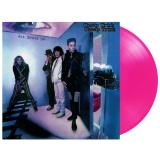
All Shook Up is the fifth studio album by the American rock band Cheap Trick, originally released in 1980 and produced by legendary producer George Martin, best known for his work with The Beatles.
The album followed the huge success of At Budokan and Dream Police and found the band working with a new producer for the first time in several years. George Martin gave the recordings his own touch, while Cheap Trick remained true to the sound and songwriting that had made them popular. The album features memorable tracks like "Stop This Game", "Just Got Back", "Baby Loves to Rock" and "World’s Greatest Lover". All Shook Up reached number 24 on the Billboard 200 and was certified Gold in the United States. It remains a strong album from an important period in Cheap Trick’s career and a great addition to their classic catalogue.
All Shook Up is available as a limited edition of 2000 individually numbered copies on magenta vinyl and includes an insert.
Robert Nasveld (*1955 Utrecht) studied piano at the Utrecht Conservatory with Polo de Haas, Sas Bunge and Herman Uhlhorn, composition with Joep Straesser, and electronic music with Ton Bruynèl. After completing his piano studies, Robert Nasveld specialised in 20th-century repertoire, with a particular focus on Dutch, Russian and American music. He achieved international fame as a pianist for his interpretations of the works of the American composer George Crumb, which led to invitations to perform at various events, including the Warsaw Autumn Festival (1990). His connection with George Crumb also enabled him to produce a seven-hour live broadcast of Crumb's music for VPRO radio in 1986 and a television program with the composer. Nasveld recorded the complete works for one piano by George Crumb, which was released by the Attacca label in 1991. He has given concerts in Europe, Russia, and the United States.
Nasveld was also a member of the Orgella Quartet, founded in 1976 (with Margaret Krill, Polo de Haas, and Niek de Vente), Piano Kwadraat, and the Netherlands Pianists Quartet (with Marian Bolt, Corien van den Berg, and Niek de Vente). These ensembles specialised in performing music for two eight-handed pianos. He also collaborated with several vocalists, including Claron McFadden, Marjanne Kweksilber, and Liesbeth List (tour 1983/'84). Due to multiple sclerosis, he retired from performing in 1998.
From 1988 to 2021 Robert Nasveld worked for Dutch national radio (NOS/NPS/NTR) as a program producer for NPO Klassiek. Until 2004, he was editor of Supplement, which received the Silver Reiss Microphone in 1996, the highest award for a radio program, for its adventurous and innovative programming. Robert Nasveld also programmed concept evenings at Muziekcentrum Vredenburg, featuring contemporary music performed by soloists, ensembles, and the broadcasting orchestras for NOS/NPS. From 2019 until his retirement in 2021, he presented a series of podcasts for NTR/NPO Radio 4 about electronic music pioneers. The three compositions on this LP are the only tape pieces recorded by Nasveld. They were created at Ton Bruynèl’s studio at the Utrecht Conservatory and the Institute for Sonology in Utrecht.
- 180 GRAM AUDIOPHILE VINYL
- 4 PAGE INSERT WITH RAP LYRICS
- FEATURING THE CLASSIC HIP HOP TRACKS TRUE
FUSCHNICK', RING THE ALARM' AND LA
SCHMOOVE'
Even before they made it to the record bins, three-man New York crew Fu-Schnickens created quite a buzz in the hip-hop community with the oddity of their group name. Once they dropped their debut album, F.U. Don't Take It Personal, their music turned out to be every bit as curious and intriguing.
F.U. Don't Take It Personal is the debut studio album from American hip hop group Fu-Schnickens, released February 25, 1992. Recording sessions for the album took place at Battery Studios in New York, New York.
The album peaked at number sixty-four on the Billboard 200 chart. By late 1992, it was certified gold by the RIAA, for shipping 500,000 copies in the United States. The album spawned three popular singles, including Ring The Alarm', True Fuschnick' and La Schmoove'.
In The Village Voice, Robert Christgau praised
Fu-Schnickens' ideas and illusory rhymes, calling the group 'rappers whose visions of fun, agape, and aural conquest remain open-ended, playful, and, face it, silly'.
Long overdue reissue of classic Scottish ambient techno banger ‘Mindweeds’, originally released in 1993 on the Pure-affiliated T&B Vinyl label run by Keith McIvor (JD Twitch) and Andy Watson (Brainstorm). With a Discogs demand ratio at about 300 have : 2000 want, and used prices peaking at over £100, now seems to be the right time for a re-release.
State of Flux were Roger Elliott and Dave Clark (aka Sparky, LUMA, Truffle Club and main man behind Kübler-Ross). They first met at Glasgow’s Strathclyde University in 1990, bonding over a shared love of weasel racing, German sausages and “man-duos” like The KLF and The Shamen. Dave was fully pubescent and already had a synth and drum machine, while Roger – a late developer – bought “another cheap synth, a Commodore Amiga for sequencing and a tiny mixer with no EQ”. For two long years they concentrated hard on “churning out unlistenable pish”, admittedly clueless about what they were trying to do.
Then – out of nowhere in the summer of 1992 – a flatmate’s Jello Biafra spoken word CD (‘I Blow Minds For A Living’) provided the inspiration to unlock the spark of dynamite that set the raving world on fire. Sampled using a Walkman* cassette** tape*** on playback (a decision the pair soon came to regret every time the track was subsequently performed live), Jello’s pilfered rant would soon become the crucial glue that held together the burgeoning kaleidoscopic helicopter spliff that is ‘Mindweeds’, loaded as it was – and indeed still is – with a veritably seething morass of cheeky electronic blims, nasal filter cheese and gay Caledonian spunk.
* a vintage portable listening device roughly the size of 4 iPhones stacked on top of one another and weighing the same as a small tub of yoghurt
** a plastic cartridge enclosing 2 miniature spools of magnetically coated, polyester-type plastic film (magnetic tape), notoriously convenient for pirating copyright material and secreting in one’s underpants for transporting between illicit market trader stalls
*** thin ribbon coated with ferromagnetic particles, usually ferric oxide but also chromium dioxide, "pseudochrome" ferricobalt or iron-cobalt-nickel “metal” formulations – with the latter types sounding marginally less crap
Playing demos of the track to friends, one thing led to another and a copy arrived with Twitch. Meeting the legends behind Pure in late 1992, a release was scheduled for summer 1993… but not before a promotional live gig in February of that year, supporting their heroes The Black Dog. Confessing that they “didn’t have a clue how to play live”, the duo played it safe, “went to a studio near Edinburgh airport to record the ‘live’ show” and then “mimed it off a DAT” at the gig, “standing in front of unplugged synths”. Soon after this, they recorded the full EP at Finitribe’s ‘Finiflex’ studio in Leith, Edinburgh and the record came out as planned that summer – the same week as Underworld’s ‘Rez’.
The record received high praise, appeared in many big-name DJ charts, sold out very quickly and was repressed within a few weeks, selling several thousand copies by the end of 1993 – no mean feat in an era when people had to use landline phones ****, faxes ***** or good old-fashioned carrier pigeons ****** to ascertain literally anything about the outside world, what was cool, where to buy the cool shit, or how to meet people and have fun.
**** a fixed communication device that connects to a telephone network using physical wires, cables, or a stationary base unit tied to a specific geographic address, using a handset incorporating a mouthpiece featuring a small metal disk and carbon grains, converting sound pressure from the human voice into a flow of electrical waves caused by these grains being squeezed together, before the variable signal is transmitted down DC voltage-powered copper wire and rerouted by a central exchange to arrive at the earpiece magnet of the target receiver’s handset, moving a small speaker cone accordingly so the message is intelligible WITHOUT THE PERSON SPEAKING ACTUALLY BEING PRESENT
***** as above, but for the d/Deaf
****** flying vermin riddled with diseases and capable of surviving nuclear armageddon
Soon Roger and Dave became sick of the Walkman being the only instrument played live in their set: with their new found fame and riches, they invested in a case for their Amiga to transport it around Scotland, while also putting in the hours on how to pretend to play live better with a sequencer and synths that were FINALLY plugged in. Following the release of ‘The Mercury EP' in April 1994, they embarked on a full tour of the UK and even managed to part ways and end the band by June that year.
This reissue includes the two original mixes of ‘Mindweeds’ recorded at Finiflex (‘Original’ and engineer ‘Fred's Fancy’), the original cassette demo (mastered directly from the actual recording sent to Twitch & Brainstorm in 1992) and a live version recorded at the Birmingham club night 'Oscillate' in April 1994.
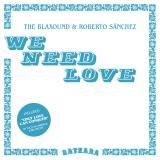
Gatzara Records present a soul version of “We Need Love” by Johnny Osbourne, produced by The Blaxound and sung by Roberto Sanchez. On the B side, there is a hip hop version built from samples of the A side, featuring Rel McCoy, an MC from the United States.
out of Stock
Last delivered 11 days ago available to reorder, subject to availability
Music On Vinyl celebrate their 100th 12" release by releasing a classic!
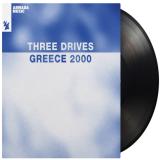
Greece 2000 is a classic international house tune by Dutch progressive trance duo Three Drives. It peaked at number 12 in the United Kingdom and number one on the UK Dance chart.
The original 1997 extended mix defined an era with its hypnotic melody, warm groove, and Balearic vibes.
Vintage Culture deliver a deep, melodic, and emotionally charged club weapon. The Max Styler rework elevates the original theme into a 2026 peak‑time banger. KREAM brings their signature big room future‑progressive sound. The Sebastian Davidson & Melosense remix is a warm, organic, and melodic downtempo mix.
This release celebrates nearly three decades of dance music history.
out of Stock
Last delivered 2 days ago available to reorder, subject to availability
Regarded by many as the greatest funk album of all time, ‘One Nation Under A Groove’ was recorded at United Sound in Detroit & included a live track from their concert appearance at the Monroe Civic Center in Louisiana in April 1978. The band’s tenth studio album released during September 1978 was also their most commercial & gave the band their first platinum disc. The iconic title track was an international hit and a US R&B No.1. With lead guitarists Michael Hampton & Eddie Hazel dazzling, the personification of funk Bootsy Collins on bass, Bernie Worrell & Walter “Junie” Morrison’s keyboard wizardry & many more, the album was produced by the genius of George Clinton. Regularly ranked at or near the top of various “best album” lists, ‘One Nation Under A Groove’ is mastered for vinyl in a deluxe facsimile gatefold sleeve with booklet & lyric inner sleeves, all housed in a protective PVC sleeve. The albums’ original bonus songs are now included on a second 12-inch “Special EP” which adds the rare 11-minute “Disco Mix” of ‘One Nation Under A Groove’ to replicate the original first UK pressing from 1978. FUNKADELIC Masterminded by the larger-than-life figure of George Clinton, Funkadelic was a key component of his influential P-Funk empire. Funkadelic’s unique combination of Rock, Psychedelia, R&B & Soul led to the band crossing over to the pop mainstream & gaining a vast international following, becoming one of the most important & influential groups in music. On 6 May 1997, Parliament / Funkadelic were inducted into the Rock & Roll Hall Of Fame by Prince. To commemorate six decades of thrilling & delighting fans, George Clinton returned to the stage in 2022 for a series of concerts. To celebrate, Charly have reissued Funkadelic’s classic four albums ‘Hardcore Jollies’; ‘One Nation Under A Groove’; ‘Uncle Jam Wants You’; & ‘The Electric Spanking Of War Babies’ (originally released by Warner Bros during a golden period for the band between 1976-1981). Each album will be available as deluxe gatefold Digi-Sleeve CDs in PVC wallets + obi-strip & facsimile-edition gatefold LPs on 180-gram black vinyl & limited edition 180-gram colored vinyl + 1970s-style obi-strip in a protective PVC sleeve. “They played a HUGE role in creating the future of music.” PRINCE
out of Stock
Last delivered 11 days ago available to reorder, subject to availability
American singer, songwriter and guitarist Boz Scaggs rose to fame in the 1970s with several top 20 hit singles in the United States. In 1976, he teamed up with a group of session musicians who would later form Toto and recorded his seventh album, Silk Degrees, which became a huge hit. The album reached #2 on the US Billboard 200, #1 in a number of countries around the world, and spawned three hit singles: “Lowdown,” “Lido Shuffle,” and “What Can I Say,” as well as the MOR standard “We’re All Alone,” which was later recorded by Rita Coolidge and Frankie Valli.
Silk Degrees is available as a limited edition of 750 copies on translucent blue coloured vinyl and includes an insert.
Trumpeter Don Cherry, an Ornette Coleman soulmate and a world musician decades ago, became one of jazz's many early losses 10 years back. But saxophonist Pharoah Sanders, who joins him on this fizzing 1966 set, has since ascended to cult status, and he is still around to admire . In the 1960s, he knew no melodic fear at all, in which respect he was aptly partnered with Cherry. This is a quartet set, strongly influenced by the melodic approach of Coleman, but with a fierce abstraction of tone quite different from Coleman's playful lyricism.
Moreover, the rhythm team of Ed Blackwell on drums and Henry Grimes on bass provides a scintillating underpinning for the music that is worth listening to all on its own. Sanders' mix of Coltrane's yearning long notes, Ayler's ghostly, fluttering wail, Coleman's fast, bumpy phrasing and his own manic bagpipe screams certainly separates the faint-hearted from the stayers on the opening Awake Nu. But the conversation between Sanders and Cherry is light, lyrical and engaging on The Thing, and the saxophonist even gets into a stubborn, Sonny Rollins-like repeating Latin vamp on There Is the Bomb. An unflinchingly quirky classic. (THE GUARDIAN)
"Prior to the vinyl release of the debut work “Vapor Curve”, which suffered a one-year delay due to manufacturing errors, the release of the mini-album “grainy film” has been confirmed."
Following the artist's previous release, this album completely eschews the use of computer-based DAW (Digital Audio Workstation) software. By relying exclusively on a strictly limited setup of hardware—synthesizers, samplers, and delay units—the artist pursues a meticulously woven, highly original take on minimal harmony.
At the core of this record lie exquisite ambient textures and beautifully shimmering synthesizer arpeggios. These are layered with the organic warmth of the sampler, vividly sketching out the contemporary "sound of Tokyo." As the album title suggests, the gritty, Lo-Fi texture of the sampler evokes the imagery of a vintage, low-fidelity film reel in the listener's mind. Pushing further than the predecessor, this approach embraces a more abstract, dubby, and deep soundscape aesthetic, elevating the album's artistry to new depths.
Describing this stoically refined electronic music, Maruyama reveals that it is "music for a cigar." It is not an assertive sound that demands to be the center of attention in the room. Instead, the moment the needle drops, it possesses an overwhelming power to transform the very particles of the room's air. The nostalgic and melancholic melodies, much like the shifting and fading trails of cigar smoke, embody the aesthetic of shogyo mujo (the impermanence of all things). Amidst a constantly changing world, it offers a desire to simply drift away in the slumber of sound—a supreme deep-listening experience guaranteed to transport you.
Selected by Lea Lisa, Many Shades Of House - Vol 2 is a reflection of time, movement and memory. Built from decades of digging, collecting and playing records, this new chapter captures the many emotional layers of house music.
From uplifting, groove-led moments to deeper, more obscure and cerebral territories. Each track has been chosen not only for its musical strength, but for the stories it carries: nights behind the decks, connections on the dancefloor, and the quiet influence these records have had along the way.
True to the spirit of the first volume, this selection celebrates diversity and timelessness without compromise. It is a tribute to the artists’ vision, to the culture that surrounds this music, and to the shared experience that continues to unite listeners, dancers and selectors across generations.
out of Stock
Last delivered 12 days ago available to reorder, subject to availability
While composing the music for The Juniper Tree, Hirano drew on her own memories of touring Iceland, which included a stop at a waterfall featured in the film and rendered in sound on “Mother’s Path.” Folktales, like the origins of The Juniper Tree, are often attempts to contend with humans’ place in the natural world, with all its mysteries and intricacies, and both the film and Hirano’s soundtrack draw their sense of breathless wonder in part from the sensation of being engulfed by one’s environment. Margit, played by Björk, possesses a sublime sensitivity to her environment that allows her to receive messages from her mother, who was murdered for their shared inheritance of witchcraft. Hirano captures the relationship between the transcendental awe that is felt as supernatural and the private feelings of being immersed in that experience, creating a musical dialogue between the self and what lies beyond.
In the final sentences of her liner notes describing the film’s philosophical and feminist throughlines, Anna Bogutskaya says, “what we call Margit’s witchcraft is maybe just her willingness to listen.” This is the magic of music, and Hirano composes with an alchemist’s pen. Just as Keene seems to break down barriers between binary poles, Hirano uses both electronic and acoustic means to communicate the film’s emotive cues, uniting approaches she has explored under her own name and the alias MimiCof. There is an understanding that stillness can be understood as peaceful or foreboding, that dissonance and consonance are contextual, that efforts to protect one’s own kin can lead to tragic ends. At the film’s end we see Margit enthralled with birdsong, understanding it as something deeper, a connection to those she has lost. Through sound, we understand what lies beyond sight, beyond convention, and with this new soundtrack we hear the story anew.
IVM Trio is made up of percussionist & composer Sébastien Forrester, producer & visual artist Mika Oki, and artist & producer Apulati Bien. All three sit within the French-Brussels axis, united by a shared love of free improvisation, sparse atmospherics and rapturous club mutations. Inner Voice Movement is a genuinely exploratory record — abstraction and contemplation sit side by side, as the trio dives into the micro-precision of computer music while mirroring organic, environmental schemes. These have long been persistent points of study for all three artists.
Arriving on Accidental Meetings, their debut album has been a long time coming, and it features three outstanding vocalists. South Korean artist bela brings the depth and range of their guttural vocals; Bristol-based Grove, a leading voice in punk-dancehall crossover, pulls things back with a spoken-word feature; and Naples sound artist Sara Persico rounds things off with a stunning excerpt of storytelling.
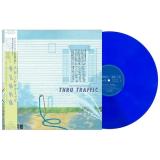
The pinnacle of Japanese AOR, delivering the finest mellow sound. The only album left behind in 1982 by the male-female unit of Hiroshi Narumi and Etsuko
Yamakawa is being reissued on clear deep blue colour vinyl.
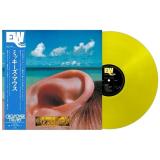
After leaving Terumasa Hino’s group and moving to the United States, Mikio Masuda returned to Japan and formed the fusion band Mickey’s Mouth.
The band’s first album, released in 1976, is being reissued on clear yellow colour vinyl.
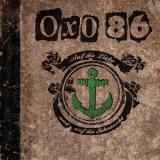
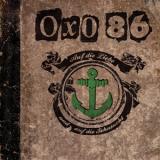
Neuaufgelegt! Hebt das Glas mit mir und gemeinsam trinken wir "Auf die Liebe und auf die Sehnsucht"! Das sechste Studioalbum aus dem Jahr 2013 gilt zurecht schlichtweg als Klassiker und hatte erheblichen Anteil am heutigen - nennen wir es ruhig - "Phänomenen OXO86". Mit ihrem einzigartigen Stil aus Gute-Laune Ohrwürmern gepaart mit subtilem Wortwitz, Punkrock, Bläsern und Sänger Willi's knochentrocken-verschmitztem Gesang, haben die Bernauer seitdem ein Alleinstellungsmerkmal weit über die üblichen Szenegrenzen hinaus. Millionen Streams der Album-Songs mit Hits wie "Bier und Reggae", "Samba Skinheads", "Saus und Braus" bis hin zum Titelsong zeigen dies deutlich. Die Vinyl-Auflagen von "Auf die Liebe und auf die Sehnsucht" sind allesamt in kurzer Zeit vergriffen gewesen und derzeit fast nur zu horrenden Sammlerpreisen erhältlich. Doppel-Vinyl mit dem Original-Album sowie der Kinderlieder-Bonus EP "If the Kids Are United" auf Seite C und wunderschönem Etching des beliebten Anker-Logos auf Seite D! Selbstredend auf 180g Vinyl, in schwarz oder trans-yellow/gold splatter, limitiert auf insgesamt 500 Exemplare!
Neuaufgelegt! Hebt das Glas mit mir und gemeinsam trinken wir "Auf die Liebe und auf die Sehnsucht"! Das sechste Studioalbum aus dem Jahr 2013 gilt zurecht schlichtweg als Klassiker und hatte erheblichen Anteil am heutigen - nennen wir es ruhig - "Phänomenen OXO86". Mit ihrem einzigartigen Stil aus Gute-Laune Ohrwürmern gepaart mit subtilem Wortwitz, Punkrock, Bläsern und Sänger Willi's knochentrocken-verschmitztem Gesang, haben die Bernauer seitdem ein Alleinstellungsmerkmal weit über die üblichen Szenegrenzen hinaus. Millionen Streams der Album-Songs mit Hits wie "Bier und Reggae", "Samba Skinheads", "Saus und Braus" bis hin zum Titelsong zeigen dies deutlich. Die Vinyl-Auflagen von "Auf die Liebe und auf die Sehnsucht" sind allesamt in kurzer Zeit vergriffen gewesen und derzeit fast nur zu horrenden Sammlerpreisen erhältlich. Doppel-Vinyl mit dem Original-Album sowie der Kinderlieder-Bonus EP "If the Kids Are United" auf Seite C und wunderschönem Etching des beliebten Anker-Logos auf Seite D! Selbstredend auf 180g Vinyl, in schwarz oder trans-yellow/gold splatter, limitiert auf insgesamt 500 Exemplare!
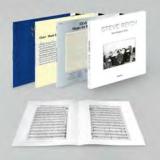
Recordings on ECM vereint, wie Pitchfork es formuliert hat, „einige der herausragendsten Werke des
Minimalismus-Komponisten Steve Reich, darunter die maßgebliche Aufnahme seines unbestrittenen Meisterwerks Music for 18 Musicians“. Die Sammlung umfasst die drei Steve-Reich-Alben, die zwischen 1978
und 1982 auf dem Label veröffentlicht wurden. Sie erscheinen als originalgetreue Faksimile-Ausgaben in
einem hochwertigen Kartonschuber mit einem Booklet, das Fotos aus dem Archiv sowie Manuskriptseiten
und Liner Notes von Paul Griffths enthält. Direkt von den originalen analogen Masterbändern gefertigt
(AAA) lassen die drei Vinyl-Ausgaben diese wegweisenden Aufnahmen, die längst zum Kanon der zeitgenössischen Musik gehören, in ihrer ursprünglichen Klangqualität neu strahlen. Die drei Alben enthalten
die Werke Music for 18 Musicians, Octet, Music for a Large Ensemble, Violin Phase und Tehillim und
dokumentieren somit die einflussreiche frühe Schaffensphase des Komponisten sowie seine künstlerische
Entwicklung über einen Zeitraum von fünfzehn Jahren. Die Box erscheint anlässlich des 90. Geburtstags
von Steve Reich im Oktober 2026.
“About the famed ECM Recordings, much has already been written. Suffce to say that they confirm
that Reich could convey the pulse and spirit of American urban life as brilliantly as Gershwin did 30 years
earlier. Even the unity that arises from out of phase quasi-chaos is revelatory. Recorded 1976–1981, the
works’ emphasis on percussive sounds makes for anything but soothing background listening. It’s all fabulous stuff. Although listening to multiple works in one sitting could possibly induce numbness – taken one
at a time, they are as exhilarating as they are essential.” – Jason Victor Serinus, Stereophile Magazine
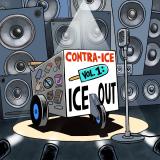
A SOUNDSYSTEM COMBATING ICE PROCEEDS TO HELP FUND FRONTLINE ORGANIZATIONS THAT SUPPORT IMPACTED COMMUNITIES Contra-ICE Vol. 1: ICE OUT is a powerful new compilation album uniting legendary voices across music, spoken word, and comedy to amplify the fight for immigrant rights and stand against inhumane immigration enforcement. Featuring an all-star lineup of over 30 artists, including Ozomatli, Kathleen Hanna ft. Ad-Rock, Tom Morello, Fred Armisen, Fishbone, Money Mark, David J (Bauhaus, Love and Rockets), and Jello Biafra; this sonic journey, curated by DJ Dali, shines a crucial light on systemic injustices. Proceeds will raise vital funds for frontline Los Angeles organizations, the National Day Laborer Organizing Network (NDLON) and Unión del Barrio, to support their ongoing work defending human, civil, and labor rights for impacted communities.
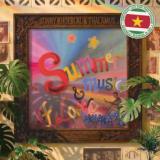
Previously unreleased jazz funk from Suriname, recorded in 1981 by keyboardist Sonny Khoeblal and his band Thalamus.
The music of Thalamus is a time capsule and the best kept secret of post-independent Suriname. During this turbulent time, the band used the language of jazz to express their desire for unity and freedom.
The generation of Thalamus envisioned a future beyond the ethnic divide their parents knew as social barriers. After independence, young people met at work or in universities and shared principles of unity and international solidarity. Jazz played an important role in translating tensions and experimenting with a sound of the future.
The band members of Thalamus shared interests in jazz-fusion from Weather Report, Chick Corea, Bob James and Carlos Santana. Compared to contemporaries with more pop appeal, their sound remained obscure in Suriname. Still, people listened to them bending conventional rules of jazz, pop, latin, rock and funk. This fusion reflected the band, its diverse members and their country: Suriname is a multi-ethnic country by colonial force. If diamonds are formed under pressure, love and solidarity emerge under oppression.
Thalamus is a unique recording of this revolutionary period, with new people finding each other based on a universal language: jazz-fusion. It culminated in six songs, two of which are 'Summer of Love and Music' and 'Lady Amazone'. This 7" vinyl brings you their story, their experimentation with jazz-fusion and tells the parallel history of Suriname.
The practice of dub techno and its tendrils is a fundamental for me, both aesthetically and from an engineering perspective.
I start every recording session with a dub inspired jam, the first piece I ever recorded in 1996 was an effort to recreate Phylyps Trak with only a Korg X3 and an Ibanez PUE5 (borrowed from Gary Howell). It was an awesome introduction to jamming, and the footing stones of noise, delay and saturation were explored with my foot hard on the enthusiasm pedal.
These practice jams are in some sense cathartic, the first step taken again & again, which helps me move forwards each session and additionally helps to 'warm the circuits' both of myself and the machines.
After realising the genius of Basic Channel is akin to the genius of peasant food, using every ingredient with nothing left to waste, (up to and including the oft maligned working noise of the machines themselves), this was a watershed moment for my own subjective progression. No longer tied to just emulation of something inspiring, but taking these learned tools into other areas of music helped to break free from a strong current of influence and also to progress into other areas with the new toolbox.
Dub:
The importance of the dub pioneers should never be understated, in modern music and my own practice. Yet with my initial inspiration being two german dudes issuing extreme techno variants with obscured label designs, who then signposted their listeners to their own inspirations (via their Wackies re-issues or nodded to on their Rhythm & Sound/Burial Mix sub-labels), meant that I started late and travelled backwards.
Learning to notice the live mixing of Mikey Dread or Lee Perry when the faders are bleeding through even when turned down, (echoed in BC's Quadrant Dub), or the brash send effects literally thrown into the mix also taught me that 'rough' mixing can inject a recording with life, uniqueness and the most right wrongness. Looking back Basic Channels very few elements helped me realise that the rules to be understood, are also the best ones to be broken.
Push the mixer into the red.
Amp that noise up from the tape delay cos it sounds sick.
Pseudo side-chain effects cos the kicks are way too loud and the mixer can't sum it nicely.
Spam the send knob into the delay units now, now and now.
Carelessness.
Noise:
Once I wrapped my head around the intrinsic 'noise' element that set those records apart, this became a torchlight into the alt noise movements which I was tentatively exploring at the time, and also is evidently a connection or thread into them.
Whether the Industrial/Post Punk UK scene (This Heat, TG, A Tent, F.E.) or the prolific output of the US Noise scene (Wolf Eyes, Live & Shave in LA, and subsequently following the lineage all the way back to Chrome's Alien Soundtracks), I had finally discovered a connection from techno to this 'free for all' corner of music.
This input from the Noise arena of sound is, in my experience, an all important step for a sonic artist, taking it's roots and extending out from Stockhausen/Pierre Henry and utilised/warped/mangled by thousands of adventurous pioneers ever since, I now see the line separating the high brow and the low brow is actually an artery carrying information from the head to the heart.
Vault is a selection of these jams that precede each of my solo recording sessions, for 30 years I've recorded hundreds of these 'workouts'. They are never intended as serious statements, just moments of naive enjoyment, yet most importantly they are time & space captured as practice.
The objective is always a warm up exercise, but sometimes those exercises turn a different corner, with a certain focus or direction dependent on what random samples are left in my machines from the previous session, instead of conscious choices, these unconscious elements can facilitate those 'positive mistakes' that make a piece of sound retain a different feel or colour and thus become special, or at least special to the creator.
I am quite conscious that the 'record everything' aspect of my ethos has been invaluable in cataloguing and saving these jams, while the attitude of carelessness during this process (after all, it's only a warm up jam) invites more enjoyment than seriousness ever could. Even if you don't feel the piece at the time, record it, because some years later it may well fit, or become relevant in a way you never intended.
-Miles
out of Stock
Last delivered 18 days ago available to reorder, subject to availability
Japanese crossover and fusion are hot again now. As either an outgrowth of, or a spin-off phenomenon from, the global reappraisal of
city pop, Japanese fusion has been rapidly rising since around last year.
Widely known as a support member for YMO and also popular on the overseas club music scene through Colored Music, her cuttingedge dance-pop unit with Atsuo Fujimoto, keyboardist, composer, and vocalist Ichiko Hashimoto released this, her second solo work, in
1985. Released on DOMO, the label headed by Kazumi Watanabe, and naturally produced by Kazumi Watanabe himself, who also plays
guitar on the album.
A truly crossover work of remarkable freedom, moving across fusion, techno, piano pieces, danceable music, classical, Japanesque
sounds, bossa nova, ambient, and more. Her fleeting singing voice is wonderful as well.
The Yummy Fur’s first album of new material in over 25 years is seductive and ambiguous; a fast-paced flip through scenes from art, myth, life and fantasy; a witty whole made from glittering scraps. The band’s original incarnation – fronted by singer, songwriter and guitarist John McKeown from 1992 to 1999 – morphed from making quick-hit cartoon-art songs to Eno and Cale-influenced creepers, populated by characters from McKeown’s life in Glasgow and the films, books and poetry that he lived a parallel life through. Everybody Talks About The Weather delights in using every past iteration of the band as potent collage material: a melee of sounds and ideas existing at once, revealing themselves then dipping back into hiding.
Recorded by the original core trio of McKeown, Brian MacDougall (guitar) and Paul Thomson (drums), Everybody Talks About The Weather comes 17 years after the band reformed for sporadic live shows, and seven years after the release of their sorta-greatest hits compilation Piggy Wings (Rock Action). Ten tracks long with nothing to spare, it is as condensed and vital as their best songs, with a new clarity of sound that allows their ambiguities to come into the light.
The album begins with “Cogs”, a taunting inquisition from within. As McKeown stages a fight between his id and ego, the tension heats up between conversational guitar lines and minimalist repetition; threatening sing-song melody and real, palpable menace. The band members are forced in tandem only to break apart, sustaining a genuine sense of just-hidden danger throughout the whole record – except, arguably, “Headphones”, a looser moment which sees McKeown make an existential something out of nothing while waiting for someone in the car (“I should have brought a book.../My ears are bleeding from the compression on your album”)
The songs are riots of reference: “Unity Over Europe” is a slyly complex two act play about the Mitford sisters – Diana, Unity, and Nancy, in a wink to the YF canon – smashing tragic biographical detail together with allusions to Thomas Pynchon and Francis Bacon. Pynchon is also lifted to serve “Blue Sunshine”, a collision of school shooters, serial killers and fictional fuck-ups (“Fast forward to Compton/Fast forward to Pynchon/Fast forward to Columbine'”) whose buzzy guitar lines are taunting and confrontational like a smarmy teenager. The innocuous title of “My Lasagne” belies a song that exists in several time periods at once: a visit to see Guernica, 50 people with their backs to the portrait of Dora Maar; the time that Picasso painted from; the Reina Sofia and the dirty streets of the Malasaña; myth-making musicians and the myths they’re riffing off overlapping and leering at each other.
All this could be laboured in lesser hands, but cultural verbosity is second nature to The Yummy Fur, who transform all this source material into songs that are weird, sexy, funny and absurd. Meaning is not happily understood or flattened. Susan Sontag's essay Against Interpretation accompanied McKeown as he wrote this album, and she’s paraphrased in “Semolina Ballerina”, the album’s justification of artistic ambiguity. Thomson’s motorik beat leads a gathering of back-and-forth instrumental phrases – including a wiry contribution on saxophone – embodying the futility of trying to parse something definitive from repeated action. “Listen to the very first thing that’s in your head,” Sontag-via-McKeown commands directly, then slinks sideways: “Interpretation is a conversation in an unmade bed”
The album features two more focused portraits, or at least The Yummy Fur’s version of such a thing. “Wanda” merges the life of filmmaker Barbara Loden and the title character of her semi-autobiographical 1970 feature film, with Loden’s then-husband Elia Kazan joining the fray of no-good men in her film. It’s a mix of adaptation and avant-criticism, with McKeown’s wordplay and mannered pronunciation mirroring the way that non-fiction and fiction twist around each other in the song. The title track is a series of vignettes and impressions from the lives of the band’s ‘90s inner circle, positing painter Mac McNaughton as a kind of Falstaffian ringleader. As with Piggy Wings and the recent single “New T-Shirt”, McNaughton painted the cover of Everybody Talks About The Weather – like the album’s music, the image of a coy girl in a white dress is an uncanny amalgamation of styles, suggestions and references just out of reach, as though seen in an art museum in a dream.
The album ends with two reads of the same frustration. “King of Nothing” is the closest The Yummy Fur will ever get to sludge-rock: the band melts together into a dusty, dreary haze as McKeown drowns in a drudgery of personal struggle (“Two jumpers on in Babylon/And only cats to talk to”) and the rhythmic toppling of heroes (Rowlands, Duvall, Munro). The majority of visible dirt is cleaned off for “Say Hello”, an uncharacteristic depiction of throwing the windows open after a dark night of the soul. Here, the situation is still cold and hard (“When the sun burns gold, but the heat never reaches your fingertips”) but it feels surmountable. Everybody Talks About The Weather is an unpredictable album from an unpredictable group, but ending on a moment of almost uncomplicated light is maybe its biggest surprise. - Claire Biddles (2026)
The Yummy Fur’s first album of new material in over 25 years is seductive and ambiguous; a fast-paced flip through scenes from art, myth, life and fantasy; a witty whole made from glittering scraps. The band’s original incarnation – fronted by singer, songwriter and guitarist John McKeown from 1992 to 1999 – morphed from making quick-hit cartoon-art songs to Eno and Cale-influenced creepers, populated by characters from McKeown’s life in Glasgow and the films, books and poetry that he lived a parallel life through. Everybody Talks About The Weather delights in using every past iteration of the band as potent collage material: a melee of sounds and ideas existing at once, revealing themselves then dipping back into hiding.
Recorded by the original core trio of McKeown, Brian MacDougall (guitar) and Paul Thomson (drums), Everybody Talks About The Weather comes 17 years after the band reformed for sporadic live shows, and seven years after the release of their sorta-greatest hits compilation Piggy Wings (Rock Action). Ten tracks long with nothing to spare, it is as condensed and vital as their best songs, with a new clarity of sound that allows their ambiguities to come into the light.
The album begins with “Cogs”, a taunting inquisition from within. As McKeown stages a fight between his id and ego, the tension heats up between conversational guitar lines and minimalist repetition; threatening sing-song melody and real, palpable menace. The band members are forced in tandem only to break apart, sustaining a genuine sense of just-hidden danger throughout the whole record – except, arguably, “Headphones”, a looser moment which sees McKeown make an existential something out of nothing while waiting for someone in the car (“I should have brought a book.../My ears are bleeding from the compression on your album”)
The songs are riots of reference: “Unity Over Europe” is a slyly complex two act play about the Mitford sisters – Diana, Unity, and Nancy, in a wink to the YF canon – smashing tragic biographical detail together with allusions to Thomas Pynchon and Francis Bacon. Pynchon is also lifted to serve “Blue Sunshine”, a collision of school shooters, serial killers and fictional fuck-ups (“Fast forward to Compton/Fast forward to Pynchon/Fast forward to Columbine'”) whose buzzy guitar lines are taunting and confrontational like a smarmy teenager. The innocuous title of “My Lasagne” belies a song that exists in several time periods at once: a visit to see Guernica, 50 people with their backs to the portrait of Dora Maar; the time that Picasso painted from; the Reina Sofia and the dirty streets of the Malasaña; myth-making musicians and the myths they’re riffing off overlapping and leering at each other.
All this could be laboured in lesser hands, but cultural verbosity is second nature to The Yummy Fur, who transform all this source material into songs that are weird, sexy, funny and absurd. Meaning is not happily understood or flattened. Susan Sontag's essay Against Interpretation accompanied McKeown as he wrote this album, and she’s paraphrased in “Semolina Ballerina”, the album’s justification of artistic ambiguity. Thomson’s motorik beat leads a gathering of back-and-forth instrumental phrases – including a wiry contribution on saxophone – embodying the futility of trying to parse something definitive from repeated action. “Listen to the very first thing that’s in your head,” Sontag-via-McKeown commands directly, then slinks sideways: “Interpretation is a conversation in an unmade bed”
The album features two more focused portraits, or at least The Yummy Fur’s version of such a thing. “Wanda” merges the life of filmmaker Barbara Loden and the title character of her semi-autobiographical 1970 feature film, with Loden’s then-husband Elia Kazan joining the fray of no-good men in her film. It’s a mix of adaptation and avant-criticism, with McKeown’s wordplay and mannered pronunciation mirroring the way that non-fiction and fiction twist around each other in the song. The title track is a series of vignettes and impressions from the lives of the band’s ‘90s inner circle, positing painter Mac McNaughton as a kind of Falstaffian ringleader. As with Piggy Wings and the recent single “New T-Shirt”, McNaughton painted the cover of Everybody Talks About The Weather – like the album’s music, the image of a coy girl in a white dress is an uncanny amalgamation of styles, suggestions and references just out of reach, as though seen in an art museum in a dream.
The album ends with two reads of the same frustration. “King of Nothing” is the closest The Yummy Fur will ever get to sludge-rock: the band melts together into a dusty, dreary haze as McKeown drowns in a drudgery of personal struggle (“Two jumpers on in Babylon/And only cats to talk to”) and the rhythmic toppling of heroes (Rowlands, Duvall, Munro). The majority of visible dirt is cleaned off for “Say Hello”, an uncharacteristic depiction of throwing the windows open after a dark night of the soul. Here, the situation is still cold and hard (“When the sun burns gold, but the heat never reaches your fingertips”) but it feels surmountable. Everybody Talks About The Weather is an unpredictable album from an unpredictable group, but ending on a moment of almost uncomplicated light is maybe its biggest surprise. - Claire Biddles (2026)
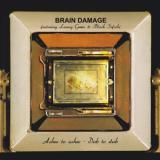
By 2004, dub had a history stretching back more than thirty years. This remarkable longevity can easily be explained by the evolving nature of this musical genre, which is constantly changing both artistically and technically, from Kingston to London, New York, and more recently Berlin, Paris, Lyon and Saint-Étienne. For example, it is worth noting that for some years now, in France and elsewhere, a good number of artists have been thinking in terms of dub from the outset, breaking free from the original Jamaican model, which involved drawing inspiration almost systematically from an existing vocal track. Thirty years on, with the release of their second album, Brain Damage aim to reconnect with this tradition. Recent collaborations with the two vocalists, Learoy Green and Black Sifichi, have indeed provided the ideal source material for the creation of five tracks, each rendered in their respective dub versions, thus forming an album with a symmetrical, even geometric character - from its very structure right down to its title: 'Ashes to ashes / Dub to dub'. At the heart of the project lies the astute choice of two guests, each operating in diametrically opposed spheres yet brought together for the occasion, thereby emphasising a certain 'unity of the circle': 'the unity of the circle'. Born of a genuine artistic vision, this geometric, symmetrical aesthetic-omnipresent in every detail of the album, both auditory and visual-complements Brain Damage's 'square' and robotic side, with its three-dimensional evocations. Always working in close collaboration with the very latest digital technologies. This brings to mind 'the balance of the cube'. Finally, the title itself, 'Ashes to ashes / Dub to dub', should be understood as a reference to the transience of all things in this world, against a backdrop of widespread, globalised, international, national and local crises_
Elderberry Jak was and is arguably the finest rock band to come out
West Virginia. It is certainly an arguable case if its single album is an accurate indicator, as the recording reveals a quartet as strong as any number of its more well-known, more commercially successful hard
rock contemporaries--bands such as Free, the James Gang, the
Guess Who, and Three Dog Night--all with which Elderberry Jak shared a variety of sonic attributes. The band came together in the fall of 1969, with bass player Dave Coombs and lead vocalist Joe Cerisano (Silver Condor, Trans-Siberian Orchestra) as its co-founders. The two had previously played together in Coombs' outfit J.B. and the Bonnevilles
. The Bonnevilles formed in 1965 and developed over the next few years into the most outstanding and popular group in the entire state of West Virginia. Upon the demise of J.B. and the Bonnevilles in 1969,
the duo formed a new unit called Kaboose, which lasted seven months. Then, with the addition of Tom Nicholas on guitar and Joe Hartman behind the drum kit, they became Elderberry Jak, named after the elderberry wine made by an uncle of Coombs. The quartet had soon become a powerful unit, mixing hard-driving rock with invigoratingly tight funk. The band traveled throughout their home states, Ohio and Pennsylvania, for performances, eventually earning a record deal with
Kenny's brother Leland Rogers in Memphis. The result was the first-
rate Long Overdue, released in 1970
Japanese crossover and fusion are hot again now. As either an outgrowth of, or a spin-off phenomenon from, the global reappraisal
of city pop, Japanese fusion has been rapidly rising since around last year.
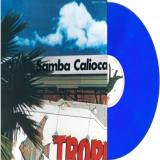
This is the 1978 debut album by Carioca, one of Japan’s leading Brazilian fusion units of the 1970s and 1980s.
The group began as the backing band for Kiyoshi Hasegawa, and on this debut release they used the name "Samba Calioca." True to that
band name, they were quite unusual at the time for presenting samba and bossa nova with a resort-flavored sound, and they also
produced specialists such as drummer Antonio Ishida and guitarist Masami Sato. This highly club-popular first album also features a
diverse lineup of guest musicians including Masayoshi Takanaka, Ryuichi Sakamoto, Shuichi "Ponta" Murakami, and Shigeharu Mukai.
There are some first times you never forget. The first time one hears Syd Matters’ captivating voice is one of them.
From “End & Start Again”, his first single in 2003, Jonathan Morali’s warm, soulful vocals and timeless melodies revealed an artist in a league of his own. Success in France and abroad was immediate and has never waned.
Four albums followed between 2004 and 2011, along with a host of unforgettable songs: “Black & White Eyes”, “Obstacles”, “To All Of You” or “I Might Float” left their mark on an entire generation, racking up nearly 200 million streams and 100,000 physical sales. Drawing equally from the songwriting of the 60s, the creativity of the 70s and the modern synthetic era, Syd Matters has developed a unique musical universe, building a loyal and ever-growing audience over the years.
On stage, accompanied by his band, audiences recall intense concerts where the artist and his musicians deliver performances that were at once epic and intimate. Lush and spectacular on stage, their music never lost its center of gravity, gaining even in depth. Syd Matters toured France and Europe (England, Germany, Scandinavia...) for nearly ten years, as well as in the United States and Latin America. In 2011, the tour for his album Brother Ocean culminated in Paris at the mythical venue l’Olympia.
Jonathan Morali then took a step back from the spotlight but remained just as prolific, writing for film, theater, radio, and television and collaborating over the years with directors such Éric Rochant, Rémi Chayé, Thomas Litli, Patrick Mille, and Mélanie Laurent to name but a few. When scoring for films, the musician gives free rein to his desires and intuitions. He works with the very fabric of sounds and their underlying emotions, as if freed from the constraints imposed by the song format.
Between 2015 and 2019, he also composed the soundtracks for the remarkable video games Life Is Strange and Life Is Strange 2, which were massive global hits. Several Syd Matters tracks appeared in the game, and the success was such that it revived the band’s career, introducing their music to a new audience.
After an extended hiatus, Syd Matters will make a major comeback with a new album - their fifth - set for release in September 2026 on Créature - also home to Flora Fishbach and Chassol. They will then tour France and Europe, returning to the legendary stage of the Olympia on November 17, 2026, where they will perform their new songs. And others that we know by heart and haven’t forgotten.
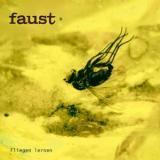
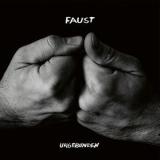
Over the years, Faust has become many things, distinct as fingers, yet united as the hand that forms the fist. This series of new LPs on Bureau B sees each living member of the legendary 1971-1974 line up present their own interpretation of the Faustian myth, working alone or with collaborators to create new material that reflects their contemporary vision of what Faust can be.
Over the years, Faust has become many things, distinct as fingers, yet united as the hand that forms the fist. This series of new LPs on Bureau B sees each living member of the legendary 1971-1974 line up present their own interpretation of the Faustian myth, working alone or with collaborators to create new material that reflects their contemporary vision of what Faust can be.
Over the years, Faust has become many things, distinct as fingers, yet united as the hand that forms the fist. This series of new LPs on Bureau B sees each living member of the legendary 1971-1974 line up present their own interpretation of the Faustian myth, working alone or with collaborators to create new material that reflects their contemporary vision of what Faust can be.
Over the years, Faust has become many things, distinct as fingers, yet united as the hand that forms the fist. This series of new LPs on Bureau B sees each living member of the legendary 1971-1974 line up present their own interpretation of the Faustian myth, working alone or with collaborators to create new material that reflects their contemporary vision of what Faust can be.
Over the years, Faust has become many things, distinct as fingers, yet united as the hand that forms the fist. This series of new LPs on Bureau B sees each living member of the legendary 1971-1974 line up present their own interpretation of the Faustian myth, working alone or with collaborators to create new material that reflects their contemporary vision of what Faust can be.
Over the years, Faust has become many things, distinct as fingers, yet united as the hand that forms the fist. This series of new LPs on Bureau B sees each living member of the legendary 1971-1974 line up present their own interpretation of the Faustian myth, working alone or with collaborators to create new material that reflects their contemporary vision of what Faust can be.
Over the years, Faust has become many things, distinct as fingers, yet united as the hand that forms the fist. This series of new LPs on Bureau B sees each living member of the legendary 1971-1974 line up present their own interpretation of the Faustian myth, working alone or with collaborators to create new material that reflects their contemporary vision of what Faust can be.
Over the years, Faust has become many things, distinct as fingers, yet united as the hand that forms the fist. This series of new LPs on Bureau B sees each living member of the legendary 1971-1974 line up present their own interpretation of the Faustian myth, working alone or with collaborators to create new material that reflects their contemporary vision of what Faust can be.