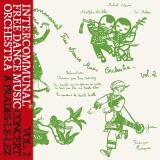
Concert at Prades-le-Lez marks the origins of the Intercommunal Free Dance Music Orchestra. In 1974, François Tusques and his companions (Michel Marre, Jo Maka, Adolf Winkler and Guem), in the spirit of Don Cherry or Chris McGregor, playfully dismantle all borders and all styles of creative music.
On this second volume, the Intercommunal builds unprecedented soundscapes around a song of revolt, a dance tune, or a burst of dissonance. The journey is unforgettable, no question about it. On repeat listening, it even becomes… lunar!
“The music that we make is primarily meant to be listened to live,” warned a leaflet from the Intercommunal Free Dance Music Orchestra. This is precisely why the (restored!) reissue of the two volumes of Concert at Prades-le-Lez, recorded on January 25 and 26, 1974 by François Tusques and his comrades, is such an important event.
In 1971, after recording a series of albums that would leave a lasting mark on French jazz (Free Jazz, of course, with Michel Portal, François Jeanneau, Bernard Vitet, Beb Guérin and Charles Saudrais, but also Le Nouveau Jazz with Barney Wilen, or the solo Piano Dazibao), François Tusques founded the Intercommunal—a grouping whose very name called for the fraternization of the various communities making up the country: Our music will help, we hope, to resolve the contradictions that exist between workers be longing to different communities, by breaking down various forms of national chauvinism, and more particularly the chauvinism of certain French people toward the cultures of Third World countries… Long live the friendship between the peoples of the whole world!
Among the great records made by the Intercommunal Free Dance Music Orchestra, the two volumes of Concert at Prades-le-Lez come first, before L’Inter Communal, Vol. 4, Le Musichien, and Après la marée noire (four titles already reissued by Souffle Continu). François Tusques and his companions (Michel Marre and Jo Maka on saxophones, Adolf Winkler on trombone, and Guem on percussion) performed on January 25 and 26, 1974 at the Moulin de Prades-le-Lez, a few kilometers from Montpellier. It was thus in the southern region of Occitanie that the first echoes of this musical vision of a borderless brotherhood were recorded.
“We’re not among the Colonels,” the Intercommunal reassures us right away, performing a stride piano tune carried by African winds that the audience cannot resist for long. The energy is already striking and it never lets up throughout these two recordings, from start to finish: jazz, blues, traditional music, minimalism, even funk… The musicians of the Intercommunal have heard a lot of great music and now delight in reinventing it by mixing it all together.
“We want the song form to take its place as a weapon in the struggle against capitalist exploitation and all those who oppress us morally and materially,” declared an Intercommunal leaflet, quoting Jean-Baptiste Clément, author of the lyrics to “Le Temps des cerises.” The struggle was therefore serious—but it did not prevent François Tusques and his group from waging it in a festive spirit: each piece on Concert at Prades-le- Lez sends out a call for love and fraternity. Fifty years later, the message remains as relevant as ever—and once again, it is François Tusques who makes it heard.
Search:up n dance
- On N'est Pas Chez Les Colonels
- Intercommunal Blues
- Mazir
- Kan-Ha-Diskan - We Shall Over Come
- African Rythm-N-Logy
2[23,95 €]
Concert at Prades-le-Lez marks the origins of the Intercommunal Free Dance Music Orchestra. In 1974, François Tusques and his companions (Michel Marre, Jo Maka, Adolf Winkler and Guem), in the spirit of Don Cherry or Chris McGregor, playfully dismantle all borders and all styles of creative music.
On this first volume, the Intercommunal takes its audience from New Orleans to Brittany and on to North Africa. The journey was bold, without a doubt—and its memory remains unforgettable.
“The music that we make is primarily meant to be listened to live,” warned a leaflet from the Intercommunal Free Dance Music Orchestra. This is precisely why the (restored!) reissue of the two volumes of Concert at Prades-le-Lez, recorded on January 25 and 26, 1974 by François Tusques and his comrades, is such an important event.
In 1971, after recording a series of albums that would leave a lasting mark on French jazz (Free Jazz, of course, with Michel Portal, François Jeanneau, Bernard Vitet, Beb Guérin and Charles Saudrais, but also Le Nouveau Jazz with Barney Wilen, or the solo Piano Dazibao), François Tusques founded the Intercommunal—a grouping whose very name called for the fraternization of the various communities making up the country: Our music will help, we hope, to resolve the contradictions that exist between workers be longing to different communities, by breaking down various forms of national chauvinism, and more particularly the chauvinism of certain French people toward the cultures of Third World countries… Long live the friendship between the peoples of the whole world!
Among the great records made by the Intercommunal Free Dance Music Orchestra, the two volumes of Concert at Prades-le-Lez come first, before L’Inter Communal, Vol. 4, Le Musichien, and Après la marée noire (four titles already reissued by Souffle Continu). François Tusques and his companions (Michel Marre and Jo Maka on saxophones, Adolf Winkler on trombone, and Guem on percussion) performed on January 25 and 26, 1974 at the Moulin de Prades-le-Lez, a few kilometers from Montpellier. It was thus in the southern region of Occitanie that the first echoes of this musical vision of a borderless brotherhood were recorded.
“We’re not among the Colonels,” the Intercommunal reassures us right away, performing a stride piano tune carried by African winds that the audience cannot resist for long. The energy is already striking and it never lets up throughout these two recordings, from start to finish: jazz, blues, traditional music, minimalism, even funk… The musicians of the Intercommunal have heard a lot of great music and now delight in reinventing it by mixing it all together.
“We want the song form to take its place as a weapon in the struggle against capitalist exploitation and all those who oppress us morally and materially,” declared an Intercommunal leaflet, quoting Jean-Baptiste Clément, author of the lyrics to “Le Temps des cerises.” The struggle was therefore serious—but it did not prevent François Tusques and his group from waging it in a festive spirit: each piece on Concert at Prades-le- Lez sends out a call for love and fraternity. Fifty years later, the message remains as relevant as ever—and once again, it is François Tusques who makes it heard.
Sasha's collaborative hot streak continues with Manchester-based duo Cortese. The pair were last on Last Night On Earth in 2024.
A big 2025 saw electronic titan Sasha linking up with a mix of fellow pioneers and next-generation stars. He collaborated with the likes of Artche, Henry Saiz, and Joseph Ashworth, always pushing forward his signature sound, steeped in meticulous synth craft, built on transportive grooves, and packed with rare levels of universal emotion.
Cortese are new school artists with an emotionally rich mix of garage, breaks, and house. They head up their own Plaza Recordings and, as well as appearing on Sasha’s LUZoSCURA compilation, they dropped their 'All U Do' EP here in December 2024. Following gigs in support of mainstays like Bicep and Mike Skinner, they now hook up with one of dance music's most recognisable names.
The result is 'One', a deep and heavenly odyssey with warm, supple drums infused with subtle garage swing. Wordless vocals bleed into the mix, heightening the sensuality, as the majestic arps and shimmering chords light up the airwaves. It's an irresistible invitation for the dance floor to take off on a wave of cautious hope and optimism without ever losing sight of the grounding groove.
On the flip and the fantastic 'U Disappear' is an Ibiza anthem in the making - the synths are widescreen and sun-kissed, while the bass is dark and transportive. Balearic piano chords ripple through the mix alongside arching pads and soft, wordless vocals, lending a dreamy edge to what is a powerful track, both physically and spiritually.
- A1: Les Masques - Il Faut Tenir (1969)
- A2: Isabelle Aubret - Casa Forte (1971)
- A3: Christianne Legrand - Hlm Et Ciné Roman (1972)
- A4: Jean Constantin - Pas Tant D'chichi Ponpon (1972)
- A5: Billy Nencioli & Baden Powell - Si Rien Ne Va (1969)
- B1-: Marpessa Dawn - Le Petit Cuica (1963)
- B2: Jean-Pierre Sabar - Vai Vai (1974)
- B3: Sophia Loren - De Jour En Jour (1963)
- B4: Isabelle - Jusqu’à La Tombée Du Jour (1969)
- B5: Sylvia Fels - Corto Maltesse (1974)
- C1: Frank Gérard - Comme Une Samba (1972)
- C2: Ann Sorel - La Poupée Des Favellas (1971)
- C3: Charles Level - Un Enfant Café Au Lait (1971)
- C4: Andrea Parisy - Les Mains Qui Font Du Bien (1970)
- C5: Audrey Arno - Quand Jean-Paul Rentrera (1969)
- C6: Aldo Frank - T’as Vu Ce Printemps (1970)
- D1: Christianne Legrand - Cent Mille Poissons Dans Ton Filet (1972)
- D2: Clarinha - Lemenja (1970)
- D3: Hit Parade Des Enfants - Aquarela (1976)
- D4: Jean-Pierre Lang - Tendresse (1965)
- D5: Magalie Noël - Une Énorme Samba (1970)
- D6: Françoise Legrand - La Lune
Ever since the late 1950s bossa-nova revolution, Brazil’s influence on French music has been undeniable. Pierre Barouh, Georges Moustaki and a vast array of lesser known artists, all made the Musica Popular Brasileira (MPB) an axis of promotion at the service of a cool and metaphysical, modern and mixed Brazilian lifestyle. Some were seduced by the poetic languors of the bossa, some were looking for fun, and others just loved the American hybridization of jazz-bossa, jazz-samba.
What is bossa nova? One of its creators, Joao Gilberto said: "Its style, cadence, everything is samba. At the very start, we didn't call it bossa nova, we sang a little samba made up of a single note - Samba de uma nota so .... The discussion around the origins of bossa nova is therefore useless”. It is nevertheless useful to remember that these magnificent Brazilian songs, which the guitarist describes as samba, were shifted and balanced around improbable chords. "I like things that lean, the in-betweens that limp with grace," said Pierre Barrouh, quoting Jean Cocteau.
With emotion, arrangements for violin and supple guitar licks, bossa nova rapidly changed. A transformation that can be heard in the Tchic, tchic, French Bossa Nova 1963-1974 compilation, the result of a cultural reappropriation, which traveled through the United States and supplemented itself in France.
A musical revolution that has remained significant, bossa nova was born in Rio. From 1956 to 1961, Brazil lived through its golden years. In five years, the country had invented its modernist style. Elected president in 1956, Juscelino Kubitschek de Oliveira, an elegant man with a broad forehead, brandished a promising slogan: "Fifty years of progress in five years". He quickly got to work. Not worried about increasing debt, he launched the project for a new federal capital, Brasilia, designed by the communist architect Oscar Niemeyer. Volkswagen opened state-of-the-art factories and created the “fusquinha”, the Beetle. In Rio, the Vespa made its first appearance. The Arpoador Surf Club crew run into the “girl” from Ipanema, Helô Pinheiro - the tanned garota ("chick"), between a flower and mermaid, who at 17 walked by the Veloso bar, where the fiery author and composer, Tom Jobim and Vinicius de Moraes, were getting drunk on whiskey. From then on, bossa symbolized cool.
In 1958, Joao Gilberto recorded Chega de Saudade, which the directors of Philips denied, calling it "music for fagots". The marketing director, who believed in it, secretly pressed 3000 78-inch vinyls and distributed them at schools around Rio, creating a tidal wave.
American jazzmen then took over. In particular, trumpeter Dizzy Gillespie and guitarist Charlie Byrd. In November 1962, the Brazilian Ministry of Foreign Affairs funded a "Bossa-Nova" concert at Carnegie Hall in New York, inviting the genre’s pioneers. Unprepared, the show soon turned to disaster. But the troupe was invited to the White House by Jackie Kennedy. The first lady loved "the new beat" and in particular Maria Ninguem, a song by Carlos Lyra, later covered by Brigitte Bardot.
In Brazil, the 1964 military coup quickly ended this euphoria. The destructive atmosphere that ensued pushed many Brazilian musicians to leave, if not to exile. Thus, Tom Jobim, Sergio Mendes and Joao Gilberto arrived to the United States. In New York, Joao Gilberto met saxophonist Stan Getz. At the time, he was married to the Bahianese Astrud Weinert Gilberto, who had a German father. She had never sung before, but she knew how to speak English. Getz therefore asked her to replace her husband on The Girl From Ipanema. The Getz/Gilberto record with Tom Jobim on piano, was released in March 1964. Phil Ramone, the "pope of pop" was in charge of sound.
Bossa nova arrived in Paris through the classic “guitar-voice” channel (Pierre Barouh, Baden Powell, Moustaki…) But France loved jazz and Paris had already welcomed its American contributors. All these good people were to pass through Saint-Germain-des-Prés. The cabaret l'Escale became the Mecca of Latin American sound where one could find Pierre Barrouh and his friends, such as the Camara Trio, samba-jazz aces, whose only record was published by the Saravah label. With a band strangely called Les Masques (a band that included Nicole Croisille and Pierre Vassiliu, among others), the Camara Trio recorded an interesting Brazilian Sound, including the track Il faut tenir which is present on this tasty compilation of rarities.
Other enlightened musicians can also be found on the compilation, such as Jean-Pierre Sabar (songwriter for Hardy, Auffray, Leforestier ...) and the French pop rock organist Balthazar. In 1975, Sabar recorded Aurinkoinen Musiikkimatka on a Finnish label, which featured the crazy Vai, Vai, included on this record. We are now following the footsteps of Brazilian electronic musicians such as Sergio Mendes, Eumir Deodato or Marcos Valle who created funk and disco sounds on their keyboards and synthesizers. A style that influenced Véronique Sanson when she wrote Jusqu’à la Tombée de la nuit in 1969 for Isabelle de Funès, the niece of Louis and a great friend of Michel Berger - Sanson did end up singing this track on her 1992 Sans Regret record.
The pinnacle of exoticism and travel, Sylvia Fels’ Corto Maltese includes bongos, sea mist and ocean sounds. The title was taken from Jacky Chalard’s concept album written in 1974, Je suis vivant, mais j’ai peur (I am alive, but I am scared), based on Gilbert Deflez’s science fiction novel.
However, bossa nova extended the scope of popularity. "In the 1970s, I was a fan of Sergio Mendes, Getz / Gilberto. I fell in love with this music that I knew because I had been an orchestral singer, " explained Isabelle Aubret, who in 1971 delivered a composite record of covers by the very funky Jorge Ben, Orfeu Negro, Tom Jobim, Vinicius de Morais and Jean Ferrat. "I recorded this album for Meys Records in Paris, far from Brazil, with wonderful musicians, François Raubert, Roland Vincent, Alain Goraguer...". The latter wrote the arrangements for Casa Forte, a very percussive title borrowed from Edu Lobo, one of the initiators of the bossa who spent time in California. "Jazz and bossa came together and produced very rhythmic music. I love singing, it allows me to dream, to have fun, to feel a high on stage, and these songs brought me joy, made me swing, my singing felt like a dance.”
The world tours of French singers and their desire for the tropics, often brought them to Rio with its hills, forests, caipirinhas and tanned bodies. There are surprises though, like this Iemenja (Iemenja is the goddess of the sea in the Afro-Brazilian candomblé religion). Not unlike the composer and musician Jean-Pierre Lang, based in Sao Paulo, Claire Chevalier taught Brazil to Brazil. In 1970, the singer and painter published a 45-inch vinyl, Mon mari et mes amants (My husband and my lovers), under the improbable pseudonym of Clarinha (little Claire). She was then living in Rio, with her husband, Joël Leibovitz, who founded a band called Azimuth, and who owned a record label specialized in "sambas enredos" songs for samba school parades.
For its B side, she asked Pierre Perret to come up with lyrics for a song composed by Carlos Imperial: "Oh goddess of the sea, o goddess Iemenja, I bring a white rose to adorn your long hair ..." . "Perret came to see us, and we had fun, remembers Joël Leibovitz. We wrote Lemenja for fun, we recorded it at the Havaí studio, behind the Central do Brasil the central station. Erlon Chaves, the arranger who worked with Elis Regina, joined us" adding his share of Afro-Brazilian percussions and funky brass to the mix.
There is a common misunderstanding in Franco-Brazilian history: that bossa, admittedly hedonistic, is perceived as funny, even though the poets who wrote the texts are often philosophizing on the human condition. Its French interpreters pull it towards a carnival inspired universe, far removed from its fundamental essence. Thus, Jean Constantin covered the famous Samba da minha terra, an ode to the art of samba written by the classic Bahian composer Dorival Caymmi, renaming it with the enticing title of Pas tant de tchi tchi pompon: "On your pier there is no tchi tchi / when you arch your back, you know everything is alright ”(lyrics by Gérard Calvi). This expedited bossa aims for the absurd, but retains a certain elegance.
Indeed, Jean Constantin was not an idiot, the rather large man had a huge mustache and liked fantasy, (Les pantoufles à papa, Le pacha, inspired by cha-cha-cha-cha, salsa and jazz) but he was also the lyricist of Mon manège à moi interpreted by Edith Piaf, the composer of Mon Truc en plume by Zizi Jeanmaire and the soundtrack of François Truffaut’s 400 Blows. Le Poulpe, published in 1970, from which this bossa is extract, was arranged by Jean-Claude Vannier, an accomplice of Serge Gainsbourg’s Melody Nelson. In short: "There is enough of samba / By looking at the parasol / Because my poor cabeza / Is going to die in the sun".
Even the American actress Marpessa Down, who was at the heart of the bossa nova revolution with her role as Euridyce in Marcel Camus’ film Orfeu Negro, winner of the 1959 Cannes Palme d'or, fed the clichée with Je voudrais parler au petit cuica - "Tell me how you manage to always make people want to dance / It's true, I must admit that I cannot resist your magic" - in consequence, once can hear the cuica, a little drum inherited from the Bantu.
But bossa nova had many angles. Societal, of course, pushing actresses who were symbols of women's liberation like Brigitte Bardot, Jeanne Moreau, or Sophia Loren to engage in the exercise of accelerated bossa. In February of 1963, Sophia Loren made a record in French in Rome, Je ne t'aime plus, featuring the song De jour en jour, a bossa written by two Italians, Armando Trovajoli and Tino Fornai, which was released a little later by Barclay. Bossa accompanied the 1960s, a decade of moral liberation. Ann Sorel, who interpreted La Poupée des favellas, caused a sensation with L’amour à plusieurs, a provocative song written by Frédéric Bottom and Jean-Claude Vannier. As for the actress Andrea Parisy, she displayed her bourgeois cheekiness in Marcel Carné's Les Tricheurs before interpreting Les mains qui font du bien. And Magalie Noël, the friend of Boris Vian, who sung Johnny fais-moi mal, was hired to sing Une énorme Samba, composed by Alain Goraguer (arranger to Gainsbourg, Bobby Lapointe and Jean Ferrat) with lyrics by Frédéric Botton.
But in the end, of what wood is bossa nova made of? The answer is given by Christianne Legrand, daughter of Raymond the conductor, and sister to Michel the composer: "With me, with jà" - jà means "immediately" in Portuguese. In 1972, the singer, an expert in vocal jazz and a member of the Double Six, published Le Brésil de Christianne Legrand. Two songs included on the Tchic Tchic compilation that demonstrate how bossa, jazz, funk, rock, etc. work like a swiss army knife: the music is used to denounce broken systems, or miracles, HLM et ciné roman, Cent mille poissons dans ton filet, two songs from the O Cafona soundtrack, a successful telenovela broadcast, at the time in black and white, on TV Globo. The first was adapted in French by the fighter and friend of the Legrand tribe, Agnès Varda. The second is content with a play on words, jostling them into a summer fun.
Véronique Mortaigne
The Fuga compilation returns to Token with its seventh installment by a fresh batch of artists emphasizing the cryptic sound of the Belgian record label. The V/A displays urgency as its focal point, expanding and contracting its acoustic space throughout to channel instability. With eight contributions, Fuga VII sifts through nail biting arpeggios, frenzied percussion, and obscure ambiance to recalibrate techno's current soundscape.
Opening the compilation is contemporary techno mainstay Rene Wise with his debut contribution to the record label 'Rough Rider'. In this A1, Wise plays to his strengths by blending deep techno influences with hyper-focused rhythmic work. With a hint of tribalism, he conjures up synthwork from far off to whip motion into heavy drum patterns. Following this first track, STIPP and Sandrien take control in presenting 'Corrie', a sequence-forward groover that slides through drum programing to streamline rhythm. A shrill pad comes in at the halfway mark, completely lifting the energy of 'Corrie' to strain the track's obscurity with an ethereal counterweight. The brief passage of these kinds of elements provides a lot of dynamic to what would otherwise be a powerfully straightforward piece. Diving deeper, Red Rooms unveils 'Limited Sensory' as the next chapter of the compilation. Always swift and exact, the German artist continues to push into the ultra immersive with a web of elements that whiz by for a peaktime lock in. Cold in attitude, Red Rooms tunnels through 'Limited Sensory' with quick drumsand far-off percussive hits that rumble through the track. Stepping up afterwards is Lindsey Herbert with 'Oscillations in Space' - an appropriately named recording that experiments with mania as a tool for the dancefloor. Fast and spiraling, Herbert keeps her hands on the arpeggio's filter to contain tension through thunderous reverb transitions, balancing panic with pace. AgainstMe then stretches out the followup with the commanding 'Phase Shift' to double down on weight. Textural intimidation and stomping percussion is given the space it needs to perform on heavy weight sound systems, making it an austere middle point for Fuga. MAL HOMBRE then guides the listener to more elastic sound design in 'Critical Velocity', in a most appropriate Token fashion. Snowballing in intensity halfway through, MAL HOMBRE pushes the cutoff of his melody and programs snare rolls for vintage craze through the second section. Bells clash with ringing hats to fly the track along its course without looking back or letting go. Conor Wall takes control with 'The Strategy' that focuses on pace rather than melody, weaponizing metallic texture for a deep dancefloor experience. The ambiance does a lot of story telling here, marking breaks and riding through drops to provide grit to an already substantial record. This leads us to the final contribution in Fuga VII - 'Ad Libitum'. Here, Porteix emphasizes the conclusion of the compilation with mystery. The synths slither around pulsating rhythm, creating uninterrupted motion throughout the track's entirety. Porteix draws the curtains on an inquisitive note, keeping the suspense high until the next Fuga compilation comes around.
Drumcode returns with its flagship A-Sides series, led by a huge new Adam Beyer single that highlights the 20-track compilation.
If you want a snapshot of techno in any given year, look no further than Drumcode’s annual A-Sides compilation. The release broadly charts the evolution of the genre, while giving a platform to standout demo’s Adam Beyer has received across the course of the year with many emerging artists finding their music on Drumcode for the first time. Case in point – Wehbba, Charles D and Raxon who all debuted on the label via a track on the A-Sides series and have gone on to become regular contributors to Beyer’s influential labels.
This year’s compilation features an exciting mix of established heavy-hitters, alongside a slew of new faces set to make their mark on the genre. ‘We Don’t Say Please’ – is emblematic of Adam Beyer’s sound in 2025 – fresh, experimental and thriving on cross-genre pollinations, as elements of bass music, rap and techno collide, underpinned by a distinctive UK vocal. The results are inspiring.
Elsewhere, the 20-track compilation brims with highlights. HI-LO’s ‘NYC to Amsterdam’ has inflections of New York house fused with driving techno elements. Nicole Moudaber returns to DC in cahoots with the rising ZLATA for the super-charged ‘Report to the Dancefloor’. Oscar L & Charles D mint a new collaborative partnership with the immersive, spacey cut ‘Lift Me Up’. LUSU continue their red-hot run following the recent ‘Move 2 the Groove’ EP, and craft a straight-up mind-mashing single ‘LIKE THIS’. Mark Reeve is in trademark strong form with hypnotic ‘My Mind’, which comes to life via a massive synth led. The fantastic Kaufmann shares her ‘People are Strange’, a nod to a classic vox, re-contextualised for a modern techno audience.
As is tradition, a troupe of ascendant producers land on Drumcode for the first time. They include Uruguay’s Enzo Monza, who delivers the crisp ‘Late Night’ – a favourite of Beyer’s; Mattia Saviola, whose ‘Parallel Dimension’ is a powerful cut with fantastic sound design; Romanian artist Tao Andra, who shares the celestial ‘Unity’; and long-time industry stalwart AdamK, who makes a richly deserved Drumcode debut in partnership with Vikthor feat. MC Stretch on the stunning ‘Silence + The Sound’.
Limited Silver Vinyl Repress!
Mexican brothers Soul Of Hex are back on Delusions Of Grandeur and deliver an absolute gem of an EP entitled Constellation. With recent releases on Underground Resistance (as Mano De Fuego) and an upcoming release on Kilometro 4.5 which features Mad Mike Banks and Kuniyuki it’s safe to say Soul Of Hex are keeping good company and have earned the respect they deserve through their talent, consistency and hard work.
Leading the charge we have Face Down which is an absolute barnstormer of a track which features a killer electric bass line and low slung dubby disco drums and twisted FX. Simple, powerful and funky AF!
Constellation is up next, picking up the BPM’s for a full on soulful piano house jam which features Javonntte and Mariana Phelts on vocals. Far from being a retro throwback, Soul Of Hex have successfully created a fresh and original slice of feel good, disco-influenced house music while doffing their caps to to the OG maestro Marshall Jefferson.
Next up is Dimension Spell which brings some full on funk vibes to the table courtesy of More Lotion’s heavy guitar work. Euphoric synth pads bring the deep ness while the stripped back beats and punchy Moog bassline ensure maximum dance floor pressure.
Closing out this brilliant EP we have Into The Night, a beast of a tune which fizzes with an understated energy thanks to it’s rolling, minimal groove. In your face syncopated Rhodes stabs skip around the disco drums while a repeating vocal sample brings that top line ear candy.
2026 Repress in generic white sleeve!
It's been quite a wait for new &ME material here on Keinemusik. But these two new cuts, adding to our catalogue number KM046, sure have been worth waiting for. The EP starts with „The Rapture Pt.II“ and as the title already suggests, it coherently takes up where his last original material had left us, in a stirred state of sweet, harmony-kissed affection. Known as a virtuoso of sound-details, &ME lives up to that reputation, implementing fine synth-elements and temperately rattling percussions, all conjoined by shimmering layers and, of course, an ultimately heart-melting Piano improvisation that at some point will play along to the rhythm of its synthetic brother to a finale that will leave no crowd untouched.
"Solaris" on the flipside adds indeed a futuristic note to the arrangement, opening up with a broken beat and propelling claps. A cut that, as much as its predecessor, is relying on flow and organic shifts rather than forced and peaktime formatted gimmickry, adding a synth arpeggio, white noise, vocal chants and
harmonies in a rather subtle way. Nevertheless, it unfolds a compelling strength to heat the dancefloor gradually through its playtime.
Even in these most turbulent of times, dub musician and fatigued onlooker Elijah Minnelli remains an inexplicable stalwart on the lower rungs of the Breadminster County Council.
His latest record ‘Clams As A Main Meal’ continues his astute siphoning of council funds, this time with help from the Breadminster Board of Abstinence. As a further mark of respect, the original head of the Board, Dr. K'houldoux, graces the cover art in his infamous ‘Looming Moon of Desire’ guise.*
As fine a backdrop as any for Minneli’s off-brand dub experiments, and ‘Clams...’ is the truest representation of his varied wheelhouse yet...
We find vocal appearances from dub goliath Dennis Bovell and Welsh-language singer Carwyn Ellis. A pair of tracks which build on 2024’s acclaimed ‘Perpetual Musket’, a collection of folk songs reworked alongside reggae vocalists, released by FatCat Records. It garnered glowing reviews, with nods from The Guardian and The Quietus concluding with prominent appearances on their respective yearly round-up lists.
Elsewhere, the album finds Minnelli in a more experimental mode, all wheezing contraptions and cockeyed bass, creaking with the weight of creation, a satisfying tactility laid seam-side up.
As well as ‘Perpetual Musket’, the new album follows years of sold out 7" singles, handmade and self-released. Online, the tracks have amassed global streams numbering in the millions. His tracks have found play across an eclectic range of radio mixes and dance floors, most notably the likes of Andrew Weatherall, Batu, Optimo and Zakia Sewell (BBC6Music).
It is perhaps worth mentioning that this everbuilding interest in his work is at great odds with the growing suspicions amongst his fellow townsfolk, who see his Breadminster County Council Music Initiative as nothing more than an empty cash-grab.
Further Reading on the Breadminster Board of Abstinence
In the late 70s, Breadminster was awash with the last vestiges of the hippy era. Though the flared silhouette of the lower leg remained, the utopian ideals that had once flowed merrily around the youth's shaded ankles had begun to wane. LSD and free love had led to a sharp spike in population and a generation of children raised by air-headed psychonauts unprepared for the bleary-eyed strictures of parenthood.
Aware of the crisis, the County Council entrusted Dr. Paulinque K'houldoux to spearhead a pushback, and it was his pro-abstinence movement - a mixture of education initiatives and radical renutrition campaigns - that came to impact Breadminster's census deep into the new millennium.
Being a pseudo-archipelago Breadminster has fundamentally limited resources, however deep-seated ties to distant coastal villages meant that oysters were a regular part of the local diet. K'houldoux pinpointed this as a factor in the town's overpopulation, and believed that simply replacing these with clams (a “lesser mollusk”) would help lower the erotic urges of the people. It was his “anti-aphrodesia” movement that first championed the idea of “Clams As A Main Meal,” and the slogan “Consider Abstinence” carried the message yet further.
The Breadminster Board of Abstinence soon became involved in all cultural happenings in the area, with K'houldoux MCing at prominent festivals and performances, sometimes dressed as the “Looming Moon of Desire” - an idea of his relating to the tide, seafood, menstrual cycles, and his privately held celestial predilections.
It was in 1981 that it was revealed Dr. K'houldoux had never fully qualified as a doctor and was seeking exile in Breadminster due to a series of botched bracelet heists in which he had previously been involved. K'houldoux was subsequently extradited to Basingstoke, where he served 3 of a 12-year sentence, owing to the lunar-oriented prisoner health campaigns he helped implement.
It has been a strange twist of bureaucratic fate that the Breadminster Board of Abstinence has never stopped receiving public funding, despite its lack of clear utility. And while its roots are tied to a rose-tinted past, the Board continues to sponsor cultural events and projects to this day.
An extract from: Eugeniq Schooner's article in Sydney Parishioner: “Clams, Breadminster and Countercultural Abstinence Trends” (2008)
Following a triumphant first release, Archivio Records returns with another slab of golden era UK Techno House from a true master of the sound: Mark Ambrose
This versatile three track EP made up of 2 previously unheard and unreleased lost DAT productions, paired with a monstrous modern creation, from a man known for his uniquely trippy and boundary pushing take on the genre, presents the listener with a smorgasbord of peak time Tech House, hypnotic Techno and emotive Acid House.
The A side Mountain Storm is nothing short of an epic, instantly recognizable future classic! Punchy, percussion laden drums set the tone upfront, before a titanic, rumbling bassline blows the doors clean off! Disorienting vocals drift in and out before an eerily familiar string arrives by special delivery directly from the State of 808, building the tension required to set the stage for the main event: a haunting, poignant and highly relevant monologue for the times we find ourselves in today, delivered by a renowned, yet uncredited Jamaican poet.
B1 Get On Down takes the listener to the middle of the dancefloor, mid-set at a Techno-leaning after hours. Think Christian AB in a mischievous mood…
Obscure, industrial, fizzing drums start the show, followed by a stomping yet playful bass line, hip hop vocals urging you to get busy on the floor swirl around you, before a piercing arpeggio sends the listener to the cosmos, as the track peaks.
B2 Deep Sea couldn’t have a more appropriate name if it tried. A chugging, melancholy, submarine journey to the bottom of the Atlantic, presented at a lower BPM, making it equally perfect for the very beginning or very end of a set.
The Brooklyn-based record store proves their record label is no one hit wonder with this outstanding release from the Crayon Records head honcho. Unmissable.
- 1: Slim Smith – Hip Hug
- 2: Ras Michael And The Sons Of Negus – Good People
- 3: Lord Tanamo – Keep On Moving
- 4: Wailing Soul – Trouble Maker
- 5: Rita Marley – Come To Me
- 6: Johnny Osbourne – All I Have Is Love
- 7: The Martinis – I Second That Emotion
- 8: Irving Brown – Run Come
- 9: The Heptones – Give Give Love
- 10: Rockie Ellis – Double Minded Man
- 11: Jackie Opel – The Lord Is With Me
- 12: Dub Specialist – Happy Feelings
- 13: Prince Lincoln – Live Up To Your Name
- 14: Ken Boothe – I Am A Fool
- 15: Rheuben Alexander – Happy Valley
- 16: Larry Marshall – There’s A Fire
- 17: Roland Alphonso – Rolando Special
- 18: Freddie Mcgregor – Homeward Bound
Studio One Sound is the classic Studio One collection from Soul Jazz Records. Described as ‘The University of Reggae’ by Chris Blackwell, Studio One, and founder Clement ‘Sir Coxsone’ Dodd are by far the most-important names in the history of reggae music. Originally released in 2012 this album has been out of print for many years, making it one of the most-collectible of Soul Jazz Records’ Studio One Series. This is the first ever colour vinyl edition of this classic album.
The album features some of the most in-demand and collectible Studio One tracks from over its fifty-year history and includes incredible legendary reggae artists such as The Heptones, Ken Boothe, The Skatalites, Johnny Osbourne and Wailing Souls. All these artists (and hundreds more) launched their careers at Studio One under the guidance of Clement 'Sir Coxsone' Dodd. The Studio One Sound collection features everything from classic ska and rocksteady to the deepest roots, heaviest dub and dancehall roots. Sleevenotes are by Rob Chapman, author of the celebrated books about Studio One Records, 'Never Grow Old' and 'Downbeat the Ruler'. The exact reproduction of the original artwork features the classic image of Dennis Brown on the cover. This album is newly fully remastered for vinyl by Jason Goz at Transition. Exclusive one-off pressing on heavyweight double transparent green vinyl.
Irlam's dastardly duo are back with another bonza bucket of bass, breaks and badness as they fire up Studio Krust for another high octane session.
Sure to top the Fairground charts and further enrage the Hell's Angels, 'Synthetic Stupidity' sees the pair unleash their full force unabashed, as they hit a purple patch full of new found and frankly quite surprising productivity (rumours of a European-wide sputnik shortage are the likely catalyst).
Fractionally distilling their many collective years of dance music experience into 12 refined pieces of advanced club kinetics that skirt between the syncopated intricacies of breakbeat science and maxed-out 4/4 propulsion.
More hyped-up vox & frantic sampling, more tension, tons of one-finger keyboard melodies, and - as usual - moments of sonic tomfoolery to flummox the assumers.
With their drug debts paid off and a forced clarity of mind, 'Synthetic Stupidity' is a more expansive, deeper and unhurried project; allowing Bosco and Metrodome the space and time to truly deliver the zenith of their sound.
This, is DJ ABSOLUTELY SHIT!!!
Supervibe returns with the next chapter of its vinyl-only series, delivering a 3-track EP from the legendary Tripmastaz. A release built for the dancefloor, blending energy, depth, and hypnotic groove.
A1. Simpatico
A fast-paced, energetic cut with tight, driving rhythms. True to its name, it hits hard and gets straight to the point, with punchy percussion and an upbeat tempo that injects instant energy into any set.
B1. 3001
A futuristic, space-driven journey featuring layered synths and atmospheric textures. The groove unfolds with a deep, late-night feel, perfectly suited for afterhours moments and immersive dancefloor transitions.
B2. Medina chronicles
A hypnotic, groove-focused tool with experimental sound design. Repetitive yet evolving, the track thrives on subtle variations, making it ideal for floor-building moments and seamless DJ transitions.
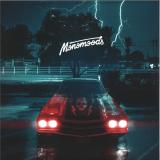
Monomoods Records proudly presents Thunder Skull, the new EP from Doctr, previously featured on Rimini Moods. For this release, he teams up with A.M. Sam on Highrider and Seppl on the title track Thunder Skull, delivering a collection that expands his sonic universe into darker, more cinematic territories, like a road trip through a post-apocalyptic wasteland. Spanning four distinct tracks, the EP moves between Indie Dance, Italo-Disco, and Hi-NRG, each painting its own scene within this dystopian landscape. ‘’Highrider’’ bursts forward with euphoric Eurodance energy; ‘’The Boys’’ unfolds as an epic, heroic tale rising from the ashes; ‘’The Last Waterfountain’’ combines intensity and emotion with an almost survivalist tension; and finally, ‘’Thunder Skull’’ stands as a true Italo anthem for the wastelands — a soundtrack for the last dance under a burning sky. Fusing raw power with hypnotic rhythm, Thunder Skull is a soundtrack for late-night journeys and fevered dancefloors, meticulously crafted with attention to detail, atmosphere, and a bold cinematic spirit.
- A1: Queen Omega, Chezidek & U-Brown - Three The Hard Way 07 07
- A2: Capleton - No Sell Your Soul 03 34
- A3: Jah Thunder - Haffi Wi Place 03 09
- A4: Sizzla - Smoke My Herbz 03 12
- A5: White Mice - One Blood 03 33
- A6: Queen Omega - Touch Ina Di Place 03 25
- B1: U-Brown - Run Come Dance 04 30
- B2: Linval Thompson & Eek A Mouse - Conscious Man 03 37
- B3: Chezidek - Wasp Nest 04 34
- B4: Midnight Riders - We A Di Champion 03 40
- B5: Stinging Ray - Don't Let Dem 04 03
- B6: Young Kulcha - Come Pick Me Up 04 23
With over 20 years of intense production work and prestigious collaborations, Irie Ites Records has established itself as one of the most respected reggae labels on the international scene. In 2025, the label continues it's strong momentum with a brand-new volume of it's flagship series: Cream of the Crop 2025. Following the success of the previous editions (2022, 2023, and 2024), which each reached several million streams and gained strong visibility in reggae media and playlists worldwide, this new release stands as a must-have for all roots & culture reggae lovers. True to it's reputation for excellence, Irie Ites Records has once again teamed up with some of the finest musicians and producers in reggae: Mafia & Fluxy, Bongo Herman, Earl "Chinna" Smith, Lone Ark, Naram, The Ligerians, King Jammy, Willy William, among others. All tracks were mixed at the Irie Ites Studio (France), ensuring a warm, powerful, and authentic sound. To conclude the album, four exclusive dub versions add the final touch to this outstanding compilation.
Stepping up for Punctuality number 8 is the dynamic duo of Ciel and Matthis Ruffing. Needing little introduction, both artists are prolific producers and collaborators across tempos and genres. Toronto-based Ciel has released music on labels like NAFF, Peach Discs, and !K7, while Berliner Matthis Ruffing’s work can be found on International Chrome, Infinite Drift, and Strictly Strictly, to name just a few.
Bonding over a shared love for the techno stylings of Claude Young and early 2000s tech/prog house from labels like Future Groove and Slide, the duo’s collaboration began with a spontaneous jam in Ruffing’s Berlin studio during the summer of 2022. With an organic studio chemistry, the pair continued to jam over the following years. Hot Squid is the result of these studio experiments: five tracks of sleek, muscular, contemporary tech house that fluidly distill the creative visions of both artists—slick, shimmering grooves, heavily weighted for the dancefloor.
The title track, Hot Squid, weaves dubbed-out waves of FX and low-end sonics around metallic, staccato drum bursts, sci-fi pads, stuttered vocals, and syncopated snares that flit and flicker around a rolling bassline reminiscent of golden-era UK tech house from the late ’90s. Roza Terenzi’s remix flips the original into a modern, low-stepping tek roller—a mind-bending re-fix that puts more focus on the snaking vocal groove and a sparser percussion arrangement, filled out with lustrous textures and razor-precise sound design.
On Little Voice, glossy synths and spiraling atmospherics cascade around a mesmeric vocal line, while tightly wound, minimal drum loops give way to a swaggering bassline that barely relents throughout the track. The result is a satisfyingly boshy, groove-driven roller, fit for the dancefloor at any time of day.
Late Summer maintains the EP’s high-grade production standard in the form of a dreamy, electro-leaning tech house number, resplendent with deep, pummeling kick drums, woozy low-end, and organic sonics. Its plucked melody and introspective pads nod to halcyon-era IDM and the Detroit techno that inspired the duo in creating Hot Squid.
The release culminates in Bong Bong—a meditative dancefloor tool suffused with ASMR-like nature documentary samples that lend the track a psychedelic intimacy. Careening percussion lines and swooning chord stabs anchor the rhythm, while the title’s “Bong Bong” mantra hums beneath the surface, carried along by barely perceptible sub fills and ultra-processed percussion. A cohesive, unique, and enduring take on seminal tech house and Detroit techno from Ciel and Matthis Ruffing.
With Morocco Palace, Cybercafé aka Adam Dirk’heim delivers his very first full EP on Sequence Records - a record that balances raw energy and melancholy, blending emotional depth with a strong, forward-thinking dancefloor edge.
The EP opens with Electroskit, driven by an electric, almost extraterrestrial voice, before diving into raw electronic textures that set the tone. Dance & Control marks a first shift with its slow tempo, massive modulated synths and stretched tension. Then comes Nightshade, where the energy rises further through a rhythmic and emotional build-up carried by deep, melancholic, yet dancefloor-oriented synth lines.
On the B-side, Don Dolor flirts with instrumental EBM influence, while What Am I Talking About? closes the record with a hypnotic groove that stays with you long after the last note.
Morocco Palace lays the foundations of Cybercafé’s universe: a subtle balance between introspection, intensity, and dancefloor energy.
Al Kent needs no introduction when it comes to being one the most prolific kings of disco in the UK. He reimagines hidden treasure and takes inspiration from the glory days of 70’s dancefloor nuggets to create modern day classics. Come Back Home (Again) is probably his most popular track to date and here he re-works it with his Disco Love Orchestra updating this disco gem for a new generation. A Philly style musical sound-bed with hooks galore topped by one of the most rousing, soulful male vocals you’ll hear in a long time.
The second release from Irish label IL Corpo Records comes from Dublin native Dave Hughes. The Fastplay E.P. sees the accomplished audio engineer and Dj return to production duties with 4 carefully crafted excursions into mid tempo deep house with elements of dub and techno. Having had multiple releases on John Tejada’s legendary Palette label and iRecords amongst others, the production values are top notch and well executed making this an interesting listen indeed.
Fastplay chugs along building gradually before sultry vocals from Svelte weave their way into the mix and beckon the listener to the dance floor for the night ahead.
Feel Better is a downtempo dubby experiment inflected with a dose of rave nostalgia.
Walk Alone sees more atmospheric chord work and well chosen percussion that cements the sentimental feel of the E.P.
Tabouli rounds out the release with broken beats wrapped up in mid eastern rhythms. Moody chords and a G Funk lead line keep the groove evolving to the end.
7 Inch Orange Dinked Vinyl in Label Branded Sleeve
Originally issued on Paul Winley Records in 1973, “Smokin' Cheeba-Cheeba”—with Ann Winley on vocals—became a cornerstone of the 1980s UK Rare Groove scene, earning cult-classic status among collectors and DJs alike. On the flip, “Dance Girl”—also released under the Rimshots name—serves up one of the era’s most revered up-tempo breaks. Its unmistakable groove has been sampled by The Roots, Large Professor, and many others, cementing its place in hip-hop production history. The creative nucleus behind both The Mighty Tom Cats and The Rimshots would later evolve into the legendary Fatback Band, adding another layer of pedigree to this essential pairing. With original copies fetching high prices on Discogs, this special-edition Orange vinyl Dinked 7-inch, housed in a branded Paul Winley Records sleeve for Record Store Day, offers a rare chance to own two deep-cut funk/soul essentials on one collectible release.
- A1: Me Pega
- A2: Tem Carnaval
- A3: Sexy Doce
- B1: Coeur
- B2: Então Tá Bem
- B3: Para Ser Feliz
- B4: Tô Nem Aí
Fresh from releasing projects on Method 808 and Future Classic, landing a huge collaboration with Chloé Caillet, and delivering an official remix for Fatboy Slim, PPJ are entering a new chapter in full force. Their expansive take on global street sounds, ranging from neoperreo to Miami bass, gets a cool re-coating.
Led by the magnetic vocalist Páula, with production from Povoa (individually supported by Four Tet, Ben UFO, and Barry Can't Swim, with recent releases on Live From Earth), the duo operates in maximalist mode: playful, sensual, and slightly unhinged.PPJ’s new era, JOKER, embraces a figure that appears everywhere from card decks to carnival culture as a symbol that mirrors their own DNA: funny, eerie, seductive, unpredictable. The EP leans further into club territory, but rather than polishing their edges, PPJ amplify them.
At the emotional core of the record sits “Coeur,” co-produced with Chloé Caillet. It begins with an MPB-tinged foundation flirting with bossa nova. It’s unmistakably Brazilian, bathed in sunset hues before being sped up and twisted into a dance-floor-ready electronic form. The groove shimmers with tension: warm percussion, elastic basslines, and Páula’s voice hovering between intimacy and tease. It feels like a remix of itself, romantic, but slightly untrustworthy.
If “Coeur” glows, “To Nem Ai” is a slow burner. A very deep and downtempo house cut, it unfolds slowly, almost luxuriously, guided by sensual vocals that feel whispered directly into the ear of the listener. A hypnotizing piano sample that feels like a late-night confession. It’s the kind of record that transforms a dancefloor into something tactile.
Elsewhere, “Me Pega” is a high-energy reinterpretation of the tech-house sounds from Santa Catarina, one of southern Brazil’s most feverish party states, twisted and accelerated for ferocious impact. Drawing direct inspiration from Sarro, a raw and vibrant Brazilian street dance, the track captures physical intensity in its purest form: sweat, bass pressure, collective release.
Its counterpart, “Tem Carnaval” channels Páula’s vivid storytelling into a thunderous ode to Rio’s carnival spirit, euphoric, chaotic, cinematic landed just in time for this year’s celebrations.
On “Sexy Doce,” rugged electroclash melodies collide with unexpected references. “It was inspired by Budots, which is dance music from the streets in the Philippines,” Povoa explains. “Then we mixed it with Páula’s Brazilian vocals. Baile funk is similarly from the streets, so there is a connection.” The result is raw yet futuristic, a cross-continental flirtation that feels both underground and explosive.
With this new EP, PPJ make music like they’re tuning into a dozen pirate frequencies at once. Pirate radio from Rio to Berlin to Manila intercepting fragments of street culture, sensuality, and chaos, and stitching them into something deliriously cohesive.
JOKER doesn’t just nod to club culture. It challenges it, twists expectation and leaves a lasting impression.
With acute focus on dance floor hypnotism and percussive pressure, SIDEB003 offers German collaboration IGLO and Paul Hauck's debut vinyl release. A third project for this duo, 'Stable Fusion' plays to the producers strengths as biting sound design unfolds through reliable groove.
'Stable Fusion' - and, in turn, its title track - presents as an uncompromising dance floor record, complete with pressing arrangements and powerful tension shifts. The infectious nature of club music comes largely from the power and insistence of its minimal elements and IGLO & Paul Hauck put chisel to stone to showcase just that. To add soul to skill, 'Neustadt' claims the A2 with added color and a silver lining in the its mood. Festive chord stabs stutter along with percussion riding up and down the spectrum, maintaining energy without losing impact. Flipping sides, 'Initiator' returns to minimalism and spaced out sequences. Dub chords boom through a low lying swing, complete with unfolding ambient textures. The track is focused and its intentions aren't shy, the slow creep to the EP's conclusion 'Celestis' is met with intrigue. Warbly synth work warms up a pulsating core, creating a more tonal sound system experience than any of its predecessors. Here, ferocity hides behind humility, and 'Celestis' is a crowd pusher with deceptive arrangement to close out 'Stable Fusion' with confirmation of quality and effect.
Words by Noah Hocker
In discotheques and dark rooms across Europe, Boys’ Shorts have earned the trust of the queer and wider clubbing communities as generous stewards of a timeless sound that, like themselves, never stops moving forward. The duo of Vangelis and Tareq initially met at an underground club in their native Greece. Sensing a rare sonic connection, the pair became friends, forming Boys’ Shorts to meet again and again, travelling from their adopted cities of Thessaloniki and London to appear as far afield as Berlin’s Panorama Bar and New York’s Le Bain, as well as supporting Goldfrapp and Hot Chip on tour. Their motivation? In their own words, “we make people dance!”
Following years of gradual, thoughtful studio sessions, and EP releases on tastemaking electronic labels including Phantasy Sound and Live At Robert Johnson, Boys’ Shorts establish their own imprint, ALL SORTS, in order to deliver a fantastically ambitious debut album, ‘What Does It Take To Make These Men Happy?’
The LP opens with the grandiose, cosmic vista of ‘The Space Between Us’, a classic passage of strings and synthesis, before the shared Boys’ Shorts vision falls back to earthier territory with deep groove of ‘Let’s Fall In Love’, mixing universal sentiment with a patient vision of human potential and the voice of Greek electronic pioneer, K.BHTA. ‘Come’ aligns with NYC’s Michael Cignarale, offering an excitable invitation to the mind and body sculpted by the way of a throbbing, warehouse-sized statement of nineties house sensuality. Channeling heroes Lowe and Tennant at their most introspective, ‘Short Life’ maintains the dance, yet dares to ask, “what if the parties aren’t enough anymore… Can you ask for something more?”
Out of the pet shop and straight into the strobe lights, ‘Disco Romantica’ makes true on the promise of its title, a lovelorn monologue giving way and slipping into rave stabs and whirring synthesis that looks forward to a memorable, emotionally-charged night ahead. Underpinning this feeling of anticipation, ‘Going Out Hoping To See You’ introduces the voice of Justin Strauss to Boys’ Shorts' musical world. A certified icon of club culture, spinning from The Mudd Club to modern day DJ booths, Strauss’s generation spanning experience of nightlife leans into the fundamentals of human connection and the pleasure of musical discovery, wrapped in irresistible chug.
Another transformative figure in club music, Fischerspooner’s own Casey Spooner dips into French for the Motorik cyber sleaze of ‘MECANIMAUX’, their own vocals pitching up and down with playful EBM abandon. ‘Montage’ offers a different kind of composition, conjuring an ecstatic club banger that finds inspiration in nineties indie rock motifs alongside the rave scene, while ‘Run’ promises to blow out sound systems before its weighty electro bassline succumbs to waves of glistening synths.
Such bombast into beauty perfectly sets up the record’s blissful conclusion; ‘The Stars Are Out For You’ is electro-pop so delicate as to heal aching feet (and mend broken hearts), while offering the final tender moments of the album as a form of tribute on ‘Untitled (For Mitsi)’. It’s a thoughtful ending to a thrilling trip through a shared passion for electronic and pop music in all its glorious potential. What does it take to make these men happy? It’s a pleasure to find out.
LP Red Vinyl in Picture Sleeve
A criminally overlooked P-Funk treasure from 1981, Tighten It Up captures Chicago’s funk underground at its raw, electric best — with none other than Frankie Knuckles contributing as mixing consultant, giving the record an unmistakable dance-floor edge ahead of the house era. Long out of print and increasingly hard to find, this beautifully remastered RSD edition brings the Gold Coast classic back into circulation, this time on a Transparent red vinyl with restored artwork. An essential 2026 pick that shines a light on a missing link between P-Funk, disco, and early Chicago club culture — exactly the kind of deep, collector-grade rediscovery Record Store Day was made for. 1xLP, Picture Sleeve, Remastered, Transparent Red Vinyl.
The incredible talent that is Jamie Myerson returns with another stellar EP packed with old school sensibilities and atmospheric charm. A1 - Photosphere Photosphere opens with a warm synth and filtered beats before a raucous kaleidoscope of breaks take over your senses, while a devilishly simple piano melody, layers of airy vocals and sampled effects jostle for your attention adding texture to an already immense array of sounds. All elements are clear and distinct in the mix, offering something new with each listen in exceptional detail and clarity. A2 - Naked Eye Changing up the vibe with a twist, Naked Eye is a a deeply atmospheric piece that opens with synths and light percussion before a relaxed old-school breakbeat and bassline drop and kick start a gloriously laid-back journey which builds and builds with trademark JLM Productions panache - adding a flurry of strings, micro melodies across the soundscape and a perfectly-tuned amen layer to the breaks. AA1 - Evolution Operator Next up: enter the sounds of Evolution Operator, opening with a DJ-friendly filtered break intro coupled with intriguing, intense padwork which builds towards a drop of dancefloor two-step beats featuring none other than the legendary Apache break. Combining driving atmospheric energy delivered from a plethora of melodies and effects with old school sensibilities results in another fine floor filler for the discerning setlist. AA2 - Lightlike Completing the EP we are treated to Lightlike, another gloriously reminiscent piece of music reflecting yesteryear with JLM’s crisp, detailed approach to production. Opening beat-free with glistening pads, subtle drums are gently added before classic Airtight breaks drop with a cacophony of synthwork, cymbals and crafted melodies swirl throughout the elements to create a classic yet modern collage of atmospheric drum & bass. Words by Chris Hayes (Spatial/Red Mist)
Season 2 formed in late 2024, bringing together seasoned Melbourne musicians with previous and current projects including Parsnip, The Stroppies and Phil and the Tiles. The five piece, comprising Carolyn Hawkins, Claudia Serfaty, Charlotte Zarb, Freya McLeod and Matt Powell, quickly set to work writing winsome, DIY, shimmer-pop hits that careen through your mind in a gratifying dizzy rush.
With a clear collective vision and little time to waste, Season 2 spent 2025 writing and recording, appearing live only a handful of times. Finally, this April, the band are primed for their debut release, a full-length album entitled 'Power of Now'. ‘Power of Now ‘is a cerebral explosion of melody, hooks, drones and rhythm. In the vein of The Feelies, The Vaselines and The Clean, Season 2 have whipped up a sonic whirlwind. It's a giddy thrill of snappy slap, catchy gang vocals and crystalline guitar refrains.
'Abundance of Power' is a bittersweet bop of ponderous bass, crisp chord flashes and grounded vocals that dwell on slighted futures and bored realities. 'Becomes a Dream' is a delirious race of scrappy strumming and flying phrases that unsettle as much as they pinball endorphins - "pour the ink into the sand, watch the dog it bites the hand". "Tell me something, elbows on the table, I'll tell you nothing, leave you tugging at the cable" they sing on the peppy future single 'Tugging at the Cable', capturing a certain innocent, wide-eyed expressiveness. Season 2 do sparky well, their songs are instant rewards, tunnelling into your subconscious and testing the dance floor. They keep everything moving, the beat and the conversation. Season 2 sound barely controlled and all the better for it, you have no choice but to be swept up.
'Power of Now' was recorded by Alex Macfarlane (The Green Child, Chateau) and mastered by Mikey Young. It will be released digitally and on LP (black vinyl) on April 24th, internationally via Upset The Rhythm and locally in Australia by Spoilsport Records.
Vinyl Only!
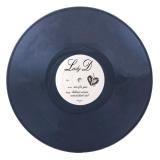
Unsung Hero Lady D appears out of nowhere, delivering three cuts of pure dancefloor attitude. Raw 90s house energy on “Son of a Gun”, deep Balearic moods and a forward-pushing Dub on the flip.
Released via kickin’ up dust on dark blue vinyl. Limited to 300 copies.
Stevie Cox and Ansboy: two powerhouses of the Glaswegian club scene join forces for their collaborative debut EP on Rhythm Section INTL- ‘Twice Like Rice’. It’s a weighty four-track EP designed for the dancefloor, taking in myriad influences from dub techno, breaks, trance and good old fashioned house music. The Ep is full of deep, pulsating rhythms, lush textures and emotive peaks - all road tested in Stevie’s Iconic home turf: Sub Club.
Stevie Cox has long been a name long ruminating on everyone's lips, as a resident DJ of the iconic ‘Sub Club’ with an ever-growing tour schedule and back catalogue of releases via the likes of Klasse Wrecks and Optimo. Whilst the name Ansboy may be new to some, it is a fresh alias for the grammy nominated producer and mixdown engineer Robert Etherson who has long been a staple in the Scottish scene with an international touring repertoire under his belt.
The two friends met in their hometown of Glasgow and began their musical journey together last year after Robert taught Stevie how to do mixdowns. The pair clicked effortlessly, quickly discovering they shared the same passion for emotive, deep and progressive dance music. Their first track together - which took shape in the form of ‘Drift’ - a high-energy synth led anthem, came out with a special selection of tracks curated by Bradley Zero for his exclusive SHOUTS Summer sampler in 2025.
For the Twice Like Rice EP, their work evokes all corners of the dancefloor, kicking things off with ‘GC’ - a peak time breaks-infused trancey-heater - a master class in building dancefloor tension which gives way into a searing crescendo. Things spin towards a darker percussive focus on the more intense ‘Twice Like Rice’.
On the b-side things return to blissful euphoria with ‘Virgil’ - a warm up dub-techno ballad, before the emotional release of ‘Subculture closure’ inspired ‘Carter21’.
NO WAY BACK MAGAZINE
BETTER WAYS FORWARD THROUGH MUSIC AND SUBCULTURE STORIES, 1979-1994 - LEARNING FROM, NOT LONGING FOR
After all of the fun had - and, if we may brag a bit - the acclaim for NWB001, we're back with a follow-up.
So here's NWB002. Our start and end points shift this time (1979–1997 vs 1977-1989) but again the focus is on revolutionary moments in music and subculture.
We've got pieces from The Face, i-D, Time Out, Village Voice, Rolling Stone, Mixmag, The Observer and - a particularly big pleasure - Collusion magazine. We've got brilliant photography, too, documenting seminal afterdark moments. And we've put it all together with much love, craft and attention to detail.
This is material that lets us experience culture in its rawest form. In-the-moment and before endless layers of post-rationalisation have kicked in. Breakthrough events in dance music, hip-hop and pop – and parallel shifts in art, design and fashion. Inspirational, ground-level creativity and enterprise that set the scene(s) for subsequent decades.
We hope you enjoy reading NWB002 as much as we enjoyed bringing it together.
Inside No Way Back 002
Behind The Groove - the epic 1983 feature by Steven Harvey in David Toop's Collusion magazine, charting the NYC disco underground
Photographer Steve Eichner documenting the club kids scene at The Limelight, Palladium, Tunnel and Club USA
Year zero reporting as The Face's Sheryl Garratt visits Chicago in 1986, witnessing the emergent house sound
The Mudd Club - 'disco for punks' as Rolling Stone put it; the Lower East Side party which arguably spawned a thousand indie discos
In the 'socialist city' of Sheffield, meanwhile, Jon Savage heads for a night of sharp clothes and even sharper moves at Jive Turkey
Paul Morley writing in Time Out in 1988 on the tension materialising between glossy style mags and the the monochrome music press
The House That Rap Built - Village Voice celebrates the short but sweet glory years of hip-house
Mixmag in 1992 on the 'return of sex' to clubs like Roxy and the Sound Factory
Images and commentary from Eddie Otchere, rewinding to jungle's halcyon days
Kodwo Eshun reporting on jungle's full-throttle ascent for i-D in 1994
+ Editor’s notes, supporting commentary, playlists, and covers, spreads and imagery from original titles
ISSN - 2977-8530
Regal delivers his first full EP on Backspin, marking a defining moment for the label he founded. More than just another release, the Forgotten Heroes EP captures the essence of Regal's vision: groovy, forward-moving techno that balances raw club energy with atmosphere, emotion and narrative.
The title track 'Forgotten Heroes' sets the EP in motion with a sense of controlled urgency. A rolling, slightly breaktinged groove pushes forward relentlessly, while an eerie, almost nostalgic synth melody hovers in the background, giving the track an emotional pull. 'Concentrate' shifts the focus inward_ bleeping motifs, tight claps and restless hihats circle around spoken fragments that feel like thoughts caught between the peak of the night and the quiet hours before sunrise.
On the B-side, 'Forte' accelerates into pure momentum: sharp, bleep-led sequences and forward pressure combine into a rush that feels like racing through the city at night. 'Soft Killer' deepens the mood with a darker, dominant edge, its stripped back power and razor-sharp sounds cutting clean through the mix. Closing track 'Wild Magic' offers a final release of tension, slowing the pace into a lighter, more house-leaning groove. Warm pads and a catchy, uplifting melody bring a sense of air and openness, letting the EP drift out on a hopeful, almost euphoric note.
Regal's comeback EP 'Forgotten Heroes' stands as a personal statement and a cornerstone release for Backspin. It's techno built on groove, contrast and character, made to leave a lasting impression on the dancefloor.
Chronicle continues his journey through the cosmos on Spatial bringing a stunning array of inspired atmospheric bliss with Aqua Pura. A1 - Pure Alchemy Chronicle opens his latest EP for Spatial with a sprightly track, introduced with purposeful synthwork, echoing effects and a wonderful 808 bassline reminiscent of the late 90's Progression Sessions era. Energetic, layered breaks drive and build throughout Pure Alchemy with joyous vigor, while a cluster of subtle melodies intertwine across a varied and memorable mix from the label regular. A2 - Endless Ocean Next up Chronicle treats us to an amazing array of atmospheric synthwork with Endless Ocean, notes yoyoing across the soundscape through a gorgeous intro. Flecked with shimmering, buoyant melodies and bringing an immediate injection of pace, the breaks drop delivering a driving, distinctively head-nodding energy punctuated by a blippy micro melody and suitably deep bass. AA1 - Shared Consciousness Opening with a playful intro featuring subtle hi hats, twisted bells and a classic film sample, Chronicle deftly juggles excitable effects with his inimitable cheery atmospheric style before a real feast for the ears and the feet arrives - breaks reminiscent of those long lost nights at Shepherd's Bush in 1998 bring an essential hypnotic energy to a track simply dripping with style and rhythm. AA2 - Water World Straight into the action with crisp two-step breaks, Water World needs no introduction as a myriad of atmospheric effects, samples and quirky melodies seize your attention for a decidedly dancefloor-friendly track for 160bpm heads. Beautiful breakdowns play their part as well as the subtle yet room-filling 808 bass, rumbling persistently beneath another remarkable track from one of Bristol's finest.
Savy Records celebrates its fifth year with Lumo, a new vinyl-only series built around the darker corners of the dance floor. The first edition gathers four artists whose productions move naturally through the night -- from tension and space to drive and release. The record opens with Andy Martin, a Mexican-Jamaican artist whose dub-infused ''Wicked Tune You Know'' nods to UK bass influences, with a percussive undertow and an addictively off-kilter synth line. Finnish favourite Sansibar makes his return to the label with ''Innerwelt,'' a twisted electro cut laced with acid paranoia and washed-out vocals, slightly unsteady but always in motion. On the flip, IDA -- fellow Finnish export and SAVY label founder -- keeps things tight with ''Electrostatic Rest,'' a straight-up electro roller built on clean drums and a classic electro bass, one to lock in the dancefloor groove with. Lewski closes with ''Glakk,'' a machinated, bass-heavy analogue banger, driving up the tempo as it heads up the peak time. Lumo presents a darker, deeper side of Savy: one that nods to the underground, and cut for purpose as a vinyl-only release.
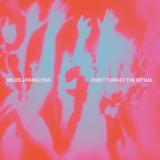
An EP of the darker side of electronic dance music is always a welcome addition to Especial. Up and coming producer / DJ Miles J Paralysis steps away from releasing on his own Crying Outcast label to explore left of centre, new wave and cosmic sounds; songs woven from his own vocals and samples.
A love of Dub, Hip Hop and Electro-Funk led into electronic music. Sampling TV shows, making beats, jamming. Exposed to Leeds and Manchester club cultures, seeking the more experimental. African Head Charge, Muslimgauze, The Rootsman and Weatherall were early influences in forming a no rules philosophy.
Born and raised around West Yorkshire, the beauty and bleakness of the moors have a strong bond on Miles Henry aka Miles J Paralysis and his music. Folklore and the occult link and connect an interest in Northern Hauntology. Unresolved histories, stuck between past glory and phantoms of possible futures.
The EP starts with It’s Only Shadows Talking. A play on the Paralysis persona, the spectral dub house groove meets industrial overtures, encasing his own eerie and unsettling vocals to begin the narrative.
Don’t Forget The Ritual takes a direct link from British folk traditions. Sacred and ceremonial; the laid-back breakbeat, samples and delays are the transition to the evocative embrace of melancholia.
Come On Fleet, the hypnotic Latin (vocal) sample creates a lurking murmuration, rimshot percussion meets gothic sound design for the EPs’ most straight forward and direct club cut.
Surreal and dreamlike soundscape, closing track The Delicate Fairytale is the perfect platform for Miles own phantasm. Inspired by the stories of Dorothy K Haynes and Robert Hickman, the pervading sense of a David Lynch aesthetic, exploring the nostalgic nature of memory.
Mysticisms’ returns to the music of the Conscious Sounds label and their short-lived but highly prized Dub meets Funk project, Dub Specialists. Created by label head Dougie Waldrop and Chris Petter (Love Grocer) to explore their interest in samplers and a love of Funk and Jazz.
A hugely respected “Digital” and “Roots Reggae” label, Conscious Sounds has been a mainstay of the East London digidub sound for over 30 years. Dub Specialists released 3 albums on the Crispy Music sub label, they have recently gained considerable interest in digger circles, with rising prices to match.
As with their first Dubplate outing, the release features extended re-edits by the label and friends, this time featuring versions by Lexx, Miles J Paralysis, Chuggy and Vanity Project. Working with the simplicity and skill of his studio craft, Dougie utilised the Atari 1040, Cubase and Soundcraft mixer to effect. Petters’ chords sit atop reggae basslines, funk samples, loops and this time, a heavy dose of cut up vocals in to the mix.
While the first EP came from their debut album, Breat To Break, here the source material for the re-edits comes, in the main, from their second outing “Dub To Dub Beat To Beat”. A more expansive album that also dipped in to 4/4 rhythms and touches of House / Techno.
Opening track Dynamic Duo is a 4/4 stepper bomb – with samples from Adam West’s iconic interpretation of Batman – expertly extended by long-standing DJ, producer and edit master, Zurich’s own Alex Storrer aka Lexx, who dials things to max for a club stop. A new name on many lips, Miles J Paralysis takes it all back down with a beautifully drawn out, acid-tinged tripper. Bumpin’, the mid-tempo groove sucks you in, psychedelic and mind expanding.
The flip returns to the more traditional Dub Specialist vibes of Breaks’n’Funk’ cut ups, first with (co-)label head Chuggy’s faithful extension of Heavy Dub. Featuring the classic Ijahman Levi’s vocal, the breaks flow and piano / horns stab, a dance floor shaker for the discerning. To close, secret studio fixer to many, Matt Bruce again dons his Vanity Project moniker to perfectly tease and live dub (out) the half-stepper, Reality Dub and close this latest in the Dubplate series.
Beat The Mystery.
After a series of successful outings alongside sidekicks Ofofo and Zongamin, studio wizard MYTRON turns in his debut solo full-length for Multi Culti World Records. With contributions on Invisible Inc, Calypso, Bongo Joe, Kalahari Oyster Cult, LYO, Codek Records and Earthly Measures, Mytron has carved out a name for himself in a carefully-curated left-field quadrant of the indie-dance galaxy. Tuning his oscillators to myriad sounds — from dub and disco to krautrock — the London-based producer perhaps most notably channels the pristine compositional style of Kraftwerk. While most apparent in the use of vocoder, there’s a consistent efficiency of arrangement that recalls the man-machine in effervescent, idealistic fashion. Mytron manages to keep it simple, funky and musical — whimsical tunes that bop along with analog grit, wilderness, and wonk. There’s a warmth and wit that shine through every synth line, an understated confidence that speaks of years spent tangled in wires and waveforms, with an inclusive sonic eclecticism that flattens hierarchies between genres, geographies, and generations. Each influence is invited to the table, treated not as pastiche but invited to dine and dance in a space where kosmische dub disco and Afro rhythms can coexist without borders. The sleeve design echoes this philosophy: video-feedback patterns hinting at our modern screens, both portals and filters — coloured, distorted intermediaries through which we perceive the world. In the trippiest sense, the record is both reflection and refraction — a sonic mirror held up to an interconnected, glitchy reality. Tailored equally for DJ use and home-listening head trip, the album is meticulous, mischievous and merry.
BanBanTonTon review:
On Mytron’s debut long-player for Multi Culti groovy 21st Century leftfield house gear collides with Daniele Baldelli and Beppe Loda’s hugely influential `80s afro / cosmic. The 9 tracks are chunky, chugging and full of funky, funny noises. Old school B-lines mixing with eccentric electronics. Spinning, spiralling sounds.
Sugar is an electro-pop, vocoder confection, cut from the same sonic cloth as cult classics like Codek’s Tam Tam. Created from tough trap drums, splashing effects and a mutant Giorgio Moroder bass arpeggio. The title track, Propellor, pits Kraftwerk-esque hardware harmonised vocals against a bongo loop and a whistling hook. Playground has simian shrieks surround tumbling tom-toms. Highway Maintenance adds kosmische synths to a dance of woodblocks and buzzing bottom end. Keep On Dubbing is an organ-led, clip clopping percussive canter.
Tracks such as Speaker Can Talk, shot through with disco lasers blasts and recalling Curt Cress’ Dschung Tek, also lift the tempo up, but the bulk of the music here is a mid-tempo, techno drum circle. Squelchy sequences gurgling in and out of programmed percussion. On Quasar, spiky acid edges in and slowly takes over.
Key references that come to mind are Baldelli’s own turn-of-the-2000s Cosmic Sound Project productions, and Wolf Müller’s scene shaking sides on Themes For Great Cites, from around a decade later.
Duality Trax welcomes the newly formed 9 Hours Ahead to the label with their debut release, complete with a remix from progressive royalty Bliss Inc. Landing in early 2026, Smooth Sailing traces a blissed-out sonic journey from the combined minds of San Francisco’s Namastrange and Amsterdam’s Breeze. Their cross-continental connection threads throughout the EP, with subtle nods to the vast ocean that separates them. The title track opens the release with a gentle drift: airy synths, angelic pads, and tribal percussion guiding listeners steadily out to sea. Meridian Space picks up the momentum, driven by a pulsating, everexpanding bassline. Namastrange’s whispered vocals weave between swelling orchestral pads, before the track mutates into a mind-bending acid line - perfect for a heads-down, eyes-closed dancefloor moment.
The B-side turns up theenergy with Transatlantic Dreams, a dancefloor-minded cut that nods to the golden era of San Francisco progressive and the Hardkiss legacy. Lush piano melodies, breakbeat interludes, rave stabs, and glimmering gated vocals collide in a warm, nostalgic swirl. Closing the EP, Bliss Inc. delivers a psy-tinged reinterpretation of Meridian Space - a dark, brooding acid workout that pulls the original into deeper, murkier waters.
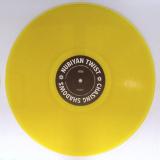
As the world sinks deeper into screens and algorithms blur the line between creation and imitation, Nubiyan Twist return with Chasing Shadows, a record that reclaims the pulse, warmth and spontaneity of human connection.
The band’s fifth studio album is a rich and restless blend of jazz, afrobeat, hip hop and electronic textures, exploring the space between the organic and the digital. It’s music that moves, sweats, and breathes, made by real people in real rooms with heavyweight features bringing together varied voices from the music community which they inhabit.
Bandleader and producer Tom Excel explains: “We wanted to make something that felt joyous and defiantly human — something that couldn’t exist without that connection between people. You can get an AI to write a fugue in seconds, but it can’t capture the chemistry and chaos that happens when musicians lock in together. Chasing Shadows is our way of holding onto that.”
Folowing 2024’s acclaimed Find Your Flame, praised by Roling Stone, Jazzwise, NPR and more, Chasing Shadows pushes the band’s sound further into new soulful territory under Exce l’s expert guidance, featuring bright new vocalist Eniola and a glowing cast of icons and innovators. Malian star Fatoumata Diawara lights up the title track on a powerful slice of Afrobeat, Joe Armon Jones leads the dub workout ‘Rhythm Of You’ and the band take it back to their hip hop roots on great colabs with The Pharcyde’s Booty Brown, Ghanaian MC M.anifest and London dancehal favourite, Mr Wi liamz.
On Chasing Shadows, Nubiyan Twist continue to look outwards with their music but keep the focus firmly on humanity and positivity. It is an album which crosses continents and which shamelessly celebrates our co lective strength.
Fifth album from UK-based co lective Nubiyan Twist led by bandleader & producer Tom Excel (Africa Express, Onipa)
Featuring Booty Brown, Fatoumata Diawara, M.Anifest, Mr Wi liamz and Joe Armon Jones.
Pressed on Yelow Vinyl LP, or Green & Yelow splatter Vinyl LP (exclusively for UK indies).