Hailing straight from Quebec City, Canada, GET THE SHOT is a hardcore band formed in 2009. With their strong work ethic, they quickly established themselves as one of the flag bearers of the Quebec hardcore and metal scene.
Their powerful music incorporates elements of thrash, death metal, and hardcore, creating an intense and brutal sound that captivates fans of the genre. Inspired by iconic bands such as Hatebreed, Obituary, and Slayer, GET THE SHOT has developed a unique style of extreme music.
With an impressive discography including albums such as "Perdition" (2012), "No Peace In Hell" (2014), "Infinite Punishment" (2017), and their latest album "Merciless Destruction" (2022), nominated for a JUNO award, GET THE SHOT has built a solid reputation with impactful tracks and explosive live performances.
“CRUCIFIXION DEPICTION”, marks a shift in attitude and resolve for the band. While celebrating the addition of a new vocalist and the comeback of the original guitar player, the latest EP sees the band undergo a transformation into a new persona and exploring a more visceral sound, while sticking to its hardcore roots.
After more than 700 concerts on three continents, including some on the biggest international stages such as Wacken, Hellfest, FEQ and Resurrection Fest, the six members remain committed to the core values of authenticity, integrity, and equality at the heart of the hardcore movement, while addressing with disillusioned realism the flaws of an era defined by blind individualism.
Hailing straight from Quebec City, Canada, GET THE SHOT is a hardcore band formed in 2009. With their strong work ethic, they quickly established themselves as one of the flag bearers of the Quebec hardcore and metal scene.
Their powerful music incorporates elements of thrash, death metal, and hardcore, creating an intense and brutal sound that captivates fans of the genre. Inspired by iconic bands such as Hatebreed, Obituary, and Slayer, GET THE SHOT has developed a unique style of extreme music.
With an impressive discography including albums such as "Perdition" (2012), "No Peace In Hell" (2014), "Infinite Punishment" (2017), and their latest album "Merciless Destruction" (2022), nominated for a JUNO award, GET THE SHOT has built a solid reputation with impactful tracks and explosive live performances.
“CRUCIFIXION DEPICTION”, marks a shift in attitude and resolve for the band. While celebrating the addition of a new vocalist and the comeback of the original guitar player, the latest EP sees the band undergo a transformation into a new persona and exploring a more visceral sound, while sticking to its hardcore roots.
After more than 700 concerts on three continents, including some on the biggest international stages such as Wacken, Hellfest, FEQ and Resurrection Fest, the six members remain committed to the core values of authenticity, integrity, and equality at the heart of the hardcore movement, while addressing with disillusioned realism the flaws of an era defined by blind individualism.
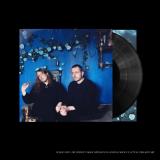
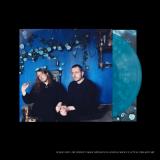
There's Something Going On is the second studio album by Babybird, originally released in 1998.
The album is almost unrelentingly dark and mysterious, in much the same manner as his earlier lo-fi productions. Indeed, two of the tracks here, "You Will Always Love Me" and "There's Something Going On," were recorded straight to four-track. Jones' voice echoes out of lyrical valleys. "Take Me Back" is a horrific tale of an obsessive relationship, with lyrics about eyeballs scratched with rusty nails and a creepy chant of "dead, dead, dead" ad infinitum. It's a conceit that starts with the very first track, "Bad Old Man," where Jones sings of wife-beaters and a drowning in a duck pond. Musically, the album is more of a lean toward the baroque than Ugly Beautiful. One might describe it as stark, disturbed chamber pop. Beautiful melodies appear quite majestically out of Jones' psychological studies. "It's Not Funny Anymore" is bittersweet and touching, with Jones reaching for the album's emotional core over weeping, organic keyboards.
"There's Something Going On" is the tender conclusion, suggesting that Jones knows there's a better way of life than obsession and self-torture. There's Something Going On is definitely Baby Bird's most subtle album, and it's a fascinating listen from start to finish.
There's Something Going On is available as a limited numbered edition of 750 copies on turquoise vinyl and contains an insert.
Ever since the release of his first solo album more than 20 years ago, German musician and producer Christian Kleine has experimented with blending and contrasting the varying textures and approaches of post-rave IDM, breakbeats, shoegaze and punk. His latest album offering, Touch & Fuse, shows he's continued to refine and perfect that combination, which is less a conscious concoction and more of a natural outcome of the music he likes. From the edgy Aphex-isms of 'Val 2' and the heavily filtered breaks of 'Reverse Angle' to the slowed down grunge meets pure electronics of 'Return of the Underground', this is unique, accomplished stuff.
Berlin-based Dutch-Italian composer and musician Aimée Portioli aka Grand River presents the new album Temporary, returning to the renowned Editions Mego label with her most expansive and focused LP yet.
Rooted in existential ideas of impermanence and flux, Temporary is a deeply emotive work centred on the rich interplay between resonant guitar work and innovative electronics. Written in the wake of profound personal grief and loss, the album sees Portioli infuse her music with a raw, expressive intensity anchored in this experience. Across eight strikingly melodic and affecting soundscapes, Portioli powerfully embodies a dramatic encounter with mortality.
Temporary reprises Portioli’s exceptional streak of material across acclaimed labels including Donato Dozzy and Neel’s Spazio Disponibile, Caterina Barbieri's light-years, Ghostly International, Tresor and Umor Rex. The LP represents the latest tour de force in her distinctive electronic practice. Alongside a raft of lauded releases, Portioli has devised visionary multichannel installations which dissolve the boundary between the art gallery and the performance space.
Her new album signifies a culmination of her work, imbued with the depth of Portioli’s artistry. Shaped by a paradigm shift rising from loss, the record reflects a contemplation of the human condition and the ephemeral nature of existence. Ruminating on the thoughts and experiences that have fed into the record, Portioli reveals a consequential recognition underpinning the record:
"Sometimes, when travelling in places far from home that I know I will most likely never return to, or while accompanying someone I loved towards the end of their life, I become intensely aware of the singularity of the moment, and of how precious and sad this feels at the same time. It carries a particular weight because it will never happen again in quite the same way. Through experiences like these, I have gradually come to understand the temporary nature of all things. They taught me that to live is to experience the present while already feeling the trace of its disappearance, something both painful and blissful." - Aimée Portioli, Grand River
The album is invested with a potent mood and momentum from the outset. Establishing an evocative tone with the subtle, pulsating synthesis, rustling undertow, and oceanic low end of 18 circles to heaven, Portioli gradually ascends through the incandescent modular majesty of Come to stay, and the turbulent, brooding guitar figures of The crossing of the body, the crossing of the mind. The album progresses through the rapturous electronic phasing of The little we last into the coruscating synth grandeur of Let me know when you’re pure, before a thrilling endgame.
Closing with the wavering harp runs, heavy percussive thud, and cataclysmic guitar discordance of Maybe I am dead and this is paradise, and the evanescent atmospherics and beautiful acoustic refrains of Work of ending, Portioli takes the listener through vast landscapes of sound and mercurial emotional states. Intimate and immersive in equal measure, the record traces a compelling sensory journey.
Each part of the album is part of a larger poetic sentence, with track titles forming fragments that together articulate a meditation on transience. From 18 circles to heaven and Come to stay through From the other side and Work of ending, they read like quiet statements about being human, about loving, losing, remembering and eventually fading. The record moves through these states as a continuous passage, depicting a poignant soundworld guided by temporality.
The awareness that our time is limited sharpens the value of what remains. Each encounter, each gesture, each fleeting moment becomes more vivid. Temporary lingers in the space where presence and disappearance coexist, where everything is already passing away and therefore becomes infinitely precious. Things matter because they do not last. Mortality does not diminish life; it intensifies it. In confronting these ideas, Temporary feels irrepressibly alive.
Composed, produced and mixed by Aimée Portioli
Production and mixing assistance by Luca Sammartin
Acoustic piano on Maybe I am dead and this is paradise by Andert Tysma
Mastered by Rashad Becker
Cut by Marta De Pascalis at Schnittstelle, Berlin
Artwork by Nicola Tirabasso
Layout by Riccardo Piovesan
Half a century after its original release, legendary Lebanese musician and singer Marcel Khalife—renowned oud player and global icon of both music and activism—returns with a new recording. On this album, he reinterprets four of the five tracks from his debut, Promises of the Storm. A bold defiance of time and history.
Why revisit the same album, 50 years later? The reasons are many, but one stands above the rest: history itself seems to be repeating. The narrative unfolds once more in the same dire circumstances as half a century ago, as if time has folded in on itself, returning everything to its starting point. The urgency, the necessity—it all remains, pressing and inescapable. We must begin again.
In 1976, a young Marcel Khalife found himself exiled in Paris, fleeing the Lebanese Civil War and his family’s Christian village, where his progressive, left-wing ideas had placed him under a kind of house arrest. He was one of the few to openly and unwaveringly champion the Palestinian cause. The situation quickly became untenable, especially since, just a month before the war began in March 1975, Khalife—fresh out of the conservatory—had given his first public concert to great acclaim. Then, everything collapsed. What does one do when trapped at home? Read books, play the oud, and turn those readings into songs. In his family’s de facto prison, Khalife began setting the poetry of the great Palestinian poet Mahmoud Darwish to music. These songs, born of confinement, he carried with him into exile, driving to Paris where a producer offered him the chance to record an album. Naturally, the tracks were the ones he had been improvising at home from Darwish’s poems. The album’s title, Promises of the Storm, echoed the war that was just beginning. Khalife recalls that the album became a hit after a concert at the Fête de l’Huma, where 500 copies were sold in a single day. “Everything started there, and it never stopped,” he remembers. He would meet Mahmoud Darwish shortly after, at a dinner organized by mutual friends. From that moment, a deep friendship blossomed between the two men.
With Darwish’s words and Khalife’s music, the songs of Promises of the Storm are imbued with a powerful evocative force—melancholy, tenderness, and poetic resistance in the face of violence. The album catapulted Khalife to international stardom, leading to endless tours and recordings, yet he never abandoned his commitments.
Now, 50 years later, Promises of the Storm returns in a fresh recording, because history is repeating itself. After the Israeli bombings in Lebanon at the end of 2024, Khalife, who was on tour, found himself stranded in Paris. He remembered a recurring request from his son, musician Bachar Mar-Khalife, who had often urged him to re-record his now-classic debut album. One morning, oud in hand, Marcel knocked on his son’s door and said, “Shall we? I’m ready to record.”
These new versions are stripped down, raw, and intimate—just the solitary strings of the oud. Khalife sings as never before, his voice no longer marked by the fragility of youth but imbued with something deeper, freer, unshackled. It soars high yet resonates low, always clear, as if to escape sadness, to evoke love and violence, desire and exile. In just four songs, Khalife encapsulates a lifetime, and a philosophy of life. Rita tells of a love of Darwish’s, with the haunting line (translated from Arabic): “Between Rita’s eyes and mine, a rifle.” Oummi invokes the figure of the mother as a metaphor for the lost land. Promises of the Storm is a meditation on revolution, the hope for change, the melancholy of defeat, and the power of thought. Passport captures, through poetry, the feeling of being stateless—a citizen of everywhere and nowhere.
Time has only strengthened these texts and this music. History never repeats itself without a valid, indispensable reason for the present. That reason is fully contained in Marcel Khalife’s new interpretations, which have never sounded so clear, so right, so essential.
Multi-faceted artist Calibre today shares his sixteenth studio album "Feeling Normal". The album is out now to pre-order on Vinyl, CD and on digital platforms via his own independent imprint Signature Recordings.
The record is his first bonafide 140bpm record and a staggering body of work that shows the genius levels of one of electronic music's most respected auteurs. Across the 13 tracks, he transcends through space and time, creating music that will take the listener on a weighty sonic journey. The album announcement is accompanied by two dub versions "Bad" and "Badder" deconstructed from the track "Badman" with DRS from Mark Ernestus available via his Hardwax store January 29th and Bandcamp February 12th. "Getting to work with Mark Ernestus is a real honour, I collected Basic Channel, Rhythm & Sound and his other work for many years and still do. It's hard to avoid the influence of this guy in electronic music across genres and so it is a real pleasure to have him do his thing with the Badman tune which I think sounds closely related."
All of the tracks on the record have been road-tested in Calibre's DJ sets over the last 2/3 years with many of them being sought-out by his hardcore fans. It was only a matter of time then that he put them out for all to consume. With a nod to the dancefloor, the clear idea for the album came about following the release of his most personal album to date "Planet Hearth". "It still works in the headspace but ultimately it's been written for the sweaty club experience we miss now, also after an album like Planet Hearth it felt very liberating to do," he remarks. When writing albums, he often just puts it down to the general chaos of life, not citing any one influence but generally just waits to see what comes. With one of the tracks on the album written 7 years ago on the island of Valentia, It became a project that he spent the intervening years collecting tracks for, not really knowing when he was going to put it together as an album. "The whole album is special to me, everything on there has import and meaning beyond for me, I have spent much time on all these and hope they are special for other people too."
Belfast-born, Berlin-based Calibre - AKA Dominick Martin - shows no sign of slowing down. As a producer, DJ, songwriter, multi-instrumentalist and painter, he is one of the most unique and inspiring living artists. With a career spanning two decades, his ability to remain underground whilst being one of the most-respected is testament to who this enigmatic artist is. To this day, he has never been remixed and has a seriously impressive amount of unreleased music under wraps. With everything on hold and gigs on the backburner, this record is exactly what the world needs right now.
Swooped Records would like to introduce our limited series of vinyl only edits We love many of the edit labels with 1-2 tracks per release, and we’re going to help you value up with 4 top-shelf cuts on every record! We kick it off with Chainsnatcher “Jump Up In It” Vox that is straight up, dirty, bumping House music! It’s also featured on Derrick Carter’s for The 6 Mix w/ Mary Anne Hobbs on BBC’s flagship BBC Radio 6 Music. Next up Ric Viera of Guided Methods fame teams up with Elrose for “Only Ewe”. This funky House take on an afro-boogie jam will shake the dance floor and keep the discerning heads nodding. The flip side brings us Chainsnatcher “Jump Up On it” Dub. This is for those that want a stripped back version of the Vox with well placed, minimal vocal snippets and that dance floor boogie. Agent 818 rounds it off with “Don’t Let Nobody” and it’s time to get the summer time vibe started pronto! This jam will do the trick whether it’s day party-fun to after-hours strutting, just ask DJ Heather as she’s been playing it for a minute now.
Nachdem seine legendären Aufnahmen aus den 1970er Jahren zu grundlegenden Meilensteinen des modernen Reggae geworden waren, setzte der einflussreiche Musiker und Produzent Augustus Pablo in den folgenden zwei Jahrzehnten fort, neue Ausdrucksformen seines einzigartigen Sounds zu entdecken. Ob er nun seine Dub-Meisterschaft mit digitalen Techniken verfeinerte oder die instrumentale Palette seiner basslastigen Melodica-Grooves erweiterte - der wegweisende jamaikanische Künstler blieb während seiner kurzen Zeit auf dieser Welt stets ein Innovator. Nur wenige Wochen vor seinem vorzeitigen Tod im Jahr 1999 erschien ,Valley Of Jehosaphat" - das letzte Album von Augustus Pablo und ein zeitloses Statement eines Künstlers, der seiner Vision stets treu blieb . Mit einer Produktionsqualität, die die körnigen Klassiker seiner frühen Karriere bei weitem übertrifft, erklingen die fesselnden Instrumentalarrangements dieser Sammlung mit Klarheit und fangen die friedliche Essenz von Pablos Kreativität ein. Jetzt erscheint ,Valley Of Jehosaphat" zum ersten Mal überhaupt als vollständige Vinyl-Veröffentlichung. Dank Nature Sounds und dem neu gestarteten Label Rockers International enthält diese 2-LP-Vinyl-Edition außerdem fünf Bonustracks mit seltenem Material von Augustus Pablo aus den 1990er Jahren.
FORT is launching a sub-label, NOCOWALNYA, and introducing its debut release.
The new label's guiding principles are authenticity, the personal taste of its founders, and a synergy of opposing sensibilities: melancholic romanticism and raw, uncompromising rhythm. The first release is the EP NOCOWALNYA 001, recorded by three key figures of the label: Nocow, Valentin Fufaev, and DJ Designer.
NOCOWALNYA deliberately steers away from the canons of classic techno, trance, or house. The label is built as a space for artists ready for unconventional forms and bold experiments, a place to express their individuality.
The sub-label's visual symbol, a logo of two young men standing on an anvil, sums up the idea perfectly. It's a manifesto of duality: fragile sensitivity set against a cold, industrial beat, romantic motifs joined with dense, hard-hitting sound.
It's fitting that the sub-label takes its first step with its three founders, who stood at the origins of FORT. NOCOWALNYA 001 distills their shared vision and shows how different creative approaches can come together as a single monolith.
The result is a techno-trance hybrid where driving energy meets sincere musical drama. This release doesn't just open the new label's catalogue, it sets the direction for every single and mini-album to follow. The release will come out in two formats: digital and vinyl.
Truths and secrets often reveal themselves at night, under the freedom of shadowy darkness, away from prying eyes. In creating Given to the Night, sisters Valentine and Clementine Nixon have crafted a world that drifts through the in-between: between dream and reality, between day and night and the undefined, and ultimately a world that embraces the discomfort of being untethered. A process that follows simplicity and intuition rather than pre-determined narratives. “We recorded songs as they appeared, which sometimes felt like catching light. Before we realised it we had a record”, the duo explain.
While making the record Valentine and Clementine gently pushed away from the world- deleted social media, retreated into the trees of their native New Zealand - and only invited a couple of people in during the recording process. From that space, the album came together in an eerily easeful way.
There is a dream-like drift and sonic timelessness to the the record, as reflected in its nocturnal title, which can be read in two ways:
“Being taken by, or being inclined towards nighttime, preferring its blurry cloak of shadows to the harsh light of day; or giving oneself up to night, in sacrifice, letting go of fear and melting into the darkness.”
Written during a time of personal transition there was “a sense of finding the light in the shadow” they add. Guitar lines float, synth lines entwine, tapes hiss and vocals stream creating a kaleidoscopic montage of transient memories and emotions. A spectrum of feelings arise - isolation and joy, insomnia and manic highs, confusion and fleeting clarity, grief and healings. In the record, these feelings all merge and fade into one another in a nonlinear manner, as life tends to do; creating something deeply human that simultaneously gestures towards the transcendental.
Consummate selector DJ Sundae returns to Efficient Space with Nothing Ever Was, an immaculate compendium of phantom independent melancholia spanning '60s/'70s village green folk, outsider shoegaze and new millennium domestic pop. Each recording an emotional exorcism, Sundae breathes oxygen into music that was barely there in its own time, made in quiet places and crawl spaces, shared only with a precious few via private presses, hobby labels and now-decaying CD-Rs.
Free of any prescribed epoch, continent, scene or rarity, Noughties homemade indie pop opens both sides with the 4-track wonders of The Motifs and Betelmire, unlinked contemporaries finding their place alongside Andrew Jay's Crazy Horse rust, the regional-garage adolescence of Pauline Scribner and the anaesthetised Mancunian guitar-poetry of the late Quigley.
The remaining coordinates zigzag between the UK and US. Folk wayfarers John Strang & Valentine Lewis Lloyd, Virgin Insanity, Kusudo & Worth and Penny Wager's spartan Garden of Eden acoustica find their mirror in Empress and Slumber's close-quarters indie pangs. Chicago power pop fixture Phil Angotti is caught at his most tender, while Teri Rini takes the final bow with her universe-stopping hotel lounge torch song.
A deeper, more personal exploration of Sky Girl's sentimental songwriting, Sundae found himself amassing a cache of tracks too undeniable to remain confined to his anonymous mixtapes for TTT, P.A.M. and Good Morning Tapes, or bi-monthly hour on NTS Radio. Again his emotional sorcery draws together an unlikely cast, their unwritten narrative assembled from fragmented memories of past lives left behind by future horse trainers, ketamine therapists and Fab Four cover band careerists.
With not a second squandered across 1LP, it took a village to bring this new companion into being, with David Bergot's forensic audio restoration, dreamlike imagery from Matthieu Crozier, Ivan Liechti's elegant design and a perceptive foreword by kindred spirit Jessica Pratt.
Portuguese techno force Lewis Fautzi debuts under his own name on Mutual Rytm with ‘Beneath The Surface’. Hailing from Barcelos, Portuguese maestro Lewis Fautzi has carved out a formidable reputation through a run of uncompromising releases and a sound rooted in tension, precision and raw power - exemplified by his recent outing on the agenda-setting Hayes Collective. He has previously established his fierce, potent sound on Soma, PoleGroup, Mord, and a number of other influential labels, while also heading up Faut Section. Having previously appeared on Mutual Rytm’s Federation Of Rytm III compilation under his Non Cyclic alias, he now steps out on SHDW’s label with a six-tracker busting full of impactful techno cuts. The heavily-requested ‘Beneath The Surface’ opens the EP with menacing low-end and tightly coiled pressure that's released through simmering valves and hissing synths. ‘The Hollow Cycle’ brings a loopy, tunnelling groove with a snaking lead and snaking metallic percussion, while ‘Inner Mechanism’ keeps things dark, deep and driving with a backlit glow that pulls you in. ‘Nonlinear Form’ is streamlined deep techno that fizzes with texture, spraying chords and a rumbling sub-bass, while closer ‘Anamorph’ rides meticulously designed broken beats with an ever-present sense of bass-driven foreboding. For digital purchasers, sparse and eerie bonus ‘Surface’ slams down with industrial weight and real warehouse grit, shaping up another weighty offering for the label.
Soak’s fourth album, decembers, was born in literal silence. Contending with an autoimmune disease that prevented them from singing, it was the absence of sound that birthed the Derry artist’s most sonically and lyrically remarkable album to date.
The space that expanded from that enforced quiet, and the life lived within it - transitionary, liminal, escaping in search of connection - cracked something open. What floods in, is an album of stunning tenderness, honesty, and astonishing storytelling from an artist discovering the revelations at the end of the line.
In decembers, we travel on the road through America, walk the frost-glistened paths of Dublin at night, search for a meteor in Portugal, and return home to Derry. Everywhere, here is an artist evolving, exploring, releasing themselves, coming undone, and eventually, becoming.
At the core of the album is this lyrical statement: “Getting lost is getting free.” How brave it is to face the unknown. Because when you really go there, that’s where discovery lies. That discovery in decembers is a creative one, but it’s also about connection to people and place, to forgiveness, and ultimately to prioritising honesty. “A consistent theme is struggling for direction, battling the urge to run,” Soak says, “and instead, planting my feet.”
Soak’s fourth album, decembers, was born in literal silence. Contending with an autoimmune disease that prevented them from singing, it was the absence of sound that birthed the Derry artist’s most sonically and lyrically remarkable album to date.
The space that expanded from that enforced quiet, and the life lived within it - transitionary, liminal, escaping in search of connection - cracked something open. What floods in, is an album of stunning tenderness, honesty, and astonishing storytelling from an artist discovering the revelations at the end of the line.
In decembers, we travel on the road through America, walk the frost-glistened paths of Dublin at night, search for a meteor in Portugal, and return home to Derry. Everywhere, here is an artist evolving, exploring, releasing themselves, coming undone, and eventually, becoming.
At the core of the album is this lyrical statement: “Getting lost is getting free.” How brave it is to face the unknown. Because when you really go there, that’s where discovery lies. That discovery in decembers is a creative one, but it’s also about connection to people and place, to forgiveness, and ultimately to prioritising honesty. “A consistent theme is struggling for direction, battling the urge to run,” Soak says, “and instead, planting my feet.”
I SPLIT MY ORGAN IN TWOS - a sonic world where animals could speak and parents would never grow old. Music is playing beneath the trees. Creeks are flowing towards the treehouse. Bears are singing and Owls are sailing through the wind like miniature spaceships. Solitude is a chosen path of clarity. And when this world collapses, all memories will vanish. Left behind is the Sting that keeps us separated from the insane.
The debut album I SPLIT MY ORGAN IN TWOS by Munich indie project plainhead is a freak folk inspired rockrecord fusing key aspects of 00s experimental indie with 90s indie rock.
The organic soundscapes remind of yetto-be-refined the Microphones from the album It Was Hot, We Stayed in the Water (2000). Acoustic Guitars fuse with the sound of fuzz and distortion. Clarinets and pianos can be found somewhere buried beneath the noise,
while the vocals remain dry and tired in the front. The 18-track double LP features easy-listenable songs such as the single Ghost / Smoke, short playful instrumentals named after animals and long ever-evolving operas such as River and Sunsick. The album was released on Munich local DIY recording label new basement.
Die erfolgreiche „ZYX Italo Disco: Best Of“-Reihe geht in die nächste Runde und präsentiert mit Vol. 8 erneut eine erstklassige Auswahl an Italo-Disco-Klassikern der 1980er Jahre. Auf dieser Doppel-LP erwarten den Hörer 14 sorgfältig ausgewählte Tracks, die den unverwechselbaren Sound der legendären Italo-Disco-Ära widerspiegeln.
Mit dabei sind beliebte Genre-Highlights wie J.D. Jaber‘s „Don‘t Wake Me Up“, Alan Ross‘ „Valentino Mon Amour“, Brian Ice‘s „Night Girl“ oder Cyber People‘s „Doctor Faustu‘s“. Ergänzt wird die Compilation durch weitere seltene Maxi- und Extended-Versionen, die bis heute auf Tanzflächen und in DJ-Sets weltweit geschätzt werden.
„ZYX Italo Disco: Best Of Vol. 8“ verbindet eingängige Melodien, atmosphärische Synthesizer und den typischen Charme der goldenen Italo-Disco-Zeit zu einem authentischen Hörerlebnis – ein Muss für Fans, Sammler und Liebhaber klassischer Dance-Music.
2026 Repress
Efficient Space honours the memory of producer and MC Ali Omar with Hashish Hits, a posthumous selection from the dub rebel’s self-released discography.
One of ten children in working-class Liverpool, Omar drew deep influence from his father's Arabic heritage—a thread central to his identity and sample origins. After art school and a spell clubbing during Manchester's halcyon days, he relocated to Sydney, where he cofounded the blunted downbeat duo Atone with fellow British expatriate Andy Fitzgerald. As an MC, he infiltrated the city’s house, dub, jungle, and bass circuits, becoming a regular fixture at the Bentley Bar, where he commanded the mic with his versatile, rumbling baritone and charisma.
Freakishly talented in the studio, Omar was a pioneer of the Akai sampler and Atari, deftly recording live sessions straight to DAT. Drawing on industry insights from his sister, Merseybeat firebrand Beryl Marsden—who supported The Beatles on their final UK tour and was signed to Decca and Columbia—the non-conformist sought to build a self-sufficient business model. Between 1998 and 2004, he independently issued four albums on CD through his Hashish Studios imprint, hustling copies directly to local record stores and live shows for instant returns, even hand-sewing screen-printed hessian sleeves for his final release.
Uncompromising in his principles and refusing to suffer fools or charlatans, Omar relished the opportunity to collaborate with those who embodied the same spirit. Hashish Hits offers a snapshot of his inner sanctum—Fitzgerald on the opening track's billowing smoke stacks, the serpentine vocals of Gina Mitchell and the magic hands of mixer Louis Mitchell on 'On Release,' and Wicked Beat Sound System’s Kye on 'Poor Man Beggar Man Thief'. Meanwhile, 'Suicide Bomber' smoulders with the tension of a lost Muslimgauze relic, as the instructional 'Roll Up' and 'The Last Straw' spiral deeper into Omar’s signature production vortex— where space stretches in slow motion and walls reverberate with ricocheting delay.
A true icon of Sydney’s underground scene, the larger-than-life Omar passed away on 23 June 2009 after a valiant battle with cancer. He is remembered for his assertive spirit, larrikin humour, wild anarchic personality, and enduring mantra: “Love and live your life”.1
The fourth release on Samurai Music sublabel SAIBAI comes from Spanish techno mainstay Reeko. True to his long-standing reputation for hypnotic sonics and rhythmic precision, Juan Rico builds on a recent run of activity on Samurai to offer up a densely packed, evocative pair of 160/170 BPM soundscapes. In keeping with the spirit of previous SAIBAI releases, Rico emphasises exploration on both sides of this new record as he draws out continually morphing textures that land between melodic expression and percussive impact. It's instantly clear there's a free tekno undercurrent buried beneath 'Gathering 1' that defines the energy of this latest transmission. The difference is how Rico wields that energy, artfully submerging the kick drum propulsion and letting three-dimensional sonic sculpture beat a path towards the dance. Layers of arrhythmic delay ripples loosen the valve, but there's a constant pressure pushing at the edges of the production from start to finish. There's a more immediate urgency to the mixing of the rhythmic elements on 'Gathering 2' as Rico teases a gabba-like intensity tempered by misty clouds and textural sweeps that soften the attack without sacrificing the thumping energy of the track. Measured and meticulous, bristling with micro-details on top of the imposing presence, both 'Gathering's reaffirm Reeko's current hot streak working outside his usual field of focus.
Devianza, leading artist and owner of the label, returns to production by launching a new series of single-sided vinyl releases, each featuring only two tracks. The first instalment is a sonic catharsis rising from the very depths of a generous land, abundant with new seeds ready to sprout.
‘Le Piante di Elena’ is a dreamlike homage to a primordial world — untouched, pure, and still fertile. A tribute to a newborn bearer of the most radical values of a necessary humanism: a call to return to nature in its most spiritual and purest form. Devianza appears to be evolving into a higher, more spiritual dimension, where spirituality itself becomes the guiding force behind his musical production.
The single side opens with ‘Betullae’, a hypnotic ride between deep and leftfield, characteristic of Devianza’s sound, but this time enriched with an Indian tonal and modal flavour. Forest landscapes are traced by piano motifs that evoke interstellar journeys among endless birch trees.
‘Sunflower Sunset’ continues the hypnotic drift with a melodic crescendo that conjures the image of a sunflower field bathed in the warm glow of a summer sunset without wind. Here, where everything stands still yet everything is, this eight-minute piece becomes proof of the rarefaction of time — an instant that, though fleeting, feels infinite.
For fans of: Donato Dozzy, Voices From The Lake, Luigi Tozzi, Claudio PRC.
Related labels: Spazio Disponibile, Hypnus, Semantica, Silent Season.
Curió Curió came to flight by chance. Two artists, Rio-born, Austria-based singer and actress Luiza Monteiro and German producer Dustin Braun, had separately reached a fork in their journeys. An opportune encounter soon blossomed into an uplifting, heartfelt Brazilian MPB-groove project shaped by psychedelic disco and studio experimentation. In their own words Curió Curió’s sonic vision “is not straight disco, not straight samba, not strictly old-school but inspired by all of them, creating something contemporary but still nostalgic”.
A modern fusion influenced as much by Gal Costa and Jorge Ben Jor as Say She She and Bala Desejo, their sound deftly plots a course all of its own. A celebration of freedom, movement, love and life, intertwined with introspective moments of reflection. Treating tradition as something alive, migratory and unresolved, the album is not simply bound by a shared love of Brazilian music, but by a deeper question that runs through every track; where does one belong when home becomes plural? As a Brazilian living in Europe, Luiza's lyrics explore themes of identity, culture, and existence. The tracks move between cities and emotional registers without settling, tracing a sense of identity that shifts rather than resolves. Songs like ‘Amor Doente’ and ‘Mar sem Dar Pé’ circle around relationships that resist clarity, while ‘Menina Passarinho’ captures the fear and necessity of committing to music as a path. For Luiza, deepening her commitment to music alongside years in theatre was both inevitable and difficult. Braun’s production follows a similar logic. Initial ideas were often built without obvious reference points, only later incorporating rhythmic and vocal elements that hint at Brazil without reproducing it. Analogue techniques, tape, ribbon microphones and live ensemble recording bring a tactile quality that reflects the duo’s interest in process as much as outcome. Highlights include ‘Bem Querer’, built on an authentic samba street vibe with a super-catchy sing-along chorus, and ‘Vem pra Casa’ with its cosmic-tinged Brazilian boogie flavour. The album closes with ‘A Cor do Meu Sonho’, a quiet act of insistence. A refusal to shrink in unfamiliar environments, and a belief in the strength of difference. It is less a conclusion than a continuation, leaving the central question open. “I started to understand that I can belong to many places at once”, Luiza reflects. “And that can be something to embrace”. Lyrics from the song ‘Raiz’ translate in English to “I value a burning sun and the cold in the air. Constant change is my companion”. With Curió Curió, that idea is lived through sound, story and collaboration. A debut that feels both searching and assured, grounded in heritage yet shaped by distance.
VRNT presents VRLTD008, bringing together French producer Praymond with remixes by Guy From Downstairs and Cabanne. The label, vinyl-only, rooted in minimal techno and deep house, originally founded in Calgary and based in the Canada/USA-region, has built a reputation for high-quality, rhythm-centered releases. With L’odeur des rêves, Praymond delivers two originals and two reinterpretations that move in the micro-house and deep-house spectrum with subtlety and refinement. The A-side track presents a detailed groove with space and elegance; the Guy From Downstairs remix expands that vision with his signature swing. On the flip, “73 Infuse” anchors the release, and Cabanne’s remix reshapes the piece with clarity and finesse.
This 12″ (transparent vinyl, 140 g, four cuts) speaks to selectors and listeners who value texture, groove and mood ahead of showmanship. VRNT’s catalogue emphasises these traits, and this release slots in perfectly, warm, composed, and deeply musical.
Futuristica is 20!
This independent imprint has been producing and releasing music for friends and family for 20 years, so what better way to celebrate than by releasing a 2xLP limited edition 20 track compilation of rare and never before released on vinyl recordings exclusively selected by label manager Simon Skolfield.
This is a beautifully varied selection of deep soul, jazz and hip-hop music from a group of like-minded independent artists creating their own brand of soulful gems. From the early electro soul of Electric Conversation, the multi layered jazz samples of Kira Neris to the lush vocal harmonies of Deborah Jordan, production and remix class from Marc Rapson and the contemporary spiritual soundtracks of The Peter Franks Group.
Over the years there has been generous support from Gilles Peterson, Tony Minvielle, Marc Mac, Patrick Forge, Kev Beadle and so many more worldwide. Artists like As Valet, Emanative, LaNote and Georgie Sweet have gone on to produce fine work with several different independent labels with our artists garnering fine remixes and production work from the likes of DJ Spinna, Nostalgia 77, Kev Bown, Mr Beatnick, Nicolay, Kaidi Tatham, Atjazz, Simbad, K15, Domu, Mecca:83 and so many others. And all of this organically grown since the release of Low Budget Soul, the label’s debut project back in 2006.
Alpha’s Trip continues its vinyl journey with the Day Tripper EP from French producer - Framboisier. The title track sets the tone with rolling rhythms, E-MU basslines, and subtle UK garage inflections, while ‘Body Double’ leans into deeper territory through understated grooves. ‘Kessel Drive’ pushes forward with late-night energy, blending progressive and tech house influences into a stripped-back but effective club tool.
Throughout the EP, nostalgic vocal fragments and warm pads meet punchy low-end pressure, creating a sound that feels both timeless and contemporary. Designed for intimate dancefloors and peak-time moments alike, Day Tripper showcases Framboisier’s ability to fuse character and functionality. Closing the release, Alpha’s Trip founder A for Alpha delivers an exclusive remix, reshaping the original around a driving, seductive bassline and her signature atmospheric pads, while maintaining the groove-focused energy that runs throughout the EP. A versatile package that moves effortlessly between warm-up sets, intimate dancefloors, and late night moments, Day Tripper is a record built for selectors who value depth, movement, and timeless house music.
A phantom never announces its return. It first emerges as a barely perceptible pulse within the silence - a movement without a source, a presence without a shape. Slowly, the space begins to respond: distant textures draw closer, the rhythm finds its contours, and the invisible takes on weight. What seemed to have vanished was never truly gone; it was simply waiting for the right moment to be heard again.
Kashatskikh Studio Mastering
Design & Illustration by Kirill Kashatskikh
The Armenian electronic underground has been quietly brewing something visceral. After years navigating the labyrinth of electronic production from his Yerevan studio, Dave N.A. strips away the excess to reveal six raw, uncompromising cuts that pulse with quiet intensity. Not the manufactured urgency of algorithmic dance floors, but the honest tension of someone who’s spent years refining his craft while the scene evolved around him.
Following his debut ‘Altura EP’ on no•id, where collaborations with freq444 showcased his ability to merge Armenia’s electronic scene with Brussels’ underground pulse, Dave N.A. returns with ‘Echoes EP’ after the label’s necessary creative hibernation. This isn’t about comebacks or grand statements. It’s about persistence. About the kind of restless creativity that emerges when you’ve been grinding in relative obscurity, releasing on labels like Uppers and Downers, Typeless, and Elicit Records, slowly building a sound that refuses easy categorization.
The EP opens hard and unexpectedly with “BLINK,” delivering a throat-cutting and all-consuming bassline. “ECHOES” builds around atmospheric sounds and percussive elements, driven by a straightforward yet effective drum sequence. “SHADO” ventures into darker and faster territory with sparse drum programming and heavy sub-bass emphasis. Both “RUSH” and “ORB” unleash torrents of unrelenting breaks, each percussive hit landing with surgical precision as sub-bass currents pull everything forward into hypnotic repetition. “HUNTER” closes the journey, stalking into frame with predatory low-end and razor-sharp hi-hats slicing through dense atmospheric fog.
The no•id ship continues to chart its course through Brussels’ underground, prioritizing artists who value craft over hype. With Dave N.A.’s return, the label reinforces its commitment to electronic music that functions on multiple levels: cerebral yet visceral, local yet universal.
Trevor Lucas and Gerry Conway were members of the folk-rock group Eclection, who released an album in August 1968 on Elektra Records. After the group disbanded in 1969, they formed Fotheringay with Lucas's girlfriend Sandy Denny, who had recently left Fairport Convention. The Fairports were recording mostly traditional folk material at this time and Denny left the group so that she could perform more of her own compositions.
The BBC session on Side One of this LP features songs from the first Fotheringay album and took place at the Playhouse Theatre on April 13th 1970. The songs on Side Two were recorded at BBC’s Maida Vale Studios in November 1970. They are ‘off-air’ recordings but the sound quality is still very good.
At the end of the project’s 20th anniversary celebrations, ROME tolls in the next era of the band with a fresh and visionary album: ‘The Tower’. ROME’s new and ever more mature sound is informed by a radically minimalist folk approach, with nonetheless charmingly lush arrangements. ‘The Tower’ is an introspective and enigmatic work at whose centre stands nothing less than ROME’s raison d’etre: The Great Work and the sacrifices both necessary and essential on the demanding path to light. As an unreachable bulwark against the general decline of every value in life, the tower would have been erected long ago to defend the coast.
It would have been raised on a rocky platform resting on the sea floor. It would have been joined to the continent by a thin tongue of sand. It would have offered a heroic, magical point of view. A place for our claim to know and point out vaster horizons. It would have stood firm on the ramparts. This isolated tower would not have been just a refuge for more or less mystic escape, but also a post of resistance and combat.
How enduring is the signature song from Harry Chapin’s Verities & Balderdash? So timeless that it became the subject of a 2025 documentary in which artists from multiple generations weigh in on its impact on their lives and craft. “Cat’s in the Cradle” doubtlessly remains the main event on the singer-songwriter’s 1974 album. The legendary opening track also serves as a guidepost for the bold personal and social material that follows — as well as the gorgeous folk-rock arrangements that underpin the New York native’s most commercially successful work.
Sourced from the original master tapes, pressed at Fidelity Record Pressing, housed in a Stoughton jacket complete with a four-page insert, and strictly limited to 3,000 numbered copies, Mobile Fidelity’s 180g 33RPM LP of Verities & Balderdash presents Chapin’s fourth full-length in audiophile quality for the first time on vinyl. Captured during a golden era for sonics and production, the Top 5 effort features remarkable tonal balance, instrumental separation, and organic naturalism. Those valued aspects come into supreme focus on this reissue, which plays with dead-quiet surfaces and a low noise floor.
The newfound clarity, openness, and imaging underscore the lasting appeal of Chapin’s tender deliveries, soulful timbre, and careful phrasing. Every word comes across with incredible realism, while his underrated guitar playing occupies its own distinctive space. Also notable: The extension of the tasteful string accents; airiness of the backing vocals; depth and shape of the spare bass lines; and width and depth of the soundstaging. When on “Six String Orchestra” Chapin calls out names of instruments, they appear like magic, the band performing feet from you. Chapin has never sounded so lifelike on record.
Certified double platinum, Verities & Balderdash resonated with the times and public. “Cat’s in the Cradle” reached No. 1 on the chart on its way to being inducted into the Grammy Hall of Fame. The romantic ballad “I Wanna Learn a Love Song” flirted with the Top 40 and wrapped listeners in the equivalent of a cozy blanket. The record’s other single, the mini-epic “What Made America Famous?,” helped establish Chapin as one of the country’s most incisive and insightful commentators.
Verities & Balderdash teems with situational devices and topical matters. Chapin observes everything from the polarization of the nation to changes in moral standards and cultural priorities. He investigates pressing themes without ever turning preachy or elevating himself above the matters at hand. On “Halfway to Heaven,” whose coda races to the finish and ranks as the most urgent moment on the record, Chapin inhabits the mind of his frustrated protagonist akin to an eagle-eyed novelist.
Conveying emotions that range from melancholic to carefree, Chapin is as much of a singer as a storyteller. He assumes the voice of multiple characters within a single narrative. During the quirky “30,000 Pounds of Bananas,” a tale based on a delivery-truck accident in 1965, Chapin alters his delivery, pronunciation, and diction to become an old man reflecting on the mishap and mess. The tempo, too, adjusts to match the speed of the vehicle Chapin describes.
Adorned with timely laugh tracks to reinforce the bittersweet humor, the stripped-down “Six String Orchestra” takes everything up another notch, with Chapin intentionally missing guitar notes or playing a broken passage to illustrate the failures of the hopeful protagonist who doesn’t have what’s required to make it as an artist.
Chapin, of course, did not have any such problem. The lynchpin of a career cut short by a tragic traffic incident, Verities & Balderdash is Exhibit A of the savvy craft, feeling, and perspective he lent to American music.
Curió Curió came to flight by chance. Two artists, Rio-born, Austria-based singer and actress Luiza Monteiro and German producer Dustin Braun, had separately reached a fork in their journeys. An opportune encounter soon blossomed into an uplifting, heartfelt Brazilian MPB-groove project shaped by psychedelic disco and studio experimentation. In their own words Curió Curió’s sonic vision “is not straight disco, not straight samba, not strictly old-school but inspired by all of them, creating something contemporary but still nostalgic”.
A modern fusion influenced as much by Gal Costa and Jorge Ben Jor as Say She She and Bala Desejo, their sound deftly plots a course all of its own. A celebration of freedom, movement, love and life, intertwined with introspective moments of reflection. Treating tradition as something alive, migratory and unresolved, the album is not simply bound by a shared love of Brazilian music, but by a deeper question that runs through every track; where does one belong when home becomes plural? As a Brazilian living in Europe, Luiza's lyrics explore themes of identity, culture, and existence. The tracks move between cities and emotional registers without settling, tracing a sense of identity that shifts rather than resolves. Songs like ‘Amor Doente’ and ‘Mar sem Dar Pé’ circle around relationships that resist clarity, while ‘Menina Passarinho’ captures the fear and necessity of committing to music as a path. For Luiza, deepening her commitment to music alongside years in theatre was both inevitable and difficult. Braun’s production follows a similar logic. Initial ideas were often built without obvious reference points, only later incorporating rhythmic and vocal elements that hint at Brazil without reproducing it. Analogue techniques, tape, ribbon microphones and live ensemble recording bring a tactile quality that reflects the duo’s interest in process as much as outcome. Highlights include ‘Bem Querer’, built on an authentic samba street vibe with a super-catchy sing-along chorus, and ‘Vem pra Casa’ with its cosmic-tinged Brazilian boogie flavour. The album closes with ‘A Cor do Meu Sonho’, a quiet act of insistence. A refusal to shrink in unfamiliar environments, and a belief in the strength of difference. It is less a conclusion than a continuation, leaving the central question open. “I started to understand that I can belong to many places at once”, Luiza reflects. “And that can be something to embrace”. Lyrics from the song ‘Raiz’ translate in English to “I value a burning sun and the cold in the air. Constant change is my companion”. With Curió Curió, that idea is lived through sound, story and collaboration. A debut that feels both searching and assured, grounded in heritage yet shaped by distance.
The “Late Loop” LP by Andy Stott is released on Modern Love and marks the producer’s return after a five-year break from the studio. The album brings Alison Skidmore, Stott’s long-time vocal partner, and for the first time Elaine Howley to the forefront; their voices are used partly as full vocal performances and partly as fragmented, pitch-shifted loops, forming the emotional center of the record. Stott largely avoided established production tricks: no basslines, no reverb, just a delay as the sole effect, giving the arrangements an unusual clarity and fragility.
“Late Loop” sits somewhere between downbeat, electronica, and leftfield, and emerged from an experimental process that ranged from drone passages and brass-like concrète moments to song-oriented structures. Rhythm often emerges indirectly here: a drum machine was played back into the room, re-recorded, and pitched down; a pump organ was recorded with a microphone placed on the floor; valves and an aging mixing console audibly contribute to the atmosphere. Lyrically, themes of separation predominate; the voices were layered multiple times, then pared back until only the essentials remained. Mastering was handled by Rashad Becker, and the cover photo is by Myriam Boulos. With “Late Loop,” Modern Love presents an austere, meticulously crafted album whose details gradually reveal themselves with repeated listening.
Curió Curió came to flight by chance. Two artists, Rio-born, Austria-based singer and actress Luiza Monteiro and German producer Dustin Braun, had separately reached a fork in their journeys. An opportune encounter soon blossomed into an uplifting, heartfelt Brazilian MPB-groove project shaped by psychedelic disco and studio experimentation. In their own words Curió Curió’s sonic vision “is not straight disco, not straight samba, not strictly old-school but inspired by all of them, creating something contemporary but still nostalgic”.
A modern fusion influenced as much by Gal Costa and Jorge Ben Jor as Say She She and Bala Desejo, their sound deftly plots a course all of its own. A celebration of freedom, movement, love and life, intertwined with introspective moments of reflection. Treating tradition as something alive, migratory and unresolved, the album is not simply bound by a shared love of Brazilian music, but by a deeper question that runs through every track; where does one belong when home becomes plural? As a Brazilian living in Europe, Luiza's lyrics explore themes of identity, culture, and existence. The tracks move between cities and emotional registers without settling, tracing a sense of identity that shifts rather than resolves. Songs like ‘Amor Doente’ and ‘Mar sem Dar Pé’ circle around relationships that resist clarity, while ‘Menina Passarinho’ captures the fear and necessity of committing to music as a path. For Luiza, deepening her commitment to music alongside years in theatre was both inevitable and difficult. Braun’s production follows a similar logic. Initial ideas were often built without obvious reference points, only later incorporating rhythmic and vocal elements that hint at Brazil without reproducing it. Analogue techniques, tape, ribbon microphones and live ensemble recording bring a tactile quality that reflects the duo’s interest in process as much as outcome. Highlights include ‘Bem Querer’, built on an authentic samba street vibe with a super-catchy sing-along chorus, and ‘Vem pra Casa’ with its cosmic-tinged Brazilian boogie flavour. The album closes with ‘A Cor do Meu Sonho’, a quiet act of insistence. A refusal to shrink in unfamiliar environments, and a belief in the strength of difference. It is less a conclusion than a continuation, leaving the central question open. “I started to understand that I can belong to many places at once”, Luiza reflects. “And that can be something to embrace”. Lyrics from the song ‘Raiz’ translate in English to “I value a burning sun and the cold in the air. Constant change is my companion”. With Curió Curió, that idea is lived through sound, story and collaboration. A debut that feels both searching and assured, grounded in heritage yet shaped by distance.
The new opus on Macadam Mambo is a very special double LP by the Italian artist Oltrefuturo.
Inspired by the Adriatic Sea where he is coming from, Valerio (Oltrefuturo) composed 8 tracks in between Ambient, Dub and Downtempo full of emotions reflecting his environment. The Music is gorgeous with special vocals and atmospheric lines, and very cool down beats. It’s an album to listen at home but it can easily be played in the club at the right moment (check the tracks “Die Kosmmische Trance” and “Ritmo Tre”).
8 long tracks specially pressed on 2 vinyls for a louder sound. TIP!
"MTV Unplugged" brachte Shakira ihren ersten Grammy Award für das beste Latin Pop Album ein. Es war die erste Unplugged-Show, die komplett auf Spanisch ausgestrahlt wurde und ermöglichte ihr den Durchbruch auf dem US-Markt. "MTV Unplugged" a valu à Shakira son premier Grammy Award pour le meilleur album de pop latine. Il s'agissait du premier spectacle Unplugged diffusé entièrement en espagnol et lui a permis de percer sur le marché américain.
Secret Society is catnip for all the cool cat minimal and tech heads scattered across the global underground and here they mark their first decade in the game with a whopping great big triple album V/A comp that celebrates in style. The label works with exciting talents both old and new, and their 20th outing is the first in a new series, Discipline of Time, featuring six sides of beats. Delphie warps space and time with a lithe, bendy, liquid minimal dub tech twister; Marceline taps into airy, dubby space tech on 'Sale Jugando' and Rh Cher's 'Gwen' (Edward Desert version) is a weird late-night ritual with paranoid voices belting in from the edges. Rhadoo closes with a classic Villalobos-era minimal gem that is wonderfully sparse but for warped lines and abstract FX. "Time is one of our most valuable resources, and how we choose to spend it shapes what we create and who we become" says the label. You could do far worse than spending your time listening and/or dancing to this.
Gala – Freed From Desire was first released in 1996 on NiteLite Records in Italy. 2024 and Ministry of Sound Recordings / B1 Recordings are happy to release two fresh new remixes for the first time on limited edition yellow transparent vinyl. Gala wrote this song when she was drawing on a Buddhist concept that challenges the constant craving for more and encourages us to value our principles and our own freedom instead. She believed that ‘Freed From Desire’ could resonate with people all over the world. Arguably one of the biggest sporting songs of all time, it has become a unifying sensation across the world. The main mix has been re-recorded for a whole new generation but is still very true to that original of ’96, whilst on the flip, Diplo; the American superstar, showcases his trademark, energetic, thumping style. A huge club and radio hit.
Second album of french incendiary fake big band Parasite Jazz. A krautrock, jazz-non-jazz, experimental album recorded along four seasons by three musicians (Alex Larsen, Tamara Goukassova & Théo Delaunay) from the french fringes ; members of Succhiamo, Diagonale des Yeux, Simple Music Experience, Violent Quand on Aime ... featuring Radio Hito, Kyle Knapp (Deliluh) & Hochiwah.
—
After its first release in 2023, the tiny big band Parasite Jazz brings its public iterations to fruition with “♫”, a testament to an alternate reality, matured voyaging across France over the span of four seasons.
It sees the music flee through exuberant forests and steep troglodytes ; a parallel genre movie with a soundtrack of diluvian rhythms, mocking chants, jazz noir and voodoo accidents. In this shifting, autonomous world, the elastic orchestra—whose members Radio Hito, Valentin Noiret, Kyle Knapp, and Hochiwah keep on appearing and disappearing—plays for nocturnal secrets and feverish cavalcades.
First edition of the NOCTURNA collection, which will expand in successive chapters (01.2 on the way).
Intense signals; each track is a point in a nocturnal journey.
b A2 Let's Try = Let's Try!; Written-By Original Score Written By – Koji Kondo
[c] A3 お花畑にて = In The Flower Garden; Written-By [Original Score Written By] – Koji Kondo
[e] A5 対クッパ戦 = Battling Bowser; Written-By [Original Score Written By] – Koji Kondo
[g] A7 Super Pipe House = Super Mario House; Written-By [Original Score Written By] – Koji Kondo
[p] B7 ごきげんスター = Irrepressible Star; Written-By [Original Score Written By] – Koji Kondo
[z] C5 ねぇねぇジーノごっこしようよ = Play "Save The World" With Me!; Written-By [Original Score Written By] – Koji Kondo
[xd] D1 土管からコンニチハ = Greetings From The Pipes; Written-By [Original Score Written By] – Koji Kondo
[xk] E1 Long Long Ago… = Long, Long Ago...; Written-By [Original Score Written By] – Koji Kondo
[xl] E2 ちょっとドキドキ = A Little Anxious; Written-By [Original Score Written By] – Koji Kondo
[xt] F2 対 クリスタラー戦 = Battling Culex; Written-By [Original Score Written By] – Nobuo Uematsu
[xu] F3 クリスタラー戦での勝利 = Victory Over Culex; Written-By [Original Score Written By] – Nobuo Uematsu
[xv] F4 クリスタラーの会話 = Conversation With Culex; Written-By [Original Score Written By] – Nobuo Uematsu
[yb] G5 オノレンジャー参上 = The Axem Rangers Bust In; Written-By [Original Score Written By] – Koji Kondo
[yc] G6 クッパ城(其ノ弐) = Bowser's Keep (Second Visit); Written-By [Original Score Written By] – Koji Kondo
[yi] H5 お・し・ま・い・! = The End!; Written-By [Original Score Written By] – Koji Kondo
[b] A2 Let's Try = Let's Try!; Written-By [Original Score Written By] – Koji Kondo
[c] A3 お花畑にて = In The Flower Garden; Written-By [Original Score Written By] – Koji Kondo
[e] A5 対クッパ戦 = Battling Bowser; Written-By [Original Score Written By] – Koji Kondo
[g] A7 Super Pipe House = Super Mario House; Written-By [Original Score Written By] – Koji Kondo
[p] B7 ごきげんスター = Irrepressible Star; Written-By [Original Score Written By] – Koji Kondo
[z] C5 ねぇねぇジーノごっこしようよ = Play "Save The World" With Me!; Written-By [Original Score Written By] – Koji Kondo
[xd] D1 土管からコンニチハ = Greetings From The Pipes; Written-By [Original Score Written By] – Koji Kondo
[xk] E1 Long Long Ago… = Long, Long Ago...; Written-By [Original Score Written By] – Koji Kondo
[xl] E2 ちょっとドキドキ = A Little Anxious; Written-By [Original Score Written By] – Koji Kondo
[xt] F2 対 クリスタラー戦 = Battling Culex; Written-By [Original Score Written By] – Nobuo Uematsu
[xu] F3 クリスタラー戦での勝利 = Victory Over Culex; Written-By [Original Score Written By] – Nobuo Uematsu
[xv] F4 クリスタラーの会話 = Conversation With Culex; Written-By [Original Score Written By] – Nobuo Uematsu
[yb] G5 オノレンジャー参上 = The Axem Rangers Bust In; Written-By [Original Score Written By] – Koji Kondo
[yc] G6 クッパ城(其ノ弐) = Bowser's Keep (Second Visit); Written-By [Original Score Written By] – Koji Kondo
[yi] H5 お・し・ま・い・! = The End!; Written-By [Original Score Written By] – Koji Kondo
[b] A2 | Let's Try = Let's Try!; Written-By [Original Score Written By] – Koji Kondo
[c] A3 | お花畑にて = In The Flower Garden; Written-By [Original Score Written By] – Koji Kondo
[e] A5 | 対クッパ戦 = Battling Bowser; Written-By [Original Score Written By] – Koji Kondo
[g] A7 | Super Pipe House = Super Mario House; Written-By [Original Score Written By] – Koji Kondo
[p] B7 | ごきげんスター = Irrepressible Star; Written-By [Original Score Written By] – Koji Kondo
[z] C5 | ねぇねぇジーノごっこしようよ = Play "Save The World" With Me!; Written-By [Original Score Written By] – Koji Kondo
[xd] D1 | 土管からコンニチハ = Greetings From The Pipes; Written-By [Original Score Written By] – Koji Kondo
[xk] E1 | Long Long Ago… = Long, Long Ago ..; Written-By [Original Score Written By] – Koji Kondo
[xl] E2 | ちょっとドキドキ = A Little Anxious; Written-By [Original Score Written By] – Koji Kondo
[xt] F2 | 対 クリスタラー戦 = Battling Culex; Written-By [Original Score Written By] – Nobuo Uematsu
[xu] F3 | クリスタラー戦での勝利 = Victory Over Culex; Written-By [Original Score Written By] – Nobuo Uematsu
[xv] F4 | クリスタラーの会話 = Conversation With Culex; Written-By [Original Score Written By] – Nobuo Uematsu
[yb] G5 | オノレンジャー参上 = The Axem Rangers Bust In; Written-By [Original Score Written By] – Koji Kondo
[yc] G6 | クッパ城(其ノ弐) = Bowser's Keep (Second Visit); Written-By [Original Score Written By] – Koji Kondo
[yi] H5 | お・し・ま・い・! = The End!; Written-By [Original Score Written By] – Koji Kondo
Leopard DaVinci is the official keyboardist of Dabeull's Band.
“Casual Conversation” pairs Leopard DaVinci’s high-gloss funk production with Moniquea’s signature vocal charisma for an instantly addictive modern funk single. Flirty, confident and groove-heavy, the track balances retro-inspired synth textures with a contemporary boogie pulse, making it a strong fit for editorial playlists centered around funk-forward, danceable and soulful music.
Moniquea already holds a respected position in the global modern funk community, and this release delivers exactly what that audience wants: attitude, melody, replay value and undeniable groove. “Casual Conversation” has crossover potential between dedicated funk listeners, nu-disco audiences and feel-good R&B selectors.
“Flaws” pairs Leopard DaVinci’s signature synth-led funk production with Helena’s fresh and expressive vocal presence for a release that feels both timeless and relevant. Built around a message of self-acceptance and inner strength, the track transforms vulnerability into groove, offering a refined mix of modern funk, boogie and soulful pop energy.
Its lyrical theme makes it especially effective beyond niche funk circles, opening space for playlisting tied not only to groove and retro-funk aesthetics, but also to confidence, empowerment and uplifting mood. “Flaws” is melodic, elegant and emotionally direct — a strong crossover track with both artistic identity and listener accessibility.
For our third celebratory release for 30 years of Ten Lovers Music we have another Various Artist selection called Frisson EP Part B. Kicking off the A side we have Mike Perras from Canada with Handle With Care, a superb opener, deep house with a saxophone solo that certainly gave us Frisson the first time we heard it. Following on is Takahiro Fuchigami from Japan with Wired City, another dark broken beat masterpiece made for the dancefloor. Onto to the AA side we have someone who is an integral piece of the Ten Lovers Music family Jose Rico from Spain who joins forces with Ruben Valero for Harmonies & Melodies, they draft in Anthonious on the Rhodes and it’s a deep house masterpiece. Finally Lobos Marinos from Japan, band leader Kazutaka Miya brings in Miki Hirose on the Trumpet and Shin Kowaka on Drums.
Field Records proudly presents the first complete vinyl edition of Monolake’s seminal excursion into experimental dub techno, Hongkong. Originally released on the now-classic Chain Reaction label in 1997, this collection of early singles by Robert Henke and Gerhard Behles has gone on to become a vital listening experience in its own right - a genre classic alongside the other groundbreaking works from the likes of Porter Ricks and Vladislav Delay.
The tracks which make up Hongkong were made while Henke and Behles studied computer science and immersed themselves in Berlin’s techno scene. Their early forays into computer-based music production were enabled by the use of the Max/MSP programming environment, forming a backdrop to the landmark work they would undertake in developing the Ableton Live DAW. Henke and Behles travelled to Hong Kong in 1996 to attend the annual International Computer Music Conference, and while there recorded extensive field recordings. These recordings became the glue that pieced together their collaborative tracks into a fluid listening experience for a CD-compilation at Chain Reaction’s request.
While absolutely rooted in the embryonic sound of European dub techno, Monolake’s early work possesses a back room, headphone-ready demeanour which lends itself to the album listening experience. In the cascade of rhythms created by precision engineered delays and subliminal, expansive spatial world building occurring throughout Hongkong, the stage is set for a full and thorough immersion. Before the Monolake sound progressed into a more pointillist form of computer music as Henke’s solo project, Hongkong presented a gritty, grainy sonic still tied in some way to the traditional methods of techno production, even as the artists’ ideas were sending the sequencing and arranging in exciting new directions.
Remastered and presented for the first time as a complete double 12” package, this is the definitive edition of an essential work in the evolution of experimental techno. As Henke himself explains, “twenty-five years later, this record still holds immense value to me in many ways.”
G76 returns to Playedby with a one-sided EP "L5S1" after his debut LP "A World Without Mirrors". The producer is known for a distinctive approach to sound that results in a very original work of art.
"L5S1" represents a part of the spine that is typically subjected to excessive biomechanical stress. The track links emotions in an associative, algorithmic manner with the vulnerabilities of the producer, which are revealed in sonic narratives.
Struggling with severe back pain while in the studio, the producer translated the voice of his physical suffering into arrangements that are arresting. The chords that underpin them are equally insistent and immersive, deep enough to make you close your eyes but with a bass line that could keep a crowd moving forever.
Cote's influence on the imprint adds an extra artistic value to the release, as Playedby strives for a multidisciplinary art vision. The audio is complemented by a special visual support, as the vinyl is fully printed with a stylized, noisy L5S1 MRI scan on its blank surface.
It's clear why Playedby curated this one-sided EP. G76, whose new release already feels like a classic, has reaffirmed his status as an artist to keep an eye on.
This is not a Ben Vida, Booker Stardrum, and Will Epstein record; it’s a Play Time record. That’s a subtle but important distinction, for a couple reasons. One, the sound of Magic Object—a polymetric blend of improv and pulse minimalism for saxophone, drums, and Moog—doesn’t really sound anything like any of their many other ensembles or respective solo projects. And two, it was only while making Magic Object, their debut album, that Play Time realized they were a band at all.
Let’s back up. The roots of the trio date to 2020-21, when Will and then Booker moved to the Hudson Valley, where Ben was already living. The three got into the habit of playing together at Ben’s house, and they soon realized that their hang sessions felt fundamentally different from making music in some falling-down studio in Bushwick. Where those experiences were rushed and cramped, a new sense of time and space now suggested itself. Where once they rat-raced the music, now they relaxed into it.
Early gigs yielded similar revelations. A booking at Tubby’s, the beloved Kingston venue, evolved into a kind of residency. Tubby’s is a small space, fitting around 100 people, with a bar in the front room and a stage in the back. Play Time decided that they didn’t want to play on the stage; they wanted to play in front, among the people in the bar. Rather than hogging the spotlight and overpowering the other voices in the room, they blended with the energy of their surroundings and emerged as a sort of minimalist-jazz-krautrock bar band.
Gradually, they discovered a newfound “elasticity”—Ben’s word—that reshaped the music from inside. “It’s this communal thing,” he says. “It’s vibes. And it’s embedded in the community up here, which feels really vital and nourishing.” They were jamming, but it wasn’t just a free-for-all; they found themselves listening to each other in new ways. “Ben and Booker joke that they’re always playing in different time signatures,” Will says. “We’re all going forward with our own ideas, but we’re open to each others’ as well, and they’re all sort of dancing together.”
“We all have our painterly solo projects,” Will says—where, Booker adds, “we do a lot of studio arranging and thinking and composition that takes shape over a period of time.” Play Time, on the other hand, is all about being in the moment. That spontaneity was key to the process of recording the album. They booked two days in their friend Joey’s studio, a converted wooden barn. “It’s just a live room,” Booker says. “There’s no separation or anything. So we’re all in the space together and it’s got this beautiful, woody sound, and that’s very much the sound of the record.” For two days, they just jammed, for seven or eight hours each day. When it was over, they went through, edited down the portions they liked, and added very judicious overdubs designed to enhance the original recordings without fundamentally altering them, staying true to the spirit of the sessions.
The result is something like a snapshot and a mission statement all rolled into one. “You’re hearing us discover the voice of the band in real time,” Ben says. “We finished those sessions and we were like, ‘Oh, that’s what our band sounds like now.’”
Now, with Magic Object, the rest of us get to find out too.
—
Balmat is a label with a cloudy outline. Jointly shepherded by Albert Salinas and Philip Sherburne, two friends living in Cardedeu, Catalonia, and on the Balearic island of Menorca, Balmat grew out of Lapsus Radio, a weekly show born almost ten years ago. Balmat’s mission is simple: to foster new ideas, expand upon personal obsessions, and put enveloping sounds out into the world.
“Balmat” means “empty” or “void” in Catalan. But quite apart from any negative connotations, we prefer to think of it in terms of possibility: a space waiting to be filled.
The 41st release on TECHNO Records marks a defining milestone: the first full- scale solo record by the label’s founder, Nastia, in her music career. It opens up a new depth of detail within the character and identity of both the artist and the catalogue.
Rather than making a loud statement, Nastia focuses on a restrained and functional approach to techno, shaped through subtle shifts in tension, texture, and rhythm. The tracks move with intention, avoiding obvious peaks in favour of gradual development and controlled energy—a familiar methodology and a direct analogy to the evolution of the label itself. Crafted with dancefloor energy in mind but not bound by it, the release offers a fresh perspective on the author’s persona, stripping away excess and overexplanation. It leaves ample room for the listener’s imagination and a versatile, expert application within a DJ set.
The trajectory of ascents and shifting attention in an artist’s career is the only honest path, providing material for reflection and the anchoring of values. This depth of experience cannot be replicated by overnight success or short-lived peaks—only decades of exploration, trial, and error can forge a work built to endure. Studio work becomes a new instrument for Nastia to build value capital, while her debut solo EP stands as an artefact marking a historic point for the author and the label.
TECH041
A1 “Indoctrinated” — a masterclass in rhythmic interplay used as a narrative device. It functions as a sonic manifesto: universally accessible yet distinctly individual. A process-driven track, its strength lies in its ability to repeatedly shift the listener’s focus. It serves as an ideal transitional tool, offering a calculated awakening from a hypnotic state.
A2 “Ignorance Is Keelleeng” — a structured dancefloor powerhouse built on a precise understanding of peak-time energy. Functioning as a set-defining anchor, it allows the DJ to pivot the mix in any direction without losing momentum. A true catalyst track that opens up new sonic horizons.
B1 “True Majority” — the most forward-thinking cut on the record, providing a definitive blueprint for the hypnotic techno sound of summer 2026. It presents a multi-layered, all-encompassing sonic tapestry that interacts with the listener while maintaining a strictly restrained narrative. A motif-driven track that subtly exposes an underlying tension.
B2 “Additive Integration” — best conceptualised within an extended set where the goal is to gradually establish the atmosphere and dictate the rules of the journey. A track built on anticipation, it conserves energy and conceals its inner mechanics until the final acts. It compels the listener to decode its sonic language for full comprehension.
Narthex means railed-off western portico or ante-nave in earty Christian churches for women, penitents and catechumens.
Narthex is also a trio featuring (at the beginning) Daniel Denis (Universe Zero, Art Zoyd), Alain Neffe (Pseudocode, Human Flesh, Bene Gesserit) and Nicolas de Villemarqué (Nuwage Music). They had a very different musical background, mostly electric-electronic rock, and decided to work in the field of acoustic music recorded live (two microphones + portable DAT) in churches of their area. After several recording sessions, Nicolas de Villemarqué decides to leave the group. ln order to complete the trio, Daniel Denis and Alain Neffe ask the participation of some of their friends. Anna Homler, Michel Berckmans and Daniel Malempré have accepted the challenge and succeed to fit into their musical universe.
The instruments Church organ, harmonium, sitar, saxophone, oboe, bassoon, zither, valiha, senzas, tarang, voice, percussions, metal clarinet, classical guitar, mew's harp, ongolok, violin, dulcimer, mouth organ, etc.
The music Often dark, sometimes repetitive or experimental, sometimes rhythmical and exotic, always based on emotion inducted by the sound. One could define it as dark age music (as opposite to new age music), a sort of minimal come back to the roots and purity of acoustic sound without the cultural background linked to the 'academic' use of some instruments (for example African senzas are transformed and tuned to sound like Indonesian instruments, sitar or harmonium are used as rhythmical instruments, vahilla is played with a bow).
The places Churches located in an area of 20 kms in the region where Daniel Denis and Alain Neffe live for years and where they feel at home (and feel the vibrations. Every church, place emotionally loaded, has its own specific resonance and sound structure. Every church gave to the musicians a particular inspiration and fill the sound of the instruments with a natural reverberation/echo. The place but also the moment is important. They had the privilege to be allowed to record in the Ecaussines church at night lightened only by candles. lt was one of their most productive recording sessions.
Uncompromising Italian DJ/producer The Southern makes his vinyl debut on Mutual Rytm's sub-label, Spectra, with remixes from Alarico, Temudo and Sciahri. An EP marking an impressive label debut, Carmine Portarulo, aka The Southern, lands on Mutual Rytm’s sub- label Spectra with a powerful showcase of his much-loved sound. With the lead track featuring as one of label head SHDW's most requested IDs of the year so far, and packaged alongside outstanding remixes by close label associates Alarico, Temudo and Sciahri, the EP comes having established himself with a sound rooted in old school value and pure techno, favouring energy and authenticity over hype. The track’s backstory comes from the moment Carmine and his partner found out they were expecting a child and went for their first ultrasound appointment. Overwhelmed by the emotion of the moment and the beauty of what nature is capable of, he returned home and poured those feelings into the music. The result, ‘Ultrasound’, is an anthemic, punchy techno cut with euphoric energy rising up through the synths and its catchy lead melody. Joyful melodies sparkle amid vocal groans, adding a raw emotional pull as the warm, driving drums march on. Berlin-based artist Alarico is the first to remix on his return to the label, and his ‘Sad Mix’ has a more melancholic mood, with dark chords and tightly programmed drums that bring lo-key funk. Hayes Collective founder Temudo also returns and flips the vibe on his ‘Neuro Interpretation’ with a more psyched-out, twisted tune featuring trippy synths and booming drums for peak-time impact. Italo-Iranian Sublunar Records head Sciahri then drops his trance- inducing, hypotonic ‘Tunnel Vision Mix’, followed by two digital bonuses: ‘The Stripped Mix’, a bouncy workout with futuristic melodies, and Temudo’s ‘Neuro Interpretation 2’, which is raw, textured, and dark.
After finding their feet with a couple of remixes for Before I Die, Talking Drums ditch their sea legs and swap the pirate booty of their cult edit series for a five-track EP of original productions, each swimming in LinnDrums, digital chimes and synth-vox sunshine. Summer sounds abound as the crew refract house, disco, ambient and dub through shimmering sea glass, bringing the beach to the bar, club, garden or grotto.
Inspired equally by tropical Sceneries (but Not Songs), Ecco the Dolphin and Echoes of Wally, as well as a few tall tales about trendy whales, this 16-bit caper makes a splash from wave top to bikini bottom. Written and produced as a cohesive EP over three sun-baked weeks in 2025, and stitched together with field recordings and found sounds from Sicily, rural France, Japan and Singapore, Pier Pressure sees each track flow into the next: distinct seas that make up one larger ocean.
Opener ‘Fashionable Whale’ surfaces with mystic motifs and dreamy pads arcing above the spray before a purring low end and drum-box shuffle plunge us into Balearic house depths. A rippling breakdown, bookended by insistent arps, provides respite from the rhythm before the low-tempo pulse returns to take us home. Sticking with Zone 2 cardio, ‘Salmon Hats’ serves wonky disco at Valium pace, its beatific vox and glittering sequences underpinned by a hip-swivelling bassline and topped with a future-primitive melody. After drifting into dream house for a sunset lull, it’s back to the beat and the enduring question of how best to dance on a lilo.
‘Mangrove’ offers an intertidal intermission as tuned percussion finds a place among the cicadas and lapping waves, gently unfolding into an RPGambient ode to humid languor. Refreshed, albeit ailed by a sunstroke haze, we’re back on the dance floor with the optimistic motifs and jolly polyrhythms of ‘Flutti Di Mare’, an uptempo, Afro-adjacent house workout designed to inspire mile-wide smiles. Then the EP sails off into the sunset with the fathoms-deep delight of ‘Squid Dub’, a Cousteau-coded cod-reggae stepper with digi-dub bass, pound-shop marimba and all manner of THCtinged FX. Don’t be deceived by the loose and limber opening: a solid sequencer emerging at the midpoint sees the Squid squeeze every bit of bump out of the finale.
Forget ATOL protection - Talking Drums deliver your summer holiday directly to your stereo.
"Cuba Greatest Hits" bringt die Hitze Havannas direkt ins Wohnzimmer und vereint die wichtigsten Klassiker der kubanischen Musik auf einem exklusiven Doppel-Vinyl. Von Son und Mambo bis Bolero und Latin Jazz bietet diese Compilation ein authentisches musikalisches Panorama mit Legenden wie Compay Segundo, Celia Cruz und Beny Moré. Ein atmosphärischer Katalogtitel voller Rhythmus, Lebensfreude und karibischem Flair - ideal für alle, die kubanische Musik lieben.
Originally released by Time Capsule in 2021 and long out of print, Stories From Another Time 1982-1988 returns in an upgraded edition following years of demand and rising collector prices on the secondhand market. Widely regarded as a modern cult classic, Mário Rui Silva’s visionary recordings blend acoustic folk, cinematic soul, spiritual jazz and saudade-filled Lusophone rhythm into a deeply timeless and universal work that transcends genre and geography.
This new edition features half-speed mastering cut at Metropolis alongside an expanded 4-page insert with a tribute essay and unseen photographs following Silva’s passing in 2024.
The roots of Angolan popular music explored in the meticulous guitar studies of Mário Rui Silva. For fans of Naná Vasconcelos, John Hassell’s Fourth World ambient, Eduardo Mateo’s psychedelic folk and Cameroonian electronic music visionary Francis Bebey.
Whether on mesmerising acoustic ballads or hypnotic groove-led tracks, the music of Angolan guitarist, researcher and intellectual Mário Rui Silva has a beguiling, melancholy quality, woven into the dynamics of his deft guitar playing.Rhythmically complex yet supremely effortless, the music collected here stems from three albums Mário released in Luanda in the 1980s that reflect his diverse range of influences, from traditional Angolan and West African rhythms to European jazz and classical instrumentation. It is united by a sense of low-key beauty, whether on the chugging opener ‘Kazum-zum-zum’, the jazz-funk keys of ‘Lembrança Dum Velho’, or the twinkling, late-night poly-rhythms of ‘Kizomba Kya Kisanji’.
Born in Luanda, Angola in 1953, Mário dedicated his life to Angolan popular music. His fifty-year career has seen him live between Angola and Europe, rub shoulders with Cameroonian musicians Francis Bebey and Ewanjé, record the seminal album Angola ’72 with fellow Angolan musician Bonga, and draw influence from Brazilian guitarist Baden Powell.
It was the teaching of Angolan legend and Ngola Ritmos co-founder Liceu Vieira Dias that Mário gained a technical, political and spiritual understanding of Angolan musical culture. In the hands of Liceu, the traditional Angolan semba and kazukuta rhythms of the 1940s and ‘50s helped create an emancipatory sense of national pride and collective agency that awakened its listeners to the racism and tyranny of colonial rule, underpinning the country’s push for independence in the process.
What might sound like the intonations of Brazilian influence are what Mário attributes to the “African rhythms taken by the slaves which gave rise to other musical cultures” around the globe. Instead, this music emerged from a collective instinct to assert a cosmopolitan Angolan identity free from the patronising falsehoods of Lusotropicalism.
“There was a need within me to contribute in doing new things,” Mário describes. “In the sense of solidifying the music of Angola that was the result of the meeting of two cultures, and wanting to value the Angolan part whenever possible.”A selection from Mário’s three 1980s albums, Sung’Ali (1982), Tunapenda Afrika (1985) and Koizas dum Outru Tempu (1988) have been compiled here as a 2xLP release by Time Capsule’s Sam Jacob and Kay Suzuki. Together, they provide a snapshot of one man’s journey to the core of his nation’s music, charged with the search for a culture uprooted by colonialism
Muro (DJ/producer known as the king of diggin') has selected tracks from the Japanese Jazz/Fusion label 'Electric Bird'
From their extensive catalog carefully selected and it shines a light on another charm of Electric Bird that transcends the boundaries of jazz and fusion, encompassing groove, mellow-funk.
Tenampa kicks off 2026 with a release from one of the most respected minds in electronic music, equally renowned for his work as an audio engineer and producer. Known under several aliases including Freestyle Man or Sasse, Klas Lindblad uses the latter for this special outing on the Mexican imprint.
Under his Sasse moniker, Lindblad delivers a refined selection of dubby house cuts, infused with warm, spring/summer energy.Effortlessly groovy with a subtle, hypnotic flow, this is music designed for the dancefloor yet built to stand the test of time, showcasing the depth and sonic excellence that define his work.
This release is strictly limited to 300 copies worldwide and available exclusively on vinyl, reinforcing its status as a true collector's item.
The artwork comes once again from the always outstanding Manuel Cetina, aka El_Stitch, whose visual approach adds an extra layer of character and value to this timeless release, earning it a well-deserved place in any serious record collection.
Art-work by renowned Mexican artist: Manuel Cetina aka el_stitch's.
Alina Valentina ignores rule books. When it comes to making music, she bends genres to her own sound and vision. Acid, electro, synth wave, vocoders. All are melted to produce a bracing style that is floor focussed and strikingly individual. It is this distinctive perspective that The Hague based artist brings to Schrödinger’s Box for NPC Dream, eight tracks that map a journey that disregards genre limitations. The intent and mood are immediately set with the fierce “Air Slasher” plunging through the fog as kicks roll and beads of acid bulge. Raw electro is further coarsened by scything keys and vicious vocoder words in the title piece before the technoid mutations and pain-streaked “Echo of Ecco.” The ground is never stable, the direction and ideas darting and shifting to new sonic territory. Punishing and pure, “Mine Cart Madness” is EBM-encrusted cruelty. Tempos shift on the flip, the slow and cinematic atmosphere of “Pixel Swamp” feeding into the sinister and snarling snares of “Wishing Engine.” Paranoia and tension collide in the stabbing chiptune chords and spiking percussion of “Come Get Some”, acid barbs ballooning into a blistering barrage in this warped wrecking ball. “Light Warrior” is cut from the same raucous cloth. Knobs splinter against machined lyrics, sirens blare as kicks thump in this basement lurking beast.
NPC Dream is a relentless record. From the needle drop, Alina Valentina enforces her sound as she teases and taunts styles. Fiery and brimming with energy, this 12” encapsulates the sound of an exciting talent who carves their music with a truly unique ear.
Winding Road Records are proud to present the “Last Disco on Earth EP” from the ever-elusive group of “Mar De Novo” which is M & N, Paraiso and Yse Saint Laur’ant. First up on this EP is the title track ‘Last Disco on Earth’ is a monster slab of modern disco. Fat grooves, cheeky melodies and cool glitchy production. Uplifting, positive and energetic - guaranteed to put a smile on the dancefloor. Next up is ‘Over There’ is a twisted slice of bass-heavy undulating house, punctuated by crazy interludes and samples that fly in from nowhere. Starting things off on the B side is ‘Uncanny Valley’ is a sun-kissed downtempo groover, with dreamy strings and wonderful chilled musicality. Following on from that is ‘Reflection’ exudes space, peace, and calm. Guitars and piano intertwine alongside haunting vocals. Soundtrack bliss. Summer vibes. Finally rounding off the EP is ‘Find Love’ rounds off the package with a dreamy balearic sunset vibe.
We feel like Frank & Tony and Smallville have been on the same musical wave-length since forever. Our musical paths have crossed back and forth over the years and we have always shared a lot of the same values- steadily putting out quality music, that stands the test of time - growing consistently - never stop following our very own way - always not-following trends forever..
Frank & Tony is the collaborative guise of Scissor & Thread co-founders Francis Harris and Anthony Collins aka Grant. Both have long been staples of the underground with material under their own names and numerous other guises shaping the musical landscape of House Techno and beyond since the turn of the millennium. Both lived together in New York and as Frank & Tony the pair have delivered multiple albums and many EP’s on their own label, Tokyo’s Mule Musiq and Pacific Rhythm- now they are warmly welcomed onto the Smallville Records roster with their latest collection of works.
‘Ways Of Mine’ leads on the A-Side and showcases the pairs signature deep hypnotic house style via soft billowing pads cascading metallic chimes psychedelic spoken word and dreamy dubbed out keys floating atop a robust bouncy rhythm
section.To open the flip-side title-track ‘After All’ lays down a subtly blooming chord sequence shuffled drums and bumpy bass stabs at its core all subtly nuanced while the latter half introduces more dynamic rhythmic elements and intertwined melodic touches. ‘Dimension’ then concludes the release diving deeper with saturated ethereal pads and bubbling resonant arpeggio lines alongside heavily swung crisp drums jazzy keys and delayed vocal chants.
After All comes with a full cover artwork by Stefan Marx.
All tracks written & produced by Francis Harris & Anthony Collins
Mastering and Vinyl cut by Helmut Erler at Lathesville
Packed with live classics and brimming with his frenetic brand of mutated, electronic, anti-pop, this album marks the next step in Anklepants' march to world domination.
Anklepants' act gets a reaction from everyone that witness it. The hysteria surrounding him has gained momentum since the release of his 12' vinyl 'SPEEK You Little Re-facéé' on Love Love in 2013, propelled by a European tour last year with Otto Von Schirach and his sensational Boiler Room set. The 'SPEEK You Little Re-facéé' vinyl single served as a taster of what was to come with its 2 bombastic extended cuts (both also featuring here). Now, having sown the seeds of his message around the world, his debut album has arrived on Vinyl and CD.
The CD version of this album comes with a second disc containing reworkings of Anklepants' original tracks by other artists similarly carving their own paths through the modern übergründé, including Eomac, Valance Drakes, Kraig Grady, Lenkemz, Monster X, Bintus, FUKNO + more.
Dewa Alit, master of radical Balinese gamelan, returns to Black Truffle with Baur Bentur. Genetic (2020, BT063) introduced international listeners to the magical sound-world of Alit’s Gamelan Salukat, who perform on instruments tuned to a unique scale derived from modified versions of two traditional Balinese scales. The two pieces heard on Chasing the Phantom (2022, BT093) further demonstrated his radical fusion of tradition and experimentation, with passages where unorthodox techniques make the acoustic ensemble resemble glitching electronics. Baur Bentur now highlights another aspect of Alit’s work, presenting pieces composed in 2024 and 2025 where Gamelan Salukat performs alongside virtuoso pianist Sri Hanuraga. Alit’s music is grounded in deep reflection on the tradition of Balinese gamelan and its place in the contemporary world. His title, ‘Baur Bentur’, which translates as ‘mixing and smashing’, points to his embrace of the intercultural mixture of Eastern and Western elements in the search for innovation. Against the calcification of Balinese music into tourist entertainment, Alit poses his searching, experimental work, which celebrates the communal values and performance practices of traditional gamelan while pushing into startling new directions.
‘Sukat Tacara’ is a study in layered tempos, meters, and polyrhythms, a constantly shifting dialogue between piano and the instruments of Gamelan Salukat. It begins close to a traditional concerto, pairing a brisk sequence of melodic variations from the piano with a spare but propulsive accompaniment of drums and hanging metallophone tones, punctuated by low gong strikes. The piano builds in volume and density across a rapid succession of fragments, at points recalling George Antheil’s ticking wind-up machinery, though Hanuraga’s jazz background shines through in the fluidity with which he navigates the complexities of the score, where chromatic movement co-exists with bluesy phrases. An abrupt change in the piano to patterns of dense clusters introduces a new episode, during which the metallic instruments of the gamelan enter the foreground. The piece dazzles with its inventive rhythms and dynamics, building to a stunning passage featuring the signature heavy muting technique of the Gamelan Salukat metallophones in kinetic patterns that would be at home on a Príncipe release.
The title piece begins at high intensity and rarely lets up, working through bracing unison ensemble melodies and punctuation points where piano and gamelan together seem to become a single, thudding drum. For much of the piece the piano is tightly integrated into the ensemble, the harmonic extensions of the melodic line subsumed into a moving cloud of complex overtones generated by the gamelan instruments. Wildly kinetic on the rhythmic level, the piece swarms with microscopic movements of beating patterns generated by the ‘blend and crush’ of three simultaneous tuning systems: the equal temperament of the piano and the saih cenik (small scale) and saih gede (big scale) used by the gamelan instruments. Accompanied by the composer’s thoughtful liner notes and images of the musicians, Baur Bentur is a stunning next step in Alit’s radical combination of tradition and innovation.
Release #50 celebrates the digging, care & musical curiosity that’s made the GSC series essential for DJs, collectors & break seekers alike.
For years GSC has built a catalog that earns immediate “cop-on-sight” status. Thoughtful edits. Deep respect for the OG recordings. Breaks that knock w/out feeling heavy-handed. The kind of taste that reminds you these are real heads behind the decks.
Side A pulls from Jerry Butler’s “I’m Your Mechanical Man,” released in ’74 on the Sweet Sixteen LP. The track contains a raw drum break hip-hop producers recognized instantly. Most famously it powers Method Man’s “Bring The Pain,” 1 of the defining solo joints from the Wu-Tang Clan era. The break later resurfaced in Missy Elliott & Method Man’s 2002 version & Snoop Dogg’s “I Miss That Bitch.”
On the flip, GSC draws the source into pure DJ tooling: a sample break edit, a full drum break edit & the “Mechanical Wu” mix — built for selectors who know the power of letting a break breathe.
Then they deliver a beautiful surprise. Instead of leaving empty wax, GSC slides in Les McCann’s “Vallarta,” from the 1977 album Music Lets Me Be. Jazz-funk heads know it instantly — the hypnotic groove behind Biggie’s “Ten Crack Commandments.”
This is why Galaxy Sound Co. matters. They’re not just pressing edits — they’re curating moments. Unearthing grooves DJs need back in rotation. Some originals now cost serious money on Discogs. Others simply faded from memory. GSC dusts them off & hands them back to the community.
Mit dieser exklusiven Best Of Vinyl wird der legendäre Italo-Disco-Künstler Alan Ross gebührend gefeiert. Erstmals erscheint eine umfassende Sammlung seiner größten Hits auf einem einzigen Album – ein echtes Highlight für Sammler und Liebhaber des Genres.
Freuen Sie sich auf zeitlose Klassiker wie „Valentino Mon Amour“ und „The Last Wall“, die bis heute zu den bekanntesten Tracks der Italo-Disco-Ära zählen. Das Besondere: Alle Titel sind in verschiedenen Versionen enthalten – von Original-Mixen über Extended Versions bis hin zu seltenen Varianten.
Diese Vinyl bietet nicht nur nostalgischen Hörgenuss, sondern auch einen spannenden Einblick in das musikalische Schaffen von Alan Ross. Ein unverzichtbares Album für alle Fans von Italo Disco und 80er-Sound – und für alle, die es noch werden wollen
Driven by relentless acid lines, ambient layers and grainy textures, Valentin Rocher takes us into his perception of a world that is at once poetic and mundane, dark and radiant. Through electro and techno tracks interspersed with voice samples and intense acid lines, You Do Remember the Future is the soundtrack of a present that parodies the future. A foretold dystopia whose repetition might just ward off its fate.
Spaceships on the Blade is the 2022 solo album from San Francisco legend, entrepreneur and rapper, Larry June. The 20-track album features the singles, “Private Valet,” & “In My Pockets,” and sees production from a wide range of producers such as, The Alchemist, Jake One, DJ Khalil, Cardo, DJ.Fresh, Chuck Inglish, Turbo & more. Enlisting the help from fellow rap luminaries such as 2 Chainz, Babyface Ray, Curren$y and more, Spaceships on the Blade shows that Uncle Larry always has an eye on expanding and diversifying income steams and will continue to do numbers for a long time. Good Job, Larry. 2xLP, Black Vinyl, Widespine Jacket, Printed Sleeves.
Released independently and on her 30th birthday, "Water Baby" is Giorgia-May's stunning debut album. Spanning over 8 tracks & recorded live at The Famous Goldwatch Studios in Berlin, Giorgia collaborates with some of Berlin's finest musicians to enhance her craft at putting emotions into songs. Each track highlights something different in her ability to channel pain, desire, lust and heartbreak, all whilst (most of the time) making you want to dance & smile.
Stemming originally from Brighton (UK), Giorgia-May has been pursuing a musical career through the means of travel. Now based in Berlin, she combines sensual lyrics, mesmerising tones and exciting arrangements which draw upon her personal experiences of love, loss and coming into womanhood. Blending soulful melodies with jazzy chords and hints of RnB, she takes influence from writers such as Olivia Dean & Amy Winehouse.
Extensive independent European tour in August & September 2026 through the following cities: Berlin, Paris, Bilbao, Porto, Lisbon, Valencia, Barcelona, Marseille, Cannes, Milan, Lake Como, Zurich, Luxembourg, Brussles, Cologne, Amsterdam and more ...
This release is part of the La Bush Reunion concept, created by DJ George’s, which keeps the club’s energy alive by blending La Bush’s iconic classics with contemporary productions designed for today’s dancefloors.
For this chapter, four tracks by the concept’s residents (DJ George’s, Laurent Top, Cedric Piret (CP), Michael Forzza) are brought together. Four complementary visions, shaped by club culture, turntable experience, and a relentless pursuit of groove and intensity.
Français
Enigma Records, le label dirigé par DJ George’s, résident historique du mythique club La Bush, présente LA BUSH REUNION – CHAPTER 1.
Cette sortie s’inscrit dans le concept La Bush Reunion, créé par DJ George’s, qui fait revivre l’énergie du club en mêlant les classiques incontournables de La Bush à des productions actuelles pensées pour les dancefloors d’aujourd’hui.
Pour ce chapitre, quatre titres des résidents du concept (DJ George’s, Laurent Top, Cedric Piret (CP), Michael Forzza) se retrouvent réunis. Quatre visions complémentaires, façonnées par la culture club, l’expérience des platines et la recherche constante de groove et d’intensité.
LA BUSH REUNION – CHAPTER 1 perpétue naturellement l’esprit de La Bush : garder l’ADN qui a fait vibrer le club tout en l’emmenant dans le présent. Pas de nostalgie figée, mais une énergie qui évolue et continue de faire danser les foules
"MODEM - In itself, as a name invented for a band, it's significant. MO comes from "MOdulazione." DEM comes from ''DEModulazione'', logical functions in analog and digital transmissions. And the signal that the Bologna duo AMIN-PECK want to give us is that "Your Fun" and "Valerie" contain artistic and musical information, especially avant-garde, created in an electronic style with strong new wave tendencies, but absolutely ahead of its time. Among the Italian discos of end 70s that represented a cultural phenomenon that has remained in the collective imagination, ''Picchio Rosso'' stands out. Besides serving as an entertainment venue for thousands of young people, it served as a bridge between DJs and many talented young musicians. The discotheque was the laboratory for 4 Italo-Disco productions, all recorded at the Amin-Peck studios in Bologna, under the direction of Giancarlo Meo, who, after the successes of Easy Going and Vivien Vee and other Claudio Simonetti productions such as Capricorn and Kasso, enjoyed great esteem and prestige. This is how excellent Italo-Disco songs like "Another Song" by Music Service, "Eve of Destruction" by Vivien Vee, "Boogaboo" by The Jugglers, and "Running Straight" by Amin-Peck were born, the latter being the true musical architects of Peecker Melody, including the one-off project MODEM.. What can be said about "Your Fun" and the instrumental "Valerie"? Simple, slightly hypnotic, wellconstructed, and catchy songs. Just as the two songs were mixed by various Picchio Rosso DJs of the time--Luca Zanarini and Silver were the most legendary--Best Record has reissued them, with the same cover designed by Leonard Parker and featuring Claude Gorial, the man who 40 years ago designed the original cover and the current reissue. Same names, same success !!!"
As the so-called “Latin boom” becomes a new anchor for hard-swung club sounds, it is crucial to recognize that the region’s musical culture extends far beyond dembow edits and the pop-trap hybrids that have edged into the mainstream. Monterrey-born, New York City-based producer and DJ Delia Beatriz, aka Debit, returns to NAAFI with Potpourri, a generous and kinetic collection of dancefloor-oriented tracks filled with percussive flourishes, squelching 303 basslines, and rhythmic mutations that actively challenge the status quo. Rather than rebuilding “Latin sounds” as a fixed category, the album rethinks their internal logic, tracing the evolution of techno and house in cities like Detroit, Chicago, and New York alongside parallel innovations emerging in Mexico, Colombia, and across the wider Latin world. Positioned on the bridge between Mexico and the US, Potpourri does not seek synthesis as a gesture of smooth fusion, but as a site of disruption.
The album can be heard as a loose follow-up to System (2018), Debit’s NAAFI-released EP that expanded the sonic potential of tribal guarachero through triplet-driven rhythms, industrial pressure, and noisy reconstruction. Potpourri retains guaracha as a structural backbone while drawing further influence from veteran DJ and producer Javier Estrada—who also appeared on System—and particularly from his fast-paced, nonlinear style of mixing. That approach becomes a formal principle here: canonical structures are dismantled, repetition is avoided, and tracks evolve without sacrificing propulsion. Coming after the introspective temporal inquiry of Desaceleradas and the speculative historical acoustics of The Long Count, Potpourri arrives as a deliberate surge of energy. As Beatriz explains: “It’s a manifesto for rethinking form and sound in dance music. By stepping outside traditional structures and embracing the potpourri approach, I’m creating new meaning with familiar rhythms. I’ve also been applying this to my DJ sets, using it as a tool to break free from established norms and explore new narrative possibilities.”
Years in the making, Potpourri imagines an alternate timeline in which the psychedelic squelch of acid—echoing pioneers such as DJ Pierre and Mr. Fingers—and the dub-inflected atmospheres of Basic Channel entered into direct and sustained contact with Latin American club mutations. Those references are legible, but never merely quoted. Instead, they are folded into syncopated hi-hats, overdriven kicks, and unstable arrangements that absorb both the intensity of the parties Beatriz remembers from Monterrey and the abrasive edge she sharpened at DIY noise shows in New England. The result is unmistakably a dancefloor record—heard in tracks as forceful as “Pero like” and the peak-time pressure of “tuvesuerte”—but one saturated with grotesque, psychedelic atmospheres, where sounds dissolve into hoarse croaks, acidic smears, and anxiety-inducing growls. Here, the rave becomes not simply a site of release, but a platform for navigating identity, hybridity, and artistic formation across borders. Moving through peaks and ruptures, Potpourri reveals a party narrative that is not linear but multidimensional.
By folding together the fluidity of DJ culture, the experimental charge of acid, and the rhythmic vitality of guaracha, Potpourri proposes a space of formal and political innovation within Latin America’s rapidly expanding electronic music landscape. It is a record that refuses containment, pushing against the templates through which Latin electronic music is often consumed, and insisting instead on friction, instability, and transformation as generative conditions for the dancefloor.
Das fünfte Studioalbum von Avenged Sevenfold, "Nightmare", stieg 2010 auf Platz 1 der Billboard 200 Charts und auf Platz 5 der UK OCC Charts ein. Nach dem unerwarteten Tod des Schlagzeugers Jimmy "The Rev" Sullivan ist das Album seinem Andenken gewidmet und spiegelt in seinem Themen Tod und Verzweiflung wider. Mike Portnoy von Dream Theater sprang am Schlagzeug ein, um die Aufnahmen fertigzustellen. Metal Hammer bewertete das Album mit acht von zehn Punkten. Billboard bewertete es mit vier von fünf Punkten und Kerrang! gab dem Album vier von fünf Ks. Das Album gewann die Golden God Awards für den besten Schlagzeuger, den besten Gitarristen und das Album des Jahres. Es wurde für die Kerrang! Awards als bestes Album und beste Single (Nightmare) nominiert und vom Revolver Magazine für Buried Alive zum Song des Jahres 2011 gekürt. "Like their previous outings, the group incorporates a New Wave of British Heavy Metal influence throughout Nightmare while paying tribute to `80s hair metal with guitar god appeal; but playing retroactive music doesn't seem to concern them, as long as they play it more skillfully than their forefathers. The group's influences may be worn on their sleeves, (check out the chugging Metallica "One" breakdown in "Buried Alive," or the Queensrÿche-style power-ballad "Victim"), but there is no denying that they have some of the best chops in the metal world. M. Shadows continually amazes with his vocal acrobatics, the opening riff of "Natural Born Killer" ramps up to an inhuman speed. "Save Me" ends the album as one of their most epic songs to date, in a proper 21 gun salute, as thunderous blasts and guitar divebombs interweave into a heartfeltoutro. It's a fitting tribute for their fallen 28-year-old comrade, and excellent proof of the band's ability." - Für Fans von Metallica, Slipknot, Bullet For My Valentine, NWOBHM, Heavy Hair Metal, Metal
After years of shaping dancefloors worldwide and carefully curating the sonic and visual identity of Up The Stuss, Dutch favourite Chris Stussy presents his most expansive and personal statement to date with his debut album, ‘Lost, Found & Forgotten...’. Landing on 3rd April, the album unfolds across three interconnected chapters - ‘Lost’, ‘Found’, and ‘Forgotten’ - each revealing a different side of his creative world across 19 tracks while remaining tethered to a singular wider vision.
At its core, ‘Lost, Found & Forgotten...’ is an exploration of creative freedom. Visually and conceptually guided by the image of a kite, the album reflects movement, perspective, and balance. Floating freely yet always anchored, the kite mirrors Chris’s approach to music: unrestricted in emotion and imagination, but grounded in groove, craftsmanship, and intention. It’s a symbol that naturally extends the Up The Stuss identity; pointing skyward, embracing openness, and encouraging curiosity.
“This album has been a long time in the making, and I’m excited to finally share it with you. The process behind it - exchanging ideas with other artists and creating music outside of my comfort zone - has been an incredible experience. It gave me a true sense of freedom, allowing me to not think about boundaries or expectations. I’ve never been more proud of a project than this one. It’s deeply personal, and it represents my sound as a whole. I hope you listen with an open mind and find something in it that resonates with you.” - Chris Stussy.
The ‘Lost’ chapter opens the album by giving new life to music once left behind. These are tracks written across different moments in Chris’s journey, ideas that never quite found a home until now. Rather than relics of the past, they emerge re-discovered, refined, and fully realised. ‘
Found’ represents inspiration in motion. Sparked by collaboration, digging, and shared creative exchange, this chapter captures the moment when ideas connect, and colour floods the sky.
The album closes with ‘Forgotten’ - a nod to the deeper cuts, the B-sides, and the moments that reward patience. This chapter is for the heads and diggers; tracks that may not demand immediate attention but reveal their value over time.
ISKRA is the debut album by Polish multi-instrumentalist and composer Olga Anna Markowska. Starting at “Dawn” and ending at “Dusk”, it is a journey of melancholic depth and true beauty filled with warm memories from what was & what could be.
Using zither, cello, electronics and occasional wordless voice, Olga weaves together something so affecting and under the skin beautiful that it is hard to shake, bringing to mind classics from artists like Jacaszek and William Basinski, or the films of Kieslowski. However, there’s a personal touch in her playing and compositions that stands out. Olga explains: “the cello pieces, in particular, were born from a desire to reconnect with the instrument I’ve known intimately since childhood. However, I had to step away from it for two years to gain perspective and find a fresh approach when I returned.” She continues : “ISKRA is an album about "ignition" — a gradual shift in how I think about music and a search for new values. It also marks the closing of a chapter, blending archival recordings with the dawn of new ideas.”
The album feels deeply personal from the first note, and bridges the difficult point between classical and ambient music in a truly natural way, leaving any typical tropes far off, instead demanding your full attention. Olga uses plenty of loops throughout, which together with the cello and zither builds a transcendent atmosphere. Standouts contain amongst others the stunning “Train Ride Home” - a 7 minute piece with zither as main focal point; “Fever Dream” - a plunge into warm static noise and deep plucks, as well as the beautiful “Helix”, which sounds like a washed out dream with its minimal tape loops and ambient vocal washes. Overall the album connects very well with Olga’s subjects of identity, memory of the places and human relations with nature. There is a deep humanity burrowed within these 40 minutes of music which feels immensely appropriate in these contemporary times.
ISKRA was recorded in different times and places from 2017 to 2022 and lands with perfection on Miasmah - connecting the dots from the early years while reaching into the stars.
GALA announce Ten Years of GALA – a compilation marking a decade of independent culture
Ten Years of GALA is both an archive and a horizon: a reflection on where GALA has come from, and a signal of what lies ahead.
Founded in 2016 as a one-day gathering in South London, GALA has grown into a global point of reference for dancers, artists and collectives drawn together by a shared commitment to independence, collaboration and underground music culture. Rather than charting success through scale alone, the festival has consistently prioritised integrity, community and musical curiosity – values that underpin this release.
Spanning fifteen tracks, Ten Years of GALA unfolds as a considered journey. It opens with an intimate spoken contribution from Charlie Dark, grounding the compilation firmly in GALA’s home of Peckham before gradually expanding outward into fuller, club-focused terrain. From there, the record moves between moods and tempos, tracing a path from reflective moments into the physical language of the dancefloor.
The compilation brings together longtime friends of the festival alongside newer voices drawn into its orbit in recent years. Each artist contributes a distinct perspective, but collectively the tracks form a coherent portrait – not of a single sound, but of a shared ethos shaped over ten years of gatherings, collaborations and days spent dancing together.
Rather than a retrospective in the conventional sense, Ten Years of GALA functions as a living document. It captures fragments of past editions, scenes and relationships, while remaining firmly oriented toward the future. These are not museum pieces, but records designed to be played, shared and folded back into the spaces from which they came.
Together, the compilation holds a piece of GALA’s first decade – not as a closed chapter, but as a foundation for what comes next.
The first SOULMEEX label compilation arrives shaped by the core values that unite us all in Europe, featuring music from the very talented Alberto Melloni, Llewellyn, Prom Night, and Storken. DCSIS delivers the artwork, Lopazz adds his magic in the mastering, and the vinyl pressing comes from Mad Vinyl Music. A group of music enthusiasts Made in Europe. Fabricado en Europa.
From Wisdom Teeth’s recent compilation nagoyaka na kaze / 和やかな風 (quiet wind)—which cast a spotlight on the Japanese city of Nagoya—emerges “2++”, a new label launched by abentis, who curated the compilation alongside Facta and K-LONE as a central figure in the scene. Conceived as a series introducing facets of Nagoya’s underground electronic music to the world on vinyl, its inaugural release is abentis’ debut album, Dim Grow.
Across the album, intricately designed electronic mallet sounds—created using Ableton Live’s physical-modeling synthesizer—take center stage. Fresh and percussive like marimba or kalimba, yet simultaneously carrying an otherworldly, unreal quality, these tones form the core of the record’s sonic identity. In moments of near-silence, a crystalline resonance poised between glass and metal shimmers with subtle shifts in temperature, giving the album its distinctive texture.
While resonating with the sonic sensibilities of fellow Wisdom Teeth affiliates such as K-LONE, Tristan Arp, and Salamanda, abentis’ uniquely strange palette can be traced back to one of his strongest influences: Haruomi Hosono. In particular, Hosono’s mid-’70s tropical-infused solo albums — Tropical Dandy (1975), Bon Voyage Co. (1976), and Paraiso (1978) — serve as a key reference point. Symbolically reflected in Hosono’s marimba and vocal performance at a 1976 live show in Yokohama Chinatown, the marimba functioned as a central instrument for constructing imagined exotic landscapes inspired by Martin Denny and Hawaiian music.
For abentis—who worked at a local jazz bar before becoming active as a hip-hop beatmaker—the language of “tension chords,” a harmonic vocabulary rooted in jazz and R&B that hovers ambiguously between brightness and darkness, forms a consistent grammar throughout Dim Grow.
Behind the album’s core theme of “mallets + tension chords” lies a broad musical lineage: the harmonic sensibility of Claude Debussy, who anticipated the tensions of jazz; the proto-minimalist spirit of Erik Satie; the marimba-centered structures of Steve Reich; their continuation in Japan through Mkwaju Ensemble (with Midori Takada and production by Joe Hisaishi); and the subsequent branches into post-rock, electronica, and ambient music.
Growing up in Nagoya—an industrial city where creative independence is deeply valued—and being rooted in punk and hip-hop counterculture scenes naturally fostered abentis’ affinity with these predecessors. His practice between genres, combined with an encounter with the highly cross-pollinated musical perspective cultivated around Wisdom Teeth, provided the framework through which his own musical language crystallized. Dim Grow stands as the natural culmination of that journey.
DJ Support: Louie Vega, Kenny Dope, Dave Lee, Dj Spen, Terry Hunter, Jimpster, Kevin Yost, Brian Tappert and more.
For the true listeners who still value the art of the record.
This project pays homage to the funk-disco aesthetic that defined the 70s and 80s crime-thriller genre. Paolo Fedreghini’s personal, cinematic journey through the American cityscape: an atmospheric landscape of high-speed chases, corrupt lawmen, and V8-powered escapes. The narrative weaves through gritty criminal underworlds and shady dealings, always balanced by the allure of the disco era. Rather than a mere imitation, the album distills the essential Blaxploitation sound for a modern audience, blending jazz-funk and disco with subtle, sophisticated electronic layers.
Nothing Under Heaven is the third full-length album from Scottish ambient and drone multi-instrumentalist Yulyseus.
It follows 2022’s In the Dark Palaces of Both Our Hearts, an introspective and immersive work shaped by travel, displacement, and unfamiliar surroundings. Where that release explored darker and more inward-looking terrain, Nothing Under Heaven opens outward into broader, more expansive soundscapes. Drawing on years spent moving between Glasgow, Berlin, Mexico City and Valencia, Niall Gahagan’s compositions here feel patient and quietly luminous, built from layered electronics, bowed strings and subtle field recordings.
Rather than seeking dramatic gestures, the album unfolds slowly, allowing atmosphere and emotion to emerge over time. Working within a crowded and ever-evolving ambient landscape, Yulyseus continues to focus on texture, weight and gradual movement.
Across eight carefully shaped pieces, Nothing Under Heaven explores how sound can hold both stillness and momentum, inviting attentive listening rather than functioning as simple background music. The opening track, Veillands, sets the tone with a quiet intensity that gently draws the listener inward. From there, the album develops as a continuous, immersive experience, rich in detail and emotional nuance. Nothing Under Heaven reflects an artist still in motion, responding to change, uncertainty and new surroundings with humility and care. It stands as a thoughtful and deeply considered addition to Yulyseus’s growing body of work which is rooted in patience, deep listening, and a continuing search for meaning through sound.
Two Piers proudly announces the upcoming release of Bridges Towards Open Spaces: Circadian Rhythms 1967–2025.
This new collection brings together a wide range of artists and styles, weaving immersive sonic landscapes that explore a connection between natural cycles and the rhythms within.
Featuring artists such as Brian Eno, Moebius, Roedelius, Meat Beat Manifesto, Fun Boy Three, Daniel Avery, and Spectrum, the compilation moves fluidly between shimmering ambient textures and raw, straight-ahead garage rock.
Bridges Towards Open Spaces: Circadian Rhythms 1967–2025 follows in the footsteps of Two Piers acclaimed previous releases, Night Train: Transcontinental Landscapes 1968–2019 and Music for the Stars: Celestial Music 1960–1979, continuing the label’s exploration of expansive, time-spanning musical journeys.
“I wanted once again to shape a compilation around a time period, this collection is a nod to my days behind the counter of a record shop, the people I met and the styles of music that was played and I was introduced to. Some are from that time, some are of the style/feeling, that I can associate & with the friends I met there; from the early shift to the late shifts as the tempo rose throughout the day and the neons of London started to buzz”
The album will be available on Limited Vinyl and CD in May, arriving just in time for the longer, warmer days and the shifting light of the Seasons Sun.
Compiled by Rainer Trüby & Miche, this collection dives deep into the soulful, spiritual, and jazz sound of LA’s Catalyst Records. A PANORAMA special for RSD 2026, The Catalyst Files celebrates the label’s rich history and deep catalog that has been championed by so many DJs including Gilles Peterson and Patrick Forge over the years. Packaged as a 2xLP with gatefold in homage to the original Catalyst releases, liner notes from Andrew Jervis, an insert and an OBI strip. This is an essential for RSD 2026. 2xLP 180g Heavyweight Vinyl, Gatefold Sleeve, Insert, Liner notes from Andrew Jervis.
Congo Lion was immersed in African, Afro-Caribbean and reggae music from an early age. Settling in Africa when he was a teenager, he was strongly inspired by artists such as Burning Spear, Peter Tosh or The Gladiators. Convictions and values carried by their captivating melodies, full of humanity and spirituality, echo the sensitivity of Congo Lion. “Word, power and sound” is the foundation of his creative approach, inviting a return to origins, and openness to others. Self-taught, he composed his first songs in English and Jamaican Patois under the name of Natty Congo, at the age of 16. Most of his recent collaborations have been alongside the renowned Reggae producer, Karigan. Recording at his Back to Basic Studio, to produce a Reggae Roots Vintage sound, without concession, harking back to the original creations & tradition of the 70s & 80s.
"Life & Death has been a bucketlist label for me since day one. I've always been inspired by the way DJ Tennis approaches music and the whole philosophy around the label. What always stood out to me is the variety in the releases. One record can be deep and emotional, the next one raw and club-focused, but it still feels like it belongs to the same world. That balance is something I am always chasing in my music. Next to this: in a world that is focussed more and more on short term wins and commercial performance, i really can tell that Tennis still values the art and process of making music the most, which is something i really appreciate"
I remember hearing him play at Circoloco in Ibiza and later in the Loft in Amsterdam and thinking: 'fuck, I should've send him the tune I made last week.' When I came back home, I immediately put together a pack of tracks to send to him. Two were released as part of the Fabric release, and 4 of them are on this EP.
For me, this release is a next step in my career, and I'm happy and proud to be part of a label that is both legendary and super relevant in 2026."
1/2 of seminal electronic act The Knife, Olof Dreijer will be releasing his debut album 'Loud Bloom' via dh2 this May following years of drip feeding solo music under various aliases and lending his production talents across the scene. The 14 track (double vinyl) album consists of equal parts dancefloor ready bangers (some of which have been previously released) and more still, ambient moments that highlight Olof's versatility as a producer as well as the sounds from around the globe that he takes inspiration from.
In a burst of colour and rhythm that cuts a distinctive path through modern club music, Olof Dreijer crystallises his solo work around a gleaming debut solo album, Loud Bloom, out 8 May via dh2.
Across the album, Dreijer toys with the tension between pure pleasure music and his tireless thirst for the new. You might hear the structure of a Chicago house beat or a classic drum machine hit, but at every turn these tropes are remoulded into dazzling new forms. Taking inspiration from Nigerian author Akwaeke Emezi and their ability to deliver bold, progressive themes and visionary sci-fi through the accessible lens of romantic fiction, Dreijer makes vividly unconventional dance music utterly instinctive and easy to love.
1/2 of seminal electronic act The Knife, Olof Dreijer will be releasing his debut album 'Loud Bloom' via dh2 this May following years of drip feeding solo music under various aliases and lending his production talents across the scene. The 14 track (double vinyl) album consists of equal parts dancefloor ready bangers (some of which have been previously released) and more still, ambient moments that highlight Olof's versatility as a producer as well as the sounds from around the globe that he takes inspiration from.
In a burst of colour and rhythm that cuts a distinctive path through modern club music, Olof Dreijer crystallises his solo work around a gleaming debut solo album, Loud Bloom, out 8 May via dh2.
Across the album, Dreijer toys with the tension between pure pleasure music and his tireless thirst for the new. You might hear the structure of a Chicago house beat or a classic drum machine hit, but at every turn these tropes are remoulded into dazzling new forms. Taking inspiration from Nigerian author Akwaeke Emezi and their ability to deliver bold, progressive themes and visionary sci-fi through the accessible lens of romantic fiction, Dreijer makes vividly unconventional dance music utterly instinctive and easy to love.
Hekt's debut album Forever is released 1st May 2026 on Numbers, with the first single "Someday" featuring Valeria Litvakov out now.
Made with his friends Henriette Motzfeldt & Catharina Stoltenberg (solo and together as Smerz), Copenhagen-based composer/producer Fine Glindvad (who records as Fine), and Valeria Litvakov, Forever is built around juxtaposition: pop and bass brushing shoulders with dopamine fueled EDM. The record is a funhouse of mirrors where polystyrene arpeggios skitter underneath uplifting chords.
As Hekt describes the record: "Forever is desire and digital synthesis, car rides and lingering perfume. It’s missing someone who was never really there, holding on to something you didn’t want in the first place. The songs you hear when you’re falling in love on the dancefloor, and the songs you hear when you open your eyes and realize it’s just you alone with the DJ, the last one to leave. Songs to make out and break up to. A party so good you get depressed it can’t last forever."
Forever is a continuation of Hekt's work exploring the emotional core of pop music. "Someday" is the soundtrack to a hundred imagined futures with strangers in the club, as pristine arps and heartswelling chords skitter under Valeria Litvakov's ruminations, both lovestruck and terrified. Smerz add a level of fantastic to the slanted otherworldly pop of "Up in the Air, So" and "Forever." On both tracks, the melodies are squishy and impressionistic, the sound of all those memories we make in dance floors, taxis home, and in the blurry morning sunshine as we adjust to reality.
And while guest vocalists abound on Forever, Hekt also takes a turn at the mic himself. On "Without You" he shakes up a perfectly mixed cocktail of melancholy and beauty. And on "Promise" his voice is turned into another melodic accent against the fragile IDM sound design. Elsewhere he turns up the aggro. Dueting with Catharina Stoltenberg on Boys Noize's secret weapon, "Anytime Anywhere," the two trade bars across a compressed field of static and feedback while little hints of sub and wiry synths circle the edge of the stereo.
Hekt's music has always attempted to redefine what club music can and might be. This reimagining of the very basic building blocks of the dance floor is felt across Forever where he leans into the emotions of 2010s EDM. "What I loved about hardstyle and jumpstyle was the emotional intensity that kind of music can bring if you’re in the right setting. And I think that is what has stuck with me from EDM too. Emotional intensity," he explains. "It’s just been the soundtrack to some of the most fun moments in my life." On "But I Can't Really Show You," he compresses the EDM-era into 3-minutes. Vocal catharsis, dubstep womp, and soaring chords make it sound like the entirety of Tomorrowland being processed through MAX/MSP. This Skrillex-meets-Calvin Harris colossus is designed to destroy every sub woofer as it pulls on every last heart string.
And then there are the straight-up club stompers. "Baby" is UK club music reimagined with the steely lines of Danish modernism - think DJ Q going b2b with Errorsmith. It has a bassline made out of flubber with a vocal chopped beyond recognition as it bounces across chromatic synth lines. Even when he strips things down on the slinky garage-esque "Big Things," there are still unexpected twists and turns. The melody sounds like an Ibiza House compilation played in reverse, alongside drums that swing in and out of psilocybin bleeps and bloops. On other tracks like "Dream" and "You Won't Believe," the tropes of dance musics past, present, and future are dissolved in baths of synthesis and polished sound design.
Forever is a record where club music and Scandinavian EDM seamlessly mixes into avant-garde pop. Hekt has crafted singular and unclassifiable love songs alongside effortless bangers, making an ode to those eternal dance floor moments where time stops and you start hoping for something big.
Having tirelessly contributed to shaping the UK dance music over the past decades, Special Request needs no introduction. From the underground and resurgences of Jungle all the way through to major Pop music projects, this man can do it all. Timedance welcomes Paul Woolford's infamous alias for the first time here, unleashing the devastating “Uncanny Valley”. Woolford combines his signature comb filter rave synths alongside cavernous breaks for ultimate mindf*ck peak time energy, anticipation has been huge for this one since Paul showcased the track on his social media last year to a huge response.
Alongside the original “Uncanny Valley” comes alongside remixes from two of maddest breaks scientists in our address book. Timedance stalwart Metrist nods to his love of hi-tech neurofunk with devestating technicality and flair, whilst gyrofield adds a more hypnotic and psychedelic angle, leaning into the eeriness of the original.
Proper dancefloor wreckage here from a real power trio.
Over the past few years, Munich based polymath Lindsey Wang has risen to the forefront of the club scene under her Polygonia alias, creating a stream of spectacular releases where she tirelessly twists techno into a living, breathing ecosystem.
As she appears on Timedance for the first time, Polygonia sculpts a set of four immersive, pressure‐loaded club tracks where earthy psychedelia brushes up against precision‐engineered rhythm, inviting dancers into a zone that feels both ritualistic and sharply futuristic.
“Ceaseless Motion” draws on deep‐focus sound design, restless percussion and subtly warped harmonies, all threaded by a quietly hallucinatory sense of detail that really takes our breath away, and will surely bring the distinctive dancer to the very front of the bass bins.
Named after the Latin word for the humble house spider, Oonops started his career as a club DJ in the early 2000s and has been collecting and playing strictly vinyl ever since.
In 2013, he started his own radio show » Oonops Drops«, a monthly mixtape-style show featuring a host of international top DJs, broadcast on Brooklyn Radio in New York City. This show inspired the first volume of this compilation, which was released in early 2018 on Agogo Records, alongside the album and 7-inch releases featuring artists from his radio network. Then, exactly five years ago, Oonops finally founded his own sustainable music label bearing the eponymous name. Now, just in time for the 200th episode of his Brooklyn Radio show, Oonops returns to Agogo Records with Vol. 3, which is packed with favourites and rare gems discovered through his extensive community of like-minded collaborators. As you would expect, it includes many unreleased songs that were previously only available digitally or were incredibly difficult to obtain on vinyl – true rarities from the crates. Expect a broad selection of genres, ranging from Japanese jazz and head-nodding beats and hip hop to samba-esque funk, rare groove, reggae and Brazilian-influenced styles. Get ready, enjoy and rewind!
Made up of Matt Tuck, Michael ‘Padge’ Paget, Jamie Mathias, and Jason Bowld, Bullet For My Valentine return with their 8th album ‘Social Apocalypse’. The band have accrued multimillion album sales, multibillion streaming numbers, multiple Gold certifications at home and abroad, plus three UK Album Chart and Billboard 200 Top 10 placement.
Thematically, ‘Social Apocalypse’ combines the bare-faced lyrical introspection of people weathered and worn by the modern world. Working once more with producer Carl Bown – a veteran of four Bullet albums, alongside work with Sleep Token, While She Sleeps,
Malevolence and more – the idea for each track was diligently scrutinized, constructed and polished to its immaculate final form.
The track ‘Social Apocalypse’, rages against the end of the world as we know it, ‘I Don’t Trust Tomorrow’ is a reflection on the fear of the unknown labelled as the heaviest Bullet song ever complete with a hair-raising vocal turn from Lorna Shore’s Will Ramos. The second collaboration features Against The Current vocalist Chrissy Costanza also stepping in to duet on the exceptional ‘In The Absence Of You’.
Reminiscent of the band’s storied past without ever being repetitive of it, it’s with a steelyeyed determination to break new ground that the beloved hallmarks of Bullet For My Valentine past and present – Acid Rain and Fragile’s rapid-fire riffage, the melodic sensibility of Masquerade and Never Enough, and the anthemic balladry of Read Between The Lines and Here Without You – are refocused and re-energized for the future.
Bullet For My Valentine have established themselves as one of Britain’s all-time most celebrated rock and metal exports and now enter the dawning of a new era with the same burning drive and vision as ever.
Made up of Matt Tuck, Michael ‘Padge’ Paget, Jamie Mathias, and Jason Bowld, Bullet For My Valentine return with their 8th album ‘Social Apocalypse’. The band have accrued multimillion album sales, multibillion streaming numbers, multiple Gold certifications at home and abroad, plus three UK Album Chart and Billboard 200 Top 10 placement.
Thematically, ‘Social Apocalypse’ combines the bare-faced lyrical introspection of people weathered and worn by the modern world. Working once more with producer Carl Bown – a veteran of four Bullet albums, alongside work with Sleep Token, While She Sleeps,
Malevolence and more – the idea for each track was diligently scrutinized, constructed and polished to its immaculate final form.
The track ‘Social Apocalypse’, rages against the end of the world as we know it, ‘I Don’t Trust Tomorrow’ is a reflection on the fear of the unknown labelled as the heaviest Bullet song ever complete with a hair-raising vocal turn from Lorna Shore’s Will Ramos. The second collaboration features Against The Current vocalist Chrissy Costanza also stepping in to duet on the exceptional ‘In The Absence Of You’.
Reminiscent of the band’s storied past without ever being repetitive of it, it’s with a steelyeyed determination to break new ground that the beloved hallmarks of Bullet For My Valentine past and present – Acid Rain and Fragile’s rapid-fire riffage, the melodic sensibility of Masquerade and Never Enough, and the anthemic balladry of Read Between The Lines and Here Without You – are refocused and re-energized for the future.
Bullet For My Valentine have established themselves as one of Britain’s all-time most celebrated rock and metal exports and now enter the dawning of a new era with the same burning drive and vision as ever.
With Get Together III, the journey moves into its next chapter, as four artists come together once again to bring the many colors of electronic music to life.
modul808 opens the journey with deep, warm chords and a driving groove that instantly pulls the listener into the depths of its sonic landscape. In “Kamuro”, shimmering details line the explorer’s path, while the magical vocals of Igor Pose are elegantly woven into the arrangement, creating a dense and hypnotic atmosphere. With “Habits”, Heidmann continues the journey in a similarly groovy fashion, leading the way to sunlit clearings filled with memorable melodic gems. Cie effortlessly picks up the uplifting mood on the B-side, where the magnificent “Schlosshotel” unfolds with majestic chords and shimmering strings, inviting every house lover to stay for a while.
Finally, the journey home begins with Dip’s “Module”, which follows a deep path once more, uncovering sparkling sonic secrets along the way.
Together, the four tracks form another chapter in the Get Together series - a warm and timeless deep house journey shaped by four distinct artistic voices.
Mit Get Together III geht die Reise in ihr nächstes Kapitel: Vier Künstler kommen erneut zusammen und bringen die vielfältigen Farben elektronischer Musik zum Leuchten.
modul808 eröffnet die Reise mit tiefen, warmen Chords und einem treibenden Groove, der den Hörer sofort in die Tiefen seiner Klangwelt zieht. In „Kamuro“ säumen glitzernde Details den Weg des Entdeckers, während die magischen Vocals von Igor Pose elegant in das Arrangement verwoben sind und eine dichte, hypnotische Atmosphäre entstehen lassen. Mit „Habits“ führt Heidmann die Reise ebenso groovig fort und öffnet den Weg zu sonnendurchfluteten Lichtungen voller einprägsamer melodischer Klangperlen. Die gute Laune greift Cie auf der B-Seite mühelos auf: Vor ihm erhebt sich das prächtige „Schlosshotel“, das mit majestätischen Chords und schimmernden Strings jeden House Liebhaber zum Verweilen einlädt. Beschwingt beginnt schließlich die Heimreise mit Dip’s „Module“, das erneut einen deepen Pfad einschlägt und auf seinem Weg funkelnde klangliche Geheimnisse offenbart. So entsteht ein weiteres stimmiges Kapitel der Get Together-Reihe - vier Künstler, vier Perspektiven und eine gemeinsame Reise durch warme, zeitlose Deep-House-Landschaften.
Early DJ Feedback:
Christian Seitz / Show "Neuland" on Radio Z
A beautiful compilation that brings together deepness and dancefloor
Sebastian / f.a.r.e.s / Bass And Space
Great EP, thanks!
ed2000 / Dangerous Drums, Cashmere Radio, Face Radio, dub intervention
Very nice set of tracks, support and thanks radio and dj set plays.
Sasha / Circus Recordings, Renaissance, Global Underground
Cool from Cie
Anthony Pappa / Selador / Renaissance
Nice tunes. Thank you.
Timo Maas / Cocoon Recordings, Crosstown Rebels, Rockets and Ponies, Mobilee, Moon
Harbour, Tenampa, etc etc
Nice Heidmann
Stéphane Chambord / Radio Resonance ("DeeJay Academy" Radio Show)
repérages : Kamuro & Habits je prépare une émission spéciale avec un mix des productions du label
Cyprien Rose / Lui, Houz-Motik, Waxdoesmatter
Amazing > Modul808 - Kamuro feat. Igor Pose
Rob Zile / Brain Food Radio (Kiss FM) / Brain Food Records
Great deep tunes
John Digweed / Bedrock Records
Downloading
T. Carlita / In My House
Good Vibe
Laurent / WTM
Another wtm's playlist is coming soon…;)
Douglas Arellanes / Radio 1
Cool chilled out vibe on this record.
Valerio Vaudano
I like "Kamuro" and "Habits". Will try these warming up the dance floor. thx for sending
Stuart Bruce / Chain DLK
Downloading for possible review on ChainDK
Noah Pred / Thoughtless, Biotop, Highgrade
Some nice ones here, thanks.
Ninu / Hipodrome
I like Habits
BARRcode / Backseat Mafia
Solid release.
Carl Craig / Planet-E
dl 4 erno thx!
Ilario Alicante / Cocoon Recordings, Alphahouse, Bosconi, Prism
Downloading for Ilario Alicante, thanks for the music!
Andrew Till / Machine, Fnoob
Cool dubbed out grooves ,,,Heidmann - Habits is my pick.
Ju / Upperberry
Dope =)
Kat Davids
nice and smooth!
Como Las Grecas / Kali Modernphase, Denis Yurgens, Alejandro Club, German MT, Como Las
Grecas
Deep mind in house groove. Interesting VA of deep house.
Dole & Kom / Death By Disco, Mixmag
Really liking Modul808's and Cie's traxxx Thank you
This EP marks the first release from a collaborative project between Tokyo based DJ/producer Iori Wakasa and Okayama's Keita Sano, born from a quiet resonance between their musical sensibilities.
In Japan, the academic year begins in April. Though born in 1988 and 1989, the two artists belong to the same school-year cohort under this system, yet within Japan's gengo era structure they stand at the symbolic end of one era and the beginning of another. The title 'A Shift of Eras' points to the moment when one era gives way to the next, suggesting not only the passage of time, but the subtle renewal of culture, perception, and values.
'Filtered Jewels' draws from the image of light shimmering like gemstones, or a space scattered with countless jewels, perceived through an imagined filter that gently alters the way the scene reveals itself.
'Heaven's Door' envisions the ascent of a transparent staircase floating above a sea of clouds, leading toward a quietly resting emerald-green door.
'Shocking Yellow', originally created in response to a specific request, incorporates carefully placed vocal samples while grounding the track in warm, rounded low frequencies and organic textures, shaped with DJ use in mind.
And finally, 'Time To Change' was reconstructed repeatedly with the hope of offering both solace and a quiet sense of encouragement, ultimately becoming a piece that reflects the underlying theme of the EP.
How do losers dance? According to Helmut, almost weightlessly, with soft feet, warm gestures, sometimes alone, sometimes together. Content Creatures, Helmut's fourth album, evokes the pop archetype of the "beautiful loser", who had almost disappeared from view in so-called late capitalism. In a present in which even suffering is often similarly instrumentalised and tailored to clicks like a competitive sport, this album sets a counterpoint: those who listen to it suddenly want to be enchanting losers again, useless and joyfully messing up, losing something beloved, having their hearts broken, giving up a dream, sinking into beauty.
You don't sink alone. Comforting harmonies envelop you, the voices of friends appear, accompany you for a while and then disappear again. Warm grooves, floating synths and delicate guitar lines characterise an indie sound that remains open and breathes.
Self-produced for the first time in his home studio in Neukölln, 'Content Creatures' sounds thoughtful and light at the same time. The album will be released digitally and on vinyl on 10 April 2026 on Berlin-based label St.Vladimir. There are four songs on one side and four songs on the other. The cover is adorned with an exceptionally pretty guinea pig. Helmut shows the special in the seemingly ordinary: a child's pet, the most ordinary of all, is his cover star and headstrong protagonist.
Wie tanzen Verlierer? Wenn man nach Helmut geht, dann fast schwerelos, mit weichen Füßen, warmen Gesten, manchmal allein, manchmal gemeinsam. Content Creatures, Helmuts viertes Album, evoziert den Pop-Archetypus des "beautiful loser", der im sogenannten Spätkapitalismus fast aus dem Blick geraten war. In einer Gegenwart, in der sogar das Leid oft ähnlich durchinstrumentalisiert und auf Klicks getrimmt ist wie ein Leistungssport, setzt dieses Album einen Kontrapunkt: Wer es hört, möchte auf einmal gern wieder ein bezaubernder Verlierer sein, nutzlos und freudvoll abkacken, etwas Geliebtes verlieren, das Herz gebrochen bekommen, einen Traum aufgeben, in Schönheit versinken.
Man versinkt nicht allein. Tröstende Harmonien legen sich um einen, die Stimmen von Freundinnen tauchen auf, begleiten einen ein Stück weit und verschwinden wieder. Warme Grooves, schwebende Synths und feine Gitarrenlinien prägen einen Indie-Sound, der offen bleibt, atmet. Erstmals in seinem Neuköllner Homestudio selbst produziert, klingt "Content Creatures" bedacht und leicht zugleich.
Das Album erscheint digital und auf Vinyl am 10.04.2026 auf dem Berliner Label St.Vladimir. Es hat vier Songs auf der einen und vier Songs auf der anderen Seite. Das Cover ziert ein außergewöhnlich hübsches Meerschweinchen. Helmut zeigt das Besondere im scheinbar Gewöhnlichen: Ein Kinderhaustier, das normalste von allen, ist bei ihm Coverstar und eigensinnige Protagonistin.
"There is a suspicion that no one really knows how to deal with the legacy of the past." — Siarhiej Kraŭčanka
Malenčyk / Lami is a double vinyl release pairing previously unpublished archival recordings of Belarusian fiddler Stanisłaŭ Malenčyk with a response to that archive by Italian sound artist Giovanni Lami.
Stanisłaŭ Malenčyk (1928–2007) was a self-taught fiddler from a small village in Western Biełaruś, born on land that was then Polish territory. He never studied music formally and never worked on a collective farm — he supported his family solely through playing, crafting his own violins and harmonicas by hand. The music he played was made for a community: weddings, christenings, a room full of people, a shared life. As life shifted toward the cities and the village dissolved, that music lost the only place it could exist. By the end of his life, Malenčyk — nearly blind — was playing for whoever happened to be there: at the local bazaar, on district buses, moving through the aisles. He simply couldn’t stay home. He had to play.
These recordings were made by ethnographer Mykoła Kozienka in Ščučyn in 1999 and have not been released until now.
Giovanni Lami approaches this archive from a distance that could hardly be greater — geographical, cultural, temporal.
Credits:
Record 1 (Side A/B) — performed by Stanisłaŭ Malenčyk,
recorded by Mykola Kozenka in Shuchyn, Grodno Region, Belarus in 1999.
Record 2 (Side C/D) — produced by Giovanni Lami.
Mastering by Siarhej Cviki and Anton Aniščanka
Archival research by Alaksej Krukoŭski and Alaksandr Baroŭski
Cover Artworks by Volha Savič
Cover design by Ihar Jukhnievič
Project curation by Anton Aniščanka
Project assistance by Alaksiej Šumakovič
Texts by Siarhei Kraŭčanka (essay, editing, translation),
Alaksej Krukoŭski and Alaksandr Baroŭski (Malenčyk biography),
Giovanni Lami (artist statement)
Isella doesn’t flinch from the horror stitched into the fabric of the feminine experience. Citing writers like Plath Margaret Atwood, and Mona Awad as germinal influences on her lyricism, Isella plunges into the underbelly of expectations of good-girlhood, of valiant womanhood. In her songs she splays out the stakes of it all, plumbing the viscera, unearthing the blood, guts, dirt, and decay lurking beneath. By the time she hit fifteen, Isella’s taste had expanded and grown darker and more mature. Artists like Nine Inch Nails and Tom Waits became a conduit for the kind of raw intensity she’d always been drawn to, and gave her permission to push herself to new depths of expression. This is evidenced on her latest EP; That freedom that Reznor et al. endowed to the songwriter are evidenced on her latest EP; Something is a shell . Isella’s vocals swing from coolly detached to emotional detonation, often in the span of the same song. She brings listeners into a world colored by feminist hyper-realism, challenging listeners to re-define ideas of femininity, and safety; to see that things are not okay.
The Schagen Electro boss returns with yet another and highly sought after, much overdue re-release of his classic ''Raw!'' 12inch. Remastered by the man himself!
Oven Sound presents Alexis Cabrera.
The label of the renowned Valencian club welcomes the Argentina-born artist, now based in Spain, to the family.
After passing the acid test on the dance floors of festivals and clubs around the world, these 4 tracks are set to become essentials in your record bag.
Laurie Torres is a Canadian musician and composer raised in Montréal, Québec by Haitian parents. Since 2008, she has been a trusted stage and studio performer for Julia Jacklin, Pomme, and Land of Talk, as well as being a founding member of Folly & The Hunter, with whom she recorded four studio albums and toured Canada, Europe and the UK.
In 2023, Laurie shifted focus to work on her own creations, a process of making time - the will and the need becoming omnipresent. Drawing creative inspiration from contemporary artists like Tirzah, Gia Margaret, Valentina Magaletti, Tara Clerkin Trio and ML Buch, 'Après coup' finds Torres intersecting at a pivotal moment where artists whose marginalized identities are at the forefront in creating a beautiful array of "other options".
"Being othered and tokenized as a woman who plays music, as well as a queer and black person, takes a toll, while also positively feeding a strong urge to push and be seen."
Centering around piano, drums and synthesizer with interweaving field recordings, 'Après coup' follows the precursor ep 'Correspondances' in the form of a sprawling 11-track album. Translating directly from French - afterwards, after the event - its title subliminally points at something deeper between the lines. Recorded in 2023 between tours in a small window of time where 'normal' life hadn't quite recommenced, Torres meticulously crafted her debut solo material in view of surrounding nature, all providing the perfect nourishment for long streams of improvisation. Built right up to the edge of a lake, Studio Wild in St-Zénon, Québec offered an unparalleled location and set up for her freeform creativity.
Instrumental music seemed like a natural response and evolution for Torres who had long basked in the world of "pop music" as she elaborates: "I had an urge to use creativity as a sort of resting place, a place where things can unfold slowly and take time to reveal themselves. In other worlds words, I felt the need to make something slower, more elusive"
The immediacy of Torres' recorded takes doubled with minimal overdubs create a fiercely direct, intimate and unpolished lo-fi beauty. 'Après coup' then is self-reflective, open and inclusive with Torres allowing herself to be fully seen. An album to be felt at close distance with unrivalled authenticity. This album stands as a testament to Laurie's artistic evolution and serves as a beacon, inspiring her to continue nurturing her own creative pursuits and finding exhilarating freedom.
Third installment in our Bobby Aitken series, featuring long unavailable and previously unreleased works by one of Jamaican music's most elder statesmen. The A-side is the stuff our dreams are made of, previously unreleased melancholy minor key rocksteady, featuring a young Glen Adams on vocals and cut at WIRL where Bobby & The Carib Beats did a lot of work. The B-side is the great "Wonder Music", an upful horns instrumental featuring Val Bennett sitting in with the band, finally back after being long unavailable since it first surfaced in the 1990's.
Ten years after Marcos Valle’s debut long player (Samba Demais) introduced Brazilian music lovers to the immense talents of the Valle brothers, a new direction and backing band helped the singer expand his musical palette. Showcasing a groovy funk and jazz-fusion influence with help from then current backing band Azimuth (later known as Azymuth), synthesizers, Fender Rhodes, and electronic sounds took Valle’s samba, bossa nova, baião (a rhythmic beat from the rural northeast of Brazil), along with the inspiration of black American music and psychedelic rock from prior albums, to dimensions unheard. While not a complete departure, the vocals, grooves, and engaging songs of Previsão Do Tempo are guaranteed to make you feel free and think deep.
Valvula Records returns with its third EP, reinforcing its identity through a powerful release that brings together Swedish and Brazilian artists in a compelling convergence of contemporary Techno. The project highlights the creative strength of artists who are actively shaping Raw and Hypnotic Techno with personality, consistency, and a clear artistic vision.
Alexander Johansson and Mattias Fridell deliver an intense and precisely crafted collaboration, reflecting the maturity of a partnership built on deep, impactful productions. Brankelo continues to expand his international presence following recent releases on the renowned Planet Rhythm, contributing a track driven by raw energy and sonic intensity.
Sev Dah maintains his distinctive contemporary groove, offering an exclusive track that adds tension and movement to the EP. Alvinho L. Noise and Steel Force join forces on a hypnotic, driving track powered by a solid and immersive groove, reinforcing the EP's raw and uncompromising character.
Designed for the dancefloor, DJs, and true Techno enthusiasts, this release marks another strong step forward for Valvula Records in building an authentic and relevant catalog.
Tone Dropout Records kick off the new year in emphatic style with a brand-new 6-track vinyl EP that stays true to the label’s unmistakable dancefloor-driven sound.
Packed with heavyweight grooves, acid lines, breaks, and bleeps, this release delivers six high-impact tracks designed for late-night systems and packed floors. The EP also marks an exciting moment for the label, welcoming two new artists into the Tone Dropout family while celebrating the return of long-standing contributors.
Joining the roster for the first time are KWAKE and Harry Light, both making a powerful debut on the label. They sit alongside Tone Dropout regulars SkyWave Transmissions and XOTR, while label co-owners DAWL and SWEEN reunite once again, delivering an acid-fuelled opener and a special bonus breaks track on Side B.
As always, the EP is overflowing with breaks, bleeps, acid, and raw rave energy.
Side A – The Head Side
Side A opens strong with DAWL and SWEEN at the helm, laying down a driving four-to-the-floor acid groover that would warm up any dancefloor with ease. It’s a statement opener — and a sign of much more to come from the duo throughout the year.
Next up, SkyWave Transmissions brings his trademark experience and finesse, delivering a tightly produced acid-bleep track that showcases depth, quality, and character. Following seamlessly is long-time collaborator XOTR, who rounds out the side with a pure slice of northern bleep excellence — unmistakably Sheffield in style and sound.
Side B
Side B introduces the first of the new Tone Dropout members, KWAKE. A long-time friend of the label, this marks his first official appearance, and he doesn’t disappoint. His track is a full-force breaks banger, capturing authentic rave energy and guaranteed to ignite the floor.
Next comes Harry Light, making an immediate impact with a pounding house-and-breaks hybrid. Impeccably produced and relentless in energy, the track lives up to its name perfectly — “POWER HOUSE.” Both newcomers arrive firing on all cylinders, delivering two massive dancefloor weapons back-to-back.
Closing out the EP, DAWL and SWEEN return with Tones Breaks 5, a three-minute breaks workout and the latest installment in the label’s breaks series. This track also serves as a respectful nod to one of their musical heroes, Frankie Bones, rounding off the release on a high.
Six tracks. All killers. No fillers.
In challenging times, this EP delivers exceptional value — a complete package of club-ready music pressed to vinyl and built for real dancefloors.
Another quality release from Tone Dropout Records.
ZGMDP001 marks the first dubplate release on Zeugma Records.
Po-Sobachi. Set in place.
Four tracks engineered for structural pressure and dancefloor endurance. Reduced motion, reinforced grooves, concrete-weight frequencies designed to realign bodies under load.
Featuring Rikha, Pabloisnotkind, Eliptica (Rikha & Antonio Valente live project) and Lucretio (The Analogue Cops - Timeless) on remixing duties showing off his skills.
No gimmicks, just strenght.
Straight to the point, pure power.
Cut at Burbidub
Mastered by Riccardo Chiarucci (Rikha) in Colle di Val d'Elsa
Additional processing on B1, B2 by Andrea Pedra (Kian T)
Artwork by Luigi De Santis
Analog Fingerprints Vol. 0 is a compilation bringing together the early 2000s works of Marco Passarani under his Analog Fingerprints alias, collecting key tracks originally released on Rome’s Plasmek and Pigna labels.
For Numbers, the story starts long before the label itself. In their formative years, digging in Glasgow’s Rubadub, Passarani’s records felt like dispatches from a future city. Releases on his own Nature Records and on labels such as Generator and Interr-Ference Communications were mind blowing: rooted in Detroit techno, Chicago house and electro, yet pushing somewhere new. Much like fellow travellers Autechre, who would remix him in 2001, Passarani’s music balanced machine funk with restless experimentation.
Information was scarce, and you would hear these records first on the dancefloor or at listening stations in shops like Rubadub. Print fanzines like Ear and early web outposts such as Forcefield offered only fragments. But there was a palpable axis forming between Detroit techno and a new European wave of record labels including Skam, Rephlex, Clone, Viewlexx and Nature itself. It was the sound that defined Saturday nights at Rubadub’s ‘69’ parties in Paisley, just outside of Glasgow.
Passarani’s records, in particular, were instrumental in bringing together the future Numbers co-founders. Richard had already booked him pre-Numbers; meanwhile Calum (Spencer) and Jack (Jackmaster), then 16/17 year olds working alternate Saturdays in Rubadub, were so enamoured with the Roman sound that they travelled to Rome for the Bitz Festival in 2003 to seek out Passarani and Lory D at their source.
The first Analog Fingerprints release landed as a 12” on Plasmek in 2001, following the fractured, IDM-leaning 6 Katun material. For Passarani, the project marked a recalibration. A DJ first and foremost, he had moved into production via early computer setups, from a Commodore Amiga through primitive PC audio, Cubase and Logic, later experimenting with Ableton. The IDM scene had offered a playground for trial and error, but there was always a tension between abstraction and the dancefloor. Analog Fingerprints became the bridge: still intelligent, but with more dance than distance. After years of broken beats and complex arrangements, he wanted directness without surrendering identity.
Working closely with Francesco de Bellis and Mario Pierro in the Pigneto district, the trio formed Pigna as a vehicle for reclaiming a more accessible dance sound, deliberately steering away from the minimal wave beginning to dominate Europe. Sessions were fast, instinctive, often stretching late into the night with friends dropping by. It was a studio as social space, production as collective energy.
“In that constant search for balance, Analog Fingerprints was my way of expressing something closer to the classic dance floor. The track 'Tribute' - a tribute to my favourite early Detroit techno track of all time, 'First Bass' by Separate Minds - came after I realised I had almost lost my connection with the dance floor. The simplest step was to take inspiration from early Chicago and Detroit and twist it in our Roman ‘Pigna’ way. My goal was to create more accessible dancefloor tracks by mixing my unconscious Italo roots with my teenage love for that early US sound, ensuring the result was as far as possible from the minimal sound that was starting to dominate everywhere.” - Marco Passarani
Technically, the Analog Fingerprints tracks span a transitional era: Roland TR-909, SH-101 and Alpha Juno hardware met early software experiments. A Novation Drumstation rack stood in for the unattainable TR-808, syncing with TB-303 and TR-606. Yet the true secret weapon was Jeskola Buzz, a tracker-style modular environment that allowed step-by-step parameter control and strange melodic constructions, later exported into the audio sequencer. Even the lead on ‘Tribute’ came from an early PPG Wave-style plugin. It was hybrid thinking at a moment when digital tools still felt unstable but full of possibility for technologists like Passarani.
Behind the music sat Finalfrontier, a loose Roman collective orbiting Nature and Plasmek. Distribution and production were intertwined; importing obscure records into Italy built connections with like-minded outsiders across Europe and the US. Expensive phone bills and fax machines forged an “electronix network” that linked Rome to Clone, Viewlexx, Skam, Rephlex, Rubadub and Detroit’s Underground Resistance. There was a shared sense of survival and resistance, of operating against commercial systems.
Passarani recalls “The first time I found a sheet of paper inside an Underground Resistance 12” with info about upcoming releases... and a huge picture of Spock on the back. Imagine that: you love the music, you love Star Trek, and there’s someone on the other side of the ocean sharing those same values and sounds. It was the perfect match. We even gave our original company the suffix ‘Finalfrontier’: that says it all.”
Feedback in that era arrived physically: distributor faxes, conversations with visiting DJs, the experience of playing abroad and meeting kids who had connected with the records. Glasgow became a key node in a scattered outlier network. Passarani personally brought the first two Nature releases to Fat Cat in London, playing them in-store. Shortly after, a fax arrived from Rubadub in Glasgow requesting copies.
“I still remember that phone buzz and the fax paper slowly sliding out, with someone I didn’t know saying they wanted 75 copies of Nature 001. Or like the time we got a fax from the Rephlex crew just saying, “Hello Nature Records, Keep up the good work.” That was how we knew the message was getting through. It was a fantastic feeling; just one piece of thermal fax paper as an analog notification - the mood for the entire week would change.” - Passarani
The connection to Glasgow has since stretched across generations. As Passarani reflects, links often fracture as scenes renew themselves, but in Glasgow something different happened. New and old mixed seamlessly. There was a visible trust in what came before, and a willingness to carry it forward rather than discard it. Observed from Rome, it was deeply encouraging.
Analog Fingerprints Vol. 0 captures that moment of exchange: Rome to Glasgow, Detroit to Europe, experiment to dancefloor. It documents an artist recalibrating his sound and a network of scenes discovering one another in real time, connected by vinyl, faxes and shared intent.
300 pages, 175 x 129mm paperback book w/ french flaps.
DINTE mint their short run book publishing imprint, The End books, with this vast collection of flyers for dances, clashes and blues parties from across the UK between the early 1970s and mid 1990s. Comes complete with intro by David Katz (People Funny Boy: The Genius of Lee 'Scratch' Perry, Solid Foundation: An Oral History of Reggae) and outro by Kevin Le Gendre (Don't Stop the Carnival: Black British Music, Children of the Ghetto: Black Music in Britain). Colour scans sit alongside scuzzy photocopies amassed over several years with the assistance of multiple archivists. The material presented in A Night to Remember is not just valuable musical history, but the story of a community and a culture that revolutionised sound culture in the UK.
"The flyers collected in A Night To Remember speak to the burgeoning sound system underground that flourished in Britain in the 1970s, 80s and early 90s. There are held events on hallowed ground as well as lesser-known sets. Flyers for house parties remind that shebeens remained an important feature of social life in black communities and the many sound clash and cup clash events emphasise the rivalry and camaraderie that has always been at the heart of the culture, as friends go head-to-head with their dub plates, vying for that definitive crown. Dances featuring guest appearances by name-brand artists such as Sugar Minott, Lone Ranger, Barrington Levy and Admiral Bailey, as well as sound systems such as Jack Ruby, King Jammies, Ray Symbolic, Arrows, Black Scorpio and Metro Media remind how closely the local sound systems remained to their Jamaican roots, even as sounds such as Saxon, Unity, Java and Diamonds carved out a distinctly British niche. All hail the enduring sound systems of Britain – long may they reign!" — David Katz
Small Great Things / Small Great Beats returns with a shiny yellow vinyl by Quadrakey - the Summer Vibes EP.
With SGB003, Small Great Things delivers a warm and groove-driven vinyl release from Quadrakey, featuring four carefully crafted cuts designed for both late-night dancefloors and sun-soaked daytime sessions.
The EP opens with A1 Good For You, bringing uplifting, feel-good house energy driven by a steady groove, playful details, and a warm bassline that instantly sets a positive tone on the floor. A2 Feel Alone follows on a deeper and more emotional tip, exploring hypnotic rhythms and moody atmospheres, perfectly suited for intimate club moments and late-night transitions.
Flipping to the B-side, B1 Dancing With You delivers a smooth and infectious flow built around rolling rhythms and subtle melodic touches, balancing elegance with dancefloor functionality. Closing the record, B2 Summer Vibes lives up to its name with sunny chords, relaxed grooves, and an effortless open-air feel, ideal for daytime sessions and sunset sets.
From hypnotic grooves to feel-good summer moods, SGB003 showcases a refined and confident production style, staying true to the Small Great Things philosophy: quality music, pressed on vinyl, made for DJs who value depth, groove, and longevity over short-lived trends.
A solid addition to any record bag, SGB003 captures the essence of modern house music with a classic touch, simple, honest, and effective.
Somewhere long ago in a vinyl galaxy near you We Play House Recordings released an E.P. called ‘This Is Still Belgium Vol 1’. The release was called like that because the music on it could only have been made by Belgians. Vol 2 never happened…until now. Label boss Red D has always been inspired by the rich Belgian club music of the 90’s and inevitably those influences have sneaked into his own productions, but never as clear as on the three tracks you are reading about now.
And so the original WPH series has been revived with WPH 024.5, aptly called ‘This Is Still Belgium Vol 2’. The music is situated somewhere between house, progressive house and early trance music, basically club music with soul & melody at its core.
On the A-side we find Red D teaming up with his friend Mona Lee, a soul sister who has been making waves in recent years in soulful house circles and who comes up with the vocal prowess to match Red D’s emotional trip of a track and heartfelt lyrics. Can you handle the break?
The B-side opens up with ‘Tides’, a deep hypnotic builder for late night eyes-closed dance floors and closes with ‘Papillon’, a track that came to life long ago in the minds of Telepaticos (Marcos Salon & Sandro Valcke). When Red D heard a demo version of this one the melody got stuck in his head and never really left him. Many moons later he rediscovered the parts of this one on a hard drive and got to work on his interpretation that features on this E.P. Safe to say the track holds a special place in Red D’s heart and we’re sure you’ll feel it as well!
Singer-songwriter and multi-instrumentalist Son Little expands his musical palette on his upcoming album, Cityfolk. Blending elements of soul, folk, and blues, Son Little captures his signature sound along with expressive yet personal lyrics. Cityfolk is a reflection on love, loss, and finding peace in the chaos. It"s about holding on, letting go, and learning to breathe again when the world feels heavy. Born Aaron Earl Livingston to a preacher and a teacher in Los Angeles, Little"s collaborations with The Roots and RJD2 helped him make a name for himself in his adopted hometown of Philadelphia. Critics were quick to recognize the unique power of Little"s solo recordings, which stripped the past for parts that could be reconstituted into something wholly new and original. NPR hailed Little"s "impeccably crafted songs" as "honest and unpretentious," while The Independent proclaimed him "a formidable talent." Since then, his catalog has racked up over 250 million streams, and Little has toured with everyone from Leon Bridges and Kelis to Shakey Graves and Mumford & Sons alongside festival appearances at Bonnaroo, Newport Folk, and more. Never one to rest on his laurels, Little also earned a GRAMMYî for his work helming Mavis Staples" acclaimed "See That My Grave Is Kept Clean."
Riotvan opens 2026 pulsating with drama in the form of a sad Valentine and a special collaboration: Hard Ton, joined by New York City icon Amy Douglas. “How am I going to fill the hours now?” It’s an emotion we’ve all known; and one we all dread, the raw burning haunting ache, when left alone with ourselves after loss. Hard Ton and Amy take us on a soul scorching journey through hollowed out earlymorning emotions, set to a raw, early-2000s house energy—somewhere between Berlin and New York, without drifting into nostalgia. Adding a layer of raw intimacy is a stripped-back piano interpretation shaped by Hard Ton together with maestro Matteo Baroni, whose freestyle takes became the emotional backbone of this version. From there, the release branches out: Massimiliano Pagliara stretches the original into a deep, slow-burning piece of late-night elegance, while Sylvio B flips the energy entirely, firing it back onto the floor with bold grooves and big-room confidence.
Continuing the acclaimed Mood Edits series, our latest release delivers a tightly curated set of reimagined cuts that are already turning heads in the sets of house heavyweights like Jamie Jones, ANOTR, Marco Carola, and more.
Side A leans into sophisticated, warm, percussive grooves with Latin and Middle Eastern touches, featuring Colombia’s Valek, UK talent Mike Morrisey, Italy’s Baglione, and Dutch artist Nick Edwins. Flip to Side B and the intensity lifts, with peak-time edits from label boss Manda Moor, Spain’s Souler, and Venezuela’s Fran Romero.
A true nod to vinyl purists, these exclusive edits are available only on limited-edition wax.
It's counter intuitive perhaps to react to the increasing noise of the world, not by adding to it, but by seeking quiet. Or something close to it.
Arrival's debut EP does just that - assembling immersive aural environments and delicately detailed backdrops - setting the scene for the perfectly pitched deeply melancholic meditations of Britain's least known and most valuable guitarist, Kevin McCormick.
WOW. Released on Valentine's Day 2025, we're deeply honoured to present the first time reissue of the first *ever* heart-shaped red vinyl 45. Extremely limited!
The smooth titan of blue-eyed soul, Bobby Caldwell transcended genre tags with consummate ease; he was a musical icon of real class and versatility, cherished the world over.
Here we present two timeless masterpieces of sophisticated jazzy soul brilliance that are strictly canonical.
The originals of these red heart-shaped vinyl records go for stupid money - if you can find one in good condition. Here's your chance to snag a real collectors item for fans of Bobby and, well, LOVE, the world over.
The eternal "What You Won't Do for Love" became a national anthem. It remains that way - perhaps even more so in the past year or two. It perfectly captured Bobby's ability to infuse a contagious groove with introspective and relatable lyrics. With its instantly recognisable horn riff and Caldwell's soulful delivery, this timeless, chiller anthem continues to captivate audiences and define his musical legacy.
A perennial favourite, it has been heavily sampled, such is its unique allure; Aaliyah sang over snatches of it on "Age Ain’t Nothing But A Number" and you can hear Caldwell’s vocal sample used for the hook on Tupac’s posthumously released “Do For Love”.
Bobby's dynamite "Open Your Eyes" was immortalised by the eternal J Dilla in the hip-hop canon with his production of Common’s epochal “The Light,” which heavily samples the magical “Open Your Eyes.” On a post paying tribute to Bobby in March 2023,

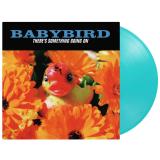







![Various - Ravers Kaki [Stickered Sleeve]](https://www.deejay.de/images/l/6/4/1270164.jpg)