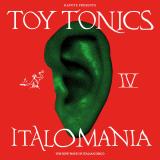
Toy Tonics Italomania Vol. 4 is a compilation dedicated to new ITALIAN DISCO. Not ITALO DISCO.
10 new tracks made by young producers from Italy, exclusively made for Toy Tonics. All songs with Italian vocals.
Made with a lot of love by
Cleeeo, Giorgio Lopez, Magnolia, Juan Soto & Sam Ruffillo, KOKO, Luca Averna, Ricardo Baez, Euro Nettuno, The Cube Guys and Paccone.
The Italomania compilation was initiated by Mathias ‚Kapote‘ Modica. Creative mind behind Toy Tonics and half italian producer himself.
The series is a manifesto to show the status of Italian disco of today.
Kapote invited the most relevant producers to show different new styles of modern Italian disco and house music.
With a wide range of influence: Live disco, indie dance, italo pop, and italo house.
Italian disco is not Italo disco. The last few years saw a big revival of the trashy pop music of the 1980s called Italo disco, mostly with English lyrics.
But this compilation is about something else. It is about this new Italian disco. Toy Tonics wants to show a new way to combine Italianity with dance culture.
The Italomania Vol. 4 Artists
Cleeeo - Come Tocchitu: A sexy and sophisticated disco house track by 22 year old newcomer DJ and producer Cleeeo. Driven by a warm, uplifting groove and strong dancefloor energy. The record is dedicated to Brazil. The vocals move between Italian and Portuguese. This creates a natural bridge between two cultures.
Giorgio Lopez - Italiani Brava Gente: Giorgio Lopez is an important player from the much talked about new music scene from Napoli.
For "Italiani Brava Gente," he teams up with Los Angeles artist Sueño. The track is a tongue-in-cheek take on the stereotypical Italian male. It pays homage to late Italodisco legend Pino D’Angiò. The story unfolds from the perspective of a foreign tourist navigating the contradictions of self-proclaimed Casanovas.
The Cube Guys - Saper Ringraziare: The legendary italo house duo shows their Italian vibes and musical taste with “Saper Ringraziare”. The track captures the warmth of summer and the infinity of urban nights. A combination of early Italo disco elements mixed with their typical groovy beats.
Magnolia - Vesuvio: Magnolia’s “Vesuvio” is a cover version of a song from the 1960s by artist E’ Zezi. While the original is more in a folk vibes, the new version is an irresistible piano house track with groovy, sun-soaked vibes. It is made for the dance floor. This track blends Mediterranean roots with the euphoric energy of modern house. Some might know the vocals already from another cover version by Nu Genea from the previous album.
Juan Soto & Sam Ruffillo - Italomexicano: What happens when a Toy Tonics artist hangs out in Mexico city and teams up with the local scene? The result is here. A blend a Toy Tonics sound and tons of vintage synthesizers and some additional production by Mexican producer talent Juan Soto.
You get "Italomexicano". A fuse of the mystique of Mexican mariachi with the magnetic pulse of Italo disco.
KOKO feat. Elena Moroder - I Can't Understand: This melancholic piano house track is a serious floorfiller! Goosebumps! Italian DJ and producer KOKO teams up with Elena Moroder on "I Can’t Understand". Elena delivers a captivating vocal performance. The track explores the misunderstandings of a relationship where emotions were never fully expressed. It blends an iconic piano melody with warm, uplifting grooves.
Luca Averna - Le Luci Della Pista: Luca Averna is a DJ, producer, and resident at the iconic Pikes Hotel in Ibiza. "Le Luci Della Pista" is an energetic track designed for peak-time Ibiza moments while keeping a strong groove and a playful spirit.
Ricardo Baez - È Venerdì: Ricardo Baez is an Italian-Venezuelan DJ and producer. He is known for his distinctive blend of house, dark electro, italo disco, and leftfield electronics. Well respected in Italy's contemporary electronic scene he has been releasing on labels such as Running Bag, Permanent Vacation, Bordello a Parigi, Correspondant, Mule music, Live at Robert Johnson.
Euro Nettuno - La Notte Chiama: These guys are hot! Part of the Polyamore Crew, one of the rising italian new disco collectives their sound mixes Italo house from the 1990ies, electro and Pop in a very cool new way.
Paccone - J'Adore Napoli: Vincenzo Paccone is a DJ, producer but also very renowned graphic designer. He is co-founder of NSS. A fashion agency that is by now one of the leading italian fashion crews. He has been also working as a designer for Circoloco Ibiza for many years and organizes some of the hottest parties in Napoli currently. He makes his official debut as a producer with “J’Adore Napoli”. It is a vibrant tribute to the house music culture born in Naples. The track draws inspiration from the late 1990s and early 2000s. And is part of a NSS campaign about the ’new coolness of the city of Napoli“.
Amsterdam's Stefan Vincent makes his Aquaregia debut with Until Meaning Emerges. With a discography spanning techno, acid and IDM, Vincent's versatility is on full display here. The four-track transmission uses the 303 as its central signal, soldering together halftime polyrhythms, breaks and techno. The EP opens with "Soothing the Beast", an alluring polyrhythmic acid stepper with squelching 303 and crisp halftime breaks, where interference resolves into coherence. "Full Scope" then slows the pulse down with a chilled-out, growling acid line that moves with a gravitational weight. On the flipside, "Degauss" reboots the system with a high-octane acid techno tool; a recursive groove spiraling deeper into the network. "Paranoid Origin" closes the release with a euphoric final ascent, layering breaks, melodic arpeggios and shimmering fragments that dissolve into open air.
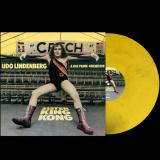
Sister King Kong - das sechste Studioalbum von Udo Lindenberg und dem Panik-Orchester - wurde am 15. Oktober 1976 veröffentlicht und feiert in diesem Jahr sein 50. Jubiläum. Es erreichte Platz 8 der deutschen Album-Charts und hat Goldstatus mit über 250.000 verkauften Einheiten allein in Deutschland. Das Album gilt als ambitioniertes Konzeptwerk und verarbeitet auf ironische, melancholische und oft selbstironische Weise die Erlebnisse, Absurditäten und den emotionalen Blues eines alternden Rockstars und des Tourlebens.
Udo Lindenberg zeigt sich erneut als Chronist des damaligen Zeitgeists. Musikalisch balanciert Sister King Kong perfekt zwischen druckvollem Hardrock, orchestralem Pomp und zarten, tiefgründigen Balladen. Für die Aufnahmen wurden Udo Lindenberg und das Panik-Orchester (Gottfried Böttger: Piano, Jean-Jacques Kravetz: Keyboards / Synthesizer, Bertram Engel: Schlagzeug, Thomas Kretschmer & Paul Vincent: Gitarren & Steffi Stephan: Bass) u.a. von profilierten Gastmusikern der damaligen deutschen Krautrock-, Jazz- und Pop-Szene unterstützt: Curt Cress: Schlagzeug, Dave King: Bass, Olaf „Kicher“ Kübler: Saxophon, Ulla Meinecke & Jutta Weinhold: Gesang.
Das Album ist ein kühner Spagat zwischen Pomp und Panik, zwischen Tiefgang und purem Klamauk - ein Meilenstein des „Deutschrock". Schon der Opener Die Bühne ist angerichtet bricht mit allen Erwartungen. Was als schwermütige, fast intime Ballade beginnt, explodiert durch das monumentale Arrangement des Panik-Orchesters in ein furioses Pomp-Rock-Spektakel. Songs wie der Titelsong Sister King Kong (eine humorvolle Nummer über eine gigantische Catcherin) oder Satellit City Fighter experimentieren mit Funk-Elementen, während das jazzige Saxophon von Olaf Kübler immer wieder für schummrige Club-Atmosphäre sorgt. Weitere herausragende Titel sind die humorvolle Hymne Rätselhaftes Bielefeld (Udo erschafft ganz nebenbei einen zeitlosen Running-Gag) sowie die gesellschaftskritischen Stücke Emanuel Flippmann und die Randale-Söhne (Udo knöpft sich die bürgerliche Doppelmoral vor) und Rock ’n’ Roll Arena in Jena.
Der emotionale Höhepunkt der Platte ist zweifelsohne Meine erste Liebe. Das über sechs Minuten lange Duett mit einer damals noch am Anfang ihrer Karriere stehenden Ulla Meinecke fängt den bittersüßen Schmerz verflossener Jugendtage so authentisch ein wie kaum ein anderes deutschsprachiges Lied dieser Dekade.
Sister King Kong transportiert perfekt das Lebensgefühl der späten 1970er Jahre in Deutschland. Es ist kein glattgebügeltes Pop-Album, sondern eine raue, ehrliche und mutige Rock-Revue. Die Platte verbindet orchestrale Größe nahtlos mit rotzigem Garagen-Rock. Dank einer bis in die Fingerspitzen motivierten Studiobesetzung und Lindenbergs unfehlbarem Gespür für Melodie und Sprache bleibt das Album ein zeitloser Klassiker.
Supported by Alan Backdrop, Claudio PRC, Ness, Svreca, Antonio de Angelis, Arnaud le Texier, Exium, Kwartz, Takaaki Itoh, The Noisemaker, Unam Zetineb, Vilix, Oscar Mulero, Eric Cloutier, Conrad van Orton, Acronym, Felix Lorusso, Jose Pouj, Nihad Tule, Nobody Home, Brando Lupi, Brendon Moeller (Echologist), Francois X, Gianluca Meloni, Artefakt, Iori, Rasmus Hedlund, Reggy van Oers, Retina.IT, Stefan Vincent, Antonio Ruscito, Sam Kdc and more.
Phosphor’s fourth release connects two promising talents from Barcelona’s underground scene: French producer Vince Void and Mexican DJ Gamba. Together, they deliver a finely crafted EP that blends punchy club dynamics with dreamy, psychedelic touches. From electro with 80s Italian accents to glitchy grooves and spacey breaks, PHP004 stands as a floor-ready release, moving with a subtle balance of tension and elevation.
Vince Void takes the A-side with two effective cuts. “Thunder” builds on a saturated Italo-style bassline and crisp, stripped-back drums, creating a steady tension that works perfectly at the start of a set. “Fashion Victim” switches the mood with acid-tinged grooves, glitchy stabs and a playful swing. It’s less linear but just as effective, adding contrast and movement to any DJ set.
On the B-side, DJ Gamba goes deeper. “The Universe”, in collaboration with Quim, weaves lush pads and shimmering arps into a rolling club structure, with subtle breakbeat accents that add lift and fluidity. To close, “Your Vision” slows the pulse slightly, blending filtered melodies, melancholic textures and a steady groove, locking in emotion without losing the club energy.
Everyone knows the story of American disco. But few are aware that, between the late 1960s and the late 1980s, Italy wrote a parallel one — spontaneous, surprising, and incredibly creative.
It is a story that spans two distinct seasons: the Italian disco of the 1970s — melodic, handmade, sometimes naïve yet always original — and the emerging Italo Disco of the 1980s, electronic, futuristic, and lightheartedly projected toward the future. Two different languages, yet both driven by the same desire for freedom and modernity. Discoteca Sound — Italian Discoteca Underground 1975–1986 brings together 18 rare tracks — including two previously unreleased — that tell this story of transition: from the orchestral and sentimental disco of Italian dance halls to the synthetic and visionary sound of the first drum machines. A journey through private archives, local labels, regional studios, and forgotten voices — the sonic map of a country that has always danced, but to its own rhythm. From Mediterranean disco to the first Italo Disco, from the dim lights of provincial dance halls to the early home synthesizers, each track opens a window onto an Italy that dreamed of the dance floor as a universal language of connection during the brief season of revolutionary utopias.
This compilation celebrates ten years of work by Disco Segreta — a decade dedicated to the research, recovery, and appreciation of Italian disco and electronic culture. An act of justice owed to all those artists who had their moment yet were never remembered by history — bringing back to light an essential, still too little known part of our musical heritage. Because dancing today remains, more than ever, a living act of memory.
Limited edition 2LP, features 2 previously unreleased tracks and a new 2025 version of Coscarella & Polimeno – Station to Station.
f Grazia Vitale – Poi (1975) Previously Unreleased
q Daniel Sentacruz Ensemble – Vivo Solo Con Te (1982) Previously Unreleased
f Grazia Vitale – Poi (1975) Previously Unreleased
q Daniel Sentacruz Ensemble – Vivo Solo Con Te (1982) Previously Unreleased
f B2. Grazia Vitale – Poi (1975) Previously Unreleased
q D4. Daniel Sentacruz Ensemble – Vivo Solo Con Te (1982) [Previously Unreleased]
[f] B2. Grazia Vitale – Poi (1975) [Previously Unreleased]
[q] D4. Daniel Sentacruz Ensemble – Vivo Solo Con Te (1982) [Previously Unreleased]
[f] B2. Grazia Vitale – Poi (1975) [Previously Unreleased]
[q] D4. Daniel Sentacruz Ensemble – Vivo Solo Con Te (1982) [Previously Unreleased]
Peek of Normal is the new label from disco veteran Stevie Kotey, whose productions have graced the Bear Funk, Ambassador's Reception, Strut, Electric Minds and many more labels in the past. Pretty much its first move was to ink a deal with Dutch master Mark du Mosch, who'd been friends with Kotey since the latter moved to Rotterdam in 2005 and discovered his neighbour had similar tastes in disco. This new label's inaugural release, Sterling Melody, is quite the labour of love, and with eight tracks spread across a double vinyl pack collection lean more towards the coldwave, electro and synthpop of the early 80s rather than 70s disco. There are echoes of some pretty classic sounds here, from the Vince Clarke-esque throb of '77777st' and 'A5G Neowise' - not unlike the soundtrack work of mid period Tangerine Dream - to the slower motioning Italo-tinged shininess of 'Soluzio'. Our favourite is the title track itself, perky and full of sparkle, like the incidental music for a lost series about a mullet-clad, white linen suited detective who doesn't play by the rules, only much, much better. Definitely worth a Peek.
CUPULA006 is a landmark release that introduces a new boy band formed by Vince Void, Pau Rosés, and Adria.
Side A takes you deep into the realms of progressive house, featuring tribal grooves and lush textures created using rare analog machines from the 1990s. The warm, intricate production invokes nostalgic feelings.
On Side B, the trio shifts gears into a striking fusion of EBM and synth pop, offering pulsing rhythms, electrifying synths, and irresistible melodies.
This dynamic contrast between the two sides creates a story told through sound, forging a deep connection with emotions.
Fresh and direct from Toronto, Pacific Rhythm is pleased to welcome Emissive (aka Evan Vincent) for a solo cruise on the label. While Vincent has appeared on the label twice as part of house music duo Active Surplus (alongside Ian Syrett), this new EP entitled Wave Science sees the young musician push his sound into warmer and more melodic waters.
Vincent says the new tracks pay tribute to the Black American roots of electronic music; a historical fact the producer says is an ongoing source of motivation and inspiration in his work.
Indeed, this new four-tracker sees Emissive bring in a pinch of futuristic boogie and cosmic funk to his dancefloor recipe—versatile flavours that should go down quite well at a variety of Dance Opportunities in the very near future! All of the tunes were composed and mixed at Vincent’s home studio in Canada’s largest city, with the tracks getting a warm, Hi-Fi mixdown via Syrett’s Nagra IV reel-to-reel. Tech talk aside, Vincent says he wanted to avoid over-analyzing the production and instead summon the spirits of dance, love and seasonal warmth.
Or as the artist himself says: “Less thinking, more feeling.” Check it out and we’re sure you’ll agree his approach paid off!
Two And Half Records returns with the third Release!
We are thrilled to announce the release of our new V.A., Each artist brings their own unique style, resulting in six tracks that are distinctly different from each other.
French producer Akyki, opens the DANCE with a wicked funky beat and catchy sounds. His music is a real injection of good vibe.
Cene & Esqueena, this Italian duo continues to make us dance with energetic Synths, captured during a live jamming. Every note is a pure groove feeling.
The young french talent HRM concludes the DANCE side with edgy electro sounds and seductive vocals, perfect to spice up the dancefloor.
Alex Vincent, German producer opens the LISTEN side with a mix of gentle electro sounds and IDM influences, sweetened by warmly snuggly melodies. A deep journey of sound to be shared intensely.
Jonny3snareS live performer from the UK, invites us to “escape” into a parallel dimension with his magical music, Synths and Drums run hand in hand harmonizing perfectly.
Foreign Sequence, from France, concludes with an IDM track with full and powerful sounds enlivened by delicate acid melodies. It is the perfect ending that encapsulates all the emotions of this EP in one track.
This album is a real journey in which the listener must let himself be transported. Composed of 8 tracks (32 minutes) where modern minimalism, the voice used as an atmospheric instrument and mental melodies mix perfectly to create a soundtrack painted by sounds.
Already played by: Lino Capra Vaccina, Kuniyuki Takahashi, Donato Dozzy.
Rowle is coming with its awaited 9th release from the closed friend Viceversa, who is back after his succesfully previous release 005. On this one he delivered 3 classic tracks full of melodies and percussions, perfectly in line and evolution with his unmistakable style. On the remix duty the romanian star Floog with a killer dancefloor version. Already supported and played by Sublee, Sit, Barac, Cally, Mihai Pol, Silat Beksi, Herck, Raresh, Vlf, Vincentiulian, Giuliano Lomonte and many others.
London/Lisbon label Release/Sustain start the year as they mean to go on. Presenting a 4 track various artists 12'' titled _Nightfall and Other Stories_. The record is comprised of 4 artists the Label regard as legends of that deeper dance floor sound. Opening proceedings on A1 is *Dekmantel* mainstay *Vakula*. A regular at the Release/Sustain 'Conclave' parties and part of the RS family His offering, _809,_ is a percussive drum tool trip of a track, with sporadic raw percussion shooting shining across a positively minimalist backing. For A2, we see Italian stalwart of underground dance music, *L.I.E.S* & *Crème Organization* regular, *Simoncino*. Obscure sample work, and a repeating line 'i can use a friend', twist and turn over rugged, thumping, functional drums and bass. Simoncino at his best! Furthering the quality of this standout 12'' is Chicago house music pioneer, and *Dance Mania* alumini *Vincent Floyd*. Rich in melody and familiar classic house sounds, Reggie's soft jacking house sound bring a silky smooth, North American touch to a previously rugged, European 12 slab of wax. Rounding things off we have *Clone*, *Prime Numbers* & *Deep Explorer* badman, *Reggie Dokes*. A cut riddled with percussive and quirky undertones Enjoy!
Yesca is back on Shall Not Fade with ‘Paint on Walls’ 12” EP.
2024’s Yesca EP on SNF - “Mood Loops” - set a high bar, so when we say this record is something special you should take note. Of course if you already know Yesca’s music or have had the pleasure of a Yesca DJ set then you will have already this queued up.
Sweet Spot: Ben Sims, Deetron, Oliver Ho, Vince Watson, Grain (Artwork’s Techno alias). Planet-E, Primate Recordings, Paul Mac & Stimulus Recordings found the sweet spot.
According to the OED the first use of the phrase “Sweet Spot” was in 1976 in reference to tennis rackets and golf swings. It’s where everything hits just right. And that’s what this EP does, hits just right. What strikes me is how descriptive the phrase ‘Sweet Spot’ is. Given enough swings and some luck we all know what it feels like to hit the sweet spot in some regard. Finding the sweet spot regularly though takes time and skill. But being able to hit the sweet spot by design every time, well that’s something different. That’s what makes the greats great.
For us at SNF there’s a consensus that in the lineage of electronic music there have been many moments where artists & labels converged on a sweet spot. One such sweet spot for us is in Techno
around 2003 when at the tail end of Hardgroove tempos began to slow and a groovier more refined tech house infused goodness appeared in the racks from a group of killer techno labels & artists (some mentioned above) that moment before the fuller emergence of the 2nd wave of Tech House in the mid 00’s.
That sound, while often emulated, never quite hit the same for us at least – until Yesca came along. His music has everything that we love about that sweet spot. Raw driving groove, rolling basslines and hip shaking percussion. What’s different on ‘Paint on Walls’ is that Yesca stepped on - he had already found the sweet spot on 2024’s Mood Loop EP - now his sound (or swing) is natural. Repeatable, refined and seemingly effortless. To revisit the tennis and golf analogy, this is the start of a Grand Slam run from an artist ready to etch their name in dance music history. Tiger..... Serena......Yesca.
Run the Tracks:
‘How I Do It (They Wonder)’ - A masterclass in less is more, and a serious DJ tool. Full of groove - slow it down and it will light the touchpaper in a house set - speed it up and you’ve got techno weaponry. Forget gatekeeping, this will make you feel like you just found a 2004 techno white label from the likes of Grain or Ben Sims.
‘I Desire’ - House music that I reckon Deetron would be proud of... Blissed out machine funk, whispered vocals, slick jazzy chords and dubbed out techno stabs are all grounded by Yesca’s impeccable, loopy drum programming. The best tunes always end too soon.
‘Domination’ - The ever rising bass, err, dominates this track and this track will dominate on many a dancefloor, but Yesca's knack for dubbed out swinging synth lines has to get a shout out here too. He turns what would be melodic elements into what feels like part of the percussion. Double Threat. Hands Up and Heads Down business.
‘Paint on Walls’ - It would be a tough call to say Yesca’s saved the best til last with the EP’s eponymous track given what’s come before, but Paint On Walls works all the highlights from the rest of the EP into a latin techno/house infused anthem. Skittering percussion, a hint of Detroit goodness and a deep deep rolling bassline and THAT vocal. In every way hopeful yet resistant, and that is what techno is all about.
out of Stock
Last delivered 3 days ago available to reorder, subject to availability
Mit "Almost There", liefert der Pianist und Komponist ESPEN ERIKSEN nach einer äußerst erfolgreichen Reihe von sieben Alben in 16 Jahren, darunter zwei mit dem bekannten britischen Saxophonisten ANDY SHEPPARD, ein weiteres melodisches Meisterwerk ab. Fesselnd und lyrisch, stets melodisch, aber gleichzeitig auch melancholisch und erhebend, handelt es sich um wahrlich ergreifende Kompositionen. "Music with a rich sense of melody coupled with a poignant lyricism that is infectious". - All About Jazz "A wonderfully plaintive jazz record, abandoned to the lost art of melodic minimalism, stripped back and beautifully near bare. No smoke and mirrors, just the graceful chemistry of superb musicians at the top of their game". - BBC Erwähnt werden muss die atemberaubende Klangqualität des Albums. "Almost There" überzeugt mit einem detailreichen und dynamischen Klang, der insbesondere durch seine organische Natürlichkeit hervorsticht. Die Kompositionen wurden in ESPENs bevorzugtem Studio Propeller Music in Oslo aufgenommen und abgemischt. Dort hatte er sich bereits für seine letzten fünf Alben eingefunden, welche aufgrund ihrer außerordentlichen Aufnahmequalität auch häufig in Tests verwendet und in HiFi-Kreisen hervorgehoben werden. Das ESPEN ERIKSEN TRIO wurde im Jahr 2007 gegründet und veröffentlichte 2010 sein Debüt-Album. Als zunehmend beliebte Live-Band tourte das Trio, bestehend aus ESPEN ERIKSEN (Klavier), LARS TORMOD JENSET (Kontrabass) und ANDREAS BYE (Schlagzeug), bereits auf vier Kontinenten und verfügt über ein reichhaltiges Repertoire. Die Musik zeichnet sich durch äußerst melodische und lyrische Instrumentalstücke aus, manchmal versehen mit nordischem Einschlag, sowie durch einen "Weniger ist mehr"-Ansatz, der von der internationalen Presse oft als einzigartiger Beitrag zur heutigen Jazzszene gewürdigt wird. Alle drei Musiker verfügen über einen vielseitigen musikalischen Hintergrund, der von Pop bis Jazz reicht, und haben bereits mit Musikern wie Bugge Wesseltoft, John Scofield, Joshua Redman, Dhafer Yousef, John Taylor, Vince Mendoza, Eivind Aarset, Knut Reisersrud, Mathias Eick, Nils Petter Molvær, Thomas Stronen, Odd Nordstoga, Håkon Kornstad, Jarle Bernhoft und Bendik Hofseth zusammengearbeitet.
Als Dublins Gurriers 2024 ihr Debütalbum Come And See veröffentlichten, bewiesen sie eindrucksvoll, dass sie eine der drängendsten und unüberhörbaren neuen Stimmen der boomenden irischen Punk-Szene sind. Seitdem haben sie sich mit knochenerschütternden, moshpit-tauglichen Live-Shows einen stetig wachsenden Ruf erarbeitet. Come And See stellte dabei auch ihre lyrische Stärke und ihren neugierigen, gesellschaftskritischen Blick in den Vordergrund – mit Songs über digitale Verlorenheit und die ganz realen Schrecken der modernen Welt.
Das grandiose zweite Album des Quintetts heißt Nobody's Coming To Save You – könnte aber ebenso gut den Untertitel „härter, besser, schneller, stärker" tragen. Es wird am 25. September auf Play It Again Sam veröffentlicht.
Aufgenommen in Donegals Attica Studios und den Holy Mountain Studios in London, produziert von Mark Bowen (Idles) und Loren Humphrey (Geese, Cameron Winter), engineered von Chris Fullard (Idles, Sunn O)))) und gemixt vom weltbekannten John Congleton (St. Vincent, Modest Mouse, Swans) – allein das Team, das sich für LP2 zusammengefunden hat, spricht Bände. Gurriers nehmen alles, was sie von Anfang an großartig gemacht hat – die musikalische Chemie, den klugen, analytischen Blick auf die Welt – und schrauben es konsequent auf das nächste Level.
Von der vibrierenden Spannung der ersten Takte des Titeltracks, die sich in einem kakophonischen, kathartischen Finale entlädt, bis zum Ende: Nobody's Coming To Save You überführt den Geist des schwitzenden Kellerclubs in Stadiondimensionen. Das Album ist nicht nur laut – es ist dynamisch. „Shades" schickt industrielle, kantige Gitarrensplitter in einen brachial-rohen Hardcore-Chorus; „Drones" ist ein druckvolles, langsames Aufbäumen mit einem Drop, der jeden Moshpit zum Kollabieren bringt. „Pins" zeigt eine lässigere, melodischere Seite – irgendwo zwischen Grunge und Trip-Hop –, während „Party Lines" pure, unersättliche Dance-Punk-Ekstase ist. Wer sich fragt, ob die Band ihr Ziel erreicht hat, das Album „wie eine Ohrfeige" wirken zu lassen: Ja, die sitzt.
Mit Nobody's Coming To Save You haben Gurriers ihre Ambitionen in neue Höhen getrieben – und liefern dabei auf ganzer Linie.
In 2026 viert Eva De Roovere het 20-jarig bestaan van “De Jager”. Ze trekt er op uit en speelt haar succesalbum integraal. Met klassiekers als “Fantastig Toch” (35 miljoen streams !), “Laat Me Je Lied Zijn” en “De Jager” wordt deze concertreeks vanaf het najaar een groot feest van herkenning en vernieuwing, met als kern: liefde voor muziek én publiek.
Want wat is er mooier dan de 20ste verjaardag van een album vieren met… een nieuw album? ‘Sluit De Nacht’ (productie Koen Gisen) wordt een eigentijdse mix van levenslied en liefdeslied: een ode aan poëzie, melodie en ritme. Een zoektocht naar verbinding en troost in deze woelige tijden. Eigen werk en ook straffe songs geleverd door of samen geschreven met Gert Bettens, Rick De Leeuw, Dirk Blanchart, Sabine Tiels, Wouter Berlaen, Lennaert Maes, Vincent Pierins… Ingespeeld door Eva zelf en Ward Dhoore: gitaren, Eva Hautekiet: akoestische en electrische piano, Philippe Thuriot: accordeon & bandoneon, Lara Rosseel: contrabas en Kobe Proesmans: percussie & drums.
ENG
In 2026, Eva De Roovere will celebrate the 20th anniversary of “De Jager.” She’s hitting the road to perform her hit album in its entirety. Featuring classics like “Fantastig Toch” (35 million streams!), “Laat Me Je Lied Z?n,” and “De Jager,” this concert series starting this fall will be a grand celebration of familiarity and renewal, centered on a love for music and the audience.
After all, what could be better than celebrating an album’s 20th anniversary with… a new album? “Sluit De Nacht” (produced by Koen Gisen) is a contemporary blend of life songs and love songs: an ode to poetry, melody, and rhythm. A search for connection and comfort in these turbulent times. Original material as well as powerful songs written by or in collaboration with Gert Bettens, Rick De Leeuw, Dirk Blanchart, Sabine Tiels, Wouter Berlaen, Lennaert Maes, Vincent Pierins… performed by Eva herself and Ward Dhoore: guitars; Eva Hautekiet: acoustic and electric piano; Philippe Thuriot: accordion & bandoneon; Lara Rosseel: double bass; and Kobe Proesmans: percussion & drums.
After hooking up with Ten’s Gary Hughes for his first three solo albums, and his fellow Hard Rain band-mate Paul Hodson for his fourth, when it came to ‘Spirit of Man’, Bob’s fifth album, the Magnum vocalist worked with the guys from Lost Weekend, along with Vince O’Regan (Escape, Legion, Pulse), who had been Bob’s touring guitarist for many of his solo shows. Vince and Bob also played many acoustic shows, and during this productive period the duo retired to Vince’s studio and recorded acoustic versions of songs covering Bob’s full solo career. The result is 11 songs highlighting the beloved velvet tones of Catley’s vocals and the melodic clarity of O’Regan’s delicate finger picking. No Magnum songs, but then this is purely a record of Bob Catley’s wonderful and highly successful solo career. Artwork and design by award-winning artist Sebastian Kozak (Ten, Crown of Thorns etc).
For any collaborative project to succeed, the artists involved need a creative unifier – a meeting point, if you will, of their disparate interests and experiences. In the case of Mondo Love & Betrayal, the joint project of Nottingham musical mainstays Neil ‘Nail’ Tolliday and Henry Claude Scott, there were two creative unifiers: a mutual love of classic 1980s synth-pop, as well as shared admiration for each other’s work.
Even so, such shared interests and respect for prior mutual endeavours is no guarantee of success. Yet as their eponymous debut album emphatically proves, the duo’s disparate experiences, characteristics and musical strengths have not only dovetailed beautifully, but also resulted in serious sonic gold. Put simply, Mondo Love & Betrayal is a stunning debut album rich in emotive songs, colourful melodies, atmospheric chord progressions and infectious grooves. Throw in the sun-splashed warmth and saucer-eyed, loved-up tactility of late 80s dance beats, and you have a breakthrough album whose timelessness is evident from start to finish.
The project’s roots lie in Tolliday’s desire to work with Scott, a virtuoso guitarist, talented producer and secret songwriter best-known for his work alongside Huw Costin as Torn Sail, and John ‘Ming’ Thompson as Brown Fang – both projects known for prioritising organic instrumentation and sunset-ready soundscapes over dancefloor-rooted beats.
Tolliday, of course, is one of British electronic music’s true polymaths – a long-serving house producer best-known for his long-running Bent project alongside fellow Nottingham resident Simon Mills. He initially approached Scott with the idea of providing vocals on a house track he was working on, but quickly suggested something else: an exploration of a classic synth-pop sound inspired by his love of Pet Shop Boys, New Order, Depeche Mode and the producers who worked with them – the likes of Martin Hannett, Arthur Baker, Stephen Hague and John Robie.
Scott accepted the invitation, seeing it as an opportunity to explore a different side of his musical personality. Their first recording session resulted in the ear-catching and memorable brilliance of ‘Correspondence’ – a tongue-in-cheek breakup song inspired by the death of landlines and the rise of mobile communications – and soon they were working on their debut album.
The resultant 10-track set is simply sublime, with Scott’s expressive delivery of his own lyrics on life, love, heartache and rejection working in perfect union with Tolliday’s kaleidoscopic and pleasingly authentic backing tracks – gorgeous and beautifully rendered instrumentals rich in memorable melodies, bittersweet chords, and subtle nods to ‘80s and early ‘90s dance-pop culture, from Shep Pettibone style remixes and Bernard Sumner guitar licks, to Beloved-esque piano parts and Chris Lowe chord progressions. Some listeners may also draw favourable comparisons with 21st century synth-pop practitioners, particularly Parcels, Private Agenda and the deeply emotive songs showcased by Junior Boys.
For proof, wrap your ears around such album highlights as opener ‘Boo Boo’, where Scott warns that “love and betrayal will haunt you” atop sparkling synths and Vince Clarke style grooves, the Behaviour-era PSB melancholy of recent single ‘Your Latest’, the mid-tempo dreaminess of ‘Beyond The Rainy City’, the early Depeche Mode chug of ‘Whatever Happened To Me’ and the tactile warmth of ‘Across The Plane’.
We could go on. In truth, the whole album is – in Scott’s words – “magical musical alchemy”. Wherever they choose to go next, Mondo Love & Betrayal is a seriously good sonic statement of intent.
out of Stock
Last delivered 34 days ago available to reorder, subject to availability
Liam Hayes is an acclaimed American musical artist known for his songwriting and uncompromising approach to making records. He started cassette multitracking while a preteen and made his first real studio recording at twenty one. This started an obsession that ultimately led to his releasing a 7” single (Found A Little Baby/Three Quarters Blind Eyes) on a small US indie label. Those tracks garnered the attention of the UK music press, and on the strength of those songs a career was launched. The follow up was highly anticipated by critics and listeners alike, but rather than playing to expectations he delivered a highly personal album of solo piano/vocal songs (More You Becomes You). Not one to repeat himself, Hayes started off the millennium by serving up the extravagant pop/soul opus (Fed). Both records are now considered to be masterpieces.
Hayes’ songs are recognised for their exquisite melodies, poetic lyrics and distinctive vocals. He’s released seven albums, two singles and a soundtrack, and applies his craftsmanship to a variety of genres from orchestrated pop to stripped down rock. Comparisons to Brian Wilson, Laura Nyro, Carole King, Harry Nilsson, Badfinger (and even Prince) are numerous. His music takes the best of radio and stellar classic pop records of the 60’s and 70’s and brings it into the present.
Along with making records Hayes has appeared on screen performing his music in High Fidelity (directed by Stephen Frears) and A Glimpse Inside the Mind of Charles Swan III(directed by Roman Coppola) which he also wrote the soundtrack for.
In this, their first production for Hayes, are (executive producer) Terrence Washington and (multi-instrumentalist/producer/arranger) Vincent Carlo with additional contributions from Terrence’s father, legendary arranger TOM TOM 2084 (Chi-Lites, Phil Collins, Plush).
His latest album, Dancing Backwards, sees Liam stepping through the shadows in his life and into a new musical day.
STEELOVER is a Belgian Melodic Rock / Metal band. The band was formed in the early 80's by three friends living in Liege, Belgium, the guitarists Pat Freson & Mel Presti and the bassist Nick Gardi. In search of a drummer, they threw their sights on Rudy Lenners (Scorpions) upon his return from Germany, having left the famous German band Scorpions. Rudy proposed to contact Vince Cardillo, a singer who had already on the one hand good experience and on the other hand he already recorded an album in London, “It will fit perfectly” explained Rudy. They all felt the magic during the first rehearsal. In no time, Steelover recorded their first album "Glove Me” which was released under the Mausoleum label. This album sold over more than 400.000 copies of which more than 76,000 in Poland. They followed with a tour across different countries like The Netherlands, Germany, France and Belgium including Forest National opening for Bon Jovi and KISS. Vince decided to leave the band. Replaced by Dani Klein, the second album was recorded but never released. Dani left the band after a short time with Mel Presti to start a new band under the name Vaya Con Dios.
The band came back in 2017 with a new E.P. (including single "Wild and Free") mixed by the legendary producer and and mixing engineer Tommy Hansen.
In 2019, Rudy Lenners greeted the audience one last time before retiring from his musical career. Vince had returned to the band at this point…after the show Vince, Pat & Nick decided to continue the Steelover adventure and in 2022 released the album “Stainless” on the Escape music label (ESM368). This was a great metal album and fans old and new longed to hear more. It’s now 2026 and Steelover are back with a brand-new recording featuring 11 tracks of hard rock / heavy metal. The band are very much in the style of that 80’s metal sound, a sort of mixture of Scorpions and Saxon if you like. These new songs all hit the mark making “Devil’s Highway” an album that needs to be checked out…
Ever since the late 1950s bossa-nova revolution, Brazil’s influence on French music has been undeniable. Pierre Barouh, Georges Moustaki and a vast array of lesser known artists, all made the Musica Popular Brasileira (MPB) an axis of promotion at the service of a cool and metaphysical, modern and mixed Brazilian lifestyle. Some were seduced by the poetic languors of the bossa, some were looking for fun, and others just loved the American hybridization of jazz-bossa, jazz-samba.
What is bossa nova? One of its creators, Joao Gilberto said: "Its style, cadence, everything is samba. At the very start, we didn't call it bossa nova, we sang a little samba made up of a single note - Samba de uma nota so .... The discussion around the origins of bossa nova is therefore useless”. It is nevertheless useful to remember that these magnificent Brazilian songs, which the guitarist describes as samba, were shifted and balanced around improbable chords. "I like things that lean, the in-betweens that limp with grace," said Pierre Barrouh, quoting Jean Cocteau.
With emotion, arrangements for violin and supple guitar licks, bossa nova rapidly changed. A transformation that can be heard in the Tchic, tchic, French Bossa Nova 1963-1974 compilation, the result of a cultural reappropriation, which traveled through the United States and supplemented itself in France.
A musical revolution that has remained significant, bossa nova was born in Rio. From 1956 to 1961, Brazil lived through its golden years. In five years, the country had invented its modernist style. Elected president in 1956, Juscelino Kubitschek de Oliveira, an elegant man with a broad forehead, brandished a promising slogan: "Fifty years of progress in five years". He quickly got to work. Not worried about increasing debt, he launched the project for a new federal capital, Brasilia, designed by the communist architect Oscar Niemeyer. Volkswagen opened state-of-the-art factories and created the “fusquinha”, the Beetle. In Rio, the Vespa made its first appearance. The Arpoador Surf Club crew run into the “girl” from Ipanema, Helô Pinheiro - the tanned garota ("chick"), between a flower and mermaid, who at 17 walked by the Veloso bar, where the fiery author and composer, Tom Jobim and Vinicius de Moraes, were getting drunk on whiskey. From then on, bossa symbolized cool.
In 1958, Joao Gilberto recorded Chega de Saudade, which the directors of Philips denied, calling it "music for fagots". The marketing director, who believed in it, secretly pressed 3000 78-inch vinyls and distributed them at schools around Rio, creating a tidal wave.
American jazzmen then took over. In particular, trumpeter Dizzy Gillespie and guitarist Charlie Byrd. In November 1962, the Brazilian Ministry of Foreign Affairs funded a "Bossa-Nova" concert at Carnegie Hall in New York, inviting the genre’s pioneers. Unprepared, the show soon turned to disaster. But the troupe was invited to the White House by Jackie Kennedy. The first lady loved "the new beat" and in particular Maria Ninguem, a song by Carlos Lyra, later covered by Brigitte Bardot.
In Brazil, the 1964 military coup quickly ended this euphoria. The destructive atmosphere that ensued pushed many Brazilian musicians to leave, if not to exile. Thus, Tom Jobim, Sergio Mendes and Joao Gilberto arrived to the United States. In New York, Joao Gilberto met saxophonist Stan Getz. At the time, he was married to the Bahianese Astrud Weinert Gilberto, who had a German father. She had never sung before, but she knew how to speak English. Getz therefore asked her to replace her husband on The Girl From Ipanema. The Getz/Gilberto record with Tom Jobim on piano, was released in March 1964. Phil Ramone, the "pope of pop" was in charge of sound.
Bossa nova arrived in Paris through the classic “guitar-voice” channel (Pierre Barouh, Baden Powell, Moustaki…) But France loved jazz and Paris had already welcomed its American contributors. All these good people were to pass through Saint-Germain-des-Prés. The cabaret l'Escale became the Mecca of Latin American sound where one could find Pierre Barrouh and his friends, such as the Camara Trio, samba-jazz aces, whose only record was published by the Saravah label. With a band strangely called Les Masques (a band that included Nicole Croisille and Pierre Vassiliu, among others), the Camara Trio recorded an interesting Brazilian Sound, including the track Il faut tenir which is present on this tasty compilation of rarities.
Other enlightened musicians can also be found on the compilation, such as Jean-Pierre Sabar (songwriter for Hardy, Auffray, Leforestier ...) and the French pop rock organist Balthazar. In 1975, Sabar recorded Aurinkoinen Musiikkimatka on a Finnish label, which featured the crazy Vai, Vai, included on this record. We are now following the footsteps of Brazilian electronic musicians such as Sergio Mendes, Eumir Deodato or Marcos Valle who created funk and disco sounds on their keyboards and synthesizers. A style that influenced Véronique Sanson when she wrote Jusqu’à la Tombée de la nuit in 1969 for Isabelle de Funès, the niece of Louis and a great friend of Michel Berger - Sanson did end up singing this track on her 1992 Sans Regret record.
The pinnacle of exoticism and travel, Sylvia Fels’ Corto Maltese includes bongos, sea mist and ocean sounds. The title was taken from Jacky Chalard’s concept album written in 1974, Je suis vivant, mais j’ai peur (I am alive, but I am scared), based on Gilbert Deflez’s science fiction novel.
However, bossa nova extended the scope of popularity. "In the 1970s, I was a fan of Sergio Mendes, Getz / Gilberto. I fell in love with this music that I knew because I had been an orchestral singer, " explained Isabelle Aubret, who in 1971 delivered a composite record of covers by the very funky Jorge Ben, Orfeu Negro, Tom Jobim, Vinicius de Morais and Jean Ferrat. "I recorded this album for Meys Records in Paris, far from Brazil, with wonderful musicians, François Raubert, Roland Vincent, Alain Goraguer...". The latter wrote the arrangements for Casa Forte, a very percussive title borrowed from Edu Lobo, one of the initiators of the bossa who spent time in California. "Jazz and bossa came together and produced very rhythmic music. I love singing, it allows me to dream, to have fun, to feel a high on stage, and these songs brought me joy, made me swing, my singing felt like a dance.”
The world tours of French singers and their desire for the tropics, often brought them to Rio with its hills, forests, caipirinhas and tanned bodies. There are surprises though, like this Iemenja (Iemenja is the goddess of the sea in the Afro-Brazilian candomblé religion). Not unlike the composer and musician Jean-Pierre Lang, based in Sao Paulo, Claire Chevalier taught Brazil to Brazil. In 1970, the singer and painter published a 45-inch vinyl, Mon mari et mes amants (My husband and my lovers), under the improbable pseudonym of Clarinha (little Claire). She was then living in Rio, with her husband, Joël Leibovitz, who founded a band called Azimuth, and who owned a record label specialized in "sambas enredos" songs for samba school parades.
For its B side, she asked Pierre Perret to come up with lyrics for a song composed by Carlos Imperial: "Oh goddess of the sea, o goddess Iemenja, I bring a white rose to adorn your long hair ..." . "Perret came to see us, and we had fun, remembers Joël Leibovitz. We wrote Lemenja for fun, we recorded it at the Havaí studio, behind the Central do Brasil the central station. Erlon Chaves, the arranger who worked with Elis Regina, joined us" adding his share of Afro-Brazilian percussions and funky brass to the mix.
There is a common misunderstanding in Franco-Brazilian history: that bossa, admittedly hedonistic, is perceived as funny, even though the poets who wrote the texts are often philosophizing on the human condition. Its French interpreters pull it towards a carnival inspired universe, far removed from its fundamental essence. Thus, Jean Constantin covered the famous Samba da minha terra, an ode to the art of samba written by the classic Bahian composer Dorival Caymmi, renaming it with the enticing title of Pas tant de tchi tchi pompon: "On your pier there is no tchi tchi / when you arch your back, you know everything is alright ”(lyrics by Gérard Calvi). This expedited bossa aims for the absurd, but retains a certain elegance.
Indeed, Jean Constantin was not an idiot, the rather large man had a huge mustache and liked fantasy, (Les pantoufles à papa, Le pacha, inspired by cha-cha-cha-cha, salsa and jazz) but he was also the lyricist of Mon manège à moi interpreted by Edith Piaf, the composer of Mon Truc en plume by Zizi Jeanmaire and the soundtrack of François Truffaut’s 400 Blows. Le Poulpe, published in 1970, from which this bossa is extract, was arranged by Jean-Claude Vannier, an accomplice of Serge Gainsbourg’s Melody Nelson. In short: "There is enough of samba / By looking at the parasol / Because my poor cabeza / Is going to die in the sun".
Even the American actress Marpessa Down, who was at the heart of the bossa nova revolution with her role as Euridyce in Marcel Camus’ film Orfeu Negro, winner of the 1959 Cannes Palme d'or, fed the clichée with Je voudrais parler au petit cuica - "Tell me how you manage to always make people want to dance / It's true, I must admit that I cannot resist your magic" - in consequence, once can hear the cuica, a little drum inherited from the Bantu.
But bossa nova had many angles. Societal, of course, pushing actresses who were symbols of women's liberation like Brigitte Bardot, Jeanne Moreau, or Sophia Loren to engage in the exercise of accelerated bossa. In February of 1963, Sophia Loren made a record in French in Rome, Je ne t'aime plus, featuring the song De jour en jour, a bossa written by two Italians, Armando Trovajoli and Tino Fornai, which was released a little later by Barclay. Bossa accompanied the 1960s, a decade of moral liberation. Ann Sorel, who interpreted La Poupée des favellas, caused a sensation with L’amour à plusieurs, a provocative song written by Frédéric Bottom and Jean-Claude Vannier. As for the actress Andrea Parisy, she displayed her bourgeois cheekiness in Marcel Carné's Les Tricheurs before interpreting Les mains qui font du bien. And Magalie Noël, the friend of Boris Vian, who sung Johnny fais-moi mal, was hired to sing Une énorme Samba, composed by Alain Goraguer (arranger to Gainsbourg, Bobby Lapointe and Jean Ferrat) with lyrics by Frédéric Botton.
But in the end, of what wood is bossa nova made of? The answer is given by Christianne Legrand, daughter of Raymond the conductor, and sister to Michel the composer: "With me, with jà" - jà means "immediately" in Portuguese. In 1972, the singer, an expert in vocal jazz and a member of the Double Six, published Le Brésil de Christianne Legrand. Two songs included on the Tchic Tchic compilation that demonstrate how bossa, jazz, funk, rock, etc. work like a swiss army knife: the music is used to denounce broken systems, or miracles, HLM et ciné roman, Cent mille poissons dans ton filet, two songs from the O Cafona soundtrack, a successful telenovela broadcast, at the time in black and white, on TV Globo. The first was adapted in French by the fighter and friend of the Legrand tribe, Agnès Varda. The second is content with a play on words, jostling them into a summer fun.
Véronique Mortaigne
out of Stock
Last delivered 3 months ago available to reorder, subject to availability
"Imagine a classic singer/songwriter record loaded with the intimacy and grit reminiscent of Alex Chilton or Nikki Sudden." Shindig
Los Angeles singer-songwriter Tracy Bryant returns with his new album The Well, which is his first release since 2019’s critically acclaimed Hush. His fourth solo album, The Well marks a striking new chapter, trading his signature guitar-driven sound for piano-led songwriting that took root during the pandemic. The album was born out of one of the most turbulent periods of his life, written in the wake of his father’s sudden passing and birth of his first child. It was produced by longtime friend and compatriot Joo-Joo Ashworth at Studio 22 in Cypress Park, CA, and mastered by Dave Cooley at Elysian Masters. The nine songs are filled with raw emotion and driving motorik rhythm, telling tales of loss and love, relationships beginning and ending.
When the pandemic upended Bryant’s promotion for Hush and brought his 2019 European tour to a halt, he found himself at home rediscovering his musical roots at the piano, listening to Vince Guaraldi and Arthur Russell to take inspiration for the song structures. Without a band around, Bryant used the instrument to create both rhythm and melody, which resulted in a repetitive and precise backbeat, which was elevated when he began working with drummer Carmeron Gartung to rehearse the new songs. This different approach would define the style of The Well, creating an amalgamation of sounds with classic songwriting structures blended with post-punk, 90s indie, krautrock and psychedelia.
To produce the record, Bryant turned to Joo-Joo Ashworth, who share a friendship stretching back to 2011 (when Joo Joo was only 18) when both of their bands, Corners and Froth, were at the forefront of the bourgeoning Los Angeles/Echo Park music scene of the time and embarked on their first national tours together. Ashworth, who has since become one of underground music’s most respected producers, recorded the album throughout 2024/2025 on half inch tape at Studio 22 in Cypress Park, California, giving The Well a warm, considered sound that matches the weight of its subject matter.
The album’s emotional core was forged by two significant life events arriving in close succession. In January 2022, Bryant’s father passed away unexpectedly at the age of 67. Just three months later, Tracy and his wife welcomed their first child. The Well is a direct result of those experiences, a songwriter processing grief and joy, endings and beginnings in real time.
The nine songs take the listener on a meticulously crafted journey through the nooks and crannies of Bryant’s mind. Spanning 37 minutes, the album is an exploration of classic songwriting elements moving fluidly between driving beat punk, like “Weight” and “Widow”, and more melancholic tracks like “Halfway” and “Danny”. Album opener “Cold Floor” sets the tone immediately, Bryant’s lyrics confronting the day of his father’s death with unflinching directness – the breezy California piano sound is in direct contrast to the heavy theme. The Bowie-esque title track is perhaps the album’s most expansive moment – a fully realised epic composed with a dynamic flare.
The Well feels like an arrival. Dramatic and expansive, it is a true, visceral reflection of the life changing events that altered the course of Bryant’s life. Fans will be surprised by the heavy focus on piano but they will welcome the change as a bold turning point for an artist who has lived long enough to know exactly what he wants to say.
Some previous press:
"feels like a slice of California, down to its ringing post-surf guitars and bright melodies, but cross-cut with a folk sensibility more aligned to the work of Elliot Smith or, on occasions, Conor Oberst." Uncut - lead album review
"…sees the Los Angeles rocker confront both the finer and uglier aspects of love and life, combining classic rock with psychedelic tinges and catchy melodies." Evening Standard 4*s
OXXON, drittes Album nun auf Vinyl! 1995 von Sänger und Gitarrist Ralf Lisson gegründet und stehen OXXON seit jeher für kompromisslosen Punkrock und Rock'n'Roll. Gemeinsam mit Sascha Riegger (Leadgitarre), Brösel (Bass) und Guido (Drums) vereint die Band eingängige Melodien mit kraftvollem Drive unddirekter Attitüde. OXXON transportieren Wut, Energie und Leidenschaft in Songs, die zwischen schnellen Punkhymnen, treibenden Midtempo-Nummern und rauen Straßenballaden pendeln. Zahlreiche Konzerte führten die Band quer durch Europa, wo sie sich die Bühne mit Szenegrößen wie Donots, Spermbirds, Sonny Vincent oder den Lurkers teilte. Aus dem einstigen Punkrock-Trio ist längst ein eingespieltes Quartett in klassischer Rock'n'Roll-Besetzung geworden - seit 15 Jahren konstant, laut und unabhängig. OXXON funktionieren auf jeder Bühne: nahbar, intensiv und mit der Fähigkeit, ihr Publikum nachhaltig zu begeistern. Nach der CD-Veröffentlichung 2024 erscheint das Album im April nun LP - konsequent, laut und wie gemacht für die Rille: 180g red/ black marbled vinyl, 500 Stück handnummeriert mit Einleger
Angelo De Augustine kehrt mit ,Angel in Plainclothes" zurück, seinem fünften Album und bisher inspiriertesten Werk - eine tief empfundene Darstellung seiner mehrjährigen Reise der Heilung und Erneuerung. Das Album präsentiert De Augustines kraftvolle Melodien und ergreifende Texte in Titeln wie der eindringlichen Elegie ,Empty Shell", dem hoffnungsvollen ,Spirit of the Unknown" und dem herausragenden psychedelischen Country-Stück ,Mirror Mirror". Die Themen befassen sich mit der Zerbrechlichkeit des Lebens, zweiten Chancen und dem Wiederaufbauen seines Lebens, nachdem eine nicht diagnostizierte Krankheit ihn zwang, grundlegende Fähigkeiten neu zu erlernen: ,Ich versuche herauszufinden, wer ich jetzt bin", sagt De Augustine. ,Ich habe das Gefühl, dass mir eine zweite Chance im Leben gegeben wurde, und ich möchte sie leben." Das Album wurde vom Künstler in seinem Aufnahmestudio ,A Secret Place" in Südkalifornien geschrieben, aufgenommen, arrangiert, produziert und gemischt. Es ist das erste Mal seit Jahren, dass er wieder mit anderen Künstlern zusammengearbeitet hat, darunter der Streicharrangeur Oliver Hill (Kevin Morby, Helado Negro), den Harfenisten Leng Bian, die Backgroundsängerin/Percussionistin Wendy Fraser, den Produzenten Thomas Bartlett (der De Augustines ,Tomb" sowie St. Vincent und Bebel Gilberto produziert hat) und den Co-Produzenten Jonathan Wilson (Angel Oisen, Father John Misty) bei ,The Cure". Das Ergebnis ist ein kraftvolles Statement der Hoffnung: ,Eine der größten Hilfen, die mich am Leben gehalten haben, waren die Menschen in meinem Leben, die mir gesagt haben, dass letztendlich alles gut werden würde. Ich hoffe, dass diese Songs die gleiche Wirkung auf die Menschen da draußen haben und ihnen helfen zu erkennen, dass Wunder möglich sind."
Amore Libero – Free Love marks the first film score composed by Fabio Frizzi, written in 1974 for the movie of the same name directed by Pier Ludovico Pavoni. Set against the exotic backdrop of the Seychelles, the film tells the story of Simo, a free-spirited young woman played by Laura Gemser in her cinematic debut, blending sensuality and the spirit of liberation so typical of the 1970s.
Frizzi’s score perfectly captures the film’s atmosphere, weaving together evocative melodies, funky grooves, and progressive textures — an elegant, psychedelic soundscape that reflects both the tropical setting and the film’s themes of freedom and desire. The recording features the Goblin in their classic line-up: Fabio Pignatelli (bass), Massimo Morante (guitar), Walter Martino (drums), and Claudio Simonetti (keyboards), with Vince Tempera handling arrangements and orchestral direction.
Long regarded as a true holy grail for collectors, now, for the first time ever, it is officially reissued on vinyl, bringing back to light a fundamental chapter in Italian film music and progressive sound. An essential record that merges Frizzi’s melodic genius with the visionary energy of the Goblin, Amore Libero – Free Love stands as a timeless document of an extraordinary era in Italian cinema and its music.
A Record Store Day 2026 exclusive / Pearly light blue vinyl edition / 30x30cm insert with extensive liner notes
Der Pianist Vince Guaraldi und der brasilianische Gitarrist Bola Sete begegneten sich zum ersten Mal
während eines Aufenthalts im Club Trois Couleurs in San Francisco – eine schicksalhafte Begegnung, die
eine fruchtbare kreative Partnerschaft begründete, die schließlich West Coast Jazz mit Bossa Nova und
afro-brasilianischen Rhythmen verbindet.
Das 1964 aufgenommene Album „From All Sides“ war die zweite Zusammenarbeit des Duos (insgesamt
gab es drei) und gilt als eines ihrer entspanntesten und fröhlichsten Werke. Das Album ist mühelos und
eskapistisch und gleitet von einer federleichten Interpretation von „The Girl from Ipanema“ zum temperamentvollen Galopp von „Ballad of Poncho Villa“.
Während Guaraldi vor allem für seine zeitlosen Peanuts-Soundtracks gefeiert wird, werden langjährige Hörer
hier melodische Fäden erkennen, die später in diesem beliebten Universum wieder auftauchten. Adaptionen
des wehmütigen „Menino Pequeno da Bateria“ (später überarbeitet als „Little Drummer Boy“) und des
unbeschwerten „Choro“ erschienen später jeweils auf „A Charlie Brown Christmas“ (1965) und „He’s Your
Dog, Charlie Brown“ (1968).
Diese Neuauflage des Albums erscheint als Teil der Original Jazz Classics Series auf 180-Gramm-Vinyl,
gepresst bei RTI, mit vollständig analogem Mastering von den Originalbändern bei Cohearent Audio und
einer Tip-On-Hülle, die das Original-Artwork originalgetreu nachbildet.
The journey through French-speaking pop archives continues with this fifth volume, packed with fuzz, gimmicks, and dissent. Far from the charts, the selected tracks display a great creative freedom, often backed by corrosive humor. Welcome to the surprising, kaleidoscopic, and colorful world of the late sixties and early seventies, Wizzz!
Born in Montauban, Robert Pico stumbled into music by chance when he met René Vaneste, then artistic director at Pathé-Marconi. René brought him to Paris to record his first 45 RPM EP in 1964. A year later, Pierre Perret introduced him to Vogue, where he recorded his second album with Claude Nougaro’s orchestra. Sylvie Vartan then introduced him to RCA, where he recorded four singles, including the astonishing "Chien Fidèle," a track backed by a hair-rising fuzz guitar. Alongside his solo career, he also composed for other artists like Alain Delon (the song was recorded but remains unreleased), Magali Noël, Bourvil, and Georges Guétary. In the Paris of the sixties, he mingled with Mireille Darc, Elsa Martinelli, Marie Laforêt, France Gall, Françoise Hardy, Petula Clark, Régine, Dani, Serge Gainsbourg, Joe Dassin, Franck Fernandel, Charles Level, and Roland Vincent. Despite his efforts and winning a Grand Prix Sacem for his final record, Robert Pico didn’t achieve the expected success in show business and decided to leave Paris and return to the Southwest, where he devoted himself to writing. He is the author of 23 books (including Delon et Compagnie, Jean-Marc Savary Editions 2025, a memoir about his youth and his many encounters). Today, he is relieved to never have become a celebrity and devotes himself to his work with passion.
In 1969, the Franco-Italian movie Erotissimo was released, directed by Gérard Pirès (who later directed Taxi in 1998, written and produced by Luc Besson). This pop comedy features Annie Girardot, Jean Yanne, Francis Blanche, Serge Gainsbourg, Nicole Croisille, Jacques Martin, and Patrick Topaloff. The soundtrack was written by Michel Polnareff and William Sheller, with lyrics by Jean-Lou Dabadie. "La Femme Faux-cils," performed by Annie Girardot. It recounts the feelings of a rich CEO's wife who seeks to develop her sex appeal under the influence of advertisement and magazines. Groovy, sparkling and light, this track, with ITS lush arrangements humorously critiques consumer society and feminine beauty standards.
“Je suis l’Etat” (1967) is the flagship track of the first EP by singer-songwriter Spauv Georges, aka Georges Larriaga, better known as Jim Larriaga (1941-2022). Born into a family of bakers, the young man was initially planning to become a hairdresser when he discovered English-speaking music through Elvis Presley and the Beatles. After this revelation, he decided he would become a songwriter and gave himself five years to succeed. He recorded his first two EP’s independently for RCA under the pseudonym Spauv Georges; meaning “that poor George”, a nickname given to him by the mother of her friend Jean-Pierre Prévotat (future drummer of the Players, Triangle, or Johnny Hallyday). Portraying a depressed and eccentric young man, Spauv Georges created corrosive and amusing songs that didn’t reach a wide audience, despite a TV appearance with Jean-Christophe Averty.
Supported by his loyal friend and fellow songwriter Jean-Max Rivière, Georges Larriaga met the future singer Carlos in the early '70s, then Sylvie Vartan’s assistant. He wrote songs for Carlos, including the popular "La vie est belle," "Y’a des indiens partout," and "La cantine", which went onto become a huge hit in 1972. He also composed for Claude François (“Anne-Marie”, 1971), Charlotte Julian (“Fleur de province”, 1972), helped launch child singer Roméo (who sold 4 million records), and later wrote the hit "Pas besoin d’éducation sexuelle" (1975) for the young Julie Bataille. In 1971, Jim recorded an album for Disc'Az: “L’univers étrange et fou de Jim Larriaga”, which featured pop gems like “La maison de mon père”.
The story of the song "Zoé" began when Pierre Dorsay, artistic director at Vogue Records, asked Swiss singer and musician Pierre Alain to write a song for a new female singer. The inspiration came when he realized that Zoé (the artist's name) was also the name of France's first atomic battery, created in 1948, which consisted of uranium oxide immersed in heavy water! The lyrics reflect a bubbling energy that must be handled with caution, while the instrumentation echoes this atomic theme, notably with the use of a theremin.
Zoé’s career lasted only as long as a single 45 RPM, but it seems Christine Fontane was the vocalist behind this pseudonym, who is known for several EPs, a good "popcorn" album in 1964, and a handful of children’s singles in the '70s. Regardless, the photograph on the cover is of a different girl entirely.
Later, Pierre Alain continued his career, writing songs for himself, Marie Laforêt, Danièle Licari, Alice Dona, Arlette Zola (3rd place in Eurovision 1982), and achieving multiple gold and platinum records in Canada. Also an inventor with several patents, president of the Romande Academy, and head of the French Alliance in Geneva, he now composes atonal music, books, and poetry. Moreover, he is also the host of "Les Mardis de Pierre Alain" at "Le P'tit Music'Hohl" in Geneva.
Filled with oriental choruses and fuzz guitar, "Fou" is from Jacques Da Sylva's only EP released by Vogue in 1967. Despite the quality of this recording, all traces of this singer disappear after this first effort.
Valentin is a baroque pop singer born in Belgium. He is the songwriter and composer of most of the tracks on his three singles released in the late 60s in Canada. A legend says that he reincarnated himself as Jacky Valentin during the 1970s for a rock'n'roll revival career in Belgium, but his older brother sadly debunked this story. Valentin's first two singles were arranged by Claude Rogen, a Parisian session pianist who had come to Canada to promote the song “Mister A Gogo”, a cover of David Bowie’s “Laughing Gnome”, adapted by singer Delphine, his wife at the time. Far from his usual network, Claude Rogen arranged music for Polydor, including the arrangements for “Je suis un vagabond” in 1969, a jerk tune with string arrangements and a furious optimism.
Jacques Malia wrote, composed, and recorded his only 45 EP for Festival in 1966. “Histoire de gitan” is an incredible beat track with bohemian scat that tells the story of a gypsy musician who came to Paris to make it in the Music-Hall, to no avail. The hero of the song and its author probably shared a similar fate, as Jacques Malia faded into anonymity after this remarkable attempt.
Bernard Jamet recorded two EPs for Barclay in the late sixties and co-wrote several songs with Christine Pilzer, Pascal Danel, and prolific songwriters Michel Delancray and Mya Simile. The track “Raison Légale” (1968), his masterpiece, immerses the listener in a courtroom right when a murderer is being judged, with jerk rhythm and free arrangements. A unique, paranoid, judicial, and psychedelic oddity.
Jean-Pierre Lebrot-Millers started his career in show business in 1967 as a singer and songwriter for the Philips label. After three singles, he wrote several songs of a new kind with his friend Pierre Halioche, in the midst of the sexual liberation movement and the democratization of drugs. With provocative lyrics, “Les filles du hasard” and “Barbara au Chapeau Rose” were released on a Philips singles in 1968. The character of Barbara was inspired by a queen of Parisian nightlife during the psychedelic years: model Charlotte Martin, who dated Eric Clapton from 1965 to 1968, then Jimmy Page from 1970 to 1983. Jean-Claude Petit’s arrangements, with a table-filled intro, soul brass, and Hendrixian guitar, emphasize the flamboyance of a hedonistic and sexy character, whose dog is named Junkie because “Junkie est un nom exquis”! The track was recorded live in three takes with a full orchestra.
Upon its release, the record was censored by Europe 1 and RTL due to its references to drug use. Jean-Pierre Lebrot was then banned from the airwaves and later dismissed by his record label. He changed his artist name to Jean-Pierre Millers, while his companion Pierre Halioche became D. Dolby for a new dreamy composition, “Chilla”, which Jean-Pierre produced himself with arrangements by Jean Musy. Once again, the song was immediately censored everywhere. After this setback, he decided to stop singing and started taking on odd jobs to support his Swedish wife and their son until the day he met Jean-Pierre Martin, then production manager at Decca, who had worked with Manu Dibango. Martin offered Jean-Pierre Lebrot-Millers, then employed at Rank Xerox, the position of artistic director at Decca. He accepted and became, a year later, promotion director (radio, press, TV). He worked on Julio Iglesias’s first album for Decca, which became a massive hit and allowed him to meet Claude Carrère. The latter asked him to write new songs and find their performers, much like a “talent scout.” It’s through him that Jean-Pierre discovered Julie Pietri and Corinne Hermès. He composed “Ma Pompadour” for Ringo, Sheila’s husband, and took the microphone again for the syncope hit “Rendez-Vous” in 1982.
That same year, Jean-Pierre Lebrot-Millers tried to release a track for which he had heavily gone into debt: “Si la vie est un cadeau”. Having recorded it in London, he presented it to numerous professionals, all of whom refused to get involved. The same thing happened with Antenne 2 and the Sacem when he proposed the song as France’s entry for Eurovision. He then met Haïm Saban, who was producing cartoon soundtracks and had just launched the Goldorak theme song. Saban, having listened to the song, declared it had the potential to become a hit. He sent Jean-Pierre and Corinne Hermès to meet the CEO of the Luxembourg radio and television network. The latter received them, asked to hear a verse and chorus a cappella in his office, and immediately hired them to represent Luxembourg at Eurovision 1983. They reworked the arrangements and recorded a new version with Haïm Saban as co-producer. The song ended up winning Eurovision 1983, a great comeback for our hero. He continued producing and hung out with the band Nacash in Belgium when a couple came to introduce their daughter for an impromptu audition in a hotel room. The girl sang “Les démons de minuit” while dancing to a radio cassette. Impressed, he had her take singing lessons for a year and composed a song for her (for which he had the melody and title, but no lyrics). This required him to go on the hunt for a lyricist, who ended up being Guy Carlier. They recorded the song, which was initially a ballad, at Bernard Estardy’s CBE studio, and gave the singer a new name: Melody. They showed the song around their industry network without success. Later, Estardy called Jean-Pierre to suggest changing the rhythm and making it pop-rock. Orlando, Dalida’s brother, liked the result and decided to co-produce the track. “Y’a pas que les grands qui rêvent » became a classic hit. The song has since been covered by Juliette Armanet (as a ballad, like the original) and Valentina.
Born into an aristocratic Breton family, Hervé Mettais-Cartier worked as a DJ at Queen Kiss, a nightclub in Poitiers, where he formed the band Les Concentrés with Michel (an actor) and Christian (a radio technician). Together, they created a repertoire of whimsical songs (“Ma bique est morte”, “J’suis un salaud”, “Fils de dégénéré”...) that they performed on stage dressed in white (in homage to “concentrated milk”). They performed at Bliboquet and Olympia in 1968 for the 10th edition of the “Relais de la chanson Française” organized by L’Humanité-Dimanche and Nous les Garçons et les Filles, sponsored by Pepsi Cola. Winners in the author-composer category, alongside Danish singer Dorte, their visibility allowed them to record a 45, and appear on television in Jean-Christophe Averty’s show. The A-side of the disc features Bruno le ravageur, a casatchok dedicated to Bruno Caquatrix, the director of Olympia, nicknamed in the song “Coq Atroce” or “croque-actrices”. The B-side is dedicated to “Fils de dégénéré”, a quirky tribute to Hervé's aristocratic roots, mixing absurdity with sophisticated vocal harmonies.
After Les Concentrés, Hervé Mettais-Cartier formed the duo La Paire et sa Bêtise with his friend Olivier Robert. They performed in Parisian cabarets and toured with Pierre Vassiliu. In the late 1970s, Hervé began a solo career. He recorded two albums for the Motors label in 1978 and 1979, which did not achieve their anticipated success due to lack of promotion. In 1980, he met Bernadette, with whom he started a family and created a “Chansons à voir” (songs to see) show that he performed until his death at the end of 2024.
Publicité comes from the final EP by the Missiles (Ducretet Thomson, 1966), a disc that also includes “La (nouvelle) guerre de cent ans”, featured on Volume 4 of our Wizzz! series. Please refer to the booklet for the story of the band.
“He’s 1.82 meters tall, 28 years old, weighs 135 kg, is black and Belgian”: this is the description of singer Hegesippe on the back of his sole single (Decca, 1967). He appears on the album cover wearing a Greek toga, like a hippie gag – we are at the end of the year 1967. In “Le crédo d’Hegesippe”, this former bodyguard of Antoine and the Charlots plays the delightful card of the thick brute converted to Flower-Power and non-violence, with arrangements by Jean-Daniel Mercier, aka Paul Mille.
“Ethéro-disco” was released on a promotional record for clients of the Maréchal company (Liège, Belgium) for the New Year 1979. Over a funky rhythm, celebrity impersonations (Brigitte Bardot, Jacques Dutronc, Fernandel…) deliver an enigmatic text about pharmaceutical products like ether, bismuth, and aspartate. The track was composed by Dan Sarravah (responsible for Joanna's “Hold-up inusité” featured on Wizzz! Volume 3) and Tony Talado, who was also a singer (one 45 in 1967), songwriter (with over a dozen credits between 1964 and 1985 in various styles from surf music to disco), author (Devenez Végétarien, Dricot Editions, 1985), ad designer, and psychologist.
Décollez-les is on the A-side of Mamlouk's only single, a pseudonym for Marsel Hurten, who is known for his work on several EPs in the late sixties, as well as composing music for Hervé Vilard’s “Capri, c’est fini”, Claude Channes' “La Haine”, Annie Philippe’s “On m’a toujours dit”, and Nancy Holloway’s “Panne de Cœur”.
This strange song, with Afrobeat horns and absurd dialogues between a chef and his kitchen staff, is the result of a collaboration between Marsel Hurten and one of his neighbors, a photographer from Pavillon-sous-Bois (93), where the musician settled after returning from the Algerian War. A music video was shot to promote the record.
Marsel Hurten was born in Tourcoing (59) into a musical family. At a young age, he joined the brass band founded by his grandfather, playing the piston before studying trumpet at the conservatory, as well as teaching himself how to play the guitar. As an orchestra musician, he toured in France, Belgium, Germany, and England. He released a series of solo 45’s between 1965 and 1968 for the DMF and Az labels before stopping recording to focus on working for other artists (Gilles Olivier, Noëlle Cordier…).
“L’amour nu” (Vogue, 1971) is the work of the short-lived Belgian band Mozaïque. The track, written by singer Jacques Albin, closely resembles another of his compositions, “Carré Blanc”, which he recorded in 1969 for Disc’AZ.
Represented by the Lumi Son micro-label based in Marignane (Côte d'Azur), Jean-Marc Garrigues released two 45 RPMs in the late sixties, defending the French jerk sound. The song “Je dis Non” is a short, joyful ode to youth, pop music, and rebellion.
Songwriter and performer Jacques Penuel released three singles. The first one, “Astronef 328” (Fontana, 1969), features a dizzying series of chords punctuated by sound effects, a sci-fi story, and arrangements by Jean-Claude Vannier.
We would like to sincerely thank Pierre Alain, Moon Blaha, Marsel Hurten, Bastien Larriaga, Jean-Pierre Lebrot-Millers, Bernadette Mettais-Cartier, Robert Pico, Olivier Robert, Claude Rogen, Micky Segura.
out of Stock
Last delivered 8 months ago available to reorder, subject to availability
Was also geschieht, wenn Paris und Havanna aufeinandertreffen? Die beiden Künstler tauchen tief in die kubanische Tradition ein und spielen zugleich mit klassischen Formen. Dabei rufen sie eine Epoche in Erinnerung, die Roberto nur allzu gut kennt – die des frühen 20. Jahrhunderts, als sich spanische klassische Musik und kubanische Rhythmen vermischten und das entstehen ließen, was später Danzón und Danzonete genannt wurde. Fonseca und Segal fügen dem eine Prise Improvisation hinzu – und damit Moderne.
Man sucht diese Musik nicht, und man hört sie auch nicht, um sie zu analysieren – sie kommt zu einem. Ihre Subtilität überrascht, weil sie in Bildern spricht. Das melodische Wechselspiel kitzelt die Wahrnehmung, zieht einen in die Außenwelt und umhüllt einen, während es zugleich im Inneren weiterlebt. Es ist eine Welt aus Echos und Erinnerungen, ein Wirbel aus Ideen und Gefühlen, die sich ständig erneuern und immer neue Bedeutungen finden.
In einer Zeit, in der künstliche Intelligenz allgegenwärtig scheint – sowohl in der Musikindustrie als auch in unserem Alltag –, erinnert uns diese Musik daran, dass das Geheimnis nicht darin liegt, zu kontrollieren, hinzuzufügen oder die Schöpfung für sich zu beanspruchen, sondern vielmehr darin, zu dekonstruieren, wegzulassen und Raum für Klarheit zu schaffen. Das Geheimnis besteht darin, den kreativen Prozess zu seinem Wesenskern zurückzuführen – Nuit Parisienne à La Havane tut genau das. Es ist ein Album, das nicht um unsere Aufmerksamkeit bittet, keine Rezensionen erwartet und keine Analyse einfordert. Es will gefühlt werden – vielleicht sogar betrachtet – wie eine Abfolge von elf Kurzfilmen, die sich vor unseren Augen entfalten. Es liegt an uns, die Bilder in unserem Geist schweben zu lassen, sie aufzunehmen und schließlich wieder verschwinden zu lassen.
Diese fünftägige Improvisationssession führt uns durch höchst unterschiedliche Genres: von kubanischen Rhythmen verschiedener Epochen über französisches Chanson, klassische Musik, afrikanische Rhythmen bis hin zu östlichen Einflüssen. Sie stellt die Frage: Was wäre, wenn auch die Musik mit den großen Herausforderungen der modernen Welt konfrontiert würde?
'The World in Air Quotes' is a genre-shifting style-melting kaleidoscope of art-rock, jazz, techno, folk & industrial. The God In Hackney sound like very little else from the early 2020's and whilst 'The World In Air Quotes' innovative progenitors are manifold - Eno, Coil, The Durutti Column, 1980s ECM jazz to name a few - it sounds beholden to none of them.
The God In Hackney's first album 'Cave Moderne' was Andrew Weatherall's album of the year for NTS Radio.
The God In Hackney's second LP, 'Small Country Eclipse', was album of 2020 for critic Sukhdev Sandhu of The Colloquium for Unpopular Culture: "Mordant music: stuttering, dread, black humour. A record that felt truly independent, beholden to no genre, out of step with all centres and signposted nodes."
'The World In Air Quotes' is The God In Hackney's 3rd album and their most musically emotive and lyrically inventive to date. It's an album that resonates with feelings about climate change, isolation, extinction, the social impact of technology, the flattening of history—and illuminates the darkness with imaginative rhythm, melody, noise & poetry. Songs range from widescreen, anthemic rock, to strange intricately arranged jazz-influenced songs, to abstract, textural electronic pieces. There's a strain of dark and surreal comedy too that runs through the lyrics and some of the choices the band makes in their sounds and arrangements.
The core God in Hackney quartet of Andy Cooke, Dan Fox, Ashley Marlowe and Nathaniel Mellors has expanded to include American multi-instrumentalists and composers Eve Essex (Eve Essex & The Fabulous Truth, Das Audit, Peter Gordon & Love of Life Orchestra, Peter Zummo, Liturgy) and Kelly Pratt (Father John Misty, David Byrne/St Vincent, Beirut, and Lonnie Holley among many others), signalling a new and ambitious direction for the band.
The album cover features original artwork by Iranian-American artist Tala Madani, recently the subject of a career survey exhibition at the Museum of Contemporary Art, Los Angeles.
Advertising:
The Wire, Maggot Brain
Reviews & features:
Maggot Brain - forthcoming feature
Hi-Fi+ Magazine - album review in April 2023 issue
Dereck Higgins (You Tube review)
Sonosphere - interview / feature
Weirdo Shrine - interview
It's Psychedelic Baby - interview
Spettacolo (Italy) - feature.
Ghettoblaster Magtazine (USA) - feature
Airplay:
Gilles Peterson - BBC Radio 6 Music
Steve Lamacq - BBC Radio 6 Music
Dublab - playlisted & featured in Dublab Recommends (Los Angeles)
Cian Ó Cíobháin - RTE Raidió na Gaeltachta (Ireland)
WFMU - playlisted
Resonance FM - The Wire presents Adventures In Sound & Music
Human Pleasure Radio (New Zealand)
Pete Wiggs & James Papademetie - The Seance (Repeater Radio, Sine FM & others)
Peter Hollo's Utility Fog - FBI Radio (Australia)
Jonathan Lethem & Sam Sousa on Radio Free Aftermath (KSP Claremont 88.7)
Life Elsewhere
WRPB Princeton
In Memory of John Peel
Mike Watt's Watt from Pedro Show
out of Stock
Last delivered 8 months ago available to reorder, subject to availability
Saint Etienne kündigen mit 'International' ihr 13. und zugleich letztes Studioalbum an, das am 5. September 2025 bei Heavenly Recordings erscheint. Nach 35 Jahren Bandgeschichte, unzähligen Stilwechseln und Projekten jenseits der Musik ziehen Sarah Cracknell, Bob Stanley und Pete Wiggs damit einen Schlussstrich unter ihr gemeinsames Schaffen im Studio. International ist ein stilistisch vielseitiges Album, das von langjährigen Weggefährten, Heldinnen und Freundinnen mitgestaltet wurde – darunter Confidence Man, Vince Clarke, Erol Alkan, Paul Hartnoll (Orbital) und Nick Heyward. Die Songs spiegeln sowohl den nostalgischen Rückblick als auch die ungebrochene kreative Neugier der Band wider. Mit dem bewegenden Abschlusstrack Last Time verabschiedet sich das Trio endgültig von seinen Fans – aufrichtig, wehmütig und voller Wärme.
Hailing from the historic city of Ghent (BE), Margitte crafts a unique sonic tapestry that resonates with both ethereal and fierce. Think Portishead, Pj Harvey, The War on Drugs, St. Vincent and even Gainsbourg. Her music is a journey through scapes, blending haunting melodies with intricate electronic textures and poetic lyricism.
Margitte's sound is both timeless and contemporary, weaving together the mystical and the modern with a vision that is thought-provoking as it is emotionally stirring.
Her performances are true to her artistry and passion. Margitte is not just to be heard, but to be felt, lingering on in your ears long after the last notes faded.
Come and get it, join the haze.
SOUNDS LIKE: Laura Marling, Beach House, Warhaus, Gainsbourg, St. Vincent, Liv, Portishead, PJ Harvey, Nick Cave, Neil Frances, James Blake, David Byrne, Grace Jones, Kruangbin, The War on Drugs.
Credits:
Margot De Ridder: Voice, keys, composition
Artan Buleshkaj: Guitar
Simon Raman: Drums, Percussion
Annelies Emmerechts: Voice, keys
Die Grammy-gekrönten Songwriter The Bros. Landreth kehren mit ihrem vierten Studioalbum ,Dog Ear" zurück. Die mehrfach mit dem JUNO Award ausgezeichneten liefern ein herzliches und energiegeladenes Album, das die unbestreitbare Energie dieser Band einfängt. Inspiriert von der Freude und Kameradschaft, die sie während zweier lebhafter Jahre auf Tournee nach der Pandemie erlebt haben, begaben sich die Brüder Joey und Dave Landreth zusammen mit ihren engen Mitarbeitern Roman Clarke, Murray Pulver und Ian Phillips ins Studio. ,Dog Ear" wurde in einer inspirierten fünftägigen Session aufgenommen und ist das bisher fröhlichste und hoffnungsvollste Album der Band, das die Melancholie der Vergangenheit hinter sich lässt und Themen wie Familie, Optimismus und emotionale Resilienz erkundet. Das Album enthält elf emotional bewegende Tracks, darunter Beiträge von Bonnie Raitt, die dem fesselnden ,Half Moon Eyes" ihre ikonische Stimme leiht und ,Knuckles" in ein tiefgründiges Duett verwandelt. Die ebenfalls aus Winnipeg stammende Powerfrau Begonia liefert eine faszinierende Performance zum Albumabschluss ,Strange Dear" und verleiht der Erzählung des Albums zusätzliche Tiefe. Im Kern ist Dog Ear eine ehrliche Auseinandersetzung mit der Frage, was es bedeutet, für die Menschen, die man liebt, immer da zu sein - insbesondere aus der Perspektive der Elternschaft. Songs wie das beschwingte ,I'll Drive", geschrieben zusammen mit Jonathan Singleton aus Nashville, verkörpern unbeschwerte Flucht aus dem Alltag, während das zarte ,Half of Me" die tiefen Verbindungen unterstreicht, die Beziehungen ausmachen. Die herausragenden Songs ,Dog Ear" und ,Vincent" bieten fesselnde Betrachtungen über Stabilität, Freundschaft und persönliches Wachstum, präsentiert mit der für die Bros. typischen geschickten Gitarrenarbeit, melodischen Wärme und lyrischen Aufrichtigkeit. Mit internationaler Anerkennung, JUNO Awards, einem Grammy Award (als Songwriter für Bonnie Raitts Grammy-prämierte Americana-Performance von ,Made Up Mind" aus dem Jahr 2023) und Lob von Kritikern wie Rolling Stone, NPR, American Songwriter und vielen anderen festigen The Bros. Landreth ihren Ruf als Meister ihres Fachs. Ihre energiegeladenen Live-Auftritte begeistern das Publikum weltweit, und mit Dog Ear liefern sie ihr bisher stimmigstes und mitreißendstes Statement.
The North Irish progressive rock band Fruupp released their third album The Prince of Heaven's Eyes in 1974. Fruupp produced the concept album themselves. It is a beautifully presented, well-balanced and stunningly original story. Inspired by the Genesis sound they created an melodic and structured piece of music, combining rock with folk and classical influences. The album centered around the impressive keyboard work by Stephen Houston. Their own unique characteristics are presented by combining all the elements in their complete sound.
Fruupp was assembled by guitarist Vincent McCusker in 1971. During their five year existence they recorded four progressive rock albums.
South London singer, songwriter and cultural powerhouse Joy Crookes has today unveiled the news that her worth-the-wait second album Juniper will be released on September 26th ahead of a full UK & EU headline tour.
A stunningly candid and fearless body of work, the album reaffirms Joy as one of the UK’s most vital and original voices. A once-in-a-generation talent, Crookes delivers a record that is both emotionally raw and sonically rich; humorous, heartbreaking and profoundly human.
Following the success of her 2021 debut Skin, which earned BRIT and Mercury Prize nominations, went Top 5 in the UK charts, and drew acclaim from The Guardian, NME and many more, Joy set out to make an album that pushed her further both musically and personally.
Juniper is the result: a project defined by its depth and dynamism.
Written with a stripped-back approach and produced by long-time collaborators including Blue May (Kano, Jorja Smith), Tev’n (Stormzy) and Harvey Grant (Arlo Parks),
Juniper features standout guest appearances from Vince Staples on the incendiary ‘Pass The Salt’ and Kano on the bittersweet confessional ‘Mathematics’.
Crookes describes the record as “more nuanced” than Skin: “With Juniper, every situation is visceral and I’m very much in it. It’s me in the centre of it all.”
The title itself nods to resilience (an evergreen that thrives in harsh conditions) and the album dives deep into themes of body politics, mental health, queer love, anxiety, industry hypocrisy and the ecstasy (and terror) of falling in love.
Lead singles like ‘Pass The Salt’ and ‘I Know You’d Kill’ showcase Crookes’ lyrical agility – blending poetic detail with razor-sharp wit. Meanwhile, the euro-pop inspired ‘First Last Dance’ channels euphoric melodies to mask deep emotional struggle, and the cinematic ‘Perfect Crime’ sees Joy fully self-actualise in the style of a Western showdown.
On ‘Paris’, the closing track, Joy reflects on a formative queer relationship: “Something I feared so much finally, actually felt like love.” It’s a sentiment echoed across Juniper – a record that captures the beauty and brutality of emotional openness.
The album arrives after a period of personal upheaval for Crookes, including a mental health crisis that shadowed the album’s creation. “I was in the trenches,” she says. “But the studio became my solace. What you hear is live and direct from that time.” Despite the darkness, Juniper radiates warmth, levity, and life, powered by Crookes’ ever-restless creativity and artistic excellence. Ahead of her performance this weekend at BBC Radio 1’s Big Weekend event in Liverpool, followed by a slot at Glastonbury, Joy is pleased to announce a full UK & EU headline tour for the backend of the year.
In celebration of Juniper's release, Joy will head out to all major cities including Dublin, Manchester, Bristol and London where she’ll play the much coveted 02 Academy Brixton for the first time. See below for full routing and ticket info.
„A Danger to Ourselves“, das neue Album von Lucrecia Dalt, erscheint am 5. September 2025 bei RVNG Intl. und ist eine gewagte und doch intime Reflexion über die ungefilterten Komplexitäten menschlicher Beziehungen. Ohne die fiktiven Erzählungen der letzten Alben der Künstlerin kommt „A Danger to Ourselves“ von einem Ort der emotionalen Aufrichtigkeit. Dalts Stimme steht im Mittelpunkt und wird von einer üppigen akustischen Orchestrierung, perkussiven Instrumenten und einer Reihe hochkarätiger Mitstreiter unterstützt, die sich wie ein tiefes persönliches Gespräch entwickeln.
Die in Pereira, Kolumbien, geborene Dalt wuchs in einer musikbegeisterten Familie auf, die sie im Alter von neun Jahren dazu ermutigte, eine Gitarre in die Hand zu nehmen. Dalt folgte diesem kreativen Impuls, war fasziniert von computergestützter Produktion und verließ eine aufkeimende Karriere als Bauingenieurin, zog von Medellín nach Barcelona und schließlich nach Berlin, wo sie ihren unverwechselbaren, abenteuerlichen Sound entwickelte. Mit „Anticlines“ (2018) und „No era sólida“ (2020) und vor allem mit „¡Ay!“, Dalts bahnbrechendem Sci-Fi-Bolero-Album von 2022, hat sich ihre Arbeit auf immer anspruchsvolleres Terrain begeben. Auf dem Weg dorthin hat Dalt ihre Praxis auf die Vertonung von Filmen wie „On Becoming a Guinea Fowl“ (2024), die HBO-Serie „The Baby“ (2022) und den bevorstehenden psychologischen Horrorfilm „Rabbit Trap“ ausgeweitet, während sie Klanginstallationen und Performances kreiert, die ihre leuchtenden Modulationen und ihren unverwechselbaren, sich entwickelnden stimmlichen Ansatz zur Schau stellen. „A Danger to Ourselves“ entstand aus fragmentarischen Erklärungen, die Dalt aufschrieb, während sie das Leben auf der Tournee von „¡Ay!“ und die prägenden Momente einer neuen Beziehung meisterte. Im Januar 2024 begann sie, diese intimen Fragmente zu musikalischen Kompositionen zu kristallisieren, die allmählich zu einer zielgerichteten Konstellation von Songs wurden. Die Klangarchitektur des Albums basiert auf dynamischen Drum-Loops, die von Alex Lázaro beigesteuert werden, dessen perkussives Rückgrat wie bei „¡Ay!“ zur Leinwand für Dalts vielschichtigen Gesang wurde. Anstatt konventionellen melodischen Strukturen zu folgen, erzeugt das Album Musikalität durch das Zusammenspiel von Basslinien, Rhythmen und kompositorischem Design. „A Danger to Ourselves“ offenbart Dalts kompromissloses Streben nach klanglicher Klarheit, bei dem kühne Produktionsentscheidungen und sorgfältige Aufnahmetechniken Stimme und Instrument mit neuer Tiefe und Strahlkraft harmonieren lassen. „A Danger to Ourselves“ ist eindeutig anti-konzeptionell und ein poetischer Instinkt, mit dem Dalt den Fokus auf die Musik selbst lenkt, indem er Stimmen verwendet, die über die Parameter der Songs hinaus schwingen, und die perlenden Echos der ursprünglichen, romantischen Erregung beobachtet. Dalts klare Aufmerksamkeit für Details ist in jedem Takt spürbar, eine Hingabe, die sich in konzentrischen Kreisen dreht und ein Feld bildet, das das Persönliche und das Ätherische vereint. Das Album basiert auf intuitiven Experimenten und nutzt einfache Gesten und komplexe Kompositionen, um wandernde Linien zu weben, wie in „Divina“, das sich zwischen Spanisch und Englisch durch elastische Klanglandschaften bewegt. Der Titel des Albums geht auf David Sylvians Text „cosa rara“ zurück, der die Zerbrechlichkeit des Lebens, die Schwingungen der Liebe und die treibende Sehnsucht nach dem Wundersamen symbolisiert. „A Danger to Ourselves“ spiegelt diese transzendenten Zustände wider, indem es die Komplexität menschlicher Verstrickungen und den Wunsch nach Befreiung von Dopaminspiralen und gewöhnlichen Pfaden hin zu einer offeneren inneren Welt widerspiegelt. Sylvian selbst hat auf „A Danger to Ourselves“ eine Doppelrolle als Co-Produzent und Musiker gespielt. Es ist eine kollaborative Collage mit Beiträgen zahlreicher gefeierter Künstler. Weitere Kollaborationen ziehen sich durch das gesamte Album: Juana Molina ist Co-Autorin und Interpretin von „The Common Reader“, Camille Mandoki singt bei „Caes“, Cyrus Campbell spielt den grundlegenden Elektro- und Kontrabass, und Eliana Joy steuert bei mehreren Stücken Hintergrundgesang und Streicherarrangements bei. In den leuchtenden Tiefen von „A Danger to Ourselves“ inszeniert Dalt eine tiefgreifende Metamorphose, bei der das Persönliche durch klangliche Alchemie zum Universellen wird. Dieses Album ist sowohl Höhepunkt als auch Aufbruch - ein Portal, an dem ihre früheren experimentellen Reisen zu etwas verblüffend Intimem und doch Expansivem zusammenlaufen. Das Album ist ein Netz emotionaler Offenbarungen, jede Komposition ein präziser Indikator für Verletzlichkeit, in der Dalts Stimme eine Offenbarung in neuen harmonischen Gefilden verkörpert. Dalt hat ein lebendiges Dokument der Intuition jenseits konventioneller Grenzen geschaffen, das den Weg in Bereiche eröffnet, in denen die Musik sowohl Spiegel als auch Fenster ist.
Für Fans von PJ Harvey, Broadcast, St. Vincent, ML Buch, Stereolab, Cate LeBon, Aldous Harding, Mabe Fratti, Dry Cleaning, Juana Molina
out of Stock
Last delivered 11 months ago available to reorder, subject to availability
Saint Etienne kündigen mit 'International' ihr 13. und zugleich letztes Studioalbum an, das am 5. September 2025 bei Heavenly Recordings erscheint. Nach 35 Jahren Bandgeschichte, unzähligen Stilwechseln und Projekten jenseits der Musik ziehen Sarah Cracknell, Bob Stanley und Pete Wiggs damit einen Schlussstrich unter ihr gemeinsames Schaffen im Studio. International ist ein stilistisch vielseitiges Album, das von langjährigen Weggefährten, Heldinnen und Freundinnen mitgestaltet wurde – darunter Confidence Man, Vince Clarke, Erol Alkan, Paul Hartnoll (Orbital) und Nick Heyward. Die Songs spiegeln sowohl den nostalgischen Rückblick als auch die ungebrochene kreative Neugier der Band wider. Mit dem bewegenden Abschlusstrack Last Time verabschiedet sich das Trio endgültig von seinen Fans – aufrichtig, wehmütig und voller Wärme.
Saint Etienne kündigen mit 'International' ihr 13. und zugleich letztes Studioalbum an, das am 5. September 2025 bei Heavenly Recordings erscheint. Nach 35 Jahren Bandgeschichte, unzähligen Stilwechseln und Projekten jenseits der Musik ziehen Sarah Cracknell, Bob Stanley und Pete Wiggs damit einen Schlussstrich unter ihr gemeinsames Schaffen im Studio. International ist ein stilistisch vielseitiges Album, das von langjährigen Weggefährten, Heldinnen und Freundinnen mitgestaltet wurde – darunter Confidence Man, Vince Clarke, Erol Alkan, Paul Hartnoll (Orbital) und Nick Heyward. Die Songs spiegeln sowohl den nostalgischen Rückblick als auch die ungebrochene kreative Neugier der Band wider. Mit dem bewegenden Abschlusstrack Last Time verabschiedet sich das Trio endgültig von seinen Fans – aufrichtig, wehmütig und voller Wärme.
out of Stock
Last delivered 13 months ago available to reorder, subject to availability