Favorite Recordings proudly presents Combattant, first EP by Pat Kalla produced by Bruno Patchworks' Hovart (aka VOILAAA).
PAT KALLA is a musician, singer and storyteller. Patrice of his birth name, in tribute to the great Lumumba! Lover of words, French language, and music of course. Born in Lyon, from a Cameroonian father, musician and political activist, and a French and literary mother, he explores from his childhood the Soul, the Slam, the Funk ... and the art of telling stories, life being a great one...
After years of touring alongside many bands (Conte & Soul, Legend of Eboa King, Mento Cloub, Voilaaa Sound System), and several acclaimed titles on the two albums by Voilaaa, he comes back with this project to put a bit of primordial lightness in a rainy world: A tribute to the African culture in honor of a father with "Sawa" origins, the tribe from the people of Makossa.
Jojo Ngallé, Moni Bilé, Pain, Manu Dibango, Franco, Rochereau, Kabaselé, Fela, François Nkotti & The Black Style, all these legends' vinyls have turned on the family turntable and the collection has whetted the child's appetite. Through this new trip, he revisits styles that are sometimes little known to Western audiences, such as High-Life, Makossa, Angolan Music, Afrobeat, Afro-Disco and others. We could talk about Franc CFA', we could talk about Jacques Foccart, but we will rather dance, because "the dancer seems naive, but his feet must be connected with earth to understand history..."
Backed by the "Super Mojo Disco", a hyperactive band from Lyon with deep groove and positive energy, Pat Kalla offers us an anti-crisis project, where swaying and feel-good humor is mandatory! An album soon in the crates, beware « c'est médicament » (it's medicine)!!
'Middle of the Road Less Travelled' is not only the debut release by Michal Turtle on Light of Other Days, it is also his first new material released since the amazing reissues put out by Music From Memory in recent years. The three tracks on this EP were written and produced by Michal in 2017 with additional production and guitar playing by Light of Other Days' very own HOVE.
The two met back in 2016 when HOVE contacted Michal after he heard the 12' «Are you Psychic» and was blown away. As it turned out Michal was living in Basel which is only a short train ride away by train from the Light of Other Days home base in Zurich. The two started meeting and playing music together. Soon after, they put together a live-show for Michal's music which had its debut show at Phono Festival in Denmark in 2017. During this time, they started working on new music together as well. The result is this EP.
The music on 'Middle of the Road Less Travelled' is a continuation of Michal's musical exploration into other-worldly territory. Michal is a master in building hypnotic textures from repetitive rhythms that collide with trippy and atmospheric synthesizers. The delayed and dubby guitar lines by HOVE were recorded during rehearsal sessions in Michal's living room in Basel and the last track of the EP 'Agallo (Real)' ends with vocals performed by Lucianne Lassalle. Besides playing in local bands with Michal back in the 80s, Lucianne also performed and co- wrote early Michal Turtle tracks like 'Phantoms of Dreamland' or 'Village Voice' from his first record 'Music from the Living Room'.
To conclude the Unsung and Defeated series we turned our attention to the distopic wave group Wavering Hands. The duo comes from Bern and Zurich, and this is their first vinyl release. The use of real drums, guitars and vocals is an unusual field for us, nevertheless, as it is clear now, we have shown no fear in going wherever our interest take us. And this time is pure New Wave, Kraut Rock inspired music. A perfect ending for this series of Unsung and Defeated local heroes.
out of Stock
Last delivered 21 months ago available to reorder, subject to availability
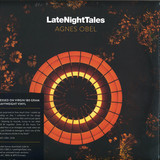
to Me, Sounds Have Always Been More Interesting Than Words,' Says Agnes Obel. i Love It When The Voice Becomes An Instrument And You Almost Forget It's A Human Voice.' Never Is This More Apt Than On This Beautifully Programmed And Bewitching Selection Of Music.
Agnes' 2010 Debut Album Philharmonics Went Platinum In France And Belgium And, Unsurprisingly, Quintuple Platinum In Her Native Denmark, Where She Also Won Five Danish Music Awards (equivalent To The Brits) In 2011. The Follow-up Aventine, Released In Late 2013, Was Imbued With The Same Measured Calmness As Her Debut. It Went Platinum In Belgium And Gold In Denmark And France.
For The Mix You Have In Your Hands It Feels Almost As If Agnes Has Scoured The World Looking For Kindred Spirits - Or Kindred Songs. There's A Quietude About It All, The Antithesis Of A Rush Hour, Like A Frozen Lake On A Sunday Morning. This Is Aided By A Veritable Cornucopia Of New Obel Material, Including A Haunting Reading Of Danish Song 'glemmer Du', Inger Christensen's 'poem About Death' Set To Original Music, And An Agnes Original, 'bee Dance'.
Among Them, There's The Enigmatic Jamaican Singer Nora Dean Who Weighs In With The Hypnotic And Slinky Duke Reid Production, 'ay Ay Ay Ay (angie-lala)' And The Sparse, Sardonic 'party Girl' By Michelle Gurevich, So Good It Inspired The Eponymous French Movie. There Are The Plangent Voices, The Bulgarian Folklore Choir, Nina Simone, Ray Davies And Agnes Herself, Ringing True. Somehow, Ms Obel Makes Even Makes The Electronic Tracks Bow To Her Needs As With Yello Whose 'great Mission' Is More Martin Denny Than Underworld And Cult Greek Composer Lena Platonos' 'bloody Shadows From A Distance' Pulses Gently Rather Than Throbs And Can's Recently Rediscovered 'obscura Primavera', Unusually Hushed.
"i Was Surprised At How Much Time I Ended Up Spending On This. I Collected All The Songs Together With My Partner Alex And We Just Spent Time Listening To Records, Trying To See What Would Fit Together. Some Of The Music I've Included Here Is On Mixtapes We Made When We Were Just Friends As Teenagers. Each One Of The Tracks Produces Stories In My Head." - Agnes Obel, February 2018
out of Stock
Last delivered 2 years ago available to reorder, subject to availability
Only one month after the release of their first ep on MT on May 2018, Vactrol Park continue surprising, this time with a full LP in the shape of 'Music from the Luminous Void'.The album sees VP delve much deeper into more atmospheric realms. Using modular synths and unexpected drum machine sequencing they leave the 4X4 beats behind in favor of off-world rhythms and ever growing bass. Starting with Drops's high frequency tension, laying on top of those heavy kick drums it keeps on growing and growing. From there it moves to the 'End of the party' groove that is Novikov's Notation, and its trippy monotonic rhythm. The A-side ends with the heavy sampled ambient track Macbeth, bringing forward that mesmerizing flute solo by Italian artist Luca Spagnoletti yet succeeding in avoiding the kitsch, and with a touch of class. The B-side delves even deeper into ambience and atmospheric muzak. Starting with Bells, that features again Spagnoletti on flute. Then we get into the real gems of the album - Anstruther and Glove. The first is a pure trip into modular psychedelia and repetitive jazzy-like drum rhythms, creating tension right from the start and plays with it throughout the track before decaying slowly into Glove, which is in sense both the catharsis and the decompression session of the album. Like a 2018 version of Vangelis, this track's soundscape will keep you dreaming with your eyes closed long after the album ends.
The Ep "a Form Of Travel Unknown To Humans" Is Chasing Us. Guiding And Forcing A Way Simultaneously. The Sound Is Harsh But Has An Immaculate Precision To It "void Of Air - Compelling The Listener Toward A Light, Seducing Us To Tear Through The Night.
We Enter With "s.m.o.d. - Sticks" A Deep And Magnetic Sound Opening Up Slowly, Starting To Breathe And To Merge Into "s.m.o.d. - Cell Culture" Which Gives A Much More Metallic Flavour But Never The Less Beat Driven - Fast And Strident - Maybe Even Hasty, Pushing To Skip A Beat Of The Heart. To Finish Off With "s.m.o.d - Pulse" Carrying An Unsettling Almost Disturbing Quality, Formulating A Mechanical Sound Alienated From The Human Experience. The Ep Creates A Seductive Space Outside Our Comfort Zone, Inviting To Explore A Space And Travel Unknown To Humans. Gimme More.
Music and Poetry of the Kesh is the documentation of an invented Pacific Coast peoples from a far distant time, and the soundtrack of famed science fiction author, Ursula K. Le Guin's Always Coming Home In the novel, the story of Stone Telling, a young woman of the Kesh, is woven within a larger anthropological folklore and fantasy. The ways of the Kesh were originally presented in 1985 as a five hundred plus page book accompanied with illustrations of instruments and tools, maps, a glossary of terms, recipes, poems, an alphabet (Le Guin's conlang, so she could write non-English lyrics), and with early editions, a cassette of field recordings' and indigenous song. Le Guin wanted to hear the people she'd imagined, she embarked on an elaborate process with her friend Todd Barton to invoke their spirit and tradition.
For Music and Poetry of the Kesh, the words and lyrics are attributed to Le Guin as composed by Barton, an Oregon-based musician, composer and Buchla synthesist (the two worked together previously on public radio projects). But the cassette notes credit the sounds and voices to the world of the Kesh, making origins ambiguous. For instance, The River Song' description reads, The prominent rhythm instrument is the doubure binga, a set of nine brass bowls struck with cloth-covered wooden mallets, here played by Ready.' According to writer and long-time friend of LeGuin, Moe Bowstern (who pens the liners for the Freedom To Spend edition of Kesh), Barton built and then taught himself to play several instruments of Le Guin's design, among them the seven-foot horn known to the Kesh as the Houmbúta and the Wéosai Medoud Teyahi bone flute.' Barton's crafting of original instruments lends an other-worldly texture to the recordings of the Kesh, not unlike fellow builders Bobby Brown and Lonnie Holley. Bowstern notes, Other musician / makers have crafted their own Kesh instruments after encountering the earlier cassette recordings that accompanied some editions of the book.' Both Barton and Le Guin are sensitive to the sovereignty of indigenous Californians and were careful not to trample the traditions of the Tolowa people who lived in the valley long before the Kesh. You research deeply, and then you bring your own voice to the table,' said Barton. Within the Kesh culture, the numbers four and five shape the lives, society and rituals. Barton composed loosely around these numbers, patiently listening to the land of Napa Valley for signs and audio signals from the natural elements. Todd incorporated ambient sounds of the creek by Le Guin's house and a campfire they built together. The songs of Kesh are joyful, soothing and meditative, while the instrumental works drift far past the imaginary lands. Heron Dance' is an uplifting first track, featuring a Wéosai Medoud Teyahi (made from a deer or lamb thigh bone with a cattail reed) and the great Houmbúta (used for theatre and ceremony). A Music of the Eighth House' sends gossamer waves of the faintest sounds to float on the wind.' Like the languages invented in the vocal work of Anna Homler, Meredith Monk, and Elizabeth Fraser, the Kesh songs and poems play with the shape of voice.
The Music and Poetry of the Kesh cassette was meant to accompany and enhance the experience of reading Always Coming Home. Presented in this edition as a long-playing album, where only traces of the book linger (the jacket offers some of Le Guin's illustration, and a letterpressed bookmark featuring the the narrative modes of western civilization and the Kesh valley is included), the music alone breaking the silence of what might be. It can transport—offering a landscape for imagining a future homecoming. One in which we are balanced, peaceful, and tend to the earth and its creatures. A line from the Sun Dance poem reminds us, We are nothing much without one another.' Freedom To Spend gives new life to the recordings of the Kesh people in the first ever vinyl edition of Music and Poetry of the Kesh, out on LP, and digital formats on March 23, 2018. The LP will include a deluxe spot printed jacket with illustrations from Always Coming Home, a facsimile of the original lyric sheet, liner notes by Moe Bowstern, multi-format digital download code and a limited edition bookmark letter pressed by Stumptown Printers in Portland, OR.
This past Monday, January 22, Ursula passed from this realm to another leaving a life spent building and exploring other worlds while challenging social concepts of the real word she inhabited.
Freedom To Spend had been working under Ursula's enthusiastic endorsement and with Todd Barton, her musical collaborator on Kesh, to give the music that accompanied her 1985 epoch a new life. With the Le Guin family's encouragement to move forward with our planned release, we are humbled to play this small role in sharing Ursula's work.
As Pete Swanson, one third of Freedom To Spend, stated, Ursula's legacy is her work which transformed the world, and this is another piece of the universe that her imagination birthed becoming real.' Listen to A Teaching Poem / Heron Dance' below.
James Stewart is the host, resident DJ and co-promoter of monthly night 'Black Atlantic Club' at Le Sucre in Lyon. Borrowing the term 'Black Atlantic' from renowned scholar Paul Gilroy's 1993 book, Stewart presents 'black music' as a transnational, incredibly diverse cultural exchange. An avid lecturer on the subject and founder of the Blog Afrosouldescarga, he merges an intellectual approach with the musical and creative side of things: as an active conga player and percussionist, member of Voilaaa Sound System and showhost at Radio Nova. This EP is the work of of a mature and thoughtful musician, combining different musical influences at a high level of production. Alma Negra Records are proud to present James Stewart with his Cotonou EP!
Giovanni Damico keeps amazing things coming and takes it with this release on the mighty label Kalakuta Soul Records to the next level. Joining forces with the mighty Gabriele Spagnuolo and Francesco Di Domenico on guitars and Saxophone, the italian boogie doctor brings to life three filthy stompers inspired by amazing artists from the african continent who have shaped what we now call (dance) music. To Fela's People is one of three stompers delivered for this joint teaming up with Mr. Villy Odili - Lead singer of the amazing nigerian band Villy and the extreme Volumes - who's precise lyrics and drifty voice joins forces with a charging afrobeat rhythm hailing from Giovanni Damico's bad ass laboratory. Afro Stomp and Baba on the other side come with the most furious drums and bassline one could ever imagine accompanied by a celestial instrumentation that hits the mind, the soul and the hips. Vital Sales Points: - Limited to 500 copies - Great feedback from Nomad, Lakuti and Antal
*Landing on Alchemy Dubs is Alpha & Omega's classic Freedom Fighters' featuring Paul Fox on vocals, remixed and dubbed by Ojah.
This track first appeared on Alpha & Omega's Overstanding' LP from 1991, and was originally voiced by Nishka. The vocals featured on this remix version were recorded by Paul Fox at a later stage. Some of the original stems have also been used here and others have been re-recorded and reprogrammed.
On the B side we find of course a dub version. In this case, out of the different dub mixes, the dubplate mix was chosen to go on the record.
Limited edition of 600 copies, hand-stamped and hand-numbered, served in a thick custom reversed kraftliner sleeve with inner black disco sleeve.
Multi-instrumentalist, composer and producer Adam Gibbons (aka Lack of Afro) is back in some style with 'Back To The Day', a beautifully produced summer sizzler crammed full of infectious hooks, top musicianship and most importantly, vibe by the bucketload! Taking a nod from classic material by artists such as The Jackson 5, Earth Wind & Fire (and more recently Vulfpeck), 'Back To The Day' is Lack of Afro doing what he does best and then some - blending the old and new with big drums and heavy percussion to come up with a crossover classic that's entirely his own, whilst all the while developing his abilities as a songwriter.
Providing a dynamite vocal once again is regular collaborator Elliott Cole. Not just the voice of the track, he also plays guitars and bass, whilst ably backed up by some stellar musicians including George Cooper (Haggis Horns) on keys, Rory Simmons (Blur, Jamie Cullum) on trumpet, string and horn arrangements and Harry Harding (Yola Carter) holding down the backbeat on drums.
Keeping the dancefloor packed and turning the party vibes right up to 11, 'Take It Up A Notch' (featuring the brilliant Wax & Herbal T and taken from the critically acclaimed 'Back In Business EP') completes what is arguably one of the strongest single packages of the year!
Lack of Afro continues to go from strength to strength. 2016's 'Hello Baby' (released on his own label LOA Records) picked up a BBC 6 Music 'Album Of The Year' nomination & appeared in the Top 10 of the iTunes R&B / Soul chart in 21 countries worldwide. More recently, Adam's music continues to be used across all aspects of film & TV by networks such as ABC, Fox, NBC, Sony Pictures & the BBC whilst he also has released music on Universal & Warner Brothers Records.
Both tracks are taken from the new album 'Jack Of All Trades', released on LOA Records in May 2018 and supported by a live band UK tour in May & throughout various festivals throughout the summer.
For the last decade, Argentina has become the epicenter of a musical explosion that characteristically blends folk music from the surrounding Andes and electronic beats. The artist arguably responsible for its emergence on a global platform is one named Chancha Via Circuito- a Buenos Aires native named Pedro Canale whose first album Rodante (2008) opened the floodgates by pushing the borders of Cumbia listeners weren't even aware existed. He's gone on to release other highly acclaimed albums such as Rio Arriba (2010), which Resident Advisor described as 'aural magical realism', and Amansara (2014), which catapulted him onto acclaimed international stages and received praises from Pitchfork to the New York Times.
Four years later, in the midst of some very notable global turbulence, Chancha Via Circuito brings us his highly anticipated new album Bienaventuranza- a word that essentially means bliss. Replete with his signature touches of Andean instruments (think lots of flute and charango), the folkloric elements on this album blend fluidly with danceable and digestible electronic beats. He's been cooking this record slowly, with unprecedented amounts of care and in a much more collaborative manner than his past albums.
Appearing on the album are heavy hitters in the digital cumbia scene, including Mateo Kingman, Kaleema, and Lido Pimienta, all of whom contribute their highly distinguishable sounds to the natural flow of the album. Most of these collaborations came about almost effortlessly. La Victoria is a track that blends cumbia, dancehall, and a bit of mysticism- carried by Lido Pimienta's luminous voice, Colombian Dancehall wizard Manu Ranks happened to be in town and slipped into the song naturally. Kawa Kawa came from an improv jam during rehearsal one day with Kaleema (Heidi Lewandowski) and Federico Estevez (percussionist in Chancha Via Circuito). Niño Hermoso, which is lyrically a fable, sounds the way it does because Pedro saw a video of Gianluz (Gianluca Zonzini), who he knows from dance classes, singing a Pocahontas song on Youtube.
As dancefloor-friendly as it is mystical, Bienaventuranza is as Chancha as it gets- with elements from Cumbia to Dancehall to Andean Folk to Global house, crystal clear production, and collaborations that are evidently natural and genuine, the record holds true to the sound that Canale has played such a huge part in creating. Since the release of his last album, the digital folk scene has also grown exponentially. From a new generation of producers to more listeners in unassuming parts of the globe, Pedro has been humbled to see the sound develop- and proves with this album that he's grown swiftly alongside it.
out of Stock
Last delivered 14 months ago available to reorder, subject to availability
First released in 1995 on Jonah's own Aba Christos Tafari Records,Intergalactic Dub Rockis a trip. While the 90s rave continuum buried down the hole of cosmic sci-fi culture, dub's fascination turned elsewhere after 80s touch-stones like Shaka'sBrimstone & FireandCaptain Ganja and the Space Patrol(re-issued by Bokeh last year). But Jonah takes things way far on this, his most adventurous outing: let your needle cruise along these bleeps and strings of 50s space travelling dreams, and the flutes and melodicas of planet earth, hear them clang with the hardest dub FX units the UK could buy at the time. It's one of the most righteous and outward-looking steppas LPs, now liberated from the hands of Discogs-types with a previously CD-only bonus track, 'White Nile'.
Inyotef, Bongoman, Jahman Dan, Kheru - Jonah Dan goes by many names and many trades - akete nyabinghi master, vocalist, producer and filmmaker. For many years he was the go-to studio percussionist for the UK dub scene, collaborating with basically everyone: Paul Fox, Jah Warrior, Robert Tribulation, Jah Fingers, Tony Roots, Alpha and Omega. Along with Bush Chemists (stars of BKV 020...) and Disciples, he toured the continent, spreading the message of UK dub and laying the seeds for a lot of the EU scene today. At some point his Aba Christos Tafari Records morphed into Inner Sanctuary, one of the greatest 90s labels still in operation, go check.
For his third album for Far Out Recordings, London based multi-instrumentalist and one of Europe's finest saxophonists Sean Khan ventures to Rio de Janeiro to collaborate with iconic Brazilian polymath Hermeto Pascoal. Taking its title from the escaped slave settlement 'Palmares' in the Northeast of Brazil during the 1600s, Palmares Fantasy is Khan's utopian jazz message for the world, and features Azymuth drummer Ivan 'Mamao' Conti, bassist Paulo Russo, guitarist Jim Mullen, and guest vocals from Brazilian chanteuse Sabrina Malheiros, and Cinematic Orchestra frontwoman Heidi Vogel.
Like Hermeto Pascoal, Sean Khan is a self-taught musician. Never able to afford his original dream of studying at Berklee, and having been turned away from Guildhall School of Music for being 'too raw', he became disillusioned with what he saw as the exclusivity, elitism and dangerous institutionalisation of the jazz world. Yet Sean's love for music and the drive to create never faltered.
Hermeto Pascoal, the man Miles Davis once dubbed the most impressive musician in the world', is a similarly independent artist. A true maverick whose ingenuity and freedom from conventional restraints is so great that he has essentially conceived his own musical language, made him the dream collaboration for Sean.
Aspiring to inclusivity and equality also informs the message in Khan's music. Inspired by the 17th Century settlement of Palmares in Brazil's Alagoas region, which was free from the Portuguese crown's murderous exploitation of South America for a century, Khan notes his fascination with the fact that while majoritively made up of escaped African slaves, many deserter conquistadors also joined the settlement.
Hearing the deep-grooving title track with this history in mind, the listener is transported to a futuristic musical eden, with Mamao's insatiable 10/8 rhythm back-boning Hermeto's wild improvised vocals, rhodes and whistles, while Sean's harmonically brilliant sax and flute add more layers of moody, characterful expression. 'Moment of Collapse' is Sean's poetic study on the uncertainties of modern day western civilisation, delicately presented by the gorgeous vocals of Heidi Vogel and drenched in lugubrious strings and Alice Coltrane-esque harp. The two covers on the album are of Hermeto's own 'Montreux' (on which Hermeto plays solos on a teapot and a pint of water), and an uplifting soulful jazz-funk take on Milton Nascimento & Lo Borges MPB classic 'Tudo Que Voce Podia Ser' featuring the vocals of pioneering nu-bossa voice Sabrina Malheiros.
The recording sessions for the album were part of an intensive and hugely productive eight-week excursion to South America for Far Out boss Joe Davis in the summer of 2016, which also saw the sessions for Azymuth's Fênix and a forthcoming album from Uruguayan fusion legend Hugo Fattoruso.
Fantastic' Gilles Peterson
Loving this!' Opolopo
Thank you!' Sassy J
Proper! Great track.' Colin Dale
this is great!' Yannick Elverfeld (RBMA / Needs Records)
I've enjoyed Sean Khan's earlier releases, but this really seems like he's grown into his fairly considerable talent.' Mark Sampson (Songlines)
His last album was his best so far, but I think this one may be even better.' Laurence Pragnell (Soul Brother Records)
dope!!!' Kyri (R2 Records)
this is great - really cool vibe!' Sam Redmore
wonderful track - can't wait to hear the lp.' Simon Harrison (Basic Soul Radio)
This is very tasty indeed.' Gavin Boyd (Soul Has No Tempo)
After his debut single "Tell Me That You Love Me" on Timmion's Stylart imprint, Jonny Benavidez is back with a tighten uppish slab of Texas tinged soul. In "Let's Get Together" Jonny pulls out his best dance craze chops and delivers a positive message over the rolling northern soul rhythm track by Cold Diamond & Mink.
It doesn't matter if you get down to soul music in leather soled slicks or sneakers, this 45 should be your ticket to dance floor heaven. With these two tracks under his belt Jonny is set to continue melting hearts and moving feet anywhere you hear him on record or a live performance.
Bar by bar it starts to come clear that Jonny's gentle voice has some of the same emotive depth as legendary cats like Richard Caiton, so it's nice to know that he has fresh material in the pipeline. If you enjoy the crossover soul sounds of classic indie labels such as Ovide or San Antonio's Dynamic, you will undoubtedly get along nicely with this blast of sunshine.
The Land of Look Behind soundtrack returns to vinyl in a remastered and expanded edition that includes a download of three previously unheard and unreleased tracks from the original sessions. Alan Greenberg, who wrote and directed this film documenting the funeral of Bob Marley, provided K. Leimer with location tapes which were used to originate many of the rhythmic patterns for Land of Look Behind. Loops of the monologues and phrases that exhibited more distinctive cadences and pacing, the words, glottal stops, clicks and coughs of witnesses were used as cues for the percussion instruments. In effect, speech became the organizing principle of the musical score. By eliminating the accuracy of click tracks, musicians were prompted to rove through the inconsistent intervals of the voice-derived patterns. Also included is a four-page insert featuring an essay by Paul Dickow.
K. Leimer founded Palace of Lights in 1979. Leimer's early work has recently been reissued by Autumn and RVNG, and his early cassette work is in the critically acclaimed VOD box set American Cassette Culture. Leimer has been actively producing music since the mid 1970s — his current catalog includes seventeen albums plus two collaborative albums with Marc Barreca.
Leimer's work is included in the collection of The British Library.
Caused Corruption & Spilled Blood is a soundtrack to the tragic drama of humanity's fatal flaws. Inspired by an anecdote shared across the Abrahamic faiths, the release is a meditation on humanity's destructive
potential. It forces us to confront the ugly side of our nature and pose the question, were the angels right to fear our creation would cause corruption and spill blood
Same Script, No Solution provides one answer. The sonification of 'Ordo ab Chao,' the opening track guides the listener through the process of public manipulation, providing a backtrack to the obstruction of the truth for personal gain.
Third Degree Arson touches on humanity's second vice: the affinity for intentional destruction. Is there hope against these demons of our own nature
No Divine Savior suggests not. If we cannot rely on divine intervention for our salvation, that leaves only ourselves to overpower our own vices.
Yet with the discord of the final track, Sects, the listener is reminded of the deep cultural fissures that keep us from doing so.
The Caused Corruption & Spilled Blood EP is a powerfully provocative examination of human nature, a compelling first release from the collaborative efforts of Chafik Chennouf & Katsunori Sawa.
Joanne Forman's Cave Vaults of the Moon created in 1987 for an exhibit of sculptures in Taos, New Mexico is a mesmerizing score for voice, Ensoniq Mirage, Juno 106, flute, guitar and effects. The playful extra-terrestrial recording wafted through the exhibit every day for its duration and then lay dormant for nearly 30 years. Unearthed now, Cave Vaults of the Moon sounds prescient and timeless, as if Pep Llopis and Iasos scored a Wicker Man remake set on Mars. Restored, remastered and cut using DMM.
.
We humans, the nascent beings that we are, still haven't quite figured out the full potential of music. Dancing, meditating, emoting, protesting, these are all pretty basic. But what if we communicated more complex ideas with music What if we codified all of our activities with music This idea came to composer Joanne Forman
when commissioned in 1987 to create the soundscape for an environmental exhibition of sculpture called Artifacts from an Alien Civilization in Taos, New Mexico. The sculptures, elaborate ruins that had been found on the moon, begged the question: who created them and for what purpose
Joanne Forman imagined that Earth's moon was a vacation spot for advanced beings from another galaxy. In her mind, the sculptures in the exhibit were the remnants of a deserted playground. Cave Vaults of the Moon became a collection of sonic texts describing the recreational activities that went on there, earth-viewing, collecting information, building and playing.
The anonymous underground figure of Phoboz is associated with one colour - black. Not only is his online presence a mystery, with alternative stage names such as Doghead, Phaseliner, and Parseq. He is also connected to the well-respected Motorlab label, whose releases from the outset have been devoid of portraiture, biographic information, or textual support. Black covers, a few silver symbols of factory hardware, and nothing more.
Nonetheless, one Russian venue online has referred to Phoboz's earlier work as 'digital music for sentient people.' There's a vague connection between darkness, industry, and Russian feelings of late. Actuality is black.
These same emphases define the newest release by Phoboz on Resonance Records, entitled 'Flow' and overseen by Moscow's techno kingpin Nikita Zabelin. Forty minutes of resonant, insistent beats, straight from the gut of some abandoned factory. A heavy, even thunderous tradition fades to black, leaving the echo of prior decades to repeat itself, over and over. Even the titles of this release speak of something lost in the dark: 'Forgotten Planet' or 'Shifted Bias.' One tradition has evanesced; a future equivalent remains vague.
Phoboz gives voice to that shift from erstwhile desire to present-day drive, from industrial progress to post-industrial flow. The sounds of a forgotten culture.
New Ways, rooted in the techno-blueprint swings between playful, skittish bass lines, hazy distortion, chthonic voices and melancholic synths to create an atmosphere that is at times unnerving, uplifting and mindless. Buoyed by a genuine sincerity, New Ways expresses a narrative element of the maturation of an artist, of the transfusion of self, achieved through sound.
Audio-visual artists Soundwalk Collective were granted exclusive access to the personal archive of the groundbreaking filmmaker and present their ambitious New Album and Remix EP: What We Leave Behind released on 18th & 25th May 2018.
The NYC and Berlin based group were invited to aurally explore the archive of the seminal French director Jean-Luc Godard and release their interpretations in an innovative new album What We Leave Behind. Drawing on Godard's personal collection of shot film, reel- to-reels and historical ephemera, the recordings reveal the moments before and after the camera rolls, from stage directions and on-set asides to rehearsals, false stars and outtakes.
'There are boxes filled with sounds, words, chaos, and also silence. For Godard sound is a musical composition and when I began listening to the tapes and heard his voice between takes, it was like little bits of life...each sound has its own value. It has always been part of our working practice to venture into untapped sonic territories, discover the poetics behind them, and explore how we (as humans) relate to it, it is part of a larger discourse.' - Stephan Crasneancki, Soundwalk Collective
Revealing much insight to the director's process and personality, the 6-track album will be followed by a remix EP, featuring unique reworks from Ricardo Villalobos, Jan Jelinek and Petre Inspirescu.
What We Leave Behind, and the subsequent remix EP, arrive 50 years to the day that the the Cannes Film Festival, 1968, was closed after Jean-Luc Godard, Francois Truffaut and Claude Lelouche, publicly announced their closing of the festival in solidarity with workers and students protesting across the country.
The LP features a conversation between Stephan Crasneanscki, of Soundwalk Collective, and Franc¸ois Musy, Jean-Luc Godard's sound engineer, printed on a translucent paper insert. The LP and Remix EP both contain imagery taken by Stephan Crasneanscki of the archives, which he has also filmed to create a series of mesmeric short music videos of original and remix tracks.
An international genre-bending group of artist-musicians with studios in New York City and Berlin, the three members of Soundwalk Collective (Stephan Crasneanscki, Simone Merli, and Kamran Sadeghi) formed in Manhattan to produce concept albums, sound installations, and live performances, and have worked with a diverse range of collaborators, from Nan Goldin and Patti Smith to Berghain and Zaha Hadid.
Memories — places, vacancies, allusions — are fundamental characters in Mary Lattimore's evocative craft. Inside her music, wordless narratives, indenite travelogues, and braided events skew into something enchantingly new. The Los Angeles-based harpist recorded her breakout 2016 album, At The Dam, during stops along a road trip across America, letting the serene landscapes of Joshua Tree and Marfa, Texas color her compositions. In 2017, she presented Collected Pieces, a tape compiling sounds from her past life in Philadelphia: odes to the east coast, burning motels, and beach town convenience stores. In 2018, from a restorative station — a redwood barn, nestled in the hills above San Francisco's Golden Gate Bridge — emanates Hundreds of Days, her second full-length LP with Ghostly International. The record sojourns between silences and speech, between microcosmic daily scenes and macrocosmic universal understandings, between being alien in promising new places and feeling torn from old native havens. It's an expansive new chapter in Lattimore's story, and an expression of mystied gratitude. A study in how ordinary components helix together to create an extraordinary world.
Awarded a residency at the Headlands Center for the Arts, Lattimore spent two summer months living with 15 fellow artists — writers, playwrights, musicians, poets, painters, activists, curators — in a cluster of old Victorian military buildings on the Northern Pacic Coast. Days offered solitude, Lattimore set up in a spacious barn, able to arrange her instruments at will. Nights welcomed new perspectives. "Hanging out with a lot of accomplished artists with poetic ways of looking at the world was really inspiring. My heart was in a bit of a tangle after leaving Philadelphia. I was holding onto things instead of moving forward. My time there was a nostalgia detox, a way to press reset in a healthy way. Also breathing in the freshest air in America, straight off of the ocean, felt good."
Throughout the shifting locales there is one consistent companion Lattimore engages: a 47-string Lyon and Healy harp. The instrument wires directly into her psyche. Pitchfork's Marc Masters posits, "she can practically talk through it at this point, she's created a language." The space and stillness of the Headlands afforded Lattimore freedom to her expand her vocabulary, to stretch out and experiment with layers of keyboard, guitar, theremin, and grand piano. Lattimore's voice sweeps beneath the plucks and washes of opener It Feels Like Floating,' enraptured by the winding current, and reappearing in the second minute of the immense "Never Saw Him Again." The track elevates towards a shimmering apex of static and percussion before organ drone yields to signature halcyon utters. As with much of Lattimore's work, the track titles are telling, "Baltic Birch" is a somber windswept march that sways gracefully out of step, a remembrance of a recent trip to Latvia where she was struck by the abandoned resort towns along the Baltic Sea. Hello From The Edge of The Earth' is an earnest reection of Lattimore's love of the natural world, recognizing the thresholds of varying terrains.
The album's fth track borrows its name from Lattimore's favorite line in Denis Johnson's short story Emergency' from Jesus' Son. A character, lost in a blizzard, reassesses a disjointed universe, a clash between curtains of snow and angels descending out of a brilliant blue summer: it isn't an apocalypse, it is a drive-in movie, with stars hovering above the lot, off the screen, in the throes of the Midwestern storm. This mix-up is disorienting and existentially tragic, Lattimore's darkly strummed piece is a melancholic parallel, mimicking Johnson's elegant suture attaching two remarkably discontinuous spaces.
Micro-revelations, not quite as bright as torn skies but nonetheless enlightening, were everyday occurrences during Lattimore's residency. Living small days with small tasks — feeling little dramas within the arcadian universe of a national park — rendered her the sense that disjointed spaces can be interconnected no matter the enormity that divides them. It's in this elastic scale of perception that something as simultaneously simple and intricate as Hundreds of Days can ourish.
- Second solo album for Ghostly, past releases on Thrill Jockey
- Recently toured w/ Sharon Van Etten, Jarvis Cocker, Kurt Vile, Steve Gunn, Julia Holter, Iceage
- Mary Lattimore has been featured on Pitchfork, NPR, The Wire Magazine, and more
Not Long After Recording Her 10th Album, Ruins, Liz Harris Traveled To Wyoming To Work On Art And Record Music. She Found Herself Drawn Towards The Pairing Of Skeletal Piano Phrasing With Spare, Rich Bursts Of Vocal Harmony.
A Series Of Stark Songs Emerged, Minimal And Vulnerable, Woven With Emotive Silences. Inspired By the Idea That Something Is Missing Or Cold,' The Pieces Float And Fade Like Vignettes, Implying As Much As They Reveal. She Describes Them As small Texts Hanging In Space,' Impressions Of Mortality, Melody, And The Unseen - Fleeting Beauty, Interrupted. Grid Of Points Stands As A Concise And Potently Poetic Addition To The Grouper Catalog.
From Liz Harris: Grid Of Points Is A Set Of Songs For Piano And Voice. I Wrote These Songs Over A Week And A Half, They Stopped Abruptly When I Was Interrupted By A High Fever. Though Brief, It Is Complete. The Intimacy And Abbreviation Of This Music Allude To An Essence That The Songs Lyrics Speak More Directly Of. The Space Left After Matter Has Departed, A Stage After The Characters Have Gone, The Hollow Of Some Central Column, Missing.
Anklepants Introduces His Brand New Album For Detroit Undergroud, A Collection Of Ten Cuts, Made With His Very Own Arsenal Of Digital And Hardware Toys, Most Of Them Self Made And Customised For His Purposes. This Multi Faceted Artist Creates A Blend Of Twisted Ryhthms, Synthetic Melodies And Weird Textures And Noises, Yet Danceable Stuff But With Heavy Focus In Experimentation And Risk.
Pollen Opens The Release With A Weird Arabic Style Riff And Arpeggiated Clean Synths Over A Simple Beat, Until More Melodic Layers Complete The Equation.
Chowsey In Upstyled Onesy Minor Follows With Sampled And Morphed Traditional Instruments, Laying Over Destructed Beats And Rythms.
The Perfect Adult Man Relies On Atmospheric Stabs, Four Four Kick And Analogue Bubble Bassline, Dark, Grey And Melancholic.
'lé Cavé_isnt It Funny To Think Once Apon A Time People Thought The World Was Blue White Flat And Squaré' Is Made Of Twisted Samples, Asymetrical Grooves, Organic Instruments Decimated And Multiple Sound Layers.
808 Frapé Is An Homage To The Classic Drum Machine, Electro Shaped Drum Patterns, Floating Sounds And Crispy Metalic Glitches Dance With Random Sequences And Bleeps In A Robotic Exercise.
Reecard Farche The Torture Of Credo Mutwa And The Theft Of The Necklace Of Mysteries_noel Goes Again To Weird Random Bleepy Fields, Alien Grooves, Heavy Sound Processing And Glitched Details.
Industrial Kingpins Und Drachoen Is Dark, Obscure Number, Clear Rythms, Strings And Resonant Bassline Collide, The Groove Transforms To Broken Beats After The Break Bringing New Life To The Overall Feel.
Sharkblood, Sure The Sharks, Repeats This Phrase In Different Pitches Over A Solid Kick Pattern While More Vocal Layers Are Added Progressively In A Voice Madness.
Golife_refracto Relationé Again Plays With Samples In A Mad Style, Altering Every Parameter, Creating Granular Efects, Destroying The Audio Files Creating An Asymetric Tune.
Attila's Own Photos From The Shoot It's The Epilogue, In A Relaxed Mood, Sound Textures, Various String Samples Melting In Different Pitches And Crunchy Atmospheres.
out of Stock
Last delivered 2 years ago available to reorder, subject to availability
2018 repress of the debut full length LP from Spencer Doran and Ryan Carlile's Visible Cloaks project. Initially recorded in 2013 and issued on cassette by Sun Ark in 2014 (as Cloaks), this first offering uses conceptual processes to weave many of the same threads as their later work; synthetic FM tones, tuned mallet percussion, and electronically modulated voice, all arranged in a gossamer web, spun with neon electronics. On this release the duo set off on the sonic journey they are still on today, refracting their influences through East West feedback loops, augmenting traditions with technology. Remastered 45rpm DMM version with additional surprises!
A thrilling 9-song set, Murmurations is as perfectly pitched for headphones as it is for clubs, named after giant cloud formations of starlings and themed around the stunning emergent behaviors that appear within them. To mirror these movements in the sonic landscape and visuals of Murmurations, SMD's James Ford and Jas Shaw collaborated with the celebrated Hackney-based vocal collective The Deep Throat Choir, as well as creative directors Kazim Rashid of ENDLESSLOVESHOW (Aphex Twin, Flying Lotus, Hudson Mohawk) and Carri Munden.
Finding time in between Ford's work as a producer and Jas' club gigging last year, the duo arranged a session in Shaw's countryside studio. Via an introduction from a friend of Ford's wife, The Deep Throat Choir's director Luisa Gerstein and SMD began swapping some production and melodic ideas. They decided to bring the whole East London-based choir into the studio to experiment, and the results were intense. Jas says, 'Listening to them moving their voices around a tone, altering the timbre, making chords, was like working with an incredible new synthesiser.' Rashid and Munden explore related ideas centered on kinetic energy and communal movement throughout the visuals of Murmurations. Rashid says of the collaboration, 'We were both having discussions around the purity of collective human experience and how transcendental this can be. Techno and the dance-floor is one of the last true expressions of this euphoria.'
From the beat-less introduction 'Boids' onwards you can hear uncanny patterns and sounds rising up from the sea of voices -- not traditional chords or harmonies, but complex interference patterns that play tricks on the mind and merge perfectly with SMD's distinctive synth tonalities and instinctive dancefloor nous. At times you might hear hints of Bulgarian choral music, or Cocteau Twins, or avant-garde composers like Iannis Xenakis or Pauline Oliveiros - but really, thanks to the creative freedom of SMD's working methods, it is a sound completely of its own, something all too rare in an age of retro and reference.
Ford and Shaw still have the same love of pure sound, human harmonies and electronic possibilities that they did when they first met at university, and it's clear that their career path has allowed them to nurture this love and express it as vividly as ever before.
After releasing his SAYS HI' EP in June, swedish producer 'sir Was' put finishing touches on his debut album DIGGING A TUNNEL'. Out via City Slang on March 10th 2017.
It took me 15 years to feel brave enough to do this!' confesses Gothenburg native Joel Wästberg, the guy behind the 'sir Was' alias. To reach the point where I could let myself do this was a long struggle. But once I felt less scared, it was kind of easy. It just came out, like: 'This is the sound!'' The sir Was sound' is built around supple grooves, is strangely haunting and yet inexplicably exhilarating, voices ricocheting off one another as they address loneliness, its solution and the requisite compromises. A jam session of Beck, David Crosby, J Dilla and D'Angelo might not sound much different to this yet unheard style. The unorthodox and exceptional approach of the recluse Swedish producer delivers one of the most exciting debut records of the spring.
To the beat of the drum! Contrary to its predecessor, the second volume of Rhythm Trainx only features only one drummer and one drummer only. Said drum is by courtesy of Ketiov (the brain child of Catz ‚n Dogz' Voitek Taranczuk) and what was initially expected to be just a contribution to a various artist compilation, mushroomed into a six-track exercise in bonus beats and rhythm tools, with propelling percussions, murky bass lines and tribal thrills. Channeling the heroes of the past with the means of today, Ketiov balances functionality with interestingness. Impressively crafted, brilliantly executed and perfectly pounding. Even deaf DJs could spice up their sorry lives with two copies of this. Blow your whistle!
out of Stock
Last delivered 3 months ago available to reorder, subject to availability
Truly nuts and really kind of essential... the Starship Commander had his whole approach to the Synthesiser Voice technique. B-Boys/Girls delight. Check the instrumental cut, Mastership - a head nod synth voyage of the highest order. Limited copies. TIP!
.
'How are you doing, Earthling' That's how Omer Coleman, Jr. addressed his public in the 80s, driving around Kansas City, Missouri in the electric space-car built especially for his alter ego Starship Commander Wooooo Wooooo.
Left Ear Records went back to Coleman's original master tapes for their vinyl reissue of the Commander's 1981 private press album Mastership, a lost electronic funk classic. Coleman performs in an alien voice that comes not from electronic filtering but from his own natural vocal distortions. This visitor from Mars wants people to be happy and, like his song goes, 'Laugh and Dance.' It's an endearing and very personal space-age funk that blends George Clinton and Kraftwerk in a vision of a better and happier world.
Born and raised in Kansas City, Coleman was musically inclined from an early age. His parents couldn't afford to buy him a real drum for orchestra, so he took up electrical wiring and wood shop instead, which fed his muse in a different direction. Omer built enormous speaker cabinets. In the late '70s he was a DJ, and ran a Mobile Disco business that took him across the country, hosting parties. After a trip to California, he came back to Kansas City inspired to dress up as Commander Wooooo Wooooo.
The future commander began working at the Armco Steel Mill in Kansas City when he was 18. He was inspired by older machinists who demanded perfection in their work and in their character. It was while he was working at the steel mill that Coleman came up with Starship Commander Wooooo Wooooo. One day coworker John Manley came up to Coleman with a vision of an electric car, and built it. His coworkers built all of his equipment, from lighting and fog machines to big steel eyeglasses. Coleman's sister, a seamstress, created his outfits.
Coleman started his own label in 1985 but took some time off from music to raise his children, and when they came of age his son recorded with Coleman as a gospel vocalist. When his son was killed in an auto accident in 2004, it took something out of him, and he stopped making music. But he's starting to get the feeling again.
Now 62, he's currently enjoying his retirement from a long stint with the IRS. The former Commander is in the middle of a house project where he's using metal ceiling tiles to line his walls. It's starting to look like a spaceship. Coleman promises, 'There is a real good possibility that we have not seen the last of Starship Commander Wooooo Wooooo!
Pat Padua'
From Hip Hop to Soul, then from Soul to Beatmaking, Sly Johnson never really changed universe. Today, it's immersed in the mechanics with processors and printed circuits that we find him, under the alias of TAGi, producer-beatmaker who, for the occasion, has joined the services of Steven Beatberg. It's together, in artistic autarchy with the only presence of softwares, samplers and sequencers, that they have built their pieces in the light of their computer screens.
.
After three EP dominated by instrumentals, the duo finally chose to realise their dream: to craft a multi-voice album where customized production for each guest would guide the creative process.
Rapper Big Pooh, the former member of the Little Brother group (With Phonte & 9th Wonder), the contemporary soul of Lisa Spada, but also the rapist #madeinfrance Pumpkin (worthy descendant of MC Solaar, Fabe ...), multi-faceted Georgia Anne Muldrow, the MC Finale, the new rising wave of artists of the Hip-Hop scene in Detroit. Tiemoko from Paris, Saga an MC who follows the pure tradition of the New York Hip-Hop, the very smooth-jazzy Elodie Rama and Dilouya, the producer of the previous record of Sly (The Mic Buddah), are of this casting where men and women share the roles and where TAGi as soon as the mic presents itself to him, becomes again Sly Johnson for some refrains, choruses or solo rereading of the sublime "Retrograde" of James Blake.
Guided by Hip Hop since the 90's until today, worked in great detail, YOUARESURROUNDED highlights vintage keyboards on granular rhythms, injecting a lascivious Soul, P-funk, electro futuristic or melancholic in black and white touches on 13 tracks that are as atmospheric as they are emotional.
The 10th release on Mauoq Music is a remix project of the most successful release on the label so far, the Fabricate EP (MQM005). It features the musical talents of four different artists who all represent in their own way what Mauoq Music is all about.
Ryuji Takeuchi provides Instruments Of Discipline with an EP of noisy, hypnotic tracks, ranging from giddy, stomping, left-field techno to melancholic ambience; the EP's title 'One's Sentiment' provides a thoughtful angle to this at times cacophonous collection, for while they are bristling with noise there is something contemplative about the pieces, expressed in a way that suggests more than one thought trying to take life at the same moment, Ryuji finds space for conflicting voices both spatially and in terms of mood, the first three tracks, 'Ambivalence', 'Sadness' & 'Sorrow' crawl with competing elements, synth lines drool over and meld with throbbing kick patterns, anxiety & excitement are tightly wound in focus as tracks build and develop, leaving the listener to navigate these abstract planes, intoxicated; while the final track 'Regret' is a compelling piece of noisy, ambient minimalism that allows for an austere pause after the eruption of the initial works. It becomes evident that Ryuji's journey as a producer, through periods of hard-techno, deep-minimalism and the more abrasive ventures on HueHelix, has created a powerful and nuanced voice that is fully on display in 'One's Sentiment'.
Ryuji Takeuchi - Artist Bio
Ryuji Takeuchi (Local Sound Network / LSN, HueHelix) was born in Osaka, in the late 90s, he moved to the United States where he discovered Techno, House and Electro Music, influencing his desire to produce & DJ. His first wave of releases on LK Records, Arms, Mastertraxx, FK Records, SWR, Innervate, I.CNTRL, Impact Mechanics, Silent Steps, GSR & Brood Audio to name a few, were straight-up, hard techno,
In 2011, Ryuji started his own imprint, 'Local Sound Network / LSN', a platform for a new generation of both Japanese & global electronic music & later on, in collaboration with Tomohiko Sagae, Go Hiyama & Kazuya Kawakami, the label, 'HueHelix / HHX', developing further the voice of Japanese techno & experimental electronics, with a focus on distorted, industrial sounds.
In 2012, Ryuji launched the 'Local Sound Network Digital Solutions / LSNDS' series born from a desire to both discover and introduce a wider range of electronic music to the world.
Ryuji Takeuchi provides us with an EP of noisy, hypnotic tracks, ranging from giddy, stomping, left-field techno to melancholic ambience; the EP's title 'One's Sentiment' provides a thoughtful angle to this at times cacophonous collection, for while they are bristling with noise there is something contemplative about the pieces, expressed in a way that suggests more than one thought trying to take life at the same moment, Ryuji seems to find space for conflicting voices both spatially and in terms of mood, the first three tracks, 'Ambivalence', 'Sadness' & 'Sorrow' seem to crawl with competing elements, synth lines drool over and meld with throbbing kick patterns, anxiety & excitement are tightly wound in focus as tracks build and develop, leaving the listener to navigate these abstract planes, intoxicated; while the final track 'Regret' is a compelling piece of noisy, ambient minimalism that allows for a pause after the . It is testament to Ryuji's journey as a producer through periods of hard-techno, electronic minimalism
Javonntte Detroit native producer is delivering here 4 tracks of house music for Attias brothers label. The a side contains 2 versions of a killer soulful vocal track « Searching « with his typical voice and repeating technique to get to a certain soul mantra in your head and certainly your legs ! On the flipside you have 2 rough and funky instrumental house nuggets . 2 tunes to make people dance . 2 rolling house numbers in the tradition of dirty Detroit underground dance tracks. I hope you'll enjoy as much as we do , its aimed to the dancefloor. Stay tuned we will also soon release a collaboration between Alex Attias and Javonntte
Japanese vocal performer Hatis Noit will release her enigmatic EP Illogical Dance via Erased Tapes worldwide on 23rd March 2018.
The arresting 4-track record creates unique song-worlds with transcendent vocal interpretations that at once deconstruct and recombine Western Classical, Japanese folk and nature's own ambience atmosphere. Illogical Dance also features Björk-collaborators Matmos, who were so impressed with Hatis Noit's recordings, they volunteered to edit the lead track Illogical Lullaby.
Hailing from the distant Shiretoko, a small town in Hokkaido, which is the largest island in north Japan, Hatis Noit's accomplished range is astonishingly self-taught, inspired by everything she could find from Gagaku — Japanese classical music — and operatic styles, Bulgarian and Gregorian chanting, to avant-garde and pop vocalists. The sounds she created on Illogical Dance, co-produced by Haruhisa Tanaka and Matmos, bring to mind the experimental vocal patterns of Meredith Monk with the attentive production of Holly Herndon.
It was at the age of 16, during a trek in Nepal to the Buddha's birthplace, when she realised singing was her calling. While staying at a women's temple in Lumbini, one morning on a walk Hatis Noit heard someone singing. On further investigation it was a female monk singing Buddhist chants, alone. The sound moved her so intensely she was instantly aware of the visceral power of the human voice, a primal and instinctive instrument that connects us to the very essence of humanity, nature and our universe.
The name Hatis Noit itself is taken from Japanese folklore, meaning the stem of the lotus flower. The lotus represents the living world, while its root the spirit world, therefore Hatis Noit is what connects the two. For Hatis Noit, music represents the same netherworld with its ability to move and transport us to the other side, the past, a memory, our subconscious. It is the same for Illogical Dance, a set of transformative songs that taps into our most primal instincts.
The human voice is our oldest, most primal yet most powerful instrument. I use it to describe nature's many sounds, a language that isn't logical. Yet it forms a beautiful conversation that isn't restricted to words like the human language is. I want my music to remind us of that.' — Hatis Noit
Wanting to interpret and mimic the sounds Hatis Noit hears in nature, Illogical Dance is as unpredictable, beautiful and mysterious as the world around us. Each track is made up from multi layers of vocals, all improvised and without words, before being carefully pieced together. Astonishingly no samples are used throughout, even the sound of crushing leaves came from Hatis Noit's own vocal chords.
The result is a stunning array of sound sculptures that see her switching between multiple styles with great ease. From the sweet operatics on Illogical Lullaby, the manipulated vocal loops duplicating electronic production on Anagram c.i.y. to the primordial chanting call to arms of Angelus Novus, a 10-minute odyssey that features whispering and leaves crunching, it showcases Hatis Noit's full range and introduces a truly original artist.
Previously only available in Japan, Illogical Dance will receive a worldwide release on 23rd March 2018 including a first edition on 12' vinyl. After participating in a ceremony for memorial and appreciation tailored to the withdrawal of the evacuation area in Fukushima on 31st March 2017, Hatis Noit collaborated with renowned visual artist Nobumichi Asai on a project titled INORI (prayer) which they premiered live as part of an Erased Tapes showcase at Mutek Japan in Tokyo.
Having recently moved to London and performed a first string of UK shows, followed by a special live performance at the Milan Fashion Week and Mutek Japan appearance, Peter Broderick has invited Hatis Noit to support him at the Jazz Cafe on April 15th. She's also been announced as part of this year's Sea Change Festival line-up, and asked to participate in a workshop with the London Contemporary Orchestra.
Glyn Bigga Bush has been producing electronic and sample-based music since the early 90s when he formed Rockers Hi Fi, going on to release numerous albums. Since the turn of the century he has produced and DJ'd as BiggaBush as well as various side projects such as Lightning Head (Sonar Kollektiv), the Dandelion Set (Buried Treasure) and the Magic Drum Orchestral (Tru Thoughts).
Bigga's latest project 'Sunken Foal Stories' represents a departure from much of his other work in that it is not primarily based on beats. Instead, his working method was to go with fascinating samples, accidental juxtapositions and irregular loops - inspired by pioneers of sound such as Faust and the audio experiments of Julian House as well as early stereo test records, soundtracks and library music.
The 21 concise tracks of Sunken Foal Stories link into two 15 minute segments on the LP. Bush explores the random elements created by overlaying disparate samples, where chimes of baroque psychedelia clash with ascending classical strings, or a haunting Eastern European folk song is looped into an eternal cadence of longing. Various voices float over the speakers, lost poets, disturbing therapists, dreaming vampires, chuckling cabaret singers. Sourced almost entirely from charity shops and carboot sales, the source material speaks of a forgotten yet relatively recent period, when stereo was something new and exciting, when home entertainment first came into its own and suburban homes thrilled to the exotic sounds of home organs, primitive beatboxes, LPs bought in unusual holiday destinations and 'glamorous' soundtracks.
An artist as versatile as Alex Krüger is a rare find these days, not only did he release numerous EP's and albums as Tigerskin or Korsakow since the mid 90s, he's also been on the forefront of the 'Dub Techno' movement since 1999 with outings on classic labels such as 'Raum...Musik", 'Force Tracks' and '3B/ United States of Mars". Now ten years after his last album on 'Opossum Recordings' Alex is back with this well crafted genre bending full length 'Caves & Cages". From deep techno cuts through rippling ambient excursions to funky reggae infused live jams with Haushausen this work is yet another milestone in the creative bubble Alex lives in (i.e. his studio). A predominantly analogue producer, Alex recorded most sounds for 'Caves & Cages' on his modular synths and vintage gear at Organic Domain during 2017 and early 2018. Throughout the album tension ebbs and flows effortlessly via syncopated subs, analogue improvisation, subtle chord stabs and sustained swells interspersed with textured field and home recordings. The ambient opener 'Intra' sets the tone for the album. Rich with alien atmospheres, distant soundscapes, out of reach voices and licks of live instruments dug up from numerous recordings dating back as far as 30 years, even before Alex started his electronic journey. The sojourn ventures deeper from there. Subaquatic dub techno is the mood on 'King's Cave", 'Helix' and 'In Air' only surfacing ever so slightly for moments of clarity where shimmering tops and glistening synth lines shed some light on the steady grooves. The tracks 'Future History' and 'Transition State CIV' border on deep house territory.
* A welcome reissue of a UK dub favourite dating from 1995.
* Features the voice and some fine bongo work from the man like Bongo Zebby alongside the Dub Crusaders collective.
* This originally appeared on the Jah Works LP `Universal Spirit Warrior, but has been long since deleted.
* `Drum Talk' is a wild dub cut to `Readings from the Book of Life'
* Mixed and produced by Rej Forte.
This publication from Blind Allies is comprised of 6 tracks. This is the first release from series where records are made on modular synthesizers. It includes a part from live jam by Philet, journey to the world of obscure feeling from Igors Vorobjovs & Void Cells and cosmic adventure by redstripedown. Dancefloor killer by Tunnel, a tale from HHNOI and a flashback to soviet electronic music from Marta SmiLga. This release will take you away to a parallel universe.
Vinyl only.
The optimum effect of Music of the Five Elements will be achieved if each side of this recording is played through, from beginning to end without interruption. Music of the Five Elements, when used as a meditational or body work tool, rather than entertainment, will increase in effect over time. Overplaying or improper use, however, may eventually diminish its designed effect'
.
Music is the healing force of the universe. It's an ancient idea bandied about by Pythagoras and Plato. In the last century, music as medication has been explored by musicians as diverse as Albert Ayler, Spacemen 3 and Pauline Oliveros. Nowhere did this concept gain more traction than in the so-called realm of New Age Music, an entire movement of synth droners and echoey flautists recording home-baked healing mantras on 4-track. In recent years, thanks to cassette collecting devotees and open-minded music journalists, New Age has shed its flowing robes and is being mined for the truly incredible music that swells under its pastel surface. Musician/acupressurist Sam McClellan's 1982 Music of the Five Elements is one of those revelatory discoveries, an unrivalled work of intense research and focus, simultaneously a near perfect work of art and a scientifically sound elixir for body and mind.
After studying electronic composition at Hampshire College with Randall McClellan (no relation), Sam McClellan became intrigued with the possibilities of healing through music. He explored this idea by applying the ancient Chinese philosophy of medicine to the principles of musical composition. Using the pentatonic scale (the traditional scale of Chinese music), McClellan related each of the notes to one of the five elements (Wood, Fire, Earth, Metal Water), and created five variations for each. He experimented with tempo, beat, pitch, duration, and sound quality, studying the effect on people's energy levels. Using the results of his tests he developed a comprehensive theory of sonic healing and spent the next year composing an album designed to help people achieve inner balance, reducing anxiety and energy depletion.
Music of the Five Elements is not only the acoustic massage' that McClellan set out to make, but is a fully realized and peerless piece of music. Taking cues from Minimalism, American Primitive guitar (Fahey & Basho) and even psychedelia, the album is a continuous sound voyage for voice, synthesizer, guitar, bowed bass, piano, effects and ciao (Chinese flute) all played by McClellan himself. Although divided into sections, the journey is best undertaken as a whole, without distraction.