
pre-order now24.07.2026
expected to be published on 24.07.2026
33,19 €
expected to be published on 24.07.2026

By the time Mayday Parade began work on Sugar, the closing installment of their three-part album series, they had pushed themselves further than ever before.Following Sweet (April 2025) and Sad (October 2025), the pop-rock quintet committed to a relentless cycle—write, record, tour, repeat—building a body of work that captures the full scope of their sound across nearly 30 songs.
Sugar brings the trilogy to a close in powerful fashion, emphasizing both reflection and forward momentum through the driving emo pulse of first single “Blame It on the Youth,” the hypnotic piano ballad “What Happens Next,” the glossy melodic groove of “Two Hearts,” and the nostalgic energy of “Sweet Sad Sugar,” which reflects on the Tallahassee roots that shaped the band.
Just as importantly, the project marks the beginning of a new era defined by autonomy. Released independently, the set sees Mayday Parade taking full control of their creative output—a full-circle moment for a group that first built its audience by selling CDs in Warped Tour parking lots and quickly became a leading voice of the late-2000s emo wave thanks to gold- and platinum-certified singles like Jamie All Over and Miserable at Best.
It's this willingness to chase something ambitious, no matter how daunting, that has defined them from the very beginning. Now, with the trilogy complete, Mayday Parade find themselves in a position few of their peers can claim: still creatively restless, still evolving, and still finding new ways to win.
expected to be published on 24.07.2026

After spending the last few years relentlessly touring across Europe and the UK, building a fiercely loyal fanbase through sold-out shows and unforgettable live performances, LEAP have built unstoppable momentum with their recent album, ENTROPY. First released digitally in late 2025, the album didn"t just connect-it exploded, racking up 21 million global streams and catching the ear of Epitaph Records, who quickly brought the band into the fold. There"s a magnetic push-and-pull at the heart of ENTROPY: big, anthemic alt-rock hooks wrapped around lyrics that don"t shy away from life"s messier moments. Frontman Jacky Scott leads the charge with a voice that can pivot from raw confession to fist-in-the-air release, turning heavy themes into something unexpectedly uplifting. It"s that balance-dark edges with a bright, communal core-that"s earned early praise from Rolling Stone and Kerrang! alike. And the fans are already all in. Following a sold-out European run, tickets for LEAP"s first U.S. shows in New York, Chicago, and Los Angeles vanished months in advance-proof that their emotionally charged, high-energy sound translates far beyond the studio. At its core, ENTROPY feels like a shared experience: songs built for singalongs, for release, for connection. LEAP aren"t just channeling chaos-they"re turning it into something unifying, loud, and impossible to ignore.
Order now and we will order the item for you at our supplier.
The band was founded by Miriana Santamaria (vocals and bass) and Daniel Sick (guitar), both formerly of VoodooPank. They were soon joined by Micol Ottina (drums), who was replaced in 2022 by Eugenio Bordacconi. After a period of live performances in the Macerata area and two EPs, the power trio signed with Overdub Recordings, on which their debut album "Manaus" (2024) will be released. Their influences range from the heavy rock of Pentagram to Blue Oyster Cult, from TAD to Spaceman 3. Dystopian, swirling guitars create a claustrophobic atmosphere, guided by an ethereal yet raw voice: an alternation of drawn- out, dreamlike moments and tight, relentless passages.
expected to be published on 17.07.2026

Coke Bottle Clear Vinyl[32,73 €]
For over a decade, fans around the world have screamed their lyrics back at AS IT IS across the UK, USA, Europe, Japan, and Australia. They’ve lit up festival stages and toured alongside scene legends like Neck Deep, Sum 41, Against The Current, Silverstein, Mayday Parade, Set It Off, and so many more - building a community that has only gotten louder, prouder, and more connected with time. Fans have seen AS IT IS honoured with multiple Rock Sound Magazine awards, including the 2025 Icon Award and 2019’s Power of Music Award, and celebrated on the covers of Rock Sound, Upset, Kerrang, and Alternative Press. Their voice has even echoed into The New York Times and GQ, where their honesty and emotional transparency helped shape a bigger conversation about what music can mean to people. With their self-titled fifth studio album at the forefront, AS IT IS aren’t just reflecting on their journey - they’re welcoming fans into a new chapter. One defined by growth, resilience, and the unbreakable connection between the band and the people who have stood with them every step of the way.
expected to be published on 17.07.2026
In spring 2025, Abul Mogard and Rafael Anton Irisarri created the source material for their second album, Where Light Pauses in the Silence of the Sun, during a three-day residency at Morphine Raum in Berlin. Functioning as both recording studio and performance venue, the space has no stage, with the audience gathered around the performers. Working within an open framework, the duo reshaped the music each evening while recording the performances live to multitrack. Rotary speakers, modular synthesizers and bowed guitar formed the core of their sonic language, captured through a 1970s mixing console and microphones placed around the room.
Back in Mogard’s studio in Rome, the material was further crafted as motifs were stretched, fragments isolated, and tempos dissolved. Irisarri recorded additional guitar textures and treatments in New York, while passages recorded by Martina Bertoni and Andrea Burelli in Berlin reinforced the harmonic centres and brought breath, refinement and a new sensibility to their compositions. The process continued as Mogard’s layering and subtraction reassembled everyone’s parts into the final arrangement.
The album opens with “In the Eastern Wild,” building from a sparse outline into a monumental formation of low-frequency weight, its internal motion shaped by the rotating Leslie speaker. “Over the Domes” widens into a broader acoustic field, where sustained modular tones meet waves of softly plucked guitar. The music then turns inward with “A Blue Descent,” centred on Bertoni’s cello, whose growling timbre introduces a melancholic depth.
At the album’s centre, “In a Quiet Radiance” unfolds around a slow guitar ostinato, its luminous stillness opening into a more expansive and reflective state. Across its ten-minute span, Burelli’s violin lines and Bertoni’s lower cello phrases gradually surface, weaving through the harmonic field. Mogard brings Burelli’s processed voice to the fore, its emotive, operatic presence becoming one of the record’s pivotal moments. “Of Blessed Ages” suspends the sonic flow, shifting between parallel major and minor chords as lingering, slowly decaying melodies shape the music’s internal drift. The closing “Among Shadows” settles into a darker resonance as layered textures recede.
Mogard and Irisarri’s shared language balances restraint and maximalism. UK magazine Crack describes the music as “a tidal wave held in suspension,” while Dutch newspaper de Volkskrant writes, “What a colossal sound, and how this music strikes at the emotions.” Reflecting on the residency sessions, Irisarri recalls: “At moments I genuinely couldn’t tell if a sound was coming from me or from Abul. It stopped feeling like two people making decisions and began to feel like we were inside a system moving on its own."
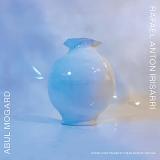
Marja de Sanctis’ cover artwork revisits the vessel sculpture from the duo’s first album, Impossibly Distant, Impossibly Close. There it appeared as raw, unfired clay. Here it has been fired in the kiln and finished with a glaze. Light gathers on its polished surface and spills into the surrounding space. As she explains, “I wanted to convey the idea of continuity within the duo, and the vessel became a kind of container for that idea. However, their music felt different this time, and with the collaboration of Martina and Andrea, I felt it should have a sleeker, softer, more glamorous look, very distant from the first raw appearance.” The transformation of the vessel from raw clay to fired form suggests a passage from immediacy toward permanence, mirroring the music’s gradual expansion.
Order now and we will order the item for you at our supplier.
In spring 2025, Abul Mogard and Rafael Anton Irisarri created the source material for their second album, Where Light Pauses in the Silence of the Sun, during a three-day residency at Morphine Raum in Berlin. Functioning as both recording studio and performance venue, the space has no stage, with the audience gathered around the performers. Working within an open framework, the duo reshaped the music each evening while recording the performances live to multitrack. Rotary speakers, modular synthesizers and bowed guitar formed the core of their sonic language, captured through a 1970s mixing console and microphones placed around the room.
Back in Mogard’s studio in Rome, the material was further crafted as motifs were stretched, fragments isolated, and tempos dissolved. Irisarri recorded additional guitar textures and treatments in New York, while passages recorded by Martina Bertoni and Andrea Burelli in Berlin reinforced the harmonic centres and brought breath, refinement and a new sensibility to their compositions. The process continued as Mogard’s layering and subtraction reassembled everyone’s parts into the final arrangement.
The album opens with “In the Eastern Wild,” building from a sparse outline into a monumental formation of low-frequency weight, its internal motion shaped by the rotating Leslie speaker. “Over the Domes” widens into a broader acoustic field, where sustained modular tones meet waves of softly plucked guitar. The music then turns inward with “A Blue Descent,” centred on Bertoni’s cello, whose growling timbre introduces a melancholic depth.
At the album’s centre, “In a Quiet Radiance” unfolds around a slow guitar ostinato, its luminous stillness opening into a more expansive and reflective state. Across its ten-minute span, Burelli’s violin lines and Bertoni’s lower cello phrases gradually surface, weaving through the harmonic field. Mogard brings Burelli’s processed voice to the fore, its emotive, operatic presence becoming one of the record’s pivotal moments. “Of Blessed Ages” suspends the sonic flow, shifting between parallel major and minor chords as lingering, slowly decaying melodies shape the music’s internal drift. The closing “Among Shadows” settles into a darker resonance as layered textures recede.
Mogard and Irisarri’s shared language balances restraint and maximalism. UK magazine Crack describes the music as “a tidal wave held in suspension,” while Dutch newspaper de Volkskrant writes, “What a colossal sound, and how this music strikes at the emotions.” Reflecting on the residency sessions, Irisarri recalls: “At moments I genuinely couldn’t tell if a sound was coming from me or from Abul. It stopped feeling like two people making decisions and began to feel like we were inside a system moving on its own."
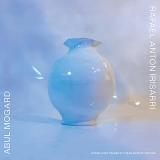
Marja de Sanctis’ cover artwork revisits the vessel sculpture from the duo’s first album, Impossibly Distant, Impossibly Close. There it appeared as raw, unfired clay. Here it has been fired in the kiln and finished with a glaze. Light gathers on its polished surface and spills into the surrounding space. As she explains, “I wanted to convey the idea of continuity within the duo, and the vessel became a kind of container for that idea. However, their music felt different this time, and with the collaboration of Martina and Andrea, I felt it should have a sleeker, softer, more glamorous look, very distant from the first raw appearance.” The transformation of the vessel from raw clay to fired form suggests a passage from immediacy toward permanence, mirroring the music’s gradual expansion.
Order now and we will order the item for you at our supplier.
In spring 2025, Abul Mogard and Rafael Anton Irisarri created the source material for their second album, Where Light Pauses in the Silence of the Sun, during a three-day residency at Morphine Raum in Berlin. Functioning as both recording studio and performance venue, the space has no stage, with the audience gathered around the performers. Working within an open framework, the duo reshaped the music each evening while recording the performances live to multitrack. Rotary speakers, modular synthesizers and bowed guitar formed the core of their sonic language, captured through a 1970s mixing console and microphones placed around the room.
Back in Mogard’s studio in Rome, the material was further crafted as motifs were stretched, fragments isolated, and tempos dissolved. Irisarri recorded additional guitar textures and treatments in New York, while passages recorded by Martina Bertoni and Andrea Burelli in Berlin reinforced the harmonic centres and brought breath, refinement and a new sensibility to their compositions. The process continued as Mogard’s layering and subtraction reassembled everyone’s parts into the final arrangement.
The album opens with “In the Eastern Wild,” building from a sparse outline into a monumental formation of low-frequency weight, its internal motion shaped by the rotating Leslie speaker. “Over the Domes” widens into a broader acoustic field, where sustained modular tones meet waves of softly plucked guitar. The music then turns inward with “A Blue Descent,” centred on Bertoni’s cello, whose growling timbre introduces a melancholic depth.
At the album’s centre, “In a Quiet Radiance” unfolds around a slow guitar ostinato, its luminous stillness opening into a more expansive and reflective state. Across its ten-minute span, Burelli’s violin lines and Bertoni’s lower cello phrases gradually surface, weaving through the harmonic field. Mogard brings Burelli’s processed voice to the fore, its emotive, operatic presence becoming one of the record’s pivotal moments. “Of Blessed Ages” suspends the sonic flow, shifting between parallel major and minor chords as lingering, slowly decaying melodies shape the music’s internal drift. The closing “Among Shadows” settles into a darker resonance as layered textures recede.
Mogard and Irisarri’s shared language balances restraint and maximalism. UK magazine Crack describes the music as “a tidal wave held in suspension,” while Dutch newspaper de Volkskrant writes, “What a colossal sound, and how this music strikes at the emotions.” Reflecting on the residency sessions, Irisarri recalls: “At moments I genuinely couldn’t tell if a sound was coming from me or from Abul. It stopped feeling like two people making decisions and began to feel like we were inside a system moving on its own."
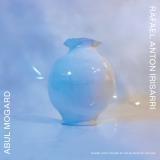
Marja de Sanctis’ cover artwork revisits the vessel sculpture from the duo’s first album, Impossibly Distant, Impossibly Close. There it appeared as raw, unfired clay. Here it has been fired in the kiln and finished with a glaze. Light gathers on its polished surface and spills into the surrounding space. As she explains, “I wanted to convey the idea of continuity within the duo, and the vessel became a kind of container for that idea. However, their music felt different this time, and with the collaboration of Martina and Andrea, I felt it should have a sleeker, softer, more glamorous look, very distant from the first raw appearance.” The transformation of the vessel from raw clay to fired form suggests a passage from immediacy toward permanence, mirroring the music’s gradual expansion.
Order now and we will order the item for you at our supplier.

King Tubby and Producer Bunny ‘Striker’ Lee are intertwined in the birth of Dub Music. After discovering a mistake that made a ‘serious joke’ (more of which later...) they went on to release the first pressings of this new musical genre namely ‘Dub Music’. Tubby’s vast knowledge of electronics and Bunny’s vast catalogue of rhythms would lay the foundations of what today is taken as a standard... the Remix / Version cuts to an existing vocal tune.
Osbourne ‘King Tubby’ Ruddock was born in Kingston, Jamaica on 28th January 1941 and grew up in the High Holborn Street area of downtown Kingston. He studied electronics at Kingston’s National Technical College and also on two correspondence courses from the U.S.A... When he had qualified Tubby began repairing radios and other electrical appliances in a shack in the back yard of his mother’s home. His work in the early days included winding transformers and building amplifiers for Kingston’s Sound Systems. Tubby built his first Sound System in 1957 playing jazz and Rhythm & Blues at local weddings and birthday parties. His reputation as a man who knew and understood both electronics and music grew steadily and as the sixties drew to a close. Tubby purchased his own basic two track equipment. He installed this alongside his dub cutting machine, a homemade mixing console and his impressive collection of Jazz albums in the back bedroom of his home at 18 Dromilly Avenue which he christened his music room.
Tubby and Striker were at Treasure Isle Studio’s one day while Ruddy from Spanish Town was working with the engineer Byron Smith....
“Tubby and myself was talking when Ruddy was cutting some dub but Smithy (engineer) made a mistake through we were talking and forgot to put in the voice. It was two track recording in those days. Ruddy said ‘No Man! Make it stay! and so they cut the rhythm. When I went over to Ruddy’s that Saturday night a dance was in progress and when they played the vocal to the tune... then he said we’re going to play ‘Part Two’. They never called it ‘Version’..and then he played the rhythm track. The song was a catchy song and everybody started to sing along and the deejay started to toast so everything went down well. On Monday morning I went up and I said ‘Tubbs the mistake we made was a serious joke. It mash up Spanish Town! The people went wild. So you have to start to do that now ‘cause when the man put on the ‘Part Two’ everyone start singing this song. It played about twenty times. I said you try Tubbs!’...Well the next Saturday night now when Tubby strung up down the farm U Roy said he’s going to play ‘Part Two’ but Tubby did it different now. He started with the voice then dropped it out and let the rhythm run and then he brought in the voice in the middle and from there Tubby started to get really popular.’’
Bunny ‘Striker’ Lee
Dynamic Sounds upgraded to sixteen track recording in 1972 and Tubby purchased, again with the help of a deal brokered by Bunny Lee. The old four track equipment and the MCI console from their Studio B. The four tracks now gave him far wider scope to work with and he began to create a new musical form where the bass and drum parts were brought up while the faders allowed Tubby to ease the vocal and rhythm in and out of the mix. It was only a matter of time before Tubby’s dub plate experiments began to make it on to vinyl and the first ever long-playing King Tubby releases would feature a collection of his mixes to a selection of Strikers rhythms. So please sit back and enjoy this historic set of sounds, mixed by King Tubby and Mr Prince Phillip Smart and another set of scorcher Bunny Lee rhythms.
Order now and we will order the item for you at our supplier.

A catalyst for all sorts of noise-making endeavors, Bob Bellerue embraces chaos as a positive force. As a musician, he harnesses the violent timbres and textures from feedback clashing against piano wires, amplifiers, metal, zithers, electronics etc. He's also been central in harnessing community through his long standing Ende Tymes festival in New York, providing an intersectional platform for all voices to utter their noise. To a polite society, things such as chaos, noise, and anarchy threaten the normative structures that can assert control and maintain power over others. Bellerue qualifies his practice as a form of sonic animism, in which engages with that which is unheard in materials, equipment, and their relationships, developing a process of amplified discovery. The unhinged, the unquantifiable, and the unknowable are all possible outcomes in Bellerue's expansive works.
Chaos Is A Law is a macrotonal album, whose expressive de-centralization originates from rasping noise, intense textural accretions, brutalist drone, and inharmonic ambience. For all of the sustained harmonics and dissonant frequencies, the album is in constant motion, with Bellerue pushing dynamics that build, rupture, collapse and reform with an almost organic morphology. At times, it boils with a feral intensity. At others, its muscularity collapses into peculiar almost half-melodic figures, mutated within all the distortion. One could look to the free noise practitioners from New Zealand (e.g. A Handful Of Dust, Birchville Cat Motel, Surface of the Earth) or to the alchemical dronescaping of Stephen O'Malley and Organum. Yet, Bellerue's work maintains a bespoke tactility that is uniquely his.
In Bellerue's words, "The universe is a feedback loop. Creating and destroying. Growing and decaying. Loving and dying. Expanding and contracting. The big bang is the end result of everything merging together in the biggest black hole ever and then erupting into being over and over again. Praise chaos!"
expected to be published on 10.07.2026
2026 Repress
Initially conceived as a short-run cassette for Altered States Tapes, YL Hooi's nameless collection of textural apparitions oscillate between icy DIY minimalism, FX-drenched atmospherics and nang chamber dub. A ghost-like transmission, Hooi's voice serves to anchor an array of sonic abstractions and impressionistic melodic motifs as a sense of purgatorial ambience dominates throughout. Co-produced with alleged fellow Kallista Kult member Tarquin Manek (LST, M. Quake), Untitled's ultimate sensation is its halfway state, as if caught between worlds.
The album's final form speaks of its origins, recorded intermittently over a two year period (2017-2019). The extended time passage seeps into the song structures, spiralling and mutating from the same centre - the elegiac pulse of opener 'Title' presages the hymnal lilt of 'Straight Thru', before birthing the inverted bossa nova of 'W/O Love'. The result is a constantly shifting tableaux of shared liminal spaces. These songs seemingly emerge in plumes of smoke, magician's tricks conjured from the ether. It's a vision that ossifies at Untitled's midpoint with a cover of Love Joys' 'Stranger', the lovers rock original morphed into the transportive intimacy of Hooi's own hazy inner space, a totem of the LP's amorphous and ultimately sensuous qualities.
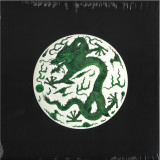
The sound from both down under and way out there in subspace, Untitled is an inspired masterstroke of experimental mystics. This 2021 Efficient Space edition is remastered and robed in new artwork that honours the Melbourne-based earth dragon's Chinese and Russian heritage.
Order now and we will order the item for you at our supplier.

Ever since the late 1950s bossa-nova revolution, Brazil’s influence on French music has been undeniable. Pierre Barouh, Georges Moustaki and a vast array of lesser known artists, all made the Musica Popular Brasileira (MPB) an axis of promotion at the service of a cool and metaphysical, modern and mixed Brazilian lifestyle. Some were seduced by the poetic languors of the bossa, some were looking for fun, and others just loved the American hybridization of jazz-bossa, jazz-samba.
What is bossa nova? One of its creators, Joao Gilberto said: "Its style, cadence, everything is samba. At the very start, we didn't call it bossa nova, we sang a little samba made up of a single note - Samba de uma nota so .... The discussion around the origins of bossa nova is therefore useless”. It is nevertheless useful to remember that these magnificent Brazilian songs, which the guitarist describes as samba, were shifted and balanced around improbable chords. "I like things that lean, the in-betweens that limp with grace," said Pierre Barrouh, quoting Jean Cocteau.
With emotion, arrangements for violin and supple guitar licks, bossa nova rapidly changed. A transformation that can be heard in the Tchic, tchic, French Bossa Nova 1963-1974 compilation, the result of a cultural reappropriation, which traveled through the United States and supplemented itself in France.
A musical revolution that has remained significant, bossa nova was born in Rio. From 1956 to 1961, Brazil lived through its golden years. In five years, the country had invented its modernist style. Elected president in 1956, Juscelino Kubitschek de Oliveira, an elegant man with a broad forehead, brandished a promising slogan: "Fifty years of progress in five years". He quickly got to work. Not worried about increasing debt, he launched the project for a new federal capital, Brasilia, designed by the communist architect Oscar Niemeyer. Volkswagen opened state-of-the-art factories and created the “fusquinha”, the Beetle. In Rio, the Vespa made its first appearance. The Arpoador Surf Club crew run into the “girl” from Ipanema, Helô Pinheiro - the tanned garota ("chick"), between a flower and mermaid, who at 17 walked by the Veloso bar, where the fiery author and composer, Tom Jobim and Vinicius de Moraes, were getting drunk on whiskey. From then on, bossa symbolized cool.
In 1958, Joao Gilberto recorded Chega de Saudade, which the directors of Philips denied, calling it "music for fagots". The marketing director, who believed in it, secretly pressed 3000 78-inch vinyls and distributed them at schools around Rio, creating a tidal wave.
American jazzmen then took over. In particular, trumpeter Dizzy Gillespie and guitarist Charlie Byrd. In November 1962, the Brazilian Ministry of Foreign Affairs funded a "Bossa-Nova" concert at Carnegie Hall in New York, inviting the genre’s pioneers. Unprepared, the show soon turned to disaster. But the troupe was invited to the White House by Jackie Kennedy. The first lady loved "the new beat" and in particular Maria Ninguem, a song by Carlos Lyra, later covered by Brigitte Bardot.
In Brazil, the 1964 military coup quickly ended this euphoria. The destructive atmosphere that ensued pushed many Brazilian musicians to leave, if not to exile. Thus, Tom Jobim, Sergio Mendes and Joao Gilberto arrived to the United States. In New York, Joao Gilberto met saxophonist Stan Getz. At the time, he was married to the Bahianese Astrud Weinert Gilberto, who had a German father. She had never sung before, but she knew how to speak English. Getz therefore asked her to replace her husband on The Girl From Ipanema. The Getz/Gilberto record with Tom Jobim on piano, was released in March 1964. Phil Ramone, the "pope of pop" was in charge of sound.
Bossa nova arrived in Paris through the classic “guitar-voice” channel (Pierre Barouh, Baden Powell, Moustaki…) But France loved jazz and Paris had already welcomed its American contributors. All these good people were to pass through Saint-Germain-des-Prés. The cabaret l'Escale became the Mecca of Latin American sound where one could find Pierre Barrouh and his friends, such as the Camara Trio, samba-jazz aces, whose only record was published by the Saravah label. With a band strangely called Les Masques (a band that included Nicole Croisille and Pierre Vassiliu, among others), the Camara Trio recorded an interesting Brazilian Sound, including the track Il faut tenir which is present on this tasty compilation of rarities.
Other enlightened musicians can also be found on the compilation, such as Jean-Pierre Sabar (songwriter for Hardy, Auffray, Leforestier ...) and the French pop rock organist Balthazar. In 1975, Sabar recorded Aurinkoinen Musiikkimatka on a Finnish label, which featured the crazy Vai, Vai, included on this record. We are now following the footsteps of Brazilian electronic musicians such as Sergio Mendes, Eumir Deodato or Marcos Valle who created funk and disco sounds on their keyboards and synthesizers. A style that influenced Véronique Sanson when she wrote Jusqu’à la Tombée de la nuit in 1969 for Isabelle de Funès, the niece of Louis and a great friend of Michel Berger - Sanson did end up singing this track on her 1992 Sans Regret record.
The pinnacle of exoticism and travel, Sylvia Fels’ Corto Maltese includes bongos, sea mist and ocean sounds. The title was taken from Jacky Chalard’s concept album written in 1974, Je suis vivant, mais j’ai peur (I am alive, but I am scared), based on Gilbert Deflez’s science fiction novel.
However, bossa nova extended the scope of popularity. "In the 1970s, I was a fan of Sergio Mendes, Getz / Gilberto. I fell in love with this music that I knew because I had been an orchestral singer, " explained Isabelle Aubret, who in 1971 delivered a composite record of covers by the very funky Jorge Ben, Orfeu Negro, Tom Jobim, Vinicius de Morais and Jean Ferrat. "I recorded this album for Meys Records in Paris, far from Brazil, with wonderful musicians, François Raubert, Roland Vincent, Alain Goraguer...". The latter wrote the arrangements for Casa Forte, a very percussive title borrowed from Edu Lobo, one of the initiators of the bossa who spent time in California. "Jazz and bossa came together and produced very rhythmic music. I love singing, it allows me to dream, to have fun, to feel a high on stage, and these songs brought me joy, made me swing, my singing felt like a dance.”
The world tours of French singers and their desire for the tropics, often brought them to Rio with its hills, forests, caipirinhas and tanned bodies. There are surprises though, like this Iemenja (Iemenja is the goddess of the sea in the Afro-Brazilian candomblé religion). Not unlike the composer and musician Jean-Pierre Lang, based in Sao Paulo, Claire Chevalier taught Brazil to Brazil. In 1970, the singer and painter published a 45-inch vinyl, Mon mari et mes amants (My husband and my lovers), under the improbable pseudonym of Clarinha (little Claire). She was then living in Rio, with her husband, Joël Leibovitz, who founded a band called Azimuth, and who owned a record label specialized in "sambas enredos" songs for samba school parades.
For its B side, she asked Pierre Perret to come up with lyrics for a song composed by Carlos Imperial: "Oh goddess of the sea, o goddess Iemenja, I bring a white rose to adorn your long hair ..." . "Perret came to see us, and we had fun, remembers Joël Leibovitz. We wrote Lemenja for fun, we recorded it at the Havaí studio, behind the Central do Brasil the central station. Erlon Chaves, the arranger who worked with Elis Regina, joined us" adding his share of Afro-Brazilian percussions and funky brass to the mix.
There is a common misunderstanding in Franco-Brazilian history: that bossa, admittedly hedonistic, is perceived as funny, even though the poets who wrote the texts are often philosophizing on the human condition. Its French interpreters pull it towards a carnival inspired universe, far removed from its fundamental essence. Thus, Jean Constantin covered the famous Samba da minha terra, an ode to the art of samba written by the classic Bahian composer Dorival Caymmi, renaming it with the enticing title of Pas tant de tchi tchi pompon: "On your pier there is no tchi tchi / when you arch your back, you know everything is alright ”(lyrics by Gérard Calvi). This expedited bossa aims for the absurd, but retains a certain elegance.
Indeed, Jean Constantin was not an idiot, the rather large man had a huge mustache and liked fantasy, (Les pantoufles à papa, Le pacha, inspired by cha-cha-cha-cha, salsa and jazz) but he was also the lyricist of Mon manège à moi interpreted by Edith Piaf, the composer of Mon Truc en plume by Zizi Jeanmaire and the soundtrack of François Truffaut’s 400 Blows. Le Poulpe, published in 1970, from which this bossa is extract, was arranged by Jean-Claude Vannier, an accomplice of Serge Gainsbourg’s Melody Nelson. In short: "There is enough of samba / By looking at the parasol / Because my poor cabeza / Is going to die in the sun".
Even the American actress Marpessa Down, who was at the heart of the bossa nova revolution with her role as Euridyce in Marcel Camus’ film Orfeu Negro, winner of the 1959 Cannes Palme d'or, fed the clichée with Je voudrais parler au petit cuica - "Tell me how you manage to always make people want to dance / It's true, I must admit that I cannot resist your magic" - in consequence, once can hear the cuica, a little drum inherited from the Bantu.
But bossa nova had many angles. Societal, of course, pushing actresses who were symbols of women's liberation like Brigitte Bardot, Jeanne Moreau, or Sophia Loren to engage in the exercise of accelerated bossa. In February of 1963, Sophia Loren made a record in French in Rome, Je ne t'aime plus, featuring the song De jour en jour, a bossa written by two Italians, Armando Trovajoli and Tino Fornai, which was released a little later by Barclay. Bossa accompanied the 1960s, a decade of moral liberation. Ann Sorel, who interpreted La Poupée des favellas, caused a sensation with L’amour à plusieurs, a provocative song written by Frédéric Bottom and Jean-Claude Vannier. As for the actress Andrea Parisy, she displayed her bourgeois cheekiness in Marcel Carné's Les Tricheurs before interpreting Les mains qui font du bien. And Magalie Noël, the friend of Boris Vian, who sung Johnny fais-moi mal, was hired to sing Une énorme Samba, composed by Alain Goraguer (arranger to Gainsbourg, Bobby Lapointe and Jean Ferrat) with lyrics by Frédéric Botton.
But in the end, of what wood is bossa nova made of? The answer is given by Christianne Legrand, daughter of Raymond the conductor, and sister to Michel the composer: "With me, with jà" - jà means "immediately" in Portuguese. In 1972, the singer, an expert in vocal jazz and a member of the Double Six, published Le Brésil de Christianne Legrand. Two songs included on the Tchic Tchic compilation that demonstrate how bossa, jazz, funk, rock, etc. work like a swiss army knife: the music is used to denounce broken systems, or miracles, HLM et ciné roman, Cent mille poissons dans ton filet, two songs from the O Cafona soundtrack, a successful telenovela broadcast, at the time in black and white, on TV Globo. The first was adapted in French by the fighter and friend of the Legrand tribe, Agnès Varda. The second is content with a play on words, jostling them into a summer fun.
Véronique Mortaigne
Order now and we will order the item for you at our supplier.
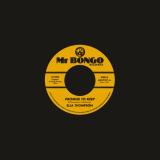
Mr Bongo are thrilled to have one of the leading lights in contemporary soul joining the label. Melbourne-based vocalist, musician, and songwriter Ella Thompson is an artist whose name is being championed by some of the best in the business. She’s been building a reputation as one to watch, with two standout releases on Hopestreet Recordings, Domino EP in 2023 and Ripple On The Wing LP in 2024, alongside a heavy touring schedule and a stacked list of support slots and collaborations.
For this new 7” single, Ella collaborates with a selection of artists at the forefront of Naarm/Melbourne’s soulful DIY community. Featuring members of Surprise Chef and Karate Boogaloo, Liam McGorry from Temporary Blessings (College Of Knowledge) joins Ella as co-writer and co-producer, with go-to Melbourne engineer Henry Jenkins also producing and recording the track.
Bridging the worlds of classic and contemporary soul, Ella’s songwriting is drenched in emotion and personal experience. With a timeless feel that is hard to tie to any particular period, she has crafted a sound that instantly hits deep. It’s warm, tasteful and distinctly Ella. That talent has also seen her tour with Mark Ronson, and support other contemporary greats like Jalen Ngonda, Lee Fields, and Thee Sacred Souls.
‘Promise To Keep’ is the first taste of Ella’s new material on this 7” single. An irrepressible upbeat groover that echoes mid-to-late-sixties vocal groups. That influence though never overpowers Ella’s own unique creative voice or distinct sense of self. She draws from it, but the colour is all her own. The song tells a story of being carried by the current that keeps us moving, giving us courage. A commitment to oneself that speaks to action shaped by vision, and the pull of following what feels correct even when the distance is far.
The flip side finds Ella in a different mood. ‘Change Of Heart’ is a heavy sweet-soul ballad. Rich in drama, Ella’s falsetto vocals build to a stunning climax in the final section, with triumphant horns that signal the release of letting go. The lyrics reflect on temporality and impermanence, and the way moments can be missed or arrive with synchronicity. It’s that bittersweet paradox of triumph and sadness, where everything contains its opposite: absence and presence, innocence and experience. The song is underpinned by a brooding production quality and atmospheric, beat-heavy flavour that Surprise Chef and cinematic soul fans will relish.
Mixed by Wayne Gordon (Daptone, Womack Sisters), ‘Promise to Keep’ and ‘Change of Heart’ are a glimpse of things to come from Ella. Keep an eye open for more new music incoming from this phenomenal artist at the top of her game.
Order now and we will order the item for you at our supplier.

Blending world-class musicianship with undeniable dancefloor energy, this release marks a bold evolution in Sean Khan’s sound — stepping beyond his signature jazz roots into a rich fusion of house, disco, and jazz-funk.
The A-side delivers a powerful, vocal-led jazzy house anthem, with Omar’s unmistakable voice floating over lush live keys and deep bass grooves. Driven by refined production and crafted for maximum impact, Stéphane and Alex Attias bring a sophisticated yet infectious energy designed to ignite dancefloors. Flip it over, and the B-side turns up the heat — a killer disco-house remix by Alex Attias, powered by tight programming from Stéphane Attias and vibrant keys from Sohan Wilson. Already catching attention from DJs, this track is built for late-night moments and peak-time reactions. The EP also features “As The Tree Grows” — a soulful, live-inspired journey through jazz-funk and disco textures. Warm, groovy, and deeply musical, it channels the spirit of legends while staying fresh and modern — perfect for both listening and dancing. Three moods. One release.cCrafted for the dancefloor. Designed for the soul.
Order now and we will order the item for you at our supplier.

A document of singular rarity. Issued by United Dairies in 2026 in a hand-made, heavy-gauge black vinyl edition limited to 300 copies, 1984 - A Happening recovers the second ever public performance of Nurse With Wound, captured on tape in 1984 and held in Steven Stapleton's archive across the four decades since.The history is nearly mythological. Across the years 1984 to 1986, NWW operated briefly and reluctantly as a live band, performing on stage exactly eight times, of which five were public. Stapleton has called these events "shambolic, chaotic and uneven affairs, sometimes as boring for the performers as the non-plussed audiences but at other times reaching an amazing intensity". The first of them, an Amsterdam show on the 8th of December 1984 at the NL Centrum, has surfaced over the decades in fragmentary form; the second has remained, until now, almost entirely unheard. It belongs to a moment when Stapleton, working alongside collaborators including David Tibet, Andrew McKenzie of The Hafler Trio, and a rotating cast of percussionists and string players, was carrying NWW briefly out of the studio and into a series of confrontations with audiences who often had no idea what they were watching.The recording itself is described, accurately, as raw but beautifully captured. The performance moves through the territory NWW had been mapping across Homotopy to Marie and Nature Unveiled: long passages of pre-recorded tape collage assembled by Stapleton and McKenzie, ridden over by live electronics, voice, percussion, and the surreal theatrical instinct that has run through every gesture the project has ever made. There is a sense of a collective groping its way through unstable material in real time, an ear turned simultaneously to dada and to musique concrète, to the British post-punk underground and to the krautrock heritage that has always shadowed Stapleton's work. The chaotic edges are intact. So is the intensity Stapleton has spoken of.
expected to be published on 03.07.2026
H- side is etched
The American cable-television industry exploded in the 1980s, pushing broadcasts of diverse programming and emissions of low-laying cultures into homes. Community stations piggybacked on the digital developments of the time, extending their existence through telephony and broadcast a iliates. For those growing up in this time, in locations such as New York City, the localized communications beamed into their homes exposed them to an impressionable array of disparate sounds and visions.
Move into the 1990s and New York was filled to the brim of emergent cultures drawing from this ebullition of communication. From Rammellzee’s shapeshifting to the late Judy Russell and Frank and Karen Mendez’s Nu Groove imprint fusing reggae, poetry and house, nascent ideas emanated from the city walls, from within stores such as Sonic Groove store and on VHS releases such as Stakker’s The Evil Acid Baron Show, a legendary technicolor psychedelic trip along the wildest frontiers of acid house. As scenes expanded and identities developed, such individuals weather the events of the visceral now, expressing themselves right into an unpredictable future.
Function’s long career has seen him uncover a vast range of sonic identities, a mainstay through house, techno and industrial with collaborations with the likes of Regis, Damon Wild alongside his highly influential Infrastructure imprint. With influences deeply tied to pop art, rave and gay scenes, and early memories of block-parties emitting Kraftwerk and Strafe, he found himself seeking out the undercover illegal nights of the 90s on a quest of sexual unearthing, mixing the ever-yearning escapology mission of disco with the influential DJ sets of Jeff Mills.
For his new album Existenz, he marks a clear step away from the corporeal techno of his recent releases. Pivoting around themes of religion, sexuality, trauma and healing, it is a work expansive and celebratory, a clear liberation from a deeply internalized past. Formed from a collection of recordings made in a period from late 2016 to mid 2019, Existenz takes the form of a creative outburst in reaction to a number of traumas - recent, childhood and throughout Function’s life. Life partner Stefanie Parnow assisted the production process in its entirety, providing inspiration, spiritual healing and featuring vocal contributions.
Cosmic synths soar and swoop in ‘Pleasure Discipline’ through towering stacks of rhythm that stutter and creak to a halt before rebooting, a firm robotic response to human intervention. ‘Zahlensender’ reflects a spatial tetris of urban life, as digitalization set within an XYZ matrix confronts the sprawling city. Constant arpeggiated meditations echo synaptic transmissions, e ecting a dissolution of boundaries. ’The Approach’ recalls the unification of the self, a state of delirium non-subjective and smooth, as all connections and functions give way to simple intensities of feeling, crossing the threshold into spirituality. ’Golden Dawn’, featuring Stefanie Parnow, marks a further elevation of dubbed-out euphoria, as once more positive rays emerge. His ode to the effortless short-trip urban navigation 'Kurzstrecke' finds Function in motion, upfront and bold, snapshots of conversation and flickers of light. 'Ertrinken' finds metallic bass jabs swamping snipped synthetic voices, with hidden stores of emotion set as a nod to the history of vocoders as a tool for encrypted military communication. House icon Robert Owens features on 'Growth Cycle' and 'Be', entrenching a celebratory atmosphere over Function's clubwise leanings. Closing track 'Downtown 161' reflects the unmistakeable filtered and squashed interjections of television, and sampled dance vocals - a sound for the curious, dreamers and dancers.
With Existenz, Function reveals an essential body of work, spread over 4LP - thought experiments on the role of identity and spirituality after a lifetime of upheaval and trauma. Leading up until the release date, Function will undertake an album promo tour with select dates - A/V shows at Berlin Atonal and Rural festival in Japan, and three dates as part of his Bassiani residency.
Order now and we will order the item for you at our supplier.
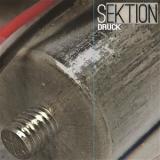
SEKTION's debut full-length DRUCK marks the first official collaboration between AtomTM & Siegmar Fricke, a connection rooted in 1992. Released by Geometrik Records, the label of industrial legend Esplendor Geométrico, in collaboration with Munster Records. Across thirteen interconnected tracks, DRUCK builds a stereo-enlarged environment shaped by metallic textures, rhythmic granulations and slow-moving structural shifts. Drawn from the compositional frameworks VOKOSTASIS, DIGITRAKTION, LEERZEICHEN, and UNWUCHT, the album unfolds as a continuum of mechano-sonic morphing. Fragments of frequency-altered voices emerge like damaged transmissions, woven into grain sliced rhythms, microsound detail, and layers of rusty tape noise and electro-acoustic particles. Tension and friction gradually push the material toward fragmentation without collapse. A formidable and immersive act of sonic engineering. German musician AtomTM (Uwe Schmidt) is one of the most imaginative and prolific talents in the global electronic music scene in recent decades. Since 1988, he has released music on cult labels such as Raster-Noton, Sähko, Mille Plateaux, Rough Trade, Rephlex, Fax, and his own label, Rather Interesting, under countless aliases. As producer, remixer and collaborator he has worked with and for musicians such as Ryuichi Sakamoto, Yellow Magic Orchestra, Depeche Mode, Towa Tei, Merzbow, Bill Laswell, Esplendor Geométrico, just to name a few. Uwe has developed an innovative, unconventional and highly personal musical vision, interpreting a wide variety of genres and styles in his own unique way, such as experimental music, techno, acid, EBM, electrolatino, ambient or industrial music, amongst others. Siegmar Fricke is a German artist starting with experiments involving short-waves and acoustic noises in the field between musique concrete and post-industrial around 1981. Ha became a very active player in the worldwide cassette culture movement. He ran his own label Bestattungsinstitut and published loads of releases ranging from experimental to ebm, electro, to ambient spread all over the world's tape labels from 1985 to 1993. Since 2001, Fricke has operated primarily under the alias Pharmakustik. His collaborations included notable ones with legends of electronic and industrial music such as Conrad Schnitzler and Mauricio Bianchi.
expected to be published on 03.07.2026

New collaborative project from Lawton Browning (Woolen Men), blending melodic indie rock, lo-fi experimentation, and postpunk energy with a raw DIY spirit. Change Life moves between jangly guitars, textural pop, and reflective songwriting, balancing immediacy and experimentation. Change Life is the new creative project from Portland-based multi-instrumentalist, writer, and longtime Woolen Men leader Lawton Browning. Formed in 2023 in the aftermath of the pandemic years, the project emerged as a collaborative and fluid outlet centered around reinvention, experimentation, and collective creativity. Rather than functioning as a fixed band, Change Life operates as an evolving collective of musicians and visual artists. The self-titled debut album channels melodic indie rock, lo-fi textures, experimental pop, and reflective songwriting through a conceptual lens informed by anarchist and surrealist traditions. Across the record, Browning and collaborators explore uncertainty, transformation, and cultural dialogue while maintaining a strong sense of immediacy and creative freedom. Before launching Change Life, Browning spent over a decade fronting Woolen Men, releasing six acclaimed albums and touring extensively throughout the U.S. and abroad. With Change Life, he opens a new chapter rooted in collaboration, artistic experimentation, and new creative possibilities. For fans of Pavement, Sebadoh, The Clean, Guided by Voices, The Fall, Silver Jews
expected to be published on 03.07.2026

HARTHBALL are an avant/noise/rock wrecking ball of a band from Nanaimo, Canada. Rooted in total improvisation, free expression, and a deeply psychedelic sensibility, EarthBall operate on pure instinct.
They hurtle onwards in a combustion of spontaneous composition, shooting from the hip, as they fall out of the sky ablaze. The group encompasses Isabel Ford (vocals, bass), John Brennan (drums, percussion), Jeremy Van Wyke (vocals, guitar, trumpet), Kellan Maclaughlin (guitar, talkbox), and Liam Murphy (saxophone). Each member brings a rich and varied musical history, with past and present projects including Shearing Pinx, Plan Your Future, Kamikaze Nurse, Eschatons, and Psychedelic Dirt. Collectively and individually, they have collaborated with artists such as Deerhoof, Raven Chacon, Chris Corsano, and William Hooker, deepening the band’s exploratory reach and collective language.
Since forming in 2021, EarthBall have released six cassettes and three fervently received LPs on Upset The Rhythm, including November’s widely acclaimed Outside Over There. Their latest release, Actual Earth Music - Volume 3 & 4, follows the first instalment in the series and captures two mind-quaking highlights from last winter’s European tour. This is EarthBall plunging to full fathom five, transforming into something rich and strange - channeling the fleeting moment as it fractures, erupts, and dissolves into the unknown.
Side A captures a thumping performance at Cave12 in Geneva. Frazzled from a white-knuckle alpine descent, the group settles into a hypnotic sprawl, stretching time and form across a colossal 53-minute set (with the first 22 minutes presented on the LP; the full performance appears on the CD edition). The Cave12 recording is a study in tension and release; ruminative, volatile, and barely contained. Drums stumble and surge, saxophone howls cut through the air, and Ford and Van Wyke’s voices briefly pull together the circle twice, before the tumult lapses into a spinning maelstrom.
Side B meanwhile presents a scorched excerpt from EarthBall’s crushing performance at Le Guess Who? Festival. As Van Wyke reflects: “Having the most excellent Dwarfs of East Agouza play before us only heightened our intention to bring the noise. Listening back, the thing that strikes me most is how we truly were operating in the ever-elusive but always sought-after ‘group mind’. Ninety-degree changes are super tight. Izzy and I are finishing each other’s sentences. Liam’s horn is cradling our outer and inner space. Kellan’s talk box rains down like the voice of a reawakened spirit, and all this havoc is safely stowed in the rumbling ox-cart of John’s solid drumming”.
Actual Earth Music - Volume 3 & 4 marks another ascent in EarthBall’s ever-expanding, totemic discography, an ecstatic storm of raw immediacy and unfiltered expression.
expected to be published on 03.07.2026
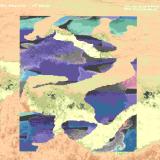
After the dissolution of his wave-making duo project Ameli Paul, Berlin based musician and producer Paul Valentin aims to venture down new roads and finds help from illustrious folks like Liv Lisa Fries, DJ Koze, Thomass Jackson and Philipp Fein along the way. Valentin’s debut EP on Feines Tier marks his first solo release in 10 years and is a colourful journey through sonic worlds and emotions in the continuous search for his own sound.
Opener ELVAU is a collaboration with actor Liv Lisa Fries built around their intimate voice recordings which are woven delicately into a dreamy web of shimmering synths atop pulsating break beats that would make Bicep proud. For his remix, His Kosiness, the Tripsitter Himself also known as DJ Koze follows the breakbeat path further down, gleefully taking all sorts of wonky and fun diversions on the way, which makes one hope that the ride never ends.
Follow-up tune MALFUNCTION is a more straightforward affair with its rolling synth arps and is - in Valentin’s own words - “about personal failure, dissolution, and the distortion of the self“. Equally dark under- and overtones are throwing shades over WHATTHE!, dealing with anger and transformations, resulting in a banger for the heavier moments on the dancefloor or the mind between your headphones. The EP closes on a more hopeful note with LISTEN, which stands for „everything that could be, if we listened to each other“. And it’s never a bad idea to listen to chirping 303 basslines, especially when paired with melancholic synth pads and weird vocal samples, as is the case here. The rework of Thomass Jackson and FT-head honcho Philipp Fein feels beautifully anachronistic with its reduced tempo and could have been something Andrew Weatherall would have played when he was still playing our earthly dancefloors.
Order now and we will order the item for you at our supplier.

The 18th Parallel strikes hard once again with its new riddim series called ‘BONANZA CHARGE’. Carefully produced in its Geneva studio, the collective of musicians presents two vocal cuts and one horns instrumental released as three 7” singles with dubs mixed by Roberto Sánchez. This is heavyweight roots reggae tailor-made for the heaviest sound systems!
First song recorded on the riddim, ‘Don’t Tell Me To Smile’ is NIGHTSHADE’s debut single on Fruits Records and it really is music with a powerful message. Turning an everyday frustration into a universal cry, Nightshade sings out loud what she always wanted to answer to the countless strangers who told her – like so many other women – to smile… because “a woman who smiles looks so much prettier”.
She says: “If it’s really such an innocent thing to say as some claim, why do men never say it to other men? Why do some feel entitled to tell complete (women) strangers how they should look, feel or behave? These so-called ‘small comments’, repeated over and over, are just one piece of the constant scrutiny and everyday violence many women face – and we can’t take no more of it.”
Carried by three united voices, ‘Don’t Tell Me To Smile’ reminds us that a woman is not a decorative object meant to please the male gaze. It’s a call to see through the trap: under the guise of compliments, what is at work is control over women’s bodies and minds. A smile should come from the heart, never from an obligation.
Order now and we will order the item for you at our supplier.

‘Cécile McLorin Salvant ... sings standards, show tunes and old novelties in a taut, flinty, elusively beautiful voice, erring toward material with difficult lyrics and tough places in history. Salvant wins over her audiences by tweaking them slightly: daring them to go there with her—not just into the archive, but toward the darkness of the past.’ – New York Times
‘Although Salvant is known as a jazz musician, her approach to music is defined by her instinct for experimentation ... Her music is beloved for ... embracing theatre and subverting classics with playful renditions.’ – Guardian
Salvant, who has performed with orchestras regularly over the last decade-and-a-half and intended to make an album with one sooner in her career, but logistics and her abundant creative ideas led to other new projects intervening. Having finally found time to make this album, With Every Breath I Take is a different sort of record than it might have been even ten years ago.
“It is a rare opportunity to be able to make an album at this scale, which has been a dream of mine for many years,” Salvant says. “Darcy James Argue wrote stunning arrangements and the Metropole Orkest, conducted by the extraordinary Jules Buckley, gave these stories a cinematic dimension. We overcame quite a few obstacles to even get into the recording studio for this project; it took almost four years for us to do so, and I am so incredibly proud to share it.
“I did not choose these songs because they are beautiful, but because they are crucial to me,” she adds.
Cécile McLorin Salvant, a 2020 MacArthur Fellow and three-time Grammy Award winner, is a singer and composer bringing historical perspective, a renewed sense of drama, and an enlightened musical understanding to both jazz standards and her own original compositions. Classically trained, steeped in jazz, blues, and folk, and drawing from musical theater and vaudeville, Salvant embraces a wide-ranging repertoire that broadens the possibilities for live performance.
Salvant’s performances range from spare duets for voice and piano to instrumental trios to orchestral ensembles. Her unreleased work Ogresse is an ambitious long-form musical fairy tale that is being made into a feature length animated film. She has performed at national and international venues and festivals such as the Newport Jazz Festival, the Monterey Jazz Festival, the Village Vanguard, and the North Sea Jazz Festival. Her previous Nonesuch albums, Ghost Song (2022) Mélusine (2023), and Oh Snap (2025) received critical accolades; the former two were both nominated for Grammy Awards. Salvant is also a visual artist, and Oh Snap was named a best album of 2025 by the Guardian, Jazzwise, JazzTimes, and the Francis Davis Jazz Critics Poll.
expected to be published on 26.06.2026

AQUA BLUE VINYL[24,58 €]
Reissue. As undeniably powerful, durable, and straight-shooting as Motorhead's Lemmy Kilminster, Spirit Caravan's inveterate founder and leader, Scott "Wino" Weinrich, is an absolute rock lifer. Following on the heels of the band's debut, Jug Fulla Sun, Dreamwheel is a Spartan-sounding five-song EP, the perfect compliment to the dense, doom-laden psychedelia of the full-length. In fact, Dreamwheel's greatest strength is the breathing space between notes, provided by the rock solid rhythm section of drummer Gary Isom and bassist Dave Sherman. Such rhythmic austerity -- the kind championed by the effort of bands like Free, Bad Company, Led Zeppelin, and Grand Funk Railroad -- allows Wino's compelling, soulful baritone voice and sizzling Hawkwind-esque leads to truly sing out. As the voice behind St. Vitus and the Obsessed, Wino helped formulate and configure the shape of modern stoner rock and doom metal. Spirit Caravan, as evidenced by this brilliant, relaxed gem of an EP, is perhaps his most able vessel. Each song burns with analog warmth, intensity, and brightness. Though it took nearly a decade for Wino to receive his overdue appreciation as an artist, the late '90s and early part of the new millennium have seen his stock soar, even if not financially. - All music
expected to be published on 26.06.2026

Black Vinyl[23,32 €]
Aqua Blue Vinyl, limited to 300 copies. As undeniably powerful, durable, and straight-shooting as Motorhead's Lemmy Kilminster, Spirit Caravan's inveterate founder and leader, Scott "Wino" Weinrich, is an absolute rock lifer. Following on the heels of the band's debut, Jug Fulla Sun, Dreamwheel is a Spartan-sounding five-song EP, the perfect compliment to the dense, doom-laden psychedelia of the full-length. In fact, Dreamwheel's greatest strength is the breathing space between notes, provided by the rock solid rhythm section of drummer Gary Isom and bassist Dave Sherman. Such rhythmic austerity -- the kind championed by the effort of bands like Free, Bad Company, Led Zeppelin, and Grand Funk Railroad -- allows Wino's compelling, soulful baritone voice and sizzling Hawkwind-esque leads to truly sing out. As the voice behind St. Vitus and the Obsessed, Wino helped formulate and configure the shape of modern stoner rock and doom metal. Spirit Caravan, as evidenced by this brilliant, relaxed gem of an EP, is perhaps his most able vessel. Each song burns with analog warmth, intensity, and brightness. Though it took nearly a decade for Wino to receive his overdue appreciation as an artist, the late '90s and early part of the new millennium have seen his stock soar, even if not financially. - All music
expected to be published on 26.06.2026

Somewhere between krautrock, noise rock, decaying psychedelia, and pagan proto-punk, Dééfait makes music like one performs a ritual: in trance, on repeat, and without a safety net. From the chaotic arteries of Mexico City to the basement venues of the Paris suburbs, Dééfait sculpts noise rock in apnea. Their self-titled debut EP is a noise rite: a wall of guitars, incantatory percussion, and possessed voices. With Dééfait, sound twists, repeats, stretches, until exhaustion and ecstasy. Formed in 2023, Dééfait brings together the Valero brothers (Lucas on guitar / Pablo, ex-Pays P, on drums), Enir Da (bass - Temir Alcy, Dali Muru & the Polyphonic Swarm), Grégoire Couvert (guitar), and Riki Lara, a Mexican-born vocalist and performer whose lyrics _ chanted, whispered, shouted _ alternate in three languages: English, Spanish, and French. Active on the Paris underground scene since 2024 (La Mécanique Ondulatoire, Le Cirque Électrique, Nouveaux Sauvages_), Dééfait imposes a ritual tension, physical, almost hallucinatory. No choruses to hum along to, no comforting melodies _ just a dense sonic flow that seeps and vibrates. This debut EP, set for release in December 2025 on Ici, d'ailleurs (Zëro, Matt Elliott, Bruit Noir_), lines up six long tracks resembling pagan litanies. Six extended pieces forming a possessed monologue, as if a camera had been slipped inside a burning body. Everything pants. Everything overflows. From We Love Each Other So Much That We Won't Belong To Any Species Anymore, love exceeds expected forms and becomes an organic pact, a ritual of species departure: "Cut me like you want, in bloom your fire," "We scratch consanguinity / We don't belong to any species anymore." It quickly suggests a call to ecstasy, to trance. The EP as a whole navigates unstable zones where desire, sacrifice, and alienation entwine like serpents on acid. Molokh 8 chants an offering to a carnivorous deity, between severed tongue and chemical body. In Bondbondbond, voices entangle, seek each other in a delirious, sensual chiaroscuro where pleasure derails into compulsion. It's a dogma-free ceremony, a game of inverted masks. Alether _ a live-explosive track and perhaps the most powerful of this first project _ shatters frameworks: convulsive dancing, possessed rhythms drowned by waves of guitar. Finally, Ferreri, cook for us closes the EP as a dark farce: a deviant homage to Italian filmmaker Marco Ferreri, the track chews and regurgitates words as if digesting an overfed world. Recorded in the chaos of DIY and mixed as a raw work, the record captures Dééfait's electric discharge in its purest state. The sound is dirty, visceral, possessed. Think Terminal Cheesecake, Boredoms, Nick Cave-era Birthday Party on acid, but also CAN impaled on an autopsy table, or a Giallo under a strobe light_ Yet it emerges as a singular work.
expected to be published on 26.06.2026
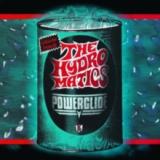
Bang! Records now brings Powerglide by The Hydromatics back to vinyl, giving this powerful and long-overdue album the format it deserves. A necessary reissue of a genuine cult favorite: wild, electric, and made by people who truly knew what this music was all about. In the early 2000s, The Hydromatics brought together three scenes, three cities, and one shared devotion to rock'n'roll: the fiery tradition of Detroit, the raw punch of Amsterdam, and the high-energy attitude of Scandinavia. Fronted by none other than Scott Morgan (Sonic's Rendezvous Band), one of the great voices of Detroit rock, and backed by Tony Slug (LOVESLUG) and a band built out of genuine love for the legacy of Sonic's Rendezvous Band, the result was Powerglide-a record that is tough, streetwise, soulful, elegant, and raw all at once. Originally released in 2001, Powerglide captures The Hydromatics in full flight. Original songs sit alongside explosive takes on material connected to the Sonic's Rendezvous universe, all delivered with nerve, conviction, and the kind of authority that simply cannot be faked. The guitars bite, the rhythm section drives relentlessly, and above all there is Scott Morgan's voice-capable of sounding fierce, wounded, and defiant within the very same line. Far from being a mere exercise in homage, Powerglide stands tall as a living, breathing record with a personality all its own: high-octane rock'n'roll fueled by rhythm & blues soul and steeped in the unmistakable spirit of Detroit. This is an album for those who understand that proto-punk, garage soul, and real rock'n'roll were never separated by any meaningful border in the first place.
expected to be published on 26.06.2026

Born in the Washington, DC area and raised in West Virginia, Miller has built a reputation as a thoughtful, boundary- pushing voice in alt- country and Americana, drawing from punk, traditional Appalachian music, and less conventional rock influences. For this record, he left his comfort zone behind and traveled to Tulsa to record at the legendary Church Studio, drawn by the city's deep musical legacy and its ties to artists like J.J. Cale. Co- produced with longtime collaborator Adam Meisterhans , the album was tracked live with a band of Tulsa- based musicians, including Grammy- nominated John Fullbright, under the steady hand of veteran engineers Gary Laney and Mike Prado. The result is John R. Miller 's most ambitious work to date - a spacious, textured collection that expands on the critically praised Depreciated and Heat Comes Down, blending road- worn storytelling, fuzzy atmospheres, and reflections on movement, memory, and change. Rooted in his West Virginia past yet shaped by constant travel and new collaborations, The Great Unknowing captures an artist trusting the process, embracing risk, and letting the groove lead the way.
expected to be published on 26.06.2026

ROCK JUSTICE is a new hard rock/metal act featuring singer Maggy Luyten (Ayreon, Beautiful Sin, The Prize, ex-Nightmare) and guitarist Bas Maas (Doro, After Forever).
The upcoming debut album, You’ve Been Served, is the result of Bas Maas’s long-held dream. He teamed up with Maggy Luyten to shape the powerful, driving sound of ROCK JUSTICE. The album blends varied song styles, tied together by a nostalgic vibe and well-crafted production.
“The idea came to life when I was still playing in After Forever, where I didn’t get a serious chance to contribute to the songwriting. I had written a couple of songs that didn’t make the cut and realized that if I wanted to get my own music out there, I’d have to do it myself, or at least with other people,” says Bas. When he decided to form a band, he had two rules: he wouldn’t sing himself, and it wouldn’t be a female singer. Finding the right guy proved impossible and after several try-outs, one name kept coming up: Maggy Luyten. “Mag’s voice completely blew me away. I thought, ‘This chick sings like a dude and she delivers.’ Not long after that, we met at an Ayreon album presentation in Utrecht. She wanted to hear my songs to see if they inspired her. They did.” The rest is history. Maggy recalls with a smile: “When Bas came over to hear what I’d worked on, we both knew we had something. I still picture him driving back home: window down, our demo blasting, arm out, metal horns up, huge smile!”
expected to be published on 26.06.2026

"Amor y libertad" (1981) is the LP recorded by an erotic disco project fronted by actress and model Susana Estrada, with Josep Llobell (Oliver's Planet, Enterprise_) serving as the visionary producer working behind the scenes. From this album, we have selected two of its finest tracks to be reissued for the first time on 7-inch format. On 'Mi chico favorito,' Susana Estrada's sensual voice rides over a musical backing clearly inspired by 'Good Times' by Chic, likely via 'Rapper's Delight' by The Sugarhill Gang, making it just as irresistible. On the B-side, we release '¡Quítate el sostén!' as a single for the first time-a funky disco-rap anthem packed with feminist statements. On "Mi chico favorito," Susana Estrada's sensual voice is set against a musical backing clearly inspired in "Good Times" by Chic, most likely via "Rapper's Delight" by The Sugarhill Gang-resulting in a track every bit as irresistibly infectious as those classics . On the B-side, we reissue "¡Quítate el sostén!" as a single for the first time, an anthem filled with feminist declarations ("the time for girls has come_") and messages of sexual liberation ("let them say what they want, it's freedom-our freedom_"), which the singer delivers in a proto-rap style over a funky disco beat.
Order now and we will order the item for you at our supplier.

Sam Cooke, inventor and true King of Soul, recorded Mr. Soul in 1963, the same year as Night Beat, and seems to be its more adult counterpart, with soulful ballads taking up most of the album. A laidback tempo and rich arrangements lay the foundation for Sam's somewhat melancholy voice floats, creating an uplifting spirit that can mend anyone's broken heart.
With standards such as "Willow Weep For Me", "I Wish You Love", and "For Sentimental Reasons", Cooke shows a quiet emotive side of himself without losing his keen sense of melody, using the strength of his voice without overpowering the listener. Had Sam Cooke lived longer, we might have had more music of this rare quality. As it stands, we must make do with the treasures he left behind.
Mr. Soul is available as a limited edition of 1000 individually numbered copies on orange vinyl.
expected to be published on 19.06.2026

Cream White Vinyl Vinyl[30,04 €]
'Prince of Failure' marks a significant shift in Daniel Tompkins' creative world Written & developed over several years with Paul Ortiz (Chimp Spanner), the album traces a long internal process rather than a single moment of inspiration. The material reflects on neurodivergence, masking, & the psychological weight of living out of alignment with expectation - themes that shape both the narrative & the sound of the record. The Prince is presented as an archetype rather than a persona: a name given to the internal voice formed through self- doubt, perfectionism, & misinterpretation. By defining it, Tompkins reframes it. The songs move through states of disorientation, isolation, & repetition before arriving at a quieter form of acceptance. The emphasis is on observation rather than resolution.
expected to be published on 19.06.2026

'Prince of Failure' marks a significant shift in Daniel Tompkins' creative world Written & developed over several years with Paul Ortiz (Chimp Spanner), the album traces a long internal process rather than a single moment of inspiration. The material reflects on neurodivergence, masking, & the psychological weight of living out of alignment with expectation - themes that shape both the narrative & the sound of the record. The Prince is presented as an archetype rather than a persona: a name given to the internal voice formed through self- doubt, perfectionism, & misinterpretation. By defining it, Tompkins reframes it. The songs move through states of disorientation, isolation, & repetition before arriving at a quieter form of acceptance. The emphasis is on observation rather than resolution.
expected to be published on 19.06.2026
![Mick Harris / Martyn Bates - Murder Ballads [Incest Songs] LP 2x12"](https://www.deejay.de/images/l/2/6/1243426.jpg)
Incest Songs is the final chapter of the Murder Ballads trilogy, and its most fully realized expression. Where Drift and Passages explored the post-isolationist frame through voice and single instrument, this third volume dispenses with that approach entirely, opening instead onto a more labyrinthine sonic architecture - one built from overlapping, saturating, blurring voices, all of them Martyn Bates'. The decision feels both inevitable and quietly inspired. Bates' vocalizations unfold as layered calls and responses, muted and distant echoes, sung whispers and counter-melodies, ultimately resolving into a mesmeric conversation of musical inferences and correspondences. There is a mellifluous, dream-like quality to the whole - infused with that characteristic stillness that slow, hypnotic unfolding of gossamer subtlety - yet never quite losing a certain drugged, disquieting beauty beneath its surface.
Incest Songs pushes the post-isolationist form further out than either of its predecessors, innovating and extemporising with a dazzling assurance. And yet, remarkably, this remains a territory still almost entirely unexplored by other artists - the sole province, it seems, of M.J. Harris and Martyn Bates.
As Bates himself reflects: "I feel, in personal terms listening to it, I think it's easy to detect that the whole thing has been a truly exhilarating experience for the both of us, realising and developing this strange, sublime creature of ours and now I guess it's up to others to take up the challenge, to build on what we've done and I think that there are still SO MANY fantastic possibilities "
Order now and we will order the item for you at our supplier.

This new album compiles several songs made in the years following Black To Comm's classic "Alphabet 1968" album. Originally released on the seminal Type label in 2009 (and to be reissued on Cellule 75 this year) "Alphabet 1968" combined the sound of vintage shellac and vinyl loops with broken electronics and field recordings, the press release mentioning disparate influences "ranging from Moondog to Basic Channel by way of Bernard Herrmann". In a beautiful one-page review in The Wire magazine (later reprinted in his book Ghosts Of My Life) Mark Fisher compared Richter's music to JF Sebastian’s miniature automata in Blade Runner ("with their bizarre mixture of the clockwork and the computerised, the antique and the ultramodern, the playful and the sinister"), ETA Hoffmann's inventor-magicians and Auguste Villiers de l'Isle-Adam's 1886 tale of Thomas Edison's (fictitious) construction of an artificial human.
Now titled "Coh Bâle" (inspired by a strange dream) these recordings were supposed to become a follow-up to said album but for reasons unknown it never materialized and the album seemed forever lost. At the time Richter started to dive deeper into several strains of (so-called) world music aka the folk music of Southeast Asia and Eastern Europe as well as liturgical and medieval music, the Kraut-Electronica of Harmonia and several certain Mediterranean experimentalists from the 1980's who started to merge their mostly electronic and field recording based compositions with traditional musics from all over the world by way of new sampling technology.
Many of the songs for the album were recorded while travelling and at various residencies around Europe: a detuned piano in a Thessaloniki basement (Richter played at a children's birthday party there), vintage synthesizers in the GRM studios in Paris, decaying acoustic instruments found in an old Black Forest mansion, childrens' voices at a workshop in Karlsruhe's ZKM Institute; then mixed on headphones in the ICE trains running between these places and his hometown Hamburg.
"Coh Bâle" is taking inspirations from old Nonesuch Explorer and Ocora LP's, Crammed Records, 80s Mediterranean Ambient (Nuno Canavarro, Roberto Musci) combined with the DIY spirit of Deux Filles and Flaming Tunes and the playfulness of Asa Chang & Junray. The songs are both mysterious and transparent, intricate and frugal, vibrant and patient. One of the album's unexpected climaxes is a gorgeous (artificial) berimbau version of the Welsh traditional "Iechyd o Gylch".
No two songs feature the same instrumentation and many acoustic sources (pianos, flutes, wood percussion, viola, tablas, autoharp) were disassembled and later coalesced into new configurations or used as virtual instruments; later combined with samples, field recordings, electronics and (on a few tracks) autotuned vocals reminding of recent works by the likes of Claire Rousay or More Eaze.
We had to wait for a worldwide pandemic for Richter to dig deep into the vaults and finally bring these recordings to light. This is the 2nd release from his archives after the "Diode, Triode" LP which presented Musique Concrète/Acousmatic recordings made at INA/GRM and ZKM. Another massive Double-CD (MM∞XX Vol. 1 & 2) was released last year featuring collaborations with 33 artists such as Andrew Pekler, Richard Youngs, Eric Chenaux, Maja Ratkje, Radwan Ghazi Moumneh of Jerusalem In my Heart, GRM boss François Bonnet (Kassel Jaeger), Felix Kubin, Timo van Luijk (In Camera, Af Ursin), Luke Fowler and many others, showing Richter's versatility and his willingness to reinvent himself for every new release.
Marc Richter is widely known under his Black To Comm moniker, having released (at least) 12 albums under this alias in the last 20 years. He is currently signed to the Thrill Jockey label. Richter composes soundtracks for film and has worked with visual artists such as Mike Kelley and Ho Tzu Nyen. He also records as Jemh Circs and Mouchoir Étanche for his own Cellule 75 label (named in tribute to the late Luc Ferrari).
Order now and we will order the item for you at our supplier.

Few producers age into deep house with this level of ease. From Switzerland, Shaka's latest EP feels authentic and lived-in rather than retro while drawing on 90s jazz-inflected house without leaning on pastiche. The opener main vocal mix drifts in on flutes, soft keys and Eve's voice, setting a loose, late-night mood that favours feel over flash. The instrumental flute version pares things back, letting swing and detail breathe. Flip it and 'As If Eternity Belonged To Us', featuring Cate Acupar, locks into a warmer, early-2000s pulse, while 'Life Is Brighter With You' cools the room with sax, piano and patient restraint. Dancefloor-ready but also nice and reflective.
Order now and we will order the item for you at our supplier.

‘Confession' is an album of quiet upheaval. An album about closeness that arrives late and unexpectedly. About stability rubbing up against desire. About the way friendship can suddenly tilt into something charged — and how that charge unsettles everything around it. Where earlier work often observed from a distance, Confession turns inward. The voice is closer, warmer, less shielded. “This wasn’t the album I intended to make,” says Carla dal Forno. “I originally wanted something veiled and abstract, but I realised I couldn’t hide behind abstraction — the songs only worked when I leaned into emotional truth.”
This is dal Forno’s fourth LP, written and recorded over several years in a small country town, in a studio housed inside a partially abandoned hospital. Long corridors, humming lights, emptied rooms — a place built for care and waiting, now quiet enough for thoughts to echo. That stillness shapes the record: intimate, watchful, unadorned. “I live in a small country town that offers a stillness my life didn’t previously have,” she explains. “In that quiet, feelings I might’ve ignored in a busy city grew loud.” Dal Forno sings plainly and conversationally, with an emotional precision that sharpens the everyday into something quietly unsettling.
The album moves through paired states: going out and staying in, wanting and withholding, devotion and distraction. Domestic calm set against private unrest. A long-held relationship offers safety and routine, while a newer connection opens emotional fault lines — longing, jealousy, fantasy, self-exposure. “At the heart of the album is a friendship that became emotionally charged in an unexpected way,” dal Forno says. “That shift brought daydreaming, jealousy, tenderness, confusion, self-awareness — and eventually acceptance.”
The drama here is internal, incremental, lived. Musically, Confession feels lighter on its feet than its subject matter suggests. Melodic basslines anchor the songs while guitars, harmonies, and gently off-kilter rhythms move around them. There’s a looseness, even a playfulness — “like the sensation of tension lifting once you finally admit something to yourself,” as dal Forno puts it. The album traces a subtle arc: attraction blooming where it shouldn’t; obsession quietly taking hold; fantasy overtaking reality; clarity arriving slowly, sometimes painfully. Visually and emotionally, Confession returns to modest spaces: backyards, beds, night streets, overgrown paths. “The record exists in that contrast,” dal Forno reflects. “Peaceful surroundings, unsettled interior.”
Like all of dal Forno’s work, Confession resists clean conclusions. It doesn’t moralise desire or romanticise restraint. Instead, it lingers in the in-between — where love is stable but not total, where yearning teaches as much as it hurts, where solitude becomes a form of care. Plain-spoken but emotionally complex. Rooted and restless. Held together by bass, breath, routine, weather. An album about admitting what you feel —and living with what that admission changes.
Order now and we will order the item for you at our supplier.

Original Funk Band from Paris
With just three years on the scene, Jéroboam is already considered as one of the most exciting and essential new voices in contemporary soul funk.
A true manifesto for live music and the dancefloor, this 11-piece live machine hits the stage like a juggernaut and doesn’t just play funk, they live and breathe it.
After a slew of certified underground classic releases on Space Grapes and Chuwanaga which have been supported worldwide by tastemakers and connoisseurs, Jéroboam is now presenting its long awaited first LP on Favorite Recordings.
From boogie-funk to 2-step soul crossover, Jéroboam delivers 8 heartelf songs, combining razor-sharp compositions with genuine and relatable lyrics.
Achieving such an exciting and challenging piece of work is the outcome of a long and inspiring process started more than 10 years ago in Paris.
From their early beginnings on the local scene, the core musicians of Jéroboam thrived on their mutual love for funk music under the name and concept of Echoes Of.
Building on these successful experiences and expanding its line up over the years, the band has been able to sharpen its sound, craft a distinctive crossover identity and create its own original music under a brand new entity : Jéroboam.
This momentum culminates in their debut full-length album, set for release in june 2026 on Favorite Recordings, a defining moment for one of Europe’s most vital modern funk acts.
Order now and we will order the item for you at our supplier.

Cinna Peyghamy unveils new album fusing Persian tombak and modular synthesis Five years in the making, "Music For Tombak & Synth" bridges heritage, technology, and personal identity. The project, initiated in 2019 during Peyghamy's master's thesis research on contact microphones, was conceived as a means to reconnect with his Persian roots while exploringexperimental sound design. In the album, Peyghamy seamlessly blends the traditional Persian tombak with modular synthesis and digital signal processing, creating a distinctive musical landscape that bridges live improvisation and studio production. The album’s genesis traces back to Peyghamy’s exploration of improvised electronic music and his desire to craft a performance-ready setup. Over
several years, the project evolved from capturing the energy of his live shows into a fully composed studio work.
"Music For Tombak & Synth" stands as the first record where Peyghamy unites his dual identities as a live performer and producer, resulting in a body of work that reflects his deep connection to family, memory, and cultural heritage. The album features personal elements such as his father’s voice reciting the poetry of Ahmad Shamlo on the track Dar Shab ,?? ??collaborations with long-time friend Quelque Bourdon on clarinet, and the evocative sounds of the Persian setar, all anchored by the physicality and rhythms of the tombak. A sentiment further reflected in the album cover; a photograph taken by his father, Khosrow ‘Payram’ Peyghamy, picturing both his parents and grandparents.
With this release, Peyghamy moves beyond conventional boundaries of "traditional versus contemporary" or "acoustic versus electronic," instead offering a nuanced exploration of identity through sound. Each track serves as a keepsake, referencing cherished memories, emotions, and musical influences that define his experience as a French-born artist of Iranian descent, unable to visit his home country. "Music For Tombak & Synth" invites listeners to engage with a deeply personal narrative, rooted in both cultural history and sonic innovation.
Order now and we will order the item for you at our supplier.

Crash is a debut EP of Abel Dalum, aka KennyKrazyWorld. Often appearing on tracklists of many, now breaking through with his highly anticipated 4 piece solo, no-remix EP. Across four movements, KennyKrazyWorld sketches a system in flux: fragments of noise, texture, and space dissolving into one another. As he likes to say himself, "its all about the percussions".
Petrichor opens with the residue of a storm — metallic air, wet circuitry, the pulse of machines breathing beneath the rain and a broken up kick. Like a scene from Blade Runner or a concert hall opening somewhere deep in the megalopolis. The 10-minute track is there to pull in and not let go. Dust follows, bone-dry and disintegrating, rhythm shedding its structure until only motion remains, hooking the listener to lose himself in its enchanting wormhole of evolving percussions and atmospheres.
At its core, the 3rd "backbone" track of the same-named EP, Crash, is already breaking apart: percussive tension folding in on itself, and a memorable voice over to seal the deal. Divergent closes the loop — but doesn't leave the listener with breadcrumbs, rather with a feeling like a party in full effect being closed at 3AM due to some scumbag cops…
Crash is techno as erosion, but also a study of groove and flow — repetition worn into form, emotion distilled through pressure.
expected to be published on 14.06.2026

2x GRAMMY® Award winning R&B powerhouse Kehlani releases her highly anticipated self-titled fifth studio album, KEHLANI, today on her birthday, April 24, 2026. The project captures her at her most honest, blending soul-baring storytelling with the lush, genre-bending sound that has made her one of modern R&B’s most influential voices. The album was anchored by a trio of defining singles, beginning with “Folded,” a breakout anthem that has become one of the defining R&B records of the decade. “Folded” delivered major award recognition, including 2x GRAMMY® wins for Best R&B Song and Best R&B Performance, an iHeartRadio Music Award for R&B Song of the Year (where she made her debut award show performance), NAACP Image Awards nominations, and three American Music Award nominations, including Song of the Year. The momentum continued with “Out The Window,” which further showcased Kehlani’s emotional transparency and sonic direction. Most recently, Kehlani released “Back and Forth” featuring Missy Elliott. The track pairs Kehlani’s signature vulnerability with Missy Elliott’s unmistakable innovation and energy, serving as the final preview before the album’s release. Kehlani celebrates a landmark year of cultural impact, including a surprise appearance during Giveon’s mainstage set at Coachella in addition to her solo performance at Revolve Festival. With over 20 RIAA certifications, more than 5 billion global streams, and status as a 7x GRAMMY® nominated songwriter and artist, Kehlani continues to solidify her place as one of contemporary R&B’s most essential voices. This year she was also honored at the Femme It Forward 2025 “Give Her FlowHERS” Awards Gala, receiving the Alchemist Award, and recognized as an ASCAP Women Behind the Music Honoree. Kehlani will also be honored with the Impact Award at the upcoming Billboard Women in Music, where she will deliver a special performance in celebration of her influence on music and culture. Kehlani will bring the album to global stages with upcoming festival performances at Essence Festival, Afronation Portugal, Roots Picnic, and more
expected to be published on 12.06.2026