- A1: Party Town~What Can I Do For You~
- A2: Kanashii Heart Ha Moeteiru
- A3: Tanjoubi Ha Mainasu 1
- A4: Futashika Na I Love You
- A5: Tori No You Ni
- B1: Sunday Brunch
- B2: Fuyu No Suizokukan
- B3: Kanashimi No Virgin Road ~Never Fall In Love~
- B4: Music Ni Kata Yosete
- B5: C. Claudel No Tsumi
quête:wada
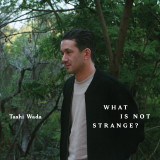
What Is Not Strange? is the first full-length album by Los Angeles-based composer Tashi Wada in over five years, comprising his most far-reaching and impassioned music to date. Written and recorded over a period that encompassed the death of his father and the birth of his daughter, the album sees Wada reflecting inward to explore broad narratives - being alive, mortality, finding one's place in the world - through new modes of ecstatic, song-based expression. While the denser forms, stark contrasts, and overt surreality may carry a different weight than Wada's earlier work, which elicited perceptual effects with minimal means, the heart of What Is Not Strange? is still in experimentation and unforeseen outcomes.
Yoshi Wada's Lament For The Rise And Fall Of The Elephantine Crocodile, originally released in 1982 on India Navigation, remains one of the most remarkable flowers to grow in the rarefied air of American minimalism – akin to Terry Riley's Reed Streams and Pauline Oliveros' Accordion & Voice, yet with a wild, liberated energy all of its own.
After graduating from Kyoto University of Fine Arts with a degree in sculpture, Wada moved to New York City in 1967 and quickly fell in with the community of artists known as Fluxus. In the early '70s, he began building his own instruments and writing musical compositions, studying with La Monte Young and Hindustani singer Pandit Pran Nath.
Recorded during an epic three-day session in an empty swimming pool in upstate New York, Wada's first album brings together two of the oldest drone instruments – the human voice and bagpipes – to simple and glorious effect. A visit to the Scottish Highlands spurred Wada's interest in bagpipes, which the composer integrated into these sparse, otherworldly sounds heard on Lament.
"That swimming pool was quite hallucinatory," recalls Wada. “It was another world. I felt it in terms of resonance. I slept in the pool, and whenever I moved, I woke up because of the reverberations.... The piece itself is an experiment with reeds and improvisational singing within the modal structure."
This first-time vinyl reissue is limited to 750 numbered copies. Comes with poster.
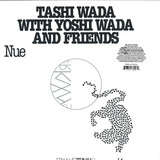
Composer Tashi Wada has performed for years with his father Yoshi Wada—artist, composer, and early member of the Fluxus movement. However, they have rarely appeared together in studio settings. Nue, the fourteenth entry in RVNG Intl.'s intergenerational FRKWYS series, finally brings Tashi and Yoshi, along with an eclectic group of close friends and extended family, together on tape.
Nue draws on aspects of Tashi's background for his widest vision to date—among them the minimalist bagpipe music of Yoshi, who co-composed three of the tracks, the psychoacoustic and perceptual explorations of his mentor, composer James Tenney, and reimagined forms of ancient and devotional music. The album, however, is not a tribute to the past or a recapitulation of familiar sounds. Instead, Nue is an intertwining of people and ideas as a means of growing, of looking inward to move outward, and of looking back to move forward.
To achieve this growth, Tashi assembled a core group of fellow travelers, including Yoshi, composer Julia Holter, producer Cole MGN, and percussionist Corey Fogel, to give life to this multifaceted suite. As an experience, Nue subtly navigates the interactions, intimacy and spaciousness of this group.
The album's title itself is a nod to Tashi's abiding interest in duality and the unknown: nue is a mythological Japanese chimera with the face of a monkey, the legs of a tiger, and a snake for a tail, a composite form, at once disturbing and otherworldly. But, as the composer points out, nue is also French for naked—stripped of complexity, bare and exposed, but also raw and essential.
From the doubling of tones—and the world of harmonic nuances such an action produces—to the rich interplay between individual musicians, all baring their own personalities and experiences through shared performance, Tashi's compositions allow space for these elements to join and grow. The multipartite creature that is an ensemble melds in the simplicity and purity of the music itself.
As explained by Tashi, each part was written with an individual in mind, not simply an instrument. And each individual performer makes their mark, from Holter's vocal performances on the cresting, oceanic 'Mutable Signs' and 'Ondine' with guest vocalists Simone Forti, Jessika Kenney and Laura Steenberge, to Fogel's resonant, precise percussion on 'Bottom of the Sky.' Producer Cole MGN, who has worked extensively with artists like Beck and Ariel Pink, helped to create a world of sound with minimal yet multi-dimensional materials. Like many of its influences, Nue uses deceivingly simple means to create complex, coherent worlds and narratives.
Tashi notes the influence of legendary Brazilian writer Clarice Lispector, whose work looked inward, investigating memory and emotion and dream, to understand the often overwhelming world outside the self. Like Lispector's classic novel Near to the Wild Heart, Nue cleaves these archetypal dualities—world/self, old/new, complex/simple—to create a work that allows them to coalesce into something singular.
As Tashi states in his liner notes: 'My desire was to create something both old and new sounding—ancient and futuristic—and ultimately something of its own world and other. Nue is a vision, an endless night of dreams, and a personal history of sorts, full of joys and demons.'
- Pat Bio - Guide Us Jah
- Don Bruce - Watiyo
- Johnny Keslar - Wadada
- Orits Williki - Fight The Fire
- Majah Kungu - Wayo Nack In Town
- Oby Onyioha - Raid Dem Jah
- Georgy-Gold Owoghiri - Wonderful Holiday
- B.g. And Fibre - Drunken Driver (Dub)
- Alphonsus Idigo - Mystic World
- Sheila & Des Majek - Mother Nature
- Jan Blast - Reggae Rigmarole
- Alpha Kuffa - Messiah I
- Bob Dazzy - Abandon Nation
A collection of fourteen digital reggae, deep roots and dub rarities from the Nigerian underground, spotlighting a time when Jamaican reggae entwined with Nigerian styles, politics and consciousness, creating a bridge between Lagos and Kingston. Fight the Fire is a companion piece to Soundway"s seminal "Doing it in Lagos" and "Nigeria Special" compilations, celebrating the innovation and musical experimentation of Nigeria in the 80s. Features rare tracks from key figures of the time including Oby Onyioha (with a crucial Burning Spear cover) and Orits Williki.
- A1: A Love Chant (Feat Esperanza Spalding)
- A2: Om Supreme (Feat Vijay Iyer & Immanuel Wilkins)
- A3: Prema Muditha (Feat Shabaka Hutchings)
- A4: Elders Wayne And Carolina
- A5: Om Namah Sivaya (Feat Charles Overton & Ganesan Dorais
- B1: Journey In Satchidananda / Ghana Nila
- B2: A Love Supreme, Part 1 Ishmael Wadada Leo Smith
- B3: A Love Supreme, Part 1 Peter Sellars (Feat Peter Sell
- B4: A Love Supreme, Part 1 Alice Coltrane
- B5: A Love Supreme, Part 1 Ione (Feat Ione)
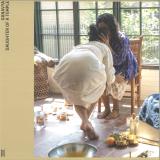
Vom Wall Street Journal als "eine der faszinierendsten Sängerinnen der modernen Musik" beschrieben, hat die in New York geborene und in Tamil Nadu aufgewachsene Sängerin und Multi-Instrumentalistin GANAVYA Details zu ihrem neuen Album "Daughter of a Temple" veröffentlicht, das am 15. November 2024 erscheinen soll. Das Album folgt auf ihren Auftritt bei SAULTs umjubeltem Live-Debüt 2023 in London, bei dem, laut The Guardian, ihre "Stimme eine zarte emotionale Kraft hatte, die selbst Stoiker zu weinenden Wracks machen konnte." Für "Daughter of a Temple" lud ganavya über 30 Künstler*innen verschiedener Disziplinen zu einer rituellen Zusammenkunft nach Houston ein. Dementsprechend sind auf dem entstandenen Album zahlreiche Mitwirkende zu hören, darunter renommierte Musiker*innen wie esperanza spalding, Vijay Iyer, Shabaka Hutchings, Immanuel Wilkins und Peter Sellars. Die Ergebnisse, eine innovative und zutiefst bewegende Mischung aus spirituellem Jazz und südasiatischer geistlicher Musik, wurden zunächst von Ryan Renteria aufgenommen und dann 2024 von Nils Frahm im LEITER Studio in Berlin weiter bearbeitet und abgemischt. ganavya ist die Autorin und Sängerin des ersten tamilischen Textes, der mit einem Latin Grammy ausgezeichnet wurde, sie war Sängerin in Vijay Iyers Ritual Quartet und Solosängerin auf dem von Quincy Jones produzierten "Tocororo", das Platz 1 der Jazz-Charts erreichte. Ihr letztes Album, "like the sky I"ve been too quiet", hat sie mit Shabaka Hutchings aufgenommen und versammelt Gäste wie Floating Points, Tom Herbert, Carlos Niño und Leafcutter John.
- A1: Tiempo (Feat. Miramar)
- A2: Golden Beauty (Feat. Nishioka Diddley)
- A3: Flux Tide (Feat. Joshua Camp)
- A4: Sunday Sunny Silver River (Feat. Hiroyuki Nagakubo)
- A5: Nocky Nock (Feat. Rockin’ Enocky)
- A6: Joy Joy (Feat. Moe)
- B1: Theme Of Kitaro Okuwa (Feat. Minori Izumi And Samut Nobe)
- B2: Fishcake And Fortune (Feat. Koji Yagihashi)
- B3: Totem
- B4: Cheech Is Dead (Feat. Wada Mambo)
- B5: Gerry In The Desert (Feat. Kazuma Koseki)
- B6: Forever Night Shade Mary
The borderless, tropical band “of Tropique,” whose core sound blends funk and rock-infused exotica, releases a 12-track full-length album on vinyl LP!!
This work maximizes their core lineup as a guitar-less trio, featuring a diverse array of 14 guest musicians to construct a rich sonic landscape.
This landmark release in the history of domestic exotica and tropical music features Mutsumi Kobayashi of the Minyo Crusaders, Rockin' Enocky of Jackie
& The Cedrics, to global talents like Joshua Camp of CHICHA LIBRE and MIRAMAR, the standard-bearer of US new wave Latin bands, and more!
It's a masterpiece that delivers the full thrill, excitement, and pleasure of encountering unknown music.
Musique Pour La Danse proudly presents "8 COFFINS", an essential collection of original tracks by the British duo Dougie Wardrop (of Conscious Sounds fame) and Nigel Lake as Jungle Neck unearthed from the mid 90s from original masters for all fans of the Jungle Sound. These impressive and mind-blowing soundclash ready weapons feature the deepest analog subs and sharpest drums, killer reggae samples to fit any sound system, and stands out as possibly the only jungle album in the bizness with an innovative and effective live dub production feeling. This unique characteristic makes it even more essential and one-of-a-kind, capturing the raw energy and innovation of the era.
For fans of the peak era of Jungle, with shades of reggae and dub, warehouse raves, heavy basslines and 160 BPM.
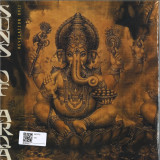
Suns of Arqa is a sonic mission created by luminary Michael Wadada, who began in 1979 after receiving higher guidance in Jamaica while working with roots reggae chanter Prince Far-I. It is a prolific traveling music collective that has seen over 200 collaborators, meant to connect people from all cultures and walks of life through a “deeply spiritual vibration that merges cultures, faiths and musical genres”. Wadada combines ancient Hindustani raga systems with Piobaireachd and Nyabinghi roots drumming, creating ritualistic world music infused with dub and reggae.
The lyrics combine both mystical and sensory elements, often including prayer and referencing a higher power but finding root in experiences common to all people- memory, sight, and physical sensation.
Their first album, Revenge of the Mozabites, was a collaboration between Wadada and On-U Sound creator Adrian Sherwood. Following its 1980 release,Peter Gabriel invited them to perform at the first WOMAD festival. Today, the record is regarded by some as a cult classic. Over the years they have played at many major music festivals including Glastonbury, Big Chill, Telerama Dub Festival, and Transmusicales, and released over 40 albums on Virgin, EMI, Interchill Records, Antler Subway, Red Rhino, and their own label, Arka Sound.
Suns of Arqa has had a seminal influence on the World Beat sound, and continued to make appearances at seasonal festivals and sacred ritual spaces all over the world until 2021. Michael Wadada passed away in the midst of planning their U.S. tour for this release. The record is a compilation of some of Wadada’s and Sleepers Record’s favorite old Sun of Arqa tracks, mixed by Youth and Adrian Sherwood, and mastered by Eroc (drummer of Grobshnitt).
Notable collaborating artists include: Guy Called Gerald, UK producers Youth and John Leckie, Greg Hunter, 808 State's Graham Massey, Finley Quaye, Sounds From the Ground, Bryn Jones aka MuslimGauze, Adrian Sherwood, John Cooper-Clarke, The late great Professor Stanley Unwin, Eric Random, New age guru Tim Wheater, Astralasia, Prince Far-I, The Orb's Alex Patterson, Zion Train, and Gaudi.
"And although the Great Spiritual being Michael Wadada has returned to source and his body to earth at our time, his music is alive and will continue to be a great force for higher spiritual realms and raising vibration through occult frequencies...Suns of Arqa will continue to raise the vibration of the hearts and minds of humanity" – Angela aka Angel-Eye (Wadada's wife and bandmate)
Shortly after the breakup of Flower Travellin’ Band, guitarist Hideki Ishima released his first and only solo album in 1973—a hauntingly beautiful work that stands apart in the landscape of ’70s Japanese rock. Known for his later work as a sitar player, Ishima showcases a signature floating guitar sound throughout the album, blending psychedelic rock, acid folk, and introspective singer-songwriter elements into a deeply personal and atmospheric record.
Contributing to this richly textured sound are some of the most notable names from the era: fellow Flower Travellin’ Band member George Wada (drums), future Transam collaborators Chito Kawachi (drums) and Nobuhiko Shinohara (keyboards), and Katsuo Ohno (keyboards) of PYG.
Now reissued with a bold, powerful remaster by Makoto Kubota, this overlooked gem captures a vital moment in Japan’s underground rock evolution and demands a fresh listen from those exploring the outer edges of the genre.
Developed over three years across residencies, tours, and periods of deep listening, “Your Whistle Tells of Landscape” finds Australian sound artist Alexandra Spence continuing her investigations into the perceptual entanglements of sound, place, memory, and imagination. Like much of the artist’s work, it unfolds at the liminal edge between the real and the imagined — between what is heard and what is remembered.
Composed from a constellation of materials gathered across sites and seasons — snowscapes recorded in Vancouver, insect choruses from a Sydney backyard, ceramic fragments unearthed while mudlarking with tinysound — it renders an intimate cartography of experience: one shaped equally by ecological resonance and internal drift. Each piece traces a kind of imaginary geography, where sonic ephemera become proxies for topography, weather, or myth.
The album is informed by time spent at EMS (Stockholm) and MESS (Melbourne), where Spence deepened her engagement with microtonality and tuned feedback systems, and by dialogues with sympathetic artists such as Tashi Wada and Patrick Farmer. Sound materials were sourced from Serge Modular systems, a custom lyre built by Tim Wall, amplified objects, handmade electronics, and Spence’s own field recordings captured within rockpools, beneath sand, and among a flock of sheep in the French Pyrenees. On “Magenta,” a collaboration with Delphine Dora, the domestic and mythic intertwine, as layers of voice, environmental recordings, and Halldorophone feedback drift in and out of one another like overlapping weather systems.
Despite its diverse material palette, the album resists spectacle or accumulation. Instead, it moves with a quiet sense of continuity and a rich interiority — less a sequence of compositions than a set of situated attunements. Across its duration, sounds seem to murmur, glint, or hover right at the edge of presence, invoking a listening practice that is as much about orientation as it is about reception. These are pieces not simply about place, but of place — etched with the grains of time, vibration, and breath.
- African Blues
- Song For Mother E
- Sensuou
- Steal Away
- Ode To My Ancestors
- Voices
- Hymn For John Lee Hooker
- Twilight
- Cairo
- Beneath The Sun
Over sixty years into a life in music, Amina Claudine Myers revisits old compositions with a quiet force on Solace Of The Mind, her first solo record since receiving an NEA Jazz Master honours. Recorded for Red Hook Records and produced by Sun Chung, it hears Myers at the piano, Hammond B3 organ and mic, reinterpreting personal standards such as 'African Blues', 'Song For Mother E', 'Cairo' and 'Steal Away' with patient, spacious phrasing and the tonal sensitivity she's honed since her days with the AACM. Chung's production renders every harmonic shimmer and pause with startling clarity; a glistening move compared to last year's duo release with Wadada Leo Smith, adding a returnal layer to an otherwise eclectic discography, spanning free jazz and blues-rooted experimentalism. In her words, "I wanted to play (the originals) differently this time."
Defiant Life – die zweite Duo-Aufnahme von Vijay Iyer und Wadada Leo Smith für ECM – ist eine tiefgründige Meditation über den Menschen in der Gesellschaft und das damit verbundene Leid, aber auch die
Resilienz. Zwischen Leo Smiths unverwechselbaren Trompetenflügen und Vijays feinfühligen Erkundungen
an Klavier und Fender Rhodes schimmert ein ätherisches Funkeln durch mehrdimensionale Räume hindurch,
die Platz für nachdenkliche musikalische Konversationen schaffen. ”Wir arbeiten mit unseren individuellen
Sprachen und Materien”, schreibt Vijay in seinem ausführlichen Begleittext, „aber auch mit unseren Methoden der akustischen Einstimmung und mit dem, was ich als eine gemeinsame Ästhetik der Notwendigkeit
bezeichnen würde”. Eine Notwendigkeit, die sowohl von Dringlichkeit als auch Frieden gezeichnet ist, sich
im ersten langen Stück „Sumud” unheilvoll äußert, dann mit bluesigen Untertönen auf „Floating River
Requiem” wieder auftaucht, immer noch zweifelhaft, aber mit Silberstreifen auf „Elegy: The Pilgrimage”
zu hören ist und schließlich auf dem abschließenden ”Procession: Defiant Life” schrecklich schön zum
Ausdruck gebracht wird. Defiant Life wurde innerhalb von zwei Tagen im Auditorio Stelio Molo in Lugano
aufgenommen und von Manfred Eicher produziert.
"Stoned Immaculate" (1991) ist das wohl bekannteste Dub Syndicate-Album, aufgenommen zwischen Jamaika und London. Zu den rockigen Rhythms des Bandleaders Style Scott gesellen sich weitere Topmusiker wie Skip McDonald (git), Lee "Scratch" Perry und Akabu on vocals, Leith Levene (keys), sowie Samples des verstorbenen, großartigen Prince Far I. Es markiert eine Zeit, in der das Label von Acid-House-Fans ebenso angenommen wurde wie von Hardcore-Dub-Fans, und diese LP zum festen Bestandteil der "Comedown"-Session nach dem Rave wurde. Der Titeltrack ist eine wahre On-U-Sound-Hymne, die Reggae, ausgeflippte Electronica, The Doors und Motown zu einem epischen Groove vermischt. Das seit Jahren vergriffene Vinylformat wurde von Frank Merritt im The Carvery neu geschnitten und enthält rare Fotos von Coneyl Jay und neue Linernotes von Rob Harris (Testpressung).
COWBOY FAMILY, led by Wada Yosuke, is a DJ collective active in Tokyo’s burgeoning underground scene. Launching an imprint in 2024, COWBOY FAMILY RECORDS, the label opened proceedings with Cowboy Family Business – a limited issue V/A pressing featuring Mr. Ho, Takashi Himeoka and Rio Kawamoto.
In quick succession, the label proudly introduces its second offering: Internet O.G.s, by Rio Kawamoto. Sporting nostalgic, computer-inspired track titles, the EP references the sounds that characterised Rio’s youth in the early 2000s; old-school electro, electroclash, and raw-textured house music.
The release also includes a remix from Seoul-based DJ and producer Mogwaa, furthering COWBOY FAMILY’s ties with the broader Asian electronic music scene
- A1: A Love Chant (Feat Esperanza Spalding)
- A2: Om Supreme (Feat Vijay Iyer & Immanuel Wilkins)
- A3: Prema Muditha (Feat Shabaka Hutchings)
- A4: Elders Wayne And Carolina
- A5: Om Namah Sivaya (Feat Charles Overton & Ganesan Dorais
- B1: Journey In Satchidananda / Ghana Nila
- B2: A Love Supreme, Part 1 Ishmael Wadada Leo Smith
- B3: A Love Supreme, Part 1 Peter Sellars (Feat Peter Sell
- B4: A Love Supreme, Part 1 Alice Coltrane
- B5: A Love Supreme, Part 1 Ione (Feat Ione)
Vom Wall Street Journal als "eine der faszinierendsten Sängerinnen der modernen Musik" beschrieben, hat die in New York geborene und in Tamil Nadu aufgewachsene Sängerin und Multi-Instrumentalistin GANAVYA Details zu ihrem neuen Album "Daughter of a Temple" veröffentlicht, das am 15. November 2024 erscheinen soll. Das Album folgt auf ihren Auftritt bei SAULTs umjubeltem Live-Debüt 2023 in London, bei dem, laut The Guardian, ihre "Stimme eine zarte emotionale Kraft hatte, die selbst Stoiker zu weinenden Wracks machen konnte." Für "Daughter of a Temple" lud ganavya über 30 Künstler*innen verschiedener Disziplinen zu einer rituellen Zusammenkunft nach Houston ein. Dementsprechend sind auf dem entstandenen Album zahlreiche Mitwirkende zu hören, darunter renommierte Musiker*innen wie esperanza spalding, Vijay Iyer, Shabaka Hutchings, Immanuel Wilkins und Peter Sellars. Die Ergebnisse, eine innovative und zutiefst bewegende Mischung aus spirituellem Jazz und südasiatischer geistlicher Musik, wurden zunächst von Ryan Renteria aufgenommen und dann 2024 von Nils Frahm im LEITER Studio in Berlin weiter bearbeitet und abgemischt. ganavya ist die Autorin und Sängerin des ersten tamilischen Textes, der mit einem Latin Grammy ausgezeichnet wurde, sie war Sängerin in Vijay Iyers Ritual Quartet und Solosängerin auf dem von Quincy Jones produzierten "Tocororo", das Platz 1 der Jazz-Charts erreichte. Ihr letztes Album, "like the sky I"ve been too quiet", hat sie mit Shabaka Hutchings aufgenommen und versammelt Gäste wie Floating Points, Tom Herbert, Carlos Niño und Leafcutter John.
Kata No Wadachi is the latest album by Banetoriko, the solo noise project of Tamaki Ueda. Her first release both on An’archives and on vinyl, it follows several albums for the Neurec imprint – 2017’s Beside the Sluice and 2022’s Yorioto Hogiokuri – and several other cassettes and CD-Rs. With Kata No Wadachi, the Banetoriko world, inspired by the Yokai (“strange apparitions” – supernatural figures, ghosts, spirits) of Japanese folklore, is at its most resonant yet.
Recorded across 2022 and 2023, the three tracks on Kata No Wadachi have Ueda performing in a particularly elevated manner. Her sound is highly tactile and grittily sensuous, the better to capture the ritualistic repetitions, and hypnotic methodologies, core to Banetoriko. The scrape and scratch of Ueda’s self-made metal instrument, the Banetek, gives these improvisations a unique throb, even as their mood, of introverted focus and elaboration of minutiae, gestures towards broader histories of noise and abstract art. Kata No Wadachi evokes, to some degree, the urban ritual noise of the likes of The New Blockaders, Organum, or Ferial Confine; elsewhere, the abraded, rough-housing textures bring to mind the eighties tape works of Hands To and John Hudak.
Ueda embraces the dream evocation that’s possible when loops of blurred texture collide with the gnaw and groan of energised metal, while mantric, dissociated vocals, and the oppressive weight of deep breath, gather around these compositions like a ghost’s shroud. While she’s been making noise for some time, since the nineties, Banetoriko was formalised as a project in 2011, while Ueda lived in Los Angeles. Relocating to Osaka in 2021, she’s carved out an utterly unique space for herself in Japanese noise, and her music contains an absolutely elemental vibration. Framed beautifully with poetic liner notes by Aurélien Rossanino, Kata No Wadachi is an oppressive, yet quixotically blissful trip.
Unknown Rivers“ ist das Debüt des Bassisten Luke Stewart bei Pi Recordings. Stewart ist in der Musikszene allgegenwärtig und eine treibende Kraft. Er ist Leader oder Co-Leader von Bands wie Irreversible Entanglements oder des Exposure Quintet. DownBeat bezeichnet ihn als einen der „Twenty-Five Performers Who Could Shape Jazz for Decades“. Er hat mit Künstlern wie David Murray, Archie Shepp, Wadada Leo Smith, Nicole Mitchell, Nate Wooley und zahllosen anderen zusammengearbeitet. Stewart ist außerdem Kurator und Moderator mehrerer Konzertreihen in Washington, D.C. und New York, Schriftsteller, Aktivist, Produzent und DJ. Das neue Album hat er mit seinem langjähriges Silt Trio eingesp
Wadada Leo Smith&Amina Claudine Myaers
Central Park's mosaic of reservoir, lake, paths and gardens LP
This extraordinary collaboration marks the master musicians' first recorded collaboration, resulting in one of the most anticipated releases of the year. Central Park's mosaic of reservoir, lake, paths and gardens is a testament to the enduring power of artistic connection and the evolution of musical mastery.
Steph Richards has already made quite a name for herself in the worlds of avant garde music and creative jazz - She has recorded for Relative Pitch and Northern Spy, worked with Laurie Anderson, Anthony Braxton and Ravi Coltrane and studied with Wadada Leo Smith - As co-producer of the FONT Music Festival, Richards worked for years alongside fellow trumpeter Dave Douglas. Her records have been praised for displaying her evident virtuosity and inventiveness, the New York Times calling Richards "boldly inventive." NPR's Nate Chinen says Richards is "ingenious" and Downbeat insisted that she is "the latest figure of note" in jazz while All About Jazz cuts to the chase, saying simply, that Richards "kicks ass." It's an impressive history and litany of praise for a young trumpeter, but with her latest full-length for Northern Spy, Power Vibe, Richards pushes even further, marrying avant garde and cinematic moods with a kind of infectious and patently pleasing tunefulness that is certain to expand her dedicated audience even further. The addition of "sensory electronics" -- subtle but compelling textures and tactile rhythms which are physically triggered by drum-mounted sensors -- compels fascination here, interweaving a kind of aural hyper-lucidity throughout the record. Though boldly original, this music strides surefootedly alongside the work of contemporaries like Nicole Mitchell and Rob Mazurek and the late jaimie branch
- A1: Brujo Magic
- A2: Magic Version; Vocals – Prince Far-I*
- A3: Hasheesh; Percussion – J. J. Slater*; Reeds
- A4: City Of Nine Gates; Bass – Lizard; Vocals – Prince Far-I*
- A5: The Lesson; Sitar – Mr. Amar Singh
- B1: Steppin' To The Music
- B2: A Lesson In Trancedance
- B3: The Step
- B4: The Heat; Performer
Reissued for the first time on vinyl "Wadada Magic", Suns Of Arqa's majestic second album. The wicked world of Michael Wadada is well represented here: an ever-changing kaleidoscope of tribal dub, early electronics , proto-wave and global beat. Special guests on vocals Prince Far I and Prince Hammer, while on bass the true genius of Lizard from Creation Rebel / Singer & Players
[c] A3 Hasheesh; Percussion – J. J. Slater*; Reeds [Chinese Shawm] – John Scott (13)
[i] B4 The Heat; Performer [Rhythm Section] – The Legendary Lepards; Vocals – Prince Hammer
Reissue of early Japanese house outing by Junichi Soma, Shuji Wada and Katsuya Sayo. Comes with insert with liner notes.
All musical movements require a spark to set them alight; in the case of Japanese house music, that spark was provided by the forward-thinking resident DJs of The Bank in Roppongi, Tokyo. In 1989, to celebrate the ground-breaking club’s first birthday, the venue released a 12” EP featuring first-time productions from three of its DJs, Junichi Soma, Shuji Wada and Strong Katsuya AKS Katsuya Sayo.
Widely considered to be one of the first ever EP of house music produced in Japan, 1st Unit was never officially released. Instead, 500 of the 1000 copies pressed were given away at The Bank’s first birthday party, with the rest initially being sold not in local record stores, but rather the venue’s own in-house shop. Three decades on, the 12” is finally set to get its first worldwide release via Rush Hour’s Store JPN Series.
The record has its roots in The Bank’s willingness to give its ever-changing roster of DJs a free hand to play what they liked – at the time a rarity in Tokyo nightclubs, whose musical offerings usually revolved around strictly defined playlists. At The Bank in 1989, it was not only common to hear European body music and the kind of post-disco New York productions associated with Larry Levan’s sets at the Paradise Garage, but also acid house – something not offered at the time by other clubs in the city.
This cutting-edge blend of sounds, combined with the venue’s unique decor (it was modeled on the inside of a London bank, complete with a cashier’s window to take entrance fees), made The Bank a go-to spot for young party-goers, celebrities and forward-thinking Japanese musicians (Ryuichi Sakamoto was reportedly a weekly visitor).
When it came to celebrating the club’s birthday by cutting a unique record, it made sense for The Bank’s owners to turn to three of their most exciting resident DJs, who were assisted by Heigo Tani and Jun Ebi. The collective name, 1st Unit, was chosen to reflect the fact that all three resident DJs were debutants with no previous studio experience.
As this reissue proves, the music remains timeless, magical, and authentic to the sound of American house productions of the period – albeit with occasional twists,. Katsuya Sano’s EP opener, ‘I Need Love’, sounds like a twist on Larry Heard productions of the period – all jacking TR-909 drums, undulating analogue bass, dreamy JUNO synthesizer chords and evocative vocal samples.
The influence of Chicago acid house is also evident on Junichi Souma’s ‘Ubnormal Life’, whose unusual title contains what he says was an intentional misspelling. Driven forwards by restless drum machine handclaps, sweet chords and rising and falling melodic motifs, the track is an energetic and uplifting treat.
Perhaps the most influential of the three tracks at the time – within Japan at least – was Shuji Wada’s similarly misspelled ‘Endless Load’. Deeper and more melodic with a more expansive arrangement, the track’s combination of marimba-style lead lines, tribal drum patterns, dreamy chords and jazz-funk influenced bass offered a loose blueprint for the more successful and better-known Japanese deep house tracks that followed.
The latest in a prolific string of solo and collaborative releases by James Rushford, Turzets collects a pair of new works primarily created and recorded last year while the Australian composer-performer was in residence at La Becque, an art center on Lake Geneva in Switzerland. The side-length piece "Fallaway Whisk" explores hesitation in its many forms_reticence of speech, sonic restraint_using live, abstracted translations of text from English to German against a lush and swelling soundscape. On the flip side, "Quire" is a work in ten movements influenced by the composer's study of late medieval repertoire on portative organ, weaving the instrument's woodsy interlocking melodies with angelic Yamaha CS-80 synth sweeps and stuttering glitches. The combined effort is somewhat a departure for Rushford, working in traces of Klaus Schulze, concrete poetry, and ars subtilior into a precise and ever-unfolding tapestry. Rushford's work draws from a wide range of collagist and improvisatory musical languages, staking out an idiosyncratic stylistic space that has been variously described as "electro-acoustic experimentation with a beating heart" (Boomkat) and "haunted Jacobean ASMR" (The Wire). Investigating the creases, cracks, and folds in traditions ranging from early music to New Age, Rushford's work subtly exaggerates seemingly liminal aspects such as atmosphere and the bodily presence of the performer until these take on a weight equal to musical elements such as pitch, rhythm, and timbre. In recent years, Rushford's solo work has been guided by his theorization of sonic images, particularly the shadow, which has inspired pieces as diverse as an hour-long companion to Federico Mompou's 1959-67 piano cycle Música Callada (2016) and a sumptuous translation of the play of light across flat surfaces into synthetic sound (The Lake from the Louvers, Shelter Press, 2021). His long-standing performance practice for piano, portative organ, synthesizers, and electroacoustic devices, is constantly infused with a delicacy of touch and a harmonic sensibility in which unorthodox tunings coexist with influences from fin de siècle Impressionism, the twentieth century avant-garde, and popular musical structures. He has worked with a vast range artists including Klaus Lang, Annea Lockwood, David Behrman, Tashi Wada, Haroon Mirza, Dennis Cooper, Ora Clementi, crys cole, Oren Ambarchi, Kassel Jaeger, Will Guthrie, and Graham Lambkin. He has performed as Golden Fur (with Sam Dunscombe and Judith Hamann) and Food Court (with Joe Talia and Francis Plagne).
Provocative percussion from the jazz trio Zen Widow!
Recorded live to 2-track analogue tape at Capitol Studios (CAP A)
Produced by Tone Poet's Joe Harley, recorded by Mike Ross
100% analogue mastering* by Kevin Gray at Cohearent Audio
Pressed on 180-gram ultra-quiet vinyl at RTI
Deluxe Old Style Tip-On single pocket gatefold jacket by Stoughton Printing
*Track 8 finished from high-resolution digital for vocal track
Intervention Records presents a special collaborative distribution effort with Italian objet-a records, Zen Widow IV – (from one dark age to another). This AAA 180G vinyl release is the fourth recording of Zen Widow, and it places an emphasis on highly melodic, spacious, and engaging treatments of medieval compositions ranging from Gesualdo Da Venosa, the Burana and Chantilly Codex, Welsh Gower folk melodies and texts, as well as the Bach Cello suites. These rich compositions are then reimagined through the lens of a highly accomplished and adventuresome jazz-improvised music trio.
Zen Widow is an international improvisational music-jazz super group. They have recorded and performed in clubs and festivals throughout the United States and Europe for that last 20 years. The trio consists of Gianni Gebbia (Bb soprano saxophone – cornettophone ) from Sicily, Italy, Matthew Goodheart (grand piano – transducer-actuated gong) from New York, Garth Powell (drums, percussion, and gongs) from Los Angeles, and is joined by special guest Dwight Trible (vocals) for this recording. Their previous release featured trumpet and jazz master Wadada Leo Smith, and like this recording was produced by Joe Harley (Blue Note – Tone Poet Series, Charles Lloyd, and Music Matters Jazz).
Garth Powell is also an audio industry legend, and AudioQuest’s Sr. Director of Engineering. Garth is the driving force behind the company’s multi award-winning line of Niagara series power conditioners and its Mythical Creatures ultra high-performance cables.
As powerful as these performances are, the sonic results created by this production/engineering team is equally stunning – a truly reference quality analogue experience.
This recording is captured live-to-two-track analogue, 30ips tape at Capitol Studios (studio “A”) by Mike Ross and Steve Genewick. 7 of the 8 tracks are AAA, while the last track alone is finished high-res digital to accommodate the vocal track. Mastering and lacquers cut by Kevin Gray at CoHEARent Audio, with 180-gram pressings by RTI (Camarillo, California).
The single-gatefold jacket is a deluxe Old Style “tip-on” from Stoughton, designed by Intervention’s longtime Art Director Tom Vadakan.
Having toured the world with Mczo and been at the helm of his own studio Pamoja Records since he was just 18, influential Singeli producer Duke, now 25, is one of Tanzania's busiest club alchemists. On his acclaimed solo debut "Uingizaji Hewa" we were introduced to his idiosyncratic "hip-hop Singeli" sound, a slower cousin to the Dar Es Salaam-rooted hard 'n fast club template that takes as much special sauce from Busta Rhymes and Eminem as it does the 200BPM clatter of genre veterans Jay Mitta and Sisso. On September's "Sounds Of Pamoja," we were treated to a closer look into Duke's studio, and specifically at his work with the city's best young MCs like Dogo Kibo, Pirato MC and MC Kuke. "Early Instrumentals" allows us to witness the depth of Duke's evolution with a selection of unearthed genre melting Singeli mutations laid completely bare without vocals. This 11-track set features some of his most arresting hybrid dance music yet, expressing his visionary fusion of contemporary rave sounds, US rap attitude, and Tanzanian dance history. While the roots of Singeli are in taraab, a popular fusion of East African and Middle Eastern traditional dance rhythms and melodies, Duke steers the sound into a synth-led, syncopated firework display that sounds spry and futuristic. Centered arounda bumping staccato melody and urgent synth strings 'Dukelo Fl Sing' echoes the lo-swung swagger of early Dr. Dre productions, but kicks the tempo into overdrive, decorating any gaps with flickering late-nite synths. 'Beat Kali Duke' meanwhile drives carnival trance leads through hard and fast rolls of kick drums, whistles and woodblock cracks. It's not all completely high speed either: 'Duke Selecta' is almost afro-house, with slow, sexy bass and woozy vocal melodies, and 'KKKKKKKKKKKKKKK' absorbs the propulsive spirit of South African gqom. "Early Instrumentals" is the most varied picture we've been presented yet of Duke's rousing dance cocktail. IT's a physical call to action that assures listeners the genre is for movement, not headphone listening
Seit ihrem Auftauchen Mitte der 1990er Jahre haben beide eine starke Präsenz im Kontext der amerikanischen experimentellen Musik und beide jeweils seitdem einige der fesselndsten Originalwerke produziert. Kenney ist eine experimentelle Vokalistin, Komponistin und Lehrerin, die sich auf die transformativen Kräfte der Stimme und die Beziehung des Klangs zu mystischen Erfahrungen konzentriert. Neben ihrer Zusammenarbeit mit Oren Ambarchi, Tashi Wada, Avey Tare, Alvin Lucier, Sarah Davachi, dem Ensemble Nist-Nah, Sunn O))) und zahlreichen anderen ist sie bekannt für ihre Aufführung indonesischer Vokalmusik (Sindhenan) und persischer Vokalmusik (Radifs) sowie für ihre eigenen Kompositionen, die Elemente beider Musikrichtungen aufgreifen. Kang, ein Komponist und Multi-Instrumentalist, der für seine einzigartige Herangehensweise an die Bratsche hoch angesehen ist, hat auf zahlreichen Gebieten gearbeitet und auf Alben von Bill Frisell, Joe McPhee, Sun City Girls, Wayne Horvitz, Ikue Mori, Laurie Anderson, Aki Onda, John Zorn, Blonde Redhead, William Hooker, Animal Collective, Lou Reed, Oren Ambarchi und zahlreichen anderen mitgewirkt sowie eine Reihe von Solowerken geschaffen, die Elemente seiner isländischen, dänischen und koreanischen Herkunft enthalten. Azure ist eine hypnotische Rückkehr zu Kenneys und Kangs einzigartigem Ausdruck von "Unisono-Musik" und gehört zu den am stärksten reduzierten und minimalistischen Arbeiten des Duos seit mehr als einem Jahrzehnt. Die fünf Kompositionen werden durch Anspielungen auf die natürliche Welt unterstrichen.
- A1: Guillaume De Machaut –C’est Force, Faire (14Th Century)
- A2: Tobias Hume –Touch Me Lightly (Circa 1607)
- A3: Silvestro Di Ganassi –Ricercar Quarto (1542)
- A4: Guillaume De Machaut –Hélas! Et Comment (14Th Century)
- A5: Charles Curtis –Unfinished Song (1998)
- B1: Terry Jennings –Song (1960)
- B2: Morton Feldman –Durations Ii (1960)
- B3: Anton Webern –Drei Kleine Stücke, Op. 11(1914)
- B4: Olivier Messiaen –Louange À L’éternité De Jésus (From Quatuorpour La Fin Du Temps) (1941)
- C1: Richard Maxfield –Perspectives For La Monte Young (1961-62)
- D1: Charles Curtis –Music For Awhile (1999)
- D2: Charles Curtis –Music For “Lester” (2009)
New double-LP edition of a selection from Saltern’s acclaimed collection of recordings surveying the career of renowned, American cellist, Charles Curtis. Selected by Curtis and Tashi Wada from recordings spanning two decades, Performances & Recordings 1999-2018 offers a broad, inclusive view of Curtis’ activities across the diverse worlds of music he inhabits, featuring the music of
Ende der 1990er Jahre lernte der österreichische Musiker und Schriftsteller Hans Platzgumer den halbjapanischen Sänger Carl Tokujirô Mirwald auf einer Aftershow-Party in München kennen. Bei seinem spontanen Auftritt hatte Carl den unwiderstehlichen Sound eines japanischen Tom Waits, der traditionelle Gesangstechniken des Nô-Theaters mit westlichen Einflüssen mischte. Die beiden gründeten das Elektro-Duo Shinto und brachten mehrere Platten heraus, mit denen sie eine eingefleischte Fangemeinde anzogen und mehrfach durch Japan und Europa tourten. Als jedoch die Fukushima-Katastrophe 2011 nicht nur ihre japanischen Labelbüros zerstörte, sondern sie auch zwang, anstehende Tourneen abzusagen, legten sie die Band auf Eis. Dennoch blieb ihre euro-asiatische Zusammenarbeit bestehen. 2015 begann das Duo, sich mit der Taishô-Ära zu beschäftigen, einer Periode in der japanischen Geschichte vor genau hundert Jahren, die eine Fülle von neuen demokratischen und anarchischen Bewegungen mit zahlreichen gegensätzlichen Protagonisten hervorbrachte. Jetzt, 8 Jahre später, ist Hans' Roman Großes Spiel über diese historischen Kämpfe erschienen (Zsolnay/Hanser), gleichzeitig mit einer Sammlung von 10 neuen Liedern. Taishô Romantica vertont japanische Texte aus dem frühen 20. Jahrhundert, die die Nähe von Leben, Tod und ideologischem Glauben in den dramatischen Taishô-Jahren schildern, mit einer extravaganten Partitur, die Muzak und Electronica mit theatralischen Elementen und Kammermusik mischt. Die aktuelle CD/LP/digital "Taishô Romantica" wird am 1. September 2023 über Noise Appeal Records veröffentlicht.
In Japanese, the word “Guru-Guru” refers to the state of spinning, whirling.?
This state is captured in the work of Japanese artist Hoshina Anniversary, who makes his third appearance on MUSAR with his EP Guru Guru and marks the return of the label after an extended break.
Hoshina’s self-titled brand of ‘Watechno’ has appeared on well-loved dance music labels like ESP Institute, Volvox’s Jack Dept and Young Marco’s Safe Trip, alongside MUSAR where he also appeared as Shifting Gears back in 2022; an electronic-jazz-centered moniker.
His Guru Guru EP captures the latest snapshot of Hoshina’s sound and sees him draw from Japanese language as a through-line.
The title track is the clearest representation of his ‘Watechno’, where he uses Japanese instrumentation on top of a menacing EBM-style march. The track's slowly whirling momentum is the “Guru-Guru”.
On tracks like “Banri”, which means far away in Japanese, we see new shades to Hoshina’s work as he mixes a Japanese Wadaiko drum groove with acidic elements and piano melodies to make a track of contradictions which pairs roughness with elegance. Whereas on “Usagi”, Japanese for rabbit, Hoshina fires up the BPM.
Piano melodies remain here but their effect is more drifting and emotive than on “Banri”.
“Kaga” is named after a place in the southernmost part of Ishikawa Prefecture, between Kanazawa City and Fukui City.
On this track, Hoshina’s love for jazz comes through and even mirrors the work we heard from him under Shifting Gears.
repress
Michael George Henry (aka Ras Michael and, for this lone release, Dadawah) was born in 1943 in Saint Mary Parish, in northeastern Jamaica. Henry was raised in a Rastafari community when the religious movement was still in its infancy and marginalized within Jamaica. It was there that he began performing Nyahbinghi, the Rastafarian devotional music that combines the influences of African drumming and Black gospel.
Henry found himself in Kingston in the late 1950s where he worked for Coxsone Dodd at the legendary Studio One. By 1968, he had formed the group Sons of Negus and the first overtly Rasta record label, Zion Disc. As Rasta filtered into the mainstream, Henry released more music including albums for Trojan, Dynamic and Grounation labels.
Originally released in 1974, Peace And Love - Wadadasow is Dadawah’s magnum opus. Produced by Lloyd Charmers, the album features slinky basslines, wah-wah guitar, hypnotic keyboards, dubbed-out studio trickery and, of course, the propulsive drumming and rhythmic chanting characteristic of Nyahbinghi.
Antarctica Starts Here presents the first widely available domestic release of Peace and Love - Wadadasow. This reissue is part of an archival series that focuses on Trojan’s essential ’60s and ’70s catalogue. Liner notes by JR Gonne.
LTD Purple Vinyl
Following on from the recent super-deluxe box set edition of The Mystic Revelation of Rastafari"s "Grounation" Soul Jazz Records are releasing a new edition of the group"s celebrated "Tales of Mozambique". This new limited edition is released as a one-off pressing purple vinyl double album and a one-off purple CD. Sleeve design also comes as a new purple version. Soul Jazz Records are releasing Count Ossie and The Mystic Revelation"s seminal 1975 album Tales of Mozambique in an expanded double album/single CD, fully remastered and with the inclusion of two bonus rare single-only tracks, full sleevenotes, exclusive photographs and interview. Count Ossie is the central character in the development of Rastafarian roots music, nowadays an almost mythical and iconic figure. His importance in bringing Rastafarian music to a populist audience is matched only by Bob Marley"s promotion of the faith internationally in the 1970s.
Welcome to the realm of creator and mentor Michael Wadada, the man behind the exotic manoeuvres of Suns of Arqa, one of the most sought after world beat fusion project of the early eighties. His main goal was to increase the vibrations of classical Indian raga with the rhythms of Niyabinghi drumming, epitomized in England by contemporary dub producers. Released in 1980 on Manchester’s own Rock Steady Records, Revenge Of The Mozabites is an essential masterpiece paving the way for future over the border contamination. Deeply informed by cosmic mysticism the album still reverberates with the hidden sounds of earth & soul.
Soul Jazz Records are releasing Count Ossie and The Mystic Revelation’s seminal 1975 album Tales of Mozambique in an expanded double album/single CD/digital format, fully remastered and with the inclusion of two bonus rare single-only tracks, full sleevenotes, exclusive photographs and interview.
Count Ossie is the central character in the development of Rastafarian roots music, nowadays an almost mythical and iconic figure. His importance in bringing Rastafarian music to a populist audience is matched only by Bob Marley’s promotion of the faith internationally in the 1970s.
Count Ossie’s drummers performed on the first commercially released single to integrate Rastafarian traditional music with popular music: the vocal group The Folkes Brothers’ groundbreaking song ‘Oh Carolina’, recorded for producer Prince Buster in 1959. In 1966 his drummers greeted the momentous arrival of Haile Selassie at Kingston airport.
His legendary jam sessions up in his Rastafarian compound in the hills of Wareika, Kingston, are famous for the many Jamaican musicians who attended including The Skatalites players – Roland Alphonso, Don Drummond, Johnny Moore, Lloyd Knibbs – and many others.
The Mystic Revelation of Rastafari formed in Kingston, Jamaica, in 1970, a union of Count Ossie’s Rastafarian drummers – variously known as his African Drums, Wareikas or his Afro-Combo – and the saxophonist Cedric Im Brooks’ horns group, The Mystics.
The Mystic Revelation of Rastafari are the defining group in bringing authentic Rastafarian rhythms into the collective consciousness of popular music, their unique music is at once rooted in the deep traditions and rituals of traditional drumming and chanting alongside a forward-thinking, even avant-garde, artistry influenced by the likes of John Coltrane, Sun Ra, Pharoah Sanders and other pioneering African-American jazz artists radicalised and charged by the civil rights movement of the 1960s.
Tales of Mozambique is a truly unique and fascinating ground-breaking album.
Count Ossie and The Mystic Revelation of Rastafari are the central group featured on Soul Jazz Records recent "Rastafari - The Dreads Enter Babylon” a collection showing the influence of Rastafari in Reggae and Jamaican popular culture.
Soul Jazz Records will also be releasing Count Ossie and The Rasta Family 'Man From Higher Heights’ in the near future.
* Bonus tracks
REVIEWS
" All roads in Rastafarian roots music lead to Count Ossie.He’s the lead character in this compelling subplot, the musician who was one of the first to put Rasta tenets into the heart of popular music.
He did so from his camp in the hills above Kingston, Count Ossie and his drummers casting a spell on the musicians who gathered to check him out and then went on to spread the word about the powerful nyabinghi rhythms and mesmerising percussion.
This is a reissue of the 1975 album Count Ossie made with his Rastafarian drummers and saxaphonist Cedric ‘Im’ Brooks’s group The Mystics.
It’s a groundbreaking, majestic work, by turns righteous in tone and joyous in execution. It’s the sound of Ossie and his ensemble narrating a history lesson and you’d be daft not to want to find out more." IRISH TIMES
Sound: An Exhibition of Sound Sculpture, Instrument Building and Acoustically Tuned Spaces opened at the Los Angeles Institute of Contemporary Art in the summer of 1979 (and was also on view later that year at PS1 in New York). Curated by Bob Wilhiteand Robert Smith, the exhibition surveyed the field of sound art. The forty-four participants were painters pivoted toward performance, conceptual artists attracted to time-based mediums, self-styled creators of environments, and musicians (formally trained and otherwise) fashioning new instruments from household items and consumer electronics. They were more or less object-oriented and, at the same time, more or less music-oriented. What brought them all together, as the exhibition catalog gamely asserted, was sculpting in three-dimensional space.
The Sound exhibit included installations, recordings played in the exhibition space and a series of live performances, demonstrating instruments that otherwise rested inert in the gallery. For a broader sense of the show than a single visit provided, the curators also produced a compilation album featuring short pieces, or excerpts from longer works, by many of the participants. (Artists in the exhibition, but not on the LP include Alvin Lucier and Mike Kelley.) Selections from bright lights of the 20th century avant-garde – such as composers Bill Fontana, Yoshi Wada and Paul DeMarinis; conceptual artists and performance artists Terry Fox, Tom Marioni and Jim Pomeroy; experimental vocalist Joan La Barbara; and Los Angeles Free Music Society members Tom Recchion and John Duncan – feature alongside the sounds of Jim Hobart's tuned jars, Ivor Darreg's fretless banjo, Doug Hollis' aeolian harp and Richard Dunlap's rubber bands.
This first-time reissue is limited to 500 numbered copies. Comes with poster.
- 1: Return Of The Mozabites (From The Album "Revenge Of The Mozabites)
- 2: Acid Tabla (From The Album "Revenge Of The Mozabites")
- 3: Pablo's Lament - Youth Dub Mix (From "Hindu Pict")
- 4: Ark Of The Arqans (From "Ark Of The Arqans")
- 5: Sanskrit Hymn (From "Ark Of The Arqans
- 6: El Horto Part 2 (From "Universe City)
- 7: Brujo Magic (From "Wadada Magic
- 8: Sostenuto Ft. Professor Stanley (From "Tributey")
- 9: Paradisum In Dub (From "Seven")
- 10: Hear The Call (From "Shabda")
Suns of Arqa is a sonic mission created by luminary Michael Wadada, who began in 1979 after receiving higher guidance in Jamaica while working with roots reggae chanter Prince Far-I. It is a prolific traveling music collective that has seen over 200 collaborators, meant to connect people from all cultures and walks of life through a "deeply spiritual vibration that merges cultures, faiths and musical genres". Wadada combines ancient Hindustani raga systems with Piobaireachd and Nyabinghi roots drumming, creating ritualistic world music infused with dub and reggae. The lyrics combine both mystical and sensory elements, often including prayer and referencing a higher power but finding root in experiences common to all people- memory, sight, and physical sensation. Their first album, Revenge of the Mozabites, was a collaboration between Wadada and On-U Sound creator Adrian Sherwood. Following its 1980 release, Peter Gabriel invited them to perform at the first WOMAD festival. Today, the record is regarded by some as a cult classic.
- A1: Dr D Rising
- A2: Spectrangle
- A3: Migera
- A4: Rockwood Riddim
- B1: Sametime Frameline
- B2: Swampland
- B3: Cava
- B4: Stadterboy
- B5: Low End
- B6: Crucial Drone
- C1: Fez
- C2: Wolkenfabrik
- C3: Otherworld
- C4: Scarfacekiller
- C5: Froopy
- C6: Produce Sojuce
- D1: Adventure Time
- D2: Flip Flop Blaster
- D3: Glipglop
- D4: Mr Hyde
- D5: Soft Herbs
- D6: House On Fire
- D7: Roast
First album from Cologne based Jazz / Hip-Hop band for Melting Pot
Music home to artists such as FloFilz, Twit One, Summers Sons,
Pachakuti & young.vishnu, etc.
Bokoya is a four-piece jazz/hip-hop band from Cologne who plays
improvised beat music. Like a four-headed human drum machine, Bokoya improvise, shape, and develop beats in the electric field of repetition and variation. It's impossible to put a tag on Bokoya's music.
BADBADNOTGOOD, Dilla, Krautrock, Ambient and dub might work as
rough reference points for the music but don't do it justice. After a sling of releases on Wadada Records, Bokoya are now signed to Melting Pot Music where they will release their forthcoming projects.
Lampen is Kalle Kalima and Tatu Rönkkö. Kalle plays guitar, Tatu plays percussions and sampler. Together they're Lampen, a duo making highly addictive "post jazz" with a musical heart far beyond genre. Call it what you will, but the main point is listening, and there's a high season for that coming as Lampen is set to release their debut album on We Jazz Records on "Kintsugi Gold" vinyl and digitally. Previously a CD only release (Karkia Mistika Records, 2020), "Lampen" presents two artists who have a knack at making music which opens up with each listen, pulling you deeper and deeper. Meditative passages flow by slowly as in a peaceful river stream, erupting into full rapids of sound when the time is right. This is sonic rafting for the curious listener.
Tatu Rönkkö (b.1983) is a Finnish percussionist and drummer who has been active in the experimental music scene of Helsinki and Berlin during the past ten years and has toured Europe, U.S. and Asia extensively. He is a forming member of Liima (DK/FI) and has performed with such artists as Ilpo Väisänen (Pan Sonic), Samuli Kosminen (Múm), Jimi Tenor, Nils Frahm, Efterklang, Raoul Björkenheim, Elifantree and Islaja. Rönkkö has been playing improvised solo concerts in people's kitchens ("I Play Your Kitchen") using only kitchenware found in each home as instruments.
Kalle Kalima (b. 1973 in Helsinki, Finland) has worked with trumpeters Tomasz Stanko and Wadada Leo Smith, sax players Juhani Aaltonen, Anthony Braxton, bass players Greg Cohen and Sirone, guitarist Marc Ducret, composers Michael Wertmüller and Simon Stockhausen, pianists Jason Moran and Hans Lüdemann, drummers Jim Black and Tony Allen and singers Andreas Schaerer, Linda Sharrock as well as with Ensemble Resonanz and Jazzanova. Kalima has composed orchestral music for Opera Lyon, Ensemble Resonanz (Chamber Ensemble of Elbfilharmony in Hamburg), String Trio of Munich Symphony, NDR Big Band, Umo Big Band and Jousia Ensemble among others.
- 01: Bazazz No. 1 - Kayoko Ishuu
- 02: Saike Na Machi - Reiko Mari
- 03: Furi Furi 5 - Linda Yamamoto
- 04: Daniel Mon Amour - Mari Henmi
- 05: Koi Gurui - Chiyo Okumura
- 06: Namida No Go Go - Emy Jackson & Blue Comets
- 07: Mini Mini Girl - Katsuko Kanai
- 08: Boy & Girl - Akiko Wada
- 09: Watashi Ga Kemeko Yo - Kemeko Matsudaira
- 10: Namida No Mori No Monogatari - Akiko Nakamura
- 11: Tokyo No Hito - The Peanuts
- 12: Warui Kuse - Kazumi Yasui
Group Theory: Black Music is a stunning new statement from South African drummer and composer Tumi Mogorosi who is one of the foremost drummers working anywhere in the world, with a flexible, powerful style that brings a distinctive South African inflection to the polyrhythmic tradition of Elvin Jones, Max Roach and Art Blakey.