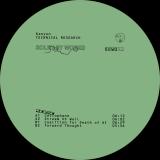
NYC’s Kanyon debuts his new label “Solitary Works” with an EP paying homage to the old-school. A1-B1: 3 raw, jacking techno tracks relay Kanyon’s vision of classic loop techno revival. On B2, Kanyon flexes his live production madness showcasing an electro track which is sure to convert the non-believers.
Larry June has built a career on making hard work look effortless, and his album Who Coppin’ stands as a masterclass in smooth, lifestyle-driven West Coast hip-hop. The album delivers a high-grade mix of Bay Area luxury, entrepreneurial motivation, and unbothered charismatic flows. Spanning a laid-back audio palette designed for early-morning juice runs and late-night freeway cruises alike, Uncle Larry balances the discipline of a hustle-first mindset with warm, sun-drenched production anchored by crisp organic instrumentation and heavy-knocking bass.
The album features a tightly curated roster of collaborators who align seamlessly with Larry's signature aesthetic. Spoken-word encouragement from Wallo267 sets an intentional tone on the opener "Go Outside Intro," framing the record around execution and focus. Soulful contributions from Jhené Aiko on "California Dream" and Musiq Soulchild on "Pretty Green Eyes" provide lush R&B textures, while NorCal legend B-Legit and longtime partner DJ.Fresh reinforce June’s deep West Coast roots. Meanwhile, Swizz Beatz injects high-energy bounce into "Flex," offering a vibrant contrast to Larry’s understated, cool-headed cadence.
Behind the boards, top-tier producers like Cardo, Teeko, Beat Butcha, Jay Versace, and June Santana craft a nostalgic yet modern backdrop filled with warm sample flips, smooth G-funk synthesizers, and relaxed soul grooves. The project builds to an emotionally grounded conclusion on "God Got Us (Ain't Too Many)," where June strips away the flexes to offer direct encouragement to his audience, proving once again that consistency, self-belief, and steady progress remain the ultimate luxuries.
Für manche zu gewagt, für andere unwiderstehlich - Twin Temple haben sich zu kulturellen Provokateuren und zu einer der meistdiskutierten Crossover-Bands der Musikszene entwickelt. Entstanden in einer der dunkelsten Phasen im persönlichen Leben der Bandmitglieder, ist ,DOOMED LOVERS" ihr bisher intimstes und emotional offenstes Werk. Das Album erweitert die filmische Bandbreite ihres unverwechselbaren Sounds und bleibt dabei doch verwurzelt in den zeitlosen Traditionen des frühen Rock 'n' Roll; es gilt als das bislang ambitionierteste und am besten umgesetzte künstlerische Statement der Band. ,DOOMED LOVERS" markiert das bisher kühnste Kapitel von Twin Temple. Produziert vom GRAMMY-preisgekrönten Produzenten Shooter Jennings im legendären Studio 3 bei Sunset Sound in Hollywood, setzt das Album das Bekenntnis der Band zur klassischen analogen Aufnahme fort und erweitert gleichzeitig ihre Klangpalette durch üppige Orchesterarrangements, die von einem 37-köpfigen Orchester eingespielt wurden.
Für manche zu gewagt, für andere unwiderstehlich - Twin Temple haben sich zu kulturellen Provokateuren und zu einer der meistdiskutierten Crossover-Bands der Musikszene entwickelt. Entstanden in einer der dunkelsten Phasen im persönlichen Leben der Bandmitglieder, ist ,DOOMED LOVERS" ihr bisher intimstes und emotional offenstes Werk. Das Album erweitert die filmische Bandbreite ihres unverwechselbaren Sounds und bleibt dabei doch verwurzelt in den zeitlosen Traditionen des frühen Rock 'n' Roll; es gilt als das bislang ambitionierteste und am besten umgesetzte künstlerische Statement der Band. ,DOOMED LOVERS" markiert das bisher kühnste Kapitel von Twin Temple. Produziert vom GRAMMY-preisgekrönten Produzenten Shooter Jennings im legendären Studio 3 bei Sunset Sound in Hollywood, setzt das Album das Bekenntnis der Band zur klassischen analogen Aufnahme fort und erweitert gleichzeitig ihre Klangpalette durch üppige Orchesterarrangements, die von einem 37-köpfigen Orchester eingespielt wurden.
My Chemical Romance's "The Black Parade (20th Anniversary Edition) vinyl" includes the original fourteen-track album. Released in October 2006, The Black Parade follows The Patient through his reflections on life and his passage into the afterlife, built on the concept that death visits people in the form of their earliest cherished memory.
Pressed as a single LP on Concrete Grey vinyl in a single-pocket jacket with a new art insert and printed inner sleeve.
My Chemical Romance's "The Black Parade (20th Anniversary Deluxe Edition) CD" includes the original album plus six bonus tracks: three live performances from The Black Parade World Tour (2007), never before released on physical music formats, and three rare B-sides. The live performances include "Someone Out There Loves You," long referred to by MCR fans as "Stay," performed on the tour but never officially recorded. Released in October 2006, The Black Parade follows The Patient through his reflections on life and his passage into the afterlife, built on the concept that death visits people in the form of their earliest cherished memory.
Packaged in an O-card and wallet with a 16-page lyric folder and new art insert
It’s rare for a hardcore punk band to make four full-length albums, and rarer still for the fourth album to be the band’s masterpiece. Yet Paratiisi, the fourth album from Helsinki punks Kohti Tuhoa, stands as the undeniable coup de grâce of a catalog overflowing with classic hardcore punk. If you’re already a fan, it’ll comfort you to know Paratiisi leans heavily on the strengths Kohti Tuhoa has possessed since their earliest releases: a timeless sound that combines UK82 drive and hooks with dramatic metal flourishes; a captivating vocalist with the perfect balance of grit and clarity, who can both howl like a banshee and carry a tune; and a particularly Finnish way with a driving, medium-fast tempo. But for all the continuities with Kohti Tuhoa’s excellent previous records, Paratiisi almost feels like the work of a new band. The riffs and choruses that anchor the album are impossibly catchy; Paratiisi bulges with huge moments that practically force you to air guitar and sing along (even if you don’t speak a word of Finnish), the band’s peerless chops and the rich and clear recording driving these climaxes to dizzying highs. But while the hooks are memorable, there isn’t a moment on Paratiisi that feels dumbed-down or overly familiar.
In fact, the album feels notably ambitious, pulling influences from across punk’s historical and aesthetic breadth and digesting them seamlessly into Kohti Tuhoa’s distinctive sound. The lyrics (don’t worry: English translations are included!) meet the same high bar as the music. They’re direct, assertive, and punk, but they’re also subtle and insightful, whether they’re tackling huge issues like microplastics or sharing a very personal account of a sexual assault and its aftermath. And then there’s Paratiisi’s most unexpected moment, “Eliitin Psykopatia,” a free punk freakout in the tradition of “Why (Reprise)” and “L.A. Blues.” If Kohti Tuhoa’s brief foray into free jazz tries your patience, though, don’t worry, because after three minutes of building tension, they reward you with what is bound to be the best riff of 2026, a clash of chords potent enough to blow holes through walls the world over. Paratiisi is the sound of one hardcore punk’s most exciting bands at the height of their powers.
Naarm/Melbourne-based artist Now Always Fades returns with Coalesce, the follow-up to his widely acclaimed 2025 album Into The Doldrums. The project of Xavier Bacash, Coalesce sees the musician evolving his modernised approach to downtempo and trip-hop, genres in which he has been heralded as a leading new voice amid their growing popularity. Across the record, NAF's musical and thematic universe expands with the return and addition of a series of new vocal collaborators, speaking to the versatility of a voice as a contextual instrument. In doing so, throughout 'Coalesce', he continues to develop a kind of sonic consistency that focuses on shared emotion above all else. In pursuing those feelings, Now Always Fades finds himself alongside a series of strong and soulful voices: Alia Seror-O'Neill, otherwise known as Alias Error; Lili Hall; and Olive Kimoto, NTS Radio host and singer behind influential 90s band Locust. Throughout the record, each vocalist finds themselves on tracks entirely for them, and in doing so, the NAF project provides everyone involved, and the listener, with something sonically new but emotionally familiar at every turn.
Industrial noise terrorists LARD, the legendary collision of Jello Biafra and Ministry masterminds Al Jourgensen and Paul Barker, return with the long-awaited repress of their 1990 full-length masterpiece, The Last Temptation of Reid.
A vicious fusion of industrial metal, punk rock, political outrage, and black humor, The Last Temptation of Reid remains as relevant, confrontational, and sonically devastating today as it was when it first detonated over three decades ago. From the opening assault of “Forkboy” (later featured on the Natural Born Killers soundtrack) to the twisted brilliance of “Pineapple Face,” “Drug Raid at 4 AM,” and their unhinged reinvention of “They’re Coming to Take Me Away,” (originally performed by Napoleon XIV), LARD created a collection of songs that still sounds unlike anything before or since.
This new edition has been worth the wait. After production setbacks and multiple rounds of test pressings, Jello Biafra personally halted the project to completely remaster the album, ensuring it finally received the sonic treatment it deserved. The result is the best-sounding vinyl edition of The Last Temptation of Reid ever released. As a special bonus, this edition now includes bonus one sided 12” vinyl of “I Am Your Clock.” Originally a UK exclusive 12”, it’s never been repressed until now.
Originally released on Alternative Tentacles in 1990, The Last Temptation of Reid captured the paranoia, hypocrisy, corruption, and media madness of its era with razor-sharp wit and a patented wall of noise and sonic wizardry. The unsettling truth is that it may hit even harder today.
Industrial noise terrorists LARD, the legendary collision of Jello Biafra and Ministry masterminds Al Jourgensen and Paul Barker, return with the long-awaited repress of their 1990 full-length masterpiece, The Last Temptation of Reid.
A vicious fusion of industrial metal, punk rock, political outrage, and black humor, The Last Temptation of Reid remains as relevant, confrontational, and sonically devastating today as it was when it first detonated over three decades ago. From the opening assault of “Forkboy” (later featured on the Natural Born Killers soundtrack) to the twisted brilliance of “Pineapple Face,” “Drug Raid at 4 AM,” and their unhinged reinvention of “They’re Coming to Take Me Away,” (originally performed by Napoleon XIV), LARD created a collection of songs that still sounds unlike anything before or since.
This new edition has been worth the wait. After production setbacks and multiple rounds of test pressings, Jello Biafra personally halted the project to completely remaster the album, ensuring it finally received the sonic treatment it deserved. The result is the best-sounding vinyl edition of The Last Temptation of Reid ever released. As a special bonus, this edition now includes bonus one sided 12” vinyl of “I Am Your Clock.” Originally a UK exclusive 12”, it’s never been repressed until now.
Originally released on Alternative Tentacles in 1990, The Last Temptation of Reid captured the paranoia, hypocrisy, corruption, and media madness of its era with razor-sharp wit and a patented wall of noise and sonic wizardry. The unsettling truth is that it may hit even harder today.
With Phosphène Island, Pairi Daeza explores a territory at the crossroads of fourth world, jazz fusion, experimental electronics and new age.
Acoustic and electronic instruments merge into a fluid, shifting music, where an apparent lightness finds its way into carefully crafted compositions.
The melodies seem to emerge from an imaginary folklore, born of an inner world, utopian and lush: Phosphène Island.
It brings to mind the borderless landscapes of Jon Hassell, the synthetic elegance of Wally Badarou, or the opening credits of a yet-unmade season of The White Lotus.
There's a moment during every great dance floor experience when the music takes over and everyone becomes part of something bigger. "SHOUT!", the latest release from 2SoulFusion Presents Ascension, captures that feeling in its purest form. Featuring the powerhouse voices and ad-libs of Dames Brown and Dawn Tallman, along with an all-star ensemble of master vocalists including Josh Milan, Rahsaan Patterson, Lisa Fischer, Cindy Mizelle, Audrey Wheeler, Ramona Dunlap, and Lea Lorien, this joyful anthem is an invitation to let go, lift your spirit, and celebrate through music.
Produced, written, arranged, and mixed by 2SoulFusion—Louie Vega and Josh Milan—"SHOUT!" draws inspiration from the communal spirit of gospel while embracing the energy and freedom of house music. Driven by simple yet powerful affirmations—"Shout," "Sing," "Move," "Love," "Get Up On Your Feet," "Listen Up," and "Let This Music Take You Higher"—the song transforms into an experience where every voice becomes part of the celebration. It's a journey of anthemic hooks, soaring harmonies, infectious grooves, and unforgettable melodies designed to ignite dance floors, uplift hearts, and remind us that music has the power to unite people through rhythm, joy, and love.
The inspiration for "SHOUT!" was born from a creative exchange between Louie Vega and Charaf Tajer, founder and creative director of the internationally acclaimed fashion house Casablanca. Introduced by longtime friend Joseph Capriati, Charaf shared a bold vision—to bring together the worlds of fashion, gospel, and house music for one unforgettable Casablanca runway presentation in Paris.
Louie Vega recalls: “Charaf was introduced to me by my friend Joseph Capriati, who said Charaf was looking to meet me about an idea he had. His vision was to marry fashion, gospel, and house music within Casablanca's collection. At first, he wanted me to DJ and play gospel house music. I said, 'Instead of playing existing music, why don't I create an original song with a gospel house flavor?' I immediately got together with my 2SoulFusion partner Josh Milan, and together we came up with 'SHOUT!'”
That vision came to life during Casablanca's spectacular Paris presentation inside a breathtaking cathedral, where Louie Vega premiered the original twelve-minute and nine-second composition live. As the music echoed through the cathedral, Dames Brown joined the London House Gospel Choir in a soul-stirring performance while the models walked the aisle on Casablanca's carpet made of their signature green color and a dashing vibrating giant mirror echoing the runway visually. Renowned DJs Luciano and Chloé Caillet were among those who walked the runway, while friends of Charaf Tajer and special guests—including Jaden Thompson, Folamour, Dimitri From Paris, Kapela, and many others—were in attendance, making it an unforgettable gathering where music, spirituality, fashion, and culture merged into one extraordinary experience.
Inspired by that magical evening in Paris, Louie Vega and Josh Milan returned to the studio to expand the original composition into the powerful recording heard today. Built around rich live musicianship, Josh Milan's keyboards, organ, piano and synth bass provide the foundation alongside Axel Tosca's expressive grand piano recorded live, Sherrod Barnes' soulful guitar, and Gene Perez's unmistakable bass groove. Together they create an infectious, organic driving sound that allows the vocals to soar while delivering the unmistakable musical depth and musicianship that define 2SoulFusion.
Leading the celebration are Dames Brown and Dawn Tallman, whose commanding performances are elevated by an extraordinary choir of world-class vocalists. Dames Brown's spirited sermon and ad-libs, and Dawn Tallman’s powerful ad-lib vamping out together with the soaring harmonies of Lisa Fischer, Cindy Mizelle, Audrey Wheeler, Rahsaan Patterson, Ramona Dunlap, Lea Lorien, and Josh Milan, recreate the feeling of a joyful gospel congregation—not confined to four walls, but alive on dance floors around the world. Every chorus encourages listeners to get up, listen up, feel it, sing, move, love, and become part of the experience. Recorded between Honeycomb Studios in Pennsylvania, The Hub Ibiza and Manhattan Center Studios, New York City, and mixed at The Hub Ibiza, "SHOUT!" reflects the continuing vision of the Ascension project, where spirituality, musicianship, community, fashion, and dance music become one.
The title of the fourth full‑length by A SECRET REVEALED already serves as a dark omen: "The Ruin I Summoned Forth" sounds powerful, oppressive, and inescapable. And that very weight permeates all eight songs of the album. The band from Würzburg crafts a sonic landscape defined by immense emotional force, urgent intensity, and a density that feels almost impossible to contain. Their wall of sound is never an end in itself, but the foundation of an existential expression that hits immediately and resonates long after. Stylistically, the quintet moves within the tension field of post‑metal - a sound that doesn’t deny its core roots, yet highlights more clearly than ever their affinity for black metal, melodic death metal, and modern, forward‑driving heaviness. Time and again, fragile, searching passages open up, giving the massive sound room to breathe, occasionally interwoven with subtle, almost folkloric accents. Fittingly, the opener 'Disheartened' sets an early exclamation mark: with Nikita Kamprad of Der Weg einer Freiheit as guest vocalist, the track gains additional depth and sharpness. "The Ruin I Summoned Forth" marks the band’s third release on LIFEFORCE RECORDS, following "Sacrifices" (2019) and "When The Day Yearns For Light" (2021). Their debut "The Bleakness" was released in 2015 via Bastardized Records. Across all four records, a clear narrative thread emerges: A SECRET REVEALED consistently strive to craft strong thematic arcs and a massive, uncompromising sound that grips listeners from the very beginning and leaves a lasting impact. Once again, the band presents a cohesive work in which individual elements rise into an overwhelming whole, until, in the end, the inevitable unfolds: "The Ruin I Summoned Forth".
With NIGHTS AFTER VAMP, Magnolia Park have spun an electrifying mix of hard rock, punk, nu-metal, hip-hop and metalcore into a dizzying, multisensory experience. Throughout its 17 songs, the record soundtracks an ominous journey through the fictional world of Nocturne Nexus; where rulers and rebels battle with the future hanging in the balance. Heavily inspired by the band's love of anime, horror and fantasy, the album's narrative was spurred by the long-running Vampire Hunter D, iconic works like Star Wars, Dracula and Joseph Campbell's legendary monomyth. Produced by the band's in-house producers alongside Andrew Wade (A Day To Remember, Wage War), Hiram Hernandez (blessthefall) and Andy Karpovck (408, Taylor Acorn) and mixed by Zakk Cervini (Bad Omens, Bring Me The Horizon) - Magnolia Park soundtrack this dramatic tale of crimson blood and chrome-plated courage through their own mix of man and machine, stacking whirring electronics and industrial undertones alongside sledgehammer breakdowns, walls of detuned guitars and Roberts' seam-splitting vocals.
Originally released in 2014, Tales from the Realm of the Queen of Pentacles is now being reissued on limited-edition gold vinyl.
The album tells a story of the intersection of the material world and the world of the spirit. Includes fan favorites "I Never Wear White" and "Crack in the Wall,” plus "Song of the Stoic" and “Don't Uncork What You Can’t Contain,” and "Horizon", written for Vaclav Havel.
Produced and arranged by Gerry Leonard, the album features an illustrious group of musicians including longtime Vega bass player Mike Visceglia and drummer Doug Yowell, bass player Gail Ann Dorsey and drummer Zachary Alford (David Bowie), bass player Tony Levin (Peter Gabriel), drummer Jay Bellerose (T-Bone Burnett), and Larry Campbell (Bob Dylan) who plays banjo, mandolin, and cymbal throughout the album. Additional contributions feature drummer Sterling Campbell (David Bowie, B52s) and Alison Balsom, the virtuoso principal trumpet for the London Chamber Orchestra. Catherine Russell, known for her work with David Bowie and Paul Simon, adds background vocals.
The strings were recorded in the Czech Republic with the Smichov Chamber Orchestra. The album was mixed by Grammy Award-winning engineer Kevin Killen.
Earlier this year, Blue Hour released his debut album Selva, a record steeped in the imagery of lost and forgotten worlds. Now, rather than let that world stand still, Blue Hour opens it up, inviting a handpicked crew of fresh talent to step inside and make it their own.
The result is a remix companion that reimagines Selva through fresh eyes and ears. Each remix artist brings their own sonic fingerprint to the source material, some peeling back the original's dense atmospherics to expose skeletal rhythms underneath, others pushing further into the album's dreamlike haze. What emerges isn't a simple tribute, but a genuine dialogue: new talents in conversation with an album that was already asking questions about memory, erosion, and what gets left behind when a world disappears.
It's a fitting extension of Selva's original premise: if the debut album conjured ruins and jungles swallowed by time, this remix project treats those same soundscapes as living, mutable spaces, ready to be excavated, reinterpreted, and given new life by a new generation of voices.
Shitcluster again in disturbing form. Less grim now, but more disjointed and driven harder. The drums argue with the sequencer and dusty samples swerve into broken keys. And the walls... the walls are singing (to the traffic by my home).
Fall Collection pulls from the vaults. Four tracks, some long out of print, one never
before pressed, all of them worth the dig.
The A-side opens with Ty Tek’s Dirty Fusion, originally released on Gourmet Recordings
in 2005 alongside the Audio Soul Project remix two years later. Both have been
fetching serious money on the secondary market for a reason. This is tech house from
when that phrase still meant something, the walloping cadence, the sci-fi pads, the
seismic synths rolling underneath. You hear it once and it stays with you.
Departed by Wasted Chicago Youth follows. Justin Aulis Long and Mazi Namvar
started from a remix brief and promptly ignored it, building something new from scratch
in a single session. Organs, wailing lead, disco break, 808 subs, a plastic bass line
threading through all of it. Somewhere between an angry Metro Area and a more
psychedelic Jitwam, but really it’s just WCY doing what they do.
Love Thy Enemy by Wasted Chicago Youth appeared on the Chase The Devil EP back
in 2009. The bubbles, shuffles, and wobbling chords hold up, and the vocal samples hit
differently now than they did then.
ASP’s Cloud Dub closes the record. It appeared on Dubs Vol. 2 as a digital release in
2022 and has never been on vinyl, and that’s where the subsonic acid bass line and
the layered string, piano, pad, and organ groove finally get room to breathe. Deep
house the way Chicago made it in the early nineties. Bare, musical, and raw.
Track A1 written by Ty Tek. Remixed by Audio Soul Project
Track A2 written by Justin Aulis Long and Maziar Namvar
Track B1 written by Justin Aulis Long and Mazi Namvar
Track B2 written by Audio Soul Project.
Copyright Control
Fresh Meat Records 2026
Mutant präsentiert in Zusammenarbeit mit Hollywood Records und 20th Century Studios stolz die erste Veröffentlichung der Filmmusik von Sarah Schachner und Benjamin Wallfisch zu „PREDATOR: BADLANDS“ auf physischen Tonträgern.
Vier Jahre brodelte es im Berliner Untergrund: Nach zwei DIY-Tape-Releases durchbrechen SEK die Flanke und präsentieren mit Wallensteins Garage ihr erstes Album auf Vinyl ein Debüt, das gleichermaßen Geschichtserzählung, Konzeptalbum und ausufernde Jam-Session ist. SEK benannt nach den Anfangsbuchstaben der Nachnamen ihrer Mitglieder - Paul-Willy Stoyan (Gavial, Jacke Schwarz), Georg Edert (Elder, Gaffa Ghandi) und Lucas Kazzer (Gaffa Ghandi, Borders Down) - vereint drei Musiker, die seit Jahren in der Berliner Underground-Szene aktiv sind. Ihre gemeinsame Sprache findet sich zwischen Improvisation, historischer Erzählung und druckvollem Rock. Was die drei verbindet, ist weniger ein gemeinsamer Stil als die Lust am Ausprobieren: ausufernde Proben, lange Improvisationen und die Suche nach Klanglandschaften, die ebenso sperrig wie eingängig sein können. Was 2022 während des pandemiebedingten Lockdowns mit stundenlangen Jams begann, entwickelte sich in den vergangenen vier Jahren zu einer eigenwilligen Mischung aus Psychedelic Rock, Krautrock und einer Prise Prog. Die Band selbst nennt diesen Sound augenzwinkernd HOR Historian Oriented Rock: Musik, die historische Stoffe nicht illustriert, sondern in Klang übersetzt. Die Inspiration für die Songs stammt aus dem Dreißigjährigen Krieg (16181648), insbesondere aus dem Leben des böhmischen Feldherrn Albrecht Wenzel Eusebius von Wallenstein und den Ereignissen rund um die Schlacht bei Lützen (1632). Das musikalische Arsenal ist ebenso vielseitig wie die erzählte Geschichte: verfuzzte Gitarren mit wabernden Delays treffen auf einen galoppierenden Bass und treibende Drums, getragen von träumerischen Keyboards. Immer wieder öffnen sich freie, fast chaotische Passagen, in denen Harmonie und Rhythmus auseinanderbrechen wie Schlachtordnungen, die im brutalen Nahkampf ihre Form verlieren. An anderer Stelle schaffen sanfte Mandolinenklänge Momente der Ruhe, bevor sie sich in schwere, schmerzvolle Trauermusik verwandeln, inspiriert von Doom und Drone Metal. Zwischen hypnotischen Grooves, improvisatorischer Freiheit und cineastischer Dramaturgie erschaffen SEK einen Sound, der Vergangenheit nicht nachstellt, sondern neu erfahrbar macht. Die Platte erscheint auf Exile On Mainstream als schwarzes Vinyl mit beigelegter CD. Genre: Krautrock, Psychedelic, Alternative Für Fans von: Elder, Gentle Giant, Amon Düül, Zahn.
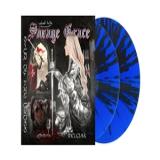
Blue w/ black splatter vinyl. Following its initial triumphant 2023 comeback wave, their critically acclaimed studio album Sign of the Cross is treated to the ultimate deluxe treatment: a stunning Blue with Black Splatter Double LP package and a refreshed CD pressing.
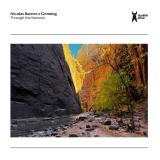
Amazing Album! Following his remix on Massiel's Echoform, Nicolas Barnes returns to Devilish Affair for his first full EP on the label, joining Genning for the label's first double LP. Each producer contributes three original tracks before remixing one another, bringing together eight tracks that showcase two different but complementary approaches to deep electronic music. While Barnes leans into darker, dubby grooves, Genning brings a brighter, more driving energy, giving the record a natural balance from beginning to end. The artwork features a photograph taken by Devilish Affair founder Eric Louis while hiking through The Narrows in Zion National Park. A winding stream cuts between shadow and sunlight beneath towering canyon walls, creating a scene that feels right at home alongside the music. Whether you're listening at home or deep into a late-night set, Through the Narrows is meant to be experienced as a complete journey across four sides of vinyl
'AMEN is a word that moves between the sacred and the ordinary, across languages and cultures. An ancient, universal expression, born in prayer yet living beyond it - in daily life, especially in the Italian language, where it has become part of ordinary speech, used to accept, conclude, affirm, and let things be.
'The sixth release on e s p e r p e n t o opens a gateway into a timeless, transcultural dimension through a continuous, immersive sonic flow. While conceived as an intimate listening journey, this record emerged from a shared experience within the walls of Frequenze Studio (Monza). ESPER006 is the result of a three-hour improvised live session that brought together experimental music trio MYS and London-based producer Big Hands.'
'Hive Mind are excited to have worked with Rio de Janeiro based label QTV, to bring you this retrospective from the cosmic joker of contemporary Brazilian music, Negro Leo.
'The music on this retrospective, which draws together songs from his 14 albums, EPs and singles released since 2012, ranges widely and wildly across genres and styles, from the urgent and angular no-wave inspired punk-funk of Niños Heroes or Ilhas de Calor, through the psychedelic hoedown of Noite Invertida or the beautiful and delicate Esferas and on to the maximalist hyperpop of more recent works like RELA or Desejo de Lacrar. Negro Leo consistently confounds, confuses, disturbs and provokes.
'His music is explicitly and fiercely Brazilian and draws on the history of black Brazilian music for inspiration - Gilberto Gil and Tropicalism, Itamar Assumpção and the Vanguard Paulista, Funk Carioca, the Boi's rhythm from the northern carnivals, the samba of the streets and the country - it's all thrown into the mix, along with free-jazz, noise and various chunks of non-Brazilian pop. Leo's music and songs serve as an essential documentation of the country's rapidly shifting social fabric in the digital age, a time in which the country and its people feel lost in a "jungle of pixels".
'Some of these surreal songs can feel overwhelming at times, like a wall of noise full of unfamiliar sounds and rhythms, but there's an unapologetic punk spirit behind it all, alongside a genius composer. It's worth pushing through the that sense of overwhelm to the place where the beauty and complexity of the composition and songwriting shines.'
A limited edition clear vinyl pressing for Vol. 1 of DINTE's critically acclaimed collection of pirate radio adverts & idents, taken from recordings of London stations between 1984 & 1993.
The Easy Way Out is the first proper release from London's THE EASY EIGHT, sometimes shortened to just EZ8, because why the hell not?
They might be a new band, but feature familiar faces from a some of the best London hardcore punk bands of the last ten years, including THE CHISEL, ARMS RACE, STINGRAY and LAST AFFRONT to name a few. This time around they are going for a more melodic approach. Think of the more melancholic moments of the 80's RAMONES records with a touch of MISFITS and you're on the right track.
This LP compiles the first two recording sessions. Side A features the first session, originally released online last autumn while Side B is rounded out with four brand new songs. It's a great snapshot of the band finding and perfecting their sound during their first year and these songs are guaranteed to be stuck in your head for days.
Italian-Iranian DJ/producer Sciahri lays down a deeply hypnotic seven- track EP on return to Mutual Rytm. Heading up the agenda-setting Sublunar label, which is one of Mutual Rytm boss SHDW's personal favourites, Sciahri has been deep in the scene for more than a decade ever since he turned heads with a debut on Ilian Tape in 2014. Well respected for his carefully balanced love of the classic sound with new school influences, always delivering cuts with a refined and personal touch, highlighted and showcased via his widely-loved ‘Pareidolia’ release series. Returning on the label following his appearance on the ‘Federation of Rytm IV’ compilation, he lands with a freshly evolved EP that kicks off with the much hyped ID, ‘Moonwake’. That cut is built on robust, rumbling drums and layered up with flashy synths that bring stark futurism to the dance floor. ‘Liminal’ follows a similar linear path with musical drums and synths that twist and twitch, firing your synapses while your body is locked to the rhythm, before ‘Night Sentinel’ transports you to a more eerie world of anxiousness and tension - the synths are spooky, and the sonar pulses keep you on edge as immersive drums race nonstop. ‘Unmoved’ lands heavy, the bulky kick drums coming on like a storm with howling synth winds adding to the all-consuming atmosphere. ‘Too Much Time’ closes out with a wall-rattling groove and subtle synth motifs that creep in the shadows. As always with the label, digital cuts ‘Silent Frontier’ - which gets dancers on their toes with a backlit synth glow - and ‘Louisiana’ - which brings a more psychedelic energy and hard, hammering groove, rounding out a stylish, meticulously produced offering.
A warm Mediterranean summer night. The day’s heat lingers on the walls as the sea breeze carries fragments of conversation into the dark. Time slows, hearts open, and a melody drifts by familiar, yet impossible to place. Minutes later, you’re humming it. This is Tonight In Tunisia... If you know, you know..
With these remixes for Re:Imagine, the now well-established pairing of Chez Damier and Ben Vedren continues to blur the lines between deep house tradition and contemporary expression.
Built around warm rhythms, sun-drenched melodies, and irresistible vocal hooks, Tonight In Tunisia balances sophistication with immediacy. Rooted in jazzy sensibilities, it offers a version for every mood: open-air dancefloors, late-night terraces, and those summer moments that seem to linger long after the music stops.
Effortlessly uplifting and deceptively simple, it’s the kind of record that slips into your mind on first listen and refuses to leave.
DJ Paul & Lord Infamous’ cult classic Come With Me to Hell: Part 1 returns in its most definitive form ever — a fully remixed and remastered double‑LP, pressed for the first time on vinyl since its original 1994 cassette‑only release. Born in the early Memphis underground and sold strictly through car stereo shops, mom‑and‑pop stores, and “out the trunk” hustle, the album became one of the most sought‑after pieces in Three 6 Mafifia history, circulating for decades only through bootlegs and low‑quality rips.
This special edition finally brings the project to collectors in a premium format worthy of its legacy. The first LP is pressed on ULTRA CLEAR GLITTER vinyl, showcasing the eerie, atmospheric production that defifined DJ Paul and Lord Infamous’ early sound. The second LP arrives on RED SMOKE vinyl, a striking visual match for the dark, sinister tone that made the duo pioneers of the Memphis horrorcore movement.
Painstakingly remixed and remastered by DJ Paul, this release honors Lord Infamous’ memory and preserves one of the foundational chapters of Three 6 Mafifia’s origin story. After decades of demand, fans can fifinally experience Come With Me to Hell: Part 1 in a high‑quality, collectible vinyl edition that celebrates its raw beginnings and enduring influence.
The eye of the storm: welcome to Tornado Wallace's debut album! The accumulation of about four years of work, with tracks written in Berlin and Melbourne, 'Lonely Planet' is nothing like you may have expected from the Australian expat. No stranger to fans and followers of ESP Institute, Beats in Space and Music From Memory's sister Label Second Circle, Tornado Wallace's strain of releases so far merged functionality with a musical playfulness that led him to find himself as one of the producer's behind José Padilla's International Feel album. Here, he leaves the needs of the dance floor behind in order to create a magical mystery tour de trance into his and our inner jungle. How about some references New Age sounds meet new wave melodies, Grace Jones runs into the Dire Straits at Compass Point, while a Korg Mini Pops and a Roland CR78 make amends for Sly & Robbie's absence, Michael Mann pictures Joseph Conrad's 'Heart of Darkness', Robert Rauschenberg tries his luck at naturalism and an imagined Wally Badarou echoes through all of it. Sandwiched between the title track and the yearning beauty of the album's final point 'Healing Feeling', you get all of that as well as collaborations with and contributions of NO ZU, David Hischfelder and the voice of Sui Zhen on 'Today', who would easily make Anna Domino take her proverbial hat off. Tornado Wallace created an album that supersedes the requirements and expectations of a debut. Like a lost Island Records or a never released Made to Measure album, 'Lonely Planet' soundtracks notions and ideas that recall the nostalgic future in the past as much as it looks ahead.
Forty years of cassette releases, pressed for the first time on vinyl
First of two instalments exploring the previously unreleased sonic archives of one of Poland’s most enigmatic
living artists - with its first volume focused on his deep listening practice and spiritual reverie (recorded 1990–2013)
The last time Andrzej Dudek-Dürer took a banknote bearing the face of the Polish anarchist Jarosław Dąbrowski from his pocket to trade it for a pair of shoes was in 1969. He bought them for 120zł - the equivalent of 100€ today - and never replaced them since then. Only rebuilt them, year after year, drawing a needle and thread through the leather each time it split, closing one wound before the next one opened. It became a ritual of precision, stitching a record of another year into their soles.
That same year, in Wrocław, he arrived at a conclusion that would recalibrate everything that followed. Convinced he was the reincarnation of Albrecht Dürer, he adopted the surname Dudek-Dürer, stopped cutting his hair and began wearing the same garments every day. It was the first ritual of many, though he wouldn't have called it that yet. Look closely enough, over the decades, and it is always the same gesture, returning in different material: hair growing in a single unbroken strand, a needle drawing thread through leather, sitar strings pulled taut across a neck he built with his own hands and magnetic tape spooling forward inside the cassette boxes stacked against his walls.
None of this began in a vacuum. Dudek-Dürer emerged from the Wrocław neo-avant-garde, in a Polish art world where an exhibition could be cancelled overnight by the stroke of a censor's pen. In 1973, his exhibition Auto-crucifixion was shut down by the state, and for a time he found himself blocked from exhibiting his own art at all - the one force in his life that ever came close to cutting the thread.
He seemed to experience it differently. In 1974, after long, patient research into sitar craftsmanship, he built his first prototype with his brother, a knowledgeable luthier. In 1978, in a smoked-out jazz club, he took his first steps into sound recording with the unreleased album Jazz From Underground with his first band. By 1979, recognition started to travel further than he could.
Turning toward Far-Eastern philosophy, meditation and the idea of reincarnation was another language of freedom for him. It was a way of claiming an inner territory the state could not reach, a border it could not close. Mail Art served a parallel function, reaching further out: in a country that restricted travel and expression, sending and receiving art through the postal system became an act of quiet rebellion.
The body, in his understanding, is only an envelope readied for constant transformation. From this came Metaphysical Telepathy: during the years he could not leave Poland, he treated that confinement as a rehearsal room, sending his mind out ahead on the same thread his body would later follow. Living Sculpture grew from the same root with performances of stillness beside static art objects, until the boundary between the object and the man beside it simply dissolved. Camera Meditation extended the same instinct into photography: a shutter click flattening three dimensions into two so that a single instant could be held forever. Inspired by the pioneers of self-portrait photography like Robert Cornelius, he used it to document time itself, and kept explaining to me: "You know. This is not about vanity. This is about observing time passing.”
The isolation did not end suddenly. It ended the way his own philosophy had already predicted it would, from the inside first. Mail Art quietly solved the problem politics couldn't. Correspondence built during years of confinement slowly worked its way through doors the state itself had kept locked. Contacts made through folded paper and stamps became invitations. Ultimately, invitations became passports.
In 1983 he made his first trip outside Poland, to Germany, in search of the audio technology he couldn’t get his hands on before. In 1985, he was invited by the Indian embassy in Poland to give a sitar concert on an instrument he had spent a decade patiently stringing together - half sitar, half tanpura, built from patience and determination. After the collapse of the People's Republic of Poland, the travels kept unspooling: South Korea, then Mexico, then Australia, Canada, New Zealand, Singapore, Japan and the United States - each stop leaving behind its own small knot of tape, tied off and carried home.
In the decades since, recognition arrived at the same unhurried pace: he conducted workshops at UC Berkeley, served as vice-president for artistic affairs of the Union of Polish Art Photographers and the Union of Polish Visual Artists between 2010 and 2014 and received the Bronze Medal for Merit to Culture - Gloria Artis. His visual work gradually entered collections including the National Museums of Warsaw, the Stedelijk Museum, Tate Modern, MoMA and the Venice Biennale. His musical practice, by contrast, never found that kind of room - left to circulate quietly, sharing his cassette tapes directly, waiting for someone willing to follow it further.
It took months before I could find a way to reach Andrzej Dudek-Dürer - his presence online is very close to nonexistent. Surprisingly, LinkedIn turned out to be the only door still open, a faintly absurd irony given everything else about him. I packed the strict minimum for a three-day trip and an empty notebook and made my way to Wrocław. His headquarters sits in the neighbourhood of Grabyszyn: a two-storey pre-war house that has belonged to his family for generations. The man who opened the door was long-haired, long-bearded, in his trademark leather shoes and patched jeans. We sat in his living room, in front of a computer where decades of recordings sat organised in cryptically named files, surrounded by books and objects that had arrived one layer at a time, leaving room for only two chairs in the middle. His shoes sat by the door, rebuilt so many times they had become their own quiet sculpture. Cassette tapes filled boxes against the walls, almost unlabelled, each one a spool of thread holding decades of sound that had never once been asked for, until now.
I listened for hours: meditating in front of strangers on the porch of a Seoul temple until the tourists stopped taking photos and simply waited with him; a stand-off with border guards at the US–Mexico crossing over an instrument they couldn't identify and didn't trust; a session with the Stockhausen family that he still, decades later, describes like it happened last week. All of it interrupted, occasionally, by the smell of soup boiling and fresh bread warming on the ceramic stove. After two days, it felt like being handed the end of a very long thread and asked, gently, to keep following it. I left with a USB drive holding his full discography, signed with his unmistakable signature.
Astral Meditations From A Living Statue is a length of that thread, drawn out from the boxes stacked against his walls - recordings gathered from different rooms, different countries, different decades. This first record breathes slowly: incense-thick, meditative, built for stillness. A cutting-edge séance in outer space where machines learn how to dream.
It begins with the neo-classical improvisations of Andrzej, space-delayed, recorded at Klub Muzyki i Literatury in Wrocław in 2002. 'When..So' opens the curtains with a deep-rooted meditation accompanied by slow-decaying piano figures illuminated by a candle-lit spirit gathering.
Los Angeles, 1990: a dormant villa, a grand piano, the voice of Bonnie Barnett. 'Exception' is captured in a single room, in a single afternoon - voice and keys circling each other, neither one leading, until the silence between the notes starts to feel like the instrument.
'The Meta...' and 'Tired Of...', recorded at Studio Morandi in Ponte Nossa, Italy, in 1992, settle into a sitar drone built entirely from patience - overtones stacking and beating against each other, strung by a man who never once set foot in India. 'Mastery Of...' follows, recorded the same year at Studio Suski in Łomianki, pushing that same hum further still, until pitch dissolves into a spectral reverie. 'Transcendental Sound', from 2000, closes the first record in a slow bath of celestial frequency - better heard beside the shores of the Odra river.
More than fifty years after deciding that a life could become an artwork, Andrzej Dudek-Dürer continues to inhabit that decision. His shoes keep wearing thin against the earth's crust. His hair keeps growing, one strand at a time. His cassette tapes keep spooling in the dark of their boxes.
Now the thread finds its last shape: a single unbroken groove, spiralling inward from the outer edge to the label at the centre. Never cut - the way nothing else in his life ever was. Drop the needle and it will find that groove and follow it, the same way a needle once followed leather, once followed a border it couldn't cross, once followed string into an instrument that didn't exist until he built it. This record is the other end of a thread that has been travelling for fifty years. For the length of both sides, it rests here, in your hands. This is a timeless proof that the Lord of the New Age was never lost."
Danza Nativa was founded in Buenos Aires in 2019 and has been drip-feeding us with a few choice releases a year ever since. The latest is another deeply immersive take on atmospheric techno from BLNDR, and it opens with the mystic, murky sounds of 'Tidal Veil'. The rhythm rolls freely, but the vibes are dank and grainy, as if you're in a dark underground cavern with the walls closing in. 'Mangrove' is just as aquatic as the title suggests, with wispy motifs buzzing about like mozzies above the humid groove. 'Arwing' has a more astral sound design with cosmic melodies over another low-key but meticulous mix of drums and hits. Finally, Alderaan enters on remix duties with a swirling late-night energetic charge.
Faitiche presents the debut solo album by cellist, sound artist, and composer Topu Lyo: “quiet scenes from tokyo” brings together sixteen miniatures for solo cello and tape echo that oscillate between abstracts drones and rhythmic pizzicato sketches – all recorded at Topu’s Tokyo apartment. The constant traffic noise from a nearby highway has become an accompanying soundtrack for his compositions and can be heard on the recordings. Topu’s playing is marked by a distinctive idiom oriented more towards abstract electronic studio effects than classical technique.
The artist spoke to Jan Jelinek about his work:
JJ: A solo cello album may seem like an odd fit for a label that has to date released only music that is electronic in the broadest sense. But I think “quiet scenes from tokyo” complements the Faitiche repertoire exceptionally well. Its sixteen miniatures showcase the cello in all its complexity: the bowed passages sometimes recall a tape feedback drone; the pizzicato playing conjures up the percussion recordings of Moondog; and the abstract textures might be mistaken for the product of a granular sampler rather than rapid finger work on the cello. I’m constantly surprised by just how rich and varied this album is – without ever losing the charm of its sketch-like quality. Could you say a few words about the making of your album – first of all, from a rather technical perspective: what production tools did you use, and why?
TL: My production tools were very sparse. Just a solo cello and my Roland 301 Space Echo, which I only used at the end, running everything through it during mixing, tape only. After years of working with electronics, pedals, and synthesizers, moving to Tokyo pushed me toward minimizing my setup. But my aesthetics shifted too, toward simplicity. I wanted to strip everything back to just the acoustic cello and see how far I could push it — replicating some of my favorite electronic effects through extended technique: slow portamento, LFOs, filters, detune, noise. I’d also been listening to a cassette of ocean sounds for years. When I moved to Tokyo I was horrified to find myself living directly across from a freeway. Eventually the freeway started sounding almost identical to the ocean — and that ended up playing a prominent part in the recording.
JJ: That’s super interesting: mimicking electronic production as a compositional idea for the cello! You say the sound of the freeway is crucial to the album: I, too, tend to interpret steady traffic noise as a positive soundscape – do we hear the freeway on the album? I can also hear other field recordings, for example on “a street car with announcements”. Can you say a bit about how these field recordings influence your playing?
TL: Yes, you can hear the freeway on the album! The freeway is most prominent in “old trees in lonely spring”, “yuyake koyake”, and “the moon” (you can clearly hear individual cars). When I first began recording I had my balcony door shut tightly, but after a while I began leaning into the highway sound and slowly opening the door little by little to control the amount of noise. “streetcar with announcements” was a moment I was recording and a car passed by making announcements in the background. I loved how it sounded! Same thing with “yuyake koyake”, and later I realized that every day at 5pm the same song plays to mark sunset, telling children it’s time to go home. Having this bedrock of sound puts less pressure on me to put music on top or to play more notes.
JJ: It’s astonishing how much this differs from what I’d imagined: I’d been picturing peaceful landscape recordings, but had never thought of a freeway. Which goes to show how open to interpretation traffic noises are. So the room by the freeway had a major influence on the album – how are you going to perform it live?
TL: The contrast between the freeway and the beautiful landscape in my head couldn’t have been starker. I too was imagining a beautiful landscape in which to create the album, but somehow it still worked out. I've been going back and forth a lot on live shows and I think the most honest way is to have it the most stripped down. I was thinking of using traffic samples etc., but I think the duet really comes from the background sounds from every unique venue/environment. So as it stands, I’ll just be doing acoustic solo cello.
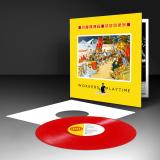
Workers Playtime is the fourth album by Billy Bragg, originally released in September 1988. This long overdue vinyl reissue comes in a gatefold sleeve and was remastered by John Webber at Air Studios using high-resolution transfers made from master tapes in Billy's archives. There will also be a limited edition run of coloured vinyl albums.
Helmed by legendary producer Joe Boyd (Nick Drake, Fairport Convention et al) and his former Riff Raff bandmate Wiggy, Workers Playtime saw Bragg deliver his most tender and empathetic collection. The band featured the legendary Danny Thompson on double bass, BJ Cole on pedal steel, Bruce Thomas (Elvis Costello & The Attractions) on bass and Micky Waller on drums. Licking his wounds after another victory for Margaret Thatcher at the ’87 general election, he wrote ‘Waiting For The Great Leap Forwards’, one of his most enduring songs, while the stunning a capella ‘Tender Comrade’ confronts the ugly prejudice of the moral majority. Melancholy and disillusionment are part and parcel of Bragg’s songwriting, but always with a healthy dash of optimism.
feeble little horse is naturally delighted to present their third full-length LP, bitknot. The album was written, arranged, produced, and recorded by Sebastian Kinsler, Lydia Slocum, and Jake Kelley across their respective homes in Pittsburgh, Pennsylvania. A spirited investigation into the unnatural space created between human nature and a culture of convenience, a synthesis of dirt and digital, bitknot by feeble little horse creates a language wherein one can re-imbue a sanctity of interdependence away from consumptive “self-suciency” and materialism. Slocum’s meandering introspection playfully harmonizes against Kinsler’s hooks, walls of noise, a supercharged car battery’s worth of synths and samples dropped in the ocean of their guitar-driven songwriting framework.
Sucata Tapes and Annihaya proudly present Delia, the hypnotic new album by Munda (Selu Herraiz), following up on foundational explorations of ritual and territorial memory.
Recorded in September 2021 during a residency at Konvent—an old convent set within an abandoned industrial colony in Cal Rosal, deep in the lower Catalan Pyrenees—Delia is forged from the physical ghosts of a former textile factory. Within high ceilings, terracotta floors, and walls vibrating with low frequencies, Herraiz captured the remnants of another time: shards of glass, rusted iron, corrugated plastics, and the sonic echoes of a place where hundreds of women once worked the looms.
Using a dynamic microphone placed before the speaker of a battered Yamaha Electone organ with broken keys, Herraiz transformed these industrial ruins, raw materials, and acoustic traces into an immersive electroacoustic journey. Blending primitive textures, analog synthesis, and the deep resonance of territorial history, Delia stands as a profound meditation on memory, space, and alchemic listening.
"Synth revival from the mid-aughts gave us fractured sub-genre upon fractured sub-genre, outlets for noise-leaning basement dwellers to finally dance like dad said they couldn’t, and commercially-viable nostalgia drivel that eventually poisoned the well. Luckily, for all of us, Ryan Martin and his sincerity cut through all of it.
Secret Boyfriend, the monumental and ongoing undertaking of Martin, has spanned labels, media, and DIY line-ups for more than a decade. Whenever Ryan comes up in conversation I am sure to bring up his home in North Carolina and how it is a testament to his commitment to media and artistic ethos having a place in the world. The walls and rooms are thoroughly covered in drawings, flyer ideas, cassette collections, VHS in heaps and piles, instruments that seem like they are still warm as if they were just played then sat down. Martin and his home act as a means to unbridled expression without the need to fill a gap in a mostly saturated world.
Available in the following Territories: Wordwide minus Japan & Korea
NOTON is pleased to announce12 Conversations, a collaborative album by Ryuichi Sakamoto and Alva Noto to be released on 18 September 2026.
The partnership between the legendary musician and composer Ryuichi Sakamoto and the German artist Carsten Nicolai (aka Alva Noto) has produced some of the most distinctive and enduring works in contemporary electroacoustic music. Beginning with Vrioon in 2002, the artists spent more than two decades fusing and expanding their disciplines, with Sakamoto's evocative, sustain-drenched piano compositions finding their counterpart in Nicolai's skilful and sensitive electronic detailing.
Each successive project further deepened their artistic dialogue: from the five studio albums of the V.I.R.U.S. series (Vrioon, Insen, Revep, Utp_ with Ensemble Modern, and Summvs), to their score for Alejandro G. Iñárritu's The Revenant; Glass (2017), a wholly improvised performance inside Philip Johnson's iconic Connecticut landmark, in which the pair fixed contact microphones to the glass walls, playing the architecture itself as an instrument; and Two (2019), a document of their live performance at the Sydney Opera House.
Across these works, their distinct approaches achieved a rare synthesis, a brilliantly sustained dialogue between piano and electronics, Sakamoto's warmth and melodic finesse meeting Nicolai's abstract electronic formalism to invoke a mesmeric quietude as deeply satisfying in its melodic resolutions as in the merger of its filmic romanticism and meditative subtlety.
12 Conversations brings together musical exchanges recorded in November and December 2022. Rooted in the same creative period that gave rise to Sakamoto's final solo album 12, these recordings were not originally intended as a standalone release. It was only after the completion of 12 that Sakamoto and Nicolai decided to present these exchanges as a work in their own right.
The album reflects the vitality and curiosity that defined more than two decades of shared inspiration: fluid, exploratory, and forward-looking. Created with openness and trust, it captures a creative process in constant transformation - sounds expanding, altering, and evolving through attentive listening.
Conceived as the continuation of an artistic dialogue extending beyond the physical, 12 Conversations honours Sakamoto's wish that these encounters should exist beyond the archive, offering an enduring testament to one of contemporary music's most revered collaborations.
Carsten Nicolai writes:
"A heavy breath can be heard in the recordings. Yet this work is not about remembrance but continuation, vitality, curiosity, and the spirit of experimentation that shaped an artistic relationship over decades.
The twelve pieces we exchanged in November and December 2022 possess extraordinary density: sounds expanded, altered, recontextualized. Initially, every intervention felt almost inappropriate. Yet this was part of our openness and trust: adding, shifting and radically yet softly transforming.
Even in these final exchanges, plans for future projects continued to take shape, mindful of finite yet firmly believing in the power of new ideas. We chose the name Conversations, which has become a space of memory and vision, where past, present and future intertwine.
For a long time, releasing this music seemed impossible. The loss felt too sudden, and the emotional connection too profound. As time passed, it became clear that these twelve musical encounters should have life outside the archive. To honor Ryuichi's wish, these pieces are now being released as the continuation of a dialogue that extends beyond the physical."
The first single, Conversation 3, will be released on Tuesday, July 14, 2026. The second single, Conversation 6, will be be released on Wednesday, August 26, 2026.
12 Conversations will be available worldwide on vinyl, CD and digitally. A Japanese edition will be available on Ryuichi Sakamoto's commons.
Since emerging from Italy's underground over a decade ago, Ninos Du Brasil (Nicolò Fortuni and contemporary artist Nico Vascellari) have developed a potent sound that blends live batucada percussion, electronics, punk energy, and visceral vocals sung in an imagined language. Along the way, they've built a reputation for incredibly intense and unpredictable live performances.
This fifth full-length follows Antro Pop, released on Codalunga / Hospital Productions in 2021 in the middle of covid lockdowns with a canceled world tour leaving the world in wait. Out of that imposed hiatus Orden Micelial began to take shape.
The trademark Ninos elements remain intact: frenetic drumming, ritualistic chants, and relentless percussive intensity, while exploring new sonic territory. Most notably on "Innaya Som," the duo embrace a full-blown guitar-driven rock assault, revealing the hardcore roots that have always underwritten their music.
Recorded and produced by longtime collaborator Rocco Rampino, the album achieves a veritable wall of sound—dense and overwhelming, yet retaining remarkable clarity and separation throughout.
Part carnival rave, part punk freak-out, Orden Micelial finds Ninos Du Brasil expanding their mythology without losing any of the wild energy that has made them one of contemporary underground music's most distinctive acts.