
Reservar09.01.2026
debe ser publicado en 09.01.2026
23,74 €
debe ser publicado en 09.01.2026

Spiderland by Slint is post-rock ground zero. It was the band's second and final album, but it's THE ONE when it comes to defining a sub-genre. The band featured Brian McMahan who went on to play with Will Oldham and then form The For Carnation, and David Pajo who has done many good things since such as Ariel M, Papa M as well as being in Tortoise for a bit. He was also a member of Billy Corgan's Zwan.
Haga su pedido ahora y le encargaremos el artículo en nuestro proveedor.

Haga su pedido ahora y le encargaremos el artículo en nuestro proveedor.
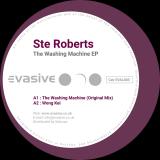
Ste Roberts delivers his debut vinyl EP for the label — four seriously solid cuts of twisted, underground tech house.
The title track “The Washing Machine” is a driving peak-time workout built around Ste's trademark analogue synths, drum machines, rolling sub bass, sharp drums, bleeps and plenty of weird little twists and turns. It's already had plenty of road testing through Ste's DJ sets, including Houghton and fabric, and it does exactly what you want it to do on a dancefloor.
The A2 “Wong Kei” keeps things rolling with another slick and twisted piece of Ste's production. Clever sound manipulation and a seriously infectious groove make this another one that's going to work hard for Djs.
Over on the flip, Evasive boss Rob Pearson gets stuck into B1 “The Washing Machine”, remixing it into his trademark peak time tech, rolling sub-bass territory and adding a few extra mangled instructions for your increasingly misbehaving washer.
B2 “Shoplifting Like That, Yeah” brings Ste’s trademark electro/breakbeat sound into the mix, with tripped-out vocals, wobbling bass and a groove that’s already been causing a real stir in his live sets. Ste has been using it to open his shows, and it’s easy to hear why — a twisted, energetic way to get things moving.
Four tracks, plenty of character and a record that's perfect to push forward the Evasive catalog in style.
El artículo no se ha publicado. Tú puedes reservar ahora el artículo y después de ser pagado se te será enviado.

En el almacen y preparando para el envío
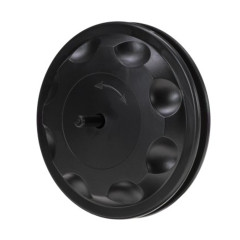
EN: suitable for our record washer Disco-Antistat art. no. 1300001
incl. single adapter
without sealing ring!
DE: Etiketten-Dichtschale passend zu unserem Schallplattenwaschgerät Art.-Nr. 1300001
En el almacen y preparando para el envío

Wabi Sabi Records is a new house music label based on analog sounds, raw grooves, and the beauty of flaws. It’s all about ephemeral and fleeting moments. Made for the dance floor, not for perfection.
The Ensō series is a various-artist collection exploring all the different shades of house music. The first release, “Neon Dream,” dives into the deep and groovy side of the genre.
Haga su pedido ahora y le encargaremos el artículo en nuestro proveedor.

!!! not possible to ship by UPS !!!
EN: Product information "Disco-Antistat BiDest, 1 litre"
- NEW - High purity special water for record cleaning - NEW -
Disco-Antistat BiDest
1 litre bidistilled water, chemically pure, demineralised
For the production of approx. 1 litre of cleaning liquid for records (in a ratio of 1:25, e.g. with Disco-Antistat Ultraclean)
Suitable for all record washers!
According to VDE 0510, DIN EN 285, ISO 3696 (II) and DIN 43530
Disco-Antistat BiDest is a high-purity special water, such as is used in laboratories or cosmetics. All dissolved substances have been removed from the water by means of complex physical processes, which means that it is pure H2O, in contrast to the water available in DIY stores, for example. Therefore, it is ideally suited for all applications where purest water is required. For an optimal cleaning result with our Disco-Antistat Ultraclean concentrate, we therefore recommend the use of Disco-Antistat BiDest for the preparation of the cleaning liquid. Of course, Disco-Antistat BiDest is also suitable for a variety of other applications.
Disco-Antistat BiDest is suitable for use with all record washers!
DE: Hochreines Spezialwasser zur Schallplattenreinigung
Disco-Antistat BiDest
1 Liter bidestilliertes Wasser, chemisch rein (Laborqualität), entmineralisiert
Zur Herstellung von ca. 1 Liter Reinigungsflüssigkeit für Schallplatten (im Verhältnis 1:25, z.B. mit Disco-Antistat Ultraclean)
Für alle Schallplattenwaschgeräte geeignet!
nach VDE 0510, DIN EN 285, ISO 3696 (II) und DIN 43530
Disco-Antistat BiDest ist ein hochreines Spezialwasser, wie es beispielsweise auch im Laborbereich oder der Kosmetik eingesetzt wird. Dem Wasser wurde durch aufwendige physikalische Verfahren alle gelösten Stoffe entzogen, wodurch es sich, im Gegensatz zu dem z.B. im Baumarkt erhältlichen Wasser, um reines H2O handelt. Daher eignet es sich bestens für alle Anwendungen, bei denen reinstes Wasser erforlderlich ist. Für ein optimales Reinigungserrgebnis mit unserem Disco-Antistat Ultraclean Konzentrat empfehlen wir daher die Verwendung von Disco-Antistat BiDest zur Herstellung der Reinigungsflüssigkeit. Selbstverständlich ist Disco-Antistat BiDest auch für eine Vielzahl anderer Anwendungen geeignet.
Disco-Antistat BiDest eignet sich zur Anwendung mit allen Schallplattenwaschgeräten!
El artículo no se ha publicado. Tú puedes reservar ahora el artículo y después de ser pagado se te será enviado.

For his last solo record ‘Through a Room’, Bill Nace shifted his usual saturated guitar sound and added tapes, hurdy gurdy, doughnut pipe, bird calls and the mysterious Japanese taishōgoto. Setting up for the final night of his three day residency at OTO with only the taishōgoto soundchecked, Nace hoped that Parker would arrive with his small soprano as its opposite. “I’ve been interested in state change, you know, playing until there’s a shift in time.” Known for his development of multiphonics to produce a constantly shifting pattern, Evan Parker has evolved an instantly recognizable sound - his work the soprano most distinct. Happily, it was the soprano Evan brought with him and as soon as the two start to play they entwine - taking off in a double helix of keys and reed primed for endless reconfiguration. Space warps under the velocity of playing, the pitch rising unrelentingly. It felt like unending lift off in the room, sheer energy until the last note makes remember your feet have been on the floor the whole time. Total time bending shredding.
–
"They had never played together before. They had never even met each other before this springtime 2024 concert at London’s Café Oto.
Evan Parker, circular breathing maestro of the saxophone, a legend in the universe that is Free Improvisation since the late 1960s and Bill Nace, one of the most intriguing experimental “noise” guitarists of the 1990s/2000s underground scene.
For those of us who have been enamored by the live and documented work of both these gents, this Café Oto duo was a must-hear event. It could have gone anywhere musically and that would have been totally fine. Particularly with Evan having a history of being thrown into a variety of challenging collaborations throughout his career, employing the learned elegance of trust in his own sensitivity to listening, responding, leading, following, sparring, intertwining, dialoguing, creating in the instant and, essentially, dignifying the non-hierarchical grace of chance.
The aesthetics of socialist consideration in Evan Parker’s playing, in his community of expanded and personal technique, for a younger player such as Bill Nace, strikes an exemplary model. This notion of respect would be entirely the reason Nace, when offered a residency at the most critical “new music” room in England, would request to play in duo with Parker.
Bill Nace came to prominence mostly during the apex of experimental music activity in and around Western Massachusetts in the early days of the aughts, with a focus on visual art and free improvisation guitar action. He could be found in the daytime hours, his head hanging down over a notepad, penning fine-tuned illustrations and abstract line drawings, while in the evenings he’d be attending any number of basement noise gigs, many of which he’d be participating in. His guitar style came across as being informed as much as by the physicality of his writing utensils in friction to the page as it was to his hearing and redefining of radical recordings ranging anywhere from the Black Unity Group to Black Flag.
Utilizing various metal files and other small cylindrical objects Bill would allow his guitar and amplifier to be in tandem with the improvisatory movements of his body as the instrument balanced, intentionally and, at times, precariously, upon his lap. The performances came across thrilling and daring and they would be mostly in the context of venues nothing more than a low-ceilinged damp and dank New England basement, a clutch of people hanging onto rusty pipes or sitting up on dilapidated washer/dryer machines, the shards of Bill’s “file guitar” sounds ringing out like the most alive music on Earth.
By the time Bill reached Café Oto in early 2024 he had relocated to Philadelphia all the while releasing a succession of collaborative LPs on his Open Mouth label to present his developing progression of solo and collaborative work. He also would find himself considerably engaged with playing the electric taishōgoto, a keyboard-activated string instrument from Japan which can exist as a one, two, four, five, or six string oblong sound object. Bill’s approach to the taishōgoto would not be too unlike his approach to the traditional electric guitar, though no outboard implements such as files, sticks, and rocks are utilized. The similarity would lie wholly with Bill’s full immersion of high velocity action-playing where, with the taishōgoto, an electric drone beauty occurs. The flurry of sonics and resultant harmonics emanating from the amplifier (which Bill opts to dial into with borderline loud-as fuck volume settings) furthers the meta-mantra properties of the instrument in an astounding display of drone dynamism.
This sound world of Bill’s two-stringed taishōgoto on this Café Oto night worked beautifully with Evan Parker’s improvisatory saxophone conceptions. The duology achieved instant lift off at ground zero only to find it’s eventual finale as if it were organically ordained. Time seemingly morphed from its ancient human construct of control, rendered inconsequential to the torrential transcendence of the room wildly activated by the magic resonance of the multi-directional pan-spatial sonance of the music as if it were some beatific blessing. It was one of those nights where art as a liberating force of spirit gifted the listeners with an offering of exaltation and joy. It was entirely mystical and mind blowing. A night of Total Music."
Thurston Moore, London, 2025
debe ser publicado en 21.11.2025

Haga su pedido ahora y le encargaremos el artículo en nuestro proveedor.

!!! not possible to ship by UPS !!!
EN: - NEW - Highly effective cleaning concentrate - NEW -
Disco-Antistat Ultraclean, concentrate for record washing
200ml cleaning concentrate
Makes 5 litres of ready-mixed cleaning liquid (in a ratio of 1:25, e.g. with high-purity water Disco-Antistat BiDest)
Reliably removes dirt such as dust, grease, protein or nicotine
Antistatic effect
Alcohol-free
Dries without leaving residues
Disco-Antistat Ultraclean works deep into the groove and cleans your records gently and thoroughly, even from stubborn dirt. For an optimal cleaning result we recommend
the use of our highly purified special water Disco-Antistat BiDest.
Disco-Antistat Ultraclean concentrate is suitable for use with all record washers!
DE: Hochwirksames, alkoholfreies Reinigungskonzentrat
Disco-Antistat Ultraclean, Konzentrat zur Schallplattenwäsche
200ml Reinigungskonzentrat
ergibt 5 Liter fertig gemischte Reinigungsflüssigkeit (im Verhältnis 1:25, z.B. mit hochreinem Wasser Disco-Antistat BiDest)
Entfernt zuverlässig Verschmutzungen wie z.B. Staub, Fett, Eiweiß oder Nikotin
Antistatische Wirkung
Alkoholfrei
trocknet rückstandsfrei ab
waschen von Schellack Platten ist problemlos möglich!
Disco-Antistat Ultraclean wirkt bis in die Tiefe der Rille und reinigt Ihre Schallplatten schonend und gründlich auch von hartnäckigen Verschmutzungen. Für ein optimales Reinigungsergebnis empfehlen wir die Verwendung unseres hochreinen Spezialwassers Disco-Antistat BiDest.
Disco-Antistat Ultraclean Konzentrat eignet sich zur Anwendung mit allen Schallplattenwaschgeräten!
Produktionstechnisch kann es zu leichten Farbabweichungen (durchsichtig bis gelblich) kommen, dies hat aber keinen Einfluss auf die Qualität des Produkts!
El artículo no se ha publicado. Tú puedes reservar ahora el artículo y después de ser pagado se te será enviado.

EN:
Automatic ultrasonic record washing machine
Disco-Antistat Ultrasonic - The most thorough way to wash records!
Our record washing machine Disco-Antistat Ultrasonic combines over 40 years of experience in the pflege and cleaning of records with highly developed, state-of-the-art cleaning technology.
The combination of ultrasonic cleaning and our proven goat hair brush system ensures gentle, groove-deep cleaning of your records and an audible improvement in the sound image. During operation, the cleaningfluid is permanently clarified by a filter system and dirt particles are rausgefiltert to minimize impurities in the liquid and thus achieve the best possible cleaning result.
Through our special cleaner, the record is treated antistatically and thus permanently prevented from re-soiling by adhering dust. With only a few handgriffen our washer is ready for operation and the intuitive operability ensures optimal results from the first record!
The simple and intuitive handling as well as the operating elements reduced to the essentials enable best cleaning results from the first record.
The cleaning time can be conveniently adjusted to the degree of soiling of the record, supported by a functional display.
A clearly visible progress indicator provides information on the cleaning status at a glance.
After use, the gefilterte Reinigungsflüssigkeit can be conveniently filled back into the bottle at the touch of a button via a built-in pump.
The permanent filtering of the cleaner prevents the liquid from accumulating dirt. Thus, a consistent cleaning result is achieved.
Thanks to the innovative magnetic coupling, inserting and removing the record is simple and quick.
Driven by an electric motor, the record rotates evenly in the tank, whereby a homogeneous treatment with ultrasound is achieved.
Cleanliness you can hear! A powerful ultrasonic transducer generates so-called cavitation bubbles, which act directly on the dirt and remove it gently and effectively. The ultrasonic waves also reach places that are inaccessible to conventional cleaning methods and ensure cleanliness down to the depth of the groove. The loosened dirt particles are then wiped off on the soft goat hair brushes.
DE:
Automatische Ultraschall Plattenwaschmaschine
Disco-Antistat Ultrasonic – Die gründlichste Art der Schallplattenwäsche!
Unsere Schallplattenwaschmaschine Disco-Antistat Ultrasonic vereint über 40 Jahre Erfahrung in der Pflege und Reinigung von Schallplatten mit hochentwickelter, modernster Reinigungstechnik.
Die Kombination aus Ultraschallreinigung und unserem bewährten Bürstensystem aus Ziegenhaar sorgt für eine schonende, rillentiefe Reinigung Ihrer Schallplatten und einer hörbaren Verbesserung des Klangbildes. Während des Betriebs wird die Reinigungsflüssigkeit permanent durch ein Filtersystem geklärt und Schmutzpartikel herausgefiltert, um Verunreinigungen der Flüssigkeit zu minimieren und somit das bestmögliche Reinigungsergebnis zu erreichen.
Durch unseren speziellen Reiniger wird die Schallplatte antistatisch behandelt und so dauerhaft die erneute Verschmutzung durch anhaftenden Staub verhindert. Mit nur wenigen Handgriffen ist unser Waschgerät betriebsbereit und die intuitive Bedienbarkeit sorgt für optimale Resultate ab der ersten Platte!
Die einfache und intuitive Handhabung sowie die auf das wesentliche reduzierten Bedienelemente ermöglichen beste Reinigungsergebnisse ab der ersten Schallplatte.
Die Reinigungsdauer kann, unterstützt durch ein funktionales Display, bequem dem Verschmutzungsgrad der Schallplatte angepasst werden.
Eine gut sichtbare Fortschrittsanzeige informiert auf einen Blick über den Status der Reinigung.
Nach Gebrauch kann die gefilterte Reinigungsflüssigkeit auf Knopfdruck über eine eingebaute Pumpe bequem in die Flasche zurück gefüllt werden.
Durch die permanente Filterung des Reinigers wird verhindert, dass sich die Flüssigkeit mit Schmutz anreichert. Somit wird ein gleichbleibendes Reinigungsergebnis erzielt.
Das Einsetzen und Entnehmen der Schallplatte ist Dank der innovativen Magnetankopplung simpel und schnell erledigt.
Angetrieben von einem Elektromotor rotiert die Schallplatte gleichmäßig in der Wanne, wodurch eine homogene Behandlung mit Ultraschall erreicht wird
Sauberkeit, die man hören kann! Ein leistungsstarker Ultraschallschwinger erzeugt sogenannte Kavitationsblasen, die direkt an den Verschmutzungen wirken und diese schonend und effektiv ablösen. Die Ultraschallwellen erreichen auch Stellen, die für konventionelle Reinigungsverfahren nicht zugänglich sind und sorgen für Sauberkeit bis in die Tiefe der Rille. Anschließend werden die gelösten Schmutzpartikel an den weichen Ziegenhaarbürsten abgestreift.
El artículo no se ha publicado. Tú puedes reservar ahora el artículo y después de ser pagado se te será enviado.

EN: Spare parts package for our Generation II record washer Art. No. 1350001
1 label cover incl. crank axle with 105mm diameter
2 sealing rings
2 goat hair brushes
2 screws for axle holder
2 axle holders
1 set of non-slip rubber feet
DE: Ersatzteil-Kit zu Schallplattenwaschgerät Generation II, Art.Nr. 1350001
2 Dichtschalen
2 Dichtringen
1 Kurbel
2 Bürsten
2 Schrauben
2 Achshalter
Haga su pedido ahora y le encargaremos el artículo en nuestro proveedor.
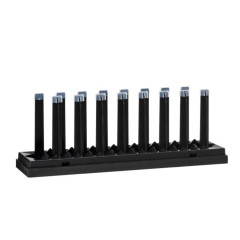
EN: Drying rack with drip tray for up to 15 records
Suitable for our Disco-Antistat, Generation II and Disco-Antistat Ultrasonic 2.0 record washers
DE: Trockenständer mit Abtroffrinne für bis zu 15 Schallplatten
Geeignet für unsere Schallplattenwaschgeräte Disco-Antistat, Generation II und Disco-Antistat Ultrasonic 2.0
Haga su pedido ahora y le encargaremos el artículo en nuestro proveedor.

Ponyland are a psychedelic punk, force of nature, a multi-limbed monster of scuzzed-out riffs and thunderous ritualistic grooves. Combining the grinding onslaught of Lightning Bolt, the ecstatic spectacle of Sun Ra and the irreverent spirit of System of a Down, this unhinged, masked menagerie have to be seen to be believed. Intoxicating rhythms meet hook driven waves of riffage, with ecstatic energy that will make your legs rattle uncontrollably.
Following on from their debut album Mora Mora, this new full length LP HARE BRAINS sees Ponyland embrace a new edge to their visionary sound world. Keeping the trademark, pulverising double drum kit engine and fuzz-drenched psychedelic soundscapes, the band have supercharged their songwriting with focused riff-based hooks and driving punk-edged vigour. Prominent female vocals channel Bikini Kill and Warpaint, whilst gritty, melted electronics flow around a classic thrashing guitar sound. Hare Brains is a celebration of dysfunction, a call to arms against human apathy, a psychotropic odyssey of eroded power structures, post-apocalyptic landscapes and mutant pigeons.
The anarchic pagan ecology of Ponyland’s vision grabs the listener and catapults them into a visceral NOW, full of defiant life, movement, and human connection.
Haga su pedido ahora y le encargaremos el artículo en nuestro proveedor.

Heading to a new millennium, people in the 80s and 90s were looking for brighter days to come and Techno was the music of this utopic future, themed by rushed beats made by electronic instruments that resembled a new era of technology, endless excess and possibilities.
40 years later the world is more complicated and dystopian than ever as we face crises everywhere. Mental issues are a natural consequence of the troubled environments we live in and more people around the world suffer from them. At the same time, we haven't lost the appeal for euphoric and fast dancing, either to leave our problems behind or face them head-on on the sweaty dance floor.
This EP is dedicated to some of the feelings associated with the tribulations of mental issues. What seems like a dark take still points out that we are not alone, as music unites us being the source for help and change. Mental States 777_31 offers four sick cuts perfect for insane clubs - fast and furious like an attack, rushed and energetic embracing positivity in the darkness.
Haga su pedido ahora y le encargaremos el artículo en nuestro proveedor.

From Alehouse to Playhouse Bjarte Eike and his barnstorming Barokksolistene capture the vital spark of Restoration London’s entertainment scene with a captivating new recording for Rubicon Classics! The Playhouse Sessions will be released on 23 September 2022 to coincide with Barokksolistene’s concert double-bill at London’s Southbank Centre.
‘A smattering of Purcell, dances from Playford’s Dancing Master, shanties, reels and ballads succumb to a nine-piece ensemble drawing on Baroque, jazz and folk styles for a no holds barred hooley of riotous improvisatory give and take,’ (BBC Music Magazine review of The Alehouse Sessions, August 2019)
London’s musicians, pushed in the 1650s, to the margins of society by order of Oliver Cromwell, found room for new forms of entertainment in city-centre taverns and alehouses. They remained there long after the restoration of the monarchy, performing sets of dances, theatre songs and bawdy ballads to audiences glad to be free from Puritan constraints on pleasure.
Norwegian violinist Bjarte Eike and his Barokksolistene have restored the spirit and substance of those long-forgotten performances with their Alehouse Sessions, hailed by The Times as ‘irresistible’ and ‘fabulously unrestrained’ by The Guardian. Five years ago the Norwegian violinist and his band scored a best-selling album with The Alehouse Sessions on Rubicon Classics. They return to the label with another compelling collection of music and words of the kind on offer more than three centuries ago at Henry Purcell’s favourite Westminster watering holes. The Playhouse Sessions, set for release on Rubicon Classics on 23 September 2022, reflects the uplifting energy and engaging emotional contrasts of Barokksolistene’s Alehouse performances.
“The album contains a sort of inner narrative that runs through the recording,” says Bjarte Eike. “It has become like a play in its own right, with each track being a small tale within a larger story.” The recording’s tracklist includes Eike’s beguiling arrangements of music from Purcell’s semi-opera The Fairy Queen and his own original compositions on words from the play on which it is based, Shakespeare’s A Midsummer Night’s Dream; popular songs and ballads such as ‘The Irish Washerwoman’, ‘I often for my Jenny strove’ and ‘The Three Ravens’; tunes from Purcell’s welcome odes and stage shows, Come ye sons of art and Dido and Aeneas among them; the ‘Willow Song’ from Shakespeare’s Othello; Eike’s own voice in Puck’s monologue from Act 5 of A Midsummer Night’s Dream; and John Dowland’s sublime air ‘Can she excuse my wrongs’.
London’s theatres were closed at the start of the English Civil War in 1642 and remained shut until the Restoration. Alehouses offered redundant musicians, actors and dancers a place to scrape a precarious living and soon became their creative refuge. “Although a few surviving theatres reopened in 1660 with the return of Charles II, there was little money around to rebuild those that had been demolished,” observes Bjarte Eike. “And a generation of musicians had already found an audience in places like the Black Horse in Aldersgate Street. So popular were their alehouse sessions that Cromwell tried to abolish them! But they outlived him and became part of Restoration musical life.” The form of a Barokksolistene Alehouse, he adds, is like a creative room. “Within its framework I can frequently refurbish the show with new contents. The Playhouse project is likewise an extension of the ever-evolving Alehouse Sessions. Together they tell the story of music and theatre in London during Cromwell’s time and after the Restoration. Of course there’s an historical context to what we do. But there’s also the practical context – which is even more important to me – of connecting with a contemporary twenty-first century audience. An Alehouse / Playhouse performance is not something for the museum; it's about music made in the present moment, just as it was in the London alehouses of Purcell’s day -- with their playhouses annexed to the rear of the beer-drinking saloons. The encounter of musicians onstage and the audience in the hall is the real magic of it. We have to fuse the audience into the action of our performance!”
The Playhouse Sessions will be launched on Friday 23 September with a late-night concert at the Purcell Room and a post-concert Alehouse Session in the foyer of the Queen Elizabeth Hall. Soprano Mary Bevan is set to join Eike and his Alehouse Boys for the first half of their Southbank Centre double-bill, offering unique interpretations of songs from Purcell shows and other hits from the late seventeenth-century London stage. “The Southbank Centre is a direct descendant of concerts given in the 1650s in the alehouses of London,” notes Eike. “These alehouses after all staged some of the world’s first public concerts. Later, after the Restoration, it became common for promoters to advertise alehouse concerts in the press and offer subscription tickets. Purcell and his fellow musicians were thus just as at home performing there as they were in the chambers of the royal court or in London’s new theatres.”
Bjarte Eike launched his Alehouse Sessions in company with like-minded musicians 15 years ago. The ensemble comprises a core of regular performers, all of whom have committed to memory a huge setlist of up to four hours of music. Typically they meet a day or so before a concert tour to share a meal and make music together; then next day, re-grouping thirty minutes before the show, they discover Eike’s select-menu for the evening. “That ensures that every show is fresh,” he notes. “I make sure we never repeat the same programme twice. It’s therefore essential to work with people who share my outlook and dare to adventure. We’re into a high-risk sport, with lots of traps and places where the unexpected appears - for good or for ill. And so the audience knows we’re vulnerable. But our skill is seen in how we re-act on the hoof to the unpredictable. That’s authenticity and honesty - and above all it’s a performance that’s genuine.”
Armed with a classical training and a background in folk music and improvisation, Bjarte Eike was drawn naturally to Early Music in all its stylistic variety. “I never really felt at home with only one genre,” he recalls. “Early Music allowed me to study profound, complicated compositions, but performing it has also opened up the chance of rebellion and uproar! Early music offers wide, multi-faceted areas of musical exploration for me. You find, for instance, links to different types of music wherever you look in seventeenth-century English repertoire. And I am fascinated by all these connections. They offer a foundation for the Alehouse Sessions and for all Barokksolistene performance more generally. Every member of the group plays, sings, dances and improvises without limitation. We’re all interested in the many different fields of being a stage performer and pushing hard at the ‘normal’ boundaries of what it means to be a classical musician.”
debe ser publicado en 30.06.2023

Debut release on the newly-launched MSCTY label, the first in a series of highly collectible, very limited and lovingly designed physical releases.
This is a state-of-the-art double cassette boxset complete with 12-page booklet and limted to only 100 copies.
It features a host of brilliant compositions, each exclusive to the label from a wide cross-section of some of the world's foremost emerging electronic artists, including Hannah Peel, Loraine James, Bill Fontana, Chisara Agor and many more.
Each piece represents the artist's response to work by the World's leading architects, unbuilt futuristic buildings and spaces created for London Design Festival 2020.
MSCTY_EDN future releases will continue follow the theme of music created for places and spaces around the World, exclusive material specially commissioned musical artists across the globe, from the likes of Ryuchi Sakamoto, Midori Takada, Terry Riley, Moses Boyd, Scanner, Jon Hopkins, Erland Cooper, Craig Richards and any more.
debe ser publicado en 24.02.2023

Legendary privately pressed 1979 LP from Scotland. This illusive, super rare and sublimely wonderful percussion album is like no other. Hypnotic, celestial, even cosmic and ambient in parts and totally unique in all ways, it was played by a group of 11 girls with an average age of 14. The group included Evelyn Glennie, who was destined to become one of the world’s greatest percussionists. This is her first ever record.
The Cults Percussion Ensemble was a group formed by percussion teaching legend Ron Forbes in the mid 1970s. The ensemble must have one of the best group names of all time. To many it will immediately come across as something sinister, a touch spooky and possibly a bit dramatic too. They are certainly two of those but the use of the word “Cults” here is easily misinterpreted. Cults, in this case, is the suburb of Aberdeen.
The average age of the students was just 14. They came from a few of the schools in the area, including the Cults Academy, Ellon Academy, Aboyne Academy, Inverurie Academy and Powis.
My original copy of the album came from Spitalfields market in London. I loved the music the second it started, because it reminded me of Carl Orff and peculiar library. So I started to investigate it further, and eventually, thanks to the highly tuned world of percussion, was given the address of Ron Forbes. I got in touch with him and now we have this, a formal release of something quite lovely that was only previously available very briefly in 1979 at concerts when the young girls performed.
The music here is really quite unique, with a celestial swirling hypnotic quality. The blend of glockenspiels, xylophones, vibraphones, marimba and timpani drums is quite intoxicating and can recall the shimmering warmth of the desert sun one minute (“Baia”) or freezing glacial ice caps the next (“Circles”). The Ensemble perform with an effortless tightness and deftness of touch, building textured layers with recurring percussive motives which appear simultaneously dense and yet sparse, almost sounding like modern sampling. In fact, while struggling to find a musical comparison, during the pulsating introduction to "Percussion Suite" I found myself recalling "Gamma Player", a piece of soulful Detroit techno minimalism from Jeff Mills (Millsart - “Humana” EP 1995) with its rhythmic percussion layered with complex emotion. Weirdly enough, other tracks on that EP also prominently feature xylophone and tuned percussion, although obviously synthesised and programmed, a good 20 years after the CPE first recorded.
Sleevenotes also include a letter from Ron Forbes:
“I decided to form a percussion group to provide an outlet for my percussion pupils to play music specially written for them. The group soon became well known in the region and as a result of winning the outstanding award at the National Festival of Music for youth on three occasions, they were invited to play at other festivals within Europe, one being in Erlangen in Germany - hence the Erlangen Polka - and Autun in France - hence the Autun Carillon. During these visits we were often asked if we had any recordings and so it was decided to make an LP”.
Thanks to Ron Forbes and Trunk Records, more people can now enjoy the simple hypnotic musical charms of the Cults Percussion Ensemble
Haga su pedido ahora y le encargaremos el artículo en nuestro proveedor.

The young and ambitious hip hop group Blackalicious emerged from the underground during the late Nineties. Their debut album established them as one of the West Coast’s top outfits, but it was the follow-up Blazing Arrow that earned them major acclaim. This second studio album was originally released in 2002 on MCA Records. The album features several guest appearances, including Zack de la Rocha (Rage Against The Machine), Gil Scott-Heron, Ben Harper & The Innocent Criminals, Cut Chemist and Chali 2NA (Jurassic 5) amongst others.
Blackalicious was known for their ‘positive tip’, in other words, their lyrics have often been spiritual and uplifting rather than violent or misogynous.The group consisted of DJ/producer Chief Xcel and rapper Gift of Gab.
debe ser publicado en 18.02.2022

Tape / Cassette
Maatsethe’s solo output is all about ambient and sound collage. Loads of processed guitars & samples meander between walls of sound, intimate harmonies and a kind of melancholic cinematic landscape. Stoic basslines are surrounded by soft and gentle spheres. A bit of post-rock feel every now and then, always wrapped up in a meditative monotony, slightly interrupted by small epic narratives to gaze up.
Maatsethe (Matthias Neuefeind, Berlin) curates the KeplarRev series with vinyl reissues of essential electronic albums from the 90’s and 00’s, he plays in the band Fonoda and is part of the project Washer, Zimmer & the Guitar People.
Tracks 1, 2, 3, 4, 6 composed by Maatsethe
Tracks 5, 7 composed by Fonoda
All tracks recorded by Maatsethe
Mastering by Edgar Medina
Artwork by Daniel Castrejón
Haga su pedido ahora y le encargaremos el artículo en nuestro proveedor.

Repress
The forthcoming release on Spanish house imprint SAFT is a deep and grooving true house vinyl which will definitely provide you with some inner glow. The man behind this piece of fine wax is called Washerman. This 3-Track release is designed for clubs and outdoor jams where people don't necessarily need a scorching energy span to enjoy the music. With beautiful rhode sounds and touching vocal cuts this record should be in anyone's record collection. Raw but beautiful
Haga su pedido ahora y le encargaremos el artículo en nuestro proveedor.
