When dubwise music really started to come into its own in the early to mid 70s, it made overnight stars of backroom boys who had hitherto worked behind a mixing desk to serve those who were beginning to hoist reggae to an international stardom that it had long deserved, but that it had only achieved on short and non-sustained bursts until Chris Blackwell decided to throw a lot of promotion and money at the work of Bob Marley and his fellow Wailers in 1972. Of those men, there was no bigger star than the late Osbourne Ruddock, the great King Tubby’s and the man who, from a tiny home-made studio in the Waterhouse district of Kingston, Jamaica, did more than most to reposition the boundaries that production and mixing of Jamaican recordings.
‘Heart Under’, Just Mustard’s second album and first for Partisan Records
(IDLES, Fontaines D.C., Laura Marling), is an album that asks you to forget
what you know. At every turn, this remarkable record reconfigures and
stretches the ideas and ambition of a rock band and turns a year of lockdown
and personal struggles into a breath-taking artistic statement.
Across its 10 tracks, the album presents a coherent style and ethos - those
scything guitars, Katie’s magical vocals - but still incorporates a wide and
untethered vision. There are brooding, atmospheric rock songs (‘Still’, ‘In
Shade’) and others that apply a lighter, dreamier touch (‘Sore’, ‘Mirrors’), all
tied together with impeccable instrumentation and a united vision.
On debut ‘Wednesday’, the band played with dreamier soundscapes and
production techniques, and ‘Heart Under’ serves as the next stage of this
development, with every instrument brilliantly pushed to its limit and every
boundary of the band stretched.
After the band had finished recording and producing the album, ‘Heart Under’
was pushed even further into singular territory when the band worked with
mixer David Wrench, whose previous collaborators include Frank Ocean,
Let’s Eat Grandma, Jamie xx, FKA twigs and beyond. “We wanted someone
who had done pop and electronic records and didn’t just work within rock
music,” Katie says.
“Ireland’s buzziest new band” - The FADER
“Their rapturous reception here at SXSW is a testament to their startling
evolution as well as the excitement that can only come from watching a band
just beginning to realise the full extent of their powers.” - NME
“They have well and truly mastered the art of atmospheric rock” - Loud And
Quiet (9/10)
Supporting Fontaines D.C. on their European and US tours this year. They
were handpicked by Robert Smith to support The Cure in Dublin in 2019.
Eire headline tour in June, UK headline tour in September, including Village
Underground, and EU headline tour in October.
Choice Music Prize nomination for Irish Album Of The Year for their debut
album, ‘Wednesday’.
CD housed in a cardboard wallet with lyric and photo insert.
LP pressed on black vinyl and housed in a single sleeve jacket with lyric and
photo insert.
"His music filled me with the urge to connect with the world," Kaitlyn Aurelia Smith says of Emile Mosseri. She first heard his work while watching the 2019 film The Last Black Man In San Francisco; just minutes in, she paused it to look up who did the score and wrote to him immediately. "I love Emile's ability to create melodies that feel magically scenic and familiar like they are reminding you of the innocence of loving life." Those talents saw recognition in 2020 with an Oscar nomination for Mosseri's original score to the film Minari. He was already a fan of Smith's and became increasingly intrigued by her impressionistic process as they started to talk. "The music feels so spiritual and alive and made from the earth," Mosseri says. "I think of her as the great conductor, summoning musical poetry from her orchestra of machines." I Could Be Your Dog / I Could Be Your Moon, their two-part collaborative album, introduces an uncanny fusion of their sonics. Constructed using synthesizer, piano, electronics, and voice, this soft-focus dream world is lush, evocative, and fleeting. It finds two composers tuning their respective styles inward as an ode to mutual inspiration, a celebration of the human spirit and its will to surrender to the currents of life. As a full album set, I Could Be Your Dog / I Could Be Your Moon moves fluidly from track to track, panning through textural vignettes. Two roughly 17-minute halves, the set evokes the bittersweet sense of something too bright or rare to last, a short-lived glimpse into a golden hour. There is a dreamy, elemental intention to this music, which Smith and Mosseri say came naturally, as they both embraced intuitive interplay throughout their creative back-and-forth. The stylistic threads of each composer are recognizable yet become more ambiguous as the album progresses, sewn into a singular vision.
out of Stock
Last delivered 4 years ago available to reorder, subject to availability
Modes continues the forward thinking soundscapes explored on Dyne’s recent album Teal, which garnered acclaim from peers and fans alike -including Late Night Tales, Toddla T, Ransom Note, and BBC6 Music presenters - and sold out quickly on vinyl.
Lush synths and dreamy vocals are paired with up-tempo afro-inspired house, with tinges of percussive jazz and future soul. Dyne's trademark slick production can be relied upon once more, as well as the music's insistent rhythmic drive and intensity.
Modes employs some of New Zealand's most well known and iconic vocalists, in addition to many new rising stars. Frequent collaborators Lord Echo, Ladi 6 and Mara TK (Electric Wire Hustle) return, alongside soul legends Dallas Tamaira aka Joe Dukie (Fat Freddys Drop), Che Fu and Troy Kingi.
Als eine der spannendsten, neuen Stimmen im Alternative-Bereich haben Porridge Radio sich innerhalb von nur einem Jahr mit ihrem Album Every Bad (2020) von den DIY-Lieblingen hin zur Mercury Prize nominierten Band gewandelt. Mit Waterslide, Diving Board, Ladder To The Sky kündigen Porridge Radio heute ihr drittes Studioalbum für den 20. Mai via Secretly Canadian an. Während Every Bad die scharfsinnige und offenherzige Ehrlichkeit von Frontfrau Dana Margolin offenbarte, befördert Waterslide, Diving Board, Ladder To The Sky dies auf ein neues hymnisches Level. Dies ist der Sound einer Person Ende Zwanzig, die sich den Enttäuschungen der Liebe und des Lebens stellt und herausfindet, wie man in dieser Welt existiert - ohne dabei so zu tun, als wüsste sie alle Antworten. Ganz nebenbei ist das Ganze höllisch eingängig. Das Album beginnt mit "Back To The Radio" als kraftvoller Aufruf, der einen Kontrast zu Margolins Lyriks um Panik und Abgeschiedenheit zeigt ("lock all the windows and march up the stairs"), bis sich ein stürmischer Chorus aufbauscht, der einen sofort all seine Freund*innen fest umklammern lassen möchte. Waterslide, Diving Board, Ladder To The Sky ist wie ein surreales Gemälde, das teilweise durch eine Collage der Künstlerin Eileen Agar inspiriert ist und an das Unter- und Eintauchen, heikle Lagen und existentielle Lebensängste der letzten Zeit erinnert und gleichzeitig aus der Erzählung der Jakobsleiter aus dem Alten Testament schöpft, die wiederum "symbolizes the ups and downs of human life, of virtue and transgression", erklärt Margolin. Die Vorstellung, dass ein emotionaler Zustand nicht ausschließlich binär ist, ist dabei wesentlich für das neue Album. "With this album, the feelings of joy, fear and endlessness coexist together", fügt Margolin hinzu.
Four years in making, Voyeurs In the Dark is Toronto artist Barzin’s fifth studio album. That the album is more cinematic in its scope and conceptual in feel than his previous studio albums can be attributed to the time he spent over the past several years composing the soundtrack for the independent film, Viewfinder. Voyeurs In the Dark retains that cinematic quality, and at the same time infuses the music with elements taken from Jazz, electronica, rock and pop. Having primarily explored the quiet side pop and folk in his previous four albums, Barzin has expanded his musical palate, broadening his sound towards a more an experimental direction, while still retaining his preoccupation with exploring the internal landscape. The uniformity of sound that characterized the previous albums has been abandoned for the expression of differing aspects of the self that at times hold opposing views and desires. This is best represented in the image chosen for the cover of the album, which depicts three figures in one body. The album seems to be the expression of not one unified self, but the various aspects of the self. Voyeurs In the Dark sees the artist plot a seductive, contemplative route through city haze, shuttling between graceful glimmering interludes, with wonderfully atmospheric songs at every stop. From opener Voyeurs In the Dark’s first guitar strums and the fizz of its drum machine, the record envelopes itself in a glorious shadow, as shown in the slow waltz of I Don’t Want To Sober Up, dancing around its own swirling guitar chords. On Watching, Barzin plunges himself deeper into a wash of cyclic bass, guitar and synth riffs, as the gloom grooves into light. It’s Never Too Late To Lose Your Life has a much more affirming and urgent tone, shade turning into shapes and motion, while To Be Missed In the End builds its own smoke in a cloud of saxophone and sparse guitar notes, closing out a record full to the brim with scatterbrain beauty and eclectic dusk. Voyeurs In the Dark will be released worldwide on Monotreme Records on May 6th on CD and limited edition180 g black vinyl LP with printed inner discobag and digital download card. Press highlights so far: Video premiere and feature interview on Rumore.IT. Airplay on BBC 6Music, Amazing Radio (UK and US), Glastonbury FM, Shoreditch Radio, Indie Music Discovery, Listen to Discover, Norfolk Radio. Press coverage in V13, Skope, Whisperin and Hollerin, Fame Magazine, High Violet, Indie Midlands, Beehive Candy, Music Won’t Save you. Feature confirmed for Wonderland Magazine. PUBLICITY - UK and North America press and radio Cannonball PR. Europe Five Roses Press
Featuring Squirrel Flower and Liam O’Neill (SUUNS). Recommended If You Like: Mount Eerie, Low, Richard Swift, the Weather Station, Lomelda, Fleet Foxes, Squirrel Flower, L’Rain. Cedric Noel is a songwriter, bassist, collaborator and producer currently based in Montréal, Québec. The newest longplayer from Tio'tiá:ke/Montreal staple Cedric Noel lands with a stunning sense of surety and self. Hang Time stands as a high water mark for a songwriter who's spent the past decade quietly expanding the borders of his music. Longtime fans will recognize the fluid elements of the album’s open-ended rock formations: reflective strumming, soaring choruses, searing guitar lines, subtle bass grooves; all occasionally dissolving into pools of pure ambience. New listeners will find surprises throughout: threads of folk pop, ambient and sound collage fasten the foundations of this expressive whole. However, what’s most striking on Hang Time is Noel’s newfound sense of voice, both literal and metaphorical. Written primarily in 2017-18 during an intense period of self-reflection, this collection of songs finds Noel wrestling profoundly with his sense of identity, self and place. The album’s material was captured faithfully at The Pines, a beloved downtown Montreal studio whose doors shuttered shortly after amidst the strain of the pandemic. Noel worked closely and patiently with friend and engineer Steve Newton, ensuring the songs had the time and space needed to come fully to fruition. Hang Time features subtle rhythm work from drummer Liam O’Neill (SUUNS) and guest spots from Brigitte Naggar (Common Holly) and Tim Crabtree (Paper Beat Scissors) among others. The album opens in mid-air with ‘Comuu’, a song that implores a becoming-more while hovering triumphantly. Then follows a suite of songs (‘Headspace’, ‘Keep’, ‘Stilling’) that recall the heart-rending power of y2k-era Low, albeit with a more vigorous beat. On ‘Bass Song’, an intimate duet with musician Ella Williams (Squirrel Flower) that explores the depths of interpersonal constriction. At the crux of the album sits ‘Born’, a deceptively pleasant-sounding song that explores the confounding emotionality of adoption before fading into a distended soundfield. Throughout the back half of the album, Noel double’s down on this commitment to his genuine, proud, Black self. The most confrontational track, ‘Allies’ finds him refraining “Are you on my side?” as a trailing guitar solo interweaves a Malcolm X soundbite, eventually engulfing the composition. Glorious lead single ‘Nighttime (Skin)’ traces the artist’s sense of ancestral dissociation through to a triumphant moment of pride in self-acceptance. Throughout Hang Time, Noel finds a way to ask hard questions (both of the listener and himself) in ways that are compassionate, open and honest. The ebb and flow of tension and tenderness that moves within these tracks helps to grow the heart and redefine what Black music can be in 2021.
Iconic singer Mavis Staples is an alchemist of American music, and during her 70+ year career one of her most beloved musical mo?ments was her riveting performance in Martin Scorsese's film' The Last Waltz,' performing "The Weight" with The Band, a moment that forged a life-long friendship between her and Levon Helm. Staples came to Woodstock, NY to perform as part of Helm's re?nowned Midnight Ramble series, and the ensuing concert-available now for the first time on the rousing new ANTI- Records release Carry Me Home-would mark a personal high watermark for both artists. Captured live in the summer of 2011, Carry Me Home showcases two of the past century's most iconic voices coming together in love and joy, tracing their shared roots and celebrating the enduring power of faith and music. The setlist was righteous that night, mixing vintage gospel and soul with timeless folk and blues, and the performances were loose and playful, fueled by an ecstatic atmosphere that was equal parts family reunion and tent revival. Read between the lines, though, and there's an even more poignant story at play here. Nei?ther Staples nor Helm knew that this would be their last performance together-the collection marks one of Helm's final recordings before his death-and listening back now, a little more than a decade later, tunes like "This May Be The Last Time" and "Farther Along" take on new, bittersweet meaning. The result is an album that's at once a time capsule and a memorial, a blissful homecoming and a fond farewell, a once-in-a-lifetime concert-and friendship-preserved for the ages. Staples and the night's soulful crew of backup singers handle the vast majority of the vocal work here, but it's perhaps album closer "The Weight," which features Helm chiming in with lead vocals for the first time, that stands as the concert's most emotional moment. "It never crossed my mind that it might be the last time we'd see each other," says Staples. "He was so full of life and so happy that week. He was the same old Levon I'd always known, just a beautiful spirit inside and out." "My dad built The Midnight Rambles to restore his spirit, his voice, and his livelihood," says Helm's daughter, Amy, who sang backup vocals with her father and Staples at their performance. "He'd risen back up from all that had laid him down, and to have Mavis come sing and sanctify that stage was the ultimate triumph for him."
Iconic singer Mavis Staples is an alchemist of American music, and during her 70+ year career one of her most beloved musical mo?ments was her riveting performance in Martin Scorsese's film' The Last Waltz,' performing "The Weight" with The Band, a moment that forged a life-long friendship between her and Levon Helm. Staples came to Woodstock, NY to perform as part of Helm's re?nowned Midnight Ramble series, and the ensuing concert-available now for the first time on the rousing new ANTI- Records release Carry Me Home-would mark a personal high watermark for both artists. Captured live in the summer of 2011, Carry Me Home showcases two of the past century's most iconic voices coming together in love and joy, tracing their shared roots and celebrating the enduring power of faith and music. The setlist was righteous that night, mixing vintage gospel and soul with timeless folk and blues, and the performances were loose and playful, fueled by an ecstatic atmosphere that was equal parts family reunion and tent revival. Read between the lines, though, and there's an even more poignant story at play here. Nei?ther Staples nor Helm knew that this would be their last performance together-the collection marks one of Helm's final recordings before his death-and listening back now, a little more than a decade later, tunes like "This May Be The Last Time" and "Farther Along" take on new, bittersweet meaning. The result is an album that's at once a time capsule and a memorial, a blissful homecoming and a fond farewell, a once-in-a-lifetime concert-and friendship-preserved for the ages. Staples and the night's soulful crew of backup singers handle the vast majority of the vocal work here, but it's perhaps album closer "The Weight," which features Helm chiming in with lead vocals for the first time, that stands as the concert's most emotional moment. "It never crossed my mind that it might be the last time we'd see each other," says Staples. "He was so full of life and so happy that week. He was the same old Levon I'd always known, just a beautiful spirit inside and out." "My dad built The Midnight Rambles to restore his spirit, his voice, and his livelihood," says Helm's daughter, Amy, who sang backup vocals with her father and Staples at their performance. "He'd risen back up from all that had laid him down, and to have Mavis come sing and sanctify that stage was the ultimate triumph for him."
Food For Thought will be shipping in a random split between the photo and the illustrated cover art shown here.
The Shea Butter Queen is back! It’s been more than a year since her
last release, After 12, but Che has returned with a body of work that
she clearly spent her time on. She not only serves up a barrage of bars
on Food For Thought, but also produces 6 of 12 tracks. The other 6
cuts are handled by TrickyTrippz, JR Swiftz & Motif Alumni, Chup, and
a couple up-n-comers. Guests include 38 Spesh, Ransom, Rome
Streetz, Armani Caesar, 7xvethegenius, and more.
Born into a musical family, as a child Charlie Hickey would obsessively
watch videos of his parents on tour in their old band Uma, learning all the
lyrics that he loved but didn’t understand. This introduction to music sowed a
seed and Hickey was soon writing songs of his own, playing on the guitars
that lay around him and singing about the little details of his school days. He
continued throughout his teen years, his songs becoming an outlet for the
growing anxieties that Hickey now understands to be Obsessive Compulsive
Disorder.
This journey has led to ‘Nervous At Night’, Hickey’s debut album which is
released via Phoebe Bridgers’ Saddest Factory Records. Where 2021’s
‘Count The Stairs’ EP was an attempt to capture the rawness of his
performance, ‘Nervous At Night’ comes alive within its production, Hickey
and producer Marshall Vore leaning into their perfectionist tendencies to find
the best version of each track. “He’s always interested in how you can push
things further but also reigns them in when necessary,” Hickey says. “I think
that’s the true hallmark of a good producer.”
Hickey calls it a pop record but admits that sonically it moves in many
directions, an amalgamation of his love for the folk singers of yesteryear and
more contemporary peers, from Taylor Swift and The 1975 to the Californian
songwriter and producer Blake Mills. This shifting of styles - from the album’s
quiet heavy-hearted ballads to its more gleaming, hook-led tracks - mirrors
its overarching theme: life’s graceless passage between teenage years and
adulthood.
And so we have ‘Planet With Water’, a plaintive love song that bristles with
nostalgia, Hickey singing of phone calls after school, of hearing a neighbour’s
TV through the wall. Elsewhere, ‘Mid Air’ holds a similar weight, Hickey
singing of “spinning in mid-air, waiting for somewhere to land, or some face
to show up” as the song flourishes around his voice, delicately accompanied
by guest turns from fellow LA musicians Harrison Whitford, Christian Lee
Hutson and Mason Stoops.
‘Nervous At Night’ comes alive in its juxtapositions, chronicling the constant
push and pull of life, both its stagnancy and motion. Chiefly though, this is an
album about connection, how even through those struggles we rely on the
people around us to keep moving forwards. “I’d like to write songs that are
for everyone, that let people into my inner world while also hopefully making
people feel less alone on their own. I hope that these songs can be there for
somebody the way my favorite songs have been for me.”
Collaborated with MUNA on track ‘Seeing Things’.
2022 live shows include The Great Escape and SXSW, as well as shows in
London, NY and LA’s Troubadour. Recent US tour with Samia.
LP available on opaque yellow vinyl.
Born into a musical family, as a child Charlie Hickey would obsessively
watch videos of his parents on tour in their old band Uma, learning all the
lyrics that he loved but didn’t understand. This introduction to music sowed a
seed and Hickey was soon writing songs of his own, playing on the guitars
that lay around him and singing about the little details of his school days. He
continued throughout his teen years, his songs becoming an outlet for the
growing anxieties that Hickey now understands to be Obsessive Compulsive
Disorder.
This journey has led to ‘Nervous At Night’, Hickey’s debut album which is
released via Phoebe Bridgers’ Saddest Factory Records. Where 2021’s
‘Count The Stairs’ EP was an attempt to capture the rawness of his
performance, ‘Nervous At Night’ comes alive within its production, Hickey
and producer Marshall Vore leaning into their perfectionist tendencies to find
the best version of each track. “He’s always interested in how you can push
things further but also reigns them in when necessary,” Hickey says. “I think
that’s the true hallmark of a good producer.”
Hickey calls it a pop record but admits that sonically it moves in many
directions, an amalgamation of his love for the folk singers of yesteryear and
more contemporary peers, from Taylor Swift and The 1975 to the Californian
songwriter and producer Blake Mills. This shifting of styles - from the album’s
quiet heavy-hearted ballads to its more gleaming, hook-led tracks - mirrors
its overarching theme: life’s graceless passage between teenage years and
adulthood.
And so we have ‘Planet With Water’, a plaintive love song that bristles with
nostalgia, Hickey singing of phone calls after school, of hearing a neighbour’s
TV through the wall. Elsewhere, ‘Mid Air’ holds a similar weight, Hickey
singing of “spinning in mid-air, waiting for somewhere to land, or some face
to show up” as the song flourishes around his voice, delicately accompanied
by guest turns from fellow LA musicians Harrison Whitford, Christian Lee
Hutson and Mason Stoops.
‘Nervous At Night’ comes alive in its juxtapositions, chronicling the constant
push and pull of life, both its stagnancy and motion. Chiefly though, this is an
album about connection, how even through those struggles we rely on the
people around us to keep moving forwards. “I’d like to write songs that are
for everyone, that let people into my inner world while also hopefully making
people feel less alone on their own. I hope that these songs can be there for
somebody the way my favorite songs have been for me.”
Collaborated with MUNA on track ‘Seeing Things’.
2022 live shows include The Great Escape and SXSW, as well as shows in
London, NY and LA’s Troubadour. Recent US tour with Samia.
LP available on opaque yellow vinyl.
With their new album, If I Never Know You Like This Again, SOAK has
finally shaken the hangover of their starry debut ‘Before We Forgot How
To Dream’, and the pressures that came with it, hiding in the wings of
their ambitious follow up album, ‘Grim Town’.
Having come up through BBC Introducing at the tender age of 15, before
signing to Rough Trade Records, as well as winning the RTE Choice
Music Prize and The Northern Irish Music Prize, in addition to being the
youngest ever Mercury Prize nominee, SOAK has again and again been
described as “the voice of a generation.”
Showing, from a young age, an intensely artistic awareness of the poetry
of memory, Bridie Monds-Watson, aka SOAK, would incessantly
photograph and video everything, documenting and organising the
material so it was always there for them to revisit. “I always want to
remember exactly how I felt at a certain moment.” Now, at 25, SOAK’s
third album, ‘If I Never Know You Like This Again', is naturally made up
of what Bridie intimately calls ‘song-memories’.
Working closely with Tommy McLaughlin (Villagers), with whom Bridie
has been collaborating with since the age of 15, and armed with
influences from Pavement to Radiohead to Broken Social Scene, they
wrote most of the album together before recording it with the rest of the
band in Attica Studios, Donegal.
Throughout the album SOAK pushes and pulls at melodies, but never
milks their brilliance. Bridie masterfully glides their vocal melody slightly
off-kilter above excitable compressed high hats and flourishing guitar
lines. With the new direction of a grungier, more lo-fi production, the
swooning guitars are given a contemporary pop edge, reflected in the
rich and robust musicality of songs like ‘Bleach’, ‘Last July’ and ‘Pretzel’.
There’s a constant pulsating beat at the album’s centre, propelling it
towards a kind of dewy happiness, like the end credits of a 90s comingof-age film. Bridie’s lyrics move through the songs almost as effortlessly
and they sing them, and the songs when read, read like poetry.
With this album Bridie is, as the title suggests, freezing time in the
pursuit of truth: capturing their life into existence. In the world of ‘If I
Never Know You Like This Again’, a life is lived only because it's
remembered.
"Turn To See Me" is yet another step forward for The Dining Rooms, an artistic duo that never lacked creativity. This ninth album of theirs is a further confirmation: an intense record, inevitably influenced by the events of the last two years and therefore imbued with dark and melancholy sounds, but at the same time positive and aimed at a hopefully better future. Once again, there are numerous collaborations and blends of various musical genres (hip-hop, folk, jazz, electronic, trip hop) that do not, however, betray the 'cinematic' trademark of the Milanese outfit.
The Queen of Soul Aretha Franklin released her seventh studio album Yeah!!! in 1965. Despite the overdubbed sounds of audience murmurs, the album is not a live album. Instead, the album was recorded live at New York's Columbia Studios and produced by Clyde Otis. Yeah!!! features “Misty”, “If I Had a Hammer” and “There Is No Greater Love” amongst other
Multi-Grammy nominated singer, Seth MacFarlane, announces his 7th studio album, Blue Skies. The 14-track collection of swinging tunes showcases acclaimed arranger and conductor Andrew Cottee’s deft take on an uptempo album full of modern big band jazz orchestrations. The first track off the upbeat set is the classic jazz standard, “No Moon At All.” You can listen to the song and pre-order the album here. You can watch the accompanying lyric video here. Recorded at the celebrated Abbey Road studios, Blue Skies features an all-star group of musicians enlisted by MacFarlane including Chuck Berghofer (Bass), Peter Erskine (Drums), Larry Koonse (Guitar), Dan Higgins (Alto Sax), and Tom Ranier (piano). Together, with longtime friend, collaborator, and producer, Joel McNeely, and superb engineer, Rich Breen, the album covers compositions by musical writing luminaries that include Irving Berlin, Sammy Cahn, Edward Heyman and Frank Loesser.
Jimi Tenor war schon immer so etwas wie ein Renaissance man. Bereits als er seine Heimat Finnland zu Beginn der 1990er Jahre verließ, um zunächst nach New York zu gehen und später quer durch Europa zu ziehen, entdeckte er schnell das, was er als sein Ikigai bezeichnet, seine große Freude im Leben: Musik in DIY-Manier aufzunehmen und zuhause mit einfachen Mitteln zu produzieren, spontan und intuitiv. Daran hat Tenor über die inzwischen mehr als 30 Jahre seiner musikalischen Karriere hinweg stets festgehalten, ganz egal ob auf Solopfaden seiner frühen elektronischen Alben in den 90er Jahren oder später in den unterschiedlichsten Besetzungen und Kollaboration (u.a. Tony Allen, Kabu Kabu oder Abdissa Assefa). "Multiversum" ist nun sein drittes Album beim Hamburger Label Bureau B. Die Zusammenarbeit zwischen Jimi Tenor und Bureau B begann mit der Veröffentlichung der Werkschau "NY, Hel, Barca" im Jahr 2020 und setzte sich im Frühjahr 2021 mit Herausgabe der Raritäten-Sammlung "Deep Sound Learning" fort. Während Tenor in den vergangenen 20 Jahren vor allem Jazz und Afrobeat Platten aufnahm, kehrte er auf der Bühne weiterhin oft zu seinen minimalistischen Wurzeln zurück. Begeistert von dieser Space Musik, die Jimi Tenor nur mit Synthesizer, Flöte und Saxophon ausgestattet während seiner Solo Auftritte erschafft, lud Bureau B ihn ein, endlich auch eine Platte mit diesem einfachen, aber erstaunlich wirkungsvollen Setup aufzunehmen…
Jimi Tenor war schon immer so etwas wie ein Renaissance man. Bereits als er seine Heimat Finnland zu Beginn der 1990er Jahre verließ, um zunächst nach New York zu gehen und später quer durch Europa zu ziehen, entdeckte er schnell das, was er als sein Ikigai bezeichnet, seine große Freude im Leben: Musik in DIY-Manier aufzunehmen und zuhause mit einfachen Mitteln zu produzieren, spontan und intuitiv. Daran hat Tenor über die inzwischen mehr als 30 Jahre seiner musikalischen Karriere hinweg stets festgehalten, ganz egal ob auf Solopfaden seiner frühen elektronischen Alben in den 90er Jahren oder später in den unterschiedlichsten Besetzungen und Kollaboration (u.a. Tony Allen, Kabu Kabu oder Abdissa Assefa). "Multiversum" ist nun sein drittes Album beim Hamburger Label Bureau B. Die Zusammenarbeit zwischen Jimi Tenor und Bureau B begann mit der Veröffentlichung der Werkschau "NY, Hel, Barca" im Jahr 2020 und setzte sich im Frühjahr 2021 mit Herausgabe der Raritäten-Sammlung "Deep Sound Learning" fort. Während Tenor in den vergangenen 20 Jahren vor allem Jazz und Afrobeat Platten aufnahm, kehrte er auf der Bühne weiterhin oft zu seinen minimalistischen Wurzeln zurück. Begeistert von dieser Space Musik, die Jimi Tenor nur mit Synthesizer, Flöte und Saxophon ausgestattet während seiner Solo Auftritte erschafft, lud Bureau B ihn ein, endlich auch eine Platte mit diesem einfachen, aber erstaunlich wirkungsvollen Setup aufzunehmen…
Consequence and more. Emma Ruth Rundle's second instalment in her Electric Guitar series, EG2: Dowsing Voice, is almost like the soundtrack to a film that hasn't been made. The mostly instrumental record follows her on a trip to the Welsh coast and down a magical well into the waters of nature, myth and the Old Golds - by way of her improvised music. The 40 plus minute album was sewn together from recordings channeled during her month-long solo journey in the early days of 2020 and completed before 2021's critically lauded album Engine of Hell was even written. Unlike Electric Guitar One, EG2: Dowsing Voice features vocal improvisation, unconventional singing and extended vocal techniques free from lyrics - like the throat singing on "In the Cave_" which is meant to be the voices of crones gathering in a rhythmic and physical ritual. Rundle was led to these voices by unseen forces along with the immense impact of the Welsh water: ocean, rivers springs and wells that gave the album its extended title Dowsing Voice. While there is some focus on vocal and story here, her textural and even bombastic guitar improvisations are featured throughout the album. For Rundle, the Electric Guitar series will always be about inspired, unplanned moments like this at its core.
This is the second Haress album, a five piece from Shropshire. They channel the sounds of Fairport Convention, Lungfish, Papa M, Earth, Robert Wyatt, John Fahey, and Talk Talk. Taking influence and making it their own. The first vinyl press comes with a bonus flexi disc telling the story of the week the band spent recording the album, the weirdness, the positively supernatural happenings. On this album the core duo of Elizabeth Still and David Hand are joined by David Smyth (Mind Mountain, Kling Klang) on drums, Chris Summerlin (Hey Colossus, Kogumaza) on guitar, Thomas House (Sweet Williams, Charlottefield) on vocals and Nathan Bell (Lungfish, Human Bell) on trumpet. In early 2020 the group travelled to a disused water mill in North Wales for a week to record with engineer Phil Booth (JT Soar) and his mobile studio. The stories of what occurred are told on the flexi disc that accompanies the LP but the group’s plans for a relaxing break in the country were scuppered by events that were either highly unusual, or positively supernatural (depending on your own beliefs in such things). Well-made plans were abandoned and the recording was forced to develop according to the location it was being made in. Chance and accident were welcomed as a collaborator rather than a saboteur and the group exited the sessions extremely freaked-out but with the makings of an album. Ghosts is an incredible piece of work and posits Haress on their own when it comes to developing new approaches to traditional musical forms. The music contains many moments of immediate joy - the relative pop of House’s vocals on White Over, the wild horns of I Think I Think, the rush of warmth as Time To Drink morphs into focus. But it also stretches the sound Haress have carefully developed almost to breaking point with sections of music that feel like somebody - something - else is steering the ship. The 2 final songs – Litres Into Metres and Sussurus – are joined together by a collage of site-specific sound. It was decided to add the output from a detuned long wave radio to this section on the final night of recording. Static hissed from the device but as soon as the record light illuminated, a rich male baritone voice sang loud and clear from the radio, taking a solo right where it was needed and then disappearing into space forever like the Ghosts of the title.
Verve und seine Schwesterlabels Impulse, Mercury und Emarcy bieten Vinylfans mit der ACOUSTIC SOUNDS-Serie eine audiophile LP-Serie für gehobene Ansprüche. Hierfür arbeitet Verve mit dem bekannten amerikanischen Vinyl-Label Acoustic Sounds zusammen:
- Fertigung mit 100% ANALOGEN PRODUKTIONSSCHRITTEN
- Mastering vom ERSTE-GENERATION-MASTERBAND
- 180G-PRESSUNG bei Quality Record Pressings
- laminierte TIP-ON-GATEFOLD-SLEEVES & WATTIERTE INNENHÜLLEN
out of Stock
Last delivered 4 years ago available to reorder, subject to availability
Second volume of this collection of pure Funk, Afro Beat and African Funk music is out!
This chapter, as previous one, includes highly respected artists such as Mandrill, The Wild Magnolias, Manu Dibango, Fela Kuti, Tony Allen, Buddy Miles and many others, but also includes the very rare and exclusive long version of “Sangadongo” from Niagara.
All these artists guarantee the high quality of this collection, a record that any funk lover can’t miss: the real funk from the origins and the groove in its free form.
out of Stock
Last delivered 4 years ago available to reorder, subject to availability
After more than two decades flexing his muscles on the local underground scene and gaining a legendary cult status on his Tenerife home turf, the island’s most famous postman, as he’s affectionately known by his consorts, Tomás de la Rosa aka Postman breaks radio silence to bulldoze his way through the canyons surrounding his hometown of Santa Cruz into an unknown and unsuspecting world. We present thus, Postman’s first ever album of original bangers, micro chopped two steppers and rage induced breakbeat anthems.
Constructed over the course of global confinement, Seeds of Light marks a return to creative activity from the man who regularly delivers your post (its not just a random artist name). Postman aka Tomás de la Rosa has taken his time, compiling sketches and unfinished songs, rummaging through the deep ends of his hardrive, stitching early production sketches with recent compositions, revising, reediting and rebuilding with a more mature and concise attitude, eventually completing, almost unintentionally, the perfect self referential retrospective album. Far from being just a compilation album, Tomás managed to create an explosive document, suspended in time, in which styles are intertwined regardless of fashions and fads – letting go of the ‘modern’ or ‘up to date’ burden - so common these days in electronic music.
It is not an easy album, like many of his previous work it demands extra attention to experience the full crystallization of his complex sound structures. We find ourselves in front of a truly surgically precise work of art whose result comes as a waterproof war machine, refined and incisive, resonating deep with soul and groove.
Postman develops his sound palette throughout the album from very basic sound snippets into a concrete dance world of synthetic sounds eventually creating a parallel reality where J. Dilla could be living in Chemnitz instead of Detroit and releasing records for a label called Raster-Throw. Glitch sampladelics!
Incursions into Grime are also abundant with nods to the ineffable East Man, reunions with his beloved Funkstörung or many other stimulating revisions of lifelong genres and breaks populate this multidimensional sound space, see soul, dancehall, breakbeat, two step and the UK hardcore continuum.
Special mention to the magnificent fluid artwork by the very talented Catalan visual artist Alba de Corral. A still photo from one of her kinetic AI systems programmed directly in code, which matches perfectly the essence of Postman's brutalist alien sound.
Vinyl limited to 200 copies
out of Stock
Last delivered 4 years ago available to reorder, subject to availability
After the Bend is the second album from Louisville based Flanger Magazine, and the follow up to FM’s 2018 debut, Breslin. Whereas Breslin was the solo creation of Christopher Bush, an album noted for “an astute synthesis of ‘library music’ and solo acoustic guitar,” and “a seamless blend into the uncluttered and airier side of classic 1970’s giallo,” After the Bend is an ensemble affair. An ecosystem, a perfect mutualism bodies forth—of strings, outdoor recordings, electronics, reeds, and percussion—featuring new FM players Anna Krippenstapel (Frekons (Freakwater + Mekons), The Other Years), Jim Marlowe (Equipment Pointed Ankh, Tropical Trash, Sapat), Eric Lanham and Benjamin Zoeller (both from Caboladies). The various combos perform with both a distinguished efficacy and unhurried Sunday drift—charged and beautiful, pulsating and pleasing. The production is subtle and tasteful. Mutating past the old saws of bounded individualism, a strange form of tentacular life accrues, cyborgian-fungral-tangles of the more-than-human variety.
Robert Beatty’s cover art of otherworldly and interconnected river-scape gradients, coupled with song titles like “Reservoir,” “Falls Fountain Removed,” and “Sympathies for the River,” cue and clue the listener toward a river as a singular multitude analogue for the album. Interstitial gaps, clearings and openings give rise and merge into an accumulated flow from the tributaries of spirited improvisational performance, palimpsestic song cycles, and high fidelity studio production. The composite sound-image of After the Bend refuses to put both oars down into any one of the eddies of the folk, sound, chamber, electronic, or jazz idioms, and instead glides along the currents found within the slipstreams between.
Gathering samples, a River Doctor Limnologist inspecting the properties of After the Bend might note the specter of Leroy Jenkin’s free-violin heat-light deepin the water’s thermal stratification. Or mortgage the late-Maestro’s time with Gruppo di Improvvisazione Nuova Consonanza to pay down the growing river heat budget. Or take one’s dirty buckets to the banks of the 19th laundromat where Walt Dickerson plays his vibraphone parts from Divine Gemini with dowsing rods. Or excavate the bedrock in the drainage basin, noting skeletal remains of a Shostakovich string quartet attempting to tune up a Kentucky Fiddle’s subsequent influence on the chemical composition of the water. Or consult the historical revisionist reenactment troupe’s episode of Fishing with John (Fahey) in which Codona, The Sea Ensemble and Nuno Canavarro guest host as their fleet of paddle boats churn river water into a regal lager, and all the fish get drunk in their quest for the leaner enamel Hosianna Mantra GPS coordinates of the Fattened Herb.
Bush and Marlowe recorded and produced the album at End of an Ear Studios, located in the Portland neighborhood, in the west end of the city of Louisville, bordering the Ohio River, between Kentucky’s Upper South and the Indiana’s Midwest, during the first year of the global pandemic, amidst the planet’s sixth great extinction event. As good a time to be alive as any other. (by Kris Abplanalp)
Dena Miller grew up on a diet of folk before spending 6 years writing and exploring projects through Philly's punk scene, Oberlin's conservatory experimentalist and NY's DIY history before arriving at her debut album 'Woodpecker' . Think Waxahatchee, Told Slant & Moldy Peaches...
Black vinyl with inner sleeve lyrics & download.
Deer Scout’s debut full length Woodpecker is a record about memory and the subconscious. And like an unforgettable dream that keeps you puzzling over its riddles for days, it’s as packed with direct symbols as it is with ruminative haze. “I approach songwriting as a process of boxing things up, or putting away a time capsule,” explains front person Dena Miller, who wrote the album over a period of six years. It’s a culminating collection of the project’s many sounds and influences to date, from Philly’s punk cooperatives to Oberlin’s conservatory experimentalism to New York’s DIY history. At the center is Miller’s assured guitar fingerpicking and boldly clear voice, firmly grounded even as it gently probes uncertain emotional and musical terrain.
Raised by two folk musicians in Yonkers, Miller began recording songs as Deer Scout her freshman year of college in Philadelphia. There, she wrote Woodpecker’s earliest song “Synesthesia” about a train ride home from a basement show: “Night in the city / Big house on the corner / Her voice has the timbre of summers ago,” recalls Miller resonantly. After Miller’s transfer to Oberlin College, Deer Scout began touring DIY venues around the country and sharing stages with favorite artists including Waxahatchee and Told Slant. The twinned intimacy and intricacy of those two influences is reflected in the carefully adventurous arrangements on Woodpecker, which features, among other contributors, bass from close collaborator Ko Takasugi-Czernowin, cello from Zuzia Weyman, drums from Madel Rafter, and guitar from Miller’s father Mark—who also wrote the song “Peace with the Damage” and originally released it with his band Spuyten Duyvil in 2011.
Many of the songs on Woodpecker were written during periods of grief or change. “I used to sing myself to sleep as a baby and I think music still plays the same role in my life—it’s a way of self-soothing or seeking comfort,” explains Miller. “But there’s also part of it that comes from wanting to connect with people." Recorded and mixed primarily by Heather Jones at So Big Auditory in Philly with overdubs by Miller at home, Woodpecker is an exercise in portraying the incommunicable. “Cup”—about a relational psychology test called “a walk in the woods” that turns encounters with symbols into meaning—uses watery arpeggios, wintry strings, and roving bass to create a liminal sonic space, optimistic but tense. “Cowboy,” with airy layers of acoustic guitar riffs and Miller’s charmingly double tracked voice, takes its little fish, big pond inspiration from the character Joe Buck in Midnight Cowboy. And “Afterthought,” with its unexpectedly bright resolutions, is about God, love, and the complexity of empathy; “Heaven isn’t watching us,” sings Miller candidly over pedal steel.
Though Woodpecker is a record about uncertainty and the unknown, it’s also about compassion and connection—as Miller was able to find over the course of writing and recording this next chapter for Deer Scout and first release for Carpark, which she’s excited to at last share with the world.
out of Stock
Last delivered 4 years ago available to reorder, subject to availability
In the 1970s, Kazuki Tomokawa catapulted into Tokyo's avant-garde scene with his cathartic and utterly electrifying performances. Straight from the Throat, Tomokawa's second album, released in July 1976 by Harvest Records, finds the musician in his truest form: as the "screaming philosopher" he would come to be called-cynical but fair, cheeky and melancholic, and looking at the world with truth-seeking eyes. In Straight from the Throat, Tomokawa shrieks and shouts and wallows with ritualistic abandon-his avant-folk stylings are cosmic and, at times, well to ground-shaking rock. He speaks of adolescence, passing hearses, and wedding chapel cars in a poem to his younger brother, Tomoharu, and watches ice melt on the Mitane River with spring's turn. Tomokawa's sound is, as Kiichi Takahara would later dub it, "I-music": revelatory and deeply intimate songs that turn to the everyday and the interior. They are portraits of a man in search of meaning, who is taking stubborn control of his life by doing so. As he croons in "The Spring Is Here Again Song," "I'll drink till I've had my fill / And fall in love until I die."
Your Old Droog is back with the new album, TIME. It features appearances by MF DOOM, Aesop Rock, Mick Jenkins, Elzhi, Blu, and Wiki. As the title indicates, the project is the culmination of years of work. "This is basically my debut album," Droog explains. "Some of this material was recorded back in 2017, but I suppose the universe felt it would make more sense if it was released at another point in the future. Hence the name, TIME." Featuring production by Quelle Chris, 88 Keys, Edan, Mono En Stereo, and more, TIME= was a surprise release on digital outlets, and is now available on vinyl for the first time:
LP + 10"Bestiaal's jazz can be quite potent. Originality and willfulness have always been core values for jazz musicians, but here they are natural components of a strikingly stubborn character.
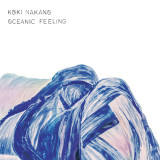
Following Pre-Choreographed released in April 2020 where he mixed his classical pieces with electronic sounds and started developing the relationship between dance and music, Japanese pianist Koki Nakano is back with Oceanic Feeling. The music deals with his inability to fully live in this so-called oceanic feeling, capturing thus the composer's longing, frustration and ultimately search for harmony within his own limitations. He composed much of Oceanic Feeling while watching dancers move to what he played and the album's singles come accompanied by mesmerizing videos featuring renowned choreographers and performers such as Tess Voelker and Marion Motin. Musically speaking, Nakano is constantly moving through the grey area between intellect and instinct on Oceanic Feeling. Tracks oftentimes feel simple, and in that simplicity, genuinely touching. Yet behind every piano key is a complex, layered recording system developed by the artist himself that gives sounds a unique depth. Oceanic Feeling is an impressive avantgarde journey that moves and stirs without ever losing balance.
RIYL: Guided by Voices, Pavement, The Clean, XTC, Flying Nun. The title of The Stroppies' newest LP, Levity, serves as a creative statement of intent and an acknowledgment of the dichotomy between the music they have made and the conditions in which they were produced. For a group that started over an initial idea to "create open ended music, quickly and haphazardly”, the logistical challenges of creating their second album in the midst of a pandemic, in a city that endured the longest lockdown in the world, created a need to redefine process. Levity, The Stroppies strongest creative statement to date, is the result of this new approach to creative process. Playful yet focused, but broader in scope and experimentation than previous efforts, the ten songs that comprise Levity continue the band's exploration of the pop song as both foil for experimentation and conduit for personal reflection. Whereas the group's debut LP Whoosh! demonstrated their ability to craft clean, concise jangle pop, Levity takes a different route by utilizing a darker pallet of sounds to create its impressionistic whole. Fuzz and distortion are employed to add weight to songs built on tape loops and Motorik drum patterns. Warbling synthesisers and modulated keys add new moods and dimensions to The Stroppies unique brand of pop classicism. Thematically, the band continues their exploration of the personal refracted through the lens of the absurd, though this time around the music feels a few shades darker, a somewhat inevitable consequence of the collective trauma of the past 24 months. While the narrative around the 'lockdown record' is increasingly commonplace, there are unavoidable realities involved in making creative decisions under such circumstances that can't be overlooked, especially for a band that thrives on collaboration. "The restrictions around COVID really informed the way we made the record', says Angus Lord, the band's co-founder and guitarist. "It meant that there was a lot less opportunity to meet and build ideas collaboratively, which is how we’ve worked in the past. Instead, ideas were developed in isolation, then shared digitally, developing slowly over correspondence and only bearing fruit when we were able to be in a room together. I think this had a big effect on the songwriting and execution.” This process even extended to the studio, where The Stroppies found a kindred spirit in John Lee of Phaedra Studios, who mixed the record in isolation, somehow managing to synthesise the band's pop sensibilities with their penchant for studio experimentation. Furthermore, the addition of new member Zoe Monk, known for playing in a diverse array of Melbourne acts (Eggy, Thibault, The Opals) contributed both synthesiser experimentation and rock solid rhythm guitar, a huge addition to the band's developing sound, an infectious combination of the off-kilter 90s US underground, British artpunk ala Wire and a more than generous love of classic Pop songwriting. The Stroppies have managed to craft a record of weight and substance. Through Levity the Stroppies have, at least temporarily, found their feet amongst the chaos
Ex RSD LP on transparent red vinyl, gatefold sleeve with lyric inner sleeve and DL card. Final copies now reduced to £7.99. The tracks on this album have never been officially released before now. The eight songs on this album were recorded in 1978 on a 2-track stereo Revox A77 tape recorder. The recordings are unashamedly analogue, using one microphone and guitars plugged directly into the tape recorder. Bouncing down tracks irreversibly as they went on, forced to make creative decisions that could not be undone. Some hard choices had to be made with the mix, but with no record company meant no record company agenda. TV Smith & Richard Strange could write and record whatever they wanted – and did! It has been an enormous pleasure to rediscover these recordings, the result of a friendship of two artists emerging from broken bands and each about to embark on a lifelong adventure in words and music. TV SMITH - I wasn’t having a lot of fun in 1978 when Richard asked me to collaborate on a song he was writing called “Summer Fun.” I was in the final stages of songwriting for the second Adverts album “Cast Of Thousands,” a project that already seemed doomed to failure given an unenthusiastic record company, a band in the throes of falling apart, and a dwindling audience - but my creative juices were in full flow and I was ready for something different. I already knew Richard, of course, from the Doctors Of Madness, who I’d followed in the years before punk when I was still living in Devon and they were one of the few bands to come and play in the area. I considered them a warped poetic glam band with gothic leanings, and was slightly surprised when the song I’d been invited to work on turned out to be a kind of California surf pastiche. But I was game to get involved, and after we’d finished it and ventured forward with regular writing and recording sessions over the following weeks it soon became clear that “Summer Fun” was just a gateway drug, and the songs that were emerging from our combined forces were going to quickly become much deeper and much darker // RICHARD STRANGE - Watching the remnants of a musical dream being swept away by the juggernaut of corporate punk rock in 1976, I felt a combination of jealousy and resentment towards many of the key players who had been responsible for our demise. The Sex Pistols had supported my band Doctors of Madness early in their career and nicked not only our future but £12.00 from a pair of trousers in our dressing room in Middlesbrough Town Hall! The Jam, who supported us over four shows at London’s fabled Marquee Club, were how I imagined The Who would be if they’d joined the Young Conservatives. Warsaw, our go-to support band in Manchester, had just changed their name to Joy Division, and Johnny and the Self-Abusers, our Scottish flag wavers, had become Simple Minds. All were being feted by the all-powerful music press, while we were being buried. But there was one punk band for whom I never had anything but the greatest affection…The Adverts.
Stars of the Lids, Tim Hecker, Brian Eno, Manuel. Duo Consists of Jonas Munk (aka Manual) and Jason Kolb (guitarist from Auburn Lull). 4th album, 2nd for Felte and first one since 2012. Initially on blue vinyl. Past press by Pitchfork, XLR8R, Impose. Past project Releases on Morr Music, Darla, and more. Billow Observatory is the project of trans-Atlantic duo Jonas Munk (Denmark) and Jason Kolb (Michigan). Initially planned as a small sideproject from their main work in Manual and Auburn Lull respectively, the two quickly realized their collaborative experiments merited more time and attention. Using heavily treated cavernous guitars, subtle synths, and crackling radio transmissions, their self-titled debut was released in 2012 as a double LP and established Billow Observatory as purveyors of unhurried, highly detailed ambient immersion. The release pair of II: Plains/Patterns in 2017, and III: Chroma/Contour in 2019, on Munk's own Azure Vista Records, introduced a subtle underpinning of rhythm, pulse, and stutter among the washes, expanding their sound with a hint of understated electronica. Marking 10 years since debuting on Felte, 2022 sees the release of Stareside, their most forcefully elegant undertaking to date. A record of swaying quarantine temperament, Stareside's 9 tracks thread the needle between hope and hopelessness - daydreaming whilst watching the world go mad in the blink of an eye. Not shy of overt rhythm, soaring motifs, and daunting undercurrents, Stateside veers wildly in new directions, yet keeps one hand near the record bin of comforting nostalgia (think early Warp Records, Jon Hassel, and Conny Plank to name a few).
Other Joe is the pseudonym of producer, mastering engineer, and label-head Joe Buchan, an individual with a penchant for free-wheeling experimentation and genre-crossing musical tastes. Drawing upon a wide array of sounds that pay homage to his love of both the beautiful and the abrasive, Joe devours indiscriminately whatever sounds might cross his path, the result giving birth to the unique musical journey that is listening to an Other Joe record. After a few years spent playing in bands and releasing small bodies of work under different monikers, Joe released what many listeners know as his breakout record, Alien Haze, a beautiful collection of recordings that oscillate from collages of field recording and found sound, sublime balearic-era saxophone symphonies, and introspective neo-classical psychedelia. His latest work, blessing from th eheart (typo intentional), expands on Other Joe’s love for blending field recording and acoustic instruments with electronic processing. Beginning by reviewing the catalogue of creative notes he had archived since the release of Alien Haze in March 2019, Joe picked apart voice memos, Logic projects, iPhone videos and whatever else he could lay hands on. Says Joe, “looking over it all at once, the musical ideas I had been attracted to over the past eight or nine months started to make a bit more sense - I could see that there were instruments I was liking, or chord progressions that I kept coming back to, structures and forms that I had found engrossing. Sort of like putting together a jigsaw puzzle that I had made without realising.”
Strut present the first ever reissue of an essential lost classic from the Black Fire catalogue, Wayne Davis’ powerful self-titled gospel-soul album from 1976.
An accomplished vocalist and keyboard player, Davis had studied in Washington D.C. and had worked with Roberta Flack and she subsequently secured him a recording deal with Atlantic Records; he released the 'A View From Another Place' album in 1973 and Roberta contributed electric piano to one of the tracks. Davis was the dropped from the label and his subsequent album was released by Jimmy Gray on Black Fire. Produced by Jimmy Watkins and Bias Studios manager, Bob Dawson, the album line-up featured the celebrated poet and flautist Wanda Robinson and the horn section from legendary D.C. go-go pioneers Experience Unlimited. Wayne later returned the favour, appearing as a vocalist on Experience Unlimited’s seminal 'Free Yourself' album.
This first international reissue of the album features new sleeve notes including band member interviews and original illustrated artwork by Muzi Branch. Audio was transferred from the original tapes by the album’s engineer, Bob Dawson, and was remastered by The Carvery.
• First international reissue of Wayne Davis’ album from 1976