Bella Boo lands on Aus Music with a mix of party-starting and heart-racing house jams
Swedish artist KURT. brings her characterful style to the title cut
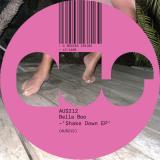
Bella Boo has lit up the house world since breaking through in 2018. She has become a Studio Barnhus mainstay with a sound that is both emotional and energetic in the way it contrasts light and dark. It's built on solid grooves with fresh sound designs and has taken her to dj everywhere from Panorama Bar to Printworks. Her debut LP, as well as follow-up EPs, have seen her nominated for several Swedish Grammys and seen her profile grow around the world. KURT. is a rising star from Stockholm with an electric sound that blends club, r&b, pop and soul. It's high on attitude and laced with her own provocative vocals. She guests on opener 'Shake Down', which is a chunky, bass-first rhythm packed with character: hints of jungle breaks, heat-damaged synths and blasts of gloopy bass all bring the fun before KURT.'s vocal motifs - which are variously sultry, whispered and visceral - inject even more heat. The Regrette Rien Mix takes on a late-night feel with sustained chords and a silky smooth vocal from KURT. that turns you inwards. Bella Boo then goes solo for the super vibey 'Atlas', a deep, cruising house cut with catchy percussion and lush, layered bells. The golden chords and shimmering pads are immersive and expansive as the bass powered on. Lastly, '8Ball' quickens your step with bumpy kicks and increasingly detuned, wonky synths that bring a future feel to a punchy yet cuddly and feel-good groove.
Gorizont Sobytiy (Event Horizon), the duo of veteran electronic musician Nocow and his wife, DJ Designer, mark the project's debut with an album worth of material of 'frogg-step' / Pankratov Step. It's safe to say this is an intriguing proposition for even those well-initiated into the world of the contemporary Russian underground. What is perhaps most immediately obvious across the 11 tracks is a clear appreciation for golden-era Rephlex records, as if the duo are reflecting on how the iconic label was perceived in the Eastern bloc at the time. There's a nostalgic touch tugging at the heart strings with the warm ambient tones of 'Bananoivy Twist' or even the ballroom-esque organ melodies of follow up 'Chacha', both swiftly followed by a switch back into frantic gabber style kicks that recur across the album.
To give a little more away in terms of a background story, Nocow and DJ Designer draw influence from a film called Winter Evening in Gagra, a somewhat distant feeling artefact of late-Soviet cinema about a tap dancing champion's late nights spent gallivanting across the glitz of Moscow's pop music scene in the 1980s. Maximalist in its sound design, Pankratov Step draws its name from actor-protagonist Pankratov, not quite an out-of-time soundtrack as such but at the least a wry nod to the former world in which the film takes place. The cascading, brittle synthesis of 'Cemetry's Boss' forms an icy cinematic fusion again with a gabber influence at play whilst a fierce acid line works alongside myriad glitch rhythms and repeating keys on 'Octopus Werk'. Influenced by the local humour and sentimentality surrounding the film, a melodrama with themes of lost art and a kind of old-world transcendence the young circus performer yearns for, the duo use it as a vessel to describe the projects sound - a coalescing of vintage Soviet soundtracks, early IDM, Jake Slazenger and Expert Knob Twiddlers album. 'Pankratov-Step' becoming their own fictional genre. The LP marks another avant-garde chapter in Nocow's long back catalogue, as well as a fully formed collaborative debut for the currently enigmatic DJ Designer. Pankratov Step is the second release on GOST ZVUK sub-label MEMONT, curated by Kuzma Palkin.
Techno House Connoisseurs are back with their 8th release by Bay Area producer Tranquil Elephantizer. This 3 track ep covers all the bases with equal parts tribal and acid culminating into that West coast sound you have come to love and miss. The A side starts off with the Silverwind Mix....deepish house music with flutes and mood for days teasing and drifting with tight percussion keeping the track grounded yet still dreamy. Long winded but in the best way. The 2nd track on side A is the Brother Lee Love mix which has a similar vibe but transitions into layers of crisp and subtle 303 acid lines all throughout. Wonderful end of night or middle of set escapism for side A. Side B has a lone track titled 5 Strobes mix that will get yours and the dance floor's attention. Panning and hypnotic with skipping percussion and spoken word....truly psychedelic west coast vibed out acid house.
Turkey’s first stereo LP. A foundational recording of Anatolian psychedelia. Audio transferred from the original analog master tapes, mastered and lacquer cut by Frank Merritt at The Carvery, London, and pressed on 180g heavyweight black vinyl at Record Industry in the Netherlands.
Released by the legendary Yonca Müzik label in 1973 as Turkey’s first stereo LP, Türküz Türkü Çağırırız! now returns as the first official reissue. The album captures Mazhar Alanson and Fuat Güner at a pivotal moment before their later success with MFÖ, one of Turkish pop-rock’s most influential and enduring groups.
Mazhar and Fuat first met in 1966 through a shared love of The Beatles’ Rubber Soul. Inspired by the close vocal harmonies of The Beatles and Crosby, Stills & Nash, they initially believed this music could only work in English. Producer Ergin Bener encouraged them to develop their own musical language in Turkish.
Previously members of Kaygısızlar, the pioneering group that accompanied Barış Manço, Mazhar and Fuat explored a more intimate Turkish folk-rock sound on this album. Zafer Dilek’s arrangements bring his distinctive guitar and keyboard work to a recording in which acoustic guitars, organ and electric guitar touches frame Anatolian melodies. Country-rock influences and the English-language “Upside Down” add to its range.
The title roughly translates as “We are Turks, and we sing Turkish folk songs” — reflecting a search for a new, distinctly Turkish musical identity. The album draws on works by Âşık Veysel, a defining voice of Turkish folk poetry, and Yunus Emre, the great Anatolian Sufi poet.
“Adımız Miskindir Bizim” was sampled on Action Bronson’s “Easy Rider,” while Stones Throw producer Oh No sampled “Sür Efem Atını.”
It's time to celebrate five years of Paryìa! From the heart of the label, this compilation brings together our two favourite genres, bridging house and techno. Showcasing different cultures and backgrounds, this compilation represents the many different shades the electronic music scene has to offer. Finding that sweet spot through diverse moods and tempos, each track reflects the individual vision of the artist while taking its place within a collective journey that embodies everything the label stands for.
Featuring contributions from Cinthie, Fireground, Toobris, DJ Babatr, DJ Maria, Isabel Soto, Nesa Azadikhah, and Zombies in Miami.
Berlin-based producer ZentaSkai returns with ‘Analog Assets Vol. 04’, a four-track vinyl-only EP focused on analog texture, dub-inflected atmospherics, and disciplined techno structure. Active since 1997 and operating Mask Records and its parent label, Zaijenroots, from his Berlin studio, he continues to refine a sound shaped by spatial control and steady, architectural pacing. Tracks unfold patiently, elements are introduced with intent, and nothing feels excessive.
Setting the tone with Cuddling Monsters’ partner, Laura Merino Allue, A1 features phased melodic textures and crisp percussion that gradually lock in the rhythm. A2 develops a filtered synth motif over a steady four-to-the-floor rhythm, revealing its full weight before pulling back. B1 is the most direct cut, driven by a firm, punchy beat and sharp rhythmic detailing built for peak-time focus, while B2 closes with rising string layers over a dub framework, balancing warmth and precision in a clean, measured finish.
With releases on Jerome Sydenham’s Ibadan Records and upcoming collaborations including Cuddling Monsters with Laura Merino Allue and a joint project with Thomas Grun for Rhythm Trax Austria, ZentaSkai’s work sits comfortably between minimal experimentation and functional dancefloor design.
Supported by artists such as Richie Hawtin, Joseph Capriati, Marcel Dettmann, Luke Slater, Laurent Garnier, and DVS1, he maintains a consistent presence within the underground without chasing trends.
Jungle by Night Speaks Out on their latest full length album, Bar Dancing: An Ode to Friendship, the Dance Floor, and the Voice
Since their teenage years, the Amsterdam-based groove collective Jungle by Night has been conquering music venues and festivals with their ever-expanding mix of styles—krautrock, nu-disco, electro-pop. After six largely instrumental studio albums, the group—now consisting of six musicians—changes course on their seventh long-player. On Bar Dancing, set for release in early 2027 via the Amsterdam-based Rush Hour label, the band does something they have never done before: they sing.
Where brass, percussion, and synths previously told the stories, lyrics and vocals now demand their space as well. It gives the band room to put words to the topics that occupy their minds: the pitfalls of digital addiction, the dark sides of fake news, toxic masculinity, and the connection they experience while touring together.
The title Bar Dancing captures the essence of the album. It is an ode to friendship, connection, and the night. The record radiates the atmosphere of a pub where you sit at the bar discussing life, only to find yourself dancing in that very same bar moments later. Analog and warmly produced, the album builds on influences from '80s pop, krautrock, and Neue Deutsche Welle. Think of the playfulness of Talking Heads, the dub influences of UB40, the electronic layers of Air, and the tight "computer love" of Kraftwerk.
Band member Hy Tienson explains: "For the first time, we are literally giving a voice to our thoughts. It makes the music more personal, more direct, and more layered, without losing that signature, uplifting Jungle groove."
With Bar Dancing, Jungle by Night delivers an album that invites both listening and dancing. It marks a new phase for the band, taking another step forward with a renewed sound and their own lyrics.
Erasmus Hall's 1980 album Your Love Is My Desire' is one of the most collectable and in fact desired modern soul albums of all time. Copies of the original pressing on Westbound have exchanged hands for over £400. Furthermore in-demand gems including Your Love Is My Desire' and Just Me And You' have never previously been on 7' vinyl, so as part of these Record Store Day release those two tracks are included on the format making this package irresistible. Eramus Hall are in fact a group taking their name from a building George Clinton saw and gave them while he was in Chicago. The group comprise lead vocalists Michael Gatheright and James Wilkerson with musicians Ronald Wright, Marvin Williams, Joe Anderson, Grady Smith, Charmie Currie and William Tillery.
Now, following great acclaim for Volume 1, CTR is proud to unveil another equally eclectic Post-Punk Era Selection Compiled by Jason Boardman ( Before I Die Records) Celebrated Manchester club-night curator & record Label Owner , DJ & digger - supreme.
A second compilation of late 1970s / early 1980s Post-Punk era bedroom & small studio innovations & DIY Inspirations - Featuring more rarely & never heard cuts from that period. Including tracks from the enigmatic Prana, Blank Students, Janet Armstrong & The Native Hipsters ..A rich vein .
Jason Writes Of Volume 2 :
"It was a delightful shock that No Ones Listening Anyway Volume One was so well received - thanks to everyone one who bought & enjoyed it. This led to John asking me to collate Volume Two, so here it is.
This time all the material was recorded & released in the UK between 1978 & 1984.
I was conscious that there was minimal female energy on Volume One so have tried to rectify that here on Volume Two. I have also tried to make it as varied as possible with none hit wonders, oddities, collectables, under the radar B-sides & a couple of previously unreleased on vinyl selections."
Welcome to THE VAULT for 1985. A collection that digs deeper into the year’s musical landscape – uncovering singles that may not have always reached the highest chart positions but remain essential to the rich and diverse pop story of 1985. Some were overshadowed at the time, some were highlights from albums that had already sold huge amounts, some found greater success internationally – but all deserve their place in this continued celebration of 80s pop.
45 tracks across 3-LPs – pressed in gorgeous green vinyl – NOW Yearbook – The Vault: 1985.
LP1 opens with a trio of tracks from huge-selling albums:- Bruce Springsteen’s ‘My Hometown’, the sixth single in the UK from ‘Born in the U.S.A’ - one of the best-selling albums of the decade, followed by Bryan Ferry with the stunning ‘Windswept’ from ‘Boys And Girls’ and Sting’s ‘Love Is The Seventh Wave’, taken from his solo debut ‘The Dream Of The Blue Turtles’. Next up, Go West with a U.S single release ‘Eye To Eye’, Scritti Politti with ‘Perfect Way’ – their biggest hit in America, and ABC with ‘Be Near Me’. The first side closes with two established bands; Heaven 17 and Orchestral Manoeuvres In The Dark… Flip the LP over for Adam Ant with ‘Vive Le Rock’, Midge Ure, Blancmange and the second collaboration between Philip Oakey & Giorgio Moroder with ‘Good-Bye Bad Times’. The Style Council’s ‘Welcome To Milton Keynes’ leads to LP1’s closer’s from Simply Red and Fine Young Cannibals who followed their debut ‘Johnny Come Home’ with ‘Blue’.
LP2 opens with Cocteau Twins and the dream-pop atmospherics of ‘Aikea-Guinea’, ahead of The Jesus And Mary Chain with ‘Just Like Honey’, and The Dream Academy with ‘The Love Parade’.
Brilliant with their cover of James Brown’s ‘It’s A Man’s Man’s Man’s World’ and jazz-influenced pop from Matt Bianco are up next ahead of the sublime ‘Castles In The Air’ from The Colourfield and Elvis Costello & The Attractions, who released the 1979 track ‘Green Shirt’ to promote their ‘Best Of’ collection … and the side closes with The Clash’s ‘This Is England’ which would become their last originally released hit…whilst on the other side…celebrate the dancefloor, with a vibrant mix of Hi-NRG, soul, electro and club-influenced pop:- Opening with Sheryl Lee Ralph’s ‘In The Evening’ and Barbara Pennington’s equally superb ‘On A Crowded Street’, the hi-energy continues with Miquel Brown and Hazell Dean ahead of a US hit from Laura Branigan (‘Spanish Eddie’) and Divine’s cover of ‘Twistin’ The Night Away’. LP2 finishes with a massive U.S. dancefloor smash for Eddie Murphy with ‘Party All The Time’.
The final LP kicks off with a bunch of singles that achieved bigger hit status in the US than here and opens with Billy Joel’s ‘You’re Only Human (Second Wind)’, a track written exclusively for his ‘Greatest Hits – Volume I & II’ compilation, ahead of pop-rock from John Mellencamp plus an anthemic smash from Bon Jovi. Pat Benatar’s ‘Invincible’ features ahead of The Power Station’s third US Top 40 hit…whilst back in the UK Chris Rea enjoyed his biggest chart hit to date with ‘Stainsby Girls’ and the side is completed by Marillion with ‘Heart Of Lothian’ the third hit from their huge ‘Misplaced Childhood’ album… Flip to the final side for the stellar vocals on ‘Act Of War’, the huge collaboration between Elton John & Millie Jackson ahead of dancefloor smash ‘New Attitude’ from Patti Labelle and ‘Show Some Respect’ a U.S. single from Tina Turner. Sophisticated pop-R&B from Michael McDonald and Daryl Hall & John Oates come ahead of the collection’s closers- and two outstanding vocal performances: Chaka Khan’s ‘Through The Fire’ and the U.S. breakthrough hit from Whitney Houston with ‘You Give Good Love’ – signalling the arrival of one of the decade’s brightest new stars.
NOW Yearbook – The Vault: 1985 – A deeper dive into an unforgettable year in pop.
Música para Plátanos takes its name — and much of its inspiration — from the group’s recording studio, situated in the heart of a banana plantation on the humid north shore of Tenerife, Canary Islands. The ever-present sight of the green, sun-drenched fields surrounding their weekly sessions seeped directly into the music: improvised jams that are playful, layered, and deeply connected to place.
This release gathers a distilled selection from those sessions — a kind of “greatest rotten hits” distinct from their ongoing Imaginary Island Music volumes.
The album functions as a living archive bringing together a distilled selection of recordings spanning more than five years: from dusty, long-forgotten sessions to evolving tunes that have become staples of the band's live sets but have never before been committed to record. These long-form sessions served as a petri dish for the Lagoss sound, allowing their experiments to putrefy into their chaotic signature strain of cyber-exotica, unstable kosmische or heavily-corroded dub.
The title obvs nods to Brian Eno’s Music for Airports, but the logic is inverted. Instead of clean, ambient drift, the record inhabits a dense and fertile environment: polyrhythmic structures, Latin-infused electronics, and shifting counter-tempos that feel weighted by the local humidity.
Ultimately, Música para Plátanos is as much about the process as it is the place. Like the plantation outside, the music is subject to the elements; the tracks change shape depending on the heat of the day, what we drank, what we ate. It’s an unstable, honest harvest of sound—shaped by the weather and the state(s) of mind alike.
Originally released by Time Capsule in 2021 and long out of print, Stories From Another Time 1982-1988 returns in an upgraded edition following years of demand and rising collector prices on the secondhand market. Widely regarded as a modern cult classic, Mário Rui Silva’s visionary recordings blend acoustic folk, cinematic soul, spiritual jazz and saudade-filled Lusophone rhythm into a deeply timeless and universal work that transcends genre and geography.
This new edition features half-speed mastering cut at Metropolis alongside an expanded 4-page insert with a tribute essay and unseen photographs following Silva’s passing in 2024.
The roots of Angolan popular music explored in the meticulous guitar studies of Mário Rui Silva. For fans of Naná Vasconcelos, John Hassell’s Fourth World ambient, Eduardo Mateo’s psychedelic folk and Cameroonian electronic music visionary Francis Bebey.
Whether on mesmerising acoustic ballads or hypnotic groove-led tracks, the music of Angolan guitarist, researcher and intellectual Mário Rui Silva has a beguiling, melancholy quality, woven into the dynamics of his deft guitar playing.Rhythmically complex yet supremely effortless, the music collected here stems from three albums Mário released in Luanda in the 1980s that reflect his diverse range of influences, from traditional Angolan and West African rhythms to European jazz and classical instrumentation. It is united by a sense of low-key beauty, whether on the chugging opener ‘Kazum-zum-zum’, the jazz-funk keys of ‘Lembrança Dum Velho’, or the twinkling, late-night poly-rhythms of ‘Kizomba Kya Kisanji’.
Born in Luanda, Angola in 1953, Mário dedicated his life to Angolan popular music. His fifty-year career has seen him live between Angola and Europe, rub shoulders with Cameroonian musicians Francis Bebey and Ewanjé, record the seminal album Angola ’72 with fellow Angolan musician Bonga, and draw influence from Brazilian guitarist Baden Powell.
It was the teaching of Angolan legend and Ngola Ritmos co-founder Liceu Vieira Dias that Mário gained a technical, political and spiritual understanding of Angolan musical culture. In the hands of Liceu, the traditional Angolan semba and kazukuta rhythms of the 1940s and ‘50s helped create an emancipatory sense of national pride and collective agency that awakened its listeners to the racism and tyranny of colonial rule, underpinning the country’s push for independence in the process.
What might sound like the intonations of Brazilian influence are what Mário attributes to the “African rhythms taken by the slaves which gave rise to other musical cultures” around the globe. Instead, this music emerged from a collective instinct to assert a cosmopolitan Angolan identity free from the patronising falsehoods of Lusotropicalism.
“There was a need within me to contribute in doing new things,” Mário describes. “In the sense of solidifying the music of Angola that was the result of the meeting of two cultures, and wanting to value the Angolan part whenever possible.”A selection from Mário’s three 1980s albums, Sung’Ali (1982), Tunapenda Afrika (1985) and Koizas dum Outru Tempu (1988) have been compiled here as a 2xLP release by Time Capsule’s Sam Jacob and Kay Suzuki. Together, they provide a snapshot of one man’s journey to the core of his nation’s music, charged with the search for a culture uprooted by colonialism
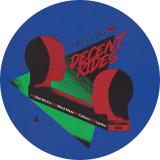
The Austrian imprint Fortunea Records took a little break to fill up their batteries and comes back now this summer with a release by the Bavarian duo Decent Rides. They are around for a couple of years and are also the masterminds behind the label Interloot Records.
On the ‚Like We Do‘ EP they are your guides for a versatile house infiltrated tour. The title-track is an energetic floorfiller with modulated synth sequences and heart stomping drum patterns. Definitely the killer app on this wax.
The second track on the A-side features the tune ‚Mind Maze‘. A funky bouncing bassline, reverberant almost siren sounding tones, staccato vocal samples and high accentuated hats make you blister your feet from your high intensively dance moves.
On track B2, the duo adds further "Colours" to the record. This melancholic deep house tune exudes a beautiful, somber, and yet captivating atmosphere that is impossible to resist. This track could be very effective when played during sunrise or sundown.
And finally, they round off this release with cosmic dub sounds and shimmering chords. "Lembo" invigorates the senses. Every beat on this tech house track is an invitation to let go and feels you the pulse of the underground scene.
Go check this out!
Limited to 200 records. There will be no repress!
Mastering by Patrick Pulsinger.
Luke Una introduces a new series of original, dancefloor-focused productions on his É Soul Cultura imprint, in partnership with Mr Bongo. True to the label’s ethos, the series pushes sonic boundaries into deeper, more expansive territories, delivering forward-thinking music for discerning dancefloors. The first release brings together UK garage royalty Zed Bias and the underground talents of MJK, as we’re served up a double hit of hypnotic, futuristic techno and house.
Zed Bias is an artist that needs little introduction. The main moniker of Manchester’s Dave Jones, over the past 25+ years he’s cemented himself as a crucial figure in UK garage and dance music as a whole. He’s remixed hundreds of artists including Whitney Houston, The Streets and Azymuth, been nominated for a MOBO award and, through his more experimental take on 2 step garage, helped lay the foundations for the development of bass music into dubstep. For this new release he teams up with Ghanaian-British producer and DJ, MJK. Earmarked as ‘One To Watch’ by DJ Mag, and similarly championed by Mixmag, MJK’s sound draws from the worlds of bass, grime, house and beyond.
Opening track ‘Keep On Livin’’ sees Zed Bias and MJK coming together in the studio. Passed to Luke by his manager If Khan, it’s a sonic alchemy rooted in black heart soul music yet seen through a prism of bass futurism. A heads-down cut of driving techno, with nods to Detroit, and firm UK foundations, that is both bass-heavy and otherworldly. It’s a simple yet effective, entrancing combination of percussion, bass, and keys, peppered with old soul samples that lock you into a groove and never let go. A track built for dancefloors big or small.
On the flip, MJK steps up solo with ‘Late to Camberwell’, diving into deeper, late-night territory. Known for his three-deck DJ mixing style, MJK has a real understanding of how to layer elements to keep people moving. A swirling cosmic feel reverberates through ‘Late to Camberwell’. Drum hits, shakers and synth loops are weaved together in style, creating a dose of deep, immersive rolling house. In Luke’s own words, “I found it very exciting to hear a new artist create such a beautiful sound that reminded me of Detroit and Artwork's late ‘90s techno alias Grain. It’s stripped-back raw house music of the highest calibre”.
ALERT: BIG 90s ITALIAN RAVE COMP - a lot of very in demand tunes on here.
Navigators
Franco Falsini and the Interactive Test Universe
There are musicians who follow their time.
And then there are those who seem to move along a different trajectory—like navigators crossing sonic eras without ever truly belonging to any one of them. The story of Franco Falsini belongs to the latter. It is a story that begins long before raves, before techno, before the word “electronic” had even become a recognizable musical genre. A story that moves across continents, technologies, and sonic visions, eventually arriving at a small creative laboratory born in Italy in the early 1990s: Interactive Test. This compilation is a fragment of that universe. But as often happens with the hidden histories of music, understanding it requires going back. Far back.
The Beginning: Machines, Tape and Space
In the late 1960s Franco Falsini leaves Italy and moves to the United States. It is not merely a geographical journey—it is also a journey into a new idea of music. At the time, synthesizers are only just emerging from research laboratories. Multitrack tape recorders allow musicians to build entire sonic worlds on their own. Technology is still far from standardized: every studio is almost an experimental workshop. In Virginia, Falsini builds one of his own. Among cables, oscillators, electric guitars and reels of magnetic tape, a kind of music begins to take shape that resembles nothing else being made at the time. It is not simply rock, and it is not yet truly electronic. It moves somewhere in the space between the two. Out of these explorations emerges Sensations' Fix, the project through which Falsini releases a series of albums during the 1970s. Records that seem to come from a parallel dimension: cosmic landscapes, electronically treated guitars, synthesizers drifting like satellites. Many years later those albums would be rediscovered as visionary works. But at the time they were simply the result of relentless curiosity. A curiosity that would never fade.
The City That Never Sleeps
In the 1980s Falsini’s trajectory leads him to New York. The city is a sonic organism in constant transformation. In its clubs and recording studios something entirely new is beginning to take shape: music built from drum machines, sequencers, and samplers, created for the body before the living room. It is the dawn of modern dance culture. Falsini works as a sound engineer, producer and experimenter. From close range he observes electronic music transforming into a global language. Machines become more accessible, computers begin entering studios, and rhythm takes on an increasingly central role. Yet even in this phase Falsini does not simply follow what is happening. He absorbs. Observes. Reimagines. When he eventually returns to Italy, he brings back not only technical experience but also a clear vision: the conviction that electronic music is an open space, a territory still waiting to be explored.
Tuscany, Early 1990s
At the beginning of the 1990s something is happening in Italy as well. In clubs, abandoned industrial warehouses and clandestine parties, a new scene is beginning to form. It is rave culture: a spontaneous movement bringing together DJs, producers and listeners in a collective experience driven by rhythm, technology, and creative freedom. It is within this context that Franco Falsini, together with his brother Riccardo, creates Interactive Test.
The name almost sounds like a scientific experiment. In many ways, it is. Interactive Test does not emerge as a traditional record label. It begins as a laboratory—a place where ideas, sounds and musical identities can be tested and explored. Around the Falsini studio in Tuscany a small constellation of artists and DJs begins to gather, helping to shape the sound of Italy’s emerging electronic scene. Among them are Andrea Giuditta, Francesco Farfa, Gabry Fasano, Roby Mastelloni, Roby J and many others. Each brings a different musical sensibility. But they all share the same intuition: electronic music is not a genre. It is a language.
The Laboratory of Identities
One of the most fascinating aspects of the Interactive Test universe is its constant play with identity. Franco Falsini releases music under several different names: Open Space, Youth Wave, Agent Fylfoyt, Man Myth Magic. These are not simply pseudonyms.
They are different sonic perspectives, as if each project were a window opening onto a parallel musical universe. Open Space, for example, explores more atmospheric and visionary territories. Youth Wave moves between electronic groove and club-oriented rhythms. Other projects experiment with digital psychedelia or hypnotic techno textures. Interactive Test becomes something more than a label. it becomes an ecosystem.
Domestic Machines, Infinite Worlds
Looking back today at the technology used in those productions, one might almost smile. Many tracks were created on Amiga computers, MIDI sequencers and analog synthesizers wired together in home studios—tools that appear modest when compared to today’s digital possibilities.
Yet precisely these limitations became a creative force. Every sound had to be built, shaped and reinvented. Sequences developed slowly, almost like living organisms. The tracks did not always follow traditional dance music structures; often they felt like genuine sonic journeys. Music built from space.
A Hidden Constellation
Many of the records released by Interactive Test in the 1990s remained for years almost invisible objects, circulating quietly among DJs, collectors, and devoted listeners. Yet it is precisely this underground existence that helped preserve them. Listening again today, one perceives something rare: the feeling of music that does not fully belong to its own time. Music suspended between different eras. Perhaps because it comes from a vision that both precedes and transcends trends.
Continuing the Journey
Looking at Franco Falsini’s entire path—from the electronic psychedelia of Sensations’ Fix to the rave culture of the 1990s—a surprisingly coherent line emerges.
A line defined by exploration.
Each project, each pseudonym, each record appears as a new route within the same great sonic voyage.
Interactive Test was one of its stations.
A laboratory.
A community.
A creative platform.
This compilation gathers some of its traces.
Not as a simple archive of the past, but as a map of a musical territory that continues to expand even today.
LOS ANGELES—To celebrate the 40th anniversary of the celebrated Talking Heads and Jonathan Demme’s concert film Stop Making Sense, the set will be re-released as a 2LP and 2CD/Blu-ray set this summer.
Released last year, the sold-out Deluxe Edition of the soundtrack will return as a 2-LP black vinyl on Rhino and 2-LP crystal clear vinyl at retail. Both variants feature a 12-page booklet with liner notes from all four band members –Tina Weymouth, David Byrne, Chris Frantz, and Jerry Harrison—and band photos. The 2CD/Blu-ray version includes the entire 28-page booklet from last year’s Deluxe Edition and a Dolby Atmos mix of the complete concert, mixed by Jerry Harrison and E.T. Thorngren, who also mixed the original release. Both will be available on July 26. Pre-order now.
The band appeared together for a sold-out screening and Q&A last night at the Pantages Theater, the same theater at which Stop Making Sense was recorded. They were joined by Blondshell, who performed “Thank You For Sending Me an Angel.” Another special screening with the band will occur in Brooklyn at the King’s Theater on June 13, with the Q&A hosted by Questlove and The Linda Linda’s performing “Found a Job.” The two events cap off a banner year of celebrations for what many consider to be the best concert film of all time.
The inspiration for Stop Making Sense came when director Jonathan Demme saw Talking Heads perform during the band’s 1983 tour for Speaking in Tongues. Afterward, he approached them with the idea of making the show into a concert film. They agreed and worked together over the next few months to finalize the details. Ultimately, Demme filmed three shows at Hollywood’s Pantages Theater in December 1983 to create Stop Making Sense.
The concert film presents a retrospective of the band up to that point, with a performance that weaves together songs from all six of its studio albums. The show progresses methodically, opening with Byrne onstage performing “Psycho Killer” alone with a drum machine. After each song, he’s joined by a new band member until Weymouth, Frantz, and Harrison are all on stage with him. The group continues to grow throughout the concert as members of the stellar touring band are added: keyboardist Bernie Worrell, percussionist Steve Scales, guitarist Alex Weir, and backup singers Lynn Mabry and Ednah Holt.
The band performs 18 songs in Stop Making Sense, including its recent single at the time, “Burning Down The House.” That summer, the song was in heavy rotation on radio and MTV, helping the song become the band’s first top 10 hit in America. It was, however, a different song from Speaking in Tongues that was destined to deliver one of the film’s signature moments. Talking Heads would perform “Girlfriend Is Better” wearing the now iconic, oversized suit inspired by costumes worn in traditional Japanese theater. For good measure, a picture of David Byrne in the suit also graces the album cover.
Stop Making Sense focuses mainly on music by Talking Heads but does include a few songs recorded outside the band: “Genius Of Love” by Tom Tom Club, “What A Day That Was” and “Big Business” from Byrne’s 1981 album, The Catherine Wheel. Limited edition vinyl versions of both of these albums, along with Harrison’s The Red And The Black, were released for this year’s Record Store Day.
When it arrived in September 1984, Stop Making Sense was an artistic and commercial triumph. The film had people dancing in theatre aisles, and the soundtrack sold over two million copies. Just last year, the Library of Congress added Stop Making Sense to the National Film Registry in recognition of its cultural, historical, and aesthetic significance.
Weymouth praises Demme as a collaborator: “…Jonathan was a very enthusiastic, highly adaptive, and imaginative guy who was just as good a listener as he was a talker and collaborator. From the get-go you just got the impression he was as flexible as he was disciplined. Being team players, that boded well for a great relationship and a great film!”
Harrison says the film still holds up today: “To me, Stop Making Sense has remained relevant because the staging and lighting techniques could have been created in a much earlier time period. For example, Vari-Lights, lights with motors to re-aim them, had just come into vogue. Had we used them, there would have been a timestamp on the film, and it eventually would have felt dated...The absence of interviews, combined with the elegant and timeless lighting, created a film that can be watched over and over.”
Byrne says it’s interesting that this album was – for many people – an introduction to Talking Heads. “We had done a live album before this, but coupled with the film, and with the improved mixes and sound quality, this record reached a whole new audience. As often happens, the songs got an added energy when we performed them live and were inspired by having an audience. In many ways, these versions are more exciting than the studio recordings, so maybe that’s why a lot of folks discovered us via this record.”
Frantz recalls the sheer joy surrounding the entire Stop Making Sense experience. “I’m talking about real, conscious, transcendent joy… I’m talking about what the Southern gospel people call ‘getting happy,’ which means ‘to be filled with the Spirit.’ That is what happened to us onstage every night, and from my seat behind the drums, I recognized that this was happening to the audience too. Joy was visible in front of me and all around me every night.”
Following the release of Chris Liebing's 'Evolver' album this spring, German duo FJAAK rework 'Higher Things' which appeared on the full-length, releasing via CLR on 29th May 2026. Long established as a formidable force within Techno, FJAAK are known for crafting high-impact, floor-focused tracks, often via their self-titled imprint, with the Berlin artists now joining a star-studded cast on Chris Liebing's latest full-length, including photographer and film director Anton Corbijn on photography, and collaborations with Charlotte de Witte, Luke Slater, The Advent, Speedy J, Terence Fixmer, Pascal Gabriel, and
Daniel Miller.
Their remix reshapes 'Higher Things' around a rattling dub techno framework, where molten chords soften the weight of mechanical kicks while resonant stabs and swelling textures steadily intensify. The result is a hypnotic yet forceful reimagining, balancing atmospheric depth with anthemic, warehouse-ready pressure.
The original version of Chris Liebing's 'Higher Things' appears on his debut solo LP, 'Evolver', released 27th March 2026 on CLR. Marking a distillation of over three decades at Techno's core, the album pairs introspective depth with immediate, floor-driven impact, bringing together contributions from the likes of Luke Slater, Charlotte de Witte, Speedy J and The Advent, while ultimately remaining rooted in Liebing's singular vision, channeling the raw, industrial energy of classic club spaces into a refined, forward-facing long player.
The Dead Mauriacs is the project of French artist Olivier Prieur, "Paravents et miroirs, une cérémonie" is a live soundtrack.
The Dead Mauriacs describe their music as "Exotica Concrete" - their music is composed of field recordings made on a daily basis, as well as a diverse collection of sounds, including piano, Indian harmonium, violin, ukulele, didgeridoo, pieces of wood, glass, paper, and metal plates. The album is a spectacular 40-minute sound collage, assembled by sampling Exotica music represented by musicians and arrangers such as Les Baxter and Arthur Lyman, who were active in the 1950s.
"Exotica is a musical genre or sub-genre that emerged in the 1950s in the United States with musicians and arrangers like Les Baxter or Arthur Lyman. It is an extraordinary music because it is false: bird calls imitate bird songs, you can hear the sound of the waves, it is a Western fantasy, particularly North American, of a world and an imagery that never existed. It is a music associated with mass tourism, mass entertainment, consumerism. Arthur Lyman recorded about 30 records in 10 years in Waikiki. With his band, they played and recorded under a geodesic aluminum dome. The dome belonged to the owner of the hotel he played for every night. They did this at night to avoid noise. It's music that is both profoundly naive and totally flawed. In this, it is seductive and intellectually interesting. It is music that could easily be criticized today, but it is an imaginary in itself, like the Italian film music of the 1960s and 1970s." (Excerpt from the calax's interview)
The Dead Mauriacs are not only involved in music, but also in a wide range of other creative endeavors, including video and painting. He also repsonsible for the artwork of this LP. The inside of the product is also accompanied by an 8-page interview with Mauriacs and compiled his amazing artworks.
The Dead Mauriacs
Paravents et miroirs : une cérémonie / Screens and mirrors: a ceremony
Side A
Courte dérive, une ouverture / Short drift, an opening
Le retour des insectes électriques / The return of the electric insects Les oiseaux étranges / The strange birds Tension, terreur factice / Tension, false terror
Dénouement malais / Malaysian ending
Rituels et vanités 1 / Rituals and vanities 1
Rituels et vanités 2 / Rituals and vanities 2
Italiens dʼHambourg / Italians in Hamburg
Side B
Secrets pour piano / Secrets for piano
La suite Monory, Padoue-Le Caire-Nassau / The Monory Suite, Padua-Cairo-Nassau Hommes à découper / Men to cut out Lassitude moite / Clammy weariness
Le soleil artificiel du pont croisière / The artificial sun on the cruise deck
Pirogues et palmiers, vus de la scène / Pirogues and palm trees, seen from the stage La traversée / The crossing Rideau / Rideau
Fields recordings : Semproniano and Siena, Italy, Figueira, Portugal, Charentes, France. An electrical wire with a frequency shifter gave birth to the insects. Real and fake piano. Everything made with a computer and a midi keyboard.
Music premiered at Hörbar, Hamburg, 28th of December 2017. Music (and video) Olivier Prieur.
Thanks to Thorsten Soltau and all people at Hörbar.
Hello to Felix Kubin & Marie-Pierre Bonniol, Julia & Jan Warnke. Kisses to Hélène.
Big release outta Casablanca, Morocco from Cee ElAssaad.
We here at Local Talk have been big fans of Cee's deeply organic and uplifting House productions for a good while, so we're mighty happy to present this new release.
The A side starts up with a massive organ house workout that has been played on repeat at Mad Mats residency at the Soulmates club in Stockholm over the last 6 months or so. A peak time jam!
To add more fire we asked Emmaculate to throw down a remix for us, and it doesn't hold back. Deep, bumpy and utterly funky. Again...those house organs are fully at work!
On the B side Cee goes to church with deep but slight jackin' 4/4s over some heavy gospel preaching.
To enhance the gospel experience, our friend from Amsterdam, Marcel Vogel makes a long overdue guest visit on Local Talk and delivers a big gospel intro that moves into a jazzy and thumpin' house affair.
This is a bit of a rare gem from the Ellis Dee. Back in 1995 he made the track 'Synthetic Disco' but for some unknown reason (I'll have to ask him and let you know) it was never released and remained a mystical track lost in time. The flipside 'Atmosphere' was only released as part of the Total Science 2 compilation that came out in 1996. Both tracks compliment each other beautifully and are both very much on a similar tip to his Norty But Nice 12" that we put out a few years ago. Deep but rolling drum and bass for the massive!
We feel like Frank & Tony and Smallville have been on the same musical wave-length since forever. Our musical paths have crossed back and forth over the years and we have always shared a lot of the same values- steadily putting out quality music, that stands the test of time - growing consistently - never stop following our very own way - always not-following trends forever..
Frank & Tony is the collaborative guise of Scissor & Thread co-founders Francis Harris and Anthony Collins aka Grant. Both have long been staples of the underground with material under their own names and numerous other guises shaping the musical landscape of House Techno and beyond since the turn of the millennium. Both lived together in New York and as Frank & Tony the pair have delivered multiple albums and many EP’s on their own label, Tokyo’s Mule Musiq and Pacific Rhythm- now they are warmly welcomed onto the Smallville Records roster with their latest collection of works.
‘Ways Of Mine’ leads on the A-Side and showcases the pairs signature deep hypnotic house style via soft billowing pads cascading metallic chimes psychedelic spoken word and dreamy dubbed out keys floating atop a robust bouncy rhythm
section.To open the flip-side title-track ‘After All’ lays down a subtly blooming chord sequence shuffled drums and bumpy bass stabs at its core all subtly nuanced while the latter half introduces more dynamic rhythmic elements and intertwined melodic touches. ‘Dimension’ then concludes the release diving deeper with saturated ethereal pads and bubbling resonant arpeggio lines alongside heavily swung crisp drums jazzy keys and delayed vocal chants.
After All comes with a full cover artwork by Stefan Marx.
All tracks written & produced by Francis Harris & Anthony Collins
Mastering and Vinyl cut by Helmut Erler at Lathesville
Dario Rossi approaches electronic music like few others. His work as a percussionist has brought his unique rhythmic abilities to audiences around the globe. Born in Italy, Rossi combined percussion with samplers and synthesizers. His energy and talent have allowed these machines to be incorporated into his distinctive palette with very special results. 07Sep83 is his Bordello debut, with the title piece opening the four tracker. Beats cascade as analogue warmth laps the shore. Slow with a magnetic groove, elements of italo, wave and synth-pop intertwine to create a clean, bright sound that is at once familiar and totally unique.
Vocals arrive with “We’ll Meet Again.” Tempos rise while keys are emboldened by rich guitar strings. Lyrics counter with a melancholic tone that shifts into hope and fortified belief as melodies rise ever higher. The flip is “Lost.” Sharp drum patterns support notes that hark back to the majesty of Bobby O, the live sax by Augusto Pallocca and disco glory combining in this journey through genres. “Beat the Devil” closes. Sizzling from the outset, snares roll and snap. Rossi’s percussive prowess is on full display as synthlines flow over rhythmic ripples to the subtle and soulful strings that bring down the curtain.
If you’ve been keeping your ears to the ground, chances are this won’t be your first encounter with the glistening, shape-shifting sounds of Yushh. She has spent recent years DJing across the globe and releasing a series of standout tracks and remixes, cementing her status as one of the most vital flag-bearers of the Bristol continuum.
Somehow, it has been three years since her last solo outing. Making up for lost time, we finally welcome Yushh to Timedance for a searing five-track EP, “Full Body AXY”.
Yushh’s sound resists stasis, nothing feels formulaic. Instead, each track moves with an expert sense of detail, striking a rare balance between precision and instinct, dancefloor science and raw emotion. With a natural flair, she bends low-end pressure into something airborne. Heavy sub frequencies dissolve into a feeling of weightlessness that is both physical and elusive.
How can music hit with such precision and still feel like it floats beyond the rules of gravity? Yushh answers in her own language, where tension and release blur, where sounds flicker between density and light, and where the dancefloor becomes a space for both body-centric exploration and emotional catharsis.
Check The Description Before Asking For A Track ID is a thoughtfully curated four-track journey through modern deep tech house, balancing forward-thinking sound design with emotional depth and dancefloor functionality. The release unfolds across two distinct yet complementary sides, guiding the listener through evolving textures, moods, and states of energy.
On Side A, A1. Overt – Annular and A2. Third Echo – 31th Session introduce a spacious and immersive atmosphere. Built around shimmering arpeggios, airy melodies, and fluid progression, both tracks explore a subtle interplay between progressive motion, trance-like elements, and dub-infused textures. The result is a weightless yet driving experience — refined, hypnotic, and perfectly balanced for setting a tone that feels both futuristic and deeply engaging.
The B-side shifts into more introspective territory. B1. Eric Louis – Grooving In The Future and B2. Severin – Shiti bring a melancholic edge, focusing on emotive melodies and transitional energy. These tracks are crafted for pivotal moments within a set — where the atmosphere deepens, emotions unfold, and the narrative takes a new direction. Warm, bouncy grooves intertwine with cooler, more restrained tones, creating a contrast that feels both elegant and expressive.
Spanning a wide emotional and rhythmic spectrum, NRP006 is a versatile tool for selectors — designed to navigate the subtle shifts of a dancefloor with precision, intention, and depth.
NOREPRESS is a division of MixCult Records. Limited Edition.
Mr Bongo presents a reissue of one of the rarest releases on the illustrious and now ultra-rare tax scam label TSG Records. A label with a checkered past, operated by Lloyd Price and with alleged ties to boxing promoter Don King. The album in question, Disco Party by Reality, is a stunning journey through ‘70s dancefloor-focussed funk into early proto-disco grooves. Back in mid-‘70s Manhattan, Dr. Otto Gomez and a group of fellow New York musicians including Tony Dixon, Norman Drayton, Tony Dupree, Al Jones and Fred Nanton were brought in for a recording session by songwriter and producer, Billy Nichols. Laying down one of Nichols' songs and a selection of the group's own, they were paid as session musicians and thought little of it. The tapes came to the attention of Lloyd Price who struck a deal with Nichols unbeknownst to Gomez and the rest of the band. Price then pressed the album and put it out in 1976 on a newly formed subsidiary label, TSG Records, that would later be documented as one of the US tax scam labels of the ‘70s. Such labels were created to exploit a loophole in the US tax system, running up inflated production costs / losses that investors or the parent label could write off against their tax bills. Releases on these labels were never intended to have commercial success. They would usually be produced in incredibly limited pressing numbers and have little to no promotion or distribution. As such many of these records instantly fell into obscurity, becoming mythical amongst DJs and record collectors. Sadly, this meant that artists like Dr. Otto Gomez and friends never had the chance for their record and their talents to shine at the time. In fact, it was only when Jazzman reached out for their 2022 reissue that Dr. Otto Gomez became aware that the album had ever been released and heard the story behind it. Disco Party is a time capsule where ‘70s instrumental funk edges and intertwines into an early disco sound. The sessions are for the dancefloor, minimalist and groove-based. The bass and drums are at the forefront, providing the pulse of the album. Driving funky guitar licks, and a brilliant horn section weave their way in and out of the productions. Highlights include the uplifting feel-good ‘Let's Party People’, the early disco swagger of ‘Reality’, and ‘Disco Party (Let's Have A)’ with its wah-wah groove and percussion break, which could easily have found its home on a Blaxploitation film soundtrack of the period. It’s not just rarity that makes this record so sought after, but rather the fact that it is a superb example of dancefloor-focussed mid ‘70s funk and disco.
POEME ELECTRONIQUE was Dave Hewson (synthesisers, production), Sharon Abbott (lyrics, lead and backing vocals), Julie Ruler (backing vocals) and Les Hewson (bass), formed in 1980 by Dave Hewson in South London, UK, in 1980. Dave was studying music and as a rare kind of student species he had a deep fascination for New Wave and electronic music thus also playing and recording electronic music ever since like using the Boss DR-55, Cosmo Sound Super Drum, Elka Rhapsody 610, EMS Synthi AKS, Korg MS-20(X2)/Polysix/Polyphonic Ensemble 1000/VC-10 Vocoder, Linn Electronics LM-1, Octave Kitten, Roland RS-09/VP-330 Vocoder Plus, Simmons SDS-V Kit and Yamaha CS-80 on this retrospective POEME ELECTRONIQUE album with original material from 1981/82 only. Over the period of more than two years, Dave has remastered these tracks using the latest high-end tools making them sound better than ever before. The deluxe 2LP vinyl album comprises 16 tracks of which 14 have never been published before. “The Echoes Fade” and “Voice” are the original versions taken off their original 7” from 1982. The album “The Echoes Fade” cannot be described other than being a masterpiece and one of the best-ever early 80’s electropop records ever, and it surely has to be lined up with Rational Youth or Experimental Products’ cult albums (in terms of being minimal synth/wave scene reference albums), but to be frank, Anna thinks that POEME ELECTRONIQUE were even above their level.
Truly, they had deserved to go on the successful path like Depeche Mode, OMD or Soft Cell, but fate was against them as it seems. The main difference to other electropop groups of the time was definitely that Dave did not only master his synths technically-wise, no, he also knew how to actually play, and when you hear his amazing multi-track ‘manual sequencing’, programming skills, great harmonies and melodies throughout the tracks, along with the two girls’ performances – well they can really sing! – you will agree there is some something remarkably extraordinary in these tracks. You will find minimal electropop super hits like “Rendezvous”, “She’s an Image”, “Fragile”, or “Dilemma”; hauntingly beautiful melancholic tracks like “A Mourner’s Lament”, “This Night” or “It’s in the Atmosphere”; darkest minimal electronics on “Inside his Head”; and even more poppier tracks like “Follow”. This record will hopefully be loved by any electronic music lover and most probably marks the highlight in the growing Anna Logue Records catalogue – therefore Anna did not shy away from any costs and the album is truly an outstanding release in every single aspect including sound and artwork presentation. Apart from the bonus tracks you will find in the 2LP deluxe vinyl edition glossy inner sleeves with lyrics to all songs, as well as individual mini 7” sleeves for each song designed by our dear graphic designer Steve Lippert plus many additional group photos on the gatefold sleeves’ inner. After so many efforts and more than two years passing by, Anna is so over the moon to see this release being ready now and we have done all we could to make this an outstanding release, so now it’s up to you to give the band their final glory, but Anna is in no doubt that – at least after hearing the sound samples – you will.
Jazz-fusion, disco-funk, Latin jazz and batucada rhythms get the Filipino treatment onAfter Midnight, the sublime second album from keyboardist Boy Katindig. Originally released in 1980, After Midnight draws heavy influence from soul and funk contemporaries in the US as well as Latin America, in particular the famed Brazilian percussionist Paulinho da Costa.
It’s a testament to his musical prowess that Katindig weaves effortlessly between styles and tempos. His reverence for Paulinho da Costa extends far, with covers of several songs from the latter’s 1979 Happy People album. This includes slow-burner ‘Déjà Vu’ written by Isaac Hayes originally for Dionne Warwick; on the Filipino instrumental version, local legends Jun Regalado and Roger Herrera (from Regalado’s ‘Pinoy Funk’ single) are reunited on drums and bass respectively.
But Katindig’s original compositions hold just as much weight and unique personality: title track ‘After Midnight’ opens with a sultry funk serenade reminiscent of The Isley Brothers, and quickly transforms into a catchy, blistering, saxophone chorus that brims with swagger. Hidden B-side gem ‘Got The Need’ is an uptempo tribute to batucada that would not be out of place in a jazzy house set, and boasts increasingly elaborate and psychedelic solos from Katindig on keys and Ben Concepcion on soprano sax.
Meanwhile, ‘Love Till the End of Time’ is a masterclass in instrumental disco funk, penned by the prolific Greg Phillanganes who at that same time was writing for many of the greats including Chaka Khan, George Benson, Stevie Wonder, The Jacksons and Cheryl Lynn.
This album is lovingly reissued by Sama Sama Records, a boutique label from DJ and collector Norsicaa, who ran the esteemed Soundway Records for 8 years and released the compilation Ayo Ke Disco in late 2024.
Side A
Don’t It Drive You Crazy (Break Edit) — The Pointer Sisters
Originally from the 1978 LP Energy, this is prime disco-era Pointer Sisters. The OG cut is beloved for its rolling rhythm section, and this edit zones straight in on the drum passages DJs & beatmakers have quietly relied on for years. Tight, punchy & perfect for looping under blends or quick cut-ins.
Side B1
In My Body’s House (Sample Drum Break Edit) — Gene Chandler
Lifted from Gene Chandler’s 1979 album Get Down, a late-career disco-funk gem. The drums here are the story: steady kick, crisp hats & a pocket that sits comfortably across disco, boogie & hip-hop-adjacent sets. This edit isolates the break for maximum flexibility behind the decks or in the studio.
Side B2
Don’t It Drive You Crazy (Sample Drum Break Edit) — The Pointer Sisters
A second, more surgical take on the same Pointer Sisters groove, focused almost entirely on the drum break itself. Think intros, beat tools & sample-ready loops.
Bottom line
A straight-up DJ weapon from start to finish. Disco breaks, clean edits & zero overthinking.
Balancing glitch-pop and contemporary piano, the Belgian pianist explores the edges of her voice, language and twisted electronica
The Belgian pianist and producer maya dhondt releases a new album titled 'wow, x', marking her debut solo album under her own name. Navigating between bedroom glitch-pop and contemporary piano, she presents sounds of alienating beauty.
The album ‘wow, x’ will be released on September 13 on vinyl and all digital platforms via VIERNULVIER Records.
“I find beauty in the uncomfortable and disorienting" - maya dhont
The first single, 'desire,' is a mutated synth-pop track that gets under the skin. The song centralizes longing for something you don't know (yet). Perhaps it's the smell of damp earth, which can be both pleasant and unsettling? The single is now available on all streaming platforms and comes with a schizophrenic video by Sakis Brönnimann.
The first release show is scheduled for Saturday, October 5, at De Koer, Ghent.
More shows will be announced soon.
A postmodern cramp, that's how one could describe the music of pianist and producer maya dhondt. Her music is an intuitive and a never ending exploration that has the potential to be and become a multitude of things at once.
On her first solo album under her own name, 'wow, x,' she presents 10 varied tracks in which she creates equally idiosyncratic sound worlds. She takes the liberty to endlessly experiment with vocals, piano, and a mix of distorted lo-fi electronic sounds with an open mind. The result is sometimes synthetic and weird, sometimes compellingly beautiful, and always captivating, drawing you into its underlying melody. These intelligently crafted productions are connected by a penchant for alienating beauty: like a warm, but damp cave where it’s pleasant to linger just a little longer. Her original sound moves within a sonic spectrum reminiscent of contemporary artists such as Lolina, Astrid Sonne, claire rousay, aya or Carla Dal Forno.
"What I create never stands alone, it can be many things at once"
If the world were a sculpture garden, maya dhondt eagerly picks from it to draw inspiration from both visual and literary passages as well as personal experiences. Her highly personal bedroom productions are grounded firmly in the world due to philosophical references and politically charged messages. And the world she lives in is being questioned on 'wow, x', as the title refers to "What Or Why?". This is evident in the single 'desire': "What is the thing that matters / to exist / or to know you’re existing?" What does one choose in life: to live in the moment or to live to remember that moment?
In the lyrics on 'wow, x', maya dhondt plays - at times childishly - with language and its boundaries. On 'tip toe tip,' banal wordplay leads to an unexpected confession, and the seemingly simple phrases in 'untitled' conceal hidden life lessons. dhondt's world of words is multilayered and multilingual: Dutch ('kleine cijfers, groot verlies'), English ('desire'), and French ('untitled') are at her disposal. And on the fierce track that is 'minimalinvasiv,' not only she turns to hardstyle, but also to German - a language dear to her due to her Swiss heritage.
RAWAX welcomes Phonk D & Claus Casper to the artist family!
We are very happy to present you their fantastcic collab called "brighter Nights" on CHIWAX mid of April. Highly recommended!
BBC and Parliamentary Jazz Awards winner Tony Kofi 's ANOTHER KIND OF SOUL traces the explosive music of Cannonball Adderley from his first session as leader in 1955 through his work with Miles Davis to the soul-jazz of the 1960's. Recorded live at Luton's Bear Club in 2019, it also features Andy Davies on trumpet, pianist Alex Webb, bassist Andrew Cleyndert and Alfonso Vitale on drums. This is the distilled version of two very special nights, immortalised by Paul Riley's recordings. The album is available in limited edition 180 gm vinyl the medium of Adderley's erato best replicate the ambience of this remarkable live recording, and in digital format. The album is not called A Portrait of Cannonball as there is already one bearing that name by the great man himself. It is however, without a doubt,
Another Kind of Soul by Tony Kofi.
Kofi has performed with the World Saxophone Quartet, Clifford Jarvis, Courtney Pine, Donald Byrd, Dr. Lonnie Smith, Eddie Henderson, Jamaaladeen Tacuma and Ornette Coleman. The Guardian has described his improvisational skill as having "an arrestingly raw power".
Shot Caller present 1000 Lamentos, a promising debut without artifice.
Three different cultures and paths converge here for stripped-down songs, unvarnished, where every element feels immediately exposed, the simplicity as its best. There is neither easy nostalgia to lean on—only instinct, balance, and a sensitivity that cuts through the whole listen experience without raising its voice, echoing some of the label’s most defining releases and hinting at a strong path ahead.
The structures are simple, almost primitive. Bass guitar, and rhythm move with quiet urgency, leaving space for what truly lingers: a voice that doesn’t demand attention, yet stays with you. Fragile, intimate, and deeply enveloping—as if each line could break or reveal too much.
1000 Lamentos doesn’t aim for impact—it settles slowly, and refuses to leave. A debut that will leave its mark on the scene.
Jolene Cuts delivers a stunning 5-track vinyl-only release that reinvents the spirit of 90s French Touch for today’s dancefloors. No edits here—these are 100% original productions crafted by Danny & Mike, masters of filtered house grooves. From the funk-drenched “Without,” a Kool & The Gang-inspired house monster, to “Fall,” a euphoric blast reminiscent of the best Daft Punk moments, every cut is designed for maximum floor impact. “Mon ami Julien” dives deeper with a warm and hypnotic Scott Grooves vibe, while “Ready for Love” feels like Cerrone remixed by early Bob Sinclar at his peak—pure disco magic reimagined. The record closes with “Burning,” a banging, feel-good anthem built to ignite any set. This is a true celebration of filtered house, disco energy, and feel-good music—strictly vinyl, strictly limited, and packed with five undeniable club weapons. Perfect for DJs who want to tear the club apart, vinyl purists, and anyone who knows that real French Touch doesn’t need gimmicks—just groove, soul, and timeless dancefloor power. Once it’s gone, it’s gone.
DJ Support: Layne Fox (40 thieves), Dr Rob/Banbantonton, Don Letts, Sean Johnston, Tim Sweeney, Richard Norris/The Grid., Andy Sims/Soft Rocks, Stephen KIW, Alex From Tokyo, Pete Herbert, Pete Gooding, Ewan Pearson, Richard Sen, Balearic Mike(Down To The Sea And Back)
Craig Bratley’s sophomore album, Return To Bass, has been a long-time gestating, with a whisky-like distill time in the musical barrels from whence this came. His debut was in 2014 and 12 years later here he is again, in the blink of a, er, Jurassic age. In that time, he’s gathered a good deal of experience, released several musically varied 12-inches, as well as having Andrew Weatherall remix a few of his efforts (not completely surprising, since The Guv’nor also played Craig’s music).
Bratley has spent the last few years honing his musical and technical skills which are evident on this album, as are his influences, which can be heard on his impressively consistent back catalogue, include Italo-disco, British electropop, acid house and a slowed down version of Chicago house that lends it a heroin crawl. Added to that, though, is the dub reggae sound championed by King Tubby, Lee ‘Scratch’ Perry and our own Dennis Bovell, which is much in evidence on this set.
It seems apposite, in the wake of the death of Sly Dunbar (and, less recently, his partner, Robbie Shakespeare) that Craig’s album is now appearing, since Bratley’s sound is imbued with a dub sensibility and the engine of the whole set is built around the thud that Sly & Robbie brought to their greatest productions; the song titles are clues: ‘Plasticine Dub’, ‘Return To Bass’ and ‘No In Between Dub’.
The LP Features standout vocals from Amy Douglas, Thomas Gandey, and Ola, plus funeral-march trumpet work by Tim Hutton.
Hopeful, defiant, effusive, and ecstatic, Radio!! Radio!! is the 20th album from Erasure, one of pop’s most beloved songwriting partnerships.
The record finds Andy Bell and Vince Clarke continuing to refine and deepen the pop edifice they’ve been building over the past 40 years with a set of 10 songs about love, loss and injustice that speaks, powerfully, to our empathy-starved times.
A uniquely personal album, it was shaped by a period of profound grief. When the duo got together to write the album, it was as much in the spirit of uplifting an old friend as it was work – you can hear this thread of warmth and mutual care throughout.
The album that transposes the dazzling hugeness of the duo’s best work onto avowedly more personal, more reflective songwriting. Bell acknowledges that it would be easier, perhaps, for he and Clarke to go on autopilot, 40 years into their career. But how would that pass as Erasure? “It’s a two-person brain, and everything that we’ve gone through comes into it,” he says. “We have a sense of responsibility. We couldn’t ever do something throwaway.”
Radio!! Radio!! is rooted in Erasure’s unique synth-pop palette with some key augmentation: when working on the sound of this album, Clarke was unusually drawn to piano, as well as acoustic guitar. The use of these instruments adds drama and depth to their sound whilst leaving room for the kind of glassy synth pop that Erasure made their name on.
Hoffnungsvoll, trotzig, überschwänglich und euphorisch: Radio!! Radio!! ist das 20. Album von Erasure, einem der beliebtesten Songwriting-Duos der Popmusik.
Auf dem Album entwickeln Andy Bell und Vince Clarke das musikalische Pop-Gebäude, an dem sie seit 40 Jahren arbeiten, konsequent weiter und verleihen ihm zusätzliche Tiefe. Die zehn Songs handeln von Liebe, Verlust und Ungerechtigkeit und treffen damit auf eindringliche Weise den Nerv unserer Zeit, in der es so oft an Empathie mangelt.
Es ist ein ausgesprochen persönliches Album, geprägt von einer Phase tiefer Trauer. Als sich das Duo zum Schreiben der neuen Songs traf, ging es dabei ebenso sehr darum, einen alten Freund wieder aufzurichten, wie um die gemeinsame Arbeit. Diese Wärme und gegenseitige Fürsorge ziehen sich hörbar wie ein roter Faden durch das gesamte Album.
Das Album überträgt die schillernde Größe der besten Arbeiten des Duos auf ein bewusst persönlicheres und nachdenklicheres Songwriting. Bell räumt ein, dass es für ihn und Clarke nach 40 Jahren Karriere vielleicht einfacher wäre, einfach auf Autopilot weiterzumachen. Aber wäre das noch Erasure? „Es ist wie ein gemeinsames Gehirn zweier Menschen, und alles, was wir erlebt haben, fließt darin ein“, sagt er. „Wir verspüren eine gewisse Verantwortung. Wir könnten niemals etwas Belangloses machen.
“Radio!! Radio!! ist fest in Erasures unverwechselbarer Synthie-Pop-Klangwelt verwurzelt, erweitert diese jedoch um einige entscheidende Elemente: Bei der Arbeit am Sound des Albums fühlte sich Clarke ungewöhnlich stark zum Klavier und auch zur Akustikgitarre hingezogen. Der Einsatz dieser Instrumente verleiht dem Sound zusätzliche Dramatik und Tiefe, lässt aber zugleich genügend Raum für jenen glasklaren Synthie-Pop, mit dem Erasure berühmt geworden sind.
Hopeful, defiant, effusive, and ecstatic, Radio!! Radio!! is the 20th album from Erasure, one of pop’s most beloved songwriting partnerships.
The record finds Andy Bell and Vince Clarke continuing to refine and deepen the pop edifice they’ve been building over the past 40 years with a set of 10 songs about love, loss and injustice that speaks, powerfully, to our empathy-starved times.
A uniquely personal album, it was shaped by a period of profound grief. When the duo got together to write the album, it was as much in the spirit of uplifting an old friend as it was work – you can hear this thread of warmth and mutual care throughout.
The album that transposes the dazzling hugeness of the duo’s best work onto avowedly more personal, more reflective songwriting. Bell acknowledges that it would be easier, perhaps, for he and Clarke to go on autopilot, 40 years into their career. But how would that pass as Erasure? “It’s a two-person brain, and everything that we’ve gone through comes into it,” he says. “We have a sense of responsibility. We couldn’t ever do something throwaway.”
Radio!! Radio!! is rooted in Erasure’s unique synth-pop palette with some key augmentation: when working on the sound of this album, Clarke was unusually drawn to piano, as well as acoustic guitar. The use of these instruments adds drama and depth to their sound whilst leaving room for the kind of glassy synth pop that Erasure made their name on.
Hoffnungsvoll, trotzig, überschwänglich und euphorisch: Radio!! Radio!! ist das 20. Album von Erasure, einem der beliebtesten Songwriting-Duos der Popmusik.
Auf dem Album entwickeln Andy Bell und Vince Clarke das musikalische Pop-Gebäude, an dem sie seit 40 Jahren arbeiten, konsequent weiter und verleihen ihm zusätzliche Tiefe. Die zehn Songs handeln von Liebe, Verlust und Ungerechtigkeit und treffen damit auf eindringliche Weise den Nerv unserer Zeit, in der es so oft an Empathie mangelt.
Es ist ein ausgesprochen persönliches Album, geprägt von einer Phase tiefer Trauer. Als sich das Duo zum Schreiben der neuen Songs traf, ging es dabei ebenso sehr darum, einen alten Freund wieder aufzurichten, wie um die gemeinsame Arbeit. Diese Wärme und gegenseitige Fürsorge ziehen sich hörbar wie ein roter Faden durch das gesamte Album.
Das Album überträgt die schillernde Größe der besten Arbeiten des Duos auf ein bewusst persönlicheres und nachdenklicheres Songwriting. Bell räumt ein, dass es für ihn und Clarke nach 40 Jahren Karriere vielleicht einfacher wäre, einfach auf Autopilot weiterzumachen. Aber wäre das noch Erasure? „Es ist wie ein gemeinsames Gehirn zweier Menschen, und alles, was wir erlebt haben, fließt darin ein“, sagt er. „Wir verspüren eine gewisse Verantwortung. Wir könnten niemals etwas Belangloses machen.
“Radio!! Radio!! ist fest in Erasures unverwechselbarer Synthie-Pop-Klangwelt verwurzelt, erweitert diese jedoch um einige entscheidende Elemente: Bei der Arbeit am Sound des Albums fühlte sich Clarke ungewöhnlich stark zum Klavier und auch zur Akustikgitarre hingezogen. Der Einsatz dieser Instrumente verleiht dem Sound zusätzliche Dramatik und Tiefe, lässt aber zugleich genügend Raum für jenen glasklaren Synthie-Pop, mit dem Erasure berühmt geworden sind.
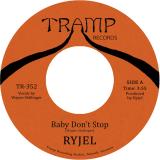
Ryjel was a band from suburban Pittsburgh, PA, that started out in the mid-1970s performing classic rock covers. The band was approached by a local entrepreneur who wanted to cut a single for the disco market, but a lack of financing scuttled the proposal. Nevertheless, the band was able to record a dozen of its original tunes in a professional studio for possible release, and among those songs were "Heart's On Fire" and "Baby Don't Stop."
Both tracks were recorded some 50 years ago having remained unreleased to this day. It needed the investigative work of the Tramp Records crew to discover them. Finally they are available on a strictly limited 45 RPM single release. In addition, the full length version of "Heart's On Fire" will soon be released on the upcoming Tramp Records compilation titled "CAN YOU FEEL IT Vol.5 - Modern Soul, Disco & Boogie 1977-88".
For his sixth solo album, Ezéchiel Pailhès returns with a new collection of songs infused by a sunny wandering spirit.
Within each of the twelve songs on SOL is a thread of melancholic happiness that has permeated much of Pailhès’ music and songwriting. He addresses love, the passing of time, hope, lost illusions, fleeting moments of grace, the temptation of forgetting, a need to escape, and desire. All this is
insulated by understated orchestrations that blend acoustic and electronic instrumentation with deft confidence.
The Portuguese and Brazilian concept of saudade—a form of melancholic longing and nostalgia— pervades, thanks in part to Pailhès decision to record the album in Rio de Janiero and to reinterpret some of the finest works of Música Popular Brasileira (MPB). In particular, he revisits a handful of
lesser known classics from the mid-century samba and bossa nova era—originally written or performed by talents including Vinícius de Moraes, João Gilberto, Tom Zé, Dorival Caymmi, João Donato, Os Tincoãs, and Ataulfo Alves.
The shift from Brazilian Portuguese to French and the decision to adapt rather than perform a straightforward cover versions, allows Pailhès to invent a form of prosody and euphony (the musicality and harmonious combination of words) that feels vibrant and unlike anything else in today’s French
chanson landscape.
“Some lyrics are simple translations from Portuguese, in what I’d call an expanded version. For others, I started from a single word or a single phrase and embroidered an entirely new text that carried me elsewhere,” explains Pailhès. “I allowed myself great interpretive freedom, while preserving the humanist dimension of the original songs. I’ve always been deeply moved by the way Brazilians transfigure reality through heightened emotion. I love this visceral and spontaneous country, which always seems to live through emotion. And above all, I love its music both popular and unifying,
bringing together all social classes. In that sense, it’s very political music, but even more so utopian, made by the people and for the people.”
On this new album, however, the French artist was keen to avoid cliché. Each song is therefore built around a carefully balanced interplay between Pailhès’ piano and synthesizers, alongside restrained arrangements of percussion, brass, bass, and cavaquinho (a small four-string plucked guitar). These parts were recorded in Rio de Janeiro with two musicians who regularly perform alongside the legendary Caetano Veloso—Kainã Do Jêje and Alberto Continentino—joined by Thomas Harres, Antônio Neves, Eduardo Neves, and Gabriel Loddo.
Since the 1960s, France and Brazil have shared a long-standing cultural and musical relationship. Some Brazilian artists, most famously Gilberto Gil, took refuge in France during the dictatorship years (1964–1985). But above all, French chanson quickly fell in love with the richness and ingenuity of
bossa nova and samba, translating and reinventing them in the language of Molière. Throughout the 1960s and 1970s, albums and hits by Henri Salvador, Georges Moustaki, Pierre Barouh, Pierre Vassiliu, and Claude Nougaro all drew from the MPB repertoire.
Fifty years later, with SOL, Ezéchiel Pailhès reinvents this rich Franco-Brazilian musical legacy, bringing to it a personality and modernity that stand confidently alongside those of his forbears.
If – in some parallel universe (or perhaps a not-so-distant-future version of the one we’re already sentenced to living in) – the evil overloads of artificial intelligence were actually successful in their attempts to create convincingly enjoyable “original music,” more specifically tasked with wholly encapsulating my own personal tastes by data-chugging some cocktail of – oh, I don’t know – the posters on my wall, the records in my “most listened to” pile, the mixtapes I made for others, intensive physical scans of my auditory cortex, amygdala, hippocampus, heart strings, whatever else they have splayed out on their autopsy table with the intention of generating one all-encompassing “perfect band” based on the fruitful sum of their findings – that band, for me, would be (or would at least sound exactly like) the Tara Clerkin Trio. It is, quite simply, without exception, the music I wish to hear.
Formed in Bristol UK (where none of them are from yet all of whom are deeply engrained) in 2020, the Tara Clerkin Trio – as it somewhat democratically exists today, despite the singular authority implied by its name – consists of the titular Tara Clerkin, her partner Sunny Joe Paradisos, and Sunny’s brother, Patrick Benjamin. I’ll confess, I don’t know what their respective roles are within the operation and there’s only a very small part of me that cares to learn, as one of my favorite qualities in an objective listening experience is the mystery of who is playing what, which sounds are “authentic” versus synthesized, which chunks are performed “live” in a room together versus meticulously Frankenstein’ed from measure to measure, or how exactly the overall sound is so (seemingly) effortlessly achieved. Though, I suspect, if and when I do witness a live performance by this band at any point, my enjoyment of the music will not be lost in my better understanding of it.
With two extraordinary mini-albums – In Spring (2021) and On The Turning Ground (2023) – making a splash on London’s formidable World of Echo label in wake of their self-titled 2020 debut, this upcoming Somewhere Good LP is, in many ways, the band’s most realised work. In running their usual gauntlet of idiosyncratic (*an overused adjective for which here there is regrettably no sufficient alternative) approaches, Clerkin & co. colour in and outside of compositional lines over the course of 40+ celebratory minutes - never wallowing, despite inherently somber subject matters of self-defeat, disease, displacement, restlessness, gentrification - allowing their arrangements and improvisations ample space and time to situate, stretch out, breathe, cross-pollinate, and ultimately take deeper hold on the listener’s imagination – all while somehow sounding more like themselves than ever before.
Of course, there are traceable influences herein, if one felt that such comparisons were necessary to properly examine and enjoy this music (they aren’t)… Being the big dumb American from the small boring town that I am, cornfed on ‘90s alternative radio with the enchantingly exotic sounds of Maxinquaye and Mezzanine emanating from my chunky tube television, I can’t help but to make a blatantly obvious reference to a “Bristol sound”, ie the whole trip-hop trip, the pastoral crooning over the suggestive urban grime of cracked electro/piano treatments, the digitally-yet-primitively reconstructed James Bond soundtrack string-beats, etc.. But the Tara Clerkin Trio is so infinitely much more than that. There are elements of avant-pop, modern classical, kraut-folk, audio verité, dare I say indie rock (and not of the beer guzzling, masturbatory fuzz-flex variety but perhaps more like a Trish Keenan-fronted Faust, Adrian Sherwood at the mixing desk of If You’re Feeling Sinister, or – in expanding on our alternate reality – a world in which High Llamas cut a full-length for Warp Records with Andrew Weatherall on coffee duty).
The hazy, unmappable skyline-mirage of droning harmonium, upright bass, peculiarly accentuated wind instruments, acoustic guitar, hushed yet literally mighty keys combine to hypnotizing effect. The band may make underlying nods to jazz, sure, but it’s not appropriation, it’s that they have the actual chops to build it out. Beneath the janky samples and oddball percussive embellishment lies actually great drumming. Beyond the manipulated vocal witchery and woefully reflective plain-spoke moments are Tara’s subtly inspired melodies, sung with what might honestly be the glue to the whole crazy equation. A calming consistency throughout the otherwise unpredictably dynamic, boldly intuitive, uniquely British exploration of this (their own) universe in song. – Ryan Davis (Chicago, February 2026)
HVS is stoked to have Wetman back for the second time on the label! This is part one of a two part series showcasing original tunes from Wetman and remixes of those tunes, so stay locked for the next one soon! Dan had initially sent me two original tracks of his along with the two remixes of “Inside” from Etch & Meridian. We both agreed it would be cool to spread out the tracks into a series since there were already two remixes of the same tune, so Laramie and I whipped up a third mix and here we are!
As most of you know, Dan and I both started Vivid way back in 2017 so it's really really awesome to still be releasing tunes from him almost 10 years later! Dan has since gone back down to Cali while I'm stuck up here in Seattle, but we still collaborate as often as we can. His original mix is so damn creative and probably the wildest mix of the bunch. Excellently sourced samples per usual from him, most of which I didn't know, but Meridian is actually the one that tipped me on the Harold Budd sample!
I first heard BC badman Meridian's EP on Disrupt Records when it came out a couple years back, and was floored with his tunes! I was really excited to have a mix from him for this. And his mix really delivers IMO. With some seriously precision cuts/choppage and a really excellent balance of light and dark in the mix. It's very cool having a (sort of) local producer on the label as well!
Etch, out of London needs no intro really, with a ton of quality releases under his belt spanning all sorts of dance genres, it's really an honor having him on the label! Being a fellow FL user and also a gear fanatic make for some fun chats with Etch as well. His mix is the most mellow of the bunch but it still slaps hard everytime.
Laramie's mix is super duper techy, which is a bit different to his usual niceness style! But he wanted to switch it up for this one. I was happy to jump in the studio and record a vocal for the track. We think this mix came together nicely!
Faux Poly is delighted to release its first vinyl record release since 2023: NINA, a rising UKG/Dub prodigy, is arriving with Internal Makeup. Bristol-based NINA has steadily built a reputation as a forward-thinking
solo artist, dropping highly sought-after records with a distinct sound and craftsmanship that set him
apart. Just one year in, NINA has released on labels such as Innamind Recordings, 20/20 LDN, and
Locus Sound. This new chapter is a pure distillation of that journey - a sound informed by dub, garage,
grime, and soundsystem pressure.
Internal Makeup features four bass-driven club tools that are minimal, weighty and focussed on sub. Opening with “The World Is On Fire”, the only 4x4 track on the record, NINA sets the mood with a cavernous dub techno jam and spaced out vocals. The rest of the record - including the Rowl collaboration “When I Come” - hits firmly in UK Bass territory, with stripped compositions that focus on bass-weight and a strong Bristol influence.
Words from NINA: This EP came together slowly and surely over the space of about a year. I wanted to
encapsulate my true sound which can be extremely versatile which is why there is a bit of everything on there, from techno to garage to dubstep.
VA – Paradisi Artificiali brings together four distinct sound compositions, each resisting the urge to resemble the others but united by the way they manipulate perception.
Polygonia crafts shifting rhythmic paths where the groove warps and regenerates in real time, maintaining an organic tension that keeps the body in motion without ever truly settling into place.
Feral operates through subtraction, slowing time and excavating sound’s spatial depth. Its tracks don’t progress so much as they envelop, drawing the listener inward into a layered, introspective space.
Agonis introduces a more unstable, sensory thread, weaving transitions and accumulations that build in stages. Frequencies become tangible matter, and the progression unfolds without ever erupting entirely.
Crossing Avenue weaves these directions together without hardening them, infusing the record with a more rooted, almost ancestral rhythmic element that surfaces in the structure of the patterns and the choice of timbre.
The result isn’t a neat synthesis, but a coexistence. The tracks unfold along a shared line without ever converging, articulating a dynamic balance between tension and release. It’s an album that works through gradual alterations, through subtle slippages in perception, as in “Les Paradis Artificiels”. The point isn’t escape, but intensification. The sound burrows deep, reshaping how things are experienced, until a denser, more ambiguous, more alive reality emerges.
"Over the past three decades, Philipp Lauer has produced an incredible body of work, deploying a myriad of aliases, both as a solo artist and as a part of collaborative projects. From his hardware-steeped Frankfurt studio Pyramide 2, he has built this catalogue through original material and remix commissions, taking on the full spectrum of electronic music while retaining an unmistakable signature. He combines a hands-on approach to rhythm and composition with a DIY MO and a love of big hooks. The level of expertise at hand seems to facilitate a playfulness that subtly permeates all layers of his work. He's a pop melody natural who just so happens to love fiddling with synthesizers, drum machines, and effects an equal amount. All of these qualities are exemplified on "Embalmed In Martino": Lauer's four-track ode to the Belgian Martino sauce, a spicy tomato-based condiment, and arguably the essential ingredient to top off the namesake raw meat sandwich. On "Embalmed", which makes use of instrumentation that would fit right in on an early eighties Manchester cut, and "Martino", where a sturdy, electroclash flavored arp bass provides the stamina, a slew of big and small riffs easily work their way in, thirsting for our ears. On the other side, "Transactional" combines Miami basslines and similarly electro-fundamental twinkling synth work with a flanger-laced 4/4 beat, while "Don't You Know" features soaring synthwave patterns and the only vocal samples on the EP. Both sport rich arrangements as well, right down to the cowbell overdubs. Lauer's often lauded for his "summery sound". In this light ALT026 lands right on time - yet we might disagree here, as it's suited for all seasons, and all terrains, both the shiny festival grounds and the dim-lit club floors."
Acclaimed producer, DJ, and dancefloor healer Octo Octa (Maya Bouldry-Morrison) announces her fourth full-length album, Sigils For Survival. Following 2013's Between Two Selves, 2017's Where Are We Going?, and 2019's Resonant Body, the new record marks a decade since Maya publicly came out as transgender in November 2015. ''As an autobiographical artist, I set out to write an album that would be a milestone for this past decade of joy and sorrow,'' Maya explains. ''Sigils For Survival is my attempt to encapsulate the intentions and techniques that I used to move through life into a spell.'' For each of the record's eight tracks, Maya drew a sigil. Each is a personal symbol intended to ''bind magic to the song and seal its intention.'' These drawings appear throughout the physical edition's design. Maya's sister, New York artist Hope Morrison, incorporated each sigil into her original paintings, which comprise the album's vivid artwork. Hope Morrison, whose imagery translates the sigils' energy into vivid form; the layout was designed by Jo?o Ervedosa. Created entirely on hardware instruments and later mixed in Logic, Sigils For Survival captures the tactile immediacy of live performance. Maya preserved the feel of MIDI-clock drift and off-grid recording, letting her machines interact in the rhythmic pocket, rather than confirming them to a click. Alongside her signature deep, ecstatic electronics, the album features hand-played dulcimer, hand-pan, and recorder. Her voice also returns, carrying spells of love, protection, and transformation. Across Sigils For Survival, Octo Octa channels the ecstatic house lineage into an intimate ritual space. The music speaks of immediacy, play, and communion -- of magic as method, love as survival, and sound as spellcraft. Sigils For Survival is both a document of ten years lived fully and an invocation for the next chapter -- a glowing testament to music's power to protect, transform, and set the spirit free.
Roughly three and a half years since pushing the boundaries of 160BPM and stepping beyond the realm of footwork with the Reidai EP, Oyubi returns with an even deeper sound, dropping due yesterday.
This EP consists of four tracks that showcase a darker, more introspective side of the producer, stepping away from the ghetto and booty flavors found in his other releases. However, anchored by his signature sequence patterns, the sound design—striking a perfect balance between playful and profoundly dope—only serves to amplify the groove.
The ultimate embodiment of this evolution is the B1 track, "Taiko 2." While it inherits its name from "Taiko 160" on the Reidai EP, its form is entirely transformed. Relentless, high-speed drums and stripped-back minimal components take over the mind and body like a dark incantation. Packing a hypnotic power that far surpasses its predecessor, it's destined to be a killer weapon in any DJ set. It’s also worth noting that this track draws heavy inspiration from Kode9 & DJ Fulltono’s "TKO."
Naturally, the other three tracks are just as formidable. Infused with elements of dub, A1 "Erekiteru" centers around a pulsing bassline heartbeat, keeping the groove steady alongside crisp, dry claps. Meanwhile, A2 "Da Groove" and B2 "Wop Wop" heavily incorporate Baile Funk and Dembow influences. "Da Groove" is quintessential Oyubi: as the extended intro breaks and the four-to-the-floor kick drops in lockstep with the bass, it guarantees instant unity on the dancefloor. Finally, B2 "Wop Wop" relies on intentional distortion and subtle spatial processing to build its foundation, revealing a dark side akin to "Taiko 2"—complete with an exceptionally punchy snare.
Fully loaded with Oyubi's uncompromising dark-side approach, due yesterday is set to be a 160BPM masterpiece.
Born in Wroc?aw. Known and liked as a member of the Wroclaw-based duo Skalpel. Much less known and liked as the author of several solo albums that illustrate and explore different states of consciousness: Breslau (solo debut released on Ninja Tune) - the frenzy of war, Dream Logic - the meanders of dreams, Delirium - psychedelic hallucinations, Fyodor - religious exaltation and ethical illusions. On the album "Refleks", he explores the state of consciousness of an old digger and beatmaker. He lives in Wroclaw.
About Refleks:
Refleks is tender and free. Of the two meanings of this word in Polish, I choose the one that is a reflection of light on a river. Hypnotic and never monotonous, brilliant and charming, with depth slumbering beneath. The whirlpools we encounter on the album are only slightly cunning; they are rather playful. Although one can look into the abyss, it is not greedy-it allows you to stay on the shore and does not consume you unconditionally.
In some tracks, it even throws you out: you think you're still riding that slide-a tunnel you think is endless-but it ends safely and suddenly in the grass. In the plush. As if a momentary wind carried you away, only to stop at the least expected moment, finding yourself in a completely new yet seemingly familiar space-time-at home, which is not yours, yet not foreign either. While the titles clearly suggest Wroc?aw-based situations, in my opinion, we are moving on a higher level of intimacy and abstraction. On the waves of the ether, the forgotten element of everything that cannot be measured, weighed, or counted. What we know for sure, but might only seem so to us. In the hospitable cosmos of a well-settled head.
RAWAX proudly welcomes legendary Fresh & Low to the family!
Rawax are very happy to present you in future most of their amazing past productions on the new "Treasures" series.
Starting with groundbreaking LITTE "i" EP from 1997!
Five years after their radiant debut Ufo Bar, Italian cinematic funksters Banda Maje are back with Costa Sud to take us deeper into their land of ‘Salifornia’—a Southern province of sun-drenched coastlines and decaying buildings where dreams of exotic escapism sprout and bloom.
Once again, behind the eight tracks in the album—and behind the wheel of the fiery red Alfasud on the cover—is composer and keyboardist Peppe Maiellano. He has meticulously tailored each piece to his virtuoso partners in crime: a 'family' of exuberant musicians spread between Salerno and Naples, all bound by deep-rooted ties to the region and a shared belief in the grit of independent artistry.
The Costa Sud (South Coast) imagined by Banda Maje is a shimmering ribbon of sun-baked asphalt stretched between the sea and the ancient pine forests of the Gulf of Salerno. It is a land of enchanting but wounded places, where the grace of Ancient Greek civilization sits in a restless silence alongside the scars of rampant building and neglect. “But if truth is beauty and beauty is truth,” Maiellano explains, inverting Keats’s famous line, “with the right eyes, you can find beauty and poetry even under a layer of moral and material filth."
Conceived and recorded entirely in the South, the album nevertheless looks beyond the horizon. While Neapolitan funk and golden-age Italian soundtracks remain the double helix of the band's DNA, this album welcomes new influences from across the ocean, weaving Italy, Brazil, Africa, and contemporary sounds into its unique vision of the 'global South.'
Side A is an immersion into Salifornian territory and its myths: from the carefree instrumental disco-funk of the title track, which sublimates local contradictions into enveloping cinematic atmospheres, to the mellow groove of “Baia”—a fusion of Neapolitan funk, afrobeat, and disco that pays homage to Salerno’s famous beach, squeezed between millennia-old sea rocks and mountains of shipping containers. The band’s heartfelt sense of belonging shines in their fresh soul-disco version of “Mo…” (a 1981 cult classic by Neapolitan legend Peppino di Capri) featuring Maiellano’s own vocals, while the reimagining of Tonico 70's “Jet Lag” celebrates a fraternal partnership with the Salerno-based rapper/producer, charting a musical itinerary that unites Brazil, the States, and Salifornia through evocative grooves, sharp synths, and Gianfranco Campagnoli’s exquisite trumpet.
On Side B, the sound becomes even more eclectic with the samba-funk warmth of “Samba Maje”, where Mediterranean melodies and lush vocal harmonies marry jazz-funk arrangements and disco-inflected Brazilian rhythms. The next track, “Africana”, is dedicated to a legendary dolce vita nightclub on the Amalfi Coast (and its founder Luca Milano); here, a rhythmic mantra incorporating tribal African elements blends with synths that evoke RAI television themes of the late 70s. The journey concludes under the sign of the silver screen: the disco-funk elegance of “Black Glamour Girl” (from the early-80s road-trip comedy In viaggio con papà), a tribute to the compositional genius of Piero Piccioni, and “Lovebossa”—an easy-listening homage to the "Cine Bossa" atmospheres that characterized so many Italian soundtracks of the 60s and 70s, finally carrying the listener ‘ncopp’ ‘e nuvole (above the clouds—which is basically Salifornian for "somewhere over the rainbow").
We are very happy to present you another release by Anthony Scott MacKinnon aka Parcy X under his Mion Alias.
Tanaka war originally released on legendary Music Man Records from Belgium in 1996!
The 2025 version contains a new mastering!
New single by Romperayo on 7-inch vinyl spinning at 45 rpm, released by the Austrian label discos
elgozo.
This record is a tribute to the sound of Cumbia Sabanera de Acordeón from Colombia, in dialogue with
Mexico’s Cumbia Sonidera. It also pays homage to the melodic line of the first generation of
Colombian accordion masters of Cumbia Sabanera such as Joaquín Betín, Emiro Caicedo, and
Policarpo Calle.
The two tracks are built on a solid rhythmic foundation of bass and percussion, accompanying a
melodic interplay between accordion and analog synthesizer.Mixed and produced by Pedro Ojeda Acosta at Romperayo Studios, both songs were recorded live, in
quartet format, at Mambo Negro Studios in Bogotá, Colombia, by Daniel Michel, featuring Iván
Medellín on accordion, Nicolás Eckardt on electric bass, Juan Manuel Toro on analog synth, and Pedro
Ojeda on percussion.
This single offers a first taste of Romperayo’s upcoming LP, set for release in early 2026 — once again
on discos elgozo.
For Gradients 4th instalment they welcome an artist whose longevity and contribution to music speaks for itself. Doncaster legend Mella Dee presents a 4 track special full of
Weird and wonderful spangle-core rollers. It’s twisted, dark and generally a little bit off it’s head. Designed for times when things are getting strange. Not for the faint of heart, no fancy tricks just bleeps bass and a bucket full attitude.
Two jewels in the crown of the soulful electronic music scene in NYC unite for a spellbinding EP on Rhythm Section International. ”Full Circle” is a brand new body of work from Musclecars & Toribio.
To call this 12” simply epic would almost be doing it a disservice. The breadth of musicality and execution of ideas contained across 3 compositions is nothing short of miraculous. I use the word composition intentionally: these are not merely tracks - these are 3 movements making up a concerto - with a dub thrown in for good measure!
The record kicks off with a soulful house behemoth, “ That’s My Story” featuring NJ legend Roland Clark on vocals giving sweet sweet testimony. In many ways, this track feels like a coming together of the trios influences. The lyrics contextualise it, giving it this intimate, confessional feel. The latin drums shuffling amidst the 909 kick drive it forward and the organ swimming freely amongst it all takes us to church. It’s a timeless track - paying homage to the various New York traditions laid down by Louis Vega, Timmy Regisford, Joaquin Claussell , Ron Trent et al - all heroes and collaborators of the composers who - with this effort - have surely now earned their place in the pantheon of American Soul Music.
‘
Be Honest’ maintains the confessional tone with the lyrics but takes things right back down in terms of tempo. Is it a love song, an ultimatum or a cry for help? Whichever way you interpret it, this track is Toribio’s time to shine as a lead vocalist and he hits all the notes, leaving not a dry eye in the house. This is a delicate tour de force, delivered with such raw emotion and vulnerability it allows the instrumentation takes a back seat - just a gentle groove, swelling strings and some unresolved chords are all that’s required to transform us to the main character of this story. We’re left hanging, and it’s oh so relatable.
Agua De Florida serves as an uplifting, fast paced finale to the concerto and this one’s all about the trumpet - masterfully performed by Melbourne born, London based virtuoso Audrey Powne. If Herb Alpert was making house music - I imagine this is what it would sound like. Throbbing bass and noodling synths join the melee and crank the joy up to 11. If the EP is a story arc over 3 tracks, then we’re definitely not left hanging with this one. All is resolved, things are moving onwards and upwards and the circle is complete.
Unlike the main Magic Wand label, the imprint's offshoot 'Special Editions' series is a little more fluid about what it releases, with some EPs sporting original productions - many of which are admittedly sample-heavy - as well as re-edits. That's the case for this second missive from Matsoaka (real name Matt Lundgren). So, while the EP begins with a genuinely gorgeous and Balearic original cut (the dreamy and slow-motion folk-rock of 'Butterflies', featuring the emotive and harmonic vocals of Butterflies), much of the rest falls into the "Balearic re-arrangement" category. In this camp you'll find the immersive, trip-hop style dreaminess of 'Faith', the mid-80s Yellow Magic Orchestra-style Fairlight-sporting electro of 'Gin Yuzu', and the dollar bin brilliance of 'Sheriff' (a take on a Japanese city-pop cover of a reggae favourite).
Que Sakamoto is one of those rare artists who sounds like noone else — and PSNA003 is the latest proof of that. Four tracks written and produced during his time in Manchester, brought to life by NT's vocals which are woven through each twist and turn. It's full of playful samples, timeless melodies and classic drums that weave through traditional 4x4 to experimental breakbeat.
Each track designed to bring life to the dancefloor.
RAWAX proudly welcomes Khan to the artist family! We are very happy to present you this outstanding artist on his own series with new, past and present music. Starting with Khan feat. Julee Cruise - Say Goodbye from 2002 - originally released on iconic Playhouse! Besides the great remixes by LoSoul and Rework, our version features for the first time the unreleased Isolée Mix - highly recommended!
Voices From the Lake (consisting of Donato Dozzy and Neel) mark the 10th anniversary of their influential self-titled album with a fully remastered reissue on Spazio Disponibile. It arrives in full on vinyl for the first time, as well as on digital formats, first quarter of 2023 as the pair continues to play select live shows around the world. The release will see the light of day as a 4-set vinyl LP release, including download. Italians Dozzy and Neel have been friends united by a shared vision of music since their teenage years. They are immaculate sculptors of sound who fuse evocative ambient and leftfield techno into multi-layered soundscapes. For many years they worked as established solo artists but came together in 2011 to craft what is now regarded as one of techno's most pure and absorbing listening experiences. It's often said that the best music comes about as a happy accident, and that is certainly true of Voices From the Lake. The career-defining album first arose in the thoughts of Dozzy and Neel when the latter was preparing a mix for the former's wedding and named it Voices From The Lake. It was a pertinent title that stuck in the mind: both grew up by waters around the coast of Italy, and in their early days the pair even held private parties on the shores of a lake. Fittingly, Japan's celebrated Labyrinth festival at that time was also held by a river and a lake in the middle of a forest on a serene mountainside. It was that exact setting the pair envisaged when making music to play live on stage. During preparations, they "accidentally" wrote an entire album. It has only ever been performed live a few times - once at Japan's Labyrinth festival in 2011, at London's Barbican, Barcelona's Mira Festival, Paris' Marathon Festival and once during 2022's Amsterdam Dance Event. Those shows saw the pair using banks of analogue and digital equipment to improvise in the moment and essentially remix the album live on stage. That spontaneity is captured in the original Voices From the Lake recordings and on later LPs such as Live at Maxxi in 2015, and the most recent EP Quarto Freddo from 2020. But the debut album remains a standout achievement. A decade on, it's quiet intensity, musical storytelling and slowly unfolding tension remain in a class of one. Each sound is meticulously designed and placed, and the spaces left behind are just as important in conveying such a captivating mood and emotion. Rather than traditional kick drums, hi-hats or snares, this is music crafted from layers of real-world sound - dripping water, chirping birds, rustling leaves or a distant breeze - and it's that which defines the album's organic allure. From deeply contemplative to cautiously optimistic, pastoral organic scenes to more underwater worlds, Voices From the Lake is a cohesive collection of tracks that add up to one inseparable whole.
"I got to know visual artist, musician, and producer Guido Erfen and sound engineer, acoustic artist, and percussionist Michael Springer as part of a group of five by the name of SHM1. The members of the group organised concerts at Rhenania, a disused grain silo, where I performed with The Absurd in 1988 and 1989. The band was also featured on one of Erfen's tape releases. Erfen and Springer met when they were still at the same secondary school and soon became close friends and musical allies. With the other members of SHM they built an independent network for creating and distributing music beyond the mainstream in Cologne. Rent at Rhenania was incredibly low, allowing a recording studio to be established there.
The first traces of the Ukrainian Underground arrived at Erfen's door via a cassette tape with three bands from Kharkiv and Kyiv, the package including a long essay which detailed the rock scene in the two cities by Sergey Myasoyedow. In 1986, Myasoyedow, together with Sasha Panchenko, had founded the “Novaya Scena“ rock club in Kharkiv, presenting bands inspired by punk, the avant-garde, dadaism, and even medieval melodies. If Erfen hadn't been part of the independent mail-art scene, he wouldn't have had the chance to discover this unorthodox music. It was the summer of 1990, shortly before the Soviet Union collapsed and Ukraine became an independent state the following year.
In 1991, singer and keyboard player Soloveyka from Kharkiv arrived in Cologne and gave Erfen half a dozen cassettes with underground bands from Ukraine and a handful with bands from the Soviet Union. Intrigued by the original music of many of the acts, he visited Ukraine twice, made friends there, compiled a tape with his favourite tracks and finally succeeded in convincing Hamburg label boss Alfred Hilsberg to present underground music from Ukraine on the CD “Novaya Scena“ via his label What's So Funny About (the original home of Einstürzende Neubauten).
The album compiled 20 tracks recorded between 1986 and 1992 by 14 bands out of Kharkiv and Kyiv– music beyond the usual Perestroika records, often with jarring dissonances over grooves that fans of Captain Beefheart or The Fall would certainly enjoy.
On the other hand, there are tracks featuring flute and trumpet that seem inspired by folk, classical music, and punk. Ghostly chamber prog miniatures by Cukor Belaya Smert (lit. Sugar White Death) from Kyiv featuring, among others, the classically trained pianist and singer Svitlana Nianio (née Ochrimenko) and guitarist, visual artist, and spokesman Yewgeny "Yenia" Taran. Nianio sang in her native Ukrainian, as did two more of the bands. Today, this seems more relevant than ever, more culturally and historically significant from a Ukrainian point of view than it was even in 1993. Young Ukrainians were amazed at that time that rock music sung in their native tongue could work!
It is in the aftermath of the “Novaya Scena“ album that the music on this LP was created. About a year after the release of the CD in August 1993, Nianio and Taran came to Cologne to work on music for the dance production "Transilvania Smile" by the dance theatre ensemble Pentamonia2.
The seeds for the Traces of Ukrainian Underground in Cologne were sown. Starting in 1994, a series of informal recording sessions took place at Michael Springer’s Phanton Studio and at SHM studio in Rhenania. Together, these sessions formed the basis of the four different incarnations of the Ukraine-Cologne connection heard on STROOMS’s compilation.
GALA announce Ten Years of GALA – a compilation marking a decade of independent culture
Ten Years of GALA is both an archive and a horizon: a reflection on where GALA has come from, and a signal of what lies ahead.
Founded in 2016 as a one-day gathering in South London, GALA has grown into a global point of reference for dancers, artists and collectives drawn together by a shared commitment to independence, collaboration and underground music culture. Rather than charting success through scale alone, the festival has consistently prioritised integrity, community and musical curiosity – values that underpin this release.
Spanning fifteen tracks, Ten Years of GALA unfolds as a considered journey. It opens with an intimate spoken contribution from Charlie Dark, grounding the compilation firmly in GALA’s home of Peckham before gradually expanding outward into fuller, club-focused terrain. From there, the record moves between moods and tempos, tracing a path from reflective moments into the physical language of the dancefloor.
The compilation brings together longtime friends of the festival alongside newer voices drawn into its orbit in recent years. Each artist contributes a distinct perspective, but collectively the tracks form a coherent portrait – not of a single sound, but of a shared ethos shaped over ten years of gatherings, collaborations and days spent dancing together.
Rather than a retrospective in the conventional sense, Ten Years of GALA functions as a living document. It captures fragments of past editions, scenes and relationships, while remaining firmly oriented toward the future. These are not museum pieces, but records designed to be played, shared and folded back into the spaces from which they came.
Together, the compilation holds a piece of GALA’s first decade – not as a closed chapter, but as a foundation for what comes next.
For our first release after a hiatus of over two years, we are proud to return to Detroit. Reggie Dokes is Detroit-born and raised, Atlanta-based. He is a key producer in pushing forward the Detroit house sound.
Brown Spirits are a super-heavy psychedelic three-piece band who play raw energetic super-charged psych rock heavily influenced by krautrock, freejazz and deep funk music from the 1970s that gives them a truly unique and highly addictive sound. The group record and mix their own music to ¼-
inch analogue tape at home maintaining a strictly DIY-ethic.
Brown Spirits are Tim Wold, Agostino Soldati and Ash Buscombe. The group are from the suburbs of Melbourne, Australia, home to an ever-growing
music scene that includes Amyl and the Sniffers, King Gizzard and The Lizard Wizard, Surprise Chef, Tropical Fuck Storm and more.
The group have already released two superb critically-acclaimed album on Soul Jazz Records – ‘Cosmic Seeds’ and Solitary Transmissions’.
Soul Jazz Records are releasing three new albums from the Australian group on one day. All three albums are super-limited one-off special coloured
vinyl pressings of just 500 copies each that will all be deleted on the day of release.
These three albums were originally released (between 2017-2020) in long-deleted very short run-editions - either self-released in Australia or on an
indie German psych label. No copies of Brown Spirits #2 or Brown Spirits #3 are currently available anywhere in the world. Both of Brown Spirits two
earlier releases for Soul Jazz Records are also sold out on vinyl and these three super-limited special edition LPs will also sell out.
Brown Spirits are a super-heavy psychedelic three-piece band who play raw energetic super-charged psych rock heavily influenced by krautrock, freejazz and deep funk music from the 1970s that gives them a truly unique and highly addictive sound. The group record and mix their own music to ¼-
inch analogue tape at home maintaining a strictly DIY-ethic.
Brown Spirits are Tim Wold, Agostino Soldati and Ash Buscombe. The group are from the suburbs of Melbourne, Australia, home to an ever-growing
music scene that includes Amyl and the Sniffers, King Gizzard and The Lizard Wizard, Surprise Chef, Tropical Fuck Storm and more.
The group have already released two superb critically-acclaimed album on Soul Jazz Records – ‘Cosmic Seeds’ and Solitary Transmissions’.
Soul Jazz Records are releasing three new albums from the Australian group on one day. All three albums are super-limited one-off special coloured
vinyl pressings of just 500 copies each that will all be deleted on the day of release.
These three albums were originally released (between 2017-2020) in long-deleted very short run-editions - either self-released in Australia or on an
indie German psych label. No copies of Brown Spirits #2 or Brown Spirits #3 are currently available anywhere in the world. Both of Brown Spirits two
earlier releases for Soul Jazz Records are also sold out on vinyl and these three super-limited special edition LPs will also sell out.
Sometimes the title of an album tells you everything you need to know. Laurence Pike’s Possible Utopias for Jazz Quintet is like that: The music within represents a search for freedom, potentiality—liberatory strategies that transcend the ego and the solitary, atomized figure.
But in this case, the album title is also a red herring, because there is no jazz quintet here—just Pike, his drums, and his machines, not so much an ersatz ensemble as a purely notional one, a thought experiment equipped with drumsticks, circuitry, and the desire to go beyond hardwired limits.
And the results, strictly speaking, aren’t really jazz, though they incorporate the vocabulary of jazz, along with that of ambient, electronica, and post-rock. They are some other thing, cognizant of genre but never beholden to it. Again, we’re talking about a search for freedom here.
The Sydney-based musician has a long history of coloring outside the lines, not just in his solo recordings—including four albums for the Leaf label between 2018 and 2024—but also in the trio Pivot (later PVT); Szun Waves (alongside saxophonist Jack Wyllie and Border Community’s Luke Abbott); Triosk, which recorded an album with Jan Jelinek in 2003; and even post-punk titans Liars, whom he joined in late 2018.
Of his first album for Balmat, Pike says, “My loose concept was: What does music sound like when the expectations of late capitalism are removed from it? How might a jazz musician from an idealised culture of the future, or even another world, utilise musical language when the conventions of style and marketing are no longer a factor in music making?”
That inquiry, he says, connects to his “guiding principle: that the purpose of music is to access something bigger than the individual, and reveal a sense of possibility and freedom in the world to the listener. To create an understanding that the future can be something other than what we imagined or expect, even unconsciously.”
Heady ideas, but plug into his stream-of-metaconsciousness flow and you may start to intuit what motivates him. There is a deeply lyrical expression in these pieces—in the ruminative piano of opener “Guardians of Memory,” for example—but also a sense of exploded perspective, of ideas approached from more angles than any one mind could dream up. Of a collectivized consciousness, of mycelial networks branching across tone and rhythm and timbre, of ideas articulated in distributed fashion, nodal points dancing across drum heads.
Pike’s imaginary quintet is hardly without precedent; it’s a continuation of concepts floated across Jan Jelinek’s Loop-Finding-Jazz-Records, Burnt Friedman’s many guises, and much of the recombinant improv of the International Anthem roster, not to mention the far corners of ECM’s catalog in the late 1970s and 1980s, which Pike says have been integral to his development since he was a teenager. Possible Utopias for Jazz Quintet is a point in a continuum, a voice in a conversation, a question with no obvious answer: How can the search for otherness in music manifest something true about ourselves?
For RCR003, we looked to someone carrying the West Coast lineage forward with our first full solo EP from upcoming producer Adam Rose.
“Gravitation of the Past” honors the past while setting its sights on the future.
A quiet drag from somewhere behind, like the past has unfinished business.
A moment suspended Time Ahead & Standby caught between where you’ve been and where you’re headed. Mostly static, then a brief moment where everything clicks. Then the voice shows up.
Familiar enough to trust. Dangerous enough not to.
Out by the still waters of Atitlán, watching the surface hold everything and nothing at once, it becomes clear some things aren’t meant to be solved. Just seen.
You can look, just don’t linger.
What’s left is lighter funked out, a little crooked, still moving.
Deep and moody roots from The Congos , delivered with their signature harmonies.
Originally released on their debut 1977 LP ,with a different mix later released on 7” single ,we are happy to say you will be treated to both mixes + dub on one glorious 10”.
Another gem from the Black Ark, released by us here at Studio 16.
Scaler are the electrifying Bristol-based band hailed as the city’s “next national breakthrough” thanks to their pulverising live show and meticulous, mind-warping sound. Hot off their critically acclaimed sophomore record ‘Endlessly’ which was nominated for an AIM award for ‘Best Independent Album’ comes Reflex. An EP full of kinetic energy satisfying a craving for immediacy within the project. The layers of intricate collaboration of Endlessly are peeled back and the raw energy of SCALER is cast forth. “These songs were made with the four of us in the room together with our machines, reacting to what the others were doing. Trying to capture the feeling of when your body outruns your head, no second guessing or holding back. Together they work as both fight and flight. A chase and a reaction. Instinct not thought. A reflex.
Music springs eternal. Recognising the enduring power of timeless albums to guide us through life, Forever Records is a reissue series dedicated to rediscovering lost musical treasures from across the spectrum of head-feeding, heart-rending electronic music.
Established by Rush Hour co-founder Christiaan Macdonald and Delsin founder Marsel van der Wielen, Forever Records places heartfelt faith in a carefully curated sequence of seminal, largely forgotten records from disparate eras, scenes and spaces within electronic music history. Tipped towards the mellow and introspective, these are albums that stop time when the needle hits the groove, stirring only when it's time to flip over before you sink back into the experience. That's what albums were always meant to be about, back then, right now, always and forever.
The Release:
Dancing on the wildest edge of the 90s outsider techno zeitgeist while proudly independent of any so-called scene, Ov Biospheres And Sacred Grooves: A Document Ov New Edge Folk Classics is both of its time and out of time. Rooted in the experiments of electronic music pioneers, industrial culture and ethnic music from around the globe while responding to the house and techno explosion, Robbert Heynen, Reinier Brekelmans, Reinoud van den Broek and Tim Freeman's freewheeling masterpiece takes in lush electronica and murky abstraction on its singular voyage through parts unknown.
Forever Records presents an extensive reissue edition of the first 'fully released' Psychick Warriors Ov Gaia album. Originally released in 1992, this is the first time the full, previously CD-only, version of Ov Biospheres and Sacred Grooves will be pressed on vinyl. The original LP and CD artwork from the various editions released in the early 90s has been combined and designed by the band, and the audio has been remastered with their full approval. As well as a new LP edition of the album, there will also be a uniquely numbered, limited edition available housed in a gatefold sleeve that comes with a bonus 10" featuring two previously unreleased tracks.
Press response to Ov Biospheres and Sacred Grooves - A Document Ov New Edge Folk Classics:
“That’s Magick! The Psychick Warriors Ov Gaia are Holland’s best kept secret.”
Sherman, NME, UK 1992
“PWOG’s debut LP is an organic invocation rite — the soundtrack to a new world coming to life, an odyssey. Cross-cultural rhythms, ambiences and environmental samples segue into one another like a fluid relay, and unlike the majority of dance records, it never settles into a routine. It’s always evolving, always unpredictable, an indefinitely religious experience.”
John Selzer, Melody Maker, UK 1992.
"Grown men, who snorted their first ecstasy to this record, stammered with tears in their eyes about divine experiences and the cosmos, man."
Peter Erik Hillenbach, Marabo Magazine, Germany 1992.
Sacred Grooves’ introduces tribal dance music for the mind, body music leaning on the avant garde. Its ripples of sound drift through tranced out ritualistic beats into ambience and serenity resembling something akin to The Orb meeting Klaus Schulze at a brain tuning session.
Sherman, NME, UK 1992
"There's still dance for a moment, in the opening track "The Challenge," then Psychick Warriors roam the earth, where African drummers, tropical sounds, and science-fiction chords have found their place in a spiralling interplay of rhythms and sounds. A captivating, almost magical ritual." Corné Evers, Oor Magazine, Netherlands 1992.
"It's truly astonishing what these Dutchmen have come up with for their first LP. Their roots might explain the enigma, for Psychick Warriors are more in the tradition of Psychic TV than in the desolate temples of techno-house fetishists, to which they are wrongly relegated. Here, chromosomes dance, not instincts." CMK, Tip, Germany 1992.
"The transcendental essence of this album is spread throughout, with musical gravitations emerging unexpectedly from sonic experiments that are sometimes primitive, sometimes
futuristic in intention… But there is always an aura of cosmic magic that constantly puts all the parts involved in conflict and which, upon closer analysis, ends up being the main reason for the final result." Blitz Magazine, Portugal 1992.
Music springs eternal. Recognising the enduring power of timeless albums to guide us through life, Forever Records is a reissue series dedicated to rediscovering lost musical treasures from across the spectrum of head-feeding, heart-rending electronic music.
Established by Rush Hour co-founder Christiaan Macdonald and Delsin founder Marsel van der Wielen, Forever Records places heartfelt faith in a carefully curated sequence of seminal, largely forgotten records from disparate eras, scenes and spaces within electronic music history. Tipped towards the mellow and introspective, these are albums that stop time when the needle hits the groove, stirring only when it's time to flip over before you sink back into the experience. That's what albums were always meant to be about, back then, right now, always and forever.
The Release:
Dancing on the wildest edge of the 90s outsider techno zeitgeist while proudly independent of any so-called scene, Ov Biospheres And Sacred Grooves: A Document Ov New Edge Folk Classics is both of its time and out of time. Rooted in the experiments of electronic music pioneers, industrial culture and ethnic music from around the globe while responding to the house and techno explosion, Robbert Heynen, Reinier Brekelmans, Reinoud van den Broek and Tim Freeman's freewheeling masterpiece takes in lush electronica and murky abstraction on its singular voyage through parts unknown.
Forever Records presents an extensive reissue edition of the first 'fully released' Psychick Warriors Ov Gaia album. Originally released in 1992, this is the first time the full, previously CD-only, version of Ov Biospheres and Sacred Grooves will be pressed on vinyl. The original LP and CD artwork from the various editions released in the early 90s has been combined and designed by the band, and the audio has been remastered with their full approval. As well as a new LP edition of the album, there will also be a uniquely numbered, limited edition available housed in a gatefold sleeve that comes with a bonus 10" featuring two previously unreleased tracks.
Press response to Ov Biospheres and Sacred Grooves - A Document Ov New Edge Folk Classics:
“That’s Magick! The Psychick Warriors Ov Gaia are Holland’s best kept secret.”
Sherman, NME, UK 1992
“PWOG’s debut LP is an organic invocation rite — the soundtrack to a new world coming to life, an odyssey. Cross-cultural rhythms, ambiences and environmental samples segue into one another like a fluid relay, and unlike the majority of dance records, it never settles into a routine. It’s always evolving, always unpredictable, an indefinitely religious experience.”
John Selzer, Melody Maker, UK 1992.
"Grown men, who snorted their first ecstasy to this record, stammered with tears in their eyes about divine experiences and the cosmos, man."
Peter Erik Hillenbach, Marabo Magazine, Germany 1992.
Sacred Grooves’ introduces tribal dance music for the mind, body music leaning on the avant garde. Its ripples of sound drift through tranced out ritualistic beats into ambience and serenity resembling something akin to The Orb meeting Klaus Schulze at a brain tuning session.
Sherman, NME, UK 1992
"There's still dance for a moment, in the opening track "The Challenge," then Psychick Warriors roam the earth, where African drummers, tropical sounds, and science-fiction chords have found their place in a spiralling interplay of rhythms and sounds. A captivating, almost magical ritual." Corné Evers, Oor Magazine, Netherlands 1992.
"It's truly astonishing what these Dutchmen have come up with for their first LP. Their roots might explain the enigma, for Psychick Warriors are more in the tradition of Psychic TV than in the desolate temples of techno-house fetishists, to which they are wrongly relegated. Here, chromosomes dance, not instincts." CMK, Tip, Germany 1992.
"The transcendental essence of this album is spread throughout, with musical gravitations emerging unexpectedly from sonic experiments that are sometimes primitive, sometimes
futuristic in intention… But there is always an aura of cosmic magic that constantly puts all the parts involved in conflict and which, upon closer analysis, ends up being the main reason for the final result." Blitz Magazine, Portugal 1992.
We are pleased to announce the first FEX live album, Don't Look Back. The release features selected recordings from two concerts in Paderborn and Uelzen, both captured in 1985. All tracks on the album are previously unissued, including entirely unheard songs such as It's a Hard Life, Just Get Back, Legend, and Waiting Song, alongside a previously unreleased version of Subways of Your Mind, widely known as "The Most Mysterious Song on the Internet."
One of the most striking aspects of the album is the remarkable sound quality of the live recordings, as well as the strength of the performances themselves - particularly given that FEX were still considered a newcomer band at the time. The four-piece lineup consisted of singer, guitarist, and primary songwriter Ture Rückwardt, Michael Hädrich on keyboards and occasional second guitar, Norbert Ziermann on bass, and Hans-Reimer Sievers on drums. In 1985, the band was preparing for broader exposure through a nationwide tour organized by the small promotion company HBM-Musikbüro.
The album opens with the psychedelic Skyscraper, a track Rückwardt reportedly regarded as a personal favorite to perform. Hädrich contributes dynamic synthesizer layers, while Ziermann underpins the track with a distinctive slap bass groove. This is followed by the energetic rock number It's a Hard Life, which once again demonstrates that the band possessed multiple songs capable of matching the impact of their best known track Subways of Your Mind.
After this energetic opening, the album shifts into a more restrained mood with the synth-pop ballad I Got My Eyes On You. It is followed by Strange Feeling, presented here in a particularly compelling live version that arguably surpasses the previously released studio demo featured on the Skyscraper LP, with Rückwardt delivering one of his most expressive vocal performances. On Goldrush, another fan favorite, it is Hädrich's DX7 synthesizer work that stands out.
Don't Look Back continues to flow seamlessly, moving between styles such as new wave, synth pop, and a blues-influenced form of classic rock. On It's Good To Know, a song addressing the theme of stardom, the band returns to a heavier rock sound. In contrast, the synth-driven Just Get Back reflects on the conflict in Northern Ireland, then ongoing at the time. Lines such as "It's the money, it's the money why they come along" are directed at mercenary soldiers, while "even Sunday's a killing time" directly references Sunday Bloody Sunday by U2.
Previously known songs such as Dirty Slapstick and Heart in Danger lead into We Don't Want It No More, perhaps the band's most striking pop ballad. It is easy to imagine that the track had the potential to achieve radio success in the 1980s. The following piece, the epic Legend, explores themes of loneliness and love simultaneously. With poetic and abstract lines such as "some isolate in the falling rain" and "that's why I count all the reasons they call out for living, sadness is falling inside," it builds an almost eerie atmosphere.
One of the final highlights of the album is Subways of Your Mind, recorded in Uelzen. In this version, Rückwardt's vocal performance is even more on point than on the previously issued recording from Paderborn. Another notable moment is the driving, 1970s-inspired rock 'n' roll track Waiting Song. Both the composition and its live performance carry an energy that could easily stand alongside the repertoire of bands such as AC/DC. It was usually the track that FEX ended their concerts with, calling out each band member at the end of the song.
This leads to a broader reflection: it is striking that FEX did not achieve a wider breakthrough at the time. The performances captured here suggest a band capable of delivering consistently, song by song, note by note. It is not difficult to imagine FEX performing in large venues and engaging sizeable audiences. In reality, however, most performances in 1985 took place in front of relatively small crowds. The recordings featured on this album originate from the Roxy club in Paderborn and a small, unknown venue in Uelzen, likely in front of fewer than fifty attendees.
An essential figure behind these recordings is the engineer known only under his nickname Hase (German for "rabbit"), who was responsible for capturing not only these concerts but many other surviving FEX recordings. Bringing his own mixing desk to performances, he developed a deep familiarity with the band's material and was able to shape the live sound with precision, including the timely use of vocal effects. The original recordings existed only on cassette and required careful and extensive restoration work. Zoey Cairs was finally responsible for bringing them to their present quality.
This album marks the beginning of the Live Waves series, following the rediscovery of additional recordings that have gained international attention since November 2024, when they surfaced through what has been described as the largest "lost wave" music search to date. The title of this first live LP Don't Look Back carries a certain paradox. While the album invites listeners to revisit recordings from forty years ago, FEX themselves were always oriented toward the future. In that spirit, further releases of brand new material are already planned.
The cover artwork is once again based on an image by Magnussen from the Kiel archive, depicting the Prinz-Heinrich-Brücke. The bridge, once located in the northern part of the city, no longer exists. As a symbol, however, it remains fitting: a bridge stands for movement and connection - qualities that FEX sought to embody on tour, bringing their music to different places and audiences.
Extinction Burst! is the new invocation in album-form by Guttersnipe, Leeds’ premier and pre-eminent XFCER (XFCER: Xenofeminist crisis-energy rock)* duo. Slamming at full speed to multi-dimensional oblivion, Extinction Burst! is the most full, hidefinition lurid dream-mare yet spewed out by Uroceras Gigas & Tipula Confusa. Engineered and mixed by Ross Halden at Hohm Studio in Bradford and mastered by Rashad Becker, Extinction Burst! follows 2018’s My Mother The Vent, which garnered universal critical adoration. Nevertheless, this long-awaited follow up is more extreme: it is wildness beyond reason, splitting new tears in the reality gauze, ultimate hallucination through sound ecstasy. 2026’s Guttersnipe are evolved, mutated by 8 years of touring together and with the labyrinthine network of groups both Guttersnipe members are involved with - Tristwch Y Fenywod, Nape Neck, Petronn Sphene, Yexxen to name a few. On Extinction Burst!, as with previous material, the duo are heavily augmented with technology. Tipula Confusa's drum kit triggers chasm-causing synth pulses with thumping low end attack.. Strafing from all over the stereo field the constant shatter of the cymbals and toms feel like Sunny Murray or Rashied Ali in full flight during a John Coltrane session in 1967. Uroceras Gigas’s guitar + synth storm is by-now similarly an instantly recognised tool kit in underground music. Switching from screeching guitar atonality to intricate riffs from the black metal/Voivod hinterland to ultra-distorted synth meltdown, it’s an utterly overwhelming, essential and vital pouring-out of the full emotional spectrum. Both artists vocalise, ecstatic and primal, drawn out or yelped in pain or pleasure or panic. Alive On Tuesday begins with some of the only space on Extinction Burst! Digital crackles and tight-delays blow out into a fullthrottled death-dive into sweet opaqueness, offset by the duo’s vocals. There’s a popular believe that Guttersnipe is chaos, but over 9 mins here the group are clinical in their control of the simulated entropy. Mincing while the Maelstrom Churns’s guitar is modulated into jagged atonal atonement, duetting with the virtuoso drum patterns before it thuds into gear at quadruple the speed. Threads Of Radical Unaliveness veers close to the extreme Metal influences with blast beats and guttural vocalisations until the track exhausts itself into unaliveness. Keep Honking summons a demonic digital panic, with the duo reincarnating in real time as haunted versions of themselves, almost translating the lurid, ultra vivid, simultaneous hell+heaven of being alive in this dimension. Primordial Invagination harnesses No Wave’s dissension of normality before the structured collapse of Skra¨ckblandad Fo¨rtjusning, in which Tipula Confusa’s accelerating drums simulate a bouncing barrel of brimstone descending into a primordial gunky ooze, a respite in the middle before the record splutters to a stuttering finale, both members’ vocals out there in the neon realness, alive with crisis energy. There is nothing on this cursed earth like Guttersnipe. For over 10 years they have whirled in a wiggliness both woebegone and wonderstruck on a mission of radical mutant exaltation using rock music weaponry loaded with a queer hysterical ammunition to rupture the fabric of the known Rock universe and unleash a tendril-soft hallucinatory violence; thrumming with the bracing vividness of insect bodies, crazed with alien synaesthetic emotions, harnessing jagged excoriating illogic as a face meltingly snazzy affront to redundant macho mediocrity with the hope to break minds, squeeze hearts, explode pelvises and maybe even reset the parameters of reality. Addendum: xenofeminist : proposing and creating a world defined not only by sexual/gender equality, queer empowerment and the toppling of the racist heteropatriarchal hegemony and it’s tyranny of phallogocentric signifiers, but a philosophy of radical queerness that explodes the basic notion of embodied existence itself beyond even the human, where we see bacteria, invertebrates, reptiles, marine life, animalia in general, inanimate objects, quantum phenomena and as yet inarticulated bodies and minds as social and political equals that may inspire and inform our concepts of self, feeling and meaning as we labour to build a collective reality that doesn’t completely suck!! crisis energy : a term borrowed from the weird fiction author china mieville to describe a type of extreme concentration of power which emerges when a system or organism is pushed to it’s absolute limit; the point of rupture, chaos, entropic overload, just before it all breaks apart. rock : Rock ’n’ Roll, rock music, the devil’s music, sex, guitar, drums, voice, rhythm, riffs!
Bahamadia’s 1996 debut album Kollage is rightly regarded as one of the greatest rap albums of the 1990s. For the first time ever, Be With present the definitive double LP version of this eternal hip-hop classic, including the legendary "Path To Rhythm" which never appeared on the original LP or on vinyl, anywhere. An indelible VIBE from start-to-finish, Kollage presents Bahamadia's swirling rhymes delivered with an irresistibly butter flow and razor-sharp assuredness over a steady slew of smoothed-out, jazzed-up, blunted beats. Achingly cool and effortlessly funky throughout, it's an absolute must for true 90s hip-hop fanatics.
The entire Kollage project was recorded at D&D Studios and the ties to Gang Starr are keenly felt, with DJ Premier producing five tracks in addition to the killer songs Guru had already produced with her. Working with the cream of the mid-90s East Coast sound, Kollage is, accordingly, a record that demonstrates a varied musical taste with disparate influences, as Bahamadia has previously stated: “The title Kollage was a reflection of my state of mind. I first got interested in music from playing my parents’ and grandparents’ records, as well what I heard on the radio. I wanted Kollage to reflect that diversity both lyrically and sonically."
With intelligent, poetic lyricism and a laconic verbal style bursting with both warm texture and deceptive energy, Bahamadia’s flow was as inspired by Aretha and Nancy Wilson as it was Q-Tip, Schoolly D and Lady B. Swaggering out the gate, "WordPlay" finds Bahamadia confidently showcasing her considerable old-school battle-rhyme skills over a Guru beat that utilises an infectiously bouncy bassline with splashes of sultry jazz horns and a Jeru vocal snatch for the hook. Up next, the quietly shimmering and ruggedly beautiful "Spontaneity" is one of the most alluring on the record, Da Beatminerz crafting a brilliantly soulful and jazzy soundscape for Bahamadia's effortless vocals to float across. It's followed by "Rugged Ruff", where the rapper carefully constructs a swift off-beat flow over Premier's raw jazzy fire.
With smooth spacey synth vibes overseen by former Geto Boys producer N.O. Joe, "I Confess" is, without question, a fly love song and soothing (p)-funk groove. "UKNOWHOWWEDU" is an airy, chilled tribute to her hometown. Produced by Ski Beatz & DJ Redhanded, it rides a gloriously mellow break. It's a true Philly anthem, shouting out a who’s who of the entire city’s scene. Early banger "Total Wreck" follows, presenting a murky Guru instrumental elevated by jazzy horns. Bahamadia invokes the title's suggestion, firing her brilliant bars more aggressively than we’re accustomed to. More Beatminerz-brilliance comes in the way of "Innovation", an opportunity for the MC to invoke Freestyle Fellowship in her forward-thinking and literary verses. "Da Jawn" features hometown buddies The Roots, with Black Thought gliding into a back-and-forth with Bahamadia over ?uestlove’s warm, snapping percussion. With the strut club banger "True Honey Buns (Dat Freak Sh*t)", DJ Premier provides some laidback vibrant boom bap for Bahamadia to share a wild, cautionary tale about a night out with her girl, Kia.
Fan favourite "3 Tha Hard Way" is a hypnotically sinister cut, with Bahamadia, K-Swift and Mecca Star taking star turns to coast over DJ Premier’s raw beat whilst the tender "Biggest Part Of Me" is a heartfelt stunner dedicated to her son. Incredibly, only the European and Japanese CD versions of Kollage was released with the brilliantly breezy “Path To Rhythm”, featuring Ursula Rucker. Whilst ostensibly a "bonus track", it's anything but, to our ears. Very much in sonic conversation with KRS-One's stretched-out sleeper classic "Higher Level", it's absolutely essential so we had to include it, appearing on wax for the first time here, exclusively. Quite a coup.
Somewhat predictably, whilst Kollage was released to significant critical acclaim, it suffered from disappointing sales. In the intervening years - and for far too long - it was a criminally underrated record, an increasingly hidden gem. We hope this double LP reissue - which looks and sounds amazing - will go some way to correct this. This 2024 Be With double LP re-issue has been mastered for vinyl by Simon Francis, cut by Cicely Balston and pressed at Record Industry. It's too bold and beautiful to remain overlooked and underserved.
New repress of the first album "Midnight Walkers". We have used the same vinyl metal works as the first 2012 pressing.
After several releases on 7 and 12inch, Stand High Patrol, the french crew of Pupajim, Rootystep and the legendary Mac gyva is back with a long awaited LP. With strictly brand new killer dubadub, digital and hip hop tracks including crazy echos, “Midnight Walkers” is totally unique! It contains all elements of a Stand High live session and offers an evolving dubadub. With the crazy voice of Pupajim and totally timeless dubs, the first album of the three “dubadub musketeerz” deals with the particular originality that made of Stand High Patrol one of the toughest dub sound system of France. Every bass addict and every dub fan should enter the Stand High experience. If you are ready, fasten your seat belt and run the track! We hope that you will enjoy the flight!
RAWAX proudly welcomes Art Department to the artist Family! We are thrilled to present you "Paper Cuts EP". This is the first vinyl release for Jonny White after 3 years and we couldn't be happier about this great result. This beauty will be out right on time for the Summer Season.
Highly recommeded!
Straight from the backseat of a tinted SUV and into the headphones of every die-hard fan from the West Side to the coast, LUCKI returns with Dr*gs R Bad—a title that’s half-ironic, half-exhausted, and 100% Tune. This isn't a PSA; it’s a high-speed, low-pass filtered look at a life where the designer denim is heavy and the heart is even heavier. Drowning in those signature ethereal, space-trap melodies that sound like a 4:00 AM fever dream, LUCKI trades his usual nonchalance for a raw, "out of luck" transparency that reminds his cult following why he’s the undisputed king of the heartbreak flex. It’s the soundtrack for the late-night drives and the "everything’s a movie" lifestyle where the credits are starting to blur, proving once again that nobody captures the beautiful, nihilistic chaos of the climb quite like Neptune.
Jorge Ben is someone who needs no introduction. Since his first hits in the early 60s, this the greatest icons of the greatest icons of Brazilian pop music. His anthems 'Mais Que Nada' or 'Pais Tropical' are among two of the most ever listened Brazilian songs of all time. Ben's self-titled 1969 album is a true samba-soul masterpiece from one of Brazil's most creative voices. This isn't your typical late-'60s LP: Jorge Ben blends the hypnotic swing of samba with funk, psychedelia, and sun-soaked soul in a way that feels both classic and ahead of its time. Released in November 1969, this was Jorge Ben's sixth studio record, and his first back with the Philips label after a creative hiatus. He recorded it with the tight-knit, percussive groove of Trio Mocoto -- whose rhythms lock in beautifully with Ben's laid-back guitar and vocals. On top of that, the album features lush orchestral arrangements from Jose Briamonte and Rogerio Duprat, adding a soaring, psychedelic dimension to Ben's sound. Standout tracks? You've got the joyous anthem 'Pais Tropical', a perfect celebration of Brazilian life.
Then there's 'Take It Easy My Brother Charles', a socially conscious number that tells the story of a rebellious sailor -- Ben weaves in themes of race, identity, and resilience. And songs like 'Que Pena' bring in that sweet, soulful melancholy, while breezy cuts like 'Criola', 'Domingas', and 'Barbarella' highlight his playful, poetic side. This record is a rare blend of genres -- samba, soul, funk, psychedelia -- and it's got a timeless energy. Whether you're already into Brazilian music or just looking for something fresh and soulful, Jorge Ben's 1969 album is a joyous entry point. Reissue on 180g vinyl.
Beaubien is the name of the street I lived on in downtown Detroit in the late ’90s. Sometimes people forget how much trance influence was in that early techno from the area. I made this string patch back in 1999 in my loft above Nikki’s Pizza, and it’s been sitting on my hard drive with that title ever since. I never imagined I’d be playing it at Panorama Bar in Berlin one day, and that it would work. That track went off!