Suche:were not from london

Styles
Alle
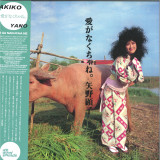
AKIKO YANO - AI GA NAKUCHA NE (1982)

Wewantsounds continues its Akiko Yano series with the reissue of her cult classic 'Ai Ga Nakucha Ne' recorded in 1982 and co-produced by Ryuichi Sakamoto. Featuring Japan, the album includes additional recording in Tokyo with YMO and is mixed by Steve Nye and Shinichi Tanaka. It is the first time the album is released outside of Japan and the deluxe LP features the original artwork with gatefold sleeve and a lavish 24-page colour booklet with sessions photos by Pennie Smith (famous for The Clash's London Calling photo). The reissue also includes a new introduction by Mac DeMarco and a dual interview with Akiko Yano and Steve Jansen by journalist Paul Bowler. The audio remastered from the Original tapes by Mitsuo Koike.

'Ai Ga Nakucha Ne' ('there must be love' in Japanese) is Akiko Yano’s 6th studio album and follows 'Tadaima' in 1981. It continues exploring the electro-pop sound of its predecessor, hot on the heels of her touring with Yellow Magic Orchestra between 1979 and 1980. For this album, Akiko decided to try something new; she enrolled English fellow musicians Mick Karn, Steve Jansen and David Sylvian from Japan and booked the Air Studios in London under the supervision of engineer Steve Nye. ​​Over a couple of weeks, the musicians created a fascinating soundscape full of catchy pop tunes, sung in both Japanese and English. Reminiscing about the studio sessions, Steve Jansen notes "Our music’s different but we maybe had a similar process of working. It was a great environment because the studio was a great place to work. It was very insular. There were four studios and there were always groups working in there 24/7."

The eleven tracks featured on "Ai Ga Nakucha Ne," mostly composed by Akiko - are a great collection of catchy tunes featuring her distinctive vocals and accompanied by the Japan musicians. As Akiko explains about the creative process, "I didn’t think to imitate or to make another Tin Drum. But I had Steve Jansen and Mick Karn, these excellent musicians. They were eager to understand the songs, then they put in everything they had. I knew the material was different from what they usually played in Japan. But it was a great experience working with them.

​There are many highlights on the album, from the pop edge of "Aisuru Hito Yo" to the avant groove of "Another Wedding Song", each song is memorable and the album ends with the superb “Good Night” sung by Akiko and David Sylvian.

The original 1982 LP release included a 24 page booklet featuring many photos by Pennie Smith and Japanese photographer Bishin Jumonji. The booklet is reproduced in its entirety here and the album on top of contributions by Mac DeMarco, a longtime fan of the album, Akiko and Steve Jansen making this release of 'Ai Ga Nakucha Ne' a unique testament to Akiko Yano's greatness.

nicht am Lager

Bestelle jetzt und wir bestellen den Artikel für dich beim Lieferanten.

28,53

Last In: vor 4 Jahren
NUN ATTAX / FIVE GO DOWN TO THE SEA? / BEETHOVEN - HIDING FROM THE LANDLORD

Next on Allchival is a compilation tracing the musical pursuits of Cork’s (via Belfast) Finbarr Donnelly and his trilogy of bands – Nun Attax, Five Go Down To The Sea? and Beethoven - before his untimely death by drowning in London’s Hyde Park in 1989. From the post punk of the first band via the discordant indie of the second to the chaos of Beethoven’s short lived existence this compilation shines some light on one of Irelands most enigmatic frontmen over a ten year period. Released on 18th April Record Store Day on a 15 track LP and an expanded CD version with 24 tracks. Featuring tracks released on Setanta, Creation, Kabuki & Abstract plus previously unreleased Fanning Sessions, the LP also comes with a fanzine with detailed liner notes and ephemera.

Nun Attax, formed in the late 70s, are synonymous with the Downtown Kampus at Cork’s Arcadia Ballroom, the lynchpin of the city’s post-punk music scene. Their live performances being the stuff of Southern legend - unforgettable, incendiary events, examples of which can be heard on the tracks here White Cortina, Reekus Sunfare. In the early-80s the band changed its name to Five Go Down To the Sea? and recorded the Knot A Fish EP 7’’ for London–Irish label Kabuki Records and soon after the band left recession-ridden Cork for the UK capital.

Squatting south of the River, working on building sites and collecting welfare under several aliases recording and gigs were sporadic but by 1984 they had hooked into the early Creation scene, and played gigs at Alan McGee’s Living Room club. Working with The Mekons Jon Langford they release The Glee Club on Edward Christie’s Abstract Sounds label. Following it up with the last of their three releases as Five..on Creation itself the band’s chaotic existence led to its demise only re-emerging in 1988 as Beethoven. Down to two original members – Donnelly and guitarist Ricky Dineen – plus two new additions their only release – a 12” on the fledgling Setanta records – features a cover of “Day Tripper” backed with original tracks and was NME’s Single of the Week in the summer of ‘89 when such things carried weight. The planned second single doesn’t go ahead after Donnelly’s death.

vorbestellen30.08.2023

erscheint voraussichtlich am 30.08.2023

15,34
Hydroplane - Selected Songs 1997-2003 LP 2x12"

Selected Songs 1997-2003 compiles some of the finest moments in the recording history of Hydroplane, the Melbourne-based indie-pop three-piece that operated alongside The Cat’s Miaow through the second half of the nineties. It’s the third release in what feels, now, like a loosely planned series by World Of Echo, documenting the music made by this group of friends in Melbourne sharehouses (The Cat’s Miaow’s Songs ’94-’98, 2022), or in the case of The Shapiros (Gone By Fall, 2023), while traversing the International Pop Underground.

Hydroplane would be familiar to anyone already following these breadcrumb trails – Andrew Withycombe, Bart Cummings and Kerrie Bolton were the group’s core, all members of The Cat’s Miaow. With Cat’s Miaow drummer Cameron Smith itinerant, having moved to London, the trio used this opportunity to expand their music. It’s a subtle, but important shift. If The Cat’s Miaow was about the perfect, minimalist, two-minute pop song, Hydroplane’s music was far more open-ended, embracing the loops and drones, sampled house-y shuffle beats, the burbling of a Roland Jupiter-4 synth, all of which the trio joined, effortlessly, to their endless capacity for moving, elegant melodicism.

They may have only planned to release one seven-inch single, but the sound Hydroplane created was so bewitching, so compelling, that the project’s lifespan ran for around half a decade, and they ended up releasing three albums, including a self-titled debut recently reissued by Efficient Space, and seven singles. There are all kinds of compelling things happening in the music compiled here – the hazy repetition of the gentler side of Krautrock is in here, somewhere, which also suggests Stereolab at their most intimate and disarmed; the gently drifting guitars, gauzy and oneiric, set the songs adrift and floating, each one lost in its own imagined, distracted world. Songs like “The Love You Bring” set indistinct tonal floats across dance rhythms, in a way not quite heard since My Bloody Valentine’s “Instrumental” – but with the added gift of Bolton’s gorgeous voice.

This loose coalition with dance music, and the quiet experimentalism at the heart of Hydroplane, also gestures towards peers like Hood, Acetate Zero and Other People’s Children, and releases on renegade labels like Wurlitzer Jukebox and Enraptured. Like those groups and labels, The Cat’s Miaow were reconciling independent pop music’s past – sweet melody and melancholy, chiming and droning guitars – with the futures promised by DIY electronics and nascent digitalia, the interface of indie and IDM that led to some of the underground’s most blissful, texturally swoonsome music. All that is here, but also, the poise of the melodies is pure Cat’s Miaow, though, with Bolton’s voice sailing, pacifically, over some of the most pared-down, gorgeous music made during their decade.

It was a time, too, when such music could make waves – “We Crossed The Atlantic”, one of their early singles, was picked up by John Peel, who played it repeatedly on his legendary radio show, the song reaching #13 on his 1997 Festive 50. That the song itself was a cover of a tune by 1960s Australian beatnik-pop-poet Pip Proud felt even more perfect – a group of outsiders paying tribute to another outsider, played on the radio one of the few broadcasters brave and human enough to take a chance on this music. But it was a time where everything was up for grabs, and genres were flowing into each other: folk songs went drone; indie re-discovered noise; ambient pop floated, again, out onto the dancefloor. And while they may have been sequestered away in Melbourne, Australia, Hydroplane felt core to that scene, a quietly driving force.

Compiling material from across their brief but mercurial career, this double album perfectly captures the magic and mystery of Hydroplane’s dreamlike, perfect pop songs.

nicht am Lager

Bestelle jetzt und wir bestellen den Artikel für dich beim Lieferanten.

33,57

Last In: vor 2 Jahren
Codek - Tam Tam / Closer

Codek

Tam Tam / Closer

12inchDE165
Dark Entries
04.08.2023

REPRESS

Codek is the brainchild of Jean-Marie Salaun who grew up in Paris influenced by the folklore of the inner city. In 1978 he joined art rock group SpionS alongside Gregory Davidow and recorded two singles. Diving into the Paris post punk scene he met Claude Arto and designed the artwork for Claude's single on Celluloid Kwai Systeme / Betty Boop.' Robin Scott (M Pop Music') had produced the SpionS first single and wanted to collaborate further. With Claude, Jean-Marie wrote Me Me Me', intended for a choir, for M. Then SpionS split and Robin was off to Switzerland to record an album to follow-up his hit single. That left Jean-Marie alone in London, where he began working as Codek, a play on the brand name Kodak The Me Me Me' single was released by MCA Records in 1980. Back in Paris, now with some studio experience, Celluloid Records hired Jean-Marie to produce records for Artefact and Les Orphelins. Over the next 2 years he began working on ideas for the next Codek single Closer / Tam Tam'

Closer' started its life as an electric baseline played by Jean-Marie. Claude Arto sequenced the floating synthesizers. Laurent Grangier and Frédéric Lapierre of reggae band Immigration Act played the horns. The lyrics Hard to say. Easy to do. We don't need to say what we do' were a statement on creation as narration expressed Jean-Marie's ennui, I'm tired with it.' Tam Tam' was inspired by Burundi drummers playing on the plaza in front of Beaubourg where the song was recorded. Jean-Marie enlisted one of the drummers from the circle, Georges Atta Dikalo, to lay down percussion for the song. The female singers were from the French Caribbean and added falsetto tribal chants. JM was part of the the African night scene in Paris, remixing Xalam's Kanu' and Touré Kunda's Salaly Muhamed.' Claude achieved complex rhythmic patterns using a modular synthesizer and heavy processing. Jean-Marie recorded himself beating his chest for the thump noises. The recording of Tam Tam' and Closer' spanned over two years. They started on 16-track in Studio d'Auteuil, where JM blew the woofers, before resuming in Studio Centre Georges Pompidou with an added 8-track recorder. Jean-Marie was producing other bands, and a lot of this was recorded on "borrowed" studio time. The single was released in 1981 on West African Music, a tiny label from the Ivory Coast, and was re-released a year later by Island Records in the UK (where the B-side was re-named Tim Toum'). Both tracks were staples in the DJ sets of Beppe Loda and Daniele Baldelli, finding a spiritual home in the Cosmic scene of Italy.

Both songs have been remastered for vinyl by George Horn at Fantasy Studios in Berkeley. The jacket is an exact replica of the 1981 edition with artwork by Angela Boy, inspired by primitive electronics and African paintings. Each copy includes an doubles-sided insert with photos and liner notes by Jean-Marie Salaun.

vorbestellen04.08.2023

erscheint voraussichtlich am 04.08.2023

11,13
Mike Cooper - Life and Death in Paradise LP

Mike Cooper wrote his final songwriter record, a suite of gloaming glam-rock anthems performed with a spiritual jazz trio, while living on the Costa Tropical of Granada, Spain, an era when he was considering retiring from music altogether. A chance encounter and a last-ditch record deal convinced him to make one last album, which he recorded in 1974 at Pathway Studios in London, with “The Greatest Rock and Roll Band in the World,” featuring the inventive South African jazz rhythm section of Louis Moholo and Harry Miller with UK saxophonist Mike Osborne. This first-ever reissue includes a bonus CD of Milan Live Acoustic 2018, a previously unreleased solo set that represents Cooper’s return, after forty-four years pursuing free improvisation and electronics, to a new, deconstructed approach to singing, steel guitar, and songcraft. The deluxe LP+CD edition also features a six-panel insert with additional artwork and an essay by the artist about both records. The deluxe 2xCD gatefold edition features an eight-panel version of the same insert. In the wake of his magisterial triptych of early 1970s avant-folk-rock records Trout Steel (1970), Places I Know (1971), and The Machine Gun Co. (1972) the British songwriter, guitarist, and fledgling improviser Mike Cooper retreated to the Costa Tropical of Granada, Spain. With no prospects for touring or recording again, his fiery band the Machine Gun Co. had disintegrated. Cooper sets the scene in his liner notes of the first-ever reissue of his unjustly forgotten next album Life and Death in Paradise (1974): No one came running with offers of fame and riches, and we fell apart, and I left the country and headed for the beach, disillusioned and a bit disorientated musically. I went to Almuñécar in Andalusia, a place I had been going since 1969, because a painter friend from Reading, Rowland Fade who made the collage in the gatefold of my earlier album Trout Steel had moved there in 1968. It was in this synthetic coastal “paradise,” unmoored and adrift, considering retiring from music altogether, that he began tentatively writing new songs. A chance encounter with producer Tony Hall, who offered Cooper a last-ditch record deal on Hall’s nascent Fresh Air label, convinced him to make one last album with the stipulation that he could assemble what he called “The Greatest Rock and Roll Band in the World.” I told Tony that I would do it if I could hire some of my South African jazz musician friends that I had used on my Pye/Dawn albums and some friends from Reading that I still knew and admired. I called up Harry Miller, Louis Moholo, and Mike Osborne, who were in fact a trio at the time … and several local Reading heroes, including the singer-songwriter Terry Clarke. The result, recorded live with minimal overdubbing at Pathway Studios in London, was Life and Death in Paradise, an utterly singular suite of gloaming glam-rock anthems performed with a spiritual jazz trio comprising the inventive South African jazz rhythm section of Moholo and Miller with UK saxophonist Osborne. Unlike anything else in Cooper’s extensive catalog. Fresh Air fizzled, and Life and Death became Cooper’s final record as a songwriter, having pushed the form as far as he could. Drifting north from Spain back to the UK, he fell into the scene of the London Musicians Collective (LMC) including Paul Burwell, David Toop, and saxophonist Lol Coxhill, Cooper’s bandmate in the Recedents and fully embraced free improvisation. He was still, however, interested in singing and lyrics, so, influenced by Tom Phillips, William Burroughs, and Brion Gysin, he began experimenting with text collage and cut-up techniques, arriving at his own hybrid compositional strategy for improvisatory songs. The previously unreleased solo set Milan Live Acoustic 2018 represents Cooper’s return, after more than four decades pursuing free improvisation and electronics, to a new, deconstructed approach to singing, lap steel guitar, and songcraft. Presented here together with Life and Death in Paradise, the two records provide fascinating bookends to Mike Cooper’s long, mercurial, and pioneering practice as a songmaker.

vorbestellen28.07.2023

erscheint voraussichtlich am 28.07.2023

30,85
Various - Transform I LP 2x12"

When Transform-I was released in 2009, Bristol’s Dubkasm were unmistakably prominent on the reggae scene but it is this LP - their tenth release - that put them on the map and cemented their status as outernational roots innovators and one of the most creative outfits in reggae. By 2006, Jah Shaka had been rinsing their percussive vocoder smash ‘Zulu Dawn’ (track 15) at the end of every dance for close to three years. Dubplates from the LP became firm favourites on some of the greatest soundsystems in the world, including Aba Shanti-I, Iration Steppas, and Channel One.
DJ Stryda and producer Digistep’s reputation grew still further when the pair managed to get an extremely rare vocal from the legendary Dub Judah, who at the time had not voiced a tune for many years. The resulting 7”, ‘From the Foundation’ (track 2) was the first tune to be released from Transform-I, an album which took the music world by storm with its singular blend of a deep, conscious roots reggae sound with instrumentation that drew on Digistep’s Brazilian heritage.

As the great DJ and journalist Steve Barker said in his rave Wire magazine review of the initial release, ‘Like many innovations heard for the first time, you wonder why this has not been done before’. Indeed, the LP’s blend of percussion instruments like zabumba, cavaquinho, and cuica with an absolutely stellar cast of vocalists including Tenastelin, Christine Miller, and Ras B, with a pre-Reggae Reggae Sauce fame Levi Roots recording from his living room, became timeless the moment it was released. Barker praised the album for being ‘more orthodox than expected’, by which I think he meant that the album is a completely authentic roots record, rather than an attempt to mix musical flavours to conceal a lack of ideas. Instead, ideas flew back and forth across the Atlantic, as basic tracks were laid in the Dubkasm Studio (then in Brazil, now in England) and overdubs and vocals were recorded in London, Nottingham, Bristol and Norway, with the final mixes being done at the Daddy Roots studio in Bristol. The combination is seamless both because Digistep grew up with Brazilian music, courtesy of his father, and because Dubkasm have lived and breathed reggae since their formation in 1994 – just go and listen to early releases like ‘Chemical Reaction Dub’ (1996) or ‘Hornsman Trod’ (2003) and you’ll hear heavyweight productions with a Rasta ethos immersed in U.K. soundsystem culture.

Since the album’s release, Dubkasm have gone from strength to strength and collaborated with a dazzling array of artists. Transform-I was remixed by some of Bristol’s best electronica producers in 2010, and 2013’s 12” ‘Victory’ became a huge soundsystem hit around the world, before being voiced by two of the greatest singers of all time, Luciano and Turbulence, and being remixed the following year by one of the world’s finest dubstep producers, Mala (who in 2016 released his own project fusing Latin music with electronic bass – the excellent Mala in Cuba).
The first project of its kind, beautifully reissued in its original format by Dubquake (the outfit behind France’s incredible OBF Soundsystem), Transform-I is the LP that launched Dubkasm on their current trajectory and has truly lived up to its name.

nicht am Lager

Bestelle jetzt und wir bestellen den Artikel für dich beim Lieferanten.

27,31

Last In: vor 2 Jahren
Nicola Conte - Umoja LP 2x12"

Renowned Italian spiritual jazz master, DJ, producer, guitarist, and bandleader Nicola Conte proudly presents his new album Umoja via London based label Far Out Recordings.

A joyous exultation across ten tracks, Umoja taps into the abundant well of knowledge Conte has amassed over his career as connoisseuring compiler and archivist of deep jazz, latin, afrofuturist, bossa-nova and soul music from around the world. Expressing unity, oneness and harmony in Swahili, Umoja coalesces universal feelings through the multifaceted global music Conte has spent his life studying and researching.

Having released music with Blue Note, Impulse! and Schema records, Nicola Conte’s relationship with Far Out began over a shared love of hard-edged bossa-nova and swinging samba-jazz. Between 2009-2013 Nicola Conte compiled five volumes of forgotten 60s Brazilian music for his Viagem series. He then released his critically acclaimed Natural album: a collaboration with vocalist Steffania Dippiero, featuring jazz standards alongside covers of lesser known Brazilian gems.

The music of Umoja draws on the deep-dug 70's independent spiritual and free jazz sounds, private-press soul records, and African and Afro Caribbean rhythms in Conte’s collection. But he equally recognises his debt to many of the decade’s more celebrated musical icons, such as North American cosmic jazz masters Lonnie Liston Smith and Gary Bartz, and Afrobeat originators Fela Kuti and Tony Allen.

Since founding the Bari-based bohemian cultural movement and club night Fez at the dawn of the nineties, Conte has proven to be a pillar of the contemporary, international soul-jazz scene. Composed alongside his long time friend, guitarist Alberto Parmegiani, Conte brings together a dazzling host of guests from around the world, including award winning British vocalist Zara Mcfarlane, acclaimed Finnish saxophonist Timo Lassy, french vibes player Simon Mullier, US vocalist Myles Sanko, rising South African drummer Fernando Damon, former Roy Hargrove bassist Ameen Saleem and Serbian flute sensation Milena Jancuric.

Proudly revivalist, Umoja was recorded direct to analog tape, with just two takes for each track. “Searching for an unadulterated, spontaneous, almost improvised feeling”, Nicola made sure that the few overdubs were also transferred to tape in order to retain the colour and warmth of the analog sound. “Very little post production or editing has been added, so what you hear is largely what happened in those magical live sessions”.

nicht am Lager

Bestelle jetzt und wir bestellen den Artikel für dich beim Lieferanten.

26,85

Last In: vor 66 Tagen
Swayzak - Snowboarding in Argentina (25th Anniversary Edition)  3x12"

Dance music has always been grounded in a sense of place. Chicago, Detroit, London, Berlin—a zip code can tell you as much about the music as the year it was made.

But beyond the nuts and bolts of the here and now lies a netherzone where some of the best electronic music floats, impossible to pin down. Swayzak’s Snowboarding in Argentina is one such record.

The title hints at its uncanny placelessness. The music has nothing outwardly to do with Argentina, for one thing. The work of UK producers David Nicholas Brown and James S. Taylor, it was recorded in a number of locations—mostly bedrooms—around London. Yet there is little that is quintessentially British about the music.

Instead, Brown and Taylor drew much of their inspiration from, on the one hand, the luminous chords and silky heft of Detroit techno, and on the other, the staccato drums and clipped textures that were then beginning to bubble out of Berlin and Cologne.

That brings us to the question of time. For if Snowboarding in Argentina belongs to nowhere, it is equally a product of nowhen.

On a practical level, the music took shape in the mid to late 1990s, although it took nearly 10 years for it to come to fruition. Brown and Taylor began jamming on instruments, then machines, in the late 1980s. Then, after Brown suffered a serious car accident, the two musicians began working together more seriously. Trial and error yielded a promising single with a downtempo vibe that a hired-gun studio producer promptly ruined; Swayzak retreated to their bedrooms.

They learned about Chain Reaction from a radio show, found new ways to burrow into the circuitry of their machines, and by 1996 they had hit upon their sound. brought 10 copies of the first to Berlin’s Hard Wax, sold them directly to the shop for a fistful of Deutschmarks, and turned around and spent the money on records; that’s how DIY electronic music worked in those days.) The album itself appeared in 1998 on London’s Pagan label and quickly built a cult following. It was clear that the music was in conversation with its contemporaries: Heard from the right angle, it was possible to imagine it as a halfway point between the proto progressive house of Underworld and the monochromatic minimalism of Kompakt. But it also didn’t quite sound like anything else around; it was a dispatch from an unknown territory that needed no special understanding to decipher.

A quarter century later, Snowboarding in Argentina sounds simply eternal. Certain hallmarks of ’90s production are available—the music’s almost murky warmth is a reminder of what electronic music sounded like before software swallowed everything into its digital maw—but there’s nothing dated about it. The exploratory nature of these tracks, as the result of experimenting with their machines’ limitations, never eclipses their musical or emotional essence.

Long since been deemed a classic, Snowboarding in Argentina remains an underdog in the annals of electronic music. Its semi-obscurity was surely not helped by the decision to publish nine of its original 12 tracks on the CD, and seven on the vinyl, with only four appearing on both formats. Twenty-five years after its original release, Lapsus’ Perennial Series edition unites, for the first time, all the album’s tracks as a single triple-vinyl package, rounding out the 12 original songs with previously unreleased material. Working off the original DAT premasters, Swayzak have created new edits of all the tracks. The result might be considered the definitive edition of the album as it was meant to be, after a 25-year journey. It seems fitting that an album so timeless would continue morphing throughout its lifespan. For fans, it’s the chance to hear a beloved album as never before. And for newcomers, it’s the perfect introduction to a record that, in its own quiet way, reshaped the sound of electronic music, opening up new frontiers unbound by cartography or calendars.

The core of Snowboarding in Argentina appeared on a series of three two-track singles in 1997. (Taylor brought 10 copies of the first to Berlin’s Hard Wax, sold them directly to the shop for a fistful of Deutschmarks, and turned around and spent the money on records; that’s how DIY electronic music worked in those days.) The album itself appeared in 1998 on London’s Pagan label and quickly built a cult following. It was clear that the music was in conversation with its contemporaries: Heard from the right angle, it was possible to imagine it as a halfway point between the proto progressive house of Underworld and the monochromatic minimalism of Kompakt. But it also didn’t quite sound like anything else around; it was a dispatch from an unknown territory that needed no special understanding to decipher.

A quarter century later, Snowboarding in Argentina sounds simply eternal. Certain hallmarks of ’90s production are available—the music’s almost murky warmth is a reminder of what electronic music sounded like before software swallowed everything into its digital maw—but there’s nothing dated about it. The exploratory nature of these tracks, as the result of experimenting with their machines’ limitations, never eclipses their musical or emotional essence.

Long since been deemed a classic, Snowboarding in Argentina remains an underdog in the annals of electronic music. Its semi-obscurity was surely not helped by the decision to publishnine of its original 12 tracks on the CD, and seven on the vinyl, with only four appearing on both formats. Twenty-five years after its original release, Lapsus’ Perennial Series edition unites, for the first time, all the album’s tracks as a single triple-vinyl package, rounding out the 12 original songs with previously unreleased material. Working off the original DAT premasters, Swayzak have created new edits of all the tracks. The result might be considered the definitive edition of the album as it was meant to be, after a 25-year journey. It seems fitting that an album so timeless would continue morphing throughout its lifespan. For fans, it’s the chance to hear a beloved album as never before. And for newcomers, it’s the perfect introduction to a record that, in its own quiet way, reshaped the sound of electronic music, opening up new frontiers unbound by cartography or calendars.

nicht am Lager

Bestelle jetzt und wir bestellen den Artikel für dich beim Lieferanten.

29,62

Last In: vor 21 Monaten
Robbie & Mona - Tusky LP

Robbie & Mona

Tusky LP

12inchSPINNY010
Spinny Nights
04.07.2023

On their sophomore effort Tusky, surrealist duet Robbie & Mona ascend beyond the lo-fi scrawlings of their debut album to something altogether more grandiose. Between the lights down drama of sprawling opener ‘Sensation’, to the ‘roll credits’ coda of closer ‘Always Gonna Be A Dead Man’, Tusky exists as a glitzy, lucid journey playing out before the listener.
While debut album EW captured William Carkeet and Ellie Gray as they were finding their feet with one another, creating Tusky was a wholly symbiotic process from day one. “We got better at knowing what each other wanted,” William offers. “This was the album that we were trying to make from the beginning.”

Simultaneously evoking multiple eras of music, the album drifts through worlds of synth pop, jazz, trap, drill, ballroom waltz and leftfield electronica, with the scatterbrain sound palette melded by a peppering of instrumental motifs and William’s addiction to sampling sounds across multiple tracks. “I wanted there to be this weird dimensional thing going on,” William explains, “where songs from the album are playing in multiple places.”

The record sees an expansive cast of musicians assembled, with a much heavier focus on live instrumentation than previous outings. Alongside the expected fare of crackly synths, samplers and drum machines, Tusky gets its glossy sheen from a rich tapestry of jazz drums, double bass, grand piano and saxophone.

Most of the tracks are laden with improvised saxophone from Campbell Baum (Sorry, Broadside Hacks) and Ben Vince (Housewives, Joy Orbison), much of which was scrambled by William in post-production, lifting scraps from one song and layering them atop an entirely different track. Elsewhere, session musicians were cherry picked, including Bingo Fury, his drummer Henry Terrett, and a string ensemble led by Caelia Lunniss and Jo Silverston (Spindle Ensemble).

Most surprising is a rap feature from Monika (of South-East London collective Nukuluk), who brings album centrepiece ‘Mildred’ to new heights with a fiery verse on pain. Aside from being the most unlikely addendum to a sombre piano ballad, it demonstrates Robbie & Mona’s natural state of playfulness, forever following emotions and sensuality over any notion of traditional compositional boundaries.
Many of Tusky's tracks owe their inception to cinema, be it the soundtrack to Betty Blue, the glowing films of Wim Wenders, or the surprising parallels between La Belle Et La Bete and Bad Boys. Equally, much of Robbie & Mona's new-found sense of tension and spectacle comes from William’s recent work soundtracking independent filmmakers, while Ellie gave greater priority to threading a narrative through her stream of consciousness writing style.

In all its majesty, Tusky celebrates creativity with creation. “If you begin to see fiction as real, you can reincarnate and become different things. You can grow,” Ellie implores. “Nothing stays the same. You can shed old characters in yourself. There’s great joy in that.”

nicht am Lager

Bestelle jetzt und wir bestellen den Artikel für dich beim Lieferanten.

23,49

Last In: vor 2 Jahren
Bjarte Eike & Barokksolistene - The Playhouse Sessions LP 2x12"

From Alehouse to Playhouse Bjarte Eike and his barnstorming Barokksolistene capture the vital spark of Restoration London’s entertainment scene with a captivating new recording for Rubicon Classics! The Playhouse Sessions will be released on 23 September 2022 to coincide with Barokksolistene’s concert double-bill at London’s Southbank Centre.

‘A smattering of Purcell, dances from Playford’s Dancing Master, shanties, reels and ballads succumb to a nine-piece ensemble drawing on Baroque, jazz and folk styles for a no holds barred hooley of riotous improvisatory give and take,’ (BBC Music Magazine review of The Alehouse Sessions, August 2019)

London’s musicians, pushed in the 1650s, to the margins of society by order of Oliver Cromwell, found room for new forms of entertainment in city-centre taverns and alehouses. They remained there long after the restoration of the monarchy, performing sets of dances, theatre songs and bawdy ballads to audiences glad to be free from Puritan constraints on pleasure.

Norwegian violinist Bjarte Eike and his Barokksolistene have restored the spirit and substance of those long-forgotten performances with their Alehouse Sessions, hailed by The Times as ‘irresistible’ and ‘fabulously unrestrained’ by The Guardian. Five years ago the Norwegian violinist and his band scored a best-selling album with The Alehouse Sessions on Rubicon Classics. They return to the label with another compelling collection of music and words of the kind on offer more than three centuries ago at Henry Purcell’s favourite Westminster watering holes. The Playhouse Sessions, set for release on Rubicon Classics on 23 September 2022, reflects the uplifting energy and engaging emotional contrasts of Barokksolistene’s Alehouse performances.

“The album contains a sort of inner narrative that runs through the recording,” says Bjarte Eike. “It has become like a play in its own right, with each track being a small tale within a larger story.” The recording’s tracklist includes Eike’s beguiling arrangements of music from Purcell’s semi-opera The Fairy Queen and his own original compositions on words from the play on which it is based, Shakespeare’s A Midsummer Night’s Dream; popular songs and ballads such as ‘The Irish Washerwoman’, ‘I often for my Jenny strove’ and ‘The Three Ravens’; tunes from Purcell’s welcome odes and stage shows, Come ye sons of art and Dido and Aeneas among them; the ‘Willow Song’ from Shakespeare’s Othello; Eike’s own voice in Puck’s monologue from Act 5 of A Midsummer Night’s Dream; and John Dowland’s sublime air ‘Can she excuse my wrongs’.

London’s theatres were closed at the start of the English Civil War in 1642 and remained shut until the Restoration. Alehouses offered redundant musicians, actors and dancers a place to scrape a precarious living and soon became their creative refuge. “Although a few surviving theatres reopened in 1660 with the return of Charles II, there was little money around to rebuild those that had been demolished,” observes Bjarte Eike. “And a generation of musicians had already found an audience in places like the Black Horse in Aldersgate Street. So popular were their alehouse sessions that Cromwell tried to abolish them! But they outlived him and became part of Restoration musical life.” The form of a Barokksolistene Alehouse, he adds, is like a creative room. “Within its framework I can frequently refurbish the show with new contents. The Playhouse project is likewise an extension of the ever-evolving Alehouse Sessions. Together they tell the story of music and theatre in London during Cromwell’s time and after the Restoration. Of course there’s an historical context to what we do. But there’s also the practical context – which is even more important to me – of connecting with a contemporary twenty-first century audience. An Alehouse / Playhouse performance is not something for the museum; it's about music made in the present moment, just as it was in the London alehouses of Purcell’s day -- with their playhouses annexed to the rear of the beer-drinking saloons. The encounter of musicians onstage and the audience in the hall is the real magic of it. We have to fuse the audience into the action of our performance!”

The Playhouse Sessions will be launched on Friday 23 September with a late-night concert at the Purcell Room and a post-concert Alehouse Session in the foyer of the Queen Elizabeth Hall. Soprano Mary Bevan is set to join Eike and his Alehouse Boys for the first half of their Southbank Centre double-bill, offering unique interpretations of songs from Purcell shows and other hits from the late seventeenth-century London stage. “The Southbank Centre is a direct descendant of concerts given in the 1650s in the alehouses of London,” notes Eike. “These alehouses after all staged some of the world’s first public concerts. Later, after the Restoration, it became common for promoters to advertise alehouse concerts in the press and offer subscription tickets. Purcell and his fellow musicians were thus just as at home performing there as they were in the chambers of the royal court or in London’s new theatres.”

Bjarte Eike launched his Alehouse Sessions in company with like-minded musicians 15 years ago. The ensemble comprises a core of regular performers, all of whom have committed to memory a huge setlist of up to four hours of music. Typically they meet a day or so before a concert tour to share a meal and make music together; then next day, re-grouping thirty minutes before the show, they discover Eike’s select-menu for the evening. “That ensures that every show is fresh,” he notes. “I make sure we never repeat the same programme twice. It’s therefore essential to work with people who share my outlook and dare to adventure. We’re into a high-risk sport, with lots of traps and places where the unexpected appears - for good or for ill. And so the audience knows we’re vulnerable. But our skill is seen in how we re-act on the hoof to the unpredictable. That’s authenticity and honesty - and above all it’s a performance that’s genuine.”

Armed with a classical training and a background in folk music and improvisation, Bjarte Eike was drawn naturally to Early Music in all its stylistic variety. “I never really felt at home with only one genre,” he recalls. “Early Music allowed me to study profound, complicated compositions, but performing it has also opened up the chance of rebellion and uproar! Early music offers wide, multi-faceted areas of musical exploration for me. You find, for instance, links to different types of music wherever you look in seventeenth-century English repertoire. And I am fascinated by all these connections. They offer a foundation for the Alehouse Sessions and for all Barokksolistene performance more generally. Every member of the group plays, sings, dances and improvises without limitation. We’re all interested in the many different fields of being a stage performer and pushing hard at the ‘normal’ boundaries of what it means to be a classical musician.”

vorbestellen30.06.2023

erscheint voraussichtlich am 30.06.2023

32,98
MARQUIS DE SADE - Chapter II LP 2x12"

Marquis De Sade

Chapter II LP 2x12"

2x12inchGCR20202-1
GCR Zyx
30.06.2023

Niemand hätte im Jahr 2023 damit gerechnet, dass beim Keep It True Festival die ganze Halle den Refrain von „Somewhere Up In The Mountains“, die heute sehr rare Single aus dem Jahr 1981, mitsingt und dann auch noch ein neues, quasi erstes Album erscheint! Gute Zeiten für NWOBHM Fans!

MARQUIS DE SADE aus London wurden 1979 gegründet neben der heute unbezahlbaren 7“ Single „Somewhere Up In The Mountains/Black Angel“ gab es 1981 auch noch ein Tape mit vier Songs. Bassist Pete Gordelier ging in Folge zu Angel Witch und ist auf diversen Alben zu hören. Keyboarder San Remo startete 1982 mit Sanctus, deren gesammelte Werke (zwei Tapes) 2015 bei High Roller veröffentlicht wurden.

2005 wurden die Aufnahmen von MARQUIS DE SADE (Single und Tape) als Bootleg veröffentlicht. High Roller Records folgten schließlich 2012 mit einer offiziellen Version auf CD und LP. 2015 coverten Roxxcalibur den Song „Somewhere Up In The Mountains“ auf ihrem dritten, erfolgreichen Album „Gems Of The NWOBHM“ und verhalfen dem Titel zu zusätzlicher Popularität. Diese Umstände führten schließlich 2019 zur Reunion von MARQUIS DE SADE, nach einem Todesfall nun zu fünft mit drei Originalmitgliedern. Alte und
neue Ideen wurden ausgearbeitet und man nahm nach all den Jahren endlich das erste Album „Chapter II“ auf. Zeitgleich konnte man nach Corona die ersten erfolgreichen Clubshows spielen und schließlich, im April 2023, der Ritterschlag auf dem renommierten Szenefestival Keep It True bei Tauberbischofsheim.

„Chapter II“ ist nicht nur ein Fest für NWOBHM Fans und Liebhabern von britischem Heavyrock im Allgemeinen, sondern weist auch epische und pompöse Elemente der Marke Magnum auf. Die natürlich gehaltene Produktion, getrennt für CD und Vinyl gemastert, sorgt für ein authentisches und dennoch druckvolles Hörerlebnis.

Nobody would have expected in 2023 that at the „Keep It True Festival“ the whole hall sings along the chorus of „Somewhere Up In The Mountains“, the now very rare single from 1981, and then also a new, practically first album is released! Good times for NWOBHM fans!

MARQUIS DE SADE from London were founded in 1979 and besides the today priceless 7“ single „Somewhere Up In The Mountains/Black Angel“ there was also a tape with four songs in 1981. Bassist Pete Gordelier subsequently joined Angel Witch and can be heard on several albums. Keyboardist San Remo started Sanctus in 1982, whose collected works (two tapes) were released by High Roller in 2015.
In 2005, the recordings of MARQUIS DE SADE (single and tape) were released as a bootleg. High Roller Records finally followed up in 2012 with an official version on CD and LP. In 2015, Roxxcalibur covered the song „Somewhere Up In The Mountains“ on their third successful album „Gems Of The NWOBHM“ and helped the track gain additional popularity.

These circumstances finally led to the reunion of MARQUIS DE SADE in 2019, now with five original members after a death. Old and new ideas were worked out and they finally recorded the first album „Chapter II“ after all these years. At the same time they were able to play the first successful club shows after Corona and finally, in April 2023, the accolade at the renowned scene festival Keep It True near Tauberbischofsheim.

„Chapter II“ is not only a feast for NWOBHM fans and lovers of British heavy rock in general, but also features epic and pompous elements of the Magnum brand. The naturally kept production, mastered separately for CD and vinyl, makes for an authentic yet powerful listening experience.

vorbestellen30.06.2023

erscheint voraussichtlich am 30.06.2023

19,96
Index for Working Musik - Dragging the Needlework for The Kids at Uphole LP

Brian Jonestown Massacre, Velvet Underground, TOY. “Upon the highways of Freedom, where Evil is like a Ferrari… “ Unbeknownst to its members, Index For Working Musik was born on an evening in late 2019 amidst the discovery of a collection of faded b&w photocopies that had been marinating on the floor of a urine-alley in the Gothic Quarter of Barcelona. An assortment of sacred and profane imagery were crumpled amongst an essay on early Christian hermits, entitled Men Possessed by God, the meaning of which was enticingly vague. Received together, they planted the seeds for a new endeavour. Though Max Oscarnold and Nathalia Bruno were already engaged in a creative ping-pong of sorts, the results to this point had only totaled a 30 min long ½ inch tape containing one track and four interludes. They needed a page and they needed ink, and they needed a place and it needed energy. Suddenly by chance or divine intervention, their experimental venture had been given form and direction. Back home in London’s cursed smog, they moved themselves and their 8-track studio into a basement in E8, where the project’s gravitational pull gained strength, quickly developing into an unexpected collective with the incorporation of drummer Bobby Voltaire, double bass player E. Smith and guitarist J. Loftus. As the world shifted around them and the Plague Years followed, it became increasingly clear that they were not going to leave that small basement room. The scarcity of light or outer world presence was less a limitation, instead the main tool at hand, allowing the recording to stretch for boundaryless days in architectural isolation, and forcing them to make straight forward free guitar music, adopting a ‘first thought, best thought’ approach. 35 minutes of repeat phrased guitars, slow-clipped drums and dulcet vocals where the recurring landscape is the desert. Reel-to reel-loops of Afghan music compete with the found sound overlays of voices recorded at the queue of the pharmacy and drum machines borrowed from Spanish heroes, channelling both far-off climes and snippets from a closer reality. It’s a strange psychic brew, built of imagined mysticism and domestic realities, of fever dreams and days that stretched into weeks of months. What was sparked by that discovery in the Gothic Quarter was actually a realisation that what they were looking for was with them all the while, buried as it was in piles of voice memos and recorded guitar feedback. Men Possessed By God they may be not: it was self-possession that was to guide their way in the end. “Life, despite all its destructive changes, remains indestructibly powerful and joyful

vorbestellen30.06.2023

erscheint voraussichtlich am 30.06.2023

25,00
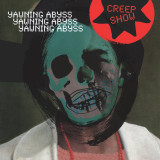
Creep Show - Yawning Abyss

Creep Show

Yawning Abyss

12inchBELLA1474V
Bella Union
16.06.2023

In the five years since Creep Show’s acclaimed Mr Dynamite album was released it’s fair to say that we’ve all been through a fair bit. Sitting here, in 2023, things don’t seem to be getting any better. There’s the cost of living crisis and political meltdowns; we're in deep water with global warming and to top it all there’s a war on our doorstep.

Back in 2018 everything seemed less complicated. Sure, there was stuff to get riled about, but we knew nothing about what was to come. Mr Dynamite was a fairground ride into the dark corners of a world that was on the brink of being blitzed in a blender. It was a record teetering on the edge. Five years down the line you’d expect the follow-up, Yawning Abyss, would double-down and bring the white-knuckled, teeth-gritted fury of the last five years to the boil. And yet….

A quick recap? No problem. Wrangler + John Grant = Creep Show. And Creep Show? “A band of musical misfits who have found a voice or two”, says Wrangler’s Ben “Benge” Edwards, whose Bond villain studio on the edge of a moorland is Creep Show Grand Central as well as home to an analogue synth arsenal that could sink ships.

Wrangler have known each other for a while. Tunng’s electronics wizard Phil Winter and Cabaret Voltaire’s trailblazing, pioneering frontman Stephen Mallinder go way back, while Phil and Benge crossed paths in the 21st century when they seemed to be increasingly in the same venues at the same times. Meanwhile, Mal had been living in Australia since the mid-90s and when, in 2007, he returned to the UK his old pal Phil suggested he meet Benge and the three of them immediately began working together.

Wrangler collectively bumped into Grant at their soundcheck for Sheffield’s Sensoria Festival in 2014 where they were playing with Carter Tutti. A friendship blossomed and when they were invited to perform together for Rough Trade’s 40th anniversary show at London’s Barbican in 2016, well, they jumped at the chance... and Creep Show was born.

Let’s talk about the new album... What is the ‘Yawning Abyss’? You might well ask. According to Mal, it’s “a cosmic event horizon that I can see from my attic window when stand on a chair”. Yeah. Thanks.

“On this album”, offers Benge, feet firmly on the floor, “Wrangler wrangled some vintage synths, mostly Roland, Moog, and the ‘Crystal Machine’ - then John Grant joined in the fun at Memetune Studios where lots of musical experiments were carried out. Then Mal and John ran off to Iceland with the master tapes and recorded a load of madcap vocals. Back at Memetune, me and Phil were left to try and make sense of it all. Which wasn’t hard because what they did in Iceland was totally magnificent.”

Which kind of brings us back to where we began. You’d imagine ‘Yawning Abyss’ would be blowing steam out of its furious ears. Mr Dynamite but kicking a wasps nest. Repeatedly. And yet…

Opener ‘The Bellows’ comes on like a modular ‘Radio Ga Ga’, the singalong ‘Moneyback’ (“You want your money back? / I didn’t think so”) sounds like Godley & Creme’s ‘Snack Attack’ meets Prince Charles And The City Beat Band (“Pennies, pounds, dollar bills, signed agreements, death wills”). ‘Yahtzee!’ is an unhinged electro breakdance party in four minutes and nine seconds.

Where Mr Dynamite was menace, a mélange of mangled voices, with Grant and Mallinder being heavily treated, pitched up or down, rendering their contributions largely indistinguishable, Yawning Abyss takes a more direct approach. You hesitate to say feelgood, but there’s a skip in the step here for sure.

The title track plays John Grant’s vocal straight. Completely. It’s good, so very good. Like ‘Axel F’ covered by Vangelis. The delicious shimmering synths of ‘Bungalow’ also plays those Grant pipes with a straight bat. ‘Matinee’ delves into darker, very funky territory. With Mal upfront it comes on like ‘The Crackdown’. Choice lyric: “You are starting to breakdown / And it’s so fun for me to see / You should have thought of that / You should have come prepared / You can see what’s happening and you look a little scared”.

So, you know, not all feelgood. But it does feel good. It’s probably best to draw your own conclusions... This is Creep Show after all.

vorbestellen16.06.2023

erscheint voraussichtlich am 16.06.2023

28,15
Rupie Dan - My Black Race

Rupie Dan

My Black Race

12inch333004
333
12.06.2023

Death Is Not The End's 333 sub-label drops a much needed reissue of Rupie Dan's My Black Race 12" from 1982. A huge Shaka selection featuring one of the heaviest dubs available from this era of UK roots production. Originally written and produced by Rupie for his Flag Records label, with engineering from Tony Addis (later of Addis Posse and the Warriors Dance label).

"The lyrical idea for My Black Race came about during the 1980/81 social/racial revolution that took place in several cities all over England, including London, Liverpool, Birmingham, Leeds etc. I was living in Bradford, West Yorkshire at the time and was a DJ/Sound System operator on Jah Scorcher International Sound. I also co-hosted a Reggae show on an independent radio station Called Pennine Radio 235. In my regular job I was a youth and community leader with the Bradford education council. I was fully connected and in touch the community.

Seeing how the media used the events of the social uprising as a weapon to further discriminate against the African & Caribbean community committed me to say and do something to elevate the minds of especially young people who were already demoralised by the rhetoric that brought about the so called "riots" of the time. It was during this time that the lyrical foundation of "My Black Race" was laid. The rhythm came later after hearing Barry Brown's "No Wicked Shall Enter the Kingdom of Zion". In the summer of 1982 I entered into the Addis Ababa recording studio on Harrow Road, Paddington and recorded the song having moved to London the previous year. Musicians featured included Victor Cross on bass and Mark Wright on drums (both from the Ariwa band), Rizzo on guitar, Tan Tan and Bami on Horns (all 3 from Aswad band), Bubblers on Piano/Organ (Undivided Roots/Ruff Cutt Band). Lead vocals were provided by myself, with backing vocals Jenifah Gad and Niomi who was working with David Bowie at the time. The engineers were Bubblers and Tony Addis (later of Addis Posse & the Warriors Dance label).

Jah Shaka was in the studio during the entire recording session. I was aquatinted with him as I was previously involved in a 3 way soundclash with Shaka, Quaker City and my sound at the time Jah Scorcher. Some years later I was in Terry's Dub studio in North Acton cutting some dubs when King Jammys and Bunny Lee walked in and heard the song. Bunny was responsible for the production of Barry Brown's "No Wicked Shall Enter the Kingdom of Zion". Thankfully they were both impressed by the track which delighted me as a young up-and-coming artist/producer. The rest is history as we know it. Jah Shaka was mystically constant hence his attachment and love for the song. Jah bless and guide him."

nicht am Lager

Bestelle jetzt und wir bestellen den Artikel für dich beim Lieferanten.

17,02

Last In: vor 2 Jahren
RICHARD SEN - PRESENTS DREAM THE DREAM: UK TECHNO, HOUSE AND BREAKBEAT 1990 - 1994(2x12")

From 1989 onwards, Richard was an obsessive collector of house and techno music, frequenting legendary London record shops such as Fat Cat, Silverfish, Trax and Red Records. He took record buying trips to NewYork to find second-hand disco, house and techno 12”s, which were lying around in bargain bins. The selection for this compilation are his own personal favourites from that era.

Back then, electronic dance music was young, innocent and fun; it hadn’t been analysed, theorised and fragmented into the multi-genre industry it is today.


What you hear on this compilation reflects what he was playing at that time; joining the dots between ambient, techno, tribal house, breakbeat and early trance productions from the UK.

Much house and techno from the US, Belgium, Germany and Holland has been well documented, but some of the more obscure British productions are lesser known and need to be showcased.

Hopefully, these tracks will inspire and educate a new generation of electronic music fans who weren’t born then and also trigger some acid flashbacks for the older,ravers as they take a trip down memory lane.

nicht am Lager

Bestelle jetzt und wir bestellen den Artikel für dich beim Lieferanten.

24,79

Last In: vor 13 Monaten
Scrimshire - Paroxysm LP

Albert’s Favourites label founder Scrimshire is set to release bold new album 'Paroxysm'. In the last few weeks of October 2022, Scrimshire wrote a new collection of songs with the descriptive working title "Scream". A direct response to the absurdity of the breakdown in the UK government, the horror of the treatment of refugees arriving on our shores and the callous disregard for the trauma being caused to low-income people or anyone considered "other". While self-preserving Conservative MPs fought for their jobs, record profits were announced by energy companies as they were gouging crippling amounts of money from people's pockets. The anger, sadness, mourning, and frustration he felt was poured into these recordings.

Originally named “Scream 8”, ‘Unity Gain’ was one of the early outpourings from those sessions. Piano and drums bubble up until it fully boils over with huge stabbing synthesiser and string sounds in an outburst of frenetic energy. "Division seems to characterise our daily experience”, says Scrimshire. “How does a society stop the callousness and corruption from seeping into its bones?".

Singer Faye Houston features on both ‘Eyes Shut’ as well as, alongside saxophonist, composer, and multi-wind instrumentalist Tamar Osborn, on ‘Flames’. About the latter Scrimshire explains, “One person can breathe fire into your life and the world, leaving an indelible mark. The album was influenced hugely by a friend we sadly have lost. I think of it like the heat you still feel after a fire has gone out”.

London-based poet and emcee The Repeat Beat Poet captures moments of time, thought, and feeling on ‘What Is The State Of Our State’, a furious yet succinct stream-of-consciousness diatribe in two parts. From afrobeat and reggae-influenced London band Soothsayers, clarinetist and saxophonist Idris Rahman features on ‘Your Invasion Is A Lie’, an ever-progressing, cosmic-jazz track.

The elegiac ‘Unforgotten, Unforgiven’ features saxophonist Nat Birchall, on which Scrimshire says "This is dedicated to the politicians who have forced refugees into life-threatening decisions. Pushing people into the hands of traffickers, into small boats and too many beneath the waves of our seas. Who force the lives of men, women, and children into more danger, in the hope of escaping war, poverty and persecution only to meet more cruelty and persecution. It won't be forgotten, and it won't be forgiven".

Scrimshire’s last album, 2021’s 'Nothing Feels Like Everything', received an Album of the Year nomination at the Gilles Peterson Worldwide Awards and last March he was named by the Guardian as one of three producers behind the new wave of UK soul, alongside Inflo (Michael Kiwanuka, Sault, Lil Simz) and Swindle (Joel Culpepper, Greentea Peng, Kojey Radical). Albert’s Favourites was formed by Adam, Dave Koor, and Jonny Drop, who designed the logo and artwork, and has released records by The Expansions, Hector Plimmer, Huw Marc Bennett, Pie Eye Collective, Qwalia, Ronin Arkestra.


Early support from Huey Morgan, Amazing Radio specialist playlist, Gideon Coe. Previous support from Gilles Peterson, Mary Anne Hobbs, Jamz Supernova

nicht am Lager

Bestelle jetzt und wir bestellen den Artikel für dich beim Lieferanten.

19,96

Last In: vor 2 Jahren
Urusei Yatsura - We Are Urusei Yatsura 2x12"

In the days before “landfill” indie, and in rebellion against a developing Britpop orthodoxy, there were some weird but melodic bands coming of age outside London that drew inspiration from the US underground and the sparkly retro-futurism of Japan. Primitive guitar noise with art rock leanings, post punk DIY and fanzine culture. The best known of these bands was maybe Urusei Yatsura; “noisy stars”, named in honour of Rumiko Takahashi, legendary manga creator.

Back in 1996, after several increasingly well-received 7’s, the band travelled to Leamington Spa to record their debut album with John Rivers, producer of Swell Maps and Glasgow scene godparents, The Pastels. The resulting album won the group legions of new fans and gained them their first Independent #1 chart placing, alongside peers Ash and Super Furry Animals.

“These were fertile years in Glasgow, a scene with no name, no single sound, where the magic thread tying everyone together was words and works so personal, they couldn’t be mistaken for anyone else’s. ‘We Are Urusei Yatsura’ is a cascade of ‘why not?’ thinking. The way ‘Phasers on Stun’ spirals into ‘Sola Kola’; the sunburned 23-second improv at the end of ‘Pachinko’; the slack-echoing strings of the outro to ‘Road Song’ sprayed with the shrapnel of toy electronics. Pure pop magic, Ren & Stimpy on upstairs, ray-guns, Ian’s homemade walkie-talkie speaker, a beatbox, all sealed with a “Talking Tina” doll’s emphatic endorsement: “I love it”” – Nick Soulsby

vorbestellen26.05.2023

erscheint voraussichtlich am 26.05.2023

28,28
Jussi Reijonen - Three Seconds | Kolme Toista

"As I write these notes sitting on my balcony in July 2022, it has been more than 9 years since the release of my debut album and more than 11years since it was recorded, the time since has been a personally tumultuous period of twists and turns - retreat, reflection, realization, reassessment, therapy, triumph, trial and error - entangled in a decade-long creative block that had me questioning whether
I would ever be able to compose again and though I felt there was so much I wanted and needed to say, I felt I had lost my voice, or perhaps never had one in the first place. A constant knot had grown tighter and tighter within me over time, but I did not understand what had created it or how it might be undone. In 2018, shaken awake by the collision of two transients, I suddenly saw in a new light old
patterns whose familiar presences I realized I had felt for much of my life, but had until then never seen for what they were. Following a third, I finally found the humility to surrender, and as I began re- examining and confronting myself, I slowly started to discover new answers - and new questions to ask.

Then the Covid-19 pandemic happened, and the world stopped. Like so many of us caught in the new eerie calm, I retreated into inner spaces. I began revisiting sketches of ideas I had accumulated over the years, and finally, very, very slowly, new music started to come. " - Jussi Reijonen.

"Electrifying and deeply resonant, monumental and profoundly personal, Reijonen's five- movement suite is a beautifully crafted, remarkable journey of sound and emotion performed by a knockout nine-piece ensemble." - Monarch

"He's written one hell of a piece." - The Arts Fuse

"On this remarkable and ambitious new recording, Reijonen delivers an epic transcultural suite that feels as deeply personal as it is expansive and farreaching." - All About Jazz "a remarkable sophomore album" -The Boston Globe

"This is an album meticulously pulled together into a dense fabric of diverse musical threads. It merits repeated listening; with each fresh listen, the richness of Reijonen's intercultural vocabulary becomes more apparent." London Jazz News

"Even in our present jazz moment, when the art form is worldwide and vital, albums that come as complete surprises are relatively rare. Three seconds Kolme Toista is a stunner." Jazz Times

"Three seconds Kolme Toista is spellbinding from beginning to end, and full of virtuoso performances." All About Jazz

vorbestellen26.05.2023

erscheint voraussichtlich am 26.05.2023

17,61
AMBIENT WARRIOR - II LP

180 Gram Vinyl Following the success of the 2021 reissue of Ambient Warrior’s cult classic Dub Journey's (1995), Isle of Jura is pleased to present their unreleased second album, II. Born from the same oceanside fusion of instrumental dub, reggae, bossa nova and tango music that made Dub Journey's so distinctive and memorable, II is an equally sublime collection of eleven unheard tracks from the brilliant minds of Ronnie Lion and Andrea Terrano.

Evoking the delights of white sands, palm trees and sunsets, all set against clear waters and endless blue skies, Dub Journey’s and II document the golden moment when Ambient Warrior came together during the mid-90s to create some of the most Balearic Dub ever made. “Music is the greatest traveler, isn’t it?” says Ronnie. “It gets to places the actual artists can’t even get to really.”

The son of an orphaned Jamaican jazz trumpet player and professional boxer who enlisted in the military after stowing away on a boat to London, Ronnie grew up between Germany, Singapore and the UK before becoming a working musician in his mid-teens. A bass player by trade, he honed his skills playing in a series of soul, jazz-funk, blues, rock and reggae bands that performed throughout the UK.

By the time Ambient Warrior released Dub Journey’s, Ronnie and his business partner Ras Joseph were running the Lion Inc. recording studio and record label in Brixton, London. Having set up distribution arrangements with Roots Records (UK) and Semaphore (DEU/NL), they recorded and released a series of singles, compilations and solo albums from a who’s who of roots reggae artists, including Twinkle Brothers, Delroy Washington, Michael Prophet, Alton Ellis, Little Roy, and Ronnie’s own band The Amharic. “Lion was a regular port of call for visiting Jamaican artists,” reflects Ronnie. “When you were in London, it was on the route.”

An accomplished guitarist, producer and recording engineer from Trieste, Italy, Andrea grew up listening to Russian folk, Klezmer and the Italian harmony tradition in a Sicilian-Ukrainian family. After completing compulsory Italian military service, he moved to London to continue studying music. One night, he turned up at Lion Inc. and approached them about running audio engineering classes from the studio.

In Andrea, Ronnie found a collaborator who shared his desire to create borderless music that reflected the diversity of their backgrounds. “I wanted to do something that had no boundaries,” Ronnie explains. “If you’re working on a roots album, it has to sound a certain way, but with Ambient, especially in the nineties, it was just a license to let off. You could do whatever you wanted to do.” “It was a melting pot of influences like London itself,” adds Andrea.

Although they wrote most of II at the same time as they were recording Dub Journey’s, it took them several years to finish off the album. “Things never got done quickly,” Ronnie remembers. By the time it was complete, Roots Records had gone out of business, leaving Lion Inc. without UK distribution. Not long after, their Brixton studio flooded, bringing the label to a close.

These days, Andrea continues to work as a session guitarist, recording engineer and producer in London. Over the last two decades, he has collaborated regularly with Basement Jaxx and released several solo albums. Ronnie, on the other hand, lives on a boat equipped with an onboard studio, where he has recorded a series of oceanic dub albums off the British coast. Twenty-eight years after the release of Dub Journey’s, he recently started working on demos for a third Ambient Warrior album he hopes to record with Andrea in the not-so-distant future.

Artwork By Bradley Pinkerton.

nicht am Lager

Bestelle jetzt und wir bestellen den Artikel für dich beim Lieferanten.

20,59

Last In: vor 10 Monaten
Murmer - Tether LP

Murmer is the long-standing project for Estonian field recordist and composer Patrick McGinley, and in Tether, The Helen Scarsdale Agency welcomes Murmer back to our roster, over a decade since he graced us with his last production for the Agency. His field recordings often center upon the amplification and activation of resonance from a particular space, landscape, or object. Such sounds emerge from a condition as begin fleeting, inconsequential, or ephemeral and explode into that which alien, sublime, and profound. Here lies the tremendous prowess of the contact microphone, as wielded by an accomplished musician! The source material cited by McGinley includes cables, fences, wires, and vents.

There is a heft to many of these sounds as heard throughout all of "Taevast" with deep throbbing pulsations from arctic wind generating subharmonic patterns upon thick high-tension wires. Elsewhere the subtle dissonance from a rasping cooling fan blooms into a brooding ambience that is sublimely rich in its metallic timbres and complex reverberations. McGingley has long been an exemplary artist in the field of phonography even as he is less prolific than others. On Tether, he has produced a majestic if occasionally foreboding work on par with the mythic wire recordings of Alan Lamb, Jacob Kirkegaard's haunted resonance from Chernobyl, and much of the Touch catalogue for that matter!

Patrick McGingley on Tether:

In 2006, I made a collection of recordings at a mobile phone mast in Mooste, southeast Estonia. It is a guyed tower, 80 meters tall, affixed to 3 support points with heavy cables. I attached my self-made contact microphones to these cables with poster tack, and spent many hours over several weeks recording the various wind and weather variances (it was summer), and the birds that passed or settled on the tower or cables. This was one of my first visits to estonia, where i now live, and one of the things that marked me about that experience was the access: the tower had no fences or protections around it (I have not been back there recently to answer my own question of whether or not this is still the case); it stands in the middle of a field of tall grass along a dirt road in the countryside, just out of view of the few nearby houses, and during all the hours I spent there I was never disturbed or shooed away.

For more than 16 years, I have been thinking about this location and these recordings, and have made several attempts to work with them. I have used the sounds in installations a handful of times, and uploaded one short edit to the Aporee soundmaps, but have never managed to use them in any composed work. They always seemed too big for any structure I could provide them, whether I left them on their own, or partnered them with other sounds. Finally, in 2019, after putting them down and picking them up again repeatedly over so many years, they seemed to allow me in, although it took me another few years before they were happy with what I could offer. They stand now not quite alone - the majority of the layered sounds in the piece come from various edits of those cable recordings, but I added two other contrasting sounds, related to one another: one is snowflakes landing delicately on a plastic cakebox with microphones inside it, and the other is a frosted field of grass thawing on a lightly warming autumn morning (both these recordings can also be heard on their own on the Aporee maps).

Coming back to those cables brought to mind so many other wind-driven sounds that I had spent time with and recorded, but never returned to, that I began digging through my archives looking for them. I ended up with a pool of sounds from resonant wires, cables, fences, poles, fans, and vents, which became the basis for the 2nd work on this release. One of these sounds is among the first sounds I ever recorded, possibly within a month or so of buying my first microphone and minidisc recorder: the rhythmic fan of a beer cooler in a pub where I worked in North London in 1999. Other sounds in the piece include another phone tower, recorded on the northern coast of France in 2008, a telephone pole recorded in the Beaujolais region in 2010, the drone of ventilator fans at a factory in Tezno, Slovenia in 2012, an electric sheep fence in the Scottish borders in 2013, a hanging wire in a storage space in Rovaniemi, Finland in 2016, and, with no relation to cables or wind at all, calcium deposits being cleaned from the inside of an electric kettle here in Estonia in 2019.

I offer these two new pieces as my first solo publication since 2018, the first release on a physical medium since 2016. No one has ever accused me of working too fast, or being too prolific. I have a need, it seems, to leave a physical space of time around my work, before I can consider it 'finished'. Perhaps it is a simple need to forget how I did something, or that I did something; perhaps I have a need to be able to hear a work as a first-time listener would, before I can consider it ready for such an encounter. In some part of my mind I have to forget it before I can let it go. Well, I've just about forgotten that London beer cooler now, and that walk in the Beaujolais (with my father, who has since passed away), and that sheep fence next to our campsite in the borders, and that kettle that is now leaky. So I guess it's time.

vorbestellen12.05.2023

erscheint voraussichtlich am 12.05.2023

23,32
Artikel pro Seite:
N/ABPM
Vinyl