Justin Chapman (half of the Kemeticjust duo) is back with 'Stay My Way', his first release on Visions Recordings.
Inspired by a distant collaboration with Alex Attias, the Soul Original version features Chapman's signature vocal harmonies floating over Latin influenced house rhythm and melody to provide the motivation for feet and hips.
The Just One Remix pushes things into the realm of Broken beats with a hard swing on the drums, and a deep and jazzy bass walk that gives edge to the keys and vox melodies. Classic Just One here!Justin has produced records for Neroli, RushHOur, Sonar Kollektiv and some collaboration with Recloose for Planet E and Deetron for Music Man .
This single for Visions is a long overdue collaboration with an artist we wanted to work with since 2001 when Visions was based in London, so you can imagine how excited we are to take Justin on board and release this single.
Sparrow's visit of Jamaica, The Isle Of Springs', during the month of June 1963, has left him with very pleasant and joyful reminiscences of the love, warmth and hospitality of its people. From the moment his plane tipped down at the Palisadoes Airport', at a lounge in the ultra-modern terminal building he was entertained with a Rum Punch', Significant of Jamaican's ability to produce rums that absolutely no connoisseur can despise. Well! And it's from there it all started, for like Oliver Twist, Sparrow continued, where ever he went to ask for more, and, obviously when the drinks are in, the wits are out. You are therefore left to deduce whatever you may during his presentation of this contribution.
I'll Be Around (Bossa-Nova)" is a warning to one of his lovers of her promiscuous traits towards him and the retribution she would eventually suffer for so doing.
Theses two calypso songs were recorded with the famous Bert Inniss National Recording Orchestra. This single 7' is absolutely impossible to find and will warm any dances in the world.
The label will be an outlet for Daniel Jacques his own music productions and its debut release, entitled 'Discovery Change (Part 3)', is the first part of a tetralogy vinyl project. When putting the four separate covers of the releases together, it will depict one large image of a very important person in his life. All songs of the project have been created between 2005 and 2015 and the music will be pressed on 180 grams vinyl (12 inch).
B. Fleischmann, the longest-tenured solo artist on Morr Music, returns with indie-spirited, electronica-enhanced moments of bliss on his new album Stop Making Fans': Recorded with a little help from friends including vocalist Gloria Amesbauer, Markus Schneider (guitars), and Valentin Duit (drums), it's a two-part reflection on artistic self-reliance vs. fame-seeking conformism, another deeply personal, utterly idiosyncratic album by the Indietronic trailblazer.Stop it and just DO,' Sol LeWitt once wrote to sculptor Eva Hesse - and listening to B. Fleischmann's new album, he indeed does both: He slams on the brakes and stops looking at what anyone else is doing, stops pleasing, stops being restrained, and at the same time he floors the accelerator and delivers the kind of high-paced work that bursts at the seams with polyphonic energy and an urgency unique to his music.Arriving with interlocked bleeps, the hustle and bustle of an invisible grand station's atrium ( Here Comes The A Train'), Fleischmann's trademark vocals serve as a gentle reminder to resist the siren calls, to not trust the latest hype. Energy levels remain high throughout the first part of the LP - whether it's the mumbling, personal stocktaking of what feels like an underwater hymn ( There Is A Head'), the robotic, immodest pop tune It's Not Enough' (feat. Gloria Amesbauer) or the return to light-speed mode on Wakey Wakey' - the first half of this album is indeed all about letting off some steam.After the collected canter of 7-minute instrumental Hand In,' the multi-instrumentalist & his studio mates kick off the slower-paced part II with the title song: a note to self, a reminder to never buckle or water down an original vision... and indeed, it's a sonic tapestry that's impossible to compare or pigeonhole when he changes the rhythm in mid-track and turns yet another corner when you thought you had discovered a fixed pattern. That said, B. Fleischmann certainly knows how to orchestrate an entire funfair full of sonic attractions. Guest singer Gloria Amesbauer returns for soothing tunes The Pros of Your Children and "Hello Hello . B. Fleischmann guides us to his almost jazz-tinged Little Toy , and leaves behind an Endless Stunner — another typically dense and shape-shifting stream of harmonies that keeps winding its way until the very end of this album It's rare that an album is great because it does not live up to its title - but here's one. Stop Making Fans,' his first full-length release in five years, is another totally unique, and thus potentially fan-base enhancing release. But then again, it's always been like that: We're usually at our best when we care the least - look at the delightful ways of toddlers or really old people. That natural ease, those invisible shrugs of shoulders: it's what does the trick. And you can hear a lot of that on Stop Making Fans'.
Southend quartet Ghost Music release their evocative debut album I Was Hoping You'd Pass By Here via Arlen on 19 January. They create careful, considered songs, weaving lo-fi lullabies with gliding guitars and understated arrangements. Influenced by Silver Jews, Flying Nun and K Records, they explore themes of nature, love, loss and a melancholic English romanticism embellished with beautifully spectral melodies and executed with startling subtlety.
Despite this record being their debut, the band has produced a veritable wealth of music over the past 20 years in various guises. Ghost Music revolves around the songwriting partnership of Matt Randall and Lee Hall, who had played together in the 90s with John Peel favourites Beatglider. More recently Randall has received critical acclaim as Plantman, with his three albums Closer to the Snow, Whispering Trees and To The Lighthouse receiving praise from The Guardian, Uncut and Mojo. When Randall and Hall reunited to collaborate on another album together, they brought in the talents of Roy Thirlwall on bass (Melodie Group) and Leighton Jennings on drums (Dark Globes) to complete the band.
The original idea would be that the songs would be 'ghosts' and create 'ghost music' to resurrect and dust off old songs that they had already started. Lee had found the beginnings of 'Home Dog' on a dusty old 4-track and he had recorded 'Strange Love' on his iPhone in 2014, whilst Matt had written 'My Cloud' as far back as 1997 (the night he moved out of his parents' house). As the album began to take shape, the ghostly premise took a back seat, as they began to breathe new life into the songs they found the impetus to write new ones.
Randall explains the songwriting process; 'When we were in Beatglider together and in the past we'd made a 'thing' out of writing long songs with a lot of changes. This time we pared it back a bit and stuck to the melodies more. We really wanted to make a proper guitar record. Lee's my favourite guitarist and it was lovely to see him stretch out on these songs with his diamond fingers.'
Not afraid to wear their influences on their sleeves, Ghost Music's sound is instantly familiar, echoing beloved bands from the 90s such as Pavement ('Home Dog' has a definite 'Range Life' feel), Galaxie 500 ('Blindspot'), Yo La Tengo ('Heart Shaped Holiday' is influenced by the languid YLT songs that peak after a short intro) and even old-school rock'n'roll ('Strange Love' was born out of an appreciation for the instantly engaging opening riff in 50s songs). Yet Ghost Music's work never feels derivative, being instead effortlessly emotive, melancholic and affecting, creating a world of sound that is hugely reassuring and a tonic for the modern age.
Ilija Rudman presents Andre Espeut 'Tears To Sound'
featuring Ron Trent Mix
Over the last decade and a half, Ilija Rudman has been responsible for many high quality releases, delivering distinctly warm, sun-kissed, analogue-rich material on labels including Bearfunk, Instruments Of Rapture, Compost , 20/20 Vision, Electric Minds, Is It Balearic Recordings, Rong Music , Classic Music Company and of course, his own Red Music imprint.
Even so, the Croatian has rarely made anything quite as deep and sensual as the material showcased on this first full EP for NuNorthern Soul. Top billing must go to the "Aquapella" version of "Tears To Sound", a spellbinding acapella cut that puts the enchanting vocals of storied soul man Andre Espeut front and centre.When Rudman sent the track to old friend Phil Cooper, the NuNorthern Soul boss thought it sounded like something he'd hear from US deep house legend Ron Trent. So, he approached the Prescription co-founder to see if he fancied remixing it. As you might expect, the results are astonishingly good.
Rich in rising and falling new age melodies, darting synthesizer motifs, languid piano flourishes and heavy analogue bass, Trent's wonderfully ultra-deep interpretation naturally gives pride of place to Espeut's seductive vocal. Even by the Chicagoan's infamously high standards, his epic Vocal Mix is incredibly special.
All versions of the single also feature two other original Rudman productions, both of which are wonderfully deep and dreamy. "Distant Feelings" is fluid, deep and yearning, with twinkling electric piano motifs and dreamy chords reclining over sizzling drum machine cymbals, no-nonsense beats and a gently pulsing analogue bassline. Those who enjoy the Balearic side of Rudman's work should also check out "Deep Sensation", a jazzy and breezy fusion of tumbling, vibraphone style melodies, rolling electric piano riffs and rubbery boogie bass. Both tracks are every bit as magical in their own way as the producer's thrilling Andre Espeut collaboration.
TAfter several successful releases on his own Valby Rotary label, Louf joins TYR for our third release with the From A Distance EP. Combining elements from across the electronic spectrum this EP has something for everyone, from the warehouse feel of Midi Love to the bucolic Quits, Louf showcases his talent to weave deep, body moving bass and beats with playful, reminiscent melodies. When this dropped in our demo box we knew we had something special and think you'll agree.
Jerome Derradji + Still Music are proud to present Let's Dance Records - Mike Macharello & Duane Thamm Jr. Chicago 1983-85. The origin of house music, at least in a commercial sense, is generally associated with young African American producers from Chicago's South Side, but one of the first Chicago house music labels was started by a young, white, gay DJ from the far west suburbs.
The Let's Dance story will take you back to the beginnings of Mike Macherello and Duane Thamm Jr. when Chicago's house music was in its infancy.
Back then, after starting as young roller disco Dj in the late seventies, Mike Macherello gradually made its way to the best radio station in 1981 - WBMX - and started a movement that still ripples through the city today. Let's Dance's founder, Mike Macharello, was a DJ who bridged diverse music scenes, from rock clubs to discos. The Let's Dance record label helped establish Chicago's dance music industry between 1983 and 1985, before becoming Play House Records (which will be reissued by Still Music in an upcoming set). Macharello's pal, DJ Duane Thamm Jr., also from the 'burbs, became the label's main producer and one of house music's most important studio engineers and producers. Mike and Duane went on to release a few legendary singles for Let's Dance that are still to this day considered to be the earliest House music records coming from Chicago.The 12' pack includes faithful reissues of Selenia's 'Single Girl', Duane Thamm Jr. 'Jump Trax', the insane Knight Action 'R-Trax/D-Rail' 12's along with a 5 tracks 12' compilation and an accompanying poster insert including rare pictures and artifacts with the story of the label.
It's quite funny that it took 11 years for us over at Metroline Limited to release an EP with tracks from different artists (at least on vinyl that is) but hey, good things go to those of wait so the wait is finally over! For our first Positive Contribution we gathered Metroline Limited friends and label owners and put together a tasty four tracker that focusses on the deep and minimalistic end of house music. Hamid went a long way since his debut EP on Metroline in 2010. The Berlin based French producer has since released on influential labels such as his own H+, Nervmusic, Minibar as well as becoming a regular figure in clubs all around Europe. His track Unterdrücken starts off the EP in style with his bleeps, squelchy acid b-line, pads and crisp drums. Octad takes control and the second half of the A side and it's yet another display of his amazing production skills. The man behind the mastering of each single Metroline release to date knows very well how to get the best sound out of his tracks! And what a bassline he's come up with for Checkmated! Dhaze and Phiorio have been collaborating for a while swapping remixes and musical ideas. NT is one the finest results from these music exchanges. Deep and rolling, the track has a monster groove, lush pads and dubbed out elements. Last but not least we have another long time friend of the label, Gabriele Mancino. His Cheddar, Lion and Lamb pays tribute both to a London trip and old Perlon releases when groovy and reduced house music was gracing most of the records on the pioneering house label. An ultra-groovy and playful minimal house number with funk and style!
Tevo Howard was a new name when he originally dropped Without Me on his own label Beautiful Granville back in 2008. Since then the US house music hero has graced labels as respected as Rush Hour, Permanent Vacation and Buzzin Fly with his warm, charming and deceptively simple confections, but in the swirl of the considerable catalogue Howard bas built up in the past eight years it's a welcome treat to wind things right back to the beginning. This reissue of Without Me serves as a potent reminder of the gift the man has for heartfelt melodies and unfussy compositions that speak a pure and instinctive message from beginning to end.
It was 1970 when Curtis Mayfield left R&B group The Impressions, to set off on his own solo path. What followed was a rich and highly celebrated career, during which Mayfield produced some of the most influential R&B, soul, funk, and gospel recordings of all time. Along with Marvin Gaye and Stevie Wonder, Mayfield is credited with helping to ring in a new era of socially-aware funk and soul music, all while raking in numerous Billboard-charting hits both as a performer and a songwriter. Though he died in 1999, he left behind a vast legacy of innovation and long-lasting music, and has been ranked by Rolling Stone magazine as one of the 100 Greatest Artists of all-time. Coming hot on the heels of his powerhouse hit soundtrack for the film Superfly was 1973's Back To The World. Mayfield's music always had a socially-conscious and political bent to it, but the tracks on Back To The World cranked this conceit up to an even higher degree, largely inspired the increasingly industrial world around him, and the social and environmental concerns that followed it. (The album's lead single "Future Shock" was named for an Alvin Toffler book on the subject.) Though not the smash commercial success of his previous efforts, Back To The World still landed in the Billboard Top 20, and is considered an underrated, and overlooked entry in the soul innovator's catalog.
The title track "Empty Dancefloor" combines a thumping kick drum, stuttering hats and mesmeric chords, a combination that prove to be the perfect backing track to a captivating synth solo. It's extremely difficult not to find yourself lost in this enchanting track. Fracture" is a track where Skygaze really showcases his ability to combine broken beat, complex drum patterns with bewitching chords, magical marimbas and a curious bassline.
It is a track that really keeps you guessing throughout and one that can really add variety to any DJ set.
First up on remix duties is Jonna, who has put his own stamp on "Empty Dancefloor".
jonna is a DJ, Producer & one of the Label owners of City Fly Records, his sets are prominently House but take in influences from Disco, Techno, Hip-Hop, Funk, Jazz... Basically any music with Soul.
His first artist EP dropped early 2016 on 'Shadeleaf Music' & featured the incredibly talented Erik Rico on vocals with remixes by Atlanta's Kai Alce. The EP achieved great success & Sold Out in the first Month & was supported by heavyweight's Recloose, Derrick Carter, Jimpster & Osunlade to name a few.
Collab Singles (with Samwell) 'Henry Western' Featuring Lady Blacktronika followed on City Fly which was supported heavily on BBC 6 Music, that followed by 'Alright' on 'Future Society', a compilation curated by Seven Davis Jr on R2 Records and more recently the Luke Soloman Edit of 'Through The Night' again on Shadeleaf Music.
He has been busy in the studio since with a release on Secret Crunch (Austria) & 2 EP's forthcoming on Marcel Vogel's excellent Intimate Friends (NL).
The remix of "Empty Dancefloor" is one that is done in the unmistakable Jonna style, it's got groove! By chopping and changing the chords from the original, Jonna has created an entirely new melody, which when combined with rolling bongos and punchy bassline, you can't help but tap your feet.
The all too familiar synth solo from the original resonates throughout and pulls the track together, creating a guaranteed hit on any dance floor. Last, but certainly not least is Chicago based, Garrett David. The Smart Bar Resident has taken time out from his A&R / House buying duties at the famous Gramaphone Records to conjure up a bumping, yet dreamy remix of "Fracture".
He has previous releases on labels including Distant Hawaii, Residual Recordings, Night Sea Journey as well as his own imprint Stripped & Chewed and has really brought some Chicago flavours to the table with this one.
Another new series from Banoffee Pies Records. When will it end Probably never. Introducing the new imprint for miscellaneous sounds with BPMISC01 airing the newly A&R'd band, The Walls Of Love with their self titled 10" EP. Two tracks and a direction that reflect some influences of the past with some indie and alternative sounds. Plenty of live elements for you to wrap your ears around including vocals, guitar, a bass, drums, synths and a very saucy saxaphone. Get tuned in. TIP.
"I Can't Love You Anymore" is the first single by hard working soul performer Carlton Jumel Smith recorded with Cold Diamond & Mink, and the man has revealed his middle name just for the occasion. Otherwise known simply as Carlton J. Smith, there's no doubt he has swallowed a large pill of soul since seeing James Brown live at the Apollo Theatre as an 8-year old.
Smith's Timmion debut single sinks him into drum heavy southern flavored deep soul, a style that comes out of him naturally as water from a mountain spring. Backing him up on the falsetto parts is Pratt, who recently turned some heads with his Pratt & Moody release "Lost Lost Lost" on Stylart Records, and together the two basically NAIL IT.
When looking for artists, who just seem to move through time effortlessly with a steady air of confidence, passion and precision, one might pick up the phone and give CJS a call. Even though his discography of couple of late 2000's albums and some guest spots in early 90's soulful house 12"s is a bit mysterious, there seems to be not one bit of difficulty to his craft or personality. As a recording artist, "I Can't Love You Anymore" is a new opening into raw soul territory, and it is just what the world needs today. He laid down an album worth of tracks on his last Helsinki visit, and this might be something to look forward to.
Dr. Dundiff releases Muneybeats' as part of the Beats from Jakarta' series & continues what Ta-ku and Shuko started years ago.
Dr. Dundiff (done different) is a Hip-Hop/Neo-Soul producer based out of Louisville, KY. Dundiff has gotten into producing around 2010 and has been a busy bee ever since with a huge number of projects under his belt, from producing as well as him rapping.
Those who follow Jakarta Records might know the name from his ongoing collaboration with Otis Junior. They released their debut EP 1moment2another' on Jakarta Records receiving wide daytime airplay and recognition from French tastemaker Radio NOVA, as well as 1.500.000 Mio. Streams for their debut EP 1Moment to Antother' through Spotify & a placement on Radio Nova's le grand Mix 2016' compilation.
Muneybeats is Dr. Dundiff revisiting his roots in an all instrumental experience. Put the most attractive beats on top. The ones that make you pull the car over and go, 'Wow, I need this be a right now.' Those are the Muneybeats. Compact little tasty treats spanning a wide range of sounds while always sounding like Dundiff made them. He is currently also working on a new project with Otis Junior which will drop sometime in 2018 as well as their first Europe tour in summer 2018.
- Beats from Jakarta is a series Jakarta Records kicked off some years ago with contributions from Shuko and Ta-ku, heavyweights in their own right, and we felt it would be nice to bring that series back when Dundiff sent us his new album. So here we go. - Beats from Jakarta part 3....
Under the alias of Zanov we find the works of French electronic pioneer Pierre Salkazanov, who had started playing guitar in the 1960s in a Shadows styled band, Les Ambassadors. Instrumental rock was not enough for Salkazanov, he was always looking for evolution, so when a meeting with French synth player Serge Ramses (of "Secret" fame) got him into the world of synthesizers he just dived deep into the bourgeoning world of electronic music. He got himself his first syths and started producing works into a 4-track Teac tape machine. French music was at its best, it was the time of Jean Michel Jarre, Didier Bocquet, Richard Pinhas and Heldon, Alain Meunier... Even Gong's Tim Blake was living in France at that time. And so Zanov soon caught the attention of Polydor, who released Green Ray in 1976. It is a work made with minimal equipment if compared to other French sythetists, not to mention their German peers, he worked on the EMS VCS3 synth and used a 4-track Teac and a Revox A77 Mk IV reel to reel tape recorders obtaining huge sound results. You can appreciate an influence from the Berlin school, Green Ray walks the same path of what artists like Tangerine Dream and the likes were producing at the time, Zanov had felt under the spell of Ricochet, but his head was boiling with ideas which gave the recordings a very personal, unique touch.
Zanov's three albums met with unanimous critical acclaim for the sound quality as well as for the originality of this very personal universe.
Under the alias of Zanov we find the works of French electronic pioneer Pierre Salkazanov, who had started playing guitar in the 1960s in a Shadows styled band, Les Ambassadors. Instrumental rock was not enough for Salkazanov, he was always looking for evolution, so when a meeting with French synth player Serge Ramses (of "Secret" fame) got him into the world of synthesizers he just dived deep into the bourgeoning world of electronic music. He got himself an EMS VCS3 and started producing works into a 4-track Teac tape machine. French music was at its best, it was the time of Jean Michel Jarre, Didier Bocquet, Richard Pinhas and Heldon, Alain Meunier... Even Gong's Tim Blake was living in France at that time. By the time of his second LP, Moebius 256 301, issued also on Polydor in 1977, Zanov had already gathered a small collection of gear, including an ARP 2600 and an ARP sequencer, his old VCS3, an RMI Harmonic and a PS 3300. Again under the influence of both first and second generation of Berlin school musicians the LP will appeal to fans of Klaus Schulze or Tangerine Dream, but they will also find a big deal of Zanov's own personal sound on it, since as the musician himself reckons he had little contact with other peers of his generation, so besides a general love for the electronic gear used and the sounds you could make out of them the creative ideas behind his works were all his own. On his second album a richer sound is found, not only due to the use of the new gear, since some of its tracks where recorded using only his old EMS, but also due to his won experience after having taken his works to the life stages in the Golf Drouot boite, the Lase Olympia venue (on the basement of the famous Olympia), the Paris Planetarium or those for planned one month tour (of which in the end only four dates were accomplished).
Zanov's three albums met with unanimous critical acclaim for the sound quality as well as for the originality of this very personal universe.
A sadistic God: He doesn't exist until he touches your body, and when he manifests himself he kills you without hesitation, leaving you on the ground, humiliated and stunned by the letal power of a breath that didn't even seem to exist until you inhaled it.
All that changed when Morrison received an email from Spacetalk Records two years ago, asking about the possibility of reissuing 'To See One Eagle Fly', the B-side to one of their 7' singles that has long been a favourite of label co-founder Danny McLewin. Once a deal had been done, Morrison mentioned that he had hours of unissued recordings in his loft; a treasure trove of ultra-rare multi-track master tapes that could be freshly mixed and mastered for release. When the Spacetalk Records' team finally got a chance to listen, they were astonished by the timeless quality of the songs. Put simply, they just had to be released.
The resultant album is a stunning set: an intoxicating glimpse into the world of two previously unheralded master songwriters whose musical vision encapsulates all that was good about Californian music during the late '60s and early '70s. Rooted in the American folk revival and folk-rock movement of the late '60s, the album's 15 thoughtful, heartfelt songs are laden with sly nods to the likes of Crosby, Stills, Nash & Young, Ned Doheny, Michael Deacon, Cy Timmons, Gene Clark and Buffalo Springfield. The tracks were recorded at various times between 1970 and '82 and gives a small glimpse of the duo's total body of unissued work. The release comes with extensive liner notes telling the remarkable story of two lifelong friends and musical collaborators who thought their moment had passed.
(Disclaimer: release notes refer to the combined CD double-album release "Hot Flash: Best of The Voltags" on which all tracks appear together. "Electric Nightmare" and "Danger High Voltag" are released separately on vinyl format)
It does not happen that often any more that unreleased music from 40 years ago surfaces. Even more unlikely it is that the songs put on tape are such treasures. The Voltags were right at the forefront of the local Washington DC New Wave/Punk scene of the late 1970s. Influenced by Kraftwerk, Gary Numan, The Clash, and The B-52's, they have released only one 45rpm single during their existence. But during the time span of not even 18 months, they had recorded enough material for an entire album - but the songs remained in the can.
This is the story of The Voltags, a short-lived band which could have become famous and mentioned in the same breath as the aforementioned music legends of that era - if their songs had been released back in the day. Dive in and enjoy the sound of The Voltags, it is truly special. We here at Perfect Toy are thrilled to be label to finally release their work and we sincerely hope that they are finally getting the appreciation they so richly deserve.
Detailed information:
Dave Bennett and Hangnail Phillips grew up in Brookside Park, Newark, Delaware, USA, a small suburban college town nestled midway between Philadelphia and Baltimore. Their first band project evolved into Pump Productions (Pump) under which they released their only 45rpm single in 1970 (one of the two songs, "Pappy's Rug", can be heard on "Down & Wired 3", Perfect Toy Rec.). Soon after the recording of the single the two graduated from High School and disbanded Pump. Both moved on to form two new Newark bands. Dave was a founding member of "Snake Grinder & The Shredded Fieldmice" and Hangnail co-founded "Rudy Baker & The Vegetables".
In early 1979, two friends of Dave's, Nick Norris and Mike Fisher, became partners in a music production company, White Clay Productions. One of White Clay's first artists was Dave Bennett who had just written two excellent songs: "Electric Jungle" and "Son Of Sam". White Clay set up a recording session and Dave assembled a group of friends to record the songs. Before the recordings were even mixed, Dave asked Hangnail if he would join in a band to support the single and other songs he had written. When James Keesey (drums) and Rick Reid (bass) were added the line-up was complete. For a while they didn't have a name and then one day Nick Norris was looking at a photo of Dave standing next to a "Danger High Voltage" sign. Dave's head was in front of the E in Voltage and Nick laughed "Danger High Voltag" and so it was soon suggested that the band should be called "The Voltags" (pronounced Vol'-togs). After months of preparing a repertoire they were ready to play out. Their first gig was (October 20, 1979) at a gay disco in nearby Wilmington called The Backstage. On December 30, 1979, White Clay decided to put on a big show at the State Theater to celebrate the end of the Seventies ("The End Of The Decade Bash").
For the next year, with the help of White Clay, they recorded 19 songs, both studio and live recordings with White Clay's mobile unit. If not for these "off the board" recordings, many of their songs would have never been recorded. There was always talk of a second Voltags single but the strains of working so closely together were taking their toll on them and Dave decided to leave the group in December of 1980. The Voltags couldn't be The Voltags without Dave, and by the end of 1981, Hangnail, James and Rick, too, were ready to disband.
- all songs previously unreleased
- mastered from the original reel-to-reel tapes
- limited vinyl release
The fourth release on Trevor Jacksons Pre- Label is by SKULL. A visceral journey into experimental noise and no wave avant grade beatscapes
The last SKULL release 'SNAPZ' appeared on Jacksons own Output Recordings label in 1999. A seminal collection of tracks that had previously featured on the first two legendary Mo wax 'Headz' compilations (also featuring Autechre, Beastie Boys, Air, and DJ Shadow) as well as tracks that had also appeared on Kevin 'The Bug' Martins notorious Macro Dub Infection albums during the mid 90's.
Reactionary sonic statements aimed at the coffee table world of Trip Hop, fuelled by his dissatisfaction and dissillustionment with Hip Hop of the time, Trevor pushed himself into uncomfortable and far more extreme areas than he had before, areas he felt unable to explore with his Underdog productions, which were mainly being utilised for major label remixes at the time.
Influenced as much by the industrial pioneers, post punk and new wave of the past as the burgeoning post rock scene in the mid 90's, This new set of previously unreleased recordings originally produced between 1996-2000 are equally as intense and visceral as the early releases. Dusty samples, raw beats, tape loops, and primitive effects combine to sound as relevant now as when they were initially created.
Releasing an album into the world is a special moment for any artist but when you're an artist who grew up in remote northern Ghana with no schooling, spending a life herding cows and goats, building your own instruments and teaching yourself to sing, then there's a particular sense of occasion and celebration in finding recognition and an audience for that music.
This is the case for Guy One, an utterly unique artist who is writing and performing Frafra music, a style that originates from a small area in the north of Ghana. Whilst Guy One is already loved and adored locally by now - building up a fervent following in local villages in which no funeral or wedding would take place without his soaring voice and deeply rhythmic playing, before then transforming into an award-winning, TV appearing artist in Ghana - his music is now to find a much wider audience through Max Weissenfeldt's Philophon label (Jimi Tenor, Hailu Mergia, Alemayehu Eshete) on this Berlin meets Bolgatanga release.
Guy One's international debut #1 is an album rooted in tradition as much as it is the contemporary ("Frafra music Made in Germany" says drummer producer Max Weissenfeldt if he's forced to put a label on it) but given the fact that the traditionalism of Frafra music itself is a largely unknown force, the results are more even more potent and stirring in their creations. Choirs, trumpet, organ, bass, drums, synthesiser, vibraphone, saxophone and piano, the album is as bursting with instrumentation as it is ideas and innovation.
The album's perfect positioning between the old and the new and in taking that middle ground and launching it into completely new territory is enough to completely unglue the definitions of what music can be.
At long last, Mr. Jacob Korn gets drafted into Team LPH! Technically, he's been in our orbit since 2015, when he remixed a Leo Wölfel track for LPH WHITE, but it's only now that we're presenting an EP of originals by him. About time!
My Business is classic Korn—a little nerdy (intricate arrangements; twisty, turny top-line melodies), a little ravey, a little goofy, a little feisty, and a lotta fun. Four sure-shot firebombs that'll slip into any set, hand in glove, real nice.
Nick Klein's new record, 'Lowered Flaming Coffin,' was recorded in Brooklyn, NY, on an economic set-up. With a spartan modular synth and Korg MS-20, Klein describes the process of recording as "focused around the relentless role of filtering out and managing the anxiety of existing in a metropolitan area in the current political climate."Though 'Lowered Flaming Coffin' starts on an almost uplifting note with the glistening melodic cycles of 'Burning Mattresses,' the asphyxia soon takes over, and the vertigo of the metropolis comes into lurching clarity for the remainder of the record. The height of the following track, 'Peña Adobe,' has the panicked terror of an archaic ringtone hitting the volume of an air raid siren, 'Smelling The Sheets' skulks rather than bangs, its momentum stifled and edgy, as if not enough was on Klein's side when making his way to the studio that day. The anguish doesn't taper, but rather culminates in the despairingly titled 'The God In Vodka.' At nearly 14 minutes, its disfigured rave stabs and blunted military tattoo-snare furiously pace into a clammy, toxic rush.Despite the wry funerary image of its title, 'Lowered Flaming Coffin' is far from a lament for better times, nor a report on descending into contemporary hell. Like a frenzied metronome, the record syncs itself with the dynamics of unrest in order to grasp the brazen tactics that perpetuate the seemingly boundless inequalities in the world today. Klein forges this link with his own minutiae in stride, tethering the conceptual motivations to a fidgeting, personalized atmosphere of rhythmic dysphoria.Pitching agitation in this way, the record unapologetically presents itself as a soundtrack for participatory intervention, forcefully side-stepping the queues and suspended beliefs of much party-centric electronic music. Overwhelmingly focused, and overbearingly raw, 'Lowered Flaming Coffin' is a bleeding mess of grazed attempts and small triumphs in clawing back hope.
The group Knowledge and producer/DJ/Artist Tapper Zukie's stories are intertwined through their location in the Rema area of Kingston.
Tapper Zukie taking the band under his wing and getting this classic album 'Hail Dread' a worldwide release back in 1979 when it first hit the record shelves'
Knowledges line up included Anthony Doyley, Delroy Folding, Earl Macfarlane, Mike Smith, Michael Samuels and later Paul Freeman.
The groups debut release was 'Make Faith' featuring Tapper Zukie introducing the band as his proteges and began a winning formula.
The band released many of their early singles on Tapper's 'Stars' imprint and were produced by Tapper himself. This culminated in Tapper getting the band a deal with a major label A&M and the band were in fact the first Reggae to be signed to the label.
A&M were keen to work with Tapper as an artist and producer and at onetime motioned Tapper to be backed by one of their other signed bands The Police for a UK tour. Tapper thought that being backed by a band named after such an establishment would not be a wise idea and declined the offer.
But the connection did lead up to one of Jamaica's great vocal groups getting their debut album again produced by Tapper Zukie released on this major label.
Sadly the relationship was short lived and the album 'Hail Dread' would be their only release for the label.
'Hail Dread' we hope you agree is one of roots reggae's classic 70's releases and shows the group and their producer at the height of their powers and proof is in the listening....
We hope you enjoy the set.....
LIMITED 120 COPIES
Archive project from Kickfabrik !
Oldschool is a good way to me... when newskool is lost in formattage.. then you look at your roots and bring some new directions that haven't been noticed beofre... and ... it's never too late !! Excellent music, from the note it's looks super... and then it grows into soemthing more and more crazy... at the end, you just follow it because it finisheslike so bizarre... good tunes are like that !
That we live in a world changed is beyond question. Since 2015's Zenith, Berlin-based songwriter Molly Nilsson has surrendered to the world, traveling from Mexico to Glasgow, observing the changing socio-political landscape and imagining a better world. For an artist who has so successfully created her own environment and gradually let others in, her 8th studio album Imaginations sees Nilsson directly engaging with her surroundings, engendering change and allowing love in. Imaginations dreams big, recasting storming, stadium-sized pop into the internal language of the solo auteur. Imaginations is not escapism, it's a kaleidoscope and an alternative view, an agent of change.Opener Tender Surrender encapsulates Imaginations, a tango on the ruins of the past, like many of Nilsson's best songs a collision between the political and personal. Though potentially a love song, there's a glowing anger in the lines I want your ruin, I want destruction, I won't be through until we mend this...' this is rapturous transformation, order and chaos. Molly has built an almost 10 year career on perfectly summing up how we feel and this is no different... Who else could write a song about privilege (Let's Talk About Privileges) and make a heart-rending chorus of It's never being afraid of the police, it's expecting every thank you, every please.' The artist's vision on this album is perhaps more forceful than the emotionally fragile moments of previous album Zenith, at times exemplified on songs like Memory Foam, a bright, driving pop song that belies themes of nostalgia and the past, reminding us that Molly alone can make us feel so welcome in loneliness. If there's overt anger in songs like Money Never Sleeps, an anthem for a post-capitalist utopia if ever there was one, there's also seams of optimism sewn into the album's genetic code. Any revolutionary will tell you that anger alone achieves nothing - Nilsson's mission on Imaginations is to offer some alternatives we can hold close. Not Today Satan is a song about accepting love as the agent of change, Don't be sad, but do get mad at all the small men who act so tall, in the end they always fall, there ain't no sin in giving in to love, that's just how we're winning the fight.' Love can be visceral, a weapon with which to fight the power.On Imaginations Molly is recasting her interior monologue as a prism through which to see the world, a means to live differently and to reject the status quo. We can Think Pink, change our destiny together. This is an optimism about the future when we need it the most. New boys, new girls.. give me your smile and I'll give you mine' Clearly, we are living through a transformation but with alchemists like Molly Nilsson, we're never alone in the process.
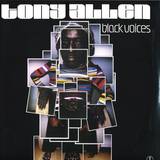
Comet presents the reissue of Black Voices (1999), featuring remastered versions and Ariya (Psyche Juju Mix)' as bonus track, which was not part of the original release.
Tony Allen completely rewrote the books on what was possible within the AfroBeat genre with his stunning 1999 album, Black Voices. When one considers exactly "what" is going on throughout Black Voices, it is quite mind boggling, as it is almost impossible to associate a minimalist, electronic feel with the massive walls of sound which Allen was known to create.
Yet these walls of sound are still very present, yet they gain an entirely new feel due to the presence of the producer, Doctor L. He takes the mesmerizing rhythms that Allen creates and he spins them into a stunningly modern sound. While Doctor L's production work throughout Black Voices is truly fantastic, it is clear that the genius behind the album lies within the mind of Tony Allen. With the absolutely mesmerizing, funky grooves that Allen creates, it comes a little surprise that the vocal collaborations are handled by members of one of the funkiest bands in history: Parliament-Funkadelic.
For almost two decades, Black Voices has remained a stunning example of the fantastic results that can occur when seemingly unrelated genres clash.
This special collector's edition electronically reproduced stereo 7' single (only 200 copies), comes in two fantastic coloured vinyl options (100 x red vinyl and 100 x purple vinyl). A refreshingly new take on mono to stereo conversion. Elvis fans growing up in the 1960's and 1970's unwittingly listened to his 1950's catalogue in electronically reprocessed stereo, love it or loathe, it was pretty much all there was back then unless you could afford to track down expensive mono copies. To better understand where the electronically reprocessed stereo versions originate from, we need to go back to 1961, at which point RCA had begun the process of taking Elvis' 1950's mono masters and converting them into a stereo sounding effect. By 1960 when Elvis returned from the army, he was recording in true stereo and as far as RCA were concerned, mono was a thing of the past. You just need to listen to the sound quality of the 1960 'Living Stereo' version of the 'Elvis Is Back' album, to appreciate just how much the recording industry had moved on in just two years. Such was the demand for stereo records in the early 1960's most major labels had created their own process for converting mono into stereo or 'fake' stereo as it became known, with some labels producing better results than others. Opinions on Elvis' 1960's electronically reprocessed stereo versions are mixed, with some recordings making the transition from mono to stereo effect better than others. Some DJ's actually preferred playing the electronically reprocessed stereo versions, believing they gave a wider fuller sound on the dancefloor. By late 1970's, RCA had once again begun to re-issue original mono masters, giving many fans their first opportunity to hear how these tracks were originally issued. By the time compact discs had arrived on the scene in the 1980's, electronically reprocessed stereo was well and truly dead and buried. Very few electronically reprocessed stereo recordings ever made it onto a digital format and the few that did are now highly collectible. Recorded at RCA Studio 1, New York on the 30th of January 1956, My Baby Left Me is a driving powerhouse rockabilly masterpiece with a real Sun Records vibe to it (produced by Steve Scholes with Elvis on vocals and acoustic guitar, Scotty Moore on electric guitar, Bill Black on bass and D.J. Fontana on drums). Our flip side Blue Moon Of Kentucky is another rockabilly classic which first appeared as the opposite side to That's All Right (Sun 209) in 1955 (Elvis' first single). Blue Moon Of Kentucky was recorded on the 7th of July 1954 at Sun Records (produced by Sam Phillips with Elvis on vocals and acoustic guitar, Scotty Moore on electric guitar and Bill Black on bass). Both tracks have been painstakingly re-engineered to create a stereo effect sound. The result is a bigger, sharper sound that jumps straight outta the grooves at ya! One reviewer described the process as - it's as if a veil has been lifted off the tracks'. Both tracks are taken from the forthcoming album titled 'Elvis Presley - The 50's In Stereo' (mono to stereo re-visited). For best results play this killer double-sider very loud!!!
This special collector's edition electronically reproduced stereo 7' single (only 200 copies), comes in two fantastic coloured vinyl options (100 x red vinyl and 100 x purple vinyl). A refreshingly new take on mono to stereo conversion. Elvis fans growing up in the 1960's and 1970's unwittingly listened to his 1950's catalogue in electronically reprocessed stereo, love it or loathe, it was pretty much all there was back then unless you could afford to track down expensive mono copies. To better understand where the electronically reprocessed stereo versions originate from, we need to go back to 1961, at which point RCA had begun the process of taking Elvis' 1950's mono masters and converting them into a stereo sounding effect. By 1960 when Elvis returned from the army, he was recording in true stereo and as far as RCA were concerned, mono was a thing of the past. You just need to listen to the sound quality of the 1960 'Living Stereo' version of the 'Elvis Is Back' album, to appreciate just how much the recording industry had moved on in just two years. Such was the demand for stereo records in the early 1960's most major labels had created their own process for converting mono into stereo or 'fake' stereo as it became known, with some labels producing better results than others. Opinions on Elvis' 1960's electronically reprocessed stereo versions are mixed, with some recordings making the transition from mono to stereo effect better than others. Some DJ's actually preferred playing the electronically reprocessed stereo versions, believing they gave a wider fuller sound on the dancefloor. By late 1970's, RCA had once again begun to re-issue original mono masters, giving many fans their first opportunity to hear how these tracks were originally issued. By the time compact discs had arrived on the scene in the 1980's, electronically reprocessed stereo was well and truly dead and buried. Very few electronically reprocessed stereo recordings ever made it onto a digital format and the few that did are now highly collectible. Recorded at RCA Studio 1, New York on the 30th of January 1956, My Baby Left Me is a driving powerhouse rockabilly masterpiece with a real Sun Records vibe to it (produced by Steve Scholes with Elvis on vocals and acoustic guitar, Scotty Moore on electric guitar, Bill Black on bass and D.J. Fontana on drums). Our flip side Blue Moon Of Kentucky is another rockabilly classic which first appeared as the opposite side to That's All Right (Sun 209) in 1955 (Elvis' first single). Blue Moon Of Kentucky was recorded on the 7th of July 1954 at Sun Records (produced by Sam Phillips with Elvis on vocals and acoustic guitar, Scotty Moore on electric guitar and Bill Black on bass). Both tracks have been painstakingly re-engineered to create a stereo effect sound. The result is a bigger, sharper sound that jumps straight outta the grooves at ya! One reviewer described the process as - it's as if a veil has been lifted off the tracks'. Both tracks are taken from the forthcoming album titled 'Elvis Presley - The 50's In Stereo' (mono to stereo re-visited). For best results play this killer double-sider very loud!!!
The night is what makes a big city come to life. Right after sundown, the hectic buzzing of downtown makes way for adventure playgrounds, bathed in neon light, revealing their countless chances and opportunities. It's when you'll find the subway spitting out it's purpose seeking passengers by the minute. A coming and going of restless people passing through. All it takes is a few hours, before the sunrise makes it all disappear. Mental Bend captures the magic of that very moment in their dreamy soundtracks. If you close your eyes, you can see blurry pictures passing in slow motion, accompanied by their atmospheric songs. Grainy black and white snapshots, fragments of memories lighting up somewhere in the farthest corner of the cortex. 'One Step' is the Berlin-based indietronica duo's visually vivid debut album, released on Enfant Fenou. Mental Bend are all about letting go. Sissip (voc/synth/bass) and Hendrik Havekost (beats/production) know how to trust their instincts, crafting their hypnotic signature sound, somewhere in between electronica, ambient and dream pop. Before founding the band in 2013, the two were already shaping their skills in all kinds of different formations and styles of music. As soon as they got together, they had a viral mini hit with their song 'Take My Hand', praised on various tastemaker blogs and generating over 100.000 likes on Soundcloud in no time. The band's first long play record 'One Step' is all about important experiences and decisions, small as well as big steps, all a part of making progress, which in the end can even be life changing. It was a step, that recently got Mental Bend their record deal on Mo's Ferry's sub label 'Enfant Fenou'.
'What was old is new again'... The old adage is so tired that nobody takes its proper measure: all people hear is the word 'old', when the important one is 'new'. Making new things out of old things is an act of alchemy. The proof is in this fifth album - no rest for the wicked of Perpignan - which is blown right open here and there by a few very contemporary guests. After the opener, 'Ouverture', with its almost surf-like guitars, comes 'Le Premier Jour', where Lionel Limiñana talks about his rock baptism with the punks, the mods, the skinheads and the Lambrettas of his youth in the South of France. What comes just after is the seismic shock of 'Istanbul is Sleepy': the Imprimatur of Anton Newcombe of The Brian Jonestown Massacre is simply enormous. Then comes Emmanuelles Seigner's super sexy tornado on the title track; and 'Dimanche' follows, with Bertrand Belin. Lionel sees him as a 'French Nick Cave who writes songs that resemble films.'. 'The Gift' features Peter Hook who scrapes his bass guitar again here; obviously a song reminiscent of an early period New Order. Finally, the Limiñanas on their own send out an instrumental cavalcade with a furious beat, like a Kraut Morricone, 'Motorizzati Marie' followed by 'Pink Flamingos', introduced with psych rock pads played backwards forming a vaporous song bathed in acoustic arpeggios. A respite in the album... before the fuzz and the abyssal bass of 'Trois Bancs' violently shakes the ghost of Gainsbou
Granny13 opens with Nicola Ratti's 'Odd Doubt'. With the use of a modular system and tape loops, a broken rhythm is obtained by parallelism between single sound signals as LFO one or processed tapes.On the second side, Giovanni Lami's 'Johnny Leech' is made with a small bunch of equipment, just a chaotic hand-made synth (cacophonator) and a memoryman, working mainly on static electricity and leakage current in the synth used without any kind of power supply.
Reviews
The Wire
''Two Italian mucisians share a split single of glitchy fun and everyone goes some happy. Lami s piece uses a defective unplugged synthesizer to make huzzing chitters that have a kind of rhythm in spots. Ratti s contribution is a bit more structured it sounds like a record of accordion miniatures broken into pieces, then glued back together with little pieces of felt stuck onto it. Which would definitely be a pretty hep thing to hear.''
Textura
''Some releases qualify as art objects as much as musical collections, a case in point this recent seven-inch vinyl outing featuring material by Nicola Ratti on one side and Giovanni Lami on the other. That shouldn't be interpreted to mean that the musical content isn't worthy of one's time, as it assuredly is, but more to emphasize how striking the sleeve artwork by Opora is and how effectively it complements the musical content.Mastered by Giuseppe Ielasi and issued in an edition of 150 copies, the release opens with Odd Doubt, a concise experimental setting by the Milan-born Ratti, who's issued material on labels such as Anticipate, Preservation, Die Schachtel, and Entr'acte and who's presently working with Ielasi in the project Bellows, with Attila Faravelli as Faravelliratti, and with Enrico Malatesta and Faravelli in ~Tilde. Though Ratti started out as a guitar player, his current focus is more on beat-analog experimentation and sound installation. In Odd Doubt, Ratti's modular system and tape loops generate broken rhythms that varyingly call to mind dub-techno, even if dub-techno of an extremely wonky variety. Off-beat chords, crackle, and snare strikes add to the dubwise flavour of the material, though ultimately it registers as more of an experimental exploration than straight-up dub exercise.The flip side features Johnny Leech by Lami, a one-time photographer now known as both a field recordist and a musician focusing on soundscaping and sound-ecology. In his contribution to the seven-inch, Lami's chaotic hand-made synth (cacophonator) and memoryman give birth to blustery smears of static electricity that ultimately mutate into an Oval-like array of ripples and scratches. Johnny Leech is so removed from anything conventionally musical, it makes Odd Doubt sound like a Top 40 pop song. Like Ratti's piece, Lami's is short, so short, in fact, it gives the impression of being an excerpt from a larger sound art work. Here's a release where the abstract nature of the musical content matches its visual presentation.December 2014''
Vital Weekly 951
''Granny Records is from Greece, but the two musicians here are from Italy, of which I don't I heard from Giovanni Lami before. His piece is called 'Johnny Leech' and he uses a hand-made synth known as the cacophonator and a memory man (a delay machine), 'working mainly on static electricity and leakage current in the synth used without any kind of power supply'. It makes up for a nice piece of chaotic lo-fi sound, which is put forward through methods of improvisation. Quite a nice piece and it fits the format very well. The crackling of vinyl surely adds an extra layer. Nicola Ratti uses a modular synth and tape loops, of what seems to be percussive material, but the rhythm is broken down and the whole thing has a nice gentle feel to it, even when it bumps, clicks and glides, but the synth makes it more subtle. Here too one could say this perfect for a 7": one doesn't have the idea that this is cut from a longer part as is not unusual with this kind music. Especially Ratti seems to have worked out his music as a composition, which is very nice. (FdW)''Vital Weekly 951''Granny Records is from Greece, but the two musicians here are from Italy, of which I don't I heard from Giovanni Lami before. His piece is called 'Johnny Leech' and he uses a hand-made synth known as the cacophonator and a memory man (a delay machine), 'working mainly on static electricity and leakage current in the synth used without any kind of power supply'. It makes up for a nice piece of chaotic lo-fi sound, which is put forward through methods of improvisation. Quite a nice piece and it fits the format very well. The crackling of vinyl surely adds an extra layer. Nicola Ratti uses a modular synth and tape loops, of what seems to be percussive material, but the rhythm is broken down and the whole thing has a nice gentle feel to it, even when it bumps, clicks and glides, but the synth makes it more subtle. Here too one could say this perfect for a 7": one doesn't have the idea that this is cut from a longer part as is not unusual with this kind music. Especially Ratti seems to have worked out his music as a composition, which is very nice. (FdW)''Vital Weekly 951''Granny Records is from Greece, but the two musicians here are from Italy, of which I don't I heard from Giovanni Lami before. His piece is called 'Johnny Leech' and he uses a hand-made synth known as the cacophonator and a memory man (a delay machine), 'working mainly on static electricity and leakage current in the synth used without any kind of power supply'. It makes up for a nice piece of chaotic lo-fi sound, which is put forward through methods of improvisation. Quite a nice piece and it fits the format very well. The crackling of vinyl surely adds an extra layer. Nicola Ratti uses a modular synth and tape loops, of what seems to be percussive material, but the rhythm is broken down and the whole thing has a nice gentle feel to it, even when it bumps, clicks and glides, but the synth makes it more subtle. Here too one could say this perfect for a 7": one doesn't have the idea that this is cut from a longer part as is not unusual with this kind music. Especially Ratti seems to have worked out his music as a composition, which is very nice. (FdW)''
Nested Structure is the first Great Circles release from artists outside of Philadelphia. THRIVE are Tetsuya Yoshida and Hitoshi Kojima. They both grew up in the North Kanto area of Japan. They first met at the club run by Tetsuya Yoshida called SOUND A BASE NEST, which is known as having the best sound system in the North Kanto area. In 2007, the duo started their DJ / Producing unit THRIVE. Previous releases have included a split 12' with Keia Yano for Japanese label Struct, and recent solo releases by Hitoshi for Always Human Tapes and for his own label Ambivalent Deviation. This record almost didn't happen! --- Tetsuya and Hitoshi were picking up Great Circles records in Japan and, having periodically communicated with each other about music, they sent us the Struct 12' to check out. While
cleaning out the back of the car a few months later, the presumably empty record mailer was about to land in
the recycle bin when we fortunately discovered a demo CD of unreleased THRIVE material inside. We drove
around listening to it and week later we agreed to release a 12'. The music on the Nested Structure 12' is dark, foreboding, even outwardly threatening. It's hypnotic, textural and rhythmically complex.
Mastered and cut by Rashad Becker at Dubplates & Mastering in Berlin.
Hana's first and self-titled LP was recorded in Autumn 2010 at Facta non Verba and consists out of 5 tracks which are techno oriented with disposal of experimental and abstract elements.
Reviews
OMG Vinyl
Hana s S/T LP is easily the best promo records we ve gotten in months. This Greek duo has somehow, almost entirely below the radar, released one of the most exciting electronic records of 2011. Their wobbly brand of techno sometimes chugs ahead at full-speed, other times easing back into a wider waver, almost resembling some weird, warped IDM. I will be shocked if this record doesn t get wider appreciation very soon. Whether that happens or not, we fully recommend it, track one down.
Cyclic Defrost by Oliver Laing
Granny Records duo Hana come correct with their first album, offering a refreshing take on techno and IDM variants in the vein of Jan Jelinek, Raime, Actress and hints of the mighty Chain Reaction label. Mastered at Berlin s Dubplates and Mastering by none other than Rashad Becker, a name that often appears in the run-out groove of artists who inhabit a curiously funky techno-not-techno netherworld Hana s debut self-titled release grows in stature and listening enjoyment with every spin. With a sense of fun and adventure inhabiting the grooves, Hana (who are also part of label-mates, Good Luck Mr Gorsky), explore experimental timbres and ghostly vocalisations with a lightness of touch that belies their recording credentials.
Starting off with an abstract, Clicks and Cuts style intro, Liv slowly finds the sweet spot between mutant Detroit electro funk, a hint of the indie/dance territory of Matthew Dear and the abstract, yet rhythmic 12 releases on the Beatservice label, by Norwegian duo Information from the mid 90s. Obermaier implies the groove to begin with, until a wrong-footed man-with-two-left-feet rhythm leads into minimal acidic flourishes. Album opener SM heads in a Ricardo Villalobos vs. Nonplace Urban Field direction, as the lopsided rhythm and sepulchral vocals add a haunted edge to proceedings. CR80 uses beautifully syncopated live drums and urgent female vocals, and adds a driving, belligerent synth riff falling somewhere in between DMZ and Gary Numan. Echoic, boingy sounds threaten to derail the beat, but somehow it manages to maintain, reminding me of Shed and A Made Up Sound; more in overall feel than in the specific sounds. For those that enjoy abstract electronics that work just as well on headphones as on the dance floor, Greece s Hana are a duo to watch.
Textura
Hana's self-titled debut album arrives saddled with a (literally) cheeky front cover one would more associate with a 70s band like Wild Cherry than a Greece-based techno outfit formed in Thessaloniki last summer. Recorded in fall 2010 at Facta non Verba, the five-cut release finds Good Luck Mr Gorsky members Thanasis Papadopoulos and Thanos Bantis hunkered down in their chemical lab concocting formulae to go along with their material's stripped-down techno beats. Using analogue synths, samplers, and sequencers, the duo brings a decidely experimental edge to their productions, sprinkling as they do liberal doses of burble and flutter over bass-heavy techno rhythms.
The opening track, Sm, sets the scene with a heavy low-end pulse thudding alongside a steady kick drum and joined by acidy synths and percussive effects that suggest a lighter being repeatedly flicked open. On a slightly more aggressive tip, the B-side's Cr80 adds truncated vocal yelps to its bleepy, elephantine throb. A dubby dimension emerges in the track, too, when echoing waves drift repeatedly across the huge bass that slithers across the track's underbelly. The album's most elaborate track comes last. Liv opens beatlessly with flickering shudders and what could pass for the amplified workings of an ant community but then progressively fills in the dots with an insistent beat pattern, voice fragments, and even the demented meander of accordion playing. Though Hana hardly rewrites the techno guidebook on the release, it's nevertheless a pleasurable listen, in part due to the multi-dimensional experience provided by the vinyl format and the always superb mastering work done by Rashad Becker at Berlin's Dubplates & Mastering.
Killekill House Trax is going strong - this time with a 4-tracker by the incredible Andreas Gehm alias PUKEMASTER GEHM.
He sent us the music shortly before his death and said we could pick any of his artist names and his only condition was that the music was released on vinyl. Only after his death we realized that he had obviously already taken a decision then...
So we are releasing this record now as an homage to one of the most creative and funniest persons in the electronic universe of the last decade. We picked the artist name Pukemaster Gehm as it reflects his humor the best and also because it's the most suitable for the tracks we picked: The EP ranges from hard jacking Acid House over weirdo Electro House to old school Chicago-leaning Piano House. A timeless record for all situations.
May you rest in peace, Andreas, and thanks for still rocking our floors, even when you are long gone!
Rat Life Records presents Serial Error a Project by Credit 00, Jacob Korn & Sneaker. This outfit was brought to life in 2013 when Red D called for some New Beat style tracks for his "Our Beat Is Still New" Compilation. Flying a bit too low under the radar ever since Rat Life decided to reissue Drum Abuse on a Super Sound Maxi Single. The Track was made in Jacob Korn's headquarter studio / synthesizer museum. The task distribution was hit quickly: Jacob squeezing the acid out of his huge Formant modular system, Credit 00 beating the drums on the Boss DR 660 and Sneaker throwing his unique vocals on top!
'Afro Rock Vol. 1' is one of the most important compilations of heavy original '70s Afro funk and soul to be released in recent years. Originally surfacing on Duncan Brooker's indie Kona label in early 2001, the album single-handedly kick-started the thirst among jazz, funk and soul fans and 'diggers' to rediscover lost music from Africa made during the '60s and '70s from a time when many countries were gaining independence and celebrating a Pan-African identity within their music. The album was one of the first to reach a far different audience to the traditional 'world music' market and spawned many further projects and labels in its wake. A year later, the 'Nigeria 70' compilation surfaced on Strut and labels like Soundway and Analog Africa would continue to unearth amazing lost gems from the Motherland.The album is testament to the determined work of Brooker following several research trips, especially to East Africa - Kenya and Zaire. It brought to light East Africa's finest funk band, Air Fiesta Matata, led by the recently deceased Steele Beautttah, 'The Nigerian James Brown' Geraldo Pino from Port Harcourt in Nigeria, and the storming Afro jam 'Yuda' by Dackin Dackino, a previously unreleased gem from Zaire discovered on a discarded reel. The album has remained influential since its release with tracks appearing on other Afro compilations and on TV and the big screen - Jingo's 'Fever' featured in Kevin McDonald's 2006 hit film, 'Last King Of Scotland'.Out of print since 2015, the album is being reissued on Strut in its original form with the extra dynamite unreleased psychedelic cut by Kenya's Ishmael Jingo, 'Keep On Holding On' taken from the original master tape. The package features the original sleeve notes by Duncan Brooker along with new additional notes providing further background to the album and tracks.
At a point in time when Johnny Winter had only recently recovered from past addictions and blues giant Muddy Waters had faced a decline in his career with illness and the collapse of Chess records in 1975, it was Steve Paul of Blue Sky records who would appear as saviour to both musicians. The results of his investment soon paid off and Winter's childhood dream to play alongside his hero Muddy waters was soon realised. Waters' comeback album was a return to his original Chicago sound. Its raw, expressive feel harked back to his Chess Records days, and the outstanding musicianship and intimate exuberance exceeded all expectations, earning Waters a Grammy in the process.
The Hard Again tour combined the respected powerhouse of Waters, Winter and Cotton with musicians from the Hard Again sessions. Hard Again cast a further four albums with Blue Sky before Waters would leave in 1983. Although this particular collaboration was short-lived, it has provided blues fans a rare opportunity to indulge in the work of two hugely important musical figures whose respect for each other is evidently unflinching.
'Y.O.U' is an emotive album of tripped out ambient hip hop instrumentals by FROM, written and recorded in the mid 90s under Trevor Jackson's infamous production persona The Underdog. Originally planned as a vocally-led, song-based project that should've surfaced between his production for The Brotherhood's legendary British hip hop album 'Elementalz' in 1996 and his acclaimed debut PLAYGROUP release in 2001, for multiple reasons it hasn't seen the light of day, until now.
Only Available as a ultra limited edition Vinyl and CD release, the LP consists of 11 tracks. Dream-like synth lines, ambient melodies, blissful guitars, raw beats and soft, fractured vocals draw you into a hallucinatory 12bit world. Drawing on Jackson's progressive and jazz rock influences as well as psychedelia and early electronics, the album closes with 'Belladonna'- a piano-sampled homage to the east coast golden age hip hop pioneers. NB: The CD features a longer version of 'Veratrum' not available on the vinyl version. All created on an Akai S950 mono sampler (limited to only 20 seconds sampling time), an Akai MG1212 12 channel mixer (which recorded on Betamax style tapes) and primitive outboard gear, Jackson honed his skills from his bedroom, where he produced the majority of his output at the time. With a huge collection of obscure vinyl, he dug deep into uncharted territories for samples and sound clips
- using material no one knew about (or would think about touching) in the mid 90s. The Underdog's initial releases were on Jackson's own Bite It! recordings label, which was started in 1991. A unique platform for UK hip hop with a visual aesthetic and ethos more akin to ECM and Factory
than other rap labels, its mission was to push artists beyond musical and cultural limitations prevalent at the time.
Home to artists like The Brotherhood, Scientists of Sound, Little Pauly Ryan and Lewis Parker (who later signed to Massive Attack's Melancholic label), Bite It! became a great success;
finally British rap had artists and releases that looked and sounded as good as their revered American counterparts. In 1993 Richard Russell (who had just started running XL recordings) asked Trevor to remix House of Pain, resulting in a top ten record, which helped launch Jackson's musical career via further remixes Massive Attack, Run DMC, U2, The Cure and countless others. Off the back of his remix success, The Brotherhood signed a deal in 1994 with Virgin Records. Their 'ELEMENTALZ' album was produced by Jackson and is still lauded by many as one of the finest British hip hop albums of all time.
Jackson continued to remix and produce as The Underdog until managerial issues forced him out of the project he'd been instrumental in instigating.
Soon after his close friend and manager tragically passed away - which when combined with the UK hip hop scene becoming increasingly volatile and the moral demise of rap culture in general - convinced Trevor to hang up his hip hop hat for good.
After leaving The Brotherhood he started Output Recordings. Internationally and sonically diverse, it gave Jackson a free reign to do as he pleased, with genre twisting releases from the likes of Fridge, Four Tet, Sonovac, Colder, his own PLAYGROUP project, The Rapture and LCD Soundsystem. With a non-compromising attitude, strong DIY aesthetic and consistently groundbreaking releases across its ten year life between 1996 and 2006, it became one of the most important and respected independent labels in the world.