As one of the most enigmatic figures of the 1970's Italian soundtrack and library music network Emma De Angelis and her short recording career provides thirsty fans of speedball psychedelic rock and drum heavy instrumental funk with a tight discography rivalling many of the long-standing bastions of the otherwise male-orientated business. * Strictly limited to 1000 copies.*
.
Born in Rocca di Papa, near Rome, into a flourishing musical environment Emma was the younger sister of future award-winning composers Guido And Maurizio De Angelis, a duo, who under names like Oliver Onions and Dream Bags, would write chart-topping lyrical theme tunes for a wide range of Italian crime, Giallo and Spaghetti Western films featured alongside full scores by Ennio Morricone and the Magnetic System composers (Bixio Frizzi Tempera).
With encouragement from her brothers, Emma, who would also write music under the pseudonym of Juniper, would record a tight clutch of solo-penned material and seldom credited studio contributions to Guido And Maurizio's film commissions, such as the score for Giuliano Carnimeo's Simone e Matteo: Un gioco da ragazzi (aka Convoy Buddies). While simultaneously pursuing a career as an illustrator and set designer the De Angelis family contacts would lead Emma to the offices of Romano Di Bari, whose up-and-coming Flirt label was finding success providing custom built mood music for use in TV and film. Alongside important composers like Alessandro Alessandroni, Gerardo Iacoucci and A. R. Luciani, the young Emma Di Angelis would record a small number of tracks for a compilation called Underground Mood (credited in the small print to E De Angelis - not to be confused with Italian singer Edoardo De Angelis). It is from this rare LP that the record you are now holding is compiled. Within the Flirt family of labels Emma De Angelis would also share schedules with other important female composers such as Daniela Casa and Giulia Kema' De Mutiis - both of whom have appeared on dedicated Finders Keepers releases.
The tracks on this record provide us with a rare glimpse into Emma De Angelis' short musical career before she became a full-time visual artist. With an unknown personnel or studio date it is easy to speculate a potential family jam in Piero Umiliani's Sound Workshop studio in 1972. One only has to take a listen to Guido And Maurizio's instrumental theme Gangster Story from Enzo G. Castellari's 1973 thriller High Crime (which later appeared on Tarantino's Death Proof soundtrack) or the trippy title theme to Paolo Poeti's kinky 1976 drama Inhibition to spot the family resemblance
Legendary Gabber/Hardcore dj & producer Rob GEE is famous in New York as “the hardest DJ to ever play the Limelight.” In the early 90’s, GEE kept delirious audiences going – spinning at Limelight’s “Future Shock” dance/techno nights and performing with his live band and spinning at the club’s “Rock And Roll Church” metal/rock/industrial nights.
Rob GEE is the only artist of his kind to collaborate and create with members of respected rock, metal, hardcore and hip-hop acts such as Slipknot, Hatebreed, Biohazard, Wu-Tang Clan, Cypress Hill, & System Of A Down, creating a unification of electronic, metal, hardcore, hip-hop, and any other style for that matter known as gabber music. GEE is writing history launching gabber onto the world scene.
To celebrate its 30th anniversary, Rob GEE's legendary 1996 hardcore masterpiece Punk, Funk & Live is now officially available on vinyl again. For several years, this EP has become a highly sought-after holy grail, for both old-school gabbers and new harddance, hardtechno and hardstyle collectors.
Punk, Funk & Live features the classic anthems "Ecstasy, You Got What I Need", "Gabberslam", "Son Of Rob GEE" and exclusive bonustrack "Rob GEE Megamix", mixed by Bass-D & King Matthew.
This limited 30th anniversary edition of Punk, Funk & Live is available on purple vinyl.
What an unbelievable record. From the wild cover to the iconic breakbeats, Roots from Ian Carr’s Nucleus is one of the dopest albums we know. This is seriously thick, funky-prog jazz-rock heaven. Originally released on Vertigo in 1973, other than a couple of versions at the time for other territories, Roots was never re-pressed since so it’s gone on to become another one of those impossible to find records.
Maybe it was a little too out there for the time, but it’s aged very, very well indeed and this Be With re-issue, re-mastered from the original analogue tapes, shows off just why this deserves to be back in press.
Genius trumpeter and visionary composer Ian Carr was one of the most respected British musicians of his era. He was a true pioneer and saw the potential in fusing the worlds of jazz with rock, just as Miles Davis and The Tony Williams Lifetime did in the US. In late 1969, following the demise of the Rendell-Carr quintet, and tiring of British jazz, Carr assembled the legendary Nucleus. Regarding music as a continuous process, Nucleus refused to “recognise rigid boundaries” and worked on delivering what they saw as a “total musical experience”. We can get behind that.
Under bandleader Carr, Nucleus existed as a fluid line-up of inventive, skilled musicians. This constant evolution and revolution was all part of the continuous musical exploration and discovery that took jazz to new levels.
Working together with producer Fritz Fryer and engineer Roger Wake, the seven compositions by Carr, Brian Smith and Dave MacRae that make up Roots flirt with perfection, and Nucleus at that time made up of the cream of 1970s UK jazz with Brian Smith on tenor saxophones and flutes, Dave MacRae on piano and electric piano, Jocelyn Pitchen on guitar, Roger Sutton on bass, both Clive Thacker and Aureo De Souza on drums and percussion, Joy Yates delivering the vocals and of course Carr on trumpet.
The spellbinding title track immediately renders the album indispensable. Riding the illest of loping breakbeats, “Roots” is low-slung, doped-out heist-funk. An absolute monster. If it sounds familiar then that’s likely down to it being sampled by Madlib for Lootpack and Quasimoto’s “Loop Digga”, as well as by a whole host of beat manipulators. “Roots” conjures prime instrumental hip-hop / beat music, only 20 years ahead of its time. Truly, these are the roots. Through sinuous bass, twinkling keys and a hypnotic guitar riff, a smoky brass motif weaves its way into a gloriously deep haze around Carr’s solos. “Roots” is over 9 minutes long, but there’s not a single wasted second, not surprising given that this is a condensed version of an originally 40 minute long commissioned composition.
The soothing vocal fusion delight of “Images” follows. Meticulously constructed, with gorgeous flute work from Brian Smith, with Joy Yates’ silky vocals and Dave MacRae’s Rhodes never sounding better. The cool, driving “Caliban” closes out the first side. Originally the third movement in a four part commission to celebrate Shakespeare’s birthday it stands up on its own, all robust rhythms and blended brass. Keyboard colour and Carr’s trumpet are splashed across the funk drums and basslines (and there’s even some bamboo flute). This really is fusion: the elements of jazz and rock coming together in beautifully synthesis.
Side two opens in riotous fashion with the short, thrilling samba of “Wapatiti”. Next up, “Capricorn” forms a smoothed-out, jazzy constellation. Mellow and dreamy, its twinkling percussion and languid horns slowly build the vibe before head-nod drums and a killer bassline enter the fray. With a distinct heaviness that Black Sabbath would’ve envied, “Odokamona” is a venomous slice of riff-soaked jazz metal (yes, you read that right), elevated by Carr’s wah-wah horns.
The album closes with MacRae’s exceptionally cosmic “Southern Roots and Celebration”. Very much in conversation with Weather Report, it opens as a languorous, spiritual jazz of chiming keys and serene guitar that turns slowly, gorgeously into a mid-paced, brass-laced banger. It’s another sure-fire party starter and the sound of the band having a righteous blast, building an ecstatic chaos that ends with Yates screaming.
And of course we need to talk about Keith Davis’ cover for Roots. Perhaps the coolest record cover of all time? Certainly one of the most bonkers. Just your run-of-the-mill high-gloss, acid-tinged airbrush dystopian/utopian living-room party scene. Consider this your chemical flashback trigger warning.
Front-and-centre the hip-to-death green robot holds court with their giant ball of yellow barbwire wool, hooked up to… something(?) being teased out from under the stairs (probably best not to ask). A thoroughly zoned-out, long-legged Pop Art party-goer lounges half-plugged in to the painting behind her as a pair of legs flail into shot from the the top of the stairs opposite. We won’t even begin to guess what the chap’s up to in the middle, but the view out of the windows is rather nice, and someone’s already got the hoover out ready to tidy up. All of the Nucleus sleeves are something special, but this particular one? Crikey.
This Be With edition of Roots has been re-mastered from the original Vertigo master tapes, Simon Francis’ mastering working together with Pete Norman’s cut to weave their usual magic with these wonderful recordings. The crazy cover has been restored at Be With HQ as the finishing touch to this long overdue re-issue.
Wewantsounds it delighted to announce a deluxe reissue of Frank Foster's 'The Loud Minority' LP. Released on Bob Shad's Mainstream Records in 1972, it's a landmark album and one of the key political works of the 70s. Featuring an all-star cast of superb musicians including Elvin Jones, Stanley Clarke, Airto, Cecil Bridgewater and Marvin 'Hannibal' Peterson, it is also Dee Dee Bridgewater's earliest full recordings. This special edition includes a 20-page booklet featuring amazing unseen session photos recently unearthed, an introduction by Judd and Mia Apatow (Shad's grandchildren), an essay by British journalist Kevin Le Gendre and an exclusive interview of Cecil and Dee Dee Bridgewater by Paul Bowler. The album's original artwork as been recreated with original photos and the audio newly remastered from the original tapes.
When he recorded "The Loud Minority" in 1972 for Bob Shad's Mainstream Records, Frank Foster had been a solid sax player for nearly twenty years, playing with the likes of Donald Byrd, Thelonious Monk and The Count Basie Orchestra. For this special session, he gathered a stellar line up of old fellow musicians like Elvin Jones and Harold Mabern and young turks including Stanley Clarke, 'Hannibal' Marvin Peterson, Cecil and Dee Dee Bridgewater. Cecil Bridgewater remembers: "Frank, his thing was, any group that he had he wanted to give young musicians a chance." As usual for Mainstream sessions, the studio was booked for two days and the record was cut live, supervised by Bob Shad's trusted men, arranger Ernie Wilkins and engineer Carmine Rubino.
What came out of these two days is now the stuff of legend, four long funky jams fuelled by two distinct line ups playing simultaneously augmented with a powerful 6-piece brass section led by Foster. The album kicks off with the anthemic "The Loud Minority" (sampled by United Future Organization and DJ Shadow) with its long brass introduction followed by Dee Dee Bridgewater fiery poem, a politically charged statement expressing the fight for civil rights, before the whole group comes together for a funky explosion clocking at 14 minutes. "That was a period where we were really into our African consciousness" reminisces Dee Dee in the interview.
The album continues with the funky uptempo "Requiem for Dusty" while "J.P.'s Thing" adopts a slightly more spiritual feel, with a beautiful Fender Rhodes solo and Foster's soprano sax improvisation. The album ends with "E.W. Beautiful People", a long dreamy improvisation climaxing with Dee Dee Bridgewater's poignant vocals.
The Loud Minority is a key militant jazz manifesto and one of the landmark jazz funk albums of the 20th Century. The album was recorded in two days but its legacy lives on and still resonates loudly in the BLM days. Wewantsounds is delighted to reissue this major works with newly remastered audio and a deluxe 20-page booklet full of breathtaking unseen session photos and insightful texts telling the whole story of this superb album.
A stylish selection of city pop, funk and modern soul from Japanese label Nippon Columbia, selected by DJ Notoya and featuring cult classics and rarities by Hiroshi Sato, Hatsumi Shibata, Hitomi 'Penny' Tohyama & many more.
Annotated by Notoya with journalist Nick Luscombe and artwork by Optigram.
Newly remastered audio.
The selection on ‘Tokyo Glow’ starts with 'Kimugare' a relaxed mid-tempo track by Kumi Nakamura, actually a famous actress who only recorded one album in 1980 for Columbia.
The set continues and flows effortlessly with the sunshine grooves of Miyuki Maki, Hatsumi Shibata and cult keyboard player Hiroshi Sato before the pace starts going faster and funkier with New Generation Company, Kengo Kurozumi - with his superb boogie, 'Juggler'
- and one of the queens of the genre, Hitomi 'Penny' Tohyama with 'Tuxedo Connection'.
Another fine example on the set is the mid-tempo groove of "I Wander All Alone Part III" by New Generation Company, an aggregate group of some of the best Japanese session musicians led by arranger Katz Hoshi and including Hiroyuki Namba (key), Kazuo Shiina (gtr) and Yutaka Uehara (ds) who all played with Tatsuro Yamashita among many others.
There are many other excellent examples in 'Tokyo Glow', showcasing the diversity and specificity of Japanese City Pop during the late 70s and 80s.
Nippon Columbia opened their much-guarded vaults to curator DJ Natoya. Tracks were remastered in Tokyo and the result, ‘Tokyo Glow’, is a unique insight into a most creative period in Japanese music.
In the spring of 1971, somewhere between Brussels, Paris and a collective pop fever dream, Le Monde Fabuleux Des Yamasuki landed on vinyl. It sounded like nothing else then and it still does not today. More than half a century later, Sdban Records proudly presents a reissue of this singular cult album, available from April 3, 2026 on vinyl.
The album was produced by Jean Kluger and written both by Jean and Daniel Vangarde (aka Bangalter, later the father of Thomas Bangalter of Daft Punk), who were alreadywell ahead of their time, long before electronic music rewrote the rules of pop culture.
Released under the name Yamasuki, also referred to as The Yamasuki Singers, or The Yamasuki's, the project was never intended as a conventional band. It was a studio-born fantasy, a concept album disguised as a pop record. What began as a standalone single quickly expanded into a full-blown pan-cultural pop opera that ignored genres and common sense with joyful abandon.
Musically, the album sits at a delirious crossroads. Psychedelic pop collides with funk rhythms, samba and bubblegum melodies, full of chants and choruses in a phonetic pseudo-Japanese, written with the help of a dictionary. Kluger and Vangarde famously recruited a children's choir to perform the vocals, and for added spectacle, they brought in a Japanese judo grandmaster, whose ritualistic shouts and battle cries erupt throughout the record.
Several singles were released. One of them, Yamasuki, with accompanying dance move, appeared in the United Kingdom and France on John Peel's Dandelion label, a fitting home for a record that thrived on the margins of pop culture. Its B-side, Aieaoa, proved even more potent. In 1975, the song was reborn as A.I.E. (A Mwana) by Black Blood, an African group recording in Belgium, this time sung in Swahili. That melody would travel even further. Aie a Mwana became the debut single of English pop group Bananarama, and in 2010 it resurfaced once more as Helele, an official song of the FIFA World Cup, recorded by South African singer Velile Mchunu with Danish percussion duo Safri Duo. That version became the most widely known incarnation of the song. With Jean Kluger directly involved, it was less a cover than a continuation of the original idea.
The album's afterlife did not stop there. Over the years, Yamasuki has been quietly sampled, covered, and featured across media far beyond the realm of novelty pop. Kono Samourai was sampled in The Healer by Erykah Badu (2007), produced by Madlib, while Yama Yama has found its way into recent pop culture as well: appearing in the television series Fargo, on Angus Stone's project Dope Lemon, and on the 2008 Late Night Tales compilation curated by Arctic Monkeys drummer Matt Helders. Proof, if any were needed, that this strange little record carries a deeper musical DNA than its playful exterior might suggest.
This new reissue of Le Monde Fabuleux Des Yamasuki proves the renewed interest and respect for this cult album, faithful to the original spirit while finally giving it back the physical presence it deserves. In an era obsessed with genres and algorithmic neatness, Yamasuki still laughs, dances and karate-kicks its way past definitions. It reminds us that pop music can be playful without being disposable, strange without being cynical and joyfulwithout explanation. The world of Yamasuki was always fabulous, we are just lucky it found its way back to us!
The premise of this compilation is simple: music we’d like to hear at the airport.
The idea came after learning that Honolulu’s international airport has been playing AI-generated music over its speakers since November 2025. First reported by Civil Beat, the news has caused frustration and disappointment among residents and visitors, as well as within the local music community.
Everyone knows Hawaii is one of the most musically rich regions in the world — why then is the airport using AI music? 'Music For The Airport' is our response.
Located in the middle of the Pacific at the outskirts of one the most remote cities on the planet, Honolulu’s Daniel K. Inouye International Airport (HNL) is for most people the first place they encounter when they arrive in Hawaii. Warm sun, tropical tradewinds, playful palm trees and majestic mountains welcome every traveler, as do the sounds of birds, familiar music from Hawaiian artists like Aunty Genoa Keawe and Israel Kamakawiwo’ole, and—at least for now—seventeen “island-themed” AI-generated songs.
In late 1977, while sitting in Germany’s Cologne Bonn Airport on a Sunday morning, Brian Eno noticed how terribly uncomfortable he felt hearing the airport’s “muzak” overhead. For a harried, hurried place like the airport where travelers scramble to their gates, stand in long border control lines, and wait impatiently for their luggage at the carousels, music can create more anxiety than calm. Asking himself, "What should we be hearing here?", Eno soon created ‘Ambient 1: Music For Airports’, a sonic remedy aimed at reducing nervousness in public spaces.
When we heard the news that HNL airport is playing AI-generated “muzak”, we were immediately reminded of Eno’s genre-defying 1978 album. And we were similarly inspired to react. But how? Recreating an ambient masterpiece wasn’t in our wheelhouse. We started digging through our catalog of licensed music which we haven’t yet re-released. We quickly realized this was our chance to highlight some of favorite songs from the so-called CD era: the 1990s and 2000s (with a few exceptions). In less than 20 minutes, we pulled 17 original songs recorded by local artists between 1984 and 2017.
The speed at which this project came together surprised us; reactionary gut instinct often produces swift and lasting results. Ironically, our new compilation likely took less time than it did for the state Department of Transportation to commission its AI songs in question. But even though ‘Music for the Airport’ came together in less than one week, the truth is that this collection of 17 songs is the result of years of hard work, trust, sacrifice, patience, and understanding. Building relationships with and licensing music from artists doesn’t happen overnight, but more importantly: these songs are the result of people pouring their hearts and souls into something they believe in. This music wouldn’t exist today without the artists and their loved ones who supported them along the way.
As of this writing, the DOT states its intention in creating AI-generated songs is to “highlight different aspects of the islands, aviation and the airport” and that “no state funds were used to produce them”. Okay, but at what cost? Technology disrupting the music industry isn’t news to anyone. AI music in public spaces are cost-saving measures, since its users (airports, for example) don’t have to pay the licensing fees typically required, which can be a worthwhile source of revenue for artists. But what happens when a place like HNL airport, which hosts more than 21 million passengers annually, uses music created by machines instead of people to represent Hawaii? The identity of a place beings to erode, diluted by a language learning model’s conceptual summary of what a people and its culture sounds like. To echo Brian Eno: what should we be hearing here? In other words: what should the music of Hawaii sound like?
We believe in the power of music, especially when it comes from the soul. We believe in supporting artists, especially as AI disrupts our lives. We believe that Hawaii must be represented authentically, especially when it comes to song. And of course we believe in vinyl, especially since it was a record from 1978 (Mackey Feary Band’s debut LP) that inspired Aloha Got Soul’s origins in 2010.
We hope you find as much joy in this compilation as we have. Perhaps it’ll soundtrack your next journey to Hawaii. At the very least, we hope some people take a moment to hear these sounds: in your headphones for now‚ maybe someday overhead at the airport in Honolulu.
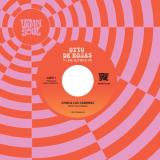
Two dancefloor bombs, recorded in Peru in the mid-'70s by bandleader, producer, and keyboardist Otto de Rojas. It's no coincidence that "Choca las caderas" was originally released as a single backed with "Al ritmo del Bump-Bump," a clear tribute to the classic "Soulful Strut," making the artist's affinity for the soul and funk sounds coming out of the States unmistakable. "Choca las caderas" is made for dancing and partying hard, with irresistible horn arrangements and an incredibly groovy rhythm section. "El tema de Coco" is another superb instrumental recorded by Otto de Rojas, who plays the electric pianos and Moog on this track.
These two tracks are now reissued together on a 45 for the first time.
Plush shag carpeting, jazz flutes, analogue synths, funk grooves, exotica, and sultry, Italian-style vocalising: Erotica 70 is the new album from Larry Manteca, known for their inventive, tongue-in-cheek reimaginings of classic Italian soundtrack aesthetics.
This time around, the Milanese collective sets its sights on the distinct sonic landscape of 1970s commedia sexy—a film genre that, for better or worse, defined an era and fed richly into the cinematic education of Larry Manteca’s members.
Through this lens, Erotica 70 also becomes a way of celebrating Piero Umiliani in his centenary year—a composer whose name is closely linked to the erotic comedies of the time.
The nod to Umiliani is baked right into the details, starting with the choice of vintage gear like the Eminent synth and the Wurlitzer electric piano. These instruments deliver that particular blend of jazz, groove, electronics, and sensual charm that made the golden age of Italian film music so unique.
Standout track “Lando” is a joyful, playful homage to actor Lando Buzzanca, who starred in numerous films scored by Umiliani, including the iconic 1973 comedy La schiava io ce l’ho e tu no (My Darling Slave).
Larry Manteca is spearheaded by multi-instrumentalists Alessandro Paiola and Riccardo Danieli, flanked by the cinematic flute of Carlo Pelsa, the swinging drums of Andrea Quattrini, and the magnetic vocals of Valentina Castelli and Alessandra Maria Manzoni.
Recorded across various studios in Northern Italy, Erotica 70 is the imaginary soundtrack to an Italy that no longer exists, recreating its atmosphere while rendering it in full, vivid colour. It’s a record whose music seems to come straight out of a provincial cinema, a smoky late-night club, or a long-lost 70s film. But while it looks back to a bygone era, it does so only to bring it straight into the present, making the past sound surprisingly fresh and contemporary.
Jolene Cuts returns with a 5-track vinyl-only masterpiece that channels the golden era of 1998 French House while pushing it into the future. No edits—just 100% original productions from Danny & Mike, two true craftsmen of filtered house grooves. “Jackpot” kicks things off with a euphoric, sample-driven floor-burner, dripping in funk and irresistible filter sweeps that recall the raw magic of classic Roule and Crydamoure records. “Voiture” follows with a sleek, late-night ride through hypnotic basslines and shimmering disco loops, perfect for peak-time club moments. On the flip, “So Cruel” brings soulful vocal chops and deep, rolling grooves in a way that nods to the emotional side of the French Touch era. “Love U” injects pure joy into the mix—swinging drums, warm filters, and a seductive disco flair designed to light up any dancefloor. Closing it all, “Disco Road” is a driving, high-energy weapon blending pulsating bass and filtered hooks that feel like 3 a.m. in Paris circa ’98. This is a love letter to French House—strictly vinyl, strictly limited, five unmissable club bombs. Perfect for DJs who crave that raw filtered energy, vinyl purists, and anyone who knows the true essence of French Touch: groove, soul, and pure dancefloor ecstasy. Once it’s gone, it’s gone.
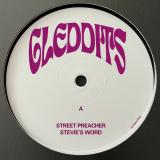
The Saint Wax label branches out with a new series of edits from founder Eduardo Barbi aka Gledd, who traverses funk, disco and soul across five irresistible cuts. 'Street Preacher' has a spoken word that reminds of early rap days paired with a rousing choral backing, then 'Stevie's Word' turns up the funk with a chunky bassline. 'Do It For Me' is another gospel-fuelled pumper with big stabs ramping up the intensity and then 'Under The Moonlight' is a classy disco stomper lead by florid and chunky funk in the drums. 'Your Love' is an excitable finish with big horns, bigger chords and even bigger vocals. It's big, basically.
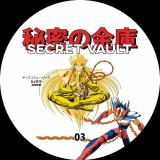
It's time to dip into the secret vault once more, and after the first two visits this year, we can't wait. The latest from this mysterious and so far anonymous new label and production crew is another scorching disco two-tracker. The opener on the A-side is full of excitable horns and funky guitar lines with irresistible hand claps and tracky grooves that roll for days. On the flip-side, 'Track 2' brings a vocal line that is brings a sing-along and uplifting vibe as it rides on busy, funky bass motifs with lovely slide in the hi-hats and more lush strings. It's a big-hearted and fulsome disco-house sound for when the whole floor needs locking in to a loved-up vibe.
Dan Kye is the mysteriously evoked moniker from multi-instrumentalist, producer, and vocal sensation Jordan Rakei. The New Zealand-born artist - who now resides in London - presents his first long-player from Dan Kye, ‘Small Moments’, on Bradley Zero’s Rhythm Section INTL. An ode to the dancefloor, the musical project was born out of Jordan’s lockdown experience, created from the comfort of his own home. Recorded with just a laptop, extra live instruments and guest musicians, ‘Small Moments’ seamlessly transcends across electronica, jazz and funk, with each genre being effortlessly fused with Jordan’s melancholy vocals. Allowing himself to push the boundaries, Jordan’s Dan Kye moniker draws on the energetic and uplifting elements of house and techno and perfectly mixes it with the sultry vocals and emotion that come with the live elements we know and love from Jordan Rakei. The record offers listeners a journey through more floor-heavy tracks such as ‘Mogeri’ and ‘Raro’ to more groove infused offerings such as ‘Rainbow Road’ (which is named after one of the maps in Mario Kart and inspired by the energy of Prince’s iconic live concert at The Aladdin in Las Vegas), whilst tracks, like ‘Sober’, take on a more lyrical and anthemic feel.
Jordan Rakei: “Rhythm Section INTL was my entry point into dancefloor orientated music, and it was Bradley who asked me whether I could head in that direction so he could play my music out in the clubs. Dan Kye has still got melodies, but the main focus is to keep it high energy.”
After meeting Bradley Zero online whilst living in Australia, Jordan eventually moved to London in 2014. The same day he landed, he went straight to a Rhythm Section party to meet Bradley, and it was here that he first got a taste for house music. He enjoyed Rhythm Section INTL’s ability to draw on both live and electronic talent; and thus, after Bradley asked him for some productions for the parties, the idea for Dan Kye was born. ‘Small Moments’ is a musical masterpiece that can be enjoyed as much on the dancefloor as it can in the comfort of your own home and is a perfect step into Jordan’s landscape and idealism of dance orientated music.
Bradley Zero - “In around 2014 the proprietor of the famous Northside Records in Melbourne handed me a self released 12” from a new, unknown artist based in Brisbane. It was Jordan Rakei - Franklin’s Room. I’d been home almost a year before I actually got round to listening to it and I remember that moment like it was yesterday. I lay down on the sofa, put the record on and was transported! The Dan Kye project is a testament to the experimental and independent ethos Jordan lives by and is a product of an artist reaching full stride but not afraid to still try something new. This ‘Small Moments’ LP was conceived in a record store, born in a club on Rye Lane and is now flying the nest, throwing caution to the wind and making a bold statement.”
"US funky drummer Les DeMerle who is one of the representations of rare groove scenes. hisA1st album which was released in 1968 is finally reissued as vinyl for the first time!AMany killer tracks for diggers are included, such as ""A Day In The Life"" which is also known as sampling material of HIP HOP classic OC ""Time's Up"" and the US No.1 hit great funk numberA ""Aquarius"" by Fifth Dimension.A
In addition, great musicians were joinedAfor this great funk album such as Frank Foster, Lew Tabackin,AArnie Lawrence, Charles Sullivan etc...you can find how young Les DeMerle was a talented drummer even though he was just around 20 years old at that time!"
180g Heavy double vinyl LP with liner notes by Tyran Grillo. Limited Japanese Obi for the first pressing. Original artwork by Russell Mills and photography by Jean-Baptiste Mondino.
The third Time Capsule is a body of dub reinterpretations by celebrated producer Bill Laswell of Ethiopian singer Gigi. Curated by Tokyo record collector, music researcher and seasoned reissue supervisor Ken Hidaka, it is the first time Illuminated Audio is pressed to vinyl after its CD release in 2003.
Ejigayehu Shibabaw was born in 1974 in Chagni, northwestern Ethiopia and by pursuing a career as a singer, went against her father’s strict, traditional gender roles. As Gigi, she embraced the same musical freedom she had strived for in her personal life, incorporating the Ethiopian church, funk, hip-hop, West and South African music into her work. She first settled in Nairobi, then Addis Ababa, where she quickly established herself as one of the city’s leading singers. A move to San Francisco in 1998 led to a long and fruitful creative partnership with bassist and producer Bill Laswell.
Around the same time, Chris Blackwell had stepped away from Island Records to start the art house film company and label Palm Pictures. He took an interest in Gigi and together with Laswell, pulled together an all-star cast of musicians for her self-titled US debut album, including Herbie Hancock, Pharoah Sanders and Wayne Shorter. It won international critical acclaim, not just for its musicianship but for making Gigi a “defining voice for the Ethiopian expatriate community”, as journalist Tyran Grillo praises in his Time Capsule liner notes. From the nation-defining 1896 victory over Italian invaders to the quiet revolutionaries who wear simple shemma garments, Grillo believes the themes in Gigi make it “a shower of sunlight on her homeland for those ignorant of its struggles.”
After its success, Blackwell encouraged them to go back into the studio to rethink the album and Illuminated Audio was born. “Anyone can make a voice sound worldly”, Grillo remarks, “but rare are those who can make one sound inner-worldly.” Gigi was clear with Laswell to give her vocals a minor role “because it’s already been done.” Instead her Amharic verse is fleeting, exhaling through the textures like ghostly fragments; soaring yet muted. Yet the album is still titled under her name, an assertion by Laswell of her central role in the album’s creation. Not only was it a fully endorsed project by Gigi, but she would be present throughout its development, giving feedback on half-finished ideas as Laswell played them back in the studio. “It works perfectly”, she reflected after the album’s release. “We wanted to capture the whole spirit of each track, and Bill’s remixes create a different music language that really puts you in a pleasant place”.
This new vocabulary takes its lead from a technical approach that Laswell had been perfecting during a furtive creative period at the turn of the millennium. Much like his ambient interpretations of Miles Davis (Panthalassa, 1998), Bob Marley (Dreams of Freedom, 1997), and Carlos Santana (Divine Light, 2001), Laswell approached Illuminated Audio by returning to the original multitrack masters. Gigi wasn’t just reworked, but recomposed into an expansive lattice of instruments, submerged in a watery ambience of dub and trance undercurrents.
Sonically, this new language that Gigi refers to, is manifested by the original album’s more understated parts being pushed to the fore. Explaining his contrasting methods, Laswell saw Gigi as being “put together in a way that fits”. Contrastingly, in Illuminated Audio, “a lot of things that I featured in the remix weren’t as audible in the original.” Instrumentation laying near-dormant, deep in the mix, are brought to the fore: the acid rock guitar and Wayne Shorter’s saxophone on ‘Tew Ante Sew’, Graham Haynes’ flugelhorn on ‘Nafekeñ’, Laswell’s bass on ‘Kahn’, the melodica in Mengedegna or the floating synths and talking drums in ‘Gud Fella’.
Brought to his attention by mentor DJ Nori, Hidaka describes Illuminated Audio as a “masterful sonic exploration into ethereal ambience and dub” and made sure this reissue also contained a full remaster to give its “deep musicality” much better dynamics and density in the overall sound. Hidaka admits that Laswell's music “is sometimes so out-there, it is often misunderstood” and, indeed, to dub album non-believers this might seem like a prolific producer imposing himself on another artist’s work; eternally developing rearrangements that never quite get to its destination. But that’s missing its true power and triumph. This is more than the reissue of a remix, but “a wholly unique musical entity”, as Hidaka describes. Illuminated Audio refers to the illuminated manuscripts that comprise the major part of Ethiopian art and its new compositions stand in proud solitude as a rare body of reworks that both informs and enhances their originals.
The Nu’rons were a family group consisting of two sets of brothers and cousins, the four young men in question being brothers Daryl Howard and Raymond Gibson (Daryl’s mother registered him under his father’s surname of Howard and Raymond under her maiden name of Gibson) together with Otho Bateman and Charles Bateman. They were all born and raised in Salem, New Jersey and from the age of ten and eleven began singing with a fifth member and Gibson brother Rudolph as a group called The Gospel 5. They eventually decided to crossover to secular music and as a group known for their energetic dance routines they came up with the new performing name of ‘The Nu’rons’ (taken from the word ‘Neuron’ which is a cell that transmits nerve impulses). However Rudolph was soon to leave the group due to physical illness. Also Daryl Howard and Charles Bateman had also been part of a working group known as The Devotions prior to becoming The Nu-Ron’s.Following hours of practice The Nu’rons eventually felt confident enough to put their own shows together and began to perform at local dances and parties around New Jersey and Philadelphia, often being used as a non-paid warm up act for bigger named artists. They moved between several different managers including Jimmy Bishop (Duo Dynamic Productions) until they came under the tutelage of WDAS radio DJ Georgie Woods (his wife Gilda, being the owner of the Philadelphia Gil, Dion and Top & Bottom record Labels). It was Georgie who introduced them to Manny Campbell who in turn invited them to an audition at his and partner Charles Bowen’s Emandolynn Music studio in Chester P.A. The song The Nu’rons chose to audition with was the self penned “I’m A Loner”, the audition went well, as during late January/early February of 1970 Manny and Charles took The Nu’rons into the Sigma Sound Studio’s with Tom Bell and the TSOP musicians to record “I’m A Loner” and “All My Life” which was released on the Nu-Ron label in April of the same year. The two studio takes presente don this release came short after the band moved on from the collaboration with producer Emanuel Campbell to take music matters in their own hands. Beside recording "Disco Hustle" to be part of the disco boom in Philly of the times, they recorded also “You Came Thru”, a rough yet beautiful heavy bassline driven soul funk recording, and the just amazing “Hurry Up Tomorrow”, here presented in one of the original Studio takes.
'Double Seven, released by Trojan in late 1973, was the last album Lee 'Scratch' Perry would release on the label for some considerable time, and it was essentially the final album project he put together before establishing his own Black Ark studio. Opening track 'Kentucky Skank' sets the tone with a slow creeper whose frying sounds underscore its role as a praise song to the Colonel's KFC recipes; the cosmic Moog blips come courtesy of Ken Elliott at Camden's Chalk Farm studio, also prominently featured on U-Roy's double-tracked, stereo-panned gambling ode 'Double Six.' David Isaacs' 'Just Enough' was cut a few years prior, which makes it slightly out of phase with the rest of the set, though the enigmatic 'In The Iaah' sounds mightily fresh, with its uncredited chorus said to come courtesy of the Wailers. Perry's own 'Jungle Lion' has hilarious roars from the maestro at the start, strangely grafted atop a reggae re-make of Al Green's 'Love and Happiness.'
'Overall, Double Seven melds the soul, funk, reggae and dub elements that were constant in Perry's work during this phase. His enhanced audio spectrum and endless reference points would keep his music continually apart from that made by his peers.'
—David Katz (excerpt from the liner notes)
A former architect of the cult DiY sound in Nottingham, as well as being a member of downtempo outfit Bent, Nail is a house making machine whose own distinct fingerprint is all over everything he makes. His sound is raw but never hostile - he always finds a neat sample to bring some soul to his louche, loose drums. This EP for his In The Dance label starts with 'And So', a wonky sound infused with sensual whispers, while 'Before' blends woozy pad work with deep drums and prickly percussion. 'Grief' is a sombre affair with bluesy sax lines weaving between the dusty drums, and 'Size A Dat' gets choppy, playful, and funky. Another majestic EP.
This is the reissue of original 1993 Rephlex double vinyl album, completely remastered from DATs by Beau Thomas, with the original artwork, and photography by Richard James. µ-Ziq's Tango N'Vectif was released in 1993, a classic year for auteurist electronic music that didn't always fit on the dancefloor. Written by Mike Paradinas in his late teens with some help from Frank Naughton, it still stands up really well today and its influence on electronic music in the decades since is obvious. Across an expanse of ideas, taking influences from early Aphex, Detroit Techno and UK Hardcore, Mike created this spirited, funky, jerry-rigged, lo-fi version of rave; with crunchy drums and a knack for melody that fell somewhere between John Barry and classic TV themes. Without owning a computer, Mike had been writing techno, house and industrial tracks on and off since 1990, playing live keys alongside drum machine rhythms on his 4-track recorder. µ-Ziq started when Mike linked up with Frank who was also writing dance-influenced music, and importantly owned an Atari 1040ST computer with Cubeat software. They pooled their equipment and Mike would travel up to Frank's house a couple of miles away in Wimbledon to record together. By 1992, and after a false start when a proposed EP for Mark Pritchard and Tom Middleton's Evolution label got shelved, Mike had started at Kingston University where he deejayed and met like-minded people including a couple of guys who knew Aphex Twin who was also a student at Kingston too, and they passed Aphex a demo of Mike's material. A few days later Mike got a message from his mum to 'call Aphex Twin' and he gave Mike some advice, and seemed interested in releasing something. So when Frank and his family went on holiday that summer Mike borrowed his Atari and synths and wrote the majority of the Tango N'Vectif album during that 2 weeks. By the end of 1992 a release with Aphex Twin and Grant Wilson Claridge's Rephlex label had been agreed - Aphex had moved to the house in Clissold Crescent where he recorded a lot of his early classic albums and Mike went over to collect his advance, in the form of his very own Atari computer.
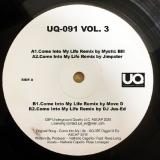
The third and final volume of remixes of 'Come Into My Life' by Nathalie Capello and Rose Lonegran is yet another doozy for lovers of emotive, meaningful deep house. Another bunch of heavyweights step up, starting with Mystic Bill who teases out a steamy-hot lead and builds a vibe around it. UK mainstay Jimpster plays with a dubby and bubbly low end, while Move D finds jazz-funk in the squelchy bass. Last of all, Underground Quality head DJ Jus-Ed steps up with his remix and explores more dusty textures, a slightly unsettling synth vibe and roomy, hypnotic grooves for late-night dancing.
Dark Entries is Elbow Deep in the Hoopla thanks to J.D. Slater. Legendary actor, director, and composer J.D. Slater is sometimes known as “the Lou Reed of gay porn.” Slater cut his teeth in the New York punk scene, even opening for the Talking Heads and Blondie at CBGB with his project Frenzy. A true polymath of the erotic, he co-founded Raging Stallion Studios with Chris Ward in 1999, which has remained a prolific outlet in the world of gay pornography. Elbow Deep collects the scores from three late 1990s fisting-focused Club Inferno films: At Arm’s Length, Hand Over Fist, and Heads or Tails. Never before released, these works show Slater digging deeper into the electronic music production techniques that were blossoming in that era, like loop-based sampling. Says Slater, “Suddenly I could have access to every instrument in the world. My whole concept of sound and structure evolved with the technology.” The works here are trance-inducing groovers, laced with acid and dosed with brooding ambience. Check out the Gregorian vibes on “Grand Fuck,” the legato lurch of “Stallion Funk,” or the frosty atmospheres of “At Arm’s Length.” Elbow Deep in the Hoopla comes with an insert featuring an interview with J.D. Slater. Starkly sexy, these tracks remind us of Slater’s creed: “The main rule for writing a porn score is to remember what you are writing for.”
CER015 sees Celestial Echo bring back one of the great modern soul 45s, Ramsey & Company – “Love Call”.
Coming out of New York in the late ’70s, Ramsey & Company was led by Mainor Ramsey, with the group originally playing the Catskills supper club circuit. Their only single was released privately on Ramsey’s own Ramco label, with copies sold at shows and barely making it into wider distribution. Like so many great soul records, it found its real afterlife much later, becoming a favourite across the UK modern soul and rare groove scene.
“Love Call” is the reason this record has carried such a reputation for so long. A beautifully arranged modern soul dancer, it has that perfect late ’70s balance of groove, song and musicianship. On the B-side, “Leg Grease” brings the funk.
Original copies are now almost impossible to find, often selling for serious money when it turns up and even the Lotus Land reissue has become expensive in its own right. This Celestial Echo edition puts the track back into circulation properly, cut loud and ready for the DJs and soul heads who have been waiting on a clean copy.
Celestial Echo is here to put proper soul records back into circulation — respectfully cut, properly pressed, and ready to play.
Two of the most prolific remixers in the world of Disco,Dave 'Love' Lee and John Moraleshave teamed up for one of their biggest projects to date - 'Mixed To The Maxxx'. After gaining access from the legendary original artists, the pair take the multi-track tapes of many classic Disco, Funk & Soul tracks and re-work them...to the Maxxx!
Where Remixed With Love stands as Dave Lee's own gold-standard body of work, Mixed To The Maxxx sets that legacy alongside Morales' own decades-deep M+M body of work: Lee brings his musically dense, groove-first touch to the likes of Harold Melvin, Syreeta, Lenny Williams and The Brand New Heavies, while Morales applies his extended, dancefloor-built M+M treatment and crushes the likes of Barry White, The Temptations and Loleatta Holloway, plus Dennis Coffey's breakbeat classic "Scorpio" for the DJs and collectors alike. Both work from original tapes, surfacing parts barely audible or entirely unheard in the source mixes, and both know when to let a classic breathe rather than bury it under modern production. It's a pairing a long time in the making. Lee and Morales first talked about working together around a decade ago, and getting Mixed To The Maxxx off the ground took five years of patient work: tracking down usable stems, securing approvals, and navigating a licensing landscape where much of the best material is now tied up with major labels increasingly cautious about clearing remixes. What's landed here is the product of that graft as much as the pair's shared ear for a great record, the sound of two people who know exactly what they're looking for and are willing to put in the time to find it.
A double 12" sampler in summer 2025 previewed the record's range. A bass-driven overhaul ofThe Brothers Johnson's "The Real Thing" and an extended mix of Philly legends Bell & James' "Livin' It Up (Friday Night)" showcased Lee's side, while an anthemic take on Inner Life's "Ain't No Mountain High Enough" and a tempo-lifted Light Of The World"London Town" flew the flag for Morales. Both drew strong early support ahead of the full LP.
Following the success of the inaugural all-Jiri Jiri edition, Batov Records returns with the second instalment of its Give Me Disco series, once again curated by label co-founder and globe-trotting selector DJ Kobayashi. Rather than revisiting familiar disco classics, Give Me Disco Vol. 02 digs deeper, bringing together four dancefloor discoveries from across Europe and Asia, including two previously unreleased tracks available here for the first time.
Spanning Portuguese jazz-funk, Norwegian cosmic oddities, Japanese-inspired psychedelic disco and cinematic groove, the EP reflects the breadth of Kobayashi's record bag - a carefully assembled selection of tracks that have soundtracked his DJ sets for years alongside exclusive material rescued from the vaults.
Opening the record is The Bam Jam Band's brilliantly understated "Theme", a soaring slice of jazz-infused disco from Portuguese musicians Sérgio Alves and Pedro Tenreiro. Originally released only as a now long-sold-out 7 inch on Mad About Records, the track has become one of Kobayashi's trusted secret weapons, championed by discerning selectors including Darryn Jones and Red Greg. Built around Alves' dazzling synthesiser work, "Theme" finally gets the wider audience it deserves. The EP's first exclusive arrives courtesy of D. Apal, instrumentalist and member of Norway's Flammer Dance Band. His only solo release, issued on the band's Lysketrekk Records, has become a cult favourite among adventurous record collectors. Batov now unveils the previously unreleased "60 Meter'n (Rytme)", an extended instrumental dub that strips away the vocals to let the handclaps, cavernous bassline, dub effects and wonderfully eccentric synthesisers breathe, transforming an underground favourite into an irresistible dancefloor weapon.
Side B opens with YĪN YĪN's "Tokyo Disco", taken from the band's acclaimed third album Mount Matsu on Glitterbeat Records. Long-time admirers of the Dutch quartet, Kobayashi has championed them since first hearing the breakthrough pairing of "Dis ̄ kô Dis ̄ kô" and "Dion Ysiusk" on Bongo Joe. Since then, he has hosted the band twice on Soho Radio and supported them live in London. "Tokyo Disco" perfectly captures YĪN YĪN's distinctive blend of Japanese-inspired psychedelia, Southeast Asian influences, post-punk funk and shimmering disco grooves, making it a natural fit for the Give Me Disco series.
Closing the EP is another exclusive from Jiri Jiri, whose contribution helped launch the series on Vol. 01. Ahead of their forthcoming album later this year, the duo unveil the previously unreleased "Spaghetti Western", a wonderfully off-kilter fusion of Morricone-esque cinematic atmosphere, taut funk rhythms and the soulful modern groove of SAULT. Equal parts soundtrack and dancefloor curveball, it provides a fitting finale while offering another tantalising glimpse of what's still to come. With two exclusive cuts sitting alongside two carefully chosen modern classics, Give Me Disco Vol. 02 is another lovingly curated snapshot of DJ Kobayashi's musical universe: borderless, groove-driven and unapologetically built for adventurous DJs, discerning collectors and open minded dancefloors alike.
Among the most influential hip-hop artists to emerge in the rapid creative expansion of the early 1990s, Queens duo Organized Konfusion helped reshape rap's aesthetic horizons with the 1991 release of a groundbreaking self-titled album. A dizzying display of lyrical dexterity and forward-thinking production, Organized Konfusion helped lay the foundation for what would become underground hip-hop, with intricate wordplay and cerebral rhyme structures. Both Pharoahe Monch and Prince Po shine throughout the album, revealing
the immense talent that would later establish Monch as one of hip-hop's most revered voices and spark Po's collaborations with producers like Danger Mouse, Madlib, Large Professor, Oh No, and more. From playful nostalgia to sharp social commentary to surreal linguistic explorations, the duo navigates chaotic drum breaks with dense rhyme patterns, vivid imagery, and ever-shifting narratives. After decades of limited availability and unofficial bootlegs, this is the first official vinyl reissue of Organized Konfusion since its1991 release. Featuring three rare bonus tracks, this 35th anniversary edition is available on 2LP and CD, giving a long overdue spotlight to one of hip-hop's most important albums.
The vibraphone may have gone quiet, but the groove hasn't. Roy Ayers passed away on March 4, 2025, in New York City, at the age of 84, but the man they called the Godfather of Neo-Soul left behind a vault deep enough to keep dancefloors moving for generations. BBE Music now hands the keys to Berlin's own Delfonic, whose second volume of reworks digs even further into that treasure chest for six fresh, floor-ready reimaginings. The series began when Delfonic shared a spontaneous edit with BBE founder Pete Adarkwah, and listener demand for a vinyl pressing turned the idea into a full official release. Volume 1 sold out fast and moved through collector circles at speed; Volume 2 arrives with even higher expectations attached, and record heads who missed out the first time won't want to sleep twice. Everything here is pulled from deep, previously-vaulted Ayers sessions. The reworks draw from BBE's celebrated Virgin Ubiquity compilations, a trove of unreleased Roy Ayers recordings cut between 1976 and 1981. These are the rarer cuts serious collectors have been chasing for years, now given a second life courtesy of BBE Music Delfonic is the alias of Markus Lindner, a Berlin lifer. He's been DJing professionally since 2004, building his name across Berlin and wider Europe with a sound rooted in hip-hop but stretched across many genres. For anyone who needs the primer: Ayers pioneered jazz-funk through his group Roy Ayers Ubiquity and was widely regarded as the godfather of neo-soul. His breakthrough came young; he got his first vibraphone mallets at age five after watching Lionel Hampton's band, and by 1963 he had his own recording contract. His records have been sampled for decades by artists including Mary J. Blige, A Tribe Called Quest, Common, and Kanye West, cementing him as one of the most sampled figures in soul-jazz history; a status that only grows with every year that passes. About BBE Music: This is a label with real archival credibility on Ayers specifically. BBE has held the license to the Virgin Ubiquity sessions since 2004, and this rework series is a natural extension of that decades-long relationship. Buyers trust the BBE stamp on soul-jazz reissues and edits precisely because of that history and the care, thought and quality that goes into every physical release, as BBE celebrates 30 years of real music for real people.
At the foot of the mountain. Our gaze is inclined toward the summit.
Toward the ascent. The destination that awaits us.
From the valley, we look up at the summit: our destination. But also the path: the true destination.
We can already trace our route, and we are already imagining ourselves walking up there. Along the small ridge, just above the tree line. There, we take a short break and look for the exact spot in the valley where we were standing earlier. It is strange to grasp that we have actually climbed this mountain. To look down from up here at the place where we were just moments ago – the same place we looked up from, toward the place where we are standing now.
And now, knowing what it is like to be up here, we remember what we imagined it would be like back then. What we believed it would mean to stand here.
Along the way, our gaze wanders back and forth. Up toward the mountain, down into the valley, sometimes only at our shoes. We keep walking, one step after another. Our thoughts detached. Our body functioning purely mechanically.
Step left. Step right. Step left. Step right.
Our mind has completely detached itself, and our thoughts race at an immense speed. They summon the most different moments. Moments from our lives. Moments that shaped us, that made us who we are. Or are we perhaps simply trying to understand who we are and how we got here?
It is strange that reaching the summit and looking down could make us believe that we have finally reached, or are striving toward, some superior, triumphant position. When in fact, it is really only about looking at the path we inevitably have to take. Processing impressions from a certain distance. Reconsidering what we have experienced, without losing sight of what lies ahead.
Our gaze turns back toward the summit.
Is there a destination?
An ascent? A summit? A descent? The return?
Or is it only about the insights we encounter along the way?
Am Fuß des Berges. Unser Blick ist zum Gipfel geneigt.
Auf den Aufstieg. Das Ziel, das uns erwartet.
Vom Tal aus blicken wir auf den Gipfel: unser Ziel. Aber auch den Weg: das wahre Ziel. Unsere Route kann man jetzt schon abstecken, und wir stellen uns bereits vor, wie wir dort oben laufen. Über den kleinen Grat, leicht oberhalb der Baumgrenze. Dort machen wir eine kleine Pause und suchen genau die Stelle im Tal, an der wir vorhin noch standen. Es ist verrückt, zu begreifen, dass wir diesen Berg tatsächlich hinaufgestiegen sind. Von hier oben auf den Ort hinunterzusehen, an dem wir eben noch waren – an denselben Ort, zu dem wir hinaufgeblickt haben, als wir noch dort unten standen. Und jetzt, da wir wissen, wie es ist, hier oben zu sein, erinnern wir uns daran, was wir uns damals darunter vorgestellt haben. Was wir geglaubt haben, es würde bedeuten, hier zu stehen.
Unterwegs wandert unser Blick hin und her. Hinauf zum Berg, hinunter ins Tal, manchmal nur auf unsere Schuhe. Wir gehen weiter, einen Schritt nach dem anderen. Unsere Gedanken losgelöst. Unser Körper funktioniert rein mechanisch. Schritt links. Schritt rechts. Schritt links. Schritt rechts.
Unser Geist hat sich völlig losgelöst, und unsere Gedanken rasen mit einer ungeheuren Geschwindigkeit. Sie rufen die verschiedensten Momente herauf. Momente aus unserem Leben. Momente, die uns geprägt haben, aus denen wir geworden sind, wer wir sind. Oder versuchen wir vielleicht einfach nur zu verstehen, wer wir sind und wie wir hierhergekommen sind?
Es ist schon seltsam, dass das Erreichen des Gipfels und der Blick nach unten uns glauben lassen könnten, dass wir endlich eine überragende, triumphale Position erreicht haben oder anstreben würden. Dabei geht es doch eigentlich nur um den Blick auf den Weg, den wir zwangsläufig beschreiten müssen. Eindrücke mit etwas Abstand zu verarbeiten. Erlebtes noch einmal Revue passieren zu lassen, ohne den Blick nach vorne zu verlieren.
Unser Blick wendet sich wieder dem Gipfel zu. Gibt es ein Ziel? Einen Aufstieg? Einen Gipfel? Einen Abstieg? Die Rückkehr? Oder geht es nur um die Erkenntnisse, die uns unterwegs begegnen?
Layne & Chang might not be household names to everyone, but in the underground they’re long-established fixtures. Chang—who’s released music under a string of aliases over the years—was tipped by Urb magazine as one to watch back in the mid-’90s and has been embedded in dancefloor culture ever since. Alongside him, Layne Fox (formerly San Francisco, now back in Florida) brings deep disco credentials, having helmed the cult-loved Disco Dimensions label and recording as 40 Thieves—best known for the underground anthem Don’t Turn It Off. In short, the boogie lineage on this record runs deep.
And that’s before you even get to Dan Tyler. As one half of the Idjut Boys and co-founder of Noid Recordings, Tyler helped lay the groundwork for London’s edit culture long before it became a global phenomenon. His involvement here only strengthens the package.
“Shake Your Body” opens the release with a locked-in, funk-driven groove—swirling melodic lines, subtly acidic textures, warm vocoder touches, and tight, punchy drums all dialed for peak-time movement. On the A2, “In The Desert” shifts the mood into something more transportive: a hazy, late-night burner equally suited to open-air parties, after-hours sessions, or home listening with the lights low.
Flip to the B-side and Dan Tyler delivers two cosmic reworks that push things further out. Psychedelic, elastic, and built for serious systems, both cuts hit that sweet spot between heady and physical—already circulating among a handful of tastemaker DJs and primed for heavy rotation as festival season ramps up.
A strong, floor-ready release that sits comfortably in the Whiskey Disco catalogue—rooted in disco, but reaching well beyond it.
Soon after their 1978 debut on the Brian Eno-produced »No New York«, a compilation that defined the No Wave scene, James Chance's group Contortions had already evolved – getting sharper, tighter and just plain faster. Despite the loss of keyboardist Adele Bertei and bassist Geoge Scott (who refused to sign a new contract demanded by Chance and his then partner, band manager Anya Phillips) Contortions were firing on all cylinders, and their first full-length album, 1979's »Buy«, is a marvel of hot-wired energy.
Led by the brash yelps and free-sax squawks of Chance, Contortions spit out fiercely rhythmic tunes charged by the wiry guitar lines of Jody Harris and the dizzying slide guitar of Pat Place. With drummer Don Christensen slipping in pointillist beats and David Hofstra's infectious basslines, the songs on Buy crackle with both precision and abandon. Opener »Designed to Kill« shoots sparks of sound in all directions, while »Contort Yourself« is a nihilistic dance number wherein Chance instructs listeners to twist into knots, physically and mentally. "It's better than pleasure, it hurts more than pain," he snarls, later imploring, "You better try being stupid instead of smart."
Heavily influenced by the showman funk of James Brown (whose »I Can't Stand Myself« the band had covered on »No New York«), Contortions coined a downtown dance-punk sound that had immediate influence on subsequent No Wave bands – including Place's Bush Tetras and Bronx trio ESG – as well as the burgeoning disco movement. On »Buy«, Contortions' self-invented template is imprinted so hard into the grooves that it sounds like they're about to break, capturing a combustible band in all its fiery fury.
Cosmo Dance is the artistic alias of Cosimo Mandorino, an Italian producer and DJ who has been active in the electronic music scene for more than twenty years, as well as the founder of the label Mirella. Produced and finalized in Napoli during a series of short stays, and developed with the contribution of Raffaele Arcella and Dario di Pace, "Cosmo-logic" unfolds within a parallel, plausible, and dystopian universe where humans and machines coexist in constant tension and perpetual conflict. A musical narrative shaped by rebellious computers, wars between binary systems, and universal unified languages, the record stands as a manifesto to the early era of Italo-Disco, while remaining deeply infused with influences from cosmic disco and stripped-down electronic funk. The tracks make extensive use of mechanical rhythms, voice modulators, vocoders, and analog effects, exploring sonic territories forged through iconic instruments such as the Korg MS-20.
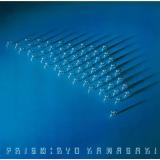
The first leader album by Ryo Kawasaki, a jazz and fusion guitarist whose talent was recognized by Gil Evans and who went on to work internationally. The album presents a cool cosmic sound, including "Agana," where Kawasaki delivers breath-taking guitar playing over high-speed percussion, and the dazzling jazz-funk number "Phil."
Like Roses aus Berkeley, Kalifornien, sind eine echte Macht. Offenherzige Texte über Liebeskummer, Verlust und Selbstreflexion treffen auf energiegeladene Hooks und rauen, melodischen Gesang, der geradezu dazu einlädt, lauthals mitzuschreien - eine Kombination, die der Band eine treue Fangemeinde sowie Nordamerika-Tourneen an der Seite von Acts wie Pierce the Veil, Neck Deep und Mayday Parade eingebracht hat. Seit 2018 ist die Band am Start, hat ein paar Singles und EPs veröffentlicht und präsentiert nun ihr erstes richtiges Album. "Gänzlich unprätentiös beschreiben Like Roses ihren Sound wie folgt: "Leute mit Instrumenten, die davon schreien, wie traurig sie sind - und zwar über den Lärm, den sie mit besagten Instrumenten machen." So weit, so emo. Aber eben mit Pop-Punk-Drive und einem Fünkchen Mathrock." - Visions 2023 "Emo is alive and well in the Bay Area band Like Roses, whose song "Wrist" captures the nostalgic sound of early-2000s melodic pop-punk through the lens of queer yearning" - "Wrist" (Like Roses), New York Times - Song of the Week Für Fans von Joyce Manor, Modern Baseball, Tiny Moving Parts
Get Used To It, a “uniformly excellent” album (PopMatters) first released in 2006, marked the return of N’Dea Davenport, whom The New Yorker described as “a lithe dynamo with a sensuous voice and an arresting presence.” Her voice remains inseparable from The Brand New Heavies’ classic sound, “an accessible hybrid of soulful grooves and smooth funk,” as The New Yorker put it
Killer Groove Records presents a new 7" by Electric Circus, pairing "High Fever" and "Ogres": raw, hypnotic funk built on obsessive bass lines, sharp horns, dub delays and wah-wah guitars.
Both tracks are taken from Rites, the band's second studio album, out November 27 on limited-edition LP, CD and digital. The 7" is limited to 500 copies worldwide and is out September 25.
On the A-side, "High Fever" maps Electric Circus's territory: '70s funk, Afrobeat and psychedelia meet in a steady build toward a climax of synths and groove. The track grew from a bass line written over one feverish weekend and runs as a single continuous rise in tension.
The groove takes its cue from The Meters, locking syncopated accents into place while a punchy horn section cuts through from the opening bar. Dub delays and layered textures then open the arrangement out, trading space with wah-wah guitars and a treated clavinet that sounds vintage without dating the mix. After a darker, nocturnal passage, the saxophone rises over percussion and synths for the climax.
On the B-side, "Ogres" was the first track conceived for the album and the last to be completed. It began as a bass-and-percussion ostinato in an Ethiopian pentatonic scale, modelled on a war march, and grew into a dense groove with psychedelic and trip-hop textures. Its rhythm conjures a twilight bestiary of dark, menacing or perhaps merely curious creatures, building to a tense climax before resolving into a smooth, dreamlike finale that suggests awakening, or re-emergence.
Like the rest of Rites, both tracks started in jam sessions and were recorded in stages: live takes of the core arrangements first, then dedicated sessions for synths, horns and overdubs. Marco Sirio Pivetti engineered at Metrò Rec Studio in Riva del Garda, Gio Solo at Sberdia Studio in Turin. Overdubs were reamped through tube amplifiers and analog outboard. The band co-produced with Pivetti, who also mixed; Riccardo Ricci mastered at Velvet Room Mastering Studio in Brighton.
Electric Circus are based in Turin. They released their debut album, Canicola, in 2018 and have toured the U.S. Scoring Contrecourant (2021), a documentary series shot in Senegal and Mali, led them to Sahel Roots, a duo from the north of the country. The two groups recorded On est ensemble (Mieruba, 2023) remotely between Turin and Bamako, each writing two pieces for the other to finish.
For fans of The Heliocentrics, Calibro 35, BADBADNOTGOOD.
Portuguese musician and expert experimentalist Diogo steps up for Heion Records second outing. Diogo signs two originals for his Healiocentric EP, joined by a remix from legendary Wild Bunch selector and producer Milo Johnson, aka DJ Nature whose roots in New York’s late-80s underground shaped his raw blend of early house. The EP opens with "Healiocentric" unfolds as a deep atmospheric journey where modular synthesis meets live instrumentation and tuned percussion. Arpeggiated sequences glide through hovering brass-like tones and modulated pads with effortless positivity, riding a syncopated landscape of rim shots and broken beats.
"Traums" dives deeper into Diogo's intricately woven world. Monochordal spoken word samples drift sparingly across organic clicks and rich analogue textures, conjuring a jazz-like atmosphere that rewards careful listening. Lush pads echo the craft of artists like Two Lone Swordsmen or Ricardo Villalobos, but the steady thump of a 909 kick and a fluid bassline leave no doubt: this is a deep-of- night heater for the enlightened dance floor. DJ Nature closes the EP by taking "Healiocentric" on an inspired tangent into disco-techno territory. Acoustic beats anchor a minimalistic take on acid funk, while a near-naive piano line sets Chicago house against Berlin school repetition. Gated noise, field recordings, wah-wah electric piano pads and classic house organs complete the picture. Cannon fodder of the highest order.
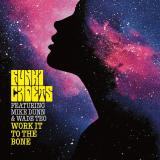
Larry Thompson and Rick Lenoir AKA LNR were early house pioneers who dropped seminal cuts from the late 80s onwards, but few had the impact of their debut, ‘Work It To The Bone’.
The darkly alluring anthem mixed tribal percussion with a minimal groove that went deep and soon became a dance floor classic, spawning a thousand copycats. It has remained an evergreen favourite across the years and now gets covered by New York’s long-time house heavyweight and Grammy-winning producer, remixer and Elements Of Life founder Louie Vega under his Funki Cadets alias. He hooks up with Chicago mainstay Mike Dunn and go-to contemporary house producer Wade Teo for a new version that beefs up the original for modern dance floors.
The opening Louie Vega Mix dials into the original’s tribal energy with a chunky, bouncing groove and hard-hitting percussion, then layers in more synths, effects, and drama to the full-fat sound. It’s a sweaty, steamy affair with a constant sense of momentum as the arrangement evolves, different hooks take the lead, and the pressure stays high. In addition to a DJ Tool Acapella and Louie Vega Beats mix, Wade Teo remixes the track with a deeper groove and dusty drums. It’s a more subtle, heads-down sound but packed with the same edge and rawness that made the original so standout.
"Temporary World" sees the return to Canopy of musical whizz kid Joi N'Juno, teaming up with the creative force of Kaleta, who has been a long-time collaborator of the label and long known for his work with Nigerian legends Fela Kuti & Sunny Ade.
For this project, the inspiration came from vintage Nigerian funk & disco, channelled through modern production aesthetics, bridging the gap between past & present.
Joi N'Juno's bouncy disco beats and groovy basslines lay the foundation over which Kaleta's funky guitars and the horn section from London Afrobeat Collective pepper the details. Keys bubble and synths soar as Kaleta's vocals, sung in both English & Yoruba, bring his evocative soulfulness. The culmination is an authentic melting pot of both vintage influence and originality.
Joi N'Juno turns in two different mixes of each song, the first in a "live", sounding approach and a second Mmore "oomphy" mix with fat synth bass, suited to the late night dance floors
For its second outing, Sonum invites Matteo Point, whose Acid People EP expands the label's catalogue with four cuts navigating the space between acid house, progressive textures and analogue-driven club music.
The title track, "Acid People," sets the tone with tightly wound 303 sequences, sparse drums and a hypnotic sense of momentum, landing somewhere between functional peak-time tool and late-night trip. "Fresh Morgen" follows with a rolling low end before gradually unfolding into darker, more melodic territory, recalling the subtle tension of late-'90s European underground records.
On the B-side, "Musika Progressiva" revisits progressive house without falling into nostalgia, reshaping familiar motifs through a contemporary lens while maintaining its analogue warmth. Closing cut "Vvvaneggg" shifts towards Detroit-inspired rhythms and understated machine funk, offering a stripped-back groove built for patient selectors.
Across four tracks, Matteo Point delivers a collection that feels both immediate and enduring—club-focused without sacrificing character. With Acid People EP, Sonum continues to carve out its own space, championing records that draw equally from the past and the future of underground dance music.
Plus Plus Traxx is here and we open things up with the label’s main guy, Louie Fresco, and his bass-heavy track "###" (Pound-Pound-Pound).
A track that feels like it was made by a mad A.I. on shrooms inside a lab on a remote alien spaceship. Breaks weaving through glitchy sounds and creepy leads make this tune a certified secret weapon for those DJs who truly dare to break the mold and play outside the trendy shit.
Next up, we got a banger of a collab between CHKLTE and San Dee, who met inside the 16bit realm and cooked up a trippy minimal late night heater that feels like you're creeping through the Doom and Duke Nukem corridors, a tune that will definitely be making the after-hours rounds around the world.
Coming up on the B-side, we got none other than Harry Wills under his Brazen alias, doing what Harry does: dope basslines, intricate drum work, unique creativity, and overall trippy madness. 135 bpms of brazen dopeness.
And if you want more fuel in your engine, here comes Gojnea76, who turns the track "Passive Aggressive" on its head and literally kicks the “passive” out of the equation, delivering a bomb of a remix that will definitely be traveling in many great DJs’ record bags for years to come.
This is Freaky Friends Vol.1
Amazzonia is the new album by Alex Puddu and the second volume following the erotic series
I Desideri Di Sadie (Piaceri Tropicali), where the inspiration took us to an imaginary journey in Southeast Asia. With this new album “Amazonia,” Alex Puddu takes us on a trip to Central America, the Caribbean islands, and South America, exploring a new groove of Latin-funk, reggae, and seductive sleazy disco . Here, Sadie’s adventures unfold, from the jungle to the cities and onto the enchanting tropical beaches. Another journey through temptations, on the islands, discovering the beauty of Alex Puddu’s “Erotic World.”
"Amazzonia" was written, arranged, produced, and recorded by Alex Puddu, who plays all the instruments on the album himself. He was assisted by two of the best bassists on the Italian nu-disco and Balearic scene: Domenico Andria—who has played with Pellegrino/Zodyaco and worked closely with Alex Puddu on several releases—and Daniele Labbate, who has performed as a session bassist for artists including Nu Genea and Mystic Jungle.
Other featuring musicians on the album are:
Imelda : Lead and backing vocals
Adrian Wilding: Vocal on Gimme Dub
Hendrik Jørgensen: Trumpet
Jesper Løvdal: Saxophone