On En Route, Oddisee captures the tension of motion—between where you’re from and where you’re headed, between ambition and grounding, between survival and purpose. Released at a moment when his voice was sharpening into something unmistakably his own, En Route feels like a checkpoint record: reflective, hungry, and deeply human.
Built on warm, head-nodding production and Oddisee’s signature blend of jazz-inflected beats and conversational clarity, the album balances internal dialogue with outward observation. He raps not as a distant narrator but as someone in the thick of it—touring, questioning, recalibrating—turning everyday moments into quiet revelations. Themes of independence, self-definition, and forward momentum run through the record without ever tipping into cliché; this is movement with intention, not escape.
What makes En Route endure is its honesty. There’s no forced grandeur here, just earned confidence and craft. Oddisee treats growth as a process rather than a destination, letting listeners ride alongside him as the miles stack up. The result is an album that feels lived-in and timeless—music for long drives, late nights, and anyone figuring out who they are while still on the way.
DJ Support: Glenn Underground, Crazy P, Terry Farley, Aroop Roy, Chris Coco, Frank Tope, Greg Wilson, Dom Servini, Francois K, Max Essa, Oliver Dollar, Pete Herbert and many more
Danny Ward’s Balaphonic project, one of many the long-serving performer, producer, percussionist, drummer and DJ has utilised over a career spanning over three decades, has evolved considerably since his first release under the alias 11 years ago. Conceived as a platform to explore his love of Afro-Cuban and Brazilian musical culture, it gathered new impetus during lockdown and the recording of superb first album Resolution Revolutions, which fused these influences with nods to Balearica, dub, dancehall and deep house.
On the Organic Matters EP, Ward’s follow-up to that critically acclaimed set, the Balaphonic musical universe has expanded once more, with the Manchester native showcasing a wealth of eye-catching collaborations and an even more intricately layered and sonically detailed sound rich in live percussion and instrumentation. It’s an ambitious and widescreen musical vision wrapped in sun-soaked melodies, morning-fresh motifs and simmering, sunset-friendly soundscapes.
The dizzying new heights scaled by Ward on Organic Matters is evident from the opening bars of ‘Dew Drops’, a piece created in unison with internationally renowned composer and arranger Robin Dewhirst. Between them, the pair have conjured up a yearning, life-affirming samba shuffler where picturesque piano, xylophone and balafon melodies rise above Ward’s dense, layered Latin percussion and warming bass.
Next, Ward delivers a thrillingly different take on his 2005 composition ‘Switch’, featuring legendary Brazilian jazz vocalist Flora Purim and her equally talented daughter Diana Moreira Booker. Whereas that was a jazzy deep house workout, Ward’s Balaphonic re-make is a shuffling, gentle exploration in 7/4 time – a heartfelt tribute to the Brazilian records with which Purim first made her name in the 1960s and ‘70s.
‘Balaventurers’ sees Ward join forces with an old friend from the North-West scene, R.S.L founder Joe Botham AKA Baleardelica – a multi-instrumentalist and producer whose Flamenco-inspired acoustic guitar motifs provided the starting point for another vividly colourful exploration rich in layered vocalisations, twinkling keys and impeccably arranged percussion.
It’s followed by ‘Life of Strings’, a more up-tempo and dancefloor-leaning excursion written and recorded alongside Amsterdam-based violinist, and composer Katya Gabeli. While Ward’s percussion-rich groove provides propulsion and a rock-solid foundation, it’s Gabeli’s evocative string arrangement that provides the focal point and emotional resonance. It’s a genuinely brilliant collaboration.
To round off a second stunning Balaphonic release on NuNorthern Soul, Ward delivers two simmering, slow-motion delights: the Afro-Cuban rhythms, cascading melodies and melodic percussion motifs of ‘Boxfresh’, and stunning EP closer ‘Home’ – an almost overwhelmingly poignant and beautiful number that gently ebbs and flows on waves of tracked piano, dreamy chords and a comforting sense of closure. It’s a genuinely sublime conclusion to another wonderful Balaphonic release.
*First-ever release on vinyl
*Produced in full cooperation with Hiroshi Yoshimura's estate
*Remastered from original sources by John Baldwin
*English translations of original 1996 release liner notes
*Reproductions of Yoshimura's handwritten recording notes
*Vinyl includes 5" x 7" postcard print
"My encounter with the Hoh Rain Forest, located inside Olympic National Park across the water from Seattle, felt like seeing a whole new world for the first time in my life. Long green fronds draped along the branches, like a scene in which fairies could be heard whispering to one another. But when you try to listen, no sound can be heard. Amidst the mysterious silence, in which no birds or insects make a sound, every living thing seemed to have stopped in its place, only to start dancing when some kind of spell is cast over them.
-Hiroshi Yoshimura
Originally issued on compact disc in 1996, Quiet Forest was Hiroshi Yoshimura’s last album-length work to be released before his passing in 2003. Largely inspired by his trip to the vast forests of the North American Pacific Northwest, the album is an aural reflection of the fantastical, surreal beauty he experienced as he walked through the otherworldly wilderness for the first time. The basic tracks were recorded in the fall of 1993. After numerous revisions to the song titles and a scrapped idea to overlay the tracks with nature field recordings, Hiroshi ultimately produced a latter-day masterwork that feels like the spiritual follow-up to Green, one of his defining works from a decade earlier."
*Produced in full cooperation with Hiroshi Yoshimura's estate
*Remastered from original sources by John Baldwin
*English translations of original 1996 release liner notes
*Reproductions of Yoshimura's handwritten recording notes
"My encounter with the Hoh Rain Forest, located inside Olympic National Park across the water from Seattle, felt like seeing a whole new world for the first time in my life. Long green fronds draped along the branches, like a scene in which fairies could be heard whispering to one another. But when you try to listen, no sound can be heard. Amidst the mysterious silence, in which no birds or insects make a sound, every living thing seemed to have stopped in its place, only to start dancing when some kind of spell is cast over them.
-Hiroshi Yoshimura
Originally issued on compact disc in 1996, Quiet Forest was Hiroshi Yoshimura’s last album-length work to be released before his passing in 2003. Largely inspired by his trip to the vast forests of the North American Pacific Northwest, the album is an aural reflection of the fantastical, surreal beauty he experienced as he walked through the otherworldly wilderness for the first time. The basic tracks were recorded in the fall of 1993. After numerous revisions to the song titles and a scrapped idea to overlay the tracks with nature field recordings, Hiroshi ultimately produced a latter-day masterwork that feels like the spiritual follow-up to Green, one of his defining works from a decade earlier."
Vinyl-Only Release, limited to 300 copies.
Art-work by renowned Mexican artist: Manuel Cetina aka el_stitch's.
Finland-born Kiki returns to the Mexican label Tenampa with his unmistakable hypnotic sound. A well-established and highly respected name in electronic music, Kiki has built a career defined by quality and consistency, with releases on some of the scene's most influential labels, including Crosstown Rebels, BPitch Control, Watergate Records and Get Physical, among many others.
For the remix, legendary producer and DJ D'Julz steps in with his signature approach, adding extra groove and movement to the original while preserving its hypnotic character. A carefully crafted rework that completes the package and is sure to earn a permanent place in any serious vinyl crate.
Strictly limited to 300 copies worldwide and available exclusively on vinyl, this release continues Tenampa's commitment to limited-edition, vinyl-focused electronic music and is destined to become a sought-after collector's piece.
The artwork once again comes courtesy of the ever-outstanding Manuel Cetina, aka El_Stitch, whose distinctive visual language adds another layer of identity to the release, making it a fitting addition to any serious record collection.
Another release on 25Hours is out. Label’s boss Giacomo Silvestri returns with two killer tunes, this time in collaboration with his close friend, and talented producers, Andrea Giuliani. They deliver something solid and catchy, perfect for the dancefloor.
You can also find two massive remixes by other two artists well known in the music industry: Manuel De Lorenzi, with his unique touch rolling and underground, and Jamahr who made something more electro with his solid signature.
This release will make you dance from start till the last second, don’t miss it.
GERDie Chopi Timbila zählt zu den großen Orchestertraditionen Afrikas und ist tief in der Kultur der Chopi im mosambikanischen Distrikt Zavala verwurzelt. Ihre charakteristischen Mwenje-Holzxylophone sind in sieben gleichmäßigen Tonabständen gestimmt und erzeugen eine mikrotonale Klangwelt, die sich deutlich von westlichen Tonsystemen unterscheidet. Die Ensembles vereinen Musiker verschiedener Generationen und Erfahrungsstufen, während jährlich neue Kompositionen entstehen, die Gemeinschaft, Geschichte und das Leben der Vatxopi widerspiegeln. 2008 wurde die Tradition von der UNESCO als Immaterielles Kulturerbe anerkannt und gilt bis heute als eine der komplexesten und schönsten musikalischen Ausdrucksformen Mosambiks. Mit Ecos Do Legado (Echoes Of The Legacy) ehren die Brüder von Timbila Ta Venancio, allesamt Söhne des legendären Timbila-Meisters Venancio Mbande, das Lebenswerk ihres Vaters und die kulturelle Bedeutung der Chopi-Musik. Die 2026 im Studio Bom Dia in der Provinz Inhambane entstandene Aufnahme interpretiert Mbandes Erbe neu und bewahrt zugleich dessen Geist und Tradition. Die zehn Stücke folgen der überlieferten Reihenfolge einer klassischen Timbila-Aufführung und entfalten eine zusammenhängende musikalische Erzählung. Ecos Do Legado ist damit zugleich Hommage, kulturelles Dokument und eindrucksvoller Beweis für die lebendige Zukunft dieser einzigartigen Tradition.[ENG]The Chopi Timbila is one of Africa's great orchestral traditions, deeply rooted in the culture of the Chopi people of Zavala, Mozambique. Its distinctive mwenje wood xylophones are tuned in seven equidistant pitches, creating a microtonal sound world markedly different from Western musical systems. Timbila ensembles bring together performers of different ages and skill levels, with new compositions created each year to reflect community life, history, and tradition. Recognized by UNESCO as Intangible Cultural Heritage in 2008, the tradition remains one of Mozambique's most celebrated and sophisticated musical forms. On Ecos Do Legado (Echoes Of The Legacy), Timbila Ta Venancio honors the legacy of revered timbila master Venancio Mbande through the work of his sons, who perform and reinterpret his enduring musical vision. Recorded in 2026 at Studio Bom Dia in Inhambane Province, the album serves as both a tribute to Mbande and a celebration of Chopi cultural heritage. The ten pieces follow the traditional sequence of a timbila performance, unfolding as an interconnected musical narrative. Ecos Do Legado stands as a powerful testament to a living tradition whose cultural significance continues to resonate across generations.
Die Chopi Timbila zählt zu den großen Orchestertraditionen Afrikas und ist tief in der Kultur der Chopi im mosambikanischen Distrikt Zavala verwurzelt. Ihre charakteristischen Mwenje-Holzxylophone sind in sieben gleichmäßigen Tonabständen gestimmt und erzeugen eine mikrotonale Klangwelt, die sich deutlich von westlichen Tonsystemen unterscheidet. Die Ensembles vereinen Musiker verschiedener Generationen und Erfahrungsstufen, während jährlich neue Kompositionen entstehen, die Gemeinschaft, Geschichte und das Leben der Vatxopi widerspiegeln. 2008 wurde die Tradition von der UNESCO als Immaterielles Kulturerbe anerkannt und gilt bis heute als eine der komplexesten und schönsten musikalischen Ausdrucksformen Mosambiks. Mit Ecos Do Legado (Echoes Of The Legacy) ehren die Brüder von Timbila Ta Venancio, allesamt Söhne des legendären Timbila-Meisters Venancio Mbande, das Lebenswerk ihres Vaters und die kulturelle Bedeutung der Chopi-Musik. Die 2026 im Studio Bom Dia in der Provinz Inhambane entstandene Aufnahme interpretiert Mbandes Erbe neu und bewahrt zugleich dessen Geist und Tradition. Die zehn Stücke folgen der überlieferten Reihenfolge einer klassischen Timbila-Aufführung und entfalten eine zusammenhängende musikalische Erzählung. Ecos Do Legado ist damit zugleich Hommage, kulturelles Dokument und eindrucksvoller Beweis für die lebendige Zukunft dieser einzigartigen Tradition. ENGThe Chopi Timbila is one of Africa's great orchestral traditions, deeply rooted in the culture of the Chopi people of Zavala, Mozambique. Its distinctive mwenje wood xylophones are tuned in seven equidistant pitches, creating a microtonal sound world markedly different from Western musical systems. Timbila ensembles bring together performers of different ages and skill levels, with new compositions created each year to reflect community life, history, and tradition. Recognized by UNESCO as Intangible Cultural Heritage in 2008, the tradition remains one of Mozambique's most celebrated and sophisticated musical forms. On Ecos Do Legado (Echoes Of The Legacy), Timbila Ta Venancio honors the legacy of revered timbila master Venancio Mbande through the work of his sons, who perform and reinterpret his enduring musical vision. Recorded in 2026 at Studio Bom Dia in Inhambane Province, the album serves as both a tribute to Mbande and a celebration of Chopi cultural heritage. The ten pieces follow the traditional sequence of a timbila performance, unfolding as an interconnected musical narrative. Ecos Do Legado stands as a powerful testament to a living tradition whose cultural significance continues to resonate across generations.
There are two version of the LP - limited to 100 numbered copies with transparent wax and classic black wax edition. Both 180g with special OBI strip.
Maciej Envee Goliński is an artist who probably needs no introduction. He has been working with U Know Me practically since the label's inception. His last album ("Time & Light") made a huge impact worldwide, but we had to wait eight years for the next vinyl release. In the meantime, Maciej has certainly been busy – he has released numerous club singles under several aliases, and has helped record and mix numerous albums from the world of jazz, soul, and electronica. "Wyszymory" is a carefully crafted concept album, inspired by our roots. "Wyszymory" is an album on which every open-minded listener will find something that has been playing in their soul for a long time...
"Of all things visible and invisible, my life is most filled with music and a fascination with sound. It matters not whether they are natural or artificial, isolated or resonating through space. Sounds that evoke
memories, as well as those entirely new. Some of them have resonated unchanged for thousands of years. Certain resonances and rhythms have remained unaltered for generations so distant that they have left no other trace in human civilization.
This bond with our ancestors truly fascinates me. Ever since I realized it, I have become more attuned to inspiration. Listening to traditional and classical music, I kept finding new anchor points. I was constantly surprised by new invitations to ponder what connects – or divides – the pulse of our region’s traditional music with the rhythms of Africa, the tribes of the vast East, or the frozen North. My great authority, Tomasz Stańko, in interviews conducted by Tomek Michałowski, used beautiful parables of love and creativity to bring me closer to the Cro-Magnon cave artists. The Icelandic literary magician Andri Snær Magnason, in his book On Time and Water, captivated me with the fascinating observation that through emotional contact, words, ideas, or memory, we reach back and forward two or even three generations – spanning a period of about 270 years. Then there is Sam Kowalski, who with his wonderful obereks played on the gitalele, took me on a hypnotic journey, from which one returns with a deep admiration for the art of musical storytelling, passed down from generation to generation. Finally, my own children surprise me with talents, behaviors, and increasingly distinct features of those generations that now dwell only in my hazy memory and on old photographs.
I wanted the protagonists of this album to be the very phenomena that modern humans share with their ancestors, regardless of the level of civilization. Most vital among them is the relationship between humans, nature, and their own emotions. Wyszymory has nothing to do with an academic study, though I did delve into Slavic mythology, archaeology, and history in search of inspiration. Nor is it an album of traditional music, even if such music is present thanks to wonderful instrumentalists. I managed to invite artists who cross boundaries daily, working not only with Polish music but also with Hindu and African traditions, and even jazz, with its long history of blending influences. Naturally, the album became a kind of sonic comic book, where individual scenes and stories – the sounds, pulsations, and ideas on how to use them – came to me over time, often under unique circumstances and in inspiring contexts."
Envee
Turbo was a part of Joe Robinson and Sylvia Robinson’s All-Platinum Records set up in New Jersey which operated from 1967 to 1979. At one stage the fiercely independent and proudly black owned label threatened to become another Motown or Philadelphia International. That never happened, but the Robinson’s dream of worldwide success came later when Sylvia discovered Rap, recorded Rappers Delight by The Sugarhill Gang and Sugar Hill records was born.
Music historian Steve Guarnori describes All Platinum as "probably the most unusual record company there ever was. Dysfunctional, but at the same time wonderful."
The All-Platinum chaos extended to Turbo. But despite anarchy - some superb albums went straight from manufacture to be deleted and sold as cut-outs - sublime music was created. This 10" 6-track release collects together some of the most hallowed Turbo releases which between them have become cherished by collectors.
Brother to Brother "The Bottle" captures the label at its most astute. Gil Scott-Heron and Brian Jackson’s original version was an album only track on Strata-East so Turbo seized the opportunity to quickly make a worthy cover version and rush release it a single which enjoyed success.
"Ton Of Dynamite" by Frankie "Love Man" Crocker was Turbo’s debut release in 1968 (it actually sounds a later recording). At the time Frankie was a DJ on WWRL radio station in New York and the release was essentially a reward for his previous support of All-Platinum releases. The record (a b-side) is actually made Willie & The Mighty Magnificent who went on to re-record it as
"Funky 8 Corners". It took until 1975 for "Ton Of Dynamite" to get recognition when it became an anthem as the UK Northern Soul scene adopted it as part of the movement away from old skool 1960’s Soul. Whatever its’ provenance, "Ton Of Dynamite" is now revered by the Rare Soul and Funk communities.
The Optimistics "Man" from 1971 is another b side single. The group specialised in smooth harmony Soul but "Man" is a funkier affair which won support from Rare Soul aficionados and will cost you £600 plus if you are lucky enough to locate a copy of the hard to find 45.
Willie & West "Attica Massacre", also from 1971, is an even more elusive single. It is a powerful protest against the killing of 29 prisoners, many black, following a riot at a prison - Attica Correctional Facility in New York. The deaths and a subsequently discredited cover up caused outrage. John Lennon was amongst the first musicans to make a recording about the bloodbath, but the most emotional protest is this Willie & West track. Only 300 copies were manufactured of one of the most powerful civil rights recordings ever made. The vocal sounds like anti-War Edwin Starr at his most bristlingly aggressive.
Perhaps the strangeness of All-Platinum is best illustrated by the later success of Lonnie Youngblood "Sweet Sweet Tootie" which is essentially the backing track of "Attica Massacre" plus exquisite sax playing by Lonnie. Despite it selling 100,000 plus copies the label did not see this as a reason to reissue "Attica Massacre". Strange. Or as Marvin asked "What’s Going On"?
The New Sounds "Don’t Take Your Love From Me" was only issued by Turbo as an album track. Despite good music on it the LP was poorly (it at all)/ promoted and flopped. The superb "Don’t Take Your Love From Me" is a long time Northern Soul / X-Over favourite.
Larry Saunders mesmerising "On The Real Side" made no impact when released on Turbo in 1974 but was nevertheless issued in the UK by London Records. The Northern Soul discerning dancers instantly latched on to its combination of uplifting lyrics, heartfelt vocal and clomping beat and since then its’ appeal has extended across the whole of the Soul community. Without doubt an all time classic.
So six treasures from a label that despite frequently advocating cash out of chaos frequently conjured up awesome music.
ANORAX is grateful to have the opportunity to present this very special Soul selection.
Often credited as the father of multi-media theatre, Alwin Nikolais (1910-1993) took complete creative control over his productions - including cutting-edge approaches to lighting and costume that transformed human bodies into shifting sculptural shapes, while also composing wildly innovative electro-acoustic and synth-based audio as accompaniment.
After initially experimenting with musique concrète and tape manipulation (as demonstrated on the 1959 LP Choreosonic Music of the New Dance Theatre of Alwin Nikolais) Nikolais became the first owner of Robert Moog's synthesizer at the Audio Engineering Society convention in New York in late 1964. Relying heavily on the Moog and later the Synclavier synth/sampler, these 21 tracks document Nikolais' highly-prescient compositions across the mid 1960s through to the late 1980s - existing not only as extensions of his other-worldly choreographic productions, but standalone pieces of foundational mid-century American electronic and experimental music.
"Born in Southington, Connecticut in 1910, Nikolais’s early years and early career were in acting, music and puppetry. It was not until the late 1930s that he began his work as dancer/choreographer in Hartford, Connecticut, where he was commissioned by the Avery Memorial Theatre, a part of the Wadsworth Atheneum, to create an evening-length work to the music of Ernst Krenek. Previously his work and study as a pianist-organist found him accompanying silent films. This sort of accompaniment required from the musician not only a playing skill but also a versatility in improvisation, matching movement to sound, and evoking mood to situation.
Nik was drawn initially to dance by his involvement with the percussion scores used by the illustrious early twentieth century German dancer Mary Wigman. In trying to learn more about percussion, he was lured into dance class and thus his career began. His development of music and dance occurred simultaneously. His introduction to the twelve-tone technique opened his mind to the expanding areas of atonal music, and his dealing with music as sound per se. In 1948, after being appointed director of the Henry Street Playhouse in New York, Nikolais formed the Playhouse Dance Company, later known as the Nikolais Dance Theater, and began his aesthetic orientation toward dance as a study of motion. By the 1950s, he had ceased creating literal dances and began his explorations and eventual milieu as an abstractionist.
Sound became an important part of his abstract theatre. For his first dances, which involved his new thinking of dance as both a visual and kinetic art, he used live percussion scores in which he directed his dancers to play instruments of all nature. There was a combination of children’s toy instruments as well as harsh and resonant automobile brake drums, and other pitched auto parts which he also used to accompany classes. Once he installed his own tape recording machines, he quickly used the limited range these instruments provided in a new way, slowing and increasing speed and reversing sound. He also made the sounds adhere to the choreographic structure (not the other way around), thereby giving the dance its independence from the musical phrasing. But the real need remained: the search for new sound. Nik made a sound library, recording noises and percussion and vocal sounds, which the French aptly called musique concrète. Needless to say, he became a master at splicing bits and pieces.
From 1956 to 1962 Nikolais composed eleven major scores for his theatre pieces using such techniques. In 1963, James Seawright, who at the time was assisting Nik in his productions and also working at the Columbia-Princeton Center for Electronic Music, recorded a sound bank for the production Imago (1963). With this material, Nikolais created his first synthesizer score. Imago won the Paris Grand Prix in 1968 and launched the Nikolais Dance Theatre towards its national and primarily international acclaim.
During the same period, Seawright came to Nik and told him of a young man who had invented and constructed a simplified synthesizer and insisted that Nik visit the electronic fair currently being held in New York. Nik did so and met Robert Moog. He was completely taken by the new machine and after making some suggestions to Moog, (which Moog made), Nik bought the inventor’s first machine with the aid of a Guggenheim Fellowship. Moog himself was astonished by what his machine could produce for Nik. This machine was later acquired by the Museum of Musical Instruments at the University of Michigan at Ann Arbor as the first Moog synthesizer. The Synclavier was Nik’s next source of sound and since the mid-1970s remained the major instrument in the Nikolais soundroom.
Alwin Nikolais has been honored and awarded throughout the world. He has received the French Legion of Honor, the Kennedy Center Honors, National Medal of the Arts, two Guggenheim Fellowships, as well as Mellon, Ford, and Rockefeller grants. He has been a recipient of NEA grants since 1966, been awarded five honorary doctorates, all for his remarkable achievements in Dance Theater. His genius has influenced several generations of artists."
—Murray Louis
René ter Horst (DJ Zki) and Gaston Steenkist (Dobre), credited here as René et Gaston, are a DJ and music production duo from Haarlem, Netherlands. Their stage names include Chocolate Puma, Klatsch!, Jark Prongo, The Good Men, and Riva.
Their most notable productions are "Give It Up" (1993) credited to The Good Men, "I Wanna Be U" (2001) credited to Chocolate Puma, and "Who Do You Love Now?" (2001) credited to Riva, and featuring Dannii Minogue.
Vallée de L'Armes became a massive international club hit in 1993. Throughout the years, multiple remixes were released. The best remixes are now bundled on this exclusive 12".
Andre Zimmer reworks Vallée De L’Armes into a modern dance floor weapon. and receives support by Danny Howard,, Green Velvet, Peggy Gou and many more.
Andrew Dum created a swerve-inducing Afrohouse remix as well. The new rendition preserves the emotional depth that made the original resonate through the years, while giving it a fresh contemporary edge.
The 2026 Marco Lys remix transforms the original’s iconic melodic hook into a high-energy House production tailored for contemporary sets. The remix replaces the 90s-era breakbeat elements with a driving, tech-influenced rhythmic foundation, ensuring the emotional resonance of the original melody remains functional for peak-time modern dancefloors.
Vallée de l’Armes remains an essential house tune. This exclusive 12" features all the extended mixes and is available as a limited edition on orange vinyl.
In this post Sounds world, the boundaries of Post Punk have not only broadened but splintered. And over the course of (now) four releases, Index For Working Musik have seen to using the sprawling boundaries to great effect, flexing a polyglot of styles to convey the language of the moment. On Which Direction Goes The Beam, the murky, distant ambience that was 2023's Indexé has been fleshed out, incorporating everything from the Brian Aldiss laced, ground lightning shudder of Dome, to the chamber-like arrangements of This Kind Of Punishment. There's even a candle flickering in the window for Think Fellers Union Local 282 that warmed these ears. And if you're a fan of the great Dutch band, Trespassers W (who isn't?), the collective consciousness IFWM enunciates on here is a similar testament of a band growing more sure footed in the pursuit of not only knowing all the ways in, but carving a few of their own on the way out. And it's discerning releases like Which Direction Goes The Beam that keep us in the hunt. Long may they forge. - Tom Lax. RIYL: Brian Jonestown Massacre, Velvet Underground, TOY, John Cale, Wire, Dome
On the occasion of the 40th anniversary of the release of Remek Depo, the very first electronic record from the former Yugoslavia, the group Beograd has decided to unveil eight previously unreleased tracks in the context originally intended. The band initially planned to title their first album as Mrak ( eng. Dark). Recorded with Du Du A and other collaborators, this album serves as a manifesto of resistance—not only in Belgrade and Yugoslavia but everywhere else.
The A-side opens with the track 1984, named after George Orwell’s seminal novel. This piece was recorded in a single night in the same year, featuring Zoran Zagorcic (Du Du A) and one of the first Yamaha DX7 synthesizers. It encapsulates the dark and tense atmosphere of Belgrade during a period marked by economic crisis, characterized by shortages of essential products like coffee and oil, as well as electricity restrictions. This oppressive environment also impacted personal relationships, leading to unconventional expressions of passion and desire, as exemplified by the subsequent track from 1985, Mracni Predjet Zelja (eng: That Obscure Object of Desire). However, the primary source of frustration was political, stemming from the abuse of nationalism and the incitement of inter-ethnic conflicts within the complex Yugoslav society. This sentiment is vividly illustrated in the songs Hare Krishna and Belgrade Beat, recorded just before the country’s collapse in 1991. Remarkably, despite their protest, these songs convey messages of strong optimism and hope. In “Belgrade Beat Dejan Kostic (Du Du A) raps and Dejan Stanisavljevic sings. ”Od Studija B do Amerike, Beograd širi svoje talase, mi nismo sami u nama je svet, dolazi veliki preokret” (eng. “From Studio B to the USA, Belgrade spreads its waves, we are not alone, the whole world is with us, a great change comes!”). It is no surprise that this song was frequently broadcast on student Radio Index during the student and anti-war protests in 1992.
The B-side features contemporary songs produced by Beograd, which reflect protests against the current societal conditions in post-war Belgrade. Crafted with musical clarity and irony, these tracks satirize figures of repression, hitting their mark with an almost childlike purity, reminiscent of Hans Christian Andersen’s fairy tale, “The Emperor’s New Clothes.” The collaboration between Dejan Stanisavljevic, the leader of the Beograd and the Du Du A group not only influenced his musical expression but also laid the groundwork for the group’s socially engaged music in their later career.
As we remember the two late leaders of the Du Du A group, Dejan Kostic and Zoran Zagorcic, alongside the recently departed member of the Beograd, Milan Bubalo, this gramophone record stands as an important testament to the contributions of previous generations of artists in the fight for a fairer society. We hope it will inspire the younger generation in their current struggles, especially at a time when such inspiration is needed more than ever.
DJ Support: Sam Don, Severino Panzetta (Horse Meat Disco), Chris Howler, Sean Johnston, Bill Brewster, For Mankind, Craig Thompson, Andy Taylor, Massimiliano Pagliara, Dean Dixon, Nathan Detroit and many more
Underground Institution Stompa Phunk Re-Launches Vinyl Label with Raw, Chi-House-Inspired Energy. After three decades of defining the UK’s underground club landscape, legendary Brighton party collective Stompa Phunk is officially moving from the dancefloor to the wax with the relaunch of Stompa Phunk Records Inc.
The Heritage: From The Warehouse: The releases will directly honour the roots of house music, a genre born in 1977 at Chicago’s legendary nightclub, The Warehouse. As that scene matured, a grittier, faster, and more experimental counterpart emerged. Defined by an uninhibited, bass-heavy style, it was a movement driven by local innovators who pushed drum machines and synthesisers to their breaking point... It wasn't just a genre; it was a collision between pure imagination and raw machines. A true "sound klash" transformed the local underground subculture into something global...
Release 1: You Had It (Edit) / Music Got (Dub): Capturing the exact spirit of rough, tape-spliced dubbed cuts. The 12-inch from SP resident Sound Klash pairs a vintage production ethos with old hardware pushed to its limits...
The Philosophy: This EP perfectly mirrors the exact philosophy that has fueled Stompa Phunk’s dancefloors since 1996: uncompromising electronic music rooted in heavy sample-delia, jackin' bodies, Acid energy, disco-dub mentality and second-hand technology. Jackinacidiscotech!
For the second release on 777Hz, ‘Hiss is Bliss’ teams up with the legendary singer ‘Linval Thompson’ who delivers an amazing vocal cut with his unique voice. Recorded in the heart of Kingston Jamaica at Caveman Studios the A side track takes it back to the roots! While on the B side the Dub version will send you straight back to Detroit.
2026 Repress
Berlin-based duo Disguised land on Mutual Rytm with a splash of signature driving techno on ‘Nightrun’. German-born, Berlin-based pairing Alvaro and Domenik are Disguised, a duo that feels closely connected to their favourite club RSO and its Robus Floor, where most of their musical inspirations happen. They head up their own label, Inherit Records, and also host parties at Berlin's new C115 venue on the Berlin highway. Already this year, they have dropped an impressive collaborative EP with their studio partner and close friend Fabio, aka FANK, who features on this EP with his own vocals. Their sound is always defined by driving drums and hypnotic melodies that build up to intense dancefloor peaks, and here they showcase this to its fullest on their Mutual Rytm label debut via five vinyl-only cuts and three digital bonuses built and crafted to make a lasting impact. The powerful 'Where Thoughts End (ft. FANK)' rises up through the ground like an oncoming train, as drums rumble, synths peel off the groove, and moody voices have you looking over your shoulder. 'Nightrun' is glitchier and more textured, with a fractured energy that keeps you on your toes. 'Crusher Wheels' is a deep, back-lit, and trance-inducing sound made for 4am, while 'Ashes and Algorithms' layers up eerie melodic details with bulky drums for a spare but atmospheric trip. 'All You Find (ft. FANK)' is dubby, greyscale techno with a muscular rhythm and unsettling synths, taut and tensile, balancing right on a knife-edge. Three digital bonuses explore different moods - the subtle melodic touches of 'Silent Pulse', the cosmic energy of 'Sceptre Rd', and the rising optimism of 'Twinfall’.
Sciahri and Sublunar are truly proud to present the next chapter in the label's journey: Hadone's debut album, Kept What Remained. Known as the co-founder of TSSRCT alongside UFO95, and following his contribution to Veil Of Echoes II, Hadone returns to Sublunar with a body of work that fully showcases the breadth of his artistic vision. Throughout the album, he reveals an impressive ability to merge emotional depth, powerful rhythms and sophisticated sound design into a deeply personal and unmistakable sonic identity, further establishing himself as one of the most compelling artists in today's techno landscape. The journey begins with the ambient title track, "Kept What Remained", an atmospheric introduction that sets the tone for everything that follows. It seamlessly transitions into "It Was Never Really Gone", a deeply emotional piece with a memorable arrangement that lingers long after it ends, before "Red Hour" raises the intensity through driving percussion and a tougher sonic approach. The B-side opens with "The Enemy Within", an explosive combination of intricate sound design and powerful rhythmic structures. It is followed by "Claim Your Due", a more submerged and atmospheric composition whose versatility makes it equally effective across different moments of a set. On the C-side, "Nobody Hears The Warning" gradually builds momentum through hypnotic energy and striking production, leading into "A Gentle Kind Of Madness", where beautifully crafted synth work and meticulous arrangements create one of the album's most distinctive moments. The final side begins with "A Dog That Learned To Speak", blending contrasting synth textures and detailed effects into a constantly evolving soundscape. The album concludes with "The Quiet Refusal", an epic and powerful closing statement that perfectly brings together the emotional intensity, coherence and artistic vision of the entire record. With Kept What Remained, Hadone demonstrates that innovation doesn't require sacrificing identity. Instead, he delivers an album that is bold, emotionally resonant and unmistakably his own, confirming his place among the leading voices of contemporary techno.
KiNK & Raredub inaugurate new sub-label Spectra on SHDW's Mutual Rytm, backed by remixes from icon Marcel Dettmann.
Spectra is a new sub-label from contemporary techno powerhouse Mutual Rytm, with the project set to showcase memorable singles alongside feature innovative remixers. The name Spectra reflects the wide range of vibes the label will deal with and the diversity of sounds that emerge through these creative reinterpretations.
Needing little introduction, Bulgaria's KiNK is a synth wizard and live specialist who gets more out of machines than anyone else on Earth. He has dropped endless standout tunes ranging from Running Back to Hypercolour and, more recently, Mutual Rytm with his 'Quantum Shake' EP earlier this year. For this latest outing, he works with fellow Bulgarian talent Raredub, known for his own high-octane, distinctive and dynamic sound that has gained supporters From FJAAK to Paul Woolford.
The original 'Time to Change' has already generated buzz and has been a favourite of DJs from across the electronic realm, bringing a forceful and slamming cut with plenty of machine funk. A buzzy lead synth roams through the mix to bring great menace, while garage-like percussive loops keep things moving over a monstrous bassline.
One of techno's most influential DJs and producers, long-time Berghain resident Marcel Dettmann joins the release to offer his unique touch as the first remixer on the project. His 'Reconstruction' brings subtle nuances as he slows the beats to a more dubbed-out house vibe and layers in bright synths and swirling vocal loops that will get hands in the air. His 'Universal Raw Mix' closes the package in style, delivering a stripped-back roller with freaky vocals and eerie synth details.
Techno mainstay Gary Beck drops hugely sought-after cut 'Hopper' on SHDW's Mutual Rytm sub-label Spectra, with remixes from KiNK.
Glasgow-born Gary Beck is a primary figure in techno and has been for well over a decade. Dropping seminal
underground classics and cultured full-lengths on an array of leading labels, as well as his own BEK Audio imprint,
he has also led the way as a revered DJ as his legacy continues to build. Now, adding to his standout 'Upside
Criminal' EP as well as his well-received track 'Fold' on the 'Federation Of Rytm III' VA, he returns with a record that
has often featured in both his and Mutual Rytm boss SHDW's sets, stepping out on the label's Spectra series with
a cut that has long been sought-after by those who know.
A spontaneous studio moment turned club weapon, the timeless 'Hopper' merges a syncopated disco bassline with
subtle nods to funk and classic dancefloor energy. It's one of those tracks that lingers in your head long after the
night ends - a pure embodiment of Beck's raw energy and production finesse built on an infectious groove full of
contrast and character.
Bulgarian synth wizard, hardware genius and tireless innovator KiNK delivered Spectra's inaugural release, so he
lands as the perfect person to remix. His first interpretation stays close to his roots with a house-leaning, slowed
down take that channels warmth and groove in equal measure. On the B2, however, he flips the script with a high
octane fusion of techno and UKG. It's a peak-time anthem engineered to ignite dancefloors and closes out a
standout EP with the third release in the Spectra catalogue.
Gary Beck 'Hopper' drops via Mutual Rytm Spectra on 20th June 2025.
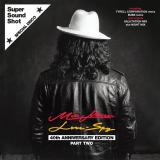
The first chapter of our 40th Anniversary celebration brought “Love Spy” back to vinyl and invited a new generation of producers to look at Mike Mareen’s 1986 classic from their own perspective.
Part 2 continues the story, but there is no reason to tell the same tale twice.
This time we reach once again into the original 1986 package and bring back the “Salutation Mix”, pairing it with two completely new remixes created by two remarkably colourful personalities from today’s European electronic underground.
And colourful is definitely the right word.
The first comes from Tyrell Corporation.
Behind that name stands Martijn Hoogendijk, better known to most electronic music heads as Alden Tyrell.
For almost three decades, Tyrell has been one of the most distinctive characters of the Dutch electronic scene. His musical world has moved freely between Italo Disco, electro, techno, acid, house and EBM, always with an obvious fascination for machines, analogue synthesis and the raw energy of early electronic dance music.
His relationship with Italo is certainly not a recent fashion. One of his earliest Alden Tyrell releases, “Love Explosion”, appeared on I-F’s Viewlexx label back in 1999, at a time when only a relatively small group of Dutch fanatics were already rediscovering and reinterpreting the forgotten European electronic sounds of the previous decade.
Since the early 2000s he has also been deeply connected with Rotterdam’s legendary Clone Records, not only as a producer and collaborator, but as one of its most important mastering engineers. His fingerprints can be found on an enormous number of Clone releases, including the label’s celebrated work restoring and reissuing the Drexciya catalogue. His studio tells much the same story. Synthesizers, drum machines and hardware collected over decades surround a producer whose fascination with electronic instruments started when he bought his first synthesizer in the 1980s.
For “Love Spy” he appears as Tyrell Corporation and delivers exactly what one might hope for from someone with that history: a remix that understands the original language of Italo and Hi-NRG, but speaks it with the experience of nearly three decades spent inside Dutch electro, techno and machine music.
The second new interpretation comes from France. Bubs, real name Maxime Bunel, followed a very different route.
His earlier productions grew from house, disco and French-touch influences, but over the last few years his attention has increasingly shifted toward Italo Disco, Hi-NRG and the rapidly expanding contemporary italowave scene.
In 2025 he made that commitment official by launching Filter Phaser, his own label dedicated specifically to the new generation of Italo Disco and Hi-NRG. And his “Love Spy” remix shows exactly why his name has been appearing more and more often in this scene. This one is pure dancefloor ammunition.
Bubs keeps the elements that make “Love Spy” instantly recognisable, but raises the temperature considerably. The energy is harder, the dynamics are bigger and the production has been pushed towards the sound of contemporary italowave without sacrificing the melody, drama and personality of Mike Mareen’s original. Old DNA, new blood.
The result is not an attempt to drag “Love Spy” away from 1986. Quite the opposite.
Both remixers clearly understand why the record still works forty years later. They simply approach that DNA from two different generations and two different corners of European electronic music, but with the same respect and adoration to Mike Mareen’s legacy.
The 40th Anniversary Edition Part 2 comes pressed on classic black vinyl and a special ruby-red vinyl edition.
It is also the final Vintage Pleasure Boutique release of 2026.
And somehow it feels like the right record to close the year.
Brooklyn-based DJ and producer Son of Lee is a native New Yorker who's been active in the local underground for over a decade. He launched this label back in August with a doozy of an EP that soon sold out, and so we're glad he's back. These are four more flame-hot disco edits marbled with references to many classic sounds and artists. 'Stop Making Cents' is jangling disco-pop, while 'Different Places' slows down to an 80s synth chug and 'Louis-Dreyfus Dance Face' brings some erotically charged disco sophistication and 'Nichols In May' is a mid-tempo and dubbed out delight with funky guitars for days. Classy and effective.
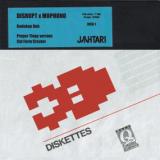
Hard-hitting limited 7” floppy disk by West Coast beat maestro Mophono, mashing up two 8bit mini epics by disrupt and shooting them into outer space.
“Budokan Dub” is the instrumental cut of Roger Robinson’s “Bristol Crystal” from the Jahtarian Dubbers Vol. 6 compilation: a bass heavy mutation of Rob Hubbard’s 1989 fighting game soundtrack, re-worked by disrupt on a DIY commodore synth, with added extra rocket fuel by Mophono, cranking the psychedelics up to eleven.
Made with the same DIY synth, “Proper Tings version” on B is based on the original riddim track for Tikiman’s “Who Goes There”. Mophono now sent it through the cosmic slice machine, turning it into a deadly sound system rattler, designed to take the roof off at those very special moments.
Coming with the additional beat tool “Dub Form Creator” and a nice’n’gritty floppy disc sleeve this crucial little data package is not to be missed!
COEO are back on Toy Tonics! After uninterrupted touring around the globe, followed by a short creative break the guys come back with an even stronger sound. With the new EP they go more underground again. Its addressed to the clubs and night owls out there, who turn night into day and won't stop dancing!
The sound is based on classic house patterns and includes a lot of cool saxophones, big piano stabs & rhythmic piano solos. They even go tribal, use arpeggios and switch into breakbeat heaven. The four Originals are a great next step in the COEO evolution. The unique warm, catchy atmosphere of the tracks can create that special COEO euphoria which made them a lot of fans. From Moodymann to Disclosure, Mall Grab to Kenny Dope, the list is long.
It’s fantastic to see how popular they became over the last couple of years. The last COEO vinyl sold over 2500 copies and some of their tracks have millions of Spotify plays. It’s DJ FOOD. Pure bliss!
Sincere yet uninhibited. Powerful yet vibrant. This remarkable debut album captures the breakthrough moment of rising pianist Mikio Masuda.
Mikio Masuda first came to prominence as a member of the Terumasa Hino Group, and this is his debut album as a leader. The musicians are essentially the same lineup that was performing with the Hino Group in 1974, but with Masuda at the helm, the music takes on an especially fresh and energetic character. He plays with remarkable freedom and confidence, as if completely at home in the spotlight.
Four of the album’s six tracks are Masuda originals. At times he moves forward with a light, agile touch; at others, he unfolds beautiful themes with lyrical sensitivity. The variety of the compositions and the freshness of the performances are consistently striking.
Among the highlights is “Prayer”, a powerful, Afrocentric piece that stands as an outstanding example of the post-Coltrane approach. Both compositionally and performance-wise, it ranks among the album’s defining achievements.
This album marks the starting point of Masuda’s career and remains one of his signature works, documenting the emergence of an artist who would later become one of the leading figures of the fusion era.
Epicentre was an R&B/funk group formed in Seattle, Washington by keyboardist Ric Ulsky. The band developed a loyal following, playing the extensive NW club, concert and dance venues throughout the mid-to-late 1970s. Their sound was a blend of melodic R&B and powerhouse funk that dependably filled music venues throughout the Western US. Bernadette Bascom was the lead vocalist, who captivated audiences with her powerful yet velvet-smooth voice and commanding, magnetic stage presence.
In 1978, Epicentre worked with Seattle producer Don McKinney to record their music in Seattle's now legendary Kaye-Smith studios. The result was seven strong, fully -produced R&B songs, with occasional horn and string orchestrations tastefully added to the final versions.
Their music quite literally sat on a shelf for decades until McKinney decided that all the hard work and talent should no longer remain undiscovered and it needed to find its audience. He restored and digitized his copies of the master tapes and looked for an opportunity. A chance call to the former leader of the group, Kell Houston, led to a serendipitous introduction to UK boutique/funk/R&B label founder Russell Paine. The result was an agreement to release their music, starting with two songs, "When You Were In Love With Me", and "Magic Carpet."
And now the follow up single of "Searchin/Tongue Tied"
Footnotes: Lead singer Bernadette Bascom became a protegé of Stevie Wonder, and was the first artist to be signed to his label Black Bull , starting a period of collaboration between the two. Bermadette is the daughter of Reverend Dr. Marion C. Bascomb (1925-2012), one of Baltimore's major civil rights voices and pastor emeritus of Baltimore's Douglas Memorial Community Church. Ric Ulsky eventually left the group to play keyboards and tour extensively with The Association. You can also find Epicentre's music on the compilation album "Seattle Funk, Modern Soul & Boogie: Volume II 1972-1987." In addition to Bernadette, the musicians on the 1978 sessions are Kell Houston, keyboards, Michael Cox, bass, John Carmondy, guitar, and Ricky Lynn Johnson, drums and vocals. While their recorded material is primarily original, Stacy Christensen from Seattle's Gabriel contributed two of his compositions.
Following the release of Haunted House Party, Bradley Thomas Turner was contacted by the Cryptozoological Society of New York City to create music for their museum’s holiday exhibitions. As enigmatic as they are controversial, the secretive society gave the composer free rein to create music that celebrated their profane (and, according to their critics, pseudoscientific) explorations of the darker side of yuletide folklore. The endeavour was denounced by religious groups, the scientific community and even parts of the cryptozoological community as “blasphemous,” “irresponsible”, and “a dangerous topic to make light of” respectively. Not much is known about the pandemonium that broke out on the night of the opening reception, but one journalist (who has been granted anonymity by request) infiltrated the event and captured the recordings that follow. Death cult ritual? Mishandling of cursed artifacts? Elaborate practical joke? Publicity stunt? No one can (or will) say for sure as no person in attendance has been willing to speak on record. Therefore, we present these recordings so the general public can decide for themselves.
The final chapter of The Third Room's curator-led series is shaped by GiGi FM, an artist whose work moves fluidly between club functionality, emotional storytelling and immersive sound design. Through her productions and performances, she has developed a distinct language where rhythm, atmosphere and movement exist in constant dialogue. For the closing chapter, the focus lies on cohesion. Bringing together artists connected through a shared sensitivity for groove, detail and space, the release unfolds through percussive structures and atmospheric elements that move with clarity, depth and intention. The Half Bearded Man by Fergus Sweetland opens the record. A rough yet detailed rhythmic framework, syncopated percussion and a rolling bassline create forward motion, while softer elements and a subtle vocal layer introduce a contrasting sense of lightness, drawing the listener into the track. On Shark Attak, D-Leria places percussion at the centre, but with a more restrained approach. Polyrhythmic bleeps and high-frequency sweeps weave around the groove, maintaining depth and tension without becoming intrusive, giving the track a quiet but persistent drive. The B-side opens with one of its defining moments: Anukari, a collaboration between Efdemin and GiGi FM. Bringing together two distinct approaches, the track unfolds as a layered and atmospheric piece: detailed percussion, connecting textures and subtle melodic fragments create a sense of depth that feels both modern and slightly otherworldly, while remaining inviting and grounded. Closing the record, Even by Fireground reduces the elements further. Warm chords and a restrained rhythmic core create an open, enveloping space, balancing softness with tension and allowing the track to unfold with a quiet sense of momentum. Across all four tracks, the release remains tightly cohesive: built on groove, space and carefully placed detail. As the final entry in the series, it shifts the focus from structure to flow, offering a closing chapter that feels immersive, connected and complete. A1 Written and Produced by Fergus Sweetland | A2 Written and Produced by Giuseppe Scaccia | B1 Written and Produced by Giulia Fournier & Philip Sollmann | B2 Written and Produced by Angela Dragonetto & Danielle Paduano Mastered by Ahmet Sisman (The Third Room Studios) Artwork by Charlotte Ernst Design by Daniel Bornmann (STUEDIO.XYZ) Distribution by Clone Pressing by Matter Of Fact
Highscore is one of the newest-and quite sensational-discoveries in funk of the 1980s out of Germany. Two tracks Breakin' Out and Girls So Fine, both recorded about 40 years ago and shelved ever since, are finally receiving a long-overdue 12" release.
Label founder DJ Scientist tells the story of how the tracks were uncovered:
"Several years ago, while researching the Crea label-after we had already licensed 'You're Not The One For Me' by Peter Patzer-I also wanted to find out more about another band on the label: Nuages, who had released the stunning jazz-funk/fusion album Cumulus.
Interestingly, a Discogs user had uploaded a hand written promo letter from one of the band members along with the LP. In it, drummer Mike Bach mentioned plans for a second album, as well as a single featuring a 'coloured singer'-which caught my attention. (A note on language: the original letter from 1985 uses the term 'coloured.' We've chosen to quote it directly as a historical document, but want to be clear that this reflects the terminology of the era and not language we would use today.)
Digging deeper, more information was found on Bach's own website, where a project called 'High Score' was mentioned. I immediately got in touch and asked if the recordings from that project still existed. Unfortunately, Bach couldn't locate any of the material at the time.
Years passed before we reconnected, when we featured 'Strange Weekend' by Nuages on our recent yacht rock compilation. I still had the Highscore project in mind and asked again. Once more, Mike had to deny-but he made another effort and reached out to former collaborators. A few weeks later, guitarist and composer Hermann Behrens discovered cassette tapes containing tracks from the Highscore project. I couldn't wait to hear them…"
To go back a bit: Nuages were a jazz-rock band from Bremerhaven, originally formed by guitarist Joachim "Fussy" Fuß in 1982. The lineup included Mike Bach (drums and percussion), Klaus Hinners (bass), and Frank Fischer (keyboards). In 1984, John Dillard, a U.S. GI stationed in Germany, joined Nuages for several live performances as a soul singer.
Around 1985/1986, Dillard and Bach then teamed up with Hermann Behrens with a new focus on electro funk and disco: Highscore was born.
When the three demo recordings were finally sent to us, they immediately blew us away. Breakin' Out stood out as an incredible electro-funk boogie gem-exactly what we had been looking for. What's more, it didn't sound like a rough demo at all, Breakin Out was a well-arranged and almost perfectly recorded track, driven by fresh, vibrant synths, drum machines and guitar. The cassette mix wasn't entirely final, but the remaining details could be refined during mastering.
The B-side, Girl So Fine, impressed just as much-equally strong and just as captivating as the A-side. Our reaction was immediate: this had to be released without delay!
Most importantly, there are a few more recordings from Highscore. However, these only exist as multi-track studio reels, which currently cannot be transferred. In the best case, more material from the band may surface soon-hopefully without another long wait.
The 12" release Breakin' Out / Girl So Fine" comes with a newly designed picture sleeve, featuring an original photo of the band members, including background singer Ruben Hopkins who does not appear on these two recordings.
House and techno's most innovative improviser, KiNK, lands on Mutual Rytm X.
Offering four more thrilling dancefloor weapons, the iconic talent lands on SHDW's new Mutual Rytm X Series to deliver the label's second release.
Legendary Bulgarian artist KiNK is widely regarded as one of the most respected live acts on the global scene. He is a noted tech wizard who creates loops on the fly, crafts killer drums and never fails to hypnotise dancefloors. He has released on almost every influential label of the last 15 years and taken his unrivalled live show to all corners of the world, often drawing on those sets to bring aspects and inimitable qualities from his performances into his tracks. This innovative approach has helped to solidify his reputation as a groundbreaking figure, inspiring a new generation of musicians and producers, and he once again showcases precisely why he's in a league of his own here with a first appearance on SHDW's newly minted Mutual Rytm X.
'Unicord' opens up this new EP in thrilling fashion with sleek, Detroit-style synth loops flashing up top as the heavy, pounding while warm drums drive things down low. 'Quantum Shake' brings 90s energy with new school sound deists - the dubby drums are fast and urgent, the synth craft is deft, and the percussion adds texture to a straight-up but sophisticated techno anthem. 'Pitch Down' then brings fantastically unhinged synth leads that spray and zip about the mix to boggle the brain. Rattling percussive loops and chunky drums keep things moving as those synths get even more wild. To close, the digital bonus 'Highpass Lowpass' is a masterfully muscular cut with rugged bass and taught synths interlinking to mind-melting effect.
Macedonian artist Stojche kicks off Mutual Rytm Xs 2025 schedule with his blistering new EP, Stomping Ground.
Stojche is an exciting DJ and producer from Skopje, Macedonia, who is currently based in Madrid. He heads up his Tangible Assets imprint and has been making waves in the electronic underground for over 20 years. His music takes inspiration from the classic sounds of Detroit and dub techno, and in 2024, he impressed with his Metaphor EP on F.U.S.E. Following on from his superb contribution to Mutual Rytms Federation of Rytm II compilation, here, he now serves up his first EP of the year with a first outing on X, the sister label of SHDWs Mutual Rytm, w Stomping Ground.
This EP opens up with the powerful Stomping Ground, a scintillating blend of tightly programmed kicks and reverberating percussive lines. The textured percussion shimmers over the racing beats and cannot fail to sweep dancers off their feet. Oberheim is another high-class, high-impact sound with muted melodies thinking over the twisting and turning drums and bass which never let up and ooze warm machine soul. Consequence keeps the pressure on with tight drums and raw percussive layers softened by smeared dub chords. Digital bonus The Vault shuts down with thumping kicks and rave ready synth stabs that will erupt on peak-time floors.
Some records never really disappear. They wait for the right moment to be rediscovered.
Originally created in 1981 by legendary Italian composer and keyboardist Claudio Simonetti alongside producer Giancarlo Meo, Kasso emerged at a pivotal moment when disco, jazz-funk and electronic music were beginning to collide, and a distinctly Italian dance sound was taking shape.
Built around Simonetti’s unmistakable piano and keyboard work, Kasso developed a significant following across Europe, particularly in France and Italy. The project would produce cult favourites including “Kasso”, “Key West”, “One More Round” and “Walkman”, the latter becoming a major French success, reportedly selling around 500,000 copies.
Kasso’s influence travelled considerably further. Finding its way into the underground clubs of New York and Chicago, with original material receiving the remix and edit treatment from John “Jellybean” Benitez and, later, house music pioneer Frankie Knuckles.
Behind it all is Claudio Simonetti, a musician whose extraordinary career stretches from European disco to some of cinema’s most iconic soundtracks as keyboardist and composer with Goblin, including Deep Red, Suspiria and Dawn of the Dead. Now, more than four decades later, Claudio Simonetti’s Kasso returns.
Unlocking key elements from the original production, including Simonetti’s distinctive piano, the music has been placed in the hands of another European dance music pioneer: Ben Liebrand.
A hugely influential DJ, producer and remixer, Liebrand’s groundbreaking In The Mix radio shows and legendary Grandmix series have helped shape European DJ culture, while his extensive remix catalogue stretches across artists including Bill Withers, Phil Collins, Sting, Salt-N-Pepa and countless others.
His new interpretations of Kasso respect the musicianship and unmistakable character of Simonetti’s original while giving it a fresh, contemporary dancefloor life.
And this is only the beginning.
Kasso launches a series of four new singles, culminating in Kassologie, a definitive collection bringing together the essential Claudio Simonetti recordings alongside new remixes and updates. And all vinyl will be released in a colored-vinyl edition also!
Over forty years after it first emerged from Italy’s extraordinary early-’80s dance scene, Kasso is ready for another round.
Since his 2013 debut album, Body Issues, Max Ravitz—better known to you and me as Patricia—has been zeroing in on the kernel of an idea. Across seven albums for labels like Opal Tapes, Spectral Sound/Ghostly International, and Acid Test, he’s applied his hand to a lean, focused vision of electronic music, paring away excess to lavish attention on carefully sculpted acid lines, stealthy drum programming, and warmly emotive melodies. For all their restraint, though, his tracks could never be called merely rote or efficient; even at their simplest, they’re steeped in atmosphere and shot through with layers of mystery. Now, on his first record for Balmat, he strips things down even further, revealing the ambient essence of his music.
Across eight tracks, he pours everything he has into the most minimalist music of his career. Many tracks
seem to have been made with just one synthesizer patch and some carefully applied effects—a honing of
his materials that brings the nuances of his music to the fore as never before. Elastic pitches warp and drift; fleeting harmonies bring out new dimensions in his synths’ timbres. “Murmuration” sounds almost like
Baroque music in its lithe, undulating counterpoints. “Birdsong” takes a classic choral pad and stretches it
horizon-wide. And songs like the closing “Yearn” allow the expressive dimension of his music to fill the
frame as never before.
The title Songs for Josephine pays tribute to Max’s wife. For years, she’s told Max she’d like to hear him
make an album without drums; he assembled these songs over time, always with her in mind. “Even with
my beat-driven music, I’ve gotten a lot of comments in the past about the ambient textures tucked into
those tracks, so I feel like people have been drawn to that aspect of my music for a while,” Max says. “It’s
been an interesting change of pace making a record with that side of my sound as the focal point.”
For listeners familiar with Max’s music, the effect may be uncanny: This is Patricia through and through, but heard in a whole new way.
—
Balmat is a label with a cloudy outline. Jointly shepherded by Albert Salinas and Philip Sherburne, two
friends living in Cardedeu, Catalonia, and on the Balearic island of Menorca, Balmat grew out of Lapsus Radio, a weekly show born almost ten years ago. Balmat’s mission is simple: to foster new ideas, expand upon personal obsessions, and put enveloping sounds out into the world. “Balmat” means “empty” or “void” in Catalan. But quite apart from any negative connotations, we prefer to think of it in terms of possibility: a space waiting to be filled.
Ruf Kutz reaches release twenty-two with something close to heart...
Mike Kee is a face from the early days - red-lit rooms of the Bodega mushroom squat parties in Sydney. This is a second release for Mike Kee on Ruf Kutz since 'Seeing Crystals' on RK2 in 2010.
Recorded in the rainforests of Bundjalung Country (northern NSW, Australia). Making good use of a Fender Rhodes and a JX-8P synthesiser.
WHITE CLOUD PLACE is a destination that doesn't exist. Glimpsed once on a street sign, filed away in the imagination and allowed to bloom into an imagined geography of warmth and weightlessness.
The music is lush dream house that elicits euphoria out of the speakers and into the body. Mike Kee has been chasing this feeling across his music and here it lands cleanly.
Flip the record and the temperature ratchets up. BANANA MOON is one for the dancers - shuffling congas push the pace while Rhodes chords and those big analog synth strings hold the whole thing aloft.
Where the A-side invites you to float, Banana Moon keeps it pitched up and jazzy.
Dark Entries is proud to host Darlynn’s debut album, Dyke Den. Darlynn is an Oakland-based duo composed of Daria Lourd (aka Bored Lord) and her wife, vocalist Jaelynn Walls. Dyke Den is a lesbian love story about two creative individuals finding each other and themselves through effusive and contemplative sonic avenues. Created in their home over the course of two years, this album speaks to the journey of Daria and Jaelynn’s romantic relationship as well as their evolving combined creative impulses.
On Dyke Den, Darlynn display their influences – from Janet Jackson and Sly & the Family Stone, to Frankie Knuckles and Larry Levan – in a sophisticated, fully realized, and overtly queered fashion. Joyous dancefloor moments are abundant. Tracks like “Make Yr Move” and “Like A Summer” celebrate deep house vibes ala Alleviated Records, while sultry R&B moves are flexed on “Girl 2 Girl” and “Alright With Me.” But longing and yearning exist within this joyous arc, and the question arises: “How can I get you to love me?” More than an idealistic narrative of girl meets they/them, Dyke Den paints a portrait of love in all its multifaceted moments: the bids for commitment, the stagnation of years going by, the wormholes of desire. Yet the album maintains its thesis of hope. The sweet, layered harmonies of closing song “Love Letter” display the power of life partnership: “My whole life is a love letter to you.” Dyke Den features artwork by Hailee Va in a sleeve designed by Eloise Shir-Juen Leigh. Darlynn’s final declaration, “We are all creatures of desire, completely built for love.”s
Edgar debuts on Dark Entries with Pavor, an 11 track LP of sleazy disco, warped synthpop, and gothic cumbia. Veteran musician Luis Gutierrez has spent the past two decades touring in bands, running Lalalandia Studio, and building his practice in Oakland and Guadalajara. But now, for his first solo outing, he has become Edgar, a pop star who knows no limits! “Edgar feels mightier than anyone but is always reduced to his vices” says Gutierrez, and Pavor delivers vices in spades. From the opening salvos of “Otra Agua,” it’s clear we’re in for a wild ride: seasick synths slide along slamming disco beats, menacingly chanted vocals sit amid a flurry of careening horror movie samples. The mischief does not abate as we’re guided through a demented funhouse of genre detournements.
Edgar puts his indelible fingerprints over every inch of this vinyl, from uptempo numbers like the spooky chip-tune frenzy of “Nunca Mas” to the twisted cumbia of “Panteon.” We’re even treated to a fairly faithful (and majestic) Spanish-language cover of Amanda Lear’s “Follow Me,” here titled “Sigueme.” EBM, space disco, and horror movie soundtracks all find their way into the mix on Pavor, but the diverse palette comes together perfectly, like a Yello album for the 21st century. Pavor comes housed in a sleeve designed by Eloise Shir-Juen Leigh and features a photograph by Izaak Schlossman. Also included is an insert with lyrics and notes. On Pavor, Edgar brings us a healthy dose of pure excess, reminding us that dread can be a hell of a lot of fun.
Mount Kimbie’s forthcoming contribution to the acclaimed fabric presents series marks one of the duo’s most dancefloor-focused bodies of work in years. More than simply a release on fabric Records, the project sits within the revered fabric presents mix series, placing Mount Kimbie alongside artists such as Daniel Avery, Midland, Helena Hauff and Overmono, artists who have each delivered defining entries for the series.
Leading the project is first single “Monroe”, a warm yet uplifting club track that unfolds gradually through loose percussion, driving synth work and subtle vocal fragments drifting in and out of the mix, adding flashes of emotion without interrupting the track’s momentum. An ode to their 2017 hit ‘Marilyn’ featuring Micachu, the track carries elements of the original throughout, with flourishes over reverb washed vocals that float around you amongst driving drums and bass. There’s a summery energy running throughout the track, making it equally suited to late-night club systems and open-air festival stages.
Long celebrated as pioneers of the post-dubstep and future garage movements, Mount Kimbie continue to evolve beyond genre boundaries while maintaining the unmistakable sonic identity that has made them one of the defining acts in UK electronic music. Their contribution to the fabric presents series captures the duo at their most refined and exploratory, without losing the emotional atmosphere and understated intensity that has always defined their work.
Released as part of the prestigious fabric presents series via fabric Records, the project signals a bold new chapter for Mount Kimbie.
Excited to share this bomb new release from Scottish techno/house legend Stephen Brown, whose discography reads like a Who's Who of classic techno labels: Transmat Detroit, Djax-UpBeats, Cocoon, Subject Detroit, Theory...
With its instantly recognisable vocal hook, Test 1 is a bona fide, party-starting hand grenade of a tune and destined for track ID requests wherever it drops. Backed by the raw, Chi-town groover Move It (which wouldn't have sounded out-of-place on one of Brown's Djax-up-Beats releases: all off kilter pads, detuned hats and a slamming kick) plus the deeper Tell Him, itself a masterclass in subtlety and groove, this 3-tracker really is quite a package.
All killer: no filler, The Safari EP is essential for fans of proper underground house & techno. Stephen Brown's releases have been falling into the "buy-on-sight" bracket for DJs in the know for many moons now. This release is no different! High quality from Edinburghs finest.
A pure goa-trance-classics compilation; back on vinyl with Astral Projection, MFG, Xenomorph, Shakta, Oforia,... !
This compilation opens with a track of Roy Sasson, who was famous in the 90s as part of Shidapu. Here he opens with a deep & groovy psychedelic dancefloor monster. The second track has a darker atmosphere, is super powerful but also melodic and spiralling! Xenomorph hasn't released any music for a long time, but he clearly kept his magical touch! That darker touch is carried on by Battle of the Future Buddhas, who went towards pure acid 303 territories in his haunting track! Shakta brings back some sunshine with his funky uplifting "Expedition To Earth"! Now after this first part of the CD come two of the most famous Goa-trance names ever: Astral Projection & MFG! They both do what they do best: creating wonderful melodic soundscapes! Sensitive, emotional & harmonious trancy music for people that want to feel a sunny dancefloor through music! Then RA mixed his known euphoric type of melodies & chords with a more modern sound! The result? Music that will do the trick on every dancefloor around the world. The ender is a more floating, warm track of Oforia, who showcases his more mellow style :)
We hope to create the same heartwarming feeling in your heart, as the one we had when we heard goa-trance for the first time! Enjoy and make sure to land again after reaching the sky!