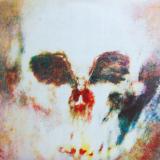
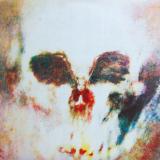
Key long-term collaborators and Coil's "secret third member" Danny Hyde located the original Hellraiser studio session tapes, and the bonus material recovered from them is presented here as an "expanded ritual" edition.
For fans of pain & pleasure, Throbbing Gristle, lost horror soundtracks & haunted electronics.
Back in 1987, Clive Barker's supernatural body-horror classic Hellraiser hit cinemas worldwide and introduced audiences to the demonic Cenobites. Barker was a devoted COIL fan (Peter Christopherson and John Balance), and he famously said they were the only band he'd ever heard on record whose music he'd had to take off because, in his words, "theymade his bowels churn.". He initially invited them to compose the film's music, and the group began recording cues. But the producers at New World Pictures ultimately rejected the material in favor of a more traditional approach, bringing in Christopher Young, whose final score remains excellent, if less experimental. What remains from Coil is an unfinished soundtrack with surviving fragments and rough ideas, abruptly left behind mid-process, a glimpse into an alternate Hellraiser movie, one we can only fantasize into existence.
Nearly 40 years later, key long-term collaborators and Coil's "secret third member" Danny Hyde located the original Hellraiser studio session tapes, and the bonus material recovered from them is presented here as an "expanded ritual" edition, reassembled into a standalone, possibly definitive and strangely beautiful nightmare suite. Play it in the dark and experience the consequences of raising hell...
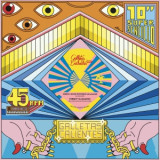
First published in 1978 by Cetra, in this work Antonio Infantino continues to express his ritualistic and shamanic relationship with the musical traditions of Southern Italy. The recordings focus on the mystery of death and the sacraments, the light of the spirit and the divine that descends and conquers souls. The phenomenon of Tarantism is still strong, the power of dance as a symbol of transformation and revolt, a therapeutic process of final healing. Folk music celebrates a deep sense of community, the memory of a peasant world that no longer exists but is still alive in the collective memory. Behind the tight and insistent rhythm of the percussion, the voices of the people, the colours of the squares and the scratchy string arrangements always emerge. The magical sound of the bagpipes is lost in the alleys of the villages. Infantino sings of minor cultures, the poor and oppressed classes, who share joys and sorrows, dance and music as secular forms of liberation.
MUSIQUE POUR LA DANSE presents The Unreleased Themes From Hellraiser expanded ritual by Coil
Back in 1987, Clive Barker's supernatural body-horror classic Hellraiser hitted cinemas worldwide and introduced audiences to the demonic Cenobites. Barker was a devoted COIL fan (Peter Christopherson and John Balance), and he famously said they were the only band he'd ever heard on record whose music he'd had to take off because, in his words, "theymade his bowels churn.". He initially invited them to compose the film's music, and the group began recording cues. But the producers at New World Pictures ultimately rejected the material in favor of a more traditional approach, bringing in Christopher Young, whose final score remains excellent, if less experimental. What remains from Coil is an unfinished soundtrack with surviving fragments and rough ideas, abruptly left behind mid-process, a glimpse into an alternate Hellraiser movie, one we can only fantasize into existence.
Nearly 40 years later, key long-term collaborators and Coil's "secret third member" Danny Hyde located the original Hellraiser studio session tapes, and the bonus material recovered from them is presented here as an "expanded ritual" edition, reassembled into a standalone, possibly defnitive and strangely beautiful nightmare suite. Play it in the dark and experience the consequences of raising hell...
Notes by Danny Hyde
Original artwork by Trevor Brown
For fans of pain & pleasure, Throbbing Gristle, lost horror soundtracks & haunted electronics.
MUSIQUE POUR LA DANSE presents The Unreleased Themes From Hellraiser expanded ritual by Coil
Back in 1987, Clive Barker's supernatural body-horror classic Hellraiser hitted cinemas worldwide and introduced audiences to the demonic Cenobites. Barker was a devoted COIL fan (Peter Christopherson and John Balance), and he famously said they were the only band he'd ever heard on record whose music he'd had to take off because, in his words, "theymade his bowels churn.". He initially invited them to compose the film's music, and the group began recording cues. But the producers at New World Pictures ultimately rejected the material in favor of a more traditional approach, bringing in Christopher Young, whose final score remains excellent, if less experimental. What remains from Coil is an unfinished soundtrack with surviving fragments and rough ideas, abruptly left behind mid-process, a glimpse into an alternate Hellraiser movie, one we can only fantasize into existence.
Nearly 40 years later, key long-term collaborators and Coil's "secret third member" Danny Hyde located the original Hellraiser studio session tapes, and the bonus material recovered from them is presented here as an "expanded ritual" edition, reassembled into a standalone, possibly defnitive and strangely beautiful nightmare suite. Play it in the dark and experience the consequences of raising hell...
Notes by Danny Hyde
Original artwork by Trevor Brown
For fans of pain & pleasure, Throbbing Gristle, lost horror soundtracks & haunted electronics.
If one thing is for sure, you can always count on FXHE to serve up the jams and surprise you in the process. Enter this new 12" from Bill Beaver aka William Beaver who has been serving up house jams under various guises since the late 80s. This one, 'Crusin Outer Drive', is, in the words of the label, "a back yard Boogie slash Hustle Summer Jam for those who live in the inner city and Beyond" and it comes with a 70s-style keyboard solo from Javonntte Garrett as well as signature off-grid drums, lo-fi charm and a raw analogue aesthetic. Vocals add the charm as the synths get passed through various filters, decay and change shape with a mind of their own and the chords never quit. Elsewhere, we get an instrumental version of the A-side and two takes on 'Down To The Sac', one a sultry, looped up affair from Jefferson, the other from Brett Fullerton, stripping it down to tribal drums and then building it right back up again via some super pimped synths. It's pure Detroit heat.
Ja:ck is an artist who moves beyond fast-paced trends, focusing instead on a clear, driving vision. His releases on the renowned label Cocoon Recordings represent an uncompromising sound that balances hypnotic techno and energetic club dynamics. With a keen sense of tension and atmosphere, he has developed a signature style over the years that works as effectively on large floors as it does in intimate sets.
His new track, Dinamo, perfectly encapsulates this energy: pulsating, powerful, and precisely crafted. The track builds with subtle intensity before erupting into a forceful, captivating movement designed for the peak time.
Notably, Ja:ck has been supported for years by techno icon Sven Väth, who consistently integrates Ja:ck's sound into his sets. This ongoing backing underscores not only the quality of his productions but also his relevance within the international scene. With Dinamo, Ja:ck delivers another clear statement: raw, direct, and absolute club material.
The Oliver Keim remix of Ja:ck’s Dinamo translates the original track into a clean, stripped-back club aesthetic with a steadfast focus on groove and energy. From the start, a driving flow emerges: precise, dry drums meet a deep, rolling bassline that constantly pushes forward. The arrangement remains intentionally minimalist, yet leaves enough room for subtle details to unfold and build tension. Finely placed breaks provide dynamics without losing momentum, leading back into powerful, controlled drops.
The remix eschews clutter, relying instead on clarity, punch, and timing. This makes it versatile enough for both intimate club settings and larger floors, fitting seamlessly into Tech House, Melodic Techno, or driving House sets. It is a modern, functional remix—minimalist in sound, powerful in impact, and strictly geared toward the dancefloor.
Ja:ck ist ein Künstler, der sich jenseits schneller Trends bewegt und stattdessen auf eine klare, treibende Vision setzt. Seine Releases auf dem renommierten Label Cocoon Recordings stehen für kompromisslosen Sound zwischen hypnotischem Techno und energetischer Club-Dynamik. Mit einem feinen Gespür für Spannung und Atmosphäre hat er sich über die Jahre eine eigene Handschrift erarbeitet, die sowohl auf großen Floors als auch in intimen Sets funktioniert.
Sein neuer Track Dinamo bringt genau diese Energie auf den Punkt: pulsierend, druckvoll und gleichzeitig präzise ausgearbeitet. Der Track baut sich mit subtiler Intensität auf, bevor er sich in eine kraftvolle, mitreißende Bewegung entlädt, gemacht für die Peak-Time.
Besonders bemerkenswert: Ja:ck wird bereits seit Jahren von Techno Ikone Sven Väth unterstützt, der seinen Sound immer wieder in seine Sets integriert. Diese kontinuierliche Rückendeckung unterstreicht nicht nur die Qualität seiner Produktionen, sondern auch seine Relevanz in der internationalen Szene.
Mit Dinamo setzt Ja:ck ein weiteres klares Statement : roh, direkt und absolut clubtauglich.
German Text:
Der Oliver Keim Remix von „Dinamo“ von Ja:ck übersetzt den Original-Track in eine klare, reduzierte Club-Ästhetik mit konsequentem Fokus auf Groove und Energie.
Von Beginn an entsteht ein treibender Flow: präzise, trockene Drums treffen auf eine tiefe, rollende Bassline, die sich konstant nach vorne bewegt. Der Aufbau bleibt bewusst minimalistisch, lässt aber genug Raum für subtile Details, die sich im Verlauf entfalten und Spannung erzeugen. Fein eingesetzte Breaks sorgen für Dynamik, ohne den Drive zu verlieren, und führen kontrolliert zurück in kraftvolle Drops.
Der Remix verzichtet auf Überladung und setzt stattdessen auf Klarheit, Druck und Timing. Dadurch funktioniert er sowohl in intimen Clubsettings als auch auf größeren Floors und lässt sich vielseitig zwischen Tech House, Melodic Techno und treibenden House-Sets einsetzen.
Ein moderner, funktionaler Remix, reduziert im Sound, stark in der Wirkung und konsequent auf den Dancefloor ausgerichtet.
The relationship between Tech House legend Terry Francis and Sushitech has given birth to something truly special over recent years, reigniting a whole movement centred around the timeless, classic UK acid tech house born in late ’90s London. This signature sound laid the foundation for iconic venues like Fabric in their early days and went on to inspire the subgenres that followed.
Among Terry’s deep back catalogue are a rare few tracks that can truly be described as legendary, and ‘Free’ is undeniably one of those stone cold classics. Originally released in 2003, it is a soulful tech house masterpiece crafted by an artist with an intimate understanding of the movement and the unspoken bond between the DJ and dance floor during long nights. Driven by a relentless, infectious rhythm, an unmistakable bassline, and powerful vocals reminiscent of Massive Attack, it’s a track designed to create unforgettable moments on the floor, something those who know Terry’s legendary sets at Fabric understand all too well.
This special reissue also features two additional rare soulful tracks produced alongside Ricardo Afonso, who contributes his distinct, emotive vocals, as previously heard on cuts like ‘Change’ and ‘Rhythm Spirit’ from Terry’s last LP.
Remastered and pressed on heavy 180g vinyl to the highest audiophile standard, this release showcases soulful tech house at its abso
The relationship between Tech House legend Terry Francis and Sushitech has given birth to something truly special over recent years, reigniting a whole movement centred around the timeless, classic UK acid tech house born in late ’90s London. This signature sound laid the foundation for iconic venues like Fabric in their early days and went on to inspire the subgenres that followed.
Among Terry’s deep back catalogue are a rare few tracks that can truly be described as legendary, and ‘Free’ is undeniably one of those stone cold classics. Originally released in 2003, it is a soulful tech house masterpiece crafted by an artist with an intimate understanding of the movement and the unspoken bond between the DJ and dance floor during long nights. Driven by a relentless, infectious rhythm, an unmistakable bassline, and powerful vocals reminiscent of Massive Attack, it’s a track designed to create unforgettable moments on the floor, something those who know Terry’s legendary sets at Fabric understand all too well.
This special reissue also features two additional rare soulful tracks produced alongside Ricardo Afonso, who contributes his distinct, emotive vocals, as previously heard on cuts like ‘Change’ and ‘Rhythm Spirit’ from Terry’s last LP.
Remastered and pressed on heavy 180g vinyl to the highest audiophile standard, this release showcases soulful tech house at its abso
Random Factor's 'On The Air' EP is a hugely sought-after classic by those who know. It came on Ralph Lawson's ever-reliable 20/20 Vision and now, as it turns 25 years old, he has decided it is the right time to get it remastered and reissued. 'On The Air' is first up on this fine EP from Carl Finlow and it has serene synths that bring to mind Detroit techno soul over pulsing bass and slick drums. 'Lockdown' has a raw vocoder vocal over punchy drums and twitchy synth stabs and 'Undercurrent' is another weapon that has more than withstood the test of time as it bumps along on funky drums and is overlaid with more playful synth patterns. 'Disconnect' is a crunchy and 8-bit closer with pixelated synths and screwy acid lines. Superb.
Details marks SCHiLLiNG's return after years of research, above all on himself. It brings together the practices that have become essential to him: composition, sampling, sonic patchworks, and a palette that mirrors the full spectrum of his musical identity, from Rock'n'Roll to Trip-Hop and Ambient. Details is rich in small edits, hidden layers, fragile textures, and fragments that reveal themselves slowly. Yet the word carries a deeper meaning: what truly matters is often the smallest element, what doesn't appear clearly at first glance or on first listen, yet quietly holds the core of everything. The detail as the very pulse of one's inner world. Across 14 tracks, the album unfolds as a diverse journey, carefully shaped yet open enough to allow unexpected elements and subtle imperfections to remain part of its flow. The structure is not binding, you can begin from any track and embark on your own path through it. Each piece contributes to a wider arc without overpowering the others. The album includes collaborations with several artists who lent their talent to the project; their names appear in the credits of the physical release. In many ways, they embody the very idea behind the title: individual presences, each bringing their own nuance, forming a whole together. After all, fragments, in their union, shape the larger totality. Details doesn't ask to be consumed in a specific way, fast or slow, close or distant. It simply is what it is
The Armenian electronic underground has been quietly brewing something visceral. After years navigating the labyrinth of electronic production from his Yerevan studio, Dave N.A. strips away the excess to reveal six raw, uncompromising cuts that pulse with quiet intensity. Not the manufactured urgency of algorithmic dance floors, but the honest tension of someone who’s spent years refining his craft while the scene evolved around him.
Following his debut ‘Altura EP’ on no•id, where collaborations with freq444 showcased his ability to merge Armenia’s electronic scene with Brussels’ underground pulse, Dave N.A. returns with ‘Echoes EP’ after the label’s necessary creative hibernation. This isn’t about comebacks or grand statements. It’s about persistence. About the kind of restless creativity that emerges when you’ve been grinding in relative obscurity, releasing on labels like Uppers and Downers, Typeless, and Elicit Records, slowly building a sound that refuses easy categorization.
The EP opens hard and unexpectedly with “BLINK,” delivering a throat-cutting and all-consuming bassline. “ECHOES” builds around atmospheric sounds and percussive elements, driven by a straightforward yet effective drum sequence. “SHADO” ventures into darker and faster territory with sparse drum programming and heavy sub-bass emphasis. Both “RUSH” and “ORB” unleash torrents of unrelenting breaks, each percussive hit landing with surgical precision as sub-bass currents pull everything forward into hypnotic repetition. “HUNTER” closes the journey, stalking into frame with predatory low-end and razor-sharp hi-hats slicing through dense atmospheric fog.
The no•id ship continues to chart its course through Brussels’ underground, prioritizing artists who value craft over hype. With Dave N.A.’s return, the label reinforces its commitment to electronic music that functions on multiple levels: cerebral yet visceral, local yet universal.
Trevor Lucas and Gerry Conway were members of the folk-rock group Eclection, who released an album in August 1968 on Elektra Records. After the group disbanded in 1969, they formed Fotheringay with Lucas's girlfriend Sandy Denny, who had recently left Fairport Convention. The Fairports were recording mostly traditional folk material at this time and Denny left the group so that she could perform more of her own compositions.
The BBC session on Side One of this LP features songs from the first Fotheringay album and took place at the Playhouse Theatre on April 13th 1970. The songs on Side Two were recorded at BBC’s Maida Vale Studios in November 1970. They are ‘off-air’ recordings but the sound quality is still very good.
Barranquilla born multi-instrumentalist Pernett is undoubtedly a true pioneer in fusing Colombian folklore with electronic elements. Back in 2003, when he released his first album “Música Para Pick Up”, Humberto was immediately seen as genius by some, crazy and outrageous by others. How dare he incorporate synthesizers into traditional music? What would be called this avant-garde genre where gaitas, traditional drums and keyboards come together? To this date, Pernett has released 6 albums, worked with an impressive number of prestigious artists such as Phil Manzanera, Calle 13, Novalima, or Quantic, and is still influencing whole generations of forward-thinking musicians.
Originally released from is latest album, “Vamos A Hacer” and El Pajarito have been edited for the occasion, by talented recording engineer Benjamin Calais AKA Ben Matik,
A-side “Vamos A Hacer - Ben Matik Instrumental Edit” is a joint collaboration between Pernett and renown British producer Will Holland aka Quantic. A heavy blend of funky breaks and cumbia. A 7-minutes version, exclusive to this 10″, has been especially taken out from the masters vault, and edited by Ben Matik: the original short version takes a unexpected turn to a completely freaked-out “Puya” rhythm, where gaitas and synths perfectly merge together.
B-side “El Pajarito - Ben Matik Instrumental Edit” is a deep downtempo anthem, a perfect fusion of powerful electronic beats, 808 bass, analog synths and gaitas. special attention should be paid to the enchanting voice of Diana Pereira on this one.
Tokyo's Realrockdesign collective marks a full 30 years of cross-disciplinary creativity with the first of a planned trilogy. The A-side hands over a crown jewel from West Coast legend DJ Garth's Grayhound catalogue in 'Twenty Minutes Of Disco Glory', which gets remixed by DJ Harvey with a slow, deep, dark and come-to-me groove with a fizzy motif lingering like a trapped bee. The flip turns to German veteran Nectar, who is enjoying some deserved time back in the spotlight and shows why here: 'Fairy Trails' is a deliciously psychedelic descent into the underworld that perfectly befits its title. 'What Tha?' is paranoid and unsure with a writhing bassline, detuned synths bringing a freaky edge and a dubby, shuffling groove that is as inviting as the rest of the track is wonderfully weird.
Dub techno runs on ghosts and twins. The ghost is the echo that outlives the hit – the reverb tail, the delay feeding back into empty space. The twin is the dub itself: every sound shadowed by its own double, the original and its darker reflection locked into the same groove. Ghosts & Twins gathers four cuts that work that space.
This is BLACKINSTOCK's Black Gold Dub Techno with both feet on the floor – measured but muscular, weighted, no filler and no drift. The groove stays locked, the low end does the talking, and every echo earns its keep. Music for a dark room and a loud system, not a candle and a beanbag.
Curated by Kirill Matveev, who called in friends and long-time collaborators from across the MixCult circle, the record plays as four takes on one idea. Spectral Model opens with "Distancial" – a new name here, making a first outing on the MixCult family, and a fitting one to raise the ghosts. Djalo follows with "Model Dub," dubbing minimal and techno the way he has across MixCult, Souplex and Apnea: economical, hypnotic, built for the low end. On the flip, Schime – Hungarian producer Sanyi Egyed, working dub techno, deep and minimal since 2013 across Phonoda, Welter and the MixCult ranks – turns in "Phased." Closing the record, The Don Of Dubhouse is the new alias of TM Shuffle, Finnish producer and head of Vuo Records, no stranger to MixCult.
LP,180g, 2027 REISSUE - REMASTERED FROM ORIGINAL TAPES, CAREFULLY REPRODUCED ORIGINAL ART
When Alan Parker recorded the killer library soul-funk LP The Voice of Soul with session vocalist Madeline Bell in 1976, some bright spark at Themes decided to also release all of the backing tracks as a separate, and equally innocuously title LP called The Sound of Soul. Thank goodness for bright sparks.
Released as a collection of unobtrusive musical backings in various rhythmic styles', the LP's original description dryly explains these tracks have been issued without melody and are therefore particularly suitable for use behind commentary. Female vocal versions of these tracks are issued on TIM 1021 The Voice Of Soul and it is possible to edit from vocal version to instrumental version or vica versa where commentary or scene changes occur'.Madeline Bell was backed by The Rhythm Section, who were for all intents and purposes the Themes International Music house band. So what we end up with here is entire album of instrumental work-outs by a band comprised of the formidable talents of Alan Hawkshaw on keyboards, Alan Parker on guitars, Barry Morgan on drums, Les Hurdle on bass guitar and Frank Ricotti on percussion.
Without Bell's vocals these backing tracks are given all the room they need to breathe. Each one more than stands up on its own.
The Sound of Soul is a real diggers' delight and, unsurprisingly, a must-have counterpart to The Voice of Soul.
As with all ten re-issues, the audio for The Sound of Soul comes from the original analogue tapes and has been remastered for vinyl by Be With regular Simon Francis. We've taken the same care with the sleeves, handing the reproduction duties over to Richard Robinson, the current custodian of KPM's brand identity.
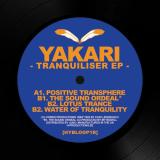
Cari Lekebusch is one of the architects of the Swedish techno scene whose influence naturally spilt out over the wider European landscape as part of the second wave in the late 80s and early 90s. Under his Yakari alias, he explored a tear-jerking and trance-infused style that was about looking outward to distant worlds beyond our own. This EP is a classic example and was originally released in 1994 on Loop Records. 'Positive Transphere' is an absorbing opener with dirty bass offset by sprawling synths, 'The Sound Ordeal' gets darker and more involving emotionally, before 'Lotus Trance' explodes in bright colours and new age love. 'Water Of Tranquility' is a more deep, insular closer. An EP that has aged perfectly and will still turn heads 30 years on.
If there is one thing that WAX RDM loves to do, it is split, they love splitting bills, middle splits, banana splits and most of all a good old split EP, and they made sure to deliver on their first one. Not only is he responsible for saving the Netherlands from becoming an aquatic civilisation, the land creature known as Deltaplan also claimed the whole A side for his boombastic electrofied vinyl only rendition of Sexual Seduction, which could get any dance floor drenched in dripping sweat. The Hague city's APK Boys have split the split in 2 on side B. If Flipper was a fun loving dolphin who always dreamt of moving to The Hague City, this is what he would sound like, hard hitting, just a tad frustrated and ready to snap at any moment. Yes Yes finishes of the split with a sure-shot Electro heater which will take your mind into a dreamlike state, thinking of ways to make Flippers dreams come true. And if you think things couldn't get any better, APK provided us with a 3rd digital only track for good measure. Stay dry and keep swimming.
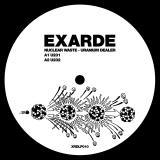
Nuclear Waste is arriving to the LP series with the album called “Uranium Dealer”. The Spanish based artist is a long friend of the label who has already appeared on Exarde, therefore is a great honour to welcome him back with such profound and complete body of work. Per usual completed with the art of graffiti artist Gkoner the album is really shining through with the radioactive particles it consists of. Whether it’s brutal electro numbers or more spiritually infused dense techno the album may find a home with its listener. The elements appearing to be colliding at an intensive speed to form the fuel for the nuclear audio warfare.
Birchy is a relative newcomer to the Kniteforce label, although his previous release (KF266) that played with the Terminator theme tune was a big seller. It's not overly surprising, as Birchy may be new to the label, and a new name to many old skool heads, but he is an experienced producer who has been around for decades, with releases spread far and wide...
This EP samples the classic news broadcast surrounding the famous Castle Morton event in the UK, and the whole EP is deeply old skool and classic in feel. Full on breakbeats, pianos and authentic rave sounds are the name of the game here, and Birchy creates a timless feel to all of it!
Glenn Underground is the founding member of the Strictly Jaz Unit. He was raised on disco classics and freeform jazz in Chicago's Southside, the place where house music was born. Taking inspiration from Chicago's original pioneers, Larry Heard, Ron Hardy, Lil' Louis, and the like, Glenn has produced many sought after house gems for some of the most well respected deep house labels such as Prescription and Guidance.
The Jerusalem EP's, GU's second album for Peacefrog originally released in 1997 still sounds so fresh, so deep and so soulful. Blending jazz-tinged chord progressions with sax accents, and rolling basslines the album evokes the sound of late-’90s hypnotic Chicago house.
Timeless, quality, underground house music for the mind, the body and especially the soul.
How enduring is the signature song from Harry Chapin’s Verities & Balderdash? So timeless that it became the subject of a 2025 documentary in which artists from multiple generations weigh in on its impact on their lives and craft. “Cat’s in the Cradle” doubtlessly remains the main event on the singer-songwriter’s 1974 album. The legendary opening track also serves as a guidepost for the bold personal and social material that follows — as well as the gorgeous folk-rock arrangements that underpin the New York native’s most commercially successful work.
Sourced from the original master tapes, pressed at Fidelity Record Pressing, housed in a Stoughton jacket complete with a four-page insert, and strictly limited to 3,000 numbered copies, Mobile Fidelity’s 180g 33RPM LP of Verities & Balderdash presents Chapin’s fourth full-length in audiophile quality for the first time on vinyl. Captured during a golden era for sonics and production, the Top 5 effort features remarkable tonal balance, instrumental separation, and organic naturalism. Those valued aspects come into supreme focus on this reissue, which plays with dead-quiet surfaces and a low noise floor.
The newfound clarity, openness, and imaging underscore the lasting appeal of Chapin’s tender deliveries, soulful timbre, and careful phrasing. Every word comes across with incredible realism, while his underrated guitar playing occupies its own distinctive space. Also notable: The extension of the tasteful string accents; airiness of the backing vocals; depth and shape of the spare bass lines; and width and depth of the soundstaging. When on “Six String Orchestra” Chapin calls out names of instruments, they appear like magic, the band performing feet from you. Chapin has never sounded so lifelike on record.
Certified double platinum, Verities & Balderdash resonated with the times and public. “Cat’s in the Cradle” reached No. 1 on the chart on its way to being inducted into the Grammy Hall of Fame. The romantic ballad “I Wanna Learn a Love Song” flirted with the Top 40 and wrapped listeners in the equivalent of a cozy blanket. The record’s other single, the mini-epic “What Made America Famous?,” helped establish Chapin as one of the country’s most incisive and insightful commentators.
Verities & Balderdash teems with situational devices and topical matters. Chapin observes everything from the polarization of the nation to changes in moral standards and cultural priorities. He investigates pressing themes without ever turning preachy or elevating himself above the matters at hand. On “Halfway to Heaven,” whose coda races to the finish and ranks as the most urgent moment on the record, Chapin inhabits the mind of his frustrated protagonist akin to an eagle-eyed novelist.
Conveying emotions that range from melancholic to carefree, Chapin is as much of a singer as a storyteller. He assumes the voice of multiple characters within a single narrative. During the quirky “30,000 Pounds of Bananas,” a tale based on a delivery-truck accident in 1965, Chapin alters his delivery, pronunciation, and diction to become an old man reflecting on the mishap and mess. The tempo, too, adjusts to match the speed of the vehicle Chapin describes.
Adorned with timely laugh tracks to reinforce the bittersweet humor, the stripped-down “Six String Orchestra” takes everything up another notch, with Chapin intentionally missing guitar notes or playing a broken passage to illustrate the failures of the hopeful protagonist who doesn’t have what’s required to make it as an artist.
Chapin, of course, did not have any such problem. The lynchpin of a career cut short by a tragic traffic incident, Verities & Balderdash is Exhibit A of the savvy craft, feeling, and perspective he lent to American music.
Deetron is a venerated veteran who has been crafting sublime house and techno for three decades on a range of influential labels. 2025 brought another busy year for him, with another standout EP on Ilian Tape followed by his latest album which landed via Running Back in October. Back in 2024, he dropped his 'Translate Rhythms' EP on Mutual Rytm's X series and now takes charge of the second release on SHDW's new sub-label Mutual Rytm Raw - following the first 12" 'You And Me', which was a true summer anthem courtesy of KiNK & Raredub.
In its original form, the bright, expressive 'Flow' is a fulsome techno cut that pairs a driving rhythm with sophisticated synths. It sparkles with cosmic energy, while a textured, screwy lead winds through the mix and euphoric female vocals burst out to big emotional reactions. The 'Chord Dub' is a tight, bouncy rework with vamping chords lighting up the drums with real warmth and soul, while the 'Breakbeat Mix' fizzes with rich, old school energy. The dusty breakbeats demand physical reactions, while the pads bring a grand sense of scale and the vocals tug at the heart. All three are classy, effective and offer yet more timeless sounds.
Carly Simon’s quietly intense sophomore album comes across like an assertive notice nailed to a telephone pole for all to see. Bold, personal, and autobiographical, Anticipation announces the arrival of an artist who won’t back down. While Simon stands her ground on her eponymous debut, she elevates her passion and persona to heightened levels throughout this gold-certified record, dealing in private matters related to love, relationships, and desire. At times, Simon is nothing short of primal. She reflects on the difficulties of retaining your own identity while also giving yourself to a partner. Simon’s connection to her folk roots would never be stronger.
Sourced from the original master tapes, strictly limited to 3,000 numbered copies, pressed at Fidelity Record Pressing in California, and housed in a Stoughton gatefold jacket, Mobile Fidelity’s 180g 45RPM 2LP set of Anticipation lays bare the rich tapestries afforded by the spare blend of soft guitars, mellow orchestration, and dreamy melodies. Audiophiles and record collectors, take note: This is the first time Anticipation has been available on 45RPM. The wider grooves and dead-quiet surfaces prove extremely rewarding.
The rhythmic framework anchored by session pro Andy Newmark’s drumming sounds dynamic and balanced, with songs benefiting from a focused midrange and taut low-end. Simon’s attachment to and investment in each lyric is made evident by way of the intimate, hushed atmospherics and expansive responsiveness. And just as Simon’s vocals feel more transparent and direct, so, too, do the supporting choral arrangements.
Released before the singer-songwriter movement reached full bloom, Anticipation remains remarkable for the high-quality songwriting and Simon’s gutsy stance. The album cover — depicting the vocalist holding the gates at Queen Mary’s Garden in Regent’s Park and seemingly defying anyone to take her on — serves as a metaphor for the content within.
Known for having relationships with high-profile partners, Simon was heavily involved with Cat Stevens leading up to the recording of Anticipation. She draws from her experiences to craft tunes that resonate because of their honesty, realism, and strength. Few of those moments are better known than the Top 20 title track, which Simon composed in just 15 minutes as she waited for Stevens to pick her up for a date. Imbued with the nervousness, tension, and excitement that accompany the moments when a romance could go either way, the Grammy-nominated song presages the feminist-minded vulnerability and burning longing that informs a majority of the record.
On the soulful “Legend in Your Own Time,” also inspired by Stevens, Simon harnesses yearning as a conduit to feel-good paradise. Deemed by Rolling Stone an “absolute clincher, an awesome description of the psychic ravages of gone-nuts, know-nothing love,” her cover of Kris Kristofferson’s “I’ve Got to Have You” moans with no-holds-barred desire and breathtaking sensuality.
For all the wanting Simon pursues on Anticipation, her way of staying in control — vocally and personally — make the record a courageous statement of contemporary femininity. For further evidence, look to the bossa nova of “Summer’s Coming Around Again,” somber “Share the End,” soothing “Three Days,” and sincere “Julie Through the Glass,” a tribute to her young niece.
Simon would achieve international fame with her next album, No Secrets. Yet as this definitive reissue shows, Anticipation suggests the rest of the world was just a little late catching up to her.
There was nothing in contemporary music like Chris Isaak’s Heart Shaped World when it hit shelves in June 1989. More than three decades later, the singer-songwriter’s third album still sounds unique — and claims a backstory nearly as fascinating as the retro-leaning material and standout performances that propelled it to sales of more than 2.5 million copies. Home to the Top 10 smash “Wicked Game,” the set remains a masterful mood piece that invites you to pour a late-night drink, sit in a dimmed room, and relish Isaak’s elegant albeit raw ruminations on love, relationships, and questionable decisions.
Sourced from the original master tapes, pressed at Fidelity Record Pressing, strictly limited to 3,000 numbered copies, and featuring the bonus track “Diddley Daddy,” Mobile Fidelity's UltraDisc One-Step 180g 45RPM 2LP box set of Heart Shaped World unearths the staggering inner details, saturated tones, and brilliant atmospherics of the crisp production. It brings you up close and personal with Isaak’s spectacular singing — impeccably controlled, tense, brooding, steamy, smoldering, haunted — situated amidst stripped-down backdrops that allow every note to fully bloom and decay.
While Isaak’s ever-steady baritone remains the anchor, the contributions of his trusty backing band, the aptly named Silvertone, come across with just as much cool, command, and realism. The indispensable playing of guitarist James Calvin Wilsey particularly emerges with superb clarity and dimensionality. The character of his 1965 Fender Stratocaster, shivering twang of his spring-coiled fills, and his signature use of reverb, delay, and vibrato seamlessly match Isaak's patient deliveries and the band’s unhurried rhythms. Experienced on UD1S with ultra-black backgrounds and a nearly invisible noise floor, Heart Shaped World is in every regard a demonstration disc.
The premium packaging of this UD1S pressing befits its elevated status. Housed in a deluxe slipcase, it features foil-stamped jackets and faithful-to-the-original graphics. Aurally and visually, this reissue is for discerning listeners who desire to immerse themselves in everything involved with the album, not the least of which is the cover art depicting a lost-in-thought Isaak staring ahead and sitting in what appears to be an efficiency apartment. The image epitomizes the record’s lonesome temperaments and pensive themes.
Of course, if not for director David Lynch hand-picking two cuts from Heart Shaped World for his 1990 film Wild at Heart, the record would’ve probably suffered the same fate as Isaak’s prior efforts and gone unnoticed by the mainstream. Despite receiving raves from outlets such as NME, Chicago Tribune, and Rolling Stone upon its original release, the album stalled in the lower quadrants of the Billboard charts and, after a few weeks, dropped off.
Cue the ear of Lee Chesnut. Then the music director for a large Atlanta radio station, Chesnut heard the instrumental version of “Wicked Game” on Lynch’s soundtrack and started airing the album rendition at all hours of the day. Aided by a sensual video featuring Isaak and supermodel Helena Christensen, the song found its way into the public consciousness by early ‘91 and helped make Isaak a most unlikely mainstream star in an era where his techniques had little to nothing in common with popular tastes.
Despite its vintage vibes and shared DNA with legends such as Roy Orbison, Chet Baker, and Glen Campbell, Heart Shaped World transcends nostalgia, rockabilly, and throwback tropes. For all the melodrama and sadness at hand, Isaak’s gorgeously transparent singing dives deep underneath emotional surfaces. He mines subtleties that indicate his feelings go beyond heartbreak and anguish, and occasionally suggest frustration, menace, and anger. You can hear it in his quivering falsetto, and the slow and methodical ways he allows delicate whispers to break into shadowy phrasing that crosses over to the darker sides of romance and desire.
That approach bolsters the title track, which suggests calm yet moves on ominous currents — its simmering pace and snare-drum snappiness foreshadowing Isaak raising the volume and urgency during the coda. The southwestern-tinged “Wrong to Love You” plays with similar concepts of hesitation, unease, and discord, Isaak careful never to fully erupt and give anything away. His poised deliveries offer a master class in the art of insinuation and hurt on “Nothing’s Changed,” sent up with a wordless backing chorus and crackling guitar lines straight out of a Memphis blues joint.
Heart Shaped World further boosts its merit via its abundant stylistic variations, from the upbeat country-and-western trot of “I’m Not Waiting” and Spanish acoustic shimmer of the jazz-based ballad “Blue Spanish Sky” to the swinging horn-accompanied grooves of “Don’t Make Me Love You” and desert smokiness of the understated “Kings of the Highway.” On the latter, Isaak comes across as resigned and absolute. His singing and pain worm their way into your soul, and echo akin to the way the music prepares to strike when you least expect.
“Trouble going 'round,” Isaak croons right as the album begins. “Trouble going down.” Damn straight.
This isn’t Halloween however the spooky meters are showing abnormal levels of spookiness thanks to the French duo of producers Gogo Gadgeto and Lazer Man. These monsieurs of electronic groove have gathered together to craft “Vampire World” the disc which is categorically against the light, garlic or the silver bullets and in huge favor with the sir count Dracula himself. Audio trips which are telling the ritual story of nighttime and the creatures who are lurking deep in the shadows when the sun is tucked away and cozy sleeping. The 4 tracker is guaranteed to transport you to Transylvania, the original birthplace of vampires and to establish contact with them. At the end of the day, we are living in the vampire world where evil spirits must be respected as the undead are always watching.
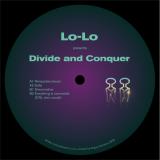
The bells have been rung in our miniature town of Sakskøbing that has been named after the glorious town that has been existing in Denmark, as we push through thirty releases marking down the new milestone. This time the talent that has been present in our ranks, coming from Barcelona and it is Lo-Lo, a man who knows his hardware instruments like his five fingers and has brought this idea came to life. Each track has been crafted with utmost heart and fastidiousness and has a particular way of bouncing off each other in such a manner that can only make “Divide and Conquer” come to life. From driving force of peak dancefloor scorchers to the more lyrical philosophical ways of it being, it has come to what it needs to be. As a wise man said, everything is connected but then may have disappeared into oblivion for the untrained mind, with only a few lessons for us to obtain and hear.
In continuation with the “Untitled” series, it is time to unveil the fifth chapter. 9-tracker with the talented artists which have gathered to make this disc come to life with the broad spectre of dancefloor ready frequencies that it contains. With some familiar faces and some new comers this is ready to be presented to the world of us music lovers that have big lust to non-standard beats. This LP is destined to land in the right persons hands who will treat the speakers rough and loud just how they should be treated with the material presented on it. The “Untitled” series continue thanks to the professional audio trips creators the spaceship sets space sails for the new edition soon.
Mutual Rytm spawns new sub-label ‘Versus’ with debut EP from longtime techno associates Regent and Chontane. Continuing to expand its creative world, SHDW’s Mutual Rytm imprint now introduces ‘Versus’ - a new sub- label crafted for creative symbiosis between two artists across one shared release. Opening the series with authority, Regent and Chontane man the debut offering - two close friends and native Berliners who have been shaping techno for more than 15 years. Both long-standing members of the Mutual Rytm family, having released multiple times here before, the pair have always created music informed by life immersed in their local scene. Having both mutually influenced one another over the years, here they present their shared interpretation of techno with individual artistic DNA, forming a unified sound that represents the best of both worlds. Regent goes first, leaning towards functional, anthemic, dance-floor-focused techno. ‘Ephemera’ is tight, minimal but forceful; ‘Slow Burn’ has synth tension rising through the dark, next to glitchy percussion; and ‘Afterglow’ lets in more light, bringing otherworldly synths that hang above the groove and consume your focus. Chontane then explores a more musical and unconventional approach. ‘Plaxaric’ is supple, warm, and deep techno that tunnels into an abyss. ‘Grounding Factor’ is just as economical in design, but with introverted funk and evolving layers of sound. ‘Mental Lab’ spins out into complex rhythms inspired equally by IDM, jungle, and techno. It’s a mental workout as well as a physical one. Both artists add a pair of digital bonus tracks. Regent’s ‘Control Room’ and ‘Rarely Enough’ deliver elevated, hypnotic tools, before Chontane’s ‘Escore’ and ‘Outside In’ bring extroverted drum patterns along with contrasting melodic unease
Mutual Rytm welcomes new school tastemakers Klint and Hemka to sub-label Versus for imprint’s second drop. SHDW’s Mutual Rytm welcomes back two standout label alumnus for the second edition of Versus, a newly-launched conceptual sub-label focused around two artists whose sound works individually and in unity. Hemka made an impressive and well-received debut with her full solo EP back in 2025, while Klint appeared on ‘Federation of Rytm IV’. Both artists hail from France, and have crafted a well-earned reputation for their own distinctive approaches to sound design - pairing locked in grooves with cosmic synth escapes. Across the EP, each artist delivers three individual takes on techno to make for an essential collection of high-end cuts, exploring the label’s ethos of creative symbiosis between two artists on one shared release. Klint’s tracks lean towards minimal yet highly effective, dance floor-focused DJ tools, starting with the lithe, stripped back menace of ‘Prism’, before the sparse eeriness of ‘Dobermann’ keeps you looking over your shoulder while remaining trapped in the groove. Third cut ‘Romance’ is more bold and muscular, with contoured drums and icy pads ramping up the tension and energy. Hemka then dives deeper into a hypnotic and anthemic direction while introducing her own voice into the mix. ‘Leave It’ is textured, percussive deep techno with shadowy whispers, while ‘Breathe’ has a dark, grinning undercurrent and scintillating snares fluttering over the drums. ‘Mindness’ then pairs spoken word atmospherics with taught drum pressure and an ethereal backlit glow. In addition, Klint's digital only cuts ‘1112’ and ‘Blue’ marry minimal synths with meticulously defined drums that hit hard, while Hemka's ‘Push’ is an anxious percussive trip, contrasting with the introspective emotional core of ‘Live To Tell’.
The Doobie Brothers faced a serious predicament as they prepared to record Takin’ It to the Streets. That the group navigated a potentially serious personnel problem that would’ve tanked lesser bands and scored its fourth straight Top 10 album — while again expanding its range — speaks to the collective’s chemistry, broad-mindedness, and songwriting abilities. Known as the effort on which vocalist-keyboardist Michael McDonald makes his debut, the 1976 set stands as an all-encompassing representation of the various styles the Doobie Brothers explored during their heyday.
Sourced from the original analog master tapes, mastered by engineer Krieg Wunderlich, pressed at Fidelity Record Pressing in California, and housed in a Stoughton gatefold jacket, Mobile Fidelity’s numbered-edition 180g 45RPM 2LP presents Takin’ It to the Streets in definitive sound. Given the luxurious room of a 45RPM version for the first time and benefiting from the wider grooves, the music unfolds amid large soundstages replete with ultra-quiet backgrounds, big dynamics, and accurate imaging. By then a key component of the Doobie Brothers' success, Ted Templeman’s production is brought to light with stellar clarity and definition.
As is the case on Mobile Fidelity's four other acclaimed Doobie Brothers 45RPM reissues, myriad facets that help make Takin’ It to the Streets timeless, natural, and organic — minimal overdubs, voices that realistically rise and fall, notes that properly carry and decay, warm tones, bass lines that pop with color, well-placed percussive accents, defined separation between the players — emerge with incredible presence, openness, and fullness. Nothing is overdone or out of place. No small feat given Templeman and company didn't know how everything would unfold when they first met up in Southern California.
Confronted with a change in plans by co-founder Tom Johnston, whose contributions to the band up to that point in its career identified him as an indispensable member, the Doobie Brothers were thrown for a loop when he curtailed pre-planning work and retreated home to deal with ongoing health problems. Thankfully, Jeff "Skunk" Baxter, the group's newest full-time recruit, had a possible solution in his former fellow Steely Dan colleague McDonald. The singer-keyboardist had already sat in with the Doobie Brothers on their recent tour. So, why not give it a shot?
McDonald's prodigious talents notwithstanding, he couldn't technically replace Johnston. For starters: McDonald's soulful timbre bore little resemblance to Johnston's grittier voice. And McDonald played keyboards, not guitar. No wonder Templeman initially expressed reservations. He also knew the Doobie Brothers needed additional material before they could consider wrapping the record. Yet the skepticism began to dissipate on the first day of the sessions. Still waiting for second drummer Keith Knudsen, the band gathered in the studio with former roadie Bobby LaKind on congas and Little Feat drummer Richie Hayward for a live run through "Wheels of Fortune." The instrumental parts of that take landed on the record. Johnston would even return to share the lead vocal duties with Patrick Simmons.
Those magical results, and the experience of hearing McDonald woodshed the title track at the piano, turned Templeman into a believer and cheerleader. Spurred by their veteran producer's encouragement and McDonald's ideas for songs, the Doobie Brothers embraced new directions just as they did after their debut LP and on subsequent efforts with orchestral and horn treatments. The latter return on Takin’ It to the Streets courtesy of the five-piece Memphis Horns. Yet outside of viola accompaniment on "Losin' End," string elements step aside in favor of McDonald's pianos, synthesizers, and clavinet. And, on five cuts, lead singing.
As the new face of the band, McDonald ended up crafting all or portions of four tunes. His fingerprints are all over two of the singles, including the jazzy, blue-eyed-soul delight “It Keeps You Runnin’” and irresistibly melodic title track, which cracked the Top 15 and became one of the Doobie Brothers’ signature numbers. He and Baxter’s penchant for smoothness, and a precursor to the band’s coming transition into rhythmically oriented yacht rock, informs the brassy sway of “Carry Me Away.”
Further enriched by Tiran Porter’s gorgeous, time-signature-shifting ballad “For Someone Special,” Simmons’ peppy, spring-loaded “8th Avenue Shuffle,” and Johnston’s “Turn It Loose” — the move-your-feet boogie serving as kind of apt farewell to the band’s prior rock ‘n’ roll sound — Takin’ It to the Streets spun uncertainty into gold. Altered yet unbowed, the Doobie Brothers once again offered countless listeners “the best kind of remedy” with feel-good music that holds up amid any era.
Move in Stereo: The Cars’ Eponymous Debut Album Functions as a Greatest-Hits Set with Classics Such as "You're All I've Got Tonight," "Good Times Roll," and "Just What I Needed"
Experience the Six-Times-Platinum Record in Definitive Sound on
Mobile Fidelity’s UltraDisc One-Step 180g 45RPM 2LP Box Set:
Strictly Limited to 4,000 Numbered Copies,
It Plays with Reference Definition and Presence
1/4” / 15 IPS analogue master to DSD 256 to analogue console to lathe.
Among the most critically and commercially successful debuts in history, the Cars' eponymous album doubles as a greatest-hits collection. Not one song on it is widely unrecognized or unknown. Consider the list: "You're All I've Got Tonight." "Good Times Roll." "Just What I Needed." "Moving in Stereo." "My Best Friend's Girl." "Don't Cha Stop." “Bye Bye Love.” Just call The Cars the best new-wave rock album ever made. And a natural candidate for preservation on a Mobile Fidelity UltraDisc One-Step pressing.
Sourced from the original analog tapes, pressed at Fidelity Record Pressing in California, mastered by engineer Krieg Wunderlich, and strictly limited to 4,000 numbered copies, MoFi’s UD1S 180g 45RPM 2LP box set presents the six-time platinum record in the most vivid, wide-spanning, three-dimensional sound it has enjoyed on vinyl. Compared to the label’s outstanding and out-of-print 180g 33RPM version, this collectible edition features richer textures, broader openness, greater presence, and bigger dynamics.
Benefitting from the extra groove space on 45RPM by playing with enhanced definition, deep-black backgrounds, and ultra-quiet surfaces, this reissue portrays the band’s oscillating rhythms, futuristic keyboard passages, and panned images with stunning realism. Songs take on an absolutely surreal quality. The Cars and producer Roy Thomas Baker manipulate arrangements at will to mesmerize listeners' senses. The concept of "moving in stereo” has likely never been truer.
The industry-leading packaging of the UD1S set gives fans another reason to gravitate towards the 1978 album. A deluxe slipcase, two foil-stamped jackets, faithful-to-the-original graphics, and MoFi inner sleeves make for a premium tactile experience. It invites you to immerse yourself in everything about the record, including the now-familiar cover art depicting Nataliya Medvedeva behind the wheel. Enhanced by her glistening ruby-red lips, her face flashes an expression caught between surprise, ecstasy, and disbelief — an apropos way of responding to The Cars whether you’re hearing it for the first or 1,115th time.
Introduced in 2024 into the National Recording Registry for its significance, and ranked the 353rd Greatest Album of All Time by Rolling Stone, The Cars explodes with emotion, energy, and hooks. Its songs unite then-disparate styles: bubblegum melodies, art-rock angularity, progressive structuralism, terse minimalism, and power-pop sheen. The stylish arrangements also benefit from a laidback cool and understated irony that remain uncommon in the world of contemporary mainstream music.
Equally rare is the deep chemistry the members shared before they entered London’s AIR Studios and knocked out the record in less than a month. Benjamin Orr and Ric Ocasek began their first band together in the early ‘70s. A subsequent group with future Cars keyboardist Greg Hawke preceded Orr and Ocasek bonding further by temporarily performing as a duo. One final pre-Cars ensemble, Cap’n Swing, brought guitarist Elliot Easton into the fold. A decision by Ocasek to take the band in a rock direction, a crucial lineup shuffle, and a name change begat the Cars so many listeners know and love.
Already a going concern in Boston, the quintet cut its teeth and woodshopped songs for nearly a year and a half before signing with Elektra and partnering with Baker. The Cars enjoyed success right out of the gate, hitting No. 18 on the Billboard Top 200 chart and netting a pair of Top 40 singles in the form of “Just What I Needed” and deceptively happy “My Best Friend’s Girl.” The sarcastic “Good Times Roll” climbed to No. 41, but soon enough, almost every track on The Cars became a radio staple — an honor far more meaningful than chart positions.
Obsessed with incorporating the latest technologies and sounds into its palette, the band spiced tunes with delightful and quirky accents — country-tinged guitar fills, echoing Syndrums, reggae splashes, hard-rock tones, robotic pulses. Orr's low, nuanced deliveries and Ocasek's cool, detached vocals lend shades of doubt and double meaning to the lyrics, which are further counterbalanced by synthesizer flourishes and electronic beats.
Accessible and eccentric, edgy and catchy: The results comprise a landmark whose characters come to vivid life with nuclear boots, dry-drip gloves, ribbon-festooned coiffures, suede-blue eyes, and rock ‘n’ roll hair. It's practically impossible to avoid humming along to every song, all enhanced by Baker's stellar production. Best known for his work with Queen, he ensured the record packed a punchy midrange, opened up with instrumental and vocal separation, and breathed with airy harmonies.
Indeed, from the timeless music to the sleek production and sonic restoration, The Cars on UD1S is just what you needed.
This absolutely killer album marks Swankout's debut on Kniteforce, and the whole album is ridiculously good. Every style is authentically recreated, stretching the vibes from jungle to original rave and everything in between
BLIS701 by Chain Selector is a carefully honed two-track release from BLACKINSTOCK Records, a division of MixCult Records, showcasing Chain Selector’s mastery in blending emotional depth with atmospheric finesse. Designed for those who appreciate subtlety and sonic craft, this release moves between introspective melodies and immersive dub textures with remarkable control.
On Side A, School Days is a tender and timeless composition—melodic, cinematic, and evocative. It gently stirs memory and emotion, creating a world where every sound breathes with intent. On the flip, Autumn Guide opens a more shadowed dimension. Built on layered tension and low-end pulses, it introduces a restrained, dub-heavy soundscape ideal for setting the tone of a deeper set.
With BLIS701, Chain Selector delivers a refined double-sided vinyl, one to reflect, one to explore. Both tracks stand as elegant tools for shaping atmosphere with poise and intention.
At the end of the project’s 20th anniversary celebrations, ROME tolls in the next era of the band with a fresh and visionary album: ‘The Tower’. ROME’s new and ever more mature sound is informed by a radically minimalist folk approach, with nonetheless charmingly lush arrangements. ‘The Tower’ is an introspective and enigmatic work at whose centre stands nothing less than ROME’s raison d’etre: The Great Work and the sacrifices both necessary and essential on the demanding path to light. As an unreachable bulwark against the general decline of every value in life, the tower would have been erected long ago to defend the coast.
It would have been raised on a rocky platform resting on the sea floor. It would have been joined to the continent by a thin tongue of sand. It would have offered a heroic, magical point of view. A place for our claim to know and point out vaster horizons. It would have stood firm on the ramparts. This isolated tower would not have been just a refuge for more or less mystic escape, but also a post of resistance and combat.
Looking back on her career in the early 90s, Stevie Nicks described the first track of Rock a Little as “the most exciting song that I had ever heard.” This coming from a superstar who was already closely affiliated with several bajillion-selling Fleetwood Mac albums — to say nothing of her own benchmark solo debut. Her remarks attest to the enthusiasm and effort she invested in her third record, a 1985 work that quickly furthered Nicks’ profile and cemented itself as a piece of 80s pop lore.
Mastered at MoFi’s California studio, pressed at Fidelity Record Pressing in California, strictly limited to 4,000 numbered copies, and housed in a Stoughton gatefold jacket, Mobile Fidelity’s 180g 45RPM 2LP set presents Rock a Little in audiophile sound for its 40th anniversary. Helmed by a cadre of producers and engineers, and recorded for a reported one million dollars, the platinum-certified album teems with a head-spinning array of colors, tones, dreamscapes, and accents. This reference-grade reissue marks the first time they are all brought to light and conveyed with proper balance, dimensionality, and positioning.
Though Rock a Little doubtlessly has period characteristics of a mid-80s LP, Nicks and company spare no expense when it comes to distinguishing the music with expansive sonics distinguished with lush melodies, high-tech percussion, echoing vocals, sampled keyboards, and layers of sophisticated accents. The degrees of spaciousness, headroom, and dynamics are nothing less than inspiring, while the newly enhanced detail, texture, and clarity make the songs sing like never before. As for Nicks’ voice? Wait ’til you experience the transparency and depth.
Those advantages extend, of course, to the aforementioned “I Can’t Wait,” a statement-making opener shot through with modulating synthesizers, splashy drums, metallic guitars, and serious drama. Holed up in a massive studio, Nicks required just one take to nail her part, which she called “magic and simply not able to beat.” The singer-songwriter also distilled the reverberating emotional essence of the Top 20 tune, stating “when I hear it on the radio, this incredible feeling comes over me, like something really incredible is about to happen.”
The same can be said for nearly all of Rock a Little. Crafted by the likes of Songwriters Hall of Fame multi-instrumentalist/producer Rick Nowels, Heartbreakers organist Benmont Tench, bassist Bob Glaub, jack-of-all-trades Greg Phillinganes, and session-pro guitarists Waddy Watchel, Les Dudek, and Danny Kortchmar — along with another two dozen or so participants — the record spills with diverse ideas, shapes, and moods. Everything is in the right place, as evidenced by the swirling glide and sensual undertow of the slightly funky title track to the snapping rhythmic pace and big hooks of “Imperial Hotel,” one of Nicks’ standout moments.
“What was it she wanted?” Nicks queries on “No Spoken Word,” continuing a theme of contemplation that runs through the narratives. Nicks never lands on a definite answer, but hearing her explore loneliness, love, and the secrets we keep to ourselves proves continuously rewarding. Take her passionate performance on a cover of Chas Sanford’s “Talk to Me,” a Top 5 smash furthered by tasteful saxophone lines and understated folk elements. Immersive yourself in the grand sonic corridors of “If I Were You,” laden with Nicks’ signature mysticism.
Moreover, surrender to the gravitas of the closing “Has Anyone Ever Written Anything for You,” a piano ballad composed about the death of Joe Walsh’s three-year-old daughter. As Nicks asserts earlier on the album, she sings for things money can’t buy.
So, rock a little, yes, but dare to feel even more.
Prozak has been kicking out the garage-house jams for a while now, and always on the best labels, from Time Is Now to Instinct, which is run by Burnski, who also heads up this one. And it's another case of pure fire from the off as 'Freak Ya Right' layers up silky, melodic bass with charged up synth stabs and a bubbly groove. 'No Use For Love' has a darker 90s undercurrent with organ basslines and more coarse percussive textures. 'Classics' cuts loose with an off-balance bassline that's cartoonish and oversized, while 'Ravers Inside' shuts down with plenty of pent-up funk and playful samples that will destroy the floor and nothing less.
MUSIKOMMT Volume One is a new vinyl release on Tractorecords, featuring four tracks by Francesco Passantino, The Rhythm Vision, Pogo and Sera.
MUSIKOMMT represents a Berlin-based hub for artists, events and collaborations dedicated to analog electronic music, live performance and vinyl culture.
The A-side opens with “Novembrina” by Francesco Passantino, followed by “Live Psychedelica” by The Rhythm Vision, a trio of musicians who create real-time analog live jams. The track is taken from a live recording at Club der Visionaere in Berlin and features a vocal insert by Rick Ellis.
On the B-side, Pogo presents “Shoutin’ Girl”, while Sera closes the release with “Stasera”.
A direct snapshot of Berlin’s analog scene, shaped by improvisation, machines and underground culture.
The mighty Trelik label has long led the way when it comes to the best minimal in the underground and nothing about that changes with this new one from German pair Anro and Kuyateh. They collide their creative minds on four cuts starting with 'All We Have', which, like many of the sounds on this label, fizzes with a light synth touch while rolling on frictionless drums. 'Crocket' is another luminous sound with dubby drum loops that are supple and seductive, as spaced out motifs up top bring a curiousness. 'Gametime' layers in some warped and molten acid sounds to dubby tech rhythms and 'Hi' is a final sophisticated closer for those who like it deft and deep.
Obelix is the brainchild of UK producers Richard George and Corine Trembath, whose timeless take on house and techno has long been cherished by underground heads and vinyl collectors alike.
With releases on Pacific Records, Mosaic and Stickman, their music occupies a distinctive space between early house and techno, raw, hypnotic and deeply musical, built around rolling 909 rhythms, expertly programmed 303 acid lines and the unmistakable character of analogue hardware.
Following an extensive dive into their DAT archives, Pariter presents The Lost Tapes, a collection of previously unreleased recordings made in the mid-1990s. Carefully restored and curated by Yossi Amoyal, the material retains all the rawness, warmth and analogue
character of the original tapes, offering a rare glimpse into a particularly fertile period of UK underground dance music.
The two part release is completed by Whatever, their sought after classic originally released on Offshoot, a timeless slice that stands alongside the unreleased recordings as an essential piece of the Obelix story.
The Lost Tapes documents a sound that has lost none of its power, raw, hypnotic and unmistakably timeless.