For over 30 years the Midwest machine menace that is Paul Birken has been developing and exploring his love for the limitless potential that exists when you chain together synths, sequencers, samplers and beat makers, he is a true audio explorer communicating his own unique sonic exploration through his machines + odd dreams. Starting out back in the day merely with a Commodore 64 computer and a few synths, his studio gear arsenal has constantly evolved over the years into a myriad of unfathomable boxes, cables and bangin’ in his attic allowing him to freely manipulate his random audio creations into the most serious and fun grooves anywhere in the techno realms. Along-with his own imprint Tonewrecker Recordings, Paul’s appeared on a huge stack of the most impressive labels including Don’t Recordings, Fun In The Murky, Earwiggle, Mord and of course a plethora of remixes and tracks on our very own RIOT Radio Records.
From within a tomb in ancient lands comes this 'Bandage Boogie.' A hallowed homage to all things that are non-stop breakin' n' stompin' n' boppin' to the RIOT beats that have now manifested themselves on a 'Mummificated' dance floor near you. This aint street life, this is tomb life, and you'll need as many sacred tanna leaves to keep you movin’ as your fiendish high priest will bestow upon you. This brewed techno fluid that we're administering will ultimately invoke 'The Curse of RIOT’ and you’ll be doomed to eternal bouncin' aboot to its 'Pyramid Pongo' beats that go mysteriously THUMP in the night. Each track on here, and especially in his infamously legendary live sets, are unique in that they get erased from his machines after their creation and won’t ever be spawned again, but ssssssssssssssh, Mummy's the word.
The full digital release also features two bonus immortal tracks delving you deeper into the life-giving sounds of this ‘Mummy Wrapsody.’
WARNING: THESE UNWRAPPED TECHNO BEATS CREATE A WONK-A-THON YOU WILL NOT ESCAPE FROM
"Spiritual Jazz 19" besteht aus zwei Doppel-LP-Sets, die den Einfluss und die Ausdrucksformen jenes Underground-Jazz beleuchten, der sich in der zweiten Hälfte des 20. Jahrhunderts in Kalifornien und den angrenzenden Bundesstaaten entwickelte. Die insgesamt 24 Titel erscheinen in Gatefolds und enthalten Liner Notes, Fotos und Download-Codes.
Die US-Westküste wird oft mit dem Boom des Cool Jazz in den 1950er Jahren in Verbindung gebracht; doch überall dort, wo Jazz gespielt wurde, florierten auch modale, afrozentrische und spirituell geprägte Strömungen – und die Westküste bildete da keine Ausnahme. In der Nachkriegszeit rangierte die Central Avenue in L.A. als bedeutendstes Jazz-Viertel Amerikas direkt hinter Manhattan. Auch wenn Manhattan in jenen Jahren das faktische Zentrum des Jazz-Universums war, übte Kalifornien eine stärkere Anziehungskraft auf die Kultur im Allgemeinen aus und zog Menschen aus dem ganzen Land in den Bann seiner aufkeimenden Gegenkultur der 1960er Jahre.
Hier untersuchen wir die Auswirkungen dieser Gegenkultur auf den Jazz. Wir beleuchten den Einfluss der Black Panthers – der prägendsten Kraft innerhalb der schwarzen politischen Bewegung nach der Ära der Bürgerrechte – und widmen uns den neuartigen spirituellen Praktiken und Religionen des aufkommenden New Age. In Kalifornien waren zahlreiche eigenwillige Independent-Labels wie Arhoolie, Theresa und Nimbus sowie viele weitere private Unternehmungen ansässig; wir präsentieren die Ergebnisse ihres Strebens nach musikalischer Freiheit. All diese Faktoren beeinflussten die Entwicklung und Blütezeit des Jazz und der Jazzmusiker an der Westküste – und die Evolution des Spiritual Jazz in dieser Region wird hier eingehend betrachtet.
French composer, artist and co-founder of Transversales Disques, Jonathan Fitoussi has developed a distinctive body of
work over the past two decades, blending analog synthesis, minimalism and electronic music.
Inspired by the mineral landscapes and luminous atmosphere of southeastern France, DELTAS is his fifth solo studio album.
Combining hypnotic drum patterns, flowing pulses, shimmering electronic textures and contemplative movements, it unfolds as a deeply immersive journey through space, light and motion.
A rich and evocative work from one of the most singular voices in contemporary electronic music.
Spiritual Jazz 19" besteht aus zwei Doppel-LP-Sets, die den Einfluss und die Ausdrucksformen jenes Underground-Jazz beleuchten, der sich in der zweiten Hälfte des 20. Jahrhunderts in Kalifornien und den angrenzenden Bundesstaaten entwickelte. Die insgesamt 24 Titel erscheinen in Gatefolds und enthalten Liner Notes, Fotos und Download-Codes.
Die US-Westküste wird oft mit dem Boom des Cool Jazz in den 1950er Jahren in Verbindung gebracht; doch überall dort, wo Jazz gespielt wurde, florierten auch modale, afrozentrische und spirituell geprägte Strömungen – und die Westküste bildete da keine Ausnahme. In der Nachkriegszeit rangierte die Central Avenue in L.A. als bedeutendstes Jazz-Viertel Amerikas direkt hinter Manhattan. Auch wenn Manhattan in jenen Jahren das faktische Zentrum des Jazz-Universums war, übte Kalifornien eine stärkere Anziehungskraft auf die Kultur im Allgemeinen aus und zog Menschen aus dem ganzen Land in den Bann seiner aufkeimenden Gegenkultur der 1960er Jahre.
Hier untersuchen wir die Auswirkungen dieser Gegenkultur auf den Jazz. Wir beleuchten den Einfluss der Black Panthers – der prägendsten Kraft innerhalb der schwarzen politischen Bewegung nach der Ära der Bürgerrechte – und widmen uns den neuartigen spirituellen Praktiken und Religionen des aufkommenden New Age. In Kalifornien waren zahlreiche eigenwillige Independent-Labels wie Arhoolie, Theresa und Nimbus sowie viele weitere private Unternehmungen ansässig; wir präsentieren die Ergebnisse ihres Strebens nach musikalischer Freiheit. All diese Faktoren beeinflussten die Entwicklung und Blütezeit des Jazz und der Jazzmusiker an der Westküste – und die Evolution des Spiritual Jazz in dieser Region wird hier eingehend betrachtet.
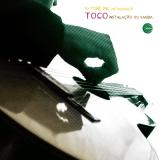
FIRST TIME ON VINYL! “Instalação Do Samba”, originally released in 2004, has become one of the defining albums in the history of Schema Records. With producer Stefano “S-Tone Inc.” Tirone, Toco created an album that embraced the essence of samba and bossa nova while allowing them to breathe naturally within a contemporary musical landscape, blending Jazz, soul, understated electronics and sophisticated arrangements. Released only on CD at the time, “Instalação Do Samba” is finally given the analogue home it always deserved. This first-ever vinyl edition also includes “Qui C’Est Celui-Là”, previously included in the French CD edition. Over the years, Toco has become the most streamed artist in the entire Schema catalogue, introducing his music to audiences beyond the traditional boundaries of Brazilian jazz and contemporary bossa nova. His songs continue to resonate with listeners around the world, proving that authenticity never goes out of style.
Plush shag carpeting, jazz flutes, analogue synths, funk grooves, exotica, and sultry, Italian-style vocalising: Erotica 70 is the new album from Larry Manteca, known for their inventive, tongue-in-cheek reimaginings of classic Italian soundtrack aesthetics.
This time around, the Milanese collective sets its sights on the distinct sonic landscape of 1970s commedia sexy—a film genre that, for better or worse, defined an era and fed richly into the cinematic education of Larry Manteca’s members.
Through this lens, Erotica 70 also becomes a way of celebrating Piero Umiliani in his centenary year—a composer whose name is closely linked to the erotic comedies of the time.
The nod to Umiliani is baked right into the details, starting with the choice of vintage gear like the Eminent synth and the Wurlitzer electric piano. These instruments deliver that particular blend of jazz, groove, electronics, and sensual charm that made the golden age of Italian film music so unique.
Standout track “Lando” is a joyful, playful homage to actor Lando Buzzanca, who starred in numerous films scored by Umiliani, including the iconic 1973 comedy La schiava io ce l’ho e tu no (My Darling Slave).
Larry Manteca is spearheaded by multi-instrumentalists Alessandro Paiola and Riccardo Danieli, flanked by the cinematic flute of Carlo Pelsa, the swinging drums of Andrea Quattrini, and the magnetic vocals of Valentina Castelli and Alessandra Maria Manzoni.
Recorded across various studios in Northern Italy, Erotica 70 is the imaginary soundtrack to an Italy that no longer exists, recreating its atmosphere while rendering it in full, vivid colour. It’s a record whose music seems to come straight out of a provincial cinema, a smoky late-night club, or a long-lost 70s film. But while it looks back to a bygone era, it does so only to bring it straight into the present, making the past sound surprisingly fresh and contemporary.
The track titles on Post Dub Cities – the new album by Adriano Zanni, photographer, sound artist, and field recordist – evoke the aftermath, that moment when a place continues to exist and live on, but no longer serves anyone. The human element has vanished, whether it happened overnight or through a slow abandonment that lasted for years. The perspective shifts: buildings, homes and palaces reveal a dimension of reality all their own, in which even the ruins give shape to this landscape that endures, transforming into pure presence.
This, after all, is our fate. The fate of us human beings, of our civilisation, of every civilisation: to pass away, to be forgotten, to erect monuments whose significance no one will remember once we are gone.
The opening track Crisopoli transforms the sonic dimension of a city into an echo chamber: a dark, urban dub built from delays and resonances, holding the imprint of what is no longer there — like a bassline that keeps vibrating even after its source has gone silent. What we see is not the presence, but its reverb.
Available from September 11, second excerpt Warosha gives us a minimalist, enveloping, solemn beat, like the symbols on a map that no one can read anymore. Warosha was the district of luxury hotels overlooking the sea in the city of Famagusta. After the island of Cyprus was invaded by the Turkish army, the entire area, emptied of its inhabitants, who had fled south, was fenced off and surrounded by barbed wire. No one has been allowed to enter it since 1974. Now, on these unspoilt beaches, sea turtles have found the perfect place to breed.
Fordlândia, on the other hand, is the symbol of Henry Ford’s failed dream of conquest. An industrial settlement built deep within the Amazon rainforest, several hours’ boat journey from the nearest towns, to gain access to natural rubber for the tyres of his mass-produced cars in Michigan. An extremely costly project, it quickly became a ruinous pipe dream: a town that has been uninhabited for almost a century and has since been reclaimed by nature.
For a long time now, Adriano Zanni has been exploring, through music and photography, the landscape that unfolds before our eyes, as attentive yet silent observers. As if we were absent, a civilisation that has long since vanished: human presence has dissolved, preparing to fade into oblivion. The precise depiction of places through field recordings, and the black-and-white imagery, give rise to apparitions, hallucinations, and memories. The less present we are, the more we seek meaning. We resist abandonment and the indifference of time.
In the ten tracks (plus three bonus tracks) of Post Dub Cities the echoes and reverberations of dub grant us access to an unknown future, as yet untold – in which we are nothing more than a vague memory. The deep sound guides us through a landscape that is familiar yet unknown, unrecognisable. The cold, distant, industrial rhythm resonates within us as if we were the last, all too aware, inhabitant of a now-deserted village.
Every place – be it an abandoned mining settlement on an island in Svalbard, or a ghost town in Pennsylvania evacuated following an underground fire that has been burning for sixty years at a depth of one hundred metres – leaves questions unanswered, shrouds itself in mystery, and makes us wonder, ceaselessly: what happened here?
In the end, we realise that we don’t really care that much about knowing the details of the disappearance. We can guess them, we’ve seen it happen a thousand times before. Just like in the photos accompanying the album, portraits of ghostly, deserted cities: Belgrade, like Venice, Dublin, Sarajevo, Lisbon, Kraków, Sofia, Naples, Hanoi, Lampedusa, Tehran. Unexpectedly, pleasantly emptied of people, and of their obsessions, struggles, illusions.
Then, suddenly, the crowd returns. Busy, feverish, hardworking. The record ends, the spell is broken. We feel a sense of longing for a future that has not yet come to pass, for a place we were only able to observe because we were not there.
It's hard to explain an album when one listen is enough. All the more so with MaMaMa: there's no room to stay passive. Listening to his new album, EST, means immersing yourself in an atmosphere that's softly psychedelic, comforting and organic all at once. A dreamy, electronic pop that proves this Strasbourg-at-heart, Paris-by-adoption musician, arranger, singer, songwriter and producer never stops reinventing himself. After changing his name — formerly Petit Prince — and delivering two critically acclaimed albums ("MaMaMa-gnificent." / "Hooks you carry in your head for a long time" / "sumptuous arrangements"), Elliott Diener now offers an even more sincere record. Real songs in French, after two albums where production sometimes took up all the space: "when you make heavily produced music, once you strip away the layers of sound, there's no fruit left underneath. On EST, I don't need makeup for the songs to work," he admits.
That's what this new album is about: the song and the French language first, then the pleasure of sound. An album less concerned with talking about its own making, more inhabited, more embodied, within a contemporary folklore. With this new album, don't expect to be bored: EST is his best record yet.
No pretense
Entirely conceived in his studio in Pantin — a room of his own, at last — imagined as a space free of any daydream, open to every sonic landscape, MaMaMa offers a record that's both hazy and downy soft. Often composed very early in the morning, it has become nostalgic without being dark, melancholic without being sad, with a few lineages showing through: Flavien Berger, Moodoïd, Feu! Chatterton for the taste for words and unease, Mount Kimbie for the approach to sound and rhythm. Unsurprising, given that EST was finalized with the British duo's producer. Live, MaMaMa is preparing a show in the style of Nicolas Jaar or UTO. Hypnotic and immersive.
The most liberating thing is that EST is an album without pretense. With it, we move through perseverance (in Aussi loin qu'il tiendra debout), the small arrangements we make to avoid facing reality (Tout sauf la vérité), and the fragility of bonds we thought were solid (Si bien ensemble). We also touch on lasting conflicts with the people we love (Anywhere You Are, There You Are), misunderstanding (Elle me parle une langue), and the erosion of friendships (S'envoler). EST draws an intimate and redemptive map of human relationships, in a body of work that's both lucid and sensitive — like when he also addresses social masks such as filial love (in Beau garçon, dedicated to his son) or relationships that have become impossible.
"It's really the album that sounds most like me, in terms of sonic landscape," Elliott points out. A record that rises above the noise of an imperfect, shifting world — like us — joyful in its words, liberating in its production. A true gem.
Wewantsounds it delighted to announce a deluxe reissue of Frank Foster's 'The Loud Minority' LP. Released on Bob Shad's Mainstream Records in 1972, it's a landmark album and one of the key political works of the 70s. Featuring an all-star cast of superb musicians including Elvin Jones, Stanley Clarke, Airto, Cecil Bridgewater and Marvin 'Hannibal' Peterson, it is also Dee Dee Bridgewater's earliest full recordings. This special edition includes a 20-page booklet featuring amazing unseen session photos recently unearthed, an introduction by Judd and Mia Apatow (Shad's grandchildren), an essay by British journalist Kevin Le Gendre and an exclusive interview of Cecil and Dee Dee Bridgewater by Paul Bowler. The album's original artwork as been recreated with original photos and the audio newly remastered from the original tapes.
When he recorded "The Loud Minority" in 1972 for Bob Shad's Mainstream Records, Frank Foster had been a solid sax player for nearly twenty years, playing with the likes of Donald Byrd, Thelonious Monk and The Count Basie Orchestra. For this special session, he gathered a stellar line up of old fellow musicians like Elvin Jones and Harold Mabern and young turks including Stanley Clarke, 'Hannibal' Marvin Peterson, Cecil and Dee Dee Bridgewater. Cecil Bridgewater remembers: "Frank, his thing was, any group that he had he wanted to give young musicians a chance." As usual for Mainstream sessions, the studio was booked for two days and the record was cut live, supervised by Bob Shad's trusted men, arranger Ernie Wilkins and engineer Carmine Rubino.
What came out of these two days is now the stuff of legend, four long funky jams fuelled by two distinct line ups playing simultaneously augmented with a powerful 6-piece brass section led by Foster. The album kicks off with the anthemic "The Loud Minority" (sampled by United Future Organization and DJ Shadow) with its long brass introduction followed by Dee Dee Bridgewater fiery poem, a politically charged statement expressing the fight for civil rights, before the whole group comes together for a funky explosion clocking at 14 minutes. "That was a period where we were really into our African consciousness" reminisces Dee Dee in the interview.
The album continues with the funky uptempo "Requiem for Dusty" while "J.P.'s Thing" adopts a slightly more spiritual feel, with a beautiful Fender Rhodes solo and Foster's soprano sax improvisation. The album ends with "E.W. Beautiful People", a long dreamy improvisation climaxing with Dee Dee Bridgewater's poignant vocals.
The Loud Minority is a key militant jazz manifesto and one of the landmark jazz funk albums of the 20th Century. The album was recorded in two days but its legacy lives on and still resonates loudly in the BLM days. Wewantsounds is delighted to reissue this major works with newly remastered audio and a deluxe 20-page booklet full of breathtaking unseen session photos and insightful texts telling the whole story of this superb album.
Two of the most prolific remixers in the world of Disco,Dave 'Love' Lee and John Moraleshave teamed up for one of their biggest projects to date - 'Mixed To The Maxxx'. After gaining access from the legendary original artists, the pair take the multi-track tapes of many classic Disco, Funk & Soul tracks and re-work them...to the Maxxx!
Where Remixed With Love stands as Dave Lee's own gold-standard body of work, Mixed To The Maxxx sets that legacy alongside Morales' own decades-deep M+M body of work: Lee brings his musically dense, groove-first touch to the likes of Harold Melvin, Syreeta, Lenny Williams and The Brand New Heavies, while Morales applies his extended, dancefloor-built M+M treatment and crushes the likes of Barry White, The Temptations and Loleatta Holloway, plus Dennis Coffey's breakbeat classic "Scorpio" for the DJs and collectors alike. Both work from original tapes, surfacing parts barely audible or entirely unheard in the source mixes, and both know when to let a classic breathe rather than bury it under modern production. It's a pairing a long time in the making. Lee and Morales first talked about working together around a decade ago, and getting Mixed To The Maxxx off the ground took five years of patient work: tracking down usable stems, securing approvals, and navigating a licensing landscape where much of the best material is now tied up with major labels increasingly cautious about clearing remixes. What's landed here is the product of that graft as much as the pair's shared ear for a great record, the sound of two people who know exactly what they're looking for and are willing to put in the time to find it.
A double 12" sampler in summer 2025 previewed the record's range. A bass-driven overhaul ofThe Brothers Johnson's "The Real Thing" and an extended mix of Philly legends Bell & James' "Livin' It Up (Friday Night)" showcased Lee's side, while an anthemic take on Inner Life's "Ain't No Mountain High Enough" and a tempo-lifted Light Of The World"London Town" flew the flag for Morales. Both drew strong early support ahead of the full LP.
Acclaimed, Swedish composer, producer and live artist Sebastian Mullaert, and Georgian electronic artist Tamarma (Tamara Davitashvili), are set to release the deeply personal and genre-fluid album ‘Holds the Sky’ on the 25th September via Awesome Soundwave, the label curated by Christopher Coe and Carl Cox.
Spanning ambient, experimental and alternative electronic forms, alongside a set of dancefloor-oriented reworks that expand the project’s sonic spectrum, at its core, the album is the result of an unusual artistic convergence that traces back to 2020. Tamarma entered Mullaert’s successful In Bloom mentorship programme on a scholarship, and over a year-long deep exploration of album creation, her work revealed a rare clarity and emotional depth.
One piece in particular became the catalyst. Developed further through Mullaert’s 4 step studio process, it unfolded into a full length album collaboration. What began as a single composition has since grown into an album that documents an organic and intuitive exchange between two distinct artistic voices.
The result is less a collection of tracks than a continuous unfolding; a dialogue shaped by trust, listening and shared curiosity. Rather than aiming for a fixed genre position, the album operates as a living process: a meeting point between tradition and experimentation, between voice and synthesis, between two artists allowing something larger to emerge through their collaboration.
With compositions such as the chiming ‘Being Colours’ and hypnotic ‘Holds The Sky,’ Mullaert and Tamarma have created a body of work that resists easy categorization. The album moves through intimate, meditative passages and more rhythmically driven moments, always anchored in a sense of presence and emotional immediacy. The flickering beats of ‘Winnow’ and ambient manifestations of ‘Lost In Dimension’ and ‘Field of Us’ add a sense of tranquillity, stillness and convergence.
Tamarma’s voice carries both a personal and cultural depth throughout the album, while remaining fluid and responsive to the moment. The result is a sound that feels both intimate and spatial, where voice, texture and atmosphere are closely connected. Her Georgian musical heritage combined with Mullaert’s open-ended electronic exploration, allows something beautiful to emerge, shaped by listening, space and a sense of something larger than either artist alone.
Widely celebrated in the electronic music community, Mullaert has spent the last three decades moving beyond the boundaries of electronic music, from shaping the sound of cult duo Minilogue to creating the fully improvised global platform, Circle of Live, which has seen him perform and collaborate with artists such as Mathew Jonson, Âme, Amp Fiddler, Aurora Halal, Speedy J, Sam Barker, Dorisburg, Move D, Sleep D, Kuniyuki, Pantha du Prince, Leafar Legov, Wayne Snow, Laurence Guy, VRIL, Neel and Erika.
Initially making a name for himself in the world of techno, his performances have moved fluidly between environments, from underground spaces including Berghain’s Panorama Bar to festivals around the world, and venues including the Barbican, London, where he has appeared alongside artists including Joep Beving, Laura Misch and JakoJako. Platforms such as ARTE have featured his performances, placing his work within a broader European cultural context, while support from Resident Advisor and Boiler Room reflect his continued presence within the core of electronic music culture. He has received a Swedish Grammy and the P3 Guld award from Swedish National Radio.
His 2020 album ‘Natthall,’ developed in collaboration with Tonhalle Orchestra Zürich and performed with Subchamber Ensemble, saw Mullaert enter the world of contemporary composition, and merged electronics with chamber music and improvisation. The album was later named among the top post classical releases of the year by BBC Music Magazine.
A new documentary film by Ableton, set for release this summer, captures Mullaert’s Circle of Live project through a performance at Brighton Dome in the UK, featuring Mullaert and electronic artists Clark and Rival Consoles. The film offers a rare insight into the inner workings of collective improvisation at a high artistic level, further cementing Mullaert’s role as a leading voice in contemporary live electronic practice.
Tamara's background is rooted in the landscapes and traditions of Georgia. Raised near the Caucasus Mountains, classically trained in piano and shaped by years as a jazz vocalist, her work carries traces of Georgian polyphonic singing and a strong connection to nature and place. Her transition into electronic music is not stylistic but transformational; a recontextualisation of heritage into new sonic forms.
‘Holds The Sky’ will be available on vinyl and digitally on the 25th September via Awesome Soundwave. The digital release includes three exclusive album track reworks from Mullaert.
British electronic music pioneer Dave Angel returns to R&S Records with “A Time And Place”, his first full-length album release for the seminal Belgian label. Arriving thirty-five years after Dave first joined the R&S family, the album reunites one of UK techno's defining voices with the imprint that helped launch his career, renewing one of electronic music's most enduring creative partnerships.
That relationship began in 1991, when R&S founder Renaat Vandepapeliere discovered Angel's ‘Rolling Thunder’ project and invited the young London producer to Belgium. Personally welcoming him into the R&S family alongside a new generation of forward-thinking electronic artists, Vandepapeliere released the landmark “1st Voyage” EP, helping establish Dave Angel as one of British techno's most distinctive new voices. A succession of acclaimed releases followed, including “Stairway To Heaven”, “3rd Voyage”, appearances on the influential “In Order To Dance’” compilation series, and releases on sister imprint Apollo, charting an artistic partnership that helped shape both Angel's career and the wider evolution of UK techno.
Three and a half decades later, “A Time And Place” feels less like a return than the continuation of a conversation left unfinished. Rather than revisiting former achievements, the album reflects the perspective of an artist whose creative journey has continued to evolve. Reconnecting with the label that first championed his work, Angel delivers his most personal and musically expansive statement to date.
Across fifteen compositions, “A Time And Place” reaches beyond the conventions of techno to reveal the full breadth of Angel's musical identity. Drawing on jazz, soul, improvisation and richly textured electronic production, the album balances rhythmic precision with warmth, melody and emotional depth. Reflections on family, heritage, nature and the communities that have shaped his life sit alongside broader observations of the world around him, creating a body of work that feels both intimate and expansive.
That openness is reflected in a carefully chosen cast of collaborators. Celebrated trumpeter Steve Waterman features on both “Réflexion” and “The Yellow Butterfly”, bringing a lyrical, Miles Davis-inspired voice to the album after first catching Angel's attention through his work on Paul Hazel's “Out Of This World”. Elsewhere, legendary Chicago vocalist Robert Owens appears on “Harmony Serenade”, while guitarist Merv Carswell and vocalist Aurii Sky (Dave’s daughter, adding a poignant family connection) add further colour and texture to a record rooted in musicianship and shared expression.
While Dave Angel's influence on British electronic music has long been established, “A Time And Place” reveals another dimension of an artist whose foundations were laid long before techno. Raised in a household immersed in live music and jazz culture, Angel has spent a lifetime absorbing sounds beyond the club, allowing those influences to surface naturally throughout a career defined by curiosity rather than convention.
For R&S Records, the album renews a relationship that stretches back to the label's formative years. For Dave Angel, it reflects both the path travelled and the road ahead. Thirty-five years after “1st Voyage” first announced his arrival, “A Time And Place” reunites artist and label with the same forward-looking spirit that brought them together in 1991, proof that the strongest creative partnerships continue to evolve.
Heavyweight psychedelic improvisers EarthBall are back with their third and most monstrous record to date: ‘Outside Over There’, released on Upset The Rhythm (Nov 7th). Born from the haunted basements of Nanaimo, Canada, the quintet thrives on spontaneity, shaping improvisation into jagged hallucinations and ecstatic eruptions.
Recorded live-off-the-floor in 2024 in Jeremy, Izzy, and Kellen’s basement, and mixed by drummer John Brennan, ‘Outside Over There’ is an album that feels both summoned and inevitable. Each track lands with uncanny purpose, as if uncovered rather than written.
The opener, 100%, features a cameo from comedian and English icon Stewart Lee, who lent his blessing for the band to use a fragment of his stand-up. The album was mastered by John Dieterich (Deerhoof), with liner text contributed by longtime comrade John Olson (Wolf Eyes). Olson describes the album in his unmistakable style:
“This eight-track odyssey unfolds like a dreamscape, where whispered incantations brush against the shadowy fringes of the cosmos, and wild, Cézanne-inspired rock anthems erupt like geysers of color in the midst of a western warm and wet rain storm… culminating in the sprawling eleven minute masterpiece, ‘And The Music Shall Untune The Sky,’ aptly dubbed the Earth Crusher. A creation so utterly deconstructed and intertwined with the pulse of nature itself that if AI was called upon to conceive ‘Outside Over There’ anew, it would just spit back, “F.U. in Tree Font”. An enchanting invitation for even the flat-earthers to join the circle, if only just a little.”
EarthBall’s trajectory has been relentless. Their 2024 album ‘It’s Yours’ was praised by The Quietus as “fully aggressive and fully life-affirming,” and by The Wire as "a boisterous mind-melting album”. The band’s live double set LP ‘Actual Earth Music Vol. 1 & 2’ (2025) captured blistering performances: a performance opening for Wolf Eyes at the Fox Cabaret, and a Café OTO improvised throw-down featuring Chris Corsano and Steve Beresford. These releases on their own confirm them as one of Canada’s most vital experimental exports, not to mention the impressive self-released discography on their Bandcamp. The band’s reach has stretched far beyond their west coast roots with a UK tour May 2024, plus this past June, EarthBall closed Montreal’s Suoni Per Il Popolo Festival alongside Pulitzer Prize-winning composer Raven Chacon. This November they will perform at Le Guess Who? Festival in Utrecht, with a European tour to follow (tour dates below). Outside of EarthBall, each member carries their own torch. Jeremy Van Wyck, founding member of the legendary Shearing Pinx, has toured extensively, released over 100 records, and has been a vital force in the Vancouver and West Coast underground for the past 25 years. He and Isabel Ford (Izzy) play together not only in EarthBall, but also in Psychedelic Dirt, Shearing Pinx, Behaviours, and Crotch.
John Brennan collaborates widely, including recently with Endlings (Raven Chacon and John Dieterich), Evichen (Victoria Shen), Francesco Fonassi, Plan Your Future (with Greg Saunier of Deerhoof), Brennan/Corsano duo and Physics with John Dieterich. Kellen Maclaughlin performs with KVMP and Ora Corgan, while saxophonist Liam Murphy is a west coast staple, playing with the best across Vancouver Island and the mainland. On three of the tracks of ‘Outside Over There’, the band is joined by their comrade Justin Patterson, who also plays with Brennan in the duo Modale. This cross-pollination fuels EarthBall’s sound - a collective improvisation, psychically overdriven, and grinding into bloom.
Outside Over There’ is more than an album though, it is a ritual, a gathering of sound at the forest’s edge; where feedback, saxophone screams, and ecstatic vocals dissolve the boundary between chaos and clarity. EarthBall invite you into their circle, to share in the joyful terror of spontaneous creation. ‘Outside Over There’ will be released on November 7th through Upset The Rhythm digitally and as a limited blue-in-black vinyl LP.
In the spring of 1971, somewhere between Brussels, Paris and a collective pop fever dream, Le Monde Fabuleux Des Yamasuki landed on vinyl. It sounded like nothing else then and it still does not today. More than half a century later, Sdban Records proudly presents a reissue of this singular cult album, available from April 3, 2026 on vinyl.
The album was produced by Jean Kluger and written both by Jean and Daniel Vangarde (aka Bangalter, later the father of Thomas Bangalter of Daft Punk), who were alreadywell ahead of their time, long before electronic music rewrote the rules of pop culture.
Released under the name Yamasuki, also referred to as The Yamasuki Singers, or The Yamasuki's, the project was never intended as a conventional band. It was a studio-born fantasy, a concept album disguised as a pop record. What began as a standalone single quickly expanded into a full-blown pan-cultural pop opera that ignored genres and common sense with joyful abandon.
Musically, the album sits at a delirious crossroads. Psychedelic pop collides with funk rhythms, samba and bubblegum melodies, full of chants and choruses in a phonetic pseudo-Japanese, written with the help of a dictionary. Kluger and Vangarde famously recruited a children's choir to perform the vocals, and for added spectacle, they brought in a Japanese judo grandmaster, whose ritualistic shouts and battle cries erupt throughout the record.
Several singles were released. One of them, Yamasuki, with accompanying dance move, appeared in the United Kingdom and France on John Peel's Dandelion label, a fitting home for a record that thrived on the margins of pop culture. Its B-side, Aieaoa, proved even more potent. In 1975, the song was reborn as A.I.E. (A Mwana) by Black Blood, an African group recording in Belgium, this time sung in Swahili. That melody would travel even further. Aie a Mwana became the debut single of English pop group Bananarama, and in 2010 it resurfaced once more as Helele, an official song of the FIFA World Cup, recorded by South African singer Velile Mchunu with Danish percussion duo Safri Duo. That version became the most widely known incarnation of the song. With Jean Kluger directly involved, it was less a cover than a continuation of the original idea.
The album's afterlife did not stop there. Over the years, Yamasuki has been quietly sampled, covered, and featured across media far beyond the realm of novelty pop. Kono Samourai was sampled in The Healer by Erykah Badu (2007), produced by Madlib, while Yama Yama has found its way into recent pop culture as well: appearing in the television series Fargo, on Angus Stone's project Dope Lemon, and on the 2008 Late Night Tales compilation curated by Arctic Monkeys drummer Matt Helders. Proof, if any were needed, that this strange little record carries a deeper musical DNA than its playful exterior might suggest.
This new reissue of Le Monde Fabuleux Des Yamasuki proves the renewed interest and respect for this cult album, faithful to the original spirit while finally giving it back the physical presence it deserves. In an era obsessed with genres and algorithmic neatness, Yamasuki still laughs, dances and karate-kicks its way past definitions. It reminds us that pop music can be playful without being disposable, strange without being cynical and joyfulwithout explanation. The world of Yamasuki was always fabulous, we are just lucky it found its way back to us!
Keen listeners who have dug below the surface of Oren Ambarchi"s triple-digit discography know that alongside hypnotic minimalism, veins of irreverent and joyously wayward exploration run deep. Cooked is something of a landmark in Oren"s work, bringing this gloriously cuckoo sensibility right into the heart of his most high-profile solo work. Carrying on the grand Ambarchi tradition of meticulously constructed all-star studio jams (which reached new heights with Shebang), Cooked brings together collaborators from Australia, Germany, Japan and Sweden for two side-long epics where the foot keeps tapping even as the mind boggles. Cooked is a long way from the spacious, light-dappled grooves of Ghosted, but Oren"s Swedish bandmates play starring roles here, with Johan Berthling"s double bass anchoring both sides, and drummer Andreas Werliin lending his delicate touch to the second piece, "Sleight of Hand". Beginning with glistening layers of electric 12-string guitar, "Sleight of Hand" takes some key cues from electric Miles touchstones like "Feio" or his epic take on David Crosby"s "Guinnevere", with Berthling"s sparse basslines punctuating an almost weightless cornucopia of shifting detail, glimmering with subtle contributions from Michiko Ogawa on sho and James Rushford on a panoply of acoustic keyboards. Suddenly, everything is overwhelmed by a knotty, hyper-complex "solo" from Marcus Pal on digital synthesis, teleporting us to an alternate history where Allan Holdsworth traded the SynthAxe for Xenakis" UPIC. Building with additional drums and percussion from Will Guthrie to a peak of sizzling intensity, the music then goes sideways into a gently surreal coda, where some distinctly Zawinul-esque chords and Fredrik Rasten"s guitar float over a sprightly rhythm box, the avian inventions of Swedish virtuoso whistler Isak Hedtjärn wafting atop the sunlit stew.
Theory Therapy presents “Smoker’s Choice,” the second release and first full-length from Alien D, the project of New York producer Daniel Creahan. Following last year’s “For the Early Hours of a World in Bloom” EP, the record takes on a decidedly more spacious, inward bent, with softened rhythms and arrangements given more room to breathe, folding electronics and acoustic composition into a shifting, ethereal wash.
Featuring a range of collaborations across the record, including guest vocals from his wife Ellen, Creahan’s electronics serve as a base for a series of dubwise interpolations of his collaborators’ work, from washed-out zither and bowed banjo to scorching saxophone leads.
There’s a particular pleasure in the obfuscation here, each instrument buffed into a mass of sound. A sub-bass tone might linger beneath the surface before receding into the haze; a groove can feel steady one moment and subtly shift the next. Repetition becomes less about locking into a pattern than watching it slowly change, like the same view seen through moving water.
“Smoker’s Choice” finds its depth in these small shifts, with dub rhythms, soft-edged electronics and acoustic inflections reaching something dreamlike but tactile, where atmosphere and groove are never quite separate. The record feels like a snapshot of several forces moving in slow motion – a landscape of drifting forms and blurred boundaries, where nothing feels entirely fixed.
With her fifth solo studio album, Half An Owl And A Full Moon Rising, landing on Dekmantel Records, Steffi harnesses the energy of the dancefloor for a powerful, uplifting ride into the core of what makes this culture so transformative. From her years as a dedicated raver in the late 80s, through to her global tours, prolific production and ceaseless love for music in its many forms, Steffi's innate understanding of the dancefloor informs this new body of work. Key to all of this is the joy of the club experience: the high energy and the vibrational field that's created when the DJ, their musical selections and the dancers align on the same wavelength. The "Feel Factor" as she calls it. Even the title is a reference: half an owl meaning half a pill.
Each track is imbued with pure, unfiltered club energy. Steffi's approach with her albums is to start from scratch, working up and out from a core idea rather than compiling music from an existing collection, and Half An Owl And A Full Moon Rising is comprised of eight cuts, whittled down from over 40. Opening with 'The Rolling Wave', the album immediately transports the listener into a world of emotionally and physically moving soundscapes. Across all eight tracks Steffi weaves together potent drum programming with ethereal pads, strings, heartrending melodies and straight up grooves: honest, no fluff productions that are designed for a very specific purpose. Listening to cuts like 'Sweeping Leaps', you can hear echoes of the huge variety of house and techno Steffi has absorbed. The title track wraps you up in its scintillating rhythms and heady strings, while, midway through, 'Acoustics Of Space' fires on all cylinders with its dynamic tempo, relentless drums and euphoric pad work.
Hopsydian are an Italian pop-metalcore outfit from Milan, formed in 2024, combining alluring and sacral atmospheres with modern metalcore power, alt-metal edge, and post-hardcore urgency.
Built on cinematic tension and explosive dynamics, their sound fuses dark, ritualistic undertones with sleek contemporary production and massive, chant-ready choruses
where beauty and brutality collide in equal measure.
The band was formed by vocalist Myles Idolo alongside guitarists Loris Ronchi and Nikolay Deliyski, later completed by bassist Roberto Vezi. The drummer remains anonymous. Their name--Hopsydian--comes from Hope and Obsidian, a ""magic rock"" symbolizing resilience, shadow, and rebirth, perfectly reflecting the duality at the heart of their music.
Hopsydian revolve around worship, love, obsession, sin, and the temptation of becoming God--balancing the holiness of gold with the black of transgression. Hopsydian balance modern heaviness with cinematic elegance--where intimate melodies and shimmering textures collide with crushing riffs and commanding rhythm sections. Their songs move like a ceremony: building atmosphere, sharpening emotion, and detonating into choruses designed to be shouted back from the crowd. Hopsydian explore the most dangerous forms of faith:
worship, love, obsession, sin, and the seduction of becoming God. Their narratives live in extremes:
desire framed as devotion, temptation disguised as salvation, and beauty that burns at the edges. It's an aesthetic of contrast: the holiness of gold set against the darkness that it can't fully conquer.
Benjamin Wilson from band Caskets helped the band develop their album artistic direction
Despite having released only six songs, Hopsydian have already proven their live impact. In 2025, they debuted on the Slam Dunk Italy main stage, sharing the bill with names such as LANDMVRKS, A Day To Remember, and Caskets, before going on to support Caskets in Milan shortly after. Momentum is building fast--and with a fanbase already demanding the next step, Hopsydian are poised to turn their growing catalogue into what it's meant to become: a fully-fledged era, and the tour that brings it to life.
Tenuous Links welcomes Torino’s very own VIOLA to the label with his new ‘Wrinkles’ EP. As the label owner of Reflue Records, VIOLA first caught my attention with his debut full-length release, a body of work that showcased a deep, rugged sound and a clear technical prowess shaped by his surroundings rugged coastlines and industrial landscapes of Torino in northern Italy. After speaking with Cristiano for over a year, it felt like a natural progression to bring his music to Tenuous Links. “The music I write almost always functions as a visceral soundtrack to whatever environment surrounds and infects me while I'm creating. Deeply rooted in the architectural contrasts of the places I’ve inhabited.”
‘Wrinkles’ is VIOLA’s second full-length body of work, yet the years of graft and dedication behind it are immediately apparent. Across three original tracks and a remix from London’s Jay Duncan, the EP delivers pure grit and crunch, inhabiting large, cavernous atmospheres grounded by pummelling bass, dynamic drums and intricate rhythmic detail.
The title track ‘Wrinkles’ is an ode to club spaces and the scene that revolves around them. Its broken rhythm channels the dancefloors of Cristiano’s formative years, spent partying in abandoned bunkers and warehouses in and around Torino. VIOLA explains: “Crafting such a raw, gritty bassline felt like an absolute necessity during the writing process, retracing memories of long nights spent dancing in silence.” The track’s cavernous atmosphere mirrors those pitch-black, unlit spaces, drawing us deeper and deeper into the abyss, with only brief glimmers of light offering reprieve from its relentless, all-enveloping bassline.
‘Mon Tom’ draws heavily from VIOLA’s hometown and his complicated relationship with Torino ,a city where tranquillity and beauty sit alongside heavy industry. The calm of the coastline is violently interrupted by vast steelworks and plumes of black smoke, leaving an imposing industrial mark on both the landscape and its people. The track reflects these contrasts. Metallic yet fluid, it moves at a faster pace, built around a driving 4/4 rhythm designed to suspend the listener while skittering percussion creates an increasingly uneasy sense of movement. It’s a meeting point between the beauty and brutality of the environment that inspired it.
‘P Maggiore’ was written between 2019 and 2020 while VIOLA was living in Rome’s chaotic Porta Maggiore district. Surrounded day and night by the grinding noise of trains, screeching tram brakes and beaten metal, he translated those raw auditory memories directly into high-pressure sound design. Yet, in contrast to the intensity of his surroundings, VIOLA deliberately pulls back the tempo.
Rounding off the EP is a skeletal remix of ‘Wrinkles’ from London’s Jay Duncan. She strips the original back into a techy, rolling cut, retaining its atmosphere and darkness while introducing a lighter touch of minimal-esque sound design. The result is a subtly transformed take on the title track that provides a fitting conclusion to the EP.
‘Wrinkles’ EP is a record shaped by place, by architecture, industry, memory and the physical spaces that leave their mark on us. From Torino’s industrial coastline to the chaos of Rome and the darkness of abandoned club spaces, VIOLA turns his surroundings into sound. Coming to vinyl and digital October 16th of October.
"Veneer of Tolerance Remixes" is the nine-headed rebirth of KR3 Records' Chapter 07, signed by JK Flesh, an icon revered within the UK's alternative music realm for a trailblazing three-decade career. Each track of this double-vinyl project unveils a unique reinterpretation, birthing a bespoke tapestry of techno music, a dark sorrowful ode to the genre's diverse landscape. Traversing realms of power electronics, noise, breakbeat, industrial, gabber, and ambient drone, the 9 tunes are sculpting an evolution within the techno genre.
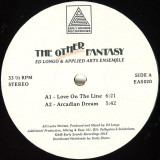
We Welcome Ed Longo And His Studio Project The Applied Arts Ensemble Debut On Early Sounds With the Other Fantasy', The Result Of Many Recording Sessions That Took Place In Different Places Around Europe.
Conceived With A Strong Jazz-funk, Fusion And Boogie Sound It Has Been Conceptualized Around The Idea That The Schizophrenia Of The Internet-age, The Visions Of Otherness (the Undiscovered Lands, The Primitive Happiness, The Impossible Love) Permeate The Collective Consciousness And The Idealized "other" Loses Any Correspondence With The Physical World.
After a savage summer of performing over 35 festival shows, COLLIGNON continue their journey with the release of Bicicleta.
Bicicleta was written and recorded right in the midst of the band's summer tour. Gino, Yves and Jori seized the moment, the album captures exactly where they currently stand as a band: thriving on the energy of their live performances, with the desire to dive deeper into their music.
The result is Bicicleta—a diverse and authentic album that stays true to COLLIGNON’s distinctive blend of wildly grooving beats, psychedelic guitars, and sharp keyboard riffs. The music transports listeners across many borders, all while maintaining their signature COLLIGNON sound.
This album was made with vinyl in mind, designed to be experienced as a complete journey. From the first Maloya rhythms of "Fonkér la Mér" (Kreol for 'fond du cœur de la mer', meaning ‘from the bottom of the heart of the sea’) to the Brazilian groove and cosmic crescendo of "Vai Vai Vai (Into the Stars)", Bicicleta is a trip that flows from track to track.
The album, recorded while Jori left his Portuguese studio for a year-long stay in the Netherlands, pays homage to what -without engine, exhaust or pollution- might be considered the finest emblem of Dutch culture: the bicycle.
The words of adventurer Nellie Bly, written in 1896, still ring true today: ‘In a frenetic era of expanding possibilities, cycling offers a journey into a landscape of dreams. The bicycle has always signified independence and freedom in steering one’s daily course and the byways of its occasional adventures.’
To truly experience this album, nothing compares to holding the vinyl sleeve in your hands and spinning the record on your turntable.
Six years after their last full-length release, Satoshi & Makoto return with Mirage Café, the highly anticipated new album on 8mm Records, in collaboration with Standart Magazine.
A carefully crafted and long-awaited work, Mirage Café is more than an album — it is a fully immersive sensory experience. The Japanese duo expand their signature sound into deeper and more cinematic territory, blending refined electronica, ambient textures, subtle jazz inflections and understated groove with remarkable elegance and control.
The title evokes an imaginary café — a space of contemplation, connection and inspiration. The partnership with Standart Magazine reinforces this conceptual layer, bridging music and coffee culture into a cohesive narrative that feels both intimate and international. The result is an album that unfolds like a slow ritual: warm, enveloping and meticulously detailed.
Throughout the record, Satoshi & Makoto demonstrate a mature and confident songwriting approach. The production is rich yet restrained, atmospheric yet rhythmically engaging — balancing introspection with forward motion. Lush harmonies, delicate arrangements and immersive sound design create a listening experience that rewards both focused attention and late-night drifting.
With Mirage Café , the duo not only meet expectations after a six-year silence — they surpass them. This is a masterwork of nuance and vision, poised to become a defining chapter in their discography and a standout release in the contemporary electronic landscape.
On his new album Chott, German-Tunisian producer and composer Taroug confronts his origins. Named after the Chott El Djerid, a vast salt lake in southern Tunisia, the ten-track album revolves around personal history and the search for identity. Chott is a conceptual work shaped by contrasting atmospheres, from minimalistic melancholy to raw, bass-heavy intensity. It blends traditional instruments with contemporary electronic text- ures, drawing lines between past and present.
Personal materials—such as vocal samples from family members—add layers of intimacy and cultural depth, most notably on the title track, featuring an original Arabic poem spoken by Taroug’s father, and on 1995,
a song reflecting on early childhood memories in Tunisia. Beyond these intimate dimensions, he works with sonic imagery that captures the sensory experience of heat and landscape in pieces like Saraab and Sirocco. In Nakhla, recordings of palm trees transformed into repetitive movements evoke scenes of southern Tunisia’s palm plantations, where organic and mechanical sounds converge.
For the artwork, Taroug once again collaborated with architect and designer Marie Brosius, assembling an experimental collage from old personal photographs of Tunisia that visually echoes the album’s themes of heritage and remembrance.
On Last Night At Marienbad's latest, the imprint brings together three of the brightest souls found within the realms of Jazz, namely Mauricesax, 9ick and Milan93, with their collective talents synergising effortlessly on 'A Garden Between Us', alongside a stellar cast of remixers who add even further delight between the grooves….
As a genre, Jazz has perhaps lent itself the most to other musical universes, in that its curious heart, endlessly experimental nature, and parameter-defying spirit have wrapped itself deep within the core of countless albums, scenes, and music makers. It's a genre that welcomes reinvention, consistently defying its contents and always reaching out to find new methods of expressionism. Electronic music, in its many forms, has truly embraced Jazz perhaps like no other movement of music has, with a truly astonishing array of records surfacing in the past 40 years which have blended Jazz's unique motifs with grooves, chords, and emotive excellence. From 90s Jazz house and UR Techno, through to Future Jazz, downtempo, and Hip Hop, and around many other suns, there remains such an intrinsic and symbiotic relationship between the two musical realms that caters to those who wish to live music both within and out with themselves.
As practitioners of blending electronica and Jazz, few do it like the trio of Mauricesax, 9ick, and Milan93. All three are known for their distinctive soundscapes, yet share commonalities in terms of musical language, feel, and sense of progression. Bringing them together allows for overlaps in their sounds to emerge, and just like Jazz itself, this is where the intrinsicness of sound begins to blossom. 9ick brings his softly evolving vibe to the table, one which was so prevalent and celebrated on his 2025 album 'SMIL'; Milan93 draws from his focal point of exploring fill-laden grooves and a myriad of emotive sensibilities; and Mauricesax draws up his extensive musicality that exists at the corner of jazz, electronic, and experimental music, along with running musical workshops all over the globe.
'A Garden Between Us' represents the trio's core tenets, with this immediately obvious from the record's opener, 'Rhodora'. A gentle solo piano quickly evolves into a series of powerful rhythmic pulses, with brass lines bringing vitality and feel to proceedings. The track shifts gears with purpose, transitioning between musical vignettes of the highest order, with the synth work doing much to bind the transitions together. 'Tulip' emerges slightly differently, with glossy Rhodes tones and an unravelling rhythmic undercurrent setting an enthralling stage. The track flourishes amongst sweeping textures, coming up for air amongst a deeply hypnotic rhythmic section that holds on and never lets up. 'Honeysuckle' lands next, which sees the trio emerge with a boundless, dynamic soundscape. The drums shift within the undertones, as keys, chords, horns and hip-hop vocal samples dance around the pulse, capturing the imagination with their narrative-like placement. Wrapping up the A side comes 'Camellia'. A dazzling array of harmonic sounds converges around the transfixing rhythm section, which emerges from deep below to lavishly roll out over the midsection, with the delicateness of the instrumentation a real highlight here.
The B side features two exquisite remixes, with Pacific Coliseum's version of 'Tulip' landing first. Beginning with a signature four to the floor to get things going, his careful handling of the source material is seen in the tactful introduction of the blissful elements that made the original cut so impactful, with great focus placed on emotive fidelity. The result is a summer-bound house number that reimagines the original in all the right ways, flipping it into a euphoria-driven jazz-laden pacer that reaches for the heavens as much as it drives right into the heart. Teuteu then showcases their take on 'Honeysuckle', and at 9 minutes long, represents the longest cut on the record - and the experience is all the richer for it. Leaning heavily into dance music flavours, Teuteu shifts perspective totally into the realm of the club, with the walls beating hard to the kicks. The sax lines that drift ethereally up top keep eyes closed and souls full, as the dance shifts into the next phase.
An experience that drifts from the daydreaming, to soul-warming through to the club shaking - what else is left to experience, except for 'A Garden Between Us' and how it will brighten up life itself….
Celebrating the 30th anniversary of its original release, Night Song returns in a special edition on rose leaf green coloured vinyl. A Grammy Award nominee, the album captures the extraordinary meeting of the legendary Nusrat Fateh Ali Khan and Canadian guitarist, producer and composer Michael Brook, whose atmospheric soundscapes provide the perfect setting for Nusrat’s ecstatic, transcendent vocals.
With Nusrat’s legacy continuing to reach new audiences following the landmark 2024 release of the unearthed archive recording Chain of Light, Night Song remains one of the defining cross-cultural collaborations of its era. This anniversary edition includes a printed inner sleeve with updated liner notes and photographs.
Across the past decade, KAS has established herself as a unique voice in experimental electronic music, a composer and synthesist whose work dissolves the boundaries between ambient electronica, contemporary classical, composition, and immersive sound design. Her new album “Ruin: It’s Not Just Music” arrives with a distinctive gravitational pull. The record moves with greater physical force, placing rhythm and impact at the centre of its architecture, revealing a more confrontational and embodied dimension of KAS’s musical language.
The first single “Ruin” arrives May 22nd, with the full album released October 2nd via SOMEONE SPECIAL the new label co-founded by KAS.
Where much of KAS’s earlier work explored harmonic environments, the forthcoming album is built around tension and release. Inspired by the sound of drum and bass, breakbeats fracture through dense fields of synthesis, percussive patterns and her signature melodic fragments – motions that feel closer to the kinetic language of club music than the meditative spaces often associated with her past catalogue. The result is a body of work that feels both recognisably hers and newly charged, music that moves through the body as insistently as it engages the mind.
For listeners who first encountered KAS through the glowing synthesis of “Ears” (2016) or the intricate experimental pop of “The Kid” (2017), this direction may feel initially surprising, yet the shift has been quietly unfolding across the past several years. KAS’s practice has steadily expanded beyond the expectations placed upon experimental electronic artists, moving between orchestral composition, audiovisual installations, film scoring, and large-scale commissions while retaining the unmistakable sonic signature that defines her work.
The 2022 albums “I Could Be Your Dog / I Could Be Your Moon” (2022) and “Let’s Turn It Into Sound” (2022) explored a deeply immersive approach to composition, expanded her reputation and instinct for constructing detailed sonic ecosystems while continuing to blur the lines between experimental electronics and contemporary pop structures. KAS’s most recent output has continued to widen that field including the rhythm oriented electronic album “Gush” (2025) and her return to more orchestral roots with “Thoughts on the Future” (2025). Together these releases underscored the breadth of her practice.
Her prolific collaborators and creative partners have ranged from Patti Smith and Suzanne Ciani to Danny Elfman, Tycho, Glass Beams, RY X, Caribou, Four Tet, Reggie Watts, and Max Richter, while her compositions have appeared in projects with Apple, Chanel, Meow Wolf, the BBC Orchestra, and major film and television productions.
On “Ruin: It’s Not Just Music”, that vocabulary becomes more kinetic than ever before. The record draws energy from jungle, drum and bass, and dance-floor focused electronic music while retaining the intricate synthesis and tonal curiosity that have defined KAS’s work from the beginning. The result is a record that feels equally at home within club culture, contemporary composition, and the experimental spaces that have long championed her artistry.
On May 27th KAS will present a major performance at London’s Barbican Centre alongside the London Contemporary Orchestra, marking the ten-year anniversary of her landmark album Ears. The evening will trace the arc of her creative evolution while also introducing material from the new album.
The year was 1989, and Derrick May was at a creative peak as both a DJ and producer. Under his Rhythim Is Rhythim moniker, he released a string of landmark records on Transmat, while his residency at Detroit's The Music Institute showcased the distinctive DJ style that would soon take him onto the international stage. Around the same time, he hosted a weekly radio show on Detroit radio station WJLB, alongside influential programs by The Electrifying Mojo and The Wizard (Jeff Mills).
For one of these broadcasts, May assembled a 15-minute megamix in his studio during the week leading up to the show. He opened his radio set with this continuous mix, blending his own tracks and versions into a seamless introduction that reflected his approach to DJing at the time. It includes unreleased versions of classics such as ‘Nude Photo 88’ and ‘Strings Of Life’.
‘All of this is unreleased because I made it as I was playing it on the spot as a special Mayday Mix for my show on the radio station WJLB in 1989, edited together straight from the keyboards live to tape. There is no other recording of these tracks in this form, only here’.
The original WJLB master tapes have since been lost, and no official recording is known to survive. Fortunately, many listeners recorded the broadcasts at home. One such cassette, preserved by Richie Hawtin, eventually made it our way. It has been carefully restored and mastered, with the artist’s approval.
To highlight this remarkable document of techno history, the recording is now available as a limited-edition, one-sided 12-inch release. The mix has been cut as a continuous side, visually divided into eight sections, while the reverse features a custom engraving.
There is a hush most of us only knew as children, the warm drift between familiar household sounds and being carried to bed, a place that belongs to you and to some self you have not met yet. June McDoom’s debut full-length, Follow the Light, lives in that dream space and then keeps walking, slipping out of time and waking somewhere new, barely familiar enough to feel like home yet wholly your own. She came up in a Jamaican household on the edge of the Florida Everglades, an existence built of extended family, communal care, bass and harmonics. Her father, a carpenter and a student of sound, built his own speakers and kept three sound systems going across as many rooms. His low end would rise through her bedroom floor like some wayward cat while she lay above it with folk records, finding harmonies that were new and hers alone. Two musics in one room. Lushness as past and premonition. She found folk on her own, somewhere between the cast recording of The Sound of Music and Simon and Garfunkel, while everyone around her called it sleepy music. She did not mind being the only one. The solitude let her fall for harmony first, before words, before anything else, and harmony is still the thing she reaches for. Generationally speaking, the music was already in the air. Her grandfather, Colin Smith, is a distinguished mento man who played banjo and guitar and built his own rumba boxes, worked to keep Jamaica’s oldest acoustic folk form alive. Mento is the root of all of it: ska, rock steady, reggae, dub and everything after. He is the one who put a guitar in her hands. An inheritance, a gift and a map. Even her name is part of it, though she will tell you she landed on it more by feel than reason. She records as June McDoom, born Alyssa, June being a nickname one of her grandmothers, Joan, went by, a name she thought was cool to carry and simply liked the sound of. An etheric channel that reverberates all the same. A dub all its own.
Made slowly and by hand with her longtime partner Evan Wright, Follow the Light lays the harmony of folk over the rhythm of dub, with Dionne Warwick, Minnie Riperton, Pentangle and the washed guitars of Cocteau Twins haunting its outer edges. Voice and guitar seeking each other out first, then everything else stacked across long days in the studio they keep at home, restraint kept on purpose. The lead single “Without You” is the whole method surfacing, split open and sparkling like a geode in a creek bed. Angelic heroics, and nothing less.
At the heart is family. Her grandmother Aggie, the light behind “Memory,” guiding still. And underneath, the quieter truth the record keeps: none of us are only one person, but a continuum of selves, the ones who shaped us and the ones we have yet to meet. Future you is an ancestor your current self gets to greet. Press play and the same invitation is yours: A few minutes out of time, a place that turns familiar the longer you stay until you surface somewhere new and find it was yours all along
There is a hush most of us only knew as children, the warm drift between familiar household sounds and being carried to bed, a place that belongs to you and to some self you have not met yet. June McDoom’s debut full-length, Follow the Light, lives in that dream space and then keeps walking, slipping out of time and waking somewhere new, barely familiar enough to feel like home yet wholly your own. She came up in a Jamaican household on the edge of the Florida Everglades, an existence built of extended family, communal care, bass and harmonics. Her father, a carpenter and a student of sound, built his own speakers and kept three sound systems going across as many rooms. His low end would rise through her bedroom floor like some wayward cat while she lay above it with folk records, finding harmonies that were new and hers alone. Two musics in one room. Lushness as past and premonition. She found folk on her own, somewhere between the cast recording of The Sound of Music and Simon and Garfunkel, while everyone around her called it sleepy music. She did not mind being the only one. The solitude let her fall for harmony first, before words, before anything else, and harmony is still the thing she reaches for. Generationally speaking, the music was already in the air. Her grandfather, Colin Smith, is a distinguished mento man who played banjo and guitar and built his own rumba boxes, worked to keep Jamaica’s oldest acoustic folk form alive. Mento is the root of all of it: ska, rock steady, reggae, dub and everything after. He is the one who put a guitar in her hands. An inheritance, a gift and a map. Even her name is part of it, though she will tell you she landed on it more by feel than reason. She records as June McDoom, born Alyssa, June being a nickname one of her grandmothers, Joan, went by, a name she thought was cool to carry and simply liked the sound of. An etheric channel that reverberates all the same. A dub all its own.
Made slowly and by hand with her longtime partner Evan Wright, Follow the Light lays the harmony of folk over the rhythm of dub, with Dionne Warwick, Minnie Riperton, Pentangle and the washed guitars of Cocteau Twins haunting its outer edges. Voice and guitar seeking each other out first, then everything else stacked across long days in the studio they keep at home, restraint kept on purpose. The lead single “Without You” is the whole method surfacing, split open and sparkling like a geode in a creek bed. Angelic heroics, and nothing less.
At the heart is family. Her grandmother Aggie, the light behind “Memory,” guiding still. And underneath, the quieter truth the record keeps: none of us are only one person, but a continuum of selves, the ones who shaped us and the ones we have yet to meet. Future you is an ancestor your current self gets to greet. Press play and the same invitation is yours: A few minutes out of time, a place that turns familiar the longer you stay until you surface somewhere new and find it was yours all along
* long version / previously unreleased on vinyl
** exclusive / previously unreleased
Felix Laband's highly acclaimed electronica masterpiece album "Dark Days Exit" (2005) is now available as an Extended Version 2LP vinyl. Originally planned for last year's 20th anniversary, this special edition features a new design by Felix Laband and includes a double-sided DIN A2 art print. Dark Days Exit features four exclusive tracks, alongside five vinyl-only tracks available for the first time in their original long versions. Listening to the key track, Sleeping Household, on Dark Days Exit is unsettling: like being an impostor rambling around an uncanny house, a Lynchian leitmotif in the form of a young girl divulging secrets that you probably shouldn't hear. Dark Days Exit is an album that paints an interior landscape, an invitation to transgress private thresholds. Made with old-school production tools that require hands-on application, Dark Days Exit is a sound-production tour de force. The music is as wide as the savannah and microscopic at the same time, a lesson in what can be achieved when 'music' is placed on an equal footing with sound as a phenomenon, by an artist who decides to apply themselves without reserve. The masterful manipulation of reverb and delays and hyper-detail was a generation ahead of its time, and Dark Days Exit is preferred by audiophiles for testing their systems. Dark Days Exit is intimate, demanding, and a masterclass in tension, and Laband's ability to use all sound without hierarchy to paint a detailed personal vision — one that is less overtly political and streetwise than on subsequent albums — is unsurpassed. Most discerning listeners are into music because, in the hands of a master, it can manipulate our mood and transport us. Felix Laband opens with a sonic portrait of spring happiness and gradually dismantles the atmosphere in front of our ears, as epitomised by the haunting track Black Shoes. No sooner are we afraid than the artist drops us off where we started. In many ways, the intimacy derives from the tight group of friends and believers whom Laband corralled as contributors: Mark van Niekerk (xylophone, "Miss Teardrop"), Jane Rademeyer (clarinet, "Black Shoes," "Radio Right Now"), Brendon Bussy (mandolin, "Black Shoes"), and Derek Gripper (sampled violin, used throughout) and Alex van Heerden on Minka. The difficulty in categorising Dark Days Exit is probably due to Laband listening mostly to ambient and classical music at the time, and consequently registering the album at the lush, cinematic end of the electronic spectrum. There is poise and restraint in the spare use of beats, and when they do appear, they hit hard. Forged in the optimistic post-apartheid years, Dark Days Exit is music about life and death, spanning hope, despair, terror, tension, with humour and empathy. Twenty one years on, the album's gravity endures, due to its almost perverse authenticity, its timeless themes of hope and despair, and its apex level of technical mastery. The additional, immaculately produced tracks add new rooms to the uncanny house we are invited into.
4/5 REVIEW IN MOJO: “HEARTBEAT TONES DISSOLVE INTO BEAUTEOUS SHIMMER AND STELLAR SYNTH MEDITATIONS GIVE WAY TO CAREFULLY ORCHESTRATED ELECTRONICA.”
4/5 REVIEW IN UNCUT: “IT'S MASTERFUL, THOUGH IT WILL LEAVE YOU FEELING LIKE A SPECK OF GRAVEL IN A SELF-DESTRUCTING WORLD.”
NME - 8/10 review (w/c 14 October) "He’s mastered this stylistic skittishness and you’ll do well to find much dispute about his talent."
NARC - 5/5 review (October issue) "An immersive soundtrack to your own personal psychodrama."
WIRE - ONE PAGE REVIEW (October issue) "The sentiments it stirs to life are shadowed and ambiguous, simultaneously personal and impersonal. It is also fantastically immersive, dragging the listener into its turbulent undertows, then washing them back on dry land, intact but changed.’’
Virgins was recorded during three periods in 2012, mostly in Reykjavik, Montreal and Seattle, using ensembles in live performance.
While this album remains committed to a painterly form of musical abstraction, it is also a record of restrained composition recorded live primarily in intimate studio rooms. This record employs woodwinds, piano and synthesizers towards an effort at doing what digital music does not do naturally—making music that is out of time, out of tune and out of phase.
Some pieces go off the rails before forming into anything, others eschew crescendo
compositional structures or bombastic density while going sideways instead. It points to the ongoing development of Hecker's work. It suggests illusory memories of drug- hazed jams or communal music performance that may have never been performed or been heard.
It is an offering of music into the void, a gift of digital filler between distractions. Yet hopefully it also stands as a document of the enduring faith in the narcotic, enigmatic function of music as long-form expression.
Mixed by Valgeir Sigurðsson and Tim Hecker. Additional assistance by Randall Dunn and Ben Frost. Mastered by Mandy Parnell at Black Saloon Studios in London, UK.
For the label's latest, Oath is proud to present 'Honey Tangerine', the newest mini-album from producer extortionaire Olsvangèr, who serves up his signature blend of hyper-kinetic, ever-shifting dance music.
Olsvangèr's sound and musical journey are forever rooted in the liminal spaces that make up the broad-reaching and ever-shifting electronic music landscape, with his records consistently channeling that in-betweenness that imprints lasting impressions. A classically trained musician with a profound passion for house and techno, Olsvangèr's sonic palette is one of both broad and delicate brush strokes, applying an array of compelling motifs within amorphous arrangements that blend and blur perspectives. His records seek out the faraway fringes as much as focusing on the intensity found in the detail, creating cavernous soundscapes that are impeccably tuned and effortlessly free-flowing. Seemingly genreless, his records are anchored in all that is known and loved, yet due to the music's perspective situated at the intersectionality of electronica, a beautiful anticipation resides within every stanza of his tracks at what may come next. His musical language has found him releasing on the likes of Kalahari Oyster Cult, Hooj Choons and Craigie Knowes, and follows through within his imprint Tofistock, which has been pushing some of the most forward-thinking dance music of recent times.
'Honey Tangerine' touches upon the classic motifs of Olsvangèr's sound, and as always, the room for growth within the record's parameters remains truly endless. Over six tracks, Olsvangèr lays bare the directions of travel, with paths unravelling that feel well trodden yet with some that branch out towards new horizons. 'Source of Thought' opens up proceedings with a captivating ambience, where twinkling hues and lively tones paint the parameters of sound. The chuggy breaks that land deep within the mix drop in and out of view, allowing a deft balance between pure ambiance and rhythm to exchange dialogue between one another. 'In a Nutshell' shifts gears in atmosphere and energy, with all eyes placed upon the club. The shifting rhythm section lifts the acidic melodic features up above, with driving bass notes and a euphoric vocal like lead linking the depths to the heavens. 'Tulpa Nine' swings into heads-down territory, where the drums swing slow and the throbbing bass hits heavy. The auto-tune vocal line up above creates an atmosphere of hazy, smoke-filled rooms, where the party yearns for downtime in anticipation of the next shift in energy.
'Sunrise on the Lips' gives over further chill out room vibrations, where the lights remain low, and smiles reside all around. The enriching drums provide the basis for sitars and glossy keys to glide across the top ends, with the mind invited to dip deep within this enthralling ensemble. 'Zoom It Out' provides the release into the room, with the ante upped. A breaky house leaning number, this cut grooves through its chiming melodic section and groove-laden bass line, with the polyrhythmic drumming pattern doing much to keep the energy residing very high indeed. The record is wrapped up with 'Some Air', which gives over one final jaunt through the airy, slowed-down slipstreams. A wondrous beat is complemented by melodic elements that chime, absorb and quiver, glowing through the night with such charm and feel. An engrossing composition that demonstrates what Olsvangèr is all about - a crafter of sound, where adventure is sought and found, never wavering but curating new connections, feelings, and tones, with an eye on what might come next.
Whether softly undulating or boundlessly expressive, Olsvangèr's music remains a beautiful enigma that serves up both the glorious knowns and the captivating unknowns - 'Honey Tangerine' is yet another chapter in his glorious discography.
On Oath's latest, the imprint keeps the jazz-fuelled atmospheres going with 'Seven Dogs', an EP that serves up an astonishing excursion through deeply hypnotic melodies and idiosyncratic grooves, courtesy of an iconic link-up between Rteph88 aka Robin Taylor-Firth and Steve Cobby.
Taylor-Firth and Cobby are musicians whose careers are so richly storied, broad-ranging, and impactful that it's difficult to summarise their output and impact in so few words. Both Taylor-Firth and Cobby firmly established themselves in the 90s, being involved in some of the era's most prominent and celebrated groups and for releasing some truly era-defining records. As such, their discographies reach far and wide, from house and techno cuts through to downtempo, drum'n'bass and leftfield, there is little that is left uncovered, and this spirit remains with them both as they continue to explore the outer parameters of their sounds.
Taylor-Firth, a songwriter, arranger, and producer, is perhaps best known for his long association with Warp Records and its sublabel Nucleus, and for his work as a member of Nightmares on Wax, where his signature keyboard playing style became a staple of the group's legendary sound. Alongside this, he has hundreds of songwriting and arranging credits on a dizzying array of records, and was a member of house music group Anon and Pio Bo alongside Richard Barratt - to name but a few selected highlights of his extraordinary career. Cobby's career is distinguished by his multitude of releases under a variety of aliases, along with his helming of a number of imprints, including Pork Recordings and his most recent label Déclassé. Experimenting with a wide variety of genres and sounds, perhaps his best-known work was with the duo Fila Brazillia alongside Dave McSherry, who released a plethora of immersive and innovative records in the 90s and beyond.
'Seven Dogs' represents a shared passion, vision, and musicality, two languages borne of similar spaces but reaching through time, space, and existence in creating a richly veiled musical experience that draws from lifetimes spent within the nucleus of music's soul. The EP speaks of the present as such as the past and indeed future, hinting with motifs that feel right at home within sun-kissed skies and within the walls of the chill out rooms. 'Early Doors', the EP's opener, displays the core fundamentals of the unfolding experience, namely the intrinsic relationship between keys and drums and how they express tone and mood. The piano gently caresses, ethereally floating with space to grow, as the drums lightly swing into life, providing an engrossing and rhythmically diverse groove that nods as much as it dives. The title track lands next and leads with a more driving feel. Sonically, the track leads with an oozing bass sequence that worms through the mid range before retreating under an array of compelling piano chords. The drums once again provide a strong backbone, allowing the melodic elements up top to fully express themselves - in a myriad of ways, murmuring and clamouring all at once.
'Visiting Hobo' brings the groove down a few notches. Slightly sombre in its delivery, the piano and bass interchange above a sparse yet hard-hitting groove, with as much emphasis placed on the emptiness as on the melodically full sections. The piano has a certain tonality here, with the notes containing a large amount of textural reverb that helps the track feel alive, almost growing out of the speakers. Wrapping things up is 'Titled', which begins with the keys and an array of whimsical features. The drums allow themselves time to grow into being, but when they do, they simmer within an enriching melange. It's a fitting end to a record that abounds with sonic consideration, environmental and emotive feeling, where two technicians bring their best and serve up four tracks of such sublimeness and thoughtfulness. One to drift deep within, on those hot summer days….
Detroit techno visionary Keith Tucker returns through his acclaimed alter ego Optic Nerve with AUGMENTATIONS EP, a forward-thinking exploration of minimalist machine funk, futuristic sound design, and deep electronic movement.
Crafted with precision and unmistakable Detroit character, AUGMENTATIONS merges hypnotic analog sequences, mechanical rhythm structures, atmospheric synth textures, and driving electronic beats into a powerful sonic statement rooted in the city’s enduring techno legacy. Sparse yet immersive, the EP balances raw underground energy with cinematic futurism — designed equally for dark warehouse floors and deep headphone listening.
Pressed as a Limited Collector’s Edition Clear Vinyl 12-inch, PBX-38 captures the sleek, transparent aesthetic of the music itself: pure signal, machine emotion, and uncompromising Detroit innovation.
A1 — Augmented 1 (Optic Nerve Original Mix)
A deep, stripped down Detroit techno workout driven by pulsing drum programming, evolving synth modulation, and hypnotic minimalist sequencing. Functional futurism engineered for late-night motion.
B1 — Augmented 2 (Infinite Worlds Mix)
Built around a rolling funky bass line and eerie flowing string textures, this expansive composition moves through layers of atmospheric electronics and mechanical groove architecture. The track creates an immersive sense of drifting through endless digital landscapes while maintaining a sharp rhythmic intensity designed for the underground dance floor.
B2 — Augmented 3 (Visual Shapes Mix)
Abstract melodic fragments, and precision electronic rhythms collide to form a futuristic minimalist soundscape filled with movement, tension, and cinematic pulsed chords.
In a blizzard of crushed breaks and dissonant tones, Shelley Parker lands on Sneaker Social Club with her third album, Screed. Taking a forensic approach to noise sculpture and harmonic interference, the UK-based artist maintains a fringe perspective on the legacy of hardcore-derived dance music, extrapolating the renegade spirit of the earliest innovators into unexplored zones where sound art and sound systems collide.
Parker's path through the underground has been informed by her art school background, equally at home in the parallel world of galleries, installations and institutions as she is in the club. This dualistic dimension to her practice charges her music with an outsider spirit that manifests across 10 striking new productions on Screed. Focusing on the sound over an umbrella concept, it's an album that rejects comfortable, functional formulae in favour of original expression.
There are plenty of forthright structures for DJs and dancers to lock onto, from the militaristic techno thrust and tightly clipped breakbeat loop of 'Relentless' to the splayed boom bap guiding the giddy string sequences of 'Stargazer Lily'. The insistent pulse of 'April' meanwhile offers only the faintest of paths to navigate dense thickets of jerky, swinging static and metallic clamour. 'Georgian Wire' closes the record out on dissembled drum licks with a brittle patina - a scooped out closer with the skeletal remains of a rave dialect that's second nature to someone with as much skin in the game as Parker.
In amongst those tracks lies a wide-ranging tapestry of rhythmic, textural and emotional approaches, from head-knocking beatdowns to billowing clouds of dub techno, angular stabs and industrial smudges. On Screed, Parker proves herself to be peerless and purposeful in her quest to find new forms within the well-worn canon of hardcore and rave.
James McKeown aka Hawksmoor aus Brighton meldet sich mit "Yclept Thorn" auf Library Of The Occult zurück. Auf seinem neuen Werk hält er die Atmosphäre in einem Zustand von Dringlichkeit und unterschwelliger Spannungm wobei eine archaisch-mittelalterliche Note mitschwingt. Von organischer Perkussion bis zu ätherisch-elektronischen Klängen, die Tore zu in der Zeit erstarrten Dörfern und uralten ländlichen Mysterien öffnen, ist "Yclept Thorn" ein Meisterstück des Dark-Folk-Storytellings.
Verdad Y Error (2026) resides in the tension between the thrashing of external noise and beating centred internal calm. Gibrana Cervantes is known for her work across experimental music and contemporary performance, a practice with focussed intensity and surging physicality, often pushing the limits of endurance, presence, and embodiment. A central axis of her performance practice is her ongoing collaboration with acclaimed choreographer Florentina Holzinger, including composing the music for SEA WORLD (2026), Florentina Holzinger’s critically acclaimed installation for the Austrian Pavilion at the Venice Biennale. Alongside this, she is a core member of the experimental ensemble Amor Muere (Mabe Fratti, Concepción Huerta, and Camille Mandoki). Cervantes maintains an active recording practice that directly informs her live output including her collaboration Memoria (2025), with Colombian Drone Mafia (Nyksan) for Ambie-Tón (Tratratrax),
Verdad y Error is a record of her artistic approach which expands her body and the violin’s horizon of possibility to near breaking point. Cervantes uses a register closely associated with Metal, yet buried deep in the alchemy of these pieces are motifs which hark back to her classical background. Across these pieces the violin is used as an instrument with a fragmented and shifting voice — blurred, repeated, and reshaped through distortion. “Many of these pieces come from images, memories, and sensations that have stayed with me for years. I'm interested in the blurring of what actually happened and what time transforms.” The recordings are built with layers of violin tones which oscillate between recognisable, processed, stretched and shifted, and lay embedded in a frequency stratum of volatile static and noise. “The violin on this album doesn't appear as a clean instrument. I process it, repeat it, distort it, and multiply it until it begins to feel more like memory than melody. Something blurry, shifting, difficult to grasp.” The origins of the album were born at a time when Cervantes was seeking inner calm amidst a relentless external noise, questioning the validity or possibility of memory and its radically changing perception in relation to experience. Subsequent reflection on this contemplative moment allowed her to develop a relational music which moves through memory, erosion, repetition, and emotional ambiguity. Creating a space that feels both intimate and unstable, mercurial with the patina of lived imperfection.
Akin to the unreliable narrator and linguistic instability, each piece functions as an emotional landscape suspended between clarity and confusion. An album which balances melody, brutality, fragility and noise
throughout its sprawling recordings and artwork, which operates as an analogue to the music. The visual world of the album developed in collaboration with Mauro Ventura was compiled across various media with a mix of handwritten texts, burned typography, metallic textures, and fragile physical materials. “I wanted the record to feel tactile and imperfect — something emotionally direct but physically worn.” says Cervantes. More than offering explanations, verdad y error exists as a conversation between memory and disappearance, noise and stillness, truth and error.
Produced by François Tétaz and Luke Howard and recorded primarily at Melbourne's Synth Temple, Tina Arena's Way Of The World reimagines “True Faith” (New Order), “Way of the World” (Max Q / Michael Hutchence), “Enjoy the Silence” (Depeche Mode), “Ordinary World” (Duran Duran), “Torno Bambina” (Ada Mori) and “Cayendo” (Frank Ocean) through stunning orchestral arrangements, prepared piano, analogue synthesis and electronic textures.
Rather than traditional cover versions, these are complete artistic reimaginings that reaffirm Tina Arena as one of Australia's most expressive and enduring vocalists. Of first single “True Faith”, Tina says: “Making the deliberate choice to focus on the lyric of true faith was musically revelatory for me. It presented a blank musical canvas with endless vulnerability and space for me to explore.”
François Tétaz, a Grammy and ARIA-winning producer known for his work with Gotye, Kimbra and Architecture in Helsinki, contributes synthesisers, Rhodes, prepared piano and drum machines throughout, while pianist and composer Luke Howard shapes the EP's restrained, cinematic language. The pair are joined by an ensemble including the Budapest Art Orchestra, Peter Knight, James Rushford, Mindy Meng Wang and orchestrator Felix Watson, giving the collection its rich, orchestral backbone.
The EP announcement lands amid a landmark 50-year career anniversary for Tina — one of Australia's highest-selling artists of all time, having sold more than 10 million albums worldwide.
GEORG DANZER - "JAHRESZEITEN" - Das Beste aus fünf Jahrzehnten Anlässlich des 80. Geburtstags des großen österreichischen Liedermachers GEORG DANZER veröffentlicht Sony Music eine von Georg Danzers langjährigem Wegbegleiter und Manager Franz Christian Schwarz liebevoll kompilierte Best Of mit dem Titel "Jahreszeiten". Das auf farbiger 2LP sowie auf 1CD erhältliche Album umfasst Lieder aus jeder Schaffensphase des 2007 verstorbenen Künstlers, dessen musikalisches Erbe die österreichische Musik nachhaltig prägte. Das Albumcover setzt sich aus vier Portraits Georg Danzers zusammen, die von Nina Maron, Tochter des unvergessenen Sigi Maron, gemalt wurden. Franz Christian Schwarz beschreibt die Zusammenstellung der Best Of mit folgenden Worten: "Alle meine Lieder sind wie Sonne Mond & Sterne" ist der Beginn eines Liedes auf der CD-Single "Sonne, Mond & Sterne", die anlässlich der gleichnamigen DVD-Veröffentlichung von Georg Danzer erschienen ist. Diese Liedzeile gab auch den Ausschlag, die vorliegende Doppel-LP "Jahreszeiten" zu nennen, um die Bandbreite von Danzers musikalischer Vielfalt unter Beweis zu stellen. Danzer schaffte es wie kaum ein anderer Beobachtungen, Erzählungen, Gedanken und Emotionen in Worte und Melodien zu fassen. Mit über fünfhundert veröffentlichten Liedern für sich selbst und andere Interpretinnen und Interpreten zählt Danzer zu den produktivsten Liederschreibern des Landes. Einige seiner Lieder hielten auch in Schul- und Notenheften Einzug. Die vorliegende Doppel-Vinyl und die um einen Titel verkürzte CD-Version wurden eine spezielle Zusammenstellung, auf der neben bekannten Liedern auch solche zu hören sind, die entweder bisher unbekannt oder dem Zuhörer nicht so geläufig sind, aber das musikalische Spektrum des großartigen Poppoeten widerspiegeln. Sie dient zur Auffrischung von Erinnerungen ebenso wie als Anreiz, sich mit dem Werk Danzers vertraut zu machen oder es neu zu entdecken. Der Frühling ist für viele Menschen ein Zeichen dafür, das