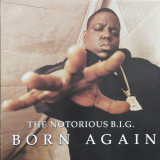
Shortly after Jay Dee’s younger brother Illa J’s solo debut was issued on Delicious Vinyl, the label and the artist knew the next step in honouring Jay Dee’s legacy was to issue the complete instrumentals from Yancey Boys as a stand-alone release. This mother lode of previously untouched (at the time) beats dates as far back as Jay Dee’s time working on the Pharcyde’s sophomore album, 1995’s Labcabincalifornia. As Delicious Vinyl owner Michael Ross explains, “From ‘95 through ’98 Jay Dee was my go-to guy for hot beats and remixes. He was always making beats, always. So there was a select amount of tracks that he composed for me during that time, tracks as good as anything he’d done, only they never got used.” Once these beats were used for Illa J’s Yancey Boys they were presented to the public on Yancey Boys Instrumentals.
Novoa/Kamaguchi/Cleaver Trio Delivers Electrifying Second Volume
A Bold, Experimental Fusion of Density and Dialogue
"The wait is over. If you’ve been holding your breath since hearing Novoa/Kamaguchi/Cleaver Trio, Vol. 1, it is time to let it out. Vol. 2 is almost here! The group has returned to 577 Records once more, serving a heaping second helping of addictive musical brilliance that comes out in May.
Even The Wire magazine celebrated the trio's first album, calling it “a deep and thoughtful release” – and Vol. 2 is no different. Eva Novoa is the Barcelona-born pianist/composer taking the world by storm with her creativity and talent. And she is back to wow us again on the piano, Fender Rhodes, Chinese gongs, and a little whistling.
To complete the trio, she chose her longtime comrade and collaborator of some fifteen years, bassist Masa Kamaguchi, and Detroit drum wizard Gerald Cleaver. The group has performed live in NYC since 2017. They made their first record (Vol. 1) with 577 Records in 2024. Their highly anticipated Vol. 2 marks Eva's fourth album with the label.
In their upcoming release, Novoa steers the trio through elegant experimentation of its full potential, confidently grasping golden threads from great masters of music to shape her own melodic universe. The multi-instrumentalist says it’s where melodic density meets contrapuntal dialogue, a free interplay of rich textures and riveting, masterly improvisation. This smooth complexity is what gives rise to the group’s uniqueness.
Like Vol. 1, the album cover art features the work of Novoa’s friend and collaborator, popular street photographer Richard Sandler."
Eva Novoa - Piano, Fender Rhodes, Chinese Gongs & Whistling.
Masa Kamaguchi - Bass.
Gerald Cleaver - Drums.
Recorded on January 19, 2020 at Oktaven Audio, Mount Vernon, NY by Jeremy Loucas.
Mixed and mastered by Jeremy Loucas at Sear Sound, New York City.
Photography by Richard Sandler.
Graphic design by Sergio Vezzali.
Graphic support by Mark Smith.
Mr Bongo proudly presents Ritmo Italiano ‘Unspoken Sounds of Italian Tamburo’ a captivating compilation of percussive-driven, Italian gems curated by Sardinian multi-instrumentalist, percussionist and producer, Gabriele Poso. A journey into the heart of Italian musical history, it celebrates Italy’s rich rhythmic traditions, showcasing a selection of genre-traversing, Italian treasures from the ‘60s to the early ‘90s. Honouring the timeless rhythms of Italian percussion masters, alongside a brand-new exclusive composition by Gabriele, ‘Ritmo Italiano’ shines a light on the universal, primal language of the drum.
A connection sparked from an early age; percussion has always deeply resonated with Gabriele. It led to years of studying percussion traditions across Cuba, Puerto Rico, and Brazil, crafting his own songwriting skills in the process. An acclaimed producer and compiler, his releases on Yoruba Records, BBE and Soundway Records have garnered global support. Yet a growing need to rediscover the essence of his country’s cultural heritage laid the foundations for this new compilation.
In Gabriele’s own words, “Italy has always been a crossroads of civilizations, with influences from the Mediterranean, North Africa, the Middle East, and Europe converging over centuries. Ports like Naples, Genoa, and Venice played a crucial role as gateways for musical exchange, a melting pot of sounds and cultures brought by sailors, merchants and travellers. These influences blended with Italy’s own folk and religious traditions, creating Italy’s unique and emotionally resonant rhythms.”
Across the 12 absorbing tracks, there’s jazz influences, Italian library music aesthetics and experimental beats mixing with Afro-Cuban and Mediterranean rhythms. It’s a broad selection anchored by the drums. The synth-heavy, ‘80s jazz funk flavours of Gegè Munari's ‘Police Man’, sit side-by-side with the samba-infused ‘Napulitano D' 'O Brasil’ by Don Marino Barreto Jr. Tribal, earthly energy radiates from Naco’s ‘Volando Con Milton’, with Tullio De Piscopo serving up cosmic disco brilliance, and blistering jazz funk mastery coming courtesy of Agostino Marangolo. Taking the name of the compilation, a new original track by Gabriele, ‘Ritmo Italiano’, blends traditional rhythms with contemporary energy, Afro-Latin influences with Italian jazz essence. Recorded live in one take, it captures a raw, unfiltered vibe.
“Each track tells a story, connecting the past with the present, and highlighting the deep-rooted traditions that shape Italy’s rhythms. The collection also offers a glimpse into the diversity of Italian music with a variety of styles from the organic, earthy beats to the more experimental and modern takes on traditional rhythms. It’s a reflection of how these rhythms have not only shaped Italian culture but also influenced global music.”
“Recorded at BBC Broadcasting House and partially aired on BBC Radio 3’s Late Junction, the first studio encounter between London-based duo Exotic Sin and Swiss percussionist Julian Sartorius is now published in full on this album from Sagome.
Winding through six distinct and interconnected paths, the trio effortlessly create a shared language in this expansive improvised session.
Listening back two years later — the session was recorded on March 24, 2023 — it’s evident how they build at a relaxed pace, offering space for the listener to enter into their evolving sound. Anchored by piano, delicate wood, metal, and air instruments, a fluid system of interactions develops: repeating, deepening, but not fixating. The direction of travel is not cyclical or linear and the pace insists on forward confidently, avoiding the trap or comfort of recurring motifs.
Percussion is not a timekeeper, but a key element, introducing new textures that even on the final track Path 6, trace out a horizon that feels more like a blurred beginning than a definitive end.
In Session, Exotic Sin moves into a lighter, perhaps more playful language for improvisation than on their debut album Customer’s Copy. This could be influenced by Sartorius’ tactile approach to sonic materials or the more stripped-back nature of the improvised session, with less emphasis on synthesised and electric sounds. While the emotional imprint from their debut album—murkier and insistent—remains, it has been aired out to dry. In Session, their sound-world is broad and moves with levity.”
Andrea Zarza Canova – April 2025
Music by
Kenichi Iwasa (electric and acoustic percussion, trumpet, horns, thumb piano, effects).
Naima Nefertari (piano, Yamaha keyboard, flute, bells, percussion).
Julian Sartorius (drums, percussion).
Recorded and mixed live for Late Junction at BBC Broadcasting House, London, on the 24th of March 2023 by Joe Yon and John Boland.
Mastered by Giuseppe Ielasi.
Produced by Silvia Malnati at Reduced Listening for BBC Radio 3.
Extracts from the session were played on Late Junction on the 14th of April 2023.
Artwork by Josef William Back.
Graphic design by Nicola Tirabasso.
Introducing ''Sleek Vibra,'' the debut vinyl EP from Alessandro Gramaccioni (AFM), a compelling young Italian artist whose unique sonic vision has been forged through his involvement with the Amen Rave collective and a previous digital EP on Lapsus Records' CEE imprint. This powerful six-track offering for Adepta Editions sees AFM expertly fuse and reimagine a spectrum of genres, weaving together IDM, rave-oriented sounds, bass music, techno, and Afro-Arab rhythms. The result is an immersive sonic tapestry, where memory and tangible form converge into a cohesive audio-tactile experience. ''Sleek Vibra'' invites listeners on a futuristic journey through shadowy sonic landscapes, where the mechanical relentlessly intertwines with the organic. This intense sonic declaration holds nothing back, painting a vivid and uncompromising picture of sonic annihilation in its wake.
"Polymath artist, musician and iconoclast Raed Yassin releases Eternal Ghost, two long-form pieces of modular minimalism via Fourth Sounds. Drawing on influences of Terry Riley, Suicide, no wave and synth pop, the double A-side 12” reverberates with urgent, high-octane loops, repeating patterns and distorted vocal frequencies, each track unfurling over 15 frantic Minutes of maximalist electronics.
Born in Lebanon and based in Berlin, with a musical practice that spans free improvisation, Arabic pop and sample-based cultural archaeology, Yassin is an artist who refuses to be contained, working across disciplines to interrogate ideas of personal identity, collective memory and consumer culture.
Eternal Ghost is the latest addition to a shape-shifting body of work, released to accompany Yassin’s debut London exhibition of the same name at Cedric Bardawil in June 2025."
Arkeo is my most eclectic and techno-driven album to date—a fusion of my love for subterranean aesthetics and my deeply-rooted connection to Detroit’s underground music scene.
While always keeping the dance floor in mind, this album also reflects something more personal: my spiritual journey and how it applies to my daily life.
Arkeo represents the awareness that I have weaknesses, but rather than seeing them as limitations, I view them as opportunities for God's power to work through me. It’s a reminder that my dependence on Him allows me to walk more fully into the abundant life I’m meant to live.
Jesus said, “My grace is sufficient for you, for my power is made perfect in weakness.” — 2 Corinthians 12:9
As you listen, my hope is that you don’t just hear the music, but that you feel a connection to something deeper.
out of Stock
Last delivered 4 months ago available to reorder, subject to availability
New Delhi-based Peter Cat Recording Co. will release their debut album, ‘Bismillah’ on June 14, 2019 via French independent label Panache Records. Debut UK live shows are soon also to be announced by the band.
Peter Cat Recording Co. could almost have a question mark on the end of its name. Not least as founder & frontman Suryakant Sawhney refuses to explain where that name really comes from or what it means (perhaps a reference to the Tokyo jazz club owned by Haruki Murakami), but also since the very existence of the band itself raises a raft of questions. When was the last time we fell for an indie rock band for the right reasons? Not because the band in question nostalgically imitate a perceived ‘golden age’ but because they innately embody the fundamentals of such music: fantasy, sincerity and the freedom to make music without rules or career aspi- rations. And when was the last time this kind of band sounded like Sinatra, Barry White, the sweetest doo-wop, humid fanfares and a psychedelic wedding band, all at once? And all of this coming from India?
In truth, the story of Peter Cat Recording Co. was written within the triangle of San Francisco, Delhi and Paris.
In the first of these cities, Sawhney (a native of Delhi) pitched up to study film-making. More distracted by the city’s peaking live scene of the early noughties, this is where he started to make music and to sketch out an idea for the band.“
The people I lived with supported my idea of writing music, they introduced me to great mu-
sic. There used to be a great garage scene in San Francisco, like The Oh Sees also Ty Seagall, Mikal Conin, all those bands. This is a world I had never seen in my entire life. A big inspiration from San Francisco was that you could record yourself. You don’t need to be in a studio and spend a lot of money to make an album. You can do it”.
At the end of the 2000s, Suryakant returned home to New Delhi, and started his band for real, more or less the same band that plays today. “I wasn’t so concerned about will we be performing, will we be the greatest band, will we be trendy. I just wanted to make something that was consequential and important for us, I think. Something which would last, something people could listen to and be like « this is life changing ». It was for the sake of beauty”.
For the first few years and in India alone, this is exactly what Peter Cat Recording Co. did, in total indifference to the rest of the world. This was until young Parisian label Panache stumbled across the band online via Vice’s THUMP subsidiary, stupefied by the band’s cosmic video for seven-minutes-and-counting track, ‘Love De- mons’. And so in spring of 2018, ‘Portrait Of A Time: 2010-2016’ was released on Panache - making the first international release from Peter Cat Recording Co., bizarrely enough, an anthology of re-mastered, hidden gems from the band’s ramshackle back catalogue, previously recorded in Suryakant’s own living room. With Peter Cat’s off-kilter charm hitherto unheard of beyond the fringes of India, the release provided a gateway op-
Whilst the title track found its way onto Tracks Of The Year lists at the Guardian & NME, it was tricky for new PCRC enthusiasts to get a firm grip on the startling push/pull between the immediate, uncanny music this release gathered, and the cultural backdrop of New Delhi at which it was so startlingly at odds.
Opportunity for a wider fanbase to fall in love with their cloud-like, drunken songs for the first time.
If discovering your favourite new band via a ‘Best Of’ feels a curious premise, then ‘Bismillah’ does more than hint towards the promise of Peter Cat Recording Co’s future. Blending gypsy jazz, psychedelic cabaret, space disco, bossa supernova, Bollywood and uneasy listening with kaleidoscopic ease, in many senses, the band’s knack hasn’t altered. Always different, paradoxical, unpredictable yet somehow familiar. The new album opens to the strains of bird chatter, the whisper of a city’s soundscape and the first few notes from an instrument which seem to be calling us to the departure lounge, a fore-shadow of the flight ‘Bismillah’ launches its listener
on. Suryakant sings with the detached, rueful elegance of Sinatra marooned on a desert island, whilst his band create small space-time capsules which navigate their way through genres and eras – including the future – and between nostalgia and eccentricity.
Peter Cat recently trailed ‘Bismillah’ with the release of ‘Floated By’, an appositely titled musing on failure & missed opportunities, punctuated by the fulsome brass section which weaves through so much of the album.
The languid, blue quality to the track is offset by the attendant music video, created with footage shot, implau- sibly enough, at Suryakant’s own marriage ceremony (needless to say, the wedding band hired for the day was of course, Peter Cat Recording Co.) Sawhney dryly notes; “Hopefully it’s not a many-a-times-in-a-lifetime event. You can’t fake that set, those people actually having a good time, being really emotional and intense.” ‘Bismillah’’s colour-drenched album cover also captures Suryakant’s father-in-law making his wedding toast on that same day - a nod back towards the cover of ‘Portrait Of A Time’, itself a black & white image taken at the wedding ceremony of Suryakant’s own father.
A stumbling but gracious collection of songs rooted in a kind of drunken soul music, the melancholy nature of some of the songs on ‘Bismillah’ renders them almost liquid, before they develop into more dance-like shapes. Suryakant’s rangy voice swoops from the falsetto glide of ‘I’m This’ to the beat-up baritone blown along by the warm breeze of ‘Soulless Friends’. The elliptical structure of album opener ‘Where The Money Flows’ also al-
lows for the use of brief bursts of autotune effect on his vocal without feeling incongruous, whilst the desultory lyrics of ‘Heera’ (a Hindi word for diamond) - sharing something with the Morricone school of grand storytelling - have an emotional weight that would impress even coming from a native English speaker. Perhaps the most gleefully unpredictable moment on ‘Bismillah’ comes with the illusory, vocal loops on the intro to ‘Memory Box’, errupting into 8 exhilarating minutes worth of unbridled, string-backed disco joy. A cat might have nine lives, but on ‘Bismillah’ and beyond, Peter Cat Recording Co. are hinting towards an un- knowable multitude of dimensions. Throw them all together, and it equates less to a listening experience and more to an out-of-body experience.
Unreleased electronic / jazz / madness from two titans of jazz and experimentation: JOHN SURMAN and KARIN KROG.
I could now write a load of blown up puffery about how amazing this is, but everyone does that, and a lot of the time it’s all a load of bollocks. But basically this was sent to me by Karin / John when I asked if they had anything hanging about that had not been released. This came through and blew my tiny mind. Like something from prime Annette Peacock “Pony” period. Here is what John Surman said…
John Surman writes:
Back in 2012/13 there had been some talk about a big futuristic open air urban dance/theatre production for about 80/100 actors/dancers with lasers and all kinds of lighting effects on different stages. I was invited to get involved and, together with Ben and Karin, we eventually decided to get to work on some ideas. I think that the original plan was that in performance there would be a mixture of live music and electronica.
Not altogether surprisingly, bearing in mind the complexity of the project, it never moved forward and developed into anything more than an interesting idea. It was probably over ambitious & I guess the funding never came through.
The only information I that I can find relating to the production refers to two silent movies made in 1927/1928 by the filmmaker Eugene Deslaw, entitled `La Marche Des Machines´ and `Les Nuits Électriques.These were clearly intended to act as inspiration for the project.
After months turned into years it became obvious that the project was going nowhere, and so the recorded music laid around gathering dust until Johnny Trunk asked Karin if she had any interesting music that he might be interested in releasing. One thing led to another and so, finally, Electric Element found a home!
For anyone interested in the equipment used this will have to be an approximation since the memory might be playing tricks. Karin was probably using a Yamaha Rex50 f/x unit, a Roland VT-3 Voice Transformer and an Oberheim Ring Modulator. I was playing Bass Clarinet and Contrabass Clarinet through various f/x units together with a Yamaha WX5 wind synth. All the instruments and voice were also processed through Ben´s equipment. After writing this I asked Ben for his recollections and he came up with the following:
John, Karin and I created this music in 2 or 3 days in the winter of 2013 at their studio in Oslo, Norway. I followed up with another 2 or 3 days of mixing, editing and post-processing . We kept a collaborative, improvisational and free-form approach to the sessions. I grew up immersed in music such as Cloudline Blue, the 1979 duo album of Krog/Surman, and this felt like a similar approach. I have mixed sound for many of their live duo concerts and I would use effects and electronics as an
accompaniment and counterpoint to the performed music. The relation of organic and artificial sound sources in music has always fascinated. In this case, I used some contemporary digital signal processing to introduce my own aesthetic into the conversation, in particular using granular synthesis to recombine small 'clouds' of sound into alternate forms. Some of the software tools I used included Ableton Live, Max/MSP and Reaktor.
out of Stock
Last delivered 14 months ago available to reorder, subject to availability
Folamour ist zurück mit seinem neuen Album. Diese 14-Track-LP ist ein wahrer Wirbelwind der Emotionen, eine Mischung aus Euphorie und Tagträumen, getragen von House-, Disco-, Funk- und Soul-Einflüssen. Nach einem dreiteiligen Album im Jahr 2024, schuf der Sänger eine kaleidoskopische Kombination aus Delirium und Euphorie, aufgebaut auf den Grundpfeilern von House, Disco, Funk und Soul. Er plädiert für Musik als verbindende Kraft, als Ort, an dem Barrieren zerfallen und Platz machen für den gegenwärtigen Moment und für Liebe in all ihrer Vielfalt. Das Album ist auch eine Ode an die Freiheit, die Freiheit, man selbst zu sein und zu akzeptieren, wer man wirklich ist. Auf der Tracklist und den beiden Singles finden sich viele lebendige Nuancen des elektronischen Spektrums, angetrieben von erhabenen House-Beats mit Kabusa Oriental Choir, und "Ça Va Aller", einer Hymne der Hoffnung mit viel Groove, gefühlvollen House-Vibes und einem eingängigen Gesangs-Hook. Der Sommer kann kommen!
out of Stock
Last delivered 5 months ago available to reorder, subject to availability
Embark on a sonic journey through Rod Stewart's unparalleled career with this comprehensive compilation. Ultimate Hits gathers his most beloved songs, from the heartfelt storytelling early classics like "Handbags and Gladrags" and "Maggie May" to the irresistible hooks of chart-topping anthems such as "Da Ya Think I'm Sexy?" and "Forever Young". More than just a collection of hits, this meticulously curated set spans decades, revealing the evolution of a true musical icon's enduring talent and versatility. This is the ultimate Rod Stewart experience for both longtime fans and new listeners, a testament to his lasting impact on music.
Rod Stewart’s Ultimate Hits will be a new career-spanning greatest hits collection. The release will be the first to include songs ranging from his 1971 hit, “Maggie May” to selections from 2024’s UK #1,“Swing Fever,” with key touchstone hits along the way - celebrating 6 #1 UK singles and a top 5 hit worldwide in consecutive decades. Rod will participate in several major milestone events this year, including his performance in the Teatime Legend Slot at Glastonbury Festival on Sunday, June 29th.
The sixth studio album by the British rock group, originally released in 1971. Produced between touring commitments and widely regarded as a notable progression from their previous work, the band devised a series of novel recording and writing experiments, which also inspired the album's signature track “Echoes”.
out of Stock
Last delivered 3 months ago available to reorder, subject to availability
This is one of the most obscure singles ever released in Venezuela in the 60s. It followed the global triumph of The Beatles that made the wave of beat groups get bigger and bigger and lots of new bands emerged, some of which would last while others would definitively go into oblivion, and a small number of them would leave at least one recording that today is considered a highly valuable collector's item. This is the case of The Pets. The band's only album, released in 1967, shows perfectly what the influences of the Venezuelan nueva ola (new wave) scene were at the time, including versions of The Doors, Beatles, Rolling Stones, Paul Revere & The Riders_ as well as the outstanding original 'El entierro de un hombre rico que murió de hambre', one of the finest garage tunes to emerge from Latin America that was also released as a 7" single. Their stunning take on The Doors' 'Hello, I Love You' takes the B side of this mega scarce 45. A garage DJs favorite! First time 45 reissue, audios remastered from the original master tapes.
This is an album made during a crucial period in South Africa’s history during which there was a palpable feeling of a slow turning towards the collapse of the apartheid state side by side with an increasingly well-organised culture of resistance through the formation of the United Democratic Front (UDF) and various affiliated bodies. However, as a result, there was increased pushback from the state security establishment, a turning to dirty tricks and the formation of hit squads whose members murdered and tortured many of our friends and created chaos throughout South Africa as well as neighbouring countries.
This album is situated in this political environment however it took advantage of the new do-it-yourself music technologies available at that time. Technologies that made it possible to make and release records without interference from traditional record company executives. Two musician friends of mine pooled their resources after their respective bands had broken up. Ivan Kadey (National Wake) and Lloyd Ross (Radio Rats) built an 8-track recording studio control room and fitted it out in a second hand caravan and called it Shifty. They parked it in a garage attached to the only house left in a demolished and derelict mining village near Soweto on the outskirts of Johannesburg.
All the work on this album was completed there, mainly after hours and mostly alone where I enjoyed an exhilarating freedom to develop a whole new set of musical skills and ideas, incorporating my love of a wide range of music I’d grown up with. Influences of 1970s progressive/kraut/and psychedelic rock combined with mbaqanga bass styles, early reggae/dub and Indian tabla rhythms. Stockhausen, early Zappa and Holgar Czukay were radio text and shredding influences, and Chris Cutler’s band Henry Cow & Art Bears helped me see a way to political expression. Mostly though was the exciting post-punk and no-wave music coming through to us from Europe and America: bands like This Heat, the Mekons, Raincoats, Sonic Youth and Pere Ubu were immensely important to me as was my reading from the period: J.M.Coetzee’s first 3 novels are strong influences on Free State Fence; the stark landscape, superstition, ritual, and sexual repression are in many of his settings. JG Ballard was a constant presence throughout that period, especially whilst living in such a surreal environment, surrounded by mine dumps, but mostly I think the whole French post-modern philosophical movement—Derrida, Foucault and of course, Baudrillard’s Simulacra and Simulation—set out a new sense of possibilities, possible ways to express oneself, ways to think, and ways to try and analyse the political intersection of public and private life. Most important at that time was the influence of sound recordings I had made and experiences garnered from working as a sound recordist on documentary films. These financed my work and later the studio and were consistent employment throughout the 1980s. Film work also enabled me to experience much of South Africa that was hidden from most. The track Independence Day is a good example; drawn from some time spent in the rural homeland of Venda. This then was the first full length Kalahari Surfers album, completed in summer of 1984 it was taken to EMI pressing plant but rejected by the cutting engineer as being ""political, pornographic and anti religious"". Chris Cutler at Recommended Records took up the challenge and released the album through his label. He wrote the original liner note
Sherlock Hound is the animated series from the masterpiece directed by Hayao Miyazaki and coproduced by TMS Entertainment and RAI, wich was broadcasted for the first time in 1984. The series was a success and remains to this day one a beloved classic in the world of Japanese animation.
To celebrate the recent 40th anniversary of the series, we are pleased to offer this sublime edition with its 2 discs gathering the soundtracks from the TV series and for the initial animated film (The Blue Ruby & Underwater Treasure), completed by a 8-page booklet, illustrated with beautiful artworks.
The soundtrack to the animated series was composed by Kentarô Haneda (well known for his work on the Space Adventure Cobra series) and includes the two signature songs performed by Da Capo. The anime film soundtrack is the work of Kunio Muramatsu, and also includes two songs performed by Haruko Kuwana. Immerse yourself in the fascinating atmosphere of this cult 80s anime!
Compiled by Philip King
“And then came the rise of synth pop : blokes with dodgy haircuts hunched over keyboard-operated
machines stuffed with wires and do-it-yourself tone oscillators making sounds like a brood of geese
passing gas in a wind tunnel. Whoopee! This is the way the ‘70s ended : not with a blood-curdling bang
bang but with a cheap, synthesized, emasculating whimper.”
NICK KENT, NME.
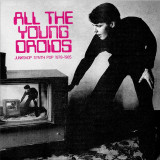
All The Young Droids: Junkshop Synth Pop 1978-1985 is a new compilation that charts the
underbelly of the epoch-defining sound of the synthesiser in 80s popular music. Compiled by Philip
King (previously seen compiling All The Young Droogs, Glitterbest and Boobs - The Junkshop
Glam Discotheque), the music here connects the dots between DIY synth enthusiasts grappling with
new, cheap synthesisers at the tail-end of punk and wannabe, jobbing songwriters enthral to the new
music pioneered by Gary Numan, Depeche Mode and Daniel Miller’s Mute Records. Featuring rare
tracks of auto-didactic progressive pop music, proto-techno punk, shoot-for-the-stars-land-in-the-gutter
chart flops and heralded, underground synth classics, School Daze paints a picture of beautiful failure.
Complete with extensive sleeve notes written by King and never before seen imagery, all 24 tracks
were remastered by RPM in-house engineer Simon Murphy, many from vinyl copies due to lost master
tapes. The story told on All The Young Droids is one of the dawning opportunity presented by both the
emergence to the market of cheaper analog synthesisers and the distribution networks plus indie labels
that exploded with the advent of punk music in 1976. While the music that sprouted out all over the
globe in the wake of these factors was decried as fake, plastic, a refutation of punk’s guitar-led
revolution, it’s telling that much of the music on All The Young Droids.. was created in bedrooms,
ramshackle studios and home-made set ups with often borrowed equipment. In the era of record labels
jumping to capitalise on the success of The Sex Pistols, The Clash (both on major labels, of course)
these artists struggled to stand out from a new gold-rush with next to no budget or PR team. With radio
and labels desperate for the new Yazoo, what resulted was a testament to necessity being the mother
of invention.
At the time, the synthesiser was the music of the future, a shiny new machine that could paint like an
orchestra with a single finger and a 4-track. In the hands of Manchester avant-pranksters Gerry & The
Holograms it’s a pulsing, sardonic weapon.. the only instrument on the Messthetics classic lampooning
of New Wave fashion. In Hamburg, a 16 year old Andreas Dorau used it to write and record (with his
female classmates on vocals) a global smash in Fred Vom Jupiter (later licensed to Mute Records).
The hard-to-find English version (Fred From Jupiter, natch) is included here. Many artists with alreadystoried careers caught the bug and recorded synthesiser-fuelled peons to space, computers, the future
and, of course, love-interests. Harry Kakoulli, late of Squeeze, recorded a solo album in 1979 that
included the incredible power-synth-pop smash-that-never-smashed I’m On A Rocket. Similarly, Ian
North of Neo and American Power Pop stalwarts Milk ’n’ Cookies bought a Korg MS20 and used a
tape machine to record We’re Not Lonely, an absolute lost-classic of minimal synth pop. We’re Not
Lonely also features on the Junkshop Synth Pop sampler 7” twinned with John Howard unreleased
track You Will See, released April 12th 2025.
There are plenty of compilation debuts in evidence. Sole Sister were a mysterious trio who were
featured on the Scaling Triangles compilation of female-fronted, queer-adjacent post-punk /
underground music that also featured The Petticoats. Selwin Image were from San Francisco and
featured members of the recently defunct power pop/punk group The Pushups. Their stupidly catchy
The Unknown fizzes with New Wave energy - think XTC to Sparks but remains unreleased until now.
Dream Unit’s A Drop In The Ocean is an early synth wave cut, positively teaming with Joy Division
instrumentation, previously only released on a long-forgotten and super rare, self-released EP.
Incandescent Luminaire’s Famous Names belies an archetypal struggle of a small-town trying to
make it in a cruel industry but is a thrilling New Romantic-Synth Wave cross over with a OMD
gloominess that’s a joy to hear. Feminist Minimal Wave track I Am A Time Bomb by performance artist
Peta Lilly and Michael Chance is a revelation destined for new found cult status. It was released on 7”
and lost until now.
The flipside to the subterranean, never-made-it synth pop mentioned above are the ambitious, even
fruity attempts at success that have a perennial elegance to their confidence. New Jersey-ite Billy
London (real name Ed Barth) tried to cash in on the synth boom with Woman, released by a major
label, a lurching new wave track built on the Louie Louie rhythm and a wonderfully camp Lou Reedstyle sleazy vocal before exploding in the synthesised chorus. The song bombed but with a chorus like
this, you have to wonder why? Ex-Glitter Band member John Springate’s My Life is truly epic, with
doomed chord progressions and massive sounding drums turning into at least 3 different songs in the
course of the track. Before you wonder what’s going on the song resolves with a glorious return to the
main refrain.
The dry-ice-dressed dance floor is well catered for too. Design’s Premonition and Vision’s Lucifer’s
Friend are stone-cold minimal synth bangers, well loved but given a new lease of life here. The
Warlord’s The Ultimate Warlord was released in 1978, a homespun proto Hi NRG banger that was
later re-recorded by The Immortals in Canada who had a club hit with it. One-man- band Disco
Volante’s No Motion was re-issued by Synth wave label Medical in 2012 but makes its first vinyl
compilation appearance here. Close your eyes and you can imagine what Lawrence of Felt would have
sounded like with some cheap Korgs a little earlier in his career. Gibraltar-based trio The Microbes
imagined a computer programming people to dance - how prescient - and ended up with a propulsive,
robo-funk track with splendid rubbery bass playing over a tectonic drum machine. Previously picked up
by Belgian label Stroom TV, Dee Jay Bert & Eagle’s heavily Euro-accented I Am Your Master
demands the listener to “come to paradise!” In a frankly terrifying manner.
All The Young Droids is the first compilation to peel away from the narrative that dour, Minimal Synth
and Cold Wave were the only musical children of the first rush of synth pop. Philip King and School
Daze Records describe a much more complicated world: along with the austere, Brutalist children of
Daniel Miller (who produced Alan Burnham’s Bowie-Low-influenced Science Fiction here) was a
plethora of desperate cash-ins, accidental mainstream hits, ambitious pop dramas and major label
punts that went nowhere. Crucially, the compilation blurs the line between junk and treasure. What if the
two things are interchangeable. What if it’s all science fiction?
out of Stock
Last delivered 10 months ago available to reorder, subject to availability
"Wind, Again" is Sary Moussa’s fourth studio album and second album on Other People. Based between France and Lebanon, Moussa returns with a riveting electro-acoustic album informed by his ever-changing relationships to space, listening, and resonance as well as his growing interest in the study of harmonics in electronic and electro-acoustic music.
Years in the making, “Wind, Again” approaches distinct musical worlds and languages by bringing together improvisations by musicians performing on Western and West Asian instruments such as the Hammond organ, clarinet, saz, and buzuk with electronic arrangements and textures. Rather than force a rapprochement of these musical worlds through the instruments, and keenly aware of the weighty sonic histories they carry, Moussa proposes another way through which they can exist together in contemporary electronic composition.
Composed of six tracks, each of which demonstrate an array of recording and processing techniques, the album generates moments of tension produced by the synthesis of textural, tonal, and harmonic encounters that Moussa calls “shadows”, which outline an impressionistic musical language, existing at the edge of familiarity. Such moments permeate tracks like “Everywhere at once” and “Violence” that open with the Hammond organ and the saz respectively and slowly reveal an expansive field of sounds that showcases each of the musicians’ characteristic performances and Moussa’s densely layered textures. It is a latent yet unrelenting tension through which the composer invokes rather than represents a collective experiential state, especially familiar to those who know his environment. In “Wind, Again” these shadows are articulations of sounds steeped in traditions they are never quite tethered to. Such articulations are implied and alluded to, they play within a musical reference without the latter explicitly existing in the recording, always teetering, never completely here nor there.
Sonically and musically, the album is fueled by the cultural, social, and personal realities that Moussa was brought up and lives in.
Both personal and musical ties with the musicians who feature on the album is central to Moussa’s practice. In the title track “I will never write a song about you”, musician Julia Sabra opens with rolled piano chords, followed by Paed Conca on clarinet and Abed Kobeissy on buzuk, before Moussa’s electronic processing pieces together, lifts, and sustains the melodic direction of the track that emerged from the musicians’ separate improvisations. For Moussa: “The initial connection between the three performances was made on a track that no longer existed, the original recording was both an obstacle and necessary step for the track we hear on the record. It’s as if we were all telling different stories and I pulled on the thread that held them together”. The track, and more generally the record, is tinged with a melancholy of things lost, though it never fully succumbs to it.
“Everything inside a circle”, Moussa’s most personal track and for which he provides the only vocals on the record, harkens back to a childhood memory of listening to music with his mother in a car: “There was a sound I was looking for — a memory of a sound and how I first heard it. This track is a hybrid of that memory and what I wanted to make of it”. The track relies heavily on generativesystems and perhaps embodies most the ambiguous quality of the record’s music in its refusal to be pinned down by one musical tradition or another.
“Wind, Again” is both familiar and alien, cold and warm; it pays homage to the mechanics, materials, and tactility of the instruments and converges acoustic and synthetic spaces. What anchors the sound of the album are the elements of a whole that cannot find its own idiosyncrasy and that is precisely why Moussa’s album is a tour de force.
out of Stock
Last delivered 15 months ago available to reorder, subject to availability
Gerade, als MONO anfingen, die Grundsteine zu "You Are There" zu legen, experimentierten sie zusammen mit dem ebenfalls aus Tokio stammenden elektronischen Komponisten WORLD'S END GIRLFRIEND. Die Zusammenarbeit resultierte in einer Reise voller neoklassischer Leichtfüßigkeit und Leuchtkraft, die sich jeglicher Kategorisierung entzieht. "Palmless Prayer..." ist weniger ein alles enthüllender Tagtraum als eine Erinnerung an das Schöne, das bereits um uns herum existiert.
The Last Question is the first album by electronics master Tim Clark. It collects his early works, when he was the Music Director of the Strasenburgh Planetarium in Rochester, N.Y. These tunes were the soundtrack to the planetarium’s adaptation of Isaac Asimov’s The Last Question short stoy. The idea was conceived by Von Del Chamberlain, director of teh Abrams Planetarium, and was taken to fruition in a joint venture bewtween the Abrams and Strasenbergh Planetariums, were the shows were premiered in 1972.
Clark composed and produced the works in the Strasenberg Planetarium’s own sound studio, equipped with three Ampex 440 recorders, a 4-channel mixing board with 18 inputs and a Moog Synthesizer. The album was released as a private pressing in 1973 and it has since become an elusive collector’s piece among electronic music afficionados. Comes with remastered sound and straight reproduction of the original artwork.
ULTRA RARE OUTER SPACE PRIVATE PRESS!
RIYL : Tonto’s Expanding Head Band, Iasos, Peter Davidson, Michael Stearns, Steve Roach...
Mit einem Konzert in der Berliner Philharmonie haben MozdzerɎ Rantala und Wollny ȓȑȒȓ den Startschuss zur erfolgreichen VÖɞReiɞ he gegebenɍ Über Ȓȑ Jahre später kehrten sie – diesmal mit Gregory Privat als vierten Pianisten – an gleicher Wirkungsstätte zurückɍ Zusammen lassen sie die Zuhörer die Essenz der Kunstform Musik erlebenɏ Als Spiegelbild ihrer ZeitɎ als Ausdrucksmittel purer Emotion und als eine Form der KommunikationɎ die ganz ohne Worte ausɞ kommt und Menschen in ihrem Innersten berührtɍ
With the world burning around oneself, the importance of the current moment is core, not to get lost. Focus on the important, i.e. the non-urgent, the ectoplasmatic material in the cracks between the whirlwinds of hurry, angst and greed around. Scarred ourselves, yet with unrelenting blissful resistance to the unforgiving circumstances, an apocalypse is not about giving up. Circling around the chaos to find one's own unique place(s), hailing and embracing the rare people that share those whereabouts. Connection, mutuality and community as the means to walk through the harsh cliffs of the world.
New R&B discoveries continue to emerge and entertain the many followers of the New Breed musical cult; nobody finds more than the Kent connoisseurs.
Berna Dean’s two previously unheard recordings are by far her best. They were laid down at Cosimo Matassa’s New Orleans’ studios by GNP Crescendo but eschewed in favour of two relatively average sides. The great 50s R&B songwriter Jesse Stone provides a rocker for the much-admired Jimmy Breedlove and a super-catchy ‘This Morning’ for an unknown mixed vocal group that has a joyous gospel feel. Jesse also penned ‘Private Eye’, a classic early 60s story-song, for Buddy Wilkins which was issued on Al Sears’ Tri-Ess imprint.
The title track is used twice, on two very different Fraternity recordings. Kenny Smith’s version was issued in 1964 and has many followers, but the equally meritorious Coasters-inspired composition by the Citations is newly discovered. Win Menifee’s ‘I’m Runnin’ Around’ from the same Cincinnati label comes complete with a fascinating back-story.
There are three cover versions. Vermettya Royster’s ‘All Around The World’ is backed by James Brown’s 1961 band, while Roosevelt Lee's 1970 update of the 1947-originated ‘Hey Little Girl’ funks the tune up a la Godfather of Soul. The cover that will make the biggest noise is undoubtedly west coast band the Afterglows’ version of Barbara Lynn’s evergreen dancer ‘I’m A Good Woman’ – this is a future monster.
Golden Crest provides two fabulous male vocal group sides – the swinging ‘What’s On Your Mind’ by Eddie Daye’s Four Bars and the delightful harmonies of the appropriately-named, but unknown Delights ‘Mary Don’t You Weep’.
Blues still thrived into the 70s as Albert Washington’s mean and moody ‘Case Of The Blues’ proves. Smokey Wilson took the music into the late 70s with the storming ‘Goin’ Away Baby (Round Like An Apple)’, which benefits here from a 45-style edit. His Pioneer Club on 88th Street in South Central L A provides the atmospheric photo for this collection.
More early 60s movers come from Wilbur “Hi-Fi” White with ‘Don’t Look Now’, future hit songwriter Johnny Madara’s raucous ‘You Make Me Mad’ and Big Boy Groves ‘Bucket O’ Blood’ which brilliantly describes the kind of club these tracks would fit right into.
The LP version loses a few tracks, but so many collectors have strong preferences we’ve thrown the vinyl junkies a lifeline.
Wytch Hazel's stellar 2016 debut Prelude confirmed these Lancastrian apprentice wizards to be Britain's most promising new hard rock band. Two years on, that promise comes to abundant fruition on II: Sojourn, an album that moves Wytch Hazel on from the innocence and exuberance of the debut to a darker, more profound and complex place, carefully wrought into optimum shape by the band's singer, guitarist, songwriter and mastermind Colin Hendra. "I'm really into the idea of an album," notes Colin. "I don't do mix-tapes, I don't listen to singles, I'm interested in albums. I want to make a good, listenable, cohesive work, that is the whole thing." Asked what inspirations were brought to bear this time, Colin has good news, and even better taste: "I was listening to plenty of Judas Priest, Thin Lizzy and Wishbone Ash last year," remarks the frontman. "This seems to be more of a hard rock album, where the last one was more rock-folk. It's definitely more rock than folk!" The most crucial influence fully expresses itself via Les Paul guitars in sweet twin harmony through cranked Super Lead Marshalls - "Exactly the same type of amp that Thin Lizzy would have used," beams Colin - a benefit of working in James Atkinson's Hand Of Law Studio, a converted gaolhouse in Leeds. "We knew there would be a lot more great gear, more amps, more options," enthuses Colin of this productive new work environment. "We were more prepared, we planned better. I had a lot more vocals to record on this album, pretty much every song has at least three harmonies, but James is a really chilled out guy, he made it easy for us. I had a very clear idea of how I wanted each song to sound, I thought about every single aspect. I probably over-prepared for this album, and it paid off!" Wytch Hazel's proud, avowed Protestant Christianity continues to set them apart from the occult hocus-pocus of their peers, and the very title Sojourn has a Biblical inspiration: "It's used a lot in the Old Testament, people would travel somewhere to stay for a short period of time," explains Colin, comparing the idea to Wytch Hazel's development since Prelude. "We're going to reside here with this sound for a while, and the next album might not sound the same. Come and have a listen to this aspect of Wytch Hazel - it's a temporary stay. We'll be here for a while, then there will be something else. I'm always writing, it's a constant stream, but I'm always trying to raise the bar, because I don't want the next album to be not as good as the other ones!"