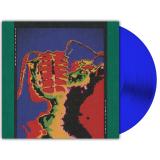
"Cinematic Visionaries Calibro 35 and Noir Master James Ellroy Pay Homage to L.A. with a Pure Crime-Funk Original Soundtrack. Out October 9" There are collaborations that feel inevitable like they were waiting to happen in some shadowed corner of culture. The union between Italian cinematic funk visionaries Calibro 35 and internationally acclaimed master of noir fiction and New York Times bestselling author James Ellroy is undoubtedly one of them. When Calibro 35 were invited to compose the original soundtrack for Francesco Zippel's documentary Ellroy vs L.A., they didn't simply write music for film. They stepped directly into Ellroy's universe the most dangerous corners of American crime fiction and discovered, to no one's surprise, that its darkness felt strangely familiar. The result is Ellroy vs L.A., the band's new album out October 9 on Record Kicks. Twelve brand new tracks of cinematic crime funk, psychedelia, and hypnotic groove that don't accompany Ellroy's world so much as inhabit it. The soundtrack's move through Ellroy's fictional and real-world mythologies with deliberate precision. Stylistically, the album finds Calibro 35 in their most natural yet most cinematic state: crime funk, psychedelia, and hypnotic groove pushed into darker, more narrative-driven territory by the weight of Ellroy's world. From the gloomy, suspense-laden groove of the opener Black Dahlia to the evocative closing piece Moonlight Sonative, the album unfolds as a complete cinematic arc, showcasing Calibro 35 at their very best. L.A. Confidential delivers a super-suspenseful, thrilling tension that feels like a chase through neon-lit streets, while Riots erupts into explosive cinematic funk, capturing chaos and urban unrest in full force. LSD on Sunset Boulevard drifts into a hazy, instrumental soul journey psychedelic, warm, and disorienting, like a late-night hallucination of the city itself. The Big Nowhere (Part I & II) expands the narrative into a slow-burning, atmospheric descent, unfolding like a two-act crime saga. Welcome to the Land of Vacation and Probation hits with kick-ass, uptempo crime-funk madness, urgent and relentless in its propulsion, while White Jazz is a mood of suspended, noir-infused jazz tension cool, shadowy, and unresolved. Together, the tracks map Los Angeles as a fractured yet hypnotic landscape suspended between glamour and violence, beauty and decay, myth and reality Born in Milan in 2007 with the mission of excavating the golden age of Italian film music Morricone, Piccioni, Trovajoli, Calibro 35 have spent nearly two decades transforming that initial obsession into a singular artistic language. Their work bridges vintage Italian soundtracks with contemporary jazz and cinematic funk, earning them a global following rare for an Italian instrumental act. Their music has been sampled by Dr. Dre (Compton, "One Shot One Kill" feat. Snoop Dogg), Jay-Z ("Picasso Baby"), and Damon Albarn's The Child of Lov. Rolling Stone described them as "the most fascinating, retro-maniac and genuine thing that has happened to Italy in the past few years," while Far Out Magazine called them "one of the most skilful and innovative instrumental outfits on the planet right now." The band (Enrico Gabrielli, Massimo Martellotta, Fabio Rondanini, and Tommaso Colliva) continue to evolve without losing their core identity. In 2025 they released the critically acclaimed Exploration, further expanding their sonic universe, and were invited to perform at the closing ceremony of the Winter Olympic Games at the Arena di Verona, confirming their growing international stature. With Ellroy vs L.A., Calibro 35 don't just compose a soundtrack they translate a mythology into rhythm, tension, and groove. Between fiction and reality, they find a city that never truly sleeps, only pulses in darkness. Press play, and Los Angeles begins to unfold in sound.
For more than thirty years, Hayden has built a body of work from moments in life that can easily pass unnoticed. His talent is to build grandeur around small events, not just within songs but as an accumulation across his whole career. Taken together, his ten studio albums amount to an ongoing conversation about family, memory, love, loss, absurdity, and the strange beauty hidden inside ordinary days. The realization that today’s routine may someday become the part of your life you miss most. Despite its title, Hayden's new album "The Recent Past" isn’t nostalgic so much as observant. It reflects on the strange feeling of longing for a time that wasn’t all that long ago, but it’s also about trying to stay rooted in the present while everything around us speeds up. It is a rich addition to Hayden’s continuing search for unsung moments. There’s heartache on this album, some frank declarations, a lot of comfort and danceable surprises. After years of mixing his own records, Hayden gave the final mixes to Grammy-winning engineer Tom Schick, whose work with Jeff Tweedy, Wilco, Mavis Staples and Willie Nelson had long been an inspiration. Adding subtle colours on the album are drummer Adam Hindle, pedal steel player Matt Kelly, fiddler Miranda Mulholland and upright bassist Ben Whiteley. "The Recent Past" is the perfect record to play when things are coming at you, when you want to take a breath, reflect, escape. Whatever memories or struggles play out you can hum to heartbreak, have lunch with your kid, know that trouble is out there for everyone but somehow this is still a beautiful day.
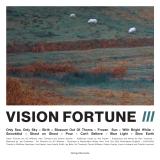
Surprises are nice. Unexpected, delightful - Vision Fortune last released music in 2015, and so odds were off that we’d hear from them again.
But against all odds, Vision Fortune III is coming out on Gringo Records, following the release of their last album ‘Country Music’ on ATP Records.
The trio first agreed to record a new album as somewhat of a dare over a marathon pasta and wine heavy luncheon in Palermo, Sicily. Waking up with sore heads, they realised in mild panic that flight tickets had been purchased, a cottage in rural Wales was booked, and it was too late to pull out.
And so it was - the Fortunes arrived in Machynlleth Wales in Spring of the following year. The rules were simple - takes were live, songs minimal and the fireplace kept roaring.
Drummer Andres Ayerbe’s strict roast lamb dinner cooking schedule resulted in an album less frenetic and agitated than previous work - instead, III explores a softer, more subdued and subtle side of Vision Fortune. Additional overdubs were recorded in New York City and Birmingham, by AC Williams and Alex Townend. III was completed - a new, leaner Vision Fortune. Like a good lamb dinner - more meat, less fat.
Press Quotes for Country Music:
"An impressively brutal record" NME 8/10
"Immersive and introspective musique concréte rippling rippling with dub rhythms, orchestral strings, tolling bells and discordant drones coming close to the alien beauty of Mica Levi's sonically extreme soundtrack work." Uncut 7/10
"Unsettling, strangely cathartic and hook-free (in a good way)." Dazed ("Twenty albums to look out for in 2015")
"Assembling whole scrapyards of sound and turning them into something better than what went before" The Guardian
"Swaddling the senses in soundwaves, Minimal ambient sketches and harsh electronics abound on this fascinating 12-song affair" The FADER
"Basically just one long, connected droney throb. But it's an awesome long droney throb." Brooklyn Vegan
Uncompromising Italian DJ/producer The Southern makes his vinyl debut on Mutual Rytm's sub-label, Spectra, with remixes from Alarico, Temudo and Sciahri. An EP marking an impressive label debut, Carmine Portarulo, aka The Southern, lands on Mutual Rytm’s sub- label Spectra with a powerful showcase of his much-loved sound. With the lead track featuring as one of label head SHDW's most requested IDs of the year so far, and packaged alongside outstanding remixes by close label associates Alarico, Temudo and Sciahri, the EP comes having established himself with a sound rooted in old school value and pure techno, favouring energy and authenticity over hype. The track’s backstory comes from the moment Carmine and his partner found out they were expecting a child and went for their first ultrasound appointment. Overwhelmed by the emotion of the moment and the beauty of what nature is capable of, he returned home and poured those feelings into the music. The result, ‘Ultrasound’, is an anthemic, punchy techno cut with euphoric energy rising up through the synths and its catchy lead melody. Joyful melodies sparkle amid vocal groans, adding a raw emotional pull as the warm, driving drums march on. Berlin-based artist Alarico is the first to remix on his return to the label, and his ‘Sad Mix’ has a more melancholic mood, with dark chords and tightly programmed drums that bring lo-key funk. Hayes Collective founder Temudo also returns and flips the vibe on his ‘Neuro Interpretation’ with a more psyched-out, twisted tune featuring trippy synths and booming drums for peak-time impact. Italo-Iranian Sublunar Records head Sciahri then drops his trance- inducing, hypotonic ‘Tunnel Vision Mix’, followed by two digital bonuses: ‘The Stripped Mix’, a bouncy workout with futuristic melodies, and Temudo’s ‘Neuro Interpretation 2’, which is raw, textured, and dark.
out of Stock
Last delivered 19 days ago available to reorder, subject to availability
Japanese crossover and fusion are hot again now. As either an outgrowth of, or a spin-off phenomenon from, the global reappraisal of
city pop, Japanese fusion has been rapidly rising since around last year.
Widely known as a support member for YMO and also popular on the overseas club music scene through Colored Music, her cuttingedge dance-pop unit with Atsuo Fujimoto, keyboardist, composer, and vocalist Ichiko Hashimoto released this, her second solo work, in
1985. Released on DOMO, the label headed by Kazumi Watanabe, and naturally produced by Kazumi Watanabe himself, who also plays
guitar on the album.
A truly crossover work of remarkable freedom, moving across fusion, techno, piano pieces, danceable music, classical, Japanesque
sounds, bossa nova, ambient, and more. Her fleeting singing voice is wonderful as well.
Jason Dungan (aka Blue Lake) and Johan Carøe find beauty in the rhythms
and repetitions of domestic life for collaborative album, 'Routine' - out September 25
Copenhagen-based multi-instrumentalists Jason Dungan and Johan Carøe didn't set out to make an album. Instead, as the title 'Routine' suggests, they found their way there through a process of habitual making and listening, developing an intuitive musical language to reflect the dreamlike meanderings and creative play of life's quiet moments. 'Routine' blends pop orientated sounds, Avant-garde minimalism, folk and new age with the emotive depth of film-score.
Their meeting was not entirely coincidental. Previously in bands such as Squares and Triangles, Jason Dungan has since recorded multiple albums under the moniker Blue Lake, including the lauded 'Sun Arcs', pursuing his passion for self-built percussion and multi-string instruments. Johan Carøe meanwhile is a composer whose film soundtrack work has seen him collaborate with Angelo Badalamenti, Arp, and Sofie Birch, at whose Andersabo residency (curated by Dungan) the pair first met, resulting in the highly praised album 'Repair Techniques' written by Birch and Carøe.
'Routine' emerged organically over many years against the backdrop of great personal change. As Carøe said goodbye to his father and welcomed his first child, the pair sent each other fragments of melodies and patterns, working up responses when time allowed to assemble a sonic palette that combined acoustic instrumentation of zither, clarinet, cello, saxophone (among others) with the textures of tape, drum machine and Yamaha DX7 synth. Inspired by the vulnerability and DIY ethos of Arthur Russell's home recordings, the vision of labels like Disques de Crepescule, and the art pop, experimentation inherent to late '70s and early '80s recordings from NYC and Japan alike, Dungan and Carøe conjured new forms for their folk, leftfield pop and avant garde influences from the low-lit living rooms of Copenhagen and rural Sweden. "I'm very interested in the ways in which music and art emerge from our wider experiences as people, workers, parents and in the daydreaming activity of making music," Dungan explains of a process which allowed the duo's individual styles to drift apart and merge together seamlessly. "I think the process was definitely capturing moments in time, but over a long time," Carøe adds. "It was a bit like improvisation, but with time stretched."
The music floats with grace and humility, remaining sophisticated yet acutely introverted.
Whether on 'Clouds', where soft layers of zither and clarinet are moved along by a featherlight bass riff and the hypnotic clip-clop of the primitive groovebox, or the gentle grandeur of cello rising and falling through 'Routine 1', the album reveals itself over 10 instrumental tracks, evoking the ineffable calm that descends when the light changes and the world turns inwards. The act of time passing became a key creative ingredient to the evolution of the album, enriched with the exciting challenge to transform their passing rounds of home recordings via a slow release musical dialogue. Jason found creative moments in the twilight hours to lay down zither, melodica, acoustic guitar to name but few, while Johan utilising "line-in and headphones" would manipulate, stretch and pitch Jason's melodic pathways during newly born naptimes.
Carøe rhythmically plucks and slides the stringed cello instrument, leaving palpable foundations on 'Hymn' and 'Chords', in a treated, stylistic approach akin to Mabe Fratti, while 'Silence' draws to a close with a gospel touch. Dungan's harp-motion zither flourishes reveal more classical connotations on 'Reunion' with inspiration of Bedroom Community's Nico Muhly as organs rise with Moogs, culminating with a climatic choral outro from friend, mezzo-soprano Anna Caroline Olesen.
'Routine' then is their first collaboration, an album of deep and sincere reflection with inviting overtones that gesture with unrushed authenticity. A document of a new-found friendship that opens a window into the most personal of spaces, where the daily practices of music and life exist side-by-side to wondrous effect.
In the ever-evolving landscape of the underground music scene, few bands have made an impact quite like Selofan, an immensely talented duo of Joanna Pavlidou and Dimitris Pavlidis, has carved a niche for themselves within the international pantheon of darkwave, post-punk, and '80s synthpop, blending these influences to create a sound uniquely their own. Their journey, marked by a commitment to artistic integrity and evolution, has taken them from the cozy confines of local venues to the grand stages of international festivals, earning them a dedicated following and critical acclaim along the way. Their sixth album, Partners in Hell, released in October 2020, navigated the band through unprecedented times, testing their adaptability and resilience. Despite the hurdles to performing live and the global pandemic's challenges, Selofan emerged stronger, embarking on international tours with a newfound appreciation and connection with their global audience, during this period of introspection and isolation, Joanna Pavlidou embarked on a new venture, GIOVANNA, released under Selofan’s house label, Fabrika Records. GIOVANNA, which places Pavlidou at the helm of vocal and lyrical composition, represents a full on foray into synth-pop. showcasing a different facet of her artistic identity, with lyrics entirely in Greek. In 2023, Selofan hit the circuit hard, lighting up revered festivals with their presence. They stood shoulder to shoulder with heavy hitters like Molchat Doma and Lebanon Hanover at Grey Scale and performed with with the likes of The Sisters of Mercy, VNV Nation, and She Past Away at the Death Disco fest in their hometown of Athens. With each album they have released Selofan made significant strides in their evolution, deepening their engagement with their art. And their forthcoming seventh full length studio release, Animal Mentality, is poised to be their most compelling work yet. Animal Mentality unfolds as a labyrinthine journey through the elemental aspects of human emotion and experience, set against the backdrop of Selofan's signature darkwave sound. Each track on the album delves into different facets of the human condition, from the depths of desire to the pangs of isolation, encapsulating the duo's profound understanding of the intricate spectrum of human emotion and subjective experiences. The album kicks off with "Sticky Fingers," a track that melds cinematic scope with a haunting storyline, reminiscent of Jean-Michel Jarre's icy synths and a lyrical nod to Joy Division. This opening salvo revisits the tragic allure of classic car accident songs, weaving a tale of joy turned to sorrow amidst the snowy Alps. "Love's Secret Game" delves into the depths of forbidden desire, with vocals that echo the melancholy timbre of Xmal Deutschland, Lebanon Hanover, and Nico. It's a tale of passion and ephemeral connection, promising an enduring presence despite the inevitable fracture of time and distance. In "Lucille," sung by Dimitris Pavlidis, the plot is ensnared in the machinations of a tempestuous affair, with gothic undertones evoking the dramatic soundscapes of Ultravox and Clan of Xymox. The lyrics are steeped in danger and desire - a dance with the shadows. "Sacrifice Me" plunges into the abyss of despair, driven by a Bauhaus-esque bassline. It's a plea for release from the chains of alienation, a yearning for a final gesture of solace in the face of overwhelming darkness. "Bluebirds" offers a poignant reflection on solitude, with the fleeting imagery of bluebirds symbolizing the elusive quest for happiness. The song serves as a meditation on the internal struggle to maintain hope in a world shaded by sorrow. The narrative shifts with "Glassplitter," where German lyrics paint a portrait of deceptive allure and toxic entanglement. We are confronted with irresistible danger, masked by a veneer of beauty. "Ignoranz" continues the exploration in German, pondering the universality of misunderstanding. It's a reflection on the subjective nature of truth and the shared human experience of ignorance. "Behind My Eyelids" closes the odyssey, a contemplation on melancholy and metamorphosis. The phoenix rises from the ashes of betrayal to the brighter realm of renewal - a beautiful homage to the resilience of the human spirit amidst the often harrowing cycles of life. More than just an album, Animal Mentality is a milestone in Selofan's career, marking a decade of musical innovation and growth. It's a testament to their enduring spirit and a bold step into new realms of artistic expression. As Selofan continues to evolve, they remain at the forefront of their genre, pushing boundaries and exploring the depths of the human psyche through their haunting melodies and poignant lyrics.
"Fuera del cielo" (1975) is an art rock/space jazz masterpiece infused with prog scents from one of the true legends of Argentinian rock. The sounds of floating acoustic pianos, organ and harpsichord, basslines and even bandoneon combine with Litto's own voice and create a unique blend of deep and delicate beauty. 'La Balsa' was the first Argentine massive rock hit. In 1967 Los Gatos became the most famous local rock band with this song. At the front, as composer and singer, was Litto Nebbia. Although this milestone has remained eternally linked to Nebbia's name, almost eclipsing the rest of his work, it is really his solo career that unveils the artist's overwhelming talent and his determination to create music freely, regardless of commercial considerations. It is an album to be filed next to the highly acclaimed "Bazar de los milagros" and "Cosas que no quieren morir", released the following year, creating an outstanding body of work that represents Nebbia's talent at its best. Nebbia's genius transcends beyond the Southern Hemisphere. The international scene of DJs and vinyl collectors shows signs of its taste for Litto Nebbia recordings, now highly sought after in their original editions, probably as part of a rediscovery of little-explored global sounds, within a journey through music always hungry for exciting new sounds. First time vinyl reissue, remastered sound.
“I like to work with a variety of instruments and set ups,” says Mark Van Hoen, sometimes known as Locust or Autocreation but here working under his own name on the excellent Plan For A Miracle, his first physical release of solo music since 2018’s Invisible Threads. ”Sometimes it’s literally in my studio, with all the hardware electronics available. Sometimes the laptop, using software instruments. Some of the tracks on this record were recorded in the desert (Joshua Tree) using a 4-track tape machine and small modular synthesiser set up. Each track was recorded in different location using different instruments, which accounts for the distinction between each piece. It’s also about my own reaction to my environment, and what’s going on in my life at the time.”
The Croydon-born Van Hoen started musical life in the early 1990s, signing for R&S records in 1993 but developing his own, myriad and distinctive style across a range of releases on Touch, Editions Mego and other labels, using a battery of instruments, including analogue synthesizers and taking a number of different approaches to recording, rather than ploughing a single sonic furrow. He has worked on a number of collaborations, including with Nick Holton and Neil Halstead of Slowdive, under the moniker of Black Hearted Brother - their Stars Are Our Home was released in 2013. “I have known Neil Halstead since 1992,” says Van Hoen. “He shared a house with me for a couple of years, and the music I was making and listening to along with clubs I was attending had an influence particularly on Pygmalion, the final Slowdive album on Creation.”
Each track on Plan For A Miracle does indeed sound like a world unto itself, a mini-environment, a weather condition, an ecosystem created for the moment. It’s a collection of tracks recorded over the past few years, released on Bandcamp - despite his apparent absence, Van Hoen works constantly. Opener “Climates”, in its exquisite limpidity, feels like a homage to Brian Eno, one of his most formative influences in his teen years, commencing with Music For Films, which he bought in 1979. “This Is For Them”, feels like a ghostlike throwback to early drum & bass or electronica, reminiscent of his own, earliest outings. “There have been a number of requests from labels to make some more music like my very early releases on R&S,” says Van Hoen. “This is part of ‘letting go’ and realising that there’s nothing less creative about going back to those styles again.”
“Pencil Of Spheres” is something else again, a magnificent, imaginary glass structure, shimmering, refracting, without visible means of suspension, a thing of impossible beauty. “Electric Lights” evokes an abandoned fairground, its lights still pulsating, its music lingering. “The Underpass”, meanwhile, insofar as it reminds of anything at all, is faintly reminiscent of Cluster or Neu’s! West German ambience, the urban mundane rendered magical, the sodium lights, the whitewashed walls. The reverberant, faintly oriental chimes of “Insight” transport us yet again, burgeoning and intensifying.
The landscapes, the skyscapes rendered on Plan For A Miracle feel unpopulated as a rule - but when he does introduce vocal elements, Van Hoen has a history of doing so to spectacular effect - think of “Real Love” from 1998’s Playing With Time, the seductive intonation of its title recurring throughout like a series of massive holograms, echoing, stuttering, breaking up, surging. Here, there are just the faintest of vocals, barely distinct, disquieting. “There’s been a bit of a game changer in recent times,” explains Van Hoen. “AI software that enables you to extract vocals and instrument parts from virtually any recording. That means sampling individual parts from existing sources is no longer limited to the original mix exposing certain parts soloed. The vocal parts I use are from multiple sources and often pitch shifted altered rhythmically and melodically.“ There’s further vocal chatter on “I Really Do”, proceeding at a faster pace as if giving chase, or being pursued - distant, enigmatic. “The Music”, meanwhile, its beat tolling, lost in its own fog of static, features a curious intonation, like the ghost of a lost Walker Brother.
Sadly, the album’s title is in reference to a personal tragedy on Van Hoen’s part - the loss of his wife. Titles such as “I Won’t Give Up”, which faintly reminds of another Eno masterpiece, Another Green World, in its nautical hurly-bury, or the pastoral strains of “Mrs Who”, heavily clouded with sadness, seem to allude to this. “In fact the record was recorded entirely before she passed away,” says Van Hoen, “most of it before she even became very ill. The title was given to the album when it started to look like she wasn’t going to make it beyond a few months. It was something Osho said - “plan for a miracle” - so it was a statement of hope. Unfortunately it was not to be.” Although the album is non-thematic, non-specific in its atmospheres, sound paintings, elegant structures it most certainly stands as a magnificent monument to Osho’s memory.
-David Stubbs.
out of Stock
Last delivered 33 days ago available to reorder, subject to availability
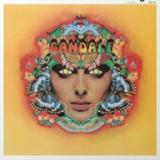
If you’re as obsessed with unfairly unheralded bands as we are, bringing out a proper, well-deserved official re-release to change that course is always an honor. Case in point, Jackpot Records proudly announce GANDALF’s 1969 self-titled release as one of our proudest moments. Working alongside band member Peter Sando from the original master tapes, it is time for the rest of the uninitiated to catch up with this beautifully crafted haunting psych-pop record (fans of THE LEFT BANKE, KALEIDOSCOPE, THE MILLENNIUM, and THE ZOMBIES, take note!). Recorded at Century Sound in Manhattan with Grammy-winning producer Brooks Arthur (who engineered Neil Diamond’s “Sweet Caroline” and Van Morrison’s “Brown Eyed Girl”), the production of the album was created on the spot in the studio with arrangements being thrown about and the incredibly haunted vocals being recorded directly from the band’s PA using a Binson Echorec to make this innovative sound (Pink Floyd later used the same echo unit to great effect). Add to that sitars, vibes, B3 organs, harpsichord, minor tragic guitar chords, and bass drones aplenty, and you’ve got the recipe for an album that bears listening to with eyes closed, music cranked, mind open. So get in on the beauty of this record, and as Sando says on the liner notes: “Put the needle in the groove, sit back, and take the trip with GANDALF.” Enough said.
Silver Vinyl
Simon Popp is back on Squama with his fourth album Trio.
At its heart, Trio is a work about collaboration, playfulness and unification. It is music as a means of coming together, a sonic equivalent to the Japanese philosophy of Kintsugi, in which broken ceramics are repaired with a visible golden lacquer. Rather than hiding the breaks, Kintsugi embraces them, making them part of the story, a form of delicate transformation. Popp and his collaborators Flurin Mück and Sebastian Wolfgruber take a similar approach: three distinct drummers, three different temperaments, three personal styles. Fused together into a single expressive instrument.
The album is a celebration of timbre, texture, and touch, its sound palette drawn from across continents and traditions. Human beings at all points of time, across all cultures and continents have used music to celebrate, mourn, worship and bond. Along with our voices, creating rhythm with our bodies. Clapping, stomping, hitting with sticks. A celebration of rhythm as both a shared human memory and an audible expression of close bonds.
Trio is a reflection of the beauty of imperfection and the timeless pull of rhythm as a shared human force. The cracks are not hidden. They are filled with gold.
With a breathtaking pair of intimately interrelated new albums, he applies that bold passion to an uncharacteristically pared-down setting, then transforms those stunning sounds via a startling process of sonic reinvention. ResoNation Trio convenes a new chordless trio with master improvisers Scott Colley on bass and Nasheet Waits on drums. The album's contemplative explorations feel like a departure from the raucous spirit that characterizes so much of the trumpeter's work, yet the trio discovers such an audacious beauty and celebratory gusto in these sparse environments that the music feels uniquely Bernstein's. It is also a rarity in his oeuvre for featuring Bernstein - whose mastery of the little- used slide trumpet has become so central to his sonic identity - exclusively playing valve trumpet and flugelhorn. In parallel with this captivating trio excursion, Bernstein handed the recordings over to his longtime collaborator, the pioneering producer Scotty Hard, to reimagine the album through his own iconoclastic lens. The result is the uncategorizable Ultra Resonance, which finds Hard breaking down the ResoNation Trio session into its constituent parts and redeploying them as the elements of a wholly original, mutant creation. The project will be released on June 5, 2026 via Royal Potato Family as a double vinyl or CD package containing both albums, and separately on digital streaming platforms.
out of Stock
Last delivered 40 days ago available to reorder, subject to availability
When Drop Nineteens disbanded in the mid-'90s, singer Greg Ackell decided he would never make music again. He wouldn't noodle around on a guitar in his basement. He wouldn't get a group of friends together just to jam. He was done with music entirely. Following the release of the shoegaze masterpiece Delaware in 1992, and the intricate experimentations on National Coma in 1993, the group disbanded. They shared stages with Radiohead, Hole, Blur, PJ Harvey and Smashing Pumpkins. They went from being teenagers in Boston to mid-twenty-somethings with a few MTV videos, a couple BBC sessions and numerous festival appearances under their belt. So when Drop Nineteens ceased to be, Ackell felt content. He had the rest of his life in front of him to figure out what he wanted to do. Music was a closed chapter.That was until 2021, when a friend from the band's early days got Greg on the phone to suggest making some music together, just to see how it felt. Instead of shutting it down like he had been doing over the years, he decided to entertain the prospect. For the first time in nearly 30 years, he picked up a guitar with intent. He immediately called up Steve Zimmerman, the band's bassist and fellow guitarist, and the two got writing. It felt effortless for Ackell, like he never stopped writing music. "We were off to the races," he says, "But also the question came up: what does a Drop Nineteens song sound like today?" Enter Hard Light, the band's stunning third record. It's the band's proverbial follow up to Delaware, a modern Drop Nineteens record that is completely singular in its sound and vision. The first task making Hard Light was, of course, getting the rest of the band back together. Drop Nineteens is an inherently collaborative project. Ackell writes the lyrics, and he works with band members Steve Zimmerman, Paula Kelley, Motohiro Yasue, and Peter Koeplin to create the sonic world. The record came together over the course of a year, recording at a patchwork of studios all around the country: Boston, Brooklyn, San Francisco, Los Angeles. When Kelley and Ackell first heard their vocals recorded together on the opus album closer "T", the chemistry was undeniable. Making music together felt natural, fluid, exciting.Hard Light is a romantic record in the literary sense. Beauty from longing; longing from beauty. You put the album on and want to be clad in a velvet dress sprawled across a fainting couch. You want to be holding someone's hand while you sit back in the tall grass. The guitars are expansive and expressive as ever. Ackell and Kelley's vocals are cool, crystalline, and luminous. "Gal" comes on like a dream. The vocals pour in when you least expect them, once in the middle, where Ackell delivers one of the strangest (and best) lyrics on the record, "And there were snakes/with cats at the wheel." Hard Light's first single, "Scapa Flow" is triumphant and an excellent example of what a modern day Drop Nineteens song sounds like. The guitars glide cloud-like, floor toms shuffle and rumble in the background, searching. Ackell and Kelley's vocals are as toned as they are bound. Hard Light is every bit the ride that Delaware was, diverse in its sounds, with surprises at every turn. Drop Nineteens have brought clarity and cool in 2023 to the genre they helped create. A portrait of a band 30 years later, as talented and dedicated to their craft as ever. To put it more bluntly, they're at the top of their game.
While the sterile “professionalism” of some heavy bands can be like a clinical drone strike, Texas-based Judiciary feels personal. Like close combat with a knife. And it’s all in their chemistry. Judiciary is an amalgamation of four guys raised in the intersection of metal and hardcore—all devoted to pushing their craft further. Across two esteemed LPs, the band has proven their worth as a crucial entity in the crowded heavy music scene by evolving their sound further and further with each release. And now with the band’s latest Stalagmite Angels, due on September 4th via the venerable Closed Casket Activities, Judiciary can further showcase their status as a crucial, one-of-a-kind part of the evolution of hardcore in 2026. Life changes can bring about chaos and seismic shifts, but if Stalagmite Angels is any indication, then it’s all for the better. In the wake of the release of Judiciary’s second LP Flesh + Blood, the band called upon Juan Vazquez to pick up guitar duties, thereby changing the internal framework of the band for good, and unknowingly for the better. It’s this pivot in personnel that resulted in the band’s latest EP. “The goal with this EP was a hard reset, but we also wanted to chill the f— out a bit, have fun, and do something that felt true to the four of us,” recalls drummer Austin Looney. “We wanted time to reconfigure things and let the music come naturally–temper this new mindset that we've adopted post-Flesh + Blood.” Judiciary’s greatest strength lies in their musical singularity. Though Stalagmite Angels represents the collision of influences from across well-worn territories like metallic hardcore, death metal, black metal, d-beat and more, it’s the Lubbock-born band’s approach that makes it distinctly their own. Stalagmite Angels is a wholly new document that resembles a horde of bands ranging from Hatebreed to Carcass to Slayer to Iron Age, yet never aping any single band nor even revealing any single influence. It’s all familiar but none of it is specific. “90s hardcore and hardcore in general is always gonna be our natural inclination, but it manifests with different elements not only from song to song but within each song,” says vocalist Jake Collinson emphatically, who learned guitar specifically to help with writing new material. “Whether that’s Dying Breed or Cannibal Corpse or Crowbar or Machine Head or any number of other influences that any one of us may have, it all manifests in our work, and through our individual and collective lenses. With this EP, we transformed those ideas into the Judiciary approach.” Stalagmite Angels is an EP about anger at the world, belief in yourself, and how harnessing both in the pursuit of growth is necessary to achieve. But furthermore, it’s a concept record that envisions a subterranean world in both a literal and metaphorical sense—where hidden beauty lurks in the shadows (and in the eye of the beholder) and where triumph manifests in the ability to rise from the depths and into the world above.
Special gatefold LP + 12-page booklet attached to the sleeve with extensive liner notes and previously unpublished archival photographs documenting Salleh’s career. Fully licensed from the Johari Salleh.
Habibi Funk’s new sister label Audible Beauty Records second release: A landmark collection retelling the untold story of Malaysian jazz featuring 9 songs from the legendary composer, arranger and trumpet player Johari Salleh. Salleh played a crucial role in shaping the sound of modern Malaysian music across radio, television, film and live performance and has composed dozens of popular songs in his decades long career. His personal musical passion always was jazz, reflected in this deep selection of jazz works that were previously unavailable unless you had one of the few dozen copies pressed locally in the 1970s. The album doesn’t only highlight his musical statue as a composer but also as a outstanding trumpet soloists bringing together jazz, spiritual undertones and Malaysian folkloric themes balancing slower pacing deep, modal grooves with more upbeat jazz funk leanings. For fans of Salah Ragab, Ahmed Malek, Mulatu Astatke, Dollar Brand and co.
out of Stock
Last delivered 53 days ago available to reorder, subject to availability
Michaela Turcerová’s compositions unfold in slow motion. The saxophonist and composer’s glacial music zeroes in on the granularities of each note as it rings, soaking in every subtle shift in texture and pitch.
Šumum exemplifies this patient approach to writing music, branching out from themes of loss and togetherness into an intricate tapestry of introspective sound. These four pieces invite deep collaboration between performers, who together shape the music through the shared process of listening and interpreting Turcerová’s relatively open scores. And while these works often grow from long, stretched-out tones, they also foreground forward direction: no note stays in one place, no melody is without action. Instead, Šumum chronicles how the tiniest shifts can lead to major transformation.
Šumum builds from Turcerová’s longheld interests in place and minimalism. Many of the composer’s works explore perception: how a room can shape the music we hear, and how repetition alters a melody. Like the music of Éliane Radigue, Šumum embraces the rainbow of colors that appear when close listening with the wave-like flow of looped melodic and rhythmic patterns. All the album’s pieces observe the subtle changes that happen as music grows.
Group communication yields the constant evolution that defines Šumum. The album feels like a conversation, with each instrumentalist swapping phrases or trading places when the moment feels right. “Straty” builds from a series of strongly accented drones that appear as quickly as they fade away; underneath them is a perpetual rhythm that drives the color of each long held note, from melancholy into radiance and back again. With “Vlny,” pitch eventually disappears, leaving a delicate rhythm, and with “Masy,” a matrix of brassy tones link together and eventually burst. No matter where the music goes, one thing remains true: Šumum invites close listening, and in the process, reveals the beauty of continual motion.
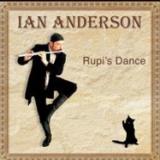
Named after Anderson's Bengal cat, Rupi, the album is filled with wit, warmth & sharply observed storytelling, weaving together folk, rock, jazz, classical & world music influences into a uniquely atmospheric collection. Anderson's unmistakable flute melodies & expressive vocal performances lead the journey through vivid character sketches & reflective narratives, from the elegant title track & the playful "A Raft Of Penguins" to the poignant beauty of "Pigeon Flying Over Berlin Zoo." Musically adventurous yet deeply personal, 'Rupi's Dance' captures Anderson in a particularly creative period, balancing sophisticated arrangements with an inviting sense of spontaneity & charm. Tracks such as "Calliandra Shade (The Cappuccino Song)" & "Eurology" showcase his gift for blending intricate musicianship with lyrical humour & social commentary, while "Birthday Card At Christmas" reunites him with the sound & spirit longtime fans associate with his work in Jethro Tull.
Title track Tokyo Midnight opens with a groovy guitar riff and continues into an upbeat rhythmic workout, complete with a funky bassline and ululating keyboards. Yurika’s enchanting voice ties things together in a soft yet hypnotic musical whirlwind.
On the B-side, Nasnusa, a beautiful guitar solo flows into a captivating rhythm inspired by traditional Mizrahi music. Yurika’s delicate vocals evoke a love story: a couple watches the sunset as the gates to a new world begin to open. As Nasnusa fades into the light, her lover recalls her beauty and reflects fondly on the wonderful time they shared together.
Founded by Amir Sadot and Ilan Smilan, Sababa 5 have been playing together for two years and recently built their own recording studio. “We just wanted a place to record our music where the whole band could fit together in the same room… so we built the place ourselves! Mind you, there’s not a lot of space… in fact, we’re a bit crammed in there, but that’s how we like it.” Sababa 5’s musical style has been shaped by all its members and continues to evolve while always remaining deeply groove-centric. Their sound is rooted in surf rock and retro funk, drawing strong inspiration from Arabic folk and funk music of the ’60s and ’70s, as well as artists from that era such as the legendary Aris San.
Yurika is a Japanese performer born and raised in Tokyo. During her teenage years, she discovered belly dancing and quickly fell in love with the art form. She later travelled throughout the Middle East to deepen her studies, learning from choreographers such as Orly Portal and performing alongside renowned artists including Raquy Danziger, Boom Pam, and Ouzo Bazooka.
out of Stock
Last delivered 36 days ago available to reorder, subject to availability
Rowena Wise is a Naarm/Melbourne-based singer-songwriter whose work balances beauty and mess with rare emotional precision. Hailed as a “lyrical assassin” by the Australian triple j community, Wise writes songs that feel like intimate conversations — ruminations on love, alienation, longing, and selfhood delivered with quiet courage and disarming honesty. Drawing from the storytelling lineage of ’60s folk while grounded in indie rock, garage pop, and alt-folk, she finds truth in fiction and humanity in contradiction.
Raised in the surf town of Margaret River, Western Australia, Wise was immersed in music from the outset. Her father, a luthier, built her guitars by hand, and her mother — a Chicago-born folk musician — instilled a deep reverence for songcraft and storytelling. After touring as part of a family band in her youth, she moved to Melbourne at 18 to forge her own artistic path.
Rowena Wise is a Naarm/Melbourne-based singer-songwriter whose work balances beauty and mess with rare emotional precision. Hailed as a “lyrical assassin” by the Australian triple j community, Wise writes songs that feel like intimate conversations — ruminations on love, alienation, longing, and selfhood delivered with quiet courage and disarming honesty. Drawing from the storytelling lineage of ’60s folk while grounded in indie rock, garage pop, and alt-folk, she finds truth in fiction and humanity in contradiction.
Raised in the surf town of Margaret River, Western Australia, Wise was immersed in music from the outset. Her father, a luthier, built her guitars by hand, and her mother — a Chicago-born folk musician — instilled a deep reverence for songcraft and storytelling. After touring as part of a family band in her youth, she moved to Melbourne at 18 to forge her own artistic path.
Lido Pimienta is unafraid to explore the depths of her creativity. After last year"s La Belleza, a transcendent new album created in conversation with European classical music and her personal life - Lido steps into a new revolt rhythm. The trailblazing GRAMMY-nominee and Polaris-Prize winning multidisciplinary returns with a brand-new album Caribenya. The new album"s title is a playful portmanteau of the word "Caribe" and "Enya", a nod to the mysterious Irish singer Pimienta is a fan of. The esoteric figure of Enya has loomed over Pimienta, who listens to her music to concentrate while writing. Often compared to Björk and Natalia Lafourcade in part due to her scope, generation, and ambition of her work, Pimienta prefers to align herself with the legendarily reclusive ambient diva before anyone else. On Caribenya, Lido is a modern master of, is sharpened by her soaring vocals. It is an album that relies on joyous resistance, on the moments of escape on the dancefloors and beaches and living rooms of our loved ones as the world burns. An iconoclast who creates music and fine art drawn from her experience as a Caribbean woman from Colombia. Caribenya on vinyl and CD brings together the symphonic beauty of La Belleza and the hypnotic propulsion of Caribenya available together for the first time exclusively on physical formats.
Between her elaborately conceptual Drag City singer-songwriter albums and celebrated soundtracks for Ryusuke Hamaguchi, in recent years Eiko Ishibashi has quietly self-released a significant body of solo and collaborative work on her Bandcamp page. At times resembling her solo live performances in their organic interweaving of instrumental, electronic, and concrete sounds, each of these less feted online releases offers a snapshot of the experiments always underway at Atelier Eiko. Some Fine Legacy is pleased to announce a vinyl edition of one of the most intriguing of these works, Gasping_Sighing_Sobbing, made in collaboration with Hiroshi Minami and first released in 2021.
Active since the 1980s, Hiroshi Minami is a key figure in the Tokyo jazz scene, as well as a respected memoirist. Devoted to the great standards, which he explores with an Evans-ish delicacy of touch and Impressionist harmonic extensions, he is equally at home working up variations on tunes by Ryuichi Sakomoto and The Beatles or experimenting with ambient electronics. A single note from his piano is the first thing we hear on Gasping_Sighing_Sobbing, the space left by its decay unexpectedly filled by a synth arpeggio that quickly fades away as the piano returns with a balladic chord sequence.
Like her frequent collaborator Jim O’Rourke, Ishibashi possesses the virtue of patience, recognising the beauty of lingering at length in a single musical environment. Throughout its 40-minute duration, Gasping_Sighing_Sobbing remains lost in this maze of obstructed and fragmented piano balladry. The musical surface is in one respect placid, but close listening reveals dynamics and processes that are deeply strange: the resonance of a chord dying away is frozen, expanding to become a cloud that suddenly makes way for the piano’s return; or the piano is looped into a ticking glitch or a time-stretched shudder, momentarily sinking under lapping waves, distant bells, and snatches of conversation. Ishibashi’s subtle vocals and synths colour the piano passages like views through distorted glass. The metaphor of cinéma pour l’oreille is perhaps overused in discussions of the musique concrète tradition, but here the visual associations are almost unavoidable: especially when Daisuke Ijichi joins on upright bass, it’s hard to shake the cinematic image of a smoky jazz bar—shown in a sequence, perhaps, that cuts repeatedly to the musicians’ and audience’s thoughts and dreams. Like much of Ishibashi’s work, this collaboration with Hiroshi Minami is inconspicuously radical, shaped at the deepest level by electro-acoustic procedures even as it luxuriates in melancholic beauty.
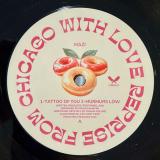
Fresh Meat Records is proud to present the vinyl re-release of From Chicago With Love, a record originally produced and released by Mazi Namvar (aka Audio Soul Project) in 2004. Though it may have flown under the radar upon its initial release, the record has recently gained a cult following, with prices on the secondhand market steadily climbing. A single copy now fetches as much as $170, with a recent test pressing selling for $100. Recognizing the demand, Fresh Meat Records has gone to work offering a beautiful repress of the record—one that truly does justice to the original while adding something special for long-time fans and newcomers alike.
From Chicago With Love Reprise is a celebration of a classic with a new dimension. The record includes a fresh fourth track, “Murmurs Low,” which features the saxophonist Jimmy Tripp and a spoken word performance by Mazi. Together, they add a soulful and atmospheric touch to the original, expanding the sonic palette while retaining the deep, intimate energy of the original release.
The tracklist remains faithful to the original with the standout “Tattoo Of You” leading the way on the A1 side, sounding better than ever thanks to an impeccable re-cut by Lawrie Dunster at Curve Pusher. The deep grooves of “Tattoo Of You” still deliver their deep and mesmerizing house vibes, setting the tone for the rest of the release. In the A2 position, “Murmurs Low” provides a captivating, subdued moment, with the saxophone adding a melodic layer to the evolving rhythm that makes this track truly memorable.
On the B-side, “Down” takes its rightful place as the first track, maintaining a dubby soulful drive and emotional call to action. Closing out the record is “Let Me Know,” a track that brings the journey full circle, providing the perfect outro for the reissue and reminding us why this record is still beloved.
In creating From Chicago With Love Reprise, Mazi Namvar has ensured that every detail is accounted for, from the masterful cutting by Lawrie Dunster to the selection of 8 different color sleeves, offering something for both collectors and music lovers alike. The reissue ensures that this classic can now be enjoyed at a reasonable price, far more accessible than the inflated prices on Discogs. This new pressing is a labor of love, showcasing not only the timelessness of the original tracks but also the care that has gone into its revival.
Whether you’ve been following Mazi Namvar’s work for years or are just discovering this release for the first time, From Chicago With Love Reprise is a powerful reminder of the depth and beauty of house music’s rich history, as well as the enduring passion that drives artists to continue creating for the dancefloor. Get ready to experience this iconic record in a whole new way—one that honors the past while looking forward.
Written, produced, performed, mixed, and arranged by Maziar Namvar.
Additional keys on A1 by Joshua Collins.
Saxophone on A2 by Jimmy Tripp.
Vocals on B1 by Lori Reigler.
Copyright Control
2025 Fresh Meat Records
out of Stock
Last delivered 43 days ago available to reorder, subject to availability
Double LP pressed on Pearl Dawn vinyl. Akupara Games, Videocult and Black Screen Records are beyond stoked to release the soundtrack to Rain World: The Watcher, a DLC of the massively successful game hit Rain World. The music was crafted by year-long companions of the game James Primate and Lydia Esrig but it's also featuring works by Serpanoy, Pinpoint, snoodle, Intikus and Kaeporo. This collection of hugely talented artists makes the score an eclectic journey that at the same time follows a coherent concept that reflects on the atmosphere of the game. The wilds that await will be unlike all that's come before. The double LP on stunning Pearl Dawn vinyl, that is featuring a total of 54 tracks, presents exclusive gatefold artwork by Kelocitta with UV spot varnish. This set is not only a true beauty but also perfectly in line with the vinyl releases for Rain World and Rain World: Downpour - don't miss out to complete your collection! Rain World: The Watcher is a DLC expansion of Rain World. Journey beyond to something, somewhere only ever glimpsed. Unknown creatures stalk and climb and dive and hunt. New breeds rip and pluck and burrow and hide. Predator and prey redefined. And through the middle of it all, a lonely lost slugcat trying their best to outlast the ravages of a warped world. When the world beneath your feet cracks and crumbles, will you hold on to all you once knew? Or dive into the unknown?
Time to welcome Soul 223 to the label with his debut Delusions EP entitled Fear Of Stopping. Something of a complete legend in our eyes and ears, Steve Pickton has been releasing top drawer tuneage for over two decades both as Stasis on influential labels such as B12 and Peacefrog and more recently as Soul 223 on equally well regarded imprints like Delsin, Soul Jazz and Neroli. Always one to shy away from any limelight or self promotion it's true to say that this underrated British producer remains something of an anomaly, staying true to his underground roots where faceless, shadowy and obscure reigns supreme over the latest over-exposed cover star. This ethos naturally carries through into his music where you will always find both expansive beauty and unrefined rawness in equal measures ensuring his tracks always sound fresh rather than over produced or contrived.
Fear Of Stopping opens the EP with a low-slung disco groove providing the backbone for intermittent pad washes and reversing stabs. The focus here is firmly on the drums and simple conga riff with thankfully very little else to deter you from this sublime slice of abstract dance music.
Next up we have a remix from another ridiculously talented producer who chooses quality over quantity, having only ever had one release under his own name, albeit for one of the most respected labels in the world; Rush Hour. Maxi Mill came to our attention having released one of the tracks of 2011 namely To The Next. On this, his first ever solo remix he brings a brilliant bump to the EP with a raw, warehousey and bass-heavy workout. Just the right amount of strings and pads keep the deep vibe intact but the filtering bass and jacking drums definitely take this one to the floor.
Flipping over we have Walberswick in it's Hoist Covert Mix incarnation. Almost thirteen minutes of spaced out, deep Detroit house music awaits you, ready to lure you in and cocoon you with it's warm and hypnotizing machine funk. Lovely to hear the old Stasis influence working it's way into this one sounding both decidedly old-school and completely futuristic and otherworldly as only the best tracks ever do.
Closing the EP we have Birdbrook Rain dropping the BPM's for a beautifully sparse track that brings with it an almost desolate and disconnected feeling, echoing synths providing a naive melody while a dusty pad shifts simply beneath. A little slice of magic concluding a fresh and interesting EP, we hope you agree.
For nearly four decades, since its founding during the mid 1980s, the Belgian imprint, Sub Rosa, has continuously plumbed the depths of numerous, radical creative histories, assembling a catalog of releases that has almost no equivalent, while remaining nearly impossible to nail down. That said, for most of its run, Sub Rosa has been primarily recognized for its rigorous explorations of the lesser explored shadows of experimental sound practice (sound-art, sound-poetry, early electronic and electroacoustic music, free-improvisation, etc.), delivering a remarkable body of artifacts that have collectively helped to rewrite history in their wake. While it's always been impossible to anticipate where the label might take us next, threading their catalog are plenty of releases that throw further wrenches in the cogs, expanding our understanding of what they pursue, as in the case of a handful of titles, appearing as early as the 1980s, dedicated to ethnographic field-recordings from various parts of the world. Among the most striking and celebrated of these was 2017's Ethiopian Urban And Tribal Music: Mindanoo Mistiru / Gold From Wax, comprising an astounding body of recordings made by Ragnar Johnson and Ralph Harrisson in Ethiopia during 1971, reissuing material originally released by Lyrichord the following year. Now, Sub Rosa returns to the incredible work embarked upon by the pair and captured on that same trip with Ethiopian Musics 1971, comprising the recordings originally released by Ocora shortly after their completion, expanded in this edition to include an entire disc of never before released music. Widely regarded as some of the most important field-recordings ever made of indigenous Ethiopian folk music (as captivating and intoxicating as they are revelatory: providing insights into the roots of the country's singular traditions of popular music and jazz that have come to be celebrated the world over), this incredible collection is issued by Sub Rosa in a beautifully produced 2LP edition, complemented by a four page insert providing detailed descriptions of each song, as well as notes by the ethnomusicologists and recordists, as well as a 2CD edition, with a twelve page booklet. Insanely good and absolutely essential for any fan of field-recording, ethnomusicology, the music of Ethiopia, or the label's mission at large. Once again, Sub Rosa has defied our expectations and delivered a remarkably important intervention in the history of recorded sound.
Located in the Horn of Africa region of East Africa, few cultures are distinctly singular, while being so diverse (containing 80 distinct ethnic groups who speak 70 languages and 200 dialects) as that of Ethiopia. The home to some of the oldest surviving sects of Judaism, Christianity, and Islam (each contributing important aspects of its collective cultural body), particularly the country's culinary and musical traditions have become celebrated the world over, and (generally speaking) feel entirely independent of those of its neighbors. Given this, it's unsurprising that, during the summer of 1971, the young ethnographer, Ragnar Johnson, accompanied by Ralph Harrisson, traveled to Ethiopia to begin his brief career as a field recording ethnomusicologist, capturing material on reels of magnetic tape that would be subsequently released across three LPs for Lyrichord and Ocora, respectively, coming to form a cornerstone of documentation and study of the country's many indigenous musical traditions, as well as providing wide, global access to them for the first time. While Johnson's recording career was relatively brief, ending toward the end of the decade when he began to focus more on teaching in UK universities, with a focus on the anthropology of art and social anthropology, his impact on the field was lasting. Between 1971 and 1979, in addition to those he made in Ethiopia, he made hugely significant recordings in Yemen (also issued by Lyrichord before being reissued by Sub Rosa) and Papua New Guinea, which were originally released by David Toop's Quartz Publications to wide celebration, before being revisited by Ideologic Organ in 2023.
While it's worth noting that commercial releases of ethnomusicological recordings by labels like Folkways, Lyrichord, and Ocora were still in their relatively early days when he entered the field, Johnson's recordings quickly stood apart for their vivid qualities and clarity of space, allowing them to stand the test of time. As he later stated: "I used a Uher Report L stereo tape recorder, BASF quarter inch tapes at a recording speed of seven and a half inches per second with two directional microphones mounted to record an isosceles triangle of stereo sound," he reveals. "The location of the microphones and musicians was critical. The musicians were fully informed of all aspects of the recording process."
Johnson's recordings are extremely vivid, there is a clear sense of space and the cries of the flutes exist across the entire stereo field. It's a reflection of Johnson's skill as a field recordist that his recordings continue to be reissued over forty years later. "I used a Uher Report L stereo tape recorder, BASF quarter inch tapes at a recording speed of seven and a half inches per second with two directional microphones mounted to record an isosceles triangle of stereo sound," he reveals. "The location of the microphones and musicians was critical. The musicians were fully informed of all aspects of the recording process… I used to enjoy being in the moment and hearing something wonderful despite the stress of the vigilance required to ensure that the recordings were accomplished according to plan. The responsibility is to record and document the music as effectively as possible so that it has been preserved for posterity. It is better to actually record music than to sit in a seminar room debating the ethics of recording music." It is this very ethos and sense of clarity that can be encountered across the length of Ethiopian Musics 1971.
For the sake of clarity, the two LPs of material that comprise Ethiopian Musics 1971 should be regarded as a single body of recordings alongside those made in Ethiopia by Ragnar Johnson and Ralph Harrisson during the summer of 1971 (previously issued by Lyrichord and reissued by Sub Rosa), and as two that have, until now, remained historically distinct. The first LP gathers that material released by Ocora during the early 1970s on Musiques Ethiopiennes, while the second comprises (as far as we can tell) twelve never before issued recordings, expanding the journey and making this the definitive edition of the release with its incredible total of 23 recordings of songs, allowing it ever greater scope to achieve the recordists' modus operandi of capturing the broadest and most diverse cross section of Ethiopia's many musical cultures, ranging from different forms of urban music captured in Addis Ababa, documenting largely orally transmitted idioms within which lyrical content is given greater emphasis than the instrumental components (played on masenko fiddles, craar and bagana lyres, washint flutes and kabaro drums), to folk idioms hailing from the Danakil desert and the border regions with Sudan and Kenya. There are songs sung and played in bars, divination chants, laments, dances, Christian songs, and Amharic sung poetry, to only begin to scratch the surface.
Ethiopian Musics 1971 is one of those rare albums where each musical moment is pure, intoxicating gold, while also being greater through the sum of its parts. There are the many songs, forming a rich tapestry of remarkable range across the respective two LPs/CDs (moments that wondrously flirt with sonic abstraction; hypnotic rhythms; pulsing chant; melodies that, in structural arrangement and tonal combination, help us reframe how such a thing might be understood, and a great deal more), each imbued with a remarkable directness and emotive sensibility, and there is the stunning quality of these recordings themselves, transporting each sound to our ears as though we intimately share its creator's space, while being imbued with the pure heart and remarkable spirit with which they were made. As we said before, it's little wonder, once heard, why these recordings and this music feels as fresh and relevant (enduring more than 50 years) today as when they were made. Once again, Sub Rosa has raised the bar with this essential addition to the incredible work that Ragnar Johnson and Ralph Harrisson did back in Ethiopia during 1971, radically expanding our access to the sounds that they captured with these stunning, beautifully produced 2LP and 2CD editions. Absolutely engrossing from the first sounding to the last, this one can't be missed.
Random Color ReVINYL Edition. Never has a Songs: Ohia album's process been so integral to its overall feel as is the case with DIDN'T IT RAIN, the band's sixth proper full-length. The album, like the working class South Philadelphia neighborhood in which it was birthed, has a real used goods kinda feel to it. Engineer Edan Cohen employed what some may consider "old-fashioned" recording techniques -- the entire album was recorded live with no overdubs, the full band playing in one room with the players always within arms' reach of one another; singers Jason Molina, Jennie Benford and Jim Krewson (the latter two of Jim & Jennie And The Pinetops) sharing microphones singing live together, sometimes sitting in chairs, sometimes standing. The result is a sound which resembles the warmth and personality of the classic Muscle Shoals Sound recordings of the early- to mid-70s: Willie Nelson's PHASES & STAGES, the Rolling Stones' "Wild Horses", and others by Aretha Franklin, Boz Scaggs, Bob Seger, Lynyrd Skynyrd and Wilson Pickett.Inspired by the Mahalia Jackson song of the same name, the title track is a beautiful song about the shifting tides of life and the old cycle of "a lot of shit going down before shit clears up". It's a damn fine place to start an album that seems in no hurry whatsoever to make a universal statement, instead perfectly content to walk its own path toward resolution. And damn if Songs: Ohia principal songwriter Jason Molina hasn't gone and created a record that is even more intensely personal and healing than any of his previous works. Neil Young had his AFTER THE GOLDRUSH, this is Molina's DIDN'T IT RAIN. Indeed, this is the album with which Molina really leaves his mark as a serious songwriter and artist. On 1999's genre-bending Ghost Tropic full-length, Songs: Ohia made it clear that it could make a cohesive album that took its listener on a journey from front to back. Its dislocated feel set a haunting tone, and its largely instrumental and drone-like quality was the process of the Ohia eluding itself and its own tendencies, searching for the underside of its roots freshly yanked. With DIDN'T IT RAIN, Molina & Co. return to the beauty of the song form and offer up a startlingly soulful and introspective song cycle in which Molina -- accepting a comfortable degree of anonymity amongst the other players -- meditates on what it means to feel rooted again (in the city of Chicago, where he's called home for the past three years), sounding more sturdy at his core than ever.
Atkinson first saw Les yeux sans visage when she was a teenager, around the turn of the century. The film made an impact for its iconic imagery and the way Franju draws on the aesthetics of early filmmaking, from its score that relies on stylistic markers typical of the 1940s or 50s to the decision to shoot in black and white. Even four decades after its first release, it was clear that this was a work that stood outside of the cultural moment that birthed it, speaking through time in ways that were uncanny, but profound.
A quarter-century later, Atkinson was approached by the Belgian cultural center VIERNULVIER to create a new score for Les yeux sans visage for its celebrated Videodroom series, which has seen artists like claire rousay, Mabe Fratti, Lee Renaldo, and many more create new original scores for cult classics and genre cinema. Atkinson's music, with its sublime meditations on space and proximity, its elusive sense of narrative development, mirrors the pacing and mystery at the heart of horror filmmaking. There is a shadow at the heart of her soundtrack to Les yeux sans visage, an ever-shifting wisp and an insinuation of encroaching transfiguration. Echoing a climactic moment in the film, the music obliquely points to "the Beyond," an impossible place of discovery and revelation.
Atkinson envisioned her music as something akin to the air moving throughout and beyond the many cages that appear in the film, unconstrained by the bars and with undefined borders. Those cages hold the victims of a madman surgeon, determined to graft a new face onto his daughter, the protagonist Christiane Génessier, who lost hers in a car accident while he was behind the wheel. Atkinson was reminded of her predecessors at the pioneering French studio the GRM, who approached sound in a less sinister, but similarly surgical manner, and took inspiration from their playful approach to cerebral soundmaking for the electroacoustic topography into which the piano is embedded. As such, Atkinson’s reactions to the larger themes and the minute-by-minute happenings onscreen are both audible simultaneously.
A film about a man who destroys the lives of young women marked by their beauty and similarity to his daughter in a shame-fueled rage has clear, continuous cultural resonance. "Through the music, I decided to bring back their empowerment despite what they endure," says Atkinson. "This is why the record is also dedicated to Gisèle Pelicot, whose trial happened while I was in the process of composing the music and kept thinking of her strength and her decision to share her trial in order to reverse the shame."
This recorded version of the soundtrack is a 34-minute synthesis of the full 90-minute score, presented on LP along with an essay by writer-musician Claire Cronin and drawings by Momo Gordon, together forming a complex reflection on the film's themes. If these sounds move as if the bars of cages are no barrier, they also intimate the freedom and power of those held behind them. Rather than simply mirroring the fear and confinement shown onscreen, Atkinson offers an elusive escape, a beacon for the characters, and the listener, to follow as they reckon with the narrative and move through it.
out of Stock
Last delivered 3 months ago available to reorder, subject to availability
Shinichi Koboyashi’s music as Bot1500 has such a beautiful signature to it. Using the layers and language of ambient IDM, artfully arranged pads & chords and crisp vectored breaks, he’s been creating a beautiful and highly individual sound.
The Black Sea, His first album since 2022’s Surreal on AD93’s sister label Lith Dolina, spaces things out more and focuses inward with a palette of minimalism and increased emotional resonance. It’s been a focus for Shinichi across his self-published studio work in the last few years.
The album’s tracks feel increasingly rooted in the principles and logic of dub. Utilising more space, more silence, and more focus on the simplicity and elegance of the composition folded into radiant arrangements of melody, snare, shade and echo.
The sea is both an inner landscape and a geographic image that hangs over the record’s mood. A dark humid summer night, like that on Japanese coasts. A small boat sails aimlessly. An eerie tone, but with a glimpse of beauty. The water is melancholic, enveloping, and endless.
Each track is written at 140bpm save for last track “White Flocks” at 120, for the image of heading south to close out.
out of Stock
Last delivered 24 days ago available to reorder, subject to availability
Deaf Center member Otto A Totland’s 2014 debut LP, an intricate work for solo piano.
Otto A Totland's modern compositional elements are most widely recognized as half of the Norwegian duo Deaf Center, where his melancholic, intricate piano work provides haunting relief to the beds of noise and deep strings from Erik K Skodvin. Pinô is the first full-length release by Totland, though his solo work has been released once, as the 5-minute A-side of Sonic Pieces 7inch Harmony From the Past. Otto's previously brief vignettes are now expanded into a fully personal realization of his own style.
Initial track Open fills itself with heavy, knowing pauses that quickly become overwhelmed with the desire to understand what's to come. Each silence leads into quick flutters of keys, preparing the listener for a vast terrain of giddy beauty, bleak depths, and true contentedness. Pinô quickly recalls deep winter; in front of a fireplace for days on end, you lose how far along you've ventured into the 18 tracks without any idea how far is left to go. The experience feels inevitable, with no other option but to curl up somewhere cozy and appreciate the sense of timelessness that Totland has created. His album is a haunting modern compositional treasure, expressed through instrumentals completely unique to Totland and captured masterfully by Nils Frahm at Durton Studios.
With Pinô, Otto A Totland appears out of the Norwegian landscape, sharing an achievement that will provide a relief during the brooding winter darkness. Though a highly personal endeavor, the recognizable continuation of Totland’s compositions will attract fans of Deaf Center, and the cinematic and classical components of his solo work will hold sway for those familiar with Harold Budd or Dustin O’Halloran.
out of Stock
Last delivered 5 years ago available to reorder, subject to availability
Kreng transports us through the swirling darkness and into the unknown with “Wormhole”, his first album in over a decade.
What does a trip towards another world sound like? We’re about to find out. The master of tension, melancholy, and the deranged is back after a long period working in the worlds of theatre and cinema. Last seen on Miasmah with the grief stricken The Summoner, Kreng now returns with Wormhole, following closer in the footsteps of the cult classics L’Autopsie Phénoménale de Dieu and Grimoire.
Starting with “You Are Here”, the listener travels through a vacuum of spacious minimalism and edge-of-your-seat tension. Within the journey, we are pulled and lured towards a mystic inner core and beyond, encountering drifting fragments of old-world nostalgia on the way: echoes of empty jazz bars sit alongside hellish, Hieronymus Bosch-like scenarios.
Surrendering to the album reveals a surprisingly reflective beauty beneath its darkness; it's a true home-listening gem that unfolds like a Lovecraftian cosmic horror-mystery in the way only Kreng could deliver. Forget everything you know and enter the secret door…
out of Stock
Last delivered 4 months ago available to reorder, subject to availability
the work of BIG|BRAVE is ever-expanding. The trio"s singular masterful sculpting of sonics into songcraft tucks layers of vulnerability into frenetic storms. in grief or in hope is an innovative vision of electro-acoustic sound and emotive storytelling, an endless bounty of overwhelming distortions and devastating beauty. The album marks a shift for BIG|BRAVE towards denser guitar-oriented compositions. With longtime touring bassist Liam Andrews (MY DISCO, Aicher) joining guitarist/vocalist Robin Wattie and guitarist Mathieu Ball in the studio for the first time, the pieces are keenly layered with a rich tapestry of harmonics and tonal intricacies. The trio"s instinctual progressions made more vivid through live recording, harnessing the gargantuan and storied sound of their performances. Wattie writes: "All that I could reflect on was grief and hope; death and life; cause and effect; shared experiences of being a human person." The tenth album for the ensemble, in grief or in hope pays homage to their past while looking into their future. Together the trio shift deliver emotional momentum that vividly describes the complex and deep feelings of struggle, pain, and transcendence. in grief or in hope transmits that sense of humanity with every gesture.
the work of BIG|BRAVE is ever-expanding. The trio"s singular masterful sculpting of sonics into songcraft tucks layers of vulnerability into frenetic storms. in grief or in hope is an innovative vision of electro-acoustic sound and emotive storytelling, an endless bounty of overwhelming distortions and devastating beauty. The album marks a shift for BIG|BRAVE towards denser guitar-oriented compositions. With longtime touring bassist Liam Andrews (MY DISCO, Aicher) joining guitarist/vocalist Robin Wattie and guitarist Mathieu Ball in the studio for the first time, the pieces are keenly layered with a rich tapestry of harmonics and tonal intricacies. The trio"s instinctual progressions made more vivid through live recording, harnessing the gargantuan and storied sound of their performances. Wattie writes: "All that I could reflect on was grief and hope; death and life; cause and effect; shared experiences of being a human person." The tenth album for the ensemble, in grief or in hope pays homage to their past while looking into their future. Together the trio shift deliver emotional momentum that vividly describes the complex and deep feelings of struggle, pain, and transcendence. in grief or in hope transmits that sense of humanity with every gesture.
With their fourth full-length album Signal Fire, GENGHIS TRON awaken us from the post-apocalyptic daydreams of their previous work with a violent—and most welcome—shove. This time, the distant-future reveries we first heard on Board Up The House give way to an unsettling awareness of the present we’re actually living, as our circumstances grow too pressing to try and escape. “Signal Fire envisions a Kojima-esque dystopia of endless proxy warfare,” says vocalist and lyricist Tony Wolski (The Armed), “where the deluge of available information has outmoded the human ability to parse it. A world where those amoral, shameless and cunning enough can literally reshape reality at their whim through sheer insistence." Having roared onto the scene in 2004 with a uniquely demented blend of extreme metal, synthesizer textures, and drum-machine madness, GENGHIS TRON are no strangers to making a forceful impression. But Signal Fire marks the first time bandleaders Michael Sochynsky and Hamilton Jordan –joined again by Wolski and Nick Yacyshyn (SUMAC) on drums, plus newcomer Kenny Szymanski (The Armed) on bass–has captured this level of urgency with such visceral precision. “This album is very much rooted in the now,” confirms Jordan. Album opener “I Am All” sets the table with a chest-throbbing synth pulse as Wolski declares “I’m on a tear, I’m on a tear,” over swirling industrial rhythms and creeping synthlines. “Nothing Blooms in the Hollow” grafts desert-rock swagger onto interlocking layers of dizzying riffs and chants before Wolski steers the band into full-on sonic burnout, like a spaceship careening into the sun. “Born Prey” navigates deftly through Genghis Tron’s classic sonic touchpoints: furious blastbeats, electronic breaks, haunting vocal earworms, and a towering synth-pop crescendo. Meditative interludes like “Like Fotocrom” and “Without Form” deliver shimmering, ominous beauty. And “New Gods” invokes Rabies-era Skinny Puppy to bring the album to a bludgeoning, anthemic finale, as Wolski screams on repeat: “New gods to bleed me out / No new peace / Bleed me out / I love it.” Twenty years into their career, having proven their ability to forge common ground between Ministry and Aphex Twin, between Brutal Truth and Boards Of Canada, between Cluster and Converge, ugly-beautiful new genre hybrids from GENGHIS TRON no longer come as a surprise. What’s remarkable, however, is how Sochynsky and Jordan have taken a project that started in 2004 as a dorm-room genre-pastiche experiment —”a chaotic, wild amalgamation of all our favorite stuff, literally slammed together,” says Jordan—and refined their songwriting craft to deliver a sound that is unmistakably their own.
First released in 2000, 'The Secret Language Of Birds' saw Ian Anderson at his most introspective & stylistically diverse, delivering a deeply personal collection of songs that blend folk, rock, world music & classical influences with effortless grace. Written & recorded at Anderson's home studio, this album stands apart within his catalogue for its intimate atmosphere & organic charm. Across its richly varied tracks, Anderson's signature flute work intertwines with acoustic instrumentation, subtle rhythms & evocative storytelling, creating a soundscape that is both pastoral & worldly. From the reflective beauty of the title track to the playful energy of "The Habanero Reel" & the cinematic sweep of "Panama Freighter," each piece reveals a different facet of his musical language.
Soul Jazz Records celebrate 25 years of working in partnership with Studio One with brand new editions of FIVE of their bestselling CLASSIC Studio One collections all released on limitededition one-off pressing coloured double vinyl. Also available in new limited-edition card wallet CD editions. The new edition featured albums are Studio One Funk, Studio One Dub, Studio One Ska, Studio One Roots and Studio One Classics. Studio One Roots set the standard for Soul Jazz Records’ long-standing series and features many of the classic artists from Clement 'Sir Coxsone’ Dodd’s mighty roster of reggae. This album includes Freddie McGregor, Willie Williams, Cornell Campbell, Alton Ellis, Devon Russell alongside some of the defining in-house groups of Jamaican reggae history - The Sound Dimension, Brentford All-Stars, The Skatalites, New Establishment and more. The album is filled with a mixture of seminal cuts and super-rarities from the vast vaults of 13 Brentford Road.
Stand-out tracks include Alton Ellis’s ‘Blackish White’, a surreal and powerful Afro-centric dream, Count Ossie’s Rastafarian drummers’ genre-defying interpretation of Booker T and The MGs ‘Meditation’, Willie Williams aweinspiring versioning of the Skatalites' seminal Rastafari anthem ‘Addis Ababa’ and many, many more. Original sleevenotes by Lloyd Bradley (author of When Reggae Was King), compiled by Mark Ainley (Honest Jons), high-quality Soul Jazz mastering, wicked images of Count Ossie and the Mystic Revelation of Rastafari on the cover, and a rare image of Clement Dodd and musicians inside the studio at Studio One on the full colour inner sleeves. “There isn't a weak number across these 16 tracks, from the Gaylads’ ode to ‘Africa’ and Devon Russell's version of the heavyweight ‘Drum Song’ rhythm, to stunning instrumentals such as Jackie Mittoo and the Cyclones with nyahbinghi drummer Count Ossie on ‘Meditation’, Lenny Hibbert’s sparkling vibe work over Mittoo's ‘Ghetto Organ’ and The Sound Dimension’s ‘Congo Rock.” Pitchfork “The music of this compilation is of a rare, rare beauty and is essential to anyone's reggae collection.” All Music
Very limited numbers, orders will need to be confirmed.
For his new album, Irreparable Parables, Andrew Wasylyk felt a strong desire to write a set of songs featuring an element hitherto rare in his work: the human voice. Equally strong was the conviction that he did not want to sing them himself.
The Scottish multi-instrumentalist and composer set about assembling a group of guest singers, sending out the songs to wherever they were in the world. The vocals were recorded remotely and then, like migrating birds, winged their way back to Scotland. The result is an album of great beauty which, perhaps preeminently in Wasylyk’s work, expresses the vulnerability and resilience of the human spirit.
Six singers appear on the record, represented by six songbirds illustrated on the sleeve by Clay Pipe Music’s Frances Castle. The cuckoo is a nod to Belle and Sebastian’s 2004 single ‘I’m A Cuckoo’, that band’s Stuart Murdoch being the first voice you hear on the new album. When the vocal for ‘Private Symphony #2’ arrived, says Wasylyk, “it was everything that I was looking for and more. But this is Stuart Murdoch. Of course he’s going to make something incredibly beautiful and thoughtful.”
The song lyrics were, for the most part, written by the singers. The music is Wasylyk’s creation. He navigates a sound world that lies somewhere beyond the borders of classical and jazz, ambient and abstract. It is difficult to describe, but easy to understand, which is to say to feel. That is the way Wasylyk’s work is experienced: as a feeling. It takes you back to childhood, perhaps, to feelings of comfort and safety, or to memories of walks at sunrise and sunset, or to the way a shadow falls on a particular field in a particular place at a particular time in your life. This is consoling music. That is why, though pretty, it is not merely pretty. These are songs to shore up the soul.
Wasylyk writes in a room, in his native Dundee, full of “half broken” instruments. He picks these up, plays a little, seeking an idea, a feeling, a door that lies ajar. The musical palette of Irreparable Parables includes brass and woodwind, a six-piece string section, guitar, bass, drums, vibraphone, Mellotron, Fender Rhodes, tape loops, synthesisers and percussion. The strings were arranged by the cellist Pete Harvey, a long-term collaborator.
Among the other guest vocalists are Gruff Rhys of the Super Furry Animals, Saya Ueno from Japan’s Tenniscoats and Peter Brewis from Field Music. Wasylyk himself takes the lead vocal on the title track, though a throat infection and touch of pitch-shifting have altered his singing in a way that even he, having fallen out of love with his own voice, finds acceptable.
The heart of the record can, arguably, be found in two tracks, ‘Love Is A Life That Lasts Forever’ and ‘Spectators In The Absence of God’, sung respectively by Molly Linen and Kathryn Joseph. The former, bright with trumpets, was inspired by the writing of Derek Jarman. “I was feeling deeply upset about the world and wanted to try and write some- thing that was obviously hopeful,” Wasylyk says.
‘Spectators …’ offers an emotional counterpoint. It is an “apocalyptic hymn” that seems to grapple with watching human suffering from afar, too distant to be at physical risk, but experiencing the psychological wounding, and feelings of helplessness, even complicity, that come with constant awareness of other people’s pain. “Kathryn’s a pal, I love her dearly, and she’s a brilliant artist who really feels what she writes,” Wasylyk says. “The cracked tenderness of her voice is spellbinding.”
The album closes with an instrumental piece, ‘Soul Enters The Ocean Sun Climbs Out Of The Sea’, all piano and strings, that offers a sense of resolution and ascension. A good moment, too, for Wasylyk to reflect upon the artistic companionship that he enjoyed while making this record – the songbirds that answered his call: “These humans are incredible at what they do. I’m deeply grateful and feel so lucky. It blows my mind.”
The epitome of a modern artist, Jana Bahrich does most things herself, no matter how painstaking - writing, producing, directing, often hand painting t-shirts the day of shows when the band have run out of merch. This has helped give her band Francis of Delirium a unique identity, with her rock confessionals breathing a new life in to the genre and her paintings creating a striking design aesthetic. Released as she was finishing high school, 2020’s single 'Quit Fucking Around’ was a great introduction and it remains one of her most enduring songs.
Shortly after it’s release, she signed to artist-first indie Dalliance Recordings (Gia Margaret, HighSchool, lilo) and three EPs - All Change (2020), Wading (2021), The Funhouse (2022) and a striking debut album - Lighthouse (2024) - on and Jana has Francis of Delirium flying. While the EP’s fizzed with promise, her debut album Lighthouse landed its punches. Seeking a more vulnerable and open sonic palette, she wove in pop elements to create anthems that celebrated heartbreak and love. Lead singles ‘Real Love’ and ‘First Touch’ were the first tracks she made with an outsider - working with GRAMMY winning producer Catherine Marks (boygenius, The Killers, Wolf Alice) - while the rest of the album was produced by Jana herself and day one collaborator Chris Hewett. The critics were impressed too - “Bahrich’s choruses, almost every one, are lumpin-your-throat gorgeous.” NME; “Jana Bahrich seems too young for this tremendous debut’s ambitious anthems.” Uncut; “A rewarding experience that captures a talented, young artist at the crossroads between adolescence and adulthood." Paste. Live, Francis of Delirium are Jana (guitar and vocals), Jeff Hennico (bass) and Denis Schumacher (drums). Together, their brilliant quiet-loud dynamic and tight interplay only elevate her songs and over the last 5 years, they’ve toured across Europe and North America, playing headline shows, festivals and tours with the likes of Blondshell, Briston Maroney, The Districts, Horsegirl and Soccer Mommy. They’ve also supported The 1975, Alanis Morissette, DIIV and Wolf Alice.
Last summer saw a memorable UK tour with Bôa, the 90s band resurrected by a huge TikTok moment for their track ‘Duvet’. There was a real sense of excitement for these shows with young crowds snaking outside every venue hours before doors and bringing the sort of energy Jana thrives on, she road tested new material to an overwhelmingly positive response, giving her the impetus to go and finish album two. An artist who seeks to connect with her listener on a deeper level, it’s no surprise then that she’s made hope and inner strength central themes on her new album, Run, Run Pure Beauty. Jana says the title track is “an imagining of the world after it has been destroyed by humans and technology. Thrashing against what humans have left behind, ultimately the pure beauty of nature wins out.”
Wanting to bring different perspectives into her songwriting with this record - informed by both her travels and the tumultuous times we find ourselves in - she’s also brought about a progression in her sound with these new songs somehow sounding larger, with undeniable harmonies and more orchestration. Featuring the singles ‘Little Black Dress’ and ‘It’s a Beautiful Life’, Run, Run Pure Beauty serves as an excavation of hope in bleak times. Produced by Jana and Chris, and mixed by Nicolas Vernhes (Deerhunter, Dirty Projectors, Silver Jews, Wild Nothing), its eleven songs of discovery, despair and perseverance ultimately serve as a mirror on its creator and is a brilliant next installment in the Francis of Delirium arc.
'Honesty Flowers' is the fourth studio album from Italian multi-instrumentalist Alessio Ferarri under the Upupayāma moniker. An epic double album set due for release May 29th 2026 on Fuzz Club, 'Honesty Flowers' finds Upupayāma's ever mind-blowing brew of organic psychedelic rock meets global grooves at its most percussive, lively and distorted. Equally hedonistic and heady, it courses through rhythmic funk grooves, doubled-down scorched fuzz riffing, winding motorik jams, tranquil drones and pastoral acid-folk across its seventy minute run time. A six-piece band live, where things take a more ever-evolving improvisation-based approach (see their recent 'Live At Fuzz Club Festival '25' LP), on the recordings Ferarri writes, plays and records everything himself – guitars, keys, flute, sitar, and an arsenal of percussion all feature. Never not working on new music, Ferarri started laying down these new tracks in his home barn studio in a small mountain village overlooking the city of Parma before its 2024 predecessor 'Mount Elephant' even hit the racks. The result was mixed by Chris Smith at Kluster Sounds (Kikagaku Moyo, Wax Machine) and mastered by Joseph Carra (King Gizzard, Babe Rainbow, ORB) On the new record, Ferarri says: "Honesty Flowers was born from listening to lots of funk music from all over the world, lots and lots of African music, and from listening to myself as I spent whole nights playing all kinds of percussion instruments. I would fall into a sort of trance and play the same rhythm for hours on congas or on a djembe. It's an album that was born above all from the beauty of being able to narrate the unknown and recognise yourself in it, which could translate into telling stories and bringing them to life.
It’s rare that a certain sound is entirely an artist’s own. Although undeniably a stew of impeccable influences – from blues to folk to Latin to dusty funk, soul and hip-hop – one cannot hear a Tommy Guerrero song without immediately recognising it as his - and his only.
The cult skater from San Francisco is globally renowned as one of the original members of the legendary “Bones Brigade” team. And as an accomplished multi-instrumentalist, his laid-back soul is beloved by all who’ve basked in its blissful glow.
There’s something elemental about this music that really stirs the soul. Strikingly beautiful and instantly addictive, it’s a kind of funk-fuelled, melody-driven, groove-based magic. There’s a serenity and heart in the playing that radiates warmth and splendour, as if crafted for endless sunsets. His albums that surfaced on Mo Wax at the turn of the century have been treasured since their release and it’s two of his most vital LPs that we’re honoured to reintroduce.
The originals were quietly pressed on to a single piece of vinyl so we’ve worked closely with Tommy this year to bring you these fresh, limited editions. They have been lovingly remastered, cut nice and loud on to heavyweight double vinyl and presented in deluxe gatefold jackets.
Soul Food Taqueria continued Guerrero’s guitar soul but represented a step forward with its polished production and greater complexity of instrumentation. Denied the promotion it deserved upon release, it flew under the radar. It is now the most wanted record of his wondrous back catalogue.
Guerrero’s atmospheric touch and subtle guitar provide lush, glimmering pieces of musical texture. Within his spacious compositions, uniquely arranged instruments flourish alongside each other to create a languid soundtrack for halcyon days.
As ever, the diversity on display is beguiling. From bossa nova, samba and cumbia rhythms to understated folk, funk and soul grooves, this is another exotic set of mellow gold; perfectly represented by ESPO’s memorable artwork. Furthermore, the title’s hybridity reflects the intoxicating sweep of stylistic flavours served up, reminding us that, however tricky it is to categorise Guerrero’s special blend, it’s always a pleasure to indulge in something so creative and adventurous.
Dubby, bass-heavy instrumentals give way to moody folk-soul – witness “It Gets Heavy”, featuring melancholic vocals from Gresham Taylor – whilst “Thank You MK” is a gentle ode to the tropics, featuring ethereal instrumentation, bright bass and warm, jazzy guitars. The second half in particular contains a number of stunning ambient tracks – check “Lost Unfound”, “Another Brother Gone” and “Broken Blood” - built around minimalist, laid-back grooves and detailed guitar orchestrations which wouldn’t be out of place on the latest Jonny Nash release.
Guerrero closes this flawless set with a moment of true beauty. Restrained and graceful, “Falling Awake” is a pared back piece containing meditative guitar melodies set against melancholic piano arrangements. It brings proceedings to the most peaceful close. Seductively good, it reminds you just how great simplicity can sound.
out of Stock
Last delivered 4 months ago available to reorder, subject to availability