- A1: Red Flag
- A2: Killing Machine
- A3: King Of The Rats
- A4: Take Me To Cuba
- A5: Nazi B.n.p
- A6: Not Like It Said In The Song Frank
- B1: Alternative Generation
- B2: Get A Life
- B3: The Battle Of Orgreave
- B4: Just Another Gig
- B4: The Tattooed Lady
- B5: Kicking Up A Storm
Cerca:x crashed
- 1: Car Crash
- 1: 2Finish Line
- 1: 3Shooting Star
- 1: 4Overdose
- 1: 5Remember
- 1: 6Postcard
- 1: 7Black Hole
- 1: 8Korpo
Sean Solomon had great expectations. But when his hopes for an abundant world crashed up against an unforgiving reality, he decided to feel nothing. For a time, the Los Angeles-born-and-raised singer/songwriter and cartoonist/animator gave into the void - an understandable impulse when the landscape is cluttered with social injustice and division, global atrocities, and devastating headlines. But artistic expression can be a release valve - a way to comprehend the world and build community, which is exactly what Sean does on his debut solo album, The World Is Not Good Enough, arriving April 17th, 2026 via his new label home of ANTI- Records.
A4 paperback, 120 pages
The second in our series of book relaunches is one of the original books on The Jam ( the first being The Sex Pistols
Retrospective ).
The Jam one of the most important British groups of all time, crashed on the scene with the Punk Explosion, but soon found their own niche. Charting consistently from 1977’s `In The City’ debut to 1982’s `Beat Surrender’ single.
The book details the groups worldwide releases with over 200 colour and black and white illustrations, The Jam 7” worldide release chart and a detailed timeline of the bands history and list of gigs and appearances up to the bands split in 1982.
The Jam are one of the UK’s most loved bands and have been surely missed but more importantly not forgotten.
The Jam were very much a vinyl orientated phenomenon that consisted of great artwork. So sit back and enjoy their story through their releases around the world.
Over 200 pictures of rare and deleted releases throughout the world
Plus history of the band and list of gigs and appearances.
Author: Agent Provocateur
Weight: 550gm
Height: 297mm
Width: 210mm
Depth: 10mm
- A1: A Day In Your Life Ft. Antonina Nowacka
- A2: Jellyfish Light A Big Blue Lie
- A3: Days Ft. Heith
- A4: Slices Of Wind
- A5: Miles Of Silence Ft. Antonina Nowacka
- B1: The Lighthouse Ghost Ft. Martyna Basta Heith
- B2: Airbus 2021
- B3: Music For Airdrop Ft. Renato Grieco
- B4: Please Please Dear Seagull
- B5: Iced-Eye Clown
"Recorded in Naples historic recording studio Auditorium Novecento ‘notes from the air’ is the second Ciro Vitiello full-lenght album, that turns around the ambiguous figure of the seagull, a coastal apparition both ridiculous and divine, foolish and sacred, graceful in flight yet uneasy on land, something that knows more than it shows, carrying both wonder and threat in its gaze.
The album breathes through that tension, the desire to fly and the fear of falling, the suspicion of having already crashed somewhere unseen.
Wind, creaking ropes, invisible currents: these become signals from another uncoding state, reminders that air can be both home and haunting. The record lingers in suspension. Each track feels like a fragment carried by wind, a message blurred, a memory misplaced, something approaching meaning but never arriving.
The record drifts between orchestral gestures and dream-pop/post-rock shadows, guided by Ciro Vitiello’s fascination with shoegaze textures and cinematic atmospheres, and features contributions by Heith, Renato Grieco, Stefano Costanzo, Caraluce and Daniel Kinzelman. Vocal features include Martyna Basta, Heith and Antonina Nowacka, alongside Ciro’s own voice."
- D4: Black Smoke (They Never Got Started) (Remastered
- D5: Concrete Concentration (Remastered
- A2: What Did They Asked
- A1: Hex Collapse (Remastered) 5 44
- A3: Porn Shop (Remastered) 7 58
- A4: Crashed Core (Remastered) 5 47
- B1: Black Smoke (Remastered) 4 09
- B2: A Small Book Of Truth
- B3: Like A Coastal Shelf
- B4: Slung (Remastered) 3 03
- B5: Emp 1951 (Remastered) 3:24
- B6: Dust In The Wind
- B7: No Juju (Remastered) 2 42
- B8: Ghiahead (Remastered) 3 03
- C1: Soyo Solitude (Remastered) 3 31
- C2: Cup Noodle (Remastered) 3 30
- C3: Constructivist (Remastered) 5 19
- C4: She Said It Would Happen
- C5: Amberly House (Remastered) 4 36
- D1: Yes Hello
- D2: No Juju (Man Power Version - Remastered
- D3: Cup Noodle (Unemployed Youth Version - Remastered
- D6: They All Live In The Past
Fragments was a completely new way of working for us. We’ve always worked with an internal brief, creating documents, pictures and videos, simply because keeping an idea on track with three individuals can be difficult. It's easy for someone to be edged out of the creative process when the focus is not clearly defined.
It’s a formula we’ve used since the early 2000s, but things have changed a lot since then, particularly when we decided to dip our collective toes into supporter memberships with Patreon. It made us think about what we could do directly for our support- ers rather than just the next album or project. At first, the whole thing felt odd and uncomfortable, but we decided that we’d try a few things and ask for feedback.
"Fragments" was initially a way for us to see how we could include others in an ongoing creative process. There was no over-arching concept, no defined characteristics or purpose, just the promise that there would be at least one new track for members to download every month. Consequently, we never knew what was coming next, so the old, very focused working method was irrelevant. It was difficult for us to let individual tracks go without knowing what was coming next, but this also made the project more interesting.
And then C19 hit and we were forced to continue the project remotely from our home studios. As difficult as the disruption was, it was during this period that we realised we could re-organise and remaster the individual tracks into a coherent album, captur- ing a specific moment in time and drawing a line under the first phase of the project.
Like our "Allegory" EPs, we’ve tried to keep everything stripped back. We used to hide many subtle elements within the layers, but not so much this time.
Fragments is our journey through many changes, both self-im- posed and those imposed upon us, and it ultimately led us to create things differently. We hope you like it.
b A2
r D1 b Yes Hello (Remastered BONUS) 1:53
s D2 No JuJu (Man Power Version - Remastered BONUS) 4:27
t D3 Cup Noodle (Unemployed Youth Version - Remastered [BONUS]) 5:43
[u] D4 Black Smoke (They Never Got Started) (Remastered [BONUS]) 2:18
[v] D5 Concrete Concentration (Remastered [BONUS]) 3:21
[b] They All Live In The Past (Remastered [BONUS]) 1:06
The black and white hoverbike flew out of the fog at breakneck speed and raced through the neon-lit urban jungle of the Havan metropolis. It manoeuvred steadily between the skyscrapers, trying to throw off the tail of the corporal's convoy, which was getting closer by the moment, preventing it from sneaking away with the seemingly easy-to-get Zero-G prototype. This weapon could create an anti-gravity field with a single shot and disable even the largest battle cruiser. That's why an elite squad of cyber-soldiers equipped with modified implants and gadgets was sent in pursuit not to allow them to ease off for a second.
With a sharp steering wheel jerk, Spacelunch turned off the main street and into a narrow alley. "Your turn!" – He shouted insistently over the engine's roar. Cat rose from the back seat, took aim, and deftly fired his blaster. In a pall of sparks and smoke, the pursuer's hoverbike spun out of control and crashed into the building. Gritting their teeth, the friends raced through the winding maze of obstacles and tight turns. All senses were heightened with excitement. They could see a gap ahead and a way out into the slums.
Suddenly, a heavily armed police drone blocked the road, aiming its red gun lights at them. Spacelunch decisively grabbed Cat and jumped into the so-fortunately spotted sewer manhole, barely managing to dodge the gunfire barrage. After landing in a pitch-dark narrow tunnel, they moved on, with every step feeling the growing tension in the air and realizing that they could be found out at any moment. The darkness seemed endless. The only consolation was that they had the prototype in their hands, and now all they had to do was get to the spaceship and get off this freaking planet.
DAYBREAKERS are back from their first dive into the Music Station catalogue and hop from New Jersey to land in Germany’s Black Forest region for 002, more specifically they arrive into a basement in Freiburg.
In 2008, Rainer Trüby started on an album that ended up getting lost due to a crashed macbook. Two tracks were saved from this lost album and see the light of day 17 years later. After playing one of these tracks “Schoko-Bolla” in the woods at “Root Down With Love” at We Out Here 2024, miche and Rainer decided it was finally time to take this secret weapon for a full release.
The A Side is “Schoko-Bolla” features a looping brazilian vocal from an all time great, building gently into a real groove and the B side, a deeper than deep house track with latin elements. House deeper than the Neckar river, perfect for any dancefloor.
Don't miss out, buy or cry.
It's been 32 years since Hyper Go Go's 'High' crashed into life, combining the best of Italo House and rave into an exuberant, floor destroying piano anthem.
Fast forward to 2024 and HOOJ reissue this 92 classic with the Original & Cloud 9 Mixes on the A side with 2 newer remixes on the B side.
Remixes come from Fast rising Scottish duo Testpress, who strip things back a bit, working the original riffs around a thumping kick and hooky new synth line & Kyle Starkey, the youngster takes no prisoners, tearing into the OG with slamming 135bpm drums, big drops, the odd snare roll, and lots of drama, for an energy driven update.
The Horn Track was created by Missile Records founder Tim Taylor in 1992. Released on the iconic FFRR imprint it crashed into the rave psyche and has been an ever present since.
Influential to dance generations worldwide and sampled by the likes of The Prodigy and RL Grime, The Horn Track does not sound like any other track. The Original and Micky Finn remixes are remastered and joined by a kick ass drum and bass remix from Blade of ONE7SIX Records.
- A1: Baseline Cavi
- A2: The Inland
- A3: Keep It A Buck
- A4: 90210 (Feat. Bino Rideaux)
- A5: Shit Don`t Stop
- A6: Summer Break
- A7: Tha Front Yard (John Givez)
- B1: Hollywood, Oh Hollywood
- B2: Stimulus Package
- B3: Red Headed Stepchild
- B4: Bless The Dead (Feat. T.f, Icecoldbishop &Amp; Bale)
- B5: Crashed
- B6: Had To Do It Myself
- B7: On And On (Feat. Xv)
"BASELINE CAVI" is a collaboration album between Inland Empire/Los Angeles rapper Trizz and producer MIKE SUMMERS (aka Seven) from Kansas City. The album has that classic Westcoast Hip-Hop sound and the intro track gives that feeling right away. Guest features on the album are from Bino Rideaux, XV, T.F, ICECOLDBISHOP, John Givez and Bale.
Though fans may not know it, this collaboration between Inland Empire California emcee Trizz and Kansas City production ace MIKE SUMMERS has been brewing for close to a decade. Back in 2013 SUMMERS (then known as Seven) was already a prolific producer signed to Tech N9ne's Strange Music label and Trizz was part of horrorcore legend Brotha Lynch Hung's Madesicc Muzic roster. The two connected while working on Lynch Hung's "Mannibalector" album and a spark for future work was laid.
Linking up in spring of last year, the two creatively fed off each-other with the resulting album evoking classic West Coast melodicism and car-rattling thump. As Trizz states "this sh*t is so f*ckin authentic. It got bounce, it's swangin' and bangin! When you hear this album, you can feel it and damn near smell the palm trees and bomb ass weed."
As SUMMERS relayed "It's probably different for a lot of my fans to hear a more classic West Coast style of production from me, but that style of production has always been embedded in my sound. I grew up on 90's West Coast Hip-Hops studying producers like DJ Quik and Dr. Dre. The only reason I started using lots of live musicians on my tracks was because I watched Quik do it. BASELINE CAVI really let me dig into that classic L.A. sound that I've always wanted to build with.
Lyrically Trizz's immediately distinctive flow and storytelling abilities are at a new plateau with the emcee admitting "The lyrics on this album are probably more refined and defined because I just turned 30 and I have no more time to waste."
A meteorite and a lost EP from an experimental electronic talent escape their grim fate: remain unknown to human civilization forever.
Around 2015, Gareth Smyth (aka Lumigraph) produced two tracks before uploading them on his Soundcloud page under the name “Canyon Diablo”, a tribute to a meteorite that crashed in Arizona 49,000 years ago. Amazed, the future co-founder of M+M Disques barely had time to download them onto his hard drive before they were deleted... until today.
Behind the extraterrestrial sounds of this 2-tracker, Lumigraph seems to want to establish communication with planet earth using its own means. In the dubby “Flamingo Drive”, he patiently builds up his sluggish groove before bringing in a reassuring and catchy bassline. On the B-side, the avant-garde “America Song” combines industrial rhythms, drone guitar, and Pierre Henry-ish noises.
* fine art printed insert + PVC sleeve
Limited to 250 copies !
The Deadheads had never had much luck with spaceships. Their first mission had ended in a catastrophic engine failure, leaving them adrift in deep space for weeks. This time, their craft was hardly more reassuring. A hodgepodge of outdated technology and shoddy repairs made it more of a floating death trap than a reliable cruiser. As they began their descent toward the strange planet, the hull creaked and rattled, sending a wave of dread through the crew.
"Hold on," Matt's voice crackled over the intercom, without much conviction, as if he himself doubted they would make it out alive. Outside, a thick, grayish atmosphere swirled ominously, while the planet's gravity became far stronger than anticipated.
“Fuck, we’re gonna burn at the entrance!” M yelled, his hands flailing on the console as sparks flew from the control panel. The ship’s sensors were completely jammed, and the navigation system flickered intermittently, like a dying light. Below, the planet’s surface was a tangle of lava rivers and jagged rock formations, the kind of place no sane person would ever land. But the Deadheads had never pretended to be. They lived in a state of constant emergency.
As the descent intensified, the alarms blared. On the bridge, the screens lit up with red warnings and flashing messages: "SYSTEM ERROR," "UNSTABLE TRAJECTORY," "SUIVITY SYSTEM COMPROMISED." The lines of code scrolled by too quickly to be read, while a mechanical voice repeated relentlessly: "Imminent impact. Structural integrity at twenty percent."
The once pristine shell of the vessel began to disintegrate, with shards of metal breaking away and disappearing into the atmosphere.
With a final, piercing screech, the ship crashed onto the planet's surface, sending up a cloud of dust and debris. The crew was violently thrown from their seats, stunned but barely alive. They struggled to their feet amidst the wreckage, the ship reduced to a charred shell around them.
"Well," M said, wiping the dirt off his suit with a grimace, "at least the air is breathable." Matt scanned the hostile expanse stretching before them and smiled slightly. "Perfect. Let's hope we have better luck with the planet than with our ships."
With that, the Deadheads gathered their equipment and headed into the unknown, while the remains of their ship slowly sank into the unstable soil of the planet.
- A1: Arsen Dedić - Onaj Dan
- A2: Zdenka Vučković - Bosonoga
- A3: Bogdan Dimitrijević - O Barquinho
- A4: Nino Robić - Jedna Nota (Samba De Uma Nota Só)
- A5: Milan Bačić - Hō-Bá-Lá-Lá
- B1: Beti Jurković - Ljuljačka
- B2: Elda Viler - Senca Tvojega Nasmeha (The Shadow Of Your Smile)
- B3: Arsen Dedić - Često Te Sretnem
- B4: Bogdan Dimitrijević - Hershey Bar
- B5: Zdenka Vučković - Izgubljeno (Desafinado)
- C1: Drago Diklić - Moja Draga
- C2: Krunoslav Kićo Slabinac - Tko Si Ti
- C3: Plesni Orkestar Rtz - Plava Krizantema
- C4: Gabi Novak I Radojka Šverko - Za Mene Je Sreća (Samba Da Rosa)
- C5: Dubrovački Trubaduri - Ljuven Zov
- D1: Vikica Brešer - Sunčano Ljeto
- D2: Drago Diklić - Nitko Na Svijetu
- D3: Višnja Korbar - Subotnje Veče
- D4: Arsen Dedić - Večeras
- D5: Jimmy Stanić & Glenn Rich Orchestra - The Girl From Ipanema
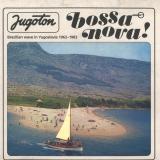
Rich musical history of Yugoslavia reveals a long-lasting love for the music of Latin America.
Entwined in Afro-Cuban rhythms, ballrooms were shakin', swayin' and swingin', gathering musicians who were heavily into jazz bands and orchestras, most notably in Ljubljana, Zagreb, and Belgrade. Jazz could be heard on the streets of Split way back in 1919 when dancing became a symbol of freedom. Radio was the most loved household item, newest sheet music was in demand and collecting records was hip like today. In the aftermath of Second World War, jazz went underground but little by little, things changed and Ella, Satchmo, Dizzy and Miles came to visit, among others. Music festivals shaped the music for entertainment and variety of popular styles showed influences from all over the world. In the early sixties, one particular rhythm crashed on the coast of the Adriatic Sea: the rhythm of bossa nova!
In the whirlwind of various musical styles, Latin American music still played important part of the scene in the early sixties Yugoslavia. Beguine, tango, rhumba, samba, calypso, mambo and cha-cha-cha all found their place on the festivals inspired by famous Sanremo, festival of Italian popular song that largely shaped the musical taste of Europe. It was the era of instrumental rock, R & B and rock'n'roll - sounds of "imperialist America" now played freely on imported and hand-made electric guitars. While dancing halls had been turning into concert venues, bossa nova has come! Eydie Gorme with Blame It on the Bossa Nova and Paul Anka with Eso Besso (That Kiss!) tried to make us learn some new dance moves but it was Joao Gilberto's gentle singing and his new way of playing samba songs, along with Tom Jobim's modern dissonant harmonies and poetry of Vinicius de Moraes that created the magic. When American alto saxophonist and flautist Bud Shank visited Zagreb and Ljubljana in 1963 (with Boško Petrović in his quintet) "it was the first time we heard bossa nova!" remembers Stjepan Braco Fučkar. Jugoton, the biggest record company in Yugoslavia, released 4-track EP Bossa Nova by Bogdan Dimitrijević and his ensemble that same year! While not being fully accepted or understood completely, the archives of Jugoton reveal to us various interpretations of this new trend from their vast catalogue.
- A1: Main Title
- A2: Peace Through Superior Firepower
- A3: The Final Countdown
- A4: World's Worst Landscaping
- A5: Mess It All Up
- A6: Hurley's Handouts
- A7: Just Another Day On The Beach
- B1: Ana Cries
- B2: The Tribes Merge
- B3: The Gathering
- B4: Shannon's Funeral
- B5: All's Forgiven... Except Charlie
- C1: Charlie's Dream
- C2: Charlie's Temptation
- C3: New Trade
- C4: Mapquest
- C5: Charlie's Escape
- C6: The Last To Know
- C7: Rose And Bernard
- D1: Toxic Avenger
- D2: I Crashed Your Plane, Brotha
- D3: Eko Blaster
- D4: The Hunt
- D5: Mcgale's Navy
- D6: Bon Voyage, Traitor
- D7: End Title
- 1: Salvage Title
- 2: Tree Of Heaven
- 3: Betty Ford
- 4: Free Association
- 5: Hollow Skulls
- 6: Artex
- 7: Love Vape
- 8: Wildwood In January
- 9: Resident Evil
- 10: All Over The World
- 11: Fantasia
An album for sleeping and waking, walking and driving, hunting and fishing, for loitering outside a roadhouse on the haunted tundra. Okay in elevators, not great for dinner. On Caveman Wakes Up, Friendship’s new album and second for Merge Records, the band’s historically capacious definition of country music grows wider still. Shambolic guitars are offset by flute pads, bleary poetry is set against a Motown rhythm section, a song about Jerry Garcia and First Lady Betty Ford fades out with a drum solo, like if Talk Talk came from a dingy Philadelphia basement and was fronted by James Tate. Songwriter Dan Wriggins’ ragged baritone cuts through eleven murky, swirling country-rock songs with profound lyrical substance and sincerity. Like an alarm clock incorporated into the edge of a dream, Caveman Wakes Up belongs equally to the conscious and subconscious mind, fraught with background, steeped in reference and experimentation, delivered casually and as a dire warning, dedicated, above all, to music’s creative soul. Over the years, dedication has paid off. Friendship has become a kind of reverse supergroup,
wherein the band itself and each individual member are located centrally in an increasingly prominent scene of young folk and country musicians and songwriters. Drummer Michael Cormier O’Leary leads the instrumental collective Hour and, along with bassist Jon Samuels, runs Dear Life Records, home to friends and peers who count Friendship as a major influence including MJ Lenderman, Florry, and Fust. (Samuels also plays lead guitar in MJ Lenderman and the Wind). Guitarist Peter Gill’s band 2nd Grade records prolifically. Wriggins began writing the songs of Caveman Wakes Up on a downtuned classical guitar of Lenderman’s and finished on a barely tuned piano in an apartment he shared with Sadurn’s G DeGroot.
In the summer of 2023, Wriggins had just left the Iowa Writers’ Workshop, where his love for poetry and mistrust for the academic poetry world grew in tandem. A relationship fell apart, and Wriggins crashed for several weeks at Lenderman and Wednesday’s Karly Hartzman’s home in North Carolina, where he recorded the first demos of “Resident Evil,” “All Over the World,” and “Love Vape.” Wriggins returned to Philadelphia, and the band got to work on new ideas, finally tracking the album in five days with engineer Jeff Ziegler (Mary Lattimore, War on Drugs). Wriggins recorded vocals with Love the Stranger engineer Bradford Kreiger, and organ, violin (Jason Calhoun), and flute (Adelyn Strei) were recorded by Lucas Knapp in a West Philadelphia church.
- A1: Fiesta En La Jungla
- A2: Fuga En La Selva
- A3: Tu Partida
- A4: Agua De Cachilde
- A5: La Chicharra
- A6: Dolor Y Pena
- B1: Izango
- B2: El Shiringuero
- B3: A Jenny
- B4: Linda Tocachina
- B5: Para Mi Gente
- B6: Tragedia En Uchiza
Carrying the torch of psychedelic cumbia, with a healthy dose
of surf guitar and Amazonian dancefloor flourishes from Peru
and Brazil alike, Fiesta en la Jungla by Los Dexter’s de Uchiza
is the first release from the newly formed London-label Ritmo
del Barrio. Originally released in 1982, it captures the finest
cumbia being made in Peru at the time, decked out with
frenetic surf-rock guitar riffs, rhythms floating on crisp
cumbia percussion and occasionally punctuated by carimbó
breakdowns native to the Pará region of north-eastern Brazil.
The album is filled with energy, a gem that was always
intended to animate any dancefloor. Peruvian cumbia came to national attention in the late 60s
through the recordings of Juaneco y su Combo, Los Destellos
and Los Wembler’s de Iquitos, but it’s had many revivals, and
Fiesta en la Jungla arrived when the style was going through a
major transition. In 1977, a passenger plane carrying most of
the members of Juaneco y su Combo crashed, killing everyone
on board. In 1980, Los Destellos retired, and Los Wembler’s
released their tenth and final record, they were ready for a
break. This left a big void in Peruvian music. Wasting no time,
Los Dexter’s Emerson Ruiz Mosquera took the opportunity and
gave his band new life, filling the band’s ranks with young and
energetic musicians who were hungry for success. He built the
new band around a solid base of dexterous guitars, a dynamite
rhythm section, and added oodles of percussion and an electric
organ, giving them a powerful psychedelic sound that called
back to the sounds of the original chichamasters, but added a
new sheen. Along with bands like Los Shapis and Los Walkers
de Huánuco, Peruvian cumbia was reborn as chicha in the
1980s, and was now the sound of Peru’s barrios up and down
the country.
Based in the city of Uchiza, on the edges of the Amazon basin,
Los Dexter’s were uniquely located in central Peru, closer to the
largest urban centres of the country than Amazonian outposts
like Pucallpa or Iquitos, and therefore better positioned to
travel to the furthest reaches of the country with ease. In a
sense, Los Dexter’s were a bridge between the Amazon and the
rest of Peru, a bridge over which the sounds of Amazonian
cumbia could travel to the rest of the country on their way to
becoming one of the most ubiquitous elements of Peru’s musical
identity. Fiesta en la Jungla represents Los Dexter’s in their third
iteration. Led by Emerson Ruiz Mosquera, who was just a
young boy in 1970 when his older brother founded the group
with four of his friends, the ensemble by the time of Fiesta en la
Jungla included Orlando Abad on the timbales and lead vocals,
Lucho Bendezú on lead guitar, Javier Quiroz as second
guitarist, Alejandro Almeira on bass, Rufino Bustamante on
keyboard, Ramon Siu on bongos and bells, Ivan Rios on conga,
and Emerson as musical director and composer. Remarkably,
most of the group’s members helped to write at least one
track, Los Dexter’s were a collective endeavour.
Reissued on vinyl for the first time by Ritmo del Barrio, this
record is essential for any collector of Peruvian cumbia.
Showcasing the unique sound of Los Dexter’s, it carries hits
like “Fuga en la Selva” and “El Shiringuero”, which are sure to
set any dancefloor on fire, combined with slower, carimbó-
infused cumbias like “Fiesta en la Jungla,”and “Agua de
Cachilde.” Its closing track, “Tragedia en Uchiza'', is a key
piece of local history and tells of the flooding of the
Chontayacu River in 1982, a mortal tragedy that affected
thousands of people. Despite the subject matter, the album
maintains a joyful vibe throughout, with high energy riffs and
irresistible rhythms, contrasted with terse love ballads, like “A
Jhenny.” It is both a piece of musical history, and a sure-fire
tool for the dance floor.
Los Dexter’s became a fixture of festivals and celebrations in
the provinces of San Martin and Huánuco, and from expanded
across the country, taking Amazonian cumbia from the
Peruvian Amazon, to the heights of the Peruvian sierra, the
coastal plains, and the capital city of Lima.
- A1: Bad Parts Are My Favourite
- A2: Scumbag
- A3: Hurricane - Feat. Leilah
- A4: You Snooze You Lose (Interlude) - Feat Chassol
- A5: Alone Tonight
- A6: Every Dog
- A7: Saint Or Sinner - Feat. Sainté
- B1: Deers In The Road
- B2: Love Songs
- B3: Disaster - Feat. Elijah Waters
- B4: Stuck On Loop - Feat. Leilah
- B5: Disconnect! - Feat. Fredwave, Louis Culture, J.caesar
- B6: Called Me Insane - Feat. Elijah Waters
- B7: Over You
Back in December 2016, Jeshi fell asleep whilst driving home from a party at 5am, and he crashed into a park car, only to be woken up by the airbag exploding in his face. This is the inspiration for album two. The new album is a statement of waking up and levelling up from the last period of his life. This is a new era, and full of energy.
SHORT BIOG
Jeshi doesn't run away from fire; he runs with it. The East London artist is on a quest to feel alive in every sense. To him, feeling alive means being present in each experience, no matter how challenging. For Jeshi - who has spent the last few years establishing himself as one of the most exciting voices of his generation - this is what life and art are all about. Chaos, then, is not something to shy away from, but where great ideas are born.
Jeshi's electrifying second album, AIRBAG WOKE ME UP is a collection of moment-capturing songs built to ignite reactions and start conversations. His scene-stealing jaunts to stages worldwide clearly influence its live-wire sound, as Jeshi and his cohorts smash through moods and tempos like kids let loose on funfair dodgems. "I want to make things that have intent and feel like statements," Jeshi declares. His versatile voice is the conductive thread that pulls everything together. "On Universal Credit, my voice was used in one way, whereas on this it's used in ten ways," he notes.
AIRBAG WOKE ME UP is an exploration into what happens when you emerge from tough times, and how they encourage you to view the world a little differently. It's bolder in ambition and built from renewed energy. Chaotic, but in the very best way. "In my head, this is the real arrival chapter," states Jeshi. "The 'I am here, I've arrived' moment."
- Prologue
- Your Band Needs Your Voice
- Gretchen's Song (Featuring Hunter Schaefer)
- The New House
- Gretchen Theme
- Bike Chase
- Hospital 1
- Crashed
- Hospital 2
- Investigations
- The Lovers Nest
- Confrontation
- The Answering Machine
- The Villa
- The Pool
- Confirmation Of Dreams And Good Intentions
- Insights
- Panic
- Shelves
- Lamento
- Sisters
- Away From This Place
Mutant, in partnership with NEON, are proud to present the premiere physical release of the original soundtrack to Cuckoo.
Tillman Singer’s follow-up to Luz is an incredibly intense and unique thriller set in the Bavarian alps, blending elements of horror and science fiction.
Composer Simon Waskow returns to score Singer’s sophomore feature, adding a distinct voice to the film. His music becomes a supporting character to the action on screen, transitioning from the intimate and delicate to neck snappingly loud and direct as needed. This is a truly masterful score that deserves to be played as loud as possible.
This limited edition soundtrack features “Gretchen’s Song” with vocals by the film’s star Hunter Schaefer.
Pressed on 140g blue vinyl, and housed in a gatefold sleeve.
This re-issue faithfully replicates the original 1971 Island Records UK release in gatefold sleeve and is pressed onto high quality 180g vinyl. Released in June 1971, Angel Delight was the first of two albums of Fairport Convention as a four-piece, after the departure of founder member Richard Thompson that January. The band were living in a converted pub, The Angel, in Hertfordshire where they worked up the material for the album, another blend of the traditional and the original. The title track a pun on the time they were having at the pub, and a nod to the popular British dessert of the same name was a jolly catalogue of their life at the moment, referring to producer John Wood as 'John The Wood' and drummer Dave Mattacks as 'Dave The Drum.' It also mentions the day a lorry crashed into the pub, which, had Dave Swarbrick been in his room at the time could well have killed him. The album Fairport's only Top 10 album in the UK chart is also known for its traditional medley of jigs and reels, The Cuckoo's Nest, the beautiful ballad Wizard Of The Worldly Game and the group's version of the salty English song The Bonny Black Hare
Repress!
HERBERT HUNTER will be forever worshiped by the UK Northern Soul scene for his anthemic 45 'I Was Born to Love You', recorded in the home of country music, Nashville, in 1967. Sometimes things are just meant to be and they collide in perfect harmony. 'I Was Born To Love You' is a case in point. The perfect lyric - 'I Was Born To Love You, You Were Born To Tear My Heart Apart' - the perfect beat, and perfect timing as it crashed onto these shores in the summer of '76 when Northern Soul was at its zenith and Wigan Casino owned the All-Nighter scene! But, Hunter is no one-trick pony, as his list of collectable 45s bears testament, not least 'Happy Go Lucky', also on Spar. Hunter was part of Ted Jarrett's roster of artists and, under Jarrett's stewardship recorded a string of cover versions under the pseudonym Leroy Jones for the neighbouring budget label 'Hit'. He learnt much of his trade from established artists and label mates such as Gene Allison who he toured with as minder and nursemaid, due to Allison's drink problem. Often, when they arrived a venue, Allison was too drunk to perform and Hunter would step in for him.
For our B-side we've chosen a lesser known, but no less wonderful and gritty Northern Soul dancer 'I Know The Feelin'' by THE JADES. Currently very much in demand with a mint copy selling earlier this year for over $900. We know little about The Jades who recorded this incredible slab of up-tempo soul for Ted Jarrett's Poncello label in 1964 featuring, of course, Herbert Hunter's booming lead vocal.
Many thanks to Fred James for making this superb double-sider possible.
- A1: She Never Wrote Back
- A2: With You I Still Feel Alone
- A3: Dressed Up Ausländer
- A4: (Bolt) Golden Hour At Sisters
- A5: Crashed
- B1: Just Pretend To Be Someone Else
- B2: I'm Poster Syndrome
- B3: Bubble Life
- B4: 4Real
- B5: Closed Eyes
- C1: Other, Like Me
- C2: Methodology #17
- C3: Boy On A Swing
- C4: I Have A Keen Interest
- D1: In A Place Like This
- D2: Mark Up
- D3: I Am An Artist
Experience the sonic journey that is The Black Dog's latest album, "Other, Like Me," as they delve into the intricacies of the artist's psyche, questioning the very essence of individuality and creative worth. The album invites listeners to confront darker thoughts about self-identity, imposter syndrome, and the relentless pursuit of creative value, all while celebrating the joy found in the act of artistic creation. In this introspective exploration, The Black Dog challenge both themselves and their audience, creating a musical experience that is profoundly personal and open to interpretation. The themes woven throughout the album are a poignant counterpoint between the shadows of self-doubt and the exuberance of creative expression. It's an inward exploration, offering a place of solace for listeners to find comfort amid the chaos of external influences. The album's title, "Other, Like Me", draws inspiration from an interview with Cosey Fanni Tutti in 1999, resonating deeply with The Black Dog's outsider perspective. The phrase encapsulates the essence of the album, reflecting the band's unique identity and shared experiences, while respecting each member's individual passions and interests. Navigating the waters of cognitive dissonance, The Black Dog bring an authenticity to their music that mirrors the internal and external conflicts of the contemporary music scene. With a commitment to stripping back layers and allowing the heart of each song to shine through, "Other, Like Me" offers a raw and unfiltered musical experience that speaks directly to the soul. It's an invitation to introspection, a celebration of independence, and a testament to the power of authentic artistic expression.
The fourth leg on the early emo table of Rites of Spring, Moss Icon, and Cap'n Jazz, Indian Summer's Giving Birth To Thunder compiles their complete discography. Emo's second wave crashed into the Bay Area in the summer of 1994 in a rage-filled capsule of quiet and loud, octave chords, angry sons, Spock haircuts, and screaming. At the eye of this pissed-for-the-hell-of-it storm were Indian Summer. In the quartet's 12-month existence they wrote ten songs, appeared on a dozen singles and comps, and played over 100 gigs across the U.S. and Canada before burning out, passing out, and moving out of their Blue House in Oakland. Their hand-screened aesthetic is replicated in alarming detail in the accompanying by 24- page book with detailed liner notes, flyers, and miscellaneous propaganda.
- A1: Operation Overlord
- A2: Rage
- A3: Kill Ratio
- A4: March Of The Stroggs
- A5: The Underworld
- B1: Quad Machine
- B2: Big Gun
- B3: Descent Into Cerberon
- B4: Climb (Composed By Jer Sypult)
- C1: Gravity Well
- C2: Counter Attack
- C3: Stealth Frag
- C4: Crashed Up Again
- C5: Adrenaline Junkie
- D1: Etf
- D2: Complex 13
- D3: Pressure Point I
- D4: Pressure Point Ii
- D5: Ground Zero
Laced Records, id Software and Bethesda proudly present the music of seminal 1997 first-person shooter Quake II on vinyl.
19 specially remastered tracks by Sonic Mayhem and Jer Sypult will be pressed onto heavyweight discs. Sleeve artwork is by id Software, with Jason Williford providing character illustrations.
The bulk of the soundtrack was created by Sascha Dikiciyan aka Sonic Mayhem — his first game project among an enviably long credits list. Having caught id Software’s ear with an unofficial Quake album (alongside production partner Dave Valencia), Sonic Mayhem and id Software went on to develop Quake II’s trademark aggro-industrial metal sound, inspired in part by Metallica. The killer riffs, repeated for effect, urge players forward through the Strogg city and beyond, a trail of gibs in their wake. Jer Sypult’s “Climb” complements the selection with its driving industrial groove.
Random Color Vinyl. Beach Fossils' sophomore album, Clash the Truth, is modern post-punk triumph that's left a lasting impression on the music scene it was born out of. After releasing their self titled debut and the beloved EP, What a Pleasure, songwriter and composer Dustin Payseur began recording dissonant and introspective demos reflecting on his southern upbringing and young adulthood in New York. The tracks that would eventually make up Clash the Truth involved Payseur taking his songwriting in a new direction, employing jagged instrumentals, existential lyrics, and socially conscious subject matter. The darker themes of Clash the Truth still come out vibrant through bright guitar tones, locomotive drumming, and Payseur's inventive home recording techniques. Referencing the sounds of Factory Records releases, New York's no wave scene, and 90's avant-pop, Beach Fossils expanded their sound past the perimeters of bedroom dream pop. The album is now being reissued for the first time on Payseur and his partner Katie Garcia's own label, Bayonet Records, including a limited edition clear pink vinyl pressing.
It all started with a crashed computer and it certainly didn’t end there. »Cinnte le Dia« is the third collaborative album by Hanno Leichtmann and Valerio Tricoli, their first entry into Ni Vu Ni Connu’s duo series that focuses on Berlin’s Echtzeitmusik scene and beyond. Having already released two joint records on the now-defunct Entr'acte label, the two musicians wanted to document a 2018 concert in Berlin, but technology failed them. Undeterred, the sound artist and percussionist and the electroacoustic composer went to the former’s Static Music Studio to record six of the eight tracks on this record straight to tape, with two additional ones being recorded during a performance at Eupen’s Meakusma festival in 2019.
After 2016’s »The Future of Discipline« saw the duo enter the studio for a one-take session with added synth-bass overdubs and 2018’s »La Casa delle Chimere« documented a live gig in Kyiv, »Cinnte le Dia« presents a synthesis of the two approaches. Mixing the album together and adding overdubs—Leichtmann with his synth-bass again, Tricoli with his trusted Revox B77—the duo combined the special energy of their performance in front of a live audience with the intimate atmosphere of a studio session between two exceptional improvisers and composers. The pieces are accordingly marked by their sonic density, but also a rhythmic intricacy that makes the album as a whole negotiate its place in music history between bass-heavy, dubbed-out club music and electroacoustic as well as musique concrète techniques.
Leichtmann worked with a mix of acoustic percussion routed through a modified looper and a granular live sampler as well as electronic drums consisting of three modular sampleplayers, a Syncussion drum synth and a bass drum module. Depending on the current set-up, the two fed this input through Tricoli’s B77 either individually or collectively to further manipulate single elements or the entire sound. What might look complicated on a tech rider sounds intuitive on record: these are two versatile musicians engaging in a play of difference and repetition, acting and reacting to each other in real-time, but also creating additional layers by inserting new elements after the fact. In a very literal way, »Cinnte le Dia« is the duo’s most refined album, yet at the same time a testament to the uncanny energy they unleash during their improvisations. It’s solemn and moody, spontaneous and driving at once. Of course a computer couldn’t handle that.
Analogue Productions (Atlantic 75 Series) Celebrating the 75th Anniversary of Atlantic Records! 180-gram 45 RPM double LP Mastered by Bernie Grundman from the original analog tape Contains Otis Redding's posthumous hit "Sittin' On the Dock Of the Bay" Appeared on Rolling Stone's 500 Greatest Albums of All Time, rated 161/500! Pressed at Quality Record Pressings Gatefold old-style "tip-on" jacket by Stoughton Printing Hybrid Mono SACD Mastered directly from the original master tape by Bernie Grundman The guts of the story are this: While on tour with the Bar-Kays in August 1967, Otis Redding's popularity was rising, and he was inundated with fans at his hotel in downtown San Francisco. Looking for a retreat, he accepted rock concert impresario Bill Graham's offer to stay at his houseboat at Waldo Point in Sausalito, California. Inspired, Redding started writing the lines, "Sittin' in the morning sun, I'll be sittin' when the evening comes" and the first verse of a song, under the abbreviated title "Dock of the Bay." He had completed his famed performance at the Monterey Pop Festival just weeks earlier. While touring in support of the albums King & Queen (a collaboration with female vocalist Carla Thomas) and Live in Europe, he continued to scribble lines of the song on napkins and hotel paper. In November of that year, he joined producer and esteemed soul guitarist Steve Cropper at the Stax recording studio in Memphis, Tennessee, to record the song. Cropper remembers: "Otis was one of those the kind of guy who had 100 ideas. ... He had been in San Francisco doing The Fillmore. And the story that I got he was renting boathouse or stayed at a boathouse or something and that's where he got the idea of the ships coming in the bay there. And that's about all he had: 'I watch the ships come in and I watch them roll away again.' I just took that... and I finished the lyrics. If you listen to the songs I collaborated with Otis, most of the lyrics are about him. ... Otis didn't really write about himself but I did. Songs like 'Mr. Pitiful,' 'Fa-Fa-Fa-Fa-Fa (Sad Song)'; they were about Otis and Otis' life. 'Dock of the Bay' was exactly that: 'I left my home in Georgia, headed for the Frisco Bay' was all about him going out to San Francisco to perform." Redding and Cropper completed the song in Memphis on Dec 7, 1967 with tragedy, unknowingly, looming. Just two days later Redding lost his life on a routine commute to a performance when the small plane he was in crashed. The other victims of the disaster were four members of the Bar-Kays — guitarist Jimmy King, tenor saxophonist Phalon Jones, organist Ronnie Caldwell, and drummer Carl Cunningham; their valet, Matthew Kelly and pilot Fraser. Cropper and bassist Donald "Duck" Dunn completed the music and melancholic lyrics of "(Sittin' On) The Dock of the Bay' which was taken from the sessions — Redding's final recorded work. Cropper added the distinct sound of seagulls and waves crashing to the background. This is what Redding had wanted to hear on the track according to Cropper who remembered Redding recalling the sounds he heard when he wrote the song on the houseboat. One of the most influential soul singers of the 1960s, Redding exemplified to many listeners the power of Southern "deep soul" — hoarse, gritty vocals, brassy arrangements, and an emotional way with both party tunes and aching ballads. At the time of his tragic death he was 26. ‘(Sittin’ On) The Dock of the Bay’ was released just a month following Redding’s death and became his only ever single to reach number one on the Billboard Hot 100 in January 1968. The album, which shared the song's title, became his largest-selling to date, peaking at No. 4 on the pop albums chart. "Dock of the Bay" was popular in countries across the world and became Redding's most successful record, selling more than 4 million copies worldwide. The song went on to win two Grammy Awards: Best R&B Song and Best Male R&B Vocal Performance. With the album, Redding confirmed himself as a talent lost far too soon. All the hallmarks of a top-notch Analogue Productions reissue are here for you to savor: Mastered directly from the original master tape by Bernie Grundman and cut at 45 RPM. Pressed on 180-gram vinyl at Quality Record Pressings, and housed in tip-on old style gatefold double pocket jackets with film lamination by Stoughton Printing.
Run-D.M.C.'s Raising Hell remains the turning point at which hip-hop crashed through mainstream barriers and never left. Anchored by the crossover smash "Walk This Way," the 1986 blockbuster still sounds like a revolution unfolding in real time. It has everything – hard-rock riffs, turntable scratching, itchy rhythms, hit singles – not the least of which are the trio's invigorating raps and inseparable chemistry. And now it's the first rap record afforded audiophile treatment, courtesy of Mobile Fidelity.
Sourced from the original master tapes and pressed on MoFi SuperVinyl, the reissue label's numbered-edition 180g 33RPM SuperVinyl LP elevates Raising Hell to sonic heights on par with its musical and cultural significance. Ranked the 123rd Greatest Album of All Time by Rolling Stone, 43rd on Pitchfork's Greatest Albums of the 1980s, one of the Top 100 Albums of All Time by TIME – and included on "Best of" lists by Spin, Paste, XXL, Entertainment Weekly, and basically every other significant media outlet – the triple-platinum effort rocks the house.
Benefitting from the ultra-low noise floor and groove definition of SuperVinyl, Raising Hell unleashes a torrent of massive dynamics and tsunami of frequency-plumbing details underlined by Rick Rubin's taut, crisp, albeit raw and streetwise production. Just as the Queens-based group both defined what hip-hop could represent – and displayed just how big it could get – Rubin's work melded ear-worm hooks, savvy drum loops, metal-leaning guitars, and, of course, Run and D.M.C.'s cross-fire lyrical interplay into watertight frameworks bursting with ideas, tones, samples, and beats. Heard anew on Mobile Fidelity vinyl, Raising Hell is in every regard the aural equivalent of a direct-to-console 1970s classic. And it sounds as fresh as hell.
As for the music, it ranks among the most influential, inventive, and invigorating ever released – rap or otherwise. Vanguard artists such as Ice-T, Eminem, Jay-Z, and Public Enemy's Chuck D – who declared it his all-time favorite and "the first record that made me realize this was an album-oriented genre" – have testified on behalf of its brilliance. And never mind the presence of the Top 5 single "Walk This Way," whose power helped make Aerosmith's Steven Tyler and Joe Perry relevant for the first time in nearly a decade – and literally put Run-D.M.C. in bedrooms ranging from the Bronx to Bartlett to Bad Axe.
Look instead to the rest of the entirely filler-free set, be it the corkscrew turns, slippery wordplay, and "My Sharona"-meets-"Mickey" mixology of the boisterous "It's Tricky," the fat-but-minimized bass grooves and warped turntable wobble of the hysterical "You Be Illin'," chimes-accented inertia and boombox-on- shoulder thunder of the now-iconic "Peter Piper," or voice-as-percussion attack of the funky "Is It Live." With Raising Hell, the answer to the question is always affirmative – a sensation bolstered by the fact the group always had something to say.
The definition of Golden Age Hip-Hop in every way, Run-D.M.C. avoids the negativity and misogyny that later plagued the style, spinning assertive tales about identity (the biographical and culture-changing "My Adidas"), work ethics ("Perfection"), and, most notably, pride (the Harriet Tubman- and Malcom X.-referencing "Proud to Be Black"). Pavement-packed inner cities, tree-lined suburbs, and cornfield-rimmed rural areas would never again be the same. And rocking a rhyme that's right on time would become trickier than ever.
Celebrating the 30th anniversary of U2’s Zooropa, September 2023 sees the release of a limited edition coloured vinyl pressing of the Grammy-award winning album to coincide with the band’s performances at the Sphere in Las Vegas.
Initially intended to be just an EP, Zooropa became a fully-fledged album with 10 tracks recorded in six weeks in 1993, making it the fastest U2 album ever produced. Produced by Flood, Brian Eno and The Edge, the album went to Number 1 in the UK, USA, Ireland, Japan, Canada, Australia, New Zealand, Italy, Sweden, Austria, France, Switzerland, Germany, Holland, Norway, Denmark and Iceland and featured the singles ‘Numb’, ‘Lemon’ and ‘Stay (Faraway, So Close!)’.
2023 repress! clear with pink vinyl.
Beach Fossils' sophomore album, Clash the Truth, is modern post-punk triumph that's left a lasting impression on the music scene it was born out of. After releasing their self titled debut and the beloved EP, What a Pleasure, songwriter and composer Dustin Payseur began recording dissonant and introspective demos reflecting on his southern upbringing and young adulthood in New York. The tracks that would eventually make up Clash the Truth involved Payseur taking his songwriting in a new direction, employing jagged instrumentals, existential lyrics, and socially conscious subject matter. The darker themes of Clash the Truth still come out vibrant through bright guitar tones, locomotive drumming, and Payseur's inventive home recording techniques. Referencing the sounds of Factory Records releases, New York's no wave scene, and 90's avant-pop, Beach Fossils expanded their sound past the perimeters of bedroom dream pop.
Ash sind seit 30 Jahren zusammen, aber es waren die zwei Jahre, die sie voneinander getrennt waren, die sie zu ihrem brillanten neuen Album inspirierten. Wie der Rest der Welt wurden auch Tim Wheeler (Gitarre/Gesang), Mark Hamilton (Bass) und Rick McMurray (Schlagzeug) von der Pandemie überrumpelt. Es war nicht nur die erste längere Auszeit, die die Band in ihrer unglaublichen drei Jahrzehnte währenden Karriere hatte, sondern auch die längste Zeit, in der die drei sich nicht gesehen hatten, seit sie sich in der Schule in Downpatrick, Nordirland, erstmals begegnet waren. Tim Wheeler - wie man es von einem der größten Songschreiber seiner Generation erwarten würde - hatte während Ashs Zwangspause weiter Songs geschrieben. Zum Reboot-Camp der Band erschien er bereit zum Loslegen mit einem Rucksack voller Hard-Rock-Hymnen. Und schwere Zeiten verlangen schließlich nach härterer Musik. Das selbst produzierte "Race The Night" - das achte Studioalbum der Band - ist in jeder Hinsicht herausragend. Aufgenommen im Oh Yeah-Studio in Belfast und mit neuem Fokus, kombiniert die Platte die unwiderstehlichen Rock-Riffs von "Meltdown" (2004) mit der melodischen Meisterschaft von "Free All Angels" (2001) - und das alles verpackt mit einem deutlichen Twist ins Jahr 2023. Und mit den fernen Anzeichen eines oft beschworenen Rock-Revivals am Horizont, könnte es das essentielle gitarrenzentrierte, hymnenreiche Album sein, auf das die Welt gewartet hat. Seit Ash als Teenager mit ihrem Nummer-Eins-Debütalbum "1977" aus Downpatrick auftauchten, ist die Band ein vitales, wachsendes Anliegen. Die meisten ihrer Zeitgenossen sind verschwunden oder haben sich zumindest aufgelöst, bevor sie zurückkehrten, aber Ashs Licht leuchtet so hell wie eh und je. Für dieses Album sind sie sogar zu Fierce Panda Records zurückgekehrt, die eine ihrer ersten Aufnahmen, "Punkboy", auf der 1994 erschienenen Crazed And Confused EP veröffentlicht haben.
‘Dear Departed’, the second album from Sam Burton, arose from a time of rebirth. In the last few years, Burton basically started over. There’s a freedom in leaving everything behind, and Burton embarked on a wandering phase. He went and stayed at a friends’ family home in a rural region further north in California, where he holed up in a cabin and helped the grandmother farm to earn his keep. He crashed with friends all around Los Angeles, until he found himself a new gig and a new apartment of his own. Along the way, he was writing songs.
‘Dear Departed’ was produced by Jonathan Wilson (Angel Olsen, Father John Misty, Margo Price), and recorded at Wilson’s Topanga Canyon studio with some of the best studio players in LA.