Ekkel guides Earth Dog to The Destination, a four-pronged psychedelic clinic in the finest Nordic electronic tradition.
Co-founder of Norway’s Ute collective, celebrated Oslo-based producer and DJ Ekkel revels in prog naturalis. Previous releases as Alvar and Shadowmages, his duo with S.O.N.S., perfected this tripped-out sound with a heavy emphasis on melody. Following last year’s celebrated appearance at an Earth Dog rave in Brooklyn, he returns to grace the crew’s fourteenth release with The Destination.
Opener Questions About Mindcontrol awakens the discordant synapses, an entanglement of melodies and rhythm with a certain progressive attitude. Home Or In A Dream (Miami Morning Mix) properly ascends with trance-like wonder and ecstatic lucidity, before So Quiet returns to dusk with a tek-no throb and acidic bite. Destination G concludes with a nocturnal shimmer, an unrelenting groove caught in its own hypnosis ‘til the finale.
out of Stock
Last delivered 76 days ago available to reorder, subject to availability
Underground legend Orlando Voorn joins Craigie Knowes for his label debut EP ‘Navigate’. Quintessential Orlando Voorn house journeys on the A-side accompanied by 2 slappin’ house trax on the B-Side. A rounded EP of tracks for DJs in need of something to get the party started or to trip the dancefloor out when space for breathing is required.
out of Stock
Last delivered 27 days ago available to reorder, subject to availability
Die Musik von Panda Bear und Sonic Boom war schon immer ein Spielplatz: ein Ort, an dem Klangexperimente, Loops und unerwartete Ideen aufeinandertreffen. Während Sonic Boom einst mit Spacemen 3 die Balance zwischen Drone und Pop neu dachte und später mit modularen Synths experimentierte, erschafft Panda Bear, solo oder mit Animal Collective, schillernde Klangwelten zwischen Noise, Folk und Elektronik. Ihr gemeinsames Debüt Reset (2022) wirkte wie ein kreativer Befreiungsschlag im Pandemie-Nebel.
Mit A ? of WHEN setzen sie diese Spielfreude fort, gehen aber noch weiter. Harfen-Loops, Steel Drums, Pedal Steel, sogar Jodeln: Das Duo greift bewusst auf vermeintlich „uncooles“ Material zurück und macht daraus etwas Eigenes. Songs wie „Something Like Dreaming“ oder „Like a Moth to a Flame“ verbinden verspielte Psychedelik mit eingängigen Melodien, als würde man von Station zu Station durch einen musikalischen Abenteuerspielplatz springen.
Gleichzeitig wird der Ton ernster. Die zehn Stücke verhandeln digitale Erschöpfung, politische Verwerfungen und ökologische Fragen, ohne dabei die Leichtigkeit zu verlieren. Inspiriert von einer Welt aus „AI slop“, algorithmischem Dauerrauschen und permanenter Vernetzung, suchen Panda Bear und Sonic Boom bewusst nach anderen Formen der Verbindung: weniger Scrollen, mehr echtes Erleben, mehr Radio, Live-Shows, Listening-Partys und reale Begegnungen. Statt Zynismus setzen sie auf Empathie, Glück und gegenseitige Unterstützung.
Im Kern bleibt das Album jedoch ein Akt der Aneignung: Klänge aus unterschiedlichen Kontexten werden neu zusammengesetzt, getragen von ungewöhnlicher Percussion wie Harfe und Steel Drums. So entsteht Musik, die zugleich verspielt und reflektiert ist. A ? of WHEN blickt auf eine widersprüchliche Welt und verwandelt sie in etwas Verbindendes. Kein großes Heilsversprechen, sondern die Einladung, gemeinsam offline darin aufzugehen.
Konsequenterweise wird das Album nicht auf Streaming-Plattformen verfügbar sein: Panda Bear und Sonic Boom setzen stattdessen auf reale Begegnungen, Listening Sessions und direkten Austausch jenseits algorithmischer Dauerbeschallung.
Lemon Vinyl. Black Screen Records and Kaizen Game Works have once again teamed up for the vinyl repress of About That_ Paradise Killer B-Sides, the follow-up release to Barry "Epoch" Topping's vibrant funky city pop/vaporwave soundtrack to the open world adventure game Paradise Killer, which has proven to be a true essential release for itself. The record is featuring three new songs, vocal tracks, instrumental versions, remixes and piano arrangements along with a number of amazing guests, which are Fiona Lynch, Kyle Murray-Dickson, Fabian Hernandez, Ged Cartwright, Thomas Temple, MEEBEE and Okumura. Now available on lemon coloured vinyl with gorgeous cover art by José Salot. The sounds of Paradise. The music of a cosmic dream. Tunes from another reality. The tempo of the crime to end all crimes. The beat of long dead alien gods. The playlist of the investigation freak. Let the music take you away to Paradise. Feel the sun scorching your skin. Smell unbearably hot concrete. Savour the sweet taste of crime committed on a tropical island in another reality. Remember when we danced along the beach? Along the streets of Paradise? You made me this mix tape on the roof of your apartment block. We stared at the moon. You said you'd kill the moon. I didn't believe you. I was wrong.
e 5TO THE HEART [VOCAL VERSION]
[f] 6HOUSE OF BLISS [VOCAL VERSION]
Picture disc, artwork by C. Bedford Black Screen Records and Kaizen Game Works have teamed up for two new vinyl editions of Barry "Epoch" Topping's vibrant funky city pop/vaporwave soundtrack to the open world adventure game Paradise Killer. Topping's incredible soundtrack will be available on brand new picture discs as well as rosé & crystal clear with white marbled vinyl. The LPs are housed in a gatefold sleeve with beautiful 80s anime- & city pop-inspired artwork by Mizucat - additional art and layout by Kaizen Game Works, Barry Topping and Dane Baudoin. The picture disc artwork was crafted by C. Bedford as well as the one for the included folded A2 Crimson Acid poster. The sounds of Paradise. The music of a cosmic dream. Tunes from another reality. The tempo of the crime to end all crimes. The beat of long dead alien gods. The playlist of the investigation freak. Let the music take you away to Paradise. Feel the sun scorching your skin. Smell unbearably hot concrete. Savour the sweet taste of crime committed on a tropical island in another reality. Remember when we danced along the beach? Along the streets of Paradise? You made me this mix tape on the roof of your apartment block. We stared at the moon. You said you'd kill the moon. I didn't believe you. I was wrong.
Kassel Jaeger (alias François J. Bonnet) kehrt nach ,Swamps / Things" (SP119), ,Shifted in Dreams" (SP144) und der jüngsten Neuauflage des Klassikers ,Zauberberg" (SP068) - einem gemeinsam mit Akira Rabelais und Stephan Mathieu komponierten Werk - zu Shelter Press zurück. Mit diesem bedeutenden neuen Album mit dem Titel ,Sub Re" setzt Bonnet seine langjährige Erforschung der musikalischen Möglichkeiten von Klang fort. Dabei erweitert er den konkreten Ansatz, den er bei der Groupe de Recherches Musicales (dem historischen und bedeutenden Pariser Studio, das Bonnet seit 2018 leitet) entwickelt hat, und belebt ihn neu durch eine Herangehensweise, die sich weniger auf die klare Manifestation von Klangmaterial als vielmehr auf dessen mehrdeutige Evokation konzentriert. ,Sub re" kann im Lateinischen ,unter dem Ding, unter der Substanz, unter der Materie" bedeuten. Genau dieser direkte Zugang zur Musik, der sich auf die Gewinnung von rohem Klangmaterial stützt, bildet die Grundlage dieses Albums. ,Under the matter" verweist somit auf den konkreten Aspekt der Musik, jedoch nicht auf das Konkrete, das verklärt wird und zu Dampf und Form wird, zum Substrat einer Idee. Vielmehr verweist es auf das Konkrete unter dem Konkreten, in der Immanenz der Klänge, in ihrem Werden, als treibende Kraft, wie eine Flut, wie ein Gewölbe aus gebieterischer und mächtiger Materie. Um dies zu erreichen, greift Bonnet auf eine Vielzahl von Klangquellen (akustisch, elektronisch, natürlich oder künstlich, absichtlich geschaffen oder zufällig gefunden) und eine Vielzahl von Kontexten und Anlässen zurück, um ihnen Gestalt zu verleihen. Der Satz ,a shell, a bell, a spell" (etwa: eine Muschel, eine Glocke, ein Zauber) war beispielsweise erstmals während eines Konzerts in Venedig zu hören, das im Zusammenhang mit Latifa Echakhchs Beitrag zum Schweizer Pavillon auf der Kunstbiennale 2022 organisiert wurde, während der letzte Satz auf der Platte, ,signalmirror", ein Stück abschloss, das 2023 auf der ersten Sound-Biennale in Sion (Schweiz) präsentiert wurde. Diese Elemente, geformt und losgelöst von ihrem ursprünglichen Kontext des Erscheinens, von den Orten und Menschen, die sie ermöglichten und ihnen lauschten, tragen zu einer komplexen Schichtung von Stimmungen und Klangwelten bei und helfen, ein kontrastreiches Album zu schaffen, in dem Dichte und Zartheit in einer Abfolge bewegter Wellen koexistieren, mal voller Erinnerungen, mal voller Bedauern, stets in Bewegung gesetzt durch ihre eigene Morphologie. Sub Re bezieht sich auch auf ein Kapitel in Victor Hugos ,Die Arbeiter des Meeres", eine Schlüsselstelle, in der sich die Hauptfigur angesichts einer kolossalen Aufgabe allein mitten auf dem Meer wiederfindet, unter einem gigantischen Schiffswrack, das in den Klauen eines isolierten Riffs gefangen ist, umgeben von Wasser, Strömungen und Winden, allein, um sich dem Unmöglichen zu stellen. Denn tatsächlich ist es unter der Oberfläche, wo Handlungen entstehen, Entscheidungen getroffen werden und die Intuition uns leitet.
Picture disc, artwork by C. Bedford Black Screen Records and Kaizen Game Works have teamed up for two new vinyl editions of Barry "Epoch" Topping's vibrant funky city pop/vaporwave soundtrack to the open world adventure game Paradise Killer. Topping's incredible soundtrack will be available on brand new picture discs as well as rosé & crystal clear with white marbled vinyl. The LPs are housed in a gatefold sleeve with beautiful 80s anime- & city pop-inspired artwork by Mizucat - additional art and layout by Kaizen Game Works, Barry Topping and Dane Baudoin. The picture disc artwork was crafted by C. Bedford as well as the one for the included folded A2 Crimson Acid poster. The sounds of Paradise. The music of a cosmic dream. Tunes from another reality. The tempo of the crime to end all crimes. The beat of long dead alien gods. The playlist of the investigation freak. Let the music take you away to Paradise. Feel the sun scorching your skin. Smell unbearably hot concrete. Savour the sweet taste of crime committed on a tropical island in another reality. Remember when we danced along the beach? Along the streets of Paradise? You made me this mix tape on the roof of your apartment block. We stared at the moon. You said you'd kill the moon. I didn't believe you. I was wrong.
British trio The Xcerts return in Summer 2026 with their sixth album, i think i want to go home now. Recorded at Beehive Studios, the record’s direction crystallized with the track "do it to myself," marking a return to the band writing together in one room. The album emerged from an "exceedingly hellish" period involving family loss and broken relationships, mirroring the trauma behind their 2009 debut. While the title began as a childhood joke about sleepovers, it evolved into a poignant exploration of "home" as both a refuge and a heavy heart, delivered with a defiant, invigorated energy.
Die britische Indie-Pop Sängerin und Songwriterin Suki Waterhouse ist zurück mit ihrem dritten Album
„Loveland“. Bekannt für den „dream pop“ Sound ihrer beiden Vorgängeralben sowie ihre Arbeit als Model
und Schauspielerin, überzeugt das Multitalent mit ihrem genreübergreifenden Sound zwischen Pop, Indie
und Alternative.
Mit „Loveland“ präsentiert Suki Waterhouse ihr bisher stimmigstes und zugleich persönlichstes Werk. Es
ist ein Album, das von Selbstfindung, Transformation, Mutterschaft und der Rückkehr zur eigenen Identität
erzählt. „Loveland“ enthält 14 neue Songs, die gemeinsam mit einigen Größen der Musikszene – darunter
Amy Allen, Aaron Dessner und Joel Little – geschrieben wurden, und beleuchtet die Distanz zwischen dem,
was einmal war und dem, was gerade wird.
Mit weltweit über 1,5 Milliarden Streams hat sich Suki Waterhouse als feste Größe und als eine der spannendsten Stimmen im Indie-Pop etabliert. Nach den Erfolgen ihrer von der Kritik gelobten Alben „I Can’t
Let Go“ (2022) und „Memoir of a Sparklemuffn“ (2024) hebt sie mit „Loveland“ ihren Sound auf ein
neues Level und unterstreicht ihren Status als vielseitige Künstlerin mit unverwechselbarer Stimme.
Between her elaborately conceptual Drag City singer-songwriter albums and celebrated soundtracks for Ryusuke Hamaguchi, in recent years Eiko Ishibashi has quietly self-released a significant body of solo and collaborative work on her Bandcamp page. At times resembling her solo live performances in their organic interweaving of instrumental, electronic, and concrete sounds, each of these less feted online releases offers a snapshot of the experiments always underway at Atelier Eiko. Some Fine Legacy is pleased to announce a vinyl edition of one of the most intriguing of these works, Gasping_Sighing_Sobbing, made in collaboration with Hiroshi Minami and first released in 2021.
Active since the 1980s, Hiroshi Minami is a key figure in the Tokyo jazz scene, as well as a respected memoirist. Devoted to the great standards, which he explores with an Evans-ish delicacy of touch and Impressionist harmonic extensions, he is equally at home working up variations on tunes by Ryuichi Sakomoto and The Beatles or experimenting with ambient electronics. A single note from his piano is the first thing we hear on Gasping_Sighing_Sobbing, the space left by its decay unexpectedly filled by a synth arpeggio that quickly fades away as the piano returns with a balladic chord sequence.
Like her frequent collaborator Jim O’Rourke, Ishibashi possesses the virtue of patience, recognising the beauty of lingering at length in a single musical environment. Throughout its 40-minute duration, Gasping_Sighing_Sobbing remains lost in this maze of obstructed and fragmented piano balladry. The musical surface is in one respect placid, but close listening reveals dynamics and processes that are deeply strange: the resonance of a chord dying away is frozen, expanding to become a cloud that suddenly makes way for the piano’s return; or the piano is looped into a ticking glitch or a time-stretched shudder, momentarily sinking under lapping waves, distant bells, and snatches of conversation. Ishibashi’s subtle vocals and synths colour the piano passages like views through distorted glass. The metaphor of cinéma pour l’oreille is perhaps overused in discussions of the musique concrète tradition, but here the visual associations are almost unavoidable: especially when Daisuke Ijichi joins on upright bass, it’s hard to shake the cinematic image of a smoky jazz bar—shown in a sequence, perhaps, that cuts repeatedly to the musicians’ and audience’s thoughts and dreams. Like much of Ishibashi’s work, this collaboration with Hiroshi Minami is inconspicuously radical, shaped at the deepest level by electro-acoustic procedures even as it luxuriates in melancholic beauty.
Not just a musical project, but an outlet for him to push the envelope of extreme music, challenging the listener to leave behind preconceptions of genre limitations and to approach the music with an open mind. In his exploration of the musical outer limits, he is joined by fellow seasoned pros Steve Tucker (Morbid Angel) on vocals, Flo Mounier (Cryptopsy) on drums and Derek Sherinian (Dream Theater, Steve Vai, Malmsteen, Kiss) on keys. An allstar line up that grabs the attention of any metal/ progressive music enthusiast. The project began whilst Sonny was on tour with Morbid Angel. Sonny explained the concept of the band to Steve Tucker, who was intrigued and fully committed to getting involved. Sonny wasted no time and began handwriting transcripts for what would become the earliest Arise From Worms material, whilst on tour.
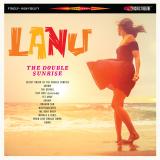
Lance Ferguson (The Bamboos, Menagerie, Rare Groove Spectrum) presents his lush Exotica inspired 2016 album on LP for the first time in a limited edition deluxe gatefold sunset swirl coloured vinyl edition, with each pressing having a unique pattern.
For fans of Air, Martin Denny & DJ Shadow.
'The Double Sunrise' is a re-imagining of Exotica seen through Ferguson’s own lens, which includes Pop and Hip Hop elements plus samplers, synths and drum machines thrown into the mix. That combination of beats and lush cinematics owes as much to Exotica pioneer Martin Denny as it does to Air and DJ Shadow.
Guest vocalists include Melanie Pain (Nouvelle Vague), who brings a sweet Francoise Hardy and Jane Birkin influence to her songs, and Australian singer Meg Washington. As well as her own successful career, Bamboos fans would know Washington from her vocals from “The Wilhelm Scream” and “King Of The Rodeo”, as well as “Beautiful Trash” from the 2011 Lanu album ‘Her 12 Faces’.
Ferguson's own instrumentals are also gems of lush, nostalgic delight.
Reviews for ‘The Double Sunrise’
“Even with the clear influence of South Pacific exotica, this second LP is still typical Ferguson: tight, snappy and doused in retro airs.” - Rolling Stone Magazine
“Bamboos supremo Lance Ferguson uses South Seas exotica as a jumping-off point for a record that deftly crosses datelines. Giddy effervescent soundscapes such as “Tiny Dots” sit back to back with breakbeat grooves like “Nightmarchers””. The Age
“This is one of those summer albums you will return to every year. Stunning.” The Daily Telegraph
“The concept for The Double Sunrise is very specific, but it's executed brilliantly...It's one of those records that evokes a place and a feeling that most of us only ever dream about.” - Double J Radio (Feature Album)
Barry Alan Pincus ist kein guter Name für einen Sänger, dachte sich dieser Künstler zu Beginn seiner Karriere, und er nannte sich Barry Manilow. "Brandy" ist auch kein so toller Name für seinen ersten Hit, also entschloss er sich, ihn "Mandy" zu nennen. Das war 1974. Der Rest ist Geschichte. Barry Manilow zählt ohne Zweifel zu den erfolgreichsten Künstlern der populären Musik, seine Nummer-1-Erfolge sind beispiellos, und seine Songs wie "Mandy" leben auch in jüngeren Generationen immer noch fort. Trotz (oder vielleicht auch gerade wegen) seines nicht immer leichten Stands bei den Kritikern hat er über Jahrzehnte eine Fangemeinde um sich geschart, die in puncto Größe und Anhänglichkeit ihresgleichen sucht. Deshalb wird auch die jetzt erscheinende neue Best-Of-CD "Ultimate Manilow" mit Sicherheit wieder ihre begeisterten Käufer finden. Auf ihr sind 19 absolute Hits des Balladen-Königs versammelt, vom erwähnten "Mandy" über "Could It Be Magic" bis zu "Copacabana". Als Bonus-Track zusätzlich: die bislang ausserhalb von USA unveröffentlichte Nummer "Who Needs To Dream" aus dem Manilow-Musical "Copacabana". Die VÖ wird von einer zielgerichteten Print-Marketingkampagne begleitet.
T. VINCENT: LIVE IN LONDON! (Total Pleasure/Virgin Music Group) offers up the opportunity to relive or experience for the first time that enthralling evening, a historic occasion that found Annie Clark, Buckley and the orchestra reimagining 19 classics, staples and rarely played deep cuts spanning the St. Vincent catalog from 2007’s solo debut Marry Me up to 2024’s multiple-GRAMMY-winning All Born Screaming.
Album Background
A complete live recording of St. Vincent's triumphant BBC Prom performance at The Royal Albert Hall with The Jules Buckley Orchestra. Featuring reimagined works from across her entire career, this is a chance for fans to experience an evening that Rolling Stone UK called "A glorious re-imagination," what The Times Of London classified as "Here's how to do a classical crossover," and about which Far Out Magazine UK said "There are certain gigs that are always destined to be great -- like St. Vincent, at the Royal Albert Hall, with an orchestra."
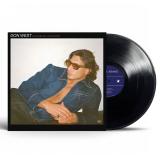
Der aus Sydney stammende Soul-Revival-Troubadour Don West – mit knapp 3 Mio. monatlichen Spotify-Hörern - veröffentlicht sein Debütalbum "Give Me All Your Love" parallel zu seinen ausverkauften Tourneen durch Europa, UK und seinem Heimatland Australien. Australiens einziger Spotify Radar Artist für 2025 wurde bereits für die Australian Independent Records Awards in der Kategorie "Beste Soul/R&B-Veröffentlichung" und für den APRA AMCOS Award in der Kategorie "Meistgespieltes Soul/RnB-Werk" nominiert und erreichte Platz 6 der australischen ARIA-Charts.
"Wenn Sie sich ein Gedankenexperiment gewünscht haben, das berauschend sinnliche Soulmusik aus der Blütezeit von Stax und Motown mit dem Charme eines angesagten Frauenschwarms verbindet, dann hat Don West die harte Arbeit für Sie erledigt; er ist die Antwort." – Onestowatch
o Standard Edition black heavyweight vinyl
o 44 tracks from the 2025 sci-fi RPG
o Each disc covers one of the game's major factions
o Art Nouveau-inspired artwork
o Widespined outer sleeve
o Printed inner sleeves
Obsidian Entertainment, Xbox, and Laced Records present the official vinyl release of The Outer Worlds 2 Original Soundtrack, a sanctioned audio record of Arcadia's most influential systems, ideologies, and approved listening experiences.
The specially mastered tracks span three LPs presented in deluxe Art Nouveau-inspired packaging. The collection captures daily life in the colony-where progress is monitored accordingly, optimism is responsibly distributed, and deviation is resolved through established channels.
Volume 001: Truth, Justice, & Dispute Resolution introduces the sound of arrival of the Earth Directorate. Sweeping orchestral themes and restrained electronic textures underscore exploration, investigation, and the reassuring sense that Arcadia's instability is both anticipated and accounted for.
Volume 002: Wireless Free Arcadia represents Auntie's Choice at peak efficiency. Bright melodies, big band swing, and relentlessly cheerful compositions promote comfort, productivity, and sustained consumer confidence. Freedom is included. Continued satisfaction indicates proper use.
Volume 003: Mental Enlightenment & Refreshment pairs the Protectorate and the Order of the Ascendant. The Protectorate asserts control through ceremonial authority, rigid rhythms, and formal arrangements devoted to discipline, doctrine, and public order. The Order of the Ascendant follows with colder, more abstract compositions focused on empirical certainty, controlled experimentation, and outcomes unburdened by sentiment.
Composed by Oleksa Lozowchuk, Antonio Gradanti, and Jim Bonney, the soundtrack of The Outer Worlds 2 blends cinematic scoring, period-inspired styles, and sanctioned cultural messaging to reflect a colony guided by ambition-and the systems entrusted to manage it.
"It began somewhere between sleep and memory.
After first meeting in dreams, in Brussels and Berlin, on landscapes that felt strangely close to Vilnius, Marija Rasa aka emer and Ugnė Uma leisurely rewrote those visions into songs.
What followed became a collection of moments suspended in idle summers, familiar faces, gentle motions, skin touched by golden sun. These songs wander through closeness and distance, tracing the delicate emotional shifts between us, who almost understand each other completely.
‘you and me’ lives in the space where magical realism meets everyday intimacy: honey-colored evenings, recurring thoughts, and the slow surrender to things unfolding on their own."
out of Stock
Last delivered 3 days ago available to reorder, subject to availability
Ever since the late 1950s bossa-nova revolution, Brazil’s influence on French music has been undeniable. Pierre Barouh, Georges Moustaki and a vast array of lesser known artists, all made the Musica Popular Brasileira (MPB) an axis of promotion at the service of a cool and metaphysical, modern and mixed Brazilian lifestyle. Some were seduced by the poetic languors of the bossa, some were looking for fun, and others just loved the American hybridization of jazz-bossa, jazz-samba.
What is bossa nova? One of its creators, Joao Gilberto said: "Its style, cadence, everything is samba. At the very start, we didn't call it bossa nova, we sang a little samba made up of a single note - Samba de uma nota so .... The discussion around the origins of bossa nova is therefore useless”. It is nevertheless useful to remember that these magnificent Brazilian songs, which the guitarist describes as samba, were shifted and balanced around improbable chords. "I like things that lean, the in-betweens that limp with grace," said Pierre Barrouh, quoting Jean Cocteau.
With emotion, arrangements for violin and supple guitar licks, bossa nova rapidly changed. A transformation that can be heard in the Tchic, tchic, French Bossa Nova 1963-1974 compilation, the result of a cultural reappropriation, which traveled through the United States and supplemented itself in France.
A musical revolution that has remained significant, bossa nova was born in Rio. From 1956 to 1961, Brazil lived through its golden years. In five years, the country had invented its modernist style. Elected president in 1956, Juscelino Kubitschek de Oliveira, an elegant man with a broad forehead, brandished a promising slogan: "Fifty years of progress in five years". He quickly got to work. Not worried about increasing debt, he launched the project for a new federal capital, Brasilia, designed by the communist architect Oscar Niemeyer. Volkswagen opened state-of-the-art factories and created the “fusquinha”, the Beetle. In Rio, the Vespa made its first appearance. The Arpoador Surf Club crew run into the “girl” from Ipanema, Helô Pinheiro - the tanned garota ("chick"), between a flower and mermaid, who at 17 walked by the Veloso bar, where the fiery author and composer, Tom Jobim and Vinicius de Moraes, were getting drunk on whiskey. From then on, bossa symbolized cool.
In 1958, Joao Gilberto recorded Chega de Saudade, which the directors of Philips denied, calling it "music for fagots". The marketing director, who believed in it, secretly pressed 3000 78-inch vinyls and distributed them at schools around Rio, creating a tidal wave.
American jazzmen then took over. In particular, trumpeter Dizzy Gillespie and guitarist Charlie Byrd. In November 1962, the Brazilian Ministry of Foreign Affairs funded a "Bossa-Nova" concert at Carnegie Hall in New York, inviting the genre’s pioneers. Unprepared, the show soon turned to disaster. But the troupe was invited to the White House by Jackie Kennedy. The first lady loved "the new beat" and in particular Maria Ninguem, a song by Carlos Lyra, later covered by Brigitte Bardot.
In Brazil, the 1964 military coup quickly ended this euphoria. The destructive atmosphere that ensued pushed many Brazilian musicians to leave, if not to exile. Thus, Tom Jobim, Sergio Mendes and Joao Gilberto arrived to the United States. In New York, Joao Gilberto met saxophonist Stan Getz. At the time, he was married to the Bahianese Astrud Weinert Gilberto, who had a German father. She had never sung before, but she knew how to speak English. Getz therefore asked her to replace her husband on The Girl From Ipanema. The Getz/Gilberto record with Tom Jobim on piano, was released in March 1964. Phil Ramone, the "pope of pop" was in charge of sound.
Bossa nova arrived in Paris through the classic “guitar-voice” channel (Pierre Barouh, Baden Powell, Moustaki…) But France loved jazz and Paris had already welcomed its American contributors. All these good people were to pass through Saint-Germain-des-Prés. The cabaret l'Escale became the Mecca of Latin American sound where one could find Pierre Barrouh and his friends, such as the Camara Trio, samba-jazz aces, whose only record was published by the Saravah label. With a band strangely called Les Masques (a band that included Nicole Croisille and Pierre Vassiliu, among others), the Camara Trio recorded an interesting Brazilian Sound, including the track Il faut tenir which is present on this tasty compilation of rarities.
Other enlightened musicians can also be found on the compilation, such as Jean-Pierre Sabar (songwriter for Hardy, Auffray, Leforestier ...) and the French pop rock organist Balthazar. In 1975, Sabar recorded Aurinkoinen Musiikkimatka on a Finnish label, which featured the crazy Vai, Vai, included on this record. We are now following the footsteps of Brazilian electronic musicians such as Sergio Mendes, Eumir Deodato or Marcos Valle who created funk and disco sounds on their keyboards and synthesizers. A style that influenced Véronique Sanson when she wrote Jusqu’à la Tombée de la nuit in 1969 for Isabelle de Funès, the niece of Louis and a great friend of Michel Berger - Sanson did end up singing this track on her 1992 Sans Regret record.
The pinnacle of exoticism and travel, Sylvia Fels’ Corto Maltese includes bongos, sea mist and ocean sounds. The title was taken from Jacky Chalard’s concept album written in 1974, Je suis vivant, mais j’ai peur (I am alive, but I am scared), based on Gilbert Deflez’s science fiction novel.
However, bossa nova extended the scope of popularity. "In the 1970s, I was a fan of Sergio Mendes, Getz / Gilberto. I fell in love with this music that I knew because I had been an orchestral singer, " explained Isabelle Aubret, who in 1971 delivered a composite record of covers by the very funky Jorge Ben, Orfeu Negro, Tom Jobim, Vinicius de Morais and Jean Ferrat. "I recorded this album for Meys Records in Paris, far from Brazil, with wonderful musicians, François Raubert, Roland Vincent, Alain Goraguer...". The latter wrote the arrangements for Casa Forte, a very percussive title borrowed from Edu Lobo, one of the initiators of the bossa who spent time in California. "Jazz and bossa came together and produced very rhythmic music. I love singing, it allows me to dream, to have fun, to feel a high on stage, and these songs brought me joy, made me swing, my singing felt like a dance.”
The world tours of French singers and their desire for the tropics, often brought them to Rio with its hills, forests, caipirinhas and tanned bodies. There are surprises though, like this Iemenja (Iemenja is the goddess of the sea in the Afro-Brazilian candomblé religion). Not unlike the composer and musician Jean-Pierre Lang, based in Sao Paulo, Claire Chevalier taught Brazil to Brazil. In 1970, the singer and painter published a 45-inch vinyl, Mon mari et mes amants (My husband and my lovers), under the improbable pseudonym of Clarinha (little Claire). She was then living in Rio, with her husband, Joël Leibovitz, who founded a band called Azimuth, and who owned a record label specialized in "sambas enredos" songs for samba school parades.
For its B side, she asked Pierre Perret to come up with lyrics for a song composed by Carlos Imperial: "Oh goddess of the sea, o goddess Iemenja, I bring a white rose to adorn your long hair ..." . "Perret came to see us, and we had fun, remembers Joël Leibovitz. We wrote Lemenja for fun, we recorded it at the Havaí studio, behind the Central do Brasil the central station. Erlon Chaves, the arranger who worked with Elis Regina, joined us" adding his share of Afro-Brazilian percussions and funky brass to the mix.
There is a common misunderstanding in Franco-Brazilian history: that bossa, admittedly hedonistic, is perceived as funny, even though the poets who wrote the texts are often philosophizing on the human condition. Its French interpreters pull it towards a carnival inspired universe, far removed from its fundamental essence. Thus, Jean Constantin covered the famous Samba da minha terra, an ode to the art of samba written by the classic Bahian composer Dorival Caymmi, renaming it with the enticing title of Pas tant de tchi tchi pompon: "On your pier there is no tchi tchi / when you arch your back, you know everything is alright ”(lyrics by Gérard Calvi). This expedited bossa aims for the absurd, but retains a certain elegance.
Indeed, Jean Constantin was not an idiot, the rather large man had a huge mustache and liked fantasy, (Les pantoufles à papa, Le pacha, inspired by cha-cha-cha-cha, salsa and jazz) but he was also the lyricist of Mon manège à moi interpreted by Edith Piaf, the composer of Mon Truc en plume by Zizi Jeanmaire and the soundtrack of François Truffaut’s 400 Blows. Le Poulpe, published in 1970, from which this bossa is extract, was arranged by Jean-Claude Vannier, an accomplice of Serge Gainsbourg’s Melody Nelson. In short: "There is enough of samba / By looking at the parasol / Because my poor cabeza / Is going to die in the sun".
Even the American actress Marpessa Down, who was at the heart of the bossa nova revolution with her role as Euridyce in Marcel Camus’ film Orfeu Negro, winner of the 1959 Cannes Palme d'or, fed the clichée with Je voudrais parler au petit cuica - "Tell me how you manage to always make people want to dance / It's true, I must admit that I cannot resist your magic" - in consequence, once can hear the cuica, a little drum inherited from the Bantu.
But bossa nova had many angles. Societal, of course, pushing actresses who were symbols of women's liberation like Brigitte Bardot, Jeanne Moreau, or Sophia Loren to engage in the exercise of accelerated bossa. In February of 1963, Sophia Loren made a record in French in Rome, Je ne t'aime plus, featuring the song De jour en jour, a bossa written by two Italians, Armando Trovajoli and Tino Fornai, which was released a little later by Barclay. Bossa accompanied the 1960s, a decade of moral liberation. Ann Sorel, who interpreted La Poupée des favellas, caused a sensation with L’amour à plusieurs, a provocative song written by Frédéric Bottom and Jean-Claude Vannier. As for the actress Andrea Parisy, she displayed her bourgeois cheekiness in Marcel Carné's Les Tricheurs before interpreting Les mains qui font du bien. And Magalie Noël, the friend of Boris Vian, who sung Johnny fais-moi mal, was hired to sing Une énorme Samba, composed by Alain Goraguer (arranger to Gainsbourg, Bobby Lapointe and Jean Ferrat) with lyrics by Frédéric Botton.
But in the end, of what wood is bossa nova made of? The answer is given by Christianne Legrand, daughter of Raymond the conductor, and sister to Michel the composer: "With me, with jà" - jà means "immediately" in Portuguese. In 1972, the singer, an expert in vocal jazz and a member of the Double Six, published Le Brésil de Christianne Legrand. Two songs included on the Tchic Tchic compilation that demonstrate how bossa, jazz, funk, rock, etc. work like a swiss army knife: the music is used to denounce broken systems, or miracles, HLM et ciné roman, Cent mille poissons dans ton filet, two songs from the O Cafona soundtrack, a successful telenovela broadcast, at the time in black and white, on TV Globo. The first was adapted in French by the fighter and friend of the Legrand tribe, Agnès Varda. The second is content with a play on words, jostling them into a summer fun.
Véronique Mortaigne
out of Stock
Last delivered 3 months ago available to reorder, subject to availability
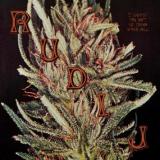
Straight from the weedy fields of swampville Bruxelles we bring you 8 ‘tranches de vie’ of deep zone-hall by weirdtronic bass veteran Michael Crabbé’s best fitting sound costume to date: the mighty Rudi J! You might know him from earlier outfits but that’s not the main issue here. Rudi J is!
When this swamp thing touches the pads, it’s off-road after three seconds, even if you’re in the middle of Europe’s capital. Mixing analog dirt and digital sound bits in a very loose and personal take on dancehall, we’re pretty far away from the dance floor but definitely swinging. It’s a trippy affair wandering around concrete flowers with a deep ambient flavor, but it’s edgy.
A hot summer fever dream following his own lusty path, full of life and wonder but with something sinister hiding around every corner. Often reaching for the stars, a deeper shade of bass keeps things nicely grounded. These sounds are built with a sound system in mind and bass culture at heart. Even if you can definitely surf on it from your couch, picking out all of its ear-pricking details, it will very much come alive on a big sound.
A layered affair with almost jazzy and orchestral elements peeping through the stereo-field, spectral and dissonant but also playful. Like early dubstep, some of these tunes can destroy a clubsound, keeping you skunking out in pedestrian mode and snorting up the atmospherics, finally forgetting about that damn phone.
out of Stock
Last delivered 3 months ago available to reorder, subject to availability
The follow up to 2022’s ‘Return to the Island’ LP is a new 6 track EP influenced heavily by the evocative powers of incense and a deep sense of escapism. The EP has a more organic sound palette than its predecessor, from both the use of samples and appearance of various guest musicians. Lead track ‘Morning Star’ features long standing collaborator Mike Burn (Udaberri Blues & Mama Capes) who adds his trademark liquid gold lead and rhythm guitar lines with live bass from Fernando Pulichino.
The guest on ‘Savanna’ is frequent Jack J collaborator Linda Fox, who provides emotive and melancholy sax over a Dub House backing track with a particularly dreamy chord progression. The EP features Instrumental Dubs of both tracks, alongside two other new productions, the 80s leaning ‘Hands Across the Sea’ and ‘Wah Fix’, which rounds off the more Dub influenced B side with a 125 BPM bouncy Dub House excursion.
In 2026 the Jura Soundsystem project enters its 10th year and is the creative musical outlet of Isle of Jura founder Kevin Griffiths. All tracks produced at IOJ HQ in Moana, Adelaide between 2022 and 2025 with support from the incense gods of Cedarwood, Jasmine and Sandalwood. The 12” is housed in a 3mm spine full sleeve designed by Bradley Pinkerton.
out of Stock
Last delivered 3 months ago available to reorder, subject to availability
Paranoid, polyrhythmic ‘crowdrock’ from the not-too-distant future. Synthesised under the supervisory signal of an all-knowing, unofficially named, classified dialup modem that Wah Wah Wino have nicknamed "Sworx”, tasked with sifting through coded waveforms and neatly sorting into a secret filing cabinet. Post-fibre-optic technology idm wav. tablé. Your dreams are being monitored. Tip.
TRACKLISTING AS ON ARTWORK:
d a4. statecellar 641Amix
g b1. Western_intel frontier 2056
out of Stock
Last delivered 59 days ago available to reorder, subject to availability
Under the moniker Trace Mountains, Dave Benton writes music that asks large questions in quietly profound ways. On the project’s earliest release, the 2014 compilation Buttery Sprouts & Other Songs, these thoughts appeared as lo-fi scraps of wit andtenderness. But by the time A Partner to Lean On, Trace Mountains’ debut full-length, arrived in 2018, Benton’s perceptive indie rock had matured into more existential meditations about identity, existence, and finding sense in an increasingly chaotic world.
In the two years since A Partner to Lean On, Benton’s life has undergone several large changes, namely the dissolution of LVL UP, the indie rock quartet he co-founded in college, and a move to Kingston, a small city in New York’s Hudson Valley. Composed during—but not directly inspired by—this transition, Trace Mountains’ second record, Lost in the Country, reflects Benton’s need toreconnect with his inner world.
Prompted by an urge to access a more authentic voice, Lost in the Country finds Benton digging deeper into candid songwriting. “I wanted to open myself up and write lyrics that are a little bit more direct,” he explains. “I write a lot of songs that are about myself and a lot of songs that aren’t, but on this record, the focus is turned inward either way.” The result is Trace Mountains’ strongest and most assured record yet, 10 songs driven by a desire for introspection and self-discovery. The backdrop for this insularity is an expanse of wide blue skies, seas of trees, and winding roads, ideal locales for thoughts to blossom into greater reflections of the outer world. The slow-burning “Absurdity,” which Benton modestly says is about “hiking and standing in the country,” uses the sublimity of the wilderness to comment on technology’s inescapable presence. Similarly, the driving opener “Rock & Roll” transforms the premise of a “simple song about being a rocker” into a stream-of-consciousness, apocalyptic poem about delusions, regrets, and getting lost in your own limited perspective. This self-examination culminates with the record’s ambitious and anthemic title track. Channeling the cosmic sprawl of the War on Drugs or Kurt Vile, Benton recalls a moment of deep loneliness and depression outside a concert venue in the Netherlands, and how an unexpected moment of compassion led to a moment of awakening.
Despite its frequently bucolic setting, Lost in the Country’s underlying current is an urgent commitment to Trace Mountains and “finding a creative process that requires me to be honest with myself.” “I know I sing to forget, I sing to hold my breath, to feel the thumping in my chest,” Benton sings on “Cooper’s Dream.”This line is “rooted in the importance of music in my life, it’s definitely a reflection on that and how I can keep it in my life, because if I’m not careful and I don’t nurture it, I could lose it.” The self-imposed pressure has been empowering for Benton. “I really like having full control in making a record, deciding what songs are going to be on it, as well as shaping the vibe or narrative of the whole thing,” he says. “It brings a peace of mind knowing that I am responsible for just my voice.”
Double LP pressed on Pearl Dawn vinyl. Akupara Games, Videocult and Black Screen Records are beyond stoked to release the soundtrack to Rain World: The Watcher, a DLC of the massively successful game hit Rain World. The music was crafted by year-long companions of the game James Primate and Lydia Esrig but it's also featuring works by Serpanoy, Pinpoint, snoodle, Intikus and Kaeporo. This collection of hugely talented artists makes the score an eclectic journey that at the same time follows a coherent concept that reflects on the atmosphere of the game. The wilds that await will be unlike all that's come before. The double LP on stunning Pearl Dawn vinyl, that is featuring a total of 54 tracks, presents exclusive gatefold artwork by Kelocitta with UV spot varnish. This set is not only a true beauty but also perfectly in line with the vinyl releases for Rain World and Rain World: Downpour - don't miss out to complete your collection! Rain World: The Watcher is a DLC expansion of Rain World. Journey beyond to something, somewhere only ever glimpsed. Unknown creatures stalk and climb and dive and hunt. New breeds rip and pluck and burrow and hide. Predator and prey redefined. And through the middle of it all, a lonely lost slugcat trying their best to outlast the ravages of a warped world. When the world beneath your feet cracks and crumbles, will you hold on to all you once knew? Or dive into the unknown?
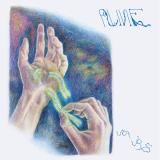
Joa Joys (Joaquín Ledesma) is a visual artist and musician from Santa Fe, Argentina, now based in Buenos Aires. Since 2015, he has released solo and collaborative works on labels across Argentina, Japan, Belgium, and France — and now with Discrepant — while also composing for documentaries and installations. His music approaches sound as a habitable space, closely intertwined with a visual sensibility, creating cinematic soundscapes that oscillate between everyday observation, dream states, and surreal fantasy.
His new album Alivie explores the experience of physical pain, its different phases, and the ways we cope with it. Built from a palette that merges analog synthesizers (some hand-built by the artist) with flute, mandolin, guitar, and other textures, the record shifts between atmospheric passages, folk-like elements, and moments of energy and abstraction. Alivie is not confessional but poetic — an attempt to translate the weight of pain into images, sounds, and atmospheres that also carry humor, joy, and relief.
For fans of Dokken, Lynch Mob, and 80’s Metal! Dokken is one of the defining bands of the 1980s hard rock and heavy metal scene, known for blending melodic hooks with powerful guitar work and emotionally charged vocals.
Formed in Los Angeles in the late 1970s, the band was led by vocalist Don Dokken and featured the virtuosic guitar playing of George Lynch, alongside bassist Jeff Pilson and drummer Mick Brown. Dokken rose to prominence during the peak of the MTV era with a string of platinum-selling albums, including Breaking the Chains (1983), Tooth and Nail (1984), and Under Lock
and Key (1985) racking up sales of more than 10 million albums. Their sound struck a balance between radio friendly melodies and aggressive metal, producing hits like “Alone Again,” “In My Dreams,” and “It’s Not Love.” Their 1987 release Back for the Attack further cemented their legacy, showcasing both commercial success and musical complexity. Released in 1999, Erase the Slate marked a fresh chapter for Dokken, introducing Reb Beach (best known for Winger and later Whitesnake) as the band’s lead guitarist. Erase the Slate blends Dokken’s classic melodic metal roots with a more modern, late-'90s hard rock edge. Reb Beach brought a technically sharp yet fluid guitar style that differed from the flashier, more aggressive approach of former guitarist George Lynch. His playing added a polished, groove-oriented feel while still delivering strong solos and riffs. Remastered and Repackaged on 180g green smoke vinyl.
H- side is etched
The American cable-television industry exploded in the 1980s, pushing broadcasts of diverse programming and emissions of low-laying cultures into homes. Community stations piggybacked on the digital developments of the time, extending their existence through telephony and broadcast a iliates. For those growing up in this time, in locations such as New York City, the localized communications beamed into their homes exposed them to an impressionable array of disparate sounds and visions.
Move into the 1990s and New York was filled to the brim of emergent cultures drawing from this ebullition of communication. From Rammellzee’s shapeshifting to the late Judy Russell and Frank and Karen Mendez’s Nu Groove imprint fusing reggae, poetry and house, nascent ideas emanated from the city walls, from within stores such as Sonic Groove store and on VHS releases such as Stakker’s The Evil Acid Baron Show, a legendary technicolor psychedelic trip along the wildest frontiers of acid house. As scenes expanded and identities developed, such individuals weather the events of the visceral now, expressing themselves right into an unpredictable future.
Function’s long career has seen him uncover a vast range of sonic identities, a mainstay through house, techno and industrial with collaborations with the likes of Regis, Damon Wild alongside his highly influential Infrastructure imprint. With influences deeply tied to pop art, rave and gay scenes, and early memories of block-parties emitting Kraftwerk and Strafe, he found himself seeking out the undercover illegal nights of the 90s on a quest of sexual unearthing, mixing the ever-yearning escapology mission of disco with the influential DJ sets of Jeff Mills.
For his new album Existenz, he marks a clear step away from the corporeal techno of his recent releases. Pivoting around themes of religion, sexuality, trauma and healing, it is a work expansive and celebratory, a clear liberation from a deeply internalized past. Formed from a collection of recordings made in a period from late 2016 to mid 2019, Existenz takes the form of a creative outburst in reaction to a number of traumas - recent, childhood and throughout Function’s life. Life partner Stefanie Parnow assisted the production process in its entirety, providing inspiration, spiritual healing and featuring vocal contributions.
Cosmic synths soar and swoop in ‘Pleasure Discipline’ through towering stacks of rhythm that stutter and creak to a halt before rebooting, a firm robotic response to human intervention. ‘Zahlensender’ reflects a spatial tetris of urban life, as digitalization set within an XYZ matrix confronts the sprawling city. Constant arpeggiated meditations echo synaptic transmissions, e ecting a dissolution of boundaries. ’The Approach’ recalls the unification of the self, a state of delirium non-subjective and smooth, as all connections and functions give way to simple intensities of feeling, crossing the threshold into spirituality. ’Golden Dawn’, featuring Stefanie Parnow, marks a further elevation of dubbed-out euphoria, as once more positive rays emerge. His ode to the effortless short-trip urban navigation 'Kurzstrecke' finds Function in motion, upfront and bold, snapshots of conversation and flickers of light. 'Ertrinken' finds metallic bass jabs swamping snipped synthetic voices, with hidden stores of emotion set as a nod to the history of vocoders as a tool for encrypted military communication. House icon Robert Owens features on 'Growth Cycle' and 'Be', entrenching a celebratory atmosphere over Function's clubwise leanings. Closing track 'Downtown 161' reflects the unmistakeable filtered and squashed interjections of television, and sampled dance vocals - a sound for the curious, dreamers and dancers.
With Existenz, Function reveals an essential body of work, spread over 4LP - thought experiments on the role of identity and spirituality after a lifetime of upheaval and trauma. Leading up until the release date, Function will undertake an album promo tour with select dates - A/V shows at Berlin Atonal and Rural festival in Japan, and three dates as part of his Bassiani residency.
out of Stock
Last delivered 30 days ago available to reorder, subject to availability
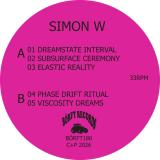
Simon W returns to Borft Records with 5 funky analog tracks moving somewhere in the borderlands between Acid House, EBM, Electro and dirty slow Housey Techno. It's slightly skewed and wobbly, disharmonic, distorted and twisted in ways that will make asses wobble robotically on the floor. Go get! Review by Joakim Cosmo
out of Stock
Last delivered 3 months ago available to reorder, subject to availability
On his debut Feelin’, Ivory marries hi-tech sound design with the emotional pull of house for a collection of tracks shaped by a multitude of club music and R&B.
“Feelin’” is a dancefloor slammer, a healthy balance of tension and release that comes with an invite to conquer the floor. Followed by “I Need You Now”; a hulking warehouse cut built from barrelling, muscular kicks and a diced up diva house-esque vocal.
“Try” pulls the crowd back into room one for a huge, anthemic floor-filler underpinned by jagged synths. Ivory describes “Don’t Lose Control” as “one of the more emotional moments of the Record”; a track centered around dreamy pads, smooth house synth stabs and a disembodied post-human voice that sounds eerily poetic.
Odysee’s vinyl release schedule for 2026 kicks off with this superb 3-track E.P. from none other than the labels founder, T-Mirage. Following up from his 2024 release Dark Rhodes, this E.P. is an embodiment of the raw Mirage sound; a melting pot of Atmospheric D&B with hard hitting dance-floor sensibilities, where 70's OST & Film Noire sounds are blended with deep Techno and electronica elements.
From the blistering amens and deep textures of 'Expressive Thoughts', to the dreamy atmosphere of 'Dawnbreaker' and the dystopian menace of the breakbeat-driven 'Machines Of London', this E.P. is an absolute must for all true Odysee fans!
In 1994, Tilla was just 17 years old, and an integral part of the original St Albans collective that comprised Jim Baker & Phil Aslett (Source Direct) and Rupert Parkes (Photek), when he set up the Odysee imprint and released the first Source Direct record (Future London/Shimmer). With a follow-up release from Photek (Phaze 1/Try A Style) and a second from Source Direct, the profile of the label began to grow exponentially.
It was the 3 Mirage releases however that really put the label on the map. These tracks were engineered by Jim Baker but heavily co-produced by Tilla himself with a major focus on his keen ear for dark 70’s Noire samples and eerie abstract electronica pitted against soulful R&B vocals. In hindsight, the impact of this rather different soundscape on the Source Direct material that followed is unmistakable.
out of Stock
Last delivered 3 months ago available to reorder, subject to availability