Suche:yamamoto
YOSHIO OTOMO QUARTET WITH TSUYOSHI YAMAMOTO
MOON RAY (1977) LP
- A1: Thinking Of You
- A2: I'll Be Seeing You
- B1: Prelude To A Kiss
- B2: A House Is Not A Home
MOON haewon and Tsuyoshi Yamamoto present a collection of love songs on 10-inch LP.
Following their jazz ballad-focused album ‘Fascination’ by Korean jazz singer MOON haewon and pianist Tsuyoshi Yamamoto, their new work ‘Love Songs
from Moon’ is set for release on 10-inch vinyl!
In addition to the analog release of two tracks exclusive to the previous CD edition, it newly includes the previously unreleased recordings “I'll Be Seeing You”
and “A House Is Not a Home.” The duo, who continue to captivate jazz and audiophile fans worldwide, deliver exquisite love songs.
- A1: The Loving Touch
- A2: Softly As In A Morning Sunrise
- A3: Blues For Edith
- A4: Cleopatra's Dream
- B1: Misty
- B2: Summertime
- B3: Last Tango In Paris
This is the monumental first album by Tsuyoshi Yamamoto, who later became one of the two major artists on the TBM label along with Isao Suzuki. A groovy and heartwarming popular disc by the Japanese piano trio
Nobuo "Hara", whose real name is Nobuo Tsukahara, is a Japanese saxophonist who became known in 1951 with his big band, the Sharp & Flats. Together they recorded more than a hundred album during their career. Hozan Yamamoto is, for his part, a Shakuhachi player, a traditional Japanese flute, enjoying such recognition in his country that he was awarded a Living National Treasure in 2002. The first record bringing together the two musicians is a live recorded in 1967 during the Newport Jazz Festival. It was a year later, in 1968, that New Jazz in Japan, their first studio recording, was released. Accompanied by the power of the Sharps & Flats, Nobuo Hara's tenor sax and Hozan Yamamoto's shakuhachi respond subtly to give this record, which had not been reissued since 1971, a completely unique style.
Modern Obscure Music presents "Sakuraza," a live album featuring Eiko Ishibashi (flute and electronics), Jim O'Rourke (electronics), Kei Matsumaru (alto saxophone), Tatsuhisa Yamamoto (drums), and Giovanni Di Domenico (piano). Recorded at the Sakuraza jazz club in Kofu, Japan, this dynamic and sophisticated performance blends jazz, electronic music, and pop elements.
Giovanni Di Domenico, a frequent visitor to Japan, organized this June 2023 concert with long-time collaborators Ishibashi, O'Rourke, and Yamamoto, and invited saxophonist Matsumaru. The warm, intimate setting of Sakuraza provided the perfect backdrop for their unedited, improvisational session.
"Sakuraza" captures the deep musical connection and spontaneity of these artists, offering an immersive auditory experience. Recorded on June 14, 2023
Japanese Jazz legend Tsuyoshi Yamamoto's new album, A Shade Of
Blue, undoubtedly reflects his love of the piano trio, a group configuration that in jazz history began in the 1940s with Nat King Cole and then was developed in the 50s by innovators like Oscar Peterson, Ahmad Jamal, and Bill Evans Yamamoto's highly experienced trio - which has a combined age of 215 years -
features bassist Hiroshi Kagawa and drummer Toshio Osumi.
A Shade Of Blue reveals the three musicians' incredible musical chemistry; listening to the ten tracks they've recorded together, it's as if they breathe, think, and feel as one person; such is the musical empathy between them.
A Shade Of Blue will be released by evosound on MQA-CD, SACD- Hybrid MultiChannel, 180g Double Vinyl LP (audiophile pressing), available on the 27th October 2023.
Mastered by Tohru Kotetsu and pressed at RTI, this 45rpm LP will live up to and surpass your most demanding judgments. Midnight Sugar is one of the most sough-after titles from the acclaimed Three Blind Mice catalogue.
On “Midnight Sugar” the Tsuyoshi Yamamoto Trio plays two of Tsuyoshi’s own blues improvisations followed by jazz ballads that became standards for the Trio. The combination of these titles is nothing but exceptional.
The Yamamoto Trio’s Midnight Sugar was recorded March 1, 1974 at Aoi Studio, Tokyo. It earned the Best Engineering Award and Jazz Disc Award of Swing Journal in 1974. It is Yamamoto’s unmistakable skill and his jazz feeling which adds that certain touch of liveliness and spontaneity and makes Midnight Sugar a unique experience. This Piano Trio will mesmerize you with this great collection of standards, superb musicianship and awesome sonics. You are sure to listen to this one over and over.
Mastered by Tohru Kotetsu and pressed at RTI, this 45rpm LP will live up to and surpass your most demanding judgments. Misty is one of the most sought-after titles from the acclaimed Three Blind Mice catalog.
Touring with the Micky Curtis Band, Tsuyoshi Yamamoto had the chance to explore several international experiences that he would later use on his 1974 album, Misty, as he worked with this band in France, England, and Switzerland.
The Yamamoto Trio’s Misty is a Stoned Cold Killer! A1 Reference Material!!! Misty earned both the “Best Engineering” Award and Jazz Disc Award of Swing Journal in 1974. Recorded at Aoi Studio, Tokyo, on August 7, 1974. Tsuyoshi Yamamoto is highly musical and his expressions natural, neither overly technical nor serious, his performance is relaxed and melodious.
Tape
Collaboration by Italian composer Giovanni Di Domenico (Die Schachtel, Superpang) & Japanese drummer Tatsuhisa Yamamoto (Black Truffle, Superpang).
Recorded at Hoshi To Niji studio, Kobuchizawa, Japan
& studio W and The Nest Cellar, Brussels, Belgium in 2021
Cello on A Murder by Emmanuel Cremer
- 1: Fuenarinu
- 2: Kaendaiko
- 3: Tsubakishishaku No Yuigon
- 4: Tengindoujiken
- 5: Kindaichikousuke Nishie Yuku
- 6: Ougonno Furuuto (Flute)
- 7: Yubi
- 8: A=X, B=X A=B
- 9: Chi To Suna
- 10: Tabiyukumonoyo
- 11: Akuma Fuewo Fukite Owaru
We've got a bit of an obsession with Hozan Yamamoto here at Mr Bongo! A legend of Japanese jazz, he is rightly regarded as a true master and was recognised as a "living national treasure" by the Japanese government in 2002. Over five decades he pushed the genre into new directions, absorbing fusion, funk, spiritual jazz and many other sounds, resulting in a discography studded with gems of rare beauty. Exploring his back catalogue has taken us on an engrossing journey that now sees us reissuing another work from this ground-breaking musician.
Though not translating perfectly into English 'Akuma Ga Kitarite Fue Wo Fuku', (kitarite has not been a modern expression in Japanese) roughly means 'The Devil Comes Playing The Flute' / 'The Devil Is Coming While Blowing The Whistle' or 'Devils Flute’. It is the original soundtrack to Kôsei Saitô’s 1979 mystery and suspense movie, ‘Devil’s Flute’. The film is based on a story by the famous author, Seishi Yokomizo, and is centred around a much-loved fictional Japanese detective, Kosuke Kindaichi. A Japanese Sherlock Holmes that has been popular for generations.
Hozan Yamamoto was invited to compose the soundtrack directly by the producer of the film, Haruki Kadokawa. Mr Kadokawa also hired keyboard player and producer Yu Imai as assistant producer on the project, resulting in a stunning cosmic, breaks and beats-laden, funk, disco soundtrack extravaganza.
When it comes to the soundtrack and the technology of the time, Hozan Yamamoto and Yu Imai got inventive, tripped out, funked up, and experimented, creating a quirky soundtrack masterpiece that needed to be heard more outside of Japan. Differing from the more traditional Japanese music orientation of some of his other albums such as 'Beautiful Bamboo-Flute' (also released on Mr Bongo) the album showcases a number of genres, from lush atmospheric incidental music to disco and funk grooves, experimental nuggets, drum and flute workouts, to neo-classical and more.
A special record that showcases the further depths of this wonderful musician's talents.
Sasanami" is the result of a dialog between the Japanese photographer Yamamoto Masao and the Japanese musician Uchida Akira (with
Miu Sakamoto at the voice) initiated by IIKKI, between October 2019 and August 2020.
After to have worked as a saxophonist for several years, Akira Uchida, in 2007 learned piano tuning under Mr. Satoshi Yoshida. Planning and holding "Sound workshop" which is to introduce how to interact with various sounds from the viewpoint of sound turning. In 2015 while he was learning from Mr. Masahiro Adachi, Akira Uchida started to create a Clavichord (keyboard instrument), invented in the 14th century.
"Making instruments, tuning sounds, being a musician, this flow is essential for me to see the world".
Yamamoto Masao was born in Aichi Prefecture, Japan in 1957. He started to photograph when he was 16 years old. He also studied painting but later chose gelatin silver print as his media. His first gallery show in the U.S. was in 1994 in San Francisco. In 1996 he had a solo exhibition at Yancey Richardson Gallery in New York. His works have been shown in Europe since 2006. Besides Japan, U.S.A., and Europe, his museum and gallery exhibitions were held in Moscow and Sao Paulo. Media coverage includes NY Times and other major art magazines. Yamamoto lives in Yatsugatake Nanroku,Yamanashi Prefecture where he enjoys creating his work while being close to nature.
Black Truffle is pleased to announce Ashioto, the first international solo release from Japanese drummer-percussionist-composer Tatsuhisa Yamamoto. Active for over a decade, Yamamoto has performed and recorded extensively with artists such as Jim O’Rourke, Eiko Ishibashi and Akira Sakata, as well as participating in innumerable improvised and ad hoc groups.
Ashioto presents two wide-ranging pieces that combine Yamamoto’s percussion work with piano, field recordings, electronics, and contributions from guest musicians Daisuke Fujiwara and Eiko Ishibashi.
Beginning with a passage of chiming metal percussion, the first side slowly builds into a rolling, open groove reminiscent of Yamamoto’s work on Eiko Ishibashi’s acclaimed Drag City LP The Dreams My Bones Dream. Spacious piano and synth notes, along with Ishibashi’s spare melodic figures on processed flute, hover above this propulsive rhythmic foundation, the whole effect adding up to a more abstract take on the area explored on Rainer Brüninghaus’s ECM classic Freigeweht. The LP’s second side opens up a cavernous space filled with ominous electronics and shimmering metallic percussion, which organically transitions into a passage of rumbling piano chords and mysterious concrète sound. Later in the piece, Daisuke Fujiawara’s saxophone enters, playing melancholic melodic fragments that are looped and layered, creating a seasick swaying effect familiar to listeners of James Tenney’s works with tape delay systems. Beginning as delicate bass drum pulses, Yamamoto’s accompanying percussion eventually builds the piece into a raging torrent of free-improv splatter, processed sax and fizzing electronics.
Though grounded in instrumental performance, Ashioto is very much a studio construction, making inventive use of electro-acoustic principles in its editing and mixing. Together with its sister Ashiato – a different take on the same ‘script’ released simultaneously on Japanese label Newhere – Ashioto demonstrates to an international audience for the first time the true breadth and ambition of Yamamoto’s work.
Mastered by Jim O’Rourke. Cover photos by Kuniyoshi Taikou. Design by Lasse Marhaug.
They say you can't judge a book by its cover, and going by 'Jazz Rock', nor a record by its title. Though entering into jazz territory and featuring some distorted guitar, 'Jazz Rock' is more a beautiful marriage of funky breakbeat drumming and spiritual jazz instrumentation, combined with traditional Min'y music performed on the koto and shakuhachi.
Originally released in 1973, the record sounds simultaneously vintage and contemporary. It is akin to something Madlib might dream up whilst lost in Japan collaborating with Min'y players at a recording session. The record features some amazing shakuhachi (bamboo flute) playing by Hozan Yamamoto, which gives the music a haunting, dreamlike atmosphere. You can almost visualise the long grass blowing in the wind, and ear the bamboo rustling in the distance on a long hot summer's day. Takeshi Inomata, Tadao Sawai and Kazue Sawai anchor the session. Takeshi's exceptionally funky-drum work will almost certainly get some producers dusting off and firing up their MPC's. Whilst Kazue and Tadao work their magic on the koto (a traditional string instrument). Though certainly not an ambient record, 'Jazz-Rock' has the same meditative, other-worldly quality that invites you to sit back, listen and be transported somewhere else. Unfortunately, until now the 'Jazz Rock' album is a scarcity that commanded a high price-tag only for the most hardened of record collectors. So it is pleasure to make it accessible to all, and we hope you dig this lost, obscure future classic as much as we do.
- A1: Das Goldene Zeitalter - Don't Give Up Your Smile Today
- A2: Nu Art Quartet - Black Bandit
- A3: John Tinsey - Freedom Excelsior (Part 2)
- A4: Obie Jessie Quartet - Black King
- A5: Walt Bolen - Peace Chant
- B1: Genghis Kyle - Bakit Ba
- B2: Luna Brothers Trio - Mozambique
- B3: Hozan Yamamoto - Spotlight On Sapporo
- B4: The Milestones - Funk
From 1963 to 2014: "Peace Chant - raw deep and spiritual jazz" exhibits 51 years of music. A well matched anthology with sounds to dive into, hard rhythms to dance to and vocals to meditate on.
The Tramp Records crew has compiled 9 tracks in nice order and dramaturgy. Some tunes you might have never heard before unless you own one of the rare original vintage vinyl records. Peace Chant is released on two separate LPs with own catalogue numbers and on one CD. Some songs I can't get out of my mind:
The previously unreleased "Don't Give Up Your Smile Today" is opening the compilation. It's from Das Goldene Zeitalter, a band that didn't survive - but whose members had a huge influence on German jazz, soul, afrobeat and funk within the last years merging into groups like The Poets of Rhythm, The Whitefiled Bros., and The Malcouns. Boris Geiger aka. Bo Baral sings a Pharoah Sanders like tune, his voice deeply resonating, the rhythm section heavily grooving.
After the first three woolly recorded tracks Walt Bolen's "Peace Chant" with its dry and funky sounds with flute, two guitars and percussion is quite a pleasure to listen to. Organ and voice are Bolen's who used to play the keys in San Fernando Valley church when he was a child. "Peace Chant" was recorded for his own Ar-Que label in 1972 and is one of the few cuts with him as a leader. He has played sessions and clubs for years and today he is sitting at the church organ again.
This publication's oldest recording dates back to 1963: "Mozambique" by Luna Brothers Trio, a Caribbean and hypnotic instrumental. For my jazz trained ears it is rather unusual that the güiro (the gherkin played with a stick) is being played throughout the entire song. Heavily laid back cowbell, concas and timbales and the slightly detuned piano are wonderful! "Mozambique" sounds like from another star but its origin is Los Angeles, where the brothers Fred and Ricardo Luna had their night club band. You could imagine a bast skirt strip and at the same time the great Raumpatrouille (Space Patrol) landing on German B&W TV screens in 1966.
Hozan Yamamoto recorded crime jazz with the Japanese bamboo flute shakuhachi. He belonged to Tony Scotts "Music for Zen Meditation" in 1964, played with Ravi Shankar, avant-garde jazz bassist Gary Peacock and appeared at Donaueschingen Festival for contemporary music. Tokio university's open minded lecturer recorded the funky and modal "Spotlight on Sapporo" in 1972.
- A1: Yoko Hatanaka - More Sexy
- A2: Masumi Hara - Kimi No Yume
- A3: Yuki Nakayamate - Silhouette Call
- B1: Mari Kaneko - Get To Paradise
- A4: Atsuo Fujimoto - Theme Of High School Student
- B2: Tomoko Aran - Hannya
- B3: Masako Miyazaki - Fantasy
- C1: Junko Sakurada - Watashi No Koukoku
- C2: Kangaroo - Sunshine Bright On Me
- C3: Maiko Okamoto - Stranger's Night
- C4: The Fad - Singing Lady
- D1: The Eastern Gang - Magic Eyes
- D2: Rinda Yamamoto - Crazy Baby
- D3: Tomoko Aran - I'm In Love
2024 Repress
midnight in tokyo is a compilation series that aims to be the perfect companion to nights in tokyo, collecting tracks by japanese artists that sound best at night. while vol.2 focused more on '80s jazz fusion, the latest installment, vol.3, picks up where vol.1 left off, bringing together forgotten soul, disco, and new wave gems. the compilation opens with japanese rare groove classic 'more sexy,' a provocative song by 'the queen of sexy songs,' yoko hatanaka. 'kimi no yume,' from the album yume no yonbai by the wandering poet masumi hara, is one of the best balearic acid folk song to come out of japan. 'silhouette call' is an electric bossa nova track—in the vein of antena—taken from a rare album called octopussy by yuki nakayamate, a singer songwriter who also worked as a backing vocalist for motoharu sano. 'theme of high school student' is a dubby cut featured on the soundtrack to the japanese '80s film kougen ni ressha ga hashitta, written by atsuo fujimoto of colored music—one of the key artists in the recent wave of global interest in japanese music. 'get to paradise' is a stone cold funk jam by mari kaneko, who was known as the janis joplin of shimokitazawa in her heyday, and is now known as the mother of the drummer and the bassist of popular rock band rize. following that is one of japan's greatest new wave disco track, 'hannya,' taken from tomoko aran's popular third album fuyu-kukan—produced by masatoshi nishimura who was part of the friends of earth project with haruomi hosono. masako miyazaki—whose rendition of seawind's 'he loves you' is a fan favorite—puts her own spin on the earth, wind & fire classic, 'fantasy,' singing in her accent-heavy english which gives the song an undeniable character. 'watashi no koukoku' is a certified disco boogie classic by popular singer junko sakurada. the brazilian-esque jazz fusion, 'sunshine bright on me' is by a fusion group called kangaroo, who were often billed as 'the japanese shakatak.' 'stranger's night' is a synth-pop number by pop idol maiko okamoto, which bears a suspicious resemblance to rah band's 'the shadow of your love.' electro-pop disco 'singing lady'—off the sole album released by the one-off project the fad—sounds like something giorgio moroder could've cooked up. 'magic eyes' is a disco anthem recorded by songwriter tetsuji hayashi's disco project, the eastern gang. following that is japanese soul gem 'crazy baby,' found on a rare 7 inch entitled minato no soul by rinda yamamoto—also composed and arranged by tetsuji hayashi. and last but not least, closing out this collection of 14 japanese rare groove goodies is 'i'm in love', a bittersweet mellow dance number by tomoko aran.
Drum roll, people! SL009 is on its way. The recipe has not changed: limited quantity, hand numbered / stamped records and superior music. We take you on a unique house journey to explore the texture of sound and the color of feelings, from raw to deep all the way down to acid, carried on our VA format spaceship. Onboard, four artists, Yusuke and Jimini part of 'Serie Limitée' crew and two new comers Panthera Krause and mOnster Heart Driver who are joining the family.
Fourth release for Serie Limitee. 180g, pressed loud and limited, as always. Now Berlin based, Californian Lady Blacktronica provides a raw beatdown pearl with -Never Heard The Word Impossible-... Straight from Japan, Yusuke Yamamoto aka Freischwimmer joins the SL crew with a classic-house track named -You Want-. With -Back to the House-, Deymare pays his regards to the original Chicago sound with this timeless piece. SL004 also announces the return of the mysterious Parisian duo ERMAN & Abtomat, with five minutes of steamy after-hours disco-influenced house-music! As usual, expect a short bonus track by Monsieur Cedric.
In the spring of 1971, somewhere between Brussels, Paris and a collective pop fever dream, Le Monde Fabuleux Des Yamasuki landed on vinyl. It sounded like nothing else then and it still does not today. More than half a century later, Sdban Records proudly presents a reissue of this singular cult album, available from April 3, 2026 on vinyl.
The album was produced by Jean Kluger and written both by Jean and Daniel Vangarde (aka Bangalter, later the father of Thomas Bangalter of Daft Punk), who were alreadywell ahead of their time, long before electronic music rewrote the rules of pop culture.
Released under the name Yamasuki, also referred to as The Yamasuki Singers, or The Yamasuki's, the project was never intended as a conventional band. It was a studio-born fantasy, a concept album disguised as a pop record. What began as a standalone single quickly expanded into a full-blown pan-cultural pop opera that ignored genres and common sense with joyful abandon.
Musically, the album sits at a delirious crossroads. Psychedelic pop collides with funk rhythms, samba and bubblegum melodies, full of chants and choruses in a phonetic pseudo-Japanese, written with the help of a dictionary. Kluger and Vangarde famously recruited a children's choir to perform the vocals, and for added spectacle, they brought in a Japanese judo grandmaster, whose ritualistic shouts and battle cries erupt throughout the record.
Several singles were released. One of them, Yamasuki, with accompanying dance move, appeared in the United Kingdom and France on John Peel's Dandelion label, a fitting home for a record that thrived on the margins of pop culture. Its B-side, Aieaoa, proved even more potent. In 1975, the song was reborn as A.I.E. (A Mwana) by Black Blood, an African group recording in Belgium, this time sung in Swahili. That melody would travel even further. Aie a Mwana became the debut single of English pop group Bananarama, and in 2010 it resurfaced once more as Helele, an official song of the FIFA World Cup, recorded by South African singer Velile Mchunu with Danish percussion duo Safri Duo. That version became the most widely known incarnation of the song. With Jean Kluger directly involved, it was less a cover than a continuation of the original idea.
The album's afterlife did not stop there. Over the years, Yamasuki has been quietly sampled, covered, and featured across media far beyond the realm of novelty pop. Kono Samourai was sampled in The Healer by Erykah Badu (2007), produced by Madlib, while Yama Yama has found its way into recent pop culture as well: appearing in the television series Fargo, on Angus Stone's project Dope Lemon, and on the 2008 Late Night Tales compilation curated by Arctic Monkeys drummer Matt Helders. Proof, if any were needed, that this strange little record carries a deeper musical DNA than its playful exterior might suggest.
This new reissue of Le Monde Fabuleux Des Yamasuki proves the renewed interest and respect for this cult album, faithful to the original spirit while finally giving it back the physical presence it deserves. In an era obsessed with genres and algorithmic neatness, Yamasuki still laughs, dances and karate-kicks its way past definitions. It reminds us that pop music can be playful without being disposable, strange without being cynical and joyfulwithout explanation. The world of Yamasuki was always fabulous, we are just lucky it found its way back to us!
Following their contribution to Y-3's historic return to runway for SS25, Solitary Dancer has collaborated once again with adidas & Yohji Yamamoto's pioneering label for their Fall/Winter 2025 Presentation-- an exploration of contrasts. Light and dark, analog and digital, real and surreal. Building upon the legacy of the recently established Y-3000 imprint, Y-3002 presents FW25's boundary-pushing runway score from the Pavillon Cambon in Paris this past January.
- A1: Tadaaki Misago & Tokyo Cuban Boys – Sakura Sakura 7 32
- A2: Minoru Muraoka – Muraiki 3 55
- A3: Count Buffalo & The Jazz Rock Band – Mago-Uta 3 43
- A4: Kiyoshi Sugimoto Quartet – D-51 6 05
- B1: Toshiyuki Miyama & The New Herd– Adult's Day 9 25
- B2: Soul Media – Breeze 4 33
- B3: ジョージ・大塚カルテット– Sea View 5 03
- C1: Hozan Yamamoto, Masahiko Togashi, Yosuke Yamashita – Breath Prologue 5 08
- C2: Jiro Inagaki & Soul Media – Do It! 7 25
- C3: Hiroshi Suzuki – Romance 5 56
- C4: Masahiko Sato – Tochi Mo Kurumi Mo Fukiotose 3 01
- D1: Masahiko Togashi – Fourth Expression 6 45
- D2: Takeshi Inomata & Sound Limited – Mustache (Live) 8 50
- D3: Takeo Moriyama – Watarase 6 40
repressed !
● Essential 14 track collection of "WaJazz" music selected and compiled by renowned Japanese jazz expert Yusuke Ogawa, owner of the Universounds record store in Tokyo.
● Gatefold 180g heavy double vinyl LP. Comes with extensive track-by-track liner notes by Yusuke Ogawa.
● All tracks licensed by Nippon Columbia, Tokyo, Japan.
● Mastering and lacquer cut by Jukka Sarapää at Timmion Cutting Lab, Helsinki, Finland.
---
Universounds, HMV Record Shop and 180g team up for an exceptional release: from blazing hard bop to free jazz, to introspective saxophone solos and massive big band sounds, renowned Japanese jazz expert Yusuke Ogawa presents an essential 14 track collection of "WaJazz" music taken from the Nippon Columbia vaults. Featuring Jiro Inagaki, Minoru Muraoka, Hiroshi Suzuki, Hozan Yamamoto, Count Buffalo, Takeshi Inomata, and much more!
"Japanese jazz has been recognized and celebrated by music lovers worldwide for decades. The origins of this trend may be traced back to the rare groove movement that flourished in the 1990s, but its current deep and wide popularity seems to be connected to the fact that Japanese people have been reevaluating their own jazz since the mid-2000s, locally referred to as WaJazz ("Wa" meaning Japan but also theShōwa emperor period, from 1926 to 1989). Since the beginning of the 2000s, there has been a growing trend to move away from the DJ-focused perspective and to appreciate jazz with a deeper understanding. Nowadays, there is more and more interest in the background and roots in which jazz has developed in Japan, with Japanese jazz as a whole now considered as its own distinctive genre.
Of course, even if we speak about "WaJazz" as one genre, there is a truly wide variety of styles within it. However, when Japanese musicians play, there is something uniquely Japanese flowing through that creates a kind of synergy. It may be the melody, the rhythm, or even something deeper, like an inexpressible flicker. I would be happy if some of its charms and secrets emerge from the fourteen tracks included in this collection." (Yusuke Ogawa)
Yusuke Ogawa has been running the Universounds store in Tokyo since 2001, specializing in jazz and second-hand, rare, and collector records. He is also a reissue supervisor, label manager, DJ, and music writer. Known for his vast musical knowledge, eye for detail, and archival skills, Ogawa has worked on more than 250 reissues and compilations – including the highly praised Deep Jazz Reality and Project Re:Vinyl series. He is the co-author of the Wa-Jazz Disc Guide and the Independent Black Jazz of America books.
- A1: Ohayo! Voice Cast:minami Takayama, Yoko Kawanami, Miki Narahashi
- A2: Renaissance Jounetsu Vocalist:wataru Kuniyasu
- A3: Idainaru Ajio<Bgm>
- A4: Okazu Yunta Vocalist:minami Takayama, Yoko Kawanami, Miki Narahashi
- A5: Konishi No Kokuhaku Voice Cast:hirotaka Suzuoki
- A6: Hisshyoku Ryourinin Vocalist:hirotaka Suzuoki Chorus Singers:minami Takayama, Yoko Kawanami, Miki Narahashi
- A7: Hinode Syokudo<Bgm>
- A8: Syokuseikatsu Vocalist:tomohiro Nishimura
- B1: Eye Catch Voice Cast:minami Takayama, Yoko Kawanami, Miki Narahashi
- B2: Onabe Wo Mitetene Vocalist:mari Yokote
- 3: Aji Syobu<Bgm>
- B4: Ajiou Ryourikai Kaika Vocalist:yuzuru Fujimoto & Ajio Ryouri Kanto Shibu
- 5: Shimonaka No Kokuhaku
- B6: Surume No Iji Vocalist:tomohiro Nishimura
- B7: Yokokuhen Voice Cast:kenyu Horiuchi Narrator:minami Takayama
- B8: Kokoro No Photograph Vocalist:wataru Kuniyasu
The analog LP reissue of the original soundtrack album from the anime Mr. Ajikko, which aired in 1987. The original LP catalog number is K28G-7379, and the original
CD catalog number is K32X-7125, released on June 21, 1988 (the tracklist differs from the CD released in 2004, which included eight newly added tracks).
The original manga, created by Daisuke Terasawa, was serialized in Weekly Shonen Magazine from autumn 1986 to the end of 1989, and was adapted into an anime
series that aired on TV Tokyo from October 1987 to September 1989.
This is the only soundtrack album for the anime series. It features the opening theme “Renaissance Jounetsu” and the ending theme “Kokoro no Photograph”, both
composed and sung by singer songwriter Wataru Kuniyasu, who is also known for composing Akina Nakamori’s “Gypsy Queen”. Lyrics were written by Ikki Matsumoto,
and arrangements were done by Tatsumi Yano.
The album includes image songs, eyecatch music, and preview tracks, with contributions from renowned comedy song artists Masayuki Yamamoto (Side A tracks 4 and 6)
and Tatsuo Kamon (Side B tracks 1 and 7). The album was structured, scripted, and directed by the anime’s director Yasuhiro Imagawa, making it a variety style album.
The main background music (BGM) was composed and arranged by Daito Fujita (Side A tracks 1, 3, 5, 7; Side B tracks 3, 5). The original manga author Daisuke
Terasawa also contributed lyrics for two songs (Side B tracks 3 and 5). Voice actor Tomohiro Nishimura participated both as a singer (Side A track 8; Side B track 7)
and as an arranger (Side B track 7).
Voice actors Minami Takayama, Yoko Kawanami, Miki Narahashi, Hirotaka Suzuoki, and Kenyu Horiuchi also participated in min dramas and chorus segments.
This album, which comically and dramatically portrays cooking battles, is a “Bravo!” anime soundtrack that closes out the Showa era in style. After 37 years, it is finally
being reissued as an analog LP a long-awaited release for anime connoisseurs!
An’archives presents 'sensitive', a new album, and the first solo vinyl release, by Japanese keyboardist and synth player, Mitsuhisa Sakaguchi. A deftly assembled suite of glistening electronic tonalities, 'sensitive' is the latest in a lengthy run of excellent, idiosyncratic albums by Sakaguchi. A low-key yet productive artist, Sakaguchi has released banks of solo titles via his own Bandcamp page, and is also an in-demand improvisor for electronics: see, for example, recent collaborations with Yoshiki Ichihara ('TO(R)RI INFRANTA', 'Ftarri', 2025), Tatsuhisa Yamamoto ('non equal mad', self-released, 2020), and the - trio with Yamamoto and Uchihashi Kazuhisa ('self-titled', Modern Obscure, 2023).
'sensitive' is a startling album for many reasons, not least its rich attention to detail. Sakaguchi’s ear is sensitized to the complexity of electronic sonority, something he’s developed through decades of performance and improvisation, though he’s not limited to that language. “I mainly use multiple synthesizers and process the sounds with effects,” he clarifies, detailing his approach to his music. “I also use a lot of acoustic sounds such as field recordings and percussion; sometimes I also use sounds such as prepared piano.”
Indeed, you can hear this see-sawing balance between the electronic and acoustic written across 'sensitive' – see the activated cymbals that twist and stutter through the first half of “metatoxic”, which are soon replaced by a similar stream of burbling synth-flow. The opening “sensitive rot” folds field recordings into Sakaguchi’s electronic kit to such a degree that the differing forms dissolve into each other; on “green shrine”, the field recordings are more present, yet still poetically framed, taken as they are “from the mountains of my hometown, Yawata City, Kyoto,” Sakaguchi explains.
The tender balance achieved by Sakaguchi as he moves between practices, tonalities and temporalities helps manifest the guiding conceptual force behind 'sensitive', where Sakaguchi explores a cleansing reverie. “What I wanted to portray with this album was to create an album of sounds that shattered and reassembled my current ‘sense’ and ‘toxins’,” he nods, “along with the ‘nature’ around me. Electronic sounds, our bodies, the environment around us, and nature all blend.”
From there, Sakaguchi attempts a transformation, or transmutation – an alchemical process of exchange. “I am attempting to explore whether it might be possible for the sounds to come closer to each other,” he concludes, “or perhaps even to interchange places.” On the five pieces that comprise 'sensitive', you can hear this fusing and exchange. Inhabiting similar spaces as the music of Nuno Canavarro, Asmus Tietchens, Omit, and other like-minded visionaries, 'sensitive' traverses curious, quixotic terrain between electronic composition, electro-acoustics, and improvisation.
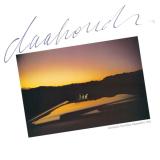
- A1: Blue Sky, White Sun
- A2: Interstellar
- A3: Hotpot
- A4: Niji Shibai Feat. Daichi Yamamoto
- A5: 99011281
- B1: Who Am I Feat. Aaamyyy
- B2: Ü?
- B3: Gingua
- B4: Miracle
- B5: Premiere
Future pop unit "Mononkuru" has released their first album in nearly seven years since their previous album, "RELOADING CITY," on vinyl!
"Bokura wa Warai at a Dead End," a brand-new pop album featuring guest appearances by AAAMYYY and Daichi Yamamoto, is here!
Seven years after their last album, Mononkuru has finally released their long-awaited new album. Known for their jazz-infused pop, the band has changed their
name to "Mononkuru" in katakana and updated their sound. In addition to the innovative modern pop disco they showcased on recent releases "GINGUA"
and "HOTPOT," this album is packed with highlights, including "Futari Shibai feat. Daichi Yamamoto," a bold new work featuring a featured artist for the first time
for Mononkuru, and "Who am I feat. AAAMYYY," which debuts on an album.
- A1: The Windmills Of Your Mind / Vivian Buczek
- A2: A Cottage For Sale / Moon Haewon With Tsuyoshi Yamamoto
- A3: Embraceable You / Caity Gyorgy
- A4: The Look Of Love / Denise Donatelli
- A5: April In Paris / April Varner
- A6: Blame It On My Youth / Cajsa Zerhouni
- B1: The Thrill Is Gone / Carme Canela & Joan Monné
- B2: (Sittin' On) The Dock Of The Bay / Inger Marie
- B3: They Long To Be Close To You / Diana Panton
- B4: From This Moment On / Naama Gheber
- B5: Fragile / Sacha
- B6: I Get Along Without You Very Well / Clare Tea
Vocals are the starting point of all music and the source of connection with listeners.
This exquisite female vocal compilation features a lineup exclusive to Terashima Records, from hidden gems to promising young vocalists.
"Jazz is about enjoying the music, not the improvisation," and "buying for the beautiful album cover is recommended," Terashima has long advocated.
Enjoy a moment of enchantment with his unique vocal style. Yasukuni Terashima has carefully selected great voices, great sounds, and great songs, providing a l
uxurious listening experience. Enjoy this vocal compilation while driving, relaxing, or enjoying a drink. It's also recommended as a way to learn about the current
state of contemporary jazz vocals. The "For Jazz Vocal Fans Only" series, featuring carefully selected female vocalists from a lineup exclusive to Terashima Records,
from hidden gems to promising young singers, has received such positive feedback that the eighth installment is now available on limited-edition vinyl!
It also includes tracks by MOON, who recently made waves with Tsuyoshi Yamamoto, as well as Katie George and Diana Panton, who are popular in Japan.
Y-3003 marks the critical third instalment of the recently founded Y-3000 imprint. Solitary Dancer return as the sonic architects of the runway score for adidas & Yohji Yamamoto's pioneering Y-3 label, arguably their most ambitious collaboration to date. The SS26 Y-3 Presentation at the Palais Brongniart in Paris saw the duo work alongside movement director, choreographer & dramaturg Kiani Del Valle and the KDV Performance Group to present -- ''I'll Meet You At The Horizon'' -- a genre-blurring performance that shattered preconceptions around the traditional fashion runway, again capturing Y-3's vision for the future, and renewing the brand's commitment to transcendent expressivity.
Based on a Motown classic that also served as the debut song for a world-famous kids group, the long-awaited ending theme is finally getting a single release!
From the soundtrack of director Shinichiro Ueda's One Cut of the Dead, the indie film that became a social phenomenon upon its 2018 release, grossing over 3.1 billion yen, this gem of a track is now available on vinyl. While retaining the melody of the original song written by Berry Gordy Jr., Kensun Lovers (Nobuhiro Suzuki and Shoma Ito) added Japanese lyrics and a new arrangement, with actress Mayumi Yamamoto on vocals. The theme song "Keep Rolling" quickly won the support of discerning international listeners, reaching No. 1 on Spotify's "Japan Viral Chart" the week after the film's release.
On the B-side, two versions of the film's main theme "zombeat" are included, featuring hard-hitting guitar work brimming with respect for the original Zombie series.
Tape
Atsuko Hatano is a contemporay classical Viola player who works with electronics to add textures and layers to her sound. Located in Tokyo, Japan, she is a commanding instrumentalist and composer who constructs innovative compositions with strings and layered electronics.
Cells #5 is an orchestral collection and sequel to her previous album Cells #2 which will also be released on cassette via Imprec’s Cassauna label. Cells #5 required three years to complete and the work features the artist’s signature methodology where the instrumental performances are gradually enveloped by multiple layers of a string orchestration.

When not playing solo Atsuko is extremely active recording, collaborating and playing live with Jim O’ Rourke, Eiko Ishibashi, Mocky, Midori Hirano and many more acts.
Atsuko Hatano: Violin, Viola, Cello, Contrabass, Piano (track 1), Xylophone, Oscillator and Chorus
Guest Musicians:
Eiko Ishibashi: Piano, Marimba, Vibraphone
Yuko Ikoma: Accordion
Natsumi Kudo: Horn and flugelhorn
Icchie: Trumpet, Flugelhorn, Piccolo Trumpet
Tatsuhisa Yamamoto: Snare Drum
Composed and Mixed by Atsuko Hatano. Mastered by Jim O’Rourke. Cover by Saskia Griepink.
- Carrion Flowers
- Iron Moon
- Dragged Out
- Maw
- Grey Days
- After The Fall
- Crazy Love
- Simple Death
- Survive
- Color Of Blood
- The Abyss
INSOMNIA VINYL[42,23 €]
Classic black 2LP in gatefold! "Her darkest, heaviest and most personal album yet . . . a haunting, doomy exercise in loud-quiet dynamics." Rolling Stone Sleep paralysis plagues singer/songwriter Chelsea Wolfe, and that strange intersection of the conscious and the unconscious has inadvertently manifested itself within her work. Across the span of her first four albums, there is an underlying tension, a distorted and nebulous territory where dark shadows hover along the edges of the sublime and the graceful. But until now, Wolfe's trials and tribulations with the boundaries between dreams and reality have only been a subconscious influence on her work. With her fifth album, Abyss, she deliberately confronts those boundaries and crafts a score to that realm she describes as the "hazy afterlife. an inverted thunderstorm. the dark backward. the abyss of time." Chelsea Wolfe's material has always felt intensely private, from the almost voyeuristic bedroom-production aesthetic of her debut album The Grime and the Glow to the stark themes and atmospheres of 2013's Pain Is Beauty. "Abyss is meant to have the feeling of when you're dreaming, and you briefly wake up, but then fall back asleep into the same dream, diving quickly into your own subconscious," says Wolfe. To conjure this in-between world, Wolfe continued her ongoing collaboration with multi-instrumentalist and co-writer Ben Chisholm and drummer Dylan Fujioka, with Ezra Buchla brought on board to play viola and Mike Sullivan (Russian Circles) enlisted to contribute guitar. The ensemble traveled to Dallas, TX to record with producer John Congleton (Swans, St. Vincent). In the back of her mind burned the words of designer Yohji Yamamoto: "Perfection is ugly. Somewhere in the things humans make, I want to see scars, failure, disorder, distortion." The resulting eleven songs reflect that philosophy as they smoulder with human frailty, intimacy, quiet passion, anxiety, and deep longing. "Sleep and dream issues have followed me my whole life," remarks Wolfe as she revisits notes from the writing and recording sessions. In a way, these issues have become a part of Chelsea Wolfe's identity, for whom the notion of sleep as an escape has been subverted. Abyss captures this dichotomy, this battle between the soothing and the upsetting, and demonstrates why Chelsea Wolfe has become one of the most intriguing songwriters of the decade.
- A1: Captain Haddock
- A2: Lumberjack
- A3: Transfusion
- A4: Silver Drape
- A5: Lipstick No.242
- B1: An Ecstasy
- B2: In Her Early Days
- B3: The Missing Person
- B4: Workout
- B5: My Goddess
This work was released in 1988 by guitarist Yuji Toriyama, who continues to work as an arranger, producer, and studio musician.
This is his fifth album overall. This work is a culmination of his specialty, the programmed sounds, and it explodes with solid digital sounds.
Participating musicians: Hiroshi Sato (key), Hideo Yamamoto (drums), Kenji Takamizu (bass), and others.
The legendary jazz bassist Isao Suzuki, revered worldwide for his extraordinary talent, recorded this vibrant session in 1981 alongside his longtime collaborator Tsuyoshi Yamamoto. Now, this rare gem returns on analog vinyl!
Infused throughout with the infectious rhythms of Brazilian music, the album captures a festive spirit brought to life by an all-star lineup including Takayuki Kato, Ichiro Doi, and Donald Bailey.
Adrian Sherwood meldet sich mit seiner ersten Musik als Solokünstler seit 13 Jahren zurück: den rhythmisch mutierten Soundlandschaften der EP "The Grand Designer", dem neuesten Teil der langjährigen und beliebten On-U Sound Disco-Plate-Serie.
Der Titeltrack dient als Trailer für sein bevorstehendes Album, auf dem verschiedene Instrumente, die durch Sherwoods Effektpalette gefiltert werden, über einen unwiderstehlichen Groove und die typisch raffinierten perkussiven Details harmonieren. "Let's Come Together" verwandelt denselben Rhythmus in einen mystischen Dub, wobei der leider verstorbene Freund und Kollaborateur Lee "Scratch" Perry für die typisch schrägen Gesangseinlagen sorgt. Die Kollaboration erinnert auch daran, dass Sherwood seit seinem letzten Release unter eigenem Namen alles andere als untätig war: In den letzten Jahren veröffentlichte er von der Kritik gefeierte neue Alben nicht nur mit dem Upsetter, sondern auch mit Horace Andy, Sonic Boom (Spacemen 3) und Panda Bear (Animal Collective), African Head Charge, Spoon, Creation Rebel, Pinch, und anderen. "Russian Oscillator" ähnelt den Platten von Sherwood & Pinch vielleicht am meisten: Experimentelle Elektronik verwebt sich mit schweren Soundsystem-Klängen und einem an Ruffneck-Dancehall erinnernden Swing. Die EP endet mit "Cold War Skank", einer Linksabbiegung vom Highway in glühenden Wüstenblues, verzerrten Slide-Gitarrenmustern über der Atmosphäre einer Breitwand-Filmmusik.
Erhältlich als streng limitiertes 10"-Vinyl-Sammlerstück, gemastert und geschnitten von Frank Merritt im The Carvery Studio, eingepackt im klassischen On-U-Disco-Sleeve mit einer Collage von Studio Tape-Echo, basierend auf einem Originaldesign von Kishi Yamamoto.
Solitary Dancer compose their first new works in five years for adidas & Yohji Yamamoto's pioneering Y-3 label. Originally featured as the score for Y-3's Spring/Summer 2025 runway presentation at Salle Pleyel in Paris, Y-3001 ushers in a series of artist commissions aimed at defining a new era of sound for the historic brand's return to runway format.