A rising artist of the French electronic scene, Naajet asserts her identity with The Night Starts Now, a four-track EP that celebrates the freedom and intensity of the night. Co-founder of the Bande de Filles collective and known for her explosive universe blending House, Hardgroove and Breaks, as well as for the unique energy inherited from her dance background, Naajet delivers here a sonic manifesto conceived as an ode to club culture and to the present moment.
“I imagined this EP as an anthem to the world of the night. The night offers us unparalleled freedom, an outlet that allows us to be ourselves, to create, to love. The Night Starts Now captures this celebration of the present moment and this declaration of independence.” Naajet Opening the EP, “Ready To Shine” unfolds radiant House nourished by Pop and 90’s sounds. With a clear and ascending rhythm, the track combines euphoria and introspection. “I composed this track as a joyful and introspective journey that prepares us to embrace the night. For me, it is a call to accept our wounds, to transform them into light and strength, so that we may shine brighter when we enter the club,” explains Naajet. Between ethereal vocal lines and shimmering pads, the track acts as a ritual of entering the night, inviting us to turn wounds into strength and to shine on the dancefloor. The second track of the EP, “Sugar”, embodies the effervescence of the club. Carried by a hypnotic voice and an effervescent rhythm, the track celebrates the communion of bodies and the liberating energy of dance. “It is an ode to dance and to bodies coming together. This track speaks of those moments when, on the dancefloor, boundaries fall: we sweat together, we free ourselves together, and energy flows from one body to another,” says Naajet. A true concentrate of intensity, “Sugar” captures the moment when sweat, rhythm and abandon merge into a collective movement towards freedom.
With “I Can Be Anything”, Naajet changes register and flirts with deeper, even techno textures. Built on a throbbing pulse and sharp synths, this track is meant as a manifesto of identity. “I really wanted to propose a track that claims our right to free and plural expression and sexuality. I Can Be Anything is about our multiple identities, our ability to reinvent ourselves and to refuse any form of formatting,” she says. Between club intensity and political resonance, “I Can Be Anything” questions our multiple facets and embodies the assertion of an elusive and free self. Closing the EP on an euphoric note, “May It Never End” stands out with its broken rhythms and powerful synths. The track conveys the transcendent energy of the end of the night, when dawn arrives but we refuse to leave the collective trance. “I wanted to put into music this feeling of infinite energy, when time is suspended and the party seems to never have to stop. It is this euphoric vertigo that connects us all in the same breath, this utopia of a night that would never end,” says Naajet. A true apotheosis, this track embodies the utopia of an eternal night.
DJ, producer and co-founder of the Bande de Filles collective, Naajet has established herself with a singular universe where House, Hardgroove and Breaks blend, nourished by her background as a dancer and an instinctive sense of groove. For the past three years, she has performed on French and European stages – from Berlin to Amsterdam, via Geneva and Oslo – and has made her mark in clubs such as Rex Club, Le Sucre and Badaboum, as well as festivals like Nuits Sonores and Kolorz. On the production side, she has released several acclaimed EPs on renowned labels such as Shall Not Fade and Monki & Friends. In 2025, she takes a new step with the launch of her label SWEAT Records and a residency at Le Sacré in Paris, affirming her role as an ambassador of a free and intense club culture. She also collaborates with the waacking company MADOKI, for which she composes and mixes projects at the crossroads of dance and music. With The Night Starts Now, Naajet confirms her status as an essential artist of the new electronic generation1
Suche:z records
Elfenberg nurtures four meticulously crafted progressions, a digital pet project draped in velvet grooves. Evolving with the patience of luxury craftsmanship and the addictive glow of a pixelated companion, feeding hypnotic cycles into transcendent dancefloor rituals. This is where underground devotion meets haute couture electronics. Press play, watch it grow, never let it fade, let it consume you.
Kanyon (John) is a NYC based producer/dj who has cut his teeth in the underground US techno scene through raw live sets, and dynamic djing. Keeping the quality high with his signature no-bs style of production and performing, he has played live supporting legends like Steve Poindexter, DJ Hyperactive, and Francois K. His productions have garnered support from Ben Sims, Akua, Ron Like Hell, Kush Jones and many others.
The Duplex EP is a split record featuring John's house alias DJ John Brooklyn on the A side (A1, A2, locked groove) & techno alias Kanyon on the B side (B1, B2). Exploring NY house and trippy, dubby minimal techno respectively, Duplex EP is a heady start to 2026.
Chris Liberator & Sterling Moss have produced some classics of the Acid Techno genre and now hope to add to that roster with this their first LP 'Culture Of Acid' on the seminal Stay Up Forever label. 8 banging tracks covering a multitude of Acid Techno/Techno styles including their collaboration with punk performing arts legend Doghouse on 'The Freaks' which has already been causing havoc on underground dancefloors.
*2026 repress**
30 yrs (!) since it's initial release in '97... absolutely loaded EP of dancefloor heat from a true Disco romantic, Daniel Wang. Certified treasure from past, and one that won't leave the record bag.
Remastered with love and respect of the originals, and the originators.
HUGE TIP!
For Neuma’s fourth release, Rotciv—Brazilian-born and Berlin-based—presents a five- track EP that shifts from EBM and deeper, low-tempo moods to wavy techno-electro and trance-touched peak-time energy, offering a versatile journey for every moment in the club.
e B2. ROTCIV - Crossing Theme Master Digital
e B2. ROTCIV - Crossing Theme [Master Digital]
[e] B2. ROTCIV - Crossing Theme [Master Digital]
Second vinyl release on our label, this time presenting what we consider a timeless piece. Light Blue File delivers three cuts steeped in jungle flavour, heat and red lights. Intensity and minimalism. intricate elements and details that fuel the tension and trance on the dancefloor.
- A1: Jestofunk - Say It Again (Original Club Mix)
- A2: Blender - Trouble Jazz (Jazz Club Mix)
- A3: Belladonna - Black Jazz
- A4: Bossa Nostra Feat Vicki Anderson - The Message From A Soul Sisters
- B1: Ltj Xperience - Conga Sax
- B2: Black & Brown - Tribal Boogaloo
- B3: Fusion Funk Foundation - Movin’ Down
- B4: Dj Rodriguez - Vibes And Tribes
- C1: Soul Etico - Two Hearts Together (Fatti Special Jazz)
- C2: Gazzara - Gotcha! Theme From Starsky & Utch
- C3: The Smoke Orchestra - Lenticular Galaxy
- C4: Yuts And Culture - Intermission
- C5: Italian Secret Service - Not The Same
- C6: The Sonic Family - Sonic Vibes
- D1: Sarah Jane Morris - Hold On To Love (Micky More & Andy Tee Remix
- D2: Key Tronics Ensemble - You X Me (Montuno Salsa)
- D3: Sicania Soul - Life Is A Tree (Truby Trio Treatment)
- D4: Low Fidelity Jet Set Orchestra - The Amplifer
- D5: Black Mighty Wax - Follow That Fellow
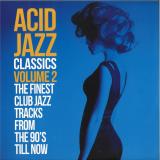
After the excellent response to the first volume, Acid Jazz Classics returns with the second volume.
The Acid Jazz sound born in the 1990s, which harked back to the Soul Funk of the 1970s, found in IRMA one of the labels most dedicated to
this world, and still releases music that can be categorized under this name.
From songs from the 1990s with artists like Jestofunk, Bossa Nostra, Black & Brown, Gazzara, Italian Secret Service, LTJ Xperience, Sarah
Jane Morris, to the present day with artists like The Smoke Orchestra, Yuts and Culture, Fusion Funk Foundation, Micky More & Andy Tee,
Belladonna, and many others.
19 tracks on a double vinyl, some of them never before released on vinyl, all rigorously perfect for both the club and listening.
In fact, some tracks are little club gems:
"Say It Again" by Jestofunk in its very first version from 1993;
Belladonna - Black Jazz, one of her most requested songs ever released on vinyl;
Key Tronics Ensemble - You For Me, the Montuno Salsa version performed for years by Little Louie Vega at many of his gigs;
the Micky More & Andy Tee remix of Sarah Jane Morris's Hold On To Love!
Texas-based producer Declan James runs the VOIDWARE imprint and events, also listing music on labels such as Edit Select Records, Max Gardner's Peer, drxvo's Synergie, and Secus' Rituals amongst others. The Dallas native is making a significant contribution to the upcoming generation of American techno producers with both a domestic and international touring schedule.
Beginning with "Pendulums," a classic sci-fi trip with modular bleeps amidst a slinking, bouncing rhythm section for a perfect lesson in patience and restraint.
"Levitation" has an otherworldly feeling and floats along a sparse track of swirling drones, chugging bass pulses, and classy percussion taps for a mesmerising and introspective journey.
"Transmutate" throws down a stuttering kick drum, haunting tones, and bending modular notes for a grooving yet dystopian analogue concoction.
The final track "Absolved" sees a deep dive into details and dub influences. Where eerie rattles and precision production form a memorable dose of sizzling hot, futuristic, and fantastic techno.
Under a sky of short days and long nights, Notta Records from Finland unveils Dog Sleep, a deeply immersive EP by Cyclic/Random. Known for crafting slow-burning, atmospheric excursions at the intersection of dub techno and deep, dubbed-out house, Cyclic/Random extends the labels mission of a warm, hypnotic winter soundtrack.
Across the EP, soft-focus chords drift like snow over steady, smoked-out grooves, basslines pulse with understated weight, and echoes curl around the edges of the stereo field. These are tracks built for long, nocturnal sessions, the moments when the outside world is frozen and the dancefloor feels like a shelter. Dog Sleep is intimate yet expansive, perfectly tailored for winter: crackling dub house, deep dub techno and distant ambient textures that invite you to slow down, sink in and dream with your eyes open.
Finnish dub-techno craftsman TM Shuffle, head of Vuo Records, resurfaces with a deep and distilled EP that goes straight for the late-night heart of the dancefloor. Rooted in Tampere’s raw, analog dub sound, his productions have long balanced weight and warmth, smoked-out chords, rolling low-end and subtle shuffle that keeps the groove in constant motion.
The lead track “Kellari” dives into basement mode: pressure-cooker drums, slow-burning stabs and a humid, lived-in atmosphere that feels equally at home on a huge system or in headphones at 4 a.m. On the second original cut, TM Shuffle links up once again with long-time collaborator Monoder, the alias of Jussi-Pekka Parikka, known for his dubbed-out explorations on labels like Statik Entertainment and Pakkas-Levyt since the early 2000s. Their joint track stretches time, letting echo, tape hiss and distant melodic fragments float around a rock-solid groove, channelling years of shared studio language into one focused, hypnotic flow.
On the flip, Anton Kubikov (SCSI-9) steps in with a lush reinterpretation of Kellari. A true Russian techno veteran with a catalog that spans Kompakt, Force Tracks, Mayak and beyond, Kubikov melts the original into a widescreen, dream-state trip, soft-focus pads, gentle yet insistent percussion and that unmistakable rolling pulse that made his work so enduring. The remix doesn’t just extend the track; it opens a new dimension, turning the basement pressure into a slow-rising, celestial drift.
Pressed on limited coloured vinyl, this EP is built for selectors who like their dub techno deep, human and timeless, a record that will quietly live in bags for years and keep resurfacing whenever the room calls for true late-night elevation.
There are records that do not so much belong to an era as they pass through it, leaving traces rather than statements, circulating in the margins where function outweighs discourse. World Cup, written at the end of the 1990s by Kiko, emerged in precisely that way — as a techno track whose presence was felt less through promotion than through repetition, carried from booth to booth, absorbed into the working vocabulary of DJs who recognized in it something immediate and self-evident. Its architecture is minimal yet insistent, driven by tension and release, a form of clarity that resists ornament and instead privileges duration, pressure, and movement.
When it resurfaced in 2006, it did not return as a revision but as a continuation, reaffirming its role within the ecology of the dancefloor. The same internal logic remained intact, allowing it to re-enter circulation without friction, as though it had simply been waiting to be picked up again. In both instances, the track operates less as a fixed object than as a tool — something to be used, extended, and recontextualized in real time.
Bringing together these two versions alongside Tainted Life, the release traces a subtle but telling trajectory. If World Cupdefines a certain techno functionalism, Tainted Life reveals another dimension: a proto-Italo sensibility that gestures toward what would later coalesce as electroclash, not through stylistic declaration but through texture, tone, and attitude. Long absent from digital circulation and largely confined to obscurity, it appears here not as a rediscovery, but as a piece whose relevance has simply remained latent.
Nothing has been added, nothing has been altered beyond what was necessary to restore presence. The recordings are allowed to exist in their own continuity, detached from the temporal markers that might otherwise confine them.
The artwork, conceived by H5, extends this approach into the visual field. Its restraint is not aesthetic minimalism for its own sake, but a form of structural clarity, where composition and absence articulate a space in which the record can be encountered without interference, as if resurfacing from a parallel timeline that never fully closed.
On a limited press of only 200 copies label head Nathan Nisbet takes us on an dreamy 9-minute voyage, weaving together lush, cinematic atmospheres with soaring lead lines and a not out of place break that keeps everything moving forward. With echoes of Sabres of Paradise and The Orb, How Did You Get That Scar? unfolds into a rich and deeply peaceful and reflective experience.
The Miso label from Charles Webster was right at the heart of turn-of-the-millennium house and tech. It's very focused output has a signature sound that's soulful and deft, with great remixes making each package a varied and vital treat for real connoisseurs of back room sounds. This one from Nutty feat Daddy is a tribal tinged and Afro-leaning affair with swirling vocals and a mysterious allure. The dubby drums on the Mbuso remix are a delight, then the Brooks mix gets more wet and cavernous. The Charles Webster dub is full of shakers and aquatic sounds, cheeky and supple chords and endless depth. The Vincenzo mix closes with a more upright groove.
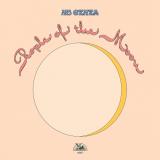
After the acclaimed Bar Mediterraneo, Massimo Di Lena and Lucio Aquilina return with People Of The Moon, expanding their sound into a space of creative freedom. The “People of the Moon” are not fictional, but a dimension within us all: a deeply personal yet universal force, an alternative mindset that emerges when freed from social constraints.
Under moonlight, the album explores anxieties and aspirations through groove and rhythm, expressed in Neapolitan, Arabic, English, Spanish, and Portuguese. It moves fluidly from Afro-Cuban influences in “Celavì” to Anatolian textures in “Ma Tu Che Bbuò”, blending highlife guitars with Nu Genea’s signature mandolins-new rhythms filtered through an Italian lens.
The first single “Sciallà” (2025) introduced this direction: dance as catharsis, not escape. The title track reflects a quiet resilience-persistent rather than triumphant. “Onenon”, featuring Tom Misch, channels Mediterranean brit-funk, while “Acelera”, with María José Llergo, evokes a flamenco-tinged pursuit of the unattainable.
“Puleza” recalls Nuova Napoli with driving energy and vintage synths, while “Shway Shway”, sung by Celinatique, captures the album’s orbital flow-measured, rich, and rhythmically complex, echoing afrobeat explorations with Tony Allen.
Melody remains central, as in “Carè”. Across ten tracks, falling, flying, and dancing merge in a suspended groove. Gabriel Prado’s “Ondas Do Mar” embodies this pull: a cyclical motion, like the tides—irresistible, transformative, and alive within us.
- 1: El Monte
- 2: Silver Plume
- 3: Paz
- 4: How Glad
- 5: Muchacho
- 6: The Coast 1&2
- 7: Chico
- 8: Just Because
- 9: La Frontera
- 10: Teresa
- 11: Velasco
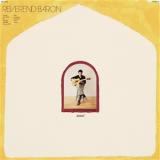
Das akustische Instrumental-Album "Daniel" erweitert die Welt jenseits der Betonschluchten und Überführungen von LA hin zum pulsierenden, brodelnden Meer des Lebens, das Mexiko-Stadt ist, bis hin zur kargen, hügeligen Landschaft von Red Cloud, Nebraska. An jedem dieser Orte war der ständige Begleiter eine Nylonsaiten-Akustikgitarre - mit einer eigenen, weitgereisten Geschichte. "Es war die Gitarre meines Vaters", erinnert sich Danny Garcia, der Mann hinter dem Reverend. "Vor ein paar Jahren habe ich herausgefunden, dass sie auch meinem Großvater gehörte." Seit seiner Kindheit allgegenwärtig, hat die mexikanische Akustikgitarre für Garcia mit jedem Jahr an Bedeutung gewonnen. Stunden um Stunden des Spielens, Reisens und des Einhauchens von Leben in ihr Griffbrett haben sie sowohl zu einem Werkzeug als auch zu einem Talisman gemacht. "Da ist diese offensichtliche Abstammungslinie, die Familie und die Verbindung_ diese Verbindung durch die Geschichte", vertraut Garcia an. "Es ist sozusagen das einzige Familienerbstück, das ich habe." In der letzten Zeit hat all dieses Spielen (oder Herumklimpern, wie Danny es nennt) Reverend Baron dazu gebracht, einem Klang nachzujagen - einem, der die Ursprünge der Gitarre Lügen straft. Es ist ein Klang, den er von Zeit zu Zeit hörte, und als es darum ging, "Daniel" aufzunehmen, war dieser Klang sein wahrer magnetischer Nordpol (oder Südpol, sozusagen). Wenn du dich durch "Daniel" hörst, wirst du Anklänge an die Gitarrentöne von Antonio Bribiesca und Luiz Bonfa hören. Wenn du tiefer gräbst, wirst du auch die Grundzüge der Gitarrentexturen von Townes Van Zandt und Nick Drake erkennen. Ohne deren Virtuosität in seinem Spiel für sich zu beanspruchen, ergänzen die Seele und die Verletzlichkeit, die zu Markenzeichen der ersten beiden Reverend-Baron-Alben geworden sind, diese Einflüsse. Es liegt eine Wärme in "Daniel", die in diesen akustischen Meditationen im Mittelpunkt steht. Von kurzen, fließenden Momenten wie "El Monte" und "How Glad" bis hin zum hoch-einsamen "Muchacho" schweben die Songs wie Cumuluswolken über einem tiefblauen Himmel.
- A1: I Missed The Target Again (Radio Edit) 3.40
- A2: It's Gonna Rain 4.06
- A3: Hang On In There 3.59
- A4: Shine A Light 4.26
- A5: The Lord Will Make A Way 4.56
- B1: There Will Be Peace In The Valley 3.26
- B2: 1963 5.20
- B3: Reach Down And Touch Heaven For Me 2.48
- B4: Love Breakthrough 3.46
- B5: In God's Hands We Rest Untroubled 4.58
- A1: My God Has A Telephone 3.25
- B1: God's Gonna Use Me Anyway 4.02
Soul Music legend Candi Staton returns to her down-home Alabama roots on her 32nd album, Back to My Roots. The twelve-track Americana set features an array of Staton-penned originals and some well-chosen covers.
"These songs represent my roots," Staton adds as she reflects on her many trials and triumphs. "Even the new songs on some level represent something I've experienced and that's what real soul music is about." Back to My Roots was produced by Staton with her second eldest son, Marcus Williams, a professional drummer who has toured with the likes of Peabo Bryson, Isaac Hayes, and Tyler Perry. They brought in Mark Nevers of Lambchop fame, who produced three of Staton’s prior Americana albums for Honest Jon’s and Thirty Tigers, to sweeten certain tracks. “Some of the first songs I ever heard were songs like `Peace in the Valley’ and `It’s Gonna Rain,’” says Staton. “The new songs or cover songs are tracks that remind me of that era when I was growing up as a child and evolving as a young woman. That’s why I named the album Back to My Roots because I’m going back to the roots that made me who I am.”
Staton received the Americana Music Association UK’s highest honour, the International Lifetime Achievement Award, at the UK Americana Music Awards ceremony at Hackney Church in London last year for her southern soul work that stretches from her 1969 Muscle Shoals hits to her more recent collaborations with the likes of Americana kings Jason Isbell and John Paul White.
The album opens with a mid-tempo Bonnie Raitt-styled contemporary blues “I Missed the Target Again” that finds Harry Connick Jr.’s longtime guitarist Jonathan DuBose Jr. (aka the Prophesying Guitarist) showing off his skills that set the tone for the song and the album.
Staton’s older sister, Maggie Staton Peebles (who alongside Staton was a member of the Jewel Gospel Trio in the 1950s), joins her for two duets. The first, “It’s Gonna Rain,” features just a drum, steel guitar and vocals. “My mother used to sing that song to us all the time when I was a child,” Staton recalls. “It’s a really soulful kind of song I wanted to revisit.” They then take turns leading Thomas Dorsey 1939 gem “There Will Be Peace in the Valley” that Elvis Presley popularized in the 1950s.
“Hang on in There” is a new, mid-tempo song that has an old school gospel flavour and features vocals from veteran bluesman, Larry McCray.
While in Europe in 2023 for her farewell concert tour that took her to the Glastonbury Festival and Love Supreme, Staton and her British band, PUSH, went into a London studio to record a new version of The Rolling Stones’ 1972 gem, “Shine A Light.” “I love the way that came out,” Staton says. “We put a big choir on it and put our own twist on it.”
From there, Staton revives another Thomas Dorsey classic, “The Lord Will Make a Way Somehow,” with a bluesy vibe. When Al Green started recording gospel in the early 1980s, he re-introduced this song into the culture.
“God’s Gonna Use Me Anyway” is a new mid-tempo blues with subtle Caribbean influences.
The mood takes a turn on “1963.” It’s a poignant, spoken-word reflection on September 15, 1963, when four black girls were killed in the Birmingham Church bombing. “I was in the city that day and I remember the chaos and horror after the bombing,” Staton recalls. “Just thinking of how racism and hatred caused those men to kill those girls was so emotional for me that I could only do it in one take.”
It's a perfect segue into "Reach Down and Touch Heaven," a haunting, plea for divine intervention into the affairs of mankind. "That's straight Baptist," she says. "I used to be a church pianist back in the 1960s. I've never played piano on one of my records before so that's a unique song for me because I’m finally playing on one of my records. The message of that song is about the homeless. It came to me when a homeless person on the street asked me for $5. When God touches your heart to help somebody else that’s heaven to God’s hears. So, when we reach into our purse or wallet to help someone, we’re touching heaven."
Staton offers love as an antidote to hate on the bouncy, Motown-styled, “Love Breakthrough.”
Her publicist brought Aaron Frazer & the Flying Stars of Brooklyn NY’s 2017 cut “My God Has a Telephone” to Staton’s attention. She shifts the track from a retro 1960s groove to more of a 1980s Malaco Records arrangement, a subtle but distinct variation. Staton brought in her longtime friend and STAX Records legend, William Bell (“I Forgot to Be Your Lover” and “Trying to Love Two”), to add raspy seasoning to the track.
The album closes with the wistful, “In God’s Hands We Rest Untroubled,” that was originally written and recorded by the late country star, Lari White, who died in 2017 at the age of 52. “Lari sent me that song to consider at least ten years ago and I always loved it,” Staton says. “The record label didn’t want it on the album or something, so I just held it.”
Staton says, “I grew up hearing a lot of these old songs when they were new songs. I toured with the Jewel Gospel Trio in the 1950s and we got to know people like Mahalia Jackson, Sam Cooke and others who sang these types of songs. So, I’m sort of paying tribute to them and the influence they had on me by refreshing these songs and making new songs in the old style.”’