‘A Great Day in Newcastle’ is musical documentation of the North East working class experience.
Through a storytelling approach with the aid of new member, genius poet, Cooper Robson, the record details dark topics like substance abuse, crime and toxic masculinity through this Geordie Jazz Noir soundscape, whilst still feeling light hearted and playful, fully embodying the classic Northern optimism.
With the introduction of Cooper’s poetry combined with Stan’s developing composition skills, King’s genius orchestration and groove composition and Ferg’s classic melodic sound, the record shows the growth of the bands sound wholeheartedly, returning to their roots of rock, supported by producer and friend Geordie Greep.
Alongside longstanding members Sandro Shar (keys) and George Johnson (tenor sax), the band reaches new highs of intensity throughout the 45 minute epic.'
Plush shag carpeting, jazz flutes, analogue synths, funk grooves, exotica, and sultry, Italian-style vocalising: Erotica 70 is the new album from Larry Manteca, known for their inventive, tongue-in-cheek reimaginings of classic Italian soundtrack aesthetics.
This time around, the Milanese collective sets its sights on the distinct sonic landscape of 1970s commedia sexy—a film genre that, for better or worse, defined an era and fed richly into the cinematic education of Larry Manteca’s members.
Through this lens, Erotica 70 also becomes a way of celebrating Piero Umiliani in his centenary year—a composer whose name is closely linked to the erotic comedies of the time.
The nod to Umiliani is baked right into the details, starting with the choice of vintage gear like the Eminent synth and the Wurlitzer electric piano. These instruments deliver that particular blend of jazz, groove, electronics, and sensual charm that made the golden age of Italian film music so unique.
Standout track “Lando” is a joyful, playful homage to actor Lando Buzzanca, who starred in numerous films scored by Umiliani, including the iconic 1973 comedy La schiava io ce l’ho e tu no (My Darling Slave).
Larry Manteca is spearheaded by multi-instrumentalists Alessandro Paiola and Riccardo Danieli, flanked by the cinematic flute of Carlo Pelsa, the swinging drums of Andrea Quattrini, and the magnetic vocals of Valentina Castelli and Alessandra Maria Manzoni.
Recorded across various studios in Northern Italy, Erotica 70 is the imaginary soundtrack to an Italy that no longer exists, recreating its atmosphere while rendering it in full, vivid colour. It’s a record whose music seems to come straight out of a provincial cinema, a smoky late-night club, or a long-lost 70s film. But while it looks back to a bygone era, it does so only to bring it straight into the present, making the past sound surprisingly fresh and contemporary.
For the last decade and change, Lazarusman has steadily worked his way towards becoming a seminal voice in electronic music. In that time, he has left no genre untouched, bringing his brand of metaphysical, pun-heavy, imagery-driven, uplifting poetry to audiences across the globe.
These exploits have earned him a 2021 Grammy nomination and countless chart-topping records with some of the most remarkable producers in the industry.
His debut album, Skin, is an exploration of identity. Lazarusman questions his place in the world, reflecting on growing up in a now-free South Africa. The album touches on colourism, racism, faith, love and the existential crisis of existing in a divided world.
The album is also a celebration of the many genres that inspire his poetry from deep, tech and Afro house to breakbeats and jazz. But it is equally a celebration of the word, and the power it carries.
“A man is only as good as his word.”This quote epitomises Lazarusman’s honest approach to an album that reflects the last 15 years of his career. With productions from FKA Mash, Stimming, Dwson, Boogie Vice, Zitow Mowa, Axone and Johannes Brecht, Lazarusman presents a kaleidoscope of sounds.
DJ support by Keinemusik, Stimming, Acid Pauli, Xinobi, Stavroz, Xique Xique, Paco Osuna, and many more.
You've never played a game like Blippo+ before, and you've never heard a video game soundtrack quite like Greatest Hits from Planet Blip.
Composed by Rob Kieswetter and Jona Bechtolt from the LA-based trio YACHT, the soundtrack collects 71 tracks from the cult classic video game Blippo+, reworked and sequenced into a continuous listen for this special release —a TV static-speckled gatefold double LP, out Oct. 16 via Hologram Opera, marking the soundtrack’s physical debut.
Taking the form of a cable TV simulator, Blippo+ captures the magical feeling of seizing a mysterious signal from outer space and discovering the television programming of an alien culture. Soundtracking the game’s pastiche of programs is Rob and Jona’s genre-spanning score—synth-heavy, eccentrically electronic, with a skewed sensibility that pays homage to cable access, library music, video art, and the late-night margins of the 80s and 90s underground.
TV obsessives will find plenty to love in Greatest Hits from Planet Blip: with surreal theme songs, jangly jingles, zippystings, catchy kitsch, period-accurate menu music and even pop hits from the alien airwaves, this propulsively playful soundtrack will have channel-flippers tingling with nostalgia.
“Planet Blip is an alien planet where art and music are the only currency and ‘consciousness particles’ form the basis of all media. To capture the spirit of this world, we drew inspiration
from all the music we felt best embodied this ethos and ran it through our own utopian blender,” say Bechtolt and Kieswetter.
Blippo+ is an award-winning, experimental, live-action video game created by YACHT and Telefantasy Studios, along with developers Noble Robot and Dustin Mierau, and published by Panic Games. It was released for Steam, Playdate and Nintendo Switch in 2025 to widespread
critical acclaim and has earned a devoted fandom. A Mac version followed earlier this year, and was nominated for an Apple Design Award.
"Simultaneously nostalgic and futuristic, otherworldly yet
welcoming, Blippo+ is an absolute artistic triumph.
" —Deven McClure, Screen Rant
"Blippo+’s presentation might ape old traditions, but the collective impact of its content is richer, deeper, and more entertaining than any mere remembrance.
" —Garrett Martin, Paste/Endless Mode
"In the increasingly reactionary and prescriptive landscape of video games, it is remarkable to encounter something so distinctive, so hopeful, so celebratory, so devoted to expanding the possibility space of art beyond a single medium." —Sam Bodrojan
Repress 2026
Two years after releasing the acclaimed Crash Recoil, Anthony Child aka Surgeon returns to Tresor with new LP, Shell~Wave. Retaining the minimal equipment list and studio-version-of-live-show-sets approach of the previous album in order to focus on the work itself, Shell~Wave is a deeply personal document of both where Surgeon is and has been, converging three decades of experience with a continued curiosity in the untested.
“To make this project, I had to dig really deep in terms of what my relationship was to techno; I’ve been involved with it for a really long time and there’s a lot about it I feel dislocated from, so I had to really think hard about what techno is to me. I often get asked “what is techno to you?” but I can’t answer that with words; this album is the answer.” From the complex, twisting track Infinite Eye to the caustic Soul Fire, the eight tracks that make up the body of the album are single-take explorations of the vast, hard yet minimal techno Child is synonymous with.
Neatly dividing the record in two, the emotional centre of the record comes in the form of Dying, a vibrating, beatless piece that with a mantra-like vocal loop steeped in reverberating effects. Further echoes of dub production appear throughout the record as tracks like Divine Shadow, and Empty Cloud have an almost ever-present mist of reverberation, driven by the appearance of a new delay unit in the equipment list; while much of the philosophy of Crash Recoil’s creation is present, the process and the instruments have changed as Child again switches up his approach to studio work.
This insistence on trying novel techniques doesn’t preclude returning to old ones, as this use of modern digital machines with live, hands-on takes that are as inspired by 60s producer Joe Meek and 70s reggae as they are by this year’s synthesiser expos.
“For me, it’s an interesting experience returning to old techniques again after 30 years. I’m always exploring and finding myself back at the beginning. Connecting the present with the past.”
This philosophy of ‘time travel’ is inherent to the music itself as the synchronised loops repeat while the delay and effects branch out, forming unique eddies; distinct quantum moments within the circular whole; the future leaking through the spaces between the sounds. All of the concepts on the album are perfectly communicated through the painting by Taiwanese artist Jazz Szu-Ying Chen which suggests the movement of water, sound waves, and the chitinous shells of sea creatures.
YL Hooi returns with 'Running Around (83)', the project's first release since 2019's Untitled. Valya Ying-Li Hooi and Tarquin Manek finally commit a long road-tested live favourite to tape, welding together engine room doom, disembodied vocals, cryptic lyricism and a smouldering dub-techno bassline, recast and overdriven.
The hand-stamped white label 12" honours its roots with three heavyweight remixes. After corrupted audio files erased YL Hooi's recent live collaboration with Mad Professor, the Ariwa boss gives their encounter lasting form with a percussion-dripped halftime stepper featuring veteran Black Steel and new blood Karmelody.
The flipside immediately detours with Ulla's full-scale tear down and rebuild, layering woodwind, keys and subtle percussion into an improbably elegant convergence of ambient, minimal jazz and modern classical. John T. Gast's Midas touch then drags it into bardo dancehall territory, a rugged soundsystem destroyer that's scuzzy, screwed and wired with punk instinct.
Son Of first surfaced in 2015 with Social Zombies on Opal Tapes. A decade on, he returns with YYY on his own label, Digital Empathy, the fifth in its sinister futurism catalogue. Unconventional minimalist Detroit electro, eroded IDM, 8-bit dungeonstep, and deconstructed funk interlace into one unifying sonic world of YYY. The dawn of the anti quasi-replica is here. Only taste will survive.
To call this album important would be an understatement - Space Time Continuum is the culmination of everything ASC has been building with the Spatial family of record labels, comprising the very best of what atmospheric music can be, and showcasing what is to come. Label stalwarts and debutants combine to bring you the ultimate compilation of this music. ASC is proud to present to you Spatial’s magnum opus: Space Time Continuum - Chris Hayes" Featuring new original music from: ASC, Aural Imbalance, Chronicle, Eusebeia, Ghosts of MIDI, JLM Productions, KMC, Law, Probe-One, Reviver, Senses, and tdel. ● Deluxe Foldout Box Set with Full Artwork Print Inside and Out ● Marbled Vinyl 3x12" ● Each 12" has it’s own individual Full Artwork Sleeve
Wewantsounds is delighted to continue its Ziad Rahbani reissue program with Ana Moush Kafer, a classic album by the Lebanese legend Ziad Rahbani, recorded at his By-Pass Studio in Beirut during the height of the Lebanese Civil War in 1985. Showcasing Rahbani’s signature blend of Arabic music infused with touches of jazz-funk and bossa nova, the album has attained cult status over the years. Originally released on cassette, it has never before been available on vinyl. Newly remastered, this edition features the original Relax-In cassette artwork from 1985 and includes new liner notes by Mario Choueiry of the Institut du Monde Arabe in Paris.
Ziad Rahbani, who passed away in 2025, remains one of the most influential figures in modern Arabic music and a cultural icon in Lebanon. A musician, composer, pianist, producer and playwright, he helped modernize Arabic music over five decades. The son of composer Assi Rahbani and singer Fairuz, he shaped her late 70s–80s recordings producing Wahdon and Maarifti Feek, while building a major solo career with classics such as Abu Ali and Houdou Nisbi, which have become cult favourites for a new generation of DJs and music lovers.
Released in 1985 in Lebanon, Ana Moush Kafer stands as one of Rahbani’s key achievements. Recorded at his By-Pass Studio during the Lebanese Civil War, it blends Arabic melodic traditions with jazz-funk, bossa nova and Western arrangements. Originally cassette-only, it became one of his most revered releases. Throughout the album, Rahbani’s writing reflects the turbulence of wartime Beirut with a blend of sharp social observation, political satire and melancholy. It captures a moment in Lebanese cultural history where experimentation, satire and popular song intersected, giving the album its enduring influence among music lovers.
Sung by Rahbani and Sami Hawat, alongside Beirut-based musicians, the album features both Western and traditional Arabic instruments. It balances refined arrangements with lyrical irony, social commentary and political reflection, which remain deeply resonant in today’s context in Lebanon.
One of the highlights of the album is the song “Shou A’ada Ma Bada,” with lyrics by Joseph Harb, which reveals a clear bossa nova influence, while the closing track, “Al Mokawama Al Watania Al Lobnani,” offers a deeply human view of war, avoiding patriotic cliché in favour of a nuanced perspective rooted in lived experience.
As Mario Choueiry observes in his liner notes, “Ana Moush Kafer stands as one of the high points of modern Arab political songwriting, yet transcends its historical and geographical context through the universal relevance of its themes and the timeless quality of its music.”
Forty years on, Ana Moush Kafer remains a landmark of Arab music. Wewantsounds presents it on vinyl for the first time, newly remastered and featuring original artwork. This long-awaited reissue restores one of Ziad Rahbani’s most important works to circulation, reaffirming its place as a defining statement in modern Arabic music.
a 1. Ana Moush Kafer 5:03
b 2. Shou Hal Ayyam 5:46
c 3. A'anitham 4:37
d 4. Shou A'ada Ma Bada [3:45]
[e] 5. Yessa'ed we Yea'en [5:05]
[f] 6. Bi Halyawmayn [3:46]
[g] 7. Bharf Esheen [1:12]
[h] 8. Bhaneek [5:34]
[i] 9. Al Mokawama Al Watania Al Lobnani [3:06]
[a] 1. Ana Moush Kafer [5:03]
[b] 2. Shou Hal Ayyam [5:46]
[c] 3. A'anitham [4:37]
[d] 4. Shou A'ada Ma Bada [3:45]
[e] 5. Yessa'ed we Yea'en [5:05]
[f] 6. Bi Halyawmayn [3:46]
[g] 7. Bharf Esheen [1:12]
[h] 8. Bhaneek [5:34]
[i] 9. Al Mokawama Al Watania Al Lobnani [3:06]
[a] 1. Ana Moush Kafer [5:03]
[b] 2. Shou Hal Ayyam [5:46]
[c] 3. A'anitham [4:37]
[d] 4. Shou A'ada Ma Bada [3:45]
[e] 5. Yessa'ed we Yea'en [5:05]
[f] 6. Bi Halyawmayn [3:46]
[g] 7. Bharf Esheen [1:12]
[h] 8. Bhaneek [5:34]
[i] 9. Al Mokawama Al Watania Al Lobnani [3:06]
[a] 1. Ana Moush Kafer [5:03]
[b] 2. Shou Hal Ayyam [5:46]
[c] 3. A'anitham [4:37]
[d] 4. Shou A'ada Ma Bada [3:45]
[e] 5. Yessa'ed we Yea'en [5:05]
[f] 6. Bi Halyawmayn [3:46]
[g] 7. Bharf Esheen [1:12]
[h] 8. Bhaneek [5:34]
[i] 9. Al Mokawama Al Watania Al Lobnani [3:06]
[a] a1. Ana Moush Kafer [5:03]
[b] a2. Shou Hal Ayyam [5:46]
[c] a3. A'anitham [4:37]
[d] a4. Shou A'ada Ma Bada [3:45]
[e] b1. Yessa'ed we Yea'en [5:05]
[f] b2. Bi Halyawmayn [3:46]
[g] b3. Bharf Esheen [1:12]
[h] b4. Bhaneek [5:34]
[i] b5 Al Mokawama Al Watania Al Lobnani [3:06]
[a] a1 | Ana Moush Kafer [5 03]
[b] a2 | Shou Hal Ayyam [5 46]
[c] a3 | A'anitham [4 37]
[d] a4 | Shou A'ada Ma Bada [3 45]
[e] b1 | Yessa'ed we Yea'en [5 05]
[f] b2 | Bi Halyawmayn [3 46]
[g] b3 | Bharf Esheen [1 12]
[h] b4 | Bhaneek [5 34]
[i] b5 | Al Mokawama Al Watania Al Lobnani [3 06]
[a] a1 | Ana Moush Kafer [5 03]
[b] a2 | Shou Hal Ayyam [5 46]
[c] a3 | A'anitham [4 37]
[d] a4 | Shou A'ada Ma Bada [3 45]
[e] b1 | Yessa'ed we Yea'en [5 05]
[f] b2 | Bi Halyawmayn [3 46]
[g] b3 | Bharf Esheen [1 12]
[h] b4 | Bhaneek [5 34]
[i] b5 | Al Mokawama Al Watania Al Lobnani [3 06]
[a] a1 | Ana Moush Kafer [5 03]
[b] a2 | Shou Hal Ayyam [5 46]
[c] a3 | A'anitham [4 37]
[d] a4 | Shou A'ada Ma Bada [3 45]
[e] b1 | Yessa'ed we Yea'en [5 05]
[f] b2 | Bi Halyawmayn [3 46]
[g] b3 | Bharf Esheen [1 12]
[h] b4 | Bhaneek [5 34]
[i] b5 | Al Mokawama Al Watania Al Lobnani [3 06]
Premier release of the Never before released iconic, cult & paramount original holy grail soundtrack recording for the action packed partisansploitation movies and TV series - Otpisani and Povratak otpisanih (The written offs & The return of the written offs). This music composed by Milivoje Markovic and recorded in 1972 & 1976 represents the epitome for original Jazz Funk music recorded in ex-Yugoslavia. The series had people glued to their television screens awaiting for their own ‘Inglorious basterds’, the Belgrade guerilla group, to appear gunning down nazis by the hundreds - backed by an original deep funk soundtrack.
The process of making this mini-album “anaiis & Grupo Cosmo” was truly life-altering for me. It changed my approach to making music and really brought me back to the roots of what creation is about. I went to Salvador for a month-long artist residency in February 2020 and during that time, I not only fell in love with Brasil’s culture and music, but I also wrote “Toda Cor” with the wonderful Luedji Luna. A few years later, I reached out Biel who’d co-produced “Estrela Acesa” with Sessa to see if they’d be interested in re-developing “Toda Cor” with me. They were enthusiastic and we fully reproduced the record in December, remotely. The connection between us all was electric and it felt like there was a collective enthusiasm for creating more together so I flew out to Brasil in April 2023 to continue this exploration. The beauty behind this record really lies in the experience of making it. We all stayed together in Biel’s house in Ilhabela for a week with Cabral, who co-produced the record with us and plays bass. We would go to the beach, eat communally, share stories, be around the kids, but then spend most of the days creating and jamming together. Each day we would record our songs live to tape, not a computer in the room. By the end of the week we had this album. It was refreshing to make music in this way. The music and approach really held us in that moment and gave us a chance to create freely, in a big moment of transition in our lives in a way that truly embraces imperfection, spontaneity, just very human.
DJ Himitsu is a Tokyo-born, London-based producer and DJ, known for his understated approach and deep knowledge of Japanese vinyl and book culture. Following a debut EP of acid house on Australian imprint Lunatic Music in 2023, 'Exotic Animals' marks a new waypoint in Himitsu's artistic evolution.
On this debut full length, driving 303 basslines and kickdrums are traded in for obscure recordings and convoluted samples, which spiral and fuse to form shuffling, heady new compositions. Like shattered pottery reassembled into top-heavy sculptures with golden glue, 'Exotic Animals' shapes and juxtaposes opposing forms and fragments, with lolloping aplomb.
When not producing, DJ Himistu runs Caravan - a vintage Japanese record, ceramics and bookshop in London. It's with the same warmth, care and curiosity that he arranges his findings in the plunderous grotto of 'Exotic Animals'. In this way, stepping inside this work is like entering a remote trading post of instruments, memoirs and other sonic curios - as Himitsu stands patiently at the counter.
Recommended for fans of Jon Hassell, Giovanni Venosta, Discrepant.
Fast-rising pianist and producer Yoni Mayraz presents his debut LP ‘Dybbuk Tse!’ revealing the story of a malicious possession that is taking over one’s body and soul.
Dybbuk, known from Jewish folklore, is a malevolent wandering spirit that enters and possesses the body of a living person. It’s a cursed soul of a dead one that wanders tirelessly for sins committed during their life. The most vulnerable victims are the young and the sinful. Possession can be taken literally or as an analogy to the burden that young people carry generations back, which they have no influence on, and which they have to accept. Dybbuk can only be removed by exorcism. The titular ‘Dybbuk Tse!’ is a command to remove the spirit from the possessed body. The album is a story about possession but also about exorcism through music.
Recorded live with his band over the course of a spring week last year, ‘Dybbuk Tse!’ is indeed experimenting with the ‘darker side of things’, but yet with a somewhat lighthearted approach which is so typical of Yoni’s work. He easily combines jazz with the sound of 90’s New York hip hop and raw old school breakbeat. The album interweaves unique Middle Eastern melodies, sophisticated structures and sounds, and beautifully crafted solos played by some of the promising talents on the scene.
London based Israeli born pianist and producer Yoni Mayraz has set foot in the instrumental music scene with his EP ‘Rough Cuts’ released in 2020. Since then, Yoni and his band have been playing major venues and festivals around the world including the legendary Ronnie Scott’s and The Jazz Cafe, to name a few, bringing raw energy to stage with live versions of the studio materials, and stretching the melodies and structures into a Dancefloor-focused take on jazz.
Indie shops only. Limited red vinyl rerelease. 500 for the World (just 80 copies for the UK) After falling out with Sir Coxsone, the legendary head of the Kingston label Studio One, Lee Perry first founded his own band and then, in 1973, set up his own studio in his backyard. What was born out of necessity developed into a unique success story. With both the Upsetters and the Black Ark, Perry made music history - most notably with the 1976 release of the album Super Ape, on which he made the genre of dub bubble and boil from the mixing desk in previously unheard ways. For Perry, the studio is like a living organism. Whether he truly experiences it that way or simply lets too much ganja go up in smoke, for Perry the equipment is organic, empathetic, and intelligent. The catch is that the results sound exactly like that as well. Long before sampling was invented, he layered tracks of deep basslines, echoes, and reverb with various self-recorded sound sequences – often played in reverse - on top of, into, and beneath each other. In other words, Perry was the first producer who made the music instead of the band. Among other things, this earned him the title ‘Salvador Dali of Dub.’
A former architect of the cult DiY sound in Nottingham, as well as being a member of downtempo outfit Bent, Nail is a house making machine whose own distinct fingerprint is all over everything he makes. His sound is raw but never hostile - he always finds a neat sample to bring some soul to his louche, loose drums. This EP for his In The Dance label starts with 'And So', a wonky sound infused with sensual whispers, while 'Before' blends woozy pad work with deep drums and prickly percussion. 'Grief' is a sombre affair with bluesy sax lines weaving between the dusty drums, and 'Size A Dat' gets choppy, playful, and funky. Another majestic EP.
Often credited as the father of multi-media theatre, Alwin Nikolais (1910-1993) took complete creative control over his productions - including cutting-edge approaches to lighting and costume that transformed human bodies into shifting sculptural shapes, while also composing wildly innovative electro-acoustic and synth-based audio as accompaniment.
After initially experimenting with musique concrète and tape manipulation (as demonstrated on the 1959 LP Choreosonic Music of the New Dance Theatre of Alwin Nikolais) Nikolais became the first owner of Robert Moog's synthesizer at the Audio Engineering Society convention in New York in late 1964. Relying heavily on the Moog and later the Synclavier synth/sampler, these 21 tracks document Nikolais' highly-prescient compositions across the mid 1960s through to the late 1980s - existing not only as extensions of his other-worldly choreographic productions, but standalone pieces of foundational mid-century American electronic and experimental music.
"Born in Southington, Connecticut in 1910, Nikolais’s early years and early career were in acting, music and puppetry. It was not until the late 1930s that he began his work as dancer/choreographer in Hartford, Connecticut, where he was commissioned by the Avery Memorial Theatre, a part of the Wadsworth Atheneum, to create an evening-length work to the music of Ernst Krenek. Previously his work and study as a pianist-organist found him accompanying silent films. This sort of accompaniment required from the musician not only a playing skill but also a versatility in improvisation, matching movement to sound, and evoking mood to situation.
Nik was drawn initially to dance by his involvement with the percussion scores used by the illustrious early twentieth century German dancer Mary Wigman. In trying to learn more about percussion, he was lured into dance class and thus his career began. His development of music and dance occurred simultaneously. His introduction to the twelve-tone technique opened his mind to the expanding areas of atonal music, and his dealing with music as sound per se. In 1948, after being appointed director of the Henry Street Playhouse in New York, Nikolais formed the Playhouse Dance Company, later known as the Nikolais Dance Theater, and began his aesthetic orientation toward dance as a study of motion. By the 1950s, he had ceased creating literal dances and began his explorations and eventual milieu as an abstractionist.
Sound became an important part of his abstract theatre. For his first dances, which involved his new thinking of dance as both a visual and kinetic art, he used live percussion scores in which he directed his dancers to play instruments of all nature. There was a combination of children’s toy instruments as well as harsh and resonant automobile brake drums, and other pitched auto parts which he also used to accompany classes. Once he installed his own tape recording machines, he quickly used the limited range these instruments provided in a new way, slowing and increasing speed and reversing sound. He also made the sounds adhere to the choreographic structure (not the other way around), thereby giving the dance its independence from the musical phrasing. But the real need remained: the search for new sound. Nik made a sound library, recording noises and percussion and vocal sounds, which the French aptly called musique concrète. Needless to say, he became a master at splicing bits and pieces.
From 1956 to 1962 Nikolais composed eleven major scores for his theatre pieces using such techniques. In 1963, James Seawright, who at the time was assisting Nik in his productions and also working at the Columbia-Princeton Center for Electronic Music, recorded a sound bank for the production Imago (1963). With this material, Nikolais created his first synthesizer score. Imago won the Paris Grand Prix in 1968 and launched the Nikolais Dance Theatre towards its national and primarily international acclaim.
During the same period, Seawright came to Nik and told him of a young man who had invented and constructed a simplified synthesizer and insisted that Nik visit the electronic fair currently being held in New York. Nik did so and met Robert Moog. He was completely taken by the new machine and after making some suggestions to Moog, (which Moog made), Nik bought the inventor’s first machine with the aid of a Guggenheim Fellowship. Moog himself was astonished by what his machine could produce for Nik. This machine was later acquired by the Museum of Musical Instruments at the University of Michigan at Ann Arbor as the first Moog synthesizer. The Synclavier was Nik’s next source of sound and since the mid-1970s remained the major instrument in the Nikolais soundroom.
Alwin Nikolais has been honored and awarded throughout the world. He has received the French Legion of Honor, the Kennedy Center Honors, National Medal of the Arts, two Guggenheim Fellowships, as well as Mellon, Ford, and Rockefeller grants. He has been a recipient of NEA grants since 1966, been awarded five honorary doctorates, all for his remarkable achievements in Dance Theater. His genius has influenced several generations of artists."
—Murray Louis
New York's contemporary deep house guardian Fred P has a smoky, spiritual sound that is always inescapably immersive and evocative. For this new EP on Base, he kicks off with something brighter and more extroverted: 'Pardon Me' has long been a staple of his sets and balances his signature musicality with a more playful sax lead and bold rhythm that will get floors bumping. 'Freedom Fam' has one of his classic spoken word monologues drifting next to starry cosmic keys like a voice from the heavens. 'In The Light (Still Wanting)' rewires soulful house in his own vision - deep, insular, brilliantly humid. 'Factory Sound (Edit 1)' is as peak as Fred gets - a driving, musical house rhythm that twists and turns freely as sustained chords layer in some of that trademark emotional pull. Superb.
Charles Webster was one of the architects of the early UK house scene but has never got the flowers he deserves. Maybe this first win a new series of reissues from his incredible vaults, will change it. Unreleased Stuff comes on Remote and opens with a louche tech house sound that's deep and emotionally dialled in. 'Don't Work' is great advice for anyone as well as being a humid house roller for the backroom. 'How To Live' brings more of a steamy energy that encourages you to get up on your toes and then 'Bad Year' slows it down and layers in some lovely liquid West Coast chords. Two more brilliantly vibey cuts close an EP that must not be sniffed at.
ICE CASTLES, Larry Heard's downtempo ambient, deep house masterpiece available on vinyl again. After nearly three decades out of print, Larry Heard's Ice Castles is finally getting the reissue people have been asking for. Originally released in 1995 (as Sceneries Not Songs - Volume Tu), Ice Castles stands out as one of the most overlooked, but essential records in deep house and downtempo. A hazy, RnB, jazz-inflected suite of tracks from the genre's original architect. Forming a blueprint for his release in the decades to come. From the shimmering ''Crystal Fantasy'' to the aching title track, this is Heard at his most intimate: less dancefloor, more personal. Now, for the first time since 1998, it's back on vinyl. Remastered and expanded to a full double LP with all tracks.
Paraiso has been doing vital work in Portugal - documenting the underground dance scene's history and pioneers in various mediums while also showcasing equally brilliant artists from newer generations. And they've been doing it for a decade now: we all know that a label dedicated to its local scene through and through is something rare and should be celebrated. This compilation 'X - 10 Years of Underground House Music from a Paradise Called Portugal' is a manifestation of that cross-generational spirit, with ten never-before-heard pieces of music by initiators and legends like The Advent alongside more recent veterans like Roundhouse Kick and Vil or younger talent like Phoebe or Van Der. Things start off with Salbany's 'Trax 10', oozing a techno elegance and irrefutable groove that wonderfully portrays the spirit of the Lisbon sound: raw yet ethereal, disarming in its simplicity while containing rave, romance and rhythmic complexities. Label founders Maria Amor & Shcuro firmly carry on the torch with 'Intracellular', gelled by dubby washes, syncopated drums, infectious rhythmic sense and layered with a melodic vocal motif. Vil's 'Cave' brings in stone-cold tight percussion offset by rich, evocative pads and technoid know-how for days. The Advent steps in with an ode to acid-minimalism, raw and slow-burning, with curious and twisted moments peppered with the skill of an expert. Van Der storms in with a piece of hybrid qualities, impeccably blending a swing onto industrial territories for a hypnotic-yet-banging hands in the air dancefloor moment. Scam Dust (the duo of Tiago and Shcuro, from adjacent generations) picks up on the industrial flavours, adds furious jacking rhythmics and live sonic experimentation that takes us to peak-quality effect and noise manipulation. 'Subvert' follows and goes deeper, as if into the depths of the ocean, with aquatic arpeggios and sparse drums that morph into an 303-driven state of mysterious oceanfloor mania - Roundhouse Kick sending us messages from the South. Violet and her 'Dream Machine' emerge with its mutant noisy motif, delay-drenched percussion and steady beat interrupted by keys, drum variations - and a u-turn to its paranoid loopy beginnings. Phoebe enters the chat and brings sonic sun rays in 'Galaxia 2000', a wide-eyed moment lead by colourful, open synthesisers with gates and filters taking us on a beautiful ride on tense, swingy drum patterns. The tenth track comes from Lisbon's rkeat and is full of closing act ear-candy with its beautifully chiseled, groovy as hell percussion, organic sonics and metallic instruments that seem to announce that the next decade is about to be just as good, if not better than this lovely 2016-2026 stint of boundary and scene-pushing.
The fifth release on Phorum imprint comes from Dutch producer Siphonophora. Rooted in the deeper reaches of hypnotic techno, her sound is shaped by pulsating low-end, intricate percussion and subtle tonal shifts, unfolding through immersive, sci-fi-tinged atmospheres.
As intended from the start, Acid for the Grandma moves without a fixed direction. No clear starting point — just a path taking shape along the way.
No common ground, except the need to keep making music: instinctive, personal, at times compulsive. Each track stands as a standalone fragment, driven by the same impulse — turning tension into sound.
Presenting the 5th edition of the legendary West-Coast House label, Pacific Coast House reissue series. Here we bring The Coastal Commission / Boing – The Conversation / Currency back onto one 12” for the first time on limited Orange Vinyl.
Drop the needle on this latest dispatch from the tape vaults, and we are back in Chicago at The Curtom Studios in 1977. For instalment number five in the "Hutson Sevens" series, Home of The Good Groove Records are so very honoured to deliver this previously unreleased cut from Leroy Hutson—a true titan of soul music and an absolute master of his craft.
"Betting On My Love" carries that signature smooth orchestration we have come to expect from Hutson’s finest hours. It moves with a wonderful, breezy optimism. Hutson’s joyful, velvet lead tones skip effortlessly across the groove, wrapped in lush backing harmonies that instantly evoke the feel of the Hutson II
classic, "I Think I’m Falling in Love".
Now, a brief confession of pure, crate-digging indulgence: if tailored strictly for the dancefloor, the track arguably hits its logical peak and fade just past the three-minute mark. But to cut it there would strip away the raw human magic of the session. If you let the wax ride to the very end, the arrangement dissolves into a wonderful, lingering instrumental outro, culminating in the studio players purposely "clattering" their instruments in a moment of pure creative release. It is a brilliant, candid studio artifact that was fortunately preserved on the original master recording. Essential listening for the global soul family—do not sleep on this debut pressing.
For the flip we present Leroy Hutson’s 1979 cut “ So Nice”, a masterclass in late-70s soul music. A stand out track from the “Unforgettable” album and a vital reminder of Hutson’s unmatched ability to inject sophisticated romanticism into the bleeding edge of that disco era.
Slightly edited for the 7-inch pressing, up steps our remastering and editing maestro Mr Phil Ward. Phil always has the utmost respect when remastering and editing original content, ensuring that every second of the groove is fully respected and preserved. His stellar work here includes the studio recording of the three-count drum intro, never heard before now, leading into that meditative smooth groove layout.
It is an exquisite arrangement of simmering electric keys, nimble basslines courtesy of the legendary Keni Burke, and subtle bongo accents that collectively deliver a timeless masterpiece. Now available on 7-inch vinyl for the first time.
The Future Bubblers compilation brings together artists from across the Academy cohort and wider applicant community, with sounds spanning jazz, soul, electronic, hip hop, folk, experimental and everything in between. It’s a snapshot of the boundary-pushing talent emerging through the Future Bubblers community. This rollout is designed to put the people who make independent music possible at the heart of the release: listeners who choose to support artists directly, record shops that nurture culture locally, and the community that has grown around Future Bubblers over the last decade.
Tokyo-based producer aus debuts on Squama with his new album Mere Meer.
Grounded in the question of how a specific environment can emerge through voice and memory, rather than through recording of an objective reality, the album stands in the tradition of modern Japanese Ambient and Kankyo Ongaku.
aus is the solo project of composer, producer, and curator Yasuhiko Fukuzono. His music is characterized by a precise combination of cinematic strings, acoustic instrumentation, and concrete sound design derived from everyday life.
In recent years, he released music on EM Records, WRWTFWW and his own flau imprint. As a remixer, he put his touch on tracks by Matthew Herbert, Tenniscoats and Craig Armstrong, among others.
His sonic research also extends beyond traditional formats into spatial sound installations and site-specific works, collaborating with experimental figures like Ulla, Li Yilei, and Hinako Omori for institutions such as the Tokyo National Museum.
Much of the album consists of sketches made with synthesizer and voice. Sampled from social media clips, field recordings or a heavily processed version of Fukuzono's own vocals, the voice became a central element of the record. "I have long been interested in the relationship between words and melody.", aus says. In his former work as a speech therapist, he witnessed patients with severe dementia or aphasia, who all of a sudden could recall lyrics when they were sung with familiar melodies. An experience that left a deep impression on him.
During the Covid years, when hearing voices of friends and family sometimes was the only way to feel connected to the outside world, aus began reflecting on the connection between voice and environment. "Every voice represents an encounter with a person, but it's also an encounter with a place."
Unable to travel as freely as before, that limitation became part of his method: rather than just recording actual field material capturing the real world, he would write and perform melodies that simulate a sense of place - an imagined room, an imagined street.
"My interest lies not in the dichotomy between artificial and environmental sounds, but in how they collectively shape a single perceptual field."
By observing and mapping our world, aus creates his own and his new record is a prime example of that process.
Donato Basile AKA DJ Plant Texture always wants his music to tell a story, and with his debut EP on Tresor Records, entitled Life, he’s now trying to tell the biggest story there is. According to the artist, “Life is about the fear of growing up”; both the anxiety itself and acknowledging and moving past it.
This narrative seems to have struck a chord with those who have heard the track, “People want to reflect themselves in the music; something personal. Lots of people have been in touch after hearing it; I guess they feel something melancholic in it. Personally, I imagine the track is like the life of a person; going from being born through childhood and youth and onwards, so perhaps they hear this?”
Having used an MPC since the early 2000s, Basile feels an intuitive connection to the hardware he uses, and so the creative process is very spontaneous: “I know where everything is so the music is made immediately. I make everything in the first ten minutes; after that if it’s not right then I just abandon it and start something else.” This immediacy, and familiarity with his equipment is apparent on the A-side, where Basile’s previous life as a drummer comes to the fore and tracks like Cycles and Ripetivo display his native understanding of groove but also how to stir things up - the three A-side tracks find classic techno rhythms seemingly falling apart only to snap back into place even stronger. The B-side finds Donato exploring more of his melodic side with WTT and the aforementioned title track showing Plant Texture’s love of breakbeat and classic techno.
The three digital bonus tracks continue this exploration of melody and syncopated beats - The EXP Days echos the wistful feeling of Life, as Basile meditates on the times spent at EXP, his record shop in Bari, which functioned as a meeting place for electronic producers in the area.
AMBASSADE ventures into the world of Manrira - a dark, alluring feminine presence that confronts systems driven by value, profit, and power. Emerging from dystopian structures, Manrira exists in the liminal space where organic and digital forces collide, merge, and mutate. This new audiovisual work is devoted to the enchanting acoustics of the human voice and its relationship to bodies, architectures, and shifting environments. At the heart of Manrira is the human voice - alive, breathing, and full of presence. It flows like a living instrument, shaping space and emotion. Manrira explores the voice as resonance, as body, and as spatial event. Manrira moves from dynamic song compositions into extended structures, blending live bass, neo-classical elements, ethereal vocals, drum machines, breaks, and techno-driven textures. The result is an immersive experience that invites the audience to listen closely and reconsider their connection to sound, space, and their surroundings.
*** Special edition on yellow flame colored vinyl. Comes with a poster and stickers *** AMBASSADE ventures into the world of Manrira - a dark, alluring feminine presence that confronts systems driven by value, profit, and power. Emerging from dystopian structures, Manrira exists in the liminal space where organic and digital forces collide, merge, and mutate. This new audiovisual work is devoted to the enchanting acoustics of the human voice and its relationship to bodies, architectures, and shifting environments. At the heart of Manrira is the human voice - alive, breathing, and full of presence. It flows like a living instrument, shaping space and emotion. Manrira explores the voice as resonance, as body, and as spatial event. Manrira moves from dynamic song compositions into extended structures, blending live bass, neo-classical elements, ethereal vocals, drum machines, breaks, and techno-driven textures. The result is an immersive experience that invites the audience to listen closely and reconsider their connection to sound, space, and their surroundings.
XAMAN is the collaborative project of Dino Sabatini and Luigi Tozzi, where two distinct artistic paths converge into a shared musical language shaped through years of independent research and mutual exchange.
Across eight compositions, XAMAN takes shape through gradual transformation. Every element is introduced with intention, allowing subtle shifts in density, tension and space to shape the music over time, revealing its full form through uninterrupted listening.
Released as a double vinyl on Outis Opera Series, the curated imprint of Outis Music, XAMAN reflects a process shaped through listening, exchange and time.
He's back once again is Monsieur Van Pratt with more of his so-wrong-they're-right disco edits. This fight volume has two edits reshaping source material with the usual deft touch. His opener 'Linda' runs on clipped drums, tight bass loops and bright string stabs then 'Oye Un Momento' keeps its original vocal but reinforces the groove with heavier kicks and 'El Ritmo Que Te Atrap' has a kitsch Europe feel. On the flip, Disco 86 shifts towards something classier with 'Crees Que Soy Sexy' riding lush chords and plenty of glistening melodies drawn from the Rod Stewart original and 'Tu Amor' is packed with electric vocals and retro future keys for a full send finish.
Cultivated Electronics celebrates two decades at the forefront of electro with its landmark 50th release on the main label, returning to the very beginning with a new release from Signal Type - the collaborative project of label head Sync 24 and Matt Whitehead. The anniversary EP pays homage to the sound that launched Cultivated Electronics back on CE001 A1, with Signal Type delivering "Break Through", a snappy, driving and psychedelic electro workout built firmly for the dancefloor. Funky, spacey and packed with the restless energy that has defined the label since its inception, the track feels both like a nod to CE's roots and a statement of where the label stands today. The celebrations continue with three remixes from long-standing Cultivated Electronics collaborators and influential figures within the electro scene. Keith Tenniswood, aka Radioactive Man, brings an old-school, Mad Mike-esque Underground Resistance flavour to his rework, injecting the original with raw Detroit-inspired energy and machine-driven propulsion. Carl A. Finlow, operating under his Silicon Scally moniker, takes things deeper, delivering a heady after-hours interpretation built around immersive, late-night club sonics. Rounding out the EP, Finnish electro pioneers Morphology deliver a hypnotic, 90s-inspired roller, bringing their distinctive analogue sensibility and futuristic groove to the original. The vinyl edition arrives on blue marbled translucent coloured vinyl, housed in a full-sleeve package featuring artwork from Geometric Love. From its first release to its 50th, Cultivated Electronics has remained dedicated to forward-thinking electro, connecting classic machine funk with contemporary club sounds. CE050 marks both a celebration of the label's history and a salute to the artists and sounds that continue to shape its future. Here's to another 50 releases.
youANDme - pleasCycles EP Driven almost exclusively by a custom-modified Prophet-5 repurposed as a drum machine, youANDme’s Cycles EP pushes analog sound design into unchartered rhythmic territory. Almost every element on the record stems from this unique hardware setup, delivering a raw, hypnotic sonic signature. Vinyl Exclusive on this one, No Represses Planned.
With his last three records all landing within a calendar year (2024-25), enigmatic Swedish producer Civilistjävel! (aka Tomas Bodén) is on a hot streak of releases, his singular vision increasingly ambitious and expansive. There are few artists working at this level so consistently right now, reinventing, revising and continually developing their language. Following on from 2025’s radically re-worked ‘Versions’ (of Mayssa Jallad’s ‘Marjaa…’), Bodén returns to break further fresh ground with his new album, ‘Älvgång’. Featuring contributions from Soccer Committee, Carrier and guest (aka Jabu’s Jasmine Butt), ‘Älvgång’ foregrounds a more brittle and insistent rhythm-based sound, whilst comprising his most broad-ranging collection of material to date.
‘Älvgång’ grew out of a series of sketches made from late ‘24 and throughout the whole of ‘25 at Stockholm’s renowned EMS Studios, which gave Boden free rein to its extensive collection of vintage analogue equipment and rare modular synthesizers such as the Serge and Buchla systems. As a loose framework of tracks began to take shape, so did a reflection of sorts, on family and foundations, underpinned or influenced by sounds that drifted into Tomas consciousness around this time - ancient Swedish pastoral music, Georgian lithurgical chants, gongs, chimes. An idea settled into place, a dedication to his Grandfather, as the earlier release Fyra Platser (tr. ‘Four Places’) was to his Grandmother. Älvgång is grounded with the sense of time and place of an old family photograph, with the tracks over each side bearing one of two names that are more or less the same location - Strinne was the old name for a this loose collection of villages. These days it is more commonly known as Bjärtrå. Metaphorically speaking, the river runs through both.
Civilistjävel! conjures so many adjectives and descriptors, ‘glacial’ and ‘ambient’ frequently among them - but while not altogether untrue, such terms belie the tension and drama so often present in Tomas’ music. Listening to ‘Älvgång’ is not a passive experience. The eight tracks here feel like a patchwork of memories that bathe in the same ethereal, otherworldly glow of Tarkovsky’s polaroids’.
The machine pulses that dominate this landscape are reigned in and tempered by a human hand; lithe, untethered coils, breathing in and out. ‘Strinne Ett’ sets out with purpose, sensing awe and wonder through the murk, but as the final tone unfurls like a question mark, another chapter begins, unfolding/building like a Tarjei Vesaas novel. These lyrical, abstract miniatures combine to reveal a wider context, fragile humanity standing alone against nature.
Guest appearances on Civilistjävel! records have become a regular occurrence (including recent collaborations with Mayssa Jallad, Laila Sakini, Cucina Povera, Thomas Bush, Eldon + Withdrawn), but are used sparingly and with increasing precision. On ‘Strinne Tre’ Mariska Baars’ (Soccer Committee) voice feels like a balm, a clearing. But as her simple, three-word incantation drifts further into fog, the meaning changes, and her words seem to curdle. Carrier’s beats widen the parameters on ‘Strinne Fyra’, a skittering promise that builds tension then refuses to release it; all false starts, Photek gongs, and trinkling modulars. Jabu’s Jasmine Butt pulls all the threads together for the final track, Thomas Tallis’ ghost walking over offset machine impulses, that work against their own symmetry.
Side two begins inquisitively, scanning bleached, alien surroundings, its sparse pads recalling Aphex Twin’s ‘Selected Ambient works Vol 2’. 'Bjärtrå Två’ picks up the baton from ' Strinne Fyra’ with a ruptured Simmons SDS200 analogue drum synth set free from its shackles, the rhythm eventually slotting into the spaces that were hiding in plain sight. What follows seems like an epiphany; ‘Bjärtrå Tre’ is achingly beautiful, a euphoric, winding ascent that leads to devotional plainsong. ‘Bjärtrå Fyra‘s final unheralded shift feels both tragic and haunting.
Naarm/Melbourne-based artist Now Always Fades returns with Coalesce, the follow-up to his widely acclaimed 2025 album Into The Doldrums. The project of Xavier Bacash, Coalesce sees the musician evolving his modernised approach to downtempo and trip-hop, genres in which he has been heralded as a leading new voice amid their growing popularity. Across the record, NAF's musical and thematic universe expands with the return and addition of a series of new vocal collaborators, speaking to the versatility of a voice as a contextual instrument. In doing so, throughout 'Coalesce', he continues to develop a kind of sonic consistency that focuses on shared emotion above all else. In pursuing those feelings, Now Always Fades finds himself alongside a series of strong and soulful voices: Alia Seror-O'Neill, otherwise known as Alias Error; Lili Hall; and Olive Kimoto, NTS Radio host and singer behind influential 90s band Locust. Throughout the record, each vocalist finds themselves on tracks entirely for them, and in doing so, the NAF project provides everyone involved, and the listener, with something sonically new but emotionally familiar at every turn.
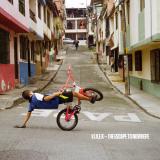
Not many can match V.I.V.E.K when it comes to pushing sound system culture.
With over two decades worth of releases, dances and low-end pressure, the Southall-born, System Music label owner announces the imminent arrival of his debut album, ‘The Escape To Nowhere’.
Spanning eight deep and meditative tracks, ‘The Escape To Nowhere’ is a fully realised exploration of dubwise tradition, reimagined through V.I.V.E.K’s unmistakable expert approach and unbound from one specific genre
Drawing from a lifetime immersed in bassweight heritage and club-ready experimentation, the record distils his musical journey into a fully formed and immersive statement, featuring the haunting vocals of Dandelion and Dego Ranking, experimental percussion and a meticulously sculpted low-end design.
‘The Escape To Nowhere’ will mark the 50th release on System Music, a landmark that underscores both the label and artist’s enduring commitment to forward-thinking bass music firmly rooted in culture and craft.
Chicago producer and composer Will Miller’s Resavoir has established a strong following at the intersection of jazz, electronic music, and beat-driven production, with more than 9,000 vinyl records sold and 82M+ streams across the project’s first three albums. Resavoir’s 2019 self-titled debut received an 8.2 from Pitchfork alongside broad international critical acclaim, with ongoing support from Gilles Peterson, Lefto, Anthony Valadez, Somewhere Soul, Andrew Jervis and Lovie, plus airplay on BBC 6 Music, KEXP and NPR. Recent recognition includes placements on NPR, KMHD and New Commute’s Best Albums/Songs of 2025, while Resavoir has toured extensively in the UK and Europe and opened for Khruangbin, BADBADNOTGOOD and Kassa Overall.
Above The Clouds finds Resavoir moving further into electronic territory, combining jazz improvisation with dreamy synthesizers, booming drums, smeared samples and electronic instrumentation. Recorded through loose studio sessions with longtime collaborators Lane Beckstrom and Jeremy Cunningham, with contributions from Kenneth Leftridge Jr. and Gregory Uhlmann, the album incorporates wind synthesizers, samplers, guitars, electronic drums and woodwinds into a fluid, groove-oriented sound. The album follows Resavoir’s growing presence across editorial and playlist platforms including Apple Music, Spotify, TIDAL and Delicieuse Musique, with US and EU/UK touring planned for Fall 2026.
Chicago producer and composer Will Miller’s Resavoir has established a strong following at the intersection of jazz, electronic music, and beat-driven production, with more than 9,000 vinyl records sold and 82M+ streams across the project’s first three albums. Resavoir’s 2019 self-titled debut received an 8.2 from Pitchfork alongside broad international critical acclaim, with ongoing support from Gilles Peterson, Lefto, Anthony Valadez, Somewhere Soul, Andrew Jervis and Lovie, plus airplay on BBC 6 Music, KEXP and NPR. Recent recognition includes placements on NPR, KMHD and New Commute’s Best Albums/Songs of 2025, while Resavoir has toured extensively in the UK and Europe and opened for Khruangbin, BADBADNOTGOOD and Kassa Overall.
Above The Clouds finds Resavoir moving further into electronic territory, combining jazz improvisation with dreamy synthesizers, booming drums, smeared samples and electronic instrumentation. Recorded through loose studio sessions with longtime collaborators Lane Beckstrom and Jeremy Cunningham, with contributions from Kenneth Leftridge Jr. and Gregory Uhlmann, the album incorporates wind synthesizers, samplers, guitars, electronic drums and woodwinds into a fluid, groove-oriented sound. The album follows Resavoir’s growing presence across editorial and playlist platforms including Apple Music, Spotify, TIDAL and Delicieuse Musique, with US and EU/UK touring planned for Fall 2026.
Tears|Ov are Terces Wale (aka D. Wale), L.E. Allen and Lottie Lou Poulet. For real money and in no particular order, they also work odd jobs as digital caterers, shrinking heads, doing laundry and looking up stuff online.
Tears|Ov write: ‘A life on hold! The corporate apology embedded in bad quality, insincere, trashy, patronising hold music it can have no meaning in this stage of Capitalism. There isn’t time - and humility is a waste of money. Still they joke and try to keep us calm, patient and satisfied. This was the starting point for “A Life on Hold” by Tears|Ov - Which quickly drifted into further musings on a collective life that feels forever two steps forward and x-steps back. We wait on hold and reach the top of the queue only for the line to go dead.
Tears|Ov are interested in the ready-made of mainstream media, particularly, the lies, the rub, the promises and the taken for granted. We are the blood plasma of the I in the screens embrace. We seek to find ourselves in that reflection, our real selves – if they even exist – just because it’s kinda fun. You may have seen us on TV, in the bargain basement music section, or some venue in your local area. We take the opportunities the Universe provides.” – Tears|Ov, London, 20 June 2026
With Dogma, Hamburg-based metalcore innovators Half Me take their sound to an even darker and more uncompromising level. Building on the success of their acclaimed debut Soma, the band delivers a relentless blend of crushing riffs, hardcore aggression, industrial textures and raw emotional intensity. Featuring the previously released singles "Weather Eye", "Built On Your Blood" and "Fear Is The New Belief", Dogma is a concise yet devastating statement that cements Half Me as one of the most exciting new forces in modern heavy music.
With Dogma, Hamburg-based metalcore innovators Half Me take their sound to an even darker and more uncompromising level. Building on the success of their acclaimed debut Soma, the band delivers a relentless blend of crushing riffs, hardcore aggression, industrial textures and raw emotional intensity. Featuring the previously released singles "Weather Eye", "Built On Your Blood" and "Fear Is The New Belief", Dogma is a concise yet devastating statement that cements Half Me as one of the most exciting new forces in modern heavy music.
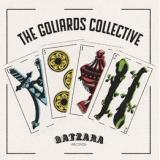
This time we have The Goliards Collective delivering a message-filled rocksteady tune. “U Tres U Dos” is a strong political statement riding on a sweet yet powerful rhythm.
Built with the immediacy that comes from limitation, iPhone Grime is almost exactly what it says on the tape case. Pulled directly from the portable communication device of Front Left Life's Louis Payne, iPhone Grime is the perfect distillation of raw ideas through a simple medium. When producers can drown in the infinite possibilities of the DAW vortex, a simple phone app can steer you swiftly to the sharpest results. Snippets of real world sound captured on the mic ground these quick-fire beats in a time and place, dynamic and street-level like grime and early dubstep was when it was being imagined on PlayStation games and filmed on ropey phone cameras.
Payne is undoubtedly bringing perspective to his sketches, having forged a connection with London's club scene through his part in the widely hailed Front Left Life parties in Catford, at Venue MOT and elsewhere. With a roll call of guests that cuts a sharp line through the best of bassweight club music right now, his taste and knowledge precedes his first steps into the production arena. Rather than puzzling out the path to a thousand likes for a hardware jam reel, he's opted for a direct line between his brain and the beat at the end of it.
You can hear the naivety behind vocal loops like the one nagging away on 'Follow That', calling to mind the first time you ever tried making a Fruity Loops beat. But these are no amateur throwaways — the technology has moved on and Payne's instincts guide him towards legit constructions that could easily do damage in the club. Sometimes they exist as no more than an eight bar loop, while others like 'Wind It Up (Dream Dealers Version)' or 'Extra Dimensional Being' stretch an idea out. Throughout it all, the looming throb of square wave bass glues the record together and anchors the grime dimension of Payne's job lot of phone jams.
Payne's work is all his own, and the snatches of real life around the beats anchor this music in his own London life. But, like previous shifts in technology and accessibility, iPhone Grime also raises an important prospect—that anyone with one of these apps, a Bluetooth speaker and an idea can bring music out of studios and into the world. History has already proven, when that happens the possibilities become thrillingly unpredictable.
Stoked to announce the debut record by Faulsk on Ruff Kutz!
Sometimes life can feel cyclical and having the first solo release on the label by someone other than myself had to be the right choice, it just so happened to be the producer from Tāmaki Makaurau / Auckland, which is where I started my lifelong obsession with Electronic music.
Shortly after playing a gig together at Whakamana in late 2024, we started exchanging tunes and I immediately wanted to put a release together with the first track he sent.. The release also features 2 collaborative tracks with myself and consists of 4 deep psychedelic grooves across the tempo ranges, built with the sound system in mind. This is an outrageous debut EP, and I am stoked to have it on Ruff Kutz!
Whilst having a low social media profile and only a few tracks released into the wild, Faulsk seems to have carved out a honed in sonic identity. Mixing Techno and Dub production techniques whilst still having swagger and depth that appeals to the bass heads. Expect expertly crafted soundscapes, interesting loopy grooves, lush evolving pads/stabs and low end wizardry. Genre - Faulsk, just how we like it.
Galvanize was the first track to build the EP with a relentless 4x4 groove, perfectly balanced low end and washy atmospherics, the track gradually evolves to show that less is more sometimes - with it's use of stripped back restraint and negative space to create energetic mood shifts.
On the A2, the first collaboration track Exhalation slows the tempo to 100 BPM for some kind of bass mutation straight from the underworld. This one taps into the tense atmospherics of Galvanize whilst cranking up the intensity with evolving drones and razor sharp percussion to sit amongst the dense soundscape.
The title track on the flip, is a 9 min roll out, reminiscent of early Forest Drive West. The subtle modulation and dubbing on musical parts draws you in and is a nice juxtaposition to the crunching percussion, militant groove and precise low end. Chugging away at 115 BPM, this is a versatile track to inject some kinetic energy into your local underwater dancehall.
Closing out on the B2 we have another collaboration. Upping the tempo to the mid 120s, Retrospect sinks deeper into hypnotism with polyrhythmic grooves and an unresolving feel which creates steady momentum, coupled with lush and evolving synth work which take the track into serenity. Regulate your sound system.
UK experimental multi-instrumentalist Oli Heffernan (aka Ivan The Tolerable) returns to independent label Riot Season Records on October 23rd, 2026, with The Planets, a fierce, tension-fuelled reinterpretation of Gustav Holst’s iconic orchestral suite tailored for the modern age.
Originally composed over a century ago to capture the astrological characters of the cosmos, Holst's masterpiece receives a radical, uneasy update. Where the original composition leaned on grand symphonic sweeps, Ivan The Tolerable strips away the comfort of the orchestra, replacing it with fracturing analog synthesisers, claustrophobic tape loops, and the hypnotic, nervous pulse of modern kosmische music and avant-garde noise.
The Planets is an album forged in the specific dread of 2026—a year defined by geopolitical instability, climate weariness, and pervasive societal tension. Rather than looking up at the stars in awe, Heffernan turns the telescope back toward a fractured Earth. From the staggering, industrial-tinged dread of "Mars" to a hollow, melancholic take on "Jupiter," the album transforms familiar motifs into an immersive exploration of collective psychological fatigue.
Recorded in isolation by Heffernan, the project captures the signature solo vulnerability seen on his recent landmark releases like Psychogeography. It balances moments of deep, meditative stillness with sudden, jarring eruptions of noise, offering listeners a space to both confront and process the overwhelming static of the everyday world.
This compilation took almost four years to come together. For the residency, the band Alexander Flood composed three new pieces, which they developed with the ensemble over two rehearsal days before performing them across three concerts. The core ensemble - Lucy Liebe, Franka Fairy, Tara Sarter, Raffaelo Visconti and Nonny Smith - remained together throughout the summer of 2024, growing into something far greater than just a band. This compilation not only documents the music played by the Residence Band, but also captures the wider story of the other bands that we recorded while they were on tour and who came to the studio with me the following day. Kai appears here after performing at Holidays in 2024. Sonic Interventions recalls a special milestone: the band's first concert outside Berlin, which took place at Holidays in 2023. Sasha Berliner performed at the Jazz Klub, which is illustrated throughout the comic included in this booklet. Benedikt Montiel Mathews joined the Jazz Montez project through a year-long internship and a record we released together. Hind Ennaira led the successor to the Residence Band during a weekend at El Barrio in 2024. However, her recording was not made in Frankfurt, but in Essaouira, Morocco, during a spontaneous late-night session.
Inlcuding: Pressed on high quality 150g vinyl, the record comes packaged in a beautiful cover, designed by artist Verena Mack. It features a 20 page booklet that includes a fictional comic on the making of a Jazzklub.
Includes unlimited streaming of Jazz Montez Presents Vol. III via the free Bandcamp app, plus high-quality download in MP3, FLAC and more.
For over 25 years, David Madson (aka Odd Nosdam) has been stationed away from the light of the mainstream, diligently working the nightshift. Every so often, we awake to find another of his bleary and beautiful missives slung into the waking world – albums whose assemblages of sampled grooves, atmospheres and voices are unified by a hallucinatory sense of melody, like disparate visions strung together through ribbons of sleep-talk. From his earliest days as a member of the seminal group cLOUDDEAD, through his remixes for artists such as Boards of Canada and Black Moth Super Rainbow, Nosdam has been reporting back from his rounds upon the perimeters of culture and consciousness, forging a musical language all of his own.
On Patrol is the second Odd Nosdam LP to be released on The Notwist’s imprint Alien Transistor – following on from the 2019 album Mirrors – and continues a collaborative history that begun with a 2008 remix of The Notwist song, “Sleep”. It’s a love letter to the vinyl format, produced with the aim of optimizing for a single LP. This objective permeated every aspect of the album’s production, from the duration of each side through to the vinyl mastering (Jessica Thompson) and lacquer-cutting (Dubplates & Mastering, Berlin). As we've come to expect, the album is built almost entirely from found sounds, many of which were taken from obscure and second-hand vinyl gathered during Nosdam’s ceaseless crate-digging escapades. Other sources include field recordings made in 2022 at the Catalonia summer home of artist Salvador Dalí, which are baked into the swirling sci-fi glide of “Here to Know (Adéu Mix)”, and a sumptuous clunking bass line courtesy of Organi’s Mike Walti, which runs like an infinite highway through the fuzzy, sunbaked sprawl of “Deepsimple”.
Odd Nosdam’s work has always swept the entire atmospheric spectrum, from rhythmic vigour to levitational beauty. On Patrol is perhaps his finest assimilation of these extremes. “Sgt. Pepsi” is the perfect case in point: a formidable slow groove capsizes into vinyl crackle after a mere minute, before the song resurrects itself through sweeping strings and vocal harmonies, sliding against each other like the overlain romantic denouements to a dozen Hollywood films from the 1940s. Elsewhere, “Get You In (Belong Mix)” drapes shoegaze guitar over a trundling funk backbeat, straddling the physical world and the outer realms, while hushed voices point toward the song's implied themes of cultural cliques, critical consensus and the plight of the eternal outsider: “Sure, I can get you in... these people are my friends, I’m one of them - I belong.”
This is music that both endures and disappears. Odd Nosdam has always wielded a strange relationship with time, scrambling association with any specific era, weaving together numerous tempos simultaneously. There is no master clock. Each track could happily hold up as an infinite loop, yet Nosdam clearly favours the potency of the gone-too-soon, applying the fadeout just as hypnosis starts to crest. Indeed, the songs are both the product of meticulous long-term construction and spontaneity. While the foundations of On Patrol have come together over several years, the recording process involved channeling vibes through a vintage Roland Space Echo and bouncing song fragments back and forth from hard disk to cassette 8-track, gifting a phased permanence to creative decisions made on the fly – a hat-tip to the production processes of Nosdam's longtime hero, Lee ‘Scratch’ Perry. Like a recurring dream, On Patrol appeals to both the plains of momentary ephemera and the long-established backchannels of the unconscious, equal parts revelation and deja vu.
Area records delivers their first release from ADMNTi, with a 4-tracker that spans through electro tinged tech house, breaks and 2-step, making up the GigaHertZ EP.
Third time’s a charm, or possibly an anomaly. Johannes Volk returns to Running Back for another five exercises in perception, memory and dance-floor physics.
Following Extra Dimensions and Lightweave, this third instalment finds Volk continuing his particular way of making machine music feel strangely human and vice versa.
Shining Force starts somewhere above ground. Gliding across an unfamiliar planetary surface, optical illusions and physical anomalies slowly interfere with the senses. Unknown landscapes,
peculiar vegetation, nature behaving unnaturally: techno as field research. Switching From Bicycle to Spaceship does exactly what it says on the tin, more or less: trading pedal power for propulsion as a deceptively simple groove gathers speed, sheds gravity and quietly leaves the atmosphere behind.
Hidden In Dark belongs to a more immediate kind of archaeology: fog, strobes, bodies and those inexplicably intense emotions that only seem to exist on a dance floor at the right (or wrong) hour.
Back Alley Dancers turns the telescope around and looks backwards. Vocal fragments, pitched, delayed, reversed and removed from their original meaning trigger half-memories of youth, and of
encountering music and culture before you quite understood what any of it meant. Familiar feelings in unfamiliar shapes.
Finally, Drumatury dispenses with introspection and gets down to elementary forces. Morphing bass drums meet a Chicago jacking snare-roll massacre. Drama becomes drumaturgy. Or the other way around.
Five tracks, several states of consciousness, one Johannes Volk. No protective equipment supplied.
At the foot of the mountain. Our gaze is inclined toward the summit.
Toward the ascent. The destination that awaits us.
From the valley, we look up at the summit: our destination. But also the path: the true destination.
We can already trace our route, and we are already imagining ourselves walking up there. Along the small ridge, just above the tree line. There, we take a short break and look for the exact spot in the valley where we were standing earlier. It is strange to grasp that we have actually climbed this mountain. To look down from up here at the place where we were just moments ago – the same place we looked up from, toward the place where we are standing now.
And now, knowing what it is like to be up here, we remember what we imagined it would be like back then. What we believed it would mean to stand here.
Along the way, our gaze wanders back and forth. Up toward the mountain, down into the valley, sometimes only at our shoes. We keep walking, one step after another. Our thoughts detached. Our body functioning purely mechanically.
Step left. Step right. Step left. Step right.
Our mind has completely detached itself, and our thoughts race at an immense speed. They summon the most different moments. Moments from our lives. Moments that shaped us, that made us who we are. Or are we perhaps simply trying to understand who we are and how we got here?
It is strange that reaching the summit and looking down could make us believe that we have finally reached, or are striving toward, some superior, triumphant position. When in fact, it is really only about looking at the path we inevitably have to take. Processing impressions from a certain distance. Reconsidering what we have experienced, without losing sight of what lies ahead.
Our gaze turns back toward the summit.
Is there a destination?
An ascent? A summit? A descent? The return?
Or is it only about the insights we encounter along the way?
Am Fuß des Berges. Unser Blick ist zum Gipfel geneigt.
Auf den Aufstieg. Das Ziel, das uns erwartet.
Vom Tal aus blicken wir auf den Gipfel: unser Ziel. Aber auch den Weg: das wahre Ziel. Unsere Route kann man jetzt schon abstecken, und wir stellen uns bereits vor, wie wir dort oben laufen. Über den kleinen Grat, leicht oberhalb der Baumgrenze. Dort machen wir eine kleine Pause und suchen genau die Stelle im Tal, an der wir vorhin noch standen. Es ist verrückt, zu begreifen, dass wir diesen Berg tatsächlich hinaufgestiegen sind. Von hier oben auf den Ort hinunterzusehen, an dem wir eben noch waren – an denselben Ort, zu dem wir hinaufgeblickt haben, als wir noch dort unten standen. Und jetzt, da wir wissen, wie es ist, hier oben zu sein, erinnern wir uns daran, was wir uns damals darunter vorgestellt haben. Was wir geglaubt haben, es würde bedeuten, hier zu stehen.
Unterwegs wandert unser Blick hin und her. Hinauf zum Berg, hinunter ins Tal, manchmal nur auf unsere Schuhe. Wir gehen weiter, einen Schritt nach dem anderen. Unsere Gedanken losgelöst. Unser Körper funktioniert rein mechanisch. Schritt links. Schritt rechts. Schritt links. Schritt rechts.
Unser Geist hat sich völlig losgelöst, und unsere Gedanken rasen mit einer ungeheuren Geschwindigkeit. Sie rufen die verschiedensten Momente herauf. Momente aus unserem Leben. Momente, die uns geprägt haben, aus denen wir geworden sind, wer wir sind. Oder versuchen wir vielleicht einfach nur zu verstehen, wer wir sind und wie wir hierhergekommen sind?
Es ist schon seltsam, dass das Erreichen des Gipfels und der Blick nach unten uns glauben lassen könnten, dass wir endlich eine überragende, triumphale Position erreicht haben oder anstreben würden. Dabei geht es doch eigentlich nur um den Blick auf den Weg, den wir zwangsläufig beschreiten müssen. Eindrücke mit etwas Abstand zu verarbeiten. Erlebtes noch einmal Revue passieren zu lassen, ohne den Blick nach vorne zu verlieren.
Unser Blick wendet sich wieder dem Gipfel zu. Gibt es ein Ziel? Einen Aufstieg? Einen Gipfel? Einen Abstieg? Die Rückkehr? Oder geht es nur um die Erkenntnisse, die uns unterwegs begegnen?
2026 Repress
Sun Electric - the legendary Berlin duo of Tom Thiel and Max Loderbauer - returns with Episodes, an enticing new album. While the pair has been active and creating over the years (remember their track 'Every Now And Then' on the 10 Years De:tuned compilation in 2019), Episodes marks their first album of original material in nearly 20 years. Now, with a renewed way of working together, they present fresh and captivating music on the Belgian De:tuned label, built from recordings made with the vintage 1960s Subharchord Synthesizer. Across 6 tracks, Sun Electric takes listeners on a strange yet wonderful journey through shifting moods and sonic textures, capturing their unmistakable sense of exploration and atmosphere. With kind support of the Studio for Electroacoustic Music of the Akademie der Kunste. Stay tuned!
The wonderful Ian Anderson at The Designers Republic created all the graphic work. Mastered by Mike Grinser at Manmade Mastering. Available on 180g vinyl and CD, with a separate digital release through all the usual online stores.
GRAMMY® Award-winning reggae icon Buju Banton returns to familiar ground with renewed purpose, setting the tone for a bold new era. Officially reunited with longtime partner VP Records, this full-circle moment reconnects one of Jamaica’s most influential voices with the label that helped define a pivotal chapter of his career. “Butterflies” serves as the first offering from his upcoming al bum, arriving Summer 2026. Produced by internationally acclaimed hitmaker Supa Dups (Rihanna, Drake, Bruno Mars), the track delivers a vibrant, feel-good sound anchored on a re-lick of the ‘Answer rhythm.’ Buju’s unmistakable cadence glides effortlessly across the track, blending classic dancehall energy with a modern sonic edge. The single exemplifies a confident return, one that bridges legacy with evolution while reintroducing the essence of dancehall to a new generation!
2026 Repress
Sun Electric - the legendary Berlin duo of Tom Thiel and Max Loderbauer - returns with Episodes, an enticing new album. While the pair has been active and creating over the years (remember their track 'Every Now And Then' on the 10 Years De:tuned compilation in 2019), Episodes marks their first album of original material in nearly 20 years. Now, with a renewed way of working together, they present fresh and captivating music on the Belgian De:tuned label, built from recordings made with the vintage 1960s Subharchord Synthesizer. Across 6 tracks, Sun Electric takes listeners on a strange yet wonderful journey through shifting moods and sonic textures, capturing their unmistakable sense of exploration and atmosphere. With kind support of the Studio for Electroacoustic Music of the Akademie der Kunste. Stay tuned!
The wonderful Ian Anderson at The Designers Republic created all the graphic work. Mastered by Mike Grinser at Manmade Mastering. Available on 180g vinyl and CD, with a separate digital release through all the usual online stores.
“Everyone Thinks” by A for Alpha.
Bristol-based DJ and producer makes her Neptune Discs debut via Jupiter’s Depth, landing with four stripped-back, bassline-led cuts with a garage-esque, tech-house lean. The B2 sees her link with two friends under the Groove Interrogation alias. A DJ as much as a producer, she’s moving across the planet this summer, with stops including EASTERENDERZ in Barcelona and Love International in Tisno. Weighty low-end, dubby chords and a focused groove throughout — a sharp debut on the sub.
Even if Ancient Greek isn’t part of general knowledge anymore, the word mega is. Hence, you might admire our modesty to say that Roman Flügel’s first outing on Running Back in 2022 is perfectly headed. Greta, large, mighty and somewhat the love- or brainchild of his earlier Garden Party and the previous D.I.S.C.O., Mega pulls out all the stops: hi-nrg melodies, circus bells, cowboy funk and honey hooks at 140 beats per minute. While it is nearly impossible not to take this bait or decorate it with the Bobby-O medal of honor, Roman proves one more that you can be catchy and classy at the same time.
Rules on the other hand, puts some of these stylistic devices in reverse or down-tempo mode and feels like brushing your teeth after an extended feast or the perfect hors d’oeuvre.
Completing the picture with Film 1, Film 2 and Film 3, Flügel flexes his freethinking muscles and lands in-between art school new wave bands and soundscape science. Music that is masterly made, magical in its impact and perfectly described with a misquoted line from Get The Balance Right: it’s never predictable.
Remedy Music Vlc returns with a new release. Voyager is a four-track EP of soul, funk and breaks, selected from Freedust’s new album and released on 7-inch vinyl.
Four groove-packed tracks continuing the collaboration between Freedust and Remedy Music Vlc.
Delsin is pleased to announce the second volume of their extensive compilation series combing through the catalogue of landmark Dutch techno label Djax-Up-Beats. The series, curated by Rush Hour co-founder Christiaan Macdonald, continues with a look at the label's legacy in the development of Dutch techno through the early 90s. This second volume in the Djax-Up-Beats 1990-2005 series comprises 25 tracks, presented again as a main triple-vinyl album plus three additional 12" EPs. The compilation also features again all-new illustration from Alan Oldham, design by Lost Communication and liner notes from music journalist Oli Warwick. Crucially, every track featured on the series has been carefully mastered by Johanz Westerman, bringing the best out of tracks that often had very little post-production treatment before they were originally pressed to wax. Volume 2 - The NL Connection takes a deep dive in the development of Dutch techno. Saskia Slegers didn't run her label with a specific focus on any one place, but she naturally connected with artists close to home. Emergent producers from across the Netherlands found a vital outlet in Djax-Up whether they were short-lived dabblers or dance music devotees on their way to lifelong careers. Volume 2 - The NL Connection looks at the first outings in Dutch techno by originators such as Stefan Robbers as Terrace, Dylan Hermelijn as Planet Gong and Edge Of Motion (with Gert-Jan Schonewille) and Sander Friedeman as Random XS. Whether it was sensitive, melodious machine dreaming, gnarly acid tweaking, jackhammer techno or oddball outliers, you could count on Slegers' label to point you to the best underground club music coming out of the Netherlands. With four more, equally extensive, volumes to come in this series, Djax-Up-Beats 1990-2005 is a thorough exploration of a true totem of techno culture -- a renegade label that operated on its own terms and carried surprises and slammers in equal measure.
The EP SHAME is an existential retrospective of musician 이명(earring) 20s and 30s, as well as an “audio essay.” Resonating deeply with Søren Kierkegaard’s statement that “anxiety is the vertigo of freedom,” the album captures the wandering, choices, and existential crises of youth confronted with excessive freedom and infinite possibilities in a personal and literary manner.
With cinema scores and underground dance music as the backbone, the artist juxtaposes distinct genres, such as trip-hop and techno. From everyday field recordings, such as the sounds of the Korean subway, traffic lights, and rain, to poems about human relationships or war, the production repeatedly intersects highly personal narratives with vast sociocultural phenomena in the style of an omnibus film.
Individuals cannot exist apart from society, nor can society be complete without them. [SHAME] is a record and a question in which the musician, 이명(earring), projects himself onto the entity known as “human,” seeking the reason and value of life.
credits
Composed by 이명(earring)
Mixed by 이명(earring), fandisk
Mastering by Jiyong Kim At Motherbird Studio
Pressed by champion pressing
Artwork by 이명(earring)
We are delighted to welcome back one of our most cherished artists, Life Recorder, for the third instalment of his remarkable Time Moods series on Visions Recordings.
This latest release delivers four vibrant and immersive tracks, blending deep techno textures with refined grooves, another strong statement in the series.
Far from the hype, French DJ and producer Kriss, aka Life Recorder, has been steadily shaping a distinctive sonic identity over the years. Deeply influenced by the heritage of Detroit and Chicago’s house and techno scenes, his sound travels effortlessly across genres while remaining rooted in soulful depth.
Born in the French suburbs of Geneva and now based in Marseille, he began his journey in the 1990s, connecting with music through record shops, DJing, and the evolving club culture of the time.
With this third chapter of Time Moods, Life Recorder continues to craft a timeless and introspective musical narrative.
„Zarro“ war die erste Studioaufnahme des verstorbenen jamaikanischen Sängers Wayne Smith, der 1985 mit „Under Mi Sleng Teng“ zur Stimme der digitalen Revolution des Dancehall werden sollte. Diese Aufnahme aus dem Jahr 1980 für den Produzenten Prince Jammy, der auch „Sleng Teng“ produzierte, verwendet denselben Begleittrack wie Lacksley Castells „What A Great Day“, das ebenfalls auf 7-Zoll-Single (VPGS7107) erhältlich ist. Smiths Version wurde vor dieser 7-Zoll-45er-Single noch nie veröffentlicht und war nur gelegentlich auf Jammys Soundsystem in Jamaika zu hören. Der „Zarro“, auf den er sich bezieht, ist der TV-Selbstjustizler Zorro, ein maskierter Popkultur-Held aus den Disney-Western der 1950er und 60er Jahre, den Smith aus den „Spätabendfilmen“ zitiert. Neben dieser ersten Aufnahme und dem bekannteren „Under Mi Sleng Teng“ nahm Smith auch herausragende, aber wenig bekannte LPs für Jammy auf, darunter „Youthman Skanking“ aus dem Jahr 1982 (VPGSRL7098) und „Smoker Super“ aus dem Jahr 1985 (VP4269).