Suche:1977

Styles
Alle
Kölsch - 1977

Kölsch

1977

2x12inchKOM276
Kompakt
06.03.2026

2026 Repress

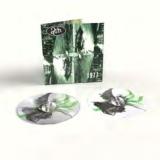
SPEICHER-Ikone und gefeierte Clubmacht KÖLSCH debütiert auf KOMPAKT mit dem Album '1977', einer außergewöhnlichen Sammlung von elektronischen Juwelen, die seine frühen Meisterwerke mit exklusivem neuen Material verzahnt. Hier finden Monument, Irrsinn & Biss unter einem gemeinsamen, kennerhaft austarierten Groove zusammen und bereichern die Erlebniswelten von
Heimtänzern wie Flurhunden... dein neuer bester Freund ist da und es ist eine Platte.

Tatsache: trotz des Namens und unserer wohldokumentierten Vorliebe für Kölner Bier ist KÖLSCH kein Rheinländer und er hat sich auch nicht nach dem Lokalbräu benannt. Selbst weltweit hoch gehandelte Hits und eine Reihe profilträchtiger Live-Auftritte scheinen allerdings nichts daran zu ändern, daß der preisgekrönte dänische Produzent Rune Reilly Kölsch regelmäßig konfuse Fragen nach dem eigenen Namen weggrätschen muß. Und doch könnte er nicht deutlicher werden: man denke an etablierte Flurfavoriten wie OPA, DER ALTE oder SILBERPFEIL... diese Tracktitel beziehen sich samt und sonders auf Runes Erinnerungen an eine Kindheit in Deutschland. Anders gesagt: ja, der heißt wirklich so.

'1977' ist nicht einfach nur entseeltes 'Best Of'-Gemenge: mit brandneuen Eisen wie BASSHUND, BAPPEDECKEL und EISWINTER im Feuer braucht KÖLSCH sich nun wirklich keine Gedanken über die zukünftige Wirkgeschichte seines Werks zu machen. Und dann ist da eine Rillenzirze wie OMA, hoch emotionaler Konterpart zum leicht sardonischen OPA und in jeder Hinsicht ebenso mitreissend wie die kanonische Überballade ALL THAT MATTERS. Für das große Finale schließlich wendet sich Rune an LORELEY, das bestimmende Initialrelease des Projekts und bis heute ein massiver Kracher von eigenem Recht - in der Tat so gewaltig, daß der Schock von gleich zwei weiteren Tracks gepuffert werden muss, dem dramatischen WASSERSCHUTZ und einem trojanischen Pferd namens FELIX. Letzteres sollte ja eigentlich eine Art Outro für das Album sein... doch dann hat jemand den Knopf gedrückt und das transdimensionale Portal erwachte zum Leben.

Auf Lager

Bei uns am Lager und sofort versandfertig

23,11
Guilty Razors - Complete Recordings 1977 - 1978
  • A1: Hurts And Noises
  • A2: Wake Up
  • A3: I Don't Wanna Be A Rich
  • A4: Terrorist Bad Heart
  • A5: Provocate
  • A6: Lucifer Sam (Pink Floyd)
  • B1: Happy!?
  • B2: So Lazy
  • B3: I Feel Down
  • B4: Stupido
  • B5: Guilty
  • B6: Caroline Says (Loo Reed)

UILTY RAZORS, BONA FIDE PUNKS.


Writings on the topic that go off in all directions, mind-numbing lectures given by academics, and testimonies, most of them heavily doctored, from those who “lived through that era”: so many people today fantasize about the early days of punk in our country… This blessed moment when no one had yet thought of flaunting a ridiculous green mohawk, taking Sid Vicious as a hero, or – even worse – making the so-called alternative scene both festive and boorish. There was no such thing in 1976 or 1977, when it wasn’t easy to get hold of the first 45s by the Pistols or the Clash. Few people were aware of what was happening on the fringes of the fringes at the time. Malcolm McLaren was virtually unknown, and having short hair made you seem strange. Who knew then that rock music, which had taken a very bad turn since the early 1970s, would once again become an essential element of liberation? That, thanks to short and fast songs, it would once again rediscover that primitive, social side that was so hated by older generations? Who knew that, besides a few loners who read the music press (it was even better if they read it in English) and frequented the right record stores? Many of these formed bands, because it was impossible to do otherwise. We quickly went from listening to the Velvet Underground to trying to play the Stooges’ intros. It’s a somewhat collective story, even though there weren’t many people to start it.
The Guilty Razors were among those who took part in this initial upheaval in Paris. They were far from being the worst. They had something special and even released a single that was well above the national average. They also had enough songs to fill an album, the one you’re holding. In everyone’s opinion, they were definitely not among the punk impostors that followed in their wake. They were, at least, genuine and credible.

Guilty Razors, Parisian punk band (1975-1978). To understand something about their somewhat linear but very energetic sound, we might need to talk about the context in which it was born and, more broadly, recall the boredom (a theme that would become capital in punk songs) coupled with the desire to blow everything off, which were the basis for the formation of bands playing a rejuvenated rock music ; about the passion for a few records by the Kinks or the early Who, by the Stooges, by the Velvet mostly, which set you apart from the crowd.
And of course, we should remember this new wave, which was promoted by a few articles in the specialized press and some cutting-edge record stores, coming from New York or London, whose small but powerful influence could be felt in Paris and in a handful of isolated places in the provinces, lulled to sleep by so many appalling things, from Tangerine Dream to President Giscard d’Estaing...
In 1975-76, French music was, as almost always, in a sorry state ; it was still dominated by Johnny Hallyday and Sylvie Vartan. Local rock music was also rather bleak, apart from Bijou and Little Bob who tried to revive this small scene with poorly sound-engineered gigs played to almost no one.
In the working class suburbs at the time, it was mainly hard rock music played to 11 that helped people forget about their gruelling shifts at the factory. Here and there, on the outskirts of major cities, you still could find a few rockers with sideburns wearing black armbands since the death of Gene Vincent, but it wasn’t a proper mass movement, just a source of real danger to anyone they came across who wasn't like them. In August 1976, a festival unlike any other took place in Mont-de-Marsan – the First European Punk Festival as the poster said – with almost as many people on stage as in the audience. Yet, on that day, a quasi historical event happened, when, under the blazing afternoon sun, a band of unknowns called The Damned made an unprecedented noise in the arena, reminiscent of the chaotic Stooges in their early adolescence. They were the first genuine punk band to perform in our country: from then on, anything was possible, almost anything seemed permissible.

It makes sense that the four+1 members of Guilty Razors, who initially amplified acoustic guitars with crappy tape recorder microphones, would adopt punk music (pronounced paink in French) naturally and instinctively, since it combines liberating noise with speed of execution and – crucially – a very healthy sense of rebellion (the protesters of May 1968 proclaimed, and it was even a slogan, that they weren’t against old people, but against what had made them grow old. In the mid-1970s, it seemed normal and obvious that old people should now ALSO be targeted!!!).
At the time, the desire to fight back, and break down authority and apathy, was either red or black, often taking the form of leafleting, tumultuous general assemblies in the schoolyard, and massive or shabby demonstrations, most of the time overflowing with an exciting vitality that sometimes turned into fights with the riot police. Indeed, soon after the end of the Vietnam War and following Pinochet’s coup in Chile, all over France, Trotskyist and anarcho-libertarian fervour was firmly entrenched among parts of the educated youth population, who were equally rebellious and troublemakers whenever they had the chance. It should also be noted that when the single "Anarchy in the UK" was first heard, even though not many of us had access to it, both the title and its explosive sound immediately resonated with some of those troublemakers crying out for ANARCHY!!! Meanwhile, the left-wing majority still equated punks with reckless young neo-Nazis. Of course, the widely circulated photos in the mainstream press of Siouxsie Sioux with her swastikas didn’t necessarily help to win over the theorists of the Great Revolution. It took Joe Strummer to introduce The Clash as an anti-racist, anti-fascist and anti-ignorance band for the rejection of old-school revolutionaries to fade a little.

The Lycée Jean-Baptiste Say at Porte d’Auteuil, despite being located in the very posh and very exclusive 16th arrondissement of Paris, didn’t escape these "committed" upheavals, which doubled as the perfect outlet for the less timid members of this generation.
“Back then, politics were fun,” says Tristam Nada, who studied there and went on to become Guilty Razors’ frontman. “Jean-Baptiste was the leftist high-school in the neighbourhood. When the far right guys from the GUD came down there, the Communist League guys from elsewhere helped us fight them off.”
Anything that could challenge authority was fair game and of course, strikes for just about any reason would lead to increasingly frequent truancy (with a definitive farewell to education that would soon follow). Tristam Nada spent his 10th and 11th unfinished grades with José Perez, who had come from Spain, where his father, a janitor, had been sentenced to death by Franco. “José steered my tastes towards solid acts such as The Who. Like most teenagers, I had previously absorbed just about everything that came my way, from Yes to Led Zeppelin to Genesis. I was exploring… And then one day, he told me that he and his brother Carlos wanted to start a rock band.” The Perez brothers already played guitar. “Of course, they were Spanish!”, jokes their singer. “Then, somewhat reluctantly, José took up the bass and we were soon joined by Jano – who called himself Jano Homicid – who took up the rhythm guitar.” Several drummers would later join this core of not easily intimidated young guys who didn’t let adversity get the better of them.

The first rehearsals of the newly named Guilty Razors took place in the bedroom of a Perez aunt. There, the three rookies tried to cover a few standards, songs that often were an integral part of their lives. During a first, short gig, in front of a bewildered audience of tough old-school rockers, they launched into a clunky version of the Velvet Underground's “Heroin”. Challenge or recklessness? A bit of both, probably… And then, step by step, their limited repertoire expanded as they decided to write their own songs, sung in a not always very accurate or academic English, but who cared about proper grammar or the right vocabulary, since what truly mattered was to make the words sound as good as possible while playing very, very fast music? And spitting out those words in a language that left no doubt as to what it conveyed mattered as well.
Trying their hand a the kind of rock music disliked by most of the neighbourhood, making noise, being fiercely provocative: they still belonged to a tiny clique who, at this very moment, had chosen to impose this difference. And there were very few places in France or elsewhere, where one could witness the first stirrings of something that wasn’t a trend yet, let alone a movement.

In the provinces, in late 1976 or early 1977, there couldn’t be more than thirty record stores that were a bit more discerning than average, where you could hear this new kind of short-haired rock music called “punk”. The old clientele, who previously had no problem coming in to buy the latest McCartney or Aerosmith LP, now felt a little less comfortable there…
In Paris, these enlightened places were quite rare and often located nex to what would become the Forum des Halles, a big shopping mall. Between three aging sex workers, a couple of second-hand clothes shops, sellers of hippie paraphernalia and small fashion designers, the good word was loudly spread in two pioneering places – propagators of what was still only a new underground movement. Historically, the first one was the Open Market, a kind of poorly, but tastefully stocked cave. Speakers blasted out the sound of sixties garage bands from the Nuggets compilation (a crucial reference for José Perez) or the badly dressed English kids of Eddie and the Hot Rods. This black-painted den was opened a few years earlier by Marc Zermati, a character who wasn’t always in a sunny disposition, but always quite radical in his (good) choices and his opinions. He founded the independent label Skydog and was one of the promoters of the Mont-de-Marsan punk festivals. Not far from there was Harry Cover, another store more in tune with the new New York scene, which was amply covered in the house fanzine, Rock News (even though it was in it that the photos of the Sex Pistols were first published in France).
It was a favorite hang-out of the Perez brothers and Tristam Nada, as the latter explained. “It’s at Harry Cover’s that we first heard the Pistols and Clash’s 45s, and after that, we decided to start writing our first songs. If they could do it, so could we!”
The sonic shocks that were “Anarchy in the UK”, “White Riot” or the Buzzcocks’s EP, “Spiral Scratch” – which Guilty Razors' sound is reminiscent of – were soon to be amplified by an unparalleled visual shock. In April 1977, right after the release of their first LP, The Clash performed at the Palais des Glaces in Paris, during a punk night organised by Marc Zermati. For many who were there, it was the gig of a lifetime…
Of course, Guilty Razors and Tristam were in the audience: “That concert was fabulous… We Parisian punks were almost all dressed in black and white, with white shirts, skinny leather ties, bikers jackets or light jackets, etc. The Clash, on the other hand, wore colourful clothes. Well, the next day, at the Gibus, you’d spot everyone who had been at this concert, but they weren’t wearing anything black, they were all wearing colours.”

It makes sense to mention the Gibus club, as Guilty Razors often played there (sometimes in front of a hostile audience). It was also the only place in Paris that regularly scheduled new Parisian or Anglo-Saxon acts, such as Generation X, Siouxsie and the Banshees, the Slits, and Johnny Thunders who would become a kind of messed-up mascot for the venue. A little later, in 1978, the Rose Bonbon – formerly the Nashville – also attracted nightly owls in search of electric thrills… In 1977, the iconic but not necessarily excellent Asphalt Jungle often played at the Gibus, sometimes sharing the bill with Metal Urbain, the only band whose aura would later transcend the French borders (“I saw them as the French Sex Pistols,” said Geoff Travis, head of their British label Rough Trade). Already established in this small scene, Metal Urbain helped the young and restless Guilty Razors who had just arrived. Guitarist for Metal Urbain Hermann Schwartz remembers it: “They were younger than us, we were a bit like their mentors even if it’s too strong a word… At least they were credible. We thought they were good, and they had good songs which reminded of the Buzzcocks that I liked a lot. But at some point, they started hanging out with the Hells Angels. That’s when we stopped following them.”

The break-up was mutual, since, Guilty Razors, for their part, were shocked when they saw a fringe element of the audience at Metal Urbain concerts who repeatedly shouted “Sieg Heil” and gave Nazi salutes. These provocations, even still minor (the bulk of the skinhead crowd would later make their presence felt during concerts), weren’t really to the liking of the Perez brothers, whose anti-fascist convictions were firmly rooted. Some things are non-negotiable.
A few months earlier (in July 1978), Guilty Razors had nevertheless opened very successfully for Metal Urbain at the Bus Palladium, a more traditonally old-school rock night-club. But, as was sometimes the case back then, the night turned into a mass brawl when suburban rockers came to “beat up punks”.

Back then, Parisian nights weren’t always sweet and serene.

So, after opening as best as they could for The Jam (their sound having been ruined by the PA system), our local heroes were – once again – met outside by a horde of greasers out to get them. “Thankfully,” says Tristam, “we were with our roadies, motorless bikers who acted as a protective barrier. We were chased in the neighbouring streets and the whole thing ended in front of a bar, with the owner coming out with a rifle…”
Although Tristam and the Perez brothers narrowly escaped various, potentially bloody, incidents, they weren’t completely innocent of wrongdoing either. They still find amusing their mugging of two strangers in the street for example (“We were broke and we simply wanted to buy tickets for the Heartbreakers concert that night,” says Tristam). It so happened that their victims were two key figures in the rock business at the time: radio presenter Alain Manneval and music publisher Philippe Constantin. They filed a complaint and sought monetary compensation, but somehow the band’s manager, the skilful but very controversial Alexis, managed to get the complaint withdrawn and Guilty Razors ended up signing with Constantin with a substantial advance.

They also signed with Polydor and the label released in 1978 their only three-track 45, featuring “I Don't Wanna be A Rich”, “Hurts and Noises” and “Provocate” (songs that exuded perpetual rebellion and an unquenchable desire for “class” confrontation). It was a very good record, but due to a lack of promotion (radio stations didn’t play French artists singing in English), it didn’t sell very well. Only 800 copies were allegedly sold and the rest of the stock was pulped… Initially, the three tracks were to be included on a LP that never came to be, since they were dropped by Polydor (“Let’s say we sometimes caused a ruckus in their offices!” laughs Tristam.) In order to perfect the long-awaited LP, the band recorded demos of other tracks. There was a cover of Pink Floyd's “Lucifer Sam” from the Syd Barrett era – proof of an enduring love for the sixties’ greats –, “Wake Up” a hangover tale and “Bad Heart” about the Baader-Meinhof gang, whose actions had a profound impact on the era and on a generation seeking extreme dissent... On the album you’re now discovering, you can also hear five previously unreleased tracks recorded a bit later during an extended and freezing stay in Madrid, in a makeshift studio with the invaluable help of a drummer also acting as sound engineer. He was both an enthusiastic old hippie and a proper whizz at sound engineering. Here too, certain influences from the fifties and sixties (Link Wray, the Troggs) are more than obvious in the band’s music.

Shortly after a final stormy and rather barbaric (on the audience’s side) “Punk night” at the Olympia in June 1978, Tristam left the band ; his bandmates continued without him for a short while.

But like most pioneering punk bands of the era, Guilty Razors eventually split up for good after three years (besides once in Spain, they’d only played in Paris). The reason for ceasing business activities were more or less the same for everyone: there were no venues outside one’s small circuit to play this kind of rock music, which was still frightening, unknown, or of little interest to most people. The chances of recording an LP were virtually null, since major labels were only signing unoriginal but reassuring sub-Téléphone clones, and the smaller ones were only interested in progressive rock or French chanson for youth clubs. And what about self-production? No one in our small safety-pinned world had thought about it yet. There wasn’t enough money to embark on that sort of venture anyway.

So yes, the early days of punk in France were truly No Future!
vorbestellen22.05.2026

erscheint voraussichtlich am 22.05.2026

21,43

Last In: vor 2026 Jahren
Various - Akasaka Soul Funk 1969-1977

Various

Akasaka Soul Funk 1969-1977

12inch180GWALP07
180g
11.03.2025

At the start of the 60s, a new wave of gospel-influenced jazz started to emerge, with hits such as Art Blakey & The Jazz Messengers' "Moanin'" and Cannonball Adderley's "Work Song" epitomizing this evolution in the genre. The terms "soul jazz" and "funky jazz" were coined as a way to describe this new sound that was making an impact in the US and also on the other sides of the Atlantic and Pacific oceans.

In 1964, Ray Charles made his first visit to Japan. Then, in 1968, Martha & The Vandellas and Stevie Wonder set foot in the country, followed by Sam & Dave in 1969, Ike & Tina Turner in 1970, and B.B. King in 1971. The TV show "Soul Train" also began airing in Japan in the early 1970s. A watershed moment happened in 1973 when Sammy Davis Jr. was cast in a TV commercial for Suntory whisky — and the influence of the US Black entertainment world had really landed, with soul, jazz, and funk artists becoming household names.

Nippon Columbia played a pivotal role during this turning point. The company had contracts with Buddah Records and Blue Thumb Records, releasing notable works by artists such as Gladys Knight & The Pips, Curtis Mayfield, The Crusaders, and The Pointer Sisters. At the same time, the label was also releasing several Japanese soul, jazz, and funk projects under the lead of music director Jiro Inagaki. Inagaki, a saxophonist who began his professional career in the early 1950s, honed his skills at U.S. military camps, where he shared his love of music with the Black servicemen. In the 1960s, he played with drummer Hideo Shiraki's band, which was widely considered to be Japan's representative group of the funky jazz movement. Later, Inagaki went on to pursue more cutting-edge sounds with his Soul Media project, including being a pioneering figure in the "jazz rock" genre. By working closely with Inagaki and his various musical projects, Nippon Columbia really placed the company at the center of an exciting and important period in Japanese music.

In 1965, Nippon Columbia opened a recording studio in Tokyo's Akasaka neighborhood. Akasaka was also home to the first ever discotheque in Japan, the legendary MUGEN, which ran from 1968 to 1987 and where many acts performed, including Con Funk Shun, the Bar-Kays, Ike & Tina Turner, B.B. King, Sam & Dave, Three Degrees, and Edwin Starr, as well as many local Japanese singers and musicians. This melting pot of creativity in the area led to the recording of many singles and albums by Japanese artists that were infused with the sounds of soul and funk. Most of these recordings were not available outside of Japan and remain rare and unknown musical gems. The selection you are holding in your hands is an explosive collection of 10 essential tracks released by the legendary Nippon Columbia label between 1969 and 1977, capturing the raw, unapparelled energy that was flowing through the air of the Akasaka streets at this electrifying time. Enjoy!

---

180GWALP07 - Manufactured and distributed by 180g.

Auf Lager

Bei uns am Lager und sofort versandfertig

28,99
Leo Kupper - Electronic Works & Voices 1977-1987 (2x12")

Perfect follow up to our precedent 2LP (Electronic Works & Voices 1961-1979), this release highlights Leo Kupper's earliest compositions with his GAME machine - Générateur Automatique de Musique Electronique (Automatic Generator of Electronic Music) constructed during the 1960's. Purely electronic sounds into new structures, Leo Kupper shows through his 4 tracks a real spirit of renewal. Released in our Early Electronic series.

Tracklisting 2LP SIDE A 1 Aerosons (1982) / 15'00 SIDE B 2 Litanea (1987) / 18'07 SIDE C 3 Inflexions vocales (1982) / 21'35 SIDE D 4 Le rêveur au sourire passager (1977) / 24'08

Auf Lager

Bei uns am Lager und sofort versandfertig

19,20
BUZZCOCKS - TOTAL POP 1977-80: RARE, LIVE AND GREAT (TAPE)
  • Walking Distance
  • E.s.p
  • Strange Thing
  • Harmony In My Head
  • Why She's A Girl From The Chainstore
  • I Believe
  • Fiction Romance
  • Breakdown (Live)
  • Love Battery (Live)
  • Real World
  • I Don't Know What To Do With My Life
  • Airwaves Dream
  • Ever Fallen In Love (With Someone You Shouldn't've?)
  • Orgasm Addict
  • Running Free
  • Are Everything
  • What Do You Know

Buzzcocks - Total Pop 1977-80: Rare, Live And Great Diese Compilation vereint rare Studioaufnahmen und energiegeladene Live-Versionen aus der Hochphase der Buzzcocks und zeigt, warum die Band als Pioniere des britischen Punk gilt. Mit kompromisslosem Sound und scharfem Songwriting ist das Album ein authentisches Zeitdokument der späten 70er.

vorbestellen19.12.2025

erscheint voraussichtlich am 19.12.2025

8,61

Last In: vor 2026 Jahren
Aksak Maboul - Before Aksak Maboul (documents & experiments 1969-1977)
  • Here And Now, A Free Rock Tentet (1969)
  • Riot In The Solbosch (1970)
  • Abstract And Concrete (1972)
  • Five Sketches For A Short Film (1972)
  • Lost In The Farmhouse (1973)
  • Modular Excursions At John’s (1975)
  • Kosmischer Afternoon (1975)
  • The Big Slide (1976)
  • Gyrovagations (1976)
  • Imaginary Travels With Chris (1976)
  • Proto-Kefak (1976)
  • Didn’t Make It 1: Balinoid (1977)
  • Didn’t Make It 2: Angeloid (1977)
  • Java Ney (1977)
  • Didn’t Make It 3: The Missing Dance (1977)
vorbestellen21.11.2025

erscheint voraussichtlich am 21.11.2025

23,82

Last In: vor 2026 Jahren
PUHDYS - LIVE AT MUSIKLADEN EXTRA 1977
  • Sturmvogel
  • Lebenszeit
  • Gedicht "Rehlein
  • I Need Your Love Tonight
  • Steine
  • Reise Zum Mittelpunkt Der Erde
  • Wie Ein Pfeil
  • Wenn Ein Mensch Lebt
  • Lied Für Generationen
  • Geh' Zu Ihr
  • Rock'n Roll Potpourri

Puhdys - Live im Musikladen 1977 & mehr: Die frühen West-Auftritte Mitte der 1970er Jahre wagten die Puhdys erste Schritte über die Grenzen der DDR hinaus. 1974 spielten sie in Belgien, 1975 folgten Auftritte in niederländischen Diskotheken. 1976 standen sie beim Festival in Turku (Finnland) sogar mit Chuck Berry auf der Bühne und traten erstmals in der Bundesrepublik auf - beim "Fest der Jugend" in Dortmund. Ein besonderer Meilenstein war die Einladung zur Sendung "Musikladen Extra" im Februar 1977. Die Aufzeichnung in den Studios von Radio Bremen zeigte die Band ungewohnt locker und spontan - ganz anders als bei den streng durchgeplanten DDR-TV-Produktionen. Dieter "Maschine" Birr erinnert sich lebhaft an die entspannte Atmosphäre und die Gastfreundschaft von Produzent Mike Leckebusch. Diese Veröffentlichung dokumentiert die frühen West-Auftritte der Puhdys mit Originalmaterial aus dem "Musikladen" und weiteren seltenen Archivaufnahmen. Sie zeigt eindrucksvoll, wie die Band ihren Weg in die westliche Musiklandschaft fand - lange bevor sie mit über 22 Millionen verkauften Tonträgern und mehr als 4.000 Konzerten zur festen Größe der deutschen Rockgeschichte wurde.

vorbestellen07.11.2025

erscheint voraussichtlich am 07.11.2025

24,79

Last In: vor 2026 Jahren
GG ALLIN - EXPOSE YOURSELF: SINGLES COLLECTION 1977-1991
  • Love Tunnel
  • Devil's Triangle
  • 1980: S Rock + Roll (Original Version)
  • Cheri Love Affair (Original Version)
  • Galileo
  • Jesus Over New York
  • Expose Yourself
  • Hangin' Out With Jim
  • Drink, Fight + Fuck
  • Cock On The Loose
  • When I Die
  • Liquor Slicked Highway
  • Sitting In This Room
  • Watch Me Kill
  • Castration Crucifixion
  • Snakeman's Dance
  • Slaughterhouse Death Camp
  • Feces + Blood - Bacteria Of The Soul
  • Master Daddy
auch erhältlich

Color Vinyl[22,65 €]


GG Allin singles compilation reissued on vinyl. If you had an immense amount of courage (as well as a strong stomach), then you may have been 'lucky' to have experienced G.G. Allin the way he was meant to be -- on-stage. In the studio, G.G.'s recordings more times than not did not match the fire of his live performance (and after watching some of his brutal shows on video, how could they'), as they were issued on a variety of little-known indie labels, and of varying quality. One of the first compilations to truly pull tracks from throughout G.G.'s controversial career is 2004's Expose Yourself: The Singles Collection 1977-1991. A few selections have been impossible to find for years, such as the early G.G. single "Love Tunnel" b/w "Devil's Triangle," which makes its first appearance in years here. Elsewhere, you'll find tracks that have appeared elsewhere -- "Snakeman's Dance," "When I Die," "Gypsy Motherfucker," etc. -- but are among G.G.'s best. Since it touches upon most of his different eras, Expose Yourself: The Singles Collection 1977-1991 is easily one of the better G.G. comps to appear. ~ Greg Prato

vorbestellen26.09.2025

erscheint voraussichtlich am 26.09.2025

22,65

Last In: vor 2026 Jahren
GG ALLIN - EXPOSE YOURSELF: SINGLES COLLECTION 1977-1991

GG Allin singles compilation reissued on vinyl. If you had an immense amount of courage (as well as a strong stomach), then you may have been 'lucky' to have experienced G.G. Allin the way he was meant to be -- on-stage. In the studio, G.G.'s recordings more times than not did not match the fire of his live performance (and after watching some of his brutal shows on video, how could they'), as they were issued on a variety of little-known indie labels, and of varying quality. One of the first compilations to truly pull tracks from throughout G.G.'s controversial career is 2004's Expose Yourself: The Singles Collection 1977-1991. A few selections have been impossible to find for years, such as the early G.G. single "Love Tunnel" b/w "Devil's Triangle," which makes its first appearance in years here. Elsewhere, you'll find tracks that have appeared elsewhere -- "Snakeman's Dance," "When I Die," "Gypsy Motherfucker," etc. -- but are among G.G.'s best. Since it touches upon most of his different eras, Expose Yourself: The Singles Collection 1977-1991 is easily one of the better G.G. comps to appear. ~ Greg Prato

vorbestellen26.09.2025

erscheint voraussichtlich am 26.09.2025

22,65

Last In: vor 2026 Jahren
LAVVI EBBEL - GUNS AND CREPE FLAMBÉE (1977-2014) LP 2x12"
 
13

Lavvi Ebbel was without a doubt one of the most talked-about bands of the Belgian new wave scene. In the early eighties, the band achieved considerable success with singles such as “Give Me a Gun” and “Victoria.” This ten-piece band had a solid live reputation thanks to the original sound of the two guitarists (Marc de Wit and Chris Van Ransbeeck), pianist (Bea Van Ransbeeck), and the steady Eric de Wit on drums. Singer Luckas Vander Taelen and backing vocalist Kristien D’Haeger provided a strong stage presence, supported by the swinging horn section with Jan Weuts and Eric Sleichim, who was the driving force behind Maximalist and Bl!ndman some time later.

Lavvi Ebbel played about 200 times in Belgium and the Netherlands, both in small clubs and at prestigious festivals such as Seaside. On the compilation LP “Get Sprouts,” which is a true sample chart of the music of this period, we find Lavvi Ebbel's “No Place To Go,” a high point in their versatile collaboration with producer Jean-Marie Aerts. “Albü Meth” is arguably the best-known mini-LP, featuring the cult song “Le Cafard.” After the release of the album “Kiss Me Kate,” produced by the American producer David Avidor, the band called it a day in 1983. Following a couple of very successful performances in 2013, Lavvi Ebbel, 12 years later, is making a comeback with the original band members.

vorbestellen12.09.2025

erscheint voraussichtlich am 12.09.2025

23,95

Last In: vor 2026 Jahren
WIRE - NINE SEVENS (RECORDED 1977-80) LP 2x12"

For RSD 2025 the influential band will be releasing a new double LP edition of their Nine Sevens box set of 7" records first released in 2018. Combining the run of early singles with more obscure later period tracks underlines the strength in depth that Wire had. This is pop art as art/pop and an exploration of the blank canvas of pop culture and how far that canvas can be stretched going from three minute constructs to ambient washes. The 7" single was always the ultimate artefact and statement with the A side being the band momentarily paused in time and distilled and freeze-framed into the forever with less than three minutes of electric sound. These "sevens" released from 1977 to the end of that decade, signpost the band's remarkable development from their brilliantly monochromatic early phase to the textured complexity of the almost psychedelic unzipping of their sound and vision. In some ways the compilation of Nine Sevens onto a double album makes for quite a weird documentation of the band in this period. The first disc, to some extent, follows the script of a singles / greatest hits collection but the second one goes wildly off-piste and ends up somewhere quite far from where the collection started. A conventional Greatest Hits collection, besides being conceptually a bit naff would, if strictly based on charting singles, consist of only one song! A Best Of is subjective and somewhat pointless in the age of the Spotify playlist that anyone can make. The only thing really that these tracks have in common (besides being by Wire) is that they were released or destined to be released on 7" by Wire in the period 1977-1980. - Nine Sevens is both title & elevator pitch!' Wire always understood the language of pop and also the artfulness of playing with it, deconstructing it and reassembling it into new and thrilling shapes. Decades later, these adventures into sound are like slices of delicious, perfect pop/noise and hits from a parallel universe. Track list:Side A1 Mannequin 2 Feeling Called Love 3 12XU 4 I Am the Fly5 Ex-Lion Tamer 6 Dot Dash *7 Options R * Side B 8 Outdoor Miner (single version) * 9 Practice Makes Perfect 10 A Question Of Degree * 11 Former Airline *12 Map Ref. 41ºN 93ºW Side C 1 Go Ahead * 2 Our Swimmer * 3 Midnight Bahnhof Café * 4 Second Length (Our Swimmer) **5 Catapult 30 ** Side D (154 EP) 6 Song 1 * 7 Get Down 1 + 2 * 8 Let's Panic Later *9 Small Electric Piece * * previously unreleased on vinyl album ** recorded in 1980 but not released until 2014

vorbestellen16.05.2025

erscheint voraussichtlich am 16.05.2025

28,78

Last In: vor 2026 Jahren
Jeff Bridges - Slow Magic, 1977-1978 (LP)

“Music is the weed that keeps popping out of the concrete in my life. It just seems to want to come out.” –Jeff Bridges

Extensive booklet including liner notes by Sam Sweet, new interviews with Jeff Bridges, and never-before-seen archival photos.

Featuring Burgess Meredith (Rocky, Batman), members of Oingo Boingo, and assorted characters from the West Los Angeles art and music underground
Culled from a single decaying cassette tape labeled “July 1978,” these recordings are a window into the secret musical life of the Dude. Even after becoming one of Hollywood’s biggest stars, Bridges spent all his free time jamming and recording with a trusted circle of musicians composed of childhood friends, artists, and assorted L.A. oddballs.

Imagine The Band playing at CBGB with The Exploding Plastic Inevitable. Or Arthur Russell and the Talking Heads collaborating on a suite of mutant disco. Though Bridges and his friends were brought up around the movie industry, they decided to create their own private musical universe, where they could be as weird as they wanted.

Their music opens a portal to a hidden world of outlandish creativity and camaraderie in 1970s Los Angeles. It’s the missing piece of his musical evolution, revealed here for the first time in all its joyful abandon.

vorbestellen02.05.2025

erscheint voraussichtlich am 02.05.2025

28,78

Last In: vor 2026 Jahren
B.B. King - In France: Live at the Nancy Jazz Pulsations Festival (1977) (LP 2x12")

In France: Live at the Nancy Jazz Pulsations Festival (1977) is a previously unissued live recording from the legendary bluesman B.B. King captured by the ORTF in France on October 7, 1977 and released on producer Zev Feldman's Deep Digs label in partnership with Elemental Music and INA France.
The limited-edition 180-gram 2-LP set will be mastered and cut by Matthew Lutthans at The Mastering Lab, and include rare photos by Thierry Trombert, Val Wilmer, Jan Persson and more; plus liner notes by the acclaimed french author Jean Buzeline; and testimonials from fellow blues icons who knew or were inspired by B.B. King.

vorbestellen02.12.2024

erscheint voraussichtlich am 02.12.2024

35,08

Last In: vor 2026 Jahren
Can - Live In Keele 1977 (LP 2x12")
  • A1: Keele 77 Eins
  • A2: Keele 77 Zwei
  • B1: Keele 77 Drei
  • B2: Keele 77 Vier
  • C1: Keele 77 Fünf
  • D1: Etching On D-Side (No Music)

'Can Live in Keele 1977' ist die neueste Veröffentlichung in einer Reihe von Live-Alben, die aus den Tresoren von Spoon Records und aus Fanaufnahmen ausgegraben und dann von Gründungsmitglied Irmin Schmidt und Produzent/Ingenieur René Tinner sorgfältig zusammengestellt wurden.

Live in Keele 1977 ist ein dynamisches Dokument der Spätzeit von Can. Die im März 1977 aufgenommene Kernbesetzung bestehend aus Irmin Schmidt, Jaki Liebezeit, Michael Karoli und Holger Czukay wird durch Rosko Gee (Traffic) am Bass ergänzt. Gees kürzliche Ergänzung des Line-Ups bedeutete, dass Holger Czukay von seinen Bassaufgaben entbunden wurde, um „Waveform Radio und Spec“ zu spielen. Sounds“, die sich hier als jenseitige Klänge, Samples und das manifestieren, was ein Rezensent einer späteren Show als „Mondgespräch mit einem weißen Kontinentaltelefon“ beschrieb.
Das neue Album ist die letzte Veröffentlichung in der aktuellen Reihe von Live-Dokumenten, die 1975 mit „Can Live in Stuttgart“ starteten (Uncuts Reissues of the Year, Platz 2 in MOJOs Reissues of the Year, Platz 7 in The Wire's Archive Reissues of the Year und mehr). ), gefolgt von „Can Live in Cuxhaven 1976“ (das erneut eine große Rolle in den Neuauflagen des Jahres spielte); „Can Live in Brighton 1975“ („Pure Dynamit… Keep They Coming“ – MOJO); „Can Live in Paris 1973“, das erste der Reihe mit dem verstorbenen Damo Suzuki („eine lebhafte Hommage an eine der besten Improvisationsgruppen des Rock“ – Financial Times), und „Can live in Aston 1977“ (The Quietus's Reissue of the Week – „ Es ist zweifellos Musik zur Erweiterung des Geistes, aber sie dehnt das Gehirn auf eine Weise, die einzigartig bleibt – „Can waren schon immer Anbieter von Inner-Space-Rock, und jede Reise ins Unbekannte war so anders wie ihre Shows“).

vorbestellen22.11.2024

erscheint voraussichtlich am 22.11.2024

25,84

Last In: vor 2026 Jahren
BANDA BLACK RIO - MARIA FUMACA (1977) LP

2024 Restock

An excellent album by one of the greatest Brazilian funk bands ever – a wonderful blend of funk, jazz, and soul – and a set that rivals any of the best work coming from the US at the time! These guys are right on the money right from the start – moving through sharp changes with effortless ease, yet never in a way that's too slick or commercial – kind of like that perfect balance that Kool & The Gang hit for just a few records in the mid 70s – but with more of a Brazilian feel overall. Jazzy licks abound – and the keyboards, guitar, and horns are just great – but the set's also got some more regional percussion, too – which really rounds out the record wonderfully. The grooves all have a really universal appeal – essential for any fan of funky sounds – and titles include "Mr Funky Samba", "Junia", "Casa Forte", "Na Baixa Do Sapateiro", "Lelbon Via Vaz Lobo", "Baia", "Maria Fumaca", and "Metalurgia".

nicht am Lager

Bestelle jetzt und wir bestellen den Artikel für dich beim Lieferanten.

30,04

Last In: vor 16 Monaten
Various - Socialist Disco - Dancing Behind Yugoslavia's Velvet Curtain 1977-1987 LP 2x12"

A collection of 18 rare disco tracks from Yugoslavia. Compiled by Leri Ahel & Zeljko Luketic from original master tapes. Fox & His Friends label owners Ahel & Luketic selected obscure 7'' singles, b-sides, out-of-print releases and digged deep into the vaults of Jugoton to tell the story of how disco infiltrated clubs and pop music. This compilation is vinyl counterpart to their pioneering research and work in two major exhibitions tracing roots, influences and social significance of disco in music, fashion and design held in 2015 in Klovicevi Dvori Museum and HDD Gallery in Zagreb. "Socialist Disco - Dancing Behind Yugoslavia's Velvet Curtain 1977-1987" double gatefold LP with extensive liner notes contains tunes from KIM Band, Gabi Novak, Arian, Ljupka Dimitrovska, Ana Sasso, Moni Kovacic, Milka Lenac, Rok Hotel, Ivica Surjak, Grupa ST, Nano Prsa and many more in various sub-genres including classical orchestrated disco, dance reworkings of international chart hits and synth-filled italo-disco stompers performed by Yugoslavian music stars, fashion models and even sports and football heroes. Disco, a vital Trojan horse (in local notion: a pop music you can dance to), stayed quite a long time In Yugoslavia, refusing to be silenced and refusing to jump into the bandwagon of expected. It was influenced by American and European disco sound, for example, by the Boney M, Amanda Lear or Love Machine, who all visited Yugoslavia and had live concerts. The producers and the big record companies like Jugoton, PGP RTB, Diskoton or ZKP RTVL, noted the hype in music and they constantly probed the market with limited run of seven inchers or special performances. Some artists were quite successful, but the rest were in the 7'' single empire which was free enough to experiment with all things disco had to offer - genre hybrids, use of electronics, sexual innuendo, bizarre lyrics and most importantly, great musicians and major composers having fun. The no-restrictions policy of disco was there to evade the rules and surely it did.

nicht am Lager

Bestelle jetzt und wir bestellen den Artikel für dich beim Lieferanten.

28,78

Last In: vor 15 Monaten
Joao Gilberto - Amoroso (1977) LP

2024 Restock

A warmly intimate album from Joao Gilberto - one that has the singer and guitarist in the same special space as his wonderful albums from the early 70s - a bit more sophisticated than the bossa years, but equally personal throughout!

nicht am Lager

Bestelle jetzt und wir bestellen den Artikel für dich beim Lieferanten.

31,05

Last In: vor 18 Monaten
PLANET GONG - Live Floating Anarchy 1977

Planet Gong

Live Floating Anarchy 1977

12inchCHARLY5012LP
CHARLY
19.07.2024

Recorded live, the music on this album is a wild, spacey psychedelic jam, featuring Here & Now’s initial members.

vorbestellen19.07.2024

erscheint voraussichtlich am 19.07.2024

31,05

Last In: vor 2026 Jahren
VARIOUS - THE BRISTOL PUNK EXPLOSION VOL 2 (1977-1981)

We are delighted to bring you the follow up to the successful 'The Bristol Punk Explosion (1977-1979) album released in November 2023 - a twelve-track compilation entitled 'The Bristol Punk Explosion Vol 2 (1977-1981).'The sleeve notes are written by Tim Williams author of the 1977 Loaded Fanzine. Tim talks about the transition from Soul to Punk, the demise of Prog Rock and the fashion culture that sat seamlessly alongside the music. There are three previously unreleased tracks never before available on vinyl. The Cortinas were the first. They played the Roxy Club, released two singles on Mark Perry and Miles Copeland's Step Forward label, graced the front cover of Sniffin' Glue and recorded a Peel Session. Taking their cue, bands like Social Security (the first band on Heartbeat Records), The Pigs (whose 'Youthanasia' single was released by Miles Copeland's New Bristol Records), The Media, 48 Hours and Private Dicks gave Bristol one of the strongest provincial early punk scenes. The area of Barton Hill gave us The X-Certs, who by 1978 could already pull audiences of five hundred into Trinity Hall. Though we did not realise it at the time, they effectively bridged the gap between the late 70s Bristol scene and what our American cousins like to term the UK82 bands. In time bands from the suburbs of Bristol started to appear on the scene, Misdemeanor (who were managed by the late Dennis Sheehan U2's tour manager for thirty plus years), Apartment from Downend (whose photo adorns the front cover) and Noiz Boiz from Weston Super Mare, the seaside town just down the road. This compilation is designed to give all fans of Punk a snapshot of what Bristol Punk was all about during that period. We close side Two of the album with The X-Certs Clash infused /reggae single 'Together' and follow it with one of Bristol finest Roots reggae bands Talisman and their single 'Wicked Dem'. The punky/reggae party had truly started as we move into the 80's Bristol Stylee! Bristol Boys Make More Noise!

vorbestellen24.05.2024

erscheint voraussichtlich am 24.05.2024

26,68

Last In: vor 2026 Jahren
Stan Getz - Unissued Session Copenhagen 1977 LP

On January 30, 1977 - a day after the sold out 3-day concerts celebrating legendary US saxophonist Stan Getz's 50th birthday in Copenhagen - Stan and his crew including Danish ace bassist Orsted Pedersen were in studio to record

vorbestellen20.05.2024

erscheint voraussichtlich am 20.05.2024

28,36

Last In: vor 2026 Jahren
Bunny Wailer - Solomonic Singles, Pt. 2: Rise & Shine (1977-1986) LP 2x12"

At the same time that Neville 'Bunny Wailer' Livingston recorded his debut solo long playing masterpiece, 'Blackheart Man', he was also creating a series of singles for his own Solomonic label. These records were every bit as good, at times even better, but they have never been released outside of Jamaica. Until now...,

It is next to impossible to ever overstate the importance of The Wailers to the history of Jamaican music and, as the last surviving member of the group, Bunny Wailer rightly regards himself as the sole keeper of their history ever mindful of the group's exalted position in the story of reggae music and the importance of their legacy. In 2010 Dub Store were proud to be able to work with Bunny on re-releasing a selection of his earliest recordings for the Solomonic label, lovingly restored and presented in reproduction sleeves and labels, on limited edition seven and twelve inch singles. Now, taking another step forward, we are more than proud to present Bunny's timeless music on two beautifully packaged CD's and double LP's. Bunny's first solo album, 'Blackheart Man' originally released in 1976 on his own Solomonic label in Jamaica and on Island in the UK, is one of the undisputed all time classics of Jamaican music and established Bunny Wailer as a highly respected, world renowned artist in his own right. During this period Bunny also produced a series of singles released in Jamaica and the UK in strictly limited quantities without the benefit of international distribution, that are every bit as good and, in some cases, even better than this awesome debut long player. Original copies have subsequently become highly prized, and highly priced, collector's items. "Classic rarities" is an overused and abused term too often employed to describe average records that failed to sell on their initial release but both 'Tread Along' and 'Rise & Shine' are packed from beginning to end with a searing selection of some of the greatest and hardest to find reggae records ever produced. 'Tread Along' opens, naturally enough, with 'Tread Along' from 1969, one of the last singles for The Wailers' own Wail N Soul M label, and runs through the first release on the Solomonic label, 'Searching For Love' also known as 'Search For I', 'Bide Up' released as 1974 drew to a close, a radical reworking of 'Pass It On' and a marked contrast to the version on The Wailers' 'Burnin'', album, 'Life Line' and the prophetic 'Arabs Oil Weapon' kept the pressure on as Bunny began outlining the flawless 'Blackheart Man' album. Each release was a certified classic in its own right. Peter Tosh's melodica version to Bunny's 'Amagideon' ('Armageddon'), the first track on 'Rise & Shine', is followed by 'Love Fire', an update of another Wail N Soul M track, 'Fire Fire'/'Babylon Burning', through to one of the deepest roots records ever created, 'Rise & Shine', on to 'Riding' from the 'Bunny Wailer Sings The Wailers' sessions (but not featured on the album) and a huge hit in the UK in 1981, and closing with 'Rule Dance Hall' from 1985. No idle boast..., The liner notes feature the story of The Wailers, as told to Dub Store by Bunny himself in Kingston in an enlightening 2012 interview, and rarely seen contemporary photographs complete these essential releases. The music of Bunny Wailer was not only a medium for change and protest but also to elucidate and educate and 'Tread Along' and 'Rise & Shine' finally complete the canon of un-compiled Wailers music. "I'm quite satisfied, you know, reggae music is the kind of music that although sometimes you would look at it and say..., boy, it's hard..., then again you look at what it has done for the people of the world you know that that couldn't be locked up in a little place like Jamaica!" Bunny Wailer

nicht am Lager

Bestelle jetzt und wir bestellen den Artikel für dich beim Lieferanten.

44,50

Last In: vor 23 Monaten
VARIOUS - FANTASTIC VOYAGE: NEW SOUNDS FOR THE EUROPEAN CANON 1977-1981 (2x12")

By the turn of the 80s, the impact of David Bowie’s ground- breaking Berlin recordings – the synths, the alienation, the drily futuristic production – was being felt on music across Europe. What’s more, the records being made were reflecting back and influencing Bowie’s own work – 1979’s Lodger and 1980’s Scary Monsters owed a debt to strands of German kosmische (Holger Czukay), new electronica (Patrick Cowley, Harald Grosskopf), and the latest works from old friends and rivals like Robert Fripp, Peter Gabriel and Scott Walker, all of whom had been re-energised by the fizz of 1977.

Compiled by Saint Etienne’s Bob Stanley and the BFI’s Jason Wood, Fantastic Voyage is the companion album to their hugely successful Café Exil collection, which imagined the soundtrack to David Bowie and Iggy Pop’s trans-European train journeys in the mid-to-late seventies. “Fantastic Voyage” is what happened next.

Bowie’s influences and Bowie’s own influence were rebounding off each other as the 70s ended and the 80s began, notably in the emergent synthpop and new romantic scenes as well as through the music of enigmatic acts like the Associates and post-punk pioneers such as Cabaret Voltaire.

Like Low and Heroes, some of the tracks on Fantastic Voyage are spiked with tension (Grauzone’s ‘Eisbär’) while some share those albums’ sense of travel (Simple Minds’ ‘Theme for Great Cities’, Ryuichi Sakamoto’s ‘Riot in Lagos’) and others find common ground with “Lodger’s” dark, subtle humour (Thomas Leer’s ‘Tight as a Drum’, Fripp’s ‘Exposure’).

This is the thrilling, adventurous sound of European music before the watershed moment when Bowie would abandon art- pop for America and the emerging world of MTV with “Let’s Dance” in 1983. Fantastic Voyage soundtracks the few brief years when the echo chamber of Bowie, his inspirations, and his followers created an exciting, borderless music that was ready to challenge Anglo American influences.

nicht am Lager

Bestelle jetzt und wir bestellen den Artikel für dich beim Lieferanten.

35,25

Last In: vor 2 Jahren
Various - Discomoda Salsa De Venezuela 1964-1977
 
21

Established in 1948 by César Roldán, Discomoda is one of the earliest record labels of Venezuela and the oldest family operated label in the country. Home to one of the most complete folkloric and popular music catalogues of Venezuela, the label also invested heavily in Afro-Caribbean and tropical rhythms that became popular in the 60s and 70s.

In the 1960s and before the Salsa era truly kicked off, Venezuela had a significant dance orchestra and big band movement. Unlike local record competitors dedicated to selling foreign productions, Discomoda achieved its leading position by recording the most important national bands, including Los Megatones de Lucho, Orquesta Sonoramica and Super Combo Los Tropicales; all featured in this compilation.

Later on, surrounding the festivities for the 400th anniversary of Caracas in 1967, the word "Salsa", which had been recently coined by famed radio host Phidias Danilo Escalona, was formalized to identify an Afro-Caribbean musical style with growing popularity in Venezuela and beyond. By then, the country was among the top 20 music markets in the world, with the local label Discomoda leading the way, responsible for one out of every five records sold in the country.

With the prolonged celebrations approaching due to the 400 years of the city, Discomoda and other labels began to capitalize on this new musical style by betting on both established and new local bands, such as Nelson y sus Estrellas, Los Kenya, Principe y su Sexteto and Los Satélites. As a result, this would kick off what could be considered a golden era of Salsa in Venezuela and which lasted until the mid-70s.

As we approach the 80s and with the emergence of new musical styles and bigger multi-national record labels funded by larger pockets, a lot of the previously popular bands begin to disband or choose to leave the country. Nonetheless, a few artists, like Rodrigo Mendoza, La Renovación and Grupo Yakambu, were still pushing out quality music.

We are thrilled and honored to celebrate one of Venezuela's and, equally, Latin America's most significant record labels, and to share a slice of their enduring influence in advancing Venezuelan-made Salsa music.

nicht am Lager

Bestelle jetzt und wir bestellen den Artikel für dich beim Lieferanten.

23,49

Last In: vor 21 Monaten
µ-Ziq - 1977 LP 2x12"

Μ-Ziq

1977 LP 2x12"

2x12inchBALMAT05Y
Balmat
08.02.2024

repress, yellow viny

When we established Balmat in 2021, neither of us could have imagined that within two years, we’d be putting out an album by one of our musical heroes: Mike Paradinas, aka µ-Ziq. The British producer has been an inspiration to label co-founders Albert Salinas and Philip Sherburne since the 1990s. In fact, his album-length remix project The Auteurs Vs µ-Ziq was one of the very first pieces of electronic music that Philip bought, way back in 1994. To have the opportunity to release his music now feels like a real full-circle moment.

Paradinas, of course, needs no introduction. Under a slew of aliases, chief among them µ-Ziq, the British artist revolutionized leftfield electronic music in the 1990s—coincidentally, this year marks the 30th anniversary of his debut album, Tango N’ Vectif, for his friend and sometime collaborator Aphex Twin’s Rephlex label—and his label Planet Mu has built up a formidable catalog of visionary, forwardlooking records, mapping virtually every corner of the electronic spectrum. With 1977, he turns the clock backward in a sense, and not just with the album’s title: Rooted in classic ambient and electronic sounds, these 15 tracks evoke the anything-goes spirit of the early ’90s, before the tools and tropes had calcified into cut-and-dried styles.

There’s no shortage of familiar sounds on 1977. There are echoes of raves and chillout rooms and transmissions from the fringes of techno; there are detuned synths and glistening reverb tails and, above all, gauzy vox pads, the eerie glue that holds it all together. The title, he says, is meant to invoke a general sense of nostalgia, bookmarking a year in his boyhood when he became more selfaware. More than anything, 1977 sounds like µ-Ziq distilled: Stripped of his signature breakbeats and customary chaos, Paradinas’ first-ever strictly (well, mostly) ambient album presents the essence of his music in a whole new light.

Along the way Paradinas touches on dark-ambient drones (“Marmite”), horror-film themes (“Belt & Carpet”), jungle breaks (“Mesolithic Jungle”), and even house music (“Houzz 13”), which marks the first bona fide dance-floor moment on Balmat to date). Yet the album never—to our ears, anyway— feels expressly retro. Rather, Paradinas plucks timeless sounds out of the ether and gives them a gentle tap, spinning them into unexpected new orbits. At times, 1977 feels like an experience of extended déjà vu: When we first listened to it, we had the sense that we already knew this music. It was as though we had heard it years ago, perhaps on a battered cassette tape lent to us by a friend, and been searching for it ever since. We hope you feel the same.

nicht am Lager

Bestelle jetzt und wir bestellen den Artikel für dich beim Lieferanten.

28,99

Last In: vor 21 Monaten
Aquarius Sounds - Dubbing At Aquarius Studios 1977-1979

Record Producer/ DJ / Record Plugger and Record Shop Owner Herman Chin-Lay operated out of his Aquarius Record shop at Half Way Three ,Kingston ,Jamaica.
It is from this base that he started his recording studio where he not only put out the first ever Dub album 'Aquarius Dub' but was also responsible for naming future artist Horace Swaby.
By allowing him to use his exotic fictitious working name 'Augustus Pablo' for his own recording career.
Although called 'Aquarius Dub' the tacks that make up this album were cut at Dynamic Sounds, Harry J's and Randy's Studio 17.
It was not long after this release that Herman opened the first ever twenty four track studio Aquarius Studios.
We have compiled this set of Dub tracks that were worked on at Aquarius studio's itself.
Using the legendary studio for some of the recordings and/or it's mixing and voicing facilites.
Hope you enjoy the set...Dubbing at Aquarius Sounds...

nicht am Lager

Bestelle jetzt und wir bestellen den Artikel für dich beim Lieferanten.

19,75

Last In: vor 2 Jahren
PROCOL HARUM - LIVE ON AIR 1977 LP

A Whiter Shade Of Pale ist noch heute ein Klassiker und wird mit der englischen Rockband PROCOL HARUM für immer in Verbindung stehen. PROCOL
HARUM gründeten sich 1967 und lösten sich mit dem Tod von Gary Brooker im Jahr 2022 auf. Weltweite Charterfolge und ausverkaufte Tourneen
können die Briten vorweisen. Diese 12inch Schallplatte enthält legendäre Hits & Klassiker, aufgenommen im Jahr 1977.

vorbestellen26.01.2024

erscheint voraussichtlich am 26.01.2024

31,30

Last In: vor 2026 Jahren
Teenage Jesus & The Jerks - Live 1977-1979 LP
 
27
nicht am Lager

Bestelle jetzt und wir bestellen den Artikel für dich beim Lieferanten.

23,40

Last In: vor 2 Jahren
DANIELE BALDELLI - BAIA DEGLI ANGELI 1977-1978 VOL. 3 (2x12")

After the white cover of the first volume and the silver one of the second volume, the third new chapter was to be dressed in the golden one.

This brand new "golden edition" double LP includes only rarities and '77/'78 Baia’s heritage hymns.

In the inner case we can find the iconic comics of the "antibaia", made entirely by Andrew Joseph Corsaletti, Andrea for friends. These comics were a regular appointment for all fans of "The Baia's Time", the Baia degli Angeli’s newspaper.

nicht am Lager

Bestelle jetzt und wir bestellen den Artikel für dich beim Lieferanten.

29,83

Last In: vor 2 Jahren
µ-Ziq - 1977 LP 2x12"

Μ-Ziq

1977 LP 2x12"

2x12inchBALMAT05
Balmat
13.04.2023

When we established Balmat in 2021, neither of us could have imagined that within two years, we’d be putting out an album by one of our musical heroes: Mike Paradinas, aka µ-Ziq. The British producer has been an inspiration to label co-founders Albert Salinas and Philip Sherburne since the 1990s. In fact, his album-length remix project The Auteurs Vs µ-Ziq was one of the very first pieces of electronic music that Philip bought, way back in 1994. To have the opportunity to release his music now feels like a real full-circle moment.

Paradinas, of course, needs no introduction. Under a slew of aliases, chief among them µ-Ziq, the British artist revolutionized leftfield electronic music in the 1990s—coincidentally, this year marks the 30th anniversary of his debut album, Tango N’ Vectif, for his friend and sometime collaborator Aphex Twin’s Rephlex label—and his label Planet Mu has built up a formidable catalog of visionary, forwardlooking records, mapping virtually every corner of the electronic spectrum. With 1977, he turns the clock backward in a sense, and not just with the album’s title: Rooted in classic ambient and electronic sounds, these 15 tracks evoke the anything-goes spirit of the early ’90s, before the tools and tropes had calcified into cut-and-dried styles.

There’s no shortage of familiar sounds on 1977. There are echoes of raves and chillout rooms and transmissions from the fringes of techno; there are detuned synths and glistening reverb tails and, above all, gauzy vox pads, the eerie glue that holds it all together. The title, he says, is meant to invoke a general sense of nostalgia, bookmarking a year in his boyhood when he became more selfaware. More than anything, 1977 sounds like µ-Ziq distilled: Stripped of his signature breakbeats and customary chaos, Paradinas’ first-ever strictly (well, mostly) ambient album presents the essence of his music in a whole new light.

Along the way Paradinas touches on dark-ambient drones (“Marmite”), horror-film themes (“Belt & Carpet”), jungle breaks (“Mesolithic Jungle”), and even house music (“Houzz 13”), which marks the first bona fide dance-floor moment on Balmat to date). Yet the album never—to our ears, anyway— feels expressly retro. Rather, Paradinas plucks timeless sounds out of the ether and gives them a gentle tap, spinning them into unexpected new orbits. At times, 1977 feels like an experience of extended déjà vu: When we first listened to it, we had the sense that we already knew this music. It was as though we had heard it years ago, perhaps on a battered cassette tape lent to us by a friend, and been searching for it ever since. We hope you feel the same.

nicht am Lager

Bestelle jetzt und wir bestellen den Artikel für dich beim Lieferanten.

24,33

Last In: vor 2 Jahren
Various - Swedish Meatballs Vol 2 - The Psychedelic Hard Rock Underground 1970-1977

Swedish Meatballs Vol 2 - The Psychedelic Hard Rock
Underground 1970-1977
Way-out heavy psych mindblowers with blistering guitars and pounding
drums! Sweden " heaven and hell
Strictly limited edition of 500 copies only. Comes with a striking day- glow
coloured sleeve and a massive 16- page booklet cram packed with photos and
previously untold stories. Subliminal Sounds swings open the portals to the long
lost, ultra-rare, or previously unreleased, music and history of these loud and hairy
underground hard rocking champions. Possessed zit covered Viking teens going
berserk and blasting loud and heavy sounds at youth halls making the stoner kids
go meatball crazy. Mini skirt moose hunters. Mid-70s communal people parks
hedonistic punch- drunk all- night benders. Local biker club bacchanalias with
fierce lesbian bikers make out on stage as the band's rambles on. Heavy metal
greasers in their imported American muscle cars chicken racing with ice bears.
Hard rock glam rockers accompanying XXX live shows and a previously unknown
connection to all mighty Bathory goat. All in a day's work for the Swedish
Meatballs. This is a tasty new release in our series: The Swedish Hard Rock
Underground " A Smorgasbord of Heavy Sounds !

vorbestellen25.11.2022

erscheint voraussichtlich am 25.11.2022

44,50

Last In: vor 2026 Jahren
Imagination - I'm Always Right - The WDR Tapes 1977

We are proud to present "I'm Always Right" by Imagination, an unreleased jazz rock LP from 1977. Comprised of five tracks with a playtime of roughly 30 minutes, you will hear one of the finest German late-70s rock-tinged electric jazz albums of the era. The recording is a delightful stand-out with unique compositions, aspiring solo work, and a soulful spirit throughout. Additionally, the album veritably glows with exceptional sound quality, as it has been remastered from original tapes that were cut more than four decades ago at the WDR Funkhaus, Cologne.

Here is the story of how label founder John Raincoatman became aware of these lost tapes:
"I first got in touch with members of Imagination from Düsseldorf (not to be confused with the UK disco band under the same name) in 2017 for licensing the track "Strawberry Wine" from their collectible "Shake It" album from 1980. A couple of months later, when I was speaking with Willi Hövelmann, the guitarist for Imagination, he told me about some recordings the band had made a couple of years before, when they had been invited to to the studio of the WDR, a major German broadcaster. A couple of weeks later, when Hövelmann finally sent me the files that he had requested from the WDR, I could not believe what I heard - not only that the songs were totally different from what I expected, but that they were also very very good! The music wasn't comparable to any other kind of fusion release that I knew of. These five songs were straight forward, tight and soulful electric jazz rock, a combination rarely heard from Germany from that time period."

How come Imagination - at that time a young newcomer band consisting of musicians between 19 and 22 years of age - was able to record at the well-equipped Funkhaus studio of German radio and television? Hövelmann explains: "The WDR got to know us from a newcomer band competition called "Pop am Rhein" (Pop at the Rhine) which was set up to support local bands and was promoted by several bigger newspapers. Imagination was one of the 5 contestants which were picked from 59 bands by a jury of music journalists and our band was invited to play a concert at the Philipshalle in front of about 3500 guests. Although a band called "Accept" won the contest (yes, the heavy metal band that gained international success in the following years!) and Imagination only made 3rd place, we were invited by music host and journalist Wolfgang Neumann to record in a professional studio."

Neumann's broadcasting show at the WDR was called "Rock Studio", and one of his special goals was to help push newcomer bands by giving them airplay. As a side note, Neumann actually compiled a series of three LPs on the Harvest label from 1979-1982, each of them featuring four bands. However, the earlier recordings of Imagination had only been used for broadcasting reasons, they were aired a couple of times but never made it to a vinyl or CD release.
So, on October 10th, 1977, it was time for the band to show up and prove themselves in the studio. The tracks were all recorded in one afternoon, mainly as one takes. In some cases flute, saxophone were overdubbed, as well as the vocals on "Love is Genesis", as Hövelmann remembers.

The first song, "Jazzgang" can probably be seen as Imagination's most characteristic composition out of their early period: heavy bass, saxophone leads and speedy solos by the band members. A genuine, rough, yet funky uptempo jazz rock tune. But it's "I'm Always Right", the second track on the album, that raises the bar as the key track of the release with its 10-minute length. The song starts with a great piano solo by Mario F. Demonte. In fact, "Demonte" was a pseudonym of Ratko Delorko, a classically trained piano virtuoso who is still active today as conductor, composer and performer. At that time, it was simply impossible for him to officially be part in a band like Imagination and hence the alias was invented. Anyway, the speedy intro leads to a very soulful mid-tempo jazz funk groove that offers space and time for the band members to perform a solo. First off is Uwe Ziss with sax and flute combined. The second solo belongs to Willi "Sultan" Hövelmann on electric guitar. For the furious ending the pace is set back to high speed. Delorko serves us with one of the most brilliant uptempo piano solos you may have heard in a while on a jazz record.

The next song stylistically stands out from the rest. "Biting My Time" incorporates a rhythm and blues feel with a 60s soul jazz attitude. The track was composed by Uwe Ziss who leads through the track with aspiring flute solos which feel like an easy summer breeze after the first two rock tinged tunes.

"Himalaya" sees Imagination move away from jazz quite a bit, rather approaching the psychedelic rock genre with a vibe reminiscent of the sound of the early 70s. Again starting with a piano solo by Ratko Delorko the pace is quickly at 150 bpm with the full band laying down an energetic jazz rock sound. Just after a little over one-and-a-half minutes there is a breakdown to a slower tempo with overdubbed mysterious vocals and psyche-y screams which may remind more of the legendary krautrock band Can than what is typically known as "jazz". The mood continues with tense saxophone and guitar solos, just to speed up again towards the end with furious drumming by Andreas Oelschläger.

"Love Is Genesis" concludes the release. It was composed and sung by former bassist Robert Schlickmann. Though most of the band members didn't really like the song at that time it still is a one-of-a-kind soft rock pop ballad which partly reminds of some of the vocal song tracks later to be found on the "Shake It" LP from 1980. The track manifested that Imagination were never really supposed to be solely an instrumental band.

We are now happy to have cleared the exclusive rights for this recording from the WDR and are proud to re-present this amazing collection of songs. It should appeal to fusion, jazz rock and jazz funk aficionados but also to late krautrock collectors. We are also certain that it will also please fans of the "Shake It" album, simply in terms of being such a bright and soulful debut with great music overall.

nicht am Lager

Bestelle jetzt und wir bestellen den Artikel für dich beim Lieferanten.

16,77

Last In: vor 3 Jahren
Various - Are They Hostile? Croydon Punk, New Wave & Indie Bands 1977-1985

LAUNCH EVENTS Sept 2nd - Film premier at the David Lean Cinema in Croydon with a Q & A afterwards by Griff and Mark, and an aftershow party nearby with special celebrity guests TBC. An 18 track compilation featuring the best of Croydon's punk and post punk scene! Are They Hostile? Is a new documentary film about the Punk, New Wave and Indie scene in Croydon in the late ‘70s and early ‘80s. It takes its name from the first single by Croydon band Bad Actors. To coincide with the film’s release Damaged Goods Records are releasing a compilation vinyl LP and CD featuring bands from in the film including Johnny Moped, The Marines, The Daleks, Case, Fanatics and also bands such as The Straps who played Croydon many times usually at The Star Pub in West Croydon. The CD version also features a specially recorded introduction by the legendary ex-Croydon Greyhound DJ Peter Fox. It’s been argued that Croydon was the birthplace of Punk in the UK, largely due to The Damned and Johnny Moped. But there was a group of other, less well-known bands who were part of that scene, or who came just after, but who didn’t achieve the same success or recognition. The film and album attempt to set the record straight by shining a light on bands such as Bad Actors, Case, The Daleks, The Heroes and Fanatics. the music still fizzes with the energy and enthusiasm of youth and the punk ethos of just doing it. And the participants, if a bit older and slightly less slim than forty years ago, come alive in the current interviews as if connected to the mains. As the saying goes, “old punks don’t die”, but they do remember. The documentary film takes us through the history of these bands, the people in them, the places they played and, through current interviews with “a bunch of old punks”, what they did next, and how formative and important being in a band was for them growing up. The film is the brainchild of Bad Actor Griff Griffiths and Mark Williams and will premier at the David Lean Cinema in Croydon on 2nd September with a Q & A afterwards by Griff and Mark, and an aftershow party nearby with special celebrity guests TBC. Griff explains: “It’s also a film about being young, being passionate, being part of something.” TRACKLISTING 1 – Bad Actors – Are the Hostile? 2 – Johnny Moped – Groovy Ruby (Live at the Roxy) 3 – The Marines – Step This Way 4 – Slime – Controversial 5 – Case – Smiling My Life Away 6 – The Daleks – Tiny Town 7 – Fanatics – Total Confusion 8 – The Straps - New Age 9 – The Heroes – Tarzan 10 – Bad Actors – One Of Us 11 – Johnny Moped – Incendiary Device (Live at the Roxy) 12 -The Marines – Pleasure Business 13 – Slime – Loony 14 – Case – I Don't Wanna Kill The Whales 15 - The Daleks - Rejected16 – Fanatics – When The Sun Goes Down 17 – The Straps – Brixton 18 – The Heroes - Russia

vorbestellen30.09.2022

erscheint voraussichtlich am 30.09.2022

20,80

Last In: vor 2026 Jahren
MASS - Back To The Music (1977) LP

Mass

Back To The Music (1977) LP

12inchGCR20166-1
GCR Zyx
19.08.2022

Bis ins Jahr 1973 reicht die Historie von Mass zurück, als Günther V. Radny (das V. steht für Viktor) mit Sänger Josef Hartl, Gitarrist Walter Speck und dem Schweizer Drummer Charles Frey (heute als Akron bekannter Autor) die Formation Black Mass startete. Nachdem Speck wegen psychischer Probleme mit tödlichen Folgen ausfiel, ersetzte ihn der Saarbrücker Gitarrist Gerd Schneider, der zuvor mit ScorpionsSchlagzeuger Hermann Erbel alias Herman Rarebell bei RS Rindfleisch gespielt hatte. Schneider musste allerdings nach einem Jahr wegen massiver Drogenprobleme wieder gehen und wurde durch den englischen Gitarristen Mick Thackeray (The Merseys), der in der Schweiz mit den Slaves und Countdowns, und in München mit Abi Ofarim spielte, ersetzt. Zur gleichen Zeit ersetzte Johannes Eder, von der englischen Band I Drive kommend, Drummer Frey, der sich laut Radny „auf den Büchertrip“ begeben hatte. Zudem wurde der Bandname auf Mass verkürzt. In dieser Besetzung nahm MASS im April 1975 im Studio 7o in München mit Dave Siddle am Mischpult,
der unter anderem mit den Beatles, Jimy Hendrix, Jeff Beck, Animals und Deep Purple arbeitete ein Album auf. Aufgrund der Drogenprobleme von Sänger Josef Hartl wurde dieses Album nie veröffentlicht. Leider sind diese Bänder bis heute verschollen. Doch damit nicht genug der unruhigen Zeiten: Ein Jahr später mussten Hartl (Drogenprobleme, verstorben 1998) und Thackeray (übermäßiger Alkoholkonsum), gehen. Mit dem aus Berlin gekommenen Detlef „Dave“ Schreiber als neuem Gitarristen war die Formation als Trio 1976 erst einmal stabilisiert. 1977 entstand das Album „Back To The Music“, welches bei United Artists Records (Hawkwind, ELO, Don
McLean) erschien.

In Folge wurden Mass als teils boogieorientierte Hardrockgruppe, anschließend als Heavy Metal Band bekannt und genießen heute ähnlich wie Accept, Scorpions, Trance oder Fargo Pionierstatus. Nach einer zeitweisen Umbenennung in Monsters kehrte Bandboss Günther V Radny kürzlich mit Mass zurück und lieferte eine gefeierte Reunion-CD. Die Band wurde auch kürzlich von Golden Core/ZYX geehrt, da je ein Track von Mass und Monsters auf der Compilation „Sound & ActionGerman Hardrock & Heavy Metal Rarities Vol. 1“ zu finden ist. Im Zuge dieses Kontaktes kam es zu der längst überfälligen Idee, das Debütalbum von Mass erstmals auf CD (und erneut auf Vinyl) zu bieten.

vorbestellen19.08.2022

erscheint voraussichtlich am 19.08.2022

13,82

Last In: vor 2026 Jahren
ANA MAZZOTTI - ANA MAZZOTTI (1977)

Repress

In 1974 Mazzotti recorded her first album Ninguem Vai Me Segurar (1974), enlisting the in-demand arrangement talents of Azymuth’s original keyboard maestro Jose Roberto Bertrami who co-wrote several of the tracks and plays organ, piano and synthesizers on the album. It also features Azymuth’s bassist Alex Malheiros and percussionist Ariovaldo Contestini, with Romildo Santos who produced the album on drums. Recorded in Estudio Haway around the same time Azymuth recorded their debut album there, it’s no wonder the samba jazz-funk pioneer’s distinctive aesthetic is present throughout, and Mazzotti’s sensational compositions are made even more beautiful for it.

An artist as imaginative and unique as Ana Mazzotti doesn’t come around often. Dubbed a “super-musician” by fellow Brazilian virtuoso Hermeto Pascoal, Mazzotti’s short but rich musical career culminated in just two studio albums: Ninguem Vai Me Segurar (1974), and Ana Mazzotti (1977). Outside circles of Brazilian funk aficionados, these two gems of spellbinding samba-jazz, lysergic funk and trippy bossa have remained relatively obscure. This was partly as a result of Mazzotti’s premature death (she lost her battle with cancer in her mid-thirties), but also due to financial restraints and the prejudice she faced as a female songwriter in a fundamentally sexist society.

Born in Caixas, in Brazil’s Rio Grande do Sul municipality, Mazzotti began to play the accordion aged five, before moving with prodigious ease onto the piano. By the age of twelve she was already conducting her convent school’s choir, and at twenty-one she led her city’s premier chorus, the Coral Bento Goncalves. When rock and roll hit South America in the sixties, a young Mazzotti was one of the early adopters, fronting various guitar groups including an all-female Beatles cover band, and an eclectic, eight-piece psychedelic group Desenvolvemento. Before moving to Sao Paulo to start her career proper, Mazzotti met drummer, producer and fellow music educator Romido Santos, who she would later marry. Romildo introduced Mazzotti to jazz, and music by the likes of Chick Corea and Hermeto Pascoal who she would later befriend and perform with.

In 1977, Mazzotti took her debut album back to the studio, releasing the album with a new running order and new ethereal cover art, ostensibly another crack at commercial success following the small scale of the independently funded first release. With intimately re-recorded vocals, and the bonus of gorgeous horn arrangements and a new track: the carnivalesque ‘Eta, Samba Bom’, replacing Roberta Flack’s hit ‘Feel Like Making Love’, Ana Mazzotti (1977) delivers Mazzotti’s refreshingly cool musical style even more effortlessly, while retaining the all magical energy of her debut.

Far Out Recordings is proud to present the official reissue of this cult favourite Brazilian treasure. Remastered and pressed to 180g vinyl Ana Mazzotti (1977) will be available on vinyl LP, CD and digitally from 13th September.

nicht am Lager

Bestelle jetzt und wir bestellen den Artikel für dich beim Lieferanten.

25,17

Last In: vor 3 Jahren
Artikel pro Seite:
N/ABPM
Vinyl