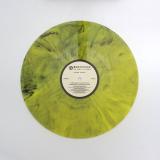
Almost four decades in the making, Dave Seaman’s very first artist album ‘Mirrorball Sleaze’ has finally been completed and will arrive on Selador on November 6th. Featuring a heady mix of both new and old recordings, all created, revised and / or re-purposed especially for this project, this assemblage represents the best of Dave’s sprawling oeuvre, joining the dots between the some of his most celebrated past glories right up to the present day, where he remains on the frontline of electronic club music. A culmination of a life lived and breathed in the trenches of acid house.
This limited vinyl edition will feature all 11 tracks especially segued together, split into two flowing listening pieces across sides A and B. After a long and storied vocation in music, his own artist album was the one itch Dave has long wanted to scratch. And now, at long last, it has arrived - a sultry, shimmering beauty, by turns deep and euphoric. A career milestone.
Almost four decades in the making, Dave Seaman’s very first artist album ‘Mirrorball Sleaze’ has finally been completed and will arrive on Selador on November 6th. Featuring a heady mix of both new and old recordings, all created, revised and / or re-purposed especially for this project, this assemblage represents the best of Dave’s sprawling oeuvre, joining the dots between the some of his most celebrated past glories right up to the present day, where he remains on the frontline of electronic club music. A culmination of a life lived and breathed in the trenches of acid house.
This limited vinyl edition will feature all 11 tracks especially segued together, split into two flowing listening pieces across sides A and B. After a long and storied vocation in music, his own artist album was the one itch Dave has long wanted to scratch. And now, at long last, it has arrived - a sultry, shimmering beauty, by turns deep and euphoric. A career milestone.
Forty years of cassette releases, pressed for the first time on vinyl
First of two instalments exploring the previously unreleased sonic archives of one of Poland’s most enigmatic
living artists - with its first volume focused on his deep listening practice and spiritual reverie (recorded 1990–2013)
The last time Andrzej Dudek-Dürer took a banknote bearing the face of the Polish anarchist Jarosław Dąbrowski from his pocket to trade it for a pair of shoes was in 1969. He bought them for 120zł - the equivalent of 100€ today - and never replaced them since then. Only rebuilt them, year after year, drawing a needle and thread through the leather each time it split, closing one wound before the next one opened. It became a ritual of precision, stitching a record of another year into their soles.
That same year, in Wrocław, he arrived at a conclusion that would recalibrate everything that followed. Convinced he was the reincarnation of Albrecht Dürer, he adopted the surname Dudek-Dürer, stopped cutting his hair and began wearing the same garments every day. It was the first ritual of many, though he wouldn't have called it that yet. Look closely enough, over the decades, and it is always the same gesture, returning in different material: hair growing in a single unbroken strand, a needle drawing thread through leather, sitar strings pulled taut across a neck he built with his own hands and magnetic tape spooling forward inside the cassette boxes stacked against his walls.
None of this began in a vacuum. Dudek-Dürer emerged from the Wrocław neo-avant-garde, in a Polish art world where an exhibition could be cancelled overnight by the stroke of a censor's pen. In 1973, his exhibition Auto-crucifixion was shut down by the state, and for a time he found himself blocked from exhibiting his own art at all - the one force in his life that ever came close to cutting the thread.
He seemed to experience it differently. In 1974, after long, patient research into sitar craftsmanship, he built his first prototype with his brother, a knowledgeable luthier. In 1978, in a smoked-out jazz club, he took his first steps into sound recording with the unreleased album Jazz From Underground with his first band. By 1979, recognition started to travel further than he could.
Turning toward Far-Eastern philosophy, meditation and the idea of reincarnation was another language of freedom for him. It was a way of claiming an inner territory the state could not reach, a border it could not close. Mail Art served a parallel function, reaching further out: in a country that restricted travel and expression, sending and receiving art through the postal system became an act of quiet rebellion.
The body, in his understanding, is only an envelope readied for constant transformation. From this came Metaphysical Telepathy: during the years he could not leave Poland, he treated that confinement as a rehearsal room, sending his mind out ahead on the same thread his body would later follow. Living Sculpture grew from the same root with performances of stillness beside static art objects, until the boundary between the object and the man beside it simply dissolved. Camera Meditation extended the same instinct into photography: a shutter click flattening three dimensions into two so that a single instant could be held forever. Inspired by the pioneers of self-portrait photography like Robert Cornelius, he used it to document time itself, and kept explaining to me: "You know. This is not about vanity. This is about observing time passing.”
The isolation did not end suddenly. It ended the way his own philosophy had already predicted it would, from the inside first. Mail Art quietly solved the problem politics couldn't. Correspondence built during years of confinement slowly worked its way through doors the state itself had kept locked. Contacts made through folded paper and stamps became invitations. Ultimately, invitations became passports.
In 1983 he made his first trip outside Poland, to Germany, in search of the audio technology he couldn’t get his hands on before. In 1985, he was invited by the Indian embassy in Poland to give a sitar concert on an instrument he had spent a decade patiently stringing together - half sitar, half tanpura, built from patience and determination. After the collapse of the People's Republic of Poland, the travels kept unspooling: South Korea, then Mexico, then Australia, Canada, New Zealand, Singapore, Japan and the United States - each stop leaving behind its own small knot of tape, tied off and carried home.
In the decades since, recognition arrived at the same unhurried pace: he conducted workshops at UC Berkeley, served as vice-president for artistic affairs of the Union of Polish Art Photographers and the Union of Polish Visual Artists between 2010 and 2014 and received the Bronze Medal for Merit to Culture - Gloria Artis. His visual work gradually entered collections including the National Museums of Warsaw, the Stedelijk Museum, Tate Modern, MoMA and the Venice Biennale. His musical practice, by contrast, never found that kind of room - left to circulate quietly, sharing his cassette tapes directly, waiting for someone willing to follow it further.
It took months before I could find a way to reach Andrzej Dudek-Dürer - his presence online is very close to nonexistent. Surprisingly, LinkedIn turned out to be the only door still open, a faintly absurd irony given everything else about him. I packed the strict minimum for a three-day trip and an empty notebook and made my way to Wrocław. His headquarters sits in the neighbourhood of Grabyszyn: a two-storey pre-war house that has belonged to his family for generations. The man who opened the door was long-haired, long-bearded, in his trademark leather shoes and patched jeans. We sat in his living room, in front of a computer where decades of recordings sat organised in cryptically named files, surrounded by books and objects that had arrived one layer at a time, leaving room for only two chairs in the middle. His shoes sat by the door, rebuilt so many times they had become their own quiet sculpture. Cassette tapes filled boxes against the walls, almost unlabelled, each one a spool of thread holding decades of sound that had never once been asked for, until now.
I listened for hours: meditating in front of strangers on the porch of a Seoul temple until the tourists stopped taking photos and simply waited with him; a stand-off with border guards at the US–Mexico crossing over an instrument they couldn't identify and didn't trust; a session with the Stockhausen family that he still, decades later, describes like it happened last week. All of it interrupted, occasionally, by the smell of soup boiling and fresh bread warming on the ceramic stove. After two days, it felt like being handed the end of a very long thread and asked, gently, to keep following it. I left with a USB drive holding his full discography, signed with his unmistakable signature.
Astral Meditations From A Living Statue is a length of that thread, drawn out from the boxes stacked against his walls - recordings gathered from different rooms, different countries, different decades. This first record breathes slowly: incense-thick, meditative, built for stillness. A cutting-edge séance in outer space where machines learn how to dream.
It begins with the neo-classical improvisations of Andrzej, space-delayed, recorded at Klub Muzyki i Literatury in Wrocław in 2002. 'When..So' opens the curtains with a deep-rooted meditation accompanied by slow-decaying piano figures illuminated by a candle-lit spirit gathering.
Los Angeles, 1990: a dormant villa, a grand piano, the voice of Bonnie Barnett. 'Exception' is captured in a single room, in a single afternoon - voice and keys circling each other, neither one leading, until the silence between the notes starts to feel like the instrument.
'The Meta...' and 'Tired Of...', recorded at Studio Morandi in Ponte Nossa, Italy, in 1992, settle into a sitar drone built entirely from patience - overtones stacking and beating against each other, strung by a man who never once set foot in India. 'Mastery Of...' follows, recorded the same year at Studio Suski in Łomianki, pushing that same hum further still, until pitch dissolves into a spectral reverie. 'Transcendental Sound', from 2000, closes the first record in a slow bath of celestial frequency - better heard beside the shores of the Odra river.
More than fifty years after deciding that a life could become an artwork, Andrzej Dudek-Dürer continues to inhabit that decision. His shoes keep wearing thin against the earth's crust. His hair keeps growing, one strand at a time. His cassette tapes keep spooling in the dark of their boxes.
Now the thread finds its last shape: a single unbroken groove, spiralling inward from the outer edge to the label at the centre. Never cut - the way nothing else in his life ever was. Drop the needle and it will find that groove and follow it, the same way a needle once followed leather, once followed a border it couldn't cross, once followed string into an instrument that didn't exist until he built it. This record is the other end of a thread that has been travelling for fifty years. For the length of both sides, it rests here, in your hands. This is a timeless proof that the Lord of the New Age was never lost."
Skepta returns with his highly-anticipated new album, The Fork and Knife. A record rooted in the sounds, energy and culture of contemporary Britain, while looking firmly beyond its borders. Shaped by decades spent immersed in sound systems, clubs and rave spaces, The Fork and Knife moves freely between grime, garage, house, jungle and electronic music. At its centre is Skepta as a rapper, writer and producer - reflecting his position at the centre of rap and his instinct to continually push the sound forward. Identity runs through the heart of the album. Skepta explores what it means to be British, the son of Nigerian immigrants, and to exist between cultures. Rather than viewing diaspora through a lens of struggle, The Fork and Knife embraces it as a source of strength, a superpower that has informed Skepta’s resilience, work ethic and creative instinct. The visual world of The Fork and Knife draws on 1980s Nigerian-British imagery, football culture and documentary realism, connecting the history of the Windrush generation with the energy and reality of modern London.
File not found. Library on device may be corrupted.
Nearly six years since his last full EP on Claptrap, Vanity Project returns with a fresh release, featuring a killer remix from Manchester aficionado Ruf Dug.
File Management Blues was born in the malaise that followed an irretrievable loss of studio files dating back over ten years at Claptrap HQ. Made with love in the wake of that back-up drive meltdown, these jams drift between acid, proto house and dreamy balearic sounds, moving from uptempo club rollers with swirling pads and biting acid lines to downtempo dub chuggers. Running through all of it is a melancholic digital string melody, four original versions on a theme, plus that tasty Ruf Dug rework of the A1.
U//D welcomes Swedish maestro Arkajo to the label with Fourier Dust, a four-track EP built for deep dancefloors. Across the record, Arkajo moves through breakbeat techno, dark 2-step, broken techno and dubstep, with close friend and Naarm/Melbourne stalwart Pugilist rounding things out with a remix of “Chasm”.
A1, “Fourier Dust”, opens the record with a breaky techno groove driven by a ferocious acid bassline, razor-sharp percussion and deeply atmospheric pads. Tough, spacious and hypnotic, it sets the tone for the EP perfectly.
A2, “Illusion”, shifts into darker 2-step garage territory. Wobbling bass, submerged vocals and rolling percussion build throughout, with bongos keeping the groove moving as the track gets progressively deeper. There are clear echoes of the darker UK garage lineage of SP:MC and EL-B.
Flipping to the B-side, “Chasm” moves into techno-bass territory, pairing a wonky 4x4 groove with hypnotic, heavily dubbed vocals. The result feels both spacious and eerie, balancing club pressure with a distinctly psychedelic edge.
Closing the EP, Pugilist’s remix of “Chasm” takes things in a dubstep-leaning 2-step direction. Heavy rolling sub, signature dub stabs, swung percussion and the occasional wub give the remix serious weight — one designed to be felt properly on a big system.
In a world that buckles and cracks under our calamitous weight, something at once old and beautiful, bitter and malign, stirs just a shade below what can be seen. It had dreamt of the end of things, and tasted there sweet emptiness, but now a new hominid stench has disturbed its slumber.
So keenly it ponders, un-lidding an eye, and within each potent coil desires fester, many and urgent. And so it untangles, and organises, and lurches upwards like a whale; bloated, rotten and desperate to breathe.
Emily and Joe have caught glimpses of that which lurks beneath. As each has struggled to make sense of what they have seen, they have been dragged inexorably into a frightening new reality; a shadow world of lurid horrors, where nothing is as it ought to be. Yet they have witnessed great beauty too, a joy stark and profound, and an addiction is growing.
iO Pan is about a love for that special era in the UK dance music scene that from the late 1980s onwards mixed funk, soul, hip-hop, electro, reggae, dub and Jamaican sound system culture together with the freshest dance music coming out of Chicago, Detroit, Belgium and Italy. A unique melting pot that would lead to some of the most original and groundbreaking musical movements the world has ever seen in Bleep, Breakbeat, Hardcore, Jungle and Dub Step.
iO Pan is an artist, musician and DJ who has presented live art at the Barbican Centre, the Open Data Institute, the Royal College of Art and Goldsmiths University.
As a musician, iO Pan has supported the Arctic Monkeys and worked with the Human League, and with the track ‘Forever’, reached number 5 in the Mixmag Ibiza chart.
As a DJ iO Pan was a resident for legendary Sheffield clubs Gatecrasher, The Leadmill and Plug throughout the 90s.
iO Pan now presents the full-length album When The Lid Opens on Sound Records whose roster includes KiF Productions, Benyayer, Yarni and Lara Jones.
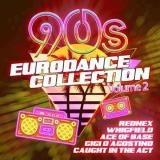
Die großen Eurodance-Hits der 90er gibt es jetzt auch auf Vinyl! Mit der „90s Eurodance Collection“ erscheint die beliebte Compilation-Serie erstmals im klassischen VinylFormat und bringt das unverwechselbare Feeling der 90er zurück auf den Plattenteller.
Mit dabei sind einige der größten Namen dieser Ära: Ace of Base, Rednex, Gigi D‘Agostino und Whigfield sorgen für jede Menge Dancefloor-Nostalgie und unvergessliche Melodien. Ob treibende Beats, große Refrains oder die typischen Sounds der 90er – diese Vinyl-Compilation versammelt die Hits einer Zeit, in der Eurodance die Charts und Clubs eroberte.
„90s Eurodance Collection“ auf Vinyl – die großen 90er-Hits, jetzt im kultigen Vinyl-Format! Für alle Fans von Eurodance, 90s-Nostalgie und dem ganz besonderen Sound einer legendären Dekade.
TIN081 lands from Norwegian ‘V.Christie’ & Dane ‘ELOQ’ who connected via TikTok before quickly realising in ELOQ’s Copenhagen studio that their connection was gonna spark something truly incendiary.
By now we all know about the Danish capital's bass fuelled garage scene – thanks in no small part to their now TIN label mate & ATW boss Main Phase amongst others – well now it’s time to add ELOQ & V.Christie to the list of Copenhagen based producers shaping the future of the sound. Over four tracks the pair show a preternatural ability for speed garage and bassline and a deep grasp of rolling two-step flow. Their sound is full of life and is pushing UKG forward.
Run the tracks…
‘Coldsnap’ is a bouncy af Speedy G chune, packed full of stabs and vocal chops but it’s the bassline that makes this one cook. The bones are classic speed garage but that bassline is something new. Chef’s kiss.
When ‘Fools’ starts with that phone ringing and you know these two are up to no good. Icy, crowd tested and with a vertigo inducing buildup this is club-ready, peak-time business. And when that bassline collides with the reese… Ignition.
‘Nightshifter’ is a BIG WARPER.. ominous and spooky. Watch for the bells.. annnd the bassline.
Copenhagen’s contributions to electronic music are many. The Copenhagen ‘Fast Techno’ sound championed by artists like Mama Snake & Courtesy has been long applauded so when ELOQ & V.Christie close out the EP in euphoric style it makes total sense. ‘Anchor’ is a fast, hands up crescendo of hard house, trance and speed garage. A proper set closer. Hug your pals. Another lethal combo: huge chords & reese bass.
From heads down to hands up ELOQ & V.Christie got you covered.
One Eye Witness serves up a collection of spacey, subtle dancefloor wares on WITNESS09. Here on its ninth edition, the Amsterdam label enlists three scene mainstays to patch into the WITNESS matrix. With their respective back catalogs highly sought after, this EP is a freshly-wrought showcase of tried and tested club craftsmanship.
Founder of Evasive records, Rob Pearson has been turning out tech house since the turn of the millennium. A1 “The Tempest” sees him enter a rapturous hypnotic portal. Its tight beat provides a framework for off-kilter aural delights: eerie melodies and buried phrases captivate, with whispered vocals — courtesy of Jayson Walker — diffusing into a curtain of modulated mists.
Silverlining, another UK tech house stalwart, follows with a deeper cut. Thirty years having passed since his debut, B1 “A Political Act” shows the artist has not lost his touch for building a breezy, groove-led aesthetic. Detroit’s spirit permeates: dub chords and astral tones are underpinned by a deeply funky bassline and swung rhythm.
Following the effervescent sound of his Perfect Encounter EP on O.E.W. sister label Spectral Bounce, Chris Carrier’s contribution to WITNESS09 is a similarly pulsating creation. “The Drop” is a pacier and denser counterweight to the preceding tracks, with the familiar twisting extraterrestrial sonics that we’ve come to expect from the French DJ and producer.
Die spektakulärste Veröffentlichung zu John Coltranes 100. Geburtstag im Jahr 2026 kommt jetzt: ein
bislang von vielen Gerüchten begleitetes Kapitel seines Vermächtnisses wird erstmals zugänglich gemacht!
Die 4-LP-Box und das 3-CD-Set ”The Tiberi Tapes” versammeln bislang unveröffentlichte Live-Mitschnitte,
die der Saxofonist Frank Tiberi zwischen 1960 und 1964 insgeheim in Clubs in New York und Philadelphia
aufnahm. Mehr als sechs Jahrzehnte blieben die Bänder weitgehend ungehört. Sie dokumentieren Coltrane
gemeinsam mit seinen legendären Mitstreitern in einer der aufregendsten Phasen seiner künstlerischen Entwicklung.
Dies sind keine konventionellen Konzertmitschnitte – ihr historischer Klang kann nicht mit Studioaufnahmen verglichen werden, zeugt aber von den abenteuerlichen Umständen ihrer Entstehung. Dafür kommt
man als Hörer John Coltrane auf der Bühne erstaunlich nahe: suchend, experimentierend und seine Musik
immer weiter vorantreibend. Für die Jazzwelt ist diese Veröffentlichung ein außergewöhnliches Ereignis!
Ausstattung 4-LP-Box: schwarze 140-g-LPs in einer stabilen Lift-off-Box, dazu ein LP-großes Booklet
mit ausführlichen Essays von Ashley Kahn, Lauren Du Graf, Lewis Porter und Mastering Engineer Kevin
Reeves
Ausstattung 3-CD-Set: Digipack plus Booklet mit o.g. Inhalt
DJ Support: Marco Carola, Jamie Jones, Joseph Capriati, Ilario Alicante, Bradley Zero, Carista, Josh Baker, Saoirse, Djebali, Archie Hamilton, John Dimas, rich NXT and many more
Kepler’s sound sits somewhere between deep house, garage swing and low-slung club pressure. Based in Leeds, he has developed a sound built around weighty basslines, rolling drums and an instinct for keeping ideas sounding fresh. Releases on Up The Stuss, Semi Delicious, Constant Sound and Rossi’s HOME//GRXWN. have helped establish and elevate that approach, with support from selectors including Ben UFO, Raresh, Chris Stassy, Four Tet and Interplanetary Criminal. Alongside his own productions, plus his labels Contact Music and Perspective, his Studio Orbit has grown into an online production community supporting thousands of artists, and he now returns to FUSE after his appearance alongside founder Enzo Siragusa in 2024 as part of the label’s X Series for his first solo release on the imprint.
His ‘Sunday Service’ EP brings four original cuts to digital and vinyl, moving between different shades of his UK-influenced, wide-spanning sound. ‘Inner Motion’ opens with a cosmic groove, sweeping melodies and tightly placed percussion, while ‘Jump Up Crew’, featuring MC Secret Agent, pushes into garage territory with an animated vocal presence and heavy low-end weight. On the B-side, ‘Unity’ settles into a deep, fluid rhythm that packs a punch before title track ‘Sunday Service’ journeys through hazy textures and shuffling drums for a late-night finish.
Sam Alfred marks his Technicolour debut with the
‘No More’ EP - five tracks of old school progressive
house, hard house and emotionally-charged
peaktime club music, led by title track ‘No More’
and featuring ‘Dreamers’, ‘Ascension’, ‘Precious
Love’ and ‘Connected By Light’, his collaboration
with Luuk van Dijk and Storm Mollison.
Pressed on 12” vinyl with artwork from longtime
collaborators Pointless Illustrations, the campaign
lands during a major live run across Europe, the
UK, North America and Australia, including
Parklife, Love Saves The Day, Circoloco Ibiza and
III Points Miami.
For fans of Barry Can’t Swim, Sammy Virji, Job
Jobse, DJ HEARTSTRING, salute, Kettama.
Sam Alfred is a London-based, Melbourne-raised
DJ / producer, born in Egypt with Sudanese
heritage, whose high-energy, emotionally-charged
club music has quickly built him into one of dance
music’s fastest-rising names. He writes and
produces every track on the EP himself, teaming
up with Luuk van Dijk and Storm Mollison for lead
collaboration ‘Connected By Light’
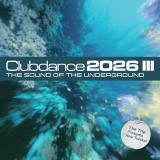
Tessellate presents Clubdance 2026 III. The third and final instalment of The Trip’s Clubdance series this year features four tried-and-tested tracks spanning house and garage.
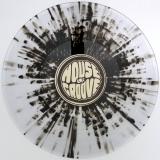
House of Groove presents Marc Cotterell’s “Connection”*, now pressed on a limited edition marbled vinyl. Known for his signature garage and soulful sound and for his work through Plastik People, Marc delivers a record built for the dancefloor, with six cuts selected from the full project. Side A A1. Connection With You (Plastik Vocal Mix) A2. Connection (Plastik Vocal Mix) A3. Smooth Groover (Yambow & Cotterell Mix) Side B B1. Connection With You (Roméo Louisa Remix) B2. Connection With You (Baka G Remix) B3. Quicksand (ZAV Club Piano Mix) From the warm groove of **Smooth Groover** with Yambow to Roméo Louisa’s peak time interpretation, Baka G’s remix and ZAV’s piano driven club mix, the record moves between garage, soulful house and pure club energy while keeping Marc Cotterell’s identity at its core. Pressed on a striking clear and white marbled vinyl with black splatter, each copy has its own unique visual character. Mastered by Benoit Daudin at Perception Mastering. Marc Cotterell, Connection Limited Edition Vinyl House of Groove
KR3.021 Steve Bicknell Remixes - brings together four reinterpretations of tracks from his latest double 12" - Several Streams of Thought - originally released in May 2025 as the sixteenth chapter in the KR3 catalogue. Carefully assembled, the release features reworks by Rrose, Function, Broken English Club and The Hacker. Working from Bicknell’s original material, each artist reframes its core elements through a distinct sonic approach, opening up new perspectives while maintaining a connection to the source work. The visual dimension of the project has likewise been revisited by Marco Maldarella. His artwork for the original gatefold sleeve has been reimagined for this release, extending the dialogue between sound and image and giving the project a renewed visual identity.
A1 The Reassurance Ritual Rrose Remix
A2 Reassurance Ritual Function Remix
B1 The Concept of Practopia Broken English Club Remix
B2 The Power Pyramids [The Hacker Remix]
Although Shoot Your Shot sits slightly under the radar compared to Divine’s signature anthems such as You Think You’re A Man, I’m So Beautiful, Walk Like A Man and Native Love, this remix stands proudly alongside them. Liebrand injects the track with a driving Hi-NRG pulse, unmistakable Italo-disco flourishes and a powerful club groove, while Divine’s larger-than-life vocal performance and the unforgettable spoken-word alphabet breakdown remain front and centre.
On the flip, Liebrand delivers an inspired bonus, seamlessly blending the music from Divine’s worldwide club classic Native Love with the vocals from Shoot Your Shot, one of the artist’s biggest European hits. The result is a brilliantly executed hybrid that captures the excitement and creativity of the late-’80s remix scene while celebrating two of Divine’s most enduring recordings.
A rare glimpse into a golden era of European dance music and a testament to Ben Liebrand’s reputation as one of the most innovative remixers of his generation.
not many artists are able to develop a distinct sonic identity releasing just 5 solo records. through his selective output in the course of 5 years on nina kraviz's Trip, vladimir dubyshkin gained not only an army of loyal fans analysing his live sets for new music, he also inspired many who followed and continued to develop his unique sound.
his tracks, many of which became underground hits like "lady of the night", "ticket to childhood" or "russian porn magazine", always stand out and are immediately recognisable. be it weird syncopated euro dance reminiscent bangers with crazy vocal snaps or haunting hypnotic beauties on a techno side. his music always has that genius dubyshkin groove, a pinch of irony and the ability to make just anyone dance, from a small underground club to a huge festival dancefloor. this universal appeal ensures his tracks resonate across sound systems of all sizes, embedding themselves in the listener's consciousness long after the music stops.
on "ivanovo night luxe", his first double ep on Trip, vladimir sounds as amazingly unhinged as ever embarking on a surreal journey, from the eerie echoes of a haunted funfair ride to the core of a peak-time set.
"ivanovo night luxe" continues to captivate and intrigue, solidifying dubyshkin's standing as an artist of unwavering integrity and reminding us that sometimes 'less is more'.
"Surface Noise Isn’t A Crime" continues NOREPRESS’ exploration of texture, pressure, and imperfect sound as core elements of underground electronic music. Across four tracks, the release moves through Deep Tech House, Dub Techno, Electro, and Breakbeat without settling into fixed genre boundaries, balancing functionality with experimentation throughout.
A1. Tvardovsky feat. Andrey Zverev – Flute Meditation opens the record with a dense, slowly unfolding trip built on dub space, electro tension, and hypnotic Tech House movement. Organic flute phrases drift through layered percussion, evolving bass pressure, and spacious analog textures, creating a strange collision of futurism and nostalgia. The track resists obvious peak-time formulas, choosing gradual transformation over immediate impact and rewarding deeper immersion with every transition.
A2. Osman Öz – Regrets moves into softer territory without losing rhythmic weight. Warm breakbeat structures, airy melodic fragments, and fluid low-end movement give the track a calm but persistent momentum. Osman Öz keeps the arrangement restrained and precise, allowing groove and atmosphere to carry the emotional core of the composition naturally.
On the B-side, Kirill Matveev appears under his Natural Piece Of Aloe alias with two contrasting interpretations of the project’s dub-informed language.
B1. Salto Mortale is playful, unstable, and constantly mutating. Rhythms stretch and reorganize themselves around shifting tonal fragments, while the arrangement moves with the loose unpredictability of an improvisation session. Despite its complexity, the track never loses control, maintaining a strong forward pull through every unexpected turn.
Closing the record, B2. Columbo Beat, Kirill Matveev - Sundub pushes deeper into darker territory. Acid sequences slice through heavy dub atmospheres while rugged drums and saturated low-end pressure drive the track forward with raw physical energy. Distortion, space, and movement interact continuously, turning the track into a hypnotic late-night tool designed for more adventurous dancefloors.
"Surface Noise Isn’t A Crime" captures NOREPRESS at its most confident: raw textures, deep space, broken edges, and timeless club influences reconstructed into a modern dub-driven framework.
For our Sophomore release, Solar Suite steps up with Back 2 Basics, four groove-led productions that favour restraint and subtlety. Stripping things back to the essentials with patiently crafted rhythms and basslines that could just keep on chugging. Club trax with one eye on the classics and the other fixed firmly forward.
Following the strong response to Late Checkout 001 and support from DJs including Louise Chen and Mafalda, Mark Sexton returns with four more hazy club excursions that blur the lines between deep house, UK Garage and sample-heavy soul. Warm, dusty and effortlessly musical, Late Checkout 002 builds confidently on the sound that made its predecessor a favorite among discerning selectors.
Blame The Mono makes a powerful debut on RAW with their latest EP, Pace Refinery. Capturing the Franco-British duo at a defining moment, this project sharpens their hybrid European identity into a focused and forward-looking statement. They remain a shining beacon of inventiveness, balancing driving club energy with refined textural detail. Spotify, Apple, etc: bfan.link/pace-refinery Mastering : Charles Accarissi released April 9, 2026
Sciahri and Sublunar are proud to introduce the German duo Disguised and their new EP, Carcosa. Founders of INHERIT and fresh from the success of their recent release on Mutual Rytm, Disguised make their Sublunar debut with a seven-track journey that effortlessly bridges modern and classic techno, combining powerful club energy with a refined and deeply personal approach to sound. While producing the EP and shaping its titles, Disguised drew strong inspiration from the legendary and unforgettable first season of True Detective. The record opens with “Rust Never Sleeps”, a memorable and powerful cut built around an instantly recognizable melody, before moving into “Carcosa”, a tense and explosive track designed around constant anticipation and release. On the B-side, “Time Is A Flat Circle” delivers a highly infectious groove through captivating textures and subtle details, followed by “The Taxman”, where raw energy meets a sophisticated and carefully crafted production. Closing the vinyl is “Looking For Dora”, a deeply emotional and atmospheric piece that reveals a softer and more introspective side of the duo. With "Carcosa", Disguised demonstrate an impressive ability to move between different shades of techno without ever losing their identity, establishing themselves as one of the most exciting and distinctive duos emerging from the current scene.
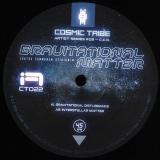
For CT022, Cosmic Tribe presents the third edition of the Artist Series featuring C.C.O. (Contra Communem Opinionem), the project of Swiss artist Florian Büchel.
The original material selected here explores a more direct and linear side of his music, combining atmospheric structures, subtle acid elements and elegant melodic progression.
On Side B, both reinterpretations move the material toward more dancefloor-oriented territory. Raakel Bloody Raakel reshapes Gravitational Disturbance into a recognizable acid-electro interpretation with increased groove and syncopation, while Romphea takes Interstellar Matter into heavier and darker contemporary electro-breaks territory with increased low-end weight and a more direct club approach.
The result creates a clear contrast across both sides: progression and musical development on Side A, followed by two alternative perspectives built around movement and dancefloor energy.
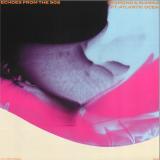
“Echoes From The 90s” is a high-energy house and tech-house cut from Dutch producers Desmond & Summum. Built around a familiar sample from “Waterfall” by iconic ’90s dance act Atlantic Ocean, the track combines an unmistakable sense of nostalgia with driving grooves, powerful basslines and a polished, contemporary club sound. Already supported by Stussy, Ida Engberg and Danny Howard, “Echoes From The 90s” lands on Franky Rizardo’s LTF Records imprint.
This limited 12-inch release features two extended versions, both available exclusively on vinyl.
With a sound that draws from the energy of classic disco, touched-up for modern clubs, Kridelka, Chanda & the Passengers come with a scorching contemporary cut that is primed to light up dancefloors this summer - with staying power to become a future dance floor staple.
After a long wait, Metroplane is finally bringing their original 2019 club anthem ‘Be Where I Am’ to vinyl for the first time. Featuring Daniel Wilson's powerful vocal performance, the track slowly but surely made it into everyone’s set thanks to its timeless delivery and production.
On the B-Side US electronic pioneer Morgan Geist brings his signature touch to the original. Best known for his for pioneer work as half of Metro Area, Geist is also the man behind Storm Queen and the UK Number 1 ‘Look Right Through'.
Inspired by the landscapes and cultural heritage of Munzur, Boran Ece returns with Moonzour, a deeply emotional and organic club record that blends melodic grooves with atmospheric textures. The release is complemented by two distinctive remixes from Hannes Bieger and Mickael Espinosa, each offering their own interpretation while preserving the emotional essence of the original. Released on Son d'Étroit as a limited 200-copy vinyl edition alongside the digital release, Moonzour marks another chapter in the label's journey, celebrating storytelling through electronic music.
Building on the promise of nearly 10 years testing limits within club music, Batu presents his debut album Opal. Experimentation is a well-established facet of Omar McCutcheon's identity within the leftfield techno zeitgeist, but more than ever on Opal he seizes the opportunity to incorporate ideas beyond dancefloor impetus into his animated, forward-leaning sound.
Through the course of 11 tracks, rhythmic forms are mutated and manipulated, sonic matter bends across the frequency range and narrative structures coalesce and dissolve according to Batu's own internal logic. Unpredictability lies at the heart of all this music, bound together by a consistent modernist glint. It's a sound intrinsically connected to the superlative string of club 12"s, EPs and collaborations Batu has spun behind him thus far, even as it moves into unfamiliar terrain, guided by abstract inspiration from coastal landscapes and the mineral matter all life on Earth is built on.
Debut album from Batu on his own Timedance imprint following releases for Livity Sound, Hessle Audio or XL Recordings.
UK & Worldwide press campaign led by Dawn Creative. International press cover TBA and strong media (RA, Mixmag, DJ Mag, XLR8R) and radio coverage around the release (Jamz Supernova, KEXP, Dublab, Rinse France)
Extensive touring schedule for 2022 includes US, Mexico, UK, Europe, and features headline slots in multiple high profile festivals (Sonar, Dekmantel, Outlook, Dimensions, Waterworks and more)
Jensen Interceptor debuts on Mesh with Primal Transmissions, an EP of five new genre mutations out Friday 25th September.
Moving through a spectrum of tempos - from smoked out slow burn to tightly wound club pressure - Jensen has a tweak for every BPM. Returning to a more raw, instinctive sound, but never losing sight of his flair for dense rhythmic compositions, the EP explores a moment of reconnection, and a shedding of inherited expectations.
‘False Oracles’ opens with a euphoric downtempo drift, setting the tone with microscopic rhythmic detailing and chugging percussion. ‘Fail to Call’ leads with a grimey bassline and frantic hammerdrill drums that gradually desync into chopped up fragments. ‘What Would Susan Do’ is a double dose of chaos, landing somewhere between dancehall, psytrance, and DnB, but firmly rooted on a planet of its own. ‘Tone Impress’ leans heavier into the industrial, chopping vocals over rolling hits at 160BPM. Rounding things off, ‘Emerald Web’ breaks the rhythms down to their rawest forms for one final workout.
Through a process of rupture and renewal, Primal Transmissions arrives as a sharp dispatch of club mechanics from one of the scene’s most inventive operators.
Pittsburgh Tracks presents the second Cheek Inc. record - “Next 2 U” - a catchy vocal house record for summer. The collaboration between longtime friends keeps going.
The A1: original mix features a bouncy groove where the infectious vocal hook and shuffly drums keep everyone dancing.
The A2 “bang mix” amps things up with pianos, an energetic 303 lead, a build up, and subs that drop for maximum impact.
The B1 “club mix” is as it says on the tin: plenty of energy with a manic bassline, tight, stripped down rhythms, and a top-line melody that emphasizes the vocals.
The B2 “bass mix” features Sleeve’s STRIPPERTM bringing the heat with staccato beats, a twisting midrange vortex of sound, and plenty of darkness with discordant pads, where the stripped-back vocal punctuates to bring a bit of air at the right moments.
Ralf Hildenbeutel is an award-winning producer and film composer. His style is shaped by his eclectic background as of his classical education in piano and composition and his obsession for electronic music since the late '80s.
In the 1990s he collaborated with Sven Väth on Väth's major albums, released a countless number of club classics and founded his electronic live-project Earth Nation. He has been touring across Europe and playing at the Montreux Jazz Festival, London's Brixton Academy, Tribal Gathering Universe and others.
In that time he also produced various remixes for artists such as Anne Clark, Robert Palmer, Enigma and Yello and was awarded with the "Viva Comet" as Best Producer from Germany's music TV channel VIVA. His film music for the movie "Hommage á Noir" received the golden medal at the New York Festivals in 1996.
At the end of the '90s and first years of the 2000s it was the time for new directions and Hildenbeutel started focusing on artist-related productions and songwriting. He founded the production company Schallbau with Stevie B-Zet and A.C. Boutsen. They produced and co-wrote for artists such as Laith Al-Deen, Andreas Bourani, Yvonne Catterfeld, and Simon Collins (son of Phil Collins). That time they archived several top-ten entries and gold or platinum records.
In 2010 Hildenbeutel moved away from pop productions and focused on film music. He worked on feature movies such as "Vincent will meer" ("Deutscher Filmpreis", 2012 – German Film Academy Award) and international productions such as the Italian mini-series "Maltese".
His film music for the short movie "Momentum" (by Boris Seewald) received various awards such as "Cinedans" and a nomination for best music at the Newport International Filmfestival in the UK in 2014. In 2017 he won the "Goldene Reiter" at the esteemed Filmfest Dresden for his score for the movie "Eine Villa mit Pinien".
Hildenbeutel currently works on several international and German productions. He also collaborated with Chris Liebing on Liebing's latest solo album "Burn Slow", which has been released worldwide on Mute Records.
Ruffiani returns with its second release: four new tracks built around sampling, edits and reworked musical fragments, bringing different influences together in a raw, contemporary club context.
Released as a limited-edition white label vinyl, the record continues the project’s underground, DJ-focused approach, four tracks made for the dancefloor.
Following the successful return of Cyberfunk Records, Frequency Damage EP showcases four brand-new productions from DJ Quest, blending over 25 years of breakbeat experience with modern production techniques.
From old-school funk influences and rolling basslines to heavy club grooves and precision-engineered drums, the EP demonstrates the versatility that has made DJ Quest one of the pioneers of the Bassline Breaks movement.
Each track brings its own identity while remaining unmistakably Cyberfunk—music written for DJs, built for powerful sound systems and inspired by the underground dancefloors that shaped the label's legacy.
We have reached the final chapter of Kontra-Musik Records' 20th-anniversary celebrations - a busy and rewarding year filled with new releases, represses, club nights, festival appearances and tours. To bring the year to a fitting close, Andreas Tilliander, aka TM404, has once again teamed up with label head Ulf Eriksson for a new limited, vinyl-only 12-inch. Entitled Tjugo (Twenty), the EP sees the duo return to their dusty, machine-driven sound. It opens with Navet, a deep techno track built around rolling stabs, a melancholic organ chord and a solid bassline. From there, it moves into Ravet, a hissing, propulsive piece of minimal techno. The B-side is given over to Sjuhundrasjuttiosjuan, a slow, acidic bonnadub, to close of the year and the record.
With Shadows is the darkwave alter ego of Jordan Lieb, the acclaimed North American electronic producer also known as Black Light Smoke. Recognised for his house and techno releases on Scissor & Thread, The Hacker’s Zone and Tiga’s Turbo Recordings, Lieb explores a darker, more introspective sound under his With Shadows alias. Drawn from two digital releases on his own Ancient Spells imprint, this collection of electronic darkwave traces a journey in reverse: opening with dark Italo and EBM-inflected technopop, it gradually slows down, sinking into a shoegaze universe steeped in atmospheric melancholy. Cold synthesizers, basslines that pulse like a heartbeat and haunting vocals give way to blurred textures and dreamlike spaces, carrying the listener from the dancefloor into a more intimate inner world. On “There’s a Hole”, his instinct for rhythm meets a deeply personal voice, revealing the emotional weight beneath the electronics. With Shadows gives Lieb room to reach beyond club structures and express himself through songs, bringing his songwriting, vocals and multi-instrumental talents to the forefront and revealing a facet of his musical identity distinct from his work as Black Light Smoke.
Some records refuse to stay buried. For two to three years, Kasra V has been sitting on three remixes, each one pushed back, shelved or cancelled along the way, each one quietly refusing to disappear. They lived on USBs and in DJ sets, passed between friends and played in rooms where the reaction never lagged. The result is a three-track EP of previously unreleased remixes, arriving at the end of a year that has already been remarkable for the Iranian-born, London-based artist. Two of the three reworks lean into house, the third reaches towards techno and trance. Together they trace a wide arc of influences. The pulse of New York house sits alongside the melancholy synth romance of Depeche Mode, the drifting, immersive textures of Future Sound of London and the euphoric, rave-born propulsion of Orbital. It's club music with a long memory: patient, physical, and unafraid of a melody that lingers. Because these were never made to a trend, they have not aged. They were made to be played loud, late, and in the company of people who care, which is exactly where they have been proving themselves.