In 2019, a brutal epileptic seizure changed my life - the first of more to come. I was forced into solitude, and in that quiet, music became my lifeline. In the following years, I poured everything I had into creating between you and me: a raw, DIY album that is a distillation of my lived experience during this time. The album explores emotional authenticity, freedom of expression, and acceptance: not as abstract concepts, but through visceral experiences that have fundamentally reshaped my art and my sense of self. As a listener, I invite you to explore your vulnerability by joining me in mine. This album is truly between you and me.
Ozzy Jones is a Dutch-Australian interdisciplinary artist whose music blends electronica with indie. Drawing from personal struggles and raw emotion after his seizures started, his debut album between you and me explores vulnerability, male identity, and authentic self-expression. Rooted in Amsterdam's vibrant creative scene, Ozzy's work fuses sound, visuals, and storytelling to create a deeply immersive and honest artistic experience.
Slip is Paul Abbott’s response to his 3 day residency at OTO in 2023. It’s a continued exploration of the acoustic-digital hybrid drum setup Abbott has been developing for some time, which involves drum kit and synthetic sounds combined closely—through an entanglement of limbs and cables—in an intimate but strange relationship with each other.
Paul Abbott hasn’t had any formal musical training, but has a long history of making music, having collaborated for years with Seymour Wright, Pat Thomas, Michael Speers, Cara Tolmie, Anne Gillis and many others. Eventually, led by a profound suspicion of what is fixed or limited, Abbott began finding other ways to organise sound - or what he calls ‘material’:
“I wanted a way to 'persuade' or guide the possibility of something happening - my activity or the events of an algorithmic composition - for example, but without certainty or formalism. It felt to me, during playing, that certain ideas had a particular sort of shape, but more than the form of a line. I began to write alongside (before/after) playing the drums, and ‘characters’ began to enter the scene as a more wobbly, and therefore appropriate option to notation. Working with these characters allowed me to simultaneously approach body, imagination, language and music: without dividing things up or separating these aspects from each other. It allowed me to leave things messy and entangled, whilst trying to deal with form and specificity: wanting to have some things feel or respond differently to other things at other times.”
In approaching his residency, Abbott developed a fixed cast of characters - crystal, lleaf, reiy.F, reiy.C, strike, nee, qosel, sphu and aahn. They each communicate using different kinds of movement and drum kit/s, and Abbott choreographed them as ‘dances’ based on different feelings, or outlines of behaviours suggestive of ways of moving (body, drums, sounds). He then arranged these characters into ‘compositions’: one for each performance day, with each composition featuring multi-layered activity - options for behaviours, ways to move around the rooms, play drums, develop synthetic sounds, change the lights or re-distribute the sound in the space.
After the performances, Abbott took home 9 hours of recordings split into up to 28 multitrack channels for each day, and re-organised his cast once more into a performance for 2LP, CD and digital. It’s an enormous amount of work - but Abbott is activated by the process. For him, the pleasure of unstable edges, possibilities, slippages, is the vital attraction. Like all living organisms, Abbott’s characters have malleability and responsivity. They stimulate a bundle of possible behaviours, a tendency to act a certain way, a temperament, a boundary of respective limits or affordances.
It’s an affective way of working, inclusive of Roscoe Mitchell, Sun Ra, Nathaniel Mackey and Milford Graves. In ‘Pulseology’(2022), Milford Graves reminds us, ‘Breath varies, so cardiac rhythm never has that (metronomic) tempo. It’s always changing. All the alignments of the heart are determined based on the needs of the cells, specifically tissues and organs. The heart knows if it needs to speed up.’ In Slip, to slip, in a heartbeat, is to descend not into the grid of the even metre accorded to the heartbeat, but into a play of mutability and modality. To change is the condition of the heart.
Following a string of acclaimed collaborations, including Agua Dulce with percussionist Laura Robles and Mapambazuko alongside Congolese guitarist Titi Bakorta, Peruvian artist Alejandra Cárdenas (aka Ale Hop) returns with her most personal work to date yet, A Body Like a Home. Marking her first album under her birth name, the project is a sonic memoir exploring the tangled realms of trauma, recovery, and love through autobiographical soundscapes.
A Body Like a Home is the artist at her most exposed. Comprising 13 songs and 15 poems, the album sees her set aside collaborative fusions for solo catharsis, channeling years of turbulence - intergenerational scars left by colonialism, racism, domestic violence, and alcoholism - into a work that oscillates between brutality and tenderness. Cárdenas states: “I grew up under Alberto Fujimori’s dictatorship, when a veil of hopelessness seemed to settle over everything. This is the backdrop of the album. The songs and poems trace the inevitable loop between private wounds - addiction, domestic violence, fractured intimacy - and Peru’s national scars, carved by colonialism. It’s not a straight story or a resolution. Writing and composing became a ritual of digging for meaning, into what’s buried, disguised, or renamed, until the body itself became a living archive.
” At the heart of the album is Cárdenas’s own voice - part witness, part confessor - reciting over layers of electric guitars, electronic textures, the haunting violin of Mexican musician Gibrana Cervantes, and a collage of field recordings, from rainfall, muffled whispers, broken glass, to archival protest footage from Peru. The result is a work that resonates like a diary written in sound.
The first single, "Motherland", is a searing testimony where Cárdenas voice cracks under the weight of history and personal loss. Amid a storm of distorted guitars, she traces the cyclical legacies of colonialism, from state massacres branding Indigenous bodies as “terrorists” to the spiral of addiction as an unavoidable future. The lyrics draw parallels between political and domestic violence: a mother’s drunken knife pressed to her chest, and a motherland where racism is currency. She utters: “sacrifice demands a body.” Yet, amid the wreckage, a willful grip on love and faith persists. Ultimately, A Body Like a Home is a document of transformation. Tracks like "Evangelina" and the title piece "A Body Like a Home" hold space for resilience, spirituality, and love, while "Early Road" and "Going South" thread subtle nods to Peruvian folklore, opening up bright vignettes into a sense of belonging.
The poetry chapbook accompanying A Body Like a Home (five of its pieces are also recited on the album) extends the work, building a parallel architecture. Oscillating between the documentary and the mythic, the intimate and the forensic, the profane and the oniric, these poems practice a theology of the ordinary, where everyday objects - cameras, knives, moth-eaten cotton - are charged withspiritual and historical weight. Here, the body is land, house, battlefield, collective pain, geological territory; and trauma is, in contrast, archival, cellular, ritualistic, inherited. Read alongside the music, the stories refract across two mediums: songs give them breath and poems give them bone.
out of Stock
Last delivered 10 months ago available to reorder, subject to availability
Do you believe in spring? Simon Wangen (cello) and Philipp Sutter (piano) pose this question as the title for their new project. Whereas Bill Evans made a demand in 1981, the two Cologne-based musicians believe that in times of uncertainty, crisis, and environmental destruction, it is ok to set a questin mark here. But politics and world events aside: Do you believe in spring? Of course! It's never too late to start something new, get creative, and test your own limits. Simon Wangen is a classically trained cellist, Philipp Sutter a trained jazz pianist. Their different musical roots merge on this instrumental album into a lively mix of neoclassical, new jazz, and Cinéma Nordique. Ten pieces come across as sometimes dark, sometimes wild, sometimes delicate, always focusing on the dialogue between the two instruments that harmonize so well. The subtle use of electronic effects constantly opens up new perspectives and builds a bridge to contemporary sound aesthetics. Cello and piano—this combination has been established for centuries, but can still add new facets today. Do you believe in spring? begins stormily and turbulently, oscillating between romantic, sad, and beautiful moments, and leads from a rather dark beginning to the final and eponymous piece in C major, which leaves the listener with a glimmer of hope. Do you believe in spring? From October 24, 2025!
Do you believe in spring? Simon Wangen (Cello) und Philipp Sutter (Klavier) werfen den Titel für ihr neues Projekt als Frage in den Raum. Wo Bill Evans 1981 eine Forderung formulierte, sind die beiden Kölner Musiker der Ansicht, in Zeiten der Unsicherheit, der Krisen und Umweltzerstörung durchaus ein Fragezeichen setzen zu können. Aber abgesehen von Politik und Weltgeschehen: Do you believe in spring? Natürlich! Es ist nie zu spät, etwas Neues zu beginnen, kreativ zu werden und die eigenen Grenzen zu testen. Simon Wangen ist klassisch ausgebildeter Cellist, Philipp Sutter studierter Jazzpianist. Die unterschiedlichen musikalischen Wurzeln verschmelzen auf diesem Instrumentalalbum zu einer lebendigen Mischung aus Neoklassik, New Jazz und Cinéma Nordique. Zehn Stücke kommen mal düster, mal wild, mal zart daher, stets die Zwiesprache der beiden so gut harmonierenden Instrumente im Fokus. Der dezente Einsatz elektronischer Effekte öffnet immer wieder neue Perspektiven und schlägt eine Brücke zur zeitgenössischen Klangästhetik. Cello und Klavier - diese Besetzung ist seit Jahrhunderten etabliert, aber kann auch aktuell immer wieder neue Facetten hinzubekommen. Do you believe in spring? beginnt stürmisch und aufgewühlt, changiert zwischen romantisch - traurig - schönen Momenten und führt von einem eher düsteren Beginn hin zum letzten und namensgebenden Stück in C-Dur, das die Zuhörenden mit einem Hoffnungsschimmer entlässt. Do you believe in spring? Ab 24.10.2025!
When people think of Yacht Rock-those smooth, sun-drenched sounds that once drifted from Californian radio stations in the late '70s and early '80s-they rarely imagine it echoing through rehearsal rooms in Hamburg or Linz. Yet even far from the Pacific coastline, the appeal of shimmering chords, laid-back grooves, and polished production found fertile ground.
This compilation gathers rare and overlooked tracks from Germany and Austria. These artists embraced West Coast aesthetics with sincerity and subtle twists, resulting in music that feels both familiar and refreshingly new-smooth sounds for cloudy skies. So drop anchor, pour something cool, and enjoy this unexpected cruise through the lesser-charted waters of Euro Yacht Rock.
Our journey begins in Austria, where Reflection's Because (1981) set the tone with blue-eyed soul and analogue warmth-a sunlit blend of Doobie Brothers polish and local charm. Its creator, Dieter Heyduk, reappears with Austrian Sky, a heartfelt nod to his homeland that fuses mountain calm with oceanic longing.
From the North Sea island of Föhr, Ara Pacis dreamed of California on their 1979 self-release To the Westcoast. Inspired by Steely Dan and Lake, they turned German rock precision into breezy, melodic sophistication. Meanwhile, in Düsseldorf, Mainpoint fused funk and jazz-rock on Frisbee, their 1980 single bursting with rhythmic drive and optimism before the tide of the Neue Deutsche Welle swept such grooves aside.
Bremerhaven's Nuages offered the compilation's only instrumental gem, Strange Weekend (1985)-a gentle blend of jazz-funk and rock and largely lost to time. Its cool restraint captures the European interpretation of Californian ease.
Around the same period, British traveler Gavin James recorded River of Laughter in southern Germany, backed by the blues-rock band Black Cat Bone. His acoustic reflections on water and flow mirrored the soft, meditative pulse at Yacht Rock's core.
Berlin's Top Spin kept things playful with Bikin (1985), a funk-fusion snapshot of urban joy that showcased the city's finest session players. From the Ruhr area, the Jan Pack Band is up next. While not a typical Yacht Rock track, Cable Dance is driven by an effortless, groovy '80s vibe.
Peter Seiler's Goldfinger project reimagined Walkin' in the Sand as a relaxed reggae-tinged track, while Munich's Major Seven closed the voyage with Silverboat, a wistful soft rock ballad gliding between melancholy and light.
Across these hidden harbors of German and Austrian pop, the West Coast dream took on new forms-reflected in rivers, skies, and studio lights half a world away from L.A. Under and Above the Clouds celebrates that spirit: the enduring pull of smooth music, wherever it's made.
out of Stock
Last delivered 10 months ago available to reorder, subject to availability
Utilizing only guitar, bass and drums, Papir conjure vast and melodic soundscapes while still maintaining a krautrock drive. One of the most unique bands in the modern European psych rock scene, they continue to innovate as they refine their sound with each album. Copenhagen"s foremost aural travelers are back and bearing new music. True to their distinct sound, Papir return with another chapter in their ongoing sonic journey. Terms like post-rock, ambient rock, psychedelia, and krautrock may circle their sound, but none quite capture its shimmering, elusive magic. IX is a wide-open record in every sense. From the flowing compositions - which linger but never overstay, jam and unfold organically - to the wonderful airy production, you get the sense of being both in studio with the band and simultaneously on the beach with wind blowing through your hair. In addition to the ever free-flowing nature of the band"s live recordings, additions such as synthesizer or extra percussion appear always tastefully right when needed, adding the perfect seasoning on top.
led by guitarist seiji hano, the jazz group om released only one album — solar wind, a landmark work that stands as one of the greatest achievements in japanese ethnic jazz. now, this masterpiece is finally being reissued.
their sound, seemingly a response from japan to ecm artists such as oregon and codona active during the same period, is refined yet imbued with a distinctly japanese sense of wabi-sabi — melancholic, nostalgic, and deeply resonant.
from “windmill,” featured on studio mule’s compilation midnight in tokyo vol.2, to every other track, solar wind is a flawless album with not a single weak moment — a true masterpiece of japanese jazz.
out of Stock
Last delivered 10 months ago available to reorder, subject to availability
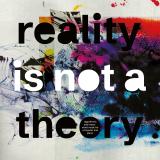
Recorded in concert at the University of Sheffield in March 2025, Reality Is Not A Theory is the first collaboration between Mark Fell and Pat Thomas. Major figures in British experimental music since the 1990s, Fell and Thomas have developed their rigorous practices from radically different backgrounds and perspectives: where Fell’s singular take on synthetic abstraction emerged from Sheffield’s electronic underground, Thomas is a virtuoso improvising pianist steeped in jazz and modernist art music who has simultaneously worked with sampler-based electronics for decades. As the record’s wonderfully academic subtitle explains, we are presented here with two sides of ‘algorithmic and improvised music for computer and piano’, exemplifying both players’ insatiable search for new (and sometimes uncomfortable) playing situations.
The performance begins with Fell’s electronics close to the timbres of acoustic percussion, attacks that suggest wood, metal or glass threaded along a rapid pulse while Thomas focuses on the lowest registers of the piano, deadening the strings. As Fell’s electronics start to ring out and occupy more harmonic space, Thomas turns to wide, repeated clusters, which slowly expand into patterns of chords. Like in his recent solo recordings and his trio work with Joel Grip and Anton Gerbal, Thomas’ playing combines extreme dissonance with a deep lyrical sense. Fell’s work gradually shifts its focus toward drum sounds, drawing on the microtemporal processes that have characterized his practice in recent decades. Heard together with Thomas’ probing piano, the computer sounds call up unexpected associations with the klangfarben antics of improv drummers like Paul Lovens or Tony Oxley. Throughout its second half, the music grows increasingly frenetic, as Thomas sounds out rapid, irregularly repeated figures and beautifully sour chords in the upper register, while Fell’s percussion develops into angular pan-pipe-like feedback and waves of glissandi.
With great confidence and patience, Fell and Thomas often let their individual contributions remain rhythmically distinct and unsynchronised, allowing unexpected correspondence and coincidence to guide the music’s development. Recorded in a hall named after Sheffield steel manufacturer and Master Cutler Mark Firth, the location might suggest a model for understanding how Fell and Thomas interact here: two workers in the same workshop, each immersed in their own part of the production process. Arriving in a striking sleeve designed by Mark Fell, with liner notes by Francis Plagne, Reality Is Not A Theory is an invigorating document of the meeting of two mavericks of contemporary music.
On the occasion of their 50th anniversary, the Australian Chamber Orchestra presents a landmark new album that celebrates the orchestra’s remarkable legacy while also honouring Artistic Director Richard Tognetti’s extraordinary 35 years of leadership: the violin concertos of Beethoven and Brahms, with Tognetti himself as soloist. These works, now pillars of the repertoire, were once radical and new; this recording invites us to reconnect with that sense of first hearing – to imagine being present at the premiere, when the ink was still fresh and the ideas still raw.
Aldean feiert seine beispiellose Erfolgsgeschichte in den Musikcharts mit der Veröffentlichung von „Jason
Aldean – 30 Number One Hits“. Diese umfassende Sammlung vereint all seine Nummer-1-Hits und bietet
Fans den ultimativen Soundtrack der letzten zwei Jahrzehnte der Country-Musik. Von seinem sensationellen
Debütalbum von 2005 bis hin zu seinen jüngsten Charttoppern – diese definitive Veröffentlichung dokumentiert die Karriere eines modernen Musikstars, dessen Musik bis heute den Sound der Country-Musik prägt.
Ob Sie ein treuer Fan sind oder seine Musik erst jetzt entdecken: „30 Number One Hits“ ist eine Hommage
an Aldeans unübertroffene Erfolgsgeschichte und ein absolutes Muss für jede Country-Musik-Sammlung.
Zum 15-jährigen Karrierejubiläum der belgischen Songwriterin Selah ist es Zeit für ihr allererstes LiveAlbum mit dem Titel ”As One”.
Das Best Of Live , daß alle ihre großen Hits enthält (”Raggamuffn”, ”This World”, ”Alone”, ”Pills”...).
Als Blu Ray ist die Live Show, die im letzten Jahr in Löwen – Het Depot (Belgien) aufgenommen wurde,
der CD Version beigefügt.
Wicked: For Good – The Soundtrack enthält alle Songs der Stars aus dem emotionalen und mitreißenden
Finale von Universal Pictures’ weltweitem Kinoerfolg Wicked: For Good und entführt die Zuhörenden in die
magische Welt von Oz. Mit Musik und Texten des legendären Grammy- und Oscar®-Preisträgers Stephen
Schwartz enthält der Soundtrack zwei neue Originalsongs aus dem Film: „No Place Like Home“, gesungen
von der Oscar®-Nominierten Cynthia Erivo als Elphaba, und „The Girl In The Bubble“, gesungen von der
Oscar®-Nominierten Ariana Grande als Glinda. Darüber hinaus ist „The Wicked Witch of the East“ auf
dem Soundtrack zu hören, das zuvor nicht in den Broadway Cast Recordings enthalten war. Der Soundtrack
enthält auch die bei den Fans beliebten Songs „Thank Goodness“, „As Long As You’re Mine“, „No Good
Deed“ und den Titelsong „For Good“.
”Wicked: For Good“ - The Soundtrack ist ab dem 21.11.25 erhältlich
Der isländische Pianist Víkingur Ólafsson ist einer der meistgehörten klassischen Künstlern unserer Zeit.
Nach seiner Einspielung der „Goldberg Variationen“, die Olafsson einen GRAMMY Award®, den Titel „Instrumentalist des Jahres“ von Musical America, den OPUS KLASSIK Bestseller-Preis sowie den Jahrespreis
der deutschen Schallplattenkritik einbrachte, präsentiert der Pianst nun sein neues Album Opus 109.
Im Zentrum steht Beethovens Klaviersonate Nr. 30 in E-Dur, op. 109 – ein Meisterwerk aus der späten
Schaffensperiode des Komponisten, das Víkingur Ólafsson in einen musikalisch fesselnden Dialog mit Kompositionen von J.S. Bach und Schubert stellt und dabei die Entwicklungslinien nachzeichnet, die in diesem
Meilenstein der Klavierliteratur zusammenlaufen.
Mit Ravel Recomposed legt Victor le Masne eine Hommage an einen der größten Meister der französischen Musikgeschichte vor. Nach seinem Erfolg als Komponist und Musikalischer Leiter der Olympischen
und Paralympischen Spiele 2024 in Paris widmet sich Le Masne nun der Musik von Ravel, die ihn seit
seiner Kindheit begleitet. Ravel Recomposed schlägt Brücken zwischen Tradition und Gegenwart: Klassik
und Jazz verbinden sich mit dem Puls des French Touch und verschmelzen zu jenem unverwechselbaren
Klang, der den Grammy®-prämierten Komponisten, Produzenten und Multiinstrumentalisten international
bekannt gemacht hat. Das Album erscheint am 21. November 2025. Die Neuinterpretationen von Boléro,
Jeux d’eau, Le jardin féerique sowie Auszügen aus Daphnis et Chloé, L’enfant et les sortilèges und dem Streichquartett, neben weiteren Werken, erscheinen anlässlich des 150. Geburtstags von Ravel. Zu hören sind
Christine and the Queens (Texte, Gesang), Julius Asal (Klavier) und Camille Thomas (Cello). Das Album
mit seinen zwölf Stücken ist der jüngste Beitrag zur wegweisenden Reihe Recomposed von Deutsche Grammophon. Den Auftakt machte vor 20 Jahren Matthias Arfmann mit seinen Bearbeitungen von Aufnahmen
der Berliner Philharmoniker unter Herbert von Karajan. Es folgten unter anderem Peter Gregsons Neuinterpretation von Bachs Cellosuiten sowie Max Richters gefeierte Neufassung von Vivaldis Vier Jahreszeiten
Im Juli 1955 reiste der damals 19-jährige Luciano Pavarotti zusammen mit seinem Vater und einem Chor aus
Modena nach Wales, um am Llangollen International Musical Eisteddfod teilzunehmen. Dort gewannen sie
den Wettbewerb der Männerstimmen mit großem Abstand. Dieser besondere Moment inspirierte Pavarotti,
professioneller Sänger zu werden. 40 Jahre später, im Jahr 1995, kehrte er zurück, um während der
Eisteddfod-Woche ein besonderes Konzert im Pavillon zu geben. Diese Aufnahme dokumentiert das bisher
unveröffentlichte, historische Konzert. Zu der versammelten Menge im Pavillon sagte Pavarotti: „40 Jahre,
mein Gott, es fühlt sich an, als wäre es gestern gewesen. Ich habe so viele Dinge getan. Wenn Journalisten
mich fragen, welcher Tag in meinem Leben besonders war, dann sage ich, es war der Tag, an dem ich
diesen Wettbewerb gewann, weil ich mit all meinen Freunden zusammen war.“
Die Sammlung präsentiert ein Programm voller Arien aus Cavalleria rusticana, Il trovatore und Macbeth
sowie bekannte neapolitanische Lieder. Sie enthält außerdem zwei Tracks aus dem Jahr 1955, die als die
ältesten Aufnahmen von Luciano Pavarotti gelten. Das beiliegende, 100 Seiten starke Buch bietet einen
lesenswerten Essay von Maestro Mark Wilkinson über dieses historische Konzert sowie seltene historische
Fotos aus dem Llangollen-Archiv. Die SACDs in dieser Box sind hybrid und verfügen über eine PCM-AudioEbene, die auch auf Standard-CD-Playern abgespielt werden kann, sowie über eine DSD-Ebene.
Der lettische Pianist Georgijs Osokins widmet sein Debütalbum bei der Deutschen Grammophon dem estnischen Komponisten Arvo Pärt. „For Arvo” ist eine Hommage an die baltische Klavierkultur und die
zeitlose Musik des Komponisten anlässlich dessen 90. Geburtstags am 11. September 2025.
Neben Originalwerken für Klavier enthält das Album Osokins eigene Transkriptionen zentraler Pärt-Kompositionen
wie „Fratres”, „Pari intervallo” und „Fragile e conciliante, die das Vertrauen in Osokins’ musikalische Integrität und seine tiefe Auseinandersetzung mit Pärts Werk unterstreicht.
Osokins erforscht mit dem Programm die „verborgenen Beziehungen zwischen den verschiedenen Stücken
in Pärts Klavierwerk“ und spannt so den Bogen von Pärts frühen Kompositionen bis zu seinem charakteristischen Tintinnabuli-Stil. „Ich wollte genau den Moment kompositorischer Erkenntnis einfangen –
von komplexer zeitgenössischer Avantgarde bis hin zu reiner, leuchtender und rätselhafter Schönheit und
Schlichtheit”, erklärt Osokins. Eingespielt wurden die Werke auf einem über 100 Jahre alten blauen
Steinway-Flügel, dessen obertonreicher Klang dem Album eine unverwechselbare Atmosphäre verleiht.
„Dieses Album ist eine Liebeserklärung an Arvo und seine Musik“, so Georgijs Osokins.
++ Packende Roman- und Hörspiel-Fortsetzung, brandneues Musikalbum und inspirierendes FantasyAbenteuer für die ganze Familie – „DÄMMERLAND II – Zwischen zwei Himmeln“ greift die Fäden des
gefeierten Erstlings auf und verspricht jede Menge neue Abenteuer ++
Das einzigartige Musik- und Fantasy-Adventure geht in die nächste Runde: Anknüpfend an den sensa- len #2-Charteinstieg im vergangenen Jahr, erscheint „DÄMMERLAND II – Zwischen zwei Him
“ im November 2025! Auch der von Malte Hoyer (Versengold), Hannes Braun (Kissin’ Dynamite)
Annie Hurdy Gurdy konzipierte Nachfolger, der mit einer musikalischen Starbesetzung wie Versen
Joachim Witt, Bülent Ceylan, Eisbrecher, The Dark Tenor, Beyond the Black und vielen weiteren
artet, verspricht packendes Fantasy-Storytelling und den passenden Soundtrack dazu: Der illustri
Fortsetzungsroman „DÄMMERLAND II“ wird flankiert vom gleichnamigen Studioalbum und einem
ren Hörbuch-Highlight für die ganze Familie
Das erste offzielle Live-Album von Guns N’ Roses erscheint nun neu remastert von den originalen analogen
Stereo-Masterbändern und bringt die legendären Aufnahmen von 1989 bis 1993 in bester Klangqualität
zurück.
Mit neuem Artwork, farbigen Grafiken, zwei Gatefold-Covern, Poster im Schuber und gepresst auf 180g
schwerem, schwarzem Vinyl.
Das neue Live-Album von Def Leppard „Diamond Star Heroes Live From Sheffeld” jetzt auf Blu-ray+2CD,
4K UHD, 2CD und 2LP!
Das Konzert wurde 2023 während ihrer Tournee mit Mötley Crüe in ihrer Heimatstadt Sheffeld in der
Bramall Lane aufgenommen.
Die 4K-UHD-Version enthält auch „One Night Only Live At The Leadmill”, das bereits im letzten Jahr
veröffentlicht wurde. Jetzt das erste Mal im 4K-Format.
Die 2LP wird auf rotem, weißem und schwarzem Splatter-Vinyl gepresst – die Farben stehen für die
Heimtrikotfarben des Sheffeld United FC, der seine Heimspiele im Bramall Lane austrägt.
”Haunted Heart: The Legendary Riverside Studio Recordings” vereint die kompletten Studioaufnahmen
des Bill Evans Trios mit Scott LaFaro und Paul Motian. Enthalten sind die Alben ”Portrait in Jazz”
und ”Explorations” sowie 26 alternative Takes – davon 17 bisher unveröffentlichte. Die Sammlung enthält
seltene Fotos, eine Einleitung von John Densmore (The Doors) und neue Liner Notes von Eugene Holley Jr.
Der Ton wurde von Paul Blakemore neu gemastert und von Kevin Gray bei Cohearent Audio geschnitten.
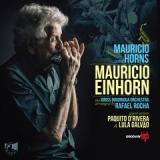
'Mauricio and Horns' by Bossa Nova legend and harmonica master Mauricio
Einhorn is produced by Jacques Muyal, with the Idriss Boudrioua Orechestra
arranged by Rafael Rocha and with guest artists Paquito D'Rivera and Lula
Galvao
In jazz, we all know the harmonica master, Mr. "Baron" Toots Thielemans, but we are
equaly fortunate to have our "Prince", Mauricio Einhorn. His early contributions in the
1950s to the birth of the Samba Jazz movement in Brazil played a pivotal role in the
creation of Bossa Nova, a genre that quickly became an integral part of the jazz world.
The influence of jazz on Brazilian music - exemplified by the great Carlos Lyra in
"Influencia Do Jazz" - was so profound that local musicians embraced it to forge a
new musical identity. Many of Einhorn's compositions have become timeless
standards performed worldwide since the early 1950s and '60s.
Together with another giant of the scene, alto saxophonist Idriss Boudrioua,
Mauricio's music gets an even grander presentation than ever before. This time, he
teamed up with an exceptionally talented young musician: a big band arranger and
trombonist named Rafael Rocha, who wrote all the arrangements and conducted the
recordings. Rafael's arrangements are nothing short of magical. They are never
overdone, always respecting the beauty of the original harmonies while infusing them
with his deep passion for jazz. His trombone solos recall the phrasing of Frank
Rosolino, and he modulates the pieces with swirling harmonies that evoke the very
roots of Brazilian jazz. In every track, Rafael enhances Mauricio's elegant and
expressive phrases without ever overpowering the artist, creating a "wall of sound"
that gracefully floats alongside Mauricio.
EPICA’s seventh full-length studio effort “The Holographic Principle” signified a significant upping of the musical ante for this most adventurous of modern bands. Recorded once with esteemed producer Joost van den Broek at the controls, “The Holographic Principle” represents the most impressive and powerful expression of EPICA’s boldly inventive sound yet. One listen to thunderous songs like ‘Edge Of The Blade’ and ‘Universal Death Squad’ will confirm that “The Holographic Principle” is EPICA’s heaviest album to date. Meanwhile, the shimmering soundscapes and multi-layered melodrama of ‘Once Upon A Nightmare’ and the towering 11-minute title track confirm that “The Holographic Principle” is also the band’s most musically extravagant and daring release so far. With lashings of sumptuous orchestration and a never-ending stream of ingenious but brutal metal riffs and propulsive rhythms underpinning the whole explosive enterprise, this is an album that raises the bar for the entire symphonic metal genre.
"As iconic as she was discreet, Françoise Hardy established herself in the '60s as a major artist in the genre of ""French chanson."" Her voice, songwriting, and ability to surround herself with talented collaborators helped her seduce the whole world and, over the decades, shape a discography of the highest caliber.
This brand-new Best Of compilation is the very first to cover Françoise Hardy’s entire career, spanning from her 1962 debut to her final recordings in 2018. Featuring a timeless 1960s-inspired cover, it brings together her most iconic songs, from early classics like ""Tous les garçons et les filles"" and ""Le temps de l’amour"" to signature hits such as ""Comment te dire adieu"" (a streaming and sync favorite), ""Message personnel,"" the viral sensation ""Voilà"" (#1 viral hit, with over 300k TikTok creations), and ""Le large."""
"As iconic as she was discreet, Françoise Hardy established herself in the '60s as a major artist in the genre of ""French chanson."" Her voice, songwriting, and ability to surround herself with talented collaborators helped her seduce the whole world and, over the decades, shape a discography of the highest caliber.
This brand-new Best Of compilation is the very first to cover Françoise Hardy’s entire career, spanning from her 1962 debut to her final recordings in 2018. Featuring a timeless 1960s-inspired cover, it brings together her most iconic songs, from early classics like ""Tous les garçons et les filles"" and ""Le temps de l’amour"" to signature hits such as ""Comment te dire adieu"" (a streaming and sync favorite), ""Message personnel,"" the viral sensation ""Voilà"" (#1 viral hit, with over 300k TikTok creations), and ""Le large."""