
also available
2x12" + 2 CD[28,78 €]
pre-order now12.09.2025
expected to be published on 12.09.2025
28,78 €
2x12" + 2 CD[28,78 €]
expected to be published on 12.09.2025

2x12"[28,78 €]
expected to be published on 12.09.2025

expected to be published on 08.10.2021

Since the release of DAMAGED in 2024, Michael Fiedler aka GHOST DUBS has been surfing intensifying waves of adulation, earning praise from such diverse underground legends as Justin Broadrick (Godflesh/Jesu), Regis, Stefan Betke (Pole) and Steve Von Till (Neurosis). With second album Oblique, his mastery of sculpting sound waves results in a spellbinding set of alien soundscapes: larger in scale, richer in tone and considerably more cinematic than its predecessor. Lower, deeper and moodier, its cloudy abstractions, shadowy pulsations and submerged rhythms find Fiedler reaching further into his own sonic void, crafting blurred melodies and addictive narco loops into something simultaneously heavyweight and hypnotic.
Lead single and album opener “Low Times” sets the atmospheric pressure to maximum, resembling a dream date between prime dirt-house era Andy Stott and Berlin dub-tech pioneers Basic Channel. From there, Oblique descends into a series of enchanting mood scenes: the furtive, balletic gyrations of “After All”, the haunting ambience and buried heartbeat throb of “Soft Collapse”, and the noirish atmospherics of “Blackout Dust”, which worms its way into the mind like some forgotten David Lynch scene. The spirit of reggae is more distanced here than on DAMAGED, but the ghost of Jamaican dub still permeates these foggy soundscapes, particularly on “Bombed Suburbs”, where Augustus Pablo-style melodicism is chopped, screwed and slowed into a magnetic lock groove.
Superficially minimal but maximal in its minute detail, Oblique is a record of contorted reflections, mesmeric echoes and tantalising audio mirages. By the vaporous mist of closing track “Almost a Structure”, obvious rhythm has been craftily filtered away, leaving a blurred and blunted residue full of mystery and implied narrative. Dense in the best possible sense and crushing when played loud yet equally potent played quiet, Oblique imagines dub techno burning its own rigid rulebook: sensual, funky and concussive rather than dry or alienating. Following Fiedler’s recent work scoring Sound of Falling, recognised at Cannes in 2025, Oblique finds Ghost Dubs shedding his influences and making it clear he has arrived at a sound entirely his own — essential deep listening and a bewitching dose of future shock.
expected to be published on 09.10.2026
Verdad Y Error (2026) resides in the tension between the thrashing of external noise and beating centred internal calm. Gibrana Cervantes is known for her work across experimental music and contemporary performance, a practice with focussed intensity and surging physicality, often pushing the limits of endurance, presence, and embodiment. A central axis of her performance practice is her ongoing collaboration with acclaimed choreographer Florentina Holzinger, including composing the music for SEA WORLD (2026), Florentina Holzinger’s critically acclaimed installation for the Austrian Pavilion at the Venice Biennale. Alongside this, she is a core member of the experimental ensemble Amor Muere (Mabe Fratti, Concepción Huerta, and Camille Mandoki). Cervantes maintains an active recording practice that directly informs her live output including her collaboration Memoria (2025), with Colombian Drone Mafia (Nyksan) for Ambie-Tón (Tratratrax),
Verdad y Error is a record of her artistic approach which expands her body and the violin’s horizon of possibility to near breaking point. Cervantes uses a register closely associated with Metal, yet buried deep in the alchemy of these pieces are motifs which hark back to her classical background. Across these pieces the violin is used as an instrument with a fragmented and shifting voice — blurred, repeated, and reshaped through distortion. “Many of these pieces come from images, memories, and sensations that have stayed with me for years. I'm interested in the blurring of what actually happened and what time transforms.” The recordings are built with layers of violin tones which oscillate between recognisable, processed, stretched and shifted, and lay embedded in a frequency stratum of volatile static and noise. “The violin on this album doesn't appear as a clean instrument. I process it, repeat it, distort it, and multiply it until it begins to feel more like memory than melody. Something blurry, shifting, difficult to grasp.” The origins of the album were born at a time when Cervantes was seeking inner calm amidst a relentless external noise, questioning the validity or possibility of memory and its radically changing perception in relation to experience. Subsequent reflection on this contemplative moment allowed her to develop a relational music which moves through memory, erosion, repetition, and emotional ambiguity. Creating a space that feels both intimate and unstable, mercurial with the patina of lived imperfection.
Akin to the unreliable narrator and linguistic instability, each piece functions as an emotional landscape suspended between clarity and confusion. An album which balances melody, brutality, fragility and noise
throughout its sprawling recordings and artwork, which operates as an analogue to the music. The visual world of the album developed in collaboration with Mauro Ventura was compiled across various media with a mix of handwritten texts, burned typography, metallic textures, and fragile physical materials. “I wanted the record to feel tactile and imperfect — something emotionally direct but physically worn.” says Cervantes. More than offering explanations, verdad y error exists as a conversation between memory and disappearance, noise and stillness, truth and error.
expected to be published on 16.10.2026
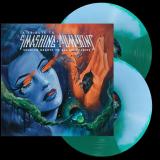
„Sending Hearts To All My Dearies“ ist mehr als ein klassisches Tribute-Album: Künstler verschiedener Generationen interpretieren Songs der Smashing Pumpkins aus ihrer eigenen Perspektive neu. Mit dabei sind u. a. Tame Impala, The Midnight, Palaye Royale, Carpenter Brut, Meg Myers und Alice Glass.
expected to be published on 16.10.2026

»Memorial« grew out of Nate Wooley’s work alongside Annea Lockwood recording the Columbia River, and in particular from a visit to Kettle Falls in northern Washington, once one of the river’s great salmon fishing and meeting grounds and a place of enormous importance to the Sinixt and other Indigenous peoples of the Upper Columbia. The falls disappeared from view following the construction of the Grand Coulee Dam in 1940, submerged beneath what is now Lake Roosevelt, yet beneath the still surface of the reservoir, a fast current continues to move across the buried cliffs. That tension between what remains and what can only be recovered through memory runs throughout »Memorial«.
In the essay accompanying the record, Wooley returns repeatedly to the idea of translation: the attempt to carry an experience from one form into another, from river to recording, memory to sound, landscape to music. He moves between Lockwood’s sound maps, John Ashbery’s rain falling on canal machinery, Ravel’s attempts to make water move through a piano, Christian Wolff’s »Stones«, and the Sinixt First Salmon Ceremony, where rocks struck together recall the sound of salmon once moving through the river in their thousands. These translations cannot restore what has been lost; however, they allow us to revisit what remains beneath in another form.
»Memorial« exists as an uncertainty, concerned with the distance between a place and its recording, between an event and what survives of it, and with the way listening itself becomes entangled with memory. Kettle Falls remains submerged, the river constrained and radically altered, but the water continues to move over the old rock beneath the reservoir. »Memorial« tries to listen for that persisting memory.
expected to be published on 05.11.2026

Siân Pottok is a citizen of the world.
Born in West Palm Beach, Florida, to a mother of Indian and Congolese heritage and a father of Slovak and Belgian descent, Siân grew up between Belgium and New York before finally letting her travelling wings come to rest in Paris. What could have become a story of fragmentation instead became a source of creative strength. Singer, songwriter, composer and photographer, Siân has always turned borders into bridges.
She first honed her voice in the jazz clubs of Paris and New York, performing alongside renowned artists such as Richard Bona, Jon Batiste and Mike Stern. Yet her path has always extended far beyond the stage. For nearly a decade, she led cultural initiatives with women and children living through exile, violence and poverty across India and Southern Africa, weaving together music, photography and artistic transmission as tools for dialogue and empowerment.
The true turning point came when she discovered the kamele ngoni, the West African harp whose ethereal sound seemed to echo something long buried within her. The instrument became her musical alter ego—the invisible thread binding together her many inheritances. Guided by Malian master Abou Diarra, Siân embarked on an inward journey towards her African roots. Yet this return to her origins was never an act of retreat into identity. Instead, it gave rise to a body of work that remains profoundly open to the world, where Africa enters into conversation with jazz, folk, soul, alternative pop and the rhythms of Brazil.
Along the way, she has crossed paths with remarkable artists including Rogê, Chico César, Fatoumata Diawara, Lokua Kanza, Flavia Coelho, Thomas de Pourquery and Philippe Baden Powell. On stage and in the studio, Siân continues to shape a musical universe that refuses labels. Like artists such as Björk, Joni Mitchell and Laura Mvula, she moves forward as an explorer, guided not by genre but by intuition.
Today, Siân stands as one of the most distinctive voices of the new Francophone music scene an artist capable of uniting musical sophistication with emotional power, introspection with collective celebration, depth with an irresistible urge to dance.
Animal — The New Album
With Animal, produced by British musician Tom Excell (Nubiyan Twist, Africa Express...), Siân delivers her most intimate and assured work to date. Every song feels like a shedding of skin, a quiet metamorphosis, exploring self-acceptance, femininity, the freedom to be oneself, cultural heritage, and the reconciliation of one's own imperfections.
From Stereotype, a fearless manifesto against the expectations imposed on women, to the title track Animal, an anthem celebrating the beauty of imperfection ("I've turned my cracks into a crown"), the album gives a voice to everyone who refuses to fit into predefined boxes. In Terre, je danse sur toi, featuring Fatoumata Diawara, Siân pays tribute to Mother Earth and to the roots that unite us all. Oh! Congo, recorded with Lokua Kanza, reconciles her cultural heritage with an ancestral homeland that feels both distant and intimately familiar. En équilibre, with Flavia Coelho, embraces the exhilaration of risk and the courage to leap, while Put a Mask and I Could Kill confront hidden wounds and the invisible violences that quietly shape who we become.
In ADé, Siân addresses Adenomyosis as though speaking to an unwanted housemate. "My body is your battlefield," she sings, giving voice to an intimate shadow lodged deep within herself. This bittersweet lullaby transforms a pain so often left unspoken into an act of profound tenderness towards oneself.
The album also holds a rare treasure: Reste tel(le), an unpublished text by Pierre Barouh, the founder of the Saravah label. Never before set to music or performed, this elusive poem of free love finds new life through Siân's voice, becoming a dialogue across time between two artists united by the same devotion to freedom, métissage and openness to the world.
Driven by Tom Excell's vibrant Afro-pop pulse, the spiritual breath of the kamele ngoni, organic arrangements and deeply personal songwriting, Animal is an album of liberation. It invites us to lay down our masks, embrace our contradictions and reconnect with the free, instinctive and powerful animal that lies dormant within us all. More than a collection of songs, it is a radiant manifesto for the richness of identity, the passing on of memory, and reconciliation with oneself.
Animal is not simply the title of an album, it is a declaration of independence. An invitation to live fully, unapologetically, and without instructions.
A citizen of the world, travelling freely between continents, languages and memories, Siân Pottok delivers with Animal her most personal, and perhaps her most universal work to date: an album that reminds us that our fragilities, our roots and our differences are, beyond doubt, our greatest strength.
— Christophe Tison
expected to be published on 13.11.2026

The fourth release on Samurai Music sublabel SAIBAI comes from Spanish techno mainstay Reeko. True to his long-standing reputation for hypnotic sonics and rhythmic precision, Juan Rico builds on a recent run of activity on Samurai to offer up a densely packed, evocative pair of 160/170 BPM soundscapes. In keeping with the spirit of previous SAIBAI releases, Rico emphasises exploration on both sides of this new record as he draws out continually morphing textures that land between melodic expression and percussive impact. It's instantly clear there's a free tekno undercurrent buried beneath 'Gathering 1' that defines the energy of this latest transmission. The difference is how Rico wields that energy, artfully submerging the kick drum propulsion and letting three-dimensional sonic sculpture beat a path towards the dance. Layers of arrhythmic delay ripples loosen the valve, but there's a constant pressure pushing at the edges of the production from start to finish. There's a more immediate urgency to the mixing of the rhythmic elements on 'Gathering 2' as Rico teases a gabba-like intensity tempered by misty clouds and textural sweeps that soften the attack without sacrificing the thumping energy of the track. Measured and meticulous, bristling with micro-details on top of the imposing presence, both 'Gathering's reaffirm Reeko's current hot streak working outside his usual field of focus.
On Stock and ready to ship

“One of Berghain’s longest-serving residents, Luke Slater has been defining bleepy, polyrhythmic, industrial-strength techno as Planetary Assault Systems since the mid-nineties. P.A.S albums tend to come together in their own time:
“External signals and signs combine until the recipe feels right, both musically and from being ‘out there’,” Slater adds. “10 years since I released Arc Angel on Ostgut Ton, and it’s a fitting pleasure to combine live show ideas and studio work for the new album, served up with raw energy” That patience runs through his whole Ostgut catalogue; since Temporary Suspension brought its machine-tooled weight and alien feeling to the label in 2009, each P.A.S. release on Ostgut Ton has been its own quest for discovery, from The Messenger’s search for sounds not yet present in club music to Arc Angel’s focus on melody to the deep hypnosis of Plantae.
His new album, Planetary People has the deliberate imagination and depth of a record that took its time, shaped as much by live rooms and crowds as by the studio.
“Into The Night” creates a haunting, dystopic environment of corroded acid saturated in echo, absorbing from the first second. “Labyrinth” breaks into buoyant tribal percussion, modulated chirps trading off over propulsive drums. “Quadrant 10” is clean, delay-drenched techno, buzzing with noise splatters over saturated thuds. “Sermon Of The Light Tides” scrambles metallic bell sequences that distort and evolve throughout, reminiscent of a dial-up modem crossed with a game of Frogger, squelching between percussive bursts and stripped-back kicks. “Brave Cosmo” is tormentingly menacing, eerie synths panning around buried vocal fragments over frantic percussion. “Retina Burn” rolls on fierce, cement-mixer 909 cycles, rave stabs over a ride that locks you in, the whole track stuttering and repeating before stripping back to a bare echoing kick and building itself again. “Thunder Major” barrels on open hats and reverb-drenched claps ricocheting through twisting wreaths of delay, mesmeric and relentless. “Beton Brut” marches juggernaut percussion stamping through hall reverb so vast you can visualise the room, the darkest and most unrelenting track on the record. “No Ninja” crunches in metallic and immediate, a wiry plucked lead threading through glitch with the bass held low and deep, mixed so precisely you can see every layer stacked in your mind’s eye. “Ha Jam” is danceable techno with plenty of funk and a sophisticated looseness, a vocal laugh bouncing off clanging metal blocks and rave stabs. “Lynx” lowpasses its rave stabs and crystalline beeps, chirpy hats ticking, cold metal repeats, old school and mesmeric. “Generation Slip” closes everything out, ominous and churning, skittering percussion and electrical sparks rattling through steel, a freight train barrelling on into oblivion.
On Stock and ready to ship

Somewhere between revelation and delusion, Euphoria Bound maps a familiar trajectory: the irresistible pull towards dissolution, the gradual erasure of memory, the self rendered irretrievable. It moves between states of consciousness where such distinctions of enlightenment or self-deception are erased.
Across ten tracks, the album constructs a spectrum of sound that is both ambitious and Uncompromising. The approach here is more direct than recent releases, with textures that accumulate and disintegrate with renewed urgency.
On Stock and ready to ship

Label Cover[14,92 €]
2026 Repress
Sicily's SLV is able to merge technical mastery with emotional resonance. His potent techno sounds have come via the likes of SHWD's Mutual Rytm and Slam's Soma, and unite timeless yet forward-thinking sonics.
On 'Fleeting Dreams', he continues to refine his signature sound while channelling introspection and intensity into a collection of meticulously crafted cuts that balance precision and feeling, energy and space. Each track reveals a different side of his sonic identity: hypnotic rhythms intertwine with evolving soundscapes, while layers of distortion and melody merge into a dreamlike tension between the mechanical and the organic.
'Fading Moments' kicks off with a sleek blend of driving, supple kicks and warm synth ripples, while a euphoric vocal cry is buried deep to amp up the emotion. 'Scenario' then brings icy hi-hats and sinewy synths bring a futuristic feel to the unrelenting, high-pressure drums down low. 'Daruma' has a darker energy with menacing textures and paranoid FX bringing the rolling drums to life, while 'Bass Grit' has a hunched up rhythm, with groaning pads and fizzing static electricity that charge up the party. To close, 'Shimmer' sinks down into a muscular and deep rhythm that's marbled with restless synths and ever-rising tension.
In addition, digital bonus cuts 'Trust' and '1990' offer different perspectives with slamming drums, seductive vocals and feisty synth loops making for two more bold, immersive techno weapons.
On Stock and ready to ship

Already in its title, Plume Girl’s debut thoroughly lets things go and takes them in – all at once. “In the End We Begin” is the first solo full-length from Sowmya Somanath, a Hindustani classical singer/composer and half of alt-pop duo Felt Out. Plume Girl’s music takes inspiration from the semi-regular musical form of the rāga (translated as ‘tinting’), invoking mood and atmosphere, each rāga thought to have its own distinct nature and personality, brought to life through improvisation. String swells and Somanath’s searching vocalisations envelop every track’s own blissful chamber. Exploring imagined binaries along the way — eastern vs. western, traditional vs. experimental, acoustic vs. electronic, Sowmya sees music as a curious dialogue between divine Self and an invisible reality. Beneath the illusion of a chromatic world, there remains a blissful oneness.
Plume Girl’s songs sit between ambient Hindustani music and emotionally-encumbered pop. In front of backdrops comprising sundrenched drones or glitches, sketched out beats, and criss-crossing glissandi or flutes, Somanath both murmurs intimately and spirals upwards into soaring choruses. The lyrics ponder innermost thoughts, never more literally than on the blissful emo folk closing track: ‘In my heart I know / what’s in my heart / I know what’s in my…’
“When I began writing this music, I was fresh off of an experience that completely twisted my reality,” explains Somanath. It was the end of a years-long relationship, and the blossoming of a long-buried love hidden in plain sight: “a best friend of a decade, my musical partner, someone who had always seen me completely…At once, I felt grief and loss. At once, excitement and love.”
On Stock and ready to ship
Tastemaker and cult figure among some, noise vendor among others… lurking somewhere in the shadows between London and Paris, the man known as Sheet Noise emerges out of the blue with his debut LP, Shostakovich's 5th Played Backwards in a Concrete Silo.
A direct shock to the system: equally beautiful and evil, abrasive yet uncomfortably calming. The feeling that something is about to happen at any minute—impending love or hatred blaring from the speakers at breakneck speeds. Heavy-duty, reactor-melted junglism; twisted samples buried under layers of dust and static; familiar voices in unfamiliar places.
This eight-track album is as intense as it can get. Don’t call it ambient. Don’t call it jungle. Don’t call it noise. Just strap yourself into the electric chair and get ready for the end.
A classic in the making.
On Stock and ready to ship

Label Cover[12,56 €]
Sicily's SLV is able to merge technical mastery with emotional resonance. His potent techno sounds have come via the likes of SHWD's Mutual Rytm and Slam's Soma, and unite timeless yet forward-thinking sonics.
On 'Fleeting Dreams', he continues to refine his signature sound while channelling introspection and intensity into a collection of meticulously crafted cuts that balance precision and feeling, energy and space. Each track reveals a different side of his sonic identity: hypnotic rhythms intertwine with evolving soundscapes, while layers of distortion and melody merge into a dreamlike tension between the mechanical and the organic.
'Fading Moments' kicks off with a sleek blend of driving, supple kicks and warm synth ripples, while a euphoric vocal cry is buried deep to amp up the emotion. 'Scenario' then brings icy hi-hats and sinewy synths bring a futuristic feel to the unrelenting, high-pressure drums down low. 'Daruma' has a darker energy with menacing textures and paranoid FX bringing the rolling drums to life, while 'Bass Grit' has a hunched up rhythm, with groaning pads and fizzing static electricity that charge up the party. To close, 'Shimmer' sinks down into a muscular and deep rhythm that's marbled with restless synths and ever-rising tension.
In addition, digital bonus cuts 'Trust' and '1990' offer different perspectives with slamming drums, seductive vocals and feisty synth loops making for two more bold, immersive techno weapons.
On Stock and ready to ship

Black vinyl LP. Following 2019's acclaimed self-titled debut album, Metal Preyers take the left hand path into a gloomy backwater filled with haunted creatures and fraught with peril. "Shadow Swamps" again finds London-based Jesse Hackett handling the music and Chicago's Mariano Chavez fashioning the album's visual identity, which this time includes a short film and book for a fully immersive experience. "Shadow Swamps" is the soundtrack to a pitch-black fairy tale about a father and daughter as they journey through a swamp avoiding gremlins, red swines and crater creatures. Musically, it pivots between the clattering Czech new wave experimentation of "Valerie and her Week of Wonders" composer Luboš Fišer, or the magical, eccentric lounge of Birmingham's Broadcast, and the grinding industrial grot of Italian pioneer Maurizio Bianchi. This time around, Hackett has roped in production assists from his six year-old-daughter wonder Nyasha hackett who used phone memos to record herself singing - veteran Metal Preyers collaborator Lord Tusk, and Manchester-based painter, DJ and producer Richard Harris, aka Sockethead. The crew inks an unsettling, richly textured sonic landscape, with claws of rhythmic smoke curling around chiming otherworldly xylophone, disembodied fiddle drones echoing over screwed 'n chopped beatbox dirt and half-heard magical vocals buried under clouds of white noise. Track listing: 1 Murking Shadows 2 Ecto Green Code 3 The Preyers Forest 4 Scream Dreamer 5 Red Swines 6 Crate Creature 7 Carpenters Cabin 8 Slime Things Accent 9 Wasp Faced Invasion 10 Metal Mans Revolt 11 On Her Way 12 Gremlin Gurgle 13 Shadow Swamps 14 Escape - The Sunrise
On Stock and ready to ship

Fashion Flesh tears the fabric of space and time. This is his first offering for the ESP Institute. With side A’s 'Atoms Revolt', ESP cordially introduces Fashion Flesh, AKA John Talaga, to the deepest corners of your mind. Using largely homemade electronics, circuit-bent gadgets, and tape manipulation, John manages to tap into the innate character of these otherwise introverted machines, eavesdropping and documenting their buried inner dialogue. His command of distortion is multi-tiered. On a micro level, he induces happy accidents and shepherds stray elements. Zooming out a bit, we begin to understand the sonic meat grinder that equalizes his bag of disparate ingredients. And from a macro vantage point, we fully recognize the greater tool that sculpts all of the above into form. Side B’s 'New Freedom' conjures a specific dystopian image—the byproduct of an artist involuntarily conditioned by the commute between up-river Bay County, Michigan and the Detroit metropolitan area. Like cutting away at flesh and muscle, breaking through the bone to suck the marrow, John depicts both the contrast and parallels between two post-industrial urban landscapes, the banal trek across The Thumb between them, and the gradual disintegration of agriculture as one nears the Techno city. Voice fragments begin to stutter in syncopation like radio frequencies interfering with our psyche, Geiger counters wail and moan, untamed oscillations mimic caged primates rioting at the zoo, and a steady-firing piston of drums struggles to break through a dense harmonic soot. The depth of personality John extracts through his manipulation process is remarkable— a point-of-view that foreshadows humanity’s looming technological singularity while hinting that it may have always been here, hiding in plain sight, waiting to be given a voice. These two songs will trip your circuit breakers.
On Stock and ready to ship

Since launching her own club night, “Motivation,” back in 2018, B.AI has played a key role in bringing the underground’s club sounds to her home country, China. While introducing some of the scene's most exciting artists to her local audiences, she emerged as one to look out for as well: first as a DJ and quickly thereafter as a producer. Her original takes – a sensitive, highly personal approach to melody and a knack for playing with expectations – crystallized in a slew of A+ releases and a couple of international tours. This trajectory, shaped by taking matters into her own hands and self-empowerment, now sees a logical next step, with the inception of a label that will also operate under the “Motivation” banner and features her own “Hope” EP as its first release.
Sparkling mallets, with synth-pop quality catchiness, open the title track. Rather than further evolving, their two-bar arrangement gets looped over and again, serving as the foundation for a slick FM bass rhythm and a variety of hooks. Although these incline to the bright, the overall vibe is melancholic. In vintage B.AI style, the aptly titled “Hope” is more ambiguous than its patches suggest. Similarly, the vocal this type of palette would call for ultimately comes in the form of aloof, covert musings. A bit buried in the mix, they are most efficient – just like the tension that keeps brooding underneath the surface.
“Murderbot Diaries 1991” turbocharges four-to-the-floor synthetic drums with an arpeggiated rolling bass. The blue note melody on top feels sequenced via a pocket calculator, and the dissonant, electroclash-reminiscent stabs that follow might sound even more angular. The tune is frantic, sinister – and perhaps above all tongue in cheek. It reaches fever pitch with the arrival of a tubular bell theme between the two breaks.
“Once”’s slomo cutoff modulation on the 16th note mid-bass instantly creates a sultry atmosphere that meshes greatly with the pastel cool of the gently delayed DX7 leads. The energy drifts between effortless control and uncertain outcome. These contrasts are amplified as the drums alternate amidst moderation and beat-repeat rendered havoc.
On “Only We Know,” a progressive sine lead lays out the central motif. Yet as briskly as it appears, it makes way for detuned, gliding square waves taking on the same theme. This outlines the track’s structure: as slightly morphed repetitions keep getting introduced almost haphazardly, a dreamlike, mesmerizing ambience unfolds. Techy drum rhythms and a 101-type bass make sure everything stays fuelled. Within the ingenious tapestry of melodies and new twists, it never loses touch with the dance floor. It illustrates B.AI’s club savvy neatly and is therefore a perfect closer for this EP.
On Stock and ready to ship

Altered Circuits dives deeper in the world of playful and versatile club music with roots in the early 90's! There's an obvious parallel between Ildec's DJ performances and his own music.
Part of a scene with a focus on extended, broad-minded sets, the Ibiza-based artist lets his yearning to unearth and play obscure gems flood into his production process. The "Ahora Si EP" is testament to this adventurous spirit as it tackles a wide array of tempos, styles and moods.
Opener "El Principio" and closer "Grt Plschr" display Ildec's fondness of hazy, recondite atmospherics. With its sustained ambient chord, delay-washed newsreader samples and manipulated themes, the former sounds like a fever dream radio bulletin.
On the latter, a broody motif meanders alongside loosely played drums, while a buried bass guitar occasionally reveals itself. "El Break Del Dia" furtherly explores some of these elements, but this time with the dance floor front of mind.
Languidly morphing bass sequences and staccato synth salvos build up anticipation. When a slowly emerging, ceaselessly arpeggiating organ lead finally materialises, the track explodes. Natural flow is partly traded for sturdier form on the remainder of the EP. "El Break De La Noche" lets an ever-modulating lead groove alongside rigid, dry drum beats.
Descending tom fills, truncated squeaks and a top layer LFO gone haywire complete this sparse yet exciting cut. "La Nueva Version" has a similarly efficient bassline as its bedrock. An interplay of zaps, risers, transposed percussion, and other dusty cartridge samples pulls it left and right while subtle disorienting hints of speech thicken the mix.
On "Modificacion", Ildec moulds his take on progressive and tech house into its toughest shape. A druggy, bleepy lead twirls in and out of the track, carried by the road-tested combo of a taut drum pattern and a piercing backbeat bass. Ominous chords and equally menacing vocals mark its aim: to create tension in the club. It is a standout on a diverse, daring EP we are delighted to present as the fifth release on our label.
On Stock and ready to ship

Montréal-based sound artist Steve Bates expands his strategies and stylistic influences on An Infinite Antenna, his second solo album for Constellation, giving freer reign to melodic components and textural dynamics: leftfield synth work, deconstructed drum machine, pointillist electric guitar, and radiostatic blur are all part of the new brew swirling around his bruitist signal-bending and field-recording sensibility. Arguably a more ambient album than his acclaimed 2022 Constellation debut, An Infinite Antenna is at the same time more densely packed with ideas, dynamics, evocations and earworms. Coming out of the anarcho-punk scene of the Canadian Prairies in the 1990s, Bates founded Winnipeg’s experimental sound festival Send + Receive in 1998 before moving to Montréal to become Sound Coordinator at Hexagram (Concordia University), delving further into sonic research and theory, tape-based composition, and installation work. Alongside the curatorial arc of his own sound art label The Dim Coast, Bates released several solo and collaborative albums on ORAL_records leading up to All The Things That Happen, the 2022 Constellation debut praised by Boomkat for its “grittily iridescent ambient billow rendering maximalist panoramas” and by Backseat Mafia as “extraordinary soundscapes of unstable, destructive cacophony and tender calm, echoes of the threat of power.” Where that album was noisier and single-minded, made with the self-imposed limit of a Casio SK-1, Bates plays more widely with instrumentation and atmospheres on An Infinite Antenna, also drawing on his post-hardcore roots in seeking a sort of track-by-track concision nonetheless driven by the album’s coherence as a seamless work. “I was trying to set durations I associate with punk rather than the longer, sprawling music coming from more ambient styles (that I very much love), and while I wasn’t able to quite pare it down to Minutemen durations, I had that reduction to essential elements as a sort of whisper over my shoulder.” Incorporating source recordings made throughout 2023-2025, including at artist residencies and site-specific sound installation visits in Bosnia and Herzegovina (the album’s cover photo was taken in Sarajevo), Austria, Greece, and Saskatchewan, An Infinite Antenna combines Bates’ “idea of slowly scanning a radio dial” with a soundworld of recurring timbral and textural touchstones that forge an integrated whole.
The album’s 12 tracks work effectively as stand-alone pieces, replete with shifting undercurrents, buried melody, and stuttering kinetics, and as a sequential flow where the brief interstitial silences between them are like short pauses to flip the next page in a sketchbook of perspectival studies of a wide but singular tableau. The glistening atonal synth expressionism of opener “Pink pink pink pink…pink pink” drifts gently toward submerged ambience, darkened by the noised rumble and static interference of “Green as a ghost”, which introduces broken beats and piano chords in its denouement. Tracks like “Battles and sieges and street trees” and “Easier sad than done” work the foundations of low-end field-recording resonance, but dappled with lovely melodic droplets of treated guitar and synth. “Waste, songs of the world” and “Disaster loans” are among the album’s most explicit stylistic references to posthardcore, with distorted ambient bass and gently abrasive drum sampling. Closing track “Swamps and factories”, the album’s longest piece, is perhaps most reminiscent of Bates’ previous record with its sustained dissonant glimmer-drone, but the journey An Infinite Antenna traces to get there is Bates at his most dynamic, diverse, distinctive, and engaging. Thanks for listening.
expected to be published on 25.09.2026

Montréal-based sound artist Steve Bates expands his strategies and stylistic influences on An Infinite Antenna, his second solo album for Constellation, giving freer reign to melodic components and textural dynamics: leftfield synth work, deconstructed drum machine, pointillist electric guitar, and radiostatic blur are all part of the new brew swirling around his bruitist signal-bending and field-recording sensibility. Arguably a more ambient album than his acclaimed 2022 Constellation debut, An Infinite Antenna is at the same time more densely packed with ideas, dynamics, evocations and earworms. Coming out of the anarcho-punk scene of the Canadian Prairies in the 1990s, Bates founded Winnipeg's experimental sound festival Send + Receive in 1998 before moving to Montréal to become Sound Coordinator at Hexagram (Concordia University), delving further into sonic research and theory, tape-based composition, and installation work. Alongside the curatorial arc of his own sound art label The Dim Coast, Bates released several solo and collaborative albums on ORAL_records leading up to All The Things That Happen, the 2022 Constellation debut praised by Boomkat for its "grittily iridescent ambient billow rendering maximalist panoramas" and by Backseat Mafia as "extraordinary soundscapes of unstable, destructive cacophony and tender calm, echoes of the threat of power." Where that album was noisier and single-minded, made with the self-imposed limit of a Casio SK-1, Bates plays more widely with instrumentation and atmospheres on An Infinite Antenna, also drawing on his post-hardcore roots in seeking a sort of track-by-track concision nonetheless driven by the album's coherence as a seamless work. "I was trying to set durations I associate with punk rather than the longer, sprawling music coming from more ambient styles (that I very much love), and while I wasn't able to quite pare it down to Minutemen durations, I had that reduction to essential elements as a sort of whisper over my shoulder." Incorporating source recordings made throughout 2023-2025, including at artist residencies and site-specific sound installation visits in Bosnia and Herzegovina (the album's cover photo was taken in Sarajevo), Austria, Greece, and Saskatchewan, An Infinite Antenna combines Bates' "idea of slowly scanning a radio dial" with a soundworld of recurring timbral and textural touchstones that forge an integrated whole. The album's 12 tracks work effectively as stand-alone pieces, replete with shifting undercurrents, buried melody, and stuttering kinetics, and as a sequential flow where the brief interstitial silences between them are like short pauses to flip the next page in a sketchbook of perspectival studies of a wide but singular tableau. The glistening atonal synth expressionism of opener 'Pink pink pink pink_pink pink' drifts gently toward submerged ambience, darkened by the noised rumble and static interference of 'Green as a ghost', which introduces broken beats and piano chords in its denouement. Tracks like 'Battles and sieges and street trees' and 'Easier sad than done' work the foundations of low-end field-recording resonance, but dappled with lovely melodic droplets of treated guitar and synth. 'Waste, songs of the world' and 'Disaster loans' are among the album's most explicit stylistic references to posthardcore, with distorted ambient bass and gently abrasive drum sampling. Closing track 'Swamps and factories,' the album's longest piece, is perhaps most reminiscent of Bates' previous record with its sustained dissonant glimmer-drone, but the journey An Infinite Antenna traces to get there is Bates at his most dynamic, diverse, distinctive, and engaging. Thanks for listening
expected to be published on 25.09.2026
Since the release of DAMAGED in 2024, Michael Fiedler aka GHOST DUBS has been surfing intensifying waves of adulation, earning praise from such diverse underground legends as Justin Broadrick (Godflesh/Jesu), Regis, Stefan Betke (Pole) and Steve Von Till (Neurosis). With second album Oblique, his mastery of sculpting sound waves results in a spellbinding set of alien soundscapes: larger in scale, richer in tone and considerably more cinematic than its predecessor. Lower, deeper and moodier, its cloudy abstractions, shadowy pulsations and submerged rhythms find Fiedler reaching further into his own sonic void, crafting blurred melodies and addictive narco loops into something simultaneously heavyweight and hypnotic. Album opener "Low Times" sets the atmospheric pressure to maximum, resembling a dream date between prime dirt-house era Andy Stott and Berlin dub-tech pioneers Basic Channel. From there, Oblique descends into a series of enchanting mood scenes: the furtive, balletic gyrations of "After All", the haunting ambience and buried heartbeat throb of "Soft Collapse", and the noirish atmospherics of "Blackout Dust", which worms its way into the mind like some forgotten David Lynch scene. The spirit of reggae is more distanced here than on DAMAGED, but the ghost of Jamaican dub still permeates these foggy soundscapes, particularly on "Bombed Suburbs", where Augustus Pablo-style melodicism is chopped, screwed and slowed into a magnetic lock groove. Superficially minimal but maximal in its minute detail, Oblique is a record of contorted reflections, mesmeric echoes and tantalising audio mirages. By the vaporous mist of closing track "Almost a Structure", obvious rhythm has been craftily filtered away, leaving a blurred and blunted residue full of mystery and implied narrative. Dense in the best possible sense and crushing when played loud yet equally potent played quiet, Oblique imagines dub techno burning its own rigid rulebook: sensual, funky and concussive rather than dry or alienating. "Second album from electronic producer Michael Fiedler's GHOST DUBS project. "Follows up from the highly-acclaimed 'Implosion' album with The Bug from 2025. "Debut album 'Damaged' sold out its three initial pressings and has just been repressed "Michael Fiedler recently scored 'Sound of Falling' which won a Cannes award in 2025 and made the shortlist for an Oscar, too.
This item has not yet been released. You can pre-order the product now.
'As I Slip Into the Sky reflects a particularly small sliver of time compared to Where the Smoke Goes, with recordings taking place in early 2025, while Johnny was bed-bound in an assisted living facility with multiple sclerosis. Alabama born, Portland based artist Joel Nelson helms the nearly entirely electronic backdrop, posing a new canvas for Johnny, with Buchla Music Easel bubbling up between Johnny’s lines. This album captures Johnny in a remarkably tender and emotive form. Love and all its permutations. The tangled, but caring nature of familial love, (“But you and me, we can talk on the phone every day. I would never leave you behind”), to the anguish and euphoria of romantic connection. Johnny has a remarkable ability to pose questions, ("What is real love like?), and provide answers that reflect the truest of realities, absent cliche ("I don't know. His curly hair, short on his head, his smile, his smile, his smile...that is what real love is like").
'Joel Nelson's nimble work across a small array of analog synthesizers creates a flowing backdrop to Johnny's stream of consciousness. At times, Broadcast's fuzzed out ballads come to mind, while at others, early Oneohtrix Point Never's gauzy, distant drones anchor beneath Johnny's slippery syntax.
'Johnny recorded his poems while confined to a hospital bed, through an iPhone laid gently on his chest. Assisted by the caring presence of friends John Albea and Lauren Jones, we can hear through these recordings Johnny immersed in his world of words, taking in the world of sounds Joel had provided for him. We hear his breath, at times we hear the harsh sibilance captured by the iPhone microphone, but more than anything, we hear the tenderness and poetic resolve of his caring soul. He was incredibly grateful for the past years of connecting with the small cohort of Birmingham-affiliated musicians and artists who upheld him as the unofficial poet laureate of "The Magic City", Birmingham, AL. Perhaps most appropriately, Johnny closes the album out in a state of gratitude:'
"My funeral was perfect
I was buried wearing a very charming jacket
A very charming jacket I just happened to have on when i died
He was always the lucky one, Mary-Ellen said
I've been looking for a nice casual jacket like that I could wear to casual little outdoor parties and to my funeral all my life
But Johnny just had one
Probably someone left it in his car
He was so lucky
It doesn't even make sense
But its true
He really was that lucky"
expected to be published on 30.07.2026

Winter Gorse coloured vinyl[32,35 €]
These days – on the new, ninth Fink album – Greenall is operating within a lineage of authentic, quietly revolutionary artists from England’s verdant southwestern toe. Artists like Michael Chapman. In 1970, the elusive acoustic guitar wizard released an album called Fully Qualified Survivor. The cult-classic served as a lodestar for Greenall – along with bandmates Tim Thornton and Guy Whittaker – as he began jigsawing together The City Is Coming to Erase it All, the follow-up to 2024’s Beauty In Your Wake. He even considered covering a song from it, but in the process, inadvertently stumbled into what became the album’s opener. ‘Wishing For Blue Sky’ circles a universal teenage ache: waiting for life to start. “No point dying of patience” goes the first lyric as crunching footsteps cue a resonant, open-tuned acoustic swaying into view. By 18, Greenall was fed up with waiting, so he left suburban Bristol and saw the world, sending postcards from the edge, waiting tables, squirreling away tips for the next flight. Thornton had similar experiences when the guitarist/drummer busked across Eur
This is nowstalgia more than nostalgia, though; there’s a parallel between these 18-year-olds and Fink’s autumn-aged family men. “You’re expected to be boring and settling down at this age,” Thornton says. “But we’ve still got this tremendous wanderlust. We want to go and discover, and also achieve things. It’s a nice life – home and family – but fuck, I can’t wait to get back out there.” City is a product of this hunger for discovery, and idolatry of the album as a form – like we had in 1974. City’s cover mirrors its interior, the first song is the greeting, the instrumental closer the conclusion. It’s a story. It’s a record for people who, like its creators, are curious. People who happily face a little cold for music, who light a crackling fire back home, who sit with these songs until they’re ready to chase after their own blue sky
Order now and we will order the item for you at our supplier.

These days – on the new, ninth Fink album – Greenall is operating within a lineage of authentic, quietly revolutionary artists from England’s verdant southwestern toe. Artists like Michael Chapman. In 1970, the elusive acoustic guitar wizard released an album called Fully Qualified Survivor. The cult-classic served as a lodestar for Greenall – along with bandmates Tim Thornton and Guy Whittaker – as he began jigsawing together The City Is Coming to Erase it All, the follow-up to 2024’s Beauty In Your Wake. He even considered covering a song from it, but in the process, inadvertently stumbled into what became the album’s opener. ‘Wishing For Blue Sky’ circles a universal teenage ache: waiting for life to start. “No point dying of patience” goes the first lyric as crunching footsteps cue a resonant, open-tuned acoustic swaying into view. By 18, Greenall was fed up with waiting, so he left suburban Bristol and saw the world, sending postcards from the edge, waiting tables, squirreling away tips for the next flight. Thornton had similar experiences when the guitarist/drummer busked across Eur
This is nowstalgia more than nostalgia, though; there’s a parallel between these 18-year-olds and Fink’s autumn-aged family men. “You’re expected to be boring and settling down at this age,” Thornton says. “But we’ve still got this tremendous wanderlust. We want to go and discover, and also achieve things. It’s a nice life – home and family – but fuck, I can’t wait to get back out there.” City is a product of this hunger for discovery, and idolatry of the album as a form – like we had in 1974. City’s cover mirrors its interior, the first song is the greeting, the instrumental closer the conclusion. It’s a story. It’s a record for people who, like its creators, are curious. People who happily face a little cold for music, who light a crackling fire back home, who sit with these songs until they’re ready to chase after their own blue sky
expected to be published on 05.06.2026

A unique collaboration between Industrial Breakbeat pioneers Meat Beat Manifesto (Jack Dangers) and the undisputed king of Japanese noise, Merzbow (Masami Akita). "We may not speak the same language, but in the vortex of sound, there's a raw, primal understanding that transcends words. Noise can be art, a visual representation could maybe be Jackson Pollock's No 5, a plexus of chaos redefining what music can and could be. Pushing boundaries with Masami wasn't just a musical adventure, it was a masterclass in sonic anarchy"
(Jack Dangers, January 2024). 'Extinct' sees the duo take listeners on a transcendental journey, focusing on the dismantling of beat and structure and recycling the result through layers of beautifully crafted noise and feedback loops, giving birth to new rhythms buried deep in the dirt. The 20 minute opener 'FLAKKA' takes constantly evolving breakbeats which are gradually broken down over time, driven through a filter of harsh noise, destroying the old to give birth to the new. Raw and unforgiving, the track is a behemoth that blends mutant forms of broken beats and hints of dub, creating rhythmic noise of the highest calibre in the process. 'Burner' takes the record to its ultimate conclusion, the initial drum beat broken down so that it is barely recognisable. Pulsating distortion and high end audio fragments bleed into each other as the track lumbers forth and destroys everything in its path before slowly unravelling, degrading and falling apart. A harrowing yet somewhat cathartic trip through walls of harsh industrial noise and audio degradation, 'Extinct' is a masterful pairing of artists who have delivered something truly unique yet totally relevant. Don't sleep on this one! (Todd Robinson / Subunit) Composed, recorded and produced November 2023 - January 2024 by Jack Dangers and Masami Akita.
expected to be published on 29.05.2026

Closed For The Festival is MIDI Janitor’s fourth full-length and is the follow-up to the Holy To Dogs LP, which was originally released on cassette in 2024 on legendary Vancouver tape label Hotham Sound and then in a vinyl edition by Toronto’s We Are Busy Bodies.
The Midi Janitor’s new album, Closed For The Festival, is a biography of Jonathan Orr’s shadow self.
Born from memories of his childhood spent wandering rural Ireland in Ballymore, Donegal on his grandmother’s Christian commune, Closed For The Festival masterfully straddles the line between warped joy and sinister naivety. As Orr states, “the songs are always trying to get to that moment of taking your hand and walking you into the woods on a pretty spring afternoon and then abandoning you there to figure out ‘how do I get out of here??’”
Closed For The Festival recalls the skewed electronica of Boards Of Canada, the dusted syncopations of Heathered Pearls, and the long-buried treasures uncovered by the Sublime Frequencies label, but is never willfully nostalgic in nature - each track is an incantation in honour of ‘thin places’, where the presence of an eternal moment seeps into the present moment - the uncanny feeling of which has followed The Midi Janitor throughout his life and creative work.
- Steve Ramsay: Young Galaxy, Stars
expected to be published on 08.05.2026

Creaked out of an eck with two heads and no brain - just fracking around. Juli Zimmer and Sayizan Stange are Blowjobs Are Real Jobs, crawling right under your skin. Armed with guitar, MS-20 and a trashy drum machine, they bark about dogs, ostriches, stolen bodies, heads buried in sand, plastic spoons in freezer pops, and the big question of where the hell this whole loving-living thing is going anyway. The songs build up expectations like a delicious drink, which then, oops, gets taken away and never delivered. That’s how it is sometimes, you little puffball!
End of 2025, Blowjobs Are RealJobs dropped their first DIY tape, Bloody Situation Menstruation Masturbation. Their notorious sets, somewhere between performance art and riot gig, pop up almost monthly: gallery openings, summer garden chaos, or grimy St. Pauli basement bars. Now the duo’s first 7-inch vinyl brings 5 songs at 45 rpm with a fold-out cover, limited to 200 copies.
Order now and we will order the item for you at our supplier.

To decay is also to transform. Rusting metal is the visible traces of passing time, as the oxidation process accumulates dampness in our atmosphere and imprints it as unpredictable patterns onto hard iron and steel. Working in construction for a year now, Kensho Nakamura sees rust all the time, clambering up ageing chunks of material. Normally discarded as waste, Nakamura began discerning beauty in the phenomenon, organically spiralling around and consuming some of the very hardest of manufacturing stuffs into unique new forms.
‘Electric Rust’ continues the conceptual electronic composition mode of Nakamura’s previous works with a series of fractured musical dioramas. These scurrying notes, sparse hums, and quivering bleeps explore the topics of rust and the accumulation of time. The music ticks like a clock, drips like a tap, and manifests unknowable inorganic shapes. Recognisable musical snippets of bells, pianos, or murmured voices are buried inside counterintuitive synthetic rhythms and tension.
On ‘wet air’ piano notes tinkle and pipes gargle, digital detritus tap dances and arpeggios stumble. On ‘unique faces’, idle marimbas and malfunctioning animalistic squeaks flounder. This is music from the promethean space between being forgotten and being conceived. ‘Electric Rust’ is a topography of a world of rust, where corroding structures evolve into new — and beautiful — patterns of life.
Order now and we will order the item for you at our supplier.

Across an extensive suite of enchanting miniatures, Matthias Kremsreiter and Christian Schoppik present the hypnagogic vision of Taghelle Nacht. Recording under their respective Roudi Vagou and Läuten der Seele aliases, Kremsreiter and Schoppik combine their distinct but equally accomplished instrumental practices into a new collaboration that weaves swooning samples amongst instrumental passages. They lead us through 16 vignettes that revel in the cognitive dissonance and seductive magic of moonlight at midnight.
Both artists have past form within the folds of contemporary experimental electronic music in Germany. Kremsreiter's work as alibikonkret has manifested on DIY tape releases created with a methodical, technically-minded approach. Debuting his Roudi Vagou pseudonym on Taghelle Nacht, he pivots to a more playful, instinctively felt method that allows the compositions to flow with a natural cadence. Schoppik has been a key figure in the celebrated dark-ambient-folk scene, not least as part of the group Brannten Schnüre. His work as Läuten der Seele includes the acclaimed 'water trilogy' of LPs between 2022 and 2024, with a greater emphasis on instrumental, atmospheric production, and a last, stunning collaborative album with Nový Sv?t's Jota Solo.
On Taghelle Nacht the precise ingredients of each piece soften at the edges as tape loops and swathes of reverb seal the joints between spellbinding melodic refrains. Opening track and lead single 'Gleisende Lichter' sets the tone with ghostly murmurs, spine-tingling string refrains and splashes of cymbal that cut through the gloom with stark clarity. A lilting romanticism stirs at the heart of the orchestral samples that populate the likes of "Grenzu?berschreitung" - old-world beauty sometimes buried in dust, elsewhere rendered with startling clarity. 'So Süß' lets buzzing, sustained drones and dissonant sweeps of extended technique glide in and out of each other. Granular processing subtly breaks apart the mellow swell on 'Komischer Anruf', and forlorn sax calls out into heavy-hearted space on 'Glaskopf Mit Watte'. At every turn a new scene is painted, distinct from the last and yet all bound up in the pervasive, pale blue light cast over the sleeping landscape Kremsreiter and Schoppik have sculpted.
Snatches of song drift by like dreamlike fragments, and achingly tender flourishes fleetingly appear and retreat - ideas and expressions momentarily caught in the light before retreating into the shadows once more. This is the evocative world of Taghelle Nacht - an unsettling depiction of the surreal blend of memories and imagination that merge into each other once the sun goes down.
Order now and we will order the item for you at our supplier.
GREEN VINYL[24,33 €]
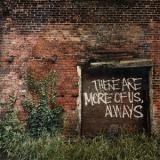
Jagged City unveils their debut instrumental EP, `There Are More of Us, Always`, a bold collection that moves between spacious, melodic guitar passages and raucous, swelling climbs. With heartfelt, melodious songwriting, a diverse range of eclectic touches buried within, and eruptions of dense, layered sound, this record delivers wonderfully balanced compositions through raw and personal production. The project began as a cross-continental art experiment between Jake Woodruff (Defeater) and Carlos Torres (former touring member of Explosions In The Sky). What started as a simple exchange of ideas quickly found real shape through collaborative composition and thoughtful arrangement. Early sessions with David Haik helped refine the songs' structures and drum frameworks, setting the groundwork for what would become Jagged City's striking debut. "We wrote with pure instinct, just tried to add something new to a genre that we love. As we traded ideas, we took some left turns and incorporated elements that may be unexpected." (Woodruff) The result feels immediate, deviously rough at the edges, and charged with a punk-minded intensity that keeps the momentum taut and the sound intimate. RIYL Mogwai, Do Make Say Think, Godspeed, Mono, Defeater, Explosions In The Sky
expected to be published on 30.01.2026
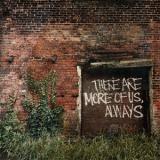
Jagged City unveils their debut instrumental EP, `There Are More of Us, Always`, a bold collection that moves between spacious, melodic guitar passages and raucous, swelling climbs. With heartfelt, melodious songwriting, a diverse range of eclectic touches buried within, and eruptions of dense, layered sound, this record delivers wonderfully balanced compositions through raw and personal production. The project began as a cross-continental art experiment between Jake Woodruff (Defeater) and Carlos Torres (former touring member of Explosions In The Sky). What started as a simple exchange of ideas quickly found real shape through collaborative composition and thoughtful arrangement. Early sessions with David Haik helped refine the songs' structures and drum frameworks, setting the groundwork for what would become Jagged City's striking debut. "We wrote with pure instinct, just tried to add something new to a genre that we love. As we traded ideas, we took some left turns and incorporated elements that may be unexpected." (Woodruff) The result feels immediate, deviously rough at the edges, and charged with a punk-minded intensity that keeps the momentum taut and the sound intimate. RIYL Mogwai, Do Make Say Think, Godspeed, Mono, Defeater, Explosions In The Sky
expected to be published on 30.01.2026

A meditative, folk-inflected score rooted in improvisation, ‘Dragon’s return’ echoes the soul of A film long buried behind the Iron Curtain
With Dragon’s Return, Australian composer and multi-instrumentalist Oren Ambarchi and Norwegian guitarist Fredrik Rasten present a new, meditative score to Eduard Grecner’s eponymous 1967 Slovak cult film — a stark, black-and-white parable.
The album captures a unique live performance recorded at the Videodroom Festival during Film Fest Ghent in October 2024, where this new score premiered alongside the film in collaboration with the Slovak Film Institute. What began as a fleeting, improvisational encounter between music and image has since taken on a life of its own — an evocative sound world that retains its power even in the absence of visuals.
The album will be available on vinyl and all digital platforms from September 12 via VIERNULVIER Records. The vinyl edition includes an obi strip, a booklet with film stills, and extensive liner notes on the film.
The label is known for shedding new light on forgotten films through reimagined soundtracks — claire rousay’s acclaimed The Bloody Lady being the most recent example.
“Folklore meets avant-garde in an ancient drama - a ballad about love, hate and finding a way out of loneliness” - Rastislav Steranka (Slovak Film Institute)
Ambarchi and Rasten do not accompany the images so much as speak through them. Their interplay — on guitars, flutes, percussion, and voice — unfolds slowly, without a fixed destination, culminating in subtle, entrancing drones. With few breaks or ruptures, this trippy, folk-inflected continuous composition invites surrender.
Rasten’s 12-string guitar and delicate use of voice create layered textures that shimmer and shift. Ambarchi, known for his electro-acoustic work, here explores a radically softer mode — strumming, bowing and coaxing tones from his instrument as though it were a string section unto itself. He blows into shells, adding breath and texture to the sonic palette, touching on something elemental.
Together, they evoke a sound world that feels both ritualistic and strangely familiar — as if echoing from a forgotten ceremony or dreamed into being after hearing an old folk tale. Rooted in improvisation, the music speaks in tones both intimate and expansive, shaped live in dialogue with the film and with each other, with only minimal overdubs added afterward.
Order now and we will order the item for you at our supplier.

2LP, 9mm spine gatefold sleeve with silver hot foil & metallic inks. Printed inner sleeves. Engraving on Side D, the vinyl here is of silvery colour. Pelagic reissued THE OCEAN's 2010 albums "Heliocentric" and "Anthropocentric" on vinyl! "Heliocentric" was the first album with current vocalist Loïc Rossetti, a game changer in the band's history. The album is characterized by his shimmering cleans alongside abrasive, powerful screams. "Heliocentric" sees the band venture into calmer territories as compared to its predecessors: the album is defined not solely by walls of guitars, but also by careful orchestrations of piano, upright bass, strings and textural electronics. Conceptually "Heliocentric" is a comprehensive critique of the legacy of christianity: the iconic opening track "Firmament", still a fan's favourite, starts off with original text from the bible; while "Ptolemy Was Wrong" and "Catharsis of A Heretic" tackle Gallilei's and Copernicus' discoveries that Earth is not at the center of the universe, for which Giordano Bruno was burnt at the stake. The album concludes with Charles Darwin's theory of evolution, and considerations by Richard Dawkins', the spearhead of modern day's aetheism, in the epic 14 minutes closing track duality "The Origin Of Species" and "The Origin Of God". For fans of BREACH TOOL THRICE NINE INCH NAILS CULT OF LUNA ISIS KARNIVOOL ROSETTA RUSSIAN CIRCLES MONO MASTODON OPETH BETWEEN THE BURIED AND ME PINK FLOYD
expected to be published on 05.12.2025

Reissued blue (!) vinyl! The "centrics"-albums saw the introduction of current vocalist Loïc Rossetti to the band's lineup, a game changer in their 17 years history. "Anthropocentric" is heavier than its same-year predecessor "Heliocentric", with the crushing 15-minutes openening track duality "The Grand Inquisitor" part I and II and following track "She Was The Universe", one of the most-streamed THE OCEAN tracks to date, setting the bar high for the rest of the album. Since 2001, the Berlin-based musician collective THE OCEAN have released 7 critically acclaimed studio albums, and a split EP with Japanese post-rock legends Mono. With an ever-changing lineup of various on- and off-stage musicians and visual artists, the relentlessly touring group have become well known for their immense, mind-expanding live shows, which they have carried into the most remote corners of the globe, from Siberian squats to colonial theatres in Ecuador. Over the course of their storied career, THE OCEAN have toured with Opeth, Mastodon, Mono,The Dillinger Escape Plan, Anathema, Between The Buried And Me and Devin Townsend, and have appeared on major festivals including Roskilde, Dour, Pukkelpop, Roadburn, Wacken, With Full Force, Summer Slaughter, Summer Breeze and Graspop. pn: this is coloured double vinyl, the stickersays Golden, but in fact it's Blue (Gold).
expected to be published on 28.11.2025

Oxblood Red Vinyl Edition[30,21 €]
RAW, RUTHLESS AND CEREMONIALLY DARK!
Only two years after its inception in 2023, the ominous entity hailing from Germany has come up with their first full-length. Consisting of 6 songs with the first one being an instrumental intro, "Fiery Paths" is a very convincing effort on all levels. Notwithstanding the fact INFERNAL PRESENCE has only been active for 2 years, their hybrid of Black and Death Metal sounds as if it had been composed by a seasoned band. Unlike many outfits whose songs consist of a salad of riffs randomly thrown together, INFERNAL PRESENCE are apt at cleverly composing their material by frequently alternating between different tempi and moods. Fast tremolo picked riffs akin to DISSECTION or MAYHEM are alternated with palm muted Thrash riffs or atmospheric slow-paced arpeggios reminding of WATAIN or ONDSKAPT.
In so doing the two-piece creates dynamic songs that succeed in truly capturing the listener's attention. Just listen to standout tracks like "Eternal Exodus" or the exceptional "Tomb Procession" with its slithering groove and you will see our point proven. Although, only sharing certain musical elements with said bands, the suffocating atmosphere of "Fiery Paths" reminds of NEGATIVE PLANE's first album or early SECRETS OF THE MOON. Fortunately, the production fits the material just splendidly, too. While being gritty and raw, thus emphasising the album’s ferociousness, it's still polished enough so that no detail gets buried in the mix.
INFERNAL PRESENCE unleashed a record suffused with unrelenting darkness! If you consider yourself a fan of some of the bands mentioned above, do yourself a favour and listen to this beast of an album!
expected to be published on 28.11.2025
Following a string of acclaimed collaborations, including Agua Dulce with percussionist Laura Robles and Mapambazuko alongside Congolese guitarist Titi Bakorta, Peruvian artist Alejandra Cárdenas (aka Ale Hop) returns with her most personal work to date yet, A Body Like a Home. Marking her first album under her birth name, the project is a sonic memoir exploring the tangled realms of trauma, recovery, and love through autobiographical soundscapes.
A Body Like a Home is the artist at her most exposed. Comprising 13 songs and 15 poems, the album sees her set aside collaborative fusions for solo catharsis, channeling years of turbulence - intergenerational scars left by colonialism, racism, domestic violence, and alcoholism - into a work that oscillates between brutality and tenderness. Cárdenas states: “I grew up under Alberto Fujimori’s dictatorship, when a veil of hopelessness seemed to settle over everything. This is the backdrop of the album. The songs and poems trace the inevitable loop between private wounds - addiction, domestic violence, fractured intimacy - and Peru’s national scars, carved by colonialism. It’s not a straight story or a resolution. Writing and composing became a ritual of digging for meaning, into what’s buried, disguised, or renamed, until the body itself became a living archive.
” At the heart of the album is Cárdenas’s own voice - part witness, part confessor - reciting over layers of electric guitars, electronic textures, the haunting violin of Mexican musician Gibrana Cervantes, and a collage of field recordings, from rainfall, muffled whispers, broken glass, to archival protest footage from Peru. The result is a work that resonates like a diary written in sound.
The first single, "Motherland", is a searing testimony where Cárdenas voice cracks under the weight of history and personal loss. Amid a storm of distorted guitars, she traces the cyclical legacies of colonialism, from state massacres branding Indigenous bodies as “terrorists” to the spiral of addiction as an unavoidable future. The lyrics draw parallels between political and domestic violence: a mother’s drunken knife pressed to her chest, and a motherland where racism is currency. She utters: “sacrifice demands a body.” Yet, amid the wreckage, a willful grip on love and faith persists. Ultimately, A Body Like a Home is a document of transformation. Tracks like "Evangelina" and the title piece "A Body Like a Home" hold space for resilience, spirituality, and love, while "Early Road" and "Going South" thread subtle nods to Peruvian folklore, opening up bright vignettes into a sense of belonging.
The poetry chapbook accompanying A Body Like a Home (five of its pieces are also recited on the album) extends the work, building a parallel architecture. Oscillating between the documentary and the mythic, the intimate and the forensic, the profane and the oniric, these poems practice a theology of the ordinary, where everyday objects - cameras, knives, moth-eaten cotton - are charged withspiritual and historical weight. Here, the body is land, house, battlefield, collective pain, geological territory; and trauma is, in contrast, archival, cellular, ritualistic, inherited. Read alongside the music, the stories refract across two mediums: songs give them breath and poems give them bone.
Order now and we will order the item for you at our supplier.
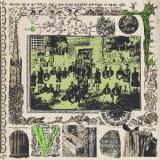
Autodidactic musicologist and sample collagist U turned his archival eye on the melting pot of ‘80s post-punk with his debut ‘Life Isn’t A Fountain?’ EP for Lex. He follows up with an experimental exploration of regional identity with ARCHENFIELD, a deeply personal collection of ambient music and found sound that examines the relationship between geographical space and aural histories.
To construct this record U mined a wealth of recorded material relevant to the area. With a nod to traditional music, he takes samples from these records and creates beautifully atmospheric sound pieces that are often mixed with painstakingly researched snippets to create a stirring reflection on local history and broader themes of how we interact, or even fail to interact, with English folklore today.
Pressed on 180g vinyl, the album comes with a 24-page visual companion that expands on its themes and folk stories through imagery and narrative, echoing the album’s soundscape. : The Caretaker, Oneohtrix Point Never, JG Bie1berkopf, Maxime Denuc, Leon Vynehall
expected to be published on 31.10.2025

Heavyweight Dub album by Alien Trackers, a new project by cosmic trumpet specialist Pablo Volt (STA) and Jahtari space ship mechanic disrupt, landing right in the sweet spot between soulful Black Ark-warmth, digital Firehouse dancehall hitters and Jahtarian Dub psychedelics.
A lazy day at a beach, in a galaxy far, far away... Feel the sand between your tentacles and splash in the emerald acid sea. Snorkel with plasma squids and shock eels. Marvel at the double suns during the magic twilight cycle and bask in their glorious gamma rays. Gaze into the depths of the local Vortex...
Coming on alien-green vinyl, with hand drawn art by David 8000 Farris, additional bass & guitars from Dubsworth, and an all four thumbs up-rating, 'Dubs from Vortex Beach' is landing in your orbit right now!
--------------
Order now and we will order the item for you at our supplier.
Celebrated DJ, producer, and sonic explorer Auntie Flo (aka Brian d’Souza) — described by The Guardian as “one of global club culture’s most vital voices” — returns this autumn with ‘Birds of Paradise’: a rhythmically rich, emotionally resonant, and ecologically grounded new album, out 23 October via his A State of Flo imprint. The album will be launched with a special live show at London’s Jazz Caféon the same day.
‘Birds of Paradise’ draws on d’Souza’s global club experience while deepening his connection with the natural world. Built around classic Roland drum machines and iconic vintage synths, the record is a joyful, body-driven celebration of rhythm and movement, but one grounded in ecology and place. The album’s spiritual centre lies in Saligao, Goa, near d’Souza’s maternal homeland where his Auntie Florie (where the name is derived from) is buried. Where he found his ‘paradise’ nearby, staying in a converted fisherman’s hut and recorded dawn choruses from a riverside studio overlooking mangrove-lined waters. Environmental textures from Japan also make their way into the music, creating a sonic map rooted in lived experience.
“Birds of Paradise is about finding beauty and rhythm in a chaotic world. It’s about listening, to nature, to our bodies, to what’s real. It’s a reminder that dance music can be both joyful and grounded.” The album blends Afro-Latin polyrhythms with Western 4/4 patterns, fusing instinctive, dancefloor energy with field recordings that anchor the music in the earth. Described by d’Souza as “tropical with a few deeper edges, a balance of light and dark.”
The new record follows the acclaimed ‘In My Dreams, I’m A Bird and I’m Free’, which earned 4 stars and Global Album of the Month from The Guardian, featured in Disco Pogo’s Albums of the Year, and received support from Luke Una, Resident Advisor, Juno, Bandcamp, Mixmag, DJ Mag, Electronic Sound, The Skinny, Beatport, Ban Ban Ton Ton, and more. The album’s launch show at Omeara London sold out. Other recent projects include the ‘Outernational Dance’ EP on cult label Multi Culti, event series ‘Plants Can Dance (and Mushroom’s Sing)’ which explore plant and fungi bioelectricity as a means of live composition, and ‘Black Beacon’, a haunting cassette release and soundwalk series recorded on the abandoned military island of Orford Ness. There, d’Souza explored the eerie intersection of nature, decay, and deep time, gaining special access to restricted buildings to capture long-form soundscape compositions.
Alongside his production work, d’Souza has emerged as a leading voice at the intersection of sound and science. He curated music for Imperial College’s groundbreaking psychedelic therapy trials, developing six-phase playlists to guide participants through psilocybin-assisted sessions treating conditions such as fibromyalgia and gambling addiction. His five-hour ambient set at Watching Trees Festival, selected as Resident Advisor’s Mix of the Day, continued this exploration into the therapeutic potential of sound in altered states. He also spent six months collaborating with BBC producer Tom Raine on a documentary for BBC World Service, centred on a two-week journey through Kenya and Goa. There, he performed live, led plant music workshops, and joined a deep listening retreat rooted in field recording. “I realised my studio isn’t just four soundproofed walls filled with instruments — it’s the journey itself. It’s the people I meet, the natural world I listen to, and the connections I feel.”
This same commitment to deep listening fuels his live concept Plants Can Dance, a project that combines the biosonification of plants and fungi with modular synthesis. The next event, on 14 September at Hideout Hackney Wick, will feature performances by Stella Z and Lapalace, with d’Souza and resident Lamine playing live alongside responsive plants in collaboration with Repot Hackney Wick and the label Music To Watch Seeds Grow By. “I’ve spent years exploring how electronic music can connect us, not just to each other, but to the natural world. Whether it’s translating mushroom data into melody or capturing birdsong at dawn, it’s about finding resonance across bodies, ecosystems, and machines.”
Rooted in his Goan and Kenyan heritage and shaped by years of travel and collaboration, d’Souza’s creative mission is simple: to reconnect the electronic world with the natural one. Through A State of Flo, he continues to blur the boundaries between club culture, sound art, and ecological awareness.
