Buscar:brief encounter

Estilos
Todo
  • 1
Unknown - One Dollar / Brief Encounter

Everyone’s favourite gallerists are back in town, with a brand-new offering following back-to-back sell-out shows. Two mysterious mid ‘70s creations that have been causing chinstrokers the world over to lose their marbles. The bids have been wild on this one, and for good reason too, who wouldn’t want them taking top spot glistening like gold in their collection.

Artistry like you’ve never seen it before, retouched to perfection to create two new priceless pieces of musical magic - solely played by Harvey and Artwork.

No en stock

Haga su pedido ahora y le encargaremos el artículo en nuestro proveedor.

14,24

Ültimo hace: 6 Meses
BRIEF ENCOUNTER - What About Love / Got A Good Feeling

Brief Encounter were a group from North Carolina, active for a decade from the early 70s. In 1976 and 1977 respectively they released the A and B sides to this release separately on Capitol Records. Both have become exceptionally rare and sought after.

They are feel good, upbeat funky soul jams. The group are also remembered for the 1977 ‘Sound Plus’ label release “Human” and their debut album that year “Introducing The Brief Encounter” which also included “Got A Good Feeling”. Save hundreds of Pounds on the two original 7”s and find both these dances back to back on this Expansion 7”

No en stock

Haga su pedido ahora y le encargaremos el artículo en nuestro proveedor.

13,40

Ültimo hace: 3 Años
Brief Encounter - Singles LP

Brief Encounter, THE soul band from North Wilkesboro, N.C., formed the 1970's and recorded through the the 90s with various labels as well as self releasing. We have been working with band members Montie & Gary Bailey (who has actually visited me in Scotland) to bring you a few releases over the last few years, culminating in this final release alongside their rarest and unknown single when they were known as Sounds of Soul. Never a step wrong, not a bad track to be seen, one of America's finest 70s soul bands.

No en stock

Haga su pedido ahora y le encargaremos el artículo en nuestro proveedor.

24,33

Ültimo hace: 3 Años
Brief Encounter - Get A Good Feeling / Just A Little Notion

As a prelude to the singles LP we drop a 45 reissue of Brief Encounters most popular modern / disco side against possibly their best ballad / deep soul spin. Stone cold classic all the way. Licenced direct from the band.

No en stock

Haga su pedido ahora y le encargaremos el artículo en nuestro proveedor.

11,22

Ültimo hace: 4 Años
Framboisier - Planetary Vision EP

French talent Framboisier lands on the eighth Duality Trax release this August with his debut EP Planetary Vision, backed by a remix from breakbeat queen Angel D’lite.

Landing just in time for the height of summer, the release has already garnered support from scene heavyweights Spray, Job Jobse and James Zabiela. The Grenoble-based artist known as Framboisier has seen his prole steadily rise in the last two years, with his 90s-inspired house sound
lighting up labels like Shue Valley, Backspin and Gestalt. It was through the latter and a back-to-back set at Edinburgh’s legendary Sneaky Pete’s with Gestalt founder Steffan Todorović that label boss Holly Lester rst encountered Framboisier’s music - instantly recognising its place on Duality Trax.

The title track Planetary Vision kicks off the EP with a rush of prog-house nostalgia. Contemplative pads and shimmering synths verge with driving percussion and a bouncing Juno bassline, creating brief moments of euphoria before slamming back in for a powerful peak-time reprise.

Memory Access follows with sun-drenched textures and a rolling groove - locking into a deep, introspective danceoor moment led by an infectious bassline. The B-side shifts gears with Neuro System, a deep house excursion driven by sweeping pads, subtle melodies and a hypnotic low-end.

Rounding off the EP, Angel D’lite brings her signature rave energy to a remix of Memory Access, ipping it into a breakbeat-heavy workout packed with amen breaks, playful spinbacks, and cheeky vocal chops

Disponible

En el almacen y preparando para el envío

11,35
YUKINO INAMINE + AKIO NAGASE - Yugafu ai Kaji

Veteran Japanese electronic music producer, AKIO NAGASE, a leading player in the Kansai underground music scene since the late 1990s teams up with Yukino Inamine, a gifted and young female singer from Okinawa who magically mixes traditional Ryukyu (Okinawa) folk songs with her sanshin (Okinawan Shamisen) playing into the modern age, to create this wonderful collaborative album, Yugafu ai KAJI. This album is set to be released on GLOCAL RECORDS, a record store/ record label run by Genta Minowa, an ex-staff at the record store, Disc Shop Zero in Shimokitazawa, Tokyo and who still continues to introduce a great selection of dubby, club music from his HQ in Harajuku.

AKIO NAGASE regularly organised parties at his own venue, as well as ran a record store of the same name while actively being part of the Kansai scene at legendary clubs such as Tsuru no Ma, Sound Channel, etc., the best of what was offered in the Kansai underground dance scene in the 2000s.

As an artist, he released his own productions out of labels such as Sound Channel and RUDIMENTS run by Minowa. His album, Make Dub was released in 2003 out of the label, Sound Channel featured an innovative, techno meets dancehall track, Dance Hall King which connected techno, acid house with reggae and dub. This album is an undiscovered gem whose sound still emulates freshness and originality today (my wish is for it to be reissued on vinyl!) After a brief hiatus of releasing music, he released the EP, Delusion out of Chillmountain Records, a label run by his friend, Ground in 2018 and at his own leisurely pace, he has been slowly but surely releasing material that oozes originality, expressed through a robust acid sound and a variety of elements such as afro and Ryukyu folk music that is then incorporated into the medium of dub. Recently, he has also started to gain international attention by releasing original material and remixes out of labels such as the UK label, Emotional Especial, etc.

For this album, NAGASE teams up with Yukino Inamine who brings her own distinctive singing and sanshin playing magic into this collaboration and they fuse electronic music sounds with Ryukyu folk songs to create this wonderfully imaginative album that has no precedence or equal. Apart from the song, Ishikawa Koiuta, all other songs are covers of Ryukyu folk standards that were handpicked by NAGASE from the repertoire of songs that Inamine regularly performs live. They met up when NAGASE was commissioned to remix one of her original compositions, Miyagi Kaigan that was released in 2023 and that evolved into a collaboration with a concept that mixed Inamine singing Ryukyu folk standards with a backing tracks produced by NAGASE. Whenever she went to the the Kansai area, she would work on the basic track material created by NAGASE at the dub master of Osaka, Soulfire’s studio, HAV who would then additionally edit her takes to create the finishing tracks.

This album, Yugafu ai KAJI opens with Shirahamabushi, a track that slowly builds with an interesting mix of slow acid techno and sanshin and then moves onto the easy-going electro dub of Tinsagu nu hana (it is actually a cover of the track of the same title that first appeared in the label sampler, Comuni ó n Especial that was released on Emotional Especial. NAGASE initially wanted to feature Inamine on vocals for this track but due to scheduling issues, it did not happen but with good fortune, the new version of this track is now included in this album). A side closes with the optimistic Balearic sounds of Tsuki nu Kaisha that converges immaculately with slow-mo steppers. It is also worth noting that the person who introduced NAGASE to Inamine was the Okinawa dub master, HARIKUYAMAKU. They met at a concert held by both him & Yukino Inamine hosted by BUN BUN THE MC at the venue, RAGGA CHANNEL. From this encounter, this album came into fruition and they also asked HARIKUYAMAKU to produce an earthy, traditional rootsy, dub version of Tsuki nu Kaisha that is included as the 3rd track on the B Side.

Ashimizubushi, the track that magically blends old school Chicago house ala TRAX with Ryukyu folk music starts off the B side and it carries on to an uplifting track with a Skaouse (ska + house) feel, Hounen Ondo. Inserted after HARIKUYAMAKU’s dub of Tsuki nu Kaisha, this album closes out with the song, ‘Ishikawa Koi Uta’, the only song written by Inamine who said that she wrote it after falling in love with chill-out music. It is an ambient dub track with a collage like flavour, reminiscent of early The Orb (remixed by Mad Professor) and the latter half of the track finishes off with a message presented by Masao Itokazu (her uncle) who received tutelage from the prior owner of her sanshin that Inamine plays, Moritomo Inamine (her grandfather).

Incidentally, the album title, YUGAFU ai Kaji is derived from an auspicious word from Okinawa, Yugafu which means fruitful year, happiness, prosperity and ai (indigo) is a word that Yukino found inspiration few years ago (she wears a Okinawan indigo clothing called kinonuno in the front cover of this album).

The unique indigo colouring produced by nature overlaps with the unique charm of the human personality, and she wanted to present that current along with the music so the name was integrated to ‘indigo wind’, and the two were connected to form the album title, ‘YUGAFU ai Kaji’.

The photo of the front cover was taken by a young, Uchinaanunishie—- (meaning a boy from Okinawa) 17 year old photographer named Ratio and the designer of this album is Anmonaito who is a childhood friend of Inamine who also did the artwork for her album, Miyagi Kaigan. And the mastering and cutting of this album was done by Rei Taguchi.

The cosmology existing in Yukino Inamine’s singing is fully amplified by AKIO NAGASE’s spacey, abundant with many ideas, dance machine beat~ambient music and all of these elements are organically linked by the adhesive effect of dub.

Disponible

En el almacen y preparando para el envío

35,72
Various - ECHOES OF ITALY – THE BIRDS OF PARADISE – EARLY 90S HOUSE VIBES VOL.2 (2x12")

Googling “paradise house”, the first results to pop up are an endless list of European b&b’s with whitewashed lime façades, all of them promising “…an unmatched travel experience a few steps from the sea”. Next, a little further down, are the institutional websites of a few select semi-luxury retirement homes (no photos shown, but lots of stock images of smiling nurses with reassuring looks). To find the “paradise house” we’re after, we have to scroll even further down. Much further down.

It feels like yesterday, and at the same time it seems like a million years ago. The Eighties had just ended, and it was still unclear what to expect from the Nineties. Mobile phones that were not the size of a briefcase and did not cost as much as a car? A frightening economic crisis? The guitar-rock revival?! Certainly, the best place to observe that moment of transition was the dancefloor. Truly epochal transformations were happening there. From America, within a short distance one from the other, two revolutionary new musical styles had arrived: the first one sounded a bit like an “on a budget” version of the best Seventies disco-music – Philly sound made with a set of piano-bar keyboards! – the other was even more sparse, futuristic and extraterrestrial. It was a music with a quite distinct “physical” component, which at the same time, to be fully grasped, seemed to call for the knotty theories of certain French post-modern philosophers: Gilles Deleuze, Félix Guattari, Paul Virilio... Both those genres – we would learn shortly after – were born in the black communities of Chicago and Detroit, although listening to those vinyl 12” (often wrapped in generic white covers, and with little indication in the label) you could not easily guess whether behind them there was a black boy from somewhere in the Usa, or a girl from Berlin, or a pale kid from a Cornish coastal town.

Quickly, similar sounds began to show up from all corners of Europe. A thousand variations of the same intuition: leaner, less lean, happier, slightly less intoxicated, more broken, slower, faster, much faster... Boom! From the dancefloors – the London ones at least, whose chronicles we eagerly read every month in the pages of The Face and i-D – came tales of a new generation of clubbers who had completely stopped “dressing up” to go dancing; of hot tempered hooligans bursting into tears and hugging everyone under the strobe lights as the notes of Strings of Life rose up through the fumes of dry ice (certain “smiling” pills were also involved, sure). At this point, however, we must move on to Switzerland.

In Switzerland, in the quiet and diligent town of Lugano, between the 1980s and 1990s there was a club called “Morandi”. Its hot night was on Wednesdays, when the audience also came from Milan, Como, Varese and Zurich. Legend goes that, one night, none less than Prince and Sheila E were spotted hiding among the sofas, on a day-off of the Italian dates of the Nude Tour… The Wednesday resident and superstar was an Italian dj with an exotic name: Don Carlos. The soundtrack he devised was a mixture of Chicago, Detroit, the most progressive R&B and certain forgotten classics of old disco music: practically, what the Paradise Garage in New York might have sounded like had it not closed in 1987. In between, Don Carlos also managed to squeeze in some tracks he had worked on in his studio on Lago Maggiore. One in particular: a track that was rather slow compared to the BPM in fashion at the time, but which was a perfect bridge between house and R&B. The title was Alone: Don Carlos would explain years later that it had to be intended both in the English meaning of “by itself” and like the Italian word meaning “halo”. That wasn’t the only double entendre about the song, anyway. Its own very deep nature was, indeed, double. On the one hand, Alone was built around an angelic keyboard pattern and a romantic piano riff that took you straight to heaven; on the other, it showcased enough electronic squelches (plus a sax part that sounded like it had been dissolved by acid rain) to pigeonhole the tune into the “junk modernity” section, aka the hallmark of all the most innovative sounds of the time: music that sounded like it was hand-crafted from the scraps of glittering overground pop.

No one knows who was the first to call it “paradise house”, nor when it happened. Alternative definitions on the same topic one happened to hear included “ambient house”, “dream house”, “Mediterranean progressive”… but of course none were as good (and alluring) as “paradise house”. What is certain is that such inclination for sounds that were in equal measure angelic and neurotic, romantic and unaffective, quickly became the trademark of the second generation of Italian house. Music that seemed shyly equidistant from all the rhythmic and electronic revolutions that had happened up to that moment (“Music perfectly adept at going nowhere slowly” as noted by English journalist Craig McLean in a legendary field report for Blah Blah Blah magazine). Music that to a inattentive ear might have sounded as anonymous as a snapshot of a random group of passers-by at 10AM in the centre of any major city, but perfectly described the (slow) awakening in the real world after the universal love binge of the so-called Second Summer of Love.

For a brief but unforgettable season, in Italy “paradise house” was the official soundtrack of interminable weekends spent inside the car, darting from one club to another, cutting the peninsula from North to centre, from East to West coast in pursuit of the latest after-hours disco, trading kilometres per hour with beats per minute: practically, a new New Year’s Eve every Friday and Saturday night. This too was no small transformation, as well as a shock for an adult Italy that was encountering for the first time – thanks to its sons and daughters – the wild side of industrial modernity. The clubbers of the so-called “fuoriorario” scene were the balls gone mad in the pinball machine most feared by newspapers, magazines and TV pundits. What they did each and every weekend, apart from going crazy to the sound of the current white labels, was linking distant geographical points and non-places (thank you Marc Augé!) – old dance halls, farmhouses and business centres – transformed for one night into house music heaven. As Marco D’Eramo wrote in his 1995 essay on Chicago, Il maiale e il grattacielo: “Four-wheeled capitalism distorts our age-old image of the city, it allows the suburbs to be connected to each other, whereas before they were connected only by the centre (…) It makes possible a metropolitan area without a metropolis, without a city centre, without downtown. The periphery is no longer a periphery of any centre, but is self-centred”.

“Paradise house” perfectly understood all of this and turned it into a sort of cyber-blues that didn’t even need words, and unexpectedly brought back a drop of melancholic (post?)-humanity within a world that by then – as we would wholly realise in the decades to come – was fully inhuman and heartless. A world where we were all alone, and surrounded by a sinister yellowish halo, like a neon at the end of its life cycle. But, for one night at least, happy."

Disponible

En el almacen y preparando para el envío

28,99
Błoto - Bakteria

Błoto

Bakteria

7"-VinylARS006
ASTIGMATIC RECORDS
01.10.2024

The Błoto quartet had made a comeback six months ago with their first singles in over two years dropping “Szlam” and “Ścieki”. These tracks were pressed on a 7-inch vinyl by Astigmatic Records, but this only whetted the appetites of the band’s mud-loving fans, as the singles sold out instantly. And so, the band's musical onslaught continues. Ahead of their upcoming LP “Grzybnia” set to release in autumn 2024, Błoto is putting out another bacteria-laden 7-inch to conclude this brief series of singles. This time, the release features a remix by none other than the modern funk maestro DāM-FunK, hailing from sunny Pasadena, California.

Wading through the sludge of sewage, one can encounter colonies of bacteria. They are well-known for their dark side – causing serious diseases. Nevertheless, they are with us all the time. They exist in humans and all other living organisms – fungi, plants, and animals. They can be found in soil and water. They are even present in radioactive areas, proving that they are truly hard to eliminate. Such is the music of Błoto. Like a post-apocalyptic bacterium, it’s capable of surviving in the harshest conditions.

Sinister, biting, and primitive – just like colonies of microorganisms. This is Błoto's latest single. Drawing heavily from classic acid house, it can truly infect the mind, inviting you to join a rave in Błoto on the eastern flank of Europe. Quartet’s “Bakteria” is a direct continuation of their first 7-inch release. However, this time, during their collective improvisation at Studio Pasterka, the band has entirely forsaken acoustic instruments in favor of a full array of synthesizers accompanied by drums.

Certainly, the dichotomous nature of these organisms presents a paradox. While capable of causing harm, without bacteria, life as we know it would cease to exist, and human civilization would not have reached its current state. Bacteria fulfill numerous essential roles. They serve as decomposers, crucial in maintaining biogeochemical cycles, and contribute to processes such as fermentation and decay. As symbiotic organisms living within other organisms, they are vital for functions like digestion. Their versatility extends to diverse applications, from biological wastewater treatment to the production of various food products.

Such are the properties of the beneficial probiotic titled “Bakteria Re-Freak” by DāM-FunK (renowned for his classic albums released on Stones Throw, like “Toeachizown” and “7 Days of Funk” with Snoop Dogg). It offers a 180-degree transformation of the dark atmosphere of the original version. The track evolves towards G-Funk, brimming with sunny synths and a drum machine. It portrays a vision of a biopharmaceutical bacterium lazily roaming the streets of warm yet perilous Los Angeles.

The 7-inch will be released on July 19, 2024, by Astigmatic Records. The vinyl single is limited to 700 copies.

Disponible

En el almacen y preparando para el envío

18,91
Krust - Irrational Numbers Volume 1 LP 2x12"

Welcome to the music of a true outlier in UK creative culture, an artist that has helped change the landscape of electronic music, KRUST.

Introducing 'Irrational Numbers,' a meticulously curated collection of five parts, available on both vinyl and digital formats. This compilation is a treasure trove of hand-picked records and archival gems from Krust's extensive discography, thoughtfully remastered and presented anew for both devoted fans and newcomers.

'Irrational Numbers' features a dizzying array of self-released 12" cuts, exclusive unreleased VIPs and dub-plates, alongside epic major label widescreen classics. It's an unmissable journey through the sonic output of one of the UK's most distinctive and forward-looking producers.

For longtime Krust enthusiasts, this project serves as a fond reminder of the boundless creativity and originality that flourished during the early 1990s and beyond. For those new to his work, it presents an enthralling introduction to innovative electronic music that has comfortably set the tone for generations to come. Get ready to experience the evolution of sound and immerse yourself in the visionary artistry of Krust.

Disponible

En el almacen y preparando para el envío

30,21
IGOR TAMERLAN - BALI VANILLI: EXPERIMENTAL POP FROM PARADISE ISLAND (1987-1991)

Igor Tamerlan is a stranger in his own land. Born in 1954 the Hague and spent most formative years in Paris, Igor suddenly had the urge to relocate to Bali in 1986. “I want to settle in Indonesia and marry a local girl,” he told his sister shortly before flying out.

His next journey would be as audacious as his time in the Fifth Republic. Born from a prominent Indonesian expatriate family in Paris with ties to Indonesia’s first prime minister Sutan Sjahrir, Igor earned a degree in architecture at Ecole nationale supe´rieure d’architecture de Paris-La Villette.

He could have been a brilliant architect or a political scientist (he was accepted to Sciences Po), but his passion for music distracted him from his academic works. He was after all named after Russian composer Igor Stravinsky.

During his brief stint at Sciences Po, Igor spent most of times hanging out at recording studios and rub shoulders with the likes of singer-songwriter Jean-Jacques Goldman and Michel Polnaref. He had a brief encounter with The Rolling Stones at the Cha^teau de Thoiry studio in the early 1970s.

But Igor’s musical education and his occidental eyes appeared to be ill-suited for Indonesia. His first record, titled Langkah Pertama (First Step) on the mainstream label Musica was met with a shrug and was a commercial dud. An experimental record blending the influence of Spanish motifs, Francophile production and a whiff of hip hop and ska was seen by critics as being too alien. His sarcasm-laden lyrics and his biting critique of excessive materialism among the upper tier of Indonesia’s nouveau riche in the album was met with confusion from the audience. He was just too far ahead of his time.

He left the label Musica – or may had been dropped – soon after Langkah Pertama and decided to go independent. He then relocated to Bali and set up a state-of-the-art recording studio in Sanur, across the street from Southeast Asia’s first boutique hotel where luminaries like Mick Jagger, David Bowie, Sting, Yoko Ono and Ringo Starr stayed for their holiday.

From the studio, Igor recording everything from the sounds waterfalls, geckos, minibuses to motorized rickshaw and mix them with hip hop, jazz, electronica, dub and Balinese gamelan. A visionary, Igor was the first musician to use MIDI, which started to be available globally in the early 1980s.

On paper, songs like “Bali Vanilli” should not work, a mish mash of disparate elements mentioned above, sung in three languages, Balinese, English and Bahasa Indonesia while tackling the subject of overtourism. The song was also the first to introduce rap to an unsuspecting audience. But for some strange reason “Bali Vanilli” became a sensation and overnight Igor became household name. And in 1987, long before overtourism was an issue, Igor broached the subject to a national audience in Indonesia on the possible destruction of nature and culture from tourism.

Ever an iconoclast, Igor decided to step out of the limelight following the success of “Bali Vanilli” and in early 1990s he relocated to Indonesia’s cultural capital, Yogyakarta. Here, he worked on some more experimental music while juggling as music video director. He passed away in 2018 at the age of 64.

The 10 songs in this compilation, Bali Vanilli: Experimental Pop from Paradise Island (1987-1991), are some of Igor’s best works, music that would have gone into obscurity had it not been for the diligent work of film director Alfred Pasifico Ginting, who managed to track down some of the master tapes while researching on a documentary on the musician.

These recordings have never before been released outside of Indonesia. Igor would have been proud with this reissue project.

Reservar20.03.2026

debe ser publicado en 20.03.2026

26,26

Ültimo hace: 2026 Años
Rafael Anton Irisarri - Points of Inaccessibility

A chance meeting in Mexico City set Points of Inaccessibility into motion. When Ibero-American composer Rafael Anton Irisarri crossed paths with Dutch media artist Jaco Schilp at MUTEK in 2024, a conversation about how technology shapes perception revealed an unexpected common ground. Schilp invited Irisarri to a spring 2025 residency at Uncloud, the Utrecht-based collective he co-founded, where Irisarri's sound began to take form amid an environment shaped by Schilp’s visual research.

The Uncloud studio was located inside the former Pieter Baan Centre, a forensic psychiatric prison where suspects of violent crimes were once confined. Its long history of silence and containment shaped the atmosphere in which the project developed. Within this setting, Irisarri coaxed long bowed-guitar tones through a network of pedals and looping systems. The raw gestures thickened into a vaporous and architectural field of sound. Schilp processed the material through a custom point-cloud software patch that produced images in continuous flux. The visuals flickered, dissolved and reformed like memories that resist coherence, functioning as a digital Rorschach that reflected the observer’s own perception.

Amid these spectral echoes, the project evolved into an examination of how the past persists within present signals. Memory endures as residue and interference, continually shaping perception even when its source has faded.

Schilp’s visual process required a continuous stream of sound in real time. Irisarri improvised throughout the residency, generating material that allowed the visuals to develop in parallel. Once back in his New York studio, he began shaping the recordings by carving pathways through the improvisations and mapping selected passages into MIDI. This process allowed him to build outward from the bowed-guitar material with minimal overdubs, adding Prophet 5 textures, Moog bass and strings that expanded the harmonic field while keeping the original performances at the center. To refine the structure, Abul Mogard provided editorial input, working with Irisarri’s stems to guide transitions and strengthen the overall pacing. The material, originally created under conditions of immediacy and constraint, evolved into a fully realized work through careful revision, patience and sustained reworking.

The title engages the geographic concept of the Poles of Inaccessibility, locations defined solely by their distance from all surrounding points. Irisarri adapts this idea to the conditions of digital life, where new forms of inaccessibility arise through the informational enclosures that structure perception. What appears to be a fully connected network often produces a deeper kind of separation, one shaped by the filtering logic of the systems that mediate experience. In this sense, the digital sphere mirrors its geographic counterpart. We inhabit spaces saturated with signals, yet the possibility of genuine contact becomes increasingly remote.

At its core, Points of Inaccessibility considers what can be understood as the new rituals of capitalist realism. Irisarri uses the term digital shamanism to describe the forms of simulated connection that organize contemporary life. These systems promise comfort through algorithms, influencers and AI interlocutors, yet they often reproduce the same conditions that generate loneliness in the first place. What appears as connection becomes the echo of connection, a sequence of gestures that imitate solidarity while withholding it. Like the geographic poles, these rituals are defined by distance. They pull us into environments where everything is illuminated, yet meaningful proximity becomes increasingly rare. In this sense, the work approaches a hauntology of the present, a reflection on futures that have stalled and intimacies that have been thinned by the algorithmic infrastructures that surround us.

This thematic tension unfolds across the album’s four movements. Faded Ghosts of Clouds introduces the work with textures that rise and dissipate in slow cycles, creating an atmosphere that resists clear definition. Breaking the Unison occupies a pivotal position in the sequence and focuses on the moment when the individual and the system fall out of alignment. Its shifting patterns trace the scattering of signals that once suggested connection, revealing the instability at the heart of contemporary perception. Signals from a Distant Afterglow forms the center of the album and features vocals by Karen Vogt, whose presence enters the sound field like a fragile transmission shaped by distance and delay. The closing piece, Memory Strands, follows motifs that appear, recede and briefly intersect before returning to quiet. Across these movements, the album outlines a landscape in which emergence and disappearance continually inform one another.

Listening to Points of Inaccessibility is an encounter with a sound field that is constantly in flux. Elements surface briefly, shift position and recede, creating a sense of motion that resists stable interpretation. The music moves between closeness and vastness, carrying traces of memory while withholding a clear point of resolution.

The album’s visual identity completes the project’s conceptual arc. In Mexico City, where Irisarri and Schilp first met, Daniel Castrejón transformed stills from Schilp’s point-cloud visuals into the cover image. The final artwork captures a single suspended frame of the digital material, a moment extracted from a field that is normally in constant motion. Its surface recalls the texture and abstraction found in the work of Catalan artist Antoni Tàpies, where material presence and erasure coexist within the same plane.

What emerges is a work that examines the tension between technological systems and human presence. Points of Inaccessibility asks whether connection is still possible within environments shaped by mediation and delay, or whether we have become isolated points within the very networks that promise proximity. What possibilities for relation persist within environments organized by algorithms and interruption? And how are we meant to understand presence when so much of it is constructed at a distance?

Points of Inaccessibility will be released on BioVinyl on February 6, 2026, with audiovisual performances planned throughout 2026.

Mastered by Stephan Mathieu
Artwork by Jaco Schilp
Design and layout by Daniel Castrejón
Artist photo by Iulia Alexandra Magheru.

No en stock

Haga su pedido ahora y le encargaremos el artículo en nuestro proveedor.

31,56

Ültimo hace: 29 Días
Alex Marker & Ben Reed - Impostor Syndrome LP
  • 1: Impostor Syndrome
  • 2: Revolutions
  • 3: Trouble In Store
  • 4: The Empire's Eye
  • 5: Crossing The Line
  • 6: Night Blues
  • 7: Distance
  • 8: Brief Encounter
  • 9: Midnight Moment
  • 10: Floating Downstream
  • 11: Mutineers
  • 12: The Next Step

What if fate had followed a different path? Alex Marker and Ben Reed were childhood friends who made music together before pursuing different careers, with Ben becoming a professional musician while Alex followed a career in stage design.

Originally a drummer, Alex set himself a challenge of writing a song for his wife for their wedding day. One song led to another and collaborating for the first time since they were very young Alex and Ben soon found they had a whole album's worth. Influenced by Alex's career in drama each track on Impostor Syndrome aims to tell a tale or paint a portrait encapsulating a moment of change or release. Ben brings a wider palette of musical styles and arrangements to augment a series of songs which draw from a wide range of musical influences including: singer/ songwriter, British prog, folk and rock. Ben Reed is a multi instrumentalist whose playing credits include bass duties on Frank Ocean's albums Endless and Blond as well as work with David Byrne, Sampha, Mustafa, Frank Dukes, Nilufer Yanya, Hayden Thorpe, FKA Twigs and many others.

He has previously released four full length albums of his own; Tall Story, Who Dreams of Hyssop, Station Masters, Loft, Bandaged and most recently You Do You. Alex Marker is a critically acclaimed theatre set and costume designer who has designed over 150 productions for a wide variety of venues including The West End, tours, regional theatres and the fringe. Further back he used to play drums in pit bands for productions and has occasionally been seen on stage too. The album features guests including: organist Ross Stanley (Steve Howe Trio), flautist R achel Hayter ( Alvorada ), bassoonist Philip Dale ( Orchestra of the Age of Enlightenment) and Matt Weeks who plays brass alongside mixing duties.

Reservar05.12.2025

debe ser publicado en 05.12.2025

21,64

Ültimo hace: 2026 Años
Richard Youngs - Hidden LP

The inimitable Richard Youngs returns to Black Truffle with this third full-length for the label, Hidden. Like CXXI and Modern Sorrow, Hidden unfolds across two side-long pieces at once eminently listenable and possessed of the ‘bloody-minded’ dedication to ‘having an idea and sticking with it’ that Youngs himself has identified as one of the key qualities of his work.

At the core of both pieces are rapid, randomised arpeggios generated with a Moog Grandmother, hypnotic patterns that wouldn’t be out of place on a Berlin School classic. Alongside these arpeggios, across the seventeen minutes of the first side-long piece Youngs builds an airy structure of shakers, synthetic handclaps and a brief, repeated sample, impossible to identify but sounding like a glitched foghorn. Over the top we hear his unmistakable voice, repeating single syllables—Ha, Ho—with a slow delay, something like a lonely one-man-band take on Anthony Moore’s Pieces from the Cloudland Ballroom or a more musical elaboration of the hypnotically overlapping delayed phonemes of Anton Bruhin’s Rotomotor. Like much of Youngs' work, the arrangement of sounds is sparse, each layer punctuated by spaces that allow others to shine through, in a way that seems to have more to do with dub or early hip-hop than high-brow models of musical reductionism.

On the flipside, the arpeggios return, now accompanied by ringing, filtered guitar chords and long flute tones. The use of a similar ground layer across the two pieces with strikingly different overdubs calls up Youngs' first solo record, the classic Advent, reminding us of how consistent ‘theme and variations’ is as an approach in his enormous body of work. Joined by handclaps and a chiming sound, the piece almost feels like it is about to achieve dance-floor lift-off at times, only for the percussion to disappear and leave the listener once again floating among the guitar and flute, now joined by occasional cut-off vocal snippets, like a radio turned quickly on and off. The suspension of these disparate elements over the steady foundation of the Moog arpeggios might remind some listeners of the free-form studio explorations of Moebius & Plank and Holger Czukay or even give a nod to Youngs’ formative encounter with Cabaret Voltaire.

Like some of Youngs’ much-loved work with Simon Wickham-Smith, Hidden approaches relatively familiar sounds and instruments from skewed angles, delighting in loose structures of interaction that border on gleeful incoherence while remaining outwardly beautiful. Coming up to almost four decades of persistent activity, like little else in contemporary music Youngs’ work beams with the simple joys of exploration and experiment.


No en stock

Haga su pedido ahora y le encargaremos el artículo en nuestro proveedor.

22,27

Ültimo hace: 70 Días
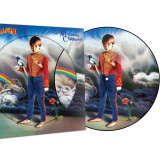
Marillion - Misplaced Childhood (40th Anniversary) (LP)
  • A1: Pseudo Silk Kimono (2017 Remaster)
  • A2: Kayleigh (2017 Remaster)
  • A3: Lavender (2017 Remaster)
  • A4: Bitter Suite: Brief Encounter / Lost Weekend / Blue Angel / Misplaced Rendezvous / Windswept Thumb (2017 Remaster)
  • A5: Heart Of Lothian (2017 Remaster)
  • B1: Waterhole (Expresso Bongo) (2017 Remaster)
  • B2: Lords Of The Backstage (2017 Remaster)
  • B3: Blind Curve: Vocal Under A Bloodlight / Passing Strangers / Mylo / Perimeter Walk / Threshold (2017 Remaster)
  • B4: Childhood's End? (2017 Remaster)
  • B5: White Feather (2017 Remaster)

Released in 1985, Misplaced Childhood includes the hit single ‘Kayleigh’, hit #1 in the UK and stayed in the charts for 41 weeks. As the band’s first concept album, Misplaced Childhood explores themes of lost love, sudden success, acceptance and the fading innocence of youth.

Reservar12.09.2025

debe ser publicado en 12.09.2025

29,83

Ültimo hace: 2026 Años
Abul Mogard - Quiet Pieces

Abul Mogard

Quiet Pieces

12inchECH001LP
Soft Echoes
21.05.2025

'Quiet Pieces' initiates Abul Mogard’s personal imprint Soft Echoes with a definitive self-portrait of calm, contemplative, and discreet inner landscapes made audible. It is the first solo album on vinyl in four years. RIYL Alessandro Cortini, William Basinski, The Caretaker.

While sifting through archived material left idle from earlier projects, a chance encounter with a late uncle’s trove of beloved 78rpm classical and opera records prompted the reworking and completion of what would eventually become the album. Spinning dusty records at 33 and 45rpm, Abul Mogard recombined their enduring spectres with unfinished sketches from his archive. The resulting soundscape blurs distinctions between his memories and those of another, exquisitely short-circuiting the senses with its waking, dream-like lucidity.

This was a process I hadn’t explored in my earlier works. I began sampling brief moments from these records, altering them with studio effects and playing them at slower speeds. In many cases, I wasn’t entirely sure how the original music sounded. These fragments, once further processed, became a source of inspiration for my new compositions. Over time, I realised that the old pieces from the archive and the new material derived from the samples naturally complemented each other.”

The resulting pieces hover over a threshold, a liminal space that harmonises the old and older material. Voluminous waves of quiet and loud undulate between consonance and dissonance, conjuring imagery of a decaying grandeur that humanity’s decadence has surrendered to the elements. Abul Mogard’s seemingly abandoned yet vast landscapes are nevertheless intimate with timbral frissons of red-lined distortion. Elusive, yet as tangible as sea spray or smog, they affect the olfactory senses with a rarified, synesthetic quality that modestly engages one’s emotional register – a hypnotic, distinguishing feature long hailed as one of the hallmarks of his work. A fidelity to memory and dream recall is sensitively probed in the journey from the stately symphonic stasis of 'Following a dream' to the almost industrial, untethered brutality evoked by a looming silhouette that’s never fully visible in 'Constantly slipping away', culminating in the foreboding coda of 'Like a bird'. Those pieces appear to shield the album’s sentimental core, where the tempestuous play of light and shadow of 'In a studded procession' escalates to breathtaking, panoramic climax, while 'Through whispers' evokes an out-of-body-like experience encountered with visceral poignancy.

Looking back, Mogard notes an unexpected influence: “I realise being inspired by Phill Niblock, whose work I had barely known at the time but explored after his passing in 2024. His album 'Boston Tenor Index' changed the way I approached dissonance. It encouraged me to push my sound further, to the edge of a space where I began to feel uncomfortable.”

The album artwork, created by longtime collaborator Marja de Sanctis, features a photograph taken at the Temple of Jupiter Anxur, an archaeological site overlooking the Mediterranean Sea. Captured with an iPhone, the image traces the residual presence of construction techniques and architectural forms of the Romans, where material history is transcribed through contemporary tools. The convergence of ancient and modern technology aims to reverberate the site’s lasting spiritual presence – an echo persisting in what is now perceived as a quiet, emptied space. The spiral gestures towards infinity and light. Past and present dissolve into one another, reflecting 'Quiet Pieces' meditation on sound, memory, and time.

RIYL Alessandro Cortini, William Basinski, The Caretaker

No en stock

Haga su pedido ahora y le encargaremos el artículo en nuestro proveedor.

23,74

Ültimo hace: 69 Días
BUTTERFLY (VINCENT GALLO & HARPER SIMON) - THE MUSIC OF BUTTERFLY

*180g virgin leaded vinyl in a deluxe textured heavy gatefold cover, with paste-on artwork and special anti-static innersleeve.* Note: The pressing is absolute on point!!!!

Vincent Gallo and Harper Simon with a beautifully recorded suite of songs and instrumentals.

" More than two decades since he blew minds with a suite of brilliant releases on Warp, Vincent Gallo returns to the world of music at long last in Butterfly, his duo with Harper Simon, with the project’s full-length debut, “The Music of Butterfly”. A gesture of gentle, DIY / bedroom left-field pop, falling within the rough territory for which Gallo became renowned during the late '90s and early 2000s, while interweaving fascinating flirtations with minimalism and experimentalism, it’s a truly captivating piece of work that’s hard to get off the turntable after the first needle drop.

In the arts, the lines between genius and madness, as well as fact and fiction, often blur. Such, it seems, has always been the life of the artist, filmmaker, actor, musician, and composer Vincent Gallo. A cult figure and a member of various creative undergrounds for the better part of half a century, Gallo has courted controversy, ruffled feathers, and made some of the most singular statements to flirt at the outer edges of popular culture that can be called to mind. Arguably most well known for his work in film, during the late '90s and early 2000s - notably with his soundtrack for “Buffalo 66” and a suite of releases on Warp - Gallo became something of a sensation in the world of independent music for a visionary, incredibly unique and sensitive approach to sonority. For a time, the world was abuzz, waiting on bated breath for more, and yet time passed. Bar a few fragments, appearing here and there, almost nothing has been heard from Gallo, within the world of music, for more than 20 years. That is, until now, with the release of “The Music of Butterfly”, the debut full-length of Butterfly, his duo with Harper Simon: beautifully produced and issued by Family Friend Records - Gallo’s own label, founded in 1981 - in a deluxe edition that simply left us speechless: 180g vinyl in textured heavy gatefold cover with paste-on artwork and thick anti-static innersleeve. More or less picking up from where we last encountered him, spinning captivating melodies and gentle song-craft within the quieter temperaments of DIY, left-field pop, once again, and at long last, Vincent Gallo, encountered in an incredibly successful collaboration with Harper Simon as Butterfly, reminds us that he’s as much a force within the realm of music as he is within film. Not to be missed. This one isn’t going to sit around for long.

Vincent Gallo’s biography reads like the stuff of blaring beauty: a figure of moderate fame in his own right, who has remained at the centre of cultural ferment as the decades have rolled by. Born in 1961, in Buffalo, New York, as the story goes he ran away to New York City at the age of 16 and fell into the brewing counterculture of the Downtown scene, William Burroughs and John Giorno, in addition to the cream of his own peers, and began making paintings, music, and experimenting with film. In addition to being a member of the now legendary band Gray, with the artist, Jean-Michel Basquiat, and the filmmaker, Michael Holman, Gallo appeared in the cult 1981 film “Downtown 81”, before slowly beginning a career as an actor and catching the eye of Claire Denis, who brought his talents into the broader cultural gaze. Catapulted into the public by his own subsequent career as a filmmaker with “Buffalo '66” (1998) and “The Brown Bunny” (2003), both of which were marked by controversy and praise, Gallo further captivated the public with a partially brilliant, if not relatively brief, flurry of activity in the realms of music.

While Gallo had already been making music for roughly two decades at the time of his release of the “Brown Bunny” soundtrack, and the four release issued by Warp in rapid succession between 2001 and 2002 - “When”, “Honey Bunny”, “So Sad”, and “Recordings of Music for Film” - the almost fanatical fandom reached a fever pitch at the moment, allowing him, for some, to be regarded as much, if not more, as a musical artist than an actor and filmmaker. Anyway you cut it, in a few short years, he proved himself to be a polymath of rare talent. Somewhere along the way, while both were working as members of Yoko Ono's Plastic One Band, Gallo met the New York based, highly regarded singer-songwriter, guitarist, and producer, Harper Simon, who also happens to be the son of Paul Simon. The pair fell into an incredibly fruitful duo collaboration, which came to be called Butterfly, and “The Music of Butterfly” being their debut full-length release.

Written, performed, and recorded by Vincent Gallo and Harper Simon in New York City between the winter of 2018 and the spring of 2019, the ten tracks comprising “The Music of Butterfly” are cumulatively a gesture of gentle, DIY / bedroom left-field pop, falling within the rough territory for which Gallo became renowned during the late '90s and early 2000s, making one feel like barely a moment had passed since we’d encountered his graceful hand at song-craft. Stripped back and raw, while retaining a sense of warmth and intimacy, across the length of “The Music of Butterfly” the duo of Gallo and Simon weave something completely captivating at the juncture of minimalism, experimentalism, and pop: meandering moments of texture and tone, slowly forming toward flirtations of melody that flower into song and back again. Somehow playful and light, while also remarkably emotive and personal, it’s almost as though each of these tracks crystallised out the air, unlabored and exactly as they should be without a note or beat more.

An engrossing immersion into both Gallo and Simon’s remarkably accomplished minds, having followed the path toward one another after radically different experiences and careers, “The Music of Butterfly” is one of those records that’ll be hard to get off the turntable after that first needle drop, and rarely leave the listening pile for some time to come. Issued by Family Friend Records in a beautiful deluxe edition that is unmatched even among the most stunning recent productions we can call to mind - 180g vinyl in textured heavy gatefold cover with paste-on artwork and thick anti-static innersleeve - it’s lovely to have Gallo back in the musical mix after so many years. "

Reservar04.04.2025

debe ser publicado en 04.04.2025

56,26

Ültimo hace: 2026 Años
Elephant's Memory - Elephant's Memory
  • Don't Put Me On Trial No More
  • Crossroads Of The Stepping Stones
  • Jungle Gym At The Zoo
  • Super Heep
  • R.i.p
  • Band Of Love
  • Takin' A Walk
  • Hot Dog Man
  • Old Man Willow
  • Yogurt Song
  • Brief Encounter

Elephant's Memory is the 1969 eponymous album by the American rock band from New York. They are primarily known for backing John Lennon and Yoko Ono. For live performances with Lennon and Ono, they were also known as the Plastic Ono Elephant's Memory Band. Before working together with Lennon and Ono, the band already worked on three albums. Two of their songs, "Jungle Gym at the Zoo" and "Old Man Willow", appeared on the soundtrack of the 1969 film Midnight Cowboy. The band's style can be described as psychedelic rock. Elephant's Memory is available as a limited edition of 750 numbered copies on purple coloured vinyl

Reservar07.03.2025

debe ser publicado en 07.03.2025

31,89

Ültimo hace: 2026 Años
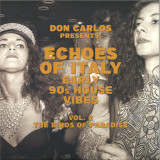
Various - ECHOES OF ITALY - ARTISTS IN WONDERLAND – EARLY 90S HOUSE VIBES VOL.1 LP 2x12"

Volume 1 of this expertly curated project of 90s Italian House - put together by Don Carlos.

If Paradise was half as nice… by Fabio De Luca.

Googling “paradise house”, the first results to pop up are an endless list of European b&b’s with whitewashed lime façades, all of them promising “…an unmatched travel experience a few steps from the sea”. Next, a little further down, are the institutional websites of a few select semi-luxury retirement homes (no photos shown, but lots of stock images of smiling nurses with reassuring looks). To find the “paradise house” we’re after, we have to scroll even further down. Much further down.

It feels like yesterday, and at the same time it seems like a million years ago. The Eighties had just ended, and it was still unclear what to expect from the Nineties. Mobile phones that were not the size of a briefcase and did not cost as much as a car? A frightening economic crisis? The guitar-rock revival?! Certainly, the best place to observe that moment of transition was the dancefloor. Truly epochal transformations were happening there. From America, within a short distance one from the other, two revolutionary new musical styles had arrived: the first one sounded a bit like an “on a budget” version of the best Seventies disco-music – Philly sound made with a set of piano-bar keyboards! – the other was even more sparse, futuristic and extraterrestrial. It was a music with a quite distinct “physical” component, which at the same time, to be fully grasped, seemed to call for the knotty theories of certain French post-modern philosophers: Gilles Deleuze, Félix Guattari, Paul Virilio... Both those genres – we would learn shortly after – were born in the black communities of Chicago and Detroit, although listening to those vinyl 12” (often wrapped in generic white covers, and with little indication in the label) you could not easily guess whether behind them there was a black boy from somewhere in the Usa, or a girl from Berlin, or a pale kid from a Cornish coastal town.

Quickly, similar sounds began to show up from all corners of Europe. A thousand variations of the same intuition: leaner, less lean, happier, slightly less intoxicated, more broken, slower, faster, much faster... Boom! From the dancefloors – the London ones at least, whose chronicles we eagerly read every month in the pages of The Face and i-D – came tales of a new generation of clubbers who had completely stopped “dressing up” to go dancing; of hot tempered hooligans bursting into tears and hugging everyone under the strobe lights as the notes of Strings of Life rose up through the fumes of dry ice (certain “smiling” pills were also involved, sure). At this point, however, we must move on to Switzerland.

In Switzerland, in the quiet and diligent town of Lugano, between the 1980s and 1990s there was a club called “Morandi”. Its hot night was on Wednesdays, when the audience also came from Milan, Como, Varese and Zurich. Legend goes that, one night, none less than Prince and Sheila E were spotted hiding among the sofas, on a day-off of the Italian dates of the Nude Tour… The Wednesday resident and superstar was an Italian dj with an exotic name: Don Carlos. The soundtrack he devised was a mixture of Chicago, Detroit, the most progressive R&B and certain forgotten classics of old disco music: practically, what the Paradise Garage in New York might have sounded like had it not closed in 1987. In between, Don Carlos also managed to squeeze in some tracks he had worked on in his studio on Lago Maggiore. One in particular: a track that was rather slow compared to the BPM in fashion at the time, but which was a perfect bridge between house and R&B. The title was Alone: Don Carlos would explain years later that it had to be intended both in the English meaning of “by itself” and like the Italian word meaning “halo”. That wasn’t the only double entendre about the song, anyway. Its own very deep nature was, indeed, double. On the one hand, Alone was built around an angelic keyboard pattern and a romantic piano riff that took you straight to heaven; on the other, it showcased enough electronic squelches (plus a sax part that sounded like it had been dissolved by acid rain) to pigeonhole the tune into the “junk modernity” section, aka the hallmark of all the most innovative sounds of the time: music that sounded like it was hand-crafted from the scraps of glittering overground pop.

No one knows who was the first to call it “paradise house”, nor when it happened. Alternative definitions on the same topic one happened to hear included “ambient house”, “dream house”, “Mediterranean progressive”… but of course none were as good (and alluring) as “paradise house”. What is certain is that such inclination for sounds that were in equal measure angelic and neurotic, romantic and unaffective, quickly became the trademark of the second generation of Italian house. Music that seemed shyly equidistant from all the rhythmic and electronic revolutions that had happened up to that moment (“Music perfectly adept at going nowhere slowly” as noted by English journalist Craig McLean in a legendary field report for Blah Blah Blah magazine). Music that to a inattentive ear might have sounded as anonymous as a snapshot of a random group of passers-by at 10AM in the centre of any major city, but perfectly described the (slow) awakening in the real world after the universal love binge of the so-called Second Summer of Love.

For a brief but unforgettable season, in Italy “paradise house” was the official soundtrack of interminable weekends spent inside the car, darting from one club to another, cutting the peninsula from North to centre, from East to West coast in pursuit of the latest after-hours disco, trading kilometres per hour with beats per minute: practically, a new New Year’s Eve every Friday and Saturday night. This too was no small transformation, as well as a shock for an adult Italy that was encountering for the first time – thanks to its sons and daughters – the wild side of industrial modernity. The clubbers of the so-called “fuoriorario” scene were the balls gone mad in the pinball machine most feared by newspapers, magazines and TV pundits. What they did each and every weekend, apart from going crazy to the sound of the current white labels, was linking distant geographical points and non-places (thank you Marc Augé!) – old dance halls, farmhouses and business centres – transformed for one night into house music heaven. As Marco D’Eramo wrote in his 1995 essay on Chicago, Il maiale e il grattacielo: “Four-wheeled capitalism distorts our age-old image of the city, it allows the suburbs to be connected to each other, whereas before they were connected only by the centre (…) It makes possible a metropolitan area without a metropolis, without a city centre, without downtown. The periphery is no longer a periphery of any centre, but is self-centred”.

“Paradise house” perfectly understood all of this and turned it into a sort of cyber-blues that didn’t even need words, and unexpectedly brought back a drop of melancholic (post?)-humanity within a world that by then – as we would wholly realise in the decades to come – was fully inhuman and heartless. A world where we were all alone, and surrounded by a sinister yellowish halo, like a neon at the end of its life cycle. But, for one night at least, happy.

No en stock

Haga su pedido ahora y le encargaremos el artículo en nuestro proveedor.

28,99

Ültimo hace: 5 Meses
VARIOUS - Smooth Sailing: A Rare Soul Adventure
  • A1: Gene Townsel – I'm Walking Away
  • A2: Mary Mundy – You Put A Hurtin' On Me
  • A3: Touch Of Class – I Love You Pretty Baby
  • A4: 94 East – If We Don't
  • A5: Brief Encounter – (Don't You See) I'm Crazy About You
  • B1: Al Wilson – La La Peace Song
  • B2: Teresa Graves – Every Day's A New Day
  • B3: Al Jarreau – Look What You've Done For Me
  • B4: Liberation – Take My Best Shot
  • B5: The Harmonics – Be Your Man
  • B6: Three Shades Of Soul – Smooth Sailing
  • B7: Ohio Players – Here Today And Gone Tomorrow
Reservar22.11.2024

debe ser publicado en 22.11.2024

33,19

Ültimo hace: 2026 Años
Ryuichi Sakamoto - Coda LP

Ryuichi Sakamoto

Coda LP

12inchWWSLP92
WeWantSounds
11.10.2024

FIRST EVER INTERNATIONAL RELEASE OF RYUICHI SAKAMOTO'S LANDMARK 1983 ALBUM "CODA," HIS RENDITION FOR SOLO PIANO OF THE 'MERRY CHRISTMAS MR. LAWRENCE' SOUNDTRACK. FEATURING REMASTERED AUDIO AND NEW LINER NOTES BY ANDY BETA.


Wewantsounds is delighted to announce the release of Ryuichi Sakamoto's classic LP "Coda", issued in Japan in 1983 as a solo piano version of the "Merry Christmas Mr. Lawrence" soundtrack. The album, which was never been released outside of Japan until now, sees Sakamoto on acoustic piano reinterpreting fascinating versions of his famous soundtrack including the classic theme and "Germination," which was later used in the "Call Me By Your Name" soundtrack. This reissue has been remastered by Seigen Ono's Saidera Mastering studio in Tokyo and boasts the original artwork plus a 4-page insert with new liner notes by Andy Beta.

No en stock

Haga su pedido ahora y le encargaremos el artículo en nuestro proveedor.

27,52

Ültimo hace: 13 Meses
Masayoshi Fujita - Migratory

Masayoshi Fujita

Migratory

12inchERATPLE167
Erased Tapes
06.09.2024

Japanese vibraphonist and marimba player Masayoshi Fujita returns with Migratory, his masterful new solo album, where his sonic explorations into the unknown continue.

In 2019, after 13 years of living in Berlin, Fujita returned to his native Japan with his wife and their three children, fulfilling his life-long dream of living and composing music in the midst of nature. The family found their new home in the mountain hills along the coast of Kami-cho, Hyōgo, three hours west of Kyoto.


Once settled in, Fujita spent his time turning an old kindergarten into his own music studio, Kebi Bird Studio, which became the birthplace of Migratory. On his new album, the composer and producer masterfully reimagines and mesmerises with his trademark sounds of vibraphone, and resumes his experimentation with the marimba and synthesisers that he first incorporated on his 2021 album, Bird Ambience, which followed the release of his acclaimed vibraphone triptych: Stories (2012), Apologues (2015) and Book of Life (2018).


On Fujita’s ever-evolving list of collaborators, Migratory introduces vocals from Moor Mother on ‘Our Mother’s Lights’ and Hatis Noit on ‘Higurashi’, as well as shō and saxophone to its soundscapes. Whilst at a music residency in Stockholm in 2021, Fujita met Swedish shō player Mattias Hållsten. Although it was a brief encounter, the two musicians stayed in touch. During a visit to Japan, Hållsten stopped by the studio and played on three of the tracks, including the alluring album closer ‘Yodaka’, exceeding Fujita’s own expectations.

Reservar06.09.2024

debe ser publicado en 06.09.2024

26,01

Ültimo hace: 2026 Años
Masayoshi Fujita - Migratory LP

Masayoshi Fujita

Migratory LP

12inchERATPLP167
Erased Tapes
06.09.2024

Japanese vibraphonist and marimba player Masayoshi Fujita returns with Migratory, his masterful new solo album, where his sonic explorations into the unknown continue.

In 2019, after 13 years of living in Berlin, Fujita returned to his native Japan with his wife and their three children, fulfilling his life-long dream of living and composing music in the midst of nature. The family found their new home in the mountain hills along the coast of Kami-cho, Hyōgo, three hours west of Kyoto.


Once settled in, Fujita spent his time turning an old kindergarten into his own music studio, Kebi Bird Studio, which became the birthplace of Migratory. On his new album, the composer and producer masterfully reimagines and mesmerises with his trademark sounds of vibraphone, and resumes his experimentation with the marimba and synthesisers that he first incorporated on his 2021 album, Bird Ambience, which followed the release of his acclaimed vibraphone triptych: Stories (2012), Apologues (2015) and Book of Life (2018).


On Fujita’s ever-evolving list of collaborators, Migratory introduces vocals from Moor Mother on ‘Our Mother’s Lights’ and Hatis Noit on ‘Higurashi’, as well as shō and saxophone to its soundscapes. Whilst at a music residency in Stockholm in 2021, Fujita met Swedish shō player Mattias Hållsten. Although it was a brief encounter, the two musicians stayed in touch. During a visit to Japan, Hållsten stopped by the studio and played on three of the tracks, including the alluring album closer ‘Yodaka’, exceeding Fujita’s own expectations.

Reservar06.09.2024

debe ser publicado en 06.09.2024

23,49

Ültimo hace: 2026 Años
EARLY LIFE FORMS - EARLY LIFE FORMS LP

Early Life Forms is a new quartet fronted by Belgian guitarist and sound wizard Vitja Pauwels, and on the 26th January, they are set to release their self-titled debut album via W.E.R.F. Records; a stunning, one-off live show recorded with American guitarist Marc Ribot (Robert Plant, Tom Waits, Wilson Pickett, Marianne Faithfull, The Black Keys, John Zorn).

Having already earned his spurs as a sideman with artists including Naïma Joris, Bombataz and Lara Rosseel, rising Belgian star Pauwels released his debut album 'Day at Half Speed' in 2019, which explored the possibilities of acoustic guitar and live electronics. This experiment became a new artistic path for Pauwels and showcased his musical versatility, with second album 'Drift By, Sink In', released to critical acclaim in 2022.

The same year, Pauwels was invited as special guest by the BRAND! Festival, Mechelen, to showcase new material and he came up with the idea of putting together his 'dream' live band which included his hero Marc Ribot, one of world's most accomplished and acclaimed guitar players. Reaching out to him via videos and early demos for this new recording project, Ribot liked what he heard and agreed to perform with Pauwels and his new project Early Life Forms in what would be the band's first ever live show.

Joined by Frederik Leroux (baritone guitar), Laurens Dierickx (Hammond organ) and Casper Van De Velde (drums), during the lead up to the festival, Pauwels wrote a number of songs he felt would work for the live show, with the only agreement being that there would be no rehearsals ahead of the performance, only a brief soundcheck beforehand with Ribot. The music was stripped down to its essentials - compelling melodies, themes, and clear forms but with the possibility to change direction at any given moment. "The music was played and heard for the first time, and it felt like a birth of something that needed to be alive. We felt connected in the right state of mind - relaxed and focused - and it all happened in a rush of shared energy. No ego's or fear, only connection and the music", states Pauwels.

Drawing on latin, jazz, cuban, and rock with a touch of exoticism and cinematic explorations, 'Early Life Forms' cites Ry Cooder, Henry Mancini, Los Lobos, Ennio Morricone and of course Ribot, as heavy influences. There is something existential, primary, something epic and at the same time youthfully uncomplicated, which is strongly associated with the music. From the mischievous and imaginative 'My Little Renaissance' to the adventurous and hypnotic 'Latin Dancer', 'Early Life Forms' is overflowing with sharp twists and turns, with Ribot's heavily rhythmic, distorted guitar amplifying the cinematic feel to the sound. The on-stage relationship between each member of the band and Ribot is childishly uncomplicated, something primary but always epic. The music is left to the moment and the magic of their first encounter with their hero Ribot. "Marc's commitment in the music was better than I could have hoped for. What he played was with 200% intention, putting the rest of us in a state of hyperfocus. Given the fact that it was a one-time thing and a recording, we took risks without 'overplaying' or overthinking it. Right before the gig, we felt an urge to play, Marc said, "Let's rock!!" and we hit the stage", says Pauwels.

Reservar26.01.2024

debe ser publicado en 26.01.2024

23,49

Ültimo hace: 2026 Años
Derek Bailey & Paul Motian - Duo in Concert

Frozen reeds presents the only recorded duo playing of two legendary musical figures. Derek Bailey and Paul Motian – two longstanding pioneers of distinct strains of improvised music – came together for a brief period of collaboration in the early 1990s. Tapes of their two known live performances (one at Groningen’s JazzMarathon festival in the Netherlands, the other a year later at New Music Cafe, NYC) were recently unearthed in the Incus archives, and their contents will surprise and delight fans of both supremely idiosyncratic musicians.

The Groningen concert (1990) is released on vinyl, while the New York date (1991) is included with the digital download, free of charge for all purchasers. A conversation between Bill Frisell and Henry Kaiser on Bailey, Motian, their intertwined backgrounds, and the significance of these recordings is included as sleeve-note insert.

“This is one of those moments that we’re always hoping for, and it's so rare. And it's so hard to talk about, because it's so beautiful. It's like you're seeing some new species of plant that you never knew existed or something.” – Bill Frisell

Each player bringing decades of crucial experience to their encounters – with histories taking in vast swathes of the development of jazz and free improvisation – these fleeting shared moments provide some of the most riveting playing in the career of either.

There is precious little recorded evidence of Motian as a free improviser, but his mastery is beyond any doubt in these recordings. From knife-edge precision to textural haze, Motian’s palette is astounding, but perhaps even more impressive is his confidence in the non-idiomatic conversation itself. Pushing far beyond the established vocabulary of free percussion, his playing allows a measured degree of repetition to take form, giving rise to almost song-like structures. The covert influence of the drummer’s work on the post-rock genre (just taking its first nascent steps in the early 1990s) is made overt here.

In turn, Bailey allows some of his most unashamedly melodic passages to unfold without a mote of his trademark contrariness or antagonism. Patterns that would be acerbically disrupted elsewhere are allowed to settle, with variations of note and timbre introduced more gradually than is typical of his playing. When forceful changes in dynamics or tone do arrive, they do so in such close tandem with Motian’s rhythmic and textural transitions as to beggar belief. The guitarist’s duos with percussionists (Jamie Muir, Han Bennink, John Stevens…) arguably provide some of the highlights of his discography. ‘Duo in Concert’ represents a strong addition to the list.

An elegant sense of construction pervades the sets, as the duo ably fulfil the promise of free improvisation: carving out hugely compelling, expertly balanced, and thrillingly paced music as if from thin air.

Reservar17.11.2023

debe ser publicado en 17.11.2023

27,10

Ültimo hace: 2026 Años
TVAM - Costasol

Tvam

Costasol

10inchINV310EP
Invada
10.11.2023

TVAM announces ‘Costasol’, his new EP for Invada Records. The 10” EP is pressed on translucent blue vinyl, and housed in a reverse board, spined sleeve.  TVAM returns to the sun lounger to deliver a horizontal view from the pool of self-reflection. Joe Oxley, aka TVAM, offers, “‘Costasol’ began life as two atmospheric interludes that I wrote for my last album, ‘High Art Lite’. Over time these ideas took on a life of their own and demanded that I take another look at them. I slowly began putting the pieces together and ended up with a track which became much more than the sum of its parts.” The resultant ‘Costasol’ is a song about longing, loss and regret wrapped-up in heatwave bass and shimmering guitars, all perfectly enhanced by Mona’s dreamlike vocal.  TVAM self-released his much-acclaimed debut, ‘Psychic Data’, in the Autumn of 2018. Something of a cult-classic, the album joined the dots between Suicide’s deconstructed rock ’n’ roll, Boards of Canada’s irresistible nostalgia and My Bloody Valentine’s infinite noise. ‘High Art Lite’, released in October 2022, took a different tilt to its predecessor by emphasising the immediate and the personal. The colours were blown-out and the brightness was cranked up.  It’s in this world where TVAM’s new ‘Costasol’ EP exists. Full of colour and noise, with a vibrant, distorted palette. Though the title track may find a home at some poolside retreat, the subsequent tracks return to TVAM’s claustrophobic realm. ‘Ephemerol’ evokes its own mutant groove, part ‘Midnite Vultures’ Beck, part ‘Pretty Hate Machine’ Nine Inch Nails, with ‘Heart Attack’ and ‘VHF’ rounding off this bold, bright, brief encounter.  Radio - BBC 6 Music Lauren Laverne, New Music Fix, Emily Pilbeam, Amazing Radio B-List.  Tourdates - October 22 SWN Festival Cardiff, November 11 Hebden Bridge Trades Club, 18 What Music? Liverpool.

Reservar10.11.2023

debe ser publicado en 10.11.2023

18,07

Ültimo hace: 2026 Años
Tristan Allen - Tin Iso And The Dawn

Across the arc of Tristan Allen’s epiphanic, four part journey, Tin Iso and the Dawn, the New York based composer and puppeteer brings sonic life to a fantastical realm of characters whose universal longings mirror our own. In the first release of this mythic trilogy, intricate sound design and spellbinding leitmotifs make sense of loss and what’s beyond.

Formative exposures by way of travel through Asia, studies in Gamelan, a paper mache Christmas angel, and their dad’s Bread and Puppet Theater artifacts formed a web of inspiration from which Tristan’s desire to combine puppetry and their fascination for the narrative power of instrumental music emerged. Years of synchronistic inspirational encounters with “guardian angels” in the form of music mentors and puppeteer masters incentivized Tristan to pursue a project where they could focus on sound and diverse instrumentation.

Through this impulse, Tristan ceremoniously constructed the imaginary world of Tin Iso and the Dawn, loosely based on Wagner’s three act opera Tristan und Isolde. Composed and recorded between 2015 and 2022 across apartments from Boston to Brooklyn, with field recordings from locations of vivid sentiment: Upstate New York—where Tristan grew up, Quebec—where most of their close family lives, and Japan—where they lived briefly as a child, each moment of Tin Iso glimmers with nostalgic immediacy and the prescience of new voyages unfolding.

Reservar20.10.2023

debe ser publicado en 20.10.2023

24,79

Ültimo hace: 2026 Años
Daniel O’Sullivan - The Physic Garden LP

Third in a trilogy of LPs of Library Music miniatures from composer and multi-instrumentalist Daniel O’Sullivan (Æthenor, Ulver, This is Not This Heat, etc) following 2020’s Electric Māyā and 2021’s Fourth Density. For heads, the term “Library Music” in 2021 might evoke dodgy Italian gray market LPs and crate diggers hunting for “funky breaks” - but London’s venerable KPM Music is working with groundbreakers like Daniel to open up new avenues for composers to experiment. The 15 tracks on “The Physic Garden” are fully-formed and orchestrated compositions, which would be highlights on anyone’s LP, never mind as incidental music. Of the music, Dan says: “The Physic Garden is an album of diverse instrumentals inspired by a swathe of verdant vistas from manicured gardens and follies to urban common land, overgrown and forgotten. Convalescent memories in the shape of psychedelic auditory botanics.”

Key tracks include the droning acoustic folk of the title song; the Canterbury-esque rolling horn and woodwind melody of “Return the Heart” (with expert drum kit from Frank Byng); The prog-ish odd meter interlude “Buttercup Tea”; The quiet ambience and delicate melody of “Dusty Feather:”; and the Eno-like drift of “Vapourer Larvae.”

“Library music. Akasha. Here you accept that music behaves like a thing to accentuate another thing, seemingly unrelated. A beautiful, shining blankness. Not passive. An opportunity to wade. A brief encounter with an open-ended destiny. As in, you never know who or what it will be partnered with. With library music the emphasis tends to be on functionality and less on sonic self-portraiture. So it compels you to be concise, like what is the function of this work? The distance is liberating. It’s less “What Am I? and more “What Is This?”. It compels you to be brief, each little cell is a world of its own in an assemblage of miniatures all vibrating in their collective identity. Then there is the occult nature of library music which is fetishized by many for its ability to induce time travel, often to send us back to some televisual memory. However, despite its broad-brush strokes, the library can be so profoundly alien, especially when experienced independently of the televisual realm; an unruly chimera of genre mutations, compositional curiosities and the deepest wallpaper you ever laid ears on. Perhaps the observances of library music can help unshackle us from our artistic insecurities and delusions, where one is drawn to the shape of music as a whole instrument unto itself; as a vehicle carrying our intention and consisting of everything we have to give at that moment; so things that are seemingly unrelated are ultimately connected.” – Daniel O’Sullivan

Reservar01.07.2023

debe ser publicado en 01.07.2023

26,47

Ültimo hace: 2026 Años
Michael O'shea - Michael O'shea

Michael O'shea

Michael O'shea

12inchACMOSLPX1
ALLCHIVAL
20.04.2023

Repress!

Using an old door, 17 strings, chopsticks and combining them with phasers, echo units and amplification, the new device was to become his signature sound, mixing Irish folk influences with Asian and North African sounds in a mesmerising and soulful new way that brought him to the attention of the leading improvisers of his day - Alice Coltrane, Ravi Shankar, Don Cherry and more.

A logical follow up to AllChival's recent reissue of Stano's debut LP, Michael O'Shea's self titled LP was originally released on Wire's Dome Imprint in 1982.

The background to the album is as interesting and inspiring as the artist who created it - born in Northern Ireland but raised in the Republic, O'Shea was keen to travel and escape the troubles of his home.

Wandering throughout Europe and the Middle East, O'Shea found himself living and working as a relief aid in Bangladesh in the mid Seventies where he learned to play sitar while recovering from a bout of hepatitis. A later period spent busking in France accompanied on zelochord by Algerian musician Kris Hosylan Harp led to O'Shea's idea of combining both instruments as a homebuilt instrument - Mo Chara (Irish for "My Friend").

He later described the process on the back of the LP himself saying:

"Having sold my sitar in Germany and being desperate for money to travel to Turkey, I conceived of the idea of combining both sitar and zelochord. The first Mo Cara was born, taken from the middle of a door, which was rescued from a skip in Munchen"

A combination of dulcimer, zelochord and sitar, O Shea would play it with a pair of chopsticks, striking the strings softly using Irish folk rhythms mixed with the rich, nostalgic sounds of of the many Asian artists he'd encountered on his travels.

It was a pan cultural sound standing at an unusual crossroads of folk, traditional, rock, progressive, jazz, electronic and post-punk worlds without hesitation.

Perfecting the instrument on the streets, there were further spells spent busking in the underground stations and cafes of London's West End and Covent Garden during the heady days of the 1970s when they were full of eccentric street entertainers, jazz improvisers and musical pioneers.

His work with Rick Wakeman never saw the light of day but O'Shea's contact with the world of post-punk London ensured his name would live on.

Introduced to Wire's Bruce Gilbert and Graham Lewis via cartoonist Tom Johnston, O'Shea eventually acquiesced to an open invite to record at their studio. Turning up unannounced in the summer of 1981 the LP was recorded in a day in the legendary Blackwing Studios and released on Dome the year after.

The first side features the fifteen minute masterpiece "No Journeys End" with the B side featuring more input from Wire in processing the Mo Chara sound.

Lewis himself said years later of the forgotten masterpiece: 'I always said it was the best job we ever did.'

After an aborted LP with The The's Matt Johnson the following year, O'Shea quietly disappeared from the formal recording world and his brief but unique contribution to the music world came to a sad end in 1991 when O'Shea was struck by a post van and died a few days later in hospital in London.

This repress on All City's AllChival imprint has been remastered and reissued with the approval of both Dome and his surviving siblings.

No en stock

Haga su pedido ahora y le encargaremos el artículo en nuestro proveedor.

18,28

Ültimo hace: 2 Años
Kaitlyn Aurelia Smith - Euclid

Repress of Kaitlyn's solo debut Euclid (primarily written on a Buchla Music Easel synthesizer), it was inspired by her love of mbira music, early electronic music pioneers like Laurie Spiegel, Oskar Sala, and Terry Riley, and euclidian geometry. Each of the first six songs on Euclid were initially structured using euclidian geometry, an idea which Smith explored while attending a class at the San Francisco Conservatory. As Smith explains, "We each chose a 3D shape and assigned our own guidelines to the different components that make up the shape. For example each point of the shape represents a different time signature, each line between the points represents a pitch, each shape within the closed lines represents a scale, etc. And then you play the shape." Despite their heady geometric origins, the songs have a playfulness and warmth that makes them inviting and memorable. In addition to the buoyant grooves of Smith's synthesizers, some of the songs feature wordless vocals, which energize the otherworldly songs, while grounding them with Smith's earthly presence. She slows things down for the second half of the record, which features a collection of twelve short pieces, Labyrinths I-XII. Originally composed as new soundtracks to old silent films she found online, Smith says the tranquil Labyrinth pieces are "intended to feel like one is walking through a holographic labyrinth and encountering different experiences such as hang gliding, viewing microbes under a microscope, ice fishing in Alaska, and watching glaciers collapse." Despite their brevity, most of these songs feel like mini odysseys, effortlessly casting a cinematic hue on the the listener's world. Throughout Euclid Kaitlyn Aurelia Smith consistently delivers sonic puzzles draped in a warm Pacific mist. At times these songs feel so alive like the musical analog to roots growing deeper and stronger, leaves on branches bending towards the light, or the sun peeking over the horizon, briefly igniting the air with a primordial swirl of warm and cool colors.

Reservar10.01.2023

debe ser publicado en 10.01.2023

16,60

Ültimo hace: 2026 Años
The Sounds Of Soul - So Much Love / Yes I'm Ready

The insanely rare first 45 from the band that became Brief Encounter, so rare in fact most people are not aware of existence. Two covers, The Van McCoy and Cobb penned 'So Much Love' flipped with (My Favourite) Barbara Mason track 'Yes I'm Ready', a true deep soul classic. The sticking point in doing this 45 was waiting years to find a clean copy as the tapes were long gone, the band finally turned up a minter after a long time looking so big love to Gary and Montie Bailey.

No en stock

Haga su pedido ahora y le encargaremos el artículo en nuestro proveedor.

9,87

Ültimo hace: 4 Años
Félicia Atkinson & Jefre Cantu-Ledesma - Un Hiver En Plein Été

From its earliest utterances, experimental music has been particularly disposed to transnational and cross-cultural collaboration. Seeking the answer for a fundamental problem - how to transcend the boundaries of difference, distance, and time - it presents a means to find common ground and communicate through the elemental form of sound. Over the last 5 years, this precisely what the duo of Félicia Atkinson & Jefre Cantu-Ledesma has achieved, intertwining sublime sonorities across the geographic expanses between their respective homes in France and the United States. Their third album for Shelter Press, ‘Un hiver en plein été’ (‘A winter in the middle of summer’) - the first to have been largely recorded by Atkinson and Cantu-Ledesma together in the same space - distills a mesmerizing pallet of acoustic and electronic sources into an open discourse of radically poetic forms, offering glimpses of warmth and intimacy waiting in the post-covid world to come.

Both veteran experimentalists with celebrated bodies of solo work behind them - each traversing the challenges of electroacoustic practice in their own singular ways - prior to their first recorded outing in 2016, Félicia Atkinson and Jefre Cantu-Ledesma had only crossed paths in person once, initially meeting in San Fransisco during 2009. The mutual bond formed during that brief encounter flowered into their first LP, ‘Comme Un Seul Narcisse’, followed two years later by 2018’s ‘Limpid As The Solitudes’. Both recorded remotely - sending files back and forth, fortified by conversations on a vast range of subjects - these two albums were guided by impassioned conceptual nods to Guy Debord, Baudelaire, Brion Gysin and Sylvia Plath, while seeking resolutions for the challenges and unique possibilities that working at a distance provoked.

Where the triumphs of its predecessors rose from the bridging of disparate moments and divergent spaces, ‘Un hiver en plein été’ culminates as a celebration of closeness, a result of Atkinson and Cantu-Ledesma working together in the studio, responsively in real time, for the first time. Recorded in Brooklyn during August of 2019 - a handful of months before the pandemic would impose chasmic distances across the globe - its six discrete works, carefully crafted and finalized over the ensuing year, evolve seamlessly across the album’s two sides, weaving a sprawling tapestry of sonority, within which both artists retaining their own voices and visions, while drawing each other towards uncharted ground.

Atkinson likens the recording of ‘Un hiver en plein été’ to have been akin to “a playground”, each artist “hungry for each sound, a bit like the rush in the Louvre in Godard’s Bande à part”, to which Cantu-Ledesma adds that the process seemed to have had “a mind of its own”, with both “along for the ride”. This organic sense of entropy and enthusiasm - a joyous exploration of the unknown - guides the momentum of the album’s evolving arc, as unfolding chasms of ambient space ripple with humanity, life, and fleeting glimpses of the actions that led to its material core.

Crafted from deconstructed melodic elements and drifting long-tones - laden with subtle nods to Indian classical ragas and free jazz - searching patterns of speech, textural elements captured within the studio and the outside world, and searching tonal and percussive interventions, ‘Un hiver en plein été’ coheres as a multi-faceted series of electroacoustic dialogues; nesting conversations between two artists working at the juncture of abstraction and narration, field recording and harmony, and the philosophical and phenomenological, in search for the meaning of friendship, and its manifestation in pure sound.

Reservar14.01.2022

debe ser publicado en 14.01.2022

28,53

Ültimo hace: 2026 Años
The Shadracks - From Human Like Forms

MEDWAY GARAGE UPSTARTS! 2nd LP! The Shadracks are a three-piece rock n’ roll group hailing from Medway, Kent. With timeless and expert precision the Shadracks play from 37.3 years in the past 33.7 years into the future. The actual origins of the group date back even further with their cultural appropriation of Babylonian 'Rhythm and Punk. A mere 3 years ago Huddie Shadrack and Elisa Abednego had a brief encounter in deserted parkland. Discovering sheared an interest in vacant park benches, herbaceous borders and beat music it became paramount that they form a group - and quickly. After the release of there self titled debut LP, a subsequent live BBC 6Music session for Marc Riley and a fast selling EP, Elle Meshack retired from The Shadracks to peruse a career as a Poly Styrene impersonator aboard a Tahitian cruise liner: SS Honolulu Baby. Fortunately for the bass bereft Shadracks an advert placed in the window of a local stationers was answered by a certain Rhys ‘King Nebuchadnezzar’ Webb. A meeting issued and after proclaiming "Oh merciful Marduck, may the house that I have built endure forever” Their followed a two-hour induction ceremony (in which to learn all the new tracks for their forthcoming long player From Human Like Forms and Webb, for it was he, was sworn into The Shadracks fraternity. From Human Like Forms sees The Shadracks achieving giddy new heights in their song writing and performing abilities - pushing their ancient sound 3.7 years ahead of the current lunar time module. Councillor Duxbury. 2021

Reservar13.08.2021

debe ser publicado en 13.08.2021

21,13

Ültimo hace: 2026 Años
Lake Turner - Videosphere

Lake Turner

Videosphere

12inchKOM424
Kompakt
23.10.2020

Videosphere, the debut album by Kompakt’s latest signing, the London-based artist Lake Turner (aka Andrew Halford), swoons into focus with “The Sunbird”, a teasing drift of lilting, ambient tones, riding out a submerged piston-pulse rhythm. Across its brief 109 seconds, it manages to traverse evocative terrain – something mythopoetic, something both humble and grandiose, a glimpse of the other behind the sky’s curtain. “I wanted to conjure up something resembling an ancient ceremony or death procession,” Turner nods. “Like a hymn to the surroundings of a faraway hill.” It’s both sky-bound and earthen, a ritual incantation to call in the music of the spheres.

Turner was introduced to the Kompakt family by his sometime collaborator Yannis Philippakis of Foals. He’d previously made music in post-punk and indie groups Great Eskimo Hoax and Trophy Wife, but Videosphere is the first time he’s fully articulated his own vision of electronic music, aside from one limited lathe-cut 12”, 2018’s Prime Mover EP, on Algebra. The lush ambient-disco-techno dreams of Videosphere were constructed and completed in his London studio and at his parents’ arable and sheep farm in Worcestershire, which might help explain the hazy, unhurried pastoralism of the album.

“There was a slight bittersweetness in finishing the record (in Worcestershire) as my parents were in the middle of selling my childhood home,” he sighs, before quipping, “on the plus, I ended up shearing a lot of sheep over the summer.” A student of archaeology and ancient history, Turner is no doubt carefully attuned to the twisting cogs of history and memory, and it’s no surprise that Videosphere has a nostalgic, melancholic cast; much of its beauty rests in the way it tugs, gently, at the heart strings – see the tear-stained cheeks of the lush, dappled “Honeycomb”, or the sweetly sad electro-roundelay of “No Way Back Forever.”

It’s not all drift-dream hypnosis, though – Videosphere is very much grounded in the now. ““No Way Back Forever” is a nod to the linear nature of time,” Turner explains by way of example, “and the tipping point of the world climate crisis that scientists have now declared.” Jayne Powell’s vocals are sent spinning through the song, wound like candyfloss; she takes centre stage on the techno hymnal title track, too. Throughout, there’s a sense of forward movement, despite the life stasis we find ourselves collectively bound by in mid-2020; there’s also a yearning for the communal, for community, that’s captured in the album title, a nod to an object Turner encountered at London’s Geoffrey Museum, “a television set in the shape of a spaceman’s helmet from the 1970s.”

“The vision I loosely had was to make an electronic record that had a communal warmth and almost ceremonial or ritual feel. I wanted to examine the relationship of our archaic minds in the trappings of the modern world,” Turner concludes. “What the Videosphere also symbolizes for me is the oneness of humanity and community, prevailing.”
Eröffnet wird "Videosphere", das Debütalbum von Kompakts jüngstem Signing, dem in London ansässigen Künstler Lake Turner (alias Andrew Halford), mit "The Sunbird" - einem herausfordernden Strom aus Ambient Sounds, die zu schweben scheinen, um sich dann in einen subtilen, maschinellen Rhythmus zu verwandeln. In gerade mal 109 Sekunden gelingt es dem Stück, ein gewaltiges Terrain abzuschreiten - etwas Mythopoetisches, bescheiden und grandios zugleich, gibt uns eine Ahnung davon, was sich hinter dem Himmel verbirgt. "Ich wollte etwas heraufbeschwören, das einer alten Zeremonie oder Totenprozession ähnelt", sagt Turner, "wie eine Hymne an die Umgebung eines weit entfernten Hügels." Himmlisch und irdisch zugleich, eine rituelle Beschwörung von Sphärenmusik.

Der Kompakt Label-Familie wurde Turner von dessen zeitweiligen Mitarbeiter Yannis Philippakis (Foals) vorgestellt. Zuvor hatte er in den Post Punk- und Indie-Bands Great Eskimo Hoax und Trophy Wife gespielt. Bis auf eine limitierte lathe-cut 12", der "Prime Mover EP" auf Algebra von 2018, artikuliert Turner mit "Videosphere" zum ersten Mal seine eigene Vision von elektronischer Musik.

Die üppigen Ambient-Disco-Techno-Träume von "Videosphere" hat Turner in seinem Londoner Studio und auf der Schaffarm seiner Eltern in Worcestershire produziert, was den nebulösen, gemächlichen und beinahe pastoralen Charakter des Albums erklären könnte.

"Es gab einen bittersüßen Moment als ich mit der Platte (in Worcestershire) fertig geworden war, da meine Eltern gerade dabei waren, das Haus meiner Kindheit zu verkaufen", seufzt er, bevor er witzelt, "das Positive war, dass ich im Laufe des Sommers eine Menge Schafe geschoren habe". Als Student der Archäologie und der Geschichte des Altertums ist Turner zweifellos mit den sich unaufhörlich drehenden Rädern der Geschichte und der daran geknüpften Erinnerungen vertraut, und es ist keine Überraschung, dass "Videosphere" einen nostalgischen, melancholischen Einschlag hat; viel von seiner Schönheit liegt in der Art und Weise, wie es einem sanft ans Herz geht - die Tränen benetzten Wangen von "Honeycomb" oder der ambivalente Elektro-Reigen von "No Way Back Forever".

Trotz allem hypnotischen Driften und Träumen - Videosphere ist sehr stark im Jetzt verankert. "`No Way Back Forever`ist eine Anspielung auf die lineare Natur der Zeit", erklärt Turner beispielhaft, "und auf den Wendepunkt der globalen Klimakrise, den Wissenschaftler gerade ausgerufen haben". Jayne Powells Gesang wirbelt dabei wie Zuckerwatte durch den Song und steht auch im Mittelpunkt des technoid hymnischen Titelstücks. Überall ist ein Gefühl der Vorwärtsbewegung zu spüren, trotz der Stagnation, in der wir uns Mitte 2020 kollektiv befinden; trotzdem existiert eine Sehnsucht nach dem Gemeinsamen, nach Gemeinschaft, die im Albumtitel eingefangen ist - eine Referenz an ein Objekt, dem Turner im Londoner Geoffrey-Museum begegnete, "ein Fernsehgerät in Form eines Raumfahrerhelms aus den 1970er Jahren".

„Die lose Vision, die ich hatte, bestand darin, eine elektronische Platte zu machen, die eine soziale Wärme und eine fast zeremonielle oder rituelle Atmosphäre ausstrahlt. Ich wollte die Beziehung unseres archaischen Geistes in den Fallstricken der modernen Welt untersuchen", so Turner abschließend. "Was `Videosphere` für mich auch symbolisiert, ist die Einheit von Menschlichkeit und Gemeinschaft, die am Ende obsiegt".

No en stock

Haga su pedido ahora y le encargaremos el artículo en nuestro proveedor.

17,61

Ültimo hace: 4 Años
B.Visible - Pleasant Clutter

It’s the unexpected that fascinates us, letting our curiosity grow stronger than the urge for safety and control. The magic of new encounters and unplanned turnarounds helps us switch
off the autopilot of everyday life and grants us an unbiased, curious glimpse at ourselves and the world around us. In these brief moments we accept the chaos surrounding us, allow
ourselves to embrace it and see the beauty of it.
This delightful chaos is the vibrant fabric woven into “Pleasant Clutter”, the debut album of Vienna-based DJ and producer B.Visible. With an endless love for detail, he masterfully
condenses familiar and strange sounds into a fascinating collection of moments, each one in itself as beautiful as volatile – again and again you find yourself wanting to hold on to something
you’ve only just grown fond of, yearning to stay just a little longer. Leaving space for the unexpected, the album bit by bit reveals the beauty that lies in the harmony of the whole.
Using playful little melodies and decontextualized fragments of sounds, B.Visible conjures up a wide range of moods and emotions: he tells mesmerizing instrumental stories full of
unexpected twists and turns, evoking lively images within the mind. In constant flux between weightlessness and dead-aim beats, structures are being broken up and put back together on
the fly – always changing, always evolving.
Change as a constant and the symbiosis of contrasting elements are omnipresent on “Pleasant Clutter”, and beyond that. Running through the entire work of B.Visible, these stylistic devices have shaped the musician’s creative output over the years, and this distinctive sound has long become his trademark. Colorful Illustrations by Viennese artist Daniel Triendl complement the
music and add a visual dimension to the album, making the project’s intentions visually accessible.

No en stock

Haga su pedido ahora y le encargaremos el artículo en nuestro proveedor.

13,40

Ültimo hace: 2 Años
Doon Kanda - Luna EP

Doon Kanda

Luna EP

12inchHDB116
Hyperdub
24.08.2018

'One side of me is very much against the explanation and intellectualisation of my work. This side of me says the work is just
another world and we won't get anywhere by talking about it. That it's a distraction from feeling it. The other side of me loves to intellectualise and interpret. But of course, it's always just a temporary snap shot of what I project in the moment. I call these two sides the child and adult in me. They're constantly in conversation as I work and after. The child is a lot more present in the process of working, and the adult has a bit more presence afterwards. For the last EP I wrote brief snapshots of what each track meant to me. Some of it still feels true now, and some of it has changed. For this EP I'll just leave it with no explanation. I've done a lot of new visual work that will come out alongside this and they can also be interpreted and paired in any way. If this EP is your first encounter with my work and you want more context, you can check my website and Instagram. It's all the same world.'

Reservar24.08.2018

debe ser publicado en 24.08.2018

8,36

Ültimo hace: 2026 Años
KLUBBHUSET - Rehearsal

In 2015, something magical happened. We met a couple of talented young Swedes named Artur Bra¨ndstro¨m and Egil Kahlbom who excelled at composing and producing these lighthearted, breezy disco-hued house tracks (or house- hued disco tracks, perhaps) that both fit the aesthetic and character of LPH and brought something new into the fold. The result of that first encounter was Marathons, a full-length album, their debut to the world, and now, two years later, we're back for the much-anticipated follow-up.

Rehearsal is a little briefer than its predecessor—it's five tracks—and has a markedly different tone, one that's less about dusty, sun-bleached samples and more about tightly-engineered and delicately-crafted songs. If the first effort was marked by its carefree naivete´, the sophomore effort is, well, something a bit more advanced or, perhaps, rehearsed.

What hasn't changed, though, is these guys' ability to home in on grooves and coax something trasncednetally hooky, memorable out of them. The five tracks contained here are low-key in attitude but powerful and punchy in approach. They're uniquely juicy, nourishing numbers for mellow hours and fearlessly fun ditties for party hours.Lots of love went into the lot of them, and we hope all's you feel when you let them wash over you is that. Love.

No en stock

Haga su pedido ahora y le encargaremos el artículo en nuestro proveedor.

8,87

Ültimo hace: 6 Años
  • 1
Artículos por página
N/ABPM
Vinyl