cat can do presents M SERIES VOL.10. A double LP 12" Vinyl with a printed cover that will go straight to your all-time collection. Techno as a conductive channel with Detroit and Acid overtones will make you never stop listening to this organic and timeless album. A masterpiece that will last forever.
Cerca:cat can do
Kicking off 2024, Diffuse Reality launches the year with a captivating new vinyl release, teasing the beginning of a wave of upcoming releases slated for the year ahead. cat can do presents M SERIES Vol 2, a 5 track EP of Techno with touches of Acid, splatters of Detroit and heavenly pads that will make you dance non stop till the next morning. This is a full printed cover from our series: Textures. Dance and enjoy.
Cat Can Do presents Emotional/Apres on vinyl. Two emotionally charged tracks that will move you from the very first second. A perfect blend of Detroit Techno with Acid influences, hypnotic sequences, and an immersive energy that keeps you locked in throughout. Special edition with printed cover!
- A1: Mungo Sound Machine - Spiral Run
- A2: Dj Split - Make Me Make
- B1: Eira Haul - Radio Talk
- B2: Dombee - Now Then Soundboi
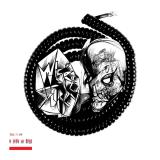
- C1: Big Red Button & Bawab - Call This # Now
- C2: The Apricots - The Cat Of Tomorrow
- D1: Joolmad & Screech – Pdm
- D2: Darren Roach - We Are Talking About Humanism
- E1: Sweely – Nunchuk
- E2: Brett Johnson - Fantasy Machine
- F1: James Andrew - Proper Bopper
- F2: Tarde Loco - Garfunk
A joke that doesn’t make you laugh is just a sentence. Music that doesn’t make you dance and feel is just noise aimed in your direction. To make a circuit where energy flows freely, you must have feedback. Without feedback, connection is absent. As Limousine Dream enters the Age of Aquarius, we open up. Instead of trying to grow, we let it grow. Instead of building a pyramid, we see a constellation where we are all stars, and every star can equally stand out and fit in. We invite you to join us, just like we want to join you. This is where we begin our Life Spiral.
- A1: On Your Mind
- A2: Nguzo Saba (The Struggle)
- B1: Unknown Track #3
- B2: Sexy Mama
- B3: Ultima Linda
- C1: Earthquake
- C2: Dizzy Profile (Alt Take)
- D1: Let Me Be The One
- D2: Alicia
- E1: Samba De Romance
- E2: Naima
- E3: Kimba
- F1: I’m Really Gonna Miss You
- F2: Reflections Of My Past (Feat Dennis Tini)
DJ Amir takes another deep dive into the back catalogue of Detroit's legendary Strata Records to curate a 2nd volume in his Strata Records – The Sound of Detroit compilations. Whereas volume one took in the soulful edge of the Strata canon this volume, as Amir says, 'leans into the label's groovier, funkier edges whilst still celebrating its bold, avant-garde spirit.' DJ Amir's relationship to the Strata label has resulted in the release of the long lost Charles Mingus live 'Jazz in Detroit' box set released on BBE Music along with re-issues from The Lyman Woodard Organisation and re-imaginings of Strata's genre defying music by Berlin based DJ and producer collective, Jazzanova as well as remixes from Kai Alce, Wajeed, Henrik Schwarz, re.decay and DJ Amir himself and, of course, volume one of The Sound of Detroit. Featuring music from The Soulmates, Fito Foster, Keith Boone & Janice Coombs and The Contemporary Jazz Quintet amongst others, The Sound of Detroit volume 2 absolutely exemplifies the importance of Strata Records in the history of innovative Black music as well as its place in the cultural landscape of Detroit as a powerhouse city for art and music. Released by BBE Music in collaboration with 180 Proof Records as a triple vinyl LP and high res. digital download DJ Amir presents Strata – The Sound of Detroit volume 2 really is a gem of a compilation to grace any serious music head's record collection.
- 1: Where To Now?
- 2: Mementos
- 3: In The Name Of The Moth
- 4: With A Shrug
- 5: No Such Place
- 6: Triangular Dream
- 7: Underwater
- 8: Frenzy
- 9: Immortality Project
- 10: Leviathan
There's a tendency in metal to mistake aggression for honesty, volume for depth. To confuse the performance of darkness with its actual weight. Hidden Fires Burn Hottest, the new album from San Francisco-based post-black metal band Bosse-de-Nage, sidesteps this entirely. It’s the group’s most fully realized work yet, precisely because it refuses to be pinned down.
Bosse-de-Nage have been working with The Flenser for over fifteen years. They were one of the first bands the label ever partnered with and have the longest active relationship in the label's history. But unlike most bands who build momentum through constant touring and visibility, Bosse-de-Nage has largely existed apart from the music world's usual machinery. They've evolved on their own terms, in relative isolation, allowing the work to develop without outside pressure or influence. What began rooted in black metal anonymity has mutated into something that actively defies categorization. The aggression is still there, but it's no longer the point. Hidden Fires Burn Hottest finds the band treating emotions like physical objects, feelings with spatial properties. “No Such Place"" describes a space that can't exist but does anyway, somewhere between thought and location. ""Immortality Project"" examines infinite possibility not as promise but as problem, endless options collapsing under their own weight. These songs don't use metaphor to describe emotion. They make emotion into something you could theoretically touch.
Tracked by Jack Shirley (Deafheaven, Oathbreaker) at Atomic Garden East and mixed and mastered by Richard Chowenhill of Agriculture, Hidden Fires Burn Hottest was years in development, with some tracks beginning in 2018.
The long writing process offered time that most records don't get. Time to live with ideas, revise endlessly, to let structures settle. For the first time, lyricist Bryan Manning wrote everything in advance, creating a surplus to pull from rather than working under deadline pressure. The difference shows.
Coming off Further Still, an album built on constraint and economy, Bosse-de-Nage sought the opposite: sprawl, strangeness, fewer rules. Space for ideas to develop without rushing them. Dynamics that move through quiet as much as noise. Presence earned through atmosphere instead of volume. The record even includes ""Mementos,"" which might be considered the first love song the band has ever written.
Nothing here coheres into a theme. These are pieces pulled from low moments and private feelings made public through sound. The band has never been interested in positivity, in music that resolves cleanly or offers comfort. But bleakness doesn't mean humorlessness. There's something darkly funny running through much of it, even when it shouldn't be.
Hidden Fires Burn Hottest doesn't explain itself. It just insists: what you feel is as real as what you can see."
There's a tendency in metal to mistake aggression for honesty, volume for depth. To confuse the performance of darkness with its actual weight. Hidden Fires Burn Hottest, the new album from San Francisco-based post-black metal band Bosse-de-Nage, sidesteps this entirely. It’s the group’s most fully realized work yet, precisely because it refuses to be pinned down.
Bosse-de-Nage have been working with The Flenser for over fifteen years. They were one of the first bands the label ever partnered with and have the longest active relationship in the label's history. But unlike most bands who build momentum through constant touring and visibility, Bosse-de-Nage has largely existed apart from the music world's usual machinery. They've evolved on their own terms, in relative isolation, allowing the work to develop without outside pressure or influence. What began rooted in black metal anonymity has mutated into something that actively defies categorization. The aggression is still there, but it's no longer the point. Hidden Fires Burn Hottest finds the band treating emotions like physical objects, feelings with spatial properties. “No Such Place"" describes a space that can't exist but does anyway, somewhere between thought and location. ""Immortality Project"" examines infinite possibility not as promise but as problem, endless options collapsing under their own weight. These songs don't use metaphor to describe emotion. They make emotion into something you could theoretically touch.
Tracked by Jack Shirley (Deafheaven, Oathbreaker) at Atomic Garden East and mixed and mastered by Richard Chowenhill of Agriculture, Hidden Fires Burn Hottest was years in development, with some tracks beginning in 2018.
The long writing process offered time that most records don't get. Time to live with ideas, revise endlessly, to let structures settle. For the first time, lyricist Bryan Manning wrote everything in advance, creating a surplus to pull from rather than working under deadline pressure. The difference shows.
Coming off Further Still, an album built on constraint and economy, Bosse-de-Nage sought the opposite: sprawl, strangeness, fewer rules. Space for ideas to develop without rushing them. Dynamics that move through quiet as much as noise. Presence earned through atmosphere instead of volume. The record even includes ""Mementos,"" which might be considered the first love song the band has ever written.
Nothing here coheres into a theme. These are pieces pulled from low moments and private feelings made public through sound. The band has never been interested in positivity, in music that resolves cleanly or offers comfort. But bleakness doesn't mean humorlessness. There's something darkly funny running through much of it, even when it shouldn't be.
Hidden Fires Burn Hottest doesn't explain itself. It just insists: what you feel is as real as what you can see."
There's a tendency in metal to mistake aggression for honesty, volume for depth. To confuse the performance of darkness with its actual weight. Hidden Fires Burn Hottest, the new album from San Francisco-based post-black metal band Bosse-de-Nage, sidesteps this entirely. It’s the group’s most fully realized work yet, precisely because it refuses to be pinned down.
Bosse-de-Nage have been working with The Flenser for over fifteen years. They were one of the first bands the label ever partnered with and have the longest active relationship in the label's history. But unlike most bands who build momentum through constant touring and visibility, Bosse-de-Nage has largely existed apart from the music world's usual machinery. They've evolved on their own terms, in relative isolation, allowing the work to develop without outside pressure or influence. What began rooted in black metal anonymity has mutated into something that actively defies categorization. The aggression is still there, but it's no longer the point. Hidden Fires Burn Hottest finds the band treating emotions like physical objects, feelings with spatial properties. “No Such Place"" describes a space that can't exist but does anyway, somewhere between thought and location. ""Immortality Project"" examines infinite possibility not as promise but as problem, endless options collapsing under their own weight. These songs don't use metaphor to describe emotion. They make emotion into something you could theoretically touch.
Tracked by Jack Shirley (Deafheaven, Oathbreaker) at Atomic Garden East and mixed and mastered by Richard Chowenhill of Agriculture, Hidden Fires Burn Hottest was years in development, with some tracks beginning in 2018.
The long writing process offered time that most records don't get. Time to live with ideas, revise endlessly, to let structures settle. For the first time, lyricist Bryan Manning wrote everything in advance, creating a surplus to pull from rather than working under deadline pressure. The difference shows.
Coming off Further Still, an album built on constraint and economy, Bosse-de-Nage sought the opposite: sprawl, strangeness, fewer rules. Space for ideas to develop without rushing them. Dynamics that move through quiet as much as noise. Presence earned through atmosphere instead of volume. The record even includes ""Mementos,"" which might be considered the first love song the band has ever written.
Nothing here coheres into a theme. These are pieces pulled from low moments and private feelings made public through sound. The band has never been interested in positivity, in music that resolves cleanly or offers comfort. But bleakness doesn't mean humorlessness. There's something darkly funny running through much of it, even when it shouldn't be.
Hidden Fires Burn Hottest doesn't explain itself. It just insists: what you feel is as real as what you can see."
- 01: Dune
- 02: Kundela Mawedi
- 03: Paco
- 04: Cameo
- 05: Cacopoulos
- 06: Khettara
- 07: Hell Dorado
- 08: Papambra
- 09: Porpora
Killer Groove Records proudly presents the self-titled debut album by Italian cinematic funk trio Atabasca. A sonic journey where funk, psychedelia and desert groove merge into a timeless narrative suspended between rhythm and vision.
"Atabasca" marks the debut release from the cinematic funk trio, dropping March 27th on limited edition LP, CD digipack and digital formats, the latter featuring an exclusive bonus track. This is a project built on evocative imagery: each song unfolds as an open scene, an emotional landscape where listeners can step inside and write their own ending.
Lap steel, kalimba, percussion and guitars interweave with bass and drums, striking an original balance between tradition and experimentation that evokes unwritten soundtracks for worlds at once distant and familiar. The record navigates between melancholy and irony, tension and release, with a sharp focus on dynamics and sonic narrative.
Deserts, seas, imaginary villages, getaways, pursuits and collective rituals: "Atabasca" emerges as a collection of musical landscapes that unfolds through vivid, evocative imagery.
Jazz-funk, world music, afrobeat, psychedelia and the Italian Golden Age of movie soundtracks merge into a singular emotional geography: warm, analog and deeply human.
The musical journey opens with "Dune", a melancholic statement that leaves room for imagination, before igniting with "Kundela Mawedi" and its cascading lap steel over haunting vocal chants. "Paco" tips its hat to classic westerns, tracing a bandit's trajectory, while "Cameo" drifts back to childhood through minimal rumba and shimmering kalimba. The cinematic imagery continues in "Cacopoulos", a nod to Spaghetti westerns and Eli Wallach, built on raw drum patterns and distorted guitars. Intensity builds in "Khettara", where afrobeat rhythms and Middle Eastern textures intertwine, before "Hell Dorado" tears off in pursuit of the American dream's funk-fueled mirage. "Papambra" weaves hypnotic polyrhythms between kalimba and lap steel, while "Porpora" delivers a sensual, visceral tango of passion and tension. The digital edition closes with "Reprise", a sequel that stretches the album's central theme into an expansive, meditative interpretation.
The tracks were recorded in single takes, capturing the raw energy and natural atmosphere of the performance. Artistic production was handled by the trio alongside Andrea Fabrizii (digger, musician, producer and catalogue curator for CAM Sugar), while Riccardo Ricci mastered the album at Velvet Room Mastering Studio in Brighton.
Like a desert blooming within the evergreen forests of the planet's far north, a unique, alien, disruptive environment. This is the vision behind Atabasca, the project of Luca Mongia (guitars, lap steel, keyboards, vocals), Paolo Mazziotti (bass, keyboards, vocals) and Valerio Pompei (drums, percussion, vocals).
Individually active for over twenty years on both the national and international scenes, the three Italian musicians came together in 2023 to create a project that merges experience, experimentation and creative freedom. Their music is imaginative and at times dreamlike, blending the classic concept of the instrumental trio with the worlds of film scoring and sound design.
Atabasca's sound moves through jazz-funk, world and cinematic territories, weaving together afrobeat, desert and psychedelic influences into a personal and timeless language. Each piece is a scene; each sound, a fragment of a world, a journey between reality and imagination where groove, texture and organic timbre merge into a singular sonic ecosystem: a perpetually shifting balance that generates new inner landscapes.
For fans of Khruangbin, Surprise Chef and instrumental psych-funk!
- A1: Morningtime X Chillwme - Lofty
- A2: Zendr X Comodo - Palm Island
- A3: Enluv X Spaniel Mac - Playa De Las Siestas
- A4: Globuldub X Fred Paci - Heatwave
- A5: Vhskid. - Lights Down Low
- A6: Solo San X Omar Juárez - Verão Sereno
- A7: Lock X Fred Paci X Toti Cisneros - Areia
- B1: John Lee X Jazzyhan - Sunset City
- B2: Banks X Skyswimming - Beach Day
- B3: L’atune X Squeeda - Maracujá Mood
- B4: No Spirit X Fool Parsley X Camel Club - Maneira
- B5: Erwin Do X Toti Cisneros - Beira Mar
- B6: Viktor Minsky X Living Room - Sea & Sun
- B7: Mike Beating - Amour D’été
- C1: J’san X Zeyn X Aboueb - Côte D’azur
- C2: Fnonose X Lazlow - Canopy
- C3: Flâneur X Mranthony - Barefoot
- C4: Lazlow - Celestia
- C5: Møndberg X Marsquake - Waves And Whispers
- C6: Gatz2Gatz X Ødyssee - Lagoon Daydream
- C7: Lenny B X Erwin Do - Drifting Tides
- D1: Lotus Beats - Head High
- D2: Marsquake X Dosi - Lazy Waves
- D3: Corey J. Beats X Krynoze - Iced Tea
- D4: Lucid Keys X Hokø - Sundaze
- D5: Odd Panda X No Spirit X Hikari - Turnip Tides
- D6: Pines & Pines X Otaam - Fácil
- D7: Kiabits X Dani Catalá - Sonhos Na Areia
Feel the sun, samba, and soul that define summer in Rio.
Summer in Rio blends smooth bossa grooves with mellow lofi beats, capturing the laid-back energy of Brazil’s most iconic city. Born on Rio’s beaches in the late 1950s, bossa nova fused samba rhythms with jazz harmony and soft vocals, a sound both timeless and deeply expressive. This 28-track compilation brings that spirit to life: the first 14 tracks dive into bossa lofi with guitars and syncopated rhythms, while the last 14 ease into warm, expansive summer lofi.
From beachside mornings to golden hour evenings, this is summer on loop.
- 01: Maanitus &Amp; Tšiižik
- 02: Markka
- 03: Melkutus
- 04: Letška
- 05: Kuuen Parin Hoirola
- 06: Brišatka
- 07: Tšiižik
- 08: Kirkonkellot
- 09: Kirkonkellot Korkea
- 10: Hoirola, 3 Parin
- 11: Lippa
- 12: Kyngäkiža
- 13: Ristakondra
- 14: Vanha Polkka
- 15: Viistoista
- 16: Vanha Valssi
- 17: Kiberä
- 18: Maanitus Kuokan Kanteleella
- 19: Tuuti Lasta Nukkumahe
Vinyl[22,65 €]
Death Is Not The End present a further volume of Arja Kastinen's eerie amalgamations of 110 year old wax cylinders with her own meticulously transcribed takes, this time focussing in on Armas Otto Väisänen's field recordings of kantele player Iivana Mišukka (b. 1861 d.1919).
"Ivana Mišukka (1861–1919) was one of the Karelian kantele players recorded by the folk music researcher Armas Otto Väisänen on wax cylinders in 1916 and 1917. In the early 20th century, the remote areas of Border Karelia were undergoing the final phase of a transformation in musical culture, with the ancient runo song tradition giving way to newer forms of music. This transition is reflected in Mišukka's repertoire and choice of instrument. The ancient small kantele, hollowed out of a single piece of wood, was already rare at the turn of the century. Mišukka's kantele was a new type of instrument with 26 strings, constructed of several parts, but he played it using the traditional plucking technique. Like other Border Karelian kantele players, his repertoire consisted of music rooted in runosong culture, as well as newer dances and songs from the east and west. Most of the recorded material falls into the latter category.
Ivan Bogdanov Mišukka was born out of wedlock in Suursara village, Suistamo, on 1 May 1861. He began playing the kantele at the age of five or six, quickly mastering the instrument. In adulthood, he was considered one of the area's best master players. Mišukka was landless for most of his life and lived in different parts of the Suistamo parish. His first wife, Tekla Markintytär, died in 1897 at the age of 40, and his second wife, Jevdokia Filipintytär Jeminen, died in 1907 at the age of 50. Seven children were born from the first marriage, two of whom died young. The third wife, Maria Ignatintytär Gurnan (Kuurnanen), was a well-known master of lamentations. Together with Maria, Iivana Mišukka worked as a tenant farmer in the village of Suursara. Mišukka suffered from rheumatism, which prevented him from participating in physical work like Maria. This was apparently partly the reason why Iivana Mišukka went to earn extra money by playing the kantele on gig trips. He often had other traditional artists from Suistamo as his travelling companions, such as the runosingers Konstantin Kuokka and Iivana Onoila. Iivana Mišukka died in Leppäsyrjä village, Suistamo, on 18 May 1919 at the age of 58, and his kantele was donated to Teppana Jänis.
Mišukka only used 14 of the 26 strings on his kantele, playing the same tunes either a fourth higher or lower. He tuned his kantele to the major scale using fifths, except for a low seventh scale degree on the upper strings, but not below the fundamental. Since he did not use the seventh note of the scale on the upper strings at all, he could use the major scale both lower and a fourth higher with this tuning. According to Mišukka, the sound of higher, or 'finer', strings is 'more beautiful', while that of lower ones is 'greater'. Among runosingers, the size of the thirds varied, ranging from major to minor to neutral. A similar phenomenon can be observed in kantele tunings, where the third, sixth and seventh scale degrees vary in a comparable way.
During a meeting, Väisänen suggested that Mišukka play the smaller kantele belonging to Konstantin Kuokka. The idea was to bring it closer to the horn to improve the recording quality. However, the kantele was completely out of tune, and now Mišukka tuned it to the Lydian scale (track 18).
Using the old plucking technique, Mišukka placed his right middle finger on the fundamental tone, his right index finger on the second scale degree, his left middle finger on the third scale degree and his left index finger on the fourth scale degree, and his right thumb on the fifth. The thumb also played the notes above the fifth note of the scale. As Mišukka remarked to Väisänen: 'Peigaloll' tuloo enemb ruadoa' (the thumb has to do more work). However, he did not use the seventh note of the scale on the upper strings at all. Below the fundamental note, he played the seventh and sixth notes of the scale with his right middle finger of and the fifth note of the scale with his right ring finger. This fifth scale degree below the fundamental is almost always used as a drone. Sometimes, when the melody required it, Mišukka, like other players, also varied the fingering. He would also occasionally strike the same string with the side of his fingernail after plucking it.
The wax cylinder recordings of Karelian kantele players are kept in the archives of the Finnish Literature Society in Helsinki, Finland. Copies were made of them onto reel-to-reel tapes in both the 1960s and 1980s. The 1960s copies are mono and the 1980s copies are stereo. However, not all kantele recordings from these decades have survived.
The sound of the kantele is difficult to hear in wax cylinder recordings due to its low volume, and it occasionally becomes completely obscured by noise. During the copying process, the cylinder sometimes rotates unevenly, resulting in breaks or jumps in the music. Additionally, the rotation speed of the cylinder in the copies does not correspond to the performance speed of the original music, which alters the pitch. However, since Väisänen's precise notes are available in the archive, it is possible to deduce the melodies, their speed, and the tuning level of the kantele in the recordings. Of the copies of the original recordings from the 1960s and 1980s, I have selected the one that best met the requirements of this publication and adjusted the speed of the recording to align with Väisänen's notes. To enhance the listening experience, I have replayed the songs, which now partly overlap the old recordings on this release."
— Arja Kastinen
- 01: Maanitus &Amp; Tšiižik
- 02: Markka
- 03: Melkutus
- 04: Letška
- 05: Kuuen Parin Hoirola
- 06: Brišatka
- 07: Tšiižik
- 08: Kirkonkellot
- 09: Kirkonkellot Korkea
- 10: Hoirola, 3 Parin
- 11: Lippa
- 12: Kyngäkiža
- 13: Ristakondra
- 14: Vanha Polkka
- 15: Viistoista
- 16: Vanha Valssi
- 17: Kiberä
- 18: Maanitus Kuokan Kanteleella
- 19: Tuuti Lasta Nukkumahe
Tape[16,39 €]
Death Is Not The End present a further volume of Arja Kastinen's eerie amalgamations of 110 year old wax cylinders with her own meticulously transcribed takes, this time focussing in on Armas Otto Väisänen's field recordings of kantele player Iivana Mišukka (b. 1861 d.1919).
"Ivana Mišukka (1861–1919) was one of the Karelian kantele players recorded by the folk music researcher Armas Otto Väisänen on wax cylinders in 1916 and 1917. In the early 20th century, the remote areas of Border Karelia were undergoing the final phase of a transformation in musical culture, with the ancient runo song tradition giving way to newer forms of music. This transition is reflected in Mišukka's repertoire and choice of instrument. The ancient small kantele, hollowed out of a single piece of wood, was already rare at the turn of the century. Mišukka's kantele was a new type of instrument with 26 strings, constructed of several parts, but he played it using the traditional plucking technique. Like other Border Karelian kantele players, his repertoire consisted of music rooted in runosong culture, as well as newer dances and songs from the east and west. Most of the recorded material falls into the latter category.
Ivan Bogdanov Mišukka was born out of wedlock in Suursara village, Suistamo, on 1 May 1861. He began playing the kantele at the age of five or six, quickly mastering the instrument. In adulthood, he was considered one of the area's best master players. Mišukka was landless for most of his life and lived in different parts of the Suistamo parish. His first wife, Tekla Markintytär, died in 1897 at the age of 40, and his second wife, Jevdokia Filipintytär Jeminen, died in 1907 at the age of 50. Seven children were born from the first marriage, two of whom died young. The third wife, Maria Ignatintytär Gurnan (Kuurnanen), was a well-known master of lamentations. Together with Maria, Iivana Mišukka worked as a tenant farmer in the village of Suursara. Mišukka suffered from rheumatism, which prevented him from participating in physical work like Maria. This was apparently partly the reason why Iivana Mišukka went to earn extra money by playing the kantele on gig trips. He often had other traditional artists from Suistamo as his travelling companions, such as the runosingers Konstantin Kuokka and Iivana Onoila. Iivana Mišukka died in Leppäsyrjä village, Suistamo, on 18 May 1919 at the age of 58, and his kantele was donated to Teppana Jänis.
Mišukka only used 14 of the 26 strings on his kantele, playing the same tunes either a fourth higher or lower. He tuned his kantele to the major scale using fifths, except for a low seventh scale degree on the upper strings, but not below the fundamental. Since he did not use the seventh note of the scale on the upper strings at all, he could use the major scale both lower and a fourth higher with this tuning. According to Mišukka, the sound of higher, or 'finer', strings is 'more beautiful', while that of lower ones is 'greater'. Among runosingers, the size of the thirds varied, ranging from major to minor to neutral. A similar phenomenon can be observed in kantele tunings, where the third, sixth and seventh scale degrees vary in a comparable way.
During a meeting, Väisänen suggested that Mišukka play the smaller kantele belonging to Konstantin Kuokka. The idea was to bring it closer to the horn to improve the recording quality. However, the kantele was completely out of tune, and now Mišukka tuned it to the Lydian scale (track 18).
Using the old plucking technique, Mišukka placed his right middle finger on the fundamental tone, his right index finger on the second scale degree, his left middle finger on the third scale degree and his left index finger on the fourth scale degree, and his right thumb on the fifth. The thumb also played the notes above the fifth note of the scale. As Mišukka remarked to Väisänen: 'Peigaloll' tuloo enemb ruadoa' (the thumb has to do more work). However, he did not use the seventh note of the scale on the upper strings at all. Below the fundamental note, he played the seventh and sixth notes of the scale with his right middle finger of and the fifth note of the scale with his right ring finger. This fifth scale degree below the fundamental is almost always used as a drone. Sometimes, when the melody required it, Mišukka, like other players, also varied the fingering. He would also occasionally strike the same string with the side of his fingernail after plucking it.
The wax cylinder recordings of Karelian kantele players are kept in the archives of the Finnish Literature Society in Helsinki, Finland. Copies were made of them onto reel-to-reel tapes in both the 1960s and 1980s. The 1960s copies are mono and the 1980s copies are stereo. However, not all kantele recordings from these decades have survived.
The sound of the kantele is difficult to hear in wax cylinder recordings due to its low volume, and it occasionally becomes completely obscured by noise. During the copying process, the cylinder sometimes rotates unevenly, resulting in breaks or jumps in the music. Additionally, the rotation speed of the cylinder in the copies does not correspond to the performance speed of the original music, which alters the pitch. However, since Väisänen's precise notes are available in the archive, it is possible to deduce the melodies, their speed, and the tuning level of the kantele in the recordings. Of the copies of the original recordings from the 1960s and 1980s, I have selected the one that best met the requirements of this publication and adjusted the speed of the recording to align with Väisänen's notes. To enhance the listening experience, I have replayed the songs, which now partly overlap the old recordings on this release."
— Arja Kastinen
Conceived in Paris and brought to life in Roma during a spring day flooded with good wine and even better food, CACIO & PEPE is the perfect melange between the NJ rapper of Colombian descent and the Parisian bon vivant, al-ways doing what they do best: enjoying the fine pleasures of life!
Pick a Piper is a Toronto-based electronica duo featuring Caribou drummer Brad Weber and vocalist–songwriter Sophia Alexandra. Their music pairs catchy, ethereal vocals with warm synths, upbeat percussion, and a distinctive sense of sound design that feels both grounded and vulnerable.
The duo’s live show is an intoxicating blend of vibrant physicality and immersive lights and visuals, creating an experience that is both danceable and hypnotic. Pulsing with momentum, vocally driven and haunting, it radiates a charisma that unites the band and audience in cathartic release.
Their new album "Dandelion", explores how we exist in the space between opposing feelings while calling for resilience and the courage to recognize that growth is possible and inherently beautiful, even in life’s most difficult experiences. The record employs skippy beats, bass-heavy kicks, warm subs, hyperactive percussion, woozy synths and organic textures, delivered with a lovingly human-curated feel.
Pick a Piper has toured across Europe, the US, Canada, Guatemala, and Colombia, and has shared the bill with Bonobo, Gold Panda, Blue Hawaii, Do Make Say Think and Ghetto Kumbe.
- 1: Paints A Picture
- 2: Clipping
- 3: Isolation
- 4: Theoretical
- 5: Breakfast
- 6: Mold
- 7: Nothing
- 8: Unwound
- 9: Mustard
- 10: Village
- 11: Sanctuary
- 12: Ooo
Special Friend have become the masters of weaving elegant and sophisticated pop musical webs while staying true to their low-fi indiepop roots. The French/American duo (Guillaume on guitar and vocals, Erica on drums and vocals) manage to create a sound like no other band. When they play live, audiences marvel at the huge, intricate structures the band construct, while falling in love with the crystal-clear vocal melodies that are threaded in between the shards of guitar and the rattle of the drums. How can a duo achieve so much? UK audiences will be able to ponder this question in March: Special Friend are coming over from France to do a substantial tour of the UK. These shows are highly recommended!
The new album is more diverse that the last, with the high-tempo indiepop of first single ‘Breakfast’, the majestic, Yo La Tengo-like dreampop of ‘Clipping’ and the country-ish, gentle, homesick melancholy of ‘Isolation’. Final track ‘OOO’ is a bold piece of Krautrock-inspired experimentation; ‘Mold’ is a beautiful slice of slowcore and opener ‘Paint A Picture’ is modern pop at its catchiest and most direct.
‘Clipping’, the album title, refers to the discipline of pruning growth back, removing dead wood to create a perfectly shaped tree with abundant blossoms: an accurate description of the album, and of the songs that hang from its elegant branches. The album artwork is by Erica: Special Friend are in control of every aspect of this elegant artefact.
‘Clipping’ was recorded in 2025 at Studio Claudio by Alexis Fugain and Margaux Bouchaudon. Set in an isolated rural environment conducive to immersion, the band had seven days in the studio—significantly more than for previous records—allowing for greater care in the recording process, particularly for vocals and arrangements. Several tracks feature synthesizers and organs, acoustic guitar, and even an electric bass on “Sanctuary,” a first for Special Friend. Overall, the record benefits from a more developed and detailed production while preserving the band’s direct approach and spontaneity.
The album was mixed by Syd Kemp, who has worked with artists such as Thurston Moore, Ulrika Spacek, Caroline, Crack Cloud, and Vanishing Twin.
Special Friend’s previous album on Skep Wax, ‘Wait Until The Flames Come Rushing In’ was an underground hit, with a significant amount of airplay in the UK and in the US.
‘Clipping’ is a co-release with Howlin Banana Records and Hidden Bay Records (both in France). Skep Wax is proud to present the album in the UK and in North America.
- 1: Purgatory
- 2: In The Morning
- 3: Highway Ii
- 4: Hollywood
- 5: Country Suep
- 6: Patronised
- 7: The Rain
- 8: Big Jump
- 9 10: Days
- 10: Fornever
The track shows SUEP at their best - glistening synth pop with Marr-esque jangle, sweet but emotionally incisive. Singer Georgie Stott - also known for being the keyboardist of the recently ended Porridge Radio - is at peak performance, marrying catchy melodies with off-kilter storytelling.
Receiving acclaim across BBC 6 Music and the indie press for their ‘car boot sale’ pop music, SUEP rummage through the jumble bin of music history, selecting and reassembling its best parts into something playful, strange and deeply artful. The band are affiliates of the Gob Nation collective - including The Tubs, Sniffany & The Nits, Ex-Void, and others., described by the Guardian as uniting around “a leftfield sensibility, lacerating wit and snotty attitude.”
With a slightly darker edge than their delightful EP Shop or last year’s groovy The Rain, Highway II tells the story of hope slamming into disappointment - a Valentine’s date gone wrong. Tears, cigarette breaks, running makeup and snotty sleeves paint a picture of painful emotional dislocation. It comes with an incredible, multilayered dance-routine music video from frequent collaborator, artist Jess Power.
Singer Georgie Stott says: “The lyrics for this poured out of me on Valentine’s Day when me and my partner went out on a date in the Limehouse area, over the river from where we lived in Rotherhithe. I got drunk too quickly, he got grumpy, and tears started streaming down my face because I just wanted to have a nice romantic time. We made up in the Canary Wharf Wetherspoons at the end of the night, but I went to have a cigarette before, to get out all my sobs and wrote all the lyrics on my phone in one go. Then at a practice studio we quickly wrote it around some chords I made up in the room.”
Forever is a confident debut, a masterpiece of modern indie songcraft. Across the album SUEP dip into country, synthpop, garage rock, post punk, and pub rock, but always retain their signature penchant for melodic hooks, snappy structures and straight-to-the-heart lyrics. Artfully unpretentious, the album was recorded by friend Matt Green, best known for his work with The Tubs, and mixed by Mike O’Malley of the band caroline.
Led by Georgie Stott and Joshua Harvey, SUEP have become fixtures of south-east London’s underground through a series of shared living spaces, improvised studios and DIY venues. Now with George Nicholls (The Tubs, Joanna Gruesome, GN Band), William Deacon (PC World), and Louis Forster (The Goon Sax, Expiry) completing the line up, their debut is finally on its way.
Forever is a glimpse into one of the best bands on the scene, not fitting into any trend, but also never fading into obscurantism - SUEP are a band that wear a joie de vivre loosely but fashionably. Now is their time to shine.
INDUSTRIAS MEKANIKAS is back with the third instalment of the ANTIKHRIST VISIONS saga. This release is particularly symbolic: it’s the ninth in the catalogue, marked by the infernal numerology that runs right through the whole series. It’s a descent into a sonic underworld, where noise becomes ritual and pleasure is just pure agony.
The artist tasked with opening this new chapter of the saga is the mighty Óscar Mulero, an essential figure on the national electronic scene and one of our biggest international ambassadors, whose career has left a deep mark on contemporary music. Here, with Faceless, he delves into dark, precise, and devastating electro territory; a spiritual machine that dictates the pulse of chaos.
Next up, we’ve got Pressurized Modulator with Reddrum: hard, crunchy, industrial electro, absolutely buzzing with electrical tension and twisted sonic matter.
Closing out the A-side is Jacko Volvone (aka Hoax Believers) with Quieren Cerrar Las Fábricas: a track that expertly blends electro, techno, and post-punk echoes, resulting in a tense, distorted, and combative sound, like a working-class echo shouting from the abyss.
Flipping over, the B-side opens with Hanging Nuts (made up of Waje Martín, Fake Robotik, and Ruben Montesco). They unleash a murky descent of filthy, distorted, primal electro, slashed through with guitars and raw, guttural vocals: a genuine chant from beyond the grave. The second cut marks the debut of Techselektah & Phil Fork with Champagne No Potable: a raging street anthem packed with fury, energy, and social criticism, where Spanish vocals emerge amidst EBM structures that have that ‘80s spirit, reinterpreted with today’s raw edge. And the big finish is down to HBK1 alongside Rigor Mortis, with Instinto Caníbal: a full-on explosion of electro-industrial and EBM that awakens the body’s most primitive urges.
Antikhrist Visions Vol. III is a sonic summoning from the lands of Hades: ritualistic matter, organic sound, and primal force. A testament to pleasure and torment—Tormento do Gostar—etched into the vinyl as if it were molten iron.
Memento Mori.
It’s been 12 years since Karizma’s last album, and in that time the world has changed beyond recognition.
What has remained constant is Karizma’s commitment to constantly pushing the boundaries of his sound and defying categorization, effortlessly moving from down-tempo soul, hip-hop, house and electronic dance, and connecting it all with his emotive production and his ear for moving a dance- floor.
“Can’t Call !t” is a double album that sees Karizma craft 17 tracks to take his music in ever new directions. As always, he pours his heart into every cut, always with a message and purpose of intent.
Like all of us, Karizma’s wondering what comes next, which way things will go. Can you call it?
A meteorite and a lost EP from an experimental electronic talent escape their grim fate: remain unknown to human civilization forever.
Around 2015, Gareth Smyth (aka Lumigraph) produced two tracks before uploading them on his Soundcloud page under the name “Canyon Diablo”, a tribute to a meteorite that crashed in Arizona 49,000 years ago. Amazed, the future co-founder of M+M Disques barely had time to download them onto his hard drive before they were deleted... until today.
Behind the extraterrestrial sounds of this 2-tracker, Lumigraph seems to want to establish communication with planet earth using its own means. In the dubby “Flamingo Drive”, he patiently builds up his sluggish groove before bringing in a reassuring and catchy bassline. On the B-side, the avant-garde “America Song” combines industrial rhythms, drone guitar, and Pierre Henry-ish noises.
* fine art printed insert + PVC sleeve
Building upon the striking elegance of their first collaboration, Tobias Freund and Shun Watanabe reunite as Tobias. Doltz. for another extended excursion into designer electronica with a warm, dubby glow at its centre. Their first album Versus arrived on Delsin in early 2025 as a result of a chance meeting at Eden Festival the year before. The spark of inspiration led quickly to a complete and coherent first body of work, and the same can be said for its prompt, equally inspired follow-up. Dealing in the gentle hum of digitally sculpted ambience and needlepoint micro-pulses, Freund and Watanabe evoke the experimental spirit and mellow immersion of golden-era clicks n' cuts techno. While that early 00s phenomenon sometimes cracked around the edges of its DSP limitations, here a rich and porous sound world blooms out from the crisply defined structure of each track. At times the palette opens up to more organic sound matter, and there is ample space for full-bodied synths to ratchet down the rhythm, but a strong digital core of granular processing and exacting sound design form the bedrock of the album's subtle, sublime sound. Even though its calm demeanour radiates an instant charm, like all great electronica Frontiers Of Science is an album of hidden depths to be absorbed steadily over subsequent trips.
- A1: Code 718 - Equinox (Heavenly Club Mix)
- A2: Cls - Can You Feel It (In House Dub)
- B1: George Morel - Let's Groove
- B2: Kcyc - I'm Not Dreaming (Mystipsychotix Mix)
- C1: Hardrive - Deep Inside
- C2: Groove Patrol - Need Your Love (Original Mix)
- D1: Lou² - Freaky (The "Bar Heads" Mix)
- D2: Wink - Higher State Of Consciousness (Tweekin Acid Funk)
Repress!
Legendary NYC house label Strictly Rhythm is celebrating a mammoth 3 decades of cutting edge, roof-raising house music. Truly a benchmark. Originally founded in 1989 by the dynamic pairing of music industry man Mark Finkelstein and A&R expert Gladys Pizarro, Strictly tapped directly into the fertile New York underground and after hours club scene, helping to launch and bolster the recording careers of dance music luminaries like Armand Van Helden, Roger Sanchez, Ultra Nate, Todd Terry, Wamdue Project, DJ Sneak, Louie Vega and many more. Strictly Rhythm is easily one of the most recognisable and respected dance music powerhouses of all time.
Across 3 limited double vinyl offerings, the Strictly catalogue has been expertly picked over to present you with a snapshot of some of the most earth shattering house music to emanate from the streets of New York City. A who's who of producers and artists, all killer and no filler. End to end classics that help to tell the story of one of dance music's most well loved labels. Classic cuts and essentials from Danny Tenaglia (Code 718), George Morel, Kerri Chandler (KCYC), Louie Vega and more all feature on part 1 in their unedited, 12" mix glory.
Fully legit, remastered and selected with love courtesy of Strictly Rhythm and Above Board distribution for 2020. Happy birthday Strictly Rhythm!
REPRESS ON SILVER VINYL . COMES WITH 24”x24” POSTER + DOWNLOAD CARD + GATEFOLD JACKET.
On The Beths’ album Expert In A Dying Field, Elizabeth Stokes’ songwriting positions her somewhere between being a novelist and a documentarian. The songs collected here are autobiographical, but they’re also character sketches of relationships – platonic, familial, romantic – and more importantly, their aftermaths. The shapes and ghosts left in absences. The question that hangs in the air: what do you do with how intimately versed you’ve become in a person, once they’re gone from your life?
The third LP from the New Zealand quartet houses 12 jewels of tight, guitar-heavy songs that worm their way into your head, an incandescent collision of power-pop and skuzz. With Expert, The Beths wanted to make an album meant to be experienced live, for both the listeners and themselves. They wanted it to be fun -- to hear, to play -- in spite of the prickling anxiety throughout the lyrics, the fear of change and struggle to cope.
Most of Expert was recorded at guitarist Jonathan Pearce’s studio on Karangahape Road in Tāmaki Makaurau, Aotearoa (Auckland, New Zealand) -- and sometimes in the building's cavernous stairwell at 1am -- toward the end of 2021, until they were interrupted by a four-month national lockdown. They traded notes remotely for months, songwriting from afar and fleshing out the arrangements alone, the first time they’d written together in such a way. The following February, The Beths left the country for the first time in more than two years to tour across the US, and simultaneously finish mixing the album on the road. That latter half felt more collaborative, with everyone on-hand to trade notes in real time, until it all culminated in a chaotic three-day studio mad-dash in Los Angeles. There, Expert finally became the record they were hearing in their heads.
Expert is an extension of the same skuzzy palette the band has built across their catalog, pop hooks embedded in incisive indie rock. The album’s title track “Expert In A Dying Field” introduces the thesis for the record: “How does it feel to be an expert in a dying field? How do you know it’s over when you can’t let go?” Stokes asks. “Love is learned over time ‘til you’re an expert in a dying field.”
The rest is a capsule of The Beths’ most electrifying and exciting output, a sonic spectrum: “Your Side” is a forlorn and sincere love song, emotive; while “Silence is Golden,” with its propulsive drum line and stop-start staccato of a guitar line winding up and down, is one of the band’s sharpest and most driving. “When You Know You Know” skews a bit groovier, pure pop and a natural addition to the band’s live set. “Knees Deep” was written last minute, but yields one of the best guitar lines on Expert. There’s a certain chaos across the 12 tracks, the palpable joy of playing music with long-time friends colliding with the raw nerves of pain.
Stokes strings it all together through her singular songwriting lens, earnest and self-effacing, zeroing in on the granules of doubt and how they snowball. Did I do the wrong thing? Or did you? And are we still good people at the end of it? She isn’t interested in villains, but instead interested in just telling the story. That insecurity and thoughtfulness, translated into universality and understanding, has been the guiding light of The Beths’ output since 2016. In the face of pain, there’s no dwelling on internal anguish - instead, through The Beths’ music, our shortcomings are met with acceptance. And Expert In A Dying Field is the most tactile that tenderness has been.
From his roots in House, Alex Finkin is a renowned producer and creative director. Working in his Paris studio he has developed numerous projects, notably his own (Roseaux), as well as commissions for radio and television. Meanwhile, with 30 years of production and DJing under his belt, Rocco Rodamaal belongs to the elite circle of House innovators who continue to influence the scene. He's played alongside some of the best in the industry showcasing his versatility and deep understanding of the genre, and remixed artists including Marshall Jefferson, Kerri Chandler, Louie Vega & Moodymann, Todd Terry, Barbara Tucker and Robert Owens to name just a few. Alex Finkin befriended Rocco Rodamaal, who he met via the soulful Parisian club Djoon, where Alex was resident from 2006 to 2014. They have since collaborated on a number of projects together, including "In Da Hood" released on COD3 QR in 2023. Kenny Dope's "O'Gutta" remixes are a series of house and club-focused reworks characterized by raw, gritty and often stripped-back percussion, which he now brings to "In Da Hood".
Ross McMillan, known professionally as Carlos Nilmmns, is a Scottish electronic music producer, DJ and composer originally from Glasgow. Over the years he has collaborated with a range of notable artists, including Grammy-nominated and Grammy-winning figures, including Kenny Dope, Carl Craig, Kevin Saunderson and Davina Bussey, plus respected artists like Niko Marks, Rolando, Laurent Garnier, Santiago Salazar, Hardrock Striker, Karl The Voice, Zadig, Ben Sims, Andrés (who worked with Jay Dilla and Moodymann), and YouANDme. His music has been released on Planet E, Trax, Cocoon, Ornaments, Circus, Virgin, Skylax/Universal Music France and more. His style draws from house, techno and jazz influences, often combining analogue and digital production methods. A returning regular and COD3 QR favourite, he's back with another stunner in "Latin Quarter".
K' Alexi Shelby is a prominent figure in electronic music and with a career spanning decades, he's established a significant influence on House and Techno. Throughout his career he's worked with many well-known artists and remixed tracks that are now key pieces. The cultivation of his massive musical catalogue has overflowed into albums and the three labels he heads. It's also led to legendary collaborations with artists such as The Pet Shop Boys, Robert Owens, Kenny Dixon, Roy Davis Jr., Maurice Joshua, Terry Hunter, Joe Smooth, Steve Silke Hurley, Tyree Cooper, Ron Trent, Glenn Underground, Larry Heard, DJ Pierre, Carl Craig, Felix da Housecat, Marshall Jefferson, Will Smith and countless others. Already respected around the world as a true underground House legend, he delivered "Flame" in 2025 for COD3 QR. Now he's back with "When I", another deep and sexy cut.
Benny Rodrigues a.k.a. ROD unveiled his new moniker, The Lost Souldancer when he dropped "No More Voices" for COD3 QR last year. In his own words, Benny says: "The Lost Souldancer is about coping with the loss of what once was. Finding comfort in the invisible rather than what can be seen. Disconnect to connect in order to be loved rather than liked." He continues this ethos with the delicate and melodic closing track "Life and Death".
Talulah’s Tape is the debut offering from magnetic Midwest-jangle collective Good Flying Birds. Across a patchwork mixtape of stripped-down home recordings that span the independent-guitar spectrum, the band delivers colorful, intricate pop songs perched between the immediacy of DIY punk and the intimate sweetness of twee. Breakbeats, memes, and noise glue everything together, making the album feel as chronically online as it is timeless.
Originally released on cassette in January 2025 by Midwest-punk legend Martin Meyers’s Rotten Apple label, the tape sold more than 300 copies in under a month and quickly became an out-of-print and coveted item. Meyers called it “certified catnip for popheads.” Now, with a refined track list and a fresh master from Greg Obis, Talulah’s Tape returns on LP and CD via Carpark and Smoking Room in October 2025.
While production and approach vary, a through-line of sensitive self-contemplation rests on bright, scrappy guitars and hyperactive melodic bass. Opener “Down on Me” rides a buoyant bass line while jangling guitars frame reflections on overcoming trauma: “I see you in the mirror every time I cry / I hear your voice every time I try.” Next, the guitars trade twinkling counter-melodies on “I Care for You,” pairing sugary, lovestruck lyrics with effervescent strums: “You catch me when I fall / You build me up so tall.”
The rosy grin occasionally twists into a wicked smirk. “Dynamic” warns, “You used to paint the face, but now you’re just the clown,” while “Glass” asks, “Is it lonely at the top when everyone follows the trend, and you hold the pen?” Both tracks brim with sparkling guitar interplay. By the closing, nearly five-minute “Last Straw,” Good Flying Birds stand far beyond conventional indie-pop or 4-track punk, unveiling a roller-coaster of unpredictable changes, vocal harmonies, and instrumental cross-talk.
Altogether, Talulah’s Tape is a pastel-yellow, candy-coated shell filled with thoughtful juxtapositions and melodic experiments. Standing on the same ground as idiosyncratic songwriters like Connie Converse and Daniel Johnston, Good Flying Birds find sweetness in sadness, tear stains on a colorful flower-print couch. Simultaneously, it’s packed with the scratchy guitars and vibrant rhythms of Scottish guitar groups like The Pastels, Orange Juice, and Josef K. It’s a tremendous opening statement from a band just getting started.
Canadian minimal titan Akufen dominated the scene at the turn of the new millennium and has a fine back catalogue full of classics. Now the Montreal man is back with new music though and it's like he never went away - 'Breakin' Free' (feat Dominique Fils Aime) is a slow, smoochy sound with low-slung drums and r&b vocals, while 'You Naughty Scamp' is a little more propulsive as it rolls through deep house and bright, textured synth melody. 'Rubber Ducky' is another playful jam with jazzy top notes, sampled vocals cut up and smeared through the mix and languid bass funk. 'Sensitive People (With So Much To Give)' is another symphonic and soulful house sound.
Especial welcomes the return of Akio Nagase, Osaka's own 303 specialist, with a second EP of acid infused world music. After the success of his Asia orientated EP, here his ethno-inspired dance comes to and from Africa, the mother.
With a history of making reggae influenced electronics under the Makedub alias, his development to acid master continues to showcase a skill at fusing samples, effects and found sound in a dub-desk mix that is body moving and catchy at the same time.
With a mission to bring the music of the world closer, Acid Maasai Collecthiv sets the scene with TB 303 weaving around dub heavy bass, crossing the Athi river, seeking spirits to bind. Countries and continents are tribes and with a reopening world, the dance can encompass all; open minds to bring unity.
This is exemplified on the ethereal Morisyen Acid. Sound design, Mauritian samples and creole vibrate perfectly with Akio's acid work and simple but effective "predominately" repetitive beats to uplift like the Tamarind sunrise.
Acid mantra as mind-gateway continues with Serengeti Summer. An heir to Whoktish, this is Not Reggae, the 808 and 303 in harmony; a jam of man, machine and samples to bring today's ethno-blue storytelling through consciousness.
Closing is Jua, interweaving the fabric of life, passing down from generations the primal with the psychedelic beat to communal gathering, Akio presents the music with love and respect.
There’s an alternate reality where everyone makes a living wage and the cleanest buses you’ve ever seen arrive every other minute. Where the most intense songs are about confessing your love to a crush at the apple orchard, and where gentle feelings and chaotic energy are inseparable best friends. This is the timeline where Cootie Catcher is right at home. This Toronto based four-piece exudes both vulnerability and unbridled excitement, creating a sound that hypercharges the open-hearted tenderness of twee pop with spiraling synths and giddy electronics. New album Something We All Got is the clearest and most vibrant reading of Cootie Catcher’s vision yet, with songs of sweetness, nervousness, and expectancy that beam out unguarded.
After releasing music made primarily in basement recording environments, Something We All Got is the band’s first flirtation with studio recording. The edges are still sharp, however, with some parts assembled from time-honored lo-fi methods and fun, personally-sourced samples seeping into the production. The sound is explosive and upbeat, with euphoric guitars, bubbly synth lines, speedy drums both played and programmed, and all other manner of sound constantly colliding. Cootie Catcher has three songwriters, Sophia Chavez, Anita Fowl, and Nolan Jakupovski, all of whom have distinctive voices but still manage to overlap in their writing on shared concerns like navigating the lines of romantic and platonic relationships, their city’s social scenes, and struggles in both the microcosmic experience of playing in a band and the zoomed-out challenges of living through late-stage capitalism.
Joy still touches every surface of Something We All Got. “Quarter Note Rock” bounces around the room in a fit of jangling guitar chords, scratched samples, and interplay between breakbeat loops and somersaulting live drums. It’s a blast of positivity even with lyrics about how disappointing it can be to meet your heroes. A smiling electro pop instrumental supports lyrics about having to step painfully away from an almost realized love on “Gingham Dress,” a song that subverts themes of domesticity as a backdrop for the dashed wilt of hopeless devotion.
Cootie Catcher rolls down hills and jumps through flaming hoops throughout Something We All Got without ever dumbing down the visceral emotions that drive these songs. There’s a palpable tension between the band’s exhilarating sonics and the raw, often uneasy sentiments expressed, but it’s an integral part of what makes them unique. Rather than hide behind the kind of calculated vagueness that plagues so much of the indie rock landscape in the time of cursed algorithms, Cootie Catcher runs full-speed toward every confusion and excitement, fearlessly direct and embracing the reality they’re in.
- 1-: Fire Graphics
- 2: Secret Speech
- 3: Ex-Human Shield
- 4: History's Biggest T-Shirts
- 5: Not A Sound In Heaven
- 6: Company Town
- 7: You Can't Say Dallas Doesn't Love You
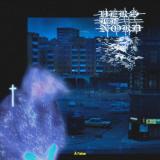
Bristol experimental band SUGAR HORSE are delighted to announce that their third album, Not A Sound In Heaven, will be released on 10th April 2026 via Fat Dracula Records.
To celebrate the news, the band are sharing the bruising lead single ‘Secret Speech’, available to stream on all good digital service providers from 12th February 2026.
Also announced today are a run of April 2026 UK album headline tour dates and an appearance at StrangeForms Festival 2026, with tickets on sale now (see below for full listings).
“We are fortunate enough to live in what is generally known as ‘The West’,” says front man Ash Tubb of the lyrical themes behind the new track. “I say fortunate with gritted teeth, because I know—as I’m sure the reader knows—that living in the West isn’t always rosy. The vast majority of people struggle everyday to feed, clothe and house themselves. Let alone receive adequate healthcare, schooling and workers’ rights.”
“We are, however, where all the world’s wealth is hoarded. We are at the centre of Empire. The people outside of this empire—those of the Global South—have had their resources extracted and their populations exploited by our own governments, with very little given back in return. This won’t go on forever. It will inevitably end, as all great empires do.”
“We in The West have a choice to make in the meantime; either help create a new, fairer world, or let the greed of our ruling classes become the undoing of all of us.”
The first glimpse of new material from the quartet, ‘Secret Speech’ starts as Not A Sound In Heaven means to go on—a politically-charged wrecking ball of a song that smashes its way through the often unbelievable chaos and brutality of the 21st century with vitriolic malice.
How do you capture the machinations of the geo-political industrial war machine—and all the horrors that go with it—in the studio, without seeming trite or crass? That’s the question that Sugar Horse have posed themselves on their forthcoming third album Not A Sound In Heaven, and they must surely be one of the only bands in existence capable of delivering on just that premise with both musical substance and cutting philosophical insight.
“Ever since I was born I can remember visions of war, famine, and death being beamed directly into my living room via the magic of television,” says Tubb of the record. “These visions were accompanied by newsreader narratives designed to either humanise or dehumanise the people involved. We humanise our government’s allies and dehumanise their enemies. This is taken as common sense, or even wisdom to some degree. People watch the news and accept it as fact, simple and true.”

“As a person gets older they move in one of three different directions with this acceptance of reality; They embrace what they’re being told, they fall into a kind of trust free nihilism or they learn that there are deeper narratives at play.”
“Not A Sound In Heaven is an aged acceptance of the latter. An acceptance of sitting at the centre of a global empire of both military and economic dimensions. An acceptance that the stories we’re told as a nation, or what’s generally in the zeitgeist, isn’t necessarily reality itself.”
“How does a person cope with the weight—and, frankly, the guilt—of a society that perpetuates such distinct inequalities? A society that thinks a bit of killing abroad is fine, as long as it improves the lives of people at home. You can see why so many choose to embrace it. Hell, nihilism seems pretty sensible. Once a person decides upon pursuing a degree of truth however, things get a bit depressing. Beyond depressing...maddening.”
“This album explores this kind of breezy, frivolous subject matter in a manner that will no doubt be uplifting to the listener and massively financially rewarding for the artist.”
The new album follows on from their standalone AA single ‘What’s Your ETA? Let’s Have A Tear Up’/‘Would You Like Me To Be The Cat?’ which was released late last year as a surprise double drop.
“It’s been on my wishlist for a while that the incredibly talented Julienne Dessagne does a techno EP for us,” Michael Mayer says. You can hear why, straight up, on Speicher 139, as Dessagne’s project Fantastic Twins is finally let loose on Kompakt’s storied series. The key words: psychedelic acid trax. “False Index” is peeled back to core: a fearsome rhythm, with an endlessly helixing synth pattern twisting around your skull, crinkling like cellophane and warping like burnt plastic, while Dessagne’s Sprechstimme floats above everything – detached but effortlessly perceptive. “New Systems” is a new kind of Europe Endless – hypnotic and lush, its deep drones pinpricked by sonar bleep. “Uninhibited” is catchy in a way that only Dessagne can make possible, its vocal tattoo burnt into your mind as it echoes through massive architectures, tones dropping from scaffold and splashing at your feet as glitch-work burrows its way up through the floor, directly into your earholes. Uninhibited? Everything here’s simultaneously under control, all under the watchful, guiding eye of Dessagne, and playfully, wildly out of control, little arrangements of phenomena let loose to build new worlds. Organised chaos, and chaotic organisation.
„Es stand schon seit einiger Zeit auf meiner Wunschliste, dass die unglaublich talentierte Julienne Dessagne eine Techno-EP für uns produziert“, sagt Michael Mayer. Auf Speicher 139 kann man sofort hören, warum, denn Dessagnes Projekt Fantastic Twins erscheint endlich in der legendären Serie von Kompakt. Die Schlüsselwörter: psychedelische Acid-Trax. „False Index“ ist auf das Wesentliche reduziert: ein furchteinflößender Rhythmus mit einem sich endlos windenden Synth-Pattern, das sich um den Schädel dreht, wie Zellophan knistert und sich wie verbranntes Plastik verzieht, während Dessagnes Sprechstimme über allem schwebt – distanziert, aber mühelos wahrnehmbar. „New Systems“ ist eine neue Art von Europa Endlos – hypnotisch und üppig, seine tiefen Drones von Sonar-Pieptönen durchbrochen. „Uninhibited“ ist eingängig auf eine Weise, wie es nur Dessagne möglich macht, ihre Stimme brennt sich in dein Gedächtnis ein, während sie durch massive Architekturen hallt, Töne fallen vom Gerüst und spritzen an deinen Füßen, während sich Glitch-Work seinen Weg durch den Boden bahnt, direkt in deine Ohren. Hemmungslos? Hier ist alles gleichzeitig unter Kontrolle, alles unter dem wachsamen, leitenden Blick von Dessagne, und spielerisch, wild außer Kontrolle, lassen sich kleine Arrangements von Phänomenen los, um neue Welten zu erschaffen. Organisiertes Chaos und chaotische Organisation.
66 pages, 175 x 129mm paperback w/ litho printed cover & french flaps.
The second outing for our short run book publishing imprint, The End books, takes the form of a reprint of Spanish Cante Jondo and Its Origin in Sindhi Music, originally published in Spanish in 1955 under the name Cante Jondo: Su Origen y Evolución and later in this English translation.
Aziz Balouch here presents his theory on the roots of flamenco's 'deep song' in modern-day Pakistan, a cultural journey that mimics the routes of his own life, having been brought up among the Islamic mysticism and devotional songs of Sindh before travelling to Gibraltar in the early 1930s and becoming transfixed with the cante jondo across the border in southern Spain. Positing this concept through personal accounts rather than solid theoretical backing, this text provides a valuable account of an extraordinary existence that crossed remarkable geographical, musical, and spiritual boundaries. Issued here with a new introduction from anthropologist of sound, the senses and Islam, Stefan Williamson Fa.
"It would be easy to place Balouch on the fringes, as an eccentric footnote in flamenco history. But that misses the shape of his life and work. He was a figure who moved intuitively across boundaries that our present categories of nation, genre, discipline tend to fix in place. His work predates the founding of the academic discipline of ethnomusicology, the global circuits of world music, and the marketplace logic of fusion projects by decades. He was not an ethnographer or a proto–world musician, but someone for whom the deep song of Andalusia and the devotional song of the subcontinent resonated along the same fault lines of feeling, and who spent his life trying to trace them.
This book is one of the few surviving traces of that attempt. To read it now is to encounter a perspective that resists tidy narratives of influence or origin, despite its title and what he claims to do. It stands instead as evidence of an idiosyncratic musical imagination, one that relied less on proof than on listening, and on the belief that certain echoes carry farther than history can easily explain."
— Stefan Williamson Fa
Finally, finally, FINALLY! After many years of fruitless praying, a true collector grail can finally grace every turntable the world over. Bright And Shining is a miraculous leftfield library classic from the genius mind of Barbara Moore. It's Highly Addictive Happiness Music TM and one of the coolest records to come out of anywhere...ever! With originals almost impossible to find - and, when they do, going for over £300 - you already know how crucial this beautiful reissue is.
Recorded in 1981 for Sylvester Music Company, Bright And Shining is breezy, dreamy and funky in a perfectly smooth jazzy-soul-groove fashion, with Moore's patented celestial male-female vocal harmonies this time benefitting from the addition of Fender Rhodes and pumping bass lines.
As one particularly enthusiastic Discogs user put it: "If Eno is responsible for Music for Airports, Moore is responsible for Music for Holidays." Indeed, this is brilliantly unique, "maximum happiness music". If you miss the sun-dappled soft-psych soul of Koushik, the heavenly vocal arrangements of the great Library Music doyenne Barbara Moore - her depth, richness, sophistication and warmth - will see you just right.
The gigantic title track, "Bright And Shining", gallops out the gate, all sophisticated, jazzy leisure-soul with sax and guitars backing Moore's effortless vocal swag in this relaxed, mid-tempo head-nod strut. Worth the price of admission alone. Up next, the sunny, vibey "Fly Me High" features strolling, "unworded" vocals (aside from the refrain of the title) alongside breezy alto sax and electric guitar. Pastoral and perfect. The slow'n'sultry "Affluence" presents a moody elegance, a classical "downlifting" gem. Another crucial highlight is the breezy "Going On Holiday". It's happy. It's sunny. It's lively. It's cool and happy. Did we say happy? A mid-tempo, romantic sax workout, "Alto Sex"presents smooth jazzy funk before the first side closes out with the soaring, jazzy "Stay With Me". Seriously uplifting.
Side B opens with "Feel Fine", an excellent uptempo and bright jazz groove. Up next, "Canon" is wracked with refinement, a peaceful, smooth vocal harmony over repeating bass making for an elegant, late-night classic. It's followed by the laconic "Smooth And Soft", a laidback, casual sophisticated soul and easy-feeling jazz gem. The jazzy "Real Thing" is another exercise in strolling sophistication, complete with wordless vocal harmonies. The fairly self-explanatory "Voice Over Sax" sounds precisely how you would expect; a relaxed sax number with heavenly vocal support! To close, the carefree "Feeling Free" is a pleasant, light and breezy mid-tempo groove.
The audio for Bright And Shining has been meticulously remastered by Be With regular Simon Francis, ensuring this release sounds better than ever. Cicely Balston's expert skills have made sure nothing is lost in the cut whilst the records have been pressed to the highest possible standard at Record Industry in Holland. The original, iconic sleeve has been restored here at Be With HQ as the finishing touch to this long overdue re-issue. We'll grant the final word to MillionDollars. on discogs from about 10 years ago: "If you listen to the record on a sunny day you feel like going out surfing in a white linen suit with a blunt on your lips, catching a cool breeze."
- A1: Al Green – Let's Stay Together
- A2: Marvin Gaye - What's Going On
- A3: Diana Ross - Ain't No Mountain High Enough (Single Version)
- A4: Stevie Wonder - Signed, Sealed, Delivered (I'm Yours)
- A5: Commodores - Easy (Album Version)
- A6: Bill Withers - Ain't No Sunshine
- A7: The Stylistics - You Make Me Feel Brand New (Let's Put It All Together Version)
- A8: Rose Royce – Wishing On A Star
- B1: Jackson 5 - I Want You Back (Single Version)
- B2: Smokey Robinson & The Miracles - The Tears Of A Clown (Single Version / Mono)
- B3: The Supremes - Nathan Jones
- B4: Frankie Valli And The Four Seasons - The Night (1972 Album Version)
- B5: Chairmen Of The Board – Give Me Just A Little More Time
- B6: The Trammps - Hold Back The Night
- B7: The O'jays - Love Train
- B8: The Blackbyrds – Walking In Rhythm
- B9: Heatwave - Always And Forever (Single Version)
- C1: The Temptations - Papa Was A Rollin' Stone (Edited)
- C2: Isaac Hayes - Theme From "Shaft" (Remastered 1991 Album Version)
- C3: Ike & Tina Turner - Proud Mary
- C4: James Brown - Get Up I Feel Like Being A Sex Machine
- C5: Edwin Starr - War
- C6: Sly & The Family Stone - Family Affair (Single Version)
- C7: The Delfonics - Didn't I (Blow Your Mind This Time)
- C8: Billy Paul - Me And Mrs. Jones (Single Version)
- D1: The Floaters - Float On (Single Version)
- D2: Minnie Riperton - Lovin' You
- D3: The Isley Brothers - Summer Breeze, Pt. 1
- D4: William Devaughn - Be Thankful For What You Got (Part I)
- D5: Detroit Emeralds – Feel The Need In Me
- D6: The Moments - Jack In The Box
- D7: Raydio - Jack And Jill
- D8: The Tymes - Ms. Grace
- E1: Barry White - Can't Get Enough Of Your Love, Babe
- E2: Aretha Franklin – Until You Come Back To Me (That's What I'm Gonna Do)
- E3: Al Green – Tired Of Being Alone
- E4: Gladys Knight & The Pips - Midnight Train To Georgia
- E5: Timmy Thomas – Why Can’t We Live Together (7" Glades Version) (2013 Remaster)
- E6: George Benson – The Greatest Love Of All
- E7: Diana Ross - Theme From Mahogany (Do You Know Where You're Going To) (Single Version)
- E8: Jackson 5 - I'll Be There
- F1: Freda Payne – Band Of Gold
- F2: Ann Peebles - I Can't Stand The Rain
- F3: Marvin Gaye - Let's Get It On (Single Version)
- F4: Harold Melvin & The Blue Notes Featuring Teddy Pendergrass - If You Don't Know Me By Now
- F5: The Stylistics - Can't Give You Anything (But My Love)
- F6: The Three Degrees - When Will I See You Again (Single Version)
- F7: Deniece Williams - Free (Single Version)
- F8: Earth, Wind & Fire - After The Love Has Gone (Single Version)
- F9: Commodores - Three Times A Lady (Single Version)
NOW That’s What I Call 70s Soul brings together 50 era-defining tracks from one of the most powerful decades in soul music, featuring classics from Motown legends, Philly Soul pioneers, smooth balladeers and funk innovators – all pressed across 3LPs on beautiful blue vinyl… Out April 24th!
LP1 opens with one of the decade’s most recognisable love songs: Al Green’s ‘Let’s Stay Together’, a US #1 and UK Top 10 hit that became his signature recording. It’s followed by Marvin Gaye’s ‘What’s Going On’, the socially conscious masterpiece and title track from his landmark 1971 album, and Diana Ross’ Ain’t No Mountain High Enough’, which topped the US chart and became her first solo #1. Stevie Wonder’s ‘Signed, Sealed, Delivered (I’m Yours)’ remains one of Motown’s most joyful recordings and comes before Commodores’ ‘Easy’ introducing Lionel Richie’s smooth ballad vocals. The side also includes Bill Withers’ timeless ‘Ain’t No Sunshine’, a Grammy-winning classic, and The Stylistics’ lush ballad ‘You Make Me Feel Brand New’, a UK Top 3 smash, before closing with Rose Royce’s beautiful ‘Wishing On A Star’, one of the most loved soul ballads of the era.
Flip the LP over and The Jackson 5’s ‘I Want You Back’ – the group’s explosive debut single opens the side. Smokey Robinson & The Miracles’ ‘The Tears Of A Clown’ became a UK #1 and is followed by The Supremes’ Nathan Jones’ showcasing the group’s evolving psychedelic-soul sound. Northern Soul classics from Frankie Valli & The Four Seasons with ‘The Night’, Chairmen Of The Board’s Top 3 smash ‘Give Me Just A Little More Time’ and The Trammps’ ‘Hold Back The Night’. The O’Jays’ joyous ‘Love Train’ leads to The Blackbyrds’ Walking In Rhythm’, before the side closes with the romantic classic ‘Always And Forever’ from Heatwave.
LP2 opens with The Temptations’ epic ‘Papa Was A Rollin’ Stone’, a Grammy-winning US #1 remains one of the most stunning recordings from the Motown catalogue, is followed by Isaac Hayes’ ‘Theme From “Shaft”’, an Academy Award-winner and a US #1 smash. More funk follows from Ike & Tina Turner, James Brown with one of his key tracks ‘Get Up (I Feel Like Being A) Sex Machine’, Edwin Starr’s powerful anti-Vietnam protest song ‘War’, and Sly & The Family Stone’s hugely influential ‘Family Affair’. The Delfonics’ sublime ‘Didn’t I (Blow Your Mind This Time)’ comes ahead of Billy Paul’s timeless ‘Me And Mrs. Jones’ which closes the side…the other side begins with the 1977 #1 from The Floaters with ‘Float On’, before the breathtaking vocals of Minnie Riperton on ‘Lovin’ You’. The Isley Brothers’ Summer Breeze’ and William DeVaughn’s ‘Be Thankful For What You Got’ have become enduring classics and are followed by a run of ‘80s pop-chart crossover hits completing LP2 from Detroit Emeralds, The Moments Raydio and The Tymes’ #1 ‘Ms. Grace’.
LP3 opens with the unmistakable voice of Barry White and his US #1 hit ‘Can’t Get Enough Of Your Love, Babe’, before Aretha Franklin’s ‘Until You Come Back To Me (That’s What I’m Gonna Do)’, delivers one of her smoothest performances. Al Green’s ‘Tired Of Being Alone’ and Gladys Knight & The Pips’ ‘Midnight Train To Georgia’ are followed by minimalist soul classic ‘Why Can’t We Live Together’ from Timmy Thomas, and the side closes with a trio of defining ballads:- George Benson’s ‘The Greatest Love Of All’ Diana Ross’ ‘Theme From Mahogany (Do You Know Where You’re Going To)’ and The Jackson 5’s ‘I’ll Be There’, their biggest hit…while over on the final side…Freda Payne’s #1 ‘Band Of Gold’, opens alongside Ann Peebles’ influential and much covered ‘I Can’t Stand The Rain’.Marvin Gaye’s sensual ‘Let’s Get It On’ became another US #1, while Harold Melvin & The Blue Notes featuring Teddy Pendergrass deliver the contemporary standard ‘If You Don’t Know Me By Now’. Three massive UK #1s are next…The Stylistics with ‘Can’t Give You Anything (But My Love)’, The Three Degrees’ peerless ‘When Will I See You Again’ and Deniece Williams’ ‘Free’. This amazing collection closes with two timeless ballads: Earth, Wind & Fire’s ‘After The Love Has Gone’, a Grammy-winning classic, along with ‘Three Times A Lady’, a huge worldwide #1 for the Commodores.
NOW That’s What I Call 70s Soul, 50 defining tracks from one of music’s greatest decades. Out April 24th.
XKatedral Anthology I is the first in a series of archival releases dedicated to presenting music by XKatedral affiliated composers working within the realm of slowly evolving harmonic and timbral music. This double-vinyl set contains an array of pieces dating from 2010 - 2020. Four of the works included here were originally released on cassette tape early on in the label's history, while the two remaining pieces are presented by the label for the first time.
"The works Ir Himinn, Grooenn by Kristoffer Svensson, Disquiet (Heart) by Marta Forsberg and Lamé by Isak Edberg were first released on the compilation XKatedral Volume II in 2016. Svenssons piece from 2014 combines justly tuned gamelan percussion and prepared piano intricately interwoven in a way that obscures the boundaries between the two instrument groups. Forsberg and Edbergs pieces both use a monolithic form to explore the timbral and harmonic spaces provided by the Düben Baroque organ situated in Tyska Kyrkan in the oldest part of Stockholm. While similar in terms of instrumentation the two works differ formally - Edbergs Lamé composed in 2010 uses the registers of the organ to articulate a seamless spectral transformation while Forsbergs Disquiet (Heart) from 2014 deals in blocks of sound with a varying degree of opacity, saturation and intensity.
Glory for two electric guitars by Caterina Barbieri and Kali Malone was composed and recorded in Tempo Reale in Florence, Italy, and was originally released on the cassette compilation XKatedral Volume III in 2016. This music takes the form of an ever-evolving hypnotic pattern shared by the two instruments articulated through an additive and subtractive canon. Dissolving Ceremony, composed in 2012 by Edberg/Erlandsson/Lisinski, was first presented publicly on the self-released record Stratum. The music contained in that release was formed from a collection of gamelan percussion instruments augmented by two sets of live-electronic instruments tuned to the harmonic framework formed by the partials of the metal percussion. Originally positioned in the center of the record running order between two long monolithic process-based pieces, Dissolving Ceremony now stands on its own as a memory of a time and methodology from the not so distant past.
The newest piece in this set is Shipwrecks by Daniel M Karlsson. While this work is a recent one Karlsson should be considered one of the forerunners of the musical expression contained within this record set. Active within new music for two decades his strongly articulated musical ideas and constantly evolving craftsmanship has resulted in an enormous body of work, and has served as an inspiration for many of his fellow composers. This piece is a celebration of transposition and its immense capacity for timbral transformation using a vast array of instruments performed, recorded and electronically treated by the composer to form a liquid uncanny topography where a deeply personal harmonic language constantly shifts, slides and shivers."
- A1: Me Pega
- A2: Tem Carnaval
- A3: Sexy Doce
- B1: Coeur
- B2: Então Tá Bem
- B3: Para Ser Feliz
- B4: Tô Nem Aí
Fresh from releasing projects on Method 808 and Future Classic, landing a huge collaboration with Chloé Caillet, and delivering an official remix for Fatboy Slim, PPJ are entering a new chapter in full force. Their expansive take on global street sounds, ranging from neoperreo to Miami bass, gets a cool re-coating.
Led by the magnetic vocalist Páula, with production from Povoa (individually supported by Four Tet, Ben UFO, and Barry Can't Swim, with recent releases on Live From Earth), the duo operates in maximalist mode: playful, sensual, and slightly unhinged.PPJ’s new era, JOKER, embraces a figure that appears everywhere from card decks to carnival culture as a symbol that mirrors their own DNA: funny, eerie, seductive, unpredictable. The EP leans further into club territory, but rather than polishing their edges, PPJ amplify them.
At the emotional core of the record sits “Coeur,” co-produced with Chloé Caillet. It begins with an MPB-tinged foundation flirting with bossa nova. It’s unmistakably Brazilian, bathed in sunset hues before being sped up and twisted into a dance-floor-ready electronic form. The groove shimmers with tension: warm percussion, elastic basslines, and Páula’s voice hovering between intimacy and tease. It feels like a remix of itself, romantic, but slightly untrustworthy.
If “Coeur” glows, “To Nem Ai” is a slow burner. A very deep and downtempo house cut, it unfolds slowly, almost luxuriously, guided by sensual vocals that feel whispered directly into the ear of the listener. A hypnotizing piano sample that feels like a late-night confession. It’s the kind of record that transforms a dancefloor into something tactile.
Elsewhere, “Me Pega” is a high-energy reinterpretation of the tech-house sounds from Santa Catarina, one of southern Brazil’s most feverish party states, twisted and accelerated for ferocious impact. Drawing direct inspiration from Sarro, a raw and vibrant Brazilian street dance, the track captures physical intensity in its purest form: sweat, bass pressure, collective release.
Its counterpart, “Tem Carnaval” channels Páula’s vivid storytelling into a thunderous ode to Rio’s carnival spirit, euphoric, chaotic, cinematic landed just in time for this year’s celebrations.
On “Sexy Doce,” rugged electroclash melodies collide with unexpected references. “It was inspired by Budots, which is dance music from the streets in the Philippines,” Povoa explains. “Then we mixed it with Páula’s Brazilian vocals. Baile funk is similarly from the streets, so there is a connection.” The result is raw yet futuristic, a cross-continental flirtation that feels both underground and explosive.
With this new EP, PPJ make music like they’re tuning into a dozen pirate frequencies at once. Pirate radio from Rio to Berlin to Manila intercepting fragments of street culture, sensuality, and chaos, and stitching them into something deliriously cohesive.
JOKER doesn’t just nod to club culture. It challenges it, twists expectation and leaves a lasting impression.
- A1: Intro Lectric Chile Goat
- A2: Abierto
- A3: Organism
- A4: Thank You Mk
- B1: Tatanka
- B2: Interlude Train Of Thought
- B3: It Gets Heavy
- B4: Thin Brown Layer
- C1: Interlude So Many Years Ago
- C2: Terra Unfirma
- C3: Gettin It Together
- C4: Another Brother Gone
- C5: Broken Blood
- D1: Interlude And The Day Goes By
- D2: Lost Unfound (3:32)
- D3: The Color Of Life
- D4: Falling Awake
2026 Repress
It’s rare that a certain sound is entirely an artist’s own. Although undeniably a stew of impeccable influences – from blues to folk to Latin to dusty funk, soul and hip-hop – one cannot hear a Tommy Guerrero song without immediately recognising it as his - and his only.
The cult skater from San Francisco is globally renowned as one of the original members of the legendary “Bones Brigade” team. And as an accomplished multi-instrumentalist, his laid-back soul is beloved by all who’ve basked in its blissful glow.
There’s something elemental about this music that really stirs the soul. Strikingly beautiful and instantly addictive, it’s a kind of funk-fuelled, melody-driven, groove-based magic. There’s a serenity and heart in the playing that radiates warmth and splendour, as if crafted for endless sunsets. His albums that surfaced on Mo Wax at the turn of the century have been treasured since their release and it’s two of his most vital LPs that we’re honoured to reintroduce.
The originals were quietly pressed on to a single piece of vinyl so we’ve worked closely with Tommy this year to bring you these fresh, limited editions. They have been lovingly remastered, cut nice and loud on to heavyweight double vinyl and presented in deluxe gatefold jackets.
Soul Food Taqueria continued Guerrero’s guitar soul but represented a step forward with its polished production and greater complexity of instrumentation. Denied the promotion it deserved upon release, it flew under the radar. It is now the most wanted record of his wondrous back catalogue.
Guerrero’s atmospheric touch and subtle guitar provide lush, glimmering pieces of musical texture. Within his spacious compositions, uniquely arranged instruments flourish alongside each other to create a languid soundtrack for halcyon days.
As ever, the diversity on display is beguiling. From bossa nova, samba and cumbia rhythms to understated folk, funk and soul grooves, this is another exotic set of mellow gold; perfectly represented by ESPO’s memorable artwork. Furthermore, the title’s hybridity reflects the intoxicating sweep of stylistic flavours served up, reminding us that, however tricky it is to categorise Guerrero’s special blend, it’s always a pleasure to indulge in something so creative and adventurous.
Dubby, bass-heavy instrumentals give way to moody folk-soul – witness “It Gets Heavy”, featuring melancholic vocals from Gresham Taylor – whilst “Thank You MK” is a gentle ode to the tropics, featuring ethereal instrumentation, bright bass and warm, jazzy guitars. The second half in particular contains a number of stunning ambient tracks – check “Lost Unfound”, “Another Brother Gone” and “Broken Blood” - built around minimalist, laid-back grooves and detailed guitar orchestrations which wouldn’t be out of place on the latest Jonny Nash release.
Guerrero closes this flawless set with a moment of true beauty. Restrained and graceful, “Falling Awake” is a pared back piece containing meditative guitar melodies set against melancholic piano arrangements. It brings proceedings to the most peaceful close. Seductively good, it reminds you just how great simplicity can sound.
- A1: Point To A Point Blank
- A2: Automatic Teller
- A3: End Of The Great Credibility Race
- A4: Too Much
- A5: Killer's Kiss
- A6: Continental Cats
- A7: Instrumental Bonus Track
- B1: Spanish Fly By Night
- B2: The Roof
- B3: Your Beaten Heart
- B4: Turning Tricks
- B5: Wine & Depression
- B6: Quarter To Four
Back in 1990 the New Bomb Turks got together as four Ohio State University students who just wanted to rock. 10 years later they are already on their 7th studio album: Nightmare Scenario.
New Bomb Turks return to their snaggle-toothed first mistress — hard-driving, no-holds-barred American punk rock. With the guitar jive of Chuck Berry, the blinding ferocity of Motörhead and the snot of The Dead Boys, singer Eric Davidson and his backing trio fire off a dozen grenades of authentic old-school three-chord riff-rock in little over a half-hour, with nary a pause for breath between tracks. You can’t quibble with the four-on-the-floor intensity of tunes like opening salvo Point To A Point Blank. It was recorded over four days and nights, the only break being a jaunt over to a bar to see a reunited Real Kids, their first show in years, which floored the band and only added more mezcal to the fire.
Nightmare Scenario is available as a limited edition of 500 individually numbered copies on violet vinyl and includes an insert.
- A1: Brothers To Brothers
- A2: Gs & Locs
- A3: Gangsta Shit
- B1: Send That Crab Off To Die
- B2: Mafia Lane
- B3: Fuck Crab (Skit)
- B4: Can't Stop, Won't Stop
- B5: Time Is Gone Nigga
- C1: Set Trippin
- C2: East Side Rip Riper
- C3: 187 (Skit)
- C4: Slob 187
- C5: Slobs Keep On Slippin
- D1: Every Dog Has His Day
- D2: Crip 4 Life
- D3: Wish You Were Here
2 x LP Red & Blue (Half & Half Effect) Vinyl in Gatefold Sleeve
The Bloods and Crips’ debut Bangin’ on Wax (1993) — which we reissued in 2023 to an incredible reception — inspired us to dig even deeper into this iconic catalogue. The follow-up, The Saga Continues, originally dropped only on CD in 1994. Now, for the first time ever, we’re proud to bring it to wax — pressed on solid Blue and Red vinyl, of course. This concept was a pivotal moment in West Coast gangsta rap, uniting members of L.A.’s two most infamous sets. Crips from Compton, Watts, and Long Beach, and Bloods from Inglewood and Los Angeles auditioned for the project, with the sharpest MCs selected for the final lineup. All proceeds from the original Bangin’ on Wax album went toward improving local schools and parks for the community’s children. Over 30 years later, the lone CD pressing regularly fetches £50+ on the secondary market — and now the album finally arrives on vinyl. Sleeker in production and delivery, this record carries that true G-Funk swagger, tipping its hat to Warren G, Snoop, DJ Quik, and even Dr. Dre.
- A1: Melleny Melody & The Pop Machine - Bad Girl (Sean Dimitrie & Todd Connell Big Time Remix)
- A2: Melleefresh & Princess Superstar - Let's Do It Together (Superfresh Mix)
- A3: Adam K, Mark Oliver, Billy Newton Davis, And Melleefresh - In Out (Original Mix)
- B1: Billy Newton-Davis & Deadmau5 - All You Ever Want (Crazibiza Vocal Mix)
- B2: Melleefresh & Dirty 30 - Beautiful Rich & Horny (Deadmau5 Remix)
- B3: Melleefresh & Deadmau5 - Hey Baby (Olav Basoski Remix)
- C1: Deadmau5 - Dr. Funkenstein (Melleefresh Vs Jerome Robins Remix)
- C2: Deadmau5 - 1981 (Weekend Heroes Mix)
- C3: Deadmau5 - Faxing Berlin (Chris Lake Remix)
- D1: Melleefresh - Intuition (Alex Kenji Remix)
- D2: Melleefresh & Boy Pussy - Bitches N Whores (Dj Genderfluid Eurodance Remix)
- D3: Melleefresh - Hey Baby Redux (Tech Us Out Remix)
- D4: Kardano & Dtaborah - Dj Play Those Records (Jason Hersco Remix)
2 x LP Yellow Vinyl in Picture Sleeve
Celebrating three decades of cutting-edge electronic music, iconic Canadian Melleefresh’s Play Records marks its 30th anniversary with a premium collector’s edition vinyl release. Founded in 1996, Play Records was the launchpad for much of deadmau5’s early catalogue as he rose to global stardom. This special anniversary edition dives deep into the Play Records archives, showcasing previously unreleased gems, exclusive tracks, and rare remixes and covers spanning the label’s storied history. The release comes as a 2×LP transparent yellow vinyl, housed in an iconic artwork sleeve with photography marking the label’s rich legacy.
Following the widely acclaimed release of Body Shell in Spring 2025, Carré returns to Tempa, for a new EP, ‘Hibiscus’, featuring a collaborative track with LA-artist Bbyafricka, highlighting the synergy of West Coast Rap & London Soundsystem culture.
Connected by warmth and groove that define where Carré is musically right now, each of the four tracks on ‘Hibiscus’ stands on its own, yet together they continue to showcase Carré’s flair for producing sleek dubstep with melodic verve. From the shimmering ‘Warm Light’, the razor-sharp edge of ‘X Effect’, the deep stepper ‘Ride It Out’ to the stripped back ‘Hibiscus’ which glows with the addition of Bbyafricka’s sultry vocals, the EP is a concise statement of Carré’s evolving sound.
Speaking about the collaboration, Carré says, “I’d been a fan of Bbyafricka’s sound, style, and tone — tracks like ‘Baton Rouge’ and ‘Dumbo’ really stood out to me — and I could already imagine how her voice would fit with my production. The fact that she’s from LA made the connection feel even more natural. When I reached out, she was down straight away and came back with something I genuinely loved. She captured the energy of the track perfectly, and together I think we created something that feels authentic and even better than I’d imagined.”
For Bbyafricka, working on ‘Hibiscus’ was a moment of overcoming writer's block, “this song was me coming out of it on a weekend spent in Joshua tree, sitting outside looking at the view and the solar panels. I think you can envision what my view was when you play the song,” she explains.
Carré’s next outing on Tempa is a welcome return, signifying the home run she’s on as a producer and marking another impressive instalment in the producer's growing catalogue. In the last three years, Carré has quickly become a leading figure in the contemporary wave of artists pushing the true school Dubstep sound to new places and new audiences, expanding on the roots laid down by the likes of Skream, Benga, and Loefah.


![VARIOUS - [QR]V.093.STTP!.26](https://www.deejay.de/images/l/8/2/1218782.jpg)