
4
нет на складе
Закажите сейчас, и мы закажем товар для вас у нашего поставщика.
Последний логин: 19 мес. назад
23,95 €
Закажите сейчас, и мы закажем товар для вас у нашего поставщика.

There was nothing in contemporary music like Chris Isaak’s Heart Shaped World when it hit shelves in June 1989. More than three decades later, the singer-songwriter’s third album still sounds unique — and claims a backstory nearly as fascinating as the retro-leaning material and standout performances that propelled it to sales of more than 2.5 million copies. Home to the Top 10 smash “Wicked Game,” the set remains a masterful mood piece that invites you to pour a late-night drink, sit in a dimmed room, and relish Isaak’s elegant albeit raw ruminations on love, relationships, and questionable decisions.
Sourced from the original master tapes, pressed at Fidelity Record Pressing, strictly limited to 3,000 numbered copies, and featuring the bonus track “Diddley Daddy,” Mobile Fidelity's UltraDisc One-Step 180g 45RPM 2LP box set of Heart Shaped World unearths the staggering inner details, saturated tones, and brilliant atmospherics of the crisp production. It brings you up close and personal with Isaak’s spectacular singing — impeccably controlled, tense, brooding, steamy, smoldering, haunted — situated amidst stripped-down backdrops that allow every note to fully bloom and decay.
While Isaak’s ever-steady baritone remains the anchor, the contributions of his trusty backing band, the aptly named Silvertone, come across with just as much cool, command, and realism. The indispensable playing of guitarist James Calvin Wilsey particularly emerges with superb clarity and dimensionality. The character of his 1965 Fender Stratocaster, shivering twang of his spring-coiled fills, and his signature use of reverb, delay, and vibrato seamlessly match Isaak's patient deliveries and the band’s unhurried rhythms. Experienced on UD1S with ultra-black backgrounds and a nearly invisible noise floor, Heart Shaped World is in every regard a demonstration disc.
The premium packaging of this UD1S pressing befits its elevated status. Housed in a deluxe slipcase, it features foil-stamped jackets and faithful-to-the-original graphics. Aurally and visually, this reissue is for discerning listeners who desire to immerse themselves in everything involved with the album, not the least of which is the cover art depicting a lost-in-thought Isaak staring ahead and sitting in what appears to be an efficiency apartment. The image epitomizes the record’s lonesome temperaments and pensive themes.
Of course, if not for director David Lynch hand-picking two cuts from Heart Shaped World for his 1990 film Wild at Heart, the record would’ve probably suffered the same fate as Isaak’s prior efforts and gone unnoticed by the mainstream. Despite receiving raves from outlets such as NME, Chicago Tribune, and Rolling Stone upon its original release, the album stalled in the lower quadrants of the Billboard charts and, after a few weeks, dropped off.
Cue the ear of Lee Chesnut. Then the music director for a large Atlanta radio station, Chesnut heard the instrumental version of “Wicked Game” on Lynch’s soundtrack and started airing the album rendition at all hours of the day. Aided by a sensual video featuring Isaak and supermodel Helena Christensen, the song found its way into the public consciousness by early ‘91 and helped make Isaak a most unlikely mainstream star in an era where his techniques had little to nothing in common with popular tastes.
Despite its vintage vibes and shared DNA with legends such as Roy Orbison, Chet Baker, and Glen Campbell, Heart Shaped World transcends nostalgia, rockabilly, and throwback tropes. For all the melodrama and sadness at hand, Isaak’s gorgeously transparent singing dives deep underneath emotional surfaces. He mines subtleties that indicate his feelings go beyond heartbreak and anguish, and occasionally suggest frustration, menace, and anger. You can hear it in his quivering falsetto, and the slow and methodical ways he allows delicate whispers to break into shadowy phrasing that crosses over to the darker sides of romance and desire.
That approach bolsters the title track, which suggests calm yet moves on ominous currents — its simmering pace and snare-drum snappiness foreshadowing Isaak raising the volume and urgency during the coda. The southwestern-tinged “Wrong to Love You” plays with similar concepts of hesitation, unease, and discord, Isaak careful never to fully erupt and give anything away. His poised deliveries offer a master class in the art of insinuation and hurt on “Nothing’s Changed,” sent up with a wordless backing chorus and crackling guitar lines straight out of a Memphis blues joint.
Heart Shaped World further boosts its merit via its abundant stylistic variations, from the upbeat country-and-western trot of “I’m Not Waiting” and Spanish acoustic shimmer of the jazz-based ballad “Blue Spanish Sky” to the swinging horn-accompanied grooves of “Don’t Make Me Love You” and desert smokiness of the understated “Kings of the Highway.” On the latter, Isaak comes across as resigned and absolute. His singing and pain worm their way into your soul, and echo akin to the way the music prepares to strike when you least expect.
“Trouble going 'round,” Isaak croons right as the album begins. “Trouble going down.” Damn straight.
Этот продукт еще не вышел. Ты можешь сделать предзаказ, как только он появится на складе, продукт будет подготовлен к пересылке.

SAISEI founder Junki Inoue continues his vital archival work uncovering the riches of Japan’s distinctive electronic music scene and bringing them to new audiences around the world.
HERO U.D.A. aka Hiroyoshi Udaka is not someone you can easily google, but he’s sure lived a life worth retelling. His story starts back in the late 80s when, inspired by the acid house emanating from the UK — during what was fondly christened the Second Summer of Love — he picked up DJing and made the move from Japan to London. Throughout the 90s he DJed at underground techno institutions like London’s The End, CLUB UK and Silver Fish, as well as at the infamous Tribal Gathering raves, periodically returning to Japan to support techno greats like Colin Dale, Mad Mike, Suburban Knight and D. Wynn on tour.
The tracks on this EP, previously unreleased except for one, were all recorded after Udaka moved back from London to Tokyo, between 2002 and 2005. Yet they sound strikingly modern, drawing on a rich range of sounds that have come back round again two decades later: broken beat, acid jazz, dub and breaks. Deceptively simple grooves are given depth by layers of textures and micro samples, for example the surface noise on ‘On The Way’ that glues together an otherwise sparse skeleton of dubby pads and body popping drums. ‘Mature Missile’, ‘So Good’ and ‘Night Driver’ employ raw broken beat templates with acid accents, whimsical melodies and vocal interjections for a playful mood. ‘Sin City’ takes a darker turn, off-key piano hits and plunging bass adding to the wonkiness. The EP closes with a wiggly vignette, ‘222AM’, reminiscent of early 00s contemporaries like Mouse On Mars. Now these hidden treasures from Udaka’s archive gain a new life on SAISEI.
———
SAISEI is a Japanese word which translates to ‘reproduction’ and ‘to play’ (as in playing records). Japanese culture is widely known for its traditional nature just as much as it is for being forward into the future and this label’s concept does justice to exactly that. Having started digging for records as early as 16 years old, Junki Inoue delved into productions from 1990s Japan to uncover these native gems. SAISEI’s core concept is to recapture and reintroduce unique pieces of Japanese electronic music onto vinyl, to an audience it never reached before as most of this music was only released in Japan.
b A2. So Good Acid Funk
Есть у нас в наличии и готов к отправке
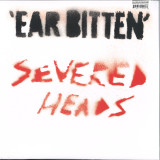
Dark Entries picks up Severed Heads yet again for Ear Bitten, a double LP reissue of some of the band’s earliest material. As originary Aussie industrial legends - although founder Tom Ellard would balk at being branded as such - Severed Heads shaped the continental subcultural sound with their kitchen electronics, chaotic tape loops, and quietly infectious nursery-rhyme-esque melodies. In 1979 Ellard, Richard Fielding, and Andrew Wright abandoned the moniker Mr. and Mrs. No Smoking Sign and adopted the edgier name Severed Heads “to pretend to be an industrial band such as Surgical Penis Klinik & Throbbing Gristle.” Noise-rockers Rhythmx Chymx had placed an advertisement in a local shop looking for a band to share the costs of pressing an LP. The Heads set about recording a Dadaist racket on a pair of open reel dictaphones and a cassette deck using a TRS-80 computer, Kawai Synthesizer 100F and Korg Mini Pops drum machine. Ear Bitten was released in 1980; original copies now fetch obscene sums, in part due to most of Severed Heads’ copies perishing in a fire at Richard’s home. The band’s next endeavor was a cassette titled Side 2, a collection of free-form experiments fashioned as Ear Bitten’s second side. For this reissue, Dark Entries has collected both Ear Bitten and Side 2 on the first disc, presenting the album in its full form. Disc two includes the original first version of Ear Bitten, which was only unreleased because it was recorded in a format not suitable for pressing. The album comes in a gatefold sleeve designed by Eloise Leigh and includes photos, liner notes, and reproductions of the original Xerox inserts from the 1980 issue. Ear Bitten delivers 22 tracks of pain you can dance to!
Есть у нас в наличии и готов к отправке

Featuring music from a lost tape of devotional keyboard jams, field recordings of migrating birds, mysterious bells, meditative noise and crooked new beat/EBM, made god-knows-when and subsequently discovered in a Thessaloniki charity shop years later. It now somehow finds its way to vinyl, newly mastered by Rashad Becker, and sounding like a lost Hype Williams x Muslimgauze madness.
Originally discovered in a musty charity shop by Live Adult Entertainment, and issued in minuscule numbers on CD in ’21, Christian Love Forum’s raverential debut ‘Naked Light’ documents the fraternal post-church jams of siblings, Scott, Kiro and N•X, plus their mate Steve, who would regularly channel the light and pain of Sunday mass sermons into their ecclesiastic crud.
As previously heard on their blink ’n miss ‘Unconditional Love’ tape, the trio express their higher purpose thru ribboning microtonal keyboard jams that sound like Gurdjieff with a Casio and a knackered drum machine after too much sacramental wine. They hit the strangest, most affective seam of religious cinematic epic soundtracks, gnarled noise and clandestine Belgian new beat that seriously pushes our buttons, sounding quite unlike anything in the contemporary sphere, but eerily also echoing sentiments explored on record by James Leyland Kirby or Bryn Jones.
Now reshuffled and clad in custom artwork, ‘Naked Light’ is unveiled to believers and skeptics as a definitive article of faith. The lord works in mysterious ways within, manifest in stages of sun-bleached post-church field recordings, whirligig melodies, blown-out bouzouki and choral tape howls and a Béla Tarr soundtrack-like campanology on the A-side, before letting their passions flow in ‘Wicked City (Parts I-IV)’; a spellbinding side-long collage of slurred synths, neo-noir hardbeat rhythms and speaking-in-tongues vox recalling V/Vm’s new beat apocrypha as much as bits from Hype Williams’ hypnagogic ‘One Nation’, thee dustiest gooches of Dirk Desaever’s archive, or even aspects of Rat Heart at his cruddiest.
‘Naked Light’ rarely fails to induce uncontrolled eye movement in susceptible skulls, destined to become an occult hit with lapsed churchgoers, new beat fiends and anyone missing the enigma and ineffable flavour of ‘00s underground noise tapes in this auspicious year of AD2023.
Есть у нас в наличии и готов к отправке

The Havoc guys have been on an enforced hibernation through the winter due to a lurgy that had been affecting the planet. They have remained in the cave throughout this time huddling up to keep warm and exploring what had become their home away from home for months on end. One night, whilst lighting a fire, trying to find motivation for the next release (basket weaving had lost its appeal) they spotted a glint across the way – On further inspection, it was a small bottle and had a label of sorts – It looked to be medicine or smelling salts – Liquid Gold. Curious creatures they are they all took a long good sniff of this elixir. And just like that, they rummaged around the records stacked in the corner put some more coal in the old computer and began their work.
Soon the A-Side of the new EP was born. Most certainly a step up in the BPM from the previous A-Side off EP1. A1 kicks off with a Germanic Proto Throb Job, that's sure to cause errr...Havoc on the dance floor. Whilst A2 is a Bassline Driven, Reconstructed Austrian Euro Pop Monster. One for late-night Discos.
After a while they had stopped sweating, hearts had stopped beating quite so quick. Whilst the creative juices were flowing a few more records were dug out and a log put on the fire and a cup of fungus juice imbibed. B2 came rattling out the speakers in no time at all in all its chugging glory, the vocals take in a nod to god after the devil has done his dirty work.
At this point, the sun was starting to peek through the mouth of the cave and a new day was upon them. One last record had been found, earlier, that was decided would work at this time, actually after consideration, any damn time... B2 Is like a familiar Balearic Back rub with pop-infused French vocals and beats for days...So now EP2 is complete. Back out into the world our intrepid or is it tepid threesome went... Let's only hope their wives haven't left them after all this time locked away.
DJ Support:
Jim (HMD)
Bill Brewster
Kelvin Andrews
Eric Duncan
Al Mackenzie
James Holroyd (Begin)
Pete Herbert
Phil Mison
Nick The Record
Justin Robertson
Coyote
Mind Fair
Steve KIW
Craig Christian
Dr Rob
Dave Jarvis
Max Essa
Andy Simms (Soft Rocks)
Howler
Jaye Ward
Nancy Noise
Andy Taylor (WATS)
Graeme Fisher
Severino (HMD)
Есть у нас в наличии и готов к отправке

"Northern Electronics presents ’The Vanity Project’, the new LP by Vanity Productions.
Like a fractured reflection, images appear distorted and incomplete. A series of fragments revealing influences, methods, and decisions where life and work remain inseparable. Moving through the residual noise of contemporary media space, Christian Stadsgaard draws from social media remnants, dark web transmissions, and untreated human sound.
These elements are processed through noise electronics and tape manipulation, collapsing source and signal. ’The Vanity Project’ is constructed as a dense, uneven surface. A collage of found sound, environmental interference, and emotional residue. The result carries Vanity Productions’ characteristic melancholy, Nordic restraint, and accumulated debt, forming a quiet but insistent tale of romance and reflection from the source.”
Album credits:
All music recorded by Christian Stadsgaard in Copenhagen, Denmark 2025
Mixed by Christian Stadsgaard and Malthe Fischer
Mastered by Giuseppe Tillieci at EnissLab, Rome
Photos by Christian Stadsgaard
Collage by Anthony Linell
Sound contributions by Shredded Nerve, Jackson-Pratt, Ashley C, Hannes Norrvide, Malthe Fischer, Daniel Svanberg Bøtcher, Vagn Olsson, Yuri Umemoto, Lise Westzynthius, Qiuyao Ning, Peter Peter, Government Alpha and Merzbow – A big thank you to everyone involved.
“The Vanity Project” was kindly supported by KODA kultur, Copenhagen.
Закажите сейчас, и мы закажем товар для вас у нашего поставщика.

In a world increasingly shaped by disposable content, Chat Pile answer with something defiantly real and organic, a mentality that permeates Who Loves The Sun, their third full-length record. Since the band’s formation just over six years ago, the Oklahoma City-based quartet Chat Pile has grown from a scrappy passion project into one of the defining heavy acts to emerge from the 2020s underground. Ray B. (vocals), L. Manhole (guitar), Stin (bass), and Cap’n Ron (drums) create a crushing, crass, and cathartic take on noise rock that captures a raw, undeniably human essence in an age marked by technological overreach and the cold state of society. Nothing about Who Loves The Sun feels synthetic.
Whereas their debut album God’s Country depicted a particularly American flavor of dread, and the follow up Cool World showed a cruel planet defined by global systemic violence, Who Loves The Sun peels the skin back on how collective indifference defines this new century. Spanning imagery of coastlines devouring cities, dead-end jobs, and submission to data-driven inauthenticity, the album dissects the apathy-bloated state of 21st-century existence as a slow-motion apocalypse. As with much of Chat Pile’s work, Oklahoma City itself looms over the album like a character, its sprawling isolation, economic contradictions, and underlying sense of decay embedded in the fabric of the record. The perfect allegory for the thematic essence of Who Loves The Sun is the photo embossed on the record’s cover, where Devon Tower, a glassy, largely vacant monolith, looms high above the Oklahoma City skyline while a burnt-out home or storefront envelops the foreground. The album remains lyrically and sonically confrontational, but Chat Pile approached the songwriting with hooks in mind, drawing on melodic tones of pre-2000s indie rock, alt-rock, and new wave. From the blood-soaked vocal passages of “Christabel ’26” to the eerie trip-hop pulse of “Same Rules,” Who Loves The Sun is deeply human despite its allusions to a dying, divided .
он должен быть опубликован на 04.09.2026

Exclusive Half Magenta and Lemon Yellow[29,62 €]
Black Vinyl[29,62 €]
Tape[17,61 €]
In a world increasingly shaped by disposable content, Chat Pile answer with something defiantly real and organic, a mentality that permeates Who Loves The Sun, their third full-length record. Since the band’s formation just over six years ago, the Oklahoma City-based quartet Chat Pile has grown from a scrappy passion project into one of the defining heavy acts to emerge from the 2020s underground. Ray B. (vocals), L. Manhole (guitar), Stin (bass), and Cap’n Ron (drums) create a crushing, crass, and cathartic take on noise rock that captures a raw, undeniably human essence in an age marked by technological overreach and the cold state of society. Nothing about Who Loves The Sun feels synthetic.
Whereas their debut album God’s Country depicted a particularly American flavor of dread, and the follow up Cool World showed a cruel planet defined by global systemic violence, Who Loves The Sun peels the skin back on how collective indifference defines this new century. Spanning imagery of coastlines devouring cities, dead-end jobs, and submission to data-driven inauthenticity, the album dissects the apathy-bloated state of 21st-century existence as a slow-motion apocalypse. As with much of Chat Pile’s work, Oklahoma City itself looms over the album like a character, its sprawling isolation, economic contradictions, and underlying sense of decay embedded in the fabric of the record. The perfect allegory for the thematic essence of Who Loves The Sun is the photo embossed on the record’s cover, where Devon Tower, a glassy, largely vacant monolith, looms high above the Oklahoma City skyline while a burnt-out home or storefront envelops the foreground. The album remains lyrically and sonically confrontational, but Chat Pile approached the songwriting with hooks in mind, drawing on melodic tones of pre-2000s indie rock, alt-rock, and new wave. From the blood-soaked vocal passages of “Christabel ’26” to the eerie trip-hop pulse of “Same Rules,” Who Loves The Sun is deeply human despite its allusions to a dying, divided .
он должен быть опубликован на 04.09.2026

Exclusive Half Magenta and Lemon Yellow[29,62 €]
Indies Col Vinyl[29,62 €]
Tape[17,61 €]
In a world increasingly shaped by disposable content, Chat Pile answer with something defiantly real and organic, a mentality that permeates Who Loves The Sun, their third full-length record. Since the band’s formation just over six years ago, the Oklahoma City-based quartet Chat Pile has grown from a scrappy passion project into one of the defining heavy acts to emerge from the 2020s underground. Ray B. (vocals), L. Manhole (guitar), Stin (bass), and Cap’n Ron (drums) create a crushing, crass, and cathartic take on noise rock that captures a raw, undeniably human essence in an age marked by technological overreach and the cold state of society. Nothing about Who Loves The Sun feels synthetic.
Whereas their debut album God’s Country depicted a particularly American flavor of dread, and the follow up Cool World showed a cruel planet defined by global systemic violence, Who Loves The Sun peels the skin back on how collective indifference defines this new century. Spanning imagery of coastlines devouring cities, dead-end jobs, and submission to data-driven inauthenticity, the album dissects the apathy-bloated state of 21st-century existence as a slow-motion apocalypse. As with much of Chat Pile’s work, Oklahoma City itself looms over the album like a character, its sprawling isolation, economic contradictions, and underlying sense of decay embedded in the fabric of the record. The perfect allegory for the thematic essence of Who Loves The Sun is the photo embossed on the record’s cover, where Devon Tower, a glassy, largely vacant monolith, looms high above the Oklahoma City skyline while a burnt-out home or storefront envelops the foreground. The album remains lyrically and sonically confrontational, but Chat Pile approached the songwriting with hooks in mind, drawing on melodic tones of pre-2000s indie rock, alt-rock, and new wave. From the blood-soaked vocal passages of “Christabel ’26” to the eerie trip-hop pulse of “Same Rules,” Who Loves The Sun is deeply human despite its allusions to a dying, divided .
он должен быть опубликован на 04.09.2026

Exclusive Half Magenta and Lemon Yellow[29,62 €]
Indies Col Vinyl[29,62 €]
Black Vinyl[29,62 €]
In a world increasingly shaped by disposable content, Chat Pile answer with something defiantly real and organic, a mentality that permeates Who Loves The Sun, their third full-length record. Since the band’s formation just over six years ago, the Oklahoma City-based quartet Chat Pile has grown from a scrappy passion project into one of the defining heavy acts to emerge from the 2020s underground. Ray B. (vocals), L. Manhole (guitar), Stin (bass), and Cap’n Ron (drums) create a crushing, crass, and cathartic take on noise rock that captures a raw, undeniably human essence in an age marked by technological overreach and the cold state of society. Nothing about Who Loves The Sun feels synthetic.
Whereas their debut album God’s Country depicted a particularly American flavor of dread, and the follow up Cool World showed a cruel planet defined by global systemic violence, Who Loves The Sun peels the skin back on how collective indifference defines this new century. Spanning imagery of coastlines devouring cities, dead-end jobs, and submission to data-driven inauthenticity, the album dissects the apathy-bloated state of 21st-century existence as a slow-motion apocalypse. As with much of Chat Pile’s work, Oklahoma City itself looms over the album like a character, its sprawling isolation, economic contradictions, and underlying sense of decay embedded in the fabric of the record. The perfect allegory for the thematic essence of Who Loves The Sun is the photo embossed on the record’s cover, where Devon Tower, a glassy, largely vacant monolith, looms high above the Oklahoma City skyline while a burnt-out home or storefront envelops the foreground. The album remains lyrically and sonically confrontational, but Chat Pile approached the songwriting with hooks in mind, drawing on melodic tones of pre-2000s indie rock, alt-rock, and new wave. From the blood-soaked vocal passages of “Christabel ’26” to the eerie trip-hop pulse of “Same Rules,” Who Loves The Sun is deeply human despite its allusions to a dying, divided .
он должен быть опубликован на 04.09.2026

”What Parts & Labor have figured out how to do, in a way no one else really has, is to make noise anthemic.” —PITCHFORK “Visions of disaster sound more optimistic with every album.” —THE NEW YORK TIMES “Parts & Labor is … creating rock albums that everyone who cares about rock music should own.” —CHICAGO TRIBUNE ”Part psychedelia, part noise, part all-out rock... exhilarating stuff.” —THE GUARDIAN ”East Coast art-punk with a 21st-century overhaul.” —Q ”A joyous explosion of sound.” —MOJO After a 14-year hiatus, prismatic noise-punk fireworkers Parts & Labor, a beloved institution of Brooklyn's '00s underground, re-emerge with a double-drummer lineup and colossal double album. The 79-minute Set of All Sets (July 10, Ernest Jenning Record Co.) is an expansive, blown-out gush of apocalypse-pop that imagines utopias and confronts the overwhelming weight of the infinite. Their first album since 2011, Set of All Sets finds the band re-energized, rebooted and expanding their punk-kosmische, matching their skyscraping melodies and squelching electronics with hypnotic rhythms and frenzied tumbles of percussion. Parts & Labor co-founders Dan Friel and BJ Warshaw are joined by the simultaneous battery of drummers Christopher Weingarten and Joe Wong — asynchronous members during their critically acclaimed four-album run on indie rock titans Jagjaguwar. The power trios that made 2007's breakthrough Mapmaker and 2011's swan song Constant Future have merged into a single four-piece, at once a brand new vision, a clamorous continuation and a recapturing of the deafening sound of their "final" two shows in 2012. With eight weaponized limbs from two veteran drummers, Parts & Labor surges forth with rhythms inspired by Tanzanian singeli, ecstatic free improv and the motorik of vintage krautrock. Friel and Warshaw beam with the most majestic and triumphant melodies of their career, windswept cascades of bubblegum Boredoms and Big-Music-gone-hardcore.
он должен быть опубликован на 10.07.2026

Christian Prommer – producer, drummer, DJ and multi?instrumentalist best known for his work with Trüby Trio, Fauna Flash, Drumlesson, Voom:Voom (with Peter Kruder), Prommer & Barck (with Alex Barck), and as the producer of DJ Hell’s Teufelswerk – presents his new album Rhythmic Nocturne, spanning spiritual deep house, jazz, balearic trip?hop and hypnotic rhythm explorations. A must for fans of St. Germain, Floating Points and refined grooves at all speeds.
This album distills ten years of Berlin into a twilight drift between order and abandon. Daytime studio sketches are pulled apart at night, reshaped by shifting perspectives that swing between jazz harmony, textural experimentation, and the heavy gravity of techno basslines and analog drums. Intimately close-mic’d piano, drums, percussion, cello, and strings are constantly recontextualized—dropped into new rooms, resonances, and imagined spaces—so their meaning keeps mutating. Room noise, human breath, and accidental sounds are folded into the pulse, turning spill and imperfection into rhythm. Even a piano lid thudding shut on “Dark Matter” is claimed as part of the beat, underscoring an album that embraces freedom, spontaneity, and the beautiful lack of accountability that defines this city at night.
Закажите сейчас, и мы закажем товар для вас у нашего поставщика.
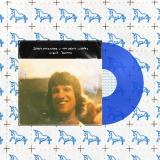
Jeffrey Alexander and the Heavy Lidders return with their best album yet, and a UK tour this August. Press by Silver PR
‘’On the alternate timeline where the Meat Puppets inherited the bulk of the Grateful Dead’s tourheads when Jerry Garcia died in 1995, none of this would be necessary, because Jeffrey Alexander and the Heavy Lidders are a household name for evolving their own musical space that overlays dusty folk, cosmic jazz, deep psych, free improv, and even (gasp!) indie rock, building an audience that ranges from open-eared curiosity seekers to deep committed music weirdos that’s also yielded the Heavy Lidders, an infamous sub-cult of concert tapers that you’re already sick of hearing about. A lot of other things are better over on that timeline, too.
But in this consensus reality (and probably the other one, too), Liquid Donnon catches the Lidders at their heaviest, “heavy” in the Lidderverse being far from a monolithic musical idea. There’s heavy like the album-opening “From Loch Raven to Fells Point,” one of several tracks with elegant and gnarled conversational jams featuring the core Lidders lineup of Alexander alongside guitarist Drew Gardner and bassist Jesse Sheppard (both of Elkhorn) and drummer Scott Verrastro. But there’s heavy, too, like “Calliope Walker” and “Tightroping,” featuring Gardner shifted to dream-space vibraphone, the former with saxophonist Tacuma Bradley, the latter with Christina Carter of Texas noise-psych legends Charalambides on veil-crossing wordless vocals, her first collaboration with Alexander in some 20 years.
But then there’s also heavy like the cover photo of Alexander’s late friend and album namesake Donnon, taken at a Dead show at Rich Stadium in Buffalo in 1989, a spirit threading through the songs and weaving unexpectedly into Alexander’s life decades later, emerging especially when Alexander passed through a near-death experience of his own. But, taken together, the different heavies of Liquid Donnon add up into a state of musical grace, where all the Heavy Lidders from all the universes come together as one. Just, like, imagine.
Convened in 2019 on Alexander’s relocation back to his native east coast, the Heavy Lidders are the latest hard-touring expression for the guitarist’s music, joining a vast and tangled discography (and tape list) that includes the beloved long-running west coast Dire Wolves Just Exactly Perfect Sisters Band and, before them, the Iditarod and Black Forest/Black Sea, as well as a bushel of solo play-all-the-instruments projects, a stint with Jackie-O Motherfucker, sessions with Kemialliset Ystävät and Avarus and others, and you’ll have to keep digging for the rest.
And while it’s not hard to find tapers at Lidders gigs (and they encourage you to be one), or to track themes and songs over Alexander’s many live releases, Liquid Donnon makes a new primary text, the original versions of six new pieces for the repertoire. The album closes with a devastating pairing of “Reservoir Drop” into “The Summer Song,” floating into a duo between Alexander’s guitar and Carter’s voice. Catch a half-dozen Lidders shows this summer, and you might not ever catch them playing it like that again, but you just might open the doorway back to that better place." - Jesse Jarnow (writer, WFMU DJ, producer and host of The Good Ol’ Grateful Deadcast)
он должен быть опубликован на 12.06.2026
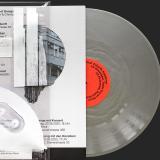
Clear Coloured Vinyl incl. Booklet in silk screened pvc sleeve
Sound fragments unfold across Zurich, making loss, memory, and cultural change physically and acoustically perceptible. In The Rhythm of Design, Zurich-based fine arts duo Michael Meier & Christoph Franz explore urban displacement and its impact on the local music scene.
Focusing on six venues that have disappeared or are under threat, the artists collected materials on site—wood, metal, and other architectural elements—and, with the support of professional instrument builders, transformed them into six musical instruments. Six artists and groups connected to these spaces—namely Kalabrese, Tobibi Ferrari-Bienz, Rafal Skoczek, Lucien Badoux & Jeremy Sauter, Nicola Kazimir, and Dualism—each composed a piece for them, forming the basis for site-specific performances in September 2025. Rather than performing as an ensemble, the works—ranging from experimental funk and punk to kraut, noise, and drone—unfolded simultaneously in spatial fragments at the original locations. Only through movement and listening across the city did the composition emerge as a whole. The work was realized in collaboration with the City of Zurich, Art in Public Space (KiöR).
Eight months after the original performances took place, the pieces are released via Switzerland-based publishing platform Präsens Editionen. The record—available as a limited-edition coloured vinyl with a special artwork, as a digital album, and for streaming—carries the fragmented sounds of Zurich into a new form of collective memory, extending the work beyond its original locations as a lasting document of urban transformation.
* Edition of 300 clear color vinyl
* Special artwork feat. silk-screen printed plastic sleeve and an extensive booklet, designed by award-winning graphic design studio A Language, Melina Wilson and Martin Stoecklin
* Published by Präsens Editionen
он должен быть опубликован на 10.06.2026
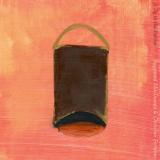
"All the tracks on this release come from a live concert at Sharmanka, a beautiful and unique museum of kinetic sculptures in Glasgow, and throughout the record, the sounds of the sculptures moving and emitting noises are incorporated into the music performed. The four pieces presented are entirely improvised. There was no discussion beforehand of what instruments or what approach would be taken, and each piece evolved as a musical negotiation as the performers individually made choices about what instruments to play and how to support and meet each other within the unfolding musical narrative. While Macdonald and Ferlaino both share a lifetime of work with their chosen primary instrument, the saxophone, they also share a passion for exploring other instruments and objects for their sonic and socio-creative potential. This record foregrounds both these aspects of their work: they use saxophones, but also incorporate bells, toys, bagpipes, accordions, percussion instruments and voice.
"Raymond MacDonald is a saxophonist and composer with an extensive career in music, cross-disciplinary arts and academia. He has played on and released over 100 albums, toured and broadcast worldwide and has composed music for film, television, theatre, radio and art installations. He is a founding member of the Glasgow Improvisers Orchestra, and his work is informed by a view of improvisation as a social, collaborative, and uniquely creative process that provides opportunities to develop new ways of engaging musically.
"Christian Ferlaino is an Italian saxophonist, bagpipe player, improviser, composer and ethnomusicologist. He composes for ensembles of improvisers, both from the jazz and improvised music scene, as well as for contemporary music ensembles. His work explores the relationships between composition and improvisation, and the expressive potential of improvised music. His musical research also focuses on creatively engaging with the sonic and musical realm of Calabria, with special attention to its performing techniques and approach to sound and music generation."
он должен быть опубликован на 30.05.2026

Das zentrale Thema von »Come« ist Rausch. Das Album behandelt Phänomene, die in verschiedenen Rauschzuständen auftreten, und hinterfragt, was real ist und welchen Eindrücken man vertrauen kann. Gedanken, Gefühle und Empfindungen entstehen ungehemmt, mal schön, mal bedrohlich.
Die Songs erzählen Geschichten ohne klare Logik, fließen ineinander und laden den Hörer ein, die Reise anzutreten und eigene Eindrücke zu sammeln. Produziert wurde das Album bewusst in organischem, retro-orientiertem Analogsound im Wide Noise Studio, um den typischen Band-Sound fortzuführen. Schlagzeuger Andre Schaltenberg wechselt sich innerhalb der Songs mit Gründungsmitglied Christoph Hesse ab.
он должен быть опубликован на 22.05.2026
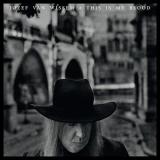
**RED VINYL**Bookending “This Is My Blood “ are two cinematic hypnotist slide lute pieces that evoke contemporary deserted landscapes. They were improvised and made for “ Maquina”, a film shot in the Colorado desert during a psychedelic trip by film maker Joaquim Pujol. The works on here, like the ecstatic second piece invite a return to long form listening. They explore contemporary darkness and contemplate personal loss. There is solely one vocal piece, “ Remission”. A worldwide concert tour of this material is slated for 2026/2027. Since studying the lute in New York with Patrick O'Brien in the 1990s, Van Wissem has gone on to create works equally as rooted in classical Renaissance and Baroque forms of lute music, as contemporary sounds spanning drones, electronics and field recordings. Throw in some of his formative influences from the no wave and industrial scenes, alongside a dedicated approach to minimalism and this has resulted in Van Wissem producing distinct and singular work whose sound is often a marriage of opposites; meditative and intense, forward thinking but with a sense of the arcane. The Quietus has called him "probably the most famous lutenist in the world”. Jozef Van Wissem is an avant-garde composer and lutenist who plays a unique all-black baroque lute. His timeless music is often described as hypnotic, minimal, and hauntingly atmospheric, merging beauty with a dark, meditative edge. His lyrics have a mythical Christian appeal, incorporating themes of love, faith, and the afterlife, often with a repetitive, mantra-like quality. Bridging classical traditions with modern sounds like drones, electronics, field recordings and voice. He collaborates with filmmaker and musician Jim Jarmusch, including the award-winning soundtrack for Only Lovers Left Alive, for which Van Wissem won the Cannes Soundtrack Award in 2013. He also scored the Sims Medieval Video game ( 2011), Uncle Howard ( 2016) Land (2018), Irma Vep (2022), Queens (2023) and Un Prince (2024). He did a world tour in duo with Jarmusch in 2025 and their 5th record “ The Day The Angels Cried” was released. Van Wissem tours extensively, performing in diverse venues from rock festivals to churches, and has worked with artists like Tilda Swinton and Zola Jesus. In 2019 he was commissioned by Cinematheque Francaise to score the silent horror film Nosferatu (1922). He released the soundtrack in 2022 on his own Incunabulum label. The New York Times wrote: Beginning with a solo played on the lute, his performance will incorporate electric guitar and distorted recordings of extinct birds, graduating from subtlety to gothic horror. “My soundtrack goes from silence to noise over the course of 90 minutes,” he said, culminating in “dense, slow death metal.” In 2024 Van Wissem did a sold out nationwide American tour with the film. A worldwide tour is slated for 2026/2027
он должен быть опубликован на 12.05.2026
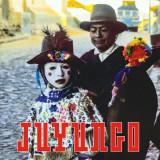
‘Since the 16th century, the Ecuadorian province of Esmeraldas has been home to a unique Afro-Indigenous culture originating in the integration of the Indigenous Chachi and Nigua peoples with African Maroon communities. Juyungo documents significant Esmeraldan artists and bands playing the Afro-Ecuadorian folklore of the province, as well as including some older field recordings. Based mostly on the marimba, whose origins lie partly in the African balafon, partly in Indigenous percussion instruments, the music is laced with call and response chants, ambient insect and bird noise, the filigree finger-styles of the Andean guitar tradition and the panpipes of the mountains. This is resonant insider roots music at its headiest — the mystic revelation of Esmeraldas, gully deep and lustral.’
- Francis Gooding, The Wire.
The fifth in our series of LPs compiling classic music from Ecuador. Customary Honest Jons runnings: a beautiful gatefold sleeve; superior pressing, with vivid, intimate sound; full-size, sixteen-page booklet, in colour throughout, with detailed, fascinating, bi-lingual notes, and stunning photographs.
The music is transfixing, magical; not like anything else. From start to finish, this album is continuously, profoundly immersive; a kind of journeying, trippy meditation about slavery and cultural resistance, identity and mix, places and spaces, futures and pasts. It’s inscrutable to net-surfing, algorithms, Shuffle. But for a taste try the insurgent marimba roller Agua Largo, jet-propelled by Rosa Huila’s rapturous blend of African spiritualist and Christian chant. ‘Healing music,’ Zakia called it on Gilles Peterson’s BBC show recently. And the ravishing pasillo Kasilla Shungulla — ‘calm your heart’ in the Quichua language — a duet between the Peruvian master-guitarist Raúl García Zárate and viola da gamba by Juan Luis Restrepo from Medellin, recorded in a baroque church in Buzbanza, Colombia.
Закажите сейчас, и мы закажем товар для вас у нашего поставщика.

он должен быть опубликован на 18.04.2026

Christian Fetish - Aura Nera
DE
Mit "Aura Nera" kehrt Christian Fuchs zu seinen düsteren musikalischen Wurzeln zurück. Inspiriert von Dantes Inferno und dem kosmischen Pessimismus des Philosophen Eugene Thacker steht die "schwarze Luft" als Metapher für eine spürbare gesellschaftliche, politische und persönliche Verdunkelung.
Nach Jahren mit Projekten wie Fetish 69, Bunny Lake, Die Buben im Pelz und dem Black Palms Orchestra reaktiviert Fuchs sein Alter Ego CHRISTIAN FETISH. Aus einer Phase persönlicher Krisen heraus entsteht ein Album, das harte Gitarren wieder mit Elektronik verbindet - jedoch ohne Nostalgie, sondern mit neuen Perspektiven, dekonstruierten Haltungen und existenzieller Dringlichkeit.
Gemeinsam mit langjährigen Weggefährt:innen und markanten Stimmen der österreichischen Musikszene entsteht ein intensives Werk zwischen Industrial, Postpunk und düsterem Pop. "Aura Nera" thematisiert Nihilismus, Schlaflosigkeit, Untergangsängste und fiebrige Leidenschaften - ein kompromissloses Statement in dunklen Zeiten.
feat. Members of Fetish 69, Bunny Lake, Sofa Surfers, Baits, While Miles, BZFOS, Der kleine Tod
он должен быть опубликован на 27.03.2026

Yamila presents her second album on Umor Rex, Noor. Following Visions, Yamila returns with a work that merges nature-experience listening with expansive musicality. Noor was born from her time in an ecologist community, where she sought refuge in stillness, learned from animals, and tried to forget the human. In this communion with nature, she discovered a new compositional approach: reducing acoustic noise to allow unheard voices to emerge, transforming music into a possibility for interspecies dialogue.
Since ancient times, sound has been used to care for herds, to call across distances, to communicate with the non-human. Noor reimagines that ancestral role in a contemporary language, where epic harmonies collide with delicate micro-tonalities, and where rhythm unfolds not only as pulse but as movement for the body, a natural extension of Yamila’s work with dance companies and choreographers.
Her voice is interwoven with electronics and the resonant strings of Echo Collective, creating sonic landscapes that radiate intensity and fragility. At times monumental, at others almost whispered, Noor oscillates between composition and spontaneity, structure and suspension.
The album unfurls as a dialogue between the organic and the artificial, where sound grows like a sprout breaking through hard soil. Yamila’s music here is not only to be heard, but to be inhabited: a choreography of air, vibration, and resonance. Noor is both shelter and revelation, a reminder that music can still be epic, luminous, and deeply human, while listening beyond the human.
All music and voices by Yamila Ríos. Recorded at Destelheide by Christophe Albertijn. Strings by Trio Echo Collective (Violin: Margaret Hermant, Viola: Neil Leiter), (Cello: Stijn Kuppens), (Arrangements: Pierre Slinckx). Mastered by Rafael Anton Irisarri at Black Knoll Studio, NY. Photos by Assiah Alcázar. Design & layout by Daniel Castrejón.
Закажите сейчас, и мы закажем товар для вас у нашего поставщика.

Yamila presents her second album on Umor Rex, Noor. Following Visions, Yamila returns with a work that merges nature-experience listening with expansive musicality. Noor was born from her time in an ecologist community, where she sought refuge in stillness, learned from animals, and tried to forget the human. In this communion with nature, she discovered a new compositional approach: reducing acoustic noise to allow unheard voices to emerge, transforming music into a possibility for interspecies dialogue.
Since ancient times, sound has been used to care for herds, to call across distances, to communicate with the non-human. Noor reimagines that ancestral role in a contemporary language, where epic harmonies collide with delicate micro-tonalities, and where rhythm unfolds not only as pulse but as movement for the body, a natural extension of Yamila’s work with dance companies and choreographers.
Her voice is interwoven with electronics and the resonant strings of Echo Collective, creating sonic landscapes that radiate intensity and fragility. At times monumental, at others almost whispered, Noor oscillates between composition and spontaneity, structure and suspension.
The album unfurls as a dialogue between the organic and the artificial, where sound grows like a sprout breaking through hard soil. Yamila’s music here is not only to be heard, but to be inhabited: a choreography of air, vibration, and resonance. Noor is both shelter and revelation, a reminder that music can still be epic, luminous, and deeply human, while listening beyond the human.
All music and voices by Yamila Ríos. Recorded at Destelheide by Christophe Albertijn. Strings by Trio Echo Collective (Violin: Margaret Hermant, Viola: Neil Leiter), (Cello: Stijn Kuppens), (Arrangements: Pierre Slinckx). Mastered by Rafael Anton Irisarri at Black Knoll Studio, NY. Photos by Assiah Alcázar. Design & layout by Daniel Castrejón.
Закажите сейчас, и мы закажем товар для вас у нашего поставщика.

A pandemic album of songs of heartbreak, virality, and dead rats, which Wood called "goodbye cruel world: the musical." The revealing chamber pop/folk album "In Case I Make it" (ICIMI), which Will Wood playfully dubbed "Goodbye Cruel World: The Musical," turned out to be a surprisingly strong followup to his chaotic and sardonic previous release, "The Normal Album." While divisive among some fans due to its gentler sounds and more traditional vocal stylings than most of his last work, ICIMI attracted new, older audiences and showed a more personal side that provided a new context to his discography. Widely considered to be some of his most powerfully emotional work, both the harshly introspective and humorous songwriting, as well as its unique delivery, are still distinctly Will Wood in their experimental nature and uncompromising unwillingness to conform to the expectations of both die-hard fans and audiences at large. In 2021, the underground singer-songwriter was suddenly the subject of unexpected online attention, which, in tandem with mental health struggles, inspired him to put out a "musical suicide note," intended to express parts of his artistic and personal identity that had gone largely unseen by a fanbase he felt misunderstood. Leading the album with intentionally algorithm-unfriendly singles and putting an eight-minute love ballad as the second track on the LP, Wood aggressively redefined himself as being more than just a handful of wacky, unwitting viral pops. Ironically, the surprise viral success of the deep cut "The Main Character," a relentless satire of online culture, drew attention to the album and its second biggest hit, the angst-ridden yet danceable "Against the Kitchen Floor." However, the immense orchestration and vulnerable writing have kept audiences coming back. Songs like "Euthanasia" and "Tomcat Disposables" have developed reputations as tearjerkers, and songs like "Cicada Days" and "White Noise" have become fan anthems in the years since.
Этот продукт еще не вышел. Ты можешь сделать предзаказ, как только он появится на складе, продукт будет подготовлен к пересылке.

Geboren aus den rauen, ohrenbetäubenden Sounds von Keller-Jams und wilden House-Shows, strebt die vierköpfige Band Fuzz Lightyear aus Leeds danach, die lauteste und schnellste Band ihrer Umgebung zu sein. Getreu ihrem DIY-Ethos konzentrieren sie sich auf nachhaltiges Experimentieren, Gemeinschaft und ungehemmten Rock'n'Roll. Die Singles "My Body" und "Visual Effect" (auf Nice Swan) und ihre unermüdlichen Live-Shows zeugen von einer chaotischen und beeindruckenden Mischung aus Shoegaze, Industrial Noise-Rock und rasantem Punk, irgendwo zwischen Sonic Youth und Show Me The Body. Mit Gigs zusammen mit English Teacher, Adult DVD, Lambrini Girls und weiteren Ikonen des neuen und alten Punk haben sich Fuzz Lightyear eine Kult-Anhängerschaft erarbeitet.
- "Ein erdbebenartiger Live-Sound, der der Intensität von IDLES oder sogar der Gilla Band in nichts nachsteht. Fuzz Lightyears Musik zeichnet sich zudem durch Witz und lyrische Offenheit aus." - Clash
- "Schlammige Gitarren treffen auf dröhnende Drums, die wiederum mit Lärmfluten konkurrieren." - Far Out (Von English Teacher zur aufregendsten Band aus Leeds gewählt.)
он должен быть опубликован на 08.01.2026
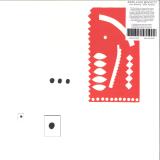
Ston Elaióna is John Also Bennett’s first album for Shelter Press since his 2019 solo debut Erg Herbe. The American born, Athens, Greece, based flautist, synthesist, and composer weaves a strikingly singular electroacoustic excursion for bass flute and Yamaha DX7ii, largely recorded in the golden haze of the early morning hours - bending time at the otherworldly juncture of consciousness and place. Translating from Greek as “in the olive grove”, Ston Elaióna is permeated with the ambiences of the ancient and present world, guided into form by a playfully rigorous approach to sound.
Initially emerging during the mid 2000s as part of Columbus, Ohio’s noise scene, before relocating to NYC around 2010, Bennett’s diverse activities picked up an increasing sense of pace over the following decade - performing and recording as a solo artist (JAB), with the trio Forma and with CV &JAB, his prolific duo with his partner Christina Vantzou, as well as playing in Jon Gibson’s ensemble among many other multifaceted collaborations. However, since 2020 the flautist and electroacoustic composer has existed in a semi nomadic state: drifting between Brooklyn, Brussels, extensive tours, and Greece, where he finally came to rest in Athens last year.
Drawing upon a carefully honed attentiveness to the environments and experiences of everyday life, Ston Elaióna is a suite of nine pieces (with an additional track exclusive to physical formats), many of them composed and played live as the early morning sun touched the Parthenon, in full view from Bennett’s studio window in Athens. Bennett’s refinement and restraint, honed over his years adrift, led him to adopt a limited palette focused on his primary instrument, the bass flute, and a Yamaha DX7ii synthesizer tuned to just intonation scales. Alongside a handful of other keyboards, digital oscillators triggered by his flute, and occasional field recordings, this simple palette is reflected by the deeply emotive sense of minimalism that permeates the album’s two sides. Following two solo albums defined by outward facing temperaments - 2022’s Out there in the middle of nowhere (Poole Music), which used a lap steel guitar and generative oscillators to evoke the surreal landscapes of the South Dakota badlands, and the largely synthetic atmospheres of the 2024 anthology Music For Save Rooms 1 & 2 (Editions Basilic) - the shift in Bennett’s worldly circumstances offered an intuitive return to the calm, inward states of creative exploration that have historically defined JAB’s sound. In parallel, context provided clear sources of inspiration for many of the album’s themes, as well as sources for some of its sounds. The aura of Greece, from the ancient to the present, from its stones and olive groves to its traffic, figures heavily across Ston Elaióna’s two sides. John Also Bennett’s Ston Elaióna forms an elegantly rigorous world of electroacoustic sonority, bridging the expanse of time with the immediacies of environment and happening in the here and now: a profound sonic mediation on the countless dimensions unlocked by life in Greece.
Закажите сейчас, и мы закажем товар для вас у нашего поставщика.

Acclaimed Scottish composer Craig Armstrong releases his new work Pacific via his own label CMA Records. Written for piano, cello, and electronics, the three-movement piece was originally commissioned in December 2024 by Christian Kellersman, a pioneering figure in contemporary classical and jazz music, for his new live event series Berlin Confidential, co-curated with Alexander Szlovák. The series aims to promote innovative new music projects, with a particular focus on emerging musicians and composers.
Armstrong was among the first artists invited to perform as part of Berlin Confidential, premiering Pacific at Berlin’s historic Meistersaal concert hall in March 2025. The concert featured Armstrong on piano alongside cellist Lena Angelina von Almen and producer and musician Guy Sternberg, combining acoustic instruments with live electro-acoustic treatments to create a rich and atmospheric sound world.
Recorded in May 2025 at Lowswing Studios in Kreuzberg, Pacific continues Armstrong’s ongoing exploration of blending acoustic and electronic sound in a natural, seamless way. Over several days in the studio, Armstrong, von Almen and Sternberg developed the work’s intricate textures and dynamic interplay, resulting in a recording that captures both the intimacy and expansiveness of the original live performance.
Speaking about the inspiration behind the piece, Armstrong says: “I wrote this work during a time of great instability in the world, I wrote “Pacific” as an Elegy dedicated to the many suffering in today’s conflicts and in the hope that peace will prevail.”
Across its three movements, Pacific 1 is elegiac in nature, with the main themes stated and developed throughout the piece, punctuated by recurring piano motifs. The movement is reflective and atmospheric, with subtle electronic interventions. The second movement is arrhythmic in nature, following shifting time signatures that reflect a sense of uncertainty - the music is searching and static, ending without resolution but leaving hope for one to come. Pacific 3 moves towards peace and resolution, bringing the work to a close with quiet strength and emotional release.
When speaking about the creative process and his collaborators, Armstrong said: “Lena’s beautiful playing , tone and expression worked so beautifully on Pacific, Lena was also a great collaborator and was always willing to experiment and try new musical approaches. Lena is such a natural musician and she brought so much emotion and beauty to the piece. I wish her all the best in her future musical journey.”
He continues: Guy is a unique combination of being a brilliant engineer and mixer and a prolific very talented musician/composer. I was very fortunate to spend time with Guy in his studio in Berlin. His sensitivity to the project and his electronic programming made a wonderful contribution to the composition. His collaboration and friendship made the days working in Berlin such a great experience I would like to thank Emma Ford for her dedication, enthusiasm and guidance on Pacific”
For both von Almen and Sternberg, the collaboration was equally meaningful. Von Almen reflects on the experience of recording the piece, saying: “As a musician, it is always a great privilege to work on a piece together with the composer, and of course I felt even luckier to go through the process of creating something new with an artist like Craig Armstrong. Figuratively speaking, it felt like knitting a silk scarf: using the finest materials and taking the utmost care during the recording, we have realised another beautiful and touching work by Craig, which will bring us and certainly many others great joy. I feel very honoured to have been part of this and to have experienced this warm encounter.”
Sternberg adds: “Diving into Armstrong’s music while working on this record felt like examining a diamond under a microscope, discovering endless beauty within simplicity. Perfection and complexity emerging from simplicity, where every note, tone, noise, and gesture has meaning. I’m deeply grateful to have been part of this process, and for the freedom Craig gave me to express myself through his music, to let our sonic visions merge into one. It’s been both a lesson in music-making and in setting the ego aside, if only for a moment.”
Reflecting Armstrong’s belief in the role of music as a force for empathy and reflection, proceeds from Pacific will be donated to charities working towards peace: Médecins Sans Frontières and the Red Cross.
The limited-edition vinyl release has been pressed on Eco Vinyl at SeaBass Vinyl, a sustainable plant near Edinburgh. The record features striking cover art by Dirk Rudolph, who has designed several of Armstrong’s previous releases.
Закажите сейчас, и мы закажем товар для вас у нашего поставщика.

Evolving from a solo-project of Christian Wilson Larsen to a dynasty including members of Serena Maneesh, Le Corbeau, Mindy Misty, Burning Motherfuckers, Next Life, Far From Tellus and Deathcrush, - Izakaya Heartbeat is seemingly a constellation in flux - complimentary to their psychedelic soundscape. Three available albums in our catalog and more on the horizon. "They do a sort of driving early/mid 90s alt rock thing, mentioning Sonic Youth, MBV, Trumans Water, Unwound, Can, Mudhoney and 100 other bands you know as influences. Their guitar sound is definitely Thurston/Lee, but unlike SY, they have members who can headbang their impressively long locks when locating a locked noise-rock groove." - Stereogum
он должен быть опубликован на 28.11.2025
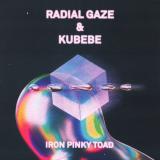
When Radial Gaze meets Nicola Kubebe, the result is Iron Pinky Toad — a title that sounds either like a secret kung-fu move or a lost cartoon book. But don’t be fooled — this one hits hard.
The long-awaited collab brings three original tracks — Phantom Limb, Lights of Phoenix and the title cut Iron Pinky Toad — that effortlessly bridge the gap between slow-burning tribal techno and the raw pulse of new beat nested into an early techno nutshell. Imagine dancing barefoot in a ritual under a disco eclipse — you’re getting close.
To seal the record, Playground Records boss Martin Noise steps in alongside rising sensation Anastasia Zems, pushing the release into full-blown dancefloor sorcery. The groove is deep, the bass is sweaty, and the toad… well, the toad is on fire !
Dropping Friday, July 18, 2025, via THISBE Recordings — available on vinyl and digital. Spin it, stream it, or whisper its name into the smoke at 3AM — either way, the dancefloor won’t know what hit it.
Let the amphibian groove begin.
Artwork by Christoffer Budtz
Закажите сейчас, и мы закажем товар для вас у нашего поставщика.

Wenn Sie von Hillsborough, North Carolina, auf der 1-85 nach Norden fahren und die Ausfahrt zur 58 East nehmen, erreichen Sie in fünfzehn Minuten Diamond Grove, ein kleines, nicht eingemeindetes Gebiet im Brunswick County, Virginia, am Meherrin River. Für die meisten Besucher gibt es dort nicht viel zu sehen - für Lebensmittel müssen Sie nach Lawrenceville und für Baumaterial nach South Hill fahren. Doch versteckt in diesem Fleckchen Virginia-Piedmont liegen die Überreste einer Milchfarm aus den 1740er Jahren, deren Haupthaus ein wunderschönes altes Gebäude mit zwei Etagen ist, das noch immer mit Seilbetten und allem Drum und Dran ausgestattet ist. Wenn man heute dorthin fährt, hört man in der Ferne Geräusche von jemandem, der in den vermieteten Nebengebäuden Sojabohnen und Baumwolle verarbeitet, von landwirtschaftlichen Reifen, die über Schotterstraßen knirschen, von quakenden Fröschen und von singenden Meisen: chick-a-dee, chick-a-dee. Aber wenn Sie zufällig im September 2023 vorbeigekommen sind, konnten Sie vielleicht Fiddle-Melodien hören, die von den Kiefern widerhallen, BBS-Geräusche in leeren Räumen und die Klänge von Weirs, die ihr zweites Album und ihr Debüt bei Dear Life Records aufnahmen: Diamond Grove. Weirs ist ein experimentelles Kollektiv, das aus der Musikszene im Zentrum von North Carolina hervorgegangen ist und zu gleichen Teilen aus Oldtime-Folk und DIY-Noise besteht. Die Auftritte von Weirs sind hierarchielos und umfassen zwischen zwei und zwölf Personen. Im September 2023 reisten neun von ihnen die US-58 hinauf, um sich im Wohn- und Esszimmer des Hauptgebäudes einer Milchfarm einzufinden, die noch immer im Besitz der Familie des Bandmitglieds und Organisators Oliver Child-Lanning ist, deren Verwandte seit Jahrhunderten dort leben. Die Besetzung von Weirs - weder endgültig noch besonders wertvoll - umfasst Child-Lanning, Justin Morris und Libby Rodenbough (seine Mitstreiter bei Sluice); Evan Morgan, Courtney Werner und Mike DeVito von Magic Tuber Stringband; sowie die treuen Andy McLeod, Alli Rogers und Oriana Messer, die bis tief in die Spätsommernächte spielten. Das Ergebnis sind die neun Tracks von Diamond Grove, aufgenommen mit einer provisorischen Signalkette, die aus geliehenem Equipment der gesamten Community zusammengestellt wurde. Das Weirs-Projekt begann als Tape-Experimente mit traditionellen Melodien, die Child-Lanning im Winter 2019 unter dem Namen Pluviöse aufgenommen hatte. Daraus entstand das erste Weirs-Album Prepare to Meet God, das im Juli 2020 in Eigenregie veröffentlicht wurde und eine Zusammenarbeit zwischen Child-Lanning und Morris während der COVID-Pandemie war. Die seltsamen Umstände dieses Debüts - eine gemeinschaftliche Tradition von Live-Songs, die isoliert voneinander aufgenommen wurden - werden durch Diamond Grove aufgehoben, ein Album, das in der unwiederholbaren Konvergenz von Menschen, Ort und Zeit verwurzelt ist. Auf dem neuen Album setzen Weirs ihre Suche nach dem besten Weg fort, sogenannte ,traditionelle" Musik weiterzuentwickeln, zu bewahren und zu befreien. Sie sind Songfänger, die Melodien sammeln, die kurz vor dem Vergessen stehen. Ihr wildes, Jahrhunderte umspannendes Repertoire klingt wie eine avantgardistische Jam-Session - eine Art Real Book für eine Szene, die sich mit Porch Jams, Big Blood, Amps for Christ und Jean Ritchie auskennt. Weirs fangen Songs ein, deren Interpretationskanon noch offen genug ist, um neben denen zu stehen, die sie zuvor gesungen haben, aber niemals über ihnen. Dies sind keine Versuche, definitive Versionen zu schaffen. Die Aufnahmen auf Diamond Grove fühlen sich eher wie Besuche als wie Überarbeitungen an. Und die Frage, die Weirs auf diesem Album stellen, ist nicht, wie sie einfach die Tradition ihrer Vorfahren fortsetzen können, sondern wie traditionelle Musik heute klingen könnte. Für Weirs könnte die Geschichte dieser Tradition weniger aus dem Folk-Revival stammen als aus der Musique concrète, weniger aus makellosen alten Meisteraufnahmen als aus etwas wie The Shadow Ring, wenn diese aus dem evangelikalen Süden kämen. Wenn man ,(A Still, Small Voice)" hört, spürt man, wie die Kraft der Hymne etwas Gleichwertigem weicht: den Dielen, dem Knistern des Feuers, dem Zubereiten und Essen von Mahlzeiten. Diese Spannung zwischen Bewahrung und Verfall ist das innere Leuchten von Diamond Grove. Nehmen wir ,Doxology l": Die Melodie von ,Old Hundred", einer Hymne aus der Sacred-Harp-Tradition, wird in MIDI umgewandelt, über iPhone-Lautsprecher abgespielt und in der Septemberluft neu aufgenommen. Für manche Revivalisten mag diese Hymne, gesungen mit der ganzen Pracht gefälschter Auto-Tune-Stimmen, blasphemisch klingen. Aber Ohren, die beispielsweise auf die Hyperpop-Produktionen der letzten Jahrzehnte eingestellt sind, werden sofort die spannungsgeladene Schönheit des digital verfremdeten Shape-Note-Gesangs verstehen. Dieselbe Spannung belebt ,l Want to Die Easy". Weirs' Version basiert auf der Aufnahme von A Golden Ring of Gospel, die in der Folkways-Sammlung Sharon Mountain Harmony verewigt ist. Die Melodien, Texte und Strukturen sind weitgehend unverändert geblieben. Aber die ,reine" Klarheit der Stimmen der frühen Aufnahme ist verschwunden. An ihre Stelle tritt der distanzierte Klang des Silos der Milchfarm, in dem Weirs ihre Version aufgenommen hat, dessen natürlicher Nachhall von zwei Sekunden die ursprüngliche Nähe ersetzt. Auf diese Weise wird der Klang des Aufnahmeortes selbst zu einem Teil der traditionellen Darbietung. Das Herzstück von Diamond Grove ist Weirs' Interpretation von ,Lord Bateman", einer Melodie, die Jean Ritchie als ,große Ballade" bezeichnete: Sie wurde gespielt, wenn die Arbeit getan war und der Tanzabend zu Ende war. Es ist ein Lied aus dem 18. Jahrhundert - so alt wie die Diamond Grove Farm - über einen gefangenen Abenteurer, der laut Nic Jones den Geist eines Errol-Flynn-Films verkörpert. Wie viele großartige und oft a cappella gesungene Interpretationen steht auch bei diesem ,Lord Bateman" die Stimme im Vordergrund und unterstreicht die Bedeutung des Geschichtenerzählens für das Zusammenkommen der Kinder. Neu ist hier der immense Bordun, der die Erzählung in ein unaufhörliches Gewebe elementarer Kräfte verwandelt. Es ist ein verschwommenes Murmeln kollektiver Saiten, das den Kanon von Ritchie und June Tabor ebenso bereichert wie Pelt's Ayahuasca oder Henry Flynt's Hillbilly Tape Music. Obwohl Diamond Grove nicht explizit von der alten Milchfarm handelt, auf der es aufgenommen wurde, kann es nicht umhin, ihr zu ähneln. Alte englische Balladen wie ,Lord Bateman" und ,Lord Randall" ergießen sich über Felder, die einst von der britischen Krone ,vergeben" wurden. Tragische Lieder wie ,Edward" taumeln über Tuscarora-Pfade und Baumwollfelder nach dem Bürgerkrieg. Hymnen wie ,Everlasting l" und ,Everlasting Il" fangen das Mondlicht ein, das seit Lord Bacons Rebellion durch doppelt gehängte Fenster fällt. Und die Nachtvögel trillern noch immer, und die Pflüge pflügen noch immer eine unkomponierte Musik, die darauf wartet, von zufälligen Ohren entdeckt zu werden. Diamond Grove ist in dieser Hinsicht Geschichte. Es ist ein Ort. Es ist Zeit. Es ist das Einfangen von Liedern, Lebendigkeit, Tonbandmanipulation. Wie der niedrige Damm, den das Wort ,Weir" andeutet, ist es eine Verteidigung gegen die Strömung. Es ist eine Verteidigung regionaler Lexika gegen massenproduzierte Umgangssprachen; eine Verteidigung gegen den Glauben, dass wir einfach zu einer einfacheren Zeit zurückkehren können; eine Verteidigung gegen die Vorstellung, dass Volksmusik ,rein" bleiben muss; eine Verteidigung gegen die Behauptung, dass ein Traum von der Zukunft, der in verlorenen Geschichten schlummert, unwiederbringlich verloren ist. Gegen all das verteidigt Diamond Grove traditionelle Musik, indem es sie so klingen lässt, wie die Komplexität der heutigen Zeit - weil es weiß, dass solche Musik und all die Geschichten, die in ihr stecken, auch in Zukunft eine Rolle spielen werden.
он должен быть опубликован на 03.10.2025

Pandemic, war, inflation, apocalyptic scenarios about climate change and artificial intelligence, all connected with widespread bonkers conspiracy narratives and growing fascist sentiments – in this crisis environment we re-emerge with a new issue.
What may appear like a ‘normal’ datacide issue – which it is indeed – is however also a part of a broader strategy. We’ve been busy expanding activities into the field of videos, documentaries and interviews. The very first signs of this are visible on our Noise & Politics YouTube channel.
There will be much more.
Datacide nineteen is now at the printers and will be available for the first time at the Hekate event at Forte Prenestino in Rome on October 6/7.
Subscribers, depending where they are based, will receive their copies soon after.
General distribution will commence later in October, our aim is to have the issue available in all the most important radical bookstores around Europe by early November. If you are interested to resell datacide in your area, please get in touch!
We will also have a table at the Radical Bookfair in London on November 4th, presenting the new magazine along with older issues.
With this issue we pick up the story where we left it with the last one. We’re unfolding a countercultural panorama, this time beginning in the mid-20th century with Howard Slater exploring the beginnings of the Electronic Disturbance Zone, multiple reflections of 1948 via the 1990s, sonic adumbrations of new social relations.
Christoph Fringeli then introduces us to a document from 1967 where situationist ideas popped up in the Extra-Parliamentary Opposition in West Berlin, in a text called Vietnam, the Third World and the Self-Deception of the Left, which contains a détournement of the Address to Revolutionaries of Algeria and of all Countries published by the Situationist International the previous year.
From 1967 we move on to 1978 with Ian Trowell, in an excerpt from his forthcoming book ‘Throbbing Gristle – An Endless Discontent’, tracking the movements of Throbbing Gristle as they play their first gig up north at the aptly named Wakefield Industrial Training College. Uncanny overlaps of the timelines of TG’s operation and The Yorkshire Ripper’s killing spree reveal themselves.
The time window from the 90s to the present day is illuminated by Nihil Fist, as we’re printing the interview previously published in video form on our YouTube channel.
This issue then moves into ficticious territory with stories and poetry by Joke Lanz, Dan Hekate, Howard Slater and Riccardo Balli. Book and record reviews follow, as do the charts and a short report of our wider activities since the last issue.
Please pre-order your copy now (6 euro incl. Shipping in Europe, 8 euro elsewhere) or, even better, take out a subscription (standard subscription for only 23 euros for 4 issues (Europe) or 3 issues (rest of the world) – or our super-subscription which includes also records, t-shirts, books and digital items.
Or just make a donation if you can’t be bothered with print, but want to support our work.
он должен быть опубликован на 30.09.2025

The Rachel's band began when Jason Noble joined forces with Christian Frederickson. Within months of their meeting on a crowded trolley, they had formed a small ensemble to perform original compositions. In the next three years, madness ensued. Christian finished his degree at the Peabody Conserva-tory of Music, traveled to Switzerland to study, returned home, then wound up in NYC to attend the Julliard School. Jason didn't finish his degree, moved back to Louisville, began employment as an artist by day, dishwasher by night, and be-gan working with friends in a band that would become Rodan. This insane, all over the world life-style, led to a barrage of telephone, demo tape, notepaper, sheet music & mail communication. This, combined with sporadic two-week or two-day person-to-person collaborations in whatever city was central enough, became the bizarre process of the music. During this long gestation, Rachel Grimes became involved, first assisting Jason in his brute comprehension of written music, then joining as a pianist & confidant. Soon she was fully entrenched, providing the strange coincidence of possessing the name "Rachel," and an incredible backbone to the project. Several recordings had been finished, some in the studio, hundreds of 8-track cassettes, a few jambox cuts, but the time for a concentrated attempt at an LP seemed far away. Finally, Rachel, Christian, & Jason began assembling musicians who they respected; John, Mark and Barry from the Chicago supergroup The Coctails, Kevin Coul-tas from Rodan, Bob Weston, and several other string players from various walks of life. The result was a group of semi-vagrants, some reading from sheet music, some rambunctious noisemakers, working from an equally improvisational and tight-assed way. The real character comes from the musicians involved, participating in what can only be called a "labor of love." Handwriting, the band's debut album, was originally released by Quarterstick Records in 1995. Jacket custom screen-printed by Jeff Mueller at Dexterity Press.
он должен быть опубликован на 26.09.2025

Pickle Darling has always existed just outside of the periphery. In a heightened time of fast music, algorithmic consumption and rapid virality, Lukas Mayo (they/them) has remained focused on the album. Their discography is a reflection of their creative evolution, and they deliberately look for ways to push sonic boundaries from release to release. Since debuting with Bigness in 2019 followed by Cosmonaut in 2021, Mayo has curated a catalog that is deeply personal and strangely tactile, where tiny, unexpected details_an off-kilter loop, a whispered aside, the warmth of an old Casio_become as crucial as melody itself. Their 2023 LP Laundromat was a precise and polished expansion of that world, a record that felt like it had been carefully placed behind glass. Their forthcoming fourth album, Battlebots, by contrast, is unruly and full of static: a collection of songs that feel like they could only ever exist on scratched CD-Rs passed between friends. Self-recorded in their home studio in Christchurch, New Zealand, it finds Mayo taking a scalpel to their own songwriting. Songs were stretched, chopped, reversed. Some ideas started as "unlistenable garbage" before morphing into something unexpectedly beautiful. If a song felt too straightforward, Mayo had to mess it up. That friction of old and new, organic and digital, melody and noise is what drives Battlebots. Drawing inspiration from a strange, scattered lineage: Four Tet's Rounds, The Books, Neneh Cherry's Broken Politics, The Wrens' Three types of reading ambiguity, but also the emotional directness of 2000s pop like Madonna's Ray of Light and Robyn's Body Talk, the result is an album that feels like a glitch in the system, pushing against past constraints while embracing the weird, beautiful mess of making something new.
он должен быть опубликован на 05.09.2025

With solid training as a classical musician, Sophie Agnel took a close interest in modern jazz before committing in the early 90s to the shifting, deliciously uncertain ground of free improvisation, thanks to her fascination for the powers of expression displayed by a few great keyboard-heretics such as Keith Tippett, Fred Van Hove or Christine Wodrascka. She began reworking the prepared piano techniques imagined by John Cage and transformed her instrument into a sort of extended piano.
Coming from a Punk music background Joke Lanz started in the mid 80s to play Experimental- and Noise music. Best known for his internationally acclaimed project Sudden Infant, Lanz is presenting his work since 30 years all over the world. Born in Switzerland and currently operating out of Berlin, he is one of the most prolific and profound artists working in the border zones where performance and body art meet Improvisation and Noise.
Agnel and Lanz have performed stunning live shows as a duo, now their debut album is coming out on Klanggalerie. Turntables and piano, a unique combination that is a lot of fun!
он должен быть опубликован на 27.06.2025

Cindytalk is the mercurial, expressionist outlet of Scottish artist Cinder, inspired by the crossroads of exploratory UK post-punk and early European industrial. Her work thrives on chance and transformation, collaging elements of noise, balladry, soundtrack, catharsis, and improvisation. "We were trying to find our own space," says Cinder of the formative period Camouflage Heart emerged from, amidst a move from Edinburgh to London and Cinder's evolving exploration of gender identity, well before culture at large was equipped to understand. With contemporary discourse we see that the project manifested her transgender ideas as visceral music. The guttural, feral sound marked a notably darker turn from The Freeze's sixyear run on the fringes of punk. Changing the project's name became vital, not just because they kept hearing the former was already taken, but the desire to embody the spiritual and sonic shift, "to uncover new pathways_to feminize it," she says. Cinder, with bandmates David Clancy and John Byrne, arrived at Cindytalk, a winking nod to Sindy, the British fashion doll rival to Barbie known then for its pull-string talking mechanism. "The goal was to have a more interesting narrative, more interesting dialogue. Music was ultimately my only way of talking to people. That was my conversation with the world, an abstracted conversation_an attempt to make some kind of tiny, tiny mark, if possible, you hope somebody will notice." Over the years, Cinder has heard from fans who did pick up on the signals and find refuge in Camouflage Heart. Camouflage Heart plays with tension and pace, from creeping to feverish to claustrophobic. The percussion moves between restless marches and barely-there pulses; for some parts, they scratched and hit a tin bath, among other objects. Guitar lines vibrate and stab as Cinder contorts her voice freely. She pulls poetry from a cerebral abyss, like "make the snake in your eye, pierce the camouflage heart" on the slow-droning centerpiece "The Spirit Behind the Circus Dream." In that register is raw power, both vulnerable and menacing, an ability to locate something deep and emotionally charged within. "I still remember that person who was way too intense for their own good," Cinder reflects. "I couldn't make a record like that now, certainly not vocally, while that anger hasn't dissipated; there's still a kind of warrior." For all the destruction and disintegration of Camouflage Heart, Cinder maintains the objective was never full-on fatalistic; these songs seek not to destroy but to poke and provoke, to transform and heal, to find cracks of light in a crumbling world. She points to the last lines of the opening track, "It's Luxury": "Don't look down," the lyric pines through static and rhythm. Cinder extrapolates, "I'm essentially saying, just keep fucking going. As time went on, for me, that falling became flying. Camouflage Heart is the beginning of believing in flight."
он должен быть опубликован на 23.05.2025

Wie in einer Szene aus einem Traum stand Thor Harris auf einer überfüllten Bühne mit 13 Musikern: Er klopfte, zupfte, verbeugte sich und blies lyriklose Liebeslieder in ein großes Auditorium von 325 leuchtend roten Sitzen - ohne dass auch nur eine Seele darauf saß. Dies war die Entstehung von "Heathen Spirituals", das fünfte aufgenommene Werk von Harris' abenteuerlichem Ambient-Ensemble Thor & Friends und das erste, das einer himmlischen Wiederholung der Live-Auftritte der Gruppe aus Austin ähnelt. Es ist ein jahrhundertealtes Konzept: eine Platte in einer leeren Musikhalle aufzunehmen. Geleitet von Craig Ross (Patty Griffin, Spoon), einem unerschrockenen Produzenten und lebenslangen Mitarbeiter von Harris, wurde Thor & Friends zwei Tage lang verkabelt, um frei fließende meditative Stücke auf unverstärkten Orchesterinstrumenten im Jessen Auditorium, einem atemberaubenden Art-Déco-Relikt aus den frühen Tagen der Butler School of Music der University of Texas, einzuspielen. Thor Harris ist ein Handwerker, künstlerisch und anderweitig: Er ist Klempner-, Tischler- und Holzarbeiter. In musikalischen Zusammenhängen taucht sein Name oft in Verbindung mit den fünf Worten ,bekannt für seine Arbeit mit" auf, er war Mitglied der Avant-Rock-Götter SWANS und den Indie-Lieblingen Shearwater, aber auch an wichtigen Aufnahmen von Bill Callahan, Amanda Palmer, Devendra Banhart und Shahzad Ismaily beteiligt. In vielen Kreisen ist Harris auch dafür bekannt, dass er ein offenherziger Verfechter der psychischen Gesundheit ist mit einem teuflischen Sinn für Humor und einer Vorliebe für unterhaltsame soziale Kommentare (sein Lehrvideo ,How to Punch a Nazi" führte dazu, dass er im Jahr 2017 von Twitter verbannt wurde). "Heathen Spirituals", das am 16. Mai 2025 auf Joyful Noise Recordings erscheint, enthält drei Originalstücke mit einer Laufzeit von 35 Minuten. Die rhythmische Wiederholung der Eröffnungsséance ,Anne Sexton's Glasses" evoziert ein kognitives Crescendo, während das bezaubernde "Christmas Eve at the Wizard's House" ein Gefühl der Schwerelosigkeit hervorruft. Das krachende, von Chören begleitete ,Heathen Spiritual" rührt derweil ein wunderschönes Requiem für einen sterbenden Planeten an. In glorreicher Treue fangen die Sessions die instinktive Reinheit der Live-Auftritte von Thor & Friends ein.
он должен быть опубликован на 16.05.2025

GREEN MALINCHES VINYL[24,79 €]
After "RUINER", "CLEAN" and "GOLD", Atlanta's noise juggernauts WHORES. return with fierce new album ,WAR". American Muscle to drown out the American Dream as it careens into the ditch_ "WAR" is a an album full of brazen rhythms, serpentine riffs, walls of feedback, and howls of contempt. It is an album that is as rowdy and boisterous as it is anxious and savage. "Helmet comparisons are understandable but Helmet wishes they sounded this authentic and convincing in 2024", Heavy Mag wrote in their rave review, and Rolling Stone included "WAR." in their 20 best metal records of 2024. "It pisses me off when people talk shit about us. They don't know the lengths I go through to keep this band going" says guitarist/vocalist Christian Lembach in an interview with New Noise Magazine on why it's taken eight years between albums. Personal issues, accidents and then the pandemic presented obstacles for the band. Lembach injured both of his knees and tore the meniscus in his right one, and he broke both elbows and his ribs in an accident at his day job. WHORES. have dealt with setbacks that would have killed other bands, but instead it's made them stronger. And Lembach's high standards haven't exactly accelerated the making of "WAR": "It takes a while because I need to make a record I can stand behind. I just don't want to put anything out to just do it. I never think the one I'm working on is a masterpiece. To me the masterpiece is the next one", he says. "Lyrics are the most important part to me. Not the riffs not the song structures but the actual words" Lembach elaborates. "I always have the title before I write the lyrics. All the lyrics and song titles fit thematically into the album title. In this case I did a lot of soul searching. I was trying to figure out what it takes to be happy. I had to confront the ugly parts of myself. The title isn't political, it's about conquering the ugly parts of yourself." "WAR" is a battering ram of a live band, slugging like a doomsday clock towards midnight. Originally self-relased in 2024, we are happy to finally release in Europe what we're sure will become a noise rock genre-classic. PRESS "time is just a construct and Whores. are forever" - Everything Is Noise " ein weiterer musikalischer Schlag in die Magengrube" - Visions 10/12 " Frontman Christian Lembach is not so much a singer as a verbal assailant a spitting cobra of a human who leaves you drenched in his venomous wordplay." - Heavy Mag FOR FANS OF CHAT PILE, HELMET, HIGH ON FIRE, KEN MODE, INTERCOURSE, UNSANE, NAILS
он должен быть опубликован на 09.05.2025

After "RUINER", "CLEAN" and "GOLD", Atlanta's noise juggernauts WHORES. return with fierce new album ,WAR". American Muscle to drown out the American Dream as it careens into the ditch_ "WAR" is a an album full of brazen rhythms, serpentine riffs, walls of feedback, and howls of contempt. It is an album that is as rowdy and boisterous as it is anxious and savage. "Helmet comparisons are understandable but Helmet wishes they sounded this authentic and convincing in 2024", Heavy Mag wrote in their rave review, and Rolling Stone included "WAR." in their 20 best metal records of 2024. "It pisses me off when people talk shit about us. They don't know the lengths I go through to keep this band going" says guitarist/vocalist Christian Lembach in an interview with New Noise Magazine on why it's taken eight years between albums. Personal issues, accidents and then the pandemic presented obstacles for the band. Lembach injured both of his knees and tore the meniscus in his right one, and he broke both elbows and his ribs in an accident at his day job. WHORES. have dealt with setbacks that would have killed other bands, but instead it's made them stronger. And Lembach's high standards haven't exactly accelerated the making of "WAR": "It takes a while because I need to make a record I can stand behind. I just don't want to put anything out to just do it. I never think the one I'm working on is a masterpiece. To me the masterpiece is the next one", he says. "Lyrics are the most important part to me. Not the riffs not the song structures but the actual words" Lembach elaborates. "I always have the title before I write the lyrics. All the lyrics and song titles fit thematically into the album title. In this case I did a lot of soul searching. I was trying to figure out what it takes to be happy. I had to confront the ugly parts of myself. The title isn't political, it's about conquering the ugly parts of yourself." "WAR" is a battering ram of a live band, slugging like a doomsday clock towards midnight. Originally self-relased in 2024, we are happy to finally release in Europe what we're sure will become a noise rock genre-classic. PRESS "time is just a construct and Whores. are forever" - Everything Is Noise " ein weiterer musikalischer Schlag in die Magengrube" - Visions 10/12 " Frontman Christian Lembach is not so much a singer as a verbal assailant a spitting cobra of a human who leaves you drenched in his venomous wordplay." - Heavy Mag FOR FANS OF CHAT PILE, HELMET, HIGH ON FIRE, KEN MODE, INTERCOURSE, UNSANE, NAILS
он должен быть опубликован на 09.05.2025

The legendary NYC label Nu Groove commits another pair of releases to wax, this time featuring recent tracks from Swiss producer Deetron and underground house staple Bruise. Inspired by the soulful techno and house birthed in Detroit, Deetron relaunched Nu Groove alongside NYC house legend Jovonn in 2021 before returning with a two-track release in 2023.
The lead, ‘Runnin’’, offers sharp house built from the creative use of loops and noise manipulation, while ‘AM_909’ is noted for its more dreamlike quality. Two tracks from Bruise’s Nu Groove debut ‘Transit EP’ follow, as the Birmingham born producer Christian Campbell delivers ‘Sway’, aptly named for its low-slung beats and ethereal builds, while ‘Getup’ is more reminiscent of gems from the original Nu Groove catalogue.
Закажите сейчас, и мы закажем товар для вас у нашего поставщика.

This is a recorded document performed by Mark Holub, Johanna Pärli and Sofía Salvo.
As a trio, they had not met until sound-checking for their gig at Berlin’s Cashmere Radio on September 1, 2023 — a fact that may be concealed by their immediate understanding as a musical entity but is obvious by their artistic freedom and curiosity towards each hoc encounters, flexible and steadfast in its performance, and that culminated in an experience that shook the floor of the radio station’s headquarters.
The day after, Sofía, Johanna and Mark gathered in Adam Asnan’s studio and deepened their quest for a communal language. They ignored any musical fetters or conventions, enjoyed the possibilities of a wider time frame without a live audience — and exceeded all hopes of what three personalities can achieve when they are given the space and time to experiment, detached from any restrictions.
Mark Holub is a drummer of outstanding versatility and responsiveness, full of ideas and quick on his feet. Through his playing as well as his experience as a band-leader and composer he is able to steer this coequal group towards thundering crescendo, but sits equally comfortable in the centre of complex and fine rhythm probing in response to impulses thrown in by his companions.
Johanna Pärli makes use of her double bass’s entire body, extracting an armada of multi- layered sounds with an immensely high sonic spectrum that is also reflected in the diversity of her musical projects. She is both patient and wildly adventurous in her performance, and in this trio her contribution wanders from considerate bow work to brisk fingerpicking, gnarly string strikes and pedal use to startling effects.
Sofía Salvo unleashes the full unbounded potential of her voice by taking advantage of her baritone saxophone’s broad range of possibilities. She is one of Berlin’s most singular musicians and her widely proven capabilities cover gentle additions to support and underline pulsive interplay just as masterfully as rapid licks and roaring bursts of noise, spurring the collective to unpredictable intensity.
If music of this particular kind often gives the impression of a constant search, this international trio certainly managed to find common ground and capture a special moment in time for listeners to (re-)discover. Contrary to what frequent misconception sometimes suggests, it’s also tremendous fun.
NERR — Filling Open Spaces was instantly composed and performed live in studio by Mark Holub on drums, Johanna Pärli on double bass and Sofía Salvo on baritone saxophone, recorded in Berlin on September 2, 2023 and mixed by Adam Asnan. Mastered and cut by Rashad Becker, vinyl pressed at Pallas. Artwork and design by Stefan Lingg, produced by Christoph Berg and Stefan Lingg.
он должен быть опубликован на 04.04.2025
