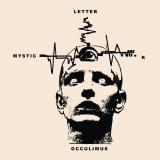
Multiple Man is comprised of twin duo Chris & Sean Campion. Originally operating from Brisbane, Australia their four track EP for Fleisch represents their first record written since Chris's relocation to New York City. 'High On The Hog' finds Multiple Man at a disconnect. Spread between different continents and time zones, the record's direction is a marked progression from previous sounds.
Paranoid atmospherics, sheet metal percussion and unhinged mutant sampling, the record finds the twins wallowing in the muck and the mire. The junk funk is still there but it's bathed in machine age voodoo. This is not a record for the post-apocalypse but an end of history banger for the psycho rollerball time we live in.
Counting down every weird minute until the bombs drop, it represents a grotesque vision of end-times razorback EBM. Continuing the evolution in Multiple Man's discography and contributing to the Berlin label's vision, 'High On The Hog' throws another piece of meat into the Fleisch grinder.
Search:multiple man
- 01: We Are The Biobots
- 02: Skratching Terminators (Feat. Dj D-Styles &Amp; Prime Cuts)
- 03: Coffeecuts (Feat. Dj Ben, Krootki &Amp; Pan Jaras)
- 04: Electrode (Feat. Dj Flip Flop &Amp; Prolifix)
- 05: Priority (Feat. Dj Tigerstyle &Amp; Dj Iq)
- 06: Supersonics (Feat. Dj Melo-D)
- 07: Jam Of A Borg (Feat. Daniel Drumz)
- 08: Cybots Patrol (Feat. Pan Jaras, Miyajima &Amp; Ken One)
- 09: Digital Human
- 10: 8 Bit Overheat (Feat. Mr Krime)
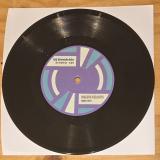
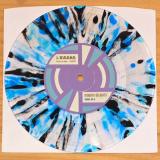
There are two versions of the vinyl edition: classic 140g black record or limited (Universe Edition) 140g black + 7" black vinyl with two bonus tracks.
WE ARE THE BIOBOTS is an album by Michal Baj (DJ Eprom), who has ties to Silesia. It will be released on 21th January 2026, by the legendary Polish label JuNouMi Records (est. 2002). WE ARE THE BIOBOTS is an album that not only talks about technological progress, but also touches on the digitization of human consciousness in the 21st century. Although it discusses the dangers of AI development, no artificial intelligence was used in its creation.
The album features legendary hip hop DJs, including the art of scratching. The album will feature the most outstanding DJs from Poland, England, the USA, and Japan. Thanks to this, the album has a chance to gain a broader, international context. Eprom's professional experience to date has allowed him to bring together such a wide range of artists and bring them together on the album, including:
DJ D-Styles – a legend of scratching from the USA. A pioneer of the genre. Member of groups such as The Beat Junkies and Invisibl Skratch Piklz, creator of many scratching techniques still used today.
DJ Prime Cuts – founder of the legendary Scratch Perverts from London, multiple world champion and creator of unique scratching techniques.
DJ Flip Flop, Prolifix – representatives of the DJ community from the US coast.
DJ Tigerstyle – a leading representative of the DJ community in England, multiple world champion in scratching.
DJ IQ – the most successful scratching champion in the world.
DJ Miyajima – the unrivaled master and creator of the Japanese school of scratching.
DJ Melo-d – co-founder of The Beat Junkies collective, multiple DJ champion hosting a legendary show on Radio HOT 97 in the US.
DJ Ben, Krootki – co-founders of the Modulators group from Poland, World Champions in scratching.
Daniel Drumz – Polish DJ and music producer known worldwide.
Mr Krime – pioneer of DJing and turntablism in Poland.
Michal Baj is a multi-talented musician, artist, and music producer born in Jastrzebie-Zdroj, as well as the owner of the analog Eprom Sounds Studio, where tracks based on mixing and mastering are produced and gain worldwide recognition.
The inspiration for the album is Eprom's connection to Silesia. His work at the KWK Borynia mine, surrounded by heavy equipment and mining technology, became a direct inspiration for creating a musical story about people, machines, as well as the directions of technological development and the impact they have on society.
The album is released by JuNouMi Records, a label specializing in vinyl records, founded in 2002. Your wax supplier.
Released on Limited Edition Black Vinyl with a replica of the original sleeve and insert (300 Copies only). The beginning of the 1980s wasn't a great time to be young. Between 1979 and 1981 youth unemployment more than doubled to over 900,000. Many approaches were tried to tackle the problem and one of the more innovative was the Arts Opportunity Theatre a charity founded in Bristol by Reynold Duncan and Yvonne Deutschman. Financed by assorted public bodies, it aimed to train young people in a range of performing arts as well as the multiple skills needed to produce, organise and put on shows. Over a seven year period the Arts Opportunity Theatre put on a succession of shows not only locally, but travelling as far as the Continent and trained hundreds of young people in everything from music to book keeping. People who passed through the collective would go on to form the core of many local bands and be involved in a large proportion of Bristol music releases, especially reggae. The first show put on in 1981 and 1982 was "Freedom City" which prominently featured Zion Band. In May 1982 the Zion Band musicians from the show went into Right Track Studio in Bristol and recorded four vocals and two dubs that would be released the following January on a 12" single. Back in 2011 Bristol Archive Records included "Twelve Tribes" on a compilation and would later also compile "Babylon Fire/Babylon Dub", but the other three tracks could only be found on the scarce original 12" which in recent years has rocketed in price fetching in excess of £150. We believe music should be affordable and available so 2026 will see Bristol Archive Records reissue the Zion Band "Freedom City" 12" in it's entirety, complete with its original picture sleeve and insert with a limited pressing of 300 copies on black vinyl. This release is dedicated to the late Reynold Duncan RIP.
The American rock band was formed in 1996 by lead singer and guitarist Alex Band and guitarist Aaron Kamin. They’re best known for their hit single “Wherever You Will Go”, which topped the Adult Top 40 for 23 consecutive weeks, making it the second longest running #1 hit in the chart’s history. The track featured on their debut album Camino Palmero, which was released in 2001. At the time, the band’s lineup included Band, Kamin, Sean Woolstenhulme, Nate Wood and the Grammy Award-nominated multi-instrumentalist Billy Mohler.
Camino Palmero was a commercial success and was certified with a Platinum status in several territories. In addition to the hit “Wherever You Will Go”, the band spawned two more singles, “Adrienne” and “Could It Be Any Harder”. The album features several guest performances; Whitesnake member Paul Mirkovich, who is also the band leader of Cher; session musician Bob Glaub, who played with artists such as Bruce Springsteen, Journey, Bob Dylan and many more; producer Ron Fair, who produced multiple #1 hits.
A few words for the album
Moment’s Aeternity:
a 12/8 composition celebrating the raw power of the “moment”, marked by whirling improvised moments between drums, bass clarinet and Harris P’s Armenian duduk.
Pajko, fire in the forest on the mountain:
in Sokratis own words: “I have a really vivid memory as a child. I was staring at the Djena mountain from my window in Archangellos which sits on the Pajko mountain. A little beam of light shone far in the horizon; it was a fire that in my little eyes looked as if the giants of Almopia were trying to communicate with each other using phryktoria (a way of contacting through fire in Ancient Greece).”
Footprints of some Giant Steps:
While the classic compositions of two true Jazz Giants- Wayne Shorter and John Coltrane- are certainly different, they do both connect in a mystical way. Rearranged in 5/8 combining half of each melody and half of each one’s chord progression, keeping the form of the piece for improvisation, still in 5.
Oson Zeis Fainou (Seikilo’s Epitaph):
found in a tomb stone in the Northeast of Greece, this is the only melody saved from the ancient times. It is accompanied by lyrics contemplating the meaning of life:
Ὅσον ζῇς φαίνου
μηδὲν ὅλως σὺ λυποῦ πρὸς ὀλίγον ἐστὶ τὸ ζῆν τὸ τέλος ὁ xρόνος ἀπαιτεῖ.
‘’While you live, shine
don’t feel blue for anything because our life is short and time demands an end.’’
Here is to Oghene K:
’’Hey man, where is the groove?’’, he would say, just to trigger another wave of inspiration for Sokratis. Oghene was a true force of nature, a well of kindness, a masterful artist that left this world too early. This one is for him.
Balkan Riff (for Milcho Leviev):
Milcho Leviev (1936-2019), was a long-time friend and collaborator and a true inspiration for expression, creativity and colorfulness. Expressing the deep sentiments evoked by the Balkan sound and history, this is a sorrowful dialogue between bass clarinet and contrabass.
Spirits of Djena:
one of the most esoteric and personal moments of the album. Composed and recorded during the challenging times of the COVID-era, you can hear the baritone and tenor saxophone firmly grounded on a crispy, hypnotizing contrabass groove.
Sokratis Votskos Quartet
Kostas Anastasiadis / Giorgos Klountzos - Chrysidis: Drums
Leandros Pasias: Piano
Vaggelis Vrachnos: Contrabass
Sokratis Votskos: Soprano Saxophone, Bass Clarinet and Compositions
Sokratis Votskos is a jazz saxophonist, clarinetist, composer, educator, and bandleader from Greece. Deeply invested in unearthing the folk sounds and heritage music of Greece and Eastern Europe, he weaves these into modern jazz compositions though the use of melodies, polyrhythms, and his reedy, timeless tone. He leads the Sokratis Votskos Quartet, he is one half of Kolida Babo and member of the Reggetiko Project. A highly regarded sideman and ensemble player, he has worked extensively with renowned jazz musicians with several highly acclaimed releases (MiC, Jazzman, Walt Disney and now Fair Weather Friends Records).
He has performed his music in numerous venues and festivals worldwide from Vinterjazz in Copenhagen, to the EFG London Jazz Festival where he performed at the legendary Ronnie Scott’s alongside Greg Foat.
He is also an archaeoacoustics researcher and enthusiast, having completed his Master studies on the field of ancient ritualistic caves of Greece research.
Leandros Pasias was born in Thessaloniki, Greece. At age 10 was introduced to piano, continuing his studies at the Modern Conservatory of Thessaloniki and later at the Conservatorium van Amsterdam in the department of jazz piano.Ηe holds a classical harmony diploma and a BA at the Department of Music Studies at the Aristotle University of Thessaloniki. In 2020 he received jazz improvisation lessons from Aaron Parks.
With a series of appearances in multiple international jazz festivals, Leandros has collaborated with a wide range of musicians from Nicolas Masson and James Wylie to Marina Osk, Ivo Papasov and Haris Lambrakis, among others.
A member of the Yako Trio, he released “OdesSea” on Fair Weather Friends Records (2021).
Vangelis Vrachnos was born in Thessaloniki, Greece, in 1989. While he started playing the bass at the age of 12, alongside his brother, his studies would commence a few years later. Introduced to double bass at the age of 23, he undertook jazz double bass studies at the Codarts Αcademy of Rotterdam. He has participated in several festivals such as the Technopolis and Odessa international jazz festivals. Since returning to his hometown, in 2015, he has been a founding member of Mordana and Yako Trio and has collaborated with a series of musicians like James Wyllie, Sokrates Votskos and Dimitis Agelakis, among others.
Kostas Anastasiadis is a tireless researcher, that has been diligently studying Tradition and its evolution, creating a fresh amalgam of sound moods. His mature improvisational virtuosity highlights a uniquely individual artistic expression and was recognized with the ̈Unique Individual Stylist" award by the PIT (Percussion Institute of Technology) in Los Angeles, California. He has been associated with various ensembles that have garnered significant interest in the global music scene. As an educator, he is the founder of "The Harmony of Rhythm" musical method, which aims to explore and establish the elements that constitute the concept of rhythm.
Giorgos Klountzos-Chrysidis was born in Thessaloniki in 1991. Following studies at the Modern Conservatory of Thessaloniki, he moved to France and the Conservatoire de Nice. With performances at well-known festivals like Nice Jazz Festival, Nuits du Sud and Jazz à Vienne, he had the opportunity to meet the American drummer Leon Parker, who encouraged him to move to Paris, where he spent the next two years under his tutoring and guidance.
In 2016, came a defining moment in his career as he traveled to New York for the first time. He participated in the quartet of saxophonist Diego Rivera for a series of performances and attended lessons by Rodney Whitaker and Randy "Uncle G" Gelispie at Michigan's State University.
Collaborations include Xavier Davis, Ricky Ford, Nicolas Masson, Diego Rivera, Craig Bailey, Baptiste Herbin, Marc Abrams, Pantelis Stoikos, Antonis Anissegos, David Lynch, Ziad Rajab and Ivo Papasov, among others.
When you notice the cheerful mystery playing with the synths, the edges of this small world start to look slightly distorted. In any era, someone is always creating mysterious music on their own. (7FO)
----------------------------
Music in DNA is an album recorded in the early 1980s in New York City by Yasuhito Ohno, a young Japanese man breaking free from the constraints of his homeland. The album is a naive burst of outsider DIY enthusiasm, inspired by the multiple avant-garde movements of the era, in music, painting and performance, as well as the native energy of 80s NYC. Ohno channeled his youthful "edge" and zeal into open-minded lo-fi musical explorations using a mere two machines: the then-new technological glories of a four-track cassette recorder and that polyphonic synthesizer masterpiece, the Roland Juno-60; on several pieces he vocalizes. These seven tracks have a zestful, innocent, anything-goes charm, free from preciousness and self-consciousness: a raw and youthful human spirit at play in a new world. Ohno was also inspired by the humanistic promise of the general technological developments of the day, including DNA research, personal computing, and early computer graphics, an example of which can be found on the cover. Ohno later returned to Japan, becoming a renowned composer/producer. In an era of jaded cynicism, Music in DNA is a welcome taste of big-hearted innocence, a revival of a raw self. Available on CD/LP/Digital, with E/J liner notes.
London Based Deadbeat is a techno label founded in 2000 as an outlet for the more eclectic, risk taking and aggressive elements of the genre. Dedicated to unveiling forward thinking new talent, championing cult underground producers and celebrating established global acts the label has created a loyal fan base and now after more than two decades presents its first vinyl release, a massive six track EP that covers a lot of creative ground and features three artists well known for pushing boundaries while delivering face melting, dancefloor destroying beats.
Sane ( Don't Recordings / Fun In The Murky ) is a Uk based producer and techno DJ who has featured multiple times on the 'Best electronic music on bandcamp' pages. Described there by music journalist Joe Muggs as 'Filthy, dirty, vile and brilliant. His techno will tear the top off your head and make soup with the contents. It screeches, it blurts, it whistles, and it roars. Above all, it crashes and clangs like a dancing mech warrior, crushing all before it. What more do you need to know?'
TSR ( Analog Records / Hörspielmusik ) are a highly regarded creative force of Swedish musical mentalists, a crazed, technologically berserk band of electronic wizards who relentlessly conjure up the most brilliant, silliest, toughest, most dance bootable funky techno on this train of existence. Known for high-energy, raw, and sometimes humorous tracks they have released to high acclaim on many notable labels and played all over the world.
DJ Ze MigL ( Djax-Up-Beats / Minimalistix ) is first and foremost a DJ, but also a producer & a Dude! Creating crazy, funky and sometimes brutal techno mayhem. Residentially from Portugal, he’s been the one of most prolific Portuguese techno producer/ DJ during the last 25 years. Producing and Spinning his own special brand of honkin’ techno, not changing a single cowbell. Never too serious or dark, always with proper party ON!
The record additionally features full sleeve artwork by Ed Twist ( of the influential 'Ugly Funk' label ) and is pressed on yellow vinyl.
2026 Repress
Ivy Lab return for 2015 with their most ambitious and most accomplished EP yet, spanning across the most pearlescent of D&B through to rough, rugged glitch and raw half time grooves. Adding extra freshness is man of the moment Sam Binga and Brighton based El Train, each bringing their own take on the Lab sound. A stunning collection of work presented on multiple formats including limited edition vinyl with hand-crafted packaging from the Ivy Lab boys themselves.
Specs: Wrapped in shrink, DL code, insert with liner notes
"Music in DNA" is an album recorded in the early 1980s in New York City by Yasuhito Ohno, a young Japanese man breaking free from the constraints of his homeland. The album is a naive burst of outsider DIY enthusiasm, inspired by the multiple avant-garde movements of the era, in music, painting and performance, as well as the native energy of 80s NYC. Ohno channeled his youthful “edge” and zeal into open-minded lo-fi musical explorations using a mere two machines: the then-new technological glories of a four-track cassette recorder and that polyphonic synthesizer masterpiece, the Roland Juno-60; on several pieces he vocalizes. These seven tracks have a zestful, innocent, anything-goes charm, free from preciousness and self-consciousness: a raw and youthful human spirit at play in a new world. Ohno was also inspired by the humanistic promise of the general technological developments of the day, including DNA research, personal computing, and early computer graphics, an example of which can be found on the cover. Ohno later returned to Japan, becoming a renowned composer/producer. In an era of jaded cynicism, "Music in DNA" is a welcome taste of big-hearted innocence, a revival of a raw self. Available on CD/LP/Digital, with E/J liner notes.
Chalybeate documents a month long stay by Tokyo based producer aus in Ikaho, one of Japan's most established Onsen (hot spring) towns, during autumn 2024.
Working from field-recordings captured inside multiple ryokan baths, aus synthesized the subterranean movement of the onsen's with local details: the bubbling of source water, the hoozuki lantern plants and wind chimes placed at each inn, and the surrounding insects and birds. Rather than portraying Ikaho as a landscape, the recordings trace the town's respiration.
The material was first presented on site as an installation unfolding across eight different baths, where visitors listened while soaking in roten-buro (open air hot baths). The project drew wide attention for proposing listening as a bodily act, inseparable from heat, moisture, and duration.
Chalybeate re constructs that installation as an album. The recordings were left to sit for a year within Ikaho's air and humidity, allowing the sound itself to slowly change. The title refers to Ikaho's iron rich mineral water, known as "Golden Water," which oxidizes upon contact with air and leaves rust colored traces in its baths. Following this process, the album's sound was repeatedly re submerged and re worked, gradually absorbing a corroded texture.
Tape hiss, gentle distortion, and subtle fluctuations rise quietly, like steam.
What remains is not documentation but residue.
Mixing was handed over to Manchester based producer The Humble Bee by Craig Tattersall, known for his work with The Boats and The Remote Viewer, after aus exhausted himself traversing Ikaho's steep stone steps. The exchange mirrors the work itself: from bathtub to hot spring, from sound to something that surrounds the body.
Woodwind like tape noise and the movement of water dissolve into one another.
The music does not arrive all at once. It settles slowly, as if lowering into warm water.
"After being praised as one of the best releases of 2025 by multiple platforms, the highly praised debut album from Obeka lands on vinyl via YUKU.
The rhythmic dynamics and emotive attitudes of A World No More captures the density of soundsystem culture in Obeka's ancestral roots. YUKU presents the Bermudians debut album capturing a Neo-Colonial dystopia, protest and Afro-Futurism hyperextended through decaying sonic structures of a dark past and its grievances which very much exist today.
Growing into adulthood within the walls of British and European Colonial systems meant the disconnection and lostness in a new country hid me from the world at a young age. Unlike London's vast and culturally engaging migrant communities, the industrial milling town of Stockport introduced a coldness towards people from other countries I experienced in my first year after relocating from Bermuda. I couldn't understand why. Whether cold words thrown towards me or actions upon other people who look like me, it has shown to be a dooming societal virus with no cure. The most comfort was found through what was familiar - drums and rhythmic spirituality of my homeland. It was a safe-haven, a place to empty the anger and confusion. It's been 15 years since relocating and as my sound evolved, it seems classism, racism, oppression and civil control of ethnic peoples has become worse - even now more legalised and normalised. Ogun (a powerful Yoruba deity associated with anger, justice and war) acts as the opening sequence of the record and its symbolism. Using distorted bass frequencies and dissected Regga-Dub immersed in live-sampled ghostly voices of the lost ones. This sonic exercising is also applied in Drillaman - a stampede of industrial framework and metallic instruments wielded over moody Dancehall MC'ing, magnifying two parallel worlds in cocooned evolution. The resurrection of Transatlantic African cultures and identity have never been silenced, rather carried elsewhere through trade routes of enslavement, which was pivotal when composing and completing the album upon returning home to the Caribbean for the first time ever. After reconnecting with my heritage my blurred vision of what's wrong in the world became so clear. Guidance in empty plains seek truth throughout the pain - A statement of finding oneself expressed on the poetic closing track A World No More.
On Fawohodie (A West African Adinkra symbol that represents independence, freedom, and emancipation stamped on the album cover) the motive and atmosphere begins to change. Afro-Caribbean idealism which refers to the philosophical concept that emphasizes the interconnectedness of individuals and the importance of community, often contrasting with Western individualism, begins to take shape in a new universe. We can co-exist. The track framework uses machine-led software forming frequencies we have no control over, then manipulated through decomposing soundscapes, scattered hand-drums and human-made weapons of control - exposing the hidden disparity that's been carried over generations whilst balancing hopeful and musical foundations towards equality and peace. On Pressure and Kuduro! the writing direction attempts to wake people up. Not settling for a composed approach like in past projects, quite the opposite. A call for native sonic awareness, dismantled vocals of protests, eroded percussion using chains, gears and motorised harmonies sculpted in challenging abstract behaviors far outside my comfort zone. A direct abrasiveness and weight I want people to feel, whilst finding hope and solace through enchanting choirs and hypnotic basslines in complete synchrony.
"Purity in sound manifests when you least expect it. The smallest memory or feeling grows from a seed into a sonic language that you, and only you can interpret and release back into the world." "
- 1: Dreamt Person V3
- 2: Everything About You Is Special
- 3: Slightly Bent Fork Tong V2
- 4: Magnificent Stumble V2
- 5: Decembers
- 6: Can't Vote For Yourself V1
- 1: You And Shayna V
- 2: Goose And Gary V
- 3: Anxattack Boss Level19 V
- 4: She Married A Chess Computer In The End
- 5: Health Card10
- 6: Paganism Ratchets
- 1: Everything About You Is Ambient
- 2: You And Shayna Slow Funk V
- 3: Your Bounce V1
- 4: Magnificent Stumble V1
- 5: Can't Vote For Yourself Video Version
- 6: Goose And Gary V1
- 7: Slightly Bent Fork Tong V1
- 8: You And Shayna Video Version
- 9: Terrazen 1012Nc
- 10: Resting Tongue
The tenth anniversary edition of Venetian Snares' Traditional Synthesizer Music adds ten more tracks and alternative versions previously available only on a limited edition compact disc from the artist's Bandcamp.Traditional Synthesizer Music is a collection of songs created and performed live exclusively on the modular synthesizer by Aaron Funk. Each sound contained within was created purely with the modular synthesizer. No overdubbing or editing techniques were utilized in the recordings on Traditional Synthesizer Music. Each song was approached from the ground up and dismantled upon the completion of its recording. The goal was to develop songs with interchangeable structures and substructures, yet musically pleasing motifs. Many techniques were incorporated to "humanize" or vary the rhythmic results within these sub structures. An exercise in constructing surprises, patches interrupting each other to create unforeseen progressions. Multiple takes were recorded for each song resulting in vastly different versions of each piece, a number of which are released for the first time on vinyl and digital for this updated version of the album. BIO Aaron Funk, mainly known artistically as Venetian Snares, is a Canadian electronic musician based in Winnipeg, Manitoba who's been working since the mid nineties. He is widely known for innovating and popularising the breakcore genre being something of its breakout star. His signature style features complex drums and unusual time signatures and a knack for making ultra-vivid music that takes listeners into unusual places, from the aggressive and extreme, to the surreal, comic and sometimes plain beautiful. His musical explorations extend out in many different ways, from the complex Hungarian, classical-inspired Rossz Csillag Alatt Született, to acid explorations as Last Step, to innovations with modular synths on Traditional Synthesiser Music. As a collaborator, he's made music using intimate recordings as musical elements with the artist Hecate as Nymphomatriarch, as Poemss with Joanne Pollock, where they both sing over strange delicate pop. He's recorded an album of rich, edited improvisations with producer and guitarist Daniel Lanois and he's also part of the sometime duo Speed Dealer Moms with John Frusciante. Most recently he features on Rosalia's album Lux on the song Reliquia, providing drum programming and production input.
We are pleased to present a new E.P. of carefully selected, previously unreleased tracks from the vaults of Megaton, aka Roberto Cagnoli.
Produced between ‘97 and ‘99 during one of the artist’s most prolific periods, the record explores multiple facets of Roberto’s creative omniverse: from acid-infused, dubby techno on the A-side to more trance-leaning, progressive territory on the B-side. Remastered by Manmade Mastering.
- A1: Intro + Dreams Feat Liv East
- A2: Fruits Of The Universe Feat Douniah
- A3: Define Us Feat 30/70 & Dreamcastmoe
- A4: High Feat Cor.ece
- B1: Vibin Feat Ben Westbeech & Sanity
- B2: Without The Sun Feat Oliver Night
- B3: Bells
- C1: Rearrange Yourself Feat Ben Westbeech & Obi Franky
- C2: Downstream With Life On Planets
- C3: Be Real Feat Life On Planets
- D1: Looks Like It (Space Talk)
- D2: Illusions (Midnight Dub) Feat Ava Lavá & Life On Planets
- D3: Simulate Feat Goya Gumbani & Javonntte
DJ Support: Laurent Garnier, Dennis Cruz, Girls Of The Internet, Horse Meat Disco, Stacey Pullen, Elliot Schooling, Solomun,Marco Carola, Joseph Capriati, The Martinez Brothers, Dam Swindle, Soul Clap, Luke Solomon, Riva Starr, Franky Rizardo, Archie Hamilton, Silvie Loto, Fouk, Austin Ato, Salomé Le Chat, Blackchild, Jean Pierre, Black Loops, Kassian, Seamus Haji, Melvo Baptiste, Rimarkable, Sophie Lloyd
In-demand Amsterdam-based duo Makèz step into new ground with the release of their album ‘Arriving Home Elsewhere’, via ANOTR’s No Art label. A kaleidoscopic project that moves between deep house, cosmic jazz, R&B, broken beat, and club-ready energy, the record is both a declaration of identity and a dissolution of boundaries - proof of the duo’s rare ability to merge worlds without diluting or compromising their true essence.
Where most albums that span electronic realms lean on functionality, ‘Arriving Home Elsewhere’ reaches for something much more expansive. The project is a true hybrid: half shaped for the intimacy of a headphone listen, half designed for the electricity of the dancefloor. together forming a seamless continuum between reflection and release. Tracks like ‘REARRANGE YOURSELF’, ‘BE REAL’, and ‘LOOKS LIKE IT (SPACE TALK)’ are stripped to the core of house music’s driving pulse, made for bigger systems and peak-time release. In contrast, ‘Dreams’, ‘Fruits of the Universe’ (with douniah), and ‘Without The Sun’ (with Oliver Night) explore lush, textured arrangements where live instrumentation and improvisation carry equal weight to rhythm and groove.
Collaboration is at the heart of the LP, with Makèz inviting a constellation of voices who each expand the project’s palette. Ben Westbeech, Liv East, and SANITY bring soulful intensity; 30/70 and dreamcastmoe connect Amsterdam to Melbourne and DC; Cor.Ece and Oliver Night weave delicate threads of emotion; Goya Gumbani and Javonntte guide the production with their vibey, groove-led performances; while Life on Planets reprises his role as a core creative partner, appearing across the album on tracks including the standout ‘BE REAL’ and the previously released ‘ILLUSIONS’ alongside rising Amsterdam talent AVA LAVÁ. Together, these contributions shape an album that feels less like a singular statement and more like a living, breathing ecosystem.
For Makèz, ‘Arriving Home Elsewhere’ is as much about philosophy as it is about music. The title encapsulates a tension central to their art: the feeling of belonging to multiple worlds without ever being confined to one. Jazz, house, soul, and experimental club sounds are not separate influences but parallel languages, and in merging them, the duo has created a record that mirrors the fluidity of contemporary identity and expression. And while it may speak in many voices, the LP tells one clear story - that of Makèz, arriving, again and again, home elsewhere.
If you like cold-wave music and you’re nostalgic of the 80s, “Lines & Parallels” by French Swiss trio Factice Factory clearly reveals multiple parallels with this golden decade of dark music. A delicious propulsive bass, cold synths and lots of atmosphere. A dark and at times even claustrophobic atmosphere.
On the release, two musical sides can be identified: two lines or parallels. An electronic and more hypnotic side with the Neue Deutsche Welle-like “Leuchtturm”, the minimal film noir tribute “Audran”, the eighties sounding “Sway” or the harsh industrial tainted “Extinguisher”. The other line is to be heard in tracks such as the desperate and goosebumping “Defeat”, the oriental sounding “Hatch End” or the melancholic end ballad “The Weeping Willow” These two parallel lines finally merge into one single and united sound pattern, a delight that will surely find its place in the ears of many dark music addicts.
Tip on sleeve.
Latin Grammy-Winning Producer Pupillo Unites Global
Artists on his new album
Co-produced by Mario Caldato Jr. (Beastie Boys), featuring collaborations with Rodrigo
Amarante, Carminho, Adrian Younge, Gaslamp Killer, Cut Chemist, Hervé Salters, and more
Drummer, percussionist and producer Pupillo, one of the most influential figures in Brazilian
music and a four-time Latin Grammy winner, releases his first original album through the Los
Angeles–based label Amor in Sound. The record brings together an impressive and diverse
group of collaborators from Brazil and abroad. Amor in Sound is run by Samantha Caldato,
the project’s executive producer and creative director, and Mario Caldato Jr. (Beastie Boys),
who co-produced the album alongside Pupillo. The project was developed in a free,
experimental environment, allowing the artist to explore the many rhythmic and sonic
territories that have shaped his career — from Northeastern Brazilian traditions to jazz, hip
hop, and cinematic soundscapes. Listen here.
The album features special appearances by Brazilian artists such as Céu, Rodrigo Amarante,
Agnes Nunes, Amaro Freitas, Davi Moraes, Alberto Continentino and Pedro Martins,
alongside a strong roster of international collaborators, including Carminho, Gaslamp Killer,
Loren Oden, Adrian Younge, Cut Chemist and Hervé Salters (known for his work with
General Elektriks). The album’s 12 tracks were further enriched by contributions from
Jeremy Gustin, Roberto Schilling, and other musicians who make Amor in Sound Studios in
Los Angeles a place of creative exchange.
Beyond his work as the drummer of Nação Zumbi, Pupillo has built a prolific career as a
producer and collaborator with some of the most important names in Brazilian music,
including Gal Costa, Nando Reis, Erasmo Carlos, Céu, and Otto, helping to shape the sound
of multiple generations. This trajectory has earned him four Latin Grammy Awards.
From Pernambuco, Pupillo is also an acclaimed composer for cinema, having written
soundtracks for films such as Arido Movie and Blue Blood (directed by Lirio Ferreira), The
Assailant (directed by João Daniel Tikhomiroff), among others. This cinematic sensibility
permeates the album, which unfolds like a film, moving through richly textured soundscapes
that cross continents and musical traditions.
A rising artist of the French electronic scene, Naajet asserts her identity with The Night Starts Now, a four-track EP that celebrates the freedom and intensity of the night. Co-founder of the Bande de Filles collective and known for her explosive universe blending House, Hardgroove and Breaks, as well as for the unique energy inherited from her dance background, Naajet delivers here a sonic manifesto conceived as an ode to club culture and to the present moment.
“I imagined this EP as an anthem to the world of the night. The night offers us unparalleled freedom, an outlet that allows us to be ourselves, to create, to love. The Night Starts Now captures this celebration of the present moment and this declaration of independence.” Naajet Opening the EP, “Ready To Shine” unfolds radiant House nourished by Pop and 90’s sounds. With a clear and ascending rhythm, the track combines euphoria and introspection. “I composed this track as a joyful and introspective journey that prepares us to embrace the night. For me, it is a call to accept our wounds, to transform them into light and strength, so that we may shine brighter when we enter the club,” explains Naajet. Between ethereal vocal lines and shimmering pads, the track acts as a ritual of entering the night, inviting us to turn wounds into strength and to shine on the dancefloor. The second track of the EP, “Sugar”, embodies the effervescence of the club. Carried by a hypnotic voice and an effervescent rhythm, the track celebrates the communion of bodies and the liberating energy of dance. “It is an ode to dance and to bodies coming together. This track speaks of those moments when, on the dancefloor, boundaries fall: we sweat together, we free ourselves together, and energy flows from one body to another,” says Naajet. A true concentrate of intensity, “Sugar” captures the moment when sweat, rhythm and abandon merge into a collective movement towards freedom.
With “I Can Be Anything”, Naajet changes register and flirts with deeper, even techno textures. Built on a throbbing pulse and sharp synths, this track is meant as a manifesto of identity. “I really wanted to propose a track that claims our right to free and plural expression and sexuality. I Can Be Anything is about our multiple identities, our ability to reinvent ourselves and to refuse any form of formatting,” she says. Between club intensity and political resonance, “I Can Be Anything” questions our multiple facets and embodies the assertion of an elusive and free self. Closing the EP on an euphoric note, “May It Never End” stands out with its broken rhythms and powerful synths. The track conveys the transcendent energy of the end of the night, when dawn arrives but we refuse to leave the collective trance. “I wanted to put into music this feeling of infinite energy, when time is suspended and the party seems to never have to stop. It is this euphoric vertigo that connects us all in the same breath, this utopia of a night that would never end,” says Naajet. A true apotheosis, this track embodies the utopia of an eternal night.
DJ, producer and co-founder of the Bande de Filles collective, Naajet has established herself with a singular universe where House, Hardgroove and Breaks blend, nourished by her background as a dancer and an instinctive sense of groove. For the past three years, she has performed on French and European stages – from Berlin to Amsterdam, via Geneva and Oslo – and has made her mark in clubs such as Rex Club, Le Sucre and Badaboum, as well as festivals like Nuits Sonores and Kolorz. On the production side, she has released several acclaimed EPs on renowned labels such as Shall Not Fade and Monki & Friends. In 2025, she takes a new step with the launch of her label SWEAT Records and a residency at Le Sacré in Paris, affirming her role as an ambassador of a free and intense club culture. She also collaborates with the waacking company MADOKI, for which she composes and mixes projects at the crossroads of dance and music. With The Night Starts Now, Naajet confirms her status as an essential artist of the new electronic generation1
Alistair Colling vs. Tortured Soul featuring Sabina
When You Find Your Love…Hold On 25th Anniversary Mixes
25 years ago, at the turn of the millennium, downtown NYC was spoiled with record stores. In this pre-digital age, vinyl was king for club DJs, and shops such as Downtown 161, Dance Tracks, and Vinyl Mania peppered lower Manhattan, thriving businesses that supported an expanding scene of local and international DJs. Perhaps the largest and most established of these was Satellite Records, an institution of club sounds that also spawned multiple record labels, including the deep-house imprint Central Park Recordings.
At this time, Central Park Recordings and Satellite Records owner Scott Richmond signed a demo in need of a vocal from young British producer Alistair Colling, and enlisted John-Christian Urich to write it, who had just had a massive hit with “I Might Do Something Wrong” the debut Tortured Soul single on Central Park. He in turn brought in Sabina Sciubba of then newly-formed band Brazilian Girls to record the vocal, and with Jon Cutler on remix duties the record was complete. Tortured Soul went on to release numerous deep house classics like “Fall In Love,” “How’s Your Life” and have continued to tour as a groundbreaking live-house act to this day (of which RNT co-founder JKriv was bassist and collaborator for 10 years).
For the 25th anniversary of this turning point release, Razor-N-Tape has rebooted and remastered the original and classic Jon Cutler mixes, which have never been reissued in any format since the original release. RNT also commissioned two new exemplary remixes from DJ Spinna and musclecars, connecting the dots between the deep-house lineage of the past and present. Presented in a gorgeous jacket that calls back to the graphical style of the original Central Park Recordings aesthetic, this 12” is an absolute essential for any lover of soulful club sounds or purveyor of NYC dance music history.
2026 Repress
Throughout 2025, Tresor Records will reactivate Detroit house and techno originator Blake Baxter's vast Tresor catalogue digitally in chronological order, starting with 1992’s Dream Sequence, closely followed by his 1995 album, Endless Reflection. To inaugurate and celebrate this retrospective of one the genre’s true founders, an artist whose connections to Tresor go back to the very beginning, the label announces a special 12” release, Dream Sequence X, featuring remastered tracks from the early days and highlighting the harder side of his output.
Initially inspired by post-punk and funk, Baxter started making music as early as 1985. By 1991 he had already released several seminal records on classic labels like Underground Resistance, KMS, and Incognito, as well as providing multiple tracks to the groundbreaking UK compilation Techno! The New Dance Sound of Detroit, which was many European listeners’ introduction to the genre, solidifying the term techno, and launching the international careers of many of the contributors.
1992 saw Baxter make the first trip to play Tresor, on the first UR Europe tour ever, thereby pioneering the now legendary Berlin-Detroit Connection. This visit led to a long and fruitful partnership with the club’s new-fledged label beginning with Mills', Banks' & Hood’s X-101 and Baxter’s Dream Sequence, from which the first four tracks on the new 12” come.
Whilst he would become more renowned for his signature seductive vocals and a smoother music style closer to house music, these early tracks are heavier, classic 90s techno, revealing the influence of industrial, post-punk and pop of the time. Indeed the collection is something of a time capsule: jacking 909 drums, intense, ravey synth stabs, samples from classic soul breakbeat and the Speak & Spell voice synthesizer; classic sounds and styles of the era all make appearances on the record. All tracks have been remastered by Manmade Mastering breathing a new vitality and sharpness for the modern dancefloor.
In a world where longevity is difficult and superlatives are too easily deployed, it is still difficult to overstate the long-lasting influence that Blake Baxter has had on modern music. His visionary output can be heard across modern electronic and pop to this day and with this series of remasters, there has never been a better time for the world to hear it at source.
Childish Gambino is (and isn't) Donald Glover, a recording artist, writer, actor, director, producer and comic who was gifted his alias by an online Wu Tang-Clan name-generator. Originally hailing from Stone Mountain, Georgia - his Mum was a daycare provider and his Dad a postal worker, where TV was banned in the house - Glover first entered the spotlight as a member of sketch-troupe Derrick Comedy, via a stint working on The Daily Show and the invitation to join the '30 Rock' writing staff by Tina Fey before he'd even graduated from NYU. A succession of mini-albums and mixtapes surrounded all of this, parallel to acting roles ranging from The Muppets to NBC's cult hit comedy 'Community'. It was 2011's debut album 'Camp' - his first since signing to Glassnote Records - which marked a breakthrough for Childish Gambino, whose music explores everything from identity, race, and technology to hip-hop culture, class, and family. Follow-up 'because the internet' went top 10 on the Billboard chart, was nominated for 2 Grammy Awards and further assimilated Gambino's multiple disciplines (it was accompanied, for instance, by two films and a standalone 72-page screenplay). Around this time - and between roles in HBO's 'Girls' and movies like 'The Martian' - Glover also announced that he was working on his own TV show: a comedy-drama which he would star in, write and direct, 'Atlanta' premiered on FX this autumn to significant critical acclaim (it's already been described as "Twin Peaks with rappers"). The show was launched alongside the third Childish Gambino, 'Awaken, My Love!', this summer at 'Pharos', a series of secretive, audio-visual live performances which took place in a custom-designed dome in the middle of the desert in Joshua Tree. A second series of 'Atlanta' has already been commissioned, whilst Glover has recently been cast in the forthcoming Spider Man movie and has also been confirmed to play the iconic role of Lando Calrissian in the next Star Wars film (a Han Solo spin-off). His most vital artistic statement to date, Childish Gambino is expected to unveil further music from 'Awaken, My Love!' in the coming weeks.
Megadeth have announced their final, self titled album, for release in 2026, via Dave Mustaine’s Tradecraft imprint in partnership with Frontiers Label Group’s new BLKIIBLK label. The campaign is anchored by the first single “Tipping Point”, multiple variants and exclusives and and a farewell tour has been hinted for 2026 “There's so many musicians that have come to the end of their career, whether accidental or intentional,” DAVE MUSTAINE says. “Most of them don't get to go out on their own terms on top, and that's where I'm at in my life right now. I have traveled the world and have made millions upon millions of fans and the hardest part of all of this is saying goodbye to them. We can't wait for you to hear this album and see us on tour. If there was ever a perfect time for us to put out a new album, it's now."
Theory Therapy is pleased to present ‘we’re here all the time’ by jp (aka J.P Wright) – the New York producer behind one of last year’s shinetiac remixes on the OST label, and a member of Housecraft Recordings’ trip-bient group Ahem.
Compiling several years of well-worn material, the Brooklyn artist’s debut solo LP was the result of many hours of hardware jams and happy accidents, later meticulously edited down into these seven arrangements. Blending first-thought-best-thought spontaneity with extended DAW labouring, Wright delivers some of the most immediate music yet on Theory Therapy.
The album is reminiscent of ’90s and early-’00s IDM. Syncopated rhythms and atmosphere swirl into a mutable whole, as hardcore breakbeat, ambient trance and acidic electro bleed together into a liquid mélange. The sequencing drifts from gauzy, ethereal openings into tensile, club-ready pressure before swerving toward moments of stillness – like lingering in an emptied club hours after the crowd has gone.
There’s a distinct physicality to the music too. Kick patterns jitter like loose live wires, delays ripple through the fog-soaked air, yet the album’s finest moments lie in its more subtle textures and tonal shifts. This is proper braindance that keeps you suspended in its pulse, caught in non-linear time. Wright lets the music wander in unpredictable arcs, moments folding back on themselves, stretching in multiple directions at once – tracing and retracing a memory that refuses to settle.
Mastered and cut by Beau Thomas
Bringing together the elder statesman of the Zulu guitar Madala Kunene and internationally acclaimed Sibusile Xaba, kwaNTU pulls two generations of South African guitar mastery into a single point of focus. Under-represented on recordings outside of South Africa, Madala Kunene (b. 1951), the ‘King of the Zulu Guitar’, is revered as the greatest living master of the Zulu guitar tradition. Sibusile Xaba, whose collaboration with Mushroom Hour Half Hour reaches back to his first recording in 2017 (Open Letter To Adoniah/Unlearning), has garnered international acclaim for his unique voice and virtuoso guitar stylings, which bring together multiple South African guitar lineages in an original, spiritualised fusion. Collaborating with Mushroom Hour and New Soil for kwaNTU, the two players come together to weave a filigree sonic fabric which reaches down to the heartwood of Zulu guitar music but moves resolutely outward, building on the past to create a deeply rooted statement about present conditions and future travels. kwaNTU – which can be roughly translated ‘the place of the life-spirit’ – is also conclave of teacher and student, as Xaba has been taught by Kunene for the last decade. Meditative, rich and sonically sui generis, kwaNTU finds these two musicians linking up within the inimitable space of sound and spirit that they share through Kunene’s teaching.
The great masters of South African music have not all had equal exposure. For many years the generation of musicians who were exiled during apartheid took centre stage, as the regime made it very difficult for those at home to be heard. More recently, a new cohort of important voices, especially in jazz, has broken through to international consciousness. But for the generation of musicians in between – those who shone like beacons in the most difficult final years of apartheid and immediately afterward – international recognition has been slow in coming.
Madala Kunene, ‘the King of the Zulu Guitar’, is among this number. A revered figure for current generations of South African musicians, Kunene began his recording career in 1990, at the bitter end of apartheid, with a now classic self-titled LP for David Marks’ storied Third Ear imprint. Born in 1951 in Cato Manor, near Durban, he had determined to be a musician from early childhood, and by the time he first entered a recording studio he had already had a long career as a popular performer. His virtuoso absorption and transformation of the venerable Zulu maskanda guitar tradition and his richly spiritualised approach to music immediately marked him out as someone special, and in the years that followed, Kunene cemented his position as one of South Africa’s musical elders. He is without doubt the grand master of the Zulu guitar tradition, but his sound and sensibility ranges far beyond it into varied sonic terrain, and he has collaborated with a wide range of musicians both at home and abroad. Now in his mid-seventies, he remains a shining light for those that are making music in contemporary South Africa.
‘He is really an amazing person,’ says the guitarist Sibusile Xaba, who has been mentored by Kunene for over a decade, and now invites a collaboration with him on kwaNTU. ‘As a mentor, he's really powerful in showing us the way. For us to have this opportunity to make music together and have a project together is really a blessing to me.’
Xaba himself grew up in Newcastle, KwaZulu-Natal, where his mother had been in a band and his father sang in a church choir, and from early childhood Xaba played homemade tin guitars. He only later realised that music was his calling. ‘I just loved music. I was fortunate. My parents loved music. And when it was time for me to leave home and go to study outside Newcastle, I knew that music was what I wanted to do. There was no second option. It was just music.’ Moving to Pretoria to study music formally, Xaba committed himself to his craft, developing a unique style that draws on both US jazz masters such as Wes Montgomery and Jim Hall, and the rich and varied heritage of the South African guitar, from inspirational jazz players such as Allen Kwela and Enoch Mthalane, to the music of the Malombo groups and Dr. Philip Tabane (Xaba has previously collaborated with Dr. Tabane’s late son, Thabang), and the Zulu guitar tradition embodied by Kunene.
‘I was really in love with the jazz guitar, I really admired it, and I was digging a lot in that direction,’ says Xaba, recalling his first encounter with Kunene’s music, over a decade ago. ‘And then one day on my timeline, Kunene popped up, and I was like – “What's this sound?” I was so connected to it. It really touched me deep. I started checking out his records, and then I found out he's from the same region as I am, which is Zululand.’ After Kunene played a show at the Afrikan Freedom Station in Johannesburg, Xaba make contact with him, and visited him at home in Durban. They struck up a friendship, and Xaba became the elder’s student, as Kunene began to pass on his knowledge and his inimitable way of playing.
kwaNTU is a tribute to this relationship and the deep learning that has defined it. The album was recorded in Zululand in the town of Utrecht, at a cultural centre called Kwantu Village, which gives its name to the album. ‘It's such a broad word,’ Xaba says, ‘but the elders teach us that Ntu is basically an energy, almost chi, an energy, a force that all living beings have within them. It's a living energy, so kwaNTU is like, almost the place of this energy.’ The two men sequestered themselves for five days of jamming, improvising and planning, and then the session was recorded in one take over a single night, with Gontse Makhene joining on percussion and backing vocals and Fakazile on vocals. Other voices and overdubs were later added in the studio in Johannesburg.
The result is a rich and meditative recording that finds two generations in a deeply engaged dialogue. Teaching and passing on his knowledge, the elder Kunene has brought Xaba into a space of sound and knowledge that they now share; Xaba’s own practice of deep communion with nature and his dedication to his musical craft make him the perfect interlocutor for Kunene. The result is an album that foregrounds the two musicians engaged at the highest levels of responsive listening, sympathetic unity, and collaborative concentration. Bringing an elder statesman of South African music to an international listening audience for the first time in decades by pairing him with one of South Africa’s most important new voices, kwaNTU is a meeting of generations and a powerful demonstration of musical lineage and continuity.
‘Before music, there is sound,’ Xaba observes, speaking of Kunene’s unique approach to music. ‘And sound is like a common compartment…it's not restricted to particular people or particular geographic places, you know what I mean? It's sound. Everybody can hear it. So when he constructs that sound into music, I think everybody resonates with the energy behind his construction of sound into song. Here at home, we really love him for preserving our history through the guitar, through his stories as well the music, the songs that he writes. We really, really admire him.’
Interception, the second long player from Jensen Interceptor following 2018's Mother, is something of a state-of-the-nation that finds Melas consolidating several eras of his career, past and present, to form a distinct new sound that is the most experimental work he has produced to date.
In 2024, a freak accident at an event he was playing left him with multiple broken bones in his foot. The forced downtime became an opportunity for introspection, allowing him to revisit earlier projects and explore new musical territories. Blending his signature electro with genres such as IDM, footwork, and baile funk, Melas used this recovery period to fuse old influences with fresh global sounds. "Since I started making music I've always made music geared towards use in my DJ sets but there's always been an urge to explore the deeper side of electronic music.
That time off after the accident gave me the space to dive into genres and really experiment.
" The accident came at a time when he had already spent time, like so many others though the COVID-19 pandemic, assessing his next move. A full tour schedule had left him feeling constrained by the limitations of working in a single genre. As such, Interception is the end point of this reassessment and the start point of what Melas sees as the next stage of his musical evolution.
"I really wanted to challenge and, I guess, prove myself in other spheres, to take my music to a new place. I've never wanted to be too repetitive and found that expectations, imagined or real, were forcing me to get stuck on a specific sound both in my productions and DJ sets." This renewal is reflected in the title of the album, which eagle-eyed fans will note is the same as the first EP that was released under the Jensen Interceptor moniker, and the emotional and personal nature of the LP is likewise mirrored in the abstract impressionism of the artwork created by fellow Australian, Brodie Kaman, the artist behind the visual look of Lady Gaga's recent Mayhem LP as well as works for FKA Twigs, Nine Inch Nails, and more.
The design-resembling oil drifting across a microscope slide-uses a mix of vivid pastels and moody darks to express the album's emotional depth: a collection of distinct elements coalescing into something richer and more evocative.
When it first appeared in 1986, the 'Desert Equations: Azax Attra' album
was greeted with enthusiasm, awe and disbelief: nobody had done
anything quite like that before, and this dizzying, inspired blend of
Persian tradition, New York avantgarde and electronic music remains
incomparable, powerful and mesmerising to this day
A haunting and futuristic album, it combines the sublime voice of Iranian vocalist
Sussan Deyhim and the electronic wizardry of US composer Richard Horowitz.
'Desert Equations' wonderfully blends the duo's multiple sources, including their
experiences at the epicentre of New York's early 1980s avantgarde music and
theatre scene, Sussan Deyhim's knowledge of traditional Persian music and its
reverberation in modern Iranian arts, and Richard Horowitz's background in jazz,
electronics and Moroccan folk music. This 2021 remastered reissue includes
three previously- unreleased bonus tracks, one included on the LP and two only
available on the CD and digitally, and a rich booklet with photographs and notes
recounting the duo's fascinating life stories.
Sussan Deyhim went on to work with the likes of Peter Gabriel, Jah Wobble,
Bobby McFerrin, Adrian Sherwood, Ornette Coleman, and renowned visual artist
Shirin Neshat. Richard Horowitz has collaborated with David Byrne, was the
original artistic director of the Gnaoua Festival in Essaouira, and has written and
recorded film soundtracks for the likes of Oliver Stone. In April 2021, Deyhim and
Horowitz were invited to perform at the first Nobel Prize Summit.
Ten City is universally known as one of the foundational House Music artists who helped to preach the gospel of House from Chicago out to the world during the genre’s formative years in the late 80’s. Remarkably Ten City is still recording and performing, with the voice and face of Ten City Byron Stingily delivering classic songs like “That’s The Way Love Is,” “Devotion” and “Right Back To You” to adoring fans from multiple generations around the world.
Throughout his career, Byron has always had a keen sense of where House Music is going both on a musical and cultural level, and the role Ten City could play to stay at the forefront. He saw that now in the year 2025 the time was right to collaborate with a new generation producer who could “walk the walk” in terms of knowing how to utilize to the fullest the multiple emerging production techniques making House Music dancefloors jump. At the same time, whomever he worked with to create a new Ten City album had to be so well versed and respectful of the group’s legacy that they would not stray too far from what the original songs and albums were all about.
He found his man in another Chicago native DJ Emmaculate, who is well known among house music fans as one of the most talented writer / producer / DJs in the genre.
For the new album on Nervous Records, appropriately entitled “The Next Generation,” Byron and Emmaculate have expanded the Ten City sound both musically and in terms of vocal contributors. While “Voice Of House Music” Byron Stingily still delivers slam-dunk hits with his inimitable style, the album also includes supreme vocal contributions from Mon’Aerie, Uneq’ka, DRAMA D. Lylez, and a rap delivery from OVEOUS.
This Double Pack vinyl consisting of 8 songs with a custom jacket is a priceless and must-have addition to anyone and everyone who is a fan of the house music genre.
The official soundtrack to Jean-Cosme Delaloye's documentary about the life and career of Detroit techno pioneer Carl Craig, Desire: The Carl Craig Story is set for release on digital platforms on 20th June 2025, with 2x12” Vinyl and CD editions to follow on 18th July 2025.
The collection, coming via his prolific and seminal Planet E Communications, features music from across Craig’s vast catalog, including several tracks that have never previously seen full digital release. Its selections span his many aliases and projects, offering a rare glimpse into the full scope of his groundbreaking career. rare glimpse into the full scope of his groundbreaking career.
Among the rare and remastered tracks featured is No More Words - originally released in 1991, newly reissued on vinyl and available digitally for the first time. A foundational track in the Detroit techno canon, No More Words captures the emotive synths and tight grooves of Craig’s sound that would soon resonate across dance floors worldwide. Its reissue marks a moment of reflection on the genre’s roots and evolution.
Another remastered track from Craig’s extensive archive is The Truth, a deep cut from Craig’s discography under his Designer Music alias, now widely available for the first time a quarter-century after its original release. The film’s end credits are scored by the contemplative Meditation 4, an ambient production previously only available on Craig's 2013 Masterpiece compilation CD for Ministry of Sound.
Iconic remixes such as his Grammy-nominated rework of Junior Boys’ Like A Child is included alongside lesser-known but equally epic remixes such as his sublime 2012 mix of Slam’s Azure, which is employed for the film’s title credits and had previously only seen a limited release. Also featured across the soundtrack’s multiple formats are iconic Carl Craig productions under his 69, Psyche/BFC and Innerzone Orchestra aliases, and collaborations with Moritz von Oswald and Francesco Tristano. Oswald and Francesco Tristano.
The soundtrack serves as a companion to the new documentary directed by Jean-Cosme Delaloye and produced by Sovereign Films, which follows Carl’s journey from Detroit’s middle-class roots to global stardom, set against the city’s decline and recovery. The film explores his work at the intersection of music, art, and culture, from his collaborations with Bottega Veneta to his Party/After-Party installation, acquired by the Detroit Institute of Arts and exhibited at MOCA Los Angeles. MOCA Los Angeles.
Featuring interviews with Gilles Peterson, Roni Size, Laurent Garnier, DJ Minx, Kenny Larkin, Moritz von Oswald, and James Lavelle, Desire highlights Carl’s championing of Detroit’s Black creative excellence and the often-overlooked African-American roots of electronic music.
A pioneering force in African music, Jo Tongo has always been on top of the game. Since the late 60s he has been recording music under his early Jojo L'Explosif moniker. His debut album "Jo Tongo" was released 1976 on Fiesta/Decca and features classic tracks like Jangolo and Piani. Now, after decades of underground influence and global recognition, his second album Sa Discossa (1980) is re-released for the first time. Being an electrifying fusion of African rhythms, disco, makossa, reggae and funk it is reflecting his lifelong journey of musical exploration and cultural storytelling and claims its place as an essential recording in the Afro-disco movement.
Jo Tongo's music is inseparable from his life's story-a journey that spans continents, struggles, and victories. From his early years as a leading African musician before the global rise of Afrobeat, to his deep roots in classical training, and his time performing in France and Germany, his sound is shaped by a rich blend of influences. Having played in bands across Europe, from American military bases in Germany to the jazz and soul circuits of Paris, he absorbed the pulse of multiple musical worlds, creating a sound uniquely his own.
"My music is my life. I never saw it as a way to become a star-I am a simple man," Tongo explains. "I came into music to say something, to tell about life, to share my experiences with the world." His perspective on fame and artistry is deeply rooted in his Cameroonian background. "I wasn't interested in business. I wanted to build something with music, to create a sound that was mine."
But Jo Tongo's music has always carried a deeper message. His work reflects his strong political stance against colonialism, social injustice, and oppression. "I cannot stay silent while my people suffer," he says. "Music is a way to resist, to stand strong, and to remind people of their dignity and their power." Throughout his career, Tongo has used his platform to advocate for African identity and independence. His songs, layered with messages of social consciousness, have continued to resonate with younger generations who recognize the relevance of his words even today.
Sa Discossa is more than just a disco record. It embodies Jo Tongo's philosophy of resistance, identity, and celebration. The title itself is a blend of "disco" and "makossa," reflecting the seamless fusion of African groove and the dancefloor energy that defined the era. Tracks like Bunya, sung in his native language, carry messages of love, gratitude, and resilience-sentiments that remain as relevant today as they were nearly 50 years ago. As Tongo describes it, "Every day, give thanks and praise to your Lord. Every day, show me your love. Every day, let me show you my tender love."
Tongo's musical journey also took him through the world of reggae, inspired by his exposure to American and Caribbean artists. "At first, I didn't like reggae-it was too slow for me," he admits. "But then I heard Bob Marley, and I realized the power in its simplicity. The rhythm, the
message-it was all connected to something bigger." He later found himself embracing reggae as an essential part of his musical DNA. "I realized that my music and reggae shared the same roots. We are all connected, all telling the same story in different ways."
Having spent much of his career performing across Europe, Jo Tongo reflects on his connection with international audiences. "I've played everywhere-from Africa to Germany, from Paris to other cities in France and what I've learned is that music speaks a universal language. You don't need to know the words to feel the message."
Despite taking a step back from the stage in recent years, he remains open to new possibilities. "Music is like a fire-it never truly dies. I have a lot to say, and music is the best way to say it."
For Jo Tongo, music is more than entertainment-it's a language of truth, a testament to history, and a bridge between cultures. The rhythm of Sa Discossa lives on, stronger than ever. With Sa Discossa returning under the African Edge series on The Outer Edge label, Jo Tongo's legacy continues to resonate, proving that real music never fades.
2025 Repress
Label head Moopie and digger extraordinaire Bayu shine light on a set of gems excavated from a curious period of IDM-electronica. The sentimental sequel to their stunning I Won't Have To Think About You compilation, the ten tracks float in melancholic space yet sound beautifully human. Neo Ouija alumni Bauri and Plod meet deFocus' own Lackluster, while Abfahrt Hinwil, the legendary duo of Toytronic boss Chris Cunningham and Martin Haidinger exchange a letter of melody with Multiplex. Includes a previously minidisc-only (!) track by Proem and a superb cut by Merck Records' own MD, aka Jaakko Manninen. Full-colour, reverse-card sleeve with printed insert.
- 1: Cat’s In The Cradle
- 2: I Wanna Learn A Love Song
- 3: Shooting Star
- 4: 30,000 Pounds Of Bananas
- 5: She Sings Songs Without Words
- 6: What Made America Famous?
- 7: Vacancy
- 8: Halfway To Heaven
- 9: Six String Orchestra
How enduring is the signature song from Harry Chapin’s Verities & Balderdash? So timeless that it became the subject of a 2025 documentary in which artists from multiple generations weigh in on its impact on their lives and craft. “Cat’s in the Cradle” doubtlessly remains the main event on the singer-songwriter’s 1974 album. The legendary opening track also serves as a guidepost for the bold personal and social material that follows — as well as the gorgeous folk-rock arrangements that underpin the New York native’s most commercially successful work.
Sourced from the original master tapes, pressed at Fidelity Record Pressing, housed in a Stoughton jacket complete with a four-page insert, and strictly limited to 3,000 numbered copies, Mobile Fidelity’s 180g 33RPM LP of Verities & Balderdash presents Chapin’s fourth full-length in audiophile quality for the first time on vinyl. Captured during a golden era for sonics and production, the Top 5 effort features remarkable tonal balance, instrumental separation, and organic naturalism. Those valued aspects come into supreme focus on this reissue, which plays with dead-quiet surfaces and a low noise floor.
The newfound clarity, openness, and imaging underscore the lasting appeal of Chapin’s tender deliveries, soulful timbre, and careful phrasing. Every word comes across with incredible realism, while his underrated guitar playing occupies its own distinctive space. Also notable: The extension of the tasteful string accents; airiness of the backing vocals; depth and shape of the spare bass lines; and width and depth of the soundstaging. When on “Six String Orchestra” Chapin calls out names of instruments, they appear like magic, the band performing feet from you. Chapin has never sounded so lifelike on record.
Certified double platinum, Verities & Balderdash resonated with the times and public. “Cat’s in the Cradle” reached No. 1 on the chart on its way to being inducted into the Grammy Hall of Fame. The romantic ballad “I Wanna Learn a Love Song” flirted with the Top 40 and wrapped listeners in the equivalent of a cozy blanket. The record’s other single, the mini-epic “What Made America Famous?,” helped establish Chapin as one of the country’s most incisive and insightful commentators.
Verities & Balderdash teems with situational devices and topical matters. Chapin observes everything from the polarization of the nation to changes in moral standards and cultural priorities. He investigates pressing themes without ever turning preachy or elevating himself above the matters at hand. On “Halfway to Heaven,” whose coda races to the finish and ranks as the most urgent moment on the record, Chapin inhabits the mind of his frustrated protagonist akin to an eagle-eyed novelist.
Conveying emotions that range from melancholic to carefree, Chapin is as much of a singer as a storyteller. He assumes the voice of multiple characters within a single narrative. During the quirky “30,000 Pounds of Bananas,” a tale based on a delivery-truck accident in 1965, Chapin alters his delivery, pronunciation, and diction to become an old man reflecting on the mishap and mess. The tempo, too, adjusts to match the speed of the vehicle Chapin describes.
Adorned with timely laugh tracks to reinforce the bittersweet humor, the stripped-down “Six String Orchestra” takes everything up another notch, with Chapin intentionally missing guitar notes or playing a broken passage to illustrate the failures of the hopeful protagonist who doesn’t have what’s required to make it as an artist.
Chapin, of course, did not have any such problem. The lynchpin of a career cut short by a tragic traffic incident, Verities & Balderdash is Exhibit A of the savvy craft, feeling, and perspective he lent to American music.
The Armenian electronic underground has been quietly brewing something visceral. After years navigating the labyrinth of electronic production from his Yerevan studio, Dave N.A. strips away the excess to reveal six raw, uncompromising cuts that pulse with quiet intensity. Not the manufactured urgency of algorithmic dance floors, but the honest tension of someone who’s spent years refining his craft while the scene evolved around him.
Following his debut ‘Altura EP’ on no•id, where collaborations with freq444 showcased his ability to merge Armenia’s electronic scene with Brussels’ underground pulse, Dave N.A. returns with ‘Echoes EP’ after the label’s necessary creative hibernation. This isn’t about comebacks or grand statements. It’s about persistence. About the kind of restless creativity that emerges when you’ve been grinding in relative obscurity, releasing on labels like Uppers and Downers, Typeless, and Elicit Records, slowly building a sound that refuses easy categorization.
The EP opens hard and unexpectedly with “BLINK,” delivering a throat-cutting and all-consuming bassline. “ECHOES” builds around atmospheric sounds and percussive elements, driven by a straightforward yet effective drum sequence. “SHADO” ventures into darker and faster territory with sparse drum programming and heavy sub-bass emphasis. Both “RUSH” and “ORB” unleash torrents of unrelenting breaks, each percussive hit landing with surgical precision as sub-bass currents pull everything forward into hypnotic repetition. “HUNTER” closes the journey, stalking into frame with predatory low-end and razor-sharp hi-hats slicing through dense atmospheric fog.
The no•id ship continues to chart its course through Brussels’ underground, prioritizing artists who value craft over hype. With Dave N.A.’s return, the label reinforces its commitment to electronic music that functions on multiple levels: cerebral yet visceral, local yet universal.
- A1: The Right Thing To Do
- A2: The Carter Family
- B1: You’re So Vain
- B2: His Friends Are More Than Fond Of Robin
- B3: We Have No Secrets
- C1: Embrace Me, You Child
- C2: Waited So Long
- D1: It Was So Easy
- D2: Night Owl
- D3: When You Close Your Eyes
Carly Simon’s No. 1 smash “You’re So Vain” lingers as one of the most clever and famous songs ever recorded. The subject of mass speculation ever since its release, soon after which it occupied the top spot on multiple Billboard charts for weeks, the anthem kept a captive public guessing at the identity of its smug subject for decades. The question surrounding the protagonist’s identity remained perhaps the only mystery on the otherwise sexually open and autobiographically daring No Secrets, Simon’s commercial breakthrough and ‘70s singer-songwriter staple.
Sourced from the original master tapes, pressed at Fidelity Record Pressing in California, strictly limited to 3,000 numbered copies, and housed in a Stoughton gatefold jacket, Mobile Fidelity’s 180g 45RPM 2LP set affords the platinum-certified 1972 effort the finest sonic treatment it’s received on vinyl. Helmed by Richard Perry and recorded at London’s Trident Studios — where Beatles, David Bowie, and Elton John captured landmark LPs — No Secrets touts exceptional production qualities highlighted by this restorative reissue.
Audiophiles and record collectors, take note: This is the first time No Secrets has been available on 45RPM. The wider grooves and dead-quiet surfaces pay instant dividends. Simple, elegant, and disarming, songs seemingly float amid wide, deep soundstages. Simon’s voice takes on a confident, assertive tenor that emerges with accurate imaging, balanced tonality, and palpable presence. String arrangements and backing vocals come through with similar realism.
Enhanced by an all-star cast — Simon’s then-husband James Taylor, Paul and Linda McCartney, Mick Jagger, Lowell George, Klaus Voorman, Bobby Keys, Jim Keltner, Nicky Hopkins, and Bonnie Bramlett are among the renowned musicians who lend a hand — No Secrets advances Simon’s themes of personal introspectiveness, no-holds-barred reflectiveness, and feminist-inspired boldness. She makes every moment of No Secrets worth savoring. Simon invests her all in the songs, handling beautiful ballads, sassy folk-rock numbers, and bluesy fare with calm, composure, and candor.
While acknowledging her own regrets (“You’re So Vain”) and loss (“The Carter Family”), Simon champions the highs (“The Right Thing to Do”) and pains (“His Friends Are More Than Fond of Robin”) of love in a sincere manner indicative of her maturity as both an artist and singer. The New York native distinguishes “When You Close Your Eyes” with deep-rooted spirituality, recalls childhood joys via charming sentimentality on “It Was So Easy,” and and takes ownership of her persona on a cover of Taylor’s “Night Owl.”
“We have no secrets
/We tell each other everything,” Simon sings at the record’s midpoint, encapsulating both the themes and bravura of an effort that was nominated for four Grammy Awards and saw her write or co-write every song but one. Combined with Perry’s savvy instrumental arrangements, her self-assured performances and forthright lyrics grant No Secrets an edginess and relevance immune to the ravages of time.
- Hotel California
- New Kid In Town
- Life In The Fast Lane
- Wasted Time
- Wasted Time (Reprise)
- Victim Of Love
- Pretty Maids All In A Row
- Try And Love Again
- The Last Resort
The moment the instantly recognizable intertwined guitar passage on the title track to the Eagles' Hotel California begins, the record's genius becomes obvious all over again. Ranked the 118th Greatest Album of All Time by Rolling Stone, certified by RIAA as the third best-selling LP in history, and considered the foundation on which the Golden State's mid-‘70s music scene was built, the 1976 landmark is a music staple immune to shifts in trends, eras, and styles. Fearlessly addressing the chaos and consequences of American life, its songs remain strikingly prescient and gain creedence with each passing day.
Mastered from the original analogue master tapes, pressed on MoFi SuperVinyl, and limited to 17,500 numbered copies, Mobile Fidelity's UltraDisc One-Step 180g 45RPM 2LP vinyl box set ensures you will want to permanently check into and never leave this particular Hotel California. Up to the herculean task of standing head and shoulders above all prior reissues, this collectible edition plays with extreme clarity, organic richness, tube-like warmth, massive dynamics, and microscopic levels of detail. You'll be able to practically smell the colitas and feel the breeze in your hair. Songs come across with an epic sweep and feature immersive, front-to-back soundstages that allow the music unprecedented air, roominess, and separation. As for the noise floor? It's basically as invisible as the spirits that waft in the corridors of the unforgettable title song.
Aesthetically, the premium packaging and presentation of the UD1S Hotel California pressing befit its esteemed status. Housed in a deluxe box, it features gorgeous foil-stamped jackets and faithful-to-the-original graphics that illuminate the splendour of the recording. From every angle, this UD1S reissue exists as a curatorial artefact meant to be preserved, touched, and examined. It is made for discerning listeners that prize sound quality and production, and who desire to fully immerse themselves in the art – and everything involved with the album, from the renowned cover art to the meticulous finishes.
Indeed, the opportunity to zero in on all the particulars of the 26-million-selling Eagles record dubbed "a legitimate rock masterpiece" by vaunted Los Angeles Times scribe Robert Hilburn has never been better. A global phenomenon that marked the band debut of guitarist-singer Joe Walsh, Hotel California continues to resonate and connect with listeners of all generations taken by its narrative depth, stark directness, picturesque melodies, daring majesty, and ardent emotionalism. Adorned with a breathtaking exterior photograph of the Beverly Hills Hotel that serves as the simultaneously haunting and alluring cover art, and rounded out by a rear-cover shot of the Lido Hotel lobby that reinforces a notion that teeters between permanence and transience, Hotel California is brilliantly tied to a specific place that functions as a universally understood metaphor for the American Dream.
Confronting the darker undercurrents and oft-ignored constructs attached to that romantic notion, the record's songs revolve around a host of shared themes: excess, mobility, stability, illusion, fame, destruction, and idealism included. Notably, Hotel California appeared at a crucial junction in American history: During the country's bicentennial and amid escalating controversies related to the Vietnam War, energy crisis, and governmental corruption. That the Eagles manage to channel such cultural, social, and economical matters into a cohesive, stately, big-picture statement is alone a stupendous feat. That the album's reach, boldness, vitality, accessibility, and understated intensity have never waned make it a marvel.
Reflecting on Hotel California 40 years after its original release, and indirectly explaining its enduring appeal and increasing relevance, singer-songwriter Don Henley confirmed the record pertains to the "loss of innocence, the cost of naiveté...the difficulties of balancing loving relationships and work, trying to square the conflicting relationship between business and art; the corruption in politics, the fading away of the Sixties dream of ‘peace, love and understanding.'"
It can be argued that Henley and company squarely hit on and drove home those ideas in the surreal title track, chart-topping "Life in the Fast Lane," and grand "The Last Resort" alone. But that would miss the forest for the trees. Experienced as an unbroken whole, complete with the pristinely shot imagery and physical grooves, Hotel California unfolds like a geography-conscious saga by James Michener and plays like colour-saturated movie shot on 70mm film by Martin Scorsese. It's about our collective and individual decisions – and the shape of our past, present, and future. And, just like that conjured by our imaginations, Hotel California continues to take on a life of its own.
More About Mobile Fidelity UltraDisc One-Step and Why It Is Superior
Mobile Fidelity Sound Lab's UltraDisc One-Step (UD1S) technique bypasses generational losses inherent to the traditional three-step plating process by removing two steps: the production of father and mother plates, which are created to yield numerous stampers from each lacquer that is cut. For UD1S plating, stampers (also called "converts") are made directly from the lacquers. Since each lacquer yields only one stamper, multiple lacquers need to be cut. Mobile Fidelity's UD1S process produces a final LP with the lowest-possible noise floor. The removal of two steps of the plating process also reveals musical details and dynamics that would otherwise be lost due to the standard multi-step process. With UD1S, every aspect of vinyl production is optimized to produce the best-sounding vinyl album available today.
MoFi SuperVinyl
Developed by NEOTECH and RTI, MoFi SuperVinyl is the most exacting-to-specification vinyl compound ever devised. Analogue lovers have never seen (or heard) anything like it. Extraordinarily expensive and extremely painstaking to produce, the special proprietary compound addresses two specific areas of improvement: noise floor reduction and enhanced groove definition. The vinyl composition features a new carbonless dye (hold the disc up to the light and see) and produces the world's quietest surfaces. This high-definition formula also allows for the creation of cleaner grooves that are indistinguishable from the original lacquer. MoFi SuperVinyl provides the closest approximation of what the label's engineers hear in the mastering lab.
Right on time once again, the fifth outing on Punctuality welcomes Irish producer Drua to the fore. In typical Punctuality fashion the release draws influence from the canon of golden era late 90s and early 2000s dance music with an entirely modern production aesthetic, engineered for big rigs and sweaty dancefloors alike.
Nightfire is a fully realised vision of Drua’s sound that could best be described as contemporary hard house. All four tracks are laden with punchy, rolling basslines, detailed low end, vibrant stabs, sultry vocals, undulating rhythms and sprinklings of quintessential club sparks.
The nouveau handbag styling of UP kicks off the EP. Stuttered vocals, M1 organs and solid grooves are fused together with clever sampling that is sure to make this one a hit for the festival season of s/s ‘25, as early support from the likes of Roza Terenzi, Confidence Man, Spray, Sally C and Maara would indicate.
Job 2.3 has all the elements of a Punctuality anthem and maintains the big tune mood of the EP: skippy bass notes, low end wubs, subtle breaks, catchy vocal hooks and precise drums nail the brief in executing this prog-hard-house hybrid heater.
On the flip, Nightfire nods to classic leaning deep house through a peak time lens. Introspective pads make way for pulsing subs, sensuous vocal chops and hip catching basslines. This is one of those tracks that can shift the arc of a DJ set to the next level. Big tip here.
The EP concludes with Arch In Ur Back which has all the elements to work a dancefloor: multiple grooves, rolling breakbeats, party starting vocals and the modern sound design that punctuality has gained worldwide notoriety for. An all killer no filler EP in the form of four well rounded club tools from Drua that are sure to be mainstays for discerning DJs and Punctualists
Running Back is delighted to introduce RB Studio Sessions, a new sub-imprint of music envisioned, recorded and fully realised at Running Back’s in-house studio.
Built on the promise of unfettered creative freedom and aided by agreeable local autobahn connections in the Hesse region, the RB Studio Sessions project is christened with the work of Running Back’s founder, chief dreamer, and Geschäftsführer, Gerd Janson.
For this debut edition, he is joined for a momentous jam by the new-school hero of the house, good friend and kindred spirit, Narciss.
Just as Running Back’s earliest releases dropped a stylus to preserve timeless ideals of club culture, the four tracks on ‘No Maze Like Heaven’ further this continuum by turning back the sonic clock just a decade or so. Picture, if you will, a nascent Narciss, youthfully club
hopping and deeply inspired by the selections of Gerd himself, alongside a selection of DJs coaxing the Panorama Bar blinds open with exquisite, mid-tempo precision.
As such, new light immediately floods in for ‘Chicco’s Chips’, which captures many of those irresistible elements—Italo-tinted synths, hooky vocals, and perfect percussion— regenerated with the wide-eyed, high energy of Narciss’s own solo productions. ‘Elka,
meanwhile, is a richer, deeper dish, masterfully interlocking multiple heavenly melodies under layers of optimistic analogue fuzz.
Narciss and Gerd then look to the Netherlands for further collaboration with one of electronic music’s best-loved vocalists and another fine producer, Coloray, who fills ‘Look For You’ with a yearning performance in the vulnerable, synth-pop tradition. Finally, ‘No
Maze Like Heaven’ builds on this mood and melody for a finale that hits the sweet spot between machine power and oh-so-human emotion.
Featuring labyrinthian artwork from the mighty Gasius., via a sleeve that appears to blend M.C. Escher with MC Hammer, ‘No Maze Like Heaven’ proves to be a divine foundation of RB Studio Sessions. For Narciss, “a memory they will cherish forever.”
For Gerd, a taxdeductible working lunch. For DJs and dancers? Four ebullient hits-in-waiting, sounding great and meaning more.
Sebastian Sandmann, from Elsteraue in Germany, has been DJing and producing since 1999, honing his skills in clubs and gigs such as the ‘Endstation’ event series in the Leipzig Distillery which resulted in him being picked up by the renowned Leveltrauma booking agency where his obvious talent flourished leading to residencies at the Sky Club, Leipzig and the Tube Club, Merseburg. Sebastian’s music repertoire covers many genres inc. multiple forms of techno, house, hardcore and DnB which has culminated in releases on some insane German labels including “Rage & Error”, “Leveltrauma” and “PsychoDevils Records”.
Continuing with the ‘Limited As Fuck’ series of releases, on our fiercely independent techno label based in
Scotland, we’re getting more extreme than we’ve ever been before with an absolute ‘Onslaught’ of speaker
punishment grade screaming techno. This is Sebastian Sandmann’s first ever solo vinyl release and it‘s utterly lethal. Featuring four aggressive crushin’ tracks to get all them imprisoned clubbers marching
to its accelerated beat. This aint dance music, this is stomp music, and you best not pound on down in front of
anyone when it’s spinning or you’re gonna get trampled on, mark our RIOTous words.
The full digital release also features one bonus brain mashin’ track so you can dive even deeper into your own infernal techno psyche.
WARNING: ONCE THE RIOT SENTINEL APPEARS YOU MUST OBEY ……………. OR ELSE
Credits:
Written by Sebastian Sandmann
Mastered by Joe Farr
Artwork by Nomad
Two sought after artists, Deft and Manni Dee, combine their uniquely eclectic sounds on collaborative EP ‘Swamp Season’ arriving on Hooversound in March 2025.
Deft, a familiar favourite within the Hooversound family having released two EP’s on the label, is no stranger to breaking boundaries when it comes to sonic stereotypes. Enter: Manni Dee. Another equally exciting name on the London circuit who is an advocate for non-conformism. Between them they have released on Exit, 1985 Music, Critical and Fabric Originals - their style has been recognised globally and continues to grow. Both creatives bring something refreshingly new to the table, whether it’s with their amalgam style of music making, their esteemed record platforms (Silk + Steel, B4 Music) or their DJ sets - it makes perfect sense for the duo to unite on their vision.
Their latest offering combines their boundaryless artistic style of forward-thinking atmospheric production on an EP named ‘Swamp Season’. The two producers play with different elements of club music and hip hop by blurring genres and throwing the rule book out of the window. The end result highlights how Deft and Manni Dee have excelled once again across five bass-fuelled tracks which will expand your perspective on electronic music.
On their single, the duo said “‘Charged’ was the last track we wrote for the EP. Rooted in the simplicity of 00's hip hop instrumentals, on steroids, adapted with the wider electronic sphere in mind. Inspired by the past and present, facing the future.”
Deft and Manni Dee also explained how they came to collaborate; “We've always shared the same taste in hip hop and electronic music, and also share a studio together underneath FOLD in Canning Town, so it just made sense for us to make a record together. Our process was creatively free with no preconceptions, having worked together remotely and together across multiple studios around the world. The result has created a new and exciting avenue for us both, opening the floodgates to eliminate boundaries. It's Swamp Season.”
10, 9, 8, 7, 6… the countdown to blastoff has started! Paris-based band Setenta is preparing for their upcoming 20th anniversary by releasing their sixth album, Apollo Solar Drive. The record is poised to be their best yet and is the culmination of an odyssey of artistic discovery. Setenta has been constantly striving for illumination through the years, yet also exploring the dark side of the human condition along the way. As the band describes it, this record is an Afro-Latin retro-futurist tribute to the sun. If their previous album, Materia Negra, launched the Setenta space shuttle crew into the void of “dark” matter and black holes, they now change course and valiantly approach the sun at full warp speed, taking us from darkness into the light. Miraculously, Setenta manage to bring some of the rhythmic and harmonic material they’ve explored on Earth with them, yet boldly dare to go where no one has gone before, challenging themselves to take their music, and their audience, to uncharted dimensions and new realms of existence.
In keeping with the themes of Materia Negra, FIP (Radio France) selection in 2020, Setenta’s sixth mission to explore “the great beyond” of “inner space” is aptly titled Apollo Solar Drive, emphasizing the band’s turning to the life-giving light of the sun for inspiration while playfully echoing the title of Eddie Palmieri’s Latin funk and social commentary masterpiece, Harlem River Drive. The overall vibe is warm and positive, propelled by the dual energy thrusters of funky, fierce beats and deceptively complex arrangements, yet going down smooth in the best sense of the word, like your favorite tropical cocktail or classic jazz dance fusion record of the 1970s. Of course this delicious treat is served with a special Setenta flavor all its own.
This time around, Apollo Solar Drive celebrates the trajectory of the band’s unique interstellar journey by deploying a resolutely jazzy, “funkadelic” angle to their beloved Afro-Latin music. Setenta’s band members tell their truths as a collective, with an emphasis on instrumental sections, focusing on the interweaving of multiple keyboards and guitars, while condensing the vocals to group choruses, as opposed to the solo voices of the past. The overall approach is more futuristic in its conception and realization, from the arrangements to the sonic engineering, although the rhythmic base still remains rooted in Afro-Cuban traditions as well as those of other Caribbean nations.
Pablo E. Yglesias (DJ Bongohead) of Peace & Rhythm (USA)
Since its founding back in 2014, Blume has carved a unique place in cultural landscape, issuing free-standing works, spanning the historical and contemporary, that represent singular gestures of creativity within the field of experimental sound. Joining their broad efforts in building networks of context and understanding that already includes the works by Werner Durand, Sarah Hennies, Bruce Nauman, John Butcher, Jocy de Oliveira, Mary Jane Leach, Valentina Magaletti, Alvin Curran, Julius Eastman, Alvin Lucier, and others, Blume return with the first ever vinyl release to attend to James Tenney’s legendary “Postal Pieces”, Marking the first ever appearance of five of the suite’s works - “Maximusic, for Max Neuhaus” (1965), “Having Never Written a Note for Percussion, for John Bergamo” (1971), “FFor Percussion Perhaps, or... Night, for Harold Budd” (1971), “Cellogram, for Joel Krosnick” (1971), and “Beast, for Buell Neidlinger” (1971) - on vinyl, drawing upon recordings made in 2003, by the Amsterdam based ensemble, The Barton Workshop, under the direction of James Fulkerson. Among the most important and highly regarded efforts in Tenney’s canon of compositions, as well as within the history of 20th Century music, these five pieces represent a crucial bridge between Fluxus-oriented conceptualism, minimalism, and the microtonal complexities that would emerge in their wakes. Issued in a highly limited vinyl edition of 300 copies, it includes exact replicas of the original postcard graphic scores, and features newly commissioned liner notes by Bradford Bailey, Blume’s brand new edition takes great steps to centring Tenney at the eye the storm during some of experimental music’s most important years.
A student of composition under Carl Ruggles, John Cage, Harry Partch, and Edgard Varèse - remaining close to all of them, and later performing in both Cage and Partch’s ensembles - as well as acoustics, information theory, and tape music composition under Lejaren Hiller, James Tenney carved a wide path within the contexts of experimental and avant-garde music during the second half of the 20th Century. Not only was he a tangible bridge between the generations of composer’s who laid much of the groundwork and the later movements of Fluxus, Minimalism, and the broader practices of experimental music, but Tenney is credited as having contributed one of the earliest applications of gestalt theory and cognitive science to music in 1961, before helping to pioneer the field of computer music at Bell Labs, during the following years.
Over the course of his career, Tenney produced music of such complexity and sophistication - paying little mind to the seductions of taste or dominant tropes of its own moment - that his work and legacy have largely remained under-recognised by the broader publics that have attended to most of his peers. Perhaps more pertinently, the body of work he produced can be perceived as too varied and complex to fit neatly within standard creative histories or critical frameworks, comprising harmonically complex works for acoustic instrumentation, musique concrète, the groundbreaking 1961 “plunderphonic” composition, “Collage No.1 (Blue Suede) (for tape)” - sampling and manipulating a recording of Elvis Presley - as well as algorithmic and computer synthesized music. Even here, within this single decade, a clear image of Tenney’s endeavours remains elusive. In addition to penning important theoretical texts, he collaborated and / or played with Max Neuhaus, La Monte Young, Steve Reich, Philip Glass, Michael Snow, Terry Riley, and numerous others; was an active member of Fluxus; starred in and composed music for Stan Brackage’s films; regularly worked with the Judson Dance Theater; co-founded and played in the ensemble, Tone Roads, with Malcolm Goldstein and Philip Corner; was a vocal advocate of the works of Conlon Nancarrow and Charles Ives, playing a significant part in the revival of both of their legacies; and regularly collaborated as a composer, musician, and actor with his then-partner, the artist Carolee Schneemann, notably co-starring in her film, “Fuses” (1965) and her legendary 1964 performance, “Meat Joy”, as well as creating sound collages for her films “Viet Flakes” (1965) and “Snows” (1970). Curiously, for a relatively absent figure in the historical and critical narratives, Tenney seems to have been the thread that bound multiple generations and disciplines of avant-garde practice in New York during this period.
Tenney was deeply invested in the quality and perception of sound. By 1970, this led him back to composing exclusively for acoustic instrumentation (though sometimes processed with tape delay) - in most cases utilising non-well tempered tuning systems to explore harmonic perception - a practice that he would remain steadfast to for the remainder of his life. This development roughly corresponded with his relocation to California, at the outset of the 1970s, following an invitation to teach at the newly founded music department at California Institute of the Arts (CalArts) in Valencia. Finding himself in regular contact with the harpist Susan Allen and the artist Allison Knowles, as well as at a great distance from many of his friends, in 1971 he completed (with the assistance of Knowles and Marie McRoy) “The Postal Pieces”, a project he had begun in 1965.
A suite of eleven compositions, “The Postal Pieces”, stands among Tenney’s well known and celebrated compositions, and illuminates the dualities embraced by the composer, notably his use of sound to develop consciousness in and of others, and his willingness to draw on elements and observations of everyday life; citing his strong dislike of writing letters as being the primary inspiration for their inception. In lieu, he conceived to send his friends - John Bergamo, Allison Knowles, Pauline Oliveros, La Monte Young, Harold Budd, Philip Corner, Joel Krosnick, Buell Neidlinger, Susan Allen, Max Neuhaus, and Malcolm Goldstein - short scores on the back of postcards. The suite is composed around three themes: Tenney’s concept of swell form (utilizing repetition and progressing through a structurally symmetrical arch), intonation, and the desire to produce “meditative perceptual states”.
A hugely important addition to Blume’s ever expanding efforts in context building and networks of creative practice, James Tenney’s “Post Pieces” is issued in a highly limited vinyl edition of 300 copies, which includes a exact replicas of the original postcard graphic scores, and features newly commissioned liner notes by Bradford Bailey.
Soela is the DJ and production alias of Elina Shorokhova, a Russia-born Berlin-based experienced pianist and vocalist who has made a hugely impactful transition into electronic music. Having released material on such labels as Kompakt, Dial, Shall Not Fade, Lost Palms, E-Beamz, Red Ember Records, Sushitech, and others, Soela joins the ranks of Scissor & Thread for this exquisite album - Dark Portrait.
The album opens in a typically understated manner with Unsuitable - a melancholic trip-hop adjacent track that sets the tone for the next 8 pieces. As Soela explains, “I was dealing with some very complex feelings, so I came up with this album, which helped me not to despair, to work on myself, to grow internally, and to start listening to myself. It helped me to keep sane when my country invaded Ukraine with a full scale war. It absolutely broke my heart, and music was one of my main salvations.”
This complex mix of emotions plays out across the album with tracks that utilize her beautiful musicality (Through the Windows feat. Francis Harris and Philipp Priebe, Drowning feat. Module One) and ear for details with skittering beats, ambient soundscapes (Spirits, Lost In The Fog) and lose-yourself dancefloor moments such as the collaboration with Lawrence on February Is Not Going To Be Forever. The title track Dark Portrait combines dubby elements with affecting pads and melodic touches, while the lead single Even If I Ask You Stay delves into multiple feelings around escaping toxic situations, and battling depression. It features a powerful vocal from Soela supported by a deeply affecting arrangement. The closing track The Darkest Hour Before Sunrise brings a sense of hope and light, balancing subdued keys and strings with ethereal tones and atmospheres