Available from Blank Forms for the first time since its original 1980 release on ALM-Uranoia, New Sense of Hearing documents a collaboration between Takehisa Kosugi and Akio Suzuki, two luminaries of Japanese experimental music in the lineage of Fluxus. Blank Forms's high-quality reissue of the sought-after, long out of print LP, is produced by musician-artist Aki Onda and mastered from the original tapes recorded on April 2, 1979, at Tokyo's Aeolian Hall. Described by Suzuki as the "culmination" of their sound,New Sense of Hearing features the two musicians improvising together in that empty Tokyo theater, Kosugi on vocals, violin, and radio transmitter and Suzuki on the Analapos, his namesake glass harmonica, spring cong, and kikkokikiriki, all apparatuses of his own invention. Suzuki and Kosugi first met at the city's Minami Gallery in 1976 on the occasion of "Sound Objects and Sound Tools," an exhibition of Suzuki's homemade instruments. Two years later, at the Festival d'Automne in Paris, Suzuki invited Kosugi to join him for a suite of performances as part of the exhibition "MA: Espace - Temps au Japon," organized by architect Arata Isozaki and composer-writer Toru Takemitsu. Suzuki and Kosugi performed together at the Musée des Arts Décoratifs, Paris, nearly fifty times, honing their approach to mutual improvisation, before traveling with the exhibition to Stockholm and New York_critic Tom Johnson wrote in the Village Voice that he had "seldom seen two performers so completely tuned in on the same types of sounds, the same performance attitude, the same philosophy, the same sense of what music ought to be."For New Sense of Hearing, the duo reunited in Japan and produced an extraordinary dispatch from their collaboration of arioso violin, echoing vocals and bangs, and metallic twangs. As Johnson observed in 1979, Kosugi and Suzuki are "in a very subtle artistic world where there can be no direct relationships. . . . Only coincidence." Takehisa Kosugi (1938-2018) was a composer, artist, and violinist from Tokyo. In 1960, Kosugi founded Group Ongaku, the country's first improvisational performance collective dedicated to Happenings, with Mieko Shiomi and Yasunao Tone. Four years later, Fluxus leader George Maciunas published Events, an eighteen-piece set of his text compositions. Between 1971 and '74, his band the Taj Mahal Travelers produced four live albums. In 1977, the Merce Cunningham Dance Company invited Kosugi to be their resident musician; from 1995 to 2011 he served as the company's musical director. The Whitney Museum of American Art presented "Takehisa Kosugi: Music Expanded," a two-day retrospective of Kosugi's work, in 2015. Akio Suzuki (b. 1941) was born in Pyongyang, North Korea, to Japanese parents. For the artist-musician's first Fluxus-style work Kaidan ni Mono wo Nageru (Throwing Things at the Stairs), 1963, Suzuki tossed a bucket of miscellaneous objects down a flight of stairs in Nagoya Station and listened to the sounds it produced. During the next decade, he would create original instruments including the Suzuki-type glass harmonica and the echo instrument Analapos. In 1976, Tokyo's Minami gallery hosted his first exhibition, "Akio Suzuki's World: Sound Objects and Sound Tools." For his 1988 performance piece Space in the Sun, Suzuki spent twenty-four hours listening to his surroundings on the meridian line which runs through Amino, Kyoto. Suzuki has performed and exhibited at many venues and music festivals, including Documenta 8 (Germany, 1987), the British Museum (2003), Musée Zadkine (France, 2004), Kunstmuseum Bonn (Germany, 2018), and the Museum of Contemporary Art Tokyo (2019).
Search:new sense
Following Jaguar Mirror [c.2016] and Night School Of Universal Wisdom [c.2017], psychonaut Thunder Tillman and his personal shaman Pontus deliver another sublime EP, completing an illustrious trilogy with arguably their most expansive work to date, Condor Sunower. The title track is emotionally overwhelming, a drum procession that carries a righteous battle hymn to epic heights, accumulating primitive instrumentation, ceremonial chants, emotive chord changes and Beach Boy harmonies before exiting on a tear-jerking coda. The intermediary track Sväva is just as vulnerable, a modestly-arranged and leisurely-paced lullaby, where angels coalesce with a droning organ and eventually unfurl into the warm glow of rapture. Before we hit rock bottom, Thunder and Pony halt the elevator, abandoning any sense of melancholy and climbing to new heights with Creation Discoteque, an 11-minute Prog beast that chronicles a myriad of their musical adventures. This retrospective of altered states does seem designed to drop the curtain on their meticulously-crafted narrative, but not without foreshadowing their future and throwing in an air-shaking rave-up that sprints toward the nish line. What we nd enviable, spanning 3 glorious Thunder Tillman EPs and short lms, is the duo's creative simpatico, something that many artists in collaboration never truly behold. It's not their joint musical intuition, their intrinsic understanding of one another's craft, or even the power of their improvisational tether, but their spiritual alliance that nobody can touch. It's as if they share a tandem bicycle ride on the highest plane of consciousness to lounge in the members-only spa where they telepathically discuss secrets of high-grade musical alchemy
Autumn is inevitable, so is another 12' from Absys Records. This time it's an album sampler for the forthcoming second compilation by the name of 'Mystical Deep vol 2'. In a similar vein to the previous wax release, we've got three exceptional tracks to present to you.
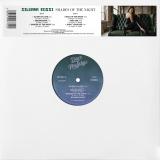
Silvana Rossi emerges from the new wave of Italo revivalists with a sound that feels both timeless and sharply contemporary, where vintage drum machines, analog synth lines and nocturnal romance collide with a modern club sensibility. Rooted in classic Italo disco but filtered through today’s underground circuitry, her music speaks directly to selectors navigating the space between wave, electro and slow-burning techno. The tracks carry a distinctly personal edge—melancholy, desire, and late-night introspection wrapped in icy melodies and hypnotic grooves. This is music made for dimly lit booths, smoke-filled basements, and DJs who still believe in storytelling through vinyl.
A seductive opener “Elixir Of Love” built on cascading arps and a steady pulse, romantic but restrained, like a whispered confession over a rolling bassline. Perfect for setting the tone early set. Tension-driven and emotionally charged, italo anthem “Breakdown” balances crisp electro rhythms with a sense of inner collapse. A cold wave-leaning cut that hits hardest when the lights stay low and the energy turns inward. Shades Of The Night – a cinematic slow-burner drenched in shadow and atmosphere. This one is all about texture and space. Walk In The Night, another italo classic on the EP, stripped-back and hypnotic, with a confident groove that nods to classic Italo while staying firmly rooted in modern club aesthetics. “Bad Girl” brings a sharper, more playful edge, driving, stylish, and slightly dangerous. A weapon with crossover appeal for electro and wave crowds alike. A versatile tool for both warm-ups and deeper moments. Emotionally direct yet sonically controlled lush pads and restrained vocals create a sense of distance that pulls you in “Don’t Leave Me”. A melancholic highlight for DJs who know how to play with tension.
Death Is Not The End collaborate with Uzbek label Maqom Soul to deliver an LP counterpart to last year's mixtape of the same title, compiling specially picked & fully licensed individual belters from the ex-soviet studios of Central Asian republics between 1978 and 1989 - incl. Uzbek, Tajik, Kurdish & Uyghur artists pulling traditional folk motifs together with pop & rock and psych elements.
"These recordings do not form a smooth or coherent history. They feel more like a sequence of discoveries made at different moments and in different circumstances. Songs and instrumental pieces that once lived inside specific contexts radio broadcasts, philharmonic programs, touring routes now sit side by side, revealing hidden connections as well as clear fractures between them.
Nasiba Abdullaeva appears here as a voice from the end of an era. Trained within a conservatory system, she worked inside the format of the Soviet pop song while filling it with melodic logic that did not come from Moscow or Leningrad. Her voice is soft and sustained, shaped by Eastern melisma, and it never functions as decoration. Even in tightly structured songs there is a sense of resistance, an effort to preserve a musical language rooted in Uzbek tradition rather than fully adapted to an all Union standard.
The ensemble Sintez, later renamed Navo, represents a different path. Beginning as a student rock group, the band was gradually absorbed into the official VIA system with all its limitations and compromises. Yet it was precisely within those boundaries that Sintez and Navo developed a recognizable sound. Electric guitars and jazz rock harmonies do not overpower the folk material but remain in tension with it. Their recordings feel like negotiations between what the musicians wanted to play and what they were allowed to perform.
The Tajik ensemble Gulshan reflects an institutional approach carried to a high professional level. Formed under television and radio structures, the group treated folk material almost as a written score. Carefully constructed arrangements, close attention to orchestration, and restrained use of pop techniques define their sound. There is less spontaneity here, but a strong sense of discipline and structure, where national melody becomes part of a carefully controlled sonic framework.
Koma Wetan occupies a very different space. Formed in the 1970s, this Kurdish rock group approached poetry and folklore as tools of cultural assertion. Their psychedelic rock never feels like a stylistic borrowing. Instead it functions as a contemporary vessel for language and themes that might otherwise have remained unheard. Even today these recordings sound fragile and stubborn at the same time.
The Uyghur ensemble Yashlik, closely connected to a musical drama theatre, operated somewhere between stage performance and popular music. Their songs are built on folk melodies but shaped for wide audiences. What emerges is a constant attempt to preserve the recognizability of Uyghur musical identity without freezing it in a folkloric frame. Yashlik's music exists in a state of balance between representation and development.
Digging Central Asia does not attempt to establish hierarchies or offer a single wayof listening. Names and dates matter less than the sound itself. Tape noise, abrupt transitions, and unexpected timbres remain part of the material rather than flaws to be corrected. This music existed at the crossroads of multiple routes geographic, cultural, and ideological. Heard today in a new context, it no longer feels peripheral. Instead it stands as a reminder that the history of popular music is far more fragmented, layered, and polyphonic than it is usually allowed to be."
Niagara return to Discrepant with Buxtehude, a new work bending the legacy of Dietrich Buxtehude into their own fractured, electro-organic language.
Rather than a tribute, Buxtehude feels like an abstract dialogue with the Baroque composer’s sense of structure and flow—reimagined through Niagara’s raw synth work, off-grid rhythms and subtly warped melodic cycles. The trio let the music grow from the inside out: patterns expand and contract, harmonies tilt slightly off their axis, and small details accumulate until each piece reveals its own internal gravity.
There’s a clarity to Buxtehude that feels carved rather than composed. Tracks move with a quiet insistence, like mechanical organisms finding coherence through repetition and drift. Melodic fragments surface briefly, disappear, then return transformed, lending the album a strange balance between austerity and warmth.
With Buxtehude, Niagara continue to refine their unmistakable approach—playful yet rigorous, minimal yet full of life— remaining entirely their own.
Guests is the home recording project of Jessica Higgins and Matthew Walkerdine. Vaguely named as such to avoid any problems with the poster if they pull out of a gig (which has only happened once, about a year and half before any songs were actually written to be fair) but also to capture a sense of reverse hospitality. That is, arriving at your door with a bottle of good wine (can’t turn up empty handed) or a fist full of savoury or sweet snacks (time of day dependant); oversharing at the afters (and then passing out on your couch); reading to your toddler while you make their lunch or put everything back where it was meant to go (only to get torn apart again). So, something about what happens when private worlds meet each other, making or having been made a space for. But at times, it’s a different kind of intimacy, a temporal or material one, like the feeling of crisp fresh sheets, and abundant and soft, body-part appropriate towels in a hotel in a city you’ve been to before and love to go back to.

Their debut record, “I wish I was special”, was variously described as “a collage of concrète experiments and outerzone pop gestures, music that sounds as if it’s been written from the depths of a dream”; “music for people who love music but also hate it too”; “something like chasing ghosts or befriending a wild animal”; “pulling apart nervous sensations with haphazard ease and requisite humour”; and “a melody of refusal, of being all-in (…) finding the exact right WRONG sound to express the discontent”. Common Domestic Bird continues in this vein, layering synthesiser, keyboards and samples over rudimentary drum rhythms and field recordings, which are in turn sung or spoken with to create nine new songs.
Written and recorded between autumn 2024 and summer 2025 in Reading, Berkshire, the music has matured since its last outing, in a way, leaning less into collage and more toward structured composition and melodic depth, yet retains a healthy dose of indeterminacy and off-kilter rhythms for the forever-amateur. The songs on Common Domestic Bird hint at some “about”-ness through a series of discrete vignettes which sound a bit like architecture or end of year lists, gossip or over-thinking subjectivity, like disappearances and impressions, the support structure of the spine, letters and signs offs, things you could really do without and where they should go, hoping you’ll see something that isn’t there, pretences and performance. At times they feel kind of funny, others kind of sad or a bit angry and annoyed, a bit like you really.
KITCHEN. LABEL is proud to present AGATE, the latest album by Japanese artist MEITEI, marking a deepening of the world he first shaped through his Kofū trilogy released between 2020 - 2023.
Named after the mineral agate, a stone formed through slow accumulation, pressure, and time, the album reflects MEITEI’s patient approach to sound. AGATE brings together extended and newly rearranged works from across the Kofū cycle alongside new compositions and passages, refining material developed through years of performance and sustained practice.
The album presents seven tracks:
HAŌ (Previously unreleased track)
SHIN-OIRAN (Remodeled from Oiran I, Kofū 2020)
SHIN-SADAYAKKO (Remodeled from Sadayakko, Kofū 2020)
SHIN-WAROSOKU (Remodeled from Wa-rōsoku, Kofū III 2023)
KYŪGEKI (Remodeled from Shinobi and Akira Kurosawa, Kofū II 2021)
SHIN-OIRAN II (Remodeled from Oiran II, Kofū 2020)
SHIN-EDOGAWARANPO (Remodeled from Edogawa Ranpo, Kofū III 2023)
Across these works, MEITEI expands the musical vocabulary first introduced in Kofū, a sound he once described as “lost Japanese mood.” While Kofū drew from fragments of folklore, theatre, ghost stories, and forgotten urban memory, it was never an act of historical reconstruction. Rather, it reflected a sensibility of the past observed from the present. With AGATE, this worldview is clarified as Shinpu, a process of discovery in which historical awareness becomes a foundation for contemporary creation rather than a constraint.
During five years of Kofū tours across Japan, Europe, and Asia, MEITEI performed this material in a wide range of spaces, from underground live houses and listening rooms to culturally significant sites. These environments influenced pacing, dynamics, and structure, shaping how the material evolved over time. AGATE is therefore not only a studio album, but the result of material refined through repeated performance.
If the Kofū albums were windows into forgotten eras, AGATE explores what lies beneath, sediment and strata formed through time and pressure. MEITEI’s approach to sound mirrors the nature of agate itself. Grains become texture. Texture becomes narrative. Voices drift through decaying layers of sound, while ancient instruments are used in non-traditional ways, forming distinctive percussive rhythms and melodies that appear and vanish without fixed resolution.
The album’s visual materials were developed under MEITEI’s direction through physical art-making processes. The cover artwork originates from a letterpress print created by Kamisoe, a Karakami atelier in Nishijin, Kyoto, using Kyo-karakami paper. The original artwork, produced through traditional woodblock techniques on handmade washi, was subsequently reproduced on print for the album edition. Kamisoe continues to reinterpret this historical Kyoto craft with a contemporary sensibility.
The title calligraphy was created by Bio Xie, whom MEITEI personally invited to participate in the project. During his performances abroad, MEITEI encountered in Taiwan a lingering atmosphere reminiscent of “Shitsunihon” — a sense of old Japanese memory that quietly endures beyond time. He was deeply drawn to Bio Xie’s distinctive use of Chinese characters, which resonated with this experience, and asked him to contribute to the visual expression of AGATE.
In parallel, MEITEI continues to reinterpret Japanese sensibility through his concept of “Shitsunihon,” presenting it as a contemporary musical language. The refined Kyoto motifs envisioned by Kamisoe and the distinctive calligraphic expression by Bio Xie intersect with MEITEI’s singular artistic direction, weaving together a newly articulated worldview.
The accompanying visual imagery, including the liner photographs, was created by photographer Hiroshi Okamoto, who was also responsible for the visual direction of MEITEI’s previous work, “Sen'nyū.” It draws from MEITEI’s lived experiences of winter seas, solitary cliffs, and breaking waves. These scenes symbolize the inner conflicts of the ten years he spent living in Hiroshima, and his confrontation with solitude and the sounds he creates.
AGATE will be released on 17 April 2025 via KITCHEN. LABEL on 180g vinyl, CD, and digital formats. The album is mastered by Kelly Hibbert, known for his work with Flying Lotus, Madlib, and J Dilla.
With AGATE, MEITEI returns to the material of Kofū with greater focus and discipline, continuing an ongoing process of working forward with inherited material.
The Bluebeaters enjoyed a revival with their 2025 album Everybody Knows, released by Record Kicks. In 2023, to be included in a compilation created by Freedom Sounds Festival in Cologne (Germany), we reworked an extra track entitled TRINITY that had been left off the album. In addition to being included in the compilation, it became the first single on 7-inch vinyl released by the newly formed Caribb Roots.
Although we played it live, the recording of the song had been left half-finished, so we picked it up again, recorded the horns and vocals, and finished mixing it.
The song is linked to the very Italian tradition of Western film soundtracks, and Trinity is a seminal song in this sense.
- Amaliah - No Way Out
- Call Super - I Love Like Your Men
- Chaos In The Cbd - Orange Blank
- Charlie Dark - Foundation And History
- Dreamcastmoe - In And Out
- Isaac Carter - Take U There
- Joe Armon-Jones Maxwell Owin - Se Discoteque
- Kink Feat. Rachel Row - Its Already Here
- Manami - Scramble Clip
- Marcellus Pittman - #Eastsidechampions
- Mr. Redley Transatlantic Era
- Nat Wendell - Tell Me
- Niks - Lilac Skies
- Suze Ijó - Up There
- Yu Su - Flourish
GALA announce Ten Years of GALA – a compilation marking a decade of independent culture
Ten Years of GALA is both an archive and a horizon: a reflection on where GALA has come from, and a signal of what lies ahead.
Founded in 2016 as a one-day gathering in South London, GALA has grown into a global point of reference for dancers, artists and collectives drawn together by a shared commitment to independence, collaboration and underground music culture. Rather than charting success through scale alone, the festival has consistently prioritised integrity, community and musical curiosity – values that underpin this release.
Spanning fifteen tracks, Ten Years of GALA unfolds as a considered journey. It opens with an intimate spoken contribution from Charlie Dark, grounding the compilation firmly in GALA’s home of Peckham before gradually expanding outward into fuller, club-focused terrain. From there, the record moves between moods and tempos, tracing a path from reflective moments into the physical language of the dancefloor.
The compilation brings together longtime friends of the festival alongside newer voices drawn into its orbit in recent years. Each artist contributes a distinct perspective, but collectively the tracks form a coherent portrait – not of a single sound, but of a shared ethos shaped over ten years of gatherings, collaborations and days spent dancing together.
Rather than a retrospective in the conventional sense, Ten Years of GALA functions as a living document. It captures fragments of past editions, scenes and relationships, while remaining firmly oriented toward the future. These are not museum pieces, but records designed to be played, shared and folded back into the spaces from which they came.
Together, the compilation holds a piece of GALA’s first decade – not as a closed chapter, but as a foundation for what comes next.
- A1: Red Axes & Man Parrish Ft. Roy Garrett - Hot Rod To Hell And Back
- A2: James Infiltrate - Chaos
- B1: Queen Atom - Tributemaki
- B2: The New Black - Androids Are Sexy
- C1: Red Axes - Clear Beats
- C2: 100Hz - Whisper
- D1: Red Axes - Time To Take It
- D2: Sluts`n Strings & 909 - Past The Gates
- (10") A. Redrago - Spikes
- (10") B. Redrago - Frequency
Red Axes step into the fabric presents series with a release that feels both inevitable and deeply personal. Known for their hypnotic, psychedelic approach to club music, the Tel Aviv–based duo bring a narrative-driven sensibility that aligns seamlessly with fabric’s legacy of long-form storytelling and forward-thinking curation.
Across years of performances at fabric and other key global institutions, Red Axes have developed a reputation for sets that unfold patiently and unpredictably, drawing dancers into a world where groove, tension, and atmosphere take precedence over genre or trend. Their contribution to the fabric presents series reflects this ethos: a carefully sculpted journey that prioritises mood, momentum, and emotional depth, while remaining firmly rooted in the physical language of the dancefloor.
Formed by Dori Sadovnik and Niv Arzi, Red Axes emerged from Tel Aviv’s underground with a sound shaped by post-punk, acid, krautrock, and cosmic disco influences. Over the past decade, they have built a catalogue defined by raw textures, twisted melodies, and a distinctly human looseness, qualities that translate as powerfully in the club as they do on record. Their releases and remixes for labels such as Phantasy, Correspondant, Running Back, Dark Entries, and Permanent Vacation have established them as artists who consistently operate just outside the expected.
As DJs, Red Axes are celebrated for their ability to stretch time on the dancefloor, weaving obscure selections, unreleased material, and leftfield classics into slow-burning, trance-inducing narratives. This approach has seen them invited to venues and festivals including Panorama Bar, De School, Bassiani, Dekmantel, Sonar, and Primavera Sound, where their sets are defined not by peaks alone, but by the tension built between them.
With the forthcoming fabric presents Red Axes release, the duo deliver a statement that captures years of shared musical intuition and a deep respect for the club as a communal, transformative space. It is a mix that rewards close listening as much as physical immersion, a snapshot of Red Axes at their most focused, expressive, and uncompromising.
To mark the launch of their forthcoming fabric presents album, the duo unveil the lead single, “Hot Rod To Hell”, a bold reworking of Man Parrish and Roy Garrett’s 14-minute spoken-word electro epic, reimagined through Red Axes’ signature psychedelic lens.
Stripped back and refocused, the original’s narrative tension is transformed into a hypnotic, downtempo house track built for late-night immersion. A rolling, elastic groove anchors the track, while pulsing low-end, subtly warped synth lines, and tightly controlled percussion create a sense of slow, smouldering momentum. The spoken vocal elements drift through the mix like fragments of memory, lending the track a ritualistic, cinematic quality without overwhelming the dancefloor.
- 1: Vengeance And Grace
- 2: End Of My Rope
- 3: It's What You Meant
- 4: Goner
- 5: Closing The Door
- 6: Martyr Of A Man
- 7: My Pride
- 8: Ticket Home
- 9: The Bottle's Gone
- 10: I Ain't Bound
- 11: Vengeance And Grace (Alone)
- 12: End Of My Rope (Alone)
- 13: It's What You Meant (Alone)
- 14: Goner (Alone)
- 15: Closing The Door (Alone)
- 16: Martyr Of A Man (Alone)
- 17: My Pride (Alone)
- 18: Ticket Home (Alone)
- 19: The Bottle's Gone (Alone)
- 20: I Ain't Bound (Alone)
Opaque Red Vinyl[32,98 €]
Grounded in a season of life that has been earned rather than borrowed, Benjamin Tod speaks with the ease of someone no longer running from himself. There is joy now - a steadiness that comes from commitment. With the recent arrival of his son and a deep well of new music on the horizon, Tod is firmly rooted in both purpose and possibility. That clarity is evident in Vengeance and Grace, the Lost Dog Street Band frontman's forthcoming and most expansive solo album to date. Conceived as a "dual-version" release, the project presents two parallel worlds: (Alone) is a stripped solo-acoustic version, along with its full band counterpart.
Together, the two versions form the full range of what Tod is capable of: restraint on one side, force on the other. At the core of Tod's writing is a simple conviction: music should serve something larger than the moment. His writing speaks to mind, body, and soul, shaped by faith, discipline, and a hard-earned understanding of consequence. The darkness that once defined him is neither denied nor indulged. It is understood and no longer in control. Today, Tod moves with a sense of calm that wasn't always there. He is grateful, settled, and intentional, continuing to follow the compass that's guided him from the beginning. Rooted in traditional country and folk, his work stands firmly in the modern music landscape, shaped by experience, restraint, and the life he's built around it.
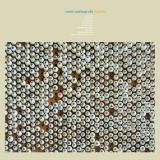
Newly remastered version of Oren Ambarchi’s long out-of-print classic Hubris originally released on Editions Mego in 2016. Expertly remastered by audio wizard Joe Talia who worked with the original mixes, highlighting the myriad details of the audio with forensic precision, previously unheard up until now.
From the 2016 press release:
Hubris continues the exploration of relentless, driving rhythms heard on Ambarchi’s Sagittarian Domain (2012) and Quixotism (2014). Where those records looked to Krautrock and techno for their starting points, the sidelong opening track here begins from the perhaps unlikely inspirations of disco and new wave, drawing particularly from Ambarchi’s love of Wang Chung’s soundtrack to William Friedkin’s To Live and Die in L.A. Leaving behind the song-forms of these reference points, Ambarchi weaves a sustained and pulsating web of layered palm-muted guitars from which individual voices rise up and recede, eventually setting the stage for some lush guitar synth from Jim O’Rourke. Arnold Dreyblatt collaborator Konrad Sprenger contributes overtone-rich motorized guitar, pushing the piece into a satisfying intersection of shimmering minimalism and rhythmic drive that smoothly builds up until the entrance of Mark Fell’s electronic percussion in its final section.
After a short second part, in which Ambarchi, O’Rourke and crys cole pay tribute to the skewed harmonic sense of Albert Marcoeur with a track built from layered guitar figures and abstracted speech, the long final piece pushes the concept of the first side into darker and denser areas. Joined by electronics from Ricardo Villalobos and the twin drums of Will Guthrie and Joe Talia, the layered guitars of the first piece are transformed into a raw and tumbling fusion-funk groove that calls to mind early Weather Report or even the first Golden Palominos LP. As this stellar rhythm section rides a single repeated chord change into oblivion, a series of spectacular events emerge in the foreground: first, aleatoric synthesizer burbles from Keith Fullerton Whitman, then slashing skronk guitar from Arto Lindsay, until finally Ambarchi’s own fuzzed-out harmonics take center stage as the piece builds to an ecstatic frenzy. Few artists could hope to include such an incredible variety of collaborators on one record and still hope for it to have a unique identity, but Ambarchi manages to do just that, crafting three pieces that emerge directly out of his previous work while also pushing ahead into new dimensions.
Players: Oren Ambarchi, crys cole, Mark Fell, Will Guthrie,
Arto Lindsay, Jim O’Rourke, Konrad Sprenger, Joe Talia, Ricardo Villalobos, Keith Fullerton Whitman.
2026 Repress
London based composer, multi-instrumentalist and producer Akusmi announces 'Lines', an exhilarating new collection of works born from the desire to take where the acclaimed debut album 'Fleeting Future' left off - in search of new forms.
" 'Secant', I must have listened to this tune 3 times in a row, this one soundtracked my night drive through the winding roads" - Benji B, BBC Radio 1
'Lines' is presented as a Limited edition clear vinyl (500 copies only worldwide), printed in heavy-weight reverse board sleeve with a hand-numbered edition sticker. The vinyl edition also features 'Oblique' (A2), an exclusive version for the vinyl format, plus the now revered 'Longing for Tomorrow' - (Brandt Brauer Frick Remix), previously unreleased physically and now pressed on vinyl format, ending side B. The cover artwork features another collaboration with Dutch visual artist Sigrid Calon and design by label founder Adam Heron.
Formed with a sense of urgency and a reductive approach 'Lines' is almost entirely comprised of alto saxophone, clarinet and piano with embellishments of ambience and minimal percussive elements. Recorded in full at his home studio in London, Pascal Bideau speaks about the process:
"I wanted to go a bit more a bit more horizontal and ambient, work with layers of lines, might they be dotted or straight, and leave them to unfold and see where they would take me."
Akusmi uniquely finds the spaces in between experimental jazz, crossover classical and ambient music.
We welcome you to the third installment of Scala. Each new release on Scala Muziek reflects the evolving mindset of its founder. For the third chapter, Pascal Benjamin delivers Soul Extension EP, an exploration of movement, mood, and the subtle shifts that define his sound. A1: Almost Fact sets the tone with taut rhythms and shimmering low-end pulses, balancing tension and release in constant motion. A2: Shift Happens dives deeper into modulation, its warped stabs and filtered delays gradually building a shifting, evolving energy. On the flip: B1: Extension expands into rolling grooves and atmospheric layers, blending vintage warmth with modern precision. B2: Phases closes with a sparse, contemplative mood—fragmented voices and echoes creating a hypnotic sense of drift. Soul Extension captures Pascal at a point where artist and label move forward as one, shaping the next chapter of Scala Muziek’s identity.
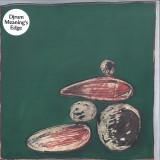
Djrum's first release since 2019, the Meaning’s Edge EP is an introduction to a whole new world. For the artist also known as Felix Manuel, it was created in the final stretches of six rather traumatic years work. Having carefully honed his techniques and aesthetics, and learned some hard-won emotional lessons over this time, finally he began to work in a quicker, lighter fashion – and to cleanse his palate a little by bringing in a fresh ingredient: his own flute playing. For listeners, though, it will serve as an appetiser, a way into the delights and complexities of this new phase of his creativity.
It’s a serious work in its own right, mind. The use of flutes – including Bansuri, Shakuhatchi, Western Classical, and synthesised all blending and blurring into one another – gives it a coherence and a sense of airiness that unites the five tracks over half an hour, however divergent their beats get. And as in all his music, Felix’s whole life is in here. Ethnomusicology studies, untold hours of DJing everywhere from the gnarliest squat raves to the most rarefied deep house clubs, explorations of his own neurological and emotional makeup, and the technical finesse of someone who is never not creating music or art, all roll into an experience that’s dazzling, delightful and keeps on giving.
Just the opening track ‘Codex’ alone touches on OG dubstep, Aphex Twin-like braindance, post-classical exploration, movie themes and more. The gentle tones and melodies that rise up out of it perfectly conjure Felix’s running theme of a protective bubble that provides a sense of safety and tranquillity even as the beats and acid gurgles and spurts all around it conjure up the slings and arrows of life’s difficulties.
The tone set, the EP moves through ultra-rarefied glass-like percussion in an almost ambient setting, hints of grime’s counterintuitive patterns, and even more hectic patterns influenced by Tanzania’s hyperspeed singeli style of dance music – but always with that perfect balance of chaos and control, unpredictability and protection. It rewards playing and replaying endlessly, it’s a profound and often joyous experience… and it’s only just the beginning. This is the return of a master craftsperson more focused than ever on his vision and vocation and ready to blow your mind all over again.
Mastered and cut on 140g black vinyl by legendary mastering engineer Matt Colton at Metropolis Studios, London. Pressed at optimal media, Germany.
- 1: Come Away
- 2: Dance
- 3: You Make No Sense
- 4: Parking Lot Blues
- 5: Chistelle
- 6: About You
- 7: It’s Alright
- 8: Moody (Spaced Out)
- 9: Tiny Sticks
- 10: The Beat
- 11: My Love For You
Repressed LP on Neon Orange Vinyl. Come Away With ESG - 35-year anniversary release of the classic genre-busting debut album by the Bronx sisters ESG. The sample-friendly opus that’s the inspiration for hip-hop, house and post punk. Music that falls outside of the no wave, new wave and post punk library, it’s for the dance floor but it’s not funk, there’s no horns, no driving organ; it’s the opposite of Sly And The Family Stone but no less cool and no less groovy. “A lasting document of their unique brand of minimal funk that would influence subsequent post-punk, hip-hop, and dance music acts. Stripped down to the most basic of drumbeats and rudimentary bass lines, ‘Come Away’ confirms the notion that the real rhythm is what happens between the beats. AllMusic // “This is dub disco with a punk edge.” Paste // “Uncut punk-funk straight off the streets of the South Bronx.” Record Collector // “ESG are that rare thing” Guardian // “Come Away with ESG sounds so shockingly current.” Paste // “A musical snapshot of New York City at the beginning of the '80s.” Allmusic
Hiroshi Sato's masterpiece “Awakening” has been reissued for the fourth time in a new color “Pastel Blue Vinyl”. The album was cut by world-renowned engineer Bernie Grundman based on high-spec sound data digitally converted to 96KHz/24bit from the original master tapes. The pressing was done at Sony Music's factory in Japan. This is Hiroshi Sato's fourth original album released in June 1982 after his career in Los Angeles, and his first album for Alpha Records. Featuring Canadian female vocalist Wendy Matthews and using the most advanced drum machine at the time, “LinnDrum,” this mellow and soulful album is a perfect fusion of Sato's sound sense and the atmosphere of American West Coast, and has transcended generations, continues to influence many musicians. Guest guitarists include Tatsuro Yamashita, Tsunehide Matsuki, and Yuji Toriyama! Limited edition.
For her new and most radical album »Electroacoustic Works for Halldorophone«, Martina Bertoni used the electronic instrument at EMS Stockholm to create four pieces that are massive in scale and incredibly intimate, sonically restrained and emotionally overwhelming—almost ambient and always demanding your full attention.
Martina Bertoni returns to Karlrecords with »Electroacoustic Works for Halldorophone,« her most radical album yet. The foundation for the four electroacoustic pieces was laid during a residency at Stockholm’s legendary Elektronmusikstudion (EMS) that the Berlin-based cellist and composer used to explore the curious instrument, originally designed by Halldór Úlfarsson in 2008, as an algorithmic system in order to examine tunings and the mathematical relationships between Aiming to analyse and understand their interaction beyond the composer’s control, Bertoni sought to engage more deeply with the concepts of time, tuning, and, most importantly, control. Accordingly, her four »Electroacoustic Works for Halldorophone« seem both massive in scale and incredibly intimate, sonically restrained and emotionally overwhelming— almost ambient and always demanding your full attention.
While the halldorophone—famously used by Hildur Guðnadóttir for her »Joker« score—roughly resembles a cello and can be played like one, it is an electronic instrument. The vibration of its strings is being picked up, amplified, and then routed through a speaker. This creates a feedback loop that becomes increasingly complex depending on how much gain is added to individual strings. Úlfarsson gave Bertoni a carte blanche for how to handle the instrument, but she stresses that she relied on »minimal interventions—some string strumming and plucking« that set the interactions of different sounds and frequencies into motion. »I decided to not approach it like a cellist would,« she explains. »Instead I used it as a kind of generative organ by turning it into a feedback machine, with tuned feedback triggering more feedback depending on the tuning, which was based on tetraphonic scales that I could apply on the four main strings as well as the sympathetic group of strings.«
Bertoni recorded the material in the EMS studio, later composing and arranging the four complex pieces in her home in Berlin, after which they were mixed and mastered by Ciaran O’Shea. While this can be considered a compositional abstraction process, traces of her concrete work as a performer are firmly ingrained in the music. »The halldorophone doesn’t have a line output, just a double set of speakers, which is why I recorded all sounds with two microphones in the EMS studio,« she explains. »That’s why there’s plenty of breathing sounds here and there—label owner Thomas Herbst and I jokingly refer to the album as my ›chamber music record‹.« And indeed, there is a striking sense of intimacy to these four pieces throughout which individual sounds, harmonic frequencies, and even subtle rhythmic figures seem to move both on their own accord but also according to a underlying vision that steers their interplay.
Indeed, »Electroacoustic Works for Halldorophone« is an album built on and marked by contrasts. The soothing polylogue of single sounds in the higher register on opener »Omen in G« is counterpointed by massive bass drones, while the second piece, »Nominal in D,« plays a cunning game of repetition and difference by combining thick textures with all kinds of rhythmic elements. »Fades in C«—the longest of the four pieces, clocking in at 17 minutes—unlocks the emotional potentials of the sonic qualities of the halldorophone, sounding at once serene and anthemic, and »Organon in D« closes the album by underscoring how Bertoni’s unconventional approach allows her to seamlessly transform simple, quiet tones into complex, towering walls of sound.
2026 Repress
Akusmi is the project moniker of French-born, London based composer, multi-instrumentalist and producer Pascal Bideau, who signs to the new Tonal Union imprint for the release of his album 'Fleeting Future.' With its hallucinatory, genre-defying blend of minimalism, cosmic jazz and Fourth World influences, and in its quest for optimism in the face of unknown and limitless possibility. 'Fleeting Future' stands apart as an inventive and inspirational debut.
The creation of the album's richly colourful and multi-layered sound world was originally inspired by Bideau's journey to Indonesia, where he immersed himself in traditional Gamelan and gong music. Many of the themes, motifs and melodies on 'Fleeting Future' seed from the 'Slendro' scale, one of the essential tuning systems used in Gamelan. However it is not musical scales, but scales as in the size or extent of things that most fascinates Bideau, specifically he explains; "the compelling way things dramatically change when you shift from any given scale to another."
The album connects directly to nature and the wider world in its evocation of perceptive shifts and transitions from microscopic to macro scale, as evidenced by the opening title track 'Fleeting Future', on which a simple dotted saxophone line morphs and billows into synths, brass and strings, indicating the musical voyage that lies ahead. Like the start of a journey or adventure it is full of anticipation, its arborescent growth conveying the optimism of the unknown and of limitless possibility. The album centrepiece 'Neo Tokyo' is a vibrating, ebullient mass of colliding elements which feels like zooming in to the electron level, as it teeters on the edge of chaos. The title is a reference to Katsuhiro Otomo's Akira, a dizzying work of art set in a sprawling futuristic metropolis.
'Yurikamome', meanwhile, is an imaginary soundtrack inspired by Bideau's yearning to visit Japan which he fuels by watching Youtube videos of drives and rides through Japanese landscapes and cities. "It's amazing" he adds, "that we have the ability to access almost anywhere in the world and see what it's like, that people document it and upload it. It's never going to be any replacement for the real thing, but with places that really touch you, it works." The track is named after a Japanese monorail train line which rides from Shinbashi to Toyosu, a last journey that feels like a new beginning.
'Fleeting Future' was composed and recorded by Bideau between 2017 and 2019 in his North London studio and features additional contributions recorded in Berlin by Florian Juncker (trombone), Ruth Velten (saxophone) and regular collaborator Daniel Brandt of Brandt Brauer Frick (drums / electronic percussion). Having been living through uncertain times, one thing that keeps spiralling into the unknown is the future, about which Bideau leaves us with a final thought:
"The future is fascinating: It is constantly readjusting to new events. I feel we left a linear approach to the future to enter an arborescent one where all the data and information we have about what could happen is exponentially ever-growing. Following a branch might allow you to glimpse into what it may become, but the evolution of the whole picture might very well render the prediction totally obsolete, and even meaningless. In that sense, there is not one future but innumerable ones all cancelling each other. That's what makes it fleeting."
Loud Ambient 2 picks up directly from where Loud Ambient left off. After picking the drum machines back up, we returned to the colourfield ideas that shaped the first record. Rothko remained a key reference, along- side a strong recommendation to spend time with the work of Josef Albers. We did exactly that, and it paid off.
Alongside the music, we created 50 new pieces of artwork for Loud Ambient 2. These became tools rather than decorations. Working this way felt open and rewarding, and brought a real sense of play back into the process. We already understood what a Loud Ambient track could be, so slipping back into that headspace felt natural. The tracks came together quickly, full of energy, movement and that familiar noodle quality.
The creative side landed easily this time. There is some- thing about working with colourfields that frees you up and pushes you further into abstraction. It removes hesitation and keeps the focus on instinct and response.
With the drum machines and synths loaded, we kept our heads down and made the kind of music we want to hear on a dance floor. Loud Ambient 2 is the result.
Sound Records proudly presents ‘Morpho’, the debut LP from UK-based producer Benyayer, formerly one-third of celebrated electronic trio Dark Sky. A deeply personal record and a symbolic transition, Morpho captures the emotional and sonic evolution of an artist in metamorphosis.
Having stepped into the solo spotlight following his successful Infiltrator EP, Benyayer (aka Matt) delivers a bold, vinyl release that combines seven previously digital-only tracks with a brand new cut, ‘The Return’, all meticulously curated and pressed for the first time on wax.
Bridging influences from techno, UK bass, Afrofuturism, and electronica, Morpho is a meticulous exploration of rhythm designed to excite, cause chaos, personal reflection and movement. Each track is a raw, rhythmic exploration that draws on his time spent busking on the streets of London with found objects, experimentation with modular synths and years of experience honing his craft as a performer at some of the finest establishments in the electronic music landscape.
This initial vinyl edition is limited to just 300 copies. Designed in collaboration with Harry Cresswell, each sleeve features a deconstructed butterfly motif, laser-cut on both sides of heavy matte stock, paired with a matte-printed inner sleeve and a transparent vinyl disc, making each copy a true collector’s item.
The LP arrives amid support from tastemakers like Gilles Peterson, Benji B, and Tom Ravenscroft (BBC 6 Music), as well as heavyweight artists including Ben UFO, Bicep, Laurent Garnier, Bonobo, and Modeselektor.
Benyayer's new live show, built around these very tools, has already been trailed to great acclaim across Europe, adding a powerful performative dimension to the record. With previous performances at Berghain, Fabric, Glastonbury, MUTEK, Dimensions and Melt Festival. Benyayer's solo trajectory continues to rise with intent, mystery, and a fierce sense of artistic purpose.
- 1: Quiet Girl
- 2: A Volta
- 3: The Eyes Of Love
- 4: Helen's Song
- 5: The Surest Things Can Change
- 6: Pieces Of Dreams
- 7: How Long?
- 8: Francisco
On "Enduring Sonance," saxophonist and flutist Steve Wilson reflects on a lifetime of lyrical, deeply felt songs drawn from jazz, pop, and film—brought to life by an all-star ensemble featuring Renee Rosnes, Joe Locke, Jay Anderson, and Kendrick Scott. *** Certain songs have a way of lingering in the imagination—resonating long after we’ve last heard them, sometimes for a lifetime. On his breathtaking new album "Enduring Sonance," veteran saxophonist and flutist Steve Wilson celebrates the music that has left the deepest imprint on his musical life. “Some of the tunes on this record have stayed with me for, in some cases, over 50 years from the time that I first heard them,” Wilson says. “I wanted to put some music out there that people can connect with, no matter what kind of music they like.” Originally conceived as a ballads project, Enduring Sonance evolved into something broader and more personal. Rather than focusing on tempo or style, Wilson gravitated toward a sense of lyricism—music whose emotional clarity and melodic resonance endure across genres, decades, and listening habits.
To realize this vision, Wilson assembled a deeply intuitive ensemble featuring pianist and arranger Renee Rosnes, vibraphonist Joe Locke, bassist Jay Anderson, and drummer Kendrick Scott, with special guest Kevin Newton (French horn, Imani Winds) appearing on two tracks. Each musician brings a rare sensitivity to melody, texture, and space, allowing the material to unfold with warmth, restraint, and quiet authority. The repertoire draws from a wide musical landscape, including works by close collaborators and modern jazz masters Billy Childs and George Cables, alongside enduring songs by Michel Legrand, Quincy Jones, Milton Nascimento, Gino Vannelli, Bill Lee, and Eliane Elias. These are not standards in the traditional sense, but deeply personal selections—songs that have accompanied Wilson through different chapters of his life. The album opens with Childs’ “Quiet Girl,” its subtle rhythmic motion enhanced by Newton’s luminous French horn, and travels through cinematic ballads, soulful grooves, and reflective lyricism. The title Enduring Sonance speaks both to the lasting resonance of these songs and to Wilson’s enduring musical relationships—most notably with Rosnes, whom he has known for nearly four decades and whose sensitive arrangements help unify the album’s diverse repertoire. “These songs are the soundtrack of my life,” Wilson says. “I’d love it if listeners came away from this album with the same kind of enduring sound and feeling.”
- A1: Assia (Feat. Pat Kalla)
- A2: Ben Bene La (Feat. Lass)
- A3: Women Can Do (Feat. Ayuune Sule)
- B1: Mbaal Mu Teer (Feat. Lass)
- B2: Water No Get Enemy (Feat. Pat Kalla)
- B3: Tu Mens Devant Moi (Feat. Rama Traore)
- B4: Faut Pas (Dub 2000)
- C1: Fighting Slowly (Feat. Ayuune Sule)
- C2: Faut Pas Dire Des Choses Comme Ça (Feat. Pat Kalla)
- C3: Lymye-A (Feat. David Walters, Pat Kalla & Lass)
- D1: Manu Écoute Ça (Feat. Pat Kalla)
- D2: Ku La Foon (Feat. Lass)
- D3: François Va Te Laver (Feat. Pat Kalla)
- D4: Tenor Jam For Manu (Feat. Boris Pokora)
2026 Repress Favorite Recordings proudly presents Voiciii, the 3rd and new album by Voilaaa, an immersive dip into its Afro-Disco universe spread across 14 tracks. Needless to say you’ll find in this new LP all the ingredients that made him famous: strong dancefloor-friendly festive bangers, irresistible funky arrangements and an undeniable sense of humor and irony.
Bruno “Patchworks” Hovart, behind Voilaaa, is as often surrounded by amazing vocal featurings from previous LP’s regulars (Pat Kalla, Lass) but also new voices you may already have heard on its recent EPs (David Walters, Rama Traore, Ayuune Suule), as well as the saxophonist Boris Pokora. The LP is also an occasion to pay tributes to major artists of the African sound, such as Fela Kuti (on “Water No Get Enemy”), or Manu Dibango (“Manu Écoute Ça” and “Tenor Jam For Manu”).
Since the release of Voilaaa’s previous LP’s Des Promesses and On Te L’Avait Dit and their massive international support, the Voilaaa Soundsystem did travel through the world to deliver its message of infectious joy and groove, from Equator to Thailand, from Kazakhstan to the infamous French “Fête de l’Huma”. Now you know: Voilaaa is everywhere and Voiciii (“here it is”) their new album.
Acknowledge Kindness expands San Francisco based The Reds, Pinks And Purples' distinctive brand of emotional pop, music built for the quiet hours and the restless mind. Evolving naturally from the heavier, melancholic indie rock of previous releases, the mood here feels more exposed and reflective, blossoming into lush dreamscapes that recall the bittersweet sorrow of The Cure or the tenderly gloomy transcendence of California by American Music Club. Created from a new headspace, the album finds main man Glenn Donaldson observing both the present and the weight of what came before it. Songs lean into a deeper sense of nostalgia, allowing him to look back with intent and revisit moments that once carried a sting. Donaldson's vocals are captured in high fidelity, raw and immediate, with lyrical abstraction underpinned by chiming acoustic guitars and achingly beautiful piano. Across its 11 tracks, Acknowledge Kindness expands The Reds, Pinks And Purples' emotional and sonic panorama, with Donaldson's ongoing world-building remaining both warmly nostalgic and strikingly original. "Donaldson's best work hides allure within a bigger picture, like a jangle-pop egg hunt" Pitchfork FFO The Smiths, Guided By Voices, The Chills, Leonard Cohen, The Go-Betweens, Robert Wyatt, Twee-, Jangle- & Sophisticated Guitar Pop. Coloured vinyl LP versions and digisleeve CD available
Geoglyph is the new duo project by Alohn and Khey Mysterio, a convergence of two deeply singular practices into a single subterranean signal. Their debut album arrives as the eighth reference on Organic Signs, not as a collection of tracks but as a carved artifact: six inscriptions pressed into vinyl, mapping a sonic territory where time, rhythm and texture are no longer linear, but layered like geological memory.
Through Geoglyph, Alohn and Khey Mysterio convey a message from below, or beyond. A pulse engraved from forgotten times in the basement of reality, reactivated by abyssal basses, vibrating layers and fractured textures. Exhumed from the subterranean strata where psychedelic dub, mineral techno and fractal dubstep fuse into raw energy, their music becomes a point of contact: every beat, every silence, every oscillation acting as a coordinate toward another perception. What unfolds is not simply sound design, but an invocation, rhythms as sigils, timbre as gnosis, signals that seem to arrive already charged with intention.
Across the album, Alohn’s guitar notes fall like cascades through the mix, dissolving at times into controlled feedback and crystallizing into melodic fragments that hover between tension and release. These organic gestures are interwoven with Khey Mysterio’s dense low-end architectures and rhythmic frameworks, creating a constantly shifting terrain: from weightless transmissions and ritualistic voices to moments of overwhelming propulsion where the music suddenly breaks open with tectonic force. The record moves fluidly between meditative suspension and explosive motion, never settling into a single state for long.
A strong undercurrent of what has come to be known as “druidstep” runs through the album, a term coined within the 95 Open Tabs universe to describe a form of dubstep untethered from genre convention, rooted instead in bass as ritual, in groove as invocation. Here it meets dub-techno pulse, psychedelic echoes and high-velocity 4×4 pressure, drawing subtle influence from underground bass cultures without ever becoming referential. The result is a body of work that feels both ancient and forward-leaning, cyclical rather than linear: a living geoglyph that reveals different meanings depending on how (and where) it is read.
As the final movement accelerates into its closing phase, the album releases its energy outward, with frequencies stretched toward their limits, leaving behind the trace of a completed ceremony. In this sense, Geoglyph’s debut stands as a defining moment within the Organic Signs continuum: a record that unfolds rather than explains, offering an experience to be entered, absorbed, and carried. With this release, the label continues to explore new sonic spaces, evolving and expanding while giving deeper meaning to its own essence. A message from beneath the surface, waiting for those willing to tune in.
Más de este género
The incredible talent that is Jamie Myerson returns with another stellar EP packed with old school sensibilities and atmospheric charm. A1 - Photosphere Photosphere opens with a warm synth and filtered beats before a raucous kaleidoscope of breaks take over your senses, while a devilishly simple piano melody, layers of airy vocals and sampled effects jostle for your attention adding texture to an already immense array of sounds. All elements are clear and distinct in the mix, offering something new with each listen in exceptional detail and clarity. A2 - Naked Eye Changing up the vibe with a twist, Naked Eye is a a deeply atmospheric piece that opens with synths and light percussion before a relaxed old-school breakbeat and bassline drop and kick start a gloriously laid-back journey which builds and builds with trademark JLM Productions panache - adding a flurry of strings, micro melodies across the soundscape and a perfectly-tuned amen layer to the breaks. AA1 - Evolution Operator Next up: enter the sounds of Evolution Operator, opening with a DJ-friendly filtered break intro coupled with intriguing, intense padwork which builds towards a drop of dancefloor two-step beats featuring none other than the legendary Apache break. Combining driving atmospheric energy delivered from a plethora of melodies and effects with old school sensibilities results in another fine floor filler for the discerning setlist. AA2 - Lightlike Completing the EP we are treated to Lightlike, another gloriously reminiscent piece of music reflecting yesteryear with JLM’s crisp, detailed approach to production. Opening beat-free with glistening pads, subtle drums are gently added before classic Airtight breaks drop with a cacophony of synthwork, cymbals and crafted melodies swirl throughout the elements to create a classic yet modern collage of atmospheric drum & bass. Words by Chris Hayes (Spatial/Red Mist)
- 1: Macaia
- 2: Piazza Centrale
- 3: Il Lungoriva Di Genova
- 4: Amar
- 57:
- 6: Congelati
- 7: Seia
Preceded by Piazza Centrale and the subsequent Seia the album of the singer-songwriter, producer, and multi-instrumentalist, new promise of the Italian music scene, moves along the traces of memories to tell a timeless story, using a very personal language in which singer-songwriter music, pop, and electronic experimentation naturally coexist. Hypnotic and magnetic, her music is a subtle, elusive seduction, an emotion that delicately insinuates itself into the mind, an invitation to get lost in its beauty. A passion that touches the deepest chords of the soul, without the overwhelming rush of the senses, but with the intensity of a pure and profound feeling. Gaia Banfi was born in Milan, has been living in Bologna for years, but in her album, it is Genoa that resonates, the place of her childhood, which here becomes an imaginary setting for a symbolic dimension in which everyone can recognize themselves, through seven tracks in which all those melancholies that swell as we grow up, the lacks, the turbulent and dark loves, the unrequited ones, but also the vitality, the discovery, the absence of judgment, and finally the awareness, the inner conquests, the clemency, and the love for oneself, take voice.
- A1: Moonlight Feat. Elena Moroder
- A2: Side To Side
- A3: Darkness
- B1: Here For The Summer
- B2: Miraflores
- B3: It's Time For A Change
- C1: Fantasy Feat. Kučka
- C2: Believe In Yourself
- C3: Mesmerized Feat. Jessica Care Moore
- D1: Tryna Find A Way Feat. Leanne Louise
- D2: Keepin' Me High Feat. Tropics
- D3: Wide Awake Feat. Tom Did It
- E1: Linger (Interlude)
- E2: Distant Within
- E3: If You Doubt Me
- F1: Destination (Interlude)
- F2: What Makes You Feel
- F3: Set Sail On Another Ship
- F4: It Feels Natural
After years of shaping dancefloors worldwide and carefully curating the sonic and visual identity of Up The Stuss, Dutch favourite Chris Stussy presents his most expansive and personal statement to date with his debut album, ‘Lost, Found & Forgotten...’. Landing on 3rd April, the album unfolds across three interconnected chapters - ‘Lost’, ‘Found’, and ‘Forgotten’ - each revealing a different side of his creative world across 19 tracks while remaining tethered to a singular wider vision.
At its core, ‘Lost, Found & Forgotten...’ is an exploration of creative freedom. Visually and conceptually guided by the image of a kite, the album reflects movement, perspective, and balance. Floating freely yet always anchored, the kite mirrors Chris’s approach to music: unrestricted in emotion and imagination, but grounded in groove, craftsmanship, and intention. It’s a symbol that naturally extends the Up The Stuss identity; pointing skyward, embracing openness, and encouraging curiosity.
“This album has been a long time in the making, and I’m excited to finally share it with you. The process behind it - exchanging ideas with other artists and creating music outside of my comfort zone - has been an incredible experience. It gave me a true sense of freedom, allowing me to not think about boundaries or expectations. I’ve never been more proud of a project than this one. It’s deeply personal, and it represents my sound as a whole. I hope you listen with an open mind and find something in it that resonates with you.” - Chris Stussy.
The ‘Lost’ chapter opens the album by giving new life to music once left behind. These are tracks written across different moments in Chris’s journey, ideas that never quite found a home until now. Rather than relics of the past, they emerge re-discovered, refined, and fully realised. ‘
Found’ represents inspiration in motion. Sparked by collaboration, digging, and shared creative exchange, this chapter captures the moment when ideas connect, and colour floods the sky.
The album closes with ‘Forgotten’ - a nod to the deeper cuts, the B-sides, and the moments that reward patience. This chapter is for the heads and diggers; tracks that may not demand immediate attention but reveal their value over time.
- 1: Mash It (Ft. Ranking Glad(Stone))
- 2: Freedom Inna Babylon
- 3: Don’t Cry (Never Gonna Run)
- 4: Free At Last
- 5: Come From Africa
- 6: Time Has Come
- 7: Free At Last Dub
- 8: Don’t Cry (Never Gonna Run) Dub
FOR THE FIRST TIME EVER: THE LONG-LOST RECORDINGS OF BIRMINGHAM ROOTS REGGAE PIONEERS NATRUS Mastered from the original tapes by Guy Davie at Electric Needle Mythology, the label founded by music writer, author and broadcaster Pete Paphides, is thrilled to announce the archival release of newly-discovered recordings by Birmingham reggae band Natrus. Comprising members of the same family – seven in total – Natrus were a ubiquitous presence of the live circuit within and beyond the West Midlands in the late 1970s. Used as an ad hoc “Wrecking Crew” by local producer and promoter Toney Owens, NATRUS frequently provided live accompaniment to visiting Jamaican artists such as Sugar Minott, Johnny Osbourne and Freddie McKay. With an age span ranging from 9 to 25, NATRUS’S live work had to be structured around the educational obligations of their younger members. But when they weren’t playing live, they would frequently hone their own compositions at Owens’ studio in Saltley, Birmingham.
During their collective lifetime, NATRUS released one very limited edition single Mash It, with a stellar guest vocal from deejay Ranking Glad(Stone). Featured alongside Mash It on this release are a selection of recordings previously thought lost by the group who laid them down. They were only discovered after Toney Owens’ alerted Needle Mythology’s Pete Paphides to the existence of some 60 quarter-inch reels featuring all the music recorded by Owens over a period of ten years or so. When Paphides finally tracked down NATRUS rhythm guitarist Owen Taylor, he was stunned to hear of their existence. After a meeting with Taylor and his siblings, Needle Mythology collaborated with NATRUS on the restoration and remastering of the tracks featured on this, their very belated debut album. As well as Mash It and its original flipside Come From Africa, highlights on ‘NATRUS’ include a superb version of Slim Smith’s The Time Has Come and the deep roots entreaties of Freedom Inna Babylon, both showcasing the soulful vocal of lead singer Fitzdonald “Fitz” English and the almost psychic sense of musical attunement that percolates right down the the formidable rhythm section of Beverley Stewart (bass) and Clinton Gordon (drums).
- A1: Mredrollo - Funkinmusic
- A2: Amand - In The Dark
- B1: Cameron Jack, Abel - Sixth Sense
- B2: Sapu - Gyal Got Moves
- C1: Disalazar, Natasha - Child Chants
- C2: Still-Life - The Sound Of Herself
- D1: Nacho Varela, Cruz Vittor - Bright In The Club
- D2: Victhor - The Dawn
- E1: Facundo Leiarz, Shayan Pasha - Leave It On
- E2: John Woods, Noraj Cue - The Youth Substance
- F1: Aldous - Silhouette
- F2: Nichols+Roark - Melodica
All Day I Dream bids farewell to another radiant summer with its Summer’s End Sampler, a 12-track collection of deep, melodic, and transportive sounds. Carefully woven together from a mix of rising favorites and emerging talents, the compilation encapsulates the warmth, nostalgia, and new beginnings that arrive with seasonal change.
Reframed is Vitess’ third album, released on his own label Retro Futura, and marks a new turning point in his artistic journey. Unlike his previous albums — the first fully exploring the Retro aesthetic, the second embodying the Futura — Reframed brings these two worlds together within a single, coherent yet eclectic body of work. The album opens with sounds inspired by 90s progressive music and gradually moves toward more futuristic textures. This album format gives Vitess complete freedom: the freedom to build a full, living musical experience, introducing for the first time a strong instrumental dimension — most notably through the use of live drums — and allowing each track to interact with others, transform, or mirror one another, while maintaining a clear narrative thread that guides the listener throughout.
The title Reframed directly reflects this approach. The album is built around tracks conceived as Recto / Verso, offering a form of double listening experience. On the one hand, electronic, club-oriented and progressive versions, designed for energy and dancefloor movement; on the other hand, more introspective, pop and instrumental counterparts, created for listening and storytelling. Starting from the same musical foundation — a vocal sample, a percussion element, or a melody — Vitess develops two distinct interpretations of the same track, generating contrasting yet deeply connected sonic worlds. This method, central to his creative process, highlights his ability to explore a single detail in depth and let a micro-element lead him toward radically different sonic dimensions, while ensuring coherence and a strong identity across the album.
For Reframed, Vitess also collaborates for the first time with other artists: Stupid Flash, ATOEM, and Lucile, selected for their ability to enrich his universe and push it toward new aesthetics. These collaborations recreate a sense of collective energy reminiscent of his early days playing in bands, while remaining true to the essence of the Vitess project: a primarily solitary approach rooted in exploration, experimentation, and embracing the unexpected paths each idea can take.
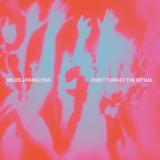
An EP of the darker side of electronic dance music is always a welcome addition to Especial. Up and coming producer / DJ Miles J Paralysis steps away from releasing on his own Crying Outcast label to explore left of centre, new wave and cosmic sounds; songs woven from his own vocals and samples.
A love of Dub, Hip Hop and Electro-Funk led into electronic music. Sampling TV shows, making beats, jamming. Exposed to Leeds and Manchester club cultures, seeking the more experimental. African Head Charge, Muslimgauze, The Rootsman and Weatherall were early influences in forming a no rules philosophy.
Born and raised around West Yorkshire, the beauty and bleakness of the moors have a strong bond on Miles Henry aka Miles J Paralysis and his music. Folklore and the occult link and connect an interest in Northern Hauntology. Unresolved histories, stuck between past glory and phantoms of possible futures.
The EP starts with It’s Only Shadows Talking. A play on the Paralysis persona, the spectral dub house groove meets industrial overtures, encasing his own eerie and unsettling vocals to begin the narrative.
Don’t Forget The Ritual takes a direct link from British folk traditions. Sacred and ceremonial; the laid-back breakbeat, samples and delays are the transition to the evocative embrace of melancholia.
Come On Fleet, the hypnotic Latin (vocal) sample creates a lurking murmuration, rimshot percussion meets gothic sound design for the EPs’ most straight forward and direct club cut.
Surreal and dreamlike soundscape, closing track The Delicate Fairytale is the perfect platform for Miles own phantasm. Inspired by the stories of Dorothy K Haynes and Robert Hickman, the pervading sense of a David Lynch aesthetic, exploring the nostalgic nature of memory.
This new Mysteries drop is pure Mental Neo Hard Trance! Bringing you 4 producers that at the moment are pushing their own style thereby referencing oldschool HardTrance and PsyTrance - in a good way minus the cringy cheese. Gateway tunnel vision stuff, mental in the true sense.
A: Eat Your Mind & L'Enfant D'La Plèbe – Up Into The Ether, 33 rpm; Pulse 160
A 15 Minute epic journey into the upper spheres of the ether with a superb break and a completely new track beginning, screams of ecstasy guaranteed. Sublime!
B1: Neurotribe – Thetra 6:41 Pulse 165
A driver to push the crowd forward, pure dancefloor energy! Stripped down for efficiency the track is building the tension and ascending the stairway to full Noom. Commander Tom would approve.
B2: Pneumatix – The Return Of Mich 7:05 Pulse 170
A driving minimal workout, heavily tinted with Psytrance swirls. Focusing on a few outstanding sound sculptures, bringing them to the front, holographic and vivid. A finely calibrated system will drive the audience crazy. Be careful with the minds of other people, license required.
12“ Vinyl release is limited to 300 copies, includes digi-codes and comes in a unique full cover artwork with 2 sided inlay /poster and sticker by Darkam and TDSiGNZ,
Mastering Stefan ZMK. Transparent blue vinyl.
Mastering: Stefan ZMK
Artwork: Darkam
"Askew indie rock thrills, bubbling, synth-flecked and sitting at a perpendicular to the mundanity of the everyday" - Clash
London-based French chanteuse, multi-instrumentalist & composer Clémentine March shares her new single of entrancing avant-pop ‘After The Solstice’, from her upcoming new album ‘Powder Keg’.
Enriched by influences from jazz, folk and Brazilian music, ‘After The Solstice’ was initially inspired by a time spent touring the UK with acclaimed folk singer Naima Bock. For Clémentine, the song explores “the theme of memory and reminiscence” and employs an absorbing sense of cyclical repetition; a musical device used “to evoke the deja vu sensations we all experience in life”.
Out of life on the road, everyday recurrence and contemplative retrospection, Clémentine creates a profoundly hypnotic anthem on ‘After The Solstice’, both mellow and fervent. Evoking the likes of Stereolab, The Raincoats and Cate Le Bon, it’s a mesmeric singalong of graceful vocal lilts and poised musicianship, with every element moving in beautiful unison.
Recorded & arranged with Ollie Chapman (bass) & Sophie Lowe (drums), and featuring vocal contributions from Naima Bock, Sophie Jamieson, Katy J Pearson, MF Tomlinson, Marika Tyler-Clark, Robyn's Rocket and Alabaster DePlume, ‘After The Solstice’ is the first glimpse of Clémentine’s third album ‘Powder Keg’, following the rich international eclecticism of her debut album ‘Le Continent’, and the beguiling intimacies of her second LP ‘Songs of Resilience’.
- 1: Spinning
- 2: Heaven
- 3: Backseat
- 4: Tear
- 5: Lamp
- 6: Heart Breaks
- 7: Visual
- 8: In The Sky
- 9: Dreams For Somebody Else
- 10: Thinking Of You
Preston duo White Flowers announce new album, Dreams For Somebody Else - due for release 1st May 2026 via The state51 Conspiracy.
White Flowers, the long-running collaboration between Joey Cobb and Katie Drew, exists within what they call “the realm” – a shared creative space, wherein time, rather than being a restrictive force, is fluid and boundless, and music exists as an endless conversation with their past and present selves. Adopting what the band describe as a “sketchbook” approach to writing, White Flowers is the product of a decade’s worth of recordings - snippets nestled away on hard drives, only to truly make sense years later.
On Dreams For Somebody Else, the band expand upon the dark-hued dream pop of their debut, channeling the catharsis of dance music via repetitive structures and “sad, euphoric sounds”. Working alongside LCD Soundsystem and Hot Chip’s Al Doyle on production, the album maps out a mosaic of soaring choruses that swirl around imposing arrays of synths, guitars, and percussion.
Through this new lens, the band explore themes of isolation, dissociation and identity - drawing inspiration from Annie Ernaux’s The Years. “Whilst recording the songs for ‘Dreams For Somebody Else’, we really connected with the concept of Annie Ernaux’s book, ‘The Years’ - a ‘collective autobiography’ pieced together from mismatched fragments from her past, conjuring the effect that she’s merely an observer of her own life. This concept merges into the White Flowers world, where time, rather than being restrictive, is fluid and boundless, with our music existing as an endless conversation with versions of ourselves at different stages of our lives.”
“The album has that same feeling of disassociating from your own life, because you’re just blending into everyone else”, the band explains. “There’s a sadness there, because it’s as if you’re looking back on things that happened to you, and they feel like they don’t belong to you anymore”. It’s the dull ache of nostalgia intertwined with a sense of wonder at what could lie ahead - the hopeful optimism and endless loss that defines the human experience. “It’s this idea of identity not being a fixed thing, but something that’s always changing. It’s a fluid thing, similar to time. Things aren’t really fixed, but rather in a constant state of change. It’s important to remember that we’re all going through that.”
Repress!
Every once in a while, a record comes along which resonates in a special way, stands the test of time, and brings the same reaction to the dancefloor now as it did all those years ago. 'Groovejet (If This Ain’t Love)' is one of those records, a classic in every sense of the word. Originally released in 2000, Defected are, re-releasing this club essential for new and original fans alike in a special, limited edition deluxe remix reissue.
This unique two vinyl pack comes in full colour gatefold sleeve with augmented reality cover that will come to life once you scan the mask image on your phone accompanied by a four page 12” insert written by Spiller detailing the full story of ‘Groovejet’; from original production, early reactions, chart success and new 2021/22 remixes.
The releases features the original versions plus new mixes Purple Disco Machine & Lorenz Rhode, Riva Star, Breakbot & Irfane and Harvey Sutherland. Exclusive to the vinyl are Riva Starr’s Skylight Mix and the Harvey Sutherland Instrumental version.
Double 12" release
The Story — From the Streets of Rome to the Male Productions Label
In the early 1990s, Rome lived in a kind of suspended moment. The city was still tied to its historic clubs, yet in the outskirts—inside abandoned warehouses, quarries along the coastline, and the wooded parks north of the capital—something new was beginning to stir. A nocturnal, constantly shifting movement fuelled by a hunger for freedom and a sonic curiosity that reached far beyond the mainstream.
Moving through this ferment was Francesco “Chicco” Furlotti. First an organizer of unconventional parties and underground nights, he soon became one of the driving forces behind Rome’s itinerant rave scene. Furlotti sensed that a wave of change was about to sweep across the city. It wasn’t just about parties: it was the rise of a culture, a new way of thinking about music, community, and belonging.
It was within those nights—later held with official permits, properly built sound systems, and an ever-growing crowd—that Furlotti recognized the existence of a distinctly Roman sound, and the need to capture it, preserve it, and give it tangible form.
So, in 1991, he decided to take a bolder step: to found an independent record label—small, determined, and far removed from the commercial logic that dominated at the time.
That was the birth of Male Productions.
Male was not a label like any other: it was a workshop, a gathering point, a creative hub where DJs, producers, friends, and wanderers converged. Within that environment, an artistic core took shape—Stefano Di Carlo, Leo Young, and Mauro Tannino, along with other collaborators orbiting around Furlotti. From their synergy emerged a project whose very name declared its mission:
The True Underground Sound of Rome.
The collective did not simply aim to release music; it sought to tell a story of Rome through sounds that defied categorization: house, techno, ambient, electronic mysticism, psychedelic visions… a unique blend, instantly recognizable, emotional, and experimental. The sessions unfolded using essential yet razor-sharp gear: Roland drum machines, analogue synthesizers, Akai samplers, stripped-down mixers. Few tools, endless imagination.
The first result of this work was the 12” Secret Doctrine, released in 1991 in an extremely limited run—around 500 promotional copies, according to accounts. The record captured something that until then had floated only in the air of Roman raves: enveloping atmospheres, deep rhythms, melodies built to make the mind travel far beyond the dancefloor. A sound that did not imitate what was happening in Detroit, London, or Berlin, but absorbed those influences and re-sculpted them with a distinctly Roman sensibility.
Yet, precisely because it was independent and detached from commercial circuits, Male’s output remained sparse: few EPs, few copies, irregular distribution. Over time, those records became rare artifacts—almost mythical objects within the Italian electronic scene. The legacy of Male Productions seemed destined to survive only in the memories of those early years, in the stories told after raves, and in the private archives of a handful of collectors.
Many years later, thanks to the almost accidental rediscovery of a few original copies of the first two releases issued by Male Productions, it became possible to undertake a meticulous process of recovery and restoration of the audio etched into those grooves, with the aim of preserving as fully as possible the quality and character of that unrepeatable sound.
We are therefore able today to present — at last in a complete and faithful form — the first two mixes created for Male Productions, now released on a double vinyl that brings back into the present the exact moment when it all began: the nomadic nights of the raves, Furlotti’s vision, the creativity of Di Carlo, Young and Tannino, and the sonic identity of a Rome in the midst of transformation.
This is not merely a reissue.
It is a historical document.
A fragment of a culture that changed the city.
The authentic sound of the Roman underground, finally returned to the world.
- A1: A Path Into Unknown
- A2: Can't Wait For Today (Feat. Finnoh)
- B1: Disclosed
- B2: Forbidden Truth
- C1: Open The Door
- C2: Mind Extraction
- D1: Take A Break (Feat. Mystic State)
- D2: Infection Of Lies
- E1: Trigger Activation
- E2: Dangerous Road
- F1: This Is My Rap
- F2: 4 Am (Feat. Congi)
- G1: Bubs (Feat. Khromi)
- G2: Hard Choice
- H1: Ballistics
- H2: My Feeling (Feat. Nst)
Kercha’s debut album ‘Open The Door’ arrives this April via DNO Records. The Black Sea artist’s mystical, disorienting style has set the tone for the label since he dropped the inaugural release six years ago. Now, across 16 tracks — including collabs with Mystic State, Congi, NST, Khromi and Finnoh — his smoky sampledelic dubstep is tighter, heavier, and more curious than ever, with a new sense of danger and bubbling rage that feels fit for our chaotic times.
Themes of movement and change course through the LP. On the opening gambit ‘A Path Into The Unknown’, twinkling arpeggios emerge from the gloom like stars lighting the way. Tracks like the eponymous ‘Open The Door’ and ‘Mind Extraction’ deliver that classic Kercha sound, where left-field samples dart in at right angles. ‘Dangerous Road’ weaves between the call and response action of grotty stabs and devilish subs. ‘Take A Break’, featuring Mystic State, goes on the attack with searing acid. ‘Can’t Wait For Today’, though lethargic in its pace, sees San Francisco-based rapper Finnoh deliver stream-of-consciousness bars that skewer our present and nudge us to revolution.
Work took place over the course of several years, during which Kercha relocated with his family from Russia to Georgia, where he now resides in the capital, Tbilisi. “Sometimes I wrote music while travelling on a bus, sometimes late at night while my family was asleep, sometimes just sitting on the grass in a park, and of course in my home studio as well,” he says. “By the time the album was finished, it included music from different periods, and it may vary in sound and concept.”
Any major upheaval in life will result in moments of hardship, but also hope. Both can be found throughout ‘Open The Door’. There’s times when the darkness threatens to envelope everything: during the cold, crackling ‘Disclosed’ and the eerie, dystopian ‘Infection Of Lies’; on ‘Trigger Activation’, with its grunting lows and broken glass hook, and ‘Ballistics’, where a wall of sub-bass is pierced by shrapnel stabs.
The balancing light comes on ‘4 AM’, featuring Nottingham duo Congi, when clashing swords and cinematic strings, meet a soft Rhodes piano — the juxtaposition between heavy low-end and floaty keys and vox reflecting those moments of transcendence often found in the early hours. From the injection of garage energy on ‘Bubs’, with Edinburgh’s Khromi. And on with ‘My Feeling’, featuring South Russian vocalist NST, which closes the album on a deep but expansive note, bookending the experience with more starlight synth tones.
“It’s a reflection of my life journey and the changes connected with emigration and overcoming various difficulties,” explains Kercha. “This period means a lot to me, which is why the album includes tracks from the time of preparing to leave up to adapting to a new country.”
Still, he wants listeners to be able to derive their own understanding. “I think the essence lies in the ability to contemplate, not in any predetermined meaning,” he says. “I can only say one thing: thank you for appreciating what I do and for your support. I hope it inspires you to make the same firm decisions to change for the better as it did for me.”
Out via 4 x 12” vinyl, ‘Open The Door’ is a captivating artistic statement, showcasing the journey of an artist with a truly original signature sound — a rarity that should be treasured and celebrated.
Rhythms of postmodern realism at the very bottom of the DNO.
2026 Repress
Anenon's tenor saxophone breathes an emotive contemplation on loss, meshed with sustained piano and field recordings. 'Moons Melt Milk Light' is a hyper-personal statement contained in a visceral beauty.
LA native Anenon returns with a highly anticipated new album 'Moons Melt Milk Light' on Tonal Union, bearing his most personal, expressive, and arresting works to date. Anenon is the ongoing solo studio and live project of Brian Allen Simon, whom since 2010 has released multiple albums and EPs to critical acclaim, including the highly revered 'Tongue' (2018) and 'Petrol' (2016).
'Moons Melt Milk Light' is direct, efficient, and unwavering in its immediacy. Anenon departs from the electronics of previous works, and embarks on a reductive, almost entirely acoustic approach consisting of piano, tenor saxophone, bass clarinet, and field recordings. All of the music was improvised with everything recorded as either a first or second take with no edits. Any layering happened fast and in the moment, and yet the sonic architecture of the whole feels both planned and refined.
"I feel a kinetic and messy honesty that doesn't exist in any of the other music I've ever made. There is also a sense of being settled, of calm. There is no faking it here."