Search:pino r
Otto A Totland's modern compositional elements are most widely recognized as half of the Norwegian duo Deaf Center, where his melancholic, intricate piano work provides haunting relief to the beds of noise and deep strings from Erik K Skodvin. Pinô is the first full-length release by Totland, though his solo work has been released once, as the 5-minute A-side of Sonic Pieces 7inch Harmony From the Past. Otto's previously brief vignettes are now expanded into a fully personal realization of his own style.
Initial track Open fills itself with heavy, knowing pauses that quickly become overwhelmed with the desire to understand what's to come. Each silence leads into quick flutters of keys, preparing the listener for a vast terrain of giddy beauty, bleak depths, and true contentedness. Pinô quickly recalls deep winter; in front of a fireplace for days on end, you lose how far along you've ventured into the 18 tracks without any idea how far is left to go. The experience feels inevitable, with no other option but to curl up somewhere cozy and appreciate the sense of timelessness that Totland has created. His album is a haunting modern compositional treasure, expressed through instrumentals completely unique to Totland and captured masterfully by Nils Frahm at Durton Studios.
With Pinô, Otto A Totland appears out of the Norwegian landscape, sharing an achievement that will provide a relief during the brooding winter darkness. Though a highly personal endeavor, the recognizable continuation of Totland's compositions will attract fans of Deaf Center, and the cinematic and classical components of his solo work will hold sway for those familiar with Harold Budd or Dustin O'Halloran.
The Pinô 2nd edition LP comes in a reversed cardboard jacket, printed in- and outside with full tone colours and holds printed innersleeves with the original artwork.
- A1: Osten Währt Am Längsten
- A2: Essen Dann Schlafen
- A3: Co Co Pino
- A4: Kinderfunk
- A5: Nacht Arbeit
- A6: Ich Gebe Dir Ein Stück Von Mir
- A7: De Panne
- B1: Gewalt
- B2: Gib's Mir
- B3: Auf Wiedersehen
- B4: Das Ist Liebe
- B5: Was Ist Eine Welle
- B6: Anzufassen Und Anzufassen
- B7: Volkstanz
- B8: Die Lustigen Stiefel
- B9: Die Kleinen Und Die Bösen
- B11: El Basilon
- B12: Y La Gracia
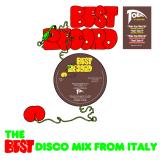
The long-awaited reissue of Toba makes it clear, once and for all, to fans and industry insiders that disco music produced in Italy between the late 70s and early 80s had no chance of success. What was disparagingly called "spaghetti disco", considered a poor imitation of real American disco music, only good for Japanese cartoons. This was the main reason that prompted Italians to record their songs abroad, as Fratelli La Bionda with their pseudonym D.D.Sound in Munich. Luigi Figini, with "Supercool" and "Percussion Sundance" by Edo Martin and Pino Santapaga (the same as "Step By Step" by Koxo), claimed that Kash was a one-off Swedish disco project, a lie that came to light when an Italian test pressing from the previous year, made by GDB, was posted !!! Amin-Peck followed the trend of passing off their songs as foreign music on the intuition of their Roman producers. So ''Love Disgrace'' was released on 7'' by a label called Connection, which never really existed, created for the purpose by Giancarlo Meo, confident that this would bring success to the Bolognese duo who were already creating 'proto Italo-Disco tracks' with a new-wave trend. To make the whole operation seem real, the London agency Ellie Jay Ltd. was involved, contacting Andy Fernbach of Jacobs Studios Ltd. The vinyl was also produced in the UK, otherwise the deception would have been discovered, then imported to Italy by Best Record. Italo-Disco was officially born after this, in 1982, not before! Everything makes sense now ! Real events that actually happened and purely invented names and anecdotes. Just think, even the image of Tony Balch used for the cover of Toba was taken from Grand Theft's 1978 album "Have You Seen This Band?" and reproduced on the new redesigned cover, as were the heads of the other musicians. The idea of a real band called Toba had finally come to fruition and would lead to a second sensational success the following year. Now it all makes sense! Facts and anecdotes that really happened and names and circumstances that are purely fictional. Finally, everything adds up! Real things and invented names of musicians and collaborators. It's important to clarify what we've said above, but we haven't talked about "Make Your Mind Up" and "Don't Take It" and the two masterful remixes performed by Dave Mathmos. In short: with the original versions we'll make Italo-Disco purists happy, with the remix versions we'll please new younger followers with more modern sounds and versions more in line with today's tastes and trends.
- 1: Assassins
- 1: 2The Field Of Wonders
- 1: 3Fire Eater
- 1: 4Attila Of The Sea
- 1: 5Raven
- 1: 6Poor Idiot
- 1: 7The Land Of Toys
- 1: 8Dead Blue Fairy
- 1: 9Addios, False Friends
Piano-driven post-rock band We Stood Like Kings from Belgium celebrate 15 years of existence with the release of their sixth album, Pinocchio, coming out via Kapitän Platte. The 9-track, 49-minute concept album revisits the world-famous initiatory tale of Pinocchio through a dark and violent lens of betrayal and power struggles."This really feels like We Stood Like Kings 2.0, while remaining unequivocally us. It might very well be the record we've always wanted to make," says pianist Judith Hoorens. With its extended use of distorted synths and heavy post-metal riffs, Pinocchio clearly marks a turning point in the band's history.
- A1: Hurts And Noises
- A2: Wake Up
- A3: I Don't Wanna Be A Rich
- A4: Terrorist Bad Heart
- A5: Provocate
- A6: Lucifer Sam (Pink Floyd)
- B1: Happy!?
- B2: So Lazy
- B3: I Feel Down
- B4: Stupido
- B5: Guilty
- B6: Caroline Says (Loo Reed)
UILTY RAZORS, BONA FIDE PUNKS.
Writings on the topic that go off in all directions, mind-numbing lectures given by academics, and testimonies, most of them heavily doctored, from those who “lived through that era”: so many people today fantasize about the early days of punk in our country… This blessed moment when no one had yet thought of flaunting a ridiculous green mohawk, taking Sid Vicious as a hero, or – even worse – making the so-called alternative scene both festive and boorish. There was no such thing in 1976 or 1977, when it wasn’t easy to get hold of the first 45s by the Pistols or the Clash. Few people were aware of what was happening on the fringes of the fringes at the time. Malcolm McLaren was virtually unknown, and having short hair made you seem strange. Who knew then that rock music, which had taken a very bad turn since the early 1970s, would once again become an essential element of liberation? That, thanks to short and fast songs, it would once again rediscover that primitive, social side that was so hated by older generations? Who knew that, besides a few loners who read the music press (it was even better if they read it in English) and frequented the right record stores? Many of these formed bands, because it was impossible to do otherwise. We quickly went from listening to the Velvet Underground to trying to play the Stooges’ intros. It’s a somewhat collective story, even though there weren’t many people to start it.
The Guilty Razors were among those who took part in this initial upheaval in Paris. They were far from being the worst. They had something special and even released a single that was well above the national average. They also had enough songs to fill an album, the one you’re holding. In everyone’s opinion, they were definitely not among the punk impostors that followed in their wake. They were, at least, genuine and credible.
Guilty Razors, Parisian punk band (1975-1978). To understand something about their somewhat linear but very energetic sound, we might need to talk about the context in which it was born and, more broadly, recall the boredom (a theme that would become capital in punk songs) coupled with the desire to blow everything off, which were the basis for the formation of bands playing a rejuvenated rock music ; about the passion for a few records by the Kinks or the early Who, by the Stooges, by the Velvet mostly, which set you apart from the crowd.
And of course, we should remember this new wave, which was promoted by a few articles in the specialized press and some cutting-edge record stores, coming from New York or London, whose small but powerful influence could be felt in Paris and in a handful of isolated places in the provinces, lulled to sleep by so many appalling things, from Tangerine Dream to President Giscard d’Estaing...
In 1975-76, French music was, as almost always, in a sorry state ; it was still dominated by Johnny Hallyday and Sylvie Vartan. Local rock music was also rather bleak, apart from Bijou and Little Bob who tried to revive this small scene with poorly sound-engineered gigs played to almost no one.
In the working class suburbs at the time, it was mainly hard rock music played to 11 that helped people forget about their gruelling shifts at the factory. Here and there, on the outskirts of major cities, you still could find a few rockers with sideburns wearing black armbands since the death of Gene Vincent, but it wasn’t a proper mass movement, just a source of real danger to anyone they came across who wasn't like them. In August 1976, a festival unlike any other took place in Mont-de-Marsan – the First European Punk Festival as the poster said – with almost as many people on stage as in the audience. Yet, on that day, a quasi historical event happened, when, under the blazing afternoon sun, a band of unknowns called The Damned made an unprecedented noise in the arena, reminiscent of the chaotic Stooges in their early adolescence. They were the first genuine punk band to perform in our country: from then on, anything was possible, almost anything seemed permissible.
It makes sense that the four+1 members of Guilty Razors, who initially amplified acoustic guitars with crappy tape recorder microphones, would adopt punk music (pronounced paink in French) naturally and instinctively, since it combines liberating noise with speed of execution and – crucially – a very healthy sense of rebellion (the protesters of May 1968 proclaimed, and it was even a slogan, that they weren’t against old people, but against what had made them grow old. In the mid-1970s, it seemed normal and obvious that old people should now ALSO be targeted!!!).
At the time, the desire to fight back, and break down authority and apathy, was either red or black, often taking the form of leafleting, tumultuous general assemblies in the schoolyard, and massive or shabby demonstrations, most of the time overflowing with an exciting vitality that sometimes turned into fights with the riot police. Indeed, soon after the end of the Vietnam War and following Pinochet’s coup in Chile, all over France, Trotskyist and anarcho-libertarian fervour was firmly entrenched among parts of the educated youth population, who were equally rebellious and troublemakers whenever they had the chance. It should also be noted that when the single "Anarchy in the UK" was first heard, even though not many of us had access to it, both the title and its explosive sound immediately resonated with some of those troublemakers crying out for ANARCHY!!! Meanwhile, the left-wing majority still equated punks with reckless young neo-Nazis. Of course, the widely circulated photos in the mainstream press of Siouxsie Sioux with her swastikas didn’t necessarily help to win over the theorists of the Great Revolution. It took Joe Strummer to introduce The Clash as an anti-racist, anti-fascist and anti-ignorance band for the rejection of old-school revolutionaries to fade a little.
The Lycée Jean-Baptiste Say at Porte d’Auteuil, despite being located in the very posh and very exclusive 16th arrondissement of Paris, didn’t escape these "committed" upheavals, which doubled as the perfect outlet for the less timid members of this generation.
“Back then, politics were fun,” says Tristam Nada, who studied there and went on to become Guilty Razors’ frontman. “Jean-Baptiste was the leftist high-school in the neighbourhood. When the far right guys from the GUD came down there, the Communist League guys from elsewhere helped us fight them off.”
Anything that could challenge authority was fair game and of course, strikes for just about any reason would lead to increasingly frequent truancy (with a definitive farewell to education that would soon follow). Tristam Nada spent his 10th and 11th unfinished grades with José Perez, who had come from Spain, where his father, a janitor, had been sentenced to death by Franco. “José steered my tastes towards solid acts such as The Who. Like most teenagers, I had previously absorbed just about everything that came my way, from Yes to Led Zeppelin to Genesis. I was exploring… And then one day, he told me that he and his brother Carlos wanted to start a rock band.” The Perez brothers already played guitar. “Of course, they were Spanish!”, jokes their singer. “Then, somewhat reluctantly, José took up the bass and we were soon joined by Jano – who called himself Jano Homicid – who took up the rhythm guitar.” Several drummers would later join this core of not easily intimidated young guys who didn’t let adversity get the better of them.
The first rehearsals of the newly named Guilty Razors took place in the bedroom of a Perez aunt. There, the three rookies tried to cover a few standards, songs that often were an integral part of their lives. During a first, short gig, in front of a bewildered audience of tough old-school rockers, they launched into a clunky version of the Velvet Underground's “Heroin”. Challenge or recklessness? A bit of both, probably… And then, step by step, their limited repertoire expanded as they decided to write their own songs, sung in a not always very accurate or academic English, but who cared about proper grammar or the right vocabulary, since what truly mattered was to make the words sound as good as possible while playing very, very fast music? And spitting out those words in a language that left no doubt as to what it conveyed mattered as well.
Trying their hand a the kind of rock music disliked by most of the neighbourhood, making noise, being fiercely provocative: they still belonged to a tiny clique who, at this very moment, had chosen to impose this difference. And there were very few places in France or elsewhere, where one could witness the first stirrings of something that wasn’t a trend yet, let alone a movement.
In the provinces, in late 1976 or early 1977, there couldn’t be more than thirty record stores that were a bit more discerning than average, where you could hear this new kind of short-haired rock music called “punk”. The old clientele, who previously had no problem coming in to buy the latest McCartney or Aerosmith LP, now felt a little less comfortable there…
In Paris, these enlightened places were quite rare and often located nex to what would become the Forum des Halles, a big shopping mall. Between three aging sex workers, a couple of second-hand clothes shops, sellers of hippie paraphernalia and small fashion designers, the good word was loudly spread in two pioneering places – propagators of what was still only a new underground movement. Historically, the first one was the Open Market, a kind of poorly, but tastefully stocked cave. Speakers blasted out the sound of sixties garage bands from the Nuggets compilation (a crucial reference for José Perez) or the badly dressed English kids of Eddie and the Hot Rods. This black-painted den was opened a few years earlier by Marc Zermati, a character who wasn’t always in a sunny disposition, but always quite radical in his (good) choices and his opinions. He founded the independent label Skydog and was one of the promoters of the Mont-de-Marsan punk festivals. Not far from there was Harry Cover, another store more in tune with the new New York scene, which was amply covered in the house fanzine, Rock News (even though it was in it that the photos of the Sex Pistols were first published in France).
It was a favorite hang-out of the Perez brothers and Tristam Nada, as the latter explained. “It’s at Harry Cover’s that we first heard the Pistols and Clash’s 45s, and after that, we decided to start writing our first songs. If they could do it, so could we!”
The sonic shocks that were “Anarchy in the UK”, “White Riot” or the Buzzcocks’s EP, “Spiral Scratch” – which Guilty Razors' sound is reminiscent of – were soon to be amplified by an unparalleled visual shock. In April 1977, right after the release of their first LP, The Clash performed at the Palais des Glaces in Paris, during a punk night organised by Marc Zermati. For many who were there, it was the gig of a lifetime…
Of course, Guilty Razors and Tristam were in the audience: “That concert was fabulous… We Parisian punks were almost all dressed in black and white, with white shirts, skinny leather ties, bikers jackets or light jackets, etc. The Clash, on the other hand, wore colourful clothes. Well, the next day, at the Gibus, you’d spot everyone who had been at this concert, but they weren’t wearing anything black, they were all wearing colours.”
It makes sense to mention the Gibus club, as Guilty Razors often played there (sometimes in front of a hostile audience). It was also the only place in Paris that regularly scheduled new Parisian or Anglo-Saxon acts, such as Generation X, Siouxsie and the Banshees, the Slits, and Johnny Thunders who would become a kind of messed-up mascot for the venue. A little later, in 1978, the Rose Bonbon – formerly the Nashville – also attracted nightly owls in search of electric thrills… In 1977, the iconic but not necessarily excellent Asphalt Jungle often played at the Gibus, sometimes sharing the bill with Metal Urbain, the only band whose aura would later transcend the French borders (“I saw them as the French Sex Pistols,” said Geoff Travis, head of their British label Rough Trade). Already established in this small scene, Metal Urbain helped the young and restless Guilty Razors who had just arrived. Guitarist for Metal Urbain Hermann Schwartz remembers it: “They were younger than us, we were a bit like their mentors even if it’s too strong a word… At least they were credible. We thought they were good, and they had good songs which reminded of the Buzzcocks that I liked a lot. But at some point, they started hanging out with the Hells Angels. That’s when we stopped following them.”
The break-up was mutual, since, Guilty Razors, for their part, were shocked when they saw a fringe element of the audience at Metal Urbain concerts who repeatedly shouted “Sieg Heil” and gave Nazi salutes. These provocations, even still minor (the bulk of the skinhead crowd would later make their presence felt during concerts), weren’t really to the liking of the Perez brothers, whose anti-fascist convictions were firmly rooted. Some things are non-negotiable.
A few months earlier (in July 1978), Guilty Razors had nevertheless opened very successfully for Metal Urbain at the Bus Palladium, a more traditonally old-school rock night-club. But, as was sometimes the case back then, the night turned into a mass brawl when suburban rockers came to “beat up punks”.
Back then, Parisian nights weren’t always sweet and serene.
So, after opening as best as they could for The Jam (their sound having been ruined by the PA system), our local heroes were – once again – met outside by a horde of greasers out to get them. “Thankfully,” says Tristam, “we were with our roadies, motorless bikers who acted as a protective barrier. We were chased in the neighbouring streets and the whole thing ended in front of a bar, with the owner coming out with a rifle…”
Although Tristam and the Perez brothers narrowly escaped various, potentially bloody, incidents, they weren’t completely innocent of wrongdoing either. They still find amusing their mugging of two strangers in the street for example (“We were broke and we simply wanted to buy tickets for the Heartbreakers concert that night,” says Tristam). It so happened that their victims were two key figures in the rock business at the time: radio presenter Alain Manneval and music publisher Philippe Constantin. They filed a complaint and sought monetary compensation, but somehow the band’s manager, the skilful but very controversial Alexis, managed to get the complaint withdrawn and Guilty Razors ended up signing with Constantin with a substantial advance.
They also signed with Polydor and the label released in 1978 their only three-track 45, featuring “I Don't Wanna be A Rich”, “Hurts and Noises” and “Provocate” (songs that exuded perpetual rebellion and an unquenchable desire for “class” confrontation). It was a very good record, but due to a lack of promotion (radio stations didn’t play French artists singing in English), it didn’t sell very well. Only 800 copies were allegedly sold and the rest of the stock was pulped… Initially, the three tracks were to be included on a LP that never came to be, since they were dropped by Polydor (“Let’s say we sometimes caused a ruckus in their offices!” laughs Tristam.) In order to perfect the long-awaited LP, the band recorded demos of other tracks. There was a cover of Pink Floyd's “Lucifer Sam” from the Syd Barrett era – proof of an enduring love for the sixties’ greats –, “Wake Up” a hangover tale and “Bad Heart” about the Baader-Meinhof gang, whose actions had a profound impact on the era and on a generation seeking extreme dissent... On the album you’re now discovering, you can also hear five previously unreleased tracks recorded a bit later during an extended and freezing stay in Madrid, in a makeshift studio with the invaluable help of a drummer also acting as sound engineer. He was both an enthusiastic old hippie and a proper whizz at sound engineering. Here too, certain influences from the fifties and sixties (Link Wray, the Troggs) are more than obvious in the band’s music.
Shortly after a final stormy and rather barbaric (on the audience’s side) “Punk night” at the Olympia in June 1978, Tristam left the band ; his bandmates continued without him for a short while.
But like most pioneering punk bands of the era, Guilty Razors eventually split up for good after three years (besides once in Spain, they’d only played in Paris). The reason for ceasing business activities were more or less the same for everyone: there were no venues outside one’s small circuit to play this kind of rock music, which was still frightening, unknown, or of little interest to most people. The chances of recording an LP were virtually null, since major labels were only signing unoriginal but reassuring sub-Téléphone clones, and the smaller ones were only interested in progressive rock or French chanson for youth clubs. And what about self-production? No one in our small safety-pinned world had thought about it yet. There wasn’t enough money to embark on that sort of venture anyway.
So yes, the early days of punk in France were truly No Future!
An album like a film, a childhood like a journey.
With Rêves, Senbeï unveils the most intimate and ambitious work of his career. Known for his unique blend of electronic music, hip-hop, and Asian sounds, the beatmaker reinvents himself here in an orchestral and cinematic universe, a far cry from his previous albums.
Inspired by the great soundtracks of children's adventure films—The Goonies, The Neverending Story, Charlie and the Chocolate Factory—Rêves is a sonic immersion where childhood nostalgia meets the emotional power of an orchestra.
A unique symphonic production.
For the first time, Senbeï has called upon a 15-piece orchestra, recorded in conditions close to those of film music. Strings, wind instruments, and electronic textures echo each other to create a rich, evocative universe, filled with luminous melodies and magical tension. This album is not just a collection of tracks: it is an adventure to be listened to like reading a story or watching a film.
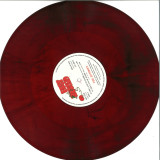
Tunnel was made in Naples in 1978 by Giorgio Verdelli and Danilo Rustici only on 7inch and it was the theme song for two RAI radio programs. Going through the names of the musicians we begin with the inimitable voice and the splendid guitars of Danilo Rustici, then passing through the saxophones of Enzo Avitabile we arrive at the keyboards of Joe Amoruso, musician-arranger who left a great void with his untimely death. For Joe, who crossed his experience with Premiata Forneria Marconi, Zucchero, Vasco Rossi, Mauro Pagani and was part of that 'dream team' of Pino Daniele - made up of technically extraordinary musicians, but above all gifted with an inimitable sound - this one-off project represented his recording debut. 'Tunnel Lights' and 'Speed Up' have been brought to light by Dario Di Pace and Claudio Casalini, two visionaries who believe that Neapolitan music is a sonic mixture of ancient and modern musical registers even if it sometimes develops a conflict between tradition and modernity as the recovery of popular tradition is strongly opposed to the push for innovation. This therefore is the reason for a 12" reissue in which the evocative original songs - from almost 50 years ago - are reflected in the new versions created by a bevy of talented DJ-arrangers including Massimo Berardi (with the bassist Luca Andreozzi) and by the industrious and passionate Francisco & Malkuth (ed: Francesco De Bellis and Cosimo 'Cosmo' Mandorino in disguise) in turn assisted by other zealous musicians and dee-jays - including the very good and always very collaborative Raffaele Arcella - who took part in a remix of this EP with enormous fervor The 12" reissue of Tunnel was released both on the classic black vinyl and in the very limited red vinyl version, in order to reflect the lips of the extravagant cover, a graphic work by another brilliant and multifaceted artist: Lino Vairetti, legendary singer of the historic prog rock band Osanna. The envelope developed by Best Record is embossed (front and back cover) to further enhance the passion that Neapolitan musicians have always had in knowing how to combine their roots with all the other musical genres of the world.
A 90 minute cassette-only mixtape taking in Filipino folk, rock, country & OPM from the 1970s, originally broadcast on NTS Radio back during the early months of the pandemic. One missed out of the collection of DINTE radio shows committed to tape as part of 10 year anniversary celebrations last year.
The year 2024 rolled out in a restless haze, leaving everything a bit cloudy. In search of vision, we sought the guidance of our shaman—through the steady beat of a drum, a deep transformation began. And bam, just like that, the balance was restored and everything fell into alignment. Tokyo, Paris, Zürich, and Helsinki—each location now linked in a cosmic force field.
Fast forward to May 2025, and we are presented with a lush underground journey. The eleventh Common Labour 12” features the works of Omar Santis, Flabaire, Thomas Wood and pothOles. So buckle up and enjoy the ride into the depths. Odd Jobs Vol.4 is a labour of love – hand-stamped and numbered, limited to 199 copies worldwide.
- A1: Cangilón
- A2: Piedras
- A3: Aquí
- A4: Agua Pa Fantasmas
- B1: Rio De Las Tumbas
- B2: Viento
- B3: Mi Viejita
- B4: No Hope
- C1: Radio Chomio (Con Eli Wewentxu)
- C2: Rio Radio Correspondencia Anfibia
- C3: 3Eee
- C4: F Collect
- C5: Even Heaven Is Uneven
- C6: El Azar
- D1: I, You
- D2: Heterodina
- D3: Sin Conexión
- D4: Sss1
- D5: Sss2
- D6: Sss3
he initial seed for this project was planted in 2020 when Nicolás Jaar wrote the song “Piedras” for a concert at the Museum of Memory & Human Rights in Santiago, Chile, which commemorates the victims of human rights violations during the military dictatorship led by Augusto Pinochet between 1973 and 1990. Between 2022-2023 it took on a new form as a radio play entitled 'Archivos de Radio Piedras', which was shared on a dedicated Telegram channel. In 2024, the play was converted into a 24 channel installation at the University Museum of Mexico City (MUAC), where it was exhibited for 5 months.
Piedras 1 and 2 is a collection of the tracks featured within the play, all new music by Jaar, but partly presented within the play as the music of Salinas Hasbún (the name a composite homage to Jaar's grandmothers, Graciela Salinas and Miriam Hasbún).
The play follows two friends mourning the disappearance of Salinas Hasbún, a musician and writer who vanished in the early 2020s. Although they live in a future where technology is advanced, they
resort to DIY radio methods because the anonymous group “Las 0cho” has launched a worldwide attack on undersea internet cables, causing a global internet blackout.
The play's central theme revolves around the idea that truths, memories and identities speak from the cracks (“rasgaduras”), or the "in-between" spaces ("en el entre"). This concept is supported by the
way much of the narration unfolds - in the liminal spaces between radio frequencies. The instability and transitory nature of a constantly shifting radio dial becomes not just a metaphor but the structure of the play itself. It’s in these moments of noise, static and interference that the deeper revelations of the story emerge. This disjointed, ever-changing medium mirrors the way memory and trauma operate within the play - non-linear, slipping through the gaps, found in fragments or ordinary moments, rather than direct transmissions of “official” historical accounts.
This notion reaches its climax at the end of the narrative, when a text is discovered in which Salinas speaks of finding a new number in a small pond in a cave mentioned in the first episodes of the radio play. This pond, inside the “cochlea of the world”, is seen as a way to introduce real-life randomness to computation. Embodied in the salt lakes of northern Chile, home to the world’s oldest bacteria, this randomness disrupts the rigid order of binary code, paving the way for a transformation of digital life.
First solo release by Nicolás Jaar since 2020’s Telas and Cenizas.
It's difficult to ''label'' the songs of this authoritative and necessary official reissue (after the shameful fake of 10 years ago). ''Zombi'' and ''In the Land of the Zombi'' are two electro disco-funks from 1979, therefore from three years before was born the ''Italo-Disco'' style, certainly more powerful, aggressive and more electronic than the ''Made in Italy'' disco style of the 2nd half of the 70s (Fratelli La Bionda, Pino Presti, Claudio Simonetti, Celso Valli and others.). The creation of the original 7" by Salvatore Ida, great musician and bandleader - to whom this excellent reissue is dedicated - was a sort of game for the authors of the two pieces: Federico Ida and Massimo Ida, were protagonists 4 years before of the Italian progressive rock scene with the sister Silvana Ida, Marcello Surace and Franco Vinci thanks to the immeasurable and acclaimed album ''Apoteosi''. So The Zombies were destined to pair with another easy '79 joke by the Ida brothers: ''Let's Go'' and ''Mustang'' by Sandwich, also reissued on 12inch by Best Record Italy. The Zombies comes out with the original artwork of the time, but in a full embossed picture sleeve and released in the classic black vinyl and on red vinyl with black shades (limited edition with red copies numbered manually (1/250: 2/250 and so on...) What else to add except that: the two long versions of ''Zombi'' and ''In the Land of the Zombi'' were re-edited by Massimo Berardi, always diligent and active, as well as tidy and aware of where he was putting his hands, are fundamental in order to complete this 12" fully remastered by Dom Scuteri.
"Deep Dancefloor Jams of African Disco, Funk, Boogie, Reggae & Proto Electro Music 1977-1986reggWhen a passionate DJ and crate digger intuitively selects music for a DJ compilation, without artistic compromise and without the burden of trends, AfroMagic vol.1 emerges from the depths of his soul. Herewith we present the new favorite phonomancer’s tool for all the DJs who experience the dance floor as a sanctuary and a source of freedom and love.
The most fundamental thing that defines African music is that it was created for dancing. In African dance, there is often no clear distinction between ritual celebration and social recreational entertainment – one can seemlessly merge with the other. Because dance and rhythm have more power than gesture and more richness than words, and because they express the deepest experiences of human beings, dance is in itself a complete and self-sufficient language. It is truly an expression of life with all of its emotions – joy, love, sadness and hope – without which there is no African music and dance. For the African people, dance and music are integral parts of the body and soul, thus depicting the expression of life, current emotional states, visions or dreams. Through hypnotic repetitive music and dance, people communicate with each other and with the souls of the dead, the animals, the plants, the stars, the Gods… They free the body and the spirit through ecstatic states, reaching a healing sense of freedom, happiness, and satisfaction.
Throughout history, this transcendental perception of rhythm and dance originating from Africa, influenced popular music worldwide, thus creating new living and breathing forms of musical genres – freeing them from their industrial mold. Funk, disco, soul, boogie, reggae, dancefloor jazz etc., developed in parallel all over the world. It is foolish to perpetually discuss where they originated from and who were the creators of all these fiery dance floor genres – being obvious that they directly or indirectly originate from the African continent and its people who were as well, over the centuries, influenced by disturbing socio-cultural factors of colonialism. However, no one can enslave the soul. The seeds of free and uninhibited dance and rhythm, true to their original form, initially first sprouted onto the USA’s fertile fields of clubbing and popular music while later evolving in other parts of the world.
The disco funk club culture manifested itself as a phenomenal explosion of artists and grooves in the second half of the 70s in the USA. Shortly it spread around the world continually reigning over charts in its various forms – to this day. Clubs emerged where the DJ is an almighty shaman and the dancers are a tribe united under one roof. This urban ritual had and still has a single goal: togetherness, freedom, and love. Clubs have evolved into temples where we free ourselves from the burden of a consumerist lifestyle and suppressed emotions – a place where we receive love and give love – to be who we really are.
Disco funk clubbing was such an influential global phenomenon that its influence can be observed in various other genres from the disco funk era i.e. progressive rock, which mutated by layering complex rock arrangements with a disco funk groove resulting in hybrids, highly sought by today’s diggers, producers and collectors. The profit-hungry music industry of the 80s very quickly commercialized the original disco funk sound by amputating of its original Afro groove to be able to easily ‘sell’ it globally. So, the original disco funk groove became underground again, and it has remained so until this day. Today, for a DJ to unearth that ravishing groove that will lead the dancers to the stars, he must dig passionately like a true musical archaeologist in search of that groove that picks you up after just a few initial beats. That groove which forces the atoms in your body to vibrate, that groove which unites the body and releases the burden.
The AfroMagic compilation series is created as a tool for real DJs who stick to the aesthetics and essence of clubbing.
This continuation of the Afromagic compilation by DJ Borovich was created in a private jam session which served as an escape route from intense and complex love problems.
Unconsciously driven by intuition and emotion and following a live mix tape framework where many tunes are arranged instantaneously, Borovich narrates his story with a strong rhythm that cuts loose even the most blocked off energy nodes and restores happiness to the spirit and the body.
The musical experience of the groove is completed by the lyrics of the songs, which symbolically give DJ Borovich universal answers to his questions arising from questioning the boundaries, nuances and other forms of love.
When considering that Borovich’s selection was created to facilitate an escape from the burdens of reality through rhythm and dance, we can be sure that Afromagic Vol. 2 will have a 100% uplifting, energized and spaced-out effect on the listeners.
The intro to A1, “Feeling Happy” by the Apostles, introduces us to an experienced and slow, cool and irregularly tight groove containing a confidently sung chorus that instantly gives a sense of freedom and hints at the remainder of Afromagic Vol. 2: “I’m gonna feel happy, ´cause I know I’m gonna be myself.” After the anthemic song mantra of the Apostles, Aigbe Lebarty uncompromisingly continues with a dirty disco rhythm. Acidified by accented synths that elevate it to shamanic levels and held together by a female tribal choir, we embark on an uncompromising ritual disco journey. Without a moment to take a breather the prog funk band Mighty Flames and their Road Man launch a highly vicious and raw, thick funk groove spiced with acid synths and dirty RnR breaks, raising the bar for the A side. Jimi Hendrix himself would surely praise it given the ultimate freedom and virtuosity in the solo sections. With the last tune on A side DJ Borovich decides to burn the floor with Geraldo Pino’s psychedelic, acid furious groove and lyrics which describe this HEAVY part of love problems: “The way she walk, the way she talk, the way she does a funky dances, she is really really heavy – that woman”.
While the A side represents a compact intoxicating afro groove machine that separates us from reality and lifts us up to the stars in over 23 minutes, the B side is a treasure trove of proto sub-genres gems. This selection represents the mission of the Afromagic: to find singular events in African recorded discography of popular music from the 70s and 80s that give evidence to the birth of new modern genres on the Dark Continent even before they emerged in the U.S.A. or Europe. The beginnings of electronic music influenced genres are represented back to back with 80s synth jazzy pop, all painted in African colours.
The B side opens big with Jake Sollo and a huge reggae blues number singing about the humiliation of a man – goosebumps guaranteed! “You think I’m nobody that’s why, you don’t know the way for me, I’m somebody I know, I found myself at last”. Adolf Ahanotu then enters the scene with a hard sliding tackle at B2 and an exotic rare disco funk dancefloor napalm. A ‘Sensation’ that would ignite even the coldest of introverts. While we approach the end of the compilation the narrative revolves again and takes a different turn. No less and no more than to the proto-electro that Baad John Cross serves us in “Give Me Some Lovin´”. The fat and repetitive broken electro synth groove, championing many early 90s electro tracks, is presented here without hesitation and with constant tension accompanied by a mantric chorus “Gimme some, gimme some, gimme some looooovin’, EVERBODY!!!”. Finally, we’re guided to the end of Afromagic Vol. 2 by Eji Oyevole’s 80s synth pop style presented in an authentic afro manner, giving us a glimpse at yet another released Afromagic edition, as well as giving an answer to DJ Borovich’s love problems. A smoothly broken electronic rhythm resembling electrified highlife sounds, carried on the wings of a virtuoso dreamy saxophone on top of which Eji presents the most intimate parts of himself. Finalizing the track with a symbolic chorus, on the surface referring to the dancefloor and simply having fun, but in actuality referring to the skill and happiness of living: “I´m a dancer, I can dance”. So, get up and dance among the stars with DJ Borovich and Afromagic.
A year on from the release of his critically acclaimed album ‘Billy Valentine And The Universal Truth’ released in collaboration between Flying Dutchman and Acid Jazz Records, Billy returns with a brand new take on a classic of conscious soul. Returning to the studio with Bob Thiele Jr and the band that is made up Larry Goldings, Pino Paladino, Jeff Parker, James Gadson and John Philip Shenale, he has recorded three new numbers for release on the deluxe version of the album. The first to be released is his take on Gil Scott-Heron’s ‘Lady Day & John Coltrane’ which held audiences in rapt attention when performed live over the last year.
For their next release, Futuribile looks to the work of Salerno star Carlo Fontana, presenting a set of hard-to-find & unreleased treasures titled ‘La Musica Del Sud.’
Carefully remastered at the West Hill Studio, the collection of tracks — which features contributing arrangements from Tullio De Piscopo — forms a moody pop funk paradise, with jazz horns and soul brass layered together, and amorous vocals crooning, supported by lush harmonizations and greasy gliding bass. Disco beats and exotic drums dance, prismatic pads and soft synths seek the stars, piano and guitar sing a spaced out blues, and amidst the moving grooves and deep swinging jams, moments of beautiful balladry emerge to touch the spirit.
Carlo Fontana's work is further testimony to a courtly and sophisticated musical aesthetic in vogue in Naples (and surrounding areas) between the 70s and 80s which had as its main proponents and protagonists exceptional musicians such as Joe Amoruso, Tony Esposito, Pino Daniele, Elio D'Anna, Enzo Cervo and many others.
"Tonight" is a captivating, extraordinarily song written and arranged by Paolo Gianolio (one of Mauro Malavasi's most valid collaborators), who strongly wanted Ivana Spagna as a vocalist. In those very early 80s Spagna used to lend her refined voice.to successful productions using various pseudonyms: Mirage, Carol Kane and Yvonne Kay and precisely Barbara York The piece released in 1982 with Delirium Records was then released in 1983 on Smash One Music by Pino Toma who jealously preserved it making it one of the many rare gems of Italo-Disco. Now after 40 years here it is revived by Best Record in all four original versions, perfectly remastered by Dom Scuteri.
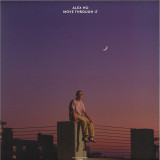
Debut album from Alex Ho out of Los Angeles.
In his foundational essay on Los Angeles, L.A. Glows, the essayist Lawrence Weschler speaks on the city's uncanny, immediately recognizable light; "The late-afternoon light of Los Angeles—golden pink off the bay through the smog and onto the palm fronds." Weschler traces the city's mysterious refracted light from the iconic paintings of David Hockney through the city's frequent portrayal on film and TV, noting its ability to put residents into a state of "egoless bliss."
Similarly, Alex Ho's new album for Music From Memory, 'Move Through It', radiates with the unmistakable LA glow. While the Pasadena native's studio work is just now coming to light, Ho has long been a fixture in the Los Angeles dance music scene, throwing what are perhaps the city's most musically expansive warehouse events and carving out a singular voice as a DJ, as heard on his brilliant Moony Habits show for NTS. The eight-track record, however, lands in a more contemplative zone, better suited for a golden hour drive than a night out.
Though it's his first record, 'Move Through It' is the accomplished work of a fully-formed artist, produced patiently between 2017 and 2020 with help from friends including Baba Stiltz, Phil Cho, Damon Palermo and John Jones. "Mark," the Koanic track conclusion side A, is an arpeggiated slow burn reminiscent of Pino Donaggio's brilliant score for Brian De Palma's 1984 film Body Double. Ho's stunning, pure falsetto soars above gentle melodies. "Miss Suzuki," the piece that originally caught the ear of MFM's Jamie Tiller and Tako, opens the record with a blue, cinematic sway. Ho's facility for poignant melodies—easily conveyed through saxophone, vibes, various keyboards and his own voice—shines on "College Crest Drive," as well as the title track. The lyrical "Move Through It" and the restrained and beautiful closing cut, "TYFC," are abetted by glimmering Kraut guitar figures courtesy of John Jones.
While Ho's rhythms and melodies paint a crystal-clear musical vision, the music's emotional centre is more elusive, indicative of a yearning feeling synonymous with the City Of Angels. Hitting these hazy and subtle notes, Move Through It falls within a canon of sun-addled records spanning from Herb Alpert's "Rotation" to Dam-Funk's Private Life trilogy as Garrett. An immersive and concise statement, Alex Ho's 'Move Through It' is as warm and uncanny as the city that inspired it, a definitive LA album.
- 1: Y Dechrau (Feat. Boy Azooga, Jessy Allen, Earl Jeffers, Andy Brown & Amanda Whiting)
- 2: Chware Teg
- 3: Thema Osian
- 4: Tyrchu (Feat. Gruff Rhys)
- 5: Dŵr Y Mynydd
- 6: Geiriau
- 7: Tynged
- 8: Trac Piano
- 9: Cynnau Tân (Feat. Carwyn Ellis)
- 10: Anturiaethau Pellach Capten Idole
- 11: Pino Ar Y Bâs!! (Feat. Darkhouse Family)
- 12: Brân Swît
- 13: Thema Nia (Ahmed)
- 14: Sidan Torri
- 15: Erlid Y Ddraig
- 16: Dwyrain Cymru
- 17: Un I Dewi (Feat. Andy Brown)
- 18: Maen Llia
- 19: Tad A Mab (Feat. Dafydd Brynmor Davies)
- 20: Diolch A Nos Da (Feat. Dafydd Iwan)
Don Leisure has cemented his name as one of the most forward-thinking and experimental beatmakers & producers within the current musical ecosystem. As well as being 50% of Darkhouse Family (alongside Earl Jeffers) he has collaborated with the likes of Angel Bat Dawid, Gruff Rhys, DJ Spinna and First Word label-mates Amanda Whiting & Tyler Daley (Children of Zeus). Garnering serious support from Lauren Laverne, Tom Ravenscroft, Huw Stephens, Gilles Peterson, Huey Morgan, The Vinyl Factory, Clash, Uncut and many more. Following the release of ‘Cynnau Tân (feat. Carywyn Ellis)’ (which gained support across BBC Radio from Tom Ravenscroft, Zakia & Huw Stephens) Welsh beatmaker Don Leisure announces the release of a new album ‘Tyrchu Sain’) as he returns with a new single ‘Tyrchu’ due for release on 22nd January 2025. ‘Tyrchu’ features the soft-spoken vocal stylings of Gruff Rhys over a gently rolling, tape saturated and expertly chopped instrumental, creating (in Gruff’s own words) ‘Shiny new beat-treasures with ghostly reflections of Welsh pop’s past - skillfully dug from Sain Records’ deepest veins’
A dedicated student of music, over the years, Don has amassed a vast encyclopaedic knowledge of music genres and subcultures, including a fascination with Welsh psychedelic folk music from the mid-20th century. This introduction was made by respected musician, producer & selector Andy Votel’s 2005 two-part compilation series ‘Welsh Rare Beat’ (in collaboration with Gruff Rhys and Don Thomas), comprising twenty-five tracks from Sain Records’ back catalogue. Now the oldest independent record label in Wales, Sain is a wildly influential bastion of home-grown Welsh talent, co-founded by Welsh-language folk singer Dafydd Iwan, whose music has seen a cultural resurgence in recent years with his 1983 song Yma o Hyd (We’re Still Here) becoming a huge anthem for Wales football fans. Set up in the Welsh capital, many of Sain’s early releases were recorded at Rockfield Studios in Monmouthshire, but in the early 1970s the record company moved to the Caernarfon area and opened their first recording studio in 1974 near Llandwrog. Announcing a huge digitisation project throughout 2024, Sain Records took on the mammoth task of painstakingly digitising their entire back catalogue spanning 55 years, working in partnership with the National Library of Wales the resulting archive then be submitted for to the National Library of Wales in Aberystwyth, preserving them for future generations to enjoy. Taking this period of rediscovery as an opportunity to reimagine their impressive inventory, Sain invited Don Leisure to dig into their musical treasure chest, creating a sprawling sonic tapestry from the dusty gems within. On this exhilarating excursion, Sain Records founder Dafydd Iwan explains: ‘Imagine someone gave you access to over 50 years of Welsh popular music – almost all of it unknown to you before. It would be a strange experience of discovery, an unknown territory which could baffle and excite. This happened to Jamal (Don Leisure) – and he was captivated by a world of music he barely knew existed, and when he was asked to distill the experience into one album, he immediately warmed to the idea. And this is the result – a kaleidoscope of sounds to encapsulate a half century of Welsh music. To call it unique would be superfluous: no-one could ever recreate this album. Listen, and enjoy.’.
The resulting product is ‘Tyrchu Sain' (translating to ‘Digging Sain’), a fearless and exploratory album, which sees Don put his signature unparalleled and unpredictable skills to work, weaving together moments of forgotten beauty into celestial and otherworldly compositions. The record features appearances by artists from Wales who have a similar obsession as Don Leisure in these classic Welsh rarities including Gruff Rhys, Carwyn Ellis, Earl Jeffers Amanda Whiting and Boy Azooga. A shimmering patchwork quilt of sound, ‘Tychru Sain’ traverses a shifting landscape of acid folk, eerie vocal melodies and interstellar soundscapes, propelled forth by crisp, head nod-inducing drums and grainy textures. Breathing new life into compositions lost to time, and paving a path for new listeners to discover the magic that lies within.
A moonstone glow infuses Boy Golden’s Best of Our Possible Lives, an album that finds its flow state. A pensive, questioning collection, Best of Our Possible Lives is informed by the artist’s intuitive, observational worldview, beaming honesty and levity in its quest for emotional balance. Buoyant, smooth and disarming, the music of singer-songwriter/producer Boy Golden is charmingly undefinable, drawing lines from the Tulsa sound to North Carolina indie, New Jersey DIY to swampy New Orleans folk. From opening riff to swirling final notes, Best of Our Possible Lives ripples like sun on the lake, an invitation to seek each our own bliss. Produced by Robbie Lackritz (Feist, Bahamas, Weather Station), Best of Our Possible Lives brought Boy Golden to Lucy’s Meat Market in Los Angeles with Pino Palladino (D’Angelo), Gabe Noel (Father John Misty), Joseph Shabason (Destroyer) and Abe Rounds (Meshell Ndegeocello) alongside Church of Better Daze founding members FONTINE and Austin Parachoniak. RIYL - Mk.gee, Waxahatchee, MJ Lenderman, Plant & Krauss’ Raising Sand, Paul Simon
An abstract painting with expressionist hues and futurist echoes, a mix between action painting and informal art: this is the first impression from Grischa Lichtenberger's live performance recorded at the Pino Pascali Museum in Polignano a Mare. The artist, based in Berlin, makes the rhythms creak, cuts them with a laser, weaves imaginative harmonic coils, smoothes with electric razors and draws figures with echoes and industrial clangs.
Then he uses ferrous materials that, with a precision lathe, are abraded and cause sparks. Suddenly steel springs fall to the ground, generating a cascade effect. In the distance, you can hear the roar of speeding cars and the ringing of bells.
Lichtenberger pulps, compresses, dilates, mixes, electrifies, heats up, liquefies: he does all this in just less than forty minutes, treating the sound material with violence, transforming it from time to time, shaping it and succeeding in the arduous task of controlling its effects. It is as if Luigi Russolo, Alva Noto and Thomas Brinkmann were closed in a workshop on the edge of a highway, parodying the famous definition of techno.
Giosuè Impellizzeri
- A1: Sofheso - Mnl
- A2: Shimetta-Inu - Bird Peck At Dead Dog
- A3: New Manuke - Fastest Motor
- A4: Ypy - Bfmix B-3
- A5: Jmt Synth Pinosaku - Tansun
- B1: Shimettainu - Dog Is Surrounded By Birds
- B2: Unbe - Vector Milk
- B3: Ypy - The Damo Ufo
- B4: Micro Futoshi - Reforest 1
- B5: Inoue Shirabe - Sleep Talk
- C1: Futoshi Moriyama - Time Limit
- C2: Opq - Ent
- C3: Futoshi Moriyama - Nico Electro
- C4: H Takahashi - 4
- C5: Micro Futoshi - Reforest 2
- C6: Unbe - 5 Cubic Meters
- D1: Bonnounomukuro - Enter The Exit
- D2: Futoshi Moriyama - Piano & Sampler
Enter a world unknown! Birdfriend is a cassette label run by Japanese musician/composer Koshiro Hino, aka YPY, who is also a founding member of the Osaka band goat. This compilation, available on CD and double vinyl, features 18 tracks by Japanese artists, from 2013-2017, previously available only on hard-to-find cassettes on the Birdfriend label, now available to you, the curious and courageous listener, worldwide on EM Records. Rejoice and enjoy the fractured rhythms and future-now timbres, questing intelligences and D.I.Y. energy, conveyed to you through hand-made synths, custom electronics, synths and samplers. Compiled by Hino, who also provides liner notes and cover art, these Japanese artists share a love of texture, semi-skewed rhythm, simple-yet-evolving structure, and a sense of humour; yet despite these similarities, there is a great variety across this release, making for an exciting and cohesive musical experience.
180 gram pressing.
Producer, DJ, multi-instrumentalist and live performer Alek Lee returns with his second LP, an immersive instrumental journey shaped by his raw, smoky, guerrilla-style production. Cold Feet invites you deep into the Alek Lee universe, rich with swirling synths, layered percussion, Balearic guitar lines and dub-infused horns.
From the psychedelic, Sade like grooves of the title track and “Too Soon,” both steeped in cinematic mystique, to the sun drenched energy of “Pino Pino” and “The Right Thing,” which shimmer with Balearic disco flair, the album glides effortlessly across moods and tempos. A highlight arrives with the summer dub anthem “Was Was Was,” featuring long time collaborator and former Shame On Us bandmate Yovav Arzi on electric guitar.
The journey winds down with “Illusions,” a sultry, downtempo banger laced with an oriental twist, before dissolving into the final track “Cold Feet Desert”, a return to stillness, barefoot on white desert sand beneath a star strewn sky.
With a career spanning over two decades, Alek Lee has carved out a unique space in the global music scene. Known for his long, genre defying DJ sets and dynamic live performances, he moves fluidly between dub, house, and his own idiosyncratic productions. As a solo artist and through projects like Shame On Us and Project Runaway, Alek has played some of Europe’s most respected venues and festivals, including Sisyphos, Kater Blau, Glastonbury, Garbicz and Fusion. His releases have earned radio play from BBC6’s Iggy Pop and NTS’s David Holmes and featured on Peggy Gou’s Boiler Room and France’s legendary Radio Nova.
Now based in Athens, Alek continues to evolve his distinctive sound with Cold Feet, his most expansive statement yet.
- A1: Show Me
- A2: Amore
- A3: Im Nin Alu-2000
- A4: Sixth Sense
- A5: My Ethiopian Boy
- A6: Ahava
- B1: No Time To Hate
- B2: You've Got A Friend
- B3: You
- B4: Give Me A Sign
- B5: One Day
Includes insert with lyrics
Featuring the songs "Im Nin Alu-2000", "Show Me" and "Give Me a Sign" a.o.
Limited edition of 750 numbered copies on gold coloured vinyl
Ofra Haza is the eponymous 1997 album by Israeli singer Ofra Haza. It was produced by Frank Peterson (Enigma, Gregorian) and features
Pino Palladino on the bass guitar. The album was recorded in Hamburg and at Abbey Road Studios in London and contains an updated version of the
hit song "Im Nin' Alu". It also features the singles "Show Me" and "Give Me a Sign".
This was Ofra Haza's final full-length studio album before her passing in 2000.
- Beauty Of The Beast
- Wait For The Blackout
- Absinthe
- History Of The World
- Life Goes On
- Smash It Up
- I Just Can't Be Happy Today
- Shadow Of Love
- Limit Club
- The Dog
- Disco Man
- Nature's Dark Passion
12-song PINOT NOIR RED VINYL LP, limited to 500 Copies! Not many people realise that The Damned have produced a fine array of songs with melodic, harmonic and rhythmic sophistication; with a depth of imagination and atmosphere. They spearheaded British punk, and yet diverse musical influences went into the crucible: UK and US psychedelia, Canterbury prog rock, and even classical and filmic musical influences abound. Now, with the return of drummer Rat Scabies the line-up is the same as that which produced many of these songs - with Monty on keys. Monty Oxymoron has played keyboards with The Damned since 1996, has written songs for the band, and played with Captain Sensible and Dr Space Toad before that. He is a retired psychiatric nurse and trained in art psychotherapy. Monty is keen on "free improvisation" and plays in and around Brighton where he lives. Monty has an almost impossibly eclectic collation of his music on Bandcamp, his YouTube channel, and shares ideas on various subjects on his Substack page (under his "real" name: Laurence Burrow.)
Bassist Pino Palladino hat als gefragter Studiomusiker mit vielen Giganten gespielt, darunter Elton John,
Tears for Fears, David Gilmour, D’Angelo und Adele. Sein Jazz-Talent spielte er mit Manu Katché, Dominic
Miller u.a. aus. 2021 erschien auf Impulse! Records „Notes with Attachments“, seine erste gemeinsame
Produktion mit dem Gitarristen und Multiinstrumentalisten Blake Mills.
Beider Mischung aus Jazz, minimalistischem Funk, Indie Rock und subtilen Melodien kam bei Hörern
und Kritikern an und wurde sogar mit Joni Mitchell’s “Hejira” und Miles Davis’ “Bitches Brew” verglichen.
Jetzt kehren Palladino und Mills mit ihrem zweiten gemeinsamen Album auf Impulse! Records zurück, das
ihren ganz eigenen Sound fortführt und weiterentwickelt.
W133 presents its first solo EP by label Papa Pino Peña! It’s the first full release by him on the label, for which he has crafted 3 new original tunes in his signature percussive sound, along with one re-released track! First up is rumba-driven tech house wobbler “Little Closer”. The UK-influenced stabs and the cheesy vocals do indeed make you want to move a little closer together on the dancefloor and shake it out. On A2, “Iramam” comes rumbling in—a highly swung percussive stomper with melancholic pads and mystical choirs setting the mood as it flows away. On the flipside, the vibrating pads of “Run” come creeping in. The energetic yet emotional techno tune develops like a long run through the city in an early 2000s video game. It was initially released on a VA in 2021 and has since then gained many festival and club plays. Now it will be released for the first time on wax. The last tune on the record is “Cama Loca”—a bouncy, shaky house tune with tons of percussion and freaked-out creepy melodies, which will make you feel like everything is spinning once you close your eyes! As always, the release is accompanied by a carton cover sleeve with an analogue photo from Philipp Roth. 100 vinyl copies
- A1: St. Maarten's The Rolling Tones - It’s A Feeling
- A2: Mohammed & The Black System – Let’s Dance The Spank
- A3: Suede – Determina$On
- A4: The Soul Searchers - Funk To The Folks
- A5: Jbss -Love Somebody - Cavallaro Rework
- B1: Paolo Ormi E La Sua Orchestra – Cocco Secco
- B2-: Augusto Martelli & The Real Mc Coy – Calories
- B3: Trio Ternura - A Gira(Cavallaro Edit)
- B4: Pino Pres$ - Funky Bump
- B5: Danze Cardellaro – Açucar
- C1: Ayx - Ayx Teca
- C2: Burnis Moleme - Where Is The Answer
- C3: The Whatnauts - Help Is On The Way
- C4: Danze Cardellaro -Toma El Flow
- D1: Ron Richardson – Ooh Wee Babe
- D2: The Imperials – Fast Freddie The Roller Disco King
- D3: Mad Dog Fire Department - Cosmic Funk
- D4: Hrtmn - Underwater - Cavallaro Rework
- A1: Laredo (Small Dark Something); Written-By – Jon Dee Graham, Mark Andes, Michael Hardwick*
- A2: South Texas Lawman
- A3: The Color Of Night; Soloist
- A4: Pinocchio In Vegas
- A5: Annie
- B1: The Black Dog And The Wandering Boy; Soloist
- B2: Back To Coeur D’alene
- B3: Sons Of The Second Sons
- B4: Sailing Away
- B5: Broken Freedom Song; Written-By – Kris Kristofferson
[c] A3 The Color Of Night; Soloist [Electric Guitar] – Tim Holt (2)
[f] B1 The Black Dog And The Wandering Boy; Soloist [Electric Guitar] – Cornbread (4)
Knapp zwei Jahre nachdem Pearl Jam ihr Album „Gigaton“ veröffentlichten, erschien d iesen F ebruar das langersehnte dritte Studioalbum von Pearl Jam Frontmann Eddie Vedder: „Earthling“. Nun ist das Warten endlich vorbei - das Album erscheint jetzt endlich auch als schwarze Standard LP und Deluxe CD!
Neben dem Song „Long Way“ gibt auch „Brother The Cloud”, ein Tribut an den verstorbenen Chris Cornell von Soundgarden, emotionale und musikalische Einblicke in das Album, welches auf das 2011 erschienene ”Ukulele Songs” folgte. Die Produktion von „Earthling“ übernahm Andrew Watt, gemeinsam mit PJ-Tourmitglied Josh Klinghoffer, Bassist Pino Palladino, Multiinstrumentalist Glen Hansard und dem Red-Hot-Chili-Peppers-Schlagzeuger Chad Smith. Die Aufnahmen für das Album fanden in Watts Studio
in Beverly Hills statt.
Pink Spiral Vinyl[47,77 €]
Genau genommen stammt die Idee zu Who Believes In Angels? von drei befreundeten Musiker:innen:
Neben Elton John und der 11-fachen GRAMMY-Gewinnerin Brandi Carlile aus dem US-Staat Washington
war auch der vielfach preisgekrönte US-Produzent und Songwriter Andrew Watt (zweifacher GRAMMYGewinner) von Anfang an am kreativen Prozess beteiligt. Ihre Vision war eine echte Zusammenarbeit: Sie
wollten einen Longplayer aufnehmen, der ein echtes Gemeinschaftsprojekt ist, der durch und durch auf den
Faktor Kollaboration setzt. Konkret schwebte ihnen ein Mix aus Stücken vor, bei denen mal Elton, mal
Brandi am Mikrofon den Ton angeben sollte, wobei die Songtexte sowohl von Brandi als auch von Eltons
angestammtem Kreativpartner Bernie Taupin stammen sollten. Als Produzent und Co-Songwriter kam
obendrein Andrew Watt ins Spiel, dem als kreatives Bindeglied und Vermittler eine zentrale Rolle zukam.
Schon im Oktober 2023 kamen sie alle in den Sunset Sound Studios in Los Angeles zusammen, und nach 20
Tagen war schließlich alles im Kasten. Unterstützung bekamen sie dabei von weiteren Weltklasse-Musikern
– u.a. von Chad Smith (Red Hot Chili Peppers), Pino Palladino (Nine Inch Nails, Gary Numan, David
Gilmour) und Josh Klinghoffer (Pearl Jam, Beck).
Erhältlich als CD I LP I CD Box (CD & DVD & Aufklappbare Box)
- A1: The Rose Of Laura Nyro
- A2: Little Richard's Bible
- A3: Swing For The Fences
- A4: Never Too Late
- A5: You Without Me
- B1: Who Believes In Angels?
- B2: The River Man
- B3: A Little Light
- B4: Someone To Belong To
- B5: When This Old World Is Done With Me
Coloured Vinyl[27,94 €]
Genau genommen stammt die Idee zu Who Believes In Angels? von drei befreundeten Musiker:innen:
Neben Elton John und der 11-fachen GRAMMY-Gewinnerin Brandi Carlile aus dem US-Staat Washington
war auch der vielfach preisgekrönte US-Produzent und Songwriter Andrew Watt (zweifacher GRAMMYGewinner) von Anfang an am kreativen Prozess beteiligt. Ihre Vision war eine echte Zusammenarbeit: Sie
wollten einen Longplayer aufnehmen, der ein echtes Gemeinschaftsprojekt ist, der durch und durch auf den
Faktor Kollaboration setzt. Konkret schwebte ihnen ein Mix aus Stücken vor, bei denen mal Elton, mal
Brandi am Mikrofon den Ton angeben sollte, wobei die Songtexte sowohl von Brandi als auch von Eltons
angestammtem Kreativpartner Bernie Taupin stammen sollten. Als Produzent und Co-Songwriter kam
obendrein Andrew Watt ins Spiel, dem als kreatives Bindeglied und Vermittler eine zentrale Rolle zukam.
Schon im Oktober 2023 kamen sie alle in den Sunset Sound Studios in Los Angeles zusammen, und nach 20
Tagen war schließlich alles im Kasten. Unterstützung bekamen sie dabei von weiteren Weltklasse-Musikern
– u.a. von Chad Smith (Red Hot Chili Peppers), Pino Palladino (Nine Inch Nails, Gary Numan, David
Gilmour) und Josh Klinghoffer (Pearl Jam, Beck).
Erhältlich als CD I LP I CD Box (CD & DVD & Aufklappbare Box)
- A1: Ev'rybody Wants To Be A Cat (The Aristocats) - Jamie Cullum
- A2: He's A Tramp (Lady And The Tramp) - Melody Gardot
- A3: Bibbidi-Bobbidi-Boo (Cinderella) - Stacey Kent
- A4: When You Wish Upon A Star (Pinocchio) - Gregory Porter
- B1: Why Don't You Do Right? (Who Framed Roger Rabbit) - China Moses
- B2: I Wan'na Be Like You (The Monkey Song) (Jungle Book) - Raphael Gualazzi
- B3: A Dream Is A Wish Your Heart Makes (Cinderella) - The Rob Mounsey Orchestra
- C1: You've Got A Friend In Me (Toy Story) - Hugh Coltman
- C2: Let It Go (Frozen) - Anne Sila
- C3: The Bare Necessities (Jungle Book) - Melody Gardot, Raphael Gualazzi
- D1: Once Upon A Dream (Sleeping Beauty) - Laika
- D2: Un Jour Mon Prince Viendra (Snow White) - Nikki Yanofsky (French Version Of ‘Some Day My Prince Will Come’)
- D3: Give A Little Whistle (Pinocchio) - Stacey Kent
Vol 2[47,02 €]
- A1: Reality - Richard Sanderson
- A2: En Revant - Claire Keim
- A3: Lady From Amsterdam - Catherine Deneuve
- A4: Mockin' Bird Blues - Virginia Vee
- A5: Un Souvenir Heureux - Diane Dufresne
- A6: Get It Together - Chantale Curtis
- B1: Destinée - Guy Marchand
- B2: Laisse-Moi Rever - Lara Fabian
- B3: L'amour En Héritage - Nana Mouskouri
- B4: Le Ciel, La Terre Et L'eau - Isabelle Aubret
- B5: Maldonne - Christiane Legrand
- B6: Play A Little Game - F R. David
- C1: You Call It Love - Karoline Krüger
- C2: Pleure Pas La Bouche Pleine - Marino Marini
- C3: Les Malheurs D'alfred - Pierre Richard
- C4: Ballade De Clérambard - Marie Laforet
- C5: Maybe In Time - Reginald
- C6: Je N'ai Pas Dit Mon Dernier Mot D'amour - Nicole Crois
- D1: Les Mondes Engloutis - Mini-Star
- D2: Your Eyes - Cook Da Books
- D3: My Life - Mireille Mathieu
- D4: Pour L'amour - Annick Thoumazeau
- D5: Puissance Et Gloire - Herbert Léonard
- D6: La Wally - Wilhelmenia Wiggins Fernandez
Zum ersten Mal alle großartigen Songs von Vladimir Cosma auf einer Doppel-Vinyl.
Darunter die berühmten 80er Jahre Titel "Dreams" und "Your Eyes". Vladimir Cosma (* 13. April 1940 in Bukarest) ist ein rumänisch-französischer Filmkomponist, Violinist und Dirigent. Vladimir Cosma wurde in eine Musikerfamilie geboren, sein Vater ist der Dirigent Teodor Cosma. Nachdem Vladimir Cosma am Bukarester Conservatorium den ersten Preis in den Fächern Violine und Komposition gewonnen hatte, setzte er sein Studium ab 1963 am Conservatoire national supérieur de musique in Paris fort, wo er mit Nadia Boulanger zusammenarbeitete. 1966 lernte er den Filmkomponisten Michel Legrand kennen, der sein Interesse für die Filmmusik weckte und für den er zunächst als Arrangeur arbeitete. 1967 begann seine langjährige Zusammenarbeit mit dem Regisseur Yves Robert, die bis zu dessen Tod im Jahr 2002 andauerte. Im Laufe seiner Karriere hat er eine Reihe von Regisseuren mehrmals die Filmmusik geschrieben, für Yves Robert (13 Filme), Pierre Richard (fünf Filme), Pascal Thomas (elf Filme), Claude Zidi (zehn Filme), Gérard Oury (fünf Filme), Édouard Molinaro (sechs Filme), Claude Pinoteau (sieben Filme) oder Francis Veber (sieben Filme). Er vertonte außerdem drei Filme von Louis de Funès und zwei von Jean-Paul Belmondo.
2024 Repress
“Live at Sound City” is an instrumental collaboration between bassist Pino Palladino, guitarist/multi-instrumentalist/producer Blake Mills, and LA-based saxophonist Sam Gendel. Recorded in one day at the legendary Sound City Studios in Van Nuys, the EP presents new versions of compositions from Palladino & Mills’ Grammy-nominated 2021 album “Notes with Attachments” in an intimate chamber trio setting. Across four tracks, the accomplished trio explores common musical vocabularies, then goes about the work of defamiliarizing them in search of something new, blending the sounds of West African and Cuban music, jazz, R&B, English folk, pop, and beyond.
Pino Palladino is a Grammy Award winning songwriter, producer and bassist who helped create the rhythm-section sound of D’Angelo’s Voodoo and Black Messiah, and over a four-decade career has worked with artists including Keith Richards, Erykah Badu, Eric Clapton, Nine Inch Nails, Questlove, John Mayer, Paul Simon, Jeff Beck, Herbie Hancock and Adele.
Blake Mills is a two-time Grammy Awards Producer of the Year nominee. He has released four solo albums and produced and recorded with artists such as Alabama Shakes, Fiona Apple, Bob Dylan, John Legend, Perfume Genius, Jim James, Moses Sumney, Laura Marling, Phoebe Bridgers, Cass McCombs, The Killers, Sara Bareilles, Weyes Blood and Randy Newman. His most recent album Mutable Set, released last year, was praised by Pitchfork as “a hushed collection that floats through the subconscious like a tender dream,” and earned their Best New Music title.
Sam Gendel is a musician living in Los Angeles, CA. He is most known for his work with the saxophone, though he is proficient on multiple instruments. His work is diverse and includes collaborations with a wide range of artists including Ry Cooder, Laurie Anderson, Mach-Hommy, Sam Amidon, Perfume Genius, Moses Sumney, Knower, Vampire Weekend, and inc. no world.
Released on 15th November via Polydor Records, “Small Changes” is the eagerly anticipated follow-up to Michael’s eponymous third LP, the Mercury Prize winning, and Grammy Award nominated “KIWANUKA”.
“Small Changes” was produced alongside Danger Mouse and Inflo, the team behind the globally acclaimed “KIWANUKA” and its equally acclaimed predecessor, “Love & Hate”. The new record was recorded between London and Los Angeles. The core trio made up of Kiwanuka and his trusty co-producers expanded into a wish-list ensemble that featured legendary bassist Pino Palladino (D’Angelo, John Mayer, Beyoncé) and Jimmy Jam of the iconic Jam and Lewis songwriting and production duo (Janet Jackson, Prince, SOS Band).
A welcome return for one of Britain’s most talented of songwriters, most recognisable of vocalists, and most virtuosic of guitarists.
Art by YOUT and photography by Marco Grey.
180g heavyweight black vinyl in gatefold sleeve. Includes full size 12pg lyric booklet.
- A1: Fatimah Razak - Dahaga
- A2: Black Brothers - Mangge Mangge
- A3: Marini & The Steps - Kuingin Dekatmu
- A4: Tian Niu - Deng Ni Zai Yu Zhong
- A5: The Rollies - Disco
- B1: Regalado - Pinoy Funk
- B2: John Philips & The Steps - Ayo Ke Disco
- B3: Aria Yunior - Salah Tingkah
- B4: Ahmadi Hassan - Habibi (Mari Bersatu)
- B5: Pongsri Woranuch - Aew…Phu Chai
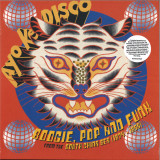
‘Ayo Ke Disco’ (meaning ‘Let’s go to the disco’ in Malay
and Indonesian) celebrates the musical identities
emerging from the newly independent countries in
South-East Asia during the 1970s and 80s.
Soundway general manager Alice Whittington, aka
Norsicaa (DJ), selects 10 deep cuts from local labels,
officially reissued on vinyl for the first time – forming a
snapshot of the vibrant discotheques and live scenes
across Indonesia, Singapore, Thailand, Malaysia, Hong
Kong and the Philippines.
The artists featured here were known for exploring
traditional sounds alongside funk, disco, city-pop and
even political psych-rock, genres that were indicative
of the exciting but often turbulent period. But despite
the post-war backdrop of instability there came
unprecedented levels of economic prosperity. With a
hopeful buzz filling the air, the music scene was helping
lead the way in reshaping the new identities of the
region.
OVERVIEW:
FOR FANS OF:
Sound of Siam compilations, Priscilla Chan, Lovin’ Mighty
Fire compilation, Tanamur City compilation
- Main Title
- The Principal's Office/Ashtray
- Margaret Comes Home/The Telephone Call
- The Closet/St. Sebastian/The Mirror/Reflection
- Calisthenics
- The Card Catalogue/Telekinesis
- Carrie And Miss Collins
- The Slaughter/The Storm Outside The Gym/Margaret Prays
- The Tuxedo Shop
- Waiting For Tommy/Tommy Arrives
- Born To Have It All (Vocals By Katie Irving)
- I Never Dreamed Someone Like You Could Love Someone Like Me (Vocals By Katie Irving)
- The Ballot/Carrie And Tommy/The Conspirators
- The Coronation/The Blood
- The Retribution
- Carrie Returns Home
- The Bath/Carrie And Margaret
- The Crucifixion
- The House
- The Dream/The Nightmare/End Titles
- Born To Have It All (Instrumental)
- I Never Dreamed Someone Like You Could Love Someone Like Me (Instrumental)
"Waxwork Records is thrilled to present CARRIE Original Motion Picture Soundtrack by Pino Donaggio! Expanded and re-mastered for its 45th anniversary, this deluxe double LP album marks the very first time that the complete film music has been released on vinyl. Carrie is a 1976 Horror film adapted from author Stephen King's very first published novel of the same name. The movie stars Sissy Spacek and is directed by Brian De Palma (Scarface, Phantom Of The Paradise).
The score by legendary composer Pino Donaggio (The Howling, Tourist Trap) skillfully captures the pressure of forced innocence, the humor of teen drama, and the trauma of coming of age as a girl in 1970’s America. The album also features the tracks “Born To Have It All” and “I Never Thought Someone Like You Could Love Someone Like Me” by Katie Irving. CARRIE Original Motion Picture Soundtrack features the expanded film music re-mastered and pressed to orange smoke colored vinyl, with new artwork by Phantom City Creative, and old-style tip-on gatefold jackets with matte satin coating."
Die britische Sängerin, Songwriterin, Multi-Instrumentalistin und Produzentin Fabiana Palladino veröffentlicht am 5. April 2024 ihr selbstbetiteltes Debütalbum bei Paul Institute / XL Recordings. Das Album entstand nach dem Ende einer langen Beziehung und setzt sich mit komplexen Fragen zu Liebe und Einsamkeit in Beziehungen auseinander. Das Ergebnis sind 10 Songs, die sich von den großen R&B-, Soul-, Pop- und Disco-Studioproduktionen der 80er und 90er Jahre inspirieren lassen, gefiltert durch einen modernen Blinkwinkel. Es ist eine intime Platte, die die Toughness und Weiblichkeit von Janet Jackson auf ihrem 1986er Album "Control" und Annie Lennox" bei "DIVA" ausstrahlt, das klassische Songwriting von Kate Bush und Joni Mitchell aufgreift und die romantischen Motown-Duette von Marvin Gaye und Tammi Terrell unterläuft, um die Normativität in Beziehungen zu hinterfragen. Das von Palladino selbst geschriebene und eigenproduzierte Album enthält Beiträge von renommierten Musikern und engen Freunden, darunter vom Mitbegründer des Paul Institute, Jai Paul, dem legendären Session-Bassist Pino Palladino (Fabianas Vater), ihrem Bruder und Yussef Dayes-Bassisten Rocco Palladino, dem bekannten Schlagzeuger Steve Ferrone sowie Streichern von Rob Moose. Fabiana Palladino hat in den letzten Jahren als gefragte Session-Musikerin für Acts wie Jessie Ware, Sampha, SBTRKT oder Laura Groves gearbeitet, während sie in ihrer eigenen Musik intensiv nach Pop-Perfektion strebt. Im vergangenen Jahr war sie Teil von Jai Pauls Band für sein lang erwartetes Live-Debüt, sowie Support-Act der gefeierten Shows.