
10
pre-ordina ora04.03.2022
dovrebbe essere pubblicato su 04.03.2022
29,62 €
dovrebbe essere pubblicato su 04.03.2022

Little Beat More is delighted to present the new EP release from Grupo Jejeje, los místicos de la kumbia!
This release reflects the commitment of the duo founded by Turbo Sonidero and Arrabalero to musical exploration and innovation, blending synth-driven Mexican cumbia with hip-hop, electronic and Persian influences.
Whether it’s the hypnotic, bass-heavy pulse of "Sordeados Kasbah" or the wistful, laid-back tones of "Asuka," Grupo Jejeje’s music resonates with a rare depth and sophistication transforming their local roots into a global soundscape like sonic alchemists, and crafting a sound that feels both ancestral and futuristic.
Pressed on 7” vinyl, this release encapsulates what Grupo Jejeje does best: reimagining the essence of cumbia while anchoring it in a forward-thinking sound.
Let the mystics of cumbia guide you into uncharted musical territories.
Disponibile in Stock e pronto per la spedizione

Back In Stock!
The debut collaboration between techno alchemists Ben Klock and Lucy will probably provoke quivers of anticipation before a single note has been heard. After all, both producers have carved out names for themselves as scene innovators at what they do, and both have already proven that they can more than capably work in a duo format without sacrificing an iota of their unique aesthetics: in Lucy's case, there has already been the sublime Zeitgeber pairing with Speedy J., and Klock has joined forces with the likes of Marcel Dettmann to craft some of the more memorable output from the Ostgut Ton label. This new release makes good on each producer's talent for working with epically unfolding tracks, maintaining a strong command of both 'drone' and melodicism, and envisioning sound as a kind of inter-dimensional mass transit. As the record indicates, things can get very interesting when the two working methods superimpose perfectly, but can be just as interesting when the two fall slightly out of phase with one another.
Listeners familiar with the classic kosmische feel will be taken immediately by the opening gambit "Bliss," whose feeling of floating through the coldness of space is accompanied here by nicely warm production values. The bassline that introduces the subsequent track ("War Lullaby") is close to being a continuation of the opener's leitmotif sequence, although with a change in atmosphere that will keep curious ears from turning away too soon: an FX-shrouded voice delivers a monologue at once seductive and foreboding, followed by a confident kick thump with ephemeral trailing clatters in tow. This affective orientation pulses through the whole record well, building up to the second rhythmic track ("Santeria") which is the busiest and most engaging of the bunch. Here a variety of sonic flavorings are ritually thrown into the pot and allowed to simmer - fleeting snatches of conga, phasing zaps and rhythmic ricochets all make for a rich concoction that epitomizes the progress that has been made in techno music within this decade. The closing "A Ghost Love story," like the opener, is a non-'dance' piece, but is no less compelling for that fact: as a foam of white noise pans between the listener's ears, a slurred / pitch-bent refrain conjures the feeling of either entering or exiting from some erotically tinged hypnagogic state.
Speaking of which, the overall impression given off by this record is that of a special kind of reciprocity: that is, of dreams influencing reality and reality feeding back into dreams. The rhythmic intensity of these tracks, at once an indicator of a hard and immediate reality, is regularly complemented by oneiric flourishes that make the partitioning line between these two realms of consciousness less distinct. As the next chapter in the Stroboscopic Artefacts saga, and in the personal journeys of both Ben Klock and Lucy, it will contribute to the ongoing mission of all these parties: giving longtime fans what they want while expanding their consciousness and inquisitiveness.
Disponibile in Stock e pronto per la spedizione

As trans-Atlantic alchemists pulling from a shared dialectic that somehow encompassed both postmodern deconstructionist tendencies and a delightfully subversive sense of poptimism, it’s easy to see how David Cunningham and Peter Gordon immediately hit it off upon initially meeting each other back in the late-1970s at the height of their youthful transgressions. Having initially worked together on the second Flying Lizards’ LP fourth wall, with its ingenious fusion of dismantled rhythms and rearranged melodies juxtaposed against the slyly sultry singing of Snatch’s Patti Palladin— with Gordon adding a few sprinkles of mischievous sax in the mix— it’s no wonder the collaboration would lead to further musical adventures.
Which leads us directly to the genesis of The Yellow Box. Embarking on a collaborative exercise in the structural repurposing of music as untethered puzzle pieces in need of rearrangement with no predetermined outcomes, the duo gave birth to a project that would see them move through both time and recording studios across Europe, taking nearly two years from 1981-1983 to complete. Enlisting the great Anton Fier on drums from The Feelies/Lounge Lizards nexus and John Greaves on bass from Henry Cow/Soft Heap lore to round out their dueling creative counterparts, the album would be something of a lost treasure until its eventual release on Cunningham’s Piano imprint in 1996.
Cinematic in scope, and filled with drifting drones, beautiful counter-melodies, eery minimalism, Kraftwerkian synthesizers, looped voices, skronky interludes, and other shifting undercurrents of sound, it was an album that utilized both a diverse array of expressive languages, as well as early sampling techniques and prepared instruments, well before most people were thinking in such expansive, integrated terms at the dawn of the 80’s. But such is life at the vanguard of new music. And one of the reasons that it likely sat on the shelf for so long before finally being released well over a decade later. Like a sparser, less groove-oriented version of My Life in the Bush of Ghosts, or a more radical take on the experimental work of Can’s Holger Czukay, The Yellow Box stands at the crossroads of time and technology, fusing multiple strands of musical thought and compositional techniques into a disjointed whole that somehow still comes off as a conceptually complete record.
Now, here it is again, over 40 years later, with perhaps even more historical resonance than it had before, remade and remodeled just waiting to be rediscovered again.
dovrebbe essere pubblicato su 07.11.2025

Following the reissue of their acclaimed debut album in July - Rocket Girl Records is proud to announce the second transmission in the triptych of releases from Welsh sonic alchemists, White Noise Sound (WNS): an exultant, transmutational remix album celebrating the band’s admired self-titled inaugural LP featuring Pete Kember/Sonic Boom, Cian Ciaran (Super Furry Animals), Phil Kieran (techno producer/DJ), Sean Johnson (Hardway Bros) and Timothy J Fairplay (Andrew Weatherall’s Scrutton Street Circle).
WNS’s cult 2010 self-titled debut saw the band channelling their own chimeric wall-of-sound - an incantation in layers of feedback, kosmische rhythms and celestial distortion. Now, that spell is rewritten.
Fold In Time - WNS1 Remixed sees an extraordinary line-up of artists from across the psychedelic and electronic spectrums dive deep into the band’s original recordings, dynamically reimagining the sonic architecture - unearthing new forms, hidden frequencies and arcane resonances.
Furthering the mythology of an album revered in underground circles - by peers and critics alike - these remixes push the band’s hypnotic, feedback-soaked sound into entirely new dimensions. Expect deep psych, repetitive beats, acid purity, expansive dubbed-out landscapes and spectral ambient drones. Tracks collapse and re-emerge, shimmering with new light.
“We wanted to honour the spirit of the original album while inviting some of our favourite artists to completely destroy it,” says White Noise Sound’s Adam Tovey.
dovrebbe essere pubblicato su 17.10.2025

For many bands, having all their gear stolen would be catastrophic. For Third Ear Band, this unfortunate 1968 incident opened a portal to beneficial change. Leader/percussionist Glen Sweeney viewed the heist as a sign to alter Third Ear Band's approach, and they switched to exclusively using acoustic instruments. With electrified psychedelia in full bloom, Sweeney, Paul Minns (oboe, recorder, whistles, flutes) and Richard Coff (violin, viola) struck out on an individualistic path, blending Indian raga with chamber music – without plugging in.
Third Ear Band's 1969 debut album, Alchemy, established them as a solemn, powerful force in the global underground. On Alchemy, Sweeney laid down a steady pulse on hand drums, while Minns and Coff wove in melismatic patterns on oboe, recorder, violin and viola. This approach carried over to Third Ear Band's self-titled sophomore album, often called Elements due to its track titles being named after the four basic components of medieval European alchemists' doctrines.
On this 1970 LP, Third Ear Band sounded at once ancient and contemporary, yet they turned on the hippies with their epic, trance-inducing jams that suggested secret knowledge of infinity. Although Third Ear Band flourished during the West's countercultural zenith, they were peculiarly estranged from it on a sonic level. Even outré contemporaries such as Comus and Jan Dukes De Grey sounded like pop groups compared to TEB. Having no traditional front person or electric instruments, Third Ear Band forged a singular path that flowered most vividly on Elements.
The long songs here stream forth from their skilled hands, evoking a communal transcendence in sound – a hypnotic swirl that doesn't swing, but rather wafts and undulates with cloistered beauty. TEB's music exists in an eternal now, a perpetual wow. It is an ouroboros of organic textures, seemingly magicked into the air spontaneously, yet possessing a rigor that suggests long hours in the lab. Without electricity, it somehow burrowed deeper into your consciousness.
– Dave Segal (excerpt from the liner notes)
dovrebbe essere pubblicato su 22.08.2025

Walter Astral's debut album tells the story of Light, its journey through the day and catalyzes it in the Éclispe, a suspended moment when space and time stop to contemplate the universe.
Over the past two years, the two druids have transmuted light into sound in the form of a concept album that explores all facets of Walter Astral, from folk and techno to pop, drum & bass and psychedelic rock, always in the presence of their totem banjo.
Sound explores and is explored, to represent light; magic and the everyday, between digital and analog sounds expressing the natural and the supernatural, humans and the cosmos. Transposing the invisible, the presence of absence, the Eclipse, into silence and sound.
“Eclipse” questions the shadows hidden by light, and the glimmers hidden by shadows, the ambivalence of a state, its capacity to transform, to mutate. Like ancient alchemists, Walter Astral set to music the transitions of states, stars, humans and emotions.
Ordina ora e ordineremo l'articolo per te presso il nostro fornitore.

BRAND NEW VINYL PRESSING ON GREEN VINYL FOR FIRST TIME
Recorded in 1996, the second album from this NYC quartet featured a new line up & sound. Clean, warm, spacious guitars paired with repetitive, hypnotic songs showcased the band reaching a new peak. Beloved by those initiated, it continues to find new devotees.
RELATED TO: The Lapse, Native Nod, Blonde Redhead, Enon, Jets to Brazil, Vague Angels
90s NYC indie heroes The Van Pelt have had a lasting power far greater than so many of the other once bigger bands of that era have had. The sort of interest that has neither waxed nor waned over the decades since they disbanded, yet just mysteriously continues on despite their discography being out of print since the end of the last millennium. So what is it that sets them apart?
Too soft to have ran with the AmRep or Touch and Go crowds, not hip enough to have made sense on Matador or Merge, ernest yet not histrionic enough to make it onto the “best emo bands” lists, not weird enough to be on bills with Arto Lindsay and Thurston Moore, etc. In a sense, their outsider status comes not from the wings, but from the dead center eye of the storm. The 90s were happening all around them, they were witnesses thereof, yet they emerged transcendent of it all. You Follow? Maybe it’s worth having a listen to see what I mean.
Barcelona’s La Castanya records is treating us with the first ever rerelease of the two Van Pelt albums to mark the 20th anniversary of Sultans of Sentiment, their benchmark album. They teased us in 2014 that this might be on the docket with the release of Imaginary Third, a collection of singles and unreleased Van Pelt tracks which were originally intended to have been the components of their third album, including the alt-famous “Speeding Train”. Now we’ll finally have access to their entire discography. The first album, Stealing From Our Favorite Thieves is an explosion of anthems belted out as if the war was already lost yet they were hoisting that tattered banner anyhow until there wasn’t a shred to salvage. The momentum coming out of that album had every major label in the States salivating at the possibility of turning them into the next Nirvana. Instead, The Van Pelt followed it up by pulling the van into the garage, leaving the engine running, funneling the exhaust into their lungs, and blissfully deciding to bow out of the race with the epic Sultans of Sentiment. Of course as the story goes, their intended financial flop was the exact opus that jettisoned them into the history books. Buy both albums. You’ll need them both.
Ordina ora e ordineremo l'articolo per te presso il nostro fornitore.

The Post-Punk Synth Alchemists return with new album ‘Strange Loops’. With blistering rhythms and searing bass, AK/DK return with their highly anticipated fourth album, ‘Strange Loops’. It builds on the momentum of their previous release; Shared Particles, which sold out of the Dinked edition even before its release and achieved no. 7 in the Indie Record Store charts. Known for their trademark motorik energy and riotous joy, AK/DK are back, and for the first time, they’ve introduced guest vocalists into the fray. This new release sees the drum and synth duo collaborate with three exciting artists: the musician TVAM, punk poet - Thick Richard, and I Am Fya; sound artist. The angular guitars and spaced-out vocals of TVAM intertwine with the duo’s driving beats and convulsing synths, resulting in the pulsating Devo-esque powerhouse of ‘Square Route’. The two bands have been crossing paths on festival line ups for a while now and it seemed inevitable that they should join forces. I Am Fya’s usual experimental textures and sound-collage is temporarily put to one side on ‘Pull Up’. For this deep and heavy sub-rattling cut; I Am Fya and AK/DK lean heavily into sound system bass and dancehall style. Her febrile and powerful vocals interweave with tectonic sub bass and stuttering rhythms, sounding like Missy Elliot jamming with a modular synth. Manchester’s very own Thick Richard adds his lyrical, jet-black humour to the track ‘Nobody Shouts’. Their collaboration began when the band invited the punk poet up for an impromptu improvisation during their set at Beatherder festival 2020. It went down so well that they had to record it; learning the track from fan footage online. This is nothing new for AK/DK, creating powerful improvised moments for those lucky enough to be in the audience. Strange Loops presents two distinct halves of music. The A side offers sure-fire bangers that will linger in your ears and have you pounding the dance floor, while the B side delves into more experimental and ambient territories with completely live takes from the studio, reflecting the duo’s love of ‘70s German Kosmische bands. “We always had more ambient experimental tracks on our records, and wanted to give them a spotlight on this release” says the band’s Gee Sowerby. Their previous releases have earned accolades such as BBC 6 Music’s ‘Album Of The Day’ and impressed judges on Steve Lamacq’s Roundtable, solidifying their reputation as pioneers in their genre. It’s on stage where AK/DK truly come to life. Their electrifying performances, characterised by joyous live-looping of keyboards, drums, and distorted whoops, have made them a fervent fan favourite for over a decade. They’ve left an indelible mark on audiences at festivals like End Of The Road, Blue Dot, and Green Man, winning over new audiences wherever they play. With Strange Loops, AK/DK continue to push boundaries and defy expectations, reinforcing their status as one of the most dynamic and innovative acts in the scene
dovrebbe essere pubblicato su 25.10.2024

Organ of Corti, the trio of Joachim Nordwall (IDEAL Records, The Gagmen), Mattias Gustafsson (Altar of Flies) and Dan Johansson (Sewer Election, Enhet för Fri Musik) returns with another exercise in the slow-motion decay of analog sound. Usher, a minimal hypnotic track on side A reveals its subtle details after multiple listens while the claustrophobic Trauma on the flipside will grab your immediate attention. Machines that hum, sputter, and crackle while slowly moving forward. Vaguely familiar tape loops, spacious synths and crumbling electronics. A journey into the unknown.
The Swedish underground scene continues to deliver some of the best experimental acts and Organ of Corti firmly establish themselves as part of the foundation with a recent self-released cassette, another cd on New Forces and this new single. While their sound has clearly evolved, these alchemists are staying true to their original intention of forging fragments of surreal nightmares.
dovrebbe essere pubblicato su 01.04.2024

Ordina ora e ordineremo l'articolo per te presso il nostro fornitore.

Having toured the world with Mczo and been at the helm of his own studio Pamoja Records since he was just 18, influential Singeli producer Duke, now 25, is one of Tanzania's busiest club alchemists. On his acclaimed solo debut "Uingizaji Hewa" we were introduced to his idiosyncratic "hip-hop Singeli" sound, a slower cousin to the Dar Es Salaam-rooted hard 'n fast club template that takes as much special sauce from Busta Rhymes and Eminem as it does the 200BPM clatter of genre veterans Jay Mitta and Sisso. On September's "Sounds Of Pamoja," we were treated to a closer look into Duke's studio, and specifically at his work with the city's best young MCs like Dogo Kibo, Pirato MC and MC Kuke. "Early Instrumentals" allows us to witness the depth of Duke's evolution with a selection of unearthed genre melting Singeli mutations laid completely bare without vocals. This 11-track set features some of his most arresting hybrid dance music yet, expressing his visionary fusion of contemporary rave sounds, US rap attitude, and Tanzanian dance history. While the roots of Singeli are in taraab, a popular fusion of East African and Middle Eastern traditional dance rhythms and melodies, Duke steers the sound into a synth-led, syncopated firework display that sounds spry and futuristic. Centered arounda bumping staccato melody and urgent synth strings 'Dukelo Fl Sing' echoes the lo-swung swagger of early Dr. Dre productions, but kicks the tempo into overdrive, decorating any gaps with flickering late-nite synths. 'Beat Kali Duke' meanwhile drives carnival trance leads through hard and fast rolls of kick drums, whistles and woodblock cracks. It's not all completely high speed either: 'Duke Selecta' is almost afro-house, with slow, sexy bass and woozy vocal melodies, and 'KKKKKKKKKKKKKKK' absorbs the propulsive spirit of South African gqom. "Early Instrumentals" is the most varied picture we've been presented yet of Duke's rousing dance cocktail. IT's a physical call to action that assures listeners the genre is for movement, not headphone listening
dovrebbe essere pubblicato su 08.11.2023

We're proud to announce renewal of our near-ten year relationship with raw black power ambient ritualists Sutekh Hexen in announcing the band's colossal new 2LP "P:R:I:S:M", a full collaboration with Canadian nightmare-weaving enigma Funerary Call (AKA field recording and experimental soundscaping artist Harlow MacFarlane), to be released this summer in collaboration with our good dearest frequent co-conspirators from the US Sentien Ruin.
With "P:R:I:S:M", magisterial sonic-alchemists Sutekh Hexen and Funerary Call join forces to deliver a fully collaborative album of eight highly experimental tracks. Throughout this octonary journey, concepts and unseen source energies are refined into spectrums of deeper consciousness. The resulting narrative guides the listener through a vastness of (dis)charging energies, rebirth through dissolution, and harrowing harmonic passages in tremendous spaces. Inner-workings suspend transformations in time. Pushing their respective boundaries, Sutekh Hexen and Funerary Call initiate the listener with the crystalline, static miasma of the album’s opener 'Meridian غ', only to enshroud them in the manifesting psychosis of 'Infernal Folly'. The churning mysticism of 'Perilous Shade' offers temporal sanctuary, and 'Toward the Eastern Gate' calls forth tectonic-prophecies as the album's centerpiece, tipping the scale into 'Fractal: Void'—a blistering disarmament in a storm of guitars, scathing electronics, and the disembodied calls we all anticipate and fear. 'Æscend Obsidia' tests the preceding tension and overwhelms in shimmering radiance before declaring release in 'Pangæa Ultima² (Dread)'. Closing with 'Shores of Purgatory', thresholds are breached anew with hectic guitar feedback, spectral synthesis and meditative melodic embellishments. Where the mirror blinds, the "P:R:I:S:M" offers vision—refractions of new perspectives, dissolving the shadow-self.
dovrebbe essere pubblicato su 20.10.2023
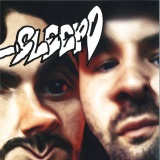
Naarm alchemists Sleep D's revelatory new synthetic 'Electronic Arts' is ready for circulation.
Having released 4 EPs of mind-altering club tackle since 2019's 'Rebel Force', the duo overcome second album syndrome, boiling down their chaos with a more developed sense of songwriting. Never banging one drum, 'Electronic Arts' mirrors the anything goes mania of their DJ sets, tactfully shifting through different sounds and styles. Tempos intensify and decelerate, at times pushing the threshold to 150 bpm from docile canine dreamscapes to full tilt Space Invaders in AR mind games.
Largely built on road tested material from their live performances, the album is a tangible Butter Sessions gathering, busting out the gate with Martian rave initiation Planet Waves, Outdoor System's polyrhythmic beatdown and the Orb-like hero dose affirmations of Sunrise In The Crater (I Exist). While 'Electronic Arts' is otherwise a self-dependent effort, Punch Drunk is brewed ever more potent by the hypnagogic vocals and lucid trumpet cycles of former futsal team member YL Hooi. Their unified energy incidentally manifests a profound matrix of ambient techno, motorik, Don Cherry and Everything But the Girl.
Also touching on apocalyptic doof and minimal, the album is not exclusively peak time with Maryos Syawish and Corey Kikos' specialty curveballs also playing their part. From Village To Empire finds the duo rooting down in Syawish's heritage with a tapestry of purposefully deployed Iraqi and Syrian ethnographic samples and field recordings, dubbed within range of Muslimgauze and On-U Sound. As minimal techno finale Textile trails off into footsteps wandering back to base camp with a satisfied exhale, one wonders where Sleep D's existential pathfinding could possibly take us next?
Ordina ora e ordineremo l'articolo per te presso il nostro fornitore.

Before Mahjun (of which Souffle Continu reissued, in 2016, the two albums released on Saravah), there was... Maajun. Five musicians (Jean-Pierre Arnoux, Cyril and Jean-Louis Lefebvre, Alain Roux and Roger Scaglia) and three times as many instruments at the service of an electric-poetic guerrilla group moulded from folk and blues. The group’s unique album, “Vivre la Mort du Vieux Monde” evokes an (imaginary) association of Frank Zappa and Jacques Higelin, of Sonny Sharrock and the Art Ensemble Of Chicago. Under these conditions, Long Live Death!
“The most French of all the French groups, determined to take Maurice Chevalier’s place in American hearts.” This was how Rock&Folk presented Mahjun in 1977. So be it. But when “Vivre la Mort du Vieux Monde”, was issued, it was 1971, and the name, though the same group, was still spelled Maajun. So, let’s look back at the story.
At the end of the sixties, five blues fans decided to form a French group ready to break down the barriers: Jean-Pierre Arnoux (drums, vibraphone, saxophone), Cyril Lefebvre (guitar, organ), Jean-Louis Lefebvre (bass, violin, guitar, vocals), Alain Roux (saxophone, flute, harmonica, vocals) and Roger Scaglia (guitar, vocals). This was Maajun, and Vivre la mort du vieux monde would be their only album, but which would (nevertheless) be followed by those of Mahjun created later by Lefebvre (Jean-Louis) and Arnoux.
Recorded for the Vogue label, “Vivre la Mort du Vieux Monde” would disturb a number of people. This is mostly due to the lyrics, many of which were written by Gérald Escot-Bocanegra, who, while summoning the spirit of Lautréamont and Rimbaud, turned the Maajun musicians on to rock and free jazz. Add a bit of politics into the mix, and the release of the album was delayed for several months. But then, wasn’t it worth waiting for?
Because “Vivre la Mort du Vieux Monde”, a real concept-album, is an important and iconoclastic statement made directly in the face of (francophone) dreamers of all countries. Over heavy guitar riffs, psychedelic interludes or fantasy-fuelled digressions, Maajun built mazes on the advice of alchemists known only to themselves before heading off on a long march on the “cracking walls”. It was an ambitious project, but Maajun could handle it, going so far as to proclaim: “Tomorrow will be a huge party!” But as we can see “tomorrow”, is now!
dovrebbe essere pubblicato su 13.01.2023

Several things happened before a warm day when I met the four members of Frankie Cosmos in a Brooklyn studio to begin making their album. Greta Kline spent a few years living with her family and writing a mere 100 songs, turning her empathy anywhere from the navel to the moon, rendering it all warm, close and reflexively humorous. In music, everyone loves a teen sensation, but Kline has never been more fascinating than now, a decade into being one of the most prolific songwriters of her generation. She's lodged in my mind amongst authors, other observational alchemists like Rachel Cusk or Sheila Heti, but she's funnier, which is a charm endemic to musicians. Meanwhile Frankie Cosmos, a rare, dwindling democratic entity called a band, had been on pandemic hiatus with no idea if they'd continue. In the openness of that uncertainty they met up, planning to hang out and play music together for the first time in nearly 500 days. There, whittling down the multitude of music to work with, they created Inner World Peace, a collection of Greta's songs changed and sculpted by their time together. While Kline's musical taste at the time was leaning toward aughts indie rock she'd loved as a teenager, keyboardist Lauren Martin and drummer Luke Pyenson cite "droning, meditation, repetition, clarity and intentionality," as well as "'70s folk and pop" as a reference for how they approached their parts. Bassist/guitarist Alex Bailey says that at the time he referred to it as their "ambient" or "psych" album. Somewhere between those textural elements and Kline's penchant for concise pop, Inner World Peace finds its balance. The first order of business upon setting up camp in Brooklyn's Figure 8 studios was to project giant colorful slides the band had made for each track. Co-producing with Nate Mendelsohn, my Shitty Hits Recording partner, we aimed for FC's aesthetic idiosyncrasies to shine. The mood board for "Magnetic Personality" has a neon green and black checkerboard, a screen capture of the game Street Fighter with "K.O." in fat red letters, and a cover of Mad Magazine that says "Spy Vs. Spy! The Top Secret Files." On tracks like "F.O.O.F." (Freak Out On Friday), "Fragments" and "Aftershook," the group are at their most psychedelic and playful, interjecting fuzz solos, bits of percussion, and other sonically adventurous ear candy. An internal logic strengthens everything, and in their proggiest moments, Frankie Cosmos are simply a one-take band who don't miss. When on Inner World Peace they sound wildly, freshly different, it may just be that they're coming deeper into their own. Inner World Peace excels in passing on the emotions it holds. When in the towering "Empty Head" Kline sings of wanting to let thoughts slide away, her voice is buoyed on a bed of synths and harmonium as tranquility abounds. When her thoughts become hurried and full of desire, so does the band, and she leaps from word to word as if unable to contain them all. As a group, they carry it all deftly, and with constant regard for Kline's point of view. Says Greta, "To me, the album is about perception. It's about the question of "who am I?" and whether or not the answer matters. It's about quantum time, the possibilities of invisible worlds. The album is about finding myself floating in a new context. A teenager again, living with my parents. An adult, choosing to live with my family in an act of love. Time propelled us forward, aged us, and also froze. If you don't leave the house, who are you to the world? Can you take the person you discover there out with you?" - Katie Von Schleicher
dovrebbe essere pubblicato su 21.10.2022

Several things happened before a warm day when I met the four members of Frankie Cosmos in a Brooklyn studio to begin making their album. Greta Kline spent a few years living with her family and writing a mere 100 songs, turning her empathy anywhere from the navel to the moon, rendering it all warm, close and reflexively humorous. In music, everyone loves a teen sensation, but Kline has never been more fascinating than now, a decade into being one of the most prolific songwriters of her generation. She's lodged in my mind amongst authors, other observational alchemists like Rachel Cusk or Sheila Heti, but she's funnier, which is a charm endemic to musicians. Meanwhile Frankie Cosmos, a rare, dwindling democratic entity called a band, had been on pandemic hiatus with no idea if they'd continue. In the openness of that uncertainty they met up, planning to hang out and play music together for the first time in nearly 500 days. There, whittling down the multitude of music to work with, they created Inner World Peace, a collection of Greta's songs changed and sculpted by their time together. While Kline's musical taste at the time was leaning toward aughts indie rock she'd loved as a teenager, keyboardist Lauren Martin and drummer Luke Pyenson cite "droning, meditation, repetition, clarity and intentionality," as well as "'70s folk and pop" as a reference for how they approached their parts. Bassist/guitarist Alex Bailey says that at the time he referred to it as their "ambient" or "psych" album. Somewhere between those textural elements and Kline's penchant for concise pop, Inner World Peace finds its balance. The first order of business upon setting up camp in Brooklyn's Figure 8 studios was to project giant colorful slides the band had made for each track. Co-producing with Nate Mendelsohn, my Shitty Hits Recording partner, we aimed for FC's aesthetic idiosyncrasies to shine. The mood board for "Magnetic Personality" has a neon green and black checkerboard, a screen capture of the game Street Fighter with "K.O." in fat red letters, and a cover of Mad Magazine that says "Spy Vs. Spy! The Top Secret Files." On tracks like "F.O.O.F." (Freak Out On Friday), "Fragments" and "Aftershook," the group are at their most psychedelic and playful, interjecting fuzz solos, bits of percussion, and other sonically adventurous ear candy. An internal logic strengthens everything, and in their proggiest moments, Frankie Cosmos are simply a one-take band who don't miss. When on Inner World Peace they sound wildly, freshly different, it may just be that they're coming deeper into their own. Inner World Peace excels in passing on the emotions it holds. When in the towering "Empty Head" Kline sings of wanting to let thoughts slide away, her voice is buoyed on a bed of synths and harmonium as tranquility abounds. When her thoughts become hurried and full of desire, so does the band, and she leaps from word to word as if unable to contain them all. As a group, they carry it all deftly, and with constant regard for Kline's point of view. Says Greta, "To me, the album is about perception. It's about the question of "who am I?" and whether or not the answer matters. It's about quantum time, the possibilities of invisible worlds. The album is about finding myself floating in a new context. A teenager again, living with my parents. An adult, choosing to live with my family in an act of love. Time propelled us forward, aged us, and also froze. If you don't leave the house, who are you to the world? Can you take the person you discover there out with you?" - Katie Von Schleicher
dovrebbe essere pubblicato su 21.10.2022

There’s no escaping the motherlode - that eternal continuum of high drama and overheated amp stacks fit to raise the pulse and revivify the spirits. It’s merely an unmistakable band chemistry that transforms base hard rock into gemstones, and this process is an increasingly rare phenomenon in the here and now. Luckily for Stockholm’s alchemists LUGNET, they are one of the few. Here in these steamrollering grooves and strident anthems is just the kind of swagger and bravado on which rock built its foundations in the ‘70s, yet without any of the cliches or the bloated self-importance. The roots of LUGNET may be visible to see, and the primal stomp of early Deep Purple, the apocalyptic sermonising of Black Sabbath and the cinematic majesty of Rainbow can easily be detected in the almighty sturm-und-drang. Yet this sound is delivered with charisma and maverick energy that effortlessly summons fresh vibrant life to a classic form. The spark that lit LUGNET originates in 2009, when Fredrik Jansson-Punkka (also drummer of Angel Witch, and whose storied history includes stints in Witchcraft, Abramis Brama and Count Raven) met bassist Lennart ‘Z’ Zethzon at Sweden Rock Festival and the two first discussed getting together to jam. Three years later this finally came to fruition and guitarists Bonden Jansson and Mackan Holten joined the fray, alongside vocalist Roger Solander. An original plan to play ‘70s blues-rock with Swedish lyrics was ultimately warped and transformed into the monumental attack of 2016’s self-titled debut proper on Pride & Joy Music. The road to ‘Nightwalker’ saw changes afoot in the band, as Solander was replaced by the soulful pipes of Johan Fahlberg, who matches the swashbuckling charm of the Dio/Coverdale tradition with flourishes and personality all his own, whilst Bonden Jansson made way for wunderkind new guitarist Matti Norlin. This was a quantum leap on from the debut, replete with fiery interplay and incisive song writing, from the slow Zeppelin-esque catharsis of ‘Death Laughs At You’ to the monstrous ‘Stargazer’-esque grandeur of the mellotron-assisted finale ‘Kill Us All’. The aftermath saw Lugnet traverse from strength to strength, a notable highlight being packing out their tent at Sweden Rock Festival in 2018 even whilst a certain Birmingham-birthed Prince Of Darkness himself occupied the main stage across the field. Michael Linder (formerly of Troubled Horse) soon replaced Mackan Holten, and this line-up has subsequently amassed enough material for two albums, with all members throwing their hat into the ring song writing-wise. One of these ‘Tales From The Great Beyond’ has already been recorded at SolnaSound Recording with the dream-team of Simon Johansson (Wolf/ Soilwork) and Mike Wead (King Diamond/ Mercyful Fate) at the helm / mixed by Marcus Jidell (Avatarium/ Candlemass). Just like for the debut album, the front cover artwork was designed by Vance Kelly. Whatever the future holds for Lugnet, only a fool would bet on the result not being a spectacular explosion of righteousness. This machine is firing on all cylinders, and rockers of all persuasions would be well advised to get on board or get out of the way. Track listing: Still A Sinner; In Harvest Time; Another World; Out Of My System; Svarv; Eaten Alive; Pale Design; I Can’t Wait; Black Sails; Tåsjö Kyrkmarsch
dovrebbe essere pubblicato su 29.09.2022

This May, Italian alchemists and power trio Ufomammut return with their ninth studio album, Fenice via Neurot Recordings. But not as we’ve heard them before, now “more intimate, more free.”
For over 20 years, the band has combined the heaviness and majesty of dynamic riff worship with a nuanced understanding of psychedelic tradition and history in music, creating a cosmic, futuristic, and technicolor sound destined for absolute immersion.
Fenice (meaning Phoenix in Italian) symbolically represents endless rebirth and the ability to start again after everything seems doomed. The album is the first recording with new drummer Levre, and truly marks a new chapter in Ufomammut history.
“I think we lost our spontaneity, album after album,” says Urlo. “We tried to make more complicated songs and albums, but I think at some point we just ended up repeating ourselves. With Fenice, we were ready to start from zero, we had no past anymore - so we just wanted to be reborn and rise from the ashes..”
While the band are well-known for their psychedelic travels into the far reaches of the cosmos, Fenice is a much more introspective listening experience. Fenice was conceived as a single concept track, divided in six facets of this inward-facing focus. Sonic experimentations abound in the exploration of this central theme; synths and experimental vocal effects are featured more prominently than ever before as the band push themselves ever further into the uncharted territory of their very identity.
The towering synths on the opening track ‘Duat’ evoke an almighty machine rising from the depths of primordial ooze. There’s a shift to a frenetic garage-psych pace before mellowing out into a more familiar doomy stomp. ‘Kepherer’ is a respite, albeit a slight one, returning to the pulsing rhythms of the album’s intro before plunging the listener into the menacing build and release of ‘Psychostasia’ next. Each oscillation of this extraordinary album feels inevitable - Ufomammut are after all, masters of their craft, and when it comes to creating enveloping sonic journeys into the unknown, it’s their uninhibited sense of exploration that breaches new sonic ground.
Fenice is the sound of a band whose very essence has been rejuvenated, and are welcoming the chance to create music in the way they know best; by unfolding carefully and attentively, by melding those extreme dynamics which render Fenice as a living and breathing creature - and by writing gargantuan riffs that herald their very rebirth.
Ordina ora e ordineremo l'articolo per te presso il nostro fornitore.

Red Vinyl
That we live in a world changed is beyond question. Since 2015's Zenith, Berlin-based songwriter Molly Nilsson has surrendered to the world, traveling from Mexico to Glasgow, observing the changing socio-political landscape and imagining a better world. For an artist who has so successfully created her own environment and gradually let others in, her 8th studio album Imaginations sees Nilsson directly engaging with her surroundings, engendering change and allowing love in. Imaginations dreams big, recasting storming, stadium-sized pop into the internal language of the solo auteur. Imaginations is not escapism, it's a kaleidoscope and an alternative view, an agent of change.Opener Tender Surrender encapsulates Imaginations, a tango on the ruins of the past, like many of Nilsson's best songs a collision between the political and personal. Though potentially a love song, there's a glowing anger in the lines I want your ruin, I want destruction, I won't be through until we mend this...' this is rapturous transformation, order and chaos. Molly has built an almost 10 year career on perfectly summing up how we feel and this is no different... Who else could write a song about privilege (Let's Talk About Privileges) and make a heart-rending chorus of It's never being afraid of the police, it's expecting every thank you, every please.' The artist's vision on this album is perhaps more forceful than the emotionally fragile moments of previous album Zenith, at times exemplified on songs like Memory Foam, a bright, driving pop song that belies themes of nostalgia and the past, reminding us that Molly alone can make us feel so welcome in loneliness. If there's overt anger in songs like Money Never Sleeps, an anthem for a post-capitalist utopia if ever there was one, there's also seams of optimism sewn into the album's genetic code. Any revolutionary will tell you that anger alone achieves nothing - Nilsson's mission on Imaginations is to offer some alternatives we can hold close. Not Today Satan is a song about accepting love as the agent of change, Don't be sad, but do get mad at all the small men who act so tall, in the end they always fall, there ain't no sin in giving in to love, that's just how we're winning the fight.' Love can be visceral, a weapon with which to fight the power.On Imaginations Molly is recasting her interior monologue as a prism through which to see the world, a means to live differently and to reject the status quo. We can Think Pink, change our destiny together. This is an optimism about the future when we need it the most. New boys, new girls.. give me your smile and I'll give you mine' Clearly, we are living through a transformation but with alchemists like Molly Nilsson, we're never alone in the process.
dovrebbe essere pubblicato su 15.07.2022

IATT is pleased to once again team up with Black Lion Records for the follow up to 2019's Nomenclature; our new full length album entitled Magnum Opus. We've meticulously crafted this album to leap from where Nomenclature left us thematically.
The listener is catapulted from the 1700s (Arsenic Ways) further back in time to a much darker, older world and the esoteric sciences of Alchemy. It was in this time man aimed to harness the world around him, bending the natural elements in a quest to obtain power, knowledge, control, and even immortality itself.
Alchemy was the key to unlocking the secrets of existence and elevating one's self to the pinnacle of enlightenment through transmutation and manipulation of the earthly elements. It was only through the process of Magnum Opus (the great work) that alchemists could harness the elementals in their purest form to create the Philosopher's Stone - the key to power, enlightenment, and immortality.
Just as in alchemy itself, creating this album has been a journey of transformation for us; a period of great growth as individuals and as a unit. It's through adversity, struggles, and the forging of the elements - of literal blood, sweat, and tears - we strive to transcend and elevate to our highest selves, "the great work", Magnum Opus.
Sound Like: (Immolation, Spawn of Possession, Death, Emperor, Obscura)
dovrebbe essere pubblicato su 24.06.2022

Tetra Hydro K is a laboratory in which two dub alchemists are experimenting with multiple sounds to mark their imprint on the French electro-dub scene. The duo of producers returns this year with a new album "Odyssée".
Coming respectively from the free party and trip-hop universe, they took their inspirations from French dub tenors such as High Tone, Improvisator Dub or Kaly Live Dub. Kanay creates a strong rhythm while Krilong brings his melodic genius with his saxophone. Electronic? Acoustic? Dub? Drum'n'Bass? Tetra Hydro K focuses on the combination of organic elements in an electronic universe. After 4 EPs since 2010, the band decided to evolve in 2016 with a first album "Labotomie". It was followed by 2 albums in 2017 and 2018 and season 1 of the amazing "Smoking Sessions" last year.
With this new album "Odyssée", THK rightly marks its stamp on the French dub landscape. They turned their passion in a life-size experimentation, a great diversification of the genres and musical influences that shines through various guests. The stellar dub of the French producer Panda Dub remixed by THK in "Labyrinthe" confronts with the Raggatek rhythm of the track "Nah Come Fi Test" for a top-notch collab alongside Sensi T. On "Black Ship" the duo signs a deep instrumental with a dark and dubby psychedelic vibe.
The rapper KT Gorique shows all her power on the track "L'impasse", displaying her powerful flow, no matter the rhythm. On this album, THK collaborates on two tracks with Tom Spirals. This MC from Glasgow lay down his voice in two different ways, first with a Hip-Hop vision, slightly Trap, in "Expedition 808" then with a Reggae flow on "Cut to the Chase". "Skanking Trip" adds a touch of Dub Stepper in this album with vocalist Loïc Paulin in full power over the heavy-weighted bass. Three instrumental tracks complete this album including the monstrous "Charcuterie Monin".
Tetra Hydro K is back on the road in 2022 to take us in their new odyssey !
dovrebbe essere pubblicato su 17.06.2022

Swiss firebrand alchemists Zeal & Ardor are excited to announce their forthcoming, self-titled new album, set for release February 11th, 2022, via MVKA.
Hissing and seeping justifiable rage from every pore - yet not an unrelenting musical battering - the 14-track opus was recorded by Marc Obrist and Manuel Gagneux at Hutch Sounds and mixed/mastered by Will Putney at Graphic Nature Audio. All songs were written by the softly spoken, multi-lingual frontman Gagneux, with some German lyrics intermixed with the English.
Gagneux declares, "With the self-titled record, we have arrived at where I imagined this project should sound like. It’s the longest we’ve worked on a single record and I believe it shows. The most important thing for an album of ours to do, is transport you instantly into our mood, our world. Even though this might not be the one you might expect from us, this record certainly delivers on that front. We had time to hone in to what we think makes us interesting and what sounds we would like to explore through this we have found our home. Home is burning. Welcome home.
dovrebbe essere pubblicato su 11.02.2022

Swiss firebrand alchemists Zeal & Ardor are excited to announce their forthcoming, self-titled new album, set for release February 11th, 2022, via MVKA.
Hissing and seeping justifiable rage from every pore - yet not an unrelenting musical battering - the 14-track opus was recorded by Marc Obrist and Manuel Gagneux at Hutch Sounds and mixed/mastered by Will Putney at Graphic Nature Audio. All songs were written by the softly spoken, multi-lingual frontman Gagneux, with some German lyrics intermixed with the English.
Gagneux declares, "With the self-titled record, we have arrived at where I imagined this project should sound like. It’s the longest we’ve worked on a single record and I believe it shows. The most important thing for an album of ours to do, is transport you instantly into our mood, our world. Even though this might not be the one you might expect from us, this record certainly delivers on that front. We had time to hone in to what we think makes us interesting and what sounds we would like to explore through this we have found our home. Home is burning. Welcome home.
dovrebbe essere pubblicato su 11.02.2022

Swiss firebrand alchemists Zeal & Ardor are excited to announce their forthcoming, self-titled new album, set for release February 11th, 2022, via MVKA.
Hissing and seeping justifiable rage from every pore - yet not an unrelenting musical battering - the 14-track opus was recorded by Marc Obrist and Manuel Gagneux at Hutch Sounds and mixed/mastered by Will Putney at Graphic Nature Audio. All songs were written by the softly spoken, multi-lingual frontman Gagneux, with some German lyrics intermixed with the English.
Gagneux declares, "With the self-titled record, we have arrived at where I imagined this project should sound like. It’s the longest we’ve worked on a single record and I believe it shows. The most important thing for an album of ours to do, is transport you instantly into our mood, our world. Even though this might not be the one you might expect from us, this record certainly delivers on that front. We had time to hone in to what we think makes us interesting and what sounds we would like to explore through this we have found our home. Home is burning. Welcome home.
dovrebbe essere pubblicato su 11.02.2022

Deviation is proud to welcome long time friend and collaborator Waajeed to the label for their second release of 2019. The former Slum Village member & Dirt Tech Reck label founder presents four brand new tracks that once more showcase the Detroit-born producer's natural talent for creating house music with layers of soul, hip hop, R&B and jazz. As is always the case with Waajeed’s work, the EP is imbued with deeper meanings and concepts. When asked why he wanted to call the EP “Hocus Pocus”, Waajeed simply described what Magic means to him:"Magic: the use of means to have supernatural power over natural forces. By definition music is magic. It has the power to incite peace and chaos. My new EP is called 'Hocus Pocus'. It's an acknowledgment and claiming of the authority of my music. Along with a select group of Detroit-based alchemists, we conjure a spell of that embodies the cycle of birth, death, love and interdimensional travel." - Waajeed 'Abracadbra' and 'Let Your Love' see the producer orchestrate a small cast of fellow Detroit musicians like DeSean Jones and Khristian Foreman. The music further adorned with Mark Flash of Underground Resistance on conga & bongos for 'Abracadabra', while Ideeyah brings a light touch to her vocal contribution to 'Let Your Love'. 'Lotta Bounce' and '32oz' meanwhile bring a tougher, club-ready edge with their sharp instrumental workouts.
Ordina ora e ordineremo l'articolo per te presso il nostro fornitore.

Third studio album from French kraut / experimental / psychedelic act Le Réveil des Tropiques after two opus on Music Fear Satan. LP with obi-strip.
After almost 10 years of existence, two studio albums and a series of live recordings, the exploration by Le Réveil Des Tropiques of the psychedelic worlds takes this time the form of a hybrid record mixing recordings from different eras and contexts: scenes, studios, abandoned factory or even in the middle of nature.
Conceived as an experience of multiple lives, the arrangement of these elements by superimpositions or contrasts echoes the different experiences of the soul as well as the encounters that each makes (or re-made) during his passage on Earth and that does not not only due to chance ...
Named in reference to this mechanical device to synchronize several displacements, and illustrated by Valentin Pinel through the reinterpretation of an engraving of alchemists of the seventeenth century, "L'Arbre à Cames" will lead the listener between several grids of readings that he will be free to interpret and apprehend both as a heterogeneous entity and as a single piece.
Ordina ora e ordineremo l'articolo per te presso il nostro fornitore.

Get on board 5 new space alchemists for the next level of “The Orbitants”!
The “Panic Side” (Side A) refers to a synthetic melody transition from the beatless Heinrich Dressel’s intro, to the mystical drama “Source Reality”, a utopistic abstract-composition by Galaxian, who serving his anarchic vision of electronic music.
Falling into the wicked flash born from Foreign Sequence’s Oberheim.
Entering to the “Black Side” (Sibe B), the virus infected the system: it’s the Lake Haze electro hit! Spooky pads triggering the edgy arpeggio, body of the track.
Jensen Interceptor provides yet another one of his tipycal alien incursion with a cruel-core on a beat techno influenced. 5 ruthless tools — Be brave!
Ordina ora e ordineremo l'articolo per te presso il nostro fornitore.

That we live in a world changed is beyond question. Since 2015's Zenith, Berlin-based songwriter Molly Nilsson has surrendered to the world, traveling from Mexico to Glasgow, observing the changing socio-political landscape and imagining a better world. For an artist who has so successfully created her own environment and gradually let others in, her 8th studio album Imaginations sees Nilsson directly engaging with her surroundings, engendering change and allowing love in. Imaginations dreams big, recasting storming, stadium-sized pop into the internal language of the solo auteur. Imaginations is not escapism, it's a kaleidoscope and an alternative view, an agent of change.Opener Tender Surrender encapsulates Imaginations, a tango on the ruins of the past, like many of Nilsson's best songs a collision between the political and personal. Though potentially a love song, there's a glowing anger in the lines I want your ruin, I want destruction, I won't be through until we mend this...' this is rapturous transformation, order and chaos. Molly has built an almost 10 year career on perfectly summing up how we feel and this is no different... Who else could write a song about privilege (Let's Talk About Privileges) and make a heart-rending chorus of It's never being afraid of the police, it's expecting every thank you, every please.' The artist's vision on this album is perhaps more forceful than the emotionally fragile moments of previous album Zenith, at times exemplified on songs like Memory Foam, a bright, driving pop song that belies themes of nostalgia and the past, reminding us that Molly alone can make us feel so welcome in loneliness. If there's overt anger in songs like Money Never Sleeps, an anthem for a post-capitalist utopia if ever there was one, there's also seams of optimism sewn into the album's genetic code. Any revolutionary will tell you that anger alone achieves nothing - Nilsson's mission on Imaginations is to offer some alternatives we can hold close. Not Today Satan is a song about accepting love as the agent of change, Don't be sad, but do get mad at all the small men who act so tall, in the end they always fall, there ain't no sin in giving in to love, that's just how we're winning the fight.' Love can be visceral, a weapon with which to fight the power.On Imaginations Molly is recasting her interior monologue as a prism through which to see the world, a means to live differently and to reject the status quo. We can Think Pink, change our destiny together. This is an optimism about the future when we need it the most. New boys, new girls.. give me your smile and I'll give you mine' Clearly, we are living through a transformation but with alchemists like Molly Nilsson, we're never alone in the process.
Ordina ora e ordineremo l'articolo per te presso il nostro fornitore.

Some believe that the environment in which you make music - from the studio space, to the location itself - has a profound effect on the creative process. Immerse yourself in the world around you, the theory goes, and it will shape the music you make. Listen to Gorthleck, the third album from veteran downtempo alchemists Benjamin Smith and Paul 'Mudd' Murphy, and you can almost visualize the craggy, windswept and breathtakingly beautiful environment in which it was made. Reconvening after a near seven-year hiatus last summer, the duo headed up to the Scottish Highlands to spend a week recording in the surrounds of Gorthleck House, nestled on the shore of Loch Mhor in Inverness-shire. Earlier this year, they returned to the same venue, with its' stunning views of the tranquil loch and rocky, wooded hills rising in the distance, to complete the nine-track set. Certainly, the immersive environment and famously changeable weather seems to have inspired the longtime friends and studio partners. The album's epic centrepiece, the nine-minute Mhor', sounds like an emotional love letter to the body of water they strolled alongside every day. Its' undulating synthesizer line - reminiscent of classic Tangerine Dream and the Orb's A Huge Ever Growing Pulsating Brain' - mimics the slow ebb and flow of water across the loch, while Smith's shimmering guitar lines mimic the glint of sunlight reflecting off the surface. Elsewhere, the audio references are a little more subtle, but no less relevant. The hazy jazz guitars, twinkling pianos, rich grooves and fluttering clarinets of Nether' sound like the perfect accompaniment to a single malt whisky-fuelled sunset session at the water's edge, while the quietly foreboding aural textures, layered guitars and urgent electric violin of Enos' evoke memories of watching storm clouds gathering behind distant Highland mountains. The same could be said of Mr Coats' - a track arranged in steamy Mexico, and blessed with all the humidity you'd expect from such an excursion - while you can hear gale force winds whistling around the rafters on Dogwood'. As for Errogie', it's as bracing as a crystal clear morning in the Highlands, chilly, but hugely life affirming. The duo's previous two albums, 2007's Blue River and its' 2009 follow-up, Le Suivant, were both hugely evocative, but neither captured a distinct a sense of time and place quite like Gorthleck. Listen carefully, and you could almost be there with them, watching the sunrise and sunset.
Ordina ora e ordineremo l'articolo per te presso il nostro fornitore.
