Long considered a "Holy Grail" of Latin vinyl, The Booga Mambo Beat (1967) by Steve Hernández y Su Orquesta Latinoamericana returns.
This LP has puzzled collectors for decades: who was Steve Hernández, the shadowy figure behind this powerful orchestra including top Puerto Rican and New York musicians?
Arranged by Ray Santos and featuring vocalist Vitín Avilés, the album delivers a unique mix of mambo, boogaloo, descarga, proto-salsa and 1950s big-band swing. A rare bridge between the Palladium sound and the emerging salsa era. Originally self-released and barely promoted, the record became a cult favorite among DJs and collectors.
Sourced directly from the original master tapes, discovered in outstanding condition, this edition is pressed on 180-gram vinyl and includes extensive liner notes by Pablo E. Yglesias (DJ Bongohead).and a digital download code.
A must-have archival release for collectors, DJs, and anyone fascinated by the hidden corners of Latin music history.
quête:the hidden figure
- A1: Caus'ette - Pilotes
- A2: Frank M. Dux - Aurora Borealis
- A3: Narco Marco - Gorbatschovv
- A4: Ost-Berliner Nachtrag - Mäntel & Dinger
- A5: B. M. Cinelli - Beijing Genomics Institute
- B1: Neu Verboten & Nyn - Worlds End 3 (Feat. Loa Mauna)
- B2: Poppy Wonnacott - Pretence
- B3: Michele Ottini - Crepa Su Ghiaccio
- B4: Source Of Radiating Noise - Silizium
- B5: Michele Ottini - Tesoro
Tóxico and Subject To Restrictions Discs present a retrospective on Switzerland’s hidden analogue gear scene from 2017 and 2018. A vibrant yet undocumented chapter in the country’s music history. The 10 tracks, originally released exclusively on cassette and heard only by a small circle of listeners, are now compiled for the first time on vinyl as “Tóxico Tapes”. The collection captures the scene’s raw, hands-on energy through off-kilter rhythms, low-key EBM, ominous wave and free-form synth excursions.
Founded and curated by the former DJ and producer Narco Marco, the Tóxico label became a hub for Switzerland’s analogue gear enthusiasts. Between 2016 and 2020, it released a series of 10 tapes – albums and compilations – that now stand as a blueprint of the DIY, machine-driven underground of the time. Narco Marco is a key figure in Swiss electronic music. As a long-time clerk at “Oldiesshop” record store in Bern, he has championed eclectic sounds across decades. His in-depth knowledge of 1980s music, combined with his work as a musician, avid record collector, and founder of the “Hot Jam” label, influenced an entire generation of musicians and DJs in Switzerland at the time.
Subject To Restrictions Discs joins forces with Narco Marco to present a selected set of 10 songs as a tribute to Tóxico and this creative era. The material draws primarily from the Autumn Tape and Winter Tape compilations, which spotlighted artists from Zurich and Bern – two cities at the heart of this analogue revival.
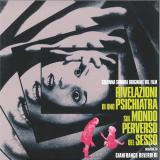
- A1: Psicolimite
- A2: Sexy
- A3: Psicolimite (Perverse Flute)
- A4: Revelations Blues
- A5: Psicolimite (Perverse Synth)
- B1: Strip
- B2: Psicolimite (Perverse Sex)
- B3: Sexy (Ballad)
- B4: Revelations Rhythm
- B5: Psicolimite (Perverse Flute #2)
- C1: Sexy (Gotico)
- C2: Psicolimite (Perverse Sex #2)
- C3: Rivelazioni Di Uno Psichiatra
- D1: Sexy (Romantico)
- D2: Psicolimite (Perverse Sex #3)
- D3: Carica
- D4: Psicolimite (Perverse Flute #3)
- D5: Peanuts
- D6: Psicolimite (End Titles)
Four Flies is thrilled to present the very first release of Gianfranco Reverberi's hidden masterpiece: a mind-blowing soundtrack, possibly his wildest and most daring. This Italian score is sort of a Holy Grail for fans of the spaghetti sound, especially thanks to the legendary track "Psicolimite".
In 1973, a mysterious 45 rpm single surfaced under the name 'Sharon Chatam e la sua Orchestra.' The single seemed to be a harmless cover of the theme from Last Tango in Paris, complete with a typical image from the film. But behind the innocent facade, a secret was hidden: the B-side track, "Psicolimite," was actually the main theme from Rivelazioni. When someone in the United States figured this out and realized the 'Sharon Chatam' moniker was a pseudonym for Reverberi and his team, the price of the record skyrocketed, making it a coveted collectible.
This makes the discovery of the full soundtrack even more exciting, considering that the music Reverberi composed for the infamous film by Renato Polselli - one of the most outrageous and uncompromising Italian genre cinema directors - was thought to be lost forever, perhaps vanished into the depths of some film processing lab. But thanks to the sleuths at Four Flies, this enigmatic masterpiece has been resurrected and presented in all its glory. It's available now as a luxurious gatefold double LP with original artwork by the brilliant Eric Adrian Lee.
While the film, despite some critics praising it as "psychotronic," is a bizarre mishmash of rambling pseudo-psychoanalytic theories and sexual deviance voyeurism, the music stands out as a foremost, vital element, able to exist on its own.
Reverberi's reputation as a serious, refined producer (for artists like Lucio Dalla, Gino Paoli, Luigi Tenco, and many more), however, led him to keep his distance from exploitation films like Rivelazioni. To maintain his image, he had his friend and former schoolmate Umberto Cannone take credit for the score – a tactic he also used for Polselli's next film, Mania (1974).
But this anonymity might have unexpectedly increased his creative freedom, for the score he put together and recorded is experimental, at times raw, and driven by a relentless rhythm section where bass and drums lay down the groove. The use of electronic instruments is impressive for the time, with drum machines and spacey synths creating a dark and dreamlike atmosphere. Psychedelic flutes, piano phrases, crazed percussion, filters, compressors, and jazzy improvisations on sax and vibraphone complete the mix.
The full soundtrack was recovered following the discovery of the original 1-inch, 16-track tapes, which were transferred, mixed, and mastered for optimal listening on both vinyl and digitally, with the digital version featuring 8 bonus tracks.
Available from November 22!
REVOLT hits double digits with a special release from Athenian underground veteran Other Reality—aka Alex Psaltakis—a figure deeply rooted in the rave culture of the ’90s. His journey began in the late ’80s via the Amiga demoscene, inspired by the raw energy of acid house and hardcore breakbeat. By the mid-’90s, he was DJing at raves, clubs, and open-air festivals, fueled by a passion for psychedelic trance, ambient, Goa, and experimental acid rock. His dedication to the underground has remained unwavering ever since—fed by records, synthesizers, and a deep love for sound exploration.
Still Thrill EP is a 4-track release shaped by a wide musical range, bringing together elements of Detroit techno, trance, house, Goa, ambient, and progressive. More than just a debut on the REVOLT label, this is Other Reality’s first-ever release on vinyl—a deeply personal milestone shaped by years of dedication to his craft and the support of close friends and peers.
Crafted with a mix of hardware and software, the EP draws from years of studio sketches and archived musical ideas. A hidden detail runs through it: a fragmented sample from a rock track that deeply marked Alex in the past—a line that never fully completes in the track.
Each piece carries emotional weight and narrative depth, blending analog warmth with timeless dancefloor energy. The EP moves effortlessly through moods—nostalgic yet forward-looking, playful yet deeply personal.
Ohm ’95—with a name that subtly hints at the Goa trance soul—delivers acid basslines, trance elements, and dreamy pads. A transcendental, unifying experience. Kinda Free pulses gently like a groovy caress at dawn, with dreamy layers, steady rhythm, and acid touches that feel both tender and elevating. More Than Advice embraces movement, disorder, and acceptance, rolling through intricate percussions, hypnotic loops, and a cosmic atmosphere. Emotional and raw. Still Thrill closes the EP with slow-motion energy, submerged in flowing textures and a fluid, nostalgic groove.
Vinyl only. Limited edition.
Introducing ‘Principauté de Bowl-Air’.
A brand-new label founded by DJ Bowlcut from South Korea, a key figure in supporting Seoul’s underground scene through Seoul Community Radio. This project presents his vision of deep, glitchy, minimal house music—woven with the story of a secret micronation hidden in the heart of Seoul.
The debut vinyl release, PBAVINYL001, features an original track by DJ Bowlcut, alongside reinterpretations by his friends DOTT and Rudolf C.
The A-side opens with “Tibetan Bowl”, a track built around the sound of a Tibetan singing bowl and vocal samples taken from a singing bowl tutorial—inviting listeners into the surreal world of Bowl-Air.
The second A-side track, “The Moment”, delivers a minimal yet gritty bassline and a hypnotic minimal house rhythm, layered with glitchy, acidic patterns and a Korean vocal sample that says, “Now it’s the moment you are waiting for.”
The B-side features remixes by DOTT and Rudolf C. DOTT reimagines “Tibetan Bowl” into a deeper, darker exploration of Bowl-Air’s hidden layers. Meanwhile, Rudolf C transforms “The Moment” into a nostalgic machine-funk-style track reminiscent of the early 2000s—perfect for injecting some funk into the dance floor.
Heavyweight Black Vinyl / Original glued prints on Thick Cardboard 700 gram / 2 Separated parts hand-glued / Glossy lamination / PVC outer sleeve / Insert with 10 pages Booklet 30 x 30 cm printed on Gmund Colro Felt Red Purplea d 90 Gram Favini papers with detailed interview between Tony Higgins and Mustafa's family (his sisters and children are all musicians), as well as an insight into the recording of the album with Gregory Bufford, the drummer for the session, lyrics and exclusive pictures.
Colored Vinyl Details:
Heavyweight "A side - B side solid purple + transparent blue" vinyl / Original glued prints on Thick Cardboard 700 gram / 2 Separated parts hand-glued / Glossy lamination / PVC outer sleeve / Insert with 10 pages Booklet 30 x 30 cm printed on Gmund Colro Felt Red Purplea d 90 Gram Favini papers with detailed interview between Tony Higgins and Mustafa's family (his sisters and children are all musicians), as well as an insight into the recording of the album with Gregory Bufford, the drummer for the session, lyrics and exclusive pictures.
Peronnel:
Mustafa Abdul Rahman - Tenor Saxophone, Percussion, Producer
Ahmed Abdullah - Trumpet
Malachi Thompson - Drums
Gregory Bufford - Bass
Richard Radu Williams - Piano
Rafik Abdur Rahim
Tony Smith - Guitar
Larry Banks - Synthesizer
Khalil Abdullah - Congas
Babafumi Akunyon - Percussions
Odell Grier Backing Vocals – Fred Harley, Hilda "Asia" Richbow , Linda Hall
Notes:
In the course of our deep research, we sometimes discover a hidden thread that unites musicians, songwriters, artists, and poets linked by music. Mustafa's 'Polygamy' is no exception. Apart from the music - the main reason we decided to work on this first ever re-press, a jewel at the crossroads between jazz funk, spiritual jazz and proto rap - are the many other things that make Mustafa an intriguing and fascinating character. For starters, he was a childhood friend of the Ayler brothers with whom he played in different formations. He also played with other beloved figures such as Noah Howard and Charles Tyler, on a still unreleased album recorded for Amiri Baraka's Jihad label, and worked with The Legendary Master Brotherhood and Steve Reid. This and much more will be revealed in a detailed interview between Tony Higgins and Mustafa's family (his sisters and children are all musicians), as well as an insight into the recording of the album with Gregory Bufford, the drummer for the session.
Not so long ago in 2017, the first release on Michiel Claus' and Ailsa Cavers' Basic Moves saw the light of day and especially the shine of night. Produced by founding father Walrus, BM01 set the tone for a record label that focuses on releasing hidden archives from the 90s, whilst combining them with modern club music from the here and now. By highlighting the musical heritage of the Belgian electronic music scene, the label illustrates the continuity between past and present, history and shaping identities of 21st-century artists, undeniably building on the strong foundations of their forerunners. Seven years and nineteen releases later, Basic Moves is rounding off the series with BM20, a final double 12'' by one of the major figures from the Belgian underground: Circadian Rhythms also known as Dj Deg. After many years of collecting, deejaying and producing music, his musical spectrum ranges from synth, library and wave, to jazz, funk and disco, from house to techno. His journey started in clubs like Bocaccio (1988 - 1993), and La Gait? (1979 -1989), where young Deg came across deejay's like Olivier Pieters or Eric Beysens who made him choose the path of becoming a devoted disc jockey himself. BM20 is a sonic witness of Deg's first musical encounters with his machines, revealing a withdrawn selection of six bedroom patchwork tracks produced between the years of '93 & '99, a time without the internet or user manuals to help you solve the riddles of technology. Though only at the very beginning of his creative process, Deg's unique personality is nevertheless already clearly identifiable: blending techno with jazz, where the sharp edges of 16-step drum-sequences are smudged and bent in different directions. In the lower countries, the second half of the 90s was a period of fast & funky, happy Detroit, 140 BPM techno. Whenever Deg was not oscillating between record shops or gigs and had a moment on his own, mostly during morning hours after the club, he would spend his leftover energy in the studio. Either by himself or with his loyal ally Mike DMA, he would benefit from these moments to slow down and give space to a different, introverted sound - processing moods, feelings and thoughts. This record therefore gathers only a few of many (unrecorded) one-shot live sessions which were never intended to be shared - and only existed for the love of music and its power to take you beyond all things known. Thank you Deg for sharing your music and giving us a glimpse of your universe. Without your productions, your memorable warm-ups and closing sets - many of us would not be where we are now, and Basic Moves might never have been founded. As a last note to a closing song, BM20 is about being fully committed to the music and the club, a medium and place of fruitful settings for encounters, creativity and growth. Where dreams and ideas have a chance to exist, being almost ready and thought out to shape future times to come - and many party nights. Gurl, December 2023
Uruguayan Label as it is characterized, introduces the third conceptual 12” album that brings deep roots from Uruguayan culture once again. Unveiling truth bringing to light the hidden past known historical fact of Carlos Gardel "El Mago“ the most prominent figure in the history of Tango genre. One of the trailblazers of the video clip long before this term existed, promoter of the Radio broadcasting in Uruguay, and the first Movie shorts with sound from “el Río de la Plata”.
Gardel was one of the first artists to use “Lunfardo” and show it to the world in his lyrics, and long has been the debate of his nationality, but this time all is left clear.
This is how Lunfardo, brings 4 artists to represent this unique story divided into three nationalities Charlou from France with his track Les infernes tranquilleus, Fakk from Argentina with “Murmullo del chanta”, and the two Uruguayans “Cabanelas - Marivo” and Arturo with “ Bohemio”, the mystery will be unveiled...
A classic slice of mid nineties UK House Music with some of the key figures of that period all on 1 Record!
Armed with soft chords, slick 90's drums licks, and rolling low-ends alongside a vocal samples flipping at the heart of both sides.
"I want to explore deep space
and uncover the hidden treasures there
there is a land of just men"
There is a parallel, submerged dimension in which musicians meet when they improvise. Sound microcosms emerge in those moments, and this is precisely the magic that BOTTAZZ! wanted to photograph in their first album: BOTTAZZ! VOL.1.
A "live" album, capable of transmitting spontaneity, sonic truths, empathy, feelings; ingredients that are difficult to transmit by recording the instruments individually or with other techniques.
Recorded in the historic "Auditorium 900" studios, a true time achine, as well as an institution for music in Naples.
Auditorium 900 took up the challenge in the figure of sound engineer Fabrizio Piccolo and from here the sound of BOTTAZZ was born!
A sound made up of lysergic Funk trips, 70's influences in all possible nuances: from progressive funk to Santana's Hispanic rock, up to touching its darkest and most hidden latitudes; audio waves
nfluenced by the soundtracks of the cinematography linked to those times, organs, synths, percussion and wah wah guitars, which generate a melting pot in which nothing is taken for granted.
BOTTAZZ! VOL.1 is a ship's diary, a journey into which each sailor has inserted its own emotions accumulated over the years, thus giving us a sincere and genuine record. Happy navigation.
- A1: Om Mani Padme Hum
- A2: Bohemia After Dark
- A3: Companionship
- A4: Stoned Ghosts
- A5: Jay-Jay
- B1: Dijar
- B2: Con Alma
- B3: Ct & Cb
- B4: The Turk's Bolero
- B5: Talk Some Yak-Ee-Dak
- C1: Calypso Blues
- C2: Balafon
- C5: I'm A Fool To Want You
- C4: Insensatez
- C5: Invitation
- D1: Yah-Yah Blues
- D2: Serenata
- D3: Just Give Me Time
- D4: Birn To Be Blue
- D5: Sconsolato
Jazz music has more than its fair share of overshadowed figures that whilst contributing much to the music have little presence in its collective conscious. One such musician is the talented multi-reedist, Sahib Shihab. Born Edmond Gregory, as he was known before he adopted the Muslim faith in 1946, Sahib Shihab's music background shows a deep and significant evolution, influenced by Thelonious Monk, Dizzie Gillespie (his experience in Dizzie's band marked Sahib's switch to Baritone, the instrument he became most readily associated with), and above all by Charlie Parker's Bop. Had it not been for the post-war migration of many top American jazz musicians to Europe, it is quite likely that the legendary Clarke-Boland Big Band might never come into existence. Sahib, one of this musicians disillusioned with the politics and racism of the United States, accepted to join the band of Quincy Jones for an European tour in 1959. When the tour ended, Shihab he remained in Europe where he joined, in 1961, the Clarke-Boland Big Band. The collection 'Companionship', whose line up consists of seven elements which derives from this original band, spotlights the consummate musicianship and individuality of Sahib Shihab and is testimony to his special musical gifts - not only as a top-rank flautist and baritone saxophone but also as a composer. Furthermore, it provides a welcome reminder of the high quality of the Clarke-Boland Big Band's rhythm section, the lively style of vibraphonist Fats Sadi and the power and personality of two of the C-BBB's horn-playing stalwarts, Benny Bailey and Ake Persson. Here's a real rarity, surely a desert island disc. This double album has it all from frantic banging percussive workouts to modal numbers to beautiful ballads. It's a staggeringly good piece of music and worth every penny of the price tag it commands. Let's have a look to the most significant pieces. Francy Boland's "Om Mani Padme Hum", taken from a Tibetan prayer, shows Shihab in exuberant mood, playing against a vigorous percussion background and making dramatic use of his special technique of combining voice and flute. Boland contributes an incisive, effervescent solo. "Bohemia After Dark", a classic original by bassist Oscar Pettiford which he first recorded back in August 1955, finds Shihab in exultant form on baritone. "Companionship" has a Bossa Nova beat and features Bailey on flugelhorn and Shihab on flute, playing with a limpid, floating sound. Bailey's minor-key original, "Stoned Ghosts" was, he says, inspired by listening to some music written by Bela Bartok before he emigrated to the United States. The piece has an infectious back-beat pulse and showcases the superb walking technique of Jimmy Woode. In "Con Alma" Shihab's mellow flute set against a churning 12/8 beat in this stylish Boland arrangement. Woode's performance of the superb Mei Torme ballad, "Born To Be Blue", reveals his great affection for the song. "lt is the perfect combination," he says, "a beautiful melody married to a great lyric. I really love that tune." It is a song of rueful resignation, putting a brave face on the blues. "Balafon" is an up-tempo Francy Boland original written for the French mime artist, Marcel Marceau. The rhythm section really cooks on this track with Kenny Clarke's cymbal work outstanding. Boland's solo here is notable for its neat, left hand punctuations. "Calypso Blues" has been written by Nat King Cole and Don George. lt tells the wry and wistful tale of a Trinidadian in New York desperately homesick for the land where everything 5 so much cheaper (in New York "a dollar buy, a cup of coffee and a ham on rye") and the girls more natural than the artificial, painted beauties of New York. Woode's composition, "Sconsolato" is a haunting theme in A minor and it brings to a close a truly fascinating album. This is dynamic music played with vigour, verve and vitality - and it is an enormous pleasure to rediscover it. A shadowy fugitive from his home in the land of jazz, Sahib Shihab remains a true unsung figure, worthy of more attention. With his equally expert technique on Baritone, Flute, Alto and Soprano saxophones and his capacity to adapt easily to a variety of musical settings. His warm, individual, singsong sound in improvisation and his unusual and interesting compositions mark him out as a hidden treasure in the dusty corners of jazz archive.
There was a time when a person would pick up an instrument to compose yet another song for a loved one. A sad figure humming into a microphone, pronouncing the most basic words and forms to convey quantity, quality, fact, statistics and similar sounds describing pain, loss and sorrow. The human brain would perceive the melody sad and perhaps within herself feel a sense of melancholia.
In another parallel world a new composition would then appear. But not one composed on a wooden built instrument, no, sounds made into structures and tables that would assists the listener into providing an additional context and meaning through digital synthesis and quantised harmonies. But who could really tell if these sounds were real? Or where they just sounds impersonating an idea of something?
Rhyme nor reason is as abstract in its shapes and ideas as it is concrete and elegant in its narratives. A carefully crafted wooden cabinet with an over-whelming amount of different drawers and hidden compartments. Each box storing blissful arrangement; a fluorescent stone, a paper note saying something about lunch, some collectible objects, a forgotten token or perhaps an autograph, all so very vibrant and joyful for its possessor.
Deleted files stored on rapidly rotating platters coated with magnetic material. Small, easy to loose SSD memory cards of recorded corrupt files and digital artefacts. Software engineered compositions trying to grasp the shared belief of an upcoming future, vivid and uncertain; birds, waters and long lost recollections. A release unconcerned with the literal depiction of things from the visible world. At least not for now.
- A1: Remco Beekwilder - Losing My Life
- A2: Matasism - Bassiani Raver
- A3: Verschwender - Flex Zone
- B1: Inhalt Der Nacht & Echoes Of October - Keine Ruhe
- B2: Sons Of Hidden - No Redemption
- C1: Introversion - Lichtenberg Figure
- C2: Sleeps Everywhere - Extinguish
- D1: Tim Tama - Cull The Weak
- D2: 999999999 - 03 10 1992
- D3: Remco Beekwilder - Waves From Oeteldonk
Repress!
Wiggle celebrate 25 years and relaunch their iconic label with a releases including co-founders Terry Francis, Nathan Coles and Eddie Richards, as well as artists like D’julz, Silverlining, Mihai Popoviciu, and more.
Wiggle, the brand that gave birth to tech house a sound that would power London’s club music community for over two decades, step out into their 25th year. To mark reaching this remarkable milestone, they plan a special series of international shows and a relaunch of their influential and ground-breaking label.
Taking their lead directly from the acid house movement, Nathan Coles and Terry Francis first brought Wiggle to life through their heady warehouse parties in the early 90s. Unpretentious to their core, these now infamous events were known for their purist values – community and a sound that booms. Finding a kindred spirit in another new face, Eddie Richards became resident from early sets and was a key figure from the off.
Through these now historic events, they embedded themselves deeply into London’s party landscape becoming familiar faces at cultural institution fabric. Heavily based around the core residents they also invited parts of the international and local world from Richie Hawtin, Jay Tripwire, Abe Duque and Colin Dale.
It’s about here we acknowledge Wiggle’s place in originating tech house - working the hard line swagger of techno together with the depth of feeling of house, matching rhythm with bass in a way perfectly aligned with endless hours of hedonism. This potent mix of musical elements is where it began and set down the foundation of London’s rich and active community of DJs, producers and ravers.
The label was founded close to the parties, sourcing tracks from the ever building network of producers who were fuelling this sound evolution. For their 25th birthday you can expect to see the Wiggle imprint coming back in strength - returning to cutting tracks to wax and continuing its legacy for bass fuelled party sounds and pioneering new talent.
2019 will see a series of international shows and a quarterly London party bringing the much loved Wiggle sensibilities and celebrate what they are and have achieved.
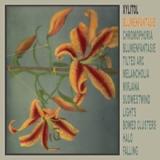
Xylitol, aka producer and DJ Catherine Backhouse, shifts up the refinement and musical breadth for her second album Blumenfantasie, the follow-up to her Planet Mu debut Anemones.
With Blumenfantasie, Xylitol wanted “to make space and for the music to float and propel at once”, finding routes through the pointillistic figures, cascading synths and the meditative stillness of kosmische musik and bolder breakbeat programming. She reaches this delicate balance through careful subtraction, hoping “to convey a sense of intimacy and sadness but without sentimentality” which she manages with a feel and sound that's raw and intuitive.
Blumenfantasie rolls through detailed jungle workouts that flutter and bleep, through beatless ambience, taking a rare dip below 160 bpm for the elegiac Mirjana, the album’s most explicit nod to Krautrock with a drum break chopped up from Amon Duul II’s anthemic ‘Archangel’s Thunderbird’, through to Halo, a bare bones grime rhythm that calls to mind the missing link between industrial pioneers Nurse With Wound and Wiley's Eskibeat.
Catherine cast her net to draw in experimental audiovisual duo Sculpture and Reading based post-rock band The Leaf Library as collaborators, pulling the former’s whirling eddies of musique concrète into a slice of sublime aquatic jungle, and the latter’s radiophonic folksong into a dark and disorientating breakbeat workout equally indebted to Source Direct as to Broadcast.
Blumenfantasie moves with a confident, self-effacing fluidity which has been informed by DJ Bunnyhausen’s more regular DJ gigs. She speculates ‘if this album feels more cohesive than its predecessor it's likely because I've been DJing a lot more, with Worthing Techno Militia, with central and eastern european electronica collective Slav to the Rhythm, as well as being part of Italo Disco crew Flex. Moving between these zones seemed to open up hidden pathways between the disparate musical trajectories they represent.'
While Anemones contrasted the rough and the delicate, its successor is an album built for the head, hips and heart, with painterly sounds and a sense of intimacy that encourages deep listening while keeping its eyes on the strobelight and its feet on the dancefloor.
- El Regreso
- El Encuentro
- Turbación
- La Mirada
- Sandía
- Indiferencia
- Conversación
- El Beso
- Fama
- Lluvia
- Nocturno
- Golondrinas
- Maga
- Otoño
- En La Esquina
La Margarita (1994) is an unforgettable collaboration between iconic Uruguayan musician Jaime Roos and legendary writer and playwright Mauricio Rosencof. Blending the rich musical traditions of Uruguay-candombe, murga, tango, and milonga-with elements of folk and rock, as he is known for, Roos sets to music a cycle of sonnets that tell a tender, naive love story. These poems were written by Rosencof under harrowing conditions during his imprisonment by the Uruguayan dictatorship in the 1970s. Includes 16-page booklet. Jaime Roos and Mauricio Rosencof are two of Uruguay's most beloved and influential artists. Roos, a groundbreaking musician, redefined Uruguayan music in the 1980s with his signature fusion of deep-rooted local rhythms and cosmopolitan flair. Rosencof, a celebrated writer and playwright who emerged in the early 1960s, was also a prominent figure in the historic Tupamaros guerrilla movement. Their paths converged in 1987, when Roos composed the score for Rosencof's play El Regreso del Gran Tuleque. During this collaboration, Roos discovered a series of sonnets Rosencof had written while imprisoned under Uruguay's brutal dictatorship. Held in solitary confinement for over eleven years, Rosencof composed these poems as a lifeline-scribbled on cigarette papers and hidden in the hems of clothes his family collected for laundering. Against all odds, both the author and his poems survived. The sonnets tell a delicate, moving love story set in 1950s Montevideo. Roos, inspired and captivated, rose to the challenge of transforming them into music. The result was La Margarita-a groundbreaking project in which Roos masterfully fused Uruguay's rich musical traditions-candombe, murga, tango, and milonga-with elements of folk and rock, creating a deeply evocative set of songs as only he could deliver. Beyond its beautiful music, La Margarita stands as a testament to resilience, creativity, and the enduring power of love and art.
Rhiza Semar presents its fourth chapter with Yildizlara, a four-track odyssey shaped from shadow, rhythm, and elemental texture. Crafted as both visceral tools and introspective journeys, the record navigates between ominous density and luminous release, guided by a deep awareness of space, myth, and matter. As an artist, Hitam paves the way for a new sound emerging from his burrows to build bridges between electronic subgenres while shaping a landscape unmistakably his own. Orb Weaver opens the cycle with jagged IDM rhythms that coil and release like threads of a web pulled taut. Originally composed for the graduation project of fashion designer Tim van der Plas, who's collection was inspired on climbing out of depression, its atmosphere is dark and ceremonial, with textures scraping against silence until catharsis emerges from the tension. A confrontation between inner turmoil and release. On Vanishing of the Anasazi, cavernous reverbs carry traces of lost structures, percussion echoing as if across ruins. A relentless drive holds the ghost of ritual processions, summoning a spectral energy that feels at once monumental and hollowed-out. The track suspends itself between presence and absence, architecture and collapse, leaving the listener in a space where echoes become the only surviving form of memory. Mesh Grip plunges downward into subterranean force. A thundering groove rumbles like minerals being unearthed, goblin-like figures at work in hidden shafts, chiseling away at stone in endless rhythm. From this pressure, a sudden swell of melancholy pads rises, reframing the heaviness with emotional resonance as if the whispers of angelic guardians seep into the caverns, transforming extraction into elegy. What begins as pure drive of endurance evolves into an introspective meditation. Closing the release, Yildizlara unfolds as an epic ascent. Layered rhythms rush forward with urgency, intricate yet propulsive, while chopped vocals bring back a sensual human element, scattering like signals across the night sky. Animalistic atmospheres dart through the mix as spectral cries and furtive movements, adding a primal dimension to the drive. What begins as erratic and untamed slowly converges into warmth and ultimate catharsis: a cosmic tale inscribed in sound, both intimate and monumental, familiar yet born of hidden memory. Yildizlara is both innovative and ancestral; a release where turbulence becomes ritual, and where rhythmic complexity unearths fragments of hidden memory. Beneath its dark and erratic surfaces lies a strange familiarity, like echoes of a primal past resurfacing through sound, reminding us of worlds once known but long concealed. Words by A. Veyra
Swan Song
The vinyl LP at the heart of this éthiopiques 31 tracks 2 to 11 was one of the very last vinyl records ever released in Ethiopia. But above all it represents, we felt, the absolute masterpiece of the Ethiopian Groove – the Swan Song of Swinging Addis. The album leaves a clear idea for posterity of the level of sophistication and mastery that modern Ethiopian music had achieved, before being crushed under the Stalino-military heel of the Derg – as the bloody revolution that was unfolding came to be called.
Ethiopia1976.
The Revolution that broke out in February 1974 rolled on in a ruthless march. The whole of Ethiopian society was utterly stunned. The bouquets of flowers handed joyfully to the first tanks of the coup d'état were to wilt very rapidly. From September 1976 to February 1978, 18 months of Red Terror (the name given by the junta itself) spilled blood throughout the country. This fratricidal conflict took its heaviest toll among students and youth. The shift from feudalism to a cruel and primitive Stalinism left the country's citizens deeply traumatised, and snuffed out any pretence of activism, whatever the sector of society. This ice age was to last for seventeen long years.
ሙሉቀን፡መለሰ Mulukèn Mellèssè Muluqän Mälläsä
It was three tracks by Muluken that served as the opener for éthiopiques-1 more than 25 years ago. Seven more tracks appeared on éthiopiques-3 and 13, all accompanied by The Equators, which was soon to become the Dahlak Band.
The first track, Hédètch alu, also the very first piece that Muluken ever recorded, left audiences both unsettled and amazed. Reflecting the singer's extremely young age (he was just 17 at the time), this angelic voice mystified many, who thought they were in fact listening to a feminine voice. He was not yet 22 when he released his last vinyl record in 1976 with Kaifa Records (KF 39LP), one of the very last to be issued in Ethiopia, before the cassette tape became the dominant medium for music distribution – and before the new revolutionary regime put a stop to all independent musical life, via an unspeakable barrage of prohibitions and other persecutions.
Mulu qèn, literally, “A well filled day”. This tender maternal intention wasn't enough to ward off the cruelty of fate. His mother's premature death drove Muluken to leave his native Godjam, in northeast Ethiopia, to live with an uncle in Addis Ababa. Born Muluken Tamer, he took his uncle's last name – Mèllèssè.
The spelling Muluken appeared in his administrative records. Transcription of Amharic to the Latin alphabet, both in Ethiopia and for scholars, gives rise to controversies and quibbles that can never be neatly settled. French allows for a closer approximation of the original pronunciation, thanks to its battery of accent marks, confusing as they may be to anglophones.
Between rather accommodating administrative record-keepers and the various versions that pop up in interviews given by the artist, Muluken's year of birth oscillates between 1953 and 1955…
1954? One thing is certain: the artist's talent made itself known very early indeed, because he got his start in 1966-67, at the age of 13 or 14. Photos from the period attest to his extreme youth. It's a strange sort of initiation for a very young teenager to become a sensation in the heart of Addis's nightlife at the time, Woubé Bèrèha – the Wilds of Woubé. And what's more, in the club of the Queen of the Night, the Godjamé Assègèdètch Alamrèw herself, the very same that was portrayed by Sebhat Guèbrè-Egziabhér in his novel-memoir Les Nuits d’Addis Abeba2… The legendary female club owner who is remembered to this day by the capital's ageing boomers.
Muluken first tried his hand at the drums, before he grabbed the microphone. He emigrated briefly to the Zula Club, across the street from the old Addis Post Office, one of the ground-breaking bars of the burgeoning musical scene, before joining the Second Police Band in 1968, for around three years. He spent a few months with the short-lived Blue Nile Band founded by saxophonist Besrat Tammènè. As the musical scene grew increasingly successful, and pulled slowly but decisively away from its institutional ties, Muluken released his first 45rpm single in February 1972 (Amha Records AE 440). It was included in two LP Ethiopian Hit Parade compilation albums in September of the same year. All in all, Muluken released eight two-track 45s and the same number of original cassette tapes between February 1972 and 1984, the year that he departed for permanent exile in the USA. After converting to Pentecostalism in 1980, Muluken gradually abandoned all secular musical activity. In 1985, at the end of a concert in Philadelphia, he decided to quit concerts and recording for good. Mèlakè Gèbré, the historic bass player from the Walias band who was playing with him that night, recalls that everything appeared so irredeemably diabolical in Muluken's eyes, that it was to be the end of his contribution to Ethiopian Groove.
The end of the story, the beginning of a legend.
Dahlak Band, forgotten by History
Aside from his personal history and vocal talents, it must be remembered that Muluken Mèllèssè was one of the biggest names in the musical innovations that marked the end of the imperial period. These éthiopiques aim to convince those who are just discovering this hidden gem... As for Ethiopians themselves, they are to this day captivated by this singular and atypical figure in the Abyssinian pop landscape – even though he withdrew from public life some 40 years ago. Incorrigible devotees of poetic twists, of more or less hidden meanings, Ethiopians appreciate above all the care Muluken took in choosing his lyrics and the writers who penned them, such as Feqerte Haylou, Alemtsehay Wodajo and, here, Shewalul Mengistu (1944-1977). Love songs, written by women, a far cry from the conventional drivel that pleases sappy sentimentalists.
Muluken is equally acclaimed for his perfectionism when it came to music, the opposite of the overly casual approach that is all too common. He remained a faithful partner of musicians who came from a lineage that borrowed from several inventive and pioneering bands (Venus, Equators, Dahlak). Amongst them were certain artists who began their musical lives with Nersès Nalbandian at the Haile Sellassie Theatre and who come of age in around 1973 – at just the wrong time, you might say. Among them were the pillars Shimèlis Bèyènè (trumpet), Dawit Yifru (keyboards) and Tilayé Gèbrè (sax & flute). Most notably Tilayé Gèbrè, certainly one of the most important musicians, composers and arrangers of his generation, of the end of the imperial era, and of the early years of the Derg.
It was only in 1981 that a miraculous opportunity arose for Tilayé to escape the Stalinist paradise of the dictator Menguistou Haylè-Maryam. Once again it was Amha Eshèté (1946-2021) who provided a solution. The spirited and courageous producer, who had been in exile in Washington since 1975, succeeded, thanks to his incredible perseverence, in bringing the Walias Band to the USA. It was, in fact an extended Walias Band comprising ten musicians3, six of whom chose to slip away after a few concerts and the recording of an LP (The Best of Walias, WRS 100). Tilayé Gèbrè was one of these. He has been living in the USA ever since. There he joined the then-nascent Ethiopian diaspora, which lived largely unto itself, and was making only very modest headway in the American musical market. It seems unfair that Tilayé Gèbrè and the Dahlak Band were not able to benefit earlier from the public recognition that they do deserve.
A similar draining away of the top-rate talents would lead to the reorganization of the major groups of the “Derg Time”. The remaining artists spread themselves around between Ibex Band (renamed Roha Band), Ethio Star Band and a remodeled Walias Band. That spelled the end of the Dahlak Band.
With this record, produced by the essential Ali Abdella Kaifa a.k.a. Ali Tango, we can appreciate everything that the Derg not only destroyed, but also prevented from flourishing. This gem of Ethiopian-style afrobeat came out in 1976 (and, by way of a parenthesis, before the FESTAC 1977 in Lagos, which was attended by an impressive delegation of Ethiopian musicians — although Fela was already personna non grata in his own country). Despite everything that might distinguish this ethio-groove from Fela’s music – no colonial axe to grind, no question of political confrontation with the authorities, no claims to negritude or Africanism for the Ethiopian musicians, and less extrovertion! –, this LP fits beautifully into the saga of intense and electrified soul of the new “African” groove that Fela and Manu Dibango embodied so well from that point onwards.
In restoring this record to its place in the afrobeat epic, it can be seen that, if nothing else, the timeline bestows a legitimate pedigree and a historical primacy to works that had no international impact when they were originally released.
Warning! Masterpiece!
- A1: Retrospect - This World Is Not My Home
- A2: Hidden Fire Improvisation
- B1: Hidden Fire Blues
- B2: Hidden Fire Blues
- C1: My Brothers The Wind And Son #9
- C2: My Brothers The Wind And Son #9
- D1: Hidden Fire I
- D2: Hidden Fire Ii
Strut Records proudly presents the official reissue of Hidden Fire Volumes 1 & 2, the final album released by Sun Ra on his El Saturn label in 1988.
Captured live over three nights at the Knitting Factory in New York City, these performances mark the closing chapter of a 33-year odyssey of radical, independent music-making. Originally issued in tiny quantities with minimal packaging and cryptic artwork—often featuring hand-written labels or Ra’s own handmade designs—Hidden Fire was among the most elusive entries in Sun Ra’s vast discography.
Musically, these recordings stand apart from Ra’s other '80s compositions. Here, Hidden Fire plunges into darker, more dissonant territory. Ra performs exclusively on the Yamaha DX7 synthesiser, pushing its digital sound palette into alien dimensions. The Arkestra lineup is uniquely configured, featuring a rare and heavy string section with three violins, including the legendary Billy Bang, and the singular space vocalist Art Jenkins, whose eerie textures and vocalisations had not been heard so prominently since the early 1960s Choreographers Workshop sessions. The music is raw, unsettled, and often overwhelming.
“Retrospect / This World Is Not My Home” opens with a palindromic riff that evokes Ellington before unraveling into a stark sermon from Ra, warning of death’s dominion over Earth-bound minds. “Hidden Fire Improvisation” is a furious explosion of tone science, with Marshall Allen, Billy Bang, and John Gilmore delivering fire-breathing solos over relentless drumming and Ra’s cascading synth clusters. “Hidden Fire Blues” offers a warped, electrified version of Ra’s familiar blues feature, led by Bruce Edwards on guitar and Rollo Radford on electric bass, transformed through the haze of DX7 textures. “My Brothers The Wind And Sun #9” evokes the experimental weight of The Heliocentric Worlds with its crashing percussion, pulsing synth-vocal duets, and string- driven chaos that seems to spiral into oblivion.
Even the quieter moments—such as “Hidden Fire II,” a duet between Ra and Art Jenkins—feel thick with unease and shadowy beauty. These performances represent a Sun Ra less concerned with cosmic joy or outer-space swing, and more focused on conjuring portals to the unknown.
Remastered from original sources and presented with archival photos, new liner notes by Paul Griffiths, and restored artwork inspired by the original Saturn editions, this reissue offers a definitive window into the last creative surge of one of music’s most visionary figures across two Vinyl LP’s.
- Oh No
- Fail
- World
- Never
- Flag
- Please
- Nothing
- Break
- Home
‘Best tunes for your answering machine’ is the debut album of oblique, introspective electronic music by the mysterious solo artist Tekamolo.
Fusing melancholic synth pop and absurdist trip hop, ‘best tunes for your answering machine’ is a special assemblage of pitch-modified vocals, retrofuturist samples and freeform electronics that coalesces into music both outlandish and bittersweet, playful and profound.
Produced by a renowned artist, opting to conceal their identity under the guise of a new pseudonym, Tekamolo presents a series of curious, incognito confessionals with ‘best tunes for your answering machine’. An album led by a voice like a sentient, heavy-hearted android, the nine tracks collected here contend with themes of inertia, solitude and longing, revealing an inspired, affecting stream of messages from an unknown caller.
Without preconceptions tied to provenance, this is music liberated from the burdens of biographical detail. Music that eschews ego and the cult of the self. An album that can be heard purely for the strange, poignant sounds unfurled throughout.
For Tekamolo, the album signifies an attempt to navigate aesthetic reductionism, as well as an absolute sense of seclusion:
“An audio diary of a lonely soul. Broken, wounded mantra-songs. Memories of things that never happened. Dreams that never had the chance to be dreamed. Disassembled songs. As if testing the limits of emptiness — how much void can a song endure while still remaining a song? How much can be stripped away, how bare can it be, and still, the groove lingers, the melody pierces the memory, sinking into the listener's mind.
These are the skeletons of songs, an attempt to assemble music from the bare minimum — words, sounds, fragments of memory.
The songs are filled with desperate calm. They are not sung to the world, nor to anyone tangible, but solely to oneself and to the unseen. In a way, they could be considered songs of the end of the world: you wake up, and there is not a single person left in the world. At least, no one you can see. You wander through empty streets and deserted shopping malls, humming softly to yourself, hoping that someone — anyone — might hear you.”
‘best tunes for your answering machine’ is a sui generis conception of warped 21st century blues from an enigmatic figure, a work filled with surreal, indelible songs of modern isolation. Lost contemporary hymns, now recovered. Voicemails worth hearing.
- Shrine
- Baby It's Alright
- Ride 38
- Tiffany's Days Go By
- Christopher Siren
- Sugar Daddy
- Blue
- Soft Purple Sky
- Julia's Eyes
Tough Love brings to vinyl for the first time April Magazine's Sunday Music For An Overpass, a nine track collection originally issued on cassette in vanishingly small number by Paisley Shirt in 2021. The kind of mythical recording you might have once needed to know the band to own. Alas, no longer... Can the universe have two centres? Because if it's not Gothenburg it's San Francisco... It's impossible for me to think about what's going on in that particular part of the west coast right now without immediately being drawn to April Magazine, a comparatively loosely assembled three (sometimes four) piece centred around artist/musician Peter Hurley, who seem to simultaneously operate at both the heart and the margins of the current Bay Area underground. On the one hand they share members with many other bands, their guitarist/singer runs a gallery that functions as some kind of focal point/social space, and Cindy even have a song named after them. On the other hand, their music is resolutely lo-fi and invariably couched in a mysterious haze, the live footage available online seems to suggest that they sound slightly different each time they play, and there are reports they have dozens of songs (possibly albums?) that have not and may never be released, hidden inside their own private universe. On its initial release, Sunday Music For An Overpass was an early attempt to drag the group a little closer into the light, yet inevitably made them feel as endearingly enigmatic as ever. Typically, this vinyl reissue some four years later only goes part way in clearing that alluring fog. April Magazine channel the greats - Spacemen 3, The Pastels, early B&S, Mary Chain, Rainy Day/Opal/Mazzy et al - but submerge their obvious melodic capabilities within seemingly infinite spray can hiss, as if the songs are being pulled backwards through some vortex to the past. Half of these tracks are instrumentals, and it's in those moments that the band are perhaps at their most expressive, suggesting a very inviting melancholy that can't quite be figured out. Though the LP remasters the original recordings and is a little cleaner sounding as a result, no secret is being given away. The appeal is that the more you hear from them, the less you really know, and all the better for it. Maybe, then, it's that April Magazine are here to show there is no centre to the universe, that instead it's always just off to the side...
Reissue of in-demand Italo title, with accompanying edits by Hysteric. "For the much-requested 12'' reissue of Roaring Mosquitoes, Best Record followed the hint by a die-hard German researcher and esteemed DJ of 'hidden musical treasures' Frinda Di Lanco. Further enriching this reissue - masterfully remastered by Dom Scuteri - with two of his splendid edits is the Australian DJ-producer George Hysteric, one of the world's leading authorities and a leading figure in Italo Disco. The juxtaposition of the two songs performed with grit and physicality by Agostina Casalino and her cousin Antonietta Casalino (aka Roaring Mosquitoes) highlights two aesthetically and rhythmically similar approaches, albeit with different roots and inspirations. "You Aren't With Me" has the merit of not wanting to reinvent the genre, but exploits the familiarity of pop-dance forms, obtaining an immediate catchiness. The piece stands out for its linearity while reworking melodic mechanisms typical of the 80s new wave: short instrumental intro, well-defined verse-chorus, obsessive repetition of melodic hooks that make it an immediate and "dragging" song on the dance floor. The arrangement focuses on a solid electronic drum groove, sinuous basslines, clean guitar riffs, "cutting" keyboards and the use of the chorus typical of the Italo Disco of those years. Some passages recall the melodic line and rhythmic progression of "Tonight... Crazy Night", an intriguing song that the Canadian artist Dorine Hollier created in 1984 at the Titania Studios in Rome with Pierluigi Giombini. Even with "Ah Ah Ah Ah" which features a vibrant and cheerful sound there's a playful use of citation for some idea that Diego Pepe took from a Micky & Joyce track. It evokes the "space disco" spirit of Jean-Pierre Massiera and the influence of the French scene of 1979: polyphonic synthetic strings, echo effects on electronic hi-hats and a vaguely futuristic atmosphere, but with an even more captivating sound revitalized with more scratchy modern touches and compressed basslines. A mix of vintage and contemporary that enhance its charm."
Federsen’s Alt Dub continues with its third release this May, the ‘Artist Series’ focused VA features cuts from cv313, Taction, Hidden Sequence and Fletcher.
Based out of San Francisco, Federsen and his Alt Dub imprint are known as purveyors of all things raw and intricate in the world of Dub Techno, holding the beacon and championing the sound, introducing new artists and featuring highly respected figures from the scene also. This new various artist package promotes exactly that.
Taking the lead is the widely revered cv313, the Detroit based dub powerhouse delivers his signature sound with ‘Spectral Vector’ via hazy field recordings, textural noise, modulating percussion and spiralling dub echoes all subtly nuanced throughout its nine minute duration. Sydney’s Taction then offers up ‘Caesious’, employing trickling water sounds, ethereal, expansive pads, pulsating subs and reduced percussion.
Opening the B-Side is Hidden Sequence’s ‘Azteca’, picking up the energy levels courtesy of swinging organic percussion, bubbling echoes, reverberated stab sequencing and oscillating resonant synth flutters. Fletcher’s ‘A Distant Place’ then rounds out the release, an eight and a half minute excursion through soft, dream like chimes, twitchy synth tones, a heavily swung rhythm section and subtly nuanced structure.
A fully licensed, analogue reissue -- sure, on cassette and not on vinyl, that's a
long story -- of the first Index LP, originally released in 1967
The "Black Album" is one of the all-time holy grails of psychedelia, with originals going
for more than $4,000. It is an album "with a really druggie sound, full of feedback and
fuzzy guitars. The vocals, when present, are not easily heard. The cover of 'Eight Miles
High' is very good, probably one of the best cover versions I have ever heard. The
original songs all follow a similar pattern as the covers, with hazy guitar riffs and loud
rhythms. The last track is particularly noisy and unstructured. Hidden in amongst the
echoing canyons of sound there's some really snotty punk attitude wrapped up in
trippy velvet fuzz."
This record is magnificent-- bizarre, atmospheric, amateurish (in the best of all
possible ways). It has a wonderful bleak sound, both droning and murky... the atonal
sound of 1960's rock that would leave the most lasting impression on what would
become future punk, post-punk and indie rock artists.
"Much has been written about this incredible band. Much of it isn't true. Index was
formed in the early spring of 1967 in Grosse Pointe, Michigan. I was 18 years old
when I met a chain-smoking 16-year-old named Gary Francis. Our conversation soon
got around to rock and roll. He told me that he and his friend, John Ford, were forming
a band. I told him that I played drums and we arranged a jam session at John's home
on Lakeshore Drive. Our first meeting was incredible. Our sound was full and
powerful. John's lead guitar techniques were fresh and innovative. After our first
sessions we knew we had something special. Index was born. Soon we hit the local
'sock hop' circuit, playing at high schools and teen clubs in the area. We poured our
unique sound out at The Hideout, Undercroft and G.P. War Memorial every weekend.
One afternoon John pulled out a new album he had been listening to. It was a new
band with a mind-shattering sound called 'The Jimi Hendrix Experience.' John played
some songs he had written inspired by this 'psychedelic' sound. Over the next few
days, 'Fire Eyes,' 'Shock Wave' and 'Feedback' were written. This album was recorded
in December of 1967 at the Ford estate. It is recorded in mono with literally one
microphone and with all instruments and vocals recorded at the same time. The cover
photo is of founders of a singing group John joined at Yale. The stiff, board- like
figures seem to characterize the exact opposite of this musical collection. This
reissue is taken from the original recordings. Nothing has been added and all songs
are in their original length. Over the years various bootleg copies of this album have
surfaced but this is the original work." --Jim Valice
Keith Hudson’s Nuh Skin Up Dub is a deep, heavyweight dub album that stands as one of the most potent statements in the genre’s history. Released in 1979, this sonic masterpiece showcases Hudson’s signature dark, almost mystical production style, where heavy basslines, echo-drenched drums, and ghostly fragments of vocals swirl together in a hypnotic haze. Unlike the more polished, accessible dub records of the time, Nuh Skin Up Dub is raw, unfiltered, and experimental, pushing the boundaries of rhythm and space. Tracks like "Nuh Skin Up" and "Felt We Felt the Strain" pulse with an eerie, almost menacing energy, while Hudson’s masterful use of reverb and delay creates a soundscape that feels simultaneously expansive and claustrophobic. Often referred to as the “Dark Prince of Reggae,” Hudson had an uncanny ability to craft music that was both deeply meditative and unsettling, and Nuh Skin Up Dub is a prime example of his genius. It's a record that rewards deep listening—every spin reveals new layers of sonic detail, hidden textures, and dub wizardry. For fans of heavy, atmospheric dub, Nuh Skin Up Dub is an essential listen, a landmark recording that solidifies Keith Hudson’s status as one of the most visionary figures in reggae history.
- A1: Pattugliamento Aereo
- A2: Tunnel Sotterranei
- A3: Collina Silenziosa
- A4: Militari In Allarme
- A5: Plotone Di Esecuzione
- A6: Filo Spinato
- A7: Imboscata
- A8: Lettere Dal Fronte
- B1: Sognando La Pace
- B2: Pattugliamento Aereo #2
- B3: Dietro Le Linee Nemiche
- B4: Spettri
- B5: Fiori Tra Le Macerie
- B6: Disertori
- B7: Evasione
- B8: Evasione #2
- B9: Evasione #3
- B10: I Sopravvissuti
Four Flies Records is proud to present Paesaggio Bellico, a collection of unreleased music from legendary composer and multi-instrumentalist Alessandro Alessandroni.
Available digitally starting on the centenary of the maestro's birth on 18th March 2025 and on vinyl on 21st March, Paesaggio Bellico is a true gem hidden within the vast treasure trove of Italian film scores and library music.The album brings together themes and atmospheric pieces inspired by the world of war, viewed not just from a military standpoint, but also through a deeply human and existential lens.
The LP version features 18 tracks, while the digital release expands to 29, including alternate takes and thematic variations. These compositions were meticulously unearthed from scores written and recorded by the maestro between 1969 and 1978 for television documentaries and war films.
Alessandroni's war-inspired music masterfully balances action, suspense, and introspection. Expansive, panoramic themes give way to anxious, tormented moments. Horrifying visions are countered by calmer atmospheres, and glimmers of hope soften the intensity of pain.
Each track embodies the unique sound that has made Alessandroni an irreplaceable figure for soundtrack and library music enthusiasts. His signature whistle – so unmistakable for generations of fans of the genre – soars above delicate 12-string acoustic guitar arpeggios. More dramatic pieces feature his iconic Fender Stratocaster, equipped with a fuzz distortion pedal. And, of course, Alessandroni's vocal group, the Cantori Moderni, a constant presence in his arrangements, contribute, this time lending their voices to the more unsettling aspects of military psychology. An elegant string section adds depth and emotional impact to the more orchestral tracks, completing the picture of this monumental work.
The result is a sonic journey that delves into the darkest, most martial sides of war, but also explores its intimate and deeply painful dimensions, creating a powerful dialogue between the atrocities of conflict and the human emotions it evokes.
The release is enriched by original artwork from Eric Adrien Lee, who reimagined the 1970s graphic design of Italian war-themed library albums. The vinyl LP is housed in a tip-on hard cover (the kind used for higher-end productions during the golden age of Italian soundtracks), with an inner sleeve featuring a color-inverted variation on the cover art, which makes the physical record even more unique.
Valuable vinyl reissue for this historic four-handed work by Gigi Masin and Giuseppe Caprioli. The concept of multitude combined with the figure/symbol of the labyrinth suggests orders of thought relating to the multiple states of being that inhabit the dark labyrinths of the soul, the hidden regions of the human psyche. All in Multitude In Labyrinth leads us to look for keys to understanding the ultimate meaning of a test as enigmatic as it is powerful. A congeries of paramusical phenomena in continuous evolution, expression of an internal feeling strongly concentrated on itself, disguised in the plastic flow of sound events that evolve on the gravitational maps of low-frequency drones, of the changing waveforms and of the elliptical-circular loops warped with scientific skill in the electronic workshop used for this purpose. A cinematic symphony in nine movements that direct the listening towards the frontiers of unexplored parallel worlds, ready to recreate the infinite maze of aural multitudes that materialize, dissolve and regenerate impulse after impulse for the duration of the work. Music whose remote echo makes us think of the harmony of the spheres that governs the mechanics of the cosmos and of being.
Capturing phantom drones behind dusty beats and haunted twangs, Ellis Swan and James Schimpl return for their third album as Dead Bandit. Locked into a musical language unique to their collaboration, the duo once again put us out to pasture across broad sonic plains, drums flapping like loose fence panels in the prairie breeze and bass rumbling like distant thunder. True to their previous two records, Swan and Schimpl keep the strung out guitars at the front of what they do, whether playing a naked, desolate strum or running six strings through disruptive effects processing until they're barely recognisable.
But while there are details of disturbance when listening to Dead Bandit's self-titled record up close, the wider impression is a smoother, more direct affair that toys with post-rock complexity and matches it with the emotional weight of melodic simplicity, gentle grooves and conscious arrangements. 'Weeds' offsets its languid fuzz guitar with shimmering sustained notes before settling into a patient, heavy-hearted composition charged with heartbreak leads pealing out in the middle distance.
By comparison, 'Glass' has a smoky, half-hidden backroom quality. Its brushed whisper of a beat, lingering guitar drones and subtle sub bass come on like a dub wise flip of a sad-eyed country ballad. The mood maintains on 'Half Smoked Cigarette', which captures the grey sky sullenness of post-punk and reframes it in the seductive isolation of rural America. While there's a thickness to the sound on these most direct of tracks on the album, there's also fragility inherent to the sound world Dead Bandit have been shaping out over these past few years.
'Buttercup' swaps sadness for sinister undercurrents, once more drawing on fulsome low end to fill out the sparse threads of instrumentation up top. 'Pink' finds a steady momentum for its own brand of brooding mystery, the sharp end of the beat bringing focus to the many-layered approaches to the guitar which roundly define the Dead Bandit sound. There's an even clearer direction mapped out in the vintage drum machine pulse of 'Koyo', all the better to carry swirling effects treatments and moody melodic figures. Even in these ominous climes there's space for plaintive, endearing hooks which land as the most direct phrases in Dead Bandit's musical lexicon to date.
The fundamental sound across this album holds true, but Dead Bandit are never bound to a singular practice. 'Lucien's Bitters' strikes up a pronounced drum machine beat which comes on like 90s downtempo, and it feels like a natural vessel for the heavy, shoegaze tinted lament of the guitars. At every turn, Swan and Schimpl prove their affinity for all kinds of approaches, and yet the end product is a deeply cohesive, immediate listen that shows just how clear their creative vision really is.
Heavyweight Black Vinyl / Original glued prints on Thick Cardboard 700 gram / 2 Separated parts hand-glued / Glossy lamination / PVC outer sleeve / Insert with 10 pages Booklet 30 x 30 cm printed on Gmund Colro Felt Red Purplea d 90 Gram Favini papers with detailed interview between Tony Higgins and Mustafa's family (his sisters and children are all musicians), as well as an insight into the recording of the album with Gregory Bufford, the drummer for the session, lyrics and exclusive pictures.
Colored Vinyl Details:
Heavyweight "A side - B side solid purple + transparent blue" vinyl / Original glued prints on Thick Cardboard 700 gram / 2 Separated parts hand-glued / Glossy lamination / PVC outer sleeve / Insert with 10 pages Booklet 30 x 30 cm printed on Gmund Colro Felt Red Purplea d 90 Gram Favini papers with detailed interview between Tony Higgins and Mustafa's family (his sisters and children are all musicians), as well as an insight into the recording of the album with Gregory Bufford, the drummer for the session, lyrics and exclusive pictures.
Peronnel:
Mustafa Abdul Rahman - Tenor Saxophone, Percussion, Producer
Ahmed Abdullah - Trumpet
Malachi Thompson - Drums
Gregory Bufford - Bass
Richard Radu Williams - Piano
Rafik Abdur Rahim
Tony Smith - Guitar
Larry Banks - Synthesizer
Khalil Abdullah - Congas
Babafumi Akunyon - Percussions
Odell Grier Backing Vocals – Fred Harley, Hilda "Asia" Richbow , Linda Hall
Notes:
In the course of our deep research, we sometimes discover a hidden thread that unites musicians, songwriters, artists, and poets linked by music. Mustafa's 'Polygamy' is no exception. Apart from the music - the main reason we decided to work on this first ever re-press, a jewel at the crossroads between jazz funk, spiritual jazz and proto rap - are the many other things that make Mustafa an intriguing and fascinating character. For starters, he was a childhood friend of the Ayler brothers with whom he played in different formations. He also played with other beloved figures such as Noah Howard and Charles Tyler, on a still unreleased album recorded for Amiri Baraka's Jihad label, and worked with The Legendary Master Brotherhood and Steve Reid. This and much more will be revealed in a detailed interview between Tony Higgins and Mustafa's family (his sisters and children are all musicians), as well as an insight into the recording of the album with Gregory Bufford, the drummer for the session.
Dienne creates hazy pieces of music full of the melancholy of remembrance and loss combining analogue instruments with reverb-drenched vocals and shimmers of processed electronic sources. Her new album "Conducturis" emerges as a sensory exploration of the human spirit and the boundless horizons of artificial intelligence.
"Abundant in beauty and rich in disturbances" serves as the guiding principle for Belgian composer, Dienne, as she builds songs and soundscapes that portray the images and stories that play behind her eyes.
Combining analogue instruments like the oboe, the piano, and the flute with reverb-drenched vocals and shimmers of processed electronic sources, she creates hazy pieces of music full of the melancholy of remembrance and loss.
Her debut album Addio (2022) was released on Nicolás Jaar's Other People imprint. Addio is a 32-minute study on loss and mourning. Following the death of her grandmother due to Covid-19, and unable to say a proper goodbye due to travel restrictions, Dienne set out to give her "Addio" through musical form. The result is a deeply intimate work that channels classical instrumentation through foggy electronic experimentation.
Memories, biographies, and family histories merge in this simultaneously somber and optimistic work which plays out like a universal and comforting ode to lost loved ones. Her second album, Conducturis, accompanies an immersive film installation delving into speculative fiction, conceptualized by Mira Sanders and Cédric Noël. Conducturis will be released on Cortizona at the end of January 2025.
Conducturis is an immersive film installation project that delves into the realms of speculative fiction, employing the cinematic language of the road movie to envision the ramifications of constructing an artificial brain within the Swiss landscape.
Following their encounters with key figures in the Human Brain Project during an art research expedition in Geneva from 2019 to 2020, conceptualized by Cédric Noël & Mira Sanders, they stumbled upon a remarkable discovery: a hidden fiber-optic cable linking Geneva to Lugano.
Anchored at both ends by the Human Brain Project in Geneva and the CSCS (Centre Suisse de Calcul Scientifique) in Lugano, this conduit facilitated the transmission of intricate brain simulations from the imposing computational hub in Lugano to Geneva via a 'superconductor' cable.
While the nuances of this fiber network eluded the naked eye, Sanders & Noël meticulously pored over maps, gathered endless data, and traversed the terrain. In crafting "Conducturis", they chose to portray an immersive journey along this IT infrastructure connecting Geneva and Lugano, exploring the curious allure of dreaming about artificial landscapes.
The accompanying originalscore by Dienne invites audiences to delve into the intersection of human creativity and machine intelligence. Guided by the principle of being "abundant in beauty and rich in disturbances", Dienne embarks on a sonic exploration of the Swiss landscape, translating its ethereal beauty and technological wonders into evocative musical compositions.
"How can a human sound like a machine?"
This intriguing question lies at the heart of Dienne's artistic endeavor. For her, the soundtrack of "Conducturis'' transcends mere musical notes; it embodies a profound philosophical exploration into the essence of human creativity amidst the rise of artificial intelligence.
Similarly, "How can a human being compose like a machine?" serves as a pivotal inquiry guiding Dienne's creative journey. As she navigates the delicate boundary between human expression and machine cognition, she skillfully intertwines the pulsating rhythms of data transmission with the haunting melodies inspired by artificial landscapes.
Drawing inspiration from the cinematic aesthetics of the road movie genre, as envisioned by Sanders & Noël in their speculation on the construction of an artificial brain, Dienne weaves a sonic tapestry that transports listeners on a contemplative journey through mountains, lakes, and cities.
Each track for "Conducturis" becomes a testament to the fusion of brain and landscape, inviting audiences to ponder the limitless potential of human imagination.
As audiences immerse themselves in the evocative world of "Conducturis", Dienne's soundtrack serves as a guiding force and perfect companion, leading them through a transcendental experience where reality and imagination merge, and the symphony of human and machine harmonizes seamlessly.
"Conducturis" emerges as a sensory exploration of the human spirit and the boundless horizons of artificial intelligence. With Dienne's soundtrack as its heartbeat, this project invites audiences to embark on a voyage of discovery, where the echoes of human creativity reverberate across the digital frontier.
Just a Man, Beres Hammond’s 1979 album, is a hidden gem in his illustrious career, celebrated for its heartfelt lyrics and smooth melodies, hallmarks of Hammond's signature style. This album offers a rare glimpse of Hammond before he became the lover’s rock icon we know today. Blending R&B, disco, soul reggae, and lovers rock, Just a Man showcases his soulful voice against the backdrop of disco-infused reggae rhythms, creating an irresistible vibe.
At this pivotal moment in his career, Hammond had just left the band Zap Pow to focus on his solo work, and Just a Man was a bold statement of independence. It reflects Hammond’s early musical journey, combining elements of R&B and disco with reggae, and marks a key moment in his rise as a solo artist.
Produced by Joe Gibbs, a legendary figure in reggae, and arranged by Willie Lindo, the album features some of Jamaica’s most esteemed musicians: Val Douglas & Mike Chung on bass; Mike Richards, Robert Stephenson & Calvin McKenzie on drums; Robert Lyn, Franklyn Waul& Harold Butler on electric piano; Lenox Gordon, Willie Lindo on guitar; Pam Hall, Prilly Hamilton, Sharon Forrester & Beres Hammond on backing vocals; Waul, Clive Hunt & Noel Seale on percussions; Hunt, Franklyn Waul & Harold Butler on piano; Dean Fraser on saxophone; Peter Ashbourne Group as string ensemble; Jerome Francque & Roland Robinson on trombone; David Madden, Willie Brackenridge & Clive Hunt on trumpet.
The album’s standout track, “Do This World A Favour,” became a UK soul hit, but the entire album features rare and funky gems like "Keep My Wheel Turning" that reflect Hammond's versatility and ability to transcend genres.
Our exclusive edition has been remastered, delivering superior sound quality that enhances the richness of every note.
This edition is published under the direction of Joseph Barthelet for Jamwax, under license from Gavin D.A. Gibson.
Just a Man is more than just an album; it’s a significant piece of jamaican music history.
Ben Klock & Fadi Mohem announce debut collaborative album featuring Coby Sey and Flowdan on new label LAYER
Ben Klock and Fadi Mohem present their first collaborative album on their new label LAYER. The ten-track full length project titled Layer One follows the hypnotic EP Klockworks 34 that set the stage in 2022. In a bold departure from the techno roots that have defined and nurtured their careers, Klock and Mohem are now pushing genre boundaries, exploring IDM, ambient and experimental electronic music while still retaining the brilliance that characterised their earlier work.
The conceptual direction of Layer One delves into a post-human world, where humans are close to extinction on Earth, leaving only imprints, traces, and relics behind—digital fossils and machine-generated images capturing fleeting moments of non-human photography, as Artificial Intelligence remains in a world that quietly thrives without us. We do not perceive this as a bleak apocalyptic dystopia, but more a sober and serene reflection of a world that continues to exist and flourish, indifferent to the absence of humanity. Despite this unremitting setting, through this journey we find survivors who signal a remembrance of the human sensibilities.
Elevating this project are two very human and dynamic collaborations featuring the charismatic Coby Sey and the legendary grime MC Flowdan. Sey, a prominent figure in the British music scene known for his work with artists like Tirzah and Mica Levi, injects his music with a mesmerizing emotional depth. Opening the album with the powerful track ‘Ultimately,’ Sey offers spoken-word musings on creativity and life over experimental landscapes meticulously crafted by Klock and Mohem. Nostalgia permeates this opening track, and track 7 ‘Clean Slate’ reinforces this sentiment with Sey’s stream-of-consciousness wordplay.
Flowdan, the gritty MC whose verses have become anthems of the UK grime movement, made headlines in 2023 with two songs that reached the top 20 of the UK singles chart. In 2024, he was awarded his first Grammy for the Skrillex and Fred Again collaboration Rumble, becoming the first grime artist to win in any category. On track ‘Our Sector,’ Flowdan unleashes his raw energy and dynamic flow, adding a thrilling vocal dimension to the album’s narrative. The fluid delivery of his lyrics and rhythmic timing are enhanced by the staccato beats and abstract synths. These collaborations are not mere features; they are pivotal moments that crystallize the album’s vision—an experimental re-imagining of electronic music’s possibilities.
Immediately offering an impressive entry to Klock and Mohem’s changing sonic universe ‘Escape Velocity’ shows the collaboration at its strongest. Deftly juggling between ambient chords and more densely intricate rhythmic moments. These tightly layered textures and intense clashing moments are continued through most of the album. On other tracks the duo are just as innovative ‘Rest Assured’ rips open the sound palette Klock and Mohem are known for, synths dart around flickering through into unexpected areas. Penultimate track ‘The Machine’ feels like the internal innards of a PC or synthesizer brought to life. Electricity flows through the track like an auditory exploration of the digital world's hidden mechanical and electrical processes. In contrast, final track ‘Melatonin’ does exactly what the name suggests; its soothing melodic ambience cradles the listener as the album draws to a close.
Alongside the album’s release, the duo will release two singles. This album represents the work of two artists at the peak of their creative powers, inviting listeners to step outside the familiar and explore a different musical perspective.
« A Fantastic mixture of Brakka, Reggae & Afrobeat Recorded between 1980 and 1984 from the underground Afropean boxer Mushapata »
“Saba-Saba Fighting” or fighting for peace, is the message that Mushapata, a legend of the African reggae underground scene in Paris with an extraordinary destiny, has fought for all his life.
Born in Bukavu, a city nowadays located in the Democratic Republic of Congo at the border with Burundi, Mushapata arrived in France at the end of the 1970s to pursue his career as a boxer. A few years later, revolted by the professional sports industry, he became a personal protection agent on the advice of his manager. He escorted many celebrities among whom Bob Marley during his legendary French tour of 1980. This encounter awakened the musician hidden behind the boxing champion. Mushapata had stepped out of the ring but he kept fighting with music, lyrics and his band Saba-Saba Fighting.
Ignored by the record labels of the time, his first self-produced recordings reveal a rough mix of lo-fi reggae, afrobeat rhythms accompanied by a brass section close to Free jazz. The nonchalant sounding voices of Mushapata and Tshayi complete this explosive cocktail and carry, in Swahili language, the Pan-African ideas of Lumumba and other great figures of African-American struggles.
This maxi single, conceived as a mini-compilation tribute, includes 4 titles from the first two albums recorded between 1980 and 1984. Limited edition!
Suburban Base legend Mark XTC is back! Starting out at The Hacienda, and working in the mighty Eastern Bloc record store at the height of the rave scene, DJ XTC was on every major Rave flyer nationwide throughout the period. Going on to form Da Intalex with partner Marcus Intalex, releasing incredibly influential Drum & Bass during the earliest stages of its evolution. Mark XTC is currently a resident on Kool FM continuing to bring cutting edge music to a worldwide audience.
Collectors that have his Subbase releases Intalex Productions presents The X, and Ill Figure can now grab the next instalment! A four track EP of banging tunes celebrating the golden eras of Rave and Drum & Bass!
Genuine uncovered unreleased DATs from the period, Mark breaks down some info on these hidden gems!
'Unite' - Mark made this in the mid/ late 90s after working with vocalist Charmaine. Big distorted bass, 'Amen' drums and his trusty EMU sampler.
'To The Beginning' - Another late 90s creation, adding some P-Funk to the Amen drums with a Sub Bass filling the tune with heavy vibes.
'Oldskool Massive' - A more recently made dedication to the classic Belgium techno of early rave, with heavy 4/4, acid riffs and of course those distorted stabs and hoovers.
'Taking It Back' - Mark made this in 1998, and even then was taking you back to that classic 94 Jungle sound and loops.
- A1: Orange Paradox
- A2: Wonder Land
- A3: Music Box Of Sparkle
- A4: From Eternity To Schaffhausen Information
- B1: Black Hole
- B2: Tenkiame
- B3: Cosmic Train
- B4: Forest Of Maze
Akio Niitsu's first album, "I/O(i?o)" released in 1978, was produced in a homemade studio that had been converted from a storeroom in his home, and he spent three years doing everything from composition to engineering by himself, using overdubbed guitar recordings. 's first analog re-release has been decided.
As a guitar multi-recording album, the idea was realized six years earlier than the album "E2-E4" released in 1984 by Manuel Göttsching, the central figure of "Ash La Tempel", but it was too early. A hidden experimental/ambient gem!
The paradoxical sound that makes you feel as if you are lost deep in a labyrinthine forest, combined with Tadanori Yokoo's artwork, is a piece that allows you to enjoy Akio Niitsu's worldview with your ears and eyes.
Clear/Black Smoke Vinyl[38,87 €]
Svart Records are proud to release the long-awaited full length album "SÁLA" by Kati Rán in May 2024
If the most profound treasures are often the most deeply buried, the journey to uncover them is vital process of discovery. Five years after the 15-minute single “Blodbylgje” signaled the birth of a new, more primordial, and immersive vision after the dissolution of her band L.E.A.F., Nordic dark folk artist Kati Rán has expanded on its oceanic theme for her long-awaited full-length album, “SÁLA”. Embarking on a far-reaching musical and personal travelogue, it’s a reawakening of both the feminine narratives submerged and fragmented within Norse mythology, and the enduring, healing powers held within.
Named after the Old Norse word for ‘soul’ and ‘sea’, “SÁLA” is an act of ‘soul retrieval’, the shamanic art of trauma recovery, be it illness, death, heartbreak or loss, and the reintegration of a splintered self. Across its 13, wide-ranging, elegantly unfolding tracks, the album is an embodiment of different feminine voices and perspectives – from the Norse nine daughters of the sea, or ‘billow maidens’, through various historical and fictional figures to the late-night voices we hear in our most liminal states – all with tales to tell, riddles to solve, challenges to be accepted and guidance to offer. It’s a multiplicity that, like the ocean itself, belongs to a vast, restless dynamic: a matrix of mysteries, unfathomable depths and ever-shifting currents, accumulating into an elemental, regenerative source of power.
Recorded in a barn in Húsafell, Iceland – home to glacier ice caves and a rare lava stone marimba rediscovered for the track “Stone Pillars” – as well as Finland, Norway and at home in Kati’s native Netherlands, “SÁLA” is as much chronicle of Kati’s own perspective-shifting recording process as it as a pilgrimage through different viewpoints and internal states. That itinerate urge is also reflected in the use of different languages, ranging across Norwegian, Old Norse, Icelandic, and, for the first time, English, her combination of ancient texts, historical reimagining’s and unguarded personal reflection backed up by deep research into the most resonant recesses of Nordic lore.
Spun throughout every thread of “SÁLA” is a sense of communion - with the power of stories to offer moral guidance and the thrill of the unknown; with the element of water, recreated across the album both in field recordings and the agelessly organic nature of the music itself; with the archetypes whose qualities we are called upon to embody at our most critical moments; and with the internal hidden realms forever whispering at us from the far edges of our consciousness.
Appropriately, it’s a collaborative venture too. As well as working closely together with Finnish producer Jaani Peuhu, there are contributions from across the musical spectrum, including extreme metal vocalist extraordinaire Gaahl, the Icelandic female choir Umbra Ensemble, renowned Norwegian jazz musician Karl Seglem, Björk and Brian Eno contrabassist Borgar Magnason, members of pagan folk acts Völuspá, Gealdýr, Heilung and Theodor Bastard and even Napalm Death’s Mitch Harris on vocals.
For all the many sources “SÁLA” draws from, the result is a singular, intimately transformative rite of passage, and a retuning of the heart to the reverent continuity of the sacred. It will take you from the opening title track’s chest-pounding rhythmic pulse emerging from a traditional Norwegian bukkehorn (recorded by Karl Seglem), a galloping horse-rider and Kati’s glacial, velveteen chant, through “Kólga’s” recounting of female persecution through the ages borne on the most gossamer-light yet unbreakable of timbres and “Stone Pillar’s” gently percolating, deep wells of abandonment and incantations to recovery. “SÁLA” closes with the track “Sátta” - Old Norse for ‘peace’ and ‘reconciliation’ – ending the album as it began with the bukkehorn, as it weaves rich drones and experience-stamped poems and prayers, Kati’s vocals the most sensitively tuned of emotional barometers. An album made in dedication, and in thrall to, its own sense of destiny, “SÁLA” is, as all quests must ultimately be, a homecoming.
Album introduction written by Jonathan Selzer.
Black Vinyl[34,87 €]
Svart Records are proud to release the long-awaited full length album "SÁLA" by Kati Rán in May 2024
If the most profound treasures are often the most deeply buried, the journey to uncover them is vital process of discovery. Five years after the 15-minute single “Blodbylgje” signaled the birth of a new, more primordial, and immersive vision after the dissolution of her band L.E.A.F., Nordic dark folk artist Kati Rán has expanded on its oceanic theme for her long-awaited full-length album, “SÁLA”. Embarking on a far-reaching musical and personal travelogue, it’s a reawakening of both the feminine narratives submerged and fragmented within Norse mythology, and the enduring, healing powers held within.
Named after the Old Norse word for ‘soul’ and ‘sea’, “SÁLA” is an act of ‘soul retrieval’, the shamanic art of trauma recovery, be it illness, death, heartbreak or loss, and the reintegration of a splintered self. Across its 13, wide-ranging, elegantly unfolding tracks, the album is an embodiment of different feminine voices and perspectives – from the Norse nine daughters of the sea, or ‘billow maidens’, through various historical and fictional figures to the late-night voices we hear in our most liminal states – all with tales to tell, riddles to solve, challenges to be accepted and guidance to offer. It’s a multiplicity that, like the ocean itself, belongs to a vast, restless dynamic: a matrix of mysteries, unfathomable depths and ever-shifting currents, accumulating into an elemental, regenerative source of power.
Recorded in a barn in Húsafell, Iceland – home to glacier ice caves and a rare lava stone marimba rediscovered for the track “Stone Pillars” – as well as Finland, Norway and at home in Kati’s native Netherlands, “SÁLA” is as much chronicle of Kati’s own perspective-shifting recording process as it as a pilgrimage through different viewpoints and internal states. That itinerate urge is also reflected in the use of different languages, ranging across Norwegian, Old Norse, Icelandic, and, for the first time, English, her combination of ancient texts, historical reimagining’s and unguarded personal reflection backed up by deep research into the most resonant recesses of Nordic lore.
Spun throughout every thread of “SÁLA” is a sense of communion - with the power of stories to offer moral guidance and the thrill of the unknown; with the element of water, recreated across the album both in field recordings and the agelessly organic nature of the music itself; with the archetypes whose qualities we are called upon to embody at our most critical moments; and with the internal hidden realms forever whispering at us from the far edges of our consciousness.
Appropriately, it’s a collaborative venture too. As well as working closely together with Finnish producer Jaani Peuhu, there are contributions from across the musical spectrum, including extreme metal vocalist extraordinaire Gaahl, the Icelandic female choir Umbra Ensemble, renowned Norwegian jazz musician Karl Seglem, Björk and Brian Eno contrabassist Borgar Magnason, members of pagan folk acts Völuspá, Gealdýr, Heilung and Theodor Bastard and even Napalm Death’s Mitch Harris on vocals.
For all the many sources “SÁLA” draws from, the result is a singular, intimately transformative rite of passage, and a retuning of the heart to the reverent continuity of the sacred. It will take you from the opening title track’s chest-pounding rhythmic pulse emerging from a traditional Norwegian bukkehorn (recorded by Karl Seglem), a galloping horse-rider and Kati’s glacial, velveteen chant, through “Kólga’s” recounting of female persecution through the ages borne on the most gossamer-light yet unbreakable of timbres and “Stone Pillar’s” gently percolating, deep wells of abandonment and incantations to recovery. “SÁLA” closes with the track “Sátta” - Old Norse for ‘peace’ and ‘reconciliation’ – ending the album as it began with the bukkehorn, as it weaves rich drones and experience-stamped poems and prayers, Kati’s vocals the most sensitively tuned of emotional barometers. An album made in dedication, and in thrall to, its own sense of destiny, “SÁLA” is, as all quests must ultimately be, a homecoming.
Album introduction written by Jonathan Selzer.
About 20 years ago, Carlos Giffoni quickly made a name for himself both as a noise guitarist and a laptop noisician upon arriving in New York (via Florida and Venezuela). His expertly curated annual No Fun Festival, as well as his No Fun label, further solidified him as a key figure in the international noise scene. The festival's success proved the formula for experimental and improvised music fests could work with the noise underground as well, but it also capitalized on the faster rate of connections being made between geographically disparate artists as a result of the (still relatively nascent) internet. Back then Carlos would play his laptop like a pinball machine, in contrast to the static stage presence of most laptop performers, and his solo music, like many others' at that time, expressed a less dark and dour vision of the implications of harsh noise. By the close of the 2000s, he had stopped doing the festival, switched gears musically to playing the lighter No Fun Acid sets, and moved to LA. Now he has re-emerged in a big way with Dream Walker, his first full-length since 2018's Vain (and only his second since 2010). Inspired by the masterful performances and diffusions he heard at the February 2023 GRM electronic music festival in Paris, particularly sets by old friends Lasse Marhaug, Jim O'Rourke, and Eiko Ishibashi, he began conceptualizing new music of his own in response, turning to synthesizers and other hardware to produce a work more firmly in the tradition of European electronic music than anything else he's done. Intended as a late night listen that evokes the edge of consciousness, with Carlos getting as close as possible to a trance state during the actual recording and mixing, each of the eleven tracks transition into one another rather than being standalone discrete pieces, forming two side-long suites that proceed like stages of a dream. Unabashedly tonal and repetitive, the glistening opener "Now Dream," the droning "Sleep Walker," and the closing triptych of "Lost in Descanso," "Sunrise," and "The Hidden Path" occupy a power electronics-ambient nexus that feels spiritually close to the Mego label. Elsewhere, "Ticking Clock" is reminiscent of Stereolab's non-easy listening vintage electronic side, while the two-part arpeggiated "Euphoria" recalls early Oneohtrix Point Never (which Carlos released on No Fun). The contrast between "One Breath"'s crackling opening and its remarkably fluid and soaring sustained synthesized chords is a distillation of the album's lingering tension between electronics' ability to project mechanical rupture as well as the organic and the infinite _or "walking between dreams," as Carlos himself puts it. Produced by Lasse Marhaug (who also mastered Carlos' first solo album, Welcome Home, back in 2005), released by Stephen O'Malley (who I remember DJing at the No Fun fest), with cover art and photos by personal friends, Carlos considers the album a family affair. But Dream Walker most of all heralds a maturation of the artist, and stands as a record that exists out of pure desire, rather than obligation or force of habit; a statement of reconnecting with music not by merely revisiting it, but by building on what's come before, both in his own work and in the music he loves. -Alan Licht, New York, December 2023
Hidden Orchestra ist ein imaginäres Orchester des britischen Multiinstrumentalisten, Komponisten und Produzenten Joe Acheson. Die Veröffentlichungen - meistens auf Tru Thoughts - umfassen eine Vielzahl von Gastmusikern mit unterschiedlichem musikalischen Hintergrund, die separat aufgenommen und von Acheson in seinem Studio zu einem 'imaginären Orchester' kombiniert werden, das nicht wirklich existiert. 'To Dream Is To Forget' ist sein neues Album, das erstmals auf seinem eigenen Label Lone Figures erscheint.
Hidden Orchestra is an imagined orchestra created by multi-instrumentalist composer/producer Joe Acheson. The releases feature a wide variety of guest musicians from different musical backgrounds, recorded separately, and combined by Acheson in his studio to create an ‘imaginary orchestra’ that doesn’t really exist.
New full-length album 'To Dream is to Forget' will be released this September on Lone Figures.