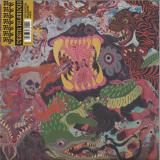
Arriving two years after the first chapter, Absurd Matter 2 isn’t just a sequel, it’s an evolution, redrawing the boundaries established by its acclaimed predecessor. The Berlin-based Italian producer tempers his confrontational sonics with rare moments of introspection, shifting seamlessly between blown-out noise, warped hip-hop, mutant club experimentation, and weightless ambience. Textures disintegrate and reassemble, rhythms flex and crumble, and every detail balances on the edge of fantasy. It’s a poetic, layered response to Nino Pedone’s changing physical reality: the gradual hearing loss and perceptual renegotiation triggered by Ménière’s disease, which struck him in 2022. At first, the experience felt like betrayal, a brutal disconnection from the very sense that had shaped his life. But over time, the disorientation turned into a strange kind of focus. The silence between sounds became as expressive as the sounds themselves.
The first Absurd Matter was a visceral reaction to trauma; the second is more reflective – an ambiguous chronicle of sensory recalibration. Pedone doesn’t represent his altered inner reality through extremes, but through depth, zooming in on illusory distortions, tense rhythmic fluctuations, and fragmented sonics. Dense, immersive, and mystical, the album mirrors Pedone’s evolving relationship with perception itself.
Tinnitus-like feedback wails and noir-ish strings introduce “Repeater”, making it immediately clear that Pedone is painting a more delicately finessed image this time around. Fleshed out by raps from cult MCs billy woods and E L U C I D, the track is marked by subtle, sophisticated contrasts: the blurred, inverted rhythms that couch Armand Hammer’s haunted back-and-forth, and the glitchy interference that offsets the lavish orchestral phrases. Backwoodz associate Fatboi Sharif lends his Lynchian drawl to “Bandage Chipped Wings”, grounding Pedone’s lysergic rhythmic distortions with syrupy, horror-inspired couplets. Pedone also invites discomfort into “Crash Landing”, with droning, metallic tones that contradict South Central rapper ICECOLDBISHOP’s elastic flow. “Bitch, I don't give a fuck about anybody,” he squawks over Pedone’s incongruous rasping textures and time-warped beats, “cash out at any party.” Working alongside London’s Loraine James on production, Pedone reunites with Moor Mother on “I Saw The Light”, blending James’ soft-focus atmospherics with soundsystem-damaging, overdriven bass hits and rusted percussive snips. Moor Mother’s assertive words hover over the wreckage, tightening Pedone’s themes of overstimulation and altered awareness as they stutter and veer off course, vanishing into the backdrop.
Contrasting his more pensive experiments, Pedone’s dancefloor deviations are more concentrated on Absurd Matter 2 than ever before. He torches a stuttering dembow structure on “X”, obfuscating the rhythm’s familiar energy with disturbing audio hallucinations. On “Splintered”, he reunites with Kenyan prodigy Slikback, mangling neon-lit trance arpeggios with dissociated trap rhythms. He sharpens his skills to a fine point on “Oblivion Step”, observing 2- step through a lens of distortion and personal abstraction, shaking blipping synth leads over neck-snapping drums and counteracting the momentum with airless sci-fi soundscapes.
Perhaps the album’s most surprising moment arrives with “Viel”, which features vocals from Los Angeles-based composer Kaitlyn Aurelia Smith. Together, Pedone and Smith chance upon their notion of dub techno, fogging synth stabs and ghostly vocal traces into eerie harmonic distortions. On some level, it’s almost pop music, a far cry from the bleak dissonance of Absurd Matter and a hopeful way to reframe turbulence as transformation. Absurd Matter 2 doesn’t simply document a process; it enacts one. It doesn’t offer clarity; it invites disorientation. It’s not a map of the labyrinth, but a foghorn piercing the darkness.
quête:absurd
‘Absurd Matter’ is a labyrinthine sonic conundrum that spirals around the two poles of extreme noise and hiphop. It's Berlin-based Italian producer Shapednoise's first album in four years and confidently advances his narrative into the next chapter, building on the groundwork of his prior abstractions to emerge with a coherent genre-warped fusion of urgent rap, crushing bass weight and idiosyncratic sound design. After spending years scrupulously deconstructing club music, Nino Pedone has rebuilt it brick by brick in his image.
The album is the first release on Pedone's brand new imprint WEIGHT LOOMING, a multidisciplinary label platform that's set to explore the depths of bass music, textured noise and abrasive transcendence. It follows a slew of acclaimed releases for Numbers,
Opal Tapes, Type and his own Cosmo Rhythmatic label, and forward thinking collaborations with Kenyan beat alchemist Slikback and Hyperdub-signed Angolan producer Nazar. Pedone's most ambitious project to date, ‘Absurd Matter’ taps into kinetic energy from a hand-picked selection of collaborators, including New York rap duo Armand
Hammer, French DJ/producer Brodinski, Bruiser Brigade's ZelooperZ and vanguard Philly poet, musician, and activist Moor Mother.
On ‘Family’, Billy Woods and Elucid weave a dismal, apocalyptic landscape with their razor-sharp anecdotes. The duo’s macabre imagery is given artificial life by Pedone's industrial scrapes and rattles that curl around their worlds like thick smoke. It's still rap, just about, but lodges itself in the back room of a factory, machines running themselves to an early death. Pairing with techno-rap trailblazer Brodinski, Pedone edges further towards the sound system, spatializing rhythms in four dimensions around Detroit rapper
ZelooperZ's playful expressions. This is the Italian producer's sci-fi tinged liquefaction of radio echoes, a way to fire familiarity into the void and sublime the human voice into weightless mist. When Moor Mother arrives shouting "me me me" on the aptly-titled 'Poetry', it sounds as if all of Pedone's loose threads are being tightened into a knot. His misshapen neo-grime beats sound like a broken jet engine, but smartly cede power to Moor Mother's resonant rhymes. "You can't cancel me" she assures. ‘Absurd Matter’ is a defining personal development for Pedone that not only appraises his career so far, but diverts its logic into frighteningly new sonic territory. From great loss, the producer has determined his work's cardinal themes, and sounds more strident and far heavier than ever before.
Dubstep's origins lie in dark 2-step mutations that evolved on dancefloors and in studios in the early 2000s. That same fusion of swing and space and subs can be found by the bucketload throughout the new EP by one of DNO’s staples, Kercha.
Skippy speed garage hats and slippery globules of bass animate the otherwise sparse production on the opening track ‘Feature’, while the wild beat on ‘Absurd’ could catch out any DJs not giving it their full attention. Wrapped in Kercha’s signature sonic debris, it delivers three and a half minutes of rattling, clicking, squelching wizardry.
The B-side gives us ‘Stimulate’, a collaboration with new-gen rising star Hypho. Indebted to trap, it’s full of militant 808 hi-hat rolls and the kind of firing synth tones that spell doom in a sci-fi movie (and tear up festival stages).
Finally, ‘Saturday’ is classic Kercha: sub-bass from the Seventh Circle, and so many suspicious chirps, whistles and hoots that it could soundtrack a nighttime stroll through the woods just as easily as skanking in a smoked-out sweatbox. The track is peppered with voice notes from a friend — snatches of funny, halfcut chatter, as random in content as Kercha's non-vocal sampladelia. The final snippet, which translates to “Saturday dictates its rules”, gives the track its name. A statement that can be read in all sorts of ways, it could even confer a motto for this whole collection, reflecting Kercha’s trademark originality.
The ‘Absurd’ EP is one of Kercha’s most dancefloor-directed releases to date, and whether conjuring the ghosts of club nights past or envisioning the raves of the future, it’ll be dominating sound systems for a long time to come.
Rhythms of postmodern realism at the very bottom of the DNO.
- A1: She And Me Fall Together Like Free Death
- B1: Black Is The Color Of My True Loves Hair
- B2: Chicken Concret
- B3: Gusset Typing
- C1: She And Me Fall Together Like Free Death (Phosphorous Mix)
- D1: Chicken Korma
- D2: Fine Writin
- E1: She And Me Fall Together In Free Death (Funereal Mix)
- F1: Yellowed
- F2: Seeting Red
- F3: Black
Logical Absurd is very proud to present the 20th Anniversary of the album "She And Me Fall Together In Free Death" by Nurse With Wound. "She and Me Fall Together in Free Death" is probably the most approachable, largely "musical" album that NWW has released since Rock N' Roll Station. It's also one of his strangest concepts, a marriage of trance inducing Krautrock grooves with a traditional jazz standard and some jarringly atonal musique concrete. Side A is the 20- minute title track: a slow-motion jam reminiscent of of one of Can's sidelong tracks on Tago Mago or the more avant-garde grooves of Tony Conrad and Faust's Outside the Dream Syndicate.
The propulsive Jaki Liebezeit drumbeat is the foundation for a long jam session with what sounds like a dijderidoo and layers of guitar feedback. It's a massive, heavy sound, the kind that Julian Cope would devote a whole chapter to in his "Kratrocksampler". Side B is one long piece with three distinct movements. Beginning with those familiar, World Serpent-trademark windchimes, the listener is quickly ushered into Staple- ton's singing debut (!) in a rendition of the oft-covered traditional jazz ballad "Black is the Color of My True Love's Hair" This was a favorite of the recently deceased Nina Simone, and also of the avant-jazz screamer Patty Waters. Nurse With Wound's version is backed by cello drones, repetitive guitar strums and tambourine, sounding very much like The Velvet Un- derground's "Venus in Furs".
It's such a treat to hear Steven Stapleton's multitracked vocals cover this classic song, and this eerie version rates as one of my favorites. This song and the title track prove to the naysayers that Nurse With Wound is equally adept at rock n' roll songcraft as he is at demented sound collages. The creepy jazz cover seques into "Chicken Con- cret (For Missy E)", a truly warped tape-edit job that juxtaposes chicken squawks and sythesized birdcalls with random bleeps, speaker hiccups and gongs.
Madness ist eine der ikonischsten britischen Bands aller Zeiten. Seit ihren Anfängen in den späten 70er Jahren haben sie die Musikszene geprägt und sind bekannt für ihren einzigartigen Sound, der Ska, Pop und eine gehörige Portion britischen Humor vereint. Mit 10 Top-Ten-Alben, 15 Top-Ten-Singles und zahlreichen Auszeichnungen, darunter der renommierte Ivor Novello Award, haben sie die Herzen von Musikliebhabern weltweit erobert.
Nach einer siebenjährigen Pause kehrt die Band mit ihrem 13. Studioalbum "Theatre Of the Absurd Presents C’Est La Vie" zurück. Das Ergebnis ist ein zeitlos brillantes Album, das die verrückten Jahre seiner Entstehung widerspiegelt. Die 14 Songs repräsentieren die Creme de la Creme der zahlreichen Songs, die die Gruppe ausgeheckt hat, und wurden zu einem schlagkräftigen, konzentrierten Set zusammengestellt.
Das von der Band selbst produzierte Album bietet eine eklektische Mischung aus eingängigem Pop und einzigartigen Kompositionen. Mit Gastbeiträgen von Martin Freeman ist Madness bereit, erneut Geschichte zu schreiben. Das Album ist als Doppel Vinyl, Ltd. Crystal Clear Vinyl & CD erhältlich.
Madness ist eine der ikonischsten britischen Bands aller Zeiten. Seit ihren Anfängen in den späten 70er Jahren haben sie die Musikszene geprägt und sind bekannt für ihren einzigartigen Sound, der Ska, Pop und eine gehörige Portion britischen Humor vereint. Mit 10 Top-Ten-Alben, 15 Top-Ten-Singles und zahlreichen Auszeichnungen, darunter der renommierte Ivor Novello Award, haben sie die Herzen von Musikliebhabern weltweit erobert.
Nach einer siebenjährigen Pause kehrt die Band mit ihrem 13. Studioalbum "Theatre Of the Absurd Presents C’Est La Vie" zurück. Das Ergebnis ist ein zeitlos brillantes Album, das die verrückten Jahre seiner Entstehung widerspiegelt. Die 14 Songs repräsentieren die Creme de la Creme der zahlreichen Songs, die die Gruppe ausgeheckt hat, und wurden zu einem schlagkräftigen, konzentrierten Set zusammengestellt.
Das von der Band selbst produzierte Album bietet eine eklektische Mischung aus eingängigem Pop und einzigartigen Kompositionen. Mit Gastbeiträgen von Martin Freeman ist Madness bereit, erneut Geschichte zu schreiben. Das Album ist als Doppel Vinyl, Ltd. Crystal Clear Vinyl & CD erhältlich.
Madness ist eine der ikonischsten britischen Bands aller Zeiten. Seit ihren Anfängen in den späten 70er Jahren haben sie die Musikszene geprägt und sind bekannt für ihren einzigartigen Sound, der Ska, Pop und eine gehörige Portion britischen Humor vereint. Mit 10 Top-Ten-Alben, 15 Top-Ten-Singles und zahlreichen Auszeichnungen, darunter der renommierte Ivor Novello Award, haben sie die Herzen von Musikliebhabern weltweit erobert.
Nach einer siebenjährigen Pause kehrt die Band mit ihrem 13. Studioalbum "Theatre Of the Absurd Presents C’Est La Vie" zurück. Das Ergebnis ist ein zeitlos brillantes Album, das die verrückten Jahre seiner Entstehung widerspiegelt. Die 14 Songs repräsentieren die Creme de la Creme der zahlreichen Songs, die die Gruppe ausgeheckt hat, und wurden zu einem schlagkräftigen, konzentrierten Set zusammengestellt.
Das von der Band selbst produzierte Album bietet eine eklektische Mischung aus eingängigem Pop und einzigartigen Kompositionen. Mit Gastbeiträgen von Martin Freeman ist Madness bereit, erneut Geschichte zu schreiben. Das Album ist als Doppel Vinyl, Ltd. Crystal Clear Vinyl & CD erhältlich.
LowEnd 001 - Existense Is Absurd is the first chapter in the collaborative effort between JohannesK and Duncan Macdonald. With a focus on hypnotic but driving techno, the release features two tracks each from the label founders. Respectively the 2 artists have released on labels such as Key Vinyl, Hayes, ARTS, Krill and more. The focus is an overall aesthetic product that is in balance with sound and art design, with the design again focusing on artists and friends.
Existense is Absurd (a reference to the building Johannes and Duncan live in) is made up of 4 tracks of varying characteristics. The trippy and hypnotic grooves of Time and Cyclopes, with bubbling textures and cinematic ambience, contrast the more pumping Applied Force and Consciousness.
After a first collaboration focusing on the City of Angels, LA legend John Tejada and acid innovator Tin Man (Johannes Auvinen), this time brooding on the latter's home city, and former's birthplace, Vienna. The Austrian capital is known as "the city of music" and the "city of dreams," two broadly aligning concepts that go far in describing this beguiling 12-inch. The four songs were mixed down live to 2 tracks, created in the real world without a daw, or multi tracking, which has really captured the spirit of performance and improvisation. Succeeding "Railjet," a tense drum workout, comes "Bim," referring to the colorful trams that run through Vienna. Here, Auvinen sculpts his 303 into near-pizzicato form. The acid box is accompanied by stately pads making for one of the duo's most memorable tracks yet. The next cut, "Danube Nights," references the mighty, ancient river, the flow motion mirrored by a couple of widescreen acid lines. A pensive lead and some melancholy chords emerge, but the drums roll right along like the water- tough enough for a heaving floor with a hint of fragility for the headphones. The record concludes with the acidic "Prater Allee," named after idyllic, sprawling park on the banks of the Danube. The duo's love letter to Vienna is well-suited for travel, for the dance and for dreaming.
003[11,30 €]
Uun returns to his imprint Ego Death with an EP that showcases his progression in both sound design and atmosphere. The A side kicks things off with On The Concept Of Irony, a broken beat assault which serves as a mission statement with it's scattered snares and vocal samples. The Tangled Web continues this mood but with a more intense structure, heavy on hypnotic synths that weave in and out of the tracks percussive framework. Where as the A side is the logical extension of the first three Ego Death releases, the B side serves to showcase a deeper atmosphere while maintaining Uun's preference for dense arrangements. The Other features a haunting ethereal pad that floats above a broken kick pattern and a bed of clicks, pops, and field recordings. The closing track, Absurd Existence, forges all the elements of the artist's sound into perhaps his most melodic work to date. It is therefore senseless to think of complaining since nothing foreign has decided what we feel, what we live, or what we are.' - Jean-Paul Sartre
High Cube is the beat-focused brainchild of Brian Foote (Peak Oil, Leech) and Paul Dickow (Strategy, Community Library), two low-key legends of the American experimental underground. After some 30-odd years of making music separately and together, Foote and Dickow are collaborating in earnest for the first time as a duo. For this debut, the pair enforced a simple, stringent set of rules: five instruments, a one-hour timer, and a total ban on overthinking.
The result is a record that is the sound of two old friends unplugging the usual levers and letting the "accident" of their chemistry take the wheel. It is drier, sparser, and decidedly "chunky"—a fictional band stepping into a suit to drive around for a while. It is neither dance nor chill-out, but a moody, complex trajectory defined not by the gear used to make it, but by the narrative mood it compels.
"Volcano Snail” starts things off in a disheveled shuffle, locking into gear with blurred and bubbling effluence. The shimmering dimness is lit low, with a woozy gait that recalls the headiest highs and luminescent lows of Jan Jelinek. “Underwater Welder” is a foggy, neon-lit cruise of skittering low-ends suspended in a permanent fall of color, while “A Dragon’s Treasure is its Soul” offers blown-apart, low-end city pop fragmented into an array of rhythmic detritus. Chordal textures hover in the air as a percussive loop takes its beguiling and frolicking shape.
B-side opener “Yonaguni” shapeshifts in real time, drifting with the grace of a glacier before bobbing in a frigid pool of vibrating clatter, static, and synth stabs. “Ofid+wor” offers a tried and true blitz of braindance, nodding to an endless list of 20th and 21st-century electronic body music. Buoyant closer “Mother of Thousands” holds a gravity-defying tenderness, pirouetting on a breeze with the elegance of effervescent longing. Woven together, the six extended tracks of High Cube are tethered to nothing but the ether—a giant sonic leap of peripheral absurdity from two artists with a lifetime of shared rhythm.
- A1: Affordable Decorating
- A2: Wishing Luck Goodbye
- A3: R U 4 $Ale
- A4: No One Is Coming
- A6: No Song
- B1: Freaks
- B2: None Of It's Fun
- B3: Human(E) Volume
- B4: So Unpleasant
- B5: Destroyers
ADULT. kooperiert nicht. Seit über 25 Jahren verkörpert die dystopische Detroit-Synth-Punk-Institution, gegründet von Nicola Kuperus und Adam Lee Miller, unbeirrbare Frustration, Misstrauen und Beklemmung. Man könnte erwarten, dass sich die Kanten mit der Zeit abschleifen, doch ADULT. hat kein Interesse am Komfort eines Vermächtnisses. Noch nie klang die Musik des Duos so unmittelbar, so dringlich und so unverhohlen wütend wie auf dem abschließenden, kompromisslosen Kissing Luck Goodbye.Mit aufgerüstetem Equipment und einer neuen Klangbibliothek gebaut, ist das Material erdrückend dynamisch, lauter - und zugleich klarer. Kuperus' dominante Darbietung rückt im Mix stärker in den Vordergrund und skizziert ein Arsenal aus lebhaften, ätzenden Rufen, Sprechchören und Gedankensplittern. Lachen - ob in den Texten oder als besessene Präsenz - fungiert als Leitmotiv und verweist auf die bedrohliche Absurdität der modernen Zeit.,THE CHAOS IS WHAT THEY WANT", singt sie in ,R U 4 $ALE" - zugleich eine Absichtserklärung: einer brennenden Welt aus Gier und Unordnung mit trotzigem, meisterhaft zusammengebautem Chaos zu begegnen. ,Du hast in dieser Höllenlandschaft, in der wir gerade leben, zwei Möglichkeiten: kämpfen oder depressiv sein", sagt Miller. ,Beides ist okay. Aber, na ja, die Entscheidung war einfach."ADULT. ist bekannt für hochriskante Katharsis auf der Bühne und griff kürzlich auf seinen Backkatalog an Bassgitarren-Songs aus den 2000ern zurück, wobei sie die vorausschauende Anxiety Always-Ära erneut nachzeichneten - teils aus Notwendigkeit angesichts der heutigen politischen und technologischen Angsttemperatur. Die Reaktion war sofort spürbar: ,Wir waren in Paris, und die Kids sind von der Bühne gesprungen. Und ich dachte nur: Das ist großartig. Das ist irgendwie die Energie, in die ich wieder zurückwill", sagt Kuperus.Diese Erkenntnis fiel mit einer Reihe von Rückschlägen zusammen - Kuperus' Anfällen von chronischem Schwindel, dem Verlust ihres engen Freundes und Kollaborateurs Douglas McCarthy von Nitzer Ebb, dem das Album gewidmet ist - alles unter dem drohenden Regime noch einmal erheblich verschärft. ,Wir dachten nur: Alles zerbricht. Wir zerbrechen. Wir sind kaputt." Dieses Gefühl hielt jedoch nicht an, denn letztlich waren sie viel zu sehr von Wut aufgeladen, um stillzuhalten. Die Stimmung vor Kissing Luck Goodbye waren vier Mittelfinger, die kerzengerade nach oben zeigten.Anstatt sich zurückzuziehen, konzentrierten sie sich auf den Prozess und überarbeiteten ihr Setup - inklusive der ersten neuen Mikrofone seit 20 Jahren. Hält man das Album an irgendeiner Stelle an, zählt man wahrscheinlich ein Dutzend Dinge, die gleichzeitig passieren, in seltsamer, schwindelerregender und dissonanter Harmonie. ,No One Is Coming" attackiert Untätigkeit angesichts des Faschismus - ,NO ONE IS COMING TO YOUR RESCUE". ,None of It's Fun" feuert mit atemloser Dringlichkeit, rasenden Glissandi und pointierten Zeilen wie: ,OH I AM TEARING MY GUTS OUT / LOOK AT ME_ DO YOU THINK THAT THIS IS AMUSING?"Eine geradlinige Basslinie und Kickdrum prallen im Abschlusstrack ,Destroyers" auf pulsierende Mantras, werden dann vollständig gesättigt und kakophonisch. Ihre jüngeren Ichs hätten den Song vielleicht sich selbst zerstören lassen, doch hier gelang es ihnen, die Lautstärke durch alle Extreme hindurch zu stabilisieren und Raum für ein eindringliches, abschließendes A-cappella zu schaffen: WE PAY THE PRICE FOR THOSE IN POWER EXPLOITING YOU EXPLOITING ME CONSUMING YOU CONSUMING ME SICK SICK SICK SICKENING IT IS US THAT ARE DEVOURED BY EVERYTHING I WILL EAT YOUR HATE
- Svitlana Nianio Phanton - Fake
- Svitlana Nianio Phanton - Manyspace
- Svitlana Nianio Phanton - Quiet Place
- Svitlana Nianio / Phanton - Політ Світляки
- Няньо, Гинерв & Таран - Nianio, Geenerve & Taran - Шепочуть Cтіни - Whispering Walls
- Няньо, Гинерв & Таран - Nianio, Geenerve & Taran - Pічка Bтома - Tired River
- Solar - Your Secret
- Solar - Three Steps
- Solar - August Samba
- Taran - Death And Bachelor
"I got to know visual artist, musician, and producer Guido Erfen and sound engineer, acoustic artist, and percussionist Michael Springer as part of a group of five by the name of SHM1. The members of the group organised concerts at Rhenania, a disused grain silo, where I performed with The Absurd in 1988 and 1989. The band was also featured on one of Erfen's tape releases. Erfen and Springer met when they were still at the same secondary school and soon became close friends and musical allies. With the other members of SHM they built an independent network for creating and distributing music beyond the mainstream in Cologne. Rent at Rhenania was incredibly low, allowing a recording studio to be established there.
The first traces of the Ukrainian Underground arrived at Erfen's door via a cassette tape with three bands from Kharkiv and Kyiv, the package including a long essay which detailed the rock scene in the two cities by Sergey Myasoyedow. In 1986, Myasoyedow, together with Sasha Panchenko, had founded the “Novaya Scena“ rock club in Kharkiv, presenting bands inspired by punk, the avant-garde, dadaism, and even medieval melodies. If Erfen hadn't been part of the independent mail-art scene, he wouldn't have had the chance to discover this unorthodox music. It was the summer of 1990, shortly before the Soviet Union collapsed and Ukraine became an independent state the following year.
In 1991, singer and keyboard player Soloveyka from Kharkiv arrived in Cologne and gave Erfen half a dozen cassettes with underground bands from Ukraine and a handful with bands from the Soviet Union. Intrigued by the original music of many of the acts, he visited Ukraine twice, made friends there, compiled a tape with his favourite tracks and finally succeeded in convincing Hamburg label boss Alfred Hilsberg to present underground music from Ukraine on the CD “Novaya Scena“ via his label What's So Funny About (the original home of Einstürzende Neubauten).
The album compiled 20 tracks recorded between 1986 and 1992 by 14 bands out of Kharkiv and Kyiv– music beyond the usual Perestroika records, often with jarring dissonances over grooves that fans of Captain Beefheart or The Fall would certainly enjoy.
On the other hand, there are tracks featuring flute and trumpet that seem inspired by folk, classical music, and punk. Ghostly chamber prog miniatures by Cukor Belaya Smert (lit. Sugar White Death) from Kyiv featuring, among others, the classically trained pianist and singer Svitlana Nianio (née Ochrimenko) and guitarist, visual artist, and spokesman Yewgeny "Yenia" Taran. Nianio sang in her native Ukrainian, as did two more of the bands. Today, this seems more relevant than ever, more culturally and historically significant from a Ukrainian point of view than it was even in 1993. Young Ukrainians were amazed at that time that rock music sung in their native tongue could work!
It is in the aftermath of the “Novaya Scena“ album that the music on this LP was created. About a year after the release of the CD in August 1993, Nianio and Taran came to Cologne to work on music for the dance production "Transilvania Smile" by the dance theatre ensemble Pentamonia2.
The seeds for the Traces of Ukrainian Underground in Cologne were sown. Starting in 1994, a series of informal recording sessions took place at Michael Springer’s Phanton Studio and at SHM studio in Rhenania. Together, these sessions formed the basis of the four different incarnations of the Ukraine-Cologne connection heard on STROOMS’s compilation.
Introducing the 4th instalment of the Pacific Coast House rebirth. We bring back another much sought-after 12” from The Coastal Commission & Jesse Outlaw. “Bring down the Walls” was a nod to Raze’s “Break for Love”, Robert Owens “Bring Down the Walls” and Ritchie Hawtin’s use of the Roland 606 throughout “Sheet One”. Long out of reach and fetching $100+ on Discogs, Atjazz’s freshly remastered editions are finally available .. “Let it Go” was never mastered & only ever cut to dub-plate. It has now been mastered & available in all it’s glory.
Coastal Commission “Bring Down the Walls” “Bring down the Walls” was a nod to Raze’s “Break for Love”, Robert Owens “Bring Down the Walls” and Ritchie Hawtin’s use of the Roland 606 throughout “Sheet One.” We gave the tune a Californian psychedelic twist with conga laden drums, a moody synth, low pulsing 303 patterns + Benjamin Zephaniahs patois call to “Move the Body Rhythmwize!” The first PCH releases had dropped Worldwide to International acclaim from DJ’s far and wide across the Globe with support in London, Paris & New York. However the local scene here in L.A that preached “Love, inclusion & Unity” was anything but that. L.A at that time was very tribal & divided up into 3 camps. If you weren’t affiliated with any of them (aka independent) then you were pretty much locked out of getting any kind of gig support or the Dj’s from those camps actually playing the music. The local feedback from Dj’s was that what we were making wasn’t “house,” but “Techno” which was absurd to me. “Bring Down the Walls” was a mantra to “move the bod”y and in doing so “bring down the walls” of separation not just in L.A but throughout society in general. Thank goodness for support from people like Terry Francis, Eddie Richards, DJ Deep & Philly Stalwart King Britt. After years of copies going for upward of $100+ on Discogs the now freshly remastered copies by At Jazz’s Martin Iveson are finally hitting the platters this Spring.
Jesse Outlaw “Let it Go” I met Jesse at Beatnonstop Records on Melrose Ave with Miguel Placencia in the late 90’s. Miguel (RIP) was a mainstay in the Underground scene and had always been very supportive of my endeavors. He had had success with a huge release on Yellow Orange and was working with Jesse under the moniker “When Worlds Collide.” I signed “Brighter Days” & “Set you Free” from them and released the tracks on my Seductive imprint. They told me that they were making the tracks on a Sony Playstation “Music Now” program and I was like FFS “What.s more Underground than that!?” Later Jesse gave me some of his solo work. The track “Let it Go” was never mastered & only ever cut to Dub-plate and featured on my 1st PCH mix “Pacific Coast House Sounds.” It has now been mastered by Martin Iveson and is available in all it’s glory. The dreamy vocal “You need to let it go” beckons over the top of driving percussive Latin beats and church organ which is a great compliment to the flip side of “Bring down the Walls.” All in all two West Coast stompers now finally available remastered on PCH in Orange vinyl.
At the core of the creative process behind “HPC” and “Bor3d” lies meta-irony, a quality that permeates much of today’s digital content landscape.
Both tracks are a deliberate attempt to push the sound toward a barely perceptible absurdity and ironic unseriousness in their interpretation of well-familiar styles of dance club music. It is a play with form, expectation, and recognizability — balancing sincerity with sarcastic exaggeration.
Okay
Okay is built around interruption. Voices, fragments of dialogue, yawns, irritation — people seem to step inside the track uninvited. Someone is bored, someone is annoyed, someone tries to stop the flow entirely. Just like in real life, the process is constantly disrupted. The track reflects the experience of being surrounded by opinions, noise, and skepticism — especially the kind that will never be convinced, no matter what you do. “Okay” becomes a quiet, ironic response to this pressure: not agreement, not approval, but endurance. The track continues anyway.
Tripatura
Tripatura is a fictional creature — a warped echo of cryptid mythology. In this narrative, Tripatura doesn’t simply exist, it hunts. Once it finds you, it drags you into an endless trip with no exit point. Time stretches, perception blurs, and the track itself becomes the trap. Its prolonged, unresolved ending mirrors the experience of being stuck inside a loop that refuses closure. Tripatura doesn’t rush. It lingers, slowly pulling you deeper, until the trip no longer feels temporary.
Kim Gordon hat Kunst und Noise über Jahrzehnte immer wieder neu gedacht - und dabei nie an Schärfe verloren. Vierzig Jahre nach ihren Anfängen wirkt ihre Vision noch immer provokant. Dieses Abenteuer setzt sie mit ihrem dritten Soloalbum "PLAY ME" fort, das am 13. März bei Matador Records erscheint. Mit der Ankündigung erscheint die erste Single "NOT TODAY", begleitet von einem Kurzfilm der Modedesignerinnen und Filmemacherinnen Kate und Laura Mulleavy (Rodarte). Gordon trägt darin ein eigens für sie gefertigtes, handgefärbtes Seidentüllkleid. Der Song offenbart eine neue, fast poetische Spannung in ihrer Stimme: "Da kam eine andere Stimme zum Vorschein", so Gordon. "PLAY ME" ist ein konzentriertes, direktes Album, das ihren Sound um melodischere Beats und den motorischen Drive des Krautrock erweitert. Entstanden ist es erneut mit Produzent Justin Raisen (Charli XCX, Sky Ferreira, Yves Tumor). Die Songs sind kurz, prägnant und stark rhythmusorientiert - fokussierter und selbstbewusster als zuvor. Nach "No Home Record" (2019) und "The Collective" (2024, zwei Grammy-Nominierungen) richtet Gordon den Blick auf die Gegenwart: Tech-Macht, KI-getriebene Kulturverflachung, den Abbau demokratischer Strukturen und den absurden Alltag des Spätkapitalismus. Trotz dieser Themen ist "PLAY ME" ein nach innen gewandtes, geradezu körperliches und ebenso emotionales Album. Mit verzerrten Stimmen und schroffen Beats legen Songs wie "Square Jaw", "Dirty Tech" oder "Busy Bee" gesellschaftliche Realitäten frei. Der Titeltrack entlarvt die Logik einer durchkuratierten Komfortkultur. "PLAY ME" ist radikal gegenwärtig, widerständig und kompromisslos eigenständig.
- Aaaaaaa Ahhhhhhhh!!!!
- Sad Clown
- Haha!
- Bored
- Why Would I Want To Be Just Like You?
- Cabin Fever
- My Head Fell Off Last Night
- Real Life
- City Strange
- Bye Bye, Loser Blues
- Slugs
- You'll Get Better
Melanie Baker komponiert Musik über alles, was schmerzt, und alles, was sich gut anfühlt. Sie lebt in Newcastle (Großbritannien) und schreibt mit unerschütterlicher Ehrlichkeit - Songs, die zwischen lauter Katharsis und leisen Geständnissen, zwischen absurdem Humor und tiefer Verletzlichkeit schwanken. Mit hämmernden Trommeln, verzerrten Gitarren und zarter lyrischer Präzision greift Baker den Mut und den Geist des Alternative Rock der 90er Jahre durch eine queere, moderne Linse wieder auf.
- 1: Vacant State
- 2: New World
- 3: Gimmie Mine
- 4: Beast And Man
- 5: Dead Meat
- 6: What's New
- 7: Slice Of Life
- 8: End Of The Line
- 9: Don't Be Long
- 10: Sick Thoughts
- 11: Space Invader
- 12: Nothin
- 13: Journey To The Center Of The Mind
Black Vinyl[32,35 €]
- 1: Vacant State
- 2: New World
- 3: Gimmie Mine
- 4: Beast And Man
- 5: Dead Meat
- 6: What's New
- 7: Slice Of Life
- 8: End Of The Line
- 9: Don't Be Long
- 10: Sick Thoughts
- 11: Space Invader
- 12: Nothin
- 13: Journey To The Center Of The Mind
Color Vinyl[32,35 €]
Drei Jahre nach seinem #1-Album „Reparatur“ meldet sich Josh. mit seinem vierten Studioalbum zurück. Auf „Wer singt dann Lieder für dich“ beweist der Wiener Singer-Songwriter und fünffache Amadeus-Preisträger erneut, wie er aus persönlichen Geschichten packende Popmusik schafft – mal leicht, mal melancholisch, immer mit einem Gespür für Timing, Humor und Gefühl. Seit seiner Kindheit spielt Josh. klassische Gitarre und war in Schulbands aktiv. Später studierte er sieben Jahre lang Jazz und Popularmusik, brach das Studium jedoch aus wirtschaftlichen Gründen ab – seine Liebe zur Musik blieb davon unberührt. Heute spiegelt sich diese Erfahrung in einem Sound, der organisch, warm und zugleich überraschend facettenreich ist. Für „Wer singt dann Lieder für dich“ hat Josh. so viele Instrumente wie nie zuvor selbst eingespielt – von Gitarre über Bass bis zur Pedal-Steel – und damit jedem Song eine unmittelbare Nähe verliehen. „Es war das bisher entspannteste und lustigste, gleichzeitig aber auch das arbeitsintensivste Album“, sagt er über die Aufnahmen, die erneut in kongenialer Zusammenarbeit mit Produzent Florian Koch entstanden sind. Seit „Teilzeitromantik“ (2021) ist Koch stetiger kreativer Partner, musikalischer Direktor und Schlagzeuger der Band – eine bewährte Konstellation, die für klare Strukturen und kreative Freiheit sorgt. „Ich glaube, dass es ein Album ist, das wieder die Leichtigkeit des Nonsens gefunden hat“, so Josh., „Momente, in denen man lachen, feiern oder einfach man selbst sein kann, treffen auf nachdenkliche, melancholische Songs.“ Es ist die Momentaufnahme eines 39-Jährigen, der reflektiert – und dabei stets offen für das Absurde und Komische in den kleinen Dingen bleibt.
„Ich habe mir beim Schreiben der Songs keine Grenzen gesetzt“, sagt Josh. „Das spiegelt meine Persönlichkeit ziemlich gut wider: Ich bin jemand, der gern einen Schmäh macht, wie wir hier in Wien sagen – aber gleichzeitig auch immer wieder kämpfen muss und viel über Gefühle, Schmerz und all das nachdenkt.“ Das zeigt sich auf „Wer singt dann Lieder für dich“ in jedem Detail, sei es bei humorvollen Beobachtungen, nostalgischen Rückblicken oder in Songs über das Älterwerden und die kleinen Lebenskrisen („Was hat uns bloß so müde gemacht?“). Nach einem Livejahr 2025, das eine Tour durch Österreich und Deutschland, einen Headliner-Gig auf dem Donauinselfest vor 100.000 Fans sowie eine Support-Show für Robbie Williams umfasste, hat „Austropop-Darling“ (TZ) Josh. in diesem Jahr wieder viel vor: Im April und Mai ist er auf komplett ausverkaufter Solotour in Österreich zu erleben, im Anschluss folgen Konzerte in Deutschland und der Schweiz. Im Sommer geht es gemeinsam mit Rian auf Open-Air-Tour durch Österreich.
Generic Flipper, the debut album by Flipper, remains the most absorbing full-length LP to emerge from the early San Francisco punk scene. A constant source of imitation for so-called "noise rock" bands, it has yet to be surpassed in its nihilistic glee.
Recorded between October 1980 and August 1981 and released in 1982 on the indispensable Subterranean Records, this album functions as a chaotic, sticky mass of individual personalities: the magma-like bass eruptions and dual vocals of Will Shatter and Bruce Loose, Ted Falconi's icy guitar scraping and the relentless beat of drummer Steve DePace. At times playful and taciturn, paranoid and absurd, Generic charts a deliberate path that willfully chances destruction.
In early '80s punk, when the hardening default was "faster-shorter-louder," Generic subverts the nascent hardcore scene with a strictly applied regimen of turgid-slower-heavier. The lyrics are bleak, yet unnervingly beautiful. "Ever" sets the tone with trademark restraint – "Ever wish the human race didn't exist? And then realize you're one too?" – while closer "Sex Bomb" is a churning, 8-minute epic with looping bass, saxophone accompaniment and electronic effects of dropping bombs.
Tons of indie bands have attempted to recreate Flipper's mix of acidic guitar, metallic bass sludge and sardonically brilliant lyricism, using the seemingly effortless template they pioneered; however, the effect usually drives listeners right back to Generic. While most of their contemporaries wilt under direct comparison, No Trend, the Butthole Surfers, feedtime and Church Police are a few who can stand the frigid heat.
Belgian minimalist, Dutch-language new wave/synth pop, since 1981! The historic album ‘Jonge Helden’ (1981) brought them instant eternal fame, the single ‘Lekker Westers’ (1983) a Belpop classic & the line-up changed wildly with icons such as Luc Van Acker (Revolting Cocks), Dani Klein (Vaya Con Dios), Willy Willy (The Scabs) or Andrew Chi Claes (Stuff) ...
However, MARCEL VANTHILT (lyrics & music) continues to rock the anarcho-Dadaist-electro-super-tronica scene to this day. Side note: Vanthilt often strayed into TV land (BRT, VPRO, MTV-EUROPE, BBC) and is now a DJ at Radio WILLY with the alternative ‘De M-Show’.
AA! is once again performing frequently in the best clubs (Depot, Casino, Macca) and on major stages (Pukkelpop, Villa Pace, Paulus Oostende). This will also be the case in 2026! This is due to the fresh and spicy new album ‘AA!PKPP’ in collaboration with PARKAPARAPLU.
PARKAPARAPLU: New dark wave duo from Antwerp. With ...
> EMMA ROTSAERT, singer and actress. She plays the lead role in the Ensor-nominated TV drama series ‘How To Kill Your Sister’ (2025). And comes from the same absurd planet as Vanthilt.
> GEERT VANBEVER, veteran of Wizards Of Ooze, Rudy Trouvé Septet, Dead Man Ray, Tuff Guac, among others... worked with Hugh Cornwell (The Stranglers) and Budgie (The Banshees), among others. Together, Emma & Geert also have a Sisters Of Mercy tribute band: Body Electric.
- A1: Les Masques - Il Faut Tenir (1969)
- A2: Isabelle Aubret - Casa Forte (1971)
- A3: Christianne Legrand - Hlm Et Ciné Roman (1972)
- A4: Jean Constantin - Pas Tant D'chichi Ponpon (1972)
- A5: Billy Nencioli & Baden Powell - Si Rien Ne Va (1969)
- B1-: Marpessa Dawn - Le Petit Cuica (1963)
- B2: Jean-Pierre Sabar - Vai Vai (1974)
- B3: Sophia Loren - De Jour En Jour (1963)
- B4: Isabelle - Jusqu’à La Tombée Du Jour (1969)
- B5: Sylvia Fels - Corto Maltesse (1974)
- C1: Frank Gérard - Comme Une Samba (1972)
- C2: Ann Sorel - La Poupée Des Favellas (1971)
- C3: Charles Level - Un Enfant Café Au Lait (1971)
- C4: Andrea Parisy - Les Mains Qui Font Du Bien (1970)
- C5: Audrey Arno - Quand Jean-Paul Rentrera (1969)
- C6: Aldo Frank - T’as Vu Ce Printemps (1970)
- D1: Christianne Legrand - Cent Mille Poissons Dans Ton Filet (1972)
- D2: Clarinha - Lemenja (1970)
- D3: Hit Parade Des Enfants - Aquarela (1976)
- D4: Jean-Pierre Lang - Tendresse (1965)
- D5: Magalie Noël - Une Énorme Samba (1970)
- D6: Françoise Legrand - La Lune
Ever since the late 1950s bossa-nova revolution, Brazil’s influence on French music has been undeniable. Pierre Barouh, Georges Moustaki and a vast array of lesser known artists, all made the Musica Popular Brasileira (MPB) an axis of promotion at the service of a cool and metaphysical, modern and mixed Brazilian lifestyle. Some were seduced by the poetic languors of the bossa, some were looking for fun, and others just loved the American hybridization of jazz-bossa, jazz-samba.
What is bossa nova? One of its creators, Joao Gilberto said: "Its style, cadence, everything is samba. At the very start, we didn't call it bossa nova, we sang a little samba made up of a single note - Samba de uma nota so .... The discussion around the origins of bossa nova is therefore useless”. It is nevertheless useful to remember that these magnificent Brazilian songs, which the guitarist describes as samba, were shifted and balanced around improbable chords. "I like things that lean, the in-betweens that limp with grace," said Pierre Barrouh, quoting Jean Cocteau.
With emotion, arrangements for violin and supple guitar licks, bossa nova rapidly changed. A transformation that can be heard in the Tchic, tchic, French Bossa Nova 1963-1974 compilation, the result of a cultural reappropriation, which traveled through the United States and supplemented itself in France.
A musical revolution that has remained significant, bossa nova was born in Rio. From 1956 to 1961, Brazil lived through its golden years. In five years, the country had invented its modernist style. Elected president in 1956, Juscelino Kubitschek de Oliveira, an elegant man with a broad forehead, brandished a promising slogan: "Fifty years of progress in five years". He quickly got to work. Not worried about increasing debt, he launched the project for a new federal capital, Brasilia, designed by the communist architect Oscar Niemeyer. Volkswagen opened state-of-the-art factories and created the “fusquinha”, the Beetle. In Rio, the Vespa made its first appearance. The Arpoador Surf Club crew run into the “girl” from Ipanema, Helô Pinheiro - the tanned garota ("chick"), between a flower and mermaid, who at 17 walked by the Veloso bar, where the fiery author and composer, Tom Jobim and Vinicius de Moraes, were getting drunk on whiskey. From then on, bossa symbolized cool.
In 1958, Joao Gilberto recorded Chega de Saudade, which the directors of Philips denied, calling it "music for fagots". The marketing director, who believed in it, secretly pressed 3000 78-inch vinyls and distributed them at schools around Rio, creating a tidal wave.
American jazzmen then took over. In particular, trumpeter Dizzy Gillespie and guitarist Charlie Byrd. In November 1962, the Brazilian Ministry of Foreign Affairs funded a "Bossa-Nova" concert at Carnegie Hall in New York, inviting the genre’s pioneers. Unprepared, the show soon turned to disaster. But the troupe was invited to the White House by Jackie Kennedy. The first lady loved "the new beat" and in particular Maria Ninguem, a song by Carlos Lyra, later covered by Brigitte Bardot.
In Brazil, the 1964 military coup quickly ended this euphoria. The destructive atmosphere that ensued pushed many Brazilian musicians to leave, if not to exile. Thus, Tom Jobim, Sergio Mendes and Joao Gilberto arrived to the United States. In New York, Joao Gilberto met saxophonist Stan Getz. At the time, he was married to the Bahianese Astrud Weinert Gilberto, who had a German father. She had never sung before, but she knew how to speak English. Getz therefore asked her to replace her husband on The Girl From Ipanema. The Getz/Gilberto record with Tom Jobim on piano, was released in March 1964. Phil Ramone, the "pope of pop" was in charge of sound.
Bossa nova arrived in Paris through the classic “guitar-voice” channel (Pierre Barouh, Baden Powell, Moustaki…) But France loved jazz and Paris had already welcomed its American contributors. All these good people were to pass through Saint-Germain-des-Prés. The cabaret l'Escale became the Mecca of Latin American sound where one could find Pierre Barrouh and his friends, such as the Camara Trio, samba-jazz aces, whose only record was published by the Saravah label. With a band strangely called Les Masques (a band that included Nicole Croisille and Pierre Vassiliu, among others), the Camara Trio recorded an interesting Brazilian Sound, including the track Il faut tenir which is present on this tasty compilation of rarities.
Other enlightened musicians can also be found on the compilation, such as Jean-Pierre Sabar (songwriter for Hardy, Auffray, Leforestier ...) and the French pop rock organist Balthazar. In 1975, Sabar recorded Aurinkoinen Musiikkimatka on a Finnish label, which featured the crazy Vai, Vai, included on this record. We are now following the footsteps of Brazilian electronic musicians such as Sergio Mendes, Eumir Deodato or Marcos Valle who created funk and disco sounds on their keyboards and synthesizers. A style that influenced Véronique Sanson when she wrote Jusqu’à la Tombée de la nuit in 1969 for Isabelle de Funès, the niece of Louis and a great friend of Michel Berger - Sanson did end up singing this track on her 1992 Sans Regret record.
The pinnacle of exoticism and travel, Sylvia Fels’ Corto Maltese includes bongos, sea mist and ocean sounds. The title was taken from Jacky Chalard’s concept album written in 1974, Je suis vivant, mais j’ai peur (I am alive, but I am scared), based on Gilbert Deflez’s science fiction novel.
However, bossa nova extended the scope of popularity. "In the 1970s, I was a fan of Sergio Mendes, Getz / Gilberto. I fell in love with this music that I knew because I had been an orchestral singer, " explained Isabelle Aubret, who in 1971 delivered a composite record of covers by the very funky Jorge Ben, Orfeu Negro, Tom Jobim, Vinicius de Morais and Jean Ferrat. "I recorded this album for Meys Records in Paris, far from Brazil, with wonderful musicians, François Raubert, Roland Vincent, Alain Goraguer...". The latter wrote the arrangements for Casa Forte, a very percussive title borrowed from Edu Lobo, one of the initiators of the bossa who spent time in California. "Jazz and bossa came together and produced very rhythmic music. I love singing, it allows me to dream, to have fun, to feel a high on stage, and these songs brought me joy, made me swing, my singing felt like a dance.”
The world tours of French singers and their desire for the tropics, often brought them to Rio with its hills, forests, caipirinhas and tanned bodies. There are surprises though, like this Iemenja (Iemenja is the goddess of the sea in the Afro-Brazilian candomblé religion). Not unlike the composer and musician Jean-Pierre Lang, based in Sao Paulo, Claire Chevalier taught Brazil to Brazil. In 1970, the singer and painter published a 45-inch vinyl, Mon mari et mes amants (My husband and my lovers), under the improbable pseudonym of Clarinha (little Claire). She was then living in Rio, with her husband, Joël Leibovitz, who founded a band called Azimuth, and who owned a record label specialized in "sambas enredos" songs for samba school parades.
For its B side, she asked Pierre Perret to come up with lyrics for a song composed by Carlos Imperial: "Oh goddess of the sea, o goddess Iemenja, I bring a white rose to adorn your long hair ..." . "Perret came to see us, and we had fun, remembers Joël Leibovitz. We wrote Lemenja for fun, we recorded it at the Havaí studio, behind the Central do Brasil the central station. Erlon Chaves, the arranger who worked with Elis Regina, joined us" adding his share of Afro-Brazilian percussions and funky brass to the mix.
There is a common misunderstanding in Franco-Brazilian history: that bossa, admittedly hedonistic, is perceived as funny, even though the poets who wrote the texts are often philosophizing on the human condition. Its French interpreters pull it towards a carnival inspired universe, far removed from its fundamental essence. Thus, Jean Constantin covered the famous Samba da minha terra, an ode to the art of samba written by the classic Bahian composer Dorival Caymmi, renaming it with the enticing title of Pas tant de tchi tchi pompon: "On your pier there is no tchi tchi / when you arch your back, you know everything is alright ”(lyrics by Gérard Calvi). This expedited bossa aims for the absurd, but retains a certain elegance.
Indeed, Jean Constantin was not an idiot, the rather large man had a huge mustache and liked fantasy, (Les pantoufles à papa, Le pacha, inspired by cha-cha-cha-cha, salsa and jazz) but he was also the lyricist of Mon manège à moi interpreted by Edith Piaf, the composer of Mon Truc en plume by Zizi Jeanmaire and the soundtrack of François Truffaut’s 400 Blows. Le Poulpe, published in 1970, from which this bossa is extract, was arranged by Jean-Claude Vannier, an accomplice of Serge Gainsbourg’s Melody Nelson. In short: "There is enough of samba / By looking at the parasol / Because my poor cabeza / Is going to die in the sun".
Even the American actress Marpessa Down, who was at the heart of the bossa nova revolution with her role as Euridyce in Marcel Camus’ film Orfeu Negro, winner of the 1959 Cannes Palme d'or, fed the clichée with Je voudrais parler au petit cuica - "Tell me how you manage to always make people want to dance / It's true, I must admit that I cannot resist your magic" - in consequence, once can hear the cuica, a little drum inherited from the Bantu.
But bossa nova had many angles. Societal, of course, pushing actresses who were symbols of women's liberation like Brigitte Bardot, Jeanne Moreau, or Sophia Loren to engage in the exercise of accelerated bossa. In February of 1963, Sophia Loren made a record in French in Rome, Je ne t'aime plus, featuring the song De jour en jour, a bossa written by two Italians, Armando Trovajoli and Tino Fornai, which was released a little later by Barclay. Bossa accompanied the 1960s, a decade of moral liberation. Ann Sorel, who interpreted La Poupée des favellas, caused a sensation with L’amour à plusieurs, a provocative song written by Frédéric Bottom and Jean-Claude Vannier. As for the actress Andrea Parisy, she displayed her bourgeois cheekiness in Marcel Carné's Les Tricheurs before interpreting Les mains qui font du bien. And Magalie Noël, the friend of Boris Vian, who sung Johnny fais-moi mal, was hired to sing Une énorme Samba, composed by Alain Goraguer (arranger to Gainsbourg, Bobby Lapointe and Jean Ferrat) with lyrics by Frédéric Botton.
But in the end, of what wood is bossa nova made of? The answer is given by Christianne Legrand, daughter of Raymond the conductor, and sister to Michel the composer: "With me, with jà" - jà means "immediately" in Portuguese. In 1972, the singer, an expert in vocal jazz and a member of the Double Six, published Le Brésil de Christianne Legrand. Two songs included on the Tchic Tchic compilation that demonstrate how bossa, jazz, funk, rock, etc. work like a swiss army knife: the music is used to denounce broken systems, or miracles, HLM et ciné roman, Cent mille poissons dans ton filet, two songs from the O Cafona soundtrack, a successful telenovela broadcast, at the time in black and white, on TV Globo. The first was adapted in French by the fighter and friend of the Legrand tribe, Agnès Varda. The second is content with a play on words, jostling them into a summer fun.
Véronique Mortaigne
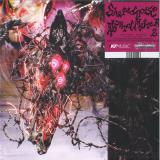
- 1: Intro
- 2: I Cut Up Rough
- 3: Bitch In A Bullet Belt
- 4: In The Night Back In The Day
- 5: I Can Hear The Angels Cumming
- 6: Motorboatin
- 7: I Fucked Her Mind
- 8: Motorboatin
- 9: I Fucked Her Mind
- 10: Killed To Death
- 11: Beer Monkeys
- 12: Doomhill
- 13: Into It
- 14: Fullmoon Crazy
Geboren im Sommer '96/'97 - dem Jahr des Höllenschweins - brannten Mustang als soziales Experiment aus der Innenstadt Tasmaniens heraus. Sie kamen mit ziemlich viel davon, andere hätten für weniger wohl nicht mehr gleich ausgesehen.Sie sauf-ten, machten Sachen kaputt und brachten dieses Chaos in das Schreiben von Banger-Songs - während sie sich bei den ,Proben" XXX Ales reinzogen und bei sehr wichtigen ,Bandmeetings" Protokolle führten.Mustang schütteten Benzin über ihre tasmanische Ödnis, bevor sie 7,69 Millionen Quadratkilometer Landmasse der Erde in sich aufsogen und dort ,dominierten", auf die einzige Art, die sie kannten: laut, wütend und zu ihren eigenen Bedingungen - und nahmen dabei Horden williger Partygänger mit auf die Reise.Über drei Non-Studio-Alben und eine Handvoll kleiner Veröffentlichungen hinweg bauten Mustang einen Katalog auf, der von Bier, Speed und störrischer Unabhängigkeit geprägt war. Kein Glanz. Kein Trendgehechel. Kein Buckeln vor dem Mann. Sie ritten ein, tranken, was da war, und hinterließen klingelnde Köpfe.Cut Up Rough (2015) war ihr Schwanengesang - geboren in einer Heuscheune am ausgefransten Rand von Tasmaniens Rock-Hochburg. Aufgenommen über zwei schlaflose, bierselige Tage wurde das Album mit improvisierten Drum-Takes, aufgedrehten Gitarren und purem Instinkt in die Existenz gerissen. Die Band lebte während der Aufnahmen buchstäblich in der Scheune - schiss ins Gras, schlief zwischen leeren Dosen, und ließ Isolation und Absurdität direkt in billige Mikrofone bluten.

Six tracks. Six undeniable hits. Science can't explain it.
Four dazzling pdqb originals: pop-infused disco house transmissions where retro dreams collide with absurdly modern groove technology and hyper-modern circuitry. Hooks everywhere. Basslines that flirt shamelessly with eternity. Rhythms that know exactly what they're doing.
And then Roman Flügel arrives at the party. With two remixes of such dubby, technoid magnificence that they bend the laws of physics wherever they're played.
The cover? Pure gold. A radiant golden surface punctured by bullet marks - courtesy of world-renowned artist Maurizio Cattelan. When the music hits this hard, the artwork should too.
And the vinyl itself is no less extravagant: it reveals a dramatic close-up of the Direct Hit - a colossal crater surrounded by smoky burn marks, gleaming like a tiny golden monument to impeccable taste.
A small but undeniable upgrade to the cultural history of planet Earth. Play loud. Repeat often. History will thank you.
P.S. Real-world violence is neither glamorous nor welcome - this record stands firmly for peace, joy, and the radical idea that the only explosions worth having happen on dancefloors.
- 1: Two Lucks
- 2: Jackpot
- 3: Debt Forest
- 4: Talon
- 5: Charity Dinner
- 6: Drumming With Izzy
- 7: My Blush (Strength Of The Critic)
- 8: Shoplifting
- 9: Legs In A Snare
- 10: Yard Sale (230 Take)
- 11: 200 Bottles On Eviction
Lip Critic’s 2024 Partisan debut Hex Dealer was one of the most-hyped experimental releases of that year (“Like the B-52s on ketamine” -Paste) and signaled the Brooklyn band’s arrival as a borderline-batshit creative force. Theft World is their next chapter, built again from the chaos of two drummers locked in psychic combat, a sampler that sounds like it was struck by lightning, and frontman Bret Kaser’s paranoid preacher energy. But where Hex Dealer leapt from one absurdist vignette to the next, Theft World plays like a fully locked-in transmission. Themes orbit around the concept of theft, not just as a political force or digital dilemma, but as a surreal, emotional constant. Club rhythms and hardcore breakdowns pull as much from Tyler the Creator’s ‘Igor’ and Korn as they do Skrillex and Soul Coughing, coming together to soundtrack a world that’s constantly being striped apart and resold.
- 1: Slab
- 2: Thirty-Seven Forever
- 3: How You Gonna Get Even
- 4: Someone You Forgot
- 5: Lonely Heart Pyramid Scheme
- 6: Soulseeker
- 7: Jukebox Weepie
- 8: Casio
- 9: High Hopes (Ballad Of Rural France)
- 10: Electrical Tape
Much like the duo’s music, the story of Rural France is both mundane and magical. Tom Brown (also of transatlantic janglepunks Teenage Tom Petties) and Rob Fawkes moved to London in their mid-twenties. Despite living under the same roof, they never picked up a guitar – except for one drunken, failed attempt at writing a Spoon song (“Big Chops” …don’t ask). It was only after both separately relocating to Wiltshire and starting families that they began assembling songs as a way of meeting up. Tom had amassed a pile of sprightly slacker jams that were calling out for Fawkes’ messily melodic guitar lines. Rural France was born.
After a debut album on their hero, ex-Lemonhead Nic Dalton’s Half-a-Cow Records, they retreated to a garage to record their next two albums: RF (2021) and Exacamondo! (2024), both released on much-respected jangle label Meritorio Records. Despite being lo-fi in the truest GbV sense, both records were warmly received by the DIY indie blogosphere, with their short, scrappy, but supremely melodic songs landing on numerous AOTY lists. RF even won Album of the Year at Janglepop Hub.
Raven Sings The Blues probably summed up the sound best: “With drunken visions of Beach Boys harmonies playing in the back of their heads and hooks that consume Teenage Fanclub cheeriness with the same beautiful brevity that drives Tony Molina, the pair have knocked out eleven rumpled classics.” Album four, SLOTHS, arrives via Meritorio Records and Safe Suburban Home Records on 08/05, and is a slightly different beast. For one, it’s been mixed by a professional – Rob Slater (Westside Cowboy, Yard Act, Thank) – giving the guitars and drums room to breathe. It’s easily their most high-fidelity record to date. It’s also their jangliest, most baroque and thoughtful album yet. But alongside added organ, horns and mellotron – and drums from Tom’s Teenage Tom Petties bandmate Jeff Hamm – it still retains the buzzes, hums and little freak-outs that stick to the duo’s original “Pavement playing Teenage Fanclub” mission statement. “Rob and I both wanted to do something a little slower and a little more melancholy,” says Tom. “We resisted our usual urge to hit the distortion pedal and made something that fitted where we are now and celebrates how we still listen to Meatloaf when we get drunk.”
SLOTHS is also the most thematically consistent Rural France record to date. While it wouldn’t be right to call it grown-up, it definitely has homeowners’ insurance. From the Silver Jews-esque Americana of “Slab” and mid-life rallying cry of “Thirty Seven Forever”, to the horn-embossed loser anthem “Lonely Heart Pyramid Scheme,” the songs celebrate (and rail against) the absurdities of getting older, forming a band in your thirties, and the strange phenomenon of time passing. Because no matter how slow you move, everything else goes fast. SLOTHS.
- A1: That Could Funktion As A Song
- A2: Hongkong House Feat. Liu's Family
- A3: Watch Me Fall
- A4: Ok So
- B1: Baum
- B2: The Syntheziser Has Been Drinking
- B3: Liquit Feat. Mr. Oizo;
- B4: In Der Klemme
- C1: Koko
- C2: Langsame Runde
- C3: Der Uhrturm
- C4: Meissner Schwerter
- D1: Dummdidumm
- D2: Every Tree Needs A Friend
- D3: Lehm Feat. Erobique & Dana
- D4: Irgendwohin
Siriusmo is back! His fourth album, "Buletten & Blumen", will be released in November 2025 – a collection of musical delicacies. Freshly prepared, spicy, and greasy, but as always with a flower on top. The Berlin-based producer, whose real name is Moritz Friedrich, remains true to himself and his distinctive style – between funk, hip-hop, electronica, soundtrack vibes, and genre playfulness. As usual, Siriusmo wanders through musical styles, embracing them, missing them spectacularly – or simply inventing them. A subtle "Berliner Allerlei". The artist himself says of his working method on the album: "I'm a whole band. Nobody masters their instrument, but everyone pretends to – always with the fear that the others will notice." The album begins with the tongue-in-cheek opener "That Could Function As A Song", an ironic exploration of the artist's own creative process. With "Buletten & Blumen," Siriusmo delivers not simple fare, but a multifaceted menu.
Guests: Mr. Oizo, Erobique, Dana (& Claire Waldorff) An album that oscillates between irony, melancholy, and absurdity.
Tracklist:
A1. That Could Funktion As A Song
A2. Hongkong House feat. Liu's Family
A3. Watch Me Fall
A4. Ok So
B1. Baum
B2. The Syntheziser Has Been Drinking
B3. Liquit feat. Mr. Oizo
B4. In Der Klemme
C1. Koko
C2. Langsame Runde
C3. Der Uhrturm
C4. Meissner Schwerter
D1. Dummdidumm
D2. Every Tree Needs A Friend
D3. Lehm feat. Erobique & Dana
D4. Irgendwohin
Isa Gordon and Tony Morris were first brought together through their individual releases on Optimo Music, which established mutual respect within the label’s community. While they had not previously performed live together, they were invited to take part in a fundraiser hosted by Queen’s Park Arena in support of Glasgow NW Foodbank and later for JD Twitch’s end-of-life care. Tony asked Isa to contribute guitar and backing vocals to his set, including a track then called Last Night I Had a Dream. That performance became the seed for their collaboration.
The first phase of fleshing it out, recalls Tony: “Somebody said Isa sang like Shania Twain. That got me thinking about country music and call and response, prompting me to come up with alternative lyrics.” Isa remembers: “I cycled over to Tony’s house with my guitar, and we spoke about what the tune meant. It was about him being wrapped up in dreamland, luxuriating in his subconscious, while my character — impatient and trapped in her own routines — barely had time to remember her own dreams.” Tony continues: “Brilliantly I realised that I could never collaborate with anyone in situ and so I sat in the garden for two hours watching my wife tend to plants. Every now and again I would creep up the stairs and put my ear to the door. I could hear Isa warbling away and so would resume my garden watch. After two hours I went back upstairs to see how she was getting on, only to find that she had written one of the greatest songs I’d ever heard. I still think that.” Tony adds: “My overwhelming sentiment about Wake Up Baby is pride. I can honestly say that I’m more proud of it than anything else I have done. It ticks a whole load of boxes. Isa’s singing in various Scottish modes is unique. The way her electric guitar adorns the dance beat makes it a rock song as well as a dance and a C&W song — truly multi-genre.”
The B-side of the 12” release, Syringe Moustache, is a surreal, darkly playful counterpart to Wake Up Baby. The track was inspired by a dream Tony had: “I was in a shopping mall, in a two-level shoe shop, and my attention was taken by a little girl with a syringe taped beneath her nose like a moustache. She went about her business trying on shoes, confident and wise beyond her years. In the dream, I imagined her as the daughter of cultured, intelligent parents determined to raise her independently. I was struck by my own feelings of inadequacy — I knew I could never have coped with such a contraption myself.” Isa’s take on the meaning of this song somewhat differs: “Tony sent me the tune over Instagram months before I met him, and I was spooked — as far as I knew, he didn’t know anything about me, but the story felt like it was written about me as a little girl, growing up around heroin addiction. The syringe beneath the girl’s nose became a symbol of the inescapable constraints of that environment, literally written on her face, yet something you just have to carry on through. On a buzz from the serendipity, I added a full instrumental backing to this most bizarre of works.”
The result is absurd, unsettling, and strangely empowering, staking out its own surreal, cinematic space. The 12” dance single is a format Tony had long wanted to explore — a tangible artefact to leave for family, a medium that celebrates the physicality of sound and the ritual of listening. It allowed the artists to maximise the format’s potential: a strong, multi-genre A-side, a surreal B-side, and remixes that expanded the record’s sonic world. Glasgow music staples Auntie Flo and 100% Positive Feedback were invited to reinterpret the tracks, bringing their distinctive touch — Auntie Flo transforming the A-side into a luscious, dancefloor-ready meditation, and 100% Positive Feedback twisting Syringe Moustache into absurd, playful shapes with false-start drops and over-the-top vocal editing.
The cover photograph, taken at the University Café by Harrison Reid, captures Isa and Tony embodying the characters they brought to life in the songs — a visual reflection of the record’s narrative and emotional stakes. The Café also holds personal significance: it’s where all of Isa’s meetings with Keith McIvor took place, where she first remembers visiting Glasgow as a child, and a place Tony fondly likes to go to drip egg yolk down his tie and watch the world go by. Together, the 12” format, the remixes, and the artwork create a cohesive, tactile experience, amplifying the duality, theatricality, and emotional breadth of the collaboration.
- Miss Wales 2012
- A Good Day For Dying
- Make It Count
- Cut To Black
- Full Range Of Motion
- Pretty As A Magazine
- Look Like Me
- How Can We Be Friends
- Every Single Muscle
- Shiny And Wet
- Semi-Automatic
- In My Short Life
- Watching The Omnibus
- It's Our Manager David
- Yours (If You Want Me)
- All My Clothes Fell Off
- Third Best Friend
- My Uncle Warren Drives A Passat
The Bug Club sind mit einem neuen Album zurück. Seit ihrem letzten Album sind ganze sieben Monate vergangen. Wo waren sie denn? Every Single Muscle, das fünfte Album der Band, ist das dritte, das von Sub Pop, dem angesehenen Label des walisischen Duos aus Seattle, veröffentlicht wird. Seit Very Human Features, das im Juni 2025 rauskam, sind die Lieblinge von BBC 6 Music und KEXP auf ihrer Nonstop-Tour quer über den Atlantik geflitzt, wie sie es früher auf der Severn Bridge gemacht haben. Verschiedene Festivalauftritte im Sommer haben sie davon abgehalten, Urlaub zu machen - wer braucht schon Urlaub, wenn man in Wales lebt? - bis es Zeit war, wieder ins Songwriting-Studio zu gehen. Das ist wahrscheinlich immer noch ein Schlafzimmer in Caldicott, das von einem Windhund namens Ted frequentiert wird (aufgepasst - er taucht in einem der Songs auf). Die Songwriter Sam (Gitarre, Gesang) und Tilly (Bass, Gesang) sind immer bescheiden und behaupten sogar, dass sie während des Songs ,It's Our Manager David" nur ,herumsassen und nichts taten". Das ist eindeutig eine Lüge. Every Single Muscle startet mit ,Miss Wales 2012" voll durch und bezieht sich dabei auf einen Wettbewerb, den sowohl Tilly als auch Sam tatsächlich gewonnen haben. Es ist der erste von vielen Tracks auf dem Album, die weniger als zwei Minuten lang sind, und gibt den Ton für das bisher punkigste Album von The Bug Club an, das sowohl an die kurzen, knackigen Snaps ihrer allerersten Singles als auch an das Grunzen ihrer jüngsten Veröffentlichungen erinnert. Das Album ist so vollgepackt mit Riffs und eingängigen Hooks, dass Sam tatsächlich um Erlaubnis bittet, im zweiten Track ,A Good Day For Dying" ein Solo einbauen zu dürfen. Er bekommt zwei Sekunden Zeit. Glücklicherweise fragt Sam später noch einmal und bekommt mehr Zeit. Auf achtzehn Songs gibt's genug klassisches Gitarrenspiel von Sam und Tilly, um selbst die lautstärksten Bug Club-Fans zufrieden zu stellen und die Behauptung der Band, sie seien ,nur technisch versiert auf ihren Instrumenten", klar zu widerlegen. Dieses Album ist ein Beispiel für effizienten Maximalismus - so wie wenn dein Vater das Auto für den Urlaub vollpackt. Bring mit, was du willst; der Platz ist knapp, aber sie kriegen es irgendwie rein. Zu den Texten: Während ,Very Human Features" hervorragend alltägliche Dinge aufzeigte und ihre Absurdität hervorhob, schauen The Bug Club auf ,Every Single Muscle" genauer auf sich selbst. Allerdings nicht so sehr auf introspektive Weise, sondern eher so, wie ein Außerirdischer ein gefangenes Exemplar auf einer intergalaktischen Trage untersuchen würde. Horrorfilme haben ihr ,Body"-Subgenre, jetzt bekommen auch Garage-Rock-Alben ihres. In einem völlig neuen Sinne des Wortes selbstbezogen, wird die menschliche Form und Verfassung im Laufe des Albums aus jedem Blickwinkel beleuchtet und untersucht. Wir spüren eine surreale Distanz zum Selbst, die den allgegenwärtigen, von Langeweile geprägten Humor hervorbringt; im letzten Song verkündet Sam, dass er ,es satt hat, ein Mensch zu sein". The Bug Club scheinen dem Konzept, ein Mensch zu sein, fast misstrauisch gegenüberzustehen - als wären sie in einem Kostüm aufgewacht, das sie nicht anziehen wollten und nicht ausziehen können. Ist drei die magische Zahl? Wahrscheinlich nicht. Aber Every Single Muscle - das dritte Sub-Pop-Album von The Bug Club - kommt dieser Vorstellung nahe genug, um den durchschnittlichen seltsamen Menschen davon zu überzeugen, dass es so sein könnte.
- A1: Seit Du Weg Bist
- A2: Die Bahn
- A3: Bürotage
- A4: Alles Was Ich Dir Sagen Wollte
- A5: Hotpants
- A6: Dieses Leben
- A7: Jeder Hat Was Zu Verlieren
- B1: Gitarre Ärztin Blau
- B2: Ich Seh Dich An Und Ich Seh Mich
- B3: Heimlich
- B4: Morgens Gehts Dir Gut
- B5: Wir Machen Uns Fertig
- B6: Ich Komm Gleich Nach
- B7: Vor Jedem Anfang
Die Höchste Eisenbahn - Zurück mit einem neuen Album voller Retro-Charme und Gegenwartsgefühl Mit ihrem neuen Album beweist Die Höchste Eisenbahn einmal mehr, dass Popmusik nicht laut sein muss, um zu berühren - sie muss nur ehrlich sein. Und genau das gelingt Moritz Krämer und Francesco Wilking mit einer sprachlichen Finesse, die in der deutschsprachigen Musikszene ihresgleichen sucht. Die beiden Songwriter sind keine bloßen Texter - sie sind Beobachter des Zwischenmenschlichen, Chronisten des Alltags, Poeten der kleinen Momente. Ihre Lieder erzählen von Bürofluchten, verpassten Chancen, absurden Begegnungen und der Schönheit des Banalen. Dabei gelingt ihnen das Kunststück, tiefgründige Gedanken in scheinbar beiläufige Zeilen zu kleiden - mit einem Augenzwinkern, das nie zynisch, sondern immer menschlich bleibt.
Musikalisch bleibt die Band verspielt und offen: Synthesizer treffen auf akustische Wärme, Lo-Fi-Elemente auf präzise Arrangements. Doch im Zentrum stehen stets die Stimmen und Texte von Krämer und Wilking - mal im Dialog, mal im Wechselspiel, immer im Dienst der Geschichte. Die Höchste Eisenbahn liefert kein Album für den schnellen Konsum, sondern ein Werk zum Wiederhören, Mitdenken und Mitfühlen. Wer zuhört, wird belohnt - mit Zeilen, die hängen bleiben, und Melodien, die tragen.
Renée was born out of The Hague-based rock ‘n roll band René And His Alligators, founded by René Nodelijk in 1959. Throughout the 60s they were moderately successful both on stage and in the studio and served as an inspiration for many bands associated with the burgeoning beat scene in the coastal city. From 1967 onwards they performed under a few different names before going on a hiatus. In 1977 he made a comeback, this time joined by his wife Anja Nodelijk, née Exterkate. To reflect this fresh feminine impulse the band name was changed to simply Renée and recorded four full-length albums and a host of singles before disbanding in 1982 to make way for Anja’s solo career.
Reaching For The Sky from 1980 is their second and has been likened to many different things: Fleetwood Mac, Dire Straits, or even a fantasy collaboration between Pat Benatar’s guitarist, Heart’s Ann Wilson, and Steely Dan. Sprinkle some reggae and funk in the mix and it is no surprise that some of the tunes on this album ended up in niche YouTube algorithms, a Japanese book about obscure records, and in DJ sets by big names like Prins Thomas, who even released an extended edit of “Change Your Style” on a 12” single. This is obscure sophisti-pop at its best. Reaching For The Sky is available as a 45th anniversary edition on translucent magenta coloured vinyl.
"I have two new records, just full of smells. "
from Scanners Live in Vain by Cordwainer Smith
Lutto Lento's new 2568 E.P. is an album in 7-inch single form. Lutto, real name Lubomir Grzelak, has for years been one of the most acclaimed sonic storytellers around. His first outing on Meakusma is another trip beyond the constraints of musical logic, interweaving elements from industrial music, early avant-garde influences, post-club tendencies, and more, conjuring up a mini-album of huge scope.
Not unlike The Residents, 2568 E.P. touches upon stories from the deep, with an absurdist touch that is at the same time forgiving and inviting. It has a hauntological feel to it, but contradicts it at the same time. It is purring and cold, whispering and layered. Beatific and up close. There is a space ship in the swimming pool, but the cocktail party goes on, kind of. On the edge of industrial music, with a choir thrown in for good measure. On the fringes of club music. Toss the wire-sphere into the air and pay the price for space. Fake composure and dive in.
Lutto Lento is Lubomir Grzelak, a sound artist, composer, music producer, and DJ. Known for his idiosyncratic productions and eclectic sets that break barriers between genres, he has steadily built a reputation for adventurous electronic music that resists easy categorization. Beyond records, he composes for theatre, film, and contemporary dance, weaving diverse influences into a distinctive sonic language.
Das fünfte Album der Newcastler Riffzauberer Pigs Pigs Pigs Pigs Pigs Pigs Pigs (aka PIGSx7) ist geprägt von kalkulierter Aggression und selbstzerfrleichenden Texten. Zu den verblüffenden Boni gehören verspielte Synthesizer-Arbeiten und der Auftritt eines Hip-Hop-Masters. Mit seinem Titel, der Absurdität und Ernsthaftigkeit einander gegenüberstellt, ist dies Death Hilarious. Während Land Of Sleeper von 2023 als immersives Kopfhörer-Erlebnis konzipiert war, strebten Pigs dieses Mal nach etwas direkterem, böseren. ,Wir wollten, dass es ein Schlag ins Gesicht ist", grinst Produzent und Gitarrist Sam Grant. Dieses Ziel kam zum Teil dadurch zustande, dass die Band in den letzten Jahren sooooo viele Gigs gespielt hat. Die Band fühlte sich gut geölt und reif dafür, den Zuhörern zu Hause die Art von Prügel zu verpassen, die ihr Publikum von der Bühne aus erhält. Death Hilarious bietet einige Überraschungen, vor allem der Track 'Glib Tongued', bei dem El-P von Run The Jewels als Gastmusiker mitwirkt. Als Bassist John-Michael Hedley unwissentlich das schrieb, was seine Bandkollegen als ihr Äquivalent zu einer Hip-Hop-Nummer betrachteten, setzten die Pigs ihre Ziele hoch an und sicherten sich einen fulminanten Beitrag von einem der größten Rapper der Welt. Das soll nicht heißen, dass Pigs zum Nu-Metal übergegangen sind. Death Hilarious ist eine abwechslungsreiches, straffes Album, das sich zwischen sabbathianischem Doom, grotesk minimalistischem Noise Rock und zyklischen Post-Metal-Fortissimos bewegt. Auch die Pigs treiben sich selbst weiter an. Unpassende Synthesizer-Soli tauchen dort auf, wo normalerweise Gitarren-Histrionik Platz hätte. Klaviertracks lauern im Mix und verleihen dem Klangstrudeln eine fast unterschwellige Tiefe. Stitches" ist wie Motörhead, die versuchen, Glamrock mit einem beschwipsten Keyboarder zu spielen. Und dann ist da noch das 100-Meilen-Tempo des Cosmic-Thrash-Openers ,Blockage". Verzerrte Licks fliegen aus den Verstärkern von Grant und Lead-Gitarrist Adam Ian Sykes, während die Rhythmusgruppe dahinter brutzelt. Mit all dieser Power, die durch die Adern fließt, wird Death Hilarious mit Leichtigkeit eines der besten Rockalben des Jahres 2025 sein... und das ist kein Witz!