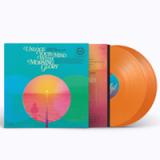
Originally from Florence, Italy, Elio made an impression in the Seattle underground through his deejaying at DAZED parties alongside his evolution as a producer. On his first vinyl EP, two original productions channel an early 2000s melodic minimalism with a touch for evocative composition paired with memorable grooves. A remix of each completes the record.
The title track “Still Love” opens the EP with a series of contemplative notes. As the bass stirs, the track expands, adding energy alongside the breakbeat. The synth unfurls in a melodic crescendo before pads add emotive accents.
Kurilo steps into the lab to reconstruct “Still Love” into an afterhours potion. The Ukrainian producer showcases the psychedelic and sumptuous grooves that established him as one of the finest purveyors of hypnotic tech house at Trance Pandemic. The influence of cinematic acid house washes over the driving groove.
“Vegas Jam” opens side-b and again emphasizes Elio's sense for musical composition and progression. Adding swing and jazz techniques to the synth melody, variations of the piano hook improvise blissfully above the rolling bass.
A warm yet powerful kick sets the tone for the final track of the EP. China's electro and techno wiz B.AI remixes “Vegas Jam” into a mind melting sensory stimulus. The remix gathers intensity and drive, an irresistible late night brain worm.
Sally C steps up to inject CC:DISCO!’s sensual anthem ‘Chez Moi (feat. Confidence Man)’ with an inimitable streak of pumping house flavour. Originally released on Phantasy as CC’s debut single in the summer of 2024, the scene-setting Irish DJ and producer’s remix ticks like a Balearic bomb, riding waves of rushing chords and shuffling drums, built for the biggest sound systems.
After years of demand, Spray takes two wildly alternate approaches to ‘Chez Moi’, pressed to wax for the first time. His euphoric ‘Club Spriitzz’ mix fizzes toward the undistilled euphoria already beloved to festival crowds worldwide. In contrast, a swampier ‘Witching Hour’ cut recalls the experimental acid of early Hardfloor or Plastikman, for a heavyweight treat.
In discotheques and dark rooms across Europe, Boys’ Shorts have earned the trust of the queer and wider clubbing communities as generous stewards of a timeless sound that, like themselves, never stops moving forward. The duo of Vangelis and Tareq initially met at an underground club in their native Greece. Sensing a rare sonic connection, the pair became friends, forming Boys’ Shorts to meet again and again, travelling from their adopted cities of Thessaloniki and London to appear as far afield as Berlin’s Panorama Bar and New York’s Le Bain, as well as supporting Goldfrapp and Hot Chip on tour. Their motivation? In their own words, “we make people dance!”
Following years of gradual, thoughtful studio sessions, and EP releases on tastemaking electronic labels including Phantasy Sound and Live At Robert Johnson, Boys’ Shorts establish their own imprint, ALL SORTS, in order to deliver a fantastically ambitious debut album, ‘What Does It Take To Make These Men Happy?’
The LP opens with the grandiose, cosmic vista of ‘The Space Between Us’, a classic passage of strings and synthesis, before the shared Boys’ Shorts vision falls back to earthier territory with deep groove of ‘Let’s Fall In Love’, mixing universal sentiment with a patient vision of human potential and the voice of Greek electronic pioneer, K.BHTA. ‘Come’ aligns with NYC’s Michael Cignarale, offering an excitable invitation to the mind and body sculpted by the way of a throbbing, warehouse-sized statement of nineties house sensuality. Channeling heroes Lowe and Tennant at their most introspective, ‘Short Life’ maintains the dance, yet dares to ask, “what if the parties aren’t enough anymore… Can you ask for something more?”
Out of the pet shop and straight into the strobe lights, ‘Disco Romantica’ makes true on the promise of its title, a lovelorn monologue giving way and slipping into rave stabs and whirring synthesis that looks forward to a memorable, emotionally-charged night ahead. Underpinning this feeling of anticipation, ‘Going Out Hoping To See You’ introduces the voice of Justin Strauss to Boys’ Shorts' musical world. A certified icon of club culture, spinning from The Mudd Club to modern day DJ booths, Strauss’s generation spanning experience of nightlife leans into the fundamentals of human connection and the pleasure of musical discovery, wrapped in irresistible chug.
Another transformative figure in club music, Fischerspooner’s own Casey Spooner dips into French for the Motorik cyber sleaze of ‘MECANIMAUX’, their own vocals pitching up and down with playful EBM abandon. ‘Montage’ offers a different kind of composition, conjuring an ecstatic club banger that finds inspiration in nineties indie rock motifs alongside the rave scene, while ‘Run’ promises to blow out sound systems before its weighty electro bassline succumbs to waves of glistening synths.
Such bombast into beauty perfectly sets up the record’s blissful conclusion; ‘The Stars Are Out For You’ is electro-pop so delicate as to heal aching feet (and mend broken hearts), while offering the final tender moments of the album as a form of tribute on ‘Untitled (For Mitsi)’. It’s a thoughtful ending to a thrilling trip through a shared passion for electronic and pop music in all its glorious potential. What does it take to make these men happy? It’s a pleasure to find out.
An’archives presents 'sensitive', a new album, and the first solo vinyl release, by Japanese keyboardist and synth player, Mitsuhisa Sakaguchi. A deftly assembled suite of glistening electronic tonalities, 'sensitive' is the latest in a lengthy run of excellent, idiosyncratic albums by Sakaguchi. A low-key yet productive artist, Sakaguchi has released banks of solo titles via his own Bandcamp page, and is also an in-demand improvisor for electronics: see, for example, recent collaborations with Yoshiki Ichihara ('TO(R)RI INFRANTA', 'Ftarri', 2025), Tatsuhisa Yamamoto ('non equal mad', self-released, 2020), and the - trio with Yamamoto and Uchihashi Kazuhisa ('self-titled', Modern Obscure, 2023).
'sensitive' is a startling album for many reasons, not least its rich attention to detail. Sakaguchi’s ear is sensitized to the complexity of electronic sonority, something he’s developed through decades of performance and improvisation, though he’s not limited to that language. “I mainly use multiple synthesizers and process the sounds with effects,” he clarifies, detailing his approach to his music. “I also use a lot of acoustic sounds such as field recordings and percussion; sometimes I also use sounds such as prepared piano.”
Indeed, you can hear this see-sawing balance between the electronic and acoustic written across 'sensitive' – see the activated cymbals that twist and stutter through the first half of “metatoxic”, which are soon replaced by a similar stream of burbling synth-flow. The opening “sensitive rot” folds field recordings into Sakaguchi’s electronic kit to such a degree that the differing forms dissolve into each other; on “green shrine”, the field recordings are more present, yet still poetically framed, taken as they are “from the mountains of my hometown, Yawata City, Kyoto,” Sakaguchi explains.
The tender balance achieved by Sakaguchi as he moves between practices, tonalities and temporalities helps manifest the guiding conceptual force behind 'sensitive', where Sakaguchi explores a cleansing reverie. “What I wanted to portray with this album was to create an album of sounds that shattered and reassembled my current ‘sense’ and ‘toxins’,” he nods, “along with the ‘nature’ around me. Electronic sounds, our bodies, the environment around us, and nature all blend.”
From there, Sakaguchi attempts a transformation, or transmutation – an alchemical process of exchange. “I am attempting to explore whether it might be possible for the sounds to come closer to each other,” he concludes, “or perhaps even to interchange places.” On the five pieces that comprise 'sensitive', you can hear this fusing and exchange. Inhabiting similar spaces as the music of Nuno Canavarro, Asmus Tietchens, Omit, and other like-minded visionaries, 'sensitive' traverses curious, quixotic terrain between electronic composition, electro-acoustics, and improvisation.
Ola Tunji is a young French quintet based in Brussels. Together, they explore the boundaries between spiritual jazz and free jazz, following in the footsteps of their great heroes John Coltrane, Pharoah Sanders, and Albert Ayler. At the forefront is the still only 24-year-old Ornella Noulet, whose saxophone playing can both rasp and soothe with the authority of a seasoned jazz veteran.
The band describes their music as collective meditations, in which they express love, compassion, joy, and serenity through improvisation. By making music together, they search for a deeper sense of humanity.
Their self-titled EP was initially released only digitally on Bandcamp, but it was immediately met with enthusiastic international acclaim, including praise from the American platform All About Jazz. Bandcamp itself also highlighted the release as a jazz standout. While awaiting their first full-length album, W.E.R.F. records is releasing this outstanding EP on vinyl for the first time.
black.round.twelve returns with Dancing Tiger EP, a new vinyl release from Tagir exploring the deeper edges of Minimal House and Tech House. Rooted in the label’s vinyl-only ethos and focused curation, the record leans into long-form grooves, subtle detail and controlled movement.
The title track “Dancing Tiger” is a slow-burning minimal piece stretching across twelve minutes. Oboe-like tones and modular textures sit alongside processed vocal fragments and acoustic percussion, anchored by a steady low-end that develops with patience.
“Break It Love” moves into a more direct framework, combining vocal loops with an elastic bassline and a steady 4/4 pulse, while modular elements add texture and forward motion.
On “Off Smoke”, the structure becomes more abstract, with a repeated vocal phrase stretched, pitched and fragmented across a pumping groove. Subtle variations and underlying swing create a controlled but fluid sense of movement.
With Dancing Tiger EP, Tagir delivers a groove-led record that aligns closely with black.round.twelve’s approach, balancing functionality with detail and maintaining a clear focus on the dancefloor.
KNEECAP return to bend genre, language, and rules. The most talked about artists in the world are turning the page. A new chapter, new sounds, new manifestos.
A blistering album that revels in darkness while bursting through the void with illuminated revery. This is FENIAN.
Produced by Dan Carey (Fontaines D.C., Kae Tempest, Wet Leg), FENIAN upends expectations with an expansive sonic palate, traversing acid house, trip-hop, dubstep, and more - Masters of rave and rap theatre, FENIAN represents Kneecap’s most sophisticated exploration of language and sounds.
More darkness. More confrontation. More craic. More energy. More solidarity. More absolute bangers. And more fuel for the unrelenting engine that powers this unstoppable force. For their remarkable second album, Kneecap have come out fighting.
Throughout, the sirens and alarms ring, and the chorus’s blast. Revolutionary and rebellious, confrontational and impossibly catchy, inescapably intelligent and brilliantly rendered, FENIAN doesn’t just represent the next phase in Kneecap’s trajectory but stands as a remarkable record that thrills as much as it surprises. The mayhem of their breakout year is a memory now. But Kneecap are neither dwelling on that nor merely persevering through it. In FENIAN they excel, reaching a new peak that is undeniable in its mastery.
Pressure makes diamonds, and FENIAN glistens with Kneecap’s uncut gems.
When Henry Street & Sacred Rhythm Music join forces for a remix outing, it should be obvious the source material and resulting productions are of the utmost caliber. This record proves such a case in point: Johnny "D" DeMairo & Joe Claussell team up for two takes on Candi Staton’s 1979 disco opus 'When You Wake Up Tomorrow.’ The original, whose pedigree could be inferred simply by reading Patrick Adams’ and Jimmy Simpson’s names on the label, is a faultless dance floor cut featuring all the elements you’d expect—lavish horn and string arrangements, sparkling synthesizer accents, and plenty of hand-beat drumming—along with with Staton’s peerless voice. Johnny D’s mix starts carefully, the vocal refrain accented with auxiliary percussion until the rug is pulled out from under us, the ensuing chasm making the following thrust of the track that much more powerful. On the flip.
Claussell’s take starts with reinforced four-on-the-floor, along with a studio count-in, perhaps alluding back to his previous ‘It Seems To Hang On’ edit. As the track establishes itself, ample room is afforded for interplay between bass and guitar, with all the interlacing elements aggrandizing the mood with careful shots of delay and expertly-timed pivots in atmosphere. Both sides are proof of what shouldn’t need evidence: two masters of their craft assembling two wholly new mixes that far surpass the banal copy and paste, add and subtract methodology slung by the less blessed. Pressed on white vinyl, with a custom jacket to boot.
4am Kru make a return to vinyl with the Love On The Line EP, an exploration of the familiar, bittersweet story of a romantic relationship between two people, from start to finish.
Across seven tracks led by collaborator Layla Sibelle, we feel every facet of this universal human experience. Exploring the more vulnerable shades of 4am Kru’s proven dancefloor technique, each track on the Love On The Line EP shakes sound systems, while staying true to the record’s emotional core.
From the tingle of excitement depicted on 'Rush', to the disappointment of being let down on ‘Boy’, the relationship ending on ‘Hush Now’, alongside everything in between, Love On The Line EP keeps bodies moving, while pushing the sound and songwriting of 4am Kru in unexpected new directions.
On a remote gravel-covered spit of land on the east coast lie the abandoned buildings of a government facility for weapons testing and experiments with radar.
In the mid 1960s this site witnessed the construction of an over-the-horizon radar, a technological marvel bouncing signals off the ionosphere, built to covertly monitor the activities of other nations.
The reflectivity of the ionosphere is a function of frequency, time of day, time of year and of the solar cycle. In essence, a sympathy for the celestial was required to fully exploit this man made construction.
Plagued by noise that created false returns on the monitors, the intended performance was never achieved, and despite several investigations the system was shut down and eventually dismantled in the early 1970s.
The long dormant Cobra is now a nature reserve.
Back in 2022, Is It Balearic? Recordings founders Coyote (AKA long-serving producers Richard Hampson aka Ampo and Timm Sure) took time out from releasing music on their own labels to deliver a near perfect mini-album on Phil Cooper’s similarly mind-ed NuNorthern Soul imprint, Everything Moves, Nothing Rests.
A superb exploration of their trademark sound, where gentle downtempo rhythms and nods to dub came cloaked in colourful ambient chords, sun-bright melodic motifs, organic instrumenta-tion and quirky spoken word samples, Everything Moves, Nothing Rests deserved a sequel. So, three and a half years on, the duo has delivered just that: a fine six-track EP that offers an even deeper and more atmospheric exploration of their signature sound.
It is a sonic approach that should now be familiar to Balearic en-thusiasts the world over. Aside from delivering a steady stream of singles, albums and remixes on their own imprint, Hampson and Sure have also showcased their skills and loved-up musical mis-sives on International Feel, Music For Dreams, Needwant, MM Discos and Citizens of Vice.
The Higher The Sky, The Deeper The Ocean, their hotly anticipated NuNorthern Soul return, is named in honour of a quote from Ped-ro Alonso’s documentary series On the Ship of Enchantment, an extended voyage in which the Money Heist movie star meets healers and masters of ancestral medicine across his native Mexi-co.
There’s naturally a meditative and slightly psychedelic sound to much of The Higher The Sky, The Deeper The Ocean, which offers a subtly varied exploration of Coyote’s style and influence. Yearning, soft-focus opener ‘Muted Beauty’ – the kind of immersive, effects-laden and sample-sporting ambient bliss found nestling on Fila Brazillia albums of the mid 1990s – is followed by the similarly gentle ‘Go All The Way’, where delay-laden acoustic guitars, spo-ken word snippets and gaseous chords stretch out atop a languid, slow-motion groove.
‘A Drop in the Ocean’ picks up the pace a little via a glorious hat-tip to turn of the 90s ambient house – all dub-wise bass, heady deep house sonics, spaced-out chords and half-buried references to sunrise-ready Balearic synth-pop records of the late 1980s. Late psychedelic guru Terrence McKenna appears in sampled form on ‘Dolce Far Niente’, a tabla-driven drift and musical hallucination which conjures mental images of lying in the Mexican desert, gazing intently at a starry sky.
In contrast, ‘Riviera Sound’ is a chunkier, brighter and more sun-splashed affair – all deep, dubby bass, sustained piano parts, punchy downtempo breaks and the duo’s trademark ambient pads – while superb closing cut ‘No Coincidences’ fixes jazzy double bass samples, twinkling keyboard motifs, subtle acid lines and Latin-laced percussion to a street soul-adjacent beat.
Heady, impeccably crafted and thoroughly enveloping, The Higher The Sky, The Deeper The Ocean is Coyote at their dazzling best. It marks another significant chapter in their ever-evolving musical journey.
Nitai Hershkovits and Daniel Dor return with Found & Found, their second collaborative album and a natural continuation of the musical dialogue initiated with The Garden Suite.
Born out of pure curiosity - "there was more to say, more to explore," explains Dor - the album expands the duo's sonic language beyond the synth-only framework of their previous work. While the Moog remains central, Found & Found introduces clarinet and acoustic guitar, gently dissolving the boundaries between electronic and acoustic sound.
Each composition unfolds through interlocking, mantra-like patterns. Repetition becomes a space for transformation: melodies circle, textures shift, and subtle harmonic movements invite the listener inward. The music is structured with care, yet it feels open and fluid. intimate, spacious and quietly immersive. If their previous record explored orchestral depth through synthesizers, this new chapter embraces air and clarity. Acoustic gestures emerge within electronic landscapes, creating a sound world that is both grounded and weightless.
Nitai Hershkovits brings with his fellow partner Daniel Dor a refined harmonic sensitivity shaped by both jazz and classical traditions. Together they continue to refine a shared language that moves between structure and freedom, precision and emotion.
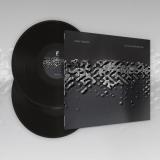
XKatedral Anthology Series II (An Anthology Of Slowly Evolving Timbral Music), featuring exclusive music from Kali Malone, Jessica Ekomane, Mats Erlandsson, Theodor Kentros, Wilma Hultén, and Maria W Horn.
"XKatedral Anthology II is the second instalment in a series of archival releases dedicated to presenting music by composers affiliated with XKatedral working within the realm of slowly evolving harmonic and timbral music. This double-vinyl set contains an array of pieces dating from 2018 - 2020. This collection of pieces focuses on the use of synthetic sound and algorithmic composition languages as tools for precise work within the realm of spectral exploration. In addition to this, the electronic instrumentation in many of the pieces is augmented by acoustic instruments.
The first piece on side A is Kali Malone’s Music for Low Quartet. This piece is an adaptation of the composition “Rose Wreath Crown” originally released on The Sacrificial Code in 2019. In this iteration, the music is scored for two double basses played by Vilhelm Bromander and Zach Rowden, and sine tone electronics performed by Malone herself. The recording of this piece was made at EMS in 2019.
Closing side A is Jessica Ekomane’s ‘First Light’. This computer music piece focuses exclusively on digital sound, layering razor sharp synthetic textures into an otherworldly dynamic weave. The music heard here is a reworked version of a piece originally commissioned by Semibreve in 2020.
Side B contains the work ‘Hands Melt In The Sun’ by Mats Erlandsson. This composition is built from electronically processed tuned zithers and synthetically generated tones arranged in a series of chordal inversions over a sustained fundamental tone. This music, written as a love-letter to the localized drone tradition of Stockholm in the years 2008-2012, was composed and recorded in seven days while in residence at Ställbergs Gruva in Bergslagen, in the summer of 2018.
Opening the second half of the collection is Rough Draft v.7 by Theodor Kentros. Kentros’ compositional practice usually combines acoustic and electronic source material and in this piece he molds the sound of the Buchla 200 and a collection of recorded wind instruments into a molten mass of sound. In its original form, this music was presented as a multichannel immersive work and even in the current stereo configuration it retains some of that enveloping sense of depth.
The second piece on side B, Inertia, is by Wilma Hultén, who makes her debut on record here. An exclusively synthetic piece, Inertia utilizes internal digital feedback in a sealed synthetic system to manifest a harmonic field that swells and abates throughout the length of the piece, interspersed by small gestural elements.
Closing Anthology II is Maria W Horn's work ‘Dies Irae’ for female vocal quartet, pitched glass and synthesis. ‘Dies Irae’ uses a modified form of traditional tonal harmonic language to invoke an uncanny and restless middle ground between the classical western polyphonic vocal tradition and contemporary electronic music. The version heard here is a live recording from Eric Ericssonhallen in Stockholm on May 30th 2020. Performing the piece here are the vocalists Katarina Henryson, Lisa Holmgren, Vilma Ogenblad and Paula Wegmann, as well as Maria herself on glass and electronics."
For his new full-length on Second End Records, Lyon-based artist Jonnnah turns deeply inward. Conceived as a form of therapy, as much as a reflection and a testimony, the record retraces a process of introspection and confrontation with one’s own history, looking back at origins, DNA, and the invisible ties that connect us to our ancestors, while opening paths toward new connections.
The double-sided structure of the album makes this journey tangible. The first side lingers in uncertainty : opaque atmospheres, fragmented rhythms, and restless textures mirror the doubts, questions, and fragile states of self-analysis. The second side, in contrast, embraces clarity and resolution, dense yet luminous soundscapes where reconciliation and acceptance take shape, culminating in The Blue Comet, a piece charged with finality and revelation.
Opening with the multipart suite N-zero, symbolizing the beginning of therapy, and closing with O-one, evoking the soul’s original purity, the record traces a complete emotional and spiritual cycle. Between them, the third edition of Insomnia Never Ends once again portrays the struggle between sleep and the irresistible pull of musical distraction, a fragile tension that runs through the album as a whole.
The record condenses Jonnnah’s language into something rawer and more direct. Layers of dub and dub sonic resonate against ethereal ambient passages, while techno impulses maintain tension and forward motion. Each piece feels at once intimate and expansive, designed as much for solitary listening as for collective experience.
A new chapter in Jonnnah’s trajectory, the album is a document of transformation : from shadow to light, from questioning to acceptance.
Swedish producer Robert Leiner’s landmark 1994 album ‘Visions Of The Past’ finally gets a vinyl LP reissue on Apollo, the ‘ambient division’ of R&S Records. Long regarded as one of the pivotal ambient/electronic long players, the album has stood the test of time and serves as a reminder on how potent the early ambient techno releases were.
Leiner was a central figure in the early European techno and ambient landscape, carving out a distinctive sound that bridged atmospheric depth and rhythmic intensity. Known for his releases as The Source Experience and contributions to the R&S/Apollo catalogue, as a producer and engineer, Leiner’s work resonated across the underground, earning him a reputation for visionary, emotionally charged productions that stood apart from his contemporaries.
'Visions Of The Past’ captures this duality perfectly with expansive ambient passages that drift into hypnotic techno, while layers of intricate sound design and pulsating low end create a timeless and immersive listening experience. Tracks unfold with patience and precision, like the 12-minute-long marine epic ‘Aqua Viva’, balancing introspection with kinetic dance energy, and the new age ambience of ‘Dream Or Reality’ and ‘Northern Dark’ embodying the forward-thinking ethos that defined Apollo’s golden era.
Three decades on, this long out of print album finally returns on vinyl format, freshly remastered and restored, reaffirming its status as an essential document of electronic music’s evolution and Robert Leiner’s enduring influence.
‘Visions Of The Past’ by Robert Leiner is available on Apollo Records from 7th November 2025.
Fresh Hold Releases presents Helen Ripley-Marshall's mysterious Australian ambient electronic album "Green Chaos", reissued for the first time on vinyl LP. Originally released in 1988 on Sydney based private press label Freefall, "Green Chaos" marks the sole release from Ripley-Marshall.
In the late 80's Ripley-Marshall lived a Bohemian lifestyle in inner city Sydney; "surrounded by musicians, actors and artists, there was an amazing creative experimental vibe going on". While playing in new wave/art rock band "D Face" she began Green Chaos as a personal project to counteract the creative friction sometimes experienced within a group dynamic, heavily inspired by Arnold Frolows' "Ambience" radio show on Australia's Triple J and particularly the music of Tangerine Dream, Harold Budd and Brian Eno.
Initially a solitary endeavour, once she decided to record in a studio Green Chaos morphed into a somewhat collaborative, improvisational project with other musicians invited into the studio to improvise and add their own interpretations and ideas, additional layers and dimensions, resulting in a work that combines a clear influence from the electronic repetition of the Berlin school with a meandering, futuristic lyricism. Although influenced by the long form sonic journeys of artists like Tangerine Dream, Ripley-Marshall's background in art rock and new wave brings a more concise approach, each song a self-contained universe that says only what is necessary in the arrangement.
After completing a sound engineering course Ripley-Marshall recorded the album at Sydney's Exeter House Studio over several months alongside studio engineer Andrew Knight, met through a fellow member of D Face. Knight ran Freefall, a private press recording label releasing folk and bluegrass music, which had Green Chaos as its sole ambient release. Ripley-Marshall self distributed the album to local inner city record stores and dropped a copy to Triple J, where it became a regular staple of Arnold Frolows' show.
These days Ripley-Marshall has moved away from music and is predominantly focused on visual art. "Green Chaos" stands as the only released product of her musical years, both a personal window into the vibrant experimental art scene of late 1980s Sydney and a deep, timeless anomaly of Australian electronic music.
Solar Operandi is a new Parisian label born from a B2B project and developed into a curated platform rooted in electro and exploring its darker intersections with techno, acid and trance. It's focusing on peak-time energy with depth and character.
Its first various artists release, Carnal Savana Vol. 1, brings together standout producers from across the globe, each delivering a distinctive yet cohesive vision of modern electro. The compilation balances raw club functionality with refined sound design, built for powerful systems and late-night intensity.
Guests is the home recording project of Jessica Higgins and Matthew Walkerdine. Vaguely named as such to avoid any problems with the poster if they pull out of a gig (which has only happened once, about a year and half before any songs were actually written to be fair) but also to capture a sense of reverse hospitality. That is, arriving at your door with a bottle of good wine (can’t turn up empty handed) or a fist full of savoury or sweet snacks (time of day dependant); oversharing at the afters (and then passing out on your couch); reading to your toddler while you make their lunch or put everything back where it was meant to go (only to get torn apart again). So, something about what happens when private worlds meet each other, making or having been made a space for. But at times, it’s a different kind of intimacy, a temporal or material one, like the feeling of crisp fresh sheets, and abundant and soft, body-part appropriate towels in a hotel in a city you’ve been to before and love to go back to.
Their debut record, “I wish I was special”, was variously described as “a collage of concrète experiments and outerzone pop gestures, music that sounds as if it’s been written from the depths of a dream”; “music for people who love music but also hate it too”; “something like chasing ghosts or befriending a wild animal”; “pulling apart nervous sensations with haphazard ease and requisite humour”; and “a melody of refusal, of being all-in (…) finding the exact right WRONG sound to express the discontent”. Common Domestic Bird continues in this vein, layering synthesiser, keyboards and samples over rudimentary drum rhythms and field recordings, which are in turn sung or spoken with to create nine new songs.
Written and recorded between autumn 2024 and summer 2025 in Reading, Berkshire, the music has matured since its last outing, in a way, leaning less into collage and more toward structured composition and melodic depth, yet retains a healthy dose of indeterminacy and off-kilter rhythms for the forever-amateur. The songs on Common Domestic Bird hint at some “about”-ness through a series of discrete vignettes which sound a bit like architecture or end of year lists, gossip or over-thinking subjectivity, like disappearances and impressions, the support structure of the spine, letters and signs offs, things you could really do without and where they should go, hoping you’ll see something that isn’t there, pretences and performance. At times they feel kind of funny, others kind of sad or a bit angry and annoyed, a bit like you really.
With Neolithic Neon, Appleblim creates a kaleidoscopic reflection of the spirituality inherent within electronic music — the ineffable frequencies and communal traditions that spring from exploratory synthesis, deep-rooted rhythms and myriad other sonic codes.
Throughout his third album for Sneaker Social Club, Laurie Osborne continues to express a fascination with the ancient resonance held within modern rave as he guides his own studio practice towards more purposefully analogue processes. It's reflective of his desire to let go and trust his instincts within the more chaotic realm of voltages and signals, not to mention turning to a wider spread of instrumentation and opening up to noisier avenues. This direction defines the character of Neolithic Neon, which bristles with the living imperfections of the gear in the context of incisive and wide-ranging cuts touching on jungle, dubstep, techno, electro, acid and experimental electronic music of all stripes.
Across Osborne's solo output from 2018's Life In A Laser to 2021 tape Infinite Hieroglyphics, a strong melodic sensibility spills out of the richly layered production. It's equally audible in his Wrecked Lightship collaboration with Adam Winchester, and it charges Neolithic Neon with its star-gazing, contemplative streak. From the knotty plucks and licks weaving through opener 'Moorland' to the vaporous synths darting across the top of hardcore conductor 'Thunderstorm', a dreamlike evocation takes the sound off terra firma, musing on cosmic events and our connection to the enormity of the universe.
Eternally in thrall to the maverick vocabulary of pioneering beat scientists and fuelled by the inspiration of great thinkers dwelling on our purpose and place, Neolithic Neon unfurls big ideas without heavy-handed messaging. Instead, it trusts in the universal and time-honoured language of experimentation and rhythm to present its ideas, true to Appleblim's legacy to date while opening a new chapter in his ongoing sonic quest.
Drawing from traditions of musique concrète and ambient synthesis, The Vertical Luminous creates a world of textural depth and microscopic wonder. Across its tracks, bubbling tones, processed field recordings, and shifting electronic layers intertwine, evoking the sensation of listening in on the hidden rhythms of atoms, molecules, and micro-organisms.
'While grounded in experimental technique, The Vertical Luminous avoids the academic or austere, instead embracing a mischievous sense of melody and curiosity - a reminder that exploration and joy can coexist in sound.
'The result is a record that is both meditative and playful, equally suited to deep listening or casual drift.'
Foundations Records brings you their hotly anticipated third release from Sonar's Ghost on Rinse Out EP - a bold four-tracker of breakbeat jungle, atmospheric jungle and jungle-tekno.
Sonar's Ghost
Starting out DJing in the peak hardcore era of 1992, Dominic Stanton rose as a post-hip-hop and ragga kid, cutting his teeth at free parties across the Shires. Drawn into the new directions of hardcore and jungle, he earned early gigs at the legendary Sanctuary, Milton Keynes, performing as Dom-unique.
Learning the art of beat-chopping on the Amiga 500, Dom landed his first release on Reinforced Records in 1995 and continued releasing into the 2000s as Static Imprints and Sonar Circle. Inspired by Dego and the evolving trajectory of 4hero, Dom began moving into more unexplored territory, producing eclectic, soulful beats under the name Domu.
After a brief hiatus, Sonar's Ghost was born - an outlet to explore the years Sonar Circle missed, from 1991 to 1995. Creating alternate journeys through that era, Sonar's Ghost reimagines the original sound palette using original sources, new blends of beats, and a lifetime of musical influence. For Dom, Sonar's Ghost is his happy place.
The Foundations release blends the eras and directions Dom loves most - from '93 bouncy darkside through to '03 drum funk - with authentic drums and samples integral to the vibe.
Here's the support on radio:
- Makossa (Radio FM4 Vienna)
- Distant Planet (Infrared FM)
- Sun People (Sub FM)
- Alex Ruder (KEXP Seattle)
- Haus of Beats (Txapa Irratia)
- Haus of Beats (Txapa Irratia)
- Tom Ravenscroft (Rinse FM)
- Jon1st (Subtle Radio)
- Martha (NTS / BBC R1)
- Harper (Czworka Polskie Radio)
- Gremlinz (89.5FM Toronto)
- N-Type (Rinse FM)
- Michelle (NTS)
- Mathieu Schreyer (KCRW, LA)
- Darkerthanwax (The Lot Radio)
- Bevin Campbell (PBSFM Aus)
- Errol Anderson (NTS)
- Ian (94.9 CHRW)
- OPR8 (Sub FM)
- Tramma (Noods)
- Carlos Contreras (Tilos Radio Budapest)
- Jay Scarlett (BR Puls Munich)
- DJ Tuco (91.90FM Prague)
- Ed2000 (Cashmere / The Face)
- Vinyl Junkie (Eruption Radio)
- Klaus Fiehe (1WDR)
- Benji B (BBC 1Xtra)
Ubisoft and Laced Records have forged a new trade alliance, expanding their economic tree to bring the lavish music of Anno 117: Pax Romana to glorious vinyl.
This vinyl set celebrates the ornate score for Ubisoft's richly detailed city builder, capturing the spirit and splendour of the Roman Empire at its peak. From the beautiful heartland of Latium to the mysterious Celtic wetlands of Albion (where no civilized Roman wants to be), every musical cue is steeped in world-building and crafted with remarkable care.
The outer sleeve features striking landscape art from the game, while the inner sleeves present detailed track lists framed with ornate motifs inspired by Roman architecture and pattern work. The result is a set that feels like a treasure from the imperial archives.
The soundtrack charts a journey across the empire, weaving together atmospheric strings, ancient-inspired instrumentation, and sweeping orchestral cues that capture both the serenity of prosperous provinces and the political tensions throughout. The music reflects every choice you, the governor, must make. Diplomacy or domination, tradition or transformation. An emotionally rich and immersive soundtrack worthy of Rome itself.
Argentinian newbie Guile bossing it on the debut proper.
Moving mad from the off. Real ones will have been acquainted via last year’s ‘Access’ EP cameo, otherwise, you better get to know.
Fellow ‘Access’ alumni Boss Priester and DJ Life tore it up with their respective solo EPs, and not to be outdone, Guile is taking on all comers. Expect some of the rudest incursions on the label to date rubbing shoulders with unreservedly utopian gear.
Some shades of Rolando, AKA The Aztec Mystic, as the anthemic potential shines through on ‘Funky Rain’. Elsewhere, he’s fronting up with Euro-centric party-starters, third portal acid prog and 808 breakbeat menace. Dancefloor wreckers front to back.
Having only emerged in 2024, the hit-rate over such a short period is nothing short of prolific. Big flex.
After a six-year hiatus, Efdemin returns with POLY — his fifth studio album, released on the recently revived Berghain-affiliated label, Ostgut Ton.
As the title suggests, POLY explores multiplicity: of rhythm, texture, style, and emotion. Across eleven meticulously sculpted textures, the album weaves a multidimensional web of sonic references, nodding to the origins of techno while pushing resolutely into uncharted terrain. POLY feels like an afterglow—of decades on the dancefloor, of restless sonic exploration, and of a profound connection to the spaces and communities that have shaped Efdemin’s sound.
Over the course of 60 minutes we are taken through different territories and landscapes of sound. Mysterious and swirling, abstract and droning textures over at times fast and stoic rhythmic concepts. Sometimes the sunlight breaks into the opaque and mysterious soundscapes before the pulse is taken over and sucks us back straight into the club.
The overall tone of POLY is mild and playful, introvert and at times dreamy. The music is rich in sonic expression and breathes the spirit of musical concepts that have been refined over the course of decades. What Sollmann has condensed here feels like a culmination of his multilayered and polyphonic personality situated between Club, Museum, Studio and Academy.
The album cover features a striking photograph of a human ear by renowned German artist Isa Genzken. Known for her radical visual language, Genzken’s work here functions as a metaphor for deep listening. The ear symbolises the layered complexity and immersive quality of the music on POLY — an invitation to perceive sound in all its depth, fragility, and force and unlock it’s potential to unite different voices in a distorted reality.
Nach einer sechsjährigen Pause kehrt Efdemin mit POLY zurück – seinem fünften Studioalbum, das auf dem kürzlich wiederbelebten Label Ostgut Ton, dem in-house Label des Berghain erscheint.
Wie der Titel vermuten lässt, beschäftigt sich POLY mit Vielfältigkeit: von Rhythmus,Textur, Style und Emotionen. In elf Stücken webt das Album ein multidimensionales Netz aus klanglichen Referenzen, das auf zurückliegende Ansätze der Klubmusik verweist und gleichzeitig entschlossen in neues Terrain vordringt.
POLY wirkt wie ein Nachglühen – von Jahrzehnten auf der Tanzfläche, von unermüdlicher klanglicher Erkundung und von einer tiefen Verbindung zu den Räumen und Communities, die Efdemins Sound geprägt haben. Im Laufe von 60 Minuten werden die Hörer*innen durch verschiedene Territorien und Klanglandschaften geführt. Mysteriöse und wirbelnde, abstrakte und dröhnende Texturen über teilweise schnellen und stoischen rhythmischen Konzepten. Manchmal bricht das Sonnenlicht in die undurchsichtigen und geheimnisvollen Klanglandschaften ein, bevor der Puls wieder die Oberhand gewinnt und uns direkt zurück in den Klub saugt.
Der Gesamteindruck von POLY ist mild und verspielt, introvertiert und manchmal verträumt. Die Musik ist reich an klanglichem Ausdruck und atmet den Geist musikalischer Konzepte, die im Laufe von Jahrzehnten verfeinert wurden. Was Sollmann hier verdichtet hat, fühlt sich wie eine Kulmination seiner vielschichtigen und polyphonen Identität an, die sich zwischen Klub, Museum, Studio und Akademie bewegt.
Das Albumcover ziert die Nahaufnahme eines menschlichen Ohrs der renommierten deutschen Künstlerin Isa Genzken. Genzken´s Arbeit wirkt hier als Metapher für deep listening. Das Ohr symbolisiert die vielschichtige Komplexität und immersive Qualität der Musik auf POLY – eine Einladung, Klang in seiner ganzen Tiefe, Zerbrechlichkeit und Kraft wahrzunehmen und sein Potenzial zu erschließen, widerstreitende Stimmen in einer verzerrten Realität zu vereinen.
In the late 2000s a sprawling catalog of what is now genre-defining music was emanating from an unlikely place. Cleveland, Ohio has a broad reputation for many things, but in the aughts, psyche-expanding Kosmische wasn’t necessarily Cleveland’s calling card… until Emeralds. The trio of John Elliott, Steve Hauschildt, and Mark McGuire had released a profusion of limited-run cassettes, CD-Rs, and vinyl titles that had been passed around basement shows and then migrated to niche music communities online, creating a unique kind of murmur, even in the height of the DIY blog era. Three kids from the rust belt were crafting a distinctive and truly far-out strain of music on their own terms in the Midwest. They were flipping lids in wood-paneled basements and circulating around the underground with soaring sounds stylistically indebted to deep German electronic music pioneers and released with the ethos and twisted fervor of renegade Midwestern noise freaks. After several releases garnered a die-hard fandom in niche circles of internet/music culture, and then catching the attention of the late Peter Rehberg, the renowned artist and curator of the Editions Mego label, an expectation was set that the next Emeralds record was going to be a big one. And in 2010, Does it Look Like I’m Here? was it.
mp3s of this album; they can finally get a fresh copy on vinyl. Does It Look Like I’m Here? became a hallmark that would carve a path for an entire scene. Ghostly International is thrilled to reissue the album, remastered by Heba Kadry, including 7 bonus tracks exclusive to the digital album and CD. The limited edition 2xLP includes extensive liner notes by Chris Madak (Bee Mask).
Music From Memory presents inrain, a collaborative project by Rudy Tambala of A.R. Kane and Alison Shaw of Cranes, originally recorded in the early 1990s.
inrain brought together two artists who were at the time shaping distinct yet quietly influential currents within alternative music. Through A.R. Kane, Tambala had helped redefine the possibilities of guitar music, placing atmosphere, abstraction, and emotional ambiguity at its centre in ways that would later resonate across dream pop, shoegaze, trip hop and experimental pop. At the same time, Shaw’s work with Cranes was establishing a singular vocal presence and a deeply intuitive approach to mood and space. inrain emerged at the intersection of these sensibilities.
The project began after Tambala was introduced to Shaw by Geoff Travis, leading to sessions at H.Ark! Studios in Stratford, East London. Working outside the expectations of their primary bands, the pair recorded informally over several months, building songs from minimal foundations. Early sampling technology, drum machines, acoustic guitar, and voice were used sparingly, with arrangements left open and space treated as an active element within the music. Vocals were often improvised, first takes preserved, and the atmosphere of the studio — calm, unhurried — became part of the sound itself.
Originally released in limited form during the early 1990s, the recordings carried subtle traces of the surrounding musical landscape: the low-end experimentation of emerging jungle, dub-influenced rhythmic structures, and a restrained melodic sensibility shaped as much by classical textures as by contemporary underground culture. Though modest in scale, the music feels quietly expansive — intimate, patient, and emotionally direct.
For this release, all tracks have been newly remastered from the original DAT tapes. This edition also includes the additional track 'Biology', written and recorded in 2012
Long part of Portugal's ever expanding house scene, Bogdan Ra loves acid, and frankly, don't we all. This new drop on his Love Affair label offers up four more 303-inspired works full of dirtiness, sleazy texture and analogue punch. Side A opens with the classic leanings of 'Damn Fine' with a rasping acid line and hefty groove, while 'Habibi' is where eastern melodies meet jacked up drum work. Side B amps up the vibe with 'Feel', offering a faster, more edgy sound and 'Action' is a driving New Beat-inspired sound with phased bass, withering sci-fi synth motifs and darker, snappier moods and grooves for when the lights go down low and things get naughty.
Rave-o-lution - Teknology EP (HDK-3)is a manifesto disguised in project.
Forged in the raw energy of the underground, Rave-o-lution - Teknology EP explores the connection between machine, movement and collective consciousness. This is not nostalgia, it’s forward motion. Teknology as a tool, rave as a language, evolution as a necessity.
Across four different versions, the same core signal mutates and adapts, shifting pressure, tempo and density while staying locked to its original frequency. Each version is built for a different moment on the floor, from deep hypnosis to pure mechanical drive.
Sometimes a pad emerges in the break, a moment of suspension where emotion cuts through the structure. A brief opening. A breath inside the system. Proof that even the hardest teknology carries feeling beneath the steel.
HDK-3 is made for soundsystems at full power, bodies in sync, and minds ready to disconnect from the surface and dive deeper.
No compromise.
No decoration.
Just rave — evolved.
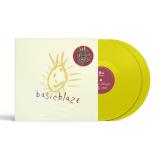
Seminal New Jersey producers, Blaze are recognised as one of the greatest production outfits in House Music. Formed in 1984 and with over 100 releases to their name, undoubtedly one of the highlights of their rich and expansive discography is their 1997 LP, Basic Blaze. Containing some of their best work to date across eight tracks, it’s an essential listen for any house music fan. With the only copies available selling on the second market for £60+, now for the first time since the initial release, Defected & Slip N Slide present an exclusive reissue for RSD. Pressed on transparent yellow vinyl, housed in a replica artwork sleeve this is a much-needed reissue for all House Music fans!
Diplo—the prolific artist's self-titled album and first full-length of electronic/dance music in 18 years—is the realization of a three-year deep dive into the house music that first blew Diplo's mind as a teenager and that he has now founded Higher Ground to champion worldwide. A titan of electronic music, he’s now turned his focus back to these roots.
The album includes the Grammy-nominated “On My Mind” with Sidepiece, "Don't Forget My Love" with Miguel, “Looking For Me” and “Promises” with Paul Woolford and Kareen Lomax, “Don’t Be Afraid” with Jungle and Damian Lazarus and “One By One” with Elderbrook and Andhim—classic house records that have soundtracked the reopening of clubs worldwide—as well as collaborations with Aluna, TSHA, Leon Bridges, Lil Yachty, Busta Rhymes, Seth Troxler, Amtrac, RY X and more.
A special Australian export edition from Sweat It Out featuring a curated selection of remixes by Barry Can’t Swim, DJ Seinfeld, Andhim, and more. This 3x LP set is the exclusive physical home for these remixes. Each of the three discs comes in a unique color: Green, Red, and Blue.
b A2 - Diplo & TSHA – Let You Go (feat. Kareen Lomax) Sebastian Ingrosso & Desembra Remix
c A3 - Diplo & Seth Troxler – Waiting For You (feat. Desire) Extended
[e] B1 - Diplo & SIDEPIECE – On My Mind (Purple Disco Machine Remix) [Extended]
The Buddha Bar collection is the one of the most emblematic electronic compilation series with over several million copies sold over the years. Discover the 27th Buddha-Bar Compilation, Mixed by DJ Ravin. Immerse yourself in the captivating and unique world of Buddha-Bar with this new « haute couture » selection. This latest edition, masterfully mixed by the iconic DJ Ravin, takes listeners on a mesmerizing sonic journey, blending sophisticated electronic beats, worldwide sounds, and deep chill and house vibes. More than just an album, it’s an immersive experience perfect for setting the mood at any gathering or accompanying moments of pure relaxation. With a legacy of globally acclaimed compilations, the Buddha-Bar series has already captivated millions, creating a lifestyle phenomenon like no other. Available on March 28th, Buddha-Bar XXVII is a must-have for fans of lounge and electro music. Give your customers the chance to escape into this musical adventure
In my productions, I always strive to blend the multiple genres I’ve explored over the years while staying true to my artistic essence. In this EP, I aimed to unite house, techno, deep house, and acid, all with a more musical and melodic approach, similar to the tracks I’ve created in the past. Just listen to 'Searching For A Match' and 'For You'—I find them incredibly melodic and harmonious.
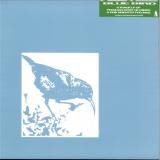
Following the critical success of last year’s ‘Cold Feet’ LP, producer, DJ, and multi-instrumentalist Alek Lee returns to Isle of Jura with his most introspective work to date, the ‘Blue Bird’ album. Across eight tracks, the Athens-based artist explores what he describes as a "Peculiar state of minds & Dub Orientated Feelings," blending his signature guerrilla style production with deep, organic soul.
The album’s centerpiece and title track, ‘Blue Bird’ features the haunting vocals of singer-songwriter Keren Ilan. It is a raw, heartfelt exploration of the aftermath of a breakup. The lyrics speak of a "desert heart" and a "loss that grows tall and loud," eventually finding a path toward healing as the "blue bird sings the dawn." Musically, the track is anchored by hazy, sun drenched guitars, a central instrument that weaves a consistent Balearic thread throughout the LP.
The journey through ‘Blue Bird’ is one of shifting shadows and unexpected textures. ‘Treasures’ is a standout instrumental, leaning into a grit-flecked, bluesy "twang" reminiscent of Duane Eddy, while ‘The Beach Road’ sees long time collaborator and ‘Shame On Us’ bandmate, Yovav, lending his magical bass and guitar work to a track that feels like a slow drive toward the horizon.
Side B shifts the energy toward the dancefloor and the sophisticated leftfield pop of the 80s. ‘First Rain’ is a subtle house leaning gem underpinned by a kick drum and lush, synth heavy emotive chord progression. ‘Thanks to Sade’ is a seductive downtempo groove with epic guitar lines shifting through, while ‘Remember the Good’ brings a subtle reggae skank and a French-influenced organ sound into the mix. The LP comes full circle with a smoked out Dub version of the title track ‘Blue Bird’.
A 180 gram pressing in a 3mm spine full colour sleeve and sticker designed by Bradley Pinkerton.
Cititrax release Sand Clock, the new full-length album by Men With Secrets, the Italian trio of Donato Dozzy, Lino Monaco, and Nicola Buono (Retina.it). Originally emerging from a shared background in experimental techno under the name Le Officine Di Efesto, the three musicians turned toward classic post-punk, minimal wave, and synth-driven pop with the formation of Men With Secrets. Their debut album Psycho Romance (2020), released on Bunker Records, introduced a meticulously produced body of work that felt like a rediscovered European darkwave recording from the early 1980s—yet was entirely contemporary in its construction.
With Sand Clock, the trio deepen this language. The album leans more directly into the melodic clarity and romantic tension of late-80s and early-90s darkwave and synthpop while maintaining the stark restraint that defines the project. Icy synthesizers, shuddering basslines, and precise drum machine programming frame baritone vocals that are intimate, emotionally exposed, and quietly apocalyptic.
Balancing pop structure with gothic atmosphere, Sand Clock moves between shadowed dance floor momentum and solitary headphone introspection. It is not an exercise in revivalism, but a continuation—an acknowledgment that the emotional architecture of that era remains unresolved and still relevant. Written and produced by Donato Dozzy, Lino Monaco, and Nicola Buono and recorded in Rome and Pompeii.
The vinyl edition is pressed on clear 160-gram vinyl, limited to 500 copies worldwide. Each record is housed in a heavy printed jacket with a printed inner sleeve.
British electronic music pioneers Graham Massey (founding member of Manchester legends 808 State) and Brian Dougans (the mind behind acid house milestone Humanoid and one half of The Future Sound Of London) join forces for their debut collaboration In Place Of Language, released on Belgian label De:tuned.
Both 808 State and Humanoid helped shape the UK's early rave and acid house movement. Here, Massey and Dougans channel that legacy into a beautifully balanced four-track EP that radiates warmth and energy, drawing on more than three decades of experience in electronic music. Inspired by key elements of the '89-91 era while embracing a contemporary edge, the duo merge their distinct sonic identities into a sound that feels both timeless and forward-looking.
In Place Of Language is not a nostalgia trip, but a natural evolution: a meeting point between foundation and future, and a blueprint for a new wave of electronic experimentation!
Kevin Foakes (Openmind, DJ Food, Ninja Tune) created all the graphic work. Mastered by Matt Colton at Metropolis. A separate digital release will also be available at the usual digital shops. Stay tuned!
Having played Sold Out tours and supercharged festival appearances across the UK & Europe, It's no wonder that Jim Jones All Stars were personally selected by The Black Crowes on their 'Happiness Bastards' UK & European dates in 2024.The band also recently joined The Wildhearts on their Spring 25' tour dates.The band's debut album, 'Ain't No Peril', was released in September 2023 to universal praise. Their sophomore studio album 'Cat Fight', produced by Chris Robinson (The Black Crowes) is due on April 3rd 2026 via the Black Crowes 'Silver Arrow' Imprint. But, not ones to rest on their laurels, the band just completed a Sold Out tour of the U.K in support of their brand new Live Album 'Get Down - Get With It - Jim Jones All Stars Live (Released October 24th Via Assai Recordings) 'Get Down & Get With It! Is an unvarnished document of a deep, immersive, and mind- bending journey, a transcendent and hypnotic rock and roll experience. It highlights the band's gritty, unapologetic sound, brimming with raw authenticity and attitude. Visceral and uncompromising, it is an electrifying live performance that true believers will never forget
For the first time on LP vinyl, Come Ahead: The Remixes Vol.2 (Dubs) brings Primal Scream’s club-ready reinventions into full analog glory. Originally released in FLAC format in 2025, this second volume dives deep into dub territory, reimagining tracks from Come Ahead with hypnotic grooves and spacious textures. Featuring reinterpretations by Lovefi ngers, Black Science Orchestra, Radio Slave, and Pet Shop Boys (in dub mode), each track pulses with low-end warmth and rhythmic experimentation. From the acid-drenched swirl of “The Centre Cannot Hold” to the narcotic haze of “Innocent Money,” this is Primal Scream at their most psychedelic and dancefl oor-minded. Specially mastered for vinyl, the sound is immersive and tactile — perfect for DJs, collectors, and audiophiles alike.
Eight tracks, nearly an hour of music, and a sleeve that nods to rave-era design make this a must-have for fans of dubwise house and experimental club culture. Limited pressing. Maximum impact. Come Ahead: The Remixes Vol.2 (Dubs) is available as 2LP Black Vinyl.
Following Parnell March’s Back Bar Grooves EP in February and November’s release of the Dust Tears (lead song from Sarah/Shaun’s debut) remixes, Edinburgh’s Hobbes Music label returns with a second EP of dream pop from husband-and-wife duo Sarah/Shaun (pronounced simply Sarah Shaun), alias Sarah and Shaun McLachlan (pronounced McLochlun), who wooed hearts and wowed critics with debut EP ‘It’s True What They Say?’ last year.
‘It’s True What They Say?’ attracted fans across the board: Artist Of The Week in The Scotsman, rapturous reviews from The Skinny and Tokyo's Ban Ban Ton Ton blog, BBC 6Music airplay courtesy of Nemone (Mary Anne Hobbs' Morning Show), more radio play from Radio Scotland's Roddy Hart & Vic Galloway, plus Simone Butler (Primal Scream) and Jim Sclavunos (Bad Seeds) via their respective Soho Radio shows, not forgetting ringing endorsements from the likes of David Holmes, Youth, Kevin Bales (Spiritualized), Brent Rademaker (Beachwood Sparks) and Julian Corrie (Franz Ferdinand).
They played gigs supporting Glasgow's huge Glasvegas, at festivals (Kendall Calling, Dunbar Music, Hidden Door), plus a slew of venues across the Scottish capital, ending the year with a trio of shows supporting Glaswegian 80s pop legends The Bluebells at Aberdeen’s Tunnels, Dunfermline’s PJ Molloys and Edinburgh’s Liquid Rooms, while The List magazine tipped them among their Ones To Watch For 2025, with journalist Fiona Shepherd suggesting they were “blending the starry-eyed pop of Sonny & Cher with the electronic experimentation of Chris & Cosey.”
Very much the companion piece to the debut EP but arriving a full twelve months later, Someone’s Ghost is emblematic of the duo’s desire not to rush things or release anything half-baked.
“I’ve always wanted to create the perfect pop record and I do really feel that we’ve achieved that with this one,” says Shaun. And he’s clearly not the only person who thinks so.
REVIEWS, FEEDBACK ETC:
"I LOVE that! Dreamy dreamy pop." ROY MOLLOY (Marvellous Crane/Alex Cameron) on BLAST RADIO, Sydney
“the Scottish music scene’s cream of the cool... buzzy drum beats, high, distant chimes, and heavenly electronics…. very ethereal.” THE SKINNY
"Listening to Sarah/Shaun is like eavesdropping on a noir dreampop, long-distance phone call between them both, across two separate sonic locations. On this stunning 4-song EP, Sarah’s voice, effortlessly mesmerising, draws you into these big beautiful and haunting passages of perfect dream-pop. All beautifully produced in a multi-layered-scape of low-fi analogue textures, epic cinematic crescendos, intense electro-pulse grooves and warped psycho-pop guitar riffs. Within the songs lurk a sense of unresolved emotions, longing and pathos. There are shades of classic Lee Hazelwood & Nancy Sinatra but also Post-Punk Electronica and Beach House. But what a unique sound they’ve created of their own. I love it" DAVID MCCLUSKEY (The Bluebells)
"Absolutely beautiful" SEAN JOHNSTON (A Love From Outer Space)
"Lovely stuff here! Total quality." MARTYN 'MASH' HENDERSON
"Ooooh. Everything the last record promised is here. Well done" GEORGE T aka George Demure (Accident Machine)
"Vince clark Era Depeche Mode in places" KEVIN BALES (Spiritualized)
"Sounds cool. Well done" PETE KEMBER (Sonic Boom, Spacemen 3)
"Glorious, it (Debbie Harry) grabs hold of you and doesn't let go." IAIN DAWSON aka RAVECHILD (Everyone Wants To Play The Hits Podcast)
SOMEONE’S GHOST
Born out of an incredibly anxious, stressful time, the songwriting process for these recordings has been something of a personal tonic for Shaun…
“There was a period when I was having nightmares,” he reveals. “Apparently I was saying there was someone in the room, I was talking to that person and Sarah was seeing all this while I was still asleep.
So, I was thinking that this was my ghost. I started writing songs because I was going through something and I was dealing with something and writing songs was a comfort. My ghost was a comfort, whether it was real or not. The idea of it was a comfort.”
“I firmly believe that everyone has someone who watches over them but all of the songs are essentially about being there for someone,” he says. “Everybody needs someone but also everyone needs to stay real and keep what you have, keep it close, never let it go. If you don’t have it, continue to tell people you’re there for them. It’s about loving and hoping people will be good to you in return.”
While Shaun took the songwriting lead on Filter Of Love and EP closer The Sound Which Stresses The Sound Of My Ears, Debbie Harry was originally instrumentally conceived by producer Jaguar Eyes, alias Ali Chisholm, later lyrically completed by Shaun, and the EP’s lead track, Anhedonia, and one of its stand-outs (much like Starbed on the debut) was conceived by Sarah, as a result of experiencing a bit of a spiritual epiphany of her own.
“When I first heard the word Anhedonia, I didn't know what it meant but when I found out I thought about it quite a bit. How sad it would be to have no enjoyment in anything,” she explains. “This song is really about my own personal beliefs. When I have been down, that's one of the things that helps me the most. It talks about trying to make amends but realising, for some things, you can't. But I think with any kind of faith comes hope… which is always a good thing.”
A record about hope, truth, honesty, a belief in something bigger than oneself… and all set to a soundtrack that wouldn’t feel out of place in a David Lynch or Eighties feature film. What more could anyone ask for, really?
There’s equally a desire to offer something universal and positive to anyone who tunes in. The labels for the 12” edition reveal the dual mantras “Who just wants to survive?” and “It’s about time to live a little”, with both messages also engraved in each record’s run-out grooves. T-shirts accompanying debut EP It’s True What They Say? bore the slogan “Kill Them With Kindness” - leading caps intentional. Shaun carries the acronym KTWK everywhere he plays, as a reminder: it’s stitched into his guitar strap. And this particular wee pebble has already caused a few ripples: people have been approaching him at gigs to acknowledge their appreciation and respect for it.
"We feel we have made an honest, open, colourful, body of work,” say the duo. “We hope to go out and play the songs with the guys (our band) and then potentially make more records. We are taking things as they come. Everything has been organic so far, after all. We are looking forward to whatever this brings."
It’s True What They Say is the debut EP from Edinburgh-based, husband-and-wife duo Sarah/Shaun (pronounced simply Sarah Shaun), aka Sarah and Shaun McLachlan (pronounced “McLochlin”).
“Sarah and I both have a love for nostalgia,” explains Shaun. “We watched that amazing old 80’s Sci-Fi, (John) Carpenter movie, Starman, a few months back. Myself and my brother David used to watch it all the time. We must have been, roughly, 5-7 at the time. I remember loving the movie but the end, you know, with the beautiful, atmospheric, synth ending, I love that particular moment the most - best part of the movie, you know, when he goes home… It’s heartbreaking but stunning, all the same. It’s the music that moves you most… It did when I was 5 and it still does to this day. It must have had some form of a (much deeper) impact on me.”
The duo narrates stories across themes of love, hope, family, friends, dreams and sadness - the good that comes with the bad in everyday life, not just on a personal scale but within a community as well.
“Starbed is the first song I have ever written and just came out of the blue really, with Shaun playing a melody and me singing along,” says Sarah. “It’s simple and just about two people in love. Love songs are always the best songs, after all… Music has been a big part of my life from a young age. I was unwillingly dragged to piano and violin lessons, which I’m thankful for now! I’d say the first band I really became obsessed with growing up were the Beatles, and on the back of that a lot of 60s music and fashion. From then on, I had a love for music.”
“Shaun definitely opened my ears to a lot of sounds and got me thinking about soundtracks and all the noises that can be made,” she goes on. “We love just spending time experimenting in the house with instruments, pedals etc and Ali is a real magician to work with, too…”
The recordings took place over the summers of 2022 and 2023, with fellow Delta Mainline member Ali Chisholm (aka Jaguar Eyes) plus long-term friend and collaborator Gavin King. Further collaboration then came via the ‘net from the (international) likes of Chris Dixie Darley (Father John Misty), Darren Coghill (Neon Waltz) and Daniel Land (The Modern Painters), among others (see a full list of credits below).
Both Sarah and Shaun have a love for uber-soundtrack producers such as Hanz Zimmer, Max Richter, Cliff Martinez plus live acts such as Beach House, Spiritualized, M83, Suicide, Moby and OMD (to name a few). Shaun also credits the work of Kyle Dixon & Michael Stein (from Survive) on the Stranger Things score… “Even a moment in a movie, whether it be just 30 seconds during a particular scene, it grips you,” he says. But there’s something much deeper at play as well. “Music is a healer,” he goes on, “and I write from my own perspective but more so for others. Once I've done my bit, it doesn't belong to me any longer. It belongs to whoever wants it or needs it.”
The result is a cinematic, synth-wavey, dream poppy and downright beguilingly beautiful body of work. And they’re just getting started…
REVIEWS/RADIO/FEEDBACK:
“Starbed is folky, flavoured by pedal steel, cello, and brass. Dust Tears, in stark contrast, is a mini synth-pop rave epic. Part Bicep. Part Human League. Keep Your Eyes Closed summons a mood that’s romantic, but also dark and potentially doomed – like David Lynch’s Twin Peaks meets Cliff Martinez’s Drive score. My pick though is It’s True What They Say, whose interwoven jangle and picking recalls New Order’s more introspective moments (Love Vigilantes, Love Less… ). Drums crashing, cathartic. Guitar raising dramatic arcs. Its chorus a rush, like a reprise of Pains Of Being Pure Of Heart’s ‘Higher Than The Stars’.” BAN BAN TON TON
"Dust Tears sees them sharing vocal duties over a synth foundation reminiscent of Moby’s Go - Artist Of The Week” THE SCOTSMAN
"Woozy pop" NEMONE (Mary Anne Hobbs Morning Show, BBC 6Music)
"Nice one, very David Lynch meets Euro dream pop" YOUTH (Killing Joke, Paul McCartney, U2, The Orb, Spiritualized etc)
"Music sounds killer! Real emotion” DAVID HOLMES
"I’m enjoying it” TIM BRINKHURST aka LONDON (IKLAN, Young Fathers, Callum Easter)
“Oh, this is lovely!” SEAN JOHNSTON (A Love From Outer Space)
"It’s totally my cup of tea with milk and biscuit" BRENT RADEMAKER (Beachwood Sparks/GospelBeach)
"Beautiful, ecstatic electronica! Short and to the point" KEVIN BALES (Spiritualized, Julian Cope, Soulsavers, BE)
"Makes me wanna sit in the sun and sip an Arnold Palmer" CHRIS DIXIE DARLEY (Father John Misty)
“Really beautiful - Cocteau Twins / Spiritualized vibes but has its own thing going on, too - worth checking out!” JULIAN CORRIE (Franz Ferdinand, Miaoux Miaoux)
‘Sounded nice on a sunny day, makes me think of Twin Peaks, nice moods’ EAMON HAMILTON (Sea Power)
"Dealing in nostalgia, no bad thing at all, great to play that (Dust Tears) for you” RODDY HART (BBC Radio Scotland)
“I'll give the vocal tracks a spin before the release." VIC GALLOWAY (BBC Radio Scotland)
"Rather good!" IAIN ANDERSON (BBC Radio Scotland)
CREDITS:
Lyrics, Guitars, Keys, Synths, Drums, Drum Programming, Percussion, Mandolin, Glockenspiel: Shaun McLachlan
Lyrics, Vocals, Keys by Sarah McLachlan
Guitars, Synths, String Arrangements, Drum Programming, Engineering: Jaguar Eyes Percussion/Drums/Effects, Fire Extinguisher: Darren Coghill (Neon Waltz)
Guitars by Daniel Land
Slide Guitar by Chris Dixie Darley (Father John Misty)
Brass by Bruce Michie
Keys, pre-production & engineering on “It’s true what they say”: Gavin King
All produced by Jaguar Eyes and Shaun McLachlan and then mixed at Glasgow’s Chem19 Studios by David McCaulay (From Scotland With Love, Rick Redbeard, BBC TV’s Attenborough and The Mammoth Graveyard score).
Artwork: Jamie Walman (Fourteen Admirals)
MORE INFO:
Although Shaun released a pair of solo singles (When We Dance and Give Your Love To Me) during Lockdown, he will be better known to many via his work as the multi-instrumentalist in Edinburgh band Delta Mainline. With two albums released to date, Oh! Enlightened and Bel Avenir, both rapturously received by fans and critics alike, Delta Mainline have developed an international, cult following. Oh Enlightened (2013) achieved widespread critical acclaim on release, earning the band comparisons to Arcade Fire and Echo & The Bunnymen, while 2019’s Bel Avenir pulled in references to The Flaming Lips, Pink Floyd, David Bowie and krautrock. A third DM album is currently being mixed and due for release later this year…
‘Red Moon’ is Alannah’s second solo single and marks her first ever physical vinyl release. The song reflects on growth, misdirection and self-reconnection, told through a woman looking back at her younger self. Written on a quiet beach in the Algarve, under a striking red moon, the moment became the catalyst for the lyrics, carrying a deep, spiritual stillness into the music. Alannah is a 23-year-old singer-songwriter whose sound blends RnB, jazz and hip-hop with soulful, storytelling vocals. Influenced by artists such as Sarah Vaughan and Billie Holiday, she views songwriting as a form of emotional release and shared healing. With performances at iconic venues including Ronnie Scott’s and Pizza Express Jazz Club, her voice carries a timeless energy, full of heart, vulnerability, and quiet power. Stanley Hood’s remix reimagines ‘Red Moon’ into a moody Deep House cut. Alannah’s layered vocals float over warm keys, late-night percussion, and thick, club-ready production, shifting the emotional core towards the dancefloor while preserving the intimacy of the lyrics. Supported across specialist radio and tastemaker sets. Released as a Record Store Day exclusive on coloured 7" vinyl with full picture artwork. Strictly limited run. When it’s gone, it’s gone.
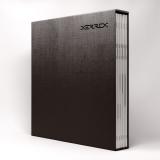
Xerrox Vol. 2 is the sixth studio album, released in 2009 by German electronic artist Alva Noto. It is the second installment of the Xerrox penthalogy, based on the concept of digital replication of source material.
As with the first Xerrox album, the starting point is a set of samples culled from external sources. This time, snippets and recordings from Sunn O))) collaborator Stephen O'Malley and composer Michael Nyman are featured, as is an excerpt from the 2004 Insen tour with Ryuichi Sakamoto.
While Alva Noto's oeuvre is predominantly affiliated with pristine sound design, the Xerrox series holds more intimate gestures and emotional sensibility. This volume moves further from the conceptualism and orderliness of prior musical outputs, ranging from heart-warming elegies to mind-bending sci-fi projections in extrasolar territories.
This remastered version will be reissued on NOTON in 2026
Tracklisting
---------------------------------------------------------
Medium: 1 // Side: A // Track: 1
Artist: Alva Noto
Title: Xerrox Phaser Acat 1
Playtime: 00:12:11
Explicit Lyrics: No
ISRC: DE1N62500015
(P): 2025 NOTON
Country: Germany
London based composer, multi-instrumentalist and producer Akusmi announces 'Lines', an exhilarating new collection of works born from the desire to take where the acclaimed debut album 'Fleeting Future' left off - in search of new forms.
" 'Secant', I must have listened to this tune 3 times in a row, this one soundtracked my night drive through the winding roads" - Benji B, BBC Radio 1
'Lines' is presented as a Limited edition clear vinyl (500 copies only worldwide), printed in heavy-weight reverse board sleeve with a hand-numbered edition sticker. The vinyl edition also features 'Oblique' (A2), an exclusive version for the vinyl format, plus the now revered 'Longing for Tomorrow' - (Brandt Brauer Frick Remix), previously unreleased physically and now pressed on vinyl format, ending side B. The cover artwork features another collaboration with Dutch visual artist Sigrid Calon and design by label founder Adam Heron.
Formed with a sense of urgency and a reductive approach 'Lines' is almost entirely comprised of alto saxophone, clarinet and piano with embellishments of ambience and minimal percussive elements. Recorded in full at his home studio in London, Pascal Bideau speaks about the process:
"I wanted to go a bit more a bit more horizontal and ambient, work with layers of lines, might they be dotted or straight, and leave them to unfold and see where they would take me."
Akusmi uniquely finds the spaces in between experimental jazz, crossover classical and ambient music.
Heavy, reminiscent of a release from the nineties, Younger Than Me pulls us through interdimensional soundscapes on his debut to the label — a wormhole morphing from ultra-emotive breakbeat and hallucinatory progressions into full-blown, boisterous acid techno at its very best. A producer with an endless catalogue of releases, notably on incredible labels including Jennifer Cardini’s Dischi Autunno, now steps up on Neptune Discs with his Vaco Loco EP. The Berlin-based, Italy-born producer is joined by Byron Yeates and label regular Biodive on the B-side, each taking turns remixing A3, Aargh!!!, pulling it in different direction — one leaning into trippy trance atmospheres, the other exploring a more immersive progressive terrain.
The craft of making music and the exploration of new methods for creating sounds were at the very heart of producing markmechanik’s LP “Invest in Rest”. The months-long production process led to one key insight: music is a tool. And this tool opens up possibilities for slowing down, sets a counterpoint to the fast-paced digital age, and leaves intellectual overthinking behind.
In his second solo release, markmechanik fully dedicates himself to blending sampling with digital and analog sounds. Between the sounds, you can hear the celebrated time spent in the studio—the playful tinkering with sounds and devices has been distilled into the LP’s eight tracks.
Building a temple of sound from reduced elements, Decoder's Alchemy EP on T3R allows selected components to generate a strong and steady drive. Using a distinctly organic sound palette, the tone of the release is wordly, sometimes almost wooden with space taking the role of an active element. When melodies or chords appear, they introduce a subtle sense of melancholy, adding emotional weight without pulling the music away from its physicality. In its unfolding storyline, the EP suggests a broader narrative. While each piece explores a slightly different soundscaping approach, a consistent DNA runs through the release - reinforced by Sanskrit and Hindu references as an underlying conceptual thread. Percussion is handled with precision and imagination: Grooves shift, evolve, and reconfigure. Dark, driving sequences are softened by airy pads and atmospheric layers, creating a dual feeling of intensity and serenity. Filters and reverbs are applied with restraint, giving the music a sense of movement and breath. Alchemy showcases an emerging artistic voice driven by aspiration and exploration. Through confident craftsmanship, genuineness and self-reflection translate into a perfectly balanced, inspiring release. ? 2026 The Third Room Written and Produced by Gautham Gaug Mixdown and Mastering by Ahmet Sisman (The Third Room Studios) Artwork by Daniel Bornmann & Lennard Makosch (STUEDIO.XYZ) Distribution by Clone Pressing by Matter Of Fact
The beautifully crafted twelve-track opus is out now via Stil vor Talent.
Berlin-based artist, DJ, producer and Stil vor Talent co-founder Oliver Koletzki today releases his twelfth studio album, “12” — a deeply considered, emotionally rich long-player that marks the next chapter in a career spanning more than two decades at the forefront of electronic music. The album is out now on Stil vor Talent in digital formats and as a 2x12” gatefold vinyl.
Serving as both a milestone and a manifesto, “12” distils Koletzki’s evolving sound into its most refined form yet. Across twelve tracks, the album explores atmosphere, restraint and emotional clarity, balancing slow-burning club energy with introspective storytelling. It’s a record shaped by experience, patience and an unwavering attention to detail; qualities that have long defined Koletzki’s output as both an artist and a label curator.
The journey begins with album opener “Petrichor”, a quietly powerful introduction built around wistful organ chords that gradually unfold into a warm, hypnotic groove. Acting as the album’s emotional threshold, the track sets the tone for what follows: music that rewards immersion, thrives on nuance and unfolds with deliberate pace. From there, 12 moves seamlessly between introspective moments and more direct dance floor statements, always guided by Koletzki’s unmistakable melodic sensibility.
Singles released in the lead-up to the album offered carefully sequenced glimpses into its breadth. December’s “Trip With Me”, a collaboration with Frida Darko, brought playful energy and sharp modern club dynamics, while January’s “I Don’t Need Your Love” delivered a confident, emotionally charged statement rooted in Koletzki’s introspective yet club-ready DNA. February’s “Petrichor” revealed the album’s cinematic depth, followed by “Schnapsidee” in March — a track that leans into groove, character and subtle eccentricity.
Elsewhere on the album, tracks like “Logic”, “It’s All Gone” and “Tick Tick” showcase Koletzki’s ability to create tension and release through finely balanced arrangements, while “La Hora de Mosquitos” and “Calle Sur” hint at the global influences that continue to shape his sound. The closing stretch — from “About the Fox and a Tiger” through “What Remains” to “Voice or Noise” (with Frida Darko) — brings the album to a reflective, yet characteristically playful conclusion.
As a whole, “12” feels purposeful and cohesive, guided by a clear narrative arc rather than fleeting trends. It reflects the maturity of an artist with nothing left to prove, yet still driven by curiosity and a desire to evolve. Much like Koletzki’s previous albums, “12” stands as a self-contained world, inviting listeners to step inside and stay.
Released on Stil vor Talent, the album also reinforces the label’s ethos of artistic freedom, quality and long-term vision. Now over 20 years strong, the imprint continues to shape contemporary electronic music while remaining deeply rooted in underground culture: a balance Koletzki himself has embodied throughout his career.
Tom Jenkinson, alias Squarepusher, präsentiert Kammerkonzert – ein Feuerwerk aus messerscharfen, rasend schnellen Riffs, teuflischen Orchesterklängen und rasanten Wendungen, das Progressive, Ambient, elektronische und experimentelle Musik vereint.
Der einzigartige Hardcore-Rave-/IDM-Produzent, experimentelle Musiker und Schöpfer futuristischer Fusion-Formen blickt auf ein 30-jähriges Schaffen mit einer Vielzahl herausragender Alben zurück. Von dem furiosen Breakbeat-Acid und dem brachialen Live-Bass-Angriff auf "Feed Me Weird Things" (1996) über das selbsterklärende "Music For Robots" (2014) bis hin zum virtuosen Live-Showcase "Solo Electric Bass 1" (2009) und dem entrückten Concrète-Jazz von "Ultravisitor" (2004) – nur wenige zeitgenössische Musiker haben ein so breites Spektrum an Musik so souverän abgedeckt. Doch trotz dieser Bandbreite zeichnet sich sein 30-jähriges Schaffen vor allem durch zwei Dinge aus: Unberechenbarkeit und Regelbruch. Da sein neues Album "Kammerkonzert" auf Warp im Grunde ein Kammerkonzert ist, bei dem er alle Parts selbst spielt, kann man getrost sagen, dass er seit seinem kristallklaren Drum-&-Bass-Debüt für das Label im Jahr 1996, der EP "Port Rhombus", einen langen Weg zurückgelegt hat.
Mit "Kammerkonzert" beginnt für Squarepusher nach 21 Alben eine neue Ära als Komponist.
Münchenbuchsee, a suburb of Bern, Switzerland. Stephan Eicher is the youngest of three children. His father, a radio and TV repairman, is also a jazz violinist and a sound tinkerer in his spare time. In the family home's converted fallout shelter turned studio, Mr. Eicher experiments with homemade sequencers, tortures handcrafted drum machines, and abuses reel-to-reel tape recorders—all under the fascinated gaze of young Stephan.
The boy quickly develops a musical curiosity, exploring sound through various experiments and wanderings. Alongside his younger brother Martin, Stephan crafts audio plays on a homemade multi-track recorder (essentially several cassette decks hooked together!), which they write, record, add sound effects to, and perform for family and friends. Just a couple of nice kids, really...
Then comes 1972, and Lou Reed's Transformer album changes everything for the Eicher kids. For 13-year-old Stephan, it's a revelation—especially "Vicious", the opening track, which he plays on repeat for months. He convinces his father to buy him an electric guitar. Not stopping there, his father also builds him a tube amp using an old radio.
Then comes adolescence. A rough one. Stephan leaves home at 16 and moves to Zurich. With obvious artistic talent, he persuades his art teacher to help him get into F+F, a radical, alternative art school—despite his young age. Accepted, he starts learning video techniques, determined to become a filmmaker.
At F+F, Stephan organizes Dada-style happenings and concerts with a group of friends known as the Noise Boys. Among them: one of his teachers on bass, Veit Stauffer on drums (who would later found ReR/Recommended Records), his girlfriend Sacha on vocals, and Stephan on guitar. In one of their early performances, they release a remote-controlled mouse covered in dull razor blades into the audience to create panic and chaos. Keeping with this aggressive, confrontational spirit, they once played a concert while wearing headphones blasting Tristan and Isolde, trying to perform their own songs simultaneously—to maximize the cacophony. The goal was always the same: clear the room.
Their “songs,” if you can call them that, followed suit. Take "Hungeriges Afrika", for instance—performed entirely with power drills and some drum feedback.
To make ends meet, Stephan returns to Bern on weekends to work as a waiter at the Spex Club, the city’s main punk venue. On September 16, 1980, during a show by proto-electro group Starter, the police raid the club and arrest everyone. Stephan, who manages to avoid arrest, seizes the opportunity to “borrow” Starter’s gear left behind. He suddenly finds himself in possession of a Roland Promars synth, a Korg MS20, and a gorgeous CR78 drum machine, which he runs through a Big Muff distortion pedal to get that perfect gritty sound.
He then sets out to reinterpret some Noise Boys tracks, reworking them during impromptu sessions recorded on a dictaphone (yes, a dictaphone—now the lo-fi sound makes more sense, doesn’t it?). He ironically titles the resulting cassette "Stephan Eicher spielt Noise Boys" ("Stephan Eicher plays Noise Boys"). This gem features seven tracks, which are the ones reissued here.
Back in Zurich, he visits his friends Andrew Moore and Robert Vogel, who have a DIY cassette duplication setup. They make 25 copies of Stephan Eicher spielt Noise Boys for Stephan and his friends. Robert encourages him to visit Urs Steiger of Off Course Records and play him the tape.
Without much hope, Stephan shows up at Urs’s office. But Urs is instantly hooked and suggests releasing a 7” single. Due to space constraints, they reluctantly drop two of the seven tracks ("Hungeriges Afrika" and "One Second"). As for the musical score featured on the cover—it was randomly chosen and remains a mystery to this day. Calling all music theory nerds!
The 7-inch is pressed in 750 copies and released in the first week of December 1980—a date Stephan remembers well, as it’s the same week John Lennon was killed. Smartly, Urs sends a promo copy to François Murner, Switzerland’s answer to John Peel, who hosts a show on alternative station Sounds. Murner falls in love with the record and starts giving it airtime. To Stephan’s surprise, sales follow—and people actually seem interested in his music.
Even this modest underground success scares Stephan a bit. He stops making music for a year and moves to Bologna, where he works as a programmer at Radio Città, a feminist radio station.
Meanwhile, Stephan’s younger brother Martin, who’s also involved in the punk scene, joins the band Glueams as a singer and guitarist. Glueams, named after the fanzine run by two of its members (drummer Marco Repetto and bassist GT), eventually rebrands as Grauzone. Stephan is invited to their shows to project hacked Super 8 visuals live on stage.
Urs Steiger, now working on a compilation titled Swiss Wave – The Album, asks Grauzone to contribute alongside bands like Liliput, Jack and the Rippers, The Sick, and Ladyshave (Fall 1980).
For the album, Martin tasks Stephan with producing their recording sessions. Under Stephan's artistic direction, two tracks emerge: "Raum" and "Eisbär". During "Eisbär", Martin plays a minimalist bass line borrowed from post-punk band The Feelies (just an open string). Drummer Marco Repetto struggles to keep time. Later that evening, unhappy with the takes, Stephan builds a four-bar drum loop from a ¼-inch tape and uses it instead of the flawed original. He then adds bleepy synths and wind sounds to complete the track’s icy vibe before handing it over to Urs.
The Swiss Wave – The Album compilation is released quietly at first, but things snowball thanks to "Eisbär", which eventually becomes a smash hit—selling over 600,000 singles.
Meanwhile, Stephan plays in a rockabilly band called SMUV (named after Switzerland’s social security agency) and begins producing artists, including the debut album of Starter (1981), which includes a more pop-oriented version of "Minijupe".
By early 1982, Stephan starts spending time with the post-punk girl band Liliput (formerly Kleenex). They’re older than him, and he happily drives them around in his Renault Major, acting as their roadie.
By 1983, Grauzone—signed to the major label EMI, which turned out to be a misstep—is falling apart. Stephan begins to pivot toward a more mainstream pop sound with his debut solo album Les Chansons Bleues.
OTON releases limited edition vinyl and CD box set of Alva Noto's Xerrox series.
Pioneering in his approach to digital sound and its materiality, Alva Noto (Carsten Nicolai) began his ongoing exploration of sampling, degradation and recontextualisation with the Xerrox series in 2007. Over the years, the project has evolved into one of the most distinctive bodies of work in contemporary electronic music, situated between minimalism, experimental sound art and digital abstraction.
Across five albums, Xerrox Vol.1 (2007), Xerrox Vol.2 (2009), Xerrox Vol.3 (2015), Xerrox Vol.4 (2020), and Xerrox Vol.5 (2024), Nicolai's method evolves from sample-based work toward original composition as he deconstructs and reassembles source material into precise, sculpted sound worlds that are at once minimal and emotive.
Remastered in collaboration with Bo Kondren of Calyx Mastering, the Xerrox recordings of Volumes 1, 2, and 3 are made available alongside Volumes 4 and 5 on vinyl and CD under the title 'reMASTER', presented in a beautifully designed box featuring original artwork by Carsten Nicolai.
Akusmi is the project moniker of French-born, London based composer, multi-instrumentalist and producer Pascal Bideau, who signs to the new Tonal Union imprint for the release of his album 'Fleeting Future.' With its hallucinatory, genre-defying blend of minimalism, cosmic jazz and Fourth World influences, and in its quest for optimism in the face of unknown and limitless possibility. 'Fleeting Future' stands apart as an inventive and inspirational debut.
The creation of the album's richly colourful and multi-layered sound world was originally inspired by Bideau's journey to Indonesia, where he immersed himself in traditional Gamelan and gong music. Many of the themes, motifs and melodies on 'Fleeting Future' seed from the 'Slendro' scale, one of the essential tuning systems used in Gamelan. However it is not musical scales, but scales as in the size or extent of things that most fascinates Bideau, specifically he explains; "the compelling way things dramatically change when you shift from any given scale to another."
The album connects directly to nature and the wider world in its evocation of perceptive shifts and transitions from microscopic to macro scale, as evidenced by the opening title track 'Fleeting Future', on which a simple dotted saxophone line morphs and billows into synths, brass and strings, indicating the musical voyage that lies ahead. Like the start of a journey or adventure it is full of anticipation, its arborescent growth conveying the optimism of the unknown and of limitless possibility. The album centrepiece 'Neo Tokyo' is a vibrating, ebullient mass of colliding elements which feels like zooming in to the electron level, as it teeters on the edge of chaos. The title is a reference to Katsuhiro Otomo's Akira, a dizzying work of art set in a sprawling futuristic metropolis.
'Yurikamome', meanwhile, is an imaginary soundtrack inspired by Bideau's yearning to visit Japan which he fuels by watching Youtube videos of drives and rides through Japanese landscapes and cities. "It's amazing" he adds, "that we have the ability to access almost anywhere in the world and see what it's like, that people document it and upload it. It's never going to be any replacement for the real thing, but with places that really touch you, it works." The track is named after a Japanese monorail train line which rides from Shinbashi to Toyosu, a last journey that feels like a new beginning.
'Fleeting Future' was composed and recorded by Bideau between 2017 and 2019 in his North London studio and features additional contributions recorded in Berlin by Florian Juncker (trombone), Ruth Velten (saxophone) and regular collaborator Daniel Brandt of Brandt Brauer Frick (drums / electronic percussion). Having been living through uncertain times, one thing that keeps spiralling into the unknown is the future, about which Bideau leaves us with a final thought:
"The future is fascinating: It is constantly readjusting to new events. I feel we left a linear approach to the future to enter an arborescent one where all the data and information we have about what could happen is exponentially ever-growing. Following a branch might allow you to glimpse into what it may become, but the evolution of the whole picture might very well render the prediction totally obsolete, and even meaningless. In that sense, there is not one future but innumerable ones all cancelling each other. That's what makes it fleeting."
The long-overdue revival of Bim Sherman’s catalog begins here. These essential recordings will become widely available again for the first time in decades, opening a new chapter in the appreciation of one of Jamaica’s most distinctive voices and representing a major moment for reggae and dub aficionados around the world. This reissue series will not only preserve his legacy but will also offer listeners the chance to experience the depth and timeless resonance of Sherman’s work in its full glory.
Bim Sherman—born Jarret Lloyd Vincent, in Westmoreland, Jamaica—holds a unique place in reggae history. Emerging in the mid 70s, his ethereal, haunting vocal style quickly set him apart from his contemporaries. He was soon collaborating with the top producers and musicians of the era, including Adrian Sherwood and the On-U Sound collective, bridging the gap between roots reggae and experimental dub and laying the groundwork for the fusion of Jamaican sounds with the vibrant underground scene in the UK. His career, from Kingston to London to Mumbai, was marked by an artistic daring and spiritual intensity that has earned him enduring respect across generations.
The centerpiece of this reissue campaign is Ghetto Dub from 1988, a record that distills Sherman’s artistry into its most potent form. Originally released in a limited number, the album embodies the stark yet soulful beauty of dub production. With its reverb-drenched drums, cavernous basslines, and echo-laden atmospherics, Ghetto Dub transforms Sherman’s various tracks into spectral presences that drift in and out of the mix. The arrangement and production—minimal yet profoundly textured—captures both the raw urgency of Jamaican street culture and the forward-looking experimentation of the UK dub scene. Each track unfolds like a meditation, balancing grit with grace, density with space. Ghetto Dub is more than an album; it is an immersive soundscape that reaffirms Bim Sherman as one of reggae’s most otherworldly and visionary figures.
To celebrate over ten years of groove and sonic elegance, Roche Musique presents its “BEST OF” compilation, available exclusively on vinyl. A handpicked selection of 20 essential tracks tracing the label’s DNA — a refined blend of modern soul, nuanced electronics, and timeless groove.
Featuring the label’s cornerstone artists — FKJ, Darius, Kartell, Zimmer, Cezaire, Crayon, Dabeull, Lossapardo — alongside acclaimed collaborators such as Reva De Vito, Darianna Everett, Ayelle, Leven Kali, Panama, Chester Watson, Sølv, and more. From “Vibin’ Out” to “Espoir”, through “Wildflowers” and “I Can’t Stop”, this compilation captures the very essence of Roche’s sound: warm, heartfelt, and endlessly groovy. A pure analog listening experience designed for true music lovers and vinyl collectors — every groove telling the story of a decade of passion and sound.
Returning with his first artist album in 13 years, revered techno innovator Mike Parker continues to shape out his explorations around 170 with his latest work for Samurai Music, Echo Disintegrator. Transcending genre lines with his unmistakable sonic stamp, the seasoned US producer crafts an extended trip through his exacting, lithe frequencies and brutalist rhythms. As evidenced on recent EPs Envenomations and Sabre-Tooth, Parker can comfortably slip into a hard-stepping D&B structure and make it his own. 'Earth Energy Imbalance' leaps forth with precision and purpose, wrapping atonal synth shapes around the stark beat in staggering high definition. 'Positronic Tentacles' finds a similar rolling momentum, even threading ruthlessly trimmed vocal snatches into the lyrical pulse of the lead tones. 'Radiative Force' teases its own mutant funk out of the envelopes shaping the molten sonics coursing through the middle of the frequency range. Elsewhere, Parker explores a variety of accented grooves around typical D&B tempos, remaining reliably broken while dipping into half-time space on 'Lunar Nocturne' and finding a low-slung swagger in the carefully deployed pressure of 'Ghost Rain' and 'Echo Disintegrator'. 'Beat Activator' pivots on a dense bed of bass with a crooked, off-beat slant before 'Dragon Bravo' casts a similarly dembow-informed beat into a dense tapestry of cyclical machine shrieks and snarls. There is a ruthless consistency to Parker's approach across Echo Disintegrator, riding the loops without flinching and forcing the focus deep into the minutae of every sonic element. Both brilliantly functional and profoundly subtle, there's a visceral, physical quality to the sound design that makes it a listening experience like no other.
HAVEN co-founder Keepsakes is finally back on his own imprint with 5 fresh originals filled to the brim with warped alien sound design, driving and grooving drum rhythms, and acerbic track titles fresh out of a twisted after-hours chat. Following on from releases in recent years on KAOS/OAKS, Turbo Recordings, Perc Trax, and Boys Noize Records, this latest EP maintains his signature toughness alongside his fun and quirky sound choices while taking his sound further in to jacking and groovy territory.
The EP launches with 'Vocoding Your Nan Out Of Existence' on the A1 - full of growling and tortured alien vocoder melodic experimentation combined with driving funky drum work and organic atmospherics, this slab of freaky techno weight is aimed directly at the most debauched of dance-floors. 'Get To Know It In The Flesh' follows up on the A2 with rolling, grooving rhythms and dramatic string stabs alongside outlandish synth melodies, looping vocals and eerie creatures lurking in the background.
On the flip 'Ready2BeginWot?' gets things jacking with swinging rhythmic funk and and ear-worm repeating vocal line in a fast house-inspired slammer. 'Hollow And Suited' follows on the B2 with its tribal driving drum work and mutating resonated vocals sitting alongside debased synth melodics for the most haunted club creatures. Finally, 'Corvid House' closes out the record with its swung and grooving drum loops, bird call sound effects, vocal hooks and euphoric pad bliss to finish off another plate of dance-floor degeneracy.
Returning with his first artist album in 13 years, revered techno innovator Mike Parker continues to shape out his explorations around 170 with his latest work for Samurai Music, Echo Disintegrator. Transcending genre lines with his unmistakable sonic stamp, the seasoned US producer crafts an extended trip through his exacting, lithe frequencies and brutalist rhythms. As evidenced on recent EPs Envenomations and Sabre-Tooth, Parker can comfortably slip into a hard-stepping D&B structure and make it his own. 'Earth Energy Imbalance' leaps forth with precision and purpose, wrapping atonal synth shapes around the stark beat in staggering high definition. 'Positronic Tentacles' finds a similar rolling momentum, even threading ruthlessly trimmed vocal snatches into the lyrical pulse of the lead tones. 'Radiative Force' teases its own mutant funk out of the envelopes shaping the molten sonics coursing through the middle of the frequency range. Elsewhere, Parker explores a variety of accented grooves around typical D&B tempos, remaining reliably broken while dipping into half-time space on 'Lunar Nocturne' and finding a low-slung swagger in the carefully deployed pressure of 'Ghost Rain' and 'Echo Disintegrator'. 'Beat Activator' pivots on a dense bed of bass with a crooked, off-beat slant before 'Dragon Bravo' casts a similarly dembow-informed beat into a dense tapestry of cyclical machine shrieks and snarls. There is a ruthless consistency to Parker's approach across Echo Disintegrator, riding the loops without flinching and forcing the focus deep into the minutae of every sonic element. Both brilliantly functional and profoundly subtle, there's a visceral, physical quality to the sound design that makes it a listening experience like no other.
Valvula Records returns with its third EP, reinforcing its identity through a powerful release that brings together Swedish and Brazilian artists in a compelling convergence of contemporary Techno. The project highlights the creative strength of artists who are actively shaping Raw and Hypnotic Techno with personality, consistency, and a clear artistic vision.
Alexander Johansson and Mattias Fridell deliver an intense and precisely crafted collaboration, reflecting the maturity of a partnership built on deep, impactful productions. Brankelo continues to expand his international presence following recent releases on the renowned Planet Rhythm, contributing a track driven by raw energy and sonic intensity.
Sev Dah maintains his distinctive contemporary groove, offering an exclusive track that adds tension and movement to the EP. Alvinho L. Noise and Steel Force join forces on a hypnotic, driving track powered by a solid and immersive groove, reinforcing the EP's raw and uncompromising character.
Designed for the dancefloor, DJs, and true Techno enthusiasts, this release marks another strong step forward for Valvula Records in building an authentic and relevant catalog.
Marking twenty years since South African producer and DJ Esa Williams left Cape Town, Dala What We Must is a deeply personal and expansive debut LP, an exploration of movement, memory, and sound shaped by two decades of creative evolution.
Co-created with collaborator and multi-instrumentalist Robin G. Breeze, the album deftly combines field recordings, layered instrumentation, and emotionally resonant compositions into a nuanced, globally influenced body of work. It also stands as Esa’s most collaborative release to date, featuring contributions from musicians across London, Oaxaca, Nairobi, and Cape Town, each adding their own creative energy to a project built on openness, trust, and shared experience.
The album draws inspiration from Esa’s recent ventures into documentary scoring and soundtracking, with projects like Cursed (Audible) and The Invisible Hand teaching him to listen differently, to honour space, to serve the story. That sensibility permeates the album, resulting in music that breathes, lingers, and listens as much as it speaks.
The title, Dala What We Must, is a South African call to action: a reminder to do what’s necessary, even in uncertainty. Finalised in the months leading up to Esa’s transition into fatherhood, the record carries a sense of grounding, care, and quiet transformation.
Dala What We Must is a sonic reflection of journey and community, a deeply collaborative project rooted in connection and guided by intention.
AE Productions in association with Sure Shot Recordings and In Effect Recordings are pleased to announce a 10 Year Anniversary Edition of the critically acclaimed Phill Most Chill and Paul Nice album as the Fabreeze Brothers.
The hugely successful first edition which was pressed on colour vinyl and supplied in double fold out sleeve sold out in only 2 weeks from release date and then the 2nd pressing black vinyl edition sold out a little while later but has for years been out of print but is increasingly requested by shops, via email, social media, AE Productions website back in stock requests, etc…
As it has been 10 years since original release back in 2015 at the time of proceeding with manufacturing, it was the perfect opportunity to do a 3rd pressing to mark the anniversary but we had to pull out all the stops for a 3rd run of this incredible album and also make it subtly different again in packaging design from the 1st and 2nd pressings so that each has it’s own particular feel and quality.
With help from the original designer and all-round vinyl artwork supremo Mr Krum we have found some nice adjustments for the gatefold sleeve where the detail from the insert sheet found in the original issues is incorporated into the inside panels of the sleeve. We have also tweaked the hype sticker to mark the 10th Anniversary Edition and updated the vinyl labels so as to work better with the new Splatter vinyl which follows the original red and yellow vinyl but each splattered with the opposite colour.
For something a little extra we have compiled a Limited Expanded Edition Double Cassette Box Set that includes the original album and also a ‘Bonus Tape’ which features all of the remixes, alternate versions, Original Versions of album cuts and bonus tracks found on B-sides of the array of singles and we included for good measure 2 tracks that only appeared on the promotional only LP sampler that ended up being different on the final release. This is limited to cassette just for the non-vinyl heads as all of these tracks already appear on vinyl. The outer box is A5 card in black with gold foil Fabreeze Brothers logo and comes with discography booklet.
‘The Bonus Tape’ from the box set is also available as a standalone cassette release with alternate j-card art work so that it has it’s own flavour and so that anyone that purchased one of the original run of cassettes that sold out before we could even ship any copies, did not need to purchase the main album again unnecessarily and to make it noticeable from the Expanded Edition Box Set version.
This version also has an alternate shell design in keeping with the clear shell with dark liner that was commonplace back in the 90’s and the cassette geeks may note the red text on the spine as was also a common design back then – giving this a pseudonym of ‘the 90’s tape’ during the design process.
We couldn’t stop there so we also have an extremely low quantity Limited Edition Mini Disc version which is the main album plus 8 of the bonus tracks from The Bonus Tape – only missing the 2 least significant alternate versions but clocking in at just a few seconds under 80 minutes – the absolute maximum for the format! Mini Disc???!!! You’re probably asking – yes!
While looking into the cassette duplication options we realised that the duplicator also offers Mini Disc production so we thought that it may be worth doing a very small run just because not only are professionally manufactured Mini Disc’s rare in Hip Hop, they are rare within the entire music industry as they never really took off as a medium to purchase music but ended up as the choice for home recorded Walkman and car use. Indeed, AE boss Mr Fantastic still has his main machine, portable and old discs. Amazingly also, the sleeve artwork transferred brilliantly to the Mini Disc template. They are manufactured using high quality Sony discs using ATRAC 4.5 codec.
All releases are supplied with unique free download codes on cards that are included inside the packaging but also with the Expanded Edition cassette and Mini Disc having 2 cards – 1 for the main album and a 2nd card for ‘The Bonus Tape’. The free downloads are supplied direct from Phill Most Chill’s Bandcamp page keeping it independent.
The duo Sławek Pezda & Witek Ryć is a project by Krakow-based musicians, a hybrid of ambient, noise, experimental music, jazz, trance, electronica, and ethnic music. The two musicians' musical paths were united by the practice of meditation, which also significantly translates into their musical language and the need to share the peace that flows to the listener through sound.
In their recordings and live performances, the musicians utilize tenor saxophone, modular synthesizers, electronics, drums, flutes, drum pads, Tibetan bowls, gongs, and a wide array of percussion instruments. They have played together in improvised concerts, relaxation concerts, chamber sessions, and even spiritual jazz.
"Kardamon" is the result of one of the live sessions, where the rhythm, based on a simple pulse flowing from a frame drum, accompanied by Ankle Bells (Indian janissary bells played with the foot), is enriched by Sławek's tenor saxophone. In addition to the aforementioned instruments, a synthesizer and a Roland HPD 20 drum machine were also used, accompanied by various percussion instruments (shaker, chimes, bells, etc.), as well as a fragment of Witek's own field recordings from the Polesie National Park.
The remix on the B-side was created by DJ PLASH, who gave the duo's original sounds a completely new dimension. Plash (Marcin Przeplasko) is arguably one of the most sought-after DJs playing for b-girls and b-boys worldwide, a feat culminating in his official performance behind the turntables at the last Summer Olympics. PLASH is Witek's neighbor from Krakow's Nowa Huta district.
The front cover artwork is a painting by Witek Ryć, and the entire album was assembled and framed by Animisiewasz. Mastering was handled by Eprom. The single is limited to 150 copies and is being released by Funky Mamas and Papas Recordings, a label specializing in seven-inch singles since 2008.
‘Soul Psychédélique’, released on Two-Piers, takes you on a journey into the world of Psychedelic Soul & Funk, from its early beginnings in the 1960s and 1970s to the current crop of artists championing the more Psychedelic, Trippy end of the Soul sound today.
‘Soul Psychédélique’ brings together legends of the Soul Psych scene, such as Curtis Mayfield, The Chambers Brothers, Marlena Shaw, The Temptations, and the brilliant ‘Sugar Man’ by Rodriguez. Place alongside Soul Titans like Isaac Hayes, Bobby Womack, Chairman of the Board, Terry Callier all delivering stunning Psychedelic Nuggets for your Listening pleasure. Throw in some covers like ‘Dear Prudence’ by The Five Stairsteps, ‘Hard to Handle’ by Patti Drew and ‘California Dreamin’’ Bobby Womack and finish with some brilliant modern-day exponents of the scene like Khruangbin, Gabriels and Michael Kiwanuka. The result is a crazy ride through the world of Psychedelic Soul and Funk. If you ain’t dancing and smiling by the end - what the hell is wrong with you!
‘Soul Psychédélique (The Best of Lounge & Exotica 1954-2022)’ is the fourth instalment in the ‘Psychédélique’ Compilation series on Two-Piers, following the critically acclaimed ‘Pop Psychédélique (The Best of French Psychedelic Pop 1964-2019)’, ‘Garage Psychédélique (The Best of Garage Psych and Pzyk Rock 1965-2019)’ and ‘Lounge Psychédélique (The Best of Lounge & Exotica 1954-2022)’ and is available on 2LP Coloured Vinyl
VA – Parallel Sequences continues MixCult Records’ tradition of curating forward-thinking soundscapes for refined dancefloors. This four-track compilation brings together the finely tuned craftsmanship of Kirill Matveev, Genning, Overt, and Dawn Gab — producers with surgical precision and a deep understanding of space, groove, and sonic narrative. Together, they present a multi-faceted EP rooted in dub techno and tech house, designed with intention and built to navigate a wide emotional range throughout the night.
A1. Kirill Matveev – Never Losing That Track (Overt Remix) is a masterclass in momentum. It rises patiently yet confidently — perfect for steering the atmosphere toward something uplifting, with each element unfolding with deliberate purpose.
A2. Genning – Parallel shifts the energy into shadowy territory. Deep, dubby, and melancholic, it acts as a reset moment — cooling the air while preserving depth, tension, and forward motion.
On the flip, B1. Dawn Gab – Call Of The Wind moves between melodic phrases and swinging percussive patterns, offering a graceful push-and-pull that feels fluid, textured, and inviting.
Finally, B2. Genning & Kirill Matveev – Blueberry brings the release to its emotional peak with bright, expressive energy. Melodic and high-spirited, it is engineered precisely for a euphoric moment on the floor.
This EP is a toolkit for thoughtful selectors — designed to glide through introspection, propulsion, and release with clarity and finesse. Whether opening a night, shaping the arc, or closing with warmth, Parallel Sequences delivers depth, agility, and emotional charge in perfect balance.
A track built around bass, drums and horns that carry the groove from the very first bar.
The beat breaks into an explosive breakdown featuring a bongo solo performed by Borja Vizcaíno, adding tension and organic energy to the composition.
On the B-side, Rosvil keeps it straight to the point with a Battle version designed for the floor: pure, direct and functional rhythm. The 7” also includes a bonus Beats version — a DJ tool with drums and percussion ready to be remixed or used in session.
The EP will be available on 7-inch vinyl and across all digital platforms.
Artwork by graffiti writer Hize.
Mixed and mastered by Jorge Alamar.
Tone Dropout Records kick off the new year in emphatic style with a brand-new 6-track vinyl EP that stays true to the label’s unmistakable dancefloor-driven sound.
Packed with heavyweight grooves, acid lines, breaks, and bleeps, this release delivers six high-impact tracks designed for late-night systems and packed floors. The EP also marks an exciting moment for the label, welcoming two new artists into the Tone Dropout family while celebrating the return of long-standing contributors.
Joining the roster for the first time are KWAKE and Harry Light, both making a powerful debut on the label. They sit alongside Tone Dropout regulars SkyWave Transmissions and XOTR, while label co-owners DAWL and SWEEN reunite once again, delivering an acid-fuelled opener and a special bonus breaks track on Side B.
As always, the EP is overflowing with breaks, bleeps, acid, and raw rave energy.
Side A – The Head Side
Side A opens strong with DAWL and SWEEN at the helm, laying down a driving four-to-the-floor acid groover that would warm up any dancefloor with ease. It’s a statement opener — and a sign of much more to come from the duo throughout the year.
Next up, SkyWave Transmissions brings his trademark experience and finesse, delivering a tightly produced acid-bleep track that showcases depth, quality, and character. Following seamlessly is long-time collaborator XOTR, who rounds out the side with a pure slice of northern bleep excellence — unmistakably Sheffield in style and sound.
Side B
Side B introduces the first of the new Tone Dropout members, KWAKE. A long-time friend of the label, this marks his first official appearance, and he doesn’t disappoint. His track is a full-force breaks banger, capturing authentic rave energy and guaranteed to ignite the floor.
Next comes Harry Light, making an immediate impact with a pounding house-and-breaks hybrid. Impeccably produced and relentless in energy, the track lives up to its name perfectly — “POWER HOUSE.” Both newcomers arrive firing on all cylinders, delivering two massive dancefloor weapons back-to-back.
Closing out the EP, DAWL and SWEEN return with Tones Breaks 5, a three-minute breaks workout and the latest installment in the label’s breaks series. This track also serves as a respectful nod to one of their musical heroes, Frankie Bones, rounding off the release on a high.
Six tracks. All killers. No fillers.
In challenging times, this EP delivers exceptional value — a complete package of club-ready music pressed to vinyl and built for real dancefloors.
Another quality release from Tone Dropout Records.
In September 2024, Nacho Piek, Rapha Mundi, Odd Signals and Ibai Machín gathered for four days in a beautiful house in Etxeberri, a small village in Navarre with barely 50 inhabitants. Isolated from everyday rhythm and surrounded by nature, the goal was clear: to create a production camp dedicated exclusively to club music.
The result is Etxeberri EP, the debut of Buenobueno Soundsystem — a work that captures that coexistence in the form of direct and timeless music, designed for the dancefloor. An organic crossing of influences ranging from House, Techno and late-90s Minimal Trance to contemporary UK Bass.
Etxeberri EP will be released on March 13 exclusively on vinyl, in a limited edition of 200 copies. Each record includes an inlay with photographs of the creative process and private access to an audiovisual piece shot by Jesús Iriarte documenting the experience and the spirit behind the project
Incl. Remixes by Red Axes, Roman Flügel & Abe Duque
What does it mean to exist in sound?
It does not begin with a beat, but with a choice. With the moment when someone decides not merely to inhabit the space, but to shape it – and in doing so, makes themselves visible.
Roman Flügel stands as a constant in the background. Not as an authority, but as a collective consciousness. Since the 1990s, he has moved through club music like a seeker, never content with the first answer. House, techno, experimentation – these are not genres, but states of being. His remix thinks, hesitates, opens, strikes like a surging acid wave, warping reality and demanding true presence.
New York taught him that club music is never neutral. It is body, friction, attitude. Abe Duque’s remix carries a strangely enchanting relentlessness, a resistance to smoothness – as if the dancefloor were a place where freedom is not claimed, but fought for.
Red Axes do not enter this space; they conjure it. Their sound is raw, repetitive, circular, as if deliberately refusing linearity. House, dub, and acid elements become material for a movement that is more trance than structure. Their remix does not ask where it is going; it asks why one should ever stand still.
And then there is Tim Paris. Not at the center, but as a narrator. As someone who knows that the voice is an attitude. “That Boy” is not a pose, but a mirror, ironic, direct, vulnerable. Paris moves between new wave house and club, always aware that identity is never fixed, but formed in the moment.
This remix record is not a gathering of names. It is a situation, four perspectives on the same question:
What does it mean to exist in sound?
Yet sound alone does not tell the full story: like music, the visual is a space to be shaped, felt, and deciphered. The cover of Tim Paris feat. Foremost Poets – That Boy, created by Konstantin Fürchtegott Kipfmüller, a visual artist at the Hochschule für Gestaltung in Offenbach under Heiner Blum, embodies this principle. Drawing inspiration from the urban environment, Kipfmüller transforms traces of decay, weather, and time into abstract narratives that, like the music of Tim Paris, Roman Flügel, Abe Duque and Red Axes, unfold meaning layer by layer. The result is no mere adornment, but a mirror of the sonic landscape: every line, every surface an echo of the question of what it means to exist – fully, in the moment, in sound.
Mathias Kaden announces the ‘Three Decades’ LP on Rekids, releasing 3rd April 2026, with single ‘Fyutr’ featuring Zoë Xenia and a remix from the legendary Dennis Ferrer available now. His third full-length, following 2009’s ‘Studio 10’ on Vakant and 2015’s ‘Energetic’ on Freunden Am Tanzen, ‘Three Decades’ spans nine tracks and celebrates Kaden’s 30-year career as one of Germany’s most enduring House and Techno figures.
The ‘Three Decades' album opens with a title intro, in which Mathias Kaden expresses gratitude to those closest to him before moving into his signature deep, emotive House sound. Tracks like ‘Keep Balance’ set the tone with sub-heavy bass and crisp, driving drums, occasionally punctuated by vocal snippets, while ‘I Got You’ features Cassy for a high-energy, soulful dancefloor moment. Reminiscent of Kaden’s work as Mathimidori, the dubbiness of ‘Getting Closer’ sets the stage for ‘Inner Signal’, which leans into wiggy electro territory, before the second record shifts gears with ‘Next Wave’ and ‘Shelter’, returning to pacey, piano-fuelled rave energy.
‘Viral’ follows with tough drums and excellent stab work, before the album closes on ‘Fyutr’, Kaden’s collaboration with Zoë Xenia, already supported by Honey Dijon, DJ Deep, Laurent Garnier, and more. Active since the mid-90s, Mathias Kaden quickly became one of the artists at the forefront of Germany’s flourishing rave scene. He began releasing music in the early 2000s, first collaborating with Marek Hemmann on a series of EPs for Freude Am Tanzen, before establishing himself as a solo artist with more than two dozen EPs on labels including Desolat, Watergate Records, Pets Recordings, Diynamic, Ovum, and Cocoon. Since first appearing on Rekids in 2019 with the ‘Control Your Mind’ EP, Kaden has released multiple projects on the label and remains a regular contributor to its catalogue.
Alongside his own productions, he has remixed artists such as DJ Koze, KiNK, Monika Kruse, Trentemøller, and Sven Väth, while under his Mathimidori alias, he has explored more spacious territory with releases on Mule Musiq, Ornaments, and Freund der Familie, including an additional album, ‘Akebono’, on Echocord.
DISPLACES represents Fabris' most personal musical journey to date, inspired by the concept of hyperobjects and cartographic practices. The album sculpts a high-dimensional phased time-space composed of concrete materials and digital archetypes in a state of constant displacement. It delves into the symbolic and philosophical realms of mapping as one of the greatest sense-making mechanisms for life, in dialogue with object-oriented environments, superimposition and non-locality applied to cosmic, temporal, and emotional memory.
The sonic ecosystem expands on the image of navigating a path through a set of places, from the microcosm of quanta to the macro force of dark matter, from underwater depths to overland terrains, encapsulating the cyclical flow between birth and death, both in ecological and anthropological sense. The intersection of these shifting states is explored through the extensive processing of the langspil, Iceland's only traditional instrument, intertwined with manipulated field recordings of biophonies and geophonies captured across Icelandic and Venetian territories. These recordings form the backdrop for a meditative process that relocate familiar objects into unfamiliar realms, reflecting on the transformative power of self-reflection while encapsulating the fragmentation and entanglement found in nature and the human state. The record plunges the listener into a disconcerting and physical soundscape, as a “ghostly spectrality that comes in and out of phase with normalized human spacetime,” evoking sensations of suffocation and release as each layer continuously unfolds the palimpsest of the enclosed labyrinth.
“Extraction of the I” embodies a subatomic reaction—erupting as a molecular force that rises, only to re-submerge with a solitary exhale underwater. In this mutated dark space, beluga whales breathe into "Xanadu Phasing," creating a pulsating tension that releases only to unveil a frozen landscape.
In “Barricading the Ice Sheets” the glacial material morphs into a liquid tunnel of digital artifacts, building a wall of noise that shatters into scattered fragments of ice, resembling bird calls from another world.
A moment of stasis is offered with the appearance of an asymmetrical loop in Monolith I, evoking a primitive rite before an unknown force emerges.
The physical intensity of subsonic material in "A Quake in Being" interrupts the hieratic tone, detuning into polluted sonic matter sourced from relics of the First World War in the Venetian Prealps. The geography of this place reconciles with the original homeland in "The Map is the Territory," blending negative space with anthropogenic elements and exploited sounds of the langspil.
The burning density of "Wolf-Rayet" projects into the void, echoing the residual sounds of a local church as relics of fossilized religions. Wolf tones are the remains in Monolith II, introducing the final track, "Topography of Extinction," where evolving psilocin textures invite the listener to uncover deeper layers of meaning and dislocation.
"Askew indie rock thrills, bubbling, synth-flecked and sitting at a perpendicular to the mundanity of the everyday" - Clash
London-based French chanteuse, multi-instrumentalist & composer Clémentine March shares her new single of entrancing avant-pop ‘After The Solstice’, from her upcoming new album ‘Powder Keg’.
Enriched by influences from jazz, folk and Brazilian music, ‘After The Solstice’ was initially inspired by a time spent touring the UK with acclaimed folk singer Naima Bock. For Clémentine, the song explores “the theme of memory and reminiscence” and employs an absorbing sense of cyclical repetition; a musical device used “to evoke the deja vu sensations we all experience in life”.
Out of life on the road, everyday recurrence and contemplative retrospection, Clémentine creates a profoundly hypnotic anthem on ‘After The Solstice’, both mellow and fervent. Evoking the likes of Stereolab, The Raincoats and Cate Le Bon, it’s a mesmeric singalong of graceful vocal lilts and poised musicianship, with every element moving in beautiful unison.
Recorded & arranged with Ollie Chapman (bass) & Sophie Lowe (drums), and featuring vocal contributions from Naima Bock, Sophie Jamieson, Katy J Pearson, MF Tomlinson, Marika Tyler-Clark, Robyn's Rocket and Alabaster DePlume, ‘After The Solstice’ is the first glimpse of Clémentine’s third album ‘Powder Keg’, following the rich international eclecticism of her debut album ‘Le Continent’, and the beguiling intimacies of her second LP ‘Songs of Resilience’.
Signaling their long-anticipated debut on ICONYC, the label welcomes acclaimed Italian duo Glowal with their Future Faces EP. Uncompromising in its intent, this two-track capsule extends the duo’s emotional vocabulary, threading new ideas through their unmistakable sonic lens for a release that underscores the expressive precision at the heart of their craft.
Casting their gaze forward on “Future Faces”, Fabio Giannelli and Alessandro Gasperini open proceedings with a fractured rhythmic chassis driven by a throbbing low-end pulse that warps with each passing beat. Heavy percussive strikes carve their path into the night before a disarming female vocal emerges from the shadows, injecting a sense of yearning and fragile wonder into the piece. A sudden brake—like tires skidding across rain-slick asphalt—ushers in laser-etched synth lines that cry out with an anthemic resolve, while iridescent sequences bubble to the surface, sealing a striking first statement on the label.
Turning the corner, Glowal unveil the esoteric “Desert Soul,” a slow-burning reverie that expands on the EP’s emotional terrain. Patiently unfolding over fragmented rhythms and a meandering bassline, neon traces guide us toward a robotic vocal presence that introduces a subtle human-machine tension. Stripped to a minimal core yet rich in sentiment, “Desert Soul” resonates with quiet introspection—an understated meditation on self-discovery that lingers well beyond its final echo.
Liva K and OVEOUS unite for transcendent new single, ‘Blessings’, on Crosstown Rebels. Out on 27th March 2026, the Greek producer and NYC-based artist deliver a hypnotic journey of spiritual rhythm and soulful energy.
A groove-driven journey arrives on Crosstown Rebels on 27th March, with Greek DJ/producer Liva K and New York DJ/producer and vocalist OVEOUS guiding the way. Their label debut, ‘Blessings’, emerges as a meeting of instinct and intention. Crafted from Liva K’s fusion of sounds and textures, the track flows with captivating suspense, while OVEOUS’ voice carries a magnetic, ritualistic weight. The result is a record that exists in both body and mind, designed to move crowds while resonating on a deeper, spiritual plane.
Liva K has quietly carved his own path since emerging onto the international scene, weaving melodic house and techno, and Afro-infused rhythms into sets and productions that pulse with movement and depth. From his debut album ‘1994’ to recent material on Defected, Black Book Records, and When Stars Align, he balances studio craftsmanship with spontaneity while creating moments across venues from Hï Ibiza to Miami’s Factory Town. Meanwhile, OVEOUS brings his HYPER SOUL and Hyper Ancestral sound to every stage and recording, merging house, afro-soul, and ritualistic energy. As a DJ, producer, and poet, his voice and presence cut through tracks with spiritual weight, turning grooves into experiences that are simultaneously sensual, reflective, and kinetic. providing moments that resonate long after the lights come up.
Complimenting his singular debut LP, 2025’s ‘Light Months Will Fly Over Us’, singer-songwriter and producer Addy Weitzman sees his thoughtful artrock and new wave aesthetic expanded by The Time & Space Machine for a limited three-track 12".
The long-running alias of British DJ, archivist and acid pioneer Richard Norris, this trio of remixes from The Time & Space Machine’s central processing unit finds Norris in a jubilant raving mode, his trademark psychedelia contributing to Slacker at its best and baggiest. The initial mix captures Weitzman’s songwriting in full, including his portentous vocal hook – “No man is a prophet in his own land” – a proverb first found in the gospels, blessed with the innovative Norris’s application of hypnotic groove, fat low-end and a ton of percussion.
The B-side sees Norris stripping things back in two directions: the Shango Dub draws focus on the higher vibrations found in the track’s beautifully intertwined percussive and synth elements, while the Riddim Mix reduces the frequencies further still, with a phased, slightly fried drum workout primed to spin heads as the night gets deeper and darker.
High Cube is the beat-focused brainchild of Brian Foote (Peak Oil, Leech) and Paul Dickow (Strategy, Community Library), two low-key legends of the American experimental underground. After some 30-odd years of making music separately and together, Foote and Dickow are collaborating in earnest for the first time as a duo. For this debut, the pair enforced a simple, stringent set of rules: five instruments, a one-hour timer, and a total ban on overthinking.
The result is a record that is the sound of two old friends unplugging the usual levers and letting the "accident" of their chemistry take the wheel. It is drier, sparser, and decidedly "chunky"—a fictional band stepping into a suit to drive around for a while. It is neither dance nor chill-out, but a moody, complex trajectory defined not by the gear used to make it, but by the narrative mood it compels.
"Volcano Snail” starts things off in a disheveled shuffle, locking into gear with blurred and bubbling effluence. The shimmering dimness is lit low, with a woozy gait that recalls the headiest highs and luminescent lows of Jan Jelinek. “Underwater Welder” is a foggy, neon-lit cruise of skittering low-ends suspended in a permanent fall of color, while “A Dragon’s Treasure is its Soul” offers blown-apart, low-end city pop fragmented into an array of rhythmic detritus. Chordal textures hover in the air as a percussive loop takes its beguiling and frolicking shape.
B-side opener “Yonaguni” shapeshifts in real time, drifting with the grace of a glacier before bobbing in a frigid pool of vibrating clatter, static, and synth stabs. “Ofid+wor” offers a tried and true blitz of braindance, nodding to an endless list of 20th and 21st-century electronic body music. Buoyant closer “Mother of Thousands” holds a gravity-defying tenderness, pirouetting on a breeze with the elegance of effervescent longing. Woven together, the six extended tracks of High Cube are tethered to nothing but the ether—a giant sonic leap of peripheral absurdity from two artists with a lifetime of shared rhythm.
In Hayk Karoyi’s music, the vibrant palette of the Mediterranean meets the deep layers of Armenian medieval culture. A composer, sound artist, producer, selector, and live performer, as well as a multi-instrumentalist specializing in Armenian woodwinds, Hayk channels his cultural identity intuitively, allowing memory, place, and subconscious expression to shape his sound. Coming from a mixed East Mediterranean and Armenian heritage, he has never aimed to define himself—or his music—within a single tradition.
Instead, his work exists as a continuous fusion: electronic music intertwined with ancient timbres, improvisation, and experimentation. His work has been presented in clubs, concert spaces, and international festivals across Italy, France, Spain, Germany, Armenia, Georgia, Uzbekistan, and Indonesia. He has appeared on festival lineups such as Terraforma Symposia (Italy), Stihia Festival (Uzbekistan), O3 Festival (Armenia), Nopa Sound Festival (Armenia), TKESHI FESTIVAL (GEORGIA) ,Urvakan Festival (Armenia), New East Festival (Barcelona, Spain), Suara Festival (Indonesia), and Un Week-end Festival (France).
“Yotqar” is a love letter to the artists and musicians who have shaped me; those whose music I’ve carried in my heart and those I’ve shared stages and moments with over the years. The album is deeply rooted in Armenian woodwind traditions, echoing voices of the masters I admire. Its soundscape stretches across a wide geography and draws inspiration from the mountains of Syunik to the streets of Anjar, weaving in local sounds, memories and emotions. Endless gratitude to my parents, and especially to my mother for the folklore melodies she sings while cooking, filling the house with warmth and history.” - Hayk Karoyi
The Vibracid network reaches its fourth phase — the moment of awakening.
What was once hidden beneath layers of programming now resurfaces: the total recall of collective memory.
Encrypted memories from multiple worlds are decoded through sequences of electro-bass, acid warfare, and cinematic techno tension.
Six sound engineers from the Galactic Confederation synchronize their signals to reassemble what was erased — transmitting across psychic fields, dancefloors, and forgotten neural corridors.
Calagad 13 opens the operation with Mad Flava, pure raw energy — the ignition spark that reactivates the buried code.
5ZYL follows with To Your Knees, a dark and heavy descent into pressure and distortion.
Saigg brings the direct, high-voltage electro of Procesos Continuos, channeling precision and drive.
On the B-side, Lups Digga delivers Just Dance, a floor-oriented electro-bass detonator built for propulsion.
Roi expands the field with Despoiled — cinematic, tense and electrified, balancing techno discipline with emotional depth.
Finally, Cliff Dalton closes with Snowbirds, an introspective and elegant comedown: the calm after total awakening.
Mastered and crafted with precision for a strictly limited edition of 150 copies on purple vinyl.
Bambe welcomes Low Jack — the alias of French producer Philippe Hallais — to the label with his debut single “MARKET,” backed by a remix from Bambe label head Bambounou. Following the dark ambient explorations of his recent album Lacrimosa on Stroom, Low Jack returns decisively to the dance floor, channeling his club instincts while preserving a deep-rooted connection to contemporary art.
Originally conceived as a commissioned composition for Australian visual artist Thomas Jeppe, “MARKET” was created to accompany an immersive installation exploring the hallucinatory rhythms of cosmopolitan life. The work was presented in February 2025 at Circolo UltraFiorucci, a newly launched cultural space in Milan, where sound and image converged to envelop visitors in Jeppe’s vivid, destabilized urban vision.
Recontextualized for the club, “MARKET” bridges installation and dance floor, reinforcing Low Jack’s singular ability to move fluidly between experimental art contexts and forward-leaning club music — now sharpened further by Bambounou’s remix, which pushes the track into electro territory.
Reissue of a lost hit by the British composer Kevan Frost, now championed and given a brand-new Dub Mix by Mark Grusane. Up for pre-order now and due late-March on our RSS series!
Kevan Frost grew up in Jos, Nigeria where he became a self-taught musician and developed a deep understanding of rhythm and melody. In the 90's, Frost was a session musician for many studios in London, one of these was unable to pay him so they gave him a few free days in the studio and the result was "Give It Up" as he explains:
"I went in and recorded all the music in a day, and the vocals and mix on day two. This was the days of only having 24 tracks available on tape so I programmed the drums, bass and keyboard parts on C-Lab which was only available on the Atari computer and the samples I made on my Akai S-1000 sampler. Full of floppy disks I went in early on day one and printed all of this on tape. I then recorded the guitar parts. Day two was me layering the lead vocals and Backing vocal parts as quick as I could before starting to mix."
However, the track fell into obscurity with no major label backing or marketing budget. A friend of Mark Grusane’s came across it in Brooklyn at the African Record Centre and it eventually ended up in Mark's hands and from there he edited the original track to a more stripped-back dub mix and began playing it out to great effect on dancefloors.
After a bit of digging, we tracked down Kevan and a fully licensed reissue is due on Rush Hour in late March 2026, including a brand new ‘Dub Mix’ from Mark Grusane.
StandUP Records returns with its second release, welcoming a respected name Konerytmi with the 1999 EP.
Across five tracks, Konerytmi pulls listeners straight into the golden era of 80s electronic music. Steering clear of formulaic kicks and basslines, the EP embraces eerie nostalgia, raw textures, and dim-lit atmospheres, the elements that defined the genre’s earliest identity. It’s a deep dive into the past, capturing the authentic sound, spirit, and experimental edge of early electronic music.
Following the digital release of the single “Meu Canto” in early February 2026, Gerardo Frisina and singer Luzia Dvorek return to Brazilian music with a new and compelling interpretation of a timeless classic, “A Lenda do Abaeté” by Dorival Caymmi; the release of this 45rpm single brings to a close a special project entirely dedicated to Bahia, the beating heart and symbol of Brazilian culture.
“Meu Canto” takes shape from an original composition by Gerardo Frisina, who signs both music and production, crafting a soundscape that is suspended between delicacy and depth upon which Luzia Dvorek - joined by songwriter Toco, whose refined backing vocals further enrich the song’s emotional dialogue - has drawn the melodic line and written the lyrics. A journey into roots and origins that tells the story of Luzia’s family, deeply embedded in the warm, fertile land of northeastern Brazil. “Meu Canto” sees also the participation of Alfonso Deidda on flute, whose airy timbre introduces new shades of color to the composition.
In “A Lenda do Abaeté”, the 45rpm B-side, Gerardo Frisina weaves an elegant and immersive rhythmic framework, evoking soundscapes that feel both deep-rooted and timeless. Within this setting, Luzia Dvorek’s voice unfolds with emotional intensity, balancing expressive strength and subtle delicacy as it narrates the ancient legend of the Abaeté lagoon. A place steeped in charm and mystery, suspended between myth and reality, whose stories have been passed down through generations in Salvador, in Brazil’s north-eastern region.
The project is further enriched by the acoustic guitar of Francesco Borrelli - who also took care of the tracks mixing and mastering - and Toco’s distinctive vocal contributions, which add depth and nuance to the overall sound.
Blue Hour distills over a decade of artistry into his debut album Selva, unearthing eight tracks inspired by ancient wisdom and forgotten worlds.
Blue Hour is the moniker of Luke Standing, a multifaceted artist, producer, and label owner navigating between past and present electronic dance music. Over more than a decade, Standing has built a career balancing transformative craft with a sharp curatorial approach, earning him respect across the global scene. After years of sonic experimentation, he now releases his debut LP Selva. “I never set out to make an LP – it just wrote itself,” he says. “I followed my intuition, and the music found its own path.”
Born and raised in the UK, Standing grew up in parallel with club culture, moving between Brighton, Bristol and Berlin while running club nights and establishing himself under former aliases Furesshu and Esoteric.
He launched his Blue Hour project in late 2013, shortly after relocating to Berlin. Initially a platform for his own music, Blue Hour quickly became a collaborative hub, blurring the lines between personal output and curation. Over time, Standing has cultivated an international ecosystem of like-minded artists while continuously expanding his own sonic horizons.
Selva marks his first full-length studio album, weaving a lifetime of influences into a cohesive narrative inspired by ancient wisdom and forgotten worlds. The eight-track double LP transforms his inner dialogue into a subconscious story pulling inspiration from a labyrinthine network of influence and experience. “I followed the music obsessively, reflecting and refining until the story revealed itself,” Standing explains.
“To me, the LP evokes Amazonian or Mayan jungles, themes of exploration, the mysteries of the natural world, wisdom passed down through generations. I didn't set out to write about these things consciously,
they just emerged on their own.” he adds.The album was shaped through intensive work in his studio and periods spent in subtropical locations.
Listening closely, Selva unfolds like a modern ceremony: the opening tracks channel his early UK dance influences, shifting into blends of traditional and contemporary techno, then expanding into melodic soundscapes before concluding with transcendental textures and atmospheres. The result is an introspective journey where functionality and emotive storytelling coexist, revealing a depth in Blue Hour we haven’t heard before.
Whether performing, curating, or producing, Standing operates with a deep commitment to sound, culture, and collaboration. More than an artist, he is an architectural thinker of what electronic music could become. “Every release is my own metamorphosis,” he says. “This LP reflects my current form, and I’m curious to see what the next chapter brings.” Few artists can unify a lifetime of genre-spanning influences into a sound as sharp and focused. On Selva, Blue Hour does exactly that, opening a new era of deeper
immersion from his Berlin-based label.
Diversion Ends EP highlights the classic sound of chicago acid house, whilst yet emerging into a much deeper and experimental lane of electronica. With three original tracks and an intellectual yet pumping remix from Berlin’s Cinthie, the EP is prepared for the most exciting club playing DJ’s - those who love a curveball yet appreciate a strong, consistent groove.
Lulah Francs has played some of the most respected venues and festivals in electronic music. Her DJ sets have spanned iconic institutions like fabric London, where she’s shared lineups with leading international talent, and she’s played at major events such as Gottwood, Lost Village, and La Terrrazza Barcelona. In addition, Lulah champions grassroots culture through her own event series sub:terra, a collective and club night inspired by the spirit of early acid house, having invited selectors such as Niks, Jaye Ward, etc and taken over strong institutional rooms such as Fabric Room 3.
Through his tracks, Jumo explores nostalgia and memory, from phili to memory, blending memories of youth and fleeting sensations. Tgthr encourages living the moment, while lula unfolds like a raw, cinematic road movie. The synthetic voices of sirens create a hypnotic theme, reflecting free souls suspended between a desire to escape and the fear of falling back. Euphoria tackles the madness of man's race to innovate and his indifference to the world, mixing mechanical urgency and emerging awareness. Each track plays with contrasts; melancholy and euphoria, darkness and light; combining synthesizers, persistent bass, and saturated textures. Together, they form a sonic journey where dancing becomes an act of memory and emotional survival.
WRWTFWW Records is very happy to announce the release of Renga, the new collaborative album from Gak Sato and Tadahiko Yokogawa - available on limited edition LP (300 copies worldwide !) housed in a heavyweight sleeve with inside out print of a beautiful artwork by Aoi Huber Kono.
Renga (??, linked poem) is a genre of Japanese collaborative poetry in which alternating stanzas, or ku (?), of 5-7-5 and 7-7 morae (sound units or syllables per line) are linked in succession by multiple poets.
Inspired by the traditional Japanese poetic form of linked verses, Renga unfolds as a fluid 10-track journey spanning ambient, jazz, breakbeats, electronica, environmental music, techno, cinematic, library music, and musique concrète. Much like its literary namesake, the album is built on intuition and shared momentum, each piece emerging from what came before while opening new paths forward. Beats appear, disappear, then reassemble, while textures shift between organic warmth and electronic abstraction. The result is music that resists fixed categorization, existing somewhere between known subgenres and free-form exploration.
The album's visual counterpart, created by Aoi Huber Kono, mirrors the sensibility of the music. It's elegant, modern, and quietly expressive, extending the idea of linked forms from sound into image.
Points of interest
- For fans of ambient, experimental electronic music, jazz-inflected compositions, breakbeats, techno, cinematic soundtracks, library music, musique concrète, genre-blurring sonic exploration, linked verses, and dark blue.
- A unique collaboration between Gak Sato and Tadahiko Yokogawa, inspired by the Japanese poetic form of linked verses.
- Presented on limited edition LP housed in a heavyweight sleeve, edition of 300 copies.
- Artwork by acclaimed visual artist Aoi Huber Kono, extending the album's concept of interconnection across disciplines.
Black Truffle is pleased to present Radis, the first recording by the Oslo-based trio of Andrea Giordano (voice and organetto), Kalle Moberg (accordion) and Jo David Meyer Lysne (guitar and snare drum). Now based in Norway, Giordano is a native of Cuneo, in the Piedmont region in the north-west of Italy and her exploration of the Piedmontese language provides the starting point and conceptual anchor of the trio improvisations heard on Radis, which make use of the words of 20th century Piedmontese poets Nino Costa, Bianca Dorato and Oreste Gallina. As the musicians explain, the project is an attempt to preserve the beauty and singularity of a language at risk of extinction.
Fittingly, the first sound we hear on the opening piece ‘Fiorìa’ is Giordano’s unaccompanied voice. She sings a poem from Oreste Gallina as a kind of floating cadenza, the accompanying silence sensitizing the listener to the pellucid quality of Giordano’s voice and the unique sound of the Piedmontese language. The voice dies away and into the silence swells a single tone, sounded by Moberg’s accordion and—special guest on this opening piece—the alto saxophone of Mario Gabola. Extended techniques and preparations create unexpected timbres from the acoustic instruments: Gabola’s saxophone is augmented with tin cans and springs and Moberg’s unorthodox techniques allow the accordion to generate wheezing, buzzing textures and patterns of microtonal beating. Giordano’s voice returns, picking up the thread of the languorous opening melody, coexisting for a while with the shifting drone before the piece takes an unexpected yet organic left-turn into a delicate saxophone solo of sorts.
Recorded in several locations across Italy and Norway over the course of three years, Radis documents an ensemble who have developed both a distinctive sound-world and a remarkably sensitive group dynamic. Moving from folkish duets between accordion and Giordano’s organetto (the small accordion used in Italian folk music) to episodes of metallic guitar scraping from Meyer Lysne, the music is both quietly contemplative and gently chaotic. Ensemble roles shift with disarming ease. If on ‘Profij dëspers’ Meyer Lysne’s prepared guitar adds a haywire noise element to a lyrical episode of organetto and accordion, the next piece, ‘D’antorn a lor’, is grounded in chiming guitar chords of stunning beauty; once Giordano’s joins, the result calls up the most spacious moments of Maria Monti’s Il Bestiario. Throughout the seven pieces, the trio explore countless possibilities of group interaction and the margin between conventional euphony and pure abstraction: at times the voice floats against silence or seems almost disconnected from the gentle clatter of the instruments (sometimes reminiscent of Nikiforas Rotas’ haunting settings of Cavafy), while at other points the instruments touch on conventional harmonic accompaniment. What is perhaps most striking of all is the way that voice and instruments relate to each other, the extended technique reframing the voice as a kind of abstract sound object, while the melodic beauty of Giordano’s voice lends a contemplative, almost melancholic air to the wheezing and scraping of accordion and guitar.
Captured in gorgeously intimate recordings, Jim O’Rourke’s careful and beautifully spacious mix highlights the wealth of textural detail in each element. Accompanied by notes, session photos and the text of the Piedmontese poems, Radis is a work of stunning beauty that demonstrates the vitality of exploratory music in Norway today.
New series for Jodey Kendrick with volume 1, pure 90s Acid sprinkled with funky rhythms like FSOL, Humanoid and 808 State. Exploring an escalation of breaks that are as sexy as they are captivating and progressive already open that this series will become a classic. Just quality music!
Analog Fingerprints Vol. 0 is a compilation bringing together the early 2000s works of Marco Passarani under his Analog Fingerprints alias, collecting key tracks originally released on Rome’s Plasmek and Pigna labels.
For Numbers, the story starts long before the label itself. In their formative years, digging in Glasgow’s Rubadub, Passarani’s records felt like dispatches from a future city. Releases on his own Nature Records and on labels such as Generator and Interr-Ference Communications were mind blowing: rooted in Detroit techno, Chicago house and electro, yet pushing somewhere new. Much like fellow travellers Autechre, who would remix him in 2001, Passarani’s music balanced machine funk with restless experimentation.
Information was scarce, and you would hear these records first on the dancefloor or at listening stations in shops like Rubadub. Print fanzines like Ear and early web outposts such as Forcefield offered only fragments. But there was a palpable axis forming between Detroit techno and a new European wave of record labels including Skam, Rephlex, Clone, Viewlexx and Nature itself. It was the sound that defined Saturday nights at Rubadub’s ‘69’ parties in Paisley, just outside of Glasgow.
Passarani’s records, in particular, were instrumental in bringing together the future Numbers co-founders. Richard had already booked him pre-Numbers; meanwhile Calum (Spencer) and Jack (Jackmaster), then 16/17 year olds working alternate Saturdays in Rubadub, were so enamoured with the Roman sound that they travelled to Rome for the Bitz Festival in 2003 to seek out Passarani and Lory D at their source.
The first Analog Fingerprints release landed as a 12” on Plasmek in 2001, following the fractured, IDM-leaning 6 Katun material. For Passarani, the project marked a recalibration. A DJ first and foremost, he had moved into production via early computer setups, from a Commodore Amiga through primitive PC audio, Cubase and Logic, later experimenting with Ableton. The IDM scene had offered a playground for trial and error, but there was always a tension between abstraction and the dancefloor. Analog Fingerprints became the bridge: still intelligent, but with more dance than distance. After years of broken beats and complex arrangements, he wanted directness without surrendering identity.
Working closely with Francesco de Bellis and Mario Pierro in the Pigneto district, the trio formed Pigna as a vehicle for reclaiming a more accessible dance sound, deliberately steering away from the minimal wave beginning to dominate Europe. Sessions were fast, instinctive, often stretching late into the night with friends dropping by. It was a studio as social space, production as collective energy.
“In that constant search for balance, Analog Fingerprints was my way of expressing something closer to the classic dance floor. The track 'Tribute' - a tribute to my favourite early Detroit techno track of all time, 'First Bass' by Separate Minds - came after I realised I had almost lost my connection with the dance floor. The simplest step was to take inspiration from early Chicago and Detroit and twist it in our Roman ‘Pigna’ way. My goal was to create more accessible dancefloor tracks by mixing my unconscious Italo roots with my teenage love for that early US sound, ensuring the result was as far as possible from the minimal sound that was starting to dominate everywhere.” - Marco Passarani
Technically, the Analog Fingerprints tracks span a transitional era: Roland TR-909, SH-101 and Alpha Juno hardware met early software experiments. A Novation Drumstation rack stood in for the unattainable TR-808, syncing with TB-303 and TR-606. Yet the true secret weapon was Jeskola Buzz, a tracker-style modular environment that allowed step-by-step parameter control and strange melodic constructions, later exported into the audio sequencer. Even the lead on ‘Tribute’ came from an early PPG Wave-style plugin. It was hybrid thinking at a moment when digital tools still felt unstable but full of possibility for technologists like Passarani.
Behind the music sat Finalfrontier, a loose Roman collective orbiting Nature and Plasmek. Distribution and production were intertwined; importing obscure records into Italy built connections with like-minded outsiders across Europe and the US. Expensive phone bills and fax machines forged an “electronix network” that linked Rome to Clone, Viewlexx, Skam, Rephlex, Rubadub and Detroit’s Underground Resistance. There was a shared sense of survival and resistance, of operating against commercial systems.
Passarani recalls “The first time I found a sheet of paper inside an Underground Resistance 12” with info about upcoming releases... and a huge picture of Spock on the back. Imagine that: you love the music, you love Star Trek, and there’s someone on the other side of the ocean sharing those same values and sounds. It was the perfect match. We even gave our original company the suffix ‘Finalfrontier’: that says it all.”
Feedback in that era arrived physically: distributor faxes, conversations with visiting DJs, the experience of playing abroad and meeting kids who had connected with the records. Glasgow became a key node in a scattered outlier network. Passarani personally brought the first two Nature releases to Fat Cat in London, playing them in-store. Shortly after, a fax arrived from Rubadub in Glasgow requesting copies.
“I still remember that phone buzz and the fax paper slowly sliding out, with someone I didn’t know saying they wanted 75 copies of Nature 001. Or like the time we got a fax from the Rephlex crew just saying, “Hello Nature Records, Keep up the good work.” That was how we knew the message was getting through. It was a fantastic feeling; just one piece of thermal fax paper as an analog notification - the mood for the entire week would change.” - Passarani
The connection to Glasgow has since stretched across generations. As Passarani reflects, links often fracture as scenes renew themselves, but in Glasgow something different happened. New and old mixed seamlessly. There was a visible trust in what came before, and a willingness to carry it forward rather than discard it. Observed from Rome, it was deeply encouraging.
Analog Fingerprints Vol. 0 captures that moment of exchange: Rome to Glasgow, Detroit to Europe, experiment to dancefloor. It documents an artist recalibrating his sound and a network of scenes discovering one another in real time, connected by vinyl, faxes and shared intent.
Beat Machine Records is proud to drop the sixteenth chapter of its iconic Swinging Flavors series, starring Newcastle’s own Nectax — a breakbeat alchemist pushing jungle and D&B into jagged, unpredictable territory — backed with a remix from forward-thinking bass manipulator Fracture.
Cool Runnings is exactly that: a hypnotic, mid-nineties-tinged jungle cut stripped back and dubbed out, but sharpened with modern production techniques that give every snare and sub-bass a punchy, alive quality. Razor-sharp breaks collide with rolling basslines, weaving a track that’s at once nostalgic and fully of-the-moment.
The B-side flips the energy with Fracture’s remix, injecting fractured percussion, jagged fills, and high-octane bass tweaks. It’s a modern take that preserves the original’s laidback groove while kicking it into full-blown club chaos. Together, the two tracks form a high-voltage 7” that bridges classic jungle aesthetics with contemporary sonic experimentation. “Cool Runnings is my take on a laidback mid-nineties tipped Jungle track. Stripped back, dubbed out, but with a subtle focus on modern production techniques to tie it all together,” says the artist.
Following recent Swinging Flavors contributors like Ac1d Vicious, DJ Sofa, and Ornette Hawkins, Nectax marks the next evolution for the series: tense, textured, and unafraid to push the floor into new territory.
The release continues Beat Machine Records’ mission to highlight forward-thinking club music rooted in underground culture, with a sharp focus on physical formats and hybrid rhythms.
The Citadel Speaks marks the first recorded statement of ElektrAV as a curatorial imprint.
Rooted in Pamplona’s Citadel —and more specifically within the Arms Hall— this release brings together Alberta Balsam, Boris Divider, Bendiak, Komatssu and µ-Ziq, artists whose practices have resonated within the festival’s ecosystem through a shared sensitivity to space, experimentation and sound as cultural expression. Their contributions are not conceived as documentation of an event, but as part of an ongoing cultural dialogue.
The Citadel is not presented here as a venue, but as an active entity: a space that absorbs, transforms and emits sound. Each contribution responds to that condition, forming a collective statement shaped by place, time and intention.
This first volume initiates a living archive.
What follows is not a catalogue of releases, but a body of work.
Dublin meets Rotterdam.
Following the highly acclaimed Combination 2 EP featuring Pineal Navigation & Stanislav Tolkachev, Dublin-based label Awareness System returns with its boldest statement yet. Combination 3 EP unites the rising label head Pineal Navigation with Rotterdam’s prolific techno force Charlton for a powerful six-track split release. This third instalment in the Combination series delivers a deep dive into raw, machine-driven Techno and Electro, embodying the spirit and authenticity of the true underground. Each artist contributes three tracks, creating a dynamic and immersive listening experience designed for peak dance-floor impact.
Charlton opens the record with relentless grooves in “Whats The Answer” and “Relentless Pressure”, setting the tone with punchy Detroit tinged poly rhythmic driving energy. Pineal Navigation answers on Side B with “Forward Ever” and “Datafried”— two tracks of mechanical funk layered with cerebral textures that push the listener into a state of sonic bliss.
The journey continues as Charlton closes Side 1 with “Feeling Cloudy” an emotive track that blends his signature gritty, rhythmic percussion sound with dub-inflected techno elements. On Side 2, Pineal Navigation finishes the EP with “Purpose” exploring his electro influences through hypnotic synth lines and wandering vocal fragments that propels and image of a futuristic terrain.
Combination 3 EP stands as a testament to both artists’ commitment to crafting forward-thinking electronic music while honouring the underground ethos that defines Awareness System
Elevation, released in 1974 on Impulse! Records, finds saxophonist Pharoah Sanders expanding his spiritual jazz vision on an album that balances ecstatic expression with focused ensemble interplay. Produced by Ed Michel and recorded in 1973 across two live performances and a studio session, Elevation features a dynamic ensemble including Joe Bonner on piano, Calvin Hill on bass, and Michael Carvin on drums.
The album’s open forms, modal grooves, and spiritual themes underscore Sanders’s ongoing search for transcendence and cultural affirmation through sound. With chant-like melodies, circular motifs, and immersive rhythmic textures, pieces like “The Gathering” and the title track reflect a more meditative and exploratory side of Sanders’s aesthetic. Elevation comes towards the end of Sanders’ tenure on Impulse!— a cohesive and spiritually resonant statement that bridges the raw fire of earlier albums with a deeper, more spacious sound.
The album’s open forms, modal grooves, and spiritual themes underscore Sanders’ ongoing search for transcendence and cultural affirmation through sound. With chant-like melodies, circular motifs, and immersive rhythmic textures, pieces like “The Gathering” and the title track reflect a more meditative and exploratory side of Sanders’s aesthetic. Elevation marks the culmination of his Impulse! discography — a cohesive and spiritually resonant final studio statement that bridges the raw fire of earlier albums with a deeper, more spacious sound.
The Verve Vault series is always mastered from analog tapes and pressed on 180g vinyl at Optimal.
a A1. Elevation 18:26
b A2. Greeting To Saud (Brother McCoy Tyner) 4:15
[c] B1. Ore-Se-Rere (Nigerian Juju HiLife) [6:20]
[d] B2. The Gathering [14:09]
[e] B3. Spiritual Blessing [6:20]
[a] A1. Elevation [18:26]
[b] A2. Greeting To Saud (Brother McCoy Tyner) [4:15]
[c] B1. Ore-Se-Rere (Nigerian Juju HiLife) [6:20]
[d] B2. The Gathering [14:09]
[e] B3. Spiritual Blessing [6:20]
[a] A1. Elevation [18:26]
[b] A2. Greeting To Saud (Brother McCoy Tyner) [4:15]
[c] B1. Ore-Se-Rere (Nigerian Juju HiLife) [6:20]
[d] B2. The Gathering [14:09]
[e] B3. Spiritual Blessing [6:20]
[a] A1. Elevation [18:26]
[b] A2. Greeting To Saud (Brother McCoy Tyner) [4:15]
[c] B1. Ore-Se-Rere (Nigerian Juju HiLife) [6:20]
[d] B2. The Gathering [14:09]
[e] B3. Spiritual Blessing [6:20]
"Ed DMX has been part of Shipwrec since the label's inception. Under his DMX Krew moniker, this analogue wizard has released four Eps and one LP on the Nijmegen imprint. DMX Krew returns to Shipwrec for a brand new album, a collection that displays yet another side of this sculptor's sound. Brutal and cold, shadows are long and shades dark from the outset. Drum patterns twist in tempo and intent, from hard and punishing to gentle and fragile. Elements of breaks and industrial are also present in the percussion, this fragmenting allowing deep and soulful melodies to counter the battery. In fact, echoes of electronica permeate the harmonies across the LP such as deep and divergent "Interrupt." No single style is adhered to. Instead, the full palette of machine music is employed. From the squelchy Tudor electrofunk of "I Wonder Why" to the melancholic braindance of "Rephlections in Time", genre boundaries are given little credence. Instead, Ed DMX draws on his decades of experience to create sounds that are both familiar and completely one of a kind. The deep-sea dive of "Final Comedown" is juxtaposed with the ambling calypso of "Dinosaur Reaction", styles reimagined and reshaped to the creator's evolving purpose. Echoes of the halcyon days of Rephlex permeate the 2LP. The harshness and softness of the Cornwall imprint being present throughout, those more subtle tones coming to the fore in the delicate beauty of the "Phaser Level 2." A transcendent album and a certified future classic. To accompany this very special release, there will be a limited edition run with full cover art by Ruwedata. An artist very close to Shipwrec's heart, Ruwedata was responsible for the sleeve work on DMX Krew's Cosmic Awakening."
Walter Thomas’s “Chicago Knights” LP features a retrospective of songs written and released between 1987 and 2009, primarily with the Roland 1824 and the Fostex 8 track reel to reel. Channeling the spirit of underground soul and dance music specifically rooted within the greater area of Chicago, Illinois–a city known for its deep and healthy soul and r&b roots–this compilation features 8 of its 9 tracks on vinyl for the very first time.
The intro track “I Wanna Get Witcha” dates back to 1987, holds a proven track record of kicking off many a dance floor, rocking clubs worldwide in a blur of boogie-funk, disco, and soul. “Immaturity” and both versions of “Fed Up” echo the emotional differences and tensions between lovers in a spat. “Magic City” served as the anthem and homage to its namesake roller skating rink in 90s-era Waukegan, IL. While “Chicago Knights” is a relentless mid-tempo groove inspired by the aggressive motorists that dominate Chicago roadways, “2nd Chance” drops the tempo to a slow r&b roll, preaching the ethos of love, peace, and forgiveness.
Last but certainly not least, “E&J’s” was a real commercial jingle used for a once legendary BBQ joint “E&J’s” in Illinois: a short bonus track to close out the LP. These 9 tracks are just a touch of Walter’s expansive body of work, and we’re stoked to bring them to you on wax.
Walter Thomas is a singer, songwriter, producer, arranger, and composer from North Chicago, IL known for his soulfully smooth arrangements and vocals. Walter has toured internationally with quintessential soul groups like the Temptations and Friends of Distinction, as well as opening for performers including the Floaters, Bette Wright, The Emotions, and The Drifters. His decades of touring with nightclub and concert performances have honed this gifted artist into a seasoned and refined live act.
The fourth chapter in the daring XTRICTLY ELEKTRO saga once again pushes the boundaries of the genre.
Volume 4 delivers six powerful cuts that move from timeless electro foundations to futuristic, experimental territories — achieving a perfect balance between precision and raw energy.
This release brings together familiar faces — Parand, ElektroTechnik, EC13, and X-Truder — alongside two new additions: Roi, a DJ and producer recognized for his sharp, detail-driven sound and modern take on electro; and DJ Overdose, the veteran force of Dutch electro.
A tight and cohesive mini-LP that embraces diversity while remaining faithful to the spirit of electro: sharp rhythms, dark atmospheres, and pure machine funk.
Rob Clouth returns to Mesh with Cicada, a follow-up to his EP earlier this year and a continuation of his ever-curious approach to the outer limits of electronic music.
An artist who has spent much of his career committed to a dialogue between scientific phenomena and music built for big soundsystems, Bichillo signalled a segue into a more free-running idea of creativity - one that didn’t pander to unrealistic expectations and, essentially, brought the fun back to Rob’s production process. A theme also explored in a link-up with long-time collaborator and label boss Max Cooper on their recent joint EP 8 Billion Realities, out now on Mesh.
Cicada, he continues to expand on this universe, prioritising experimentation over concept, and arriving at some of the funnest music he’s ever made.
Like a field of insects, ‘Cicada’ opens with cross-rhythmic layers of animated glitches, soon joined by huge bass swells that gradually build into a maximal tranced out build-up and a swarm of vocal chops. ‘Core’ builds a quietly dramatic symphony of machinist built sound - a soothing polyphony of computers singing. Leaning into an off-kilter 2-step, ‘Gummy Clusters’ swirls into a hazy blur of distorted voices and acoustic rhythms. Closing things off, ‘Grefuser’ puts pedal to the metal with a high BPM storm of pointillist drums and melancholic leads.
Cicada is music that twitches and mutates, but most importantly, breathes fun into the circuitry.
As Nathan Fake rises from the nocturnal subterranea and rave catharsis of his previous records, on Evaporator, he resurfaces into the domain of daylight, bringing a tangible sense of air rushing against your face, of big skies, and endless landscapes. The idea of pop accessibility that trickled into 2023’s Crystal Vision is refracted here through the prism of sweeping ambient, deep electronica, and trance uplift. Evaporator is Fake’s idea of “airy daytime music”, with each track a different barometer reading across the album’s varying atmospheres, which range from vibrant sunbursts, bracing rainscapes, and fine mists of clement melodics. “It’s not overtly confrontational electronic club music,” states Fake. “It’s quite pleasant, it’s accessible. As I was progressing through making the tracklist, I called it a daytime album. It doesn’t feel like an afterparty album.” For the past decade Fake has been gingerly introducing collaborations with heroes and friends alike into his lone, idiosyncratic working process. Border Community alumni Dextro AKA Ewan Mackenzie transmutes his ferocious drumming for Pigs Pigs Pigs Pigs Pigs Pigs Pigs into the blurred choral thump of ‘Baltasound’. ‘Orbiting Meadows’, meanwhile, is his second collaboration with Clark, an eerily idyllic duet where microtonal 18EDO piano clangs slowly twirl around wailing pads. Evaporator marks the junction point of old technology and ever fresh creativity for Nathan. The trusty “dinosaur” age software, particularly Cubase VST5, that has powered two decades of music is rarely updated. “I used to sort of feel a bit ashamed of using such old software, and then I kind of had an epiphany – that’s just how I work”, comments Fake. “That’s just how I play. I’m very fond of these old tools, and I get the most joy out of them, but now I’ve incorporated new technology too.” When an artist accumulates so much synergy with their instrument, music making becomes instinctual. By Fake’s account, much of Evaporator just fell into place. The album title arrived randomly in his head (“it felt completely perfect. Airy.”), ideas looped and developed until things locked into place and just felt right. ‘The Ice House’ is a fleeting glimpse of the sonic world he taps into in this creative state, its glassy FM synths built around a counterpoint between rough-hewn crystalline arpeggios and sparse yet gravitas-bearing bass. “That riff I just wrote out on the keyboard, I just played it forever and ever and ever. The original track ended up being really short. Here you go, and it’s gone!” These unplanned channellings of sound call forth records from Fake’s past while he looks ahead, perhaps getting at the very essence of his musicianship. The opener ‘Aiwa’ (“the breeziest,” he muses) reminds of the introspection that characterised Providence, excited by the fire and grit of Steam Days’ textural experiments, its chunky slams and clatters surging into a flood of harmonic buzzing as they reach out for old wisdom. ‘Hypercube’ stampedes in a similar chronological confluence, infusing an incessant synth line reminiscent of the golden age of rave with the crackling, ecstatic energy of modern festival anthems. Like the vaporisation of liquid to particles, everything that Evaporator presents has a mutant desire to be amorphous. Sounds rarely settle; the irradiated garage beat of ‘Bialystok’ is pitched downwards to driving, rebounding effect, while ‘You’ll Find a Way’ warps static into shivering energy, cinematic synth strings building anticipation into a gradual gush of chords. This translates into a more expansive stereo field than Fake has explored before. ‘Slow Yamaha’ saves the wildest, most kinetic transformations for last with a cornucopia of crispy melodies and fried drums; a sibilance of cymbals on the left, a susurrus of shakers on the right, and kaleidoscopic lasers pulsing and fizzing all around. Evaporation culminating in pure excited atoms. In a world where music has increasingly become background content, making albums remains lifeblood for Fake: “It makes me realise how long; twenty years is ages! It’s weird to see how much the world has changed. Release day back then you did fuck all, now you spend all day on socials. When I grew up the people who made the electronic music I was into were quite mysterious, and the artwork was very abstract. There was a massive distance between you and that music, and that was a key part of it, really. Now it helps to be an extrovert, and I'm just not, but the album marks the first time my face has graced the cover art. I’ve never wanted to do this before, I'm very shy, and generally I don’t like being seen,” he professes. “But, twenty years in, I supposed I could try something new. I'm very lucky that I'm somehow surviving in this world, where the media world favours extroverts and interesting looking people. It’s not my world but somehow I’m still in it.” Evaporator continues to prove Nathan’s necessary presence, with some of his most engaging, varied, and magical music yet.
Todh Teri returns with a brand new record, and this time the spotlight falls on Hari Heart. The Return of Hari Heart marks the eighth release on Masala Movement Records and launches a fresh vinyl-only series that brings the mythical characters of Deep In India back to life in a bold new form. Todh Teri further expands his conceptual universe by focusing on deeper sonics & music explorations. Hari Heart guides the release with a delicious blend of nostalgia, analog warmth and a club-ready intentions - built for curious DJs (and listeners alike).
On the A side you will find Smriti (Remembrance) - a reimagined classic flipped into a peak-time driver - disco spirit, acid bite, and pure dancefloor release. Limited, loud, and made to move bodies. On the flipside we have ??a (Debt) - a deep, dubby slow-burn built around an evergreen melody which grows patiently - finally rewarding you with a sweet earworm.
The final tune on the record is Prem (Love) - a reinterpretation of a ’70s indie rock n roll gem. Unmistakably retrospective (if you know your history). Play it a bit longer into the dead wax, and you will catch a hidden acid sequence locked groove.
Art by Soju Aduckathil with creative direction from Masala Movement’s Manoj Kurian. This is the label’s eighth release, a vinyl-only exclusive, with more coming in 2026.
In a sharp-angled, fiercely inventive reflection on the nature of club culture and digital fatigue, Simo Cell and Abdullah Miniawy reunite to deliver their new album, Dying is the internet, to Dekmantel's UFO series.
French producer Simo Cell has blazed a singular path from his dubstep-influenced origins to become a leading light in contemporary leftfield club music, twisting up adventurous rhythms and flamboyant production in pursuit of a perpetual freshness for the floor. Egyptian singer, poet, producer and composer Abdullah Miniawy has become equally omnipresent in the past 10 years, straddling the arts world and leading with his piercing Arabic lyricism while maintaining an eternally curious spirit that leads into open-ended, experimental music from the abstract to the propulsive.
Following up on their 2020 EP for BFDM, Kill Me Or Negotiate, Miniawy describes their sharply focused new album as "a playful prophecy about the triggers of a new global revolution." Cell considers the title, Dying is the internet, to be a mantra about "how the internet lost its soul," becoming "less about sharing ideas and more about surviving in a digital business ecosystem." Deliberately at odds with the reel-ready two-minute attention span of the average social media surfer (i.e. everyone), the pair set out to make an album that takes its time to reveal nuanced ideas and expressions. Rather than one-note despair for the modern malaise, Cell and Miniawy offer a philosophical reminder that this present moment in the human experience is a temporary phase, no matter how overwhelming it feels.
Dying is the internet finds Miniawy experimenting with auto-tune across the record, while Cell has developed his voice design chops and compositional instincts, moving closer to fully realised song structures without losing the fundamental 'clubbiness' of each track. The result is a cohesive, wildly original kind of heavyweight dance music that slings out hooks left right and centre, from Miniawy's laconic trumpet looming through low-slung 'Reels in 360' and 'Travelling In BCC' to the persistent handclaps that bring 'Living Emojis' to life. Miniawy's poetry explores the power of insistent, repeated phrases in a break from his more typically structured form.
Kenyan powerhouse Lord Spikeheart adds extra snarl to stripped-back, slow-burn opener 'I See The Stadium', but otherwise Dying is the internet is purely the work of Miniawy and Cell casting their considerable chops out into unexplored territory. The results are electric, bound together by a consistent economy of sound that burrows into a shroud of bass-heavy minimalism barely masking Cell's incredibly detailed studio flex. Even the beatless flourish of the Miniawy-produced 'Tear Chime' comes loaded with physicality — a sensory rush at the mid-section of the album bookended by some of the most idiosyncratic club music in recent memory.
Both Simo Cell and Abdullah Miniawy have already proved themselves as fearless innovators across different fields. The strength of their partnership lies in their ability to make space for each other while letting their distinctive sonic identities ring loud and true. Dying is the internet has immediacy and physicality to translate over a soundsystem, but its intricacies are purpose-built for repeat visits and contemplation, unveiling hidden dimensions the deeper you dive into it.
NUTRIA Sounds proudly welcomes Leo Kal to the family with his debut EP, The Roots EP (NUTRIA 004). Across five tracks, Leo Kal delivers a deeply musical statement—grounded, expressive, and rich with intention—perfectly aligning with what NUTRIA Sounds continues to cultivate: organic sound, essential rhythm, and soulful movement.
The Roots EP showcases Leo Kal’s true musicianship, blending groove, harmony, and texture into a body of work that feels both timeless and forward-thinking. Each track is driven by feel and craft, emphasizing connection over excess and allowing the music to breathe naturally on the dancefloor and beyond.
Celba opens the EP with an uplifting, bouncy groove—light on its feet yet firmly rooted, setting a joyful and inviting tone.
Station Verlaine soars effortlessly, carried by smooth, flowing keys that glide across a warm, rhythmic foundation. Roots, the EP’s title track, shines with warm piano lines and earthy percussion, embodying the spirit and intention behind the project.
Round 50 delivers the EP’s most club-friendly moment, channeling a spacey, late-’90s feel with a modern, refined touch.
Second Eyes closes the EP on a downtempo, junglesque note, wrapping the listener in texture and atmosphere while leaving them wanting more.
With this release, NUTRIA Sounds continues its mission to highlight nutrient sounds for the soul and the feet—music that is honest, rooted, and deeply connected. Leo Kal’s debut stands as a confident and inspired entry into the catalog, reinforcing the label’s commitment to artistry, balance, and musical integrity.
- All tracks selected by DJ Yoshizawa Dynamite. Includes the first ever vinyl release of The Peanuts' "Ohara Bushi" track, originally released only on tape in 1970.
- Fully licensed King Records masters.
- Mastering and lacquer cut by Jukka Sarapaa at Timmion Cutting Lab, Helsinki, Finland.
- 180g heavy vinyl pressing, reverse board jacket.
- Artwork by Nicolas Kerembellec (Nker).
---
Active as a professional DJ in Japan since the late eighties, DJ Yoshizawa Dynamite is also a renowned remixer, compiler and producer. An avid record collector and an expert of Wamono music, Yoshizawa has published in 2015 the now-classic Wamono A to Z records guide book, which instantly sold-out. The book unveiled a myriad of beautiful and rare records from a highly prolific, but still then unknown, Japanese groove scene. He has also selected a large part of the music in our highly acclaimed Wamono compilations.
For this brand new chapter in the series, Yoshizawa explores King Records' legendary catalog and unearths exceptional, rare and unknown musical gems. King Records has been releasing music since 1931 and is one of the most prestigious labels in Japan. Traditional Japanese music, known as "Minyo", are ancient songs once sung by fishermen, coal miners and sumo wrestlers. They are reimagined here with vibrant afro latin, rock, rare groove and funky arrangements in this killer selection of music released on King between 1963 and 1979. Also worth mentioning is the track Ohara Bushi by The Peanuts, which was released only on tape in 1970 and is now available for the first time ever on vinyl format.
Put the needle on the record, turn up the volume and dig right now into the Wamono sound - the cream of the Japanese funk, soul, rare groove and disco music developed throughout the years since the end of the fifties in Japan!
---
180GWALP08 - Manufactured and distributed by 180g.
Mean Field Mutation is a thermodynamic phenomenon occurring just below the vaporization point of voracious growth. It relies on the debris of false and almost forgotten narratives. Astral residue of consumer angst, echoes of obsolete newspeak and oscillations of promotional imbecilities collide with free floating particles hovering under the radar of the megamachine. In steady intervals, this results in a meltdown producing random waves of reconfigurations driven by cryptic but sanguine naivety.
Released on Lustpoderosa, Mean Field Mutation is the first musical output by Des Coda. Written and produced by Piero Scherer during the pandemic winter of 2021 in his bedroom studio in Zurich. Moving between playful
serenity and feral distortion, it was produced by layering sounds from field recordings, radio and TV clips, as wellas sequences from drum machines and analogue synthesizers. Taking a stance against commercial copyright, all stems of this production are available for download free of charge and ready to be reappropriated.
Des Coda is an open field for collaborative, cultural experiments beyond the conventional understanding of authorship and representation. It engages with an artistic position that defines the creative process as an interplay between context and concept. The resulting work is not a rigid product of authoritarian ingenuity, but a sensitive, living organism guided by the tensions between society and individual. Des Coda is the zestful curiosity rummaging through the rubble of the present in search of future aesthetics.
M’Bamina – African Roll (1975)
The story of an album born between Africa, Italy, and the nightclub culture of the 1970s
In the heart of 1970s Italy — a country undergoing profound social change and a music scene just beginning to open itself to distant sounds and cultures — an extraordinary, almost improbable story took shape. It is the story of a group of young African musicians who found their way to Europe, of a Turin nightclub that became a crossroads for communities and experimenters, and of an album which, released in small numbers and largely unnoticed at the time, is now considered a rare jewel of Afro-fusion.
The band called themselves M’Bamina — an ensemble of musicians from Congo, Cameroon, and Benin, who arrived in Italy in the early Seventies. Settling between northern Italy and the Pavia area, they began performing in small clubs and community events, bringing with them a vibrant rhythmic heritage: African polyrhythms, call-and-response vocals, funk-infused bass lines, and Caribbean or Afro-Latin colours absorbed along their musical journeys. Their raw, contagious energy on stage quickly drew attention.
Meanwhile, in Turin, another story was unfolding. There was a venue becoming almost legendary: Voom Voom, one of the city’s liveliest nightclubs, run by Ivo Lunardi. The club attracted an eclectic crowd — students, artists, foreigners, night owls — and Lunardi quickly understood that the dancefloor wasn’t just a place for music, but a melting pot for a new kind of cultural energy. Out of this vibrant atmosphere came his idea: to turn the club’s name into a small independent record label, Voom Voom Music, capable of capturing the spirit of those years and giving voice to unconventional projects.
When Lunardi heard M’Bamina, he immediately sensed that this was the sound he had been searching for: fresh, different from anything circulating in Italy at the time, and capable of blending African tradition with funk and European sensibility. He brought them into the studio.
Production was handled by Lunardi along with Christian Carbaza Michel, while the engineering was entrusted to Danilo Pennone, a young sound technician with a sharp, intuitive ear.
The recording sessions — held in Turin in 1975 — produced a remarkably warm and direct sound. The music feels almost live: grooves rooted in African tradition, but open to funk-rock structures and modern arrangements. It is a natural fusion, never forced. Tracks move between tribal rhythms, funk basslines, light electric guitars, congas and Afro-Latin percussion, with call-and-response vocals and melodies that echo both Congolese tradition and the lineage of Latin jazz. Not by chance, one of the album’s most striking tracks, Watchiwara, reinterprets a Latin standard through M’Bamina’s own rhythmic language.
The album was titled African Roll — a name that was already a statement of intention. It is African music that “rolls,” that moves, adapts, transforms within a new geographic and cultural setting. It is not strictly Afrobeat, nor Congolese rumba, nor Western funk: it is a spontaneous, hybrid blend, shaped more by lived experience than by any calculated aesthetic program.
When African Roll was released, the world around it barely noticed. Distribution was limited, and 1970s Italy had yet to develop a cultural framework for receiving such music. The national music press rarely paid attention to African or “world” productions. The album slipped into silence — though the band’s own story did not.
M’Bamina continued performing across Europe and Africa, even sharing a stage in Cameroon with none other than Manu Dibango. By the late Seventies, they moved to Paris, signed with Fiesta/Decca, and recorded a second LP, Experimental (1978). Meanwhile, the peculiar record they had made in Turin began to resurface quietly among vinyl collectors, Afro-funk enthusiasts, and DJs hunting for forgotten grooves.
That is when the album’s fate began to shift.
Over the decades, African Roll emerged as an almost unique document: a snapshot of an intercultural Italy before the word “intercultural” even existed, a fragment of migrant history, a spontaneous experiment in musical fusion born far from major industry circuits but rich in authenticity. Original copies began commanding high prices on the collector’s market, and the album became recognized as one of the hidden classics of European Afro-fusion from the 1970s.
Today, more than fifty years later, this reissue finally restores visibility and dignity to a project that deserves to be heard, studied, and celebrated. It is not simply an album: it is the testimony of a rare cultural encounter, born in an Italy unaware of how fertile such exchanges would one day become.
It is the story of a visionary producer, an extraordinary band, and a fleeting moment in which music, migration, and nightlife came together to create something genuinely new.
African Roll is — now more than ever — the sound of a bridge: between continents, between eras, between cultures. A record that, after rolling far and wide, has finally come home.
Wolfgang Haffner is one of Europe's most respected jazz drummers, known for his impeccable sense of timing, groove, and atmosphere. Though rooted in jazz, his musical language transcends genre boundaries, guided by pulse and subtle nuance rather than tradition alone. For Cocoon Recordings, he now enters an entirely new dialogue, offering warm, organic reinterpretations that honor the spirit of the source material while opening a fresh sonic horizon. The result is a meeting of two artistic worlds where Sven Väth's timeless energy and Haffner's refined touch flow naturally into a new musical form, an encounter between two artistic universes, merging into something both unexpected and deeply musical.
Fusion is a groove driven piece built around a clear, flowing melody, allowing Haffner to reinterpret it acoustically through a jazz lens. Its straight, driving pulse lets him explore the track's rhythmic and melodic interplay with clarity and nuance.
L'Esperanza, originally a dreamy, trance like track, envelops listeners in strings, filtered downbeats, and a playful synth melody, a perfect canvas for Haffner's warm, organic touch. Its ethereal layers and subtle tension allow him to explore the track's emotional depth while preserving its entrancing charm.
Barbarella, emblematic of Sven Väth's early 90s vision, carries the energy and innovation of a club classic. Haffner's reinterpretation transforms it into a rich, acoustic exploration that honors its hypnotic essence. By emphasizing the track's iconic motifs and underlying drive, and by drawing out the track's essential elements, he bridges its electronic origins with a new, organic perspective.
Together, these three reinterpretations form a cohesive journey that celebrates the timeless essence of Sven Väth's music while revealing a new dimension through Haffner's masterful touch, a release that invites listeners to experience familiar classics in a completely new light.
The label Erdgeschoss celebrates the freedom of sound and vision at the bar of life, like football – only with a bass drum instead of a ball. And with beer. Because even with vinyl records, the ball has to go in the net.
Pop Vampires Cologne will kick things off; their surrealist debut masterpiece, Karianne, was already released at Total 25 last year. PVC lives up to its name. Like vampires, oskø and Wassermann once again sample their way through the pop supermarket of unlimited possibilities.
Almost overnight, in their illegal, digital garage, they clone hybrid sound structures, saturated with both foreign and self-injected blood doping. Forbidden fruit is known to taste the best. Consciously, explicitly, and provocatively, PVC explores sampling as an indispensable stylistic device, a universal tool for quotation and pop networking. Equally daring and respectfully irreverent, they oppose the new, all-disenchanting AI search engines on the internet with the freedom of art. The rest is surrealism. Just like the accompanying video, which isn't a video in the conventional sense, but rather a kind of making-of with Sabine as the main front character. And the digital versions of some tracks may differ slightly from the vinyl versions.
Because: Anything goes…
Das Label Erdgeschoss feiert an der Theke des Lebens die Freiheit von Sound and Vision wie Fussball - nur mit Bassdrum statt Ball. Und mit Bier. Denn auch bei der Schallplatte muss das Runde ins Eckige.
Den Anfang machen Pop Vampires Cologne, deren surrealistisches Debüt-Meisterstück Karianne bereits im letzten Jahr auf der Total 25 erschienen ist. Bei PVC ist der Name Programm. Wie Vampire sampeln sich oskø und Wassermann einmal mehr durch den Pop-Supermarkt der unbegrenzten Möglichkeiten. Quasi über Nacht klonen sie in ihrer illegalen, digitalen Garage hybride Sound-Gebilde, getränkt mit Fremd- und Eigenblutdoping. Verbotene Früchte schmecken bekanntlich am besten. Bewusst, explizit und provokant arbeiten sich PVC am für sie unverzichtbaren Stilmittel des Sampling als universelle Zitat- und Pop-Vernetzungsmaschine ab. Ebenso wagemutig wie respektvoll respektlos, halten sie den neuen, alles entzaubernden K.I. Suchmaschinen im Netz die Freiheit der Kunst entgegen. Der Rest ist Surrealismus. So wie das dazugehörige Video kein Video im herkömmlichen Sinne ist, sondern eine Art Making Off mit Sabine als Frontdarstellerin. Und die digitalen Versionen einiger Stücke sich leicht von den Vinyl Versionen unterscheiden. Denn: Erlaubt ist, was gefällt…
London-based producer IZCO is set to release his latest single, “Guiding Star (feat. Reek0)”, blending soulful nostalgia with the raw energy of the capital’s underground sound.
Drawing from influences that span UK dance music, hip hop, and soul, IZCO’s music captures both the energy of the dancefloor and the emotion of lived experience. Over the years, IZCO has become a key figure in London’s cross-genre underground scene, collaborating with artists like Reek0, Greentea Peng, Sam Wise, Liam Bailey, and Novelist, and performing at iconic venues and festivals across the UK and Europe.
His previous releases, including tracks like soulboy - IZCO Remix, Beauty Inside, and OBiNRin - IZCO Remix, showcase his knack for crafting warm, sample-rich productions that balance classic influences with a distinctly modern edge. Whether behind the decks or in the studio, IZCO continues to push boundaries, creating music that feels timeless, authentic, and deeply rooted in community.
“Guiding Star” is no different. It pairs warm, vintage soul textures with the sharp percussion and bass-driven pulse that have defined IZCO’s sound across his discography. Featuring long-time collaborator Reek0, the single bridges eras and styles; a homage to the past while firmly rooted in the energy of today’s London.
Speaking on this release, IZCO says:
“Guiding Star. That classic shit, Combining the soulful sample with the London grit, real London track. Inspired by a mixture of 70s soul, US hip hop and UK grime.
Made this track without thinking much, the sample spoke for itself.
Reek0’s vocal was from one of the first sessions we ever did years ago, and it had never been released but it sounded perfect on this track. A taste of nostalgia, this track reminds me of good memories and friendships. Simple but meaningful. And an honour to use such a beautiful sample”
Later this year, fans will be able to own an exclusive 7-inch vinyl edition of Guiding Star, featuring both the original and instrumental versions - a collector’s piece for crate diggers and fans alike. Out on the 5th December.
With “Guiding Star (feat. Reek0)”, IZCO continues to carve out his place as one of the most versatile and soulful producers in UK production, grounding every beat in authenticity, emotion, and connection
The leader of the internationally acclaimed Wojtek Mazolewski Quintet reveals a more intimate, personal side in his solo project. Solo, the new album from Wojtek Mazolewski, offers a chamber-like, cinematic and deeply atmospheric listening experience.
Singer-songwriter and multi-instrumentalist Son Little expands his musical palette on his upcoming album, Cityfolk. Blending elements of soul, folk, and blues, Son Little captures his signature sound along with expressive yet personal lyrics. Cityfolk is a reflection on love, loss, and finding peace in the chaos. It"s about holding on, letting go, and learning to breathe again when the world feels heavy. Born Aaron Earl Livingston to a preacher and a teacher in Los Angeles, Little"s collaborations with The Roots and RJD2 helped him make a name for himself in his adopted hometown of Philadelphia. Critics were quick to recognize the unique power of Little"s solo recordings, which stripped the past for parts that could be reconstituted into something wholly new and original. NPR hailed Little"s "impeccably crafted songs" as "honest and unpretentious," while The Independent proclaimed him "a formidable talent." Since then, his catalog has racked up over 250 million streams, and Little has toured with everyone from Leon Bridges and Kelis to Shakey Graves and Mumford & Sons alongside festival appearances at Bonnaroo, Newport Folk, and more. Never one to rest on his laurels, Little also earned a GRAMMYî for his work helming Mavis Staples" acclaimed "See That My Grave Is Kept Clean."
Fresh for 2026, Something System Records returns with its second four-track EP, showcasing a carefully curated selection of forward-thinking underground sounds from across the DnB and jungle spectrum.
A1 – Creativity Oxford-based producer SR makes his label debut with Creativity. Having already built a strong reputation through multiple vinyl releases and production collaborations with JEMONE on Metalheadz, SR delivers a powerful opener defined by tense atmospheres, razor-sharp drum programming, and weighty sub-bass. Designed to move both dancefloors and minds, this is a standout introduction.
A2 – 3 Times Around The Sun Duburban & Peeb return to Something System Records for their second appearance following a prolific period of releases on some of the scene’s most respected labels. This track channels lush, uplifting pads reminiscent of the golden era of Good Looking Records, underpinned by warm sub frequencies and expertly edited drumfunk breaks that evolve beautifully throughout. A deeply musical and rewarding listen.
B1 – Fresh Outlook Bristol-based producer Loma returns to the imprint with Fresh Outlook, a finely crafted 140 BPM jungle roller. Featuring intricately layered breaks, precisely placed subs, and an immersive atmospheric backdrop, the track takes the listener on a dynamic journey. With previous releases on John B’s BETA Recordings, Loma continues to demonstrate a bright and promising trajectory.
B2 – Tell Em Purdie Closing the EP, Something System Records proudly welcomes Pixl to the label for the first time, collaborating alongside Duburban & Peeb. A seasoned producer with releases on numerous highly respected DnB labels and founder of Loop Progression Records, Pixl brings depth and experience to this jazz-infused finale. Smoky club atmospheres, textured breaks, deep subs, saxophone lines, and a spoken-word sample referencing a legendary drummer combine to deliver a rich, soulful conclusion to the EP.
since his first ep tips' on luciano's label cadenza in 2007 producer and dj petre inspirescu emerged into one of the key figures of the romanian electronic music scene.
so far he released music on labels such as vinyl club, lick my deck or amphia. together with his buddies rhadoo and raresh he also launched in 2007 the label (a:rpia:r) - a platform where he, his two friends and many producers from romania and abroad released detailed grooving house and techno, that stands out with delicate structures and one-of-a-kind grooves.
both of his more dance floor oriented solo albums intr-o seara organica...' and gradina onirica for (a:rpia:r) are enlarged with melodies, sounds and harmonies that go beyond the usual characteristics of a dance album.
furthermore his love for classic musicians like mily alexejewitsch balakirev, alexander porfiryevich borodin or or nicolai andrejewitsch rimsky-korsakow can be felt in the album padurea de aur (opus 2 in re major) and two more eps that he released under the alias pensemble on the romanian label yojik concon in order to unite classical spheres with analogue electronic music production.
in february 2013 he also released his highly acclaimed fabric mix cd that only features dance floor leaning music produced by himself. with talking waters' he published in late 2014 his first 12inch on mule musiq that is now followed by the full-length album vin ploile' which he produced without the intention to entertain with easy to hook up rhythms, melodies and harmonies.
even tough he established himself as a internationally playing house dj that regularly performs at all major clubs, festivals and other party destinations around the globe: as a musician petre inspirescu always tries to enter new territories to explore with a heartfelt human touch the infinite space of sound.
for his latest album the man that originally comes from the eastern romanian town braila stepped away from his former experiments of melting classical spheres with electronic music. instead the 36-years old man from bucharest only used some piano, string and wind instrument elements and analogue electronics to arrange a gracefully deep ocean of sound.
all slow grooving tracks spread the atmosphere of live improvised sessions that are edited, tweaked and mixed to perfection. in-the-moment moods of strange and unusual analogue synth sounds groove in a fluid quality with subliminal bass shapes, latinate percussions, jazz rhythms and acoustic melodies.
together they create a gaseous kinetic atmosphere full of tangible rhythm patterns, delicate chords and ghostly modular synth pads - all mixed subtle to create space for the tones between the tones.
you can call it a hypnotic after hour album for after hours that are dedicated to a deep listening experience. you can tag his arrangements as brilliantly textured and musically super-charged ambient, which goes beyond the usual definition of the genre.
all nine suspenseful compositions seduce with a deep melodic sensibility, harmonic adventures and an overall rhythmic ambiance of freshness and laidback enthusiasm. together they represent a challenging auditory experience that will resonate in your mind long after the music has finished.
Dancers of the Grove is the debut release from Colombian talent Dream Architect, mostly known for former releases as Buraye.
This 4-track EP explores the more human side of the floor. Melancholy, tension, release, wrapped in deep basslines and rolling percussion. Designed to hit in a club or deep in the woods, and to linger after: groove-driven, immersive, and quietly intense.
Oinimod Records proudly presents its first-ever vinyl release, Gravity EP, a statement of intent rooted in deep grooves, timeless house aesthetics, and club-driven energy.
Written and produced by Duccio Lopresto, Gravity EP delivers two original cuts that explore different shades of House music, complemented by a powerful remix from Gearmaster, one of Estonia's most respected House talents.
“Gravity” opens the EP with a deep and groovy House journey inspired by the classic Detroit House legacy. A strong rhythmic foundation drives hypnotic acid lines and rich, expressive synths, creating a track that is both raw and elegant, built for the dancefloor yet deeply musical.
“Mirage” reveals a more dreamy and introspective atmosphere. This Deep House track flows with a timeless rhythm, warm grooves, and relaxing yet melodic elements, offering a soulful and immersive listening experience that transcends trends.
Closing the EP, Gearmaster delivers a pure Club House banger remix of Gravity, reinterpreting the original material with precision and power. Tight rhythms, infectious groove, and a modern club sensibility turn the remix into a peak-time weapon, showcasing Gearmaster’s unmistakable touch and deep understanding of the dancefloor.
Gravity EP marks the beginning of Oinimod Records’ vinyl journey — a release that bridges classic influences and contemporary House music, crafted for DJs, collectors, and true House music lovers.
Demi Riquisímo welcomes Jhobei and B.Love to the Semi Delicious fold with their debut EP on the imprint R U Listening. A solid four-tracker destined for the most discerning of dancefloors, the Bizarre Trax head honchos also enlist French master of the sultry groove Sweely to remix the title cut, bringing his signature deep house introspection to the release. Bursting with low-slung grooves, rolling basslines and club-ready energy, across the four original tracks Jhboei and B.Love demonstrate their shimmering, confident and at moments unorthodox style, honed through years of crate digging and musical exploration.
As Bizarre Trax, their own imprint and party goes from strength-to-strength, 2025 saw B.Love releasing on the esteemed 20:20 Vision and Dias De Campo records, and Jhobei on giants like FUSE and Up The Stuss, the pair successfully straddling a multitude of sounds, while maintaining their ethos of prioritising connection and feeling over trends in their house music. With Demi a frequent supporter of the pair’s releases, and vice versa, this anticipated label debut – paired with a new look for Semi Delicious’ artwork – makes a statement for the label’s intentions in 2026.
The breakout underground star of the past year, the deservedly hyped Thought Leadership returns with another X ideas: the deck this time chooses the suit of Cups. This new collection is closer to the Post-Punk tonality of Pentacles, than the breezy Balearic Jazz of Swords. Gone are the brushed drum samples and airy synths and in their place are BIG guitars, 808 thumps and a decidedly more prominent use of bass as a melodic device.
As the suit of Cups reflects the emotional heart of the Tarot, presented within are a further X pieces, this time displaying the full range and fervour of Thought Leadership.
You know the drill by now. Originally out on cassette only, we present the first ever vinyl issue. It's a hideously limited pressing of 300 for the world, so don't sleep on this.
Side A explores the emotional levels of consciousness; angst, joy, love, sorrow, relief, regret – they are all represented across the first seven tracks, and often within the same piece. XXI kicks us off with a huge tumbling D minor passage, layers and layers of guitar front and centre, whilst the drums pound away in the distance. Release is provided with a gorgeous G Dorian section, where we hear the bass take flight with a high melodic line.
We’re still in familiar Durutti Column meets Dif Juz territory here, but things switch up with XXII. This piece showcases a darker, more angular palette of guitars; think Alan Rankine (The Associates), or Deb Demure (Drab Majesty) in the unexpected harmonic shifts, knotty arpeggiated patterns and heavy, goth-adjacent modulation. A real love letter to 45+ years of darkly inclined guitar heritage.
XXIII enters the fray with tight, thumping 808s and Marr-esque guitar figures; and again, the bass providing heavy melodic counterpoint to the guitars. Enter chiming, lyrical lead phrasing, reminiscent of the eternal opening to "Everybody Wants To Rule The World". Another accidental perfect pop moment from the Thought Leader. Whilst on the topic of Tears For Fears, XXIV comes swinging out of the gate with some serious Sophisti-chug; we’re reminded of "Shout" in the A section, before being beautifully juxtaposed in the B section with more Vini-eqsue patterns, reminiscent of his timeless classic, Another Setting.
XXV gives us welcome pause to take stock midway through the A side. No drums this time, but instead a heartbreaking conversation between two guitars; think Kevin McCormick and David Horridge’s masterful Light Patterns, or perhaps even the early solo-Bill Connors mid-70s cuts for ECM. The moment of quiet reflection passes, and is quickly shattered by the thudding march of XXVI – this piece comes across like The Associates playing "Wicked Game"; heavy, moody, and utterly compelling. XXVII ends our journey across Side A with more Marr-inspired playing; one for the heads and already featured on mixes, this one is real testament to the vision of Thought Leadership.
Side B again takes us on a trip through three long-form semi-improvised pieces. XXVIII is like those classic Jonny Nash, early Melody As Truth releases, slowly unfurling, additional details introduced deliberately piece by piece, this idea builds across 7+ minutes culminating in some utterly joyous ebow fireworks at the end – well Balearic.
XXIX again, like XXV before it, dispatches the drums with a focus purely on melody and mood. The piece feels like a lost Save Room Theme from the Resident Evil series, pure golden age Capcom Sound Team vibes. Unadulterated aural nostalgia for hours spent with a PS1 in haze of hash.
XXX completes this majestic voyage with another Modal exercise; this time the Thought Leader has opted for the Lydian Mode. Beautifully dreamy, undeniably Soundtrack-y, and arguably the most concise distillation so far of everything this project stands for; drum machines, guitars, pedals, one-take improvised solos – XXX has the lot, and is surely destined for greatness.
So, another X epic statements for guitar, homespun with the humblest of means, for all the dreamers out there. The first ever vinyl release of IV Of Cups has been carefully remastered by Be With's engineer Simon Francis to ensure it sounds better than ever after its initial tape release. Cicely Balston's expert skills have made sure nothing is lost in the cut at Abbey Road Studios whilst the records have been pressed to the highest possible standard at Record Industry, in Holland. The original tape cover artwork, so crucial to Thought Leadership's striking visual aesthetic, has been rejigged for vinyl issue here at Be With.
WRWTFWW Records is delighted to announce the first-ever vinyl release of Art Form I, the overlooked 1997 compilation from Tokyo’s cult imprint FORM@ RECORDS, now available as a limited edition double LP housed in a heavyweight sleeve as part of the ongoing collaborative series between the Swiss and Japanese labels.
Originally issued only on CD, Art Form I is a fascinating deep dive into the rich and singular world of late ’90s Tokyo electronic music—an inspired collection of timeless IDM, techno, ambient, and electronica experiments. Showcasing a roster of visionary underground artists including fan-favorite Virgo (Landform Code, Remnants), the compilation maps the innovative spirit of the era: emotional machine music, intricate rhythmic architecture, mind-expanding textures, and the soulful heart that serves as the solid foundation of everything FORM@ RECORDS.
Art Form I reminds of the pioneering explorations from Warp’s Artificial Intelligence series, B12, The Black Dog, Ken Ishii, and early Carl Craig, all while maintaining its own distinctive local identity. This long-awaited vinyl edition offers listeners a fully immersive rediscovery of a pivotal moment in underground music.
Following the acclaimed reissues of Virgo’s Landform Code (1998) and Remnants (1999), the simultaneous releases of Art Form I and Art Form 2 (1998) continue the archival collaboration between WRWTFWW Records and FORM@ RECORDS, with a forthcoming vinyl edition of remix collection Re-Form Ver-1.0 (1999) to follow.
Black Truffle is thrilled to announce Dalbergia Retusa, an extensive double LP selection of the solo guitar music of Hans Reichel, compiled by Oren Ambarchi. Last heard on Black Truffle as one quarter of the joyously anarchic Bergisch-Brandenburgisches Quartett, Hans Reichel (1949-2011) is one of the great figures of experimental guitar music. Though perhaps lesser known than peers like Derek Bailey, Fred Frith and Keith Rowe, Reichel’s rethinking of the instrument was in some ways the most radical of all. Early on, he dispensed with existing guitars to build a series of his own that explored the use of additional strings and fretboards, moveable pickups, extra bridges, special capos, and other innovations documented in the extensive booklet accompanying this release.
Reichel was a long-term resident of Wuppertal, the small Western Germany city that became an unlikely centre of European free jazz in the late 1960s, also home to Peter Brötzmann and Peter Kowald. His solo debut Wichlinghauser Blues was an early entry into the FMP discography and began a relationship with the label that stretched into the 1990s; all the solo performances heard here were first released on FMP. As Reichel says in the charming archival interview with Markus Müller included here, he was ‘always a cuckoo’s egg at FMP’, a label that began as an outlet for roaring European free jazz. What strikes the listener right from the opening selection on Dalbergia Retusa—‘Return of the Knödler show’, from 1987’s The Dawn of Dachsman—is the extraordinary beauty of Reichel’s music, at once alien in the shimmering sonorities and unconventional pitch relationships made possible by his invented instruments, and deeply lyrical, even romantic in its harmonic content. Growing up in West Germany in the 1960s, Reichel’s formative influences were mainly British and American rock bands, a background that shines through in many of the pieces included here: ‘An old friend passes by’ is haunted by the ghost of Hendrix’s rhythm guitar, and the wild closer ‘Heimkehr der Holzböcke’, taken from a rare 1975 7” and the only piece to use overdubbing, layers errant hammer-on and slide tones over a Canned Heat boogie chug.
Reichel was an important source for the development of Oren Ambarchi’s own extended approach to the electric guitar. Appropriately enough, his selection opens with the very first piece by Reichel he ever heard, on a flexidisc included with a 1989 issue of Guitar Player magazine. Though Reichel collaborated with others extensively in many settings and also performed on violin and his other major contribution to instrument invention, the daxophone, his music for solo guitar remains at the core of his oeuvre. Focusing exclusively on solo pieces recorded between 1973 and 1988, the 23 pieces on Dalbergia Retusa showcase the range and consistency of Reichel’s work, allowing the listener to see how his performances developed hand-in-hand with his instrumental inventions. On a piece from his very first LP, played on an 11-string instrument (partly strung with piano strings and using a schnapps glass a slide), we hear his intensive exploration of fret-hammering to create zither-like, chiming tone, which Reichel would hone further in later years with a double fretboard guitar specifically designed to be hammered rather than fretted and picked. On a piece from 1979’s Death of the Rare Bird Ymir, Reichel uses two steel-string acoustic guitars at once, with beautiful results: ‘some even say too beautiful’, he jokes in the interview included here. Many of the pieces from the 1980s make use of varieties of the ‘pick behind the bridge guitar’, instruments of uncanny harmonic richness primarily designed to be played on the ‘wrong’ side of the bridge. At times the unexpected behaviour of attacks, resonance, and decay can almost seem electronic, conjuring up the technology-assisted work of Henry Kaiser or even Fennesz, but realised solely through Reichel’s unorthodox techniques on his invented instruments. Extensively illustrated with photos and Reichel’s own plans and drawings of his instruments, Dalbergia Retusa is an essential introduction to the unique world of Hans Reichel. Rarely has music been at once so strange and so beautiful.
We are pleased to present a new E.P. of carefully selected, previously unreleased tracks from the vaults of Megaton, aka Roberto Cagnoli.
Produced between ‘97 and ‘99 during one of the artist’s most prolific periods, the record explores multiple facets of Roberto’s creative omniverse: from acid-infused, dubby techno on the A-side to more trance-leaning, progressive territory on the B-side. Remastered by Manmade Mastering.
Daniele Baldelli
"A pleasant surprise to find in this release various atmospheres and sounds that have always been part of my DJing. It even made me rediscover M’Bamina, whom I used to play back in 1974 at the Tabù Club in Cattolica.
There are afro vibes as well, with Black Line – Myele, which is featured on one of my Cosmic tapes, and Nowhere by the Stratosferic Band recalls a track I used to play at the Baia degli Angeli…
Excellent work!"
Voom Voom Music was an independent Italian record label based in Turin, founded and managed by record producer Ivo Lunardi (Turin, December 6, 1940 – December 9, 2010). A pivotal figure in the Piedmont music scene, Lunardi was active both as a DJ and as the owner of several disco clubs.
The label operated for several years in the latter half of the 1970s, releasing mainly productions connected to the Italian dance and pop scene.
Since 2016, the original master tapes from the Voom Voom Music catalog have been owned by Gianluca Pandullo (I-Robots), a close friend of Ivo and Luca Lunardi. Through his labels Opilec Music and Turin Dancefloor Express, Pandullo oversees their preservation and historical enhancement.
The artistic direction of Voom Voom Music was marked by a distinct sonic identity — eclectic yet visionary. The Turin-based label founded by Ivo Lunardi embraced a sound that blended disco, pop, and rock influences, interwoven with African American grooves in a pioneering, international perspective.
Voom Voom Music was among the first Italian labels to introduce this kind of musical language in the country. A prime example is the Italian edition of the debut album by B.T. Express, Do It ('Til You're Satisfied), released in LP, 8-Track Cartridge, cassette, and 7" single formats.
The label’s productions clearly reflected the influence of black and funk music, as evidenced by the references and inspirations running through its catalogue. The track “Lady Pick-Up”, for instance, includes direct nods to “Do It Good” by KC & The Sunshine Band and Manu Dibango’s iconic “Soul Makossa”, revealing a musically refined and contemporary sensibility.
Among the label’s most representative works is Splash (1977) by the Stratosferic Band, a project conceived by Luigi Venegoni — producer, songwriter, and guitarist of Arti e Mestieri. Venegoni’s artistic journey spanned from progressive rock to space and Italo disco. The album artwork was designed by Piero D’Amore (1944 - 2022), a charismatic and multifaceted figure of Turin’s art scene (one of his works was even acquired by the MoMA in New York).
The record includes a disco reinterpretation of Van Morrison’s classic “Gloria”, and “Splashdown”, a track fusing the disco-rock energy of Rockets and Space. In contrast, “Nowhere” revisits the 1975 single by Hokis Pokis, a soul/disco band from Nassau County (New York), transforming it into a vibrant disco-funk number.
Another significant expression of the label’s catalogue is the afro-rock sound of M’Bamina, an Italo-Congolese group whose rhythmic energy and dialogue between African percussion and Western funk evoke the style of international formations such as Osibisa — themselves linked to a rich artistic history in Italy.
We’re proud to present the latest offering from Promising/Youngster & UF0, on the sublime Deep Techno / IDM imprint out of the UK, Fourier Transform
A lush 4-tracker. Uf0 and Promising/Youngster are the answer to a desire for breakbeats and perfect melodies. Radio plays to come from Damo Bs’ Outer Limits, Marcelo Tavares’ Deep Space, Richard Sens’ DoYouRadio
Uf0 and Promising/Youngster are the answer to a desire for breakbeats and perfect melodies. This is Uf0s’ (Sergio Garcia) second release on the label and when asked who he would like to be paired with, he wasted no time in suggesting fellow electronic musician and Spanish resident – Promising/Youngster (Diego Cardierno). This EP begins with P/Y’s “Random Memories” as tried and tested live by him last year and its big sound simply fills floors and gets feet moving. The second track of his is with a more subtle approach to the dancefloor but the analogue arpeggios and breaks still rock. Uf0 and his opening track “Sashita” uses vocals sparsely to create atmosphere and an epic soundscape. Ending the ep “La Musica Non Riporta De Te” opens with his trademark lush pads which drop into breaks, more well-crafted gentle melodies and of course “Bass”.
Between them both they have appeared on an impressive roster of underground labels - Wave Modulation, Analogica Force, Further Electronix, Adepta Editions, Altered Sense, Withold, Gated. Limited to 200 copies on marbled Eco vinyl, with painted sleeve, a sticker and an insert “Fun in the Sun”, giving you some interesting activities and experiments you can do using the power of the sun. Radio plays to come from Damo Bs’ Outer Limits, Marcelo Tavares’ Deep Space, Richard Sens’ DoYouRadio.
Some 30 years after they first met in the DJ booth of Tokyo’s Spacelab Yellow nightclub, close friends François Kevorkian and Dimitri From Paris have finally joined forces in the studio. The result is The Nassau Excursion, a dazzlingly good three-track EP inspired by their joint love of disco and boogie-era dance records made at Island Records’ Compass Point Studio in the Bahamas.
Across three essential tracks, François and Dimitri explore and celebrate this distinctive Caribbean post-disco sound – one where weighty basslines and heavy drum machine beats rub shoulders with early ‘80s synths, dub-style production, heady hand percussion patterns and arrangements drenched in space echo and tape delay.
Dreamweavers II sees Mark de Clive-Lowe reunited with Italian rhythm masters Andrea Lombardini and Tommaso Cappellato for the next chapter in their electro-acoustic trio journey.
Recorded at Sotto il Mare Recording Studios in Verona, Italy in summer 2024, the album builds on the cosmic, hypnotic language established on Dreamweavers (2020) while pushing deeper into groove-driven terrain, dancefloor jazz and textural improvisation. Across eight tracks, the trio explore the elastic space between jazz tradition, beat culture, and club-influenced momentum – without samples or looping – relying purely on live interaction, feel and shared intuition.Opening with the Azymuth-inspired “Terra de Luz,” the album immediately signals its global outlook. “Kaze no Michi” follows with late-night Tokyo energy – dancefloor jazz that feels equally at home in jazz clubs or after-hours rooms. Two intentional reinterpretations bridge jazz and beat culture: J Dilla’s “Raise It Up” (from Slum Village – Fantastic Vol. 2) is reimagined with its original groove and bass line as the launch pad, while “The Bass That Don’t Stop” becomes a lush house-jazz tribute to the late Phil Asher, originally co-created by Asher and de Clive-Lowe in 2002 under the moniker musiclovelife.Bassist Andrea Lombardini’s “Pam” brings the album inward – introspective, spacious, and deeply melodic; while “Lucid Dreams” draws on the trio’s shared love of jungle, drum’n’bass and the exploratory spirit of greats like Chick Corea, amplifying the journey with forward motion and harmonic curiosity.Dreamweavers II is a concisely intentional sound narrative: a trio record rooted in jazz lineage, shaped by beat culture and guided by a collective curiosity for texture, rhythm, and movement.
To honour the enduring appeal of a great musical rework, Hell Yeah is launching The Art of Remix. This essential new series collects the best remixes from a range of label favourites. First up is Japanese downtempo master Calm with exclusive, never-before-on-vinyl versions of originals by Cantoma, Aura Safari, DJ Sofa’s Dream Baby Dream, Seahawks, Gallo, Yuichiro Kato and more. The release comes with rich liner notes by the authoritative Dr Rob from Ban Ban Ton Ton, and a second volume from Is It Balearic's Coyote will follow soon.
Remixes have always been at the heart of Hell Yeah's output as a way of reworking classic sounds into different contexts, allowing artists to explore outside their usual remit and also to introduce new talents. Clam has long perfected the art with his famously laidback takes on all sorts of Balearic, house, dub and acid under the Mellow Mellow Acid subtitle. He's remixed many a Japanese legend but also a wealth of artists from across the world, and eight of those reimagined gems balance euphoria with solitude on this first volume.
First, his take on Cantoma's 'Way To The Sun' infuses drones and chimes with bubbly acid. 'Sur Mon Balconett' shimmers with Spanish guitar and sultry sax, ghosts of yesterday still shuffling. 'Banana Trance' jolts with breakbeats while taking a Balearic leap into hedonism. Mininn’s 'Vertigo' drifts dubwise, from monastic chants to operatic bursts. Maho’s 'Bakuhatsu' growls dark and sleazy as acid and riffs collide, 'Abysso' floats with strings and sirens in symphony, 'Blue Surround' lulls before exploding with jazz fire and Kato’s 'Kiss of Life' closes with a cosmic, romantic serenade. Calm's The Art of Remix sets a high standard for a series which will soon turn to Coyote and Scandi-house great Bjorn Torske.
DJ Support: Laurent Garnier, Dennis Cruz, Girls Of The Internet, Horse Meat Disco, Stacey Pullen, Elliot Schooling, Solomun,Marco Carola, Joseph Capriati, The Martinez Brothers, Dam Swindle, Soul Clap, Luke Solomon, Riva Starr, Franky Rizardo, Archie Hamilton, Silvie Loto, Fouk, Austin Ato, Salomé Le Chat, Blackchild, Jean Pierre, Black Loops, Kassian, Seamus Haji, Melvo Baptiste, Rimarkable, Sophie Lloyd
In-demand Amsterdam-based duo Makèz step into new ground with the release of their album ‘Arriving Home Elsewhere’, via ANOTR’s No Art label. A kaleidoscopic project that moves between deep house, cosmic jazz, R&B, broken beat, and club-ready energy, the record is both a declaration of identity and a dissolution of boundaries - proof of the duo’s rare ability to merge worlds without diluting or compromising their true essence.
Where most albums that span electronic realms lean on functionality, ‘Arriving Home Elsewhere’ reaches for something much more expansive. The project is a true hybrid: half shaped for the intimacy of a headphone listen, half designed for the electricity of the dancefloor. together forming a seamless continuum between reflection and release. Tracks like ‘REARRANGE YOURSELF’, ‘BE REAL’, and ‘LOOKS LIKE IT (SPACE TALK)’ are stripped to the core of house music’s driving pulse, made for bigger systems and peak-time release. In contrast, ‘Dreams’, ‘Fruits of the Universe’ (with douniah), and ‘Without The Sun’ (with Oliver Night) explore lush, textured arrangements where live instrumentation and improvisation carry equal weight to rhythm and groove.
Collaboration is at the heart of the LP, with Makèz inviting a constellation of voices who each expand the project’s palette. Ben Westbeech, Liv East, and SANITY bring soulful intensity; 30/70 and dreamcastmoe connect Amsterdam to Melbourne and DC; Cor.Ece and Oliver Night weave delicate threads of emotion; Goya Gumbani and Javonntte guide the production with their vibey, groove-led performances; while Life on Planets reprises his role as a core creative partner, appearing across the album on tracks including the standout ‘BE REAL’ and the previously released ‘ILLUSIONS’ alongside rising Amsterdam talent AVA LAVÁ. Together, these contributions shape an album that feels less like a singular statement and more like a living, breathing ecosystem.
For Makèz, ‘Arriving Home Elsewhere’ is as much about philosophy as it is about music. The title encapsulates a tension central to their art: the feeling of belonging to multiple worlds without ever being confined to one. Jazz, house, soul, and experimental club sounds are not separate influences but parallel languages, and in merging them, the duo has created a record that mirrors the fluidity of contemporary identity and expression. And while it may speak in many voices, the LP tells one clear story - that of Makèz, arriving, again and again, home elsewhere.
Andalusian emerging-talent producer GAZZI, a young yet influential figure within the broader Spanish electronic scene, presents an LP that feels like a quiet turning point in his career. Rooted in ambient and new-age minimalism, the record drifts through piano-based textures, soft pauses, and spacious moments that invite deep introspection.
Across its delicate arrangements, GAZZI captures the sensation of slowing down in a world where everything feels fleeting. These tracks hold space for reflection-offering nostalgia, stillness, and the subtle suggestion that hope remains at the edges of even the most ephemeral moments. Each piece unfolds like a landscape suspended in time, shaped by restraint, emotional nuance, and a profound sense of presence.
Presented by Glossy Mistakes, the release reflects the label's ongoing commitment to uplifting a new wave of contemporary Spanish artists, highlighting creators who are redefining the country's sonic identity through experimentation, sensitivity, and forward-thinking sound design.
In GAZZI's own words:
"These songs were made to sit with the wound - to let you drift, to feel scattered, contemplative; they're meant to keep you from thinking too much - or maybe to make you think a lot."
The result is a meditative, deeply personal body of work-one that not only marks a cornerstone in GAZZI's artistic path but also extends Glossy Mistakes' mission to showcase innovative, emotionally resonant voices from Spain's evolving music landscape.
Welsh multi-instrumentalist and producer Huw Marc Bennett sinks his hands deep into the soil of South Wales, reimagining traditional melodies from the Morgannwg/Glamorgan region through an earth-toned palette of folk, jazz and psychedelic roots. ‘Heol Las’ is ancient music seen through a modern prism; acoustic textures rubbing up against hypnotic grooves, field-worn stories refracted into new shapes.
Every track on the album is either drawn directly from, or woven around, archival tunes of the region. Bennett’s approach is reverent yet expansive, pulling history into the present while staying grounded in community, landscape, and lived culture.
Bennett says, “On this record there are versions, interpretations and tunes influenced by cerddoriaeth werin, the folk music of Morgannwg; The place I was born, I was raised in and revisit to feel grounded. The melodies you hear were given, found and invented.”
SNOMIR is the collaboration between Mirko Iobbi and Sabatino Matteucci, blending live musicianship with clubfocused electronic production. The A-side features “Air” and “Fire,” two jazz-driven house tracks where expressive sax lines glide over warm, groove-led rhythms. Organic, fluid and built for movement. On the B-side, “Caveman” shifts into deeper dub techno territory. Hypnotic structures, textured low-end and sax riffs woven directly into the sonic fabric.
The accompanying remix pushes the track further inward — stripped back, immersive and late-night focused.
DJ support – Jamie Jones, Seth Troxler Damian Lazarus, Marco Corola, Joseph Capriati, The Martinez Brothers and Rey Colino
S.A.M. returns to Up The Stuss this summer with the third release in the UTSOFF series, delivering a potent double-header that’s been rattling dancefl oors for months. Titled ‘Hit You With My Phone’, the release arrives on 4th July and features two dynamic cuts that further cement the Danish talent’s place in the label’s core family.
A mainstay in Chris Stussy’s recent sets and one of the most talked-about IDs in recent months, title track ‘Hit You With My Phone’ is pure dancefloor dynamite — a helter-skelter ride through organised chaos, laced with warped vocals, frenetic percussion and a relentless groove that grabs you and doesn’t let go. It’s bold, it’s unpredictable, and it’s quickly become one of the most commanding tracks in the Dutch label boss’s arsenal.
On the flip, ‘Got Me Down’ offers a skippy contrast — a low-slung groover that channels tension and release with tightly wound drums and rolling bass, keeping things locked for deeper moments on the floor.
Marking S.A.M.’s third outing on Up The Stuss following their collaborative ‘Get Together’ project with Stussy and the solo ‘Check It Out’ EP, ‘Hit You With My Phone’ sees them explore new ground while staying true to the raw, club-focused ethos of the label. As the UTSOFF series continues to shine a light on uncompromising, forward-facing club music, this latest instalment delivers two cuts built for impact and ready to cause damage.
Centered around the driving lead cut ‘Retrospective’, the EP delivers hypnotic floor-focused techno marked by meticulous sound design with its two accompanying versions — ‘Retrospective (Intro Version)’ and ‘Retrospective (Intro Tool)’ expanding the record’s functional range, while staying aligned with the Klockworks ethos of timeless,
uncompromising music built for the dancefloor.
“We’re excited to collaborate with Ben on this EP for his wonderful Klockworks label,” the duo states,“…an imprint that stands for precision, and music that holds its weight over time. Working on this EP we focused on stripping everything back to the core, letting the deepness of the dark groove and tension do the talking.
Since first forming in 2016, London's High Vis have steadily polished their palette of progressive hardcore with shades of post-punk, Brit pop, neo-psychedelia, and even Madchester groove, mapping a middle ground between hooks and fury, melodies and mosh pits. Singer Graham Sayle describes their third album 'Guided Tour' as an axis of competing forces: "It's trying to be a hopeful record, while also being incensed." Rounded out by drummer Edward 'Ski' Harper, guitarists Martin MacNamara and Rob Hammaren, and bassist Jack Muncaster, the band's deep roots in the UK and Irish DIY hardcore scenes have kept them grounded but growing, inspired equally by restlessness and righteous anger. As Sayle puts it, "Everyone's scratching, everyone's working all the time, and their idea of relaxing is just getting fucked and avoiding reality. This album is an escape from that."From its opening seconds of a cab door slamming, a car revving away, and a baggy rhythm swinging to life, 'Guided Tour' sounds like a band reaching for new heights, bristling with energy. Recorded across a few weeks at Holy Mountain Studios in London with producer Jonah Falco and engineer Stanley Gravett, the results feel dynamic and dialed-in, like anthems burned into sense memory through sweat and repetition. Harper cuts to the chase: "We had a clear idea going in, every moment got used. Maybe when we're 60 we can sit around and get a drum sound right, but for now it's about getting things done."The album's 11 songs span the spectrum of contemporary guitar music, sharpened by experience, camaraderie, and societal frustrations. From swaggering street punk ("Drop Me Out," "Mob DLA") to jangling indie sneer ("Worth The Wait," "Deserve It") to heavy alt ("Feeling Bless," "Fill The Gap") to shoegazey spoken word ("Untethered"), the group's chemistry transmutes any style to their unique intensity. Sayle champions this evolving fusion: "For years coming from hardcore, we had pretty clear boundaries - other scenes were separate worlds. Now things are getting more blended, drawing from different places."Nowhere is this sentiment flexed more boldly than on "Mind's A Lie," a dance- punk anthem inspired by Harper's love of house, garage, and pirate radio. Stabs of sampled female vocals (by celebrated South London singer and DJ Ell Murphy) build into a razor wire rhythm of low-slung bass, tense drums, and sparkling guitar before Sayle's staunch voice starts barking harsh truths ("Face to face with all I've known / I can't call these thoughts my own"). After a sudden breakdown, the track regroups and takes off, cruising into the horizon in a haze of chiming guitars and Murphy's ascendant voice, from the streets to somewhere beyond.
Just when you thought Kevin Richard Martin's music couldn’t go any slower, lower or deeper, Sub Zero emerges. A slow-motion excavation of drug-tech, dub, dreamy noise and frozen ambience, the album gradually mutates into hypnotic pulsations and melodic melancholia. It is arguably Martin’s most striking release to date under his given name.
Originally released digitally on Bandcamp only in the depths of winter 2022, amid the final year of the COVID-19 pandemic and Russia’s initial invasion of Ukraine, this desolate epic went on to become KRM's best-selling digital album on the platform. With persistent demand for a vinyl pressing and a full DSP release from fans, Martin thought the time was right for Sub Zero to finally surface in its full glory: remastered and paired with fresh new artwork.
Unnervingly, the album is as beautiful as it is solemn, as glacial as it is relentless, and as subtle as it is terrifying. A trip into a sonic abyss, with a tour of a philosophical void, it’s to my ears, KRM’s most seductive work yet, and also his most emotionally resonant. Martin expertly balances tear-jerking motifs with heavier than hell rhythmic weight. With its melodic fog, eternal drones and eerie atmospherics, the peripheral throb of distant kick drums, the heartbeat punctuation of cavernous subs and the snowstorm blizzard of fuzz absolutely envelopes the mind, whilst crushing the soul.
In terms of lineage, Sub Zero might recall a more paranoid Porter Ricks, a dystopian GAS, or a brutally dubbed-out Pan Sonic. Most fitting, however, is its kinship with the deepest dub terrain Martin previously explored on In Blue, The Bug’s acclaimed 2020 collaboration with Dis Fig for Hyperdub, where he obsessively probed subaqueous pulses and low-end modulations.
Sub Zero is possibly the most minimal, desolate, and deviant dub record yet released on Martin’s PRESSURE label. It marks the point at which dub disappears into its own effects trails. Dub music capturing frozen moments in time. Dub as an addictive painkiller, that sounds both sacred and ocean deep.
Following her acclaimed 2023 release Flood City Trax, a dreamy, lo-fi take on footwork inspired by the crumbling rust-belt city she calls home, Nondi returns to Planet Mu with her second self-titled album, Nondi…While Nondi… retains some of the hazy, nostalgic atmosphere of Flood City Trax, it pushes her sound in bold new directions. “I made this album to capture the sense of freedom I used to get from music when I was first discovering it all,” Nondi says. “It’s meant to be cute, fun, kinda weird and emotional — but most of all, it’s a presentation of some of the prettiest tracks I’ve made.” Though she hasn’t really experienced club culture where she lives, her impressionistic productions evoke the surreal, lingering sounds of a night out — the melodic haze that hums in your ears as you drift off to sleep. Lo-fi and melodic, yet fluid and free, her music carries a sense of flight and intuitive logic. Nondi’s influences range widely — Actress, Aphex Twin, footwork, and the stranger edges of dub techno are all felt, yet she hallucinates them through her own weathered, dreamlike lens. Her tracks often build from clashing loops that evolve and transform organically, or from familiar genre elements reshaped by her instinct for misty, heart-wrenching melody. Some moments stay closer to genre, like Broken Future 175, a drum-and-bass tear-out that dissolves into lush, blurred chords, or Just Hanging Out, a bruised and beautiful take on 2-step. Lead single Tree Festival feels like a blown-out fusion of rave energy and sped-up new-age bliss, while Death Juke drifts through off-beat vocal samples, pulsing drums and 8-bit FX, reminiscent of early Steve Reich reimagined through a Game Boy. Nondi… is a uniquely moving and exploratory album that expands her sonic world even further. Lo-fi yet luminous, playful yet profound.
Bobby and Martin Boer started experimenting with music in a small bedroom in their parental house in an apartment building on the 4th floor.
The brothers brought together rapper Da Smooth Baron MC and singer Peggy “The Duchess” to form their stage act. The first single “Can’t Help Myself” was released in 1990 and became an international hit in 1991.
multiple international hits were produced as 2 Brothers on the 4th Floor. Gradually changing the style from Eurodance into happy hardcore.
Singles like “Fly (Through the Starry Night)”, “Come Take My Hand” and “Fairytales” were international bestsellers and topped charts all over Europe.
The Very Best Of 2 Brothers On The 4th Floor is available as a limited edition of 1500 individually numbered copies on crystal clear vinyl and includes an insert.
Leave it to Joe Claussell to tap into our current collective artificial intelligence anxiety and render the racket divine. Alan Parson’s 1977 I Robot—the LP from which these two new edits were culled—was a harbinger for all the technological sheen and humanistic distress that was to come. Drawing from heady science fiction and even headier musicality and studio sophistication, ’The Voice’ evoked Jeremy Bentham-like omniscient surveillance, while the original ‘I Wouldn’t Want To Be Like You’ explores the ambivalent rift in perspective between the two poles of flesh and metal. For Claussell, the dichotomy leaves more unanswered questions and artistic possibilities, for the truth is always tangled and ripe for potential. Our bodies are propelled by the same electrons which accumulate in capacitors; our hearts, as Milford Graves was so enthralled, likewise transmit the same electric impulses which not only sustain our bodies but soundtrack our eternal, internal rhythm. These edits, with their strings, synthesizers and distortion-ravaged guitars, are protracted to dynamic sublimity, and seem aware of this seemingly opposing dynamic. Claussell, himself a lifelong proponent and interrogator of man’s relationship with mechanized rhythm and sound, leaves our earthly toil and unease behind for something greater, something yet unnamed, shared between us all at our finest. It's almost a feeling you can touch in the air…
For the first time EVER on 7" single come two of Don Blackman's most classic tracks from the 1982 album "Don Blackman" for GRP. multi-keyboard wizard Blackman played with the biggest names in fusion music including Lenny White & "Twenny-nine". As a leader and featured recording artist Don's keyboard, vocal and composing talents all came to shine on the debut LP from which these two songs are taken.
Don has toured the world with his band and "The Marcus Miller Band", "The World Saxophone Quartet", with jazz and bassist Tuero Nakamura.. His work on the acoustic piano and other keyboards was recorded on Mary J. Blidge's, "Feel Like A Natural Woman" and Janet Jackson's "That's The Way Love Goes"
Desinteresse releases their second album Onschuld through Fabrika Records on September 9, 2025.
Desinteresse is a Dutch Coldwave act consisting of Bart Vranken (bass), Joppe de Swart (drums), and Sem van den Munckhof (vocals/synth/guitar). Formed in late 2022 as a duo, Bart and Sem released their debut album Voor Altijd in April 2023 and the EP Ik Wil Dood Als Ik Het Vergeet in November 2023, both on cassette through their own label DECADENCE. With the addition of Joppe in early 2024, they released their first work as trio in August 2024, the 7” single Grijze Dromen.
Desinteresse produces their music using original vintage equipment as a deliberate form of artistic expression and identity. Their live performances are a melancholic, but mesmerizing affair, where music and vocals amplify the weight of their message, emphasizing the non-existential and abandoned emotions that define their sound. An absolute delicacy for fans of Fad Gadget, The Normal, Joy Division and early work from The Cure.
The titles and lyrics are in their native Dutch. Onschuld (also the title of the opening track) translates to ‘innocence’. With other titles such as Niets Te Zeggen (nothing to say), Brekend Glas (breaking glass) and Grizje Dromen (grey dreams), this pensive album could be a good-bye to innocence, but it’s certainly the ideal companion for ruminations on gloom.
Trippy Journey presents Night Club EP the next chapter in the cosmic saga of Dollar the cat. Continuing his interstellar quest for sound, Dollar now finds himself drifting into the neon haze of a galactic nightclub, where the spirit of the 2000s meets futuristic frequencies.
A Side 'Night Club' fuses trippy tech energy with a garage-style bassline, acid-infused details, and a hypnotic cut built for deep late-night floors. The release also includes a huge remix from Liquid Earth, an artist who needs little introduction. His interpretation elevates the original with driving momentum, injects high-octane energy and experimental textures, pushing the original into new cosmic trip.
B Side 'Grand Hotel' delivers a darker minimal house mood a tight and built around classic synth tones that echo the essence of Trippy Cat’s sound. The EP is completed by a remix from Lisbon-based Nebulaee, who transforms it into a raw, atmospheric trip filled with experimental elements and deep textures.
Trippy Cat Wax continues to expand the sonic journey of Dollar the cat exploring the hidden corners of the universe where past, present, and future meet with new galactic sounds.
Limited obi strip edition, exclusively in our store!
To celebrate the 10th anniversary of Salty Nuts, label head Fabe returns with his first EP of 2026.
The record captures the unmistakable signature of the label: groove-driven drum work, punchy basslines, and razor-sharp sample chops, all coming together to form the infectious sound Salty Nuts is known for.
Across four carefully crafted club tracks, Fabe delivers music designed to work at any moment on the dance floor. Each cut carries peak-time energy while remaining versatile enough to set the tone in early hours or drive the floor deep into the morning.
“Alle Sorgenti Delle Civiltà Vol. 3 - Africa, Australia, Nuova Zelanda” (1971) is the third and final chapter of a triptych of folk-based sound recordings released by Folkmusic. The album contains a total of fourteen tracks by Braen and Raskovich, i.e. the a formidable multi-instrumentalists Alessandro Alessandroni and Giuliano Sorgini, each grappling with seven different compositions characterised by a tribal mood. Among the grooves of this record, repressed on vinyl for the first time by Musica Per Immagini, it is possible to discern an in-depth study of one of those forms of popular culture referring to a specific geographic area, comprising the types of traditions often handed down orally and concerning knowledge, beliefs, fairy tales, legends, myths, narratives linked to the dimension of the fantastic, customs and traditions, namely music. Festivals and propitiatory rites, fights and dances, magical and sacred representations were all expressions of life whose sound and rhythm contributed to an appropriate description of the environment. Alessandro Alessandroni and Giuliano Sorgini have chosen some of the most significant musical characters that even belong to specific ethnic realities scattered across two distant continents, where the use of some of the typical instruments has favoured the realisation of sonorities of considerable interest.
NEOCLASH is DJ Hell's new work.
The Electroclash of the early 2000s is reconstructed here, its characteristic codes extracted and reshaped into a modern, reflective form.
NEOCLASH is a cultural experiment - music as a medium of reflection, a structure for space and time, and a vehicle for exploring the tensions between technology, the body, and perception.
Electroclash now - or a manifesto for the aesthetic relevance of electronic club music, combining strong old-school references with a new understanding.
DJ Hell, a.k.a. Helmut Josef Geier, delivers a contemporary reinterpretation of the Electroclash genre.
International Deejay Gigolo Records was the pulse of the movement 25 years ago - and Hell, its very namesake. Godfather of Electroclash reloaded.
25 years and many milestones later, DJ Hell returns to his roots with NEOCLASH, proving that Electroclash in 2025 can sound not nostalgic, but forward-thinking and visionary.
NEOCLASH builds a bridge between past and present within electronic dance culture and club music.
Italo Disco, New Wave, Indie Dance, Disco, Pop, Chicago House, Acid, Detroit Techno, and Avantgarde Music merge here into a bold new interpretation.
Krope is a six-part conceptual album by Belarusian sound artist and producer Anton Anishchanka. Rooted in archival folk songs recorded between the 1960s and 2000s, it transforms fragile voices of the past into living, cinematic sound worlds. Created in collaboration with ethnographer Iryna Vasilyeva, the album weaves Belarusian traditional music with field recordings, acoustic instruments, and analog synthesizers — an immersive journey where memory, landscape, and resilience converge.
Flowing as one continuous suite, Krope unfolds like a film: memory re-emerges, fragile yet persistent, shaping an emotional narrative of displacement, loss, endurance, and hope. The archival voices at its core — songs of love, exile, and mourning — resonate across decades, echoing the urgent realities of today. The album flows as a single, immersive sonic odyssey. From the tender rejection in Krope (Dill) to the grief carved in Dubrovuška (Oak Grove), it traces an arc of human experience that is both deeply personal and universally shared. By reimagining traditional music through contemporary sound art, Anishchanka preserves endangered cultural heritage while revealing its timeless relevance.
Credits:
Produced by Anton Anishchanka
Engineering by Tenzor
Mastered by Alex at Quitfish Mastering
Lacquer cut by Tim Xavier at Manmade Mastering
Cover Art by Sasha Zeliankevich
Graphic Design by Ihar Yukhnevich
Creative Direction by Nadzeya Burmistrava
Archival materials courtesy of the Institute of Art History, Ethnography and Folklore named after K. Krapiva, National Academy of Sciences of Belarus.
Special thanks to Iryna Vasilyeva for her assistance with archival selections and ethnographic material.
Stepping up for Punctuality number 8 is the dynamic duo of Ciel and Matthis Ruffing. Needing little introduction, both artists are prolific producers and collaborators across tempos and genres. Toronto-based Ciel has released music on labels like NAFF, Peach Discs, and !K7, while Berliner Matthis Ruffing’s work can be found on International Chrome, Infinite Drift, and Strictly Strictly, to name just a few.
Bonding over a shared love for the techno stylings of Claude Young and early 2000s tech/prog house from labels like Future Groove and Slide, the duo’s collaboration began with a spontaneous jam in Ruffing’s Berlin studio during the summer of 2022. With an organic studio chemistry, the pair continued to jam over the following years. Hot Squid is the result of these studio experiments: five tracks of sleek, muscular, contemporary tech house that fluidly distill the creative visions of both artists—slick, shimmering grooves, heavily weighted for the dancefloor.
The title track, Hot Squid, weaves dubbed-out waves of FX and low-end sonics around metallic, staccato drum bursts, sci-fi pads, stuttered vocals, and syncopated snares that flit and flicker around a rolling bassline reminiscent of golden-era UK tech house from the late ’90s. Roza Terenzi’s remix flips the original into a modern, low-stepping tek roller—a mind-bending re-fix that puts more focus on the snaking vocal groove and a sparser percussion arrangement, filled out with lustrous textures and razor-precise sound design.
On Little Voice, glossy synths and spiraling atmospherics cascade around a mesmeric vocal line, while tightly wound, minimal drum loops give way to a swaggering bassline that barely relents throughout the track. The result is a satisfyingly boshy, groove-driven roller, fit for the dancefloor at any time of day.
Late Summer maintains the EP’s high-grade production standard in the form of a dreamy, electro-leaning tech house number, resplendent with deep, pummeling kick drums, woozy low-end, and organic sonics. Its plucked melody and introspective pads nod to halcyon-era IDM and the Detroit techno that inspired the duo in creating Hot Squid.
The release culminates in Bong Bong—a meditative dancefloor tool suffused with ASMR-like nature documentary samples that lend the track a psychedelic intimacy. Careening percussion lines and swooning chord stabs anchor the rhythm, while the title’s “Bong Bong” mantra hums beneath the surface, carried along by barely perceptible sub fills and ultra-processed percussion. A cohesive, unique, and enduring take on seminal tech house and Detroit techno from Ciel and Matthis Ruffing.
WRWTFWW Records is ecstatic to announce a limited edition vinyl release of the remarkable PONYBOI (Original Motion Picture Soundtrack) by Chilean-born composer, arranger, music producer, and multi-instrumentalist Cristobal "Cristo" Tapia de Veer (The White Lotus, Utopia, Smile, Black Mirror, and many more).
This collector's edition presents Tapia de Veer's complete original score for the critically acclaimed feature film PONYBOI - a bold, genre-defying neo-noir tale directed by Esteban Arango and and starring filmmaker, actor, screenwriter, model, and intersex rights activist River Gallo who also wrote the movie. The soundtrack arrives as a deluxe audiophile vinyl LP, housed in a luxurious 350gsm gold cardboard sleeve, cut with utmost precision by Sidney Claire Meyer at the legendary Emil Berliner Studios, home to Deutsche Grammophon's world-renowned legacy.
Vivid, seductive, gritty, dreamy, tender, and sometimes heart-pounding in its tension, the PONYBOI soundtrack is a sinuous creature of its own - an emotional, atmospheric, and deeply textural listening experience. Tapia de Veer fuses shimmering electronics with haunting melodies, raw rhythms, shadowy ambience, and surges of romantic intensity, perfectly embodying the film's world of danger, desire, identity, and survival on a single wild New Jersey night. It's daring, intimate, stylishly noir, and unmistakably Cristo: music that refuses boundaries and speaks directly to the pulse.
The LP showcases Cristobal Tapia de Veer's uncanny ability to blend experimental sound design with narrative emotion - a talent that has earned him global acclaim and numerous awards, including four Primetime Emmy Awards for The White Lotus.
This new WRWTFWW edition celebrates his artistry in its purest form: warm, rich, analog, and physically stunning. A must for soundtrack fanatics, ambient and experimental music lovers, and rare memorabilia collectors.
Back To Life EP marks the rebirth of a seasoned artist stepping into a fresh chapter as
Just Marco. This first record in the Bending Body series comes after a long run of
exploration and self-reset, chasing raw honesty and identity built for vinyl-only cuts.
The record links past and present: rough drum work, evocative pads, bright acid lines, all
pressed on wax to echo the moments and people that shaped Marco along the way.
Musically, Back To Life it’s a blend where nothing is forced, where unusual choices and
imperfections are embraced as part of a renewed creative philosophy. It’s a return to the
music life where intuition leads and authenticity sets the tone.
Enjoy.
Idriss D returns to Memento Records with his brand new track "Oct. 13", kickstarting the label's 20th anniversary in 2026, a year that will see quite a few special events to celebrate this milestone.
True to his musical roots and upbringing, Idriss heads right into experimental territory here, merging different styles and vibes: echoes of the upbeat mid '00s Minimal Techno craze fuse masterfully with sci-fi sounds and robotic vocals, with glitchy percussions and an infectious funky bassline creating an irresistible groovy rhythm. It's a track that boldly encapsulates the history of the label, from its raw beginnings in Italy's underground clubs to the more sophisticated latest outputs, a nod to its past while looking at the future.
Mr. Marc Houle is onboard here on remix duties: the man responsible for tracks like Bay Of Figs and Techno Vocals graces the release with an outstanding production. Slightly speeding up the pace, Marc adds spacey acid synth melodies and frenetic vocal loops drenched in delay, making this even trippier and more energetic than the original.
Black and House Music fan Munir Nadir rounds off the EP with a personal rendition playing squelchy keyboard arpeggios and hard slapping synth stabs, bringing a musical live-session feel to his contribution.
Posh End Music boss Fear-E returns with his second album ‘Descent into Ascension (Snapshots of a Mental State)’ this February. Recorded during a period of withdrawal and isolation, the release serves as a diary of a mental state as the producer worked through a period of challenging mental health. Here, he hones in on his primary love of techno bringing in influences of Bangaltar-ish French house and disco and also pays homage to EBM originators Nitzer Ebb.
We are alive and well — thank you for asking. As the seasons begin to fade, we had no choice but to release this record by the mysterious Stockholm – ish duo (?) Ation Rop and Iceman MK. Expect everything you might find on other tanzmusik – platten — minus, well, everything. This one is actually fun, warm, close to the heart, and dare we say: very, very, very good. If you have an open and sincere interest in life, art, literature, and poetry, this might be something for you. Otherwise, please look elsewhere — these ar en’ t the droids you’re looking for!
“We know what jazz is when we hear standards or music that is close to the same source, to a recognized pattern. But what is jazz? Here, a starting point. "Blow" showcases an accumulated CITIZEN:KANE techno vocabulary but it quickly tones down the sensation by introducing frequent breaks in the rhythm, as in "Peiote". But even there we are able to "feel" techno by recalling Wolfgang Voigt's M:I:5 and its parallel yet contrasting rhythmic grids. Elsewhere, manifestations of opposite forces: the beat keeps a body firm on the floor, eminently physical but not commanding; and melodies, cosmic threads, suggest ascension as well as a drive towards the within, creating space for feelings and/or rationalization. "The Fence" or "Montreal" stand as good examples. One less evident aspect of beauty in this record is the apparent coldness of the music, almost rigid and devoid of passion, and thus we declare it more true. As the mind performs a synthesis of what was learned after a class, last track "Family" (expressively) gathers impressions of what went before, adding poetry to the moment. "Blow" may be a reference to the most familiar instruments used in jazz but it can also figuratively mean an explosion, an aesthetic liberation, even with (our) knowledge that for now, and theoretically, the artist chose to concentrate on this thing called jazz.”
Franky Wah returns to Crosstown Rebels and reunites with Kuuda on ‘Light Years’.
Dropping on 13th February 2026, the two-tracker sees the acclaimed UK producer continue his collaborative journey alongside the impressive Brighton-based collective for both his and their second appearance on Damian Lazarus’ revered imprint.
Having made a splash with his impactful label debut last summer, Franky Wah returns to Damian Lazarus’ Crosstown Rebels imprint with ‘Light Years’, a two-track EP that explores emotion and movement with measured confidence. The release sees the Yorkshire-born producer further embed himself within the Crosstown universe, delivering a project built on patience, progression, and feeling, where every moment earns its weight.
The EP opens with the title track, a wide-screen, hypnotic solo burner that balances uplifting melodic energy with weighty, driving grooves. Built for long moments on the floor, the track unfolds, allowing atmosphere and tension to do the heavy lifting while maintaining a clear sense of momentum throughout. On the flip, Franky reunites with longtime collaborators, producer-songwriter-vocalist trio Kuuda, for their second outing alongside him on Crosstown Rebels with ‘House In My Veins’. Continuing a partnership rooted in shared musical language and emotional depth, the Brighton-based trio is central to the track, bringing drive, earworm vocals, and a distinctive identity, woven seamlessly throughout Franky’s cinematic production - grounding expansive moments with human connection.
Following heavy support from Pete Tong on his Crosstown Rebels debut, and a recent invitation to host Tong’s flagship BBC R1 show at the start of 2026, Franky continues to assert himself as an artist equally at home in club culture’s most intimate spaces and its widest-reaching platforms. Meanwhile, Kuuda continue their impressive start to 2026, hot on the heels of their recent collaboration with Hot Since 82 on Bedrock. This latest partnership delivers a focused yet expressive statement, music designed to breathe, to move, and to resonate long after the lights come up.
VA – BLIS002 is a four-track sonic journey into the heart of mood-driven dub techno, curated by BLACKINSTOCK with a focus on emotional depth, spatial exploration, and stripped-back intensity. Featuring contributions from Noosa Sound System, Mac Rattana, and Chain Selector, this EP weaves together atmospheric yet rhythmically commanding cuts—perfect for immersive listening and nuanced set-building.
A1. Noosa Sound System – Trope (Build 2) opens the record with melancholic elegance, where dub textures are sculpted with warmth and restraint, setting the tone for inward reflection. A2. Noosa Sound System – Allways Rains follows with a shadowy, slow-burning progression—equal parts heavy and hypnotic, layered with raw emotional weight that feels both intimate and expansive.
Flipping to the B-side, B1. Mac Rattana – Om introduces a more buoyant, acid-tinged energy. Its pulsing low end and fluid motion give it a meditative yet tactile quality—inviting movement while maintaining a contemplative core. Closing the EP, B2. Chain Selector – Techno Dub delivers a deep, cavernous excursion—dark, refined, and uncompromising in atmosphere. With its textured delays and mounting pressure, it stands as a statement piece for those who crave depth over flash.
At once bouncy, raw, and emotionally resonant, BLIS002 is crafted for listeners who embrace dub techno as a language of feeling and form. Deep, suspenseful, and sonically purposeful—this is a release designed not only for the club, but also for the introspective spaces between.
Between electronic shadows and cinematic textures, this new album from QUENUM draws its influences from the likes of Massive Attack, Archive, and Burial. Started and produced in London, it reflects a change of time — both in the climate and within.
This project represents a personal and artistic turning point for QUENUM. He wanted to experiment with new ideas, not necessarily music for the club. The album was created in close collaboration with his son Zac, a talented musician who contributed both as a singer and instrumentalist on several tracks. They shared wonderful moments creating this album together.
He also worked hand in hand with his long-time friend Christophe Calpini, who played a key role in mixing and in developing the textures and atmospheres that shape the album’s sound. The result is an intimate, personal, and timeless journey, deeply rooted in the now.
Quenum elaborates: “The idea for my album was born during Covid in London, when concerts, museums, and social activities suddenly stopped. To cope, I started running daily and spending hours in the studio creating music. In our garden cabin I worked alongside my son Zac who was practicing piano, preparing for his entry into Trinity Laban Conservatoire. He listened to my tracks, and eventually contributed vocals with his ex-partner on two songs, ‘Blue Sky’ and ‘Never Like Before’. The album’s dark atmosphere reflects that period. Once it was complete, I asked my longtime friend Christophe Calpini to handle arrangements and mixing.”
A true pioneer of electronic music, QUENUM has been shaping the global techno and house scene for over two decades. One of his most celebrated tracks, “Orange Mistake”, co-produced with Luciano in 2001, became a turning point in his career. The success of this collaboration led them to launch the legendary Cadenza label, which rapidly grew into one of the most recognisable and respected imprints in the scene, known for its vital releases and unforgettable parties worldwide.
Over the years, QUENUM has continued to explore new creative paths and refine his artistic identity, constantly reinventing his sound while maintaining his unique musical signature. His insatiable curiosity and openness to new influences have kept him consistently in demand, from intimate underground venues to the world’s most respected festivals and clubs.
Following the release of Blue Lava on Houseum Records, B From E returns with Apocalypsex, an EP that dives deeper into darker and more club-oriented territory. Released on Ellipse Records, the sub-label dedicated to rawer and more experimental expressions, this new chapter explores tension, hypnosis and late-night energy, while preserving the melodic sensibility that defines the Danish producer’s sound.
We begin with the A1 “X-perience”, a track firmly rooted in 90s trance aesthetics, blending acid lines, sharp trance-style synths and vocal elements into a direct, club-focused structure with a progressive, hypnotic drive.
The A2 “Dream Mania” shifts towards a more melodic and expansive direction. Less centered on pure club impact, it unfolds as a sun-soaked journey, led by evolving melodies and a smooth, flowing progression.
On the B-side, “Apocalypsex” dives into deeper territory. The title track builds a sustained state of trance through repetition and gradual tension, combining floating atmospheres with an intense, forward-moving groove.
The EP closes with “In Orbit”, a more break-driven and spacious piece where airy pads and open textures take the lead, offering a lighter, atmospheric conclusion.
Spider Taylor crawls over to Dark Entries with Surge Studio Music, an album of archival gay pornographic soundtracks. James Allan Taylor was born into a working-class family in Los Angeles in 1951. Nicknamed “Spider” by his father due to his frantic energy, Taylor was a natural-born guitarist, gifted with perfect pitch and a voracious musical appetite.
Throughout the 70s, he expanded his musical repertoire, playing in bands ranging from country to post-punk, like his outfit Red Wedding, while always looking for new sounds and styles to explore. During this period, Taylor also partnered with his soulmate and musical collaborator, Michael Ely. They were part of a wave of bold, young, gay couples living openly together in the years immediately following the Stonewall Riots. In the early 80s, while working at the West Hollywood gay sex club Basic Plumbing, Taylor met Al Parker, the legendary pornographic actor and director, who recruited Taylor to produce the soundtrack for a film he was working on. Parker’s partnership with Steve Scott running Surge Studios produced some of the most popular all-male films of the era. Spider’s music was a natural fit for Surge, and throughout 1985 and 1986, he composed the soundtracks for five films produced by the iconic studio. Assisted by engineer Steve Conrad and armed with a drum machine and some synths, Spider’s compositions for film veer from the expansive, reverb-drenched “Rainforest” to the Miami Vice-esque chugger “Tech.”
While Spider thought of this work as little more than a gig, tangential to his real craft, enthusiasts of VHS-era nostalgia and vintage erotica will be brought to bliss. Surge Studio Music will be available on both LP and CD, the latter of which includes a 20-minute version of “Strange Places…Strange Things!” as a bonus track. The album’s cover art was designed by Gwenael Rattke, and features stylish images from Surge Studios releases. Also included is an insert featuring liner notes by Will Lewis, a longtime friend of Spider. The music is released from Spider’s estate by Michael Ely, Spider’s partner of 43 years. The shadow of AIDS lingered over Surge; Steve Scott passed from AIDS-related illness in 1987, and Al Parker succumbed in 1992. In 2014, when it became legal for same-sex couples to marry in Arizona, Spider and Michael finally became wedded. Spider would pass away from liver cancer six months later.
Disco legend Sylvester comes to Dark Entries with Private Recordings: August 1970, an intimate collection of vintage jazz, blues, and gospel. While Sylvester is best known for his chart-topping collaborations with producer Patrick Cowley, such as “You Make Me Feel (Mighty Real),” this release reveals his passion for the sounds of the 30s and 40s. In 1970 a 22-year-old Sylvester had moved to San Francisco and found himself involved with the Cockettes, the infamous psychedelic performance art troupe. Among this milieu was Peter Mintun, a pianist and record collector living in a commune devoted to retro culture. According to Mintun, “We were like hippies who lived in the twenties. We lived in a house that didn’t have anything modern in it. Nothing in it was made after World War II.” Mintun and Sylvester bonded over their love of Black singers of yore and were allotted a slot during Cockettes performances reviving the music of the Prohibition Era. One afternoon, Sylvester and Mintun recorded a number of their shared favorites using a high-end microphone a friend had acquired. Private Recordings features 9 songs from this session, including standards like “Stormy Weather,” “Happy Days Are Here Again,” and “God Bless the Child.” Sylvester’s unmistakable falsetto brings depth and a dash of camp to these familiar tunes. The recordings are casual and intimate, even capturing banter between Sylvester and Mintun; their brief rendition of “When My Dreamboat Comes Home” has the duo working out a melody in real time. In addition to their sonic explorations of decades past, Sylvester and Mintun also staged photographic shoots in vintage couture. Private Recordings comes with a 16-page booklet on firm cardstock featuring images from these never-before-seen shoots as well as liner notes from Mintun detailing his friendship with Sylvester and their experiences recording. All this is housed in a metallic silver sleeve designed by Eloise Leigh featuring a 1920’s Art Deco aesthetic. The record will be released on September 6th which would have been Sylvester’s 76th birthday, and all proceeds from Private Recordings will go to the two charities that Sylvester left his royalties after his death: Project Open Hand and PRC (formerly AIDS Emergency Fund). This essential release documents the earliest known recordings from one of disco’s greatest talents.
After the last release ‘Innocence’ with Nathan Cable gaining support from John Digweed on his renowned Apple Music Compiled & Mix Series, we bring forth one of the remixers for his own single release ‘Snake Altar’.
Richie Blacker Northern Ireland’s progressive house & breaks prodigy who’s seen releases on Sasha’s Last Night On Earth, Scream’s Of Unsound Mind, Franky Wah’s Shen, Armada, Anjuna Deep and so many more including his own imprint Mess Express. We were super excited to sign the original breaks mix of ‘Snake Altar’, an amazing ethereal & euphoric progressive breaks track with its haunting ethnic vocals we just knew who could step up as the originator (this time) to remix the third Break-The-Future project.
Ray Keith delivered his signature sound system Jungle / Drum & Bass sound to which we think you’ll absolutely love, just oozing in class. The way it flows from euphoric to his heavy hitting signature darkness to deep jungle roots and back is exactly what we wanted from the big man himself and absolutely buzzing to have Ray on the label for our third release.
To finalise the package Richie Blacker delivered a 4x4 mix, now the lead track and to close off the release a beatless mix & acapella giving you some serious tools to work with… THIS IS ESSENTIAL!
High-octane DC techno drawing from the city’s current atmosphere of tension and angst.
After a peaktime 002 release on Floorspeed just 8 months ago, DC resident techno heads James Bangura & JR2k kick it up a notch with a round 2 of wall-to-wall intensity.
JR2k goes 0 to 60 on the A side with “Hardcore DC” and “Fever Dream” – both tracks road-tested, lifted straight from live set performances earlier in the year and ready to burn a hole through a soundsystem near you. Explosive, relentless and uncompromising techno from the mind behind the label.
Bangura enters the picture on the flip side, combo-ed with JR2k on “Accentuator” – a classic slice of 1⁄2 bar loop hard groove techno conceptuality reminiscent of 2000s Oliver Ho & James Ruskin collab heaters. “Defiance” finishes on a heavy beatdown note, with an extended middle breakdown to emphasize the tension and release of this 4-tracker.
Visionary producer Ilija Rudman confidently lands into the Black Jukebox catalogue with a truly mesmeric 2-tracker.
Based in Zagreb, Ilija has carved a legacy over more than two decades in the game throughout which he's released over 100 vinyl EPs and 8 studio albums, collaborating with the likes of Robert Owens, Greg Wilson, Faze Action and Ron Trent.
'Euphonia' opens up with a suave slice that melds deep Detroit shades with the flexible Electro funk of Morgan Geist and Clatterbox. A sawtooth bass climbs steps in the low end while gorgeous synths bend and glide at the groove's core. Crisp, delicate drums kick, snap and shuffle as they guide a low-slung, retro-futuristic trip to the moon.
'Late Checkout' draws for a similar sound palette as rich analogue pads form a magic carpet for Prelude-era synth phrases and another sneaking bass line. The tone is elegant and nothing feels forced as Ilija Rudman traverses the vast sonic territory between Salsoul-era Disco and modern Electro-funk in the most fluent and stylish manner.
Arizona-based producer Kareem Ali returns with Renewal, his second EP on the French label Noire & Blanche, a luminous blend of deep house, jazz, and Afrofuturism that captures both personal and collective transformation. Praised by Rolling Stone, Pitchfork, and Boiler Room for his visionary sound, Ali continues to expand the language of modern electronic music with a project rooted in emotion, movement, and hope.
Across five tracks, Feel Everything All At Once, On My Heart, Procession, Wake Up My People, and Want, Kareem Ali invites listeners to experience the full spectrum of feeling. Opening with the warm, jazz-infused pulse of Feel Everything All At Once, the EP unfolds into the hypnotic rhythms of Procession and the heartfelt refrain of On My Heart. The soaring horns and urgent groove of Wake Up My People capture the project’s spirit of resilience, before closing on Want, a meditative reflection on desire and renewal.
Drawing inspiration from Sun Ra, Miles Davis, and Underground Resistance, Kareem Ali continues his pursuit of what he calls Future Black Music — a sound that merges the spiritual depth of jazz with the cosmic potential of electronic music. With Renewal, he offers not just an EP, but a vision: music as liberation, rebirth, and awakening.
(incl. Gaetano Parisio Remix) The Miller joins Backspin with a potent six-track EP that explores the sharper, groovier edges of techno. 'Loops & Tonic' is a no-frills, rhythm-forward toolkit. It's percussive, hypnotic and full of old-school motion.
The A-side opens with 'It Was Just A Knife', a tribal-driven looper layered with Detroit-reminiscent synths. The track is a subtle nod to the past, wrapped in tight modern production. Peak OG hardgroove. 'Tryck' dials up the tension with broken rhythms, tripped-out cymbals and bleeps, adding a leftfield touch without losing the percussive thread. The B-side brings out the funk. 'Snake Venom' and 'Sax' strip techno down to its rolling essentials: it's all about punchy drums, melodic accents and a steady forward drive. The vinyl closes with the 'Groove Cut' version of the digital-only track 'Bastard', a remix by legendary producer Gaetano Parisio that reimagines the original into a leaner, melodic trip with clean basslines and spaced-out synth work.
The fifth release of Regal's label Backspin Records is a versatile, groovy and characterful techno record. The Miller's 'Loops & Tonic' EP is a proof that the most effective techno doesn't shout - it rolls, hits and lingers. It's the perfect record for floors that never stop moving.
Crate digger and music enthusiast James Endeacott compiles ‘Unlock Your Mind With Morning Glory’ for Two-Piers Records – A glorious heady mix of the weird and wonderful eclectic music from his radio show ‘Morning Glory’
“One weekday afternoon towards the end of 2017 I sat in The Lyric pub on Great Windmill Street, Soho with my dear friend Raf. I’d just finished another of my weekly Soho Radio shows and was starting to think about the next one. Raf had been on as a guest playing some of his favourite tunes of the day. We had a few drinks, told a few stories and started to plot and scheme. It was always a dream of mine to have a daily radio show. Radio had always informed and excited me from my early teens listening to John Peel under the blanket when I should’ve been either sleeping or revising right up to the present-day musical excursions of NTS, WFMU and numerous internet based stations.
We decided to speak to Adrian and Dan who ran Soho Radio to see if they’d be up for us doing a daily morning show. To our surprise they were into the idea and within 5 minutes Adrain came up with the name Morning Glory. We all liked it. We were all excited. It was all systems go. In December 2017 Raf and myself started a daily 2 hour show. We did the show together, got guests in and the musical policy was whatever we felt like that day. After several months Raf found the mornings too much. Off he went into the distance occasionally coming back with a smile, and a bag of new music. I carried on alone and then suddenly in March 2020 the world stopped, and we went into lockdown.
We set up in my house in Catford, Southeast London and carried on. The show became 3 hours a day and I started to invite friends, record labels, record shops, bands etc.. to supply me with hour long mixes that I played every day. The show took off during this time. My musical tastes expanded as I spent all day long searching for new sounds from around the globe. People started to send me more and more music. I became obsessed with the show. The audience started to take to social media and ask for certain tracks or artists to be played. I got listeners to make me mixes to play on the show and I did several phone interviews with musicians while playing some of their favourite tunes.
I was grateful that Soho Radio left me to my own devices. They never told me what to do or what to play – they trusted ma and I trusted my instincts.
The music on this compilation is not a ‘best of’ it’s just how I felt when I compiled it at the start of 2025. Apart from a couple of tracks they are all things I’ve come across since the show started in December 2017. If I did a list of tracks now I’m sure it would be completely different. Surely that’s the point. We never stick in one place. We are always moving and searching. Always trying to unlock our minds. Put it on. Take your time and let it take you somewhere” James Endeacott 2025
Yeong Die would typically be described as DJ, musician, or “experimental” composer, but in reality she is a sculptor. Between the rapidly disintegrating boundaries of composition and sound design, her work employs a hunting and gathering of intangible material—bursts of memory, fragments of liminal space, interstitial banalities—materializing as boundless expressions that evade genre constructs. As an integral presence among Seoul’s most forward thinking sound artists, Yeong is in a constant uphill battle rejecting the reverence that so quickly creeps in and infects contemporary craft, that relegates even the most audacious attempts of her peers to pigeon-hole pastiche. Given this style-agnostic starting line, her ESP Institute debut 'Uncapturable' exudes non-urgency, an unfettered pace that allows breathing room, affording the listener freedom to mentally isolate and explore elements without fear of missing a “bigger picture.” There is a warm and welcoming feeling that invites repetitive, even studied listening. While half the work is somewhat singular in presentation—'1km', 'Like Your Flaw', or 'Burnt'—there are moments of meticulous complexity—'Morning Rum Punch' (featuring vocals by Cifika) and 'Did' (featuring a smattering of spoken words by icecream drum), both underground Korean peer artists. These moments feel more of like an acute focus on execution that compliments the overall shape of the album, rather than a dynamic contrast. Cifika’s vocals, in particular, command the listener’s periphery in a playful and refreshing way, exaggerating negative space and in-between moments that not only the paint an arresting stereo field but a remarkable sense of depth, not easily achieved without production sorcery. It is, without a doubt, these beautiful fleeting moments that we describe as 'Uncapturable'.
Cindytalk has remained a majestic proposition over the decades, one marked by a continued process of disintegration and regeneration. Change has been a constant for Cindytalk, as has been the presence of the Scottish musician Cinder, who has fronted the project since the early '80s. The first Cindytalk albums embraced a dark theatricality of post-punk dissonance and abject rock deconstruction that coupled industrial dirges with Cinder's beatific vocals, these same vocals that were once plied to the earliest This Mortal Coil and Cocteau Twins recordings,forever binding Cinder to the 4AD lore. But even on those albums, Camouflage Heart and In This World, Cinder was pushing the band to embrace the studio as a tool for further abstraction of sodden drones, cobwebbed dark elegance, and decayed textures.
By the early aughts, Cinder had reimagined Cindytalk through the granular processes of digitalia with a handful of equally celebrated works of glitch-born expressionism for Editions Mego. Cinder explains that "those elements were growing roots under our sound and had started to organically change the shape of what we were doing. The fucked-up rock music was in retreat and the electro-acoustic abstractions were becoming apparent. Fast forward to the early part of the 21st Century and my first laptop. It seemed natural where I needed to begin that part of my new sonic journey. To further explore those and new territories. Sunset and Forever is intrinsically connected to what came before."
Sunset and Forever is a labyrinthine opus, one that returns to the themes of the sacred and profane that have rippled through all of Cindytalk's recordings, albeit in various guises. The opening track "Embers of Last Leaves" is a haunted piece of undulated, cyclical tones that entwine into a sorrowful chorale with Cinder's own voice. Thumps of electronic drum kicks and bass drops dot the apocalyptic menace of "Tower of the Sun" but serve not as a rhythmic grid, but as painterly noises that further disrupt and disturb the machined dissonance. A cinematic radioluminescence blooms from the tempered electronics within "For Those Eyes, Shadows Of Flowers." The finale "I See Her in Everywhere" bookends the opening number with a seemingly human chorus build from electronic tones cast in cathedral reverence. Sounds throughout may appear adjacent to those of Fennesz, Holly Herndon, or even Lovesliescrushing from time to time, but Sunset and Forever remains purely Cindytalk.
Cover designed by Chris Bigg, known for his iconic design work for 4AD. Mastered by James Plotkin.
The union of Antwerp synthesist David Edren and Tokyo minimalist Hiroki Takahashi is a fit so natural as to feel preordained. Both traffic in subtle shades of contemplative electronics, marked by patience, space, and poetic restraint. And both have rich histories of curation and collaboration – Edren in the duo Spirit & Form alongside Bent Von Bent, and Takahashi as proprietor of the Kankyō record shop, as well as one fourth of cosmic ambient quartet UNKNOWN ME. Mutual fans of one another’s work, they began sharing stems in the latter half of 2020, which slowly blossomed into a collection of multi-hued compositions inspired by notions of connectivity and impermanence, translated for east and west: Flow | 流れ.
Opener “Dusk Decorum | 黄昏 礼節” maps the mood of what’s to come, elegantly pirouetting and percolating through an expanding vista of looming stars and half-light horizons. Takahashi describes Edren’s arrangements as evoking “a strange feel, something we haven't heard much of before.” The sensation is one of “in-betweenness,” a restless current whispering beneath the beauty, like seasons seen in time-lapse footage: flickering but infinite, transience turned permanent. Takahashi’s signature sculpture garden tones plot spiral patterns over which Edren cascades dazzling pointillist synthesizer coloration. The pieces veer between delicate and dilated, micro and macro, their aperture forever softly in flux.
From the oscillating orchestral lullaby of “Stalactime | 鍾乳石時計” to the sweeping, sparkling dream sequence closer, “Shift Register | シフトレジスタ,” the album achieves the elusive goal of being more than the sum of its parts. This is music of rare air, elevated and amorphous, shimmering just out of reach. Though Edren and Takahashi have yet to cohabitate the same room in person (a fact that should be rectified soon by an astute festival booker), their palettes and poise are perfectly paired, twin fragilities woven into seven radiant and regenerative vibrational states. The cover design of a beatific, beaded leaf rippling on the surface of a hidden pond aptly captures the record’s muted majesty. Takahashi’s quiet pride is justified: “We are very happy with this time-consuming and carefully crafted work.”