On this new imprint, we welcome two french producers who love the raw grain of the machines and the dark groove of oscilloscopes. On the A-side, the veteran Kragg, who released some nuggets on Transient Force or Militant Science in the 2000's. On the B-Side, RTR, known for some bomb records on WeMe Records or Analogical Force. From electro to techno, from euphoria to melancholy, here are 6 tracks that will definitely blow your mind, acid junkies !
»White Noise« is a cooperation project between raster-media and the Max Planck Institute for Empirical Aesthetics. Artistic sound projects generated in the context of the scientific research institute will appear at irregular intervals. The themes and questions of empirical aesthetics research are taken up, questioned or challenged in very different ways. »White Noise« is conceived as an audio archive of the MPIEA artists in residence which records the artistic works on vinyl and documents the respective concepts and working methods in text form.
Victioria Keddie’s »Pshal P’shaw« (white noise #002) is a multimedia exploration delving into phonetic expression’s auditory and rhythmic nuances of phonetic expressions through an amalgamation of text, sound, video, data, and customized learning software. Drawing inspiration from the painter and architectural theorist Hermann Finsterlin who made speculative architectural renderings, the project originated during a residency at the Max Planck Institute of Empirical Aesthetics in Frankfurt in 2023.
The project’s engagement with the sonic landscape of the eight diphthongs in US English, documented through recorded sessions at EEG labs with participants of diverse international backgrounds, is not just a technical analyses. The applied script for the recording session, infused with a contemporary Western US dialect, ventures beyond, exploring the primal essence of phonetic expression and its impact on the oral landscape of mouth, throat, and tongue.
This work focuses on the spoken aspect of language: the art of oration, conversation, and mimicry. It reflects the beauty of our perpetual change, speaking directly to our humanity and the raw, tender moments of existence. It embraces the awkward, beautiful and vulnerable essence of our shared human experience.
Victoria Keddie is a multidisciplinary artist delving into sound, video, installation, and performance. Her work uncovers hidden narratives within ordinary artifacts and spaces, emphasizing their role in shaping our collective story. The examination of acoustic phenomena and language is a recurring theme in her artistic work. Keddie’s current projects navigate the acoustic complexity of language and dialects.
For over a decade, Keddie was co-director of E.S.P. TV, exploring the televisual medium for performance and sound. Keddie has performed and exhibited internationally. Recent fellowships include the NYSCA/NYFA for Music/Sound (2022), the Max Planck Institute for Empirical Aesthetics (2023), and the Bemis Center for Contemporary Art, Sound Art and Experimental Music Fellowship (2024).
»White Noise«, 40 p. magazine English/German, vinyl LP, cardboard box
Simon Herody put together a live solo performance sequencing electronic devices on stage for him to jam over with acoustic instruments. He played a lot in hotels and lobbies. The music had to be present but not too intrusive. Subtle electronics to guide his saxophone and flute playing. The setup proved successful and inspired him to compose the works that would become 'Hard Lounge'.
'At the same time, I was working at a bar/record store in Neukölln called Motif. Everything changed when I discovered the album "Heisei No Oto - Japanese Left-field Pop From The CD Age." I remember this guy, Jamie, who would sometimes bring new releases to the shop. This album really changed things for me; I was constantly playing it and it inspired the creation of these works tremendously.
The composition process for "Hard Lounge" was pretty unclear. I never really made conscious choices; I wanted to escape the conflicts that come with picking the right chords. I aimed to create music that transports your imagination to a sort of retro 80s jazz lounge, where people feel comfortable and at ease just sitting and listening. I wanted to act like a music designer, giving people a chance to listen without demanding too much of their attention.'
Azzurro 80's new album—his first ever on LP—is a beautifully faded Polaroid that, like a true flashback, plunges listeners into the heart of the 1980s. It's a sonic journey that captures the essence of a decade, distant yet vividly etched in our collective memory.
The Roman producer unleashes his sonic vision with even greater intensity than before, weaving through dreamy italo-disco, electric atmospheres, soundtrack-worthy synth-pop, and boogie-funk grooves.
Each track opens a window onto an era the artist experienced only fleetingly as a child, yet he evokes it with a powerful and refreshingly original touch. Much like a classic library music record, these tracks conjure a wealth of images, scenes, and visual sequences—perfect soundtracks for imagined films or evocative advertising campaigns: as seductive as a perfume ad, as desirable as a car commercial, and brimming with the bright future the 80s promised.
It's no surprise that cinematic references spring to mind even before musical ones. The album echoes the dreamy atmospheres of early 80s Italian cinema, particularly films like Carlo Verdone's "Acqua e Sapone" (1983) and Carlo Vanzina's "Amarsi Un Po'" (1984). Meanwhile, flashes of New Romantic aesthetics and hints of electro-funk transport you to a neon-lit dance floor where a DJ is spinning the vinyl copy of Flashback.
Azzurro 80's new album is a vibrant, energetic work, balancing groove and emotion in equal measure and infused with a sense of nostalgia that feels remarkably contemporary.
Available May 9th on LP and Digital from Four Flies Records!
"Throughout all my time as a musician and producer, ever since Jack the Tab, I've been focused on developing a single idea: Blending psychedelic sounds and effects with rhythm." Richard Norris, Strange Things Are Happening White Rabbit 2024
Over the past few years Eskimo Recordings have invited some of thebest crate diggers around to curate compilations that don't just reveal the hidden contents of their record bags but something about themselves too. Now, following in the footsteps of the likes of Bill Brewster and Psychemagik, producer, musician, DJ, writer and more, Richard Norris, takes us on a globetrotting psychedelic journey with the epic 42 track collection, Mr Norris Changes Brains.
For over forty years Richard has played a part in many of the UK's most important music subcultures. Whether sharing stages with the likes of Tracey Thorn as a pubescent punk in St. Albans, or running freakbeat nights in Liverpool and working at the pioneering psychedelic label Bam Caruso, co-producing the UK's first acid house inspired LP with Throbbing Gristle's Genesis P. Orridge or riding the wave of creativity that the second summer of love unleashed all the way to the Top of the Pop studios as The Grid, Richard's career has continually seen him work to expand both his own and the public's musical horizons.
With Mr Norris Changes Brains it's the most recent part of his mercurial career that he's focused on. Drawing inspiration from his post 2006 adventures as one half of Beyond the Wizard's Sleeve, alongside Trash's Erol Alkan, this compilation shows how a more connected world has blown the dust off a paradoxically sometimes straightjacketed scene. The result is a dizzyingly wide-ranging collection that explores the further out there reaches of worldwide psychedelia and dancefloor mayhem.
"A lot of these tracks are fairly recent discoveries, things that I've discovered from around the time I started working with Erol and going right up to today," Richard explains. "Whether that's from going out to play and finding new records in places like Istanbul or just connecting with people online from all around the world. Psych can sometimes be a sort of narrow-minded field, with everything having to sit in its specific niche, but more and more people are open to new sounds and that's allowed for a much broader selection."
Despite their disparate origins what does unite these tracks is that they aren't just there to zone out to on a bean bag as projections of swirling coloured oils and psychedelic patterns wash over you. Mr Norris may change brains but his DJ sets also move feet, and whether it's their killer guitar riffs, oscillating synths floor shaking drums or soulful Hammond organs these are all cuts that from festival tents to underground clubs have proven time and time again to get people dancing.
"With a lot of these tracks there's a kind of fun element in them," says Richard. "It's still psychedelia, but they've also got these solid, funky grooves. They sound phenomenal on the dancefloor and as much as these records might excite old psych heads, this compilation is also for a new generation out there who might have never heard anything like this before and, just like when I was 18 and heard The 13th Floor Elevators for the first time, think 'Oh, my God, what on earth is this and more importantly what else is out there?'"
Running some cranky, tempestuous currents on the latest, courtesy of Berlin’s Okain.
A quartet of the meanest cuts to grace the label for a minute as he pulls no punches on propulsion. Hurtling through the temporal plane at break-neck speed.
Proper strapping accelerators rooted somewhere between third portal freak-out and girder-strength tech house flex. All four built like a brick shithouse, but the foundations have given out and we’re falling down a wormhole. Transcending epochs and realities with one foot in the free party and another in the big room.
Organ synth, searing 303 and lysergic flourish in abundance. Synths darting, drums impeccable.
Trippier than we’ve come to expect from the Talman Records founder, but no diminishing returns on dancefloor potency.
LP vinyl only release + 4 page liner notes (comes with hype sticker)
The percussive new age soundtracks of '80s and early '90s Japanese TV, anime and manga built alternative worlds and pushed boundaries in the process.
When Japanese composer Yas-Kaz left Tokyo for Bali in the mid 1970s he had little idea of how influential his trip would become. In studying the storied art of gamelan, the jazz and avant-garde percussionist opened a door to a world of sound and rhythm left behind by the West. The music he and his contemporaries made would become known as new age. It also happened to soundtrack the golden era of anime.
Awash with money and with the prerogative to entertain the burgeoning middle classes, anime in the 1980s experienced a creative and commercial boom. Not constricted by generic expectations, production houses such as the now renowned Studio Ghibli were able to experiment liberally with both form and content. And with it came the space for composers to be similarly adventurous.
TV, Anime & Manga New Age Soundtracks 1984-1993 charts this moment across eight tracks spanning classics of the genre and previously unknown rarities. The collection brings together music that found kinship in electronic and acoustic instrumentation, often combining spiritual or environmental themes with percussive, varied and highly refined syncopations of non-Western musical traditions.
Among them is ‘Kaneda’ by Geinoh Yamashirogumi, the shape-shifting group of self-styled musicians, anthropologists and computer scientists that masterminded the soundtrack to game-changing dystopian anime Akira - and with whom the sound, tuning and breakneck speed of Balinese gamelan has become indelibly entwined.
Reflecting the desires of the era to reach beyond Japan’s borders, many of the soundtracks featured were commissioned for narratives set in distant lands or alternative worlds. There’s violinist and composer Norihiro Tsuru’s ‘Farsighted Person’, written for The Heroic Legend of Arslān, set in ancient Persia; Yas-Kaz’s own ‘Hei (Theme of Shikioni)’, for period sci-fi manga & anime series Peacock King - Spirit Warrior; and two tracks - Tassili N’Ajjer and Fiesta Del Fuego - from Yoichiro Yoshikawa’s soundtrack to NHK’s proto-Planet Earth series The Miracle Planet.
Such was the variety and quality of the music produced, if there is a guiding principle to the tracks collected here it is a sense of escapism and adventure that came with the confluence of modern electronic instruments and a fascination with percussive traditions.
Elsewhere, pioneering children’s TV composer Chumei Watanabe’s ‘Fushigi Song’ (performed by a vocal group Korogi ‘72) offers a trippy and infectious groove with sonic similarities to Don Cherry’s ‘Brown Rice’; little-known jazz-funk library group Columbia Orchestra showcase the best of Tokyo’s session musicians on ‘Hearts Beats - Theme for Andrew Glasgow’; before lawyer-turned-composer Kan Ogasawara closes out the compilation with a dramatic flourish on ‘Gishin Anki’.
Following on from Time Capsule’s acclaimed deep-dive into the world of manga & anime synth-pop in 2022, this vinyl only collection is set to broaden and diversify an understanding of how soundtracks shaped the sound of new age music in Japan for a generation.
Curators: Kay Suzuki, Rintaro Sekizuka (Vinyl Delivery Service)
Artwork: Tu-yang
*all original recordings from mid 90s Estonian released cassettes. Fascinating interpretations of the UK breakbeat and Jungle sounds recorded when the world felt like a much bigger place.
Since hearing the first breakbeats via the Finnish radio nightly shows introducing the burgeoning UK scene, Virko Veskoja, later head figure of Lu:k, was completely swept away by this new technological language that sounded like machines trying to initiate contact with people. The fluttering rhythm patterns, strings and vocal lines haunting the pathways of the infinite network. Like hip hop taken over by Skynet.
Reimagining it all in mid-90’s Estonia, a fresh and dirt-poor republic newly welcomed to the family of sovereign states on the outskirts of Eastern Europe, was challenging, to say the least. Finally, with the help of entry level music programs, custom-made soundcards and self-built computers by the other Lu:k-head Tõnis Valk, Lu:k took the first tentative steps in the history of Estonian jungle.
Eight Lu:k cuts have been compiled into a handy selection, a true sign of the times when uncertainty came with certain hope and optimism – new territories to chart, new frontiers to conquer. A time of innocence captured so sublimely in Lu:k’s music.
The compilation starts with menacing orchestration that sounds like the birth of a civilization, like in „2001: A Space Odyssey“, or the arrival of Godzilla, only to give way to sweeeet strings and the inimitable Minnie Riperton in “Lovin U”, combining all the essential elements of Lu:k in a track that has remained uncorroded by time since its inception in 1994.
The following “Demo 3” is its antithesis – fast and nervous, a harbinger of the darker days of neurofunk and techstep ahead. More in line with the social realities of the time, when something (or someone) could materialise out of thin air and attack you just as violently as those beats here.
“La:v” was Lu:k’s signature track throughout their brief career that went on only for a few years, 1994-1997. Lifted to heaven’s by Petula Clarks’s wonderful vocals, it perfectly captures the pure essence of creation. “I made it in my bedroom. Something like that just came out. Sorry”, says Virko apologetically.
From the themes of love we are led towards darker scenarios again with “Drunk-Drive”, a more vengeful cut reminiscent of early Ram Records’ nocturnal dangers, skylines shaped by basslines. Previously only available on the uber-rare “Raadiomaja valvelauas” CD compilation from 2005.
“In the Limelight” is lifted from their second album “Dreams in Drums” from 1996 (only released on cassette), and if it’s meant to address their new-found underground celebrity status in Estonia, there is surprisingly little elation here – the track rather consists of introspective strings and beats that sound almost melancholic.
Out of the remaining three tracks, “Proov2mix” and “Kadunud leitud” are the result of a treasure hunt amongst the old, obsolete harddrives – little nuggets that were condemned to obscurity until now. Between them, another vocal-led cut “010”, a non-album track only featured on two comps until now, is a strong reminder of Lu:k’s prodigious ability to handle vocal lines and morph them together with their own weaving synthetic melodies, strong pads and commanding beats.
Lu:k’s music has been largely unavailable for the better part of this century, with original tapes and CD’s changing hands for a small fortune. This vinyl release couldn’t come at a better time, bringing a seminal chapter of Estonian dance music’s mythical history to light again, both for the old-school acolytes and new converts.
Originally released in 1993, the ‘Brown Album‘ defied expectations and had a significant genre and cultural impact - showcasing the duo's scope and ambition. It was also met with widespread critical acclaim upon release, with NME awarding it 9/10 in their review, and it was chosen as one of Mixmag’s “best albums of all time”. The album's blend of diverse influences and its rejection of conventional norms helped to solidify Orbital's reputation as The Godfathers Of Rave, expanding the horizons of electronic music beyond local DJ nights.
Over 30 years on, London Records re-release this genre defying album – loaded with 23 additional tracks - rarities and previously unreleased material, including ‘Live From the Limelight, New York 1992’. Also includes a hardback book containing unseen photos, a track-by-track by Phil and Paul Hartnoll + interviews and essays on the making of the album by esteemed music journalist Andrew Harrison, a slipmat and flyer recreations from the era.
Vinyl masters cut at half speed, to ensure maximum audio fidelity.
The interstellar cosmonauts of Staatseinde create a theatrical mix of pulsing electro with nostalgic hopeful synthlines, all performed live with synthesizers, a sequencer and tantalizing vocals. From Wave to EBM, from NDW to Punk and everything else in and out of the box. It is like walking into a club meeting Kraftwerk on speed and The Sex Pistols on acid.
Their new release “De Nieuwe Golf” is characterized by dystopian prospects and hopeful sounds, confirming Staatseinde’s name as the founder of the “Neue Niederländische Welle”, in other words the New Dutch Wave.
The uplifting italo rifs in opening track “Grauw” take you on a journey through a gray world in which color cannot be taken for granted. Minimal wave track “Einzelganger” makes you feel like an outsider who can’t keep up with society. “Geef Me De Tijd” sounds like a schizophrenic dreamer swinging casually, but ending as a hard hitting track. Dystopian doom and pessimism is captured in EBM/techno floor filler “Doembeelden”. The raw West Coast Sound of Holland infused “La Haya” is a tribute to the city of The Hague which calls out on everybody to get wasted. The epic ode to space travel “Ruimtevaart Vooruit (2022 Refix)” is back in a rendition inspired by Rude66’s 2010 remix version. “Isla Inutile” is a dark and tropical delirium. In the hopeful “Alles is Weg”, Staatseinde takes you from the downfall on the way to…?
Staatseinde’s “De Nieuwe Golf” holds up a mirror to humanity…progress has not helped us any further. There is hope…but will this new wave be on time? Or is it already too late?
wiggle room is the long-overdue Blip Discs debut from pq - founding member of Nihiloxica (Nyege Nyege Tapes, Crammed Discs) and long-time label affiliate.
On the A-side, “igglewiggle” and “aliens!” augment UK styles to deliver two bassy heavy hitters. The more experimental B-side starts off very B2 with “ketty stepper anthem” and its wonked-out polyrhythm, before a stripped-back VIP of “aliens” closes the record.
Having made his mark as a core force behind Nihiloxica — the Bugandan-techno outfit whose explosive live shows earned global acclaim — pq now hones a functional club sensibility he first showed on Lapsus Records and his own label Spooky Shit.
wiggle room balances an adventurous energy with serious bass-weight, never stopping to stroke its proverbial chin even once. A definitive, forward facing statement that expands the peripheries of the dancefloor in an ever evolving UK bass-music continuum.
Marking his first EP on Damian Lazarus’s revered Crosstown Rebels, OMRI. (pronounced “OMRI dot”) steps into the spotlight with ‘Nothing Wrong’—an infectious, immersive dive that traverses well beyond the dancefloor, laced with rhythm, tension, and soul. Dropping in June, the EP brings together a shimmering original, a hypnotic club-focused cut, and a peak-time remix from fast-rising US talent AYYBO.
Having already left his mark on the label with his remix of Jessica Brankka’s ‘Musk’, OMRI. now arrives with a statement of his own. The ‘Love Mix’ of ‘Nothing Wrong’ leads the release as a full-blown vocal anthem, layering captivating vocals over sweeping melodies and crisp percussion to create a powerful record destined for both club rooms and open-air settings. The ‘Club Mix’ takes a more experimental route—glitchy, stripped-back, and built for locked-in dancefloors and after-hours sessions.
AYYBO adds his own bold interpretation to the mix, injecting a darker, punchier energy that’s become synonymous with his releases on the likes of Experts Only, Insomniac, and HARD Recs. It’s a remix that captures the raw electricity of his sets while reimagining OMRI.’s original through a distinctly West Coast lens. An in-demand name, OMRI. has quickly carved a reputation for transcendental performances at some of the world’s most revered institutions. His sound, shaped across labels such as Hot Creations, Disco Halal, Haccabi House, and more recently through his own imprint Collecting Dots Records, blends deep psychedelia and hypnotic grooves with a forward-thinking approach, with past collaborations alongside Adam Ten, Moscoman, Yamagucci, and more. Set to feature regularly at Lazarus’ Hï Ibiza residency throughout the summer, expect standout sets that reflect his genre-blurring style and connection to the Crosstown Rebels sound as he serves up one of the label's most essential cuts of the year to open the summer in style.
3volution in the recent past, Divide is like a bridge between old generations and new ones. Its sounds range from Sci-Fi techno to 90's techno, characterized by minimal sequences, heavy drum patterns, and an accurate sound design.
Third and last chapter for the VA vinyl trilogy on R3volution Records called
This edition includes exclusive tracks by the following artists:
- UVALL, from Tbilisi, Georgia. Born there and at the age of 23, he is no longer at the beginning of his musical journey and the refinement of his taste and style. Always on the cutting edge, he has been impressing with productions and releases on labels such as Semantica, WSNWG with Rohad, Float Records, Hayes, MALoR, and many many more. Already well known in our roster thanks to a previous collaboration for a remix, the talented young music producer delivers deep, muscular rhythms in his portfolio and translates this energy into a raw, dancefloor oriented session.
- Operator, there is no need to spend many words to describe one of the most talented and innovative British artists on the scene for a long time, recently appearing on
- Divide co-owner of EvodMusic and South Berlin Studio, with recent appearances on all the top labels on the planet (WarmUp, Semantica, MindTrip, Tremsix, Hayes, to name a few), and several collaborations and remixes for
- PTTRNRCRRNT aka Dave Brody from Antwerpen - Belgium. Characterized by efficiently percussion tunnelling through juggled textures, PTTRNRCRRNT's technical know-how and conceptual intentions can be masked by the efficiency and singularity of his music. Taking techno's tendency to constantly reinvent itself as a priority and researches between experimentalism and futurism. He is one of the artists with the most collaborations within our roster (some of his remixes are memorable), he alternates his productions on our label with frequent appearances on highly referenced labels in the scene, such as Soma, Materia and Devotion among others.
to rococo rot?s the amateur view (1999) will be reissued as a highly limited expanded edition, featuring 12 bonus tracks on an additional disc, a new gatefold sleeve with previously unseen photos, and liner notes by Jon Dale. The Amateur View is widely hailed as one of the definitive records of late '90s analog electronica. Released in the U.S. via Mute Records, it was named one of UNCUT's Albums of the Year in 1999 and perfectly captured the introspective, experimental mood of the era. The album's influence was far-reaching-so much so that Saint Etienne enlisted To Rococo Rot for their 2000 album Sound of Water. At the time, To Rococo Rot were the band of the moment-jetting across the globe to play the most cutting-edge electronica festivals, including wild WARP events where none other than Aphex Twin spun support DJ sets, The trio was invited three times by John Peel to record radio sessions in the BBC studios between 1997 and 1999. Bands like Modeselektor still cite them as key influences and pioneers. Stephen McRobbie of The Pastels, Mark Fell (SND), and Kieran Hebden (aka Four Tet) are all big fans-Kieran even remixed a track from their debut album so did Mira Calyx and Daniel Miller of Mute, a longtime supporter, and yes Björk is a fan too.
DEENAMIC steps up with 4 deep hitters for Syncro65. Raw dubtech pressure,future echoes and machine soul straight outta Madrid. Don't sleep — this one's got that late-night basement grip
Francois Kevorkian (Wave) : The whole EP is nice, "HAL 2024" is the standout track for me on first listen.
Laurent Garnier : Lovely deep organic dubs
Jaye Ward (Dalston Super Store / Netil Radio) : synchrophone is rockin' 4 fab tracks moonbus is heavy!
Eddie Richards (Evil Eddie Richards) : 800 mistakes
Danny Howells (Dig Deeper) : Sheer quality .. all four sound ace and up my street. Especially HAL 2024
Luke Solomon (Classic / Freaks / Music For Freaks) : hot hot hot
Bake (All Caps/Rinse FM) : love! thank you
Marcel Dettmann : thx
Harri (Sub Club) : liking, will play and support
Domenic Cappello (Subclub) : nice release
Pat Hyland (Northside Loft Society) : Loving these deep and dubby vibes.
Colin Dale : Excellent EP. All 4 cuts rock!
Ame (Innervisions) : thanks
Amulanga continues its journey of sonic exploration with its highly anticipated 6th Vinyl Release, featuring a stellar lineup of visionary artists. This VA collection brings together a compelling blend of deep, emotive, and hypnotic soundscapes, with outstanding contributions from Dulus, Acrobat, Illias Katalenos & Plecta (collab), Taleman, and Shri & Alej (collab).
Each track in this release embodies the essence of Amulanga—where organic textures meet refined production, and deep melodic elements intertwine with driving grooves.
As always, Amulanga curates an experience beyond just music—it’s a narrative woven through sound, designed to transport and transform. This release is a testament to the label’s commitment to pushing sonic boundaries, offering a refined yet deeply evocative selection of tracks destined to resonate on dancefloors worldwide.
The highly prolific and stylish Konerytmi returns to Analog Concept Records in high funk resolution with the Megapikseli Ep.
Experience tricky video game vibes from both analogue and digital synths inside this pack of slick electro tracks; beginning with Kirsikka, highlighted by rubbery bassline funk, laser zaps, sharp 808 rhythms and awakening pads complimenting the attack.
Then there is the moody and groovy title piece, Megapikseli, heavy on the bass, with intricate clever electro percussion, and fog light chords, formulated to leave your mind stimulated and pixelated; reinforced by an abstract remix in its own cinematic world from the vision of Fleck ESC.
Flip to side B for the twin, Mikropikseli, bringing more of sunlit aura, cosmic atmospheres, emerald textured leads, and playful, vivid effects to the set.
Lastly, is the late night electrosoul aura and rhythm resonating from Puro; confident with rolling acid basslines, starry fx, to pure dark and lovely melody, guaranteed to emit grooves of energy easily.
For the lovers of immersive electro, marinated in the classy flavor of cartridge era platform games, Megapikseli Ep by Konerytmi is the real deal system to entertain.
When SW. AKA, Stefan Wust, first established SUED in 2011, their compelling, cosmic and anonymous material struck a rare chord, emanating far beyond the freeform Berlin underground in which it was written. Unknowingly, Los Angelean Oliver Bristow had
established a parallel musical universe, founding the hyper-specific label Acid Test, inviting pioneering artists such as Donato Dozzy, Tin Man and Pepe Bradock to indulge in glorious interpretations of 303 control. Without compromise, these were records that quietly
reinvigorated electronic music.
Some years later, a new label, SWOB, unites Wust and Bristow in a very different landscape. And while it would be easy to transform the purity and integrity of this special alchemy into something like nostalgia, yearning for an alternative culture before
influencers and against algorithms, SWOB endeavours to find inspiration in arguably tougher truths.
“By the mid-90s, the techno scene had already reached a breaking point”, recalls Wust.
“Today, the scene is so highly professionalized that it barely resembles what was once called the "underground. But "underground" was never more than the simple reality that music circulated on cassettes among friends or that dubplates were played at illegal
parties... The consequence of today’s professionalization is the death of the original movement.”
Still, no one can kill an idea. Here, inspired by the “Outside Tekno” or “Outkast Techno” that emerged to subvert even back in the day, SWOB are proud to introduce the tekkNOthing trilogy, a new project from SW. beginning on cassette and culminating later
on vinyl. Some years in development, tekkNOthing first began to take shape during the 2020 global pandemic, when ‘the underground’ quickly began to mean something radically different once again.
“I noticed how everything was accelerating while simultaneously spinning in circles – existing in a kind of creative limbo on a global scale”, recalls Wust. “And that’s where true freedom lies: for artists – in any sense – to consciously engage with this necessity. In
other words, irrationality or nonsense can eventually generate meaning.” While hardly capitulating to the contemporary hammering of techno’s most recent developments, tekkNOthing’s first chapter quickly establishes a frenetic pace; tracks like ‘nuclearFALLoutX’ and ‘paslolESmess’ interlock and unfold at a tempo removed from that typically associated with SW. while ‘euroBSS’ and ‘viscousHEAT’ successfully experiment with a more guttural palette, veering far into a rejuvenating and previously uncharted leftfield.
A resolutely human endeavour, the music of SW. is nonetheless written and recorded in the looming shadow of AI, whose free-form adoption of pop culture, hip-hop and techno reminds Wust of “when photography emerged in the 19th century... painting was no
longer bound to naturalism. Similarly, music today is no longer bound to fixed standards – through AI, it can become truly free.”
If not in competition, than taking inspiration from this landscape of new opportunity, tekkNOthing diversifies further with eight unpredictable tracks across part II, taking in stuttering machine-funk on ‘crAMPDUNK’, a freeform organ jam via ‘sonicENdo’ and the
inexplicable piston-percussive, post-punk exotica heard on ‘poorTENOOR#a#01’ DJs with dual cassette decks skills might even find function in the more overtly floor-focused ‘DU ¨NEhowSE#1takeÄ’ or ‘lookLOOK’.
The times may have changed, but the promise remains simple; more music, more freedom.
Each release from the label follows a spiritual trajectory, inspired by the chakra system. This third EP is dedicated to the solar plexus chakra, symbolizing self-confidence, action, and connection to one's inner power. Its name, "Chiron Key", refers to the Chiron key in astrology, associated with healing deep wounds and resilience.
This vinyl-only EP features four deep, hypnotic, and percussive tracks, crafted for both dancefloor energy and immersive listening. It brings together a mix of international and emerging artists:
Released in 1975, Teddy Lasry's Action Printing is a fascinating album where jazz-fusion, synthesizers and sonic experimentation intertwine to create immersive, cinematic music. A former member of Magma, Teddy Lasry's audacious syncopated rhythms and futuristic melodies evoke both film music and avant-garde electronics. Long under the radar, this visionary album has now been reissued on vinyl, offering a new chance to plunge into its captivating, hypnotic universe.
Limited to 200 copies worldwide exclusive at The Pusher Distribution!
This is the first full-length album by bojvck, an artist deeply embedded in Seoul’s street culture. Blending breakbeat-inspired sounds with raw audio textures sampled straight from the street culture, the album captures the restless energy of youth and the spirit of the city. If the keywords “boy” and “street” speak to you, this is one you shouldn’t miss.
Diesco & Vince Void's Always Delivering EP arrives as a reverent tribute to the golden age of early 90s house, drawing inspiration from progressive, euro house, and other foundational genres of the era. A perfect balance of nostalgia and forward motion, the record reflects on the transformative soundscapes that once shaped the dancefloor, while embracing the present and future of electronic music.
El Tigre opens with a hypnotic rhythm, oscillating between balearic warmth and tribal beats. The sensual Spanish vocals weave seamlessly with the track's immersive groove, inviting listeners to lose themselves in a shadowy jungle of sound.
Untitled C takes things to a higher, more electrified level—bleepy acid lines, fat organ riffs, and punchy drums create an undeniable dancefloor energy. It’s pure euphoria, distilled into every beat.
8-Bit draws on the video game soundtracks that were an indirect inspiration for both artists during their youth. A fusion of breaky rhythms, groovy basslines, and uplifting piano chords gives the track an energetic feel.
Closing the EP, Jobby brings the energy to a soaring crescendo, combining euro house with a melancholic synth riff that takes you back to the emotions of early rave culture. It’s a perfect track to close, in a perfect way, a really intimate night.
With Always Delivering, 24 Seven Records signals the start of something fresh yet rooted in the past. It’s a celebration of where we've been, where we are, and where we're headed—true to the spirit of dance music.
Private View is distinctly Blancmange while also expanding into new sonic terrain. There’s a deft marriage of futuristic electronic sounds, Neil Arthur’s unmistakable vocal hooks, and songs veer from buoyant and joyful to dark and brooding. Private View will be released on London Records almost exactly 40 years to the day since the label released Blancmange’s debut album Happy Families. This neat full circle of Blancmange re-signing to the same label that ignited things all those years ago is also reflected in the album itself, being the perfect crystallisation of four decades of creativity.
On Private View Neil returns with key collaborator Benge (Wrangler, John Foxx, John Grant), and David Rhodes (Kate Bush, Peter Gabriel, Scott Walker) also returns as the guitarist, having previously performed with the band as early as 1982’s Happy Families (as well as several other Blancmange albums).
Private View is a record that manages to capture an artist who is potently in the moment when it comes to creating new work, while also being able to draw on 40 years’ worth of knowledge, experience, and built-in intuition. “I'm really lucky to be able make the music completely on my own terms,” Arthur says. “Being able to just continue being creative...that's when I'm happiest.” As he said before: “within myself there are no limits.”
Blancmange is also reflected in the ongoing influence the music has on younger generations of artists and fans over the years. Contemporary electronic producers like Honey Dijon and Roman Flügel have paid tribute with remixes, Moby once called Blancmange “probably the most underrated electronic act of all time.”; while John Grant continues to profess his love for Arthur’s music, old and new, and has invited Blancmange to perform as part of Grace Jones’ Meltdown festival.
Miles Away Records are proud to introduce a brand-new, never before released piece of music.
In September 2024, Rob J Madin reached out to us with a collection of instrumental covers he had created. Immediately drawn in, we loved both the musical approach to these covers and the fact he tastefully selected these tracks to cover. Following up, we asked Rob, an accomplished musician, if he had any original compositions in a similar style.
The result is "MONSTRO", six instrumental slabs of jazz-funk heat! Produced primarily in Rob's attic studio in Sheffield. Rob showcases his talents on guitar, bass, keys, and percussion, with each track built around iconic drum samples. Listeners can expect spacey synths, silky electric pianos, and irresistible hooks. Think BADBADNOTGOOD meets Mildlife with a side plate of Herbie Hancock.
From the kick-your-door-down energy of "Callisto Disco" to the slow-burning allure of "Heartbreaker" and optimistic sunny day feel of "Cherryade" to the fully grown earworm synth lines of "Bouquet Garni". In addition to four original songs, the collection features two cover versions from that initial SoundCloud link: Michael Miglio's "Never Gonna Let You Go" and Rupa's "Ayee Morshume Be-Reham Duniya." Both are rare early-80s gems, wonderfully reimagined by Rob.
"MONSTRO" will be officially released on May 16th, 2025 on digital and physical formats. The 12" EP comes with printed inner sleeves and is pressed at 45rpm for maximum audio depth.
Following on from last year's massive E2-E4, Alex Kassian returns to Test Pressing Records with the next in the rework series. This time tackling Spooky's 'Orange Coloured Liquid' taken from their seminal debut LP, Gargantuam released in 1993. Spooky, alongside acts like Underworld and Leftfield were at the forefront of the burgeoning progressive house scene at the turn of the 90's. Now 32 years later, man of the moment, Alex Kassian has proved once again that he can do no wrong with two versions that run from the club to the home. John Beltran also makes welcome appearance under his Placid Angles alias and the original version rounds off the release.
Hitting release number three, Slush Records remaster and reissue Spacer IV aka James Zeiter’s sought-after 1997 EP on Pleasure Records. The man behind a slew of lauded records under a variety of different aliases, his sound is one that is cherished for orbiting the spheres of progressive trance and atmospheric dub techno. This four-track EP, however, saw James venture into unchartered territory, exploring a more melodic, house-tinted spectrum, before flipping back into the progressive techno-trance underbelly.
Having started life in 1995, Spacer IV had already gone from the leagues of limited white labels, to being the name stamped on one of Pleasure’s biggest-selling records by the time this EP came out. With only 195 white labels of his first record ARC 1/ARC 2 pressed, a copy was passed to Pete Robinson at Robs Records. ‘ARC 2’ was plucked from that release, supplemented with a new cut ‘ARC 3’ and given a proper pressing on Robs Records offshoot label Pleasure to notable success.
Fast forward to 1997 and James chose to depart the trance-infused techno sound of those first releases. Absorbing elements by osmosis, this EP sees James dipping his toes into fresh waters. Using what limited hardware he had available, including an Akai S950 sampler, Ensoniq ESQ-1 and Novation Bass Station 1, James laid down four distinctive and versatile club cuts.
‘Sirocco’ opens the EP, a tingling hit of endorphins that only the most timeless of tracks can elicit. Echoing pads feed acid murmurings, that sit atop dusty breakbeats and rattling sub-bass. An aural exploration, that is equal parts ethereal and empowering, taking cues from breaks, ambient, chill out and house. It’s one of those rare tracks that has the power to float you away or fuel your buzz, giving a healthy tug on the heartstrings in the process.
‘Mono’ follows, merging heads-down dancefloors with the embrace of warmer climates. It’s deep and Detroit-infused yet bolstered by a dream house bassline straight out of the Italian riviera. A dose of eyes-closed euphoria that hits just right.
The flipside sees James in more familiar territory with ‘Jetson’ and ‘Dust’. The former is a hit of space-age progressive house. Trippy, hypnotising, driving goodness, showcasing James’ ability to lock your body into a groove, yet send your mind to another world. The latter rounds out the EP, serving up an acid-swirling club stomper, forever building in intensity before dropping you into the vacuum of deep space.
Samosa Records comes at you with all the elements for Earth, Wind & Funk Vol. 2 – a succulent double slice of vinyl heaven!
On side A1 label favourites Dirty Elements & Drunkdrivers start the party with the knee-slapping treat ‘Koko’. A bouncing bassline and some sweet clavinet keys act as the starters to this trip around the discophere. Lush strings and sassy vocals provide a delicious cherry on top. Mesmerising stuff.
For A2, Macchianera undergoes a De Gama Re-Groove with ‘Gotta Dance’, a deceptive 115bpm chugger that could travel the tracks for an eternity. Deep, groovy bass and soulful vocals combine perfectly in the build-up to the brass-soaked chorus line. Oh, and you know that rhythm guitar is gonna get you.
Side B1 finds Niels F. ‘Trying To Love’ with a little help from some De Gama Re-Drums. ‘Trying To Love’ breaks out into its stride from the off. With an almost ‘2-step’ vibe at the intro, ‘Trying To Love’ nicely builds to a rag time jam of lush strings, smile-inducing brass and a wicked vocal – all applied perfectly and filtered expertly. Let the good times roll!
B2 brings the Afro inspired delights of MP Soundworks and ‘Gotta Get It’. There’s a tribal vibe in the air at this party, a hypnotic runaway train of a track that makes full use of filtered build ups, looped vocal samples and a wicked, wicked bassline. Bouncier than supper-concentrated Zectron.
In Earth, Wind & Funk Vol. 2 Samosa Records has produced a stunning double slab release, featuring a good mix of some of the label’s most prolific artists and some welcome newcomers.
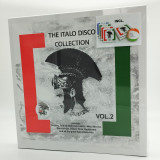
Enter the glittering world of Italo Disco with the exclusive 4LP
box set „The Italo Disco Collection Vol. 2“.
This limited edition box features four vinyl records that capture
the essence of the Italo Disco era. Discover and enjoy musical
treasures from Ken Laszlo, Miko Mission, Baby‘s Gang, and
Laserdance. „The Italo Disco Collection Vol. 2“ is not only a
musical journey through time, but also a collector‘s item for
all vinyl lovers and fans of Italo Disco. This carefully compiled
collection has been designed with great care and attention to
detail and includes a colorful beach ball as a summertime fun
maker. This box brings the best of the 80s straight into your
living room and guarantees unforgettable musical moments.
Tauchen Sie ein in die glitzernde Welt des Italo Disco mit der
exklusiven 4LP Box „The Italo Disco Collection Vol. 2“.
Diese limitierte Box enthält vier Vinyl-Schallplatten, die
die Essenz der Italo Disco Ära einfangen. Musikalische
Schätze von Ken Laszlo, Miko Mission, Baby’s Gang, und
Laserdance werden hier geborgen. „The Italo Disco Collection
Vol. 2“ ist nicht nur eine musikalische Zeitreise, sondern
auch ein Sammlerstück für alle Vinyl-Liebhaber und Fans des
Italo Disco. Diese sorgfältig zusammengestellte Kollektion,
wurde mit großer Sorgfalt und Liebe zum Detail gestaltet und
enthält als sommerlichen Spaßbereiter einen farbenfrohen
Wasserball. Diese Box bringt das Beste der 80er Jahre direkt in
Ihr Wohnzimmer und garantiert unvergessliche musikalische
Momente.
"Are You in Heaven?" was famously shouted by Roxy DJ Eddy de Clercq to the crowd at one of the very first legendary house parties in Amsterdam. This phrase not only symbolizes an iconic moment that captured the spirit of the era—it’s also the title of one of the three tracks featured here.
In 1991, inspired by the dance music craze that swept across Europe at the time, Arnoud Winkler and Jochem Peteri (who would later become the one-man supergroup Newworldaquarium) produced music that is equal parts euphoric, emotive, vital, and vibrant—youthful in spirit, naive yet clever. A European translation of a US-American art form, born from pure enthusiasm and concentrated passion for a culture that, to this day, continues to resonate universally.
Originally released on Lower East Side Records, the story told here is full of rave symbolism, after-party joy, and literal can-you-feel-it moments: rattling sub-bass, blissful pads, whispering voices, dub techniques, and subconscious peak-time signals.
Complemented by a new edit of Ulysses Horizon by Gerd Janson (alongside a revised version of the original), alongside Flowerdale Beach, and Are You in Heaven?, the music here hasn’t lost a single inch of its charm or allure. A taste of Dutch house deluxe.
Multi platinum-selling musician and multi-instrumentalist Jamie Cullum today announces The Pianoman At Christmas - The Complete Edition. Due for release on 19th November via Island Records. The deluxe album completes last year’s critically acclaimed hit album The Pianoman At Christmas Part 1, with its Second Part - featuring 11 covers of classic Christmas songs, as well as two original songs, including lead single ‘Christmas Don’t Let Me Down’, out now.
Drawing from the past and inspired by the present, The Pianoman At Christmas - The Complete Edition sees Jamie team up with London jazz innovators Kansas Smitty’s, as well as composer and producer The Vernon Spring and acclaimed LA-based jazz singer Lady Blackbird to complete a piece of work that is imbued with seasonal sophistication. Alongside his two original tracks, Jamie breathes new life into classics such as ‘Winter Wonderland’, ‘Silent Night’ and ‘Frosty The Snowman’, ranging from ‘Amazing Grace’ to ‘Man With The Bag’ and ‘Sleigh Ride’. The Complete Edition will be released on double CD and double black vinyl formats, alongside a limited run of 180G Heavyweight coloured vinyl in red and gold.
Speaking on the release, Jamie said -
“I had a huge amount of fun creating part two of TPAC. Recorded live, all in the room together - it’s the party after the big show, with friends, drinks and some of the finest musicians on planet earth.”
Released almost a year to the day before The Complete Edition is due out, The Pianoman At Christmas featured 11 original songs played by 57 of Britain’s best musicians, recorded in Abbey Road’s famous Studio 2 and produced by Greg Wells whose The Greatest Showman soundtrack spent 28 weeks at number 1. The album sold over 37,000 copies, spending 6 weeks in the album chart and peaking at number 11. In December Jamie broke the Guinness World Record for the largest music lesson ever, when he held a virtual piano lesson for 2,282 people, teaching them the carol ‘In The Bleak Midwinter’ with special guests Robbie Williams, Sigrid and Dodie.
With 10 million album sales and over 890 million streams to date, Jamie is a celebrated musician the world over with loyal fans in every corner of the globe. With a career spanning over 20 years, his legendary live shows have seen him perform and work alongside artists as diverse as Herbie Hancock, Pharrell Williams, Kendrick Lamar and IDLES - Jamie writing on the latter’s album Ultra Mono. The success of Jamie’s major label breakthrough, Twentysomething in 2003 and its follow up Catching Tales saw him nominated for a BRIT, Grammy and numerous other awards around the world. In 2020 he won an Ivor Novello Award for his track ‘Age of Anxiety’, taken from his acclaimed 9th studio album Taller. In addition to his enduringly successful recording career, Jamie has also established himself as a multi-award winning music broadcaster; his BBC Radio 2 show celebrated its 11th year on air this year.
With her debut album Black Acid Soul earning critical praise, Lady Blackbird is a revelatory new talent with music that transcends the jazz scene through which the LA-based artist is rooted. Reflecting influences as varied as Billie Holiday, Gladys Knight, Tina Turner and Chaka Khan, with critics drawing comparisons to Adele, Amy and Celeste, Lady Blackbird’s distinct and beguiling voice is not one to be missed.
UK band Kansas Smitty’s have developed a musical voice wholly unique from what’s happening around them. They are led by band leader and producer Giacomo Smith who's cinematic compositions feature on their releases, most recently 2021's acclaimed Things Happened Here for Berlin based label !K7. In 2015 they launched their own east London venue and bar, of the same name, which became one of the conception points for the current UK jazz boom.
Londoner Sam Beste aka The Vernon Spring is a polymath in music who has production, writing and performance credits as eclectic as Amy Winehouse, Matthew Herbert, Kano, Joy Crookes, Beth Orton, Blood Orange, Gabriels and MF DOOM. Since 2019 he has been making waves with solo project The Vernon Spring, which foregrounds his rare capacity to hold sophistication and simplicity in the same hands through highly intimate muted-piano compositions and improvisations.
One of Europe's most popular alternative / dark wave bands. Lebanon Hanover have over one million monthly listeners on Spotify. Following their first US tour in over a decade, Lebanon Hanover returns with a soul-stirring double A-side single release, marking their first new material since the captivating 2020 album, 'Sci-Fi Sky.' Now, the enigmatic duo of William Maybelline and Larissa Iceglass beckons listeners into unventured sonic domains, intricately weaving folk-driven acoustic dream pop with the vulnerable essence of post-punk in a contemplative exploration of life's ephemeral yet profound nature. Embarking on a Cure-like sonic voyage reminiscent of the 'Head on the Door' and the 'Kiss Me’ era, title track 'Better Than Going Under' manifests as a romantic, sombre daydream. William Maybelline's brooding baritone intertwines with sighing back vocals, narrating an ode to life's fleeting yet boundless vistas. The acoustic strums initiate a folk-driven narrative which, when coupled with a celestial choir, crafts a contemplative soundscape of cautious optimism, reminiscent of Echo and the Bunnymen or The Church.. KYIV: Bearing the name of Ukraine's capital, 'KYIV,' voiced by Larissa Iceglass, delves into a narrative reflective of the sorrow and despair entwined within war-torn regions like Ukraine and beyond. The acoustic guitar and drum machine create a Cocteau Twins' 'Treasure'-esque soundscape, evoking a melancholic yet beautiful auditory journey. Iceglass's voice, transitioning from her husky baritone to a more resigned lament, embodies a poignant reflection on the harsh realities faced by those embroiled in conflict-ridden landscapes.
* Comes with two remixes from the hugely adored Italian DJ Producer Adiel, and Ukrainian Electronic sound artist Hanna Svirska, who is newly signed to Emika Records.
* Brand new bass-heavy, moody pop songs, taking it back to her Bristolian roots: Emika delivers 4 tracks ‘Frames’ which documents her life in sound, lyrics and minor chords as she transitioned from Berlin after 17 years, to The Black Forest. Having unknowingly let the devil in the back-door, the EP tells the story of how self-taught spirituality and meditation brought no light, and a return to nature saved her. ‘Frames’ is about putting hard experiences into a frame, to respect and remember them. Emika put them here into some heavy songs.
* Emika included an instrumental and vocal acapella like in the good old days.
Kohei Matsunaga, a musician and illustrator born in Osaka in 1978, started drawing at an early age and went on to study architecture at university. He has been actively making music since 1992, with notable releases on labels such as Raster Noton, Wordsound, Mille Plateaux, PAN and Skam Records. Kohei has collaborated with many artists, including Mika Vainio, Sensational from the Jungle Brothers, Sean Booth from Autechre, Conrad Schnitzler, Merzbow, Asmus Tietchens and many more.
Keith Hudson’s Nuh Skin Up Dub is a deep, heavyweight dub album that stands as one of the most potent statements in the genre’s history. Released in 1979, this sonic masterpiece showcases Hudson’s signature dark, almost mystical production style, where heavy basslines, echo-drenched drums, and ghostly fragments of vocals swirl together in a hypnotic haze. Unlike the more polished, accessible dub records of the time, Nuh Skin Up Dub is raw, unfiltered, and experimental, pushing the boundaries of rhythm and space. Tracks like "Nuh Skin Up" and "Felt We Felt the Strain" pulse with an eerie, almost menacing energy, while Hudson’s masterful use of reverb and delay creates a soundscape that feels simultaneously expansive and claustrophobic. Often referred to as the “Dark Prince of Reggae,” Hudson had an uncanny ability to craft music that was both deeply meditative and unsettling, and Nuh Skin Up Dub is a prime example of his genius. It's a record that rewards deep listening—every spin reveals new layers of sonic detail, hidden textures, and dub wizardry. For fans of heavy, atmospheric dub, Nuh Skin Up Dub is an essential listen, a landmark recording that solidifies Keith Hudson’s status as one of the most visionary figures in reggae history.
We are proud to announce the second installment of our sub label ‘Blanc.’
With a commitment to innovation and artistic diversity, Blanc aims to build on the foundations of Dubøka giving a home for bold creativity for artists.
As promised, our roster will boast a dynamic range of sounds with each release across vinyl and digital platforms.
The second Ep is masterfully created by Silat Beksi, featuring a powerful remix from Fedo. Known for his hypnotic soundscapes and finely tuned minimal grooves, Silat Beksi delivers an extraordinary vinyl release that captures the essence of minimal house music
Released Exclusively on vinyl, digital release to follow later 2025.
Silat Beksi - Recognition EP Feat Fedo Remix DBKAB002
The next volume of the Fruit Medley series kicks off our releases for 2025!
Welcoming 4 Fraise newcomers to the bowl, this VA features an array of techy club pumpers from across the house & techno spectrum.
Heads down, hands up action throughout!
Pathagonia, the talented Italian duo of Noha & Alex Tea, have their first release on HOME//GRXWN. With their EP entitled - 'Let Me Go'. On the A-side, 'Let Me Go' delivers a hypnotic, groove-driven beat. 'Swirl' follows, with its infectious bassline and uplifting energy. On the B-side, 'Atomic' draws you in with its deep, rolling percussion, making it a staple across dancefloors. Closing the EP with 'Boys Can Cry' a high-energy final track with euphoric synths with rhythmic hooks. The EP has already had support from the likes of Enzo Siragusa, ROSSI., Chris Stussy & More.
Ben Gomori's Monologues Records imprint celebrates its first decade with a slew of activity including a party at fabric, the launch of its own sound system in the crypt of a church, the release of a digital compilation and a clutch of vinyl releases across 2025. First up, this volume digging through some of the deeper moments from their catalogue, including Laurence Guy's very first release 'Les Mur', the balmy bliss of Devante Embers' 'When You Focus On The Good The Good Gets Better', the propulsive stomp of Damian Rausch's 'Roots' and Gomori's deep 'n' smoky 'What Is Jazz?' under his G. Markus alias. Dig and ye shall find...
180 G. BLACK VINYL WITH LINER NOTES IN CREOLE, FRENCH, ENGLISH
Originally released in 1979, "Spiritual Sound" lives up to its name, a soaring, triumphant album, six tracks of spirit magic from Guadeloupe.
Telluric, intense, terribly alive, the gwoka drums of Guadeloupe carry the identity of a painful and fervent island. Marked forever by the crime of slavery, Guadeloupe's créolité cherishes the ka drums and their natural environment: the low-pitched boula drum with male goatskin, the high-pitched soloist makè drum with female goatskin, the chacha, ti bwa, triangle, calabash and other percussion instruments that surround them, and the voices - the fiery, proud, timbred, urgent voices of the gwoka.
This album is also a legend for its voices: in his then dazzling youth, singer Lukuber Séjor was one of the first gwoka artists to largely feminize the chorus of répondè, who converse with his text delivered in a straight and powerful voice.
And everything here sets new standards. In 1979, Mizik Filamonik - Spiritual Sound proclaimed a spiritual patriotism of ferocious intensity. The album by Lukuber Séjor - whose spelling alone is a battle - sets out to give Guadeloupe the intangible weapons of self-respect and self-knowledge, through a singular practice of traditional music.
The genesis of gwoka music is less straightforward than one might imagine... The drums performed the servile task of accompanying the work of slaves in the fields and during the “corvées” imposed by the administration, before being freely practiced by the common people after the abolition of 1848. At the heart of the conviviality of the Guadeloupeans furthest from the cities - geographically and socially - the gwoka drums come out for carnival, funeral wakes and neighborhood celebrations, but also during strikes, fits of anger and armed vigils of the riots and revolts that have punctuated the island's history. For generations, governors of the colony and then the prefects of the overseas department of Guadeloupe have been viewing the gwoka as a potential for turbulence and a threat to public order.
But as the Beatlesmania, “chanson engagée” and rock revolutions unfolded in Europe, young people turned to the drums of mizik a vié nèg (“bad negro music”, in Creole), which Guadeloupeans had learned to despise by following the “assimilation” process advocated by the school system and most of the political class. At the end of the sixties, in a Guadeloupe mourning the deadly repression of the May 1967 social movement, they played traditional music, refusing to wrap it up in tourist prettiness and madras folk costumes. Instinctively, they played a rough and contemporary gwoka, led by the incendiary Guy Konkèt. This was the era of decisive 45 rpm records such as Robert Loyson's Kann a la richès, which brought to light the fieriest words of union rallies.
At his home in Sainte-Anne, Lukuber Séjor played with flautist Olivier Vamur and his brother Claude Vamur, who cobbled together a drum kit from tin crockery and became, a few years later, the most influential drummer in Kassav'.
These were the years of the Bumidom program, when young Guadeloupeans were encouraged to emigrate to mainland France. At the age of twenty, Lukuber Séjor embarked on the liner Irpinia, disembarking at Le Havre and taking the train to the Gare Saint-Lazare - the route taken by thousands of young West Indians who went on to study or looked for work, all the while trying to maintain a link with their homeland. In this case, it's at the Antony university residence, where Lukuber played the drum and participated in a thousand gwoka updates and aggiornamentos, while exile reinforced the need for a spiritual link with the native land.
In 1978, Guy Konkèt played at the Salle Wagram, a historic event for West Indian music. After serving as répondè - i.e. backing vocalist - on one of his home-recorded albums, Lukuber joined his live band. Little by little, he became one of the key artists on a circuit parallel to French show business. At a student party in Caen, he met a young woman from Martinique who, at the time, was more motivated by her ambitions as a visual artist than by her vocation as a musician. Her name was Jocelyne Béroard and, a few years before she plunged into the Kassav' adventure and became the greatest West Indian singer of her generation, she designed the cover of Lukuber Séjor's LP.
This ambition was obvious and imposed its will. A more or less regular band was formed, with Roger Raspail, Rudy Mompière and Éric Danquin on ka drums, Claude Vamur on ti bwa, Olivier Vamur and Françoise Lancréot on flutes and Annick Noël on keyboards. Lukuber Séjor is set on wanting to extend the gwoka palette to other instruments, as the jazz-rock revolution opens a thousand new doors. Annick Noël will play a wide range of timbres and textures on electric piano and synthesizer. Another novelty: the répondè are two men and two women, Roger Raspail, Olivier Vamur, Françoise Lancréot and Maryann Mathéus ...
Mizik Filamonik - Spiritual Sound is a self-production in which the singer and leader sank all his savings, allowing him no more than a single day in the studio. The first side is more of a musical manifesto, with the first two tracks, Éritage and Penn é plézi, being instrumentals. The third, Son, forcefully celebrates the need for Guadeloupeans to connect with the gwoka. In fact, Jocelyne Béroard's cover shows a tambouyé in the shadow of a cloudy sky, against which a radiant sun is rising and whose light will soon flood the entire landscape. The silhouette and face of this man strongly evoke the immense Vélo, master of the ka, rejected at the time on the fringes of society.
The second side of the LP is surprising. Formally, three tracks are explicitly linked like the three parts of a triptych. Primyé voyaj evokes the appalling tribulation of Africans deported as slaves to Guadeloupe; dézyèm voyaj speaks of the Bumidom program and the economic, political and social forces driving young Guadeloupeans towards the mirage of prosperity in France; twazyèm voyaj closes the cycle with the emigrants' return from Europe after years away from their island...
This gwoka, obsessed with the need to save Guadeloupe spiritually, appeals far beyond the politicized audience. Mizik Filamonik - Spiritual Sound instantly became a classic, although Lukuber Séjor never really made a career for himself as a musician.
After all, the album was released in 1980, with no promotional resources in France or Guadeloupe - and therefore no concerts. The thirty-two-year-old author, composer and performer made his own third trip back to Guadeloupe. He set up a small woodworking business, which he lost in Hurricane Hugo in 1989. His other activity, teaching in a medical-educational institute, became the core of his professional life. He continued to be an active campaigner - a campaigner for the Creole language, a campaigner for the reawakening of identity, a campaigner for special education, a campaigner for a thousand causes that he ignited with his generous and perceptive enthusiasm, such as the defense of breadfruit fries...
The echoes of his 1979 album have not died down. Of course, the use of Penn é plézi as the theme tune for Radio Guadeloupe's funeral notices from 1980 to 1992 kept him in the collective memory, but he continues to sing and compose sporadically, as with his all-female
vocal group Vwapoulouéka... Still convinced that music is a means of liberating the spirit, he continues the journey of a young man eager to deploy the power of Creole music and language.


![Various - [R]3VOLUTION V|KT|MS VOL.3](https://www.deejay.de/images/l/6/2/1146162.jpg)