The roots of Naima Bock’s music are far reaching. Born in
Glastonbury to a Brazilian father and a Greek mother, Naima spent
her early childhood in Brazil before eventually returning to England
and various homes in South East London. This heritage combines
with more recent pursuits in Naima’s music. From the Brazilian
standards that the family listened to while driving to the beach, to the
European folk traditions she tapped into on her own, and the pursuits
that interest her today - studies in archaeology, work as a gardener,
and walking the world’s great trails - Naima’s music draws from
family, the earth and music handed down through generations.
Naima’s debut album, ‘Giant Palm’, is undoubtedly infused with the
Brazilian music of her youth and regular family visits. She found
inspiration in “the percussion, the melodies, chords - and particularly
the poetic juxtaposition of tragedy and beauty held within the lyrics.”
By the age of 15, Naima was embedded in the music scene of SouthEast London, eventually forming Goat Girl with school friends and
touring the world. After six years playing bass in Goat Girl, Naima left
the band to try something new. She set up a gardening company and
started a degree at University College London in archaeology
because, as she jokes, “I liked being near the ground.” During this
time, she wrote music, played guitar, learned violin, worked with evershifting South-London collective Broadside Hacks, and met producer
and arranger Joel Burton through Memorials of Distinction labelhead
Josh Cohen. Joel’s burgeoning interest in Western classical music,
global folk music, and experience in large scale arrangement and
orchestration informed the collaborative process that eventually
culminated in ‘Giant Palm’.
Recorded with the help of over 30 musicians (including Josh Cohen
on synth / electronics) by Dan Carey of Speedy Wunderground at his
studio space in Streatham, South-East London, and engineered by
Syd Kemp, the songs on ‘Giant Palm’ represent a snapshot of a
specific feeling, of brief moments in Naima’s life that make up a larger
whole.
The expansive yet delicate arrangements highlight Naima’s love for
the collectivist values of traditional folk music, in which songs belong
to everyone, and singing can take on countless forms without the
need to exactly replicate something. “All the other representations
that I’d had of singing felt so unattainable,” she recalls. ‘Giant Palm’
finds Naima bucking these expectations to let her unique voice and
sense of communal creativity flourish.
Suche:after work
The wiggy wanderings of Oog Bogo wind up on the same island of lost joys all at once, manufacturing a virtual jukebox of singles and side flips that won’t unplug, and just keeps reeling and raging on instead. A bright metallurgy of guitar pop, psych, post-punk and apocalypse disco embosses the sleek, multicoloured flash of ‘Plastic’.
Oog Bogo are a four-piece rock band from Los Angeles and their new album is ‘Plastic’, an electrifying set of songs and sounds that just don’t stop, working like a machine that makes joy and endless flips and repetitions, whether in front of the turntable or out in the real world.
In the past several years, Oog Bogo dropped two records that previewed this explosion in wildly divergent ways: 2019’s ‘Oogbogo’ EP, with wigged-out production, its contorted fun house mirror images pulling punk, psych and new wave in and out of focus in a chaotic procession of mutant tunes. 2021’s ‘EP2’ radiates a starkly different vibe, as chilled-out guitar-pop tunes conjure a flowing medley of plaintive echoes and atmospheres in a mellow mist of hiss.
Kevin Boog recorded these records in a largely hermetic state: at home on 4-track, playing all the parts, slowly drawing out the sounds. The songs for ‘Plastic’ were demoed this way too, as a starting point for a group interpretation - but when, for obvious reasons, logistics prevented everyone from getting in the same room to even rehearse, the planned recording session at Ty Segall’s Harmonizer Studios took on a different shape.
Starting off with only drummer Thomas Alvarez (Audacity) to accompany him, Kevin
realized that any obstacles to getting the record made were also opportunities, for
something else that was also right to happen. Rather than reach for the design of the
demos, he kept himself in the present moment, approaching every passage as fluidly
as possible, playing what he needed to play, staying open to what he needed to
know. It didn’t hurt that the laptop with all his songs crashed right after he walked into
the studio! There was no way possible but forward.
The direction was right on with the guys at Harmonizer - Ty Segall’s sense of
imagination made him the ideal production counterpart to walk together with Kevin
into this world, psyched to experiment and ready to get weird at any time. Ty and
engineer Matt Littlejohn met all requests and requirements in the form of sounds, with
gear and approaches that amazed and delighted, and an eternally ebullient spirit.
As this was Oog Bogo’s first time recording away from home, Kevin was a kid in a
candy store - where the store owner turns out to be a Wonka-esque philanthropist.
As band members Mike Kreibel (Dirty & His Fists) and Shelby Jacobson (Shannon
Lay) joined the session, there was a synchronicity and community with everyone
involved, finding an unexpected road to realizing the songs, with all the colours and
hues they added making everything pop that much harder.
Fluidity was key: ‘Plastic’’s tunes depict a polymorphic cast of characters. As in life,
they leap avidly from style to style; from pretty psych rock to new wave apocalypse
disco and harsh post punk bleakness, sometimes in a verse and a half. Corkscrewing
over and over like a riff-driven space-coaster, morphing in and out of each
successive moment with increasing momentum and gravity, ‘Plastic’ defines and
redefines Oog Bogo, with sweet tunes, barely-controlled intensity and sharp
production moves - a killer first album and an equally killer evolving state of mind.
The wiggy wanderings of Oog Bogo wind up on the same island of lost joys all at once, manufacturing a virtual jukebox of singles and side flips that won’t unplug, and just keeps reeling and raging on instead. A bright metallurgy of guitar pop, psych, post-punk and apocalypse disco embosses the sleek, multicoloured flash of ‘Plastic’.
Oog Bogo are a four-piece rock band from Los Angeles and their new album is ‘Plastic’, an electrifying set of songs and sounds that just don’t stop, working like a machine that makes joy and endless flips and repetitions, whether in front of the turntable or out in the real world.
In the past several years, Oog Bogo dropped two records that previewed this explosion in wildly divergent ways: 2019’s ‘Oogbogo’ EP, with wigged-out production, its contorted fun house mirror images pulling punk, psych and new wave in and out of focus in a chaotic procession of mutant tunes. 2021’s ‘EP2’ radiates a starkly different vibe, as chilled-out guitar-pop tunes conjure a flowing medley of plaintive echoes and atmospheres in a mellow mist of hiss.
Kevin Boog recorded these records in a largely hermetic state: at home on 4-track, playing all the parts, slowly drawing out the sounds. The songs for ‘Plastic’ were demoed this way too, as a starting point for a group interpretation - but when, for obvious reasons, logistics prevented everyone from getting in the same room to even rehearse, the planned recording session at Ty Segall’s Harmonizer Studios took on a different shape.
Starting off with only drummer Thomas Alvarez (Audacity) to accompany him, Kevin
realized that any obstacles to getting the record made were also opportunities, for
something else that was also right to happen. Rather than reach for the design of the
demos, he kept himself in the present moment, approaching every passage as fluidly
as possible, playing what he needed to play, staying open to what he needed to
know. It didn’t hurt that the laptop with all his songs crashed right after he walked into
the studio! There was no way possible but forward.
The direction was right on with the guys at Harmonizer - Ty Segall’s sense of
imagination made him the ideal production counterpart to walk together with Kevin
into this world, psyched to experiment and ready to get weird at any time. Ty and
engineer Matt Littlejohn met all requests and requirements in the form of sounds, with
gear and approaches that amazed and delighted, and an eternally ebullient spirit.
As this was Oog Bogo’s first time recording away from home, Kevin was a kid in a
candy store - where the store owner turns out to be a Wonka-esque philanthropist.
As band members Mike Kreibel (Dirty & His Fists) and Shelby Jacobson (Shannon
Lay) joined the session, there was a synchronicity and community with everyone
involved, finding an unexpected road to realizing the songs, with all the colours and
hues they added making everything pop that much harder.
Fluidity was key: ‘Plastic’’s tunes depict a polymorphic cast of characters. As in life,
they leap avidly from style to style; from pretty psych rock to new wave apocalypse
disco and harsh post punk bleakness, sometimes in a verse and a half. Corkscrewing
over and over like a riff-driven space-coaster, morphing in and out of each
successive moment with increasing momentum and gravity, ‘Plastic’ defines and
redefines Oog Bogo, with sweet tunes, barely-controlled intensity and sharp
production moves - a killer first album and an equally killer evolving state of mind.
8 years after his debut album entitled "What You Give", it's time for the Greek musician's second long player! No doubt, this is Bengoa's most mature work to date and a product of countless studio hours. Pushing his electronic sound forward, the Greek musician, dj, songwriter and label owner, delivers an outstanding 9-track LP, floating between trip hop, nu-jazz, mid and downtempo motifs. The extensive use of physical instruments like saxophone, trumpet, guitars, piano, percussion and bass add musicality and deepness to the whole record, on which Bengoa has also written most of the lyrics himself. "Music For Your Red Parts" flows like an undercurrent of nervy isolation and late night melancholy, toying with the emotional structure of it's own sound. Songs that signal something memorably, indelibly and hypnotically sexy, without talking about sex. Music that you feel - strong, soft and filled with emotion. It wants to meet you in your deepest parts. It will play games with you, fill you with sorrow, or send you into a deep reverie. out now through SAOS RECORDS.
After releasing on Atomnation's Unfold Vol. 2 last year, Berlin-based Italian NOCUI returns with more rich and uplifting grooves on his new 12” “Entrain”.
Leonardo Di Fiore (NOCUI's real name) is a Rome-born composer and a classically trained pianist who brings a performative approach to how he makes music. An early love of jazz also permeates his work and he now considers himself a "studio and sound design obsessive." That shows in the meticulously crafted, always fresh music he makes on his go-to drum machine, the Jomox Alpha Base. NOCUI is also adept at speaking through other key bits of gear such as the Roland SH101, Acidlab 303, DSI Prophet 6, and Haken Continuum Fingerboard - machines that lend his music its signature sound and have taken him to labels like Traum and Wildfire.
- 1: Say Your Goodbyes, Pt
- 2: Always The Stranger
- 3: It's Easier To Love
- 4: We Feel
- 5: Lost Player
- 6: Only A Fool
- 7: After The Stranger
- 8: Glitter Fades
- 9: About The Light That Hits The Forest Floor
- 10: Dark Nevada Dream
- 11: Say Your Goodbyes, Pt. 2
- 1: Say Your Goodbyes, Pt. Alt
- 2: Always The Stranger Alt
- 3: It's Easier To Love Alt
- 4: We Feel Alt
- 5: Lost Player Alt
- 6: Only A Fool Alt
- 7: After The Stranger Alt / Extended Version
- 8: Glitter Fades Alt
- 9: About The Light That Hits The Forest Floor Alt
- 10: Dark Nevada Dream Alt
- 11: Say Your Goodbyes, Pt. 2 Alt
- 12: Clearing Houses
- 13: Always The Stranger Raw
- 14: Lost Player Primitive
Coming 40 years after he first started performing in bands in his native North West of England, Butterfly Mind is the most surprising release yet from Tim Bowness. From the short, sharp shocks of Always The Stranger and Only A Fool to the long-form ambition of the sensuous Dark Nevada Dream, the cinematic Electro-Ballroom of Glitter Fades and the dystopian paranoia of Say Your Goodbyes Parts 1 and 2, Butterfly Mind delivers a thrilling fusion of Art Rock invention, Post-Punk energy and epic soulful ballads. Tim’s seventh solo album features the stellar rhythm section of Richard Jupp (in his first major session since leaving Elbow) and Nick Beggs alongside a spectacular guest list including Ian Anderson (Jethro Tull), Dave Formula (Magazine), Peter Hammill (Van Der Graaf Generator), Martha Goddard (The Hushtones), Gregory Spawton (Big Big Train), Mark Tranmer (The Montgolfier Brothers / GNAC), Saro Cosentino (Franco Battiato), Italian Jazz musician Nicola Alesini, US singer Devon Dunaway (Ganga), Stephen W Tayler (Kate Bush) and, marking his first studio work with Tim for nearly three decades, former No-Man violinist Ben Coleman. Produced by Tim Bowness and Brian Hulse (Plenty), the album was mixed and mastered by Steven Wilson. Available as Limited 2CD Edition (featuring alternate mixes and bonus material), and a Limited 180g LP + CD edition featuring special die-cut artwork by Carl Glover. Also available as Digital Album.
Soul icon Otis Redding made immeasurable contributions to the form. As a singer-
songwriter, producer, arranger and talent scout, Redding was responsible for some of the
music’s biggest and most lasting hits during the 1960s, though his death in an airplane crash
in 1967 brought his life and career to a tragically premature end. He was born Otis Redding
Junior in 1941 in the small town of Dawson, Georgia, the son of a sharecropper and preacher,
and moved to the city of Macon at the age of two, where he learned to sing at the Vineville
Baptist Church. After singing in the high school band, he performed weekly gospel songs on
radio station WIBB, winning local talent contests after being inspired by Little Richard and
Sam Cooke. Since his father became ill with tuberculosis, Redding began supporting the
family at the age of 15, working as a gas station attendant, a digger of water wells, and
occasionally by playing piano with pianist Gladys Williams at the Hillview Springs Social
Club. Then, in 1958, Redding had a repeat prize run at a talent contest held by broadcaster
Hamp Swain, bringing him first into a group called Pat T Cake and the Mighty Panthers, and
later into Little Richard’s band (during a time when Richard switched rock and roll for
gospel). Moving to Los Angeles in late 1960, debut single “She’s All Right” was issued on
the Trans World label (a subsidiary of Al Kavelin’s Lute Records), credited to The Shooters
featuring Otis; following the birth of their first child and his subsequent marriage to Zelma
Atwood, Redding recorded the popular “Shout Bamalam” for Macon’s Confederate Records
(who swiftly reissued it on the Orbit label since some radio stations objected to the original
label’s confederate flag logo, during a time of terrible racial segregation in the South).
Redding cut the movingly emotive “These Arms Of Mine” at Stax studios in Memphis in
1962, backed by Booker T and the MGs, which surfaced on the subsidiary Volt label in
October, reaching the charts some six months later (and eventually selling a reported 800,000
copies). Subsequent singles “What My Heart Needs” and “Pain In My Heart”/“Something Is
Worrying Me,” recorded in September 1963, formed the bulk of debut album, Pain In My
Heart, which was padded out by standard cover tunes of songs such as “I Need Your Lovin’,”
Ben E King’s “Stand By Me” and Little Richard’s “Lucille.” The album, which surfaced at
the start of 1964, reached the top 20 of the US R&B chart and also hit the Billboard Hot 100;
this edition has an alternate track listing that includes the Trans World debut single tracks
“She’s All Right” and “Getting’ Hip,” as well as “Mary Had A Little Lamb,” the B-side to
“That’s What My Heart Needs.” Carefully remastered, spinning at 45 rpm for enhanced qudio quality.
With golden voice and silver-dipped pen Grant-Lee Phillips presents
another milestone in a career brimming with the like - Little Moon is track
after track of well-anchored classic American music - rock and folk swirl
under clouds of cinematic strings for a primer on the art of the timeless
tune
His legendary well of melody is in full display on Little Moon, with even the most
lilting piano ballad standing comfortably on a thick, powerful trunk ('Older Now').
Long one of Los Angeles' most sought after songwriters, Grant-Lee meets Little
Moon with positive inspirations including the birth of his daughter Violet ('Violet')
and a creative calm that saw the songs well up organically from earlier live
collaborations with drummer Jay Bellerose, producer bassist Paul Bryan and
keyboardist Jamie Edwards. Captured live in the studio with limited overdubs, the
album keenly chronicles the sunny day feel of the songs and that ever-elusive in
the moment groove of a finely- tuned band working out equally finely- crafted.
Upon Little Moon's 2009 release, American Songwriter named it "His strongest
album ever." This limited edition pressing is on burgundy colour vinyl and limited
to 1,000 copies worldwide.
Dallas-born Roger Kynard Erickson, better known as Roky Erickson, is a legend of psychedelic music and culture. Playing piano at five years old and guitar at ten, he dropped out of high school in Austin shortly before graduating, since the school dress code demanded short hair. In 1965, his group, The Spades, made an impact with “We Sell Soul” and the following year, The 13 th Floor Elevators burst onto the scene with debut album The Psychedelic Sounds of the 13 th Floor Elevators, but the band’s non-conformist attitude and open endorsement of drugs such as marijuana and LSD put them in repeated conflict with the authorities. Then, in 1968, during a performance at the San Antonio edition of the World’s Fair, known as HemisFare, Erickson began speaking incomprehensible nonsense on stage, leading to a diagnosis of paranoid schizophrenia and confinement in a Houston psychiatric hospital, where he was forcibly given electroshock therapy. The following year, after being busted with a single joint, Erickson pleaded not guilty by means of insanity, leading to a 3-year stay in Rusk State Hospital, with further electroshock and Thorazine treatments. Following his release Erickson formed a group initially called Bleib Alien, which evidenced a more hard-rock orientation, later renamed The Aliens, though Erickson was also working with Austin’s The Explosives in the same era. Aliens material produced by Stu Cook of Creedence Clearwater Rival was issued by CBS and an independent, 415 Records. Then, in the early 1980s, Erickson became fixated with junk mail and unsolicited letters, writing to lawyers and celebrity figures on a regular basis; in 1985, solo mini-LP Clear Night For Love was produced at Music Tracks in Austin by bassist/guitarist Speedy Sparks, with former Joe “King” Carrasco and Delbert McClinton drummer, Ernie Durawa, plus Supernatural Family Band alumnus John Reed on guitar. Released by France’s New Rose label in small numbers, the release found Erickson back in semi-psychedelic/country rock mode on opening track “You Don’t Love Me Yet,” the plaintive “Starry Eyes” and the anthem-like title track, while “The Haunt” is more in swamp/horror rock vein and “Don’t Slander Me” has heavy blues leanings.
Tibor Kocsis doesn't take a minute to introduce himself on his first EP for 030303 records; he presents himself with a slap in your face from the very first second. Title track Delta Ophiuchi is heavy duty dancefloor material... reminiscing of the very best of K Alexi Shelby's early works, just a little more focused and to the point maybe - an instant rush and an instant classic! Second track Nekorb is a little sweeter and more for the after hours. The remaining 3 tracks keep that same flow; a wonderful blend of Chicago, psychedelic British acid house and electronic minimal wave.
TAF KIF Records present their first release: Fools Gold Vol. I, a four track compilation with an eclectic selection of dancefloor-ready cuts for this summer.
Studio Barnhus' head honcho, Axel Boman, starts off the A side with a catchy bassline, hypnotic and nostalgic synths and ring modulated guitars. After being road tested for years, we are super happy to finally get to release his song "Oasis", a surfy summer heater in all its glory.
A2 comes from TAF KIF's own Velmondo, known for his work on Hivern Discs and Compost Records. He blesses us with "Echo Welt", a leftfield psychedelic excursion filled with Balearic vibes, krauty bubblegum beats and exotic percussion. What else could you ask for?
TAF KIF's MLiR, a usual name for those familiarised with the Studio Barnhus' catalogue, open the flip side with the mega sexy "It's Baby Time". Smooth operators in the house, baby!
Last but not least, Lusille delivers an afro fire starter called "Une Long Route", a secret weapon from the likes of Hunee among others. Very limited edition with just a few hundreds of copies, don't sleep!
Cardiff alternative rock duo James and the Cold Gun are pleased to announce the details of their debut EP False Start, set for release on April 29th 2022 through Gallows' label Venn Records and Seattle-based label Loosegroove Records, owned by Stone Gossard (Pearl Jam) & Regan Hagar (Malfunkshun, Brad, Satchel). False Start is available to digitally pre-order now, with a vinyl release scheduled for the summer: https://orcd.co/falsestartep Speaking of the new partnership between the band and Loosegroove Records, the influential indie label that was founded back in 1994, which has issued records from acts such as Critters Buggin, Malfunkshun, Weapon of Choice and Devilhead, and was the launching point for Queens of the Stone Age’s debut album in 1998, Stone Gossard said: “I heard James and The Cold Gun’s ‘Long Way Home’ on KEXP last year and thought this band fricken rocks! Who are these upstarts?! "This new track, ‘It's Mutual’ takes it to another level. Totally unhinged and letting it all hang out. Loosegroove Records is thrilled to be working with James and the Cold Gun on this new EP with a future full-length coming soon.” On 'It's Mutual', James Joseph said: "It's a song that embodies the feeling that you get when you hit a stalemate in a relationship, that feeling when you're both sat together but neither person is able to speak. We've all had those awkward silent car journeys where there has been an argument or something isn't right but we can't even chat about it. Next time you have an awkward car journey, grab the aux and chuck some Cold Gun on." James Biss adds, "We wrote these songs for False Start in our flat in 2020 during the pandemic and our first time playing them live as a band was to record them. It was pretty mad recording live around our drummer, hearing the songs played loud with real drums for the first time after months of being stuck inside writing them on the computer. Recording with Adrian Bushby was a dream though, he was bopping around the control room and egging us on to play louder and harder, he's technically the first person we ever played in front of." Taken from the EP, lead single 'It's Mutual' is out now: https://orcd.co/itsmutual The band have rapidly been building support from some of rock’s most respected taste-makers, including Kerrang! Magazine, Rock Sound, Punktastic, Dead Press, Running Punks, BBC Introducing Wales, Deezer’s Hot New Rock playlist, Triple J’s Short Fast Loud, Apple Music’s New In Rock, Beez at Mosh Talks on Twitch, Alex Baker at Kerrang! Radio, John Kennedy at Radio X, and Daniel P Carter on the BBC Radio One Rock Show.
THE FULL 'GOTHIC EP' PRESENTED ON THE VINYL FORMAT FOR THE
FIRST TIME, CONTAINING A COMBINATION OF SPECIAL REMIXES &
ALTERNATE STUDIO VERSIONS OF PARADISE LOST CLASSICS
Creators, pioneers & purveyors of the whole Gothic Doom Metal scene which
subsequently came to prominence in the early 90's, Britain's Paradise Lost rose
from humble Northern roots to become one of the UK's leading artists in the
metal genre throughout the decade & beyond, remaining as relevant & revered as
ever to this day after a career spanning over three decades. The band's first two
albums were released on Peaceville, in the shape of 1990's influential deathly
debut 'Lost Paradise', followed up by the more atmosphere- focussed genre
classic, 'Gothic' in 1991. 'Gothic EP' was originally released in 1994 & combined
the tracks from the 1990 'In Dub' two track 12" release bookended by alternate
studio remixes from the 'Gothic' studio album. The two tracks which formerly
featured on the studio debut received extensive remixing & all new arrangements
in the shape of 'Rotting Misery (Doom Dub)' & 'Breeding Fear (Demolition Dub)'.
This edition of 'Gothic EP' is presented on black vinyl with design-work from the
original 1994 CD release.
Cosmic jazz from the Canary Islands. After a few years in London, where he worked with Archie Shepp and recorded a sought-after album for the famed library music label De Wolfe, Argentinian pianist Luis Vecchio settled in the island of Gran Canaria following advice from a superior entity from outer space. Vecchio subsequently opened the first jazz school in the Canary Islands, effectively planting the seeds of jazz in the archipelago.
In Contactos, recorded in 1978 in the Mayra studio owned by Ramiro González, Vecchio gives a free jazz account (with a dash of funky jazz rock) of his contacts with Adionesis, who delivers his ominous message upon the human race on side B of the album. Fellow Argentinean Fernando Bermúdez on percussion and Japanese bass player Yoichi Yahiro complete the line-up of Contactos.
Winston 'Niney' Holmes AKA The Observer, must be one of Reggaes finest Roots Rebel producers. Capable of making some of the heaviest, innovative music, not only in sound but also in the Cultural/Political sense.
Born George Boswell, Montego Bay, Jamaica 1951, and name checked 'Niney' due to losing a thumb in a workshop accident. He began his career in music by organising bands to play at school dances. But his first steps learning the musical ropes came working under the tutelage of producer Bunny Lee around 1967, organising sessions for Bunny's stable of artists. He moved on to work alongside Lee Perry at Joe Gibb's 'Amalgamated' label setup, where on Lee Perry's leaving in 1969 to start his own 'Upsetter' label, Niney became chief engineer.
Inspired by Perry's success it wasn't long before his own 'Destroyer' label was under way. It was 1970, and his first production entitled 'Mr Brown' by DJ's Dennis Alcapone and Lizzy, proved to be a minor hit, but his own 'Blood and Fire' track released in December of that year would become a major hit. After initial problems with it's likeness to Bob Marley's track ' Duppy Conqueror' being ironed out, it's reissue on his now named 'Observer' label, saw it go on to become, Jamaican Record of the Year 1971. Far out selling Bob Marley's track to the tune of 30,000 copies in Jamaica alone. A roots classic...
Niney's reputation for building great roots tracks, was furthered with more success working with singer Max Romeo. Issuing cuts such as 'Beard Man Feast', the great 'Reggae Matic' and 'Aily Ailaloo' and renewing his friendship with Lee Perry on the track 'Rasta Band Wagon', who's production credit read Perry, Niney, Maxie. In 1973, Niney began working with Dennis Brown, who was already an established star from an early age, they found a chemistry that went on to produce some of Dennis' finest work. The 1973 hit 'Westbound Train' was followed in 1974 by 'Cassandra', 'I am the Conqueror' and the timeless 'No More Shall I rOam'. Another important connection around this time was the great King Tubby who Niney would take his tapes along to and even record some of his tracks at Tubby's house, 18 Drummlie Avenue, Kingston, which doubles as his Studio of Dub.
It's these tracks that we are concentrating on here. Tubby would strip the tracks back to the bone and rebuild then sometimes leaving off the hook line. Whether that be the horn line or keyboard line and adding effects over the top that could disguise the cut even more. Even Niney stating that when Tubby had finished with a cut, he found it hard to recognise the track himself. Its these tracks as dub plate specials that Tubby would play on his Hometown HI-FI Sound System and it's these such tracks that we have compiled for this release. Dub Plated that have not seen the light of day since tragically the great Osborne Ruddock AKA King Tubby was gunned won and murdered on the 06th December 1989. For a few dollars and a gold chain, reggae music has lost one of it's most creative, inventive forces.
Niney also cut tracks with many other Reggae giants such as Gregory Issacs, Michael Rose, Junior Delgado, Horace Andy and Delroy Wilson to name but a few. As in house producer at the legendry Channel Studios and supervising sessions at Dynamic and Randy's Studio 17, his magic touched many. DJ, Arranger, Producer, his Roots Rebel music still stands the test of time.
Hope you enjoy the set.....
“I’m closing a chapter in my life,” Barbie Bertisch says to me from a park bench in Greenpoint, “I spent the last four years working towards gaining confidence around my ideas and my creative perspective. This feels like a culmination of that process” The “this,” in question is Bertisch’s debut record Prelude, a collection of eleven songs that chronicle 5 years of Bertisch’s life. The legendary musician Anna Domino describes the record best: “Prelude is a record of layers and depths. The melting phases and soaring distances.”
Raised in Buenos Aires and Miami, Bertisch has called New York home for most of her adult life. When she started piecing together Prelude, she was in her Brooklyn kitchen. It was early quarantine. Stuck at home instead of DJing at clubs, she found the space to parse through the archives. What she previously considered unworthy of attention in the era of distractions, finally made sense as a whole once all the noise was turned down. Compiling a list of songs in various states of completion, Bertisch dreamed up an album, a chronicle in growth and healing frustrations of the past, an honest account of someone trying to find her own voice. That in and of itself was a journey. It took years for Bertisch to accept that she was an artist. “I felt like I was surrounded by men who ruled every space. I constantly felt like I had to ask permission to enter, always around bands but never the girl in the band” she says.
Prelude is an introspective record. It explores all of the valences of being and feeling. Some songs are chaotic and choppy. Others are soft and searching. There is rage and innocence, and moments of forced stillness, like capturing the aftermath of panic attacks, as in “After The Storm”. Bertisch also focuses on rhythm, bass guitar being her main instrument, and no stranger to the power of the beat. The record also draws on influences as varied as Kaitlyn Aurelia Smith, Cocteau Twins, Berlin School, and pioneering producer François Kevorkian. Both sonically and conceptually, Prelude is a portrait of who Bertisch is as a person.“Is This What You Wanted?” is fiery, a pointed provocation to domineering figures from her past. It’s full of strobing, strident synths, and heady lines of bass. It gives off the same vibe as a fire alarm, as a big room dance track that subverts your expectations of what it means to dance in a sea of bodies. “28,” the record’s opening track is more peaceful. It’s all languid keyboard arpeggios with the occasional flourish of a cascading synth effect.
Since most of the songs already existed in some form or another, Bertisch’s job on Prelude was to refine and reimagine music that had previously been private. She spent time rearranging, rewriting, adding elements newly available to her, such as the saxophone, and pushing the limits of the rough mixes to mold the universe she envisioned. Along the way, Bertisch grew more excited about her abilities as a musician. The resulting record is one that is inherently confident.
Prelude is also a homespun release. It’s coming out on Bertisch’s own label, Love Injection Records, which she runs with her partner Paul Raffaele. The two also DJ and make zines under the name, which started in 2015. Love Injection is a love letter to New York. Prelude is a word of encouragement to those struggling with self-actualization. The record was mixed by Justin Van Der Volgen and mastered by Walter Coelho. Love Injection Records holds the remix tradition in high regard, and they’ve enlisted reworks by some of Barbie’s favorite producers. It’s all a labor of love for Bertisch. Prelude is her: Barbie the musician.
©℗ Love Injection Records 2022
Höga Nord Rekords kindly welcomes Teecwa back to the label, following up his last full length-album “Beyond the Altai” with “Elysian on Moon Lake”. He is still exploring the intersections between house, electro, techno and dub and once again he manages to harness the analogue electronics in his machines to produce modern psychedelia.
“Elysian On Moon Lake” is rawer, less airy and not as sparkling as his last album. This is a tighter, and slightly darker experience than Teecwa’s previous work, maybe caused by being in quarantine for extensive time during production, letting some of the dreaminess aside for the harsher reality in a pandemic world. Still, you get a mind-altering experience in a lot of tracks since the album starts off in a lighter tone than how it later develops. Switching from the A- to the B-side works as a rite of passage going from dusk to night; the sun rays through the blinders are replaced by neon light dancing on the walls and ceiling.
Regarding the dramaturgy of “Elysian On Moon Lake”, this album has movielike qualities; a well-directed piece from the opening impact and setup through the confrontational part where intensity builds up to the climax in “Hythmdoser” to the cooling down effect of the peaceful closer “Celestial Trails”. The trip eventually ends up in a safe and happy place after the cathartic finale.
This is not a just collection of songs, this is an album made to experience in full length without interruptions.
On May 20th On Rotation returns for their first VA release - Genetic Memories Vol. 1.
Anderson opens the release with the mystical ‘Polymorphic Magic’ - a low-slung builder combining deep synths with sampled instrumentation.
“I’m a huge fan of self resonating / overtone instruments so using the Fujara was a no brainer. A naturally psychedelic sounding instrument, I wanted to accompany the flutey pipe with a deeper and low-mid tempo chug.” - Anderson
Next up is Musty Head Records main man Jamie Leather - combining the tight drums and skilful melodic work of his previous releases with all the influences we love, ‘Discovery’ is sure to get any party going.
Leading the B-Side of the record is Ed Hodge's ‘Atreides’ - a tough yet playful banger drawing influences from across the spectrum of UK music. Gun fingers guaranteed!
“It’s probably the fastest, rowdiest track I’ve made under the Ed Hodge moniker and pulls influences from house, trance and speed garage.” - Ed
Closing the release, we speed things up and travel deep into the past with Phazma's ‘Arrakeen’. Featuring ethereal synths, driving rhythms and beefy low end, this floaty number works just as well at home as in the club - a perfect way to round off the EP!
“After some help from my musical peers and some heavy inspiration from the release of the new Dune movie, I managed to come up with something that I’m pretty stoked with!.” - Phazma
Freestyle continues with their drive to unearth rare and classic UK funk, soul & boogie records with a reissue of a formerly white label-only, rare-as-hens-teeth debut 12" by UK soul icon Rick Clarke from way back in 1981.
Sharing the same line-up of performers as the eponymous group Potion (Rick Clarke, Carlton White on bass & Everton McCalla, formerly of Light of the World and later Freeez, on drums) though credited on the OG press as Rick Clarke alone, this 12" came out originally in the same year as the also sought after Potion 12" "Catch The Feelin' (Showstopper)" - a year before we would see Rick & Everton release the classic british electro funk of "Magic" as Side On (with Peter Mass) on Beggars Banquet.
This is a classic slice of British disco funk, showcasing an early vocal talent that would go on to become a key feature of the late 80s UK soul scene, alongside a tight-as rhythm section. The subtly dubbed-out instrumental mix is a real treat too, bringing those synth flourishes and soaring horns to the fore and letting us hear Carlton's bass work wonders unencumbered.
After an initial link up last summer, Altrimenti Records present four more remixes of cult Italian synth maestros Cabaret Du Ciel. Once again the focus is on experimentation, testing unusual crossovers between artists, eras and styles in pursuit of compelling new sounds.
The results across all four of these versions are distinct from each other, and distinct from wider trends in dance music.
First up, Benedek approaches 'Great Plains' as a low-tempo space-boogie excursion. Following in the wake of his releases on Leaving Records, L.I.E.S. and People's Potential Unlimited, the LA-based artist lays down thick slabs of Moog while retaining the ethereal swirl of the source material.
Rome's L.U.C.A. (aka Francesco De Bellis) has established his new wave-inspired sound on his own Edizioni Mondo label, not to mention working in other projects such as MAT101 and Jollymusic, and he brings a sprightly, motorik energy to 'Climatic Variation'.
Lorenzo Fortino's 'Suspacid Revisitation' version of 'Lakota' is aqueous and psychedelic, but remains elegant and understated in its execution. The emergent producer has already released on Wo-Land and most recently Miniera, and this remix ably embodies the entrancing qualities inherent in his sound.
The remix package concludes with a playful, leftfield electro diversion from elusive Montreal-based producers Sentena. Hailing from an emergent scene orbiting the Doo label and projects like SnP 500 and Fashion, their crooked take on machine music perfectly meets the adventurous aims of Altrimenti in testing out crossovers of styles and creative processes.
‘Bye Bye’ is a three-track offering from Philadelphia-based
sextet Blood, that rarely stays put in one style for long.
All three songs were recorded by the band throughout the
pandemic, providing a uniting force whilst touring remained
impossible.
The tracks are a testament to the unforgiving and rewarding
process of self-recording. The band found great relief in
finally having the time to flesh out an experimental
atmosphere without the constraint of paid studio time.
Blood are proud of the work they’ve made, but it is
imperative to mention that all three tracks were brought to life
in a way not formerly thought possible, by the mixing
brilliance of Nancy Conforti.
‘Money Worries’ finds Blood slingshotted over an open letter
to their landlord. What starts as a clear threat to an obvious
albeit deserving villain, soon caves into an acoustic respite,
in which the nightmare of financial ruin becomes lullaby.
Blood began as a solo project of current lead singer Tim
O’Brien in the winter of 2017. After going through several
line-up changes throughout 2018, the current iteration began
making waves in the bijou punk scene of Austin. They were
considered “a live staple in their own prospective scene” and
“one of Austin’s buzziest new acts” by press nationally and
locally.
After twice touring the US, Blood were poised for a big 2020
when plans were altered drastically by the pandemic. They
then self-released their debut EP, ‘Why Wait Til’ 55, We Might
Not Even Be Alive’, in April of that year.
In 2021, the sextet made a move to West Philadelphia and
began recording their upcoming release, ‘Bye Bye’, while
also playing shows throughout the North Eastern United
States. At this time, the group live in a seven-bedroom house
with a converted basement for recording and rehearsing.
Canadian songwriter and producer Jeremy Haywood-Smith needed an escape from his state of mourning when he began working on Slingshot, his most recent LP as JayWood. After the loss of his mother in 2019, and a global standstill with multiple social crises throughout 2020, Haywood-Smith yearned for some forward momentum. "The idea of looking back to go forward became a really big thing for me _ hence the title, Slingshot." Feeling disconnected from his past and ancestry after the death of a parent, Haywood-Smith made a conscious effort to better understand his identity and unique Black experience living in the predominantly white province of Manitoba. Merging fantasy scenarios, personal anecdotes, and infectious pop and dance instrumentals, Slingshot is a self-portrait of JayWood at his surface and his depths. Musically, Slingshot reaches into sounds and styles Haywood-Smith has continued to explore throughout his catalog. "I think I made a really big deal to not pigeonhole myself," he explains. "Whatever is inspiring me at one point will work it's way into whatever I'm creating." Slingshot is an amalgamation of Haywood-Smith's many musical sensibilities, achieved with help from a crew of talented peers. Haywood-Smith wrote and performed a bulk of the track's instrumentations, but the LP has notable appearances from Canadian contemporaries Ami Cheon (on "Just Sayin") and Mckinley Dixon (on "Shine.") The album's penultimate track, "Thank You," was co-produced with Jacob Portrait of Unknown Mortal Orchestra. The song brings JayWood's sound full circle, offering something reminiscent of Haywood-Smith's earliest recordings, while flaunting that "The best is yet to come."
Veyl is pleased to welcome Marco Freivogel’s Prequel Tapes for an immense 8 song release, 'The Golden Cage'. Completing an album cycle of themes and exploration which began with 2015’s 'Inner Systems', 'The Golden Cage' is perhaps Prequel Tapes’ most diverse and expansive work - utilising the artist’s own vocals for the first time and evolving his production and sound to new, uncharted dimensions.
Working off the trauma of his father’s suicide, 'The Golden Cage' was spawned from a hyper-realistic dream experience which revealed the artist’s path, catalysing new productions and techniques. The result is a striking work of unconventional electronics that journeys through rhythms, atmospheres and experimentations. A true narrative of a continuously challenging personal journey Beginning with the tension-building, free flow of 'My Turn', we then delve into grief and anger with 'I Hate You', which transforms into the pulsating tempos of 'Stranger or Lover'. The glistening nostalgia of 'Last Things' marks the halfway point before grappling with the heavy introversion of 'Alone' and devious energy of 'Mind Corner'. Nearing the end of our trip, 'Without Remission' uncovers the most dance floor tuned
piece while finally the title track closes things out with an energy that will linger long after you’ve listened.
After the blackest night comes the most radiant dawn; the spark of life illuminates all that which was swallowed by shadows. "Fäghring" bears the gift of rebirth - both in nature and for Swedish folk metal band Bhleg. The fourth and closing part of the album tetralogy "Ár" is the most ambitious Bhleg recording to date. Its metal parts are saturated with both primal ferocity and majestic atmosphere. The ambient interludes from their early works are still here, but now conveyed mostly through analogue recordings.
The sweeping, dreamy soundscapes are enhanced by a slew of unorthodox instruments, courtesy of S - who performs not only guitars and bass, but also lyre, hurdy-gurdy, mouth harp, keyboards, bullroarer, birch trumpet, as well as percussion such as frame drums, birch sticks, and stones. Besides the characteristic voice of Bhleg vocalist and lyricist L, "Fäghring" features various guest appearances with a range of singing styles rooted in Scandinavian folk-tradition such as Andreas Pettersson from Saiva, Êlea of Noêta, and Swedish author Lars Magnar Enoksen.
"Fäghring" will be released by Nordvis Produktion on April 1, 2022. Tracked and mixed using the band's own recording setup, Studio Asu. Mastered by Tore Stjerna at Necromorbus Studios. Both the CD and LP booklets have received a lot of attention, consisting entirely of custom photography and illustrations.
Sound Like: Grift, Ulver (early), Burzum, Panphage, Fluisteraars, Djevel, Skogen
For their second installment, the Chateau Chepere crew brings on board legendary producer Stephan Laubner under his STL moniker, with four time warping pieces of music. With his distinctive and intricate sonic palette, Laubner extracts from his hardware different musical colors and shapes to produce singular atmospheres. Opening up the EP is Fly Fly, an epic 11 min minimal house trip full of tension and excitement, followed by Eargrind, an eerie, laid back Detroit leaning ballad. On the flip is Light Up, a spaced out, playful and bittersweet number that will revitalize any hazy after-hours dancefloor. Closing up the EP is Unlike Dislike, a quirky, jacking and mischievous techno workout for the packed club. This diverse ep will pull the listeners and dancers into Laubner's multifaceted, low key but captivating universe.
After a small nap, Tokyo’s finest Studio Mule is back on the scene, bringing the world some deeply composed guitar music from Japan, crafted by Shin Sasakubo.
Since almost 20 years the guitarist is specialized in classic and contemporary Andean and Peruvian music. a knowledge that he deepened through a three-year stint in Peru between 2004 and 2007.
During his time in Latin America, he played live in Argentina, Chile, or Bolivia and researched in the works of Peruvian novelist, poet, and anthropologist José María Ar-Guedas, as Shin Sasakubo’s take on art is not one-dimensional.
He also loves movies, painting, photography, writing, and theater - artforms that con-stantly influence his music on many different layers. since his return to his hometown Chichibu City in the japanese Saitama Prefecture, he launched the "Chichibu Avant-Garde School”, a college that looks through art and lectures on the Chichibu region, and his en-vironmental and folkloristic history.
As sincerely driven composer, he released three guitar leaning albums in the past ten years. his latest sensation “Chichibu”, originally only released in Japan, now travels the globe via Studio Mule, making his fantastique listening voyage available for all those souls that seek joy through the sound of guitar strings.
After her stunning collaboration with Jim O’Rourke (Le Piano Englouti, BT055), Brunhild Ferrari returns to Black Truffle with Stürmische Ruhe, her first duo with Christoph Heemann. A legendary figure in underground music, Heemann has quietly produced a unique body of work since his beginnings with the absurdist cutups of H.N.A.S. in the mid-1980, including collaborations with Merzbow, Organum and Nurse With Wound, the eerie psychedelia of Mirror (with Andrew Chalk), In Camera (with Timo van Lujik) and Plastic Palace People (with Jim O’Rourke), and the precise cinema pour l’oreille constructions of his solo works. Created together in Ferrari’s Parisian studio (once shared with Luc) between 2011 and 2014, Stürmische Ruhe is a single half-hour piece that folds rain and storm recordings into a intricately woven fabric of haunted electronics, unexpected edits and disorienting processing. Banging with the jarring thump of a slamming door (an element that will reappear periodically throughout the piece as a kind of punctuation mark), it is immediately obvious that concrete sound is used here in a free, poetic way outside of the strict confines of documentary field recording. The wind captured by Ferrari’s microphone roars and whistles, accompanied by thick clusters of wavering tones whose unpredictable rises and falls in volumes are synchronised with the bumping and thudding of windows and doors. At some points the microphone sound melts into a wavering low-bit digital smear before fanning out into broad, atmospheric depths. The cinema for the ear constructed here suggests not linear narrative or documentary, but an organic flow of cross-fades, double-exposures and abrupt cuts, a free-associative dream in which wind and water take on mythical characteristics. Throughout the piece's second half, layers of synthetic floating tones and pinging upward glissandi negotiate a constantly shifting balance with wind-borne whispers and rustles, at times dropping to silence, at others rising up with elemental force. As Ferrari explains in her liner notes, Stürmische Ruhe is a meeting of ‘completely opposite sound worlds’ in which ‘almost-violence’ is joined with a ‘reconciling harmony’. Reaffirming the infinite possibilities of the musique concrète tradition while avoiding its academic tropes, Stürmische Ruhe is accompanied by tri-lingual liner notes from Brunhild Ferrari and arrives in a sleeve graced with the beautiful art informel paintings of her father, Wolfgang Meyer Tomin. Cut at 45rpm for maximum fidelity.
Well, sometimes the mountain goes to Mehemet, not the usual other way round. After years spent chasing soul Artists on the other side of the world we managed to find one right here in Rome, at the heart of our beloved boot-shaped peninsula. And boy what an Artist! Just a few bars into "Let You In" and that Warren-G style flavours back to my ears like if it still was a saturday night in 1994 and we were packing 12" and heading to dj at our regular venue up north-east, the Rototom. A few bars in and soon as I hear the chorus it instantly becomes a Tesla Groove release. Like many a true Soul singers, the amazing Fatimah Provillon (a Newark, New Jersey native) started her musical career singing in churches at the early age of eight. She would later hone her singing skills in various choirs where she was both lead vocalist and choir member. As a teen she fell in love with hiphop music and began writing songs and performing in talent shows. As a songwriter she prefers to mix her soul and hiphop roots to speak on topics ranging from heartbreak to consumerism. As a singer, her biggest influences include Gladys Knight, Sade, Patsy Cline, Lauryn Hill, Wu Tang Clan, and Nas. Fatimah is currently living and working in Europe with Rome, Italy, as her base as she tours performing live concerts and collaborating with deejays in house music productions, entering now our catalogue as a true headliner. Enjoy Mrs. Provillon folks, you'll hear her name more and more in the future!
On this anniversary release, Lilies invites DJ Ali (Al Gharib / Falling Apart / Mutual Pleasure) for two heavyweight tracks with his pedal to the metal signature sound.
On the B-side a production dialogue / live recording takes place between Gothenburgers Enmetertre (founder of Jens Records / GBG Wax Trax) and DJ Lily, who release their first song together after their joint vinyl in 2018 (BRORX1/JENS009). The 909 on the track is actually Ace Of Base's old workhorse! The second track on the B-side is presented by DJ Lily who brings out "Brukstechno" in 150 bpm.
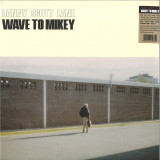
Wave to Mikey, the fourth album from the Los Angeles-based actor, musician and photographer Danny Lane is a nocturnal, neon-lit ode to the friendships that shape us. “I made this album for my friend Mikey from back home,” Danny explains. “We were pretty much inseparable for a large part of our lives, and our musical and social minds were always in sync in a special way. Then with age, we drifted apart, especially since I moved to Los Angeles. This album is just a little wave hello to an old friend and a kindred spirit.”
Equal parts avant-garde composition, instrumental city-pop, ambient, Kankyō Ongaku (environmental music) and Fourth World music, Wave to Mikey is an impressionistic and reflective cycle of eleven richly detailed memory portraits. Throughout the album, the influence of Jon Hassell, Arthur Russell, Hiroshi Yoshimura and Yellow Magic Orchestra hangs in the air like late-night mist, adding character but never overshadowing the rhythmic ambience of Danny’s musical visions.
Wave To Mikey began as a series of sketches on analog synthesisers, guitar, sample and found percussion sketches, initially recorded in Danny’s home studio. Once he’d located the vibe, Danny called on his friends E Talley II, Solange collaborator John Carroll Kirby and Destroyer session musician Joseph Shabason, who respectively added flute, spiritual synth textures and saxophone to the record.
For Glossy Mistakes founder Mario G.R., who originally discovered Danny through his photography, Wave To Mikey captures a vivid feeling of melancholy and peace. “He's able to encapsulate emotions in a very straightforward way, either in his portrait or songs,” Mario says. “I think that's a kind of virtue or skill given to talented artists, no matter the field.”
Born and raised in Staten Island, New York, Danny began playing music with his friends when he was thirteen, before putting that passion on pause to study Fine Arts (Theatre) at Rider University in Lawrence Township in pursuit of an acting career. Acting led him to photography, after playing a photographer in a film, he was inspired to pursue the medium. Danny began shooting photos on film for magazines and lifestyle brands, spent a stint living in New York’s Chinatown neighbourhood, and eventually relocated to Los Angeles in 2017.
Four years ago, Danny started recording and releasing music under his own name, leading to the trilogy of releases that preceded Wave To Mikey, How To Empty A Cup (2019), Memory Record (2019) and CAPUT (2021). Over the course of these releases, he’s revealed himself to be a sophisticated composer and producer with a studied ear from years spent digging through record bins for ambient, experimental, new age, jazz and electronica records from around the globe, with a particular emphasis on Japan.
“Music is something that’s always been involuntary for me,” Danny reflects. “It’s unconditional, always there. It’s something I just have to do. I’ve taken breaks and it’s always gloomy when I’m not playing. I just want to get better and better and understand more and more.”
Here at Glossy Mistakes, Wave To Mikey marks our second contemporary album release, following on from Evenings by Japanese composer Metoronori. We’re proud to be able to present Danny, Metoronori and other modern musicians' work alongside reissues of classic works from Stevia aka Susumu Yokota, Akira Ito, Yuji Toriyama & Ken Morimura, and Takashi Kokubo.
Mastered by Damian Schwartz, Wave To Mikey will be released on Vinyl LP Glossy Mistakes on June 27 2022. Besides the regular black vinyl, a limited clear vinyl will be available in an edition of 100 copies. Both editions come packaged with original cover art photography shot by Danny.
- A1: Highway
- A2: Careful Sam
- A3: Timothy Monday
- A4: Cd
- A5: The Minstrel
- B1: Fantasy
- B2: T2
This is the "lost" second album by hard-prog band T.2., featuring demos recorded at Decca Studios by the original line-up in 1970, just after the release of their debut masterpiece It'll All Work Out In Boomland.
Known also as T.2. and Fantasy, 1970 shows T.2. at their rawest, featuring the explosive guitar of KEITH CROSS, the powerful drumming and cool vocals of PETER DUNTON and the fantastic bass playing of BERNIE JINKS.
*Hard cardboard sleeve
*Includes insert with liner notes & photos
Denver-based Seafoam (Brian Cavender) is by far the most prolific of the talented Cavender brothers, but he has remained elusive for his 2+ decades-long career in deep funk. After releasing a one-off 12-inch in 1999 on a small Denver label, Seafoam quickly found his way to the Guidance family by way of gatherings at Miami's Winter Music Conference. A string of three twelves on Guidance from 2000 to 2003 cemented his legacy early in his career, however, having never quite reached the same heights as some of the Guidance greats, Seafoam's output mysteriously declined around the time of the label's demise. New releases dried up until the formative reissue campaign of Paris-based Rue De Plaisance in 2017, which culminated in the essential Collected Works 1999-2005 double LP. The flood gates opened, and a whole new generation of diggers and labels turned to his sound. And Seafoam, seemingly untouched by the passage of time, hunkered down in the studio with a steady release schedule-a new lease on life for the occult deep house assassin.
An absolutely legendary album from Lebanon by Issam Hajali’s group Ferkat Al Ard, “Oghneya” stands out as one of the great musical gems of the Arab world. A groundbreaking release from 1978 that represents the meeting point of Arab, jazz, folk and Brazilian styles with the talent of Ziad Rahbani, who did the albums arrangements. Filled with a variety of sounds and genres, from Baroque Pop to Psych-Folk to flashes of Bossa Nova, Tropicalia and MPB, “Oghneya” is like if Arthur Verocai took a trip to Beirut in the 70’s to record an album.
In 2015 we heard Ferkat Al Ard’s music for the first time, a Lebanese trio compromised of Issam Hajali, Toufic Farroukh and Elia Saba. It was a stunningly unique release that blends traditional Arabic elements, jazz and Brazilian rhythms hand in hand with poetic-yet-politically engaged lyrics. The band was active in the left-wing movement of Lebanon of the time and they communicated their political ideas candidly through their songwriting.
In our mind the idea was to see whether Issam was interested in re-releasing “Oghneya.” He was not opposed to it, but also made it clear that it was not his priority for a first project. He suggested we start with his first album, before Ferkat Al Ard was formed, “Mouasalat Ila Jacad El Ard,” which was recorded in 1977 in Paris together with his friend Roger Fakhr (whose work we have been privileged to re-release in the meantime as well.) “Mouasalat Ila Jacad El Ard” is melancholic, stripped-down, guitar-based folk intertwined with jazz-fused breaks, and the unique sound of the santour glistens through. While the music is very accessible, some song structures are rather atypical, neglecting common patterns of verse, hook, verse, hook. The lyrics mostly trace back to the poetic work of Palestinian author Samih El Kasem, with one song also written by Issam, who composed the music for the whole album.
We re-released Issam’s “Mouasalat Ila Jacad El Ard” in 2019 to a great reception, with positive reviews all over the place and an ongoing appreciation for the album. This meant it was time for us to undertake an “Oghneya” re-release again!
If you compare “Mouasalat Ila Jacad El Ard” and “Oghneya,” one apparent distinction is the strong Brazilian influence in the music. Issam Hajali explained that you can already hear traces of this influence on his debut, but it’s “Oghneya” where this musical relationship really peaks. Lebanon and Brazil have had a strong connection for nearly a century due to the continuous flow of immigrants from one country to the other. Today, Brazil has the largest Lebanese diaspora in the world, the “Brasilibanês”. The migratory route was not a one-way street, however, and some Lebanese returned to their home country, taking recordings of the music they learned to love in Brazil with them. They were followed by Brazilian musicians who visited primarily Beirut during the 1960’s and the first half of the 1970’s, just like many other musicians from around the world. In these years between the independence and the beginning of the civil war, Beirut became even more of a cultural center and regional hub than it already was.
Bossa Nova, at that time, was one of the defining sounds of Brazilian popular music. Issam Hajali remembers hearing it at a bar in Beirut’s Hamra district in 1974, which hosted musicians from Brazil playing the occasional gig. When Issam had returned from Paris in 1976 he got to know Ziad Rahbani, son of Fairouz, who had a shared passion with Issam for a lot of things, among them Brazilian music. Issam showed him some of the tracks he was working on, and Ziad agreed to help with arranging. The music that evolved from this cooperation between Ferkat Al Ard and Ziad Rahbani’s arrangement is, to put it lightly, outstanding. Issam’s singing is embedded into the uniquely beautiful string arrangements backed by the band’s poignant, swinging groove. The lyrics of the songs on “Oghneya” are based on poems by Mahmoud Darwish, Samih Al Qasem and Tawfiq Ziad, three pillars of Palestinian poetry within the last century, and their influence on “Oghneya” was itself a strong political statement during the Lebanese war.
“Oghneya” was eventually released in 1978 by the band themselves on cassette tapes. Finding a blank tape that fit the playing time proved to be impossible during the war so they needed to open up the case of each cassette to physically cut down the tape and customize it to the playing time. The album was well received, though some cultural critics deemed it too “occidental” in its sound. While the cassette was circulating, Ziad Rahbani started a label called Zida, together with Khatchik Mardirian. They decided to help the band with a re-release on vinyl in 1979, a year after “Oghneya” was originally released on cassette.
Sadly, there are two tracks from the original release of “Oghneya” that did not make it onto the reissue. “Ghfyara Ghaza” was replaced by the song “Juma’a 6 Hziran.” while “Huloul” was taken off without a replacement. This happened as a precondition from the band for this reissue to happen. We would have loved to include all tracks, but the decision ranged between having either a reissue like the one we put out or no reissue at all. Thus, an easy choice for us.
As always both vinyl and CD come with an extensive booklet with an interview with Issam as well as unseen photos from the recording sessions.
Dark Entries presents a reissue of Shawn Pittman’s 1989 Dreams, an obscure and highly sought-after private press gem produced and written by Art Forest. An undersung figure in the development of the late 80’s Detroit techno sound, Forest collaborated with, produced, or penned material for many of the key players in the movement, including Inner City, Suburban Knight, and the Belleville Three themselves (on Kreem’s “Triangle of Love”). This reissue gives Forest’s own productions some shine while providing a thrill for both dancers and collectors.
Dreams features two songs, both written and produced by Art Forest and featuring Shawn Pittman on vocals. The A-side contains two mixes of “Dreams”, a smooth R&B/modern soul number driven by Pittman’s vocal. While the song is undeniably radio-friendly, it contains some of the hallmarks of the Detroit techno sound – sparse arrangement, lush reverb, and booming bass. On the B-side, we are treated to two different versions of the clubbier “I’m Losing Control”. The original mix leans towards boogie/freestyle, with syncopated 909 beats and sassy synth vamps, and wouldn’t sound out of place next to Forest’s work with Inner City. The Extended-Bass-ment Club Mix strips things down and dubs them out, leaving us with shards of bass synth, brooding strings, and Pittman’s vocals eerily warped to the edge of recognition; a perfect late-night warehouse anthem.
All songs were remastered by George Horn at Fantasy Studios. The sleeve is a replica of the original cover art. Also included is a 2-sided postcard with lyrics and photos of Art.
Because is proud to announce the signing of French artist Aime Simone.
Aime is a young singer and songwriter making flamboyant, epic and minimalistic pop songs. Previously based in Berlin, where he crafted his sound and found his voice, Aime is now based in Paris. Since he started making music a few years ago, he has been working fully self-produced and self-distributed, amassing over 10 M streams worldwide and getting a lot of attention from international fans. He released digitally only his debut album ‘Say Yes, Say No’ last summer which includes songs such as “Shining Light” & “In The Dark Time”.
Following the steps of artists such as Christine and The Queens & Feu! Chatterton, he was recently awarded with the prestigious Chorus new talent prize. Because Music now releasing the first time very physical edition of “Say yes Say Now” and working with him to develop his audience & live dates happening this summer in France. International tour dates expected after summer time. In the meantime Aime Simone is writing his new album .
(Emmanuel Top, Tom Hades, Kony Donales + original remastered) Zolex heads up our next Bonzai Classics vinyl release with his 1993 cut, Time Modulator. New remixes come from Emmanuel Top, Tome Hades and Kony Donales who add their own unique twists to a techno classic.
Zolex heads up our next Bonzai Classics vinyl release with his 1993 cut, Time Modulator. New remixes come from Emmanuel Top, Tome Hades and Kony Donales who add their own unique twists to a techno classic. Back in the mid-nineties, Frank Struyf was churning out top club hits on Dance Opera, Circus, Frank’s own Zolex Records and our very own XTC and Bonzai Records imprints. Despite his busy DJ schedule Frank still found the time to produce his own sounds. Many years of producing quality records followed and he is still twiddling the knobs and spinning sets to this day.
The Original Mix graces the A1 slot, with its dark drums and rolling techno vibe hitting the spot. Moody and twisty, the groove becomes infectious and hypnotic thanks to a combination of blippy, bleepy sounds and relentless strings. The energy levels rise after the break, causing chaotic scenes on the floor, an absolute stomper. French DJ and producer Emmanuel Top takes up the A2 slot, delivering a fine remix with his instantly recognisable signature sound. Responsible for so many acid laden moments throughout his career, Emmanuel Top remains an inspiration to many. On the remix here, the tension mounts as 303 lines fade up alongside a hybrid drum construction and hypnotic FX. The acid effect takes hold, dominating the groove, the perfect set builder to whip up the crowd. Over on the flip, Belgian artist Tom Hades offers up his interpretation, turning the original into a slamming slice of techno for the modern dancefloor. Undoubtedly, Tom is responsible for some of the best techno joints released in recent years. Here, he employs his skills to great effect, using banging beats and minimalistic sounds that drive a solid, dark room techno vibe. This one is a must have, no doubt. To complete the vinyl, we have French artist Kony Donales on remix duties. Kony is the owner of Cayden Records which has churned out top techno tracks since 2011. He is known for his minimal style and he definitely knows how to work a track. The remix here brings the essence of Time Modulator into the 21st century with a strong contemporary groove. Nice pounding kicks and crispy percussions set the rhythm loose as metallic hits join raucous percussions and FX. Top-notch stuff once again.
If you check the credits of The Rolling Stones' Goats Head Soup LP from 1973 you'll find a certain "Pascal" listed on the percussion section. That is none other than Los Angeles based artist Nicolas Pascal Raicevik (1933-1994), aka 107-34-8933, aka Head, aka Nik Pascal, aka Nik Raicevic. Besides his hitting the bongoes on the Stones album, Nik was a great artist on his own, both as a painter and as a musician. As a musician, he was a pioneer in the use of synthesizers, preceeding the Berlin school by some years when his Head LP was released on on Buddah in 1970. Buddah probably saw in Head the opportunity to cash in some money from the remains of the psychedelic scene - the three tracks on the LP are named after drugs used in the late sixties. The sounds, however, are accomplished works that show Raicevic as one of the most interesting pioneers in the use of synths. The album probably didn't do too well, since Buddah didn't renew the contract with Raicevic, who instead took his own way releasing his works on his very own Narco Records and Tapes label. Between 1968 and 1975 Narco would issue 4 LPs credited either to Nik Raicevic (Beyond The End... Eternity) or Nik Pascal (The Sixth Ear, Magnetic Web and Zero Gravity) plus one credited to 107-34-8933 (Numbers, which is in fact the same LP as Buddah's Head, albeit with different cover art). Copies of these LPs came with an ironic sticker over the shrinkwrap that read "Do not listen to this LP if you are stoned".
Numbers was the first reference in the Narco catalogue (NR101), each of the three tracks it contains is named after a drug: Cannabis Sativa, Methedrine and Lysergic Acid Diethylamide. The album was credited to 107-34-8933, there is no date of release on the disc, some sources take it as back as 1968 - in any case, this is the same record that was issued on Buddah in 1970 credited to Head and eponymously-titled. The Wah Wah reissue features the original cover artwork from the Narco edition.
Besides his musical explorations, Nik was also an interesting painter. His paintings are auctioned from time to time, and are consciousness expanding works influenced by abstract cubism and surrealism, some kind of Salvador Dalí on drugs exploring the outter and inner space. All the artwork on the sleeves of his LPs is done by himself. Spacey landscapes and psychedelic colours that fit perfectly to the music they contain.
"Nik Raicevic's music is at the intersection of radical psycho-electronic weirdness and kraut kosmische music (in particular the scifi-hypno-minimal modules of Conrad Schnitzler in Grun, Rot and Blau). It presents mega epic & tripped out electronic improvisations.
"This is an absolute must for collectors and fans of visceral, neurotic soundscapes."
"As far as late-60s / early-70s American Bedroom' Electronic Music goes, these LPS have to be among the first transmissions from this sector, made all the more attractive when coupled with Raicevic's alien topographIes - the covers are high-color portrayals of Venusian lanes, knotted growths, & future-past architecture in a style you might equate with Vintage' sci-fi pulp-novel covers - & copious Downer' sentiment. This music is imbued with a sort of lonely, anti-social sensibility that's about as far as you can get from the Academic' Early Electronic vector. I will say that if the Steve Birchall, Cellutron & the Invisible, and/or Pythagoron™ seed your garden, this will likely do the same."
Never reissued before on vinyl format, the Wah Wah reissue features original sleeve artwork made of paintings and drawings by Nik himself and reproduction of the famous ironic "Do not listen if you are stoned".
Limited edition, 500 copies only.
If you check the credits of The Rolling Stones' Goats Head Soup LP from 1973 you'll find a certain "Pascal" listed on the percussion section. That is none other than Los Angeles based artist Nicolas Pascal Raicevik (1933-1994), aka 107-34-8933, aka Head, aka Nik Pascal, aka Nik Raicevic. Besides his hitting the bongoes on the Stones album, Nik was a great artist on his own, both as a painter and as a musician. As a musician, he was a pioneer in the use of synthesizers, preceeding the Berlin school by some years when his Head LP was released on on Buddah in 1970. Buddah probably saw in Head the opportunity to cash in some money from the remains of the psychedelic scene - the three tracks on the LP are named after drugs used in the late sixties. The sounds, however, are accomplished works that show Raicevic as one of the most interesting pioneers in the use of synths. The album probably didn't do too well, since Buddah didn't renew the contract with Raicevic, who instead took his own way releasing his works on his very own Narco Records and Tapes label. Between 1968 and 1975 Narco would issue 4 LPs credited either to Nik Raicevic (Beyond The End... Eternity) or Nik Pascal (The Sixth Ear, Magnetic Web and Zero Gravity) plus one credited to 107-34-8933 (Numbers, which is in fact the same LP as Buddah's Head, albeit with different cover art). Copies of these LPs came with an ironic sticker over the shrinkwrap that read "Do not listen to this LP if you are stoned".
"Raicevic is clearly still in the early learning-curve stages," which it a key LP to understand Nik's evolution and setting the path for more evolved works to follow.
Besides his musical explorations, Nik was also an interesting painter. His paintings are auctioned from time to time, and are consciousness expanding works influenced by abstract cubism and surrealism, some kind of Salvador Dalí on drugs exploring the outter and inner space. All the artwork on the sleeves of his LPs is done by himself. Spacey landscapes and psychedelic colours that fit perfectly to the music they contain.
"Nik Raicevic's music is at the intersection of radical psycho-electronic weirdness and kraut kosmische music (in particular the scifi-hypno-minimal modules of Conrad Schnitzler in Grun, Rot and Blau). It presents mega epic & tripped out electronic improvisations.
"This is an absolute must for collectors and fans of visceral, neurotic soundscapes."
"As far as late-60s / early-70s American Bedroom' Electronic Music goes, these LPS have to be among the first transmissions from this sector, made all the more attractive when coupled with Raicevic's alien topographIes - the covers are high-color portrayals of Venusian lanes, knotted growths, & future-past architecture in a style you might equate with Vintage' sci-fi pulp-novel covers - & copious Downer' sentiment. This music is imbued with a sort of lonely, anti-social sensibility that's about as far as you can get from the Academic' Early Electronic vector. I will say that if the Steve Birchall, Cellutron & the Invisible, and/or Pythagoron™ seed your garden, this will likely do the same."
Never reissued before on vinyl format, the Wah Wah reissue features original sleeve artwork made of paintings and drawings by Nik himself and reproduction of the famous ironic "Do not listen if you are stoned" sticker. Limited edition, 500 copies only.
· First ever reissue of this mega rare sought after French acid psych secret!
· Featuring an insert with liner notes and interviews by Quentin Orléan, plus photos!
· Limited edition of 500 copies only!
Ultra rare, sought after French acid folk psychedelic masterpiece, Long Orme is the work of singer-guitarist-songwriter Yves Fajnberg, his girlfriend singer Anne Marie Butel plus a full cohort of musician friends. The LP was laid down to a 2 track Revox Reel To Reel recorder between late 1974 and early 1975 and originally released in 1975 by Sonart Disques to such a limited run that an original copy sells nowadays for no less than 400 euros.
Together with Yves Chauvet, Fajnberg had worked on Dominique Droin's Wave On LP issued by Le Kiosque d'Orphée, all done on a small home studio set by Chauvet. They used the same facilities, mainly two 2-track Revox reel-to-reel magnetophones and an 8-track mixer, to produce a delightful peace of poetry and acoustic guitar acid folk sounds which will appeal to fans of artists such as Season, Jeff, Beautiful Losers, Yves, Serge & Victor, Manu Lannhuel, Denis, Jean Yves Tourbin, a.o.
Never reissued before, the Wah Wah edition features original sleeve artwork plus an insert with liner notes & interviews by Quentin Orléan. Limited edition, 500 copies only.
D'Cruze, the legendary DnB producer synonymous with some of Suburban Base's biggest tracks such as 'Lonely' and 'Watch Out' now sees some of his unreleased productions finally getting a much sought-after release.
The Hidden Trax EP's theme comes from concept that the D'Cruze limited US only edition album contained tracks that were only discovered if you allowed that album to play on beyond what was supposed to be the last song, after a gap of silence no track ID and not listed on the track titles. This is where you’d find 'Bittersweet' pt 2 as a hidden track on the CD. This was Bittersweet’s only ever appearance having never been released in the UK and never released on vinyl or digitally worldwide.
The lush rolling workout of ‘Hardstep' is probably our most requested track that has never had a vinyl release having only briefly appeared on the very limited CD only ‘Subbase Sampler’, demand for a vinyl pressing of this has been called for since 1996.
Another beautiful hidden gem 'Sublime State' from 1995 wouldn’t be known to our UK audience as it’s an exclusive tune to the US only CD release that has never seen a UK or vinyl release.
Rounded off with the incredibly beautiful 'Meus Precious Filius', an unheard unreleased D’Cruze track that was considered a 'lost DAT' until recently surfaced. We are now able to bring this to the world as an epic slice of fresh music from D’Cruze.
The EP is presented on blue and black splattered vinyl making every single piece uniquely different. Original custom sleeve artwork is provided by Suburban Base legendary artist Dave Nodz in his iconic graffiti influenced style.
These are already high demand tracks all brought together for a fantastic value 4 track EP, so grab yourself a piece of future history now whilst we have these available for a limited time.
The only album by Austrian trio Cultural Noise is a an electronic marvel. Band members were Gerhard Lisy, Walter Heinisch and Karl Kronfeld, and instruments used included an ARP Sequencer, an ARP 2600, a VCS 3, an EMS Digital Sequencer, a Mellotron M400, a Micro Moog, a Roland Studiosystem 700, a Roland Analogue Sequenzer and an electric guitar. With these weapons and a strong influence from the Berlin school Cultural Noise created a rich electronic tapestry which expanded through the two pieces of this record, one per side, being compared by reviewers to works by Zanov or Anna Själv Tredge. Mentions of Tangerine Dream are also present on reviews, although Cultural Noise have a pretty unique personality on their own and besides sharing the use of Mellotron, sequencers and analog synths we have a totally personal concept here which sets them aside from all TD impersonators of the era.
The album was originally released in 1980 on CBS and later repressed in 1981 which came in a B&W version of the sleeve that some sources list as a self release private pressing done by the band themselves - this has been denied by members of Cultural Noise.
500 copies only reissue, housed in its original full colour version artwork.
Tidal Waves Music now proudly presents: the official reissue of this fantastic album, back available on vinyl for the first time since 1987. Available as a deluxe 180g 2XLP set, with TWO bonus tracks from the same session that were not featured on the original vinyl release. Pharoah `Farrell' Sanders (born 1940) is a leading figure in the world of jazz and one of the last living legends with connections to players like Sun Ra and John Coltrane. His tenor saxophone playing has earned him royal status amongst free jazz players, critics and collectors. On "Africa" from 1987 Sanders plays with an all-star line-up consisting of Idris Muhammad, John Hicks and Curtis Lundy. Muhammad brings his trademark tight sense of timekeeping, but with a looseness that we love - and Lundy's warm soulful bass does more than enough to give the set a sound bottom- all this while Hick's free lyrical piano works nicely with Sander's spiritual horn. The brilliant `Africa sessions' features the quartet at their best...soulful but also searching for a strong groove at the same time. The music here is less ornamented than on most of Sanders' studio recordings, where sextets, septets or larger lineups have been the norm, but this brilliant effort here remains every bit as compelling. Pharoah and his crew play with the utmost sensitivity and give a demonstration that shows us the full extent of their skills.
Mind Eclipse completes Deetron’s triptych for Running Back. After Body Electric and Ego Rave, it’s the missing part in a tale of youthful exuberance told by a seasoned raver and transported into the here and now. Taking the essence of the carefree energy of those days, its warehouses and fields minus the (sometimes!) aural clumsiness, Deetron delivers four studies in the transformation of said emotional states.
Mind Eclipse aka Trancehouzztool does exactly what it says on the tin: big synths, swirl and twirl during an extra long break down for an uproar – serotonin shower included. HG acts like an umbrella to that. Almost melancholic in its presence and meandering between highs and lows, it’s the perfect counterpoint and offset.
On the other side, Phoenix sounds like a lost Border Community hymn that found its way near a Roland 909 for peak time purposes, before The Shore closes the book in a hybrid state between electro and disco or the soundtrack to IDM supporters in a gym workout (also available in an alternative version digitally for those who like their beats straight).
It won’t eclipse your mind though that Deetron knows what he does in the studio, so expect finest artistry, crafty tricks and technical expertise. „’Til the sweatshirts are falling down of us…“
Rance Allen, from Monroe Michigan, with older brother Tom on drums and younger brother Steve on bass recorded their first record and won a talent contest in Detroit and were subsequently signed to Stax’s Gospel Truth label in 1971. After four albums Rance signed to Capitol and made his most highly acclaimed album “Say My Friend”. In 1980 The Rance Allen Group were with Stax Records where they worked on an album with Detroit artist/producer, Expansion artist, and current member of The Four Tops, Ronnie McNeir. Neither of the songs on this songs have previously been available on 7" 45. Both are taken from the album "I Feel Like Going On".
One of Europe's key figures in the drum and bass music scene of the 2000s - Sunchase - returns with his long-awaited album on Kashtan, a newly launched label from Ukraine, on 1st of December 2020.
Sunchase had numerous singles on such cult labels like Moving Shadow, Metalheadz and Hospital Records and after 10 years he finally returns to the LP format. His second album 'Timeline', just like the concept of the label, blurs the boundaries between genres of electronic music, and cannot be assigned to any particular style. The melancholic and abstract sounds give off a sense of reclusiveness, with dubstep and drum and bass rhythms peeking and sometimes breaking through to the surface, yet more often they go deeper, creating room for bass music, dub and even a slight touch of IDM, thus creating a very special state. The album as a whole appears as a voluminous, complete, and aesthetically established piece of work.
The releases of Kashtan will be executed in a rather unusual format: it will be a limited series of collectible packs, including a USB stick with music and additional multimedia content, as well as other materials. These packs can later be collected into a catalog. Also, the LP will be released digitally on Kashtan's Bandcamp page and all other known online stores.
"Blues guitar icon and five-time GRAMMY nominee Robben Ford teams up with saxophonist Bill Evans to present a timeless blend of jazz, soul and funk.
Robben Ford is an American rock blues and jazz guitarist. Ex member of fusion pioneers Yellojackets, he is admired for his solo works but also known for his collaborations with giants of music like Miles Davis, Joni Mitchell, George Harrison and many others. Here, he is working with Bill Evans, a legendary American saxophone player, who contributed to numerous iconic Miles Davis albums. Three years after its initial release, “The Sun Room” is finally available on finest 180g vinyl in a beautiful 1LP pressing."
With a tour schedule to make even the most hard working of musicians blush, Madalitso Band have taken their exuberant, Malawian folk music from the streets of Lilongwe to thrilling audiences across Europe and are now are gearing up to release their third album Musakayike via the acclaimed Swiss imprint Bongo Joe Madalisto Band return this summer with a packed tour schedule and a brand new album Musakayike. Recorded in Malawi in November of last year, the duo, along with their "accidental manager" Neil Nayar, headed into the studio with a cleareridea of how to to capture that Madalisto Band sound without losing any of their groove and infectious energy. After all, this is music to make you clap, dance and smile.
"Don’t be afraid, old son, it’s only me,
though not as I’ve appeared before,
on the battlements of your signature,
or margin of a book you can’t throw out"
~ Michael Donaghy
Whytwo is a young, enigmatic artist from Scotland, UK. A talented multi-instrumentalist and performer with an extraordinarily broad range.
First coming to Blu Mar Ten's attention after entering their 2017 remix competition, Whytwo created a wildly different take on their track 'Titans', bending it into a skittering, menacing groove while somehow maintaining a playful edge.
Fast-forward a little and we've now arrived at Whytwo's debut LP, 'Ghost', an exhilarating and elasticated take on Drum & Bass that exists in the hinterland between elation, melancholy and longing.
Mirroring Whytwo's music, the album's title, 'Ghost', is richly layered word, meaning, in different places and at different times; a memory of something or someone; to disappear without communication; to move quietly and quickly; to secretly do work for another; and, of course, a being caught between worlds.
From the old English, 'Gast', meaning 'breath' or 'spirit', the word eventually transformed into 'Ghost' coming to describe "a slight suggestion, mere shadow or semblance". All of these definitions relate, in some way, to the album now before us.
In conversations with Whytwo, he describes how his Jazz musician Grandfather was the person responsible for first giving him music-making software, and whose clarinet features on some of the album tracks. At the same time that 'Ghost' was being created, Whytwo was looking after a young child and some of the drums on 'Ghost' are recordings of the child hitting things. Whytwo describes the feeling of existing between these two extreme states, young & old, naive & experienced, primitive & advanced, and taking the role of a medium 'caught between worlds' whose task was to stitch together this generational fabric.
The result is nothing less than spectacular. Despite having its roots in Drum & Bass, the rules and conventions of the style are ruthlessly disobeyed resulting in glittering cascades of melody, harmony and rhythm that somehow burst with both sadness and joy, hope & loss, memory and anticipation. The music swoops and dips, briefly casting shadows before blasting them away with sunlight, evoking memories both personal and collective. This is 'Lost Soul Music' that manages to speak to all of us.
Despite being deceptively listenable, Whytwo insists this is not relaxing background music. Listeners should fully engage with the music beyond its attractive surface and absorb it at the same deep human level where it was created. 'Ghost's production levels are astoundingly high but focussing on those would be a mistake. They only serve to carry the spiritual content of the music across to the audience and unlock the valves of feeling. The beauty here is not the machine, but the ghost in the machine.
Alex the Fairy is an artist based in Berlin producing music with an emphasis on electronic and concrete methods. Alex the Fairy is also part of the 3Ddancer trio, a live act focusing on improvisation and expression using electronics.
Alex The Fairy writes: "I had sent The Tapeworm tracks before, but I was being difficult so was asked to send a new bunch, with a deadline. I sent the new bunch, a fairly odd collection expecting perhaps some of them to be combined with the older stuff but not seeing any coherence in them. I figured The Tapeworm would find at least something. To my surprise the suggestion that came back was exclusively the tracks I had sent the second time, and, re-listening through the tracks in this new order after returning from a Christmas dinner lying on the floor of my nephews bedroom gave them a completely new context. Despite them being quite varied in terms of age (one had been flung together a few days earlier on the train while another was approaching Schulreife) they seemed to meld together in such a way that I hardly recognised them…
Last year my grandmother died. My last grandparent. I had put off seeing her during corona, as I thought it best not to put her at risk and had almost left to visit her days before her death but had delayed my departure because of a medical appointment. My failure to her weighs heavy on my mind - fates grimacing grin: too little, too late. The approaching march of death, one generation closer was a confrontation I wasn't prepared for.
While clearing out her flat in the following weeks I had kept some of my grandfathers cassettes, live recordings of jazz greats, Pink Floyd, Sade and some classical among them, none originals, several presumably from the radio e.g. a church organ rendition of Bach. At the time I wasn't sure why I was hanging on to them, other than the urge to hoard, and that it felt wrong not at least to keep some. Half a year later, half way through mixing this cassette, suffering from my first bout of COVID, I had the insatiable urge to hook up the cassette player I had received from my grandfather after his death around nineteen years earlier and had been dragging along with me since. I stuck a cassette in only to immediately return to the safety of my covers. I began to work my way into what I had saved, hearing the fruits of my grandfathers labour decades before. It felt like quite an intimate interaction with someone I had long lost contact to/was long gone. Quite a wonderful thing, these time traveling cassettes.
I returned to the tracks to mix them shortly before my corona/cassette experience, with a new mixing console at hand. I had been looking for one for several years, but nothing had ever clicked, until I found this old broadcast desk 30 minutes from my place (it also coincided with a payment from a job the sum of which matched the price identically… fates return). Installing became a massive hassle and I doubted my decision continuously, but the further it was implemented the more it made sense. The first track I recorded with the mixer is on this cassette. Shortly before the mixing I was introduced to an Effektgerät by a friend, Rapha. Another good friend Art lent me their one, and I ended up using copious amounts of it throughout mixing, alongside my usual space creators. All the tracks on this release were mixed again on this mixer and are in a sense all a bit of a dub of the originals. I wouldn't have worked this way without the mixer, and the effect gave me a dimension I hadn't had before, so, from a technical perspective, the mixer and this effect define this release, giving it a coherence, at least for me. Emotionally of course the chaos and turbulence of the preceding year and my newfound appreciation for the medium give it a meaning I will struggle to formulate." – Alex The Fairy, Berlin, 9 May 2022
- A1: Sleepwalkers
- A2: Money For All
- A3: Do You Know Me Now?
- A4: Angels
- B1: World Citizen - I Won't Be Disappointed
- B2: Five Lines
- B3: The Day The Earth Stole Heaven
- B4: Modern Interiors
- C1: Exit - Delete
- C2: Pure Genius
- C3: Wonderful World
- C4: Transit
- D1: World Citizen
- D2: The World Is Everything
- D3: Thermal
- D4: Sugarfuel
- D5: Trauma
REMASTERED
Grönland Records announce a revised, remastered reissue of “Sleepwalkers” by DAVID SYLVIAN. Available as a gatefold 2LP with exclusive art print and as a gatefold digipack CD, this new edition also features the previously unreleased track “Modern Interiors”.
in the 00s, DAVID SYLVIAN produced two of his strongest and most solitary statements, BLEMISH and MANAFON. but those records don’t tell the whole story. during that the same period, SYLVIAN created an alternate body of work: a series of collaborations and side projects with leading talents of pop and improv, electronic and contemporary classical music. the best of these recordings are gathered here on SLEEPWALKERS, meticulously sequenced and remixed: the fruits of one-off meetings and lifelong partnerships, they jump from bliss to intrigue, romance to sensuality, as arch experiments lead into the lushest pop.
the single ‘world citizen – i won’t be disappointed,’ written with RYUICHI SAKAMOTO, is a sublime example, with an impeccable melody and lyric warmed by SYLVIAN’S gorgeous tenor. SYLVIAN has worked with SAKAMOTO for close to three decades. by contrast, on ‘pure genius,’ a collaboration with CHRIS VRENNA aka tweaker, he sounds like he’s walked into a heist flick, singing the part of a delusional, dangerous bedroom genius. as sylvian explains, tracks like this ‘give me a chance to write in a way that’s completely non-personal, playful. it’s an exercise of some kind, working within the parameters of a given assignment.’
intrigue of a different kind drives ‘sugarfuel,’ with music by JEAN-PHILIPPE VERDIN, aka READYMADE FC. the lyrics offered ‘an opportunity to grapple with a more overt sexual theme than anything i’d previously attempted, as suggested by a vocal sample in the original track provided, a threateningly insistent ‘i’m on your side.’ so i took that as my point of entry and ran with it. i would love to write more on this subject should i find the right context. you’re always aware of walking a thin line exploring sexuality with language alone. the failings of the great and the good are strewn all around.’
NINE HORSES’ ‘wonderful world’ strolls in on a black tie bassline and the echoing coos of swedish chanteuse STINA NORDENSTAM, whose high chirps brush hands with SYLVIAN’S lead; there’s the blistering ‘money for all’ by FRIEDMAN and SYLVIAN, an oblique response to the fallout of 9/11 and the war on iraq. this is followed by the last known recording of SYLVIAN’S singing voice in over a decade, ‘do you know me now?’, a live studio recording later augmented by JAN BANG, EIVIND AARSET and ERIK HONORÉ. it’s certainly a title that’s become more relevant over time as SYLVIAN, in the latter stages of his career, repeatedly comes face to face with a new generation of admirers fixated on the life and times of the band formed by his younger self. SYLVIAN is one of only a handful of musicians to have successfully moved on from overt pop beginnings into a domain all his own but is consistently plagued by the misguided desires or expectations of some unfamiliar with his evolution to do a u-turn, pick up where he left off in the late 90s. although this compilation, as well as his writing for NINE HORSES, adequately shows SYLVIAN’S traditional love of melody is
intact, that it’s consistently remained part of his output, there’s no denying his focus has shifted, evolved.
the refusal to embrace complacency, the need to cover new ground ‘as older generations of popular musicians have a moral duty to explore despite, or because of, the greater possibility of failure’ will, i believe, lead to a reassessment of his later work that embraces a sightly more complex relationship with what we’re referring to as ‘melodic’, accompanied by an exploration of improvisation without dogma or beholden to any ‘givens’ for which he’s not infrequently been castigated. for SYLVIAN, there are no such boundaries. it’s obvious that different facets of his work co-exist without conflict but not necessarily for the majority of his audience. again, this places SYLVIAN in the odd, rare, unenviable(?) position of moving forwards leaving many in his devoted audience behind as, should he decide to return to music, it’s unlikely he’ll be aiming to placate an audience in love with work that preceded the 00s. in fact we’ve no idea where new work, should it surface, may lead.
SLEEPWALKERS also spotlights the innovators who contributed to MANAFON and BLEMISH. CHRISTIAN FENNESZ hangs a crackling, shimmering curtain behind the vocal on ‘transit,’ matching his signature mass of sui generis sounds to sylvian’s stately performance. and the title track began with an instrumental handed to SYLVIAN by MARTIN BRANDLMAYR of POLWECHSEL, soon after the first recording session for MANAFON. spite crackles in the gaps between the percussion, and onkyo artists TOSHIMARU NAKAMURA and SACHIKO M set the stage for the scathing lyrics in the chorus.
it cuts close to the bone and so do the two spoken word cuts, ‘angel’ and ‘thermal,’ produced by SAMADHISOUND recording artists JAN BANG and ERIK HONORÉ (and featuring ARVE HENRIKSEN on trumpet). SYLVIAN describes the latter work as a ‘love poem’ to his daughter. ‘‘thermal’ reflects on a period when our time in sonoma, ca was coming to an end. we’d stayed in temporary accommodation which had lulled us into a false sense of security. we had pear, apple, lemon, and figs trees growing in the yard. a small but exotic paradise. a cocoon. but the cracks were beginning to show in the relationship between ex-wife INGRID CHAVEZ and i which is where i think this underlying sense of anxiety, which runs throughout the poem, is derived from, coupled with the need to provide physical and spiritual stability to the children, the youngest of whom was just under two at the time. the poem is addressed to her. our world was dissipating, coming apart at the seams, but we were an island unto ourselves.’
‘five lines’ marked the start of a new partnership with acclaimed young composer DAI FUJIKURA, who at the time of recording was also working on remixes of MANAFON for what became DIED IN THE WOOL. the string quartet was performed by the celebrated ICE ENSEMBLE and written for SYLVIAN, who FUJIKURA cites as an early influence. says SYLVIAN, ‘the composition moves through numerous changes in time signature but as i had no knowledge of what these were i just relied on my gut instinct, and responded, as i always do, with what felt right to me, composing an entirely new melody in the process. some months later i was working in a studio in london and dai dropped by. i rather tentatively asked if he’d like to hear a rough mix of the song as it stood, painfully aware that my contribution might make no sense to him at all but, to my relief he loved the result.’
there’s one further new addition to this collection, the first official release of a track composed in response to the tsunami in fukushma, ‘modern interiors’, featuring SYLVIAN once again in collaboration with BANG and AARSET.
like 2000s EVERYTHING AND NOTHING, SLEEPWALKERS is a retrospective of a particular decade when SYLVIAN was free of major label interference and could follow his own instincts without having to explaining himself – but it’s also an eye-opening complement to his solo releases. as SYLVIAN explains, ‘some collaborations seem to be a one-off exchange but you can never be too certain of that fact. others have been long term. in this respect, RYUICHI comes to mind. there’s others with whom you hope to continue working as you feel you’ve barely scratched the surface. other times offers come out of the blue, welcome, inspired. regardless, it’s wonderfully explorative to have so many possibilities to juggle with. each collaboration seems timely. it’s as if there’s a rightness to the exchange at a given moment in time.’
in the meantime, we hope you enjoy the work presented here, personally selected, remixed and sequenced and entirely remastered. these are the orphans, abused, estranged, exotic, migrating from diverse corners of the globe, brought together under one roof which they're learning to share despite their differences.
‘as many of you will already be aware, despite relatively continuous work on solo albums, i’ve maintained strong ties with a number of musicians throughout my life in one context or another. on this new collection, let’s call it SLEEPWALKERS 2.0, a selection of collaborative work produced over the period encompassing blemish through to manafon, i’ve included compositions by nine horses as well as more fleeting flirtations and one-offs. neglected offspring. represented also is long term friend and writing partner, RYUICHI SAKAMOTO, as well as more recent but potentially equally productive partnerships such as CHRISTIAN FENNESZ, ARVE HENRIKSEN and contemporary classical composer DAI FUJIKURA.
i hope you enjoy the work presented here, personally selected, remixed and sequenced and entirely remastered. these are the orphans, abused, estranged, exotic, migrating from diverse corners of the globe, brought together under one roof which they're learning to share despite their differences.
we contain multitudes. we’re nothing if not contradictory.’
DAVID SYLVIAN, 2010
(consistency is contrary to nature, contrary to life: aldous huxley)
- A1: Life After Death
- A2: Somebody’s Gotta Die
- A3: Hypnotize
- A4: Kick In The Door
- B1: Fuck You Tonight
- B2: Last Day
- B3: I Love The Dough
- B4: What’s Beef?
- C1: B.i.g. Interlude
- C2: Mo Money Mo Problems
- C3: Niggas Bleed
- C4: I Gotta Story To Tell
- D1: Notorious Thugs
- D2: Miss U
- D3: Another
- D4: Going Back To Cali
- E1: Ten Crack Commandments
- E2: Playa Hater
- E3: Nasty Boy
- E4: Sky’s The Limit
- F1: The World Is Filled…
- F2: My Downfall
- F3: Long Kiss Goodnight
- F4: You’re Nobody (Til Somebody Kills You)
- H1: Hypnotize (Club Mix)
- I1: Mo Money Mo Problems (Radio Mix)
- I2: Mo Money Mo Problems (Instrumental)
- J1: Mo Money Mo Problems (Album Version)
- J2: Fuck You Tonight
- K1: Sky’s The Limit (Radio Edit)
- K2: Kick In The Door (Radio Edit)
- L1: Going Back To Cali (Radio Edit)
- L2: Sky’s The Limit (Instrumental)
- M1: Kick In The Door (Club Mix)
- M2: Going Back To Cali (Club Mix)
- N1: Kick In The Door (Instrumental)
- N2: Going Back To Cali (Instrumental)
- O1: Nasty Boy (Radio Edit)
- O2: Nasty Boy (Instrumental)
- P1: Nasty Boy (Album Version)
- G1: Hypnotize (Radio Mix)
- G2: Hypnotize (Instrumental)
3LP[52,90 €]
To celebrate the 25th Anniversary on 25th March 2022, the diamond-certified GRAMMY®-nominated double-disc opus will be released as a 25th Anniversary Super Deluxe Box Set on June 10, 2022. The Life After Death 25th Anniversary Super Deluxe Boxed Set consists of 8-LPs and a commemorative booklet featuring rare photos from the album cover shoot, liner notes by Sheldon Pearce, and exclusive reflections from members of the team who worked on the original album release. In addition to the original album, it includes the Hypnotize 12”, Mo Money Mo Problems 12”, Sky’s The Limit 12”, and Nasty Boy 12”.
Life After Death features 112, Jay-Z, Lil’ Kim, Ma$e, Bone Thugs-n-Harmony and Too $hort, along with tracks like “Kick In The Door,” “What’s Beef,” “Notorious Thugs,” “Ten Crack Commandments” and “Sky’s The Limit,”. The album hit #1 on the Billboard 200 chart and the US Top R&B/Hip Hop chart. It went diamond in the U.S. alone, double platinum in Canada, and platinum in the UK. The album received a GRAMMY® nomination in the category of “Best Rap Album.” “Hypnotize” earned a GRAMMY® nomination for “Best Rap Solo Performance,” and “Mo Money Mo Problems” was nominated for “Best Rap Performance by a Duo or Group.” Among dozens of lists and retrospectives, Rolling Stone touted Life After Death among its coveted “The 500 Greatest Albums of All Time.” The RIAA has awarded the album a Diamond Certification for more than 5 million copies sold of the double-LP.
International Feel founder and guru of the sunset soundtrack, Mark Barrott returns with a new EP entitled Travelling Music. After spending the last few years writing & producing for other people, Mark is focusing his creative efforts inwards & rediscovering his own musical compass, calling it ‘the best medicine and therapy there is’. It’s this energy he looks forward to sharing via a number of releases over the coming months, including a new La Torre compilation, a series of Bandcamp only releases (Bandcamp Editions), the soundtrack to a new Japanese documentary (??) and this new vinyl release, Travelling Music.
He refers to the title track as Balearic trance. Not in the overblown Dutch sense, but trance as a metaphor/mechanism for an altered state, through hypnotic unraveling synth lines and a dash of wonkiness thrown in for good measure . Elsewhere on the EP, Arcade Scene flexes its melodic Italo dance moves with a slight nod to New Order, but a version of the group that’s beamed in from an alternate reality, where The Haçienda was called Il Tesoro and relocated to Ancona via a Gerd Janson DJ set circa 1991.
Chillin’ 4 work channels Aphex Twin from his easy listening Gentle People remix era, with added Sketches from an Island / Ry Cooder-esque guitars and the reprise of Travelling Music already feels like a La Torre sunset classic, bouncing with sequenced polyrhythmic arpeggios, before gently evaporating into a Vangelis-meets-Edgar Froese heat haze.
As with most of his work, Barrott calls this folk music…the telling of stories from everyday life and being Ibizan in origin, there are always a lot of varied & crazy stories to tell, but this chapter in particular feels like a deep burnt therapeutic transmission straight from the heart.
The other well known 7” from STARFIRE, titled “Almost Insane”, was initially meant to be the “flagship” single for the Long Player “Get Off With Us” released in 1976 on the Dynamic Artists label. Almost no one was aware of the existence of this ultra rare biscuit, once simply thought to be just an LP track. Soon after being unearthed, the luxurious Funk infused seventies soul arrangement and high audio fidelity of “Make The Most of It” backed by the insanely good “Out of The Ghetto” made it one of the most sought after 45 in the rare soul community soon becoming a firm play of a handful spinners to include Dave Ripolles and Yours Truly. Hard work to track the guys down, all well in their seventies, all in the name of spreading the love. Enjoy and support the venture, and if you like the Spice of Ice too, please bundle up and spare something. One in every home!
Batsaykhan is the rebirth of the first project to ever release on Favela Discos, only a few hours after the label’s blogspot was put online back in 2013. Formerly known as Batsaykhantuul, Batsaykhan is not only one of Nuno Oliveira’s alter-egos but also something between a science fiction character and an ancestral spirit doomed to wander the earth in an apparently human physical manifestation.
The first album, Maestro Ir Noras, is a small and simple collection of tracks featuring only guitars and other stringed instruments, the second, being even smaller (only a single track) already seemed to lead us on through the psychedelic desert that would define the sound of the project.
After a long hiatus, Batsaykhan finally emerged from the drawer, or maybe it was from the desert, only to reveal that he had shape-shifted, now taking the form of a trio. With the help of André Azevedo and Tito Silva, Nuno started working on old demos of unpublished compositions and adapting them to the new formation. The trio started the process of refining the songs and the sound of the record, using only a strict selection of synths, percussions, bass and guitar.
They ended up settling down on a terrain of moving sands for those who feel the need to define their sound, between a forest of psychedelia, a river of ambient and the obvious desert that has buried the guitars under its “western” sand.
Batsaykhan’s self-titled release, and the project’s first long play will finally unveil itself on the last day of February, digitally and on 12’’ vinyl, with design and artwork by Rita Laranja.
A classic and essential Hi-Life & Afro Funk album from one of the greatest Ghanaian singers and composers reissued for the first time!
The legendary Alhaji Kwabena Frimpong's fantastic rare album was recorded in 1984 in Germany and originally produced and distributed from Hamburg. K . Frimpong was born on July 22nd 1939 at Ofoase in the Ashanti - Akim district, died Oct 18th 2005 in Kumasi (Ghana).
He entered right into music after elementary school by joining "Star de Republic" and later "Oko's band" after which he left for K. Gyasy's band where he worked for more than 6 years. As a prolific songwriter and singer, here's the reissue of his amazing album, a modern fusion of Hi-life and Soul . The excellent background is given by the famous Cubanos Fiesta with members of Vis-A-Vis band such as the famous Sammy Cropper on guitar or Slim Manu on bass.
Originally produced by Atakora Mensah in Hamburg, this four songs recording is a blend of danceable and spiritual Soul and straight Hi-life. A must-have vinyl of percussive Afro Funk for all the music connoisseurs, Abrabo is a true masterpiece, so hard to find and reaching crazy skills for a decent copy affordable.
Remastered by Frank Merritt at The Carvery. Pressed on Replika format. Fully licensed by the Alhaji Kwame Frimpong Family.
Wick Records is proud to present Michael Rault, the eponymous new album from one of the most talented songwriters in the game. A remarkable re-imagination of '70s pop perfection, the album began to take shape during a time of endings. Michael, on the cusp of turning 30 and freshly off the road promoting 2018's A New Day Tonight, had just ended a romantic relationship, and cut ties with his management and touring band. Returning home to Montreal where his van was already buried in six feet of snow, he hunkered down in his bedroom studio and began writing. Over the span of five months he penned most of the album. From the drug-fueled, dance floor slow-stepper, "Neither Love Nor Money", to the introspective "Inside Your Heart", to the tongue-in-cheek playfulness of "Champagne", the body of work he created in this epoch of uncertainty is proof of just how crucial that time of endings really was. Bruised but certainly not beaten, Michael delivers a lush, timeless collection of songs - continuing his increasingly profound exploration into the worlds of progressive pop, psych folk, yacht rock and beyond. Trust us...you're gonna love it!
Key Selling Points
• Sophomore album on Wick Records.
• Indie Only Blue Galaxy vinyl Covered by Paste, Pitchfork, Stereogum and many others.
• “Hook after hook after hook” - PASTE
Wick Records is proud to present Michael Rault, the eponymous new album from one of the most talented songwriters in the game. A remarkable re-imagination of '70s pop perfection, the album began to take shape during a time of endings. Michael, on the cusp of turning 30 and freshly off the road promoting 2018's A New Day Tonight, had just ended a romantic relationship, and cut ties with his management and touring band. Returning home to Montreal where his van was already buried in six feet of snow, he hunkered down in his bedroom studio and began writing. Over the span of five months he penned most of the album. From the drug-fueled, dance floor slow-stepper, "Neither Love Nor Money", to the introspective "Inside Your Heart", to the tongue-in-cheek playfulness of "Champagne", the body of work he created in this epoch of uncertainty is proof of just how crucial that time of endings really was. Bruised but certainly not beaten, Michael delivers a lush, timeless collection of songs - continuing his increasingly profound exploration into the worlds of progressive pop, psych folk, yacht rock and beyond. Trust us...you're gonna love it!
Key Selling Points
• Sophomore album on Wick Records.
• Indie Only Blue Galaxy vinyl Covered by Paste, Pitchfork, Stereogum and many others.
• “Hook after hook after hook” - PASTE
Pokey LaFarge's 7th studio solo album, In the Blossom of Their Shade,
showcases the positivity of coming out of the darkness and into the light
When the 2020 global pandemic hit, LaFarge's rigorous work ethic powered him
through the potentially challenging creative period. As days became a couple
months, songs blossomed from embryonic ideas into full- formed ones and he
was ready to move on, which typified his mindset as a working artist. With this
record LaFarge captures the thematic notion of being the perfect summer
afternoon soundtrack...the type of music you want to listen to while having a
cocktail with your significant other. It makes sense musically as well - LaFarge
intentionally crafted songs that created space and have melodies that can glide
throughout a composition that's a far cry from the swing and blues-infused songs
of his earlier work. LaFarge is an artist who refuses to rest on his laurels and
compromise. He's always motivated and ready to create. With In the Blossom of
Their Shade the album is one of LaFarge's strongest and most mature efforts to
date.
Since his debut with the "Darling Darling Darling"track, immediately spotted by the media as well as by electronic music lovers, Louis Warynski has continued to evolve a world that belongs to him alone, over the last ten years and eight albums.Like Lewis Caroll's universe, Chapelier Fou's music is multiple, simple and complex, serious and light, classic and modern. Louis Warynski's work is woven on a classical basis, but it is constantly disrupted by subtle electronic arrangements and rhythms, thus taking the tracks outside of all convention.We find in Chapelier Fou the facetiousness of French composers such as Erik Satie, François de Roubaix or Robert Cohen Solal, not hesitating to blend pop and concrete music, but also this formidable capacity to make serious what is not serious, and vice versa of course. His music, very much at home on screen as well as on stage, has everything that makes up the trait of genius composers: accessible in appearance and adaptable in all forms. This is how Chapelier Fou has performed on stage as a soloist, juggling between violin, guitar, keyboards and pedals, in trio, quartet and even in orchestral formation with the Orchestre National of Metz. Often described as "electronic chamber music", it was expected that one day Chapelier Fou would offer us a version of his music without a single electronic or electrified part. It is now done with this Ensemb7e who performed on the stage of L'Arsenal de Metz, broadcasted by Arte Concert. Chapelier Fou Ensemb7e has received direct support from a wide audience, but also from venues programmers where the septet has been performing since June 2021. Ensemb7e stands for a mainly wooden septet: violin, viola, cello, piano, clarinet and drums accompany the multi-instrumentalist composer. It's hard to resist such musical enthusiasm! The magic happens immediately because the re-reading of these little jewels in pop format gives a touching and fulfilling dimension to Chapelier Fou's work: even more dreamy versions, sometimes more mischievous, but the richness of the classical instruments and the obvious pleasure of the musicians in interpreting them give a new life to all these titles that have filled us with wonder. It therefore seemed obvious to us after listening to his Ensemb7e concerts that there was more than a concert to be recorded, but a real album to offer. A studio album, but with the energy and vitality of a live one, produced with the care and generosity of Thomas Poli (who has collaborated with Dominique A, Yann Tiersen and many others).
Rarely do two types of music meet on a level where they threaten to cancel each other out - let alone create something even more meaningful in their mutual vanishing. But the music created within the seminal Murder Ballads (Drift) by Martyn Bates (Eyeless in Gaza, & parallel solo career) and Mick Harris (Napalm Death, Lull, Painkiller, Scorn) creates just such a world. Murder Ballads (Drift) evolves Martyn Bates vocalisations / storytelling song-voices, by turns expressed as labyrinthine layers, calls and responses, muted and distant echoes, sung whispers and counter-melodies, ultimately resulting in a mesmeric conversation of musical inferences and correspondences. Murder Ballads (Drift) created the post-isolationist frame of reference, innovating and extemporising into a truly original dazzlingly unique form.
Mick Harris traffics in the isolationist ambience of Lull, while Martyn Bates is the emotive voice of literate cult-pop duo Eyeless in Gaza. The unlikely pair - one given to terminally frigid drone, the other to impassioned, bittersweet voicings - finds common ground in folk music's most macabre tradition, the murder ballad. These ghoulish parables are awash in blood and tears, the strands of love, hate, birth, death, sin, and salvation entwined within like the roots of an ancient tree. Mothers callously kill their children; suitors slay their maidens without remorse; and fate exacts its cruel price from all.
The archaic murder ballads that leak from Bates' vocal cords are intensely sad and carnal. They tend to leap off cliffs of hollow effects or drone darkly, offering neither a robust delivery nor an element of irony to take the edge off. The archetypal characters that live and die in them give life's full tragedy back to Harris' electronically numbed "post-isolationist" dreaming.
Drift (originally released in 1994) plays out an unbreakable and timeless cycle of bloody folklore (people) and hypnotic soundscapes (the god who watches). The effect is chilling yet engrossing. Where most ambient music has barely enough courage to ring the doorbell and run, Murder Ballads slips through the cracks of the unconscious and does its work with remarkable ease.
All the more reason to listen thoughtfully.
In 2021 - re-emerging nearly twenty years after its initial inception, and first time on vinyl - somewhat surprisingly, Murder Ballads (Drift) still remains/exists in an area overlooked by other artists, an area that truly still remains the sole province of M.J. Harris / Martyn Bates.
First Word Records is extremely delighted to present 'Torn : Tonic' — the sophomore album from singer, performer, poet and producer, Allysha Joy.
Delivered unfiltered, straight from the soul, ´Torn : Tonic' pulls us into a 10 track journey that weaves through the multiplicity of letting go, standing tall, and creating space all at once. The album's expansive and vivid exploration of healing examines the power that comes with accepting the complexity of change. Allysha walks listeners through the remedy she finds in sound and emerges empowered to share this healing with others. Deeply moving and lyrically compelling, 'Torn : Tonic' hosts a stellar line-up of artists, creating a world of collective power, growth, and hope.
Allysha Joy is an integral member of the vibrant Melbourne soul & jazz scene, well known for both her solo work and as lead vocalist for 30/70. A uniquely-talented soul, her husky voice, and formidable Fender Rhodes prowess have garnered attentive audiences around the world.
Her 2018 debut album 'Acadie : Raw' was named 'Best Soul Album' at the Music Victoria Awards, featured in Bandcamp's 'Top Soul Albums' of the year and received a nomination for 'Best Jazz Album' at the Worldwide Awards. An incredibly prolific artist, Allysha has released on labels; Rhythm Section, Gondwana, Future Classic, Total Refreshment Centre and now another drop for First Word, after her acclaimed 2020 EP, 'Light It Again'.
Allysha's production on 'Torn : Tonic' effortlessly arches across a sonic palette, comprised of shuffling broken grooves and exquisite celestial melodies. There are healthy swathes of skippy neo-soul boom bap sensibilities, entwined with stark swing-laden electronic percussion, Detroit-esque sun-saturated synths, and Antipodean bruk backbeats. And whilst this project was produced entirely by Joy herself, she is far from alone, inviting in an array of female and non-binary artists to bless assorted tracks with their own unique gifts. Ego Ella May, BINA, Rara Zulu, Belle Bangard and Dancing Water all appear, expanding upon the formulaic roles of featured artists to share the creative space as equal collaborators.
'Torn : Tonic' exudes vibes, from the opening whiplash snare of 'Peace, to the rolling jazz-bruk of lead single 'Let It!', to the sweet soulful sonics of 'Still Dreaming', to the closing triumphant shout of "All Joy!!" on 'G.N.D.', this is a 40-minute opus that will definitely require repeat listening.
Allysha's poetic introspection reveals the album's intention to demand space, purpose, and pleasure. Her words are deliberate and direct to the alarm bells and messages her artistic vision carries. Fluid, cross-genre, and spirited with generational stories embodied, 'Torn : Tonic' sits at the intersection of a feminist manifesto of Joy's momentous leap as an artist, and her exploration of what it means to be human in today's capitalist-driven world.
In Allysha's words, 'Torn : Tonic' is exactly as the name describes. "It is looking directly into the shadow of pain and overcoming it with joy. No love songs! Just social, political, emotional anthems for change! It is the first record I have produced entirely on my own and it feels like that perseverance that I have consistently had to conjure up is embedded in this music, overcoming my own conditioning in a society and industry that constantly tells me I can't, so I must!"
EALZ! Records & brand new label A.D.S team up to pay tribute to the mysterious bluesman and producer : Cleo Page.
Born in Louisiana, this L.A.-based musician worked with the great Johnny Otis, hang out on Central Avenue’s clubs and possibly jammed with top West Coast bluesmen like Jessie Allen, Pete “guitar” Lewis, Jimmy Nolen, Lafayette Thomas.
Curley Page for some, Sly Williams for others, difficult to follow his career and in definitive, little is known about him despite his “big deal” recently approved by blues specialists : Cleo Page IS the man who wrote and recorded the original Boot Hill, a blues classic covered many times up until now.
Cleo Page who lived in California since 14 years-old has been crossing Blues, Rhythm & Blues and proto-Rock'n'Roll in a personal way. He will run his own labels in the heart of Watts just after the 1965 riots. Those tragic events deeply influenced his laid-back groovy sounds, powerful guitar playing, organ-driven garage Blues with strong political and social messages. Somewhere between the first electric recordings of Howlin' Wolf and… Black Diamond Heavies!
You're about to discover 12 rare tracks probably recorded between late ‘60s and early ‘70s. This brand new release includes the ultra-rare track "Black Man part. 1 & 2".
Material reissued here for the first time in an arty/artisanal trifold Vinyl LP and a bonus Vinyl 7inch
By now counting more than four decades of constant activity, Pierre Bastien erected such a towering and influential body of work that any blurb attempt regarding his music could easily fall into redundancy. Not that his revolving soundworld, deeply personal and unique, has ever stalled into gimmick or self mimicry, being Bastien the tireless explorer whose vision can never be complete, only continuously redefined in a process of discovery equally playful and challenging. So, completely in touch with Discrepant's ethos.
Returning to the label after 2017 The Mecanocentric Worlds of Pierre Bastien, the french musician, composer and instrument builder, brings an array of instruments from different cartographies and legacies with the appropriately titled Sonic Folkways. Resorting to different types of horns, prepared trumpet, an army of percussion, from gongs and tambourine to castanets and maracas, violin and too many others to mention here, Bastien weaves together a highly textured and hypnotic mosaic that projects an exotica beamed from scraps of the future. 'Aha!' in the same interstellar wavelength as Sun Ra's cosmic tones, 'Moor's Room’ almost orchestral tapestry of small percussion and insects or the non-western strings and tunings salvaged from ancient alien ceremonies on 'Pan's Nap'.
In an era where so much ink has been shed about world building in experimental music, Bastien can actually claim that to himself. The otherworld is right here, indeed.
40-plus years since its original release, the pop-punk-new wave inventions of Anthony
Moore’s ‘Flying Doesn’t Help’ are freshly remastered, blasting the sparkling, angular
sounds into today with perfect vitality.
After spending the early years of the 1970s making experimental music first as a solo
artist, then with Slapp Happy and Henry Cow, 1976’s ‘OUT’ sessions had reinvigorated
Anthony’s youthful love of the naive pop melodies of pop radio, the undeniable excitement
of songs. While ‘OUT’ ultimately went unreleased at the time, the iconoclasm clouding the
late ’70s air was addictive and transformative for Anthony. England seemed to be roiled
as violently as it had been in counter-cultural days a decade earlier; the UK pop charts
breathlessly reflected the changing spectrum with equal parts aging hippie and prog
delicacies alongside new ascendant sounds: rough-hewn pub and punk rock, plus dub
reggae and disco and ska and Stiff and Krautrock. This proved to be an ideal environment
for Anthony to make records by exploring, as he puts it, the “deep connection between
minimalism, repetition, working with tape and celluloid and forming the modules of a
three-minute pop song.”
Caught up in a no-holds-barred era, Anthony was more than happy to play the out-of-hishead madman, raving through outrageous exchanges with the press, while ‘Judy Get
Down’ received Single Of The Week honours from the NME (with review penned by Brian
Eno). Represented by Blackhill Enterprises, Anthony did production work throughout
1978-1979, on Kevin Ayers’ ‘Rainbow Takeaway’, Manfred Mann’s Earth Band’s ‘Angel
Station’ and the first This Heat album, meanwhile cutting his own songs on a dead time
deal at Workhouse Studio with engineer / producer Laurie Latham. Through the wee
hours of countless nights, the two pieced together ‘Flying Doesn’t Help’, with a little help
from friends (an inspired bunch, including Bob Shilling, Charles Hayward, Chris Slade,
Robert Vogel, Festus, Matt Irving, Sam Harley, Bernie Clark, Edwin Cross and Martine
Moore on the telephone).
Building upon the axis of pop and experimental impulses that distinguished ‘OUT’, and
informed further by the raw sensibilities exploding everywhere, ‘Flying Doesn’t Help’
blasts out of the speakers with its own unique blend of sophistication and aggression,
Anthony’s keyboard flashes between arpeggiations and outright stabs among the noise of
slicing guitars, funk basslines and the reverbed blare of the drumkit. Opening with
Anthony’s greatest hit, ‘Judy Get Down’, and containing a noise-laden remake of the
Slapp Happy/Henry Cow number, ‘War’, among other delightful sweet-and-salty
confections, ‘Flying Doesn’t Help’ never stops moving, fuelled with raw outrage and dark
satirical intent, churning with the energy of next-gen types like Tubeway Army and DEVO,
while shimmering with the elegance of the still-challenging old guard types, like Cale and
Bowie.
Clearly, ‘Flying Doesn’t Help’ was steeped in the time, and the original release reflected a
deep mistrust of the corporation mindset. Information was a dubious concept, and
connections to any recognizable organization were seen as untrustworthy, so facts like
musician credits were left out of the package, and even Anthony’s name was altered (he
was credited as A. More on the album and Tony More on a single release). The label
name QUANGO was conceptual as well, standing for ‘Quasi Autonomous NonGovernmental Organization’; each record was sealed with red tape that the listener was
required to cut through in order to get to the music. Rather than recreate the conditions of
the original release of ‘Flying Doesn’t Help’, this reissue instead embraces the changed
environment of the current time and place: instead of no credits, now they are complete,
with Anthony’s full name restored and even the artwork subtly ‘relocated’ to reflect a new
set of relationships. All of which brings the forward-looking sounds of ‘Flying Doesn’t Help’
into the more independent-minded 21st Century syntax where it belongs.
The music world is most fortunate that the past two decades have witnessed the rediscovery of mind-opening music that went under-recognized when originally released, and the wellspring of musical content produced by a generation of brilliant musicians. One such musician was the late great drummer Steve Reid, whose reissued eclectic recordings on his own Mustevic Sound label gave his career a second wind.
Though teased on a well-received compilation, one Mustevic release never saw reissue: New Life Trio’s Visions Of The Third Eye, a tremendous collaborative effort between Reid, guitarist Brandon Ross and bassist David Wertman.
Due to overwhelming demand, Early Future Records and Finders Keepers Records are proud to announce a second limited edition pressing of the classic and final Mustevic recording. The release also includes a 20-page written zine featuring an in-depth testimonial and interview with Brandon Ross, and an explorative essay by Finders Keepers’ Andy Votel, as well as a wealth of archival photos, scores and reviews.
Reid’s long and varied career began in his native New York City, where he was involved early on as a member of the Apollo Theater House Band and the R&B scene of the 1960s, including recordings with Martha Reeves and James Brown. In the late 1960s, Reid spent three years in West Africa absorbing musical traditions and experimenting with artists such as Fela Kuti, Guy Warren and Randy Weston. After a stint in prison for dodging the draft as a conscientious objector, the drummer came out swinging in the 1970s. He worked regularly as a session and Broadway musician even while immersing himself into the jazz world, from the straight-ahead styles of Freddie Hubbard and Horace Silver to the otherworldly sounds of Sun Ra and Charles Tyler.
The do-it-yourself ethos of the New York Loft Scene inspired Reid to create his own label, Mustevic Sound, on which he began releasing his own recordings and those of a couple of friends. One of these trusted friends was David Wertman, a young bassist from New York who released his own Kara Suite on Mustevic in 1976.
New Life Trio’s story began when Wertman moved from New York to the more sedate but creatively vibrant town of Northampton, Massachusetts. Here Wertman met Brandon Ross, a young guitarist from New Jersey who had relocated there with his brother to join a coterie of New York expats who had found a comfortable, collaborative environment amidst the liberal college towns in the area, including avant-garde legends Archie Shepp and Marion Brown. Wertman and Ross became friends and began to perform together regularly, both formally and informally.
A string trio of Wertman, Ross and violinist Terry Jenoure was set to record, but Jenoure dropped out just prior to the date. This led Wertman to call his friend Steve Reid to come join the two at the Tin Pan Hollow Studios in Vermont to record what would become Visions Of The Third Eye on December 6, 1978. Originally conceived as an all-acoustic date, the recording would morph slightly when Ross added electric guitar muscle on a number of pieces. Reid would then take the helm and release the recording in 1980, giving a very auspicious birth to what has now become a classic spiritual jazz recording.
Fast forward to 1995…..New Life Trio gets a belated second wind from Stuart Baker’s inclusion of the Ross-voiced “Empty Streets” on his Universal Sounds of America compilation. The brief, haunting lead track just hinted at what the full Visions Of The Third Eye album had to offer. Audience awareness resulted in the pursuit of out-of-print original LPs, thus the rarity of Visions Of The Third Eye led to it becoming a kind of “holy grail” record for collectors of jazz and creative music. The album’s cover image was even incorporated into the cover of Freedom, Rhythm & Sound (SJB, 2009), a wonderful coffee table book presenting album covers from those revolutionary decades in Black creative music. The recording’s legend was cemented.
New Life Trio’s legend continues to grow partly due to the brevity of its existence. The triumvirate of Reid, Ross and Wertman would never work together again. Each member would continue along his own path, finding success in numerous projects. Reid’s career was reinvigorated with the reissue of the bulk of his Mustevic Sound recordings in the early 2000s, which led him to a rewarding partnership with Four Tet’s Kieran Hebden until Reid’s untimely passing in 2010. Wertman balanced life between Florida and Massachusetts as a regular in the local jazz scene, recording numerous projects with his wife, Lynne Meryl, before passing away in 2013. The fantastically creative Ross has remained active in the New York creative music scene with a number of projects, most notably with Henry Threadgill, Cassandra Wilson and Harriet Tubman, a wildly eclectic co-led band with underpinnings of rock, dub and free jazz.
Label favourites Balearic Ensemble return to the fore following last summer's spectacular 'Cachonda' EP, this time with a 12" treasury of wonderful, eclectic dancing music of the highest balearic order. They're joined by Das Komplex, notable for recent excursions on DJ Harvey's Mercury Rising, to round out their five-track excursion for the label: this is the Mediterráneo EP.
Opener 'Pitiusas First' sets the tone with dizzy, downbeat percussions as a bass guitar skates and glissades underfoot; soaring, starry-eyed synth work and Latin organ stabs in concerto. This homage to the islands and islets of Ibiza comes with a note of melancholy, or nostalgia: waking up to find that your best years might have evaded you - and celebrating the fact. It's a maturing of the Residentes sound in a way we haven't heard before; a gorgeous moonlight serenade, the last tango on Formentera, and a tip for orange-tinted sunsets all summer long.
Second track 'Almendros y Drones' takes us deeper into the throes of that distinctive Mediterranean sound with dizzying arpeggios and analogue bass over teetering hihats and fizzing synths; it's an eruptive, volcanic beast of a track that will take liberties with your dancefloor. Over-the-top filter action and driving piano perforations, crashing snares and resonant howls, Almendros, Drones.
The third offering is 'Mojada', taking cues from classic deep house with its deep-set bassline and modular squeaks. It's a slow burner, an aquaplane on Eivissa, cueing 303 squelches and 90s drum machine riffing before its eventual, explosive peak.
After Mojada we enter the chugging, gritty realm of Das Komplex's remixes. He refashions the heady throes of 'Mojada' into a driving, churning unit; percussions, distorted into infinity; basslines bent and buckled into submission; slabs of piano lathered with space echo delay. Wonky late-nite dancing music at its very best.
Extra treat: Das Komplex also left us his 'Pineapple Bonus Mix' of Mojada, which is a more sunset-suited affair altogether. This special mix lasers in on that exuberant piano part, then plays with percussions and dynamics to create a full-on dub version of the original track.
Having initially met more than a decade ago at a local community radio station, sometimes doing guest slots on each other’s live, improvised noise shows, Cormac Culkeen and Dave Grenon knew they had a mutual interest in working with sonic textures. They listened to each other’s bands for a handful of years, and in 2017, “made good on a threat” that they’d been making for quite a long time: to start a band. At Cormac’s gentle but clear urging—declaring that they’d gone ahead and booked a space in which to record a video—the two wrote their first song, “Sebaldus,” an ambitious 12-minute trip, which also serves as the fireworks finale to their self-titled debut album. With surges of pathos that smooth out into something more soothing in turn, Cormac goes: “The hunter, you’ve seen him / The archer, his arrows are strong / And hunger, you’ve known her / I know the winter is long.” The track is as much about enduring a Canadian winter as it is about the eponymous 8th century hermit, shot through with sublimated desire. As Cormac put it, Joyful Joyful’s songs are “a little bit outside of time.” But while the lyrics beg close, oblique reading unto themselves, there’s also a distinct sense that they’re only one of many more ways that the duo shapes sound. Cormac, whose voice is like a sea with irregular tides, lights up about an idea in traditional sean-nós Irish music that songs already exist and are out there; it’s up to the singer to become the conduit. This belief in music as something to be channelled, and something more than sound, resonates with the singer’s fundamentalist religious past. To paraphrase: lots of group singing, harmonies, no instrumentation, totally unmediated, no priest, congregational—not choral, not a performance, not about talent, the spirit moves through people. “Of course that informs how I think about singing,” Cormac says. So, when they were exiled from the church because of their queerness, they took the music with them, dislocating it from its dogmatic bounds but not from its transcendent potential. This record might be thought of, then, as a kind of queering of sacred, devotional traditions—or at the very least, a space where all of these things can be held at once. Perhaps perceivable by some as contradictions, these intersecting influences create the conditions for an incredibly singular sound. Dave is steady and exploratory in his handling of this multiplicity, arranging sounds as they’re revealed, corralling them, coaxing them into form. “Because Dave is there,” Cormac says, “I get to sing three times higher, and three times lower, and faster, and backwards, and all of these sounds! That are there. They’re all there.” When asked about early musical memories, Cormac recalled an immediate fascination with harmony: from demanding that the first person they ever heard singing it explain what they were doing, to always (still, to this day) singing in harmony with their twin sister around the house, to being part of a children’s choir that sang soprano in Handel’s Messiah—not realizing until they entered the room with all the other ranges that their learned melody was but one part of the whole. Just as tellingly, Dave reflects on his early attraction to “abstraction and becoming abstract,” describing childhood afternoons messing with microphone and speaker feedback loops, producing long, enduring sounds with almost undetectable variations. In a way unique to the coalescing of these two listeners, notions of harmony are central to their output. Dave samples field recordings, old keyboards and synths, and vocal drones, running the live singing through four or five parallel effects chains, sampling and treating everything again in the moment. “Another way to put it is that Cormac’s voice comes into the board and then comes back out shifted, delayed, and shattered; Cormac and I hear it, live with it, and respond,” Dave says. This work is contingent not only on a deep intuition (neither of them read sheet music) of polyphony and due proportion (something St Thomas Aquinas famously listed as an attribute of beauty) but also on their connection to each other and ability to read subtle cues. Dave says they’d hold each other’s hands while performing if it was more convenient to do so, riffing on something else Cormac mentioned about traditional Irish singing: that someone would always hold the singer’s hand, for fear that without a tether to the ground they might find themselves utterly lost, unsure how to return. Joyful Joyful doesn’t shy away from offering such experiences of departure; they’re willing to unsettle their audiences because they themselves are unsettled. Their shared penchant for spooky, heavy music, and self-described “omnivorous” listening practices equip them with an array of sonic concepts that support this effort; Diamanda Galás, The Rankin Family, Pan Sonic, Pauline Oliveros, Keith Fullerton Whitman, Yma Sumac, and Catholic hymnody were just a few that came up. Observing their audience gives them insight about the effect of each song—something they considered while arranging the album. Its arc is marked by soft, sometimes sudden oscillations between cacophony and euphony, day and night (listen for insects), and from sexual, visceral entanglements to more ephemeral, celestial ones. Front to back, it arouses expansion, unraveling. Of lightning, Vicki Kirby writes: “quite curious initiation rites precede these electrical encounters. An intriguing communication, a sort of stuttering chatter between the ground and the sky, appears to anticipate the actual stroke.” By all accounts, something similar seems to happen at Joyful Joyful shows, between those on the stage and those off it, between what’s earthly and what’s beyond. “A lightning bolt is not a straightforward resolution of the buildup of a charge difference between the earth and a cloud … there is, as it were, some kind of nonlocal communication effected between the two,” writes Karen Barad, extrapolating on Kirby’s thought. Cormac acknowledges that while they and Dave play a role in this mysterious charge that comes about, they’re not solely responsible. However ineffable it may be, it’s undoubtedly a form of communion—and a sensuously shocking one at that
Limited edition 180g blue vinyl pressing of Sun Ra and His Arkestra's
classic 'Jazz In Silhouette', includes bonus track featuring John Gilmore
and a unique sticker
Penguin Guide To Jazz selected this album as part of its suggested "Core
Collection" and awarded it a "crown" accolade.
"Jazz in Silhouette stands as an overlooked masterpiece, a work that shows Ra
not as a mere curiosity or backwater galaxy, but as a major creative force in the
jazz universe, a centre of gravity around which many of jazz's major
developments have orbited. This album simply inspires, no matter what
perspective you adopt: rhythm, melody, ensemble or mood...Jazz in Silhouette
shows Ra doing what he did like few others: looking at the past, present and
future simultaneously while maintaining a unified musical direction...what results
is a captivating set of music that not only firmly establishes Ra in the jazz
tradition, but actually puts him on its leading edge, pointing the direction forward."
- Mathew Wuethrich
Learning about what Deliluh has been through these past two years
brought the commands on a cassette player to mind: press rewind,
forward, play and eject The band, now a duo of Kyle Knapp and Julius Pedersen, relocated to Europe from their Toronto base with the ambition to plug into a continent that felt more cohesive in terms of a gig circuit and to map new spaces, both terrestrial and spiritual. This bold move came with several adjustments.
Fault Lines is also a European record in its making. It first took shape at a session in Copenhagen in January 2019 where the band, still a four piece, recorded the beds before heading out on tour. The plan was to take a post-tour break and track some ideas that could be worked on remotely until everyone got back together in the early summer. Then everything "kind of went sideways". Fault Lines stayed in an embryonic state for more than half a year, during which Deliluh reconfigured as a two piece. The lockdowns did, however, provide the time to rework material, or reposition ideas in line with the circumstances the pair found themselves in.
Julius Pedersen: "We did a lot of heavy lifting at home together in Berlin and Marseille, taking turns training back and forth, throwing shit at the wall and experimenting."
After all this upheaval, does Deliluh still dream of going to another place? Are places different and do they really have a bearing on the creative path? "There's always another place calling from beyond. Without it we would be stuck and hopeless
Pan Daijing's exhibition-performance Tissues premiered in the Tanks at the Tate Modern in autumn 2019. A five-act immersion in performance, sound, movement, space, and most of all emotion in its most distilled and conflicted states, Tissues engaged with the conventions of opera and tragedy to present a searing representation of the embattled human psyche in space and time. While the ambitious multi-sensory artwork made use of the range of Daijing's artistic capabilities, music, particularly the voice, was at its formal and emotional core. The vinyl and digital release of Tissues on PAN serves as a record of that work, in the form of an hour-long audio excerpt: an invaluable archival document from Daijing's expansive live practice. Tissues is both a solitary work and a formal study in relation. Composed, directed, designed, written, and performed by Daijing (alongside a cast of twelve dancers and opera singers), the work_its libretto written in a mixture of old and modern Chinese_lingers inside a single human perspective. Daijing conjures states that are by turns delicate and severe, the tension between opposing modes animating the work as it unfolds. And yet, for all its interiority, Tissues foregrounds an intimate relationship with its audience through details like its engulfing visual landscape and its rattling, confrontational narrative arcs. Daijing uses the opera form as a prism through which to question the boundaries of music itself: perhaps, she proposes, music is much more than simply what is heard. It is in the relationship between voice and electronics that this limit is most clearly breached. Across the four acts gathered in this documentation, a counter-tenor, a soprano, a mezzo-soprano, and the artist herself voice a mixture of stunning laments and cries over an instrumental landscape, built out from industrial texture. Meant to be heard in a single listen, rather than track by track, the work unfolds through tender hollows and agitated peaks. At its crescendo, the operatic vocals melt away and the synthesizers themselves seem to howl with grief. Daijing uncovers an essential, sometimes painful, music in all that surrounds us, inviting something like catharsis but also a greater understanding of the thing she and her cast conjure and draw close. A tissue, after all, is both a disposable object one uses to wipe away a tear, and the building block of our fleshy human forms. Daijing reaches and excavates the roiling core of what it is to be alive and full of feeling. Music from Tissues, an opera of five acts at Tate Modern, London on Oct 2nd, 4th and 5th, 2019 Composed, written, produced and directed by Pan Daijing. Performed by Anna Davidson, soprano ; Marie Gailey, mezzo soprano, Steve Katona, countertenor and Pan Daijing, additional vocals. The recording is mixed by James Ginzburg , Jan Urbiks and Pan Daijing, mastered by Rashad Becker. *2xLP comes in a gatefold cover, and includes an obi strip and a booklet containing images from the performance & liner notes, as well as a postcard granting access to exclusive video documentation*
LIMITED TO 500 COPIES // HIGH-QUALITY TIP-ON COVER // INCL. DOWNLOAD CODE
OFFICIAL RE-ISSUE, DONE IN COOPERATION WITH THE FAMILY OF BOBBY COLE !!!
If you lived in New York during the 1950s through the 1990s and liked jazz, you knew about Bobby Cole. He played piano, sang, composed, arranged and, in 1967, released an album of original compositions titled "A Point of View" (Concentric Records). He had fans but avoided becoming mainstream. He stayed contemporary without becoming current. Jazz, folk, rock, modern dance scores…he wrote and performed them all. He smoked too much, drugged too much, drank too much. He was also cerebral, curious, a prodigious reader of poetry, philosophy, theology, and an uncommonly intelligent and literate lyricist.
On a December night in 1996, he had a heart attack while walking to work. An ambulance brought him to New York Hospital where, a few hours later, he died. Bobby Cole performed throughout Manhattan for forty years, but he spent most of the 1960s headlining at Jilly's, the midtown bistro owned by Frank Sinatra and his friend Jilly Rizzo. Sinatra called Bobby "my favorite saloon singer."
Bobby Cole caught the attention of Judy Garland, who visited Jilly's one night in 1964. She was hosting a weekly television show, and in the midst of a feud with her special materials arranger, Mel Torme. Three weeks later, Mel was out, and Bobby was in. He performed on Judy's show with his Trio. Bobby was scarcely 30 years old and it was his first time on television, but he was unruffled, sophisticated, and so damn cool. After Judy's show ended, Bobby occasionally arranged and conducted for her until she died.
Today, Jilly's is called the Russian Samovar and the piano is in the same spot. My husband and I ate there a few years ago. As we enjoyed our meal, I talked about Jilly's in the Sinatra era. Jilly had an apartment on the upper floor. I pointed up to the apartment and the balcony, where Jilly and Frank would sometimes drop water-balloons on unsuspecting pedestrians below. Another story described Jilly's as "tough, and you had to be tough to work there. Bobby Cole was tough. Frank and Jilly used to throw firecrackers at him to see if they could rattle him, but nothing rattled Bobby Cole. He ignored them and kept on playing." In the 1980s, Bobby headlined at a club called the Café Versailles. His daughter sometimes visited with her friends. She recalled that when she and her father would exit the club after work, a panhandler would be waiting for him. Bobby, who fought his own losing battle with the bottle, would slip the guy twenty dollars and wryly admonish him, "Be sure not to spend it on food." The night my husband and I visited the Russian Samovar there was a guy playing piano there, very young, and trying hard. I talked to him a little bit between his numbers about Bobby and the history of Jilly's and he was sweet, but I could tell he didn't care. I felt like one of those old people who bore young people to death with stories about things that happened before they were born – which, let's face it, is what I was. Nonetheless, when we were ready to leave, I put twenty dollars in his tip jar and said, "This is with compliments from Bobby Cole." After we left my husband said I should have added, "Be sure not to spend it on food."
Marie Hegeman (December 2021)
Repress coming in June of this sold out LP from last year. LP, 45 RPM, Limited Edition. Style: Post Rock, Downtempo, Shoegaze. The last widely available Hood album was 2005’s critically acclaimed Outside Closer on Domino Records but the Leeds post-rockers actually released a later collection of songs entitled “The Hood Tapes”. This was presented at the time as a tour-only CD available at their final burst of shows and later part of their highly sought after Recollected box set. Until now the standalone album has been impossible to find even on CD and has never been issued on vinyl. In the sleeve notes to the Recollected set, the band describe the album as ‘something made in a hurry in order to have something to sell on the road’ but “The Hood Tapes” is a lot more than that. It contains all new music that seems to straddle their career from scratchy experimental New Zealand weirdo lo-fi to the stuttery and staccato r&b influenced pop they sprinkled over that last Outside Closer missive. “The Hood Tapes” could also be seen as a series of sketches of potential future musical avenues open to the band who eventually instead chose to remain silent and although key band members still operate under such names as Bracken, The Declining Winter and A New Line (Related), there has never been any further work issued under the Hood umbrella. “The Hood Tapes” therefore is an overlooked key component to their storied history and this essential release brings it in line with their more well-known work.
"When Aniruddha Das (DSPSSSSD) and Gary ""Roy"" Stewart (Dubmorphology) met at Nottingham Trent Polytechnic in the mid-80s, they started on a life-long friendship and musical collaborative partnership that continues today.
While Das went on to acclaim as part of Asian Dub Foundation, Stewart is an artist and experimental sonic musician, producing projects featuring sound design and immersive works, for the likes of Tate Museum.
Together they perform as Dubnoiz Coalition, exploring the outer limits of improvised bass, noise and distortion, which has seen them perform across the globe.
In 1990 they took their first steps in a recording studio, mixing the early influences of Acid House with their interest in drone and sound effects, to create two pieces, Tilt and Fari 116.
Recorded as improvisational jams and dubbed live to the mixing desk, they were pressed as very limited white labels. Here Tilt is all bubbling acid and taut percussion, recorded to a 2” 16 track. Using samplers, drum machines, Roland TB303 and sync box, Ani arranged the drum and bass lines, as well as programming the 'counter melodies' with the TB303, with acid modulations and sometimes in odd time signatures, while Roy looked after the samples and drones.
Archival testaments but set apart from the burgeoning acid house scene and simply great music, here remastered and reissued some 30 years later by Platform 23.
"
- A1: Yakhal' Inkomo
- A2: Dedication (To Daddy Trane And Brother Silver)
- B1: Doodlin
- B2: Bessie's Blues
The Mankunku Quartet's 1968 album 'Yakhal' Inkomo’ clocks in at just over 30 minutes of jazz perfection. This compact, and to-the-point, album would sit comfortably in amongst some of the best works in the catalogues of any of the quintessential jazz labels such as Blue Note, Prestige and Impulse. 'Yakhal' Inkomo’, however, was originally released on the South African record label World Record Co., which resulted in it becoming an elusive and sought-after piece for jazz collectors. First press copies sometimes fetch as much as £1,000 on the collectors' market. It has been long regarded as one of the finest South African jazz albums and DJ / broadcaster Gilles Peterson cemented this when he included it in his "best of genre" focussed radio show, 'The 20 - South African Jazz'.
Tenor saxophonist Winston "Mankunku" Ngozi recorded the session on 23rd July 1968 at the Manley van Niekerk Studios, in Johannesburg. It was recorded by Dave Challen and produced by Ray Nkwe. The session is built up of two original works by Mankunku on the A-side, 'Yakhal' Inkomo' & 'Dedication (To Daddy Trane and Brother Shorter)', and on the B-side, the Horace Silver composition 'Doodlin', and a John Coltrane number 'Bessie's Blues'. What is striking is how the Mankunku-penned compositions not only hold their own next to Silver and Coltrane but they are, arguably, the better tracks on the record - a testament to the beautiful writing and playing of Mankunku.
'Yakhal' Inkomo' features the great musicians; Agrippa Magwaza on bass, drummer Early Mabuza, and pianist Lionel Pillay. Pillay was of Indian descent, making this a mixed-race group, thus the very recording of the album was an act of resistance as it broke the apartheid restrictions of the time. The title of 'Yakhal’ Inkomo' means “the bellow of the bull”, the Black audience would have understood this as coded community symbolism and an act of protest but it escaped the attention of the white government.
For this edition, we have enlisted the services of Abbey Road Studios mastering, and lacquer-cutting engineer Miles Showell to cut a special half-speed master from the audio taken off the original master tapes. Miles has previously worked on our Arthur Verocai, Marcos Valle and Ian Carr re-issues, and once again we are blown away by the richness and clarity of Miles' work. We have also presented it as a replica copy using the cover artwork and labels from the primary World Record Co. original version.
On the sleeve notes, Ray Nkwe the producer and the President of the Jazz Appreciation Society of South Africa writes "This is the LP that every jazz fan has been waiting for" and Ray was not wrong, it's a stone-cold timeless jazz classic.
• Half-speed mastering at Abbey Road Studios
• Repressed with an OBI strip as well as a deluxe tip-on sleeve
• One of the finest South African jazz albums
• "This is the LP that every jazz fan has been waiting for" Ray Nkwe
Black Vinyl[25,17 €]
"Escapism" is the second album produced by Piotr Rajski also known as Pepe.. Once again, he offered us music that is hard to close in one genre and is best described by the artist himself:
At the time of creating this album, the world was absolutely dominated by the pandemic turning our lives upside down. Writing new music has became a way to escape from disturbing reality.
According to Paweł Bartnik who also mixed and mastered my first album "Afterimages", the second one is more colourful and vivid. I think he described well the idea I had in mind while recording the new tracks. I wanted them to stay in that dreamy tone which can't be referred to only one genre.
The record was pressed on 180g vinyl.
Limited version was made in 100 copies - each vinyl record has a different splatter color! "Very Limited Surprise Edition"
I found "Escapism" a great opportunity to combine my UK inspirations ("Vanity Fair", "WQRWY") and rap fascinations from Money Sex Records or Tartelet Records ("Realizm Magiczny"). While working on the album my biggest inspirations were i.a. Madlib, D'Angelo, Samiyam, Ras G, Jai Paul and Overmono.
I'm extremely happy I could create some of the songs with such talented people as Moo Latte, Kasia Siepka from Byty, Paulina Przybysz, Immortal Onion, Baasch and Wuja HZG. Everyone's unique personality enriched the sound and compositions on the album.
The cover was designed by Beata Śliwińska "Barrakuz" and it's based on the summer photo taken by Kuba Olachowski. It's worth mentioning that it was created using analog collage technique.
And where did the title come from?
The songs on the album are for me the way to escape from the pandemic and explore new musical areas. I just wanted to forget about all the laws, quarantines and restrictions. Imagination turned out to be the perfect cure for this.
- 1: You've Lost That Lovin' Feeling
- 1: 2 Elusive Dreams
- 1: 3 Greenwich Village Folk Song Salesman
- 1: 4 Summer Wine
- 1: 5 Storybook Children
- 1: 6 Sundown, Sundown
- 1: 7 Jackson
- 1: 8 Some Velvet Morning
- 1: 9 Sand
- 1: 0 Lady Bird
- 1: I've Been Down So Long (It Looks Like Up To Me)
- 1: 2 Tired Of Waiting For You * (Bonus Track)
- 1: 3 Love Is Strange * (Bonus Track, First Time On Vinyl)
- FIRST EVER official vinyl reissue - definitive version with Nancy's involvement - Definitive reissue of Nancy & Lee's classic 1968 duet album - Includes the bonus tracks, "Tired Of Waiting for You" and "Love Is Strange," from the album sessions - Newly remastered from the original analog tapes by GRAMMYr-nominated engineer John Baldwin - Vinyl pressed at RTI - Q&A with Nancy & GRAMMYr-nominated reissue co-producer Hunter Lea - Never-before-seen photos from Nancy Sinatra's personal archive - Beautifully packaged and expanded gatefold LP featuring a 20-pg booklet // "We had sort of a love/hate relationship. Maybe it was a sexual tension because we never had any kind of affair. I don't know exactly what it was, but it worked." - Nancy Sinatra Light in the Attic is thrilled to announce the first official reissue of Nancy & Lee: the highly-influential 1968 duet album from Nancy Sinatra and Lee Hazlewood. This definitive edition of Nancy & Lee features newly-remastered audio by the GRAMMYr-nominated engineer John Baldwin and includes an array of exclusive content, including a new interview with Nancy, never-before-seen photos, and two bonus tracks from the album sessions: an ethereal cover of The Kinks' "Tired of Waiting for You" and an uptempo version of "Love Is Strange" (first made famous by Mickey & Sylvia in 1956). This release marks the official debut on vinyl for both tracks. After a string of successful duet singles with Lee Hazlewood, including "Sand," "Summer Wine," "Jackson," and "Some Velvet Morning;" the pair released the duet album Nancy & Lee in 1968. The album features the lush, orchestral arrangements of Billy Strange and the famed Los Angeles session musicians, The Wrecking Crew, at the peak of their powers. The unique vocal blend, the iconic cover and the selection of classic songs attracted a huge following and sold over a million copies.
- 1: You've Lost That Lovin' Feeling
- 1: 2 Elusive Dreams
- 1: 3 Greenwich Village Folk Song Salesman
- 1: 4 Summer Wine
- 1: 5 Storybook Children
- 1: 6 Sundown, Sundown
- 1: 7 Jackson
- 1: 8 Some Velvet Morning
- 1: 9 Sand
- 1: 0 Lady Bird
- 1: I've Been Down So Long (It Looks Like Up To Me)
- 1: 2 Tired Of Waiting For You * (Bonus Track)
- 1: 3 Love Is Strange * (Bonus Track, First Time On Vinyl)
- FIRST EVER official vinyl reissue - definitive version with Nancy's involvement - Definitive reissue of Nancy & Lee's classic 1968 duet album - Includes the bonus tracks, "Tired Of Waiting for You" and "Love Is Strange," from the album sessions - Newly remastered from the original analog tapes by GRAMMYr-nominated engineer John Baldwin - Vinyl pressed at RTI - Q&A with Nancy & GRAMMYr-nominated reissue co-producer Hunter Lea - Never-before-seen photos from Nancy Sinatra's personal archive - Beautifully packaged and expanded gatefold LP featuring a 20-pg booklet // "We had sort of a love/hate relationship. Maybe it was a sexual tension because we never had any kind of affair. I don't know exactly what it was, but it worked." - Nancy Sinatra Light in the Attic is thrilled to announce the first official reissue of Nancy & Lee: the highly-influential 1968 duet album from Nancy Sinatra and Lee Hazlewood. This definitive edition of Nancy & Lee features newly-remastered audio by the GRAMMYr-nominated engineer John Baldwin and includes an array of exclusive content, including a new interview with Nancy, never-before-seen photos, and two bonus tracks from the album sessions: an ethereal cover of The Kinks' "Tired of Waiting for You" and an uptempo version of "Love Is Strange" (first made famous by Mickey & Sylvia in 1956). This release marks the official debut on vinyl for both tracks. After a string of successful duet singles with Lee Hazlewood, including "Sand," "Summer Wine," "Jackson," and "Some Velvet Morning;" the pair released the duet album Nancy & Lee in 1968. The album features the lush, orchestral arrangements of Billy Strange and the famed Los Angeles session musicians, The Wrecking Crew, at the peak of their powers. The unique vocal blend, the iconic cover and the selection of classic songs attracted a huge following and sold over a million copies.
- 1: You've Lost That Lovin' Feeling
- 1: 2 Elusive Dreams
- 1: 3 Greenwich Village Folk Song Salesman
- 1: 4 Summer Wine
- 1: 5 Storybook Children
- 1: 6 Sundown, Sundown
- 1: 7 Jackson
- 1: 8 Some Velvet Morning
- 1: 9 Sand
- 1: 0 Lady Bird
- 1: I've Been Down So Long (It Looks Like Up To Me)
- 1: 2 Tired Of Waiting For You * (Bonus Track)
- 1: 3 Love Is Strange * (Bonus Track, First Time On Vinyl)
- FIRST EVER official vinyl reissue - definitive version with Nancy's involvement - Definitive reissue of Nancy & Lee's classic 1968 duet album - Includes the bonus tracks, "Tired Of Waiting for You" and "Love Is Strange," from the album sessions - Newly remastered from the original analog tapes by GRAMMYr-nominated engineer John Baldwin - Vinyl pressed at RTI - Q&A with Nancy & GRAMMYr-nominated reissue co-producer Hunter Lea - Never-before-seen photos from Nancy Sinatra's personal archive - Beautifully packaged and expanded gatefold LP featuring a 20-pg booklet // "We had sort of a love/hate relationship. Maybe it was a sexual tension because we never had any kind of affair. I don't know exactly what it was, but it worked." - Nancy Sinatra Light in the Attic is thrilled to announce the first official reissue of Nancy & Lee: the highly-influential 1968 duet album from Nancy Sinatra and Lee Hazlewood. This definitive edition of Nancy & Lee features newly-remastered audio by the GRAMMYr-nominated engineer John Baldwin and includes an array of exclusive content, including a new interview with Nancy, never-before-seen photos, and two bonus tracks from the album sessions: an ethereal cover of The Kinks' "Tired of Waiting for You" and an uptempo version of "Love Is Strange" (first made famous by Mickey & Sylvia in 1956). This release marks the official debut on vinyl for both tracks. After a string of successful duet singles with Lee Hazlewood, including "Sand," "Summer Wine," "Jackson," and "Some Velvet Morning;" the pair released the duet album Nancy & Lee in 1968. The album features the lush, orchestral arrangements of Billy Strange and the famed Los Angeles session musicians, The Wrecking Crew, at the peak of their powers. The unique vocal blend, the iconic cover and the selection of classic songs attracted a huge following and sold over a million copies.
Greg Dowling and Shane Johnson return to the Go Deep label for their third album, ‘This Bit of Earth’. Beginning work in the relative normality of 2019 and finishing over the strange summer of 2020, the resulting music mirrors the thoughts that such upheaval brings out - our world and our place in it - while also functioning as a kind of travelogue of journeys past and planned, real and imaginary.
Mixing samples with modular synths, programmed drums with jazz loops, and quirky plugins with outboard gear, the album ranges far and wide while retaining a warm, natural core sound.
The title track opens proceedings on an ambiguous note. A simple double bass motif weaves around a misheard vocal sample, layers of piano and vibraphone take up the call, and the whole thing gradually spins off axis to a distorted, disjointed finish. ‘Suburban Key’ follows on a groove of busy drum work and deep sub bass, the stately piano and strings setting the stage for an undulating synth solo.
Further in, ‘Alice on Jupiter’ takes a deep breath and blends field recordings, gently swelling pads, modular bursts and a recurring picked melody.
‘Back Trace Dub’ strolls the imagined streets of Irish author Kevin Barry’s ‘City of Bohane’, noting the “taint of badness” in the air and revelling in the tense, dub-noir atmosphere. Later on, the spoken word intro of ‘I Could See’ expresses the dread of confinement and the relief and ecstasy of release, a theme the music reflects as it steadily builds to a joyful climax.
And closing the album on an optimistic note, the languid, emotional Culatra Ferry remembers better, beautiful days in the sun and looks hopefully forward to more.
“Highlights are the stunning sonics of Suburban Key, with its dusty groove and fast paced drums, stately piano, and cinematic strings reminiscent of a Four Hero orchestral masterpiece. High As Scaffold is full of warmth and soul and is yet another example of Fish Go Deep going even deeper into the dark blue waters of their brilliant musical minds.” Ban Ban Ton Ton review, Japan
“So good. Real beauty” Laurent Garnier, Radio FG, France
“Really liking this, would love to support on radio” Colleen 'Cosmo' Murphy, WorldwideFM, UK
“Lovely album” Osunlade, Yoruba Soul, US
“Very very nice album...love the new directions here” Charles Webster, Openlab, SA
“Absolutely beautiful piece of work” Darimont, RWAV, Germany
“A lovely LP of eclectic sounds” Jimpster, Freerange Records, UK
“Delightful album this. Very much appreciate the musicianship and we need that in the world right now as the commercial music world starts to fire up its nonsense for the new beginning” Vince Watson, Yoruba, Netherlands
“Such a fucking great body of work, and on par with ANY of the great albums I've listened to recently” Billy Scurry, Ireland
“There’s some REAL magic here. Possibly the deepest year from this duo” Charles Levine, Soul Clap, US
“A fabulous surprise. I'm sure if he were still alive Jose Padilla would have hailed this as his number one album of the year, it certainly is mine” Steve Miller, Afterlife, UK
“Great album... will play in next shows” Franck Roger, Real Tone, France
“Beautifully produced and great atmospherics” Ashley Beedle, Black Science Orchestra, UK
Radio and DJ support from Ron Trent, Hector Romero, Ame, Cian Ó Cíobháin, Bill Brewster, DJ Sprinkles, Harri, Honey Soundsystem, Alexkid, Moodymanc, Hifi Sean, Kassian, Freddie Garcia, 6th Borough Project, Stuart Patterson, Lars Behrenroth, Fred Everything, Mark Roberts, Cut n Shut, Will McGiven, Stefano Tucci, Tristan Jong, Matthias Schober, Trevor Fung, Ben Davis, Max P and more.
Original Sonic Groove family member, Reade Truth returns to the label after a 20+ year hiatus. His latest effort, “2nd Qtr ” consists of four hard-hitting acid techno workouts. Once again Reade bristles with his uniquely psychedelic style that has many of the techno vinyl purists paying high prices for his past releases on Discogs. Get ready for an intense acid fueled journey thru your mind and into the stars beyond.” A1 An Acid Break (Or So It Seems) A2 Night House (Acid To Body) B1 Chemical Play Skool B2 Divided Pleasures
Surprise Splatter Vinyl[33,15 €]
"Escapism" is the second album produced by Piotr Rajski also known as Pepe.. Once again, he offered us music that is hard to close in one genre and is best described by the artist himself:
At the time of creating this album, the world was absolutely dominated by the pandemic turning our lives upside down. Writing new music has became a way to escape from disturbing reality.
According to Paweł Bartnik who also mixed and mastered my first album "Afterimages", the second one is more colourful and vivid. I think he described well the idea I had in mind while recording the new tracks. I wanted them to stay in that dreamy tone which can't be referred to only one genre.
The record was pressed on 180g vinyl.
Limited version was made in 100 copies - each vinyl record has a different splatter color! "Very Limited Surprise Edition"
I found "Escapism" a great opportunity to combine my UK inspirations ("Vanity Fair", "WQRWY") and rap fascinations from Money Sex Records or Tartelet Records ("Realizm Magiczny"). While working on the album my biggest inspirations were i.a. Madlib, D'Angelo, Samiyam, Ras G, Jai Paul and Overmono.
I'm extremely happy I could create some of the songs with such talented people as Moo Latte, Kasia Siepka from Byty, Paulina Przybysz, Immortal Onion, Baasch and Wuja HZG. Everyone's unique personality enriched the sound and compositions on the album.
The cover was designed by Beata Śliwińska "Barrakuz" and it's based on the summer photo taken by Kuba Olachowski. It's worth mentioning that it was created using analog collage technique.
And where did the title come from?
The songs on the album are for me the way to escape from the pandemic and explore new musical areas. I just wanted to forget about all the laws, quarantines and restrictions. Imagination turned out to be the perfect cure for this.
After composing for cinema, theater, multi-platinum French rap singles and French Chanson albums, Gabriel Legeleux, aka Superpoze, continues his journey with electronic and instrumental music.
He expands his intimate and singular work with a third dense and extensive album, where strings, flutes and choirs join his trusty synthesizers, pianos and percussions.
" Nova Cardinale is an album conceived as a world rather than a story. A place made of sounds in which one can find a path, get lost or stay still and observe the surroundings. An album in which the tracks live on a grand scale, ranging from intimacy to emphasis. An album with perspective and vanishing points. It was an intimate and sensitive writing work, and also a real technical work of sound and production. Listening to the album, these two aspects seem to me indissociable today." Superpoze
INIT is Benedikt Frey & Nadia D`Alo. We are delighted to present their long delayed vinyl and digital album, NRGY.
Born out of various art performances and installations, INIT states a logical outcome of Berlin based duo Nadia D`Alo and Benedikt Frey. With heavy use of analogue synthesis and drum-machines, INIT rethinks its genre's sonic approach, unfolding a unique and organic, yet alienating sound, somewhere in the mysterious midst of Acid, Techno, Ambient and Kraut-Rock.
This is INIT's third album, following two releases on Hivern Discs, and performances at clubs such as Berghain, Robert Johnson and Pudel Club.
INIT say -
Module, NRGY, and Time were reverse extracted out of our live set and re-recorded and re-arranged after we realised how well they work in clubs. It is the first time we worked this way as we tend not to play our compositions live, like we produced them. Mostly we just extract loops out of our production to mess around with in a loose live project.
Snowglobe, Holes In My CV and N.O.D. were more built up from a studio jam plus a bulletproof-ish arrangement afterwards.
Tried and tested on dance floors this is a surefire hit album on the dancefloor, and at home. NRGY!
Standard Edition[26,68 €]
‘Heart Under’, Just Mustard’s second album and first for Partisan Records
(IDLES, Fontaines D.C., Laura Marling), is an album that asks you to forget
what you know. At every turn, this remarkable record reconfigures and
stretches the ideas and ambition of a rock band and turns a year of lockdown
and personal struggles into a breath-taking artistic statement.
Across its 10 tracks, the album presents a coherent style and ethos - those
scything guitars, Katie’s magical vocals - but still incorporates a wide and
untethered vision. There are brooding, atmospheric rock songs (‘Still’, ‘In
Shade’) and others that apply a lighter, dreamier touch (‘Sore’, ‘Mirrors’), all
tied together with impeccable instrumentation and a united vision.
On debut ‘Wednesday’, the band played with dreamier soundscapes and
production techniques, and ‘Heart Under’ serves as the next stage of this
development, with every instrument brilliantly pushed to its limit and every
boundary of the band stretched.
After the band had finished recording and producing the album, ‘Heart Under’
was pushed even further into singular territory when the band worked with
mixer David Wrench, whose previous collaborators include Frank Ocean,
Let’s Eat Grandma, Jamie xx, FKA twigs and beyond. “We wanted someone
who had done pop and electronic records and didn’t just work within rock
music,” Katie says.
“Ireland’s buzziest new band” - The FADER
“Their rapturous reception here at SXSW is a testament to their startling
evolution as well as the excitement that can only come from watching a band
just beginning to realise the full extent of their powers.” - NME
“They have well and truly mastered the art of atmospheric rock” - Loud And
Quiet (9/10)
Supporting Fontaines D.C. on their European and US tours this year. They
were handpicked by Robert Smith to support The Cure in Dublin in 2019.
Eire headline tour in June, UK headline tour in September, including Village
Underground, and EU headline tour in October.
Choice Music Prize nomination for Irish Album Of The Year for their debut
album, ‘Wednesday’.
CD housed in a cardboard wallet with lyric and photo insert.
LP pressed on black vinyl and housed in a single sleeve jacket with lyric and
photo insert.
Giacomo “Mino” di Martino started his musical career in several early 1960s Italian beat bands. By 1968 he had found enormous success with pop superstars I Giganti. After a brief split in 1970 –during which Mino formed Il Supergruppo with Ricky Gianco and other greats of the Italian scene– he came back to I Giganti in 1971. With them and with new advanced ideas that set the band pretty far away from the sophisticated pop and beat sounds they had been so successful with, they would record the amazing Terra in Bocca conceptual LP, an adventurous experimental album that explored the obscure connections between the Italian state and the mafia. A delicate topic full of political criticism which also found them having to fight censorship –it was played only once in the radio. This fact, along with the advanced new sound probably being too far ahead from the mainstream audience’s taste, turned the record into a commercial flop. Nowadays Terra in Bocca is a highly regarded album among critics, afficionados and collectors, and a pretty seminal one for the Italian scene of the seventies, since it can even be seen as a precursor to the works on the Cramps label. Gianni Sassi, producer and photographer who founded Cramps was involved in the release of Terra in Bocca –his is the amazing cover concept.
After the Terra in Bocca experience, Mino’s will was to keep exploring new musical paths and free his mind to experimentation. Along with his wife, actress and singer Edda “Terra” di Benedetto, they formed the Albergo Intergalattico Spaziale, just after the brief post-Giganti project Telaio Magnetico (with Franco Batiatto, among others) was over. The Albergo was a venue where artists from diverse disciplines, mainly musica and theatre, could meet and create works together.
On the musical side of the community, Mino and Terra explored the cosmic sonorities that were coming from Germany and mixed them with the Italian experimental scene of names like Franco Battiato, Luciano Berio or Roberto Cacciapaglia. It is from the sessions that took place in the Albergo from 1974 onwards that the Albergo Intergalattico Spaziale LP came out. Originally released in 1978 the compositions had been made during those years of exploration, the goal not being the release of an album but the aim to explore new sounds and experiment with music. Eventually it was decided to present a sample of all that work, and a few copies of the Albergo Intergalattico Spaziale LP were privately pressed.
The record sleeve and notes on the insert reivindicate the fight against nuclear power. The music is dominated by Mino’s keyboards, creating amazing space sounds reminiscent of those from 1950s and 1960s science fiction B movies brought to the most avantgardist experimentation of the moment, exploring new sounds with the newest keyboards available. This intriguing background sets the athmosphere for Terra’s voice to improvise all over.
Recorded over the course of 4 years during late-night, afterhours sessions at RCA's Studio @ Calle Carlos Maurrás in Madrid (one of Spain's best and bigger studio around that time), it was the result of the duo's interest in unorthodox sound-sources which they manipulated in a sort proto-sampling collage technique based on random tape-loops and best heard in their original percussive studies; their dreamy, surrealist-like lyrical passages or the sort of deep primeval atmospheres first conjured by Cluster or Kraftwerk in the early 70's.The studio as an instrument: pure sound alchemy at work.
The Wah Wah edition is the first ever vinyl reissue of this legendary LP reproducing the original gimmick cover, with sound mastered from the original tapes by Eugenio Muñoz, and featuring an insert with photos and info. It is a strictly limited edition of 500 copies only.
After moving to California, he was introduced to the Serge Modular Synthesizer through Eliane Radigue and registered for classes in all the colleges of the Bay where there was an Electronic Music Department so that he could use their various electronic instruments. At first, he often plugged in his electric guitar into these monsters rather than use the rather rigid sequencers, but through tape recorders and the delay techniques used by Terry Riley, he was able to quickly combine these “sound producing devices” to create his own music.
He eventually released his first “official” album named simply Music by Xolotl in 1977. Originally issued only in cassette, Wah Wah offers the chance of listening to these works on vinyl format for the first time ever on an LP + bonus 7" edition to fit all the sounds from the cassette.
A strictly limited edition of only 500 and with new artwork featuring one of Xolotl's cosmic paintings and an insert with photos and liner notes.
It started, as it so often does, with two old friends hanging out.
John Shima and C P Smith were joking around one evening in their home city of Sheffield. At some point, Smith challenged Shima that, if the latter could produce a record using nothing more than a small modular synth setup, then Smith would release it on his Central Processing Unit label. As heads will know, while Shima has drops on imprints like FireScope and Subwax Excursions to his name, he had never previously released anything via CPU. Shima accepted, and thus we now have his CPU debut, the four-track EP CPU Modular 1.
The specific setup that Shima worked with for these tracks was Smith's Doepfer A-100P6 Suitcase, a small but mighty combination of modules and programmers. It's no surprise that Shima was able to familiarise himself with the equipment in double-quick time - after all, Shima was an early adopter of the Eurorack modular format back in the day. What emerged from the CPU Modular 1 sessions was a quartet of devastatingly effective DJ tools, mid-set rollers which will get the dance moving something crazy.
Opener '003' kicks the EP off as it means to go on. There's something at once stiff-necked and buoyant about the rhythms here, all thwacking Roland tones and snares which crack like someone whipping a length of sheet metal. While the beat barrels unyieldingly onwards, the programming in the tuned modulars is more exploratory and even trippy, full of delay-laced bleeps and flighty rhythmic motifs. It comes together for a cracking mix in the vein of artists like Jerome Hill and London Modular Alliance. Second A-side cut '010' is no different, the street-beat groove and grumbling low-ends underpinning all manner of modular wizardry.
CPU Modular 1 is really timeless stuff, a set of percussion-heavy, future-focussed beats which recalls Smith's own CPU drop 'DJ Tools Vol.1 - 808 Tracks'. '011' kicks of CPU Modular 1's second-half with a dose of Drexciyan dystopia, playing an atonal loop off of an insistent bass wiggle and neurotic hi-hats. Even when Shima tightens or slackens the modulars here, '011' remains unyielding, a dose of pure 'Wip3out' energy that you could happily groove to all day long. The EP closes out with '005', a gnarled, gurgling production which still retains the dancefloor punch of the rest of the record.
For his Central Processing Unit debut, John Shima was tasked to produce four tracks using a single small modular setup. Unsurprisingly given the pedigree of this seasoned machine-funk pro, Shima aced the assignment.
After releasing their 'Kerrang Top 50 Album of 2020' & seething debut
album 'Paradise', Scotland's Rock'n'Roll 3-piece Cold Years were about to
reap the fruits of their labour touring the world spreading their 'fist in the
air' punk rock anthems when the world came to a holt
While for many this kind of obstacle would have stopped them in their tracks but
not Cold Years, the time for pissing & moaning is done.
With singer/guitarist Ross Gordon relocating to Glasgow, never making any secret
of his frustrations with feeling trapped in the suffocating environs of his native
Aberdeen, inspiration for album 2 'Goodbye To Misery' was born.
Written remotely throughout the first 3 months of 2021, Cold Years found a fresh
approach to create using daily Zoom sessions to write emailing ideas back and to
throughout the second lockdown. With a change of scenery and this fresh
approach to writing, 'Goodbye To Misery' is 12 tracks born out of the want for a
more positive future rather than the self-destruction & misery of 2020's 'Paradise'.
Recorded in May 2021 the band yet again travelled south to The Ranch Studios in
Southampton to work with long-time collaborator Neil Kennedy (Creeper, Boston
Manor, Milk Teeth).
"This record is us saying you can break away from those things that are bringing
you down. It's about standing up for yourself and not letting anybody tell you what
you should or shouldn't be doing. It's a defiant statement."
Press ads in Visions, Classic Rock, Piranha (POS), Start (POS), Slam, Rocks,
Eclisped Covermount tracks in Classic Rock, Visions, Rocks Press features in
Visions, Classic Rock, Piranha, Start, Slam, Rocks, Eclipsed Radio: #6 German
Rock Charts for Home (single)
Jon Porras draws a staggering array of atmospheres out of even the simplest instrumentation. Across his work as one-half of psych-drone duo Barn Owl and his solo releases, Porras welds monoliths and ether into propulsive music that is deeply felt. Arroyo, named for the Spanish word for "stream" in a nod to Porras' heritage as a first generation Colombian?Japanese American, drifts gently from one tributary to the next in unhurried contemplation and euphoria. The portentous weight and abrasive textures of Porras' previous work give way to the trickle of richly detailed acoustic instruments slipping in and out of the fold. On Arroyo, Jon Porras evokes a distinct sense of resplendent anticipation and calm with a fathomless flow and softly gorgeous colors. For Porras, Arroyo became a rumination on simplicity and simple truths, a work of complete immersion and continuous motion where separate elements coalesce into an ever-changing whole. Porras spent the year leading up to 2020 living nomadically across Europe where he was able to soak in a deep appreciation for the effortless beauty of overgrown gardens, the basic principles of classical architecture and a more transient sensibility. The album was written and recorded in a time of even more change for Porras: after the birth of his daughter. Like a stream's steady glide across bedrock that waxes and wanes with each gradual turn, the music of Arroyo exhibits a transportive stillness. The compositions take on a light, gaseous buoyancy as discreet drones swell with measured fluctuations and ripples of piano rest atop the surface. Arroyo borrows harmonic concepts from modal jazz to create a unique sense of ease and endlessness. Each of the four pieces on the album centers around a single suspended chord, a chord most commonly associated with devotional music which embodies a space between harmonic tension and resolution. Porras embellishes that liminality with arrangements that feel less like distinguishable layers of instruments and more like one undulating nebula of sound. In the past decade of Porras' solo work, his music has grown increasingly engaged with elaborate synth textures and detailed processing. With Arroyo, Porras consciously takes a step back from those more intricate compositions and focuses on more organic, unadorned textures and places each sound with the same precision. Stark piano and guitar patiently hover over modest currents of Hammond organ and Yamaha DX7 with the sustain of each chord and phrase acting as a natural guide to the album's subtle rhythm. The four pieces that comprise Arroyo each encompass their own idyllic channel, slowly weaving their way in and out of the album's elegant stir. Porras' reflections on simplified elements take shape in gorgeous arrangements that impart clarity amidst a tranquil mist. Arroyo is an album that unearths splendor in a unified feeling of space, serenity in perpetual renewal
First album by this duo, known separately for their work in Mouse on Mars
and Gastr del Sol.
Two long-form pieces, utterly different from one another: one hyper-detailed
electronic music and sound poetry, and the other live-in-the-studio electric
guitar and laptop paint-peeling.
The exciting first chapter in a long-anticipated collaboration
David Grubbs and Jan St. Werner met in the mid-1990s when Grubbs was
playing with Gastr del Sol and The Red Krayola and St. Werner in Mouse on
Mars and Microstoria. After years of exchanging ideas, ‘Translation from
Unspecified’ marks their first time locking horns as a duo, and it’s clear this
deck-clearing collaboration was long overdue.
In January 2020 Grubbs arrived at Mouse on Mars’ Berlin studio Paraverse
with a guitar and ‘Translation from Unspecified’, an open-ended, seemingly
self-generating poem suggesting AI, one of the themes in St. Werner’s recent
work. This became the side-length title track, a winding corridor of electronic
fanfares and spontaneous musical miniatures urging Grubbs’s slow and
steady recitation to grow wings and graduate into song.
Who knows where this idiosyncratic mise-en-scène - day-glo, extrovert
electronics and task-oriented human - came from? Reference points - distant
ones - might include Robert Ashley and Paul De Marinis’s ‘In Sara, Mencken,
Christ and Beethoven...’ and the sound poetry of Anton Bruhin.
Flip the record and you have ‘Soixante Ooze’, a live-in-the-studio duo for
guitar and computer more recognizably St. Wernerian and Grubbs-like that
reconfigures elements of the title track before finally morphing into needlepinning monoliths of sound.
David Grubbs has released fourteen solo albums and appeared on more
than 200 releases. He was a member of the groups Gastr del Sol, Bastro,
and Squirrel Bait and has performed with Tony Conrad, Pauline Oliveros,
Luc Ferrari, Will Oldham, Loren Connors, the Red Krayola, Royal Trux, and
many others. His newest book is ‘Good night the pleasure was ours’ (Duke
University Press, 2022).
Jan St. Werner is an artist and electronic music composer best known as
one half of the group Mouse on Mars. He has collaborated with Oval’s
Markus Popp as Microstoria and written music for installations and films by
visual artist Rosa Barba. In 2013, St. Werner released ‘Blaze Colour Burn’,
the first of a series of experimental recordings called ‘the Fiepblatter
Catalogue’. Recently his work has prioritized installation and interventions
with spatialized sound, including a number of collaborations under the name
Dynamische Akustische Forschung (DAF).
Jon Porras draws a staggering array of atmospheres out of even the simplest instrumentation. Across his work as one-half of psych-drone duo Barn Owl and his solo releases, Porras welds monoliths and ether into propulsive music that is deeply felt. Arroyo, named for the Spanish word for "stream" in a nod to Porras' heritage as a first generation ColombianJapanese American, drifts gently from one tributary to the next in unhurried contemplation and euphoria. The portentous weight and abrasive textures of Porras' previous work give way to the trickle of richly detailed acoustic instruments slipping in and out of the fold. On Arroyo, Jon Porras evokes a distinct sense of resplendent anticipation and calm with a fathomless flow and softly gorgeous colors. For Porras, Arroyo became a rumination on simplicity and simple truths, a work of complete immersion and continuous motion where separate elements coalesce into an ever-changing whole. Porras spent the year leading up to 2020 living nomadically across Europe where he was able to soak in a deep appreciation for the effortless beauty of overgrown gardens, the basic principles of classical architecture and a more transient sensibility. The album was written and recorded in a time of even more change for Porras: after the birth of his daughter. Like a stream's steady glide across bedrock that waxes and wanes with each gradual turn, the music of Arroyo exhibits a transportive stillness. The compositions take on a light, gaseous buoyancy as discreet drones swell with measured fluctuations and ripples of piano rest atop the surface.
- 1: Untitled
- 2: Untitled
- 3: Untitled
- 4: Untitled
- 5: Untitled
- 6: Untitled
- 7: Untitled
- 8: Untitled
Justin K Broadrick (Godflesh, Jesu, JK Flesh) breathes new life into his FINAL project for an album on Helm’s ALTER label. Formed in 1984 out of an obsession with the industrial, noise & power electronics acts of the early eighties, FINAL made its public debut at the legendary Mermaid pub in Birmingham when Broadrick was just 14 years old. A string of cassette releases via his Post MortemRekordings label established the name within the underground noise scene of the time until increased activity with his various groups (Napalm Death, Head of David and later Godflesh) meant that FINAL naturally fell by the wayside before the end of the decade. Broadrick reactivated the project in 1993 during the British ambient “isolationism” period and FINAL's sound became focussed more on texture, producing beatless ambient work with a number of albums for labels like Sentrax, Utech, No Quarter and Neurot. ‘It Comes To Us All’ is the first FINAL album to appear on vinyl since 2015’s ‘Black Dollars’ on Downwards and continues to explore the textural nature of Broadrick’s ambient work - this time through a filter of blown-out harmonic noise that reconnects the project with its harsher roots. Rather than channelling the angst of early power-electronics, the noise here rumbles along blissfully through 8 untitled tracks, sombre in tone and at times beautiful. Melodies sampled from pop music are put through a process of decay, stripped of their form and worn down with a rusty, melancholic afterglow. Reducing all its parts to slow-motion shadows of their former selves, ‘It Comes To Us All’ is an exploration of the decay of all living things that we face collectively, day after day.
- A1: Punks Meets The Rockers Uptown 2.48
- A2: Kiss Me Version 2.31
- A3: It’s All Punk Dub 4.35
- A4: A Situationist Dub 2.06
- A5: Dangerously Close To Dub 2.15
- A6: Punky Reggae Dub 3.04
- B1: Anarchy After Grundy Dub 4.06
- B2: Punk Badge Dub .26
- B4: Never Mind The Dub 2.39
- B5: This Is Not Another Dub 2.31
- B6: Punk Times Dub 2.36
It’s All Punk Dub………
There were two trains leaving the musical station back in the late seventies. One was punk rock the other was reggae. I had a foot in both, which we called The Punky Reggae Party.
When I cut tracks for the `It’s All Punk Rock’ album, released in October 2021, I always cut a dub / version of the track. Some came out as the flip side of the 7’’ singles in true reggae style and some were worked on more and changed. Some I dropped different lyrics on top of the backing track simply because it seemed to work. All had the bass /drums pushed up,
lyrics dropped in /out when needed. I always saw these as a different way of listening to the tracks and these seem to work together as an album release.
Hope you enjoy the ride…
1976 the writings on the wall
Police and Thieves, Riots at the Carnival
Dreadlocks In Moonlight, Anarchy In The UK
New Rose, M.P.L.A.
1977 the Silver Jubilee
Two Sevens Clash, In The City
The red, white & blue meets the red, green & gold
It’s a punky reggae party, so I’m told
1978 Ah Strictly Roots
Gabicci tops and bondage suits
Nah pop no style in me whistle and flute
Creepers, Clarkes & DM boots
1979 this is No Fun, Rasta No Pick Pocket
Got me copy of Hong Kong Garden
looks like we a buying what we are sold
Cos the punks & teds are fighting in the King’s Road
Punk Rock meets version International herb
Pass the ready rub
You’ve had It’s All Punk Rock
Now It’s All Punk Dub …..
Limited Edition 500 copies
Sam Gendel and Antonia Cytrynowicz didn't set out to make a record – it just happened. LIVE A LITTLE, a collection of songs resulting from one late summer afternoon in Gendel's Los Angeles home, is less an album and more a moment. The ten tracks here were recorded mostly in one sitting, fully improvised, in the order in which they appear. It was the first and last time the songs have been played – a snapshot of an idea, an artifact of inspiration, at once both a beginning and an end. At the time of recording, Cytrynowicz was only eleven years old. The younger sister of Gendel's significant other and creative partner Marcella, Cytrynowicz is an artist in her own way. She has no formal musical training, but is the product of a creative family and is someone who makes art the way many kids do – in the purest way, simply because they are moved to. On LIVE A LITTLE, she spontaneously crafted all the melodies and lyrics on the spot as Gendel played alongside her. Cytrynowicz's musicality is sophisticated, strange, and other-worldly, and the resulting record is experimental jazz colliding with some sort of fantasy universe. Because of that, LIVE A LITTLE is a stand-out amidst Gendel's extensive and varied catalog. Over the years, the multi-instrumentalist has been known for his prolific musical output as both a sought-after collaborator and as a solo artist. During 2021 alone he collaborated with Vampire Weekend, Maggie Rogers, Moses Sumney, Laurie Anderson, and Mach Hommy, as well as released Notes With Attachments with Blake Mills & legendary bassist Pino Palladino. In the same year he also released the 52-track Fresh Bread, as well as the follow-up to the acclaimed Music for Saxophone & Bass Guitar with Sam Wilkes. Then Mouthfeel / Serene, AE-30, Valley Fever Original Score, and singles "Isfahan" and "Neon Blue." LIVE A LITTLE, though, exists on its own island. For one, the majority of Gendel's work under his own name skews instrumental, but here the playfulness of his saxophone and nylon-string guitar work alongside the twinkle of Cytrynowicz's voice. It’s the sound of unapologetic imagination running amok – and really, more than anything, the sound of having fun. Cytrynowicz is the ideal collaborator for Gendel, who throughout his career has remained largely unconcerned with the pageantry and presentation of the music business, instead focused solely on the music-making itself. Here, he found the purest sort of writing partner – he admires Cytrynowicz' "supreme openness," explaining: "Whatever is happening, she's there with you. We really meet right where we are. She's all ears, I'm all ears. I don't even know how to explain what it is. It just works out somehow." LIVE A LITTLE is a series of "what ifs" cascading into one another, off-kilter and experimental, a kaleidoscope of spontaneity and imagination. It's a sweet distillation of the musical present, of daring to follow through on an impulse – what happens when a project is helmed by someone who doesn't have time for second thoughts or self-doubt. The moment is the thing, and LIVE A LITTLE just happens to capture it.
Featuring Squirrel Flower and Liam O’Neill (SUUNS). Recommended If You Like: Mount Eerie, Low, Richard Swift, the Weather Station, Lomelda, Fleet Foxes, Squirrel Flower, L’Rain. Cedric Noel is a songwriter, bassist, collaborator and producer currently based in Montréal, Québec. The newest longplayer from Tio'tiá:ke/Montreal staple Cedric Noel lands with a stunning sense of surety and self. Hang Time stands as a high water mark for a songwriter who's spent the past decade quietly expanding the borders of his music. Longtime fans will recognize the fluid elements of the album’s open-ended rock formations: reflective strumming, soaring choruses, searing guitar lines, subtle bass grooves; all occasionally dissolving into pools of pure ambience. New listeners will find surprises throughout: threads of folk pop, ambient and sound collage fasten the foundations of this expressive whole. However, what’s most striking on Hang Time is Noel’s newfound sense of voice, both literal and metaphorical. Written primarily in 2017-18 during an intense period of self-reflection, this collection of songs finds Noel wrestling profoundly with his sense of identity, self and place. The album’s material was captured faithfully at The Pines, a beloved downtown Montreal studio whose doors shuttered shortly after amidst the strain of the pandemic. Noel worked closely and patiently with friend and engineer Steve Newton, ensuring the songs had the time and space needed to come fully to fruition. Hang Time features subtle rhythm work from drummer Liam O’Neill (SUUNS) and guest spots from Brigitte Naggar (Common Holly) and Tim Crabtree (Paper Beat Scissors) among others. The album opens in mid-air with ‘Comuu’, a song that implores a becoming-more while hovering triumphantly. Then follows a suite of songs (‘Headspace’, ‘Keep’, ‘Stilling’) that recall the heart-rending power of y2k-era Low, albeit with a more vigorous beat. On ‘Bass Song’, an intimate duet with musician Ella Williams (Squirrel Flower) that explores the depths of interpersonal constriction. At the crux of the album sits ‘Born’, a deceptively pleasant-sounding song that explores the confounding emotionality of adoption before fading into a distended soundfield. Throughout the back half of the album, Noel double’s down on this commitment to his genuine, proud, Black self. The most confrontational track, ‘Allies’ finds him refraining “Are you on my side?” as a trailing guitar solo interweaves a Malcolm X soundbite, eventually engulfing the composition. Glorious lead single ‘Nighttime (Skin)’ traces the artist’s sense of ancestral dissociation through to a triumphant moment of pride in self-acceptance. Throughout Hang Time, Noel finds a way to ask hard questions (both of the listener and himself) in ways that are compassionate, open and honest. The ebb and flow of tension and tenderness that moves within these tracks helps to grow the heart and redefine what Black music can be in 2021.
- A1: Intro: Eat To Live
- A2: Split The Bread
- A3: Eat Or Starve (Feat. Jynx716)
- A4: Daily Bread (Skit)
- A5: Bless The Food
- A6: Ladies Brunch (Feat. 7Xvethegenuis & Armani Caesar)
- B1: Praises
- B2: Table For 3 (Feat. Ransom & 38 Spesh)
- B3: Gold Cutlery (Feat. Rome Streetz)
- B4: Brains For Dinner
- B5: Water To Wine (Prelude)
- B6: Communion
Food For Thought will be shipping in a random split between the photo and the illustrated cover art shown here.
The Shea Butter Queen is back! It’s been more than a year since her
last release, After 12, but Che has returned with a body of work that
she clearly spent her time on. She not only serves up a barrage of bars
on Food For Thought, but also produces 6 of 12 tracks. The other 6
cuts are handled by TrickyTrippz, JR Swiftz & Motif Alumni, Chup, and
a couple up-n-comers. Guests include 38 Spesh, Ransom, Rome
Streetz, Armani Caesar, 7xvethegenius, and more.
Oops, Four Flies did it again! Like other rare Italian gems, Berto Pisano's La Novizia was long thought lost before the FF team rescued, restored and remastered it from the original tapes. And wow, it's just one of the best things, if not the best thing, about the 1975 film it was written for – an erotic comedy with melodramatic overtones directed by Pisano's long-time collaborator Giuliano Biagetti (they previously worked together on Interrabang and La Svergognata) and starring a young and mesmerizing Gloria Guida.
The film's low budget meant that Pisano had to make a virtue out of necessity. Rather than using a big orchestra and strings (as is well known, he was a brilliant conductor and string arranger), he relied on a smaller ensemble – almost a chamber ensemble, but with a jazz-like rhythm section – to create sensual late-night soundscapes that exude a downtempo ambience. In a nutshell: smooth, warm, velvety music. The epitome of the lounge sound.
At times, whispered, sexy vocals by (the then ubiquitous) Edda Dell'Orso float dreamily over brushed drums, bass, guitars and electric pianos. At others, we find Italian library heavyweights like Alessandro Alessandroni (whose unmistakable whistle can be heard in "Canto Notturno") and even psychedelic rock influences, as in the acid distorted guitars, furious drums and crazy synths of "Free Dimension". At yet other times, we're taken into more easy-listening territory – "Fiore Rosso", for instance, offers a wonderfully cinematic example of Mediterranean, rather than Brazilian, bossa nova (did they ever thought of using a spinet in Brazil??).
The secret to the charm of La Novizia is that it encapsulates the Italian erotic sound of the 70s in all of its nuances, from the morbid, to the prudish, to the naïve. Because yes, this is a record of nuance and musicianship. And while the themes are in themselves simple, the fantastic quality of the writing, arrangement and production is a testament to Berto Pisano's superb talent, style and professionalism.
Finally back to life after decades of obscurity, La Novizia is a thing of beauty – which, as a pretty bright fellow once said, is a joy forever. Don't miss out on joy.
Comes on vinyl, CD and Digi with original artwork by Eric Adrian Lee and exclusive liner notes by the Pisano family. All tracks are previously unreleased in any format.
“Modern Primitive” is the new album by SEPTICFLESH who present a stunning combination of symphonic and cinematic music with aggressive yet catchy Death Metal. Picking up on the group’s sonic evolution in the past decades, “Modern Primitive” proves to be more emotional, epic and heavy than ever.
SEPTICFLESH was formed as “Septic Flesh” in Greece in the early '90s by Spyridon Antoniou (a.k.a. Seth Siro Anton): vocals/bass, Christos Antoniou: guitar and Sotirios Vagenas (a.k.a. Sotiris Anunnaki V.): guitar/ clean vocals. A debut Ep was released in 1991, entitled "Temple of The Lost Race". Their first full-length album "Mystic Places of Dawn" was released in 1994, followed by "EΣΟΠΤΡΟΝ" that was released in 1995. With the release of "Ophidian Wheel" in 1997, a female soprano vocalist (Natalie Rassoulis) was introduced, as the band moved towards a more symphonic style. "A Fallen Temple" (1998) continued in the same musical direction. In 1999, "Revolution DNA" was released, followed by “Sumerian Daemons” in 2003, both albums produced by Fredrik Nordström (At The Gates, Opeth, In Flames). Although the band's popularity was growing, the band members decided to disband, in order to focus on other personal projects and goals. But that was not the end of the story... After a reunion, the band returned with the album "Communion" in 2008, again with Fredrik Nordström at the helm of production. From that point onwards, the symphonic element (composed by Christos Antoniou, that has a Master Degree in Concert Music) was fully implemented in the structure of the songs, with the collaboration of Filmharmonic Orchestra of Prague. “The Great Mass” (2011) followed with Peter Tägtgren (Hypocrisy, Pain) producing, "Titan" (2014) with Logan Mader (ex-Machine Head) as producer and "Codex Omega" (2017) which started the group’s collaboration with Jens Bogren that continues to the very day. In 2020, the recording of the epic and fully orchestrated Live in Mexico entitled "Infernus Sinfonica MMXIX", was released on CD/LP/DVD/Blu-Ray.
Now, SEPTICFLESH has joined forces with Nuclear Blast Records and initiates the next phase in the band’s history, with a new album to be released in May 2022. Once again Jens Bogren is responsible for the bombastic mix and sound whereas Seth Siro Anton - who is also in charge for the visual aesthetics of the band and worked for artists like Nile, Paradise Lost or Moonspell - has crafted a really intense cover and over-the-top artwork for this release. The new songs impress with many layers, gloomy and empowering atmosphere while being heavy and memorable. Besides the continuous collaboration with the Filmharmonic Orchestra of Prague, the band used a full adult choir, a full children choir and a variety of ethnic instruments.
hree years after the release of their self-titled debut LP, Shark Toys follow it up with ten more bursts of weirdo punk. Nine originals and cover of the Mekons classic, “Where Were You.” Ever since forming in 2008, the band has developed a reputation for sharp and choppy live sets, developing a loyal following around their home town of Los Angeles and around the US, from playing shows with bands like Ty Segall, Protomartyr, Parquet Courts, Terry Malts, the Urinals and many others. This batch of tunes were taken from the same session as the recent 7” single, a split with Florida’s UV-TV, on Emotional Response, earlier this year, recorded by Dave Fox of the Traditional Fools (who also recorded Fuzz, Scraper, Vial, and Wand). "A treble fueled look at Los Angeles that certain fans of Tyvek will consume lovingly. Usually the word shambolic would be thrown in for effect when describing bands attempting to transmit a Homosexuals/Tronics/Desperate Bicycles air, but this band does not have a shambling manner to these ears. They seem very propulsive and on target, with shards of errant guitar whipped into shape by the savagery of the rhythm. … They have a driving down highways at night nihilism that is hard to conjure … with ear slicing guitar “solos” somewhere between sneaker squeak and door creak. … Super catchy bedroom punk for people that clutch the Astral Glamour box set to their hearts and know all the words to Swell Maps B-sides …"— Maximum Rock N' Roll // “Much love for this synth-punk masterpiece, highly recommended by Strangeworld for members of Ausmuteants fan club.” - Strangeworld Records, Australia
Recorded back in 1999, 'Half a Dove in New York, Half a Dove in Buenos Aires' is the recorded debut of a NetCast improv between deep listening pioneer Pauline Oliveros and Argentinian free music trio Reynols >> a fascinating early example of the internet’s capacity to foster remote creativity in-the-moment that deploys the slowest electronics, accordion, voice, trombone and computer sounds on a next level ritual drone incantation recorded in another era, but made for our time.
As the story goes, Oliveros first met Reynols in the mid ‘90s at a Deep Listening workshop she held in their home city, Buenos Aires, where they impressed her with an improvised brass serenade. Years later, in 1999, they met again via NetCast - a series of very early online live improvisations - to explore the Internet’s potential for collaborations between artists thousands of miles apart. Finally mixed down in 2021 and mastered by Helge Sten (aka Deathprod) after marinating in the archive for 22 years, the album resonates with the late, great Oliveros’ legendary work in exploring alternate tunings, spatial dynamics and methods of intuitive performance - a remarkable slab of omnidirectional drone bearing traces of Miguel Tomasin's vox and Oliveros’ just-intoned accordion embedded in its cosmic roil.
Broadcasting from fabled record shop The Thing in NYC, with Oliveros (Accordion) joined by Jennifer McCoy (ICR), Kevin McCoy (Computer processing), and Monique Buzzarté (Trombone), and Reynols revolving Miguel Tomasin (Electronics, subliminal voice & Alclorse drums), Rob Conlazo electronics, leather gloves & e-gtr), and Anla Courtis (electronics, rubber foot & e-gtr) and dialling-in from Florida 943 in Buenos Aires, the results are an incredibly absorbing and consistently surprising testament to vanguard, experimental spirits prizing the internet’s nascent, unprecedented ability to connect minds and art across continents, language barriers, and modalities.
The album's first side, titled 'Micro Macro Wind Dance', puts Oliveros' accordion under a microscope, enhancing it with lower case rumble and noise from Reynolds' arsenal. Shifting glacially over 22-minutes, Oliveros plays subtly and slowly at first, letting the accordion breathe in-and-out like a sleeping mythical beast, before she transitions to fluttering bird-like phrases by the end of the side.
'Astral Netcast Pigeon' expands the dissonant drones to widescreen, submerging Oliveros' trills and drones beneath layers of dirt and grit. It's time-altering music that dissasembles yr head before you've completely worked out what's happening >> basically the perfect mid-point between Oliveros' deep listening practices and Reynols' wildly inspirational free-noise-drone freakouts.
After more than two decades flexing his muscles on the local underground scene and gaining a legendary cult status on his Tenerife home turf, the island’s most famous postman, as he’s affectionately known by his consorts, Tomás de la Rosa aka Postman breaks radio silence to bulldoze his way through the canyons surrounding his hometown of Santa Cruz into an unknown and unsuspecting world. We present thus, Postman’s first ever album of original bangers, micro chopped two steppers and rage induced breakbeat anthems.
Constructed over the course of global confinement, Seeds of Light marks a return to creative activity from the man who regularly delivers your post (its not just a random artist name). Postman aka Tomás de la Rosa has taken his time, compiling sketches and unfinished songs, rummaging through the deep ends of his hardrive, stitching early production sketches with recent compositions, revising, reediting and rebuilding with a more mature and concise attitude, eventually completing, almost unintentionally, the perfect self referential retrospective album. Far from being just a compilation album, Tomás managed to create an explosive document, suspended in time, in which styles are intertwined regardless of fashions and fads – letting go of the ‘modern’ or ‘up to date’ burden - so common these days in electronic music.
It is not an easy album, like many of his previous work it demands extra attention to experience the full crystallization of his complex sound structures. We find ourselves in front of a truly surgically precise work of art whose result comes as a waterproof war machine, refined and incisive, resonating deep with soul and groove.
Postman develops his sound palette throughout the album from very basic sound snippets into a concrete dance world of synthetic sounds eventually creating a parallel reality where J. Dilla could be living in Chemnitz instead of Detroit and releasing records for a label called Raster-Throw. Glitch sampladelics!
Incursions into Grime are also abundant with nods to the ineffable East Man, reunions with his beloved Funkstörung or many other stimulating revisions of lifelong genres and breaks populate this multidimensional sound space, see soul, dancehall, breakbeat, two step and the UK hardcore continuum.
Special mention to the magnificent fluid artwork by the very talented Catalan visual artist Alba de Corral. A still photo from one of her kinetic AI systems programmed directly in code, which matches perfectly the essence of Postman's brutalist alien sound.
Vinyl limited to 200 copies
HIGHLIGHTS: 1967 descargas album by Peruvian percussionist Coco Lagos y Sus Orates, featuring Alfredo Linares, Charlie Palomares, Otto de Rojas, Mario Allison_ This album was recorded following the success of the descarga sessions released by New York label Alegre Records. It includes a version of Cal Tjader's 'Mamblues' and 'Brava pachanga', an original by the Father of Boogaloo, Joe Cuba, among many other stand-out tracks. Quality official reissue on 180g vinyl after years unavailable. Includes insert with liner notes. Details: 1966 was a prolific year for the MAG record label. The microphones were constantly on at the label's studios, recording timeless hits by Los Demonios de Corocochay, Betico Salas, Cholo Berrocal, Mario Allison, Alfredo Linares, Carlos Muñoz and Los Pacharacos, just to mention the most successful ones. The percussion playing by 29-year-old Peruvian Coco Lagos stands out on a number of these recordings. Coco continued his early career, and he played the conga drums for artists who passed through Lima, accompanying Pérez Prado, Oréfiche and Chano Scotty, among others. In the late 50s, he started working as a regular musician in the recently founded record company MAG, alongside musicians such as Ñiko Estrada, Mario Allison, Lucho Macedo...
FOR FANS OF: Big Thief, Parquet Courts, Cate Le Bon, Elliott Smith, LVL UP. On their debut for Western Vinyl, recording engineer and multi-instrumentalist Nate Mendelsohn and his band use lyrical maximalism for the powers of good. Where Market’s previous home recorded releases shifted genre restlessly, on The Consistent Brutal Bullshit Gong Mendelsohn took a core band of longtime collaborators to a house in rural Massachusetts where they carved out space for his words to speak through with humor and intensity. Though he comes from a background in experimental music, Mendelsohn’s ear for pop has prevailed. Certain moments on Bullshit Gong reveal his stranger side, as on the thundering bridge of “Scar,” which sounds like a more unhinged Parquet Courts, or the angular “I Would Do That,” which takes cues from Cate Le Bon. On the whole, though, this band of close friends insists on directness, their arrangements clear despite the intricacies. Guitars and synthesizers tangle fluidly atop the rhythm section’s tight bedrock, evoking the tenderness and backbeat-centric qualities of Elliott Smith or Big Thief. After college, where he met most of the members of Market, Mendelsohn became an engineer and producer at the Brooklyn studio Figure 8 Recording. Through that community he’s recorded artists like Frankie Cosmos and Wendy Eisenberg, and played with Yaeji, Vagabon, Katie Von Schleicher (who co-produced Bullshit Gong with him), and Sam Evian, who mixed the album. Creating intimacy out of manic self-reflection requires a delicate balancing act, one Mendelsohn tackles with abandon. His words never skew too poetic or grandiose, and when he invokes the ugly it’s met with a sonic tonality that sets him right again. In tender moments, his voice is often flanked by bandmates Natasha Thweatt or Von Schleicher, who help skew his words toward the universal. Still, Bullshit Gong is an obsessive look inward, one in which Mendelsohn simply asks himself if he is good to those he loves. It’s an act of trust between the artist and the imagined listener he takes with him. UK press campaign by Silver PR. Mendelsohn has worked in the studio as an engineer and musician with Frankie Cosmos, Yaeji, Sam Evian, Wendy Eisenberg, Thor Harris, Rebecca Black, in addition to touring as a member of Katie Von Schleicher’s band. Market developed a cult following emerge after being championed by British comedian James Acaster, who featured the band’s first album in his book Perfect Sound Forever and his follow-up podcast for BBC Sounds.
"Sun Salt & Air," is Mellow Drunk band leader Leigh Gregory's latest fulllength solo record released on limited edition LP.Recorded in Leigh's
home studio during the pandemic all of the main tracks (guitar and
vocals) were first laid down at home, then backing vocals, violin, cello,
and drums were added by additional friends and musicians remotely due
to the lockdown
San Francisco engineer/ producer Damien Rasmussen pulled all the tracks
together and mixed the record and Nikos Lavdas mastered the record for Tip Top
Recordings. Based in San Francisco Leigh Gregory has opened for the likes of
Supergrass, Luna, trashcan sinatras, The Church, The Clientele, The Morning After
Girls, LILYSand Gorky's Zygotic Mynci as part of Mellow Drunk."Sun Salt & Air" had
its beginnings back in January 2020 when I was working on a handful of new
demos. Suddenly COVID hit and the rest of the year became free to write and
polish up the tunes and finish a fully realized record. It was quite inspiring to have
plenty of free time to develop parts for the songs, plus being at home I could run
into the home studio and spend as much time as I wanted trying out guitar
sounds, vocal melodies, and lyrics as they came to mind. I wanted "Sun Salt & Air"
to be a classic vinyl record with five individual songs per side that fit together
seamlessly and flow from one song to the next. I really like the sequencing on the
record in that it has longer songs with improvised endings, short songs, an
instrumental, and an acoustic song without drums. What I've always loved about
a ten song vinyl record is that it takes you on a little musical journey from side to
side which by the end you're ready to flip over and listen again and again."
- A1: Pimpshit
- A2: Old School Jackin' (Feat Prime Minister)
- A3: Northside Posse (Feat Emcee Mechanism)
- A4: Fat Ones (Feat Ice Dog)
- B1: One Straight Binness (Feat Shujaa & Class)
- B2: Into The Dangerzone (Dahkter Remix)
- B3: Meltdown (Feat Emcee Mechanism)
- B4: Off Beat
- B5: Louisville (Feat Ice Dog)
- B6: Run It
- C1: Badlands (Feat Class)
- C2: Hit A Block (Feat E-Dawg)
- C3: Extortion (Feat Ice Dog)
- C4: Mind Over Matter (Feat Emcee Mechanism)
- D1: Mech Og (Feat Emcee Mechanism)
- D2: Mindblowing
- D3: Migraine
- D4: Zone (Feat Ice Dog)
- D5: Pimpshit (Remix)
RARE RECORDINGS BY SEMINAL HIP_HOP GROUP TUFF CREW - This record is a double album vinyl set w/ unreleased bonus material/tracks. - Tuff Crew is known throughout the world as Philly's first Rap super group. They've toured extensively with some of the biggest names in Rap music such as Public Enemy, Run-DMC, Biz Markie, Big Daddy Kane, Rob Base and LL Cool J. The response to Tuff Crew's music has been nothing short of stellar. On a national level, their single "My Parta Town" peaked at #23 on the Billboard Rap charts, while their album Back to Wreck Shop reached #74 on the Billboard R&B album charts. Estimates of Tuff Crew's global sales are in excess of three million units. Tuff Crew's body of work has resulted in a dedicated legion of fans across the world and their DJ Too Tuff has been the recipient of various accolades throughout his career. DJ Z-Trip advised that the technique of DJ Too Tuff inspired him to be a scratch DJ. Three time global DMC scratch champion DJ Q-Bert also notes Too Tuff as one of his inspirations. And A-Trak, Kanye West's DJ, has also voiced his adoration of the turntable techniques of DJ Too Tuff. Although Tuff Crew made an incredible mark on the musical landscape, they unfortunately fell victim to bad management and infighting. It was during this time period that DJ Too Tuff, the man behind legendary Tuff Crew sound, gathered the finest of Philly's underground MC's and began work on a solo project. The new Tuff Crew album, containing the finest of DJ Too Tuff's solo work, is entitled DJ Too Tuff's Lost Archives. DJ Too Tuff's Lost Archives will be highly sought after, and is destined to become an instant collector's item. For fans of of Eric B and Rakim, Public Enemy, Ultramagnetic MC's, Run DMC and Wu-Tang Clan, this record is not to be missed.
Bear’s Den have today announced the release of their eagerly anticipated fourth studio album, Blue Hours.
Set for release on May 13th via Communion Records, the album sees the much-loved folk-rock duo – made up of Andrew Davie and Kevin Jones – once again team up with producer Ian Grimble on what is one of their most personal records to date.
Speaking about the new album, Davie says: “Blue Hours is a kind of imaginary space you get into at night, a place where you process difficult things or where you try to figure everything out.”
Themes on the album include both self-reflection and mental health after both struggled with the latter in recent years. “It’s the main over-arching theme with this record,” Davie explains. The group, who have worked with mental health charity CALM (Campaign Against Living Miserably) previously added: “It probably speaks to our struggles and hopefully many other people’s too. Men are not very good at talking. We’re not really taught how to – men have no idea how to talk about this stuff, certainly to each other.”
The pair describe the conceptual blue hours headspace that gives the new album its title as being “somewhere between a hotel, a mental health hospital, a bar that stays open later than anywhere else, a paradise, a dream, a nightmare and an endless sea of corridors and staircases leading you to rooms that represent memories – good, bad, happy or difficult.”
Despite the album’s challenging themes, it’s an album drenched in hope too. “We wanted this to be a celebration of music,” Jones continues. “I think that informed some of the bolder decision making on this record. At a time when music was so distant, it felt important to make an album that sounded hopeful, celebratory, ambitious and beautiful in spite of the heavy subject matter in some of the songs.” Jones adds: “It was almost like we needed to shout louder than before because we felt that there were more barriers between the audience and us. We needed something to transcend that.”
Following on from the album’s lead single, ‘All That You Are’, which was released late last year, the group have also given a further taster of what to expect from the new album with the release today of their bold, electronic-driven latest single, ‘Spiders’. Stream the new single here.
Speaking about the song, Davie says: “I started writing ‘Spiders’ around the time we left London. In my head, I thought moving would solve lots of problems, like everything will be better – almost like this Neverland vibe,” he laughs. “‘Spiders’ is a song dealing with the fact that this absolutely wasn’t the case. I had this vision in my head that I’d be at one with nature, that I’d be calmer – but all the things that were rattling around in my brain before were still there after the move. The song is about the fact you can’t run away from the things that are bothering you.”
Adding, “While making the record we wanted to get across a kind of simmering intensity with the song and the idea of someone trying to keep their shit together while wrestling with these darker thoughts and feelings. We wanted to get across a sense of bravery & triumph in saying, “sometimes I can’t pull myself out” of these difficult situations. To celebrate the difficult moments because we all have them. They are a universally shared experience even if it feels sometimes like they’re not and you’re the only one who feels them.”
Melodically, the song is a gentle Wurlitzer and guitar-driven track filled with hope thanks to the electronic elements added by long-term producer, Ian Grimble. “This song maybe sparked a lot of detail that ended up coming out on other songs on the album,” Davie says. “The sound of this felt exciting to us both,” Jones adds.
Bear’s Den have today announced the release of their eagerly anticipated fourth studio album, Blue Hours.
Set for release on May 13th via Communion Records, the album sees the much-loved folk-rock duo – made up of Andrew Davie and Kevin Jones – once again team up with producer Ian Grimble on what is one of their most personal records to date.
Speaking about the new album, Davie says: “Blue Hours is a kind of imaginary space you get into at night, a place where you process difficult things or where you try to figure everything out.”
Themes on the album include both self-reflection and mental health after both struggled with the latter in recent years. “It’s the main over-arching theme with this record,” Davie explains. The group, who have worked with mental health charity CALM (Campaign Against Living Miserably) previously added: “It probably speaks to our struggles and hopefully many other people’s too. Men are not very good at talking. We’re not really taught how to – men have no idea how to talk about this stuff, certainly to each other.”
The pair describe the conceptual blue hours headspace that gives the new album its title as being “somewhere between a hotel, a mental health hospital, a bar that stays open later than anywhere else, a paradise, a dream, a nightmare and an endless sea of corridors and staircases leading you to rooms that represent memories – good, bad, happy or difficult.”
Despite the album’s challenging themes, it’s an album drenched in hope too. “We wanted this to be a celebration of music,” Jones continues. “I think that informed some of the bolder decision making on this record. At a time when music was so distant, it felt important to make an album that sounded hopeful, celebratory, ambitious and beautiful in spite of the heavy subject matter in some of the songs.” Jones adds: “It was almost like we needed to shout louder than before because we felt that there were more barriers between the audience and us. We needed something to transcend that.”
Following on from the album’s lead single, ‘All That You Are’, which was released late last year, the group have also given a further taster of what to expect from the new album with the release today of their bold, electronic-driven latest single, ‘Spiders’. Stream the new single here.
Speaking about the song, Davie says: “I started writing ‘Spiders’ around the time we left London. In my head, I thought moving would solve lots of problems, like everything will be better – almost like this Neverland vibe,” he laughs. “‘Spiders’ is a song dealing with the fact that this absolutely wasn’t the case. I had this vision in my head that I’d be at one with nature, that I’d be calmer – but all the things that were rattling around in my brain before were still there after the move. The song is about the fact you can’t run away from the things that are bothering you.”
Adding, “While making the record we wanted to get across a kind of simmering intensity with the song and the idea of someone trying to keep their shit together while wrestling with these darker thoughts and feelings. We wanted to get across a sense of bravery & triumph in saying, “sometimes I can’t pull myself out” of these difficult situations. To celebrate the difficult moments because we all have them. They are a universally shared experience even if it feels sometimes like they’re not and you’re the only one who feels them.”
Melodically, the song is a gentle Wurlitzer and guitar-driven track filled with hope thanks to the electronic elements added by long-term producer, Ian Grimble. “This song maybe sparked a lot of detail that ended up coming out on other songs on the album,” Davie says. “The sound of this felt exciting to us both,” Jones adds.
English thrash metal outfit Xentrix is commonly referred to as one of the “big four” of English thrash metal, given their popularity in the underground metal scene of the mid-1980s to mid-1990s. The band was formed in 1984 under the name Sweet Vengeance, but after signing with Roadrunner Records they changed their name to Xentrix in 1988. Not long after, Xentrix released its debut album Shattered Existence in 1989. In support of the album, the band toured with Sabbat. The album set the tone for future works and lifted Xentrix to many metalheads’ treasured band.
Shattered Existence is available as a limited edition of 1500 individually numbered copies on translucent red coloured vinyl and includes an insert.
RIYL: Velvet Underground, Lou Reed, Nick Cave, Patti Smith, Leonard Cohen, Iggy Pop, Radiohead & Tom Waits. "If you have never heard the Doctors of Madness, you should. Musically they are the Velvet Underground, New York Dolls with shades of glam, hippie, prog and punk all rolled into one, yet are still totally original. Vastly underrated, they should have been huge. Pure genius" Vic Reeves…. The DOM are “the missing link between David Bowie & The Sex Pistols” (The Guardian May 2017). Exploding onto the music scene in 1975 with their theatrical, William Burroughs-inspired Sci-fi nightmare, they were misunderstood by many, but those who knew understood the importance of the band’s dangerous, uncompromising approach to lyrics, to music and to performance. Among the many fans of the band were acts as diverse as The Damned, Vic Reeves, Joe Elliott of Def Leppard, Spiritualized, Julian Cope, The Adverts, The Skids and Simple Minds. The Sex Pistols supported them, so did The Jam & Joy Division. They were the first to combine the avant-garde approach of The Velvet Underground with a distinctly European aesthetic. The blue hair, exotic stage-names, the lyrical themes of urban decay, political propaganda, mind control and madness were all taken up by the punk bands who followed in their wake. The DOM were trailblazers, pioneers, adventurers…pushing the boundaries of rock music and theatre to see how far it would go before it bust. What happened after them was due, in no small part, to what they achieved in 3 short years. They may not have been Jesus Christ, but they were, arguably, John the Baptist!!! Now, 40 years after they imploded, they are back…with an album seething with lyrical anger and passion. It is the most potent and incisive musical dissection of modern life and contemporary politics released the decade. With tracks titles like “So Many ways To Hurt You”, “Sour Hour”, “Make It Stop!” and the ground-breaking sonic assault of the title track “Dark Times”, Richard “Kid” Strange proves once again that he has his finger firmly on the pulse of our times, just as he had when he founded the band in 1974. Produced by John Leckie (Radiohead, Stone Roses, Pink Floyd), the new album, Dark Times, features contributions from Joe Elliott (Def Leppard), Sarah Jane Morris (Communards), Terry Edwards (PJ Harvey, Nick Cave etc), Steve ‘Boltz’ Bolton (The Who, Scott Walker) and the young protest singer Lily Bud, alongside the current thrilling and thunderous DOM rhythm section of Susumu Ukei (bass guitar) & Mackii Ukei (drums) of the Japanese extreme glam-metal band Sister Paul, and Dylan O Bates (violin and keyboards). Julian Cope, another rock star who, like Strange, found the confines of music too tight for his ambition, his energy and his imagination, was blown away when he first heard the songs, declaring, “These Dark Times are enormously informing: the RULES OF THE FUTURE are indeed being forged right now”. Top producer Martyn Ware (Human League/Heaven 17) said the album “…reminds me of Iggy Pop’s Kill City album – love it.” and Biba Kopf (The Wire) declared, “Still listening to new DOM album with immense interest and pleasure”. The first single, Make It Stop!, is an impassioned howl against the global drift to right wing extremism and persecution of minorities, and is already a live showstopper for the band. It features the thrilling cross-generational combination of Def Leppard’s Joe Elliott and Lily Bud on backing vocals. In the period since the last DOM gig in 1978, Richard has written a memoir, collaborated on a cantata with internationally celebrated composer Gavin Bryars, worked as an actor on films with Tim Burton, Martin Scorsese, Harmony Korine & Jack Nicholson, toured the world in a Russian version of Hamlet with James Nesbitt as his grave-digging co-star, played Glastonbury, sung baritone in the British premiere of Frank Zappa’s200 Motels at the Royal Festival Hall, directed a multi-media evening celebrating the life and work of William Burroughs, won Best Art Film Prize at the Portobello Film Festival last year, had his own live talk show, worked with Tom Waits and Marianne Faithfull on the William Burroughs/Robert Wilson stage play The Black Rider, curated events for the Tate Gallery, and sung Walt Disney songs with Jarvis Cocker.
Other Joe is the pseudonym of producer, mastering engineer, and label-head Joe Buchan, an individual with a penchant for free-wheeling experimentation and genre-crossing musical tastes. Drawing upon a wide array of sounds that pay homage to his love of both the beautiful and the abrasive, Joe devours indiscriminately whatever sounds might cross his path, the result giving birth to the unique musical journey that is listening to an Other Joe record. After a few years spent playing in bands and releasing small bodies of work under different monikers, Joe released what many listeners know as his breakout record, Alien Haze, a beautiful collection of recordings that oscillate from collages of field recording and found sound, sublime balearic-era saxophone symphonies, and introspective neo-classical psychedelia. His latest work, blessing from th eheart (typo intentional), expands on Other Joe’s love for blending field recording and acoustic instruments with electronic processing. Beginning by reviewing the catalogue of creative notes he had archived since the release of Alien Haze in March 2019, Joe picked apart voice memos, Logic projects, iPhone videos and whatever else he could lay hands on. Says Joe, “looking over it all at once, the musical ideas I had been attracted to over the past eight or nine months started to make a bit more sense - I could see that there were instruments I was liking, or chord progressions that I kept coming back to, structures and forms that I had found engrossing. Sort of like putting together a jigsaw puzzle that I had made without realising.”
French finest synth-pop band Bon Voyage Organisation release his second opus after a feature on Cocktail d'Amore 10 Years compilation.
"La Course" is a cinematic, synthesized and library-esque journey that could be a mixed-up between Italian early 80's productions and french 00's disco.
"This record marks the beginning of a new attitude towards recording," says Bon Voyage Organisation's Adrien Durand. "Switching from a busy studio that I shared to having my own very quiet cabin in the North West of Paris has inspired me to adopt a more meditative approach."
Whilst it's fair to say Durand has been constantly on the move for some time - be it touring or producing records for the likes of Amadou & Mariam, Papooz and Bagarre - there's a sense of new momentum, as well as stillness, that hangs over this record. One that's fully instrumental and as he describes being more free.
The band's trademark glistening production, disco flair, shimmering electronics and incandescent melodies still remain but a more intuitive and striped back approach was favoured this time around. Some of this attitude stemming from an evening opening for Kamasi Washington. "Because of the constraints of being an opening act we played as an instrumental quintet instead of our usual 9-piece band," says Durand. "We rehearsed the day before, our set opened with John Coltrane's 'Naïma' followed by a hard-bop ish version of Kraftwerk's 'Trans Europe Express'. It felt so good to perform that repertoire in that configuration that I had the vision of bringing this aspect of the band in the studio."
There was also a removed sense of pressure with this record - no major label expectation of a radio friendly record, combined with a deconstructed approach to songwriting. "Since 2014 I've been working mostly on projects involving a lot of conventional songwriting," Durand says. "I was keen on producing a record based on performance and atmospheres more than repertoire." He also sought inspiration from a perhaps unlikely source: The Arctic Monkeys. "I was really encouraged by them going out of their comfort zone on their last album - it really caught my attention in a Bowie / Berlin period way."
The result of the album is one that oozes the natural momentum of experimentation, texture, mood and intuition while managing to retain a sonic coherence. In a none-obvious and zeitgeist clichéd way, there is perhaps a more jazz-leaning approach to the record that weaves between soft subtle moments to the more atonal and experimental, all underpinned by sweeping, engulfing soundscapes and the usual touch of non-Western musical flourishes. This vibe came from a distinct lack of editing, says Durand. "In the studio we had everyone sitting in the same room - sometimes up to 6 players - and I never edited the playing. I just went on to record some additional synth and percussion, insert the soundscapes, and mix the record."
This less is more approach, avoiding indulgence and superfluousness, is something Durand can't help but feel is an artistic response to the pace of modern life. "There is a frenetic approach to everything," he says. "People want to binge on everything, expect ultra fast changes on any political cause etc. The response is a big comeback of things like the practice of meditation, yoga and ambient music." There are times when this record falls into the territory of meditative ambience, as on the immersive plunge one takes swimming through the beautiful 'Un Am Ricain En Danger'. It's an album to bathe in and to be carried along by, it's gripping by being so rather than fighting for your attention
Ultimately the record is one that feels it's been allowed room to breath, a sonic sphere in which musicians have been allowed to roam as freely and thoughtfully as the listener. "This record is about welcoming the music and being able to let each musician express themselves during the recording process," says Durand. "This is a valuable trade that takes time."
We are happy to announce that after several months of delay, we have prepared our next vinyl release. It is a very special release, since we work a long time to provide the highest quality, from our hearts. We present the latest from DONOR "Apollo".
Techno with deep textures and dynamics for the original tracks. We also add the remixes of Alien Rain, acid, rave and powerful as its trademark: Pfirter gives us a more robust and forceful vision, Squaric brings the remix to 5AM, Zadig prepared a special Break for the album & Shao delivers several deep versions, with enveloping textures. An unprecedented detail for our catalog is to present a BONUS TRACK.
And for this we have prepared something very special, to have the track on vinyl: YUUKI SAKAI - DI AMO. The album "Yuuki Sakai - Hide By Launch" was presented in 2016 and now we remastered it to add it to this limited edition. Without a doubt, these voices will sound again throughout the planet. The message is here.
The British shoegaze pop band Engineers was formed in London in
2003 by Mark Peters, Simon Phipps, Andrew Sweeney and Dan MacBean. MacBean is also known as the guitarist in The Shining. After being signed to Echo Records, the band released their self- titled debut album in 2005. The album features the acclaimed tracks “Home”, “Forgiveness” and “Waved On”. The latter was produced by Tim Holmes, who worked with The Chemical Brothers, Primal Scream and multiple albums for Death In Vegas.
Engineers is available as a limited edition of 1500 individually numbered copies on white coloured vinyl, housed in a gatefold sleeve.
Exhorder is considered pioneers of the groove-oriented thrash metal sound. After the success of their debut album Slaughter In The Vatican, they released their second studio album The Law in 1992. The album was produced by Tina Shoemaker, who also worked with Queens of the Stone Age, Sheryl Crow, and Emmylou Harris amongst others. The Law includes the track “Into The Void”, which is a cover of Black Sabbath’s song off their Master Of Reality album. It was also the last album before their first hiatus until they reunited in 2008.
The Law is available as a limited edition of 1500 individually numbered copies on silver coloured vinyl and includes an insert.
Towards The SeaVery Limited new pressing on Orange/White Galaxy vinyl. This is for Indies only. Chelsea Wolfe's sound is best described with broad strokes: elemental, intense, radiant, ancient yet modern, intimate yet expansive, dark and sparkling. Hues of black metal and deep blues inform her ever-evolving electric folk—a warm force that wraps itself around the listener, encouraging uplift, seeking triumph. Her voice similarly haunts and soothes, with words that illuminate life's darker corners in order to reveal the unlikely truth and beauty hidden within. Originally hailing from Northern California, Wolfe's formative years were spent tinkering in her country musician father's home studio, however, she long lacked the confidence to share her work. Then, in 2009, an overseas excursion as part of a nomadic performance troupe ignited her passion for performing and initiated a renewed interest in writing and recording. After performing in cathedrals, basements and old nuclear plants to whoever would listen, she returned home with a new drive. She began toting around an 8-track and recording as the mood hit, eventually editing her findings into a breathtaking debut album, 2010's The Grime & the Glow. Marrying the gentle intimacy of folk, the atmospheric voodoo of death rock, and the bleak, sullen nihilism of black metal, Wolfe's sound effectively cast a genre all her own: a cavernous rumble, marked by stuttering drums, ethereal synths, and a wash of guitar, all very much in the service of one of the most hypnotic, celestial voices in modern music. Described as both healing and harrowing, enchanting and narcotic, the album established Wolfe as a force on the rise. Inspired, Wolfe then relocated to Los Angeles and recorded her second album, 2011's Apokalypsis, which found her in an actual studio with her live band. The songs captured therein maintained the strikingly visceral elements of her debut, further showcase Wolfe’s unique songwriting ability, while adding a serious heaviness of sound that balanced eloquently with her transcendent voice. Its release was subsequently met with critical adoration, and rightly landed on numerous best of 2011 lists.
Ex RSD LP on transparent red vinyl, gatefold sleeve with lyric inner sleeve and DL card. Final copies now reduced to £7.99. The tracks on this album have never been officially released before now. The eight songs on this album were recorded in 1978 on a 2-track stereo Revox A77 tape recorder. The recordings are unashamedly analogue, using one microphone and guitars plugged directly into the tape recorder. Bouncing down tracks irreversibly as they went on, forced to make creative decisions that could not be undone. Some hard choices had to be made with the mix, but with no record company meant no record company agenda. TV Smith & Richard Strange could write and record whatever they wanted – and did! It has been an enormous pleasure to rediscover these recordings, the result of a friendship of two artists emerging from broken bands and each about to embark on a lifelong adventure in words and music. TV SMITH - I wasn’t having a lot of fun in 1978 when Richard asked me to collaborate on a song he was writing called “Summer Fun.” I was in the final stages of songwriting for the second Adverts album “Cast Of Thousands,” a project that already seemed doomed to failure given an unenthusiastic record company, a band in the throes of falling apart, and a dwindling audience - but my creative juices were in full flow and I was ready for something different. I already knew Richard, of course, from the Doctors Of Madness, who I’d followed in the years before punk when I was still living in Devon and they were one of the few bands to come and play in the area. I considered them a warped poetic glam band with gothic leanings, and was slightly surprised when the song I’d been invited to work on turned out to be a kind of California surf pastiche. But I was game to get involved, and after we’d finished it and ventured forward with regular writing and recording sessions over the following weeks it soon became clear that “Summer Fun” was just a gateway drug, and the songs that were emerging from our combined forces were going to quickly become much deeper and much darker // RICHARD STRANGE - Watching the remnants of a musical dream being swept away by the juggernaut of corporate punk rock in 1976, I felt a combination of jealousy and resentment towards many of the key players who had been responsible for our demise. The Sex Pistols had supported my band Doctors of Madness early in their career and nicked not only our future but £12.00 from a pair of trousers in our dressing room in Middlesbrough Town Hall! The Jam, who supported us over four shows at London’s fabled Marquee Club, were how I imagined The Who would be if they’d joined the Young Conservatives. Warsaw, our go-to support band in Manchester, had just changed their name to Joy Division, and Johnny and the Self-Abusers, our Scottish flag wavers, had become Simple Minds. All were being feted by the all-powerful music press, while we were being buried. But there was one punk band for whom I never had anything but the greatest affection…The Adverts.
Strut continue their deep dive into the archives of Black Fire Records with a new reissue of Oneness Of Juju’s Bush Brothers & Space Rangers, showcasing the band at the peak of their powers in 1977.
Oneness had enjoyed two fruitful years with Black Fire prior to these recordings, breaking through with the African Rhythms and Space Jungle Luv albums. “When we recorded African Rhythms we didn’t use a guitar,” explains bandleader Plunky Branch. “So, when vocalist Jackie Eka-Ete and guitarist Ras Mel Glover came in in around ‘75, that moved our sound into a more soulful direction. The drummer on this album, Tony Green, was the drummer with Gil Scott Heron and he added a little more sophistication to our soulfulness. African percussionist Okyerema Asante was also fully incorporated into the band after joining in 1976. By 1977, we were in full production mode recording songs; one or two of the tracks here also feature Brian Jackson, known for his work with Gil.”
Primarily recorded at Arrest Studios in Washington DC, the album is packed with landmark Oneness tracks including ‘Be About The Future’ (“possibly the first ecology-themed song that I know of”) the George Clinton-influenced ‘Plastic’, an acoustic alternative version of ‘African Rhythms’ and strong covers of Caiphus Semenya’s ‘West Wind’ and Bobby Womack’s ‘Breezin’’. Plunky continues,
Since its original release in 1984, Piledriver's bolt-from-the-blue debut
'Metal Inquisition' has found a legion of fans worldwide, over successive generations and spanning all stripes of metal
The album was the work of one metal maniac named Gord Kirchin, who became the selfsame "Pile Driver" so eloquently depicted on the album's cover art, and a certain "Bud Slaker" - AKA Leslie Howe, whose resume did not include any heavy metal before nor after. Nevertheless, together the duo recorded a crude 'n' rude document of blitzkrieg Metal spirit, spit forth across songs that encompassed scuzzy speed metal and pounding traditional metal. The fact that the band was Canadian figured into this style of sound, as one could detect the likes of Anvil AND Exciter here.
Taut and tight, the 37 minutes of 'Metal Inquisition' ,demanded repeat plays…and now it will demand those repeat plays as Shadow Kingdom officially releases the album for the first time in over 20 years! The CD version will contain the full master of the album, including a "Crazy On You"- style intro to "Pile Driver" as it was originally intended, while the vinyl version will stay how they were in the '80s.
Absolutely mandatory metal madness!
After lurking on the internet as an outlet for Dreamlogicc's solo and collaborative work, cheeky Peak Time Dance Music launches its physical imprint with a half dozen tracks of drum-driven madness. Drawing raw rhythms and rugged sound design from gqom, integrating elements of electro, grime, and techno, these flexible beats absolutely stomp. While the core sound remains, the moody grooves from his Kimochi Sound releases and bassy halftime from Main Drain Studios take the back seat here: it's a 12" for the club.
Part 2[11,39 €]
Heist welcomes, late 80’s DMC World DJ Championship contender, Techno veteran, and house royalty Orlando Voorn to the label
with his ‘Heist Mastercuts’ EP.
Orlando Voorn is a man who needs little introduction. He’s played a pivotal role in the development of the electronic music scene in the Netherlands, as well as in the USA where he now lives. With countless aliases, he has released everything from old school hiphop to sample heavy breaks, to banging Detroit techno to soulful house music. His recent outings as ‘Frequency’ on Clone, as well as his latest EP on our sublabel Transient Nature, are proof that even after 30+ years, the man is still very much on top of his game.
The Heist Mastercuts EP sees Orlando dig deep in his archive for some of his undercover hits from the nineties that have been remastered for
this EP. On top of that, he delivers a new track in the form of soulful house bomb “Be with you.”
“Be with you” starts off with a hazy groove and distant pads. The steady beat and funky electronic chops set a steady foundation for a rush-inducing string sample that works together with looping diva vocals for maximum dancefloor excitement. No heavy drumrolls, FX or other tools necessary here: It’s clever sampling and Orlando’s soulful touch that make this track tick.
Next up is the vinyl only track “Love Feelings” – originally released in ’96 on Urban Sounds of Amsterdam-. Think 130+ BPM vintage house grooves with hazy pads and you’ll get an idea of what’s coming. Love Feelings is an up-tempo dreamhouse track that, even though it’s almost 25 years old, still ticks all the boxes of a contemporary festival groover.
On the B-side you’ll find 2 versions of “Tenderness”: The original mix and the Late nite dub, both originally released on Clubstitute records back in ’95. The original has a 90’s garage groove with male vocal chops, old school house keys and strings. The late night dub is exactly that: a dreamy ethereal deephouse groove with warm synth hits, introverted percussion some very on point sax loops.
The Heist Mastercuts EP is the first EP of Orlando Voorn on Heist Recordings but considering the connection we’ve built with him over the last year and having heard the music he’s shared with us, we’re sure you’ll see much more of him on Heist in the future.
Yours sincerely,
Maarten & Lars
South London based producer and multi-instrumentalist Neue Grafik announces his new EP 'Foulden Road Part II' from his Neue Grafik Ensemble band, released 25th March on Total Refreshment Centre. The sequel to their impressive 2019 release 'Foulden Road', Neue Grafik continues to incorporate 100% live takes with the ensemble, as well as solo productions that reflect Neue Grafik's past work with both the Rhythm Section and 22a labels.
Neue Grafik explains, "This EP is a reflection of the social context which surrounds me" – created in a year of much social isolation as well as political unrest, 'Foulden Road II' explores the complex feelings that he found himself battling. He adds "In 2019, we released 'Foulden Road Part I', which was a transitional album, exploring a new culture and navigating between two worlds: Paris and London. 'Part II' is a bit darker, closer to realness with a sprinkle of hope. I couldn't have predicted that I'd finish it encased in my flat, between four walls, in December 2020 after a year of lockdown, Brexit, George Floyd protests, and without London's brilliant culture mesmerising my mind. Everything was sad and closed. Hills were difficult to climb. But it also gave me the time to work hard and deliver this second part of Foulden Road, pushing it forward".
Combining an array of influences — from London, to Paris via New York, Nigeria and Cameroon — with well-measured confidence, ' Foulden Road II' allows you to reflect on the complexities of the last year, whilst braced with energy and hope to move forward positively. Heavy horns and hypnotic poetry form the backbone record, which will ignite any room. 'Foulden Road II' begins with the grounding poetry of MA.MOYO on 'Black Bodies'. The EP is dedicated to Adama Traoré, a black man who died in police custody in Paris. Neue Grafik explains "His name is not well known outside of France. I was shocked, devastated even, to learn that his story didn't cross the Channel". 'Queen Assa' is a heavily percussive dancefloor-hitter which honours French activist Assa Traoré, (Adama's sister) her family, and her struggle to support all families hurt by police brutality. Broken beat elements flow through the horn accompanied 'Officer, Let Me Go To School', while West London rapper Lord Apex offers an unapologetic and poignantly personal perspective on 'Step To It'.
Released on the Total Refreshment Centre label, based out of Stoke Newington's Foulden Road, the EP is a testament to his versatility as an ever-shifting figurehead. Engineered by Capitol K, recorded at Total Refreshment Centre, mixed by Marcus Linon at Greasy Records and mastered by Guy Davie at Electric Mastering – a significant pillar in Neue Grafik's musical career. Having played a DJ set there in 2017, he was convinced by TRC founder Lex Blondin to start a band after he was heard playing some compositions on the communal piano. After spending a couple of sleepless nights on the living room couch, his first gig was booked in the venue space downstairs a week later. The ensemble was established and he has remained in London ever since.
Neue Grafik Ensemble's musicians include; Matt Gedrych, Benjamin 'The Chief' Appiah, Jack Banjo Courtney, Chelsea Carmichael, Dougal Taylor, Yahael Camara-Onono, Xvngo, Rebekah Reid, Dan-Iulian Drutac, Jamie-lee Glinsman and Zara Hudson-Kozdój.
Neue Grafik hosts The Orii Jam Sessions, an energising weekly jam night at Hackney Wick's Colour Factory, which has become a pivotal weekly gathering, inspired by the likes of Unit 31 and Steam Down.
LNDFK (aka Linda Feki) presents her ground-breaking debut album, "Kuni" on Brooklyn-based Bastard Jazz Recordings. Undeniably on the rise after her 2019 breakout performance at Primavera Sound, LNDFK has already caught the attention of Pitchfork, Rolling Stone, Clash Magazine, Noisey, and Brooklyn Vegan (among many others) while being championed by the likes of Gilles Peterson, Tom Ravenscroft, and Jamz Supernova & landing spots on tastemaker playlists like Spotify's "Pollen" and "Fresh Finds."
"Kuni" is a spellbinding exploration of dichotomies: Love & Death (Eros & Thanatos), Flower & Fire, Delicacy & Violence, Poetry & Realism, Purification & Destruction. These opposites are reified in the 10-track LPs multifarious and multifaceted sounds, elegantly meandering through a variety of styles and genres, spearheaded by Linda and features the production wizardry of Darrio Bassolino who co-wrote the album.
"Kuni" opens with "Hana-bi," an ambient instrumental piece that sets the tone for the album. Inspired by the Takeshi Kitano 1997 film of the same name – particularly Joe Hisaishi's stunning soundtrack, as well as Kitano's paintings which appear in the film. "Hana-bi" expresses the dialoguing opposites of flowers and fire, the first of many dichotomous representations throughout the album. "Takeshi" acts as an extension and to "Hana-bi," albeit one of opposing sound, with its driving, highly syncopated drums (which reappear throughout "Kuni") – à la Karriem Riggins, Questlove, or Yussef Dayes – frenetic bass line, and jazz chords. Linda's sultry voice is interspersed, initially jumping around in scat fashion, being triggered as if a sample, before her lyrics come in; her vocals are used like an additional instrument, adding to the song's rich texture. "Kuni" truly hits its stride with the next song, "Smoke – a moon or a button" (its title lifted from the 1959 book by Ruth Krauss and Remy Charlip), which is structured like a jazz standard yet flows into neo-soul territory sonically with those prodigious drums a highlight once again.
LNDFK touches on experimental hip hop in two songs on the record (both of which were released as singles in 2021): "Don't Know I'm Dead or Not (feat. Chester Watson)" – track #4 – and "How Do We Know We're Alive (feat. Pink Siifu)" – track #9. Although they embrace a more hip hop-leaning sound, these songs by no means shy away from the exploratory theme, and feature two of the alt-rap scenes rising stars with Chester Watson and Pink Siifu who offer provocatively impressing verses, combining dense word play with unconventional flows. While these tracks may first appear to be outliers on the album, they are undeniably in tune with "Kuni's" message and sonic palette, acting as testaments to LNDFK's willingness to explore and experiment.
Meanwhile, "Ku" – the third and last single before the album release – furthers the pre-established future soul sound while meandering through nu jazz and left-field electronic. Inspired by the graphic novel and film, "Sin City," and its female assassin protagonist Miho, "Ku" is a musical interpretation of Miho's story, incorporating both her beauty – the first half of the song – and murderous tendencies – the second half – to create a stunning juxtaposition, culminating in an ambient finale that suggests the character's vulnerability and inner peace. The song gracefully bridges the gap between Hiatus Kaiyote-esque songwriting, Dilla's rhythmic syncopation, and Thundercat's instrumental prowess (LNDFK has shared a stage Brainfeeder labelmate Kamasi Washington).
Mixed in throughout "Kuni" are a series of instrumental pieces that function as something akin to an interlude. The aforementioned intro, "Hana-bi," and the album closer "se mi stacco da te, mi strappo tutto:" act as bookends, while "Om" indicates the half-way mark, and "Ktm" sees Jason Lindner add his sound the album. These tracks are the ambient foundation of "Kuni," representing the thematic duality of the work. Clocking in at only 24 minutes, "Kuni" packs an astonishingly diverse array of sounds, styles, and themes, all while showcasing virtuosic musicianship and instrumental prowess.
Appearing on "Hana-bi" and "Ktm," renowned international artists Asa-Chang and Jason Lindner add an additional perspective to "Kuni": Asa-Chang on "Hana-bi," and Jason Lindner on "Ktm." Asa-Chang - famously of the Japanese avant-garde group Asa-Chang & Junray - provides vocals and percussion to an alternate version of the instrumental opener, while the acclaimed keyboardist Jason Lindner offers his synth expertise on "Ktm." These features highlight the spirit of collaboration found in LNDFK's music, always willing to try out new ways of working.
LNDFK is a singer and songwriter, born of two cultures – an Italian mother and Arab father. She grew up in Naples, away from her father, the Sahara, her homeland and traditions, which has helped nourish the desire to rediscover – through art – an engagement to her roots. Her music melts with jazz, neo-soul and hip-hop influences, filtered through her experiences and sensibility.
Her first EP, "Lust Blue," was composed with the artistic production of Dario Bass and released by Feelin' Music; after that she released several singles that saw international radio support (BBC, NTS, Wordwide FM) and gained a massive audience on digital platforms. Together with her band, she toured around Europe, performing alongside such notable artists as Kamasi Washington and Mndsgn, among others. Most recently she toured Italy, and performed at Primavera Sound Festival 2019 in Barcelona.
"Kuni," is due out on NYC label Bastard Jazz Recordings in February, 2022, while the vinyl LP will follow shortly after.
Leyla McCalla finds inspiration from her past and present. Whether it is her Haitian heritage or her adopted home of New Orleans, she - a bilingual multi-instrumentalist and alumna of Grammy award-winning African-American string band, the Carolina Chocolate Drops - has risen to produce a distinctive sound that reflects the union of her roots and experience.McCalla has produced a multi-disciplinary music, dance and theatre work, Breaking the Thermometer to Hide the Fever, which follows her personal journey as she uncovers the history of Radio Haiti, the first radio station in Haiti to report news in Haitian Kreyol - the voice of the people. Through this juxtaposition of voices - the personal and political, the anecdotal and the journalistic - McCalla gives expression to the enduring spirit of Haiti's marginalized poor in the face of several centuries of political oppression. Performances of the theatre work are currently scheduled in New Orleans and Philadelphia with more to be announced in soon.The process of creating Breaking the Thermometer to Hide the Fever included listening to countless archival recordings of interviews by Radio Haiti's journalists, and McCalla specifically wrote "Fort Dimanche" after listening to a testimonial interview that Michele Montas - the prominent former journalist and station director at Radio Haiti - had conducted with a survivor of Duvalier's political prison. In the interview, the man outlined his living conditions, the daily terror and torture that these political prisoners were subjected to and the events that led to his arrest.This album is a soundtrack of sorts to the theatre piece, featuring the songs that Leyla McCalla wrote and performs in this work.
- A1: A Little Soul
- A2: Play Dis Only At Night
- A3: Something Funky
- A4: For The People
- B1: To My Advantage (Feat. Nature)
- B2: Smooth Sailing
- B3: Pete's Jazz
- B4: Back On The Block (Feat. Cl Smooth)
- C1: The Boss
- C2: Get Involved
- C3: Nothin' Lesser (Feat. The Un)
- C4: Walk On By
- D1: Take The D Train
- D2: Mind Frame (Feat. Freddie Foxxx)
- D3: Cake (Feat. The Un)
- D4: Outro
Best known for his work with CL Smooth, and his remixes for Public Enemy, House of Pain, Mary J Blige and Mick Jagger to mention a few. Hailing from the little town of Mt. Vernon, NY, right next to the Bronx, Pete Rock & CL Smooth pretty much got together in their local high school when Pete noticed CLs dope and unique voice. After high school, Pete hooked up a weekend hip-hop show on WBLS-FM and was considered one of NYs premier DJs during his four year stint on the show. All Souled Out was Pete & CLs debut EP, it was the phenomenal production by Pete Rock which really drew people to this EP. If the legendary DJ Mark The 45 King was the first producer to incorporate horns, Pete Rock was the first to really perfect this new style of production with his trademark echoing horns laced throughout his music. This was done very nicely on two of the cuts off the EP, Creator and Mecca & The Soul Brother, and people were taking notice in a big way.
After the solid Mecca/Creator 12 inch, the duo unleashed one of those all-time classic LPs every MC dreams of having, Mecca & The Soul Brother featuring the monumental: They Reminisce Over You, Straighten It Out, Ghettos Of The Mind, and Lots Of Lovin. Songs to make you cry - damn, they were playing TROY at funerals everywhere. One of the greatest hip hop records ever made ...it never leads my box man...- (Tim Westwood)
Pete Rock on hip hop: Hip hop to me today is still important but we are going through a phase right now. Hip Hop as been injected by a virus, and right now weve got to find a cure to this. Which brings along myself. (Frank 151)
The Press ...from downtempo, funkdified sounds to hypnotic hip-hop beats, this is a wonderfully crafted album - (BPM July 2001)
This hypnotic ... album represents hip hops incredible ability to morph and manipulate a hodgepodge of sounds to create something unique...although the sound is now industrial, electronic and everything but natural Pete's version of hip hop will remain a classy affair that merges the elements of an orchestra, the roots of black music and the cacophony of the streets. - (Mass Appeal July 2001)
‘Wax Limousine’ is the third solo album from London’s Wesley Gonzalez. Set for release on 18th March via Moshi Moshi Records, the record is the follow up to last year’s critically acclaimed ‘Appalling Human’ and finds the indie stalwart delivering his most personal album to date, via a collection of 12 irresistible pop songs. The announcement arrives alongside the title track, which received its first play from Marc Riley on 6Music and its accompanying video, the second to be revealed from the record following ‘Greater Expectations’, released earlier this year. In support of the release, Gonzalez heads out on tour this November, headlining Electrowerkz on 25th and supporting Young Knives across the country (full dates below).
With its truly eclectic range of musical influences drawing on Gonzalez’s ever developing sonic palette, the album’s uplifting sound juxtaposes its themes, documenting the end of a long-term relationship and the overwhelming experience of dealing with a family member’s cancer diagnosis and subsequent treatment. ‘Wax Limousine’ navigates these hurdles with a razor-sharp wit and often brutally perceptive self-awareness, nowhere more so than on the new single. Inspired by both 'Faithless' by Scritti Politti and Aretha Franklin, it is Gonzalez’s version of an 80’s gospel song and, as he explains, written at a crucial point over the last 12 months
“This was written right after the breakup and cancer diagnosis. It was that early stage of a breakup where you can't really understand what went wrong for you or for your ex. There was resentment for the extreme change I had suddenly found myself in, and I was asking what it really was I did wrong. The title Wax Limousine came from old phrases like "as useless as an ashtray on a motorbike". I was trying to express how useless I felt within every situation that had just arrived at my doorstep.”
Wesley Gonzalez first made a name for himself as the leader of Let's Wrestle, whose tuneful and eccentric punk earned critical accolades and a devoted audience with three albums, including 2011’s Steve Albini produced ‘Nursing Home’. Gonzalez wasted little time forging his own path and quickly assembled a live band for his solo work, expanding upon the guitar-driven music of his former band, with an interesting concoction of classic 70’s pop, soul, and indie rock. Gonzalez released his debut solo record ‘Excellent Musician’ in 2017, then the follow up ‘Appalling Human’ in June 2020 through Moshi Moshi Records.
After the successful start with the release of “Follow The Master” by Substantial, Origu teams up with Misfit Music for a 7” by the trio of Kayohes, V3RB and Rusher, two MCs from the US and a producer
and filmmaker from Germany. “Some Way, Some How” gives you powerful raps from V3RB over a deep rhodes-filled instrumental, as “March On” enters your ears with a mellow horn-sample and a stomping drumbreak. Both MCs shine with lyrical skills and clever wordplay, and DJ S.R. delivers some on point cuts.
File alongside your Lord Finesse and Black Moon records.
V3RB, Kayohes & Rusher:
In the late 2000s German producer and filmmaker Rusher and MC and producer Kayohes from Albuquerque, USA, met over Myspace and shortly thereafter united with V3RB to start working on musical projects. Ironically, V3RB, originally from California, and Kayohes met in Germany, while V3RB was on Army duties and Kayohes lived there for a few years. They have maintained their skill trades eversince. With Rusher in the mix, and travelling back and forth between his homecountry and the States for his film projects, it was easy for the three to keep up their artistic operations, recording tracks and making videos.
The West Coast Pop Art Experimental Band make an interesting case for being one of the era's more unclassifiable bands. Vol 3. A Child's Guide To Good And Evil was a great example of this. This album is considered to be the band's most accomplished work and a masterpiece of the psychedelic genre. Released just nine months after Volume 2, the band explores their incredibly creative psychedelic pop song writing with an accomplished mastery of studio technique.
The album cover features iconic original artwork by Jon Van Hamersveld, who also created covers for the Beatles and the Rolling Stones. During their short existence The West Coast Pop Art Experimental Band became known for their strange compositions, sometimes referring to the sound of the Byrds, while at other times exposing the weirdness of Captain Beefheart and Frank Zappa.
Praised for his genuine originality, the American-Canadian Rufus Wainwright has established himself as one of the great male vocalists and songwriters of his generation. In 2004 he released Want Two, his fourth studio album. According to Wainwright himself, it is the darker sibling of 2003’s Want One - its subject matter concerned with “the world we live in” after Want One focus on the intensely personal. Wainwright produced the album in collaboration with Grammy Award winning British producer Marius de Vries, who is best known for work with U2, Madonna and Björk.
His mother Kate McGarrigle and aunt Anna McGarrigle both sing on the track “Hometown Waltz”. The album also features Wainwright’s popular tracks “The One You Love”, “Agnes Dei” and “Old Whore’s Diet”. The latter features Anohni from Antony and the Johnsons.
Want Two includes an insert with lyrics.
This sprawling collection by Belgian loner blues savant Bram Devens aka Ignatz encapsulates the mystery, murk, and melancholy of his uncanny craft at its most windswept and wayward. Originally issued via Goaty Tapes in September of 2015, this long-anticipated vinyl edition expands the saga with an additional 17 minutes of archival material. Deven’s palette remains constant throughout: feathery fingerpicking, modal loops, and intuitive six-string navigations interspersed with candlelit passages of mournful voice, alternately whispered, mumbled, moaned. His is an aesthetic of embers and resin, cracked masks and distant lights, of what’s left behind and what lingers on.
I Live In A Utopia was recorded following a relocation from his longtime base of Brussels to Landen, with a second child due soon: “I remember the weather being nice and having just bought a hammock.” The change of scenery seeded a promise of slower days and lighter times – no utopia perhaps, but a sense of faint hope glowing on the horizon. The songs slide between loose acoustic spirituals and smoky basement ragas, late afternoon haze and midnight moons, a seesawing restlessness reflected in the titles (“I Have Found True Love,” “Time Does Not Bring Relief,” “We Used To Smoke Inside”). The fidelity is grainy but vivid, refracted by tape warp and Flemish dust.
As always, Deven’s playing is deceptively elegant, raw but precise, attuned to resonance, radiance, and negative space. Echoes of Fahey and Jandek reverberate in certain moments but ultimately the world Ignatz maps is one incomparably his own. A landscape both doomed and dawning, weary but undefeated, tracing outlines of lengthening shadows. “I walk in the sunshine,” he sings, uneasily. This is music of a rare inner wilderness, poised at cryptic crossroads, devoted to its ghosts. I Live In A Utopia stands as an apex work by one of the underground’s most veiled and visionary talents.
Double album in gatefold sleeve with artwork by Zully Adler. In co-production with House Rules & released in an edition of 500.
New York-based duo Bottler, Pat Butler and Phil Shore, are the vanguard of their own distinctly eclectic sound. Raw, emotive, bold and highly creative, the duo has successfully carved out their own path with a series of EPs that represent the broad scope of their production prowess. Over the last five years Bottler have been working on their debut album, ‘Journey Work’, a milestone achievement that marks a pivotal moment in their music career. The LP is a distillation of the duo’s multifaceted upbringing, blending a variety of styles together bound together by an overarching attitude and approach that embraces creative freedom and self-acceptance.
Pat and Phil are childhood friends whose bond is akin to that of blood relatives. Their parents are best friends and they grew up side by side, developing their deep love for music together; sharing discoveries and inspirations, learning to play and perform, and nurturing their creativity together. Now formally ordained as Bottler, they channel their eclectic tastes into a sound that encapsulates the love and trust that forms the foundation of the friendship. The duo blends a myriad of styles to create songs that emanate warmth, joy, sorrow, pain and the full spectrum of human emotion.
The album title, like their music, is open to interpretation. The duo reveals themes related to chronicling life’s many ups and downs, the deep preparation that must be taken ahead of a spiritual ceremony or psychedelic experience, and, simply, the journey taken during the conception and creation of an album. A quote from Walt Whitman also partly inspired the title; “every leaf of grass is no less than the journey work of the stars”. However, the intention behind the title is to allow for ambiguity, giving the listener an opportunity to write their own narrative.
Across 11 cuts Bottler illustrate their distinct take on electronic music, weaving in elements of indie, pop, rock, house and techno with confidence and panache. ‘Journey Work’ starts at ‘Home’, a song that is fizzing with positive energy, Pat’s vocals welcoming the listener to the start of this meandering audio adventure.
‘Chrysalis’ opens with delicate piano keys that guide us into a bombastic bassline and energising drum beats. As it progresses, scintillating layers of synth and strings are added, creating a highly affecting, uplifting atmosphere.
‘Melatonin’ follows up next, merging heartfelt vocal delivery with a sombre instrumental, and a stirring guitar riff. A glorious demonstration of Bottler’s songwriting capabilities, which are also evident on ‘Vinyl’, an uptempo dance number with an unbelievably catchy chorus. Here we see the duo channel their experience of playing in multi-member bands, as the breaks and arrangement feel perfectly suited to a festival-sized crowd.
On ‘Tacoma’, Pat and Phil channel their appreciation of house and techno into a haunting cut that utilises reverse strings and extended vocal refrains to chilling effect. A heady club track for the twilight hours. ‘Meds’ incorporates muted singing, mystical pad work and a mesmerising riff to produce a captivating slice of uncomplicated dance music.
This is followed by ‘Hot Water’, which feels like a trip to a Californian beach, circa 1965. The vocals drift over a bouncing bassline with a complementary guitar riff. ‘Mako’ features Samurai Velvet singing about fireflies and afterlife in a wonderfully heartrending manner, Bottler’s instrumental keeping things simple, yet highly effective.
We head back underground with ‘Weed’, a dense, gloomy cut with inspired use of chopped up vocal clips, stuttered throughout, alongside a mean bassline. ‘You’re Old’ is the soundtrack to an explosion of festival euphoria, dancing shoulder to shoulder with your best friends, forgetting all your troubles and living in the moment. An anthemic song that transposes Bottler’s idiosyncratic style onto the pop blueprint. Finally, ‘Cicada Rhythm’ closes the LP with a pensive, yet joyful feeling. A chunky bassline is juxtaposed with Pat’s angelic vocals cascading over the top. A hint of tribalism comes through, as we approach the end of the Journey Work…
Five years in the making, fuelled by the desire to express their deep love for music of all varieties, Journey Work is symbolic of the long road it takes to accept oneself and be comfortable expressing one’s truth. Diverse, dynamic and daring with a rawness and honesty that is rare to find, the album marks a triumphant debut for Bottler and one that crystalises their unique identity.
First time reissue of the holy grail of Colombian garage music, originally released in 1967. Includes two wonderful covers of the Californian band Count Five: 'Psychotic Reaction' and 'They're Gonna Get You', as well as the stellar original 'Cosmos 901'. DESCRIPTION In the mid-sixties, when the temperature of modern youth music was at its highest, Colombian label Codiscos placed its bet on some of the emerging figures of Colombian pop and two exciting wild bands: Los Flippers and Los Streaks. After the fleeting brilliance of the so-called "new wave", the 4-song EPs released by the label -mainly for promotional use- lay forgotten on the shelves of radio stations or stored in the musty trunks of the fans who managed to buy the few copies that were distributed by the record label. Today it's incredibly difficult to find any of these EPs released by Codiscos between 1965 and 1967 in mint condition, with the original sleeve. Los Streaks didn't just come out of nowhere, it was the brainchild of the radio DJ, manager and promoter Édgar Restrepo Caro. Towards the end of 1966, while working as the manager of Los Flippers, Caro became fascinated with the idea of creating a group made up of some of the most talented musicians on the Bogota rock circuit. On January 20, 1967, Los Streaks made their debut at the discotheque El Diábolo as a warm-up act. The following weeks were crazy: they appeared on national television, starred at matinee sessions at two major venues in Bogota, and headlined at the concert organized by the music magazine Juventud a Go 67. During this short period, they established a powerful stage presence, combining exquisite musicianship and a sharp sense of humor. Their repertoire was also bold, encompassing Giuseppe Verdi, The Beatles, Pérez Prado, The Ventures or Mitch Ryder and The Detroit Wheels. The band's solid sound was perfectly aligned to Codiscos' interests. After some enthusiastic promotion by their manager, Humberto Moreno met them, and they signed a contract to release two LPs. In mid-1967 they traveled to Medellín and recorded eleven tracks that would shape the first of these albums. One of these songs was kept back for "El disco de oro a Go-Go" (LDZ-20331), while the rest were included in "OPERAción A Go-Go" (LDZ-20343), released on August 12 of the same year. It included four songs that the label had released on an EP, which decades later has become the holy grail of Colombian garage music. The stunning "Reacción sicótica" EP includes the stellar 'Cosmos 901' composed by Manuel Jiménez, the sparkling 'Escápate mi amor' (a cover of the classic 'Get Away' by Georgie Fame that they most probably heard in the version recorded by the Spanish band Los Angeles) and two wonderful covers of the Californian garage band Count Five: 'Psychotic Reaction' and 'They're Gonna Get You': 'Reacción sicótica' and 'Soy así_ y qué?'. Four hits that shook things up memorably.
HIGHLIGHTS: 1965 samba jazz gem recorded by Humberto Clayber, Hermeto Pascoal and Airto Moreira in the early days of their careers. Includes the killer 'Joao Sem Braço' featuring Hermeto's howling flute and Airto's overwhelming percussion work. This is the only album ever released by this Brazilian all-star group and has remained unavailable for decades. First time vinyl reissue. More: 1965 samba jazz gem recorded by Airto Moreira on drums, Humberto Clayber on double bass and Hermeto Pascoal on piano in the early days of their careers. As the original notes state it, the recording session of the album was such a stunning experience for those involved in the studio work: "After going through 'Aleluia' and 'Samba Novo', as a prelude to a sound cataclysm that was transmitted in the tense atmosphere of the studio, they gave us a composition by José Neto Costa (Hermeto's brother), which left everyone amazed. The arrangement created for 'Duas Contas', soft, whispery, subtle, broke the local tension as if on impact. But behold, when they no longer seemed to see the possibility of new surprises, they then performed 'Nem O Mar Sabia' and 'Arrastao', the first revealing totally unknown concepts regarding the trinomial piano-bass-drums.
Closing out another breakthrough year, Anfisa Letyago has established herself as one of techno's most talked about names. An intrepid selector with a positive attitude regarding all things art and dancefloor related, the Russian born starlet has been making seismic waves within the industry for a number of years. Past releases have been featured on revered labels such as Carl Cox's Intec, Nervous Records, Hotflush and Rekids. Letyago returns now with a brand new project primed and ready for her own imprint - N:S:DA. Originally a celebration of her own dark-brooding style of techno, the label has entered a metamorphosis of sorts, welcoming in a host of established producers to remix the labels first releases.
The unapologetically raw house sound of DJ Seinfeld opens up the third and final remix EP, putting his own spin on Letyago's deep cut 'Insidia'. Cavernous synthlines occupy the track's main body, reminiscent of late seventies golden-era Chicago house. The remix is laced with hard hitting percussion and bubbling sound fx, a supercharged production primed for widespread club usage. Seinfeld welcomes us into the project with his trademark, rough and gloriously danceable sound palette.
Letyago follows suit by revisiting 'Nisida', reshaping the track into an electro-acid workout adorned with sharply tuned drums and heavily-treated shimmering vocals. The euphoria-inducing breakdown at the center point of the arrangement unfolds weightlessly, building into an energetic barrage of low-end frequencies. Letyago's ability to raise and release tensions within a track is truly exceptional, a technique she has perfected over several years of DJing, witnessing at first hand the importance of building up to moments of high intensity on the dancefloor for maximum impact.
Drum and bass royalty, Calibre offers his dark and brooding interpretation of 'Don't Hide'. The original track has been wickedly morphed into an after-dark roller fit for extensive basement usage. Commanding and minimal, Calibre's remix has been executed with devastating precision, perfectly balanced space-age pads glide seamlessly across the disjointed rattle of breakbeats and white-noise imbued hi-hats. A painter, fine artist, multi-instrumentalist, writer and producer, this multifaceted Belfast producer never ceases to disappoint.
Closet Yi concludes the compilation with a slow burning techno metamorphosis of Letyago's 'Listen'. Subterranean and primal, the track unfurls from its ambient beginnings into a low-end focused four-to-the-floor rhythm steeped in misty reverb and distant chords. Based in Seoul, South Korea, Yi has played at some of the most respected underground clubs in the capital, including Cakeshop, Faust, Pistil, Contra and more. A welcome addition to the remix project and a seductive end to this shadowy collection of tracks.
Charlotte de Witte takes charge of her KNTXT label's 15th release with the new Universal Consciousness EP. It comes after Amazingblaze - Venture EP and features four more powerful and psychedelic techno cuts.
Charlotte is soon to be playing her biggest ever KNTXT party in mid April. It shall take place in her hometown of Ghent and see her play a historic 10 hour set to a vast crowd of people who shall go on an all night long journey. Also in April, Charlotte returns to London’s iconic Printworks for the first time in five years, this time with her KNTXT concept and once again is set to raise the roof. While staying busy on the road, she continues to curate the Apple Music x KNTXT page while cooking up ever fresh sounds in the studio. This latest EP is another subtle evolution in her signature style.
Says Charlotte of the EP, "following up on my latest Asura EP in September, I decided to delve a bit deeper in the world of psychedelia. All the tracks of the EP are psy inspired, some more than others. I’ve been playing these tracks for a while now in the clubs. It’s been a real pleasure to see the crowd’s reaction and see the amount of track ID requests online. This one is from me to you, I hope you enjoy my Universal Consciousness EP!"
Opener 'Satori' is dark and heavy. The chunky, raw drums hit hard and flat as the squelchy acid synths pan about the mix. An enchanting middle eastern vocal wail brings an extra trance-inducing element that is sure to lock in the hearts and minds of the crowd. The super 'Kali' is a slick and high speed piece that shows the love relation between psy trance and techno. The video game style synths peel off the groove next to alien sound effects, and the subtly evolving acid line burrows deep into your brain.
Then comes the dynamic, bouncy and acid laced-title cut ‘Universal Consciousness’. It's a fulsome tune with rubbery kicks and visceral 303 loops that will melt the mind as dancers fall into its hypnotic and tripped out spell. Last of all is 'Ahimsa' with its bright, lashing acid synths and hammering kick drums. It's the perfect mix of physical groove and psyched-out synth work, and is perfect for both sweaty basements and vast main rooms alike. When the mystical flutes come in, it takes things to another level entirely.
This is another all consuming EP of innovative techno from Charlotte de Witte.
It is widely accepted that the recorded musical output of Indian-born British guitarist Amancio D'Silva came to a premature closure with the landmark 1972 albums,Cosmic Eyeand the unreleased masterpieceKonkan Dance.The Roundtable are here to prove otherwise, announcing the discovery of an extraordinary lost recording. Forty years after it was recorded we proudly presentSapana, the forgotten piece of a remarkable musical legacy, the final recording from one the most singular artists to emerge from the British Jazz scene of the 1960s/70s. Recorded in 1983 and released here for the first time,Sapanais thematically akin toCosmic Eye,a further musical impressions of the subconscious (Dream Sequences), vividly imagined with traditional Hindustani and western improvisation. A spellbinding fusion of Indian raga and New-Age jazz.
Celebrated as a pioneer of the 'Indo-Jazz' movement of the 1960s, D'Silva's adventurous synthesis of modal jazz and Indian classical music defined the seminal 1969 Lansdowne jazz recordingsHum DonoandIntegration. Here we find D'Silva fifteen years later, removed from the jazz scene and musically in place of deep introspection and meditative tranquility. The recording features Sitarist Clem Alford, a collaborator from theKonkan Dancesessions plus renowned Tabla player, Jahlib Millar and Saxophonist/Flautist Lyn Dobson, a musician who had previously worked with Soft Machine, Third Ear Band, and Henry Lowther. Together the quartet construct a deeply evocative set transcending the realm of both jazz and Indian music. Pressed on 180g vinyl and packaged in a custom flip-back sleeve.
Prince of Queens aka Felipe Quiroz lets loose his blissfully rhythms on a four track EP for NYC’s Second Hand Records. From melodic excursions through the realms of house to tougher, percussive, arp laden cuts and atmospheric techy deepness it’s an intelligent and introspective body of work. Toronto’s Ciel then flips the script on the title track, turning it into a glitched out, club ready weapon – the perfect combination to complete the EP.
Another certified classic of an EP gets a much-deserved reissue. This time the fabled G.O.D alias of Grant Nelson and Simon Firmin aka 24 Hour Experience, with the first of their sough-after Limited series. Three ’94 UKG heaters - raw, raucous, soulful and bumping just how you want it. Remastered from the original DAT’s and working just as well as now as they did back in the day. Grab a slice of history right here.
»Tides« marked a radical change in direction for Arovane. After Uwe Zahn had made a name for himself with cutting-edge IDM rhythms and slick ambient textures on a slew of releases, his sophomore album saw the prolific producer opt for a sample-based approach that resulted in a more organic sound and laid-back downbeat grooves. Having reissued Arovane’s seminal »Atol-Scrap« as a double LP in 2021, the Berlin-based Keplar label now makes »Tides« available on vinyl for the first time since its original release in 2000 through the legendary City Centre Offices. The new version has been remastered by Kassian Troyer at Dubplates & Mastering and comes with a brand new cover artwork. It shines a new light on a release for which Zahn quite literally ventured into previously unknown territory — »Tides« is an album that emits a timeless, quiet calm and nonetheless stays constantly in motion.
»The idea for the album came to me after a vacation in France«, says Zahn. Inspired by the landscape, especially the coastline and the sea, he made field recordings throughout his trip that were also used on the record, giving it its sensual feel. The foundation of the album however, the loose yet gripping grooves at the heart of every track, result from Zahn working extensively with samples. »I wanted to make use of drum sounds and small excerpts from old jazz vinyl records«, he explains. He maintained the unique sound signatures and rhythmic flutter of the source material while building intricate beats with them. Most of the material was culled from the record collection of Christian Kleine, whose spontaneous guitar improvisations over the first musical sketches were recorded and edited by Zahn and can be heard on four tracks. Also employing the occasional cembalo or spinet sound, he worked with a hardware sequencer and a delay to integrate the different, discrete elements into nine tracks that feel both dense and light at once.
What’s astonishing still 22 years later is how spacious »Tides« sounds. This is due to the fact that Zahn not only paid close attention to the sonic idiosyncrasies of his source material, but also to what happened in between those sounds. »Mark Hollis’s solo album was a huge inspiration at that time«, says Zahn. »What I find fascinating about it until this day is how silence and the subtle hiss of the mixing boards were being used on that record.« Silence was also an important stylistic element on »Tides« and adds greatly to the overall atmosphere of an album that with the appropriately named »Theme« immediately sets the mood with intricate spinet melodies: Zahn opens a door for his listeners and invites them to follow him to see a specific part of the world through his very own lens.
As a whole, the album mirrors Zahn’s trip that took him along the steep cliffs on a foggy day (»Seaside«), to an abandoned house in which he found old maps (»A Secret«), along the coastline during a long car ride (»Deauville«), to a sleepy village and the slowly moving sea (»Tides«) and finally back home to his native Germany where he started reflecting upon his experiences, ultimately deciding to translate them into music (»Epilogue«). »Whenever I listen to this album now, the images and memories it evokes are incredibly vivid and vibrant«, he says. It’s not hard to see — or rather hear — why. »Tides« may have been a deeply personal project, but it effortlessly evokes universal feelings by (re-)building an entire world in the course of only a few pieces of music.
After a series of self-released vinyl singles, PM Warson emerged in 2021 with the album "True Story", combing elements of vintage R'n'B and Soul with an authenticity and energy that appealed fans and critics alike. Breakout single "(Don't) Hold Me Down" had surfaced initially among soul collectors, before finding a wider audience, first on a Fred Perry editorial, and then on mainstream European radio. Having tipped the album on his Funk & Soul Show, the BBC's Craig Charles also included the single on his popular "Trunk of Funk" compilation series. Not one to wait around, despite the various challenges of the pandemic, Warson returns, just over a year on, with his second offering: "Dig Deep Repeat".
While his debut record waited in line at the pressing plant, he began trying out ideas at a makeshift studio in an industrial storage space in Stoke Newington. As lockdown was lifted enough to bring in his rhythm section, a new set of tunes started to emerge. Despite a growing thirst following his first release, there was little opportunity to play live, with social and travel restrictions remaining in place on-and-off throughout the year. It became clear that his best way through was to make another LP. He expanded the operation, bringing in players, working to an 8-track recorder to forge a new record. Subsequent sessions at Gizzard Recording also produced a direct-to-tape session for Blues Kitchen.
On "Dig Deep Repeat" he further explores his vocabulary, with elements of 60s rock and soul, shades of New Wave, and some cosmic colors beneath the moody blues. It's a direct and focused LP, presenting an artist on the move, two albums deep, with time to make up for.
arbitrary presents the first in a series of remix collaborations and releases by Mads Emil Nielsen and Chromacolor, a project from the German sound artist and producer Hanno Leichtmann.
Mads Emil Nielsen’s Constellation (side A) was created by combining several granulations and textures based on a single short recording, extracted from improvisations made with the Buchla synthesizer at EMS, Stockholm – combined with randomly looping orchestral samples, edited and produced in his studio in Copenhagen.
After having heard Nielsen’s live performance in Berlin in 2017, Hanno Leichtmann suggested remixing various of his tracks including Constellation (Remix – side B). For this rework, Leichtmann provides an ambient feel by working with various sources, all of which generate sound using vibrating metal plates in different sizes – including a Premier Vibraphone, a Fender Rhodes and a Hohner Guitaret.
Constellation written & produced by Mads Emil Nielsen at EMS Elektronmusikstudion, Stockholm and in Copenhagen. Constellation Chromacolor Remix written & produced by Hanno Leichtmann at Static Music, Berlin. Mastered and cut by Kassian Troyer at D&M, Berlin. Artwork by Karel Martens.
Two years and one pandemic after his previous release, the Italian, London-based solo project M!R!M is back with a new full- length album.
Inspired by the synth pop classics, as well as from cold and dark waves, multi-instrumentalist Jack Milwaukee has been releasing material on labels such as Fabrika and Manic Depression until his first record on Avant! ”The Visionary” back in 2020.
On April 22 his fourth LP ”Time Traitor” will be released and we’re excited to say this is Milwaukee’s most personal job to date.
If you are familiar with his work, you know the DIY/lo-fi approach of his first recordings was already gone with his previous LP but these new ten recordings dig even deeper, drawing the outlines of a fantasy world lost within the foggy memories of a collective childhood.
Possibly locked in his bedroom for the necessary time, Milwaukee has been able to recreate an imaginative realm of 80’s FM suggestions, scattering a number of acoustic clues from different parts of this parallel, yet so familiar dimension. It’s almost like M!R!M is sending us a message in a bottle with each of these new tracks and each message tells a different story.
Post Fight has a punchy pop-punk riff drove by solid synthwave beats, Faultless Pitch hosts a mellow, funky bass line over a solemn drum gate, Desert Love screams italo like nothing else and it was indeed composed four-handed with fellow artists Nuovo Testamento, Say Nothing features SDH singer Andrea Pérez’s backing vocals to invoke a dream-like scenario.
There is even a Turquoise Days’ Grey Skies cover that is just one more perfect example of Milwaukee’s ability to take a single item from the suitcase of the past and make it extremely current in a handful of minutes.
All this is adorned by semi-instrumental postcards with suggestive names such as Moody Moon, Peninsula and Goodnight Galaxie that will guide you through this journey across M!R!M sound-&-memory experience.
- A1: Three King Fishers
- A2: Love Is Blue
- A3: Theme From Valley Of The Dolls
- A4: Bacchanal
- A5: Sunshine Superman
- B1: Some Velvet Morning
- B2: The Look Of Love
- B3: Divided City
- B4: Theme From Valley Of The Dolls (Single Version)
- B5: Sunshine Superman (Single Version)
- B6: The Look Of Love (Single Version)
- B7: Bacchanal (Single Version)
The long-awaited reissue of this rare Eastern and psychedelic Jazz LP by the famous Hungarian guitarist, originally
released in 1968. For the first time and as extended Edition with four bonus tracks: radio version from 1968/69 7”
singles 7”. Deluxe 6-sided Digipak CD with 20 page booklet and Gatefold Vinyl comes with long, exclusively written
inner notes by the famous researcher and biographer Douglas Payne.
“The performances on this LP have a restrained, introspective quality. Szabo’s work is lyrical, rather economical, and
somewhat angular, and his tone is warm and glowing.” – Harvey Pekar, DownBeat
“Gabor Szabo is at the musical zenith of his career. This album could rank as his best to date.” - Billboard
“But for sheer lyrical beauty, few players are in Szabo’s class. His startling use of dissonance is a delight, too, and
time and again he will alter a final phrase just slightly, totally reorienting a familiar tune.” – Alan Heineman, DownBeat
“This is definitely one of my ‘go to’ Gabor albums.” Mike Stax, Ugly Things
"Gabor Szabo’s Bacchanal documents one of the earliest and finest examples of what was then known as “jazz rock.”
Years before this new jazz style evolved – or devolved, according to some – into “fusion,” jazz rock was mostly
fashioned by younger jazz players whose ears were open to the emerging sounds coming out of rock and roll,
especially those of the Beatles and, later, Jimi Hendrix. " - Douglas Payne
After recording four albums for Impulse in 1967, the distinctive guitarist Gabor Szabo cut three strongest records for
the Skye label in 1968-1969: "1969", "Dreams" and "Bacchanal" all of them became a legendary classic. This time
EBALUNGA!!! are rediscovers "Bacchanal". Szabo's regular group of the era is heard on record for the last time:
guitarist Jimmy Stewart, bassist Louis Kabok, drummer Jim Keltner and percussionist Hal Gordon. With the exception
of two Szabo originals, the material is comprised of current pop tunes including two songs by Donovan, "Love Is Blue,"
"The Look of Love" and "Theme from the Valley of the Dolls."
Gabor Szabo was one of the most original guitarists to emerge in the 1960s, mixing his Hungarian folk music heritage
with a deep love of jazz and creating a distinctive, largely self-taught sound.
Born in Budapest, on March 8, 1936, Szabo was inspired by a Roy Rogers cowboy movie to begin playing guitar when
he was 14 and often played in dinner clubs and covert jam sessions while still living in his hometown. He escaped
from his country at age 20 on the eve of the Communist uprising and eventually made his way to America, settling
with his family in California.
He attended Berklee College (1958-1960) and in 1961 joined Chico Hamilton's innovative quintet featuring Charles
Lloyd. Urged by Hamilton, Szabo crafted a most distinctive sound; as agile on intricate, nearly-free runs as he was
able to sound inspired during melodic passages. Szabo left the Hamilton group in 1965 to leave his mark on the popjazz of the Gary McFarland quintet and the energy music of Charles Lloyd's fiery and underrated quartet featuring Ron
Carter and Tony Williams.Szabo initiated a solo career in 1966, recording the exceptional album, Spellbinder, which yielded many inspired
moments and "Gypsy Queen," the song Santana turned into a huge hit in 1970. Szabo formed an innovative quintet
(1967-1969) featuring the brilliant, classically trained guitarist Jimmy Stewart and recorded many notable albums
during the late '60s. The emergence of rock music (especially George Harrison, Eric Clapton, and Jimi Hendrix) found
Szabo experimenting with feedback and more commercially oriented forms of jazz.
During the '70s, Szabo regularly performed along the West Coast, hypnotizing audiences with his enchanting,
spellbinding style. From 1970, he locked into a commercial groove, even though records like Mizrab occasionally
revealed his seamless jazz, pop, Gypsy, Indian, and Asian fusions. Szabo had revisited his homeland several times
during the '70s, finding opportunities to perform brilliantly with native talents. He was hospitalized during his final visit
and died in 1982, just short of his 46th birthday.
Without the West German-born Väth, techno would look, sound and feel very different. Since falling in love with electronic music and DJing in 1981, his dedication to the art has never faltered. He plays every party as if it were his last. His broad smile has connected with millions of people around the world. His colourful and curious character has imbued techno with a personality it was often lacking. His selections remain hugely unpredictable, despite the fact that he has been playing around the world for more than 40 years. To remain not only relevant but innovative after so long is a testament to Sven's ability to connect through music on a deeper level.
Technically, of course, he is a DJ who can play for thirty hours and not miss a beat. His track selections seem almost divine, and his aura is certainly otherworldly. But more than that, he is a ringleader who is able to mix the artful side of techno with the playful side of partying. Most famously he has done this for more than 20 years at his iconic Cocoon parties in Ibiza. They single-handedly introduced techno to the White Isle and have been its beating heart ever since. Under his charge, strict style guidelines and exaggerated pigeonholing no longer apply. Instead, he has perfected the art of playing far and wide while always remaining true to his own musical identity.
In the studio, Sven has always been just as unique. He has worked under several aliases but always brought a fresh perspective. Whether securing chart hits as part of OFF in the eighties, serving up brutalist techno and trance-tinged sounds in the nineties or crafting major label albums in the 2000s, his music has remained utterly forward-looking. That legacy continues with Catharsis as Sven teams up with highly respected producer Gregor Tresher for his latest long-form offering. Tresher has long been part of the Cocoon family and is a revered artist in his own right, when the two got together in the studio it was clear they had an instant connection and there would only be one person fit to co-author this LP.
It is a record inspired by Sven's interest in the physical and spiritual processes that take place when we dance. "They are realms into which we immerse ourselves to experience our own mysticism and ecstasy," he muses. "Dancing is a conversation between body and soul and it spiritually connects us with each other." Because of the pandemic, that is of course a feeling that we all missed out on for so long. "No dancing, no paradise!" says Sven. "My imagination for this record was fueled by the many cultural experiences and encounters I have had in my life. They gave me the strength to find a way, the way to myself." And that way to himself is through music, through purifying dancing rituals and the exchange of spiritual energies that are generated in the club.
The thirteen-track album explores all facets of Sven's sound. It opens with the stomping drums but sleek synths of 'What I Used To Play' and unfolds through deep and dirty rhythms like 'The Worm', subtly euphoric highs on 'The Inner Voice' and the bubbly tribalism of the title track. There is the impassioned call-to-arms that is 'Feiern', peak-time melodic workout 'Mystic Voices' and soothing electronic lullabies like 'Being In Love'. The second half of the album takes in many more twists and turns such as the exotic strings and driving drums of 'Butoh', the paranoid techno minimalism of 'NYX' and expansive synthscapes of ambient gem 'The Cranes Of Gangtey Valley' before things play out though rugged beats and emotive chords on 'We Are', which is named after the idea that we are what we think. "With our thoughts, we make the world.? says Sven.
Then comes the moody reflection of 'Silvi's Dream', which was written in French for Sven's girlfriend. Last but not least we have the immersive dream that is 'Panta Rhei', which completes a trio of electronica tunes on the album. Ambient music has been an integral part on almost every album Sven has written because it can bring a certain emotional deepness, a quality that Sven always has been looking for.
'Catharsis' is an adventurous album that captures the good times, the sad times and, most importantly, the times of hope.
Rare 1966 Brazilian album with a jazz/bossa nova take on songs by the Beatles, all served up with plenty of great keyboard work from the legendary Manfredo Fest who would later become member of the Sergio Mendes band. The songs are all played with imaginative scents that really take them from their roots as pop songs and open them up as groovers filled with keyboard improvisations. First time vinyl reissue. DESCRIPTION Rare 1966 Brazilian LP with a jazz/bossa nova take on songs by the Beatles performed by the very talented Manfredo Fest and his trio. It was originally released right after their classic 1965 RGE album and has a very similar jazz-based sound. Manfredo Fest was part of the gathering of Brazilian musicians of the late-'50s who were developing the bossa nova movement, and he made a number of trio recordings in that vein from 1961 to 1966. After emigrating to Minneapolis in 1967, Fest moved to Los Angeles where he served as keyboardist and arranger for Bossa Rio and toured with Sergio Mendes. This recording is all instrumental, strongly jazz-based, with piano as the main solo instrument, soaring over the top of some tight, crackling rhythms! The songs are all played with imaginative scents that really take them from their roots as pop songs and open them up as groovers filled with keyboard improvisations. A nice slice of how the bossa nova sound was evolving in its homeland as well as the international impact the Beatles were having on countries outside of the U.S., England, Japan, and Germany. First time vinyl reissue.
Caroline No’s 3rd album was built around a set of songs I was writing in the summer of 2019. I built the songs around real events, but looped these narratives into stories from song histories. The result is like an intersection of Brill building characters such as Carole King and Neil Sedaka with the bedroom fanaticism of historical music projects like Virgin Insanity.
After a year of playing the songs live in various formations, we aimed to record in the Australian summer. We knew Jim was going to be in Melbourne, and soon after he arrived in Australia, we met at Mick’s studio. Nick and Mick engineered, with Ian on bass, Jim on drums, Mick, Dee and me on guitars, and Dee and me singing. The sense of intuitive knowledge and performance was exhilarating as we played. We spent two days in the studio, and when we listened back later, it seemed a compelling representation of what had happened, captured live.
The band on this album are artists I grew up with. We were friends first, and engaging with the material, there was no formal structure to follow. Our interpretive approach meant the songs grew from simple structural frames and narrative poetics into full sonic landscapes, engaging across pop, folk, psychedelia and improvisation. Caroline No became - for this iteration - a shifting sonic space tied to intimacy, musical conversation and relationship, expressed in an open improvisatory way. The sound of the record is the result of trust, responsiveness and mutual knowledge.
The name Caroline No was an imaginary character through much of the work, arising from the Beach Boys’ melancholic paen to encountering a past lover who has cut her hair off. My idea was for Caroline No to become the locus for an ongoing composition project where I would write back into songs' history the perspective of patriarchal song’s subjects.
This is a recuperative project of easeful making; attempting reclamations of lost narratives, exploring love, loss and the psychedelic of the everyday.
Caroline Kennedy, January 2022, London
Elders is the debut release from Ensemble Nist-Nah, a nine-piece percussion group led by Nantes-based Australian drummer and percussionist Will Guthrie. The diverse group of French musicians that make up Ensemble Nist-Nah – whose collective experience encompasses traditional Gamelan performance, contemporary composition, noise, jazz, and everything in between – perform on drum kits, traditional and junk percussion, and a complete set of Javanese Gamelan instruments. Though building on the foundations of Guthrie’s solo work with Gamelan instruments (Nist-Nah, BT057) and primarily performing his compositions, Ensemble Nist-Nah is a collective endeavour, propelled by a breathtaking enthusiasm that has seen the ensemble manage to rehearse, perform, and even tour Europe during the Covid-19 pandemic.
From the first seconds of opening track ‘Geni / Tirta’, it becomes immediately obvious that this is no dry academic exercise or exotic indulgence. Rapid arpeggiated figures are propelled by manically busy kit drumming while slow-motion melodic lines float above. After a series of abrupt tempo changes and fragmented unison passages that crossbreed the rhythmic intensity of the Balinese Kecak with the joyride of an Ornette Coleman head, the music slows to a monumental groove, equal parts Javanese court music and Dark Magus. Another sequence of thrilling divagations leads us to the unexpected guest appearance of acclaimed vocalist Jessica Kenney, who elaborates a haunting Javanese Bedhaya across a spacious backdrop of massive gong hits, shimmering cymbals, rustling bells, and gritty textures.
The remaining pieces that make up Elders explore a dizzying variety of approaches, from the shifting rapid-fire muted textures of ‘Overtime’ to the ghostly bowed tones and ominous swells of the title piece (developed from a track on Guthrie’s solo Nist-Nah release), which gradually builds into waves of shuddering low resonance and asynchronous percussive clicks like a haunted clock mechanism. On the aptly titled ‘Rollin’, virtuosic twin drum kits criss-cross errant metallophone patterns in propulsive polyrhythms, while ‘Planeker’ manages to achieve a bizarrely effective fusion of Harry Partch and Autechre. Arriving bedecked in beautiful monochrome images of gongs drawn by ensemble member Charles Dubois, Elders is a feast for the ears: music that burrows deep into timbral and rhythmic possibility while possessing an intoxicating physicality and revelling in the joy of collective performance.
't Geruis is a discreet musician from Belgium, working in the field of ambient, with a grainy and organic texture deriving from lo-fi recordings/samples. "Bain D'Étoiles" is his third solo release on a label, after 2 albums on Lost Tribe Sound and several self-released digital albums.
This album is about searching for wonder. Stories that give a sense of adventure. a vague memory of a discovery, something that lurks in the forest.
Swiss musician Delia Meshlir didn’t realize what her voice could do when she started out playing music. Through such groups as the drudge-rock Cheyenne and experimental Primitive Trails, Meshlir let the music lead her singing along. It wasn’t until she began writing the songs for Calling The Unknown that she started allowing her vocals to preside. Unbounded by structure, Delia Meshlir’s first full-length under her name brings layers of beauty, intensity and strength, all coming to a head with her striking vocal delivery.
Having acquired a stocking job at Irascible, a label based in Lausanne, Switzerland, dedicated to promoting local talent, Meshlir had the ideal launching point for her music. Now, in coordination with Irascible, Ba Da Bing will be releasing Calling The Unknown in North America.
Meshlir lost her grandmother while preparing the album, and many of the tracks reflect seeking a path through grief with love. On “A River”, she explores where feelings can exist when they are for someone who has passed. She sings: “I’m calling the unknown / but no one remains.” As the first song on the album, it serves as a perfect introduction, with refined drumming, reverb-wrapped guitars and tasteful saxophone lines. At command of a full band, Meshlir never abuses the opportunity, often having members hold back in restraint and add mere touches of color to her songs. However, when more urgency is required, she adapts beautifully, as on the raw and driven track “Dirty Colors”. Ultimately, the album is an invitation to peace after suffering.
Delia Meshlir is a trained visual artist who is creating her own videos and doing her own artwork for Calling The Unknown. It is a singular artistic work with stunning breadth.
Linda Fredriksson (they/them) shares their debut solo album "Juniper" on We Jazz Records, 29 Oct 2021. Linda (of Mopo and Superposition) has been working on the compositions heard on the album for several years, composing them mostly on guitar, keys and by singing. Only later have they been arranged for the band heard on the album, including Fredriksson on saxes and various instruments, Tuomo Prättälä (of ilmiliekki Quartet) on rhodes, moog and piano, Minna Koivisto on modular synth, moog and OP, Olavi Louhivuori (of Superposition) on drums, and Mikael Saastamoinen (of OK:KO and Superposition) on bass, plus featuring the Swedish artist Matti Bye on piano.
At heart, "Juniper" is a "singer-songwriter album", performed by an instrumental jazz band. The end result is unique, personal, and as Linda themself puts it "quiet and introspective". The first single from the album is "Neon Light and the sky was trans", "a song from the shining streets – the beginning of something new", featuring field recordings of rain falling down behind the window of Linda's Helsinki working space.
It's a fitting introduction to an album full on wonders and carefully crafted secrets ready to be discovered. "Juniper" is a world unto itself, and Fredriksson describes the process as one of isolation and of learning slowly to do new things. After the demo stage, the songs were taken to the full band, but what's on the record often stays true to the minimal nature of the early demos. Linda credits their co-producer Minna Koivisto as a key ally in the process of maintaining the demo sessions' fragile beauty on the actual finished record.
With regards to instrumentation, those who have heard Linda Fredriksson in Mopo and Superposition are likely to be surprised by their credit listing including not only alto and baritone saxophones, plus bass clarinet, but also guitar, Rhythmic8 synths, ambience recordings and drum programming. Linda describes the way of finding new sounds through their beloved old guitar as follows: "It's an old acoustic guitar that has been hit by a car and is literally full of holes, but that makes the sound just perfect for this album and you can hear the instrument on 'Pinetree song' and 'Lempilauluni' (Finnish for 'My Loved Song')."
In fact, Linda began their music-making with guitar and vocals, and the debut of the hole-filled vintage acoustic guitar makes perfect sense here, while also describing the album's immediate sound perhaps better than any other individual instrument used. The influence list for the album name checks the likes of Feist, Neil Young, Susanne Sundfør, Alice Coltrane, Pharoah Sanders, Eric Dolphy and Fever Ray, yet the number one inspiration for Fredriksson prior to making the album was "Carrie and Lowell", the 2017 album by Sufjan Stevens. Different as the albums are in terms of instrumentation and general scope, it's fascinating to draw parallels between them by listening to the quietness and immediacy of the music. "Nana – Tepalle" also relates to the world of "Carrie and Lowell" in being a dedication to a lost family member, Linda's grandmother (she is featured in the digital single artwork).
Throughout the album, Linda plays their saxophones in a way that is serving music first and foremost. The musician's ego, so often at the forefront in jazz, takes a backseat, and the songs themselves remain. Linda thinks as a composer, utilising their instrument where and how necessary, not presenting "chops". "It's sometimes hard to play simple," they say, "but I tried to follow my instinct about what the songs need. The mood rules here, any solos or improvisations happen around that at all times."
"Juniper" can still be heard as a jazz album, but perhaps one reminding that the word doesn't need to mean any one thing in particular. At its best, jazz music is highly personal and "of the moment", both true on "Juniper". The album has been made in two different studios, three homes, two summer cottages and four working spaces. It was recorded with professional studio equipment but also with an iPhone and on a basic built-in laptop speaker. With that, "Juniper" stands as a remarkable musical diary of a creative musician and composer during the early 2020's.
Neutrals return with a stunning new 4 track EP on Static Shock, after an album on Emotional Response in 2019 and two 7”s on Slumberland and Domestic Departure in 2020. Each song on this EP is a golden nugget of DIY Indie pop with clean and jagged guitar work, tunes at every corner and a joyous naivety. Go straight to Gary Borthwick Says - a song about a full time bullshitter with lyrics akin to I, Ludicrous’ Preposterous Tales with music which has the charm of prime The Television Personalties and The Times. New Town Dream is another gem and if it had come out in 1979 as an obscure DIY / Post Punk 7", the kids would be paying £200 for it. Honestly, it’s love at first listen and pure infatuation after repeated plays. This EP will not leave you turntable. The 7" is limited to 550 copies on blue vinyl and housed in wraparound sleeve.
After the impact of Exist in Ramallah festival back in 2019, and how relationships between the artists got established and the attendees contribution that helped to shape the identity and the vision of the project itself. Exist decided to take the next step and expand the project with a label that is runned between Amman based and festival founder Odai Masri and Amsterdam based and label co-founder Chafik Chennouf with the same ethics that the festival is standing for. Some of the main principles Exist upholds include resistance to homophobia, and the ongoing colonization of various parts of the world by state actors or multi-national oligarchs. In turn, we think that this colonization leaves no one free, and that it especially targets communities (human and non-human) that are most marginalized by capital and historical racial and ethnic structures. The first release 'Marks of Existence' is a collection of mind-melds with some of the scene's most continuously exciting and refreshing artists: Drew McDowall, Muqata'a, CASKO, Adel Poursamadi & Tegh. The Scottish, NYC-based experimental musician, Drew McDowall, has been subverting the formula for many years now, having clocked up storied work with Coil and Psychic TV back in the day. His track 'Conceal the Wound' is a stunning, exquisitely chiselled piece of synth music. It's like waking from a dream, only to return to its febrile clutches. Ramallah's Muqata'a came through flawless with his cut 'Administrative Detention', a blast of chaotic chopped breaks and lurching neo-beat tape MPC programming. The breakcore influence in combination with referencing crimes against humanity makes the tune an intense headmelter. The ideal soundtrack for unorganized resistance from a firsthand perspective. ‘The Price You Pay To Be Unattached Flesh’ sees CASKO push the hi-tech dirt of his Opal Tapes, Leyla Records and Voidance releases down darker ginnels to claustrophobic, anxiety-raising effect in a collection of brilliantly neon explosions of colour and exuberance floating on a sleazy and slow beat with bags of North-African swagger. Experimental electronic musicians from Iran have marked their prints on the face of the universal experimental music scene for some time now, though the manner in which their status went from "non-existent" to "present" and from "silent" to "noisy" might somehow seem "unpredictable" to the naked eye. Tegh, known for his work on Opal Tapes joined forces with Adel Poursamadi to come up with a beautifully bittersweet synthetic orchestration in a staggering fashion to close this EP with.
- 1: Pierre Sabine (Storm Over Europe) 03 38
- 2: Bowie (Not Quite For Strings) 05 1
- 3: Pyotr (Elegy) 0 5
- 4: F 600 (Effviersechshundert) 06 03
- 5: Pianoskizze (Incognito Recordings) 0 2
- 6: Atonales Schlaflied (Das) 01 43
- 7: Archie Waltz (Drums) 06 22
- 8: Dub Garden (Birds Why) 03 40
- 9: #2 (Improvisation For Two) 01 46
White Vinyl
The Duo met on a rainy day in Tilburg (NL) while working for a dance project — they came down from very different roads. Fhunyue, a stage director–performer–musician chameleon, works alone or collaborate with Annalena Fröhlich (Robinrobin, Just Another Woman In Space), Thom Luz, Unplush, Peeping Tom, Dorit Chrysler, Ko Murobushi, Damien Jalet, The Scottish Dance Theatre, Bern Ballett, for a most colourful variety of venues in Europe. She is a member of the music association Bongo Joe (Switzerland). Sven, an established musician living between Hamburg and Nairobi, who released several records on Honest Jons and Bureau B and collaborated with several artists like Shabaka Hutchings, Ogoya Nengo, Marc Ribot, John McEntire, Sofia Jernberg, Nils Frahm, Hauschka, F.S. Blumm and Stefan Schneider.
Their encounter quickly revealed that both their musical sensitivity and their instruments (Marimbas, Drums, Percussions, Electronics, Theremin, Buchla Synthesizer, Piano) matched stunningly, and that they had to play together. After a short while of rocky life adventures and theatre projects in which they collaborated, their off rehearsal sessions would become a lively necessity. The wish to give birth to a project entirely their own, grew so strong that they locked themselves in Sven’s studio at Jaffestrasse in Hamburg, and started working on the debut of their duet. They are happy to present and share with you their labour of love, in hope that it will be good to your heart.
- 1: Pierre Sabine (Storm Over Europe) 03 38
- 2: Bowie (Not Quite For Strings) 05 1
- 3: Pyotr (Elegy) 0 5
- 4: F 600 (Effviersechshundert) 06 03
- 5: Pianoskizze (Incognito Recordings) 0 2
- 6: Atonales Schlaflied (Das) 01 43
- 7: Archie Waltz (Drums) 06 22
- 8: Dub Garden (Birds Why) 03 40
- 9: #2 (Improvisation For Two) 01 46
The Duo met on a rainy day in Tilburg (NL) while working for a dance project — they came down from very different roads. Fhunyue, a stage director–performer–musician chameleon, works alone or collaborate with Annalena Fröhlich (Robinrobin, Just Another Woman In Space), Thom Luz, Unplush, Peeping Tom, Dorit Chrysler, Ko Murobushi, Damien Jalet, The Scottish Dance Theatre, Bern Ballett, for a most colourful variety of venues in Europe. She is a member of the music association Bongo Joe (Switzerland). Sven, an established musician living between Hamburg and Nairobi, who released several records on Honest Jons and Bureau B and collaborated with several artists like Shabaka Hutchings, Ogoya Nengo, Marc Ribot, John McEntire, Sofia Jernberg, Nils Frahm, Hauschka, F.S. Blumm and Stefan Schneider.
Their encounter quickly revealed that both their musical sensitivity and their instruments (Marimbas, Drums, Percussions, Electronics, Theremin, Buchla Synthesizer, Piano) matched stunningly, and that they had to play together. After a short while of rocky life adventures and theatre projects in which they collaborated, their off rehearsal sessions would become a lively necessity. The wish to give birth to a project entirely their own, grew so strong that they locked themselves in Sven’s studio at Jaffestrasse in Hamburg, and started working on the debut of their duet. They are happy to present and share with you their labour of love, in hope that it will be good to your heart.
Chris Korda is an internationally renowned multimedia artist, whose work spans thirty years and includes electronic music, digital and video art, performance and conceptual art, and culture jamming. Chris pioneered the use of complex polymeter in electronic dance music, and invented a unique MIDI sequencer in order to explore polymeter composition techniques. Chris composes and performs music in a variety of genres, and has released many albums on labels such as Perlon, Mental Groove, and Gigolo Records. Chris also worked as a computer programmer for thirty-five years.
Her new album "Passion For Numbers" is one of the very few album in the world entirely composed in complex polymeter, meaning that each pieces of music uses several prime meters simultaneously. A unique way to compose music with a new generation of musical algorithmic, inside which Korda injects the DNA of neo classical, ambient and jazz music.
This refreshing album will please you whether you are into complex musical composition, experimental music or just seeking for a beautiful, emotional and accessible musical moment. This is a "In your hearts not the charts" album, as Irdial Discs once said.
Pleases read an extract of Chris Korda's letter about Passion For Numbers, included as insert in its entirety in this vinyl release:
This is an album of piano music, but I wrote it without a piano. Not having a piano turned out to be constructive, because I had to rely on my brain instead of my fingers, and particularly on my imagination and inner hearing. The album belongs to a category called phase music, and it’s also algorithmic, or more precisely rules-based generative music.
I don’t write music in the usual sense of the word “write.” I build kinetic sculptures, and the sculptures generate my music. My sculptures are virtual, meaning they’re invisible machines that exist only as data within my home-grown software.
My process is related to the work of a relatively obscure early 20th century artist named Thomas Wilfred. Like me, Wilfred was an engineer-artist, and built machines that generated art from phase shift.
My music is in complex polymeter, meaning it’s not just in odd time, but in multiple odd time signatures, and not one odd time signature after another sequentially, but all of them running concurrently. Most music isn’t constructed this way, which is why I needed to develop custom software in order to compose my music. My software is called The Polymeter MIDI Sequencer, and you can easily find it on the Internet. I also use music set theory, change-ringing and gray code, explanations of which can be found in Wikipedia.
Chris Korda
After meeting and working with Janko Nilovic - the extraordinary French library maestro - on a new album, while traveling and performing together around the world for almost 10 years, Igor Zhukovsky & Romeo Miussky - the multi-instrumentalist production duo, and rhythm core of The Soul Surfers - were inspired to make a record of free, spiritual, esoteric sounds which blended together on tape and made Sound Excitement happen.
Drawing on their experience as soundtrack composers and using heavyweight Soviet analog equipment, including a few vintage personal instruments belonging to some legends of the Soviet leftfield music scene, Igor & Romeo started experimenting with genre-blending music. The outcome of their recordings are a mixed bag of different moods and genres.
“It's something similar to a library record or more like a compilation of many different library records on one LP for a good decade if you know what I mean? It's the work which we're really excited about and excited to share with you! ...oh that's hell of a wordplay!"- I. Zhukovsky
Turbo Recordings presents its grandest achievement yet, a reimagining of Plastikman's 1998 magnum opus "Consumed", Transformed as a new collaborative composition between original artist Richie Hawtin and musical genius Chilly Gonzales. This is an album three decades in the making, brought into the world by Executive Producer Tiga. A masterpiece of restraint, depth, and music as architectural vision, "Consumed" was profoundly influential, defining the soon-to-emerge minimal movement. Shortly after its 20th anniversary, Chilly Gonzales was inspired to compose accompanying piano pieces (counterparts) for each of the tracks and shared them with Tiga, who became the conduit between both artists and led the project to fruition on his label. Hawtin mixed the new combined work, allowing each artist their own space within the project,more of a sonic conversation between them than a conventional collaboration. Consumed in Key will be available as a deluxe triple vinyl LP. The artwork is a reinterpretation of the original album's, flipped to black and white and with the cutout size transposed to the dimensions of a piano key, the die-cut in the white outersleeve revealing a shiny black foil stamp on the black innersleeves.
- 1: One
- 2: Music Music
- 3: Birth Of A Fish
- 4: Powdered Water Too (1)
- 5: Powdered Water Too (2)
- 6: Color My World Mine
- 7: Liquid Sovereignty
- 8: A Murder Of Memories
- 9: Blindly Firing
- 10: Big Shots
- 11: Void (Internal Theory)
- 12: The Dive (1)
- 13: The Dive (2)
- 14: Well Being
- 15: Eyes Of Today
- 16: Read Wiped In Blue
- 17: Void (External Theory)
- 18: On This I Stand
Micheal “Eyedea” Larsen and Gregory “DJ Abilities” Keltgen first met in the mid-90s and soon began a working relationship that would play a prominent role in the burgeoning Indie-Rap movement of the time. After numerous successes across nearly every notable MC or DJ battle of the late ‘90s and early ‘00s, including HBO’s Blaze Battle, the Rocksteady Anniversary, Scribble Jam, the DMC’s and more, they had already cemented their legacies both as individuals in the battle scene and as the dynamic duo, Eyedea & Abilities, for their live performances and showmanship. However, determined not to be dismissed as one-dimensional, they set out to prove they were to be taken just as seriously at writing and recording. Together, they developed a near symbiotic creative union that produced three albums—First Born; E&A; and By The Throat—before Eyedea tragically passed away in 2010, at the age of 28.
The release of their debut album, First Born, had revealed their talents to be much more versatile and expansive than previously expected. The boastful arrogance and punchlines that had become synonymous with battling were notably scarce on the album. Eyedea chose to tackle subjects that were more conceptual and philosophical in nature, focusing on matters of reality and altered states of perception while pushing his urgent, dense delivery into darker, more abstract terrain. Meanwhile, DJ Abilities was able to craft worlds of depth and emotion, pairing hauntingly suspenseful beats with meticulous turntablism. The resulting album was rich in ambition, ideas and humanity. First Born came at the forefront of an exciting new era of underground hip-hop, delivering messages that emphasized questions over answers, ambiguity over certainty, and self-expression over exploitation, to an audience that was eager to expand their horizons beyond the commercial programming and clichés of the time.
After blazing a trail with 2020's critically acclaimed Good Luck Seeker, The Waterboys waste no time in delivering again with the announcement of their brand new record All Souls Hill on Cooking Vinyl. First track 'The Liar' is a creeping, groove-laden masterpiece, taking a powerful, descriptive swipe at Trump and the lies and deceit that infest those in power. The video, featuring a haunting image by satirical collagist Cold War Steve, leaves nothing to the imagination and amplifies its subject matter in a dark, eerie fashion. "The Liar is a comment on recent and still-current events, and both the song and video speak for themselves." says frontman Mike Scott. "We were proud to work on this video with the brilliant Cold War Steve." All Souls Hill is nine tracks of Waterboys brilliance, all mixed by Scott himself. Announced off the back of the band's recent sold out UK tour and latest box set 'The Magnificent Seven: The Waterboys' Fisherman's Blues/Room To Roam Band, 1989-1990 ', All Souls Hill is current, on the money social commentary, but with an air of hope. "All Souls Hill is mysterious, otherworldly, tune-banging and emotional." comments Mike. "I made it with Waterboys old and new and my co-producer, brilliant sonic guru Simon Dine. Its nine songs tell stories, explore dreamscapes, and cast a cold but hopeful eye on the human drama."


![Mick Harris / Martyn Bates - Murder Ballads [Drift] 2x12"](https://www.deejay.de/images/l/3/1/978331.jpg)