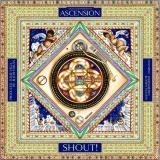
A world premiere of AI-generated symphonic music!
All three audio files are compiled from two live recordings with different microphone settings. The cover image is generated by algorithms trained with the following image searches: migration, mediterranean, boat, Libyan coast, EU. Different search engines were used. »Land der Musik« celebrated its world premiere on 7 October 2018 at steirischer herbst '18 - volksfronten in Graz, Austria. Commissioned and produced by steirischer herbst in cooperation with ORF Musikprotokoll.
A1. soundalikeStrauss (an audio reverse-engineering tool is used after the initial cross-fade) A2. AIstrauss (algorithms are trained with midi-files of Johann Strauss waltzes) B1. AImahler (algorithms trained with midi-files of Gustav Mahler symphonies) B2. (untitled)
A new standard of beauty. Artificial intelligence (AI) algorithms can now group photo pixels or audio waves into meaningful categories. This is similar to how our brain operates, yet the outcome seems distinctively non-human. At the same time it appears that the sphere of our appreciation and imagination may just have expanded. The question of whether we are still able to see and hear the difference between automated and so-called autonomous artifacts should be left to historians. On the other hand, producing this analog audio record with this image on the front cover really is an antagonism. A more appropriate medium might be a tracking chip of your online and offline activities generating customized results in real time—be it images, music, or whatever.
If AI is communist (to quote the libertarian Silicon Valley entrepreneur Peter Thiel), then this statistics-based technology might actually reinforce centralized monopoly capitalism and the coming crisis of inequality, just as it might accelerate into Deleuze's notion of the Society of Control. But it might also be seen and heard as a demo, a new standard of beauty, for the redistribution of wealth and for solidarity; in short as a utopia freed from exploitation, nationalism, and racism, liberating us from our own perception of this world. »Land der musik - The Graz AI Score« demonstrates how machine learning might help us to finally create the perfect Austrian national music identity. Yet in doing so, our ultimate aim is to get rid of the construction of national identities all together.
»God created man because he dreamed him. / But man forgot God and created the machine because he dreamed it. / At the end of the twentieth century, however, the machine has forgotten man. / Who could predict who or what she dreams of« (Friedrich Kittler)
quête:ai unit
- 1: Miami
- 2: United By Hatred
- 3: Violence Condoned
- 4: Electric Torture
- 5: Meaning Of Pain
- 6: Stabbed In The Back
- 7: Shotgun Justice
- 8: Parricide
- 9: American Luck
- 10: Brass Knuckles
- 11: Burning The Bridges
- 12: Concussion
- 13: Cranial Stomp
- 14: The Pugilis
Splatter Vinyl[23,32 €]
Razor, a thrash metal legend! The most valuable Canadian export since the Toronto Maple Leafs. When Dave Carlo and his band took to the stage at the legendary Headbangers Open Air Festival a few years ago, the crowds went completely wild. This enthusiastic reaction suggests that Razor may have more fans today than they did in their heyday in the mid-1980s. So the re-release of “Shotgun Justice” on vinyl comes just at the right time. The album comprises 14 tracks and features immortal classics such as “United by Hatred,” “Stabbed in the Back,” and “Brass Knuckles.” Shotgun Justice was originally released in 1990 on CD only on Dave Carlos' own label, Fist Fight Records (distributed in North America by Fringe Records). It was the first Razor album with Bob Reid on vocals (who had replaced Stace McLaren, aka Sheepdog).
Djrum's first release since 2019, the Meaning’s Edge EP is an introduction to a whole new world. For the artist also known as Felix Manuel, it was created in the final stretches of six rather traumatic years work. Having carefully honed his techniques and aesthetics, and learned some hard-won emotional lessons over this time, finally he began to work in a quicker, lighter fashion – and to cleanse his palate a little by bringing in a fresh ingredient: his own flute playing. For listeners, though, it will serve as an appetiser, a way into the delights and complexities of this new phase of his creativity.
It’s a serious work in its own right, mind. The use of flutes – including Bansuri, Shakuhatchi, Western Classical, and synthesised all blending and blurring into one another – gives it a coherence and a sense of airiness that unites the five tracks over half an hour, however divergent their beats get. And as in all his music, Felix’s whole life is in here. Ethnomusicology studies, untold hours of DJing everywhere from the gnarliest squat raves to the most rarefied deep house clubs, explorations of his own neurological and emotional makeup, and the technical finesse of someone who is never not creating music or art, all roll into an experience that’s dazzling, delightful and keeps on giving.
Just the opening track ‘Codex’ alone touches on OG dubstep, Aphex Twin-like braindance, post-classical exploration, movie themes and more. The gentle tones and melodies that rise up out of it perfectly conjure Felix’s running theme of a protective bubble that provides a sense of safety and tranquillity even as the beats and acid gurgles and spurts all around it conjure up the slings and arrows of life’s difficulties.
The tone set, the EP moves through ultra-rarefied glass-like percussion in an almost ambient setting, hints of grime’s counterintuitive patterns, and even more hectic patterns influenced by Tanzania’s hyperspeed singeli style of dance music – but always with that perfect balance of chaos and control, unpredictability and protection. It rewards playing and replaying endlessly, it’s a profound and often joyous experience… and it’s only just the beginning. This is the return of a master craftsperson more focused than ever on his vision and vocation and ready to blow your mind all over again.
Mastered and cut on 140g black vinyl by legendary mastering engineer Matt Colton at Metropolis Studios, London. Pressed at optimal media, Germany.
House royalty unite. Ralphi Rosario’s Chicago pedigree meets Bob Sinclar’s global dancefloor finesse on this uplifting, piano-charged vocal house weapon. A driving 4/4 groove underpins soaring chords and a powerful lead vocal from Donna Blakely, while Lego’s production keeps the low-end tight and club-focused. A great Chicago-classic where Bob Sinclar transformed it into a club weapon with energy, poise, breakdown drama and hands-in-the-air moments.
Big-room soulful house with crossover appeal.
- Underground Resistance - When Angels Speak Featuring Saul Williams
- She Spells Doom - Portrait Of The Living Sky Featuring Sun Ra Arkestra (She Spells Doom Remix)
- Chez Damier & Ben Vedren- The Three Dimensions Of Air Featuring Anthony Joseph (H2H Kora Mix)
- A Guy Called Gerald - Message To Black Youth Featuring Mahogany L.browne (Gerald Rework)
- Ricardo Villalobos - I Have Forgotten Featuring Tara Middleton (Ricardo Villalobos Earlier Than Late Remix 1)
- Calibre - Chopin Featuring Sun Ra Arkestra (Calibre Ambient Remix)
From Detroit’s techno resistance to Berlin’s elastic minimalism, Lusaka’s ancestral futurism to Chicago’s house communion, When There Is No Sun is a recording project, uniting visionary electronic music producers to reimagine the universe of Sun Ra. One of the most radical musical pioneers of the 20th century, Sun Ra used jazz, electronics, poetry, and performance to expand the possibilities of sound, identity, and imagination. Commissioned by Omni Sound and curated by Ricardo Villalobos, the series brings together Underground Resistance, Chez Damier & Ben Vedren, Calibre, A Guy Called Gerald, She Spells Doom, Barış K, and Ricardo Villalobos himself. Drawing from Omni Sound’s recordings of Living Sky by the Sun Ra Arkestra and My Words Are Music of Sun Ra’s poetry, the producers pull fragments of sound and text into their own creative orbits, passing through the portal that Sun Ra opened into a realm where the impossible is possible. Saul Williams, Tunde Adebimpe, Mahogany L. Browne, Abiodun Oyewole, Anthony Joseph and Tara Middleton are the featured voices that turn rhyme into rhythm and revelation into resistance Rooted in deep reverence for Sun Ra’s legacy, yet reaching forward as a living, generative force, When There Is No Sun is not a tribute but a continuum, balancing the pulse of electronic music with the spirit of experimentation, embodying Sun Ra’s promise that ‘there are other worlds’ if you are willing to see them.
- A1: Harris & Orr - Spread Love
- A2: Terry And Deep South - Trying To Get By
- A3: Toshiyuki Honda - Burnin' Waves
- A4: Igna Igwebuike - Disco Bomp
- B1: Janette Renee - What's On Your Mind (Super Club Remix)
- B2: Grupo Serenata - Sodade, Tem Pena D’mim
- B3: Vital Disorders - Zombie
- B4: Alphonsus Idigo - Flight 505
- C1: Dj Food - Peace (Harvey's 30 Something Mix)
- C2: Man Jumping - In The Jungle
- C3: Stars - Dancin’ People
- D1: Gaucho - Dance Forever (Club Version)
- D2: 49Th Floor - Night Passage (Bongo Mix)
- D3: Orion Agassi - Desacato
- D4: Fatdog - Remember Feat Cj Raine
black vinyl[26,68 €]
With two deeply cherished compilations already in the bag, Luke Una steps up for the third volume in his É Soul Cultura series on Mr Bongo. A love letter to the dancefloor and its power to unite people from all corners of society amid growing division and extremist politics. Genre-spanning in nature, the 15 tracks travel between cosmic soul, boogie, proto-house, slo-mo technoid grooves, drum machine afro, astral bass-bugging futurism, jazz funk, dance, and disco. Each having the ability to move the body as much as the heart.
From his formative years in Sheffield to co-founding Manchester’s much-fabled Electric Chair with Justin Crawford, through to helming the iconic LGBTQ institutions of Homoelectric / Homobloc, Luke has spent 40 years immersed in dance music. His latest outlet, É Soul Cultura, has grown from a label to a globe-spanning events series with Luke holding residencies and embarking on tours across the world from Japan and Australia to America and Europe.
“For me, the dancefloor was never about a one-dimensional, thudding, 130 BPM beat only. It's a much more dynamic, broader vision than that. I cut my teeth in an era where a 100 BPM record had as much impact, excitement, and energy as a 134 BPM dancefloor jazz funk or techno record”, Luke mentions. É Soul Cultura Volume 3 is the perfect embodiment of that notion: “It’s about four decades in the trenches playing dance music, the late-night afters, the shebeens, the basements, warehouse parties, the eight-hour journeys in East London, through to festival sets at Houghton and We Out Here. It’s music unconstrained by genre or tempo and more about making your body move”.
But this isn’t simply a collection of disparate dance tracks; they carry meaning and soul. “It’s less about escapism, more about reconnection. My experience of post-covid has been the coming together of all the clans in various clubs and gatherings. A reaction to a very toxic world out there, where the aggro rhythms of division have sought to divide us, and people don't meet as often. The coming back together face-to-face in clubs has encouraged a real love in the air, there's a real togetherness and collective spirit”.
Opening up the compilation is a track that channels that very message, the transcendental, soul-rousing Harris & Orr ‘Spread Love’. Joining the dots from there, to the low-slung deep house closer of Fatdog ‘Remember’, you’ll find electronic drum machine Nigerian funk, sitting side by side with dancefloor Cape Verdean brilliance, a post-punk cover of Fela Kuti, rubbing shoulders with cosmic electro, and an Una-championed, 8-minute, kickless DJ Harvey remix. There’s jazz funk in various guises moving from boogie synth to astral travelling, slo-mo acidic raw techno, and a ‘79 soul stepper, alongside swirling percussive Italo disco and tribal-charged house. All infused with an innate ability to bring people together.
As society becomes increasingly fractured, É Soul Cultura Volume 3’s message is more than movement. It’s about dance music’s power to unify people from all walks of life and break down the barriers that divide us.
The Scythe is a collective of rappers united around commonality in sound and skills as MCs, headed by ringleader Denzel Curry and including familiar collaborators A$AP Ferg, Tia Corine, Bktherula, & Key Nyata. Comprised of its five members and rooted within a budding scene of modern and cross generational hip-hop, The Scythe picks up the banded spirit of Denzel's foundational Raider Klan days while continuing his futuristic takes on old school regional rap (Memphis, Houston, Miami), heard most recently on King of the Mischievous South. Combining Denzel's energetic style with classically gritty, southern sounds, the project centers hip-hop's core across eras, paying homage yet ushering in a rising new guard.
a 1. THE SCYTHE | Denzel Curry Feat. TiaCorine, FERG (II)
b 2. LIT EFFECT | Denzel Curry Feat. Bktherula, LAZER DIM 700
c 3. PHONY | Denzel Curry Feat. Juicy J, Key Nyata, FERG (II)
d 4. MUTT THAT BIH | Denzel Curry Feat. 1900Rugrat, Key Nyata
[e] 5. HOOPTY | Denzel Curry [Feat. TiaCorine, Smino]
[f] 6. YOU AINT GOTTA LIE | Denzel Curry [Feat. 454, Luh Tyler]
[g] 7. TAN | Denzel Curry [Feat. Bktherula, TiaCorine]
[h] 8. UP | Denzel Curry [Feat. Rich The Kid, FERG (II), SadBoi]
[a] 1. THE SCYTHE | Denzel Curry [Feat. TiaCorine, FERG (II)]
[b] 2. LIT EFFECT | Denzel Curry [Feat. Bktherula, LAZER DIM 700]
[c] 3. PHONY | Denzel Curry [Feat. Juicy J, Key Nyata, FERG (II)]
[d] 4. MUTT THAT BIH | Denzel Curry [Feat. 1900Rugrat, Key Nyata]
[e] 5. HOOPTY | Denzel Curry [Feat. TiaCorine, Smino]
[f] 6. YOU AINT GOTTA LIE | Denzel Curry [Feat. 454, Luh Tyler]
[g] 7. TAN | Denzel Curry [Feat. Bktherula, TiaCorine]
[h] 8. UP | Denzel Curry [Feat. Rich The Kid, FERG (II), SadBoi]
[a] 1. THE SCYTHE | Denzel Curry [Feat. TiaCorine, FERG (II)]
[b] 2. LIT EFFECT | Denzel Curry [Feat. Bktherula, LAZER DIM 700]
[c] 3. PHONY | Denzel Curry [Feat. Juicy J, Key Nyata, FERG (II)]
[d] 4. MUTT THAT BIH | Denzel Curry [Feat. 1900Rugrat, Key Nyata]
[e] 5. HOOPTY | Denzel Curry [Feat. TiaCorine, Smino]
[f] 6. YOU AINT GOTTA LIE | Denzel Curry [Feat. 454, Luh Tyler]
[g] 7. TAN | Denzel Curry [Feat. Bktherula, TiaCorine]
[h] 8. UP | Denzel Curry [Feat. Rich The Kid, FERG (II), SadBoi]
[a] 1. THE SCYTHE | Denzel Curry [Feat. TiaCorine, FERG (II)]
[b] 2. LIT EFFECT | Denzel Curry [Feat. Bktherula, LAZER DIM 700]
[c] 3. PHONY | Denzel Curry [Feat. Juicy J, Key Nyata, FERG (II)]
[d] 4. MUTT THAT BIH | Denzel Curry [Feat. 1900Rugrat, Key Nyata]
[e] 5. HOOPTY | Denzel Curry [Feat. TiaCorine, Smino]
[f] 6. YOU AINT GOTTA LIE | Denzel Curry [Feat. 454, Luh Tyler]
[g] 7. TAN | Denzel Curry [Feat. Bktherula, TiaCorine]
[h] 8. UP | Denzel Curry [Feat. Rich The Kid, FERG (II), SadBoi]
[a] 1. THE SCYTHE | Denzel Curry [Feat. TiaCorine, FERG (II)]
[b] 2. LIT EFFECT | Denzel Curry [Feat. Bktherula, LAZER DIM 700]
[c] 3. PHONY | Denzel Curry [Feat. Juicy J, Key Nyata, FERG (II)]
[d] 4. MUTT THAT BIH | Denzel Curry [Feat. 1900Rugrat, Key Nyata]
[e] 5. HOOPTY | Denzel Curry [Feat. TiaCorine, Smino]
[f] 6. YOU AINT GOTTA LIE | Denzel Curry [Feat. 454, Luh Tyler]
[g] 7. TAN | Denzel Curry [Feat. Bktherula, TiaCorine]
[h] 8. UP | Denzel Curry [Feat. Rich The Kid, FERG (II), SadBoi]
[a] 1. THE SCYTHE | Denzel Curry [Feat. TiaCorine, FERG (II)]
[b] 2. LIT EFFECT | Denzel Curry [Feat. Bktherula, LAZER DIM 700]
[c] 3. PHONY | Denzel Curry [Feat. Juicy J, Key Nyata, FERG (II)]
[d] 4. MUTT THAT BIH | Denzel Curry [Feat. 1900Rugrat, Key Nyata]
[e] 5. HOOPTY | Denzel Curry [Feat. TiaCorine, Smino]
[f] 6. YOU AINT GOTTA LIE | Denzel Curry [Feat. 454, Luh Tyler]
[g] 7. TAN | Denzel Curry [Feat. Bktherula, TiaCorine]
[h] 8. UP | Denzel Curry [Feat. Rich The Kid, FERG (II), SadBoi]
[a] a1 | THE SCYTHE [Feat. TiaCorine, FERG (II)]
[b] a2 | LIT EFFECT [Feat. Bktherula, LAZER DIM 700]
[c] a3 | PHONY [Feat. Juicy J, Key Nyata, FERG (II)]
[d] a4 | MUTT THAT BIH [Feat. 1900Rugrat, Key Nyata]
[e] b1 | HOOPTY[Feat. TiaCorine, Smino]
[f] b2 | YOU AINT GOTTA LIE [Feat. 454, Luh Tyler]
[g] b3 | TAN [Feat. Bktherula, TiaCorine]
[h] b4 | UP [Feat. Rich The Kid, FERG (II), SadBoi]
[a] a1 | THE SCYTHE [Feat. TiaCorine, FERG (II)]
[b] a2 | LIT EFFECT [Feat. Bktherula, LAZER DIM 700]
[c] a3 | PHONY [Feat. Juicy J, Key Nyata, FERG (II)]
[d] a4 | MUTT THAT BIH [Feat. 1900Rugrat, Key Nyata]
[e] b1 | HOOPTY[Feat. TiaCorine, Smino]
[f] b2 | YOU AINT GOTTA LIE [Feat. 454, Luh Tyler]
[g] b3 | TAN [Feat. Bktherula, TiaCorine]
[h] b4 | UP [Feat. Rich The Kid, FERG (II), SadBoi]
[a] a1 | THE SCYTHE [Feat. TiaCorine, FERG (II)]
[b] a2 | LIT EFFECT [Feat. Bktherula, LAZER DIM 700]
[c] a3 | PHONY [Feat. Juicy J, Key Nyata, FERG (II)]
[d] a4 | MUTT THAT BIH [Feat. 1900Rugrat, Key Nyata]
[e] b1 | HOOPTY[Feat. TiaCorine, Smino]
[f] b2 | YOU AINT GOTTA LIE [Feat. 454, Luh Tyler]
[g] b3 | TAN [Feat. Bktherula, TiaCorine]
[h] b4 | UP [Feat. Rich The Kid, FERG (II), SadBoi]
- 01: Glass Mask On
- 02: Celebrity Culture Simp Farm
- 03: Please Just Make It Stop
- 04: No Laughter Left In Me
- 05: Weaponizing My Failures
- 06: Unthinking My Every Thought
- 07: Insignificant Other
- 08: It Keeps On Stinging
- 09: I Took A Pill In Vilvoorde
- 10: Suffering In Technicolor
DOODSESKADER clearly haven’t had enough of redefining boundaries – they’ve only just gotten started. Tim De Gieter and Sigfried Burroughs return on April 3rd, 2026 with their third full-length album, The Change Is Me, a rollercoaster that can only be described as the unstable lovechild between witch house, hip-hop, industrial dream pop, and stadium rock that can’t decide if it wants to watch the world burn or shout from the rooftops that we need to save it. Their combination of grungy 90s melodies with distorted synths, sludgy bass, hard tuned vocals, rapping, singing, and explosions of undiluted rage at the current state of the world leave you wondering just exactly what it was you smoked last night, and if it was too much or not enough. The Change Is Me is an album that grabs you by the arm and asks if you’re ready to go on a grand adventure, then pulls you into its chaos before you can say “yes” or “no.”
Tim and Sigfried aren’t just breaking the boundaries between genres; they’re breaking out of their own Year cycle, a path they had laid out for themselves at the band’s inception in 2020. Up until now, the duo had set out to document their “journey to getting better” through writing one album each year: Year Zero (2020), Year One (2022), and most recently Year Two (2024). After spending eight months throughout 2024 and 2025 writing, recording, producing and mixing Year Three, the band scrapped the finished record entirely. Playing shows while simultaneously navigating the process of mixing Year Three created a sort of disconnect – the people that they were when they wrote that record and the people that playing shows made them become were no longer one and the same. “We’re people with faults and strengths, and we realized we needed to accept it. That’s equal parts bleak and liberating. If you’re so focused on self-improvement, you can’t even applaud yourself for how far you’ve come,” the band explains. “This project is meant to be a document of us and of the human condition, not a self-improvement handbook designed to keep us all stuck on what may or may not have happened to us or because of us in the past.”
DOODSESKADER chose instead to embark anew on a week-long creative journey in Tim’s own Much Luv Studio with one goal in mind: to make an album that captures who they are right now. Finally writing everything together in the same room for the first time in years, the process of bringing "The Change Is Me" to life was captured by Diana Lungu in their latest documentary, "Now I Know You See Me", out December 2nd, 2025.
"The Change Is Me" marks the beginning of DOODSESKADER’s shift into a more positive era, both musically and conceptually. Over the course of the 40-minute record we hear the two friends unite in a fight against a world that grows more and more disappointing, a concept made crystal clear in tracks like “Celebrity Culture Simp Farm,” “It Keeps On Stinging,” and of course the album’s epic closer “Suffering In Technicolor.” While their previous albums saw them trying to outrun their pasts and arrive at a better version of themselves, here the search for some external or internal revelation that will “make them better” is no more. It’s been replaced by the realization that change isn’t something we force: it’s gradual, and more importantly, it’s something that’s already there – we just need to reach out and accept it.
The band’s live appearances over the last several years have been instrumental in shaping their ideology. On stage is where the duo find connection; not only with the audience, but also with each other. Their sold-out release shows at Ancienne Belgique (2022) and VierNulVier (2024) have proven that they are one of Belgium’s must-see acts. Abroad, their energy has translated into a month-long EU/UK tour with French band Alcest in 2024, as well as appearances at festivals such as Roadburn Festival (NL), Eurosonic (NL), Hellfest (FR), Mystic Fest (PL), Jera On Air (NL), ArcTanGent (UK), Fluff Fest (CZ) and more.
"The Change Is Me" is out April 3rd, 2026 on DOODSESKADER’s own label, 45 Records.
In the spring of 1971, somewhere between Brussels, Paris and a collective pop fever dream, Le Monde Fabuleux Des Yamasuki landed on vinyl. It sounded like nothing else then and it still does not today. More than half a century later, Sdban Records proudly presents a reissue of this singular cult album, available from April 3, 2026 on vinyl.
The album was produced by Jean Kluger and written both by Jean and Daniel Vangarde (aka Bangalter, later the father of Thomas Bangalter of Daft Punk), who were alreadywell ahead of their time, long before electronic music rewrote the rules of pop culture.
Released under the name Yamasuki, also referred to as The Yamasuki Singers, or The Yamasuki's, the project was never intended as a conventional band. It was a studio-born fantasy, a concept album disguised as a pop record. What began as a standalone single quickly expanded into a full-blown pan-cultural pop opera that ignored genres and common sense with joyful abandon.
Musically, the album sits at a delirious crossroads. Psychedelic pop collides with funk rhythms, samba and bubblegum melodies, full of chants and choruses in a phonetic pseudo-Japanese, written with the help of a dictionary. Kluger and Vangarde famously recruited a children's choir to perform the vocals, and for added spectacle, they brought in a Japanese judo grandmaster, whose ritualistic shouts and battle cries erupt throughout the record.
Several singles were released. One of them, Yamasuki, with accompanying dance move, appeared in the United Kingdom and France on John Peel's Dandelion label, a fitting home for a record that thrived on the margins of pop culture. Its B-side, Aieaoa, proved even more potent. In 1975, the song was reborn as A.I.E. (A Mwana) by Black Blood, an African group recording in Belgium, this time sung in Swahili. That melody would travel even further. Aie a Mwana became the debut single of English pop group Bananarama, and in 2010 it resurfaced once more as Helele, an official song of the FIFA World Cup, recorded by South African singer Velile Mchunu with Danish percussion duo Safri Duo. That version became the most widely known incarnation of the song. With Jean Kluger directly involved, it was less a cover than a continuation of the original idea.
The album's afterlife did not stop there. Over the years, Yamasuki has been quietly sampled, covered, and featured across media far beyond the realm of novelty pop. Kono Samourai was sampled in The Healer by Erykah Badu (2007), produced by Madlib, while Yama Yama has found its way into recent pop culture as well: appearing in the television series Fargo, on Angus Stone's project Dope Lemon, and on the 2008 Late Night Tales compilation curated by Arctic Monkeys drummer Matt Helders. Proof, if any were needed, that this strange little record carries a deeper musical DNA than its playful exterior might suggest.
This new reissue of Le Monde Fabuleux Des Yamasuki proves the renewed interest and respect for this cult album, faithful to the original spirit while finally giving it back the physical presence it deserves. In an era obsessed with genres and algorithmic neatness, Yamasuki still laughs, dances and karate-kicks its way past definitions. It reminds us that pop music can be playful without being disposable, strange without being cynical and joyfulwithout explanation. The world of Yamasuki was always fabulous, we are just lucky it found its way back to us!
- A1: Tout Est Bizarre (Feat Agnès Hélène)
- A2: Abanije (Feat Nayel Hóxò)
- A3: Soy Dos (Feat Agnès Hélène)
- A4: Viv Li (Feat Olivya)
- A5: Laissez Passer (Feat Agnès Hélène)
- B1: Ta Logbe Jongo (Feat Nayel Hóxò)
- B2: Soulshine (Feat Nayel Hóxò)
- B3: En Synchro (Feat Agnès Hélène)
- B4: Aïshododo (Feat Nayel Hóxò)
- B5: L’or & Le Sang (Feat Agnès Hélène)
Ayô Dele — which means "joy comes to me" in Yoruba — is neither a slogan nor a promised miracle. It is a breath of fresh air. That of an album born in the interstices, where the word find their way between shadow and light, between the disorder of the worldand the impulse to be .
At the heart of the project, Julien Gervaix and Damien Tesson, multi-instrumentalist beatmakers, share a groove language that is both dense and airy, where every detail breathes and finds its place.
With background in Afrobeat, Dub, Funk, Soul, Roots Reggae, and Electronic Music, they treat the studio to be their playground. Their music is a hybrid groove that speaks to the body: round or bouncing basslines, brass oscillating between melodic warmth and funk energy, textured guitars, arpeggios, enveloping Rhodes, clavinet that slides, presses, and embraces. Everything comes together with precision and flexibility, in an inventive and warm composition. The meeting of their experiences and sensibilities gives rise to open, generous music, made for dancing and vibration.
With Ayô Dele , Ireke is embarking on a new chapter: the duo is refining its style,allowing the voices to breathe. The groove remains the driving force but opens up to intimacy. This intimacy is carried by two unique female voices: Nayel Hoxo, a Beninese-Nigerian singer/rapper, and Agnès Hélène, who has already made a name for herself on Tropikadelic with "Petit a Petit". They don't sing side-by-side; they coexist, respond to each other, and sometimes intersect. But each follows her own path: Nayel, with the power of her words in Yoruba, offers songs of elevation, healing, and resistance — a light born in the cracks Agnès explores these cracks themselves: what wavers within us, what reinvents itself in bonds, glances, and gestures.
For one track, Olivya (Dowdelin) joins this dialogue in Martinican Creole. Her sunny soul sketches the contours of gentle resistance and celebrates rediscovered light.
Ayô Dele embodies a quiet yet radical determination: to smooth nothing over, to let plurality, contradictory emotions, and mixed heritage live. An album that moves forward through vibrations, that speaks of emancipation without slogans, love without clichés, anger without uproar.
Two women, two inner worlds: a sensitive complicity, a shared breath. Music that seeks not effect, but echo, weaving a living soundscape between reinvented traditions and contemporary textures. An alchemy faithful to the spirit of Underdog Records, where music unites and brings people together. Ayô Dele : "joy comes to me." A lucid joy, crossed by shadows, patiently regained. Music that welcomes, releases, gives, and in doing so, makes us feel good.
In a saturated world, Ayô Dele chooses nuance: transmission without emphasis, joy without naivety. An album that vibrates more than it demonstrates, that connects more than it imposes, and which, in its quiet clarity, resonates with a deep desire to be fully alive.
- A1: Les Masques - Il Faut Tenir (1969)
- A2: Isabelle Aubret - Casa Forte (1971)
- A3: Christianne Legrand - Hlm Et Ciné Roman (1972)
- A4: Jean Constantin - Pas Tant D'chichi Ponpon (1972)
- A5: Billy Nencioli & Baden Powell - Si Rien Ne Va (1969)
- B1-: Marpessa Dawn - Le Petit Cuica (1963)
- B2: Jean-Pierre Sabar - Vai Vai (1974)
- B3: Sophia Loren - De Jour En Jour (1963)
- B4: Isabelle - Jusqu’à La Tombée Du Jour (1969)
- B5: Sylvia Fels - Corto Maltesse (1974)
- C1: Frank Gérard - Comme Une Samba (1972)
- C2: Ann Sorel - La Poupée Des Favellas (1971)
- C3: Charles Level - Un Enfant Café Au Lait (1971)
- C4: Andrea Parisy - Les Mains Qui Font Du Bien (1970)
- C5: Audrey Arno - Quand Jean-Paul Rentrera (1969)
- C6: Aldo Frank - T’as Vu Ce Printemps (1970)
- D1: Christianne Legrand - Cent Mille Poissons Dans Ton Filet (1972)
- D2: Clarinha - Lemenja (1970)
- D3: Hit Parade Des Enfants - Aquarela (1976)
- D4: Jean-Pierre Lang - Tendresse (1965)
- D5: Magalie Noël - Une Énorme Samba (1970)
- D6: Françoise Legrand - La Lune
Ever since the late 1950s bossa-nova revolution, Brazil’s influence on French music has been undeniable. Pierre Barouh, Georges Moustaki and a vast array of lesser known artists, all made the Musica Popular Brasileira (MPB) an axis of promotion at the service of a cool and metaphysical, modern and mixed Brazilian lifestyle. Some were seduced by the poetic languors of the bossa, some were looking for fun, and others just loved the American hybridization of jazz-bossa, jazz-samba.
What is bossa nova? One of its creators, Joao Gilberto said: "Its style, cadence, everything is samba. At the very start, we didn't call it bossa nova, we sang a little samba made up of a single note - Samba de uma nota so .... The discussion around the origins of bossa nova is therefore useless”. It is nevertheless useful to remember that these magnificent Brazilian songs, which the guitarist describes as samba, were shifted and balanced around improbable chords. "I like things that lean, the in-betweens that limp with grace," said Pierre Barrouh, quoting Jean Cocteau.
With emotion, arrangements for violin and supple guitar licks, bossa nova rapidly changed. A transformation that can be heard in the Tchic, tchic, French Bossa Nova 1963-1974 compilation, the result of a cultural reappropriation, which traveled through the United States and supplemented itself in France.
A musical revolution that has remained significant, bossa nova was born in Rio. From 1956 to 1961, Brazil lived through its golden years. In five years, the country had invented its modernist style. Elected president in 1956, Juscelino Kubitschek de Oliveira, an elegant man with a broad forehead, brandished a promising slogan: "Fifty years of progress in five years". He quickly got to work. Not worried about increasing debt, he launched the project for a new federal capital, Brasilia, designed by the communist architect Oscar Niemeyer. Volkswagen opened state-of-the-art factories and created the “fusquinha”, the Beetle. In Rio, the Vespa made its first appearance. The Arpoador Surf Club crew run into the “girl” from Ipanema, Helô Pinheiro - the tanned garota ("chick"), between a flower and mermaid, who at 17 walked by the Veloso bar, where the fiery author and composer, Tom Jobim and Vinicius de Moraes, were getting drunk on whiskey. From then on, bossa symbolized cool.
In 1958, Joao Gilberto recorded Chega de Saudade, which the directors of Philips denied, calling it "music for fagots". The marketing director, who believed in it, secretly pressed 3000 78-inch vinyls and distributed them at schools around Rio, creating a tidal wave.
American jazzmen then took over. In particular, trumpeter Dizzy Gillespie and guitarist Charlie Byrd. In November 1962, the Brazilian Ministry of Foreign Affairs funded a "Bossa-Nova" concert at Carnegie Hall in New York, inviting the genre’s pioneers. Unprepared, the show soon turned to disaster. But the troupe was invited to the White House by Jackie Kennedy. The first lady loved "the new beat" and in particular Maria Ninguem, a song by Carlos Lyra, later covered by Brigitte Bardot.
In Brazil, the 1964 military coup quickly ended this euphoria. The destructive atmosphere that ensued pushed many Brazilian musicians to leave, if not to exile. Thus, Tom Jobim, Sergio Mendes and Joao Gilberto arrived to the United States. In New York, Joao Gilberto met saxophonist Stan Getz. At the time, he was married to the Bahianese Astrud Weinert Gilberto, who had a German father. She had never sung before, but she knew how to speak English. Getz therefore asked her to replace her husband on The Girl From Ipanema. The Getz/Gilberto record with Tom Jobim on piano, was released in March 1964. Phil Ramone, the "pope of pop" was in charge of sound.
Bossa nova arrived in Paris through the classic “guitar-voice” channel (Pierre Barouh, Baden Powell, Moustaki…) But France loved jazz and Paris had already welcomed its American contributors. All these good people were to pass through Saint-Germain-des-Prés. The cabaret l'Escale became the Mecca of Latin American sound where one could find Pierre Barrouh and his friends, such as the Camara Trio, samba-jazz aces, whose only record was published by the Saravah label. With a band strangely called Les Masques (a band that included Nicole Croisille and Pierre Vassiliu, among others), the Camara Trio recorded an interesting Brazilian Sound, including the track Il faut tenir which is present on this tasty compilation of rarities.
Other enlightened musicians can also be found on the compilation, such as Jean-Pierre Sabar (songwriter for Hardy, Auffray, Leforestier ...) and the French pop rock organist Balthazar. In 1975, Sabar recorded Aurinkoinen Musiikkimatka on a Finnish label, which featured the crazy Vai, Vai, included on this record. We are now following the footsteps of Brazilian electronic musicians such as Sergio Mendes, Eumir Deodato or Marcos Valle who created funk and disco sounds on their keyboards and synthesizers. A style that influenced Véronique Sanson when she wrote Jusqu’à la Tombée de la nuit in 1969 for Isabelle de Funès, the niece of Louis and a great friend of Michel Berger - Sanson did end up singing this track on her 1992 Sans Regret record.
The pinnacle of exoticism and travel, Sylvia Fels’ Corto Maltese includes bongos, sea mist and ocean sounds. The title was taken from Jacky Chalard’s concept album written in 1974, Je suis vivant, mais j’ai peur (I am alive, but I am scared), based on Gilbert Deflez’s science fiction novel.
However, bossa nova extended the scope of popularity. "In the 1970s, I was a fan of Sergio Mendes, Getz / Gilberto. I fell in love with this music that I knew because I had been an orchestral singer, " explained Isabelle Aubret, who in 1971 delivered a composite record of covers by the very funky Jorge Ben, Orfeu Negro, Tom Jobim, Vinicius de Morais and Jean Ferrat. "I recorded this album for Meys Records in Paris, far from Brazil, with wonderful musicians, François Raubert, Roland Vincent, Alain Goraguer...". The latter wrote the arrangements for Casa Forte, a very percussive title borrowed from Edu Lobo, one of the initiators of the bossa who spent time in California. "Jazz and bossa came together and produced very rhythmic music. I love singing, it allows me to dream, to have fun, to feel a high on stage, and these songs brought me joy, made me swing, my singing felt like a dance.”
The world tours of French singers and their desire for the tropics, often brought them to Rio with its hills, forests, caipirinhas and tanned bodies. There are surprises though, like this Iemenja (Iemenja is the goddess of the sea in the Afro-Brazilian candomblé religion). Not unlike the composer and musician Jean-Pierre Lang, based in Sao Paulo, Claire Chevalier taught Brazil to Brazil. In 1970, the singer and painter published a 45-inch vinyl, Mon mari et mes amants (My husband and my lovers), under the improbable pseudonym of Clarinha (little Claire). She was then living in Rio, with her husband, Joël Leibovitz, who founded a band called Azimuth, and who owned a record label specialized in "sambas enredos" songs for samba school parades.
For its B side, she asked Pierre Perret to come up with lyrics for a song composed by Carlos Imperial: "Oh goddess of the sea, o goddess Iemenja, I bring a white rose to adorn your long hair ..." . "Perret came to see us, and we had fun, remembers Joël Leibovitz. We wrote Lemenja for fun, we recorded it at the Havaí studio, behind the Central do Brasil the central station. Erlon Chaves, the arranger who worked with Elis Regina, joined us" adding his share of Afro-Brazilian percussions and funky brass to the mix.
There is a common misunderstanding in Franco-Brazilian history: that bossa, admittedly hedonistic, is perceived as funny, even though the poets who wrote the texts are often philosophizing on the human condition. Its French interpreters pull it towards a carnival inspired universe, far removed from its fundamental essence. Thus, Jean Constantin covered the famous Samba da minha terra, an ode to the art of samba written by the classic Bahian composer Dorival Caymmi, renaming it with the enticing title of Pas tant de tchi tchi pompon: "On your pier there is no tchi tchi / when you arch your back, you know everything is alright ”(lyrics by Gérard Calvi). This expedited bossa aims for the absurd, but retains a certain elegance.
Indeed, Jean Constantin was not an idiot, the rather large man had a huge mustache and liked fantasy, (Les pantoufles à papa, Le pacha, inspired by cha-cha-cha-cha, salsa and jazz) but he was also the lyricist of Mon manège à moi interpreted by Edith Piaf, the composer of Mon Truc en plume by Zizi Jeanmaire and the soundtrack of François Truffaut’s 400 Blows. Le Poulpe, published in 1970, from which this bossa is extract, was arranged by Jean-Claude Vannier, an accomplice of Serge Gainsbourg’s Melody Nelson. In short: "There is enough of samba / By looking at the parasol / Because my poor cabeza / Is going to die in the sun".
Even the American actress Marpessa Down, who was at the heart of the bossa nova revolution with her role as Euridyce in Marcel Camus’ film Orfeu Negro, winner of the 1959 Cannes Palme d'or, fed the clichée with Je voudrais parler au petit cuica - "Tell me how you manage to always make people want to dance / It's true, I must admit that I cannot resist your magic" - in consequence, once can hear the cuica, a little drum inherited from the Bantu.
But bossa nova had many angles. Societal, of course, pushing actresses who were symbols of women's liberation like Brigitte Bardot, Jeanne Moreau, or Sophia Loren to engage in the exercise of accelerated bossa. In February of 1963, Sophia Loren made a record in French in Rome, Je ne t'aime plus, featuring the song De jour en jour, a bossa written by two Italians, Armando Trovajoli and Tino Fornai, which was released a little later by Barclay. Bossa accompanied the 1960s, a decade of moral liberation. Ann Sorel, who interpreted La Poupée des favellas, caused a sensation with L’amour à plusieurs, a provocative song written by Frédéric Bottom and Jean-Claude Vannier. As for the actress Andrea Parisy, she displayed her bourgeois cheekiness in Marcel Carné's Les Tricheurs before interpreting Les mains qui font du bien. And Magalie Noël, the friend of Boris Vian, who sung Johnny fais-moi mal, was hired to sing Une énorme Samba, composed by Alain Goraguer (arranger to Gainsbourg, Bobby Lapointe and Jean Ferrat) with lyrics by Frédéric Botton.
But in the end, of what wood is bossa nova made of? The answer is given by Christianne Legrand, daughter of Raymond the conductor, and sister to Michel the composer: "With me, with jà" - jà means "immediately" in Portuguese. In 1972, the singer, an expert in vocal jazz and a member of the Double Six, published Le Brésil de Christianne Legrand. Two songs included on the Tchic Tchic compilation that demonstrate how bossa, jazz, funk, rock, etc. work like a swiss army knife: the music is used to denounce broken systems, or miracles, HLM et ciné roman, Cent mille poissons dans ton filet, two songs from the O Cafona soundtrack, a successful telenovela broadcast, at the time in black and white, on TV Globo. The first was adapted in French by the fighter and friend of the Legrand tribe, Agnès Varda. The second is content with a play on words, jostling them into a summer fun.
Véronique Mortaigne
- A1: The Bird
- A2: Heart Don't Stand A Chance
- A3: The Waters (Feat. Bj The Chicago Kid)
- A4: The Season / Carry Me
- B1: Put Me Thru
- B2: Am I Wrong (Feat. Schoolboy Q)
- B3: Without You (Feat. Rapsody)
- B4: Parking Lot
- C1: Lite Weight (Feat. The Free Nationals United Fellowship Choir)
- C2: Room In Here (Feat. The Game & Sonyae Elise)
- C3: Water Fall (Interlude)
- C4: Your Prime
- D1: Come Down
- D2: Silicon Valley
- D3: Celebrate
- D4: The Dreamer (Feat. Talib Kweli & Timan Family Choir)
Ten years ago, Anderson .Paak didn't just release an album; he staged a full-scale takeover of the soul and hip-hop landscape. Released on January 15, 2016, Malibu served as the definitive arrival of an artist who had spent years grinding in the underground before a star-making turn on Dr. Dre’s Compton. While his previous work hinted at his potential, Malibu was the moment the world met the "Cheeky Andy" persona in full—a virtuosic drummer, a raspy-voiced crooner, and a sharp-witted rapper all rolled into one. The album is a sprawling, sun-drenched journey through the Southern California coast, blending 1970s funk, church-reared gospel, and gritty boom-bap into something that feels both nostalgic and entirely futuristic. With a heavyweight production lineup including 9th Wonder, Madlib, Kaytranada, and Hi-Tek, the record maintains a warm, analog texture that was a breath of fresh air in an increasingly digital era. It’s an album that breathes, full of intentional imperfections and the kind of "in-the-pocket" groove that can only come from a seasoned live performer. Beyond the infectious, dance-floor-ready energy of tracks like "Am I Wrong" and "Come Down," the album is a deeply autobiographical masterwork. .Paak uses the 65-minute runtime to unpack his life story with startling clarity, touching on his mother’s gambling addiction, his father’s incarceration, and his own brushes with homelessness with a sense of resilience that never feels heavy-handed. He weaves these heavy themes through a lens of triumph, grounded by vintage surfing documentary samples that give the project its cinematic, coastal atmosphere. It’s a celebratory record born out of struggle, anchored by his impeccable technicality on the drums and a guest list—featuring ScHoolboy Q, Rapsody, and The Game—that feels hand-picked to complement his specific brand of West Coast swagger. A decade later, Malibu stands as a modern classic and the blueprint for the soulful revivalism that would eventually lead .Paak to global superstardom and Grammy-winning heights. It remains a testament to the idea that the most profound music often comes from the most personal places, proving ten years on that the best way to move forward is to stay rooted in the groove.
- A1: The Bird
- A2: Heart Don't Stand A Chance
- A3: The Waters (Feat. Bj The Chicago Kid)
- A4: The Season / Carry Me
- B1: Put Me Thru
- B2: Am I Wrong (Feat. Schoolboy Q)
- B3: Without You (Feat. Rapsody)
- B4: Parking Lot
- C1: Lite Weight (Feat. The Free Nationals United Fellowship Choir)
- C2: Room In Here (Feat. The Game & Sonyae Elise)
- C3: Water Fall (Interlude)
- C4: Your Prime
- D1: Come Down
- D2: Silicon Valley
- D3: Celebrate
- D4: The Dreamer (Feat. Talib Kweli & Timan Family Choir)
Ten years ago, Anderson .Paak didn't just release an album; he staged a full-scale takeover of the soul and hip-hop landscape. Released on January 15, 2016, Malibu served as the definitive arrival of an artist who had spent years grinding in the underground before a star-making turn on Dr. Dre’s Compton. While his previous work hinted at his potential, Malibu was the moment the world met the "Cheeky Andy" persona in full—a virtuosic drummer, a raspy-voiced crooner, and a sharp-witted rapper all rolled into one. The album is a sprawling, sun-drenched journey through the Southern California coast, blending 1970s funk, church-reared gospel, and gritty boom-bap into something that feels both nostalgic and entirely futuristic. With a heavyweight production lineup including 9th Wonder, Madlib, Kaytranada, and Hi-Tek, the record maintains a warm, analog texture that was a breath of fresh air in an increasingly digital era. It’s an album that breathes, full of intentional imperfections and the kind of "in-the-pocket" groove that can only come from a seasoned live performer. Beyond the infectious, dance-floor-ready energy of tracks like "Am I Wrong" and "Come Down," the album is a deeply autobiographical masterwork. .Paak uses the 65-minute runtime to unpack his life story with startling clarity, touching on his mother’s gambling addiction, his father’s incarceration, and his own brushes with homelessness with a sense of resilience that never feels heavy-handed. He weaves these heavy themes through a lens of triumph, grounded by vintage surfing documentary samples that give the project its cinematic, coastal atmosphere. It’s a celebratory record born out of struggle, anchored by his impeccable technicality on the drums and a guest list—featuring ScHoolboy Q, Rapsody, and The Game—that feels hand-picked to complement his specific brand of West Coast swagger. A decade later, Malibu stands as a modern classic and the blueprint for the soulful revivalism that would eventually lead .Paak to global superstardom and Grammy-winning heights. It remains a testament to the idea that the most profound music often comes from the most personal places, proving ten years on that the best way to move forward is to stay rooted in the groove.
- A1: The Bird
- A2: Heart Don't Stand A Chance
- A3: The Waters (Feat. Bj The Chicago Kid)
- A4: The Season / Carry Me
- B1: Put Me Thru
- B2: Am I Wrong (Feat. Schoolboy Q)
- B3: Without You (Feat. Rapsody)
- B4: Parking Lot
- C1: Lite Weight (Feat. The Free Nationals United Fellowship Choir)
- C2: Room In Here (Feat. The Game & Sonyae Elise)
- C3: Water Fall (Interlude)
- C4: Your Prime
- D1: Come Down
- D2: Silicon Valley
- D3: Celebrate
- D4: The Dreamer (Feat. Talib Kweli & Timan Family Choir)
Ten years ago, Anderson .Paak didn't just release an album; he staged a full-scale takeover of the soul and hip-hop landscape. Released on January 15, 2016, Malibu served as the definitive arrival of an artist who had spent years grinding in the underground before a star-making turn on Dr. Dre’s Compton. While his previous work hinted at his potential, Malibu was the moment the world met the "Cheeky Andy" persona in full—a virtuosic drummer, a raspy-voiced crooner, and a sharp-witted rapper all rolled into one. The album is a sprawling, sun-drenched journey through the Southern California coast, blending 1970s funk, church-reared gospel, and gritty boom-bap into something that feels both nostalgic and entirely futuristic. With a heavyweight production lineup including 9th Wonder, Madlib, Kaytranada, and Hi-Tek, the record maintains a warm, analog texture that was a breath of fresh air in an increasingly digital era. It’s an album that breathes, full of intentional imperfections and the kind of "in-the-pocket" groove that can only come from a seasoned live performer. Beyond the infectious, dance-floor-ready energy of tracks like "Am I Wrong" and "Come Down," the album is a deeply autobiographical masterwork. .Paak uses the 65-minute runtime to unpack his life story with startling clarity, touching on his mother’s gambling addiction, his father’s incarceration, and his own brushes with homelessness with a sense of resilience that never feels heavy-handed. He weaves these heavy themes through a lens of triumph, grounded by vintage surfing documentary samples that give the project its cinematic, coastal atmosphere. It’s a celebratory record born out of struggle, anchored by his impeccable technicality on the drums and a guest list—featuring ScHoolboy Q, Rapsody, and The Game—that feels hand-picked to complement his specific brand of West Coast swagger. A decade later, Malibu stands as a modern classic and the blueprint for the soulful revivalism that would eventually lead .Paak to global superstardom and Grammy-winning heights. It remains a testament to the idea that the most profound music often comes from the most personal places, proving ten years on that the best way to move forward is to stay rooted in the groove.
- A1: The Bird
- A2: Heart Don't Stand A Chance
- A3: The Waters (Feat. Bj The Chicago Kid)
- A4: The Season / Carry Me
- B1: Put Me Thru
- B2: Am I Wrong (Feat. Schoolboy Q)
- B3: Without You (Feat. Rapsody)
- B4: Parking Lot
- C1: Lite Weight (Feat. The Free Nationals United Fellowship Choir)
- C2: Room In Here (Feat. The Game & Sonyae Elise)
- C3: Water Fall (Interlude)
- C4: Your Prime
- D1: Come Down
- D2: Silicon Valley
- D3: Celebrate
- D4: The Dreamer (Feat. Talib Kweli & Timan Family Choir)
Ten years ago, Anderson .Paak didn't just release an album; he staged a full-scale takeover of the soul and hip-hop landscape. Released on January 15, 2016, Malibu served as the definitive arrival of an artist who had spent years grinding in the underground before a star-making turn on Dr. Dre’s Compton. While his previous work hinted at his potential, Malibu was the moment the world met the "Cheeky Andy" persona in full—a virtuosic drummer, a raspy-voiced crooner, and a sharp-witted rapper all rolled into one. The album is a sprawling, sun-drenched journey through the Southern California coast, blending 1970s funk, church-reared gospel, and gritty boom-bap into something that feels both nostalgic and entirely futuristic. With a heavyweight production lineup including 9th Wonder, Madlib, Kaytranada, and Hi-Tek, the record maintains a warm, analog texture that was a breath of fresh air in an increasingly digital era. It’s an album that breathes, full of intentional imperfections and the kind of "in-the-pocket" groove that can only come from a seasoned live performer. Beyond the infectious, dance-floor-ready energy of tracks like "Am I Wrong" and "Come Down," the album is a deeply autobiographical masterwork. .Paak uses the 65-minute runtime to unpack his life story with startling clarity, touching on his mother’s gambling addiction, his father’s incarceration, and his own brushes with homelessness with a sense of resilience that never feels heavy-handed. He weaves these heavy themes through a lens of triumph, grounded by vintage surfing documentary samples that give the project its cinematic, coastal atmosphere. It’s a celebratory record born out of struggle, anchored by his impeccable technicality on the drums and a guest list—featuring ScHoolboy Q, Rapsody, and The Game—that feels hand-picked to complement his specific brand of West Coast swagger. A decade later, Malibu stands as a modern classic and the blueprint for the soulful revivalism that would eventually lead .Paak to global superstardom and Grammy-winning heights. It remains a testament to the idea that the most profound music often comes from the most personal places, proving ten years on that the best way to move forward is to stay rooted in the groove.
BLUE & WHITE COLOUR IN COLOUR VINYL
In the culinary arts, it’s easy to overcomplicate the final product. Theme, presentation, texture…they’re important but should work to complement the raison d'etre of any food. At the end of cooking a dish, it should taste good and feed people. Some dishes, like barbeque or provoleta, resist the tendency towards hollow showmanship. One of their expressions can be more or less aesthetic, but the first purpose is to be simple and tasteful. Argentinian provoleta goes so far as to blur the line between ingredient and dish. It relies on the inherent flavor of provolone being heated at the right speed for the perfect amount of time. You can add garlic or chives or red pepper to the slice, but ultimately they serve to bring out an essence that’s already there.
Los Angeles’ Cousin Feo has developed his rapping acumen in the five years since releasing Provoleta, but returning to the project today shows that he always had the penmanship, grit and delivery that christens an emcee worthy of remembrance. Like the bubbles rising up in the appetizer that is the album’s namesake, Feo showed that true profundity is found in the simple gestures.
Since dropping the project in 2019, Cousin Feo has expanded his vision of a world where hip-hop and football, two proletarian art forms, mingle in creative and compelling ways. He has collaborated across multiple continents, chronicled football histories, aided in canonizing legends, kept the flames high in age-old rivalries and constantly forced his audience to search for the last time they heard bars this hard. In anyone else’s hands it would be too great a task.
The maturity he showed on Provoleta wasn’t nascent, it was an inherent quality forcing itself to the surface. The songs refract his experience as a working class Angeleno through the archetypes of Argentinian football legends. The kernel that unites the two worlds is hustle. When Feo was coming up, missteps had greater consequences than crashing out in the group stage and street deals had the weight of a Boca-River Plate match.
Each track uses slightly different ingredients to let Feo’s underlying talent shine. “Maradona” feels salvific, fitting for a football legend canonized from the Andes to the Alps and a Los Angeles rapper looking to inspire similar hope in the neighborhoods that raised him. On “Di Stefano” Feo massages the instrumental with the same composure of the late forward, until he pierces through the headphones like one of Di Stefano’s arrows. It’s also refreshing to hear a song celebrating Messi before his meme-ification, focusing on the universal truths contained in his footballing talent instead of using number 10 as a stand-in to make a point in a fruitless argument. And he still finds space to show deference to Batistuta, Kempes and other members of the Argentinian pantheon who’ve been erased from the popular imagination by the national team's contemporary success.
Real ones know that true players, true rappers, and true artists will always stand the attacks of time and consensus. In Provoleta’s first verse, Cousin Feo says he moves with the hand of God. Maybe one day he’ll tell the whole truth and let us know how he was able to wrestle the pen away too. Limited edition of 300 hand-numbered copies.
In my productions, I always strive to blend the multiple genres I’ve explored over the years while staying true to my artistic essence. In this EP, I aimed to unite house, techno, deep house, and acid, all with a more musical and melodic approach, similar to the tracks I’ve created in the past. Just listen to 'Searching For A Match' and 'For You'—I find them incredibly melodic and harmonious.
- A1: Intro
- A2: The Soundtrack Of Life
- A3: Journey
- A4: World Of Love
- A5: Laurie's Theme
- B1: Emotion Heater
- B2: Dream
- B3: Tiki Mix
- C1: Travel Bug
- C2: Le Tunnel De L'amour
- C3: Stay
- D1: A Close Encounter
- D2: Relaxation Central
- D3: Journey (Reprise)
- D4: Outro
- E1: Space Bubble
- E2: Star
- E3: Sunny Day (Demo)
- F1: Journey (Aphex Twin Care Mix)
- F2: Journey (Gentle Instrumental
WRWTFWW Records is proud to present THE GENTLE PEOPLE - Soundtracks for Living (Expanded Edition), ?the ultimate Lounge/Chill Out classic from 1997, reborn! Available as a limited edition white vinyl 3LP in heavyweight 3-panel gatefold sleeve.
When The Gentle People first glided into the mid-90s on clouds of strings, sugar and sine waves, they sounded like visitors from another, more glamorous planet. Signed to Richard D. James and Grant Wilson-Claridge's cult label Rephlex, this multinational "E-Z-Core" lounge unit took the aesthetics of 50s/60s easy listening and exotica and gently smuggled them into 1990s club culture.
Soundtracks for Living was their defining statement: an album that "takes the lounge scene and runs away with it entirely… blissful and heavenly," as one contemporary review put it. Imagine KLF's Chill Out or Space growing up on French 60/70s pop, bossa nova, soundtracks, vocal harmony groups, library music and easy listening then slipping out for a late-night date with dub, ambient techno and bubble-bath pop. That's Soundtracks for Living: a record that can score cocktail hour, 4am taxi rides, and daydreams in headphones with the same effortless grace.
The Gentle People - Dougee Dimensional, Laurie LeMans, Valentine Carnelian and Honeymink - began in early-90s Brixton, throwing dress-up theme parties before taking their audio-visual universe into the studio. For them, music was "a way of life": soothing to the ear, rich in pop hooks, and pitched somewhere between the playfully idiotic and the hyper-intelligent. Their debut on Rephlex was the single "Journey", later blessed with a shimmering Aphex Twin remix that pushed their sugar-coated sound even further into outer space.
This Expanded Edition of Soundtracks for Living finally gives this glambient lounge-pop milestone the treatment it has always deserved. Spread lovingly across 3LP, it features new mastering from the original sources, allowing every harp glissando, string swell and analog squiggle to float in high-fidelity widescreen. The core album is complemented by a bonus 12" of unreleased and rare material, offering a deeper dive into the Gentle world: alternate takes, lost interludes, and secret soundtrack cues for lives not yet lived.
Crucially, "Journey" appears here in its original version, Gentle Instrumental and the cult Aphex Twin remix, reuniting band and labelmate in one place and underlining the quietly radical nature of the project: this was lounge music that could sit next to braindance, acid and IDM and still steal the scene.
Pressed on limited edition white vinyl, Soundtrack for Living (Expanded Edition) invites long-time fans and new listeners alike to step back into The Gentle People's universe - a place of fondue parties, bubble chairs, star-lit elevators and endlessly rewinding sunsets, where "the pathway to the stars" is never quite out of reach.
In an era that often reduces the 90s to big-room bangers and grunge guitars, Soundtracks for Living remains a quietly subversive reminder that the decade was also about imagination, camp, softness and utopian possibility. As later writers have noted, The Gentle People weren't just a curiosity on a weird label; they became unlikely icons of a whole loungecore moment, gracing TV, compilations and magazine spreads, and proving that tenderness could be as futuristic as any drum machine.
In conjunction with this release, WRWTFWW has also unearthed The Gentle People's Peel Sessions, a 4-track EP from their 1997 BBC on-air performance, available on vinyl for the first time ever !
Tip on sleeve.
Latin Grammy-Winning Producer Pupillo Unites Global
Artists on his new album
Co-produced by Mario Caldato Jr. (Beastie Boys), featuring collaborations with Rodrigo
Amarante, Carminho, Adrian Younge, Gaslamp Killer, Cut Chemist, Hervé Salters, and more
Drummer, percussionist and producer Pupillo, one of the most influential figures in Brazilian
music and a four-time Latin Grammy winner, releases his first original album through the Los
Angeles–based label Amor in Sound. The record brings together an impressive and diverse
group of collaborators from Brazil and abroad. Amor in Sound is run by Samantha Caldato,
the project’s executive producer and creative director, and Mario Caldato Jr. (Beastie Boys),
who co-produced the album alongside Pupillo. The project was developed in a free,
experimental environment, allowing the artist to explore the many rhythmic and sonic
territories that have shaped his career — from Northeastern Brazilian traditions to jazz, hip
hop, and cinematic soundscapes. Listen here.
The album features special appearances by Brazilian artists such as Céu, Rodrigo Amarante,
Agnes Nunes, Amaro Freitas, Davi Moraes, Alberto Continentino and Pedro Martins,
alongside a strong roster of international collaborators, including Carminho, Gaslamp Killer,
Loren Oden, Adrian Younge, Cut Chemist and Hervé Salters (known for his work with
General Elektriks). The album’s 12 tracks were further enriched by contributions from
Jeremy Gustin, Roberto Schilling, and other musicians who make Amor in Sound Studios in
Los Angeles a place of creative exchange.
Beyond his work as the drummer of Nação Zumbi, Pupillo has built a prolific career as a
producer and collaborator with some of the most important names in Brazilian music,
including Gal Costa, Nando Reis, Erasmo Carlos, Céu, and Otto, helping to shape the sound
of multiple generations. This trajectory has earned him four Latin Grammy Awards.
From Pernambuco, Pupillo is also an acclaimed composer for cinema, having written
soundtracks for films such as Arido Movie and Blue Blood (directed by Lirio Ferreira), The
Assailant (directed by João Daniel Tikhomiroff), among others. This cinematic sensibility
permeates the album, which unfolds like a film, moving through richly textured soundscapes
that cross continents and musical traditions.
DJ support from Charlie Bones, Phil Mison, Balearic Social, Moe, J-Walk, Phat Phil Cooper, Trujillo & Simon Caldwell
Born a Dance in a Berlin basement in 2016. MANY HANDS have been dishing out soul-derived genre-fluid selections via their Podcast since 2019, now launch the MANY HANDS imprint. This package of Special Exclusive DJ versions, reflects the wide-angle music ethos that goes down in a MANY HANDS session. Inspired by those utility discs that don't leave the bag, for Dancers, Dark rooms, and Heavy sound systems. Unitaaay baby!
From Germany to Montreal, a cross-continental dialogue takes form as Oovation and Jares unite for The Shift, a sweeping coalition of emotion and rhythm marking both artists’ debut on W. Anchored in cinematic depth and driven by kinetic pulse, The Shift stands as a powerful first statement, further expanded through stunning reinterpretations by Coeus, ACNØR, and Turker.
The original take of “The Shift” finds Oovation & Jares constructing a restrained groove before thumping kicks and meandering blips send us off on a highly narcotic affair. With the foundations in place, a swaying bassline takes control of the piece, infusing it with an irresistible sense of movement. As we venture deeper inside the rabbit hole, a lush arpeggio rummages across the piece, taking us closer to an airy break where echoes osurrender to a new directive.
For the first reimagining, Coeus drives “The Shift” into more dangerous, sensual territory. Built on a thunderous rhythmic foundation, the Serbian producer laces the mix with ghostly vocal traces and a relentless synthetic tension. The result feels cinematic in scope: an after-hours odyssey pulsing with urgency and redemption, where desire and danger move in lockstep.
Next, ACNØR transforms The Shift into a perpetual motion device where tension breathes and recedes like a living organism, shimmering under dim light. Reflective and transportive, this version feels like moving through mirrored corridors. Each twist refracts a new emotion, a new identity, culminating in a tantalizing entropy.
Finally, Turker closes the circle with a radiant reconstruction that leans toward transcendence. Textured percussion, raspy stabs, and a gleaming lead line spiral upward, pushing “The Shift” toward a horizon bathed in gold as vocal phrases drift in and out of focus, painting the mirage in full technicolor for a finale that feels both cathartic and luminous.
- 1: John Holt - You’ll Never Find Another Love Like Mine (3.48)
- 2: Cornell Campbell - Be Thankful (3.58)
- 3: Elizabeth Archer & The Equators - Feel Like Making Love (.4)
- 4: The Chosen Few - People Make The World Go Round (3.22)
- 5: Dave & Ansel Collins - Single Barrel (3.17)
- 6: The Now Generation - Shaft (3.19)
- 7: The Marvels - Some Day We’ll Be Together (3.05)
- 8: The Darker Shades Of Black - War (2.41)
- 9: Winston Curtis - Private Number (3.42)
- 10: Lee Perry & The Upsetters - Bathroom Skank (4.30)
- 11: Slim Smith - Watch This Sound (2.43)
- 12: Winston Francis - Sitting In The Park (3.29)
- 13: The Sensations - If I Don’t Watch Out (2.57)
- 14: Carl Bert & The Cimarons - Slipping Into Darkness (3.04)
- 15: The Darker Shades Of Black - Ball Of Confusion (3.10)
- 16: Jah Youth - Ain’t No Sunshine (2.35)
Sixteen killer 70s reggae funk and soul cuts from the likes of John Holt, Lee Perry, Cornel Campbell, The Cimarons, The Chosen Few and more featuring superb reggae takes on songs by artists including The Jackson 5, William DeVaughn, Diana Ross and The Supremes, War, The Temptations, Roberta Flack, The Stylistics and others!
Well-documented is the influence of American black music on Jamaican styles of the 1960s – from the birth of ska music, when The Skatalites ska-ified the jump-up southern USA rhythm and blues music of Rosco Gordon, Louis Jordan and Fats Domino, through to the creation of rocksteady when Jamaican artists like The Techniques, The Paragons, Alton Ellis and The Melodians turned to the slower rhythms and soulful harmonies of groups such as The Impressions and The Drifters for inspiration.
Less-well established is that in the 1970s Jamaicans didn’t (shock!) stop listening to American black music styles, with many 70s reggae artists as invested in soul, funk and the proto-disco sounds of Philadelphia, as was the case with rhythm and blues in the previous decade. In the 1970s, while Jamaica promoted its own roots reggae styles around the world, powerhouse USA soul labels such as Motown, Philadelphia International and Stax Records were at the same time all popular on the island.
This interaction between American and Jamaican music was not limited to Jamaica. In Britain, first-generation Caribbean-émigré children in the 1960s and early 70s grew up with an equal love of both soul and reggae, which manifested itself in the home-grown arrival of lovers rock in the mid-1970s.
Soul Jazz Records’ new ‘Reggae Island Soul’ tells this story of how soul and funk-infused reggae in the 1970s united the sounds of Jamaica, USA and the UK into a highly addictive cultural hybrid of styles.
After a short break, Vibes and Grooves is back with Collab Grooves Part 2. Following the success of our initial collaborative venture, we continue our mission of uniting visionary producers under a single sonic umbrella. This time Jemaho, Shaka and DFRA come together for another deep collaboration.
With “Joudia’s Groove (Drifting Away – The DAT Version)” on the A side, we are delighted to have Jemaho on board. He delivers an outstanding, warm and soulful vocal house cut driven by a smooth, uplifting groove and rich musical depth. With its unique tape sound aesthetic, a true masterpiece. Certainly a future club classic.
The B side opens with „Sparkling Soul“ from label resident Shaka. A jazzy house affair that blends vibrant piano melodies, a hypnotic lead synth line, and a tight bassline. It radiates warmth, sophistication, and an ever-present sense of romance.
The second track comes from DFRA, the man from Buenos Aires, who is already well known on the label for his outstanding tracks from the latest Collab Grooves. With “New York Style”, DFRA delivers a deep house tune shaped by warmth, restraint, and a steady underground groove. Subtle textures and raw rhythms create a smooth, flowing atmosphere that feels natural and unforced.
Timeless in feel and refined in production, Collab Grooves Part 2 captures an effortless flow that speaks directly to both the heart and the dancefloor.
On June 5th, Tectonic Recordings will release Beatrice M.’s debut LP, Sinking, on a vinyl triple pack and digital download. The vinyl edition will be split across 3 separate 12” vinyl releases, packed in matching printed disco bags. This is part 2 of 3.
Beatrice M. pushes the needle forward for a sound and scene that nestles among a niche that blends UK dubstep, techno, and the golden era of tech house. The Paris-born artist is in their mid-20s and has been building up a grassroots following and plenty of momentum over the last few years, through their Bait label and its output of sonically resonant artists, alongside numerous remixes and collaborative and solo releases for labels such as Tectonic, Tempa, and Rinse. There are plenty of accolades coming in for Beatrice's work too, with notable DJ mixes for respected heavyweights such as Mixmag as well as featuring in Resident Advisor’s best mixes of 2025.
Beatrice is known for making deep explorations into the history of the scenes that have interested them, tracking and highlighting connections between dubstep, tech house, jungle and beyond across various self-produced, one-off radio shows, often taking a journalistic approach to subjects of true passion. They travel across Europe on a packed-out DJing schedule, avoiding air travel, and doing it mainly by train. Many of the LP's tracks started life as sketches put together on these long journeys, as the sights of different countries rolled past the window.
Having taken inspiration from Tectonic artists such as 2562, the label – a home to music that was originally placed in the dubstep-techno crossover spectrum—feels like the perfect place to host Beatrice M.'s debut album Sinking, beginning a new chapter for this kind of sound.
The album's lead single and sole vocal track, ‘In Touch’, showcases Beatrice M.’s split UK-France upbringing. The track unites French MC Kaba and UK MC Jinnal for a bass-driven anthem that seamlessly trades French and English lyrics. Next up is a vinyl exclusive track: the ‘Remedy Mix’ VIP of ‘Poison’, a rolling, bass-driven tech house/techno crossover version of a track originally released on the Tectonic Sound collection from last year.
‘Here’ sees Beatrice M. collaborating with Jay Carder to create a soulful broken-beat flavoured track as ‘Years’ rounds off the journey with contemplative melancholy, providing a deep and dubby closer.
- A1: Cascada - Ain't No Mountain High Enough (Ryan T Remix Edit)
- A2: Freddy Fader - The Sun (Single Edit)
- A3: L-Milla - Everybody's Free (G4Bby Ft Bazz Boyz Remix Edit)
- A4: 89Er - My Angel (Short Edit)
- A5: Basslovers United - Get Back (Dj Gollum Meets Jan Wayne Remix Edit)
- A6: Ray Knox - Reach Out (Rob Mayth Remix Edit)
- A7: Sunbeam - Outside World 2009 (Megastylez Edit)
- A8: Neptunica, Tiscore X Alex Christensen - Gone Forever (Short Edit)
- B1: Rocco - Street Knowledge (Club Edit)
- B2: Justin Corza & Greg Blast Meet Addicted Craze - Could It Be Love (Empyre One Remix Edit)
- B3: Oli P & Felix Harrer - So Bist Du (Short Edit)
- B4: Jan Wayne - Because The Night (Radio Edit)
- B5: Alex Megane - Little Lies (The Real Booty Babes Remix Edit)
- B6: Clueless - Just Like A Pill (Timster & Ninth Remix Edit)
- B7: Special D & Scott Brown - Elysium (Ti-Mo Remix Edit)
Mit TechnoBase.FM Vol. 5 erscheint eine weitere Ausgabe der beliebten Compilation-Reihe auf Vinyl – ein Muss für Fans elektronischer Musik und Sammler hochwertiger DanceReleases. Die limitierte Pressung bringt den charakteristischen Sound von TechnoBase.FM direkt auf den Plattenteller und vereint aktuelle Club-Tracks mit zeitgemäßem HandsUp-, Dance- und Electro-Flair.
Ein echtes Highlight für alle, die elektronische Musik nicht nur hören, sondern erleben wollen – in bester Soundqualität und stilvollem Format
- A1: Tanz Der Lemminge 2
- A2: (That's You) On The Floor .. Feat. Sketch
- B1: Eldorado Feat Twila Too
- B2: Eat U Like Candy Feat Nik Frost
- B3: The Increased Difficulty Of Concentration
- C1: If There Was No Gravity Feat Mary S. Applegate - Jammin Unit Remix
- C2: Superfreaky Feat Nik Frost
- C3: Mandragora
- D1: Not A Mindtrip Feat Mary S. Applegate !!!
- D2: Liquid Men With Liquid Hearts Feat Mary S. Applegate
- D3: Spacebrothers 2001 - Reionhard Schmitz Remix
Call Sender is the collaborative brainchild that unites the talents of Paul Elliott, a versatile multi-instrumentalist, composer, producer, and recording engineer from Suffolk/UK and Michael Reed, a multi-talented instrumentalist, recording engineer, and drummer residing in the Bay Area/USA. Despite working together for the past four years, the pair are yet to meet in person!
After connecting on social media over their love of drum breaks and vintage reverbs Elliott and Reed fostered their creative partnership by bouncing recordings back and forth via email and this virtual collaboration resulted in their first album, the jazz-funk inspired “Lost To The Storm” (Tru Thoughts, 2023). With four singles from the album gaining radio play and becoming a favourite for tastemakers and DJs, the pair began work on the follow up “Golden Langur”. With this new record, the aim was to retain their signature Call Sender sound, a heady mix of B-movie soundtracks, classic library music and psychedelic funk and soul, but also introduce elements of lo-fi soul as well as collaborating with some of their talented friends as featured artists.
These features include fantastic instrumental contributions from the incomparable funkmaster Shawn Lee (Ping Pong Orchestra/Young Gun Silver Fox) on “Brainforests” and the legendary JJ Whitefield (Poets Of Rhythm/Whitefield Brothers) who kicks ass in two tempos on “Two Tails”. Not to mention the silky-smooth vocals from the Bay Area’s Andre Cruz, vocal duet from Lucid Paradise that is reminiscent of Gil Scott Heron and Paul Elliott’s seven year old son Buddy drops a vocal on the future B-boy classic “Rainbow”. Together Call Sender has an old-school vintage foundation with a modern perspective. Influenced by iconic acts such as Klaus Weiss, Miles Davis and Nino Nardini and with a hip and funky sonic aesthetic, Call Sender’s music is nostalgic without being pastiche, has a sense of travelling at its core, having been recorded in different parts of the globe, while never hesitating on the direction of the music.
Breidenbach returns with its third vinyl release, a four-track V.A. titled Nothing Can Go Wrong — a confident outing from the Heidelberg-based imprint, built around minimal house aesthetics, dub accents, and deeply hypnotic cuts. Uniting artists from Japan, Germany, and Sweden, the EP brings together three distinct voices aligned by a shared sense of groove, texture, and restraint.
On the A-side, Sasaki Hiroaki opens with "Groove Keep Practice", a warm, rolling Deep House track laced with sensual female vocal snippets and dubby pads. Subtle delays, spaced-out beats, and a fluid rhythm create the perfect recipe for dancefloor hypnosis. FilOu follows with two cuts: "Stampede" on A2 is crisp and crunchy, driven by a syncopated, funk-leaning bassline and surrounded by micro-glitches, sampled stabs, and airy textures that keep things moving. On the flip, "Astral" expands the palette with similar percussive tightness, but the basslines hit deeper, growling through the arrangement with attitude — hypnotic, consistent, and built for long blends. Chris Llopis closes the V.A. with "Aetherial Haze", a bright and melodic entry full of FM-style synths, scattered vocal snippets, and dubby echoes. It’s the most playful moment of the EP, but still rooted in the heady minimalism that runs through the entire release.
With Nothing Can Go Wrong, Breidenbach continues to define its space — thoughtful, functional records built for DJs who know that less is often more.
DJ Support: Midland, Craig Richards, Vladimir Ivkovic, Benji B, Emerald, Cici, Darwin, Jossy Mitsu, I JORDAN, Daria Kolosova, Alienata, Carl Craig, Paula Tape, OK Williams, Hammer, Kassian
Kilig Unveils New Era with Air In The Dark / Back To Sofa Surfing
Elusive leftfield electronica producer Kilig emerges from the shadows to unveil a new era on Cross Country with Air In The Dark and Back To Sofa Surfing—two tracks that signal a matured, exploratory sound, balancing introspective ambience with subtle rhythmic propulsion.
In a celebration of London’s enduring spirit of community, experimentation, and unity - fabric resident Bobby. and FOLD’s own Voicedrone join forces to rework Air In The Dark. Bobby. crafts an epic, psilocybin-inspired reinterpretation; Voicedrone - a hard-hitting high BPM electro reinterpretation; and cult favourite RAMZi offering a warm, deep ambient cut.
Back To Sofa Surfing receives its own forward-facing treatment from Manami and Dufraine — two voices at the cutting edge of London’s bass and electro underground. Hailing from a shared studio space , the remixes are infused with raw dub, bass, acid, and electro infused energy.
Multi-instrumentalist, visual artist, and scene creator, Jonathan Uliel Saldanha, has been releasing music under various guises for two decades. With the successes of his moniker HHY (Nyege Nyege Tapes) whether in symbiosis with The Kampala Unit or the syncopationophilic big band of The Macumbas, Jonathan Uliel Saldanha's sonic signature continues to grow more and more singular. Ever synthetic and digital, Uliel Saldanha's work-ethic never eases—having recently started a label of his own, Horror Vector.
Surface Disorder sees the release of the music from Jonathan Uliel Saldanha's large-scale exhibition of the same name that occurred in Porto & Lisbon, (2024-25). As with much of his work, there is a Ballardian sense of a near-future in dystopia. And since we're already living the apocalypse, there's never a hidden moral to veer away from the torment. Instead, Uliel Saldanha dives into it and catalyzes it further.
Information from Angels feels like a cunty John Dee AI (credited as The Mouth) becoming an oracle of information overload, accompanied by an instrumental bidirectionally that splits into a lush harmonic layer of blissful punctuated pads and another that is a speedy but subdued melodic bassline. The Mouth intones a 15-minute fever dream that flows through themes that have occupied Uliel Saldanha for quite some time.
On Swarming the Pit, the intricacy of Jonathan Uliel Saldanha sonic wizardry is on full display. A constantly moving swarm of granulated particulates of sonic material morph into a variety of textures: coins or gunshell casings hit the floor, engines rev their monstrosity, rubber-like pulses are splayed into spectral blurs and pops. This is clearly an update on music conrète's obsessions.
The Mouth on the closing track, Wolf & Virus Dialogues, has a completely different texture from the first, alerting the listener to the uncanny nature of its genesis. Here the instrumental sounds are all triggered by the articulations of the voice: a weird unison, it serves as its own artificial accompaniment. The reiteration of a self-model (a rabid 'my') creates a greater tension between computational self-certainty and the terror of its inevitable actualization.
Air Texture proudly announces its latest artist-curated compilation, “Hardwired,” assembled by Berlin-based musician JakoJako. This expansive collection celebrates the implicit connection between hardware-focused electronic producers, featuring contributions from Rødhåd, Acid Pauli, The Field, Neon Chambers, and many more.
“Hardwired” draws its conceptual foundation from synthesizer terminology. As JakoJako explains: “A hardwired synth has connections already soldered into the machine—it comes with certain functions without needing to patch cables externally. As a hardware producer, I feel whenever I meet someone who creates music as I do, we have this immediate connection, like a hardwired synthesizer. There’s no need for small talk—we can speak about gear.”
This metaphor of pre-established connections forms the emotional core of the compilation, celebrating the community of hardware enthusiasts who share an intuitive understanding and appreciation for machine-based music creation.
JakoJako has established herself as one of electronic music’s most intriguing voices, exploring the territory between technical precision and emotional expression. Her artistic approach balances rigorous knowledge with unrestrained intuition, creating works that reach beyond genre boundaries.
A Berghain resident with performances at Dekmantel and Fusion, to the Royal Albert Hall and the Barbican, JakoJako has released music on prestigious labels including Tresor, Mute, and Leisure System, and crafted remixes for artists like New Order and Martin Gore. Her deep relationship with analog and modular synthesis, including her ongoing connection to Berlin’s SchneidersLaden, informs her distinctive sound.
Following her recent Mute album “Têt 41,” this curation for Air Texture provides further insight into the musical universe that has shaped JakoJako’s artistic vision.
“Hardwired” showcases 23 tracks for its digital release, with a select 9 tracks pressed to vinyl. The collection spans the spectrum of contemporary electronic music while maintaining cohesive focus on hardware-driven production approaches.
Highlights include collaborative works between JakoJako and fellow producers Mareena and Frank Wiedemann, alongside contributions from established artists like Rødhåd, Acid Pauli, and The Field, plus emerging talents representing the hardware renaissance in electronic music.
Founded by James Parker Healy, Air Texture emerged from New York City’s late ’90s rave scene, carrying forward the fundamental PLUR (Peace, Love, Unity, Respect) ethos with a collaborative and curatorial focus. Air Texture has evolved from its roots in Manhattan’s club era and Brooklyn’s warehouse scene to embrace a global perspective, working with producers across diverse styles and regions worldwide through the label and its PLace: nonprofit series.
Aiko Takahashi is a Nova Gorica-based musician, a spirit that has released albums on various labels. Just like the line that separates the two cities where Aiko lives, Gorizia and Nova Gorica, divided between two countries yet united as one, Aiko’s music exists on a boundary. A line that separates silence from peculiar, almost imperceptible sounds. Too quiet to be Ambient, too Ambient to be Sound Art.
Two years ago, after a first complete release on IIKKI with "It Could Have Been A Beautiful", Aiko Takahashi comes back with a second complete album, this time, on LAAPS.
"This album is a delicate, meditative collection recorded between March and November 2024 in Aiko's former studio, a secluded spot near the River Isonzo, between Gorizia and Nova Gorica in Slovenia. The Grass Harp was made specifically for LAAPS, who asked Aiko to create a new complete piece of sounds. As always, it was largely recorded using dense layers of manipulated loops that weave in and out of the recordings, shaping them in a singular way through effects pedals, tape decks, and tape loops. The Grass Harp is a meditation on decay and silence, blending warm soundscapes with soft, playful melodies. That’s Aiko’s signature sound."
La BOA presents their fourth album titled “La Bestia”, conceived during the pandemic era. The title references the freight train that travels from Central America to the United States, carrying thousands of migrants in search of the American dream.
This album features six tracks dedicated to exploring and drawing influence from the music of the greater Caribbean region, with the aim of recapturing a sound from before the digital age. Its lyrics address current themes and issues in Latin America, intentionally excluding the digital world and virtual presence.
- A1: Coaster - Simon Park
- A2: Rippling Reeds - Wozo
- A3: Leaving - Sam Spence
- A4: Northern Lights 1 - John Cameron
- A5: Spaghetti Junction - Peter Reno
- A6: Space Walk - Rubba
- A7: Prospect - Paul Hart
- B1: Tomorrow's Fashions - Geoff Bastow
- B2: Blue Movies - Brian Wade
- B3: Videodisc - Trevor Bastow
- B4: Interface - Astral Sounds
- B5: Starways - Brian Chatton
- B6: Optics - Unit 9
- B7: Atomic Station - Wozo
- C1: Future Prospect - Adrian Baker
- C2: Planned Production - Warren Bennett
- C3: Future Perspectives - Anthony Hobson Aka Tektron
- C4: Waterfall - Chameleon
- C5: Telecom - James Asher
- C6: Eagle - Simon Park Aka Soul City Orchestra
- C7: Astral Plain - Alan Hawkshaw
- D1: Drifting In Time - Paul Williams
- D2: Earth Born - Brian Bennett
- D3: Soft Waves - Harry Forbes
- D6: Infinity - John Cameron
- D7: Morning Dew - Andy Grossart & Paul Williams
- D4: Topaz - Astral Sounds
- D5: Eternity - Alan Hawkshaw
Nothing said new or modern or futuristic quite like a synthesiser in the 70s and 80s. If you were shooting an advert and you wanted your product or your company to appear forward-thinking and ahead of the game, then you would want something electronic, something out of the ordinary. When TV producers and advertising directors started searching for music that sounded like “Tubular Bells” – and then Tomita, and later Jean Michel Jarre – music libraries such De Wolfe, Bruton, Parry and Chappell had to have the tracks readily available.
Compiled by Bob Stanley, “Tomorrow’s Fashions” varies from advertising jingles and TV themes to space exploration and gorgeous, beatless ambience. Though it’s 40-to-50 years old there’s a real freshness to this music. Older jazz players Brian Bennett, John Cameron, Alan Hawkshaw and others seized the chance to operate a synth; younger pups including John Saunders and Monica Beale were simply intrigued by the new technology being wheeled into the studios. There’s a tangible sense of adventure.
“Tomorrow’s Fashions’” brand of electronica anticipated new age and ambient music. It also had both a direct and indirect influence on pop – the early Human League and the future sounds of Warp Records are all over this collection. Electronic library tracks have been sampled by everyone from MF Doom to Kendrick Lamar.
One person’s primitive and experimental is another person’s space-age lullaby. This was music made in the shadows – in Soho’s secretive music library studios – that has now become desirable and influential. The chances are chunks of it will be sampled and used on hit records that have yet to be written. If the musicians’ aim was to soundtrack tomorrow’s fashions, they couldn’t have got it more right.
There’s a particular magic that happens when seasoned producers with global roots come together under a shared ethos - not for hype, but for connection. That’s precisely what MISINGO represents. A cross-continental studio experiment born out of Covid-era isolation, the group spans hemispheres and histories: Yorkshire's Doorly, L.A. legend Gary Richards (aka Destructo), and Australian duo Colour Castle. Their debut offering, Give You Love, lands via UK House Music institution Hard Times Records, and it’s as emotionally resonant as it is built for the floor.
Anchored by a slow-burning acid line and moody, immersive synthwork, 'Give You Love' carries the DNA of classic house without feeling like pastiche. DJ Rae’s smokey vocal, recorded in Doorly’s Ibiza studio, sets the tone - raw, intimate, immediate. Gene Farris enters with a gravelly, magnetic counterpoint, flipping the call-and-response into something spiritual. It’s a record that feels both new and deeply lived-in, a jam session from afar that somehow lands with unity and purpose.
For the remix suite, Hard Times dig into family ties and deliver a heavyweight lineup that spans generations of dance music lineage.
First up, DJ Pierre, the Phuture pioneer himself, brings a Wild Pitch revision that is pure summer sleaze and shimmer. Glistening keys, kinetic snares, and a syrup-thick bassline collide in a mix that’s tailor-made for golden-hour sets and open-air systems.
DJ Romain brings that New York swing. All velvet chords, stabbing pianos, and organ swells that spiral skyward. It’s gospel-house energy that doesn’t need to shout to be heard, a reminder that soul still moves the dancefloor.
Closing out the package is Charles Lavine of Soul Clap fame, whose Boston-bred funk sensibility steers things into new territory. He strips back the mix, lets Rae’s vocal ride the groove, and injects a subtle bounce that turns heads and hips in equal measure.
With 'Give You Love', MISINGO and Hard Times haven’t just released a single, they’ve bottled a moment: one born of distance, stitched together with soul, and destined for collective release on dancefloors worldwide.
Le Chatroom, a record label established in 2016 by the English producer Kouslin, searches for the missing link between underground bass music and outer national sounds. Its music is defined by the blend of synthetic and organic tones, modern / classic instruments and low- end heavy percussive rhythms.
Pushing artists from all around the globe that share the same love for this newfound sound, Kouslin's aim with Le Chatroom is to promote musical diversity, open-mindedness and experimentation at a time when unity between cultures is crucial. With 'LCR001' the label advances into a new physical environment from which this release should be experienced.
Real talk and native percussion establish the steady climax of 'Brothers', the A-side of Le Chatroom's inaugural wax release. Kouslin cuts through this sediment with a bright flute, before the state of the sound switches into something far darker and meditative. By placing several samples at irregular intervals, the Londoner achieves a fascinating charm that'll unite us all.
Booming bass in 'Gyals' lingers with a steady pace while percy tribal hits forge a raw groove that's far from common. With this movement, the producer from Bristol disintegrates the sense of a generic production and sticks to his true nature. Through this it becomes clear that Galtier has his polyrhythms down to a science.
Londoner Sheik clinches the B-side with a craze that unveils a nearly psychotic sense of sample architecture. Pushing crystal clear 808 kicks in- between the haunting atmospheres and a wall of pressure simply becomes one of his most inventive takes documented on wax. If you love to swerve through a minefield, the odd 'Oxram' would be your favourite pick off this first outline.
The three producers that feature on 'LCR001' pass on their fundamentals to conjure Le Chatroom's philosophy red-handed. Together they do the imprint's name justice by handing over critical bass repertoire that'll excite many!
*all original recordings from mid 90s Estonian released cassettes. Fascinating interpretations of the UK breakbeat and Jungle sounds recorded when the world felt like a much bigger place.
Since hearing the first breakbeats via the Finnish radio nightly shows introducing the burgeoning UK scene, Virko Veskoja, later head figure of Lu:k, was completely swept away by this new technological language that sounded like machines trying to initiate contact with people. The fluttering rhythm patterns, strings and vocal lines haunting the pathways of the infinite network. Like hip hop taken over by Skynet.
Reimagining it all in mid-90’s Estonia, a fresh and dirt-poor republic newly welcomed to the family of sovereign states on the outskirts of Eastern Europe, was challenging, to say the least. Finally, with the help of entry level music programs, custom-made soundcards and self-built computers by the other Lu:k-head Tõnis Valk, Lu:k took the first tentative steps in the history of Estonian jungle.
Eight Lu:k cuts have been compiled into a handy selection, a true sign of the times when uncertainty came with certain hope and optimism – new territories to chart, new frontiers to conquer. A time of innocence captured so sublimely in Lu:k’s music.
The compilation starts with menacing orchestration that sounds like the birth of a civilization, like in „2001: A Space Odyssey“, or the arrival of Godzilla, only to give way to sweeeet strings and the inimitable Minnie Riperton in “Lovin U”, combining all the essential elements of Lu:k in a track that has remained uncorroded by time since its inception in 1994.
The following “Demo 3” is its antithesis – fast and nervous, a harbinger of the darker days of neurofunk and techstep ahead. More in line with the social realities of the time, when something (or someone) could materialise out of thin air and attack you just as violently as those beats here.
“La:v” was Lu:k’s signature track throughout their brief career that went on only for a few years, 1994-1997. Lifted to heaven’s by Petula Clarks’s wonderful vocals, it perfectly captures the pure essence of creation. “I made it in my bedroom. Something like that just came out. Sorry”, says Virko apologetically.
From the themes of love we are led towards darker scenarios again with “Drunk-Drive”, a more vengeful cut reminiscent of early Ram Records’ nocturnal dangers, skylines shaped by basslines. Previously only available on the uber-rare “Raadiomaja valvelauas” CD compilation from 2005.
“In the Limelight” is lifted from their second album “Dreams in Drums” from 1996 (only released on cassette), and if it’s meant to address their new-found underground celebrity status in Estonia, there is surprisingly little elation here – the track rather consists of introspective strings and beats that sound almost melancholic.
Out of the remaining three tracks, “Proov2mix” and “Kadunud leitud” are the result of a treasure hunt amongst the old, obsolete harddrives – little nuggets that were condemned to obscurity until now. Between them, another vocal-led cut “010”, a non-album track only featured on two comps until now, is a strong reminder of Lu:k’s prodigious ability to handle vocal lines and morph them together with their own weaving synthetic melodies, strong pads and commanding beats.
Lu:k’s music has been largely unavailable for the better part of this century, with original tapes and CD’s changing hands for a small fortune. This vinyl release couldn’t come at a better time, bringing a seminal chapter of Estonian dance music’s mythical history to light again, both for the old-school acolytes and new converts.
All music by Virko Veskoja
AN ATLAS OF LOSS
Do minerals dream of becoming semiconductors? Do they yearn to carry charges, amplify, switch, and convert energy into emotions comprehensible to humans? And what if, from the darkness of the underground, they had been listening to us sing in caves before the emergence of the first flute? Could they have guided us, through the course of history, to find them, extract them, and create new sounds through sinusoidal waves, to form valves and bend circuits?
If so, minerals would transition from what philosopher Eugene Thacker defines as the ‘planet’—that virginal and unreachable realm for humans that we study through geology, paleontology, and environmental sciences—to the ‘world,’ the space we inhabit, interpret, and synthesise in our daily lives. Sadly, we only remember the world when it erupts violently, through climate catastrophes or when a new virus emerges. Sometimes a tsunami collides with a nuclear plant, or viruses are cultivated as biological weapons in high-security laboratories, provoking a deep biological anxiety, hard to quell, which we all feel beneath our skin.
There exists a third realm, disconnected from both the world and the planet: the ‘earth’, an immense, dense rock floating in space alongside other planets, situated in the cosmological dimension. Relating to the earth is so complex that we only do so through theoretical speculations of a scientific nature or through science fiction, interweaving until one becomes the prophecy of the other, in an infinite, pendular dance. Beyond the darkness of space and Lovecraft’s cosmic horror, the fantasy of human extinction is the most recurrent: to reach a collapse so devastating that we do not survive it, even though the earth does, without us.
In a world where we quantify everything through body sensors, financial algorithms, nanometre-scale robots, and surveillance drones—a world in which everything that can be domesticated and controlled can also be commodified—a superior artificial intelligence would survive the collapse of the species (some speculate it might even cause it) and learn from our mistakes, thanks to our obsessive gathering of data.
Long after our voices fade, minerals will persist in the darkness of screens, in the silicon of chips, and in their pure form, still unexploited underground. Over the millennia, this intelligence might piece together fragments of our reasoning, as if an alien civilization finally connected with one of our spacecrafts loaded with messages cast into the void. It would sort through endless streams of data, unable to grasp the depths of emotion behind what it quantified, recreating simulations of our past, stripped of the nuance that once defined us and conducting experiments in sandboxes.
Some remnants of our existence—faint echoes of forgotten beauty—would be pieced together in an atlas of loss, buried beneath layers of numbers, decayed bots, and corroded hard drives. What will follow? Perhaps bison will once again roam—trotting to the strange pulse of techno, their ancient forms framed by the ruins of our cities.
Buildings will crumble, slowly dissolving under the soft touch of ambient music, and a thousand flowers will bloom with that ancient music created through electrical signals and computation. 7 songs for a future both improbable and inevitable—a final message from a world lost to itself, from planet Earth to planet Earth.
Alfons Pich, 2025
When SW. AKA, Stefan Wust, first established SUED in 2011, their compelling, cosmic and anonymous material struck a rare chord, emanating far beyond the freeform Berlin underground in which it was written. Unknowingly, Los Angelean Oliver Bristow had
established a parallel musical universe, founding the hyper-specific label Acid Test, inviting pioneering artists such as Donato Dozzy, Tin Man and Pepe Bradock to indulge in glorious interpretations of 303 control. Without compromise, these were records that quietly
reinvigorated electronic music.
Some years later, a new label, SWOB, unites Wust and Bristow in a very different landscape. And while it would be easy to transform the purity and integrity of this special alchemy into something like nostalgia, yearning for an alternative culture before
influencers and against algorithms, SWOB endeavours to find inspiration in arguably tougher truths.
“By the mid-90s, the techno scene had already reached a breaking point”, recalls Wust.
“Today, the scene is so highly professionalized that it barely resembles what was once called the "underground. But "underground" was never more than the simple reality that music circulated on cassettes among friends or that dubplates were played at illegal
parties... The consequence of today’s professionalization is the death of the original movement.”
Still, no one can kill an idea. Here, inspired by the “Outside Tekno” or “Outkast Techno” that emerged to subvert even back in the day, SWOB are proud to introduce the tekkNOthing trilogy, a new project from SW. beginning on cassette and culminating later
on vinyl. Some years in development, tekkNOthing first began to take shape during the 2020 global pandemic, when ‘the underground’ quickly began to mean something radically different once again.
“I noticed how everything was accelerating while simultaneously spinning in circles – existing in a kind of creative limbo on a global scale”, recalls Wust. “And that’s where true freedom lies: for artists – in any sense – to consciously engage with this necessity. In
other words, irrationality or nonsense can eventually generate meaning.” While hardly capitulating to the contemporary hammering of techno’s most recent developments, tekkNOthing’s first chapter quickly establishes a frenetic pace; tracks like ‘nuclearFALLoutX’ and ‘paslolESmess’ interlock and unfold at a tempo removed from that typically associated with SW. while ‘euroBSS’ and ‘viscousHEAT’ successfully experiment with a more guttural palette, veering far into a rejuvenating and previously uncharted leftfield.
A resolutely human endeavour, the music of SW. is nonetheless written and recorded in the looming shadow of AI, whose free-form adoption of pop culture, hip-hop and techno reminds Wust of “when photography emerged in the 19th century... painting was no
longer bound to naturalism. Similarly, music today is no longer bound to fixed standards – through AI, it can become truly free.”
If not in competition, than taking inspiration from this landscape of new opportunity, tekkNOthing diversifies further with eight unpredictable tracks across part II, taking in stuttering machine-funk on ‘crAMPDUNK’, a freeform organ jam via ‘sonicENdo’ and the
inexplicable piston-percussive, post-punk exotica heard on ‘poorTENOOR#a#01’ DJs with dual cassette decks skills might even find function in the more overtly floor-focused ‘DU ¨NEhowSE#1takeÄ’ or ‘lookLOOK’.
The times may have changed, but the promise remains simple; more music, more freedom.