
Сделать предзаказ26.09.2025
он должен быть опубликован на 26.09.2025
55,67 €
он должен быть опубликован на 26.09.2025

Ken Jacobs, an essential figure of avant-garde cinema, developed the »Nervous Magic Lantern« in the 1960s — a self-made apparatus containing a spinning shutter, a light source, and lenses set in a wooden frame. Hand-painted circular slides, gently moved by hand, produce flickering imagery: geometric patterns, Rorschach-like inkblots, and three-dimensional forms that seem to float beyond the screen. These hallucinatory visions challenge perception and suggest what Jacobs once called »a whole new play of appearances«.
Unlike Jacobs’ politically charged works, the »Nervous Magic Lantern« is patently abstract, examining how the brain regulates perception. For these performances, Jacobs requested »sounds of daily life« — environmental recordings that anchor the phantasmagoria in reality. Field tapes of Chinatown streets, conversations, and other uncategorisable sounds became the material for Aki Onda’s sonic compositions, adding narrative resonance to the abstract visuals and creating an almost documentary dimension.
This album documents a performance of »Nervous Magic Lantern« at Spiral Hall, organised by Sound Live Tokyo on November 3, 2015. Jacobs’ selection and sequencing of slides offered improvisatory space, mirrored by Onda’s flexible arrangement of cassette recordings. The result is a work where life and art dissolve into one another — a soundtrack for life in the depth of illusion.
Music by Aki Onda Cassette field recordings by Ken Jacobs
он должен быть опубликован на 05.09.2025

Aki is an emerging jazz collective led by drummer Anke Verslype. The core of the group consists of guitarist Willem Heylen, bassist Ruben De Maesschalck and harpist Marjolein Vernimmen. They perform atmospheric jazz with at its base uncomplicated, restrained melodies whose boundaries are pushed during improvisations.
With two previous EPs, "Warm Days" and "Niobe," aki has already impressed. In the fall of 2022, they surprised their audience with the debut of their first full-length album,
titled "Nader," released under W.E.R.F. records. This album featured an exciting collaboration with Joachim Badenhorst on clarinet, who added a new dimension to their sound.
For theirlatest album and upcoming tour, aki once again joins forces with Joachim Badenhorst and asked Niels Van Heertum (euphonium) as a guest. This expansion enriches the color palette of their music and brings out a new depth. Together they create a unique sound that takes listeners on a journey of warmth and melancholy, somewhere between cinematic landscapes, jazz and minimalism.
он должен быть опубликован на 06.09.2024

Duke Ellington's oeuvre - his compositions, his orchestral pieces, the diversity of his work and his piano playing - proved to be the ideal starting point for the duo's playing adventures.
Ellington becomes a common point of reference. Even more than the sheet music, it is about his spirit, which inspired Charles Mingus to write one of his most beautiful pieces - a piece whose title can also be read as the title of these duo recordings: "Duke Ellington's Sound of Love".
он должен быть опубликован на 05.05.2024

Finnish producer Aki Latvamäki also known as Artificial Latvamäki is not a newcomer to Goldmin as he already appeared on two compilations of the label. Notably with the sensational and distinctive track called "Symphony of a Metropolis" which was one of the true highlights of the Goldmin 5 Years Compilation. Yet we were desperately hoping for a proper album of him one day, checking the very few demos he was sending to us with a lot of curiosity and interest. Suunta is the result of years of creativity and of Aki's very own mastery at seeking cultivate the uncommon, and the rare sounds, might it be through an hyperactive electro-track or an organic deep techno ballad like "Baumwolle" is, he is always transposing difficulties and trumping the constraints, making techno not only a functional music for clubs but a full member medium of expression, capable of sarcasm, irony and rebellion and so all throughout a fragile and precarious melody. Has Aki escaped from this scene? That's all for the best, as he as also escaped from all these easy, prefabricated structures and schemas and is still doing his own thing as he always did.
Закажите сейчас, и мы закажем товар для вас у нашего поставщика.

Limited promo restock !
"Black Kawa$aki Ninja" let the dogs out again.
Let me hear you say, "Hey hey and more hey"
The title track is a nasty collaboration production with his long time music buddy "Janzon". This track shows the outstanding fresh production skills of both artists.
Big thanks to "Hector Oaks" for his energetic & hypnotizing "Urban Shamanism Remix"!!
...and on the B side 2 new "Black Kawa$aki Ninja" tunes
"Naked Shadow" and the new "Transformers Techno Anthem" produced on his MPC.
Закажите сейчас, и мы закажем товар для вас у нашего поставщика.

Limited promo restock !
Raw-funky-positive energy Techno at its best.
"Black Kawa$aki Ninja" produced some 90's leaning dancefloor cracker on the legendary "Akai MPC" again.
Full of fresh samples arranged to a new unique style.
*Big thanks to Milo Spykers (Lenske) for his dope version of "Wake Me Up When I'm Famous"!
Закажите сейчас, и мы закажем товар для вас у нашего поставщика.

A spellbinding tribute from one multi-faceted artist to another. New York-based artist Aki Onda (b. 1967) conjured a transduction to the Korean multi-media pioneer Nam June Paik (1932-2006). Aki himself describes the project:
“Nam June’s Spirit Was Speaking to Me occurred purely by chance. In 2010, I was spending four days at Nam June Paik Art Center in South Korea for a series of performances and had plenty of free time to wander. The building was packed with Paik’s artwork and related material. I have always felt a close kinship with him as an artist, and so it was a great opportunity to immerse myself in his works and ephemera.
It was that night I made the first contact, via a hand-held radio in a hotel room in Seoul. It was literally out of the blue. Scanning through the stations, I stumbled upon what sounded like a submerged voice and I began to record it in fascination. I concluded this was Paik’s spirit reaching out to me.
The project continued to grow organically as I kept channeling Paik’s spirit over long distance and receiving cryptic broadcasts/messages. The series of séances, conducted in different cities across the globe, began in Seoul in 2010, and continued in Köln, Germany in 2012, Wrocław, Poland in 2013, and Lewisburg, USA in 2014. The original recordings were captured by the same radio which has a tape recorder, with almost no editing, save for some minimal slicing and mastering.
Paik is known for his association with shamanism, a practice that constantly surfaces in his works all through his career. In an interview, he stated “In Korea, diverse forms of shamanism are strongly remained. Even though I have created my work unconsciously, the most inspiring thing in my work came from Korean female shaman Mudang.” Paik himself was a master shaman and vividly used shaman rituals and symbols for staging his performances and installations.
These recordings also became a way for me to explore the mythic form of radio—a medium which is full of mysteries. The transmissions captured may be “secret broadcasts” on anonymous radio stations. There are in fact hundreds of those stations around the world, although the numbers dwindle as clandestine messages can now be sent via encrypted digital channels. Some of these stations were likely for military use or espionage or relics of the Cold War. But many others continue without apparent explanation. These are just some of the questions that remain unanswered.”
Commissioned in 2017 by documenta 14's radio program “Every Time A Ear di Soun,” these recordings were continually broadcast on eight radios stations around the world that year. Nam June’s Spirit is a beautifully formed homage, I cannot think of any other like it. An intimate, flickering language discovered through the air. The LP comes replete with a booklet of photographs of Paik on the set of Michael Snow’s unreleased film Rameau’s Nephew (1974).
Sean McCann, 2020
Aki Onda, 2017
20-page art booklet including rare photographs of Nam June Paik from the set of Michael Snow’s film Rameau’s Nephew (1974), two essays on radio-wave phenomenon (by Onda and Marcus Gammel), and a remembrance of Paik by Yuji Agematsu
он должен быть опубликован на 17.06.2022

Закажите сейчас, и мы закажем товар для вас у нашего поставщика.

audioMER. is honoured to announce the release of a new LP; Make Visible the Ghosts with music by Aki Onda (US/JP) and artwork by Paul Clipson (US). This album is the follow-up of Aki Onda’s Cinemage project Lost City—with Loren Connors and Alan Licht—released on audioMER. in 2015.
On Make Visible the Ghosts, New York-based musician Aki Onda composed the soundtrack for the images of the San Francisco experimental filmmaker Paul Clipson, who suddenly passed away on February 3, 2018.
In 2009, Clipson and Onda met at the Amsterdam Schiphol Airport for the first time and shared a ride to the International Film Festival Rotterdam, where they presented audio-visual works in the same bill. Since then, the two artists – known for their highly personal approach with Super 8, 16mm, cassette Walkman and radio – maintained a close friendship over the next nine years. Their works deal with memory, time, space, and those reflections, and they had a lot to share.
Onda and Clipson completed their collaboration work Make Visible The Ghosts—a combination of vinyl LP of Onda’s music and large-size collage artwork by Clipson—a few months before Clipson’s departure from life. The work is composed of the materials they used for their performance in New York in 2012 and developed over the three years from 2015 to 2017. Onda notes:
“The loss of Paul has left a huge hole in our mind including his friends and collaborators. Paul is no longer here, and this is a chance to remember him and his images that extended and expanded our perception of how the world can be seen and heard.”
Закажите сейчас, и мы закажем товар для вас у нашего поставщика.

Despite a discography that stretches right back to the late noughties, little is known about Turkish producer Ali Kuru. Perhaps he's publicity shy, or simply wants to let his music do the talking; either way, the music he makes is magical, and undoubtedly worthy of wider acclaim. Kuru came to the attention of Leng late last year, releasing the Luna 12' his frst vinyl release for six years - in January 2016. That EP boasted two typically exotic and fragrant tracks, both of which effortlessly joined the dots between dub disco, hazy house, gentle downtempo movements and snaking, Middle Eastern instrumentation.
Here, the Istanbul native further explores his unique musical perspective, serving up a quartet of tracks that eschew easy categorization. Twittering birds, throbbing dub basslines, crisp hip-hop beats, trippy vocal samples, and distant chimes combine on the moody 'Mandari', while 'Causa' peppers a jangling, acoustic guitar-laden loop-groove with futtering futes, deep space electronics and rolling hand percussion.On the fip, his more exotic musical inspirations return to the fore. There's 'Zurna' - the musical equivalent of a panicked dash through a bustling late
night market full of drunken jazz drummers, metronomic groove merchants and snake-charming pungi players - and the low-slung stomp of 'Avaz'. Here, sampled vocal chants and Bollywood-inspired instrumentation wind their way around a rubbery bassline and handclap-heavy rhythm track. If
there was such a thing as Turkish-Hindi jazzdance - and maybe there should be - then this would be a guaranteed foorfller.
All four tracks offer further glimpses into Ali Kuru's fertile imagination. It's the perfect teaser for the Turkish producer's debut album, which will be released by Leng in early 2017.
Закажите сейчас, и мы закажем товар для вас у нашего поставщика.

" After his initial release on World Unknown records way back in 2011 - a tunethat featured on Andrew Weatherall's Ministry Of Sound 'Masterpiece' 2012 compilation - Kalidasa has also released music via Magic Feet and Tusk Wax. This latest release sees him ploughing along a similar musical line. 'The Mirage' and 'Sun Aki' are both tracks for those who like to chug-along to the more refined, no frills tunes that do exactly what they say on the tin. Both are perfect spaced out and otherworldly grooves for strobe filled and lazer infused dark basements. Soft Rocks throw around some magical dust on the flip for their 'Sun goes up, Sun goes down' remix which sees them turn 'The Mirage' into a 9 minute time lapse venturing from an early morning ambient start through to a pulsating electronic drive through the stars. "
Закажите сейчас, и мы закажем товар для вас у нашего поставщика.
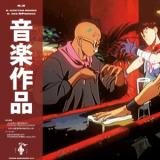
6.3 aka Ben DSP brings here two of the best tunes out on DSP records from the end of the 90s.
Electro Drugs from DSP 02 and Des SPérance from DSP 05.
Remastered by Stefan ZMK and cut by Simon Davey at 45RPM, those two tunes of 7/8 minutes lenght are pure pleasure to listen/mix.
Printed sleeve : visual by VSteeFDB showing the Akira scene in the bar, where the sample "c'est pas un night-club ici !" is taken from.
Enjoy !
он должен быть опубликован на 30.09.2026
The unconscious element to the conscious process.
The practice of dub techno and its tendrils is a fundamental for me, both aesthetically and from an engineering perspective.
I start every recording session with a dub inspired jam, the first piece I ever recorded in 1996 was an effort to recreate Phylyps Trak with only a Korg X3 and an Ibanez PUE5 (borrowed from Gary Howell). It was an awesome introduction to jamming, and the footing stones of noise, delay and saturation were explored with my foot hard on the enthusiasm pedal.
These practice jams are in some sense cathartic, the first step taken again & again, which helps me move forwards each session and additionally helps to 'warm the circuits' both of myself and the machines.
After realising the genius of Basic Channel is akin to the genius of peasant food, using every ingredient with nothing left to waste, (up to and including the oft maligned working noise of the machines themselves), this was a watershed moment for my own subjective progression. No longer tied to just emulation of something inspiring, but taking these learned tools into other areas of music helped to break free from a strong current of influence and also to progress into other areas with the new toolbox.
Dub:
The importance of the dub pioneers should never be understated, in modern music and my own practice. Yet with my initial inspiration being two german dudes issuing extreme techno variants with obscured label designs, who then signposted their listeners to their own inspirations (via their Wackies re-issues or nodded to on their Rhythm & Sound/Burial Mix sub-labels), meant that I started late and travelled backwards.
Learning to notice the live mixing of Mikey Dread or Lee Perry when the faders are bleeding through even when turned down, (echoed in BC's Quadrant Dub), or the brash send effects literally thrown into the mix also taught me that 'rough' mixing can inject a recording with life, uniqueness and the most right wrongness. Looking back Basic Channels very few elements helped me realise that the rules to be understood, are also the best ones to be broken.
Push the mixer into the red.
Amp that noise up from the tape delay cos it sounds sick.
Pseudo side-chain effects cos the kicks are way too loud and the mixer can't sum it nicely.
Spam the send knob into the delay units now, now and now.
Carelessness.
Noise:
Once I wrapped my head around the intrinsic 'noise' element that set those records apart, this became a torchlight into the alt noise movements which I was tentatively exploring at the time, and also is evidently a connection or thread into them.
Whether the Industrial/Post Punk UK scene (This Heat, TG, A Tent, F.E.) or the prolific output of the US Noise scene (Wolf Eyes, Live & Shave in LA, and subsequently following the lineage all the way back to Chrome's Alien Soundtracks), I had finally discovered a connection from techno to this 'free for all' corner of music.
This input from the Noise arena of sound is, in my experience, an all important step for a sonic artist, taking it's roots and extending out from Stockhausen/Pierre Henry and utilised/warped/mangled by thousands of adventurous pioneers ever since, I now see the line separating the high brow and the low brow is actually an artery carrying information from the head to the heart.
Vault is a selection of these jams that precede each of my solo recording sessions, for 30 years I've recorded hundreds of these 'workouts'. They are never intended as serious statements, just moments of naive enjoyment, yet most importantly they are time & space captured as practice.
The objective is always a warm up exercise, but sometimes those exercises turn a different corner, with a certain focus or direction dependent on what random samples are left in my machines from the previous session, instead of conscious choices, these unconscious elements can facilitate those 'positive mistakes' that make a piece of sound retain a different feel or colour and thus become special, or at least special to the creator.
I am quite conscious that the 'record everything' aspect of my ethos has been invaluable in cataloguing and saving these jams, while the attitude of carelessness during this process (after all, it's only a warm up jam) invites more enjoyment than seriousness ever could. Even if you don't feel the piece at the time, record it, because some years later it may well fit, or become relevant in a way you never intended.
-Miles
он должен быть опубликован на 30.09.2026

Товар уже находится на пути к нам и, как ожидается, будет доставлен из 01.10.2026.
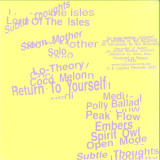
Neil McDonald's love of the outdoors is a constant feature in his music, hence his Lord Of The Isles moniker, a direct reference to the Highlands and islands of his native Scotland.
His vivid, effervescent and blissfully cinematic sound paints a soundtrack to unmade films, building imaginary worlds inspired by his childhood passion for science fiction. It is therefore no coincidence that the closing track 'Subtle Thoughts' samples the inimitable voice of Carl Sagan and is also the name of his forthcoming album on Lapsus Records.
Subtle Thoughts' is an album of sumptuous melancholic electronica that, like all his previous works, avoids being pigeonholed. In it we find ambient and IDM, but also breaks and down-tempo 4x4 beats with deep ruminations, and even passages akin to new age and Balearic. In Neil's own words, the real concept behind 'Subtle
Thoughts' is "The spaces in between. Listening to the quiet voices. Freedom of expression and being open. It also contains my hopes and fears for the future of our world, but mainly hope and love".
Subtle Thoughts' will be released on 8 December with two advance singles: 'Open Mode' accompanying the album launch on 7 October; followed by 'Return to Yourself' on 4 November.
Есть у нас в наличии и готов к отправке
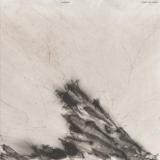
Garefowl is a project connected to the archipelago of St Kilda, Scotland. Ewan Macdonald and his father Murdo, relatives of one of the men who killed the last Great Auk (Garefowl), conceived the project to reflect on and mark this family history. Garefowl is an international collective of musicians combining strings and electronics: Nathan Bontrager (viola da gamba/harmonium/banjo), Stuart Graham (bouzouki/harmonica/harmonium), Chris Jones (concertina/mandolin), Ewan Macdonald (fiddle/smallpipe drone), Richard O’Flynn (island sounds/percussion/XRD drones), Jess Whelligan (cello).
Things That Vanish was recorded on Hirta, the main island of St Kilda, at night. The soundscapes of Hirta breathe across the record: a quiet rolling swell of winds, waves, birds, and the otherworldly thrum of the snipe. Taking influence from the traditional folk music of St Kilda, the tunes on the record are inspired by the threatened seabirds of the islands. The band were intrigued by the folk stories around these birds, and how they often are depicted to imbue a primal, dark and haunting nature. In such tales, the birds retain a quality akin to a sea monster: preying upon calves and sheep, and believed to be the pelagic souls of drowned sailors or the cursed spirits of cruel captains.
No synthesizers were used on the recording. Instead, the production draws entirely on sampled and processed field and hydrophone recordings collected on St Kilda. Additionally, drones were created through a process pioneered by Richard O’Flynn and Joe Gardner. Rock or bone samples are analysed using X-ray diffraction (XRD), which creates a spectrum with peaks corresponding to the sample’s chemical composition; this spectrum can then be mapped to sine waves, forming a drone.
он должен быть опубликован на 02.10.2026

At this point, the vast swathes of unreleased Muslimgauze material Bryn Jones left behind when he passed away over 25 years ago are as legendary as any of his work. And sure enough, there's still some being unearthed today.
The fourth entry in a 7" single series is taken from one of Jones' customary completely unlabelled DATs, which he sent to labels seemingly as fast as he finished them.
A new series of singles collecting one of Bryn Jones’ innumerable DAT tapes that would show up at the labels he worked with sans any identifying marks.
Side A layers multiple voices (a background, faraway wail that either is or is akin to a muezzin, and a flatly declaimed two-word phrase that periodically halts proceedings) over his classic, slightly brick-walled hand percussion for a strangely meditative experience, as Jones phases elements in and out, more or less prominently in the mix. Side B however, open in a surprisingly dreamy place for Muslimgauze, with a looped ascending synth pad and beautiful sampled singing only gradually acquiring percussive accompaniment. As with the other side, Jones is content to let these elements interact and swap spaces in the mix for the duration, trusting in the sturdiness of his chosen components to carry the listener through.
он должен быть опубликован на 02.10.2026

Berlin-based producer and live act Volkan Akin lands on Secret Society with a brace of finely tuned minimal house sounds for the small hours. 'Famosus' is stripped back but not lacking in clout: the drums and bass are tightly coiled while the hits pop out of the mix as a soft acid line wiggles endlessly in the middle of the mix. Franco Cinelli remixes with a bolder sense of swing and trippy vocals that are like voices in your head. '2SHY4' is the other original and is dry, dusty tech house with jazzy chords softening the edges and bringing some warmth, then Thomas Melchior remixes with his masterful touch and distils everything into deft, hypnotic grooves.
он должен быть опубликован на 05.10.2026

Creole Culture is the triumphant return of Dawn Richard’s King Creole era. Steeped in history but with its flag planted firmly in the future, Creole Culture pulls elements from Richard’s heritage as a Black and Native American woman who has spent a lifetime making and engaging with music. Following New Breed (2019) and Second Line (2021), Creole Culture is akin to a panel of a triptych: a fully-realized sonic and narrative universe in which Richard, as King Creole, rebuilds her hometown of New Orleans in her image. She not only honors her city for what it was or what it gave her, but stakes a claim for it as a cradle of global culture now and for all time.
Creole Culture follows two acclaimed avant-garde R&B albums with composer Spencer Zahn — the later of which, 2024’s Quiet in a World Full of Noise, found Richard exorcising the specters of grief and trauma in the wake of her father Frank Richard’s health struggles and the killing of her cousin Cisco. It is a softer take on the brass-soaked swagger of Richard’s previous King Creole efforts, an evolution brought about when she realized she had left a crucial viewpoint out of her exploration of New Orleans: her own. “New Breed was the story of New Orleans through my father’s eyes,” Richard explains. “I used his samples, his music, his cultures, his work with Chocolate Milk, his side of the family. Second Line was my mom — her interludes riddled the album with her depiction of what is meant to be a Creole woman in New Orleans. The masculine and feminine sides of King Creole had expressed themselves through them, but the story felt unfinished, like my version of the story was untold.”
That story is, for lack of a better word, complex: at turns triumphant and tragic, sexy and mournful, braggadocious and contemplative. Creole Culture presents Richard’s New Orleans as a utopian soundscape — an intoxicating blend of R&B, soul, hip-hop, pop, and jazz — that’s survived and thrived despite the dystopian circumstances visited upon it. Richard presents the melange of influence and artifact on Creole Culture with the care of a botanist nurturing new hybrids in a rose garden.
What emerges from that care is at once delightful and unexpected, enlisting a crew of guest stars including Big Freedia, Anjelika “Jelly” Joseph, Tarriona “Tank” Ball, and Durand Bernarr for features that play against type. Tank’s turn at spoken word verse on “l v r” serves to add dimension to King Creole’s New Orleans, as does Joseph’s undeniable voice on “chuuuurch.” “I’m not normally a features girl,” says Richard, ”but King Creole can’t build a world from scratch without help. What’s beautiful about the features here — which is also true of my band and producers — is they come from people who understand the materials of the world they’re from, they’re people I love, and they’re people who are just extraordinary at what they do. They’re part of the atmosphere of this place. You need them for the record to breathe.”
In the end, that’s what King Creole creates: a space where Dawn Richard can breathe, can be at peace with herself, and let loose with others. From finding love in opening single “enough” to relishing in the Afrocaribbean futurism of “fiesta,” Creole Culture is a tremendous, freeing breath of fresh air. It captures the resolve of a woman and a place who’ve survived the unimaginable and sees the future not as something to be endured, but as something to be created. Dawn Richard has been making that future one album at a time over the course of her career. Creole Culture is her most stunning one yet.
он должен быть опубликован на 09.10.2026

Black Vinyl[25,00 €]
Creole Culture is the triumphant return of Dawn Richard’s King Creole era. Steeped in history but with its flag planted firmly in the future, Creole Culture pulls elements from Richard’s heritage as a Black and Native American woman who has spent a lifetime making and engaging with music. Following New Breed (2019) and Second Line (2021), Creole Culture is akin to a panel of a triptych: a fully-realized sonic and narrative universe in which Richard, as King Creole, rebuilds her hometown of New Orleans in her image. She not only honors her city for what it was or what it gave her, but stakes a claim for it as a cradle of global culture now and for all time.
Creole Culture follows two acclaimed avant-garde R&B albums with composer Spencer Zahn — the later of which, 2024’s Quiet in a World Full of Noise, found Richard exorcising the specters of grief and trauma in the wake of her father Frank Richard’s health struggles and the killing of her cousin Cisco. It is a softer take on the brass-soaked swagger of Richard’s previous King Creole efforts, an evolution brought about when she realized she had left a crucial viewpoint out of her exploration of New Orleans: her own. “New Breed was the story of New Orleans through my father’s eyes,” Richard explains. “I used his samples, his music, his cultures, his work with Chocolate Milk, his side of the family. Second Line was my mom — her interludes riddled the album with her depiction of what is meant to be a Creole woman in New Orleans. The masculine and feminine sides of King Creole had expressed themselves through them, but the story felt unfinished, like my version of the story was untold.”
That story is, for lack of a better word, complex: at turns triumphant and tragic, sexy and mournful, braggadocious and contemplative. Creole Culture presents Richard’s New Orleans as a utopian soundscape — an intoxicating blend of R&B, soul, hip-hop, pop, and jazz — that’s survived and thrived despite the dystopian circumstances visited upon it. Richard presents the melange of influence and artifact on Creole Culture with the care of a botanist nurturing new hybrids in a rose garden.
What emerges from that care is at once delightful and unexpected, enlisting a crew of guest stars including Big Freedia, Anjelika “Jelly” Joseph, Tarriona “Tank” Ball, and Durand Bernarr for features that play against type. Tank’s turn at spoken word verse on “l v r” serves to add dimension to King Creole’s New Orleans, as does Joseph’s undeniable voice on “chuuuurch.” “I’m not normally a features girl,” says Richard, ”but King Creole can’t build a world from scratch without help. What’s beautiful about the features here — which is also true of my band and producers — is they come from people who understand the materials of the world they’re from, they’re people I love, and they’re people who are just extraordinary at what they do. They’re part of the atmosphere of this place. You need them for the record to breathe.”
In the end, that’s what King Creole creates: a space where Dawn Richard can breathe, can be at peace with herself, and let loose with others. From finding love in opening single “enough” to relishing in the Afrocaribbean futurism of “fiesta,” Creole Culture is a tremendous, freeing breath of fresh air. It captures the resolve of a woman and a place who’ve survived the unimaginable and sees the future not as something to be endured, but as something to be created. Dawn Richard has been making that future one album at a time over the course of her career. Creole Culture is her most stunning one yet.
он должен быть опубликован на 09.10.2026

Moulded By Industry is William D Drake's six album, his first for ten years and a return to the richly layered sonic texture and epic production of his majestic Briny Hooves. He is joined by long time collaborators James Larcombe, Dean Gaisburgh-Watkyn and Steve Jackson, with the addition of a new crew member, singer Treana Morris. Moving on from his nine years of pianistic and compositional duties in Cardiacs, Drake's solo work has been known for its synthesis of Mellotron-driven grandeur with a surreal playfulness.
But the deep heart of Drake's work is in its powerful evocation of the landscape of the countryside and its connection with love, longing and loss. To this end, his own enigmatic lyrics have rubbed shoulders with poetry drawn from across the centuries. From obscure sources such as Samuel Spree to the poetry of Thomas Hardy and Rupert Brooke, his settings make old words shimmer with human emotion. The texture of his music also reflects an inspirational lack of concern for distances of time. The earthy breath of his harmonium is interwoven with tones teased from archaic instruments by James Larcombe – hurdy-gurdy, dulcitone and melodeon.
But Drake's sound-world is no museum. Here, ancient words and the timbres of ancient instruments become one with the rush of a moment's emotion. Moulded By Industry brings this approach a new sonic depth, intoxicatingly shaded by Treana's lush vocal harmonies and underpinned by Steve's rhythm. Dean's evocative guitar textures give an oceanic sense, tinged with Americana, recalling his work with Drake in their alt country band Nervous. These many layers of sound are drawn together into vivid soundscapes by the painterly mixing of producer Ott. Renowned for his work in electronica and dub, Ott's two decades of experience working with artists such as Sinéad O'Connor, the Orb and Brian Eno bring an organic touch here, more akin to the elemental forces of land and sky than grid electricity. More than any of Drake's previous albums, Moulded By Industry reignites the emotional urgency of old texts. The gorgeous single The Flickering Shade, haunted by glimmers of lost possibilities, is set from words by Thomas Ashe. Turtledove's heady evocation of the blissful madness of love sets the words of an anonymous 17th century ballad. above all, the album is a testament to Drake's love of John Clare, 'The Northamptonshire Peasant Poet'. Clare wrote as the centuries old process of enclosure, in which wild and common land was appropriated commercially, was accelerating.
His works, rather than representing simple sentimentality, are passionate love poems to the landscape and cries from a soul reeling from the creeping unfamiliarity devouring it. This sense of the tension between passion and ill-ease has its most potent expression in Green Shadows. The brooding, slow-tempo energy of Steve's drums drive a horizon-wide lament, alternately lulled by Treana's vocal textures and made restless by James' plaintive hurdy-gurdy and the emotive pull of Dean's slide guitar. The present moment is also a time of enclosure, both metaphorically, as our lives, memories and emotions are drawn into the commercial space of social media, and literally as land and water are swallowed by vast data centre developments. Moulded By Industry celebrates a regained sense of being in the moment in the landscape, in life and in love. The album closes with the utterly delightful single Love In The Universe. The kind of song that could make a cynic use the word 'joyous' without irony, this Harry Nilsson-esque romp reassures us, with a wink, that 'in an infinite universe everything has its place ... even the human race'.
он должен быть опубликован на 09.10.2026

Imagination Lady is the fifth long-player for Stan Webb's Chicken Shack and was originally released in 1972.
Much in the same tradition as the great British bluesmen Alexis Corner and John Mayall, Webb's revolving-door personnel landed the band several notable members. For this album, Webb (guitar/vocals) gathered a trio consisting of himself, future Gods and Jethro Tull member John Glascock (bass), and Paul Hancox (drums). As with the previous Chicken Shack long-players, this disc features several Webb originals augmented with some well-chosen cover tunes.
The album opens with a ferocious cover of B.B. King's "Crying Won't Help You." In a style akin to the Faces or even some of the rowdier moments from the Peter Green-led Fleetwood Mac, this trio grinds out the blues with a decidedly English edge, followes by the folkie "If I Were a Carpenter". "Daughter of the Hillside" & is Webb's most impressive contribution to the album. This straight-ahead rocker is an ideal trio effort recalling the intense instrumentality of Cream or early Led Zeppelin. The closing number "The Loser" is upbeat and almost pop-oriented, again displaying the immense strength of this Chicken Shack line up.
Imagination Lady is available as limited numbered edition of 1000 copies on red vinyl and comes in a gatefold sleeve.
он должен быть опубликован на 09.10.2026
Gatefold Style - 180gm
Sycophant is the first offering of recorded music from the polymathic Tāmaki artist Hun Lynch.
Recorded almost entirely at her house on a bedroom setup, Hun wrote, played and produced
almost every element on the album (with the exception of one drum track contribution from the
master Cory Champion). Sycophant guides us through lucid cinematic scenes saturated in
hypnotic choral vocals, driving guitar loops and synth-work akin to musique concrète.
Sycophant is a meditation on rediscovering one’s spirituality after both being rejected by and
rejecting organised religion. The processing of these experiences becomes a lamentation of
Christianity’s participation in the colonial rupture across Te Moana-nui-a-Kiwa, from which the
album was born. Grappling with co-existing states of love, guilt, fear, lust, grief and hope.
Pulsing between feelings of grandiosity and insignificance, between the atavistic, animal
experience of being alive and the existential, cerebral confusion of playing a part in the current
world. At the same time, Sycophant is an expression of love and devotion to Hannah’s family
and friends and everyone she knows and doesn’t know.
Created with awhi and guidance of Noa records and Navakatoa Tekela-Pule’s unending support and friendship.
Tracklisting:
Есть у нас в наличии и готов к отправке
![Maher Shalal Hash Baz - Faux Départ [LP]](https://www.deejay.de/images/l/6/9/1252969.jpg)
Welcome Tori Kudo back to A Colourful Storm with a new edition of Maher Shalal Hash Baz's Faux Départ, a document of a stateside tour that culminated in a recording session at the legendary Dub Narcotic Studio with a one-time ensemble of Greg Saunier and Chris Cohen (Deerhoof), Andrew Maxwell, McCloud Zicmuse, Arrington de Dionyso, Takashi Ueno, Saya Ueno, Naoki Otani, Akiko Hotaka, Masaaki Endo and Naoki Otani. Always spontaneous, never rehearsed. Music in and of this world, seemingly teetering on the verge of collapse.
"We flew to the US for a show with Red Crayola in Los Angeles and initially stayed at Rick Potts' house. There, I met up with The Curtains and hit the road in their car. We headed north, writing down every melody that came to mind. I slept in the gap between the wall and the sofa and got interrupted by a herd of cows along the way, but I finally arrived in Olympia and recorded all the melodies I'd written down, which became Faux Depart. There, I found McCloud, a noble beggar who was sleeping in the studio and playing the bassoon on the street." - Tori Kudo, 2026
"Chris Cohen, who played in Deerhoof from 2001-2006 or so, was an obsessive Maher fan. When our other band, The Curtains, was given a chance to support Maher on a West Coast tour, we got to see up close how Tori leads - often by not leading. He is an unpredictable, wild musical genius and card-carrying eccentric." - Greg Saunier, 2026
он должен быть опубликован на 16.10.2026
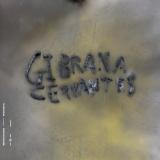
Verdad Y Error (2026) resides in the tension between the thrashing of external noise and beating centred internal calm. Gibrana Cervantes is known for her work across experimental music and contemporary performance, a practice with focussed intensity and surging physicality, often pushing the limits of endurance, presence, and embodiment. A central axis of her performance practice is her ongoing collaboration with acclaimed choreographer Florentina Holzinger, including composing the music for SEA WORLD (2026), Florentina Holzinger’s critically acclaimed installation for the Austrian Pavilion at the Venice Biennale. Alongside this, she is a core member of the experimental ensemble Amor Muere (Mabe Fratti, Concepción Huerta, and Camille Mandoki). Cervantes maintains an active recording practice that directly informs her live output including her collaboration Memoria (2025), with Colombian Drone Mafia (Nyksan) for Ambie-Tón (Tratratrax),
Verdad y Error is a record of her artistic approach which expands her body and the violin’s horizon of possibility to near breaking point. Cervantes uses a register closely associated with Metal, yet buried deep in the alchemy of these pieces are motifs which hark back to her classical background. Across these pieces the violin is used as an instrument with a fragmented and shifting voice — blurred, repeated, and reshaped through distortion. “Many of these pieces come from images, memories, and sensations that have stayed with me for years. I'm interested in the blurring of what actually happened and what time transforms.” The recordings are built with layers of violin tones which oscillate between recognisable, processed, stretched and shifted, and lay embedded in a frequency stratum of volatile static and noise. “The violin on this album doesn't appear as a clean instrument. I process it, repeat it, distort it, and multiply it until it begins to feel more like memory than melody. Something blurry, shifting, difficult to grasp.” The origins of the album were born at a time when Cervantes was seeking inner calm amidst a relentless external noise, questioning the validity or possibility of memory and its radically changing perception in relation to experience. Subsequent reflection on this contemplative moment allowed her to develop a relational music which moves through memory, erosion, repetition, and emotional ambiguity. Creating a space that feels both intimate and unstable, mercurial with the patina of lived imperfection.
Akin to the unreliable narrator and linguistic instability, each piece functions as an emotional landscape suspended between clarity and confusion. An album which balances melody, brutality, fragility and noise
throughout its sprawling recordings and artwork, which operates as an analogue to the music. The visual world of the album developed in collaboration with Mauro Ventura was compiled across various media with a mix of handwritten texts, burned typography, metallic textures, and fragile physical materials. “I wanted the record to feel tactile and imperfect — something emotionally direct but physically worn.” says Cervantes. More than offering explanations, verdad y error exists as a conversation between memory and disappearance, noise and stillness, truth and error.
он должен быть опубликован на 16.10.2026
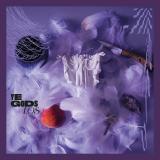
In William Blake’s Jerusalem, he argues that imagination itself is “The real and eternal world of which this vegetable universe is but a faint shadow” – it seems Antoni Maiovvi, would agree. Especially given that Ye Gods, his latest and most monolithic project to date, arrived directly from a dream. In this dream, Jaz Coleman of Killing Joke took him to task for easing off on his longtime study of hermetic ritual magick, and instructed him to atone by making a record under the name Ye Gods. Convinced this path was the correct one, he was duty bound to comply.And sure enough, the Ye Gods project began to evolve and metamorphosise, until this vehicle for ‘Occult Devotional Electronics’, became a beast capable of delivering ‘Los’ the towering and transformative new album for Rocket Recordings. Rich with texture, emotive songcraft and cinematic atmosphere across three expansive tracks, it’s a work that breaks new ground for this intrepid polymath. Somewhat akin to the creative deep-dive that Scott Walker took int
он должен быть опубликован на 16.10.2026
Compiled onto one vinyl album for the first time, Landlocked (Numbers, 2026) presents Hallucinator’s 1999 debut album originally released under Mark Ernestus and Moritz von Oswald’s label Chain Reaction. Writing much surrounding the culture of what would be later considered ‘Dub Techno’ and its’ primary distribution center, Hard Wax, leads one down roads of shifting primary sources and decades old overheard smoke break recollections. Maybe brevity primes the listener to the paralinguistic to approach the sound on its terms; focusing on how things are uttered and not what.
This theory will remain unconfirmed. Hallucinator original press release left us with three or so gestures to consider over the years since:
“A new act on CHAIN REACTION”s distinct productional thesis. HALLUCINATOR are 3 people from he UK/London and this their first release ever- that’s all what the artists want to let us know…. This record is dedidacted to the memory of Stephen Lawrence!”
The first gesture is one of personnel. Since ’99, we’ve gotten to learn a bit more about the artists behind the Hallucinator project. All London-based, all writers, composers, and sound-designers— Anna Piva, Edward George, Trevor Mathison. These three seem to flow between parameters as aesthetic tactic and tacit structure to the work itself. For example, other collaborative shapes have come from this lineup including Flow Motion (Piva, George and Mathison) as well as the now defunct Black Audio Film Collective of which George and Mathison are founding members.
The second gesture is in the second line of the previous press release, “distinct productional thesis.” Much of Landlocked’s affect and sequencing seems to suggest an emotional study of entropy at the level of sediment. Rhythms play with space and capacity through polyvalence. The production chose subtractive vertigo, often switching and bringing back in elements that vanished from the track 6 minutes ago. Dubbing out so much of a track, one begins to associate sound akin to memories held in the experience of running your hand across a concrete block as a child. Felt (re)memberance in lieu of narrative tale. Using textures that flicker between colour and percussion, Hallucinator’s 12-tracker of loudspeaker perception music might be a mediation on the psychic wake of the Cold War. Intermittent strata of ambience and groove convects an active margin rifting event underneath a scorched geology of power in Western Europe. Again, this is all grapevine hearsay.
But it’s silence that voices the third gesture. The album’s sparse application of the written word touches on the ennui paradox of being landlocked on an island. Stuck. Trapped in the psychosis of occidental hypercentricism. A looping silence of Black British tragedy: “to the memory of Stephen Lawrence”. 18 year-old Lawrence was stabbed to death at a bus stop in southeast London by six white men in 1993. The rift of grief and implicit reiteration of modern subordination left by this hate act went legally silent for almost two decades until Lawrence’s killers were ultimately sentenced to virtually life in jail in 2012. Only six years removed at the time of Hallucinator’s initial invocation of rememory, the mind-numbing accretion of what Black Studies Professor Denise Ferreira da Silva might call “unpayable debt”, finds demonic ground across Landlocked, forming an aural sense of what continues to be refused.
The album ventures through spaces of overactive non-happenings: ‘Red Angel’’s factory floor dub flashes between smokestack and jungle visions, or the halfway mark’s stilted breath of ‘Dusk’ lending its mood to the sort of sedated dreams built from daily life under colony rule for instance. That linked rhythm links us back to our linked fates across Black and Brown folk is real, thus the syncopated signals through this work behave on the level of transnational radiotelegraphy, sounding out its windswept tension of a body negotiating a meat-grinder schema of linear production and wage for others to know that unspeakable thing can be broadcast in every drum tongue.
As the silence continues to reverb, we return to the sort of meaning-making that cannot be told but felt. Soothing to some, disturbing to others. Landlocked, a Rorschach test for a crumbled empire.
он должен быть опубликован на 19.10.2026
Hanne Lippard and Renato Grieco's Today's Special is a suite of language works synthesising melody and diction that integrates the literary and the audible in a repertoire of songs that bask in the melody of voice and the punctuations of structured composition. Working with methods of reduction rather than opulence in both tonal composition and rhetoric, each piece pegs the poetic to the musical with compositional schematics and methods. It is important to state that there is little to none improvisation here, instead, the duo set up matrices, rules and structural links that facilitated meaningful locus of exchange between their two practices. Lippard's texts are a collection of new and previously completed works. In these, as is typical for her work, she enjoys the easy pleasure of wordplay, iterative language, and decontextualised anecdote, as in opener Portrait of a Betrayal, a piece about the loss of a phone and the way it haunted the owner who dropped it, based on a lived experience. Grieco's instrumentation works with Lippard's language art as a form of acoustic typography. "I studied graphic design and I think about how you can express typography through voice," she says. "Renato's use of the viola da gamba becomes like an underline, or a font's brushstrokes, in ways that feel typographical." In this, the classically-trained composer Grieco often finds and echoes the pitch movements of Lippard's voice, intonation mirrored and revealed, linguistic meaning doubled and shadowed by plucked, strummed or bowed strings. His main instrument is the viola da gamba, the instrument considered closest to the human voice for its tonal range and ability to mimic inflections and timbre, and here he brings it even closer to the voice, building systems by which it moves with and around Lippard. He also plays piano and Wurlitzer, and joins her in speaking on Receiver and in conversation for final track The Black Rose. "Hanne's voice is an artist's voice, embodied as the artwork itself," he says. "But where my approach is from the perspective of a composer, hers is around rhetoric and language. We worked towards each other in this sense, Hanne finding a space to welcome my voice, and me designing an acoustic space to enhance her vocal persona." In some tracks the structural connections are obvious - the matched tumbling delivery and stepped pitches of voice and piano in Aficionado sounding like two tipsy friends descending a staircase. In others, like the triptych of tracks Three Rungs Ladder, structured with rules derived from nursery rhymes, or cumulative song (akin to the 12 Days of Christmas). For the Colour 1 and Colour 2 pieces, the duo worked from palettes of colours connected to clusters of harmonies, which underlined the power of the word and its articulation. The absurd Labradorable personifies a people pleaser, A Story About Being Blue is an imagined playful monologue from the Deep Blue supercomputer - requesting in sing-song stop motion to be called Debbie, and Larry - as Grieco echoes in factual reportage. Hurtbeat unpacks and recomposes a tweeted non-apology by a Russian art collector about owning a piece of racist art, Grieco shadowing Lippard's generating a third `drop-shadow' performer from the resonances between the duo, typographic re-articulation of the source material. The Receiver includes lines from Robert Ashley's Improvement (Don Leaves Linda), Ashley existing as a spiritual parent of sorts to the practices contained on Today's Special, and here interpolated as if he is being quoted and written through within the audible world of the piece in a palimpsest of borrowed sentences. Closing track The Black Rose contains its own self-aware comedy, a lightly distorted conversation sourced from a Reddit thread about whether black roses exist, recorded as if it were an internet radio or a low budget podcast, the casual exchange stilted in the delivery of platitudes as scripted speech. Today's Special was developed in person over the course of a series of small residencies - at Deutsche Akademie Rom Villa Massimo, Rome; Fondazione Morra, Napoli; Callie's, Berlin. In these limited periods that rarely stretched beyond a week, Lippard and Grieco developed strategies for the works, keeping tightly locked to musical concepts. This, for Grieco, is about maintaining a solid, meaningful connection within the compositions, and committing to everything having a purpose for existing within the work. Each element pulls its weight; has something to say, literally and metaphorically speaking. In the same way that Lippard's work leaves nowhere for her to hide, he wants the music to exist with its own naked purpose: "It's is about exposing nudity via reduced materials," says Grieco. "This is a form of courage we want to embrace. Once we take off everything, it needs to be extremely precise to maintain a connection with the audience. We have a lot of tools to hide behind now, to protect ourselves and our identities as artists, performers, and in life more generally. It's something I don't want to do. I want extreme reduction: no hiding."
он должен быть опубликован на 30.10.2026

Finnish-American guitarist Raoul Björkenheim and Norwegian drummer Paal Nilssen-Love join forces on their new album PING, released by We Jazz Records on 30th October on LP, CD and digital formats. Recorded in Helsinki, the album finds the seasoned duo firing on all cylinders and delivering a remarkable set of contemporary free music.
PING brings together nine excursions beyond “guitar + drums” and way beyond “free jazz”. That being said, those are still good touching points for the music that is wild, imaginative, raw, yet also at times delicate and introspective. Friends and collaborators for decades in groups such as the lauded Scorch Trio, Raoul and Paal have the history and the trust to create memorable and original improvised music that stuns and moves the curious listener.
Raoul Björkenheim (b. 1956) is a Finnish-American guitarist and composer who has been creating original music for the past four decades living in New York City and Helsinki, where he is presently based. Describing his on-going work as investigative guitarism, he is best known for an expressionistic and lyrical guitar style. Björkenheim’s eclectic discography numbers 50+ albums, ranging from ambient soundscapes to visceral free jazz, from duo to big band. His large-scale works for symphony orchestra have yet to be recorded, and he has also composed scores for over ten films and dance productions. Björkenheim has collaborated musically with Bill Laswell, Toshinori Kondo, William Parker, Mats Gustafsson, Hamid Drake, Ingebrigt Håker Flaten, Gerald Cleaver, Henry Kaiser, Lukas Ligeti, Morgan Ågren, Paul Schütze, Edward Vesala and Juhani Aaltonen, for the labels ECM, Rune Grammofon, Cuneiform, Tum Records and Long Song records. Björkenheim has been awarded various prizes including the Emma prize for best jazz recording of the year, and been nominated three times for the Nordic Music Award.
Paal Nilssen-Love (b. 1974) is a Norwegian drummer, composer, bandleader, and producer known for his central role in Scandinavian free jazz and improvised music. Since the mid- 1990s, he has appeared on more than 280 albums, including 70 released through his label, PNL Records. He has performed with influential groups including Atomic, The Thing, Peter Brötzmann’s Chicago Tentet, Scorch Trio, and Frode Gjerstad Trio, and collaborates regularly with artists such as, Ken Vandermark, Akira Sakata, Otomo Yoshihide, David Murray, Arto Lindsay and more. Paal Nilssen-Love’s fascination with traditional and experimental music has taken him around the world. Since his first visit to Ethiopia in 2009, he has built strong connections with musicians and artists in Addis Ababa, leading to collaborations, performances, teaching, and artist exchanges with Norway. Since his first trip to Brazil in 2013, he has returned regularly, developing collaborations with artists and musicians across the country. His musical explorations have also brought him to Tsugaru and Aomori in northern Japan, where he has developed an interest in the region’s traditional music. Nilssen-Love is also an active organizer and educator. He started both Oslo’s all-Ears festival, the Blow Out festival and FRAM Kunstfest, and has led workshops internationally and in Norway.
он должен быть опубликован на 30.10.2026

Colorful, powerful and elegant. A watershed masterpiece that embraces before then and after that by Kiyoshi Sugimoto, the master of the era.
Since turning professional in 1960, Kiyoshi Sugimoto has been active in many sessions and recordings. From the latter half of the 1960s, he joined groups such as Hideo Shiraki, Akira Ishikawa, and Terumasa Hino, gaining attention and solidifying his position with leader works such as “Country Dream” and “Babylonia Wind.” This work was recorded with Akira Ishikawa, Hiromasa Suzuki, Takao Uematsu and others right after studying in America for about a year. Starting with the groovy and luscious “Our Time” and “Marmalade Sky”, the dubious keyboards of “Jones Street”, and the melancholic and beautiful “Quiet Pulse”, it can be said to be a gap between jazz rock and fusion. There are attractive songs. This work represents Sugimoto’s work in the mid-1970s.
он должен быть опубликован на 06.11.2026

Hiromasa Suzuki, the hidden force behind Hiroshi Suzuki’s ""Romance"" and Jiro Inagaki’s ""Breeze,"" gathered a superb lineup of musicians and perfected the crossover sound on this masterpiece.
Hiromasa Suzuki was a composer, arranger, and keyboardist who played an active role not only in jazz, but also across the wider Japanese music world, including kayoukyoku, film, television, and commercials. From the late 1960s through the mid-1970s, he was deeply involved in works by Terumasa Hino, Akira Ishikawa, Jiro Inagaki, and others during their most cutting-edge periods, fully demonstrating his remarkable skill. His innovation, always one step ahead of the times, reached a kind of culmination in this work, recorded in 1976. Featuring young Shuichi “Ponta” Murakami, Akira Okazawa, and Masayoshi Takanaka, this is a masterpiece of pre-fusion and crossover.
он должен быть опубликован на 06.11.2026
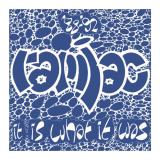
Ramjac Corporation, aka Paul Chivers, emerged from the UK's late-'80s rave underground, performing live at parties like Sunrise, Energy, Back to the Future, Fun-da-Mental and Synergy. Building tracks with an Atari computer and an E-MU 12-bit sampler, turning severe technical limitations into raw, elastic club music, 88-92: It is What it Was gathers music born in bedrooms then tested in front of crowds at warehouse raves, while the culture was still inventing itself without boundaries, completelyfree.
Ramjac was the original artist on Irdial Discs, following label founder Akin Fernandez's Aqua Regia, and introduced Lee Purkis' In Sync and Neuropolitique to the label, shaping the singular catalogue of that extraordinary imprint alongside Luke Slater's Morganistic, Thee J Johanz and Anthony Manning.
That legacy is now revisited by Musique Pour La Danse, with the release of a limited edition vinyl and digital edition featuring extended liner notes by Nick Halkes of XL Recordings, Positiva and Kicks Like A Mule fame, who witnessed the early Ramjac period first-hand. The release is illustrated by Grant Fulton, who created the visual identity for The Shamen's Synergy events and Orbital albums.
This album presents music written exclusively between 1988-92 and forms the foundation of Ramjac Corporation's ongoing live performances. Restored from the original floppy discs, the recordings preserve the uniquerelationship between early digital technology, sampling culture and live improvisation that defines the Ramjac approach.
Mixed for release for the first time by Trevor Lancaster-Smith, whose 90s engineering work encompassed Leftfield, Faithless and Roni Size, the album brings these compositions into sharp focus while preserving the character of the original instruments and performances. Not just a historical document, 88-92: It is What it Was is a living body of work: music created then, realised now, and continuing to surprise and evolve.
он должен быть опубликован на 06.11.2026
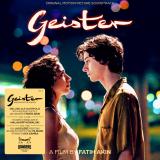
RADYO BOMBERO - ABOUT THE LABEL
Radyo Bombero is the record label founded by acclaimed filmmaker, author, DJ and record collector Fatih Akin. Born out of his personal passion for vinyl and film music, the label will initially focus on soundtracks from his films: previously unavailable works will be released on vinyl for the first time, while out-of-print titles will return as carefully produced reissues. Its inaugural release is the soundtrack to Akin's new film Geister, scheduled for release in November 2026. Further projects are already in development.
ABOUT THE RELEASE
MALAKOFF KOWALSKI - GEISTER
ORIGINAL MOTION PICTURE SOUNDTRACK
Composed by Malakoff Kowalski, the soundtrack to Fatih Akin's Geister is the inaugural release on Radyo Bombero.
Born in the United States, raised in Hamburg and now based in Berlin, Kowalski is a composer, pianist and multi-instrumentalist whose work moves between film music, contemporary classical composition, theatre and pop. He composed the music for eleven films by Klaus Lemke, as well as for productions including Schweigend steht der Wald and Stasikomödie. His solo work has been released by MPS and Sony Classical, and he has collaborated with artists including 2raumwohnung, Igor Levit, Chilly Gonzales and Nils Frahm. His sound combines elegiac melodies with a warm, cinematic atmosphere and a subtle sense of unrest beneath the surface.
For Geister, this distinctive musical language meets Fatih Akin's vision of a deliberately anachronistic and romantic score: a tribute to Ennio Morricone's great love themes that plays a defining role in the film's tragic love story and atmosphere.
LP 1 contains Kowalski's complete original film score.
LP by JUGGLERZ opens up a second musical world, bringing together four productions by the internationally successful Jugglerz on a four-track 12-inch disc at 45 RPM: the film's title song Ya Mami, performed by Aya Samra; Mood by Cloudee, Milaa and Jugglerz; Tip by Jugglerz, Limitlezz, Maureen and Demarco; and Beirut Nights Riddim. The four tracks bring Arabic tarab and contemporary Levantine pop together with hip-hop, urban beats and dancehall rhythms.
FATIH AKIN ON RADYO BOMBERO
"Radyo Bombero is on the air. Don't miss a tune!
"
Music is - alongside cinema and literature - a fundamental source of inspiration for me. Having grown up in the 1980s, the way I listen to music has hardly changed: I buy records, listen to them carefully and then copy them onto a portable device. It used to be a Walkman, then an iPod - today it is my smartphone with my playlists.
I do not use Spotify or any other streaming services. Why that is, I do not know. In most other areas, I try to keep up with technological developments. Not with music. I like unpacking a record, cleaning it before listening, holding the sleeve in my hands and reading who worked in the studio, who wrote the music and where the record was made. These things interest me. And they lower my cortisol levels.
Music plays a major role in my films. It is not that, as a director, I want to impose my favourite music on the audience. The music must always serve the story. In Head-On, for example, it tells us something about the characters and their biographies. Crossing the Bridge - The Sound of Istanbul is the musical portrait of a city. Its music tells us about the people who live there: where they come from, the cultures they brought with them and how those cultures have merged with local traditions. The Cut was conceived as a Western, and the music had to help reinforce that idea.
Geister tells a tragic love story. The music was meant to be gloriously anachronistic. And romantic. Just like the light and colours, it had to shape the atmosphere of the film. My films are often about cinema itself, and Geister is no exception. Its music is a tribute to Ennio Morricone's great love themes.
In Malakoff Kowalski, I found the perfect creative partner. He immediately understood my idea and realised it brilliantly. That made it all the more painful when I was told by the music industry that there could be no soundtrack release for Geister because soundtracks were too expensive to produce and would simply sit on the shelves.
It is not as though I am a spoiled child who absolutely has to have a lollipop. But this music is simply too good to withhold from the audience. The idea that there would be no soundtrack release felt like a great injustice.
Then several friends and collaborators advised me to release the record myself. No sooner said than done. But Radyo Bombero is not a one-off project. Geister is only the beginning.
Finally, I have the opportunity to gradually release all the soundtracks from my films that have remained unavailable. Soundtracks that were previously released but have since gone out of print will also return as reissues.
Hainbach's soundtrack to Amrum is already in development, as is a double album featuring the unforgettable German pop songs from The Golden Glove. And, finally, a vinyl soundtrack to Head-On.
Fatih Akin
он должен быть опубликован на 13.11.2026

Across time and beyond genre, this is an audio component test record that continues to earn universal acclaim. Drop the needle and unleash the fateful grooves etched into its tracks.
The rediscovery of this album—originally produced as a test record for high-end audio systems—stands as one of the great rewards brought about by the rare groove movement. The project was led by the visionary Katsunori Ishida, who would later become renowned as a producer, composer, and arranger for numerous television and film soundtracks. Gathering an exceptional line up of musicians including Shuichi “Ponta” Murakami, Akira Okazawa, Mikio Masuda, Kenji Ohmura, and Tantan, Ishida crafted a sound that is both tight and sophisticated.
Tracks such as “Cool Head” and “Son Of Pin Head” showcase grooves that are at times as powerful as a hammer blow, and at others as thrilling as a rushing torrent. The musicianship, precision, and dynamic energy throughout are simply outstanding. Today, thanks to its remarkable level of craftsmanship and commanding presence, this album is recognized as a true masterpiece, admired and celebrated far beyond the boundaries of any single genre.
он должен быть опубликован на 13.11.2026

Mohammad Syfkhan is back with his second album for Nyahh Records. This collection of new recordings marks a hug milestone in Mohammad’s career as it’s the first album that features all original compositions. And with a full band! We had the great help of Syrian Cellist and composer Naseem Alatrash to help with the string arrangements. The resulting record is a beautiful journey into a timeless Middle Eastern and North African sound akin to the likes of Fairuz or Umm Kulthum with a fast Kurdish Dabke tempo.
I Love You Ireland is an incredibly personal album for Mohammad. The title alone, much like his debut ‘I Am Kurdish’ is as personal as it it’s political. To express such love for a place in music is saying, thank you for making me and family feel safe. Thank you for taking us in. A stand out track titled ‘Ah Yu Donia’ is Mohammad’s first real public moment of grieving for the loss of his son at the murderous hands of Isis. In this song he asks God why he was taken. Trying to figure the sense in the actions of fundamentalists. The strings sections are sad, but not morbid. Acting like a release or companion to the horrific reality of losing a child.
‘Al Huriya’ is Mohammad’s first attempt at using an Irish rhythm known as a Reel, as appose to his usual Middle Eastern rhythms. Again, this is a beautiful way for Mohammad to give thanks to all the musicians and supportive people his has met in Ireland since 2011.
WHO IS MOHAMMAD SYFKHAN
Mohammad Syfkhan is a Kurdish/Syrian Singer and Bouzouki player. He began
playing music in 1980 while he was in college studying nursing. When he got
his degree in 1983, Mohammad moved to the city of Raqqa, Syria where he
began working as a professional singer and started his own band, The Al-Rabie
Band which played concerts, parties, weddings and festivals all over Syria. The
Al-Rabie Band were a much sought-after group. Their live sets included Kurdish, Arabic, Turkish and some Western songs as well as Mohammad’s own original material.
Mohammad continued to play with his band while also working as a surgical
nurse until the war broke out in 2011. This unfortunately brought tragedy to
Mohammad’s family when one of his sons was killed by Isis thus threatening
the lives of the rest of his family. His family had no choice but to leave their
home and seek safety in Europe. Three of Mohammad’s sons were resettled in
Germany while Mohammad, his young daughter and wife were taken in by
Ireland. Mohammad has spoken at length of his confusion and despair with
fundamentalists and how their message is a far cry from the teachings of love
and understanding that he considers the true message of Islam.
он должен быть опубликован на 13.11.2026
Symbol Of The Land marks Dialog's first beat-driven album, broadening the duo’s vision of dubwise electronic music into a long-player shaped by collaboration and global exchange.
Over the last two years, Helsinki-based producers Samuel van Dijk and Rasmus Hedlund have been refining their voice within modern dub techno, testing their material on the road and inviting kindred spirits to their studio for real-life feedback loops. During these sessions, they built the album around live mixing, repeatedly re-recording elements as they work, committing effects and modulation before pushing digital processes back out into analogue voltage.
Across the record, the smoky tones of their regular collaborator, Jamaican singer Benji, plus the original voice of dub techno Paul St. Hilaire (aka Tikiman) fold into an open exchange of rhythm, space and sound. Their musings are housed by warm, patient grooves across a range of tempos and moods; from the blissed-out, reggae style on “Mellow Mood” to the wispy and esoteric “Constellation Of Stars”.
The album, which follows a string of well-loved releases on the duo’s own DOT Records, lands via Richard Akingbehin’s Kynant imprint, a label regularly dialling into the transcendent qualities of vocal dub techno.
он должен быть опубликован на 13.11.2026

Finally, almost three years after the well-received Orange Wine EP, and three international tours, Okvsho is back with their fourth project “A place between us”. Georg and Christoph Kiss, the two brothers behind Okvsho, are showcasing a project that is more intimate and bolder than ever, offering an insight into their thoughts, feelings, and experiences during the last two years. The unique style Okvsho has become known for in recent years has once again evolved, combining organic and electronic elements with beautiful harmonies and expressive rhythms.
Okvsho’s second LP will also be the first full-length project to be released on the newly founded Zurich-based label Current Moves, with which the Okvsho-brothers aim to shape the young European jazz scene they are inspired by and also an established part of.
“A place between us is the frst step into a new era for us – We’re very grateful for the love and support we received during the past six years and we’ll continue to strive for the better. Thanks for becoming part of our journey.”
он должен быть опубликован на 20.11.2026
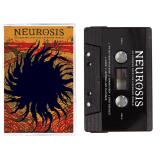
‘An Undying Love For A Burning World follows Converge’s Love Is Not Enough this year as a pivotal metal album about acknowledging the darkness for what it is and trying to accept it.’ - the QUIETUS
‘Neurosis Know You’re Hurting. Their Stunning New Album Is a Life Preserver.
An Undying Love for a Burning World, the band’s first album with new member Aaron Turner, is a reminder of how even the darkest music can be a guiding light’ - 9/10 ROLLING STONE
Evolution can be ugly and beautiful, painful and euphoric. An Undying Love For A Burning World is the first new release from Neurosis in a decade, and a potent statement of intent and rebirth - one that marks the first new steps of resolve and resilience.
An Undying Love For A Burning World is an epic album of colossal hypnotism - beautiful, fearsome and utterly compelling in a way that only Neurosis can be. Aaron Turner (Sumac, Isis) joins the band on vocals and guitar, a name whose legacy is intertwined with the band’s own and a true kindred spirit.
“From the moment I first heard Neurosis over 30 years ago, I felt this was the music my heart and mind had been seeking but not yet heard. Now after many years travelling along various musical paths of my own, the singular sound and spirit embodied by Neurosis continues to speak to the depths of my being. It is an honor and a true pleasure to have been welcomed so warmly into a band that not only shaped my perspective on the limitless possibilities of music - but has lived and exemplified the necessity of upholding creative integrity and camaraderie above all else.” - AARON TURNER
Neurosis have never been afraid of change, and here they embrace endless regeneration, surrendering to the emotional exorcism through heaviness and distortion that their music incites. Just as the universe tends towards balance, Neurosis’cacophony of noise, rhythm and dissonance always resolves towards moments of beauty. The addition of Turner's powerful vocals and wildly creative and unhinged approach to guitar proves to be a vital force as Neurosis find themselves again at the mercy of evolution and expression.
On every song in the band’s history, Neurosis shifts restlessly between tension and relief, invoking a feeling both feral and transcendent in listeners. The band describe their songwriting process as an inescapable impulse to create with each other - a need rather than a choice. Indeed, the band insist that their return is “not a reunion - we never broke up.”
The album was recorded by Scott Evans (Kowloon Walled City, Sumac, and Great Falls) at Studio Litho in Seattle during three weekends this winter, and mixed in three days just six weeks before release at Evan's Antisleep Audio in Oakland.
Neurosis will play their first show in seven years on the traditional lands of the Blackfeet Nation in Montana as part of Fire in the Mountains festival by special invitation of Firekeeper Alliance, a non-profit dedicated to reducing youth suicide in Indian Country.
FITM, is a unique festival known for bringing epic music to epic landscapes with the intent of reconnecting and immersing oneself with the natural world, and strengthening our ancestral roots as human beings - an aim which aligns directly with Neurosis’ deep-rooted power.
Stay tuned for further news over the coming months.
PREVIOUS PRESS:
‘In less skilful hands, this relentless sonic oppression would be gruelling, but by expressing human frailty with such visceral abandon, Neurosis have once again turned darkness into euphoria.’ - 4/5 THE GUARDIAN
‘The Oakland band has evolved from gritty metallic punk to harrowing post-hardcore prog to the majestic doom of their current phase’ - 7.9 PITCHFORK
‘It’s not often an album of such stature exceeds one’s anticipations, but Honor is too astounding to not be revered.’ - The QUIETUS
“Fires Within Fires is the summation of thirty years of experimentation in tonality and texture. Yes, NEUROSIS are firmly positioned within the extreme metal underground yet their music, with its ability to generate images of beauty akin to those many of us have experienced in our own lives – not to mention the loss that accompanies them – challenges this categorization. ‘’ - WIRE MAGAZINE - FULL PAGE REVIEW.
"Their intensity remains undimmed on Fires Within Fires...The already converted will take heart from the evidence that age is unable to wither the fury of this heaviest of bands." - KERRANG! 4K REVIEW
"Every monstrous sludge riff gnashes menacingly for the right amount of time and every delicate moment of folk-inspired drift is emotionally exacting. Neurosis continue to create art without equal, and Fires Within Fires is another worthy addition to an awe-inspiring canon containing a number of truly pioneering and timeless albums." - METAL HAMMER - 8/10 LEAD REVIEW
Есть у нас в наличии и готов к отправке

Есть у нас в наличии и готов к отправке
