The multi-faceted and multi-talented Alberto Melloni returns once more to Bordello A Parigi to unveil his musical multi-verse. “Lago Lungo”, the title piece, sets the tone for the quartet of tracks. Steady kicks thud next fizzing hi-hats as a rich and full-bodied piano melody takes hold, Melloni’s instrumentation creating sheer peaks and creamy amber plains. “Promised Land” offers a different audio topography. Key stabs are bolstered by incising beats as a late-night italo infused romp undulates from speaker cones. Underscoring the EP are influences from both disco and house, sun-kissed chords countered by textured percussion. These twin inspirations combine in the groove laden “Paradise Pie”. Clean notes are refracted in neon, undercurrents of acid lurking just below the vibrating hardwood floor. The mirrorball takes the limelight for the finale. Breathy, smokey vocals orbit funk dipped lines of “Only You”, warbling vocoders dancing under the glittering beams to the close.
Suche:alberto
- 1
Chromium Dioxide brought Leitstrahl’s sound to world. The three man group of Stoff, Paul Raal and Boogaloo Steve return alongside Alberto Melloni with Azimuth. Bordello A Parigi’s own Furór Exotica are drafted in to help with the Dee D. Jackson inspired “Automaton Lover”. Disco infused and bombastic, this powerful piece employs bold synthlines and breathy vocals to devastating effect. The title work follows. An addictive melody is cut by a crisp beat in this bright and inviting instrumental.
Thick basslines and a mirrorball groove introduce “Spectral Fantasy”. Featuring the smoky lyrics of Vongold, a tale of unexpected encounters and possibilities unfurl amidst warbling analogue strings. Slung back basslines and a low throb are central in “Light Years”, a smooth longue affair to finish this diverse 12”.
A concentrated dose of club energy weaving together house, electro, obscure disco, and groove. This is the new vinyl adventure from Raibano Records and Mondo Groove, two Romagna-based labels that have long championed an uncompromising and authentic vision of the Italian electronic scene.
The 12” brings together six unreleased tracks, three per side, crafted by Raibano’s founders Alberto Melloni and Gianmaria Gamberini. On one side, hypnotic rhythms and pulses for the darkest corners of the dancefloor; on the other, Balearic echoes and textures designed to take you far beyond it.
Huayno has its roots in the Andes during the colonial era, when indigenous peoples began to blend their music with influences brought by European settlers. During this process the Spanish guitar naturally became very prevalent, incorporating the tunings, finger-style and rhythms of the traditional Andean harp along with it.
The late Alberto Juscamaita Gastelú, known as Raktako, was a renowned guitarist, composer and mentor to generations of guitarists from his home in Ayacucho, southern Peruvian Andes. His unique style also blended techniques from the Spanish lute and other instruments brought by colonisers, such as the violin and accordion. For over a century, Raktako preserved Ayacucho's musical traditions and the Andean guitar form.
In 2022, the last disciple of Raktako, Gustavo Yashimura, shared with Sound of the Andes' Hánkel Bellido a series of astonishing home recordings made by Raktako between approximately 1930 and 1940. These recordings, made with the sparsest of equipment, had never been published before and represent an invaluable cultural treasure. The guitarist, who lived for over 100 years and passed away in 2023, had been largely forgotten until recently, when the Ministry of Culture of Peru officially recognised him as Meritorious Personality of Culture. His legacy, which includes a profound influence on Peruvian music, especially the Ayacucho guitar tradition, is finally being acknowledged.
A Milan-born multi-instrumentalist of Venetian heritage, Alberto Baldan Bembo was a gifted vibraphonist, organist, pianist, arranger, and composer whose work bridged jazz, pop, and film music. By the early 1960s, he was performing with Italy’s leading ensembles, including I Menestrelli del Jazz and Bruno De Filippi’s group, and soon became an in-demand session musician. For several years, he toured with the legendary Mina, providing the piano and organ backbone to her live shows—a role that sharpened the cinematic sensibility and refined musicianship that would later define his soundtrack work. In the years to come, he would be celebrated for his scores to films such as L’Amica Di Mia Madre (1975) and Lingua Argento (1976), earning a place alongside Piero Umiliani, Alessandro Alessandroni, Berto Pisano, and other luminaries of Italy’s golden age of soundtrack and library music.
Io E Mara is the soundtrack to a film that was never made. Originally released on the CGD label in 1969, this debut album from the brilliant Maestro Baldan Bembo is a sophisticated concept-album tracing 24 hours in the life of two young lovers. Told entirely through music, the record unfolds as a continuous suite of ten tracks, where cinematic lounge, bossa, and jazz flavors mingle to create a dreamlike atmosphere. Baldan Bembo’s signature piano and organ are masterfully complemented by Mara’s ethereal vocals, while immersive soundscapes of crashing waves, seagulls, and rain showers enhance the feeling of a deeply personal and intimate journey. A cast of exceptional musicians brings this vision to life, including Bruno De Filippi on electric guitar and sitar, Carlo Milano on electric bass, Rolando Ceragioli on drums, and Pasquale Liguori on sound effects. This singular work not only showcases the burgeoning talent of a future soundtrack master but also features the original pop art front cover by Italian cult illustrator Guido Crepax.
"Chicago-based composer, improviser, multi-media artist and underground legend, Rob Mazurek, joins forces with modular-synth maestro and light magician, Alberto Novello for a blacklight invocation that hurls us out into new and uncharted sound-dimensions.
Born of a chance encounter, Alberto Novello and Rob Mazurek's improvised collaboration, Sun Eaters, was recorded in a single afternoon at Dobialab, an experimental artist run space in Northern Italy. Alberto provided a loose rythmic and timbral bedrock over which Rob Mazurek sketched and weaved delicate harmonies with trumpets, adding atmosphere with bells and sampler.
Sun Eaters is a dizzying and disorientating space ritual, a totally out excercise in telepathic collaboration and psychedelic sound."
Modular Synth by Alberto Novello.
Trumpets, sampler, bells by Rob Mazurek.
Produced by Alberto Novello.
Recorded at Dobialab, Italy on 6th February 2024 by Michele Pegan.
Mixed by Alberto Novello at Ni Dieu Ni Maitre Studios Italy & Air Residency Austria.
Mastered by Hrvoje Nikšić, Croatia.
Artwork by Giulia Spanghero.
Dedicated to the memory of Filippo Novello.
After the success of his first two albums, both received with critical acclaim, and his productive collaborations with Peter Greenaway, Peter Lindbergh and many others, Italian composer/multi-instrumentalist Luca D’Alberto is to release his third album entitled “In our hearts.”
A symphony in three acts that pursues his research into the perfect balance between neoclassical and electronic music forms.
Introducing Alberto Castellana and his electrifying nine-track debut album. Hailing from Italy, Castellana brings the classic Italian signature Nu-Jazz sound to the table.
Accompanied by a trio of exceptionally talented musicians on the piano, guitar, and Rhodes piano, Castellana's debut album promises an in-depth journey through various electronic genres, including House, Break Beat, Drum & Bass, as well as the realms of Jazz.
Timeless minimalist approach to composition braced by repetition and playfulness.Alberto’s music reflects calm, focus and intimacy. Ethereal and atmospheric, his pieces operate within the digital as well as the analogue realm in equal measures. Sampling, Midi sequencing and field recordings are the instrumentation used in these 15 songs recorded on a four track reel to reel tape. Highest possible recommendation for fans of Suso Saiz,Jon Hassel, Eno or Harold Budd
“Haizetxe” which stands for wind house, is the first ever record consisting of unreleased material recorded between mid 80’s and 90’s by musicianAlberto Lizarralde in Zaldibia, Basque Country.
One of the founders of the first school of Improvisational jazz and contemporary music (Jazzle) established in San Sebastián to In the early 1990s,Alberto is a well-known figure among Basque musicians but not so much among the general public. In his professional curriculum we find the direction of the Plaza Festival, the Zirrara record company, his work as a producer, editor (editions 3e argitalpenak), the direction of the audiovisual installation JAArtzeren Unibertsoa, the arrangements and composition for the Iparraguirre 7 project, etc...And even so, he has managed to stay away from the spotlight.
In all this time he was composing and recording music, but the right circumstances never arose for its release.Thus, it has remained stored in a drawer all these years. Finally the music of Alberto Lizarralde sees the light on Hegoa label in a limited run of 300 LPs.
K-Noiz presents the 2020 versions of the Italo Disco hit “Pretty Face” (over 400,000 copies sold in over 20 countries) with five new versions by Andrea K, Joe Mangione, Diego Mates, Daniele Ippolito and Sweet Suite and with the original voice of Alberto Styloo. This record marks Alberto Styloo’s “return” to dance after a period of work on different genres.
- A1: Antonio Arena - Magic Door
- A2: Space Craft's Men - Crossing
- A3: Elageron - Week-End Playback
- A4: Alberto Baldan Bembo - Nitrogen
- A5: Fabio Fabor & Antonio Arena - Screw Driver
- A6: Domenico Di Vito - Spensieratamente
- B1: Albert Verrecchia - In The Space
- B2: Lamberto Macchi - Vision (Feat. Anthony Sidney)
- B3: Modern Sound Quartet - Sagittarius
- B4: Flip Flop Group - Music
- B5: King Zérand Orchestra - Blue Magnolia
- B6: The Astral Dimension - Stella Nova
With FBNM now celebrating their fifth year of operation, Lorenzo has marked the occasion by assembling his biggest project to date - an impeccably curated collection of obscure Italian production music circa 1974 - 1985. The project, nearly a year in the making, has been very close to Lorenzo's heart - beginning unexpectedly in the record fairs of Buenos Aires and leading him on several trips to Rome and Milan, tracking down the original musicians and licensors.
"In this compilation, I have tried to include some of the most interesting cuts I have collected over the years. Tracks like the entirely electronic "Nitrogen" from Alberto Baldan Bembo's "Sound Orchestra" LP on Star Track Records, featuring a wild evolving bassline leading us through frantic rhythmic experimentations. "In the Space", by French born composer Albert Verrecchia and taken from Italian poliziesco drama 'Il Tempo Degli Assasini' (Season for Assasins), tells the tale of wistful longing, played out with serenity on strings and keys, but unexpected interruption from its stop-start arrangement brings an unforeseen tension into the mix... And how could I not include the wonderfully charming "Screw Driver" by Fabio Fabor, from his collaborative album "Superman" with a young Antonio Arena. Featuring an orchestra of beautifully programmed ARP and Oberheim sonorities alongside the Commodore 64 programmed graphical artwork by Antonio Arena himself."
The music itself was partly sourced from Lorenzo's own collection, archived and then restored especially for this release. Where possible, tracks (such as "Vision", "Nitrogen" and "Blue Magnolia") have been lifted directly from the original master tapes kindly lent by the repertoire owners. Every track, however, has been carefully restored, remastered and cut for vinyl by the cautious hands of Andreas (LUPO) Lubich at Calyx Mastering, Berlin.
REPRESSED !!
Detroit veteran Len Bartush (Mutate) returns to advance the series that began with the now classic Circle 1. A full round kick and jack style upbeats are all that's necessary to support the deep, modulated synth lines that travel through lush plates of reverb. Alberto Pascual hits a homerun with his remix that will move any club, festival, or warehouse party. Project 313's remix supplies moving synth lines are stripped down and replaced with driving rhythms and pulsating bass making this a superb techno offering. The Plankton remix turns up the tension with warehouse style percussion and intertwining rhythms complimented by science- fictionesque stabs and pounding bass.
The 'Circle 2' EP is an essential piece of Detroit minimalism. Detroit veteran Len Bartush (Mutate) returns to advance the series that began with the now classic 'Circle 1'.
The EP starts off with Mutate's 'Circle 2' (Machined) original. A full round kick and jack style upbeats are all that are necessary to support the deep, modulated synth lines
that travel through lush plates of reverb, creating an atmosphere perfect for any techno desire from dance floor, to living room, to headphones.
Alberto Pascual hits a homerun with a remix that will move any club, festival, or warehouse party. Big room percussion, moving sub bass, and funky rim shots compliment the dark synths from the original.
Project 313's remix delivers with an interpretation that celebrates the true spirit of the original. Moving synth lines are stripped down and replaced with driving rhythms and pulsating bass, making this a superb techno offering.
The Plankton remix turns up the tension with warehouse style percussion and intertwining rhythms, complimented by science-fictionesque stabs and pounding bass.
DJ's Supporting release:
A.Trebor, Alberto Pascual, Altstadt Echo, Angel Alanis, Anthony Jimenez, Audio Injection , Brendon Moeller, Bruno Ledesma, Chris Liebing, Claude Young, Dadub, Daegon, DCibel, Developer, Drumcell, DVS1, Erphun, Exium - Hector, Exium - Valentin, Felix Lorusso, Hyperactive, Jeff Derringer, Joachim Spieth, Joel Morgan, Justin James, MADA Cedric, Mas Teeveh, Material Object, Measure Divide, Memnok , Monocraft, Morgan Thomas, Octave, Onoffon, Project 313, Rene Walther, Ricardo Garduno, Sigha, Sone, Submerge, Tommy Four Seven, Tony Kasper
- 1: El Vaticano Va A Arder
- 2: Matar Jipis En Las Cies
- 3: Las Tetas De Mi Novia
At the genesis of one of the most essential bands in Spanish pop-rock of the 1980s, this rarity presents early versions of what would later become some of the most chanted songs in Siniestro Total's repertoire: 'Matar jipis en las Cíes' and 'Las tetas de mi novia,' along with Germán Coppini's original composition 'El Vaticano va a arder.' With limited resources but plenty of energy and humor, a three-song demo was recorded in August 1981, now available here on vinyl for the first time. The songs came first, and only later did the band take a name-initially Mari Cruz Soriano y los que afinan su piano, and shortly after, Siniestro Total. 'Matar jipis en las Cíes' is an original composition by the band's founding members Alberto Torrado, Julián Hernández, and Miguel Costas, while 'Las tetas de mi novia' is a loose version of the song 'I'm a Rocket' by the Dutch band Gruppo Sportivo. 'El Vaticano va a arder' was contributed by Germán Coppini, the mysterious fourth member of this singular lineup, inspired by 'Religion,' the anti-religious rant included on Public Image Limited's debut album. This single is an essential document for both Siniestro Total fans and Spanish-language punk enthusiasts. First-ever vinyl edition.
This first-time reissue of Quinteplus’ 1971 album revives a key moment in Argentine jazz, featuring crisp trumpet and tenor sax, electric piano-driven funk and modal grooves, and a tight, spacious rhythm section. It showcases prominent figures like Jorge Anders and “Pocho” Lapouble.
==================================
Quinteplus was born in Buenos Aires at the end of the 1960s, emerging directly from the ideas and experiments of the legendary Agrupación Nuevo Jazz. Founded in the early ’60s, this collective brought together some of the most forward thinking figures in Argentine jazz functioned as a creative lab where musicians questioned where jazz could go next. Among the key ideas discussed was the fusion of jazz with Argentine folk styles such as zamba, chacarera, malambo, cueca, and candombe, as well as a deeper look into African rhythms as a bridge between musical worlds.
Two members of that collective, keyboardist Santiago Giacobbe and bassist Jorge “Negro” González, carried those ideas forward when they formed Quinteplus in 1969. The group came together naturally: all the musicians already knew each other and had played in different projects around the Buenos Aires scene. They shared a strong admiration for Julian “Cannonball” Adderley’s quintet, along with a clear goal—to develop a modern jazz language grounded in local Argentine rhythms.
From the start, Quinteplus stood out for its openness and adventurous spirit. Rhythm was central, and so was experimentation. The band belonged to a generation of Argentine jazz musicians eager to explore electric instruments and new textures, anticipating what would soon be known as jazz-rock. This was happening in Buenos Aires at the very same time Miles Davis was opening new doors with “In a Silent Way” and “Bitches Brew”. Giacobbe introduced one of the first Fender electric pianos in Argentina, while González pioneered the amplification of the upright bass and even developed a hybrid electric, boxless version of the instrument. Trumpeter Gustavo Bergalli, meanwhile, maintained close ties with the emerging Argentine rock scene, collaborating with Luis Alberto Spinetta and appearing on Almendra’s first album.
In 1971, Quinteplus recorded its first and only studio album for EMI. The original lineup featured Jorge Anders on tenor saxophone, Bergalli on trumpet, Giacobbe on keyboards, González on upright and electric bass, and Norberto “Pocho” Lapouble on drums and percussion—who also illustrated the album’s iconic sleeve. The record is a refined showcase of the band’s musical vision: original compositions, fluent jazz language, folk-derived rhythms, funky electric textures, tight ensemble playing, and standout brass solos. Though critically praised, the album received little label support and sold modestly, eventually becoming a sought-after collector’s item.
Quinteplus disbanded in 1973, their music was perhaps too bold and unconventional for its time.
Tip on sleeve.
Latin Grammy-Winning Producer Pupillo Unites Global
Artists on his new album
Co-produced by Mario Caldato Jr. (Beastie Boys), featuring collaborations with Rodrigo
Amarante, Carminho, Adrian Younge, Gaslamp Killer, Cut Chemist, Hervé Salters, and more
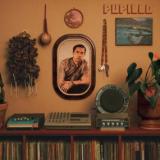
Drummer, percussionist and producer Pupillo, one of the most influential figures in Brazilian
music and a four-time Latin Grammy winner, releases his first original album through the Los
Angeles–based label Amor in Sound. The record brings together an impressive and diverse
group of collaborators from Brazil and abroad. Amor in Sound is run by Samantha Caldato,
the project’s executive producer and creative director, and Mario Caldato Jr. (Beastie Boys),
who co-produced the album alongside Pupillo. The project was developed in a free,
experimental environment, allowing the artist to explore the many rhythmic and sonic
territories that have shaped his career — from Northeastern Brazilian traditions to jazz, hip
hop, and cinematic soundscapes. Listen here.
The album features special appearances by Brazilian artists such as Céu, Rodrigo Amarante,
Agnes Nunes, Amaro Freitas, Davi Moraes, Alberto Continentino and Pedro Martins,
alongside a strong roster of international collaborators, including Carminho, Gaslamp Killer,
Loren Oden, Adrian Younge, Cut Chemist and Hervé Salters (known for his work with
General Elektriks). The album’s 12 tracks were further enriched by contributions from
Jeremy Gustin, Roberto Schilling, and other musicians who make Amor in Sound Studios in
Los Angeles a place of creative exchange.
Beyond his work as the drummer of Nação Zumbi, Pupillo has built a prolific career as a
producer and collaborator with some of the most important names in Brazilian music,
including Gal Costa, Nando Reis, Erasmo Carlos, Céu, and Otto, helping to shape the sound
of multiple generations. This trajectory has earned him four Latin Grammy Awards.
From Pernambuco, Pupillo is also an acclaimed composer for cinema, having written
soundtracks for films such as Arido Movie and Blue Blood (directed by Lirio Ferreira), The
Assailant (directed by João Daniel Tikhomiroff), among others. This cinematic sensibility
permeates the album, which unfolds like a film, moving through richly textured soundscapes
that cross continents and musical traditions.
Italian jazz trio Collettivo Immaginario announces the release of their second full-length album, 'Oltreoceano'.
Known for their slick sound and energetic live performances, their style is firmly rooted in the jazz tradition of collective improvisation, through which they have developed an agile, kaleidoscopic sound. The trio’s unique fusion of funk, jazz, and 70's electronica continues in the trio’s latest release, forging connections across oceans through the universal language of music.
Consisting of founder Tommaso Cappellato on drums and percussion, Nicolò Masetto on electric bass, and Alberto Lincetto on rhodes, piano, and synths, Collettivo Immaginario have become rising stars in the Italian festival scene, from the streets of their hometown in Italy to the diverse audiences in Los Angeles, London and Milan.
Subtly paying homage to genre-bending giants like Azymuth, Lonnie Liston Smith, Herbie Hancock, and Hermeto Pascoal—alongside Italian film music legends Piero Piccioni and Piero Umiliani—their sound moves effortlessly between the heat of the club and the cinematic allure of evocative film scores, infused with touches of spiritual jazz.
&Co. debut on A Quiet Village. The US-based trio drop the third release on Quiet Village’s eponymous imprint March 20th. &Co. Is a project from multi-hyphenate and Bianca Chandon founder, Alex Olson, pianist, composer and producer Alberto Bof (known for his work on ®Oscar ®Bafta ®Golden Globe and ®Grammy award winning ’A Star is Born’) and DJ/fashion luminary, Paul Takahashi. The trio’s second release, ‘Staycation’ follows 2015’s ‘Best of Friends’, and sees these rare talents create a two-tracker that explores a uniquely evocative, cinematic and dubby Balearic aesthetic. ‘Staycation began as a follow-up to the first EP, Best Friends.
As a result, ‘Staycation’ came together in fragments. The first track was built over a handful of short studio sessions, each only about an hour long, driven by brainstorming and reworking ideas. With Alex away, Alberto and I continued refining the piece in Los Angeles, sharing updates for Alex’s approval until it was completed. The track remained unmastered and was quietly circulated to a small circle as a promotional piece. The second track, “Lean Like a Cello,” was initially conceptualized together. However, with Alex now based in New York and less available, we completed the arrangement in Los Angeles, sending versions back and forth for Alex’s input and feedback. Nearly a decade later, the idea resurfaced, and the recordings were finally mastered and released. A friend, Justin Van Der Volgen, handled the mastering. What began as a plan to give the tracks away as a promo evolved when Justin encouraged the group to shop the release. With help from Eric Duncan of Rub N Tug, the music reached Matt (Edwards, aka Radio Slave/ 1/2 of Quiet Village).
Ten years after the first sessions, Staycation arrives as a document of distance, collaboration, and time. A project shaped as much by separation as by shared intention.’ (Paul Takahashi, Feb 2026)
A piece of art from a powerhouse creative team operating at the intersection of skate culture, music, design and fashion, ‘Staycation’ by &Co. Arrives on The Quiet Village 12” and digital/streaming on March 20th.
- A1: C’est Loin
- A2: Là Où Tu Veux (Deixa A Gira Girá)
- A3: Pas Tant De D'chichi Ponpon
- A4: Assez
- A5: Le Soleil En Haut
- A6: Tout L’or
- B1: Désillusion
- B2: Attends-Moi
- B3: O Sapo
- B4: Horssaison
- B5: Presque Rien
- B6: Vou Festejar
For his sixth solo album, Ezéchiel Pailhès returns with a new collection of songs infused by a sunny wandering spirit.
Within each of the twelve songs on SOL is a thread of melancholic happiness that has permeated much of Pailhès’ music and songwriting. He addresses love, the passing of time, hope, lost illusions, fleeting moments of grace, the temptation of forgetting, a need to escape, and desire. All this is
insulated by understated orchestrations that blend acoustic and electronic instrumentation with deft confidence.
The Portuguese and Brazilian concept of saudade—a form of melancholic longing and nostalgia— pervades, thanks in part to Pailhès decision to record the album in Rio de Janiero and to reinterpret some of the finest works of Música Popular Brasileira (MPB). In particular, he revisits a handful of
lesser known classics from the mid-century samba and bossa nova era—originally written or performed by talents including Vinícius de Moraes, João Gilberto, Tom Zé, Dorival Caymmi, João Donato, Os Tincoãs, and Ataulfo Alves.
The shift from Brazilian Portuguese to French and the decision to adapt rather than perform a straightforward cover versions, allows Pailhès to invent a form of prosody and euphony (the musicality and harmonious combination of words) that feels vibrant and unlike anything else in today’s French
chanson landscape.
“Some lyrics are simple translations from Portuguese, in what I’d call an expanded version. For others, I started from a single word or a single phrase and embroidered an entirely new text that carried me elsewhere,” explains Pailhès. “I allowed myself great interpretive freedom, while preserving the humanist dimension of the original songs. I’ve always been deeply moved by the way Brazilians transfigure reality through heightened emotion. I love this visceral and spontaneous country, which always seems to live through emotion. And above all, I love its music both popular and unifying,
bringing together all social classes. In that sense, it’s very political music, but even more so utopian, made by the people and for the people.”
On this new album, however, the French artist was keen to avoid cliché. Each song is therefore built around a carefully balanced interplay between Pailhès’ piano and synthesizers, alongside restrained arrangements of percussion, brass, bass, and cavaquinho (a small four-string plucked guitar). These parts were recorded in Rio de Janeiro with two musicians who regularly perform alongside the legendary Caetano Veloso—Kainã Do Jêje and Alberto Continentino—joined by Thomas Harres, Antônio Neves, Eduardo Neves, and Gabriel Loddo.
Since the 1960s, France and Brazil have shared a long-standing cultural and musical relationship. Some Brazilian artists, most famously Gilberto Gil, took refuge in France during the dictatorship years (1964–1985). But above all, French chanson quickly fell in love with the richness and ingenuity of
bossa nova and samba, translating and reinventing them in the language of Molière. Throughout the 1960s and 1970s, albums and hits by Henri Salvador, Georges Moustaki, Pierre Barouh, Pierre Vassiliu, and Claude Nougaro all drew from the MPB repertoire.
Fifty years later, with SOL, Ezéchiel Pailhès reinvents this rich Franco-Brazilian musical legacy, bringing to it a personality and modernity that stand confidently alongside those of his forbears.
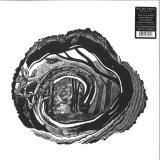
Big Big Train, die preisgekrönte Progressive-Rock-Band, veröffentlicht ihr 16. Studioalbum. "Woodcut" ist ein Meilenstein für die internationale Gruppe, deren Mitglieder aus England, Schottland, Italien, den USA, Schweden und Norwegen stammen, da es ihr erstes Konzeptalbum in voller Länge ist. "Die Geschichte spielt nicht in einem bestimmten Zeitrahmen, sondern handelt von einem Künstler, der mit dem Leben zu kämpfen hat", beginnt Gründungsmitglied Gregory Spawton. "Er macht einen Spaziergang, findet dieses Stück Kernholz und schafft etwas, das er als schön und anders empfindet. Vielleicht ist es ein Traum oder vielleicht ist es das echte Leben, aber er findet sich in dieser Narnia-artigen Holzschnittwelt wieder."
"Woodcut" ist ein eher bandorientiertes Werk, zu dem alle sieben Mitglieder einen beeindruckenden Beitrag leisten, wobei Frontmann Alberto Bravin die Federführung als Produzent übernommen hat: "Dieses Mal ist es eine Art neues Statement für die Band. 'Woodcut' ist für uns ein großer Schritt nach vorne", kommentiert er. Mit 16 Titeln und einer Spielzeit von 66 Minuten wirkt "Woodcut" episch, ohne sich zu sehr in die Länge zu ziehen.
Das Album ziert ein auffälliges Cover-Design des in Dorset ansässigen Künstlers Robin Mackenzie - natürlich ein schwarz-weißer Holzschnitt, der von einem Holzschnitt abgeleitet ist, den die Band speziell für das Album bei ihm in Auftrag gegeben hat. Erhältlich als limitierte CD + Blu-ray-Edition, einschließlich ausführlicher Liner Notes sowie Dolby Atmos- und 5.1-Surround-Sound-Mischungen von Shawn Dealey von Sweetwater Studios, wird das Album auch als atemberaubende Gatefold-180g-2LP mit speziellem geprägten Cover, Standard-CD-Jewelcase und digital in Stereo- und Dolby Atmos-Versionen erhältlich sein.
The third release on Re-United Records, Interzone brings together four unique visions of electronic music, in one solid, groove-driven vinyl.
Luigi Gori kicks things off with a track full of early ’90s vibes — a deep, energetic trip that instantly sets the tone.
Alberto Bof follows up with a cut to play from start to finish — a late ’80s journey blending acid 303 lines and his signature lush harmonies.
On the flip, Andrea Fiorito drops a slick minimal-funk groove, packed with character and classy textures.
Closing it out, Paolo Driver delivers a straight-up dancefloor weapon, full of twists, surprises, and unstoppable rhythm.
A record infused with ’80s and ’90s influences, made for true heads and real floors — pure Re-United Records spirit.
- 01: Maria Do Carmo - Beijos São Como As Rosas
- 02: Jose Paradela D&Apos;Oliveira - Fado De Se Velha
- 03: Edmundo De Bettencourt - Crucificado
- 04: Madalena De Melo - Cantares
- 05: Luiza Baharem - Fado Mondego
- 06: Alberto Xavier Pinto - Fado Do Paraizo
- 07: Maria Victória - Fado Maria Victória Nº 1
- 08: Maria Silva - Fado Alice
- 09: Adelina Fernandes - Misérias
- 10: Estêvão Amarante - Fado Do Cauteleiro
- 11: Alfredo Marceneiro - Olhos Fatais
- 12: Ermelinda Vitória - Fado Da Minha Aldeia
- 13: Dr Lucas Junot - Triste (Fado)
- 14: Maria Alice - Quando O Meu Filho Adormece
- 15: Laura Santos - A Magia Do Fado
- 16: Joao Rocha Jor - Fado Rocha
Vinyl[21,64 €]
The definition of the word 'fado' is technically 'fate', though the Portuguese meaning bound up with this term is more complex. The music itself can be fairly closely compared with that of Greek rebetika - also the American blues or the original working-class tango music of Argentina and Uruguay - and similarly takes it's common subject matter from the various cruel realities of the world. Though perhaps what distinguishes fado in character is it's often poised acceptance of the pains of life rather than protestation or resistance - as writer Paul Vernon says "It speaks with a quiet dignity born of the realisation that any mortal desire or plan is at risk of destruction by powers beyond individual control"
Death Is Not The End compile here a spine-tingling collection of fado recordings, taken from records issued in the mid 1910s through to the 1930s. The fado's Lisbon and Coimbra variants are presented here by some of the music's earliest recorded stars - spanning a time period leading up to the emergence of the fado's all-conquering star, Amália Rodrigues.
Following a string of acclaimed collaborations, including Agua Dulce with percussionist Laura Robles and Mapambazuko alongside Congolese guitarist Titi Bakorta, Peruvian artist Alejandra Cárdenas (aka Ale Hop) returns with her most personal work to date yet, A Body Like a Home. Marking her first album under her birth name, the project is a sonic memoir exploring the tangled realms of trauma, recovery, and love through autobiographical soundscapes.
A Body Like a Home is the artist at her most exposed. Comprising 13 songs and 15 poems, the album sees her set aside collaborative fusions for solo catharsis, channeling years of turbulence - intergenerational scars left by colonialism, racism, domestic violence, and alcoholism - into a work that oscillates between brutality and tenderness. Cárdenas states: “I grew up under Alberto Fujimori’s dictatorship, when a veil of hopelessness seemed to settle over everything. This is the backdrop of the album. The songs and poems trace the inevitable loop between private wounds - addiction, domestic violence, fractured intimacy - and Peru’s national scars, carved by colonialism. It’s not a straight story or a resolution. Writing and composing became a ritual of digging for meaning, into what’s buried, disguised, or renamed, until the body itself became a living archive.
” At the heart of the album is Cárdenas’s own voice - part witness, part confessor - reciting over layers of electric guitars, electronic textures, the haunting violin of Mexican musician Gibrana Cervantes, and a collage of field recordings, from rainfall, muffled whispers, broken glass, to archival protest footage from Peru. The result is a work that resonates like a diary written in sound.
The first single, "Motherland", is a searing testimony where Cárdenas voice cracks under the weight of history and personal loss. Amid a storm of distorted guitars, she traces the cyclical legacies of colonialism, from state massacres branding Indigenous bodies as “terrorists” to the spiral of addiction as an unavoidable future. The lyrics draw parallels between political and domestic violence: a mother’s drunken knife pressed to her chest, and a motherland where racism is currency. She utters: “sacrifice demands a body.” Yet, amid the wreckage, a willful grip on love and faith persists. Ultimately, A Body Like a Home is a document of transformation. Tracks like "Evangelina" and the title piece "A Body Like a Home" hold space for resilience, spirituality, and love, while "Early Road" and "Going South" thread subtle nods to Peruvian folklore, opening up bright vignettes into a sense of belonging.
The poetry chapbook accompanying A Body Like a Home (five of its pieces are also recited on the album) extends the work, building a parallel architecture. Oscillating between the documentary and the mythic, the intimate and the forensic, the profane and the oniric, these poems practice a theology of the ordinary, where everyday objects - cameras, knives, moth-eaten cotton - are charged withspiritual and historical weight. Here, the body is land, house, battlefield, collective pain, geological territory; and trauma is, in contrast, archival, cellular, ritualistic, inherited. Read alongside the music, the stories refract across two mediums: songs give them breath and poems give them bone.
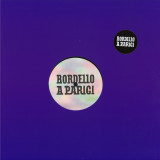
"Raibano Music" marks the inaugural vinyl release of the Rimini-
based label Raibano Records. This debut album features six tracks
meticulously produced and arranged by the founders of Raibano
Records, Alberto Melloni and Gianmaria Gamberini, alongside their
long-time friend Cancellieri. The collection showcases a fusion of
innovative sounds and rich musical textures, reflecting the artistic
vision and collaborative spirit of its creators. Each track embodies
the essence of Raibano Records, inviting listeners on a journey
through distinctive rhythms and captivating melodies, setting a high
standard for future releases from this promising label.
- A1: E Nun Ce Voio Sta
- A2: Squadra Antifurto (Suspense)
- A3: Squadra Antifurto (Azione E Mistero)
- A4: Squadra Antifurto (Azione)
- A5: Squadra Antifurto (Nico A New York)
- A6: E Nun Ce Voio Sta (Versione Fisarmonica E Chitarra)
- B1: Squadra Antifurto (Nico A New York #2)
- B2: Squadra Antifurto (Azione #2)
- B3: Squadra Antifurto (Suspense #2)
- B4: Squadra Antifurto (Azione #3)
- B5: E Nun Ce Voio Sta (Versione Chitarra)
- B6: Squadra Antifurto (Azione E Mistero #2)
- B7: Squadra Antifurto (Azione E Mistero #3)
- B8: E Nun Ce Voio Sta (Titoli Di Coda)
Transparent Amber[31,51 €]
Here at Four Flies, we kind of feel we need a bigger word than 'proud', this time, to present, in collaboration with Beat Records, the first-ever release of the original soundtrack written in 1976 by Guido & Maurizio De Angelis for the legendary Squadra Antifurto, the second chapter of the comedy-infused crime saga directed by Bruno Corbucci and starring Tomas Milian as the iconic Italian Police Marshal Nico Giraldi.
The excitement in this case is nothing short of gigantic, difficult to rein in for those who, like ourselves, grew up adoring the character played by Milian as one of our cult heroes, and dreaming that the soundtracks of the first three films in the saga – the only ones composed by the De Angelis brothers – would one day be released.
Since the launch of our label, Squadra Antifurto has been at the top of the list of film scores we most wanted to release. Until a few months ago, this dream of ours seemed destined to remain just that, so strong was the conviction in all of us that the master tapes were definitively lost, that they had forever vanished into thin air. That's why their recovery, made possible by Maurizio De Angelis himself and the persistence of our friends at Beat Records, is an extraordinary feat.
Nearly 50 years after it was first heard in cinemas, the soundtrack penned by the De Angelis brothers is resurrected in its entirety and can finally shine its incredible power all over us.
Beautifully seeping through this score – like many others composed by the golden duo in the 1970s – are elements from the Italian, and especially Roman, folk tradition, for instance in the warm, heartfelt ballad sung by Alberto Griso, "E nun ce voio sta," which first plays in the opening credit sequence and is then reprised in various forms throughout the film, culminating with the soul-stirring orchestral version that closes the album's tracklist.
But as in any Italian crime film worthy of that name, a different soundscapetakes centre stage: it's the music that accompanies the countless scenes of tension, action, and pursuit that punctuate the film, and which has made us fall madly in love with this score.
The main theme is a prog-funk joyride, drawing inspiration from the traditional tarantella but elevated to irresistible energy thanks to a rock orchestration featuring psychedelic flutes, wild percussion, distorted electric guitars, piano chords, and various feedback and delay effects.
The resulting groove is just mind-blowing, and we almost can't believe it's finally available on a record, completely remastered for vinyl.
We really couldn't be prouder, and dedicate this release to all passionate fans of Italian crime films, the De Angelis brothers, and Tomas Milian aka Nico Giraldi.
Available starting April 12th on standard black vinyl and limited coloured vinyl (transparent amber, limited to 300 copies).
The next release from The Comfort comes from one of Italy’s most enduring dance music producers, the ever-evolving and influential Paolo Alberto Lodde, with this tracks that were produced before he started his career as Dusty Kid.
This is no ordinary record, either. Under his New Ordinament alias, he delivers a tour de force of Italo disco meets electroclash, with a record produced two decades ago that is finally repressed in late 2024.
Formed by LA-based drummer Tommaso Cappellato in conjunction with pianist Alberto Lincetto and bassist Nicolò Masetto, the group is known for their experimental blend of eclectic jazz, funk, downtempo beats, and vintage Italian library music. On this release, they are showcasing their foray into Italian vocals. The A-side "Luce" is a vibrant track that combines 80s jazz funk elements with a touch of boogie in an extended multi-rhythmic version that keeps the energy grooving. Flipping to the B-side, "Luna Gioia" offers a modern interpretation of downtempo Brazilian-funk and slow disco, accompanied by an instrumental version that allows the music to shine on its own.
Berlin’s ISH returns with "The Language of Love is Acid EP," a stunning addition to our ERROR100 series. A record delivering the compelling tension of rich, emotive sounds set against a backdrop of tough kicks and menacing acid flicks. ISH crafts a sound full of feeling, every track a narrative told in contrasting sonic worlds…
All tracks written and produced by Ismael Zouaoui.
Mastered by Alberto Pretto at Blackhead Studios, Berlin
System Error MM GmbH, Berlin, Germany, Earth © 2024
Just a few months after the release of "Shine," his debut solo album featuring some of the finest R'n'B voices of the moment, Stefano Cosi presents his new single "That's On Point" on Angis Music, already home to the HUMA project of which he is part along with pianist Alberto Lincetto. The single, which boasts the important collaboration with UK soul legend Omar, was written and produced remotely during Covid, waiting for the right moment to be released. Now it seems that the moment has finally arrived and to complete the offer alongside the original version are two remixes by Abacus, prominent figure in the deep house scene since the '90s, plus a mid-tempo dub version by Italian talent Edoardo Della Bitta aka EDB. Don't miss out on this future classic!
2024 Repress
Alberto Pascual, also known as Ribe is a well seasoned veteran in the Spanish scene. An expert synthesist and modular weirdo, his sound palette is amazing. If you have been so fortunate to enjoy his live PA before these turbulent times, you've got the precision and hypnosis he always provides.
This release has a physical side and a digital one, with four and seven tracks respectively, including two Oscar Mulero remixes.
"Palette" opens the release, a lone kick drum squashed in reverb sets the pace on the first bars while abstract details appear randomly and a continuous sequence grows from below. The tension is kept all over the arrangement, not additional percussive elements, just the few principal elements going back and forth.
"Shapes" has a Basic Channel approach soundwise, texturized techno as its best, exploring the dark corners of sound design, and again all relaying on a linear and mental arrangement.
"Ad Infinitum" is remixed by Oscar Mulero in his first remake, transforming the formerly broken and abstract Ad Infinitum is a danceable intelligent weapon.
Original version of "Ad Infinitum" follows, providing the experimental slice of the EP. Broken rhythms, shuffled components and low rated tempos.
Italian born and Berlin based DJ, producer, label and record store owner Deluka kicks things off for Futuristic Architecture, System Error's newest offshoot for all things strictly Techno.
Deluka has long been a secret tip among vinyl and techno heads in Berlin and afar, having been a resident for several years at Berlin's infamously wild Same Bitches Party and the founder of No Signal Records, recently opening a record store of the same name.
With his Heroes EP, he commits 4 timeless techno tracks to wax, paying homage to his musical heroes with tunes that honour the sensibilities of the genre.

Deluka almost single-handedly reminds us of how much we love techno and we couldn't think of a better artist to begin this new story for System Error.
All tracks written and produced by Francesco De Luca.
Mastered by Alberto Pretto.
System Error MM GmbH, Berlin, Germany, Earth © 2024.
Bright Magus is an instrumental quintet born under the influence of Miles Davis' metaphysical electric period, a visceral and magical passion always shared by Giovanni Calella and Leziero Rescigno. Davis' most eclectic and psychedelic period, that of recordings for Columbia from 1969 throughout the 70s. Albums like “In a Silent Way”, “Bitches Brew”, “A tribute to Jack Johnson”, “On The Corner”, “Big Fun” made them immerse themselves in one of the most fascinating experiments that Miles has generated in his long and prolific career. We are talking about music that is difficult to fit into one genre, in these masterpieces you can feel the contemporaneity of that historical period. Electric Jazz, Funk, Psychedelia, Rock, Afrobeat, Ambient, drag you into something absolutely new, mysterious and sometimes furious. Just a year ago Giovanni and Leziero took courage and started recruiting musicians who had to have the right attitude and knowledge. Guitarist Alberto Turra was the first to be interested in the project, then came Mauro Tre, pianist and keyboard player and Gianni Sansone on trumpet. All seduced by Miles and in love with that magical period.
Before making the first album "Jungle Corner", the band did some live shows to amalgamate all the ideas that came out during the improvs recorded by Tullio Treffiletti in the trumpeter's home studio (later baptized Selim Studio). At the Isola Studio in Manuel Agnelli's space and with the help of the very talented Guido Andreani, Bright Magus then recorded in three days live all the material which in the meantime had been enriched with more structured melodic themes and less casual drafts . Mauro's contribution was very important in this. The finalization of the album was then managed by them in the small "Diabolicus Studio" taking care of editing, post production and mixing.
Guest on the album in two songs, Enrico Gabrielle of Calibro 35 on flute and clarinet.
The cover design is a work by Barba Ughi alias BAX.
- A1: Infinito Em Nós
- A2: Segredo
- A3: Transe
- A4: Retrato De Maria Lúcia
- B1: Da Menor Importância
- B2: Morena
- B3: Essa Confusão
- B4: Hexagrama 28
Mr Bongo proudly presents, ‘AFIM’, the second solo album by one of Brazil’s most exciting new talents, Zé Ibarra. You may be familiar with the hypnotic, entrancing tones of Ibarra’s vocals through his work with the Latin Grammy award-winning, four-piece, Bala Desejo and the band Dônica. He has also toured with the musical titan, Milton Nascimento, performing guitar and vocals, which is quite the honour and a testament to Ibarra's craft. As a solo artist, he has performed headline solo shows in Japan, Portugal and the US, as well as recently completing a support tour with the great, Seu Jorge.
‘AFIM’ is comprised of eight tracks, featuring Zé’s own compositions as well as cover versions of tracks by contemporaries and friends, Sophia Chablau, Tom Veloso, and Dora Morelenbaum. It combines elements of MPB, jazz, pop and progressive rock in a bold, authoritative style. The album represents the intersection between different facets of the artist, from the stripped-down, intimate, guitar singer-songwriter, to dense arrangements with sweeping strings sections. Writing this album allowed Ibarra "to explore sides of myself that had not yet been organized in an album: a certain darkness, a more cinematic musicality, a desire for new soundscapes.
The album features the single, 'Transe', a song with an instantly comforting tone reminiscent of classic Brazilian songs of the past (think Caetano Veloso). It is built on a rhythmic guitar that supports dynamic sound layers, opening space for Ibarra's intense interpretation. Cinematic atmospheres that lend an air of mystery come courtesy of string arrangements by Jaques Morelenbaum.
His unique cover version of Sophia Chablau's 'Segredo' is equally compelling, taking Sophia's punky-indie original in a different direction and making it feel like his own. 'Essa Confusão', a song celebrating the intensity of love and co-written by Dora Morelenbaum, is steered into epic, 70's AOR, singer-songwriter territory with wind arrangements by Ibarra, Jorge Continentino and strings by Jaques Morelenbaum.
The album is the result of the collaboration of experienced musicians and long-time partners of Ibarra. Fellow Bala Desejo and Dônica member Lucas Nunes co-produced the album. The core band featured on the record consists of Lucas Nunes on organs, Alberto Continentino on bass, Daniel Conceição and Thomas Harres on drums and percussion, Rodrigo Pacato on additional percussion, Chico Lira on Fender Rhodes and Guilherme Lírio on guitar.
The overall feel of the record is archetypically quintessential without slipping into retro mode. It is a stunning album from one of the finest musicians of his generation. A true star of Brazil’s blooming contemporary scene.
Record 1 of the Cartulis Music 15th Anniversary compilation, marking fifteen years of
independent activity across club culture, events, and releases.
Cartulis 15th Anniversary Compilation — 15 years of rhythm, risk, and reverie. Still
dancing, always forward.
Mastered by Alberto Pretto
Artwork by Samantha Millows
- 01: Maria Do Carmo - Beijos São Como As Rosas
- 02: Jose Paradela D&Apos;Oliveira - Fado De Se Velha
- 03: Edmundo De Bettencourt - Crucificado
- 04: Madalena De Melo - Cantares
- 05: Luiza Baharem - Fado Mondego
- 06: Alberto Xavier Pinto - Fado Do Paraizo
- 07: Maria Victória - Fado Maria Victória Nº 1
- 08: Maria Silva - Fado Alice
- 09: Adelina Fernandes - Misérias
- 10: Estêvão Amarante - Fado Do Cauteleiro
- 11: Alfredo Marceneiro - Olhos Fatais
- 12: Ermelinda Vitória - Fado Da Minha Aldeia
- 13: Dr. Lucas Junot - Triste (Fado)
- 14: Maria Alice - Quando O Meu Filho Adormece
- 15: Laura Santos - A Magia Do Fado
- 16: Joao Rocha Jor - Fado Rocha
Tape[16,39 €]
The definition of the word 'fado' is technically 'fate', though the Portuguese meaning bound up with this term is more complex. The music itself can be fairly closely compared with that of Greek rebetika - also the American blues or the original working-class tango music of Argentina and Uruguay - and similarly takes it's common subject matter from the various cruel realities of the world. Though perhaps what distinguishes fado in character is it's often poised acceptance of the pains of life rather than protestation or resistance - as writer Paul Vernon says "It speaks with a quiet dignity born of the realisation that any mortal desire or plan is at risk of destruction by powers beyond individual control"
Death Is Not The End compile here a spine-tingling collection of fado recordings, taken from records issued in the mid 1910s through to the 1930s. The fado's Lisbon and Coimbra variants are presented here by some of the music's earliest recorded stars - spanning a time period leading up to the emergence of the fado's all-conquering star, Amália Rodrigues.
- B1: Calle
- A1: Overture
- A2: Víctima
- A3: Jaco Y Chofi
- A4: Atlantis
- A5: La Sal No Sala
- A6: Chipi-Chipi
- B2: Love Is Love
- B3: Tema De Amor
- B4: Fax U
- B5: Lament
- B6: Interludio De La Lágrima
- C1: Workin' In The Morning
- C2: Waitin
- C3: Kurosawa
- C4: Chiquilin
- C5: Andan (Excerpt)
- C6: James Brown
- D1: Intraterreno
- D2: No Sugar
- D3: Atlantis (Parte Ii)
- D4: Locomotion
- D5: Andan (Complete)
Carlos Alberto García Moreno, better known by his stage name Charly García, is an Argentine singer-songwriter, multi-instrumentalist, composer and record producer, considered one of the most important rock musicians in Argentine and Latin American music.
Named "the father of rock nacional", he is known for the complexity of his compositions covering genres like folk rock, progressive rock, symphonic rock, jazz, new wave and many others.
a conceptual rock opera featuring experimental passages and two big hits, "Chipi Chipi" and "La Sal No Sala".
La Hija De La Lágrima is available as a limited edition of 1000 individually numbered copies on silver coloured vinyl.
g B1. Calle Taxi
[g] B1. Calle [Taxi]
[g] B1. Calle [Taxi]
- Salgan Al Sol
- Divertido (Reventado)
- Verdes Prados
- Buen Día Señor Presidente
- El Parque
- Cada Día Somos Más
- Dueño De Tu Piel
- Voy Creciendo
VOL. 2[23,49 €]
Reissue of the classic debut of Billy Bond & La Pesada del Rock & Roll, a legendary and historic Argentinian Rock & Hard Rock masterpiece from 1971. Recorded with an absolutely impressive list of musicians that includes legends such as Pappo, Luis Alberto Spinetta, Héctor "Pomo" Lorenzo, Vitico, David Lebón or Javier Martínez, and led by acclaimed singer Billy Bond, the band creates an amazing album fed by Hard Rock, Blues, Rock'n`Roll and a nice touch of Psychedelia that absolutely justify the cult status this album carries. A monster of a record and an absolute milestone in South American rock music. An essential release for the hugely important Argentinian label Music Hall, licensed by the label and re-released in close cooperation with the iNAMU, Argentina's National Music Institute. Includes classic heavy weight hits such as "Salgan Al Sol", "El Parque" or "Divertido Reventado". Gatefold cover, includes insert with extensive notes and rare photos.
- A1: Amore Mio Aiutami
- A2: Miss Luna Special
- A3: Violino
- A4: Amanda Strain
- A5: Barocco
- A6: Bossa Per Alberto
- B1: Luna, Amore E.... No
- B2: North Pole Penguin
- B3: Amore Mio Aiutami
- B4: Luna Non Sei Nessuna
- B5: Paso Doble Y Sentimental
- B6: Addio.... Amore Mio
- B7: Bossa Per Alberto N. 2
**Includes double sided insert with liner notes and photos*
Al Mati was the pseudonym of eccentric Portuguese-born, Dutch-based artist Alberto Mesquita. The name translates to ‘Alberto Friend’, with ‘Al’ short for Alberto and ‘Mati’ meaning ‘friend’ in Surinamese.
Alberto’s story comes across like a mythical character from a European Kerouac novel, but instead of writing it down, he poured those adventures and characters into his record. The music and the comic-style artwork, drawn by his friend Bruno Scoriels, work as one, with Alberto himself becoming both the story and the character within it.
Raised under Salazar’s regime in Lisbon, where all men were conscripted to Africa, he refused, a pacifist. This put him at odds with his father, born in Angola and a prominent lawyer tied to the dictatorship. Unable to accept his son’s stance, the rift forced Alberto to flee Portugal as a deserter, leaving everything behind.
He sought a new life in Paris, where he met Bruno Scoriels. The pair busked to get by, and young and broke, set off on adventures across Europe. On one trip to Barcelona, they crossed the Pyrenees on foot through a five-kilometre train tunnel, not knowing if they would make it out alive. The train later featured on the cover of Some Shit, a nod to that hazardous journey and the strange turns of his life.
From there he moved to Belgium, where he met Jolanda, his future wife who also features on the album. They lived in The Netherlands, then back in Belgium where they married, before returning to Portugal under false pretences. The regime promised deserters immunity, but it proved untrue, and Alberto was forced to flee again — this time with a young family, using Bruno’s passport to escape to The Netherlands.
They settled in the Gliphoeve flats in Amsterdam’s Bijlmermeer, a vibrant immigrant community. This melting pot of cultures inspired Alberto musically. He started a studio in their flat where musicians from Suriname, Angola, the Antilles, Brazil, Mozambique and Portugal came and went, jamming, rehearsing, recording and forming bands including Albatros, Comoção and Mati Africa, performing internationally and at iconic Amsterdam venues like De Melkweg and Paradiso.
Being an immigrant was tough. Alberto was stateless for years, drifting across countries. Some songs voiced his frustration with the Portuguese regime, others were playful or simply love notes to his wife and kids. He passed away in the Netherlands in 2021, leaving Some Shit open to interpretation. But when you picture Europe in the 1970s — the politics, the upheaval, and his need to connect people across cultures — you can hear an artist shaped by contrast, who poured his experiences, feelings and love into music.
"Released in 1968, “Il medico della mutua” (The Doctor of the Mutual Insurance) is one of the sharpest and most bittersweet comedies in Italian cinema. The film stars Alberto Sordi as Dr. Guido Tersilli, an unscrupulous Roman physician who climbs the professional ladder by exploiting the public healthcare system with ruthless irony. Directed by Luigi Zampa, the film offers a lucid and sarcastic portrait of Italy during the economic boom — a country racing toward modernity, yet flaunting all its moral contradictions.
Giving musical voice to this social satire is Piero Piccioni, one of the undisputed masters of Italian film music. His score for “Il medico della mutua” perfectly captures his elegant and sophisticated style: smooth jazz, orchestral groove, and an ironic touch that mirrors the double nature of the protagonist — respectable on the surface, opportunistic at heart."
REISSUE of the legendary debut album. Delmar is the debut album of Argentine stoner rock band, Los Natas, released in 1998 under the legendary Man's Ruin Records. This material was first released in 1996, on cassette, an independent edition the band put out containing eight tracks. It's a highly regarded stoner rock album, a masterpiece within the genre. It's praised for its heavy riffs, beautiful melodies, and overall atmosphere. Fans appreciate its calming, meditative qualities, making it a great choice for relaxation and reflection.
Orange vinyl, limited to 250 copies. REISSUE of the legendary debut album. Delmar is the debut album of Argentine stoner rock band, Los Natas, released in 1998 under the legendary Man's Ruin Records. This material was first released in 1996, on cassette, an independent edition the band put out containing eight tracks. It's a highly regarded stoner rock album, a masterpiece within the genre. It's praised for its heavy riffs, beautiful melodies, and overall atmosphere. Fans appreciate its calming, meditative qualities, making it a great choice for relaxation and reflection.
Mr Bongo proudly presents, ‘AFIM’, the second solo album by one of Brazil’s most exciting new talents, Zé Ibarra. You may be familiar with the hypnotic, entrancing tones of Ibarra’s vocals through his work with the Latin Grammy award-winning, four-piece, Bala Desejo and the band Dônica. He has also toured with the musical titan, Milton Nascimento, performing guitar and vocals, which is quite the honour and a testament to Ibarra's craft. As a solo artist, he has performed headline solo shows in Japan, Portugal and the US, as well as recently completing a support tour with the great, Seu Jorge.
‘AFIM’ is comprised of eight tracks, featuring Zé’s own compositions as well as cover versions of tracks by contemporaries and friends, Sophia Chablau, Tom Veloso, and Dora Morelenbaum. It combines elements of MPB, jazz, pop and progressive rock in a bold, authoritative style. The album represents the intersection between different facets of the artist, from the stripped-down, intimate, guitar singer-songwriter, to dense arrangements with sweeping strings sections. Writing this album allowed Ibarra "to explore sides of myself that had not yet been organized in an album: a certain darkness, a more cinematic musicality, a desire for new soundscapes.
The album features the single, 'Transe', a song with an instantly comforting tone reminiscent of classic Brazilian songs of the past (think Caetano Veloso). It is built on a rhythmic guitar that supports dynamic sound layers, opening space for Ibarra's intense interpretation. Cinematic atmospheres that lend an air of mystery come courtesy of string arrangements by Jaques Morelenbaum.
His unique cover version of Sophia Chablau's 'Segredo' is equally compelling, taking Sophia's punky-indie original in a different direction and making it feel like his own. 'Essa Confusão', a song celebrating the intensity of love and co-written by Dora Morelenbaum, is steered into epic, 70's AOR, singer-songwriter territory with wind arrangements by Ibarra, Jorge Continentino and strings by Jaques Morelenbaum.
The album is the result of the collaboration of experienced musicians and long-time partners of Ibarra. Fellow Bala Desejo and Dônica member Lucas Nunes co-produced the album. The core band featured on the record consists of Lucas Nunes on organs, Alberto Continentino on bass, Daniel Conceição and Thomas Harres on drums and percussion, Rodrigo Pacato on additional percussion, Chico Lira on Fender Rhodes and Guilherme Lírio on guitar.
The overall feel of the record is archetypically quintessential without slipping into retro mode. It is a stunning album from one of the finest musicians of his generation. A true star of Brazil’s blooming contemporary scene.
Nicolás Ibarburu is a prominent figure in Uruguayan music. Renowned for his exceptional guitar skills since his teenage years, he has also established himself as a talented songwriter. In La Ruta de la Seda, he showcases a unique blend of personal songwriting, Latin fusion rhythms, pop sensibility, and deep-rooted Uruguayan musical influences. From his teenage years, Nicolás Ibarburu has become a prominent figure in Uruguayan music. Renowned for his exceptional guitar skills, he quickly gained recognition, performing alongside his brothers, Martín and Andrés, in various projects. Ibarburu's mastery of the guitar has led to collaborations with legendary figures from both Argentina and Uruguay, including the iconic Luis Alberto Spinetta, Jaime Roos, Fito Páez, and Rubén Rada. As his career evolved, Ibarburu expanded his influence beyond performance, establishing himself as a talented songwriter with a captivating solo career. His latest album, La Ruta de la Seda, showcases his unique blend of personal songwriting, Latin fusionrhythms, pop sensibility, and deeprooted Uruguayan musical influences. With his signature guitar sound and lyrics that explore the magic of artistic creation and the poetic depths of the subconscious, Ibarburu continues to push the boundaries of his artistry.
- A1: Paul Older - Che Disco Vuoi (Extended Version)
- A2: Riva Starr - Allora Amore (Extended Mix)
- A3: Valentino Vivace - Statua Greca
- B1: Hey Cabrera! - Tutto Matto (Extended Version)
- B2: Sam Ruffillo & Fimiani Feat Gianni D'uomo - Non Era Facile (Extended Version)
- B3: Kymono - Lasciati Andare (Extended Version)
- C1: Dov'e Liana - La Notte Infinita (Extended Version)
- C2: Mille Punti - Matto (Extended Version)
- C3: Bruno Belissimo - Donna Piu
- D1: Fimiani - Proibito (Extended Version)
- D2: Alessandro Rotter - La Sera, La Discoteca, La Spiaggia
- D3: Alberto Melloni – Credimi
Toy Tonics ITALOMANIA Vol. 3 is a compilation dedicated to NEW ITALIAN DISCO. (Not Italo Disco.) 14 young contemporary Italian producers made new organic disco, indie dance, pop house tracks with Italian vocals. Everything on this compilation has been produced in 2024. Fresh dance music by Italian artists Paul Older, Riva Starr, Valentino Vivace, Sam Ruffillo & Fimiani, Kymono, Mille Punti, Mind Enterprises, Bruno Belissimo and legendary cosmic disco pioneer Daniele Baldelli + french italo hitmakers Dov'e Liana. The ITALOMANIA compilation was initiated by Toy Tonics boss Kapote. Italo-German producer, DJ, keyboarder and head of Toy Tonics and Gomma records. ITALOAMNIA is a MANIFESTO to show the status of Italian Disco of today. Kapote invited the most relevant Italian producers to make new tracks with Italian vocals and show different styles of modern Italian disco with Italian vocals.
Italian Disco is not Italo Disco. The last years the trashy pop music of the 1980’s called Italo Disco (with English lyrics) had a big revival. But this compilation is about something else: It’s about this Italian Disco. Because the popularity of good Italian pop music is rising all over the world. And Toy Tonics want to show a new way to combine Italianity with dance culture. Its funny that also in France, Swiss and Germany there are new artists singing in Italian. Let’s not forget: The culture of party, dancing, show bizness and pop music would be unimaginable without the heritage and creativity that Italians contributed Italy is not just the country of good food, beaches and high fashion, but it’s also the original country of dance music. Since the ancient roman times the Italians have been the kings of entertainment. And if it comes to music; The DISCO wave of the 1970ies and the Pop music of the 1980ies has been co-created by Italians (and Italoamericans in New York).
Support from: Dino Lenny, Sabo, 1979, Alex Neri, Cioz, Just Her, Lonya, Hyenah, Nhar, Don Diablo, Luke Garcia, Underspreche, Francesco Chiocci, Adriatique
Undiscovered Recordings is a London- and Naples-based independent record label founded in 1994. Showcasing new and exciting production talent, Undiscovered was founded by a crack team of music industry experts, the two Angelos, Doug and Mario, in the midst of the dance music movement of the 1990s.
The Angelos met while working at UMM and Flying Records. Founding Undiscovered allowed them to move
away from the traditional dance music of the time and to highlight lesser-known artists and styles. Angelo
Tardio, in-house A&R, capitalised on his trail-blazing career as a DJ, as the founder of iconic label U.M.M., and his production career as Kwanzaa Posse, where he collaborated with huge talents such as Mano Negra, Manu Chao, King Chango, MC Solaar and Les Negresses Vertes, to name just a few. Doug Osborne, British DJ & Producer and co-founder. Angelo Bernardo brought his years of experience in the music industry to take over the business side of the company, and Mario Nicoletti came on board as a true living musical encyclopaedia and expert. Alberto Faggiana joined in 1998 to contribute his industry know-how to curate the legal and administrative aspects. And so the Undiscovered team was complete.
Undiscovered has since moved with the times, from classic dance genres into Balearic chill-out, all the while
maintaining its goals to showcase emerging producers and artists. After a long hiatus, and following a number of forced changes in the company, Undiscovered are back in full force. Kwanzaa Posse achieved success back in the 90's with such hits as "Wicked Funk", "African Vibrations" and "Musika!", all of which attracted collaborations with remixes by Massive Attack, Jam & Spoon, and Ralph Falcon & Oscar Gaetan - aka Murk Boys. Now the production unit responsible for such seminal tracks is back with a magical new track called 'Mali Chant'.
Double Italo Header incoming! Hailing from Turin in northern Italy, we have a new artist on Frank Music named Hey Cabrera! who presents his dance single "The Moment", which has it all: The ever-familiar bassline, melodies, and pianos for days and topped with additional catchy vocal phrases. It's exactly this kind of unique vibe you only hear when it's truly made in Italy. Label boss Giovanni Francesco Alberto—a.k.a. Johannes Albert—steps in with a sizzling club mix to keep the vibe afloat. Who wouldn't want to live in "The Moment"? We sure do! Flip it over, and the B-side "Exposed" carries the same high-energy tradition—more vocals, even punchier pianos, and for the J.A. club mix, a dash of 808s for that extra groove. Housed in a fully printed cover and ready to soundtrack your summer nights. Grazie mille, Gianluca! The power of Italo Disco—often imitated, never duplicated.
At long last, Q Lazzarus says hello to Dark Entries. Q Lazzarus is the moniker of Diane Luckey, born in New Jersey in 1960. While living in the East Village in New York City in the 1980s, Diane met songwriter Bill Garvey at a party and they recorded “Goodbye Horses” in his home studio. As the story goes, Luckey met Hollywood director Jonathan Demme when she picked him up in her taxi during a snowstorm in 1986. Demme was wowed by her demo tape, which was playing in the cab, and they ended up hanging out at a restaurant for hours talking about life and music. “He liked it so much, I gave him the tape I was listening to, he said he would call me for one of his movies, but I didn’t really take it seriously.” said Luckey. Demme would have the song “Goodbye Horses” first appear in his offbeat comedy Married to the Mob, and then again more memorably in Silence of the Lambs when Buffalo Bill changes into women’s clothing while drowning out his intended victim’s pleas with loud music. Despite the exposure, both Luckey and Garvey languished in relative obscurity. “Goodbye Horses” is the definition of a cult classic, an ethereal tearjerker driven by Garvey’s lush synth work and Luckey’s unmistakably powerful voice. Garvey says, “the song is about transcendence over those who see the world as only earthly and finite.”
Over 15 years of effort have gone into the making of this release. All five songs on this record were previously unreleased and are sourced from original master tapes. The extended version of “Goodbye Horses” was newly mixed from the original stems by Alberto Hernandez at Fantasy Studios. Instrumental and acapella versions of the song are included, which are also available for the first time. Side B opens with “Hellfire,” a brooding number about the New York BDSM nightclub of the same name, showcasing the range and force of Luckey’s voice. “Summertime” follows, with a sauntering synth-reggae spin on the 1937 George Gershwin number. Both B-side tracks are also new mixdowns and edits from the original stems. This record is released alongside Eva Aridjis Fuentes’s documentary on Q Lazzarus, Goodbye Horses: The Many Lives of Q Lazzarus, a work chronicling the life of the enigmatic Luckey. It is an opportune moment to reflect on the underrecognized artists we have lost and the undeniable brilliance of both Diane Luckey and William Garvey.
- A1: M E.a Group - Onda Nueva
- A2: Mr Myers - So Long
- A3: Alberto Wolf & Los Terapeutas
- A4: Ricardo Bomba - Só Sentindo O Momento
- A5: Flaire - Winter’s Gone
- B1: Dean A Crawford - Laguna
- B2: Raphael Holder - That’s Why I Listen To My Heart
- B3: Richard Bowen - Sorcery
- B4: Neal Davis - Jealous Sea
- B5: Havanna Club - Laura
Heated compilation of 81-1990 rarities.
"Club Méduse’s Charles Bals joins forces with Norman Gervais of Bayetë fame to deliver a 10-track melange of languorous seaside serenades and beach-kissed AOR slow burners/bangers.
Each song evokes wave glimmer and synthetic textures on this first drop by Beirut-via-Saint Tropez label Pocket of Light, one for the listener that’s crossed the last frontier of the registry and needs just a little more.
Is it the Baleares or the Caribbean? Is it hopeful anguish or mature happiness? And with captains like this, does it matter at all…?”
- Luciérnagas En Los Manglares
- Mundos Flotantes
- Horizontes Lejanos
- Arrecifes Del Espacio
- Estrellas I
- Sahara
- Kerepacupai Vena
- Estrellas Ii
The Venezuelan composer Oksana Linde presents Travesías, her second album released by Buh Records, featuring pieces created between 1986 and 1994 in her private studio in San Antonio de Los Altos, Venezuela. These works belong to the same creative period as the pieces included in her acclaimed debut album, Aquatic and Other Worlds (Buh, 2022). Born in 1948 in Caracas to Ukrainian immigrant parents, Oksana Linde's journey is an example of resilience and innovation. After abandoning her career as a chemist due to health problems, Linde devoted herself to music, experimenting with synthesizers to create a deeply evocative sonic universe. She produced a vast number of recordings during the 1980s, many of which remained unreleased until the publication of Aquatic and Other Worlds. This new collection of pieces, taken from the extensive archive of cassette tapes preserved by Linde, unveils yet another perspective of her work. The pieces "Mundos Flotantes" (Floating Worlds), "Horizontes Lejanos" (Distant Horizons), and "Arrecifes en el espacio" (Reefs in Space) were specifically composed for the show Travesía Acuastral (Aqua-Astral Journey), presented by Linde in February 1991 at Casa Rómulo Gallegos as part of the 3rd Encounter of New Electronic Music. This event, produced by Maite Galán in collaboration with the Musikautomatika group, was a milestone in shaping an experimental electronic music scene in Venezuela, one of the most active in Latin America at that time. Linde also composed a series of pieces for use in meditation sessions, four of which are included in this compilation: "Luciérnagas en los manglares" (Fireflies in the Mangroves), "Estrellas I" and "II" (Stars I and II), and "Kerepakupai Vena." The latter refers to two words from the Pemón Indigenous community in southeastern Venezuela, meaning Angel Falls, the name of the world's tallest waterfall. Travesías solidifies Oksana Linde's position as an essential figure in electronic music and furthers the effort to bring to light one of the most fascinating archives of electronic music produced in Latin America. This compilation is released through Buh Records in a limited edition of 500 copies. Compilation and liner notes by Luis Alvarado. Mastered by Alberto Cendra at Garden Lab Audio. Cover photo by Elisa Ochoa Linde. Art and design by Gonzalo de Montreuil.
Belgian composer Lieven Martens Moana, formerly known as Dolphins Into The Future, interprets and re-imagines Spaniard Juan Alberto Arteche Guel's 1990 Finis Africae album »Amazonia«, a Balearic classic. Utilizing analog and digital instrumentation and recording techniques, Martens, inspired by Takemitsu, Ives, Joji Yuasa and others, refers to ethnomusicology, collage, sound art, electronic music and modern composition in the construction of a narrative take on the original release.
SOULMEEX marks two years in action, making it the perfect moment to unveil the second label release. A personal and conceptual EP presented by Michael Lane, tracing the emotional path from depression to hope amidst a challenging world.
The journey begins with “Feel”, exploring the process of emerging from numbness to rediscovering emotion. Featuring 25 voices in 20 languages across the gender spectrum, the track is a testament to collective expression and global connection.
The story continues with “Breathe” and “Hope”, reflecting the resilience required to hold on and the eventual return of optimism. These tracks share instrumental themes that bind the project into a unified narrative of healing and renewal.
The EP also includes a remix of “Hope” by Lauer, transforming the closing chapter into a cinematic moment of triumph.
A celebration of human connection and the power of creativity to navigate life’s struggles.
**Voices on “Feel”: Adnan, Aicha, Alberto, Alina, Alix, Alyssa, Ava, Egle, Eva, Farid, Fife, Giulia, Gregoire, Hara, Henrik, Iggy, Irini, Jorieke, Julie, Leeloo, Marco, Michael S, Stefano, Svenja and Michael Lane**
After a string of celebrated releases for labels like Eglo, Neroli, and Sounds Familiar, Patrick Gibin unveils his debut album on his own Mother Tongue imprint, showcasing his signature dedication to all things deep and soulful.
Standout collaborations include tracks with Kaidi Tatham, such as “Gear Up Rudi!” and “Let It Go,” with Kaidi also delivering a rare vocal performance on the title track. Patrick’s early house and acid influences shine on “No Matter What” and “Joint Purpose (Alternative Mix),” while his notorious love for boogie is on full display in “Team Spirit” and the Sandra St. Victor collaboration, “Come Mornin’.”
Sandra, best known as the powerhouse voice of The Family Stand, brings her unmistakable vocal brilliance to the album, enhancing its emotional depth and soulful energy. The album closes with the mellow outro “In This Together,” another title that shows the mindframe and ethic behind Mother Tongue in all its endeavours. This collective spirit is further reflected in the contributions of Italian talents Edoardo della Bitta and Alberto Lincetto, whose musical artistry added a vital dimension to the album’s rich and soulful sound.
It’s all about Strength in Numbers!
- A1: Escudo Y Espada
- A2: La Misma Luna (Feat. Angélica Garcia)
- A3: De Nuevo Otra Vez
- A4: El Año Del Dragón (Feat. Σtella)
- A5: No Se Puede
- B1: La Catarata
- B2: También
- B3: Espejismo
- B4: Por Qué
- B5: Fe
White Vinyl[21,81 €]
Rafael Cohen’s Spanish-language solo project Las Palabras gives the D.C. punk scene veteran and member of dance-rock group !!! (Chk Chk Chk), the words to reveal himself as a Latin alternative artist and what he calls “a cautious believer”. Fe, Faith his second Las Palabras album, and first on the Barcelona label La Castanya, “deals with what it means to have faith, what it means to have doubts, and what it means to stay open to the idea that something untouchable and unknowable may exist”.
Written and produced by Cohen in his home studio in Brooklyn and mixed by Black Pumas guitarist Adrian Quesada, Fe builds on nylon-string guitar and electric bass with live drums and synthesizers in songs that embrace elements of 70s Brazilian funk and an amalgam of beats from hip hop to bachata, interspersed with contemplative ballads on which Cohen’s voice and guitar can be quiet enough to hear the rumble of a bus going by in the background.
“Fe” is colored by musical influences that include those Brazilian grooves, but also shades of Sade, Sounds of Blackness and eighties electro funk group Zapp. The arrangements spotlight the rhythm section, with drums played by Chris Egan (!!!, Solange, Blood Orange) and featuring Alberto Lopez (LCD Soundsystem, Stanley Clarke) on percussion. Cohen credits Adrian Quesada for the album’s warm, worn-in tone: “He made the beats sound a lot bigger and gave it an ’80s hip hop feel. He really understood the references and brought his background in Latin music to it”
Rafael Cohen’s Spanish-language solo project Las Palabras gives the D.C. punk scene veteran and member of dance-rock group !!! (Chk Chk Chk), the words to reveal himself as a Latin alternative artist and what he calls “a cautious believer”. Fe, Faith his second Las Palabras album, and first on the Barcelona label La Castanya, “deals with what it means to have faith, what it means to have doubts, and what it means to stay open to the idea that something untouchable and unknowable may exist”.
Written and produced by Cohen in his home studio in Brooklyn and mixed by Black Pumas guitarist Adrian Quesada, Fe builds on nylon-string guitar and electric bass with live drums and synthesizers in songs that embrace elements of 70s Brazilian funk and an amalgam of beats from hip hop to bachata, interspersed with contemplative ballads on which Cohen’s voice and guitar can be quiet enough to hear the rumble of a bus going by in the background.
“Fe” is colored by musical influences that include those Brazilian grooves, but also shades of Sade, Sounds of Blackness and eighties electro funk group Zapp. The arrangements spotlight the rhythm section, with drums played by Chris Egan (!!!, Solange, Blood Orange) and featuring Alberto Lopez (LCD Soundsystem, Stanley Clarke) on percussion. Cohen credits Adrian Quesada for the album’s warm, worn-in tone: “He made the beats sound a lot bigger and gave it an ’80s hip hop feel. He really understood the references and brought his background in Latin music to it”
Pique is the sensational debut solo album from Dora Morelenbaum, one of the key talents spearheading Brazil’s new musical wave. A member of the Latin Grammy award-winning band, Bala Desejo, Dora showcases a new side to her solo productions on this special LP. Whereas Dora’s first solo EP, Vento de Beirada, was a leap of faith, Pique sees her soaring as one of Brazil’s standout stars, emboldened, emphatic but ever elegant. Building bridges between past and present, it’s a funkier, more groove-based affair, weaved together with those signature, slower, celestial tracks. Touching on disco, MPB, soul, R&B and jazz, the album is enriched with an indie pop aesthetic courtesy of fellow Brazilian star and co-producer, Ana Frango Elétrico.
With an ethereal, enveloping air few can match, Dora’s gift shines through both the serene and the spirited songs contained within. The blissful, sun-soaked ‘Não Vou Te Esquecer’ opens, before the funk-fuelled, feel-good ‘Venha Comigo’ and ‘Sim, Não.’ give a glimpse of the creativity bursting from the production partnership between Dora and Ana Frango Elétrico. Elsewhere, the album reclines into hazy lean-back realms via ‘A Melhor Saída’ and ‘Petricor’, virtuoso jazz funk in the form of ‘VW Blue’ and radiant MPB through the album’s title track ‘Pique’.
The drumming is tight, fresh and swung, the horns and strings deftly arranged, as funk-driven basslines and strutting guitars mesh with playful production touches that give an added vibrancy to the record. It is an album that exhibits every side of Dora and one she has been involved in from the ground up, from the songwriting, singing, arrangement and production to booking the studio time and sourcing the artwork designer, Maria Cau Levy.
An exchange of musical ideas powers every great scene and Rio’s contemporary landscape is no different - a family of interconnected musicians and friends that collaborate on each other’s productions. Pique is graced by a wealth of these leading Brazilian lights including her Bala Desejo bandmates Lucas Nunes, Julia Mestre and Zé Ibarra, as well as Guilherme Lirio, Alberto Continentino and Tom Veloso to name just a handful. This exchange crosses generations merging tradition with modernity. In a full circle moment, Dora’s parents Paula and Jaques Morelenbaum, who featured in countless recordings from Tom Jobim's Nova Banda and Ryuichi Sakamoto to Gal Costa and Gilberto Gil, join on the album through backing vocals and arrangement.
Pique sees Dora embrace a freedom through fresh forms, showcasing the depth and diversity of her creative artistry. An infinitely listenable release that nods to Brazilian greats like Gal Costa, Banda Black Rio and Lincoln Olivetti, fused with the indie pop edge of Ana’s production. The result is truly unique and sure to be a future Brazilian classic.
Daniel Monaco returns on the Rush Hour Store Jams imprint with another disco heavy two tracker, with vocals from TK daMonza. Two feel good songs, to calm and comfort your soul...
Written by Daniele Labbate aka Daniel Monaco, additional production and Mixing by Whodamanny
Voice and Lyrics by TK daMonza
Alessandro Cinelli: Drums
Yannick van ter Beek: Percussion
Sergio Dileo: Saxophone
Simone Cesarini: Guitar
Alberto Melloni: Additional Guitars
Daniele Labbate: Bass, Synths, Backing Vocals
Recorded at Daniel Monaco Studio in Amsterdam
Mixed at West Hill Studio Napoli
Pique is the sensational debut solo album from Dora Morelenbaum, one of the key talents spearheading Brazil’s new musical wave. A member of the Latin Grammy award-winning band, Bala Desejo, Dora showcases a new side to her solo productions on this special LP. Whereas Dora’s first solo EP, Vento de Beirada, was a leap of faith, Pique sees her soaring as one of Brazil’s standout stars, emboldened, emphatic but ever elegant. Building bridges between past and present, it’s a funkier, more groove-based affair, weaved together with those signature, slower, celestial tracks. Touching on disco, MPB, soul, R&B and jazz, the album is enriched with an indie pop aesthetic courtesy of fellow Brazilian star and co-producer, Ana Frango Elétrico.
With an ethereal, enveloping air few can match, Dora’s gift shines through both the serene and the spirited songs contained within. The blissful, sun-soaked ‘Não Vou Te Esquecer’ opens, before the funk-fuelled, feel-good ‘Venha Comigo’ and ‘Sim, Não.’ give a glimpse of the creativity bursting from the production partnership between Dora and Ana Frango Elétrico. Elsewhere, the album reclines into hazy lean-back realms via ‘A Melhor Saída’ and ‘Petricor’, virtuoso jazz funk in the form of ‘VW Blue’ and radiant MPB through the album’s title track ‘Pique’.
The drumming is tight, fresh and swung, the horns and strings deftly arranged, as funk-driven basslines and strutting guitars mesh with playful production touches that give an added vibrancy to the record. It is an album that exhibits every side of Dora and one she has been involved in from the ground up, from the songwriting, singing, arrangement and production to booking the studio time and sourcing the artwork designer, Maria Cau Levy.
An exchange of musical ideas powers every great scene and Rio’s contemporary landscape is no different - a family of interconnected musicians and friends that collaborate on each other’s productions. Pique is graced by a wealth of these leading Brazilian lights including her Bala Desejo bandmates Lucas Nunes, Julia Mestre and Zé Ibarra, as well as Guilherme Lirio, Alberto Continentino and Tom Veloso to name just a handful. This exchange crosses generations merging tradition with modernity. In a full circle moment, Dora’s parents Paula and Jaques Morelenbaum, who featured in countless recordings from Tom Jobim's Nova Banda and Ryuichi Sakamoto to Gal Costa and Gilberto Gil, join on the album through backing vocals and arrangement.
Pique sees Dora embrace a freedom through fresh forms, showcasing the depth and diversity of her creative artistry. An infinitely listenable release that nods to Brazilian greats like Gal Costa, Banda Black Rio and Lincoln Olivetti, fused with the indie pop edge of Ana’s production. The result is truly unique and sure to be a future Brazilian classic.
Ten years after the release of his last project, Jaco returns with a 12-track solo album, signed to Stone Milk Records. Reflecting his last five years of travel and creation, this album bears witness to major transitions. A Brazilian singer-songwriter, Jaco offers a collection of nuanced, musically rich songs, where his poetry takes us into a gentle dream world. Imbued with a certain melancholy, we also find the joyful aesthetic influences of his world music project La Macchina Volante. Triste Alegre echoes the paradoxesoftheworldandofeachindividual,asoothingandoriginaljourneyofferedbythisartist-philosopherfullofmythsandtangents.
- A1: Volta Semantron (Inre Kretsen Grupp & Prins Emanuel)
- A2: Athos Dub (Holy Tongue)
- A3: Garden Of Kibele (Esma & Murat Ertel)
- A4: Doxology (Daniel Paleodimos)
- B1: Idän Kuoromiehet (Jimi Tenor)
- B2: Synaptic Riddles (Jay Glass Dubs)
- B3: L'île Météore (Gilb'r)
- B4: I Swim In Your Dreams (Organza Ray)
- C1: Vatopedi Semantron Vespers (Gregoriou Monastery)
- C2: Axion Estin, Mode Plagal B (Daniilaioi Brotherhood Choir)
- C3: Christos Anesti, Mode Plagal A ((Daniilaioi Brotherhood Choir)
- C4: Theoteke Parthene, Mode Plagal A (Daniilaioi Brotherhood Choir)
- C5: Doxologia Chourmouzioy, Mode Varys (Daniilaioi Brotherhood Choir)
- C6: Osoi Eis Christon, Mode Plagal A (Daniilaioi Brotherhood Choir)
- C7: Tas Esprinas Manouel Chrysafis, Mode Plagal A (Daniilaioi Brotherhood Choir)
- D1: Doxastikon Idiomelon, Mode Plagal A (Father Lazaros Of Gregoriou Monastery)
- D2: Anoixantos Sou; Koukouzelis, Mode Plagal D (Father Germanos Of Vatopedi Monastery)
- D3: Cherouvical Hymn, Third Mode (Iviron Monastery Choir)
- D4: Axion Estin, Seventh Mode (Father Antipas)
- D5: Koinonikon, Mode Plagal A (Simonopetra Monastery Choir)
Mount Athos, known as the «Holy Mountain,» is a monastic peninsula in northeastern Greece, central to Eastern Orthodox monasticism for over a millennium. Its twenty monasteries house around 2,000 monks dedicated to prayer and worship, which songs have echoed across the Aegean Sea for centuries, heard only by visiting pilgrims, isolated from conventional time and global events.
After several years of research, and several visits to the retired community, we are happy to present our new project «Athos : Echoes from the Holy Mountain» dedicated to this liturgic music and repertoire that seems to be evolving outside the usual boundaries of time and space. Rooted in Byzantine chant, this a cappella tradition essential to monastic life featuring intricate yet serene melodies designed to facilitate prayer and contemplation, using a system of modes and scales to create a meditative atmosphere.
Trans-disciplinary, this effort of documentation also comprehends an artistic re-interpretation aspect inviting contemporary Greek and foreign artists to reflect on the subject.
A musical compilation which captures original field recordings from the 1960s and from today capturing the essence of liturgical music on Mount Athos, but also new compositions inspired by them by artists such as Holy Tongue (UK), Jay Glass Dubs (GR), Prins Emanuel & Inre Kresten Grupp (SWE), Jimi Tenor (FI), Gilb’r (FR), Daniel Paleodimos (GR), Esma & Murat Ertel (TUR) and Organza Ray (GR/US).
A trilingual book in English, Greek and French, featuring essays, articles, photographs and artistic comissions reflecting around the theme giving a voice to contributors such as , Stratos Kalafatis, Theodore Psychoyos, Tefra90, Father Damaskinos Ulkinuora, Prof. Thomas Apostolopoulos, Makar Tereshin, Phaedra Douzina-Bakalaki, Michelangelo Paganopoulos and Alberto Cameroni.
The release of the book and the record will be followed by a cycle of exhibitions and conferences, deploying FLEE’s year-long research on Mount Athos, as well as its numerous commissioned artworks.
Obsidian, the upcoming album from Pennsylvania's own riff-titans Crobot, and likely the band's most introspective journey yet, is set for release on the extraordinarily lucky 13th Friday. Produced by Crobot, recorded at The Machine Shop Studios in Austin, TX, and engineered, mixed, and mastered by Alberto De Icaza, the 12 tracks on Obsidian dive into the deep, murky waters of the human condition, threading ancient myths with personal demons across its tracks.
While the band's primary songwriters - Bishop and Yaegley - tend to leave their songs somewhat ambiguous, the upcoming album's new tunes touch upon very personal growth, conflicts, and reflections. "Each song descends into the darker reaches of the psyche," Bishop says, "set to a relentless rhythm of heavy, pulsing beats and gut-wrenching guitar solos, and offers a stark reflection of internal struggles." "'Obsidian' is almost a rebirth of our career," Brandon adds. "We were able to take a different approach to the writing and recording of this album, so the experience was very rewarding and different from past projects. Conflicts and reflections make you a better person, even in those darker moments, but I know I become a better person for it. I think that's what symbolizes this entire album for us. It's been a real breath of fresh air."
- A1: Deià Dream
- A2: Ọ̀sanyìn (Feat Maikel Alberto Salazar)
- A3: La Mujer Serpiente (Feat Lido Pimienta &Amp; Oliwa)
- A4: Quiero Que Mami (Feat Verito Asprilla)
- A5: Limones (Feat Oliwa, Numu &Amp; Semblanzas Del Rio Guapi)
- B1: Deià Dream Ii
- B2: Selam (Dub)
- B3: Salta La Cuerda (Feat Huaira)
- B4: Song Of The Wind
- B5: Selam (Feat Etsegenet Mekonnen)
- B6: Waves
"We Can Live Together is the first full LP by Earthtones on Wonderwheel. The title is a message, a prayer, and a vision for humanity. It is a reminder that we are in this life together, that love binds us all, and it is only the ideologies and social systems built to prohibit our ability to recognize how close we are that hold us back. We can live, together. The record is based in Folkloric Futurism, a movement that explores the convergence of global folk traditions with technology. Channeling the influence of proto House & Techno pioneers like Mr. Fingers, Kevin Saunderson and Inner City, Earthtones combines analog synthesizers & vintage drum machines with folkloric vocals and instrumentation in a way uniquely his own. It's a celebration of the intersection of past and future, here and there, ancestry and technology. It celebrates themes of spirituality, feminism, love, and most of all, peace. Highlights include "Ọ̀sanyìn", a prayer to the Orisha Ossain, with Maikel Alberto Salazar of rumba super-group Obbatuké on vocals. Recorded in Santiago De Cuba, the track is evocative of Mala's classic "Mala In Cuba" album that broke down barriers between electronic music & traditional music. "La Mujer Serpiente", having seen a sellout 7" last year features Polaris prize winning artist Lido Pimienta-behind the live cumbia rhythms, bass synths, analog keys, 808 drums & guitars, the vision of this track is one of uplifting womxn and femmes everywhere. Ancestral and contemporary Colombian voices are present on the mid-tempo dancefloor track that is the single "Limones" with Semblanzas Del Rio Guapi, Oliwa & the chugging analog rap soundscapes of "Quiero Que Mami" with Verito Asprilla . The album also touches into ambient moments ("Song of the Wind" , Waves") – inspired by friends Carlos Nino, Matthew David, Colloboh and the vibrant West Coast environmental sound movement. credits
g 07: Selam (Dub) [feat. Etsegenet Mekonnen]
Una Magnum Special Per Tony Saitta (aka. Blazing Magnum: Strange Shadows In An Empty Room)> is a cop movie directed in year 1976 by Alberto De Martino and starring Stuart Whitman, Martin Landau, Tisa Farrow, and Gayle Hunnicutt. It was co-produced by Italy and Canada. An Ottawa police captain searches for the person who poisoned his sister, who was attending the university in Montreal. Later on, he desperately starts to use his own brutal methods to find the killer, but the truth turns out to be something different than what he had expected.
Trovajoli has composed and conducted a score that elegantly occupies a place of all respect in the Cops/Giallo movies’ scoring. The score alternates between action-driven funky music to nostalgic/romantic music in a reflection of the two dimensions of the protagonist: his cop job full of tasks and his private life full of sadness, but he becomes the superhero of the story by taking vengeance against those who hurt him by killing his beloved sister, and ultimately discovering the unexpected truth. For this vinyl album the original record master in stereo sound was used, restored and remastered to the highest quality. More or less the music in the movie is featured on this album, prepared for release by the composer himself for a very fine listening experience. Enjoy a half-hour with Armando Trovajoli and his cool sound!
- 01: E Nun Ce Voio Sta
- 02: Squadra Antifurto (Suspense)
- 03: Squadra Antifurto (Azione E Mistero)
- 04: Squadra Antifurto (Azione)
- 05: Squadra Antifurto (Nico A New York)
- 06: E Nun Ce Voio Sta (Versione Fisarmonica E Chitarra)
- 07: Squadra Antifurto (Nico A New York #2)
- 08: Squadra Antifurto (Azione #2)
- 09: Squadra Antifurto (Suspense #2)
- 10: Squadra Antifurto (Azione #3)
- 11: E Nun Ce Voio Sta (Versione Chitarra)
- 12: Squadra Antifurto (Azione E Mistero #2)
- 13: Squadra Antifurto (Azione E Mistero #3)
- 14: E Nun Ce Voio Sta (Titoli Di Coda)
Black Vinyl[33,19 €]
Here at Four Flies, we kind of feel we need a bigger word than 'proud', this time, to present, in collaboration with Beat Records, the first-ever release of the original soundtrack written in 1976 by Guido & Maurizio De Angelis for the legendary Squadra Antifurto, the second chapter of the comedy-infused crime saga directed by Bruno Corbucci and starring Tomas Milian as the iconic Italian Police Marshal Nico Giraldi.
The excitement in this case is nothing short of gigantic, difficult to rein in for those who, like ourselves, grew up adoring the character played by Milian as one of our cult heroes, and dreaming that the soundtracks of the first three films in the saga – the only ones composed by the De Angelis brothers – would one day be released.
Since the launch of our label, Squadra Antifurto has been at the top of the list of film scores we most wanted to release. Until a few months ago, this dream of ours seemed destined to remain just that, so strong was the conviction in all of us that the master tapes were definitively lost, that they had forever vanished into thin air. That's why their recovery, made possible by Maurizio De Angelis himself and the persistence of our friends at Beat Records, is an extraordinary feat.
Nearly 50 years after it was first heard in cinemas, the soundtrack penned by the De Angelis brothers is resurrected in its entirety and can finally shine its incredible power all over us.
Beautifully seeping through this score – like many others composed by the golden duo in the 1970s – are elements from the Italian, and especially Roman, folk tradition, for instance in the warm, heartfelt ballad sung by Alberto Griso, "E nun ce voio sta," which first plays in the opening credit sequence and is then reprised in various forms throughout the film, culminating with the soul-stirring orchestral version that closes the album's tracklist.
But as in any Italian crime film worthy of that name, a different soundscapetakes centre stage: it's the music that accompanies the countless scenes of tension, action, and pursuit that punctuate the film, and which has made us fall madly in love with this score.
The main theme is a prog-funk joyride, drawing inspiration from the traditional tarantella but elevated to irresistible energy thanks to a rock orchestration featuring psychedelic flutes, wild percussion, distorted electric guitars, piano chords, and various feedback and delay effects.
The resulting groove is just mind-blowing, and we almost can't believe it's finally available on a record, completely remastered for vinyl.
We really couldn't be prouder, and dedicate this release to all passionate fans of Italian crime films, the De Angelis brothers, and Tomas Milian aka Nico Giraldi.
Available starting April 12th on standard black vinyl and limited coloured vinyl (transparent amber, limited to 300 copies).
Early Moods’ sophomore album A Sinner’s Past is the ultimate dosage of classic early 70s proto-metal, 90s grunge riffing and timeless songwriting delivered with an explosive youthful energy. The Los Angeles area quartet burst onto the scene fully formed with a sound that somehow simultaneously merged gritty underground Street Doom with slick “big box” Heavy Metal melodies on their self-titled RidingEasy debut album in 2022. And it’s the band’s highly skilled musicianship paired with exquisite aesthetic taste — in addition to their killer live show — that has made them an immediate popular favorite. A Sinner’s Past takes those elements several steps higher with a nod to Soundgarden’s huge sonic depth, the low-mid fuzz drenched tones of Sabotage and classic 70s melodies and structures of Ulli Roth-era Scorpions. The latter in particular inspiring the album’s intricate tonal shifts and shimmering twin leads. “I’m very proud of these songs,” says guitarist Eddie Andrade. “We did a lot of different things, took a lot of chances and show a lot of growth, and I think people will pick up on it. I was trying to use more open chords, not the typical styles. We came off touring with Candlemass and Pentagram, sharing those shows with our heroes really pumped us up. We went into the studio just hungry to record.” The album was recorded near the band’s home base in Pico Rivera, CA by Allen Falcon of Birdcage Studios, who also mixed their debut album. “He’s a good friend of the band and we wanted to be more comfortable, in a relaxed environment for this,” Andrade says. “He had a lot of input and his ideas made a lot of impact on this recording.” The band started recording in May 2023, then worked on the album on and off for 3 months between tours, which also lends to its very refined sound. Early Moods was founded in 2015 by Andrade and vocalist/keyboardist Alberto Alcaraz after a few years of playing in thrash and death metal projects before the two realized that the classic doom that they’d grown up with was what they really wanted to explore. Going through a few lineup changes while delving deeper into the diverging influences that were calling, Early Moods arrived at the sound and lineup that grew their fanbase locally. The band released their debut EP Spellbound in 2020 on German label Dying Victim Productions, followed by their self-titled debut full length on RidingEasy Records in 2023. Early Moods is Oscar Hernandez on lead guitar, Chris Flores on drums, Elix Felciano on bass, Alcaraz on vocals/synth and Andrade on guitar.
Die preisgekrönte Progressive-Rock-Band BIG BIG TRAIN veröffentlicht ihr 15. Studioalbum über InsideOut Music und damit das erste vollständige Album mit dem neuen Frontmann Alberto Bravin (ex-PFM). Die mit Spannung erwartete Veröffentlichung von "The Likes Of Us" folgt auf die äußerst erfolgreiche Europatournee von BIG BIG TRAIN, auf der sie 17 Konzerte in neun Ländern gaben und die mit zwei triumphalen Auftritten in der Londoner Cadogan Hall endete. Das Album ist ein atemberaubendes Werk, das alle Elemente enthält, die die Band so besonders machen, darunter fesselnde und einprägsame Arrangements und erstklassige Musik. Abgesehen von den Definitionen sind BIG BIG TRAIN ein großer Fisch im Teich ihrer Wahl. Mit ihrem Album "Common Ground" gelang der Gruppe 2021 die Rückkehr des Prog-Rock in die UK Top-40-Charts. "Big Big Train sind in erster Linie eine Rockband, aber wir sind auch eine Prog-Band", erklärt Bassist und Mitbegründer Gregory Spawton. "Wir sind uns der Traditionen, denen wir folgen, sehr bewusst; wir haben sie nie verleugnet und werden es auch nie tun. Die Tatsache, dass wir klassisch klingenden Prog zurück in die Charts bringen, ist absolut fantastisch." Auf der jüngsten Tournee der Gruppe wurden zwei Stücke aus "The Likes Of Us" - "Oblivion" und "Love Is The Light" - vorgestellt und vom Publikum begeistert aufgenommen. Während einer Flutwelle der Wiedergeburt und des Feierns wurde Bravin als Teil der Familie akzeptiert. In der Tat hat die sich ständig weiterentwickelnde Chemie der Band zu fantastischen Ergebnissen geführt. "Wir haben eine großartige Mischung von Leuten, die hier sein wollen und die Extrameile gehen, um etwas ganz Besonderes zu machen", sagt Schlagzeuger Nick D'Virgilio. "Es gibt eine große Welt an talentierten Musikern da draußen, und glücklicherweise wollen einige von ihnen mit uns abhängen."
Step into the deep domains of compelling techno with Claudio PRC's latest outing on Delsin Records. After the mesmerizing strides of his previous releases, "Rites Of Passage" and "Challenger Deep," the Italian artist continues to carve a pathway that beckons listeners into his world of deep dreaming techno. With "Golden Scales", Claudio PRC invites us on yet another transformative journey. Inspired by "Il Nero e l'Oro" from Italian contemporary artist Alberto Burri, this forthcoming EP promises an evolution, a culmination of his sound expedition so far, a testament that blends the hauntingly beautiful elements of his past work with an evolved musicality that pushes the boundaries of deep and hypnotic techno innovation.
- A1: Griselda
- A2: West Coast
- A3: War
- A4: Dario
- A5: Amilcar
- A6: Matriarch's Plan
- A7: Fernando
- A8: Centac
- A9: La Madrina
- A10: El Sicario
- A11: Martha Ochoa
- A12: June
- A13: Miss Blanco
- A14: Carmen
- B1: One Kilo
- B2: Mala Madre Madhouse
- B3: Extraordinary Amounts Of Cocaine
- B4: Alberto
- B5: Gente Rica
- B6: Rivi
- B7: Emeralds
- B8: Viuda
- B9: Medellin
- B10: Que Juntos Hagamos Oro
- B13: Nada Nunca Se Acaba
- B14: The Last Cigarette
- B11: Michael Corleone
- B12: Farewell
Der Soundtrack von Carlos Rafael Rivera zur neuen Netflix-Miniserie GRISELDA, die am 25. Januar 2024 startet. Die Kolumbianerin Griselda Blanco ('The Godmother') gründet ein eigenes Kartell und hebt die männlich dominierte Welt des Drogenbusiness aus den Angeln. Mit Sofia Vergara in der Hauptrolle.
Blue Raspberry is Katy Kirby"s follow up to her renowned debut album Cool Dry Place, which came out in February 2021. Singer/songwriter Katy Kirby introduced her warm, articulate vocals, perceptive lyrics, and playful adult-alternative style on her debut album as she toured tirelessly supporting bands like Waxahatchee, Andy Shauf, Julia Jacklin and Alex G. That record was a tried-and-true folk collection, perfectly displaying the chops of a young songwriter and emanating the warm feel of a band in a room; Blue Raspberry, made with the same band and producers (Logan Chung and Alberto Sewald) , hits the gas and enters completely new territory as we see Katy truly step into her own as a songwriting force. She fearlessly leans far into baroque piano pop on tracks like "Redemption Arc" and the title track "Blue Raspberry", and lyrically she explores themes of loss and queer love. Very few are able to capture the same emotional, theatrical magic of artists like Fiona Apple, Tom Waits and Joanna Newsom but Katy pulls it off on this record; standout "Drop Dead".
A hidden gem of Uruguayan music, Los Terapeutas's second album, released in 1990, is an original take on candombe and its hypnotic groove, blending pop songcraft with expansive soundscapes, never losing their rhythmic pulse. Los Terapeutas is a band of songs, where new wave, candombe beat, funk and rock were mixed in a unique way, with a strange frontman who had traces of Eduardo Mateo, Damo Suzuki, Frank Zappa and David Byrne. "Candombe del no sé quien soy" is related to what the group did live at that time: looking for a state of hypnotic hanging with their songs. The playing of the candombe drums was obviously an inspiration to look for that trance state, as was the music of Mateo and that of Opa, but influences can also be traced from the rhythmic experiments of German band Can of the 70s. The album was released in the late 1990s, a complicated time for Uruguayan music. The album was released on vinyl, a format that was losing weight compared to the CD. They would not release an album together again until 1997. In the 2000s, Los Terapeutas slowly expanded their audience, while also leaning towards a more electric sound. The new generation of Uruguayan musicians recognized the pioneering work of the band and Alberto Wolf was seen as a kind of godfather by several of the rock groups that were beginning to become massive.
Federica Grappasonni aka Mistura Pura is an Italian DJ, composer, singer, vinyl collector and music producer. She started to play and produce music at the age of 19 in Bologna, Italy. Before becoming a DJ she wrote and performed her songs live, either as a duo or with a complete band. In the ‘Acid Jazz’ era she was totally immersed in Bossanova, Jazz-funk and Jazzy Hip Hop music. At the time she wrote poetry and songs, singing melodies that burned in her mind. ‘Ed è…’ is one of the first songs she wrote. While ‘Vamo Vive’ is the result of the mix of more songs connected as part of her repertoire, made as a later piece of her musical puzzle.
At the end of the ‘90s and for the following decade Federica became known in the so called ‘lounge scene’ as a selector with Mistura Pura DJ sets in great demand, she gained residencies in the most beautiful and cool places in Milan, the isle of Panarea, Eolian Islands, and Sicily. Coming into the present day she decided to edit and rework some of her repertoire with both songs being revisited while keeping the original voice she recorded at the time and with the support of the pianist and co-arranger Alberto Napolioni and the flautist Carlo Nicita whom worked very well to define the harmonies of the musical works. After 25 years from that period and during the pandemic, Federica repeatedly told herself as a loop ‘go to live Fede’. It was during a walk on the beach that she remembered capturing a frame of a couple of children building a castle in the sand on the Adriatic sea with all the meaning and poetry that this image portrays; a sense of freedom, innocence and truth. In this sense ‘Vamo Vive’ and ‘Ed è…’ is a gentle scream of hope in a time when humanity was closed and living like prisoners in their own houses.
Fünftes Album von Holy Wave aus Austin, Texas. Im Tarot steht die Karte der Fünf Kelche für Verlust und Trauer. Die Karte zeigt eine verhüllte Gestalt mit gesenktem Kopf, die über drei verschüttete Kelche blickt, während sie die beiden verbleibenden Gefäße ignoriert. Die Fünf Kelche wird im Allgemeinen so interpretiert, dass sie ein verzweifeltes Verharren in der Vergangenheit und die Unfähigkeit darstellt, die positiven Dinge der Gegenwart zu schätzen. Die Tarotkarte wurde zur Muse für das sechste Album von Holy Wave, "Five of Cups". Zu Beginn ihrer Karriere lehnten sich Holy Wave in ein ruhiges Reich der Psychedelik zurück und verzichteten auf lange Jams und Gitarren-Heldentaten zugunsten eines verträumten Pop-Ansatzes. Als sich die Band weiterentwickelte, wich der frühe Sgt. Peppers-meets-the-Velvets-Sound ausgefeilteren Melodien und einer ausgefallenen Instrumentierung und lenkte ihre Musik weg von sonnengebleichter Nostalgie hin zu einer farbenfrohen Dimension, in der sich Klänge der Vergangenheit, Gegenwart und Zukunft vermischten. Wie Pink Floyd in den frühen 70er Jahren haben Holy Wave es verstanden, auf ihrem neuen Album aus dem Pathos ein Gefühl tiefer Erheiterung zu zaubern, indem sie dunkle Elemente durch eine Linse filtern und sie in ein Kaleidoskop des Lichts verwandeln. Five of Cups eröffnet mit dem Titeltrack, der von Anfang an den auditiven und thematischen Modus Operandi des Albums festlegt. Die lysergische Texturpalette von Holy Wave wird sofort in den wabernden Synthie-Leads und dem Gitarren-Jangle des Songs deutlich, aber die untypischen Akkordfolgen und die Gesangsmelodie lenken die Musik weg vom anodynen Eskapismus hin zu einer nachdenklichen Auseinandersetzung zwischen Selbstbestimmung und Defätismus. Holy Wave reiten weiter auf dem wehmütigen und phantasmatischen Zug von "Bog Song" und schwanken zwischen Anschwellungen von strengen Moll-Akkorden und überlagerter elektrischer Orchestrierung. Die zuvor veröffentlichte Single "Chaparral" spielt mit der Nostalgie der Band und verwebt Verweise auf ihre Vergangenheit in El Paso zu einem Teppich des transzendentalen Triumphs. Wie so oft bei klassischer, albumorientierter Rockmusik entfaltet sich die wahre Magie erst in der zweiten Hälfte von Five of Cups. Auf "The Darkest Timeline" rekrutieren Holy Wave ihre Freunde Lorena Quintanilla und Alberto Gonzalez von dem Psych-Duo Lorelle Meets The Obsolete aus Baja California, Mexiko, um ihren berauschenden After-Mid-Night-Grooves zusätzliche ätherische Schichten hinzuzufügen. "Nothing in the Dark" funktioniert nach einem ähnlichen Prinzip, wobei ein gleichmäßiges, treibendes Schlagzeugmuster als Fundament für bandverwaschene Synthesizer, arpeggierte Gitarrenakkorde, Fuzz-Sounds und ruhige Vocals dient. Die Überlegungen von Five of Cups zur Bekämpfung von Niederlagen und Enttäuschungen werden im letzten Stück des Albums, "Happier", direkt aufgegriffen. Wieder einmal auf der melodischen Linie zwischen Melancholie und luftiger Raffinesse, untersuchen Holy Wave das synthetische Konstrukt des Glücks in unserem modernen Zeitalter und wie oft die Erlangung von Komfort jegliches wahre Gefühl von Freude vermissen lässt. Dennoch ist dies kein nihilistisches Klagelied. Vielmehr ist es eine beschwingte Erinnerung daran, dass die Bandbreite menschlicher Erfahrung von Natur aus Höhen und Tiefen erfordert und dass Euphorie oft in der Suche außerhalb des Vertrauten zu finden ist.
Renowned Italian spiritual jazz master, DJ, producer, guitarist, and bandleader Nicola Conte proudly presents his new album Umoja via London based label Far Out Recordings.
A joyous exultation across ten tracks, Umoja taps into the abundant well of knowledge Conte has amassed over his career as connoisseuring compiler and archivist of deep jazz, latin, afrofuturist, bossa-nova and soul music from around the world. Expressing unity, oneness and harmony in Swahili, Umoja coalesces universal feelings through the multifaceted global music Conte has spent his life studying and researching.
Having released music with Blue Note, Impulse! and Schema records, Nicola Conte’s relationship with Far Out began over a shared love of hard-edged bossa-nova and swinging samba-jazz. Between 2009-2013 Nicola Conte compiled five volumes of forgotten 60s Brazilian music for his Viagem series. He then released his critically acclaimed Natural album: a collaboration with vocalist Steffania Dippiero, featuring jazz standards alongside covers of lesser known Brazilian gems.
The music of Umoja draws on the deep-dug 70's independent spiritual and free jazz sounds, private-press soul records, and African and Afro Caribbean rhythms in Conte’s collection. But he equally recognises his debt to many of the decade’s more celebrated musical icons, such as North American cosmic jazz masters Lonnie Liston Smith and Gary Bartz, and Afrobeat originators Fela Kuti and Tony Allen.
Since founding the Bari-based bohemian cultural movement and club night Fez at the dawn of the nineties, Conte has proven to be a pillar of the contemporary, international soul-jazz scene. Composed alongside his long time friend, guitarist Alberto Parmegiani, Conte brings together a dazzling host of guests from around the world, including award winning British vocalist Zara Mcfarlane, acclaimed Finnish saxophonist Timo Lassy, french vibes player Simon Mullier, US vocalist Myles Sanko, rising South African drummer Fernando Damon, former Roy Hargrove bassist Ameen Saleem and Serbian flute sensation Milena Jancuric.
Proudly revivalist, Umoja was recorded direct to analog tape, with just two takes for each track. “Searching for an unadulterated, spontaneous, almost improvised feeling”, Nicola made sure that the few overdubs were also transferred to tape in order to retain the colour and warmth of the analog sound. “Very little post production or editing has been added, so what you hear is largely what happened in those magical live sessions”.
Re-Release des Aphex Twin-Albumklassikers von 1996. Nagelneue Auflage auf 180g Vinyl mit Downloadcode.
- 1: The Universe ( Peter Somuah / Lisette Ma Neza)02:26
- 2: Mission On Earth ( Peter Somuah)03:41
- 3: Soft Touch ( Peter Somuah / Peter Somuah)05:0
- 4: Green Path ( Peter Somuah)03:37
- 5: Moonlight ( Peter Somuah / Latanya Alberto)04:01
- 6: Raindrops ( Peter Somuah)03:34
- 7: A Thought Of You ( Peter Somuah)03:24
- 8: The Sky ( Peter Somuah / Stevo Atambire)04:12
- 9: Thankful ( Peter Somuah)02:06
- 1 0: Reincarnation ( Peter Somuah / Gyedu Blay Ambolley)03:00
- 11: Inner Peace ( Peter Somuah)02:35
- 12: Odo ( Peter Somuah)02:01
Ghana gilt seit vielen Jahrhunderten als Land der Geschichtenerzähler. Diese große Tradition muss aber nicht unbedingt mit Worten oder der Stimme fortgeführt werden. Peter Somuah spinnt das Storytelling mit seinem Instrument: Als junger Trompeter begibt er sich zwischen dem Highlife seiner Heimat, seinem Idol Miles Davis und der kosmopolitischen Musiksprache seines neuen Zuhauses Holland auf eine faszinierende Suche nach Identität. Diese Reise ist sein „Letter To The Universe“.Als Somuah mit seiner Band im Juli 2022 beim North Sea Festival umjubelt von der Bühne geht, ist dem Publikum klar: Hier ist ein außergewöhnlicher neuer Künstler am Start. Es ist sein erster großer Festival-Auftritt, bislang hatte er nur in Clubs gespielt.
Hania Rani announces "On Giacometti" a tender meditation on the life and art of Alberto Giacometti and family. "On Giacometti" is a collection of beautiful recordings inspired by the renowned artist and family and features some of Rani's most profoundly delicate compositions to date. Invited by film director Susanna Fanzun, to score her forthcoming documentary on the legendary artist Alberto Giacometti, Hania Rani took herself to the Swiss mountains to compose in blissful isolation. As Rani explains eloquently below the compositions are based on improvised melodies, simple harmonies and structures and inspired by the silence of the mountains as Rani returns to her main instrument, the piano. The results are beguilingly reminiscent of her beloved debut album Esja, but with subtle extra layers of synthesiser, and on two tracks cello from friend and long-running collaborator Dobrawa Czocher.
'On Giacometti' is presented as a limited edition LP with bespoke packaging featuring Les Naturals - Chocolat (Gmund) sustainable recycled paperboard made from 100 % recovered paper with Foil Artwork by Łukasz Pałczyński. Plus Double sided printed insert and download code inside.
Hania Rani "On Giacometti":
‘When I was asked to compose a soundtrack for a movie about the family of Giacometti I didn't think twice.
Alberto Giacometti, a Swiss artist, who worked mainly as painter and sculptor has been one of my favourite artists for a long time. His individual style, aesthetics and the character of his creative process is still fascinating to me on many levels, so being able to dive even deeper into his universe, getting to know not only him but also his family was an opportunity that I couldn't miss. Little did I know how far this "yes" will take me - not only mentally and on a creative level but also physically. Thanks to the director of the documentary - Susanna Fanzun and by a stroke of luck and a couple of extra questions I decided to move for a couple of months to the Swiss mountains, not far away from the place where Giacometti was born and where the place he called home was, although he didn't live there. Susanna showed me a place close to her hometown where I could rent a studio and work on the soundtrack but also for my other projects. It was the middle of a winter, the area was full of ice and snow, just like only it can happen still in the mountains. The residency house was located in a valley surrounded by high mountains and the sun in the winter season was not coming up for too long during the day. I remember she told me about it and added "that not everyone is feeling well there, but I hope you will". I did.
Being almost separated from reality, the city and its entertainments, people rushing and everything that usually takes my attention I could fully concentrate on the music and soundtrack, spending most of the day with my own thoughts and having enough space to experiment and be free in a creative process. This soundtrack would probably be a very different thing if composed in a place that I am usually living in. I took this a chance to explore something new about myself as a composer and human being, taking the opposite direction that I would usually choose for myself.
The album "On Giacometti" includes the excerpts from the soundtrack, the most representative tracks and those which became a strong voice itself. Based a lot on improvised melodies, simple harmonies, structures and silence it reminds me of my debut album "Esja" which was partly composed and recorded in another chilly place - Iceland. All these components, both mental and physical, guided me back to my main instrument - piano, which I tried to redefine again with a language of the space that I was working in. The space is usually the key element that gives me the answer about the arrangement or character of the project. Space seems to be the first to appear and music is the invisible power which is changing its angels.’ Living surrounded by mountains makes you change the perspective and understanding of scale as Alberto Giacometti once famously wrote in a letter: It gives an impression that things that are actually far away, like mountains, are close and the other ones that are not so far away, like people, seem small, watched from a distance. You feel like touching the mountain top with your finger could be as easy as touching the tip of your nose. The snow additionally protects the whole area from the noise, each sound lands softly on the ground accompanied by echoes of immeasurable space. Each scratch or whisper is becoming an autonomic entity, opening the gate to the world of ghosts and lost spirits. It's easy to think that time stands still there, while nothing is moving and changing at the first sight. But the ubiquitous ice and snow reveal the passage of time, transforming frozen paysage into the wild stream of water - each day, hour and second. Melting and vanishing, clearing the space from white powder and noise consuming surface. Invisible process for a one night traveller, becomes painfully real for longer time settlers. Time flows with each new wave of sound coming through the river, reminding us that we are part of the cycle, which endlessly repeats itself.
Die lang erwartete Debüt-LP von Alien Tango, eine fröhlich-bizarre Zusammenstellung dessen, was Ein-Mann-Band und Produzent Alberto García Roca als 'Klassiker aus einem Paralleluniversum' bezeichnet. Eine Schlafzimmeraufnahme, die überlebensgroß, bunt und eklektisch klingt wie ein Fiebertraum, in dem David Bowie, MGMT und Queen in einer Kirche eine Messerstecherei veranstalten, während der Priester auf einer verstimmten Gitarre schreddert und die Orgel in Brand gesetzt wird.
First time vinyl reissue of this awesome 1978 Latin jazz-funk gem by Venezuelan guitarist Alex Rodríguez, featuring top musicians like Jorge Dalto, Nené Quintero and George Benson’s band members Dennis Davis and Stanley Banks, among many others. Originally self-released and distributed in tiny quantities, “Búsqueda” has reached grail status among collectors worldwide. The album contains quite a few heaters for the dance floor, like ‘El Mercado’, and tight, keys and guitar punctuated fusion jams! (just check the groovy opener ‘Cumana’.) Rodríguez is a classical and jazz trained guitarist who in the early days of his career joined some of the best orchestras in Venezuela, including Aldemaro Romero’s Onda Nueva. He put together a brief project, La Retreta Mayor, in 1976 which only released one album and would later move to New York where he had the opportunity to record his own songs with renowned musicians of the city at
that time, like Víctor Paz, Charlie Camalliari, Sam Burtis, Mario Bauza, Guillermo Edgil, Bernard Purdie, Jorge Dalto, among others. It took him a little more than a year writing the songs and preparing the material for “Busqueda” but in 1978 Alex Rodríguez would return to New York City. Jorge Dalto had spoken with Dennis Davis (drums), Stanley Banks (bass) who played together with George Benson, and Víctor Paz contacted Alex with Ronnie Cuber (saxes), an excellent saxophonist, who later recorded ‘Cumana’ on his own album “The Eleventh Day Of Aquarius”. Before going to the recording studio they did a rehearsal to review the music, and the next day Dalto, Banks, Davis, Cuber and Alex Rodríguez were recording in the CBS studio on 52nd street in Manhattan. The production and mixing of the album were finished in Caracas, at Sono 2000 studios, with the participation of excellent Venezuelan musicians such as Nené Quintero, Lucio Caminiti, Edgar Saume, Carlos Acosta, Alberto Naranjo, Rolando Briceño, Leo and Frank Quintero, among others. The resulting album contains quite a few heaters for the dance floor, like ‘El Mercado’, and tight, keys and guitar punctuated fusion jams!“Búsqueda” was then self-released and distributed in tiny quantities, becoming over the years a very sought-after collectors item, probably one of the most obscure albums from Venezuela. It now gets reissued on vinyl for the first time, including notes by Alex Rodríguez. 180g vinyl.
Gui La Testa[41,13 €]
For a few dollars more[41,13 €]
Il Mio Nome à Nessuno[41,13 €]
L'assoluto naturale[41,13 €]
Gamma[41,13 €]
Green Vinyl[33,57 €]
Così come sei" is a 1978 film directed by Alberto Lattuada, a sentimental drama starring Marcello Mastroianni and Nastassja Kinski, still very young but already an acclaimed actor
The soundtrack was composed, orchestrated and directed by Ennio Morricone and was infused with romance and ethereal melodies played with wind instruments but set like a symphony. With the contribution of I Cantori Moderni di Alessandro Alessandroni's choir and Oscar Valdambrini's trumpet. Unusually within Morricone's repertoire is the presence of funk-rock and disco songs "Dance
On" and "Space 1999", reflecting the late '70s pop sound.
Originally released in 1978 and subsequently reissued a few times, the
soundtrack of "Così come sei" was not released on vinyl for almost 40 years and is now finally re- released with remastered audio and a new sleeve layout, on 180gr. solid pink vinyl
- A1: Olga Gutierrez - A Veces He Pensado
- A2: Hermanas Mendoza Suasti - Alas De Sombra
- A3: Benitez Y Valencia - Amor En Tus Ojos
- A4: Caspi Shungo - Mal Pago
- A5: Gladys Viera - Palomita Cuculi
- A6: Orquesta Nacional - Ponchito Al Hombro
- B1: Lida Uquillas - Tengo Un Amor
- B2: Los Inaquingas - Blanco Lirio
- B3: Segundo Bautista - La Naranja
- B4: Benitez Y Valencia - Lindos Ojos
- B5: Los Barrieros - Siendo Triste Vivo Alegre
- B6: Segundo Bautista - Soledad
- C1: Raul Emiliani Y Hector Bonilla - Imploracion Indigena
- C2: Caspi Shungo - Indio Soy
- C3: Duo Aguayo Huayamabe - Mi Ultima Ilusion
- C4: Conjunto Caife - Huasipichay
- C5: Hermanas Mendoza Suasti - Para Ti
- C6: Olga Gutierrez - Despedida
- C7: Lucho Munoz - Lamparilla
- D1: Hermanos Valencia - Destrozado Corazon
- D2: Luis Alberto Valencia - Toro Barroso
- D3: Los Barrieros - Ashcu De Primo
- D4: Duo Aguayo Huayamabe - Panuelo De Penas
- D5: Hermanas Mendoza Suasti - Alma Enamorada
- D6: Benitez Y Valencia - Lamparilla
- D7: Orquesta Nacional - Atahualpa
Impatiently returning to the golden age of Ecuadorian musica national, this second round of retrievals is more of a selectors’ affair: less reverent, more free-flowing, with more twists and turns. There is no let-up in musical quality, maintaining the same judicious, heart-piercing balance between emotional desolation and dignified endurance, the same bitter-sweet play between affective excess and musical sublimity.
This time around, the woman steal the show. Laura and Mercedes Suasti were child stars, with an exclusive Radio Quito contract. Unlike nearly all the men here, they lived long and prospered: Mercedes died last year, at the age of 93. Gladys Viera and Olga Gutierrez both came to Ecuador from Argentina. To start, Gladys plugged the scandalous new Monokini swimwear; Olga performed for visiting British royalty in 1962. Olga was glamorous but tough. She would make little of the amputation of one of her legs: ‘I don’t sing with my leg.’ She is accompanied on our opener by quintessentially reeling, sultry musica national: haunted-house organ, twinkling xylophone, Guillermo Rodriguez’ heart-plucking guitar-playing, and lilting, dance-to-keep-from-crying double-bass. ‘Sometimes I think that you will leave me with no memories,’ she sings, ‘that you hold only disappointments in store for me… In the future your love will search me out, full of regret. By then it will be too late, there will be no consolation, only disappointment awaiting you.’
Other highlights include the two contributions of Orquesta Nacional: Ponchito Al Hombro, like an off-the-wall forerunner of the Love Unlimited Orchestra, beamed into the tropics from an unknowable time and space; and the tone poem Atahualpa, a mystical yumbo invoking Quito’s most ancient inhabitants, the Kichwa. Also the tremulous, gypsy-flavoured violin-playing of Raul Emiliani, who arrived in Quito from Italy, suffering PTSD from the Second World War; the inscrutable, sardonic experimentalism of organist Lucho Munoz; and the mooing and whistling of Toro Barroso — school of Lee Perry — in which a muddy bull dashes home to his darling chola, fearless, full of desire.
Lavishly presented, with a full-size, full-colour booklet, with transporting art-work and expert notes. Luminous sound, by way of Abbey Road, D&M and Pallas.
"SHAOT REGISHOT" ("Sensitive Hours"), das Gold-Album, das Avishai Cohen zwischen "GENTLY DISTURBED" und "AURORA" auf Hebräisch aufgenommen hat und bisher außerhalb Israels unveröffentlicht war, ist jetzt überall auf CD und Vinyl erhältlich. Zum ersten Mal in seiner Karriere ist dieser Release kein Instrumentalalbum, sondern ein Album mit wunderschönen Liedern, die Cohen selbst geschrieben hat und selbst performt - stark vom Jazz und von traditioneller Musik beeinflusst, getragen von einer Stimme mit vielen Akzenten und unglaublichem Charme.
...Ein unverzichtbarer Meilenstein in seiner ohnehin schon reichen Diskographie.
Avishai Cohen (Kontrabass, E-Bass, Keyboards, Klavier, Gesang)
Und mit:
Shai Maestro (Klavier), Mark Guiliana (Schlagzeug), Amos Hoffman (Oud), Karen Malka (Gesang), Lenny Ben Bassat (Fender Rhodes, Schlagzeug, Keyboards, Programmierung), Alberto Pinto (Flöte), Bjorn Samuelson (Posaune), Lars Nilsson (Flügelhorn), Adam Sheflan (Gitarren), Avshalom Sarid (Bratsche), Tal Isenberg (Bratsche), Pavel Levine (Bratsche), The late Yitzhak Simcha (Gebetsgesang), Hila Zaharur (Gesang), Dana Adini (Gesang), Rea Bar Ness (Schlagzeug), Eyal Heller (akustische Gitarre), Gil Luis (elektrische Gitarre), Itamar Doari (Perkussion), Ran Salem (Altflöte), Oded Meir (Posaune), Itamar Doari (Cajon), Ilan Salem (Flöte), Steve Davis (Posaune), Jonathan Volchuk (Posaune), Din Din Aviv (Gesang), Ilan Kachka (Schlagzeug), Zohar Fresko (Schlagzeug), Ora Cohen (Gesang), Maya Belzitzman (Cello), Omer Valber (Leitung)
Light Became Light is the debut album from Puppies in the Sun, a project composed of Alberto Cendra (synthesizers) and Cristóbal Pereira (drums), both originally from Peru and currently based in Rotterdam. Friends since childhood, they crossed paths again in Barcelona by sheer coincidence. This spontaneous pulse is also what dictated the beginnings of the project's characteristic sound: lengthy improvisational and sound exploratory sessions which are summed up in the project's first two EP's (Unheard EP and The Church of Puppies in the Sun, 2018). Like other well-known duos, Puppies in the Sun maximizes their compact instrumentation to establish themselves as a (noise) rock band without the presence of guitars or bass guitars. Far from being a limitation, this has provided them with great freedom. The lower end of the album's soundscape is triggered on Cendra's synthesizer scheme by Pereira's drums. This being one of the characteristics that emerge from the organic, minimal and spontaneous style of the band. As if it was a rocket, Light Became Light takes off in search of a sound and a space that pays tribute to cosmic rock and synthesizer music without leaving the melodic rawness of noise rock or even black metal behind. Some might also perceive an atmosphere that owes its existence to techno parties and a slight wink towards folk imagery. If there is anything that makes their sound iconic is the call for constructing wild and festive ambiances, state of trance and agitation. Light Became Light was recorded and mixed by Oscar Moreno at El Purgatorio (Madrid, Spain). In the middle of an intense heat wave, Puppies in the Sun locked themselves through the course of two weeks to record and process various analog and digital synthesizers, pianos, drums and vocals, to later mix Light Became Light in a classic analog console. Light Became Light is being published by Buh Records on 12" Vinyl in a limited edition of 300 copies. The artwork was done by the band itself and designed by Fernanda Binvignat.
- 1: Mario Montalbetti-Música Para Quince Grullas Atadas De Las Patas (2008)
- 2: Jorge Eduardo Eielson - Colores (197)
- 3: Francisco Mariotti - Manifiesto Dadá 1918 Reordenado 1985 (1985)
- 4: Carlos Germán Belli - Expansión Sonora Biliar (1960/1990)
- 5: Ol-Ki-Ol (El Lamento Del Guerba) (1981/2010)
- 6: Omar Aramayo - Homenaje A Marcela Castro (2009)
- 7: E. Verástegui-Lectura Sensual Arquitectura Música Persistente (195-2021)
- 8: Virginia Benavides - Resonancia Magnética Nuclear (2021)
- 9: Florentino Díaz Ahumada - Poema Viento (2011)
- 10: Luisa Fernanda Lindo - Estado De Emergencia (Lugar Común) (2011)
- 11: Carlos Estela - Uncu Erpo (2008)
- 12: Frido Martin - Socos (2021)
- 13: Macri Cáceres - Pers.pec.ti.va (2021)
- 14: Paola Torres Núñez Del Prado - Cae El Cuadro De (2021)
- 15: Peru Saizprez - Huayno Europeo (2021)
- 16: Tilsa Otta - (Auto) Configuración De Voz De Una Máquina Inteligente (2011)
- 17: Rodrigo Vera Cubas - La Otra Mitad (2012)
- 18: Giancarlo Huapaya/Omar Córdova - Pop Es Cía (2011)
- 19: Sandra Suazo - Carteles (2021)
- 20: Michael Prado - Es To No (17)
- 21: Lisa Carrasco - Na Na Na Na Na Na Na (20)
- 22: Luis Alvarado - Hipercomunicación (2021)
This compilation brings together 22 sound poems, including both pioneering and current pieces, and constitutes itself as the first great overview of sound poetry from Peru. It continues a cycle that began in 2009 with the appearance of a CD called Inventar la voz: Nuevas tradiciones orales To Invent the Voice: New Oral Traditions and was followed up in 2011 with another one called Irse de lengua [To Let It Slip], both of which contributed to articulate diverse manifestations of poetry that used technological means, also in the context of intense activity in the local scenes of experimental music and sound art that opened spaces for interdisciplinary dialogues. What we know as sound poetry is the product of a technological revolution associated with the appearance of various means of recording, transmission and amplification of the voice. A long process that took shape in the 20th century, until it became a discipline, articulated as an international movement which, based on phonetic research, expanded into a universe of oral/vocal artistic practices as part of a new technological context. The recordings gathered here comprise a time frame that goes from 1972 to 2021. We find poems that work with montage techniques, either because they explore simultaneity or juxtaposition, such as those by Mario Montalbetti, Frido Martín, Florentino Díaz, Carlos Estela, Luisa Fernanda Lindo, Macri Cáceres, Rodrigo Vera Cubas, Tilsa Otta, Giancarlo Huapaya/Omar Córdova, Virginia Benavides, Lisa Carrasco and Luis Alvarado. Others emphasize vocal/oral performance: we find the phonetic poems of Carlos Germán Belli and Eduardo Chirinos, as well as the concrete conceptual poems of Michael Prado, Sandra Suazo, Peru Saizprez, and the oral/guttural poem of Omar Aramayo. Finally, we find another group of pieces where the poem starts with the creation of a computational parameter or algorithm, as is the case with the pieces by Jorge Eduardo Eielson and Enrique Verástegui, eventually reaching the use of Artificial Intelligence as in the poems by Francisco Mariotti and Paola Torres Núñez del Prado. The Verbal Matter: An Anthology of Peruvian Sound Poetry is part of a series produced by Buh Records for Centro del Sonido, a website set up as a digital archive of Peruvian experimental music and sound art. The compilation has been made by Luis Alvarado and is published in a limited edition of 300 copies in vinyl format. It includes extensive notes and visual documentation. Mastered by Alberto Cendra. Art by René Sánchez.
2022 Repress
Angis Music, label run by the DJ Samuele Pagliai, is pleased to present HUMA: the new concept of Alberto Lincetto and Stefano Cosi, both musicians and producers belonging to the Italian experimental soul and jazz scene. Already active in other projects such as PCKT and Collettivo Immaginario, they boast collaborations with international artists such as Chauncey Yearwood, Tommaso Cappellato and Serena Brancale. The debut EP presents two very different scenarios where the solidity and minimalism of the rhythms blend with the deep yet refined harmonies. ""Moon Crab"" is the reminiscence of a cosmic journey with modern funk features, where a liquid and indefinite sound mass slowly evolves into a climax of drums and synthesizers, giving life to an irrepressible flow of emotions. "Absence", instead, with its melancholic tones and electronic acoustic sound represents a perfect epilogue with an open ending. The rest we will discover just by listening.
- A1: Conjunto Martinez - Cumbia Fonsequera
- A2: Gildardo Montoya Y Conjunto Los Rumberos - Fabiola
- A3: Rafeal Yepes Crespo Con Sus Negros De La Region - Nubia En La Playa
- A4: Orquesta Ritmo De Sabanas - Monteria
- A5: Baldomero Urieles Con Efrian Burgos Y Su Conjunto - Amor Del Magdalena
- A6: Conjunto Los Rumberos - Cumbia Del Puerto
- A7: Silvio Guzman Y Conjunto Jose M Penaranda - Canto A Betty
- B1: Ruffo Garrido Y Su Conjunto - El Pajaro Prieto
- B2: Alberto Pacheco Y Su Conjunto - Sembrando Cafe
- B3: Gaston Con El Conjunto De Jaime Simanca - La Cumbia Esta Llamando
- B4: Conjunto Ritmos Del Caribe - La Fullera
- B5: Los Alegres Bucaneros - Cumbia Bucanera
- B6: Crescencio Salcedo - Me Quedo Con El Viejo
- B7: Lalito Y Conjunto Colombia - Flores De Colombia
Angis Music invites you to listen to "Selva" the second release from the Padova duo composed of Stefano Cosi and Alberto Lincetto. The three songs featured represent the deep desire to communicate an evolution of sound and to tell a story that goes beyond traditional paradigms and genre labels. The “chiaroscuro”, lights and shadows, that characterize HUMA's music are once again the result of compositional and sound explorations that travel from jazz to 70’s funk, from deep house to electronic, with echoes of Brazil and film soundtracks. Side A opens with the misty and romantic landscape of "Free and Lost”, in which acoustic, electronic and deep bass sounds blend in a dark and spiritual atmosphere. The journey develops further into "An Ordinary Life” which sees the participation of Yeofi Andoh, aka A Race Of Angels, Los Angeles-based vocalist and co-author of the track, and of Amilcar Soto Rodriguez on classical guitar. It slowly emerges from the initial psychedelic sphere, landing on luminous harmonies and funk rhythms to reiterate a contrast that speaks of life cycles and the relationship between man and nature. This path ends with the title track "Selva" in which the synthetic percussive tangle keeps the listener in a meditative state of disorientation guided by the melodic lines of a dusty Fender Rhodes. It is the temporary epilogue of a story that has just begun..
Collettivo Immaginario invites listeners on a glittering journey of cosmic escapism with the release of Trasforma, their debut album out September 23 on LA-based label, Domanda Music. The instrumental collective was founded in Northern Italy by drummer Tommaso Cappellato, bass player Nicolò Masetto and pianist Alberto Lincetto as a creative laboratory in which to explore the worldly musical influences that inspired them. Through experimentation that draw on the traditions of eclectic jazz, funk and electronica, Trasforma distills the ebullient energy of the trio’s acclaimed live performances into a lush and cinematic studio album, subtly paying homage to genre-bending giants such as Azymuth, Lonnie Liston Smith, Herbie Hancock and Italian film composers Piero Piccioni and Piero Umiliani.
- A1: Disidentes - Martillo (1988)
- A2: Paisaje Electrónico - X2 (1986)
- A3: T De Cobre - No Nunca (1989)
- A4: Meine Katze Und Ich - La Gran Masa (1985)
- B1: El Sueño De Alí - A Donde (1991)
- B2: Cuerpos Del Deseo - En La Tiniebla (1991)
- B3: Circulo Interior - Primera Secuencia (1990)
- B4: Ensamble - Industria De Odio (1990)
- B5: Reacción - Y De Aquí No Me Voy (1990)
This compilation presents for the first time various underground techno groups and projects that emerged in Lima in the mid-1980s. Projects such as Disidentes, Paisaje Electrónico, T de Cobre, Meine Katze Und Ich, El Sueño de Alí, Cuerpos del Deseo, Círculo Interior, Ensamble and Reacción. Disidentes and T de Cobre brought extreme sounds to local electronics, and which has made them an unavoidable reference for any historical account of techno and industrial music in Latin America. This compilation presents for the first time various underground techno groups and projects that emerged in Lima in the mid-1980s. Projects such as Disidentes, Paisaje Electrónico, T de Cobre, Meine Katze Und Ich, El Sueño de Alí, Cuerpos del Deseo, Círculo Interior, Ensamble and Reacción were responsible for introducing styles such as techno-pop, EBM, industrial and minimal synth in Peru. Coinciding with the explosion of punk in Lima and the appearance of the so-called Rock Subterráneo underground rock, these techno groups shared the same DIY spirit, performing in many punk concerts and even creating their own fanzines, and, above all, opening a space for other types of sonic experiences. Meine Katze Und Ich, El Sueño de Alí and Paisaje Electrónico were also the parallel projects of the members of Narcosis, the iconic punk band, one of the founders of Rock Subterráneo. Disidentes and T de Cobre brought extreme sounds to local electronics: viscerality, mechanical rhythms and the use of Casiotones or synthesizers, which resulted in an atypical sound that, in turn, portrayed a critical time in Peru, and which has made them an unavoidable reference for any historical account of techno and industrial music in Latin America. The title of this compilation is inspired by the name of a concert held in Lima in 1991, considered to be the first techno concert to have taken place in Peru. Even though not all intervening groups were doing techno at that time, they did share the fact that they all used keyboards. Four of them, however (Cuerpos del Deseo, Ensamble, Círculo Interior and Reacción), were in fact affiliated to an electronic sound (techno-pop, EBM). The concert was a sign of the diversification of musical styles in Lima's alternative scene, and in particular of the emergence of a micro scene, for which the concert Síntomas de techno [Symptoms of Techno] represented an important step towards the development of a local culture of electronic music during the 90s. Many of the recordings included here are extracted from demos with limited circulation, practically impossible to find. Other tracks are unpublished pieces which come from the private archives of the artists themselves. The compilation has been made by Luis Alvarado and is part of the Essential Sounds Collection, with which Buh Records is making available a vast archive of avant-garde Peruvian music. This compilation is published in vinyl format in a limited edition of 300 copies, with extensive information and visual documentation. Mastered by Alberto Cendra. Art by René Sánchez. Cover photography by Rogelio Martell. This project was awarded with funding from the Economic Stimuli program of the Peruvian Ministry of Culture.
Emotional Rescue celebrates its 10th Anniversary with a repress of one of its most cherished reissues, in the first ever collection of works from Spanish song writer Javier Bergia. As a member of Finas Africae his name is finally coming to prominence, now with this selection of his music from 1985 to today, the depths of his acoustic, folk and balearic writing can be heard.
Born in Madrid to a family steeped in both classical and Spanish traditional music, Javier 's mastery of guitar, percussion, voice, poetry and composition is drawn from both this grounding and upon his lifelong musical inquisitiveness'.
Since 1980 he has been an integral part of the ancient music group 'Atrium Musicae', while in 1984 he founded, with Juan Alberto Arteche and Luis Delgado, the groundbreaking group 'Finis Africae' as a sonic investigation into a fusion of diverse ethnic musical forms incorporating both indigenous instruments and electronic elements.
As a solo artist, his career blossomed when, in 1985, he recorded his first LP, the acclaimed 'Recoletos' and with Luis Delgado he recorded the now classic album 'La Fl or De Piedra' under the name Ishinohana (ERC025).
Today Javier is active, participating in the Sephardic music groups 'Halilem' and 'Alquibla', as well as diverse alternative chamber music groups, as well as working around as composer, arranger and producer and appears regularly with Manolo HH on Radio Nacional de Espana.
LP + BOOK!
For most of the 20th century, Portugal's economy has relied on fishery and an exploitative canning industry arising from it. To endure their hardship and coordinate their work, fishermen sang. Leva Leva: Litany of the Portuguese fishermen documents this particular culture of the Portuguese coast, through a vinyl compilation containing undisclosed original recordings of fishermen’s songs and contemporary compositions by artists Filipa Cordeiro, Joăo Pais Filipe, Nandele, Romain Baudoin and S1m0nc3ll0. Alongside the record, the project features a detailed art book (Portuguese – French) (not available through wholesale). The volume gives a voice to artists, writers, witnesses and experts, all invited to reflect upon the question of this culture and the rapid transformation it experienced.
Content:
- Softcover: 300g/m² raw cardboard, granular lamination, open spine binding
- 352 pages: Neon CMYK print on Lessebo Smooth Natural 90g/m² and Galaxi ArtSamt 115g/m²
- Dimensions: 22,0 x 30 x 2,2cm (1,4kg)
Tresor: True Stories is the first printed excavation of Tresor’s legendary history. Digging deeply into its rich
archives, the venerable institution has unearthed countless treasures from its over three-decade old history.
Over 400 never before seen photographs, flyers, faxes and other artefacts illustrate a story that intersects
with the most important social and musical trend in the modern history of Berlin. The story is told with the
voices of those that were there - over 40 protagonists share their first-hand reminiscences of the ‘big bang’
that launched techno into the world. Through the story of Tresor, the book charts the heady days of 80s West
Berlin through to the explosion of new energy that midwifed in the new social reality of reunified Germany.
This is a unique and essential printed monument to the institution that changed electronic music forever,
and the city that allowed it to exist.
Chapters:
I. Dada at the End of the World
II. The Wild Years
III. Tresor Never Sleeps
Editors:
Harry Glass, Paul Reachi, Sven von Thülen
Authors:
Dimitri Hegemann, Paul Hockenos, Regina Baer
Interviews and transcriptions:
Felix Denk, Jeannette Goddar, Jürgen Laarmann, Ruro Efue
Digitization:
Felix Moser, Rüdiger Müller
Translations, proofreading and copyediting:
Edessa Malke, Paul Fleischmann, Paul Sabine
Photography:
Gustav Volker Horst
Oliver Wia
Tilman Brembs
Wolfgang Brückner
Additional photography:
Anja Rosendahl
Carlos Alberto Heinz
Carola Stoiber
Daffy
Eberle & Eisfeld
Ernst Stratmann
Jan Hillebrecht
Jo?rg Blank
Helge Birkelbach
Helge Mundt
Marie Staggat
Martin Holkamp
Norbert Smuda
Susanna Kubernus
Susanne Deeken
Uwe Reineke
Concept, layout and design: onlab
Vanja Golubovic, Matthieu Huegi, Thibaud Tissot
8 rue des Vieux Grenadiers, 1205 Geneva, Switzerland
Lithography, printing and binding: Druckerei zu Altenburg GmbH
Gutenbergstrasse 1, 04600 Altenburg, Germany
This mega-rare 1969 album pays tribute to the Bronx and Brooklyn neighborhoods where young Latinos had invented the boogaloo a few years earlier. This record highlights the quality of Peruvian boogaloo and the talent of musicians such as pianist Otto de Rojas and percussionist Coco Lagos. First time reissue. In the mid-sixties, when young Latino musicians in New York fused Afro-Cuban rhythms with rock, soul and jazz, they had no idea that their boogaloo bang bang would reverberate just as strong and loud in a distant South American country. From 1955, La Sonora Macedo, took Cuban music to every corner of Peru, backed the leading musicians of the Peruvian tropical universe, such as Ñiko Estrada, Joe di Roma, the double bass player Pepe Hernández, and the trumpet players Tito Chicoma and Charlie Palomares. All diehard fans of Cuban music, always alert to any new artist arriving from the island. In the early sixties, light rock, doo-wop, ballads, Italian songs and bossa nova paraded across Lima's stages, making performances by Cuban bands, previously so frequent, a thing of the past. Moreover, the unanimous success of the Beatles from 1964 onwards, gave the impression that music from the English-speaking world would dominate the rest of the decade. But this was not the case. In large part because of Manuel Guerrero's good relations with U.S Latino labels, such as Alegre Records, which released the initial recordings by Johnny Pacheco and Charlie Palmieri, allowing listeners in Lima to follow the development of the salsa movement almost from the beginning. MAG was undoubtedly the best representative of these new sounds. In 1969, the LP "Acabo con Lima, huyo pa' Nueva York" was released on this label, a project which brought together three figures from Lima's show business world: Manuel Antonio Guerrero, owner and founder of MAG, who wasn't shy of joining in on the chorus and percussion during recordings, Pablo Villanueva "Melcochita", a multifaceted artist from a talented musical family from the popular district of La Victoria, was responsible for the vocals and percussion on the album. And the third Lima show business figure in this project was the musician, singer and comedian Alberto Montroy Laostervened, who gained fame in the sixties while still in his twenties for his imitation of Cantinflas, the Mexican actor. Alberto bore a devilish resemblance to Cantinflas, not only in his gestures but also physically. Under the name of Pepe Moreno "Karamanduka" he also went on to record songs abroad such as "El boogaloo de Cantinflitas". "Acabo con Lima, huyo pa' Nueva York" was immediately re-released in other countries, highlighting the quality of Peruvian boogaloo and talent of musicians such as pianist Otto de Rojas and percussionist Coco Lagos, who feature prominently on the album. Songs such as 'Vuela mi descarga', 'Peruvian boogaloo' and 'Peruvian guajira', pay tribute to the Bronx and Brooklyn, neighborhoods where young Latinos had invented the boogaloo a few years earlier.
- A1: Alberto Radius - California Bill
- A2: Mario Lavezzi - In Alto Mare
- A3: Beppe Cantarelli - Se Il Mio Canto Sei Tu
- B1: I Ricci - Vienimi A Pigliare
- B2: Eduardo De Crescenzo - Alle Sei Di Sera
- B3: Im Porto - Smettila (Po-Para) (Po-Para)
- B4: Barnaba - Bianco E Nero
- C1: Enzo Cervo - Solo Mo
- C2: Peppino Di Capri - Mo
- C3: Franco Camassa - Non Andar Via
- C4: Stefano Pulga - La Mia Nave
- D1: Massimo Stella - C'e Una Donna Sola
- D2: Gino D'eliso - Ti Ricordi Vienna?
- D3: Enzo Carella - Contatto
- D4: Serafini - Serafini
Between the late 70s and the early 80s, pop music was in a transitional phase. After a return to the roots of punk, rock was morphing into new wave, while disco was rapidly declining and the electronic revolution, already on the rise, was ushering in the transition from analog to digital. This period also saw the emergence and relatively brief flowering of a commercially dominant style that mixed soul influences (especially Stevie Wonder and Ear th Wind & Fi re) , folk/pop songwriting and jazz sensibilities in equal measure, creating a hybrid easy on the ears but also emotionally and musically rich. It was the style represented by artists like Christopher Cross, Michael McDonald, Gino Vannelli and Kenny Loggins, who were all influenced by black music. They belonged to a larger trend that took place in all major music producing countries, including Italy where, like so many other things, the style was not merely imported or copied, but reshaped into a specifically local version based on the nation's tastes and cultural traditions. In Italy, a soulful and sophisticated approach to pop music was embraced not only by established names like Mina, Alan Sorrenti and Loredana Berté, but also, and perhaps most importantly, by an entire generation of writers, arrangers and musicians who had grown up listening to early fusion, to Steely Dan's refined recordings, and to Quincy Jones's productions. So, with this compilation we hope to give new exposure to artists and songs that, despite having moderate or little success when first released, must be regarded as among the creative peaks of Italian pop music. "Paisà Got Soul" features pop veterans Peppino Di Capri, Mario Lavezzi and Alberto Radius alongside atypical singer-songwriters (Enzo Carella, Enzo Cervo, Gino D'Eliso), Italo-disco heroes (Stefano Pulga), international hit composers (Beppe Cantarelli, who has co-written for Aretha Franklin and Mariah Carey), Brazilian-born naturalized Italians (Jim Porto) and complete unknowns (Franco Camassa, I Ricci, Massimo Stella).It brings together little gems that in most cases are no longer available on the market, or only available in their original and now very rare vinyl format. We believe they all deserve to be rediscovered today, partly because of the recently renewed interest in "yacht rock", as this music style has been retrospectively named, and partly because they provide further evidence that Italian artists rework international music styles in creative and original ways.
Compiled and conceived by David Nerattini partnered by Pierpaolo De Sanctis
- A1: Bustin'stronghodes
- A2: Trickmonks
- A3: Swallowing The Water You Walk On
- A4: Can Shadows Praise You?
- A5: The Netherworld Squints At The Sight Of You
- A6: Trick Leash
- A7: Anamnesis
- A8: Asking For Fish
- A9: I'm The Weakest Link
- A10: Under Your Breath
- B1: Handles
- B2: What's Illumined Becomes Visible
- B3: Someone You Can Use
- B4: About Face
- B5: Periodically Yours
- B6: We Won't Survive This
- B7: Project Yourself Alive Onto My Corpse
- B8: We Belong To You, But How Now Is Soon?
The (seventh) new Half-handed Cloud album, ‘Flutterama’, is
a record of 18 jubilant indie-pop songs by John Ringhofer
that investigate spiritual incompetence with lively
arrangements and radiant melodies that skilfully dissolve into
deterioration using herky-jerky tape manipulation, analogue
wow-and-flutter, and an animated orchestra of homerecorded sound effects.
Ringhofer’s work on ‘Flutterama’ was inspired by Frances
Mary Hunter Gordon’s adolescent liturgies (recorded at
Abbey Road during The Beatles era), turbid sights and
sounds in Guy Maddin films, audaciously bold forms in Sister
Corita Kent’s devotional printmaking, the exquisite brittleness
of Elizabeth Cotten’s voice, Alberto Burri’s stitched wound
burlap assemblages, Alvar Aalto church design, Andrea
Büttner’s poverty-informed artwork, Lou Barlow/Dinosaur Jr’s
lo-fi ‘Poledo’ sound collage (which namechecks Jesus), Julie
Canlis book ‘A Theology of the Ordinary’, Wallace Berman’s
visual collage, and The Raincoats’ magnificently shaky DIY
aesthetic.
The album’s tape-fiddled tunes - recorded on the very same
16-track recorder last serviced by a sound technician who
also worked with The Beach Boys in their home studio -
employ surprisingly little synthesizer (“it felt like cheating,”
says Ringhofer) - he preferred to craft most of the album’s
effects the long way, frequently going behind the back of rock
instrumentation by hand-feeding ½” magnetic reel recordings
of chord organs, deflating balloons, some guitars, piano
(occasionally tracked with a baby on his lap), brass,
tablecloth swipes, and a quickly-cranked half-speed music
box. He was assisted by long-time Half-handed Cloud
contributor Brandon Buckner on drums, and single song
backing vocals from Anacortes, WA songsmith John Van
Deusen.
LP pressed on Opaque Brown vinyl
- A1: Trepa No Coqueiro - Ari Kerner Veiga De Castro ; Ari Kerner Veiga De Castro
- A2: Uma Casa Portuguesa - Reinaldo Ferreira, Matos Sequeira ; Artur Fonseca
- A3: Fado Madragoa - José Galhardo ; Raul Ferrão
- A4: Sem Razão - Fernando Farinha ; Alberto Correia
- A5: Sempre Que Lisboa Canta - Aníbal Nazaré ; Carlos Rochat
- A6: Lerele - Francisco Muñoz Currito ; Genaro Monreal Lacosta
- A7: Si Si Si - José Pérez Moradiellos
- A8: No Me Tires Indiré - Ramón Parelló ; Genaro Monreal Lacosta
- A9: Lisboa Antiga - José Galhardo ; Raul Portela
- B1: Quem O Fado Calunia - Aníbal Nazaré ; Raul Ferrão
- B2: Lisboa À Noite - Fernando Santos ; Carlos Dias
- B3: Marujo Português - Linhares Barbosa ; Artur Ribeiro
- B4: Fado Gingão - Lamberto Braz ; Moniz Trindade (Egas Moniz Félix Trindade)
- B5: Mi Florero - Luis Gómez Gutiérrez-Otero
- B6: Aïe Mourir Pour Toi - Charles Aznavour
- B7: Marcha Do Centenário - Norberto De Araújo ; Raul Ferrão
- B8: Verde Limão
Amália Rodrigues, international star, nicknamed "the Queen of Fado", had a special relationship with France and Paris in particular. From the end of the 1950s, she met with success and became a popular artist, filling the Parisian halls. This record recounts this through three performances at the ABC, the Alhambra and the Bobino, preceded by a recording in the French radio studios.
- A1: Lamparilla
- A2: Suplica
- A3: Tormentos
- A4: Lindos Ojos
- A5: Quimera
- A6: Corazon Que No Olvida
- B1: Las Tres Marias
- B2: Dicha
- B3: Mi Panecillo Querido
- B4: Sombras
- B5: Amor De Mi Linda Guambra
- C1: Vestida De Azul
- C2: Amor En Tus Ojos
- C3: Arbol Frondoso
- C4: Carnaval De Guaranda
- C5: Plegaria
- D1: Tus Ojeras
- D2: Limosna
- D3: Invocacion Sentimental
- D4: Nocturno
- D5: Desesperacion
- D6: Imploracion Indigena
Gonzalo Benitez and Luis Alberto Valencia were kingpins of the musica nacional movement in Ecuador. Check them out on the cover, on a rooftop in Quito’s Old Town, surveying their dominion. In 1970, when Valencia collapsed onstage during a performance of the yaravi Desesperacion — ‘My heart is already in ashes’ — and died four days later, aged 52, his coffin was carried through those city streets on the shoulders of his fans.
They began singing as a duo in their mid-teens. During twenty-eight years together they recorded more than six hundred songs, for Discos Ecuador, Nacional, Granja, Ortiz, Rondador, Onix, Fuente, Real, Tropical, Fadisa, RCA Victor — and of course CAIFE.
Their exquisitely romantic harmonising is a sublime blend of collected forbearance and abject self-annihilation, underpinned and elaborated by the heart-piercing, improvisatory guitar-playing of Bolivar Ortiz. Effectively the third member of the group. ‘El Pollo’ sets the tone and intensity for everything that follows: listen to his soloing at the start of our opener, Lamparilla.
Musically a pasillo — a cross between a Viennese waltz and the indigenous yaravi rhythm — Lamparilla draws its verses from a poem by Luz Martinez from Riobamba, written in 1918 when she was 15, under the influence of Baudelaire and Mallarme. Another pasillo here, Sombras is one of the best-loved songs in the musica nacional canon, setting lines about undercover sex and loss by the Mexican poet Maria Pren, which were considered pornographic on publication in 1911.
And Benitez & Valencia looked back still further, to the indigenous roots of Ecuadorian music, as the key to its future. Carnaval de Guaranda is their take on a song dating back to the era of the Mitimaes, a broad group of Bolivian tribes conquered by the Incas and displaced to Ecuador. ‘Impossible love of mine / I love you for being impossible / Who loves what is impossible / Is the truest lover.’
Lovingly presented in a gatefold sleeve with spot-gloss, and printed inners, with stunning photos and expert notes. Excellent sound, drawn from original tapes, by way of Abbey Road, D&M and Pallas.
First ever Ennio vinyl box set covering his classic Westerns.
Includes an 8 page booklet featuring liner notes on each soundtrack by Italian music journalist, writer and film music expert Claudio Fuiano.
BTF Italy and Light In The Attic present an exceptional collection of Ennio Morricone westerns soundtracks – including classics such as Once Upon A Time In The West , A Fistful of Dollars, The Good, The Bad and The Ugly – all available for the first time ever in a gorgeous colored 10 x LP set!
This box-set is a precious collector’s item that contains ten iconic soundtracks by Ennio Morricone composed for the Italian Western film genre. Morricone’s name has been linked to directors such as Sergio Leone, Giulio Petroni, Tonino Valerii, Sergio Corbucci, Mario Caiano, Alberto De Martino. From these special bonds between music and moving images many masterpieces of film music were born, splendidly functional in films and equally spectacular on record off-screen. In these ten LP’s the listener will have the great honor of listening to exceptional soloists such as Bruno Nicolai at the organ and usual conductor of Ennio Morricone, the choir of Alessandro Alessandroni’s Cantori Moderni, the solo voice by Edda Dell’Orso, the harmonica by Franco De Gemini, Alessandroni’s whistle and guitar, Michele Lacerenza and Nicola Culasso’s trumpets, just to name a few, extraordinary performers who contributed to Morricone’s epic sound for Western. Through the ten records contained here, the listener will be able to travel musically through wild territories where heroic cowboys defend beautiful girls fighting against the villain of the moment.
The box set contains the following LPs:
- LE PISTOLE NON DISCUTONO (Bullets don’t argue) - PER UN PUGNO DI DOLLARI (A Fistful of Dollars) - PER QUALCHE DOLLARO IN PIÙ (For a Few Dollars More) - IL BUONO, IL BRUTTO, IL CATTIVO (The Good, the Bad and the Ugly) - C’ERA UNA VOLTA IL WEST (Once Upon a Time in the West) - TEPEPA - VAMOS A MATAR, COMPAÑEROS (Compañeros) - LA VITA, A VOLTE, È MOLTO DURA, VERO PROVVIDENZA? (Life is Tough, Eh Providence?) - CI RISIAMO, VERO PROVVIDENZA? (Here We Go Again, Eh Providence?) - IL MIO NOME È NESSUNO (My Name is Nobody)
Truly adventurous and life enhancing music that invigorates your soul. TIP!
Press Release:
Gordan join traditional Serbian singing with abstraction, energy and minimalism. Their music is marked by radical reduction, seemingly endless ascension and a passion for experiments.
The Serbian singer Svetlana Spajić is an internationally recognized and acclaimed artist. She, like almost no other contemporary singer, is a master of all the complex local stylistic variations of singing from Balkan music. Guido Möbius plays bass and various electronic sound generators. Additionally he uses guitar amps, microphones and effects to provoke feedback which either harmonize or are juxtaposed with the song. It is a dialogue between sound and noise which is accentuated or fragmented by means of Andi Stecher’s expressive drumming. With a rich pool of ideas the percussionist drives the sound forward breathlessly and grounds it. Together the trio form a dynamic body of sound.
Gordan recorded their debut during the first wave of the Covid19 pandemic in Europe in March 2020. Due to the lockdown in Berlin at that time the city didn’t have many distractions to offer, so the trio just concentrated on work. The atmosphere of being isolated in a recording studio had a big impact on the musical results. All three band members came up with ideas for new pieces, which were immediately tested, worked out and recorded. On abstract instrumentals provided by Stecher and Möbius, Svetlana Spajic sometimes reacted with personal interpretations of serbian traditionals, and the other way around. Most of the time it was as if the music just happend to the band; playing together felt natural from the first moment on.
Some of the old serbian traditional songs that Spajic sang are extinct forms with a specific local melodic mode. The skillful improvisation of their lyrics and ornaments was of great importance and very estimated among village singers. The title song Down In The Meadow for instance originally is a love song from the village of Odevce in eastern Kosovo, Serbia. The singing manner is of a great intensity and sonority, with lots of specific local ornaments. It disappeared along with the village communities from the area. Oh, my Rose flowers is from the region of Kopaonik mountain (southwest Serbia) and the mode, scale is known as ”kopaonički glas” (Kopaonik mountain air). Svetlana adopted the style from the late singer Veličko Veličković from the village of Ostraće. It is an old mountain solo chant, rich in fast ornamentation movements and microtonal intervals. Don’t ask how I live is Svetlana’s homage to the new popular folk music movement from the 80ies known as Južni Vetar (Southern Wind) led by a musician and composer Mile Ilić, known as Mile Bas (“Mile the Bass”) which revolutionized popular music introducing tabooed oriental music and original arrangements.
All music by Spajic Stecher Möbius except ‘Don’t Ask How I Live’ by Miodrag M. Ilić, original title Što me pitaš
All lyrics are traditional, except ‘Don’t Ask How I Live’
Svetlana Spajic — vocals
Andi Stecher — drums & percussion
Guido Möbius — bass, feedback, electronics
Recorded by Alberto Lucendo at UFO sound studios Berlin in March 2020 mixed by Morphosis
Mastering by Neel at Enisslab, Rome
Artwork by Lorenzo Mason Studio
HIGHLIGHTS: For the first time a sample of the essential work of Mesías Maiguashca, covering a period that goes from 1967 to 1989. This release includes historical pieces of electronic music, such as "El mundo en que vivimos" (1967) or "Ayayayayay"(1971), which are early references for electronic music in Latin America. DESCRIPTION: Mesías Maiguashca is a relevant figure on the map of contemporary avant-garde composers. Born in Ecuador but currently based in Germany, he has been a composer who, since the 60s, would constantly expand his possibilities in fields such as electronic music (where he stands out as a pioneer), mixed works, expanded interdisciplinary pieces and the creation of unconventional instruments, where the encounter between his country of origin's popular folkloric tradition and the new European music has produced a universe of tension, as fascinating as it is startling. Mesías Maiguashca: Música para cinta magnética (+) instrumentos (1967-1989) presents for the first time a sample of the essential work of Maiguashca, covering a period that goes from 1967 to 1989. This is the first of a new collection, a new series of albums that seeks to document the extensive recorded work of Maiguashca, with pieces that date from the mid-60s to the present. This first release is a good introduction to understand the various aesthetic options developed by the artist throughout his career. It includes his historical pieces of electronic music, such as "El mundo en que vivimos" (1967) or "Ayayayayay"(1971), which are early references for electronic music in Latin America, and also mixed pieces, such as "Intensidad y altura" (1979) for six percussionists and magnetic tape, "The wings of perception" (1989) for a string quartet and tape, and "Nemos Orgel" (1989) for organ and magnetic tape. As the critic Fabiano Kueva has pointed out: "During six decades of musical creation, Maiguashca has outlined diverse aesthetic axes, raising questions about the aural experience and generating a sound flow, a permanent oscillation between Latin America and Europe. Therefore, the blend of Western and non-Western concepts, techniques and timbres, the literary references or the historical approach are perceived as a complex gesture that reveals the tensions, the memories, the place of the artist." Mesías Maiguashca studied at the Quito Conservatory, the Eastman School of Music (Rochester, N.Y.), the Di Tella Institute (Buenos Aires) and the Musikhochschule Köln (Cologne). He has made recordings at the WDR music studio (Cologne), Center Européen pour la Recherche Musicale (Metz), the IRCAM (Paris), the Acroe (Grenoble) and the ZKM (Karlsruhe). In 1988, together with Roland Breitenfeld, he founded the K.O.Studio Freiburg, a private initiative for the cultivation of experimental music. He has been living in Freiburg since 1996. Mesías Maiguashca: Música para cinta magnética (+) instrumentos (1967-1989) is released as a double vinyl LP, in a limited edition of 300 copies, including photos and detailed information on the pieces. Liner notes by Mesías Maiguashca and Fabiano Kueva. Mastering: Alberto Cendra at Garden Lab Audio. Desing by Martín Escalante. Project carried out thanks to the Ibermúsicas fund.
Looks like we are hittin’ a milestone here. A little background has to be provided though, in order everyone to fully understand why it took us that long to put out this Album, which was already
announced at the dawn of 2020. The ELECTRIFIED project started almost 2 (TWO) years ago, with the first vocal takes recorded a few days ahead of Cannonball Weekender in November 2019. Everything seemed fine and in good working order so the release date was
planned and announced for june 2020. All self financed, self conceived and self realised in that style that’s a point of distinction of our small group of labels. Then the CVD damn thing kicked in. “So What?” some of you would be very entitled to ask. And,
believe me, I’d be on the very same
#sowhat lines as you, only that each member of our team reacted to the shitstorm in his very different and individual way. While folks all over the world were confined home
setting up new ventures, creating new labels and dedicating themselves to something productive not to get psychologically annihilated by the media induced fear, our project was totally disrupted instead. It took the first wave to fade away to gather our stuff
together and movin’ the production forward. Anyway, whatever the reasons, the album came ready and mixed by march 2021. So here we are. Further than the two acclaimed singles
“Break Free” and “Sitting On Top Of The World”, the tracklist includes 6 completely new songs, a smashing cover of
Massive Attack’s “Unfinished Sympathy” and the rearrangement of the two classics
“There Are No Winners” and “Mother Got A Way”. The style goes from modern funk experimentation to a more classic soul and a groovy electronic ender foreseeing the future of this beautiful music.
On "APHEXions", the Brussels pianist with French roots Dorian Dumont - key member of the electro jazz band ECHT! - is expressing his love for one of his greatest musical heroes: Aphex Twin. Contrary to what one would expect, there are no electronics involved in this album, but he carefully transcribes a wide selection of Richard David James' music to grand piano, giving the songs a whole new dimension. Rave classics like Polynomial-C and Xtal are being stripped to the core while on tracks like Nannou, Kesson Daslef or Fingerbibb he stays truthful to the minimalistic aesthetics from the original tracks.
As an accomplished jazz pianist, he improvises on the various themes and injects it with a tinge of blues here and there. As a result, this homage record captures both the simple beauty and the unruly complexity of Aphex Twin. But above all, it sounds like refreshing new music that immediately puts Dorian Dumont on the map as a solo pianist!
Far Out Recordings is delighted to present Mora!, and for the first time ever on vinyl Mora! II. Mexican-American percussionist and former member of the Sun Ra Arkestra, Francisco Mora Catlett originally recorded and released his debut solo LP as a private press in 1987, but the sequel he recorded over the course of the next few years with an expanded Detroit jazz brass section was shelved for decades to follow. A pan-American melting pot of hypnotic afro-cuban rhythms, frenetic batucadas and fiery sambas, Mora I & II are holy grails of latin jazz, masterminded by an unsung hero of the genre.
Born in Washington DC, 1947, Francisco Mora Jr is the eldest child of two highly prominent Mexican artists, Francisco Mora Sr and Elizabeth Catlett, to whom this project was dedicated. Being born into a mixed heritage bohemian family provided Mora Jr with what he called a “creative, progressive, and healthy arts environment”, building the foundations for a fascinating career journey ahead. Mora grew up in Mexico City where he began working as a session musician for Capitol Records in 1968, before moving to study at Berklee Music College in Boston, MA in 1970. Once he’d completed his studies in 1973, he very briefly returned to Mexico City with the best intentions of cultivating an avant-garde movement in the city, but when the Sun Ra Arkestra came to perform, Mora ended up leaving with the band to tour the world for the next seven years, a decent innings within a group famous for its constantly evolving line up.
Settling in Detroit after his years with the Arkestra, Francisco set to work on his self-titled debut, gathering an ensemble of musicians that included keyboardist Kenny Cox, founder of the legendary Strata Records, esteemed bassist Rodney Whitaker of the Roy Hargrove Quintet and percussionists Jerome Le Duff, Alberto Nacif, and Emile Borde. The album openly embraces and unites the broad spectrum of improvisation, rhythm, and jazz that has thrived throughout the American continents for centuries. In Mora’s own words the album intended to “manifest the African heritage presence in the American continent.” Epitomising this outlook, album opener ‘Afra Jum’ deploys a melody based on Haitian, African and Native American motifs, which is expanded upon by the soulful excellence of the Detroit veterans Cox and Whitaker, amidst a backdrop of afro-cuban inspired percussion.
The sequel Mora II was recorded shortly after with an expanded line up that included trumpet legend Marcus Belgrave, famed for his work with Ray Charles, Charles Mingus, Hank Crawford, Eddie Russ and Wendell Harrison. Continuing the concept of the first album, the follow up moves deeper into South America with the samba jazz dance belter ‘Amazona’, led by the rich vocals of Francisco’s wife Teresa Mora. The ‘Afra Jum’ concept is further explored, with the original motifs beefed up by the additional horns, and interspersions of Sun Ra inspired rumbling free improvisations. This follow up album remained shelved until 2005, when Mora put it out as a now obscure CD titled River Drum, but only now has it been given the high quality vinyl treatment it so deserves, presented as the sequel to Mora! as originally intended.
Through the 90s and into the the 21st century Mora would continue his Pan-American explorations, moving toward a more electronic afro-futurist direction as part of Detroit techno pioneer Carl Craig’s Innerzone Orchestra. Mora also worked with Carl Craig, moog synth wizard Craig Taborn, and his former Arkestra colleague, the legendary Marshall Allen, to form the Innerzone Orchestra spin-off Outerzone, released in 2007 on Premier Cru Records. Mora I & II will be out as two vinyl LPs, CD and digitally 16th April 2021.
First-ever official re-issue of the Ecuadorian composer's stunning electroacoustic composition "Oeldorf 8" on vinyl and CD. Remastered by KASSIAN TROYER at D&M, Berlin.
MESÍAS MAIGUASHCA (b. December 24th, 1938 in Quito / Ecuador) is a composer of Neue Musik, especially electroacoustic music, who studied at the Conservatorio Nacional de Quito, at the Eastman School of Music in Rochester, NY (1958–65), with ALBERTO GINASTERA at the Instituto di Tella in Buenos Aires, at the Hochschule für Musik in Cologne and, after a short return to Ecuador, attended the Internationale Ferienkurse für Neue Musik in Darmstadt and the Fourth Cologne Courses for New Music in 1966–67 where he studied with KARLHEINZ STOCKHAUSEN. From 1968 to 1972, MAIGUASHCA worked closely with STOCKHAUSEN in the Electronic Music Studio of the Westdeutscher Rundfunk in Cologne and joined STOCKHAUSEN's ensemble for performances at the German Pavilion at the Expo '70 in Osaka. In 1971 he became a founding member of the OELDORF GROUP of composers and performers, and began work at the Centre Européen pour la Recherche Musicale in Metz, at IRCAM in Paris, and at the ZKM in Karlsruhe. From 1990 – 2004 MAIGUASHCA was Professor of Electronic Music at the Musikhochschule of Freiburg im Breisgau where he still lives today.
The OELDORF GROUP, named after the small village 40 km away from Cologne where they lived and worked in a rented farmhouse where they set up their own studio for electronic music and studio productions, was a musicians' collective active during the 1970s. In the adjacent barn, the group held concerts for audiences up to 300 people with an emphasis on live-electronic music and other kinds of new and avant-garde music. Thanks to a long-standing contact with the Westdeutscher Rundfund, the core members of the OELDORF GROUP (PETER EÖTVÖS - electronics and keyboards, the violinist/violist and composer JOACHIM KRIST, electronics specialist and composer MESÍAS MAIGUASHCA, who also played keyboards, and his wife GABY SCHUMACHER – cello) received commissions for compositions, invitations to perform in the Musik der Zeit concert series, as well as having many of their summer concerts recorded for the late-night broadcasts of WDR3.
One of these commissioned compositions is "Oeldorf 8": a retrospective portrait of the OELDORF GROUP consisting of a series of ten short pieces for four instrumentalists (clarinet, violin, cello, electric organ/synthesizer) and tape which may be played either simultaneously or continuously without a break. It premiered in 1974 at the Darmstädter Ferienkurse and was released on LP two years later and turned into a sought-after, but not very well-known rarity achieving collector's prices., and was later unofficially reissued on KEITH FULLERTON-WHITMAN's Creep Pone CDr label.
Conceived as a sonic diary with an edge to encompass radical electronic synthesis, the 48 minute composition proves " … a thing of wonder; from the outset, MAIGUASHCA's spoken introduction of the players & concept gets slowly eroded by errant, pointillist electronic sound … which then lets loose for a good 10 minutes before a swarm of slowly rising held tones c/o the players acoustic arsenal slowly comes to the fore. On the second side, the acoustic sounds - patiently, elegantly state their cases across a good half of the segment until a rising pulse-wave drone essentially annihilates the more nuanced phrasing & slowly builds to an almost ROLAND KAYN-esque climax of raw oscillator gristle" (Soundohm).
44 years after its original release, MAIGUASHCA's stunning album finally sees its deserved and overdue re-release on CD and LP, carefully remastered by KASSIAN TROYER at D&M, Berlin.
"Maiguashca … is part of the first generation of South American maverick sound explorers that in the 1960s paved the way for a tradition of innovation that persists in the present noise and psychedelic scenes of the continent. Along with Edgar Valcárcel, César Bolaños, Beatriz Ferreyra, Mauricio Kagel or José Vicente Asuar, he contributed to expand the possibilities of musical language beyond the dominant Western canon …"
David Jarrin / Kraak Festival
In the summer of 1978, an ambitious twelve-day experimental jazz project was undertaken at the ancient amphitheatre, Tasso della Quercia, on the slopes of Rome’s Gianicolo hill.
The idea was to assemble the leading players from Italy’s avante-garde jazz scene, revolving around members of Grande Elenco Musicisti (or GEM), such as saxophonists Tommaso Vittorini, Eugenio Colombo and Maurizio Giammarco, trumpeter Alberto Corvini and trombonist/composer Danilo Terenzi, together with visiting American players such as saxophonists Steve Lacy, Steve Potts and Evan Parker, trombonist Roswell Rudd, pianist Frederick Rzewski and drummer Noel McGhee, among others.
Different group configurations were enacted each day and the final gala concert formed the basis of this super rare and highly playful double album, which captures the delightfully messy proceedings. In keeping with the openness of the Roman jazz scene of the day, the project sought to push the boundaries, aiming to break big-band traditions whilst still emphasizing the collective nature of the experience.
Enrico Rava’s opening “Tromblues” emphasizes the disparate approaches of these trans-Atlantic teams and Terenzi’s “Dialogando” uses dual trombones to heighten musical discord; in mutated big-band mode, Giammarco’s thrillingly complex “Vortex Waltz” and Vittorini’s “La Legge E Uguale Per Tutti” both speak to the limitless
potential that the project was aiming for.
The second volume of Nothing Is Real’s self-titled compilation builds on their towering reputation as leading lights within the global electronic music community. As the label’s first release distributed by the respected Dutch record label and store Bordello A Parigi, the collection is set to further establish their international presence and spread their eclectic sound far and wide.
Bringing together diverse influences from across the spectrum of electronica and into new wave and ambient music, Nothing Is Real stand at the forefront of modern dance music as sonic innovators that continue to push boundaries with each offering.
Curated by Alberto Iovine and Alessandro Fumagalli, also known under the stage name Modular Project, this four-track collection takes listeners on a journey through the outer atmosphere of techno, expanding and evolving the genre into new forms along the way.
Cantor’s opening track kicks things off with a hypnotic, driving groove built on acidic synths before Niv Ast & Roe Deers bring a human touch to the proceedings with a vocal-led heater that recalls classic ‘80s sounds. Dharma pairs shuffling rhythms with extraterrestrial soundscapes that recall Squarepusher and Aphex Twin, before Argia closes the record with force and momentum, surrounding voltaic synthesizers and tribal drums with expressive atmospherics.
It's album release time for this Madrid-based soul/jazz organ trio who have been burning up stages and festivals throughout 2019 and who have already had a successful single out on Rocafort Records. Beat Bronco Organ Trio have not rewritten the Hammond musical handbook, but they do what it says on the tin rather splendidly – a Road Trip that grooves, swings and sashays around the familiar but much loved funky jazz theme.
Although it's impossible to listen to the album without summoning up the ghosts of Jimmies McGriff & Smith and the like, nearly all tracks here are originals and shout out personality, verve and respectful homage to the tradition. Featuring the usual leitmotifs: Shaftish film sountrack, lo-fi lounger, gospel-tinged toe-tapper, the hip shaker and much wah-wah frenesi, there's nothing not to like if the genre is your bag.
The steaming horn section on "Hard Play" thickens the sauce à la JBs and the Meters, aided along by a unique orchestra of handclaps. Vocalist and guitarist Alberto Palacios Anaut storms in with "Hey Hey", an old Dave Bartholomew classic from New Orleans, just to remind us where Fats Domino and Ray Charles got it all from. Chip Wickham makes two welcome appearances on flute, adding an extra jazzy touch to "Squirtly" and "Electro Pi" – the latter a fabulous trippy, spacious head-nodder that demands in our opinion some kind of a wigged out drum'n'bass remix. Every track is clearly dominated by variations on the vintage keyboard, be it Hammond, Clavinet or Minimoog; all roads lead to that sexy, sacred sound.
Spain is already prominent on the modern-day Funk map thanks to groups like The Sweet Vandals, Speak Low and Mighty Vamp – and it comes as no surprise that our hero trio featured at various times in all these bands. Gabri Casanova (keys), Lucas de Mulder (guitar, percussion) and Antonio "Pax" Alvarez (drums, percussion) have been busy reviving the funk gospel for some time now. Road Trip is an elegant culmination of their efforts in keeping alive a revered and timeless tradition that still today serves as a reference to where all the good stuff came from: The Church!
Bristol-based multi-instrumentalist producer Memotone returns to Diskotopia for the stunning full-length LP Invisible Cities, undoubtedly his most accomplished work to date, effortlessly joining the dots between Martin Denny, Yasuaki Shimizu, Nurse With Wound, and Mark Isham…
Memotone is the principal alias for Bristol-based multi-instrumentalist, composer, and producer William Yates. As a solo artist, he has released on labels such as Black Acre, Bedouin, Project Mooncircle, and Brownswood either as Memotone or under his other alias Halfnelson. In addition to doing composition work for film and television, he works as a session musician for the likes of Dmitry Evgrafov, Connie Constance, and Phaeleh. He's also part of the Avon Terror Corps project helmed by Bokeh Versions, Giant Swan. Noods et al., and is a member of ATC-affiliated Pheasantry Society. His music has been championed on the radio, a key influential medium for Yates growing up, by the likes of Gilles Peterson, Mary Anne Hobbs, Tom Ravenscroft, Nick Luscombe, and more.
Drawing from Bristol's own sonic history, from the late 80s to the present, as well as the writing of Italo Calvino, Yates has put together 10 tracks on Invisible Cities that sit somewhere between neo-classical, ambient, fourth-world exotica, and post-krautrock. The mix of different timbres of live string and wind instruments, astute synthesizer touches, and skittish drum machine strokes creates an organic and ethereal energy deftly manipulated into a delicately interwoven narrative through Yates's production prowess. Already garnered support from the music press and radio DJs, the album will strongly appeal to a wide range of music lovers and fans of Ryuichi Sakamoto, Dorothy Ashby, Alberto Iglesias, Labradford, Delia Derbyshire, Peverelist, Toshifumi Hinata and more…
First vinyl reissue ever of this legendary soundtrack composed for the Alberto De Martino cult thriller by the Maestro Ennio Morricone and his longtime collaborator Bruno Nicolai. Original 7-inch replica. Numbered and strictly limited edition for RECORD STORE DAY 2019.
- 7-INCH SUPER LIMITED EDITION OF 500 NUMBERED COPIES
- FIRST REISSUE EVER
A repress of our & Co. EP, which was originally released in 2015. Features both a Rub-N-Tug remix and a Force of Nature remix of the title track 'Best of Friends.'
On side A is a remix from the once New York based DJ duo Rub-N-Tug.
A2 is from the Japanese DJ duo Force of Nature. Both are fitting to remix the title 'Best of Friends' since we feel they are close to us.
On the B Side, we have the sought after original 'Best Of Friends' track and 'Wine Cooler'
Bianca Chandon presents & Co.
& Co. started out as a small group of friends who surfed and skateboarded together. As they hung out in Venice and shared their interests and ideas about music, sounds started to take shape. What started off with no intentions of being anything serious began to develop, inspiring music composer Alberto Bof, music advisor Paul T. and music coordinator Alex Olson to think about avenues of release.
Inspired by a Seigen Ono record put out for Comme Des Garcons in 1988 Olson got the idea to release the trio's project under his brand Bianca Chandon. This limited 12†has embodied the spirit of the creators and the motivation of the brand to become Bianca's first record release.
Gabber Eleganza was born as a curated blog archive in 2011, an open research about rave subcultures mainly focused on the gabber and post-rave aestethic. The central ambition of the web archive was to become a source of research material on different topics: contemporary folklore, suburban euphoria and post-rave phenomena, revaluing a denigrated subculture through a new cultural lens.Over the years, the magnitude of the project has reached individuals far beyond the hardcore scene. Alberto Guerrini, the Italy and Berlin based founder, has since taken his project offline by producing zines, radio podcasts and garments. He currently tours as a DJ act or with a live performance dubbed The Hakke Show - an old-skool rave/hardcore DJ set with gabber dancers performing onstage: fast, air cutting moves, powerful thanks to their primitive intensity.In the past year Guerrini has brought the Hakke show to festivals: Club to Club (Turin), Resonate (Belgrade), performed as a DJ alongside Lorenzo Senni (Warp Records) and toured cities including Oval Space in London, Niebo in Warsaw, Janus/Berghain in Berlin, Ex Dogana in Rome, Empty Gallery in Hong Kong, etc. Guerrini has hosted radio shows on three London stations: RinseFM, NTS and Radar Radio.
Three clean-cut anthems for the studio debut of Gabber Eleganza, the anticipated new form for the archival and performative project created by Alberto Guerrini in 2011. Now updating the contemporary folklore with his analog grit. Try not to get your attention diverted once again. And keep calm under pressure.First volume of the Never Sleep series. Limited edition vinyl. Includes DL card.
* From the pumping heart of The Magnetic System comes the 'dirtiest' Da-Da-dancefloor anti-jams with this lost 1979 blueprint of Italian conceptual cosmic disco played by the cream of the Goblin studio band. Ultra-rare and unscrubbed,Finders Keepers finally snip the trip from the cash machine to the trash machine.
* Carving its own grubby niche as an early prototype of cosmic disco cum Italo space funk whilst simultaneously harbouring Dada hat stand satire with a junkshop glam aesthetic, this ecological illogical poplitical crab cabaret clearly broke the mould before way before the jelly had set.
* Fans of 'other' obtuse outernational agit-camp might find a fantasy fusion between France's JP Massiera and Sweden's enviroMENTAL marvel Kaptain Zoom while trying to unravel the Madfilth tangle - but rest assured there were method men behind this madness and a portal to Italian funk royalty still festers
at the bottom of the psych rap scrapheap.
* Originally drip-fed out of Cesare Andrea Bixio's Cinevox stable as one of a tight grip of non-soundtrack LPs, made to test the label's commercial potential, Madfilth would follow the band Goblin (and their non-cinematic Roller) as well as the hens' teeth eponymous long player by the group The Motowns in what was perhaps the last-ditch attempt at custom built popsploitation - combining the skills of overqualified composers with undercooked conceptual mind belches. Naturally, after almost 40 years in the barrel, this micro-brewed oddity finally quenches the acquired taste of a new breed of shambolic psychotropic guzzlers proving that 1979 was obviously good year for fool's gold. The Madfilth medicine has finally come to cure your psychic ills so open wide and don't bite the spoon.
* It is beneath the flamboyant rhythm rants and vari-speed osric slop of alt-comedic sarcy-satirist Alberto Macaro (a genetic beneficiary of a vaudevillian comic bloodline) that we find The Magnetic System maestros Franco Bixio and Vince Tempera as the sonic driving force behind this unmarked treasure trove of
B-musical diamanté discoids. It will also come as little surprise that
Cinevox/Dario Argento favourites Goblin were not too distant from the whiff of this curate's egg with the men who many consider to be the group's greatest assets - bass player Fabio Pignatelli alongside sports rock drummer Agostino Marangolo. It was this unison that remained consistent throughout Goblin's career, weathering the temporary departure of Claudio Simonetti and
maintaining the stylistic heartbeat of the group. Madfilth's inclusion of Goblin synth Maverick Maurizio Guarini and the band's mid-period guitarist Carlo Penessi (founder of the band Etna) pinpoints the jobbing Goblin session group during the time they recorded the soundtracks for the films 'Buio Amiga' and 'Squadra Antigagsters'. This lesser-celebrated late 70s era also witnessed the mutating Goblin rhythm section providing discoid backbeats for records such as Giorgio Farina's 'Discocross' album, Simonetti's own Capricorn alter-ego and the homoerotic nightclub spin-off Easy Going - all of which, alongside Madfilth,
provide a strong mutual stylistic support system for their claim to cosmic disco's deep red bloodline.
Reminiscent of a time where we were releasing 4-tracks sampler every month (remember the Secret Gems From The Vault) It is naturally that we thought about a various artists sampler in order to introduce the new wild bunch.
I said new but some of them are pretty familiar, which is the case with the almighty D'julz or Raw District for an incredible update on 2007 « Fast Forward » which deserves its title, Do I need to introduce D'Julz I don't think so, one of the most sought-after French dj and producer, he never disappoints.
Then we are pleased to welcome Accatone, having several EP's and remixes released since 2008 and a full album in 2012 on labels like Dabit, Apparel, Piston Recordings, Roots & Wings, One to One, to name some, and having his work remixed by legendary Matthew Herbert or Jay Tripwire (Poker Flat, Tonality), Piek, (Cadenza, Paulatine, diynamic), Accatone is becoming a full-grown producer by conquering the likes of Dj Sneak, Laurent Garnier, Stacey Pullen, Slam, Timo Maas, Danny Tennaglia, Olderic, David Labeij, Mirco Violi, Severino Panzeta (Horse Meat Disco), Paco Osuna and many others !
Scan Mode aka Alberto Sánchez began his career in the year 1998 and has since traveled throughout the Spanish territory, performing in major venues and festivals alongside the likes of Jeff Mills, Sven Väth, Dubfire, Marco Carola and Richie Hawtin to name a few. He is regarded as an eclectic artist who has taken different professional profiles during his musical career. His music is on the edge of House and Techno with brilliant melodies and rhytmic, Kike Henriquez began editing in Alex Flatner's labels, Later released on labels like BluFin, Greenhorn and with some of the best artists from the tech-house & deep-house scene, Introduced to David Duriez by Something Different(s head honcho Jesus Pablo, Kike soon joined the task force behind this new BR100 release, Another artist to watch out.
Early Support from:
Raresh / Nathan Coles / Dan Ghenacia / Claudio Coccoluto / Fred Everything / Tiger Stripes / Doc Martin / Shur-i-kan / Luke Solomon & more
- 1