Gabriella Cilmi's talents were undeniable from a young age, leading her to sign to Australia's Mushroom Records when she was just 13-years-old. Just a few years later, the breakthrough success of 'Sweet About Me' and her Gold-certified UK Top 10 debut album 'Lessons To Be Learned' took the teenager global. But she discovered that the more success she had, the more she was subjected to countless opinions on what she should do next - an awkward situation for an artist who just wanted to be herself. 'Pure Love' is a record she made having discovered the confidence and freedom to make exactly the kind of album she wants to make: a soulful organic one, on which she could sing from the heart. And it's certainly worth the wait, a triumphant return in which her warm, throaty, unmistakably expressive contralto wraps itself around the deep soul, jazz and classic rock that has always been closest to her heart.
The results of the recordings were a charming, thoroughly entertaining Christmas record, highlighted by fine versions of "White Christmas", "Let It Snow! Let it Snow! Let It Snow!", "Winter Wonderland", "Baby, It's Cold Outside", "The Christmas Blues", "Rudolph, The Red- Nosed Reindeer" and bonus broadcast recordings of "Silent Night", "Silver Bells" and "It's Beginning To Look Like Christmas."
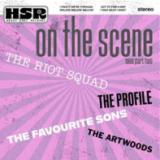
Part Two of the 1966 series is more of the same as part one - hard hitting Mod grooves from the crowd-pullers of the day including the brilliant Sam And Dave cover from THE ARTWOODS with three more from favourites THE RIOT SQUAD, THE FAVOURITE SONS and THE PROFILE
Much like a teacher, Meryl Streek imparts his knowledge and lived experiences to all who are willing to listen. His third album, ‘Stories They Don’t Teach You At School’, serves as an alternative form of education, delivered through a visceral blend of factual soundbites and raw emotion, loops and samples, guitars and bass. The lyrics resonate with core values of compassion, resilience, and community—themes rarely explored within a classroom setting or seen in today's fragmented society. By prioritising conviction over commercial success, the Dublin artist's outspokenness may invite controversy. Yet beneath the fervor lies a profound desire for positive social change at home in Ireland, and beyond.
Meryl Streek returned to Darkland Studios in Dublin to fine-tune the recordings previously made in a shed at the back of his ma's garden. Here he continued the genre-blurring nature of his earlier work, enticing listeners toward dissonant landscapes and hypnotic rhythms. Gentle piano tones collide with abrasive synths, creating a striking tension between beauty and noise. Streek tempers his rage when appropriate, integrating atmospheric textures and pop sensibilities into his ever-expanding sonic collage.
As is tradition with any Meryl Streek record, ‘Stories They Don’t Teach You At School’ unearths many uncomfortable truths. ‘Rotten Fruit’ examines media manipulation and the numbing proliferation of misinformation, all soundtracked by synth-punk. With gliding keys and a crunchy bassline, ‘Council Estates’ critiques systemic government failures affecting the working class. ‘Kelly’ is a slice of electronica that details an ongoing criminal investigation, currently classified as a “Contested Cause of Death”. The indie pop of 'The Chancer' brings much-needed attention to landlord politicians. As the album progresses, the mission remains absolute: to provide a voice for the voiceless.
To amplify these narratives, Meryl Streek handpicked a diverse group of collaborators for the project. ‘Rotten Fruit’ features Steve Ignorant of anarcho-punk collective CRASS. ‘Depression’ opens with a touching recording of the late Liam Norton, close friend and former touring companion, while Pete Holidai of The Radiators From Space contributes guitars on the song. Comedian Phill Jupitus provides the spoken outro for ‘The Chancer'. ‘Housing For All’ incorporates audio from Derelict Ireland campaigners Frank O’Connor and Jude Sherry. Venn Records owner and Gallows guitarist Laurent ‘Lags’ Barnard joins forces with Adebisi Shank bassist Vinny McCreith on the aggressive ‘Bullet,’ while Sophie Porter of Other Half provides bass guitar for ‘Life is Not a Rehearsal’. The album concludes with a three-minute spoken word piece by Frankie McNamara, the viral creator behind ‘Meditations for the Anxious Mind’.
In her 1990 protest anthem “Black Boys on Mopeds,” the late Sinead O’Connor warned, “To say what you feel is to dig your own grave”. With this release, Meryl Streek firmly holds the shovel.
A1: Esther Abrami / Claudio Capéo / The City of Prague - Coup de foudre - 4:08
A2: Esther Abrami / The City of Prague Philharmonic Or - Envoutée - 2:22
A3: Esther Abrami & The City of Prague Philharmonic Or - Fusion 2:30
A4: Esther Abrami / Jimmy Whoo / The City of Prague Ph - Obsession 3:22
B1: Esther Abrami / The City of Prague Philharmonic Or - Jalousie - 1:59
B2: Esther Abrami / The City of Prague Philharmonic Or - Emprise - 3:40
B3: Esther Abrami / The City of Prague Philharmonic Or - Rupture - 3:16
B4: Esther Abrami & The City of Prague Philharmonic Or - Deuxième Chance - 4:20
B5: Esther Abrami / The City of Prague Philharmonic Or - Libérée - 1:29
C1: Esther Abrami & Marina Viotti & The City of Prague - Romeo & Juliet: Love Theme - 3:20
C2: Esther Abrami / The City of Prague Philharmonic Or - Le Cirque: Désillusion Amoureuse - 1:24
C3: Esther Abrami & The City of Prague Philharmonic Or - All by myself 3:18
C4: Esther Abrami & The City of Prague Philharmonic Or - Carmen, GB 9/WD 31: L'amour est un oiseau rebelle "Habanera" (Arr. for Violin & Orchestra by Esther Abrami & Max Knoth) 3:44
C5: Esther Abrami & The City of Prague Philharmonic Or - Moods, Impressions and Souvenirs, Op. 41/H 311, Book 4, No.14: Lento (Arr. for Violin & Orchestra by Jan-Peter Klöpfel) 2:02
D1: Esther Abrami / The City of Prague Philharmonic Or - Léocadia, FP 106: 1. Les chemins de l'amour (Arr. for Violin & Orchestra by Esther Abrami & Jan-Peter Klöpfel) 2:50
D2: Esther Abrami / The City of Prague Philharmonic Or - Orpheé et Eurydice, Wq. 41; Dance of the Blessed Spirits "Melody" (Arr. for Violin & Orchestra by Jan-Peter Klöpfel) 2:54
D3: Esther Abrami / The City of Prague Philharmonic Or - Chaconne in G Minor (Arr. for Violin & Orchestra by Esther Abrami & Max Knoth) 4:34
D4: Esther Abrami & Ensemble Plein Jeu - Coeur à Coeur - 1:26
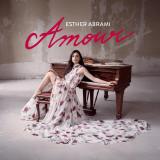
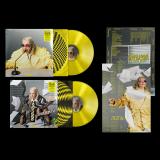
"Amour" ist ein bedeutender künstlerischer Meilenstein für die Geigerin und Social-Media-Sensation Esther Abrami. Erstmals stellt sie auf einem Album eine groß angelegte Originalkomposition ins Zentrum. Ihre neun Sätze umfassende Suite für Violine und Orchester ist eine ausdrucksstarke Auseinandersetzung mit der Liebe in all ihren Facetten und fängt das gesamte Spektrum der Emotionen ein - von Zärtlichkeit und Leidenschaft bis hin zu Sehnsucht und Verlust. Über die Suite hinaus versammelt "Amour" eine vielfältige Auswahl ikonischer klassischer Werke rund um das Thema Liebe, die von Esther Abrami neu für Solo-Violine und Orchester arrangiert wurden. Ein besonderes Highlight ist Nino Rotas "Romeo and Juliet: Love Theme", mit der gefeierten Mezzosopranistin Marina Viotti. Ihre Stimme tritt dabei in einen musikalischen Dialog mit Esther Abramis Violine. Das Programm umfasst weiterhin Instrumentalarrangements von Céline Dions "All by Myself" sowie Georges Bizets "Habanera" aus "Carmen", wie auch neue Versionen für Violine und Orchester von Francis Poulencs "Les chemins de l'amour", Christoph Willibald Glucks "Tanz der seligen Geister" aus "Orfeo ed Euridice" und der virtuosen "Chaconne in g-Moll" von Tomaso Antonio Vitali. Auch eine neu arrangierte Version von Charlie Chaplins "Désillusion amoureuse" aus seinem Film "The Circus" ist auf dem Album enthalten. Im Laufe ihrer Karriere hat sich Esther Abrami einen Namen damit gemacht, klassische Musik einem breiten und vielfältigen Publikum vorzustellen. Mit "Amour" verbindet sie erstmals ihre unverwechselbare Stimme als Interpretin mit ihrem Schaffen als Komponistin. Das Album erscheint als CD sowie als Doppel-LP in einer limitierten Ecorecord InkPlosion Version, bei der jede LP individuell gestaltet ist. Die Doppel-LP enthält außerdem 3 Bonus-Tracks, die bisher nur digital erschienen sind.
Cameron Winter kündigt sein erstes Live-Album "Live at Carnegie Hall" an. Das Album dokumentiert Winters historischen Auftritt im Dezember 2025, bei dem er als einer der jüngsten Solokünstler überhaupt als Headliner im Hauptsaal der legendären Konzerthalle auftrat. Ganz allein, über sein Klavier gebeugt und mit dem Rücken zu einem ehrfürchtigen, ausverkauften Publikum, interpretierte der Frontmann der Band "Geese" Songs aus seinem gefeierten Debütalbum "Heavy Metal" neu. Ein Album, das von GQ in ihrem ausführlichen Bericht über diesen Abend in der Carnegie Hall als "eine der kühnsten und selbstbewusstesten Singer-Songwriter-Platten dieses Jahrhunderts bisher, ein Fiebertraum voller Gefühle von jemandem, der die Regeln gut genug verstand, um zu wissen, dass sie ihm kaum etwas bedeuteten" beschrieben wurde.
Auf dieser berühmten Bühne präsentierte er zudem drei bisher unveröffentlichte Kompositionen, von denen jede einen Einblick in seinen Fundus an Material bot. Die gesamte Darbietung war von einem unbestreitbaren Gefühl der Einmaligkeit geprägt, das die Bedeutung des Augenblicks einfing: Zeuge zu sein, wie ein Künstler, wie er nur einmal in einer Generation vorkommt, die Bühne eines der ehrwürdigsten Veranstaltungsorte der amerikanischen Musikszene beherrscht.
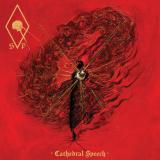
Nach drei Jahren und zehendtausend Höllen entfesseln SPIRIT POSSESSION am 2. Oktober ihr drittes Album in voller Länge: „Cathedral Speech“.
Sieben angreifende Labyrinthe weitreichenden Black Heavy Metals, bei denen alle Turmspitzen nach unten zeigen.
Wo „Of the Sign…“ aus dem Jahr 2023 noch einen messerscharfen Blick auf unberechenbare, abenteuerliche Hymnen warf, erweckt „Cathedral Speech“ die bisher stechendste, am stärksten deragierte und erzählerisch epischste Form von SPIRIT POSSESSION. Spiralförmige Gitarrenstürme und explosive Schlagzeug-Hämmerungen kanalisieren Black-/Death-Metal-Angriffe der ersten Welle im selben Atemzug mit ausladenden 70er-Jahre-Kompositionen.
Mit vier Schritten in den Wahnsinn, gefolgt von einer seitenlangen Suite, sind dies bösartige elektrische Gesänge, ebenso hochragend wie gotteslästerlich.
Besetzung: S. Peacock (Black Curse / Ulthar / Mastery) an Saiten und Gesang sowie A. Spungin (Ormus) an Schlagzeug und handgefertigten Synthesizern. Aufgenommen in den Tiefen des S•P-Dungeons und gemischt von Colin Marston in den New Menegroth, The Thousand Caves. Cover-Artwork von Luciana Lupe Vasconselos.
Bill & Gloria Gaither feiern gemeinsam mit ihren Homecoming Friends die Weihnachtszeit. Mit dabei sind zahlreiche Größen der Gospel-Szene, darunter Gaither Vocal Band, Lynda Randle, Jake Hess, The Isaacs und David Phelps. Die Sammlung vereint zeitlose Weihnachts- und Gospelklassiker wie „O Holy Night“, „White Christmas“ und „Mary, Did You Know?“.
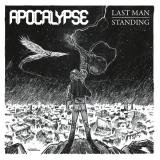
Die Londoner Band Apocalypse sollte kaum einer Einführung bedürfen. Sie erlangten unter Fans der New Wave Of British Heavy Metal durch ihre Single »Storm Child« von 1982 Ruhm, der drei Jahre später das vielbeachtete Album »The Prophet« folgen sollte, obwohl die Band zu diesem Zeitpunkt bereits eine Namensänderung durchlaufen hatte und nun als Omega bekannt war.
Spulen wir über vierzig Jahre vor. Apocalypse sind mit einem neuen Album zurück, »Last Man Standing«. Das aktuelle Werk knüpft nahtlos an »Abandon Hope an«, das 2010 von High Roller Records veröffentlicht wurde. Mittlerweile hat Gitarrist und Sänger Steve Grainger, der nach dem Tod sowohl seines Bruders Marc (ehemaliger Schlagzeuger der Band) und des Bassisten Dave Robertson tatsächlich als „letzter Mann übriggeblieben ist“, die Gruppe in Apocalypse NWOBHM umbenannt.
»Last Man Standing« kombiniert neues Material, das Steve geschrieben hat, mit älteren Songs, die in ihrer ursprünglichen Form aus der Vorgängerband Phaze stammen (die er und sein Bruder betrieben). Die Atmosphäre und der Drive von Apocalypse sind geblieben. Mit Beiträgen von Marc und Dave sowie textlichen Anspielungen auf einige frühere Stücke der Band ist »Last Man Standing« der neueste Teil der Apocalypse-Saga und in dieser Form definitiv eine würdige Ergänzung des Bandkatalogs.
HRR 1084LP, Einband aus schwerem Karton (425 gsm), 4-seitiges Booklet. Erste Auflage limitiert auf 500 Stück.
DIGITiSE knüpft dort an, wo HAAis Album HUMANiSE aus dem Jahr 2025 aufgehört hat, und versetzt uns direkt auf die Tanzfläche. Die zehn Tracks bewegen sich klanglich über verschiedene Genres und Stilrichtungen hinweg und sind von HAAis legendären All-Night-Long-DJ-Sets inspiriert.
Mit DIGITiSE setzt HAAi ihre Auseinandersetzung mit der Frage fort, was es bedeutet, in einer zunehmend digitalen Welt Mensch zu sein. Das Album beleuchtet das rasante Tempo von KI und technologischer Entwicklung, die Spaltungen, die dadurch entstehen, sowie die Belastungen, die damit einhergehen. Gleichzeitig bietet es ein Gegenmittel: Gemeinschaft. Menschen in einem Raum oder auf einer Tanzfläche zusammenzubringen, ein Gefühl von Zusammenhalt und Zugehörigkeit zu schaffen – dafür steht HAAi seit jeher mit voller Überzeugung. DIGITiSE öffnet sich diesem Geist vollkommen.
Für das Album arbeitet die in London lebende, australischstämmige Produzentin, Songwriterin und DJ mit neuen Kollaborateur:innen wie Echonomist, Skybreak und Cantoalegre (einem Kinderchor aus Medellín, Kolumbien) zusammen. Darüber hinaus sind auch Künstler:innen vertreten, mit denen HAAi bereits zuvor gearbeitet hat, darunter Pat Alvarez, ILA, James Messiah und Kaiden Ford.
DIGITiSE nimmt HUMANiSE an die Hand und führt es direkt in den Club.
Widow aus London (auch als Ritual bekannt) machten erstmalig 1983 im Zuge der NWOBHM-Bewegung auf sich aufmerksam, als ihr selbstbetiteltes Debütalbum auf Legend Records erschien. Zu jenem Zeitpunkt waren Re Bethe (Gitarre, Gesang), Phil Mason (Bass) und Rex Duval (Schlagzeug) allerdings bereits ganze zehn Jahre aktiv. Ihr allererster Live-Auftritt fand im September 1973 im ""Café des Artistes"" in der Fulham Road in London statt.
Heutzutage werden Widow/Ritual in bestimmten Kreisen als Säulenheilige der originalen Okkult-Rock-Welle verehrt. Re Bethe hingegen sieht wenig Parallelen zwischen seiner Band und Black Widow, Atomic Rooster oder Coven: ""Ich glaube, wir haben uns selbst niemals als Okkult-Rock-Band bezeichnet. Ich denke, wir waren eher ganz normaler Heavy Rock. Aber selbstverständlich haben wir beobachtet, was um uns herum musikalisch passierte. In den ganz frühen Tagen waren wir sicherlich ein wenig von Black Sabbath beeinflusst. Ich wollte schon immer wie eine Mischung aus Black Sabbath und Deep Purple klingen. Das waren wirklich die einzigen beiden Rockbands, die ich mir überhaupt angehört habe. Black Sabbath und Deep Purple hatten irgendwie den Dreh raus.”
Als Widow (oder Ritual) schließlich im Jahre 1983 ihre Platte vorlegten, hatte die NWOBHM ihren Höhepunkt bereits überschritten. “Wir sahen, was mit den anderen Bands geschah”, gibt Re Bethe zu Protokoll. “Wir fühlten uns dieser Bewegung auf eine bestimmte Art und Weise verbunden. Die Leute haben uns oft mit Samson, Quartz oder Pagan Altar verglichen. Im Grunde genommen gehörten wir aber einer früheren Generation an, die sich bereits vor der Punk-Revolution formiert hatte und nun mit der Schwierigkeit konfrontiert wurde, Arbeit an Land zu ziehen. Es war schier unmöglich, einen Deal zu ergattern, es war sogar unmöglich, überhaupt einen Vertrieb für die Platte zu bekommen.”
Audio-Restaurierung und Mastering durch Patrick W. Engel bei TEMPLE OF DISHARMONY im März 2026. Cutting durch SST Germany auf Neumann-Geräten für optimale Qualität in jeder Hinsicht.
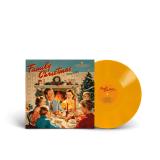
Family Christmas ist der perfekte Soundtrack für festliche Stunden mit Familie und Freunden.
Mit unvergänglichen Weihnachtsaufnahmen von Ella Fitzgerald, Nat King Cole, Elvis Presley, The Andrews Sisters und vielen weiteren Legenden versprüht diese Sammlung nostalgischen Weihnachtszauber.
Ein liebevoll zusammengestellter Klassiker voller Wärme, Harmonie und unvergesslicher Festtagsstimmung. Erhältlich auf Vinyl - transparent orange!
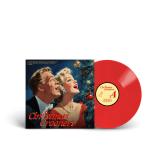
Christmas Crooners vereint die schönsten Weihnachtsklassiker, interpretiert von den größten Stimmen des Goldenen Zeitalters der Unterhaltungsmusik. Mit Legenden wie Elvis Presley, Frank Sinatra, Nat King Cole, Dean Martin, Bing Crosby und Eartha Kitt sorgt diese Sammlung für die perfekte Mischung aus festlicher Nostalgie und zeitloser Eleganz. Ein stimmungsvoller Soundtrack für die Weihnachtszeit, der Wärme, Charme und die Magie klassischer Crooner-Klänge in jedes Zuhause bringt. Erhältlich als exklusives Transparent Red Vinyl.
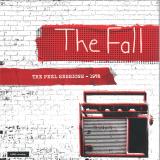
The Fall, 1976 in Manchester gegründet, ist im Kern das Projekt von Mark E. Smith, der als konstantes Bandmitglied den Charakter der Gruppe prägte. Musikalisch bewegen sich die frühen Peel‑Aufnahmen im rauen Post‑Punk‑Spektrum: schroffe, gitarrengetriebene Arrangements, repetitiver Aufbau und Smiths markante, oft kryptische Vocals zeigen die ästhetische Direktheit, die den Sound der Band auszeichnet.
Die Zusammenstellung dokumentiert die Session vom 30. Mai 1978 mit "Futures And Pasts", "Mother‑Sister!", "Rebellious Jukebox" und "Industrial Estate" sowie die Session vom 27. November 1978 mit "Put Away", "Mess Of My", "No Xmas For John Quays" und "Like To Blow". Produzentisch zeichneten Tony Wilson und Bob Sargeant verantwortlich; als Toningenieure werden Mike Robinson, Mike Dave Dade und Brian Tuck genannt.
Als historische Momentaufnahme fängt die LP die rohe Studio‑Performance einer Band ein, die sich Anfangsphasen und Entwicklung bereits in diesen frühen Auftritten ablesen lässt. Die Zusammenführung beider Sessions auf einer schwarzen LP betont den dokumentarischen Charakter der Veröffentlichung.
out of Stock
Last delivered 8 days ago available to reorder, subject to availability
The latest update to the Dream Software sonic catalogue is a glossy re-mastered version of the 2003 release ‘Fears’ from ‘Shuffle Progression’. A soundtrack for the space between reality and the higher spiritual planes. Grounding yet otherworldly, an organic groove doused in a warming sensuality and atmospheric liminality. This one is optimised for hazy spaces, morphing layers of floating essence, slowly obscuring all thats visible into blurry shapes of an abstract existence.
Electronic tastemaker Reznik makes his Defected debut with a remix of Chasing Kurt's 2014 club favourite, "From The Inside." Following his critically acclaimed "Cloudy Eyes" featuring Jesse Boykins III, Reznik continues to build momentum across the global club circuit with 2026 appearances at The Loft Amsterdam, Scorpios Mykonos, Gate Club Paris, Hï Ibiza, Extrema Belgium, KOKO, and more. Championed by Keinemusik, Tripolism, DESIREE and more, the remix has become a sought-after ID among underground selectors.
Following the instant success and subsequent repress of its inaugural release, Stones Taro’s self-release experiment "Foglore" returns with its second installment, further expanding the captivating universe built in Part 1. Rooted in the same core concept—a seamless blend of dubby, fog-laden sound design and a timeless aura reminiscent of ancient folklore—this four-track EP solidifies the very definition of "Foglore." On the A-side, "Weather Wheel" sets an energetic tone as masterfully mixed, chopped breakbeats seamlessly dissolve into hazy, atmospheric pad sounds. It is followed by "Moss Pulse," a track whose precise sound design acts as a natural hub bridging the worlds of Dub Techno and Dubstep. On the flip, "Whorls Of Smoke" delivers a fresh, hypnotic dance cut driven by an intricate interplay between a half-step groove and tam strikes. Closing the EP, "Acid Fog Ritual" combines sticky acid basslines with a deliberate, low-tempo beat to generate a deeply immersive psychdelia. Expanding on its predecessor while boldly redefining its own boundaries, Foglore#2 stands as a brilliant testament to Stones Taro’s evolving sonic vision.
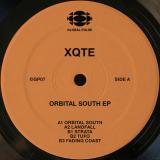
Global Pulse 07 takes you on a journey to southern Italy, where Neapolitan producer XQTE presents the "Orbital South EP". Inspired by his hometown's early 2000s techno legacy, Vincenzo Gargiulo proposes his modern take, showing a warm soul and a masterful use of samplers . This record is driven by filtered chords , catchy vocals, funky basslines and percussions that will uplift the dance floor with a delicious groove.
out of Stock
Last delivered 10 days ago available to reorder, subject to availability
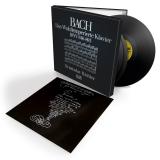
Sviatoslav Richter war einer der größten Pianisten des 20. Jahrhunderts und viele seine Aufnahmen gelten als legendär. Besonders die in den Jahren 1970 und 1973 für das Label Eurodisc entstandenen Einspielungen des "Wohltemperierten Klaviers BWV 846 - 893" gelten als Referenzaufnahmen dieses Werkes. Die limitierte 6 Vinyl-Edition auf 180 Gramm Vinlys wurde von den originalen Bändern remastert und enthält ein 20 seitiges großformatiges Booklet mit dem Booklettext und den Bildern der ursprünglichen LP-Veröffentlichung.
Come Back Down, the new album by Nashville experimental-pop duo Total Wife, was born from the edge of sleep. When composer and producer Luna Kupper would begin to fall asleep during late-night mixing sessions, the songs would follow her into the halfway place between dream and lucidity. Like Dale Cooper in Twin Peaks, she'd wake with a new perspective on the puzzle she was piecing together. "I'm a psychological mixer - I'm trying to think of how someone's experiencing the sound, versus getting stuck in trying to make all these different tones and using all this gear to make something sound a certain way," Kupper says. And like a spiral from waking life into dream, the songs on Come Back Down are endlessly self-referential, building whole universes from a single point. Kupper sold all of her synths to make rent before she started working on the album, and so every inorganic sound is instead built from samples of the band's own work. A guitar on one song may be reprocessed and used as a synth on the next, while everywhere on the album vocal samples are taken from a single unreleased cover of Elliott Smith's 'Between the Bars.' In tribute to this process, the album was almost named The Julia Set after the mathematical equation which feeds into itself again and again, creating beautiful fractal images. The intention was to create something complex but accessible; experimental, yet precise and without abstraction. In her lyrics, too, lyricist and vocalist Ash Richter is as straightforward as she's ever been. She drew on her experience of pandemic isolation to write about connection and disconnection, using her lyrics as a tool for the communication that was missing in everyday life. On the soaring, shoegazey track 'peaches,' a storm that forced the cancellation of a recording session became a metaphor for emotional distance. 'still asleep' chronicles Richter's euphoria after Total Wife's first tour, and watches it begin to curdle into paranoia. "Thank the full moon, my heart is overflowing," she sings, before: "Is there such a thing as too happy?" The experience of isolation was prompting Richter to think back to her childhood, a time marked for her by solitude and natural play - climbing trees, making mud pies, getting lost in the woods. On tracks like 'in my head' and 'second spring,' she uses the imagery of nature to recall that time and forge a connection with her lonely inner child. "I feel connected with transcendentalist writing and magical realism - trying to convey things in a concrete way, but with that element of psychology and mystery," she says. Richter and Kupper, friends from high school, formed Total Wife in 2016, relocating from Boston to Nashville in 2020. Both are visual artists as well as musicians, which they incorporate into their work with Total Wife via layered and purposeful visuals. A DIY streak underpins everything that they do - from handling their own artwork and music videos to recording their own music, releasing tapes through their label Ivy Eat Home, and hosting house shows in the basement they've christened Ryman 2. In Nashville they've settled into a weirdo scene living under the record industry's floorboards, a hive of collaborative and creative energy that has made them excited to call the city home. They also assembled a live band for the first time shortly after moving to Nashville, consisting of Ryan Bigelow, Sean Booz and Billy Campbell - injecting their creative process with a jolt of spontaneity and aliveness that has fed back into Come Back Down.
Come Back Down, the new album by Nashville experimental-pop duo Total Wife, was born from the edge of sleep. When composer and producer Luna Kupper would begin to fall asleep during late-night mixing sessions, the songs would follow her into the halfway place between dream and lucidity. Like Dale Cooper in Twin Peaks, she'd wake with a new perspective on the puzzle she was piecing together. "I'm a psychological mixer - I'm trying to think of how someone's experiencing the sound, versus getting stuck in trying to make all these different tones and using all this gear to make something sound a certain way," Kupper says. And like a spiral from waking life into dream, the songs on Come Back Down are endlessly self-referential, building whole universes from a single point. Kupper sold all of her synths to make rent before she started working on the album, and so every inorganic sound is instead built from samples of the band's own work. A guitar on one song may be reprocessed and used as a synth on the next, while everywhere on the album vocal samples are taken from a single unreleased cover of Elliott Smith's 'Between the Bars.' In tribute to this process, the album was almost named The Julia Set after the mathematical equation which feeds into itself again and again, creating beautiful fractal images. The intention was to create something complex but accessible; experimental, yet precise and without abstraction. In her lyrics, too, lyricist and vocalist Ash Richter is as straightforward as she's ever been. She drew on her experience of pandemic isolation to write about connection and disconnection, using her lyrics as a tool for the communication that was missing in everyday life. On the soaring, shoegazey track 'peaches,' a storm that forced the cancellation of a recording session became a metaphor for emotional distance. 'still asleep' chronicles Richter's euphoria after Total Wife's first tour, and watches it begin to curdle into paranoia. "Thank the full moon, my heart is overflowing," she sings, before: "Is there such a thing as too happy?" The experience of isolation was prompting Richter to think back to her childhood, a time marked for her by solitude and natural play - climbing trees, making mud pies, getting lost in the woods. On tracks like 'in my head' and 'second spring,' she uses the imagery of nature to recall that time and forge a connection with her lonely inner child. "I feel connected with transcendentalist writing and magical realism - trying to convey things in a concrete way, but with that element of psychology and mystery," she says. Richter and Kupper, friends from high school, formed Total Wife in 2016, relocating from Boston to Nashville in 2020. Both are visual artists as well as musicians, which they incorporate into their work with Total Wife via layered and purposeful visuals. A DIY streak underpins everything that they do - from handling their own artwork and music videos to recording their own music, releasing tapes through their label Ivy Eat Home, and hosting house shows in the basement they've christened Ryman 2. In Nashville they've settled into a weirdo scene living under the record industry's floorboards, a hive of collaborative and creative energy that has made them excited to call the city home. They also assembled a live band for the first time shortly after moving to Nashville, consisting of Ryan Bigelow, Sean Booz and Billy Campbell - injecting their creative process with a jolt of spontaneity and aliveness that has fed back into Come Back Down.
The third chapter of The Third Room's curator-led series is shaped by Verraco, one of the key voices behind a new generation of artists reshaping contemporary club music. Through his productions, DJ sets and his work with TraTraTrax, he has helped define a sound where hybrid forms, rhythmic experimentation and cross-cultural influences are pushing the genre into new territory. Structured across two distinct sides, the release draws a clear connection between past and present. The A-side leans into a deeper, more classic space, while the B-side moves towards a more forward-facing, hybrid sound. It opens with Libration (Stone Version) by Substance & Vainqueur, a revisiting of their landmark 2007 release, a track that helped define the language of Dub Techno as it is understood today. Reduced, deep and spatially precise, it established a blueprint for how rhythm, delay and tone could function together. It's presence here acts less as a nod to the past and more as a reminder of a foundation that continues to shape the genre. Skee Mask's Clear Sky 909 continues this thread, softening the edges without losing depth. Warm, enveloping textures and fluid movement give the track a sense of openness, balancing clarity with emotional weight. The B-side shifts perspective. On Untitled (Teamgeist Mix), Verraco, joined by Tils, delivers the record's defining moment - a dense, intricately designed piece built on a driving low-end and evolving rhythmic patterns. Elements from Techno, Bass and Leftfield House converge into a detailed, forward-moving structure that actively bridges cultural contexts. It results in a form of dance music shaped by technical precision, but drive.n by a clear sense of intent, marking a distinct expression of Verraco's current sound. Untitled by 1morning introduces a rolling, tribal-infused groove with a strong sense of depth, while PatumPa by Regal86 closes the record with a bright, loop-driven energy that leans into pure motion. Across both sides, the release moves between reference and progression. Rather than separating old and new, Verraco connects them - tracing a line from foundational Dub Techno to a more fluid, contemporary club language. Copyright 2026 The Third Room A1 Written and Produced by Peter Kuschnereit & Rene Loewe | A2 Written and Produced by Bryan Mueller | B1 Written and Produced by JP Lopez & Jakob Ferdinand Tils and mixed by Lurka | B2 Written and Produced by 1morning | B3 Written and Produced by Regal86 Mastered by Andreas Kauffelt (Schnittstelle Berlin) Artwork by Charlotte Ernst Design by Daniel Bornmann (STUEDIO.XYZ) Distribution by Clone Pressing by Matter Of Fact
out of Stock
Last delivered 7 days ago available to reorder, subject to availability
De Kloe: their name is as hard to explain as the music they channel from a total oddball universe. Rumour has it a wormhole sits hidden between the beer crates and a broken dartboard in the basement of the DPG Media building in Antwerp. Leon Jespers, Elian Van den Eynde and Midas Heuvinck stepped through and came back with De Kloe’s first full-length album.
Needless to say, De Kloe operates in the cracks - splicing obscure samples, fractured lyrics, jagged basslines, and serrated guitar riffs into something volatile and alive. Club rhythms pulse underneath, but nothing stays in place for long. Tracks mutate, structures dissolve, and both live and on record the band leans into instinct over control.
After the singles ‘Our House’ & ‘The Fish’ the trio finally presents their debut album ‘Vanity Fair’: more extravaganza tunes you didn’t know you need it, but soon will be addicted to.
A place where pop music collides with dubbed out samplemania, short sharp no wave riffs, sun-gazing psychedelica, 90’s indie sleaze, post everything vibes and endless sonic fun & happiness.
Some people would say Vanity Fair is a musical exploration of glossy machinery, the dacay of celebrity and a secret wink to John Bunyan’s Pilgrim’s Progress where
everything is on display and nothing is quite what it seems.
Other will say ‘Vanity Fair’ is a splendid record with 12 marvelous songs you just have to listen to and buy it because your life will only gets better from then on.
We believe both of them.
Credits
All songs written and produced by De Kloe
Elian Van den Eynde: guitar
Leon Jespers: electronica & keyboard
Midas Heuvinck: bass
Guest musicians
Kiara Govaert & Nina Brügger: vocals
Kiara Govaert: ocarina
Co-production and mixing by Martijn De Bondt
Recording by Simon Beeckaert
Mastering by Gert Van Hoof
Graphic design and layout cover by Leon Jespers
Common Primitives is the second collaborative album between Andy Bell (Ride guitarist, Oasis bassist) and Essex-based harp and synth duo Masal. It’s a stunning, meditative collection which veers from kosmische to astral jazz by way of Turkish folk tunes and all the way back again.
Their first outing, 2023’s acclaimed Tidal Love Numbers, consisted of four lengthy and almost ambient tracks and is included here on vinyl for the first time as part of a two-record set with the new album. By contrast, the seven tracks that make up Common Primitives are almost concise, but also a lot more layered and complex.
“We tend to work from initial, free-jammed ideas, building form and arrangement from there,” explains Masal’s Al Johnson. “Above all, we believe you should go where the vibe takes you.”
For Andy, that vibe was very much jazz legend Pharoah Sanders’ classic 1977 album Pharoah, which was reissued a few years ago.
“It puts me into a hypnotic state,” he explains. “That’s why I worked with more guitar loops on this record. The Tisziji Muñoz part on ‘Harvest Time’ has had me in a vice-like grip for the last three years and it arrives here via the Vini Reilly filter.”
For Özlem Simsek, there is nostalgia, too, and she even adds vocals as well as her heavenly harp to the opening track, ‘After Kâtibim’, based on a traditional Turkish folk song she had sung as a child growing up in Istanbul.
From there, the album takes us on a real journey, with the apt, impressionistic titles added by Andy once it had all been pieced together. There’s the beautiful, elegant ‘I Swear We Are Infinite’; the atmospheric ‘Yuzuki Fighting Spirit’ and the beatific ‘Soap And Water’. ‘Tower Of Babylon’ was named after the novelette by Ted Chiang, its structured creation reflecting that in the story; first single ‘The Morning Of The Trip’ finds Andy playing his guitar “as if it was a waterfall”. The journey ends with ‘Rudi’s Dream – The Third Bardo’, the trio accelerating onto the autobahn for a krautrock crescendo inspired by their studio’s resident cat.
Common Primitives is the second collaborative album between Andy Bell (Ride guitarist, Oasis bassist) and Essex-based harp and synth duo Masal. It’s a stunning, meditative collection which veers from kosmische to astral jazz by way of Turkish folk tunes and all the way back again.
Their first outing, 2023’s acclaimed Tidal Love Numbers, consisted of four lengthy and almost ambient tracks and is included here on vinyl for the first time as part of a two-record set with the new album. By contrast, the seven tracks that make up Common Primitives are almost concise, but also a lot more layered and complex.
“We tend to work from initial, free-jammed ideas, building form and arrangement from there,” explains Masal’s Al Johnson. “Above all, we believe you should go where the vibe takes you.”
For Andy, that vibe was very much jazz legend Pharoah Sanders’ classic 1977 album Pharoah, which was reissued a few years ago.
“It puts me into a hypnotic state,” he explains. “That’s why I worked with more guitar loops on this record. The Tisziji Muñoz part on ‘Harvest Time’ has had me in a vice-like grip for the last three years and it arrives here via the Vini Reilly filter.”
For Özlem Simsek, there is nostalgia, too, and she even adds vocals as well as her heavenly harp to the opening track, ‘After Kâtibim’, based on a traditional Turkish folk song she had sung as a child growing up in Istanbul.
From there, the album takes us on a real journey, with the apt, impressionistic titles added by Andy once it had all been pieced together. There’s the beautiful, elegant ‘I Swear We Are Infinite’; the atmospheric ‘Yuzuki Fighting Spirit’ and the beatific ‘Soap And Water’. ‘Tower Of Babylon’ was named after the novelette by Ted Chiang, its structured creation reflecting that in the story; first single ‘The Morning Of The Trip’ finds Andy playing his guitar “as if it was a waterfall”. The journey ends with ‘Rudi’s Dream – The Third Bardo’, the trio accelerating onto the autobahn for a krautrock crescendo inspired by their studio’s resident cat.
Robert Nasveld (*1955 Utrecht) studied piano at the Utrecht Conservatory with Polo de Haas, Sas Bunge and Herman Uhlhorn, composition with Joep Straesser, and electronic music with Ton Bruynèl. After completing his piano studies, Robert Nasveld specialised in 20th-century repertoire, with a particular focus on Dutch, Russian and American music. He achieved international fame as a pianist for his interpretations of the works of the American composer George Crumb, which led to invitations to perform at various events, including the Warsaw Autumn Festival (1990). His connection with George Crumb also enabled him to produce a seven-hour live broadcast of Crumb's music for VPRO radio in 1986 and a television program with the composer. Nasveld recorded the complete works for one piano by George Crumb, which was released by the Attacca label in 1991. He has given concerts in Europe, Russia, and the United States.
Nasveld was also a member of the Orgella Quartet, founded in 1976 (with Margaret Krill, Polo de Haas, and Niek de Vente), Piano Kwadraat, and the Netherlands Pianists Quartet (with Marian Bolt, Corien van den Berg, and Niek de Vente). These ensembles specialised in performing music for two eight-handed pianos. He also collaborated with several vocalists, including Claron McFadden, Marjanne Kweksilber, and Liesbeth List (tour 1983/'84). Due to multiple sclerosis, he retired from performing in 1998.
From 1988 to 2021 Robert Nasveld worked for Dutch national radio (NOS/NPS/NTR) as a program producer for NPO Klassiek. Until 2004, he was editor of Supplement, which received the Silver Reiss Microphone in 1996, the highest award for a radio program, for its adventurous and innovative programming. Robert Nasveld also programmed concept evenings at Muziekcentrum Vredenburg, featuring contemporary music performed by soloists, ensembles, and the broadcasting orchestras for NOS/NPS. From 2019 until his retirement in 2021, he presented a series of podcasts for NTR/NPO Radio 4 about electronic music pioneers. The three compositions on this LP are the only tape pieces recorded by Nasveld. They were created at Ton Bruynèl’s studio at the Utrecht Conservatory and the Institute for Sonology in Utrecht.
Five years after establishing himself as one of the UK's most distinctive selectors, Bloom marks the beginning of a new chapter for Yung Singh. More than a debut EP, it introduces EKTA his own label and creative world, built around the Panjabi concept of unity and the belief that dance music can be a meeting point for cultures, histories and new ideas.
Rather than treating heritage as something to preserve behind glass, Bloom places it at the centre of contemporary club music. Drawing inspiration from Panjabi folk traditions, Indian classical rhythms and centuries-old musical practices, Singh reimagines these influences through a modern electronic framework without reducing them to nostalgia or tokenism. The visual identity mirrors this philosophy, taking cues from Phulkari embroidery "flower work" passed down through his own family and connecting those traditions with the idea of growth, renewal and the arrival of a new creative season.
Finalised while touring Panjab during Basant, the festival celebrating the arrival of spring, Bloom became both a personal and artistic statement: the first release on a label intended not to represent one culture alone, but to create space for many. As Singh explains:
"EKTA as a name really sums up what I love about music and arts in general: unity and oneness. I want the label to be a sonic universe where artists bring their specific heritage into a modern club framework. It's about merging diverse folk traditions to treat these sounds not as relics, but as the future of dance music."
Across three tracks, Bloom presents different perspectives of that vision. 'NUG46' transforms field recordings captured in New Zealand into a meditative piece built around hypnotic tabla and razor-sharp jungle rhythms. 'Situationz' pays tribute to legendary Panjabi artist Sukshinder Shinda through the driving "Shinda Break", recontextualising a rhythm instantly recognisable to generations of listeners into a high-energy club weapon. Closing the record, 'Tabla Trouble' leans fully into organic instrumentation, layering classical percussion, strings, flutes and vocals into a composition that defines the open-ended musical language of EKTA.
Bloom is not simply the first release on a new label. It is the foundation of a wider vision one that looks to the past not for comfort, but for inspiration, using tradition as a catalyst for imagining the future of dance music.
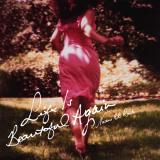
"Life Is Beautiful Again" is the debut album of Nadine El Roubi, a Sudanese-born, New York-based singer, rapper, songwriter, and multidisciplinary artist.
The album is the culmination of music created over the last three to four years. While the album can be categorized as primarily neo-soul, its true genre remains fluid — shaped by influences in hip-hop, neo-soul,and indie music.
Both melancholic and powerful, introspective and self-assured, Life Is Beautiful Again explores personal and external chaos, womanhood, belonging, and the determination to maintain faith through struggle. Thematically, it marks a shift from her previous work. Where earlier releases were overtly political, defiant, and outward-facing, this album turns inward. It is softer, more reflective, and rooted in the belief that vulnerability can be its own form of strength.
Written and recorded over three years across four cities, the album carries the imprint of many different versions of a Sudanese woman navigating change, loss, love, ambition, and growth, these songs became a way of making sense of the world.
At its core, the album’s message is simple: even through the ugliest of times, life will always become beautiful again.
Ajo Se Po is the third album by alto-saxophonist and percussionist Kevin Haynes, released with his band Grupo Elegua. The album integrates musical elements with references to his deepening spiritual understanding. Haynes has created a modal harmonic language incorporating Afro-Cuban melodies and classical kora playing - his alto-sax, infusing the album with a personal 'voice'.
Yoruba spirituality is at the heart of Haynes' musical thinking which also includes both Nigerian and Cuban dimensions. This is especially reflected by the use of recitation and Cuban bata drumming being employed on all tracks, with each piece growing out of a particular bata rhythm. Each such rhythm is dedicated to a particular Orisha, or divinity.
As well as influences from Afro-Cuban, Native Nigerian and folkloric Bata, Haynes' music is a fusion of contemporary jazz incorporating Mandinga folk and praise songs and hard bop.
Kevin Haynes and Grupo Elegua have performed at renowned jazz festivals including Havana Jazz Festival, Cuba and Salamanca Jazz Festival, Spain. Haynes has also featured on Moses Boyd's hit album Displaced Diaspora.
Previously available on digital only, Ajo Se Po is now released on vinyl.
out of Stock
Last delivered 10 days ago available to reorder, subject to availability
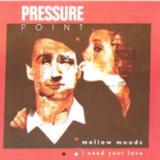
Leading the charge was a young band from West London called Pressure Point, whose debut single Mellow Moods caused a real stir on its release in 1985. The Stan Getz-inspired bossa nova was released initially on Viceroy Records, and immediately punched well above its weight, thanks to the considerable talents of producer Steve James, vocalist Lydia Gayle and some of London's leading session musicians: saxophonists Jamie Talbot and Ian Trimmer, trumpeter Steve Sidwell and his brother, trombonist Neil, and keyboard player Simon Etchells. It quickly became Capital Radio's 'People's Choice', winning praise on air from the likes of Kid Creole himself - August Darnell - and went on to be re-released by Bellaphon in Germany and by Gilles Peterson's HardBack Records. It is widely viewed as a rare groove classic, with copies changing hands for hefty sums in the following decades. London- based Pressure Point's core members were Matthew Best, Anthony 'Hugo' Longden and Sean Maher, who went on to work with Soul Legend Miss PP Arnold to complete 'Dreaming', a now legendary and as yet unreleased 1989 album
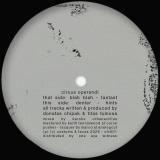
Circus Operandi is the project of Donatas Chipak and Tumosa, two figures of the Vilnius electronic music scene, and residents at legendary clubs Opium (RIP) and Gallery 1986, where Ivan Smagghe & Niv Arzi (who jointly run Customs & Faces) met them countless times at countless hours. We’re not keen at describing the music we release at C & F, no need for pigeonholing ourselves but this EP completely ticked our boxes : electro, techno and everything in between, punch and deepness included.
Blah Blah has been played in every Ivan Smagghe set for the last 6 months and picked up by, amongst others, Shonky and Francesco Del Garda. Some kind of hit rambling about ordering a pizza is quite something. Fantast and Hints are slightly moodier pieces of emotional 4/4 electro while Denter subtly hits at non-cheesy trance. Expect much more from these two very soon.
out of Stock
Last delivered 7 days ago available to reorder, subject to availability
The pairing of two fiddles is a familiar sound in many folk traditions, but it has been heard less frequently in English traditional music. Morning of May, a new album from Sam Sweeney and Grace Smith, sets out to discover what happens when two fiddlers meet with this repertoire: taking turns carrying the melody, as the other takes a "seconding" role, weaving harmony and rhythm around the tune, elevating it and subtly reshaping the ground beneath it. Sweeney and Smith immersed themselves in a wide range of manuscripts and tune collections, delving into some of the more obscure sources. Within these archives, they found tunes that felt unexplored and rich with possibility. Some tunes arrived as complete hidden gems. Others required some restoration, their rough edges gently smoothed through the process of playing. Others were tiny fragments, inspiring almost total reimaginings. Alongside these old tunes sit a few original compositions by Sam Sweeney and Grace Smith, written in the same spirit of curiosity and continuity that informs their approach to archive material.
The pairing of two fiddles is a familiar sound in many folk traditions, but it has been heard less frequently in English traditional music. Morning of May, a new album from Sam Sweeney and Grace Smith, sets out to discover what happens when two fiddlers meet with this repertoire: taking turns carrying the melody, as the other takes a "seconding" role, weaving harmony and rhythm around the tune, elevating it and subtly reshaping the ground beneath it. Sweeney and Smith immersed themselves in a wide range of manuscripts and tune collections, delving into some of the more obscure sources. Within these archives, they found tunes that felt unexplored and rich with possibility. Some tunes arrived as complete hidden gems. Others required some restoration, their rough edges gently smoothed through the process of playing. Others were tiny fragments, inspiring almost total reimaginings. Alongside these old tunes sit a few original compositions by Sam Sweeney and Grace Smith, written in the same spirit of curiosity and continuity that informs their approach to archive material.
Thursday, 2025. Philadelphia. South Philly, to be precise. A basement, to be even more precise. And not just any basement, but the subterranean headquarters of Zillas On Acid.
Which is where Roman Flügel found himself, presumably with good intentions. Some time before that, he had decided to wake Sister Midnight from its slumber.
But rather than simply carrying on where things had left off, a new idea was needed. Enter Sister Midnight Special Products: a new series dedicated to collaborations, chance encounters and other musical situations that deserve to become records.
No grand manifesto, no five-year plan. Just making music with people you like, in places you happen to find yourself, and seeing what happens. Special Product 01 is “Conga Dream,” born from a basement jam with Zillas On Acid and apparently unwilling to behave itself ever since.
Three musical free spirits meet somewhere between the basement, the dancefloor and the more pleasantly confused corners of the mind. Club music is involved, certainly, but functionality has been politely asked to wait outside. Instead: pocketprotector synthesizers, a little E-mu Proteus 3, assorted electronic activity and, as advertised, congas.
The result is less a tool than a small trip. Or perhaps a tool for taking small trips.
Either way, it works.
Zillas On Acid put it like this:
“A basement jam deep beneath the streets of Zilladelphia yields surprising results: pocket protector synths, a dash of E-mu Proteus 3, and yes of course the aforementioned congas.”
And with that, Sister Midnight Special Products is officially open for business.
he Congos possess what all bands look for, that unique distinctive sound that draws the listener in. Alongside the great songs, lead singer Cedric Myton's singing, phasing and falsetto voice makes that just the case.
The Congos were formed by Cedric Myton (b. 1947, St Catherine, Jamaica) around the mid-Seventies when the
Rasta message was central to the reggae sound coming out of Kingston, Jamaica. But he had started out in the
Rocksteady era, when he formed the vocal group 'Tartans', taking lead vocal duties alongside Devon Russell, Prince Lincoln Thompson and Lindbergh Lewis.They cut 'Dance All Night' (1967) and 'Coming On Strong' (1968). The line-Up became The Royal Rasses and from this Cedric moved on to form the Congos on meeting Roydel Johnson, who had previously sang with Ras Michael and the Sons of Negas. Cedric's Rasta roots were firmly in place when he went to work with producer Lee Perry to cut the seminal album 'Heart Of The Congos' at Perry's just built, Black Ark Studios in 1977. Cedric Myton has carried on the mantle, cutting a set of tunes with the help of his good friend Mr Brent Dowe, who had previously sang lead vocals with the Melodians.This is the Dub set to the vocal album released on the Kingston
Sounds label called 'The Congos Feast'(KS008).With such strong songs, rhythms and vocals it always had the chemistry for a great dub set. Hope you agree and enjoy the dub excursion...
Environments are sticky, they stick to whatever happens within them. They can’t help it. And neither can you.
Land of the Few and Far Between / Songs for St. Michel is a collection of musical ‘figures’ written and recorded in 2022 and 2023 using a method Lyckle and Kim call the ‘snelkookpan’, translated as the pressure cooker. The ’snelkookpan’ in essence is trying to write and live-record as many musical figures in a given timeframe in a specific place. For ‘Land of the Few and Far Between’ this was an afternoon and evening in an exhibition Kim had curated about collecting and memory in The Hague. For ‘Songs of St. Michel’ this was 6 days in the basement of an art institution in Maastricht where they were joined by Otto de Jong on guitar. The figures are usually worked out by ear, sometimes improvised, sometimes written down, but often they are simply remembered and soon after recording forgotten. For ‘Land of the Few and Far Between’ they recorded ten figures. For ‘Songs for St. Michel’ fifteen. Of each a selection of five ended up on this seven inch.
F. van Abeelen (one of whom’s drawings is pictured on the sleeve of this seven inch and of whom 750 drawings were part of the exhibition mentioned above) was forced as a boy to hide in a basement for years. Only a small window gave access to the outside world. That sliver was his reality. After these years in hiding he began drawing his sliver of reality obsessively. Daily series of similar drawings that he would meticulously catalogue in an organizer. We never met F. Our friend who discovered the drawings in a closet of psychiatric nursing home Dorestad never met F. We only recorded ten musical figures next to 750 drawings by F.
St. Michel is a house that stands on the outskirts of Maastricht. It is built on the floodplains of the river Maas and living there you see the river change daily. It is a river fed by rain. No rain means a low river. Rain means a river that sometimes comes frighteningly close to flooding. Which it sometimes does. Due to the ebb and flow of the Maas, stuff is deposited in the boggy areas that are its floodplains. A shoe, a CD, a drone, some wood.
Places impress themselves onto what you are doing. You become an unwitting prop in the place’s story.
The first ‘snelkookpan’ happened in 2017 in the water-basin of one of the earliest concrete structures in the Netherlands; a bunker that was part of Amsterdam’s defensive line, built around the 1890’s. Something that used to house water was now empty. For three days Kim and Lyckle recorded improvised music there, which is still alive on a hard drive somewhere. In 2020 they recorded ‘the third of May’ at an old pumping station in Den Helder; an eleven part piece of auditory historical-horror which was released by South of North in 2024. Since 2023 Lyckle and Kim have mainly recorded live shows. With a Clarinet, kawai K1, Ipad, organelle, samplers and a variety of instruments curated for their minimal size or odd sound they’ve made chains of brief and improvised mini compositions inspired by browsing environments (digital and otherwise).
Land of the Few and Far Between / Songs for St. Michel adds to this growing collection of recordings for environments that are somehow sticky.
Mit A Kind Wave präsentiert Kid Francescoli sein bislang persönlichstes und klanglich vielseitigstes Album. Als zusammenhängende emotionale Reise erzählt das Werk von Liebe, Heimatgefühl, unvergesslichen Sommern, Fernweh und Heilung.
Zwischen Pop, Bossa Nova, Dance und cineastischen Klangwelten entstehen atmosphärische Songs, bereichert durch die Mitwirkung von Andréa, DEMIGOD und Samantha Alma Real. Begleitet von einer europäischen Tournee mit über 50 Konzerten unterstreicht A Kind Wave eindrucksvoll die künstlerische Reife des französischen Musikers.
Tramhaus aus Rotterdam wurden nach der Veröffentlichung ihres Debütalbums "The First Exit" (2024) und zahlreichen Shows in ganz Europa (und weit darüber hinaus!) bereits als "DIE holländische Post-Punk-Sensation" beschrieben und wahrgenommen. Im Oktober 2026 erscheint das neue Album "Blister" bei Siluh Records. Die Band bewegt sich seit ihrer Gründung 2020 zwischen treibendem Post-Hardcore und Indierock-/Shoegaze-Anleihen, garniert mit einem Schuss kalkulierter Dissonanz. Dabei verorten sich Tramhaus, über die musikalischen Einflüsse hinaus, explizit als Teil einer organisch gewachsenen, internationalen Szene, eines Netzwerks aus unabhängigen Agenturen, Labels und Veranstaltern mit deren Hilfe die Band nach der Veröffentlichung ihres Debütalbums innerhalb ein, zwei Jahren zum Szene-Tipp und must-see avancierte. Kraftvoll, laut und selbstbewusst gewinnt Blister bei wiederholtem Hören an Format. Das Album besticht durch eine neue Eleganz sowie spürbarem Raumgefühl und enormer Wucht. Dies rührt zum Teil aus einer gewachsenen, detailierteren Produktion her, die auch die vielen Zwischentöne einfängt. Die schwindelerregende Natur des fast zweijährigen, ununterbrochenen Reisens spiegelt sich im Titel des ungeduldigen Eröffnungsstücks "Plovdiv" wider (ein Ort, an dem sie übrigens tatsächlich gespielt haben): Ein Glam-artiger Stampf-Rhythmus und eine federnde Basslinie treiben eine Reihe bedrohlicher Gitarrenriffs voran - Elemente, die allesamt jenen Sound widerspiegeln, mit dem Tramhaus in letzter Zeit die Konzertbühnen in Schutt und Asche gelegt haben. Auch weitere Stücke wie "Rat Race" und "I Was Never Alone" klingen ganz ähnlich. Die langsameren Titel des Albums offenbaren bisweilen eine ,rockistische" Erhabenheit, die sie zuvor lediglich angedeutet hatten: vielleicht im Stil der Pixies oder der späten Nirvana (man höre und staune!) - oder, an anderer Stelle als leises Flüstern, das an Nick Cave and the Bad Seeds erinnert. "Overachiever, Big Believer" und "Sly (Like Ever)" zeichnen sich durch eine beißende, knurrende Grundstimmung sowie geduldig ausgearbeitete Melodielinien aus - Eigenschaften, die im Jahr 1991 zweifellos hervorragend ins musikalische Zeitbild gepasst hätten. An anderer Stelle besticht "Solace" mit seinem offenen Akkordanschlag durch eine lässige Attitüde, die direkt einem Stück der Saints oder der Bad Seeds entstammen könnte. Das Beste wird sich für den Schluss aufgehoben: Bei "Swarm" bricht nach einem monolithischen, an die frühen Pere Ubu erinnernden Bass-Grollen ein grandioses, Sabbath-artiges Riff über den Hörer herein. Es ist ein hymnisches, transzendentes Stück, das in früheren Zeiten ein garantierter Hit gewesen wäre - eine Single, die Teenager auf der ganzen Welt dazu animiert hätte, ihre Air-Guitar-Künste vor Mamas Schlafzimmerspiegel zu perfektionieren. Also, das zweite Album der genau richtig neben dem Mainstream verorteten Postpunk-Niederländer*innen nicht verpassen!