"The Border" ist das 75. Solo-Studioalbum des legendären Country-Künstlers Willie Nelson mit neuem Material. Produziert von Willies langjährigem Mitarbeiter Buddy Cannon, enthält "The Border" vier neue Titel aus der Feder der beiden, kombiniert mit einem halben Dutzend Songs von einigen ihrer Lieblingssongwriter, darunter zwei, die von Rodney Crowell sowie Shawn Camp, Mike Reid und Bobby Tomberlin geschrieben wurden. Unterstützt von einigen der besten Musiker Nashvilles ist das Album ein weiterer sofortiger Klassiker, der auf sein letztes Album mit neuem Material "A Beautiful Time" folgt, das bei den Grammys 2023 als bestes Country-Album ausgezeichnet wurde.
out of Stock
Last delivered 2 years ago available to reorder, subject to availability
Moxy Editions Vol 7 is packed with 4 absolute gems from House, Disco, to Minimal & a Deep Bassy wobbler.
First up is Sosa with the track ‘bring it back’ which has been supported by such a long list of DJs we wouldn’t be able to list them all in here, this is a peak time bass heavy bomb track that is guaranteed to do the business
Jordan Peak’s Disco Nights is as the names suggests is a peak time dancefloor smasher with a thumping & on a disco vibe.
For those more into the nu skool minimal vibes the Adam Lance track is for you. Tried & tested by Darius Syrossian it has been stealing the show every time. As Darius says you know something is massive when you get hounded with track id requests for a track!
Finally it’s ’Tear The Club Up’ this is a classic from the Viva Warriors / Tribal Sessions days that was never released on Digital, & will never be released on Digital, this was made by Darius solely for his BBC RADIO 1 Essential Mix recorded live from Sankeys Ibiza in 2013, and was an anthem for a few summers, but never released, here it is Vinyl Only this one time, if you want a copy here is your chance
out of Stock
Last delivered 12 days ago available to reorder, subject to availability
‘Diré’, Idrissa Soumaoro new album, comes as a surprise to Malian and international audiences. Composer, singer, guitarist and master of the kamalen n’goni Idrissa Soumaoro presents here a beautiful collection of songs on his third album, Diré, named in honor of the town where he met his wife and where his first daughter, who is no longer with us, was born.
In 1971, after his studies at the INA in Bamako, Idrissa was transferred to Diré to teach music at the lPEG (Pedagogical Institute of General Education). He was 22 years old when he arrived in Diré. Idrissa has always been nostalgic for this beautiful place in the 333 Saints of Timbuktu region. As Idrissa sings in ‘Diré taga’ (Going to Diré), the track that opens the album, the city evokes deep emotions for the artist, as if it were a long-lost friend or lover. Celebrating the memory of the city of Diré leads the artist to retrace stories and lived situations that marked and animated him in years gone by: ‘I really miss the people, the colleagues, the friends and that period. Despite the time that has flown by, I would ardently wish to see Diré again’. Today, at the difficult time Mali is experiencing, remembering the city of Diré in the 1970s also means for the artist not giving up hope for peace: ‘The memory of Diré, a beautiful town in northern Mali, strengthens my hope for peace, union and real independence for the happiness of my people’; as he sings in ‘Sababou’, ‘Without hope, there is no life. Together we will succeed’.
The ten highly original compositions of the album are strongly based upon traditional music of Mali, but Idrissa’s life experiences, travels, education, collaborations and personal musical career have led him to compose and perform music with other influences. As Idrissa quotes: ‘My inspiration generally comes from the donso n'goni, a Bambara instrument played by and for hunters throughout Mali. This is a pentatonic instrument, similar to the blues exported to the USA by black African slaves. I've also spent so much time playing a variety of music that my music also reflects rumba, salsa (as well as Bamanan blues and a few derivatives: jazz, country, soul, rhythm and blues) etc. I have looked for and hope to have found my own form of expression from these influences’.
Throughout the album, his strong, clear voice sings in French, Bambara and English. It rides seamlessly upon a complex rhythmic sea of distinctly West African stringed instrumentation and percussion with accents of flute and balafon. There are keyboards in a few songs, but these, happily, do not dominate the music as we hear so often in today’s music. This album presents the music of a mature artist who has ‘been there, done that’ and returned to celebrate his country, his roots and his dreams in a flawlessly produced collection of songs of love, reassurance, fatherly advice and hope.
The album already has a long history: it was initiated in 2012 by Marc-Antoine ‘Marko’ Moreau, former producer and manager of Amadou and Mariam. Moreau had plans to produce the album and invited Idrissa Soumaoro to start recording in Manjul's studio in Bamako. When Moreau suddenly passed away, work on the album was still missing. The pandemic still added time for the production to continue. With the help of Climax Orchestra, arrangements and orchestrations were finalized in France. At the artist's behest, 'Diré' will finally be presented to the public by Mieruba, the independent label based in Ségou, the home of the blues in Mali. 'Let's stand together so that Mali can flourish': from conception to production and distribution, this is the message that 'Diré' carries.
out of Stock
Last delivered 2 years ago available to reorder, subject to availability
If you can judge an artist's quality by the company they keep, then FaltyDL is up there with the best of them. The label history of the producer known to his friends as Drew Lustman reads like a "who's who" of 21st century electronic music imprints - Ninja Tune, Unknown to the Unknown, Planet Mu, Studio Barnhus, the list goes on.
WithIn the Wake of Wolves, we can now add Central Processing Unit to this illustrious roster. The Sheffield label joins the party at a notable juncture - while FaltyDL has kept up an impressive clip of releases throughout his career,In the Wake of Wolvesis both the NYC-based producer's first LP for two years and his first full-length release away from his own Blueberry Records for almost a decade.
In the Wake of Wolvesproves to be both a great match for CPU and also further evidence of the label's burgeoning sonic palette. While CPU has built its reputation on top quality electro joints, recent releases have delivered adventurous electronica experiments (Proswell'sPeople Are Giving And Receiving Thanks At Incredible Speeds), hard-wired breakbeat techno (Baby T'sI Against I) and golden-age synth explorations (twenty-fifth anniversary reissues of Bochum Welt'sDesktop RoboticsandFeelings on a Screen, both of which first emerged via the legendary Rephlex Records).In the Wake of Wolvestakes things further still - this is a brilliantly genre-voracious record, one which marries the rhythmic cut-and-thrust that we have long known FaltyDL for with all manner of adventurous stylistic choices.
Those familiar with the FaltyDL experience will recognise the trademark blend of synthetic grit and harmonious softness in album opener 'I Need You'. This could pass for Four Tet or even Hannah Diamond at points, the steady build of pulsing synths and looped vocals recalling a more mysterious version of the PC Music sound. 'I Need You' stands shoulder-to-shoulder with any of FaltyDL's other great atmospheric album openers - no small feat given the competition. 'Further', the following number, is yin to 'I Need You's yang. This is a pulsating track which gleefully skitters between machine-funk, tubing darkside bass and breakcore-adjacent drum programming, all of which is peppered with some genuinely beautiful work in the higher synths.
'Further' sets the scene for several of the more club-facing cuts here. 'Minds Protection' similarly features all manner of strange percussive sounds to surprise the ear, and it also boasts a thrilling mid-section in which the bottom falls out the track to incorporate a short snippet of blown-out junglism. With its tunnelling low-end and clattering drums, 'Full Spectrum' kicks off a delightful run of grime-influenced joints which take cues from Mr. Mitch, Logos and many of those other producers who took the Eski sound to exciting new places in the 2010s. 'Forget Me Not', the album's longest track which is placed three spots from the end, feels like the record's climactic point - a pitter-patter post-house joint that has a hint of Caribou in its DNA, it'll take the clubs by storm.
But as much as FaltyDL may consistently bring the heat in terms of the beat programming, the thing which has long marked Lustman out as a special talent is the musicality of his compositions. No matter how much drums clatter or bass bangs, FaltyDL always hooks the ear back in with a sonorous synth or pleasing nugget of melody. Nowhere is this more apparent than onIn the Wake of Wolves' more weightless numbers, each startling in their prettiness. 'Half Spectrum' is a new-era beat track packed full of ear candy; the keening keys of 'GasGas' are potent with feeling; and on the album's closer, the evocatively-titled 'Mila Stans In A Meadow For The First Time Eating Strawberries', we get a gorgeous synth vignette that joins the dots between the modern mastery of Yung Sherman and the most emotionally affecting moments of Aphex's Twin's catalogue.
At once wistful and hopeful, archival and futuristic, FaltyDL's brilliantly unpredictableIn the Wake of Wolvesis a feather in the cap for both this seasoned producer and the Central Processing Unit label.
RIYL: AFX, Bochum Welt, Mark Fell, Mrs Jynx, Boards of Canada
out of Stock
Last delivered 16 months ago available to reorder, subject to availability
"It seemed that if I didn’t somehow repeat the process of greatness, and do so immediately, multiple times away to satisfy playlist and binge watch culture, then I “wasn’t shit”. After a while I was like “nah this doesn’t feel good,… I don’t know if I am finding joy in this”. I would record songs and not release them, obsess over sessions recorded in my home with 30 takes of vocals and wake up only to delete them. When it began to feel right I found solace in an epiphany that I was not obligated to operate at any other wavelength. I am moving on a different type of time, and that doesn’t expire." -Cavalier
For heads of a certain time period of NYC hip-hop, Brooklyn born, New Orleans-based rapper and songwriter, Cavalier was the one that got away. The outrageously talented artist whose name and reputation preceded him everywhere you went in the scene. The rapper who everyone knew was so dope that he had to blow, but who never seemed concerned with any of that. The pretty boy draped in Polo who stole every live show with a feather in his hair and a mouth full of gold fronts. The cat so dedicated to his own independence that even indie labels stopped trying to sign him and projects came when they came, but when they came they were undeniable.
Cavalier was THAT guy for a lot of us; a silver-tongued philosopher with an eye for the poignant details of black life and a delivery as effortless as a young Ken Griffey’s swing. All that said, it never really felt like Cav had that moment in the spotlight that we always assumed was coming. After chiseling away through headier cult corners of the NYC hip-hop scene Cavalier was recognized for his memorable co-pilot to Quelle Chris’ 2013 Mello Music debut, Niggas Is Men. The critically acclaimed LP helped propel Quelle Chris into the forefront of indie hip-hop (and also happened to be the first production credits for Messiah Muzik). Cav followed up with his first full length, Chief, which sports a notable Raekwon feature but also early work from producers like Ohbliv and Tall Black Guy. A relocation to New Orleans and partnership with producer/vocalist Iman Omari yielded two more projects: 2015’s Lemonade EP and Private Stock in 2018. Great records all; eagerly sought by collectors and signal boosted by influential media like OkayPlayer, Solange’s Saint Heron, and Pitchfork. Cavalier’s bonafides have never been in question, but his new album Different Type Time feels like a revelation—a sonic suspension bridge between his rich history and the artform’s future.
Different Type Time doesn’t sound like the future though, its vibrations are somewhere all their own. It sounds like jazz, like a conversation overheard in roti shop, or a pool hall, or the foyer of your old building on a fall day, front door propped open with a brick. The blues is in there too, and the south—the American South, and theGlobal South, and South Brooklyn. It’s not that it sounds like the past, but you can hear everything that came before in the thick of the basslines and the yearning of the keys. Different Type Time also doesn’t sound like now, it sounds like RIGHT NOW; the bounce of the lyrics like the staccato of basketball in the park, carried on a spring breeze.
Although he doesn’t rap on DTT, Quelle Chris plays a pivotal role; producing eight songs and serving as associate producer/consigliere to Cav throughout the creative process. “There is no time wasted in explaining things when I collaborate with Quelle. He understands the universe I am in and the realities I want to create. He’s in them. And I don’t think I can envision one without him,” Cavalier explains. Messiah Muzik, Wino Willy, Ohbliv, Ahwlee, Child Actor, Fushou and several other producers round out the credits, all lending their talents to the album’s spaciously soulful sound. At the center of all these alchemies is Cavalier, nimbly dancing in and out of pockets like a sidewalk game of jumprope. Different Type Time is a masterclass in this thing we call hip-hop; daring and original, yet always standing deeply rooted in the culture.
The Telescopes Radio Sessions collects together the essence of three live session recordings in 3 different countries over a three year period between 2016-2019. This is the third in a series of radio session releases from Tapete Records that have so far included The Monochrome Set and Comet Gain. More session releases are being lined up for the rest of the year and beyond - enjoy the sonics and stay tuned. Over the years I have read a lot on people’s impressions of The Telescopes. Some folk think it’s a collective, others imagine it used to be a band and feel nostalgia towards what they consider to be the original line-up (even though many had come before, during and since) and some people refer to it as currently a solo career. In a way this is all true and none of it is. When faced with these kind of questions, along with questions about the style of music that The Telescopes make I often say The Telescopes house has many rooms, which explains things perfectly for me but for people on the outside looking in it only serves to increase their confusion. For me, confusion isn’t such a bad thing. Everything is born into confusion, the sense we try and make of that chaos is interesting and excites me. The universe often disorientates, it sends me a jumble of thoughts and impressions coupled with a feeling of something I need to express… if I could only decipher the encryption. This is how The Telescopes music comes to be and it is also how The Telescopes came to me. I regard The Telescopes as an entity of it’s own that introduced itself in my darkest hour and I was chosen as its vessel. From the second it arrived I was obsessed to the point where there was nothing else. A bit like having an imaginary friend. As the obsession grew it began to infect others, everybody loved my imaginary friend and wanted a piece of it. As its success grew however, so did the corruption, until one day the entity fell silent. The silence lasted for years, I tried everything to reconnect but it was having none of it. I had been a bad caretaker, I had let the house become infested and I had lost my way. This epiphany served to remind me of simpler times when anything felt possible with this entity by my side. It had trusted me with something so simplistically profound and I had let it down. The realisation of this was a eureka moment. I am not The Telescopes, I never was and never will be, I am the caretaker, the lighthouse keeper and if a job is worth doing it is worth doing well. With this dawning, I felt a crack open up in the cosmic egg and a familiar confusion in my head. The entity had returned. It was time to start untangling its tangled threads once more, to make sense of what it was saying, this time without corruption. It’s all about listening. I listen to what my cosmic friend sends me and channel this expression into what you hear through your speakers. It may take one person to achieve this, it may take more. There is no set line up or instrumentation that can hold The Telescopes. Whatever it takes to hit the zone, whatever is available, absolute focus is imperative. Sometimes it takes sabotage to keep that line of vision intact, there is no room for preconceptions or complacency in making the music. The Telescopes music is the now
incarnate and a state of total being is necessary to achieve. From the outside looking in... again, it’s all about listening. What comes through your speakers is the only thing that matters. The music either reaches you or it doesn’t. Everything else may seem interesting or confusing but ultimately it is corruption. So if you’ve bought the record, read the sleeve notes and bought a ticket to see a live show, don’t be surprised if the line-up is or isn’t the same as the recording. The only thing that is for sure is that The Telescopes as an entity is speaking to you in its own voice in every scenario.
Of course the difference between albums and live shows is that you can play the record over and over again to the point where you know every line and every note that was played. Whereas with live events you are left with an impression that can only be replayed in your mind. It can be frustrating at times. When you are touring with a great line-up and feel like something exciting is happening, you want everyone to hear it, not just the people at the shows but the people that couldn’t make it on the night as well. There is no guarantee that there will be the same line-up at a live show as there is on the album. This is why live sessions are important, they document a side of things that is often fleeting. Here we have three sessions, all different people transmitting The Telescopes sound on each. Some are regulars, some dip in and out and some were just passing through. In each case The Telescopes chose them as their vessel and as the lighthouse keeper I did everything I could to help them on that journey while trying to be a good caretaker to the house of many rooms. The Telescopes have been invited in for many sessions over the years, the first two were for John Peel on BBC Radio 1. We also recorded a session for Marc Riley and Mark Radcliffe before their
celebrity when they had a show on BBC Radio Manchester. We could have compiled this album from those sessions, it was certainly considered but Tapete and myself believe this selection gives an exciting glimpse into that fleeting side of The Telescopes in a constant state of flux that is left mostly to myth and imagination. For those who listen to the records but have never had the chance to take in the live experience, welcome to the other side. For those that follow us live, here’s a little reminder and a keepsake. Infinite suns. Stephen Lawrie February 2024.
The band have released a steady stream of singles over the last few months, receiving international airplay and strong support across the UK Radio network. Their second single, “Cry” was playlisted on BBC Radio 2 for three weeks in early 2024 and was also heavily rotated on BBC 6 Music and KEXP in Seattle. The follow-up ‘Make It Happen’ was premiered on 6 Music by Craig Charles, who touted Wonder 45 as “One To Watch” in 2024.
Now with the release of the stunning single, ‘Nothing’s Gonna Change’, we are delighted to announce Wonder 45’s debut album, “Wonderland” is set for release on Friday 31st May and is available on LP and CD. We’re currently taking wholesale orders and I wondered if you would be interested in stocking some copies?
The delivery should come at the beginning of May so please let me know if you’d like me to put some copies aside for you and if you’d like to put them up for preorder straight away.
"Listen to This." As the original working title for Bitches Brew, the instruction and invitation resonates to this day as the best way to approach a record that shattered conventions, altered music history, and, more than five decades after its original release, still sounds far ahead of its time. The aural Mount Rushmore of jazz fusion, Bitches Brew is rightly ranked by virtually every significant outlet among the 100 greatest albums ever made in any genre. Sewn together with vibrant colours, voodoo textures, and ethereal moods, the 1970 landmark emerges with supreme detail on Mobile Fidelity's definitive 180g 33RPM 2LP set.
Sourced from the original master tapes and pressed on 180g vinyl at RTI, this numbered-edition version of Bitches Brew joins the audiophile ranks of other essential Miles Davis sets reissued by Mobile Fidelity. Having established new possibilities for studio-recording techniques, the record can now be experienced to maximum degree by way of a pressing that widens and deepens the soundstage, opens up separation between instruments, and broadens the dynamic range. If ever a jazz album can be said to have gone to outer space and back, this is it.
Davis conceived Bitches Brew by having the musicians stand in a semi-circle, where he pointed at them with vague directions for tempo, solos, and cues. The collective improvisation and interplay spawned a galaxy of melodies and grooves later spliced together by producer Ted Macero. On this reissue, these creations take shape with utmost realism. Compositions stretch across black backgrounds and paint abstract canvasses on par with those of Axis: Bold As Love and Abraxas. Juxtaposed percussion, loose jams, and melodic segues explode with impressionistic verve.
And "verve" defines Bitches Brew. Gathering a Hall of Fame-worthy lineup of musicians and tweaking it according to his desires, Davis follows through on his idea to "put together the greatest rock and roll band you ever heard." Central to his proposition is the presence of two (and sometimes three) drummers and two bassists, a tactical move that thrusts rhythms into central focus. Akin to the futuristic album cover art, the drum-driven suites head toward distant universes and uncharted territories. At once hypnotizing and grooving, they chart maverick adventures with quixotic rock, funk, and R&B elements.
Conceptually, Davis described Bitches Brew as "a novel without words" and "an incredible journey of pain, joy, sorrow, hate, passion, and love." The vast psychedelic expanses of warped echoes, liquid reverb, and tape loops confirm such ambitious contrasts of light and dark, fear and hope. Yet the most absolute characteristic of this watershed effort lies in how it resists definitive interpretation and encourages free thought — the very principles with which Davis conceived the everlasting beauty and fascination that remain Bitches Brew.
A landmark recording and masterful symphony of performance, composition, and execution, Miles Davis' E.S.P. established the template jazz would follow for the following decade. The 1965 record splits the gap between accessible hard-bop and the cutting-edge approach Davis increasingly pursued into the 1970s. Adventurous, sophisticated, and yet altogether cohesive, E.S.P. stands out not only due to its elastic compositions but via its chemistry, interplay, and feeling attained by the instrumentalists. The first album Davis' classic second quintet made together, it's also very arguably the group's best. Never before has the effort been experienced in such transformational sound.
Pressed at RTI, this 180g 45RPM 2LP set of E.S.P. renders the music's dynamics, pitch, colors, and textures with lifelike realism and proper scale. Reference-caliber separation, wall-to-wall soundstages, and distinct images magnify the intensity and beauty of Davis and Co.'s creations. Whether it's the distinctive snap of Tony Williams' drum sticks against the snare head, air moving through Davis' trumpet, acoustic thrum of Ron Carter's bass, or upper register of Herbie Hancock's piano, the sound is better than you'd even hear in the most intimate jazz clubs. Prepare to be swayed on every level.
For many, E.S.P. looms among the decade's best albums if only because of the significance of Davis' line-up. While Hancock, Williams, and Carter are holdovers that began playing with one another on 1963's Seven Steps to Heaven, Wayne Shorter functions as the secret weapon and key addition responsible for this ensemble hitting a new peak. Indeed, the saxophonist helped pen two of the seven compositions here – notably, E.S.P. is entirely comprised originals and clocked in as one of the longest-running jazz LPs issued at the time – and, more importantly, grants Davis the confidence and leeway necessary for the eruption of enigma, steadiness, and tension.
As he did with John Coltrane year earlier, Davis hangs back and picks his moments to solo, with Shorter stepping up to supply the churn. Their bandmates respond in kind, itching to take off into new stratospheres all the while keeping their improvisations grounded and connected to the piece at hand. Guided by Davis' visions and inspired by current boundary-pushing works by the likes of Ornette Coleman, Cecil Taylor, and Coltrane, the magnificent results spark with variation, harmony, emotion, energy, and brilliant movement.
Interlocking lines drive "Little One," alternating rhythms pulse through the funky "Eighty-One," melodies soar on the balladic "Iris," the aptly titled "Mood" broods over minor-key structures, and "Agitation" – goosed by a two-minute percussive introduction by Williams – delivers on its promise. No record – and no group of musicians – have ever balanced coherent themes and exploratory playing in better fashion than Davis' quintet on E.S.P. It's the avant-garde record even jazz traditionalists love, and essential on every level.
Available on “Green Tea” colored vinyl, limited to 300. Remixed by Chris Teti & remastered by Kris Crummet for 10th Anniversary. Recommend If You Like: Prince Daddy & the Hyena, Into It. Over It., Blink-182. Maybe it always had to be this way. Posture & the Grizzly formed in Connecticut, in '08, and churned out a couple of demo tapes before dropping their debut LP in early 2014. Busch Hymns was scrappy and raw, all weed smoke and pent-up fury. Songs like "Egg Nog Drunk Off Hilary Duff's Piss" (yeah) and "You Know I Know What You Did Last Summer" exemplify the band's charm perfectly crystalline, wobbly leads ready to burst under bouncy hooks equal parts snarl and singalong. Just a glance at the tracklist lets you know what Posture & the Grizzly's all about: eight goofily titled songs in and out in eighteen minutes. Just in time for the LP's tenth anniversary, it's been given a remix by The World Is…'s Chris Teti, who originally produced and engineered the album back in 2013, along with remastering from Kris Crummett (Knuckle Puck, Dance Gavin Dance). Sometimes when an album like this is remastered, it loses some of its charm; the gloss crowds out the grit, the whole thing is recolored a bit too bright. But not so on Busch Hymns—these songs are crisper, but that doesn't mean they're cleaner. J. Nasty's throaty howls are as ragged as ever, but this time around they stand out against Piss Malone and Cabbage Pile's rhythm section, no longer straining for spotlight but basking in it. Their sound would get streamlined a bit over the course of their next two albums, I Am Satan and Posture & the Grizzly, replacing some of Busch Hymns's bite with a clearer-eyed sparkle and a newfound melodicism. Busch Hymns stands now as a document of the cult punks' early days, a transitional period from their throat-shredding demo days to their all-too-brief time as a pop-punk juggernaut. It's clearer than ever with the Busch Hymns remaster that Posture & the Grizzly was meant to sound like this, was meant for more than basement shows and beer-soaked floors. In this light, Busch Hymns is more than a transitional period; it's a glimpse into the greatness to come. So if you're sick of listening to modern punk too, then quit it. Listen to Busch Hymns instead
The fourth Subetasch-Release is again combining 4 tracks of our residents, a juxtaposition of different influences on one record, always keeping a driving groove - and again, approaching the dancefloor with exciting, playful sounds. Four tracks with crooked sounds, catchy melodies, distorted voices, pumping beats and last but not least, elements of surprise.
Are you stuck in a rainforest and not sure if the frog you just touched is hallucinogenic? Then "raindrops" by TakaTuka is just the song for you right now! Kicking off on side A, 'the pumping bass and the delusional synth sounds' will help you with moving your body to find a way out of here or to just lay down and get one with the forest. Next up Jdis is striking up a faster pace with "Ghosts", where sharp synth stabs meet subtle acid sounds and whirling voices telling you to stay longer. On Side B, vaZdaZ dives in with delicious, freshly caught fish marinated in hazy vocals and a captivating tribal groove. Followed by Tinbred, which is the sound of beer cans being popped in the sunset on Danube Island if Vienna was flipped upside down and inverted in color. Be careful not to spill any of your Tinbred bread while jogging along to the groove of this tune.
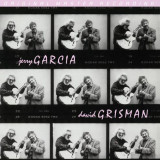
Unadorned with any post-production tricks or overdubs, Garcia/Grisman breathes with naturalism and presence. You will effortlessly detect the full body of the instruments, witness the woody grain textures, and get lost in the surprisingly velvety qualities of Garcia's lullaby-like singing. Our pressing also marks the first time this delightfully joyous affair has been issued in analogue form. You will never hear a better-sounding Americana-styled recording.
Pals since the mid-1960s, Garcia and Grisman bonded over their love for traditional folk and bluegrass. The two teamed up amidst what became a gold rush of top-notch productivity and creativity for Garcia. Partnering with bassist Jim Kerwin and percussionist/fiddler Joe Craven, the pair approaches every passage with innate ease, as if either musician could finish the others sentence. The affable chemistry and soothing interplay wash over a selection of songs as notable for their diversity as the way Garcia and "Dawg" turn them into the equivalent of old friends you haven't seen in years.
Exquisite melodies and jewel-shaped notes decorate the simple, convivial structures of tunes that hop, jump, skip, skitter, and bop. The atmosphere is reminiscent of the legendary gypsy-jazz exchanges between Django Reinhardt and Stephane Grappelli, and equally sharp. Swirling with Middle Eastern modality, the closing 16-minute-plus rendition of Grisman's rippling "Arabia" – complete with a section based on a Cuban fold theme - is alone enough worth the price of admission to this sensational session. But there's so much more.
The quartet delves into Celtic themes ("Two Soldiers"), jazz-grass ("Grateful Dawg"), old-world ballads ("Russian Lullaby"), and Appalachian flavours ("Walkin' Boss") with nonpareil skill and soulfulness. Garcia and Grisman's tandem picking throughout epitomize sublime. And for many listeners, the duo's revised version of the Grateful Dead staple "Friend of the Devil" ranks as the finest-ever recorded, the pace patient, the narrative vocals heartfelt, and the synchronous solos tailor-made for the enveloping progression. Better yet, it's all captured in astonishing fidelity.
1STEP Process 180g 45rpm Double LP Pressed on VR900-Supreme Vinyl!
Mastered from the Analogue Mix-Down Tapes of the Original Digital Recording by Bernie Grundman!
Ultra-Luxe "Monster Pack" Jacket with a Deluxe 16-Page Booklet & Striking Outer Slipcase!
New lacquers cut after each run of 500 pressings!
Strictly Limited to 5,000 Numbered Pressings!
Impex 1STEP #5 celebrates Patricia Barber's 1999 "return" to The Green Mill, Chicago's fabled jazz club. Conceived as a "companion" to her Grammy-winning studio album Modern Cool, Companion finds Barber and her touring band in inspired form, playfully and energetically performing hits and deep tracks from her celebrated oeuvre.
The dynamic interaction between the artist and her reverent audience adds a palpable sense of space and community. At the same time, the fans' hushed attention creates a studio-like sense of precision and detail. The snap and crackle of Barber, her grand piano, and her onstage partners practically leaps off the groove into your listening room!
Companion's fan-favorite reputation is enhanced immeasurably by Jim Anderson's jaw-dropping, lifelike recording. Eschewing the crystalline sterility of digital recordings of the time, Anderson's sound is always warm, natural, and lacking unforced "hype."
Like Anderson, Impex aims to present great recordings that are as natural as possible. And we couldn't wait to put our favorite Patricia Barber release, using Jim's analog mix-down master tapes, on 180 grams of VR900 Super Vinyl. The deep, inky black backgrounds and absence of surface noise will pull listeners right into those three evenings in 1999, capturing a seminal modern jazz artist at a creative and professional peak and reveling in a perfectly rendered and joyous audio time capsule.
Finally, our deluxe Impex Treatment packages the whole party with a lovely outer slipcase, a booklet containing a new note from Patricia, and a dazzling array of photographs from the evenings by frequent Barber collaborator Valerie Booth, exclusive to our 1STEP. Heavy paper stock with spot gloss coating and a faithfully recreated exterior design will satisfy original fans and aesthetes throughout the music-loving world.
This new edition of Soul Jazz Records" classic Delta Swamp Rock features a killer all-star line-up of seminal artists who all first blended rock, soul and country together to create a stunning new sound of southern American music in the 1970s. Featuring the Allman Brothers, Dan Penn, Leon Russell, Tony Joe White, Johnny Cash, Bobbie Gentry, Big Star, Link Wray, Area Code 615 and loads more!
Listening to The Softies has always felt like peeking into a diary, with no personal detail spared. Lyrically the band documents a lovelorn heart in every manifestation, and hope is the bright silver lining adorning each song. As the third Softies album, Holiday in Rhode Island KLP119 presents a more accessible view to the humble honesty of their emotive universe. When Holiday in Rhode Island was originally released in Sept. 2000, it had been three and a half years since The Softies previous album Winter Pageant [KLP061]. In that time Jen and Rose's introspective musings are reborn, sparkling with renewed vision, both musically and spiritually. The trademark harmonies between Jen Sbragia (All Girl Summer Fun Band) and Rose Melberg (Tiger Trap, Gaze) simply shimmer, brighter than ever before, benefiting from strong yet simple arrangements and excellent production (at a house on Galiano Island near Victoria, British Columbia) by Dave Carswell and John Collins. The beautiful surroundings and supportive production crew inspired The Softies to extend their minimalist blueprint of two delicately jangling guitars and two crystalline voices to include acoustic guitar embellishment on "Just a Day," "You and Only You;" piano and sparse drums on "Me and the Bees;" a xylophone makes subtle appearances here and there. Holiday in Rhode Island is a stunning artistic accomplishment from these two much heralded pop icons.
Yes, *that* Al Hirt record. Featuring the godlike "Harlem Hendoo", looped unforgettably by De La Soul for the legendary Buhloone Mind State cut, "Ego Trippin' (Part Two)"!
Al Hirt's infamous Soul In The Horn is inextricably tangled up in crate-digger lore. Originally released in 1967, the album has been in heavy, heavy demand for over 30 years, entirely down to the majestic soul-jazz fire of "Harlem Hendoo". And it's a song so good, so vital, so timeless, that it will always tower above everything else in its proximity. This one track alone is worth the price of admission - even if the cost of entry were $100 or even $1000.
However, it would be an error to dismiss this record as merely a one tracker, loaded as it is with dope samples for adventurous beat makers. Certainly the funkiest Al Hirt record, it definitely lives up to the "soul" in the title. Thanks to composer Paul Griffin and arranger Teacho Wiltshire, Hirt got uncharacteristically free and groovy throughout. It comes on more like an obscure KPM library funk record than the easy listening Al was notorious for.
A Louisiana trumpeter and band leader who made Allen Toussaint’s “Java” famous, Al Hirt was also known for TV themes, Dixieland, Swing and being a minority owner of the New Orleans Saints. Unlike every other Al Hirt record - and despite most "diggers" claiming otherwise - this here gem is genuinely hard to come across "in the wild". Normally, you can't give Al Hirt records away, except this particular one, which raises pulses in the crate digging community to life-threatening levels. For every owner claiming to have found their copy for a dollar, there's scores more claiming to have *never* unearthed one in the field. So, paradoxically, you can consider this the most tricky-to-pull "thrift store record", ever. This is why we're finally making it available for everyone, not just those with endless hours to spend scouring the global goodwills!
Soul In The Horn represented an expressive detour into authentic soul-jazz for Al Hirt. Throughout, we're struck by a fierce, fiery energy that's otherwise absent from his typically easy listening work. Without question, the slinky, magical "Harlem Hendoo" is the standout, here. It's also the reason why the record is so scarce and commands awe among crate diggers, sounding like something from an obscure and deeply revered spiritual jazz record. As is often the case, the true genius of the song is tricky to do justice to; it's like a minor miracle of songwriting and performance that simply swooned down from the heavens on the back of horns, bells and harpsichord. It's one of the sweetest musical compositions ever recorded inside a studio - it's only failing is that it's just too short. Sampled brilliantly by De La Soul, it has also been used by The Roots for "Stay Cool" and Nightmares On Wax for "Damn".
The rest of the record makes for a mighty fine listen. From the opening cover of Booker T. & The MG's "Honey Pot", to the propulsive, ultra-funky "Mess Around", it's nothing but a good time. Given its title, the elegant stepper "Calypsoul" sounds exactly as you'd hope whilst the melancholic, wistful "Long Gone" hurts so good. Truly, this is just dying to be looped up, Al's muted playing capturing a soulful longing only horns can often achieve. The bluesy, slo-mo swing of "Sweetlips" oscillates between cool disaffection and swelling pride whilst the graceful, low-key funky "Girl" closes out the A-Side in the fine style. Ushering in the B-Side, the brief but brilliant strut of "Love Ya' Baby" shines brightly before the skipping funky-jazz of true highlight "Sunday-Goin' To Meetin' Time" demands both your attention and your dancing shoes. The mellifluous piano-funk of bass and horn-drenched "Snap Back" serves as the sumptuous prelude to "Harlem Hendoo"'s main character energy before the irrepressible, upbeat R&B of "Ludwig" closes out this quite remarkable album. An album deserving of a place in every serious record collection.
The audio for Soul In The Horn has been carefully remastered by Be With regular Simon Francis, ensuring it sounds better than ever. Cicely Balston's expert skills have made sure nothing is lost in the cut whilst the records have been pressed to the highest possible standard at Record Industry in Holland. The original sleeve has been restored here at Be With HQ as the finishing touch to this long overdue re-issue. This is after-hours music. Let it speak for itself. Listen. Listen to the soul in Al Hirt's horn.
out of Stock
Last delivered 22 months ago available to reorder, subject to availability
Late Night Tales and Bonobo were pretty much made for each other, it just took them a while to both realise it. Stepping forward into the compilers spotlight for the 33rd edition is Simon Green - aka Bonobo - a musician, producer and DJ perfectly suited to soundtrack an evening spent reclining to some parallel beats. Six albums to the good (most recently 'The North Borders' released earlier in 2013), Green has been on a winning streak since 2010's breakthrough 'Black Sands', which has now sold in excess of 160,000 copies. His music has aided the sales of Citroen cars and Olay creams, as well as soothing the puzzlement of Lost. Wrapped in delicately programmed drums, Green's music is at once both sombre and reassuring. If what comes out the other end is the music of Bonobo, then this is the fuel that keeps the engine running: soul, jazz, classical, pop, funk, leftfield, rock. Pianos and brass are abundantly present. Our ivories are warmed and tickled by the classic, Bill Evans, and new school, with Matthew Bourne's mournfully beautiful 'Juliet' and Dustin O'Halloran's 'An Ending A Beginning'. The brass section comes courtesy of Menehan Street Band's jazzy 'The Traitor', 'Flipside' by the Hypnotic Brass Band. Exclusives include YouTube sensation 'One Thing' by Peter & Kerry . Not only that, but there's Bonobo's special LNT cover version, a brilliant reading of Donovan's 'Get Thy Bearings', As the light dims, the unsettling sounds of Lapalux or maybe even Shlomo pierce the misty evening air, before giving way to the ethereal splendour of Eddi Front's 'Gigantic' or even Nina's paean to an imagined rural idyll 'Baltimore'. Amble down to the riverside. It could be the Great Ouse, as willows weep into the water; it could even be in Brooklyn overlooking the Lower East Side, as the sun slides down the sides of the skyscrapers. Take a notepad for inspiration. Maybe even a hipflask for a slug of something warm. Sit down and reflect and let those beautiful pianos skim the water's surface. Sometimes, you think, life is good. You can't play a symphony alone, it takes an orchestra to play it: Simon Green is your conductor.
out of Stock
Last delivered 10 months ago available to reorder, subject to availability
Galaxy Orange/Black Vinyl. Limited to 500 copies. Data Diamond is the sound of FOUR STROKE BARON at their most confidently unhinged. Originally conceived as two separate EPs (one purely electronic - Data, one heavy - Diamond) that would then meld together on one full length release, the idea morphed into what is now the succinct sucker punch of an album that is heading our way at speed. Heavily inspired by their own work on Data Diamond's predecessor, Classics, Witt and Vallarino got to work in their laboratory creating the most potent, concentrated form of FOUR STROKE BARON possible. Data Diamond - a dizzying sub-40 minute dive into the deranged psyches of its creators. The tracks on Data Diamond are lithe yet still allow enough room for idiosyncratic flourishes that mark this out as a true FOUR STROKE BARON opus. If Classics was a Man vs. Food belly busting plate of indulgence, Data Diamond is an upmarket Gordon Ramsay dish, served with a side of insanity. Finding a co-conspirator in Cynic's Paul Masvidal, the trio get somewhat psychedelic on the album's eponymous closing - and most expansive - track, which also features Vola's Adam Janzi on drums. Thematically, this is their most murderous anthology to date. Those who find themselves embroiled in these bloodthirsty tales include a Radio Shack CEO, an internationally acclaimed cyborg, an accidental trafficker of human body parts, and the leader of a death cult located in a convenience store. FOUR STROKE BARON's anomalous view of the world takes a particularly dark turn across the songs on Data Diamond, yet, as ever the macabre tragedies are dressed up with catchy melodies, pop hooks for days and a big shimmering bow of positivity.
Data Diamond is the sound of FOUR STROKE BARON at their most confidently unhinged. Originally conceived as two separate EPs (one purely electronic - Data, one heavy - Diamond) that would then meld together on one full length release, the idea morphed into what is now the succinct sucker punch of an album that is heading our way at speed. Heavily inspired by their own work on Data Diamond’s predecessor, Classics, Witt and Vallarino got to work in their laboratory creating the most potent, concentrated form of FOUR STROKE BARON possible. Data Diamond - a dizzying sub-40 minute dive into the deranged psyches of its creators. The tracks on Data Diamond are lithe yet still allow enough room for idiosyncratic flourishes that mark this out as a true FOUR STROKE BARON opus. If Classics was a Man vs. Food belly busting plate of indulgence, Data Diamond is an upmarket Gordon Ramsay dish, served with a side of insanity. Finding a co-conspirator in Cynic’s Paul Masvidal, the trio get somewhat psychedelic on the album’s eponymous closing - and most expansive - track, which also features Vola’s Adam Janzi on drums. Thematically, this is their most murderous anthology to date. Those who find themselves embroiled in these bloodthirsty tales include a Radio Shack CEO, an internationally acclaimed cyborg, an accidental trafficker of human body parts, and the leader of a death cult located in a convenience store. FOUR STROKE BARON’s anomalous view of the world takes a particularly dark turn across the songs on Data Diamond, yet, as ever the macabre tragedies are dressed up with catchy melodies, pop hooks for days and a big shimmering bow of positivity.
“Sylvie and Babs is one of the most memorable, playful, and fascinating albums in the NWW oeuvre (though a decidedly unrepresentative one)...few (if any) other artists could've woven capricious contrarianism, low humour, bad puns, endless non-sequiturs, and chaos into such a satisfying whole“ - Anthony D'Amico 1.You Walrus Hurt the One You Love 2.
Reissue of the 90’s Hidden Gem originally released on the infamous “Rugger Bugger” Records, featuring Frankie Stubbs of Leatherface. The album is a complete Discography, of all things Jesse on a double album, one unreleased song and everything remastered for its release. “Stubbs seems on the verge of breakdown into sorrowful melancholy on a number of tracks, only with an air of odd defiance, as if he's hurting but knows he'll weather it. He inspires hard empathy instead of irritation. You look forward to Stubbs' lyrics and he never fails, particularly as one experiences them with that gut-wrenching sincerity clutched within that sandpaper-voiced howl.” – Jack Rabbid Remastered – Nigel Walton – The Edit Suite & Graeme Philliskirk Artwork – Cactus Vella
Unhinged Aussie grunge captured just as the Scientists were imploding/attempting to explode. Recorded over three days in February 1986, Weird Love is the band''s last ditch effort to bring their bad vibes to bedrooms the world over, a colossal failure and brilliant mistake that sounds best when blasting out of 1982 Corolla's blown Alpine tweeters.
Unhinged Aussie grunge captured just as the Scientists were imploding/attempting to explode. Recorded over three days in February 1986, Weird Love is the band''s last ditch effort to bring their bad vibes to bedrooms the world over, a colossal failure and brilliant mistake that sounds best when blasting out of 1982 Corolla's blown Alpine tweeters.
A reissue of the wonderful female vocal LP released by FEDERAL in 1977! Mellow reggae with covers of classics by Patti Austin, Albert Hammond, Bob Marley, and more. Marcia Griffiths participates on backing vocals.
ohann Wolfgang von Goethe is always a reliable source for a good quote: "We must always change, renew, rejuvenate ourselves; otherwise, we harden." Sure as death, there is an excerpt of his that states the opposite. In the case of Robert Dietz, it holds true. Since his first appearance on Running Back in 2009 (Forward Snipping), he did a marvelous job staying on his toes as a producer and DJ.
Rejuve-Nation showcases his talent in various alleys of electronic (dance) music with Crane Song being the prime cut here. You will get exposed to proggy house with an intelligent brush in two slightly different mixes. Imagine if Euro dance went to get a college degree or a bumper car floor and you are almost there: an almost irresistible sing a long without lyrics.
If you need help afterwards, Deranged Self Therapy is exactly what you need. IDM meets new wave drums, poignant synths mix with an upbeat hook to create a ballet piece for lovesick robots.
Centro Di Gravita reconnects those qualities with the aforementioned Crane Song ones, while giving it an acid spin, before the ambient salts of Any Plan(t)s This Weekend closes the EP off like a confident sketch for the end of a beautiful summer. A bouquet of bangers for different needs.
Short: One Rejuve-Nation EP under a groove with Robert Dietz' return on Running Back. Proggy meets acid house, IDM leanings mix with stylistic devices of new wave and extra special ambient aerobatics round out the EP. Special attention goes to Crane Song and its peak time perfection. A bouquet of bangers for different needs.
out of Stock
Last delivered 22 months ago available to reorder, subject to availability
ora’s most innovative modern exponent bathes in communion with a re-imagined classical guitar, unveiling a new and previously unsuspected musical universe. In a meeting between instruments, not traditions, these maestros emerge from quite different and distant musical worlds. Ballaké Sissoko’s kora tradition and lineage traverse the once powerful West African empire known as Kaabu. South African Derek Gripper’s roots are in European classical guitar but infused with a unique jeli music mastery that takes guitar’s modern history in a captivating new direction.
But we are not hearing these traditions in dialogue: these masters meet on the sonic groundings of the kora, instrument of the griots, resonant vessel of the sacred and profane, sound carrier of history and wisdom. Through two decades of commitment and study, it is to this terrain that Gripper brings his guitar to meet its multi-stringed cousin.
The two men do not share a spoken language, but if it is true that music speaks universally, then they were already involved in profound dialogue long before they met for the series of London concerts which yielded this recording session – a session which matches deep communion with sparkling improvisation, which pushes a living tradition into brand new sonic spaces, and opens a live and direct channel of communication between kora and guitar. In the complex web of theme and variations spun by Sissoko’s twenty-two strings and Gripper’s six, a new African string theory is elaborated.
“Musically we tested each other,” says Sissoko, explaining that the most magical aspect of their encounters are spontaneity. “We have the mastery of our instruments, the technique and a good ear. Derek is very curious, that’s very important.”
“He’s just such a good listener,” says Gripper about Sissoko. “It’s not what he plays, it’s how he plays it. He’s an amazing interpreter, the prime master of timbre.”
Recording by Taylor Pollock at Platoon Studios, London.
Mixed, edited and produced by Derek Gripper.
Mastered by Murray Anderson at Milestone Studios, Cape Town.
Produced for vinyl by Chris Albertyn and Matt Temple at Matsuli Music.
Mastered for vinyl and lacquers cut by Frank Merritt at The Carvery, London.
Vinyl pressed at Pallas GmbH, Germany.
Sleeve notes by Francis Gooding, French translation by Paulo Goncalves.
Cover design by Toby Attwell at Twoshoes, Cape Town.
out of Stock
Last delivered 2 years ago available to reorder, subject to availability
Nick Waterhouse ist die neue Generation - ein 25-jähriger R&B-Fanatiker, der eine unheimliche Sensibilität der alten Schule mit einem geladenen,
zeitgenössischen Stil verbindet. Sein 2012 erschienenes Debütalbum "Time's All Gone " gibt es nun als Wiederveröffentlichung auf farbigem Vinyl.
Er reiht sich ein in die Riege ähnlicher Acts und Produzenten der letzten Zeit - Mark Ronson, Amy Winehouse, Sharon Jones, Mayer Hawthorne, Aloe
Blacc und andere - die sich alle in die Vergangenheit bewegen und doch ganz anders sind. Für Waterhouse ist seine Muse der übersteuerte Sound des
klassischen R&B der 50er Jahre. Seine Interpretation dieser altehrwürdigen Tradition erinnert an den Nervenkitzel in den Hinterhöfen von New
Orleans, Detroit und Memphis in ihrer Blütezeit und hat bei Fans auf der ganzen Welt Anklang gefunden (sein 45er-Debüt wird für über 300 Dollar
verkauft). Waterhouse verbindet eine scharfsinnige Liebe zum Detail mit dem ehrlichen Wunsch, es ihm gleichzutun.
In one sense, it’s easy for artists—songwriters, specifically—to express their feelings in their work. After all, that’s what the lyrics are for! But it’s much harder to convey emotional energy in how you play, slash at the guitar, and the structure of the music itself. That’s precisely why Girl and Girl’s Sub Pop debut, Call A Doctor, feels like such a vital, electrifying shock to the senses. Not since the early work of Car Seat Headrest or Conor Oberst’s widescreen emotional brutality as Bright Eyes has indie rock managed to come across as this intimate and grandiose, as the Australian quartet led by Kai James lay a lifetime’s worth of woes—mental health, the human race’s planned obsolescence if you’ve been living on this cursed rock you know what we’re getting at—across a canvas of indie rock that feels both timeless and in-the-moment.
An audacious and aggressively tuneful blast of a record, Call A Doctor is an unforgettable first bow from Girl and Girl, whose origins lie in James and guitarist Jayden Williams jamming in his mother’s garage in the afternoon after school. One afternoon, James’ Aunty Liss headed down to their practice space after walking her dog and asked if she could sit in on drums. “It sounded really great,” James recalls. “We begged her to stay, and she said, ‘I’ll stay until you find another drummer.’ We wore her down, and she eventually became a permanent member.”
After bassist Fraser Bell joined to round things out, Girl and Girl hit the road and began to make a name for themselves beyond the Australian bush, eventually signing to Sub Pop off the strength of word of mouth. Call A Doctor came together quickly soon after, largely recorded in marathon sessions in a two-story industrial complex over the course of two weeks. “That added to the intensity of the album,” James says about the frenzied creative process overseen by producer Burke Reid. “I can hear the stress in the record, which is good because that’s what it’s about—being tense, tied up, and in your own head.”
Call A Doctor’s eleven songs—spanning sweeping guitar epics and wry acoustic shuffles to spiky punk maneuvers and the type of raw, adoringly unvarnished indie-pop associated with legendary PacNW label K Records—are literally plucked from James’ personal history, as he reworked older recordings with newer lyrics reflecting his past struggles as well as new anxieties that emerged prior to the album’s recording. “I’ve struggled with mental health for a lot of my life,” he explains, “and I went through a particularly difficult patch when we were making the album; the band had started to get some attention, and I felt an enormous amount of pressure to live up to it.”
Far from the sound of collapsing under pressure, Call A Doctor finds James and Co. stepping up with their entire collective chest. This is a record that’s so out-and-out alive that you nearly feel like you’re in the same room with Girl and Girl as you listen to it; lead single “Hello” practically bursts through the speakers, amplified by Aunty Liss’ unbelievable stickhandling duties. “‘Hello’ is all about romanticizing your own misery. Letting those deep, dark, dirty thoughts take over. Understanding that even if you could pull yourself out, you wouldn’t because the constant stress and worry is far too familiar and comfortable.”
“Mother” pogos on a spiky groove that’s reminiscent of the geographically close New Zealanders who make up the legendary Flying Nun label, while “Oh Boy” draws from the Shins’ own jangly sound, injected with James’ wonderfully nervy vocals. Then there’s Call A Doctor’s sorta-centerpiece “Maple Jean and the Anthropocene,” a five-minute epic offering a new perspective on climate change and the notion of what it means, in a personal sense, to suffer: “I live in the bushland, and I was driving home one night and hit and killed a wallaby with my car,” James recalls while discussing the song’s lyrical inspiration. “My first thought was, ‘What is the universe trying to tell me?’ No remorse, no guilt, just total self-centeredness. Which was like, Woah, you fucking psychopath! This wallaby wasn’t put on this earth to send you a message. That’s what the song is about, our egocentric species - thinking you’re the main character and that everything that happens is somehow about you.”
“This record is about an individual who’s too far in their head, trying to get out,” James continues while discussing Call A Doctor’s overall outlook—specifically the snapshot it offers of its creator. But even though this record deals with uneasy topics we all know well from within ourselves, it’s important to emphasize how teeming with life Girl and Girl’s music is. There’s a brazen, bold sense of humor to this stuff, an undeniable brightness to the darkness that makes it impossible not to be drawn in as a listener. Feeling down never sounded so goddamn good.
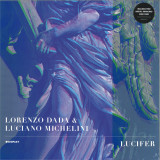
With Lucifer, Kompakt presents an album of rare beauty from two masters of modern music. A family affair, it’s a collaboration between the Italian father-and-son duo of Luciano Michelini and Lorenzo Dada, whose combined histories bring to Lucifer a depth of experience alongside clarity of vision and a finely tuned, neatly developed combined compositional voice. A lovely, beguiling suite of music that combines the electronic and the acoustic, the urban and the pastoral, its gorgeous night-eye vision and tender melancholy sits neatly within the Kompakt universe, while offering the curious listener some rich new perspectives.
There is already plenty to know both artists by. Lorenzo Dada creates across multiple fields – a techno producer and DJ who has already worked with the likes of Jay Haze, Fete, Leo Benassi, and Der, he’s released a small clutch of stylish, smartly designed EPs, and a solo album, Second Life (2018). His complementary background in classical music and composition informs his ensemble project, Tears Of Blue (who appear on Lucifer), where Dada paints with neo-classical tones for a quartet of violin, viola, cello and grand piano, supplemented by electronics for live performance.
Luciano Michelini’s history is yet richer. He may be best known, to many, for his piece “Frolic”, the theme to Larry David’s Curb Your Enthusiasm series; it was also sampled by Snoop Dogg for 2022’s “Crip Ya Enthusiasm”. But there’s much more to Michelini’s story. A successful soundtrack composer, Michelini both studied and taught at the Conservatoro di Santa Cecilia, and worked for RCA from the sixties to the eighties; his soundtracks from this period are gorgeous examples of the form, particularly his work for Il Decamerone Nero (1972), L’Isola Degli Uomini Pesce (1979), and the devastatingly gorgeous Dimensione Donna (1977).
In the eighties, Michelini and his wife Anna Gutling founded the Electronic Music Division studio and academy in Rome, which is where the majority of Lucifer was recorded. Dada reflects on the experience: “We never worked together before, so it was all new for both of us,” with Michelini adding, “I truly love this experience with my son. He’s a talented pianist and composer. I am not very familiar with electronic music nowadays, but we did it fluently.” There’s certainly a familial energy at play through Lucifer, and you can hear how Dada and Michelini, through exploration and experiment, find a shared language, balancing Dada’s tendency toward minimalism, and Michelini’s composerly voice.
Lucifer flows as a suite that interweaves electronic music with acoustic instruments: the lonely sigh of saxophone; Michelini’s lush, verdant piano; the weeping strings of Tears Of Blue (recorded at the studio of Michelini’s friend, the late Maestro, Ennio Morricone). These multiple voices are located within the electronic sighs and swarms from Dada’s kit; there are moments of propulsion, and passages of lambent drift, where the album revels in its tonal sweetness. If it flows so effortlessly, that’s because Lucifer was designed that way, as a suite or a sonata of sorts.
And the title? Dada reflects, “Lucifer was an angel who decided not to be one anymore. The miracle of life is that we can decide what we want to be, even if we are born as angels or vice versa.” This feels somehow apposite: there’s certainly something of the transformative, and the transportive, in Lucifer, a unique family collaboration of rare poetry and sensitivity, where two generations meet in the modern crucible that is the electronic music studio.
out of Stock
Last delivered 21 months ago available to reorder, subject to availability
In one sense, it's easy for artists-songwriters, specifically-to express their feelings in their work. After all, that's what the lyrics are for! But it's much harder to convey emotional energy in how you play, slash at the guitar, and the structure of the music itself. That's precisely why Girl and Girl's Sub Pop debut, Call A Doctor, feels like such a vital, electrifying shock to the senses. Not since the early work of Car Seat Headrest or Conor Oberst's widescreen emotional brutality as Bright Eyes has indie rock managed to come across as this intimate and grandiose, as the Australian quartet led by Kai James lay a lifetime's worth of woes-mental health, the human race's planned obsolescence if you've been living on this cursed rock you know what we're getting at-across a canvas of indie rock that feels both timeless and in-the-moment. An audacious and aggressively tuneful blast of a record, Call A Doctor is an unforgettable first bow from Girl and Girl, whose origins lie in James and guitarist Jayden Williams jamming in his mother's garage in the afternoon after school. One afternoon, James' Aunty Liss headed down to their practice space after walking her dog and asked if she could sit in on drums. "It sounded really great," James recalls. "We begged her to stay, and she said, 'I'll stay until you find another drummer.' We wore her down, and she eventually became a permanent member." After bassist Fraser Bell joined to round things out, Girl and Girl hit the road and began to make a name for themselves beyond the Australian bush, eventually signing to Sub Pop off the strength of word of mouth. Call A Doctor came together quickly soon after, largely recorded in marathon sessions in a two-story industrial complex over the course of two weeks. "That added to the intensity of the album," James says about the frenzied creative process overseen by producer Burke Reid. "I can hear the stress in the record, which is good because that's what it's about-being tense, tied up, and in your own head." Call A Doctor's eleven songs-spanning sweeping guitar epics and wry acoustic shuffles to spiky punk maneuvers and the type of raw, adoringly unvarnished indie-pop associated with legendary PacNW label K Records-are literally plucked from James' personal history, as he reworked older recordings with newer lyrics reflecting his past struggles as well as new anxieties that emerged prior to the album's recording. "I've struggled with mental health for a lot of my life," he explains, "and I went through a particularly difficult patch when we were making the album; the band had started to get some attention, and I felt an enormous amount of pressure to live up to it." "This record is about an individual who's too far in their head, trying to get out," James continues while discussing Call A Doctor's overall outlook-specifically the snapshot it offers of its creator. But even though this record deals with uneasy topics we all know well from within ourselves, it's important to emphasize how teeming with life Girl and Girl's music is. There's a brazen, bold sense of humor to this stuff, an undeniable brightness to the darkness that makes it impossible not to be drawn in as a listener. Feeling down never sounded so goddamn good.
Deluxe 180g vinyl. Art Edition LP includes set of six 12”x12” art cards.
The follow-up to Kee Avil's acclaimed 2022 debut Crease: "A stunning debut" (The Quietus); "A whiplash style of uninhibited exploration" (The Wire); "Kee Avil's debut is a force" (Foxy Digitalis); "A work of Frankensteinian wonder" (Electronic Sound); "A tightly coiled, finely wrought vision of avant-pop" (Exclaim); "A debut of fiendish creativity" (Bandcamp Album Of The Day / Albums Of The Year) Kee Avil's music is both adventurous and intimate, intellectually challenging and emotionally resonant. The Montréal guitarist and producer's 2022 debut LP Crease garnered plaudits from outlets like The Wire, The Quietus, Mojo and Foxy Digitalis, picking up a Canadian Juno Award nomination and Bandcamp Album Of The Day and Albums Of The Year along the way. Its intricate construction, unnerving atmospheres, and knife-edge take on avant-pop prompted comparisons to early PJ Harvey, This Heat, and Gazelle Twin. A remix EP with work by claire rousay, Ami Dang, Cecile Believe, and Pelada brought collaborative perspectives to four Crease tracks, offering new pathways within those songs. With Spine, Kee Avil strips back her heavily textured compositions, opening up a much rawer sound. She calls it folk… and while traditionalists might scoff, this is urgent music that reflects the precarity of modern life, as well as the jarring mixture of electronic and real-world interactions that have become the fabric of our day-to-day experiences. There's a hypnotic post-punk somnambulance to it all, using the repetition and fracturing of melodic phrases interwoven with delicate electronics to create curious and persistent hooks. While not a concept album, themes of time's passage, remembrance, and decay crop up across multiple tracks. Each track intentionally only has four elements - guitar, electronics, and two other instruments, with Kee's voice and guitar pushed to the front. Within this minimalist framework, the juxtaposition of beauty and discomfort that is key to the Kee Avil sound stands out in skin-prickling relief. "We're shaped by many versions of ourselves," says Avil. "I was looking back at these versions of myself and what could have been, what didn't end up being and what did end up being, and going back like that through time. Seeing the future, the past." Spine was written in Kee Avil's home studio after a lapse in writing while touring Crease and working on other projects. She is a well-known and respected member of the Montréal experimental scene, and formerly ran Concrete Sound Studio with Zach Scholes, who continues to work with her as a producer on Spine. Compared to the three years that went into making her debut, Spine emerged in a matter of months - a process that may also be a factor in its intensity and sharpness: "This record was much harder, like it was really discovering everything from scratch." In her desire to not simply replicate or extend the sound of Crease, she felt she had to rip up the rule book, write in a different way, and pare back songs against her usual instincts. Sometimes, when we work against our ingrained habits, we get to the core of who we really are. Spine is an exercise in that process. Without over-intellectualizing or being didactic, it hits immediately and emotionally, especially if you are a person who has spent much time in the process of self-examination. Kee's voice hisses, whispers, and chants; her guitar bends and rings; electronics skitter and crackle; violin creaks like a door in the wind. There is something so evocative about the atmospheres she creates that it's easy to overlay one's own feelings onto her work, but to do that wholly would be to overlook one of the most important things about Spine: Kee Avil's clear and thoughtful vision. This isn't just the next step forward in her artistic trajectory; it's a stunner of a record that stands on its own, a bracing and thrilling listen that has much to reveal about the contradictions inherent in being human. - jj skolnik
Svart Records are proud to release the long-awaited full length album "SÁLA" by Kati Rán in May 2024
If the most profound treasures are often the most deeply buried, the journey to uncover them is vital process of discovery. Five years after the 15-minute single “Blodbylgje” signaled the birth of a new, more primordial, and immersive vision after the dissolution of her band L.E.A.F., Nordic dark folk artist Kati Rán has expanded on its oceanic theme for her long-awaited full-length album, “SÁLA”. Embarking on a far-reaching musical and personal travelogue, it’s a reawakening of both the feminine narratives submerged and fragmented within Norse mythology, and the enduring, healing powers held within.
Named after the Old Norse word for ‘soul’ and ‘sea’, “SÁLA” is an act of ‘soul retrieval’, the shamanic art of trauma recovery, be it illness, death, heartbreak or loss, and the reintegration of a splintered self. Across its 13, wide-ranging, elegantly unfolding tracks, the album is an embodiment of different feminine voices and perspectives – from the Norse nine daughters of the sea, or ‘billow maidens’, through various historical and fictional figures to the late-night voices we hear in our most liminal states – all with tales to tell, riddles to solve, challenges to be accepted and guidance to offer. It’s a multiplicity that, like the ocean itself, belongs to a vast, restless dynamic: a matrix of mysteries, unfathomable depths and ever-shifting currents, accumulating into an elemental, regenerative source of power.
Recorded in a barn in Húsafell, Iceland – home to glacier ice caves and a rare lava stone marimba rediscovered for the track “Stone Pillars” – as well as Finland, Norway and at home in Kati’s native Netherlands, “SÁLA” is as much chronicle of Kati’s own perspective-shifting recording process as it as a pilgrimage through different viewpoints and internal states. That itinerate urge is also reflected in the use of different languages, ranging across Norwegian, Old Norse, Icelandic, and, for the first time, English, her combination of ancient texts, historical reimagining’s and unguarded personal reflection backed up by deep research into the most resonant recesses of Nordic lore.
Spun throughout every thread of “SÁLA” is a sense of communion - with the power of stories to offer moral guidance and the thrill of the unknown; with the element of water, recreated across the album both in field recordings and the agelessly organic nature of the music itself; with the archetypes whose qualities we are called upon to embody at our most critical moments; and with the internal hidden realms forever whispering at us from the far edges of our consciousness.
Appropriately, it’s a collaborative venture too. As well as working closely together with Finnish producer Jaani Peuhu, there are contributions from across the musical spectrum, including extreme metal vocalist extraordinaire Gaahl, the Icelandic female choir Umbra Ensemble, renowned Norwegian jazz musician Karl Seglem, Björk and Brian Eno contrabassist Borgar Magnason, members of pagan folk acts Völuspá, Gealdýr, Heilung and Theodor Bastard and even Napalm Death’s Mitch Harris on vocals.
For all the many sources “SÁLA” draws from, the result is a singular, intimately transformative rite of passage, and a retuning of the heart to the reverent continuity of the sacred. It will take you from the opening title track’s chest-pounding rhythmic pulse emerging from a traditional Norwegian bukkehorn (recorded by Karl Seglem), a galloping horse-rider and Kati’s glacial, velveteen chant, through “Kólga’s” recounting of female persecution through the ages borne on the most gossamer-light yet unbreakable of timbres and “Stone Pillar’s” gently percolating, deep wells of abandonment and incantations to recovery. “SÁLA” closes with the track “Sátta” - Old Norse for ‘peace’ and ‘reconciliation’ – ending the album as it began with the bukkehorn, as it weaves rich drones and experience-stamped poems and prayers, Kati’s vocals the most sensitively tuned of emotional barometers. An album made in dedication, and in thrall to, its own sense of destiny, “SÁLA” is, as all quests must ultimately be, a homecoming.
Svart Records are proud to release the long-awaited full length album "SÁLA" by Kati Rán in May 2024
If the most profound treasures are often the most deeply buried, the journey to uncover them is vital process of discovery. Five years after the 15-minute single “Blodbylgje” signaled the birth of a new, more primordial, and immersive vision after the dissolution of her band L.E.A.F., Nordic dark folk artist Kati Rán has expanded on its oceanic theme for her long-awaited full-length album, “SÁLA”. Embarking on a far-reaching musical and personal travelogue, it’s a reawakening of both the feminine narratives submerged and fragmented within Norse mythology, and the enduring, healing powers held within.
Named after the Old Norse word for ‘soul’ and ‘sea’, “SÁLA” is an act of ‘soul retrieval’, the shamanic art of trauma recovery, be it illness, death, heartbreak or loss, and the reintegration of a splintered self. Across its 13, wide-ranging, elegantly unfolding tracks, the album is an embodiment of different feminine voices and perspectives – from the Norse nine daughters of the sea, or ‘billow maidens’, through various historical and fictional figures to the late-night voices we hear in our most liminal states – all with tales to tell, riddles to solve, challenges to be accepted and guidance to offer. It’s a multiplicity that, like the ocean itself, belongs to a vast, restless dynamic: a matrix of mysteries, unfathomable depths and ever-shifting currents, accumulating into an elemental, regenerative source of power.
Recorded in a barn in Húsafell, Iceland – home to glacier ice caves and a rare lava stone marimba rediscovered for the track “Stone Pillars” – as well as Finland, Norway and at home in Kati’s native Netherlands, “SÁLA” is as much chronicle of Kati’s own perspective-shifting recording process as it as a pilgrimage through different viewpoints and internal states. That itinerate urge is also reflected in the use of different languages, ranging across Norwegian, Old Norse, Icelandic, and, for the first time, English, her combination of ancient texts, historical reimagining’s and unguarded personal reflection backed up by deep research into the most resonant recesses of Nordic lore.
Spun throughout every thread of “SÁLA” is a sense of communion - with the power of stories to offer moral guidance and the thrill of the unknown; with the element of water, recreated across the album both in field recordings and the agelessly organic nature of the music itself; with the archetypes whose qualities we are called upon to embody at our most critical moments; and with the internal hidden realms forever whispering at us from the far edges of our consciousness.
Appropriately, it’s a collaborative venture too. As well as working closely together with Finnish producer Jaani Peuhu, there are contributions from across the musical spectrum, including extreme metal vocalist extraordinaire Gaahl, the Icelandic female choir Umbra Ensemble, renowned Norwegian jazz musician Karl Seglem, Björk and Brian Eno contrabassist Borgar Magnason, members of pagan folk acts Völuspá, Gealdýr, Heilung and Theodor Bastard and even Napalm Death’s Mitch Harris on vocals.
For all the many sources “SÁLA” draws from, the result is a singular, intimately transformative rite of passage, and a retuning of the heart to the reverent continuity of the sacred. It will take you from the opening title track’s chest-pounding rhythmic pulse emerging from a traditional Norwegian bukkehorn (recorded by Karl Seglem), a galloping horse-rider and Kati’s glacial, velveteen chant, through “Kólga’s” recounting of female persecution through the ages borne on the most gossamer-light yet unbreakable of timbres and “Stone Pillar’s” gently percolating, deep wells of abandonment and incantations to recovery. “SÁLA” closes with the track “Sátta” - Old Norse for ‘peace’ and ‘reconciliation’ – ending the album as it began with the bukkehorn, as it weaves rich drones and experience-stamped poems and prayers, Kati’s vocals the most sensitively tuned of emotional barometers. An album made in dedication, and in thrall to, its own sense of destiny, “SÁLA” is, as all quests must ultimately be, a homecoming.
Dexys are back! 11 years since the release of their last album of original music, the acclaimed One Day I'm Going to Soar, the band return with a stunning new record, The Feminine Divine, out July 28th on 100% Records.
The Feminine Divine’s arrival is heralded by today’s release of the glorious first single ‘I’m Going To Get Free’, soaked in horns and with a heavy dance-hall feel. "The character is optimistically breaking free from internalised trauma, depression and guilt," Kevin Rowland said of the track.
The Feminine Divine is Dexys’ fifth album of original material produced once again by Pete Schwier, along with acclaimed session musician and producer Toby Chapman. After taking some time out to refocus his energy, Kevin Rowland came back to music with a fresh perspective and new-found positivity. A personal, if not strictly autobiographical, record portraying a man whose views have evolved over time. Not just on women, but the whole concept of masculinity he had been raised with: an education and an un-learning that is traced across the arc of The Feminine Divine with dizzying effect.
With two tracks on the album with Goddess in the title in ‘My Goddess Is’ and ‘Goddess Rules’, it’s no surprise Kevin chose to use a painting inspired by Pele, the Hawaiian goddess of fire and volcanoes, for the artwork.
Dipping into the archives for a song he’d originally written in 1991, the album’s opener, ‘The One That Loves You’, is a tough-guy feint before he lifts the curtain on “what I really feel”, as announced by a classic bit of Kevin spoken word that leads into the second track, ‘It’s Alright Kevin (Manhood 2023)’.
The record’s first half is full of music hall-esque swagger, much of it written with original Dexys’ trombonist Big Jim Paterson. The second side of the record is like nothing Dexys have done before. A saucy, synth-heavy cabaret, written in collaboration with Sean Read and Mike Timothy. It’s steamy, fizzing and sultry, at times doom-laden and heavy and at other times raunchy and funky. Quite a heady mix.
Today the band is more of an “organic” assemblage – Kevin, Jim (a non-touring band member), Sean Read and Mike Timothy. “It’s always just natural with me,” says Kevin. “The inspiration comes first, I think about what I can do, what songs I’ve got, then approach the band.” He describes their current lineup as “very much the nucleus, these days.”
With over a billion worldwide streams, three top 10 albums in the UK, two number 1 singles, a Brit Award and a multi-platinum selling album with their sophomore release Too-Rye-Ay (as Dexys Midnight Runners), Dexys are as vital and exciting today as ever. With live shows set to be announced shortly in support of the record, The Feminine Divine marks a new chapter in a book that just keeps getting better and better.
“I’ve been doing this a long time,” says Kevin. “But I feel I’ve got to it now.”
Dexys are back! 11 years since the release of their last album of original music, the acclaimed One Day I'm Going to Soar, the band return with a stunning new record, The Feminine Divine, out July 28th on 100% Records.
The Feminine Divine’s arrival is heralded by today’s release of the glorious first single ‘I’m Going To Get Free’, soaked in horns and with a heavy dance-hall feel. "The character is optimistically breaking free from internalised trauma, depression and guilt," Kevin Rowland said of the track.
The Feminine Divine is Dexys’ fifth album of original material produced once again by Pete Schwier, along with acclaimed session musician and producer Toby Chapman. After taking some time out to refocus his energy, Kevin Rowland came back to music with a fresh perspective and new-found positivity. A personal, if not strictly autobiographical, record portraying a man whose views have evolved over time. Not just on women, but the whole concept of masculinity he had been raised with: an education and an un-learning that is traced across the arc of The Feminine Divine with dizzying effect.
With two tracks on the album with Goddess in the title in ‘My Goddess Is’ and ‘Goddess Rules’, it’s no surprise Kevin chose to use a painting inspired by Pele, the Hawaiian goddess of fire and volcanoes, for the artwork.
Dipping into the archives for a song he’d originally written in 1991, the album’s opener, ‘The One That Loves You’, is a tough-guy feint before he lifts the curtain on “what I really feel”, as announced by a classic bit of Kevin spoken word that leads into the second track, ‘It’s Alright Kevin (Manhood 2023)’.
The record’s first half is full of music hall-esque swagger, much of it written with original Dexys’ trombonist Big Jim Paterson. The second side of the record is like nothing Dexys have done before. A saucy, synth-heavy cabaret, written in collaboration with Sean Read and Mike Timothy. It’s steamy, fizzing and sultry, at times doom-laden and heavy and at other times raunchy and funky. Quite a heady mix.
Today the band is more of an “organic” assemblage – Kevin, Jim (a non-touring band member), Sean Read and Mike Timothy. “It’s always just natural with me,” says Kevin. “The inspiration comes first, I think about what I can do, what songs I’ve got, then approach the band.” He describes their current lineup as “very much the nucleus, these days.”
With over a billion worldwide streams, three top 10 albums in the UK, two number 1 singles, a Brit Award and a multi-platinum selling album with their sophomore release Too-Rye-Ay (as Dexys Midnight Runners), Dexys are as vital and exciting today as ever. With live shows set to be announced shortly in support of the record, The Feminine Divine marks a new chapter in a book that just keeps getting better and better.
“I’ve been doing this a long time,” says Kevin. “But I feel I’ve got to it now.”
GER Als Night Beats erschafft der in Texas geborene und in LA lebende Künstler Danny Lee Blackwell Musik, wie man ein Puzzle zusammensetzen könnte. Der psychedelische Autorenfilmer aus dem Westen baut sein Werk aus einem Moment, einer Initialzündung, auf, die bestimmte Kriterien erfüllen muss: Sie muss ihm Gänsehaut bereiten. Wenn dieses Gefühl eintritt, verfolgt Blackwell die Idee unermüdlich, bis er einen neuen Song hat; wenn nicht, geht er zum nächsten Moment über, immer auf der Suche nach dem perfekten Molekül eines Songs. Auf seinem sechsten Night Beats-Album "Rajan" zeigt sich der Songwriter von seiner besten Seite und erschafft Werke, die mit fesselnden Melodien und hypnotischen Rhythmen glänzen, aber auch durch subtile handwerkliche Entscheidungen unterstrichen werden, die nur nach unzähligen Stunden im Studio erreicht werden können. Blackwell erschafft ein Werk, das irgendwo zwischen Spaghetti-Western-Filmmusik und Psych-Pop-Opus angesiedelt ist, ein karrierebestimmendes Album, das viel über Danny Lee Blackwells künstlerische Philosophie verrät und gleichzeitig den so wichtigen Hauch des Geheimnisvollen bewahrt. Exklusiv für den Indie-Handel, todesrote LP, handnummeriert mit Poster und DLC.
ENG As Night Beats, Texas-born, LA-based artist Danny Lee Blackwell creates music like one might assemble a puzzle. The Western psychedelic auteur builds his work from one moment, an initial spark, that must fit a certain criteria: it must give him goosebumps. If that sensation arrives, Blackwell will pursue the idea relentlessly until he has a new song; if not, he moves onto the next moment, constantly looking for the perfect molecule of a song. On his sixth Night Beats album, 'Rajan', the songwriter is at his strongest, creating works that shine with captivating melodies and hypnotic rhythms, but are underscored by subtle choices of craftsmanship that can only be achieved after countless hours in the studio. Blackwell creates a work that lands somewhere between Spaghetti Western film score and psych-pop opus, a career-defining album that reveals much about Danny Lee Blackwell's artistic philosophy while keeping that ever crucial air of mystery intact. Indies only LP on 180g 'Dying Red Giant' coloured vinyl, limited to 350 hand-numbered copies, fold-out art poster, download card included.
The Road Is No Place For A Lady was Cass Elliot’s final studio
album. The album was signified with touches of swing music and gospel and was promoted with the single “(If You’re Gonna) Break Another Heart” written by Albert Hammond.
The Road Is No Place For A Lady is available as a limited edition of 1000 individually numbered copies on pink coloured vinyl. After its initial release, this is the first time in 50 years that the album has been reissued on LP. After its initial release, this is the first time in 50 years that the album has been reissued on LP.
R'n'Cs is the contraction of "Rem and the Courbarians". made up of Rem (drums - Vox) and the Courbarians brothers, Saïd (Guitar - Vox) and Gui (Bass Guitar - Vox). they were formed in the Orléans region at the dawn of the second millennium, combining Punk / Hard Core with overdriven Garage Punk'n'Roll. giving birth to a Rock'n'Roll speed all their own! The years go by. but the cadence remains the same. they are and remain definitively addicted to feedback and BPMs. Their Rock'n'Roll remains fast and furious. You'd think the teats they feasted on from an early age were loaded with nitroglycerine! And these R'n'R aficionados never tire of it! Class, delicacy and refinement have nothing to do with it. even if some music lovers will enjoy it! Their music isn't a poem, it's an ode to sex, drugs and rock'n'roll. all at breakneck speed! Hang on to the handlebars, because no one escapes this infernal spiral that grabs you and sends you straight to the devil's entrails! They became a national benchmark for speed rock'n'roll. and were repeatedly asked to play with bands such as Nashville Pussy, Supersuckers, Discharge, GBH, Unseen, Guitar Wolf, New Bomb Turks, The Cellophane Suckers, The Butchers, Burning Heads, Etc.. Over the years, R'n'Cs has always been backed, produced and supported by labels such as 442ème Rue, Beast Records, Guerilla Vinyl and of course Trauma Social. Their 7th Opus "Flytrap in the Murderhouse" released on Beast Records / Fly House Records (Trauma Social for the CD) saw the light of day in Spring 2024 and still remains in the tradition of Zeke, Peter Pan Speedrock, Mötorhead. This incendiary bomb will not differ from previous productions. Still in sweat, flames and Rock'n'Roll!!!! Hell Yeah!
"I was in a dream, but now I can see that change is the only law." With a credo adapted from science fiction author Octavia E. Butler, an album title from a collection of metaphysical poetry, and an expansion in consciousness brought on by personal crisis, guitarist and songwriter Shana Cleveland learns to embrace a changing world with unconditional love on News of the Universe, the new full-length from California rock band La Luz. News of the Universe is a record born of calamity, a work of dark, beautiful psychedelia reflecting Cleveland's experience of having her world blown apart by a breast cancer diagnosis just two years after the birth of her son. It's also a portrait of a band in flux, marking the first appearance for drummer Audrey Johnson and the final ones from longtime members bassist Lena Simon and keyboardist Alice Sandahl, whose contributions add a bittersweet edge to a record that is both elegy for an old world and cosmic road map to a strange new one. But is there any band in the world more suited to capturing the chaos of change in all its messy beauty than La Luz? Formed by Cleveland in 2012, La Luz is beloved for their ability to balance bedlam and bliss, each new record another fine-tuning of the band's mix of swaggering riffs with angelic vocals borrowed from doo-wop and folk; a band so reliably great that it makes the huge step forward in confidence and sheer musicality that is News of the Universe all the more formidable. Cleveland, also a writer and painter, has developed into a truly original songwriter with her own canon of haunted psychedelia. Yet if Cleveland has spent years writing songs about ghosts, what lurks in the shadows of News of the Universe is nothing less than death itself. "There are moments on this album that sound to me like the last frantic confession before an asteroid destroys the earth," says Cleveland. The powerful sense of openness that permeates News of the Universe is at least partially due to the fact that it is a record made entirely by women-from the performing, writing, and producing all the way through to the recording, engineering, and mastering. Working with producer Maryam Qudos (Spacemoth), the all-female environment allowed Cleveland to feel safe tapping into difficult places and expressing hard emotions women are socialized to suppress. Unashamedly vulnerable, unabashedly feminine, and undeniably triumphant, News of the Universe is another knockout record from a band so reliably great that it has perhaps led people to overlook how pioneering La Luz really are: women of color in indie music forging their own path by following their own artistic star into galaxies beyond current musical trends, always led by an earnest belief in the cosmic power of love and a great riff. Never is that more true than on News of the Universe, which might be La Luz's most brutal record to date but also their most blissful.