A mandatory disc for those who loved Europe and Fair Warning, but highly recommended for those who love good music of those years.“ METAL HAMMER (IT), Andrea Lami „OUT OF THIS WORLD has it all. An album and musicians who will give you total happiness!“ METAL INTEGRAL (F), Laudrome „This album was just sheer enjoyment from start to finish“ METAL TEMPLE (ISR), Will Travers "1988 saw the release of Swedish hard rock superstars EUROPE‘s fourth album entitled “Out Of This World”, which has sold over 3 million units to date and contains hits such as “Open Your Heart”, “Superstitious” and “Let The Good Times Rock” . Ex-EUROPE guitarist Kee Marcello intends to tie in with that era’s style with his new formation that he recruited the perfect companion for: FAIR WARNING-vocalist Tommy Heart. Their self-titled debut album was mixed by Ron Nevison (KISS, OZZY OSBOURNE), who had also refined the aforementioned EUROPE classics in 1988. So they connected all of the obvious dots, with a neverending list of renowened musicians joining in on the recordings. Don Airey (DEEP PURPLE) contributed the keyboards on four songs, while the rhythm section is complemented by Darby Todd (GARY MOORE, THE DARKNESS) and Ken Sandin (ALIEN). Every track of their debut work deserves undivided attention, be it the anthemic “Twilight”, the gripping “Lightning Up My Dark”, the timeless “Warrior” or the amazing ballad “Only You Can Teach Me How To Love Again”. This epic piece makes melodic rock dreams come true and sounds modern while traditional at the same time. Kee Marcello is a genius in his field and carries that certain something in his blood, so wonderfully and emotionally implented by Tommy Heart‘s vocals. OUT OF THIS WORLD is the new star in Melodic Rock heaven, a liaison that has yet a lot left in store. "
Marshall McLuhan’s famous edict ‘the medium is the message’ has never been more apt than with regard to modern remix culture. Although the idea of the remix goes way back to the Jamaican dub pioneers and New York disco remixers of the 1970s, the form didn’t truly come into its own until the acid house explosion of the 1980s, when remixers’ credentials often subsumed — and sometimes surpassed — the original source material. Some, among them our lost friend Andrew Weatherall, used remixing as a springboard into multiple other directions, and became auteurs in their own right.
Forged in the white-hot heat of post-acid house Britain, these Heavenly remixes are perfectly weighted with respect and irreverence, the remixer in each case carefully chosen to add heft to the song (as on Al Breadwinner’s dubwise reworking of Mattiel’s ’Guns of Brixton’— the pairing more a game of chess than a best-of-three arm wrestle).
Although Heavenly was founded in the wake of huge upheavals in electronic music, it was still imbued with its own curious parallel life. I’ve always thought of Heavenly as one of the UK’s alt-pop labels; a place where brilliant pop bands live and record, if the general public would only realise. Some of them have ended up in the real, actual charts (Saint Etienne, Doves), but that’s missing the point about Heavenly, who are, like Factory and Fast Product before them, pop music’s conscience.
There is no sense of order to this compilation and we make no apologies. It’s the Heavenly way. Think of it as a present from Loki, the Norse god of mischief. You’ll find a smattering of older tracks: album openers Saint Etienne are taken on a Poseidon Adventure with Underworld, who inject ‘Cool Kids of Death’ with typically manic energy. Elsewhere, ’90s Brum duo Mother add dancefloor pzazz to Espiritu’s innate glamour on an all-funked-up reworking of ‘Los Americanos’, and Mark Lusardi’s remix of Moonflowers’ ‘Get Higher’ is an early Heavenly classic.
On ‘Terracotta Warrior’, a perfect, psyched-out, Mancunian union is created betwixt Jimi Goodwin and Andy Votel, whilst Goodwin cohort Simon Aldred, in his Cherry Ghost guise, receives a proper Tamla-Motowning from Richard Norris (aka Time & Space Machine) on an inspired cover of Cece Peniston’s glam-house hit, ‘Finally’.
There are several of Heavenly’s current darlings here too. One of the most exciting young British prospects, Yorkshire’s Working Men’s Club, effectively remix themselves, as Minsky Rock — WMC’s Syd Minsky-Sargeant and producer Ross Orton — cleave ‘X’ into a riotous industrial racket. Jagwar Ma’s Jono Ma takes the Kraftwerkian leitmotif on ‘Automatic’ and drives the Australian jazz-funkers Mildlife down an electro-convulsive psychedelic tunnel (thankfully no-one was harmed during the making of this remix); Sheffield’s DJ Parrot and Jarvis Cocker deliver one of the outstanding remixes of 2018, turning Baxter Dury’s ‘Miami’ into a lovelorn minor opera; and, making its first appearance on vinyl, David Holmes’ Unloved project is taken on a panoramic Welsh waltz thanks to Gwenno.
There may well be no rhyme, nor reason, to how these compilations have been put together, beyond the fact that they are assembled with love, an innate understanding of the power of great pop music, and a skilled marriage of song and remixer — but does one really need anything more than that for an album to make sense? I’d suggest not.
out of Stock
Last delivered 4 years ago available to reorder, subject to availability
It’s incredibly easy to get a remix wrong — as the back catalogues of far too many major labels, whose slapdash commissioning of the latest hot remixer half-guarantees an unsympathetic mangling of the song, can attest. At their best, remixes can make you look at an artist as though positioned from a different angle or using a different camera; sometimes hearing a song in a different context gives it a completely new meaning. “So you take a piece of a vocal…blah” says master remixer David Morales. “That’s a remix? That represents the artist? That doesn’t represent the artist, it represents you.” In the hands of the insensitive a remix is like chucking a song into the washing machine for a 100 extra spins.
In the hands of a master, things are a little more complex. Heavenly was all but founded on the art of the remix; our departed friend Andrew Weatherall remixed the first ever release, and the label has built up an immense catalogue in the intervening years that demonstrates all that is good about the art form.
Assembled on this compilation are twelve sterling examples of the remix, from Hanspeter Lindstrøm’s reading of Doves’ ‘Jetstream’, which turns their glistening pop into Lieutenant Pigeon meets Italo-disco (in a good way), to Andy Votel’s gentle folk-funk version of Halo Maud’s délicieuse ‘Des Bras’. We delve deep into the vaults for Saint Etienne’s ‘Filthy’, Monkey Mafia turning it into a rump-shaking groove perfectly suited to Q-Tee’s rap, while more recently, Flying Mojito Bros, purveyors of Tex-Mex house groove, reimagine Katy J. Pearson as a lonesome Lone Star lover.
Though not purposely themed, beyond being judiciously chosen as the catalogue’s finest gems, there’s a tiny hint of psychedelia about this set that is hard to ignore. Firstly, there are the acid contributions from Gabe Gurnsey, who knows his way around a coruscating bassline, and from Graham Massey, whose impeccable credentials in 808 State are brought to bear on ‘Valleys’, by young turks Working Men’s Club (acid house being modern psychedelia, whether the rock press approves or not).
Jono Ma, meanwhile, flips Night Beats’ amazing ‘Sunday Mourning’ into ‘Warm Leatherette’ on benzos, creating a disorienting glimpse of a dystopian Sunday that most definitely doesn’t include a genteel read of the papers and a nice cup of tea. On the other side of the miasma is Beyond The Wizard’s Sleeve’s redemptive re-interpretation of M. Craft’s ‘Chemical Trails’, which, alongside Boy Azooga’s ‘Face Behind Her Cigarette’ (Mikey Young remix), Gwenno’s ‘Chwlydro’ (R. Seiliog remix) and and Katy J. Pearson’s ‘Take Back The Radio’ (Flying Mojito Bros Refrito Dub), is issued on vinyl for the very first time.
This dozen tracks — each one curated, remixed and delivered with love (and a teensy bit of impertinence) — is just a glimpse into the catalogue of one the UK’s finest indie labels.
In the alternative reality in which I’d prefer to exist, this what Top of the Pops might sound like; or, at the very least, the jukebox in the Korova Milk Bar. Pop disruption at its best.
out of Stock
Last delivered 4 years ago available to reorder, subject to availability
Hot on the heels of their landmark remix of ‘Lost My Love’ by Kenny Cox, DJ Amir and Re.decay return to BBE Music with a rework of Maulawi’s ‘Street Rap’, plus a new version of Fito Foster’s ‘Salsa’ by DJ Dez (aka Andrés) featuring Amp Fiddler. Originally issued as the opening track on Maulawi’s self-titled 1974 album by Detroit’s Strata Records, ‘Street Rap’ is a slept-on jazz/funk classic. As part of his role as curator and archivist of the Strata catalogue, DJ Amir discovered the original stems for the track and was happy to discover they had survived the years well. “I thought we could really do something different with this song” say Amir. “Like making it more of a mid-tempo ‘four to the floor’ groover. Also, I wanted us to play with the original vocals a bit for the updated version. This is by far our favourite remix!” Previously serving as DJ for Slum Village and releasing on Moodymann’s Mahogani Music simply as Andrés, DJ Dez Andrez is part of the fabric of Detroit’s unique and eclectic music scene. But few people know that Dez’s father is Cuban music hero Humberto “Nengue” Hernandez, a highly respected percussionist and vocalist who starred in the 1988 motion picture ‘Salsa’. “So I reached out to Dez because I knew his father sang and played on the Fito Foster song “Salsa’” says Amir. “I have had the stems of the song since the beginning of my license deal with Strata. I thought it would be a great homage to have Dez remix his father’s music. Plus, Dez was definitely excited to do so!” For his remix, Dez called upon Detroit legend Amp Fiddler to play additional keys and piano on the remix, while Dez also added additional percussion to compliment his father’s, like a time-travelling jam session going back almost 50 years. Staying true to his Cuban roots, Dez’s remix brings a contemporary twist to this timeless track.
out of Stock
Last delivered 4 years ago available to reorder, subject to availability
British duo The Boy Least Likely To are not new to Christmas music. It started in 2005 with a charming cover version of ‘Little Donkey’ on a give away CD single, followed three year later by the first Christmas original they recorded, ‘The First Snowflake’, that made it into an episode of Grey's Anatomy. In 2010, the band released the album ‘Christmas Special’, with mostly originals, including the single ‘George And Andrew’, that came with a much watched and liked video. Last year, The Boy Least Likely To released a new Christmas song ‘It Will Still Be Christmas’, that reflected the difficult time the world was going through in 2020. What was still lacking in The Boy Least Likely To Christmas discography was a Christmas 7”. That is now also taken care of, as the band recorded two new Christmas songs for the ninth edition of the Snowflakes Christmas Singles Club. The nostalgic sounding original ‘Two Christmases’ is typical for the somewhat bittersweet nature of many of the duo’s songs, as it is about a recently divorced couple who, for the first time, will celebrate Christmas separately, one after the other, so that their children can celebrate Christmas with both their parents. On the flipside of the record, The Boy Least Likely To rework Shakin’ Stevens number one hit ‘Merry Christmas Everyone’ into an uptempo cross between indie pop and western swing. The record comes on white vinyl and is limited to 300 copies.
The Boy Least Like To are composer/multi-instrumentalist Pete Hobbs and lyricist/singer Jof Owen, both originally from Wendover in Buckinghamshire, England, who met at school and began making music together in 2002. They debuted in 2003 with the 'Paper Cuts' 7” on their own label To Young To Die. In 2005 the duo released their first album, 'The Best Party Ever', that made it into Pitchfork's top 50 albums of 2005. Three more albums followed (2009's 'Law Of The Playground', 2010's 'Christmas Special' and 2013's 'The Great Perhaps') and in 2018 the career spanning collection 'The Greatest Hits', including classic tracks like 'Be Gentle With Me' and 'Hugging My Grudge' was released. Their music, once described in Rolling Stone as sounding like what would happen "if all your childhood stuffed animals got together and started a band.” incorporates influences from all over the indie landscape (twee pop, indie country, jangle pop, piano pop) and blends it into something that is unmistakingly To Boy Least Likely To – often joyous and uplifting, sometimes melancholic, with lyrics that reflect our everyday fears and anxieties, as it’s not all sunshine in our lives. In 2021 the band celebrated the slowly opening world by releasing a new digital single, 'Get Into The Summer', a joyous burst of fresh energy, showing that the band’s music is for all seasons
We are extremely excited to announce that Licorice Pizza: The Original Motion Picture Soundtrack will be released on Friday 10rd December 2021 on both CD + Vinyl. Licorice Pizza is the story of Alana Kane (Alana Haim) & Gary Valentine (Cooper Hoffman) who grow up & fall in love in San Fernando Valley (1973). Written & directed by filmmaker Paul Thomas Anderson. Sean Penn, Bradley Cooper, Tom Waits & Benny Safdi also star. Limited movie release in the U.S. Nov 26 and goes wide in US on Dec 25. Radiohead's Jonny Greenwood composed the film's score & Paul Thomas Anderson curated the soundtrack also features songs by David Bowie, Paul McCartney and many more to be revealed. The title pays homage to the California record store, Licorice Pizza.
[d] 4 Ac–Cent–Tchuate The Positive (Single Version) [feat. Vic Schoen & His Orchestra] – Bing Crosby & The Andrew Sisters
[e] 5 Blue Sands [feat. Buddy Collette] – Chico Hamilton Quintet
[g] 7 My Ding-A-Ling (Live At Fillmore Auditorium, San Francisco, CA/1967) [feat. Steve Miller Band] – Chuck Berry
We are extremely excited to announce that Licorice Pizza: The Original Motion Picture Soundtrack will be released on Friday 10rd December 2021 on both CD + Vinyl. Licorice Pizza is the story of Alana Kane (Alana Haim) & Gary Valentine (Cooper Hoffman) who grow up & fall in love in San Fernando Valley (1973). Written & directed by filmmaker Paul Thomas Anderson. Sean Penn, Bradley Cooper, Tom Waits & Benny Safdi also star. Limited movie release in the U.S. Nov 26 and goes wide in US on Dec 25. Radiohead's Jonny Greenwood composed the film's score & Paul Thomas Anderson curated the soundtrack also features songs by David Bowie, Paul McCartney and many more to be revealed. The title pays homage to the California record store, Licorice Pizza.
d 4 Ac–Cent–Tchuate The Positive (Single Version) [feat. Vic Schoen & His Orchestra] – Bing Crosby & The Andrew Sisters
[e] 5 Blue Sands [feat. Buddy Collette] – Chico Hamilton Quintet
[g] 7 My Ding-A-Ling (Live At Fillmore Auditorium, San Francisco, CA/1967) [feat. Steve Miller Band] – Chuck Berry
The Mighty Soulmates is a towering early 90s project from the legitimate super group of André Cymone (bass player with Prince), St. Paul Peterson (guitarist with The Family and Prince), Mic Murphy (of Sass and The System fame) and Gardner Cole (writer, producer and musician probably best known for his work with Madonna). The sound is a majestic blend of sophisticated funk, emotional R&B, New Jack Swing flava and slick deep soul.
These should-be legendary sessions have been almost a secret since they were recorded back in 1993. The first Be With knew about the project was whilst working with Mic on some Sass re-issues and he told us he had something else we might be interested in hearing.
Mic explained, “In the summer of 1993, Gardner Cole asked if I’d be interested in coming out to work with him, André, and St. Paul. So we all headed out to what can best be described as a fantasy music summer camp at Gardner’s house in Woodland Hills, California. We had all worked together in the past in some form or another so everyone was energized and enthused and excited to see what we could create together. St Paul and Andre had already begun some songwriting at Gardner’s well equipped home garage studio. The songs and ideas progressed quickly and some additional recording was completed at André Cymone’s studio in downtown LA. We ended up working on the project for about 6 months, off and on, until Gardner's house fell victim to the Northridge Earthquake in January 1994.”
There were some vague ideas at the time about turning the sessions into a finished record, but everyone went back to their day jobs and as St. Paul puts it: “for nearly 30 years it just sat there, marinating like a fine funk masterpiece. Everything has its right time and now just be the time”.
From all the tracks Mic sent over, we’ve cherry picked the absolute cream for a tight four track EP. In an alternate history all four for these would’ve been radio smashes. No doubt. But these songs never even reached a plugger. A mixture of beat ballads and uptempo non-hits, coming on like Al B Sure! or Babyface take on Shalamar or, dare we say it, The Purple One - maybe not so surprising given who’s playing!
The feel-good dancefloor dynamite of “I Wanna Be The One” is the explosive opening track. A piano-driven, groove-laden blast of yearning deep-pop, with perfectly delivered soulful vocals and an unmistakable “early 90s” sound. Indeed, fans of Eddie Chacon’s old group will dig this for days. “Back In The Day” has a timeless swing and swagger, the lyrics reminiscing about the halcyon streetlife of the Soulmates’ youth, about Curtis, Superfly and innocent days gone by, about hustling with friends. Yet more spine-tingling vocals over yet another perfectly produced musical backdrop. Stunning.
Opening side B, “Blue Tuesday” is the thrilling pinnacle of the EP, at least for us. It’s absolute soulful-pop perfection, and the one we’ve been asked about most after teasing this collection on our NTS show. A soaring beat ballad full of chiming guitars, gorgeous harmonising, falsetto “doo-doo-doo-doo do-do-do-do” backing vocals and a real steppers’ groove. Glide to this with your loved one at the next roller rink party.
Dramatic, purple-hued closer “Private Time” seems to predict the Timbaland-dominated sound of the mid-to-late 90s, all synthetic strings and squelchy, acidic-drum-machine soul. There’s even room for funky piano breaks, vocoder bridges and more cowbell than you can shake a cowbell at. You could just as easily hear Aaliyah vibing over this as much as Mic.
This EP represents the sound of four incredibly soulful, talented, and influential (soul)mates jamming together over one long hot summer and weaving pure sonic magic. André Cymone loved the “kinda pop, experimental exploration of sound and music. I think these songs make a statement. Not just because of the collection of talented musicians involved but the idea of musically branching out and experimenting; which is what I loved about the project and for people to hear and hopefully appreciate the artistic adventure this music takes, I think it’s a much needed breath of fresh air.” As Mic recalls, “it had the feeling of recovery in a circle with my dudes making music sitting around catching up on life - it felt like living a second childhood. We just wrote what we felt. I don’t remember ‘aiming’ at anything but a great song, melding all our different influences from throughout our lives. We had no restraints. For me personally, it was a time to make music and regroup. I call it the ‘Soulmate Experience’ because in many ways we are kindred souls as a band. We did have an amazing time making the record and so much fun together. Probably my best summer ever”.
The Mighty Soulmates EP has been mastered for vinyl by Simon Francis, cut by Pete Norman at Finyl Tweek and pressed at Record Industry. That early 90s gloss sounds spectacular, if we do say so ourselves.
And such a special record needed some truly almighty artwork, so thanks go to DJ Ruby Savage for directing us to London-based illustrator and designer River Cousin. This music needed something elegant and indulgent yet soulful and striking and something as simultaneously tongue-in-check and deadly-serious as the group’s name. The end result is as modern yet timeless as the music itself.
And these are just our four picks. There’s plenty more where this came from and Mic tells us he’s even picked the album title: “Earthquake Summer”.
out of Stock
Last delivered 4 years ago available to reorder, subject to availability
Since its creation in 2007, Hifiklub has led more than 150 collaborations which have allowed the Toulon trio to open its music to multiple artistic experiences revealing a constant desire for research and novelty. From unprecedented encounters to unique projects, Hifiklub has developed over the years a now substantial discography whose musical proposals range from pop to jazz through the most experimental sounds and even traditional music. One path, however, remained unexplored: contemporary music."Last Party On Earth" is organized around the association of three energies: contemporary composer Jean-Michel Bossini, singer Duke Garwood and the instrumental ensemble Hifiklub.
Surrounded by mysticism and darkness, the creation has cinematographic dimensions. It positions the listener in a depth and disposition of soul where the voice - and the poetry - of Duke Garwood is carried by Hifiklub and Jean-Michel Bossini around cold and tormented atmospheres. The album seduces by the detail of its sounds, its apparent tranquility and its intimate atmospheres thwarted by harsh flashes.
Mixed by Alain Johannes (Queens of the Stone Age, Them Crooked Vultures, Eleven), the album sees the exceptional participation of the string trio Anpapié (Alice Piérot, Fanny Paccoud and Elena Andreyev) who magnificently perform the score by Jean-Michel Bossini.
All songs performed by Hifiklub, Duke Garwood and trio Anpapié (conducted by Jean-Michel Bossini)
Collaboration is an essential ingredient to this open trio’s creative approach, forming a recurring theme in Hifiklub’s extensive discography and filmography. Based in Toulon, the hyperactive experimental rock band offer a diverse ever-evolving catalogue that now boasts over 150 artist collaborations since they started in 2006. Over the years they have formed as many fruitful artistic friendships allowing them to explore the endless possibilities of expression combining sound, image and text.
Some of the artists that feature in Hifiklub’s kaleidoscopic discography: Lee Ranaldo (Sonic Youth), Alain Johannes (Queens of the Stone Age, Them Crooked Vultures, Eleven), Roddy Bottum (Faith no More, Imperial Teen), Matt Cameron (Pearl Jam, Soundgarden), The Legendary Tigerman, Jad Fair (Half Japanese), Iggor Cavalera (Sepultura, MixHell), Jean-Marc Montera, R. Stevie Moore, Mike Watt (Minutemen, The Stooges), Fatso Jetson, Nels Cline (Wilco), Scanner, Mike Cooper, Eugene Chadbourne…
Northern Soul legend Lorraine Silver recorded Lost Summer Love when she was just 13 years old in August 1965. Whilst not a chart hit on its release, the track did become a massive anthem at the iconic Wigan Casino and was reissued on the Casino Classics label in the late 70s selling in excess of 30,000 copies. However, Lorraine knew nothing of her heroic Northern Soul status until the late 80s.
23 years after the original recording, Lorraine’s husband, agent Barry Collings, was reading Blues & Soul magazine which featured a top ten selection of favourite Northern Soul tracks that included Lost Summer Love. Lorraine called the editor and was flabbergasted to discover it really was her song. Following this, her story was told in a whole
selection of Northern Soul publications. She contacted the original record company PYE and was told that the track had sold some 34,000 copies worldwide and she could claim her royalties!
At around the same time Barry was involved in promoting Northern Soul weekends across the country and Lorraine was able to meet all the DJs who had been playing her record for years.
She was persuaded to get up and do a couple of PA’s of Lost Summer Love much to the delight of the audience who were queueing for autographs.
Since then, Lorraine’s resurrected career has gone from strength to strength, with airplay on BBC Radio 2, performances at Northern Soul events, and an appearance at the Edwin Starr Memorial Concert alongside the likes of Clem Curtis, Geno Washington, and Jaki Graham. In 2011 she was asked to join the line-up of a new touring show ‘The Mod All Star Band’ with artists she herself had idolised in the 60s including Steve Ellis and Chris Farlowe.
Now, at the age of 70, Lorraine continues to perform, record, and release new material in a career that now spans an incredible 57 years. Her brand-new single Fever Raging Out Of Control was produced by legendary Northern Soul DJ Ian Levine who has also produced pop hits for Take That including ‘A Million Love Songs’ and ‘Could It Be Magic’. The final mix of the track was done by Nigel Lowis who has also worked with Burt
Bacharach, Andrew Lloyd Webber, Stevie Wonder, Luther Vandross, Mariah Carey and Celine Dion to name just a few.
And…that original recording of Lost Summer Love, has now become quite the collector’s item, with a recent copy selling on eBay for some £700.00!
Back in 2004, Vampisoul was extremely honoured to play a role in the return to recording of the legendary Joe Bataan, which fully materialized in the lauded 2005 album "Call My Name", written and produced by Daniel Collás.After being out of print for a while, the LP has now been revamped featuring new artwork and liner notes written by Andrew Mason and Daniel Collás, plus photos from the sessions.
“This whole project grew out of a song called 'Cycles Of You', which I had written around 2000-2001 with the guitarist and bassist of my band at the time, Easy. The chord progression and vocal melody really reminded me of Bataan, and it occurred to me that it wouldn't be impossible to get him into the studio to do a guest vocal if we ever recorded it. I had met Bataan a few years before at a small, family-reunion style show at the Nuyorican Poets Cafe in my neighborhood, where he not only still sounded great, but was also gracious and easy to talk to.
He was agreeable, so we decided to turn it into a Joe Bataan session and do 'Cycles Of You'. The funny thing is, 'Chick-A-Boom', a live favorite with Easy, was hastily added so we could have a B-side, but it ended up chosen to be the A-side of the single. When I got the opportunity from Vampisoul to do a full album, I was hoping Bataan and I could write some songs together, but our schedules proved tough to coordinate. I figured the best way to go about it was to do most of the work and just have him come sing on it. I thought this might be a little weird for him, since he is used to writing and producing most of his own records, but he was open to it.
The reactions to this album were gratifying. Diehard fans accepted it as a welcome addition to the canon and regularly compared it to some of my favorite records of Bataan's. At one point a New York radio station's listener poll listed two songs off of the album in the top ten of all-time best-loved Joe Bataan songs, and Ry Cooder enthusiastically mentioned "Call My Name" in a Wall Street Journal interview.” Daniel Collás, producer of "Call My Name".
Sharing his InBach album with the world in 2020 set events into motion that ultimately led to Arandel making second edition in the critically acclaimed, borderless project that unites rare instruments, musical reimanigation.
Arandel unites once again behind the musical phrases of the Leipzig composer specialists of ancient and modern instruments (Thomas Bloch), modern synthesizers and moogs, strings experts (Gaspar Claus), and the poetic spoken word of Myra Davies and Bridget St.John.
Textextext - (add your write up)
"There is a Bach for everyone" Arandel says, "and that discovery is what led me here, to InBach". Beneath the intricate history, the godlike adoration placed upon Bach, he was a playful musician, an eclectic one even. And so, a full year after the release of the first InBach record on InFiné, there is enough material to make a second one. "There is so much about Bach I didn't even know when making the first one - but after the release, people kept coming to me, telling me about certain pieces I should listen to or rework; songs that I had never even heard of."
The second InBach grew like a garden from the seeds of the first one - an eclectic journey through melodic fantasies, intricate sound design and a certain Pop silver lining. Some tracks were born out of Arandel's band performing on stage, experimenting with the songs live and composing them anew, like "Nos Contours", a new, French-lyrics version of Bodyline with Ornette, Arandel's stage partner.
InBach vol. 2 is a logical consequence then, of someone diving into a pool of music and history so large that it is being chronicled to this day. A substantial part of the instruments used on the lofty, eclectic album were recorded at the Musée de la Musique Paris: rare instruments like the *Erard square piano, ondioline, Zach's cello, Stroh violins*. They help shape the unique sound of Arandel's InBach project: sometimes _eerily familiar, always otherworldly and elusive.
In the vein of rare instruments, the first guest musician Arandel approached for InBach was Thomas Bloch, who lends his gift to four tracks over the two albums, playing the ondes Martenot, one of the first electronic musical instruments ever invented. Thomas has worked with many major artists in his career of ike of Radiohead, Gorillaz, Marianne Faithful, Tom Waits, Daft Punk.
The record travels *between styles, ideas and moods elegantly - it is a distinctly fun and personal album. Freeing himself from the weighty shackles of expectation surrounding the classical maestro, Arandel goes for the core of every Bach piece he tackles, making them his own. on "Octobre", based on Air On G-String, from Orchestral Suite No. 3 D-dur, BWV 1068, his nephew tells a dreamlike story of an ominous gang of children, literally blossoming in the mud. "Fabula" - featuring the French singer Scalde - based on the melancholic, Christian lament Meine Seele wartet auf den Herrn, becomes a grandiose, auto-tuned pop ballad on InBach vol. 2, featuring the virtuoso cello of fellow InFiné associate *Gaspar Claus*.
The use of spoken word is another new layer to InBach, and acts a lyrical thread carrying the listener through InBach vol.2: the closing track features Bridget St.John, John Peel-associated folk legend from the UK to offer to collaborate on a poem for this second volume, she replied to him with a line from André Gide : "You can't discover new land if you aren't willing to lose sight of every shore". A lovely way to sum up the InBach experience for both artist and listener.
out of Stock
Last delivered 4 years ago available to reorder, subject to availability
Remix album for Oké's Deserto featuring nine interpretations of tracks from the original with a focus on the dancefloor alongside some abstract beats and rap.
Oasi (Deserto Remixed) features two groups of transatlantic contributors: Shigeto, DJ Dez, and Sterling Toles from Detroit; Populous, Godblesscomputers, DJ Rocca, and Silvano Del Gado from Italy, all close friends of the band. The remixes are rounded off by two versions from the man behind Oké, Andrea Visani, under his Katzuma and King Dumitru aliases.
The library music, cosmic jazz, and afro-house vibes of the original are retooled into a variety of dancefloor friendly productions: Shigeto and Silvano Del Gado invoke the tribal spirits of 'Ochosi Ayilodà'; Dez turns 'Il Venditore di Elastici' into a warm and comfortable chugging groove; Populous zeroes in on peak time ecstasy with his take on 'Queens of the Supercolony'; Rocca injects electro funk into 'Tarantula'; and Katzuma keeps it slow and funky with his refixes of 'Tamahaq' and 'Sons of Cabila.'
Balancing all these are two mellower contributions, with Godblesscomputers flipping 'The Secret Baile of the Maharajas' into a laidback roller and Sterling Toles transforming 'Serir' into a haunting song of remembrance.
Released on single 12" vinyl with seven of the nine remixes (two edited for length) and artwork from Andrea Casciu.
out of Stock
Last delivered 4 years ago available to reorder, subject to availability
On 18th April, 1980, after decades of anti colonial struggle, the Zimbabweian flag was finally raised at midnight at the Rufaro Stadium in Harare. Not long after, the words "Ladies and Gentlemen, Bob Marley and The Wailers!" rang out, and Zimbabwe's independent future began.
In the years that followed, Africa was to produce it's own reggae superstars, as the likes of Alpha Blondy, Majek Fashek and Lucky Dube swept across the continent and beyond, and there's no doubting Bob Marley's explosive impact on this particular narrative.
Marley's unswerving commitment to liberation and unity ranged from the sweeping spiritual sentiments of iconic hits such One Love and Redemption Song to the galvanising, focused tone of 1979's 'Zimbabwe', and his status as global superstar ensured that his (self funded) part in the countries' epochal celebrations meant that the history of reggae in Africa would always be viewed through the prism of his influence ( Wiki/African Reggae : "In 1980, world-famous Jamaican reggae musician Bob Marley performed in Harare, Zimbabwe, and that concert is often credited as marking the beginning of reggae in Africa")
But in fact, the recorded history of reggae produced in Africa stretches back over a decade before Marley's arrival on the continent, and showcases broad pan - diasporic interflows between the Carribean and Africa, with the UK and the US communities playing influential supporting roles, all helping shape the evolution and development of the genre in Africa from late 60's inception to Marley's arrival in 1980, and then well beyond.
Reggae Africa : Roots and Culture, 1972 - 1981 tries to capture a sense of that evolution, starting in 1972 as Mebussa's ultra rare 'Good Bye Friends' effortlessly captures triangular, transatlantic cultural interflows, with the short lived Nigerian group's bitter sweet chords echoing classic US soul, but laid over a gritty, skanking Jimmy Cliff - esque proto reggae rhythm.
Trying to work out the precise provenance of Black Reggae's 'Darling I'm So Proud of You' (1975) isn't easy, but involves Paris based / African focused label Fiesta, some proper OG co-branding exercise with Bols Brandy ( "Bols Brandy presents Black Reggae") - and deeply infectious, lilting Rocksteady.
By 1976, glorious Nigerian sister duo Lijadu Sisters are echoing the chunky roots of a Dennis Brown or U Roy on 'Bobby', and in 1977, bespoke Nigerian drummer Georges Happi is introing 'Hello Friends' with the soon to be universal signature reggae tom roll intro, before veering leftfield with snatches of spoken Afro - English vocal in between the hooky choruses.
Nigerian giant Chrissy Essien's 'I'll Be You Man' (1979) combines floaty Lovers vibes with catchy ska shuffle, and in the same year, Cameroonian afro-funk/disco heavyweight Pasteur Lappe' drifts seamlessly into skanking, Lovers infected reggae on 'Babbette D.O. ( Rastawoman )' (before a sprawling electric guitar solo reminds us how unselfconsiously eclectic so much African music of the era was.)
And finally bookending the compilation, in chronological terms, fellow Cameroonian Tala AM also swaps his funk and soul for the rootsy and infectious 'Hop Sy Trong' (1981), again highlighting the diverse and eclectic approach to this timeless Carribean musical genre taken by African musicians in the years before that Bob Marley year zero event in Zimbabwe.
out of Stock
Last delivered 4 years ago available to reorder, subject to availability
Radiation Deluxe Series present a reissue of The Shangri-Las's 65!, originally released in 1965. The queens of Queens, The Shangri-Las formed in 1963 in Cambria Heights. Made up of two sets of sisters from Andrew Jackson High School, the Shangri-Las hooked up with producer George "Shadow" Morton in 1964 and signed to Lieber & Stoller's legendary Red Bird Records label. Featuring song writing credits from the Brill Building's dynamic duo of Jeff Berry and Ellie Greenwich, as well as future Band member Levon Helm, Ike Turner, and more, this is the group's second LP, and is pure NYC girl-group perfection. An absolutely essential for any fan of 1960s American pop music. 180 gram vinyl.
Leng Records has long admired Andrew Meecham’s work as the Emperor Machine. Last year, Meecham made his first appearance on the label via a fine remix of Harks & Mudd favourite ‘Susta’. 12 months on, Meecham returns to Leng with his first Emperor Machine outing of 2021, a typically eccentric, heavily electronic dancefloor outing featuring the seductive vocals of rising star Séverine Mouletin. Meecham is one of British dance music’s most experienced and lauded producers, with a packed history stretching right back to the acid house era. He first rose to fame as part of Bizarre Inc and Chicken Lips (both alongside long-term studio partner Dean Meredith), but over the last two decades has devoted far more time to solo work as The Emperor Machine. In the process, he’s developed a sparse, hypnotic, heavily electronic trademark sound that combines analogue and modular synthesizer sounds with nods to post-punk disco, new wave, trippy proto-house and the mind-altering experiments of the Radiophonic Workshop.
‘Dance Par Amour’, his first solo single on Leng, is typical of his now familiar personal sonic style, with echoing, alien-sounding synthesizer motifs (some reminiscent of those that marked out Chicken Lips’ club classic ‘He Not In’), with bubbly sequenced bass, unfussy machine drums, rubbery slap-bass riffs and flashes of post-punk disco guitars.
Sparse but weighty and pleasingly trippy, the EP-leading ‘Extended Vocal Mix’ is classic Emperor Machine: a near ten-minute workout in which Mouletin’s tender but confident vocals rise above Meecham’s stylish and note perfect backing track, which sits somewhere between early ‘80s ‘no wave’ New York disco, lo-fi European synth-pop and the trippy late night dancefloor dubs that were once a feature of American boogie and proto-house records. Meecham further explores his love of these sparse, effects-laden “synth-dubs” on the accompanying ‘Erotique Dub’, a thrillingly heavy, heads-down affair awash with echoing vocal snippets, hypnotic drums and synthesizer flourishes that attractively echo across the sound space. Like the best DJ-focused dubs of the early 1980s, the remix is propelled forwards by a strong bassline, around which other elements – guitar, bass guitar, sparkling synth sounds and mind-mangling electronics – appear, make their mark and then drift off into the ether. With key passages of Mouletin’s vocal appearing periodically to encourage people to dance, it’s the kind of delightfully wayward revision that will keep people dancing well into the early hours.
out of Stock
Last delivered 4 years ago available to reorder, subject to availability
In divided times, the power of music is undeniable. When that music is ferociously original and defiantly uplifting, the impact is even greater. Formed in Paris, December 2014, by Dublin-born singer/guitarist Gary Kelly and Parisian guitarist Steven Andre, MOLYBARON have swiftly become one of the most talked-about bands in the modern metal scene. With a sound that encompasses everything from state-of-the-art tech-grooves and anthemic metal to multi-layered atmospherics and giant, muscular hard rock riffs beyond, the band’s eccentric flair always sets them apart from the rest. From the infectious aggression and giant hooks of opener “Animals”, to the thunderous denouement of crushing closer “Ordinary Madness”, The Mutiny once again affirms MOLYBARON’s idiosyncratic identity and irresistible charms. As Metal Hammer UK put it: “Diverse and satisfying, The Mutiny is a banger!” The album was also declared Album of the Month in Rock Hard magazine. Kelly’s songwriting has hit new heights of ingenuity, and the ensemble performances of comrades Steven Andre (guitar), Sebastien de Saint-Angel (bass) and Camille Greneron (drums) are never less than precise, potent and bursting with personality. Right now, these fearless artisans are in a field of one, evoking the visionary fervour of bands like System Of A Down, Muse, Pain Of Salvation and Rush, while never sounding remotely like any of them. The Mutiny will be re-released by InsideOut Music/ Sony Music Entertainment and is available as 180g black Vinyl + 2page Insert, Ltd. CD Digipak and Digital Album.
Diving into the archives of Alter Ego - the Italian experimental ensemble of Manuel Zurria, Paolo Ravaglia, Aldo Campagnari, Francesco Dillon, Oscar Pizzo, and Eugenio Vatta - Die Schachtel is thrilled to present Microwaves, a never before released body of recordings of works composed by Atli Ingólfsson, Giovanni Verrando, Yan Maresz, and Riccardo Nova, made with Pan Sonic (Mika Vainio and Ilpo Vaisanen) in 2005. Resting at the outer reaches of avant-garde chamber and electronic music, the LP’s blistering structures, tones, and textures - plowing forward with frenetic energy - remain radical and ahead of their time, more than 15 years after they were first laid to tape.
A modular chamber ensemble with a pointedly anti-academic approach to music, over the course of its activities - running roughly between 1990 and 2010 - Alter Ego developed a devoted following among some of the most forward thinking voices in experimental music, all the while collaborating widely with artists spanning a vast range of practices and disciplines, including Robin Rimbaud, Philip Jeck, Matmos, Gavin Bryars, Andrew Hooker, William Basinski, David Moss, Alvin Curran, Terry Riley, and near countless number of others.
Alter Ego’s diverse activities can be understood as interventions with the disposition toward formality within contemporary chamber music, often pairing themselves with artists working well beyond their own context as a means to develop highly original interpretations of a specific composer’s work. In 2004, this process led them to instigate a collaboration Pan Sonic, the Finnish duo of Mika Vainio and Ilpo Vaisanen, pioneers of a remarkably distinct form of rhythmic, experimental electronic music, and regarded by many as one of the most visionary and irreverent projects working in the field during the '90s and 2000s.
Initially conceived with Fausto Romitelli in 2004 before being sidelined by the composer’s untimely passing the following year, Microwaves acts, in part, a remembrance in sound, featuring four works by some of his closest friends, the composers Atli Ingólfsson, Giovanni Verrando, Yan Maresz, and Riccardo Nova. Each composition, Ingólfsson’s Snap, Verrando’s Harmonic Domains #3, Maresz’s Link, and Nova’s Thirteen13x8@Terror Generating Deity, have roots in a pallet of samples and fragments drawn by each composer from existing works by Pan Sonic. Upon completion, these compositions then entered into a collaborative process between Mika Vainio and Ilpo Vaisanen (Pan Sonic) and Alter Ego (Manuel Zurria, Paolo Ravaglia, Aldo Campagnari, Francesco Dillon, Oscar Pizzo, and Eugenio Vatta), and were performed collectively by both groups during an extensive tour that year.
Distinct and free-standing, while operating as a seamless whole, the four works encountered across the album’s two sides - built from the sounds of flute, clarinet, violin, cello, piano, electronics, and further treatments - present an engrossing intersection between electronic and acoustic sound that diverges from most standing conceptions of electroacoustic music. Each composer’s carefully rendered structures rise and fall within the startling, conversant interplay between the two groups, finding perfect balance - between the frenetic and restrained - in what can only be regarded as one of the most striking and singularly unique expressions of contemporary chamber music realized during the 2000s.
Vast in scope, visionary in concept and artistry, and sonically engrossing, Die Schachtel is thrilled to present these never before heard recordings from the archives of Alter Ego. Microwaves is available on black vinyl, in a limited edition of 350 copies.
Lily Konigsberg, Mitglied der beliebten Art-Rock-Band Palberta, lässt auf die Zusammenstellung ihrer frühen Solo-Aufnahmen mit dem Titel "The Best of Lily Konigsberg Right Now", die hauptsächlich aus Bandcamp- und Soundcloud-Veröffentlichungen stammen, nun ihr erstes richtiges Album folgen. Der Titel "Lily We Need To Talk Now" stammt aus einem Text, den sie vom Produzenten des Albums, Nate Amos von der Band Water From Your Eyes, erhalten hat. "Lily We Need To Talk Now" ist eine charakteristische, eklektische Sammlung von Popsongs, die in manchen Momenten an die gitarrengetriebene, punkige Atmosphäre ihrer Arbeit mit Palberta, an Dinge wie Sheryl Crow aus der Mitte der Achtziger und sogar an The Cure angelehnten Post-Punk erinnert. Ein Album, an dem Konigsberg seit 2016 langsam gearbeitet hat, indem sie die Songs im Laufe der Jahre überarbeitet und neu aufgenommen hat. Die elf Tracks umfassende Sammlung ist ihr erstes richtiges Album und durchweg eingängig, wie viele ihrer poppigen und klaren Indie-Rock-Songs, die sie in den letzten Jahren zu einer festen Größe im New Yorker Underground gemacht haben. Ihre Stimme dreht und wendet sich und umspielt ihre cleveren Wortspiele auf neue Art und Weise; es gibt Anklänge an Power-Pop, Pop-Punk und Downtempo-Introspektion, alles gespickt mit augenzwinkernden Ostereiern des Humors. Sie wird von vielen ihrer langjährigen Mitarbeiter unterstützt: Andrea Schavelli, mit der sie 2017 die Split-Scheibe "Good Time Now" veröffentlichte; Matt Norman, mit dem sie seit Jahren im Avant-Pop-Duo Lily And Horn Horse zusammenarbeitet; Paco Cathcart von The Cradle, der ihre 2020er EP "It's Just Like All The Clouds" produzierte; und Nina Ryser, mit der sie im gefeierten Art-Punk-Trio Palberta spielt. Aber es ist ihre Zusammenarbeit mit Amos, die die bemerkenswertesten Neuerungen mit sich bringt.
Portico Quartet announce Terrain, a three-part suite drawing on American minimalism and ambient music alongside their own rich heritage as they explore new musical vistas
When Duncan Bellamy and Jack Wyllie – the driving force behind Portico Quartet got together in their East London studio in May 2020 and started work on the music that would become their new album, the world, or most of it, was in the midst of the first lockdown. The unique impact of the events of 2020 became the backdrop to their time composing and recording; causing them to take stock, re-think, and plot a new musical path.
Indian novelist Arundhati Roy expressed the sense of grief and rupture from the pandemic as "a portal, a gateway between one world and the next", and as they created the music that would become Terrainthey were drawn towards longer, slowly unfolding pieces, which are perhaps the most artistically free and also the most beautiful they have ever made.
These are compositions more in the lineage of Line and Shed Song (Isla/2009), Rubidium (Portico Quartet/2012) and Immediately Visible (Memory Streams/2019). Wyllie expands: "We've always had this side of the band in some form. The core of it is having a repeated pattern, around which other parts move in and out, and start to form a narrative. We used to do longer improvisations not dissimilar to this around the time of our second record Isla. On Terrain we've really dug into it and explored that form. I suppose there are obvious influences such as American minimalism, but I wasparticularly inspired by the work of Japanese composer Midori Takada. Her approach, particularly on 'Through the Looking Glass', where she moves through different worlds incorporating elements of minimalism with non-Western instruments and melodies were at the front of my mind when writing this music".
Terrain I, II & III are all subtly different, but a short rhythmic motif that repeats is the starting point in all three movements. There is a sense of a shared journey to all these pieces, they move throughdifferent worlds, with a sense of horizontal movement that lends the music real momentum. Terrain I was the first piece they worked on and it started with a hang drum pattern, improvised by Bellamy, who added cymbals and synthesiser. From there on it grew, Wyllie adding saxophone, another synthesiser section, strings. For Bellamy "It felt more like filmmaking than music making, a bricolage of conflicting, shifting signs, subtle tension and multiple narratives. Andrei Tarkovsky's 'Mirror' and British artist John Akomfrah's incredible 'Handsworth Songs' were pivotal points of reference for me." Wyllie expands the point. "There is a sense of conversation between us both, in that someone presents a musical idea, the other person responds to it with something else, which would then be responded to again... until it feels finished. These responses are often consonant with each other but there is also a dissonance to some of this work. The music slowly evolves through these shared conversations."
It is this sense of dialogue, both between the composers, and between tranquillity and a subtly unsettling melancholy, that makes Terrain such a powerful statement. One that speaks to both our interior and exterior worlds, to our own personal landscape, to our Terrain.
out of Stock
Last delivered 4 years ago available to reorder, subject to availability
Diving into the archives of Alter Ego - the experimental ensemble of Manuel Zurria, Paolo Ravaglia, Aldo Campagnari, Francesco Dillon, Oscar Pizzo, Fulvia Ricevuto, and Eugenio Vatta - Die Schachtel is thrilled to present Pranam - A(Round) Giacinto Scelsi, a never before released body of recordings interpreting the works of the legendary Italian composer Giacinto Scelsi, made with Matmos (Martin Schmidt and Drew Daniel) in 2005. Resting at the outer reaches of avant-garde chamber and electronic music - moving at a glacial pace of tightly wound energy - Pranam’s two sides radically rethink the terms electroacoustic music in ways that still feel radically ahead of their time, more than 15 years after they were first laid to tape.
A modular chamber ensemble with a pointedly anti-academic approach to music, over the course of its activities - running roughly between 1990 and 2010 - Alter Ego developed a devoted following among some of the most forward thinking voices in experimental music, all the while collaborating widely with artists spanning a vast range of practices and disciplines, including Robin Rimbaud, Philip Jeck, Pan Sonic, Matmos, Gavin Bryars, Andrew Hooker, William Basinski, David Moss, Alvin Curran, Terry Riley, and near countless number of others.
Alter Ego’s diverse activities can be understood as interventions with the disposition toward formality within contemporary chamber music, often pairing themselves with artists working well beyond their own context as a means to develop highly original interpretations of a specific composer’s work. In 2005, this process led them to invite Matmos, the American duo of Drew Daniel, Martin Schmidt - acclaimed for a body of visionary albums at the vanguard of electronic process and sampling - to collaborate on a series of interpretations of works by the legendary Italian composer Giacinto Scelsi.
Realized in collaboration with The Fondazione Isabella Scelsi, which holds Giacinto Scelsi’s archives, and performed at the Festival Roma Europa and the Festival Aeterforum during May of 2005, the album’s four works - Estratti dal Quartetto per archi n.3 (1963), Ko-Lho (1966), Riti: I Funerali di Carlo Magno A.D. 814 (1976), Aitsi (1974) - shift the boundaries of 20th Century chamber music toward markedly new and contemporary terms, incorporating everything from the sounds of the Revox tape machine that Scelsi used to record his own improvisations and processed electronics, to the plastic trumpets used by fans during football matches.
From intertwining, shifting lone-tones that render startling resonances and dissonances, to passages guided by a vast pallet of electronics and flurries of acoustic sounds, joined as a single ensemble, across the two sides of Pranam, Alter Ego and Matmos infuse these four works by Scelsi with humor and playfulness, while retaining all the urgency and rigour with which they were initially composed.
Delicate and meditative, while tightly wound and brooding, Pranam brings the works of Giacinto Scelsi to life in ways that almost no group ever has. Riveting and immersive from start to finish, Die Schachtel is thrilled to present these never before heard recordings from the archives of Alter Ego. Pranam is available on black vinyl, in a limited edition of 350 copies.
The Fabulous Counts were originally a teenage instrumental group of five musicians, Mose Davis (Organ and Piano), Demetrius ‘Demo’ Gates (Alto Saxophone and vocals), Jim White (Tenor Sax), Andrew T. Gibson (Drums) and Raoul Keith Mangrum (Percussion and Flute) who were later joined by the older, more experience Leroy Emanuel (Guitar and vocals). Emmanuel was invited into the group as it’s band leader by the groups manager Fred McClure, a former Detroit boxing champion who also happened to be the manager of another popular Detroit group the singing Metro’s of the hit recording “Sweetest One” fame and their subsequent respected RCA album of the same name. The Fabulous Counts would often perform at shows as the Metro’s backing band.
The Fabulous Counts first big break came after knocking several Detroit Record labels doors. They were eventually invited in by Ollie McLaughlin’s Moira studio to record, under the tutelage of Popcorn Wylie the one take hit “Jan, Jan (Moira-103). A further two Moira 45’s followed of which “Get Down People/Lunar Funk “(Moira-108) also scored high on the R&B charts. Through a deal arranged by McLaughlin The Counts released their respected “Jan, Jan” album on the Atlantic distributed Cotillion label in 1969. Moving on to Armen Boladian’s Westbound label, during 1970 the group simply changed their name to The Counts and charted with their 1971 “What’s Up Front” Westbound album, also releasing a solitary 45 “Thinking Single/Why Not Start All Over Again”. In 1972 while still part of the Westbound set up The Counts recorded two major label 45’s under the pseudonyms of Bad Smoke “Crawl Ya’ll Part 1&2” (Chess-2124) and Lunar Funk “Mr Penguin Part 1&2” (Bell 45-172), the latter being thier biggest hit. A subsequent move to Atlanta, GA saw The Counts sign with Michael Thevis’s Aware records where they recorded a further two successful albums “Love Sign” (1973) and “Funk Pump” (1975), plus a string of 45’s. In 1976 although officially never breaking up The Counts members went their separate ways to explore different life opportunity’s.
During 1978 and while still in Atlanta Leroy Emanuel borrowed money from his family and reuniting with his fellow Counts, Mose, Demo, and Jimmy Jackson Jr, they, accompanied by a local strings section recorded a session of material that spawned two songs “What’s It All About” and “Motorcity”. Which Leroy later made a deal with Terry Mendelson to release on a 45 on his TM label. The Counts had previously known Mendelson through his brother Bernie at Westbound. The TM 45 made very little noise with many of the copies having mispressed labels. Although later reissued and mistakenly credited as two previously unissued Westbound recordings on several latter Cd compilations it came to light that quite a few avid European soul collectors actually owned copies of this high quality, very elusive and desirable 45! With demand still seemingly high it seems a good time for Soul Junction to reissue it. The A-side, “What’s It All About” features its composer Leroy Emanuel on lead vocals with the other Counts adding to the backing chorus. The flipside of this 45 from the same session is the previously unreleased Mose Davis penned “Watch The Clock” which is more in keeping with the Counts traditional funk groove, enjoy.
In March 2020 Elton was forced to pause his record breaking Farewell Yellow Brick Road tour due to the unfolding COVID pandemic. As the world began to shut down, different projects presented themselves with artists Elton had enjoyed getting to know through his Apple Music show Rocket Hour. This was the beginning of one of Elton's boldest and most interesting records to date that he has billed ‘The Lockdown Sessions’. This album saw Elton coming full circle and returning to his roots as a session musician. While it was no easy feat recording during a pandemic, a completely new way of working for Elton, he leaned into the challenge with some magnificent results.
Kicking off with current single ‘Cold Heart (PNAU Remix)’with Dua Lipa, the album takes the listener on a heady journey through many different genres, all held together with expert finesse and understanding by one of the greatest champions of music of our time. Much more than a mere collaboration album, ‘The Lockdown Sessions’ is a dazzlingly diverse collection of 16 tracks with 10 brand new unreleased tracks that celebrates togetherness and sees Elton collaborating with an unparalleled range of artists only he could draw together. The enduring influence of his musical milestone with one of the most ambitious projects ever conceived. An unprecedented 20+ artists feature spanning an unbelievably vast range of genres, generations, cultures, continents and more, each contributing a unique style to the album that is sure to hold its place amongst one of pop and rock’s greatest songbooks. ‘The Lockdown Sessions’ sees Elton collaborate with GRAMMY Award winning producer Andrew Watt on five of the tracks.
In Elton’s words: “The last thing I expected to do during lockdown was make an album. But, as the pandemic went on, one‐off projects kept cropping up. Some of the recording sessions had to be done remotely, via Zoom, which I’d obviously never done before. Some of the sessions were recorded under very stringent safety regulations: working with another artist, but separated by glass screens. But all the tracks I worked on were really interesting and diverse, stuff that was completely different to anything I’m known for, stuff that took me out of my comfort zone into completely new territory. And I realised there was something weirdly familiar about working like this. At the start of my career, in the late 60s, I worked as a session musician. Working with different artists during lockdown reminded me of that. I’d come full circle: I was a session musician again. And it was still a blast.”
An unparalleled career that has forever changed the cultural landscape, Elton John’s collaborations with Bernie Taupin and others continue to shape the cultural landscape, break records, top charts and win new fans across the generations. We’ve had the book, the film, the farewell tour, the fashion collections and the greatest hits. And now with ‘The Lockdown Sessions’ available on digital formats, fans can enter Elton’s new world which is no doubt another fitting addition to his oeuvre.
out of Stock
Last delivered 11 months ago available to reorder, subject to availability
As escapism from corporate banality turned the corner in the `90s, a new generation of vibrant, software generated soundscapes emerged. Communal access to the internet propagated the new hive mind of ideas online, giving way to smoother, stress-free textures. The PC revolution opened the gateway to ray-traced playgrounds of color and light, allowing for visions of utopic proportions to manifest themselves on screensavers far and wide. Boot up your machine, load the software on this floppy diskette, and drop out of a reality bounded by the physical laws of the universe. Numero 95 is the soundtrack to the screen saver fever dream we're all trying to climb back into. Eight droplets of proto-vaporwave, synthesized in vinyl (or digital) form, fresh from Numero's archive of forgotten sounds. Are you looking for that half way point between smooth jazz and new age? Mac and PC? Quantum Leap and the X-Files? This software is for you. Housed in a replica floppy diskette, Numero 95 explores an early computer music unbound by scene or region. Eight solo pioneers vibing out at home in their headphones, traveling as far as the sound card would allow. This is music that barely escaped the hard drive and yet percolates at the edges of the algorithm 30 years later. Welcome to Numero 95.
out of Stock
Last delivered 4 years ago available to reorder, subject to availability
Nervous Records, the iconic label synonymous with the rise of house from the streets of New York City, will mark 30 years in the music industry by releasing the celebratory compilation LP ‘Nervous Records: 30 Years’ on October 1st (Part 1) and October 15th (Part 2).
Featuring original mixes of the label’s biggest tracks, plus remixes by some of its most celebrated acts, ‘Nervous Records: 30 Years’ is both a celebration of the past and of the future. Featuring a who’s who of electronic dance music, the long player sees names including Louie Vega, David Morales Darius Syrossian, Tensnake, Monki, Franky Rizardo, Danny Howard and more take on iconic Nervous cuts: ‘You Make Me Feel Mighty Real’, ‘Treat Me Right’, ‘Future Groove’, ‘Feel Like Singing’, ‘Get Up Everybody’, ‘Break You’, ‘Hot’, ‘End This Hate’, ‘Unspeakable Joy’, ‘Can Ya Tell Me’, ‘Jerk It’, ‘The Anthem’, ‘It Makes A Difference’, ‘Learn 2 Luv’ and ‘Don’t You Ever Give Up’.
The album marks one of the most enduring, extraordinary legacies to grace America’s illustrious music history, not just in electronica but far beyond. Founded in 1991 by Michael and his father Sam Weiss, and recognizable immediately by its distinctive character logo, the label grew rapidly, in no small part due to Michael Weiss’ practically unmatched passion for discovering new music.
“Louie Vega and Kenny Dope woke me at 4am on Tuesday night, Wednesday morning from their studio telling me they had something really different that I needed to hear,” Michael recollects. “I asked if they could play it over the phone. They said if I wanted to hear it I had to come to the studio. So of course I got myself up, got dressed and went there. That “really different track” ended up being ‘The Nervous Track’, a tune that became our signature release and was also highly instrumental in the emergency of London’s ‘Broken Beat’ movement.”
The label’s willingness to take chances on fresh sounds and innovative concepts rising up from the melting pot sidewalks of NYC ensured a body of work that has become a living musical history of the city. House cuts ‘Unspeakable Joy’ and ‘Nitelife’ (Kim English), ‘Get Up (Everybody)’ (Byron Stingily) and ‘Feel Like Singing’ (Sandy B) bump up against hip-hop anthems like ‘Who Got Da Props’ (Black Moon) and “Bucktown” (Smif-n-Wessun) and reggae cut ‘Take It Easy’ (Mad Lion); soulful flows from Mood II Swing (Kim English ‘Learn 2 Luv’, Loni Clark “Rushing”), Armand Van Helden (‘The Anthem’) and Nuyorican Soul (‘Mind Fluid’) sit alongside seminal techno singles like Winx’ ‘Don’t Laugh’. The young artists and producers who joined the Nervous Records’ family have gone on to become some of the most hallowed and celebrated dance acts of all time: Louie Vega, Kenny Dope, David Morales, Tony Humphries, Roger Sanchez, Armand Van Helden, Kerri Chandler, Kim English, Byron Stingily, Josh Wink, to name just a handful.
“We did a release with Josh Wink under his Winx alias entitled ‘Nervous Build-Up’,” Michael said. “It did well and it was obvious how talented Josh was. Subsequent to that release I was pretty persistent in asking him to continue to play me his new demos. During one phone conversation he said, “Mike I’m gonna play you something over the phone but don’t laugh when you hear it.” That demo ended up being ‘Don’t Laugh’, which became one of our biggest international hits and still to this day is one of America’s earliest and most impactful techno hits.”
As much a celebration of the label’s future as it is of their past, Nervous Records: 30 Years is but a marker in the imprints’ history, a clear sign of where they’ve been and also where they’re going. With 30 years behind them, the label’s determination to unearth new raw diamonds in the rough is as unwavering as ever.
“I’ve always been one to look at what others are doing (the industry at large) and think, “ok, are they doing this specific thing for a reason, or doing it because everyone else is doing the same thing” and make my decision based on that,” says Nervous Records’ General Manager Andrew Salsano. “In an age where data metrics and analytics reign supreme, I remain steadfast that they should be complementary to your decision and not the sole indicator to make one. So many songs today are written with 15 second hooks in mind for social media, and while there’s nothing wrong with that business model you will always be chasing the wave instead of carving out your own path and identity.
“My primary focus for the sound of the label has and will continue to revolve around signing good songs and music that has the ability to react at the street level first. The best results come from artists that are firstly given a bit of local love that grows into a global impact. Fresh ideas that express child-like curiosity and artists showing vulnerability in their music are also something I look for, artists and producers that are not making music with certain markets in mind, but rather their own style and signature that is unique but able to straddle the fine line of underground and overground.”
Still as raw, as underground and as finely tuned to the dance floor as they ever have been, perhaps the secret to the success - and the longevity - of Nervous Records has something to do with that hard, dogged, no-holds-barred NYC edge that runs through the veins of the label. With the next generation of producers rising from the clubs of New York, one thing is certain; Nervous Records will be there to find them, nurture them and bring them to the world at large, over the next decade and beyond.
out of Stock
Last delivered 8 months ago available to reorder, subject to availability
In creating Our Beautiful Baby World (May 2021), the pacing of Izzy True’s
songwriting process has slowed down since their prior Don Giovanni
releases -- Sadbad (2018) and Nope (2016).
Arranging with Curtis and Sam, Reidy says they’ve grown as musicians together, and their songs were given space to grow, too. OBBW exhibits eleven rock
songs of melded collaboration, expressing the deepness of acceptance. These
are the band’s most dynamic compositions to date. The result is, Reidy hopes,
to ‘sound like a bad drawing of a rock record.’
The inspiration for the soft-hard dynamics of OBBW may have come from Reidy
listening to Thin Lizzy, along with the bleeding of the band members’ strengths
and histories: Curtis as a courageous experimental musician in the DIY circuit,
Sam’s expertise as a hardcore drummer, one Halloween cover-set of System
of A Down in a Chicago basement from another world, and Reidy’s childhood
growing up listening to old love songs and country music.
OBBW was recorded in Rock Island, IL at Rozz-Tox, a well-loved bar and music
venue in the humble Midwest. Recorded and mixed by Ian Harris on reel-toreel, Izzy True’s tunes returned to tape after Sadbad, which was digitally produced.
The record utilizes the talents of Chicago music friends Jess Shoman (Tenci)
on backup vocals and Andrew Clinkman (Spirits Having Fun) on lead guitar on
‘Four Good Ponies’. OBBW was recorded in the months before the pandemic,
January and February 2020, which can feel obvious (‘I don’t wanna hang out
for a thousand years’) and subtle. The authentic limitations of reel-to-reel tape
recordings give this project the aura of a time when live music was possible.
Freestyle Records will release Dan Berkson's debut LP, Dialogues, on September 17th on LP & digital.
Following a move to London and an immersion in the city's deep house scene, Dan Berkson's subsequent rediscovery of his earliest musical foundations and the drawing of inspiration from London's buzzing contemporary jazz scene would lead to Dialogues - an accomplished and rewarding body of work pulled together during his final days in London before relocation to California.
"It was inevitable that Dan Berkson would make a jazz album like Dialogues: joyful, danceable, entertaining, driven by the pleasure principle, and filled with virtuosity. It represents Berkson's experiences in London, where jazz is a living, breathing, dancing scene. It's his love letter to the city, bristling with British talent such as bassist Andrea di Biase (Heidi Vogell, Maria Chiara Argiro, Bruno Heinen) and drummer Jon Scott (Kairos 4Tet, Sons Of Kemet, Mulatu Astatke) and recorded in his final days in the city before relocating to California. It's also rich with history: the musical journey that brought him to this point covers almost 40 years and 4,000 miles.
Berkson received lessons from Chicago boogie-woogie veteran Erwin Helfer - who in turn had learned alongside foundational legends such as Mahalia Jackson and Glover Compton. In 2001 he came to the UK, throwing himself into the deep house scene of East London, his duo with James What signing to Steve Bug's legendary Poker Flat.
But eventually he felt that he'd achieved what he could in the house format. Rediscovering the piano and discovering that jazz provided him the opportunity to keep learning, he enrolled in Trinity College in South London just as South London's jazz scene was exploding into the public consciousness.
Dialogues is a jazz album, not an electronic one – but all the groove-based influences, from the rootsy blues and ragtime of his youth, through the funk he played at college and the house he imbibed in London can be heard, as can his love of the studio as an instrument and mixdowns that suit a club soundsystem. Detroit dons Theo Parrish and Moodymann are every bit as important to this record as Charlie Haden, Carla Bley, Keith Jarrett, Ornette Coleman, Jimmy Giuffre, and Herbie Hancock. There's 50s and 60s cool modernism (just listen to the elegant ripples of "Sketches"), there's 70s funk fusion ("Unity" kicks things off with a spring in its step), and of course there's the pumping blues heart of "Live Bait". Above all else, though, it's a personal document: a life of music and collaboration crystalised in a magical, transitional moment. Where Dan goes next musically is as uncertain as anything in these times... but this one record tells you everything you need to know about where he's been."
out of Stock
Last delivered 4 years ago available to reorder, subject to availability
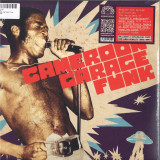
We are extremely proud to announce our 32nd compilation from the Analog Africa regular serie, "Cameroon Garage Funk", highlighting Yaounde's 1970's underground music scene. The quest to assemble the puzzle-pieces of what seemed to be a long lost underground scene took us to Camroon, Benin and further on to Togo and it was in the cities of Cotonou, Lome? and Sotouboua that we managed to lay our hands on most of the songs presented in this compilation. Since there were no local labels, no producers, and almost nothing in way of infrastructure in Cameroon at that time, the artists had to be everything: musician, producer, executive producer, arranger, financier, promoter and sometimes even distributor. The sixteen tracks on Cameroon Garage Funk pulse with raw inspiration and sweat DYI mood uniting the featured diverse musicians around their willingness to do everything themselves in order to take a chance in the music scene.
out of Stock
Last delivered 4 years ago available to reorder, subject to availability
Spirits Having Fun records are ones made from and for shows and spaces—arrangements rooted in a deeply collaborative process, that come to life through intuitive and locked-in live improvisation. Following their 2019 debut Auto-Portrait, Two finds the New York and Chicago based four-piece continuing to challenge ideas of what a rock band can be, pulling apart their musical experiences and reimagining them as kinetic compositions, equally studied but palpably organic.
Two is constructed around gut feelings and strong grooves, elastic rhythms and playful pacing. Its twelve songs expand, contract, and make sharp turns between melodies under singer-guitarist Katie McShane’s meditative lyrics. “Broken Cloud,” which was also released last year on a compilation in support of Chicago Community Jail Support, offers a glimpse into her reflections on the natural world: "A city grew out of the ground / to a mountain it's only a blur."
True to its name, the internal logic of the band is also just a lot of fun, built on trust and deep-rooted musical relationships. Before there was Spirits Having Fun, McShane, bassist Jesse Heasly, guitarist-vocalist Andrew Clinkman, and drummer Phil Sudderberg had performed together in various arrangements over the years. McShane, Heasly and Clinkman met in a specific corner of the Boston underground in 2013, a time when a scene had coalesced around students from local music conservatories frequently collaborating with punk bands and noise artists, exchanging ideas and warping musical worldviews. Heasly and Clinkman played together in Cowboy Band, making mutant, free jazz-inspired takes on old country tunes. When Clinkman moved to Chicago, Heasly and McShane played in experimental groups like EKP and Listening Woman; in Chicago, Clinkman met Sudderberg playing in projects like jazz scene fixture Ken Vandermark’s high-powered band Marker.
Spirits first came together as an attempt at a long-distance collaboration among friends in 2016, driven by the simple feeling of missing each other; they’d meet up for marathon weekends here and there to practice, playing small loops through dive bars and art spaces around the Midwest—just enough for McShane and Heasly to afford plane tickets back home. Being split between Chicago and New York forced the project into a deliberate pace. “We tried to take it slow and let it be what it was,” said McShane. That sense of patience unexpectedly prepared them for March of 2020, when their planned tours and the release of Two were indefinitely delayed.
Two was mostly recorded in the summer of 2019 with the help of omnipresent Chicago engineer Dave Vettraino and DPCD’s Alec Watson, whose contributions on organ, synths, and piano are laced throughout the record. The album reflects a synthesis of solitary and communal songwriting processes—each song drawing on fragments written by individuals, which McShane threaded together and shaped through her distinct compositional lens, making the songs whole before returning to them to the band to mature collectively. When composing, McShane writes first on the keyboard before adapting parts for guitars played by herself and Clinkman. Their dueling approaches to guitar are complementary: McShane, being a newer guitarist, brings a freshness to the project (“I'm just discovering the whole time,” she says) while Clinkman has been playing since childhood.
“There's a lot more collaboration on this record,” says Clinkman, “in terms of all of us letting stuff bloom a little bit more.” The record’s first single, “Hold The Phone” is a good example of this process—it started with a playful intro riff from Clinkman, a melody and bridge added by McShane, a wobbly outro groove added by Heasly, which Sudderberg brought to life. Another single, the dynamic “See a Sky,” written primarily by Heasly, underscores the rhythm section chemistry at play across the record, the song ebbing and flowing around Heasly and Sudderberg’s eclectic percussive palettes.
“Entropy Transfer Partners” is the only song on the record with lyrics by Clinkman, and the album’s most politically direct—a call for solidarity in the face of systemic failures, an acknowledgment of the shared material devastation caused by our country’s ongoing healthcare and housing crises: “These are not things we're experiencing individually. We struggle through them collectively. And we could actually declare, all of us, that it doesn't have to be this way, and fight and organize to ameliorate some of those conditions.” (“We won't work to create the shit you monetize, to run our lives,” they sing.)
From front to back, Two is an absorbing listen simply for its impressive range. But as the members explain themselves, the complexity of the record is about more than its intricate riffs, or how often they count out an odd time signature, but how they reject the notion of boxing the songs in, letting the melodies take on lives of their own. “Making music that feels alive is important to us,” says Clinkman. “Music feels most powerful to me when it deepens our sensation of feeling alive and connected to other humans. It’s so easy to feel worn down and isolated; that your life’s value is fixed to your productivity at your job, or the things that you have or don’t have. Making music that feels joyful and fun seems like one effective antidote to that feeling.”
Robert Jon & The Wreck are back and ready to tear up the UK and Europe
all over again with their new record, Shine A Light On Me Brother.
The impressive new album, written and recorded during the COVID pandemic,
and self-produced by Robert Jon & The Wreck, is set to release 3 September,
2021. Robert Jon & The Wreck is comprised of Robert Jon Burrison (lead vocals
and guitar), Andrew Espantman (drums and background vocals), Steve Maggiora (keyboards and background vocals), Henry James (lead guitar and background vocals), and Warren Murrel(bass and background vocals). They will take
the new album on tour in September/October 2021 AND February/April/May/
June/July 2022.
Robert Jon & The Wreck has been writing songs and releasing albums since the
band’s conception in 2011. During this time, this quintet of follicular proficient
gentlemen has been busy fine-tuning their sound playing to packed houses
across Europe and the United States.
The band has been received with accolades and raving reviews for years now,
from nominations of “Best Rock” and “Best Blues” and winning the title of
“Best Live Band” at the Orange County Music Awards in 2013, to numerous top
10 chart placement on Southern Rock Brazil’s Top 20 Albums to being praised
as “Classic and fresh at the same time” by Rock The Best Music, “Raising the
bar for the Southern genre” by Blues Rock Review, and “keeping the history
of classic 60’s and 70’s rock alive for newer generations” by Blues legend Joe
Bonamassa.
“A classy re-bore of well-trodden southern rock tropes by an Orange County
quintet with impeccably realised contemporary commerciality. Born of Allmans
and Skynyrd, but box fresh for 2000.” - Classic Rock Magazine
“Full of Eagles like guitar riffs and on infectious groove.” - Blues in Britain
In the most literal sense, globally renowned whistler Molly Lewis makes her gorgeous
and curious compositions out of thin air.
New entrees into the Exotica canon; sprawling, would-be Spaghetti Western scores;
and a dash of Old Hollywood glamour - the whistle-led songs on her debut EP ‘The
Forgotten Edge’ are as complex, delicate and indelible as anything performed with
viola or piano.
“Whistling is like a human theremin,” said Lewis, an Australian native who’s spent the
last several years in LA and whose performances there and around the world are
changing any preconceived notions of whistling by the room-full.
That’s not to say Lewis is all serious and snooty about the craft. Quite the contrary.
Her sense of humour is witty, self-deprecating and zany. She’s as likely to reference
the slapstick Leslie Nielsen film series ‘Naked Gun’ for music video concepts as she
is a classic piece of noir cinema.
Look no further than the equatorial and breezy opening cut ‘Oceanic Feeling’, a
lovely walk across the flotsam-sprinkled sands in the rum-pumping vein of Les
Baxter. Meanwhile, the title track - and really, the entire collection here - is a loving,
albeit rather haunting, salute to one of Lewis’s heroes, the Italian composer and
musician Alessandro Alessandroni, whose whistle and guitar you hear on the title
theme of Ennio Morricone’s ‘A Fistful of Dollars’. Lewis and her ensemble create
classic cinema for your mind.
Her own love for the artform began when, around the age of twelve she was given
the CD ‘Steve ‘The Whistler’ Herbst Whistles Broadway’. Something contained in it
clicked. “It wasn’t that I was immediately obsessed, but I knew it was something I
could do well,” Lewis said.
The daughter of a musician mother and a documentary filmmaker father who often
focused his films on niche communities and topics, Lewis recalls watching a
television documentary with her parents about The International Whistlers
Convention in Louisburg, North Carolina. “My dad said, ‘If you ever make it into the
competition, I’ll take you there’,” Lewis said. Turns out, there was no bar to entry, just
a small fee. And so, several years later, she and her father travelled to the
convention. New to the form, Lewis didn’t take home one of the bigger prizes but they
were awarded the prize for Whistler Who Traveled The Greatest Distance. “We really
just used the trip to drive around the United States,” she said.
After studying film in Australia, Lewis moved to Los Angeles to be close to the film
industry. There, her circle of artist friends grew naturally and with providence - her
unique talent drawing more and more recognition. And over the last few years,
Lewis’s Café Molly events at LA spots like Zebulon, Non Plus Ultra and The Natural
History Museum have become fabled, elegant happenings with appearances from
guests like John C. Reilly, Karen O and Mac DeMarco.
Recorded with a crack team of friends and musicians during 2020’s quarantine, ‘The
Forgotten Edge’ is rife with incredible performances from Thomas Brenneck (Sharon
Jones & The Dap-Kings / Budos Band), Joe Harrison (Charles Bradley, Lee Fields),
Eric Hagstrom (Brainstory), Abe Rounds (Meshell Ndegeocello, Andrew Bird, Blake
Mills), Leon Michels (El Michels Affair), Gabriel Rowland and Dave Guy.
Though the hallowed halls of Berlin’s nightlife excess now sit cold, the sounds that once haunted their depths beat ever onward, and colder still. Birthed in these hushed plaguelands, XTR HUMAN’s new full-length G.O.L.D evokes the frozen melancholy of a post-pandemic city, driven ever onward by the impetus of night’s primary currencies: sweat, release and change. The latest full-length from Johannes Stabel, G.O.L.D finds the German producer evolving as much as the rest of the world has had to. Taking his political and socially conscious lyrics into his native tongue brings a deeper and more powerful thrust to their weight—particularly at a time when Germany is weighing its own social consciousness after years of being seen as a leading world figure. Across G.O.L.D’s ten tracks, Stable brings our zeitgeist into a new realm, where the anger and frustration at our current existence is refined into the energy that fuels our engines, that primal desire always amplified during times of social upheaval—the desire to move your body. Many of the songs delve into Stabel’s own experiences as a German, from explorations of the Deutsch mentality of persistent fear to tackling the fake news, jingoism, racists and coronavirus deniers on hypnotic bangers ‘Dark Germany’ and ‘Dieser Klang’; issues just as prevalent in Germany as in the USA and UK. Yet each song carries just as much weight on to the dance floor, melding driving EBM bass with soaring synthlines and coldwave atmospheres that dispel the tenseness that such heavy topics imbue, in favor of intensity and beauty. Influenced by the pop hooks of Austrian New Wave legend Falco, G.O.L.D never neglects its danceability and HD club accessibility, no matter how heady the lyricism. ‘Starker Junge’, a dissection of toxic masculinity, drops down onto the listener with sparkling synths and razor-sharp guitar, while capitalist critique ‘Fleisch’ is a pogo synthpop anthem that could send any floor into a twirling frenzy. Wrapped in darkened beats and political ideals, G.O.L.D can’t hide the light that emanates from within its glistening, imminently catchy hooks and groove-laden rhythms. In a time where the dance floor sometimes seems like a distant memory, it’s the perfect philosopher’s metal to transmogrify your existence. All songs written and recorded by Johannes Stabel Mixing by Andrew Wiseman Arwork by Nicolas Zupfer Mastering at Dadub Studio
out of Stock
Last delivered 5 years ago available to reorder, subject to availability
Mannequin Records is elated to present for the first time on vinyl the reissue of Giovanotti Mondani Meccanici’s first video soundtrack, originally released in 1984 as an audiotape in less than one hundred copies. Giovanotti Mondani Meccanici (literally Mundane Mechanical Youth) or GMM was one of the most unclassifiable audiovisual experiences to emerge from Italy in the 1980s. Maurizio Dami a.k.a. Alexander Robotnick, a pivotal member of GMM, was responsible for the group’s music output.
Founded in 1984 by Antonio Glessi and Andrea Zingoni in Florence, GMM was an art collective whose production represents the quintessential expression of postmodern transmedia hybridity. GMM pioneered the genre of computer comics, created video installations, developed “multiple identity” performances, and was involved in fashion, media, and music productions, and later on produced cyberdelic environments, artificial reality projects, and proto-memes.
Alexander Robotnick’s first contribution to GMM was this soundtrack for the group’s eponymous first video, the animated version of a computer comics they coincidentally published on legendary Frigidaire magazine. Restored by Dami and reissued here for the first time by Mannequin Records, the composition was also split into two “suites” and released as an audiotape distributed by Materiali Sonori, also responsible for other releases by both Robotnick and GMM.
Determining in this work is Dami’s adoption of the alphaSyntauri, also known as the first affordable digital synth (priced less than $2000 when it was released in 1980), which was playable through its own software, “alphaPlus,” on the Apple II computer. The same computer was used by Glessi to “draw” the 3-bit strips scripted by Zingoni recounting the joyrides of the Giovanotti Mondani Meccanici, three merciless cyborgs in black suit and sunglasses dividing their time between nightclubs, rapes and murders.
As Robotnick, Dami developed an innovative formula of Italo disco that was attractive to the dance floor yet at the same time highlighted the expressive properties of the instruments he used, notably Roland drum machines and Korg synthesizers. For the soundtrack of GMM’s videos and installations, he left aside the danceable synth rhythmics in favor of ambient sounds that produced rarefied atmospheres, psychological tensions, and enhanced states of consciousness.
Dami’s scores for GMM’s artworks could be associated with Italian avant-garde music of the 1970s and 1980s, ranging from composers who adopted electronics flirting with pop and songwriting to minimalist musicians exploring seriality and drones, including Franco Battiato, Roberto Cacciapaglia, Francesco Messina, and Riccardo Sinigaglia. Analogies could also be traced with the playful and humanizing approach to personal computers that characterizes the music output of Marcello Giombini and Doris Norton.
The futuristic escapism of minimal synth and ambient music’s psychological nature is infiltrated by drifting harmonics typical of new age, as if in search of a spiritual dimension of technology. Characteristic of the postmodern ethos of GMM Suite, in line with the humanizing approach to technology that is at the base of GMM’s computer comics, is the melancholic take at speculative dystopias in which human beings would find themselves increasingly trapped into identity crises: a true cyborg’s melodrama.
out of Stock
Last delivered 9 months ago available to reorder, subject to availability
Mega Bog (der kosmopolitische Moniker der Musikerin/Künstlerin Erin Birgy) wendet sich von von der schwülen Atmosphäre der Grünlilien-Plantage des Vorgängeralbums "Dolphine" (2019) ab und bringt uns mit "Life, And Another" zurück auf unseren Heimatplaneten, in den dünnen Luftdruck eines Wüstentals, wo die vierzehn Songs geschrieben und wie Steine in der Landschaft verstreut wurden, jeder einzelne ein kostbares Juwel, das Birgy gemeißelt hat. Es ist eine weitere fantastische Off-World-Übertragung und ihr bisher anspruchsvollstes, forschendstes und zugänglichstes Statement. "Life, And Another" inszeniert ein halb-fiktionalisiertes Drama im Inneren des Ichs, mit Szenen kollektiver Sehnsucht auf der Bowlingbahn, Auseinandersetzungen über eine aufgeblähte Erinnerung außerhalb der Bar und einsamen Kreisen auf der Terrasse, die in sturer Ehrfurcht über den Hof hinausschauen. Diese Erinnerungen, sowohl aus der Vergangenheit als auch aus der Zukunft, sprudeln das ganze Album hindurch und präsentieren ihre Charaktere als neue Einträge in das Mega Bog Book of Symbols. Zusammen mit dem Co-Produzenten, Tontechniker und Perkussionisten James Krivchenia (BIG THIEF) lebte Erin Birgy in einer kleinen Hütte in der Nähe des Rio Grande und war zwischen ihren Tourneeplänen oft allein. In diesen Isolationen erlebte sie den teilweisen Verlust des "bekannten" Selbst inmitten der Weite. Aufgenommen in mehreren Sessions in verschiedenen Studios enthält "Life, And Another" instrumentale Beiträge von langjährigen und neuen Mitstreitern, darunter Aaron Otheim, Zach Burba, Will Segerstrom, Matt Bachmann, Andrew Dorset von Lake, James Krivchenia von Big Thief, Meg Duffy von Hand Habits, Jade Tcimpidis, Alex Liebman und die Co-Engineers Geoff Treager und Phil Hartunian. Ihre Hörer wissen inzwischen, dass sie MEGA BOG vertrauen können, dass sie kontinuierlich in tiefere und wildere, spirituelle Pop-Gefilde geführt werden. Flirrende Piano-Glissandi, eindringliche psychische Hintergrundstimmen und Tequila-inspirierte Improvisationen schleichen und kriechen über die dunkle Nacht-der-Seele-Rock'n'Roll-Traumlandschaft, bevor sie verschwinden, um Platz zu machen für Beschwörungen von stiller Klarheit und lebendig-atmenden Instrumentalpassagen. In "Life, And Another" verwandelt Mega Bog die brutale Schwere der Welt in den kollektiven Kampf des Lebens.
It may be his fifth album, but Saturday Night, Sunday Morning marks the start of chapter two for Jake Bugg. Arguably his most complete and coherent record to date, Saturday Night, Sunday Morning manages to combine a love of ABBA, the Beach Boys, Supertramp and the Bee Gees, with a contemporary pop sound: one that’s already spawned his most ubiquitous song in years via euphoric lead single, All I Need. “I knew what I was looking for this time around,” the 27-year-old says, firmly. “And I feel like I accomplished it.” It’s almost 10 years since a two-fingered Bugg burst onto the scene with his eponymous debut, one that topped the UK album charts and saw the then 18-year-old from Nottingham fêted as the next Bob Dylan. A Rick Rubin-produced follow up, Shangri La, quickly followed. But progress stalled with Bugg’s third, largely self-produced, record, On My One, in 2016. “I was having a hard time on that third record,” Bugg admits, five years removed. “The support from the industry wasn’t what it was. All those people telling you how great you are weren’t there anymore. It does feel like the rug’s been swept from under your feet.” What that record provided, however – along with its comparatively stripped-back follow up, Hearts That Strain (2017) – was a much-needed course corrector: one that set Bugg on the upward trajectory he finds himself on today. “When I came to terms with that was when I left the ego at the door,” he says. “It didn’t work out. But it led here. And this is probably my strongest record." It’s testament to Bugg’s rediscovered confidence that Saturday Night, Sunday Morning – a nod to the debut novel by Nottingham author Alan Sillitoe – sees him working with some of his highest profile collaborators to date, most notably American songwriters Andrew Watt and Ali Tamposi, best known for their work with pop heavyweights Post Malone, Dua Lipa, Miley Cyrus, Camila Cabello. “I was looking for how I can incorporate my sound for a more modern era. And I kind of struck gold working with Andrew Watt and Ali Tamposi,” Bugg says. Convening in LA, the first track the trio wrote together is the jealousy-inflected About Last Night, a song about the “insecurities you go through as a young person in a relationship with someone.” “It’s got such dark undertones, which I love,” Bugg says, of a song that showcases a newly discovered, Beach Boys-esque falsetto. “But it’s also very, very pop. That’s what I’ve always loved. With ABBA, with Supertramp. I love pop music. But when you can get it to be dark, I love it even more.” It’s a trick the trio repeated again on Scene, Bugg’s personal favourite from the album and a song that best encapsulates the combination of old and new: Watt’s George Harrison-esquire guitar brushing up against contemporary melodic choices by Tamposi. “I love writing with her,” Bugg says of the Havana hitmaker. “She brought that women’s perspective. And I knew that I’d got that balance of what I wanted. That old school chorus with contemporary verses. That to me was my favourite song when I wrote it, and it still is.” Perhaps the biggest example of Bugg’s newfound ego-less approach to writing, however, came in the shape of Downtown, a song that grew from an idea by Jamie Hartman (Celeste, Lewis Capaldi, Rag'n'Bone Man), and sees Bugg deploy the higher range of his voice to ethereal, ’60s Bee Gees effect. “Usually, the initial spark of an idea comes from me. And when it doesn't, it sometimes loses my attention,” Bugg admits. On Downtown, however, he relished his role as arranger: “Because there were a lot of moving parts and chords, it was almost like a puzzle,” he says. “I’d never approached a song like that before. “What I’ve been enjoying on this record is the collaborative process,” he continues. Working with people, writing with people. Because I’ve realised all I really want to achieve is to be the best writer I can possibly be. And I think by working with other people, it allows you to learn a lot as well.” It’s a theory Bugg has put to the test during lockdown, when he was approached by his manager about writing the soundtrack to an upcoming documentary, The Happiest Man In The World, about Brazilian footballer Ronaldinho. “It’s kind of a completely different experimental outlet,” Bugg explains of his first ever score. “I approach my own work quite professionally. But with this I can just switch off and go into a different world. And it’s been brilliant – I’ve had to learn different styles of guitar: bossa nova, samba. It’s a bit Vangelis, who’s probably my favourite artist – which may surprise people.” Possibly. But you get the impression that surprising is what Bugg likes to do. “I don’t like to be stuck doing the same thing,” he admits. “And that’s what this record Saturday Night, Sunday Morning was. I wanted to push myself. I’m always learning new influences. I’m careful not to get stuck on the same thing. “It’s not going to be right every time. It’s not going to be good every time,” he continues. “But if that’s the process it takes to get to this record, where people are loving the songs again, then that’s the journey we have to take.” For Jake Bugg, chapter two starts now. New album ‘Saturday Night, Sunday Morning’ is out August 20th on RCA Records
’Angelo lost his shit over it. Aaliyah’s 3rd favourite track of all time is on it. David Bowie rocked up with it to a TV interview, declaring it “the most exciting sound of contemporary soul music”.
In 1996, Lewis Taylor released his self-titled masterpiece. A true modern classic, it’s an album that was years ahead of its time. Forget 25 years ago, it could easily have been made in 2021. An effortless blend of neo-soul, sophisticated pop, smart grooves and laid-back white funk, it enjoyed rapturous reviews from critics and music legends alike. But the album never managed to make an impact and given what was likely a token vinyl release at the time, the original records have long since been near-impossible to find. Lewis Taylor’s Lewis Taylor remains a holy relic for some and criminally unknown to most.
Lewis Taylor’s impeccable influences created a dazzling sonic palette: the LP as a whole suggests the visionary brilliance of Prince; the vocal stylings evoke the yearning power of Marvin Gaye; the effortless guitar playing shares the virtuosity of Jimi Hendrix; the haunting tones conjure Tricky; the innovative production and engineering invite comparisons to studio mavericks like Todd Rundgren and Brian Eno; the multi-layered, complex harmonies flash on Pet Sounds-era Brian Wilson; the dark, drama is reminiscent of both Scott Walker and Stevie Wonder; the complex arrangements create textures and moods with the feel of Shuggie Otis on Inspiration Information; the bold experimentation is akin to progressive artists like Faust and Tangerine Dream; the atmosphere is in conversation with Jeff Buckley’s Grace… and we could go on. That might all sound like marketing hyperbole, but not as far as Be With is concerned. It is a genuine wonder how an album this good could’ve passed so many people by.
But despite all the reference points, the similarities are really only skin-deep because the album sounds truly original. It occupies its own distinct, strange universe that feels dark and brooding one moment, bright and joyous the next. Ultimately, Taylor sounds like Taylor.
Although you wouldn’t know it from the credits, the album wasn’t the work of Lewis alone. Sabina Smyth gets an executive producer credit on the original sleeve, but in fact she worked with Lewis on the production and arrangements, did a lot of the backing vocals and she co-wrote Track, Song, Lucky and Damn with Lewis.
Lewis clarified all this in a Soul Jones interview with Dan Dodds in 2016. He explains how not giving Sabina the credit she was due at the time was an unfortunate consequence of where his head was at and he’s now trying to set the record straight.
Together they created an exquisite and sensually-charged record, with a freshness to the writing that makes the songs catchy, melodic-yet-deep and sometimes even funky. The music is predominantly guitar-led and a mixture of organs and synths, live drum loops and electronic percussion make for a sort of modern soul backing orchestra.
On the surface the album is gorgeously laidback, but beneath the lush, sometimes slick, production there’s a murkiness in the seriously gritty funk/hip-hop instrumentation. Lewis Taylor can be a claustrophobic listen. Even its one-word, often seemingly throw-away track titles add to the sense of unease. In its most positive moments, there’s still a sense that things aren’t quite right. The magic comes from this compelling tension.
The languid, strutting “Lucky” is a sensational opening statement. Sinuous electric guitar winds around the shaking percussion with a killer bass line rattling your bones, and Lewis’s voice is sublime. Its six-and-a-half unhurried minutes manage to distill the work of Marvin, Al Green and Bobby Womack because yes, it’s *that* good. Up next is the tough, dusty drum and jazzy, unsettling psych-guitar workout of “Bittersweet”. Aaliyah described it the “perfect song”, which says it all. By turns loping and soaring, tightly coiled and blasting free, 25 years on its discordant, swaggering majesty still sounds like future R&B.
The swinging, blue-eyed funk of “Whoever” oozes sophisticated sunshine soul for hazy days before “Track” sweeps in. The music tries to lift us up, beyond the reach of the vocals trying to drag us back down as Taylor sings “my mood is black as the darkest cloud”. The spare, dubby electro-soul of “Song” closes out the first half of the album with barely contained dread as it creeps towards the lush, synth-heavy coda.
The smouldering “Betterlove” eases us into the second half, coming on like a languorous response to the call of “Brown Sugar”, before sliding into the shuffling, softly-rocking “How”. Somehow the remarkable “Right” manages to both warm things up and smooth things out even more. Taut yet luxurious, it’s definitely not wrong.
“Damn” was to have been the album’s title track and you might also be able to hear its influence on D’Angelo’s Voodoo, maybe most obviously in the chaotic closing moments of “Untitled (How Does It Feel)”. Building to a screeching wall of noise that suddenly cuts dead, “Damn” sounds like the natural end to the album, with the celestial a cappella “Spirit” serving as a heavenly reprise.
When it came to the sleeve, art director Cally Callomon heard Taylor’s music as “sideways off-camera glances at a plethora of influences he had” and wanted to interpret that visually: “I went off into night-time London to see if I could find his song titles in off-beam low-fidelity photographs. I even found a shop called Lewis Taylor”. With a slide for each of the album’s ten tracks, nine of them are on the inner sleeve and the slide for “Damn” makes the front cover. It should’ve been the album’s title, but concerns over distribution in the US scuppered this.
One of UK soul’s most fascinating artists, Andrew Lewis Taylor is an enigmatic figure and a hugely under-appreciated talent. A prodigious multi-instrumentalist who got his start touring with heavy blues/psych outfit the Edgar Broughton Band, he released two albums of psychedelic-rock as Sheriff Jack before Island signed him on the strength of a demo alone. But Taylor was destined to be one of those artists unable (or unwilling) to be pigeonholed and despite the best efforts of Island’s publicity department the music never sold in the quantities it needed to or deserved to. Island eventually let him go in the early 2000s and in June 2006, Lewis Taylor retired from music.
Typical for the mid-90s, this CD-length album was squeezed onto a single LP for its original vinyl release. Simon Francis’s fresh vinyl mastering now spreads out the ten tracks over a double LP so nothing is compromised. And as usual, the records have been cut by Pete Norman and pressed at Record Industry. The original artwork has been restored at Be With HQ and subtly re-worked to work as a double.
This sprawling psychedelic soul opus really is a forgotten should-be-classic. We know that there are those of you who know, and as for the rest of you, we’re a bit jealous that you’re getting to hear Lewis Taylor for the first time.
out of Stock
Last delivered 5 years ago available to reorder, subject to availability
Limited Coke Bottle Green vinyl, 250 copies only for the UK. Any future pressing will be on black vinyl. Massage feature Alex Naidus from Pains At Being Pure At Heart. Recorded by Lewis Pesacov (Fool’s Gold, Foreign Born, Peel’d). Massage was supposed to be low-stakes, no big deal "anti-ambition," as Andrew Romano, guitarist and vocalist, put it. The L.A.based jangle-pop group's first album, 2018's Oh Boy, was a sweet and simple weekend warrior's affair, or more specifically, an every-other-Monday one, as the band members gathered to bash out songs that offered messy but heartfelt tribute to their chosen heroes: The Feelies, the Go-Betweens, Twerps, Flying Nun. For Romano, not taking things too seriously is a dead-serious affair: “Nothing kills the kind of music we want to make faster than the sense that a band is trying too hard,” he says. The kind of music Massage makes sunny, bittersweet, tender is less a proper genre than a minor zip code nested within guitar pop. Take a little "There She Goes" by the La's, some "If You Need Someone" by the Field Mice; the honey-drizzled guitars from The Cure's "Friday I'm In Love," a Jesus & Mary Chain backbeat, and you're almost all the way there. Indie pop, jangle pop, power pop whatever you call it, pushing too hard scares the spirit right out of this sweet, diffident music, and Massage have a touch so light the songs seem to form spontaneously, like wry smiles. Still, on their sophomore effort, Still Life, they manage to take a quantum leap forward in songwriting, production, and depth, all somehow without seeming to try. These 12 deft songs are full of late-summer sunlight and deep shadows, pained grins and shared jokes, shy declarations of love and quietly nursed heartbreak. Still Life resurrects a brief, romantic moment in the late-'80s, right after post-punk and immediately before alt-rock, when it seemed like any scrappy indie band might stumble across a hit. When Andrew Romano and Alex Naidus first met in 2007, Naidus had just joined a band with his friends Kip Berman and Peggy Wang that was about to stumble into many of them. When Naidus finally left Pains for L.A. in 2013, two hit albums and a few world tours later, he started playing with Romano to recapture the no-stakes, suburban-garage joy of making music for its own sake. It was "friendship incarnate," Naidus remembers. The other members came from within the friend circle Gabrielle Ferrer (keyboard/vocals) is Romano's sister-in-law, Michael Felix (drums) is one of Naidus’ best friends, and David Rager (bass) is a childhood friend of Felix’s. When Felix moved to Mexico City in early 2020, Naidus’ wife, Natalie de Almeida, stepped in. The result is the finest batch of songs they've ever produced. From Naidus' velvet-lined JAMC tribute "Half A Feeling" to Ferrer's Let It Be-era Replacements-tinged lament "The Double" to Romano's "In Gray & Blue," these are gold-standard indie-pop gems from emerging masters of the form. Still Life glows with the sincerity and unfakeable warmth of the era they so lovingly channel. Like the best Gin Blossoms chorus you still remember, the songs on Still Life stir big, pure emotions, but beneath them, uneasy truths about adulthood linger, just below the surface. Maybe the exact mix of ringing guitars and two-part harmonies can chase those feelings away, or redeem them, for at least a minute or three. Massage won't stop trying.
BBE Music is thrilled to announce the release of Modern Love, a diverse compendium of specially commissioned cover versions of rarities and classics in tribute to David Bowie. Featuring an array of artists such as Jeff Parker, We Are KING, Meshell Ndegeocello, Helado Negro, Khruangbin, Matthew Tavares, Nia and more, Modern Love seeks to champion Bowie’s lesser-known connection to soul, R&B, jazz, funk, and gospel. The prominent jazz influences throughout Bowie’s final album, Blackstar, were a key inspiration for curating this collection of reimagined Bowie songs with these artists. The resulting album is an eclectic tribute featuring a group of artists who not only fit together creatively, but who, like Bowie, straddle different worlds musically, with soul and jazz at their core. Modern Love offers a fresh look at Bowie's trailblazing career, aiming to highlight the often overlooked relationship between his back catalogue and musical genres traditionally pioneered by artists of color. The project was curated by music executive and DJ Drew McFadden, alongside BBE Music founder Peter Adarkwah. "I felt that the connection between Bowie and R&B, jazz, funk, gospel and all things soulful, had never really been explored before — at least not so much in covers, which tend to lean more towards rock and pop,” says McFadden. “Certainly, there's been plenty of Bowie covers over the years, but none that have really tapped into what seems to have been a big part of his core musical style and direction
In January 2019, at the invitation of fiddler Hans Kjorstad, Alasdair
Roberts travelled from his home in Glasgow, Scotland to Oslo,
Norway, where the two men convened with five additional
Scandinavian musicians at Riksscenen, Oslo’s centre for
Norwegian traditional arts and music. Thus newly-formed, the
group worked on arrangements of songs - self-written and
traditional - from Alasdair’s back catalogue, in preparation for
performances at Riksscenen as well as at ALICE in Copenhagen,
Denmark and the bucolic western Danish island of Fanø. The
group was named Völvur (The Seeresses), a reference to the
ancient Icelandic apocalyptic text Völuspa (The Prophecy of the
Seeress).
In January 2020, Völvur visited England and Scotland, to perform
with Alasdair Roberts at Cecil Sharp House, London and at
Platform, Glasgow, the latter as part of Celtic Connections festival.
The group had new material - freshly written songs by Alasdair
and several traditional Norwegian songs sung by Marthe Lea - and
over a couple days at Sam and Rachel’s Studio in Hackney, laid
down the music which now flows forth as ‘The Old Fabled River’.
The musicians who make up Völvur - Marthe Lea, saxophone,
clarinet and voice, Fredrik Rasten, guitars and voice, Andreas
Hoem Røysum, clarinet, Egil Kalman, bass and electronics, Jan
Martin Gismervik, drums, percussion and the aforementioned
initiator of the project, Hans Kjorstad on fiddle - are a busy and
artistically inquisitive group, involved in a diverse range of projects
with a wide variety of musical interests, from folk and jazz to free
music, modular synthesis, microtonality and beyond. They make
an ideal pairing for such voyages in the alchemical world as
Alasdair pursues in his own music.
On ‘The Old Fabled River’, Alasdair Roberts og Völvur meld their
worlds: fiddle and vocal styles formed in the Norwegian valleys
blending now with exploratory clarinet, saxophone and metallic
bowed guitar drones, now fashioned into baroque folk
arrangements. In one case, instrumental accompaniment is laid
aside, as three voices locate a questing fullness harmonizing
together.
After long and highly distinguished careers with other collaborators, Richard Rodgers (Composer, 1902-79) and Oscar Hammerstein II (Librettist/Lyricist, 1895-1960) joined forces in 1943 to create the most successful partnership in American Musical Theatre. Prior to joining forces, Rodgers collaborated with lyricist Lorenz Hart on musical comedies that epitomized wit and sophistication (Pal Joey, On Your Toes, Babes in Arms, and more), while Hammerstein brought new life to operetta and created the classic Show Boat with Jerome Kern. Oklahoma!, the first Rodgers & Hammerstein musical, introduced an integrated form that became known as "the musical play." Their shows that followed included Carousel, South Pacific, The King and I, and The Sound of Music. Collectively, the Rodgers & Hammerstein musicals have earned Tony, Oscar, Grammy, Emmy, Pulitzer, and Olivier Awards.
About The Sound of Music
Rodgers & Hammerstein's last musical was a triumph. The Sound of Music opened at Broadway's Lunt-Fontanne Theatre on November 16, 1959. It ran for 1,443 performances and earned five Tony Awards including Best Musical. In addition, the cast album earned a Gold Record and the Grammy Award. Florence Henderson starred in the first national tour, which played for more than two years. Jean Bayless created the role of Maria in the original London production, which ran for more than six years, long holding the record as the longest-running American musical in London.
In 1965 the motion picture version of The Sound of Music was released, and it made Hollywood history. Directed by Robert Wise, with a score revised by Rodgers (Hammerstein had died in 1960, so Rodgers composed both music and lyrics for two songs added to the film: "I Have Confidence" and "Something Good"), and a screenplay by Ernest Lehman, The Sound of Music boasted a dream cast: Julie Andrews as Maria, Christopher Plummer as the Captain, Eleanor Parker as Elsa, Peggy Wood as the Mother Abbess and Charmian Carr as Liesl. Winner of five Academy Awards, including Best Picture, The Sound of Music has become the most popular movie musical ever made.