Kora Koumakan, or Word of the Kora, is a boundary-pushing Afro-Manding group from Conakry, Guinea. Led by master kora player and composer Sekouna Conte, Kora Koumakan channels Guinea's rich musical heritage into modern compositions, creating a sound that is both deeply rooted and forward-looking. Inspired by Guinea's iconic Ballets Africains and legendary artists like Bembeya Jazz National and Mory Kante, the band masterfully blends contemporary instrumentation with traditional West African instruments - handmade by the band themselves - including the kora, djembe, and balafon. Since 2018, they have been touring extensively across West Africa, honing their sound and earning a nomination for Best Band at the 2025 Guinea Music Awards.
This inaugural limited edition vinyl release on Jambulance Movement Records features two standout remixes by London's Tigerbalm and Ben Gomori, which transform the band's original Afro grooves into hypnotic house tracks already making waves on dancefloors worldwide. Tigerbalm's remix expertly layers the original percussion around a driving 4/4 beat, with the ethereal kora and powerful vocals weaving through the rhythm to create compelling dancefloor energy. Ben Gomori's remix takes a more atmospheric route, anchored by a groovy bassline loop with layered guitar and keyboard melodies that add depth and movement, gradually building into immersive moments of tension and release. The record also includes instrumental versions of these remixes, with the band's EP of original tracks set to drop in early 2026.
Jambulance Movement Records is a social enterprise record label and recording studio based in Guinea. Their mission is to empower the next generation of emerging African artists by providing free professional recording services. Operating a solar-powered mobile studio and a static studio in Conakry, the label discovers new talent through casting events across the country. Selected artists receive comprehensive training and mentorship, with the overall aim to foster sustainable careers for young African artists.
Cerca:art forest
- Hotel California
- New Kid In Town
- Life In The Fast Lane
- Wasted Time
- Wasted Time (Reprise)
- Victim Of Love
- Pretty Maids All In A Row
- Try And Love Again
- The Last Resort
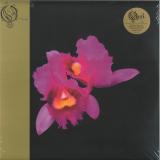
The moment the instantly recognizable intertwined guitar passage on the title track to the Eagles' Hotel California begins, the record's genius becomes obvious all over again. Ranked the 118th Greatest Album of All Time by Rolling Stone, certified by RIAA as the third best-selling LP in history, and considered the foundation on which the Golden State's mid-‘70s music scene was built, the 1976 landmark is a music staple immune to shifts in trends, eras, and styles. Fearlessly addressing the chaos and consequences of American life, its songs remain strikingly prescient and gain creedence with each passing day.
Mastered from the original analogue master tapes, pressed on MoFi SuperVinyl, and limited to 17,500 numbered copies, Mobile Fidelity's UltraDisc One-Step 180g 45RPM 2LP vinyl box set ensures you will want to permanently check into and never leave this particular Hotel California. Up to the herculean task of standing head and shoulders above all prior reissues, this collectible edition plays with extreme clarity, organic richness, tube-like warmth, massive dynamics, and microscopic levels of detail. You'll be able to practically smell the colitas and feel the breeze in your hair. Songs come across with an epic sweep and feature immersive, front-to-back soundstages that allow the music unprecedented air, roominess, and separation. As for the noise floor? It's basically as invisible as the spirits that waft in the corridors of the unforgettable title song.
Aesthetically, the premium packaging and presentation of the UD1S Hotel California pressing befit its esteemed status. Housed in a deluxe box, it features gorgeous foil-stamped jackets and faithful-to-the-original graphics that illuminate the splendour of the recording. From every angle, this UD1S reissue exists as a curatorial artefact meant to be preserved, touched, and examined. It is made for discerning listeners that prize sound quality and production, and who desire to fully immerse themselves in the art – and everything involved with the album, from the renowned cover art to the meticulous finishes.
Indeed, the opportunity to zero in on all the particulars of the 26-million-selling Eagles record dubbed "a legitimate rock masterpiece" by vaunted Los Angeles Times scribe Robert Hilburn has never been better. A global phenomenon that marked the band debut of guitarist-singer Joe Walsh, Hotel California continues to resonate and connect with listeners of all generations taken by its narrative depth, stark directness, picturesque melodies, daring majesty, and ardent emotionalism. Adorned with a breathtaking exterior photograph of the Beverly Hills Hotel that serves as the simultaneously haunting and alluring cover art, and rounded out by a rear-cover shot of the Lido Hotel lobby that reinforces a notion that teeters between permanence and transience, Hotel California is brilliantly tied to a specific place that functions as a universally understood metaphor for the American Dream.
Confronting the darker undercurrents and oft-ignored constructs attached to that romantic notion, the record's songs revolve around a host of shared themes: excess, mobility, stability, illusion, fame, destruction, and idealism included. Notably, Hotel California appeared at a crucial junction in American history: During the country's bicentennial and amid escalating controversies related to the Vietnam War, energy crisis, and governmental corruption. That the Eagles manage to channel such cultural, social, and economical matters into a cohesive, stately, big-picture statement is alone a stupendous feat. That the album's reach, boldness, vitality, accessibility, and understated intensity have never waned make it a marvel.
Reflecting on Hotel California 40 years after its original release, and indirectly explaining its enduring appeal and increasing relevance, singer-songwriter Don Henley confirmed the record pertains to the "loss of innocence, the cost of naiveté...the difficulties of balancing loving relationships and work, trying to square the conflicting relationship between business and art; the corruption in politics, the fading away of the Sixties dream of ‘peace, love and understanding.'"
It can be argued that Henley and company squarely hit on and drove home those ideas in the surreal title track, chart-topping "Life in the Fast Lane," and grand "The Last Resort" alone. But that would miss the forest for the trees. Experienced as an unbroken whole, complete with the pristinely shot imagery and physical grooves, Hotel California unfolds like a geography-conscious saga by James Michener and plays like colour-saturated movie shot on 70mm film by Martin Scorsese. It's about our collective and individual decisions – and the shape of our past, present, and future. And, just like that conjured by our imaginations, Hotel California continues to take on a life of its own.
More About Mobile Fidelity UltraDisc One-Step and Why It Is Superior
Mobile Fidelity Sound Lab's UltraDisc One-Step (UD1S) technique bypasses generational losses inherent to the traditional three-step plating process by removing two steps: the production of father and mother plates, which are created to yield numerous stampers from each lacquer that is cut. For UD1S plating, stampers (also called "converts") are made directly from the lacquers. Since each lacquer yields only one stamper, multiple lacquers need to be cut. Mobile Fidelity's UD1S process produces a final LP with the lowest-possible noise floor. The removal of two steps of the plating process also reveals musical details and dynamics that would otherwise be lost due to the standard multi-step process. With UD1S, every aspect of vinyl production is optimized to produce the best-sounding vinyl album available today.
MoFi SuperVinyl
Developed by NEOTECH and RTI, MoFi SuperVinyl is the most exacting-to-specification vinyl compound ever devised. Analogue lovers have never seen (or heard) anything like it. Extraordinarily expensive and extremely painstaking to produce, the special proprietary compound addresses two specific areas of improvement: noise floor reduction and enhanced groove definition. The vinyl composition features a new carbonless dye (hold the disc up to the light and see) and produces the world's quietest surfaces. This high-definition formula also allows for the creation of cleaner grooves that are indistinguishable from the original lacquer. MoFi SuperVinyl provides the closest approximation of what the label's engineers hear in the mastering lab.
- A1: Forest Nativity (Extended Version)
- A2: Le Grand Soleil De Dieu
- A3: La Condition Masculine (English Version)
- A4: Quand Le Soleil Est La (Alternate Drum Machine Version)
- A5: Ganvie
- B1: Kikadi Gromo
- B2: Immigration Amoureuse
- B3: Where Are You? I Love You
- B4: Dash, Baksheesh & Matabish
- B5: Je Vous Aime Zaime Zaime (Drum Machine Version)
- C1: Agatha (Alternate Version)
- C2: L'amour Malade Petit Francais
- C3: Ndoloc
- C4: Chant D'amour Pygmee
- C5: Funky Maringa
- D1: Crocodile - Crocodile - Crocodile
- D2: L'ile De Djerba
- D3: Kitibanga
- D4: Asma (Alternative Instrumental Version)
- D5: Savannah Georgia (Alternative Version)
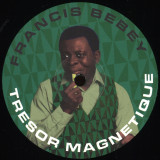
"Trésor Magnétique" ist eine Zusammenstellung unveröffentlichter Tracks und vernachlässigter Schätze aus dem Vermächtnis des legendären, kamerunisch-französischen Musikers/Schriftstellers Francis Bebey. Sorgfältig digitalisiert in den Abbey Road Studios, strahlen sie eine Klarheit und Dringlichkeit aus, die den Jahrzehnten seit ihrer Entstehung bis zur Jetztzeit trotzt. "Trésor Magnétique" ist keine verstaubte Retrospektive, sondern ein lebendiger, atmender Dialog mit der Gegenwart und der perfekte Einstieg in eine umfangreiche Diskografie, die sich fliessend zwischen tanzbarem Afro-Funk, folkloristischen Gesängen, politisch aufgeladenen Kommentaren und schimmernden elektronischen Erkundungen bewegt. Francis Bebey war seiner Zeit nicht nur voraus – er prägte seine eigene Zeit. Wir entdecken hier nicht nur verlorene Artefakte, sondern werden mit Ideen konfrontiert, die heute noch radikal und relevant sind.
AN ATLAS OF LOSS
Do minerals dream of becoming semiconductors? Do they yearn to carry charges, amplify, switch, and convert energy into emotions comprehensible to humans? And what if, from the darkness of the underground, they had been listening to us sing in caves before the emergence of the first flute? Could they have guided us, through the course of history, to find them, extract them, and create new sounds through sinusoidal waves, to form valves and bend circuits?
If so, minerals would transition from what philosopher Eugene Thacker defines as the ‘planet’—that virginal and unreachable realm for humans that we study through geology, paleontology, and environmental sciences—to the ‘world,’ the space we inhabit, interpret, and synthesise in our daily lives. Sadly, we only remember the world when it erupts violently, through climate catastrophes or when a new virus emerges. Sometimes a tsunami collides with a nuclear plant, or viruses are cultivated as biological weapons in high-security laboratories, provoking a deep biological anxiety, hard to quell, which we all feel beneath our skin.
There exists a third realm, disconnected from both the world and the planet: the ‘earth’, an immense, dense rock floating in space alongside other planets, situated in the cosmological dimension. Relating to the earth is so complex that we only do so through theoretical speculations of a scientific nature or through science fiction, interweaving until one becomes the prophecy of the other, in an infinite, pendular dance. Beyond the darkness of space and Lovecraft’s cosmic horror, the fantasy of human extinction is the most recurrent: to reach a collapse so devastating that we do not survive it, even though the earth does, without us.
In a world where we quantify everything through body sensors, financial algorithms, nanometre-scale robots, and surveillance drones—a world in which everything that can be domesticated and controlled can also be commodified—a superior artificial intelligence would survive the collapse of the species (some speculate it might even cause it) and learn from our mistakes, thanks to our obsessive gathering of data.
Long after our voices fade, minerals will persist in the darkness of screens, in the silicon of chips, and in their pure form, still unexploited underground. Over the millennia, this intelligence might piece together fragments of our reasoning, as if an alien civilization finally connected with one of our spacecrafts loaded with messages cast into the void. It would sort through endless streams of data, unable to grasp the depths of emotion behind what it quantified, recreating simulations of our past, stripped of the nuance that once defined us and conducting experiments in sandboxes.
Some remnants of our existence—faint echoes of forgotten beauty—would be pieced together in an atlas of loss, buried beneath layers of numbers, decayed bots, and corroded hard drives. What will follow? Perhaps bison will once again roam—trotting to the strange pulse of techno, their ancient forms framed by the ruins of our cities.
Buildings will crumble, slowly dissolving under the soft touch of ambient music, and a thousand flowers will bloom with that ancient music created through electrical signals and computation. 7 songs for a future both improbable and inevitable—a final message from a world lost to itself, from planet Earth to planet Earth.
Alfons Pich, 2025
- A1: Synth Alien - The Last Forest
- A2: Sinitsin - Infuse
- A3: Gravedad Cinética - Nectar
- B1: Crm15350 - Bullet Points
- B2: David Pasajero - Nebula
- B3: The Vessel - Ufo Dissorder
- C1: Exzakt - Secret Societies
- C2: Kafkactrl - Inertial Observer
- C3: Dark Vektor - Salimos De Noche
- D1: Terrestrial Access Network - Server Cluster 3
- D2: Pλяλпd - Live In Fear
- D3: Dmx Krew - Tonight (Vocal)
Seven years following their first record, Noise To Meet You return with their tenth and final release: an eclectic and powerful compilation featuring a diverse range of exceptional artists.
To mark this milestone, world-renowned electro pioneers like DMX Krew, Exzakt, Dark Vektor, and Synth Alien join forces with outstanding names such as PΛЯΛПD, Terrestrial Access Network, or KafkaCtrl, among others. The result is an essential collection for true fans of the genre, making this a remarkable farewell to an unforgettable journey.
2026 Repress After the memorable performance at Mostra festival, the electronic music group Sonic Wave Collective aka SWC, formed by the producers Absis, Cyklos and Spear, release their first vinyl record for Arketip Discs. SWC introduce a new avant-garde voice to the underground scene, weaving a mesmeric narrative that combines textures of introspective and refined techno with a very personal style.
This debut features six cuts that reveal the trio's diversity of influences and sonic sophistication.
Forest on Stasys is a renowned Argentinian artist who not only runs Aura Sonora, and is Co-Founder of Danza Nativa, but has released music on Claudio PRC's 012, Harmony Rec, and Fur:ther Sessions amongst others.
NEW LP PRESSING on Opaque Yellow Wax
Released in September 1978, a mere two months before YMO’s debut, Cochin Moon is a clear precursor to the groundbreaking synth and sequencer-dominated sounds that would come to define the iconic trio. Huge tip!
Credited to Hosono and Pop Art legend Tadanori Yokoo (who created the cover art), Cochin Moon is a fictional soundtrack to a journey into unknown worlds, inspired by Hosono and Yokoo’s trip to India.
The unbelievably prolific Haruomi Hosono is one of the major architects of modern Japanese pop music. With his encyclopedic knowledge of music and boundless curiosity for new sounds, Hosono is the auteur of his own idiosyncratic musical world, putting his unmistakable stamp on hundreds of recordings as an artist, session player, songwriter and producer. Born and raised in central Tokyo, his adolescent obsession with American pop culture informed his early forays into country music, which he would revisit later in his career. Hosono made his professional debut in 1969 as a member of Apryl Fool, whose heavy psychedelia was somewhat at odds with his influences, which leaned towards the rootsy sounds of Moby Grape and Buffalo Springfield. The latter was one of the main inspirations for his next group, Happy End, whose unique blend of West Coast sounds with Japanese lyrics proved to be highly influential over the course of three albums. After the band’s amicable break up in 1973, Hosono began his solo career with Hosono House, an intimate slice of Japanese Americana recorded inside a rented house with recording gear squeezed into its tiny bedroom. Hosono’s solo career would take many twists and turns from this point forward, with forays into exotica, electronic, ambient, and techno, culminating in the massive success of techno pop group Yellow Magic Orchestra (YMO).
Released in September 1978, a mere two months before YMO’s debut, Cochin Moon is a clear precursor to the groundbreaking synth and sequencer-dominated sounds that would come to define the iconic trio. Credited to Hosono and Pop Art legend Tadanori Yokoo (who created the cover art), Cochin Moon is a fictional soundtrack to a journey into unknown worlds, inspired by Hosono and Yokoo’s trip to India. Initially the album was to be a kind of ethnographic musical document, using found sounds and field recordings made by Hosono himself. Instead, after Yokoo introduced Hosono to the sounds of Kraftwerk and krautrock during the trip, Cochin Moon became something much stranger. Created almost entirely on synthesizers and sequencers with the help of future YMO collaborators Ryuichi Sakamoto and Hideki Matsutake, the music on the album is the perfect encapsulation of Hosono’s concept of “sightseeing music,” transporting the listener to an exotic place that may or may not exist. This highly sought-after album sees its first-ever official release outside of Japan.
A Strangely Isolated Place presents a long-lost collaboration between Polish artists Olga Wojciechowska and Tomasz Walkiewicz as Monoparts—a partnership formed many years ago that resulted in an album once destined to remain unreleased.
Olga Wojciechowska, known for her modern-classical masterpieces such as Infinite Distances (2019) and Unseen Traces (2020), as well as her 2022 collaboration with Scanner, breaks all known expectations with Soothsayers. In a dramatic departure, Olga unveils a new and unexpected side, debuting her haunting vocals—a delicate, spellbinding performance that recalls the golden era of trip-hop, and comparisons to the sounds pioneered by Tricky, Massive Attack, and Martina Topley-Bird.
With Tomasz adding layers of depth through intricate beats and electronics, Olga’s voice becomes the emotional core of the record, conjuring an intimate and nostalgic atmosphere.
"This album is like becoming one with the earth itself—feeling the rawness of the wood, tasting the earth in your mouth, and sensing the presence of ancient spirits. The music carries a deep, primal energy, like being part of the forest, with creatures watching you from the shadows." - Olga Wojciechowska
To complete the journey, ASC lends his signature touch with a stunning drum’n’bass reinterpretation, amplifying the album’s nostalgic essence. Soothsayers emerges as a spellbinding ode to times gone by, in more ways than one.
Featuring artwork by Moon Patrol, with mastering and lacquer by Andreas LUPO Lubich.
In Woodland is a journey through the duality of solace and survival, marking the artist’s first solo EP since the war in Ukraine began. This five-track release delves into the tension between finding peace and enduring conflict.
At its heart, In Woodland is a tribute to the forest—a sanctuary of strength and reflection, offering escape from life’s chaos. Yet, the title also evokes the woodland camouflage pattern, symbolizing how war leaves an indelible mark on identity.
The EP oscillates between quiet introspection and raw confrontation, blending delicate melodies with haunting textures. Deeply personal and cathartic, it reflects resilience and reminds us of the sanctuaries—both physical and artistic—that sustain us through the darkest times.
An appetite for the unknown" - Daniel Lanois
No collaboration is unlikely when the end goals are the same. A meeting of two artists who illustrate different corners of the musical landscape, come together to create a new statement that takes their collective strengths to higher elevations and encompasses new terrains.
So it is on the first collaborative journey of Canadian musicians Venetian Snares and Daniel Lanois. What started as mutual respect for one another's work, led to several years of a creative germination resulting in an eight-track full-length exploration released May 4th on Timesig/Planet Mu.
The path began in 2014, after Lanois reached out to Venetian Snares (Aaron Funk) as a fan of his work. The project started to take root in Summer of 2016, after Funk hung around Toronto between shows. Taking his gear to Lanois' studio, the two began to play for the first time together in what would prove to be a formative moment in their creative journey together.
I love making music with Dan, he has a real understanding of how to create a world and build what may exist within that world. Bassdrums are trombones and they are a colossal whale which floats on clouds of leaves speaking to the blast furnace feeding the mammoth. A small painting of forest horses hangs in the cranium of the sea horse.' - Aaron Funk
Recorded live in a former Buddhist temple-turned-studio in Toronto,
'Venetian Snares x Daniel Lanois' travels to new zones in what Lanois describes as a body of work driven by exploration'. Like all the best collaborations, it's brought something new out of both musicians. Equipped with their production acuity, they let their natural workflow guide them through uncharted waters. Funk laid the groundwork with drums while Lanois rode the pedal steel, weaving their sounds together in a new sonic tapestry. The two ultimately landed at their destination, their work ready to be shared with those willing to explore.
In Daniel Lanois 'own words:
"To come upon a new form reassures the head that frontier lives on The unlikely pairing of Venetian Snares and Daniel Lanois may very well have provided us with a nice new pair of shoes to walk to new sonic frontier A melange of gospel and electronics As madness of the world trips over its heels these Canadian sonic innovators prepare for travel A body of work driven by exploration, brings to us in our modern times what we remember and admire from the Jazz explorations of the 50s A splintering An appetite for the unknown"
- A1: Kobza– Bunny
- A2: Shapoval Sextet– Oh Get Ready Cossack There Will Be A March
- A3: Vodohrai– Remembrance
- A4: Кирило Стеценко– Play The Violin Play Featuring – Tetiana Kocherhina
- B1: Vadym Khrapachov– Dance
- B2: Krok– Breath Of Night Kyiv
- B3: Кирило Стеценко– Oh How How? Featuring – Наталья Гура
- B4: Valentina Goncharova– Silence
- B5: Radiodelo– 90
- B6: Цукор Бiла Смерть– The Great Hen-Yuan' River
- C1: Er Jazz– Tea Ceremony
- C2: Iury Lech– Barreras
- C3: Yarn– Viella
- D1: The Hostilnia– Sick Song
- D2: Svitlana Nianio– Episode Iii
- D3: Omi – Transference
- D4: Ihor Cymbrows'kyj– Beatrice
Color Vinyl[56,26 €]
Die erste umfassende Compilation ihrer Art, "Even the Forest Hums: Ukrainian Sonic Archives 1971-1996" erforscht die blühende ukrainische Musikszene des späten 20. Jahrhunderts. Von subtil vom politischen Kurs abweichenden Singles aus der Sowjet-Ära bis hin zu DIY-Aufnahmen aus der pulsierenden Kiewer Underground-Szene zeichnet die Zusammenstellung die Entwicklung der reichen ukrainischen Musiklandschaft anhand seltener Folk-, Rock-, Jazz- und Elektronikaufnahmen nach. Sorgfältig kuratiert in Zusammenarbeit mit dem ukrainischen Label Shukai Records und mit voller Unterstützung der einzelnen Künstler. Vitalii "Bard" Bardetskyi, ein in Kiew lebender Filmemacher, DJ und Autor, führt die Hörer durch die physischen Ausgaben des Albums mit aufschlussreichen Linernotes und Track-by-Track-Details. Die 2xLP ist in einer wunderschönen Klappverpackung untergebracht, die die geliebten und ikonischen Folk-Gemälde der ukrainischen Künstlerin Maria Prymachenko präsentiert. Die Vinylausgabe enthält ein 20-seitiges Booklet mit Künstlerfotos und Linernotes in Englisch und Ukrainisch, gepresst auf Clear Blue Sky & Sunflower Yellow Wachs; die CD-Ausgabe enthält Bonusmaterial in einem 64-seitigen, gebundenen Deluxe-Buch. Ein Teil des Erlöses wird an Livyj Bereh gespendet, eine in Kiew ansässige Freiwilligengruppe, die sich für den Wiederaufbau in den vom anhaltenden Krieg in der Ukraine betroffenen Regionen einsetzt.
- A1: Brightness Shallan Davar - Words Of Radiance
- A2: Stratusphere - Forest Fortress
- A3: State Azure - Sapper's Dilemma
- A4: All India Radio - Ancient Invocations
- A5: Mason Bee - Sunu
- B1: Carbon Based Lifeforms - Suburban Tessellation
- B2: Cult48 - Defang (Shrouded Mix)
- B3: Digitonal - Sparrow
- B4: Segerfalk - Where We Never Left
- B5: Ochre - Intrinsic Grey
Green vinyl[48,53 €]
Initially released exclusively in digital format two years ago, the already cult favourite Whispers Of An Ancient World finally makes its way to vinyl courtesy of Mystic & Quantum but in highly restricted numbers. Featuring artwork by Kilian Eng, this red edition offers a mesmerising auditory journey. Ambient landscapes and evocative ancient ceremonies coalesce with explorations through lush jungles, tranquil acoustic melodies, and edgier dub motifs hinting at a looming dystopian future. Contributions from artists such as Diagonal, Mason Bee, and State Azure enrich its allure as the whole thing adds up to a cinematic tapestry that captivates with atmospheric depth.
Ruby Red - Transparent - Galaxy effect vinyl in dub style jacket (jacket sleeve with center hole cut out so label of LP shows through) a black paper inner sleeve and poly bag.
PART ONE’ METAL HAMMER - 8/10 review. FOR FANS OF : Lustmord, Om, Sunn O))) . “An exercise in freeform ambience, ritualistic repetition and the rapturous, womb-like power of bass…strange and affecting. We remain lucky to share in the great man’s vision.”
At its heart, music has always been a questioning of inheritance – a dialogue with predecessors and forebears, the forging of one’s own perspective in relation to what has come before, and for some, a plunge into the boundless realms between. For Steve Von Till, that process has always taken on an added dimension to become the most sacred of tasks. Whether through the apocalyptic uprising of Neurosis, the sonic deconstructions of their sister project, Tribes of Neurot, the invocatory intimacy of his eponymous solo albums or his instrumental psychedelic reveries in the guise of Harvestman, that dialogue has never just been with musical influences, but with what underpins them: the primordial, elemental forces now banished to the peripheries of our contemporary consciousness, yet still broadcasting a signal for all who will listen.
Drawn to the megaliths, ruins and ancient sites mapped out along the British and European mainland’s geographical and psychic landscapes, the folklore and apocrypha forever resurfacing as portals from a rational world, “Triptych” is a meditation forged from traces and residues, and an hallucinatory recollection of artists who have tapped into that enduring otherworldliness embedded within us all. It’s a dream diary narrating a passage through Summer Isle where Flying Saucer Attack are wafting out of a window, a distant Fairport Convention are being remixed by dub master Adrian Sherwood, celestial scanners Tangerine Dream are trying to drown out Bert Jansch and Hawkwind are playing Steeleye Span covers, all prised out of time yet bound to its singularity.
Woven together from home studio recordings that span two decades, this latest outing as Harvestman finds parallels with nature’s cycles not just in its release dates but in the repeated structure that binds each album, like an imprint refracted through three separate strata. As with April’s “Part One” and the forthcoming “Part Three”, “Part Two”, starts on a collaboration with Om bassist and long-term friend of Steve’s, Al Cisneros, with a dub take opening the B-Side. Here, the opening track, “The Hag Of Beara Vs The Poet”’s languid, tribal groove expands into a chromatic wash, like an endless drip of oil spreading out under a midsummer haze.
A filtering of the alpha-state travelogues of its predecessor, “Part Two” reaches even deeper into primal yet pristine states. It journeys from the undulating drone and slow-thawing wonder of “The Falconer”, as if the Myst soundtrack were being broadcast from outer space, through “Damascus”’s perpetual-motion, dreamtime bazaar and “Vapour Phase”s seismograph frequencies measuring supernatural tremors to “The Unjust Incarceration”s distorted bagpipes, sounding a noise-frayed lament
If “Triptych” is a multi- and extra-sensory experience, it extends to the remarkable glyph-style artwork of Henry Hablak, a map of correspondences from a long-forgotten ancient and advanced civilization. As with “Triptych” itself, it’s an echo from another time, an act of binding, a guide to be endlessly reinterpreted, and a signpost to the sacred that might not indicate where to look, but how.
YOIONWAX's 10th anniversary record is already here! This is our second fully printed record with an incredibly cool zoetrope artwork by Alex Mikheev. This time, we're embarking on an amazing journey to unexplored places, and our guide is the very cool and experienced musician Donnie Cosmo.
We start in a tropical forest, and as we walk through the tropics to the starting pad of our ship, Donnie suggests trying Jungle Juice. Moving on, we encounter The Man From Planet X, whose story accompanies us to a small stop as we switch from side A to side B.
Mystical Journey begins as soon as we put the needle on the record on side B. The zoetrope artwork, which is now located on the entire record, can be examined indefinitely, especially when we listen to such a soundtrack. It is at this moment that we break away from the earth and find ourselves in open space, an exciting journey awaits us. Having traveled a long road through stars, planets, galaxies, Donnie suggests Prepare Your Soul, and we prepare our souls for the transition to a new level, because we have come a long way with you, and this record is a great gift for the sixth anniversary of our project, which took place at the end of May.
We are actively working now on the development of the project and are preparing something new, we are sure it will be very cool, and you will like it, so do not miss your chance now to become the owner of a collector's edition, a truly exclusive and legendary record - YOIONWAXOIO!
Recorded on the edge of Berlin in a semi-deserted building complex formerly used by the East German Sociality party, André Uhl's debut on the label taps into the spectral frequencies of the space and the ritual practices of recording.
Created in isolation amongst this decaying structure and surrounded by lakes, dense forestry and the sounds of boars and unknown wildlife outside, Every Step Causes a Crack is a title that reflects Andrés connection to the environment around him and the death or glory stance of the artist, with field recordings, electric doom synthesis and lurching drum tracks temporarily fracturing the darkness before being pulled back through the void.
Limited vinyl release of 150 copies.
The Mental Groove Classic series returns with a treasure trove of rare and hard to find tracks plucked from the personal collection of label founder Olivier Ducret, a pivotal figure in Switzerland's acid house and rave-era party scene.
On Volumes Two and Three of the series - the first installment hit stores in 2017 - the Mental Groove and Musique Pour La Danse label founder takes us back to the turn of the '90s, a time he spent promoting parties in fields, squats, forests, warehouses and former factories in and around Geneva and behind the counter of a record shopof the same name. While others in Switzerland's emerging dance music scene gravitated towards US house and garage, Olivier and his crew opted for a bass, breaks and techno-focused sound inspired by regular trips to clubs, raves and record shops in the UK.
Drawing directly from his own record box and a memory bank full of snapshots of euphoric dancefloor moments, Mental Groove Classics volumes Two and Three sees Olivier reaching for cuts of near-mythical rarity, genuinely overlooked gems, and undeniably brilliant tracks that have left a long-lasting impression on the local raving landscape. It's an autobiographical audio document, historical archive and personal musical statement all rolled into one, inspired by a moment in time where musical boundaries were being redrawn in a wave of carefree optimism and freedom inspired new rave scenes across Europe and far beyond.
Matt Anniss
Original artwork by Soho's Brain Club co-owner and artist of early British club culture Mark Wigan.
File under house, breakbeat, techno and warehouse rave music
The Mental Groove Classic series returns with a treasure trove of rare and hard to find tracks plucked from the personal collection of label founder Olivier Ducret, a pivotal figure in Switzerland's acid house and rave-era party scene.
On Volumes Two and Three of the series - the first installment hit stores in 2017 - the Mental Groove and Musique Pour La Danse label founder takes us back to the turn of the '90s, a time he spent promoting parties in fields, squats, forests, warehouses and former factories in and around Geneva and behind the counter of a record shop of the same name. While others in Switzerland's emerging dance music scene gravitated towards US house and garage, Olivier and his crew opted for a bass, breaks and techno-focused sound inspired by regular trips to clubs, raves and record shops in the UK.
Drawing directly from his own record box and a memory bank full of snapshots of euphoric dancefloor moments, Mental Groove Classics volumes Two and Three sees Olivier reaching for cuts of near-mythical rarity, genuinely overlooked gems, and undeniably brilliant tracks that have left a long-lasting impression on the local raving landscape. It's an autobiographical audio document, historical archive and personal musical statement all rolled into one, inspired by a moment in time where musical boundaries were being redrawn in a wave of carefree optimism and freedom inspired new rave scenes across Europe and far beyond.
Matt Anniss
Original artwork by Soho's Brain Club co-owner and artist of early British club culture Mark Wigan.
File under house, breakbeat, techno and warehouse rave music
- A1: Saylo
- A2: Can't Take The Hood To Heaven
- A3: Attack Of The Dreadlocks (Feat Rae Khalil)
- A4: Lynn's Lullaby (Interlude)
- A5: Brownskin Cinnamon
- A6: Grey Seas (Feat Reaper Mook)
- A7: Cowboy Leather (Feat Pink Siifu)
- A8: Overseas Sam
- B1: Bullets From A Butterfly
- B2: Pearly Gates Playlist
- B3: Things Grandma Told Me
- B4: Bygones
- B5: Lagonda (Feat Goya Gumbani)
- B6: The Card Players (Feat Jayellz)
- B7: When I Met Rose
Cassette[10,88 €]
Forest Green Vinyl
Seafood Sam is a futuristic artifact. If that description might sound confusing at first, it matches the eclectic dualities found in true originals. With his effortless cool and timeless style, the North Long Beach native defies convention and exact comparison. He's a virtuosic rapper, a stop-you-in-your tracks singer, and a symphonic producer. Welcome to the lavish life of a laid-back transcontinental man of mystery, rolling in old school Cadillacs, eating caviar with a blade in his pocket, and making plays in vintage Pelle Pelle gear. A blaxploitation icon for the Instagram age, blessed with the bars of a `90s legend and 23rd century swagger. Seafood Sam is a true hero of modernity. On his full-length album debut for up-and-coming label drink sum wtr (Kari Faux, Deem Spencer, Aja Monet) debut, Standing on Giant Shoulders, Sam splits the difference between Snoop Dogg and D' Angelo, Curren$y and David Ruffin. The songs reveal a forward-thinking sensibility rooted in ancestral soul. He creates spiritual hymns for the streets that tap into universal ideals and irrepressible groove. In an era plagued by short-term thinking, his ambitions reveal a crate-digging depth of music history and a meticulous ear for detail. The giant shoulders in the album's title refer to James Brown, Bobby Brown, and Miles Davis - the holy trinity who inspired Sam's process. From the Godfather of Soul, Sam took a perfectionist's rigor and focus. The example of Bobby Brown lent an unshakeable confidence and self-belief. While the constant artistic left turns of the trumpeter that birthed Ccool offered an aspirational archetype. The story starts in the glory days of Long Beach hip-hop. As a young child, the G-Funk era soundtracked rides in Sam's father's car. Some of his earliest memories are trying to memorize Snoop's verse on "Nuthin' But a "G" Thang." Beyond gangsta rap, the LBC has historically doubled as a capital of lowrider soul and carwash oldies. At any intersection, you could hear Dogg Food or Brenton Wood, Warren G or Barbara Lynn. This too was absorbed via osmosis. It also just so happened that the art of performance was always in Sam's blood. So at family functions, he and his sister supplied entertainment by singing karaoke renditions of The Isley Brothers. While his Harlem Shake remains a thing of local lore. Long Beach is a culturally diverse mecca of skate parks and gang life, street fashion and tricky dance moves. This is the place that raised Sam on a diet of Wu-Tang and Nelly Furtado, Lil Bow Wow and Allen Iverson. He was the middle ground between his two older brothers: one who gangbanged, the other who graduated with a master's degree from UC-Santa Barbara. But it wasn't until the end of high school that Sam started to take rap seriously. Alongside long-time collaborators like Huey Briss and Reaper Mook, Sam's name began to make waves on the northside of the city, but he was partially distracted by a modeling career that paid the bills and took him all to way to walk in Paris' fashion week. The first turning point arrived with 2018's "Ramsey," a self-produced, slick-talk anthem with over 10,000,000 streams across all platforms. With each subsequent release, Sam showcased his peerless consistency, building buzz both online and in the city streets. Spin hailed his "smooth and unhurried cadences and understated lyricism_ that sounds like nothing else in Long Beach." Clash raved about Sam's "evolution as an artist, cruising through nostalgic production with slick, witty rhymes." The culmination arrives with Standing on Giant Shoulders. It's the evidence of a master, a young sensei in the model of Quincy Jones. All rhymes, singing, production, and arrangements were handled by Sam - with an assist from his close Long Beach kinsman Tom Kendall from the group Soular System. It's hard-edged and lyrical enough for disciples of Larry June and Roc Marciano, but orchestral and melodic enough for fans of Anderson .Paak and H.E.R.
The 2nd instalment in Headset’s VA series, showcasing unsung Scottish artists making alternative club music.
Hectic Grub & LWS push forwards, bringing 2 broken techno-bass bubblers on the A-side.
On the B-side, Creep Woland goes deeper with a 160 floater and Fourth Precinct finishes with a spooked out electro breaks roller.
Tony Neptune continues the story of Yuri Gagarin, the fabled cosmonaut and explorer who tragically died in 1961. In the third of these odes to Gagarin we join our Hero after escaping the city of Toierra drawn by a mysterious pull he tries to find help and allies to bring down the Clinks and save his friends.
From the mind bending warping techno of Gradual Internment to electro with a big Detroit flavour in Rem Katar there’s real dance floor numbers here, interspersed with mellower organic tracks to cap off a varied melodic release.
As usual the artwork has been designed and painted for the release by Sam Jefferies with the tracks acting as a soundtrack to the cover image. An insert containing the story accompanies each copy of the release with a print of the original pen and pencil design on the flip.
YUNG DUMB Records returns to Japan for their 20th record. "Lucy Time" is a versatile 4-tracker by burgeoning producer House Violence. The title track Lucy Time features a dusty swing, hazy stabs and pads, and an infectious vocal groove, perfect for a bubbling dance floor as the night enters its throes. By special request, Westcoast Goddess comes through with a 'Lost In The Forest' flip of the title track, an acid drenched hardware jam including woody Roland percussion and a beautiful musical crescendo that teeters the line of cute, nostalgic, and introspective. Eusthenopteron kicks off the B-side with off-kilter vocal samples, wavy and dark synth work, and a jacking rhythm, a sure fire afterhours anthem. The EP ends with Tats, a soulful tool with subtle musical homages to city pop artist Tatsuro Yamashita.
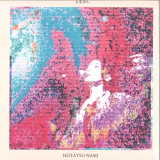
“Originally released on the lauded Green Energy label from experimental maverick Henry Kawahara, Forest Jams is thrilled to present the official re-issue of Nami Hotatsu’s sophomore album – revised and re-christened “Ultra Hyper Cosmic Voice” by the artist herself. Equal parts beguiling and inviting, Nami’s mixture of vocals and driving propulsive beats still sound as fresh and as captivating as when they were originally released in 1994.
Now, thirty years later, we invite you to discover Nami’s “perfect world of being” in its totality – awakening yourself to the unknown world inside through what lauded producer Haruomi Hosono hailed as a “shamanistic” vision!” – Hsu Jui-Ting
After several years of showcasing talent and craftsmanship through its podcast series, Forsvarlig Arkiv announces the first release of original music under their label.
Accompanied by a full-blown artwork, 'Arkiv I' presents four crisp tracks on wax by artists that left a mark on the channel in the past, while simultaneously excelling through their productions.
Matthew Halsall announces a limited-edition Vinyl only pressing of Bright Sparkling Light, a luminous three track EP featuring some of his most gorgeous compositions. Originally conceived as a tour only exclusive, Bright Sparkling Light was recorded alongside, last year’s expansive beguiling long-player An Ever Changing View and draws on the same trademark blend of jazz, electronica, global and spiritual jazz influences. The original pressing sold-out on Matthew’s EU and UK tour last October and November and so many people got in touch with us here at Gondwana asking how they could get a copy that we decided to make a further 2000 copies available for retail and online sales. The title track is a hypnotic meditation built on one of the lushest loops Halsall has ever created and featuring stellar work from Halsall and flautist Matt Cliffe. Newborough Forest is a brisk, uplifting composition celebrating one of Halsall’s favourite landscapes and the wonderous Tide and the Moon paints a sonic picture of late-night waters and deep mindfulness and features some of Matt Cliffe’s most beautiful tenor playing. Like An Ever Changing View, Bright Sparkling Light comes in a package as striking as the music, with handmade fonts designed by Ian Anderson and a beautifully realised embossed artwork that offers a perfect compliment to the LP. Strictly limited and featuring a download code, Bright Sparkling Light will not be re-pressed.
Brownswood Recordings releases the 7th edition of their Future Bubblers Compilation. An expansion of Gilles Peterson's network supported by Arts Council England, the ongoing talent discovery and artist development scheme focuses on developing unsigned talent and building audiences for new left-field music. With support from PRS Foundation as Talent Development Partners, the professional recording, manufacturing and physical release of Future Bubblers 7.0 is made possible. Unlike any other initiatives within music, the compilation acts as a springboard for the musician's careers, with the cooperative model providing direct revenue to the artists by a share of the profits, resulting in a sustainable income to work from. Previous Future Bubblers include artists such as Yazmin Lacey, KinKai, MC Snowy, Forest Law, Victoria Jane, NeOne The Wonderer and Kayla Painter, to name a few.
The 8-track compilation is a musically diverse collection of tracks, fusing genres across Alt-R&B, Dance, Electronic, Jazz, Rap and Trip-Hop. Opening the project, ROMY NOVA flaunts her hypnotic harmonies on a tender offering, 'The Way', whilst Sheffield-born Jackie Moonbather delivers a Funk performance on 'Separate Ways'. Up next, Ney Liqa's 'Blomster' captures a blend of Trip-Hop and Swedish-Pop, fusing her earliest musical influences before Birmingham's very own Landel's cloud-Rap excellence on '2 Many'. Maintaining the ethereal sonic, Petrelli Purple's 'Brisk' is reflective of his ability to curate a "miscellaneous north" sound, followed by MARYSIA OSU's 'Stryder' that highlights her self-coined "harps, beats, and dreams" ethos. Michael Diamond showcases his ability to float between jazz and electronic landscapes on 'Aether' before COEX rounds off the project nicely with 'Reflections'.
Building on their shared exploration of forward-leaning UK club sounds, EM + STAV herald the arrival of their new label JoyLift with the Endless EP. Having entrenched themselves within the free-spirited landscape of Bristol’s music community, the pair home in on a focused sound which draws on the city’s storied bass mutations as a springboard for their own take on modernist dance music.
There’s a tough, brooding quality to Endless EP which speaks to the meditative pressure of soundsystem immersion, but equally EM + STAV build out evocative, shifting narratives within that club-ready framework. From dubwise processing to deft sound design, a broad church of processes are wielded to shape out these pieces, and physicality comes in many forms whether in weightless sub lines or pointed, angular drum programming. Given their long-standing connection to developments within the underground music scene, there’s a keen instinct for the dynamic shifts which can set a dance alight, while the ill- defined shape of the wider genre-not-genre allows plenty of space for movement and experimentation.
Alongside the three original productions from EM + STAV, kindred spirit Forest Drive West steps up for a remix of ‘Odd' which aligns with the aesthetic intentions of JoyLift while demonstrating the idiosyncratic qualities associated with the scene’s most vital artists. The cohesive feel of Endless EP extends to Luke Griffin’s artwork, in which natural source material undergoes heavy processing to wind up in a striking new form, shot through with colour but ultimately shrouded in a moodiness that harks back through the lineage of hardcore-rooted UK dance music.
By its very nature the future is unwritten for JoyLift, but EM + STAV’s new project commits itself to an ever-evolving palette of sound, rendered as music with a strong sense of identity - tracks to shake the dance without resorting to obvious tropes, responding to and feeding into the inspiring tides of ideas emanating from the environment around them.
2lanes is proud to announce the next single, TINCTURE/ MY SIMULACRA, from his recently minted label AUTO SHOP. The two-tracker finds the artist both deepening his expansive sound and honing it to weave seamlessly into any DJ set. “TINCTURE / MY SIMULACRA” solidifies the cinematic textures and rusty low-end percussive drive of 2lanes’ earlier releases this year, “Diamond Rain EP'' & “Sid Ranger Redux EP.” Spending much of this past year on the road, 2lanes dove headfirst into the contemporary electronic music world, meeting an array of new and exciting producers, some of which are featured remixers on this release.
On the A side, take a dose of TINCTURE and see just how far the rabbit hole goes. Inspired by raving all night with friends, 2lanes linked with Detroit-based singer AKILLACO for a wild talking track like none other. We all know those moments at the party when both nothing and everything makes sense. You want to be prophetic but you just make everyone laugh. You think about the past, future, & present all at once. This is the ultimate message of TINCTURE, which AKILLACO emphatically points out. The long-winded musing is underlined by a heavy swung style beat that 2lanes fans have come to know well. Frequent 2lanes collaborator Salar Ansari joins the fun for the steamy, guitar-laden Howling Diablo remix that could as easily be played at a forest rave as a sleazy dive bar a la Coyote Ugly. Purelink’s MILLIA reduces the solution to an even dubbier chill out mix that begs to be played in the early mornings.
On the B side, we have the bass-heavy vision quest MY SIMULACRA. Ancient percussion meets modern sub bass–and together, they transport you to a new plane of being. This track also features performances from a few regular 2lanes sonic cohorts. Detroit keyboard prodigy Ian Fink (Scott Grooves Ensemble, Omar S) evokes celestial moments with a memotron solo, and Jonah Baseball (Overtone Series) provides a stargate-sounding break beat. MY SIMULACRA features two amazing remixes. The First is from Baltimore-based club aficionado JIALING and the second is a prime cut of rough and ready machine phunk from Los Angele’s 1morning.
Initially recorded at 2lanes’ home studio over Halloween in 2021, TINCTURE has since evolved to its final form that we see now. The tune has even shown up in sets from electric selectors like Scott Zacharias and Livwutang. The record label features beautiful artistic renditions by Norway-based Sverre Brand, whose work can be found on releases by Priori and Dust E-1.
Detroit artist Julion De’Angelo steps forward into his own with a new musical offering:the inaugural EP from his new imprint, Maybee Hill Music. Named after the street that he grew up on, the label celebrates ancestral guidance and reflecting on the past, so you can move FORWARD!
Can’t Go Askin is an exuberant testament to Black joy, building and shining triumphantly throughout its mesmerising 12-minute runtime.The track centers on a riff that immediately locks you in, as it stretches and expands with a seductive, propulsive groove, with percussion and keys all floating below a soaring and shimmering Juno. This bold and idiosyncratic interplay results in a jam which takes you HIGHER, transcendent in the spirited tradition of Chicago and Detroit.
De’Angelo completely switches gears for the flip side of this musical offering. Reflecting Cancer Moon is an immersive descent into deep dubby waters inspired by a night walk in the woods. A hypnotic, bare-bones meditation with crazy swing, that explodes into a rhythmic swirl of percussion. Dub delay echoes in and out as we journey deeper into the forest with the moon illuminating our way forward. This EP embodies De’Angelo’s restless urge to constantly seek out new sounds and open up new sonic areas for experience and transformation, with two tracks reflecting two sides of the musical spectrum.
More than a decade after the release of ´Land Lines', the mythical Humboldt County, California based duo of Brian Pyle and Merrick McKinlay reappears seemingly out of nowhere with 'Atheistsaregods'. With past releases on such cult-like labels as Root Strata, Weird Forest, Blackest Rainbow or Digitalis, Starving Weirdos were an indelible part of a sprawling and loose network of artists in Northern America whose DIY work ethic and extreme activity revolved around shoestring-budget constant touring, numerous limited editions on CDR, tape and vinyl and a relentless drive to push the boundaries of genre.
Out of that cauldron, Starving Weirdos stood out as one of the most persistent and visionary acts, developing a mind altering body of work that went from warm soundscapes through droney digressions, freeform improvisation and raucous noise summoned from a myriad of instrumentation and low budget processing - vocals, keyboards, violin, flute, percussion and an assortment of less identifiable sound sources. 10 years on their legacy remains a timeless and wildly under-appreciated one, but hopefully this new album will shine a light on their idiosyncratic approach. As time itself was never a constraint. This is music suspended outside of it.
Right from the start with the echoing percussion, dissonant keys and processed vocals of 'Haiku Nagasaki', 'Atheistsaregods' draws a continuous flux of psychedelic elevation that goes from the gloomy electronic motifs not unlike the early Cluster vibes of 'Invocation' into the dank percussive maze of the appropriately titled 'Barulho do Samba'. The self titled track induces a sense of post-apocalyptic vertigo via hallucinatory scraps of voice, suspended synth tones and reverberating field recordings, connecting into the droney mystics of 'Dudukahar (Reed Prayer)'. Coming full circle, 'For Vinny' brings back the echoing percussion amidst hypnotic cello lines until it drifts off into the unknown. With the same palpable sense of urgency, Starving Weirdos feel as vital as ever. And even if we didn't realize it we were in need of them. Welcome back.
‘The Nature of Nature’ is the debut LP by Hanegi Koen, the Japan-based creative duo composed of British ¦lmmaker Sam King and Canadian label head Sean Mallion (ADSR Collective). Picking up where they left off with their 2021 EP ‘Well Worth A Visit’, this album continues the legacy of spaced-out ambient guitars and driving analog beats the band nicely cued up for us. It has continuity from their previous work, going even deeper this time, further de¦ning the contours of their sound. As the title suggests, Nature was a big influence on the record. Many of the track titles are from the season they were recorded in – for example, ‘Hanafubuki’, when the cherry blossoms fall, ‘Tsuyu’, the rainy season, or ‘Kaminari’ which was written during a crazy thunderstorm. The sights and sounds of those times are reflected in the tracks, with ¦eld recordings helping to supplement the atmosphere. Hanegi’s founding ethos of only using analog instruments and drum machines to compose and perform, minimizing the need for the computer as an interface, is alive and well in this album. The tracks got tested in front of an audience and improved on, based on feedback from playing them live, leading to a psychedelic, synth-rich, analog journey. “We like all things analog. We both use computers and digital screens a fair amount in our day job, so it’s nice to give our eyes a rest from that and allow the music to be created from everything we have on the table.
Similarly vinyl records, ¦lm photography, and simply walking around outside in the forest – all these things are a way of slowing down and escaping the digital world.”
Greatly influenced by the wild contrasting outdoors of their home in Japan, the mountains, forests, and ocean, ‘The Nature of Nature’ is an open invitation to unplug to reconnect, a feeling that Hanegi Koen want to share with you. Released on August 18th, on vinyl and digital via Subtempo. Credits: Written and composed by Sean Mallion and Sam King Mixed by Aoki Takamasa Mastering by Manmade Mastering Album art by Laine Butler Design by Rocco Tyndale
- A1: Evol - The Dark Dreamquest (Intro)
- A2: Corvus Neblus - Forever I Shalt Dwell In Ravenloft
- A3: Asmorod - Fiat Abyssus (Second Chapter)
- A4: Vindalv - Swærþ Stimma (Excerpt)
- B1: Apeiron - Pan's Journey To The Cosmic Void
- B2: Secret Stairways - Lammas Tide
- C1: Dolch - Tumulus
- C2: Endoki Forest - Ii
- C3: Lunar Womb - Night Towers
- C4: Maelifell - La Dame Du Lac
- D1: Kadotus 609 - The Summoning Through Crimson
- D2: Neptune Towers - To Cold Void Desolation
In the early 1990s, a handful of black metal artists were enticed by the possibility of conjuring new fantastical worlds from the deep isolation of their home setups. Rather than the dense metal sound of their existing projects, this new direction would be centred around intimate synth soundscapes: forlorn organs and otherworldly MIDI theatrics.
The music on ASCEND is predominantly from self-produced, self-distributed releases, typically manufactured in small numbers. Though some artists producing this style of music, most notably Mortiis and Burzum, gained wider recognition outside underground circles, it is only in recent years that the sound and its influence has really been appreciated. This is particularly the case with the late Matthew Davis and his recently reappraised Secret Stairways project, whose song ‘Lammas Tide’ (from the 1997 Enchantment of the Ring album) appears on ASCEND. A simple home recording on a Yamaha KX-W392 manages to be both elegant and tortured, ambiguously devotional and recalling latter years Popol Vuh.
This battle between dark and light is a constant thread through ASCEND, with simple minimal synth lines that can be both delicate and menacing. Compilation opener ‘The Dark Dreamquest’ from Italian black metal group Evol is loaded with occult warning, and Finnish act Kadotus 609’s ‘The Summoning Through Crimson’ is languid, twisted and dark. In spite of the darkness, several pieces of the music on ASCEND have formal similarities with the sometimes saccharine new age music that rose to prominence in that era: but to a rougher, darker ends. The closing song from Darkthrone icon (and past NTS radio host) Fenriz, under his Neptune Towers pseudonym, pulls us further out, with ‘To Cold Void Desolation’ — an astral synth project, akin to ’70s kosmische muzik masters Harmonia.
The gentler side can often amplify an uncannily sinister edge, heard in German act Dolch’s ‘Tumulus’, where orc marching horns contrast against delicate rompler harps and softly whispered chanting. It hammers home a deep loneliness and detachment constant throughout ASCEND, made possible by these unusual contrasts, both unsettling and otherworldly.
You Can Can is an echoed affirmation, an album which traces song forms around silence, field recordings, and degraded analog memories. This is folk music transmogrified and mutated, as if recorded and reconstructed in Pierre Schaffer’s GRM studio.
Not your typical Mariposa folk duo, the group is comprised of Toronto avant-music scene stalwarts, vocalist Felicity Williams (Bernice, Bahamas) and bricolage artist and synthesist Andrew Zukerman (Fleshtone Aura, Badge Epoch). The album feels like a somnambulant conversation, fragmented and half-remembered with Williams’ vocals traveling through a landscape of field recordings and Zukerman’s saturated concrète topographies. It is an electro-acoustic assemblage, both analog and digital, comprised of air, electricity, minerals, wood, and water. Although the album nods towards traditional forms of folk and musique concrète (if at this point it can be called a traditional form), it is outwardly and inwardly contemporary; non-linear, citational, opaque, and sui generis. In a way it feels like a sonic index of the narrative experiments found on the infamous Language school-related publisher The Figures, in the work of Lyn Hejinian, Clark Coolidge, and Lydia Davis. In the musical continuum, the album picks up where Linda Perhacs left off in the early 70’s—explored by Gastr Del Sol in the ‘90s—a convergence of rural acoustic idioms and urban avant-electronics. This is country music for the discerning cosmopolitan citizen of the 21st Century.
RIYL: Luc Ferrari, Brannten Schnüre, William Basinski, Oval, Eric Chenaux, Emmanuelle Parrenin About Everything In Time and Failure Figures, Felicity Williams says:
Everything In Time is indebted to the language of Brazilian author Clarice Lispector (as translated by Alison Entrekin). Drawing on insights from psychoanalysis, we trace the roots of melancholy to render them available to consciousness; words from the ghostly realm of the transpersonal filter through dreams and shine a beam of light onto a lone trillium in a forest at night. Other influences include the experience of not knowing, of being subject to a gestation outside of one’s control. This is an ode to the power of naming to obliterate, to set free.
Failure Figures is a meditation on the radical contingency of reality and the vicissitudes of the will. With Slavoj Zizek as my guide (think: “Hegel for dummies” - I’m the dummy in this scenario), I wander through the valley of the shadow of death, and take heart. The last verse refers to an experience I had recording at a studio in Brussels. I was singing in French, with which I have some fluency, and the producer was complaining to the artist whose song it was that my delivery was not convincing. Thinking I was out of ear shot, he said in French, “c’est comme elle n'est pas là”; I was pronouncing the words correctly, but I failed to express anything. So what or whom is responsible for conveying meaning, if not the form of the word itself? And if the connection between meaning and form is broken, how do we fix it?
Gratitude to Thom Gill (guitar) and Daniel Fortin (bass) who joined us on the recording of Failure Figures. Thanks as well to my old roommate Christopher Willes, who unwittingly left behind his hand bells deep in the hall closet. We unearthed them by accident, and the bells became an important sound element. Thanks to other past roomies Robin Dann and Claire Harvie, whose childhood piano and guitar respectively still reside with us, and were used in the recording. Field recordings were made in Toronto, Canada and Celestún, Mexico in 2020.
Indrajala comes sheathed in a limited edition full-color printed embossed and custom-cut hansaboard sleeve adorned by an artwork painted by @nieidda in collaboration with Rambadu.
Early support by Abstract Division, Ben Buitendijk, Brando Lupi, Forest Drive West, Svreca, Atomic Moog, Deepbass, Ness and Primal Code to name a few.
RAMZi's 'hyphea', the new album by Montreal based artist Phoebé Guillemot. It is her latest sonic quest containing 10 new tracks, of which some are versions of the score she made for a documentary about mushrooms called 'Fun Fungi' (directed by Frederic Lavoie).
Recorded between November 2021 and May 2022, writing 'hyphea' started off somewhat as an attempt to escape boredom and frustrations imposed by the severe restrictions during the pandemic. For Phoebé it was a way to reconnect with RAMZi who's spirit brought her back to mystical feelings and gave hope for future magical adventures after having felt disconnected for a while.
RAMZi is a wild spirit from the forest and refers to a parallel autonomous world that keeps evolving. In her own words: “The music remains as a doorway to that world. It has never been about me, I always see that entity bigger than myself. The process of writing 'hyphea' was rather intuitive. I don’t think about styles of music before producing tracks. Those are more like an adventure in itself, each one set in a different ecosystem.”
Artwork by Marinka Grondel.
- A1: Ekonda Musicians - Généalogie De La Walé (Rumba Rules Edit)
- A2: Brigade Sarbati - Rando
- A3: Lumumba Ya Muana - Tozozela Ba Ancêtres
- A4: Brigade Sarbati - Edenda
- A5: Église La Résurrection - Nzambi Ya Babo
- A6: Werrason - Block Cadenas
- B1: Brigade Sarbati (Choeur) - Ma Descendance
- B2: Brigade Sarbati - Tshouna Baby
- B3: Papa Wemba - Excuse Me (Live Au New Morning, 2006, Rumba Rules Edit)
- B4: Franco Et Le Tout Puissant O K. Jazz - Kinshasa Makambo (Live From Télé Zaïre, 1982, 2022 Remaster)
- B5: Lumumba Ya Muana - La Vie Est Belle
The official soundtrack of the 2021 'Rumba Rules, New genealogies' documentary movie by Congolese artist Sammy Baloji and Quebec filmmaker David Nadeau-Bernatchez. A deep dive into Kinshasa’s vibrant Rumba scene, including remastered classics by Brigade Sarbati, Werrason, Papa Wemba, Franco & le Tout Puissant O.K. Jazz
Rumba Rules, New genealogies is about contemporary rumba in Kinshasa, but this music has deep historical roots nevertheless. Born in the interstices of the colonial world and thriving during the three decades of the Mobutu era in Zaïre, Congolese rumba has been iconic and popular all over Africa for decades. The roots of Rumba are even deeper, and the many paths it evokes trigger the imagination. The story goes that this music came with the migration of the ‘Kumba’ drum and dance in previous centuries, African slaves having carried it all around the Americas and giving birth to Cuban ’Rumba’, Colombian ‘Kumbia’ and many others. With its varied rhythms, guitars and horns, through LPs and radio stations, Rumba came back to (re)conquer Africa throughout the 20th century, paving the way for new practices. One could say this music is a sort of palimpsest, a memory in itself of Atlantic migrations and histories.
Rumba is nowadays discussed all around the world, igniting many debates among the Congolese diaspora. Being the constant talk of the town sometimes overloads public debate, and many people get tired of this broken record. Thus, over the last decade, enterprising producers have worked hard to promote Kinshasa’s musical diversity and tried to emulate new sounds to reach worldwide attention. But Kin’ locals and urban dwellers will not be fooled : new shoots cannot hide the forest. Despite some difficulties to innovate, despite the pastoralist sermons and the diaspora fighters pushing for concert cancelations, rumba is still at the core of the Congo today. Talented artists such as Fally Ipupa, Ferré Gola, Brigade Sarbati and others are leading the fifth generation, and the religious world has also proven to be a nurturing environment for the cultural and economic dynamism of this music.
Focusing on the music of Brigade Sarbati and his Orchestra, this record offers a deep dive into Kinshasa’s rumba scene. Halfway between professional studios and Zoom H4 field recordings, the rumba herein is about today’s youth: dense, full of energy and breakdowns, insights and name-dropping. The cavacha rhythm, the solo and bass guitar’s playing style, the singing style and numerous dedications all resonate with the history of Rumba. In an era where digital sound is taking over, it is interesting to highlight the instrumental and live performance compositions of this music. Digital technology is indeed used during the recording and mixing phases, but Congolese rumba still relies strongly on instrumental playing. There is all that but also, many other things to hear on this record… It’s time to let it be. A big thanks to Étienne Tron for making it possible: it is on his initiative and through his patience that this album is in your hands today. (David Nadeau-Bernatchez, december 2021)
- A1: Don Carlos - Purple Day (Don Carlos Edit)
- A2: Deep Aural Penetration - Let Your Body Be Free (Club Xero Mix) Don Carlos Edit
- B1: Be Noir - It’s Gonna Be Alright (Don Carlos Rimini 4 00 A.m. Mix) Don Carlos Edit
- B2: Deep Aural Penetration - All I Want To Do ( Josh Wink H E.r.e. Mx) Don Carlos Edit
- C1: Love Nation - Everything 4 U (Remix) Don Carlos Edit
- C2: More Heavy Soul - Magic Tonight (Irregular Dub) Don Carlos Edit
- D1: Outdance - Pump The Jumping (Sexy No Dirty Mix) Don Carlos Edit
- D2: F I.t.z. - The Reigh Forest (Fitzcarraldo) Don Carlos Edit
Among those who have written the history of the Italian House is certainly Carlo Troja, aka Don Carlos. In 1991 Irma Records released her first single Alone which immediately became a cult record for DJs across the Channel and especially American DJs. Its particular soft and ambient sounds defined a genre that was then called Paradise House.
And it is precisely from this genre and from this Dj that Irma Records began the celebrations of its thirtieth anniversary a few years ago by
proposing a selection of its catalog chosen by Don Carlos, trying to dig among some of the pearls of the genre but above all among some
songs that featured in his evenings but were less popular at the time of their release.
This compilation had a great response and it was decided to make a volume 2, always selected by Don Carlos. Also this compilation, like the first one, consists of two compact discs and a vinyl version this time with a selection of only 8 of the 20 tracks contained in the CD and Digital version.
All the tracks on the double vinyl have been re-edited by Don Carlos for the occasion. The double cd is in a limited numbered edition.
Among the artists and producers included are: Don Carlos, Lust Unlimited, Subsonic Posse, T.M.V. (Marco Trani, Moz-Art and Maurizio
Verbeni), The Sweatbox Orchestra, Aritmya, Deep Aural Penetration, Be Noir, Love Nation, More Heavy Soul, Outdance, F.I.T.Z. and many
others
Intercepts is a brand new sub-label from London's Frequency Domain.
Frequency Domain has soundtracked late-night astral travelling since 2015, releasing drone, ambient and offbeat electronics from the likes of Forest Drive West, Plant43, Datassette, Matt Whitehead, Anthony Child, Jo Johnson and Ali Wade.
Intercepts indulges the parent label's more unruly and percussive leanings with a series of EPs drawn up from an anonymous pool of Frequency Domain artists and newcomers. Intercepts releases are served two at a time, with two separate strands - X and Y - each exploring their own sonic trajectory.
The first 'X' series EP delivers three tracks of skewed, mutant techno, landing some place between Livity Sound's cerebral rollers and Dynamic Tension's disorienting clunk.
Since he started producing music, Berlin-based American sound artist Jake Muir has been obsessed with sampling. His 2018 album "Lady's Mantle" was based on manipulated chunks of vintage Californian surf rock, and its follow-up, 2020's midnight symphony "The Hum Of Your Veiled Voice" was sourced from a wide variety of old records, and inspired by the work of experimental turntablists like Marina Rosenfeld, Janek Schaefer and Philip Jeck.
On "Mana", Muir looks back to a misunderstood musical movement. Around 1995, a group of New York producers and DJs - including DJ Olive, DJ Spooky and Spectre - pioneered a genre-dissolving sound by unifying hip-hop techniques with ideas pulled from dub, jungle, ambient music and industrial noise. Badged "illbient", it was a short-lived genre that felt like a high-minded psychedelic cousin of the UK's trip-hop.
Muir uses illbient as the springboard for "Mana", utilizing a selection of samples to inform his frothy drones and foreboding atmospheres. He ushers the material into 2021 by diverting it through his own contemporary worldview, attempting to recreate the hyperreal fantasy histories of Japanese RPGs (think "Dark Souls" and "Final Fantasy") and nod to sensual, tactile soundscapes of European industrial labels Staalplaat and Soleilmoon. The result is a magickal, sensory journey that's as physical as it is representational.
If the illbient producers were encouraging a burgeoning experimental music landscape to emphasize the tactile feeling of turntablism and sample manipulation, Muir is doing the same with "Mana". Each track heaves and breathes not just with his cultural reference points, but with layered, complicated emotions. We can hear joy, sadness, desire and anguish, obscured by disintegrating noise, hallucinogenic harmonies and sub-aquatic bass. It's electronic music that's rooted not in technology, but in touch.
Driving anywhere in Texas can cost you half a day, easy. For example, it'll take you over four hours just to get from R&B singer Leon Bridges' hometown of Fort Worth down to Houston, where the psychedelic wanderers in Khruangbin hail from. The state is vast, crisscrossed with rugged expanses of road flanked by limestone cliffs and granite mountains, forests of pine and mesquite, miles of desert or acres of sprawling grassland, all depending on what part you're in. And it's all baking under the Texas Sun that lends its name to Bridges and Khruangbin's new collaborative EP. "Big sky country, that's what they call Texas," Khruangbin bassist Laura Lee says. "The horizon line goes all the way from one side to another without interruption. There's something really comforting about that." On Texas Sun, these two members of the state's musical vanguard meet up somewhere in the middle of that scene, in the mythical nexus of Texas' past, present, and future-a dreamy badlands where genres blur as seamlessly as the terrain. It calls equally to the cowboys boot-scooting at Billy Bob's in Fort Worth, the chopped-and-screwed hip-hop fans rattling slabs on the southside of Houston, the art-school kids dropping acid in Austin, the cross-cultural progeny who grew up on listening to both mariachi and post-hardcore out on the Mexican borders of El Paso. All of these things, overlapping in a multicolored melange, purple hues as vivid and unpredictable as one of the state's rightfully celebrated sunsets. A journey through homesick reminiscences, backseat romances, and late-night contemplations, the kind of record made for listening with the windows down and the road humming softly beneath you. Like the highways that inspired it, Texas Sun is guaranteed to get you where you're going-especially if you're in no particular hurry to get there.
2022 Repress
In future times, culture historians will refer to Gabor Schablitzki aka Robag Wruhme as a creator of a singular techno sound, a rock in the murky sea of arbitrary musical dullness that befell mankind in the early 21st century.
Furthermore, a lesser known quality of Schablitzki will be praised and explored: He was a relentless wordsmith, a deeply passionate inventor of elegant idioms that enriched German language. Take ‘Freggelswuff’ or ‘Wemmel’ as shining examples.
It’s within this context that a certain cultural artefact released on a Cologne based record label called KOMPAKT (which towards the end of the 21st century made a hardly publicised turn to manufacturing CO2-neutral wall plug systems) that went by the sonorous title ‘Topinambur’ has to be mentioned. Legend has it that Schablitzki claimed to have created the word ‘Topinambur’, unknowingly that local farmers have been marketing a root tuber under the same name since it got imported from America in 1610 AD. The following tenacious copyright lawsuit between Schablitzki and a large agricultural consortium lasted for many years. It isn’t considered as a highpoint in Schablitzki’s turbulent life but it still serves a staircase wit that is passed on from generation to generation amongst Black Forest moonshiners.
Kulturhistoriker künftiger Generationen werden Gabor Schablitzki alias Robag Wruhme als Schöpfer eines singulären Techno-Sounds preisen, als einen Fels in der Brandung der im frühen 21. Jahrhundert vorherrschenden Beliebigkeit. Als DJ und Produzent war ein Meister des deepen Abrisses, werden sie weiterhin formulieren, obschon es weitere 136 Jahre dauern wird, bis die subkulturelle Bedeutung des Wortes 'Abriss' zweifelsfrei geklärt werden konnte.
Es wird aber auch eine weitere einzigartige Qualität Gabor Schablitzkis hervorgehoben werden: Er war ein unermüdlicher Wortschöpfer, der die deutsche Sprache um elegante Idiome wie Freggelswuff oder Wemmel bereicherte. In diesem Zusammenhang findet meist eine Veröffentlichung des Kölner Labels KOMPAKT (welches im ausklingenden 21. Jahrhundert einen wenig bemerkenswerten Wandel zum Hersteller von CO2-neutralen Dämmstoffdübeln vollzog) Erwähnung. Diese Veröffentlichung erschien unter dem klangvollen Namen "Topinambur" und die Legende besagt, dass Schablitzki behauptete auch hier der Nachwelt eine neue Wortschöpfung hinterlassen zu haben, nicht wissend, dass europäische Landwirte bereits seit 1610 A.D. unter diesem Namen ein aus Amerika importiertes Knollengewächs vermarkteten. Der sich daran anschliessende Copyright-Streit zwischen Schablitzki und einem mächtigen Agrarkonzern, zählte nicht zu den rühmlichen Episoden seines bewegten Lebens, sorgt aber seit Generationen als Treppenwitz unter Schwarzwälder Schnapsbrennern für viel Geschmunzel.