Water ripples all around, and echoing sounds stretch out into a shady sub aquatic habitat. Its dark corners slowly burst into view as cresting noises reveal fresh caverns teeming with liquid life. This is Sueños acuáticos, the latest sonic exploration from Lamina, a musical project by French artist, Clarice Calvo-Pinsolle. Built from years of carefully gathered field recordings, the album constructs immersive, detailed soundscapes where watery environments, caves, and forests intertwine with digital manipulations.
Rooted in the myth of the ‘Lamina’, a creature from Basque folklore, the project blends this oral tradition with technology to build a geological myth. The Lamina’s world—a nocturnal ecosystem of water and stone—serves as the foundation for the album’s sound design. Lamina reshapes these natural recordings into something new: stretching, pitching, and layering them to build intricate sound environments that feel simultaneously organic and synthetic. “I transform these sounds much like I would sculpt in ceramics,” explains Calvo-Pinsolle, “by adding, removing material, and imagining landscapes.
Drawing from hydrofeminist and posthuman ideas, particularly those in Astrida Neimanis’ Bodies of Water, the album treats sound like water—shifting, flowing, connecting, and buoying life. Tracks flow into one another without clear boundaries, much like the natural currents they represent. The result is a continuous listening experience, inviting deep focus on texture above melody.
Lamina is exploring the potential of the field recording as a compositional tool. Natural sounds, like trickling water or wind through trees, are processed out of recognition—or cliché. A sense of weightless immersion takes hold as Lamins’a music unfolds, and listeners float freely and choose their own adventure in the Lamina’s home. Less a set of songs than its own evolving environment, Sueños acuáticos (‘Aquatic Dreams’ in English) is a meticulously constructed work in which we can freely float.
“Commencement/Mineral Blend” delivers a fusion of rough and ready dub-adjacent bass music compositions from the London based trio Damos Room. Also featured are eclectic remixes from artists Gonjasufi, Lewi Boome, Dome Zero, and Nudibranch residents Polyop.
The bulk of the EP came from a rare in-person collaboration at Elijah Minnelli’s loft. The Horse Militia laid belly to the ground, endlessly feeding an effects chain like a battery hen with noises from multiple contrasting sources. It was particularly hot that day and the windows were wide open, so if you listen closely you can hear the humid Selhurst skyline bleeding into the recordings. This long weekend was punctuated by visits to the local swamp and an outing to see Channel One Soundsystem.
"Commencement," the EP's inaugural offering, unfolds with a hypnotic, droning bass groove, providing the floor for a paranoid stream of consciousness.
"Mineral Blend" takes a lazier dancehall-esque approach. Littered with unloved sounds from previous sessions and repurposing the lyrics ("I want to be a vessel") from Damos Room's DR Viewings #2 release with Polyop, this track weaves in and out of consciousness without ever truly bubbling over.
Remixers Lewi Boome and Dome Zero contribute imaginative 150bpm takes on both "Commencement" and "Mineral Blend” respectively, drawing inspiration from their backgrounds in bass, techno and experimental electronic music.
Polyop's remix of "Mineral Blend" leans further into dub techno stylings, infusing a refreshing and spacious perspective that echoes their acid roots.
The LA-based artist Gonjasufi transforms "Commencement" into a foggy and mysterious rendition, using his unique production techniques to transcend the dancefloor and immerse listeners in a misty sonic landscape.
Saxophonist and musical omnivore Benjamin Herman has been one of Holland’s most productive musicians of his generation for over three decades. Aside from thousands of gigs, Benjamin has released over 50 albums as a solo artist and as frontman of his groove-orientated ensemble New Cool Collective. His wonderfully diverse musical output includes straight-ahead jazz, Gypsy jazz, punk jazz, film scores, Afrobeat, Latin music and postmodern interpretations of pieces by Dutch composer Misha Mengelberg, as well as collaborations with vocalists, poets, pop stars, hip-hop artists, and instrumentalists from all over the world. The common thread is his quest for a recognizable, personal sound on the alto saxophone. As usual, his latest album finds him exploring new territory.
With his Bughouse project, he fulfills his long-standing desire to blend his old loves of punk and jazz. The latest Bughouse album, "Bughouse: The ERUS / ARC Sessions”, displays the versatility of Benjamin Herman's Bughouse, covering a wide range of styles from jazz-punk to noise, free jazz, and beyond.
Elias Rønnenfelt is a musician and poet best known as the lead singer and lyricist of Iceage. Heavy Glory is his debut solo album. Out October 25th via Escho. Heavy Glory was recorded in Copenhagen in chapters and moments over the course of a year. Collaborators include Iceage's Dan Kjær Nielsen, Danish punk godfather Peter Peter, and singers Joanne Robertson (Elias and Joanne have collaborated before, on a number of recent Dean Blunt releases) and Fauzia. "I've done this so many times," Rønnenfelt explains, speaking of the process of crafting a long player, "but capturing and crystallising an album remains a singular ritual, just with different circumstances. We are capturing something that is hard to hold down." Heavy Glory is a record that examines all the things that lovers do, from the most desperate to the most pure. The lover haunts the record, reappearing and provoking Rønnenfelt, pulling him in and pushing him away. Songs like "Close" describe the line between jealousy and protectiveness. "Unarmed" is a song of surrender. "River of Madeleine" harnesses toughness in the name of preservation, staying up all night to protect his lover's dreams. "Stalker" is an epic third-person story song in the tradition of the murder ballad. The record closes with two covers. The first, Spacemen 3's "Sound of Confusion," is a mission statement of the life Rønnenfelt has found and inherited in music. "Here it comes," the song famously promises, and flares out into noise. It is a joyful noise, because this life, in all its grit, is the life he chose. The second, Townes Van Zandt's "No Place to Fall," is a sweet plea, Rønnenfelt's final invitation to join him on his journey. This journey - this story, this record - will repeat and continue. It never stops. Rønnenfelt's life as an artist results in a sound that wobbles and rocks but never loses its centre, both fragile and tough, and always moving forward. It is dreamy yet bombastic, held together by the passion of certainty. Co-produced by Rønnenfelt and Nis Bysted.
The debut recording from the duo of multi-award-winning Scottish author David Keenan and Bruce Russell, the guitarist from the greatest underground rock band of the late 20th century, New Zealand’s The Dead C, was recorded live in Christchurch, NZ, as part of the WORD festival in August 2023. A series of live improvised settings that pair readings from Keenan’s monolithic and critically-acclaimed modernist masterpiece, Monument Maker (White Rabbit 2021), with guitar and electronics from Russell, the music takes off on the kind of post-VU fantasy of punk-primitive free music posited by Russell in projects like A Handful of Dust while expanding on Russell’s no-technique blues w/scalpel sharp riffs and aformal blats of pure electricity that match the religious eroto-mania of the text. Keenan reads w/shamanistic intensity and with a sonorous, incantatory rhythm, while Russell conjures the very ghost of the book straight out of the air. Think the early Patti Smith/Lenny Kaye spoken word/guitar jams informed by religious painting, Bach cantatas, Pierre Reverdy, Goya, Charles Olson, Arthur Doyle and Rudolph Grey. Features full colour photography by musician and artist Heather Leigh taken in-situ during the writing of Monument Maker in France in 2018. Bruce Russell is a practitioner in sound, who for forty years has been a member of The Dead C and A Handful of Dust. He mixes rock, electro-acoustics, noise and improvisation in equal measures. Also directed two of New Zealand’s vanguard independent labels, Xpressway and Corpus Hermeticum. His solo guitar practice reconfigures the blues as a form of improvisational auto-destruction. He is also a writer and his next book is titled ‘Rock’n’roll: my part in its downfall’. David Keenan is the author of six novels; This is Memorial Device (Faber & Faber) which won the London Magazine Prize for Debut Fiction and was shortlisted for the Gordon Burn Prize; For the Good Times (Faber & Faber), which won the Gordon Burn Prize and was shortlisted for the Encore Award for Second Novels; Xstabeth (White Rabbit), which was shortlisted for the Dublin Literary Prize; The Towers The Fields The Transmitters (White Rabbit); Monument Maker (White Rabbit), which was a Rough Trade Book of the Year; and Industry of Magic & Light (White Rabbit). Edna O’Brien has said of him “I sometimes think David Keenan dreams aloud. His prose has the effortless, enigmatic, unsettling quality of dreams… reading him feels like being cut open to the accompanying sound of ecstatic music.”
Flame is Slow collects together three acclaimed seven-inch EPs (originally released on the Noisebox label in 1996 and 1997) by the mysterious, mercurial Navigator. The post-Loveless UK underground of the early 1990s was a vibrant place, despite what music biographies may tell you. What might now be lumped together as “post-rock” was in fact a varied and forward-thinking group of artists creating inquisitive music in the wake of the grunge goldrush. Contemporaries such as Hood, Flying Saucer Attack, Movietone and – of course – Mogwai and Arab Strap are rightfully seen as timeless nearly thirty years on but they’re really just the tip of the iceberg. Navigator might get mentioned less but their story is every bit as intriguing as any of their peers. Navigator formed in Norwich in 1994. Their music was consistently introspective and melancholic, but their brief existence of five years saw them move rapidly from traditional song structures towards noise, found sound, free improvisation, electronics, primitive instrument building and – ultimately - silence. They were an enigma back then and they remain so now. They released four seven inches before a solitary album Nostalgie (1997, Swarf Finger Records). Each release felt different to the last but always intimate and peculiar. Their use of sound and space is nothing short of magical. Rough and unsettling textures rub against each other, selected and mixed instinctively. Another band’s discarded mistake becomes a key element in their hands. The band received much acclaim and some genuine commercial success when single When the Wires Fall ended up in the indie charts. They shared stages with Low, David Thomas, Aerial M, Stars Of The Lid and Labradford and toured with Mogwai and Arab Strap culminating in the now-notorious, equipment-levelling performance at The Garage in London. The original version of the group played live for the last time in 1999 before quietly disappearing. It was perhaps inevitable that a band so committed to exploring and refining their sound should end by removing themselves from it entirely. Aside from a brief (and excellent) reformation in 2006 and a CDR compilation of those early seven inches, Navigator have been quiet for over 20 years until now. Flame is Slow assembles the blue, red and green Noisebox EPs into one cohesive album-length collection, remastered with care and reassembled by the band. It rightfully places Navigator where they belong – as one of the most curious, adventurous, and beautiful groups this island has ever produced. “Whenever I think of bands that more people should’ve heard than did, I always think about Navigator. It’s great that the music they made is going to be available again as it is truly special and deserves to be heard by more people” – Stuart Braithwaite
The Intima led a chameleon-like existence from 1999 to 2004, confounding critics who struggled to describe their distinctive sound while sharing stages with everyone from The Rapture to The Mekons. Hailing from Olympia and Portland, the postpunk quartet utilized sharp rhythms, prescient lyrics, and a collaborative compositional approach to conjure forth a sound that manages to be explosive yet detailed, experimental yet propulsive and melodic. Featuring a classically-trained violinist, custom-tuned guitars that careen at odd angles, and an imaginative and powerful rhythm section, the band explored the intersection of art-punk and agitpop with a spirit and tenor uniquely their own. In 2017, the Polish website More Noise summed up their sound by saying that "the first association that comes to mind is The Ex and the Dutch avant punk scene of the 1980s, but fans of the bands Dirty Three, Godspeed You Black Emperor and Unwound may also be intrigued."The group toured the States extensively during the 4+ years that they were active, including one grueling six-week tour undertaken just after 9/11 and another one in 2003 during which the US began bombing Iraq. The group's live sets are remembered for their combination of unbridled intensity and tightly-coiled musicianship, as well as their chaos potential, whether that chaos was performing in the middle of an illegal street party or causing a PA to burst into flames immediately preceding a headlining set by Deerhoof. A memorable show in DC with Q And Not U was mentioned by Dischord group Black Eyes in their Speaking In Tongues booklet last year, with Hugh McElroy describing the Intima as "a really aggressively-beautiful and poetic punk band with a violin where a guitar normally would be...pushing genre barriers in a way that helped me see a vision of how we might want to do that ourselves."Peril and Panic was recorded in Olympia over eight months in 2002 and was released in 2003 on LP (Zum/Collective Jyrk) and CD (Slowdance). In 2022, in the midst of the pandemic, the group commissioned Jason Powers to remix the original tracks from the ground up, which turned into an 18-month endeavor that included some compositional edits, significant work to improve the sound of the drums, and the uncovering of unreleased songs. Today, a fully remixed and remastered Peril and Panic is finally being released into the wild sounding much closer to how it was originally meant to be heard. Sounding more relevant than ever, it seems increasingly clear that the ideas and feelings that informed both band and album are no longer so "radical" - if anything, they've become the zeitgeist of today, as a confluence of global crises points to a fraught future long predicted.
The origins of Oreo Jones forthcoming third studio album, to be released September 20th, 2024, started in 2019 while on an extended trip to Antananarivo, Madagascar supported by an Andy Warhol Foundation grant. The myriad sights and sounds of this journey greatly inform the sonic tapestry of this new album.Jones teamed up with indie producer Ben Lumsdaine (Durand Jones/Wishy/Varsity/Barrie) to build songs from the ground up sending demos back and forth from across the country. Jones also recruited composer and vocalist Hanna Benn to add heavenly harmonies sprinkled throughout the album. The result is a sound that is intentional and immediate, earthly and ethereal. Each song is a chapter in a narrative crafted with purpose.Emotionally, the album emerges from a place of much needed rest and peace. During the recording process, Jones' uncle passed away unexpectedly. Over the past few years, he has found himself processing grief and loss within his immediate family of elders. Nephew is an ode to celebrate the ancestors who shaped the artist he is today.
Forgetting You Is Like Breathing Water, the self-titled debut from the duo of trumpeter Will Evans and guitarist, synthesist, producer and multi-instrumentalist Theo Trump, arrives like a vault revelation. It feels like a decades-old yet newly unearthed masterwork of gorgeous ambient improvisation, the sort of thing scholars live to research and shepherd into deluxe reissue.
The patient, crystalline chords that swell and resonate like a series of confessions; the textured brass murmurs that suggest a ’60s or ’70s Fire Music master at their most poignant. Provocative found-sound experiments threading arcane religious recordings through dystopian soundscapes. Ear-shattering free-noise tumult. Where and when did this music come from? Who are these voices?
As it turns out, Forgetting You Is Like Breathing Water springs from an engrossing human story, though it isn’t necessarily the one you’d expect. This work of stunning maturity is in fact an entrance by two little-known explorers in their early 20s, who grew up together in Virginia, in the shadow of the Blue Ridge Mountains. It documents one of those perfect, sparkling moments in post-adolescence when big decisions and responsibilities are right around the corner, but for a spell, two young artists are able to create among the comforts and nostalgia of their shared past.
It also represents a reunion of sorts, as Evans and Trump connected as toddlers, became inseparable as boys, then pursued independent lives and creative paths as young adults. “Theo is my oldest friend,” Evans says, “and I feel like that’s what this band is — us meeting right in the middle of our interests.”
Now, having conjured this magic, they’ve detached once again: Evans, whose other works include the indie/avant-jazz unit Angelica X, is currently based in New York City. Trump recently moved to England, where he’d participated in his family’s theatre company, to go to school and further his solo ambient project. “This album didn’t start out as something super ambitious,” Evans explains. “It was more just an excuse to spend time together again and make music.”
***
In conversation, Evans and Trump are a delight, especially for cynics who might think that Gen-Z is only capable of doomscrolling. They come across as kindly young intellectuals who grew up using the internet as it was intended, for exposure to ideas and art across genres and generations. Trump points to indie-folk and the oracular post-rock of late Talk Talk, Bark Psychosis and Gastr del Sol. Pressed for his guitar heroes, he cites Bill Orcutt, Mary Halvorson and Marc Ribot, and mentions his devotion to alt-country. Heyday electro-industrial stuff like Skinny Puppy and Nine Inch Nails also meant a lot to him.
Evans is equally intrepid, though his background has a greater jazz focus. Ambrose Akinmusire, among today’s most thoughtfully commanding trumpeters, is a favorite. As for the soulful murmur he offers throughout Forgetting You, Pharoah Sanders’ wistful and lyrical contributions to Floating Points’ work is a touchstone.
The two grew up down the street from each other in the northern Piedmont town of Batesville, Virginia. Their families were friends, holidays were celebrated together and they became the most loyal of pals. As children they had a pretend band.
Then life unfolded, they attended different schools and their paths diverged. Evans discovered John Coltrane and became a jazz obsessive, as Trump found punk and hardcore and later began making ambient music. As a dedicated jazz trumpeter, Evans studied formally and widely; Trump was an autodidact, teaching himself guitar and absorbing synthesis and production techniques. The late teens and very early 20s brought moves away from home and back to home, as well as plenty of listening and learning. The Covid pandemic meant an opportunity to reconnect on long walks. Through it all, together and apart, they remained reverent of each other.
By early 2023, they found themselves living again among the Blue Ridge Mountains. In the evening, after giving trumpet lessons in Charlottesville, Evans would make the eerily beautiful trek “over the mountain” to Trump’s home in Staunton, Virginia. They’d talk and eat and begin to improvise, deep into the night. Evans played trumpet and sometimes drums. (Given the wee-hours recording schedule, the neighbors didn’t appreciate the latter.) Trump plugged a rickety, junk-store Telecaster-style guitar into a cheap solid-state amp and explored open tunings; he also layered on lap steel, electric bass, synths and electronics.
They locked in and relished each other’s gifts. In Trump, those include patience and intentionality and sonic decision-making; for Evans, a distinctive trumpet sound that both musicians think of as a singer’s voice. “Will’s playing is so thoughtful and well placed,” Trump says. “My goal from a producer’s mindset is that the trumpet will occupy the space that vocals would take.”
Often, they got lost in the best way. “The thing I look for most when I’m playing is that feeling of disappearing into what you’re doing,” Evans says. “Usually when that happens, the music is good.”
By the same token, they didn’t pursue free improvisation as an ethic, or as a pure process. Their goal was something closer to spontaneous composition. “We were trying to make good songs,” Evans says simply. Later, Trump did brilliant post-production work, expanding a modest setup into an enthralling soundworld. Under his judicious editorship, music that was wholly improvised sounds at times like a carefully composed new-music commission.
The results speak for themselves. “A Happy Death” summons up a swath of American desolation through the viewfinder of Wim Wenders. “Flesh of Lost Summers” and “Partings” are highlights from an essential ECM LP that never was. “A Collapse of Horses” infuses those seminal post-rock influences with the plod of doom metal or slowcore. The album’s final track, “The Mountains Are a Dream That Calls to Me,” was in fact the first thing the duo recorded, as an evocation of those twilit drives across the Blue Ridge Mountains. “Looking back at what we chose to name the songs,” Evans says, “and some of the sounds and how they make me feel, there is an air of impermanence and loss to this album.”
“I’m excited for everything that’s to come,” he adds, “but I recently thought, ‘Damn — that’s not going to happen again.’ It was a privilege for us to have that time together.”
Mit The Hard Quartet hat sich eine Band zusammengetan, der man mit Blick auf ihre Mitglieder wohl den ein oder anderen Superlativ zuschreiben kann. Immerhin tummeln sich hier mit Stephen Malkmus, Matt Sweeney, Emmett Kelly und Jim White vier Musiker und Songwriter, die mit prägenden Größen des Indierocks assoziiert werden: Pavement, Chavez, Ty Segall, The Cairo Gang, Bonnie "Prince" Billy, Guided By Voices, Cat Power, Dirty Three und Bill Callahan sind nur ein Bruchteil der musikalischen Institutionen, bei denen die vier ihre Finger (und Stimmen) im Spiel haben. Über das selbstbetitelte Debüt von The Hard Quartet wird m Netz schon seit Bekanntwerden der Gründung der Band angeregt spekuliert: "Es ist einfach ein vertrauensvolles Umfeld, in dem alle bereit sind zu sagen: Komm wir werfen unseren ganzen Kram in einen Topf und machen daraus etwas Größeres", so die Band dazu. Dass es trotz der getrennten musikalischen Biographien so gut läuft, ist aber sicher auch der Tatsache zu verdanken, dass sich die Wege der Vier schon zuvor immer wieder gekreuzt hatten. "Ich habe eine geradezu vorzeitliche Geschichte mit Stephen und Jim", so Matt Sweeney. "Nun, zumindest reicht sie bis in die Neunziger. In jüngerer Vergangenheit war es dann Emmett, der einen wirklich tiefen Eindruck bei mir hinterlassen hat. So sehr, dass es die Art verändert hat, wie ich übers Spielen denke." Das Album vereint die Stärken von Malkmus, Sweeney, Kelly und White, oszilliert zwischen sonnigem Slacker-Rock und Noise-Experimenten und dürfte alle mit einem Faible für die goldene Ära des US-Indierock begeistern.
out of Stock
Last delivered 21 months ago available to reorder, subject to availability
First Word Records are very proud to present a brand new album from Kaidi Tatham!
'An Insight To All Minds' is Kaidi's 3rd solo album under his own name, following several EPs and two albums for First Word; 2018's acclaimed 'It's A World Before You' and the re-press of his seminal 2008 sophomore album 'In Search Of Hope' last year.
For those that don't know, Kaidi Tatham is a legendary multi-instrumentalist. Once dubbed "the UK's Herbie Hancock" by Benji B, he's a virtuoso on the keys and a true innovator in sound production as one of the original creators of the Broken Beat sound. Over the years his musical prowess has blessed numerous projects, initially with the likes of Bugz In The Attic and The Herbaliser, and more recently with DJ Jazzy Jeff (through the PLAYlist projects), Andrew Ashong (on the acclaimed 'Sankofa Season' EP last year) and with longtime accomplice, Dego. This in addition to session work for artists such as Mulatu Astatke, Slum Village, Amy Winehouse, Soul II Soul and Leroy Burgess, along with First Word label mates such as Eric Lau, Children of Zeus and Darkhouse Family. Kaidi is also a revered DJ known for rocking parties globally, whilst his solo catalogue spans tons of EPs and releases for labels such as 2000 Black, Eglo and Theo Parrish's Sound Signature.
On 'An Insight To All Minds', Kaidi says it's "not about a destination, but a process. It's about how you drive, not where you're going. Nothing in this world can torment you as much as your own thoughts… We are all going through it. We can all feel what the next person is feeling, believe it or not. It's learning how to tap into it".
The album is comprised of an assortment of Kaidi's unique flavours - uptempo jazz-funk bruk, laced with rhodes, flutes, live bass and delicious percussion. Using that blueprint he moves effortlessly through latin and samba, half-step, deep afro house and a sprinkle of curveballs, all presented in Kaidi's inimitable way.
'Intergalactic Relations' brings with it some 110bpm synthed-out spacey electro-breaks, 'Could It Be' sets off sounding like a Morricone film score, whilst 'Rodney' is some serious heads-down business; stark and punchy off-kilter broken beat and vocal stabs. There are a few guests too - 'Chungo' sees the return of Uhmeer (who previously appeared on 'Cupid' on the album 'It's A World Before You'); here the young Philly MC deftly rides a 9/4 time signature beat. Meanwhile 'Stro Kyat' invites in another supreme talent, Stro Elliot (The Roots), who provides a suitably crisp & crunchy riddim to accompany Kaidi's key play over a mind-bending 5/4 time signature.
With this new album, Kaidi Tatham adds further to his already impressive catalogue, a body of work that falls within the cracks of jazz and dance music, exemplifying modern British black brilliance once again; uncompromising, innovative, groundbreaking, intricately sophisticated and deeply funky. His fanbase expands on every release and it's no surprise that that fanbase includes peers such as Madlib ("ahead of his time"), Gilles Peterson ("a key part of an entire movement"), K15 ("a limitless source of inspiration"), Alexander Nut ("a true virtuoso") and Kyle Hall.
out of Stock
Last delivered 23 months ago available to reorder, subject to availability
Dawn Richard and Spencer Zahn share a common collaborative ethos, a genuine sense of musical curiosity, and a cosmopolitan eagerness to escape the conventions of genre. That shared vision first brought them together on 2022's Pigments_icy and warm, stripped-down and grand, familiar and otherworldly_and now it has reunited them for Quiet in a World Full of Noise. By turns intimate, soul-baring, spectral, and startling, Quiet in a World Full of Noise blends atmospheric and orchestral soundscapes with mellifluous soul, jazz, and journalistic vocalizing_driving it all home with stark, confessional lyricism. The new album finds Richard at her most raw and exposed. This year, Richard's musician father experienced mini strokes while being diagnosed with cancer; and last year, her cousin Cisco was fatally shot seven times in New Orleans. Richard channels the emotional impact of these traumatic experiences of loss into her lyrics and vocal performances, which are left bare and human here, raw and unprocessed across the album. Quiet expands the definitions of what constitutes progressive, avant-garde R&B by rewriting them altogether. On paper, Richard and Zahn's audacious, impressionistic musical collaborations feel like a surprising match. Richard, a New Orleans-reared visionary, has had an improbable journey from late 2000s reality television and mainstream pop with girl group Danity Kane to become one of the most prolific, experimental, and visible indie R&B singer-songwriters of the last decade and a half, with seven solo albums under her belt. Zahn is an East Coast-raised multi-instrumentalist and composer working at the intersections of jazz, Americana, classical, and ambient pop. His growing solo discography includes People of the Dawn, Sunday Painter, Pale Horizon, and Statues I & II, as well as the duo's first release, Pigments. "Pigments was one of the best projects I've ever made," Richard says, "and the furthest I've ever been pushed as an artist." The album was a critical hit, hailed as Best New Music by Pitchfork and receiving praise from Stereogum as Album of the Week, NPR Music, Bandcamp Daily, The Fader, Bitter Southerner, and Edition, among many other publications. The making of its follow-up, Quiet in a World Full of Noise, began in 2023 in upstate New York. Fresh from a break-up, Zahn sat at his piano and poured himself into writing and recording instrumental compositions. "I wrote all these stream-of-consciousness pieces on piano, and they were eerie, spacious piano tracks," he said. He used a piano that had been unconventionally tuned to the room rather than to standard pitch. These oddly-tuned, eerie instrumental recordings were never intended to be an album. Six months later, he listened to the recordings again and sent them to Richard who immediately recognized their potential and said, "Oh, this is the next album." Richard went into the studio the next day and wrote and recorded melodies and lyrics to Zahn's piano recordings. Zahn brought in gifted musicians like Bryan Senti on strings (violin, viola, and violoncello da spalla) and CJ Camerieri on brass (French horn, flugelhorn, and trumpet). In some cases, like on the track "Life in Numbers," Zahn used only the original first-take piano recording and scratch vocal, resulting in an intimate close-up of both Richard and Zahn.
Dawn Richard and Spencer Zahn share a common collaborative ethos, a genuine sense of musical curiosity, and a cosmopolitan eagerness to escape the conventions of genre. That shared vision first brought them together on 2022’s Pigments icy and warm, stripped-down and grand, familiar and otherworldly and now it has reunited them for Quiet in a World Full of Noise. By turns intimate, soul-baring, spectral, and startling, Quiet in a World Full of Noise blends atmospheric and orchestral soundscapes with mellifluous soul, jazz, and journalistic vocalizing driving it all home with stark, confessional lyricism. The new album finds Richard at her most raw and exposed. This year, Richard’s musician father experienced mini strokes while being diagnosed with cancer; and last year, her cousin Cisco was fatally shot seven times in New Orleans. Richard channels the emotional impact of these traumatic experiences of loss into her lyrics and vocal performances, which are left bare and human here, raw and unprocessed across the album. Quiet expands the definitions of what constitutes progressive, avant-garde R&B by rewriting them altogether. On paper, Richard and Zahn’s audacious, impressionistic musical collaborations feel like a surprising match. Richard, a New Orleans–reared visionary, has had an improbable journey from late 2000s reality television and mainstream pop with girl group Danity Kane to become one of the most prolific, experimental, and visible indie R&B singer-songwriters of the last decade and a half, with seven solo albums under her belt. Zahn is an East Coast–raised multi-instrumentalist and composer working at the intersections of jazz, Americana, classical, and ambient pop. His growing solo discography includes People of the Dawn, Sunday Painter, Pale Horizon, and Statues I & II, as well as the duo’s first release, Pigments. “Pigments was one of the best projects I’ve ever made,” Richard says, “and the furthest I’ve ever been pushed as an artist.” The album was a critical hit, hailed as Best New Music by Pitchfork and receiving praise from Stereogum as Album of the Week, NPR Music, Bandcamp Daily, The Fader, Bitter Southerner, and Edition, among many other publications. The making of its follow-up, Quiet in a World Full of Noise, began in 2023 in upstate New York. Fresh from a break-up, Zahn sat at his piano and poured himself into writing and recording instrumental compositions. “I wrote all these stream-of-consciousness pieces on piano, and they were eerie, spacious piano tracks,” he said. He used a piano that had been unconventionally tuned to the room rather than to standard pitch. These oddly-tuned, eerie instrumental recordings were never intended to be an album. Six months later, he listened to the recordings again and sent them to Richard who immediately recognized their potential and said, “Oh, this is the next album.” Richard went into the studio the next day and wrote and recorded melodies and lyrics to Zahn’s piano recordings. Zahn brought in gifted musicians like Bryan Senti on strings (violin, viola, and violoncello da spalla) and CJ Camerieri on brass (French horn, flugelhorn, and trumpet). In some cases, like on the track “Life in Numbers,” Zahn used only the original first-take piano recording and scratch vocal, resulting in an intimate close-up of both Richard and Zahn.
‘What makes Sex Swing so powerful is that they transcend the limitations of rock music. Their sound is so full of possibilities, violence, sexuality, sacrifice, even religion. If there was a future to look forward to for heavy guitar music, this is it’ The Quietus The locals call it Sop Ruak – eighty thousand square miles of mountains and mystery and unholy medicine. “It really is an endless seam of activity,” Sex Swing frontman Dan Chandler explains of Golden Triangle – both the title of their new album and the region between Myanmar, Thailand and Laos that inspired it. To know this contradictory corner of the world is to understand fully why the cult-beloved noise-rock artisans turned to it when writing their hotly-anticipated third full-length. The real-life Golden Triangle is a groundswell of both natural wonder and drug production, and who combines beauty and narcotic brutality better than Sex Swing? For a decade now, this
collective of revered UK underground musicians, comprising members of Earth, Mugstar, The Keep and Jaaw, have been pulling audiences into drug- like slipstreams with their alchemy of pummelling rhythms, towering guitars, and unrelenting saxophone through which glimmers of light occasionally pierce through. No wonder their Golden Triangle is an album telling distortion-shrouded tales from one of the most storied, enigmatic places on the planet, with enough invention within to fill eighty thousand miles and more.
Where does this violent, hypnotic aural travelogue take you within the Sop Ruak? The seven tracks that make up The Golden Triangle see the band – completed by bassist Jason Stoll, drummer Stuart Bell, guitarist Jodie Cox, synthesist/guitarist Oli Knowles and saxophonist Colin Webster – adventure first to ‘The Confluence of the Ruak and Mekong Rivers,’ full of shimmering orchestration and feather-light ambience. Then come stops in ‘Myawaddy’, named after a small town embroiled in bloodshed on the border of Myanmar
and Thailand, and ‘Boten, Route 13’ – sparked by stories of a seemingly endless stretch of road from Laos into China. Before long, listeners are plunged into ‘Hpakant’, one of the album’s most invigorating and singular moments, lyrically inspired by a jade mine in Myanmar, where the spoils of forced labour are exchanged for prostitution and methanphetamine. The result is a mesmerising slow-burn of sax, snaking rhythms and sinister spoken word courtesy of the Scottish-born Bruce McClure, who “took the theme and turned it into a sci-fi story of exploitation and vice,” explains the frontman. It’s a track that, like the rest of Golden Triangle, underlines the evolution Sex Swing have undertaken since forming in 2014. From the raw and primitive sounds of the self-titled debut full-length, followed up by the coruscatingType II in 2020. Sex Swing’s third effort retains those early primitive elements and adds layers of structure and complexity. Golden Triangle initial formation was that of programmed beats and bedroom recordings shared electronically in the height of the pandemic. Those ideas were then completed during intensive writing sessions at a secluded farm in Oxfordshire.
Album credits consist of recording by Stanley Gravett at Holy Mountain Studios in Hackney, mixing by Wayne Adams at Bear Bites Horse, mastering from James Plotkin, and the continued aesthetic collaboration with artist Alex Bunn. Golden Triangle bristles with a rawness familiar to fans of the British sonic punishers, but adds new elements indicative of a group never resting on their laurels or sitting in one place. Why would they, after all? There’s an entire world of mountains and mystery and unholy medicine out there to be explored. The Golden Triangle, it seems, is just the beginning.
‘What makes Sex Swing so powerful is that they transcend the limitations of rock music. Their sound is so full of possibilities, violence, sexuality, sacrifice, even religion. If there was a future to look forward to for heavy guitar music, this is it’ The Quietus The locals call it Sop Ruak – eighty thousand square miles of mountains and mystery and unholy medicine. “It really is an endless seam of activity,” Sex Swing frontman Dan Chandler explains of Golden Triangle – both the title of their new album and the region between Myanmar, Thailand and Laos that inspired it. To know this contradictory corner of the world is to understand fully why the cult-beloved noise-rock artisans turned to it when writing their hotly-anticipated third full-length. The real-life Golden Triangle is a groundswell of both natural wonder and drug production, and who combines beauty and narcotic brutality better than Sex Swing? For a decade now, this
collective of revered UK underground musicians, comprising members of Earth, Mugstar, The Keep and Jaaw, have been pulling audiences into drug- like slipstreams with their alchemy of pummelling rhythms, towering guitars, and unrelenting saxophone through which glimmers of light occasionally pierce through. No wonder their Golden Triangle is an album telling distortion-shrouded tales from one of the most storied, enigmatic places on the planet, with enough invention within to fill eighty thousand miles and more.
Where does this violent, hypnotic aural travelogue take you within the Sop Ruak? The seven tracks that make up The Golden Triangle see the band – completed by bassist Jason Stoll, drummer Stuart Bell, guitarist Jodie Cox, synthesist/guitarist Oli Knowles and saxophonist Colin Webster – adventure first to ‘The Confluence of the Ruak and Mekong Rivers,’ full of shimmering orchestration and feather-light ambience. Then come stops in ‘Myawaddy’, named after a small town embroiled in bloodshed on the border of Myanmar
and Thailand, and ‘Boten, Route 13’ – sparked by stories of a seemingly endless stretch of road from Laos into China. Before long, listeners are plunged into ‘Hpakant’, one of the album’s most invigorating and singular moments, lyrically inspired by a jade mine in Myanmar, where the spoils of forced labour are exchanged for prostitution and methanphetamine. The result is a mesmerising slow-burn of sax, snaking rhythms and sinister spoken word courtesy of the Scottish-born Bruce McClure, who “took the theme and turned it into a sci-fi story of exploitation and vice,” explains the frontman. It’s a track that, like the rest of Golden Triangle, underlines the evolution Sex Swing have undertaken since forming in 2014. From the raw and primitive sounds of the self-titled debut full-length, followed up by the coruscatingType II in 2020. Sex Swing’s third effort retains those early primitive elements and adds layers of structure and complexity. Golden Triangle initial formation was that of programmed beats and bedroom recordings shared electronically in the height of the pandemic. Those ideas were then completed during intensive writing sessions at a secluded farm in Oxfordshire.
Album credits consist of recording by Stanley Gravett at Holy Mountain Studios in Hackney, mixing by Wayne Adams at Bear Bites Horse, mastering from James Plotkin, and the continued aesthetic collaboration with artist Alex Bunn. Golden Triangle bristles with a rawness familiar to fans of the British sonic punishers, but adds new elements indicative of a group never resting on their laurels or sitting in one place. Why would they, after all? There’s an entire world of mountains and mystery and unholy medicine out there to be explored. The Golden Triangle, it seems, is just the beginning.
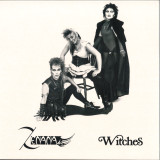
Her tracks have been played and recommended by Iggy Pop, Mary Anne Hobbs and Nine Inch Nails. ZAMILSKA, one of the most original artists on the European electronic scene, announces a new album, "United Kingdom Of Anxiety" – out October 4.
Combining the rawness of techno and the trance-like nature of world music, industrial sound and a fine blend of trip-hop, the Polish producer created a dystopian, post-apocalyptic,
fascinating vision of a collapsing world. "United Kingdom Of Anxiety" begins with a sonic assault. The breaks and powerful bass in "Phantom" awaken from hypnotic slumber, numbness caused by the daily hustle, serve as a reminder that to survive in an unfriendly world, concentration, willpower and perseverance are essential. This is the beginning of a journey through "United Kingdom Of Anxiety" - the new album by Zamilska, a sensitive outsider.
"I’m here to ruin you again," announces a voice in "Mummy," while the crescendo of beats and noise in "Better Off" further amplifies the tension. It's hard to find peace when hell lurks just around the corner. Is it the horror of civilization or perhaps cosmic dread? The answer depends on the listener's sensitivity.
The much-needed balance and coolness are brought by huskie vocals - that is Ola Myszor - an incredibly talented young artist who appears in several tracks on the album. Besides huskie, there are other guests on "UKOA": Natalia Przybysz, who, with a robotic voice, delivers a manifesto of indomitable, proud solitude in "Persist" and Lukasz Pach, the charismatic frontman of the grindcore band Hostia. His growling is heard in the intense, uncompromising "No Gods," which was presented by Iggy Pop on his BBC6 Music radioshow.
The sonic spectrum is also filled with anonymous voices: echoes of quarrels, media messages, sounds of war clamor, monologues - looped, accelerated, manic, psychotic, but also a wistful singing coming from the depths, from afar. The metaphysical horror of Lovecraft on one hand, and the sober, no less gloomy diagnosis of George Orwell on the other, constantly correspond here.
This entire album is a story about society as a whole and the contemporary, dystopian world, which is inevitably heading towards war. The track "1984" clearly defines the inspiration for the artist's post-apocalyptic vision. A distorted radio signal, alarm siren and gabba/techno beats driving into the head like nails serve as an expression of the fear and anger born in a world of impending totalitarianism.
Centricity Music recording artist Jordan Feliz quickly became a household name when his first radio single “The River,” the title track from his critically-acclaimed debut, became a smash hit. Spending an unprecedented 12 weeks at No. 1, the chart-topping single was named ASCAP’s “Christian Music Song of the Year” and garnered Feliz his first RIAA Platinum® certification. Thanks to his charismatic vocals and signature blend of soulful pop, each of his seven subsequent radio singles has landed in the Top 10 with “Witness,” “Glorify” and “Jesus Is Coming Back” notching three more No. 1’s for the singer. In addition, the California- native has been nominated for five Dove Awards, taking home the trophy for 2016’s “New Artist of the Year,” and has amassed nearly 500 million lifetime streams. Along with his heartwarming children’s hardcover book, Beloved, and his headline tours, Feliz has also shared stages around the country with some of the biggest names in Christian music, including TobyMac, Michael W. Smith, For KING & COUNTRY, Matthew West and Crowder.
Founded with the intent of bringing hidden sounds out of obscurity, Rarefied will project these sounds on to a platform to be experienced by the many denizens of sound system culture. While the music is made to enjoyed by all, it retains its identity as both an underground and unique form of artistic expression.
After a series of successful digital releases, Soukah bursts onto the vinyl scene, presenting a sound crafted over the course of almost a decade. His past works range from Industrial Noise to his own unique take on Dubstep. RARE1 showcases Soukah's versatile approach to production - His organic style, based on dark synthesis and unorthodox drum patterns, is a true representation of the Rarefied sound.
'JAK FOU' is the result of six months of studio time, the classical piano riff combined with haunting percussion results in an experience akin to ingesting 18 grams of psycobilin. On the flip side 'Loner' is a far darker, moodier affair. Written solely by candlelight, the production evokes the darkest elements of Soukah's soul. This track is best enjoyed alone, in the wilderness.
Blu’s music has been championed by outlets like XXL, Pitchfork, Okayplayer, HipHopDX, and more. In recent years, he has been interviewed by Billboard, Complex, LA Weekly, Noisey, Red Bull Music Academy, and more. Blu has collaborated with prominent artists like The Roots, Logic, Miguel, MF DOOM, Madlib, Anderson .Paak, Lupe Fiasco, Freddie Gibbs, Aloe Blacc, Roc Marciano, Slum Village, 9th Wonder, and more. Classic 2014 album on gatefold 2LP vinyl, now available after years out of print. Good To Be Home features guest appearances by Evidence, Fashawn, Alchemist, Casey Veggies, MED, Planet Asia, Oh No, Pac Div, Strong Arm Steady, Thurz, Visionaries, Chace Infinite, Cashus King, and more. L.A. rapper Blu burst onto the scene in the late 00s with the widely acclaimed Exile collaboration Below The Heavens, igniting a West Coast hip-hop renaissance in the process. With his cool Cali demeanor and undeniable lyrical talent, Blu drew praise from fans and tastemakers alike, launching a remarkable career that continues thriving to this day. His first ever double album, the 2014 masterpiece Good To Be Home is an essential part of this story. An unapologetic celebration of Los Angeles music and culture, the album takes listeners on a vivid journey through Blu’s storied stomping grounds. With sweeping strings and hypnotic bass lines supplied by producer Bombay, Good To Be Home features a host of West Coast hip-hop luminaries, including Evidence, Fashawn, Alchemist, Casey Veggies, MED, Planet Asia, Oh No, Pac Div, Strong Arm Steady, Thurz, Visionaries, and more. A cohesive collection with 20 tracks and no filler, this classic release is now available again on vinyl after years out of print.
Ltd Double Silver Vinyl, Monochrome edition artwork, DL card. Originally released in 1990, Royal Trux’s ‘Twin Infinitives’ is being re-issued in all its (yet to be translated) alien glory, by Fire Records. A dismantled overture that sprawls out over two records, an avant-garde masterpiece that was the spark for Drag City Records and generations of new sound seeking musicians. Hailed in the same immortal breath as Beefheart’s ‘Trout Mask Replica’, the Velvets’ at their frenzied peak and Ornette Coleman at his most avant-garde, the duo of Pussy Galore’s Neil "Michael" Hagerty and Jennifer Herrema recorded ‘Twin Infinitives’ while imbibing all kinds of mind-altering substances to create an inadvertent blueprint for what the duo was building with Moogs, guitars and melodicas to name a few ingredients. It is the legendary second album from the masters of the genre mashup - long before “genre mashups” even existed. Arguably, the term “mashup” was coined to describe what Trux, as they subconsciously scrolled through the radio stations of their lives. The album’s chaotic sound and offbeat construction laid the foundations for a string of Royal Trux albums that spiralled between genres, tunings, and noise. Through the 90s they would re-invent the rock ‘n’ roll ethic, straddle alien surf music, re-align boogie rock, not to mention 80s hair metal, and confound critics by their wildly meandering and courageous rites of passage. Remastered as part of a career spanning catalogue deal with Fire Records. The infamous and influential duo of Jennifer Herrema and Neil Hagerty will be delving into the archive with a comprehensive reissue series, unearthing the vaults and revisiting what made them such a compelling benchmark for their contemporaries and imitators. Reawakening their prolific output within a new monochrome vinyl series covering 1988-1993, they begin with their seminal deconstructed rock masterpiece Twin Infinitives. “Sounding like a subway ride inside a television inside an earthquake inside the end of the world and a pounding death rhythm of apocalyptic now.” Pitchfork. Track List: Disc One: A1 Solid Gold Tooth A2 Ice Cream A3 Jet Pet A4 RTX-USA A5 Kool Down Wheels B1 Chances Are The Comets In Our Future B2 Yin Jim Versus The Vomit Creature B3 Osiris Disc Two. C1 (Edge Of The) Ape Oven D1 Florida Avenue Theme D2 Lick My Boots D3 Glitterbust D4 Funky Son D5 Ratcreeps D6 New York Avenue Bridge
As the 21st century was born, so Kreator underwent what was nothing less than a seismic creative rebirth. By this time, the iconic German band had released nine studio albums in the 1980s and '90s, which had established them as one of the most important metal names of these decades.In the first period, they had helped to shape and pioneer the thrash scene through such releases as 'Pleasure To Kill' (1986), 'Terrible Certainty' ('87) and 'Extreme Aggression' ('89). During the following decade, the band had opened up exciting horizons of experimentation on albums like 'Coma Of Souls' (1990), 'Renewal' ('92) and 'Endorama' ('99).
Now, though, it was time to move into a fresh era, as vocalist/guitarist Mille Petrozza explains.
“During the 1990s, we were definitely experimenting with what the band were doing. But (drummer) Ventor and I decided that for this album – our first of the new millennium – we wanted to go back to the sort of sound that we had at the start of Kreator. In other words, to get back to the reason why we began the band in the first place.”
There was also new guitarist introduced, as Sami Yli-Sirniö (who had made his reputation with Finnish band Waltari) took over from Tommy Vetterli. The latter (also known as Tommy T. Baron) had joined in 1996 and played on the 'Oucast' (1997) and 'Endorama' albums.
The producer for this album was Andy Sneap, who was now making a name for himself as one of the pre-eminent masters of this art in the modern metal world.“I had known and liked Andy since the days he had been the guitarist in Sabbat, as they were signed to Noise Records as Kreator were on that label. He was our first choice to work on this new project. I liked what he'd done for Testament on their album 'The Gathering' (released in 1999). He had given them a sound they'd never had before, and that really was what we were after. It was natural and organic, and also very modern. I remember phoning him at his Backstage Studios in England (Ripley in Derbyshire). And Warrel Dane, the vocalist in Nevermore, answered. Andy was producing their new album at the time ('Dead Heart In A Dead World', 2000). And when I heard this, again I was very impressed. So, I was delighted when he agreed to produce the new Kreator album.”
The album title came from something Petrozza had read. “In a book I came across a comment that John F. Kennedy said (in 1962). This was: "Those who make peaceful revolution impossible will make violent revolution inevitable”. I thought 'Violent Revolution' would make a good title for an album. So, I kept it in my mind for this record. I think 'Violent Revolution' is a title that makes a real impact.”
One interesting aspect of the track listing was that the 52 second instrumental 'The Patriarch' actually came after the opening song 'Reconquering The Throne'. Fans might have been expected that it would have opened the album. But for Petrozza, there was a logical reason for this not to happen. “We really wanted to lead off with a thrashing track, to show everyone what we were now doing musically. After 'Endorama', it was important that everyone should recognise this was a new era for Kreator.”
'Violent Revolution' is without question an excellent album. While in some ways it does hark back to the glories of the band's earlier days, nonetheless it does not sound at all nostalgic. The performances and production values are very much part of the contemporary era, and the strength of the compositions themselves are of the highest values. Rising to the challenge offered by a new generation of ambitious metal bands, Kreator proved they were far from being a spent force. Unlike so many of their peers, here was a band who still had so much creativity to offer, and were also clearly excited themselves by what they were doing. And when you hear the band themselves enjoying the entire process, then you know this is a bona fide revitalisation.
Ruby Wine Vinyl. Manchester UK's Space Afrika make music of what they term "overlapping moments" - oblique mosaics of dialogue, rhythm, texture, and shadow, half-heard through a bus window on a rainy night. Honest Labour, the group's first full-length since 2020's landmark hybtwibt? (have you been through what i've been through?) mixtape, expands the project's palette with classical strings, shimmering guitar, and visionary vocal cameos, leaning further into their enigmatic fusion of ambient unrest and cosmic downtempo. It's a sound both fogged and fragmented, at the axis of song craft and sound design, born from and for the yearning solitudes of life under lockdown.The album title is tiered, alluding to a legendary patriarch from co-founder Joshua Inyang's Nigerian family tree (who was lovingly called "Honest Labour" for his loyalty and resilience) as well as the nature of self-designated work, such as Space Afrika's music - a "labor of love" in its truest sense. With fellow co-founder Joshua Reid recently relocated to Berlin, the pair began sharing files last fall, piecing together poetic vignettes of looping haze and found sound, inspired by the notion of "records that leave an impression, and help the listener deal with their life." As the isolation of Covid compounded with the worsening winter, the songs skewed increasingly introspective and emotive, reflecting a mood of dissipating futures and the infinite nocturnal unknown.The artists cite two core motivations for Honest Labour: to transcend the sum of their influences, and "to show what we're capable of." Both ambitions are entirely realized. The collection's 19 tracks flow with a synergy and sophistication as rare as they are radical, untethered to the dusty dub-techno templates of Space Afrika's early years. These are interstitial anthems, expressionistic and open-ended, delirious but deliberate, attuned to the drift and dreamstate of the present moment: "Ultimately this is an homage to U.K. energy, and an album about love and loss."
Rage Queen Delilah Bon is a force to be reckoned with blending elements of hip-hop, nu-metal, and riot grrrl ethos into her signature "Brat Punk" style. Her music serves as a fierce anthem for marginalized communities, particularly women, non-binary and the LGBTQ+ community. Her performance at the 2023 Glastonbury festival garnered acclaim from Kerrang!, who hailed her as a ‘standout voice in the rise of bold and bratty heavy music’. This recognition secured her a coveted spot on Kerrang!'s 'Sound of 2024' artist list and further recognition as ‘New Noise’ artist in Metal Hammer magazine and full feature in Clash Magazine. 2024 promises to be a monumental year for Delilah Bon, with a series of highly successful single and video releases to date and her highly anticipated album ‘Evil, hate Filled Female’ due for release in September. She’s also playing a host of Summer festivals including Download, Glastonbury, 2000 Trees and several European festivals including Rock For People in Czech Republic and Metropolis Festival in the Netherlands, with more to be announced! Her singles from the upcoming album, “Maverick” and "Finally See Me” have received widespread support from BBC Radio 1 and Kerrang! Radio, earning coveted spots as Track of the Week’ on Alyx Holcombe’s BBC Radio 1 Introducing Rock Show, ‘Future Flavour’ on Nels Hylton’s BBC Radio 1 Future Alternatives and ‘Track of the week’ on Kerrang! New Noise with Hope Lynes. She’s also had major editorial support from Spotify, Apple Music, Deezer and Amazon Music, including her 3rd Misfits 2.0 playlist Cover artist. Delilah Bon's international appeal was further solidified by her support slot on US artist Scene Queen's UK tour in 2023 and performances at sold-out arena shows in France earlier this year supporting French band Shaka Ponk. Notably, she made National television appearances on Le Late Show and Taratata TV in France, showcasing her magnetic stage presence to a global audience. With her bold persona, genre-defying sound, and unwavering commitment to amplifying marginalized voices, Delilah Bon continues to cement her status as a trailblazer in the music industry.
Permanent Parts is the second album released by visual artist Katharina Grosse (synthesizer) and musician Stefan Schneider (synthesizer; So Sner, To Rococo Rot). Grosse and Schneider were joined at Galerie Max Hetzler on 29 April 2023, performing as part of the Spectrum without Traces exhibition, by three artists who all generally work within improvised music – Carina Khorkhordina (trumpet), Tintin Patrone (trombone and electronics), and Billy Roisz (noise generator, piezo and mini cymbal). Permanent Parts is an extraordinary set of recordings that inhabits multiple zones at once: within its thirty-five minutes, we can hear the interactions of non-idiomatic collective music making, and the electronic glimmers of electro-acoustics, while, at the same time, the music remains untethered to genre.
This capacity to work within liminal zones makes perfect sense when thinking about both Grosse’s and Schneider’s prior work, whether the energetic diffusions and spatial explorations of Grosse’s artistic practice, or the slippery texturology of Schneider’s recent work with electronics. Khorkhordina, Patrone and Roisz all find their own ways into this dynamic, too, and Permanent Parts feels like an equal exchange of presence and contribution; there are no hierarchies here. This might explain the music’s curious sense of development, where several elements are allowed to exist alongside each other, not in direct contact but in a mode that’s somewhere between carefree layering and unconscious juxtaposition. The musicians are listening, but not just with their ears – their skin, their bodies are hearing, too.
When talking about Permanent Parts, Schneider is careful to place it within contexts that are specific, to some degree, but which allow for difference to blossom. “Although it was recorded live, it somehow was not meant to be a documentation of a live event in the first place. The five piece line up that appears on the record had met for the first time only a few hours before the concert took place.” While it might take a leap of faith for all parties to walk together, and so willingly, into a place of such freedom, of such risk, there is clear sympathy here between the musicians, and a shared appreciation of the immediacies of the situation.
It also throws some of our preconceptions about this music out of the window. “The record does not feel like a document of a performance as the music was not pre-composed and there was no reference,” Schneider continues. “Perhaps it was not even an improvisation?” For Grosse, her musical relationship with Schneider similarly shakes free from expectation: “My sound does not exist without Stefan’s. It is neither written down nor is it improvised. It is instantaneous.” When thinking about the five-piece exploration on Permanent Parts and asked to expand on what each musician brings to the table, she continues, “We all love the thrill of an unknown encounter and we seem to have a need for building connections through the thicket of our voices.”
There’s a curious phrase on the back cover of the album, before the artists are listed: “Wir sind eine Batterie / We are a battery.” This sums up the spirit of Permanent Parts. Schneider recalls that Grosse said this phrase to the musicians at the start of the performance. Grosse explains further, “The figure of the battery referred to our placement in the space building out a small circle facing one another from where the sound could spill into the impressive volume of the gallery.” The battery as an arrangement of similar devices; but I also think of charge, and the conversion of chemical energy, and of fortification. It’s a poetic metaphor that sums up much of the febrile pleasure of the music contained on these Permanent Parts.
Perhaps best described as a pioneer of the underground experimental scene, the signature of Jørgen Teller on the musical landscape of Denmark traces back to the late 1970’s. Sprung out of a whirlpool of post-punk and art school ideas, Teller has relentlessly been chiseling away on the constrictions of music in various bands, collaborations and solo projects ever since. Searching out its farthest outposts - be it free jazz, noise or acousmatic music - Teller has strived towards an approach to music without rules, often by way of improvisation and usually with the aid of electric guitar.
This album is based on a live performance held at the Inter Arts Center in Malmö in early 2022, where Teller performed a semi-improvised piece in homage to the poet Poul Borum, whom he had worked with in the mid-90’s closely before Borum’s death in 1996.
As a composer, Teller relies on a set of “basic choices” that becomes a “precise point of departure” - where he can then go against his “good knowing” of the science, trends and different schools of music and go straight into his own instincts as a performer. For this performance, he used pre- recorded material of three rhythm boxes (all out of sync), timbales and sessions on Erica synths.
In dialogue with the label, Teller has focused on extracting the recording of the rhythm boxes and timbales alone, emphasizing the tension between the rhythms. With minimalist drum sequences that could easily be placed in a proto-techno context, and the whooshing of what might be an ancient rhombus instrument, there is a feeling of a primitive presence to Teller’s rhythmic excursions. A throwback to the spiritual realms of a wordless society fighting the demons of chance.
Occasionally pierced by stark industrial drum crashes and rattling post-punk percussion, it also conjures echoes from the darker side of the 1980s. In citing Borum as its inspiration, Teller shares that he channels the poet’s energy and their shared love of “noisy stuff and darkness”.
But the pace can also go somewhere close to breakbeat on track B2, where a whirlwind of rhythmic elements clash into a deranged deconstructed club tune.
The album also features a remix by a fellow colleague of the acousmatic community; the composer Jacob Riis. On the closing track B3, Riis quietly manipulates and balances the elements of Teller’s recordings and gently releases them into a contemplative pool of static.
Mara MacDonald is a musician and performer from Melbourne, Australia. She released her debut album 'I'm just One Person' as Marara on JPEG Artefacts in January 2023. She has also self-released two EP's, has received the Signal Sound Commission grant for young artists, and is known for her chaotic, confessional live performances. Brad Rose of Foxy Digitales said of her debut: "it feels like I've uncovered some kind of hidden treasure… each word, each sound echoes into forever."
August and June will be available on streaming platforms and limited-edition cassette tape on 27/09/24. Guests include pillar of the Australian noise scene, Uboa, and prolific Portland producer, Kaho Matsui. For fans of: Claire Rousay, More Eaze, Katie Dey, Felicia Atkinson, Elaine Radigue.
Permanent Parts is the second album released by visual artist Katharina Grosse (synthesizer) and musician Stefan Schneider (synthesizer; So Sner, To Rococo Rot, Mapstation). Grosse and Schneider were joined at Galerie Max Hetzler on 29 April 2023, performing as part of the Spectrum without Traces exhibition, by three artists who all generally work within improvised music - Carina Khorkhordina (trumpet), Tintin Patrone (trombone and electronics), and Billy Roisz (noise generator, piezo and mini cymbal). Permanent Parts is an extraordinary set of recordings that inhabits multiple zones at once: within its thirty-five minutes, we can hear the interactions of non-idiomatic collective music making, and the electronic glimmers of electro-acoustics, while, at the same time, the music remains untethered to genre.
KANONENFIEBER über das Konzept von "Die Urkatastrophe": "Der Erste Weltkrieg beschleunigte den Weg in die Moderne und gilt als die "Urkatastrophe" des 20. Jahrhunderts, das von Kriegen, Gewalt und Vertreibungen geprägt war. Etwa 17 Millionen Menschen, Soldaten und Zivilisten, verloren ihr Leben, große Teile Europas wurden zerstört und ungelöste Probleme hinterlassen, die zu weiteren gewaltsamen Konflikten führten. Dieses Album soll die Opfer des Ersten Weltkrieges dem Vergessen entreißen. Mögen ihre Schicksale auch nach über 100 Jahren Mahnung sein für die nachfolgenden Generationen," erklärt Noise, der im Studio alle Instrumente einspielt und für das Konzept von KANONENFIEBER verantwortlich ist. Wie sein Vorgänger basiert KANONENFIEBERs zweites Album auf Tatsachenberichten, persönlichen Briefen und Originaldokumenten der überlebenden und verstorbenen Soldaten des Ersten Weltkriegs. Es geht nicht darum, zu glorifizieren, denn im Krieg gibt es keinen Ruhm. Alle verlieren - ihr Leben, ihre Seelen, ihre Menschlichkeit. Der Krieg wird oft abstrakt und anhand von trockenen Zahlen und Statistiken dargestellt. KANONENFIEBER wollen die Geschichten der Namenlosen und Gesichtslosen erzählen, um einen kleinen Einblick in ihre persönlichen Schrecken und damit in das größte Grauen für die Menschheit als Ganzes zu gewähren. Krieg. Der Black und Death Metal von KANONENFIEBER soll nicht nur unterhalten, sondern anregen, sich weiterzubilden und das Bewusstsein gegen die Verherrlichung des Krieges schärfen. "Die Urkatastrophe" wurde mit Kristian Kohle (Powerwolf, Aborted, Benighted u.v.a.) im Kohlekeller Studio aufgenommen. Zum Song "Waffenbrüder" steuerte Maik Weichert von HEAVEN SHALL BURN ein Gitarrengastsolo hinzu. Das Album erscheint in den folgenden Formaten: Ltd. Deluxe transp. sand-dark red colored splattered 2LP Artbook, Ltd. CD Mediabook & Patch, Standard CD Jewelcase, Ltd. Gatefold standard LP & LP-Booklet, LP and Digital Album.
KANONENFIEBER über das Konzept von "Die Urkatastrophe": "Der Erste Weltkrieg beschleunigte den Weg in die Moderne und gilt als die "Urkatastrophe" des 20. Jahrhunderts, das von Kriegen, Gewalt und Vertreibungen geprägt war. Etwa 17 Millionen Menschen, Soldaten und Zivilisten, verloren ihr Leben, große Teile Europas wurden zerstört und ungelöste Probleme hinterlassen, die zu weiteren gewaltsamen Konflikten führten. Dieses Album soll die Opfer des Ersten Weltkrieges dem Vergessen entreißen. Mögen ihre Schicksale auch nach über 100 Jahren Mahnung sein für die nachfolgenden Generationen," erklärt Noise, der im Studio alle Instrumente einspielt und für das Konzept von KANONENFIEBER verantwortlich ist. Wie sein Vorgänger basiert KANONENFIEBERs zweites Album auf Tatsachenberichten, persönlichen Briefen und Originaldokumenten der überlebenden und verstorbenen Soldaten des Ersten Weltkriegs. Es geht nicht darum, zu glorifizieren, denn im Krieg gibt es keinen Ruhm. Alle verlieren - ihr Leben, ihre Seelen, ihre Menschlichkeit. Der Krieg wird oft abstrakt und anhand von trockenen Zahlen und Statistiken dargestellt. KANONENFIEBER wollen die Geschichten der Namenlosen und Gesichtslosen erzählen, um einen kleinen Einblick in ihre persönlichen Schrecken und damit in das größte Grauen für die Menschheit als Ganzes zu gewähren. Krieg. Der Black und Death Metal von KANONENFIEBER soll nicht nur unterhalten, sondern anregen, sich weiterzubilden und das Bewusstsein gegen die Verherrlichung des Krieges schärfen. "Die Urkatastrophe" wurde mit Kristian Kohle (Powerwolf, Aborted, Benighted u.v.a.) im Kohlekeller Studio aufgenommen. Zum Song "Waffenbrüder" steuerte Maik Weichert von HEAVEN SHALL BURN ein Gitarrengastsolo hinzu. Das Album erscheint in den folgenden Formaten: Ltd. Deluxe transp. sand-dark red colored splattered 2LP Artbook, Ltd. CD Mediabook & Patch, Standard CD Jewelcase, Ltd. Gatefold standard LP & LP-Booklet, LP and Digital Album.
Alice Taylor was a popular session singer who sang background vocals for several local Philly groups including The Delfonics during the height of the Philly Soul boom of the early to mid-1970’s.
In 1974 Alice under the auspice of producer Emanuel ‘Manny’ Campbell Jr and fellow Philadelphian musician/composer Charles R. Bowen entered the famed Sound Room Studios in Upper Dardy PA, to record a session of her own. This session yielded two songs. The more commercial pop soul orientated “(I’m In Love With A) Rock ‘n’ Roll Singin’ Superstar”. A song which took influences from other popular songs of the time that mentioned one’s love for Rock ‘n’ Roll singers and taking road trips to L.A (Los Angeles) in an attempt to cash in. Although the elongated song title may at first be a tad off-putting the recording showcases Alice’s vocal talents to the full and in itself is a very good record. The second song “Sounds Ridiculous” is based around the theme of a girl falling in love with a guy who spends most of his time daydreaming rather than getting a regular 9-5 job. An excellent record that should find favour with 70’s/crossover soul fans alike.
Manny Campbell Jr used some of Philadelphia’s finest musicians on Alice’s session, notably session drummer Earl Young, reputedly the first exponent of the hi-hat cymbal a style of drumming used extensively throughout the disco period. Young had honed his skills during the 1960’s with his band The Volcanos, recording sessions for the Arctic and Harthon Record Labels. The Volcanos later became The Moods before morphing into The Trammps who Young recorded on his Golden Fleece Label with the group recording several further disco hits for Buddah Records prior to their worldwide hit “Disco Inferno” for Atlantic Records. Young’s strumming can be found on many other Philadelphia International, Sal Soul and MFSB recordings. The string and horn arrangements on the session were provided by another MFSB (Mother Father Sister Brother) pool of musician’s member, Don Renaldo.
“I’m In Love With A) Rock ’n’ Roll Superstar/Sounds Ridiculous” came out in November of 1975 as an initial pressing run of 500 copies for promotional use which sadly were not of the best quality with some background noise being present in the introduction on both sides of the single, a possible detrimental factor in the release gaining any significant airplay. It’s was the second and final release on Emandolynn Music’s short lived, Stage-Art label. The first release being another of Manny Campbell’s acts The Nu-Rons & Co “Disco Hustle/Can’t Do Enough Girl” (Stage-Art 1001). Sadly, Alice Taylor passed away sometime during the 1980’s. Soul Junction through its ongoing relationship with Emandolynn Music have taken the opportunity to license these now very sort after Alice Taylor songs, which have been remastered to remove the aforementioned sound problems present on the original release. Which are now presented to you as a 3 track EP which also includes a previously unissued alternative mix of “(I’m In Love With A) Rock ’n’ Roll Singin’ Superstar, a recent master tape discovery.
out of Stock
Last delivered 2 years ago available to reorder, subject to availability
"Springing from Osaka, Japan’s cultural center and historical heart, comes HYPER GAL, a two-piece band consisting of visual artist Koharu Ishida on vocals and noise artist Kurumi Kadoya on drums.
The minimalist duo make maximum impact - stripping music down beyond the bare essentials, to create shimmering, no wave pop from blast beat drums, glittery keyboard loops and ethereal bubblegum vocals - laced with velvet and firecrackers.
On “After Image” HYPER GAL hold fast to their limited palette, but expand their reach. Working with a canvas larger than ever before, the band fearlessly alternate bold, avant-garde strokes with intimate, deliberate gestures. The result is a new world awash in a sea of endless possibilities - only visible with closed eyes and open ears.
“There's something almost vapor-wave-adjacent about the glorious racket riled up by this pair. The effect of repetition throughout, the way the beat slips in and out of time, is hypnotic” - THE WIRE
“Blends elements of noise, no wave, pop and blistering punk to create something remarkable and new… Endlessly inventive and challenging” - MAXIMUMROCKNROLL
“These royalty of no-wave-pop don't blink and their delivery is absolute. An exhilarating, total experience” - NOISE-FI
""Indescribable, just listen to it for yourself. And don't take any stimulants beforehand, you could end up in the emergency room"" – OX FANZINE
“It looks like noise, but there is too much color. Pop, but unsellable. Their music goes beyond barriers, genres and boundaries, as if a virus had been injected into a video game bringing delirious ruin to a perfect world” – SODA POP
“Intensely good. A beautiful challenge, a noise, relentless, not an onslaught, always inviting, like they want to pull you in rather than chase you away. Actually, this is joyous” - THE ORGAN"
Death and the Maiden’s Uneven Ground draws back the velvet curtain on the trio’s crepuscular dreamworld with nine songs of their distinctive shadowy slow-motion fusion of underground electronic dance music and post-punk guitars washed through with psychic unease. The trio’s name is taken from that of a nineteenth century engraving by Edvard Munch: an artwork steeped in mythology, exploring the dark boundaries between love and death, strength and frailty, beauty and decay. Their three albums to date each reinforce the symbolism of the name, and Uneven Ground’s title could apply as much to their own journey in the years since Wisteria, their previous album, as to the times in which we live. Bassist and vocalist Lucinda King is the bedrock, guide and storyteller. Guitarist Hope Robertson weaves swooping, soaring motifs and sometimes deconstructed layers of noise to build analogue atmosphere for these alternate worlds. Danny Brady’s beats mix old-school drum machines with electronic tones and distortion, while his synth arrangements blend elements of psy-trance and acid house with more amniotic ambient and industrial textures. While Uneven Ground may be the most overtly “pop”-sounding album in their catalogue, it also ratchets up the ominous atmosphere, noise and experimentation. Once again King’s evocative lyrics appear as cryptic stories, built from events, memories, dreams, moments, warnings, regrets; where questions raised are left unanswered, and possibilities remain open.
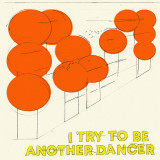
Brussels is a highway where rainbow-fuelled melancholia kids race its track, mountain and road bikes. Endless summers cherish the collective chosen chaos of the city; every corner displays wild micro-natures, buzzing insects, and rare weeds fourishing organically; tape hiss and AM radio compression are the soundtrack of everyday life. And hear! Originated in the Brussels DIY, indie rock and noise scene, a new kid on the block appears: Another Dancer.
They deal in utopian music - of the open, welcoming and whatsoeverish kind. It’s fresh, snotty, neurotic art-rock deeply rooted in 80s/90s DIY aesthetics. The songs on their debut album balance gently between forgotten pop hits and broken sound experiments. In their world, any shitload of weird, random, and badly synchronized sounds unveil broken-hearted pop mastery. In the Another Dancer universe, radios are stuck to WFMU and Soulseek is a self-conscious AI producing 80ies psychedelic FM-rock.
Brussels-based Another Dancer is outdated, wild at heart and elegantly shy. Their full album I Try to Be Another Dancer is out September 10th on Bruit Direct Disques and Aguirre.
"Flashes of the shambolic post-punk of Good Sad Happy Bad and the goofy, fraternal synth-pop of the blog-era gem Teenagers can be seen, often simultaneously, across the new single from the Brussels-based band Another Dancer. Vocals are layered on top of each other to a conversational near-cacophony, like you’ve been placed at the center of a Dry Cleaning show where everyone is, improbably, in a good mood. Sunny synth sweeps jostle next to bent, jangly guitar lines for a song that finds a special kind of vibrance in its mess. — Jordan Darville”
"Glossolalia" ist das dritte Solo-Album von Dale Crover, dem weltbekannten Schlagzeuger der Melvins, Nirvana und Redd Kross sowie Sänger und Gitarrist von Altamont. Das von Crover und Toshi Kasai produzierte Werk strotzt nur so vor Nuggets-Garagenrock, Proto-Metal-Riffs und herrlich verschwommenem Psych-Pop. Die erste Single des 11-Song-Albums ist "Doug Yuletide". Der Track ist einer von zwei "Glossolalia"-Songs, bei denen Crover mit dem Gitarristen Dan Southwick zusammenarbeitet, seinem langjährigen Freund und Altamont-Bandkollegen. Aber Southwick ist nicht der einzige Freund, der auf Glossolalia zu hören ist: Kim Thayil von Soundgarden (Leadgitarre bei "I Quit" und "Rings"), Ty Segall (Leadgitarre bei "Spoiled Daisies" und "I Waited Forever"), Rob Crow von Pinback ("Don't Worry About It", "Rings" und "I Waited Forever") und Tom Waits' ungelenkes, in Zungen gesprochenes Intro beim Titelstück. "Glossolalia" ist Crovers bisher fokussiertestes Statement als Solokünstler. In seiner Gesamtheit zeigt das neue Album, dass Crover, so wie die Melvins in ihrem vierten Jahrzehnt weiter wachsen und sich entwickeln, auch als Solokünstler neue Schritte unternimmt. Inmitten des inspirierten Geplappers von Waits, des glorreichen Schredderns von Segall und Thayil und vielem mehr, sticht vor allem die Robustheit von Crovers Vision hervor. Diese Platte zeigt, dass seine Gesamtästhetik genauso stark wie sein legendärer Schlagzeugdonner ist. ENGAs he began plotting his new solo album, Dale Crover _ world-renowned drummer for the Melvins, Nirvana and Redd Kross, and singer-guitarist for Altamont _ realized that, unlike with his prior two full-lengths, he was starting from scratch. "I didn't have any songs," he says, "so I just went on this writing spree." The result is Glossolalia, Crover's third LP under his own name and arguably his most focused statement yet as a solo artist: 11 catchy yet eccentric tracks that move from Nuggets-y garage rock to crafty proto-metal riffage and gorgeously hazy psych-pop, touching on everything from a bad teenage trip to the charms of the late, great Jane Birkin, and featuring input by illustrious guests including Ty Segall, Soundgarden's Kim Thayil and none other than Tom Waits. What stands out across the record is the sturdiness of Crover's vision. He's modest about his ambitions _ "It's just kind of like extra credit," he says, about having a solo outlet apart from his main band _ but as this record shows, his overall aesthetic hits just as hard as his legendary drum thunder.
Rush Hour’s RSS series excels in unearthing buried treasure, offering a second chance for artists and releases that have long been overlooked. That’s certainly the case with ‘Witches’, the superb sole single by British 1980s wave trio Zenana.
Originally released on seven-inch by the tiny PRM label in 1986, ‘Witches’ was the product of a sister-brother songwriting team whose music was mostly recorded in the front room of a terraced house in Nanpean, a small industrial village in Cornwall, England’s most south-westerly county. While the single was infectious, impeccably produced and dancefloor-ready, it sold in limited quantities at the time.
Zenana’s story can be traced back to the early 1980s, when singer-songwriter Anita Tedder founded the all-female trio as a vehicle for her musical ambitions. To bring her songs to life, she joined voices with her brother Mike, an early adopter of electronic music who had built a studio – nicknamed MFR, short for ‘Mike’s Front Room’ – in his Cornish home.
Countless Zenana tracks were recorded at ‘MFR’ between 1984 and ’86, with the resultant demo cassette securing the band a management contract, a slew of live bookings, a video shoot and even a television appearance. Buoyed by this underground success, they headed to the remote Sawmills Studio in Cornwall – famously only accessible by boat – to re-record ‘Witches’, a song inspired by local folk tales of witches gathering near Mike’s home.
While this version of ‘Witches’ failed to make an impact at the time, it has become something of a cult classic following its’ rediscovery by crate digger Kiernan Abbott – and subsequent championing by other dusty-fingered DJs including Antal, Skyrager, Trevor Jackson and Luke Una – in early 2023. The buzz inspired Zenana to perform live again for the first time in decades, with the story of their surprise comeback being covered by British media outlets including the BBC and (more surprisingly) the Daily Mail.
Now presented in re-mastered form, ‘Witches’ is a genuinely slept-on gem. Propelled forwards by punchy drum machine beats, a killer synth bassline and fizzing keyboard sounds, the song benefits greatly from strong vocals and an extra-percussive middle eight layered with vocalisations, cosmic spoken word sections and swirling noises.
It comes backed by a brand-new extended ‘spell of love’ courtesy of Bristol duo Bedmo Disco, AKA music journalist Matt Anniss (author of Join The Future: Bleep Techno and the Birth of British Bass Music) and DJ/production partner Gareth Morgan. Anniss is a long-time friend of Mike and Anita Tedder who has fond memories of visiting Mike’s home studio with his family around the time that ‘Witches’ was recorded.
Working from Zenana’s original MFR eight-track recording (tapes of the single version were lost years ago), Anniss and Morgan have turned in the extended ‘dance mix’ the track never had first time around. More atmospheric, clandestine and dancefloor-focused, it offers authentic nods to New York proto-house, mid-80s Shep Pettibone dubs, and the pioneering synth-pop productions and dub mixes of Factory Records regular Martin Rushent.
out of Stock
Last delivered 14 months ago available to reorder, subject to availability
The Petersons’ were a vocal trio from Waycross, GA, their performing name came from their founder, lead vocalist and drummer Kenneth Peterson, along with Keyboard player Salem Chatman and vocalist/bassist Johnny Members. The trio regularly performed shows along America’s East Coast, and it was while working in Philadelphia during early 1973 that the group answered an advertisement in Billboard Magazine quote “Masters Turned Down? We Are Looking for New Acts to Sign, Contact Omega Sound Productions, Philadelphia, PA”.
Omega Sound was a fledgling independent Recording Company formed by Frank Fioravanti a budding songwriter and former Encyclopedia Britannica Salesman for the initial purpose of find some extra work for the musicians of The Philadelphia Orchestra who were looking to earn some side money. As a result of answering the Billboard advertisement ‘The Petersons’ found themselves booked into Frank Virtue’s recording studio to record two Fioravanti and the late Alan Felder penned songs, the up-tempo “What’s It Gonna Be” backed by the melodic “Just What I’ve Been Looking For” Mel Omega (1833). With the release failing to make much noise, The Petersons returned to their native Georgia where they continuing to perform and record but under the group name of ‘Toll Darkness’. Fast forward circa 30 years and a couple of copies of this obscure Mel Omega 45 was introduced into the UK by Soul Bowl’s John Anderson where they gained belated recognition initially at the Soul Essence Weekenders through resident DJ Steve Guarnori with “Just What I’ve Been Looking For” being his chosen side. These initial copies had a paper sticker on them crediting the Artist as ‘Toll Darkness’ but the subsequent find of further copies with no sticker coverings, revealed the real artist to be ‘The Petersons’, intriguing? The reason behind the differing artist names is reputedly assumed to be that Ken Peterson took some copies of the Mel Omega 45 back to Georgia and pasted the ‘Toll Darkness’ group name stickers over the Petersons label credits to enable him to sell them at shows with his other ‘Toll Darkness’ 45 “Party/Love Makes Me Do Foolish Things on Alpha Records. The up-tempo backing track of The Peterson’s “What’s It Gonna Be” was a Frank Virtue arrangement that he had great faith in, hence it’s usage on plethora of other Philly artists recordings, i.e. Fred Mark, Liza Mae, Michael Christian, Cody Michaels etc over different record labels, Melomega, Concept, Fox Century Plaza and Merben.
Frank Fioravanti also founded the Sound Gems label which brought us the timeless classic “Your My Main Squeeze” recorded on the New Beford, MA group ‘Crystal Motion’. Omega Sound’s most notable achievement would be William DeVaughn’s 1974 hit “Be Thankful For What You Got”.
out of Stock
Last delivered 3 years ago available to reorder, subject to availability
On their seventh long player The Breaks - their second for Joyful Noise Recordings - SUUNS are lost in limbo. For some artists, being caught in flux may result in songs that are either naive, out of touch or both, simply as a consequence of being cut off from human civilization. But for SUUNS, a band who have grown more than comfortable in the oblique and the intermediate, it actually had the opposite effect. The Breaks marks the Montreal experimental rock outfit's most emotionally resonant and tonally rich collection of music to date. The trio of Ben Shemie, Joseph Yarmush and Liam O' Neill leans more zealously than ever into their pop instincts. Yet remarkably enough, with that same dauntless abandon, SUUNS have mined a more extreme sonic palette this time around, one that stretches far beyond their core fundamentals as a band. The Breaks finds Shemie, O'Neill and Yarmush gleefully experimenting with loops, synths, samples and MIDI-instruments like a post-millennial Tangerine Dream messing with downtempo triphop beats. O' Neill took point in the producer's chair for The Breaks, arranging, structuring and editing many of Shemie and Yarmush's ideas from sporadic rehearsal sessions into Pro Tools, reimagining the songs over and over during a two-year time frame. Forged between countless plane rides, road trips, van tours and text threads, The Breaks became a product of endurance and a lot of trial-and-error. It's a record forged in tight fissions of freedom, where spells of whispered intimacy - like on the stunning ballad "Doreen" - are allowed to branch out into the vast glacial dreamscapes of the album's majestic title track. It captures SUUNS at their most panoramic, curious and exuberant: a constant relay of being adrift and enlightened anew, geared up to eleven. And guess what: the wheels keep on spinning.
On August 16, Toronto-based musician and producer David Psutka aka ACT! (fka Egyptrixx / Anamai / Ceramic TL) will release his latest project ‘Face to Face, Day by Day’ for his own Halocline Trance imprint.
This is is Psutka’s third album proper as ACT! following the release of the “sonic mixtape” ‘Universalist’ in 2018 and the augmented reality soundtrack ‘Grey Matter AR’ in 2021; a series of Snapchat filters created by artist Karen Vanderborght and soundtracked by ACT! which explored the poetic and existential potential of AR and social media.
“Aesthetic accidents in the periphery of the ‘work’ can be the message. In 2018, at an Egyptrixx concert at Bagni Misteriosi de Teatro Franco Parenti - a gorgeous, sprawling outdoor pool theatre in Milan - I had a clarifying moment. Gigs around then had mostly been in pummelling, dark music venues, so I wasn't prepared for this expansive space (and the thoughtful work of the organisers who had layered sheets of plastic film on the pool to parallel eco-materialist themes from a previous album). It was the midday soundcheck that struck me most - brittle digital sounds from the set echoed off the colonial Milanese facades and ricocheted down the Via Carlo Botta, pinging off buildings in the distance and clashing with the noise of traffic, tourists and whatever else. It was a strange, collisionist moment, and a reminder that my essential approach to music is, above all, a preoccupation with the materiality of sound.
Everything on Face to Face, Day by Day began as an improvisation. Openness to accidents and the emotional complexity that comes from centering them in composition has become important to my work, and helps the music go beyond the possibility of what is playable, imaginable. I also wanted to channel adventurous solo pop records of the 1970’s and 80’s, like Yasuaki Shimizu, Jon + Vangelis and Stevie Wonder. These came from an interesting era in commercial music as studio production techniques became increasingly formalised as compositional devices, like AMS RMX16 percussion sounds and early digital stereo effects.
Like many musicians, I’ve been travelling and performing less since the pandemic and as a result, have wanted studio sessions to feel more collaborative and improvisational. There were great writing and recording sessions for this album. Vox, synth, sax and guitar jams - much of what ended up on the record isn’t edited much, if at all. I jammed a sm57 into Colin Fisher’s sax bell and created feedback loops using various preamps and distortion units. The clunky sounds were sampled and used as percussion elements. I also had a great synth jam session with Jeremy Greenspan at Barton Building Studio in Hamilton, which was recorded by filmmaker Liz Adler.
I’ve had a few months to sit with this album and see clear throughlines connecting it to previous projects. There are aspects of the experiential and structuralist sound design ideas from the EGYPTRIXX records; and also some arrangement tricks borrowed from ANAMAI - specifically, the use of interruptionist sound events. Perhaps most of all, it feels connected to the Ceramic TL + Ipek Gorgun record ‘Perfect Lung’ and its splattered take on musical complexity. “ (David Psutka)
In addition to ACT!, Psutka has released music with numerous projects including Anamai, Egyptrixx and Ceramic TL, he has collaborated widely with artists such as Junior Boys, Ipek Gorgun, and Kuedo as well as Jessy Lanza (2016) and an official remix for Massive Attack’s ‘Hymn of the Big Wheel (2012). The contributions on this album, from Robin Dann and Ben Gunning, reflect the deeply collaborative nature of the Halocline Trance label and the Toronto creative scene more broadly.
Many of Psutka’s releases have received critical acclaim from media outlets such as Pitchfork, Exclaim, The Quietus and Resident Advisor. As a live performer, he has toured extensively including performing at Sonar Festival, Roskilde, Mutek, MOMA PS1 Warm-UP and CTM Festival. He’s also presented sound installations at various institutions such as Galeria Civica Commune di Modena, and Art Gallery of Ontario (AGO).
In 2015, Psutka launched Halocline Trance as a home for his various sound projects, events and collaborations. Now a creative collective and label, it has grown to include a diverse array of artists including Casey MQ, Xuan Ye, Myst Milano, Colin Fisher and others. The label is described as “genre-agnostic” and conceptually open, supporting work across a wide spectrum of creative fields including soundtrack recording, AR design and traditional artist albums. Their impeccable roster also includes, theorist/improviser Eldritch Priest, and AR/VR artist Karen Vanderborght. In recent years, Halocline Trance has established itself as a platform that facilitates many of Canada’s most exciting creative music projects. Many of the releases have received critical acclaim from outlets including Pitchfork, Exclaim, Bandcamp and Resident Advisor.
Canadian-currently-residing-in-Berlin and multi intstrumentalist Aidan Baker teamed up with Dutch demolition duo Dead Neanderthals late 2023 to work on the collaborative album entitled Cast Down and Hunted.
Cast Down and Hunted is an abstract affair. Angular and dark, droney and lush. Two lengthy tracks, Subterfuge and Paranoia, each fill one side of the LP, which will be released by the Dutch label Moving Furniture Records.
The artwork was made by Steven Kenny and the album layout was done by Rutger Zuydervelt (Machinefabriek).
The album was mixed and mastered by Marlon Wolterink at White Noise Studio.
ABOUT AIDEN BAKER
Aidan Baker is a classically-trained multi-instrumentalist focusing on the electric guitar as his primary instrument. Using prepared and alternate methods of playing the guitar, along with various electronic effects, Baker creates music which generally falls within the ambient/experimental genre but draws on influences from post-rock, shoegaze, electronica, neo-classical, and jazz.
A highly prolific artist, Baker has released numerous recorded works, both solo and with various group projects—most notably his dreamsludge duo, Nadja—and including collaborations with Tim Hecker, Carla Bozulich, Jussi Lehtisalo, and Andrea Belfi, among others—on such independent labels as Karlrecords, Gizeh Records, Important Records, and his own imprint, Broken Spine Productions. A frequent live performer, Baker has toured extensively around the world, including appearances at such international festivals as FIMAV, SXSW, Incubate, Unsound, Roadburn, and Mutek.
Originally from Toronto, Canada, Baker currently resides in Berlin, Germany.
ABOUT DEAD NEANDERTHALS
Dead Neanderthals have spent more than a decade putting together an eclectic and envious back catalogue that spans multiple genres – from free-jazz to grindcore to doom drone by way of psychedelia – and continuously throwing curve balls that defy expectations. You never know what you’ll get, but you know it’ll be heavy.
ABOUT MOVING FURNITURE RECORDS
Moving Furniture Records is a label based in Amsterdam, The Netherlands specialized in releasing experimental electronic music, run by Sietse van Erve, started in October 2008. We are mostly interested in drones, minimalist, microtonal and field-recordings music.
Moving Furniture Records has released music by both renowned, musicians such as Richard Chartier, BJNilsen, Jos Smolders, Gareth Davis & Merzbow and Machinefabriek, as (young) new talent such as Gagi Petrovic, Fani Konstantinidou, and Ryan van Haesendonck.
Aside from the regular releases Moving Furniture Records has two special series: Eliane Tapes: music inspired by and dedicated to the work of Éliane Radigue. Contemporary Series: contemporary music written for acoustic and electro-acoustic ensembles and solo artists.
Moving Furniture Records also organizes concerts in various venues in Amsterdam. For all our releases and more information
Individually, Kronos Quartet and Sun Ra are two of the most groundbreaking names in contemporary music. The former is the legendary San Francisco-based string quartet that laid a blueprint for what concert music could become, working with the likes of John Cage, Tanya Tagaq, and Astor Piazzolla. The latter was a singular jazz and avant-garde bandleader, as well as a philosopher and poet, who honed an extraordinary strain of cosmic experimental music from the 1950s until his ascension in 1993. As a capstone to Kronos Quartet’s 50th anniversary, the group has joined forces with the Red Hot Organization for the new album Outer Spaceways Incorporated: Kronos Quartet & Friends Meet Sun Ra. It’s stacked with some of the most innovative artists active today — everyone from multidimensional electronic musician Jlin, to Moor Mother and DJ Haram’s radical noise / rap project 700 Bliss, to abstract hip hop luminaries Armand Hammer, to avant-garde hero Laurie Anderson, to minimalist pioneer Terry Riley.